
• Skip to primary navigation
  • Skip to main content
  • Skip to primary sidebar
  • Mother's Day
  • Recipes
  • Sign Up
  • About Liz

Sugar Geek Show logo

menu icon
go to homepage
  • Mother's Day
  • Recipes
  • Sign Up
  • About Liz
subscribe
search icon
Homepage link
  • Mother's Day
  • Recipes
  • Sign Up
  • About Liz
×
Home

Blog

A pile of baked donuts on a plate with pink and blue glaze and colored sprinkles.

April 6, 2026 Breakfast

Baked Donut Recipe

This easy Baked Donut Recipe is a quick, no-fry method for making soft, cake-style donuts in a donut pan-no deep fryer or special skills required. These soft and tender baked donuts come together in just 15 minutes from mixing to oven, using a white velvet cake-inspired batter and a slightly higher baking temperature to create that light, fluffy crumb with a delicate dome.

Baked donuts with pink and blue glaze and sprinkles on a blue plate.

Quick Glance at the Recipe

  • Recipe Name: Best Baked Donuts Recipe
  • Why You'll Love It: Soft, cake-style donuts with a tender crumb and a vivid, colorful glaze that are ready in under 20 minutes with no fryer needed.
  • Time and Difficulty: 20 minutes to mix and bake + cooling time
  • Main Ingredients: All-purpose flour, buttermilk, butter, vegetable oil, egg, sugar, nutmeg, and a simple powdered sugar glaze.
  • Method: Whisk wet and dry ingredients separately, combine until just mixed, pipe into a donut pan, and bake at high heat for 7-9 minutes.
  • Texture and Flavor: Light and cakey with subtle warmth from vanilla and nutmeg.
  • Quick Tip: Add a drop or two of white food coloring to your glaze before adding color. It makes the glaze opaque and gives you much brighter, more vivid colors.
ChatGPT
Google AI
Perplexity
Grok
Add us as a trusted site on Google

These homemade baked donuts bake up with a true cake-like texture (not dense or dry like some baked versions), making them a reliable go-to whether you're whipping up a quick weekend treat, decorating colorful batches for birthday parties, showers, or special events.

Finish them with a bright glaze, chocolate coating, or simple dusting of sugar-and suddenly, you've got donuts that feel just as fun as they are easy. For more homemade donuts, try these classic cake donuts, which are fried rather than baked, and my sourdough discard donuts.

⭐️⭐️⭐️⭐️⭐️ Reader Review

Made these and they were AMAZING! They were light and fluffy and the glaze was perfect. The kids devoured them!
- Zalisha

Why This Recipe Works So Well

  • Baked Instead of Fried: This baked donut recipe skips the deep fryer for glazed baked donuts that taste just as good as fried. This means less mess and a healthier donut.
  • Ready in Under 20 Minutes: These donuts mix and bake in less than 20 minutes, and you can mix them up without needing an electric mixer.
  • Great Texture and Flavor: Adapted from my professional White Velvet Cake Recipe, creating a donut texture that's similar to a slice of cake.
  • Special Techniques: I share my professional cake decorator tip for getting a vibrant, colorful glaze on your donuts. Plus, these donuts bake at 450°F, which results in slightly crisper edges than baking at a lower temperature.
[feast_advanced_jump_to]

Ingredients

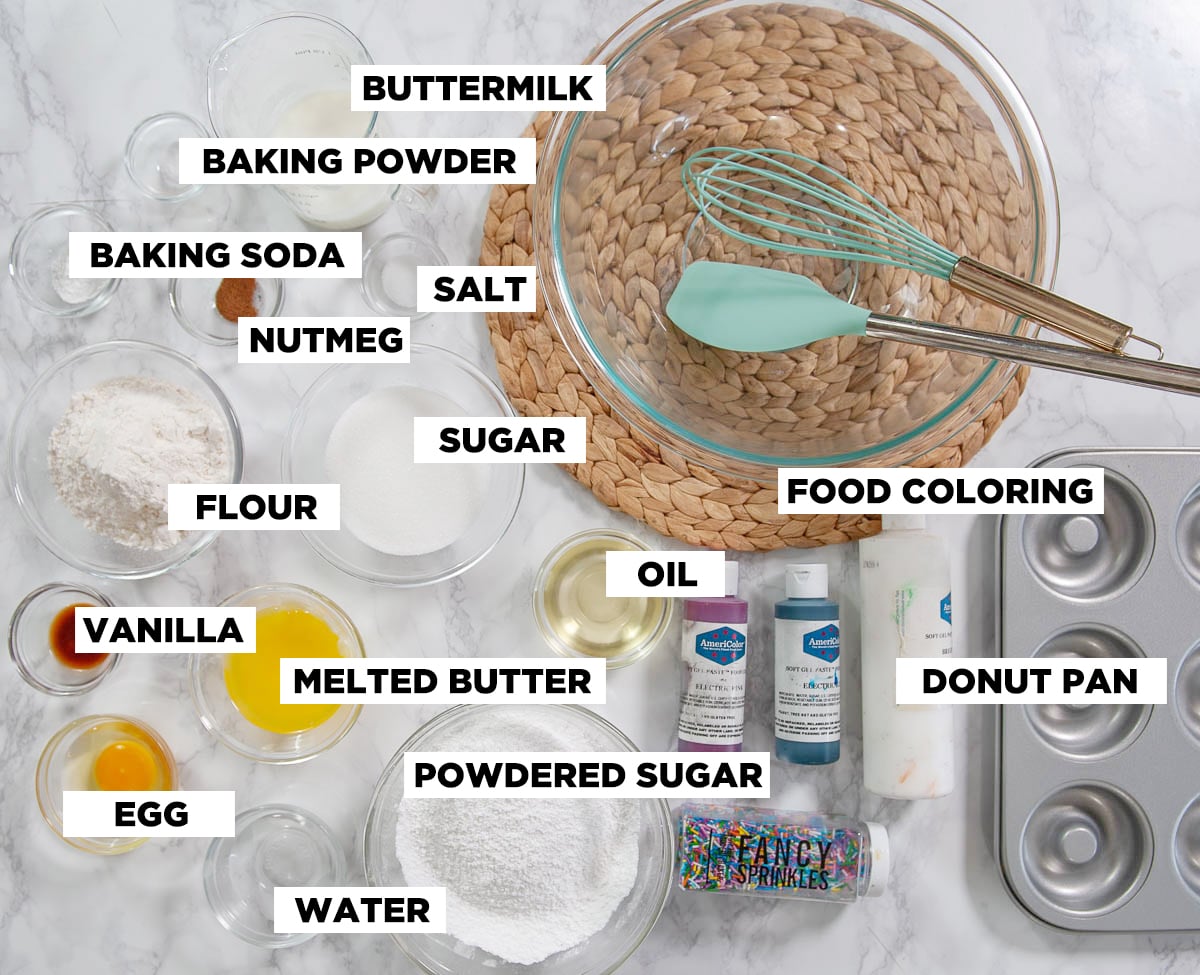
Ingredients in this baked donut recipe in bowls on a table.
  • Food Coloring: Use any color gel food coloring for bold, vibrant color that won't mess up the texture of your glaze. I recommend starting with a small dab and building up to get the color you want. Adding a few drops of white food coloring to the glaze before adding color is the secret to a more opaque donut glaze. I also use this type of food coloring to make my red, white, and blue cake.
  • Buttermilk: The buttermilk creates a more tender, flavorful crumb in your donuts. If you don't have buttermilk, you can use a buttermilk substitute, by adding a half tablespoon of vinegar or lemon juice to a half cup of milk.
  • Melted Butter and Oil: Butter adds richness and flavor, while the oil keeps your baked donuts moist longer. This combination also keeps these homemade vanilla cupcakes super moist during storage.
  • Nutmeg: This is the little secret that gives baked donuts that unmistakable "donut shop" flavor. It's subtle, adding a warm, slightly sweet spice note that makes them taste like the real deal instead of just mini cakes.

See the recipe card for the full list of ingredients with quantities.

Baked Donuts Variations

  • Glaze Flavors: Switch up the glaze to match the occasion or your cravings. You can easily make a rich chocolate glaze (check out my fried donut recipe for a great one to borrow) or add extracts like almond, maple, or citrus for a fun twist.
  • Skip the Glaze: For a more classic finish, toss warm donuts in cinnamon sugar for that bakery-style coating, or dust them with powdered sugar for a simple, lightly sweet option.
  • Batter Add-Ins: This batter is super flexible, so you can customize the flavor right from the start. Fold in sprinkles for funfetti-style donuts, add fresh lemon zest for a bright citrus flavor, or mix in a pinch of pumpkin spice for a cozy, seasonal version.
  • Mini Donuts: You can use a mini donut pan (reduce the bake time slightly and keep an eye on them-they bake fast). 

How to Make This Baked Donut Recipe

Gather all your ingredients, grease a regular-sized donut pan (I used a 6-cavity donut pan from Target) with store-bought or homemade pan release, and preheat your oven to 450°F before starting this baked donut recipe.

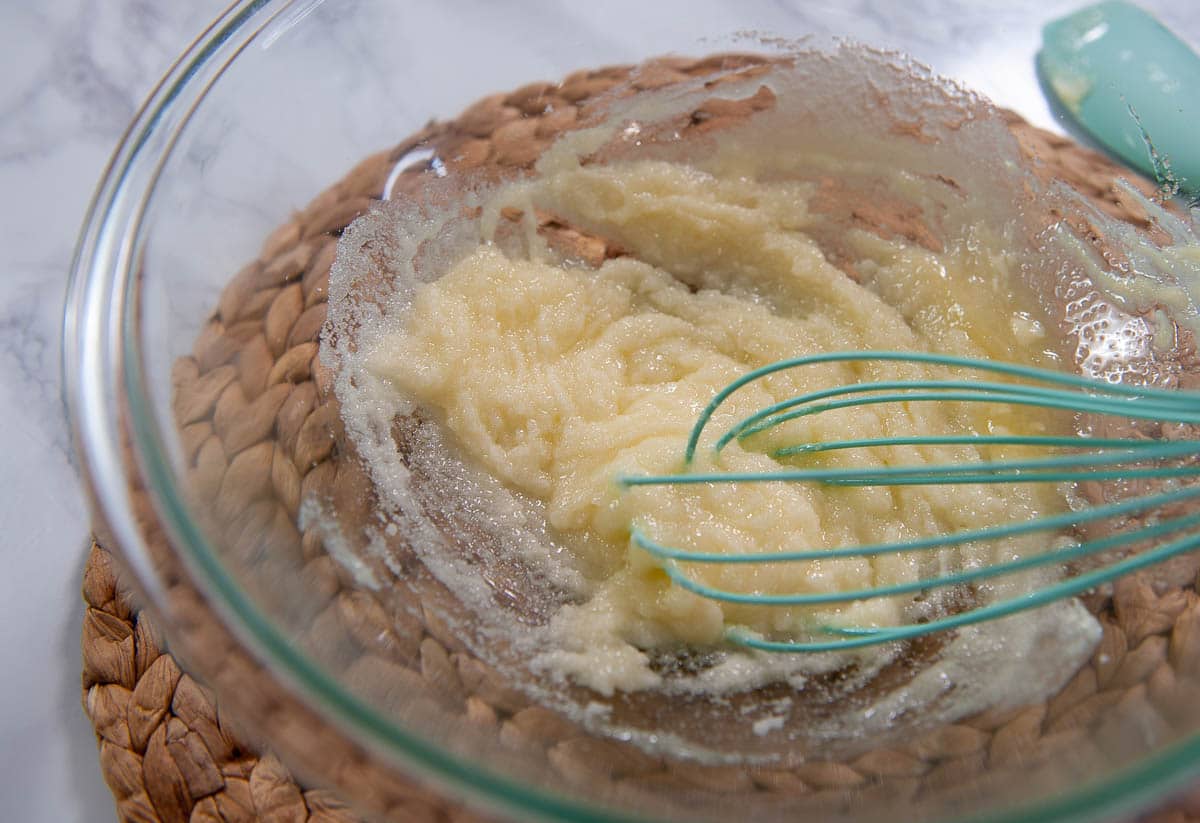
Mixing the melted butter and sugar together in a clear bowl.
  1. Place the sugar and melted butter in a large bowl and whisk until smooth.
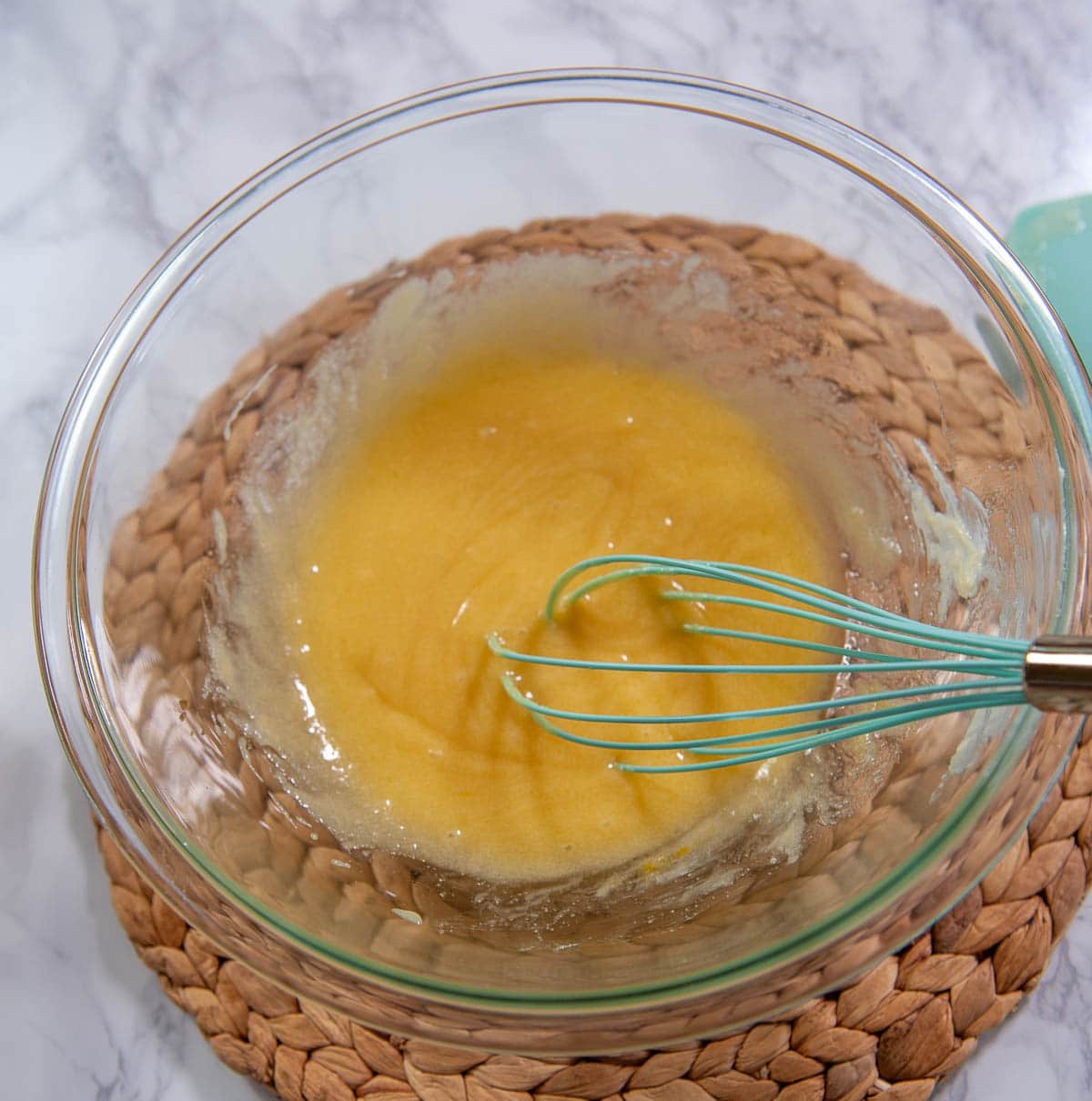
Mixing the egg, oil and vanilla in a clear bowl.
  1. Add the egg, oil, and vanilla to the sugar and butter mixture, and whisk until combined.
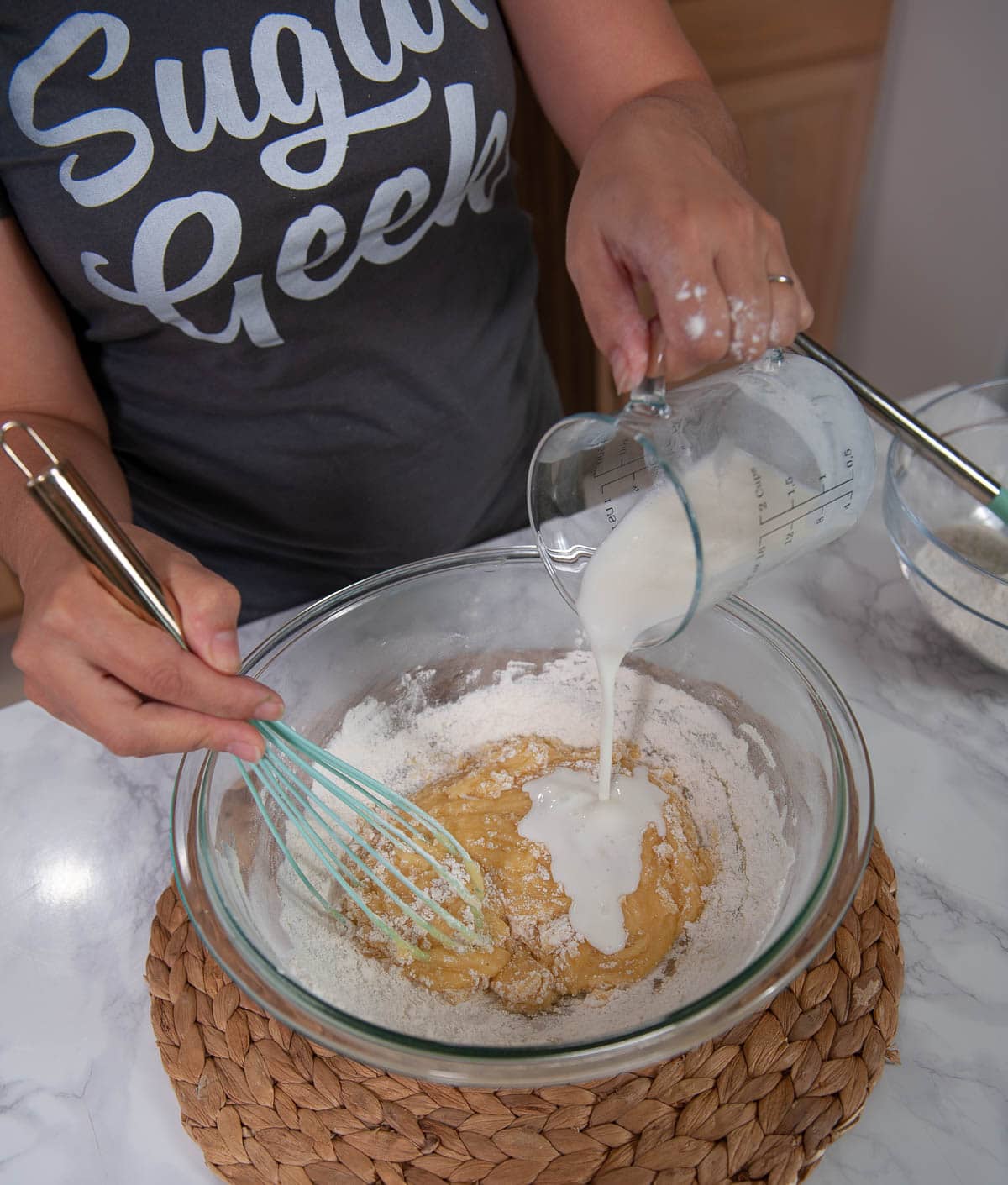
Adding milk to donut batter in a bowl.
  1. Combine the flour, baking powder, baking soda, nutmeg, and salt in a separate bowl and mix to combine. Whisk in half of the dry mixture into the wet mixture, until some of the flour remains, and then add all the buttermilk.
Baked donut batter completely mixed in a bowl.
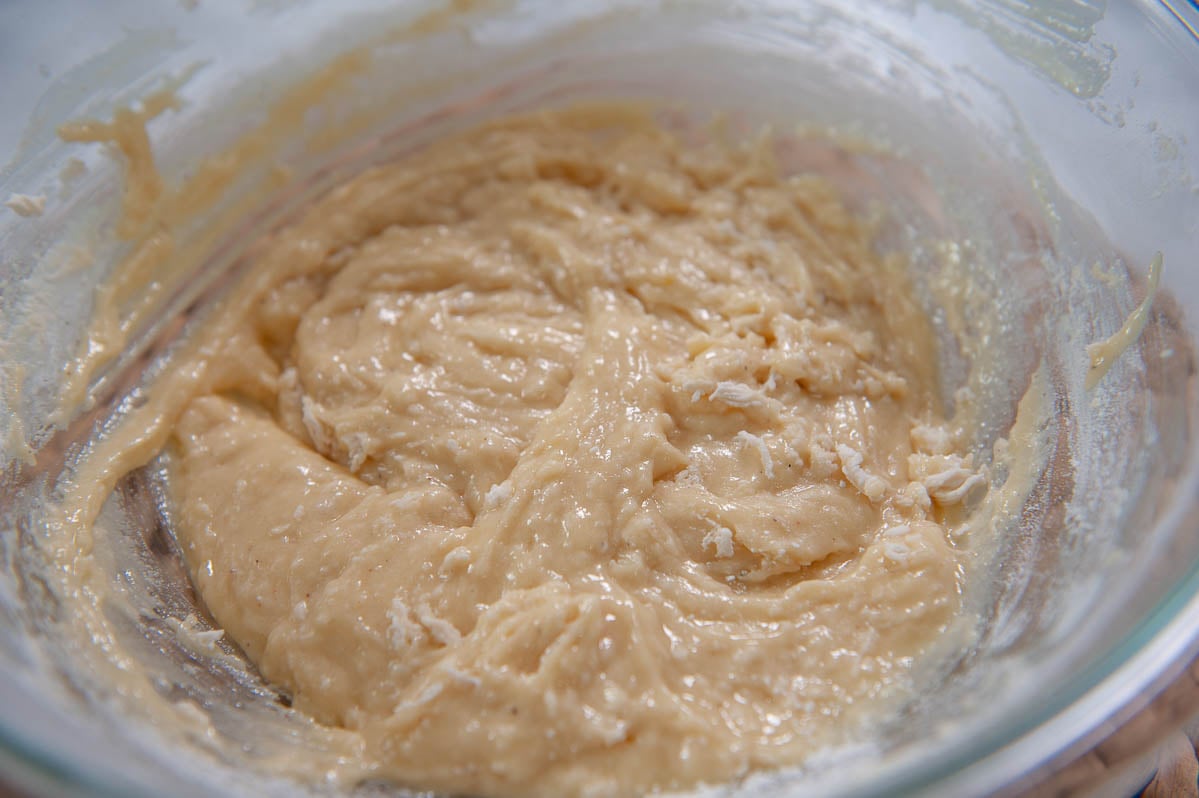
  1. After adding the buttermilk, mix a little, and add the rest of the flour.

Mixing Tip: Mix until just combined, using care to avoid overmixing, which develops the gluten and leads to chewy/dense donuts. The batter will be very wet, and there will be a few lumps.

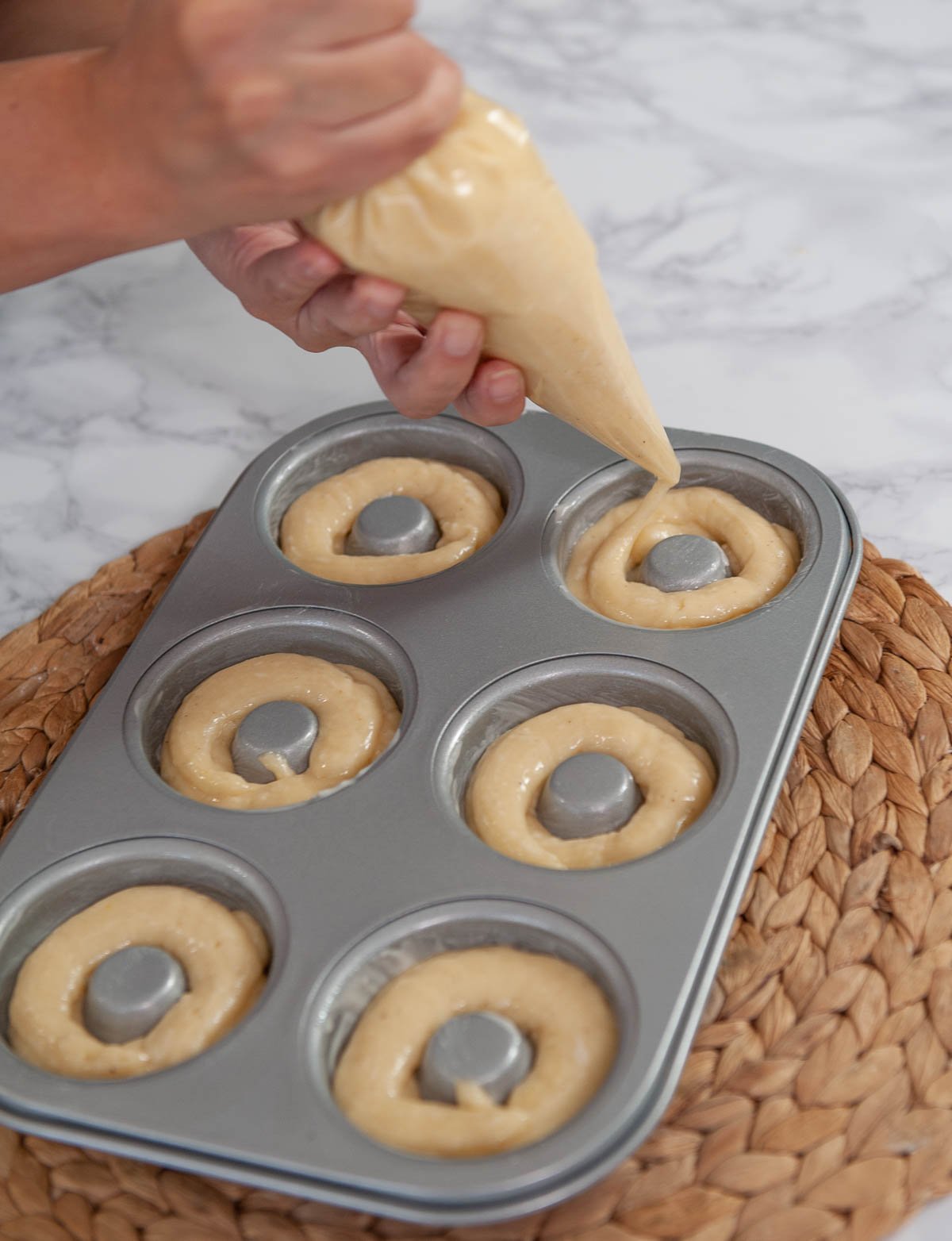
Piping donut batter into a donut pan.
  1. Transfer the batter to a piping bag or a plastic bag with a corner cut off. Pipe the batter into each cavity, filling it ½ to ¾ of the way full of batter. You can also just use a spoon to distribute the batter and smooth out the tops.
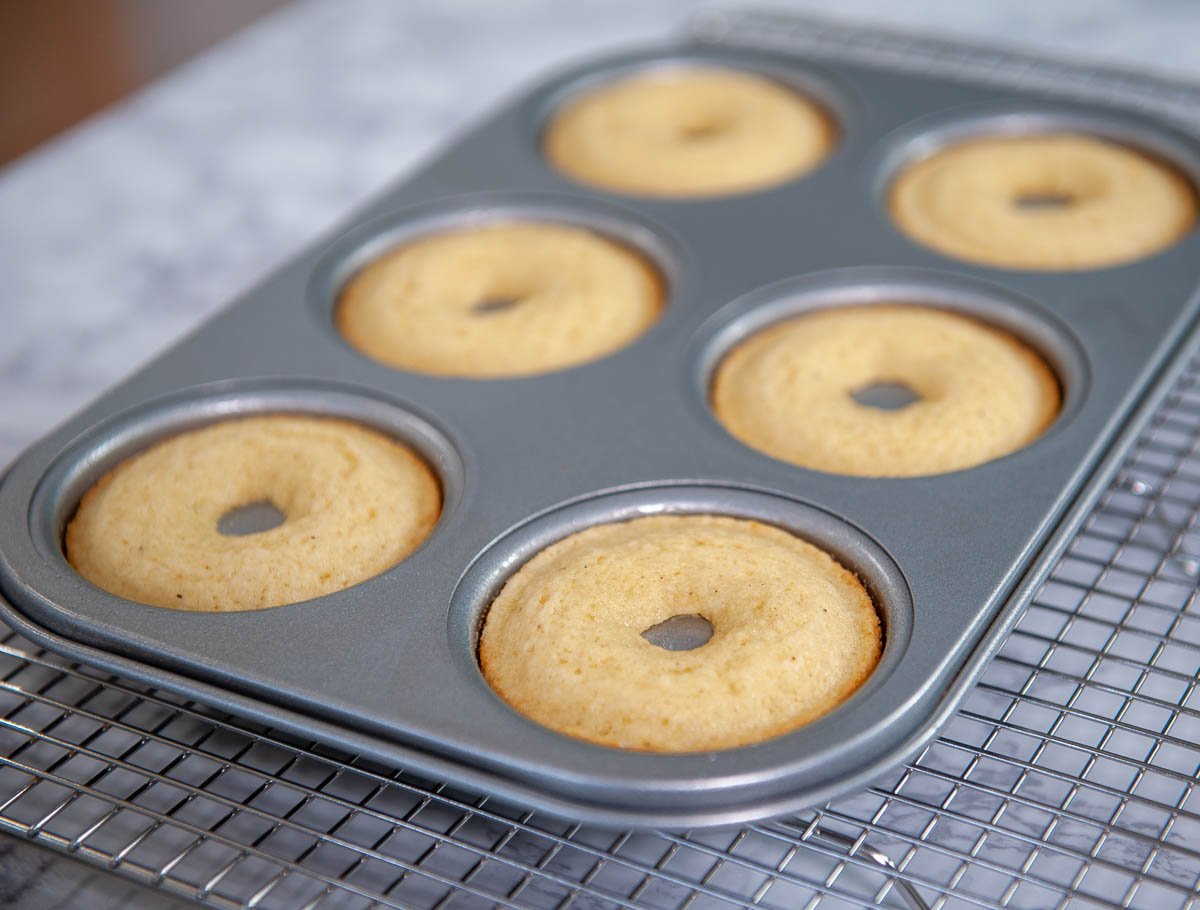
Baked donuts in a pan on a cooling rack.
  1. Bake at 450ºF (232ºC) for 7-9 minutes. Your donuts are ready when the tops are firm and bounce back when you touch them.
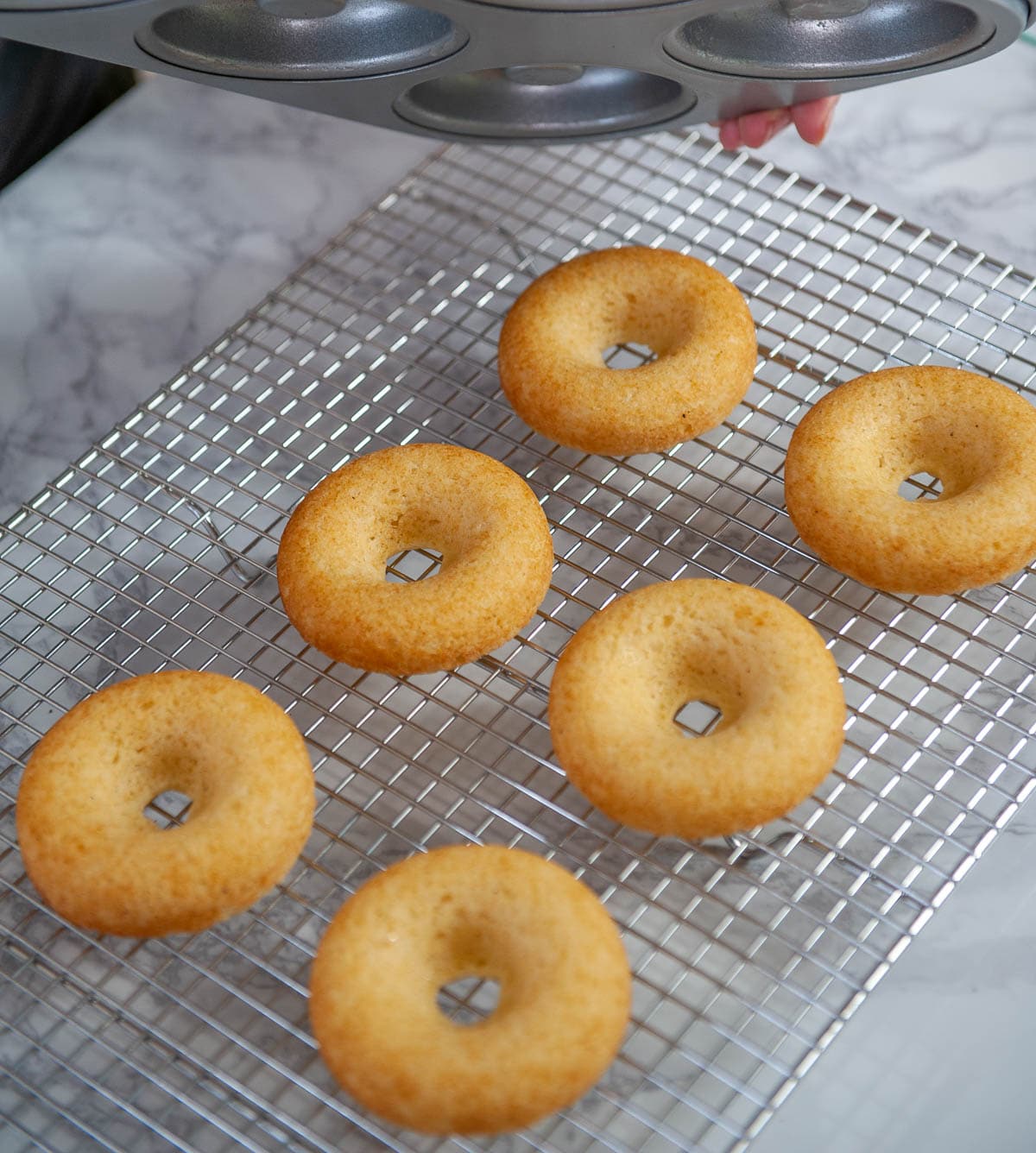
Cooling baked donuts on a rack.
  1. Cool the donuts in the pan for 5 minutes and then flip them out onto a wire rack to cool completely. Make sure not to glaze the donuts while they're still warm.
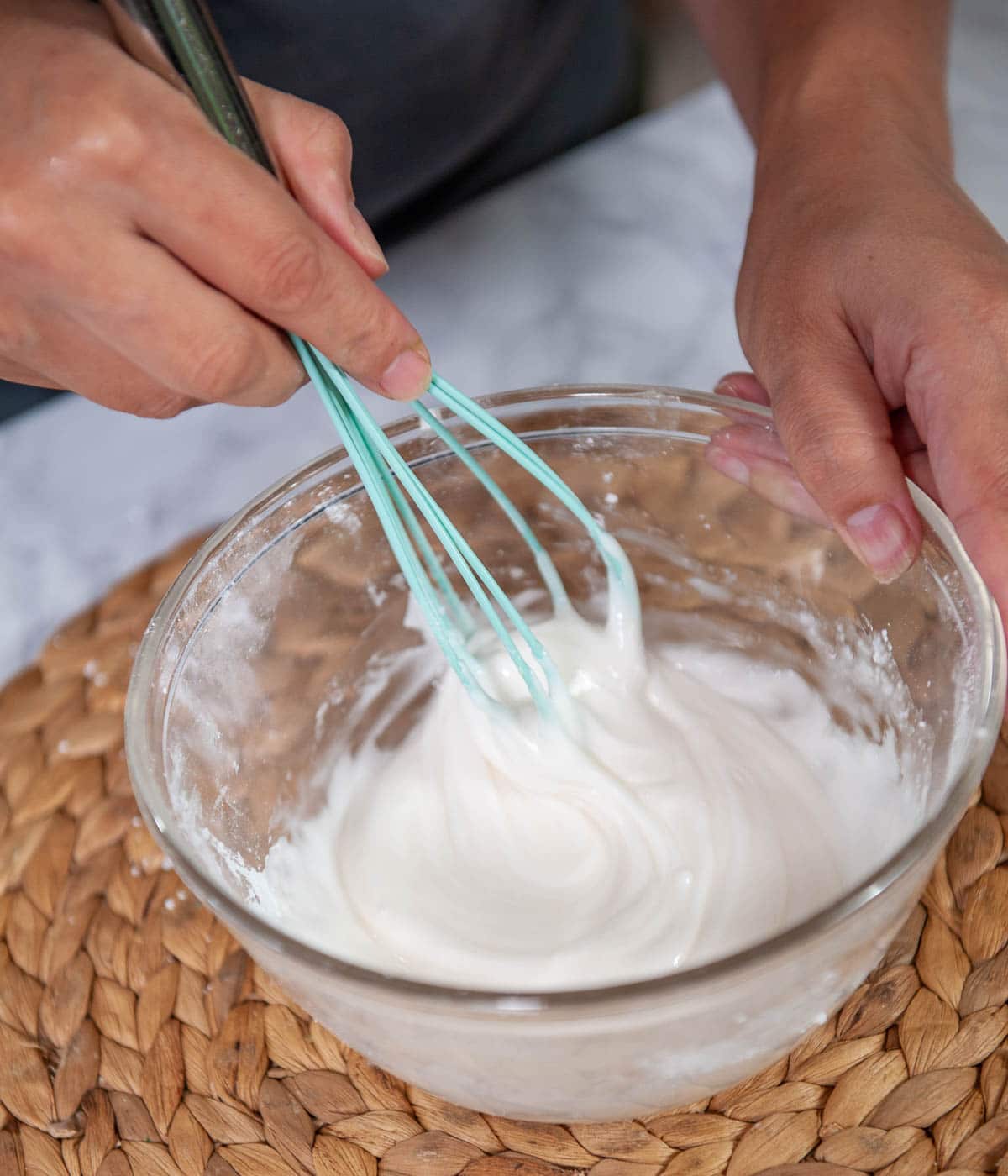
Mixing the cake donut glaze in a clear bowl with a blue whisk.
  1. To make the glaze, sift your powdered sugar. This will prevent your glaze from having lumps. Add the water or milk and whisk until the glaze reaches the desired consistency.
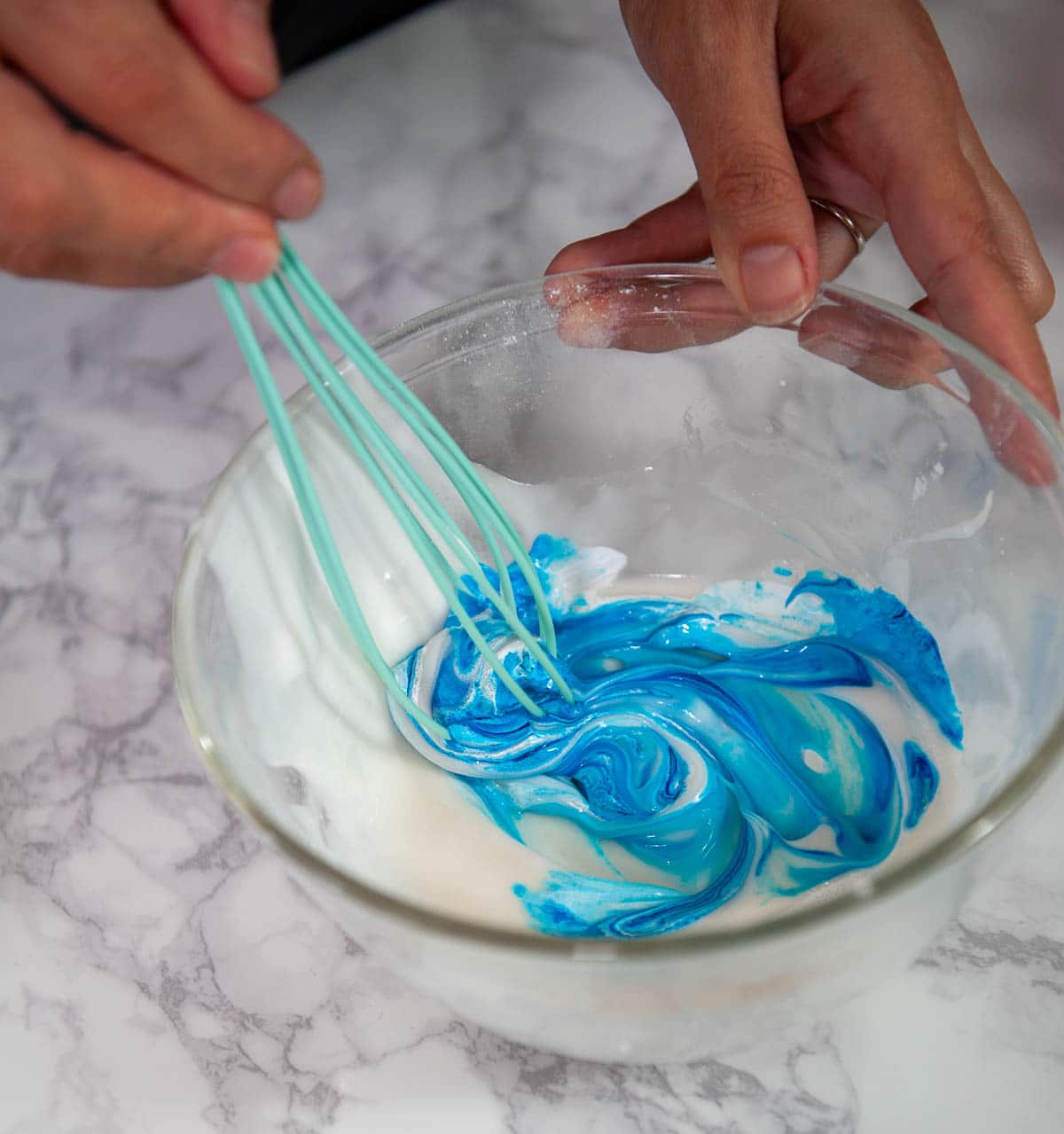
Adding blue food coloring to a the white donut glaze.
  1. For a more opaque glaze, add a few drops of white food coloring to the glaze and divide it into bowls. Add your favorite colors to each bowl and stir.
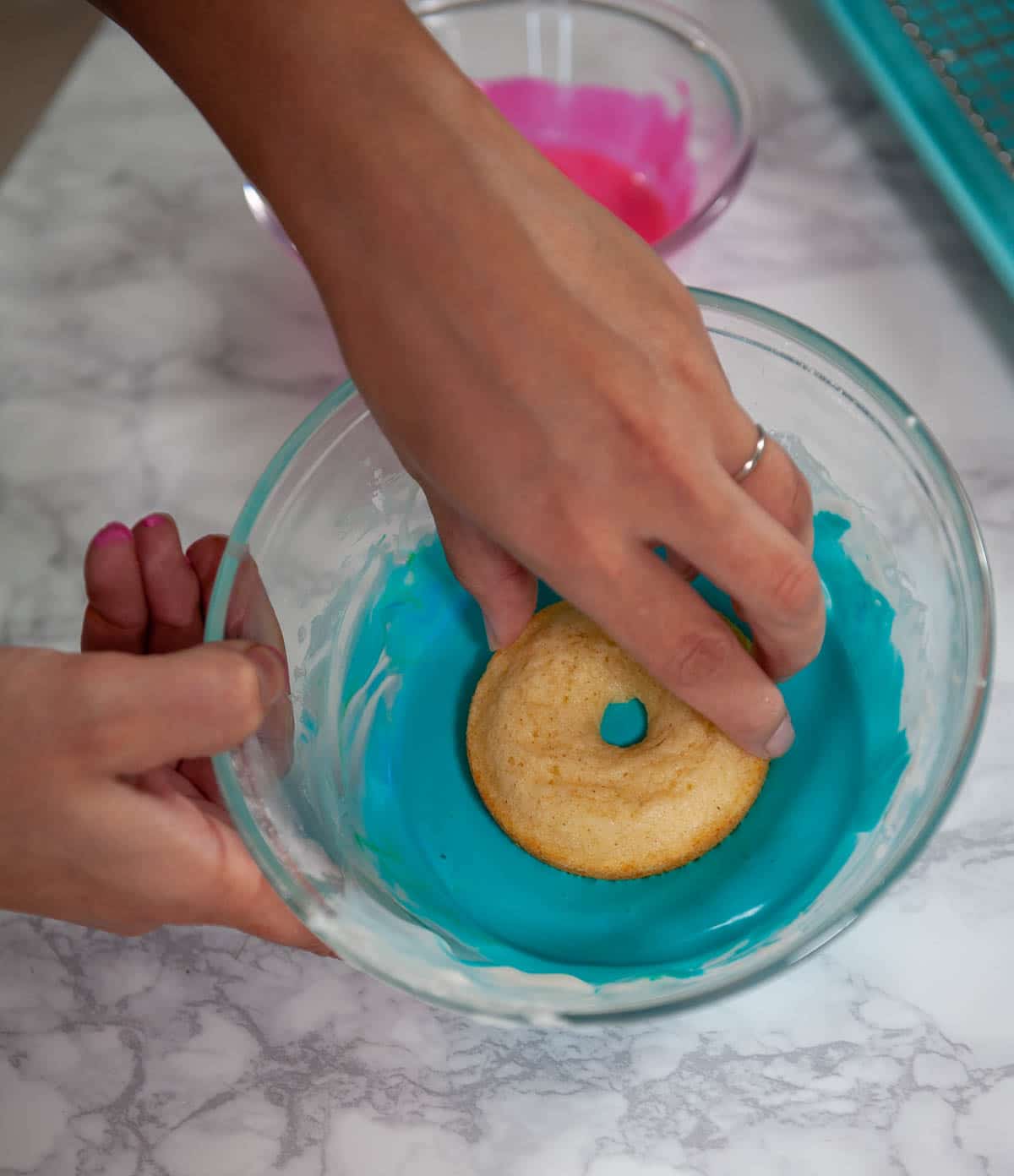
Dipping the top of a baked donut in the glaze.
  1. Place the wire rack of donuts on top of a sheet pan to catch extra glaze drips. Grasp each donut by the sides and dunk it into the glaze.
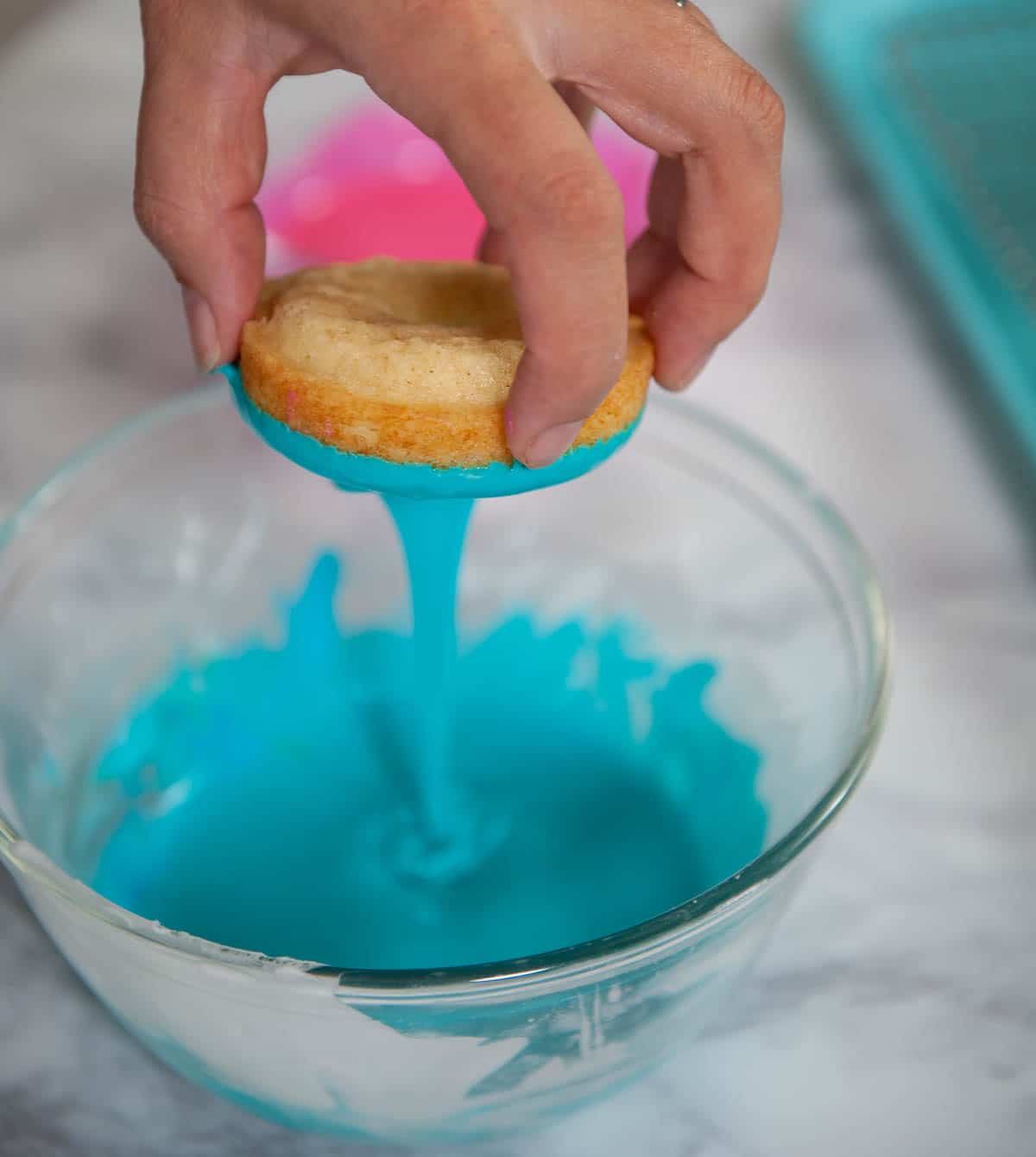
A hand holding a blue glazed donut allowing the excess glaze to drip back into the bowl.
  1. Hold the donut over the bowl, letting the excess glaze drain off for a few seconds.
Adding sprinkles to the top of the donuts while the glaze is still wet.
  1. Flip over the donut and place it back onto the wire rack. Top with sprinkles immediately, as the glaze firms up quickly, in just a couple of minutes.

Expert Tips

  • Glaze Consistency: Easily adjust the consistency by adding more powdered sugar if it's too thin, or more milk if it's too thick. Start with ¼ teaspoon of liquid at a time, and continue to add more as needed.
  • Lumpy Glaze: The first step is to make sure you sift your powdered sugar. If you find lumps after mixing in the liquid, use a hand mixer to smooth them out.
  • Don't Glaze Warm Donuts: This causes the glaze to thin, and it won't set properly.
  • Want Vivid Colors? Adding a few drops of white food coloring makes the glaze less transparent, which makes the colors pop more.
  • Donut Pan Type: You can use a metal or silicone donut pan for this baked donut recipe. Note that metal often browns faster, while using silicone may require slightly more time to bake.
  • Storage: Store leftover donuts at room temperature in a container or bag for up to 3 days.
Pink and blue baked donuts on a blue plate with a rainbow in the background.

Oven Baked Donut Recipe FAQs

Can I freeze oven baked donuts?

Yes, you can! The glaze does NOT freeze well, so for the best results, freeze them without the glaze for up to 2 months. When ready to enjoy, thaw them out overnight on the counter and then glaze the donuts after they're thawed.

Can I make fresh baked donuts without a donut pan?

Yes, you can use a muffin pan instead. This method makes more of a "donut muffin" shape, and they may bake a touch taller with a slightly softer edge (no classic hole or crisp ridges), but the flavor and tender, cake-like texture are just as good.

Why are my homemade baked donuts dense?

Dense donuts usually come down to a few common issues. Overmixing develops too much gluten, which makes them dense instead of soft. To prevent, mix just until combined. Also, cold ingredients don't blend smoothly and can prevent proper rise, so bring cold ingredients to room temperature. Last, avoid adding too much flour, which throws off the balance, leading to a heavier, drier crumb. It's best to weigh your flour or use the spoon and level technique instead of scooping to avoid adding too much flour.

Can I make the baked donut batter ahead of time?

No, this batter is best baked right away. Baking powder starts working as soon as it's mixed with liquid, so letting the batter sit can lead to flat, dense donuts. Instead, bake the donuts, let them cool, and freeze them; then thaw and glaze when you're ready to serve.

More Festive Individual Dessert Recipes

  • rainbow cupcake with a bite taken out of it
    Rainbow Cupcakes
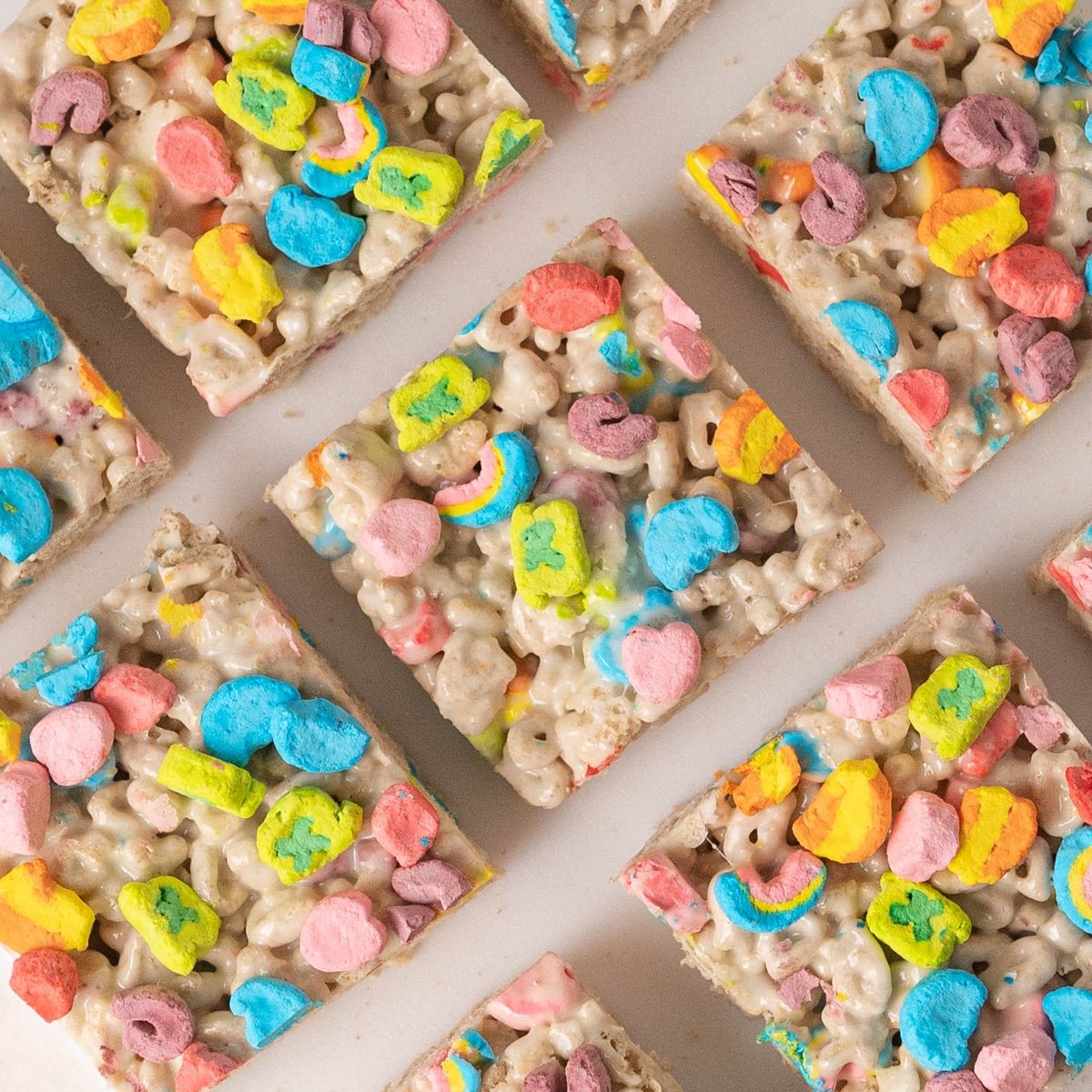
  • lucky charms rice krispie treats lined up on a table
    Lucky Charms Rice Krispie Treats
  • close up of french macarons on a plate
    French Macaron Recipe
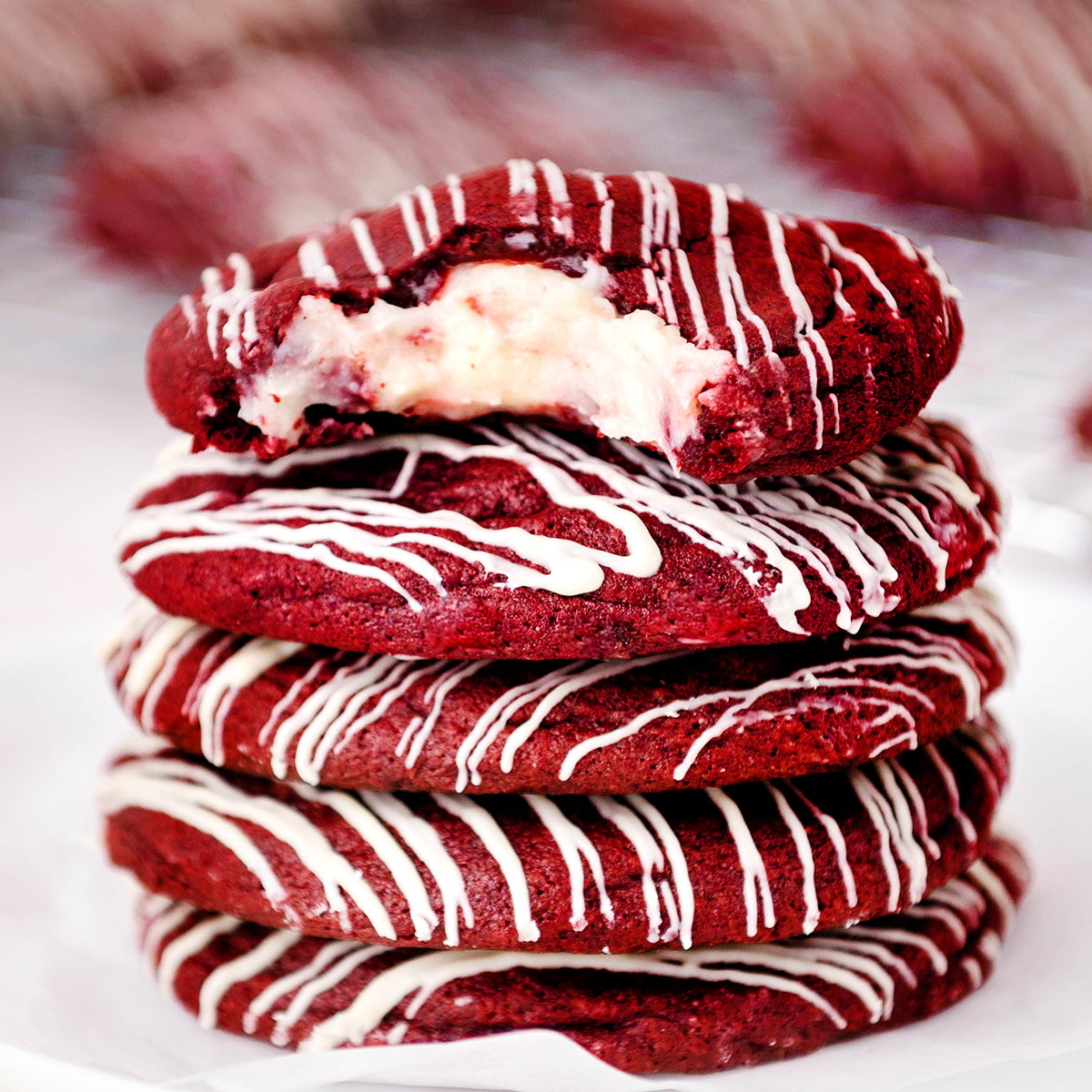
  • stack of red velvet cookies
    Stuffed Red Velvet Cookies

Leave Me A Review
⭐️⭐️⭐️⭐️⭐️

If you tried this Chocolate Cupcake Recipe or any other recipe on my blog, please leave a 🌟 star rating and let me know how it goes in the comments. I love hearing from you!

Recipe

A pile of baked donuts on a plate with pink and blue glaze and colored sprinkles.
Print Recipe
4.91 from 42 votes

Baked Donut Recipe

Soft, fluffy baked donuts made with a buttermilk cake batter for an extra-tender crumb. No deep fryer or mixer needed, and ready in under 20 minutes. Finish them with a bright, glossy glaze and sprinkles for a fun, bakery-style treat that's perfect for birthdays, parties, or any occasion.
Prep Time10 minutes mins
Cook Time7 minutes mins
Total Time17 minutes mins
Course: Breakfast, Dessert
Cuisine: American
Servings: 12 Donuts
Calories: 313kcal
Author: Liz Marek

Equipment

  • Donut Pan

Ingredients

Donuts

  • 7 ounces all-purpose flour
  • 6 ounces granulated sugar
  • ½ teaspoon salt
  • 1 teaspoon baking powder
  • ¼ teaspoon baking soda
  • ¼ teaspoon nutmeg
  • 2 ounces vegetable oil
  • 4 ounces buttermilk room temperature
  • 1 large egg room temperature
  • 3 ounces unsalted butter melted
  • 1 teaspoon vanilla extract

Glaze

  • 10 ounces powdered sugar about 2 cups
  • 2 Tablespoons water or milk add more water for thinner glaze, more sugar for thicker glaze
  • 2 drops white food coloring I use Americolor gel
  • 1-2 drops food coloring I use Americolor electric pink and
US Customary - Metric

Instructions

The Donuts

  • Preheat your oven to 450ºF (232ºC) and weigh out all of your ingredients, bringing the buttermilk and egg to room temperature.
  • Place the sugar and melted butter in a large bowl and combine smooth with a whisk.
  • Add the egg, oil and vanilla and whisk until combined.
  • In a separate medium bowl, add the flour, baking powder, baking soda, nutmeg and salt. Mix to gently combine.
  • Add half the dry mixture into the wet mixture, whisk gently until some of the flour remains, then add all the buttermilk, mix a little, and add the rest of the flour. Mix until just combined, do not over mix. The batter will be very wet and there will be a few lumps.
  • Transfer the batter to a piping bag or a plastic bag with a corner cut off. (You can also just use a spoon and smooth out the tops.)
  • Grease the donut tray with cake goop or your favorite pan release, and fill each cavity ½ to ¾ of the way full of batter.
  • Bake at 450ºF (232ºC) for 7-9 minutes. When the tops are firm and bounce back when you touch them, they're done.
  • Cool the donuts in the pan for 5 minutes, then flip them out onto a wire rack to cool completely. Make sure to not glaze while warm.

The Glaze

  • Sift your powdered sugar, this will prevent your glaze from having lumps.
  • In a medium bowl, whisk together powdered sugar and water (or milk) until desired consistency. Add ¼ teaspoon more water at a time until it's as thin as you like. If it becomes too thin, add more powdered sugar. If your glaze has lumps, you can use a hand mixer to smooth it out.
  • If you want a more opaque glaze, add a few drops of white food coloring to the glaze and divide into bowls. Add your favorite colors and stir.
  • Place the wire rack of donuts on top of a sheet pan to catch extra glaze drips. Grasp each donut by the sides and dunk into the glaze, letting it drain off for a few seconds. Then flip over and place the donut back onto the wire rack. Top with sprinkles immediately, as the glaze firms up quickly.
  • Place into a plastic or paper bag and store at room temperature for up to 3 days, they will continue to soften over time.

Video

Notes

  • Pan Release: Use my Cake Goop Pan Release Recipe to prevent sticking. 
  • Bring all your ingredients to room temperature or even a little warm (eggs, buttermilk, butter, etc) to ensure your batter does not break or curdle. 
  • Use a scale to weigh your ingredients (including liquids) unless otherwise instructed (Tablespoons, teaspoons, pinch etc). Metric measurements are available in the recipe card. Scaled ingredients are much more accurate than using cups and help ensure the success of your recipe. 
  • Practice Mise en Place (everything in it's place). Measure out your ingredients ahead of time and have them ready before you start mixing to reduce the chances of accidentally leaving something out.
  • Flour: All purpose flour is a plain flour with no rising agents. It has a protein level of 10%-12%.  Cake flour is a soft, low protein flour of 9% or less.  Cake flour sources: UK - Shipton Mills Cake & Pastry Flour

Nutrition

Serving: 1donut | Calories: 313kcal | Carbohydrates: 51g | Protein: 3g | Fat: 11g | Saturated Fat: 8g | Cholesterol: 32mg | Sodium: 140mg | Potassium: 73mg | Fiber: 1g | Sugar: 38g | Vitamin A: 219IU | Calcium: 35mg | Iron: 1mg
Homemade bagels on a sheet pan.

March 31, 2026 Yeast Bread

Easy Homemade Bagel Recipe

If you have ever wanted to make bagels from scratch at home, this is the recipe to start with. I have been baking bread professionally for years, and what I love about this homemade bagel recipe is that it uses the same science as any great bread dough but comes together faster and with less fuss than most people expect. Bread flour gives you that classic chewy texture because of its higher protein content, which builds more gluten than all-purpose flour. A quick boil before baking gelatinizes the starch on the outside of the dough and creates that shiny, chewy crust that separates a real bagel from a bread roll. If you love baking with yeast dough, my easy cinnamon rolls and homemade brioche bread use a similar process and are great to try next.
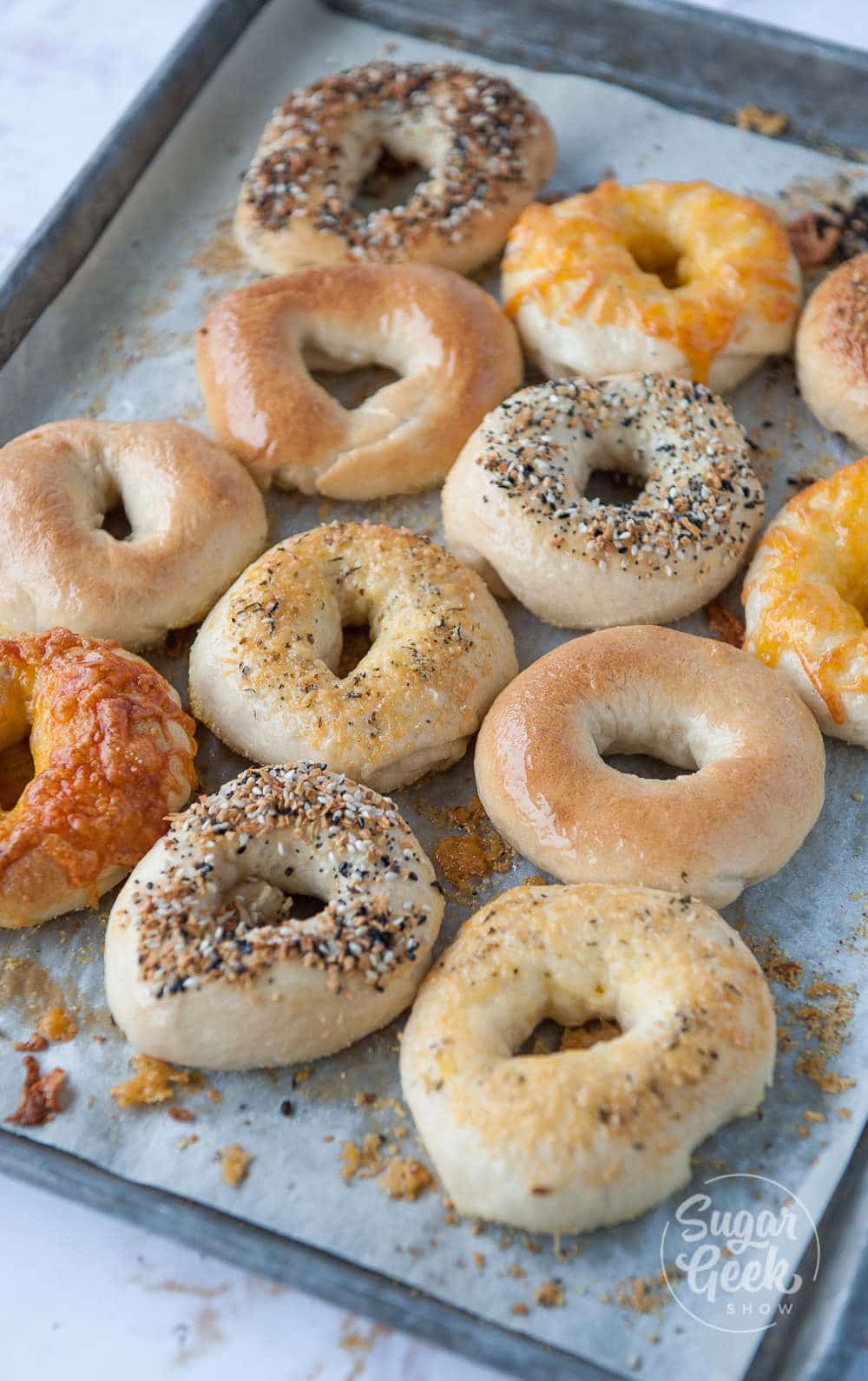
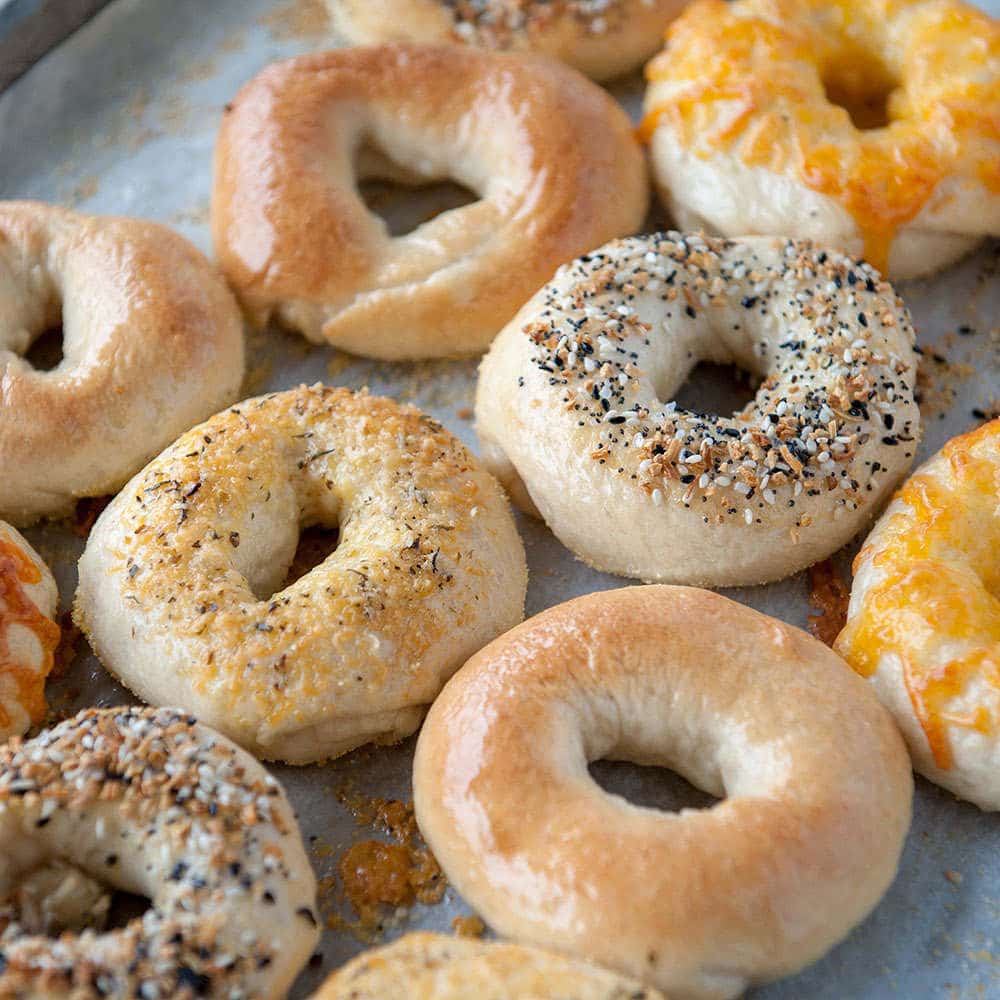
Homemade bagels on a sheet pan with different types of toppings.

Quick Glance at This Bagel Recipe

  • Recipe Name: Homemade Bagel Recipe
  • Why You'll Love It: Bakery-style chewy bagels made with simple ingredients and an easy, beginner-friendly method.
  • Time and Difficulty: 60 minutes of active time + 30-60 minutes depending on proofing. This easy bagel recipe is great for beginners with basic dough experience.
  • Main Ingredients: Bread flour, warm water, brown sugar, instant yeast, salt, and your favorite toppings.
  • Method: Mix and knead the dough, shape, rest, boil briefly, then bake until golden.
  • Texture and Flavor: Chewy on the outside, soft and slightly dense inside, with a subtle sweetness and classic bagel flavor.
  • Quick Tip: Boil longer (up to 1 minute per side) for a thicker, chewier crust.
ChatGPT
Google AI
Perplexity
Grok
Add us as a trusted site on Google

I love making these homemade bagels when I want something fresh, chewy, and a little more special than store-bought. As a professional baker, I've taken everything I know about dough and simplified it into a process that's easy to follow, while still giving you those bakery-quality results at home.

Over the years, I've found that bagel-making is surprisingly fun to do with kids. Turn it into an afternoon activity and have them help roll, shape, and even add their favorite toppings. The magic really happens in that quick boil before baking, and once you see it in action, it's the kind of process that's surprisingly simple and fun to repeat.

If you love baking fresh bread, like my focaccia bread, this quick bread recipe, or a classic sourdough bread, you will LOVE making these bagels!

Why This Recipe Works

  • Bread flour for that classic chew. Bread flour has a higher protein content, which creates more gluten and gives you that dense, chewy texture that bagels are known for.
  • Brown sugar adds depth. It mimics the subtle molasses flavor you'd get from barley malt syrup, but uses an ingredient you like already have on hand.
  • Boiling creates the signature crust. A quick boil gelatinizes the starch on the outside of the dough, which is what gives bagels their classic shiny, chewy outside.
  • Instant yeast keeps it quick and reliable. It speeds up the rise time and makes this a true same-day, beginner-friendly bagel recipe without sacrificing texture.
[feast_advanced_jump_to]

⭐️⭐️⭐️⭐️⭐️ Reader Review

These turned out very well for a first time bagel! They are soft and chewy and I will definitely make them again. Thanks.
- Lori

Ingredients

The ingredients for making bagels are really simple, and you probably already have most of them in your pantry. Check the notes at the bottom of the recipe card for substitutions.

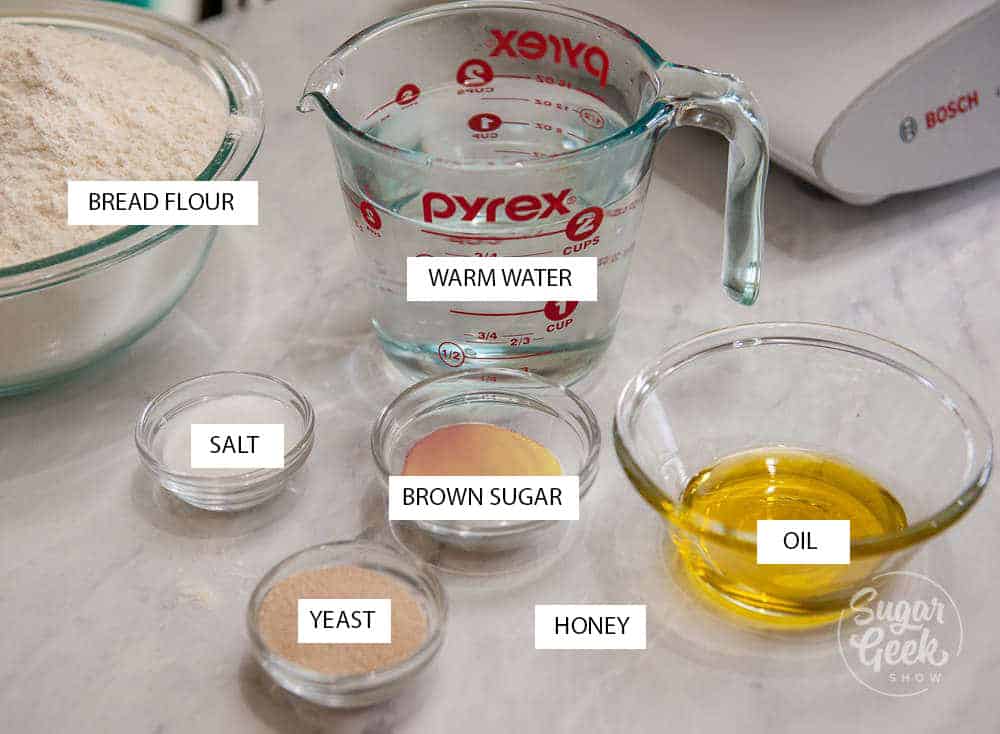
Ingredients to make this homemade bagel recipe before mixing in bowls.
  • Bread Flour: Bread flour is higher in protein, which means more gluten development and that classic chewy bagel texture. You can use all-purpose flour if that's what you have, and they'll still turn out great, but the texture will be slightly softer. I personally love using Caputo flour for its consistent results. You can also use bread flour to make a batch of this homemade brioche bread next.
  • Warm Water: Warm water activates the yeast and helps kickstart gluten development in the dough. Aim for a temperature between 110ºF-115ºF. You want it warm enough to wake up the yeast, but not so hot that it kills it. Using water instead of milk means less fat, which is key for that chewy, bakery-style texture.
  • Brown Sugar: A small amount of brown sugar helps feed the yeast and adds a subtle sweetness, but more importantly, it brings a light molasses flavor that mimics traditional barley malt syrup. It's an easy, accessible way to give your homemade bagels that classic depth of flavor without needing specialty ingredients.
  • Instant Yeast: Instant yeast gives the bagels their rise and flavor while keeping this bagel recipe quick and reliable. It can be mixed directly into the dough without blooming, just like in my easy cinnamon rolls recipe. You can also use active dry yeast, but it will take a bit longer. I like using SAF Instant Yeast for consistent results.
  • Salt: Salt is essential for flavor and also helps strengthen the dough structure. Be sure to mix your flour, water, and yeast first before adding the salt. Adding it too early can slow down or inhibit yeast activity.
  • Toppings: One of the best parts of making homemade bagels is customizing the toppings. From cheese and herbs to sesame seeds or everything seasoning, the options are endless. For the best adhesion and shine, brush the bagels with an egg wash before adding your toppings.

See the recipe card for the full list of ingredients with quantities.

Easy Bagel Variations

Once you've mastered the base dough, it's easy to customize your homemade bagels with different flavors and mix-ins. Here are a few of my favorite variations and how to make them:

  • Everything Bagels: For that classic everything flavor, top your bagels with a mix of sesame seeds, poppy seeds, dried garlic, dried onion, and a pinch of flaky salt. You can use a store-bought blend or make your own by combining equal parts of each ingredient.
  • Whole Wheat Bagels: For a slightly heartier bagel, swap out up to 50% of the bread flour with whole wheat flour. This adds a nutty flavor and boosts the fiber, but keep in mind the texture will be a bit denser and less chewy than the original. If you love baking with whole wheat, you definitely need to try baking a loaf of honey wheat bread too!
  • Cinnamon Raisin Bagels: Add about 1 tablespoon of cinnamon and 1 cup of raisins to the dough during mixing. The cinnamon brings warmth and sweetness, while the raisins add little bursts of flavor throughout. If your dough feels slightly dry after adding the raisins, you can mix in a teaspoon or two of water to adjust.
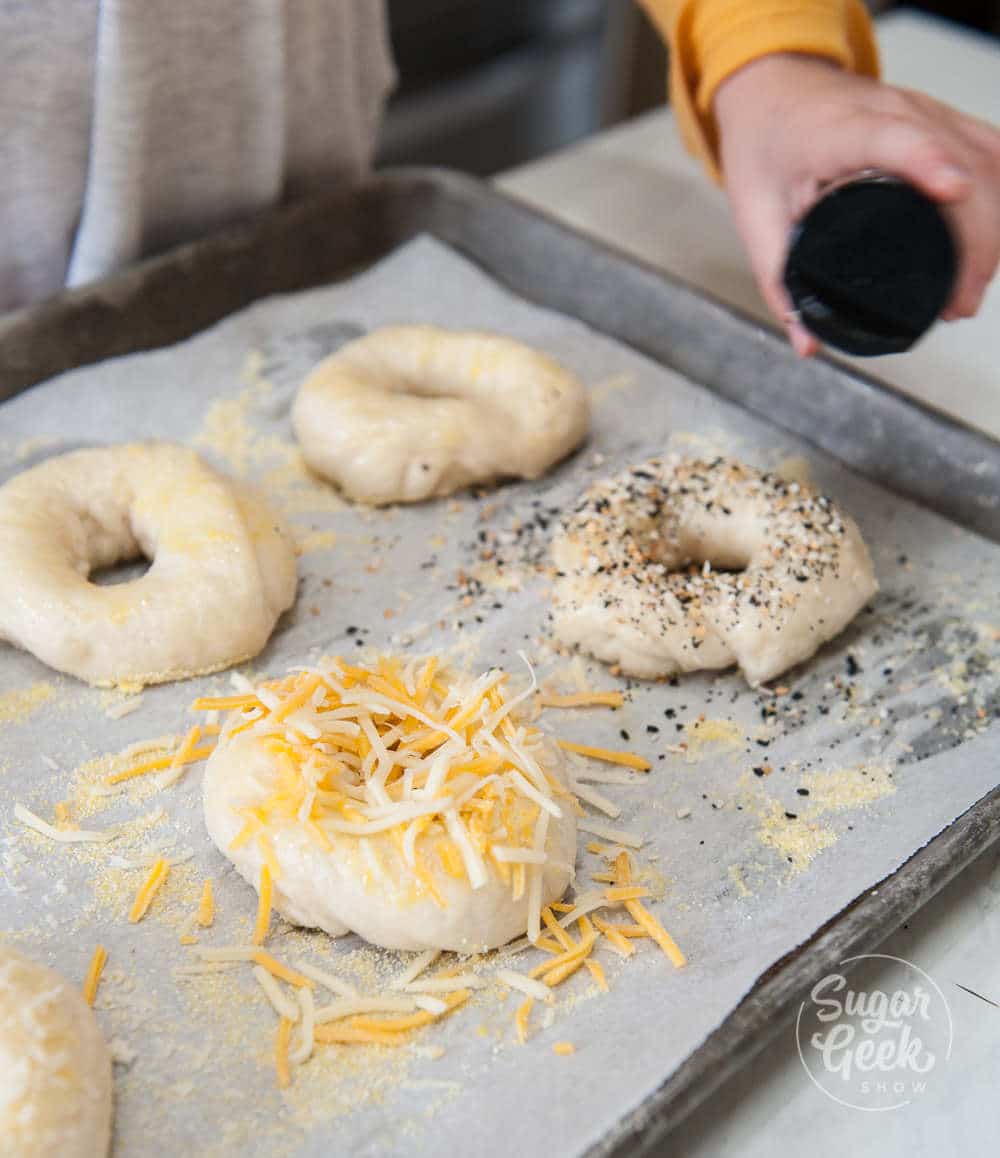
  • Cheese Bagels: For cheesy bagels, sprinkle about 1-2 tablespoons of shredded cheese (like cheddar or mozzarella) over each bagel after brushing with egg wash. For even more flavor, you can mix a small handful of cheese directly into the dough as well.
  • Garlic Herb Bagels: Top your bagels with a mix of dried garlic, Italian seasoning, and a pinch of salt for a savory option. You can also mix a teaspoon of garlic powder and dried herbs into the dough itself for a more pronounced flavor throughout.

How to Make Bagels From Scratch

Making this easy bagel recipe could not be easier. These homemade bagels are made with a lean dough, which means there isn't much fat in this bagel recipe. This helps the instant yeast work very quickly without blooming. Fat (eggs, butter, oil) can inhibit yeast from working, which is why we bloom yeast in recipes like this sweet dough. 

Oil, water and sugar in a measuring cup.
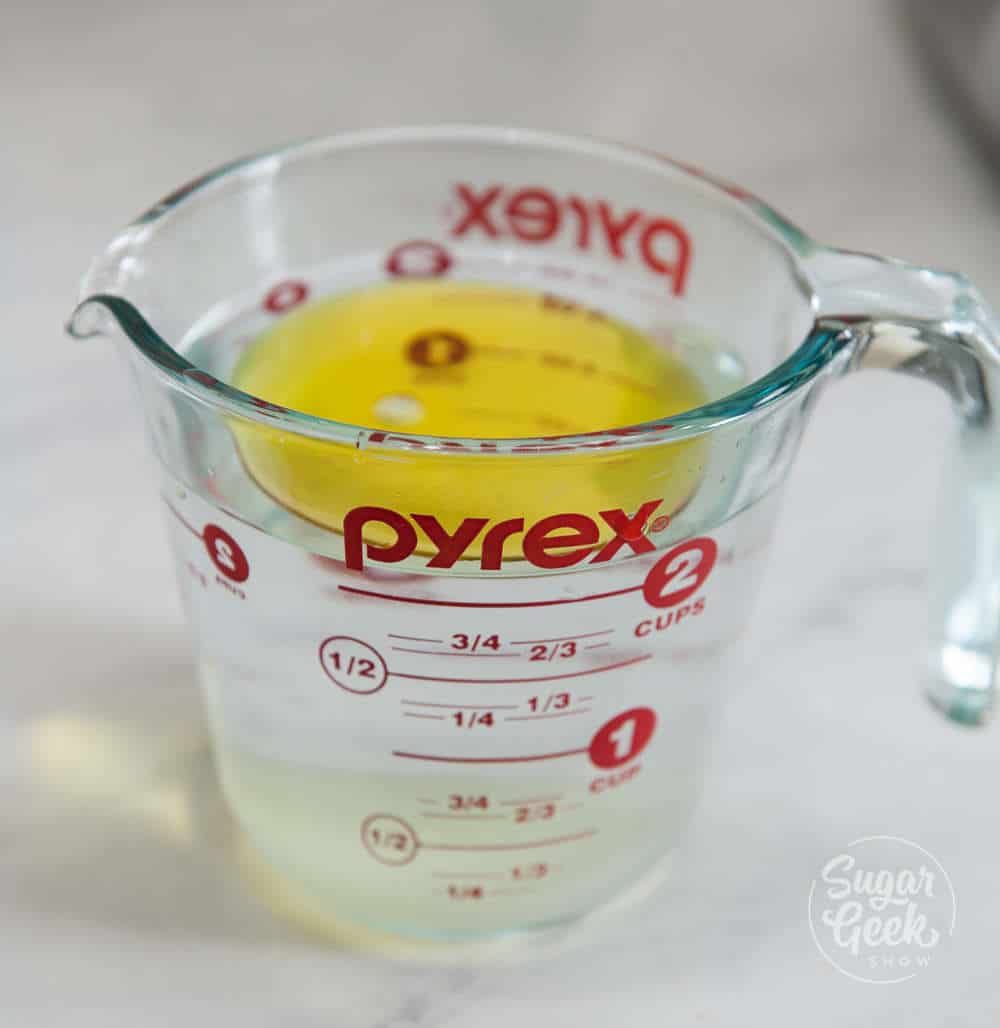
  1. Place the oil in the warm water with the brown sugar and set it aside. 
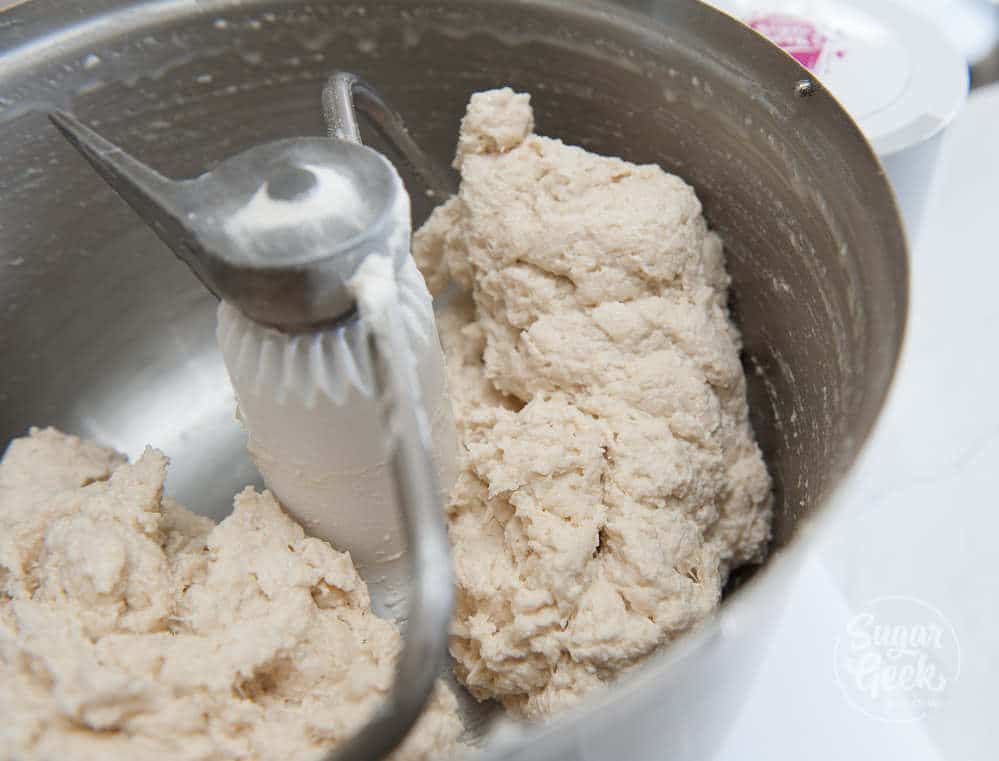
Bagel dough in a mixer after ingredients are combined.
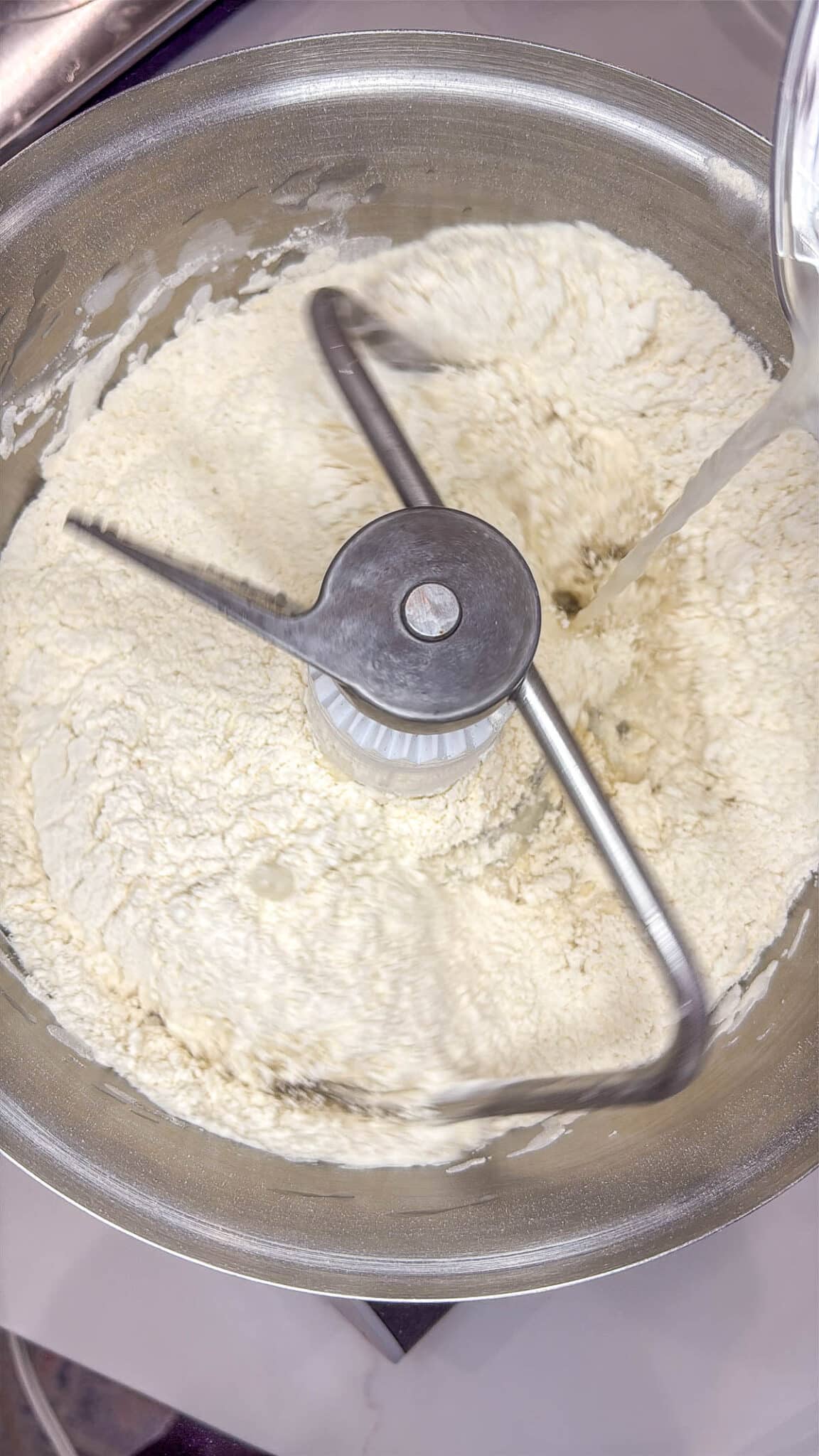
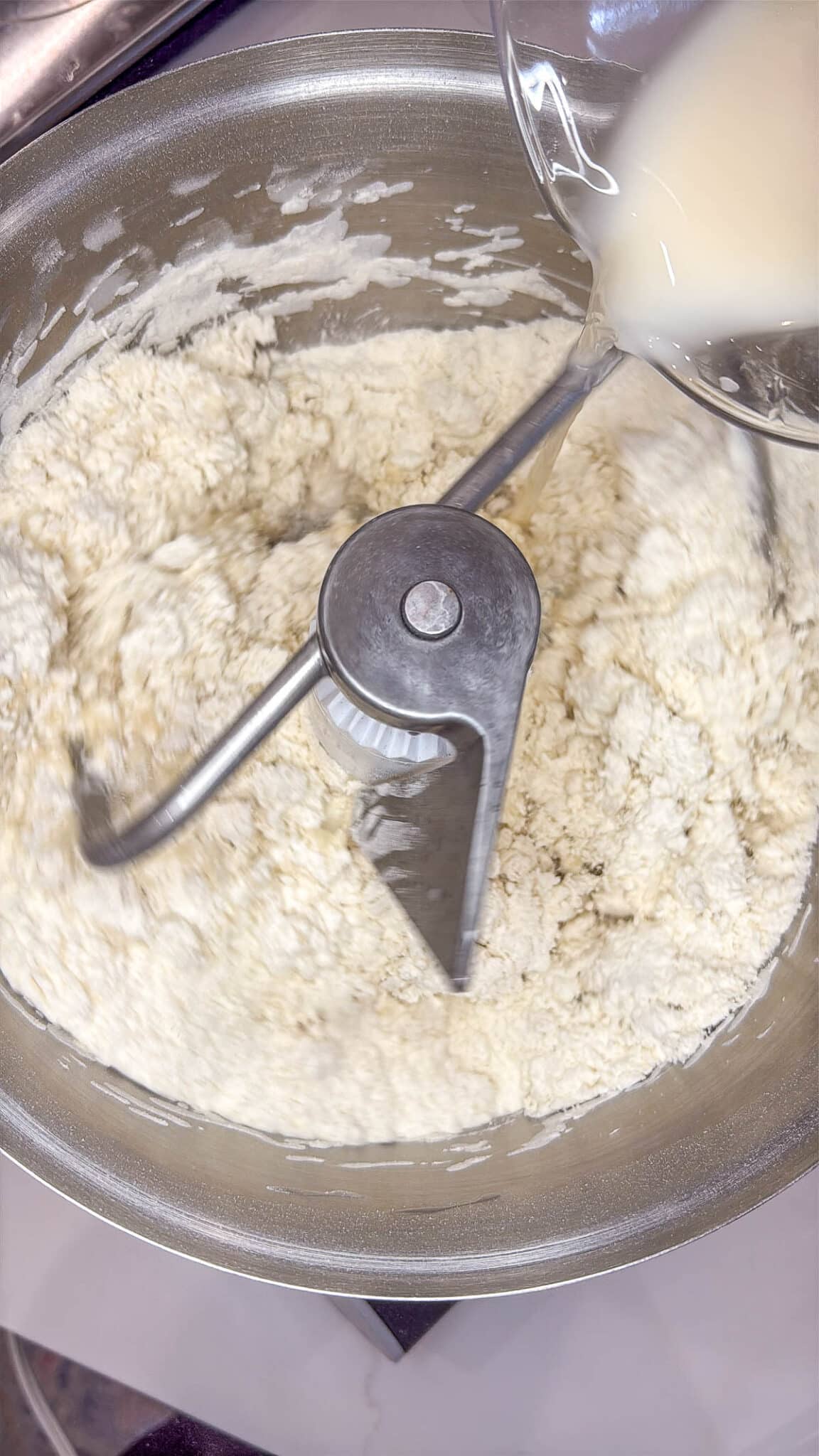
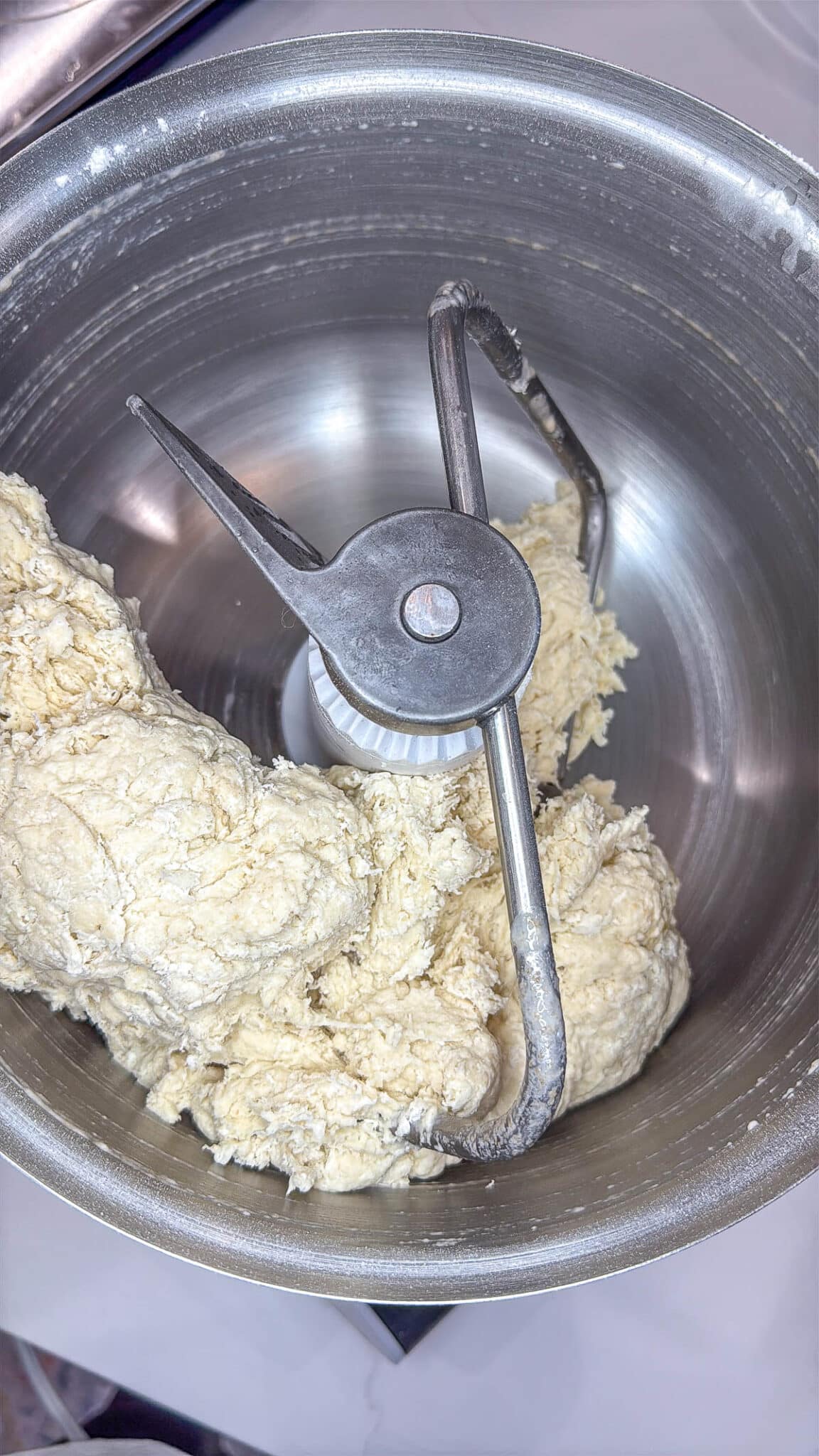
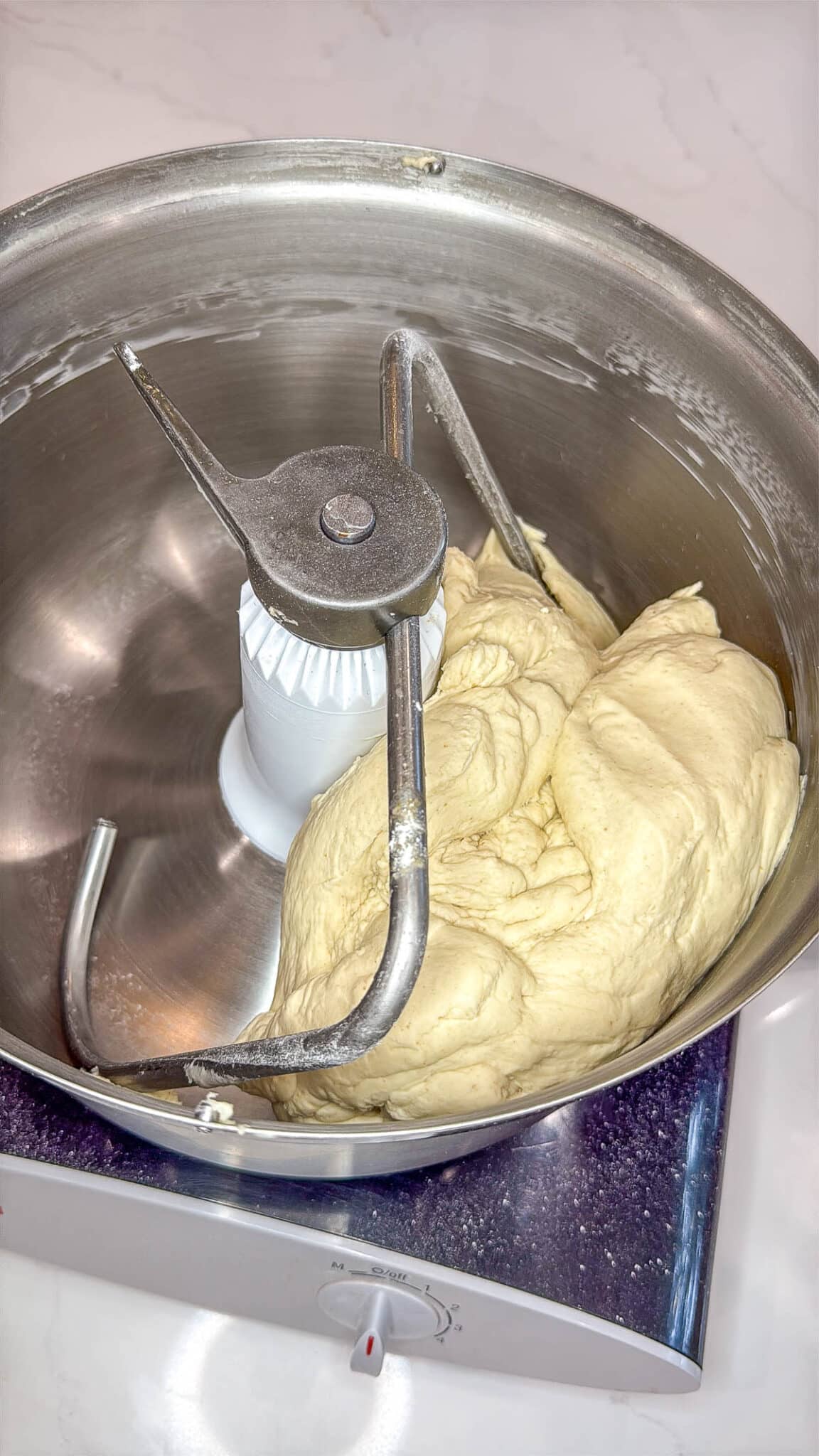
  1. Place your flour and yeast into the bowl of your stand mixer with the dough hook attachment and mix for a few seconds to combine everything together. While mixing on low, add the warm water mixture to the flour mixture and mix until combined (about 30 seconds). Sprinkle in your salt while mixing on low. We add the salt after the yeast has been activated because salt can also get in the way of yeast growing.  Continue mixing on medium-high speed for 6 minutes. (speed 4 on the KitchenAid, speed 2 on the bosch). Once it has mixed enough, the dough will "clean" the sides of the bowl, the surface of the dough will look smooth, and it will feel firm and slightly tacky. The consistency of bagel dough is much stiffer than most bread doughs.

Tip to Adjust the Consistency of the Dough. If your dough looks too wet, you can add a couple of tablespoons of flour. If the dough looks too dry, add a couple of tablespoons of water. The dough should look rough and sticky, and stick to the bowl at first. 

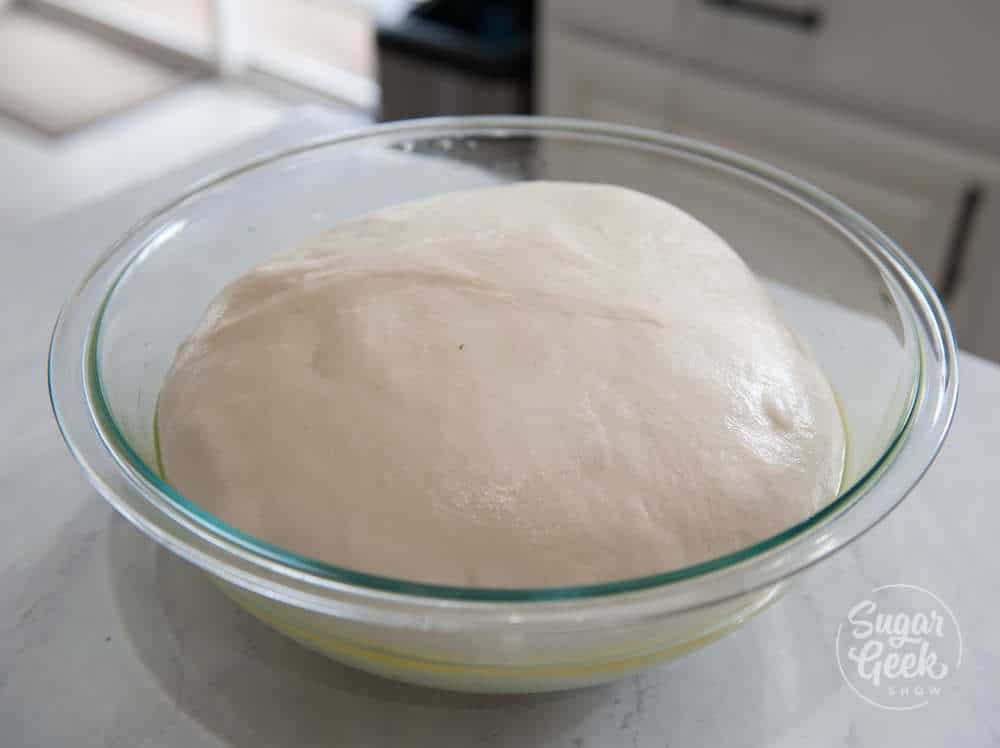
Bagel dough proofing in a bowl.
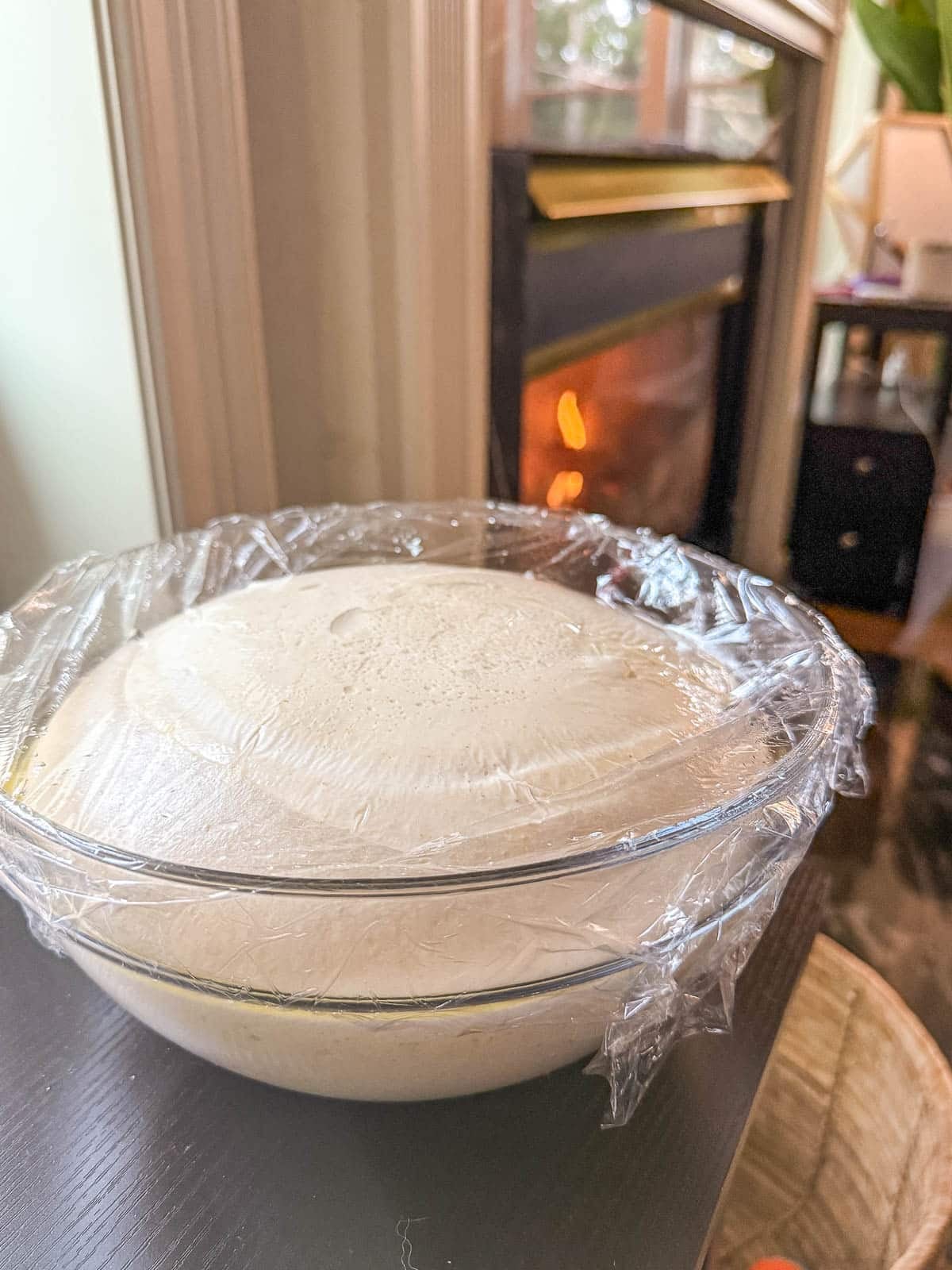
  1. Cover the dough with a tea towel or plastic wrap to keep the dough from drying out and set it aside in a warm place to rise until it doubles in size, about 30-60 minutes. The warmer the spot, the faster the dough will rise. I like to put mine by the fireplace or turn on the oven to the lowest setting for about 15 minutes to warm it up, turn the oven off, open the door, and place the dough on the door to rise.
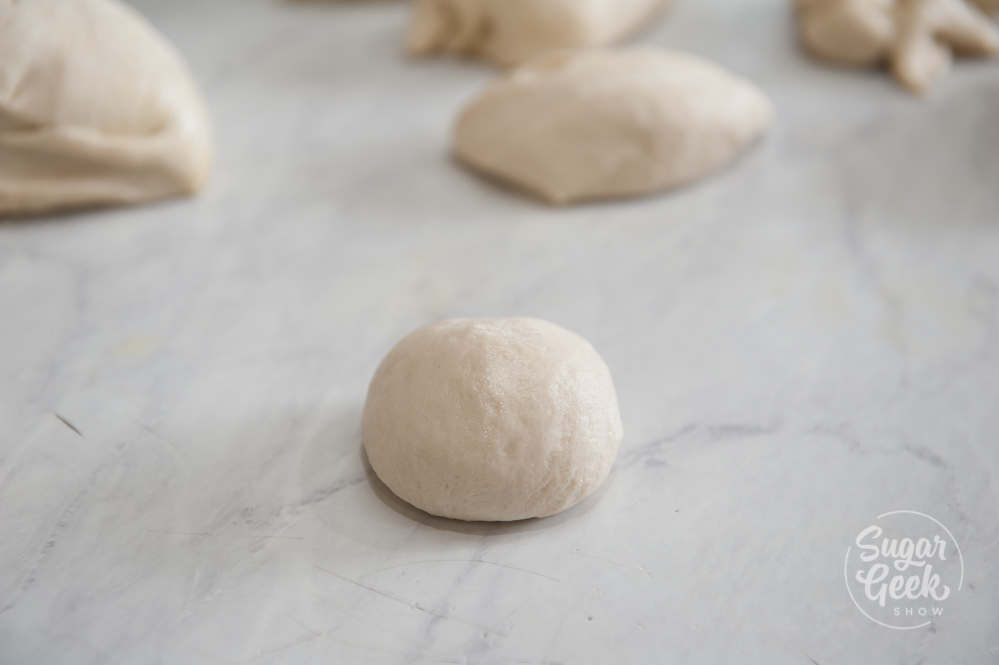
A bagel dough ball shaped on a counter.
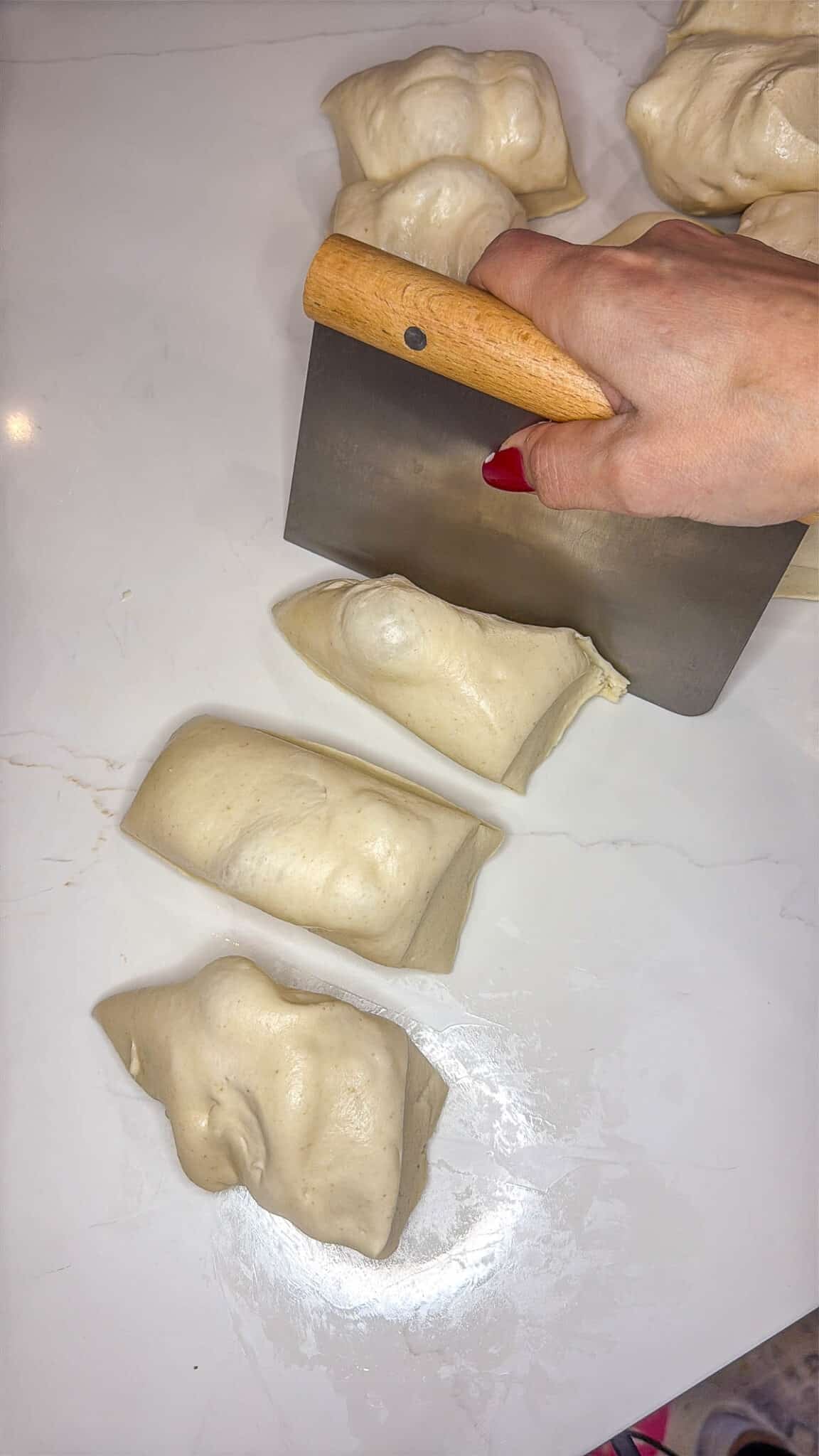
  1. When the dough is ready, divide it into 18 equal pieces. Don't worry, they don't have to be perfect! Then, fold all the rough edges to the underside, shaping it into a rough dough ball. Cup the dough ball under your hand and roll it in a circle against the table to form a smooth, tight ball. Let the dough rest while you form the rest of the balls. 

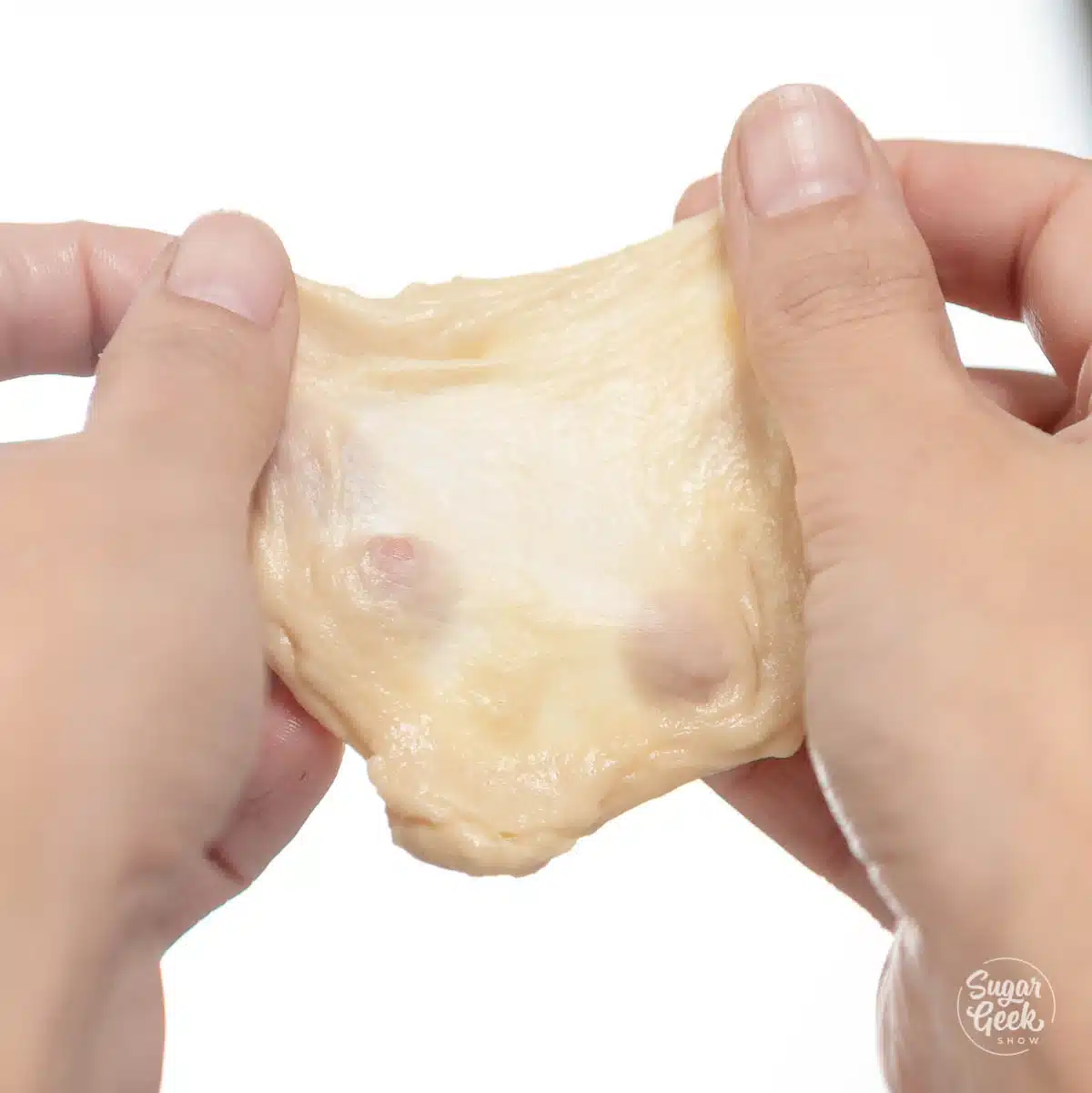
Tests to Know Your Dough is Ready: First, perform the windowpane test. Take a golf ball-sized piece of the dough and stretch it between your fingers carefully. If you can make a thin sheet of dough that you can almost see through (a window), then the dough is ready. Another test is to poke the dough. If it bounces back, then that's a good sign the gluten has developed enough, and the dough is ready. 

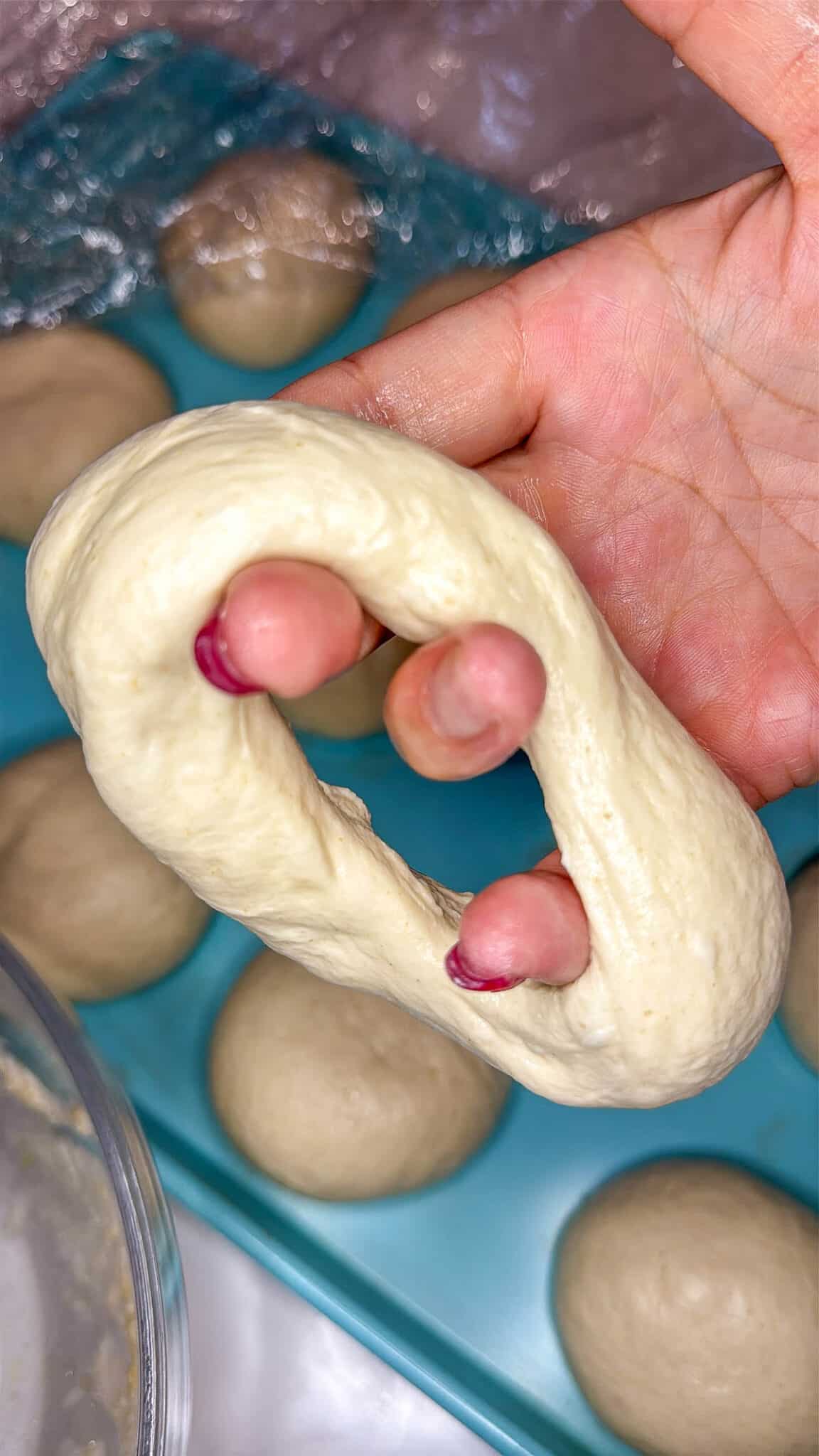
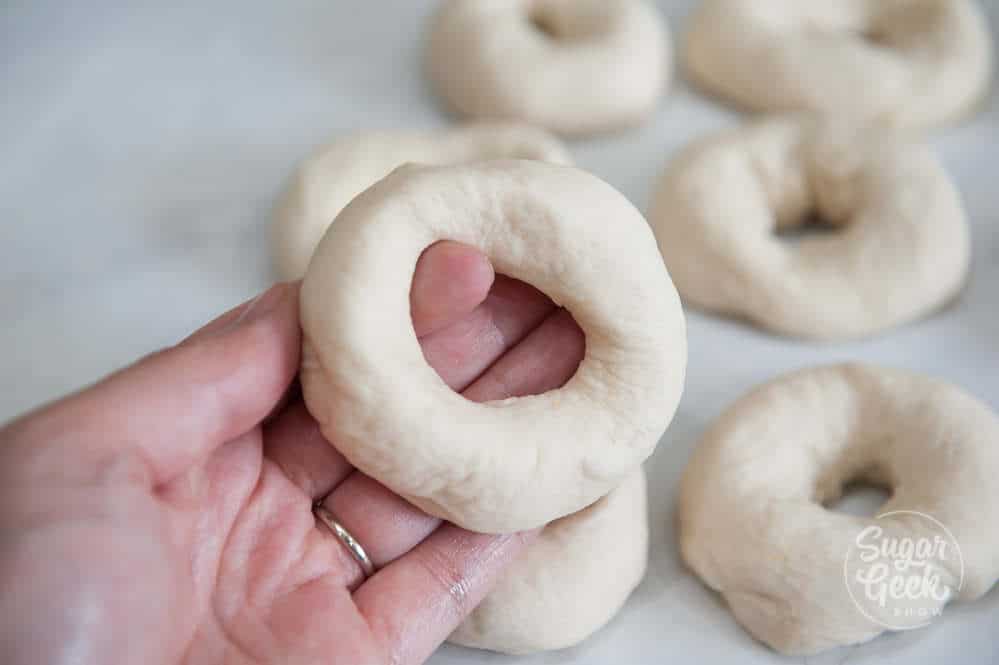
A hand holding a homemade bagel dough being formed.
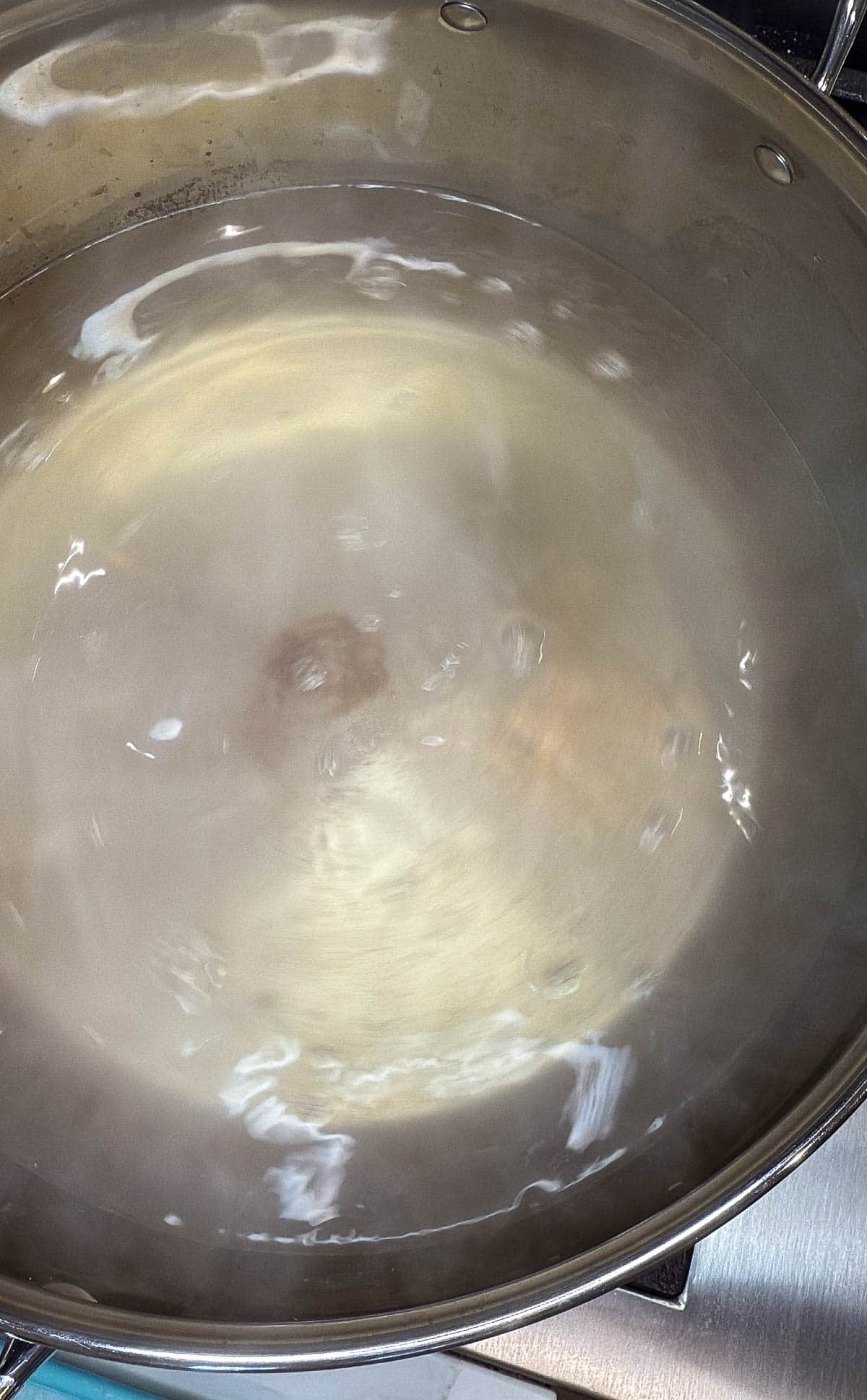
  1. Poke a hole in the center of the dough and stretch the hole so it's about 2" wide. Set the bagels aside to rest and rise for 10 minutes. At this time, bring two quarts of water and ¼ cup of honey or maple syrup to a boil. You will also want to preheat your oven to 425ºF and line two sheet pans with parchment paper or a silicone baking mat as well.
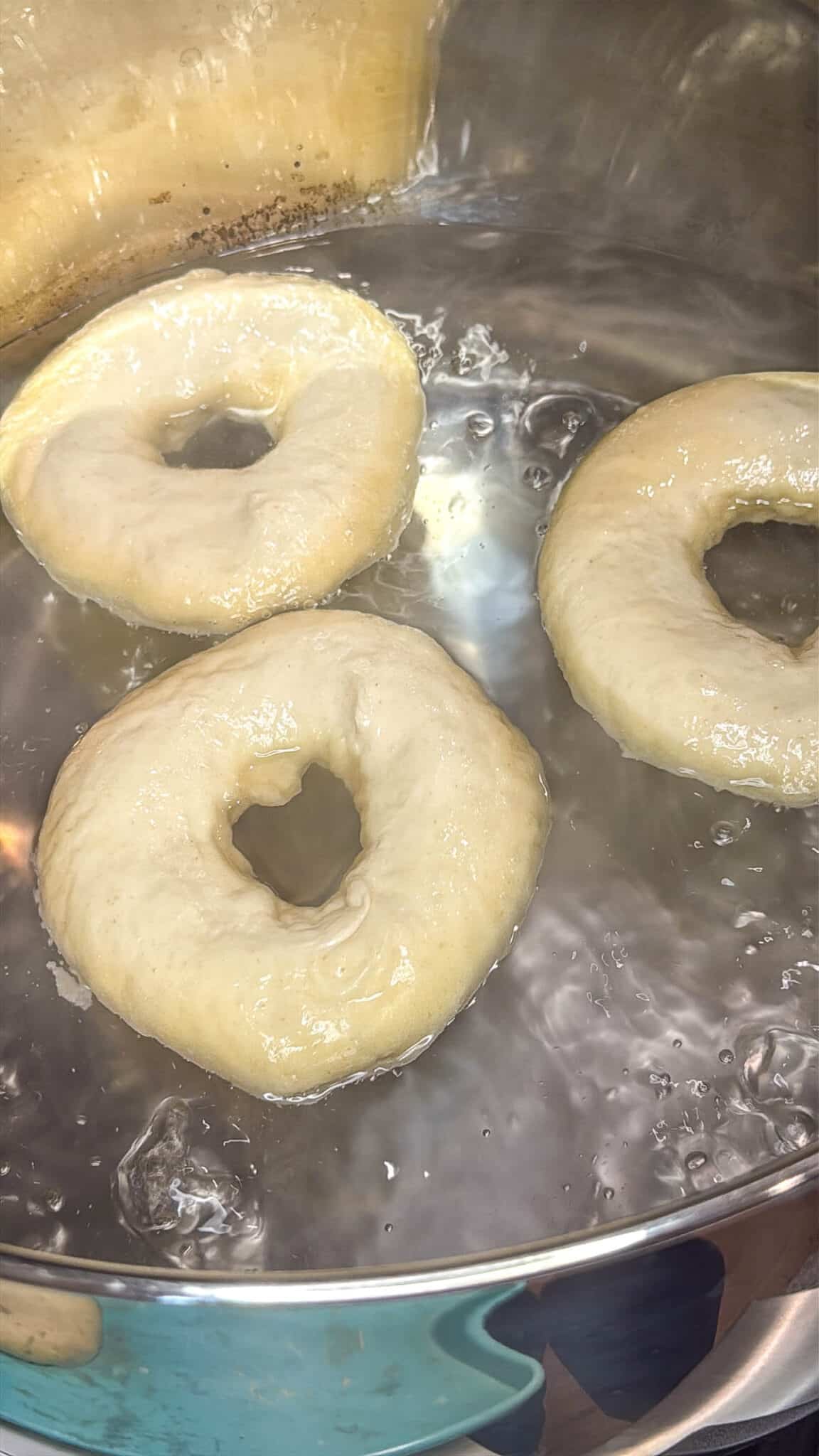
Boiling bagels in water with a slotted utensil lifting one from the pot.
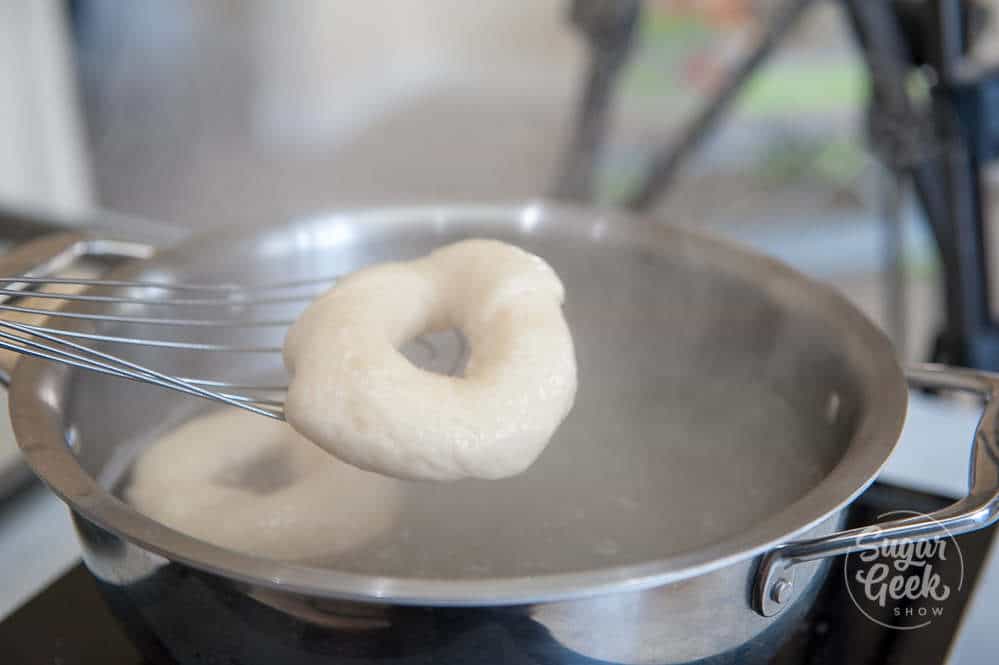
  1. When the water is at a steady boil, place your shaped bagels into the water and let them cook for about 30 seconds, and then flip them over and repeat cooking on the other side. Scoop them out of the hot water with a slotted spoon or fancy gravy whisk, as I am using in the picture. Let them drain for a few seconds.

Perfection Isn't Important: Don't worry if your bagels don't look perfect. Since these are homemade, a rustic look is just fine, and they will still taste delicious. 

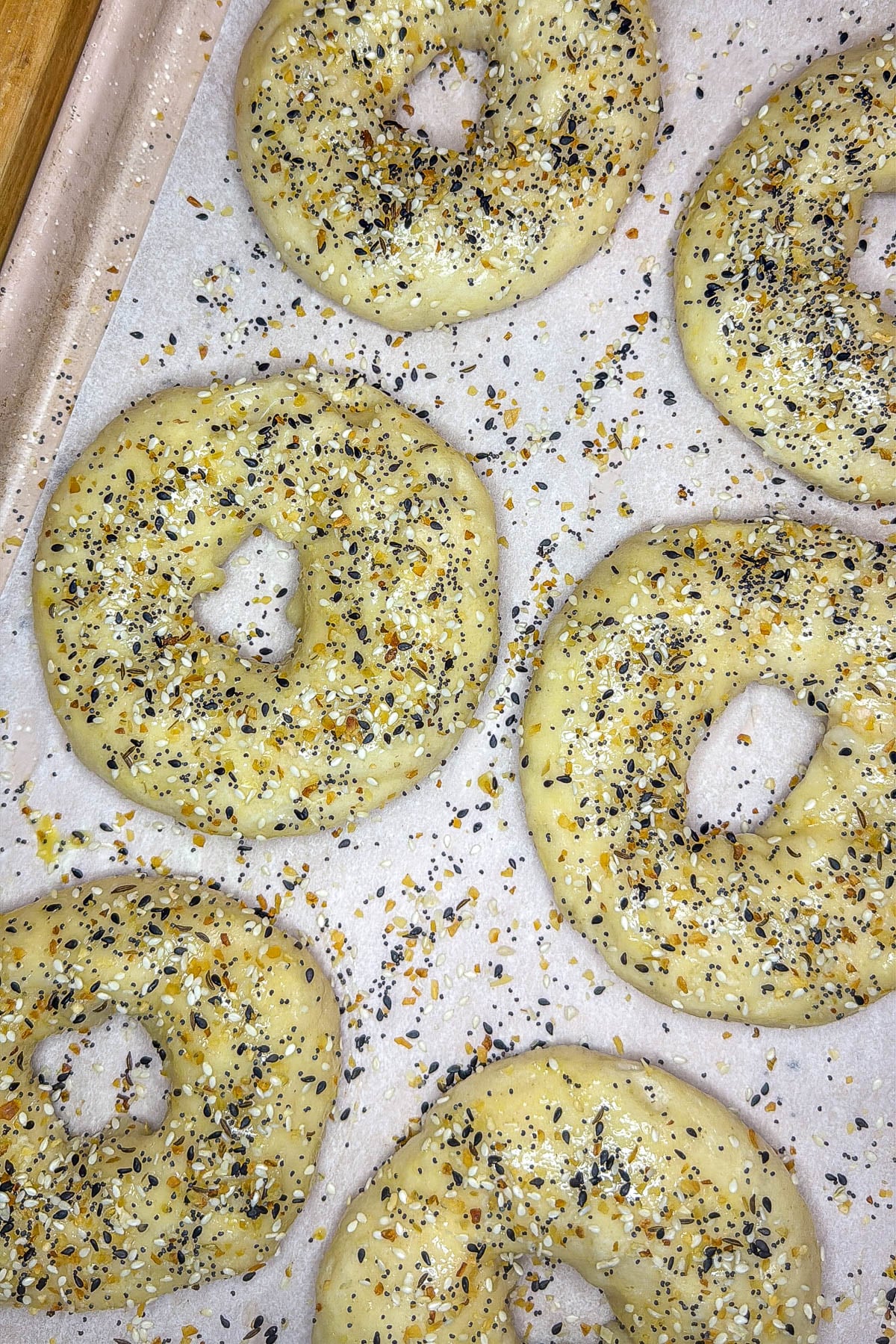
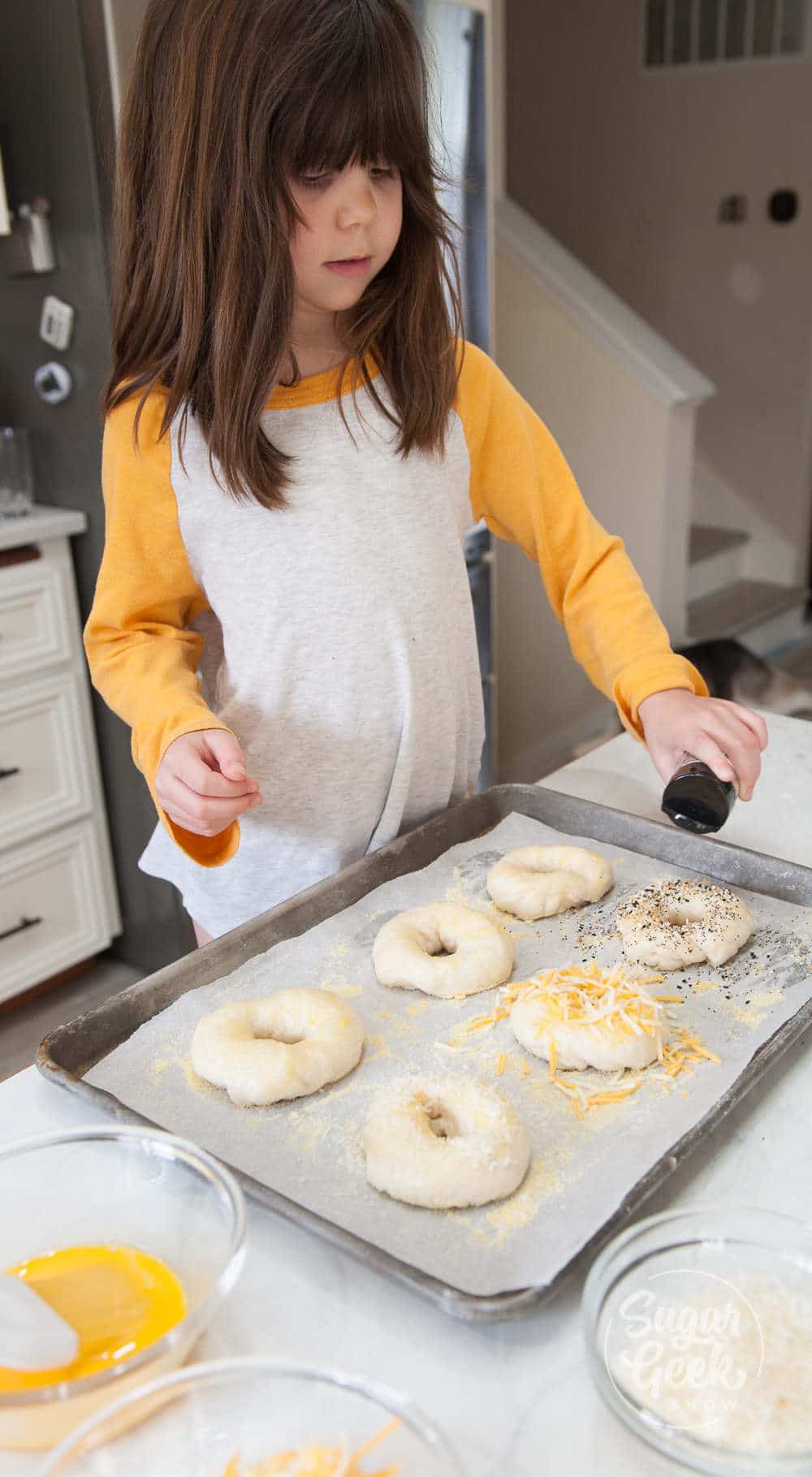
Sprinkling toppings on bagels.
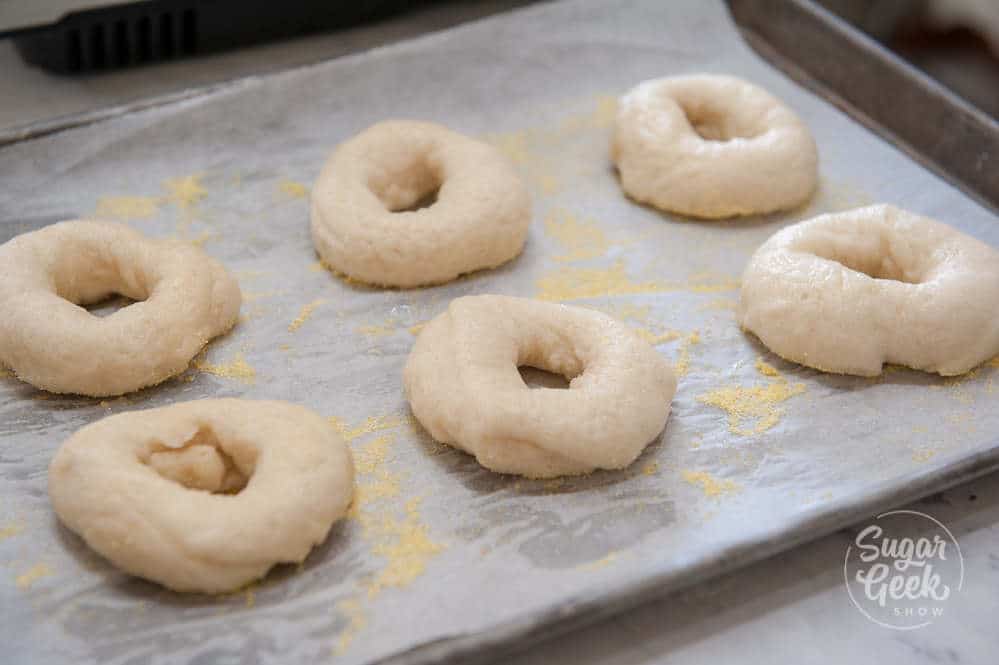
  1. Place the boiled bagels on a parchment-covered sheet pan with some cornflour sprinkled on top. The cornflour keeps the bagels from sticking to the parchment.  Brush the bagels with the egg wash and then add your favorite toppings.
Homemade bagels baked on a pan.
  1. Bake the bagels in your preheated oven for 20-25 minutes or until they are nice and golden brown.

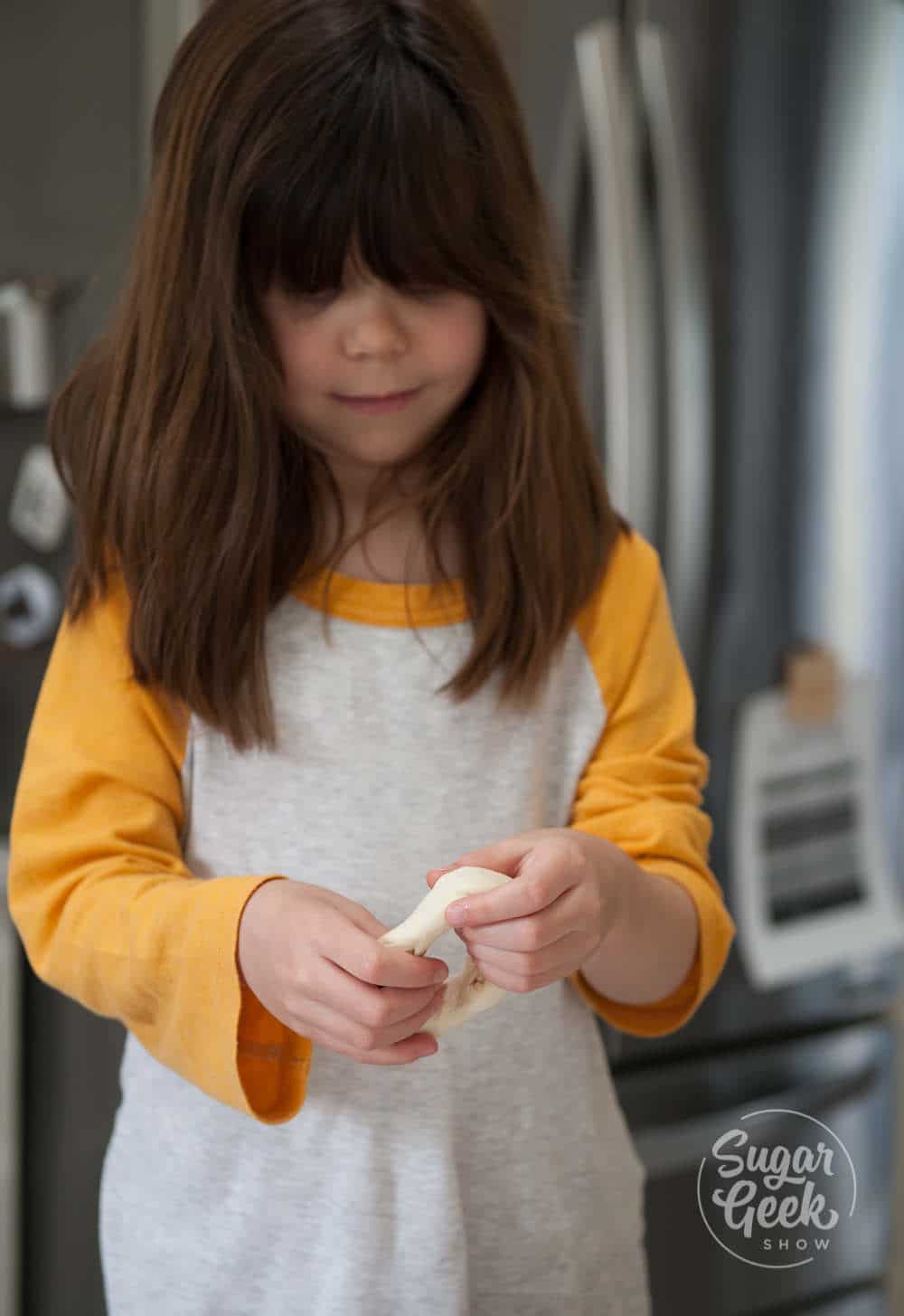
Get Kids Involved: This bagel recipe is perfect for getting kids into the kitchen. It's hands-on, a little messy, and really fun. Let them help roll the dough into balls, poke and stretch the centers, or sprinkle on their favorite toppings. Making the hole in the center of the bagel was my daughter's favorite part, and it's a great job for little kids so they can feel like they're helping. It's an easy way to turn this bagel recipe into a fun afternoon activity you can do together. Next, have the kids help you bake a batch of cut-out sugar cookies!

Little girl with brown shoulder-length hair and white and yellow shirt shaping a bagel with her hands

Common Mistakes To Avoid

  • Not making the hole big enough. The hole shrinks during boiling and baking, so aim for about 2 inches wide when you shape it. Too small and it will close up completely and you will end up with a bread roll.
  • Using water that is too hot. The water for your dough should be between 110°F and 115°F. Hotter than that kills the yeast and your dough will not rise.
  • Skipping the rest after shaping. Even 10 minutes lets the gluten relax, which helps the bagels hold their shape and rise more evenly.
  • Overcrowding the pot when boiling. Too many bagels at once drops the water temperature and causes sticking. Work in batches of 3 to 4 at a time.
  • Skipping the boil entirely. The boil is what creates the signature shiny, chewy crust. Without it you get a bread roll, not a bagel.
  • Slicing before they are fully cooled. Cutting in too soon traps steam and makes the crumb gummy. Wait at least 20 minutes.

Homemade Bagel Recipe FAQs

Can I use active dry yeast to make this bagel recipe?

Absolutely! If you don't have instant yeast, don't worry, because you can still use this bagel recipe with active dry yeast. Follow all the directions for mixing the bagel dough. After mixing, you will need to let your bagel dough proof for 90 minutes instead of 30 minutes, and then also extend the rest time after shaping them to 20 minutes instead of 10.

Why do you boil bagels before baking?

The secret to chewy bagels is actually boiling them in water before baking. I know it's kind of weird, but it works. Boiling gelatinizes the starches on the outside of the dough, which creates that signature shiny, chewy crust. Bagels are typically boiled in lightly sweetened, salted water for about 30 seconds per side, though you can go up to a minute for an even thicker, chewier crust. Skip this step, and you'll end up with something closer to a bread roll than a true bagel.

Can I make this homemade bagel recipe without a stand mixer?

Yes, you can knead the dough by hand on a lightly floured surface for about 10-15 minutes. The dough should be firm, smooth, and slightly tacky. You'll know it's ready when it passes the windowpane test, meaning you can stretch a small piece thin enough to see light through without it tearing.

Can I make homemade bagel dough the night before?

Yes, you can! Not only does making them ahead give you more flexibility, but it also improves the chew, flavor, and crust of your bagels. Prepare the recipe up through shaping the bagels, then place them on a tray, cover, and refrigerate for 8-24 hours. When you're ready to prepare, boil them straight from the fridge the next day and bake.

You can also freeze the shaped dough, then thaw it overnight in the fridge before boiling and baking, but the results are slightly less consistent.

Why are my easy homemade bagels not chewy?

Bagels usually turn out less chewy if they aren't boiled long enough, the wrong flour is used, or the dough hasn't proofed properly. For the best texture, boil each bagel for at least 30 seconds per side, use bread flour for higher gluten development, and make sure the dough has had enough time to rise so it bakes up with that classic chew.

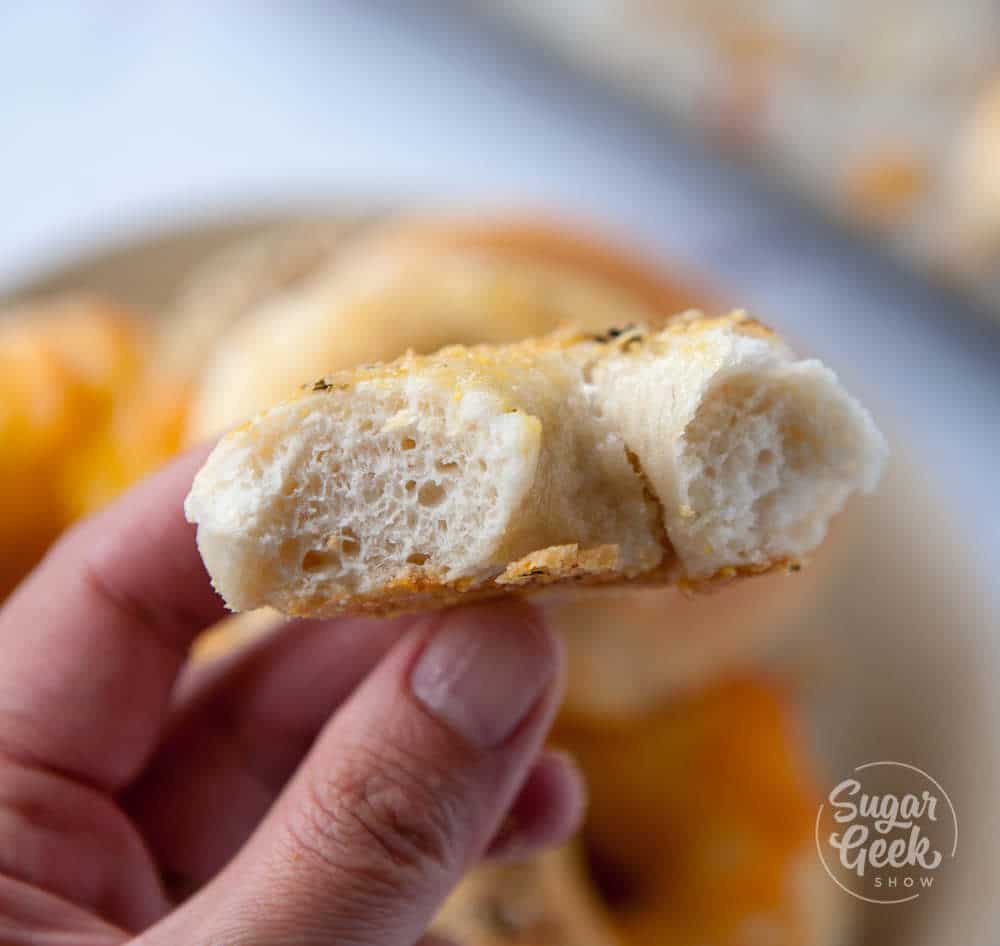
A homemade bagel broken in half to show the inside texture.

More Homemade Bread Recipes

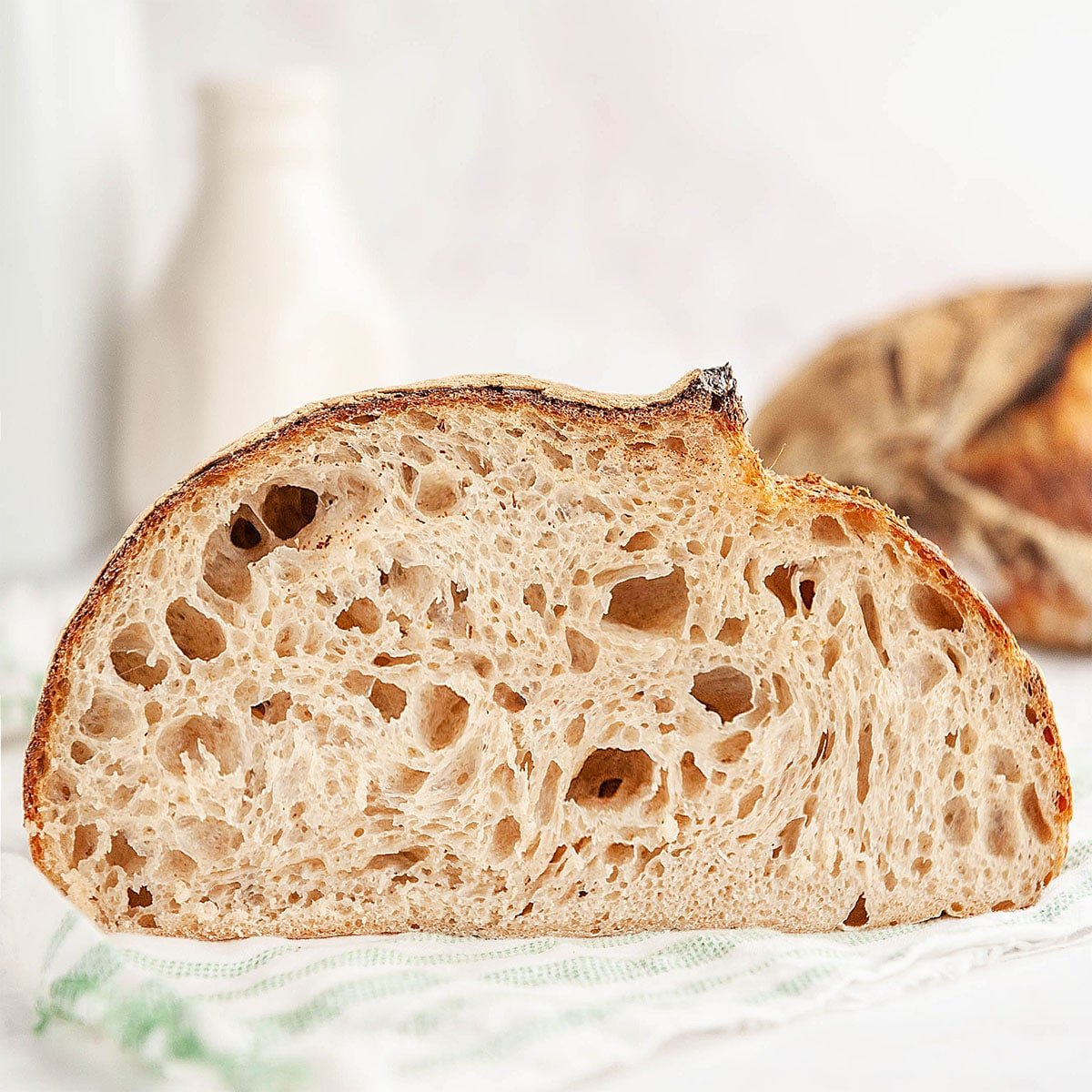
  • sourdough bread cut open to show crumb
    Beginners Sourdough Bread Recipe Step-By-Step
  • closeup of homemade dinner rolls with butter and sea salt
    Fast Dinner Rolls
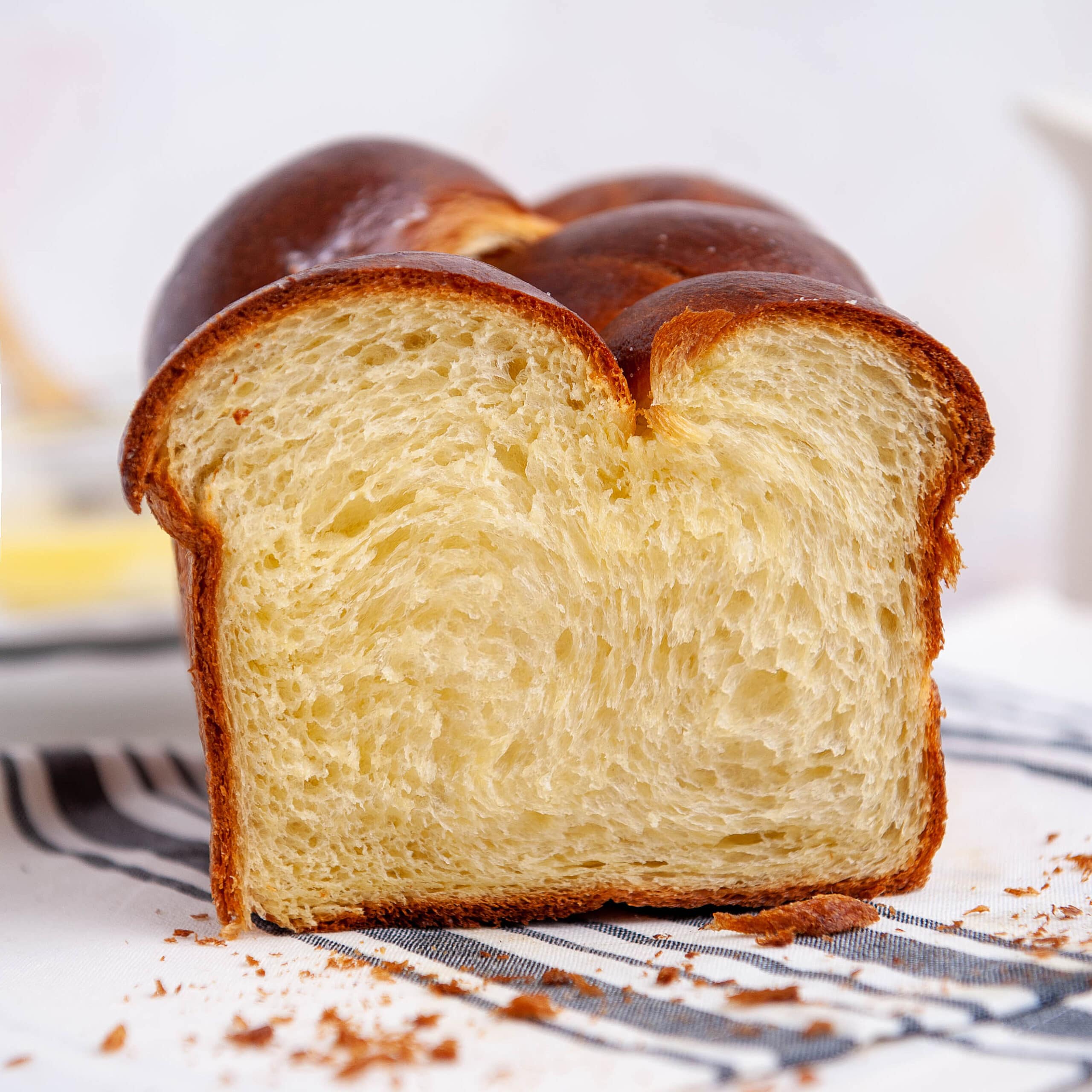
  • closeup of sliced brioche bread
    Brioche Bread Recipe
  • Sourdough Rolls

Ready To Master Cake Decorating?

Join Sugar Geek University and learn professional techniques through detailed cake decorating courses, tutorials, and real kitchen demonstrations by
award-winning cake decorator, Liz Marek.

Start Learning Now

Recipe

Homemade bagels on a sheet pan.
Print Recipe
4.80 from 72 votes

Easy Homemade Bagel Recipe

Chewy on the outside and soft on the inside, these homemade bagels are made with a simple dough and a quick boil for that classic bakery-style texture. This easy recipe makes 18 bagels-perfect for topping, toasting, and freezing for later.
Prep Time10 minutes mins
Cook Time20 minutes mins
Proof Time30 minutes mins
Course: Appetizer
Cuisine: American
Servings: 18 bagels
Calories: 203kcal
Author: Liz Marek

Equipment

  • Stand mixer with dough hook

Ingredients

  • 30 ounces bread flour or all-purpose flour
  • 1 Tablespoon brown sugar
  • 2 Tablespoons olive oil
  • 14 grams instant yeast or active dry (see notes below recipe)
  • 16 ounces warm water (110ºF)
  • 2 teaspoons salt

Waterbath

  • 64 ounces water
  • 2 ounces honey or maple syrup
  • 1 Tablespoon salt

Egg wash

  • 1 large egg
  • 1 Tablespoon water
US Customary - Metric

Instructions

  • Heat your water to 110º-115ºF. Combine the water with the brown sugar, and oil and set aside.
  • Place your flour and instant yeast into the bowl of your stand mixer with the dough hook attached. Mix for 5 seconds to distribute the yeast.
  • Pour in your hot water mixture into the dry ingredients while mixing on low, just until everything is moistened.
  • While mixing on low, sprinkle in your salt and mix until combined.
  • Increase the speed to medium-high (speed 4 on a kitchenaid, speed 2 on the bosch) and mix the bagel dough for 6 minutes. If your dough is too dry, add a tablespoon or two of water until the dough sticks to the sides of the bowl. If it's too wet, sprinkle in a little flour.
  • Poke the dough, does it bounce back? The dough is ready to proof. You can also do the windowpane test (see blog post). If the dough isn't ready, mix for another two minutes or until the dough passes these tests .
  • Form the dough into a tight ball and place it into an oiled bowl. Cover and let the dough proof in a warm spot for 30-60 minutes or until it has doubled in size. (proof 90 minutes if you're using active dry yeast).
  • Divide your dough into 18 equal sized pieces.
  • Shape your bagels into a ball and then poke a hole through the center. Stretch the hole to about 2" wide and set the bagel aside to rest for 10 minutes.
  • Bring 8 cups of water to a boil and add in 1 teaspoon of salt and ¼ cup of honey or maple syrup.
  • Prepare two sheet pans with parchment paper. Sprinkle a good amount of corn flour (semolina) on top. This prevents the bagels from sticking.
  • Preheat your oven to 425ºF.
  • Place your bagels into the boiling water and cook for 30 seconds on each side then drain with a slotted spoon before placing onto the parchment paper.
  • Whisk together the egg and water. Brush all your bagels with egg wash using a pastry brush and sprinkle on your desired toppings.
  • Bake at 425 for 20-25 minutes or until they are golden brown.

Video

Notes

  • To proof bread, I turn my oven on to 170ºF and open the door then place my dough on the door near the opening of the oven to proof, not INSIDE the oven. 
  • If you don't have instant yeast your can use regular active yeast but it will take longer to proof. You don't need to change the amount of yeast.
    • Let your dough proof for 90 minutes or until it doubles in size
    • Divide the dough, shape, brush with egg wash, let rest for 20 minutes before baking.
  • You can replace half the white flour with wheat flour for whole wheat bagels
  • You can use melted butter instead of oil or any other kind of oil that you like

Nutrition

Serving: 1bagel | Calories: 203kcal | Carbohydrates: 38g | Protein: 6g | Fat: 3g | Saturated Fat: 0.4g | Polyunsaturated Fat: 1g | Monounsaturated Fat: 1g | Trans Fat: 0.001g | Cholesterol: 10mg | Sodium: 657mg | Potassium: 61mg | Fiber: 1g | Sugar: 3g | Vitamin A: 16IU | Vitamin C: 0.02mg | Calcium: 13mg | Iron: 1mg
Vanilla cupcakes on a white stands decorated with white buttercream and pink sprinkles.

March 14, 2026 Cupcakes

Moist Vanilla Cupcake Recipe

If you're looking for a vanilla cupcake recipe that actually works, this is the one I've been using professionally for over ten years. The reverse creaming method is what makes these special. Instead of creaming the butter and sugar together first, you mix the butter with the flour before adding any liquid. This coats the flour in fat, which limits gluten development and gives you a finer, more tender crumb with a domed top that doesn't sink. Buttermilk adds a subtle tang and helps the cupcakes rise, and a little oil keeps them moist for days. I've made these for weddings, birthday parties, and baby showers, and they never let me down. If you love soft, bakery-style cupcakes, you're going to want to try my white velvet buttermilk cake next, which uses the same method for a full-size layer cake.

A moist vanilla cupcake on a white stand with more in the background.

Quick Glance at this Moist Vanilla Cupcake Recipe

  • Recipe Name: Moist Vanilla Cupcakes
  • Why You'll Love It: Bakery-quality vanilla cupcakes with a soft, tender crumb and reliable rise using the reverse creaming method.
  • Time and Difficulty: Prep time 10 minutes, baking time 18 minutes, Difficulty: easy
  • Main Ingredients: Cake flour, buttermilk, butter, oil, sugar, eggs, vanilla extract, and baking powder.
  • Method: Reverse creaming method for a finer crumb and evenly domed cupcakes.
  • Texture and Flavor: Light, fluffy, and moist with a delicate vanilla flavor and subtle tang from the buttermilk.
  • Quick Tip: Measure all your ingredients before you start mixing. This ensures the process goes smoothly and you don't forget to add an ingredient.
ChatGPT
Google AI
Perplexity
Grok
Add us as a trusted site on Google
[feast_advanced_jump_to]

As a cake decorator, I've baked thousands of cakes and cupcakes for weddings, birthdays, and special events. This vanilla cupcake recipe is adapted from the same formula I use for my professional wedding and celebration cakes, so it's designed to deliver a soft crumb, reliable rise, and consistent results every time.

I love pairing these cupcakes with my rich chocolate buttercream frosting, but they're versatile enough to work with almost any frosting you like.

Just like my vanilla cake recipe, These cupcakes are best the day they're baked, but they'll stay fresh for up to 2 days at room temperature if stored in an airtight container. If you want to get ahead, you can bake and freeze the unfrosted cupcakes for up to 6 months. Just thaw them and frost on the day you plan to serve them for the best flavor and texture.

Why This Recipe Works

  • Uses the Reverse Creaming Method: The butter is mixed with the flour before any liquid is added. This coats the flour with fat, limiting gluten development and creating a finer, more tender crumb with a better dome than traditional creaming.
  • Buttermilk Instead of Milk: The acidity in buttermilk softens gluten and boosts the leavening, helping the cupcakes rise well while adding a subtle tang that deepens the vanilla flavor. I also use them in this chocolate cupcake recipe.
  • Combination of Fats: Using both butter and oil is intentional. Butter adds flavor, while the oil keeps the cupcakes moist longer. This combination delivers rich taste and a soft texture.
  • Uses Cake Flour: Cake flour has less protein than all-purpose flour, which means less gluten can form. That's key for the light, delicate crumb these vanilla cupcakes are known for.

⭐️⭐️⭐️⭐️⭐️ Reader Review

"I will never visit one Michigan's top bakeries again for cupcakes! Simply the best I have ever eaten or made in my whole entire life! Thank you for blessing the world with this phenomenal recipe. These cupcakes were beyond moist, flavorful, with a buttery, but not greasy delicate crumb! Amazing!"
- Melinda

Ingredients

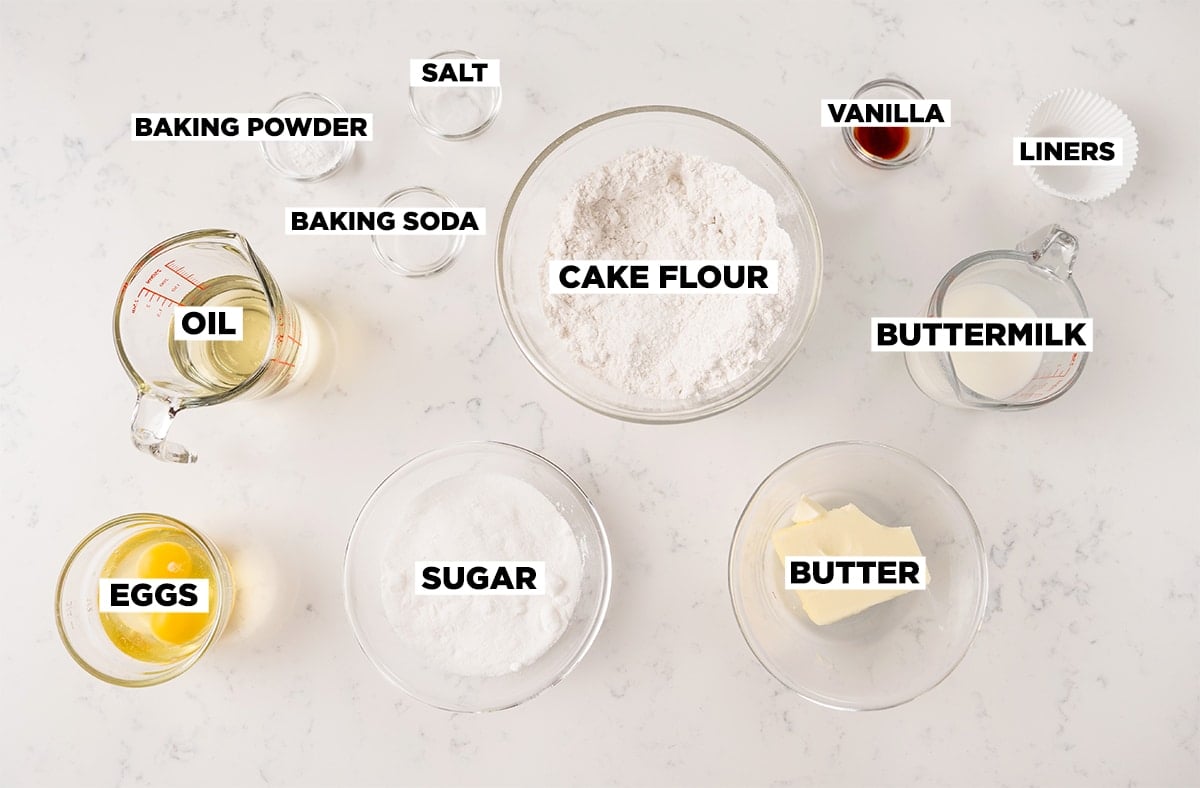
vanilla cupcake ingredients.

  • Buttermilk: Adds flavor and moisture. Buttermilk is acidic and actually breaks down the gluten in the flour, making a more tender cupcake as well. If you have whole milk and white vinegar or lemons, you can make your own buttermilk substitute.
  • Oil: This keeps the cupcakes moist, but too much oil in a recipe will cause the wrappers to peel away from the cupcake, so measure carefully.
  • Cake flour: The secret to this soft and fluffy vanilla cupcake recipe. This recipe uses the reverse creaming method, which coats the flour in a layer of butter and then whips in the air. Cake flour has a lower protein content than all-purpose flour, so it's important to use it to get the right texture. If you don't have cake flour, you can use my cake flour substitute recipe, or buy a brand such as, "Shipton Mills soft cake and pastry flour." Cake flour is specific to the method used in this recipe, and using all-purpose flour will not work at all.
  • Vanilla Extract: Use a good-quality vanilla extract, vanilla bean paste, or even a vanilla bean for true vanilla flavor. One vanilla bean = 2 teaspoons vanilla extract. For that "classic grocery store cake" flavor, use clear vanilla extract. It's a bit sweeter, almost candy-like, and keeps vanilla cupcakes light in color since it doesn't tint the batter like regular vanilla extract.
  • Sugar: Sugar adds sweetness, moisture, and structure to the cupcake. It also helps create a tender crumb by interfering with gluten development. Reducing the sugar will affect the texture and how well the cupcakes rise.
  • Eggs: Eggs provide structure, moisture, and richness. They also help emulsify the batter, which is what gives the cupcakes a smooth, even crumb. Make sure they are at room temperature before mixing so the batter doesn't curdle.
  • Baking Powder and Baking Soda: These leavening agents work together to give the cupcakes lift and help set the dome. Baking soda reacts immediately when it hits the acidic buttermilk, while baking powder continues to react during baking for a reliable, even rise.
  • Salt: Salt balances the sweetness and enhances all the other flavors in the cupcake. Without it, the cupcakes can taste flat even if everything else is right.

See the recipe card for the full list of ingredients with quantities.

Cupcake Variations

  • Strawberry Shortcake Cupcakes: Top your vanilla cupcakes with strawberry buttercream and a fresh strawberry.
  • Chocolate Vanilla Cupcakes: Frost your moist vanilla cupcakes with a homemade chocolate ganache or chocolate fudge frosting.
  • Filled Cupcakes: Fill your cupcakes with some homemade lemon curd or fresh raspberry filling, and top them with fresh stabilized whipped cream for a lighter finish.
  • Add to the Batter: If you love funfetti cake or chocolate chips, you can add rainbow sprinkles or chocolate chips to the batter at the end of mixing. You can also add in some citrus zest, chopped fruit, or even crushed Oreos to the batter before baking.
  • Gluten-Free: You can swap the cake flour for your favorite brand of 1-to-1 gluten-free flour.

How to Make a Vanilla Cupcake Recipe

To get started, preheat the oven to 350ºF for at least 30 minutes prior to baking the cupcakes. This ensures that your oven is hot so you get a good rise and set the dome. You also want to line two cupcake pans (or a muffin pan will do) with paper liners at this time. You can also bake one pan at a time if you only have one cupcake pan. This vanilla cupcake recipe will make about 24 cupcakes.

Pro Tip: Use the photos as your guide for each step instead of relying strictly on mixing times, since visual cues are the best way to know when the batter is mixed correctly.

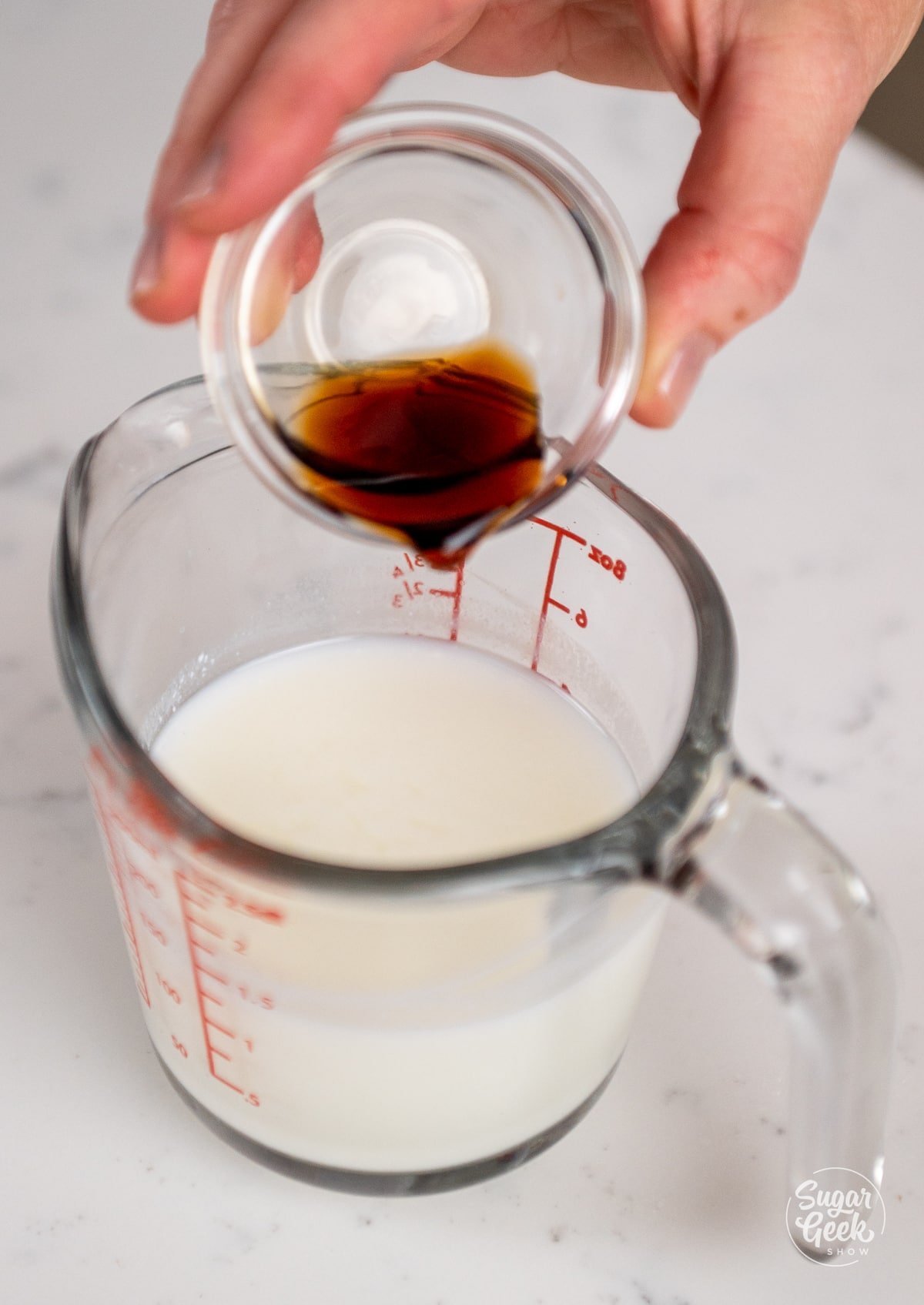
A hand adding vanilla to buttermilk in a measuring cup.
  1. Combine the vanilla and buttermilk in a separate measuring cup and set it aside. 
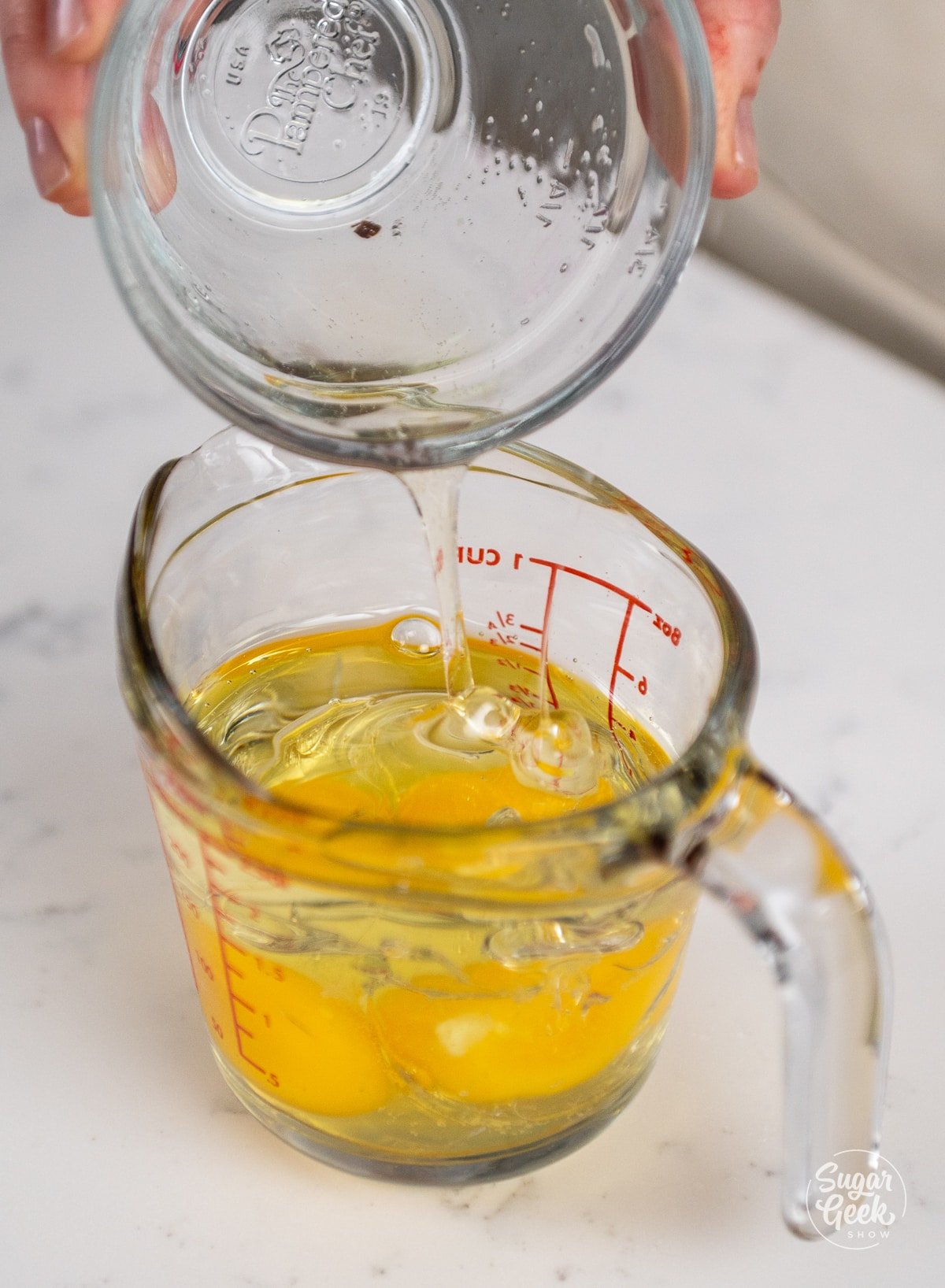
A hand adding eggs to oil in a measuring cup.
  1. Add the eggs and oil to a separate bowl. Whisk and set them aside. 
Adding flour to a stand mixer bowl.
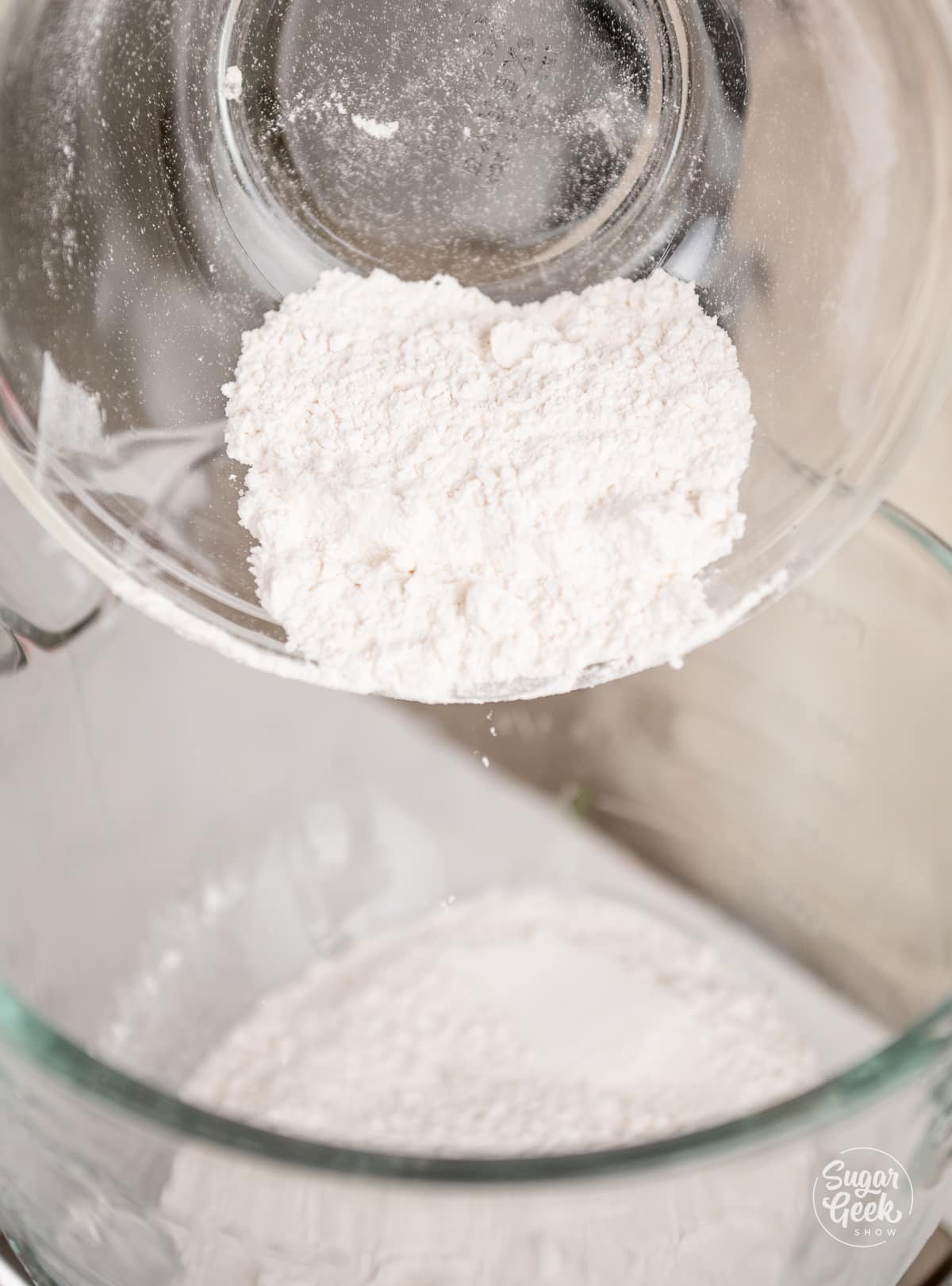
  1. Add the cake flour, sugar, salt, baking powder, and baking soda to the bowl of your stand mixer with the paddle attachment. No stand mixer? You can use a large bowl and an electric mixer but you may need to mix for longer to reach the same consistency.
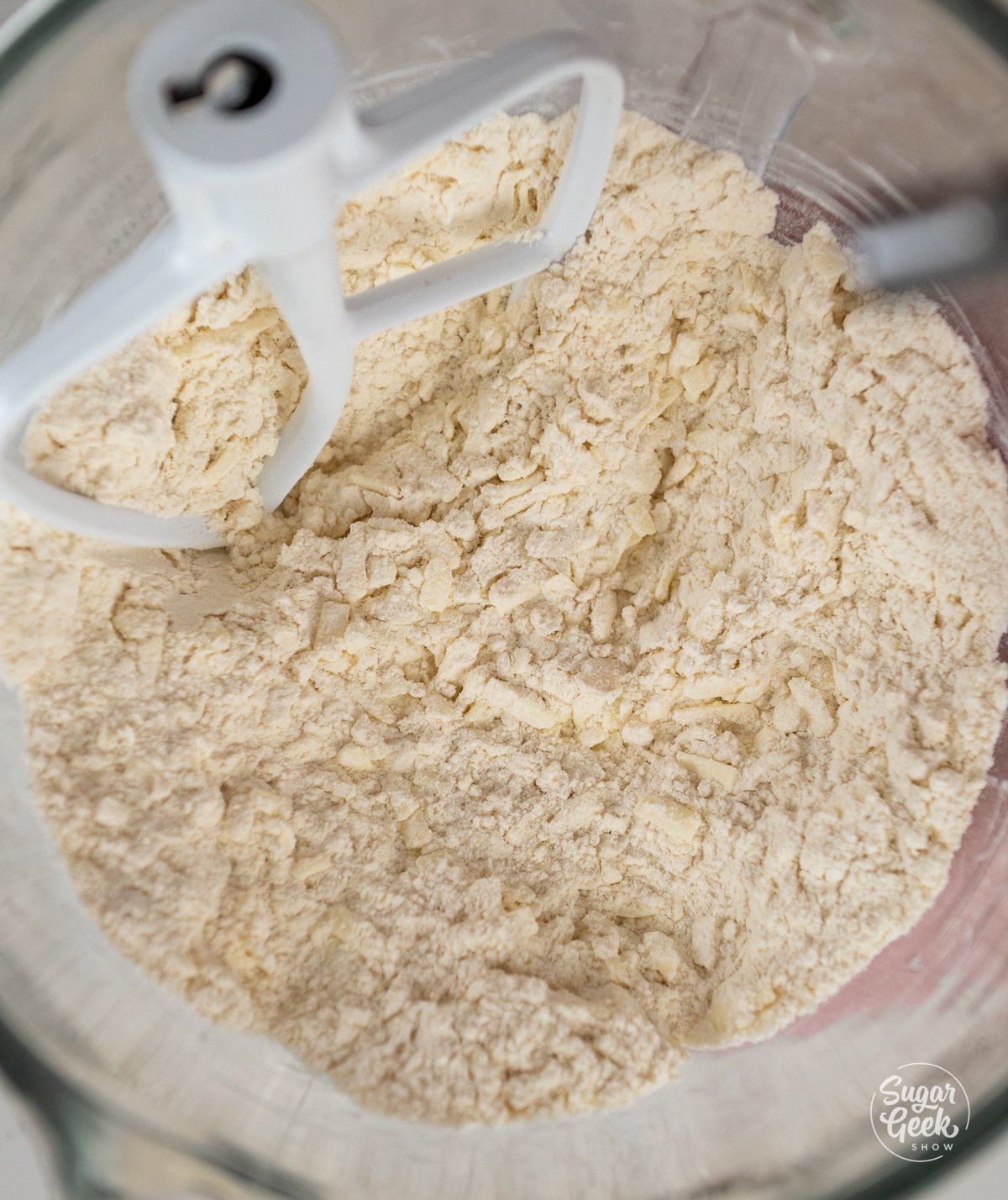
A hand showing the course sand texture after mixing the butter and flour.
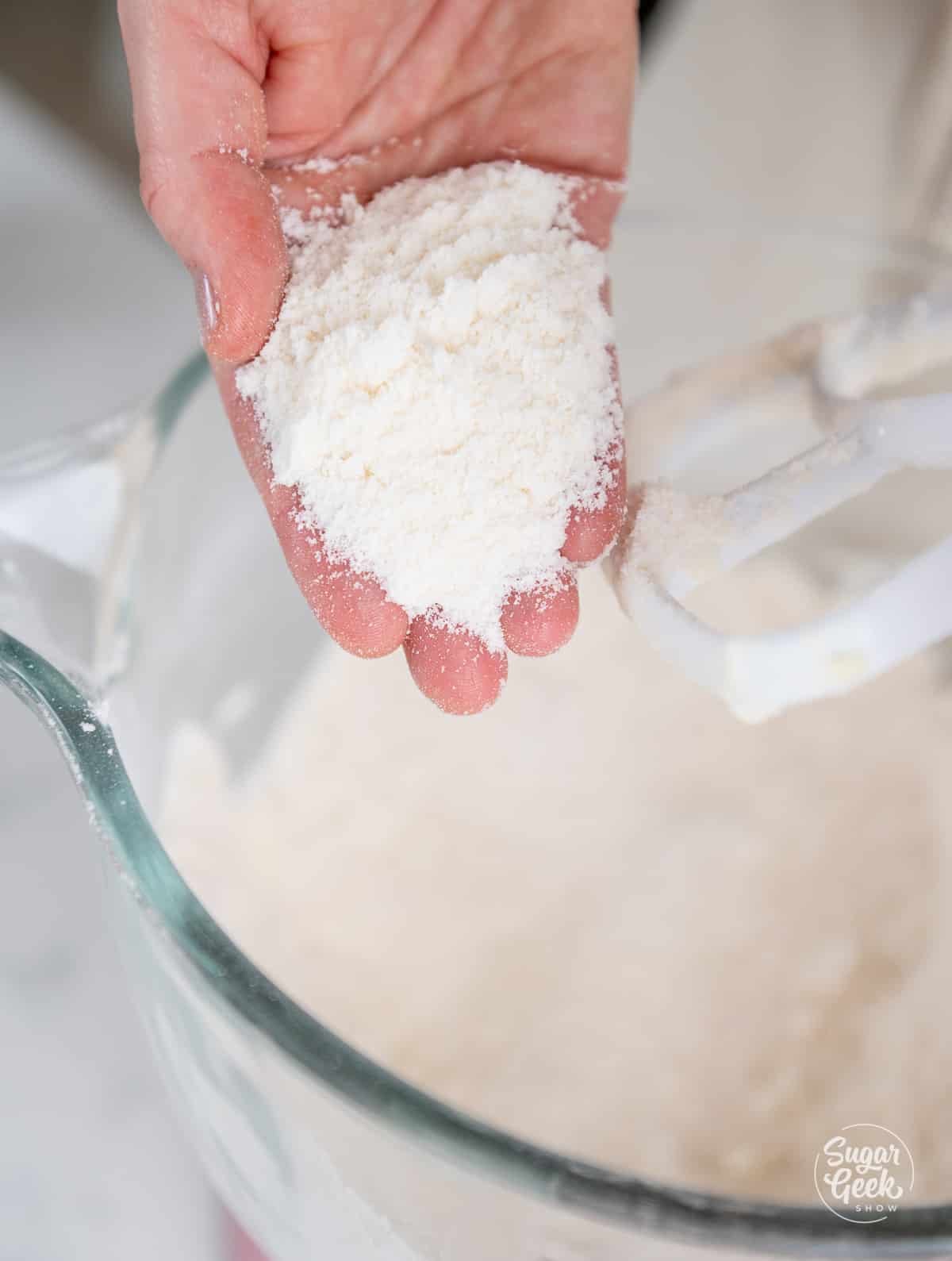
  1. Add the softened butter to the dry ingredients and mix on low until the mixture resembles a sandy texture but isn't clumping or dough-like, as shown in the image above. Depending on how soft your butter is, this might take a minute or two. 
Pouring the buttermilk mixture to the mixing bowl.
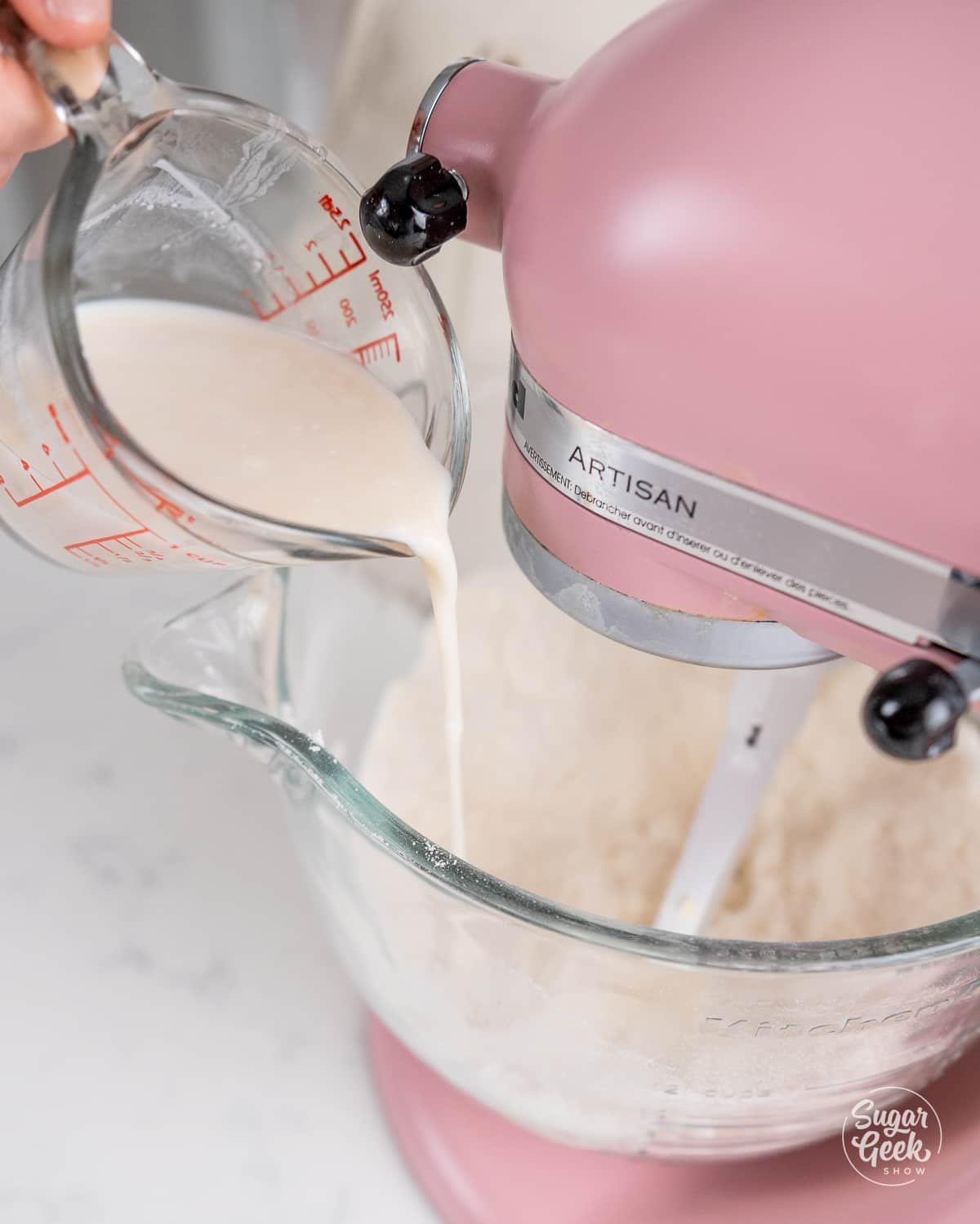
  1. Pour the milk mixture into your dry ingredients and increase the speed to medium (speed 4 on a KitchenAid, speed 2 on a Bosch). Mix for 1 ½ minutes to develop the fluffy structure of the cupcake. The batter will go from being yellow to a fluffy white.
Pouring the beaten egg and oil mixture to the mixing bowl.
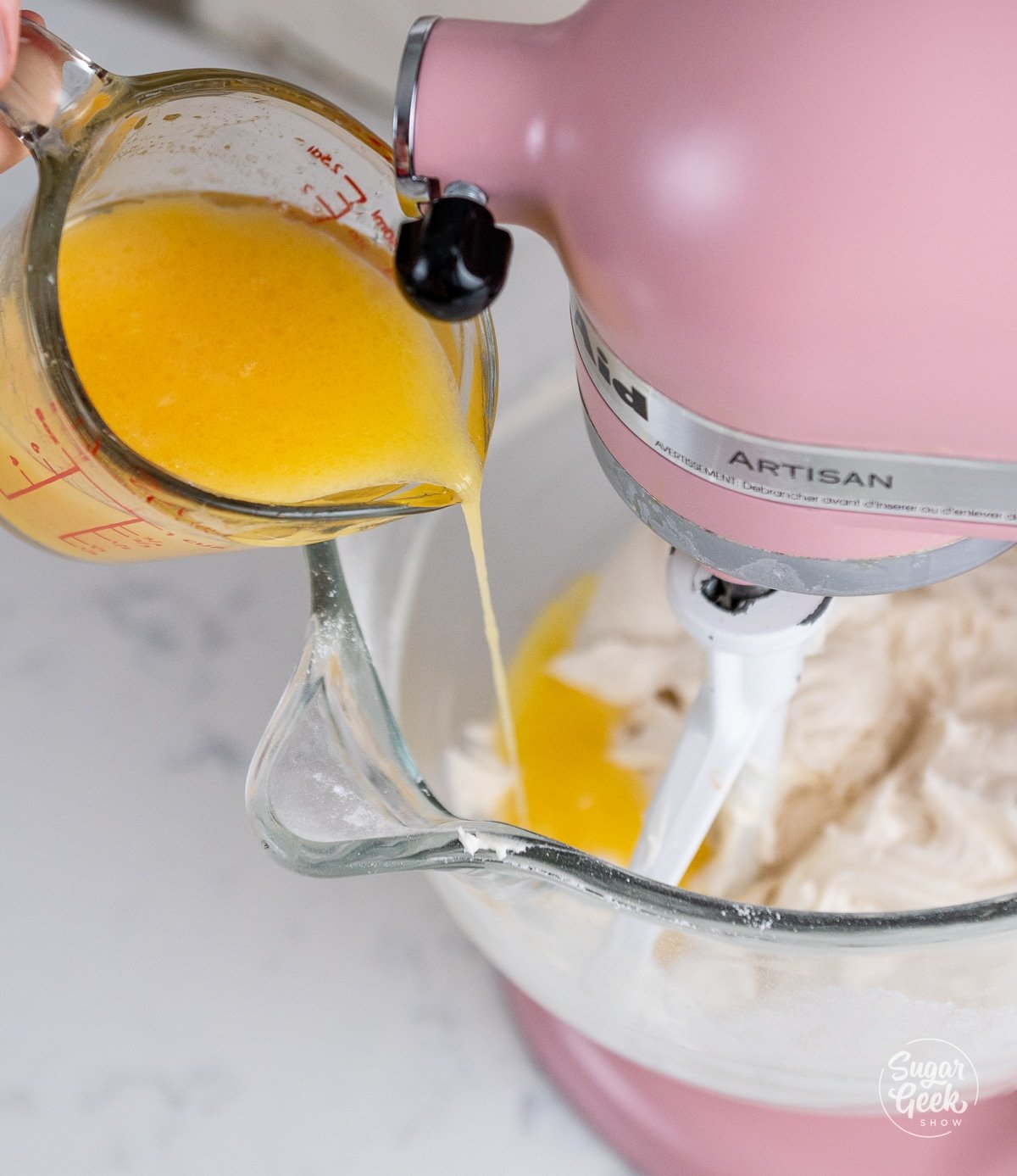
  1. Slowly add your egg mixture in three parts and mix on low until it's fully combined.
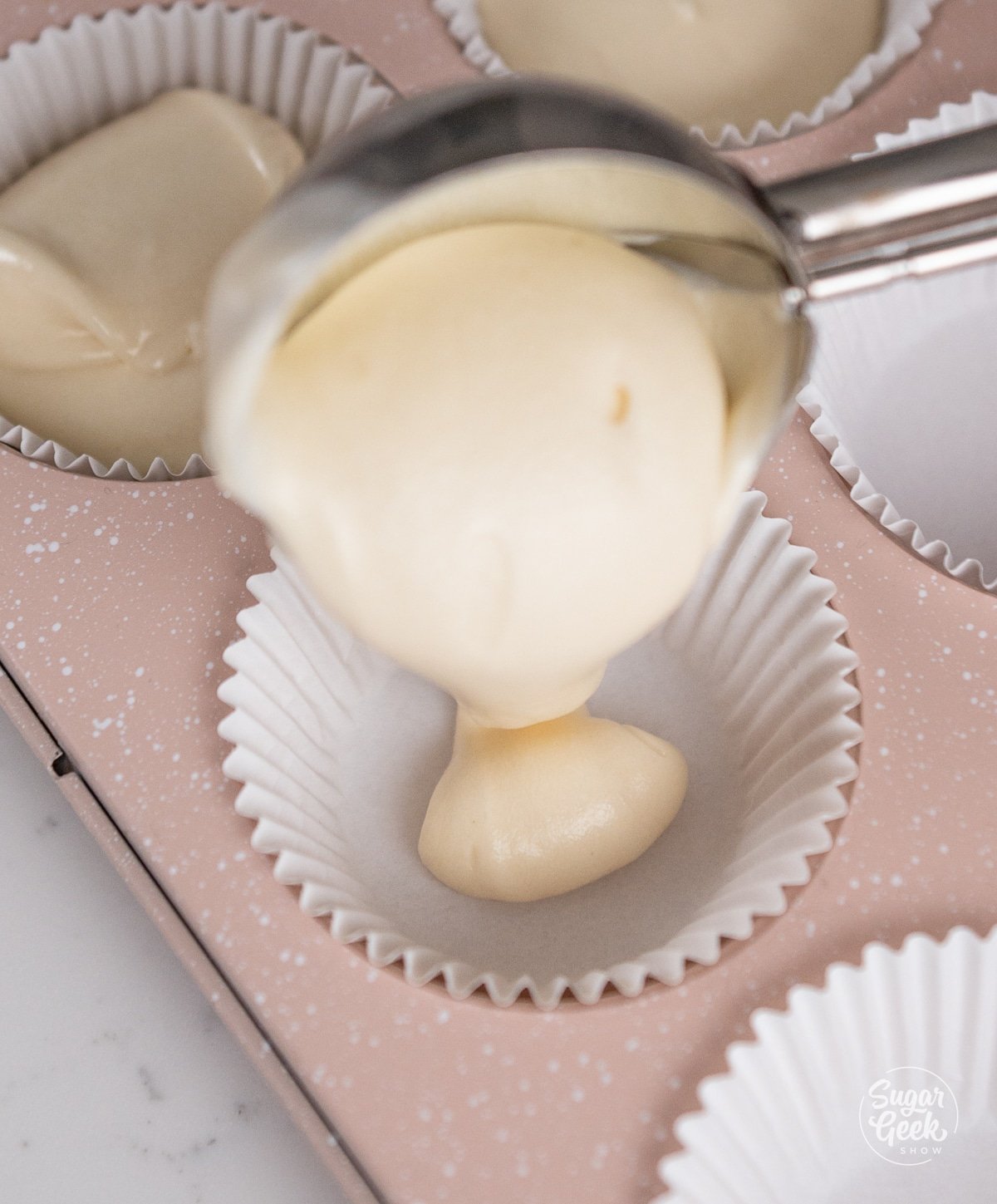
A cupcake scoop pouring batter into a cupcake liner.
  1. Fill your liners ⅔ of the way full with the cupcake batter. I use my kitchen scale to measure out 1.5 ounces of batter per cupcake to ensure the cupcakes are all the same size.
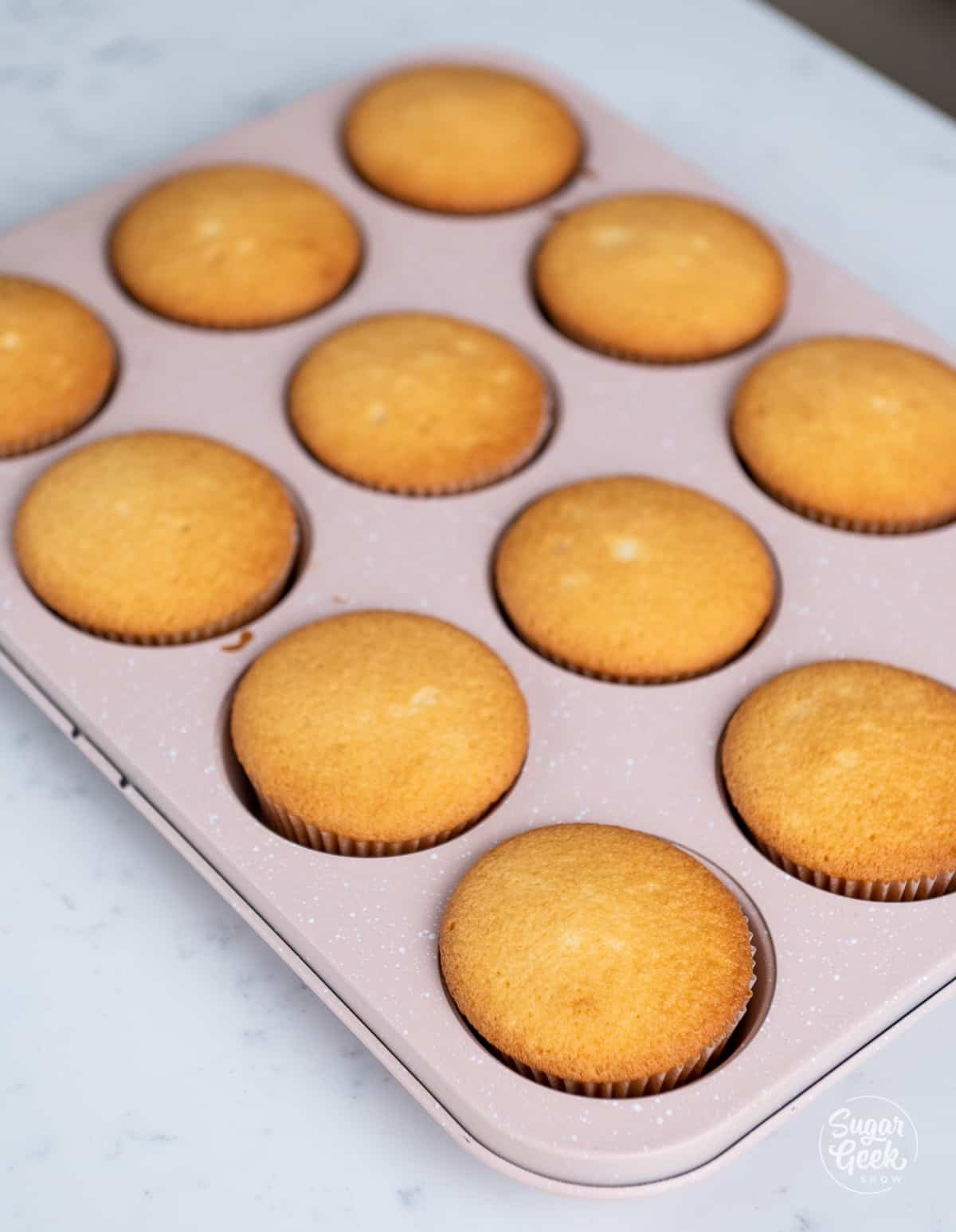
Baked vanilla cupcakes in the cupcake pan.
  1. Bake the cupcakes for 15-20 minutes or until they are just starting to turn golden brown and the center of the cupcake springs back when you lightly touch it. I rotate my cupcakes halfway through baking for even browning. Let your cupcakes cool in the pans for five minutes, then move them to a cooling rack to cool completely.

Frosting Tip: I love using my easy vanilla buttercream and topping them with a few sprinkles or this Swiss meringue buttercream.

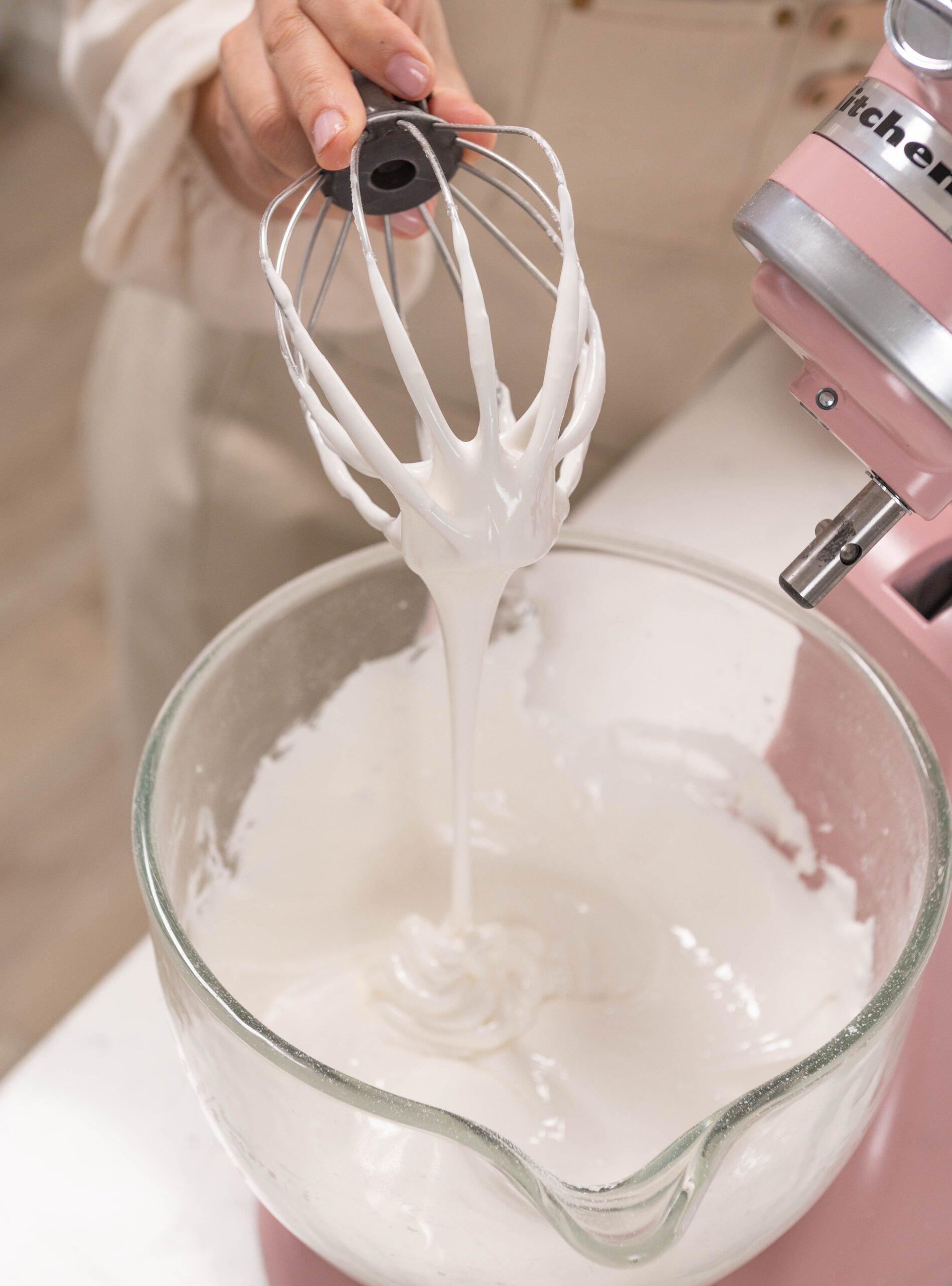
A stand mixer bowl filled with meringue and a hand holding the whisk attachment to show it.
  1. While the cupcakes bake, make the frosting. Place the pasteurized egg whites and powdered sugar in the bowl of your stand mixer with the whisk attachment. Combine the ingredients on low and then whip them on high for 4-5 minutes (until shiny) to dissolve the powdered sugar.
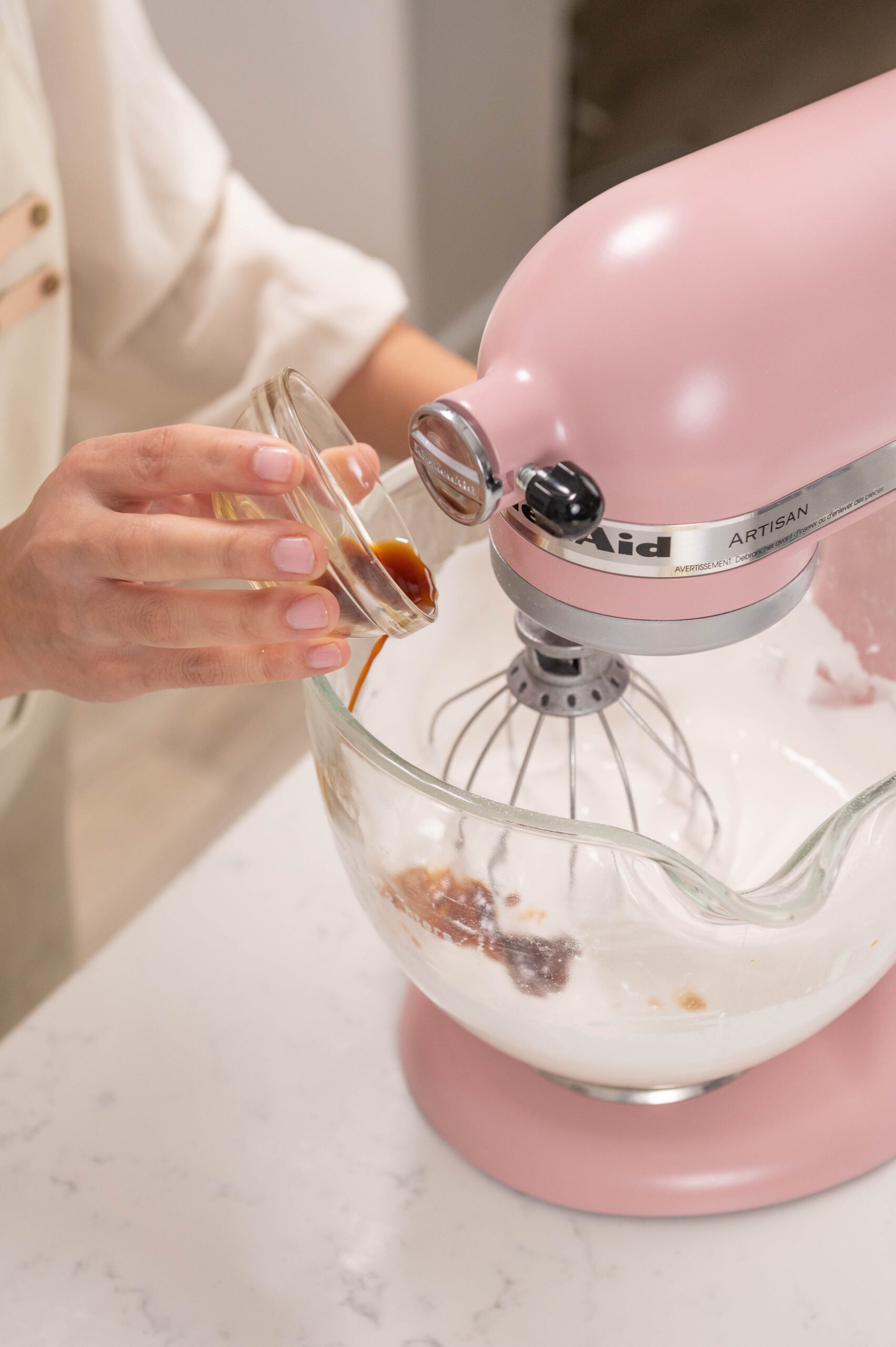
A hand adding vanilla to powdered sugar mixture in a mixing bowl.
  1. Add the salt and vanilla extract. If you want to add any food coloring, you can do it now.
A bowl of stand mixer with frosting inside at the start of mixing.
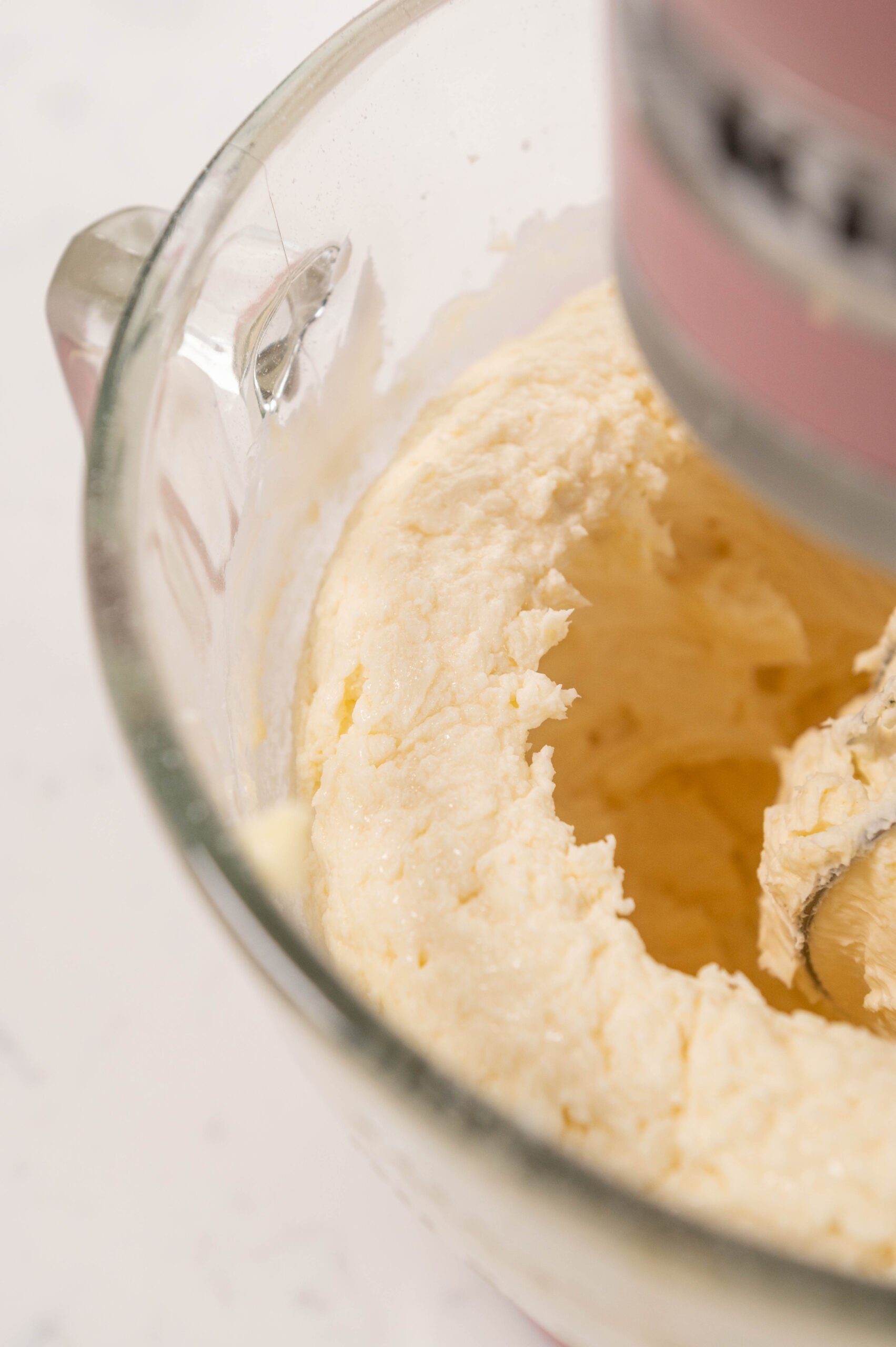
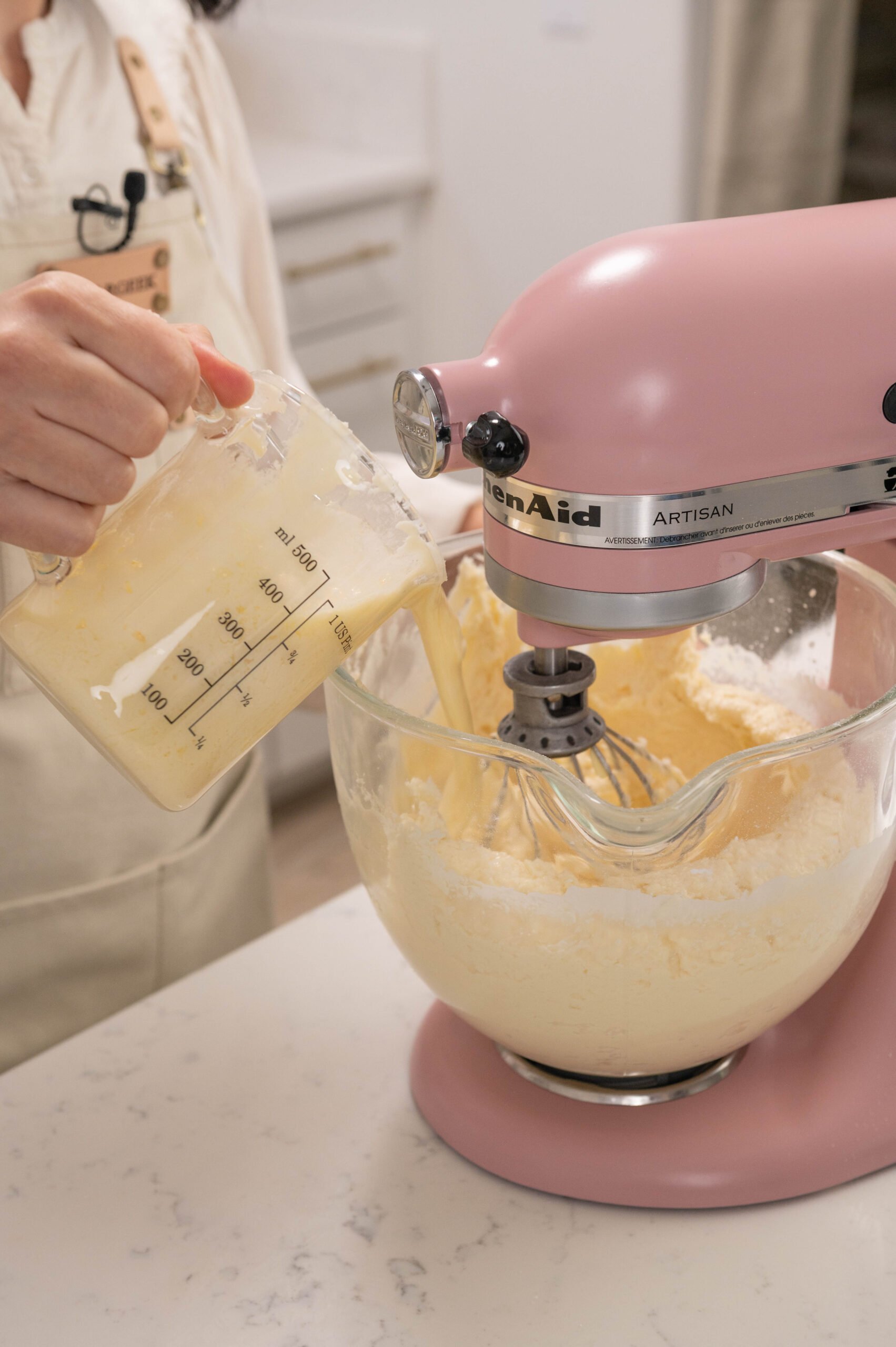
  1. Add in your softened butter piece-by-piece and then whip it on high. It will look curdled and pretty yellow at first. This is definitely normal, just keep whipping. After your buttercream looks similar to the consistency above, remove about 1 cup of buttercream and melt it in the microwave for 10-15 seconds.
A hand pouring measuring cup of melted frosting into bowl of frosting.
  1. Pour it back into the whipping buttercream.
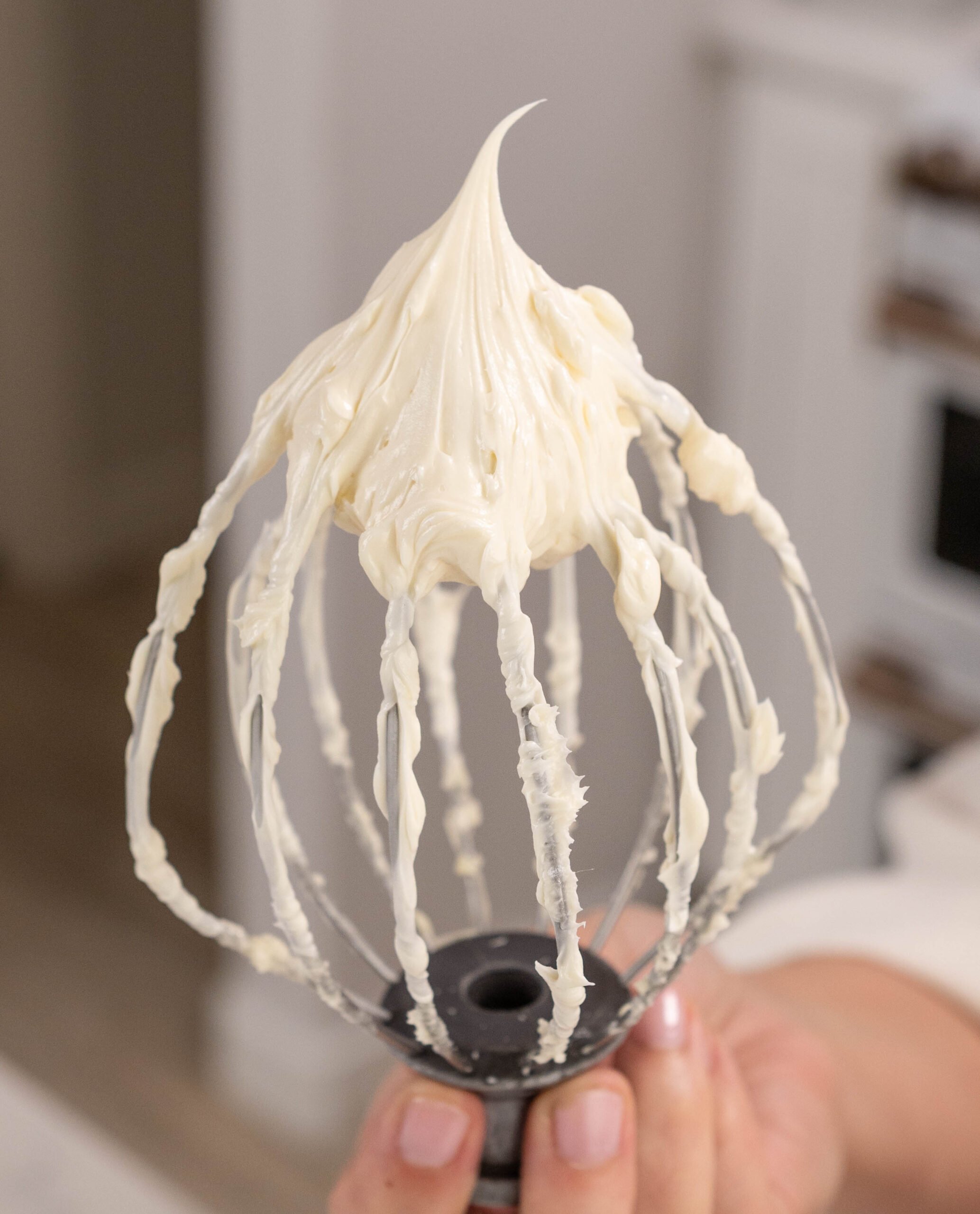
A hand holding whisk covered in frosting.
  1. Whip the frosting on high for 8-10 minutes until the buttercream is white, light, and shiny. If it tastes like sweet ice cream, then it's ready!
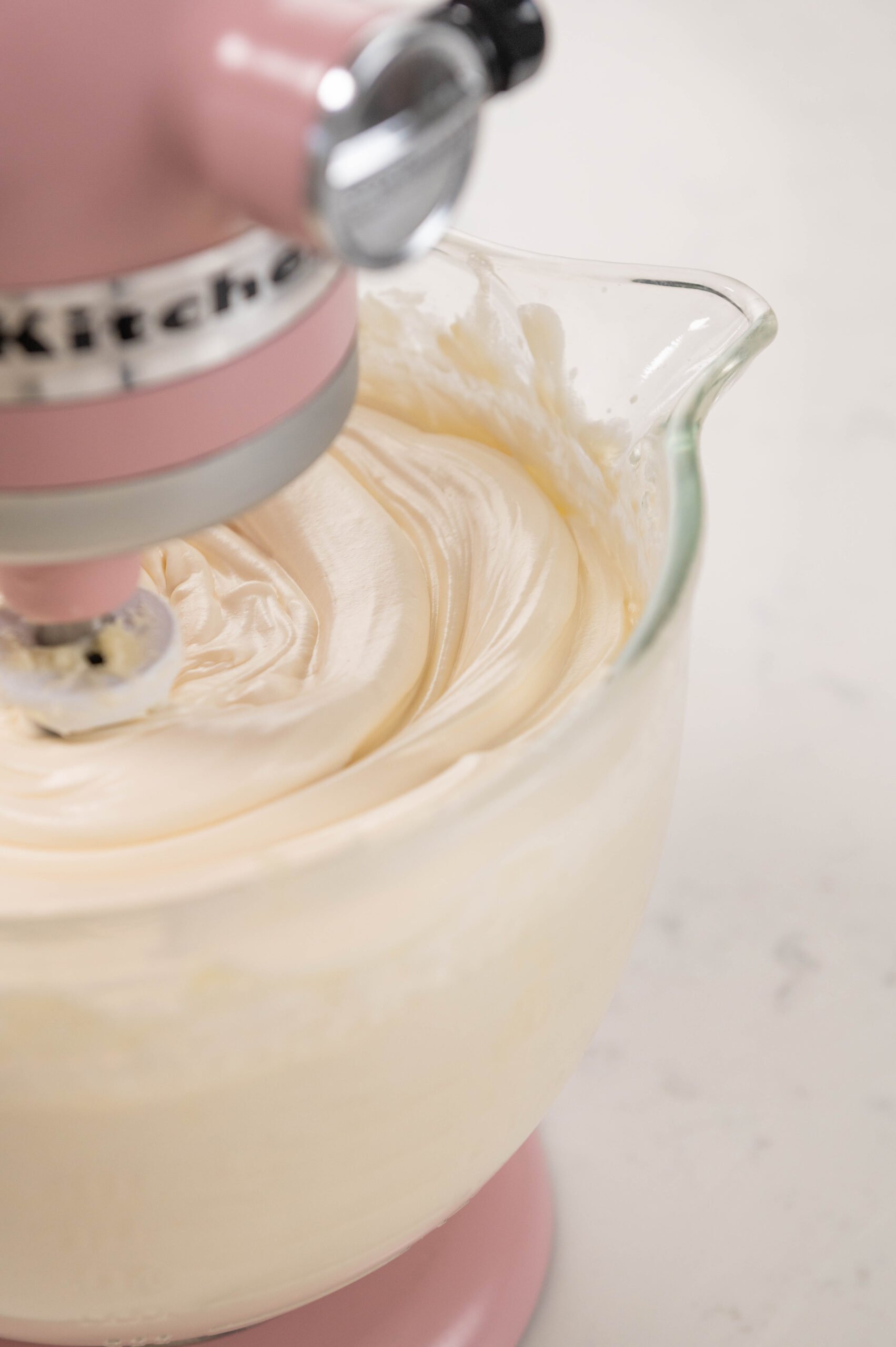
Smooth buttercream in a stand mixer bowl.
  1. Switch to a paddle attachment and mix the buttercream on low speed for up to 15-20 minutes to make the buttercream ultra smooth and remove any air bubbles. This step is optional, but if you want really creamy frosting, you don't want to skip this final step.
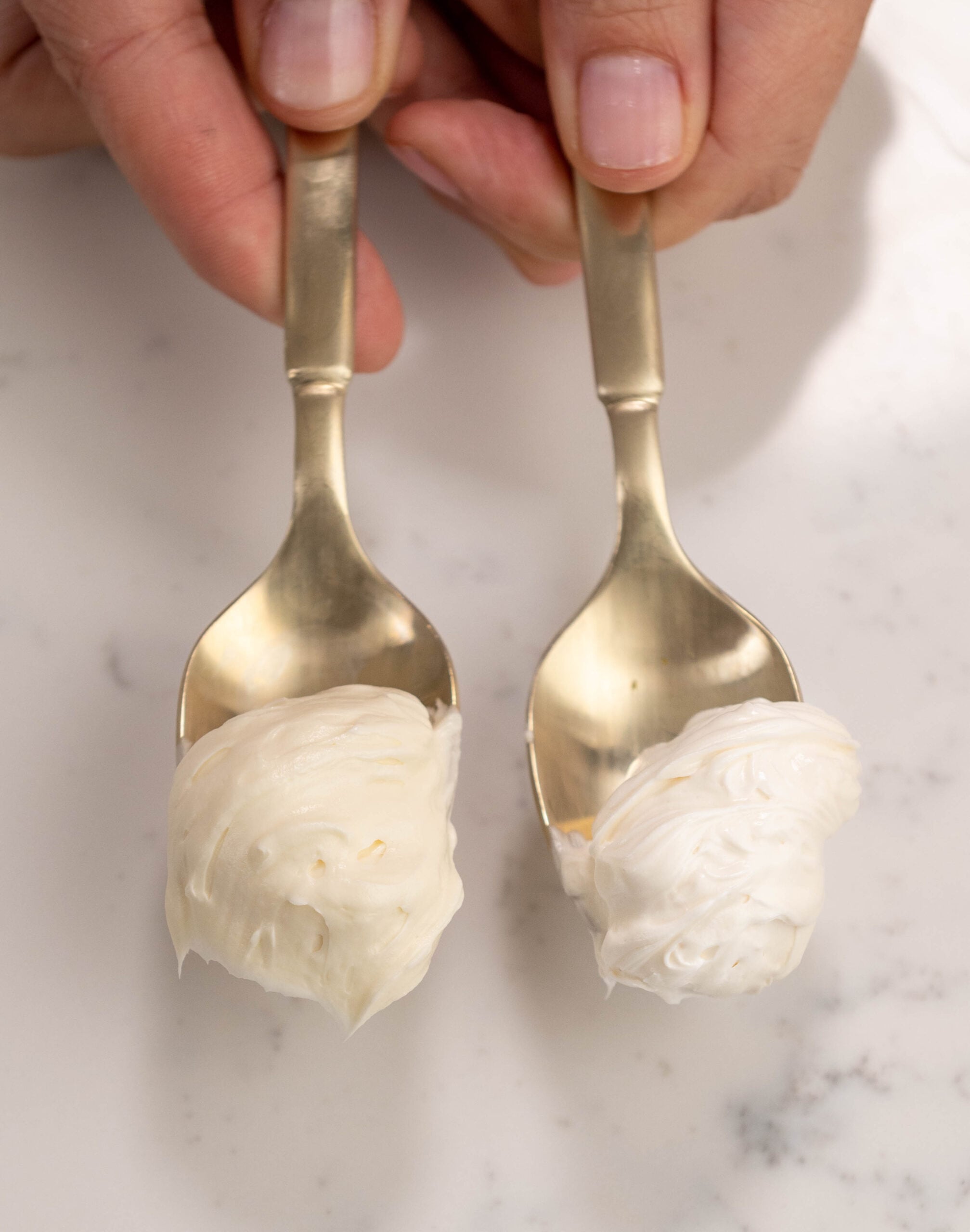
Two spoons of frosting with the one on the left slightly yellow and the other whiter thanks to purple food coloring.
  1. For extra white buttercream, add a drop of purple food coloring to the frosting. The purple counteracts the yellow in the butter, toning the buttercream to make it white.
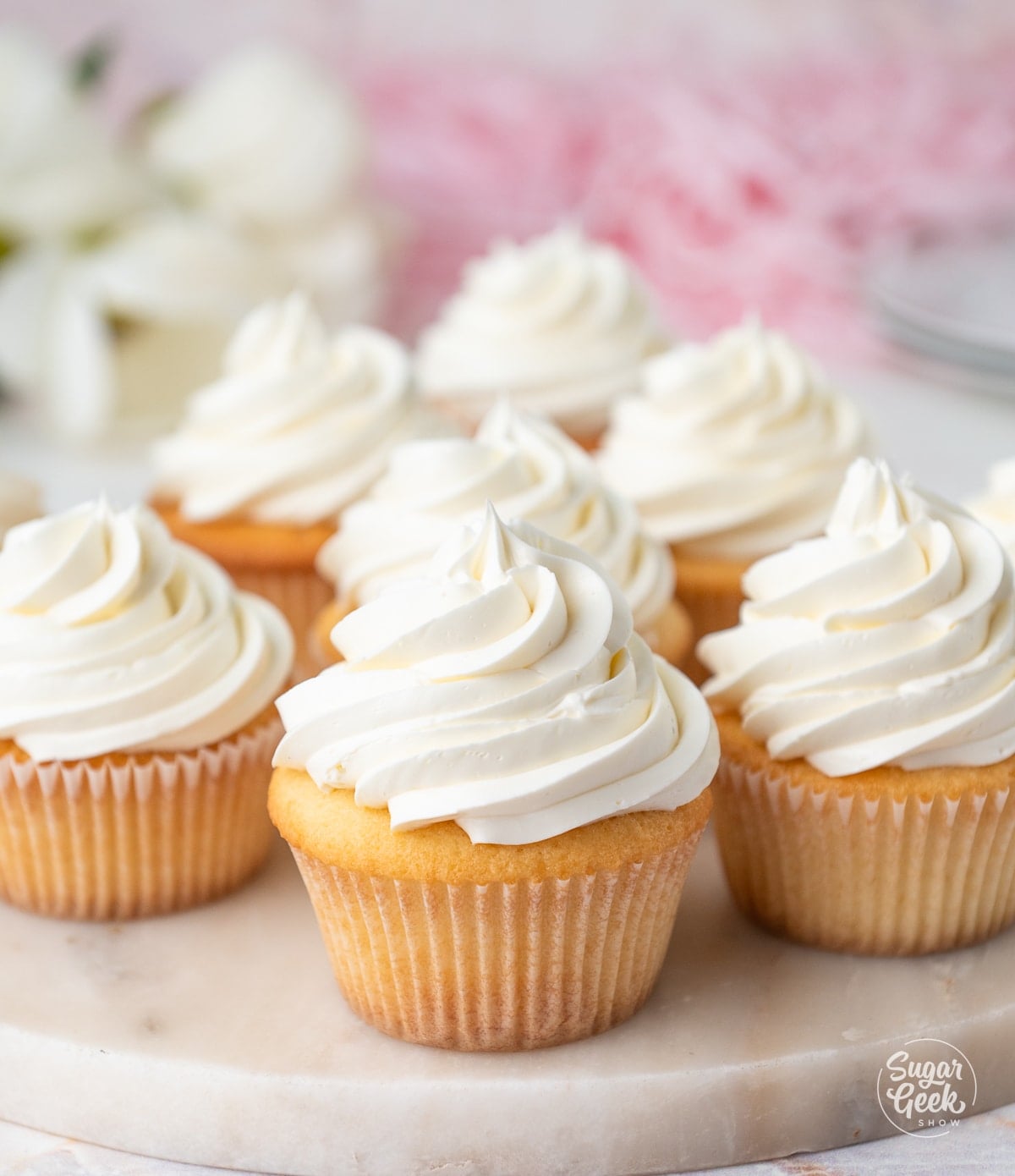
Buttercream frosting piped onto baked vanilla cupcakes.
  1. Now you're ready to decorate your cupcakes. Place your favorite frosting like my American buttercream into a piping bag with a tip (I like a 1M or a 2F), and pipe a swirl on top.

Expert Tips

  • Weigh Your Ingredients. I suggest purchasing a kitchen scale if you don't already have one when baking from scratch. One cup of flour can vary from scoop to scoop depending on how packed the flour is and the humidity in your area. Too little or too much flour can ruin your recipe, so all of my cake recipes (except doctored box mixes) use a scale.
  • Practice Mise en Place: Measure everything before you start mixing so you don't accidentally forget something or add any ingredients out of order. I use a set of medium and small Pyrex glass bowls I got from Goodwill for this, and it makes things SO much easier.
  • Room Temperature Ingredients: Make sure all your ingredients are at room temperature or even a tiny bit on the warm side. The butter should be soft enough to leave an indent in it when you press it, but firm enough that it's still holding its shape. If you want to speed things up, place your eggs in a bowl of warm water for 5 minutes to warm them up. You can also warm the milk in the microwave for 30 seconds.
  • Fully Cool Before Frosting: The cupcakes will need time to cool after baking, so don't pipe frosting onto a warm cupcake.
  • Make Ahead Tip: You can bake the cupcakes and make the frosting a day ahead, but it's best to frost and/or fill them on the same day that you're going to deliver or serve them. 
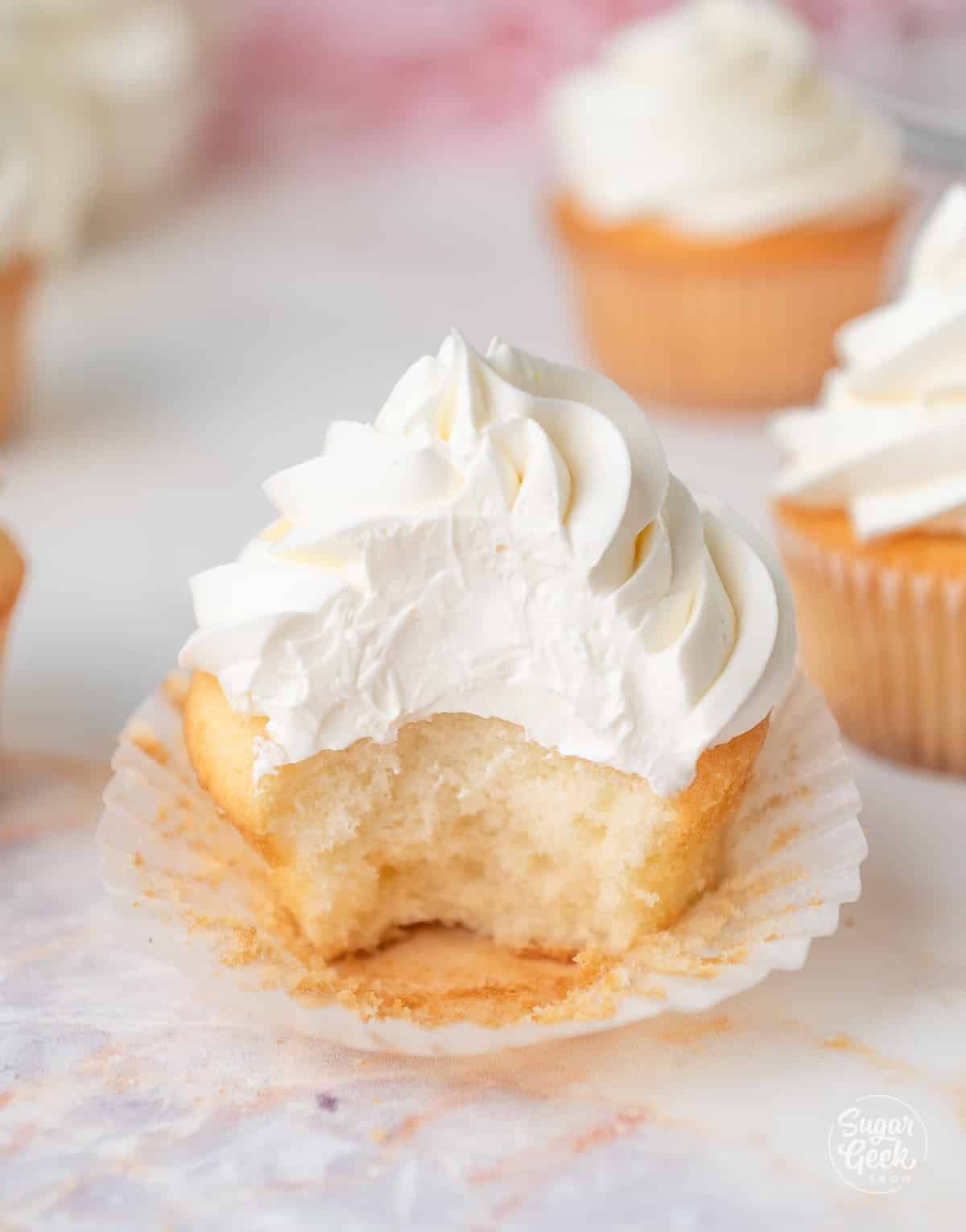
A vanilla cupcake with a bite missing on a liner with more cupcakes in the background.

Storing Cupcakes

  • Store at Room Temperature: These cupcakes are best eaten within 24 hours of baking, and can sometimes dry out in the fridge. If you're using a buttercream that is shelf-stable, store the cupcakes in an airtight container at room temperature for up to 2 days.
  • Freezing Cupcakes: Baked cupcakes without frosting can be frozen in ziplock bags for up to 6 months.
  • Storing Frosting: You can store the buttercream frosting in the fridge for up to 7 days. When you're ready to use it, I recommend bringing the frosting back to room temperature and re-whipping it until smooth before you use it.
  • When to Refrigerate: If you're using a fruit filling or a frosting that isn't shelf-stable, it's best to refrigerate the cupcakes after 4 hours. If refrigerated, allow the cupcakes to warm up to room temperature before serving.

Common Mistakes To Avoid

  • Over-filling the liners causes the tops to overflow instead of dome.
  • Using cold ingredients causes the batter to curdle and affects the rise.
  • Skipping the 1.5-minute mixing stage prevents proper structure from developing.
  • Overbaking dries them out, pull them when the center just springs back.
  • Frosting before fully cooled creates a melted, sliding mess

For a fun twist using a similar fluffy batter, my baked donut recipe comes together in under 20 minutes

Moist Vanilla Cupcake Recipe FAQs

Why are my vanilla cupcakes flat?

Flat cupcakes are often caused by baking at too low of a temperature. Baking at 350°F helps the cupcakes rise quickly and set the dome, while lower temperatures can cause them to spread and bake up flat. If this keeps happening, check your oven with an oven thermometer, as many ovens run cooler than the dial indicates.

Why did my vanilla cupcakes collapse in the middle?

Cupcakes usually collapse when the batter doesn't have enough structure to hold the rise. This can happen if there's too much liquid, not enough baking powder, or the liners are overfilled. Baking at the proper temperature (350°F) is also important because the heat helps the cupcakes rise quickly and set the dome before the structure falls. Fill liners about ⅔ full so the batter has room to rise without collapsing.

Why do my cupcake liners pull away after baking when making this vanilla cupcake recipe? 

Cupcake liners can pull away if the batter contains a lot of moisture or oil, which can cause the paper to separate as the cupcakes cool. It can also happen if the liners aren't grease-proof, or if the cupcakes are stored in a sealed container while still warm, trapping steam and moisture. For best results, use high-quality grease-proof liners and let the cupcakes cool completely before storing them.

Why are my vanilla cupcakes sticky?

If you cover your cupcakes with plastic wrap or put them in a container before they are completely cooled, condensation will collect on top of the cupcake and make it soggy.

Why did my vanilla cupcakes shrink?

Cupcakes can shrink from over-mixing your batter, over-baking, or too much fat/liquid in the recipe

Can I use all-purpose flour instead of cake flour in this vanilla cupcake recipe?

No, it's not recommended as a straight swap. All-purpose flour has a higher protein content, which develops more gluten and can make the cupcakes denser and slightly chewy instead of soft and tender.

A white plate of finished vanilla cupcakes with pink sprinkles.

More Easy Cupcake and Cake Recipes

  • Easy chocolate cake recipe slice on a white plate with cake in the background.
    Easy Chocolate Cake Recipe
  • close up of green velvet cake slice on a white plate
    Green Velvet Cake
  • rainbow cupcake with a bite taken out of it
    Rainbow Cupcakes
  • slice of yellow cake with chocolate frosting
    Yellow Cake Recipe

Watch: How To Decorate A Cake Step-by-Step

Before you start decorating, watch the video below where I show you every step of decorating a cake from start to finish. Seeing the process in action makes it much easier to follow along

- Liz Marek.

Start Learning Now
smiling woman holding a decorated cake in her hands

Recipe

Vanilla cupcakes on a white stands decorated with white buttercream and pink sprinkles.
Print Recipe
4.90 from 363 votes

Moist Vanilla Cupcake Recipe

These soft and fluffy vanilla cupcakes get their tender crumb and rich flavor from buttermilk and the reverse creaming method. Light, moist, and bakery-quality, they're perfect for birthdays, weddings, and special occasions. This recipe makes about 24 classic vanilla cupcakes, topped with my favorite easy vanilla buttercream.
Prep Time10 minutes mins
Cook Time20 minutes mins
Total Time30 minutes mins
Course: Dessert
Cuisine: American
Servings: 24 cupcakes
Calories: 209kcal
Author: Liz Marek

Equipment

  • Stand Mixer
  • Paddle Attachment
  • Whisk Attachment

Ingredients

Vanilla Cupcake Recipe

  • 10 ounces cake flour
  • 9 ounces granulated sugar
  • ½ teaspoon salt
  • 2 teaspoons baking powder
  • ¼ teaspoon baking soda
  • 2 large eggs room temperature
  • 4 ounces vegetable oil
  • 5 ounces buttermilk room temperature or slightly warm
  • 4 ounces unsalted butter softened
  • 2 teaspoons vanilla extract

Easy Buttercream Frosting Recipe

  • 6 ounces pasteurized egg whites
  • 24 ounces powdered sugar
  • 24 ounces unsalted butter softened
  • 2 teaspoons vanilla extract
  • ½ teaspoon salt
  • 1 tiny drop purple food coloring optional for whiter frosting
US Customary - Metric

Instructions

Making Vanilla Cupcakes

  • Preheat the oven to 350ºF and line two cupcake pans (or a muffin pan will do) with paper liners. You can also bake one pan at a time if you only have one cupcake pan. This recipe will make about 24 cupcakes.
  • Combine the vanilla and buttermilk in a separate measuring cup and set it aside. 
  • Next, add the eggs and oil to a separate bowl then whisk and set them aside. 
  • Add the cake flour, sugar, salt, baking powder, and baking soda to the bowl of your stand mixer with the paddle attachment. You can use a large bowl and an electric mixer if you don't have a stand mixer, just mix for longer. Use these photos as a guide instead of mixing by time. 
  • Then add the softened butter to the rest of the dry ingredients and mix on low until the mixture resembles a sandy texture. Depending on how soft your butter is, this might take a minute or two. 
  • Pour the milk mixture into your dry ingredients and increase the speed to medium (speed 4 on a KitchenAid, speed 2 on a Bosch). Mix for 1 ½ minutes to develop the fluffy structure of the cupcake. The batter will go from being yellow to a fluffy white.
  • Slowly add your egg mixture in three parts and mix on low until it's fully combined.
  • Fill your liners ⅔ of the way full with the cupcake batter. I use my kitchen scale to measure out 1.5 ounces of batter per cupcake.
  • Bake the cupcakes for 15-20 minutes or until they are just starting to turn golden brown and the center of the cupcake springs back when you lightly touch it. I rotate my cupcakes halfway through baking for even browning. If you're making mini cupcakes, bake for less time.
  • Let your cupcakes cool in the pans for five minutes, then move them to a cooling rack to cool completely.
  • Place your favorite frosting into a piping bag with a tip, I like a 1M or a 2F, and pipe a swirl on top. I love using my easy vanilla buttercream and topping them with a few sprinkles. Swiss meringue buttercream or strawberry buttercream would also be delicious.

Making Easy Buttercream

  • Place the pasteurized egg whites and powdered sugar in the bowl of your stand mixer with the whisk attachment. Combine the ingredients on low and then whip them on high for 4-5 minutes (until shiny) to dissolve the powdered sugar.
  • Now add in the salt and vanilla extract. If you want to add in any food coloring, now is the time.
  • Add in your softened butter piece-by-piece, then whip it on high. It will look curdled at first. This is definitely normal. It will also look pretty yellow, just keep whipping.
  • After your buttercream looks like this, remove about 1 cup of buttercream and melt it in the microwave for 10-15 seconds.
  • Pour it back into the whipping buttercream to bring it all together.
  • Whip it on high for 8-10 minutes until the buttercream is white, light, and shiny. If it tastes like sweet ice cream, then it's ready!
  • Finally, switch to a paddle attachment and mix the buttercream on low speed for up to 15-20 minutes to make the buttercream ultra smooth and remove any air bubbles. This step is optional, but if you want really creamy frosting, you don't want to skip this final step.
  • For extra white buttercream, add a drop of purple food coloring. The purple counteracts the yellow in the butter, toning the buttercream to make it white.

Video

Notes

  • For the best rise, fill your liners ⅔ with cupcake batter or 1 ½ ounces per cupcake. 
  • Make sure all your ingredients are at room temperature before mixing your batter (milk, butter, eggs). 
  • Use good-quality vanilla extract, vanilla bean paste, or even a vanilla bean for true vanilla flavor. One vanilla bean = 2 teaspoons vanilla extract. You can also use clear vanilla extract for that "classic grocery store cake" flavor.
  • Preheat your oven to 350ºF for 30 minutes before baking to give your cupcakes a good rise and set the dome. 
  • Buttermilk is essential to this recipe because it adds flavor and moisture. If you have whole milk and white vinegar or lemons, you can make your own buttermilk substitute.
  • Cake flour is what makes these cupcakes extra soft and fluffy. If you don't have cake flour, use my cake flour substitute recipe, or try searching for "Shipton Mills soft cake and pastry flour."

Nutrition

Serving: 1cupcake | Calories: 209kcal | Carbohydrates: 25g | Protein: 2g | Fat: 11g | Saturated Fat: 7g | Cholesterol: 16mg | Sodium: 198mg | Potassium: 93mg | Sugar: 14g | Vitamin A: 195IU | Calcium: 40mg | Iron: 0.2mg

Easy chocolate cake recipe slice on a white plate with cake in the background.

March 11, 2026 Cake

Easy Chocolate Cake Recipe

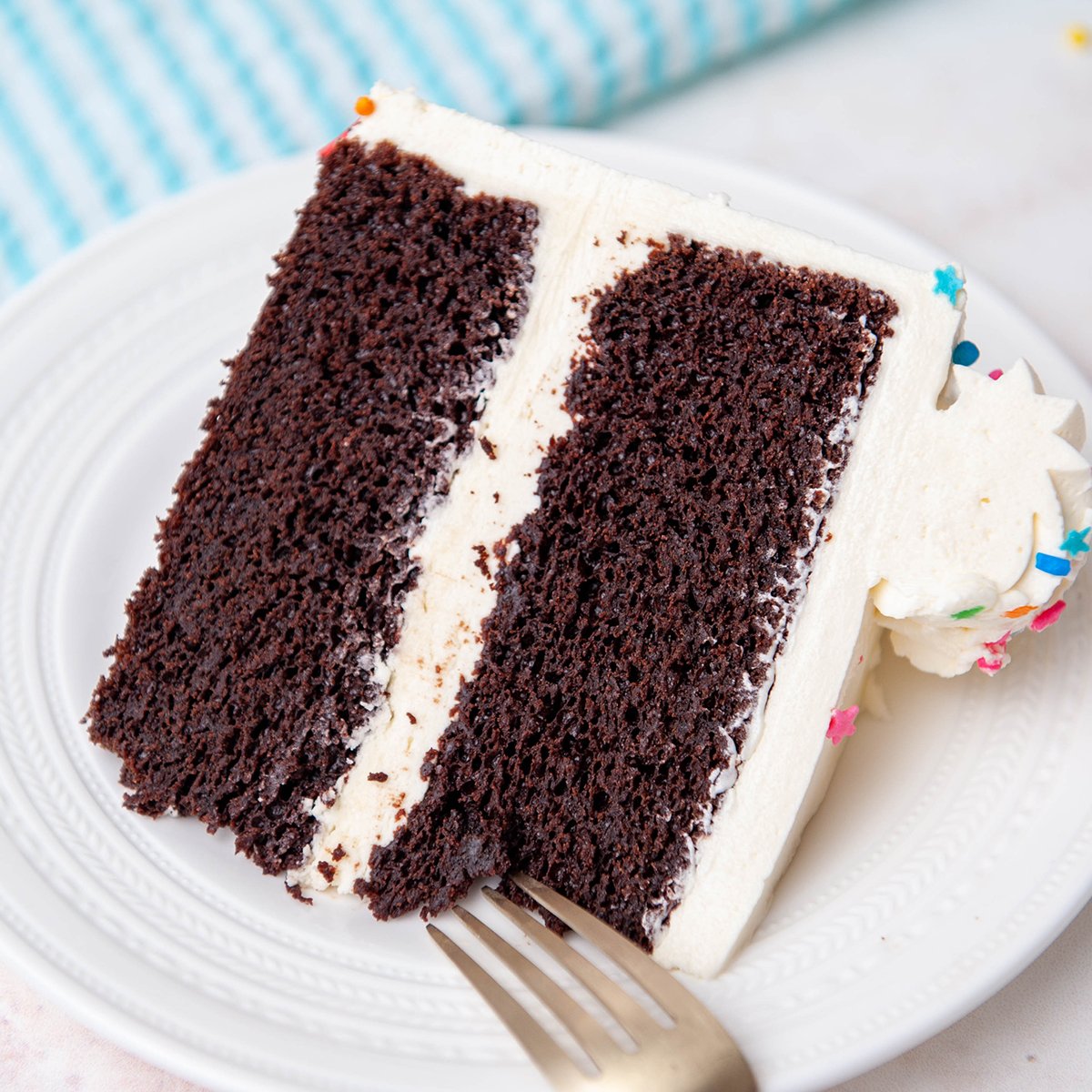
This easy chocolate cake recipe is the one I've made hundreds of times as a professional baker and still reach for every single time. One bowl, everyday pantry ingredients, and two professional techniques give you naturally flat layers and deep, rich chocolate flavor that most scratch cakes completely miss. Pair it with my chocolate fudge frosting and it's the only chocolate cake recipe you'll ever need. For a classic alternative, try my easy vanilla cake recipe using a similar method and the same results.

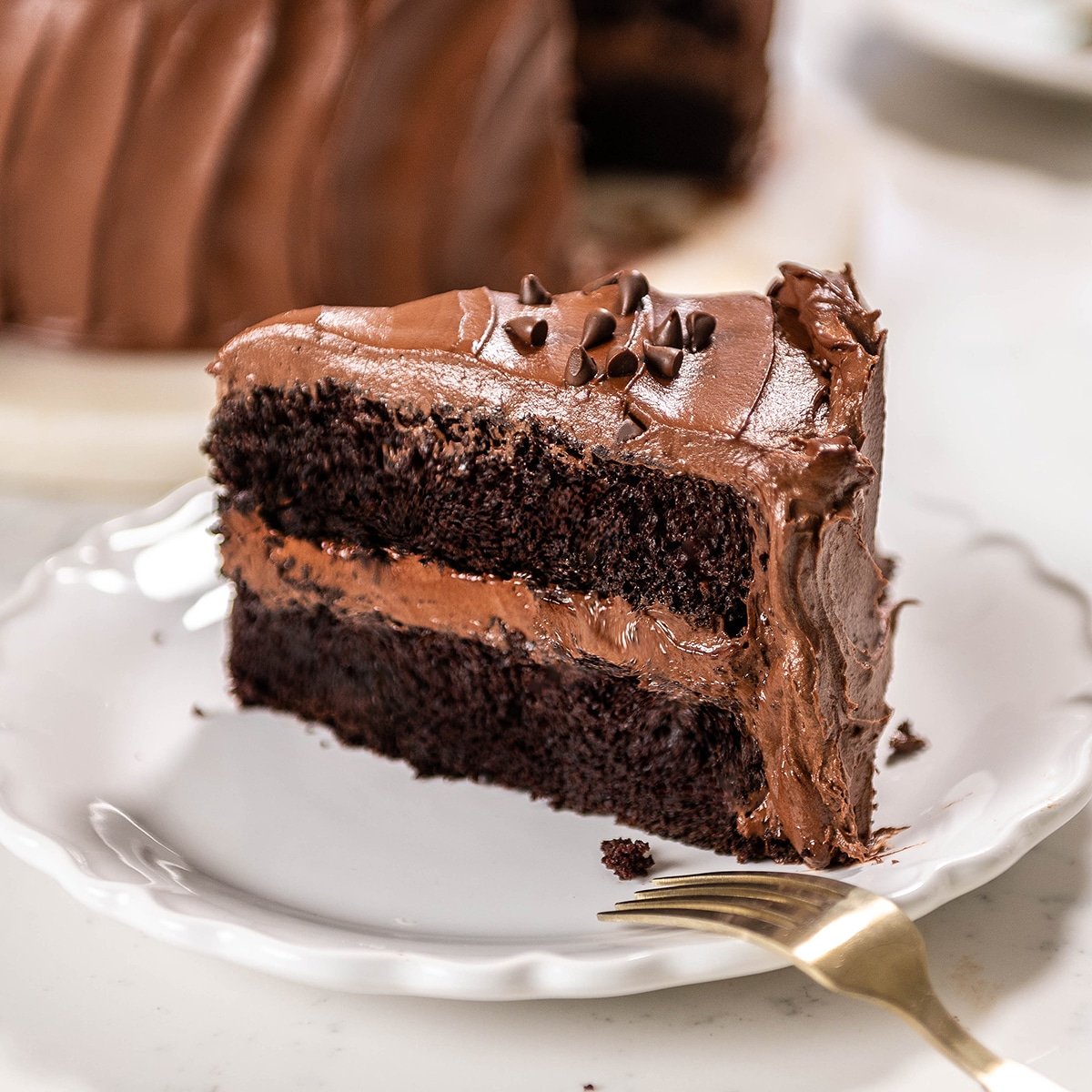
A slice of easy chocolate cake with chocolate frosting on a white plate.

Quick Glance at This Easy Chocolate Cake Recipe

  • Recipe Name: Easy Chocolate Cake Recipe
  • Why You'll Love It: One bowl, naturally flat layers, and a deeply chocolatey flavor that most homemade cakes never achieve - foolproof for beginners and impressive enough for any celebration
  • Time and Difficulty: 10 minutes prep + 30 minutes bake / Easy
  • Main Ingredients: All-purpose flour, cocoa powder, buttermilk, vegetable oil, eggs, and hot coffee
  • Method: Mix all ingredients in one bowl, pour into two 9-inch cake pans, and bake at 335°F for flat, even layers every time
  • Texture and Flavor: Moist, fudgy, and deeply chocolatey with a tender crumb that stays soft for days
  • Quick Tip: Bake at 335°F instead of 350°F for naturally flat layers with no leveling required
ChatGPT
Google AI
Perplexity
Grok
Add us as a trusted site on Google
[feast_advanced_jump_to]

Why This Recipe Works Every Time

Most chocolate cake recipes fail the home baker in one of three ways: they dome up in the middle, they dry out by the next day, or the chocolate flavor is flat and disappointing. My one-bowl chocolate cake recipe fixes all these problems! 

  • 335°F instead of 350°F: Lower heat means the edges and center of the cake bake more evenly. You get a flatter, more level cake without having to slice off the dome. Useful, especially if you're stacking layers.
  • Oil instead of butter: Butter is solid at room temperature, which means it firms up as the cake cools. Oil stays liquid, keeping every bite moist even the next day. If you've ever had a chocolate cake that tasted great warm but dry the next morning, butter was probably the culprit.
  • Buttermilk tenderizes the crumb: The acidity in buttermilk reacts with the baking soda and gently breaks down the gluten network in the flour. The result is an exceptionally soft, tender texture that holds up well even after refrigeration.
  • Hot coffee blooms the cocoa: When hot liquid hits cocoa powder, it unlocks flavor compounds that stay dormant in dry cocoa. This is called 'blooming,' and it's the same reason a good cup of coffee smells more intense when first brewed. You won't taste the coffee - you'll just taste more chocolate.

This is my go-to birthday cake recipe, especially served warm with a scoop of vanilla ice cream. I fill this two-layer cake with a classic chocolate buttercream frosting, made with powdered sugar and cocoa powder, but if you really want to go all-in on chocolate flavor, my chocolate fudge frosting or American buttercream is the move. Either way, you can't go wrong.

⭐️⭐️⭐️⭐️⭐️ Reader Review

This is my families favorite chocolate cake. It's the only recipe I use for baking a cake and cupcakes. It's the best chocolate cake!
- Michele

Easy Chocolate Cake Ingredients

One of the best parts about this recipe is its simplicity. By using basic ingredients that you likely already have in your pantry, we'll create a moist, fudgy, and downright irresistible chocolate cake.

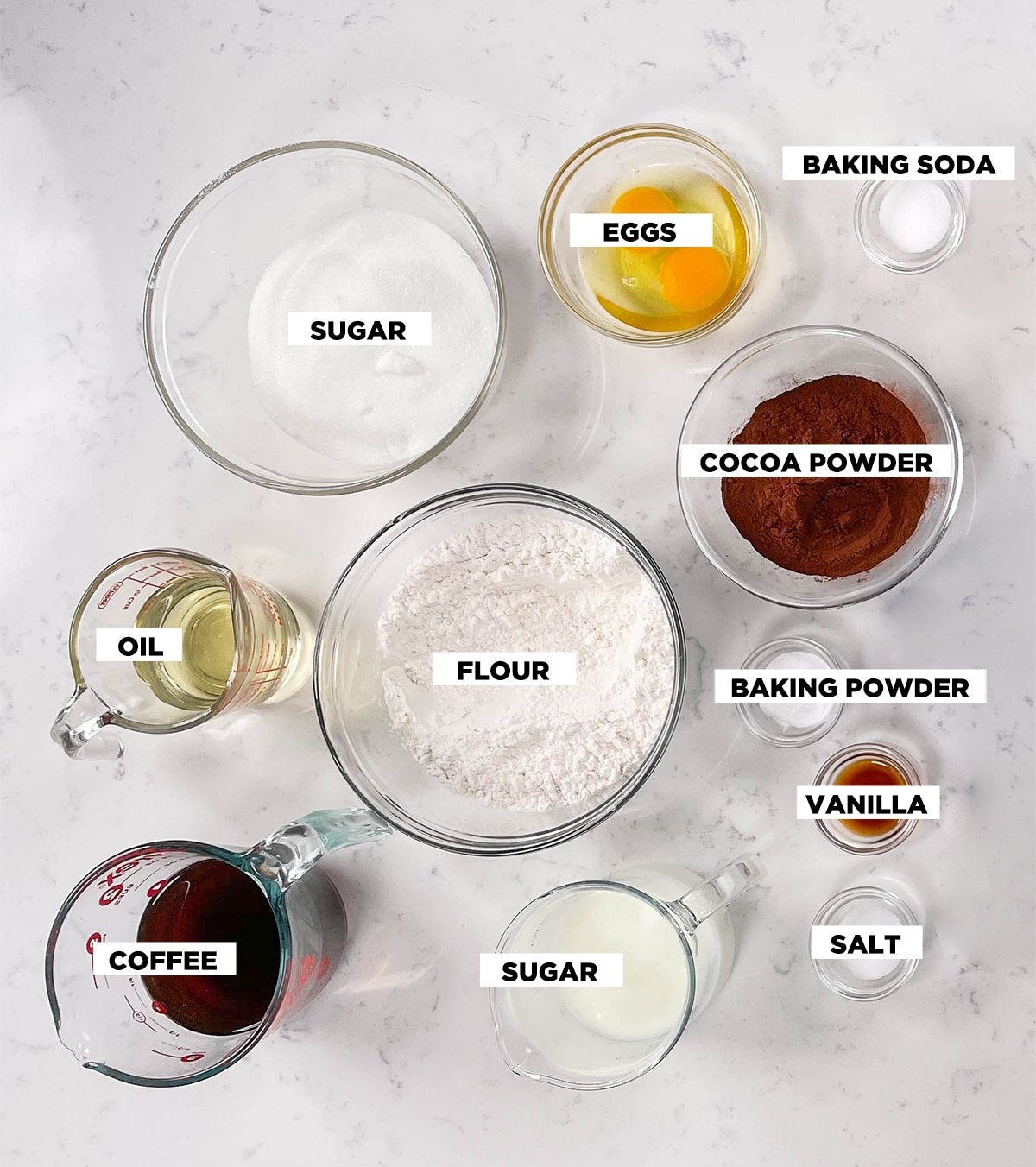
Easy chocolate cake ingredients in bowls on a white countertop.
  • All-purpose flour provides the structure for this cake. Unlike more delicate cakes that require cake flour, this recipe is specifically formulated to work with all-purpose flour, and the buttermilk tenderizes the crumb enough that you won't notice the difference. Measure by weight for the most consistent results, or spoon and level if using measuring cups.
  • Granulated sugar and brown sugar are both used here. Granulated sugar adds sweetness and structure, while brown sugar adds moisture and a subtle molasses depth that rounds out the chocolate flavor. Do not substitute all white or all brown sugar as the ratio is intentional.
  • Baking powder and baking soda work together to leaven the cake. Baking soda reacts immediately with the acidic buttermilk, while baking powder provides a second rise in the oven. Both are needed for the right texture and lift.
  • Hot Coffee: The secret ingredient to the best chocolate cake! Believe it or not, coffee actually accentuates the flavor of chocolate, and also helps rehydrate the cocoa powder, keeping the cake moist. Don't worry, you don't taste it at all. If you don't want to brew coffee, you can also use hot water and espresso powder, or replace it with hot water. You can also use this method to make an eggless chocolate cake.
  • Eggs provide structure and bind the batter together. Make sure they are at room temperature before mixing so they incorporate smoothly and don't cause the batter to seize. To make this cake egg-free, substitute each egg with a commercial egg replacer or an equal amount of unsweetened applesauce.
  • Cocoa Powder: I use and recommend Hershey's unsweetened cocoa powder because it's widely available and is the flavor that most people enjoy for their chocolate cake. Feel free to use whatever cocoa powder you enjoy.
  • Buttermilk: Another secret ingredient I use for amazing flavor and making cakes extra moist. If you don't have any buttermilk, you can make a substitute using 1 cup of milk and 1 Tablespoon of vinegar or lemon juice. The acid in the buttermilk helps break down the gluten in the all-purpose flour for a super soft texture. Try this white velvet cake using buttermilk next!
  • Vegetable Oil: This keeps the texture of the cake nice and soft and moist but you can use any neutral oil that you have on hand, even olive oil!
  • Vanilla extract rounds out the chocolate flavor. Use a pure vanilla extract for the best results.

Ingredient Tip: For baking, it's key that refrigerated items are at room temperature before mixing. Here are some room temperature ingredient hacks you can use when baking.

See the recipe card for the full list of ingredients with quantities.

Easy Chocolate Cake Step-By-Step

To get started, brew your hot coffee or prepare your boiling water, preheat your oven to 335ºF, and prepare two 9" cake pans with some cake goop, my homemade pan release, or use whatever type of pan release you like.

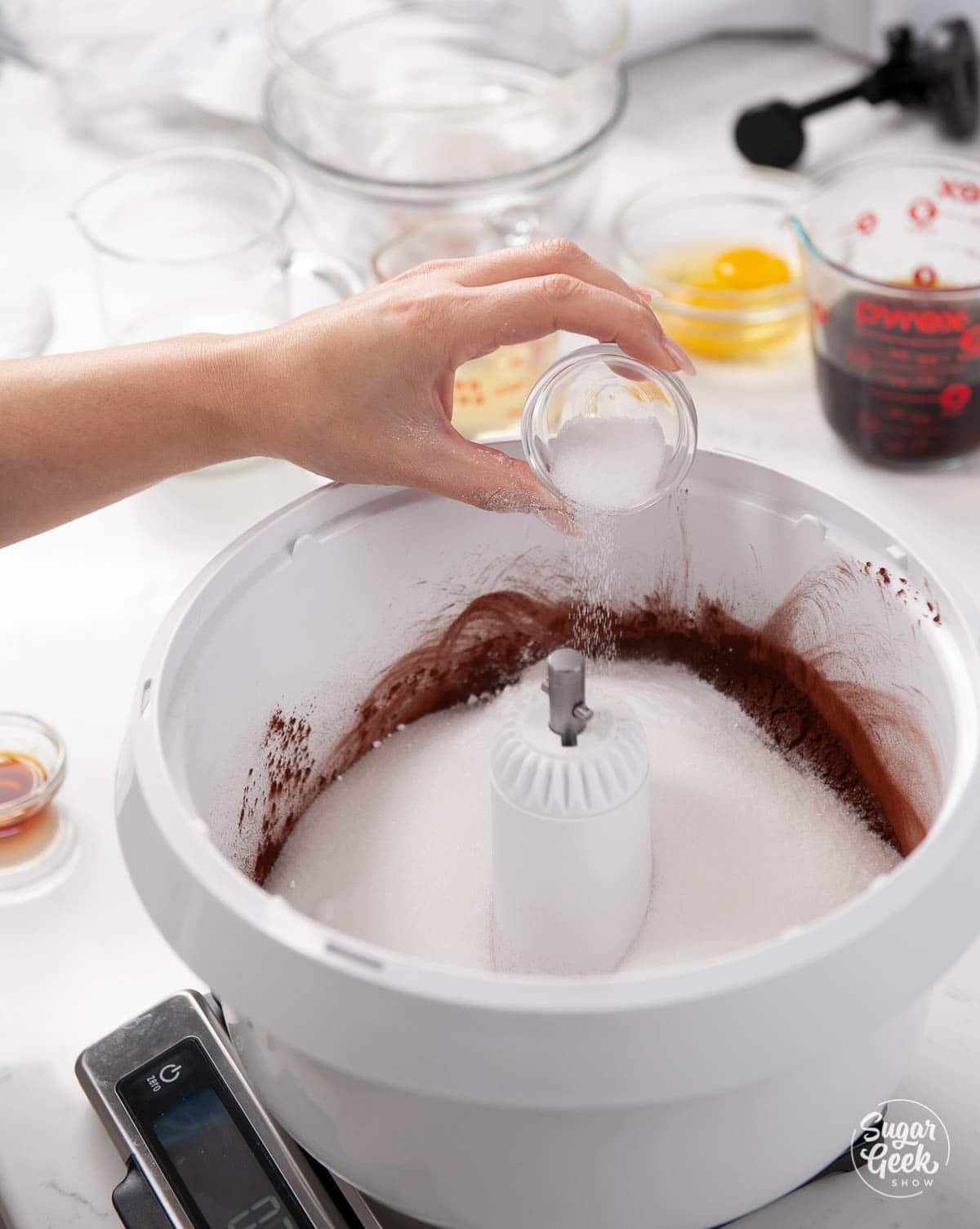
Hand adding a small glass bowl of salt to dry ingredients into a mixer.
  1. Combine the flour, sugar, cocoa powder, baking powder, baking soda, and salt in the bowl of your stand mixer with the paddle attachment. Mix on low 5 seconds just until combined. Then, add the eggs, buttermilk, oil, and vanilla. Mix on medium speed for 2 minutes.
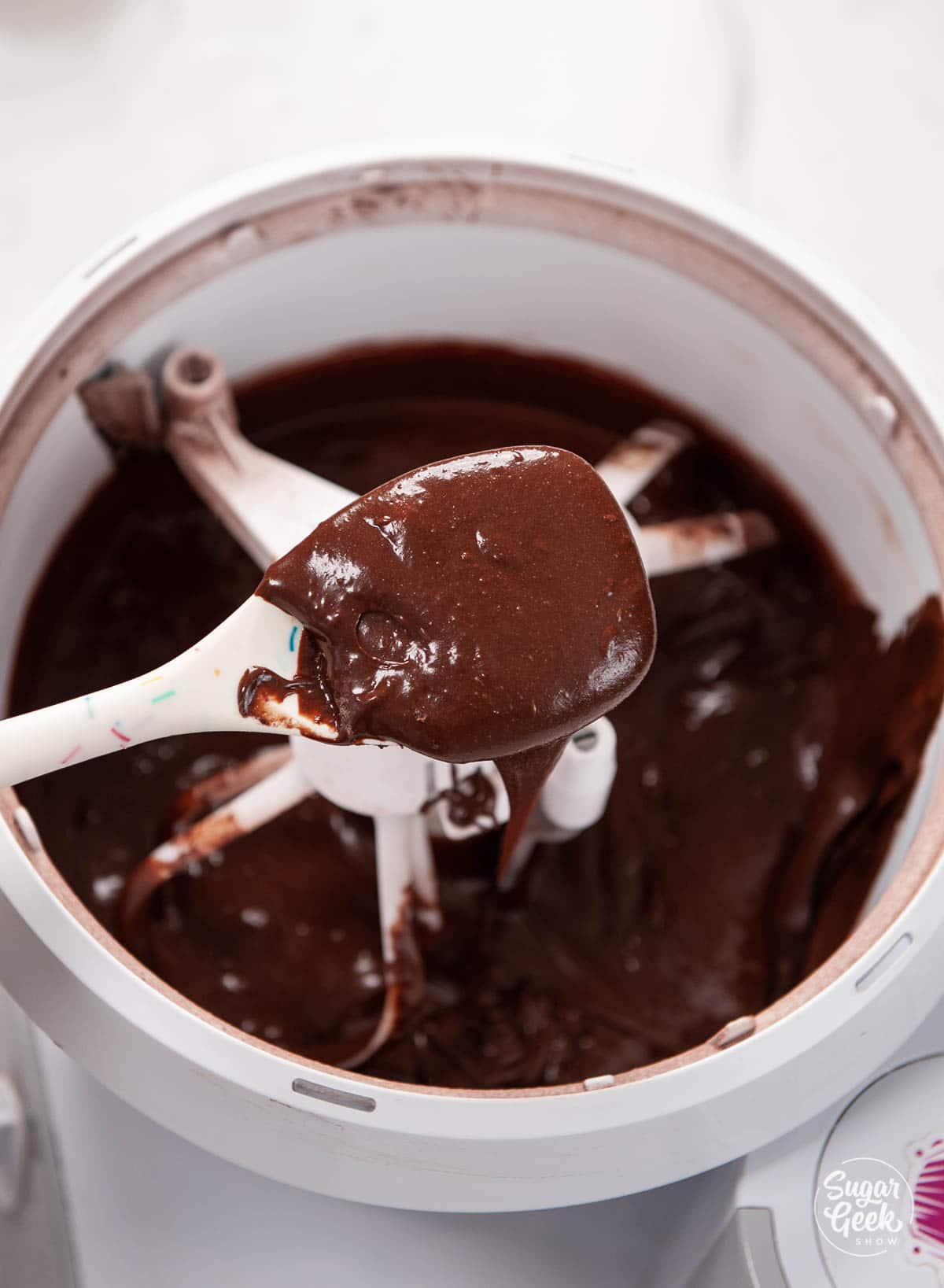
A spatula holding up the cake batter.
  1. Scrape down the bowl and add in the hot coffee, and mix just to combine.
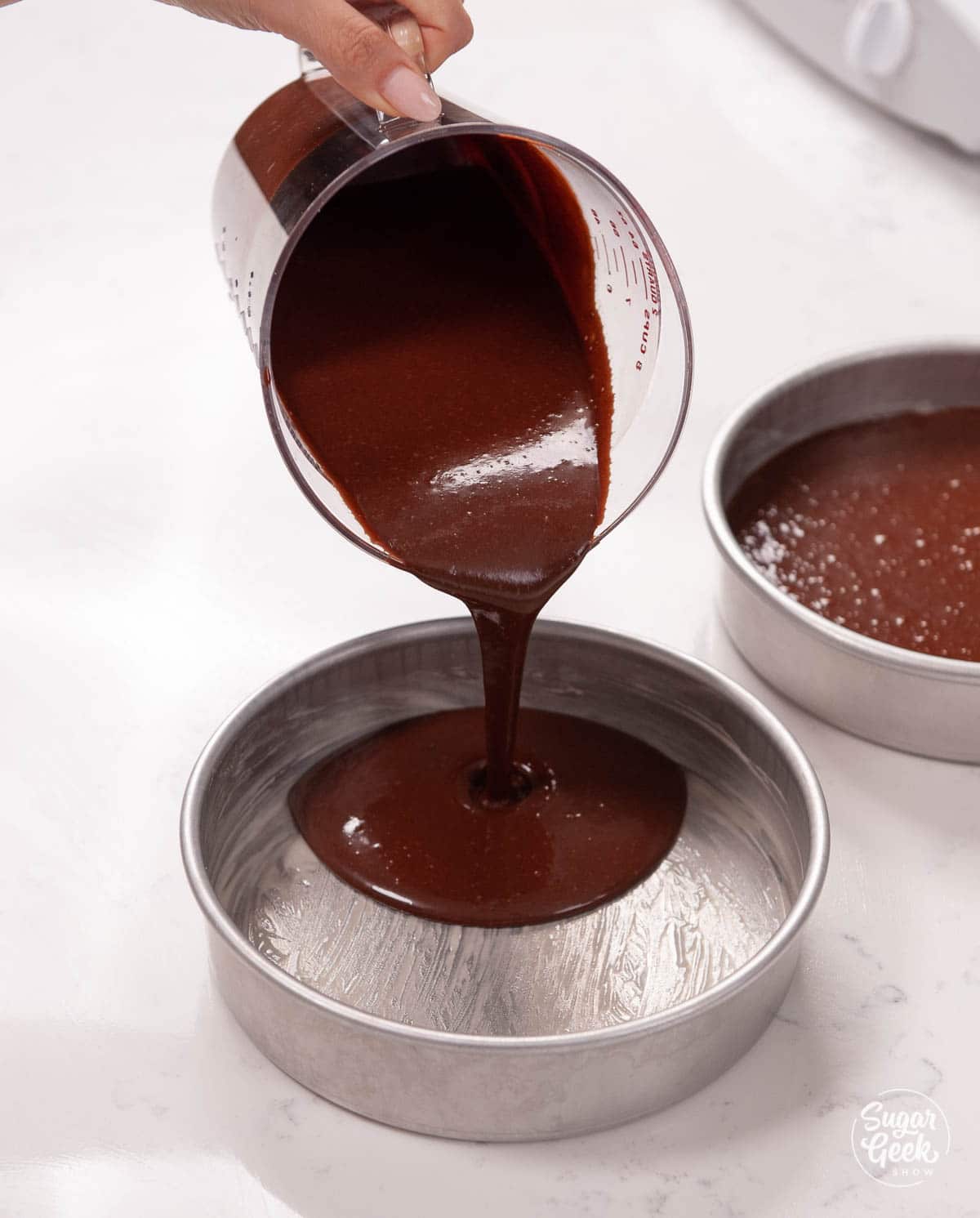
Pouring chocolate batter into cake pans.
  1. Divide the cake batter evenly between two 9" round pans. To ensure even layers, weigh the batter in pans after pouring it in and adjust as needed.
Chocolate cake in a cake pan on a cooling rack.
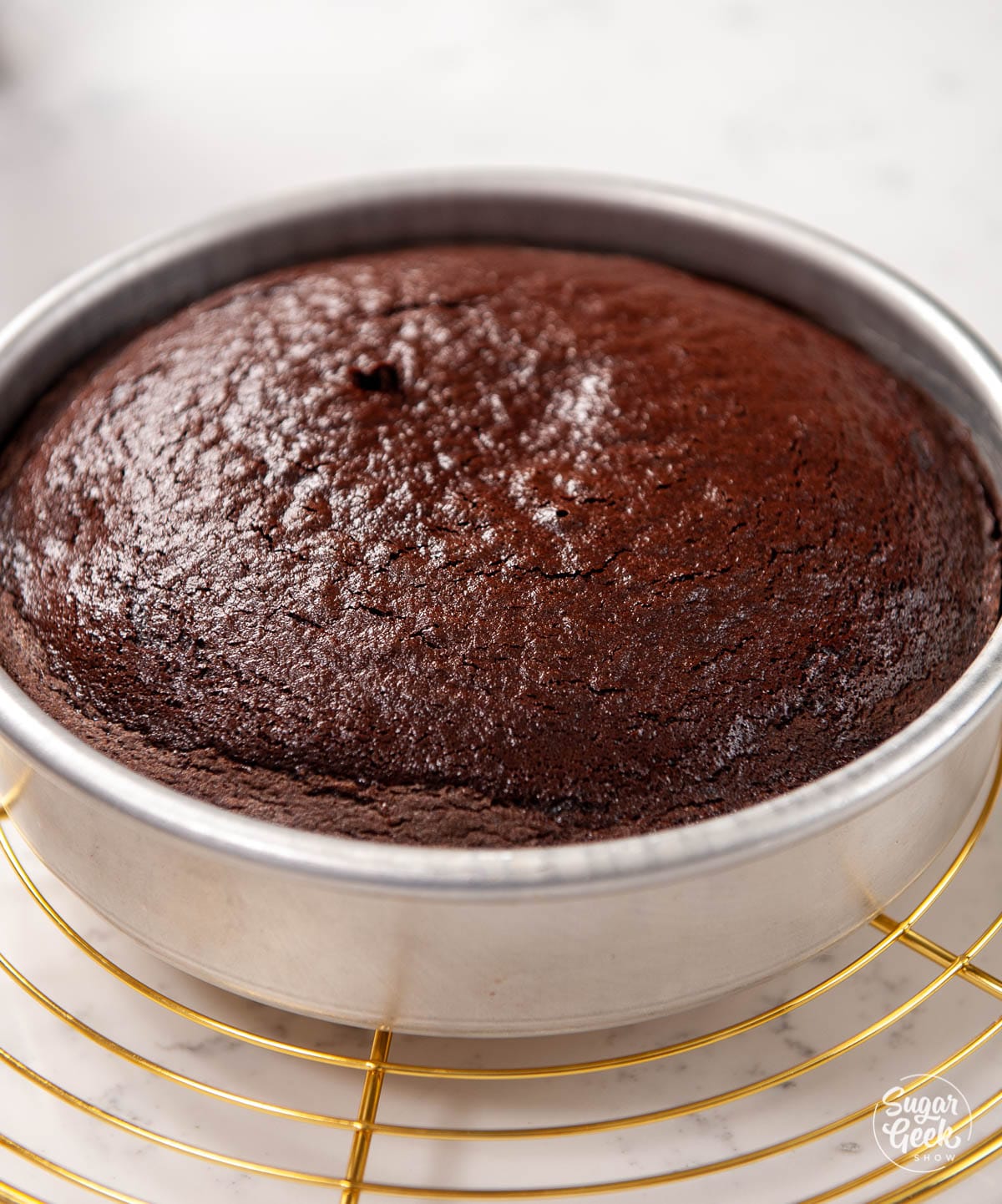
  1. Bake the cakes for 30-35 minutes or until a toothpick inserted into the center comes out clean. Tap the pan once after baking to release the steam and reduce the shrinking of your cakes. Cool the cakes in the pan for about 15 minutes. Invert the cakes onto wire racks to cool completely before frosting.

Frosting Ideas: After the cakes cool, it's time to bring out your creativity. I frosted my cakes with a simple chocolate fudge frosting, but this cake pairs perfectly with cream cheese frosting or a whipped chocolate ganache.

Chocolate frosting mixed in a bowl.
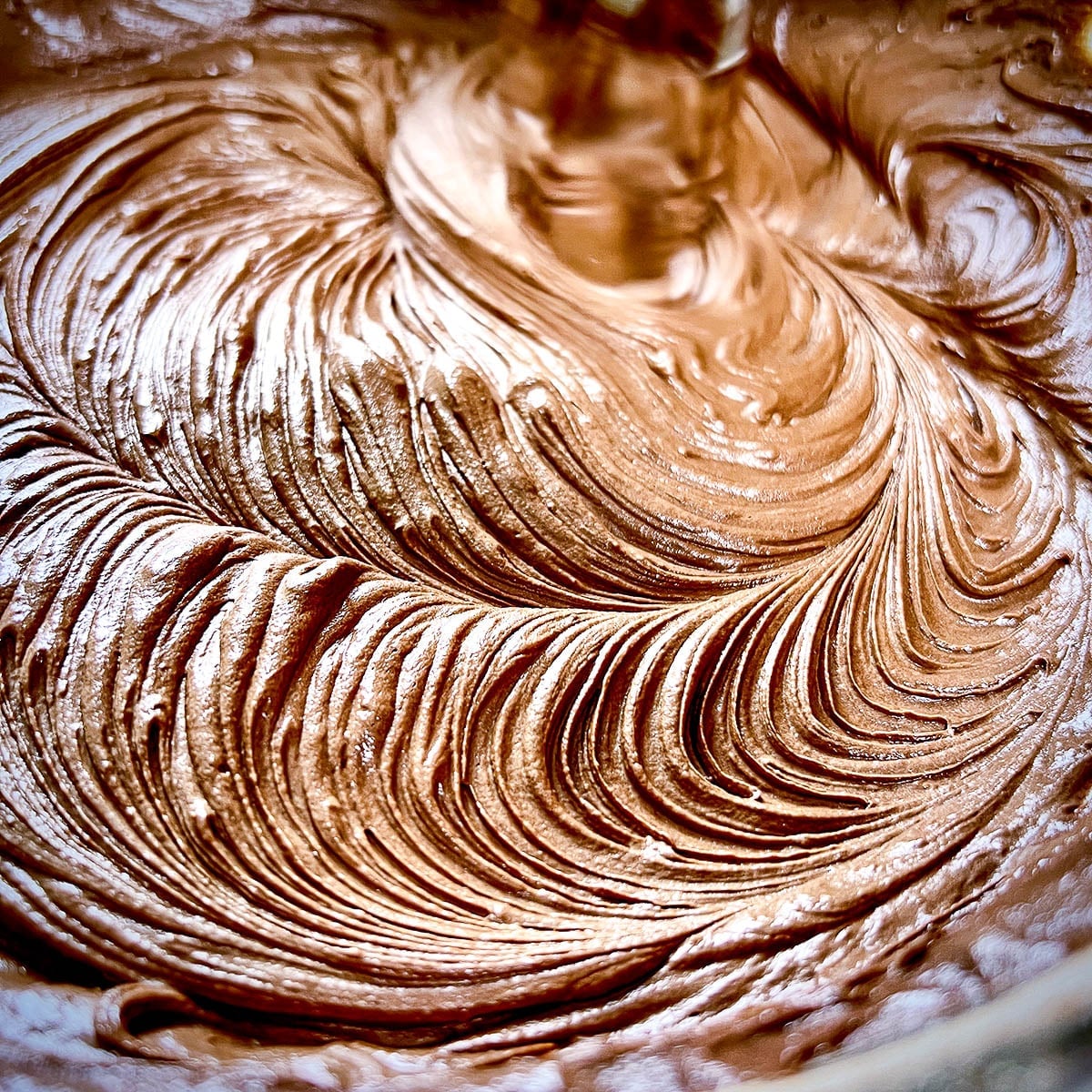
  1. To make the frosting, microwave the chocolate chips, corn syrup, milk, and vanilla in a heatproof bowl in 30-second intervals, stirring between each, until fully melted and smooth. Set aside to cool until barely warm. Beat the butter, sugar, cocoa powder, and salt with a stand mixer or electric hand mixer for about 1 minute until light and fluffy. Add the cooled chocolate mixture and mix until smooth.
Chocolate cake on a mable turntable.
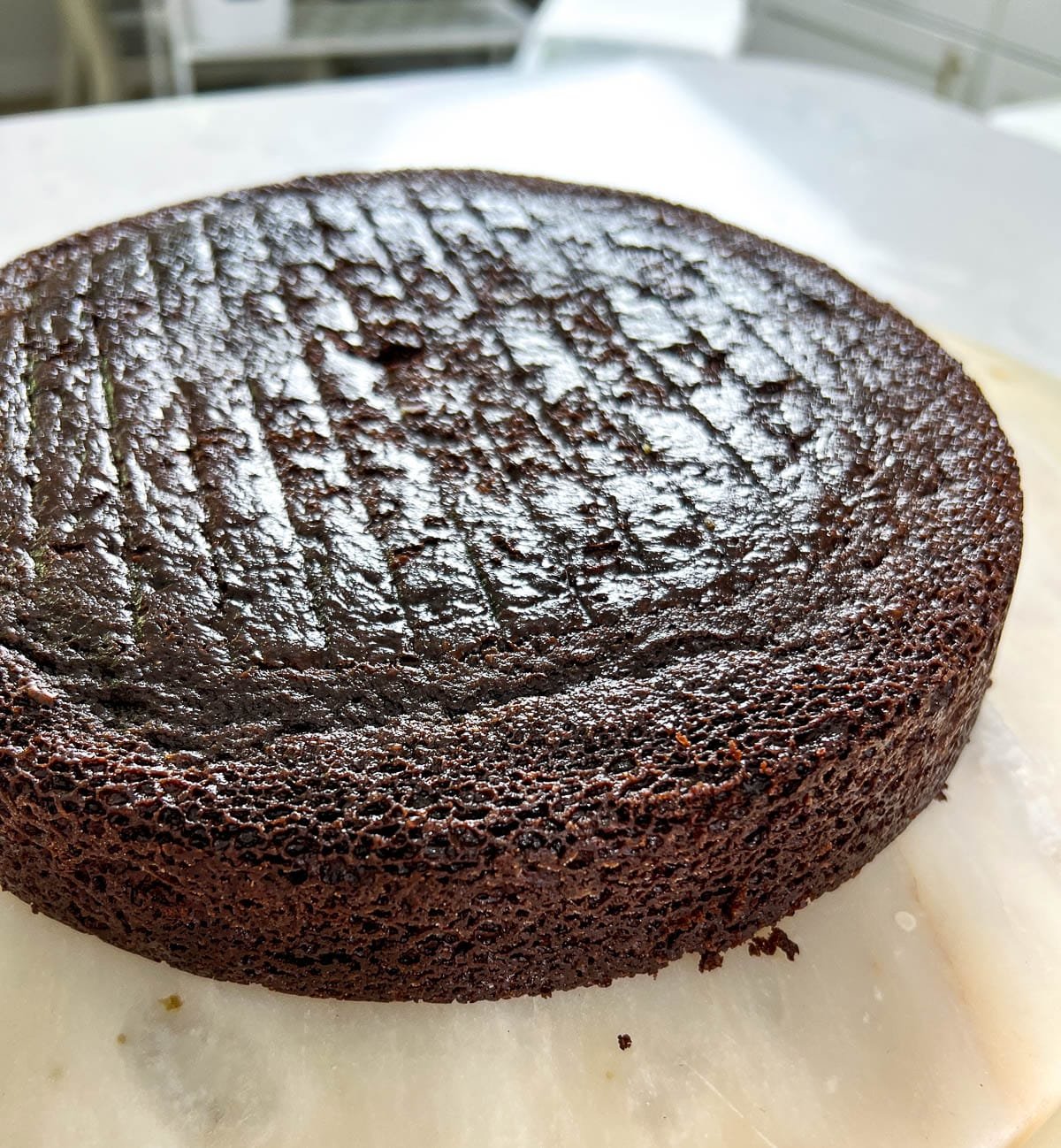
  1. Place the first layer of cake onto your cake platter. If you have a big dome on your cake you can trim it down with a serrated knife to make the top flat.

Frosting too stiff or too soft? Temperature is the culprit. Warm it in the microwave for 10 seconds and stir to loosen it up, or pop it in the refrigerator for a few minutes to firm it up. It's more forgiving than it looks.

Buttercream on a chocolate cake layer.
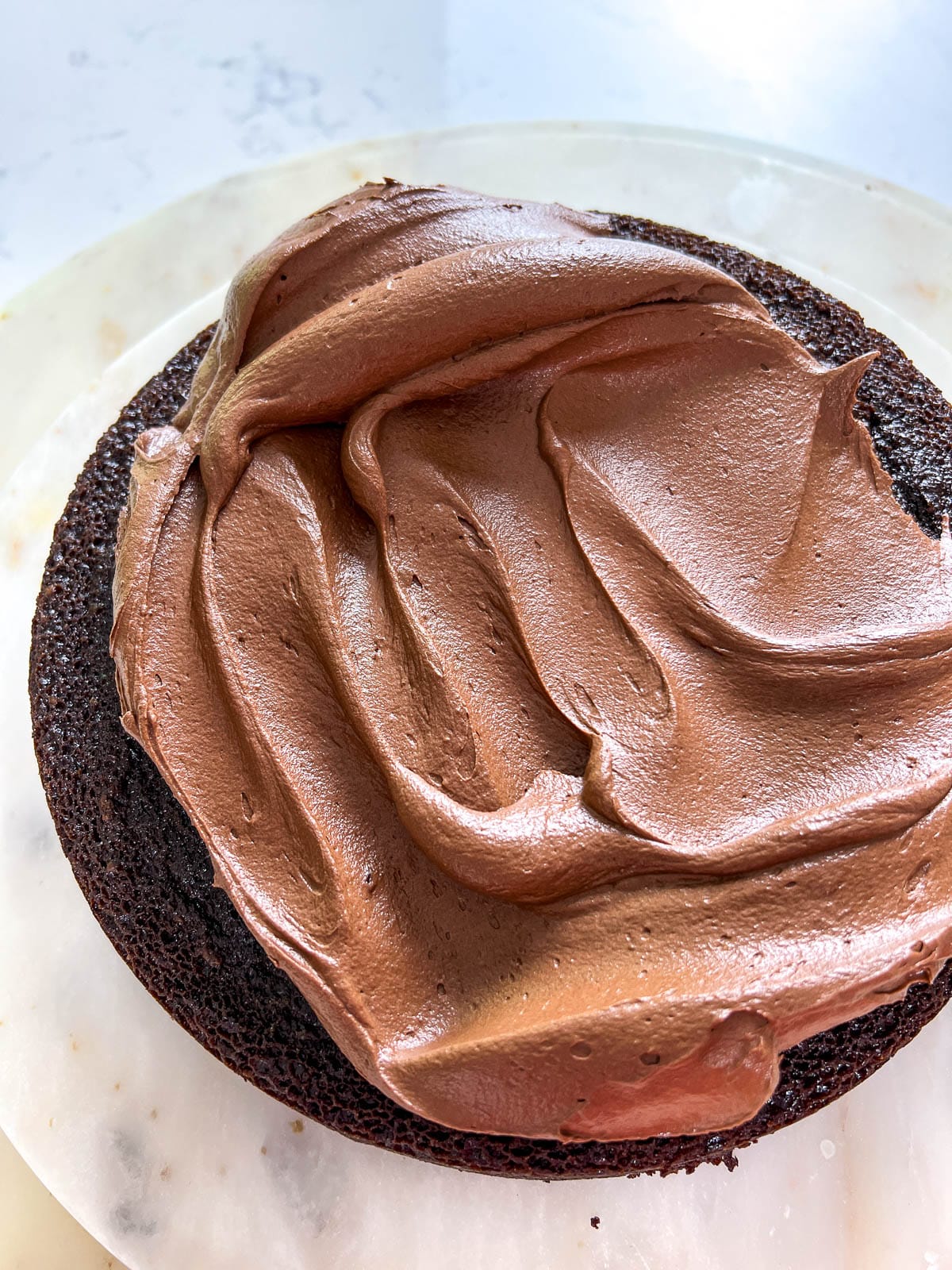
  1. Put a big dollop of your fudge frosting onto the cake layer and smooth it out with an offset spatula. Place the second layer of cake on top.
Easy chocolate cake with chocolate frosting and chocolate chips.
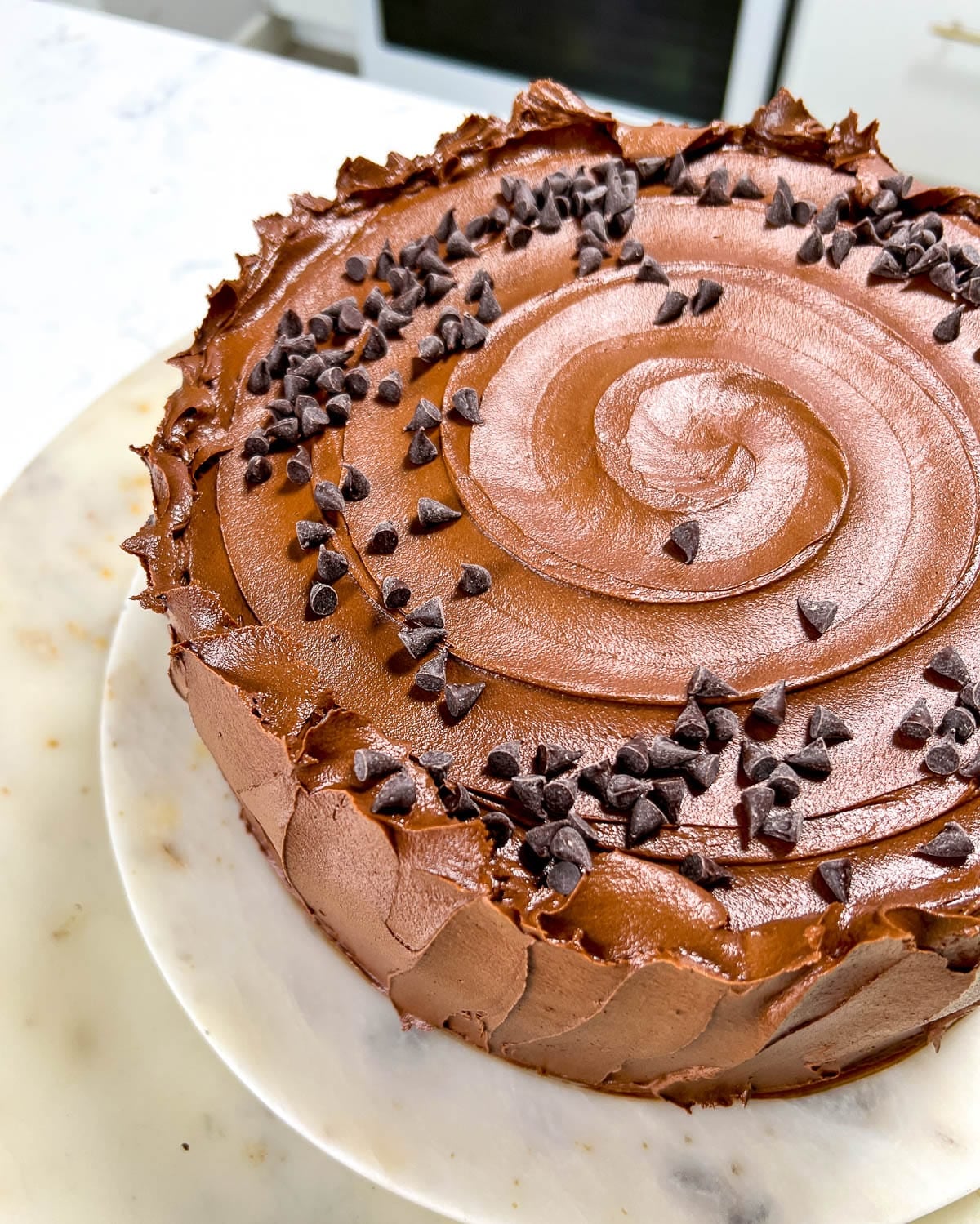
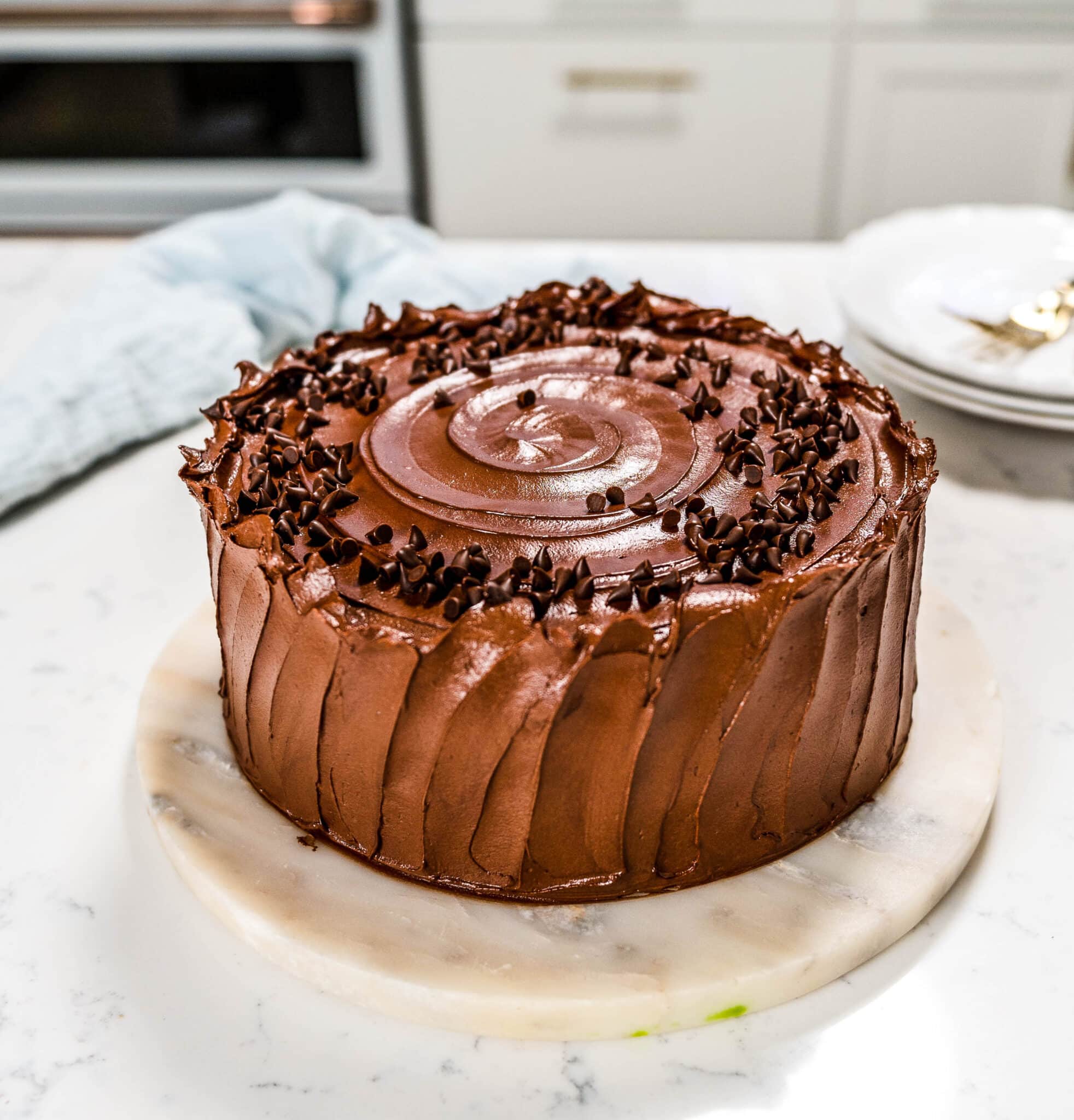
  1. Cover the whole cake in a layer of frosting. I use my offset spatula (or a spoon) to make swirls into the surface for the perfect-looking dessert. Add a few chocolate chips to the top to finish it all off. If you want to add an extra special finishing touch, consider adding one of my easy chocolate decorations.

Top it with a modeling chocolate bow or flower for a stunning finish.

Expert Tips

  • Cool Completely: Let your cake layers cool completely before frosting. If you're short on time, place them in the freezer for about an hour to speed things up - this actually makes the layers firmer and easier to work with.
  • Weigh Vs Measuring Cups: Use a kitchen scale to measure ingredients for the most consistent results. If you don't have one, you can use measuring cups. Watch my video on how to measure correctly with measuring cups. LINK TO VIDEO???
  • Cake Decorating Tools: You don't need a lot of cake decorating tools, but an offset spatula, bench scraper, and turntable will make frosting dramatically easier. You can find inexpensive sets online or at most craft stores.
  • Make the Frosting Ahead or Storing: The frosting can be used immediately or stored at room temperature (covered) for up to 3 days. For longer storage, keep it in an airtight container in the refrigerator for up to a week or the freezer for up to 3 months.
  • Beginner Bakers: If you need more information on how to decorate a cake for the first time, you can follow my easy tutorial on how to make your first cake.
  • Storing Leftovers: Store leftover cake covered at room temperature for up to 3 days. If your kitchen runs warm or you need to keep it longer, refrigerate it in an airtight container for up to 5 days - just bring it to room temperature before serving for the best texture. Individual slices can also be wrapped tightly in plastic wrap and frozen for up to 3 months.
  • Moist Chocolate Cake: If you want your cakes to be super moist, you can add an extra ounce of oil to the batter.
  • Egg-Free Option: To make your easy chocolate cake recipe egg-free, use a commercial egg replacer like King Arthur egg replacer or sugar free applesauce instead of the eggs. 

Easy Chocolate Cake Recipe FAQs

How do I decorate a chocolate cake for the first time?


You don't need much - an offset spatula, a bench scraper, and a turntable are all it takes to get a clean, professional-looking finish. If it's your first time, follow my step-by-step tutorial on how to decorate your first cake for a walkthrough of the whole process

Can I make this easy chocolate cake recipe ahead of time?


Yes! This cake is actually better made one day ahead. Bake the layers, let them cool completely, then wrap each layer tightly in plastic wrap and store at room temperature for up to 2 days or in the refrigerator for up to 5 days. The moisture redistributes overnight, making the crumb even softer. Frost the day you plan to serve it, or at most the day before

Why did my chocolate cake sink in the middle?


A sunken center is almost always caused by one of three things: the oven temperature was too high, the baking soda or baking powder had expired, or the batter was overmixed after the hot coffee was added. Check your oven temperature with an oven thermometer, verify your leavening is fresh before you start, and mix just until combined after adding the hot liquid.

Can I freeze my easy chocolate cake?


Absolutely, this cake freezes beautifully. Wrap unfrosted layers tightly in plastic wrap, then in aluminum foil, and freeze for up to 3 months. Thaw overnight in the refrigerator, still wrapped to prevent condensation. You can also freeze a fully frosted cake. Freeze it uncovered for one hour until the frosting is firm, then wrap tightly and freeze. Thaw in the refrigerator overnight.

Why is my easy moist chocolate cake dry?


Dry cake is almost always caused by overbaking, too much flour, or the wrong fat. Check your oven temperature with an oven thermometer - many home ovens run 25 to 50 degrees hotter than the dial says. Measure flour by weight if possible; a packed measuring cup adds significantly more flour than the recipe intends. This recipe uses oil rather than butter specifically to prevent dryness, so if you substituted butter that may also be the culprit.

How do I know my easy chocolate cake is done baking?


You can tell your cake is finished baking when the center springs back lightly when touched. Another reliable test is inserting a toothpick into the center-if it comes out clean or with just a few moist crumbs, the cake is ready. You may also notice the edges starting to pull slightly away from the sides of the pan, which is another visual sign that the cake has finished baking.
Most cakes bake for about 30-40 minutes, depending on the pan size, but it's best to rely on these visual cues rather than the clock alone.

Easy chocolate cake on a marble round turner with plates and forks in the background.

More Simple Cake Recipes

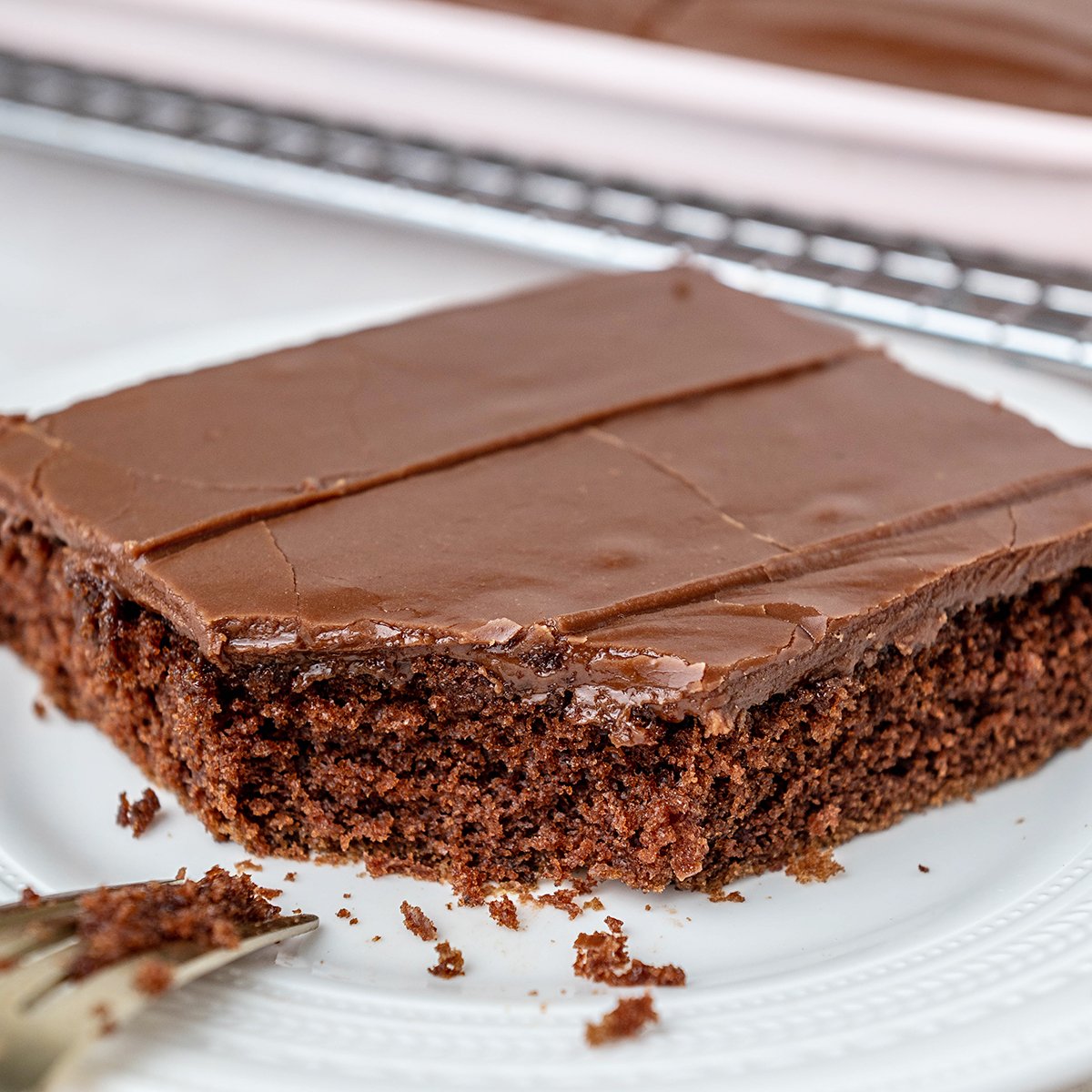
  • close up of a slice of chocolate sheet cake
    Classic Texas Sheet Cake
  • Carrot cake bar held up by a server
    Carrot Cake Bars
  • closeup of a slice of funfetti cake
    Funfetti Cake
  • honey bundt cake on a platter
    Easy Honey Cake Recipe

Ready To Master Cake Decorating?

Join Sugar Geek University and learn professional techniques through detailed cake decorating courses, tutorials, and real kitchen demonstrations by
award-winning cake decorator, Liz Marek.

Start Learning Now

Recipe

Easy chocolate cake recipe slice on a white plate with cake in the background.
Print Recipe
4.93 from 155 votes

Easy Chocolate Cake Recipe

This easy chocolate cake recipe comes together in one bowl with simple pantry ingredients and bakes up moist, fudgy, and deeply chocolatey every time. Two professional tricks make all the difference: baking at 335°F for naturally flat layers and a splash of hot coffee to intensify the chocolate flavor. Foolproof enough for a beginner, impressive enough for any celebration.
Prep Time10 minutes mins
Cook Time30 minutes mins
Total Time40 minutes mins
Course: Dessert
Cuisine: American
Servings: 15 servings
Calories: 649kcal
Author: Liz Marek

Equipment

  • 2 9" cake pans

Ingredients

Easy Chocolate Cake Recipe

  • 2 cups all purpose flour
  • 1 cup sugar
  • 1 cup brown sugar packed
  • 1 cup cocoa powder Hershey's
  • 1 ½ teaspoon baking powder
  • 2 teaspoon baking soda
  • 1 teaspoon salt
  • 2 large eggs
  • 1 cup buttermilk
  • 1 cup hot coffee or hot water
  • ½ cup vegetable oil
  • 2 teaspoon vanilla extract

Chocolate Buttercream Frosting

  • 2 cups chocolate chips
  • ½ cup corn syrup
  • ¼ cup milk
  • 1 teaspoon vanila extract
  • 2 cups unsalted butter softened
  • 2 cups powdered sugar sifted
  • 1 cup cocoa powder sifted
  • 1 teaspoon salt
US Customary - Metric

Instructions

Easy chocolate cake instructions

  • Heat oven to 335ºF and prepare two 9" cake pans with cake goop or another preferred pan release 
  • Combine the flour, sugar, cocoa powder, baking powder, baking soda, and salt in the bowl of your stand mixer with the paddle attachment. Mix on low 5 seconds just until combined. 
  • Add in the eggs, buttermilk, oil and vanilla and mix on medium speed for 2 minutes. Scrape the bowl.
  • Turn the mixer down to low and add in the hot coffee and mix until just its just combined. 
  • Pour the batter into your prepared cake pans.
  • Bake the cakes for 30-35 minutes or until a toothpick inserted into the center comes out clean.
  • Cool the cakes in the pan for about 15 minutes (or until the pan is barely warm to the touch) then invert onto wire racks to cool completely before frosting. 

Chocolate Buttercream Instructions

  • Combine the chocolate chips, corn syrup, milk, and vanilla in a heat proof bowl. Microwave for 30 seconds and stir and then heat in 10-second increments and stir until it is fully melted and smooth. Let the chocolate mixture cool until it's barely warm.
  • Mix the butter, sugar, cocoa powder, and salt in the bowl of your stand mixer on low speed with the paddle on high speed for about 1 minute until light and fluffy. You can also use a large bowl and an electric mixer if you prefer.
  • Add the cooled melted chocolate mixture to the butter mixture and mix until it is smooth and fluffy.
  • The frosting can be used immediately to frost a cake or put into a piping bag for decorations. 
  • Cover it with plastic wrap and store it at room temperature for 3 days. If you plan to keep it longer, keep it in an airtight container in the refrigerator or freezer.

Video

Notes

  • Bake at 335°F instead of 350°F for naturally flat layers that don't need to be leveled.
  • Make sure all refrigerated ingredients are at room temperature before mixing for the smoothest batter.
  • Add the hot coffee last and mix just until combined. Overmixing at this stage will toughen the cake.
  • Weigh your batter between the two pans for perfectly even layers.
  • The cake layers are done when a toothpick comes out with a few moist crumbs, not completely clean.
  • Cool completely before frosting. Short on time? Wrap the layers and freeze for 30 to 60 minutes instead.
  • For an extra moist crumb, add one additional ounce of oil to the batter.
  • Substitute each egg with a commercial egg replacer or unsweetened applesauce for an egg-free version.
  • Store frosted cake at room temperature for up to 3 days or refrigerate for up to 5 days. Bring to room temperature before serving.
  • Unfrosted cake layers can be wrapped tightly and frozen for up to 3 months.

Nutrition

Serving: 1serving | Calories: 649kcal | Carbohydrates: 88g | Protein: 6g | Fat: 35g | Saturated Fat: 21g | Polyunsaturated Fat: 1g | Monounsaturated Fat: 7g | Trans Fat: 1g | Cholesterol: 92mg | Sodium: 502mg | Potassium: 365mg | Fiber: 5g | Sugar: 67g | Vitamin A: 826IU | Calcium: 100mg | Iron: 2mg
{ "@context": "https://schema.org", "@type": "WebPage", "@id": "https://sugargeekshow.com/easy-chocolate-cake/", "name": "Easy Chocolate Cake Recipe", "about": [ {"@type": "Thing", "name": "Chocolate cake", "sameAs": "https://en.wikipedia.org/wiki/Chocolate_cake"}, {"@type": "Thing", "name": "Cocoa powder", "sameAs": "https://en.wikipedia.org/wiki/Cocoa_powder"}, {"@type": "Thing", "name": "Buttermilk", "sameAs": "https://en.wikipedia.org/wiki/Buttermilk"}, {"@type": "Thing", "name": "Buttercream", "sameAs": "https://en.wikipedia.org/wiki/Buttercream"}, {"@type": "Thing", "name": "Baking powder", "sameAs": "https://en.wikipedia.org/wiki/Baking_powder"}, {"@type": "Thing", "name": "Vegetable oil", "sameAs": "https://en.wikipedia.org/wiki/Vegetable_oil"}, {"@type": "Thing", "name": "Gluten", "sameAs": "https://en.wikipedia.org/wiki/Gluten"}, {"@type": "Thing", "name": "Layer cake", "sameAs": "https://en.wikipedia.org/wiki/Layer_cake"}, {"@type": "Thing", "name": "Coffee", "sameAs": "https://en.wikipedia.org/wiki/Coffee"}, {"@type": "Thing", "name": "Corn syrup", "sameAs": "https://en.wikipedia.org/wiki/Corn_syrup"} ] }

gold drip on a white cake

March 1, 2026 Frosting and Icing

Gold Drip Tutorial

Gold drip cake has been one of my favorite ways to instantly elevate a design. There's just something about that glossy metallic edge cascading down a smooth buttercream cake that feels dramatic and expensive. And the best part? You don't need complicated chocolate blends or specialty products. This gold drip hack uses water ganache and a simple trick with luster dust to create a bold, metallic drip that actually shines.

My Inspiration

I've been working with water ganache since 2010, and over the years, I've tested just about every way to create a metallic drip. Brushing gold on after the drip sets works… but it's time-consuming. Mixing dust directly into ganache dulls the shine. I wanted something faster and more reflective. That's when I started coating the inside of the piping bag with oil and gold luster dust before adding the ganache. When the ganache passes through the bag, it picks up that gold coating and pipes out already metallic. It feels like magic the first time you try it.

[feast_advanced_jump_to]

🔍 Quick Look: How To Make Gold Drip

  • ⏱️ Prep Time: 1 minute
  • 🍳 Cook Time: 1-2 minutes
  • 🕒 Total Time: 3 minutes (plus time for cooling)
  • 👥 Servings: Varies
  • 📊 Calories: ~578 kcal per serving (based on nutrition panel)
  • 🔥 Cook Method: Dry aging for 24 hrs. Searing for 3 minutes per side. Basting 30 secs. Then resting for 15 minutes.
  • 👩‍🍳 Flavor Profile: Moist & tender with caramelized crust.
  • ⭐ Difficulty: Easy, making it great for a heightened weekly or weekend meal.

Ingredient Breakdown

All you need to make a gold drip is some chocolate, water, gold dust, and oil.

White chocolate is the base of our water ganache. It melts smoothly and sets firm enough to hold a clean drip. If you don't have white chocolate, you can use compound coating chocolate, which is shown in this tutorial or even a brown chocolate ganache drip. It doesn't really matter what kind of chocolate you use to make your ganache.

Hot water replaces heavy cream in this version. That's the beauty of water ganache. The water hydrates the sugar in the chocolate without adding dairy, making it incredibly versatile and heat stable. You can even adjust the consistency by slightly increasing or decreasing the water.

Gold luster dust is what creates that metallic finish. Use a high-quality gold luster dust for the most reflective shine. I personally love the super gold dust from Truly Mad Plastics because it's so shiny and non-toxic. Cheaper dusts can look chalky. If you want a deeper antique tone, you can mix in a touch of bronze dust. You can really use any kind of luster dust that you like to make this drip; it doesn't have to be gold.

Neutral oil Use something flavorless like vegetable oil, avocado oil, or light corn oil. You only need a tiny amount.

Step-by-Step Instructions

Making the gold drip is super easy. Just mix and drip!

gold drip on a white cake
  1. Make the water ganache. Heat your water until steaming but not boiling. Pour it over finely chopped white chocolate or candy melts and let it sit for about one minute. Stir gently until smooth and fully emulsified. If needed, microwave in short bursts to finish melting. Or you can just microwave the two ingredients together and then stir.
  2. Let the ganache cool. You want it to be slightly warm but not hot. It should flow slowly off a spoon. If it's too warm, your drips will run too far down the cake. I shoot for about 90ºF.
  3. Mix together your gold dust and a few drips of neutral oil to make a thick paste.
  4. Place your piping bag into a tall cup or container and fold the edges down.
  5. Using a paintbrush, coat the inside few inches of your piping bag with a thick layer of the gold paste. This paste will coat the ganache as it comes out of the bag, making it appear gold.
  6. Carefully pour the cooled water ganache into the piping bag without disturbing the dust coating too much.
  7. Snip a small opening at the tip. Pipe drips around the edge of your chilled cake, squeezing slightly and stopping to control the length of each drip. Then fill in the top if desired.

Tips & Tricks

  • Chill your cake first. A cold cake helps the ganache set quickly and prevents runaway drips.
  • Test your drip on a glass or bowl first to check consistency before going straight onto the cake.
  • If the gold looks too subtle, add a little more luster dust inside the bag before filling.
  • For a heavier metallic finish, you can double coat the bag with oil and dust.
  • If your ganache thickens too much while working, microwave it for 5 seconds and stir.

Final Thoughts

This gold drip method is one of those little cake hacks that saves time but looks incredibly professional. Instead of painting each drip individually, you get a smooth metallic finish as you pipe. It's cleaner, faster, and honestly more satisfying. Once you try coating the piping bag instead of brushing afterward, you probably won't go back.

Frequently Asked Questions

Can I use dark or milk chocolate for this?

You can use any kind of ganache to make a gold drip. The gold coats the ganache as it comes out of the bag so it doesn't matter what color the ganache is.

Is the oil taste noticeable?

No, you can't taste the oil because it's a neutral oil and the flavor just blends into the chocolate flavor

Can I mix the luster dust directly into the ganache instead?

Chocolate is opaque, so just mixing gold dust into melted chocolate ganache will not have the same result. The piping bag coating method keeps the metallic particles more concentrated on the surface.

Does this work with buttercream drips?

Yes, you can melt buttercream slightly to make buttercream drips in the same way.

If you made this recipe or any recipe on Sugar Geek Show, I'd love to hear how it turned out! Leave a rating and comment below - it helps other bakers and it truly makes my day. ⭐⭐⭐⭐⭐

Recipe

gold drip on a white cake
Print Recipe
5 from 1 vote

Gold Drip Tutorial

This is how you make a gold drip for your cakes
Prep Time5 minutes mins
Cook Time5 minutes mins
cooling time15 minutes mins
Total Time25 minutes mins
Course: Dessert
Cuisine: American
Servings: 7 oz
Calories: 123kcal
Author: Liz Marek

Ingredients

White Chocolate Water Ganache

  • 6 ounces chocolate I prefer guittard white chocolate wafers
  • 1 ounces warm water
  • 2 Teaspoons gold luster dust
  • 3 drops neutral oil add more if needed
US Customary - Metric

Instructions

Instructions

  • Combine your water and chocoalte together in a bowl.
  • Microwave in 30 second incredments until the chocolat is soft.
  • Whisk it together until smooth. Microwave it more if needed.
  • Set your water ganache aside to cool to about 90ºF.
  • Combine your gold dust and oil together to make a thick paste. Adjust the amount of oil as needed.
  • Using a paintbrush, coat the bottom few inches of a piping bag with your paste. Make it very thick.
  • Pour your cooled water ganache into the piping bag.
  • Snip off the tip and pipe your gold drip onto your chilled cake.

Video

Notes

You can use any kind of chocolate for this drip
Let your ganache cool a bit before piping for the best drips
Make sure your paste is very thick and you coat the inside of your piping bag well
Don't snip the hole of the piping bag too big

Nutrition

Serving: 1ounce | Calories: 123kcal | Carbohydrates: 15g | Protein: 1g | Fat: 8g | Saturated Fat: 5g | Polyunsaturated Fat: 0.2g | Monounsaturated Fat: 3g | Sodium: 4mg | Potassium: 70mg | Fiber: 1g | Sugar: 13g | Calcium: 6mg | Iron: 1mg

close up of fresh pasta held in two hands

February 17, 2026 Blog

Easy Homemade Egg Pasta

How to make homemade egg pasta at home that you can then roll out and make into any shape you want. This is my foolproof ratio of flour to egg, so you can make as much or as little as you need. I've also included instructions on how to make it by hand, with a food processor, or a KitchenAid mixer.

I actually learned how to make this fresh egg pasta in Italy on a soul sisters trip. We took a wonderful cooking class from an Italian Chef at a local cooking school. It was wonderful to see this simple technique taught in real time and learn that making homemade egg pasta really isn't that complicated.

After making your pasta you can toss it with some fresh marinara and basic, mushroom cream sauce or make pretty much any kind of pasta dish you want.


What's In This Blog Post

  • Ingredients
  • How To Make Pasta Dough
  • How To Make Pasta With A Food Processor
  • How To Make Fresh Pasta In A Stand Mixer
  • How To Roll Out Pasta
  • Troubleshooting Problems
    • The Dough is Too Dry (Crumbly/Sandy)
    • The Dough is Too Sticky (Tacky/Stretching)
    • The Most Important Step: The Rest
  • How To Store Fresh Pasta
  • How To Cook Fresh Pasta

Ingredients

In the world of professional pasta making, the standard starting point is based on the weight of the flour. When making pasta, we need to hydrate the flour with a liquid. In this case its in the form of an egg.

homemade pasta ingredients

The Math: For every 100g of flour, use 1 egg (60g), and ¼ of a teaspoon of salt (1.5 grams). If you are making dinner for four people, you generally want 400g of flour and 4 eggs, and one teaspoon of salt. The exact weight of your egg may vary, so if you've never made pasta before, it's best to weigh the egg and flour the first time around so you know what the pasta should feel like.

How To Make Pasta Dough

We are using the "fountain method" (or la fontana in Italian) to make the pasta.  It requires patience and a bit of a workout for your forearms, but it is not hard to do.

Making pasta is essentially creating an emulsion, similar to preparing a creamy sauce or fluffy buttercream. The mixing is the most important part. Gradually adding the flour helps ensure the flour is hydrated properly and that you stop adding flour as soon as you're at the right consistency. Trying to mix eggs and flour all at once can result in crumbly and dry bits of flour in your pasta and an inconsistent texture.

  1. Create the Flour Well - On a large, clean work surface (wood or marble is ideal), pile your flour into a mound. Use the bottom of a bowl or your fingers to create a wide, deep hole in the center. Make sure the walls are thick and sturdy so the eggs do not leak out.
  2. Add the Eggs - Crack the eggs into the center of the well. If you are using salt in the dough, sprinkle it directly onto the eggs now.
  3. Whisk the Center - Use a fork to gently beat the eggs in the center of the well. Be careful not to puncture the flour walls yet. Once the eggs are blended, begin flicking small amounts of flour from the inner rim of the well into the egg mixture.
  4. Incorporate the Flour - Continue whisking in a circular motion, pulling more flour from the walls until the center becomes a thick, custard-like paste. Once the mixture is thick enough that it will not run across the table, use a bench scraper or your hands to fold the remaining outer walls of flour over the center.
  5. Form the Shaggy Mass - Work the flour and egg together until a rough, shaggy ball forms. If there are dry bits of flour that will not stick to the ball, do not force them in. Simply brush them aside. If the dough is too sticky to handle, add a tiny dusting of extra flour.
  6. Knead the Dough - This is the most important step. Use the heel of your hand to push the dough away from you, then fold it back over itself, rotate it 90 degrees, and repeat. Do this firmly for 8 to 10 minutes. The dough is ready when it is smooth, elastic, and bounces back slowly when poked with a finger.
  7. Rest the Dough - Wrap the dough tightly in plastic wrap to prevent it from drying out. Let it rest on the counter at room temperature for at least 30 minutes. This allows the gluten to relax, so the dough does not shrink back when you roll it out. Or you can refrigerate it and let it rest for up to 24 hours.
  8. Roll and Shape - After the rest, dust your surface with a little more flour. Cut the dough into four pieces and roll them out one at a time to your desired thickness. Cut into ribbons for fettuccine or leave in sheets for lasagna.

How To Make Pasta With A Food Processor

Using a food processor is the ultimate "cheat code" for pasta. It handles the heavy lifting of hydration and initial gluten development in about 60 seconds, which normally takes 10 minutes by hand. If you have a food processor, this is the easiest way to make your pasta.

  1. Prep the Dry Ingredients - Place the flour and salt into the bowl of a food processor fitted with the standard metal "S" blade. Pulse a few times to aerate the flour and distribute the salt evenly.
  2. Add the Eggs - Turn the food processor on to a low or medium setting. While the motor is running, slowly pour the whisked eggs through the opening in a steady stream.
  3. Process to "Wet Sand" Consistency - Continue processing for about 30 to 45 seconds. Watch the texture closely. You are looking for the mixture to transform from dry powder to small, pea-sized crumbs that look like wet, clumpy sand.
  4. Test the Dough - Stop the processor and pinch a handful of the crumbs together. If the dough holds its shape and feels like Play-Doh, it is ready. If it is still powdery and falls apart, add a teaspoon of water and pulse again. If it is a sticky glob, add a tablespoon of flour and pulse.
  5. Form the Ball - Turn the crumbly mixture out onto a clean work surface. Gather the crumbs with your hands and press them together into a solid ball. Because the processor did the mixing, you only need to knead this dough by hand for about 2 minutes to make it perfectly smooth.
  6. Rest the Dough - Wrap the ball tightly in plastic wrap. Let the dough rest at room temperature for at least 30 minutes. This is even more important with the food processor method because the high-speed blades "stretch" the gluten quite aggressively, so it needs time to relax. Or you can refrigerate the dough overnight and use it the next day.
  7. Shape and Cook - After the rest, your dough is ready to be rolled through a pasta machine or with a rolling pin.

How To Make Fresh Pasta In A Stand Mixer

Using a stand mixer is the perfect middle ground between the manual "well" method and the high-speed food processor. It saves your arms from the heavy kneading while still giving you that traditional dough texture.

Most people use the Paddle Attachment to mix and the Dough Hook to knead.

  1. Combine Dry Ingredients - Place your flour and salt into the mixer bowl. Give it a quick stir with a whisk or the paddle attachment on the lowest speed to distribute the salt.
  2. Add the Eggs - Create a small dip in the center of the flour. Pour in your lightly whisked eggs.
  3. The "Shaggy" Phase - Attach the Paddle Attachment. Turn the mixer to the lowest speed (usually "Stir" or "1"). Mix until the flour and eggs start to clump together and the dough begins to pull away from the sides of the bowl. This should take about 30 to 60 seconds.
  4. The Kneading Phase - Switch out the paddle for the Dough Hook. Turn the mixer to speed 2 (never go higher than speed 2 for heavy dough, or you risk damaging the mixer's gears).
  5. Knead by Machine - Let the dough hook work for about 5 to 8 minutes.
    • The Goal: The dough should form a smooth, solid ball that is slightly tacky but doesn't stick to the bowl or your fingers.
    • The Adjustment: If the dough is sticking to the bottom, add a tablespoon of flour. If it looks like dry pebbles that won't form a ball, add a teaspoon of water or an extra egg yolk.
  6. The Manual Finish - Take the dough out of the bowl and knead it by hand for just 1 minute on a clean surface. This helps you "feel" if the hydration is perfect and ensures the ball is tight and smooth.
  7. Rest and Roll - Wrap the dough in plastic wrap and let it rest for at least 30 minutes before rolling it out with your machine attachments or a rolling pin.

Why Use the Stand Mixer?

  • Consistency: The dough hook provides a very even, rhythmic knead that mimics a professional baker's hands.
  • Cleanliness: Unlike the "well" method, there is zero risk of an "egg volcano" leaking onto your floor.
  • Cooler Dough: Unlike the food processor, the stand mixer doesn't generate heat, which keeps the egg proteins from getting too warm before the rest phase.

Pro-Tip for Attachments

If you have the Pasta Roller Attachment for your stand mixer, it is much easier to use than a hand-crank machine because you have both hands free to guide the long sheets of dough. Just remember to keep the mixer on a low speed (usually 2 or 3) while rolling.

How To Roll Out Pasta

Using a pasta machine attachment if you have a kitchenaid mixer is the best way to get those professional, paper-thin sheets that are nearly impossible to achieve with a rolling pin. Whether you have a hand-crank model or an electric attachment, the process is exactly the same.

1. Prepare the Dough

After your dough has rested for at least 30 minutes, cut it into 4 equal workable pieces. Keep the pieces you aren't using wrapped in plastic wrap so they do not develop a dry crust.

2. The Initial Flattening

Set your pasta machine to the widest setting (usually labeled "0" or "1"). Flatten one piece of dough with the palm of your hand into a rough oval shape. Dust it lightly with flour.

3. The First Pass and the "Lamination"

Run the dough through the widest setting. Now, perform a letter fold: fold the dough into thirds (like a piece of mail) and run it through the widest setting again, perpendicular to the fold.

  • Why? This step, called lamination, further aligns the gluten and ensures a uniform rectangular shape for your sheet. Repeat this fold 2 or 3 times on the widest setting.

4. Narrowing the Gap

Once the dough is smooth and rectangular, stop folding. Turn the dial to the next narrowest setting and run the dough through once.

  • The Rule: Pass the dough through each setting only once. Do not skip settings, as this can overstress the motor (if electric) or tear the delicate dough.

5. Managing the Length

As the dough gets thinner, it will become very long. Use the back of your hand to support the sheet as it exits the rollers so it doesn't stretch or fold over on itself.

  • Pro-Tip: If the sheet becomes too long to handle, feel free to cut it in half crosswise and continue rolling the two smaller sheets separately.

6. The "Transparency" Test

Continue rolling until you reach your desired thickness.

  • Fettuccine/Tagliatelle: Usually setting 5 or 6.
  • Ravioli/Linguine: Usually setting 7 or 8.
  • The Test: You should be able to see the silhouette of your hand through the sheet of pasta when you hold it up to the light.

Troubleshooting the Machine

IssueSolution
Dough is "shredding" at the edgesThe dough is too dry. Fold it up, add a drop of water, and start back at the widest setting.
Dough is rippling or stickingThe dough is too wet. Dust the sheet generously with flour before the next pass.
Dark streaks on the pastaThis is usually machine oil. Wipe the rollers with a dry paper towel (never use water to clean a pasta machine!).

Note: Never wash your pasta machine with water or soap. It will rust the internal gears. Simply let any stray bits of dough dry out, then brush them away with a dry pastry brush or a toothpick.

Troubleshooting Problems

Even with a perfect ratio, variables like the humidity in your kitchen or the size of your eggs can throw things off. Here is how to handle the two most common "disasters":

The Dough is Too Dry (Crumbly/Sandy)

If you've been kneading for 5 minutes and the dough still looks like a dry sponge or won't stay in a ball, it needs moisture.

  • The Fix: Do not pour water directly onto the dough. Instead, dip your hands in warm water and continue kneading. This adds moisture in tiny, manageable increments. Repeat until the dough gathers all the stray flour.

The Dough is Too Sticky (Tacky/Stretching)

If the dough is sticking to your hands or the countertop like glue, it's over-hydrated.

  • The Fix: Lightly dust your work surface with flour and knead it in. Only add a tablespoon at a time. The goal is a dough that feels like "earlobe" or "play-dough" consistency-soft but not sticky.

The Most Important Step: The Rest

The biggest mistake people make is trying to roll out the dough immediately after kneading. The gluten is "tight" and angry at this stage.

Crucial Rule: Wrap your dough tightly in plastic wrap and let it sit at room temperature for at least 30 minutes (up to 2 hours). This allows the flour to fully hydrate and the gluten to relax, making it easy to roll paper-thin without it snapping back.

How To Store Fresh Pasta

If you are cooking the pasta later the same day, you can leave it out at room temperature.

  1. Toss with Flour: Generously dust the cut pasta with semolina or all-purpose flour so the strands do not stick together.
  2. Make "Nests": Twirl small portions of the pasta into loose bird-nest shapes on a parchment-lined baking sheet.
  3. Cover: Drape a clean, dry kitchen towel over the nests to keep dust off and prevent them from becoming too brittle

Refrigerating fresh pasta is tricky because the moisture in the eggs can make the dough gummy.

  1. Air Dry First: Let the pasta nests sit out on a tray for about 30 minutes to "surface dry."
  2. Airtight Container: Place the semi-dry nests into an airtight container or a sealed freezer bag.
  3. Chill: Store in the fridge for no more than 1 day. If you wait longer, the dough often turns an unappetizing gray color due to oxidation.

Freezing fresh pasta is actually the preferred method for most chefs because it preserves the "fresh" flavor better than the fridge does.

  1. Flash Freeze: Place your flour-dusted nests on a baking sheet in a single layer. Put the whole tray in the freezer for 1 hour until the nests are frozen solid.
  2. Bag It: Transfer the frozen nests into a heavy-duty freezer bag. Squeeze out as much air as possible.
  3. Cook from Frozen: Do not thaw the pasta before cooking. Drop the frozen nests directly into boiling salted water. They will only need about an extra minute of cook time compared to fresh.

If you want to dry pasta, you need a very dry environment and a pasta drying rack. However, for egg-based pasta, home-drying can be risky due to the raw eggs. Stick to freezing for the safest and best-tasting results.

How To Cook Fresh Pasta

Cooking fresh pasta is a "blink, and you'll miss it" situation. Unlike dried boxed pasta, which can take 10 to 12 minutes, fresh egg pasta usually cooks in 2 to 4 minutes.

The exact timing depends on the thickness of your dough and the shape you created.

Cooking Times by Shape

  • Angel Hair or Thin Tagliolini: 1 to 2 minutes
  • Fettuccine or Pappardelle: 3 to 4 minutes
  • Hand-shaping (Orecchiette or Gnocchi): 4 to 5 minutes
  • Filled Pasta (Ravioli or Tortellini): 4 to 6 minutes

How to Tell When It Is Done

There are three main signs that your pasta is ready to meet the sauce:

  1. The Float Test: As the proteins in the egg coagulate and the starches swell, the pasta becomes more buoyant. When the noodles or ravioli rise to the surface of the boiling water and stay there, they are almost finished.
  2. The Color Change: Fresh pasta will turn a shade or two lighter as it cooks. It loses that "translucent" raw dough look and becomes opaque.
  3. The Taste Test: This is the only foolproof method. Take a strand out with tongs, dip it in cool water for a split second, and bite. It should be tender but still have a slight "spring" or resistance in the center.

Two Critical Rules for Fresh Pasta

  • Use a Huge Pot: Fresh pasta is starchier than dried pasta. If you use a small pot, the water will turn into a thick "slurry" and your noodles will stick together in a giant clump. Use at least 4 quarts of water for every pound of pasta.
  • The "Carryover" Cook: Always pull your pasta out of the water about 30 seconds before you think it is perfect. It will continue to cook when you toss it in the hot sauce.

Pro-Tip: Save a mug of the starchy pasta water before you drain it. If your sauce looks too thick or dry when you add the noodles, a splash of that "liquid gold" will create a silky, restaurant-quality finish.

Recipe

close up of fresh pasta held in two hands
Print Recipe
No ratings yet

Fresh Egg Pasta

This is how you make easy homemade pasta that you can then roll out and make into any shape you like.
Prep Time5 minutes mins
Cook Time4 minutes mins
Kneading8 minutes mins
Total Time17 minutes mins
Course: Main Course
Cuisine: Italian
Servings: 4 servings
Calories: 450kcal
Author: Liz Marek

Equipment

  • 1 Food processor If not making by hand

Ingredients

  • 400 grams all purpose flour
  • 240 grams eggs about 4 large eggs
  • 6 grams salt

Instructions

Handmade Pasta

  • Create the flour well on a large, clean work surface (wood or marble is ideal), pile your flour into a mound.
  • Use the bottom of a bowl or your fingers to create a wide, deep hole in the center. Make sure the walls are thick and sturdy so the eggs do not leak out.
  • Crack the eggs into the center of the well. If you are using salt in the dough, sprinkle it directly onto the eggs now.
  • Use a fork to gently beat the eggs in the center of the well. Be careful not to puncture the flour walls yet.
  • Once the eggs are blended, begin flicking small amounts of flour from the inner rim of the well into the egg mixture.
  • Continue whisking in a circular motion, pulling more flour from the walls until the center becomes a thick, custard-like paste. 
  • Once the mixture is thick enough that it will not run across the table, use a bench scraper or your hands to fold the remaining outer walls of flour over the center.
  • Work the flour and egg together until a rough, shaggy ball forms. If there are dry bits of flour that will not stick to the ball, do not force them in. Simply brush them aside. If the dough is too sticky to handle, add a tiny dusting of extra flour.
  • Use the heel of your hand to push the dough away from you, then fold it back over itself, rotate it 90 degrees, and repeat. Do this firmly for 8 to 10 minutes. The dough is ready when it is smooth, elastic, and bounces back slowly when poked with a finger.
  • Wrap the dough tightly in plastic wrap to prevent it from drying out. Let it rest on the counter at room temperature for at least 30 minutes. This allows the gluten to relax so the dough does not shrink back when you roll it out.
  • After the rest, dust your surface with a little more flour. Cut the dough into four pieces and roll them out one at a time to your desired thickness. Cut into ribbons for fettuccine or leave in sheets for lasagna.

Video

Notes

Troubleshooting Your Dough

Even with a perfect ratio, variables like the humidity in your kitchen or the size of your eggs can throw things off. Here is how to handle the two most common "disasters":

1. The Dough is Too Dry (Crumbly/Sandy)

If you’ve been kneading for 5 minutes and the dough still looks like a dry sponge or won't stay in a ball, it needs moisture.
  • The Fix: Do not pour water directly onto the dough. Instead, dip your hands in warm water and continue kneading. This adds moisture in tiny, manageable increments. Repeat until the dough gathers all the stray flour.

2. The Dough is Too Sticky (Tacky/Stretching)

If the dough is sticking to your hands or the countertop like glue, it’s over-hydrated.
  • The Fix: Lightly dust your work surface with flour and knead it in. Only add a tablespoon at a time. The goal is a dough that feels like "earlobe" or "play-dough" consistency. Soft but not sticky.

Nutrition

Serving: 1serving | Calories: 450kcal | Carbohydrates: 77g | Protein: 18g | Fat: 7g | Saturated Fat: 2g | Polyunsaturated Fat: 2g | Monounsaturated Fat: 2g | Trans Fat: 0.02g | Cholesterol: 223mg | Sodium: 669mg | Potassium: 190mg | Fiber: 3g | Sugar: 0.5g | Vitamin A: 324IU | Calcium: 49mg | Iron: 6mg

close up of a slice of filet mignon

February 13, 2026 Beef

Perfect Sous Vide Filet Mignon

If you want a filet mignon that is buttery, edge-to-edge pink, and melt-in-your-mouth tender without the stress of timing a multi-course meal, the sous vide is your best friend. This is how we achieve restaurant-quality results for our special family Valentine's Day dinner every single year.

What's In This Blog Post

  • My Inspiration
  • Ingredient Breakdown
  • How To Pick A Good Filet Mignon
  • Step-by-Step Instructions
  • Why Doesn't Sous Vide Meat Need to Rest?
  • Tips & Tricks

My Inspiration

We are a big steak family, and while ribeyes are our usual go-to, Valentine's Day is all about the Filet Mignon. Every year, we do a full 6-course meal for the kids. We call it "fancy dinner". We invite them in, set the table, and begin serving. Then we join in for the main course.

Trying to pan-sear five steaks to different temperatures while plating appetizers and soup is a recipe for disaster.

This year, I'm going to use my trusty sous vide. I can prep the steaks days in advance, "hold" them at the perfect temperature during the first three courses, and then just sear and serve when the main event arrives. It's high-end dining with zero "chef stress."

If you want more tender beef recipes for special occasions, check out my smoked prime rib recipe.

Ingredient Breakdown

The main ingredient here is of course, the filet mignon, which is cut from the center of a beef tenderloin. It's an expensive cut of meat, so make sure you pick a cut that is fresh, has flecks of fat marbling, has a bright red color, and is trimmed of all fat and silverskin.

  • Filet Mignon (Beef Tenderloin): Since this is the leanest muscle on the cow, we aren't looking for heavy fat rendering like a ribeye; we are looking for texture and tenderness.
  • Kosher Salt: Crucial for denaturing proteins (more on that below) and adding flavor.
  • High-Smoke-Point Oil: You need a "hard sear" fast, so you don't cook the interior you worked so hard to perfect. Avocado oil is my MVP here.
  • Unsalted Butter & Aromatics: Fresh thyme, smashed garlic, and butter. The butter carries these flavors into every crack and crevice of your finished filet.

How To Pick A Good Filet Mignon

Selecting a high-quality filet mignon is a bit different from choosing a ribeye. While you're still looking for quality markers, the focus shifts from heavy fat to thickness and uniformity. Here are the key things to look for at the butcher counter:

  1. Prioritize Thickness (1.5" to 2") - Because the tenderloin is a smaller, cylindrical muscle, thickness is your best friend. A steak that is at least 1.5 to 2 inches thick allows you to get a high-heat sear on the outside without overcooking the center. Thinner filets tend to turn grey and overcook before you can develop a proper crust.
  2. Look for the "Center Cut" - The tenderloin has a tapered shape. You want the center-cut (sometimes called the barrel or Chateaubriand cut). These are perfectly round and uniform in diameter, ensuring every part of the steak cooks at the exact same rate. Avoid "tail" pieces, which are thin and cook unevenly.
  3. Check for Freshness and Color - Bright Red Color: The meat should be a vibrant, cherry red. Avoid any steaks that look dull, brownish, or grey around the edges, as this indicates aging or poor handling.
  4. Dry Surface: The steak should look moist but not "wet" or slimy. Excess liquid in the tray often means the meat was previously frozen or is losing its internal juices.
  5. Firm Texture: When you press the meat (if packaged), it should feel firm and springy, not mushy or soft.
  6. USDA Prime: This is the gold standard, representing the top 2% of beef with the most marbling for a buttery flavor. While filets are naturally lean, you still want fine white flecks of intramuscular fat.
  7. USDA Choice: An excellent middle ground that is still very tender but may have slightly less marbling than Prime.
  8. No Silver Skin: Ensure the white, iridescent connective tissue has been fully trimmed off. It is tough and won't break down during a quick sear. Inspect for trim and gristle. A good filet should be "clean."
  9. No Heavy Fat Caps: Unlike ribeye, you aren't paying for external fat here. You want a fully trimmed steak where you are only paying for the premium meat.

Step-by-Step Instructions

Once your filets are finished in the sous vide, all that's left to do is sear and serve! Couldn't be easier!

  1. Season your steaks generously with salt and pepper.
    Why: Salt does more than flavor; it triggers osmosis. Initially, it draws moisture out, but given time, that salty brine re-enters the meat and breaks down myosin (a muscle protein). This results in a much more tender bite.
  2. Sealing (The Science of Pressure) - Place the steak in a vacuum bag with your herbs.
    Why: Beyond keeping the water out, removing air ensures the meat is in direct contact with the bag, which is in direct contact with the water. This allows for conduction-the most efficient way to transfer heat evenly. If you don't have a vacuum sealer, you can use the water displacement method with a regular ziplock bag.
  3. Set your temperature - At 131°F, the collagen in the beef begins to soften, but the muscle fibers don't contract so tightly that they squeeze out all the moisture (which happens at higher temps). You get the tenderness of a long braise with the texture of a steak. If you want a more "done" steak, you can refer to the chart below for guidance.
  4. Step 5: The "Dry" Secret - Before searing, pat the steaks until they are bone-dry. Why? The latent heat of vaporization is a beast. It takes a massive amount of energy to turn surface water into steam. If your steak is wet, all the pan's heat goes into boiling that water instead of browning the meat. Dry meat = instant Maillard reaction.
  5. The Flash Sear & Baste - In a smoking hot cast-iron, sear for only 45-60 seconds per side. In the last 30 seconds, add butter and herbs to "baste" (arroser). This adds a final layer of nutty, toasted milk solids to the crust.

Why Doesn't Sous Vide Meat Need to Rest?

In a traditional pan-seared steak, you have a massive temperature gradient. The outside is 400°F and the center is 130°F. Resting allows those temperatures to equalize so the juices don't run out.

With Sous Vide: The steak is 131°F from edge to edge. There is no gradient. The muscle fibers are already relaxed, and the juices are stable. You can slice it the second it hits the cutting board!

Tips & Tricks

  • Don't add butter to the bag: Counter-intuitively, fat in the bag can actually leach flavor out of the steak. Save the butter for the final sear.
  • The "Warm Up": If you pre-cooked and chilled your steaks, put them back in a 130°F water bath for 30 minutes before searing to take the chill off the center.

Recipe

close up of a slice of filet mignon
Print Recipe
No ratings yet

Sous Vide Filet Mignon

For edge to edge pink filet mignon perfection, a sous vide and a quick sear is the perfect way.
Prep Time5 minutes mins
Cook Time5 minutes mins
Sous Vide2 hours hrs
Total Time2 hours hrs 10 minutes mins
Course: Main Course
Cuisine: American
Diet: Gluten Free
Servings: 2 servings
Calories: 106kcal
Author: Liz Marek

Equipment

  • 1 sous vide

Ingredients

  • 2 8 oz Filet Mignon
  • 2 Tablespoons Butter
  • 2 Sprigs Fresh Thyme
  • 2 Small Garlic Cloves crushed

Instructions

  • Season your filet mignon generously with salt and pepper on all sides (optional)
  • Place the filets into a vacuum sealed bag or use the water displaceent method by placing the steaks into a waterproof bag leaving it open at the top so air can escape. Slowly lower it into the sous vide water container. As you push the bag down, the force of the water will remove the excess air from the bag. Make sure no water gets into the bag.
  • Set your temperature according to how "done" you want your filets. Refer to the chart in the blog post to read more about what happens at a scientific level at each temperature.
    Recommended Sous Vide Temperatures for Filet Mignon:
    Rare: 120°F - 128°F (49°C - 53°C)
    Medium-Rare: 129°F - 134°F (54°C - 57°C)
    Medium: 135°F - 144°F (57°C - 62°C)
    Time: 1.5 to 2 hours is ideal for a 1.5-inch thick filet. Do not sous vide for longer or the steak can get mushy.
  • Before searing, pat the steaks until they are bone-dry.
    Why? The latent heat of vaporization is a beast. It takes a massive amount of energy to turn surface water into steam. If your steak is wet, all the pan's heat goes into boiling that water instead of browning the meat. Dry meat = instant Maillard reaction.
  • In a smoking hot cast-iron, sear for only 45-60 seconds per side.
  • Turn off the heat.
  • In the last 30 seconds, add cold butter and herbs to "baste" (arroser). This adds a final layer of nutty, toasted milk solids to the crust.

Video

Notes

  • Skip the Bag Butter: It sounds counterintuitive, but don't put butter in the sous vide bag. Fat is a solvent; it can actually leach the beefy flavor out of the meat and into the melted butter, which you then toss away. Save the butter for the final, flavorful baste in the pan.
  • The "Cold Start" Sear: If you have prepped your steaks ahead of time and they are chilled, you can sear them while they are still slightly cold. This gives you more "buffer time" to develop a thick, dark crust without the heat migrating too far into the center and ruining that edge-to-edge pink color.
  • Twine is Your Friend: Filet mignon is a very soft muscle. To keep that perfect "steakhouse circle" shape, tie a piece of butcher's twine around the circumference of each steak before bagging. This holds the muscle fibers together during the long cook.
  • Double-Check the Seal: When sealing your steaks, ensure there are no juices or salt grains on the edge of the bag where it meets the heating element of your vacuum sealer. This is the #1 cause of bag failure in the water bath!
  • Aromatics over Powders: Use fresh garlic cloves and fresh herb sprigs rather than garlic powder or dried herbs. 

Nutrition

Serving: 1serving | Calories: 106kcal | Carbohydrates: 1g | Protein: 0.4g | Fat: 11g | Saturated Fat: 7g | Polyunsaturated Fat: 0.4g | Monounsaturated Fat: 3g | Trans Fat: 0.5g | Cholesterol: 30mg | Sodium: 91mg | Potassium: 21mg | Fiber: 0.2g | Sugar: 0.04g | Vitamin A: 398IU | Vitamin C: 3mg | Calcium: 13mg | Iron: 0.2mg

close up of a sliced ribeye steak

February 10, 2026 Beef

How To Cook A Ribeye

If you want a ribeye steak with a deep brown crust, juicy center, and that restaurant-quality flavor without overthinking it, the 3-3-3 method is it. Perfectly cooked ribeye every single time. Paired with some mushroom cream sauce and oven roasted broccoli, and I'm in heaven.

🔍 Quick Look: How to Cook a Ribeye

  • ⏱️ Prep Time: 5 minutes
  • 🍳 Cook Time: 9 minutes (plus 1+ day of aging)
  • 🕒 Total Time: 1 day, 30 minutes (includes 15 min of resting)
  • 👥 Servings: 2-3
  • 📊 Calories: ~578 kcal per serving (based on nutrition panel)
  • 🔥 Cook Method: Dry aging for 24 hrs. Searing for 3 minutes per side. Basting 30 secs. Then resting for 15 minutes.
  • 👩‍🍳 Flavor Profile: Moist & tender with caramelized crust.
  • ⭐ Difficulty: Easy, making it great for a heightened weekly or weekend meal.

SUMMARIZE & SAVE THIS CONTENT ON

ChatGPT
Google AI
Perplexity
Grok
Add us as a trusted site on Google

My Inspiration

We are a big steak family, and ribeyes are our favorite. My partner Gage follows a pretty strict carnivore diet, while I lean more toward Keto, but a perfectly done ribeye is a frequent menu item.

image of a man and woman standing behind a table overflowing with many cuts of meat

We NEVER order the steak at a restaurant because, honestly, we can make it better at home.

We've basically perfected our process here, and now we're sharing it with you. Nothing crazy, just a few simple steps that make ALL the difference. The dry brine, the sear, the baste, the rest. That's it. That's all you need to make the best steaks of your life. In the summer, we love to serve this up with a refreshing cucumber tomato onion salad to balance out the richness.

If you love tender meats, you should definitely check out my smoked prime rib recipe.

Ingredient Breakdown

No matter what cut of meat you cook, whether it's a thick ribeye or a NY strip, make sure you either get the advice of your butcher or carefully choose your cut. Bits of gristle (the clear chewy stuff) or not enough marbling (the white lines of fat) will cause you to have a tough, chewy steak, instead of moist and tender.

ribeye steak ingredients
  • Ribeye steak is the star here. You want something at least 1¼ to 1½ inches thick so it can handle the high heat without overcooking. Thinner steaks cook too fast and won't benefit from the 3-3-3 timing. If ribeye isn't available, a New York strip works well, but you'll lose some of that rich fat flavor.
  • Kosher salt is essential for dry brining. The larger grains pull moisture to the surface, dissolve, and then get reabsorbed into the meat, seasoning it all the way through. Fine salt works in a pinch, but use less or it can get overly salty.
  • Freshly cracked black pepper adds heat and texture to the crust. Pepper burns at high heat, but when added right before cooking, it creates that classic steakhouse flavor. You can skip it if you're sensitive to bitter notes, but I personally love it. I also add in some granulated garlic but that's personal preference.
  • High-smoke-point oil like avocado oil or grapeseed oil helps create a hard sear without burning. Olive oil isn't ideal here because it smokes too quickly.
  • Butter is for basting at the end, adding richness and helping carry flavor. If you're dairy-free, you can skip it or use a dairy-free butter alternative.
  • Optional aromatics like garlic cloves, rosemary, or thyme are great for basting, but totally optional. This steak stands on its own

How To Pick A Good Ribeye Steak

Picking a great ribeye is one of those skills that instantly upgrades your steak game. Here's exactly what to look for at the butcher counter or grocery store so you don't end up with an expensive disappointment.

  1. Look for heavy marbling - (this matters more than almost anything). Marbling is the white streaks of fat running through the meat, not just the fat on the outside. A good ribeye should look almost laced with fat. That fat melts as it cooks, keeping the steak juicy and giving you that rich, beefy flavor ribeye is known for. If it looks lean (no marbling), keep walking.
  2. Check for the ribeye cap - The ribeye cap (also called the spinalis) is the most tender, flavorful part of the steak. A great ribeye will have a clearly defined cap wrapping around the eye of the steak, separated by a seam of fat. Bigger cap = better steak. Always.
  3. Thickness matters - Go for ribeyes that are at least 1¼ to 1½ inches thick. Thin steaks overcook fast and don't develop a proper crust before the inside is done. Thick steaks give you more control and better results with methods like the 3-3-3.
  4. Pay attention to color - Fresh ribeye should be bright red (or deep cherry red if vacuum sealed). Avoid steaks that look gray, brown, or dull. Some slight variation is normal, but the overall color should look fresh and vibrant.
  5. Look at the fat color - The fat should be white or slightly creamy, not yellow or waxy. Yellow fat can indicate an older cut or improper storage, and it won't render as nicely.
  6. Avoid excessive gristle or hard fat - A little fat is great-too much hard connective tissue is not. You want fat that looks soft and evenly distributed, not thick chunks of hard gristle running through the center. Gristle looks like cloudy plastic.
  7. Pick your prime - USDA grade helps, but don't rely on it alone.
  • Prime usually means great marbling
  • Choice can still be excellent if you inspect it closely
  • Select is usually too lean for ribeye

I've had incredible Choice ribeyes and disappointing Prime ones-always trust your eyes more than the label. I usually get our steaks from Costco because the quality is really good and fairly priced, and I stock up when they are on sale.
Step-by-Step Instructions

Step 1 - Dry Brining

Dry-brining is the process of putting the salt-coated steak in the fridge 24 hours in advance to remove the moisture from the surface of the steak, resulting in a much more flavorful and brown crust on your ribeye.
two ribeye steaks dry brining on a metal rack
  1. Pat the ribeye dry with paper towels.
  2. Generously season all the sides with kosher salt.
  3. Place the steak on a wire rack set over a tray and refrigerate uncovered for at least 4 hours, but ideally overnight. This dries out the surface and seasons the steak from the inside out, which is key for a great crust.

Why this works: Moisture is the enemy of the Maillard reaction. NO browning can occur until the water evaporates. This water evaporation is called the steam layer. This layer prevents browning, but your meat is still cooking, so you end up with grey, chewy steak.

Dry brining also removes water that doesn't have flavor and leaves behind pure concentrated meat flavor.

wet vs dry brined steak in a hot pan

Step 2: Bring to Room Temperature (or don't)

Some experts say that you no longer need to do this step as it makes little difference, but I have always done it, so I still do. Call me a woman of habit.

I remove the steak from the fridge about 1 hour before cooking. This helps it cook more evenly and prevents a cold center.

Step 3: Preheat the Pan

A SMOKING hot pan is needed for a successful sear. Why, you ask? Well, as soon as you place the steak in the pan, the temperature will drop by 100ºF at least. Browning (Maillard) happens between 285ºF and 330ºF. So if your pan is only 400ºF, you won't get much, if any, browning because your pan will be too cold.

Heat a heavy skillet (cast iron is ideal) over medium-high heat until very hot. I aim for about 450ºF - 550ºF. I test this temp with a digital thermometer. Turn on the fan and open a window! It should be smoking!

Step 4: Sear

The sear is where all the flavor happens. Getting a nice thick crust on your steak greatly increases the flavor profile, texture, and taste of your steak.

  1. Place the ribeye in the hot pan and don't touch it. While it's searing, a crust is forming. Move it too soon, and you can damage that crust.
  2. Let the steak sear for 3 minutes.
  3. Flip the steak and sear for another 3 minutes on the other side.

Did you know that you get more browning and flavor from a cast-iron skillet than a grill? The reason is that there is more contact with the source of heat, ensuring more browning. BUT, you get less flavor from the lack of smoke, which, in grilling, is an ingredient of its own.

Step 5: Baste (Optional but Recommended)

Basting-or arroser is a finishing technique involving the spooning of melted butter or fat at the point of foaming over a piece of protein in the last 1-2 minutes of cooking. Oftentimes, an herb like fresh thyme, garlic, or rosemary is added to the butter/fat in order to incorporate aromatics into the food.

  1. Turn the heat off and add in your butter, garlic, and thyme.
  2. When the butter starts to foam, that is the water evaporating. Once the foam subsides and the butter turns a golden amber, it is at its most flavorful. Tilt the pan, pool the butter at the bottom with your aromatics, and use a large spoon to rapidly bathe the steak.
  3. Do this for the final 3 minutes or UNTIL the internal temperature of the steak reads 5º-10º less than your desired temp on your thermometer. The steak will continue to cook due to carryover cooking, so resist the urge to cook all the way until your desired temperature, or you'll end up with over-cooked steak!
  • The Maillard Reaction & Even Browning - While the steak sears in the hot pan, basting with hot fat acts like a liquid heat conductor. The butter fills in the microscopic gaps between the meat and the pan, ensuring the entire surface-including the nooks and crannies-undergoes the Maillard reaction. This creates a deeper, more even, and more flavorful crust.
  • Flavor Infusion (Fat as a Carrier) - Butter is roughly 80% fat, and fat is an incredible solvent for flavor.
  • The Magic of Milk Solids - Unlike oil, butter contains milk solids. As you baste, these solids toast in the pan, turning into brown butter (beurre noisette). This adds a rich, nutty, and slightly sweet complexity that you simply can't get with high-heat vegetable oils.
  • Controlled Temperature Finishing - Basting usually happens toward the end of the cooking process after you've lowered the heat. The cool butter slightly brings down the surface temperature of the pan, allowing you to gently bring the interior of the steak to its target temperature without burning the outside.

Step 6: Rest the Ribeye

A rested steak can retain significantly more moisture. In kitchen tests, a steak cut immediately can lose up to 10-15% of its weight in juice, whereas a steak rested for 5-10 minutes loses only about 1-2%.

Remove the steak from the pan and let it rest for 5-10 minutes. This allows the juices to redistribute so they stay in the steak, not on your cutting board.

Resting reverses that "sponge-wringing" effect through two main processes:

  • Muscle Fiber Relaxation: As the temperature of the meat begins to drop slightly and stabilize, the tightly wound muscle fibers start to relax. This creates space for the liquid to move back into the fibers.
  • Re-absorption and Viscosity: During the rest, the juices-which became thin and watery under high heat-cool down slightly. This increases their viscosity (thickness), making them "stickier" so they stay bonded to the protein rather than running off.

What Is Carryover Cooking?

Carryover cooking is the phenomenon where food continues to cook even after it has been removed from its heat source.

When you cook something like a thick steak or a roast, the exterior is significantly hotter than the center. Once you take it off the grill or out of the oven, that residual heat on the outside continues to migrate inward, raising the internal temperature by several degrees.

Heat always seeks equilibrium. The energy stored in the outer layers of the meat doesn't just disappear; it flows toward the cooler center until the temperature is uniform throughout. This is why a piece of meat that looks "perfect" at the moment you pull it off the heat often ends up overcooked by the time you cut into it.

The amount of carryover cooking depends on the size and density of the food:

  • Small items (steaks, chops): Usually rise 3°F to 5°F.
  • Medium roasts (pork loin, chicken): Can rise 5°F to 10°F.
  • Large roasts (prime rib, whole turkey): Can rise as much as 10°F to 15°F.

Tips & Tricks

  • A dry-brined steak will look darker and drier before cooking-that's a good thing
  • Don't overcrowd the pan; cook one steak at a time for the best sear. Overcrowding can cause the pan to get too cold so you won't get a proper brown crust.
  • If the steak is browning too fast, slightly lower the heat during the last 3 minutes
  • Use tongs instead of a fork to avoid piercing the meat and losing juices

Final Thoughts

The combination of dry brining and the 3-3-3 method is one of those simple techniques that delivers ridiculously good results with very little effort. It's predictable, repeatable, and perfect for weeknight dinners or when you want to impress without stressing. Once you try ribeye this way, it's really hard to go back.

How to Cook a Ribeye FAQs

Does the 3-3-3 method work for all steaks?

It works best for thick cuts like ribeye or New York strip. Thinner steaks cook too fast and can overcook.

What doneness the 3-3-3 method provide for a ribeye?

For a 1¼-1½ inch ribeye, it usually lands around medium-rare to medium, depending on heat and steak thickness.

Can I dry brine a ribeye longer than overnight?

Yes, up to 24 hours is great. Just keep it uncovered so the surface stays dry.

Do I need a thermometer to check if this ribeye is done?

Not required, but if you want precision, pull the steak around 125-130°F for medium-rare and let carryover cooking finish the job.

Suggested Sides for this Ribeye

  • Oven Roasted Broccoli
  • Parmesan Roasted Potatoes
  • close up of honey glazed carrots on a white plate
    Honey Glazed Carrots
  • Creamy Mashed Potatoes

If you tried this Ribeye recipe or any other recipe on my blog, please leave a 🌟 star rating and let me know how it goes in the comments. I love hearing from you!

Recipe

Print Recipe
No ratings yet

Ribeye Recipe

How I grill the best ribeyes every single time using dry aging and the 3-3-3 method! This is all you need to know to make the best steaks at home.
Prep Time5 minutes mins
Cook Time9 minutes mins
dry aging1 day d
Total Time1 day d 14 minutes mins
Servings: 2 servings
Calories: 578kcal
Author: Liz Marek

Ingredients

  • 16 ounce ribeye 1 ½" thick
  • 2 Tablespoons butter
  • 2 cloves garlic
  • 2 sprigs fresh thyme
  • 1 Tablespoon kosher salt for brining
  • 1 teaspoon SPG (salt pepper garlic) to taste

Instructions

  • 24 hours in advance, pat your steaks dry with a paper towel then coat your steaks liberally with kosher salt. Place them onto a wire rack set inside a metal sheet pan. Leave them in the fridge overnight (or a minimum of 4 hours).
  • One hour before cooking your steaks, remove them from the fridge to come to room temp.
  • Place your heavy bottom pan (I like cast iron) over medium high heat until it's smoking hot. Shoot for about 500ºF. I use an infrared thermometer to check the surface temp but its not required.
  • Place your steak into the pan and do not touch it for 3 minutes.
  • Flip the steak and sear on the other side for 3 minutes.
  • Turn off the heat.
  • Add your butter, garlic, and thyme to the pan and begin basting your steak with the butter mixture.
  • Flip the steaks every 30 seconds until a thermometer reads 5-10 degrees below your desired doneness. It will continue to cook when its removed from the heat.
  • Allow your steaks to rest for 15 minutes before slicing to avoid losing all those juices.

Video

Notes

Pat your steaks dry and dry brine for 4 hours in the fridge for up to 24 hours for the best browning
Sear your steak for 3 minutes on each side without moving it
Choose steaks with even marbling, little to no gristle, and a bright red color
 

Nutrition

Serving: 8ounces | Calories: 578kcal | Carbohydrates: 1g | Protein: 46g | Fat: 43g | Saturated Fat: 21g | Polyunsaturated Fat: 2g | Monounsaturated Fat: 18g | Trans Fat: 0.5g | Cholesterol: 168mg | Sodium: 3697mg | Potassium: 630mg | Fiber: 0.2g | Sugar: 0.04g | Vitamin A: 432IU | Vitamin C: 3mg | Calcium: 31mg | Iron: 4mg
close up of tuna poke bowl

February 9, 2026 Fish

Basic Tuna Poke Recipe With Variations

Making a killer tuna poke bowl at home is actually easier than cooking a steak. There's no heat, barely any prep, and if you have the right ingredients, it tastes exactly like what I get when I'm traveling in Hawaii.

close up of tuna poke bowl

Similar to my cucumber, tomato, onion salad, this poke is so refreshing. It's the perfect "I don't want to cook" meal that still feels incredibly fancy, is pretty darn healthy, and easy to work into our carnivore/keto lifestyle.

What's In This Blog Post?

  • What Even Is Poke?
  • Ingredients
  • Tips For Buying The Best Fresh Tuna
  • How To Make Basic Poke
  • Customize It (The Fun Part)
  • Frequently Asked Questions

What Even Is Poke?

If you've never had it, you are missing out. Pronounced poh-kay (rhymes with okay), it literally means "to slice or cut" in Hawaiian. It's one of my daughter's favorite things to eat ever since she had her first taste at the old Lahaina luau.

At its core, it's just cubes of high-quality (emphasis on high-quality) raw fish seasoned with soy sauce, sesame oil, and onions. While you see all those loaded poke bowls on Instagram with a million toppings, real, traditional poke is all about highlighting the fish. It's not about hiding it under a mountain of sauce.

In this poke recipe, we will go over the basic building blocks of making a 5-minute poke that tastes fresh off the island and some variations to make it your own.

Ingredients

Traditional poke is made from three ingredients. Fresh Tuna, soy sauce, sesame oil. Other additions that are common are onion, gochujang chili, and Hawaiian sea salt.

  • FRESH Tuna - This is the only part of the recipe where you cannot cut corners. You need "sushi-grade" ahi tuna (yellowfin or bigeye). Now, here is the geeky truth: "Sushi-grade" isn't actually a regulated term by the FDA. It's a marketing term. However, it generally means the fish was flash-frozen at extremely low temperatures immediately after being caught to kill any parasites. While poke is traditionally made with Ahi tuna, other excellent options include salmon, kingfish, yellowtail (hamachi), ocean trout, snapper, and octopus.
  • Shoyu (Soy Sauce) - In Hawaii, they call it Shoyu. It's a little mellower and sweeter than some of the harsh, salty soy sauces you might have in the back of your fridge. If you can find the "Aloha" brand, buy it-that's the authentic stuff! If you are gluten-free, Tamari is a fantastic swap that actually adds a deeper, richer flavor. (Substitute: Tamari for gluten-free, or Coconut Aminos for soy-free/Whole30).
  • Sesame Oil - Make sure you are using toasted sesame oil. This is the secret weapon. It has that deep, nutty aroma that instantly makes your kitchen smell like a restaurant. Just be careful-it's potent! A little goes a long way, so measure this one carefully or it can overpower the delicate fish. (Substitute: Toasted Walnut Oil or Perilla Oil).
  • Onions - You actually want a mix here. Sweet onions (like Maui or Vidalia) add a nice crunch and sweetness that cuts through the rich fish. Then you want green onions (scallions) for that fresh, sharp bite and the pop of green color. The combination of the two textures is key to a legit poke bowl. (Substitute: Shallots for a milder, sweeter bite).
  • Hawaiian Sea Salt (Alaea) - This is the traditional red salt mixed with volcanic clay. It sounds fancy, but it's actually really functional-it has a mellower, earthier flavor and a great crunch that doesn't dissolve instantly. If you can't find it, a good coarse Kosher salt or Maldon flake salt works, but the red stuff just looks so pro.
  • Optional: Gochujang Powder - I love this for a different kind of heat. Unlike the paste, the powder sprinkles in easily without making the sauce too thick. It adds that signature Korean savory-sweet heat that lingers nicely without burning your tastebuds off. (Substitute a tiny pinch of ayenne and paprika).
  • Optional: Sesame Seeds - I always use these for texture and visual contrast. Toasted white seeds are classic, but black sesame seeds make the pink tuna pop visually. It's a small detail that makes the dish look finished. Crushed Macadamia nuts or Furikake seasoning also look nice.
  • Optional: Sriracha - If you like a "spicy tuna" vibe, this is your friend. It adds that sharp, vinegary heat. If you want it creamy, mix the Sriracha with a little Japanese mayonnaise (Kewpie) before tossing it with the fish.

Tips For Buying The Best Fresh Tuna

This is a recipe that really highlights the fresh fish. If you can't get fresh sashimi-grade tuna, the flavor will suffer greatly. Here are my tips for buying the best-tasting tuna.

close up of fresh tuna on a white plate
  • Go to a trusted source: I get mine from a local fishmonger or a high-end grocery store (like H-Mart, Uwijimayas, Costco, or Whole Foods). Even better if you live near an area where you can get it fresh-caught.
  • The Sniff Test: It should smell like the ocean, clean and fresh. If it smells "fishy" or like low tide, do not eat it raw.
  • Texture: It should be firm and bright red/pink, not mushy or brown.

How To Make Basic Poke

  1. Slice it right: Use your sharpest knife. A dull knife will tear the flesh and ruin that beautiful texture. Cut the tuna into clean, uniform ½-inch cubes.tuna fish being cut into cubes
  2. Mix it up: In a medium bowl, whisk all your ingredients together.poke ingredients in a black bowl
  3. Toss: Gently fold in the tuna.
  4. Taste: Needs more salt? Add a splash more soy. Want it nuttier? A drop more oil.
  5. Serve: I like to eat this pretty much immediately over some freshly cooked rice and steamed broccoli.close up of poke in a black bowl

Customize It (The Fun Part)

Once you have the base down, you can take this in a dozen directions.

  • Spicy Tuna: Mix in a tablespoon of Japanese mayo (Kewpie is the best, trust me) and some Sriracha or chili garlic paste. Add some masago (fish roe) if you want that crunch.
  • Citrus/Ponzu: Swap half the soy sauce for Ponzu (a citrus-flavored shoyu) or add a splash of yuzu or lemon juice. This is super refreshing in the summer. Adding some fresh diced mango to this takes it over the top delicious.
  • The "Loaded" Bowl: Serve it over warm sushi rice (the contrast of cold fish and warm rice is heaven). Top with avocado, seaweed salad, edamame, cucumber, and maybe some crispy fried onions for texture.

Frequently Asked Questions

Is it safe to make this at home?

Yes, if you buy the right fish. Don't use random frozen tuna steaks meant for grilling from the freezer aisle. Ask your fish counter specifically for fish that is safe for raw consumption.

Can I make this ahead of time?

Not really. The acid and salt in the soy sauce will actually start to "cure" the fish if it sits too long, changing the texture from buttery to tough. You can chop your veggies and mix your sauce ahead of time, but don't toss the fish in until you are ready to eat.

What can I use instead of Tuna?

You can do this exact same method with high-quality salmon! Or, for a vegetarian version, use firm tofu or even cubes of watermelon (it sounds weird, but the texture mimics tuna surprisingly well). Kingfish, yellowtail (hamachi), ocean trout, snapper, and octopus are also great options.

Do I really need the sesame oil?

It's a signature flavor of traditional poke, but if you hate it, you can leave it out. Just know it will taste more like sashimi and less like poke.

Recipe

close up of tuna poke bowl
Print Recipe
No ratings yet

Poke recipe

How to make a basic authentic poke recipe and ways to make it your own!
Prep Time5 minutes mins
Total Time5 minutes mins
Course: Main Course
Cuisine: Hawaiian
Diet: Gluten Free
Servings: 4 people
Calories: 202kcal
Author: Liz Marek

Ingredients

  • 1 pound fresh tuna cut into ½" cubes
  • 2 Tablespoons shoyu or soy sauce
  • 1 Tablespoon sesame oil
  • ¾ teaspoon Hawaiian sea salt or kosher salt
  • ¼ cup yellow onion thinly sliced
  • ½ cup finely chopped green onion
  • 1 teaspoon gochugaru powder

Instructions

  • Dice your Tuna into ½" cubes. I like to do this when it's semi frozen so the fish doesn't tear. Make sure your knife is very sharp!
  • Combine all the ingredients in a bowl and mix together gently so you don't damage the fish.
  • Serve immediately with some fresh veggies, salad or over warm rice.

Video

Notes

Use a sharp knife to cut your Tuna to avoid tearing.
Fold your poke gently, the Tuna is fragile!
Enjoy your poke right away for the best taste and texture. 

Nutrition

Serving: 1serving | Calories: 202kcal | Carbohydrates: 1g | Protein: 27g | Fat: 9g | Saturated Fat: 2g | Polyunsaturated Fat: 3g | Monounsaturated Fat: 3g | Cholesterol: 43mg | Sodium: 484mg | Potassium: 335mg | Fiber: 0.2g | Sugar: 0.5g | Vitamin A: 2476IU | Vitamin C: 1mg | Calcium: 14mg | Iron: 1mg
close up of a jar of cilantro lime crema

January 3, 2026 Condiments

Cilantro Lime Crema

Cilantro lime crema is one of those sauces that instantly takes your favorite meals to the next level. It's creamy, slightly tangy, packed with bright flavor, and made with a handful of simple ingredients you can grab at most grocery stores.

Whether you're spooning it over fish tacos, drizzling it on burrito bowls, or dunking tortilla chips straight into the bowl, you'll want to keep a jar of this in your fridge at all times.

What's in this blog post

  • Ingredients
  • What makes this crema SO GOOD
  • How to make the crema

My inspiration for this creamy crema came from chasing that real thing flavor you get from great Mexican cuisine. I've tried everything from store-bought options like Don Pancho cilantro lime crema to traditional crema mexicana at taco shops, and while they're good, nothing beats a homemade version made with fresh ingredients. This version has that smooth texture, slightly tangy flavor, and fresh cilantro punch that works on everything from chicken street tacos to taco salad and even french fries.

Ingredients

All these ingredients are easy to find at any grocery store. Read below to see what substitutions you can make.

  • Sour cream - the base of the sauce for that classic creamy texture; can be swapped with plain Greek yogurt or vegan sour cream
  • Mayonnaise - adds richness and helps create a smooth, emulsified sauce
  • Fresh cilantro - the star of the show; use enough cilantro for bold flavor
  • Fresh garlic - adds depth and savory balance
  • Onion powder - subtle onion flavor without harshness
  • Cumin - brings warmth and complements Mexican cuisine
  • Chili oil - adds gentle heat and a tangy twist; substitute fresh jalapeño if preferred
  • Fresh lime juice - essential for that bright, zesty flavor
  • Salt & pepper - balances the rest of the ingredients

What makes this crema SO GOOD

The base of this crema starts with sour cream and mayonnaise. American sour cream is easy to find and gives that classic creamy texture, while mayo adds richness and helps emulsify everything in the food processor. You can absolutely swap in plain Greek yogurt or even vegan sour cream if that's what you have on hand. Traditional Mexican crema, french crème fraîche, or even a splash of heavy cream or a little milk can be used next time if you want to experiment with the texture of the crema.

Fresh cilantro is the star here, and you want enough cilantro to really bring that fresh flavor forward. I always look for bright green bunches with no wilting. Fresh garlic adds depth, while onion powder and cumin give subtle warmth without overpowering the sauce.

Chili oil brings a gentle heat, but you can swap in fresh jalapeño if you like a bit more bite. Fresh lime juice is essential-use real fresh limes, not bottled juice-and a little lime zest will boost that bright flavor even more. Salt and pepper pull the rest of the ingredients together, and a drizzle of olive oil helps everything blend into a smooth, creamy sauce.

How to make the crema

This cilantro lime sauce comes together in the best way possible: toss everything into a food processor and blend until smooth. That's it. You're looking for a creamy texture that's pourable but still thick enough to sit beautifully on top of tacos. If it feels too thick, add a splash of milk or cream at room temperature until it reaches your desired consistency.

Once blended, this zesty cilantro lime crema works with so many Mexican dishes and beyond. It's perfect on salmon tacos, shrimp tacos, and fish tacos, but it also shines as a salad dressing for taco salad with black beans, drizzled over burrito bowls, or served alongside taco kits on busy weeknights. I've even used it as a creamy condiment for dipping french fries or spooning over roasted vegetables. It's one of those mexican recipes that becomes part of your regular rotation because it goes with everything.

Store your creamy crema in an airtight container in the refrigerator. Because it's made with dairy and fresh herbs, always check the expiration date of your sour cream and mayo and use the earliest date as your guide. Thanks to lactic acid bacteria in sour cream, it usually keeps well for several days when properly stored, but always trust your senses.

If you're into avocado crema, this recipe is also a great base-just add ripe avocado and a little red wine vinegar or extra lime juice for balance. It's one of my favorite ways to remix this sauce, depending on what mexican dishes I'm serving that week.

This cilantro crema has quickly become one of my favorite meal add-ons, and once you try it, you'll see why it's such a perfect sauce. Fresh, creamy, tangy, and endlessly versatile, it's the kind of recipe you'll come back to again and again.

This creamy cilantro lime crema is proof that a few common ingredients can create something truly next-level. Save it, pin it, and make it once-then make it again next time you need a perfect sauce for your favorite Mexican recipes.

Recipe

close up of a jar of cilantro lime crema
Print Recipe
No ratings yet

Cilantro Lime Crema

Super easy zesty crema to go on all your favorite mexican dishes
Prep Time5 minutes mins
Total Time5 minutes mins
Course: condiment
Cuisine: Mexican
Servings: 12 ounces
Calories: 57kcal
Author: Liz Marek

Equipment

  • 1 Food processor or blender

Ingredients

  • 1 cup Sour cream plain
  • 2 Tablespoons Mayonnaise
  • 2 Tablespoons Fresh lime juice
  • 1 clove Garlic
  • 1 teaspoons Onion powder
  • 1 teaspoons Cumin
  • 1 teaspoon Salt
  • 1 teaspoon Pepper
  • ½ cup Fresh cilantro
  • ½ teaspoon Chili oil optional

Instructions

  • Place all of the ingredients into your food processor or blender and blend until smooth.
  • Taste and adjust the seasoning to your liking

Video

Notes

Store in the fridge for up to a week

Nutrition

Serving: 2ounces | Calories: 57kcal | Carbohydrates: 1g | Protein: 1g | Fat: 6g | Saturated Fat: 2g | Polyunsaturated Fat: 1g | Monounsaturated Fat: 1g | Trans Fat: 0.004g | Cholesterol: 12mg | Sodium: 215mg | Potassium: 36mg | Fiber: 0.1g | Sugar: 1g | Vitamin A: 169IU | Vitamin C: 0.5mg | Calcium: 23mg | Iron: 0.2mg
jar of Speculaaskruiden

December 22, 2025 Blog

Speculaaskruiden (Dutch Spice Mix)

Speculaaskruiden is a cozy, old-school Dutch spice blend that's basically made for baking season. It's most famously used in speculaas cookies - those crisp, buttery shortbread-style cookies you might also know as speculoos or classic windmill cookies.

jar of Speculaaskruiden

In the Netherlands, this spice mix shows up every year around Sinterklaas and Christmas, and once you smell it baking, it instantly feels like the holidays.
I first used this spice when re-creating the famous amsterdam dutch apple pie from Winkels.

What's in this blog post

  • Ingredients
  • History
  • Common Uses
  • How To Make Speculaaskruiden

Ingredients

Recipes for speculaaskruiden vary slightly by household and baker, but these are the usual spices.

  • Cinnamon (the dominant flavor)
  • Cloves
  • Nutmeg
  • Ginger
  • Mace
  • Cardamom
  • White pepper
  • Anise seed (optional, for an extra licorice note)
  • Coriander seed (optional) 

History

Speculaaskruiden has its roots in the Dutch Golden Age, back when the Netherlands was a major trading power, and spices were luxury items. During the 1600s, the Dutch East India Company brought cinnamon, cloves, nutmeg, ginger, and cardamom from Asia into Europe. These warm spices were expensive and highly prized, so using them was a sign of wealth and celebration.

Over time, Dutch bakers began combining these spices into a signature blend that became known as speculaaskruiden. It was most commonly used in speculaas cookies, which were traditionally baked for Sinterklaas celebrations in early December. The cookies were often pressed into carved wooden molds depicting windmills, saints, or everyday scenes, turning them into both food and storytelling.

Because spices were costly, speculaas was originally reserved for special occasions. As spices became more accessible, the blend stuck around and became a nostalgic staple of Dutch holiday baking. Every family and bakery had their own preferred ratios, which is why no two speculaaskruiden blends are exactly the same.

Today, speculaaskruiden is still deeply tied to holiday traditions in the Netherlands, but it's also traveled far beyond cookies. You'll find it in cakes, breads, coffee, and even savory dishes - basically anywhere those warm, spiced, wintery flavors feel right. It's one of those blends that instantly connects food to history, trade, and celebration, all in one bite.

Common Uses

While best known for speculaas cookies, the spice mix is versatile and can be used in a variety of other dishes:

  • Baked goods: Pepernoten, kruidnoten, cakes, Dutch apple pie, and gingerbread.
  • Beverages: Added to coffee, tea, or hot chocolate.
  • Other uses: Mixed into oatmeal, pancakes, or even savory beef stews and roasted vegetables. 

You can purchase ready-made mixes in Dutch supermarkets or easily make your own at home to adjust the flavor profile to your preference. 

How To Make Speculaaskruiden

  1. Simply mix all your spices together and store them in a jar!

Recipe

jar of Speculaaskruiden
Print Recipe
No ratings yet

Speculaaskruiden

Dutch spice blend used in many dutch recipes like dutch apple pie and windmill cookies.
Prep Time5 minutes mins
Total Time5 minutes mins
Course: Spice
Cuisine: Dutch
Servings: 2 ounces
Calories: 79kcal
Author: Liz Marek

Ingredients

  • 4 Tablespoons cinnamon
  • 1 Tablespoon ground cloves
  • 1 Tablespoon nutmeg freshly grated preferred
  • 1 teaspoon ground mace
  • 1 teaspoon ground ginger
  • ½ teaspoon ground cardamom
  • ½ teaspoon ground coriander
  • ½ teaspoon ground anise optional: slight licorice flavor
  • ½ teaspoon ground white pepper optional: for a light kick

Instructions

  • Combine all the spices together
  • Store in an air tight jar

Notes

You can adjust this spice mix to your liking. Every family has a Speculaaskruiden mix that is personal to them and that's part of the fun!

Nutrition

Serving: 50grams | Calories: 79kcal | Carbohydrates: 19g | Protein: 1g | Fat: 2g | Saturated Fat: 1g | Polyunsaturated Fat: 0.3g | Monounsaturated Fat: 0.4g | Trans Fat: 0.01g | Sodium: 12mg | Potassium: 142mg | Fiber: 11g | Sugar: 1g | Vitamin A: 64IU | Vitamin C: 1mg | Calcium: 196mg | Iron: 2mg
close up of turkey tetrazzini on a plate with a fork lifting some noodles

December 21, 2025 Pasta

Turkey Tetrazzini

Turkey tetrazzini is one of those cozy, nostalgic comfort food casseroles that feels fancy and familiar at the same time. Creamy sauce, tender pasta cooked just to al dente, and a golden brown breadcrumb topping all baked together in a casserole dish.

close up of turkey tetrazzini on a plate with a fork lifting some noodles

This is a great recipe for turning spatchcock turkey leftovers or Christmas dinner smoked turkey into something everyone actually gets excited about. It's rich without being heavy, classic without being boring, and honestly, the perfect way to give leftover turkey a second life.

What's In This Blog Post

  • My Inspiration
  • A Little History (Because This Dish Is Iconic)
  • Ingredients Breakdown
  • Instructions
  • Tips & Tricks
  • Final Thoughts
  • Frequently Asked Questions

My Inspiration

My inspiration for this turkey tetrazzini recipe came from staring at a fridge full of turkey leftovers and realizing I absolutely did not want another sandwich. I wanted something warm, creamy, and satisfying that felt like real comfort food, not just a repeat meal. This is one of my favorite leftover recipes because it uses up a generous amount of turkey without tasting like "leftovers," and it's flexible enough to work whether you roasted a whole turkey, grabbed a rotisserie chicken, or even mixed in some veggies like Brussels sprouts.

A Little History (Because This Dish Is Iconic)

Whenever I re-create a dish that has history, I always make sure to hold to the original but improve upon the way the recipe is written or a twist I feel is worthy of a new version. The original version uses Chicken but I feel like Turkey works just as well!

Turkey tetrazzini has a surprisingly glamorous backstory. The dish is named after Luisa Tetrazzini, a famous Italian soprano and Italian opera star who was wildly popular in the early 20th century. She performed frequently in San Francisco during the early 1900s, and legend has it that this creamy pasta casserole was created in her honor.

Some food historians believe the dish was first served at the Knickerbocker Hotel, in NYC, while others say it originated on the West Coast. Either way, it became a staple of American casseroles in the early 1900s, combining Italian-inspired cream sauce techniques with very American pantry ingredients like chicken broth, turkey, and pasta.

Editor's note: Regardless of where it was born, I'm grateful someone thought to bake pasta in cream sauce and call it dinner.

Ingredients Breakdown

There aren't too many complicated ingredients in turkey tetrazzini which is probably why it's such a popular dish.

  • Cooked turkey - The star of the turkey mixture; this is a great way to use turkey leftovers from Thanksgiving or Christmas dinner. Rotisserie chicken works perfectly if you don't have leftover turkey.
  • Pasta - Any long pasta works well. I've made this with cavatappi or spaghetti.
  • Butter - Used to start the roux and add richness; olive oil can be used for part of it if needed.
  • Flour - Used as the base of the roux. You can also use cornstarch.
  • Fresh mushrooms - Adds savory depth and texture. I like crimini mushrooms but you can use whatever mushrooms you like best or even canned mushrooms in a pinch.
  • Chicken stock or chicken broth - Forms the base of the cream sauce; either works, but stock has a little more body and flavor. I like better than boullion chicken to have on hand in case you're out of stock. All you need is water!
  • Heavy cream - Gives the sauce its classic creamy texture; half-and-half can be used, but the sauce will be thinner.
  • Dry sherry or dry white wine - Adds brightness and complexity; this can be skipped, but it really elevates the dish.
  • Parmesan cheese - Brings salty, nutty flavor to the cream sauce; pecorino romano is a good substitute.
  • Mozzarella cheese - Adds tons of cheesy goodness to the sauce. Some people add in yogurt or cream cheese, but I don't like the added tangy flavor of those ingredients in this dish.
  • Sea salt and black pepper - Essential for seasoning; adjust to taste.
  • Onion: I like to saute an onion with the butter before making my roux. It adds so much flavor! I used a white onion but a yellow onion would work as well.
  • Garlic - Garlic tastes amazing in this dish, but is totally optional or you can substitute garlic powder instead.
  • Breadcrumbs - Create that golden brown topping; panko gives the best crunch. Totally optional but adds nice texture!
  • Fresh parsley - Adds freshness and color at the end; optional but recommended.
  • Lemon Juice - A little squeeze of lemon juice at the end really brightens up this dish and adds some balance to all that creaminess.

Instructions

One of the best things about this dish is it comes together SO FAST! The casserole part is really not even necessary. You can serve it straight out of the pan if you want.

  1. Preheat the oven to 350ºF.
  2. Dice your onions, mince your garlic, and slice the mushrooms.
  3. Bring a large pot of salted water to a boil and cook the pasta until it's al dente (usually about 1 minute less than the instructions say to cook it).
  4. Drain the pasta, reserving some of the pasta water, and set it aside.
  5. In a large pan over medium-high heat, sauté the fresh mushrooms with the garlic and olive oil with a pinch of sea salt for a couple of minutes until softened and lightly golden.
  6. Add in the diced onions and continue sauteeing until they are transparent.
  7. Deglaze the pan with the dry sherry or wine and allow it to cook off until it's almost all gone.
  8. Reduce the heat to medium, and add the butter.
  9. Sprinkle in flour, and cook to form a nice roux, stirring constantly so it doesn't brown.
  10. Add in the garlic and saute for about 30 seconds.
  11. Slowly whisk in the chicken broth and allow it to simmer for 2 minutes.
  12. Then whisk in the heavy cream until you have a smooth, creamy sauce.
  13. Mix in a squeeze of fresh lemon juice.
  14. Stir in the Parmesan cheese and stir until smooth.
  15. Add the cooked turkey and pasta to the sauce, stirring gently to coat. Use pasta water if needed to loosen the turkey mixture.
  16. Transfer everything to a greased casserole dish and spread evenly. Fold in the mozzarella.
  17. Sprinkle more cheese and the breadcrumbs (optional) over the top, then cover the casserole loosely with foil.
  18. Bake until hot and bubbly, then uncover and bake until the top is golden brown.
  19. Finish with fresh parsley before serving.

Tips & Tricks

  • If you're adding Brussels sprouts, roast them first for the best flavor and fold them into the turkey mixture before baking.
  • This dish reheats beautifully and actually tastes even better the next day.
  • Don't skip seasoning at each step; creamy sauces need salt to shine.

Final Thoughts

Leftover turkey tetrazzini is pure comfort food and one of my favorite ways to transform Thanksgiving leftovers into something that feels brand new. It's rich, creamy, nostalgic, and practical all at once. Whether you're feeding a crowd or stocking your fridge with easy dinners, this turkey tetrazzini recipe is a perfect way to make turkey leftovers exciting again.

Frequently Asked Questions

Can I store turkey tetrazzini?

Yes, store leftovers in an airtight container in the fridge for up to three days.

Can I freeze it?

You can, but creamy sauces can change texture slightly. Freeze before baking for best results.

Can I make this with chicken instead?

Absolutely. Rotisserie chicken works great and turns this into a classic chicken tetrazzini.

Recipe

close up of turkey tetrazzini on a plate with a fork lifting some noodles
Print Recipe
No ratings yet

Turkey Tetrazzini

A take on the classic, this turkey tetrazzini is a great way to use those leftovers. Creamy sauce, sautéed mushrooms, and juicy turkey makes this comforting casserole a new favorite family meal.
Prep Time10 minutes mins
Cook Time45 minutes mins
Total Time55 minutes mins
Course: Main Course
Cuisine: American
Servings: 8 servings
Calories: 600kcal
Author: Liz Marek

Equipment

  • 1 casserole dish

Ingredients

  • 12 ounces linguine or any type of pasta shape you like
  • 4 cups cooked turkey diced
  • 8 Tablespoons butter divided in half
  • 2 Tablespoons olive oil
  • 12 ounces mushrooms I like crimini, sliced
  • 1 medium onion diced
  • 4 large garlic gloves minced
  • ¼ cup cooking sherry or white wine
  • 1 cup shredded mozzarella plus more for the topping
  • ¼ cup parmesan cheese plus more for the topping
  • ¼ cup bread crumbs optional
  • ⅓ cup flour
  • 3 cups chicken broth
  • 2 cups heavy whipping cream
  • 1 Tablespoon lemon juice
  • 2 teaspoons salt
  • 1 ½ teaspoons pepper
  • ¼ cup parsley chopped

Instructions

  • Preheat the oven to 350ºF.
  • Dice your onions, mince your garlic, and slice the mushrooms.
  • Bring a large pot of salted water to a boil and cook the pasta until it's al dente (usually about 1 minute less than the instructions say to cook it).
  • Drain the pasta, reserving some of the pasta water, and set it aside.
  • In a large pan over medium-high heat, sauté the fresh mushrooms with the garlic and olive oil with a pinch of sea salt for a couple of minutes until softened and lightly golden.
  • Add in the diced onions and continue sauteeing until they are transparent.
  • Deglaze the pan with the dry sherry or wine and allow it to cook off until it's almost all gone.
  • Reduce the heat to medium, and add the butter.
  • Sprinkle in flour, and cook to form a nice roux, stirring constantly so it doesn't brown.
  • Add in the garlic and saute for about 30 seconds.
  • Slowly whisk in the chicken broth and allow it to simmer for 2 minutes.
  • Then whisk in the heavy cream until you have a smooth, creamy sauce.
  • Mix in a squeeze of fresh lemon juice.
  • Stir in the Parmesan cheese and stir until smooth.
  • Add the cooked turkey and pasta to the sauce, stirring gently to coat. Use pasta water if needed to loosen the turkey mixture.
  • Transfer everything to a greased casserole dish and spread evenly. Fold in the mozzarella.
  • Sprinkle more cheese and the breadcrumbs (optional) over the top, then cover the casserole loosely with foil.
  • Bake until hot and bubbly, then uncover and bake until the top is golden brown.
  • Finish with fresh parsley before serving.

Notes

You don't have to bake this in a casserole; you can serve it straight from the pan
Feel free to add in any other type of vegetables that you like in addition to or in place of the mushrooms.

Nutrition

Serving: 1serving | Calories: 600kcal | Carbohydrates: 44g | Protein: 15g | Fat: 42g | Saturated Fat: 24g | Polyunsaturated Fat: 2g | Monounsaturated Fat: 12g | Trans Fat: 0.5g | Cholesterol: 112mg | Sodium: 1183mg | Potassium: 369mg | Fiber: 2g | Sugar: 5g | Vitamin A: 1506IU | Vitamin C: 5mg | Calcium: 179mg | Iron: 2mg

December 20, 2025 Sauces & Gravies

How to Make Turkey Gravy

This is my go-to method for How to Make Turkey Gravy when I want rich flavor without overcomplicating things. This homemade turkey gravy uses flavorful turkey drippings, and a classic roux made with flour. This recipe creates a smooth, delicious gravy that's easy to master-even if this is your first time making homemade gravy from scratch. It's an old-school technique that delivers so much flavor, and once you try it, you'll never go back to gravy mix again.

Close-up photo of turkey gravy on slices of turkey breast.

This gravy fits right into my holiday cooking routine. I reach for recipes where everything is made from scratch but nothing feels stressful. I serve it every year with thanksgiving turkey, whether that's my smoked turkey, a roast turkey, or even turkey breast, and it's absolutely essential for mashed potatoes (and yes, I always make extra). It's the gravy I'm making for Thanksgiving dinner, and the good news is that leftovers taste just as good the next day.

What's In This Blog Post?

  • Ingredients Needed
  • Tips and Tricks for Success
  • How to Make Turkey Gravy
  • Frequently Asked Questions

Ingredients Needed

You only need a handful of basic ingredients to make this easy turkey gravy recipe completely from scratch. Leftover bones from a whole turkey, simple aromatics, and pantry staples come together in the best way to create a flavorful gravy with so much flavor and no shortcuts.

Ingredient shot for "How to Make Turkey Gravy" recipe.
  • Leftover Turkey Bones (ribs, breastbone, neck) - These create a rich turkey stock with incredible depth. If you don't have bones, turkey wings or a turkey neck work well, or you can substitute chicken broth or chicken stock.
  • Butter - Used for browning and for the roux. Melted butter provides richness, but turkey fat or rendered fat from the bottom of the roasting pan also works.
  • Fresh Herbs (thyme, rosemary, sage) - These add classic Thanksgiving flavors. Poultry seasoning can be used as an alternative.
  • Turkey Drippings - These flavorful turkey juices add richness. If you don't have enough pan drippings, add extra chicken broth or turkey broth.
  • All-Purpose Flour - This is the thickening agent that gives you great gravy. For gluten-free gravy, use cornstarch or a gluten-free flour blend.

Tips and Tricks for Success

  • Strain everything. Straining both the broth and the turkey drippings gives you a smooth gravy with no herbs, veggies, or burnt bits getting in the way.
  • Use a fat separator if you have one. Letting the drippings separate makes it easy to control how rich your gravy is without guessing.
  • Cook the roux just until it smells nutty. About one minute is all you need-this removes the raw flour taste while keeping the gravy light in color.
  • Add the broth slowly. Whisking in small amounts at a time is the easiest way to prevent lumps and get that silky, pourable texture.
  • Adjust the thickness at the end. If the gravy gets too thick, whisk in a splash of warm broth; if it's too thin, let it simmer for a few extra minutes.
  • Season last. Turkey drippings vary in saltiness, so always taste and adjust salt and pepper after the gravy has fully thickened.

How to Make Turkey Gravy

If you've never made gravy from scratch before, these step-by-step instructions make it approachable and foolproof. You'll use a medium saucepan and a simple technique to turn turkey stock and drippings into a tasty gravy the entire family will love.

Roasted vegetables in a sheet pan.
Roasted vegetables poured into a mest strainer.
Turkey broth in a small measuring cup.
Butter melting in pot.
Butter is beginning to brown.
Butter begins to bubble.
Butter begins to bubble and froth.
Butter continues to cook and evelops a brown color.
Flour is added to the brown butter and whisked in to make a roux.
Roux continues to cook while whisked and thickened.
Seasoning and broth is added to make the finished gravy for the "How to make Turkey Gravy" recipe.
  1. Place the broth and turkey drippings in a dripping separator to allow the fat to settle at the top.
  2. Combine the drippings with the broth.
  3. Heat the butter in a saucepan over medium heat.
  4. Add the flour and cook for 1 minute until the mixture resembles wet sand.
  5. Add in 1 cup of broth and cook until it bubbles while whisking constantly.
  6. Keep adding in small amounts of broth while whisking until you've added it all.
  7. Season with salt/pepper/herbs to taste.

Frequently Asked Questions

Why is my turkey gravy lumpy?

Gravy usually becomes lumpy when the broth is added too quickly. Whisking constantly and adding the warm broth in small amounts helps the roux absorb the liquid smoothly and prevents lumps from forming.

How do I fix gravy that's too thick?

If your gravy thickens too much, whisk in a little warm turkey broth or water, a splash at a time, until it reaches your desired consistency.

How do I thicken turkey gravy that's too thin?

Let the gravy simmer uncovered for a few extra minutes to reduce and thicken naturally. You can also whisk together a small slurry of cornstarch and cold water and add it gradually until thickened.

Can I make turkey gravy ahead of time?

Yes! Turkey gravy can be made 1-2 days in advance and stored in an airtight container in the refrigerator. Reheat gently on the stove, whisking and adding a splash of broth if needed.

Do I have to use turkey drippings to make gravy?

No. While drippings add extra flavor, this recipe still works beautifully with homemade turkey broth alone if you don't have drippings available.

Can I freeze turkey gravy?

Yes, turkey gravy freezes well. Let it cool completely, then store in a freezer-safe container for up to 3 months. Thaw in the refrigerator and reheat gently while whisking.

Recipe

Print Recipe
No ratings yet

How to Make Turkey Gravy

Learn How to Make Turkey Gravy with simple ingredients and turkey drippings for a classic, flavorful gravy made completely from scratch.
Prep Time10 minutes mins
Cook Time1 hour hr 15 minutes mins
Total Time1 hour hr 25 minutes mins
Course: sauce
Cuisine: American
Servings: 10 servings
Calories: 28kcal
Author: Liz Marek

Ingredients

  • 2 Tablespoons butter
  • 2 Tablespoons flour
  • 2 cups broth chicken or turkey
  • ¼ cup turkey drippings separated from the fat
  • ½ teaspoon salt and pepper to taste
  • ⅛ teaspoon oregano optional to taste
  • ¼ teaspoon thyme optional to taste
  • ⅛ teaspoon sage optional to taste

Instructions

  • Place your turkey drippings into a fat separator or allow it to rest for 10 minutes and spoon off as much of the excess fat from the top as possible.
  • Combine the drippings with the broth.
  • Melt two tablespoons of butter in a medium saucepan over medium high heat.
  • Add the flour and cook for 1 minute until the mixture resembles wet sand.
  • Add in a cup of the broth and cook until it bubbles while whisking constantly.
  • Keep adding in small amounts of broth while whisking until you've added it all.
  • Season to taste with salt, pepper, and herbs.

Notes

  • Make-Ahead Instructions: Turkey gravy can be made 1-2 days in advance and stored in an airtight container in the refrigerator. Reheat gently on the stove, whisking and adding a splash of broth if needed.
  • Freezer Instructions: Turkey gravy freezes well. Let it cool completely, then store in a freezer-safe container for up to 3 months. Thaw in the refrigerator and reheat gently while whisking.

Nutrition

Serving: 1serving | Calories: 28kcal | Carbohydrates: 2g | Protein: 0.2g | Fat: 2g | Saturated Fat: 1g | Polyunsaturated Fat: 0.1g | Monounsaturated Fat: 1g | Trans Fat: 0.1g | Cholesterol: 6mg | Sodium: 206mg | Potassium: 2mg | Fiber: 0.04g | Sugar: 0.4g | Vitamin A: 170IU | Calcium: 1mg | Iron: 0.1mg

December 20, 2025 Culinary Techniques

How to Make Turkey Broth

If you've never made homemade broth before, this How to Make Turkey Broth recipe is the perfect place to start. It's incredibly simple, uses leftover turkey bones you'd normally toss after Thanksgiving dinner, and creates a homemade turkey broth with rich, savory flavor that adds so much depth to soups, sauces, and gravy.

A close-up photo of turkey broth.

What I love most about this turkey broth is how flexible it is and how easily it fits into real life. It might sound like a long, drawn-out process, but it's really not! You can make this homemade turkey broth right alongside your turkey on Thanksgiving day, use it immediately for turkey gravy or a cozy pot of turkey soup, and then freeze the rest for later use. Having turkey broth tucked away in freezer-safe containers is a great way to make weeknight cooking easier, reduce food waste, and get the most out of your thanksgiving leftovers.

What's In This Blog Post?

  • Ingredients Needed
  • Tips and Tricks for Success
  • How to Make Turkey Broth
  • Frequently Asked Questions

Ingredients Needed

The ingredients for this turkey broth are simple and practical, making it a great way to use up leftover turkey bones or even a leftover turkey carcass. A few fresh herbs, butter, and basic vegetables come together to create a flavorful turkey broth without overcomplicating things.

Labeled ingredient shot for "How to Make Turkey Broth" recipe, featuring: turkey bones & giblets, rosemary, sage, thyme, carrots, onions, celery, butter, salt and pepper.
  • Leftover Turkey Bones (ribs, breastbone, neck) - These bones add body and rich flavor to the broth. You can use any leftover turkey bones, including turkey wings, drumstick bones, or even a whole turkey carcass. If you don't have turkey, chicken bones or a rotisserie chicken carcass work well as a substitute.
  • Water - Water is used to extract flavor from the bones and aromatic vegetables. Use cold water and add enough water to fully cover the bones. You can replace part of the water with chicken broth or chicken stock for a slightly richer flavor.
  • Butter - Butter helps brown the turkey pieces and adds a savory base to the broth. Olive oil or avocado oil can be substituted if preferred.
  • Fresh Herbs (thyme, rosemary, sage) - Fresh herbs give this broth its classic aroma and best flavor. You can also add a bay leaf if desired. If fresh isn't available, dried herbs work-just use less.
  • Onion - Onion adds depth and a subtle touch of sweetness. Yellow onions work best, but white onion, shallots, or leeks are good substitutes.
  • Carrots - Carrots add color and mild sweetness. They pair well with the herbs and bones for a balanced broth.
  • Celery - Celery provides a savory backbone. Using whole stalks of celery (or even celery leaves) adds extra flavor.

Tips and Tricks for Success

  • Brown the bones first for more flavor. Browning the turkey bones in butter builds a deeper, more savory base than simmering alone.
  • Don't overdo the herbs. A few sprigs of fresh herbs go a long way. Too many can overpower the broth.
  • Simmer gently, not at a rolling boil. A gentle simmer extracts flavor without clouding the broth.
  • Season lightly at the start. It's easier to adjust salt at the end, especially if using the broth for gravy.
  • Skim if needed. Skimming foam results in a cleaner-tasting broth.
  • Strain for a smooth finish. Use a fine-mesh strainer and transfer the broth to a large bowl before storing.
  • Cool quickly before storing. Let the broth cool to room temperature before transferring to jars or containers.
  • Freeze in small portions. Freeze in mason jars, wide mouth glass jars, ice cube trays, or Souper Cubes for easy later use.

How to Make Turkey Broth

From browning the turkey bones to a slow, gentle simmer, these step-by-step instructions guide you through each stage of making flavorful turkey broth on the stovetop.

Butter elting in a pot.
Turkey bones and giblets in a pot with fresh herbs on top.
Cooked turkey bones and giblets in a pot with fresh herbs on top.
Turkey bones and giblets in a pot with fresh herbs on top and added water.
Turkey bones and giblets in a pot with fresh herbs boiling in water.
Turkey bones and giblets in a pot with fresh herbs and vegetables.
Turkey bones and giblets in a pot of water with fresh herbs, vegetables, and seasoning.
A close-up photo of turkey broth.
The finished product (2 cups) or turkey broth from the "How to Make Turkey Broth" recipe.
  1. Melt two tablespoons of butter in a medium saucepan over medium high heat.
  2. Place the ribs with meat and breast bone in the butter and brown on all sides. 
  3. Add in a small sprigs of the rosemary, sage, and thyme.
  4. Cover with enough water to fully submerge the bones and simmer gently for 1 hour while the turkey cooks.

Frequently Asked Questions

Can I make turkey broth with cooked turkey bones?

Yes! Cooked turkey bones are perfect for making broth and often add even more flavor. Leftover bones from a roasted or smoked turkey work great in this recipe.

How long should turkey broth simmer?

Turkey broth should simmer gently for about 1 hour for a light, flavorful broth. For a deeper flavor, you can simmer it longer (up to 2 hours) while adding more water if needed.

Do I need to roast the turkey bones first?

No, but browning the bones in butter before adding water adds extra depth and richness. This step isn't required, but it makes a noticeable difference in flavor.

What's the difference between turkey broth and turkey stock?

Turkey broth is lighter and cooks for a shorter time, while turkey stock uses more bones and cooks longer. This recipe sits right in between, making it a great base for turkey noodle soup, gravy, and homemade soups.

Can I use dried herbs instead of fresh?

Yes. If fresh herbs aren't available, use about 1 teaspoon total of dried herbs. Add them sparingly, as dried herbs are more concentrated than fresh.

Why is my turkey broth cloudy?

Cloudy broth is usually caused by boiling instead of simmering. Keep the heat low and steady, and avoid stirring too much for a clearer broth.

Can I freeze turkey broth?

Absolutely. Let the broth cool completely, then store it in freezer-safe containers or silicone molds. It will keep well in the freezer for up to 3 months.

How long does turkey broth last in the refrigerator?

Turkey broth can be stored in an airtight container in the refrigerator for up to 4 days.

Can I use turkey broth to make gravy?

Yes! Homemade turkey broth is excellent for gravy and adds much more flavor than store-bought broth. Use it in place of water or boxed stock for the best results.

Is turkey broth the same as bone broth?

Turkey broth and bone broth are similar, but bone broth is simmered much longer(often several hours) to extract collagen. This recipe is a quicker, lighter version that's ideal for everyday cooking.

Recipe

Print Recipe
No ratings yet

How to Make Turkey Broth

Learn How to Make Turkey Broth using leftover turkey bones, fresh herbs, and vegetables for a rich, flavorful homemade broth.
Prep Time10 minutes mins
Cook Time1 hour hr
Total Time1 hour hr 10 minutes mins
Course: sauce
Cuisine: American
Servings: 2 cups
Calories: 119kcal
Author: Liz Marek

Ingredients

  • leftover turkey bones
  • 4 cups water
  • 2 tablespoons butter
  • ¼ onion chopped
  • 1 carrot chopped
  • 1 celery rib chopped
  • fresh thyme, rosemary, and sage
  • salt and pepper to taste

Instructions

  • Melt two tablespoons of butter in a medium saucepan over medium high heat.
  • Place the ribs with meat and breast bone in the butter and brown on all sides. 
  • Add in a small sprigs of the rosemary, sage, and thyme.
  • Cover with enough water to fully submerge the bones and simmer gently for 1 hour while the turkey cooks.

Notes

  • Storage Instructions: Turkey broth can be stored in an airtight container in the refrigerator for up to 4 days.
  • Freezer Instructions: Let the broth cool completely, then store it in freezer-safe containers or silicone molds. It will keep well in the freezer for up to 3 months.

Nutrition

Serving: 1cup | Calories: 119kcal | Carbohydrates: 4g | Protein: 1g | Fat: 11g | Saturated Fat: 7g | Polyunsaturated Fat: 0.5g | Monounsaturated Fat: 3g | Trans Fat: 0.5g | Cholesterol: 30mg | Sodium: 137mg | Potassium: 126mg | Fiber: 1g | Sugar: 2g | Vitamin A: 5454IU | Vitamin C: 3mg | Calcium: 32mg | Iron: 0.1mg

December 17, 2025 Thanksgiving

Spatchcock Turkey


Spatchcocking a turkey is the technique of removing a turkeys backbone and flattening the bird, allowing it to cook much faster, more evenly, and with crispier skin than a traditionally roasted turkey.

A close-up photo of a roasted spatchcock turkey.

The first time I learned about spatchcocking was when I read about it years ago in an issue of cooks illustrated but it was on how to spatchcock a chicken. I figured if it works for chicken it must work for Turkey so I gave it a try.

A close-up photo of a roasted, sliced spatchcock turkey.

I pulled it from the oven and immediately understood why food writers obsess over this technique. By flattening the entire turkey, everything cooks at a higher temperature without drying out the turkey breast side. The skin gets beautifully golden, the dark meat melts in your mouth, and the whole bird is done in less time than a regular turkey. Plus, the pan drippings? Unreal. Truly the best turkey I've ever made.

What's In This Blog Post?

  • Ingredients Needed
  • Equipment Needed
  • How to Make a Spatchcock Turkey
  • Final Thoughts
  • Frequently Asked Questions

Ingredients Needed

These are the ingredients I used for my dry brine & aromatics which all lend to the overall flavor and quality of the pan drippings which I always use to make Turkey gravy.
If you prefer a wet brine, you can absolutely use one-just make sure the turkey skin is completely dry with paper towels before roasting.

Ingredient shot for spatchcock turkey, featuring: salt, pepper, garlic powder, thyme, oregano, sage, onion, carrots, celery, butter, and a whole, thawed turkey.
  • SPG (Salt, Pepper, Garlic) - SPG is a classic all-purpose seasoning made from salt, black pepper, and garlic powder, and it serves as the foundational flavor for this spatchcock turkey. It creates a savory base that pairs perfectly with butter, herbs, and pan drippings.
  • Dried Herbs - This recipe uses a blend of dried thyme, oregano, and sage. These herbs complement each other beautifully. Thyme adds earthiness, oregano brings warmth, and sage provides that unmistakable holiday flavor.
  • Olive Oil - Helps the skin get extra crispy. You can substitute with melted butter if needed.
  • Butter - Adds richness and browns beautifully. You can also use ghee. I combine the butter with the thyme, sage, and oregano to make a compound butter that goes under the turkey skin.
  • Optional Aromatics - I always put a chopped onion, celery, and carrot into the bottom of the roasting pan so the drippings from the turkey basically turn into turkey broth.

Equipment Needed

Sheet Pan - A sturdy sheet pan holds the veggies and herbs that flavor the drippings. If you don't have one, a large baking dish works, too. Just avoid anything too shallow to prevent spills.

Metal Baking Rack - Elevates the turkey so air can circulate and the drippings collect underneath for the gravy. A wire cooling rack set inside a sheet pan is a great substitute.

Sharp Knife or Kitchen Shears - Essential for removing the breastbone and trimming excess ribs. If you're not comfortable with a knife, shears offer more control and are often easier to maneuver.

Meat Thermometer - The most reliable way to ensure your turkey breast is cooked perfectly and stays juicy. An instant-read thermometer or a probe-style thermometer both work well.

Tips & Tricks for the Best Spatchcock Turkey

  • Use sturdy poultry shears. Cutting out the backbone is much easier (and safer) with sharp kitchen or poultry shears rather than a knife, especially on a large bird.
  • Dry skin = crispy skin. Pat the turkey very dry with paper towels before seasoning, and if time allows, dry brine it uncovered in the fridge for extra-crispy skin.
  • Don't skip cracking the breastbone. Pressing firmly until the breastbone cracks allows the turkey to lay completely flat, which is key for even cooking.
  • Get the butter under the skin. Sliding compound butter directly under the skin keeps the breast meat juicy and adds flavor where it matters most.
  • Tuck the wing tips. Folding the wing tips under the bird prevents them from burning before the rest of the turkey is done.
  • Roast hot and fast. High heat (around 425°F) is what gives you golden skin and juicy meat-spatchcock turkey thrives at higher temperatures.
  • Use a thermometer, not just time. Every oven and turkey is different, so rely on internal temperature for doneness rather than minutes per pound.
  • Pull early and rest. Remove the turkey when the breast hits about 160°F; it will continue cooking as it rests, locking in juices.
  • Save the backbone and drippings. The removed backbone and pan drippings make incredible turkey stock or gravy-don't let that flavor go to waste.

How to Make a Spatchcock Turkey

These step-by-step instructions walk you through exactly how to spatchcock a turkey, season it properly, and roast it at a high temperature for juicy meat and crispy skin every time. I like to dry brine my turkey for 24 hours with salt and pepper to help dry the skin and then bake the turkey the next day.

A raw, seasoned spatchcock turkey on a wire rack.
Softened butter and seasoning in a small bowl.
Butter broken up with seasoning in a small bowl.
Softened butter and seasoning fully combined in a small bowl.
Chopped onion, carrots, and celery.
Chopped onion, carrots, and celery spread evenly on a baking sheet with a wire rack on top.
Spatchcocked turkey on top of the wire rack with the chopped vegetables underneath.
Spatchcocked turkey with copound butter underneath the skin.
Roasted spatchcocked turkey being carved.
Roasted spatchcocked turkey legs on a wire rack.
Roasted spatchcocked turkey breasts on a wooden cutting board.
A close-up photo of a sliced spatchcocked turkey breast on a wooden cutting board.
  1. Place your large bird on a large cutting board and pat dry with paper towels. Remove any extra turkey parts from the cavity and set them aside for turkey broth or turkey gravy.
  2. Flip and cut out the backbone. Flip the entire turkey so the turkey breast side is down. Using sharp kitchen shears or poultry shears, cut up one side of the backbone, then the other. Remove the backbone completely and set it aside. (It makes incredible stock.)
  3. Crack the breast bone. Flip the turkey so the breast is facing up. Press down firmly until you hear the breast bone crack and the rib bones flatten. This helps the spatchcock turkey cook evenly. Some people also remove the breast bone for easy carving later but it's not crucial.
  4. Dry brine the bird. Rub salt, pepper, and garlic powder all over the turkey skin and under it, too. If you prefer a wet brine, make sure to dry the skin thoroughly afterward. Place the bird uncovered in the fridge for a few hours or overnight if you want extra crisp skin.
  5. Make your compound butter by combining the butter, thyme, sage, and oregano.
  6. Place the butter under the skin of the turkey.
  7. Tuck the turkey wing tips under the skin to prevent over-browning
  8. Roast at a higher temperature. Preheat the oven temperature to a nice high heat-usually around 425°F works beautifully. 
  9. Place the turkey on a roasting rack in a roasting pan or on a wire rack set inside a rimmed baking sheet. Brush with olive oil or melted butter.
  10. Insert a thermometer like the RFX probe into the thickest part of the turkey breast or other type of thermometer to keep an eye on temperature. 
  11. Monitor the internal temperature. Spatchcock turkey cooks faster than a regular turkey, usually 6-10 minutes per lb turkey depending on your oven and bird size. Begin checking around the 45-minute mark with an instant-read thermometer. You're aiming for 160°F in the thickest part of the breast and 170-175°F in the thickest part of the thigh.
  12. Rest before carving. Tent loosely with aluminum foil and let your delicious turkey rest for 20-30 minutes. This helps retain cups of liquid inside the lean breast meat and dark meat.

Final Thoughts

Spatchcocking is truly the best way to cook a Thanksgiving turkey if you want juicy meat, golden skin, and shorter overall cooking time. It's also a great way to cook turkey parts or a smaller pound turkey for weeknight dinners. The technique is simple, the flavor is incredible, and it's honestly a delicious recipe you'll use over and over. I recommend serving with mashed potatoes, a roasted vegetable, and don't forget that homemade gravy!!

Frequently Asked Questions

Does a spatchcock turkey really cook faster?

Yes! Because it lies flat, it roasts in a fraction of the time.

What's the internal temperature for a fully cooked turkey?

160°F for the breast and 170-175°F for the thighs, measured with a meat thermometer.

Can I use a roasting pan instead of a sheet pan?

Absolutely. Just make sure there's a roasting rack to lift the bird off the bottom.

Does this method work for a large bird?

Yes. Spatchcocking works on almost any size whole turkey.

Do I need a sharp knife or just shears?

Poultry shears are easiest, but a sharp knife can help crack the breast bone.

Can I dry brine and wet brine?

I recommend choosing one, but either works beautifully.

How do I store leftover spatchcock turkey?

Let the turkey cool completely, then store leftovers in an airtight container in the refrigerator for up to 4 days. For best results, keep the meat with a little gravy or pan drippings to prevent it from drying out.

Can I freeze leftover turkey?

Yes! Remove the meat from the bone and freeze it in freezer-safe bags or containers for up to 3 months. Adding a small amount of broth or gravy before freezing helps maintain moisture when reheating.

What's the best way to reheat turkey without drying it out?

Reheat turkey gently, covered, in a 300°F oven with a splash of turkey broth or gravy until warmed through. You can also reheat individual portions in the microwave using short intervals and covering the meat.

What sides go best with spatchcock turkey?

Classic sides like mashed potatoes, turkey gravy, and roasted carrots pair perfectly with spatchcock turkey. The crispy skin and juicy meat also work well with stuffing, cranberry sauce, green beans, or Brussels sprouts.

Can I make gravy from the pan drippings?

Absolutely. The pan drippings from a spatchcock turkey are incredibly flavorful and make excellent turkey gravy. The backbone and aromatics can also be used to create a rich turkey stock.

Recipe

Print Recipe
No ratings yet

Spatchcock Turkey

This Spatchcock Turkey recipe shows you how to roast a whole turkey in less time with golden crispy skin and drippings for the best gravy.
Prep Time30 minutes mins
Cook Time1 hour hr 30 minutes mins
Resting Time30 minutes mins
Total Time2 hours hrs 30 minutes mins
Course: Main Course
Cuisine: American
Diet: Gluten Free, Low Fat
Servings: 10 servings
Calories: 724kcal
Author: Liz Marek

Equipment

  • 1 Sheet pan
  • 1 metal baking rack
  • 1 kitchen shears or sharp knife
  • 1 meat thermometer

Ingredients

  • 1 whole turkey thawed
  • 1 tablespoon dried thyme
  • 1 tablespoon dried oregano
  • 1 tablespoon dried sage
  • ½ cup salt, pepper, garlic
  • 2 tablespoons olive oil
  • 16 ounces butter softened
  • 2 carrots chopped
  • 1 onion chopped
  • 2 celery ribs chopped

Instructions

  • Place your large bird on a large cutting board and pat dry with paper towels. Remove any extra turkey parts from the cavity and set them aside for turkey broth or turkey gravy.
  • Flip and cut out the backbone. Flip the entire turkey so the turkey breast side is down. Using sharp kitchen shears or poultry shears, cut up one side of the backbone, then the other. Remove the backbone completely and set it aside. (It makes incredible stock.)
  • Crack the breast bone. Flip the turkey so the breast is facing up. Press down firmly until you hear the breast bone crack and the rib bones flatten. This helps the spatchcock turkey cook evenly.
  • Dry brine the bird. Rub salt, pepper, and garlic powder all over the turkey skin and under it, too. If you prefer a wet brine, make sure to dry the skin thoroughly afterward. Place the bird uncovered in the fridge if you want extra crisp skin.
  • Make your compound butter by combining the butter, thyme, sage, and oregano.
  • Place the butter under the skin of the turkey.
  • Tuck the turkey wing tips under the skin to prevent over browning.
  • Roast at a higher temperature. Preheat the oven temperature to a nice high heat-usually around 425°F works beautifully. 
  • Place the turkey on a roasting rack in a roasting pan or on a wire rack set inside a rimmed baking sheet. Brush with olive oil or melted butter.
  • Insert a thermometer like the RFX probe into the thickest part of the turkey breast or other type of thermometer to keep an eye on temperature. 
  • Monitor the internal temperature. Spatchcock turkey cooks faster than a regular turkey, usually 6-10 minutes per lb turkey depending on your oven and bird size. Begin checking around the 45-minute mark with an instant-read thermometer. You're aiming for 160°F in the thickest part of the breast and 170-175°F in the thickest part of the thigh.
  • Rest before carving. Tent loosely with aluminum foil and let your delicious turkey rest for 20-30 minutes. This helps retain cups of liquid inside the lean breast meat and dark meat.

Notes

  • Storage Instructions: Let the turkey cool completely, then store leftovers in an airtight container in the refrigerator for up to 4 days. For best results, keep the meat with a little gravy or pan drippings to prevent it from drying out.
  • Freezer Instructions: Remove the meat from the bone and freeze it in freezer-safe bags or containers for up to 3 months. Adding a small amount of broth or gravy before freezing helps maintain moisture when reheating.
  • Serving Suggestions: Classic sides like mashed potatoes, turkey gravy, and roasted carrots pair perfectly with spatchcock turkey. The crispy skin and juicy meat also work well with stuffing, cranberry sauce, green beans, or Brussels sprouts.

Nutrition

Serving: 1serving | Calories: 724kcal | Carbohydrates: 3g | Protein: 56g | Fat: 54g | Saturated Fat: 27g | Polyunsaturated Fat: 5g | Monounsaturated Fat: 16g | Trans Fat: 2g | Cholesterol: 283mg | Sodium: 590mg | Potassium: 650mg | Fiber: 1g | Sugar: 1g | Vitamin A: 3347IU | Vitamin C: 2mg | Calcium: 57mg | Iron: 3mg
homemade edible Christmas gift ideas

December 16, 2025 Blog

Homemade Edible Christmas Gift Ideas Everyone Will Love

Every year when the holidays roll in, my kitchen basically turns into Santa's workshop… if Santa ran a bakery and had an unhealthy attachment to sheet pans and parchment paper. Homemade edible gifts are my go-to because they feel thoughtful, personal, and honestly way more special than anything store-bought. You can batch a few of these ahead of time, wrap them up beautifully, and suddenly you're the person everyone quietly hopes draws their name for Secret Santa.

homemade edible Christmas gift ideas

Here are my favorite edible gifts, from easy classics to show-stoppers that make people gasp when they unwrap them.

1. French Macarons

Just a few pastel French macarons in a clear box and you instantly look like a fancy pâtisserie. They're customizable, impressive, and surprisingly addictive. Some of my favorite flavors are chocolate macarons, pistachio macarons, Italian macarons, and strawberry macarons!

bowl of french macarons shot from above

2. Homemade Chocolate Bars

Melt, decorate, chill. That's it. Add nuts, dried fruit, candies, or edible glitter, and they look like gourmet chocolate from a boutique shop. Homemade chocolate bars recipe.

3. Pâte de Fruit

These jewel-toned fruit jellies are sweet on the inside and tart on the outside. Like a gorgeous sparkly sweet and sour gummy! Pate de fruit look stunning and are incredibly simple to create.

4. Gummy Bears

Gummy bears are so fun to make! Start with your favorite juice, rose wine, or candy flavoring, and done! Place them in a cute jar with a ribbon and you have the perfect gift.

gummy bear recipe

5. French Butter

Homemade French butter molded into beautiful flowers or wrapped in some parchment paper with some twine? Ridiculously charming and so easy to make!

6. Sourdough Bread

A warm loaf wrapped in parchment with a ribbon feels like the coziest gift imaginable. Rustic sourdough, soft sandwich bread, honey wheat bread, sourdough blueberry focaccia, or crusty focaccia are all amazing ideas that everyone will love as a gift.

closeup of homemade sourdough bread

7. Homemade Vanilla Extract

Homemade vanilla extract is one of those gifts that everyone loves because they know it takes time and patience to make. I love these bottles with custom-dated labels! So cute!

8. Homemade Italian Limoncello

Limoncello is bright, citrusy, and perfect for gifting! Super easy to make too!

9. Caramel Sauce

Thick, buttery, and smooth salted caramel sauce. Perfect for drizzling on everything. A small jar makes a huge impression. You can make a bourbon caramel by adding a couple of Tablespoons of the good stuff right at the end.

close up of caramel sauce in a jar with a spoon

10. Soft Caramels

Soft and chewy homemade caramels wrapped individually in parchment feel nostalgic and luxurious-exactly what an edible gift should be.

11. Rosemary Salt (Very Easy)

Rosemary salt only takes a minute to make and tastes amazing on roasted potatoes, chicken, steak, popcorn-everything. Package it up with a cute little jar and a gift tag, and you have the perfect gift for anyone.

12. Gingerbread Cookies

Warm spices, crisp edges, and a chewy center. These soft gingerbread cookies smell like Christmas the moment they come out of the oven and are so fun to gift in pretty little boxes.

close up of gingerbread cookies on a white background

13. Sugar Cookies

Sugar cookies are classic and so versatile! These no-spread cookies are fun for the whole family to decorate and then gift together.christmas cookies on a plate

14. Candied Almonds

Candied almonds are sweet, crunchy, and completely irresistible. Ideal for jars or small treat bags.

15. Homemade Lemon Curd

Nothing says luxury and love like a small jar of homemade lemon curd with a pretty bow. Perfect for serving with homemade scones.

close up of lemon curd

16. Hot Chocolate Bombs

Hot chocolate bombs are fun, trendy, and perfect for kids, teachers, neighbors… basically everyone.

close up of a hand holding hot chocolate bombs over a hot mug of milk

17. Butter Cookies

I LOVED getting a tin of Danish butter cookies when I was a kid and making them from scratch is my new obsession. Easier than you think and tastes INCREDIBLE!

18. Kohakutou

Japanese crystal candies that look like edible gemstones. Kohakutou crystal candies have gone viral on TikTok for a good reason! They are totally unique and shockingly simple to make.

kohakutou candy cut into crystal shapes on a white background

19. Homemade Marshmallows

Homemade marshmallows are fluffier, softer, and way more magical than store-bought. These look so cute in a gifted mug with hot cocoa mix!

close up of homemade marshmallows being dipped in hot cocoa

20. Chocolate Truffle

Silky ganache rolled in cocoa powder, nuts, sprinkles, or crushed candy canes. Elegant, decadent, and surprisingly simple. Chocolate truffles are SO easy to make and look so pretty in a gift box!

chocolate truffles in different toppings piled on a plate

21. Lemon Loaf

Wrap slices of delicious lemon loaf in parchment and tie with twine for a bakery-style gift or bake inside a decorative loaf pan and top with candied lemons for a jaw-dropping gift!

lemon pound cake on a white plate

22. Christmas Crack

Named Christmas Crack because it's so hard to stop munching on once you start! Buttery toffee over salty crackers topped with chocolate and festive sprinkles. Truly addictive and practically effortless.

closeup of Christmas crack

23 Panettone

Panettone is a gorgeous, fluffy Italian Christmas bread. Soft, buttery, fluffy, and packed full of Christmas flavor like candied oranges, dried cranberries, currents and more! Making them in small panettone wrappers makes them easy to gift!

closeup of panettone

24. Candied Pecans

Sweet, crunchy, and addictive! Candied pecans are perfect for topping salads… or eating by the handful. They gift beautifully in small jars.

25. Copycat Crumbl Chocolate Chip Cookies

These giant bakery-style chocolate chip crumbl cookies are soft in the middle, golden on the edges, and absolutely loaded with melty chocolate chips. They make such a fun homemade gift. Handing someone a warm, oversized cookie that tastes exactly like the real thing is basically an automatic best-friend maker. You can switch up the chips with chunks, mini chips, or even swirl in a little dulce de leche for a holiday twist.

chocolate chip cookies pulled apart and exposing the melted chocolate on the inside

26. Homemade Brownies

Classic, fudgy brownies wrapped in parchment squares make such a cozy, personal gift. Top with some chocolate ganache and festive sprinkles for extra fun!

closeup of homemade fudgy brownie

27. Dulce de Leche

Slow-cooked caramelized milk that's rich, creamy, and unbelievably good. Package this dulce de leche in pretty jars, and it becomes the gift everyone fights over.

spooning a jar of dulce de leche surrounded by christmas greenery

28. Copycat Lofthouse Cookies

Soft, cakey, and topped with that nostalgic swirl of frosting-these are always a hit. Copycat lofthouse cookies feel playful and cozy, and they're perfect for boxing up as a sweet, colorful gift. You can customize the frosting color for any holiday or theme, which makes them extra fun to give.

lofthouse cookie ingredients

29. Lemon Shortbread Cookies

Buttery, crisp, and bursting with lemon zest, these lemon shortbread cookies feel elegant and timeless. They pack beautifully, last for days, and only get better as they sit. A simple dusting of sugar or a light lemon glaze makes them look gift-ready instantly.

stack of lemon shortbread cookies tied with red and white twine
spooning a jar of dulce de leche surrounded by christmas greenery

December 16, 2025 Filling

The Best Way To Make Dulce de Leche

Dulce de leche is one of those sweet kitchen miracles that feels luxurious but barely asks anything of you. It's a classic South American confection of sweet milk that is cooked low and slow for hours until it transforms into a golden sauce.

I love using dulce de leche as a brown butter cake filling, a drizzle over an apple galette, or for mixing into easy buttercream.

What's In This Blog Post

  • My Inspiration
  • Ingredients
  • How to Make Dulce de Leche in the Oven
  • Stove Top Instructions
  • Slow Cooker (Crockpot) Dulce de Leche
  • Tips & Tricks
  • Final Thoughts
  • FAQ

My Inspiration

I started making dulce de leche because I wanted a sweet, thoughtful homemade gift for friends-something personal, something that tasted like quality time in a jar, but didn't require much effort to prepare. A little ribbon around a jar of this sweet sauce, and people dip a spoon in before the lid even goes back on.

I tested out three different popular ways to make dulce de leche to see which one is the best and produces a thick, dark, flavorful dulce de leche. Keep reading to see which one I think is the best. Don't worry, I've also including the other ways to make dulce de leche so you can see for yourself which you like best.

Ingredients

Making dulce de leche couldn't be easier! All you need is sweetened condensed milk, some water, and some patience. You can add in a little vanilla or cinnamon at the end for an extra flavor boost.

• Sweetened condensed milk - The base of this dulce de leche recipe. When gently heated, sweetened milk thickens and caramelizes through a series of chemical reactions, including the Maillard reaction, until it becomes a coppery brown sauce. You can substitute condensed coconut milk for dairy-free versions or make a traditional batch using whole milk, cow's milk, or goat's milk with brown sugar, corn syrup, or baking soda, depending on the method.
• Water - Water provides even heating so that your sweetened condensed milk has time to caramelize without burning or crystallizing.
• Vanilla extract - A teaspoon of vanilla extract adds warmth to the finished sauce.
• Cinnamon stick - Optional, and more common in traditional ways of cooking dulce de leche.

How to Make Dulce de Leche in the Oven

I love how fast you can make dulce de leche in the oven, although you do have to pay attention to it to make sure it doesn't over-brown and get too thick.

dulce de leche in a casserole dish in a water bath in the oven
  1. Preheat your oven to 425°F. Place a rack in the center of the oven.
  2. Pour the sweetened condensed milk into a shallow oven-safe dish such as a glass or ceramic pie dish. Spread it into an even layer so it cooks consistently.
  3. Cover the dish tightly with aluminum foil, or if your pan has a lid, place it on top but leave a small gap for venting and water evaporation. This is important to prevent skin from forming and to keep moisture in.
  4. Place the covered dish inside a larger dish or roasting pan. Carefully pour hot water into the roasting pan until it reaches about halfway up the sides of the dulce de leche dish.
  5. Transfer the pan to the oven and bake for 60-90 minutes. Check it every 30 minutes, carefully removing the foil and stirring gently to ensure even caramelization.
  6. Bake until the milk turns a deep golden brown and thickens to a smooth, caramel-like consistency. Lighter dulce de leche will be done closer to 60 minutes, while darker and thicker versions may take up to 90 minutes.
  7. Remove from the oven and let cool slightly. Whisk or use an immersion blender until completely smooth if needed. It will thicken as it cools.
  8. Transfer to an airtight container and refrigerate for up to two weeks.

Stove Top Instructions

This is another popular way to create dulce de leche and requires no effort other than making sure the cans stay covered in water and some patience.

two cans of sweetened condensed milk in a pot of simmering water
open can of finished dulce de leche
  1. Remove the label from your unopened can of sweetened condensed milk.
  2. Place the can on its side in a large pot and cover it with enough water so there are at least two inches of water above the top of the cans.
  3. Bring the pot to a gentle simmer over medium heat, then reduce to medium-low heat.
  4. Simmer for 2 to 3 hours, adding hot water as needed to maintain the water level the entire time.
  5. Remove the large pot from heat and allow the can to cool completely to room temperature before opening.
  6. Stir in vanilla extract if you want a little extra depth.
  7. Store the finished dulce de leche in an airtight container.

Slow Cooker (Crockpot) Dulce de Leche

Why this method works:
The slow cooker keeps the temperature steady and fully surrounds the cans with gentle heat, which reduces the risk of scorching or uneven caramelization.

  1. Remove the paper labels from unopened cans of sweetened condensed milk.
  2. Place the cans on their sides in the slow cooker.
  3. Fill the slow cooker with water so the cans are fully submerged by at least 1 inch.
  4. Cover with the lid.
  5. Cook on LOW for 8-10 hours for light to medium dulce de leche, or 10-12 hours for darker and thicker caramel.
  6. Turn off the slow cooker and allow the cans to cool completely in the water before opening.
  7. Open, stir until smooth, and store in an airtight container in the refrigerator.

Tips & Tricks

  • A shorter cooking time creates a lighter dulce de leche that works beautifully for drizzling over vanilla ice cream or drizzling over desserts like cheesecake or an apple galette.
  • A longer cooking time gives you a darker color and a thicker dulce de leche perfect for a whole layer of dulce de leche in cakes or a shortbread texture filling for alfajores cookies.
  • Covering the pot with aluminum foil helps reduce evaporation if you're using the stovetop version.
  • For a dairy-free option, condensed coconut milk caramelizes beautifully.
  • Use a double boiler or water bath if you prefer to cook the milk outside the can, which also makes a lovely manjar blanco similar to what you find in Puerto Rico or the Dominican Republic.
  • If you want to churn ice cream with it, thin the dulce de leche with ¼ cup of warm water or cream so it blends smoothly.
  • Dulce de leche cortada is another variation made by intentionally curdling sweetened milk-fun if you want to try different things.
  • Store your homemade dulce de leche in an airtight container in the refrigerator for up to a month.

Final Thoughts

Out of all the methods I tried to make dulce de leche, I felt the oven method was the fastest, most reliable, and easiest to monitor. The only downside is you can't really leave the milk to cook on its own like you can in the slow cooker or stovetop version.

I like the thicker dulce de leche because it's more like a frosting and holds its shape for putting between cookies, layering between cakes, or mixing into buttercream.

FAQ

Why is my dulce de leche hard?

Your dulce de leche is hard because it likely got overcooked, causing too much liquid to evaporate and sugar to crystallize, or it wasn't stirred enough, leading to lumps and a hard texture; the solution involves gentle reheating with added liquid (milk/cream) and vigorous stirring or blending until smooth. 

Why isn't my dulce de leche thickening up?

Your dulce de leche isn't thickening usually because it needs more cooking time, was cooked at too high a heat, has too much water/milk relative to sugar, or you're expecting it to be thick while still hot (it thickens significantly as it cools). Common fixes include cooking it longer on low heat until its your desired thickness.

Recipe

spooning a jar of dulce de leche surrounded by christmas greenery
Print Recipe
No ratings yet

Easy Dulce de Leche

I love making dulce de leche in the oven. It's faster and easier than the stovetop version and the best way to keep an eye on the color and texture so you get the creamiest, thickest dulce de leche ever!
Prep Time5 minutes mins
Cook Time1 hour hr 30 minutes mins
Total Time1 hour hr 35 minutes mins
Course: Dessert
Cuisine: Latin
Servings: 14 ounces
Calories: 91kcal
Author: Liz Marek

Equipment

  • 2 oven safe pans or casserole dishes One smaller than the other

Ingredients

  • 14 ounces sweetened condensed milk
US Customary - Metric

Instructions

  • Preheat yoru oven to 425ºF
  • Pour the sweetened condensed milk into the smaller dish
  • Cover it tightly with alumnim foil or if the dish has a lid, place the lid on top with a slight crack for venting.
  • Place the small dish into the larger dish.
  • Fill the larger dish with water until its about half full.
  • Place them into the oven and bake for 60 minutes to 90 minutes depending on how dark you want your dulce de leche. Less time will produce a thinner, lighter sauce while longer produces a thicker, creamier sauce.

Notes

Remember to stir your milk every 30 minutes or so for even browning.
The longer you let your milk bake, the darker and thicker it will get.
Make sure you use a clean, oil-free utensil for stirring to prevent crystallization. 
 

Nutrition

Serving: 1ounce | Calories: 91kcal | Carbohydrates: 15g | Protein: 2g | Fat: 2g | Saturated Fat: 2g | Polyunsaturated Fat: 0.1g | Monounsaturated Fat: 1g | Cholesterol: 10mg | Sodium: 36mg | Potassium: 105mg | Sugar: 15g | Vitamin A: 76IU | Vitamin C: 1mg | Calcium: 81mg | Iron: 0.1mg

December 15, 2025 Thanksgiving

How to Cook a Turkey Breast with Turkey Gravy

This How to Cook a Turkey Breast method is my go-to for tender, perfectly seasoned turkey with minimal effort. Butter under the turkey skin keeps the meat moist, the removed breastbone ensures even cooking, and the leftover bones and pan drippings turn into an easy, made-from-scratch turkey gravy. Whether you're replacing a whole bird or just want a simpler option for Thanksgiving dinner, this is one of my favorite turkey recipes.

A close-up of sliced turkey breast for the "How to Cook a Turkey Breast with Turkey Gravy" recipe.

What I love most about this recipe is how it gives you all the cozy holiday turkey vibes without committing to roasting a whole turkey. Removing the breastbone helps the white meat cook evenly (no dried-out edges!), and using the leftover bones and drippings for gravy means nothing goes to waste. You get a rich, silky sauce that tastes like it simmered all day. It's perfect for smaller gatherings, weeknight holiday cravings, or those years when you just don't need a full turkey. Pair it with my Creamy Mashed Potatoes, Bacon Brussels Sprouts, and Honey Glazed Carrots, and you've got a complete holiday-worthy meal with a fraction of the effort.

What's In This Blog Post?

  • Ingredients Needed
  • Equipment Needed
  • Tips and Tricks for Success
  • How to Make Turkey Breast, Broth, and Gravy
  • FAQ

Ingredients Needed

These simple, everyday ingredients come together to create the juiciest turkey breast and the richest homemade gravy. Here's everything you need before you get started.

Ingredient shot for "How to Cook a Turkey Breast with Turkey Gravy" recipe.
  • Bone-in turkey breast - A whole bone-in breast gives you the most flavor and moisture. You can use boneless, but reduce the cook time slightly since it cooks faster.
  • Butter - Butter adds richness and keeps the meat juicy under the skin. Substitute with olive oil or a dairy-free butter if needed.
  • Onion - Adds sweetness and depth to the roasting base. Shallots or leeks work as a mild substitute.
  • Carrot - Helps build flavor for the drippings and broth. Swap with parsnip or omit if you don't have it.
  • Celery - Adds aromatic flavor to the pan and broth. Fennel stalks or a pinch of celery seed can replace it.
  • Fresh thyme, rosemary, and sage - Classic holiday herbs for flavoring both the turkey and the broth. Dried herbs work in a pinch-use about one-third the amount.
  • Salt and pepper- Simple seasoning that enhances the turkey's natural flavor. You can also use your favorite poultry seasoning or an SPG blend.
  • Turkey ribs, breastbone, and neck - Essential for making a rich, homemade broth. If you don't have enough bones, add store-bought turkey or chicken broth to supplement.
  • Flour - Thickens the gravy. Substitute with cornstarch (use half the amount and whisk with cold broth before adding).

Equipment Needed

Sheet Pan - A sturdy sheet pan holds the veggies and herbs that flavor the drippings. If you don't have one, a large baking dish works, too. Just avoid anything too shallow to prevent spills.

Metal Baking Rack - Elevates the turkey so air can circulate and the drippings collect underneath for the gravy. A wire cooling rack set inside a sheet pan is a great substitute.

Sharp Knife or Kitchen Shears - Essential for removing the breastbone and trimming excess ribs. If you're not comfortable with a knife, shears offer more control and are often easier to maneuver.

Meat Thermometer - The most reliable way to ensure your turkey breast is cooked perfectly and stays juicy. An instant-read thermometer or a probe-style thermometer both work well.

Fat separator - Helps remove excess fat from the pan juices for a smoother, cleaner-tasting gravy. If you don't have one, let the drippings sit for a few minutes and skim the fat off with a spoon.

Fine-mesh strainer - Strains out the aromatics and herbs from your broth and drippings to ensure a silky gravy. A cheesecloth-lined colander works in a pinch.

Tips and Tricks for Success

  • Remove the breastbone for even cooking: Helps the turkey breast cooks evenly and keeps the white meat tender.
  • Tuck butter under the skin: Sliding butter between the turkey breast skin side and the meat keeps it incredibly moist.
  • Use a thermometer, not the clock: Aim for 162ºF in the thickest part of the breast using digital thermometers for accuracy and food safety.
  • Roast over aromatics: Herbs and veggies add depth to the turkey broth and give you more pan drippings for gravy.
  • Don't skip the resting time: Resting keeps the juices inside the meat.
  • Brown the bones: Deepens the flavor for delicious gravy.
  • Strain everything: Ensures smooth, lump-free gravy.
  • Save extra broth: Store leftover broth in a glass jar-perfect for soups, stuffing, or reheating.

How to Make Turkey Breast, Broth, and Gravy

These step-by-step instructions walk you through exactly how to prep, roast, and carve your turkey breast, plus how to turn the bones and drippings into a rich, homemade gravy.

Chopped up onion, celery, and carrots.
Chopped up onion, celery, and carrots. Added red onion.
Turkey breast skin-side up on a baking sheet.
Vegetables and herbs on a baking sheet.
The turkey breast on a baking rack over the vegetables and herbs on a baking sheet.
The turkey breast with butter under the skin on a baking rack over the vegetables and herbs on a baking sheet.
The finished product of the "How to Cook a Turkey Breast with Turkey Gravy" recipe.
A close-up of sliced turkey breast for the "How to Cook a Turkey Breast with Turkey Gravy" recipe.

How to prepare the turkey breast

  1. Trim off the ribs or any excess bits from the turkey and set them aside. 
  2. Remove the breast bone carefully by using your fingers to separate the meat from the bone. You can use a knife if needed. Set it aside as well. Removing the breast bone helps the meat cook more evenly and keeps it moist.
  3. Reserve the ribs and breast bone for the gravy.
  4. Carefully separate the skin from the breast with your fingers.
  5. Place the slices of butter in between the skin and the breast meat.
  6. Dry the skin and sprinkle lightly with salt and pepper. 
  7. Preheat the oven to 325ºF.
  8. Place the herbs, onions, celery, and carrots into a sheet pan. (Reserve the drippings for your gravy).
  9. Cover with a metal baking rack.
  10. Place the turkey breast on top and bake in the oven for 15 minutes per pound or until a thermometer reads 162ºF in the thickest part of the breast. It will continue to cook as it rests.
  11. Remove it from the oven, and allow to rest for 15 minutes before slicing.

Preparing the broth

  1. Melt two tablespoons of butter in a medium saucepan over medium high heat.
  2. Place the ribs with meat and breast bone in the butter and brown on all sides. 
  3. Add in a small sprigs of the rosemary, sage, and thyme.
  4. Cover with water and simmer for one hour while the turkey is cooking to create enough turkey stock for the gravy.

For the Gravy:

  1. Place the broth and turkey drippings in a dripping separator to allow the fat to settle at the top.
  2. Heat the butter in a saucepan over medium heat.
  3. Add the flour and cook for 1 minute until the mixture resembles wet sand.
  4. Add a place of the broth and cook until it bubbles while whisking constantly.
  5. Keep adding in small amounts of broth while whisking until you've added it all.
  6. Season to taste and enjoy a silky, flavorful gravy.

FAQ

How long does it take to cook a turkey breast?

A turkey breast typically cooks for 15 minutes per pound at 325°F. The internal temperature should reach 162°F in the thickest part of the breast before resting.

How do you keep a turkey breast from drying out?

Butter under the skin, roasting at moderate heat, and removing the breastbone help the roast turkey breast stay juicy.

Is it better to cook turkey breast covered or uncovered?

It's best to cook it uncovered so the skin can crisp up. The butter under the skin and the even cooking from removing the breastbone keep the meat moist without needing foil.

Should I brine a turkey breast?

You can, but you don't need to. This recipe's butter-under-the-skin method and even-cooking technique keep the breast juicy without the extra brining step. If you'd like to brine, a simple saltwater brine for 4-6 hours works well.

Do you cook turkey breast skin-side up or down?

Always roast it skin-side up so the skin can brown, crisp, and baste the meat as it cooks.

Can I use dried herbs instead of fresh?

Yes-use one-third the amount of dried thyme, rosemary, or sage. Fresh herbs add more aroma, but dried herbs work well in the roasting pan and broth.

Can I make the gravy ahead of time?

Absolutely. The gravy reheats beautifully on the stovetop. Add a splash of broth or water if it thickens too much. You can even make the broth a day ahead to save time.

What if I don't have turkey bones for broth?

You can substitute chicken broth or store-bought turkey broth, but browning the ribs and breastbone creates a much richer flavor. If you're missing some bones, supplement with broth to reach the amount you need.

How do I thicken gravy without flour?

Use cornstarch instead-about half the amount of flour. Mix it with cold broth to make a slurry before adding it to the pan to avoid lumps.

Can I cook the turkey breast the day before?

Yes! Roast it, let it cool, then slice and store it with a bit of broth in an airtight container. Reheat gently in the oven or on the stovetop to prevent drying.

What sides go best with turkey breast?

Classic holiday sides are perfect. Creamy mashed potatoes, roasted Brussels sprouts, and roasted or sautéed carrots pair beautifully with the homemade gravy.

Recipe

Print Recipe
No ratings yet

How to Cook a Turkey Breast with Turkey Gravy

How to Cook a Turkey Breast the easy way! Tender meat, crispy skin, and a flavorful gravy made from scratch using the pan drippings.
Prep Time20 minutes mins
Cook Time1 hour hr 30 minutes mins
Resting Time15 minutes mins
Total Time2 hours hrs 5 minutes mins
Course: Main Course
Cuisine: American
Diet: Low Calorie, Low Fat
Servings: 8 servings
Calories: 205kcal
Author: Liz Marek

Equipment

  • 1 Sheet pan
  • 1 metal baking rack
  • 1 kitchen shears or sharp knife
  • 1 meat thermometer
  • 1 fat separator
  • 1 fine mesh strainer

Ingredients

  • 1 turkey breast whole, bone-in
  • ⅓ cup onion diced
  • ¼ cup carrot diced
  • ¼ cup celery diced
  • fresh thyme, rosemary and sage. 
  • salt and pepper to taste
  • ½ cup butter sliced

Instructions

  • Trim off the ribs or any excess bits from the turkey and set them aside. 
  • Remove the breast bone carefully by using your fingers to separate the meat from the bone. You can use a knife if needed. Set it aside as well. Removing the breast bone helps the meat cook more evenly and keeps it moist.
  • Reserve the ribs and breast bone for the gravy.
  • Carefully separate the skin from the breast with your fingers.
  • Place the slices of butter in between the skin and the breast meat.
  • Dry the skin and sprinkle lightly with salt and pepper. 
  • Preheat the oven to 325ºF.
  • Place the herbs, onions, celery, and carrots into a sheet pan. (Reserve the drippings for your gravy).
  • Cover with a metal baking rack.
  • Place the turkey breast on top and bake in the oven for 15 minutes per pound or until a thermometer reads 162ºF in the thickest part of the breast. It will continue to cook as it rests.
  • Remove it from the oven, and allow to rest for 15 minutes before slicing.

Notes

Storage Instructions: Roast it, let it cool, then slice and store it with a bit of broth in an airtight container for up to 3 days. Reheat gently in the oven or on the stovetop to prevent drying.
Instructions For the Broth:
  1. Melt two tablespoons of butter in a medium saucepan over medium high heat.
  2. Place the ribs with meat and breast bone in the butter and brown on all sides. 
  3. Add in a small sprigs of the rosemary, sage, and thyme.
  4. Cover with water and simmer for one hour while the turkey is cooking to create enough turkey stock for the gravy.
Instructions For the Gravy:
  1. Place the broth and turkey drippings in a dripping separator to allow the fat to settle at the top.
  2. Heat the butter in a saucepan over medium heat.
  3. Add the flour and cook for 1 minute until the mixture resembles wet sand.
  4. Add a place of the broth and cook until it bubbles while whisking constantly.
  5. Keep adding in small amounts of broth while whisking until you've added it all.
  6. Season to taste and enjoy a silky, flavorful gravy.

Nutrition

Serving: 1serving | Calories: 205kcal | Carbohydrates: 1g | Protein: 21g | Fat: 13g | Saturated Fat: 8g | Polyunsaturated Fat: 1g | Monounsaturated Fat: 3g | Trans Fat: 0.5g | Cholesterol: 83mg | Sodium: 298mg | Potassium: 270mg | Fiber: 0.3g | Sugar: 1g | Vitamin A: 1057IU | Vitamin C: 1mg | Calcium: 21mg | Iron: 1mg

December 15, 2025 Beef

Smoked Prime Rib

Smoked prime rib is one of the most impressive things you can pull off a smoker, and the method is simpler than you think. This recipe starts with a high-heat sear at 500°F (or as high as your smoker will go) to build a dark, crackling crust right away, then drops to 225°F to slowly render the marbling and develop deep smoky flavor all the way through. If you love slow-cooked beef, my braised beef short ribs are another great option.

A close-up photo of a sliced, smoked prime rib on a wooden cutting board.

Quick Glance: Smoked Prime Rib

  • Recipe Name: Smoked Prime Rib
  • Why You'll Love It: A showstopping holiday centerpiece with a dark crackling crust, rosy-pink center, and deep smoky flavor made right on your own smoker.
  • Time and Difficulty: 4 to 6 hours, depending on roast size | Beginner-friendly
  • Main Ingredients: Standing rib roast, olive oil, beef rub, fresh herbs, butter.
  • Method: Sear at 500°F first, then drop to 225°F and smoke low and slow until the internal temperature hits 125°F.
  • Texture and Flavor: Juicy and tender with a rosy-pink center, deep smoky flavor, and a richly seasoned herb-butter crust.
  • Quick Tip: Pull the roast at 125°F internal temperature. It will continue rising 5 to 10 degrees during the rest.
ChatGPT
Google AI
Perplexity
Grok
Add us as a trusted site on Google
[feast_advanced_jump_to]

This is one of the first recipes Gage and I made together, testing out the RFX internal probe from Thermoworks. I wanted something foolproof - a simple smoked recipe that anyone could recreate, whether they picked up a bone-in rib roast from their local grocery store or splurged on a prime grade or USDA prime roast from a specialty butcher. Prime rib is already a beautiful cut of beef from the primal rib section of the cow, known for its rich marbling, natural tenderness, and big flavor. Smoking it just takes everything further.

Why This Recipe Works

  • Starting at high heat builds the crust first. The 500 rule creates a foolproof sear. The 500 rule is a well-known method for cooking prime rib where you roast at 500°F for exactly 5 minutes per pound to build a deep, caramelized crust. This recipe uses that same high-heat principle as the starting point, then transitions to low-and-slow smoke at 225°F to finish the cook with even rendering and deep smoky flavor throughout.
  • Dropping to 225°F lets the marbling render slowly. After the initial sear, lowering the temperature gives the fat marbling time to melt gently into the surrounding muscle fibers, basting the meat from the inside out and keeping every slice juicy and tender.
  • Low-temperature smoke penetrates deep into the meat. Once the temperature drops to 225°F, the surface of the roast absorbs smoke steadily, building a gorgeous smoke ring and deep smoky flavor all the way through.
  • Compound butter continuously bastes the roast. As the butter and fresh herbs melt slowly over the surface during the low-and-slow portion, they keep the meat moist and infuse every layer with rosemary, thyme, and oregano flavor.
  • Resting is non-negotiable. After smoking, the internal temperature will continue to rise 5 to 10 degrees while the roast rests. Pulling at 125°F and resting for 20 to 30 minutes brings you right to a perfect medium-rare and lets the juices redistribute evenly throughout the roast.

Ingredients Needed

Prime rib does not need a long ingredient list. The quality of the beef does most of the work. Here is a breakdown of what each ingredient does. See the recipe card for exact quantities.

Ingredient shot for Smoked Prime Rib, featuring: butter, fresh herbs, seasoning, olive oil, and a raw prime rib roast.
  • Standing Rib Roast (Bone-In or Boneless): This is the star of the show. A bone-in rib roast retains more moisture during the long smoke and the bones act as a natural rack. A boneless roast works just as well and is easier to carve. Look for USDA prime or choice grade for the best marbling. Prime grade will be richer and more tender, but choice grade is more widely available and still produces an outstanding result.
  • Olive Oil: A thin coat helps the seasoning stick to the surface of the roast and promotes better bark formation during the initial high-heat sear. Melted butter works as a substitute and adds a richer flavor.
  • Beef Rub: The rub builds the bark and adds depth of flavor. Use a store-bought blend or mix your own with kosher salt, coarse black pepper, garlic powder, and onion powder. Salt is the most important ingredient here as it draws moisture to the surface, dissolves, and gets reabsorbed into the meat to season it all the way through. We really like the Costco prime beef rub and use it often.
  • Fresh Rosemary, Thyme, and Oregano: Mixed with butter to make a compound butter. Fresh herbs bloom much better in fat than dried herbs do, so use fresh whenever you can.
  • Unsalted Butter: The base of the compound butter. As it melts over the roast during the low-and-slow portion of the cook, it bastes the roast, keeping it ultra-moist.

Equipment Needed

Smoker (pellet grill, electric smoker, or grill with indirect heat): You need a setup that can reach 500°F for the initial sear and then hold a steady 225°F for several hours. Pellet grills make this easiest since you just dial in the temperature, but any smoker or grill that runs on indirect heat will work.

Digital Probe Thermometer: This is the most important piece of equipment for this recipe. A probe thermometer like the RFX from Thermoworks lets you monitor the internal temperature without opening the lid and losing heat. Pull the roast at exactly 125°F for medium-rare. Do not guess on prime rib.

Aluminum Foil: Used to tent the roast loosely during the rest period. Tenting keeps the roast warm without trapping steam so the crust stays crisp while the juices redistribute. Or you can use a cooler with the lid cracked.

How to Make Smoked Prime Rib Step-By-Step

Before you start: Pull the roast from the refrigerator 3 hours before roasting. This is not optional. A cold roast cooks unevenly, and you will not get that consistent rosy center without it.

Prime rib roast on a metal pan with a male hand rubbing olive oil on it.
  1. Preheat your smoker to 500ºF or the highest it will go. This will take about 30 minutes.

    Pat the roast completely dry with paper towels. Coat the entire surface in olive oil.
Prime rib coated in rub on a metal pan.
  1. Then apply your beef rub generously over the top, bottom, and all sides. Press it firmly into the meat so it adheres well and forms a solid crust during the sear.
Close up of compound butter with fresh chopped herbs.
  1. Mix the softened butter with the chopped fresh rosemary, thyme, and oregano until fully combined.
Prime rib roast covered in rub and compound butter on a metal pan.
  1. Place the roast fat cap down onto your work surface. Using damp hands, press the compound butter evenly over the top of the roast to create the butter blanket that will baste the roast as it smokes.
Hand inserting a metal probe into a prepared prime rib roast.
  1. Insert your probe thermometer into the thickest part of the roast.
Prepared prime rib roast on a hot smoker grill.
  1. Place the roast fat cap down directly on the grates of the smoker. The fat cap acts as a shield, protecting the bottom of the roast from drying out over direct heat. Meanwhile, the herb butter blanket on top melts down as the roast cooks, basting the surface with flavor and moisture as it goes.

    Sear for 5 minutes per pound. A 6-pound roast will sear for 30 minutes. The surface should turn deeply browned and caramelized. This high-heat start is what creates the dark, crackling crust on the outside of the roast.

EXPERT TIP: Keep in mind that larger roasts carry over more than smaller ones. A 2-3 rib roast might climb 5°F after pulling, but a full 7-rib roast can easily rise 10-15°F as the residual heat from the outer layers continues pushing inward. The bigger the roast, the earlier you want to pull it. If you're cooking a big one, consider pulling closer to 110-115°F to land at a perfect medium-rare after resting.

Photo of a Traeger pellet grill outside on a wooden deck.
  1. Reduce the smoker temperature to 225°F and continue cooking until the internal temperature reaches 125°F. Plan on approximately smoking for 30 to 40 minutes per pound from this point.

    Keep the lid closed and let the probe thermometer do the work. Do not open the lid to check on it.
Close up of finished smoked prime rib roast with a probe thermometer on a grill.
  1. Once your roast reaches temp, remove the roast from the smoker and tent it loosely with aluminum foil or place it in a small cooler with the lid cracked so it doesn't lose heat too fast but also doesn't trap steam. Rest the roast for for 20 to 30 minutes.
Smoked prime rib roast in a blue cooler with the lid up.
  1. The internal temperature will continue to climb during this time, bringing you right to a perfect medium-rare around 130°F.
Sliced smoked prime rib roast on a wooden cutting board.
  1. Slice and serve with your favorite side dish.
A close-up photo of a slice of smoked prime rib with sauce, a side or roasted potatoes and carrots on a white plate.

I gotta say... this roast delivered on all fronts this holiday season. The bark, the juices running across the cutting board, the aroma - everything about it feels like a steakhouse moment right in your backyard. There are so many different ways to cook prime rib, but smoking gives you the most delicious results. No stress. No overthinking. Just slow heat, good seasoning, and letting the meat shine. I like to serve this gorgeous prime rib with a side of Creamy Mashed Potatoes, Honey Glazed Carrots, and a smear of my delicious Dijon Cream Sauce.

Tips & Tricks For Success

  • Let the roast sit at room temperature before smoking. This promotes even cooking from edge to center. Skipping this step is one of the most common mistakes and leads to an overcooked exterior with a cold center.
  • Always cook with indirect heat on the center rack of the grill. Placing the roast too close to the heat source will dry out one side.
  • Place the roast fat cap down directly on the grates of the smoker. The fat cap acts as a shield, protecting the bottom of the roast from drying out over direct heat. Meanwhile, the herb butter blanket on top melts down as the roast cooks, basting the surface with flavor and moisture as it goes.
  • Use a digital meat thermometer or leave-in probe. Don't guess. Cooking by time alone is the fastest way to overshoot your target temp.
  • Keep in mind that larger roasts carry over more than smaller ones. A 2-3 rib roast might climb 5°F after pulling, but a full 7-rib roast can easily rise 10-15°F as residual heat from the outer layers continues pushing inward. The bigger the roast, the earlier you want to pull it, closer to 110-115°F to land at a perfect medium-rare after resting.
  • When slicing, use a long sharp knife and glide through the meat. Don't saw. Sawing shreds the fibers and pushes out juices.
  • Always rest the roast before slicing. Cutting too early sends all those juices onto the cutting board instead of staying in the meat.
  • Rest the roast in a cooler with the lid slightly cracked, or tent loosely with aluminum foil. Either way, don't seal it tight. Trapped steam will soften the bark you worked so hard to build.

Frequently Asked Questions

What grade of meat is best for smoked prime rib?

USDA prime is the gold standard because of its exceptional marbling, which renders slowly into the meat during the long smoke and makes every bite incredibly rich and tender. USDA choice is a great alternative that is more widely available at most grocery stores and still produces an outstanding result. I recommend avoiding USDA select for this recipe since the lower marbling means less moisture and flavor throughout the cook.

Can I smoke prime rib on any grill?

Yes. Any grill or smoker that can reach 500°F for the initial sear and then hold a steady 225°F for the low-and-slow portion will work. Pellet grills are the easiest because they hold temperature automatically. Kettle grills and offset smokers work well with a little more attention to temperature management.

How long does it take to smoke prime rib?

Plan on 5 minutes per pound at 500°F for the initial sear, then approximately 30 to 40 minutes per pound at 225°F until the roast hits 125ºF internal. A 5-pound roast will take about 25 minutes at high heat plus 2.5 to 3 hours at low heat. Always cook to internal temperature rather than time since outdoor conditions and smoker performance can vary.

How do I reheat leftover prime rib without drying it out?

Place slices in a baking dish with a splash of beef broth or au jus, cover tightly with foil, and warm at 250°F for 20 to 30 minutes, depending on thickness. Avoid the microwave if you can, as it heats unevenly and tends to overcook the edges before the center is warm.

How do I store leftover smoked prime rib?

Let the roast cool completely before storing. Wrap individual slices tightly in plastic wrap or store in an airtight container with a little of the pan juices to keep them from drying out. Refrigerate for up to 4 days. For longer storage, wrap tightly and freeze for up to 3 months. Thaw overnight in the fridge before reheating.

More Special Occasion Beef Recipes

  • Braised Beef Short Ribs
  • Smoked Beef Tenderloin
  • close up of a slice of filet mignon
    Perfect Sous Vide Filet Mignon
  • Reverse Sear Prime Rib

Leave Me A Review
⭐️⭐️⭐️⭐️⭐️

If you tried this Smoked Prime Rib Recipe or any other recipe on my blog, please leave a 🌟 star rating and let me know how it goes in the comments. I love hearing from you!

Recipe

Print Recipe
No ratings yet

Smoked Prime Rib

This Smoked Prime Rib has a smoky crust and a perfectly pink center. This foolproof method makes an impressive dinner without the stress!

Prep Time20 minutes mins
Cook Time4 hours hrs
Resting Time6 hours hrs 30 minutes mins
Total Time10 hours hrs 50 minutes mins
Course: Main Course
Cuisine: American
Servings: 10 servings
Calories: 257kcal
Author: Liz Marek

Equipment

  • 1 Smoker
  • 1 digital meat thermometer or probe thermometer

Ingredients

  • 1 6 pound prime rib roast
  • 1 tablespoon olive oil or melted butter
  • ¼ cup beef rub
  • 12 ounces unsalted butter
  • 4 Tablespoons fresh herbs parsley, rosemary, oregano, and thyme finely chopped

Instructions

  • Allow the prime rib roast to rest at room temperature 3 hours
  • Coat the roast in olive oil and then the rub.
  • Combine the softened butter and chopped herbs.
  • Using damp hands, place the butter on top of the roast (opposite from the fat cap)
  • Roast at 500°F in a preheated smoker for 5 minutes per pound (30 minutes)
  • Reduce the temperature of the smoker to 225°F and smoke until the internal temp reaches 125°F.
  • Let the prime rib rest before slicing. The internal temperature will continue to rise to about 130ºF which is the perfect medium rare.

Video

Notes

  • Storage Instructions: Let the smoked prime rib cool completely, then store leftovers in an airtight container in the refrigerator for up to 4 days. For best results, keep slices whole or lightly wrapped to prevent drying out.
  • Reheating Instructions: Place slices in a pan with a little au jus, cover, and warm gently at 250°F.

Nutrition

Serving: 1serving | Calories: 257kcal | Carbohydrates: 0.1g | Protein: 0.4g | Fat: 29g | Saturated Fat: 18g | Polyunsaturated Fat: 1g | Monounsaturated Fat: 8g | Trans Fat: 1g | Cholesterol: 73mg | Sodium: 5mg | Potassium: 17mg | Fiber: 0.1g | Sugar: 0.03g | Vitamin A: 985IU | Vitamin C: 2mg | Calcium: 10mg | Iron: 0.1mg

December 7, 2025 Snacks

How to Make a Charcuterie Board

Whether it's a Thanksgiving charcuterie board, a simple charcuterie board for movie night, or a small board I throw together when friends stop by. There's something so fun about mixing different textures, colors, and flavors on a large board and watching everyone light up when they find their favorite cheese hiding in one of the little bowls.

A close-up photo of a fall charcuterie board.

The best part is that a charcuterie board looks fancy, but it's really just a collection of simple ingredients styled in a way that feels special. There are no fast rules, just a few good guidelines, a little bit of prep, and the willingness to play with different cheeses, a variety of meats, and plenty of fresh fruit.

What's In This Blog Post?

  • Ingredients Needed
  • Cutting the Cheese (Literally)
  • Tools & Basic Equipment
  • What Is a Charcuterie Board?
  • Professional Tips (That Make a Big Difference)
  • How to Make a Charcuterie Board
  • Sweet, Savory & Crunchy Accompaniments
  • Other Helpful Tips
  • Final Thoughts
  • Frequently Asked Questions

Ingredients Needed

From creamy brie to crisp apples and salty prosciutto, the best charcuterie boards use a variety of ingredients that pair well together. Start with these essentials and build from there.

Photo of ingredients for the "How to Make a Charcuterie Board" post.

Building the Base of Your Board

When you're assembling the elements of a charcuterie board, think about a variety of textures, flavors, and colors. A good rule of thumb is sticking to the "3-3-3 Rule": three cheeses, three meats, three accompaniments. It's an easy way to build a traditional charcuterie board without overthinking it. Tight budget? Those scraps are a perfect way to try different cheeses without committing to big blocks.

  • Fresh Fruit & Veggies - Apples, grapes, berries, strawberries, baby carrots, snap peas, broccoli, olives, mini pickles, and apple slices are all great options. Fresh fruit is the perfect way to add sweetness and visual interest.
  • Cheeses - Think about the kinds of cheeses you want to feature. The best charcuterie board has a blend of:
  • Hard cheeses (Parmesan, aged Gouda)
  • Firm cheeses (cheddar, manchego, white cheddar, colby)
  • Semi-soft cheeses (havarti, muenster)
  • Soft cheeses (brie, burrata, mascarpone)
  • Blue cheese (gorgonzola, Dunbarton blue)
  • Spreadable cheese (goat cheese, boursin-style spreads)
  • Don't overthink it-your favorite cheese always belongs on the board. Trader Joes is a great place to pick up a variety of flavors or even check the discount cheese bin at your local grocery store for end pieces.
  • Meats - You can build a full meat board or stick to traditional meats like prosciutto, salami, pepperoni, mortadella, bresaola, soppressata, and summer sausage. Hard salami slices easily and holds its shape. Deli meats like sliced turkey or ham work when you want a great meat option without breaking the bank.

Cutting the Cheese (Literally)

Different types of cheese deserve different cuts because it adds variety of textures and visual interest:

• Soft creamy cheeses - Cut into wedges
• Logs - Slice into rounds
• Crumbly cheeses - Rough cuts
• Hard cheeses - Triangles
• Blocks of cheese - Cube or slice into triangles and fan them out

If cheese sticks to your knife, make rustic cuts or use a wire cheese knife. For boursin-style cheese, a butter knife is the best way to keep things tidy. Keep fruits away from strong spreadable cheeses so the flavors don't clash.

Tools & Basic Equipment

• Wooden or glass cutting board - The base for your serving platter. You can also use a cookie sheet or deeper trays if you're traveling.
• Small bowls or ramekins - Perfect for corralling dips, mini pickles, kalamata olives, small candies, and anything with juice.
• Mini tongs - Great way to help guests serve themselves without touching everything.
• Mini wooden spoons or small spoons - Perfect for jams, honey, and soft cheeses.
• Cheese knives - Helps with cutting cheese wedges, cheese cubes, and soft cheeses.
• Sharp knife or wire cheese knife - Ideal for thin slices of cheese or cutting hard cheeses cleanly.

What Is a Charcuterie Board?

Charcuterie comes from a French word referring to prepared meats, but the modern charcuterie platter has become so much more-almost like edible art. I love that even a cookie sheet or wooden cutting board from the grocery store can turn into a huge hit. Over time, I've learned that the most successful charcuterie board isn't about spending a ton of money. It's about combining different shapes, different textures, and different cheeses with fun savory options and sweet bites so every guest finds something they love.

Professional Tips (That Make a Big Difference)

  • Divide the number of guests in half to find the number of types of cheese you need.
  • Smaller board: 3-4 cheeses.
  • Large board: 4-5 cheeses.
  • Appetizer portions: 1 ounce of cheese per person.
  • Main meal: 1.5 ounces of cheese per person.
  • Keep everything at room temperature for the best flavor.
  • Place small bowls first, then larger items, finishing with smaller items to fill empty space.
  • If you run out of room, put the variety of crackers in a bowl off to the side.
  • If it isn't meant to be eaten, skip it (no rosemary sprigs stuck in every corner).
  • Use odd numbers-they're more visually appealing.
  • If someone is gluten-free, keep all crackers separate and skip blue cheese.

How to Make a Charcuterie Board

Now that you've gathered your ingredients, let's walk through the simple steps for assembling a charcuterie board that's beautiful, balanced, and easy to put together.

A gold tray with wrapped cheeses on it.
A gold tray with cut cheeses and bread on it.
A gold tray with cut cheeses, bread, crackers, and pickles on it.
A gold tray with cut cheeses, bread, crackers, meats, and pickles on it.
A gold tray with cut cheeses, bread, crackers, meats, fruits, and pickles on it.
A gold tray with cut cheeses, bread, crackers, meats, and fruits on it. The finished product for "How to Make a Charcuterie Board."
  1. Choose your board. Pick a wooden board, cutting board, baking sheet, or serving platter large enough to hold a mix of cheeses, meats, fruit, and accompaniments.
  2. Place your small bowls first. Add ramekins or small cups for items like olives, pickles, jams, honey, or anything juicy that needs containing.
  3. Select your cheeses. Aim for 3-5 cheeses in different textures-soft, semi-soft, firm, hard, and blue. Cut them into a mix of wedges, slices, cubes, or rustic chunks to add variety.
  4. Arrange the cheeses on the board. Spread them out around the bowls, leaving space in between for meats and accompaniments.
  5. Add the meats. Fold, roll, or fan salami, prosciutto, pepperoni, or other cured meats and place them near the cheeses they pair well with.
  6. Layer in fresh fruit and veggies. Fill open spaces with grapes, berries, sliced apples, carrots, snap peas, or bell peppers for color, sweetness, and crunch.
  7. Add sweet and savory accompaniments. Scatter nuts, dried fruit, chocolates, pretzels, crackers, baguette slices, or mini breadsticks throughout the board.
  8. Fill in the gaps. Tuck small items-like nuts, dried apricots, cherry tomatoes, or mini pickles-into empty spaces to make the board look full and abundant.
  9. Add finishing touches. Place cheese knives, mini tongs, and small spoons on the board. Let everything sit at room temperature for the best flavor before serving.
  10. Serve and enjoy. Set out extra crackers or bread on the side if you run out of space, and let guests help themselves to a variety of flavors and textures.

Sweet, Savory & Crunchy Accompaniments

Sweet

Fresh fruit, dried fruit, figs, apricots, dates, chocolate, candied pecans, honey, hot honey, fruit preserves, and maple-glazed nuts. Dessert boards use almost all of these.

Savory

Crackers, baguette slices, grilled bread, pita chips, pretzels, table crackers, marcona almonds, hummus, grainy mustard, bacon jam, olive tapenade, mini pickles, gherkins, kalamata olives, sliced bell peppers, and cherry tomatoes. There are endless types of crackers you can use, so mix shapes for variety of textures.

Other Helpful Tips


• Use 1-2 oz disposable cups for anything juicy like raspberries or olives.
• Precut everything. Slices of cheese, small segments of meats, and cubes help guests grab quickly.
• Snack-sized packs of dried fruit, nuts, and mini beef sticks are an easy way to add smaller items without waste.
• If someone has a dairy allergy, set up a smaller board with dairy-free dips and a dairy-free cheese option.
• Honeycomb is delicious but optional-it shines best on creamy brie.
• Many grocery stores have cheese sticks wrapped in prosciutto, meat trios, flavored dips, and charcuterie pinwheels that are great options when you need an easy way to fill a board fast.
• Thick-cut cheese slices from the deli counter are the perfect way to get uniform triangles or cubes.
• The last step is always filling in the gaps. Smaller items make the whole board look full and abundant.

Final Thoughts

A classic charcuterie board isn't about perfection or rules-it's about having fun, mixing flavors, and giving people something beautiful and delicious to snack on. Whether you're hosting a party, bringing a charcuterie platter to a holiday gathering, or throwing together a sandwich board on a weeknight, this is the perfect way to feed people without overthinking it. With the full list of items above, you can build anything from a simple charcuterie board to something totally over-the-top.

Frequently Asked Questions

What do you put on a charcuterie board?

A great charcuterie board includes a mix of cheeses, cured meats, crackers or bread, fresh fruit, dried fruit, nuts, spreads, and something sweet or crunchy. Aim for a variety of textures and flavors so every guest can find something they love.

How many cheeses should I use on a charcuterie board?

Most boards work well with 3-5 cheeses in different textures-soft, semi-soft, firm, hard, and blue. A simple rule is to divide your number of guests in half to estimate how many types of cheese you'll need.

How much meat and cheese do I need per person?

For an appetizer, plan about 1 ounce of cheese and 1-2 ounces of meat per person. If the charcuterie board is the main meal, increase to 1.5-2 ounces of cheese and 3-4 ounces of meat per person.

Can you make a charcuterie board ahead of time?

Yes! Assemble most of the board up to 24 hours in advance, then wrap tightly in plastic wrap and refrigerate. Add crackers and anything that gets soggy right before serving, and let the cheeses come to room temperature for the best flavor.

How do you keep fruit from browning on a charcuterie board?

Toss cut apples or pears with a little lemon juice to keep them looking fresh. You can also wait to slice them until just before serving if you want the brightest color.

Are charcuterie boards expensive to make?

They don't have to be. You can save money by buying cheese end pieces, choosing affordable deli meats, using in-season produce, and filling the board with budget-friendly items like nuts, chocolate, or crackers.

How do I store leftovers from a charcuterie board?

Transfer leftover meats and cheeses to airtight containers and refrigerate for up to 3-4 days. Crackers should be stored separately in a sealed bag or container to keep them crisp.

Recipe

Print Recipe
No ratings yet

How to Make a Charcuterie Board

Learn How to Make a Charcuterie Board that's stunning, stress-free, and perfect for any occasion. From cheese and meats to crackers and fruit.
Prep Time20 minutes mins
Assembly Time15 minutes mins
Total Time35 minutes mins
Course: Appetizer
Cuisine: American, French
Servings: 8 servings
Author: Liz Marek

Equipment

  • 1 wooden or glass cutting board
  • small bowls or ramekins
  • mini tongs
  • mini spoons
  • cheese knives
  • 1 sharp knife or wire cheese knife

Ingredients

  • 3-5 cheeses soft, semi-soft, firm, hard, and blue.
  • 3-5 meats salami, prosciutto, pepperoni, or other cured meats.
  • 3-5 fruits and veggies grapes, berries, sliced apples, carrots, snap peas, or bell peppers.
  • 3-5 sweet and savory accompaniments nuts, dried fruit, chocolates, pretzels, crackers, baguette slices, or mini breadsticks.
  • 3-5 nuts, dried apricots, cherry tomatoes, or mini pickles

Instructions

  • Choose your board. Pick a wooden board, cutting board, baking sheet, or serving platter large enough to hold a mix of cheeses, meats, fruit, and accompaniments.
  • Place your small bowls first. Add ramekins or small cups for items like olives, pickles, jams, honey, or anything juicy that needs containing.
  • Select your cheeses. Aim for 3-5 cheeses in different textures-soft, semi-soft, firm, hard, and blue. Cut them into a mix of wedges, slices, cubes, or rustic chunks to add variety.
  • Arrange the cheeses on the board. Spread them out around the bowls, leaving space in between for meats and accompaniments.
  • Add the meats. Fold, roll, or fan salami, prosciutto, pepperoni, or other cured meats and place them near the cheeses they pair well with.
  • Layer in fresh fruit and veggies. Fill open spaces with grapes, berries, sliced apples, carrots, snap peas, or bell peppers for color, sweetness, and crunch.
  • Add sweet and savory accompaniments. Scatter nuts, dried fruit, chocolates, pretzels, crackers, baguette slices, or mini breadsticks throughout the board.
  • Fill in the gaps. Tuck small items-like nuts, dried apricots, cherry tomatoes, or mini pickles-into empty spaces to make the board look full and abundant.
  • Add finishing touches. Place cheese knives, mini tongs, and small spoons on the board. Let everything sit at room temperature for the best flavor before serving.
  • Serve and enjoy. Set out extra crackers or bread on the side if you run out of space, and let guests help themselves to a variety of flavors and textures.

Notes

  • Make-Ahead Instructions: Assemble most of the board up to 24 hours in advance, then wrap tightly in plastic wrap and refrigerate. Add crackers and anything that gets soggy right before serving, and let the cheeses come to room temperature for the best flavor.
  • Storage Instructions: Transfer leftover meats and cheeses to airtight containers and refrigerate for up to 3-4 days. Crackers should be stored separately in a sealed bag or container to keep them crisp.

Nutrition

Serving: 1serving
close up of slow cooker pulled pork in a crock pot

December 7, 2025 Pork

Slow Cooker BBQ Pulled Pork

This Slow Cooker BBQ Pulled Pork is the kind of recipe you keep forever because it makes juicy pork every single time. It's slow cooking at its best: minimal effort, tons of flavor, and shredded pork so tender you barely need a fork to pull it apart. If you love a good pulled pork sandwich or want something that works for family dinner and big gatherings, this is the best way I know how to get perfect results without stressing.

Pulled pork was one of the first "grown-up" things I ever learned how to cook. My family used pork butt or boneless pork shoulder for every summer barbecue, and it cooked low heat all day until it practically melted. The original recipe I learned didn't have searing or homemade barbecue sauce, but over time I played with different ways to deepen the flavor. A quick sear before slow cooking turned out to be a game changer. Add a tangy, syrupy homemade sauce at the end and some coleslaw on the side, and you've got the kind of flavorful bbq that tastes like it came from a Kansas City smokehouse. This recipe still comes together with minimal effort, and that's why I make it constantly for busy days, meal prep, and large gatherings.

What's In This Blog Post?

  • Ingredients Needed
  • Tips & Tricks
  • How to Make Slow Cooker BBQ Pulled Pork
  • Homemade Barbecue Sauce Instructions
  • Final Thoughts
  • Frequently Asked Questions

Ingredients Needed

These basic pantry staples come together to create the most tender, juicy pulled pork with incredible BBQ flavor. Here's what you'll need to make this recipe shine.

Pork shoulder fresh raw meat on black dark stone table background.
  • Boneless Pork Shoulder or Boston Butt - The best cut of pork for shredded pork. The connective tissues break down during the long cook time, creating meat tender, juicy pork that pulls apart beautifully. You can use pork loin or pork tenderloin, but they're a leaner cut and won't be as rich.
  • Seasoning Rub - A blend of chili powder, garlic powder, onion powder, dry mustard, salt, and black pepper. This simple seasoning is packed with flavor and gives the pork that golden brown crust when seared. No need for complicated spice rubs.

  • Chicken Broth - Just enough cooking liquid to keep the pork moist without drowning it. You can also use apple juice for sweetness or cold water in a pinch.
  • Apple Cider Vinegar - Adds tangy flavor and balances the richness. It's essential for that classic barbecue taste.
  • Light Brown Sugar - Helps caramelize the meat and sweetens the cooking liquid slightly. Honey works too.
  • BBQ Sauce Ingredients - The homemade barbecue sauce is simmered low and slow until thickened, then thinned with cooking liquid so it's glossy and syrupy. Adjust sweetness, tartness, or saltiness to your taste. You can also mix in your favorite store-bought bbq sauce like Sweet Baby Ray's if that's your vibe.

Tips & Tricks

  • Searing isn't required, but it adds so much depth and color.
  • Cutting the pork roast into 2-3 pieces helps it cook evenly.
  • Let the pork cool to room temperature before storing it in an airtight container.
  • Save all the cooking liquid. Adding some back into the sauce and the shredded pork keeps everything juicy.
  • Leftover pulled pork freezes really well, so this is great for meal prep.
  • Use a meat thermometer if you're cooking a leaner cut to avoid overcooking.

How to Make Slow Cooker BBQ Pulled Pork

From searing to shredding, these instructions show you how to build flavor at every stage of the process. Follow the steps below for pulled pork that turns out juicy and delicious with hardly any hands-on work.

close up of slow cooker pulled pork in a crock pot
  1. Mix your rub ingredients together and set aside.
  2. Cut the pork shoulder into 2-3 equal pieces. Heat a large skillet over high heat with a little oil and sear the pork on all sides until golden brown.
  3. Sprinkle the rub mixture all over the seared pork pieces.
  4. Place the pork into your slow cooker.
  5. Pour in the chicken broth, apple cider vinegar, and brown sugar (or whatever liquid blend you're using).
  6. Slow cook on low heat for 10 hours. The pork should be tender enough to shred easily.
  7. Shred the pork using two forks and toss it back into the cooking liquid. Add your favorite bbq sauce or the homemade barbecue sauce for even more flavor.
  8. Serve stuffed into slider buns or rolls with coleslaw or make a full Southern dinner plate with mac and cheese, cornbread, green beans tossed in butter, steamed corn, and margaritas to wash it all down.

Homemade Barbecue Sauce Instructions

  1. Place all barbecue sauce ingredients into a saucepan.
  2. Simmer over medium heat for about 45 minutes, stirring occasionally, until thickened.
  3. Add ¾ to 1 cup of juices from the slow cooker to thin the sauce to a syrupy consistency.
  4. Adjust the flavor: sweeten with brown sugar or honey, add salt if needed, or boost the tang with a splash of vinegar. Use as much or as little as you want on your finished pork.

Final Thoughts

Slow cooker pulled pork is the recipe I always come back to. It's the best pulled pork for large gatherings, busy weekdays, or any night you want a quick meal without actually doing any work. Whether you pile it into pork sandwiches, make pork tacos, or spoon it over mac and cheese, the flavors are incredible with almost no effort. Juicy pork, simple ingredients, and a long time in the slow cooker make magic every single time.

Frequently Asked Questions

Can I make this in an instant pot?

Yes. Cook on high pressure for 60-70 minutes with a natural release. It won't be exactly the same as 8-10 hours in a slow cooker, but it will still be tender.

How long do leftovers last?

3-4 days in an airtight container. Freeze for longer storage.

What's the best cut of pork for pulled pork?

Boston butt or pork shoulder. Pork loin and pork tenderloin work but are leaner and less forgiving.

Can I use Root Beer or Dr. Pepper?

Yes, they both add sweetness and great flavors to the cooking liquid.

Why cut the pork before cooking?

It exposes more surface area to the seasoning and helps everything cook evenly.

Recipe

close up of slow cooker pulled pork in a crock pot
Print Recipe
No ratings yet

Slow Cooker BBQ Pulled Pork

This Slow Cooker BBQ Pulled Pork recipe turns a pork shoulder into fall-apart tender, smoky-sweet shredded pork.
Prep Time15 minutes mins
Cook Time4 hours hrs
Searing Time10 minutes mins
Total Time4 hours hrs 25 minutes mins
Course: Main Course
Cuisine: American
Diet: Low Calorie, Low Fat
Servings: 8 servings
Calories: 41kcal
Author: Liz Marek

Ingredients

  • 1 4-5 pound boneless pork shoulder
  • 1 tablespoon chili powder
  • 1 tablespoon garlic powder
  • 1 tablespoon onion powder
  • 1 teaspoon dry mustard
  • 1 teaspoon salt
  • 1 teaspoon black pepper
  • 1 cup chicken broth
  • ⅓ cup apple cider vinegar
  • ¼ cup light brown sugar

Instructions

  • Mix the rub ingredients together and set aside.
  • Cut the pork shoulder into 2-3 equal pieces.
  • Sear the pork on high heat on all sides until golden brown.
  • Sprinkle the rub mixture all over the pieces.
  • Place in a slow cooker and pour in the broth, vinegar, and sugar mixture.
  • Cook on low for 10 hours.
  • Shred the pork with two forks and stir in bbq sauce if desired.
  • Serve warm in sliders or with classic barbecue sides.

Notes

  • Instant Pot Instructions: Cook on high pressure for 60-70 minutes with a natural release. It won't be exactly the same as 8-10 hours in a slow cooker, but it will still be tender.
  • Storage Instructions: Store in an airtight container for 3-4 daus. Freeze for longer storage.

Nutrition

Serving: 1serving | Calories: 41kcal | Carbohydrates: 9g | Protein: 1g | Fat: 0.3g | Saturated Fat: 0.04g | Polyunsaturated Fat: 0.1g | Monounsaturated Fat: 0.1g | Cholesterol: 1mg | Sodium: 420mg | Potassium: 67mg | Fiber: 1g | Sugar: 7g | Vitamin A: 299IU | Vitamin C: 0.2mg | Calcium: 17mg | Iron: 0.4mg

December 6, 2025 Beef

Reverse Sear Prime Rib

Reverse sear prime rib is honestly the only way I cook a standing rib roast anymore. Once you try the reverse-sear method, you never go back. You get perfectly cooked prime rib from edge to edge with an irresistible crust that tastes like it came from a high-end steakhouse. For such an expensive cut of meat, this method guarantees the best results every single time. Whether you're making it for Christmas dinner, a special occasion, or you just want the star of the show for a Sunday feast, this prime rib recipe is all about low temp cooking, patience, and that final blast of very high heat that transforms a well-marbled prime rib into absolute magic.
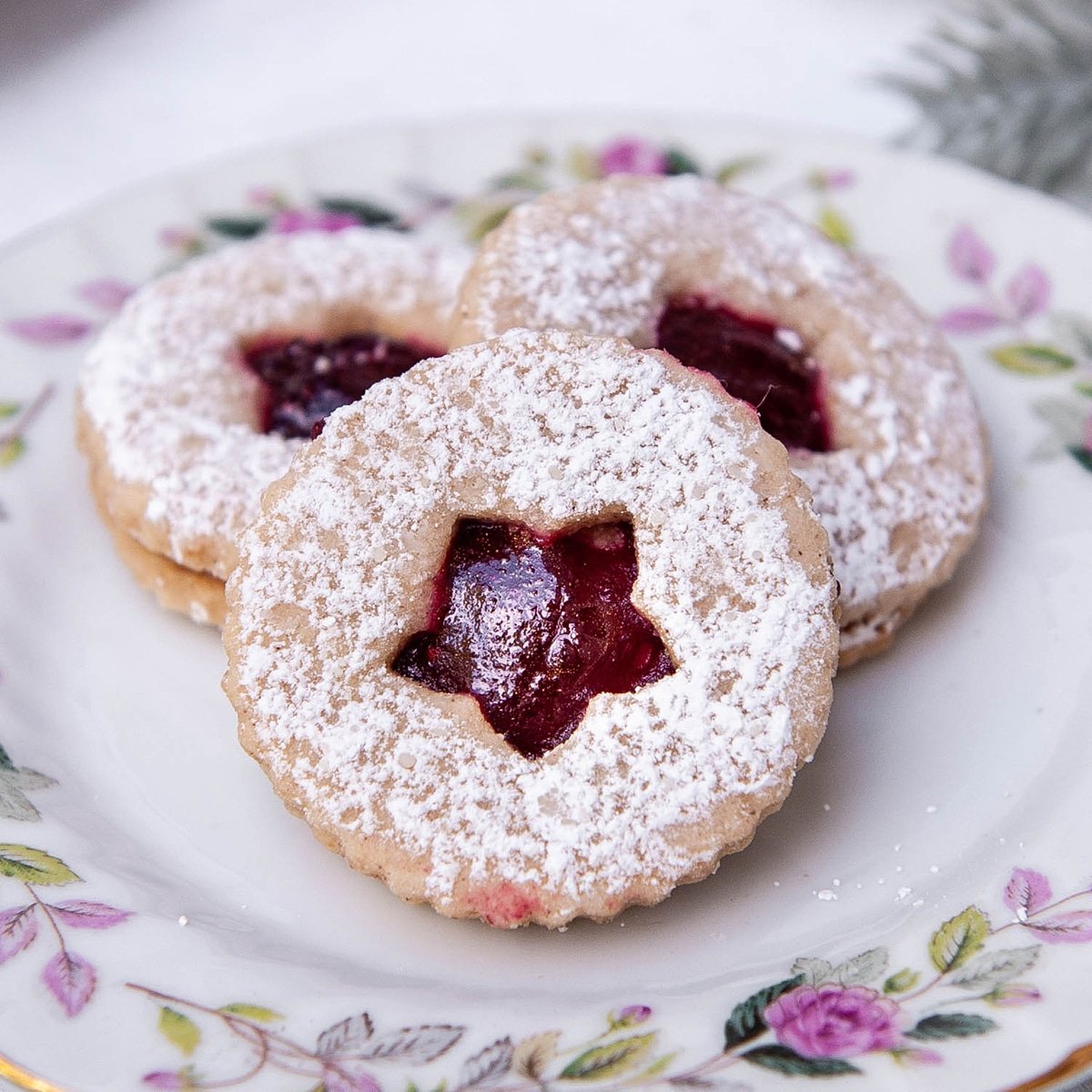
Close-up photo of a reverse sear prime rib.

The first time I reverse-seared a beef rib roast, I was terrified. It felt like every home cook online had a different opinion about oven temp, cook time, and whether to tie a boneless prime rib with kitchen twine. I got an actual reader comment once saying that slow roast meats were "too fussy," which made me laugh, because the reverse sear method is literally the least fussy way to treat choice cuts or prime cuts of beef. You just place the roast in a roasting pan, cook at a lower temperature until the internal temperature hits that perfect zone, rest it, then blast it in a very hot oven. It felt like cheating, but the result was so perfectly cooked that now I save this cut of beef for when I really want to impress someone. It's the perfect prime rib every single time.

If you have a pellet smoker you should definitely check out my smoked prime rib recipe!

What's In This Blog Post?

  • Ingredients Needed
  • Equipment Needed
  • How to Make a Reverse Sear Prime Rib
  • Final Thoughts
  • Frequently Asked Questions

Ingredients Needed

This recipe keeps the ingredient list straightforward so the rich, buttery flavor of the prime rib can really shine. Here's everything you'll need to season the roast and create that perfect crust.

A raw prime rib roast with fresh herbs and a salt glass bowl of oil in the background.
  • Prime Rib Roast
- This is the star of the show, and the marbling of the meat gives you the rich, buttery flavor prime rib is famous for. Can be replaced with: a boneless roast or any standing rib roast with or without rib bones.
  • Garlic Herb Butter - Helps create a flavorful crust during the reverse searing process and melts into the meat for extra richness. Can be replaced with: plain butter, olive oil, or a dry rub if you prefer a crust without butter.
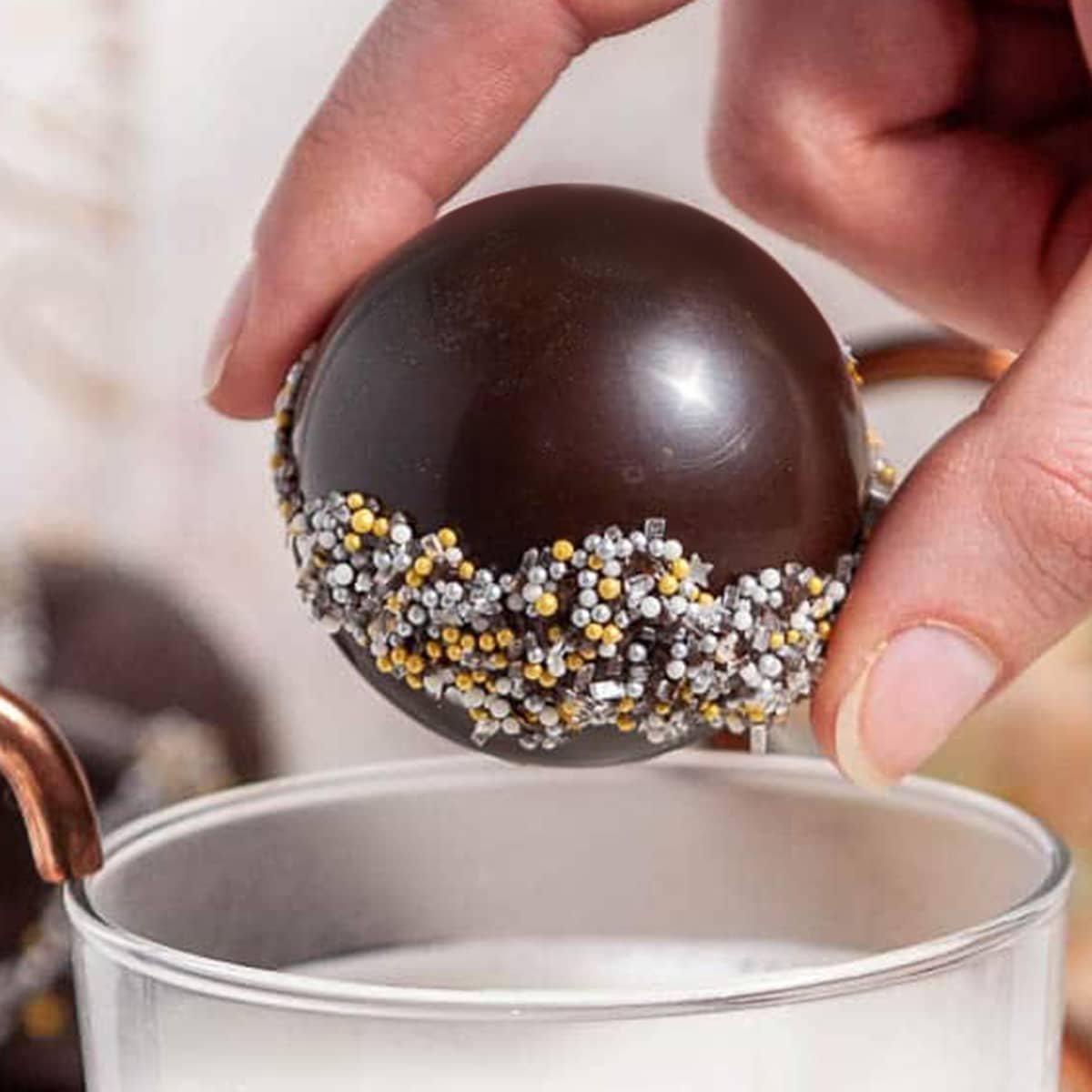

  • Salt - Draws out moisture from the surface so you get a better crust and seasons the roast all the way through. Can be replaced with: kosher salt or sea salt, but avoid fine table salt because it tastes saltier.

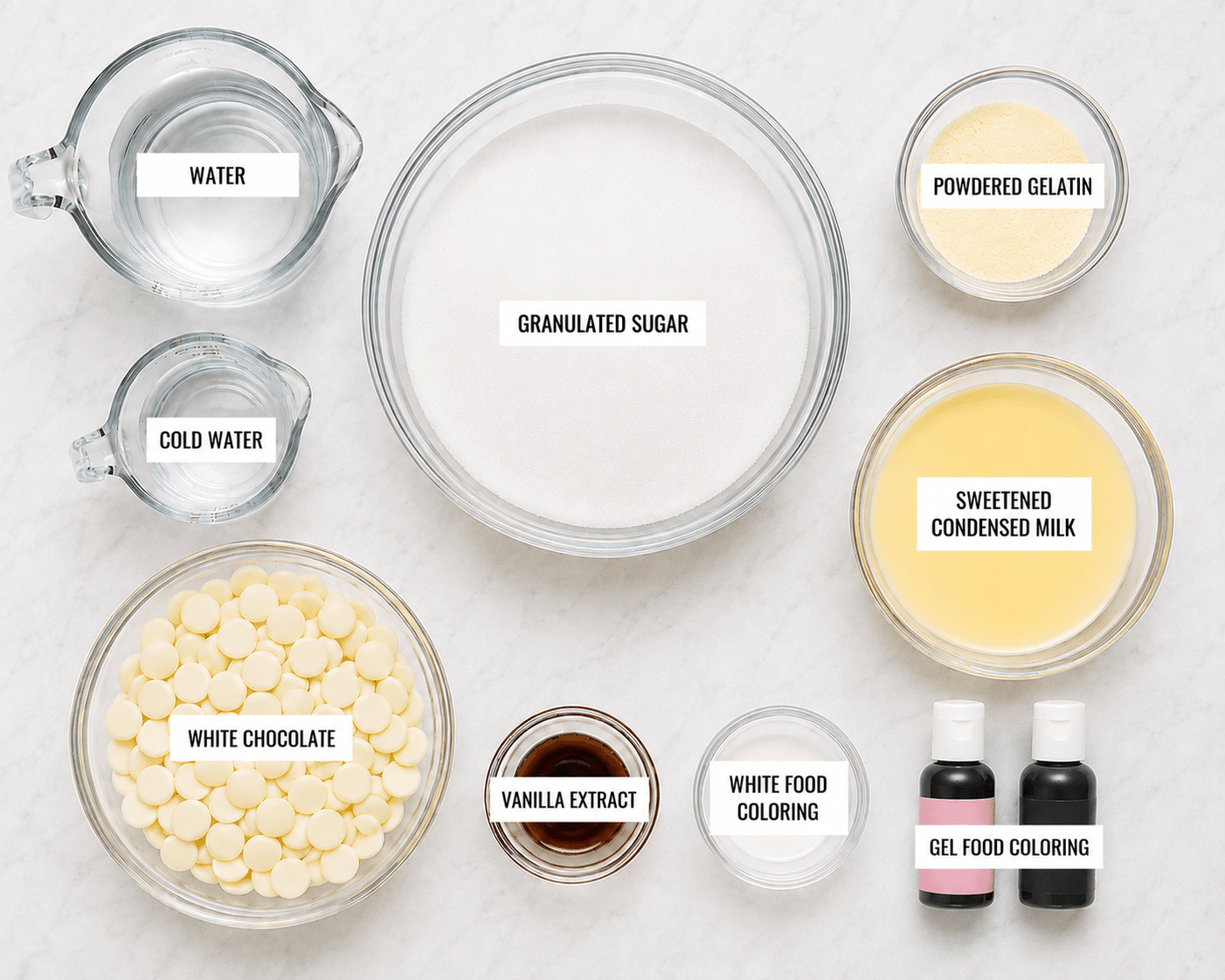
  • Black Pepper - Adds heat and aroma that pairs perfectly with beef. Can be replaced with: white pepper or a coarse steak seasoning.
  • Beef Stock or Au Jus - Served on the side for dipping and adds depth to each slice without overpowering the meat. Can be replaced with: beef broth, pan drippings, or even vegetable stock in a pinch.
  • Fresh Herbs (optional) - Rosemary, thyme, or parsley complement the natural flavors in the meat without being overwhelming. Can be replaced with: dried herbs, though use less since they're stronger.

Equipment Needed

Roasting Pan with a V-Rack (or Wire Rack + Rimmed Baking Sheet) - A roasting pan fitted with a V-rack-or a simple wire rack set inside a rimmed baking sheet-lifts the prime rib so air can circulate evenly around the roast. This setup ensures the meat cooks gently and uniformly during the low-and-slow stage, helping you achieve that perfectly even doneness from edge to edge.

Instant-Read Thermometer or Probe Meat Thermometer - An instant-read thermometer or a probe-style meat thermometer is essential for nailing the exact internal temperature of your prime rib. Since the reverse sear method relies on precision rather than guessing by time, this tool guarantees you pull the roast at the perfect moment for rare, medium-rare, or medium results.

Aluminum Foil - Aluminum foil is used to tent the roast during its resting period, helping retain heat while allowing the crust to stay crisp. It also gives the meat time for carryover cooking and juice redistribution-two key steps for tender, unbelievably juicy slices.

How to Make a Reverse Sear Prime Rib

This method is much easier than it looks, and these step-by-step instructions will walk you through each stage from seasoning and slow roasting to resting and searing, ensuring your prime rib turns out flawless.

The underside of the prime rib roast seasoned with salt, pepper, and garlic.
The fat cap side of the prime rib roast seasoned with salt, pepper, and garlic.
The finished, seared prime rib on a wooden cutting board before being sliced.
The finished reverse sear prime rib on a wooden cutting board sliced.
  1. Season the roast. Pat the roast dry with paper towels. Season the entire surface generously with kosher salt and black pepper, making sure to get into all the nooks around the rib section. If you have time, place the roast on a rack over a baking sheet and refrigerate it uncovered for at least 8 hours or up to 24 hours for a dry brine and better crust. If not, you can go straight into the oven.
  2. Low temp roasting. Preheat your oven to the lowest steady temperature it can manage, usually somewhere between 150°F and 250°F. Some ovens won't go lower than 250°F, and that's totally fine. Your cook time will just be shorter. Place the roast, fat cap up, on a V-rack set inside a roasting pan, or on a wire rack over a rimmed baking sheet. Slide it into the oven and roast until the internal temperature in the very center reaches: 120-125°F for rare, 130°F for medium-rare, and 135°F for medium. In a 150°F oven, a larger roast can take 5 ½ to 6 ½ hours. At 250°F, plan on around 3 ½ to 4 hours. Use those numbers as guidelines only; always go by the temperature of the meat, not just the clock.
  3. Rest and let carryover cooking happen. Once your roast hits your desired temp, remove it from the oven. Tent it loosely with foil and let it rest in a warm spot in your kitchen for at least 30 minutes and up to 1 ½ hours. During this time, carryover cooking will raise the internal temperature a few degrees and the juices will redistribute, so the meat stays juicy when you slice it. This is also a great window to finish your favorite sides, like mashed potatoes, roasted veggies, or whatever else is sharing the holiday table.
  4. Crank the oven for the reverse sear. While the roast is resting, increase your oven temp to its highest setting, usually 500-550°F. Give the oven time to get fully hot. About 10 minutes before you're ready to serve, remove the foil from the roast and transfer it back into the hot oven. Roast for 6-10 minutes, just until the exterior is well-browned, the fat cap is crispy, and you've got that deep, irresistible crust. You can do a similar high heat finish on a charcoal grill or Big Green Egg instead of the oven: get the grill ripping hot and sear the roast on all sides, turning as needed.
  5. Slice and serve. Transfer your reverse-seared prime rib to a cutting board. If you like, slice the rib section off in one slab, then slice the meat into thick steaks and serve the bones on the side as a chef's treat. Serve immediately with your favorite sides and a little sprinkle of flaky salt over the top. This is the moment where everyone forgets how to talk for a minute and just focuses on their plate.

Final Thoughts


Reverse-seared prime rib is one of those great recipes that looks intimidating but is actually incredibly simple. Slow roast, rest, blast with higher temperatures, rest again. That's it. Whether you're serving Christmas dinner or just treating yourself during the holiday season, this method guarantees the most tender, juicy, perfectly cooked prime rib every time.

Frequently Asked Questions

How big of a roast do I need?

Plan on about 1 pound of bone-in standing rib roast per person. A 3-4 pound ribeye roast is perfect for a small gathering, and a big 10-12 pound beef rib roast can feed a crowd. Each rib adds about 1 ½ to 2 pounds, so a three-rib roast is usually plenty for 6-8 people.

What internal temperature should I aim for?

It depends how you like your meat. For most people, 130°F in the center (before the final high heat sear) is that sweet spot for medium-rare. Because of carryover cooking, the final temperature of the meat will end up a few degrees higher. If you love it rare, pull it at 120-125°F. If you prefer more medium, go up to 135°F, but I wouldn't go much higher or you'll start losing that juicy, tender texture.

Can I make this ahead of time?

You can't fully cook and chill a prime rib and expect it to be the same later, but you do have some flexibility. You can dry brine the roast a day ahead and keep it uncovered in the fridge. On the day of your special occasion, do the low temp roasting earlier in the day, let it rest, then if your timing gets off, you can slip the roast back into a 200°F oven for about 45 minutes to gently rewarm it before you do the final reverse sear at higher temperatures.

Do I have to use a roasting pan with a V-rack?

No. A simple wire rack set over a rimmed baking sheet works just as well. The important part is getting some air circulation under the roast so it cooks evenly. If you're doing this on a charcoal grill or Big Green Egg, set it up for indirect heat and use a drip pan under the roast.

What if my oven doesn't go super low?

If your oven's lowest setting is 250°F, just use that and start checking the internal temperature earlier than the times listed. The roast will cook faster at a higher oven temp, but the reverse searing concept still works the same way.

Can I use this method for other cuts of meat?

Yes. This reverse sear method is fantastic for large roasts like a rack of lamb, pork rib roast, or thick boneless ribeye roasts. You just need to adjust the cook time and keep a close eye on the internal temperature with your instant-read thermometer.

What should I serve with prime rib?

Anything that can hold its own next to the star of the show. Think creamy mashed potatoes, roasted veggies, Yorkshire pudding, a bright salad, or something with horseradish to cut through the richness. The beauty of this method is that most of the time, the roast is just quietly hanging out in the oven. This gives you plenty of room and headspace to prep all your favorite sides.

Recipe

Print Recipe
No ratings yet

Reverse Sear Prime Rib

This Reverse Sear Prime Rib cooks low and slow with a final sear for a steakhouse-style crust. Perfect for the holidays and surprisingly easy!
Prep Time10 minutes mins
Cook Time4 hours hrs 10 minutes mins
Resting Time1 hour hr 30 minutes mins
Total Time5 hours hrs 50 minutes mins
Course: Main Course
Cuisine: American
Servings: 6 servings
Calories: 1kcal
Author: Liz Marek

Equipment

  • 1 Roasting Pan with a V-Rack
  • 1 Instant Read Thermometer

Ingredients

  • 1 prime rib 3-12 pound standing rib roast
  • kosher salt
  • black pepper freshly ground

Instructions

  • Preheat your oven to a low temp-usually 150°F to 200°F depending on your oven. A lower temperature gives you more control and prevents overcooking.
  • Pat your prime rib roast completely dry with a paper towel, then rub it generously with garlic herb butter and plenty of salt and pepper.

  • Place roast on a roasting pan fitted with a rack so air can circulate aroundthe meat.
  • Insert the meat thermometer into the thickest part of the roast, avoiding the rib bones.
  • Slow roast until the internal temperature reaches 120°F for rare, 125°F for medium-rare, or 130°F for medium.
  • Once it hits your desired temperature of the meat, remove it from the ovenand let it rest on the kitchen counter for 20 to 30 minutes. This is wherecarryover cooking happens and it's essential.
  • While it rests, crank your oven temp to very high heat-usually 500°F or your oven's highest setting.
  • Place the roast back in and reverse sear for about 8 to 10 minutes until adeep, irresistible crust forms.
  • Remove from the oven, rest again briefly, then slice into gorgeous inchslices and serve with warm au jus or beef stock and all your favorite sideslike brussels sprouts, mashed potatoes, or Yorkshire pudding.

Notes

  • Make-Ahead Instructions: You can dry brine the roast a day ahead and keep it uncovered in the fridge. On the day of your special occasion, do the low temp roasting earlier in the day, let it rest, then if your timing gets off, you can slip the roast back into a 200°F oven for about 45 minutes to gently rewarm it before you do the final reverse sear at higher temperatures.
  • Serving Suggestions: Anything that can hold its own next to the star of the show. Think creamy mashed potatoes, roasted veggies, Yorkshire pudding, a bright salad, or something with horseradish to cut through the richness. The beauty of this method is that most of the time, the roast is just quietly hanging out in the oven, leaving you plenty of room and headspace to prep all your favorite sides.

Nutrition

Serving: 1serving | Calories: 1kcal | Protein: 0.03g | Fat: 0.1g | Saturated Fat: 0.02g | Polyunsaturated Fat: 0.002g | Monounsaturated Fat: 0.02g | Cholesterol: 0.1mg | Sodium: 0.1mg | Potassium: 0.4mg | Calcium: 0.01mg | Iron: 0.003mg

close up of carrots sauteeing in a large pan

December 5, 2025 Culinary Techniques

How to Sauté

Sautéing is one of those kitchen skills that completely changes the way you cook once you really get it. The keyword here is sauté - a quick, high-heat method that keeps your veggies crisp-tender, your proteins juicy, and your weeknight dinners fast and flavorful.

When I finally slowed down and actually paid attention to what was happening in the pan, everything in my kitchen got better: brighter vegetables, golden-brown chicken, perfectly cooked mushrooms that didn't steam into mush. It's one of those "Ohhh… okay, now I understand" moments.

I started learning sautéing techniques the same way most home cooks do - by burning the garlic. Every. Single. Time. But once I figured out how heat, fat, and moisture work together, I gotta say, I nailed it. Now it's one of my favorite steps in recipes because it builds flavor fast with almost zero effort.

What's In This Blog Post

  • Ingredients & Tools You Need for Sautéing
  • Tips & Tricks for Perfect Sautéing
  • Step-by-Step Instructions
  • Final Thoughts
  • Frequently Asked Questions

Ingredients & Tools You Need for Sautéing

You don't need all of these tools and ingredients every time for sautéing but these are some common tools and ingredients.

close up of a frying pan with oil in it
  • Neutral oil - Used because it can handle higher heat without burning. You can replace it with avocado oil, vegetable oil, or even light olive oil.
  • Unsalted butter - Adds flavor and browning, but burns easily on its own. Combine with oil or replace with ghee for a higher smoke point.
  • Garlic or aromatics - Bring major flavor, sauté fast. Replace with onion, shallots, leeks, or ginger depending on your recipe.
  • Vegetables - Anything from mushrooms to peppers to zucchini works. Replace with frozen veggies (no need to thaw) if you're short on time.
  • Protein - Chicken bites, shrimp, tofu, or beef strips all sauté beautifully. Replace with plant-based proteins or pre-cooked sausage.
  • Salt and pepper - Essential for seasoning and browning. Replace with seasoning blends like SPG, Italian seasoning, or smoked salt.
  • A large skillet - You want something that heats evenly. Nonstick, cast iron, or stainless steel all work.
  • A spatula or tongs - For flipping and moving food around easily. Replace with a wooden spoon or silicone turner.

Tips & Tricks for Perfect Sautéing

The most important rule is this: high heat + a little fat + small pieces of food. That's the whole game.

My biggest tip? Let the pan actually get hot before you add anything. If you add oil to a cold pan, everything soaks it up like a sponge and cooks unevenly. Heat the pan first, then add the oil, then add the ingredients in order of how long they take to cook. Garlic always goes last. Always.

And don't overcrowd the pan. If everything is touching, it steams instead of sautés. Give your ingredients space and they'll reward you with that gorgeous golden color.

Step-by-Step Instructions

close up of a frying pan with oil in it
  1. Preheat your skillet
    Place your pan over medium-high heat and let it get hot for a minute or two until you can feel the heat when you hover your hand above it.
  2. Add your oil or butter
    Pour in just enough to lightly coat the bottom. Swirl it around - it should shimmer, not smoke.
  3. Add your ingredients
    Start with the things that take the longest, like onions or chicken. Save quick-cooking items like garlic or spinach for the end.
  4. Spread everything out
    Give it space so it browns instead of steaming. This is where a big skillet makes a difference.
  5. Let it sit
    The hardest part: don't stir constantly. Let the bottom get golden, then flip or toss.
  6. Season well
    Salt early to help draw out moisture and create browning. Add finishing seasonings at the end for maximum flavor.
  7. Finish with butter or herbs
    Adding a pat of butter or a sprinkle of fresh herbs right before serving takes the flavor to another level.

Final Thoughts

Sautéing is one of those building-block skills that makes the rest of cooking feel easier. Once you know how it works, you can pretty much throw anything into a pan with a splash of oil and make it taste amazing. Whether you're making a quick veggie side, browning meat for a stew, or building flavor for a sauce, this technique is going to be your new best friend.

Frequently Asked Questions

What's the best oil for sautéing?

A neutral oil with a high smoke point like avocado or canola works great. You can mix butter and oil for flavor without burning.

Can I sauté frozen veggies?

Yes! Just add them straight in. They'll release more moisture, so use a bigger pan or sauté in batches.

Why do my veggies get soggy?

Your pan is either too crowded or not hot enough. Give them space and crank the heat.

Is sautéing healthy?

It uses very little fat and cooks food fast, so it keeps nutrients intact. It's one of the healthier cooking methods.

Recipe

close up of carrots sauteeing in a large pan
Print Recipe
No ratings yet

How To Sauté

Sautéing is a method of high-heat cooking that adds tons of flavor. It's one of those skills every cook needs to master to make the best dishes.
Prep Time5 minutes mins
Cook Time10 minutes mins
Total Time15 minutes mins
Course: Side Dish
Cuisine: American
Servings: 4 servings
Calories: 106kcal
Author: Liz Marek

Ingredients

  • 2 Tablespoons neutral oil or ghee

Instructions

  • Heat the pan: Place a large skillet over medium-high until a few drops of water evaporates instantly
  • Add in your ingredients that you want to sauté. Toss to coat the ingredients evenly with the oil.
  • Continue cooking and moving the ingredients until the desired amount of doneness has been achieved.
  • Finish: Sprinkle with fresh herbs, toss well, and taste for seasoning.

Video

Notes

  • Remember the key to a good saute is hot pan, neutral high heat oil, the correct amount of ingredients in the pan. Don't overcrowd the pan.

Nutrition

Serving: 1serving | Calories: 106kcal | Carbohydrates: 12g | Protein: 1g | Fat: 7g | Saturated Fat: 2g | Polyunsaturated Fat: 1g | Monounsaturated Fat: 3g | Trans Fat: 0.1g | Cholesterol: 8mg | Sodium: 79mg | Potassium: 365mg | Fiber: 3g | Sugar: 6g | Vitamin A: 19034IU | Vitamin C: 7mg | Calcium: 39mg | Iron: 0.4mg
close up of sausage gravy on biscuits

December 4, 2025 Recipe

Creamy Homemade Sausage Gravy

Homemade sausage gravy is the ultimate comfort food for me. It's warm, cozy, and the kind of homemade gravy that makes the whole house smell like a slow morning. When I say this recipe is my go-to recipe for a hearty breakfast, I mean it. It comes together fast with simple ingredients, pairs perfectly with my flakey buttermilk biscuits, and turns even the most chaotic morning into something that feels a little special.

Table of contents

  • How I Created This Recipe
  • Ingredients
  • Tips For Success
  • Step-By-Step Instructions
  • Frequently Asked Questions

How I Created This Recipe

Growing up, I never had biscuits and gravy. It wasn't until Gage and I were dating in our early twenties that I even heard of it (small town problems). I went to visit him at his work during a break at the mall. He was raving about these biscuits and gravy and convinced me to try them. I hadn't ever had them, but was willing to try. Well, obviously, I was sold! Soft, fluffy biscuits SMOTHERED in creamy gravy with lots of pepper on top.

Years later, I tried to re-create those biscuits and gravy many times. I've tried making them in a cast-iron skillet, in the oven, and even in an air fryer. I have tried many different types of sausage and seasonings and experimented with different levels of spice. I've used all kinds of combinations of butter, lard, shortening, and temperature levels to get that perfect fluffy biscuit. I've even made my own keto biscuits and keto gravy recipe.

close up of sausage gravy on biscuits

I can honestly say this is the BEST sausage gravy I've ever made and BETTER than the original.

Now, sausage gravy with warm homemade biscuits is one of my favorite ways to fill the breakfast table. Serve with freshly baked biscuits, some fresh fruit, and some hot coffee, and you have the perfect meal.

Ingredients

One of the best things about this recipe is that it's infinitely customizable! Make it spicier, milder, thicker, or thinner based on what you like!

• Breakfast sausage - This is the base flavor for the gravy and adds richness and seasoning right from the start. You can swap in turkey sausage, spicy sausage, or even sausage patties if that's what you have.
• Butter - Helps form the roux and adds a smooth, rich flavor to the gravy. You can use bacon grease, sausage drippings, or even oil for a different flavor profile.
• Flour - Thickens the white gravy and binds everything together. All-purpose flour works best, but a 1:1 gluten-free flour will also work if you're avoiding gluten. The secret to smooth gravy is slowly stirring it over medium heat until it coats the back of a wooden spoon. Stirring constantly avoids lumps.
• Salt - Brings out the flavors of the sausage and cream. You can adjust the amount or use a seasoning blend like SPG if you prefer.
• Black pepper - Gives the gravy its classic country gravy taste. White pepper or a cracked pepper blend can be used for a slightly different flavor.
• Garlic powder - Adds depth and savory notes. Fresh garlic or granulated garlic both work as substitutes.
• Onion powder - Enhances the background flavor of the gravy. Minced onions or dried minced onions work too.
• Oregano - Adds a subtle earthy flavor. Basil or Italian seasoning can be swapped in.
• Thyme - Adds warmth and makes the gravy taste more homemade. Rosemary works as a replacement.
• Sage - A classic breakfast sausage spice that deepens the flavor. Poultry seasoning is a great alternative.
• Chili flakes (optional) - Adds a spicy twist if you want your gravy to have some heat. Cayenne or spicy pork sausage works just as well.
• Whole milk - Creates the creamy base and keeps the gravy smooth. You can use 2% or even oat milk in a pinch, but whole milk gives the best texture.
• Heavy cream - Makes the gravy extra thick and luscious. Half-and-half works as a lighter option, or add more milk if you want a less rich gravy or if you want it thinner.

Tips For Success

  • Start cooking the sausage on medium heat in a large skillet so it browns without burning. Once you add the flour, reduce the heat to medium-low to keep the flour from scorching.
  • If the gravy thickens too much, whisk in a splash of milk. If it's too thin, simmer it for 3-5 minutes until it reaches your preferred consistency.
  • Store leftovers in an airtight container-they'll thicken as they cool, so just add milk when reheating next time.

Step-By-Step Instructions

The secret to ultra-creamy sausage gravy is to constantly whisk while adding in the liquids.

close up of sausage gravy on biscuits
  1. Place the sausage in a large skillet and brown it over medium heat, breaking it into smaller pieces as it cooks. Remove it from the skillet and set it aside.
  2. Melt the butter in the same pan and stir in the flour. Cook for about 1 minute to remove the raw flour taste.
  3. Slowly whisk in half the milk, then the rest of the milk, cooking over medium heat until the gravy begins to thicken.
  4. Add in the heavy cream and all the seasonings. Taste and adjust the salt or pepper if needed.
  5. Bring to a gentle simmer, stirring occasionally, until the gravy is thick enough to coat the back of a spoon, then remove it from the heat.
  6. Add the sausage back in and stir together.
  7. Serve immediately over warm homemade biscuits, English muffins, hash browns, or even chicken-fried steak!

This homemade sausage gravy is one of those comfort foods that tastes like home. It's perfect for weekend breakfast, special occasions, or just because you want something cozy. This is truly a great recipe to keep on hand for the next time you need something fast and comforting.

Frequently Asked Questions

Can I freeze it?

You can, but the texture isn't as smooth after thawing.

Can I use turkey sausage?

Absolutely-it's a great alternative and still delicious.

Recipe

close up of sausage gravy on biscuits
Print Recipe
No ratings yet

Homemade Sausage Gravy

Sausage gravy is the ultimate comfort food-rich, cozy, and unbelievably easy to make from scratch. This homemade version comes together in one skillet with simple ingredients, creating the kind of creamy white gravy that transforms any morning into a slow, comforting moment. Poured over warm homemade biscuits or fluffy hash browns, it's the hearty breakfast that feels like christmas morning no matter what day it is. Whether you're feeding a crowd or just want something warm and satisfying on a lazy weekend, this is the go-to recipe you'll come back to again and again.
Prep Time10 minutes mins
Cook Time10 minutes mins
Total Time20 minutes mins
Course: Breakfast
Cuisine: American
Servings: 8 servings
Calories: 479kcal
Author: Liz Marek

Ingredients

  • 16 ounces breakfast sausage
  • 2 ounces butter
  • 2 ounces flour
  • 1 teaspoon salt
  • 1 teaspoon pepper
  • ¾ teaspoon garlic powder
  • ¾ teaspoon onion powder
  • ½ teaspoon oregano
  • ½ teaspoon thyme
  • ½ teaspoon sage
  • ½ teaspoon chili flake optional
  • 16 ounces milk
  • 16 ounces heavy cream

Instructions

  • Brown the sausage in a pan over medium heat then set aside.
  • Melt the butter in the same pan and then add the flour and mix together.
  • Cook for one minute until it thickens.
  • Add in half the milk slowly while whisking constantly.
  • Add in the rest of the milk while whisking constantly and let it simmer for 1-2 minutes to cook out the taste of the flour.
  • Add in the heavy cream and seasonings. Adjust if necessary.
  • Bring just to a simmer then remove from the heat and serve over warm biscuits.

Video

Notes

Adjust your seasoning to your liking
Add more cream if you want your sausage gravy to be thinner
 

Nutrition

Serving: 1serving | Calories: 479kcal | Carbohydrates: 10g | Protein: 13g | Fat: 43g | Saturated Fat: 23g | Polyunsaturated Fat: 3g | Monounsaturated Fat: 14g | Trans Fat: 0.4g | Cholesterol: 127mg | Sodium: 736mg | Potassium: 303mg | Fiber: 0.4g | Sugar: 4g | Vitamin A: 1191IU | Vitamin C: 1mg | Calcium: 121mg | Iron: 1mg
turkey soup in a bowl

November 28, 2025 Soup

Leftover Turkey Soup With Mushrooms

Turkey soup is honestly one of my favorite parts of the whole holiday. I know the leftover Thanksgiving turkey moment is supposed to be about sandwiches, but once you've simmered a big cozy pot of delicious turkey soup on the stove top, you'll see why this is the best way to turn turkey leftovers into something you'll crave the next day. This homemade turkey soup recipe has tender turkey, carrots, celery, fresh thyme, and a rich, delicious broth made from turkey broth, chicken broth, or even homemade turkey stock, depending on what you've got. It's hearty, comforting, and the perfect way to stretch every part of your roast turkey.

turkey soup in a bowl shot from above

The first time I made turkey noodle soup was years ago when I was staring at a turkey carcass the morning after Thanksgiving and thinking, "this has to be good for something." I tossed the turkey bones into a large stock pot with enough water, a bay leaf or two, celery stalks, and some black pepper, and by the time it finished simmering on medium-low heat, I had the most flavorful homemade turkey stock.

Since then, it's become my great way to turn holiday leftovers into a hearty soup that everyone actually looks forward to. And honestly, chicken stock or vegetable broth from the grocery store works perfectly too, so don't feel like you need to get fancy unless you want to. If you do want to make your own turkey carcass soup, I'll link my favorite slow cooker and instant pot options below.

Ingredients

Classic soup ingredients are used here. Nothing crazy, and of course, you can switch out pretty much anything with what you have on hand and make a million variations!

turkey soup ingredients
  • I start with one medium onion, diced into small pieces so they melt into the soup. Onion is the base of so much flavor and works beautifully with poultry seasoning, fresh thyme, and turkey meat.
  • Carrots bring that sweet earthy flavor and gorgeous color. I dice four large carrots the same size so they cook evenly in the large pot.
  • Celery stalks add the aromatic backbone that every delicious soup needs. Three stalks, diced, are enough to perfume the entire large soup pot without overpowering the turkey
  • Butter gives the vegetables richness, especially since we're building a roux with all-purpose flour.
  • Garlic cloves are essential. Two is perfect for deep savory flavor without becoming too intense.
  • All-purpose flour thickens the soup just enough so it feels cozy and satisfying without turning into gravy. You want a soft velvety texture. If you want it even thicker, you can stir in a cornstarch slurry at the end.
  • Turkey meat is the star. You'll need two to three cups of cooked chopped turkey, shredded or diced. Leftover chicken or rotisserie chicken also works if your turkey leftovers are running low. Leftover gravy can be whisked in too-seriously, it adds so much flavor.
  • Turkey broth or chicken broth forms the base, about eight cups total. Homemade turkey stock, turkey broth from a box, chicken stock, vegetable broth… anything works. Cold water plus turkey bones works if you want to make your own.
  • Italian seasoning gives the soup warmth, and poultry seasoning also works beautifully here if that's what you've got on hand. You can also use fresh herbs.
  • Bay leaf or bay leaves give that classic comforting taste, especially in turkey noodle soup or hearty wild rice versions.
  • Mushrooms add deep umami. I love cremini mushrooms in this because they stay firm and give the soup so much flavor. You can use egg noodles instead if you like!
  • Fresh parsley brings brightness at the end, totally optional but worth it.
  • Salt, pepper, garlic salt, Worcestershire sauce, and chili oil balance everything and help bring out the best flavor.
  • Leftover soup stores beautifully in an airtight container and tastes even better the next day.
close up of turkey noodle soup

Step-by-Step Instructions

This recipe comes together in a flash! A fantastic way to use leftovers and when you're short on time.

  1. Set a large pot or Dutch oven over medium heat. Add a splash of olive oil and half the butter. Sauté the sliced mushrooms until they are golden brown, then set aside.
  2. Add the rest of the butter and then sauté the onion, carrots, celery, and garlic until softened.
  3. Sprinkle in the flour and stir for about a minute. Let it coat the vegetables and cook off the raw taste.
  4. Slowly whisk in the turkey broth or chicken broth, scraping the bottom of the pot.
  5. Add the Italian seasoning, poultry seasoning (if using), bay leaf, mushrooms, salt, pepper, garlic salt, Worcestershire, and chili oil.
  6. Stir in the cooked chopped turkey and let everything simmer on medium-low heat for about 20-25 minutes until the veggies are tender and the soup is thickened slightly.
  7. Taste and adjust seasonings, then stir in fresh parsley.
  8. If you're adding egg noodles, white rice, or wild rice blend, do that at the end and simmer just until tender.
  9. Remove the bay leaf and serve hot with crusty bread.

Final Thoughts

Turkey soup is truly the perfect way to use holiday leftovers without feeling like you're eating the same meal over and over again. Whether you start with leftover Thanksgiving turkey, leftover chicken, rotisserie chicken, or a full-on turkey carcass soup, you end up with a delicious turkey soup that feels like a warm hug in a bowl.

Frequently Asked Questions

Can I freeze this soup?

Absolutely. Store it in an airtight container for later use. Just leave out the noodles if you plan on freezing-they can get mushy.

Can I make this in the Instant Pot?

Yes, it's a great recipe for the Instant Pot. Sauté the vegetables first, add the rest of the ingredients, then cook on high pressure for about 10 minutes and quick-release.

Recipe

turkey soup in a bowl
Print Recipe
No ratings yet

Turkey Soup With Mushrooms

Hearty homemade turkey soup made with sauteed mushrooms and a velvety broth. The best way to use leftover turkey!
Prep Time10 minutes mins
Cook Time10 minutes mins
Total Time20 minutes mins
Course: Soup
Cuisine: American
Servings: 6 servings
Calories: 389kcal
Author: Liz Marek

Ingredients

  • 3 cups turkey chopped
  • 1 medium onion
  • 4 large carrots diced
  • 3 stalks celery diced
  • 2 large garlic cloves minced
  • 1 stick butter divided in half
  • ¼ cup flour
  • 8 cups turkey broth or chicken broth
  • 1 teaspoon italian seasoning
  • 8 ounces mushrooms sliced (I like crimini)
  • 1 teaspoon salt
  • 1 teaspoon pepper
  • 1 teaspoon garlic powder
  • ½ teaspoon worcestishire
  • ½ teaspoon chili oil optional

Instructions

  • Set a large pot or Dutch oven over medium heat and add a splash of olive oil and half the butter.
  • Sauté the sliced mushrooms until golden brown and then set aside. 
  • Add the rest of the butter and then sauté the onion, carrots, celery, and garlic until softened.
  • Sprinkle in the flour and stir for about a minute, letting it coat the vegetables and cook off the raw taste.
  • Slowly whisk in the turkey broth or chicken broth, scraping the bottom of the pot so no flavor is left behind.
  • Add the Italian seasoning, poultry seasoning (if using), bay leaf, mushrooms, salt, pepper, garlic salt, worcestershire, and chili oil.
  • Stir in the cooked chopped turkey and let everything simmer on medium-low heat for about 20-25 minutes until the veggies are tender and the soup is thickened slightly.
  • Taste and adjust seasonings, then stir in fresh parsley.
  • If you're adding egg noodles, white rice, or wild rice blend, do that at the end and simmer just until tender.
  • Remove the bay leaf and serve hot with crusty bread.

Notes

For turkey noodle soup, add egg noodles during the last 10 minutes of cooking so they don't get mushy.
If you’re using a slow cooker or crock pot, keep the heat on medium heat or low and add the rest of the soup ingredients after the roux is made on the stove.
If you want an even heartier version, cook white rice, brown rice, or wild rice blend in a separate pot and stir some in at the end. Cooking rice directly in the soup can soak up all your broth, but adding it after makes it a perfect way to create a filling hearty soup.
If you want more protein, white beans, chicken breasts, or even ground turkey can be added. Ground beef if you’re feeling rebellious, although that turns it into a completely different soup.
This recipe fits perfectly into a 2,000 calorie diet when enjoyed as a main meal with lots of vegetables. As always, check available daily values on your leftover turkey recipes if you track them.

Nutrition

Serving: 1serving | Calories: 389kcal | Carbohydrates: 15g | Protein: 28g | Fat: 25g | Saturated Fat: 12g | Polyunsaturated Fat: 3g | Monounsaturated Fat: 7g | Trans Fat: 1g | Cholesterol: 131mg | Sodium: 1811mg | Potassium: 761mg | Fiber: 3g | Sugar: 5g | Vitamin A: 8597IU | Vitamin C: 6mg | Calcium: 76mg | Iron: 3mg

November 27, 2025 Casseroles

Leftover Turkey Casserole

This Leftover Turkey Casserole is exactly what I crave once the whirlwind of Thanksgiving cooking is behind me. It's creamy, hearty, and packed with all of my holiday favorites. It's the perfect way to use up your leftover Thanksgiving turkey, mashed potatoes, and any leftover veggies while still making something that feels different.

A close-up photo of Leftover Thanksgiving Casserole.

I've shared a lot of my favorite holiday recipes lately, and honestly, the Thanksgiving leftovers might be the best part-especially this Leftover Turkey Casserole. I'm such a sucker for all the holiday sides and can't wait to snack on them for days, whether it's my green bean casserole, some stuffing, or a little leftover cranberry sauce on the side. This cozy, comforting casserole feels indulgent without much work, which is exactly what I need after a big Thanksgiving dinner.

I made my Thanksgiving leftovers into a casserole for the first time back in 2020, and I've been doing it ever since! Honestly, I might like it better than Thanksgiving dinner.

screenshot of leftover turkey casserole

What's In This Blog Post?

  • Ingredients Needed
  • Tips and Tricks for Success
  • How to Make Leftover Turkey Casserole
  • Frequently Asked Questions

Ingredients Needed

Before we get started, here's everything you'll need to make this cozy Leftover Turkey Casserole. Most of the ingredients are probably already sitting in your fridge after Thanksgiving, which makes this an easy recipe to pull together the next day.

Ingredient shot for Leftover Thanksgiving Casserole, featuring: leftover turkey, leftover mashed potatoes, cream of chicken soup, butter, onion, celery, carrot, and frozen peas.

For the Casserole

  • Leftover Turkey - Use white or dark meat. If you're out of turkey, leftover chicken or rotisserie chicken is perfect.
  • Leftover Mashed Potatoes - Used as the casserole topping. You can also use prepared mashed potatoes, instant potatoes, or even leftover stuffing for a fun variation.
  • Frozen Peas - Adds color and sweetness. Frozen mixed vegetables or canned corn also work well.
  • Celery - Adds crunch and flavor. You can use fennel, green bell pepper, or skip it if you don't have any.
  • Carrots - Adds sweetness and texture. Frozen sliced carrots or even parsnips can be substituted.
  • Onion - Adds savory flavor. Swap in shallots, leeks, or onion flakes in a pinch.
  • Butter - Adds richness and helps form the roux for the homemade cream of chicken soup. You can substitute margarine or a neutral oil in a pinch, though the flavor will be slightly different.

For the Homemade Cream of Chicken Soup

  • Flour - Used to thicken the sauce. All-purpose flour works best, but you can sub a 1:1 gluten-free flour blend if needed.
  • Chicken Broth - Gives the sauce its savory base. Vegetable broth or turkey broth both work as great substitutes.
  • Chicken Bouillon or Better Than Bouillon - Enhances the depth of flavor. If you don't have any, simply add a pinch more salt or use a richer broth.
  • Milk - Adds creaminess. Any milk works-2%, skim, or even unsweetened oat, almond, or soy milk.
  • Soy Sauce - Enhances the savory, "umami" flavor and deepens the color. You can swap in Worcestershire sauce, tamari, or coconut aminos.
  • Seasoning - This blend of celery salt, onion powder, and garlic powder adds savory depth and classic comfort-food flavor to the casserole. If you're missing one, you can easily substitute: use regular salt with a pinch of celery seed for celery salt, minced fresh onion for onion powder, or a small clove of fresh garlic in place of garlic powder.

Tips and Tricks for Success

  • Use warm mashed potatoes for easier spreading across the casserole dish.
  • Dice the turkey into thick slices or cubes for even heating.
  • Sauté vegetables until al dente for the best texture.
  • Stir in leftover gravy for an even creamier sauce.
  • Try fun twists: add green beans, corn, or even cooked egg noodles for variation.
  • Freeze leftovers in an airtight container for an easy comfort food dish later.
  • Assemble ahead of time and cover with plastic wrap if you need a break from cooking.

How to Make Leftover Turkey Casserole

With everything prepped, here's exactly how to assemble and bake your Leftover Turkey Casserole. It comes together easily and makes the perfect low-effort meal after a big holiday.

Chopped leftover turkey on a wooden cutting board.
Raw whole carrots cut into fourths on a wooden cutting board.
Chopped carrots, celery, and onion on a wooden cutting board.
Chopped carrots, celery, and onion in saucepan.
Chopped carrots, celery, and onion in saucepan with seasoning on top.
Chopped carrots, celery, and onion cooked to al dente, shown on a fork.
Cream of chicken soup and leftover turkey added to the mixture in the saucepan.
Frozen peas added to the casserole mixture in the saucepan.
Frozen peas fully combined into the casserole mmixture.
The leftover turkey casserole filling in the baking dish.
The casserole is topped with leftover mashed potatoes.
The baked leftover turkey casserole.
A close-up photo of Leftover Thanksgiving Casserole.
A close-up photo of a portion of Leftover Thanksgiving Casserole on a white plate.
  1. Preheat the oven to 350ºF.
  2. Dice the carrots, celery and carrots.
  3. Add the butter to a saucepan and melt it over medium heat.
  4. Add in the diced vegetables and sauté until the carrots are al dente. 
  5. Add in the cream of chicken soup and leftover turkey and mix together. 
  6. Allow it to begin to simmer.
  7. Remove it from the heat. 
  8. Stir in the peas.
  9. Place the mixture into a casserole dish.
  10. Top with leftover mashed potatoes.
  11. Bake in the oven for about 20 minutes or until the mixture is bubbling.
  12. Optional: broil for 2-3 minutes to make the potatoes crispy.
  13. Top with parsley and serve hot.

Frequently Asked Questions

Can I make a leftover turkey casserole ahead of time?

Yes! You can assemble the entire casserole up to 24 hours in advance. Cover it tightly and store it in the refrigerator, then bake as directed-adding 5-10 extra minutes if it's going into the oven cold.

How long is leftover turkey safe to eat?

Cooked turkey is safe in the fridge for 3-4 days, which makes it perfect for a casserole the day after Thanksgiving. If you need more time, freeze the turkey (or the assembled casserole) for up to 2-3 months.

Can I freeze leftover turkey casserole?

Absolutely. Let the casserole cool completely, then wrap it well or transfer portions to airtight containers. Freeze for up to 3 months and reheat in the oven at 350°F until warmed through.

What other leftovers can I add to this casserole?

Stuffing, green beans, corn, leftover veggies, and even gravy can be mixed in for extra flavor. Just avoid anything with a very high water content so the casserole doesn't become runny.

Can I use leftover chicken instead of turkey?

Yes. Leftover rotisserie chicken or roasted chicken works perfectly. The flavors stay similar, and the cooking time doesn't change.

Why is my casserole watery?

This usually happens if the veggies weren't sautéed long enough or if the sauce wasn't thickened before assembling. Let the cream of chicken mixture simmer a few minutes to tighten up before baking.

Do I have to use mashed potatoes on top?

Nope! You can swap them for leftover stuffing, pre-made mashed potatoes, or even a quick batch of instant potatoes. You can also top it with puff pastry or biscuits for a different twist.

How can I make this casserole creamier?

Use whole milk, add a splash of heavy cream, or stir a bit of leftover gravy into the sauce. You can also sprinkle in some shredded cheddar or mozzarella.

What kind of dish should I bake this in?

A 9×13 casserole dish or similar shallow dish works best. A wider pan helps the filling heat evenly and gives the mashed potatoes room to get a little crispy.

Can I add cheese to this casserole?

Yes! Cheese isn't traditional in a Thanksgiving-style casserole, but it's delicious. Stir cheese into the filling or sprinkle it over the mashed potatoes before baking.

Recipe

Print Recipe
No ratings yet

Leftover Turkey Casserole

Make the most of your Thanksgiving extras with this Leftover Turkey Casserole. Trust me, you need this cozy casserole in your life!
Prep Time15 minutes mins
Cook Time25 minutes mins
Total Time40 minutes mins
Course: Main Course
Cuisine: American
Servings: 6 servings
Calories: 195kcal
Author: Liz Marek

Ingredients

  • 2 stalks celery diced
  • 2 large carrots diced
  • ½ yellow onion diced
  • 1 cup frozen peas
  • 2 cups leftover turkey diced
  • 2 cups leftover mashed potatoes
  • 2 cans cream of chicken soup

Instructions

  • Preheat the oven to 350ºF.
  • Dice the carrots, celery and carrots.
  • Add the butter to a saucepan and melt it over medium heat.
  • Add in the diced vegetables and sauté until the carrots are al dente. 
  • Add in the cream of chicken soup and leftover turkey and mix together. 
  • Allow it to begin to simmer.
  • Remove it from the heat. 
  • Stir in the peas.
  • Place the mixture into a casserole dish.
  • Top with leftover mashed potatoes.
  • Bake in the oven for about 20 minutes or until the mixture is bubbling.
  • Optional: broil for 2-3 minutes to make the potatoes crispy.
  • Top with parsley and serve hot.

Video

Notes

  • Make-Ahead Instructions: You can assemble the entire casserole up to 24 hours in advance. Cover it tightly and store it in the refrigerator, then bake as directed-adding 5-10 extra minutes if it's going into the oven cold.
  • Freezer Instructions: Let the casserole cool completely, then wrap it well or transfer portions to airtight containers. Freeze for up to 3 months and reheat in the oven at 350°F until warmed through.
  • Cream of chicken soup made from scratch tastes amazing but of course you can use two cans of the premade kind if you want.

Nutrition

Serving: 1serving | Calories: 195kcal | Carbohydrates: 11g | Protein: 16g | Fat: 9g | Saturated Fat: 3g | Polyunsaturated Fat: 2g | Monounsaturated Fat: 3g | Trans Fat: 0.05g | Cholesterol: 59mg | Sodium: 789mg | Potassium: 286mg | Fiber: 1g | Sugar: 2g | Vitamin A: 4273IU | Vitamin C: 3mg | Calcium: 36mg | Iron: 2mg

November 26, 2025 Condiments

Crispy Fried Onions

Crispy onions are one of those little touches that instantly make a dish feel special. Whether you're topping a green bean casserole, sprinkling them over salads, or adding crunch to burgers, homemade crispy fried onions beat the store-bought kind every single time. They're made from real onions, hot oil, and just a little patience-and the end result is golden brown perfection.

Close-up photo of Crispy Fried Onions.


I started making crispy onions from scratch back when I was testing my homemade green bean casserole recipe. The canned ones were convenient, but the flavor of real onions fried fresh in hot oil was a game-changer. Once I made them myself, I realized it doesn't take a lot of time to make something so much better than what comes from the grocery store.

I tested a TON of crispy onion techniques, and this was the real winner, so you don't have to!

messy dishes in a kitchen

What's In This Blog Post?

  • Ingredients Needed
  • What is "Barista?"
  • Equipment Needed
  • Tips and Tricks for Success
  • How to Make Crispy Fried Onions
  • Cooking Process
  • Storage and Serving Ideas
  • Frequently Asked Questions

Ingredients Needed

You only need a few basic ingredients to make these crispy fried onions, but they are anything but basic! Here's what goes into creating that perfect crunchy topping.

Ingredient shot for Crispy Fried Onions, featuring: an onion, flour, and cornstarch.
  • Onion - The key to perfect crispy onions starts with the right onion. I love using yellow onions for their balance of sweetness and sharpness, but vidalia onions or red onions work great too. Slice them into thin slices-about the width of a coin. You can use a sharp knife, mandoline, or even a food processor if you're making a large batch.
  • Flour and Cornstarch Coating - For the coating, mix flour, cornstarch, salt, black pepper, and a little garlic powder in a large bowl. You can toss the onion slices right in or shake them in a ziplock bag or zip lock bag for an easy, mess-free coating. This flour mixture helps create that light, crispy coating that sticks during frying.
  • Cooking Oil - You can use vegetable oil, canola oil, sunflower oil, or avocado oil-just make sure it's fresh oil with a high smoke point. 

What is "Barista?"

If you've ever seen the word "Barista" on a package of fried onions or crispy toppings, it's likely referring to a style or product name used for extra-crunchy onion toppings made specifically for garnishing hot dishes. In some grocery stores and restaurants, Barista-style crispy onions are made with a thinner, lighter coating and deep-fried in very hot oil for a delicate, airy texture. They're popular in South Asian cooking and often used in biryanis and curries.

In this recipe, we're recreating that same texture-those ultra-light, golden onion strings that stay crisp even after sitting on top of a creamy casserole or salad dressing. Barista-style onions add not just crunch but also a toasty, caramelized flavor that enhances savory dishes without overpowering them.

Equipment Needed

A photo of a Fry Daddy deep-fryer and a large pot with a kitchen thermometer clipped onto the side.

Deep Fryer - A deep fryer keeps the oil at a steady 350°F, which is exactly what you need for getting those crispy fried onions perfectly golden without burning. The built-in temperature control makes the entire process more consistent, especially if you're frying multiple batches. It also allows the onions to stay fully submerged in hot oil so they cook evenly and develop that signature Barista-style crunch.

Deep Pot - If you don't have a deep fryer, a heavy-bottomed deep pot works just as well. The depth gives the onions enough room to float and fry instead of steaming, and it helps maintain heat as you add new batches. Just clip on a kitchen thermometer so you can monitor the oil temperature. Staying close to 350°F is the key to getting those thin onion slices crisp instead of soggy.

Mandoline Slicer - A mandoline creates ultra-thin, uniform onion slices-the kind that fry up evenly and crisp at the same time. Consistent thickness is the real secret behind Barista-style onions, because thinner slices cook faster and get that lacy, delicate crunch you want for topping casseroles or salads. It also saves a ton of prep time compared to slicing everything by hand.

Tips and Tricks for Success

  • Always fry in small batches to keep the onions from steaming instead of frying.
  • If you're using leftover oil from another recipe, make sure it's strained-fresh oil gives the cleanest flavor.
  • Don't overload the pan. Onion strings need space to crisp up evenly.
  • Let them cool completely before storing them in an air-tight container or airtight container.

How to Make Crispy Fried Onions

Now that everything's prepped, let's fry them up! Simply follow each step, and the payoff is a batch of irresistible crispy onions.

A photo of a washed and peeled yellow onion.
A sliced onion on a wooden cutting board.
A sliced onion separated into rings.
Sliced onion rings in a bowl coated with the flour and cornstarch mixture.
A large pot with the onions frying in oil.
Close-up photo of Crispy Fried Onions on a wire rack.
  1. Wash and peel onion.
  2. Cut onions into evenly thin slices and ensure they are almost of same thickness.
  3. Sprinkle flour and cornstarch on the slices and toss them.
  4. Heat oil in a deep pan till medium hot but not smoking hot (350°F).
  5. Reduce the flame to medium. Add a few onion slices at a time and deep fry until crisp.
  6. Transfer them to an absorbent paper. Fry all the onions in batches.
  7. Cool them completely and store in an airtight jar.

Cooking Process

Heat a few inches of oil in a deep pot over medium heat. You can use vegetable oil, canola oil, sunflower oil, or avocado oil-just make sure it's fresh oil with a high smoke point. When the oil is hot (about 350°F), start adding the onions in a single layer. Deep frying works best, but you can also use an air fryer for an easier, less messy option.

Fry the onions until they turn a beautiful golden brown, stirring occasionally so they cook evenly. The best things come to those who wait, so don't rush the process-crispy onions need a few minutes to develop that perfect crunch. Once they're ready, remove them with a slotted spoon and place them on paper towels to drain any excess oil.

If you prefer a lighter method, toss a handful of onions in a little oil and air fry them at 375°F until crisp. It's one of the easiest ways to get that same crunchy texture without a lot of oil.

Storage and Serving Ideas

Once cooled, crispy onions can be stored in a ziplock bag or airtight container at room temperature for a few days, or in the fridge for up to a week. Reheat them in an air fryer for a minute or two to bring back maximum crunch.

They're perfect on green beans, mashed potatoes, or your favorite casseroles. I also love using them as a topping for burgers, soups, or even South Asian cooking where deep-fried onions add richness and depth to curries and biryanis.

These crispy onions might seem simple, but they're one of those easy ways to take any dish from good to unforgettable. The best bites are always the ones with that extra crunch.

Frequently Asked Questions

How do you keep fried onions crispy?

Let them cool completely before storing, and keep them in an airtight container so moisture doesn't soften them. If they lose a little crunch, you can re-crisp them in the air fryer or oven for 1-2 minutes.

Why aren't my fried onions crispy?

Most often, the oil wasn't hot enough or the pan was overcrowded. Frying at a steady 350°F and cooking in small batches ensures the onions fry instead of steam.

What type of onion is best for making Crispy Fried Onions?

Yellow onions work best because they fry up sweet and golden, but white, red, and Vidalia onions all make great crispy onions depending on the flavor you prefer.

Can I make crispy onions ahead of time?

Yes! Homemade crispy onions can be made several days in advance. Store them at room temperature for 2-3 days, or refrigerate for up to a week.

Can I bake or air fry these instead of deep frying?

Absolutely. Toss the onions in a little oil and air fry at 375°F until crisp, or bake them at 400°F on a parchment-lined sheet pan, flipping once. They won't be quite as light as deep-fried onions, but still very crunchy.

Do I need cornstarch to make crispy onions?

Cornstarch helps create a lighter, crunchier coating, but you can use all flour if needed. You may not get quite the same airy "Barista-style" texture, but they will still crisp beautifully.

How long do homemade Crispy Fried Onions last?

If stored correctly, they stay fresh for 2-3 days at room temperature or up to 7 days in the refrigerator. Make sure they're fully cooled before storing to prevent moisture buildup.

Can I freeze crispy fried onions?

Yes, they freeze well. Store them in a freezer-safe bag for up to 2 months, then re-crisp them in the oven or air fryer before serving.

Why do my onions burn so quickly?

If the oil is too hot or the slices are uneven, thinner pieces can burn faster. Keep the oil steady at 350°F and try to slice the onions as evenly as possible (a mandoline helps).

Recipe

Print Recipe
No ratings yet

Crispy Fried Onions

My Crispy Fried Onions recipe delivers that perfect light and crispy restaurant-style crunch! I love them on casseroles, soups, and burgers.
Prep Time5 minutes mins
Cook Time10 minutes mins
Total Time15 minutes mins
Course: condiment, Snack
Cuisine: American, French
Servings: 4 servings
Calories: 1041kcal
Author: Liz Marek

Equipment

  • 1 Deep Fryer or large pot
  • 1 Mandoline

Ingredients

  • 1 large yellow onion
  • ¼ cup all-purpose flour
  • 1 tablespoon cornstarch
  • 2 cups oil vegetable, canola, or avocado

Instructions

  • Wash and peel onion.
  • Cut onions into evenly thin slices and ensure they are almost of same thickness.
  • Sprinkle flour and cornstarch on the slices and toss them.
  • Heat oil in a deep pan till medium hot but not smoking hot (350°F).
  • Reduce the flame to medium. Add a few onion slices at a time and deep fry until crisp.
  • Transfer them to an absorbent paper. Fry all the onions in batches.
  • Cool them completely and store in an airtight jar.

Notes

  • Air Fryer Instructions: Toss the onions in a little oil and air fry at 375°F until crisp, or bake them at 400°F on a parchment-lined sheet pan, flipping once. They won't be quite as light as deep-fried onions, but still very crunchy.
  • Storage Instructions: Store in an airtight container for 2-3 days at room temperature or up to 7 days in the refrigerator. Make sure they're fully cooled before storing to prevent moisture buildup.
  • Freezer-Instructions: Store them in a freezer-safe bag for up to 2 months, then re-crisp them in the oven or air fryer before serving.

Nutrition

Serving: 1serving | Calories: 1041kcal | Carbohydrates: 11g | Protein: 1g | Fat: 112g | Saturated Fat: 8g | Polyunsaturated Fat: 32g | Monounsaturated Fat: 71g | Trans Fat: 0.4g | Sodium: 2mg | Potassium: 63mg | Fiber: 1g | Sugar: 2g | Vitamin A: 1IU | Vitamin C: 3mg | Calcium: 10mg | Iron: 0.5mg

November 26, 2025 Chicken

Homemade Cream of Chicken Soup

This Homemade Cream of Chicken Soup is the cozy, from-scratch upgrade you didn't know your favorite recipes needed. It's silky, flavorful, and made with simple ingredients, so you can whip it up in the time it takes to open a can. Use it anywhere you'd normally pop open a can of soup. You'll never go back!

A close-up photo of homemade cream of chicken soup.

You can use this Homemade Cream of Chicken Soup anywhere you'd normally reach for a can-think casseroles, pot pies, creamy pastas, slow cooker meals, or even a quick weeknight soup that needs a little something extra. I make it all the time because it comes together in minutes, tastes like the real deal, and makes everyday recipes feel a little more from-scratch and special. I especially love to combine this with my mirepoix recipe for the perfect, easy soup base. Once you see how easy it is, you'll wonder why you ever relied on cans of soup that are full of weird ingredients and preservatives.

What's In This Blog Post?

  • Ingredients Needed
  • Tips and Tricks for Success
  • How to Make Homemade Cream of Chicken Soup
  • Frequently Asked Questions

Ingredients Needed

You don't need anything fancy to make your own cream of chicken soup. Just a few basic ingredients come together to build big flavor. Here's what goes into it.

Ingredient shot for homemade cream of chicken soup, featuring: chicken broth, ilk, onion powder, garlic powder, chicken bouillon, butter, flour, soy sauce, celery powder and salt & pepper.
  • Butter - Adds richness and helps to create a smooth roux for this cream soup. You can swap in olive oil or avocado oil, though the flavor will be different. You can substitute olive oil or avocado oil in a pinch, though the flavor will be slightly different.
  • Flour - All-purpose flour thickens the soup and gives it that classic condensed soup texture. For a gluten-free option, use a 1:1 gluten-free flour blend.
  • Chicken Broth - This forms the base of the soup and adds depth of flavor. You can use vegetable broth, though the flavor will be lighter, or homemade chicken stock for an even richer result.
  • Chicken Bouillon Cubes or Better Than Bouillon - Boosts the chicken flavor without adding extra liquid. If you don't have bouillon, just add an extra pinch of salt and a little more broth to taste.
  • Milk - Whole milk makes the creamiest result and is my go-to for this easy homemade cream of chicken soup recipe, but 2%, 1%, or non-dairy milks like oat or unsweetened almond milk also work. For an extra-rich version, try half-and-half.
  • Soy Sauce - Enhances the savory, "umami" flavor and deepens the color. You can swap in Worcestershire sauce, tamari, or coconut aminos.
  • Celery Powder - Adds a subtle, savory depth and that classic "cream soup" flavor. If you don't have celery powder on hand, substitute celery salt (reduce added salt elsewhere) or use a small pinch of ground celery seed.
  • Onion Powder - Gives that familiar aromatic flavor without needing fresh onions. You can substitute ½ tablespoon finely minced onion, though it will slightly change the texture.
  • Garlic Powder - Adds subtle depth without overpowering. If needed, use ½ clove of minced garlic, cooked briefly in the butter before adding the flour.

Tips and Tricks for Success

  • Make the roux count. Cook the butter and flour for a full minute to get rid of the raw flour taste and mimic the thickness of homemade condensed cream of chicken soup.
  • Add the liquid slowly. Whisk in the chicken broth little by little over medium heat or medium-low heat to prevent lumps. This step helps the roux stay smooth and gives you that perfect condensed-soup texture.
  • Simmer, don't boil. A gentle simmer thickens the soup evenly without scorching the dairy. Boiling can sometimes cause the milk to separate.
  • Taste as you go. Bouillon and broth can vary in saltiness, so adjust the salt and pepper at the end to make sure the seasoning is spot on.
  • Use whole milk for extra richness. Any milk works, but whole milk gives the soup the best texture, especially if you're using it in your  homemade casseroles.
  • Customize the flavor. Add a pinch of thyme, a dash of poultry seasoning, or a little paprika to match whatever dish you're making.
  • Make it ahead. This soup thickens as it cools, making it a great make-ahead option for casseroles or pot pies. Just whisk in a splash of broth or milk when reheating.
  • Freeze in recipe-ready portions. Freeze in 1-cup portions to easily replace a can of soup later.
  • Use it anywhere you'd use canned. This homemade version substitutes 1:1 for condensed cream of chicken soup, but tastes so much better.

How to Make Homemade Cream of Chicken Soup

With just a few minutes of cooking and some easy whisking, you'll have a creamy, flavorful soup ready to use in all your favorite dishes. Follow these simple, step-by-step instructions to get started.

Butter bubbling in a saucepan.
Flour is added to the butter in the saucepan.
Butter and flour is combined to make a paste.
Butter and flour is cooked for a minute to thicken the roux base.
Milk is added to the flour and butter base to create a roux.
More milk is added slowly, a little at a time to create a smooth roux.
Spices are added to the roux.
All ingredients are fully combined for the homemade cream of chicken soup.
A close-up photo of homemade cream of chicken soup.
  1. Combine the broth, bouillon, soy sauce, and spices together. Set it aside.
  2. Melt the butter over medium heat in a saucepan.
  3. Add in the flour and mix to combine.
  4. Let the roux cook for 1 minute.
  5. Add in a splash of the broth while whisking to loosen the roux.
  6. Continue adding in more broth and whisking to combine until all the broth is added.
  7. Add milk and let it come to a simmer and cook for 2-3 minutes.
  8. Remove it from the heat. It will thicken as it cools.

Frequently Asked Questions

Can I substitute homemade cream of chicken soup for the canned version?

Yes! This recipe is designed to replace one regular can (10.5 oz) of condensed soup in a 1:1 ratio. Perfect for swapping into an old recipe or upgrading cream of mushroom soup and cream of celery soup dishes.

How do I make homemade cream of chicken soup thicker?

Let it simmer for an extra minute or two, stirring often. As it cools, it naturally thickens even more. If you need it very thick for a casserole, simply cook it a bit longer or add an extra teaspoon of flour to the roux.

Can I make this recipe gluten-free?

Absolutely. Swap the all-purpose flour for a gluten-free 1:1 flour blend and make sure your broth and bouillon are gluten-free. The texture will be just as creamy.

Can I make cream of chicken soup without milk?

Yes. You can use unsweetened almond milk, oat milk, or even evaporated milk. The flavor will be slightly different, but it still works great in most recipes.

How long does homemade cream of chicken soup last in the fridge?

Store it in an airtight container for 3-4 days. It will thicken as it sits, so whisk in a splash of milk or broth when reheating if you want a looser consistency.

Can I freeze homemade cream of chicken soup?

Yes, it freezes very well. Cool it completely, portion it into airtight containers (1-cup portions mimic canned sizes), and freeze for up to 3 months. Thaw overnight and whisk well after reheating.

What can I use instead of bouillon?

If you don't have bouillon, just skip it and add a pinch more salt or use a slightly richer chicken stock. The soup will still be flavorful.

Can I add real chicken to this recipe?

Yes! Stir in ¼-½ cup of finely shredded cooked chicken for extra texture and flavor. It's especially good when you're using the soup as a base for pot pies or creamy soups.

Recipe

Print Recipe
5 from 1 vote

Homemade Cream of Chicken Soup

Skip the store-bought can and whip up this Homemade Cream of Chicken Soup for an easy upgrade to all your casseroles and dinner favorites.
Prep Time5 minutes mins
Cook Time10 minutes mins
Total Time15 minutes mins
Course: Main Course, sauce
Cuisine: American
Servings: 1 10.5 oz can
Calories: 815kcal
Author: Liz Marek

Ingredients

  • 4 tablespoons butter
  • ½ cup all-purpose flour
  • 2 cups chicken broth
  • 2 cubes chicken bouillon or 1 teaspoon Better Than Bouillon
  • 1 cup milk
  • 1 teaspoon soy sauce
  • ⅓ teaspoon celery powder
  • ⅓ teaspoon onion powder
  • ⅓ teaspoon garlic powder
  • ⅓ teaspoon salt
  • ⅓ teaspoon black pepper

Instructions

  • Combine the broth, bouillon, soy sauce, and spices together. Set it aside.
  • Melt the butter over medium heat in a saucepan.
  • Add in the flour and mix to combine.
  • Let the roux cook for 1 minute.
  • Add in a splash of the broth while whisking to loosen the roux.
  • Continue adding in more broth and whisking to combine until all the broth is added.
  • Add milk and let it come to a simmer and cook for 2-3 minutes.
  • Remove it from the heat. It will thicken as it cools.

Notes

  • Gluten-Free Option: Swap the all-purpose flour for a gluten-free 1:1 flour blend and make sure your broth and bouillon are gluten-free. The texture will be just as creamy.
  • Milk Options: You can use unsweetened almond milk, oat milk, or even evaporated milk. The flavor will be slightly different, but it still works great in most recipes.
  • Storage Instructions: Store it in an airtight container for 3-4 days. It will thicken as it sits, so whisk in a splash of milk or broth when reheating if you want a looser consistency.
  • Freezer Instructions: Cool it completely, portion it into airtight containers (1-cup portions mimic canned sizes), and freeze for up to 3 months. Thaw overnight and whisk well after reheating.

Nutrition

Serving: 10.5oz | Calories: 815kcal | Carbohydrates: 63g | Protein: 19g | Fat: 55g | Saturated Fat: 33g | Polyunsaturated Fat: 2g | Monounsaturated Fat: 14g | Trans Fat: 2g | Cholesterol: 159mg | Sodium: 4092mg | Potassium: 571mg | Fiber: 2g | Sugar: 14g | Vitamin A: 1808IU | Vitamin C: 0.2mg | Calcium: 350mg | Iron: 4mg

November 21, 2025 Thanksgiving

Ground Turkey Meatballs

When I say these juicy ground turkey meatballs are the best way to use up a pound of lean ground turkey, I mean it. They're packed with flavor, super tender, and made with simple ingredients you probably already have in your kitchen. Whether you toss them in marinara sauce, layer them in a meatball sub, or serve them over spaghetti noodles or spaghetti squash, this easy turkey meatball recipe is an instant weeknight win. I'm actually making a big batch of these for Thanksgiving this year, served with toothpicks and a little marinara dipping sauce as an appetizer before the main event. They're the perfect bite-sized starter that keeps everyone happy while the turkey finishes roasting.

A close-up photo of ground turkey meatballs with one on a fork and the juicy interior showing.

I love my smash burger recipe, so I wanted to adapt these turkey meatballs to that same flavor profile. The melted butter adds much-needed fat since turkey is so lean it can taste dry on its own. A splash of Worcestershire sauce, a little fish sauce, and a touch of liquid smoke create that same rich, savory flavor you'd expect from a juicy burger, just in bite-sized, easy-to-serve form. The first time I made them, I knew this was one of those ground turkey recipes that didn't feel like a "healthier swap" but something I'd actually crave again.

What's In This Blog Post?

  • Ingredients Needed
  • Equipment Needed
  • Tips and Tricks for Success
  • How to Make Ground Turkey Meatballs
  • Final Thoughts
  • Frequently Asked Questions

Ingredients Needed

Before you mix everything together, here's a look at the ingredients that make these Ground Turkey Meatballs so good!

Ingredient shot for ground turkey meatballs, featuring: ground turkey, Panko, Worcestershire sauce, egg, Italian herbs, salt/pepper/garlic seasoning, crispy fried onions, fish sauce, and melted butter.
  • Ground Turkey (85% lean) - Using 85% lean keeps the meatballs juicy without becoming greasy. You can use 93% lean, but add an extra tablespoon of butter or a drizzle of olive oil to prevent dryness. Ground chicken works as a substitute but tends to be even leaner, so increase the fat slightly.
  • Bread Crumbs / Panko / Rolled Oats -Traditional breadcrumbs make the softest texture, while Panko adds a lighter, airier bite. Rolled oats are a great gluten-free option-just pulse them once or twice in a food processor for a finer texture.
  • Minced Onion or Crispy Fried Onions - Fresh minced onion adds moisture and sweetness, but crispy fried onions bring deeper flavor and extra texture. If you're out of both, use 1 teaspoon onion powder or dried minced onion.
  • Worcestershire Sauce - This gives the meatballs savory depth and that "burger-style" flavor. Soy sauce, tamari, or coconut aminos make great substitutes if needed.
  • Melted Butter: Butter adds richness to keep the turkey moist. You can swap in olive oil or avocado oil in a pinch, but the flavor won't be quite as rich.
  • SPG Seasoning (salt, pepper, garlic) - A simple blend that seasons the meatballs without overpowering them. If you don't have SPG, use ½ teaspoon each of kosher salt, black pepper, and garlic powder.
  • Fish Sauce - This may sound unusual, but it adds umami and enhances the savory flavor. If you don't have fish sauce, replace it with soy sauce, anchovy paste, or an extra dash of Worcestershire sauce.
  • Liquid Smoke - A tiny amount adds that subtle grilled, smoky flavor. Leave it out if you prefer a cleaner taste, or swap it with smoked paprika for a mild smoky warmth.
  • Optional Herbs & Seasonings - Italian seasoning, chopped basil, chopped parsley, or red pepper flakes are all great add-ins that customize the flavor to your dish or sauce.

Equipment Needed

Large Skillet - For this recipe, you'll need a large skillet to cook the meatballs. We prefer HexClad skillets for their hybrid stainless steel and nonstick surface, which allows for even heat distribution, perfect browning, and easy cleanup.

Tips and Tricks for Success

  • Use a large bowl to combine your meat mixture gently - overmixing can make tough meatballs.
  • A medium cookie scoop helps keep the sizes consistent for a similar cook time.
  • For easy cleanup, line a sheet pan or baking sheet with parchment paper before baking.
  • Bake at 400°F for 15-20 minutes until a meat thermometer reads 165°F.
  • You can also cook them in a large skillet with a drizzle of olive oil over medium-high heat for a crispy exterior.
  • To meal prep, flash freeze the cooked meatballs for 1-2 hours, then store in an airtight container.
  • Reheat in tomato sauce or marinara sauce over medium heat, or toss them into the slow cooker for an easy dinner recipe later in the week.
  • If you're serving these for the holidays, warm them in a slow cooker with a little marinara sauce and garnish with fresh herbs right before guests arrive. It's the easiest Thanksgiving appetizer ever.

How to Make Ground Turkey Meatballs

These juicy turkey meatballs come together fast with just a few simple steps, and the process is totally beginner-friendly.

All liquid ingredients in a glass bowl.
Chopped fried onions.
Ground turkey and wet ingredients are added together.
Wet ingredients, ground turkey, and bread crumbs are added to a bowl.
Wet ingredients, ground turkey, and bread crumbs are fully combined to make the ground turkey meatballs mixture.
A close-up photo of a raw ground turkey meatball.
Raw ground turkey meatballs, frozen, and on a plate ready to cook.
Raw meatballs in a large skillet.
Ground turkey meatballs cooking in oil.
Close-up photo of fully-cooked ground turkey meatballs.
A close-up photo of ground turkey meatballs with one on a fork and the juicy interior showing.
A sheet pan with the ground turkey meatballs, roasted potatoes, and broccoli.
  1. Preheat the oven to 400°F and line a baking sheet with parchment paper.
  2. In a large bowl, combine ground turkey, bread crumbs, minced onion, Worcestershire sauce, melted butter, fish sauce, liquid smoke, and seasonings.
  3. Mix gently with your hands or a fork until just combined.
  4. The mixture will be soft. Chill in the fridge for 20 minutes.
  5. Scoop into balls using a small cookie scoop and place onto a freezer-safe dish.
  6. Freeze for 30 minutes.
  7. Sauté in oil until browned and the internal temp reaches 165°F.
  8. Serve immediately with your favorite sauce and fresh herbs on top or as an appetizer.

Final Thoughts

These tender meatballs prove that lean ground turkey doesn't have to mean dry or boring. The butter and fish sauce combo might just make you forget about ground beef altogether. Next time you're craving a comforting Italian meatball dinner, or you need a crowd-pleasing appetizer for your holiday meal, give these a try - they're perfect for 30-minute meals, easy cleanup, and guaranteed to disappear fast.

Frequently Asked Questions

Can I make these gluten-free?


Yes! Just use gluten-free breadcrumbs or rolled oats instead of regular ones.

Can I use ground chicken instead?


You can, though you may need a little extra butter or olive oil since chicken tends to be drier.

How should I store leftovers?


Keep them in an airtight container in the fridge for up to 3 days or freeze for later.

What sauces go best with turkey meatballs?


Tomato sauce, marinara sauce, or even a light garlic butter sauce with fresh basil are all great choices.

Can I make these meatballs ahead of time?

Yes! These Ground Turkey Meatballs are perfect for prepping ahead. You can mix the meatball mixture up to 24 hours in advance and keep it covered in the fridge, or scoop the meatballs and freeze them on a tray before transferring to a freezer bag for up to 3 months. Cooked meatballs also freeze well-just reheat them in marinara sauce or in the oven at 350°F until heated through.

Recipe

Print Recipe
No ratings yet

Ground Turkey Meatballs

These easy Ground Turkey Meatballs are super juicy and flavorful thanks to melted butter, bread crumbs, and a hint of smoke.
Prep Time10 minutes mins
Cook Time10 minutes mins
Chill and Freeze Time50 minutes mins
Total Time1 hour hr 10 minutes mins
Course: Appetizer, Main Course
Cuisine: American
Servings: 4 servings
Calories: 387kcal
Author: Liz Marek

Ingredients

  • 1 pound ground turkey 85% lean
  • ½ cup bread crumbs or rolled oats
  • ⅔ cup minced onion raw or fried
  • 1 tablespoon Worcestershire sauce
  • 4 ounces butter melted
  • ½ teaspoon SPG
  • ½ teaspoon fish sauce
  • ⅛ teaspoon liquid smoke

Instructions

  • Preheat the oven to 400°F and line a baking sheet with parchment paper.
  • In a large bowl, combine ground turkey, bread crumbs, minced onion, Worcestershire sauce, melted butter, fish sauce, liquid smoke, and seasonings.
  • Mix gently with your hands or a fork until just combined.
  • The mixture will be soft. Chill in the fridge for 20 minutes.
  • Scoop into balls using a small cookie scoop and place onto a freezer-safe dish.
  • Freeze for 30 minutes.
  • Sauté in oil until browned and the internal temp reaches 165°F.
  • Serve immediately with your favorite sauce and fresh herbs on top or as an appetizer.

Notes

  • Gluten-Free Option: Use gluten-free breadcrumbs or rolled oats instead of regular ones.
  • Storage Instructions: Keep them in an airtight container in the fridge for up to 3 days or freeze for later.
  • Make-Ahead Instructions: These Ground Turkey Meatballs are perfect for prepping ahead. You can mix the meatball mixture up to 24 hours in advance and keep it covered in the fridge, or scoop the meatballs and freeze them on a tray before transferring to a freezer bag for up to 3 months. Cooked meatballs also freeze well-just reheat them in marinara sauce or in the oven at 350°F until heated through.

Nutrition

Serving: 1g | Calories: 387kcal | Carbohydrates: 11g | Protein: 29g | Fat: 26g | Saturated Fat: 15g | Polyunsaturated Fat: 2g | Monounsaturated Fat: 7g | Trans Fat: 1g | Cholesterol: 123mg | Sodium: 453mg | Potassium: 404mg | Fiber: 1g | Sugar: 1g | Vitamin A: 740IU | Vitamin C: 1mg | Calcium: 40mg | Iron: 2mg

November 21, 2025 Recipe

Oven Roasted Broccoli

If you've only ever had steamed broccoli, oven roasted broccoli is about to change your whole idea of what this veggie can be. High heat brings out nutty flavors and crispy edges, turning simple ingredients into something you'll actually crave.

Oven roasted broccoli on a white platter.

When you roast broccoli florets with a little olive oil, MSG, and a sprinkle of black pepper, you get tender florets with golden brown flat sides that are perfect for dipping sauce, tossing into grain bowls, or eating straight off the sheet pan. It's an easy recipe and the perfect side dish for just about anything.

A close-up photo of a caramelized broccoli floret.

The first time I roasted a pan of broccoli instead of steaming it, I couldn't believe how different it tasted. The high oven temperatures transformed those fresh broccoli florets into something deep and caramelized instead of watery or bland. MSG took it even further-it's basically powdered soy sauce, full of umami. It has a bad rap, but it's just pure savory flavor that makes vegetable recipes like this shine. Think of it like salt, only better. If you've only ever used it in soups or fried rice, try it on roasted vegetables like broccoli, Brussels sprouts, or roasted cauliflower and you'll see why it's the best broccoli recipe you've ever made.

What's In This Blog Post?

  • Ingredients Needed
  • Tips and Tricks for Success
  • How to Make Oven Roasted Broccoli
  • Final Thoughts
  • Frequently Asked Questions

Ingredients Needed

This recipe calls for simple ingredients, but each one plays a role in creating perfectly caramelized and crispy oven roasted broccoli.

  • Broccoli - Cut into similar sizes with flat edges so they roast evenly. A vegetable peeler can help trim tough parts of the broccoli stem so the tender stems cook at the same rate as the florets.
  • Olive Oil - Or avocado oil, coconut oil, or whatever neutral oil you have. You'll need enough oil so every piece looks glossy and well-coated; if the broccoli looks dry, add a little olive oil. That's the secret to getting crisp, golden brown edges.
  • MSG - This is where the umami magic happens. It enhances the nutty flavors that develop as the broccoli roasts, making this simple side taste like it came from a restaurant.
  • Salt, Pepper, and Garlic (SPG) - Don't skip this! Seasoning brings out the sweetness and adds balance.
  • Parmesan Cheese (optional) - A little sprinkle after roasting adds a rich, salty finish.
  • Red Pepper Flakes (optional) - Perfect if you like a little heat on your veggies.

Tips and Tricks for Success

  • Dry your broccoli head completely before roasting so it doesn't steam.
  • Always cut the florets into bite-sized pieces and keep the broccoli size fairly consistent for even cooking time.
  • Lay the florets in a single layer with the flat sides down to increase surface area and help them caramelize.
  • Use parchment paper on your baking sheet for easy cleanup and best results.
  • If your picky eater won't touch broccoli salad, this is the one broccoli recipe that might convert them.
  • A squeeze of lemon juice over the roasted broccoli at the end brightens the flavor.

How to Make Oven Roasted Broccoli

These step-by-step instructions will show you how to get those golden edges and savory flavor with minimal effort and basic technique.

Broccoli chopped into small pieces on a wooden cutting board.
Broccoli cut into small pieces.
Raw broccoli florets in a black bowl.
Broccoli florets arranged flat-side down on a baking sheet.
A close-up photo of oven roasted broccoli.
Oven roasted broccoli on a white platter.
  1. Preheat your oven to 425°F (220°C). Line a large baking sheet with parchment paper.
  2. Cut the head of broccoli into medium florets, keeping some of the tender stems attached. Trim tough spots on the broccoli stem with a vegetable peeler if needed.
  3. Add the broccoli to a large bowl and drizzle with olive oil. Toss to coat well, adding more if necessary-every floret should look "wet."
  4. Sprinkle with MSG, salt, pepper, and SPG. Toss again so the seasoning sticks evenly to all sides.
  5. Spread the broccoli in an even layer on the baking sheet, arranging the flat sides down.
  6. Roast broccoli for about 20 minutes, or until the undersides are golden brown and the tender florets are just crisp at the edges.
  7. Remove from the oven and, if desired, top with parmesan cheese and a pinch of red pepper flakes.

Final Thoughts

This oven-roasted broccoli is everything steamed broccoli wishes it could be-crisp, caramelized, and full of umami. The MSG gives it that deep savory flavor that makes even sulfurous compounds from the broccoli mellow and delicious instead of bitter. It's quick, healthy, and perfect whether you're serving it with dinner or dipping it in ranch dressing as a snack. Once you make it this way, you'll never go back.

Frequently Asked Questions

Can I make this in an air fryer?

Yes! Air fryer broccoli roasts beautifully. Set it to 400°F, cook for 10-12 minutes, and shake once halfway through.

How do I store leftovers?

Keep them in an airtight container for up to 3 days. Reheat in a hot oven or air fryer for crispy edges again.

What if I don't have MSG?

You can skip it or add a sprinkle of garlic powder or fresh garlic instead. It won't have quite the same umami flavor, but it'll still taste great.

Can I mix in other veggies?

Absolutely! Try adding Brussels sprouts or roasted cauliflower. Just make sure everything is cut to similar sizes for even cooking.

Do I need to toss halfway through?

Nope. Leaving the flat sides down against the pan helps them brown evenly without flipping.

Recipe

Print Recipe
No ratings yet

Oven Roasted Broccoli

This Oven Roasted Broccoli recipe delivers perfectly crisp-tender florets with rich umami flavor and golden brown edges.
Prep Time10 minutes mins
Cook Time20 minutes mins
Total Time30 minutes mins
Course: Side Dish
Cuisine: American
Servings: 4 servings
Calories: 151kcal
Author: Liz Marek

Ingredients

  • 1 ½ pounds broccoli
  • 3 tablespoons olive oil
  • ½ teaspoon MSG
  • ¼ teaspoon salt
  • ¼ teaspoon black pepper
  • ½ teaspoon SPG
  • 2 tablespoons freshly grated parmesan optional

Instructions

  • Preheat your oven to 425°F (220°C). Line a large baking sheet with parchment paper.
  • Cut the head of broccoli into medium florets, keeping some of the tender stems attached. Trim tough spots on the broccoli stem with a vegetable peeler if needed.
  • Add the broccoli to a large bowl and drizzle with olive oil. Toss to coat well, adding more if necessary-every floret should look "wet."
  • Sprinkle with MSG, salt, pepper, and SPG. Toss again so the seasoning sticks evenly to all sides.
  • Spread the broccoli in an even layer on the baking sheet, arranging the flat sides down.
  • Roast broccoli for about 20 minutes, or until the undersides are golden brown and the tender florets are just crisp at the edges.
  • Remove from the oven and, if desired, top with parmesan cheese and a pinch of red pepper flakes.

Notes

  • Air Fryer Instructions: Set it to 400°F, cook for 10-12 minutes, and shake once halfway through.
  • Storage Instructions: Keep them in an airtight container for up to 3 days. Reheat in a hot oven or air fryer for crispy edges again.

Nutrition

Serving: 1serving | Calories: 151kcal | Carbohydrates: 11g | Protein: 5g | Fat: 11g | Saturated Fat: 2g | Polyunsaturated Fat: 1g | Monounsaturated Fat: 8g | Sodium: 202mg | Potassium: 539mg | Fiber: 4g | Sugar: 3g | Vitamin A: 1060IU | Vitamin C: 152mg | Calcium: 81mg | Iron: 1mg

November 21, 2025 Recipe

Parmesan Roasted Potatoes

If you're looking for the perfect side dish that goes with almost any main course, these parmesan roasted potatoes are it. Crispy parmesan potatoes with golden brown edges, fluffy centers, and a savory parmesan mixture that clings to every bite. Whether you're cooking for a weeknight dinner or entertaining guests, this is one of those recipes that feels fancy but only takes a little prep time and a few simple ingredients.

A close-up photo of parmesan roasted potatoes.

My daughter loves "crispy round potatoes," which is just sliced potatoes that are grilled with butter on the Blackstone. I decided to combine those with a traditional roasted potato to prep ahead for Thanksgiving. They're crunchy, salty, and full of that nutty flavor that only parmesan cheese can give you. The mix of olive oil, fresh herbs, and grated parmesan makes the kitchen smell like heaven. And if you're a fan of roasted vegetables like red potatoes or crispy Brussels sprouts, this one will fit right into your rotation.

What's In This Blog Post?

  • Ingredients Needed
  • Equipment Needed
  • Tips and Tricks for Success
  • How to Make Parmesan Roasted Potatoes
  • Final Thoughts
  • Frequently Asked Questions

Ingredients Needed

Before you get started, here's a quick look at the simple ingredients that make these Parmesan Roasted Potatoes so crispy, flavorful, and easy to pull together.

Ingredient shot for parmesan roasted potatoes, featuring: Yukon gold potatoes, olive oil, chili powder, parmesan cheese, parsley, and SPG.
  • Yukon Gold Potatoes - You can use red potatoes or baby gold potatoes too. Cut them into 1-inch slices for even cooking and the perfect balance of crispy outside and soft inside. Peeling is optional, but I like leaving the skins on for extra texture.
  • Olive Oil - Helps the parmesan stick and gives you those golden brown edges. You can also mix in a little melted butter if you want a richer flavor. Avocado or other neutral oils work too if you're experimenting with the best oils for roasting.
  • SPG - That's salt, pepper, and garlic powder. It's a great shortcut seasoning blend for potatoes. You can also add a minced garlic clove or two if you prefer fresh garlic flavor. I don't usually use fresh garlic for high heat roasting because the garlic tends to burn and leaves a bitter taste.
  • Chili Powder - Optional, but adds a little warmth and color.
  • Grated Parmesan - Make sure it's real parmesan cheese, not the powdered kind from a can. The real stuff crisps up and forms that signature crust. You can buy finely grated parmesan or grate your own and then pulse it a couple times in the food processor for a finer texture.
  • Finely Chopped Parsley mixed with some melted butter (you know I love butter) - Adds color and freshness right before you serve!

Equipment Needed

Large Skillet - For this recipe, we used a large skillet to pan sear the potatoes. We prefer HexClad skillets for their hybrid stainless steel and nonstick surface, which allows for even heat distribution, perfect browning, and easy cleanup.

Tips and Tricks for Success

  • Dry your potatoes thoroughly after washing. Excess moisture keeps them from browning.
  • For best results, arrange your potatoes in a single layer on a large baking sheet or prepared baking sheet lined with parchment paper. This helps them crisp evenly.
  • Don't overcrowd the baking pan or baking dish. Air circulation is what makes them crunchy!
  • Use a thin metal spatula or rubber spatula to flip them halfway through so you don't lose that golden crust.
  • If you want to skip the oven, you can make these in an air fryer at 400°F for about 20 minutes, shaking the basket halfway through.

How to Make Parmesan Roasted Potatoes

Follow these simple steps to bring everything together and create the crispy parmesan-coated potatoes everyone will love.

Potato cut into 1-inch slices.
Potato slices coated in olive oil in a large bowl.
Potato slices in a large skillet.
Close-up photo of a browned potato slice.
Browned potato slices cooking in a skillet.
Parmesan cheese and seasoning mixture in a small bowl.
Pan-seared potato slices in a bowl with the parmesan cheese mixture added on top.
Pan-seared potato slices in a bowl coated in the parmesan cheese mixture.
Potato slices placed on a baking sheet with more of the parmesan cheese mixture on top of each slice.
Potato slices flipped on the other side on a baking sheet with more of the parmesan cheese mixture on top.
Parmesan roasted potatoes with freshly chopped parsley on top.
A close-up photo of parmesan roasted potatoes with one of the slices cut in half.
  1. Preheat your oven to 400°F and line a large baking sheet with parchment paper.
  2. Combine the grated parmesan, SPG, and chili powder in a small bowl and set aside.
  3. Cut the baby potatoes into 1-inch slices. Add them to a large bowl and coat them with olive oil.
  4. (Optional) For even more flavor, pan-sear the potatoes for 2-3 minutes per side in a little oil over high heat before roasting.
  5. Transfer potatoes back to the large bowl and toss with the parmesan mixture to coat evenly, or arrange them directly on the baking sheet in a single layer and sprinkle the parmesan mixture over the top of the potatoes. Flip and coat the other side so both sides get covered.
  6. Roast for 10 minutes, then flip the potatoes with a thin metal spatula and roast another 10 minutes, until golden brown and crisp and a fork comes easily from the center of a potato when pierced. Make sure you go by a test other than just timing. Nothing worse than underdone roasted potatoes!
  7. Sprinkle with fresh herbs and serve hot.

Final Thoughts

These parmesan roasted potatoes are the perfect balance of crunchy and creamy. They pair perfectly with a main dish like roasted chicken, turkey, or steak, and they're just as good on their own with a dipping sauce. They're easy, versatile, and one of those recipes you'll make again and again. Store any leftovers in an airtight container in the fridge for 3-4 days, then reheat in the oven or air fryer to bring back the crispiness.

Frequently Asked Questions

Can I use a baking dish instead of a baking sheet?

Yes, but for the crispiest potatoes, use a large baking sheet or baking pan. The more surface area, the better the caramelization.

Can I make this ahead of time?

Absolutely! Roast the potatoes, let them cool, and store them in an airtight container. Reheat at 400°F for 10-15 minutes to re-crisp.

Can I use other cheeses?

Grated parmesan gives you the crispiest coating, but pecorino romano works well too.

How can I make them lighter?

You can reduce the olive oil a little, but don't cut it too much oil-fat is what makes them crisp.

How long can you store them?

Up to 3-4 days in the fridge. Perfect for meal prep or tossing into salads and grain bowls later in the week.

Recipe

Print Recipe
No ratings yet

Parmesan Roasted Potatoes

Parmesan Roasted Potatoes bake into crispy, golden rounds with a savory parmesan and herb crust. Delicious on their own or as an easy side!
Prep Time10 minutes mins
Cook Time20 minutes mins
Total Time30 minutes mins
Course: Side Dish
Cuisine: American
Servings: 4 servings
Calories: 253kcal
Author: Liz Marek

Ingredients

  • 1 ½ pounds Yukon gold potatoes
  • 2 tablespoons olive oil
  • 2 ounces grated parmesan cheese
  • 2 teaspoons SPG
  • ⅛ teaspoon chili powder optional
  • 1 tablespoon finely chopped parsley optional

Instructions

  • Preheat your oven to 400°F and line a large baking sheet with parchment paper.
  • Combine the grated parmesan, SPG, and chili powder in a small bowl and set aside.
  • Cut the baby potatoes into 1-inch slices. Add them to a large bowl and coat them with olive oil.
  • (Optional) For even more flavor, pan-sear the potatoes for 2-3 minutes per side in a little oil over high heat before roasting.
  • Transfer potatoes back to the large bowl and toss with the parmesan mixture to coat evenly, or arrange them directly on the baking sheet in a single layer and sprinkle the parmesan mixture over the top of the potatoes. Flip and coat the other side so both sides get covered.
  • Roast for 10 minutes, then flip the potatoes with a thin metal spatula and roast another 10 minutes, until golden brown and crisp and a fork comes easily from the center of a potato when pierced. Make sure you go by a test other than just timing. Nothing worse than underdone roasted potatoes!
  • Sprinkle with fresh herbs and serve hot.

Notes

  • Make-Ahead Instructions: Roast the potatoes, let them cool, and store them in an airtight container. Reheat at 400°F for 10-15 minutes to re-crisp.
  • Storage Instructions: Store for up to 3-4 days in the fridge. Perfect for meal prep or tossing into salads and grain bowls later in the week.

Nutrition

Serving: 1serving | Calories: 253kcal | Carbohydrates: 32g | Protein: 8g | Fat: 11g | Saturated Fat: 3g | Polyunsaturated Fat: 1g | Monounsaturated Fat: 6g | Cholesterol: 12mg | Sodium: 259mg | Potassium: 743mg | Fiber: 4g | Sugar: 1g | Vitamin A: 145IU | Vitamin C: 34mg | Calcium: 146mg | Iron: 1mg

November 19, 2025 Recipe

Sautéed Carrots

This buttery sautéed carrots recipe is one of the easiest ways to turn a handful of ingredients into a healthy side dish that tastes like it came straight from a restaurant. The natural sweetness of the carrots intensifies as they cook in a small amount of oil and unsalted butter, becoming glossy, tender, and full of flavor. It's a great way to bring some color to the dinner table, and it pairs perfectly with almost any main dishes - especially roasted chicken or grilled steak.

A close-up photo of sautéed carrots.


I started making these on a busy night when I wanted something quick, comforting, and still healthy. I had a bag of fresh carrots that were just begging to be used, and I figured a quick cooking technique like sautéing would be the healthiest way to preserve their nutrients while bringing out that beautiful sweetness. Once I realized how much extra flavor you can add with a drizzle of maple syrup or orange juice and a sprinkle of fresh herbs like fresh thyme or fresh parsley, it became my go-to side for holiday meals and weeknight dinners alike.

What's In This Blog Post?

  • Ingredients Needed
  • Equipment Needed
  • Tips and Tricks for Success
  • How to Make Sautéed Carrots
  • Final Thoughts
  • Frequently Asked Questions

Ingredients Needed

These sautéed carrots come together with everyday ingredients you probably already have on hand. Here's what you'll need to create that perfect balance of sweetness, color, and flavor.

  • Fresh Carrots or Baby Carrots - Either works! Slice fresh carrots into coins or diagonal pieces, or halve baby carrots lengthwise for faster cooking. Thinner slices will cook faster, while larger pieces stay slightly al dente for texture.
  • Olive oil and Unsalted Butter - I love the mix of the two. Olive oil keeps things light while butter adds richness and that signature buttery sautéed carrots taste.
  • Brown Sugar or Maple Syrup - Either one adds depth and complements the natural sweetness of the carrots. If you want a more caramelized flavor, use brown sugar. For a brighter, lighter glaze, go with maple syrup.
  • Fresh Herbs - Toss in chopped fresh thyme or fresh parsley right before serving to make the flavor pop.
  • Salt, Pepper, and Garlic (SPG) - Don't skip this! Seasoning brings out the sweetness and adds balance.

Equipment Needed

Large Skillet - For this recipe, you'll need a large skillet to sauté the carrots. We prefer HexClad skillets for their hybrid stainless steel and nonstick surface, which allows for even heat distribution, perfect browning, and easy cleanup.

Tips and Tricks for Success

  • Use a large skillet or sauté pan so the carrots have space to brown evenly.
  • Keep the heat between medium and medium-high heat - too high and they'll burn before they're fork tender.
  • If the carrots start to brown too fast, add a tablespoon of water and cover for a few minutes to steam.
  • Store leftovers in an airtight container in the fridge for up to 4 days. They reheat beautifully in a skillet.
  • For a stir fry twist, add a splash of soy sauce or sesame oil right at the end.

How to Make Sautéed Carrots

Now that you know what goes into this recipe, let me walk you through how to make these easy sautéed carrots.

Peeled and washed carrots next to a pile of carrots cut into pieces on a wooden cutting board.
A pile of carrot pieces on a wooden cutting board.
A HexClad skillet with oil in it.
Carrot pieces added to the skillet with oil.
Butter is added to the carrots in the skillet.
Carrots are seasoned and sautéing in the skillet.
A close-up photo of sautéed carrots.
  1. Prep the carrots: Peel and slice about 1 pound of fresh carrots (or halve baby carrots).
  2. Heat the pan: Place a large skillet over medium-high heat and add 1 tablespoon olive oil and 1 tablespoon unsalted butter.
  3. Sauté: Add the carrots and seasoning. Cook for 5-7 minutes, stirring occasionally, until they start to get golden on the edges.
  4. Steam to finish: Add 1-2 tablespoons of water, cover, and reduce to medium heat. Let them cook 3-5 more minutes, until they are fork tender.
  5. Add flavor: Uncover and stir in 1 teaspoon brown sugar or maple syrup, plus a splash of orange juice if you like. Let it bubble for 30 seconds to coat the carrots in a light glaze.
  6. Finish: Sprinkle with fresh herbs, toss well, and taste for seasoning.

Final Thoughts

If you've never tried sautéing carrots before, this might become your new favorite carrot side dish. The short cooking time, the simple ingredients, and that buttery, lightly glazed finish make it one of the best sautéed carrots you'll ever make. It's the kind of easy side dish that works just as well next to your holiday meals as it does on a random Tuesday.

Frequently Asked Questions

Can I use baby carrots?

Yes! Just cut them in half so they cook evenly and still get that al dente bite.

Can I make them ahead?

Definitely. Store in an airtight container and reheat gently in a sauté pan with a little butter.

Can I skip the butter?

You can use just olive oil for a lighter version, but the butter really enhances the flavor profile and gives that glossy finish.

What can I serve this with?

These carrots go with almost everything. From chicken recipes to pork chops, salmon, or vegetarian grain bowls.

Recipe

Print Recipe
No ratings yet

Sautéed Carrots

Sautéed Carrots make the perfect easy, flavorful side dish. They're tender, glossy, and naturally sweet with just a handful of ingredients.
Prep Time5 minutes mins
Cook Time10 minutes mins
Total Time15 minutes mins
Course: Side Dish
Cuisine: American
Servings: 4 servings
Calories: 106kcal
Author: Liz Marek

Ingredients

  • 1 pound carrots
  • 1 tablespoon unsalted butter
  • 1 tablespoon olive oil
  • 1 ½ teaspoons SPG ½ teaspoon of each
  • 1 teaspoon brown sugar or maple syrup
  • 1 teaspoon fresh herbs

Instructions

  • Prep the carrots: Peel and slice about 1 pound of fresh carrots (or halve baby carrots).
  • Heat the pan: Place a large skillet over medium-high heat and add 1 tablespoon olive oil and 1 tablespoon unsalted butter.
  • Sauté: Add the carrots and seasoning. Cook for 5-7 minutes, stirring occasionally, until they start to get golden on the edges.
  • Steam to finish: Add 1-2 tablespoons of water, cover, and reduce to medium heat. Let them cook 3-5 more minutes, until they are fork tender.
  • Add flavor: Uncover and stir in 1 teaspoon brown sugar or maple syrup, plus a splash of orange juice if you like. Let it bubble for 30 seconds to coat the carrots in a light glaze.
  • Finish: Sprinkle with fresh herbs, toss well, and taste for seasoning.

Notes

  • Make-Ahead Instructions: Store in an airtight container and reheat gently in a sauté pan with a little butter.
  • Serving Suggestion: These carrots go with almost everything. From chicken recipes to pork chops, salmon, or vegetarian grain bowls.

Nutrition

Serving: 1serving | Calories: 106kcal | Carbohydrates: 12g | Protein: 1g | Fat: 7g | Saturated Fat: 2g | Polyunsaturated Fat: 1g | Monounsaturated Fat: 3g | Trans Fat: 0.1g | Cholesterol: 8mg | Sodium: 79mg | Potassium: 365mg | Fiber: 3g | Sugar: 6g | Vitamin A: 19034IU | Vitamin C: 7mg | Calcium: 39mg | Iron: 0.4mg
close up of green bean casserole in a square dish

November 19, 2025 Casseroles

Green Bean Casserole Made From Scratch

If you've only ever made green bean casserole using canned soup and store-bought crispy onions, it's time to level up. This homemade green bean casserole has all the savory flavors you love, but with a fresh twist-tender green beans, creamy mushroom sauce, and golden brown crispy onions made right in your own kitchen. It's a delicious side dish that deserves a permanent spot on your Thanksgiving table (and honestly, your Christmas dinner too).

close up of green bean casserole in a square dish

I was inspired to make this from scratch, including the onions, back when I was doing Keto. Green bean casserole made with a can of French-cut green beans and a can of cream of mushroom soup was always on the table for the holidays, but I wanted to make a version without the carbs and sugar. I liked it SO much better, and now this is how I always make it. Once you taste the difference, it's hard to go back to the canned stuff.

Really, this is just my mushroom cream sauce with green beans added and crispy onions on top. If you make a double batch, you can save half to serve with dinner and the other half to go in your casserole. MAXIMUM EFFICIENCY!

What's In This Blog Post

  • Ingredient Breakdown
  • Step-by-Step Instructions
  • Final Thoughts

Ingredient Breakdown

Making your own mushroom cream sauce is easier than you think, and the taste is infinitely better! All you need are some basic knife skills.

  • Start with fresh green beans-trim the ends of the beans and cut them into small pieces for even cooking, or keep them long.
  • For the sauce, skip the canned mushroom soup and make your own homemade cream of mushroom using crimini mushrooms, butter, minced garlic, and onions. You can switch out the mushrooms for shiitake or any other mushroom you like.
  • Stir in chicken broth, regular milk, and a splash of Worcestershire sauce for that subtle umami note. If you don't have Worcestershire you can use soy sauce. If you prefer a richer sauce, swap in heavy cream or a dollop of sour cream-either will add silky goodness.
  • For the topping, you can make your own crispy onions or crispy shallots by coating thin slices in flour and frying them until golden brown for maximum crunch. If you're short on time, the classic French-fried onions from the grocery store still work beautifully.
  • Want a quick Parmesan cream sauce upgrade? Mix a handful of Parmesan cheese or Monterey Jack into the sauce before baking-it's the best way to add a little creamy complexity without overpowering the dish.

Step-by-Step Instructions

  1. Preheat the oven to 375°F
  2. Slice the mushrooms, mince the garlic, and prepare the crispy onions (optional).close up of sliced mushrooms
  3. Bring a large pot of salted water to a boil. While you're waiting for the water to boil, pinch off the stems of the green beans. Great activity for the kids to help with. a boy preparing a bowl of fresh green beans
  4. Blanch the green beans for 3-4 minutes. close up of green beans in a pot of boiling water
  5. Transfer to an ice bath and set aside. The ice stops the green beans from overcooking.green beans in a bowl of ice water
  6. In a large skillet, melt the butter over medium heat. Add in the sliced mushrooms. Cook them until golden brown. close up of sauteed mushrooms
  7. Add a splash of white wine to deglaze the pan and let it cook off.
  8. Scoot the mushrooms to the side. And the butter and garlic, and cook just until the garlic is fragrant. close up of butter and garlic cooking in a pan with mushrooms
  9. Add the flour to the butter and garlic and mix to make a roux. Let it cook for 30 seconds. mixture of flour and butter cooking in a pan with mushroomsclose up of roux in a pan with mushrooms
  10. Slowly whisk in the chicken broth. Let it come to a boil. Stir until thickened and creamy. close up of mushrooms and chicken broth in a pan
  11. Turn down the heat to low. Add in the cream and parmesan. Stir until the parmesan has melted and the sauce is thickened. Do not boil. close up of mushrooms and cream sauce cooking in a panclose up of mushrooms and cream sauce cooking in a pan
  12. Combine the green bean mixture with the homemade mushroom sauce in a baking dish or casserole dish.close up of green beans and mushroom sauce in a white casserole dish
  13. Top with homemade crispy onions, store-bought crispy onions, or panko breadcrumbs and bake uncovered for 15-20 minutes, until the topping is golden brown and bubbling.close up of finished green bean casserole in a square white casserole dish

Final Thoughts

This easy green bean casserole recipe is the perfect addition to your lineup of Thanksgiving side dishes-it pairs beautifully with turkey, sweet potato casserole, and corn casserole recipe favorites. It's one of the first dishes to disappear at my house every holiday, and for good reason.

The creamy sauce, tender green beans, and crunchy topping make every bite irresistible. You can even make this dish ahead of time and heat it up the day of. So easy!

Next time you're planning a big Thanksgiving dinner or a cozy Christmas dinner, skip the canned soup and make this homemade green bean casserole instead. It's a great recipe that transforms a regular vegetable side dish into something truly special.

Recipe

close up of green bean casserole in a square dish
Print Recipe
5 from 1 vote

Green Bean Casserole Made From Scratch

Fresh green beans stay tender-crisp, the homemade mushroom cream sauce is rich without being heavy, and the crispy onions on top add that perfect salty crunch. No canned soup, no shortcuts, just simple ingredients that taste like real food. It's surprisingly easy to throw together, reheats beautifully, and instantly upgrades any Thanksgiving or Christmas spread.
Prep Time10 minutes mins
Cook Time25 minutes mins
Total Time35 minutes mins
Course: Side Dish
Cuisine: American
Servings: 6 servings
Calories: 282kcal
Author: Liz Marek

Equipment

  • 1 9"x9" Casserole Dish

Ingredients

  • 1 pound green beans washed and trimmed
  • 4 Tablespoons butter divided in half
  • 1 Teaspoon olive oil
  • 20 small mushrooms I like crimini
  • ½ teaspoon salt
  • ½ teaspoon pepper
  • 3 whole garlic cloves
  • ¼ cup white wine
  • 1 cup chicken broth or vegetable broth
  • 1 cup heavy whipping cream
  • ½ cup parmesan finely shredded
  • 1 Tablespoon flour
  • 2 teaspoons fresh thyme

Instructions

  • Preheat the oven to 375°F
  • Slice the mushrooms, mince the garlic, and prepare the crispy onions (optional).
  • Bring a large pot of salted water to a boil. While you're waiting for the water to boil, pinch off the stems of the green beans. Great activity for the kids to help with. 
  • Blanch the green beans for 3-4 minutes. 
  • Transfer to an ice bath and set aside. The ice stops the green beans from overcooking.
  • In a large skillet, melt the butter over medium heat. Add in the sliced mushrooms. Cook them until golden brown. 
  • Add a splash of white wine to deglaze the pan and let it cook off.
  • Scoot the mushrooms to the side. And the butter and garlic, and cook just until the garlic is fragrant. 
  • Add the flour to the butter and garlic and mix to make a roux. Let it cook for 30 seconds.
  • Slowly whisk in the chicken broth. Let it come to a boil. Stir until thickened and creamy. 
  • Turn down the heat to low. Add in the cream and parmesan. Stir until the parmesan has melted and the sauce is thickened. Do not boil. 
  • Combine the green bean mixture with the homemade mushroom sauce in a baking dish or casserole dish.
  • Top with homemade crispy onions, store-bought crispy onions, or panko breadcrumbs and bake uncovered for 15-20 minutes, until the topping is golden brown and bubbling.

Notes

- Blanching in boiling water is key-too much water will dull the flavor, but not enough will leave uneven results.
– Don’t skip the ice bath; it locks in color and texture.
– Taste your sauce before combining; a pinch of black pepper and salt makes all the difference.
– Cover the casserole dish with aluminum foil for the first half of the baking time to prevent the topping from burning, then uncover to let it get crispy.
– Store leftovers in an airtight container wrapped in plastic wrap and refrigerate for up to 3 days

Nutrition

Serving: 1serving | Calories: 282kcal | Carbohydrates: 9g | Protein: 7g | Fat: 25g | Saturated Fat: 15g | Polyunsaturated Fat: 1g | Monounsaturated Fat: 7g | Trans Fat: 0.3g | Cholesterol: 71mg | Sodium: 551mg | Potassium: 334mg | Fiber: 3g | Sugar: 5g | Vitamin A: 1436IU | Vitamin C: 11mg | Calcium: 163mg | Iron: 1mg
close up of creamy mac and cheese on a serving spoon

November 18, 2025 Easter Recipes

Creamy Baked Mac And Cheese

This creamy baked mac is everything you want in a cheese recipe - rich, smooth, and covered with a perfectly crispy top. It's the kind of creamy comfort food nostalgia that shows up at every family potluck and holiday meal, and it never gets old. There's a lot of sauce, a ton of flavor, and just the right mix of different cheeses to make this the best mac you'll ever bake.

close up of creamy mac and cheese on a serving spoon

My inspiration was based on an old Cook's Illustrated mac and cheese recipe I made at least 10 years ago, and that's when I discovered American cheese is the secret weapon to super creamy mac and cheese. It's all because of the sodium citrate, which helps the cheese melt beautifully, and emulsify without turning grainy. Once I learned that, I started adding a few twists of my own - sharp cheddar cheese for tang, gruyere for a little nuttiness, and a buttery panko topping that gives it that signature crispy finish

What's In This Blog Post

  • Ingredient Breakdown
  • Step-by-Step Instructions
  • Final Thoughts
  • FAQ

Ingredient Breakdown

This homemade mac starts with simple ingredients that work together to make a perfectly smooth cheese sauce. You'll cook your elbow macaroni right in a mix of water, milk, and cream - the best way to create a creamy sauce without needing a separate béchamel sauce or flour mixture.

  • Use American cheese for the base (try to get it from the deli counter rather than pre-shredded cheese for the best results).
  • Add shredded extra-sharp cheddar cheese for that classic bite and flavor.
  • A bit of gruyere to make it extra flavorful, and adds creaminess. If you don't have gruyere, double up on the cheddar or even mix in white cheddar, Monterey Jack, or Colby Jack - different types of cheese give you the best texture and flavor.
  • A touch of Dijon mustard, garlic powder, and onion powder balances out the richness, while chili oil or a dash of hot sauce adds just enough heat to make it interesting.
  • The panko bread crumbs and Parmesan cheese create that crispy top that makes this dish feel like true soul food. If you don't have panko, you can also use crushed up Ritz crackers which is also very delicious!
  • Mozzarella cheese adds those extra yummy cheese pulls in every bite!

Step-by-Step Instructions

  1. Bring the water, milk and cream to a boil in a large saucepan over high heat.close up of boiling water and milk in a pot
  2. Stir in the elbow macaroni and reduce to medium heat. The liquid should be barely bubbling, not boiling. Cook, stirring frequently, until slightly past al dente, about 7 to 10 minutes. pot of boiling milk and macaroni noodles
  3. Add the American cheese, dijon mustard, chili oil (optional), worchesteshire, and seasonings and stir until the cheese is completely melted and smooth..
  4. Off heat, stir in Colby jack cheese and gruyere. Cover the pan and let it stand for 5 minutes so the cheeses melt gently into a creamy sauce.
  5. Stir the macaroni until smooth and creamy, mix in the mozzarella, and transfer to a baking dish. It will be very loose and watery but don't worry, it will thicken up as it cools into the perfect thickness!macaroni and cheese sauce in a white casserole dishclose up of creamy mac and cheese
  6. Sprinkle the panko, parmesan, and mozzarella mixture evenly on top and bake in a 400°F oven for 10 minutes, or until the top is crispy and golden.close up of a scoop of creamy baked mac and cheese with drips of cheese coming off the spoon
  7. Serve hot with extra cheese on top if you're feeling bold.

Final Thoughts

This easy baked mac is one of my favorite recipes because it strikes the perfect balance between creamy and crunchy. The American cheese makes it extra smooth, while the sharp cheddar adds depth and the Parmesan breadcrumb topping brings that Southern-style mac flair. Whether it's your first time making homemade mac or you've been chasing the best baked mac for years, this one's a keeper.

FAQ

Can I use skim milk or whole milk?

Whole milk or heavy cream will give you the creamiest sauce, but skim milk works if you want it lighter.

What other cheeses can I use?

Pepper jack, mozzarella cheese, Swiss cheese, or mild cheddar are all great swaps depending on what you have at the grocery store.

Can I make this ahead?

Yes! Assemble the mac and cheese in a casserole dish, cover tightly with plastic wrap and aluminum foil, and refrigerate for up to 1 day. Bake before serving.

How do I store leftovers?

Keep them in an airtight container for up to 3 days in the fridge. Reheat gently over low heat or in the oven covered with foil.

Can I make a stovetop version?

Absolutely - skip the baking step and serve straight from the pan for a quicker, creamier version. It will thicken a it cools.

Recipe

close up of creamy mac and cheese on a serving spoon
Print Recipe
No ratings yet

Creamy Baked Mac And Cheese

Perfectly creamy baked mac and cheese with a crispy crunchy panko topping that all comes together in one pot then finish in the oven! No pre-boiling pasta, no bechemal, just perfectly creamy mac and cheese every time! Perfect for gatherings!
Prep Time20 minutes mins
Cook Time10 minutes mins
baking5 minutes mins
Total Time35 minutes mins
Course: Side Dish
Cuisine: American
Servings: 8 servings
Calories: 281kcal
Author: Liz Marek

Equipment

  • 1 9"x11" Casserole Dish

Ingredients

Mac & Cheese Filling

  • 4 cups water
  • 2 cups milk
  • 2 cup heavy whipping cream
  • 12 ounces elbow macaroni
  • 8 ounces american cheese shredded or torn into small pieces
  • 6 ounces shredded colby jack cheese or other cheddar you like
  • 6 ounces shredded gruyere cheese or more cheddar if you don't want to use gruyere
  • 8 ounces shredded mozzerella cheese
  • 2 teaspoons dijon mustard
  • 1 teaspoon worcestershire sauce
  • ½ teaspoon chili oil optional
  • 1 teaspoon salt
  • ½ teaspoon pepper
  • 1 teaspoon garlic powder
  • 1 teaspoon onion powder

For The Topping

  • ⅔ cup panko bread crumbs or crushed ritz crackers
  • ¼ cup grated parmesan cheese
  • ⅓ cup grated mozzerella cheese

Instructions

  • Bring the water, milk and cream to a boil in a large saucepan over high heat.
  • Stir in the elbow macaroni and reduce to medium heat. The liquid should be barely bubbling, not boiling. Cook, stirring frequently, until slightly past al dente, about 7 to 10 minutes.
  • Add the American cheese, Dijon mustard, chili oil (optional), Worcestershire, and seasonings and stir until the cheese is completely melted and smooth.
  • Off heat, stir in Colby jack cheese and gruyere. Cover the pan and let it stand for 5 minutes so the cheeses melt gently into a creamy sauce.
  • Stir the macaroni until smooth and creamy, mix in the mozzarella, and transfer to a baking dish. The mixture will be runny and thin, don't worry! It will thicken to the perfect creaminess.
  • Sprinkle the top of the mac and cheese with panko, shredded parmesan and mozzerella cheese.
  • Bake in a 400°F oven for 10 minutes, or until the top is crispy and golden.
  • Serve hot with extra cheese and freshly chopped parsley on top if you're feeling bold.

Video

Notes

  • Use a large saucepan or medium pot and keep the heat around medium to medium-low - that helps the creamy cheese sauce develop without separating.
  • Make sure your dairy is close to room temperature before starting; cold cream can cause a grainy cheese sauce.
  • Don't substitute other pasta shapes - elbow macaroni has the perfect size and texture for this creamy baked mac.
  • Avoid overcooking; pasta should be just past al dente so it absorbs the sauce without turning mushy.
  • You can prep it ahead: cover the baking dish with plastic wrap and aluminum foil and refrigerate. Bake before serving for a perfect easy baked mac at your Thanksgiving dinner or any family gathering.
  • For easy cleanup, use a casserole dish or baking dish that can go straight from oven to table.

Nutrition

Serving: 1serving | Calories: 281kcal | Carbohydrates: 9g | Protein: 10g | Fat: 23g | Saturated Fat: 14g | Polyunsaturated Fat: 1g | Monounsaturated Fat: 6g | Trans Fat: 0.3g | Cholesterol: 72mg | Sodium: 770mg | Potassium: 186mg | Fiber: 0.3g | Sugar: 5g | Vitamin A: 833IU | Vitamin C: 0.3mg | Calcium: 433mg | Iron: 1mg

collage of four thanksgiving side dishes

November 17, 2025 Collections

24 Amazing Thanksgiving Side Dishes 2025

I put together a roundup of the best Thanksgiving side dishes that fit right into any Thanksgiving menu, whether you're building a classic holiday table or trying some new recipes for the big day. These are flavorful, comforting, and easy to make ahead, so you can actually enjoy Thanksgiving day instead of stressing in the kitchen.

When I think about Thanksgiving dinner, I always come back to the same idea: the turkey is fine (I prefer prime rib TBH), but the sides are the best part. Load me up with creamy mashed potatoes, sweet potato casserole, buttery rolls, and every colorful salad you can dream up.

What's On The Menu

  • 1. Robuchon Style Creamy Mashed Potatoes
  • 2. Sweet Potato Casserole
  • 3. Balsamic Glazed Brussels Sprouts
  • 4. Green Bean Casserole Made From Scratch
  • 5. The Best Thanksgiving Stuffing
  • 6. Roasted Butternut Squash Salad
  • 7. Homemade Cranberry Sauce
  • 8. Fast Dinner Rolls
  • 9. Herbed Wild Rice With Pine Nuts
  • 10. The Best Cheesy Baked Mac & Cheese
  • 11. Classic Creamy Sweet Potato Casserole
  • 12. Fennel Orange Salad
  • 13. Air Fryer Brussels Sprouts
  • 14. Moroccan Tomato Cucumber Salad
  • 15. Homemade French Butter
  • 16. Oven Roasted Broccoli
  • 17. Honey Glazed Carrots
  • 18. Parmesan Roasted Potatoes
  • 19. Crispy Smashed Potatoes
  • 20. Stuffed Shells In Marinara
  • 21. Turkey Gravy (Yes That's A Side)
  • 22. Creamy Mushroom Sauce
  • 23. Bacon Brussel Sprouts
  • 24. Fresh Thanksgiving Fruit Salad

Here are my favorite Thanksgiving side dishes, all numbered so you can plan your whole Thanksgiving meal from start to finish.

1. Robuchon Style Creamy Mashed Potatoes

Creamy Mashed Potatoes The Whole Family Can Help With

My number-one, non-negotiable side. Robuchon-style creamy mashed potatoes made with heavy cream and a TON of butter for the Thanksgiving table. This is a great way to get the men to compete to see who can whip the potatoes the longest. They stay velvety even at room temperature, which is a great addition when everything else is fighting for space in the oven. For added flavor, you can mix in some sour cream and top with some fresh lemon zest and parsley.

2. Sweet Potato Casserole

Sweet Potato Casserole with Brown Sugar & Honey Butter

close up of classic sweet potato casserole

This is comfort food at its best. Think creamy sweet potatoes with warm spices, brown sugar, and the most ridiculous honey butter melting into every bite. If you're making sweet potato casserole for the first time, this easy recipe will become a family favorite fast.

3. Balsamic Glazed Brussels Sprouts

Balsamic-Roasted Brussels Sprouts

If you've only had sad, boiled brussel sprouts from grocery stores, this will convert you. Toss fresh brussels sprouts in olive oil, balsamic, and garlic, then roast until golden. Finish with toasted pine nuts for a nutty flavor and you've got a flavorful side dish worthy of the star of the show.

4. Green Bean Casserole Made From Scratch

Traditional Green Bean Casserole with Creamy Homemade Mushroom Sauce

Forget the canned stuff. True recipes for this classic holiday staple use creamy homemade mushroom sauce, fresh green beans, and crispy onions. It tastes like the traditional green bean casserole everyone expects, just upgraded.

5. The Best Thanksgiving Stuffing

Savory Sausage Stuffing


Stuffing is one of my favorite side dishes because there are so many great options. Classic savory stuffings with fresh herbs and wild rice, or the more traditional oyster stuffing for people who love those old-school family traditions. Both are easy to customize, and both belong on every Thanksgiving meal.

6. Roasted Butternut Squash Salad

Harvest Butternut Squash & Apple Salad with Pomegranate & Goat Cheese

If you're looking to sneak one more vibrant dish onto your holiday table, this salad is the perfect addition. It starts with spring mix (or baby greens) as a base, then you add roasted butternut squash cubes tossed with olive oil, maple syrup, cinnamon and pepper. Then you layer in crisp apple chunks (Honey Crisp or Pink Lady work great), pomegranate arils for juicy pops of color, roasted pepitas for crunch, and creamy goat cheese for tang. The dressing is a simple maple-dijon vinaigrette made from olive oil, apple-cider vinegar, dijon mustard, maple syrup, salt and pepper.

7. Homemade Cranberry Sauce

Cranberry Sauce (Make-Ahead!)

Homemade cranberry sauce is a great addition to any holiday table, especially because it fits perfectly into a make-ahead plan. You can adjust the sweetness, add orange zest, or even stir in a splash of balsamic for brightness.

8. Fast Dinner Rolls

Buttery Homemade Dinner Rolls (or Air Fryer Rolls!)

Rolls are a must. Whether you use my homemade dinner rolls recipe or bake them in the air fryer for a quick shortcut, these buttery rolls are based on my fast bread recipe and are a family favorite. Perfect for soaking up turkey gravy.

9. Herbed Wild Rice With Pine Nuts

Wild Rice Pilaf with Fresh Herbs & Toasted Nuts

If you want something outside the usual potatoes recipe rotation, wild rice is a great option. It's earthy, chewy, and pairs beautifully with pine nuts, fresh herbs, and even dried cranberries for something colorful and festive.

10. The Best Cheesy Baked Mac & Cheese

Ritz Cracker-Topped Mac & Cheese

One pot, one casserole dish, one amazing cheesy mac & cheese dish with the perfect crispy ritz-cracker topping. My friends BEG me to make this side dish every year. The secret is in the mix of cheeses that result in those perfect cheese pulls every time!

11. Classic Creamy Sweet Potato Casserole

Creamy Casseroles with Cream Cheese (Potatoes, Squash, You Name It)

There's always room for one more creamy casserole at Thanksgiving dinner. Anything baked with cream cheese, heavy cream, or sour cream tends to disappear fast. Great way to bulk up your Thanksgiving menu when you need one more dish. This recipe easily adapts to other root vegetables, too!

12. Fennel Orange Salad

Fennel-Orange Salad with Avocado & Kalamata Olives

Here's a fresh, vibrant side to add to your holiday table: this fennel-orange salad with avocado and Kalamata olives is a wonderful alternative to the more traditional Thanksgiving sides. The crisp, thinly sliced fennel provides crunch, the sweet citrus segments bring brightness, the creamy avocado adds richness, and the olives give that salty punch. The dressing-olive oil, fresh orange juice, white balsamic vinegar, and champagne vinegar with orange zest-pulls it all together.

13. Air Fryer Brussels Sprouts

Air Fryer Brussel Sprouts or Carrots for Last-Minute Cooking

For the moments when every inch of the oven is taken, the air fryer saves the holiday. Air fryer brussel sprouts, air fryer carrots, even air fryer green beans-quick, crispy, and the perfect emergency side when you need one more flavorful side dish.

14. Moroccan Tomato Cucumber Salad

Colorful Fresh Salads to Break Up the Richness

close up of moroccan tomato salad

A bright, crunchy salad is always a great addition to the Thanksgiving table. This Moroccan salad is SUCH a hit and so easy to make ahead. It tastes even better on the second day!

15. Homemade French Butter

Homemade French Butter with Warm Sourdough Baguette

This feels fancy, but it's actually one of the simplest Thanksgiving side dishes you can make. Homemade French-style butter served at room temperature with slices of warm sourdough baguette is a great addition to any Thanksgiving table. It's also a really fun activity to do with guests! I like to put mine into cute soap molds (brand new of course) freeze and then serve for extra fancyness.

16. Oven Roasted Broccoli

Oven-Roasted Broccoli with Parmesan

If you want a green vegetable that isn't trying to be a creamy casserole, oven roasted broccoli is always a great side. Toss fresh broccoli florets in olive oil, salt, pepper, and garlic powder. Roast until vibrant green with crispy edges, and finish with lemon zest or parmesan cheese. A flavorful side dish that balances the holiday table.

These are the best Thanksgiving sides to mix and match whether you're hosting the whole thing or just bringing a dish. If you want, I can help you build an actual Thanksgiving day cooking schedule, a make-ahead plan, or even rewrite any of these into full recipes in your usual format.

17. Honey Glazed Carrots

Whole Honey-Glazed Carrots

close up of honey glazed carrots on a white plate

These glossy, honey-glazed carrots are a family favorite because they go with everything on the Thanksgiving menu. Olive oil, honey, brown sugar, and a sprinkle of black pepper help the carrots caramelize without turning mushy. They're the perfect addition for picky eaters and look gorgeous next to turkey gravy.

18. Parmesan Roasted Potatoes

Crisp Parmesan Roasted Potatoes Smothered In Butter

This potato recipe is pure golden brown perfection. Thick-cut or baby potatoes tossed with olive oil, parmesan cheese, herbs, and roasted until crisp. It's a great way to add something savory that isn't mashed or scalloped. And if you're searching for the best Thanksgiving sides, Parmesan roasted potatoes are always high on the list.

19. Crispy Smashed Potatoes

The Crispiest, Butteriest, Smashed Potatoes

close up of crispy smashed potatoes on a sheet pan

Crispy smashed potatoes are the fun way to serve potatoes at Thanksgiving dinner. Boil until tender, smash them flat, drizzle with olive oil, and roast until the edges get ridiculously crunchy. Add fresh herbs and flaky salt on top right before serving. They might become the star of the show. Another easy make-ahead dish. Boil potatoes ahead of time and smash them and then bake them right before serving as the turkey rests.

20. Stuffed Shells In Marinara

Stuffed Shells with Spinach & Ricotta

close up of stuffed shells in marinara sauce

Stuffed shells might not be a traditional Thanksgiving staple, but they're one of those great options that round out a holiday menu when you need a hearty dish. Creamy ricotta, fresh green herbs, mozzarella, and marinara tucked into pasta shells make this a comforting, colorful side. Plus, it's an easy recipe to make ahead.

21. Turkey Gravy (Yes That's A Side)

Turkey Gravy (Make-Ahead Friendly!)
You can't have a Thanksgiving meal without a silky, deeply flavored turkey gravy. Whether you're using pan drippings, stock, or a mix of both, this gravy ties everything together from mashed potatoes to savory stuffings. Warm it gently on Thanksgiving day, and it stays perfect even at room temperature.

22. Creamy Mushroom Sauce

Mushroom Cream Sauce for Vegetables or Pasta

finished mushroom sauce

This creamy homemade mushroom sauce is a great addition to anything on the Thanksgiving table: broccoli, turkey, roasted squash, prime rib, even leftover rolls. Made with heavy cream, parmesan, and sautéed mushrooms, it adds instant comfort food vibes to your holiday season. It also works as a quick topping for air fryer green beans or as a drizzle over wild rice.

23. Bacon Brussel Sprouts

Pan Roasted Bacon Brussels Sprouts with Parmesan & Crispy Bacon

close up of pan roasted bacon brussel sprouts

If you've been wanting a side dish that's savory, crisp, and stands out on your Thanksgiving table, this bacon Brussels sprouts recipe is the one. In this version you trim and halve fresh brussels sprouts, cook up thick-cut bacon until it's crispy, use the bacon fat to caramelize the sprouts in a skillet with the lid on so they get tender but browned, then toss everything together and finish with freshly grated Parmesan cheese. A great dish to make when the oven is full!

24. Fresh Thanksgiving Fruit Salad

Healthy Thanksgiving Fruit Salad with Warm-Spiced Citrus Dressing

If you're looking for a bright, fresh side to bring to your holiday table, this fruit salad is a standout among the best Thanksgiving side dishes. It's loaded with crisp apples, juicy pears, pomegranate arils, mandarin oranges, and other in-season fruits tossed in a warm, spiced citrus dressing. A light, refreshing, plant-based option.

close up of honey glazed carrots on a white plate

November 14, 2025 Easter Recipes

Honey Glazed Carrots

Honey glazed carrots are a popular, easy side dish with a sweet, caramelized finish. They can be prepared quickly on the stovetop or roasted in the oven, with common flavor additions including butter, garlic, and fresh parsley. 

Close-up photo of honey glazed carrots.

These honey glazed carrots are one of my favorite sides to make for holiday dinners. They pair perfectly with turkey, mashed potatoes, and all the cozy Thanksgiving favorites, adding a pop of color and sweetness that everyone looks forward to. Plus, they're simple yet look great on the table. These carrots always make my dinners feel extra special.

What's In This Blog Post?

  • Ingredients Needed
  • Equipment Needed
  • Tips and Tricks for Success
  • How to Make Honey Glazed Carrots
  • Oven Roasting Method (Hands-Off)
  • Frequently Asked Questions

Ingredients Needed

These simple, everyday ingredients come together to create the perfect sweet and savory glaze for your roasted carrots. Here's what you'll need to make this easy side dish.

Ingredient shot for honey glazed carrots, featuring: carrots, honey, brown sugar, butter, and seasoning.
  • Carrots - Whole carrots peel and roast beautifully, giving you that natural sweetness and tender bite. Baby carrots work too, but they may cook slightly faster. You can also use rainbow carrots for a more colorful presentation.
  • Salted Butter - Butter adds richness and helps the glaze cling to the carrots. Substitute with unsalted butter (just add a pinch more salt), olive oil for a dairy-free option, or vegan butter to keep the flavor and consistency similar.
  • Honey - Honey creates that signature glossy, sweet glaze. Substitute with maple syrup (adds a deeper caramel flavor), agave syrup (milder and slightly thinner), or brown rice syrup (thicker, less sweet).
  • Light Brown Sugar - Brown sugar deepens the caramel flavor and helps the glaze thicken. You can substitute with dark brown sugar (richer molasses flavor), coconut sugar (less sweet, more earthy), or additional honey (reduce by 1 tablespoon to avoid an overly runny glaze).
  • Salt & Pepper - Basic seasoning that balances all the sweetness.
  • Optional Seasonings (Garlic Powder, Thyme, Italian Seasoning): These add flavor depth without overpowering the natural sweetness of the carrots.
  • Fresh Parsley (Garnish) - Adds color and brightness to the dish. Substitute with fresh thyme leaves, chives, dill, or a squeeze of lemon juice for a fresh finish.

Equipment Needed

Large Skillet - For this recipe, you'll need a large skillet to sauté the carrots. We prefer HexClad skillets for their hybrid stainless steel and nonstick surface, which allows for even heat distribution, perfect browning, and easy cleanup.

Tips and Tricks for Success

  • Use whole carrots for the best texture; they hold their shape better than baby carrots.
  • Don't skip reducing the glaze-letting it bubble and thicken is what creates that glossy, caramelized coating.
  • Use parchment paper when roasting to prevent sticking and make cleanup easier.
  • Finish with acid (a squeeze of lemon juice) to brighten the sweetness.
  • Use a large skillet or baking sheet so the carrots can spread out; crowding leads to steaming instead of browning.
  • Make it savory and sweet by adding garlic powder, thyme, or a pinch of smoked paprika.
  • Double the glaze if you love extra sauce-just cook it a bit longer so it thickens properly.

How to Make Honey Glazed Carrots

These step-by-step stovetop instructions make this recipe quick and easy! You'll have beautifully glazed carrots on the table before the rest of dinner is even ready.

Whole carrots, unwashed and untrimmed.
Carrots in the process of being peeled.
Carrots that have been peeled and trimmed.
Carrots being washed in a bowl with a brush.
Boiling water in a large skillet.
Carrots added to the skillet with water.
Butter added to the skillet with the carrots.
Honey is being poured  into the skillet with the carrots.
Brown sugar is added to the carrots in the skillet.
Carrots are beginning to caramelize in the skillet.
A close-up photo of the honey glazed carrots with a garnish of freshly chopped parsley.
  1. Prep Carrots: Peel and slice the tops off carrots.
  2. Cook Carrots: Place carrots in a skillet with a small amount of water, cover, and cook over medium heat until crisp-tender (about 8-10 minutes). Drain any remaining water.
  3. Add Glaze Ingredients: Add butter, honey, and seasonings to the carrots in the pan.
  4. Glaze: Cook uncovered over medium heat for another 3-5 minutes, stirring occasionally, until the liquid has reduced into a thick, bubbly glaze that coats the carrots.
  5. Serve: Garnish with fresh parsley if desired and serve immediately. 


Oven Roasting Method (Hands-Off)

  1. Preheat Oven: Preheat oven to 400°F (200°C).
  2. Prep Carrots: Place peeled and cut carrots on a rimmed baking sheet (lined with parchment paper for easy cleanup).
  3. Toss with Glaze: In a small bowl, whisk together melted butter or olive oil, honey, salt, pepper, and any other seasonings (like garlic powder or thyme). Pour over the carrots and toss well to ensure every piece is coated.
  4. Roast: Spread carrots into a single even layer and roast for 30-40 minutes, or until fork-tender and caramelized. Toss them halfway through the cooking time for even browning.
  5. Serve: Remove from the oven, toss with fresh parsley or a squeeze of lemon juice, and serve warm. These carrots pair beautifully with my smoked prime rib for a complete holiday spread.

Frequently Asked Questions

Can I use baby carrots instead of whole carrots?

Yes! Baby carrots work perfectly. Just note they may cook slightly faster, so start checking for tenderness a few minutes early.

How do you thicken the glaze for honey glazed carrots?

Let the glaze simmer uncovered until it reduces and becomes bubbly and syrupy. If it's still too thin, keep cooking for 1-2 more minutes. It will thicken as it cools.

Can I make honey glazed carrots ahead of time?

Yes, you can make them up to a day in advance. Reheat them gently on the stovetop with a splash of water or extra honey to bring the glaze back to life.

Can I make honey glazed carrots without sugar?

Absolutely. Replace the brown sugar with extra honey or use maple syrup. The texture may be slightly thinner, but still delicious.

Can I use frozen carrots for this recipe?

You can, but the texture will be softer. If using frozen carrots, skip the initial steaming step and cook them directly with the glaze until heated through and lightly caramelize

How do I store leftover honey glazed carrots?

Store any leftovers in an airtight container in the refrigerator for up to 4 days. Reheat them gently on the stovetop or in the microwave, adding a splash of water or extra honey if needed to refresh the glaze.

Recipe

close up of honey glazed carrots on a white plate
Print Recipe
No ratings yet

Honey Glazed Carrots

These Honey Glazed Carrots are caramelized, buttery, and sweet. They're the perfect addition to weeknight dinners or holiday meals.
Prep Time5 minutes mins
Cook Time15 minutes mins
Total Time20 minutes mins
Course: Side Dish
Cuisine: American
Servings: 4 servings
Calories: 120kcal
Author: Liz Marek

Ingredients

  • 1 pound whole carrots trimmed and peeled
  • 1 ½ tablespoons butter
  • 3 tablespoons honey
  • 3 tablespoons light brown sugar packed
  • salt and pepper to taste
  • fresh parsley chopped

Instructions

  • Prep Carrots: Peel and slice the tops off carrots.
  • Cook Carrots: Place carrots in a skillet with a small amount of water, cover, and cook over medium heat until crisp-tender (about 8-10 minutes). Drain any remaining water.
  • Add Glaze Ingredients: Add butter, honey, and seasonings to the carrots in the pan.
  • Glaze: Cook uncovered over medium heat for another 3-5 minutes, stirring occasionally, until the liquid has reduced into a thick, bubbly glaze that coats the carrots.
  • Serve: Garnish with fresh parsley if desired and serve immediately. 

Notes

  • Oven Instructions:
    1. Preheat Oven: Preheat oven to 400°F (200°C).
    2. Prep Carrots: Place peeled and cut carrots on a rimmed baking sheet (lined with parchment paper for easy cleanup).
    3. Toss with Glaze: In a small bowl, whisk together melted butter or olive oil, honey, salt, pepper, and any other seasonings (like garlic powder or thyme). Pour over the carrots and toss well to ensure every piece is coated.
    4. Roast: Spread carrots into a single even layer and roast for 30-40 minutes, or until fork-tender and caramelized. Toss them halfway through the cooking time for even browning.
    5. Serve: Remove from the oven, toss with fresh parsley or a squeeze of lemon juice, and serve warm. 
  • Storage Instructions: Store any leftovers in an airtight container in the refrigerator for up to 4 days. Reheat them gently on the stovetop or in the microwave, adding a splash of water or extra honey if needed to refresh the glaze.

Nutrition

Serving: 1g | Calories: 120kcal | Carbohydrates: 22g | Protein: 0.1g | Fat: 4g | Saturated Fat: 3g | Polyunsaturated Fat: 0.2g | Monounsaturated Fat: 1g | Trans Fat: 0.2g | Cholesterol: 11mg | Sodium: 37mg | Potassium: 21mg | Fiber: 0.03g | Sugar: 22g | Vitamin A: 131IU | Vitamin C: 0.1mg | Calcium: 10mg | Iron: 0.1mg
close up of crispy smashed potatoes on a sheet pan

November 14, 2025 Recipe

Crispy Smashed Potatoes

If you've never had smashed potatoes before, you're about to discover your new favorite side dish. These crispy, buttery potatoes are golden brown on the outside and soft and fluffy on the inside - like the perfect cross between roasted potatoes and french fries. They're the kind of simple recipe that ends up stealing the show on Thanksgiving or any cozy dinner table.

A close-up photo of crispy smashed potatoes with freshly chopped herbs on top.

I started making these smashed potatoes after realizing that my kids love anything with that crisp-edge-and-fluffy-middle combo. It's basically the potato version of comfort food. The first time I made them, I used the tiny gold potatoes I had leftover from a Sunday roast, and they turned out so good that I immediately added them to my holiday rotation. Now they show up at almost every big meal, especially Thanksgiving, because they're easy, make-ahead friendly, and everyone fights for the crispy ones.

What's In This Blog Post?

  • Ingredients Needed
  • Equipment Needed
  • Tips and Tricks for Success
  • How to Make Crispy Smashed Potatoes
  • Final Thoughts
  • Frequently Asked Questions

Ingredients Needed

These crispy smashed potatoes come together with just a few pantry staples and fresh herbs. Here's everything you'll need.

Ingredient shot of crispy smashed potatoes, featuring: butter, salt & pepper, olive oil, and baby potatoes.
  • Baby Potatoes - Yukon Golds are my favorite because they stay creamy inside while crisping up beautifully on the outside. Red potatoes also work great. The key is to use small potatoes that are the same size so they cook evenly.
  • Olive Oil - The secret to that golden crunch. You can swap in melted butter or use a mix of both for even more flavor.
  • Salt & Pepper - Don't be shy with the salt; the potatoes soak it up. Freshly cracked black pepper adds just enough bite.
  • Garlic - Garlic powder works well for even flavor, but if you love that roasted garlic aroma, toss in a few smashed cloves on the pan.
  • Fresh Herbs - Rosemary, thyme, or parsley make them feel a little fancy without any extra work.
  • Parmesan Cheese (optional) - Not traditional, but sprinkling a little on right before serving adds a salty crunch that's addictive.

Equipment Needed

Tenderizer mallet - A tenderizer mallet is one of the easiest tools for smashing potatoes. Just press the flat side of the mallet down onto each cooked potato until it cracks and flattens. While a glass or potato masher will also work, the mallet's weight and handle makes the process much easier!

Tips and Tricks for Success

  • Boil the potatoes in heavily salted water. It's like pasta-this is your only chance to season them from the inside.
  • Let them air-dry before smashing so they get extra crispy in the oven.• Don't crowd the pan. Give them breathing room so the edges brown instead of steam.
  • If you want next-level crisp, finish them under the broiler for 2-3 minutes right before serving.
  • These reheat beautifully in an air fryer. They're perfect for leftovers.

How to Make Crispy Smashed Potatoes

From boiling to smashing to roasting, here's how to make these potatoes perfectly crispy from start to finish.

Potatoes in a large pot of water.
Potatoes boiling.
Boiled potatoes drained.
Olive oil on a parchment-lined baking sheet.
Potatoes are added to the baking sheet.
A close-up photo of a tenderizer.
Potatoes are smashed on baking sheet.
Samshed potaotes are seasoned.
A photo of the oven turned to broil.
A close-up photo of crispy smashed potatoes with freshly chopped herbs on top.
Crispy smashed potatoes on a white plate next to steak.
  1. Fill a large pot with salted water and bring to a boil. Add the baby potatoes and cook until they're fork-tender, about 15-20 minutes. You should be able to easily pierce them, but they shouldn't fall apart.
  2. Drain and place potatoes in a single layer on a sheet pan. Air-dry for about 5 minutes. The drier they are, the crispier they'll get later.
  3. Line a sheet pan with parchment paper. Place the potatoes a few inches apart, then use the bottom of a glass, measuring cup, or potato masher to gently flatten them to about ½ inch thick. The cracked edges are what make them extra crispy.
  4. Drizzle the potatoes generously with olive oil or melted butter, then sprinkle with salt, pepper, and garlic. Flip them over and repeat on the other side. You want both sides well coated.
  5. Roast at 425°F (220°C) for 45-55 minutes, until they're golden brown and crunchy around the edges.
  6. Sprinkle with more salt, fresh herbs, and a little parmesan cheese if you like. Serve them hot. They'll disappear fast!

Final Thoughts

There's something so satisfying about making a recipe that feels fancy but takes almost no effort. These smashed potatoes check all the boxes: easy, make-ahead friendly, and endlessly customizable. Whether you're serving them next to turkey and gravy or just a weeknight roast chicken, they're guaranteed to become a new favorite.

Frequently Asked Questions

Can I make smashed potatoes ahead of time?

Yes! Boil and smash them a day in advance, then refrigerate on a baking sheet. When you're ready to serve, just drizzle with oil and roast until crispy.


Can I use large potatoes?

You can, but cut them into smaller pieces first. The charm of smashed potatoes is in their crispy surface area - smaller ones work best.

What if I don't have fresh herbs?

Dried herbs work fine. Just use about one-third of the amount since dried herbs are more concentrated.

Can I use butter instead of oil?

Absolutely. Butter adds a rich, nutty flavor, especially if you use browned butter. Just keep an eye on it so it doesn't burn at high heat.

How do I store leftover smashed potatoes?

Leftover smashed potatoes can be stored in an airtight container in the refrigerator for up to 3-4 days. To bring back their crispiness, reheat them in the oven or air fryer until the edges get crunchy again.

Recipe

Print Recipe
No ratings yet

Crispy Smashed Potatoes

These Crispy Smashed Potatoes are golden, crunchy, and totally addictive. It's the side dish everyone ends up fighting over!
Prep Time20 minutes mins
Cook Time55 minutes mins
Total Time1 hour hr 15 minutes mins
Course: Side Dish
Cuisine: American
Servings: 4 servings
Calories: 244kcal
Author: Liz Marek

Ingredients

  • 2 pounds Yukon gold potatoes
  • 2 tablespoons olive oil extra-virgin
  • 2 tablespoons salt
  • 2 tablespoons black pepper
  • fresh herbs
  • grated parmesan cheese optional

Instructions

  • Fill a large pot with salted water and bring to a boil. Add the baby potatoes and cook until they're fork-tender, about 15-20 minutes. You should be able to easily pierce them, but they shouldn't fall apart.
  • Drain and place potatoes in a single layer on a sheet pan. Air-dry for about 5 minutes. The drier they are, the crispier they'll get later.
  • Line a sheet pan with parchment paper. Place the potatoes a few inches apart, then use the bottom of a glass, measuring cup, or potato masher to gently flatten them to about ½ inch thick. The cracked edges are what make them extra crispy.
  • Drizzle the potatoes generously with olive oil or melted butter, then sprinkle with salt, pepper, and garlic. Flip them over and repeat on the other side. You want both sides well coated.
  • Roast at 425°F (220°C) for 45-55 minutes, until they're golden brown and crunchy around the edges.
  • Sprinkle with more salt, fresh herbs, and a little parmesan cheese if you like. Serve them hot. They'll disappear fast!

Notes

  • Make-Ahead Instructions: Boil and smash them a day in advance, then refrigerate on a baking sheet. When you're ready to serve, just drizzle with oil and roast until crispy.
  • Storage Instructions: Leftover smashed potatoes can be stored in an airtight container in the refrigerator for up to 3-4 days. To bring back their crispiness, reheat them in the oven or air fryer until the edges get crunchy again.

Nutrition

Serving: 1g | Calories: 244kcal | Carbohydrates: 42g | Protein: 5g | Fat: 7g | Saturated Fat: 1g | Polyunsaturated Fat: 1g | Monounsaturated Fat: 5g | Sodium: 3503mg | Potassium: 995mg | Fiber: 6g | Sugar: 2g | Vitamin A: 21IU | Vitamin C: 45mg | Calcium: 43mg | Iron: 2mg

November 12, 2025 Recipe

How to Steam Broccoli

If you've ever wondered how to get that perfectly vibrant green color and tender crisp texture in your steamed broccoli, this is the simple way to do it. Steaming is one of my favorite ways to bring out the flavor of fresh broccoli while keeping all the vitamin C and nutritional value that makes this green vegetable so good for you. It's the quick way to make a healthy side dish that goes with everything from brown rice to grilled chicken-especially on busy weeknights.

A close-up photo of steamed broccoli.

I used to think I didn't like broccoli until I learned how to steam it properly. Growing up, it was always mushy or gray, which made it taste bitter and sad. Once I figured out how to steam broccoli just until it turns bright green and tender crisp, everything changed. Now it's one of my favorite veggies to cook because it's fast, easy, and always turns out great.

What's In This Blog Post?

  • Ingredients Needed
  • Equipment Needed
  • Tips and Tricks for Success
  • Other Ways to Steam Broccoli
  • How to Make Broccoli Taste Better
  • How to Make Steamed Broccoli
  • Frequently Asked Questions

Ingredients Needed

Steaming broccoli doesn't get easier than this. All you need is broccoli, water, and a touch of salt. Add optional seasoning and garnishes for extra flavor!

Ingredient shot for how to steam broccoli, featuring: a steamer, broccoli, and water.
  • Broccoli - Start with a head of broccoli or broccoli crowns. Then cut florets into smaller pieces so they cook evenly.
  • Water - You'll need about a cup of water in the bottom of the pan-just an inch of water is perfect for stovetop steaming. Add a steamer basket (or steaming basket) so the broccoli doesn't sit directly in the water. When the steaming water starts to simmer, cover it with a tight-fitting lid and let it cook over medium heat until your broccoli turns that perfect vibrant green color.
  • Seasoning and Garnish - Sprinkle a pinch of salt before or after steaming, and finish with extra virgin olive oil, shredded parmesan, lemon juice, or even a drizzle of balsamic vinegar and sesame seeds. That little touch makes all the difference.

Equipment Needed

Steamer - You'll need a large pot with a tight-fitting lid and a steamer basket (or insert) to keep the broccoli above the water while it cooks. This setup helps steam the florets evenly, keeping them bright green and tender-crisp.

Tips and Tricks for Success

  • For big florets, cook time will be around 5-6 minutes. Smaller pieces only need 3-4.
  • The broccoli is done when it's tender crisp and bright green.
  • To stop it from overcooking, rinse under cold running water or place in an ice bath.
  • Store leftovers in an airtight container for up to 3 days-perfect for meal prep.
  • Don't throw out the broccoli stems! They're great sliced thin in stir-fries or soups.

Other Ways to Steam Broccoli

If you don't have a steamer basket, no problem-there are plenty of easy ways to make it work.

Rice Cooker:
If your rice cooker has a steam tray, it's perfect for this. Add about 1⁄2 a cup of water to the cooker, place your broccoli florets in the tray, close the safe lid, and hit the Steam button. It takes about 5 minutes. If yours doesn't have a tray, you can use a heat-safe bowl inside with just enough steaming water underneath it to create steam.

Microwave Steaming:
This might be one of the easiest ways to steam broccoli fast. Add the cut florets to a microwave-safe bowl with 2-3 tablespoons of water. Cover with a safe lid or plate, leaving a little vent for steam to escape. Microwave on high for 2-3 minutes, then carefully uncover (watch out for the hot steam!). Drain any excess water and season as you like.

Stovetop without Any Equipment:
In a pinch, you can steam broccoli directly in a skillet with about a cup of water and a tight-fitting lid. The trick is to keep the water shallow and the heat source at medium heat so the broccoli steams gently instead of boiling.

How to Make Broccoli Taste Better

Steamed broccoli on its own is great, but a few simple add-ins can turn it into something special. Here are some of my favorite ways to dress it up.

Ingredients to make broccoli taste better: extra-virgin olive oil, soy sauce, butter, lemon, garlic, and parmesan cheese.
  • Drizzle with melted butter, lemon juice, and a sprinkle of garlic salt for a bright, simple finish.
  • Toss with olive oil, red pepper flakes, and a little Parmesan cheese while it's still warm.
  • Make it savory by adding a splash of soy sauce and toasted sesame oil, then sprinkle with
    sesame seeds.
  • Mix with a spoonful of balsamic vinegar and honey for a sweet and tangy glaze.
  • Toss it into a bowl of brown rice, roasted sweet potatoes, or pasta for an easy weeknight bowl.
  • If you want something richer, melt a bit of cheddar cheese or top it with a quick cheese sauce
    for the ultimate comfort food side.

How to Make Steamed Broccoli

Here's an easy, step-by-step guide to steaming broccoli. In just a few minutes, you'll have perfectly cooked broccoli that's tender, crisp, and never mushy!

One head of broccoli.
The head of broccoli with the stem cut off.
Trimmed and chopped broccoli that is ready to steam.
Steamer basket insert.
Place broccoli into the steamer.
The finished dish: perfectly crisp, steamed broccoli.
  1. Add an inch of water to the bottom of the pan.
  2. Place the steamer basket over the water.
  3. Bring to a simmer over medium heat.
  4. Add your broccoli florets and cover with a tight-fitting lid.
  5. Steam for 3-5 minutes, until tender crisp and bright green.
  6. Drain any excess water and season as desired.
  7. I finished my steamed broccoli with some melted butter, garlic, and salt.

Frequently Asked Questions

Can I steam broccoli without a steamer basket?

Yes! You can use a metal colander, mesh sieve, or even a heat-safe bowl placed over simmering water. Just make sure the broccoli doesn't touch the water.

Can I steam broccoli ahead of time?

Yes! Store cooled, steamed broccoli in an airtight container in the fridge for up to 3 days. Reheat gently before serving.

Are broccoli stems edible?

There are! Peel off the tough outer layer, then slice or chop them. They're delicious in stir-fries, soups, or even steamed along with the florets.

What's the healthiest way to steam broccoli?

Steaming preserves vitamins and nutrients better than boiling. Serve plain or with a light drizzle of olive oil, lemon juice, or a sprinkle of herbs for extra flavor without extra calories.

Can I steam frozen broccoli?

Yes! Frozen broccoli can be steamed straight from the freezer. Add an extra minute or two to the cooking time and check for tenderness.

Is it better to steam broccoli with or without salt?

You can add a pinch of salt before or after steaming. Steaming with salt is fine, but seasoning afterward lets you better control the flavor.

Recipe

Print Recipe
No ratings yet

How to Steam Broccoli

This easy method shows you how to steam broccoli to perfect crisp-tender goodness every time. Say goodbye to mushy broccoli!
Prep Time5 minutes mins
Cook Time5 minutes mins
Total Time10 minutes mins
Course: Side Dish
Cuisine: American
Servings: 4 servings
Calories: 39kcal
Author: Liz Marek

Equipment

  • 1 Steamer A large pot with a steamer insert and lid.

Ingredients

  • 1 pound broccoli
  • 1 cup water
  • salt to taste

Instructions

  • Add an inch of water to the bottom of the pan.
  • Place the steamer basket over the water.
  • Bring to a simmer over medium heat.
  • Add your broccoli florets and cover with a tight-fitting lid.
  • Steam for 3-5 minutes, until tender crisp and bright green.
  • Drain any excess water and season as desired.

Notes

  • Frozen Option: Frozen broccoli can be steamed straight from the freezer. Add an extra minute or two to the cooking time and check for tenderness.
  • Storage Instructions: Store cooled, steamed broccoli in an airtight container in the fridge for up to 3 days. Reheat gently in a skillet on medium-low heat with a touch of water or oil. Microwave in 30-second increments until warmed through.
  • Serving Suggestions: Serve plain or with a light drizzle of olive oil, lemon juice, or a sprinkle of herbs. For more flavor, add butter, garlic, and soy sauce.

Nutrition

Serving: 1serving | Calories: 39kcal | Carbohydrates: 8g | Protein: 3g | Fat: 0.4g | Saturated Fat: 0.1g | Polyunsaturated Fat: 0.1g | Monounsaturated Fat: 0.04g | Sodium: 40mg | Potassium: 358mg | Fiber: 3g | Sugar: 2g | Vitamin A: 706IU | Vitamin C: 101mg | Calcium: 55mg | Iron: 1mg
close up of stuffed shells in marinara sauce

November 12, 2025 Recipe

Stuffed Shells

If you're craving comfort food that looks fancy but feels like a hug, stuffed shells are it. Big, cozy jumbo pasta shells filled with a creamy ricotta mixture, baked in rich tomato sauce until golden brown and bubbling-it's the kind of hearty meal that makes everyone at the table happy. This shells recipe is simple, satisfying, and perfect for a dinner party or an easy weeknight dinner that feels like you tried way harder than you did.

A close-up photo of Stuffed Shells.


I saw one of those viral TikTok pasta bake videos where people layer sauce, cheese, and shells like edible art, and I couldn't stop thinking about it. I've always loved how the ricotta cheese melts into the sauce, so I wanted to make my own version that balances creamy and tangy, with just enough spice from the red pepper flakes. It's also a great way to use frozen spinach without anyone noticing-it just adds that perfect color and texture.

What's In This Blog Post?

  • Ingredients Needed
  • Tips and Tricks for Success
  • How to Make Stuffed Shells
  • Final Thoughts
  • Frequently Asked Questions

Ingredients Needed

Every ingredient in these Stuffed Shells adds something special. From the creamy ricotta filling to the rich marinara sauce that ties it all together, here's everything you need to make this recipe.

Ingredient shot for Stuffed Shells, featuring: jumbo shells, marinara sauce, ricotta cheese, mozzarella, parmesan cheese, frozen spinach, an egg, chili flakes, Italian seasoning, and SGP.
  • Jumbo Pasta Shells - Large shells are ideal for holding generous scoops of the creamy ricotta filling. Cook them just until al dente so they don't tear when stuffed. Substitute: Manicotti tubes or large pasta shells if jumbo shells aren't available.
  • Whole Milk Ricotta Cheese - The creamy base of the filling, giving the shells their rich texture and flavor. Whole milk ricotta makes the filling smooth and luscious. Substitute: Cottage cheese for a lighter texture, or part-skim ricotta for a lower-fat option. For the best results, drain ricotta in a fine mesh sieve overnight to remove excess moisture.
  • Frozen Spinach - An easy and affordable choice that adds color, nutrients, and texture, with no need to thaw or strain. Substitute: Fresh spinach (sautéed and drained) or finely chopped Swiss chard or kale.
  • Mozzarella Cheese - Adds that signature melty, stretchy layer of cheese. Half is mixed into the filling, and the rest is used on top before baking. Substitute: Provolone or Monterey Jack for a mild melt, or Fontina for a rich, buttery flavor.
  • Parmesan Cheese - Brings a salty, nutty depth that balances the creamy filling. Use part in the cheese mixture and the rest for topping. Substitute: Pecorino Romano for a sharper, more robust flavor.
  • Egg - Helps bind the filling and gives it structure as it bakes. Substitute: Omit for an egg-free version (the filling will be softer), or use a slurry made with cornstarch and water.
  • Dried Italian Seasoning - A classic blend of herbs like basil, oregano, thyme, and rosemary that gives the filling its Italian-inspired flavor.
  • SPG (Salt, Pepper, Garlic) - A balanced blend that adds savory depth to the filling.
  • Red Pepper Flakes - Adds a touch of heat to balance the creamy, cheesy filling. Substitute: Omit for a milder dish or use a small pinch of cayenne for a stronger kick.
  • Marinara Sauce - A rich tomato base that ties the dish together. Spread some in the baking dish and spoon more over the shells before baking. Substitute: Any pasta sauce-store-bought or homemade. Try a meat sauce for extra heartiness or arrabbiata for spice.
  • Olive Oil - Used to coat the cooked shells to prevent sticking and to drizzle before baking for a glossy finish. Substitute: Any neutral oil such as avocado or vegetable oil.
  • Optional Garnishes - Fresh basil or parsley for color and freshness, lemon zest for brightness, and extra Parmesan for added flavor.

Tips and Tricks for Success

  • Boil your jumbo pasta shells just until al dente (about 6 minutes or according to package directions) so they hold their shape when stuffed.
  • If you've got a cast iron skillet, you can bake right in it for a rustic presentation and even heat distribution.
  • Cover the dish with aluminum foil during the first part of the bake time to trap moisture, then uncover at the end so the top of the shells turns lightly golden brown.
  • A sprinkle of fresh basil or lemon zest on the top of the sauce before serving adds brightness to balance the richness.

How to Make Stuffed Shells

Each step builds layers of flavor and texture, from the creamy ricotta filling to the bubbling, cheesy topping. Here's how to make it all come together.

Jumbo pasta shells boiling in a large pot.
Jumbo pasta shells cooked and drained.
Frozen spinach added to the cheese mixture.
Spinach and cheese mixture fully combined.
Parmesan cheese added to the cheese and spinach mixture.
Marinara sauce coating the bottom of the 9x13 baking dish.
Piping bag filled with ricotta mixture.
Piping bag is full, twisted closed, and the top is cut open to begin piping.
A close-up photo of a pasta shell filled with the ricotta mixture.
Stuffed pasta shells lined up and placed in the marinara sauce coated baking dish.
Stuffed shells topped with shredded mozzarella cheese.
The finished dish, baked to golden perfection!
  1. Preheat the oven to 425°F and bring a large pot of salted water to a boil.
  2. Cook the jumbo pasta shells for 6 minutes until al dente. Drain, rinse under cold water, and toss with a little olive oil to prevent sticking.
  3. In a medium bowl, combine finely chopped spinach, ricotta cheese, half the mozzarella, half the parmesan, the egg, Italian seasoning, SPG, and red pepper flakes. Mix well to form the cheese mixture.
  4. Spread tomato sauce or homemade sauce on the bottom of a 9x13 baking dish.
  5. Fill each shell with about a tablespoon of the ricotta mixture and place in the dish. I used a piping bag to make this easier.
  6. Spoon a little more pasta sauce over the top of the shells and sprinkle with the remaining cheese.
  7. Cover with aluminum foil and bake for 20 minutes. Remove the foil and bake another 5 minutes until bubbly and golden brown.

Final Thoughts

These stuffed shells make the perfect centerpiece for a cozy dinner party or holiday meal. Serve them with dinner rolls, garlic knots, a simple green salad, or a classic caesar salad and some crusty bread to mop up every bit of sauce. Store leftovers in an airtight container and enjoy the next day-honestly, they might taste even better after the flavors have had time to mingle.

Frequently Asked Questions

Can I make stuffed shells ahead of time?

Yes! Assemble them up to a day ahead, cover with aluminum foil, and refrigerate. Just add 10 minutes to the bake time when ready to cook.

Can I freeze them?

Absolutely. Stuff and sauce the shells but skip baking. Freeze in a casserole dish, then bake straight from frozen at 375°F until heated through (about 45-50 minutes).

Can I add meat to the filling?

Definitely! A bit of browned ground beef or Italian sausage mixed into the filling makes this dish even more hearty.

How do I reheat leftovers?

Reheat in a large skillet over medium heat with a splash of pasta sauce, or cover and bake at 350°F until hot.

Recipe

close up of stuffed shells in marinara sauce
Print Recipe
No ratings yet

Stuffed Shells

This Stuffed Shells recipe is a classic Italian comfort food. Made with ricotta, spinach, and mozzarella, then baked in marinara sauce.
Prep Time20 minutes mins
Cook Time25 minutes mins
Total Time45 minutes mins
Course: Main Course
Cuisine: Italian
Servings: 6 servings
Calories: 114kcal
Author: Liz Marek

Ingredients

  • 18-20 Jumbo pasta shells
  • 1 pint whole milk ricotta cheese
  • 5 ounces frozen spinach
  • 4 ounces shredded mozzarella cheese divided in half
  • ¼ cup grated parmesan cheese divided in half
  • 1 egg
  • 1 tablespoon dried Italian seasoning
  • 2 teaspoons SPG
  • ¼ teaspoon red chili flakes
  • 2 cups marinara sauce plus more for serving
  • olive oil for drizzling

Instructions

  • Preheat the oven to 425°F and bring a large pot of salted water to a boil.
  • Cook the jumbo pasta shells for 6 minutes until al dente. Drain, rinse under cold water, and toss with a little olive oil to prevent sticking.
  • In a medium bowl, combine finely chopped spinach, ricotta cheese, half the mozzarella, half the parmesan, the egg, Italian seasoning, SPG, and red pepper flakes. Mix well to form the cheese mixture.
  • Spread tomato sauce or homemade sauce on the bottom of a baking dish.
  • Fill each shell with about a tablespoon of the ricotta mixture and place in the dish.
  • Spoon a little more pasta sauce over the top of the shells and sprinkle with the remaining cheese.
  • Cover with aluminum foil and bake for 20 minutes. Remove the foil and bake another 5 minutes until bubbly and golden brown.

Notes

  • Make-Ahead Option: Assemble them up to a day ahead, cover with aluminum foil, and refrigerate. Just add 10 minutes to the bake time when ready to cook.
  • Freezer Instructions: Stuff and sauce the shells but skip baking. Freeze in a casserole dish, then bake straight from frozen at 375°F until heated through (about 45-50 minutes).
  • Reheating Instructions: Reheat in a large skillet over medium heat with a splash of pasta sauce, or cover and bake at 350°F until hot.

Nutrition

Serving: 1g | Calories: 114kcal | Carbohydrates: 7g | Protein: 8g | Fat: 7g | Saturated Fat: 3g | Polyunsaturated Fat: 0.5g | Monounsaturated Fat: 2g | Trans Fat: 0.003g | Cholesterol: 46mg | Sodium: 608mg | Potassium: 369mg | Fiber: 2g | Sugar: 3g | Vitamin A: 3366IU | Vitamin C: 7mg | Calcium: 192mg | Iron: 2mg

November 10, 2025 Blog

Crispy Parmesan Potato Stacks

If you've never tried crispy potato stacks before, this is the perfect side dish to start with. These golden brown layers of potatoes are buttery, crisp on the edges, and creamy in the center-basically everything you love about roasted potatoes but stacked up in a muffin tin so they look like something you'd get at a fancy holiday dinner. Whether you're cooking for Thanksgiving, a dinner party, or just want to find a fun twist on your usual potato recipes, this one's a total showstopper.

What's in this blog post

  • Ingredients
  • How to make potato stacks
  • Serving Tips and Tricks
  • FAQ


The inspiration for these potato stacks came from one of those classic Thanksgiving moments where I needed a last-minute side dish that still looked impressive. I wanted something fun and crowd-pleasing, but also so simple that anyone could pull it off without stress. These crispy, golden stacks turned out to be the perfect answer-easy to prep, quick to bake, and absolutely irresistible on the table.

Ingredients

Potatoes - You'll need about 3 pounds of Yukon Gold or yellow potatoes. This kind of potato gives you that buttery flavor and creamy center. You can swap in russet potatoes or even sweet potatoes if you want to experiment with new flavors. Slice them very thin-about 1/16-inch thick. A mandolin slicer is hands-down the best tool for this job, but a sharp knife will do if you're careful. Evenly thin slices of potatoes help them cook at the same rate and get that perfect crispy potato texture.

Butter - Unsalted butter, melted makes the perfect base to coat the sliced potatoes.

Spices - Stir in garlic powder, onion powder, paprika, salt, and pepper. You can play with the spices and make them your own.

Fresh herbs - I'm using parsley and thyme, which add flavor, freshness, and some color to the potato stacks. You can mix up your fresh herbs depending on how you're feeling or what's in your garden.

Cheese - You'll also need grated Parmesan cheese or Parmesan Reggiano to sprinkle between the layers of potatoes. The cheese melts down into the slices, giving each stack a golden brown top and slightly cheesy edges. If you're a sour cream fan, these pair perfectly with a dollop on the side.

How to make potato stacks

  1. Preheat your oven to 375°F and brush the muffin cups of a muffin tin or muffin pan with neutral oil or cooking spray. If you're using a non-stick cupcake pan like I am, you can skip this step.close up of sliced potatoes on a cutting board
  2. Thinly slice your potatoes. You can peel them or not it doesn't matter. Either use a mandolin or hold the potato with a fork and slice the potato thinly and as evenly as possible.
  3. Drop a small sprig of thyme in the bottom of each cup.cupcake pans shot from above with sprigs of thyme and parmesan
  4. Start stacking your potato slices inside the cupcake tin, working smallest to largest, brushing or spooning on a little of the garlic herb butter as you go.
  5. Sprinkle in some Parmesan cheese halfway through the stack, then continue layering until the muffin cup is extra full. The slices will shrink down as they cook, so don't be afraid to pile them high.Thinly sliced layers of potato stacks in a cupcake tin
  6. Cover the muffin tin tightly with foil and bake for about 25 minutes until tender.
  7. At this point, you can carefully flip the stacks over using a wooden skewer for even crisping.potato stacks after baking shot from above
  8. Remove the foil, turn up the heat to 425°F, and bake until the tops are crispy and golden brown. Keep an eye on them during this step-those last few minutes make all the difference between just browned and perfectly crispy edges.close up of potato stacks after baking

Serving Tips and Tricks

Sprinkle with flakey salt right before serving for that restaurant-style finish. The best part? These look fancy but are made with simple ingredients you probably already have.

If you're hosting a crowd, you can make them ahead of time and reheat on a baking sheet at 350°F for about 10 minutes, or pop them in the air fryer for 5-7 minutes at 375°F. They stay beautifully crisp this way.

Potato stacks are the perfect way to dress up any meal, whether it's a casual weeknight or a full-on fancy holiday dinner. It's such a fun way to showcase layers of potatoes, butter, and herbs, and they always disappear fast.

Next time you're looking for something that feels gourmet but uses everyday ingredients, grab your muffin tin and try this recipe-you'll see why it's one of my best potato recipes yet.

FAQ

Can I use olive oil instead of butter?

Can I use olive oil instead of butter?
Absolutely. Olive oil gives a lighter, more earthy taste, though melted butter gives a richer flavor and creamy center.

What kind of potato works best?

Yukon Gold potatoes are my favorite, but russet potatoes or sweet potatoes will work too, depending on your flavor preference.

Can I prep these ahead of time?

You can! Store the sliced potatoes coated in the garlic butter in a sealed container at room temperature for a few hours or refrigerate up to half a day. Just make sure to drain any liquid before baking.

What should I serve them with?

These crispy potato stacks go with everything from roasted chicken to steak or even as a side for main courses like prime rib. They're the perfect side dish, no matter the occasion.

Recipe

close up of crispy potato stacks shot from above
Print Recipe
No ratings yet

Crispy Parmesan Potato Stacks

Potato stacks are thinly sliced Yukon Gold potatoes layered with garlic herb butter and parmesan, then baked until golden and crispy on the edges with soft, tender centers. An easy, elegant side dish that's perfect for holidays or weeknights.
Prep Time10 minutes mins
Cook Time35 minutes mins
Total Time45 minutes mins
Course: Side Dish
Cuisine: American
Servings: 12 stacks
Author: Liz Marek

Equipment

  • 1 Cupcake Tin

Ingredients

Garlic Butter

  • 4 ounces unsalted butter melted
  • 1 teaspoon garlic powder
  • 1 teaspoon onion powder
  • 1 teaspoon salt
  • ½ teaspoon pepper
  • ¼ teaspoon paprika
  • 2 teaspoons finey chopped thyme

Potato Stacks

  • 3 pounds yukon gold potatoes sliced thinly
  • 12 small sprigs fresh thyme
  • 2 ounces shredded parmesan

Instructions

  • Preheat your oven to 375°F (190°C).
  • Lightly brush the cups of a 12-cup muffin tin with oil. Pile stacks up high for 12 slightly heaped stacks, keeping in mind the potatoes sink down as they cook.
  • Melt butter and stir in garlic, parsley, chopped thyme, salt and black pepper. Set aside to cool.
  • Slice potatoes with skin on, very thinly about 1/16". I highly recommend using a mandolin to get super thin slices of potatoes in relatively little time. Evenly-thick slices are important for even cooking. If you don't have a mandolin, slice carefully with a sharp knife and a fork to hold the potato in place safely.
  • Place the sliced potatoes in a large mixing bowl and toss with cooled garlic herb butter.
  • In each oiled muffin cup, place a small sprig of thyme, followed by slices of potatoes starting with smaller pieces and ending with the larger pieces. About ⅓ and ⅔ of the way up the stack, sprinkle a bit of grated parmesan. For the prettiest stacks, stagger potato slices a little rather than matching them up in a neat column. Divide evenly among the 12 cups. It's okay if the potato stacks are a little taller than the rim of the muffin cups because they will sink down as they cook.
  • Cover the muffin tin tightly with foil. Bake in preheated 375°F (190°C) oven for 25 minutes or whenever potatoes are tender (use a wooden skewer to poke one stack to check - the skewer should easily slide all the way through and back out).
  • Increase oven heat to 425°F (220°C). Remove foil and return to bake uncovered for 13-15 minutes more, or whenever edges are browned and crispy, and tops are golden brown. Keep a close eye on them during the final few minutes of browning. See recipe notes for make ahead tips.
  • I use the same wooden skewer to dislodge the stacks from the muffin tin by gently pushing the tip down one side and flipping it enough to grab it with tongs. Serve upside down (with thyme sprig facing up) with a sprinkle of flaky salt. Enjoy!

Video

Notes

Make ahead - fresh out of oven is usually going to give best results but often it's not possible when hosting a big dinner so here are some options for front-loading the prep:
  • Option 1: Prepare potatoes fully just a couple of minutes shy of total bake time. Transfer them upside-down (thyme sprig facing up) onto a wire rack set over a baking sheet. Keep them at room temperature. Before serving, warm in a 350f (175c) oven for 10 minutes or until hot in the center, then broil to crisp up the edges. Keep an eye on them when broiling. Finish with flaky salt. Air fryer reheats them really well too at 375°F for 5-7 minutes.
  • Option 2: Technically pre-sliced potatoes go brown/grey from oxidization if left out too long. That said, I had a batch in the fridge for half a day after tossing them in the garlic herb butter, with no noticeable issues. The buttery sauce must have acted as an oxidization shield so make sure to coat the potatoes well. Discard the liquid that has collected at the bottom of the bowl and follow the recipe directions for assembly.

Nutrition

Serving: 1stack

Next Page »

Primary Sidebar

Hi, I'm Liz! I'm passionate about creating reliable, foolproof recipes that don't just tell you how to cook, but why things work - so you can skip the guesswork and confidently make the best sweet and savory dishes of your life.

More about me →

Our Cake Greatest Hits

Check out our best cake recipes

👩 Celebrate Mother's Day 💐

  • close up of sliced lemon pound cake
    Lemon Pound Cake Recipe
    Cook Time1 Hours 30 Minutes
  • sliced olive oil cake
    Lemon Olive Oil Cake
    Cook Time1 Hours
  • slice of angel food cake with strawberries on top
    Angel Food Cake Recipe
    Cook Time3 Hours
  • tiramisu cheesecake cut open
    Tiramisu Cheesecake
    Cook Time1 Hours 28 Minutes
  • vintage cake with fresh flowers
    Vintage Cake With Buttercream Piping
    Cook Time1 Hours 50 Minutes
  • the best mothers day cake ideas text over buttercream cupcake photo
    The Best Mother's Day Cake Recipes

Popular Recipes

  • close up of ganache drizzling into a bowl
    The Best Chocolate Ganache Recipe
    Cook Time20 Minutes
  • Piping easy buttercream rosettes onto a cake using a 1M star piping tip
    Easy Buttercream Frosting
    Cook Time10 Minutes
  • close up slice of marble cake
    Moist and Fluffy Marble Cake Recipe
    Cook Time40 Minutes
  • close up of red velvet cake slice
    Red Velvet Cake Recipe
    Cook Time1 Hours 40 Minutes

Footer

↑ back to top

About

  • Privacy Policy
  • Terms of Service

Newsletter

  • Sign Up! for emails and updates

Contact

  • Contact
  • About Us

Copyright © 2024 Sugar Geek Show, Inc. All Rights Reserved.

Rate This Recipe

Your vote:


A rating is required
A name is required
An email is required