

• Skip to primary navigation
  • Skip to main content
  • Skip to primary sidebar
  • Father's Day
  • Recipes
  • Free Tutorials
  • Sign Up
  • About Liz

Sugar Geek Show logo

menu icon
go to homepage
  • Father's Day
  • Recipes
  • Free Tutorials
  • Sign Up
  • About Liz
subscribe
search icon
Homepage link
  • Father's Day
  • Recipes
  • Free Tutorials
  • Sign Up
  • About Liz
×
Home

Blog

November 19, 2025 Recipe

Sautéed Carrots

This buttery sautéed carrots recipe is one of the easiest ways to turn a handful of ingredients into a healthy side dish that tastes like it came straight from a restaurant. The natural sweetness of the carrots intensifies as they cook in a small amount of oil and unsalted butter, becoming glossy, tender, and full of flavor. It's a great way to bring some color to the dinner table, and it pairs perfectly with almost any main dishes - especially roasted chicken or grilled steak.

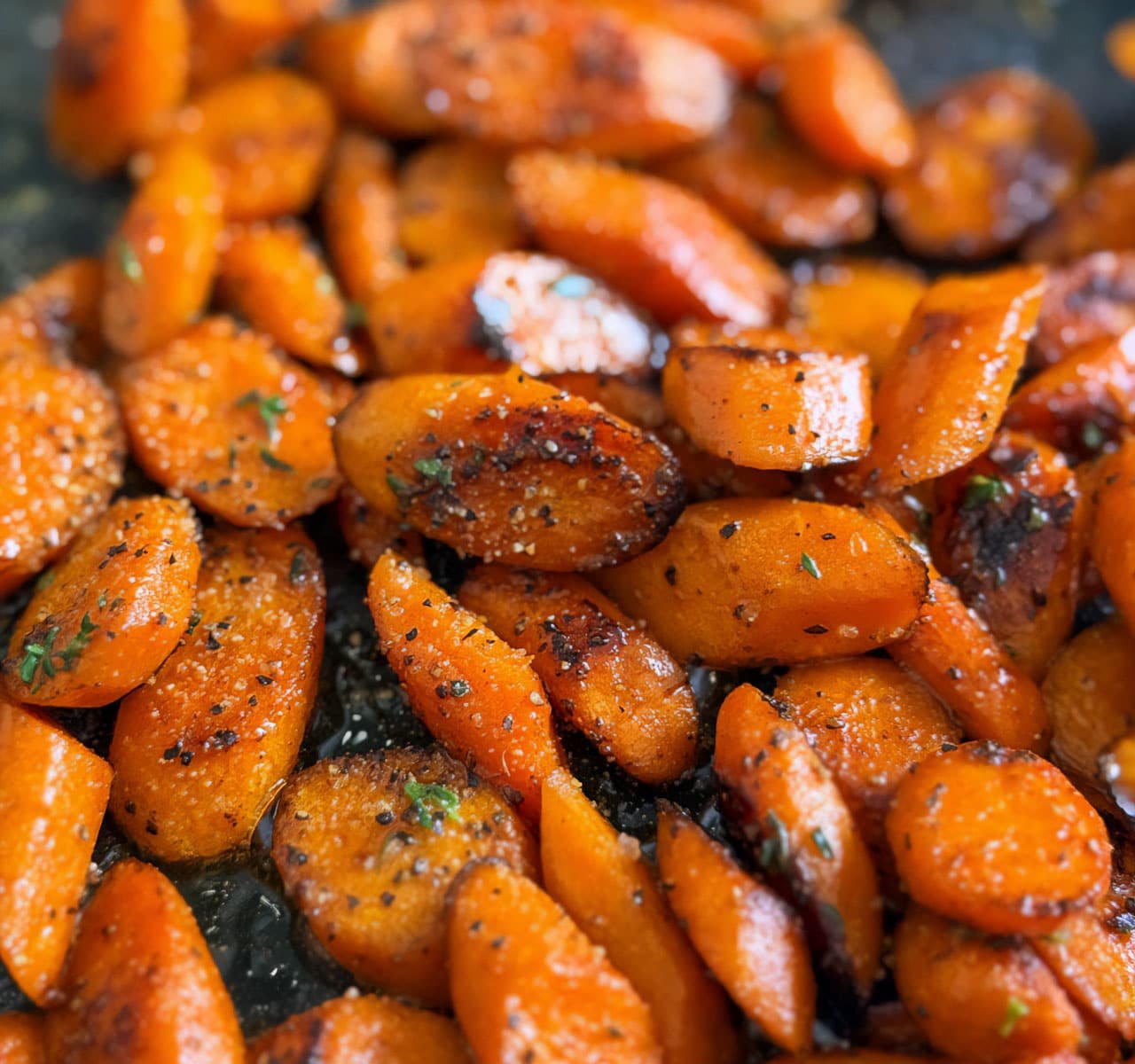
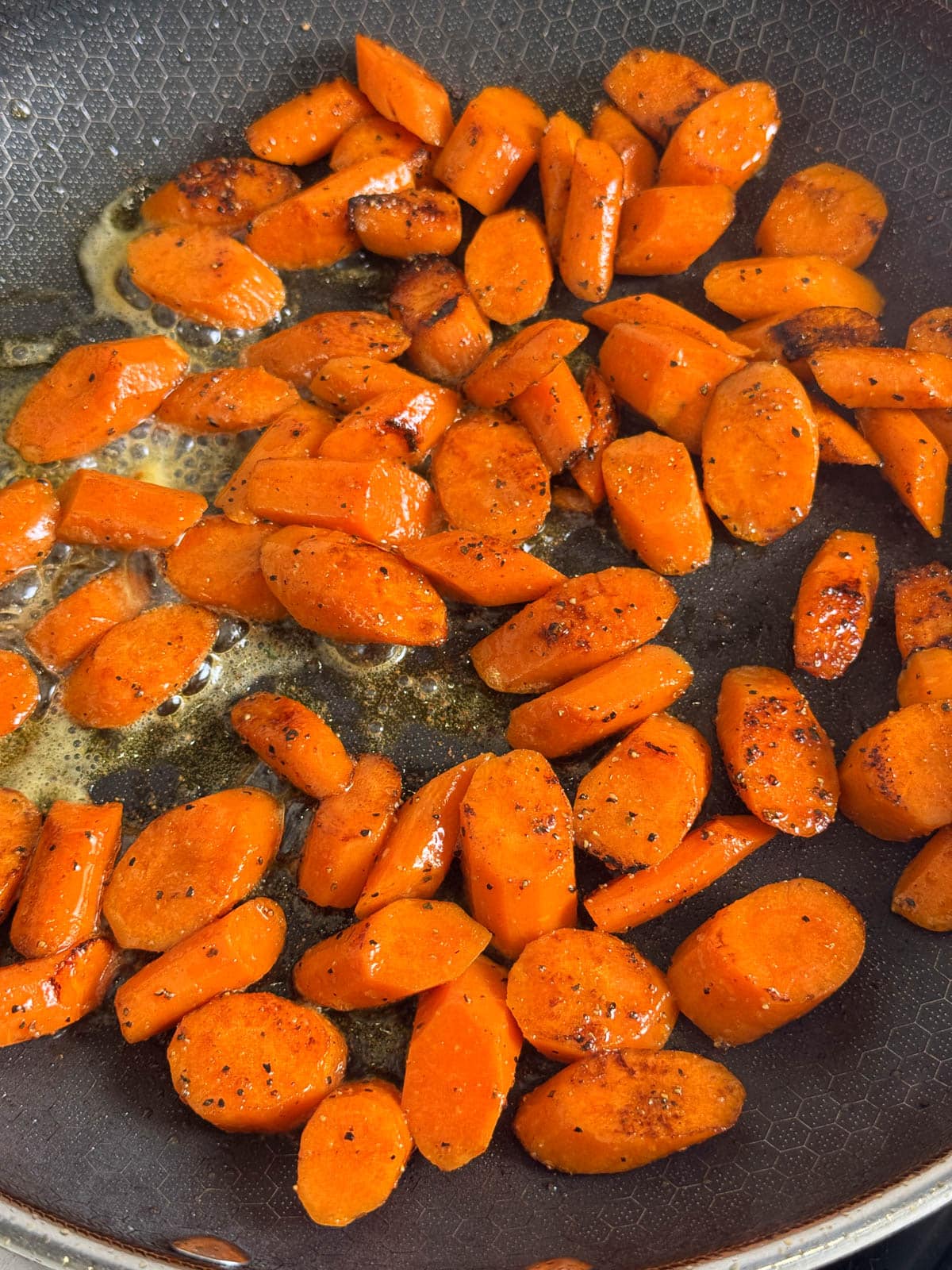
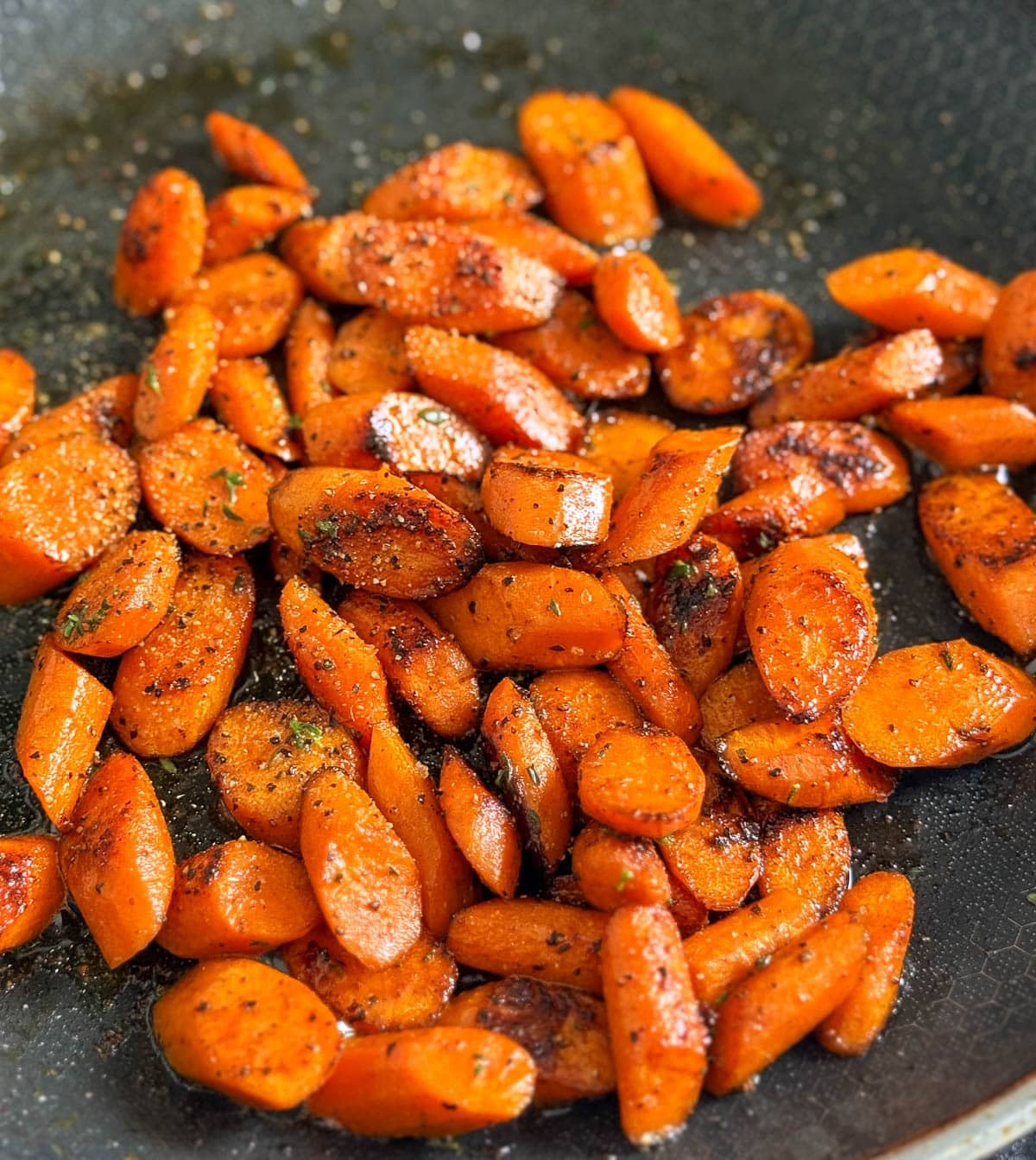
A close-up photo of sautéed carrots.


I started making these on a busy night when I wanted something quick, comforting, and still healthy. I had a bag of fresh carrots that were just begging to be used, and I figured a quick cooking technique like sautéing would be the healthiest way to preserve their nutrients while bringing out that beautiful sweetness. Once I realized how much extra flavor you can add with a drizzle of maple syrup or orange juice and a sprinkle of fresh herbs like fresh thyme or fresh parsley, it became my go-to side for holiday meals and weeknight dinners alike. Carrots are also one of the star ingredients in my Instant Pot pot roast - cooked separately in the searing pan so they get golden and caramelized instead of turning to mush.

What's In This Blog Post?

  • Ingredients Needed
  • Equipment Needed
  • Tips and Tricks for Success
  • How to Make Sautéed Carrots
  • Final Thoughts
  • Frequently Asked Questions

Ingredients Needed

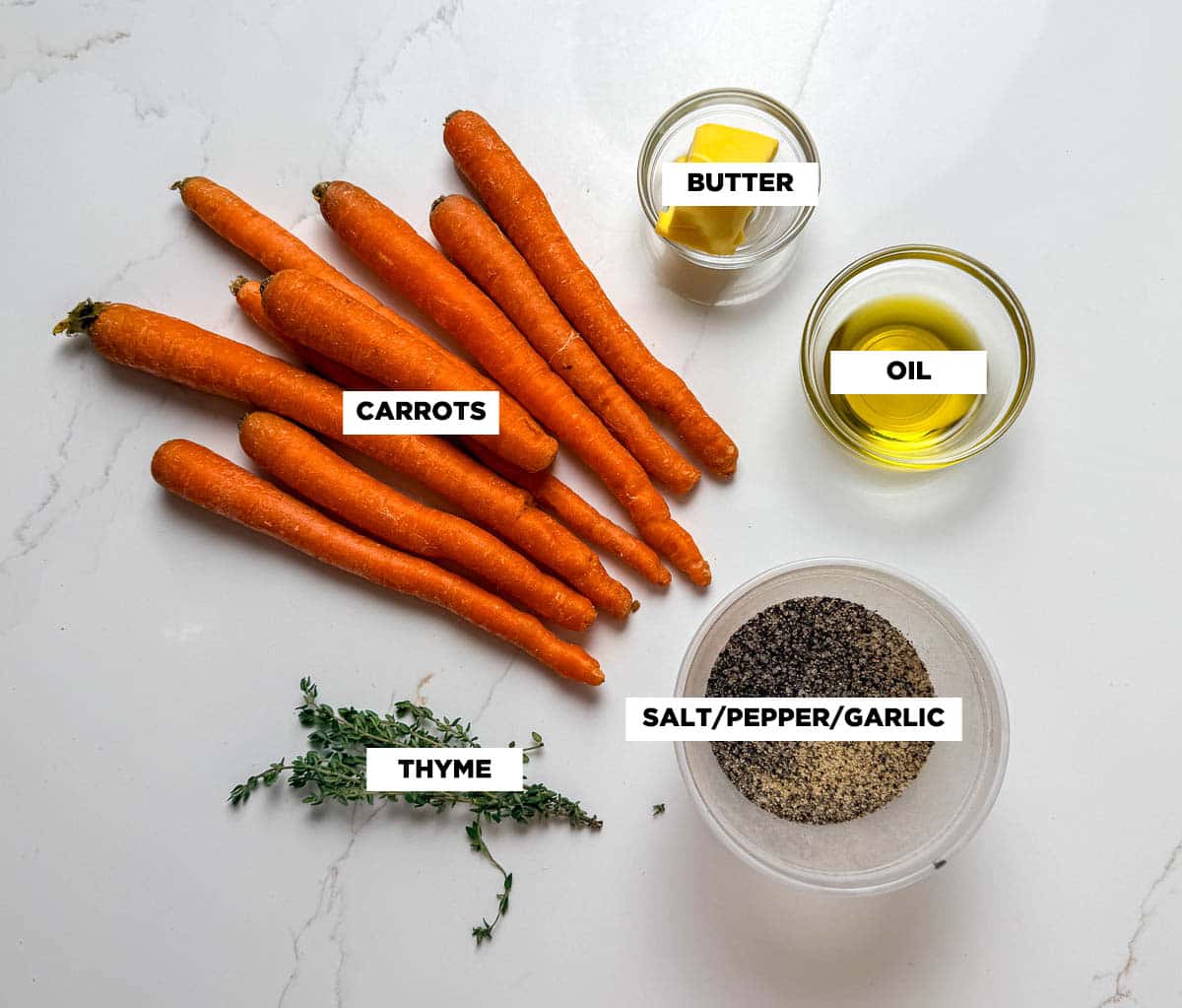
These sautéed carrots come together with everyday ingredients you probably already have on hand. Here's what you'll need to create that perfect balance of sweetness, color, and flavor.

  • Fresh Carrots or Baby Carrots - Either works! Slice fresh carrots into coins or diagonal pieces, or halve baby carrots lengthwise for faster cooking. Thinner slices will cook faster, while larger pieces stay slightly al dente for texture.
  • Olive oil and Unsalted Butter - I love the mix of the two. Olive oil keeps things light while butter adds richness and that signature buttery sautéed carrots taste.
  • Brown Sugar or Maple Syrup - Either one adds depth and complements the natural sweetness of the carrots. If you want a more caramelized flavor, use brown sugar. For a brighter, lighter glaze, go with maple syrup.
  • Fresh Herbs - Toss in chopped fresh thyme or fresh parsley right before serving to make the flavor pop.
  • Salt, Pepper, and Garlic (SPG) - Don't skip this! Seasoning brings out the sweetness and adds balance.

Equipment Needed

Large Skillet - For this recipe, you'll need a large skillet to sauté the carrots. We prefer HexClad skillets for their hybrid stainless steel and nonstick surface, which allows for even heat distribution, perfect browning, and easy cleanup.

Tips and Tricks for Success

  • Use a large skillet or sauté pan so the carrots have space to brown evenly.
  • Keep the heat between medium and medium-high heat - too high and they'll burn before they're fork tender.
  • If the carrots start to brown too fast, add a tablespoon of water and cover for a few minutes to steam.
  • Store leftovers in an airtight container in the fridge for up to 4 days. They reheat beautifully in a skillet.
  • For a stir fry twist, add a splash of soy sauce or sesame oil right at the end.

How to Make Sautéed Carrots

Now that you know what goes into this recipe, let me walk you through how to make these easy sautéed carrots.

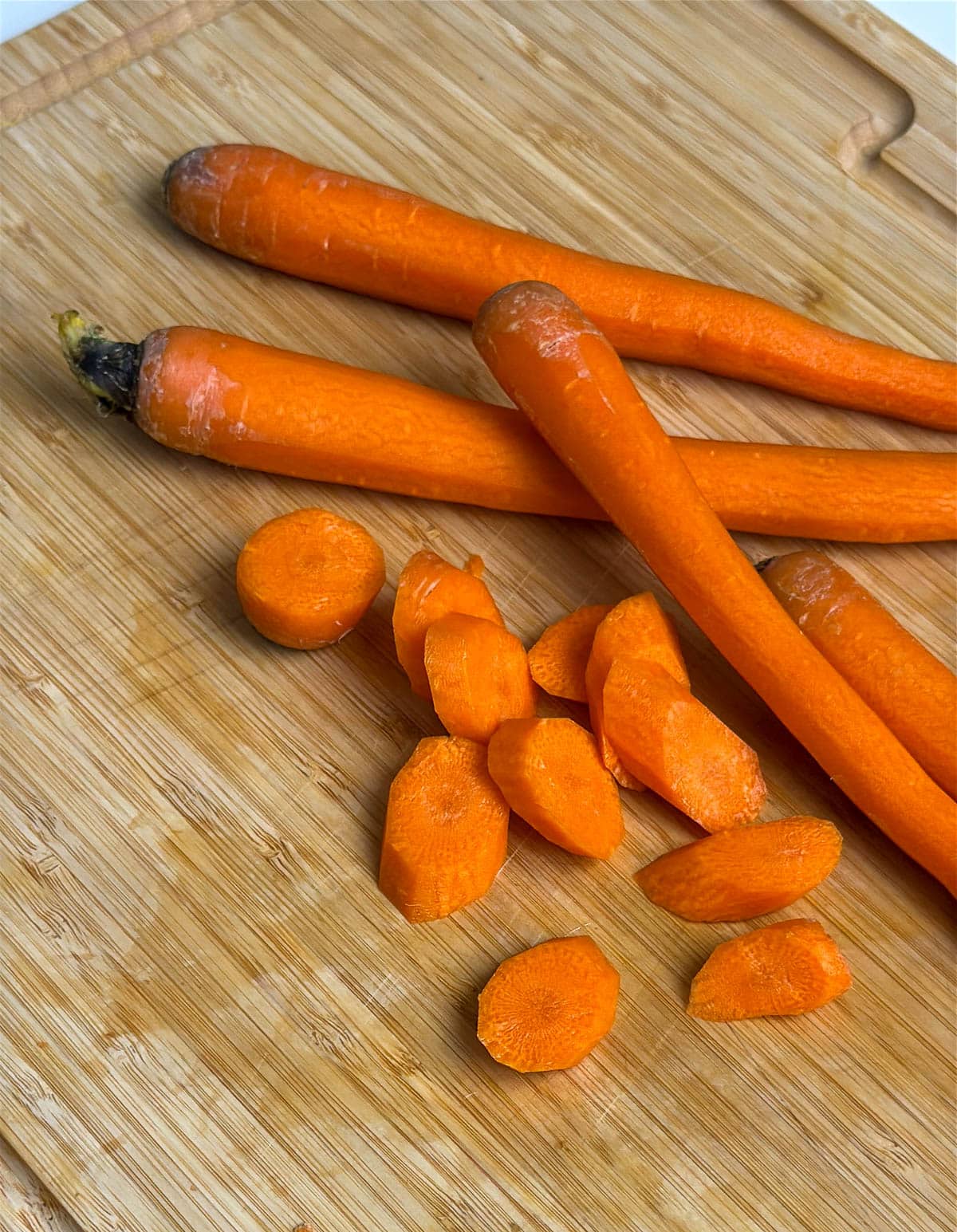
Peeled and washed carrots next to a pile of carrots cut into pieces on a wooden cutting board.
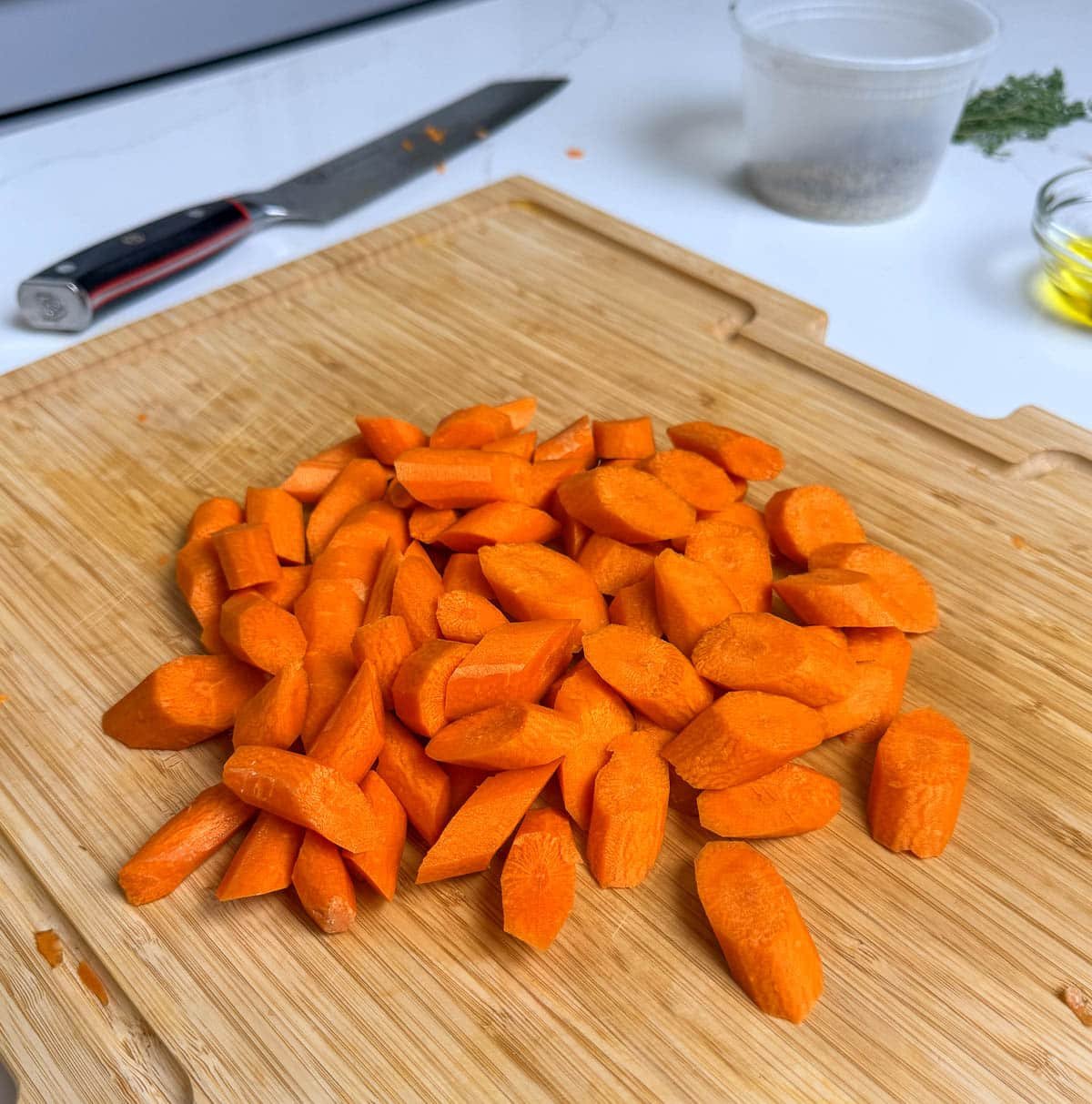
A pile of carrot pieces on a wooden cutting board.
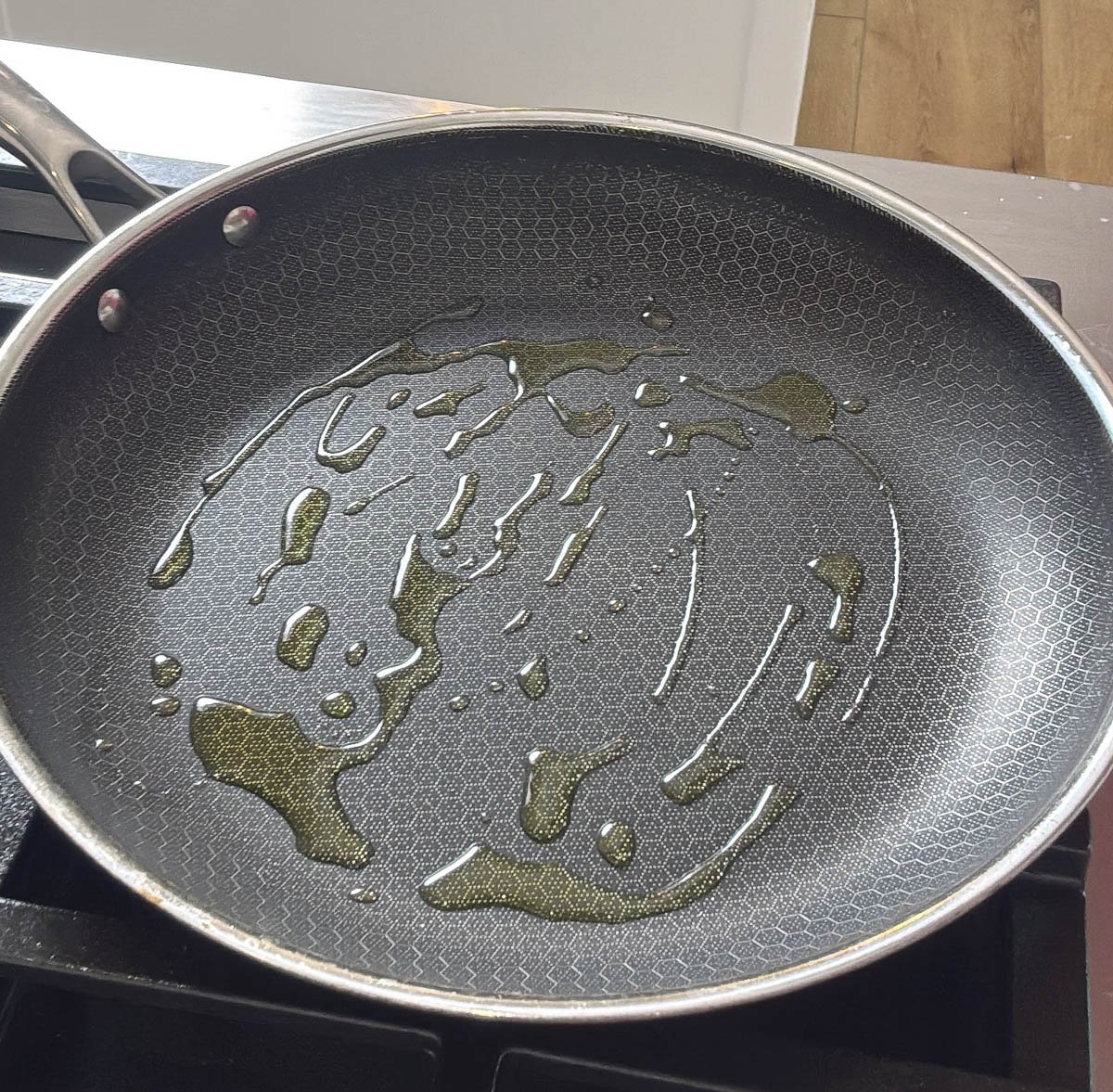
A HexClad skillet with oil in it.
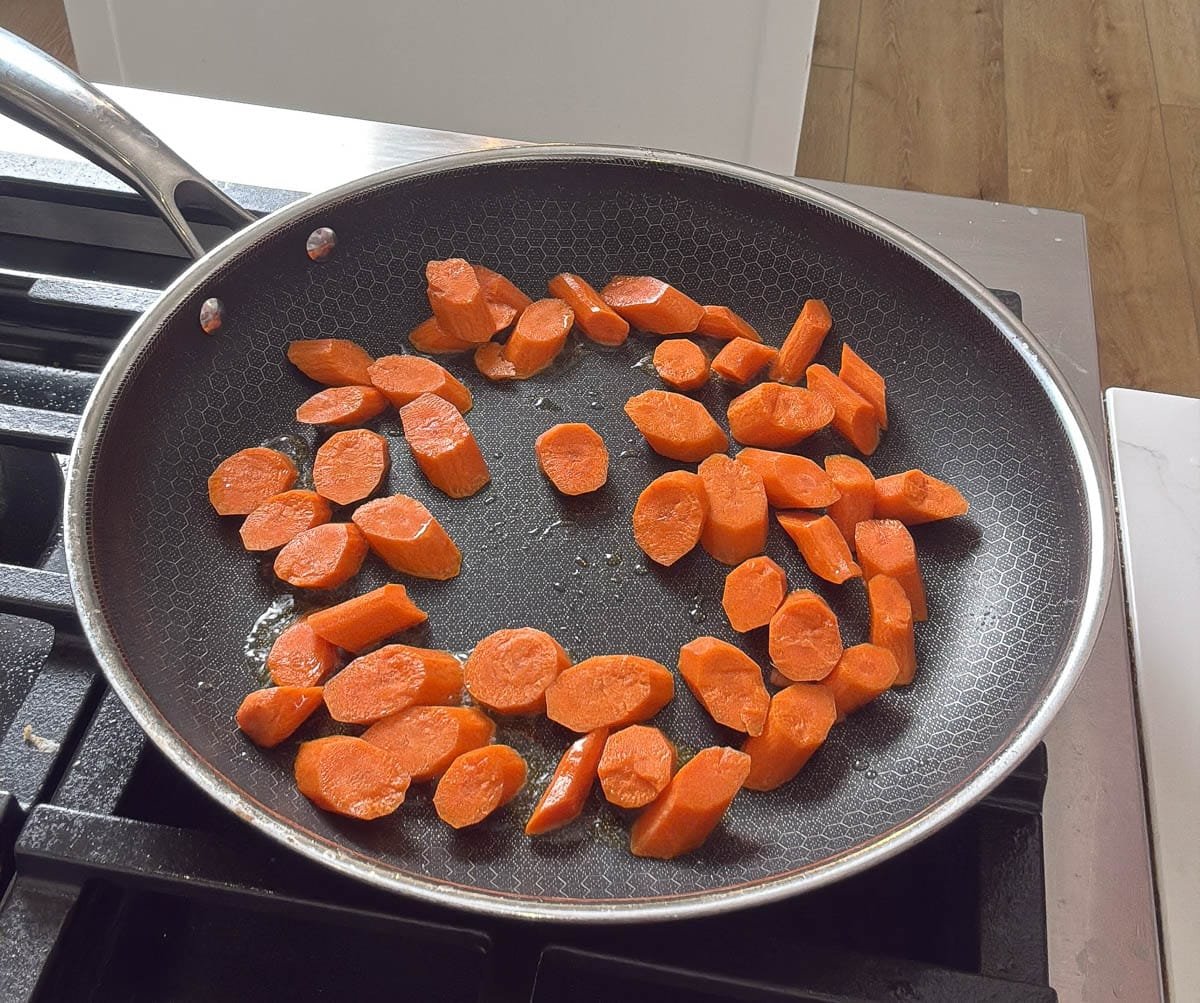
Carrot pieces added to the skillet with oil.
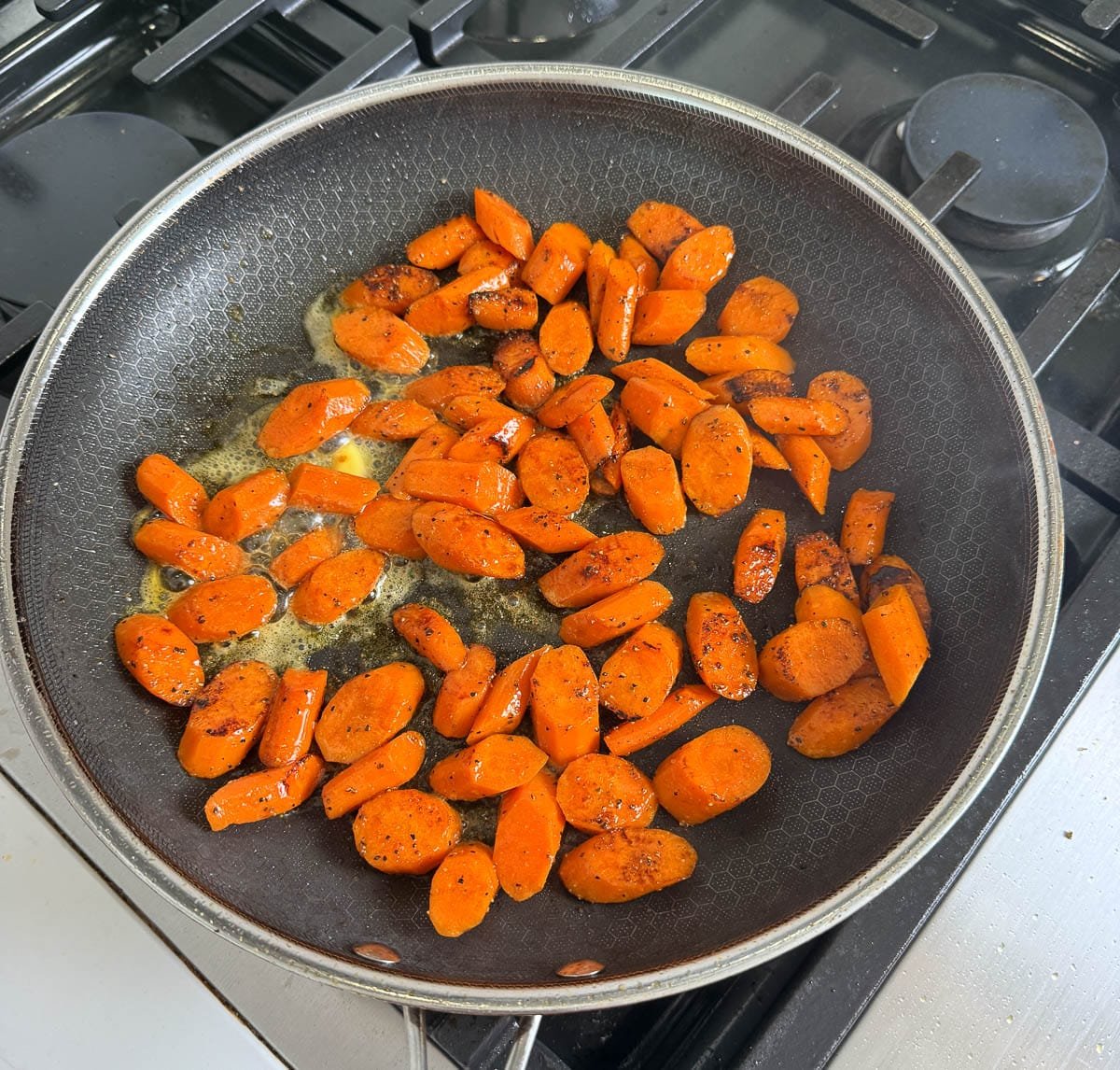
Butter is added to the carrots in the skillet.
Carrots are seasoned and sautéing in the skillet.
A close-up photo of sautéed carrots.
  1. Prep the carrots: Peel and slice about 1 pound of fresh carrots (or halve baby carrots).
  2. Heat the pan: Place a large skillet over medium-high heat and add 1 tablespoon olive oil and 1 tablespoon unsalted butter.
  3. Sauté: Add the carrots and seasoning. Cook for 5-7 minutes, stirring occasionally, until they start to get golden on the edges.
  4. Steam to finish: Add 1-2 tablespoons of water, cover, and reduce to medium heat. Let them cook 3-5 more minutes, until they are fork tender.
  5. Add flavor: Uncover and stir in 1 teaspoon brown sugar or maple syrup, plus a splash of orange juice if you like. Let it bubble for 30 seconds to coat the carrots in a light glaze.
  6. Finish: Sprinkle with fresh herbs, toss well, and taste for seasoning.

Final Thoughts

If you've never tried sautéing carrots before, this might become your new favorite carrot side dish. The short cooking time, the simple ingredients, and that buttery, lightly glazed finish make it one of the best sautéed carrots you'll ever make. It's the kind of easy side dish that works just as well next to your holiday meals as it does on a random Tuesday.

Frequently Asked Questions

Can I use baby carrots?

Yes! Just cut them in half so they cook evenly and still get that al dente bite.

Can I make them ahead?

Definitely. Store in an airtight container and reheat gently in a sauté pan with a little butter.

Can I skip the butter?

You can use just olive oil for a lighter version, but the butter really enhances the flavor profile and gives that glossy finish.

What can I serve this with?

These carrots go with almost everything. From chicken recipes to pork chops, salmon, or vegetarian grain bowls.

Recipe

Print Recipe
No ratings yet

Sautéed Carrots

Sautéed Carrots make the perfect easy, flavorful side dish. They're tender, glossy, and naturally sweet with just a handful of ingredients.
Prep Time5 minutes mins
Cook Time10 minutes mins
Total Time15 minutes mins
Course: Side Dish
Cuisine: American
Servings: 4 servings
Calories: 106kcal
Author: Liz Marek

Ingredients

  • 1 pound carrots
  • 1 tablespoon unsalted butter
  • 1 tablespoon olive oil
  • 1 ½ teaspoons SPG ½ teaspoon of each
  • 1 teaspoon brown sugar or maple syrup
  • 1 teaspoon fresh herbs

Instructions

  • Prep the carrots: Peel and slice about 1 pound of fresh carrots (or halve baby carrots).
  • Heat the pan: Place a large skillet over medium-high heat and add 1 tablespoon olive oil and 1 tablespoon unsalted butter.
  • Sauté: Add the carrots and seasoning. Cook for 5-7 minutes, stirring occasionally, until they start to get golden on the edges.
  • Steam to finish: Add 1-2 tablespoons of water, cover, and reduce to medium heat. Let them cook 3-5 more minutes, until they are fork tender.
  • Add flavor: Uncover and stir in 1 teaspoon brown sugar or maple syrup, plus a splash of orange juice if you like. Let it bubble for 30 seconds to coat the carrots in a light glaze.
  • Finish: Sprinkle with fresh herbs, toss well, and taste for seasoning.

Notes

  • Make-Ahead Instructions: Store in an airtight container and reheat gently in a sauté pan with a little butter.
  • Serving Suggestion: These carrots go with almost everything. From chicken recipes to pork chops, salmon, or vegetarian grain bowls.

Nutrition

Serving: 1serving | Calories: 106kcal | Carbohydrates: 12g | Protein: 1g | Fat: 7g | Saturated Fat: 2g | Polyunsaturated Fat: 1g | Monounsaturated Fat: 3g | Trans Fat: 0.1g | Cholesterol: 8mg | Sodium: 79mg | Potassium: 365mg | Fiber: 3g | Sugar: 6g | Vitamin A: 19034IU | Vitamin C: 7mg | Calcium: 39mg | Iron: 0.4mg
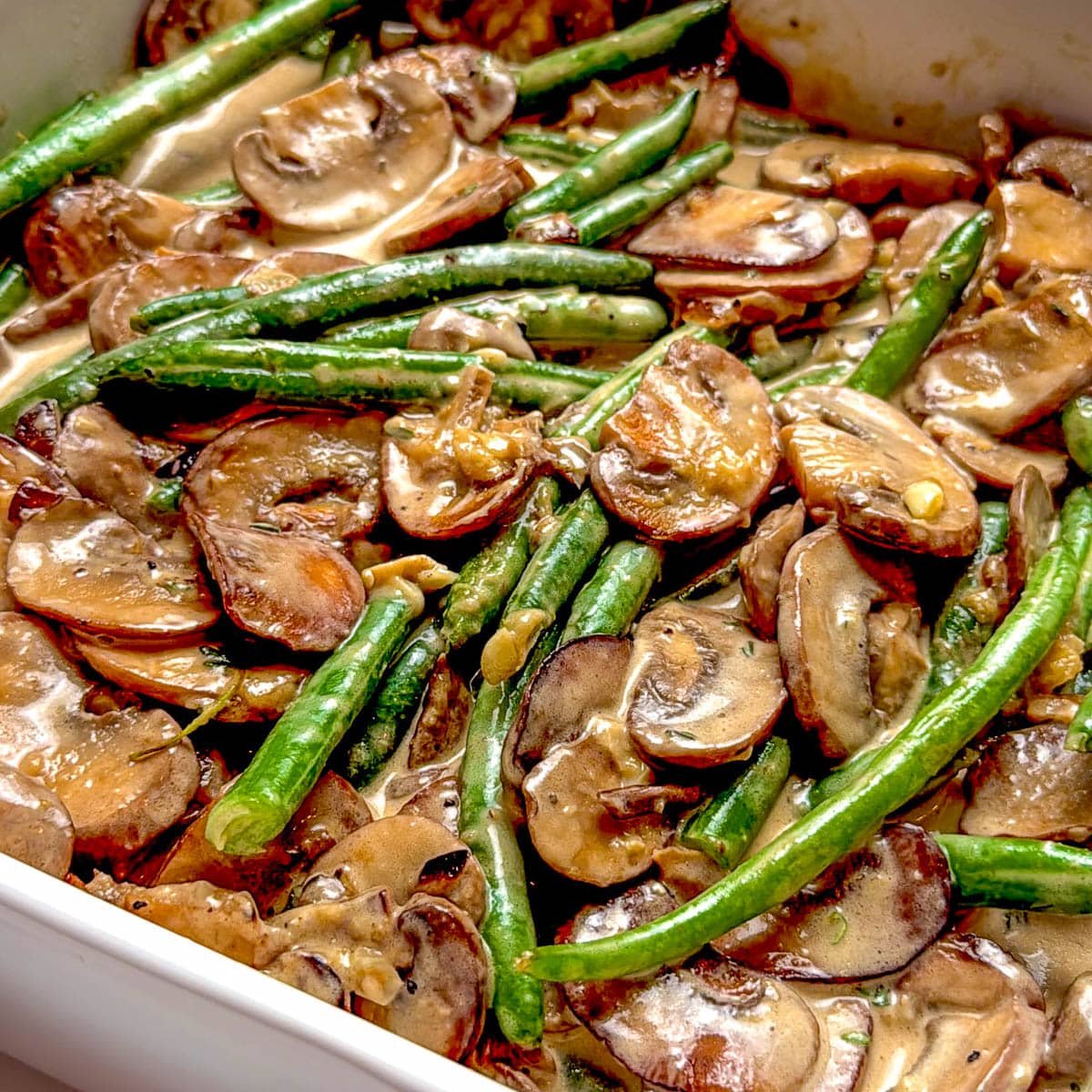
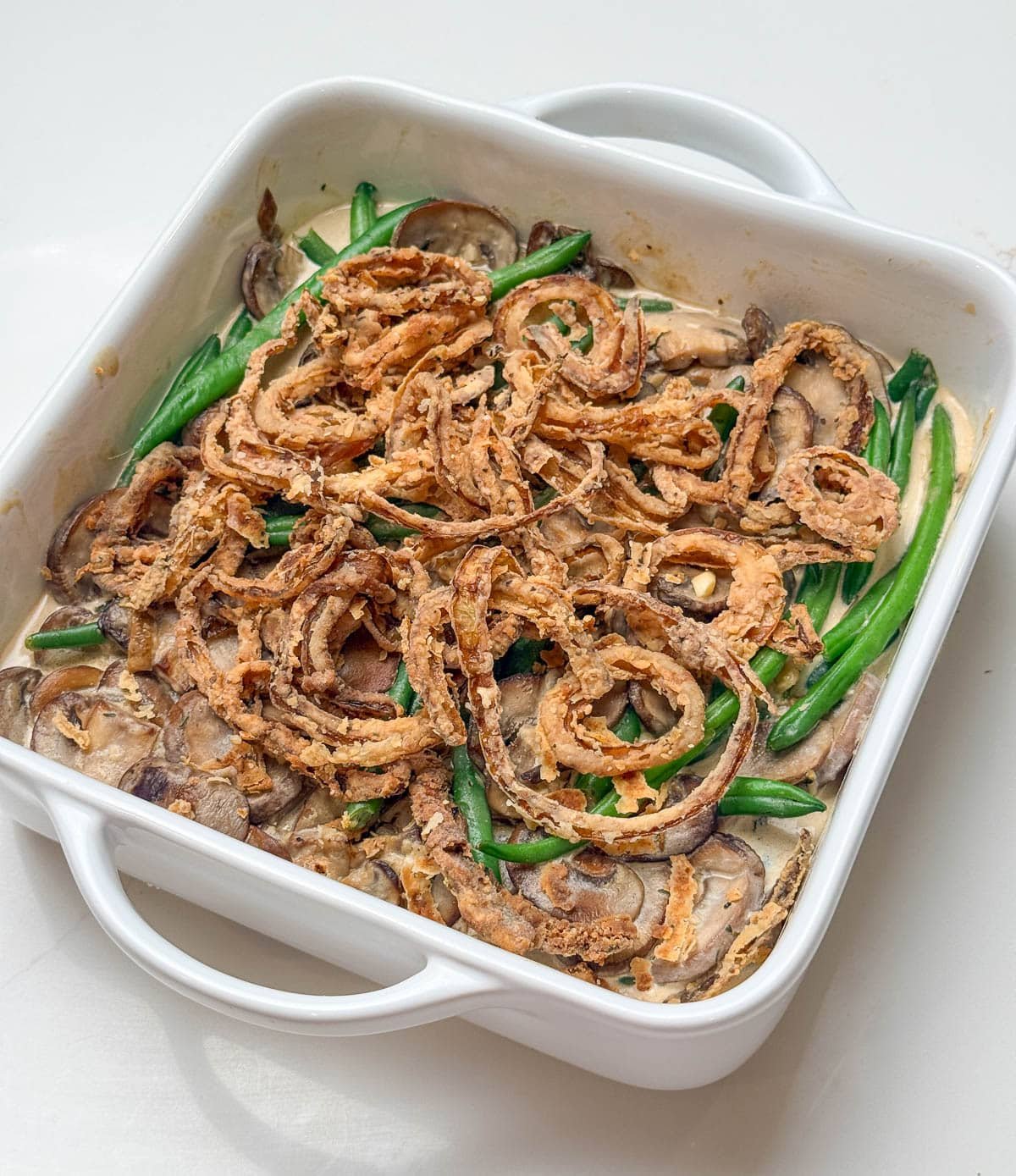
close up of green bean casserole in a square dish

November 19, 2025 Casseroles

Green Bean Casserole Made From Scratch

If you've only ever made green bean casserole using canned soup and store-bought crispy onions, it's time to level up. This homemade green bean casserole has all the savory flavors you love, but with a fresh twist-tender green beans, creamy mushroom sauce, and golden brown crispy onions made right in your own kitchen. It's a delicious side dish that deserves a permanent spot on your Thanksgiving table (and honestly, your Christmas dinner too).

close up of green bean casserole in a square dish

I was inspired to make this from scratch, including the onions, back when I was doing Keto. Green bean casserole made with a can of French-cut green beans and a can of cream of mushroom soup was always on the table for the holidays, but I wanted to make a version without the carbs and sugar. I liked it SO much better, and now this is how I always make it. Once you taste the difference, it's hard to go back to the canned stuff.

Really, this is just my mushroom cream sauce with green beans added and crispy onions on top. If you make a double batch, you can save half to serve with dinner and the other half to go in your casserole. MAXIMUM EFFICIENCY!

What's In This Blog Post

  • Ingredient Breakdown
  • Step-by-Step Instructions
  • Final Thoughts

Ingredient Breakdown

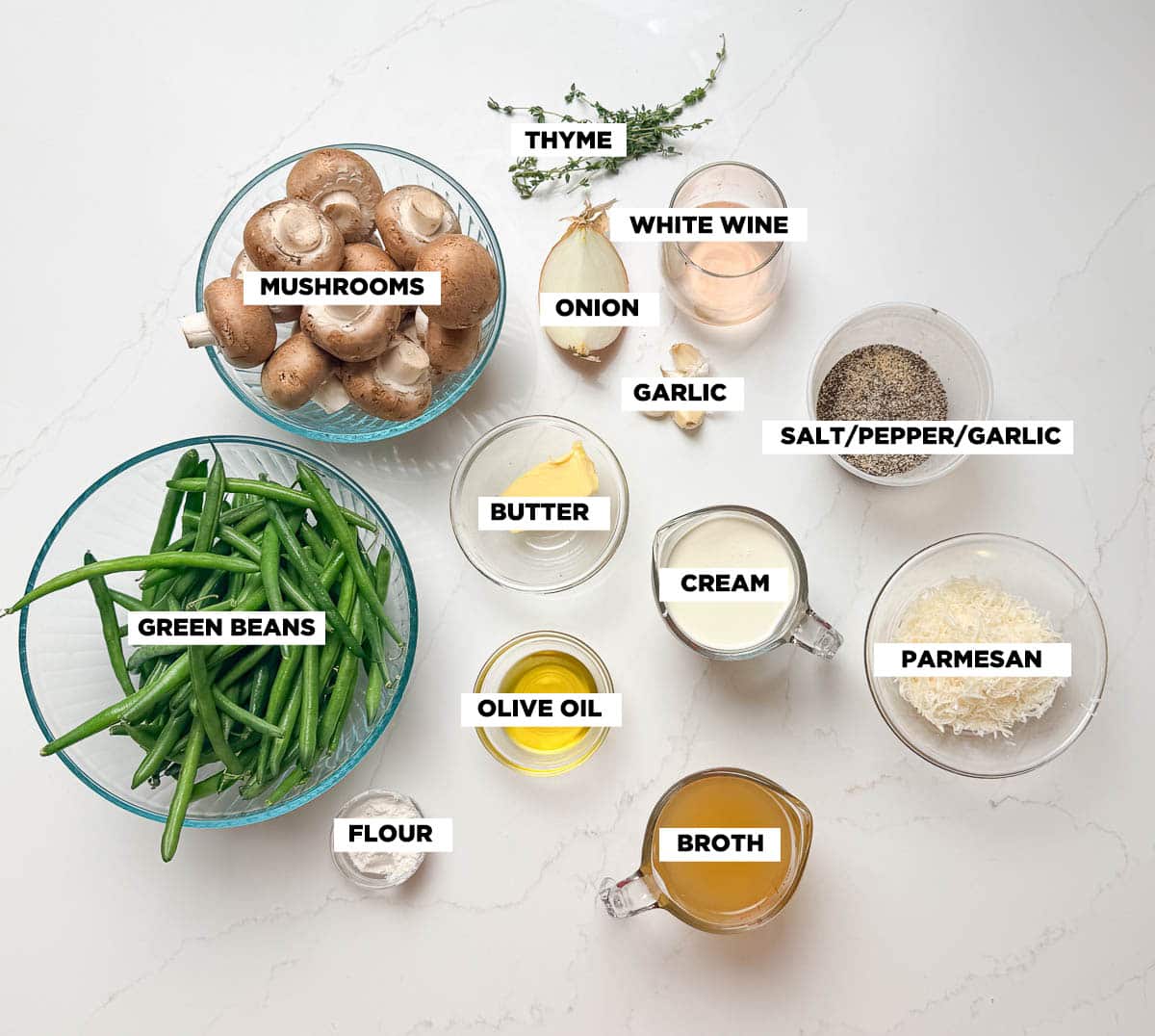
Making your own mushroom cream sauce is easier than you think, and the taste is infinitely better! All you need are some basic knife skills.

  • Start with fresh green beans-trim the ends of the beans and cut them into small pieces for even cooking, or keep them long.
  • For the sauce, skip the canned mushroom soup and make your own homemade cream of mushroom using crimini mushrooms, butter, minced garlic, and onions. You can switch out the mushrooms for shiitake or any other mushroom you like.
  • Stir in chicken broth, regular milk, and a splash of Worcestershire sauce for that subtle umami note. If you don't have Worcestershire you can use soy sauce. If you prefer a richer sauce, swap in heavy cream or a dollop of sour cream-either will add silky goodness.
  • For the topping, you can make your own crispy onions or crispy shallots by coating thin slices in flour and frying them until golden brown for maximum crunch. If you're short on time, the classic French-fried onions from the grocery store still work beautifully.
  • Want a quick Parmesan cream sauce upgrade? Mix a handful of Parmesan cheese or Monterey Jack into the sauce before baking-it's the best way to add a little creamy complexity without overpowering the dish.

Step-by-Step Instructions

  1. Preheat the oven to 375°F
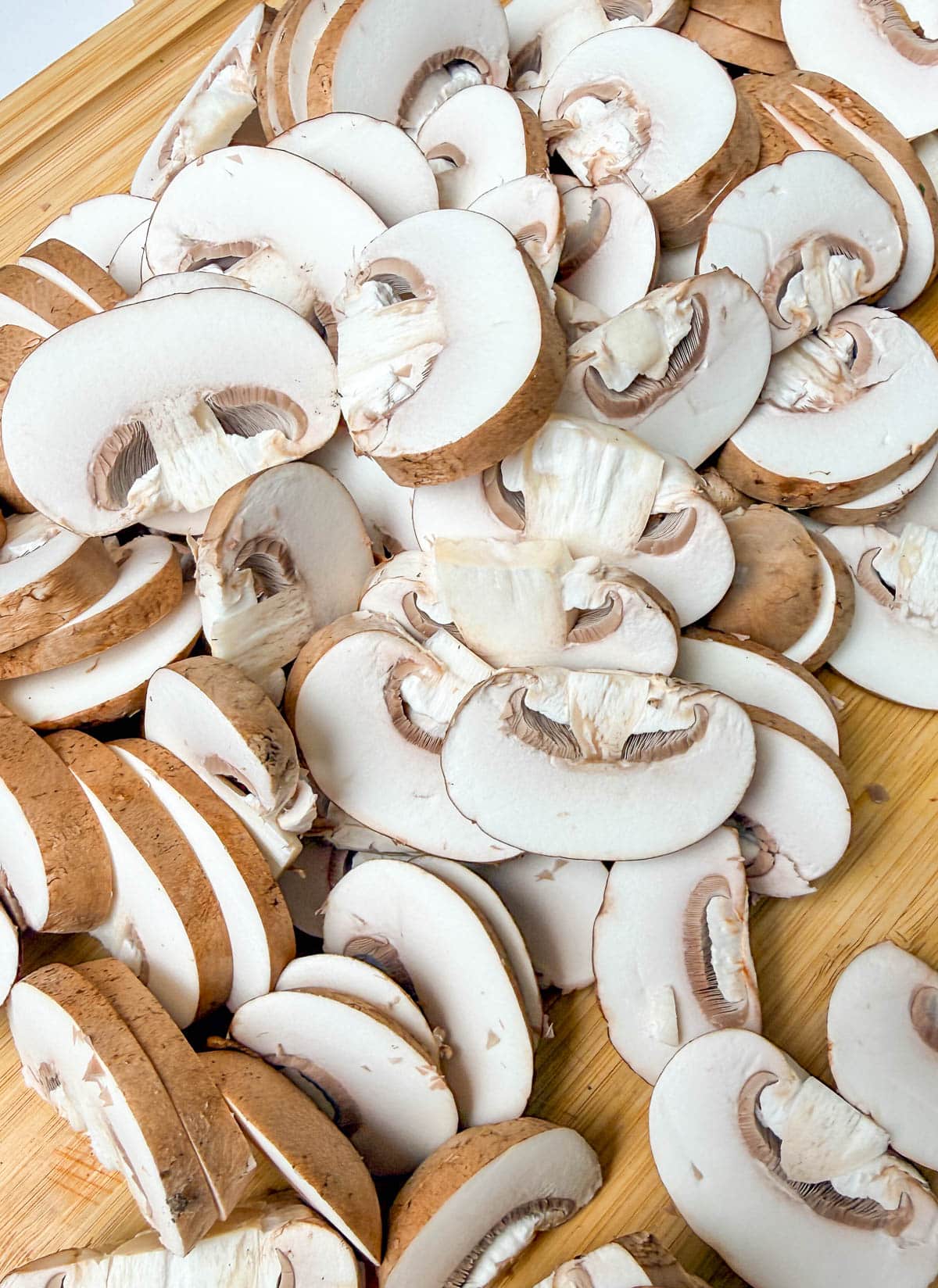
  2. Slice the mushrooms, mince the garlic, and prepare the crispy onions (optional).close up of sliced mushrooms
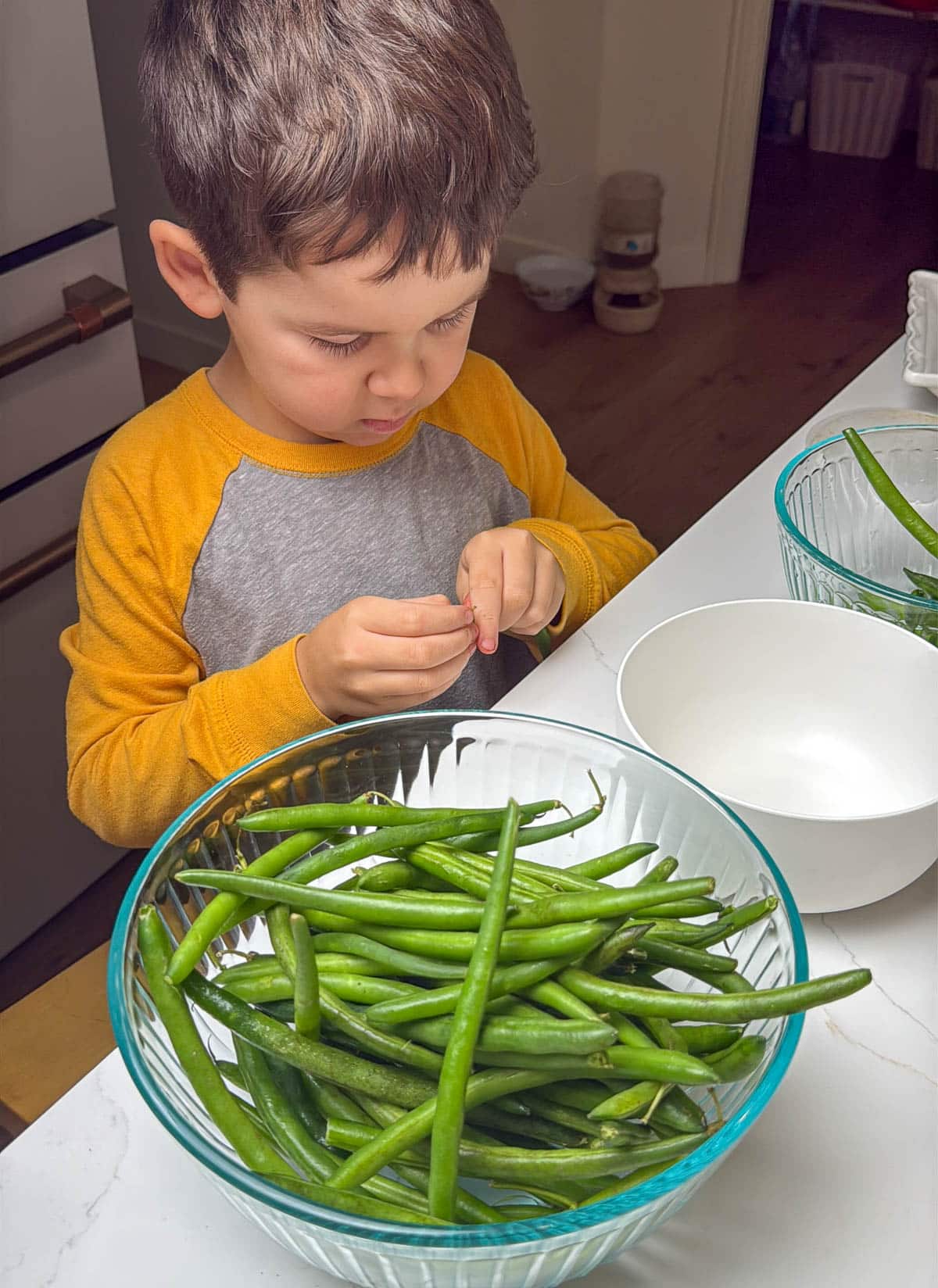
  3. Bring a large pot of salted water to a boil. While you're waiting for the water to boil, pinch off the stems of the green beans. Great activity for the kids to help with. a boy preparing a bowl of fresh green beans
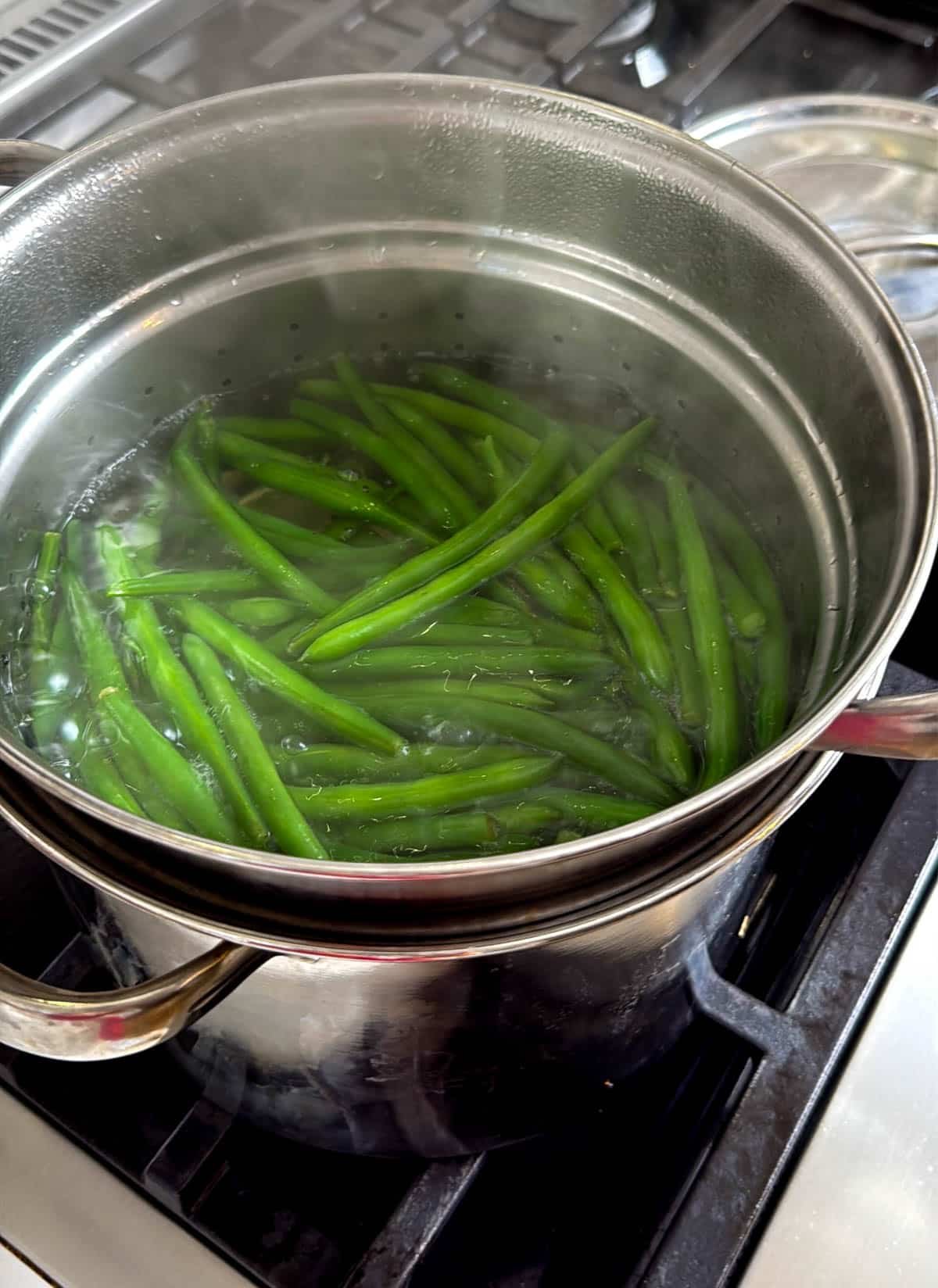
  4. Blanch the green beans for 3-4 minutes. close up of green beans in a pot of boiling water
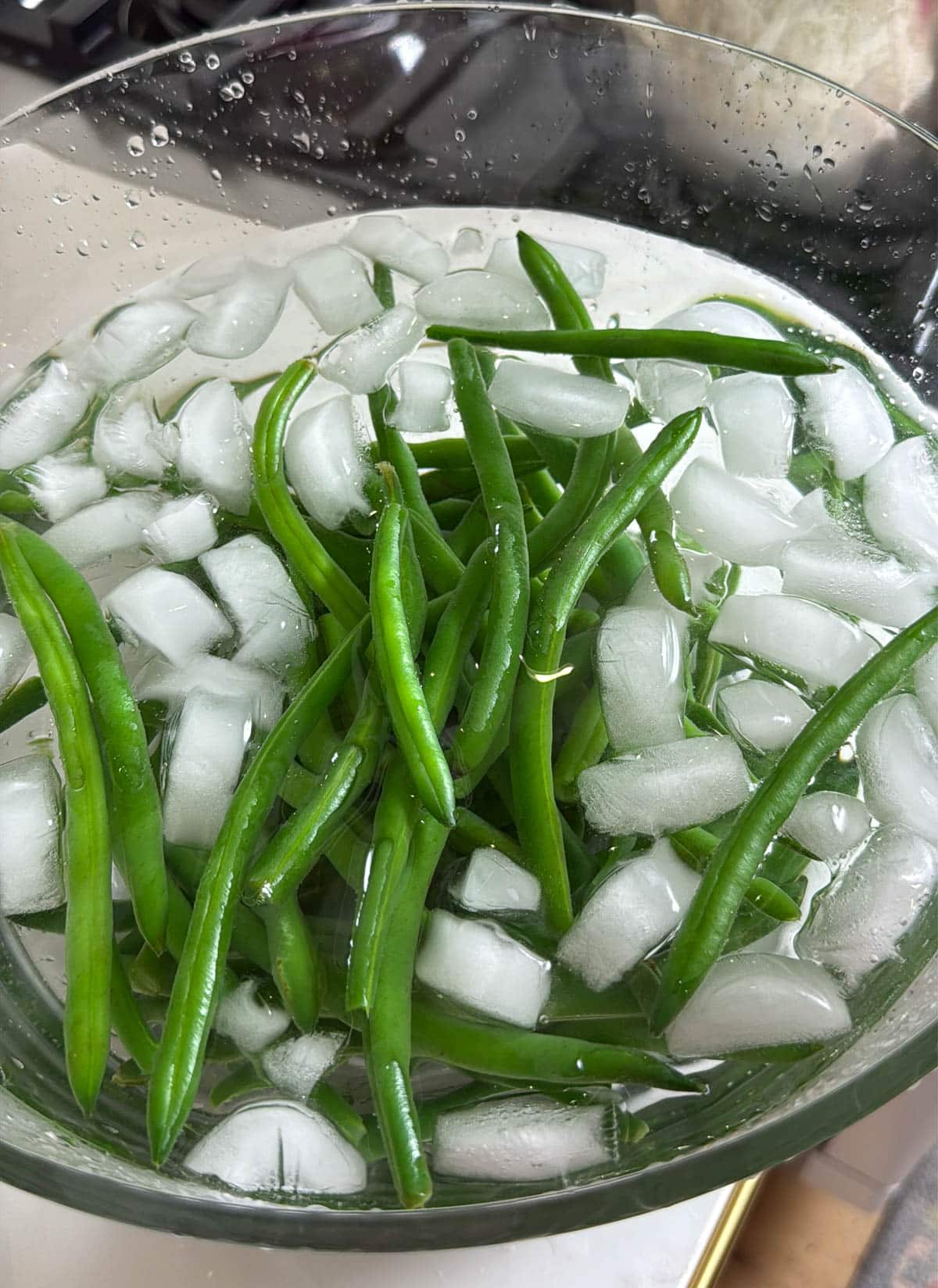
  5. Transfer to an ice bath and set aside. The ice stops the green beans from overcooking.green beans in a bowl of ice water
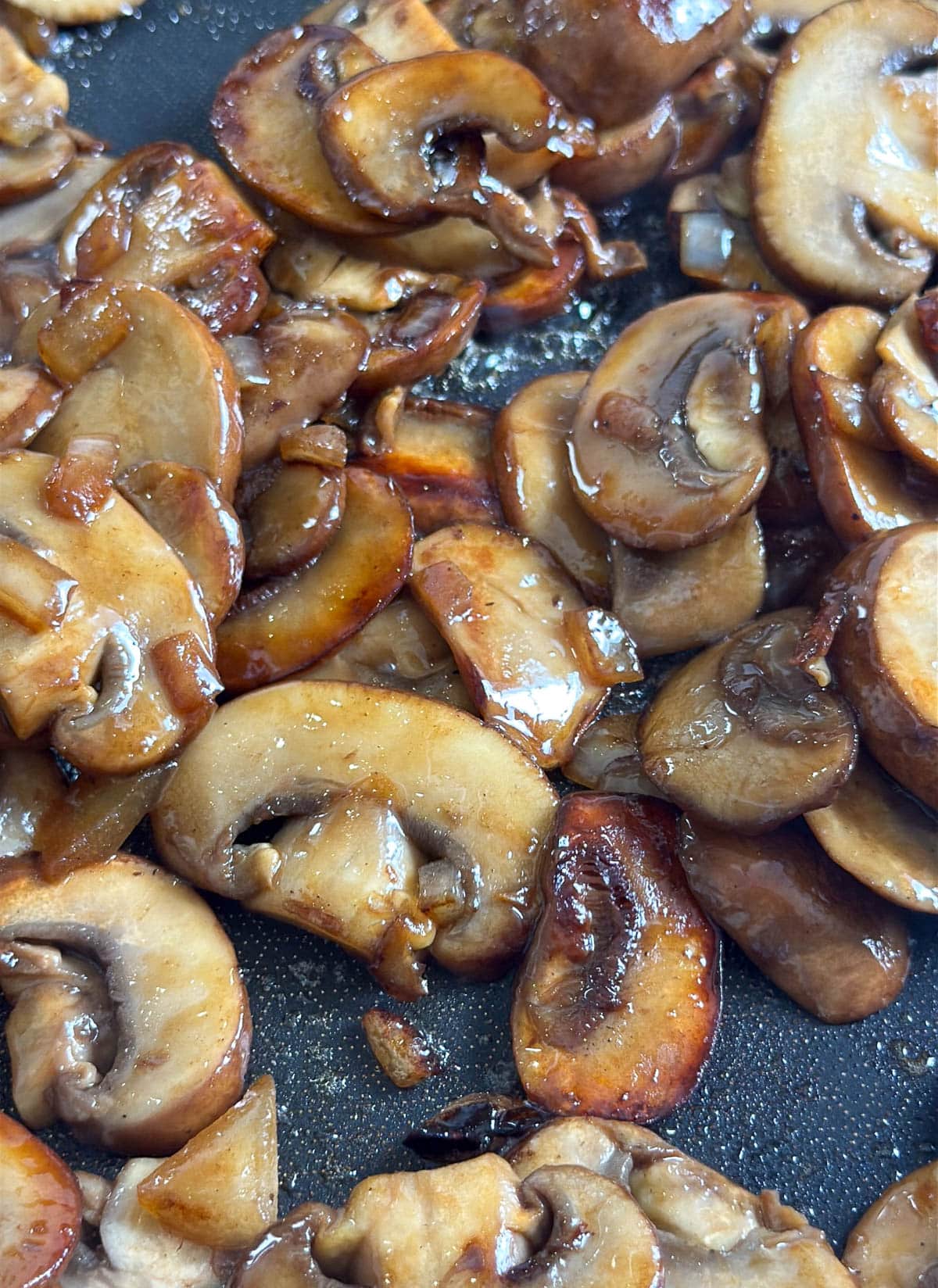
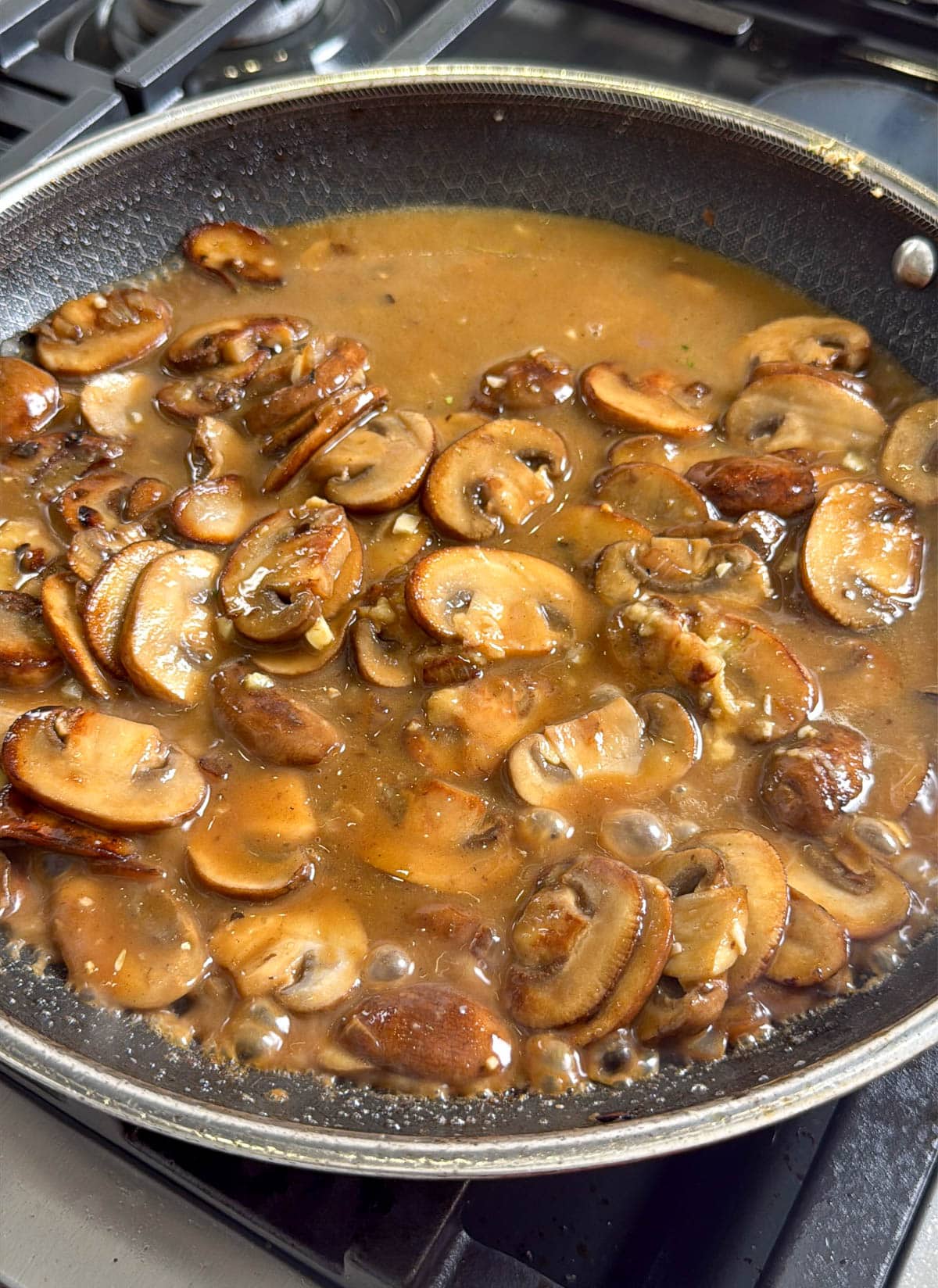
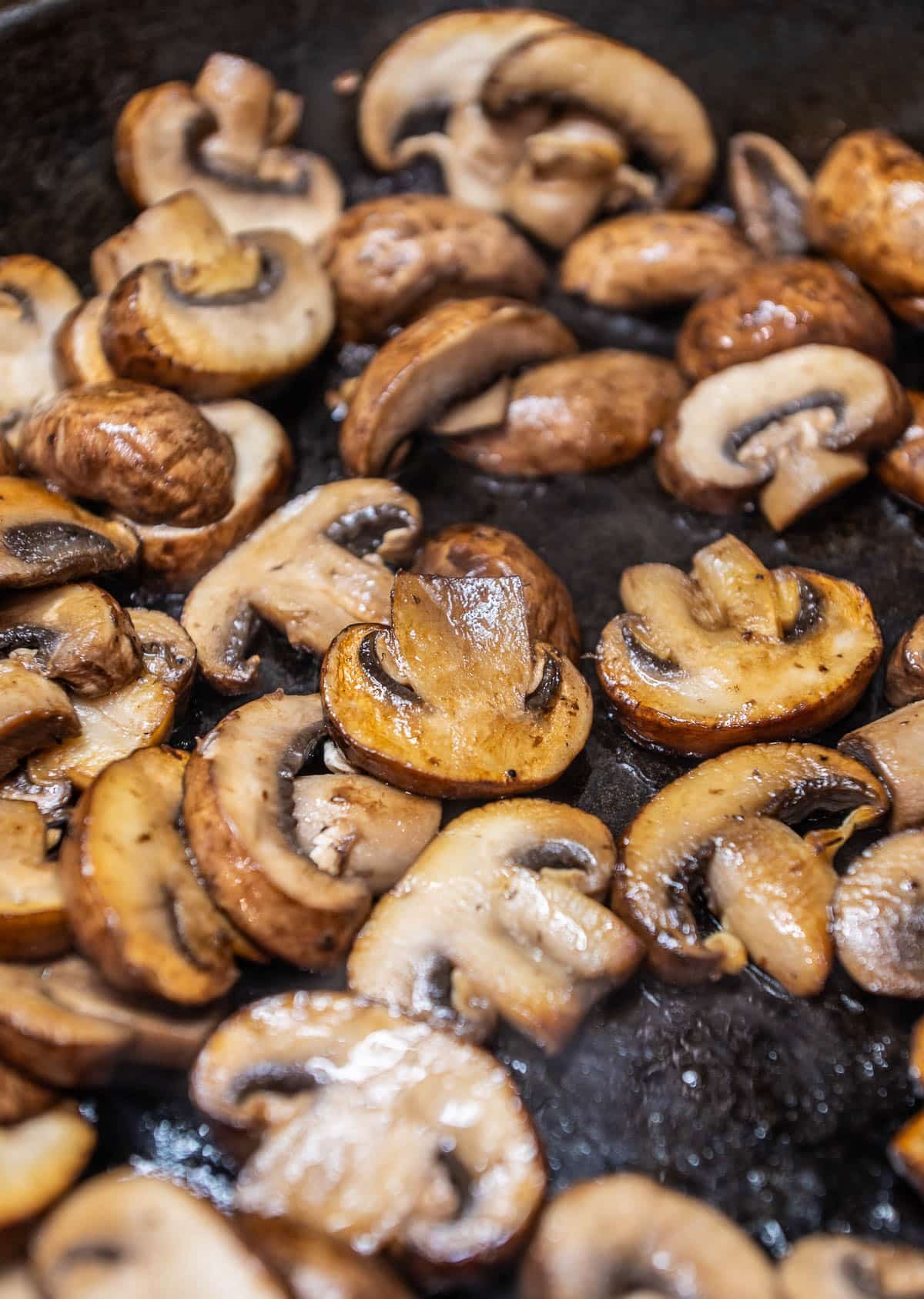
  6. In a large skillet, melt the butter over medium heat. Add in the sliced mushrooms. Cook them until golden brown. close up of sauteed mushrooms
  7. Add a splash of white wine to deglaze the pan and let it cook off.
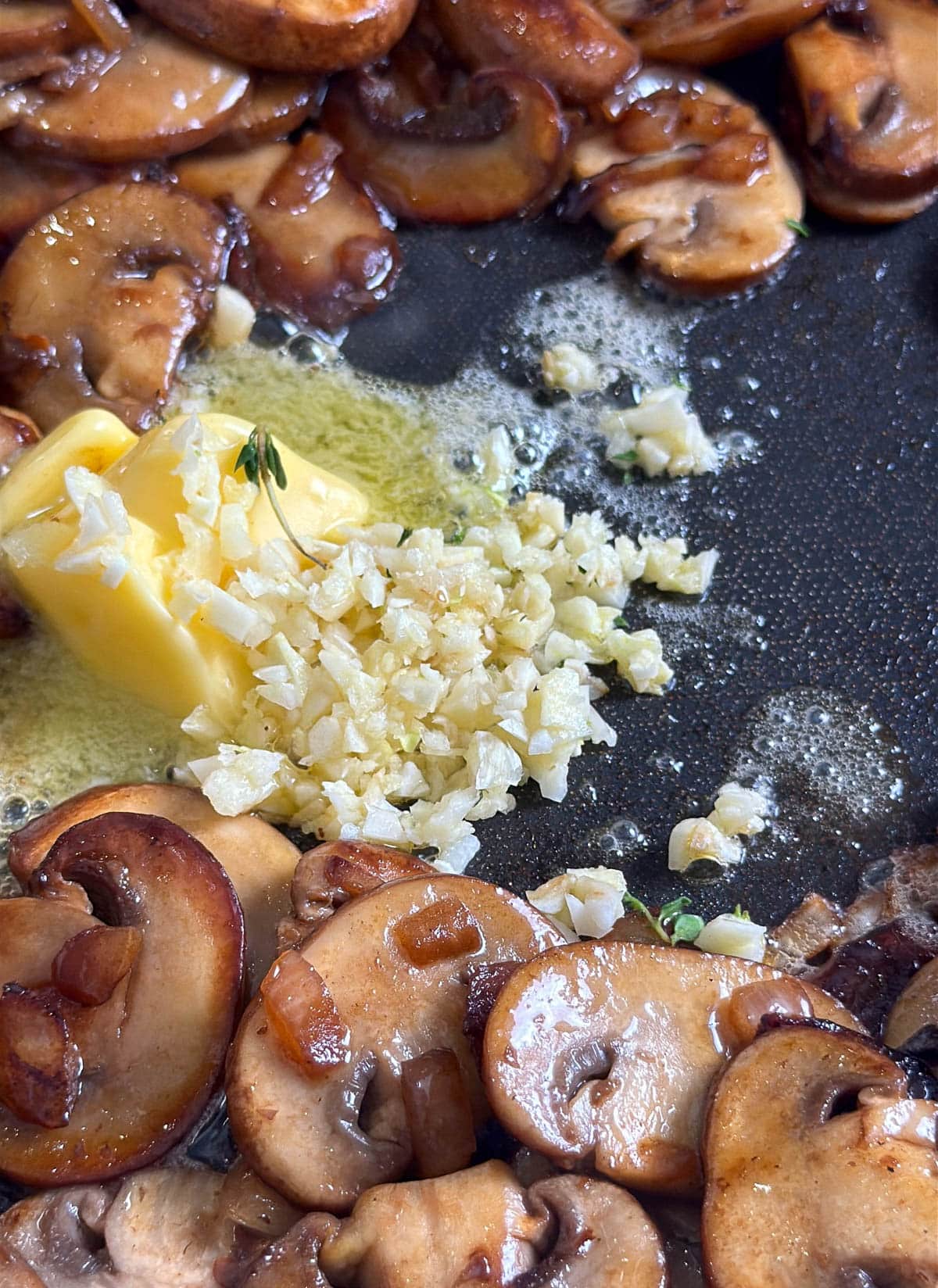
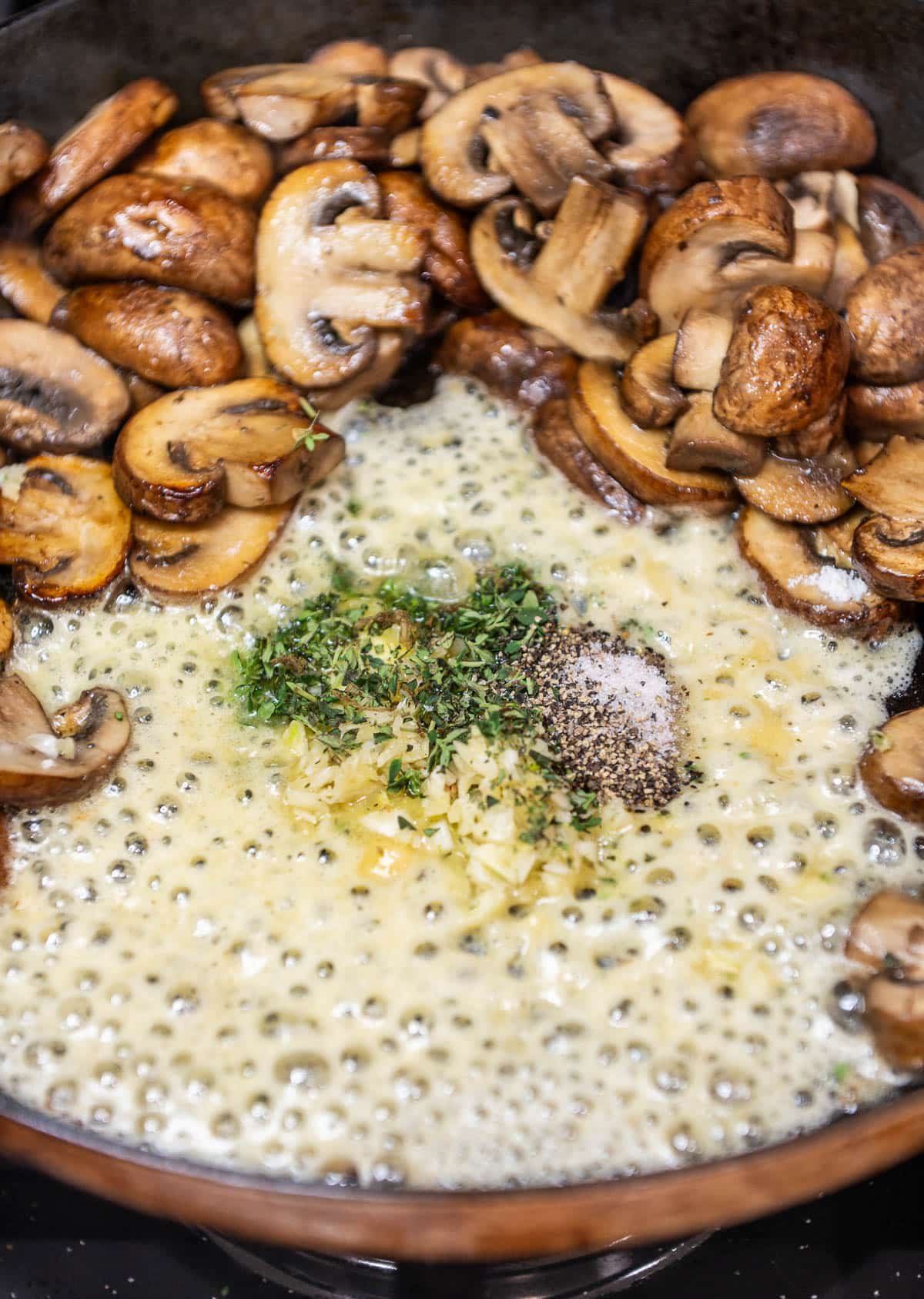
  8. Scoot the mushrooms to the side. And the butter and garlic, and cook just until the garlic is fragrant. close up of butter and garlic cooking in a pan with mushrooms
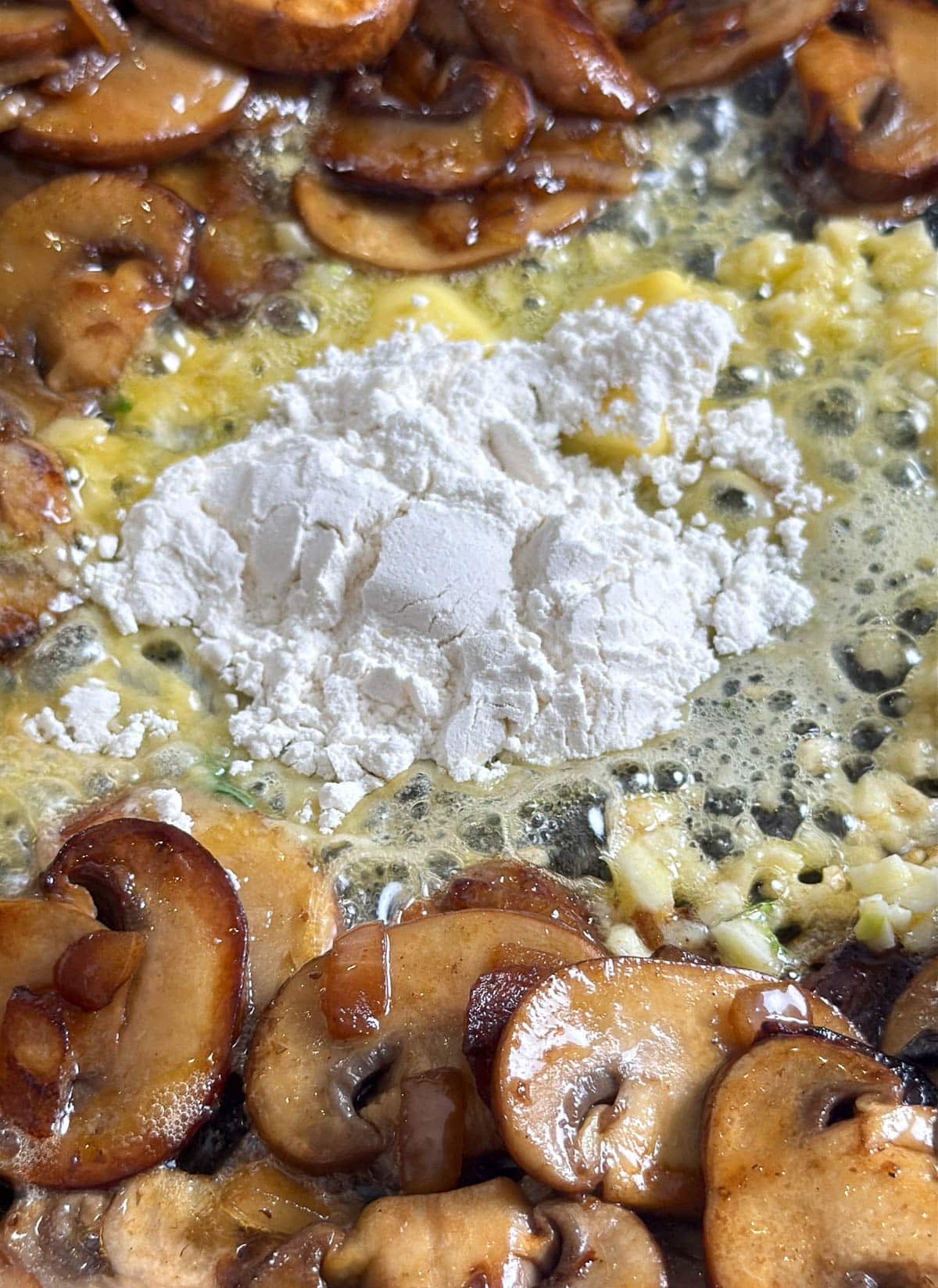
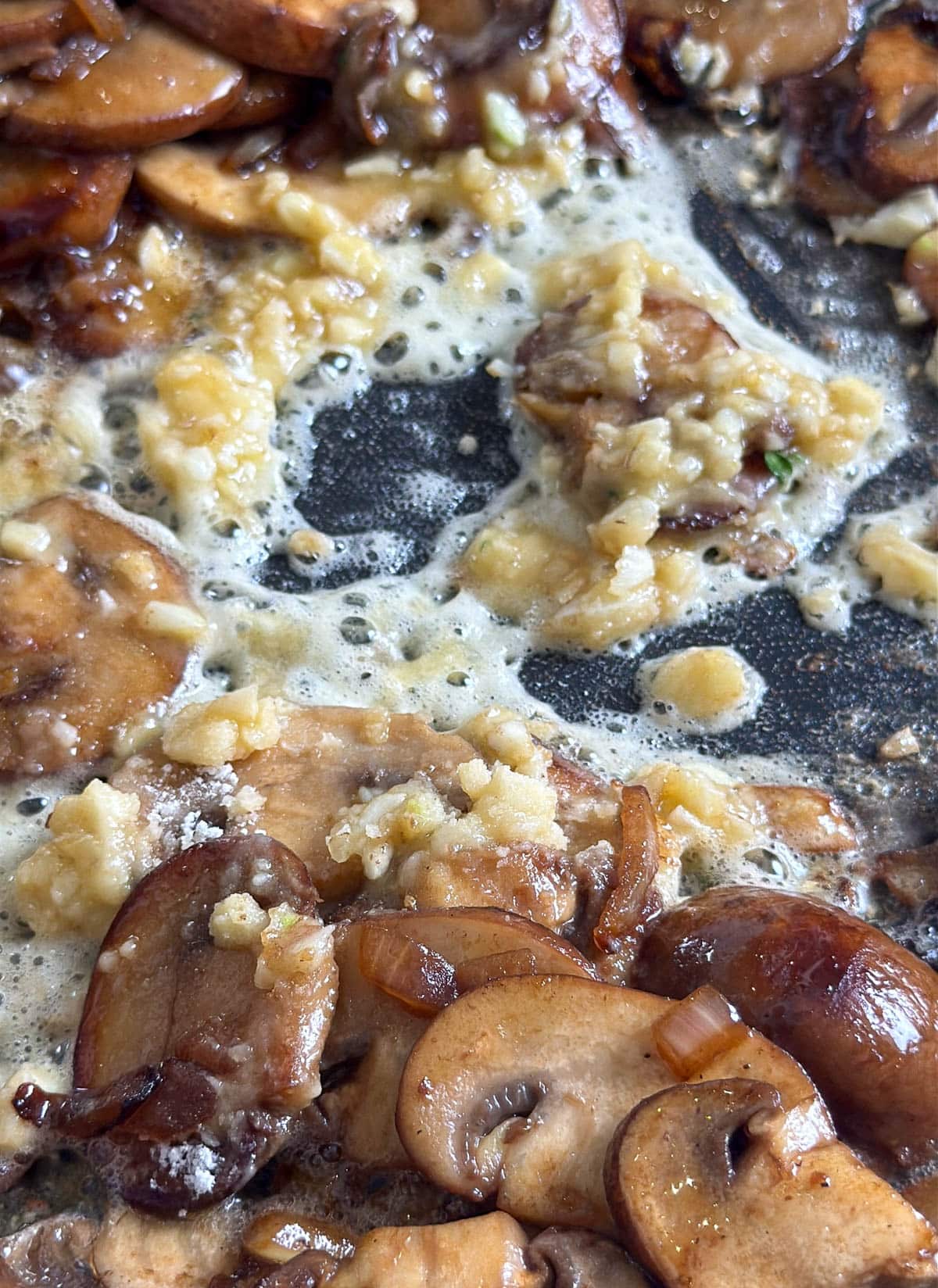
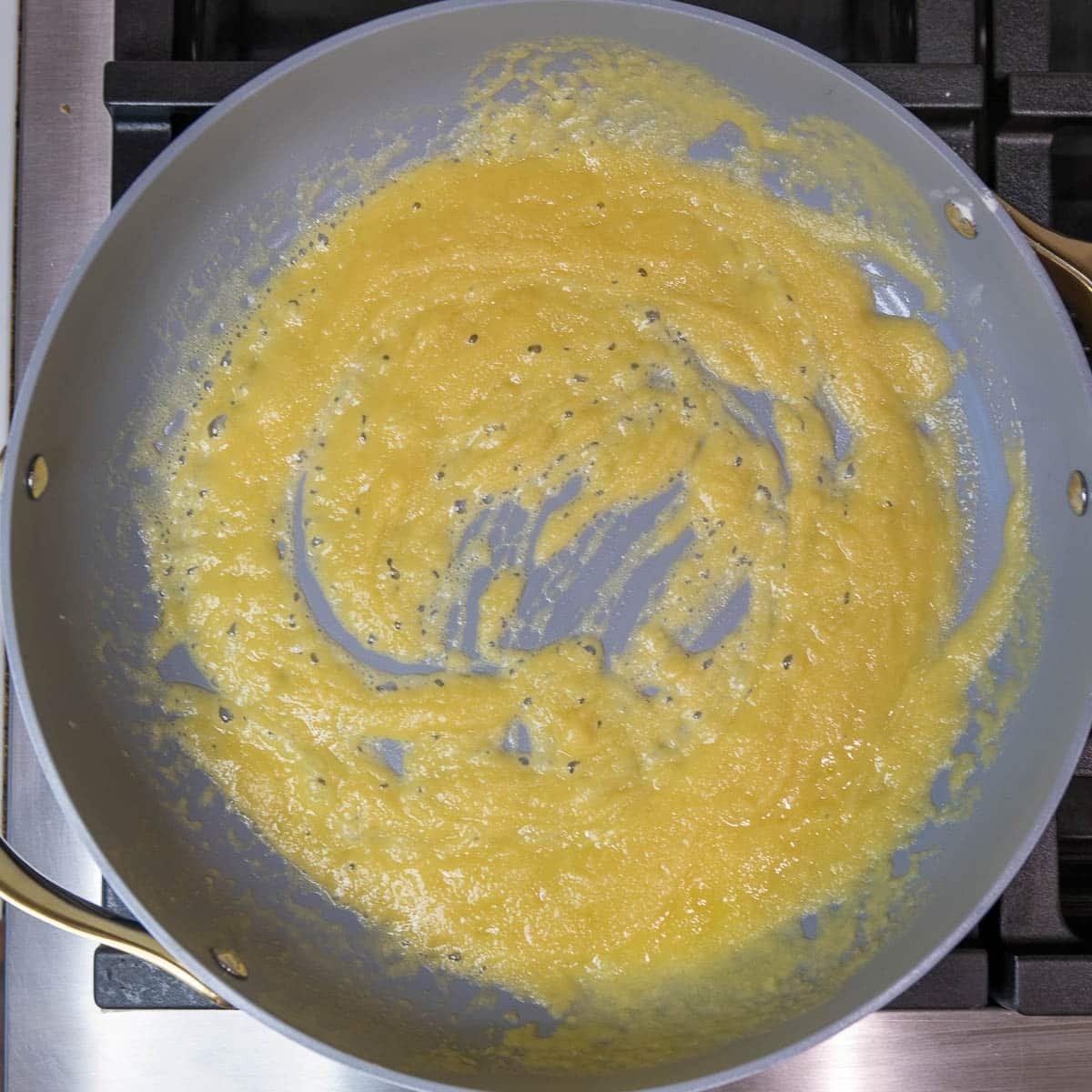
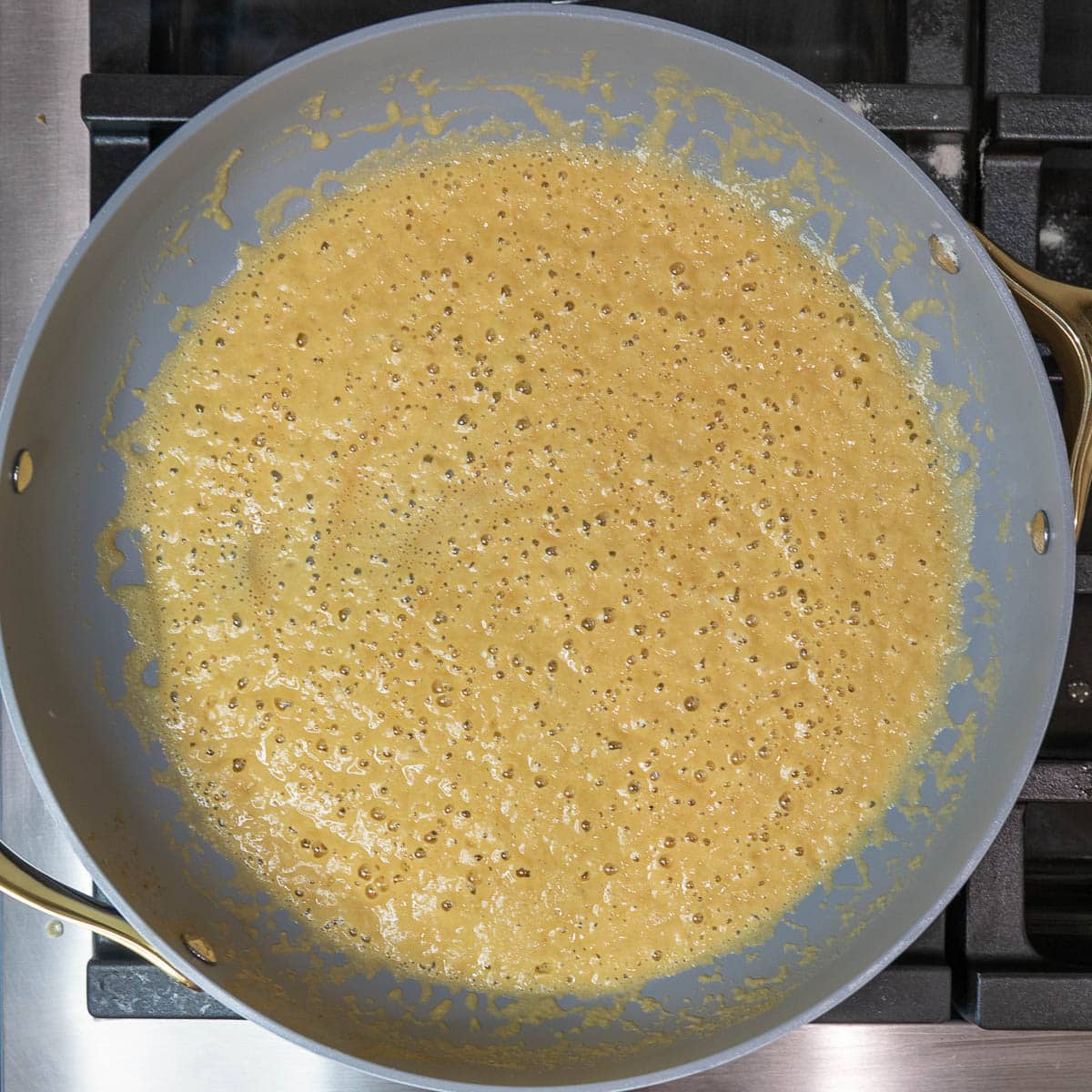
  9. Add the flour to the butter and garlic and mix to make a roux. Let it cook for 30 seconds. mixture of flour and butter cooking in a pan with mushroomsclose up of roux in a pan with mushrooms
  10. Slowly whisk in the chicken broth. Let it come to a boil. Stir until thickened and creamy. close up of mushrooms and chicken broth in a pan
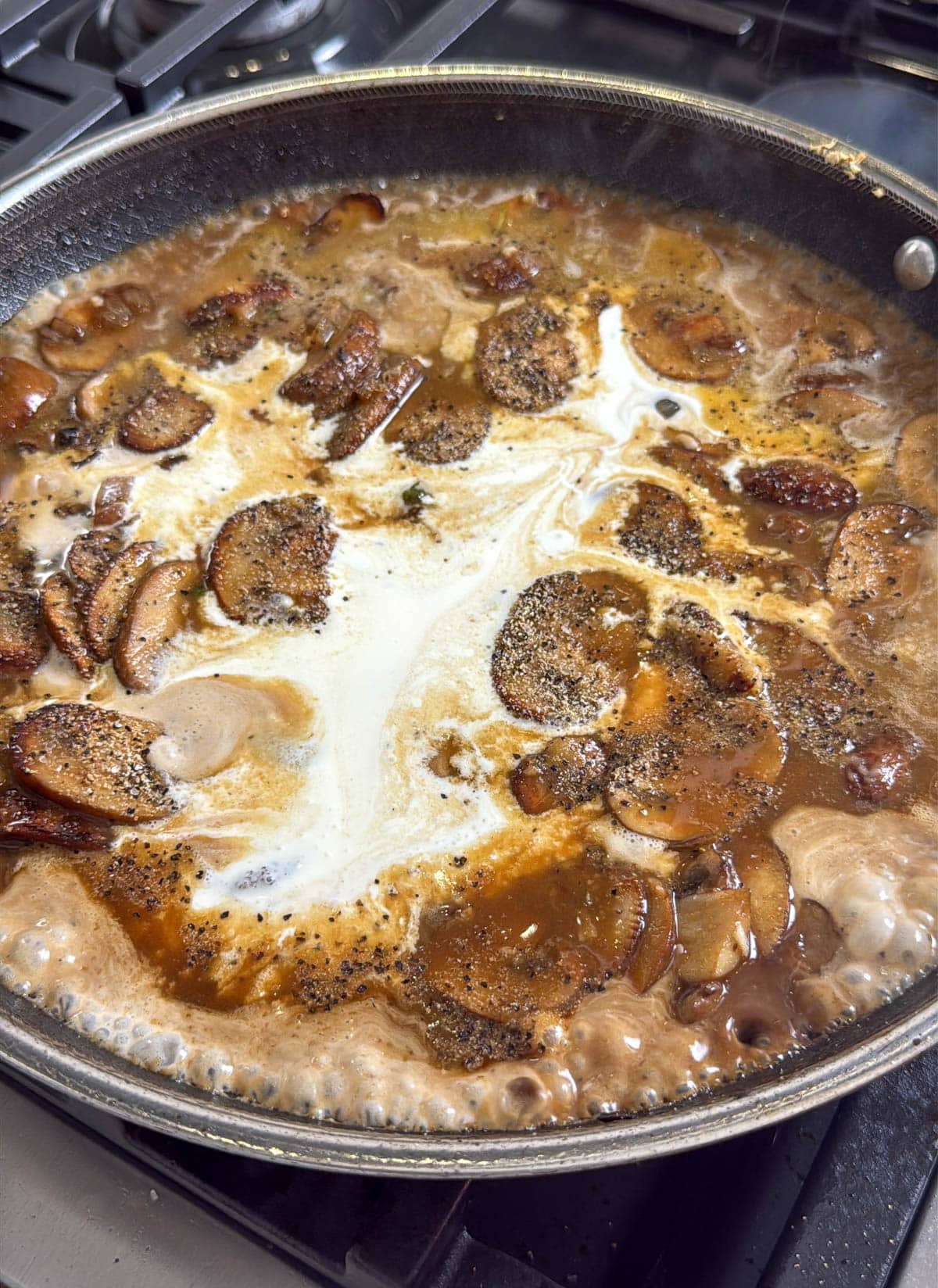
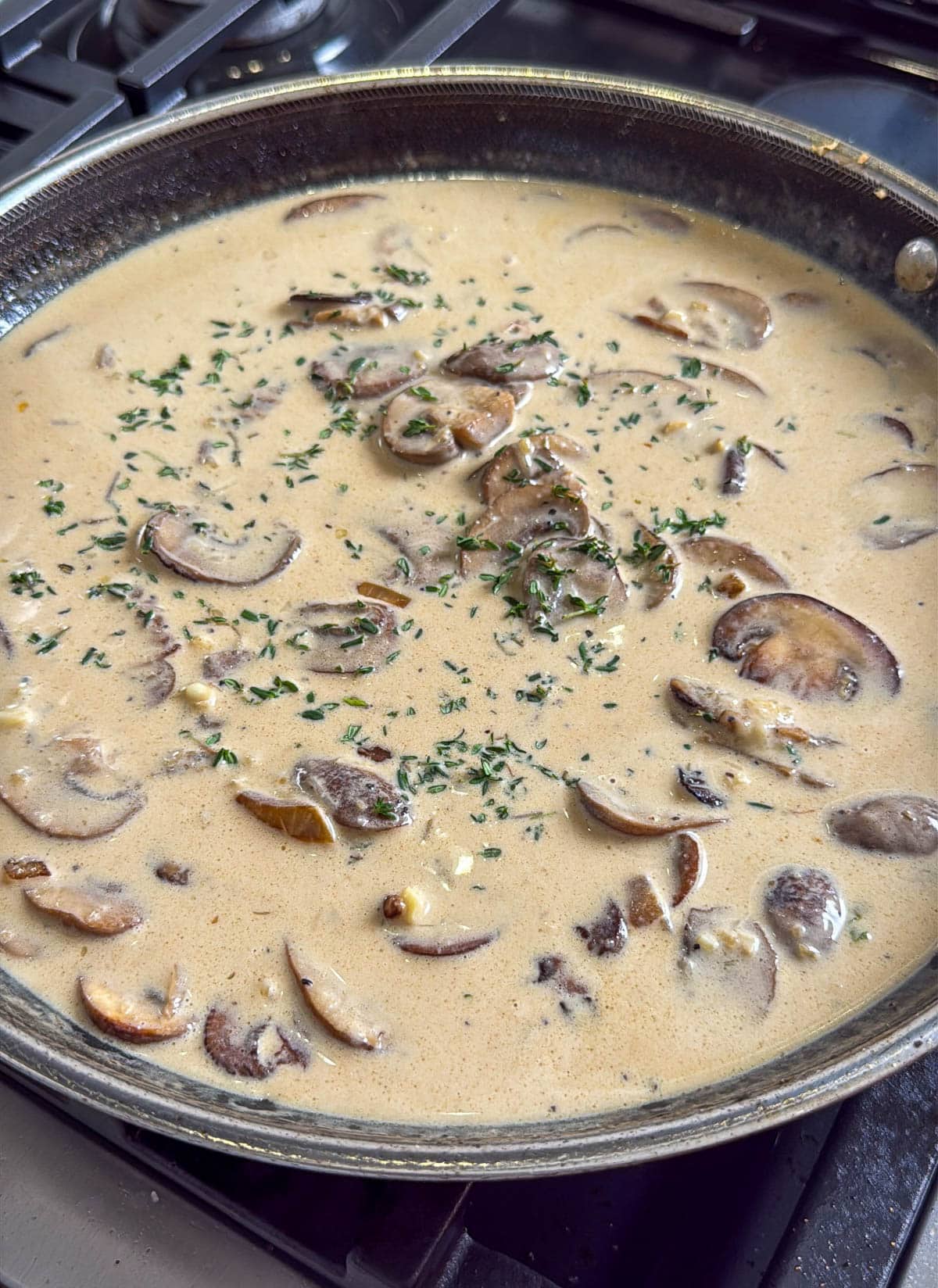
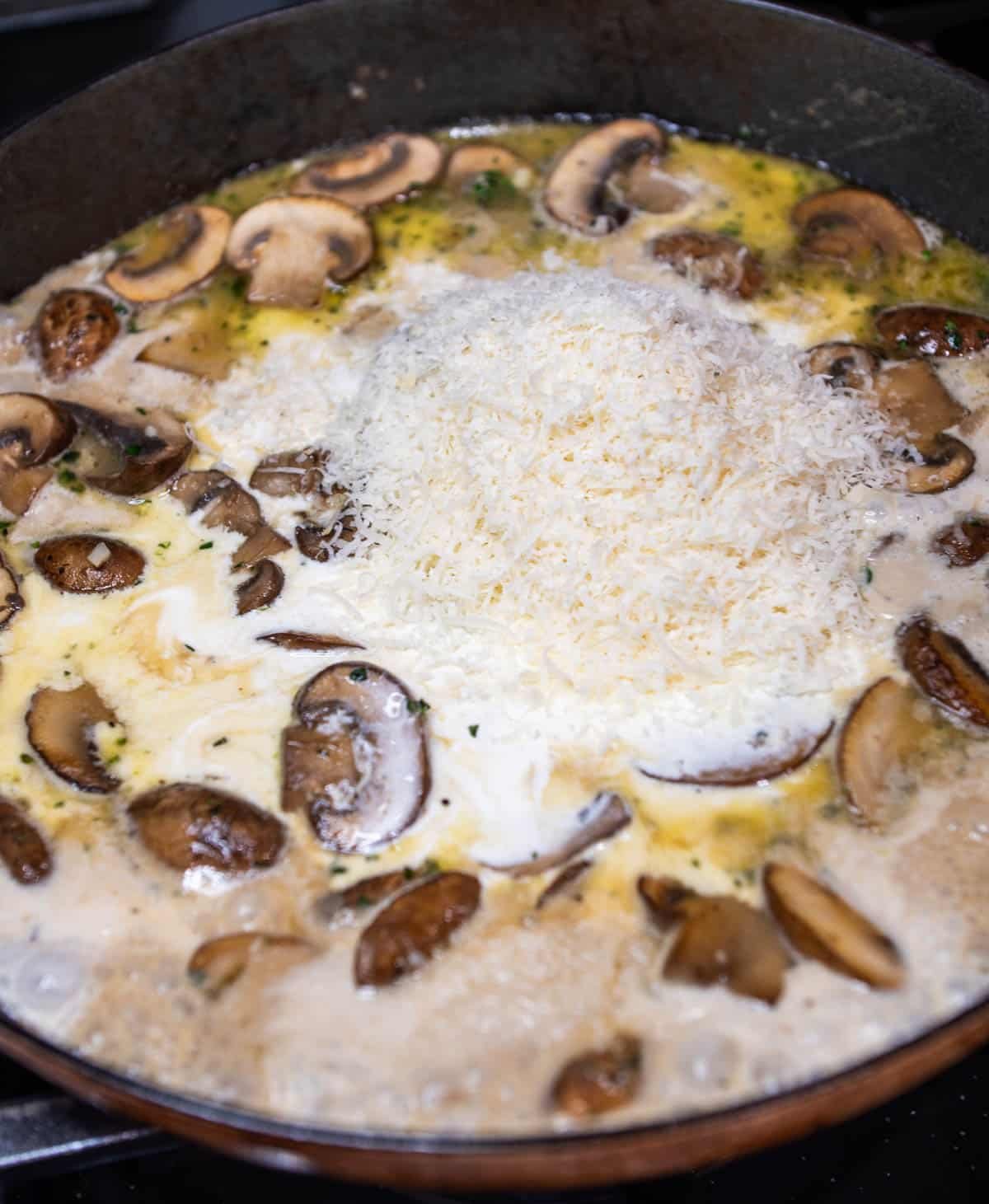
  11. Turn down the heat to low. Add in the cream and parmesan. Stir until the parmesan has melted and the sauce is thickened. Do not boil. close up of mushrooms and cream sauce cooking in a panclose up of mushrooms and cream sauce cooking in a pan
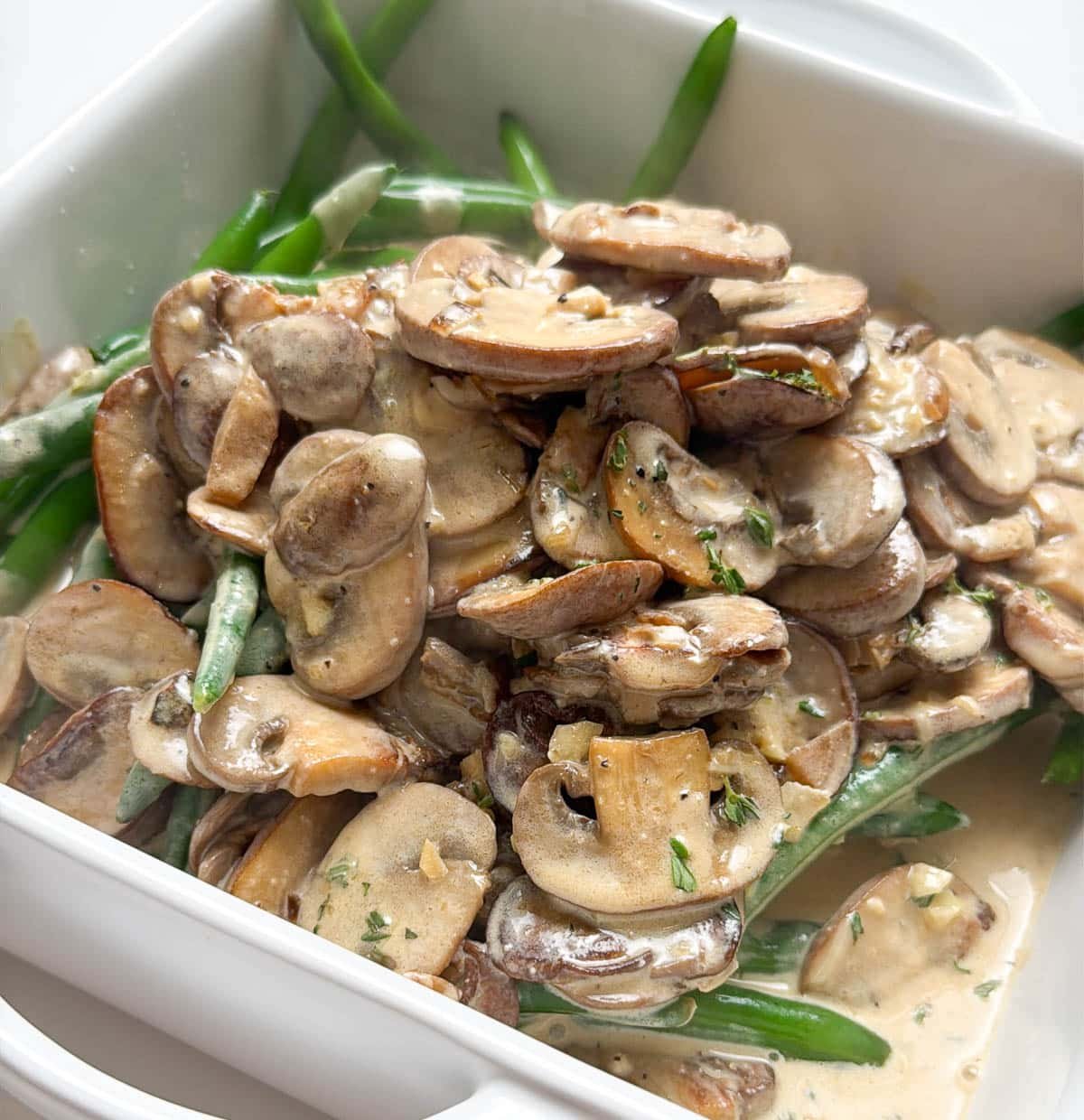
  12. Combine the green bean mixture with the homemade mushroom sauce in a baking dish or casserole dish.close up of green beans and mushroom sauce in a white casserole dish
  13. Top with homemade crispy onions, store-bought crispy onions, or panko breadcrumbs and bake uncovered for 15-20 minutes, until the topping is golden brown and bubbling.close up of finished green bean casserole in a square white casserole dish

Final Thoughts

This easy green bean casserole recipe is the perfect addition to your lineup of Thanksgiving side dishes-it pairs beautifully with turkey, sweet potato casserole, and corn casserole recipe favorites. It's one of the first dishes to disappear at my house every holiday, and for good reason.

The creamy sauce, tender green beans, and crunchy topping make every bite irresistible. You can even make this dish ahead of time and heat it up the day of. So easy!

Next time you're planning a big Thanksgiving dinner or a cozy Christmas dinner, skip the canned soup and make this homemade green bean casserole instead. It's a great recipe that transforms a regular vegetable side dish into something truly special.

Recipe

close up of green bean casserole in a square dish
Print Recipe
5 from 1 vote

Green Bean Casserole Made From Scratch

Fresh green beans stay tender-crisp, the homemade mushroom cream sauce is rich without being heavy, and the crispy onions on top add that perfect salty crunch. No canned soup, no shortcuts, just simple ingredients that taste like real food. It's surprisingly easy to throw together, reheats beautifully, and instantly upgrades any Thanksgiving or Christmas spread.
Prep Time10 minutes mins
Cook Time25 minutes mins
Total Time35 minutes mins
Course: Side Dish
Cuisine: American
Servings: 6 servings
Calories: 282kcal
Author: Liz Marek

Equipment

  • 1 9"x9" Casserole Dish

Ingredients

  • 1 pound green beans washed and trimmed
  • 4 Tablespoons butter divided in half
  • 1 Teaspoon olive oil
  • 20 small mushrooms I like crimini
  • ½ teaspoon salt
  • ½ teaspoon pepper
  • 3 whole garlic cloves
  • ¼ cup white wine
  • 1 cup chicken broth or vegetable broth
  • 1 cup heavy whipping cream
  • ½ cup parmesan finely shredded
  • 1 Tablespoon flour
  • 2 teaspoons fresh thyme

Instructions

  • Preheat the oven to 375°F
  • Slice the mushrooms, mince the garlic, and prepare the crispy onions (optional).
  • Bring a large pot of salted water to a boil. While you're waiting for the water to boil, pinch off the stems of the green beans. Great activity for the kids to help with. 
  • Blanch the green beans for 3-4 minutes. 
  • Transfer to an ice bath and set aside. The ice stops the green beans from overcooking.
  • In a large skillet, melt the butter over medium heat. Add in the sliced mushrooms. Cook them until golden brown. 
  • Add a splash of white wine to deglaze the pan and let it cook off.
  • Scoot the mushrooms to the side. And the butter and garlic, and cook just until the garlic is fragrant. 
  • Add the flour to the butter and garlic and mix to make a roux. Let it cook for 30 seconds.
  • Slowly whisk in the chicken broth. Let it come to a boil. Stir until thickened and creamy. 
  • Turn down the heat to low. Add in the cream and parmesan. Stir until the parmesan has melted and the sauce is thickened. Do not boil. 
  • Combine the green bean mixture with the homemade mushroom sauce in a baking dish or casserole dish.
  • Top with homemade crispy onions, store-bought crispy onions, or panko breadcrumbs and bake uncovered for 15-20 minutes, until the topping is golden brown and bubbling.

Notes

- Blanching in boiling water is key-too much water will dull the flavor, but not enough will leave uneven results.
– Don’t skip the ice bath; it locks in color and texture.
– Taste your sauce before combining; a pinch of black pepper and salt makes all the difference.
– Cover the casserole dish with aluminum foil for the first half of the baking time to prevent the topping from burning, then uncover to let it get crispy.
– Store leftovers in an airtight container wrapped in plastic wrap and refrigerate for up to 3 days

Nutrition

Serving: 1serving | Calories: 282kcal | Carbohydrates: 9g | Protein: 7g | Fat: 25g | Saturated Fat: 15g | Polyunsaturated Fat: 1g | Monounsaturated Fat: 7g | Trans Fat: 0.3g | Cholesterol: 71mg | Sodium: 551mg | Potassium: 334mg | Fiber: 3g | Sugar: 5g | Vitamin A: 1436IU | Vitamin C: 11mg | Calcium: 163mg | Iron: 1mg
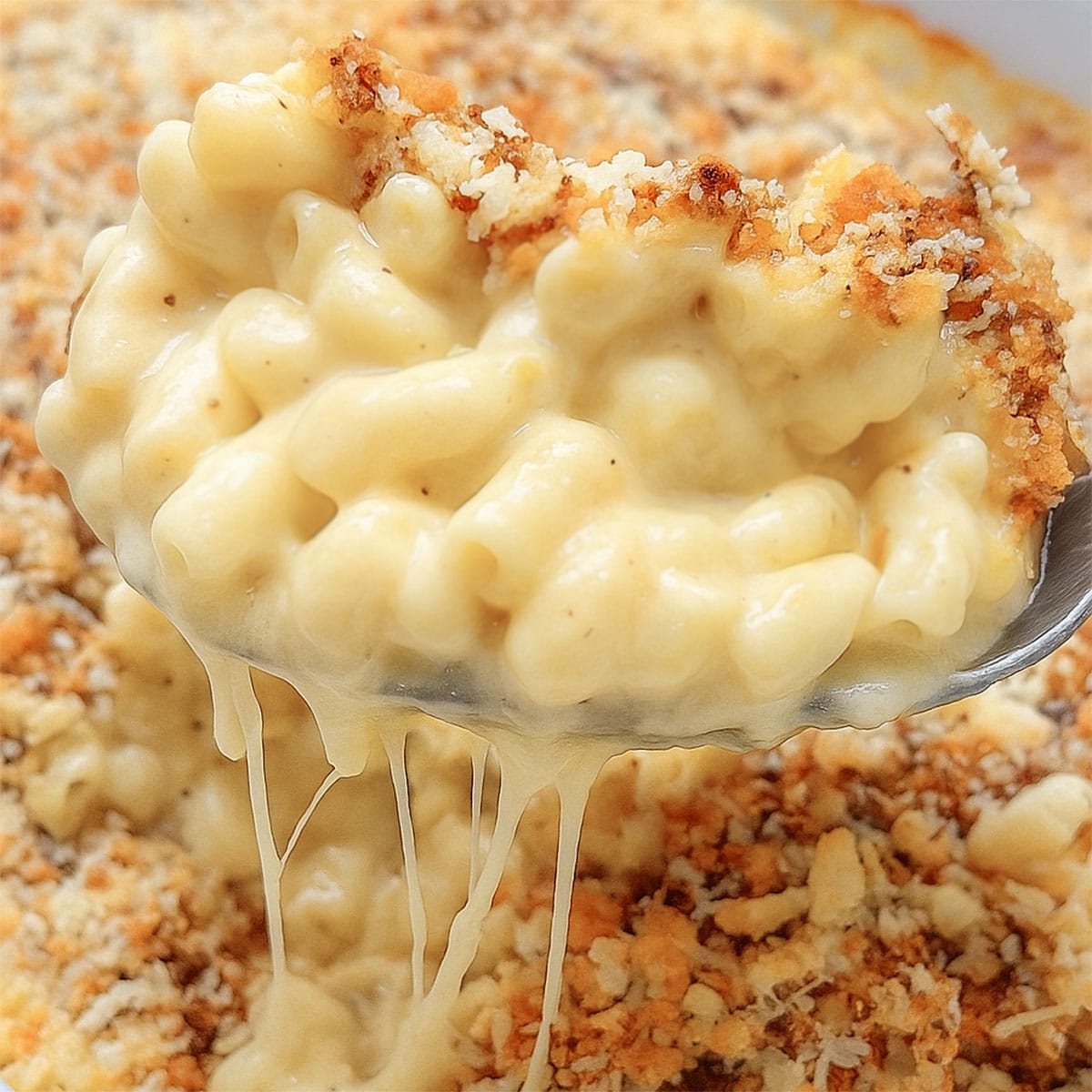
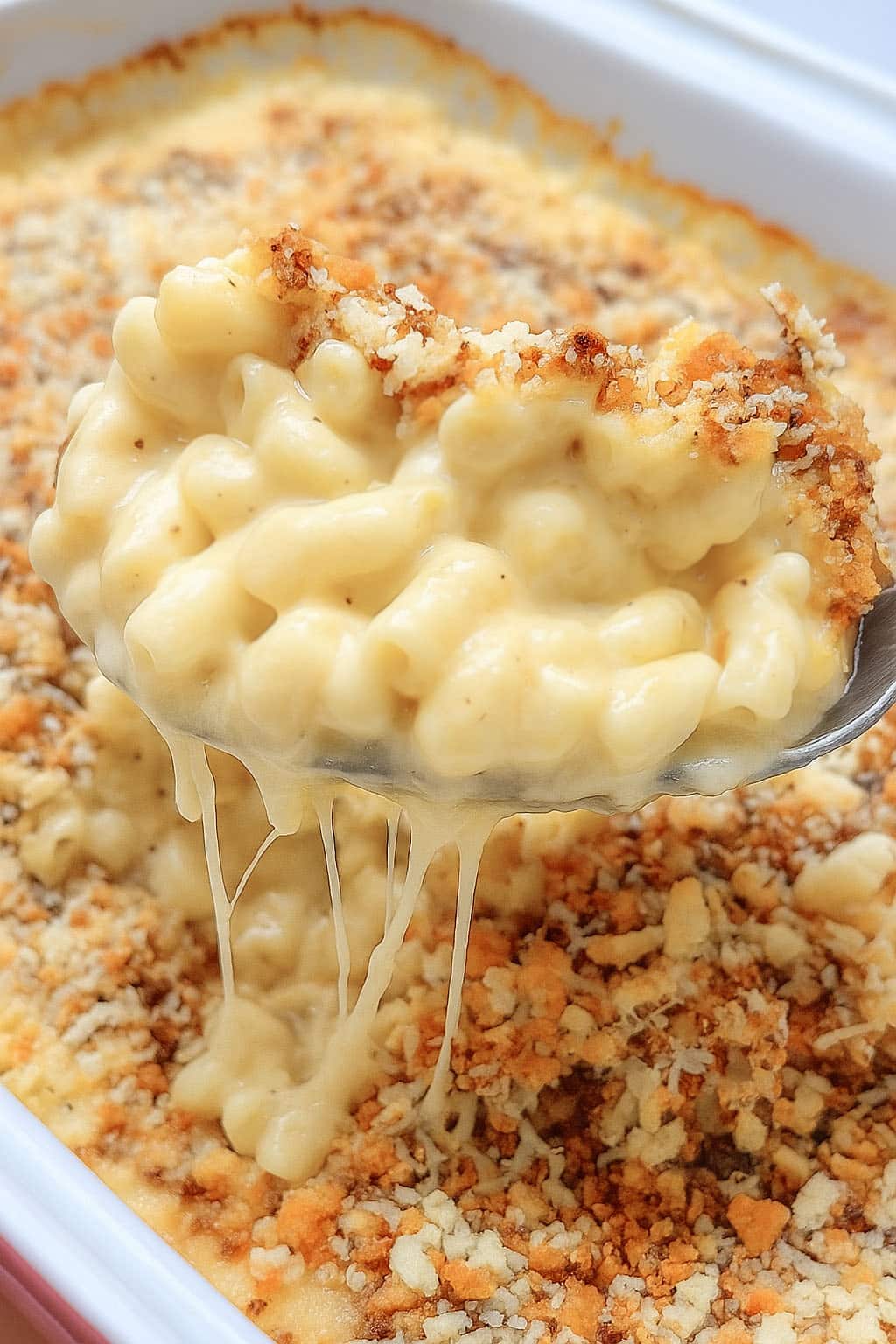
close up of creamy mac and cheese on a serving spoon

November 18, 2025 4th of July

Creamy Baked Mac And Cheese

This creamy baked mac is everything you want in a cheese recipe - rich, smooth, and covered with a perfectly crispy top. It's the kind of creamy comfort food nostalgia that shows up at every family potluck and holiday meal, and it never gets old. There's a lot of sauce, a ton of flavor, and just the right mix of different cheeses to make this the best mac you'll ever bake.

close up of creamy mac and cheese on a serving spoon

My inspiration was based on an old Cook's Illustrated mac and cheese recipe I made at least 10 years ago, and that's when I discovered American cheese is the secret weapon to super creamy mac and cheese. It's all because of the sodium citrate, which helps the cheese melt beautifully, and emulsify without turning grainy. Once I learned that, I started adding a few twists of my own - sharp cheddar cheese for tang, gruyere for a little nuttiness, and a buttery panko topping that gives it that signature crispy finish

What's In This Blog Post

  • Ingredient Breakdown
  • Step-by-Step Instructions
  • Final Thoughts
  • FAQ

Ingredient Breakdown

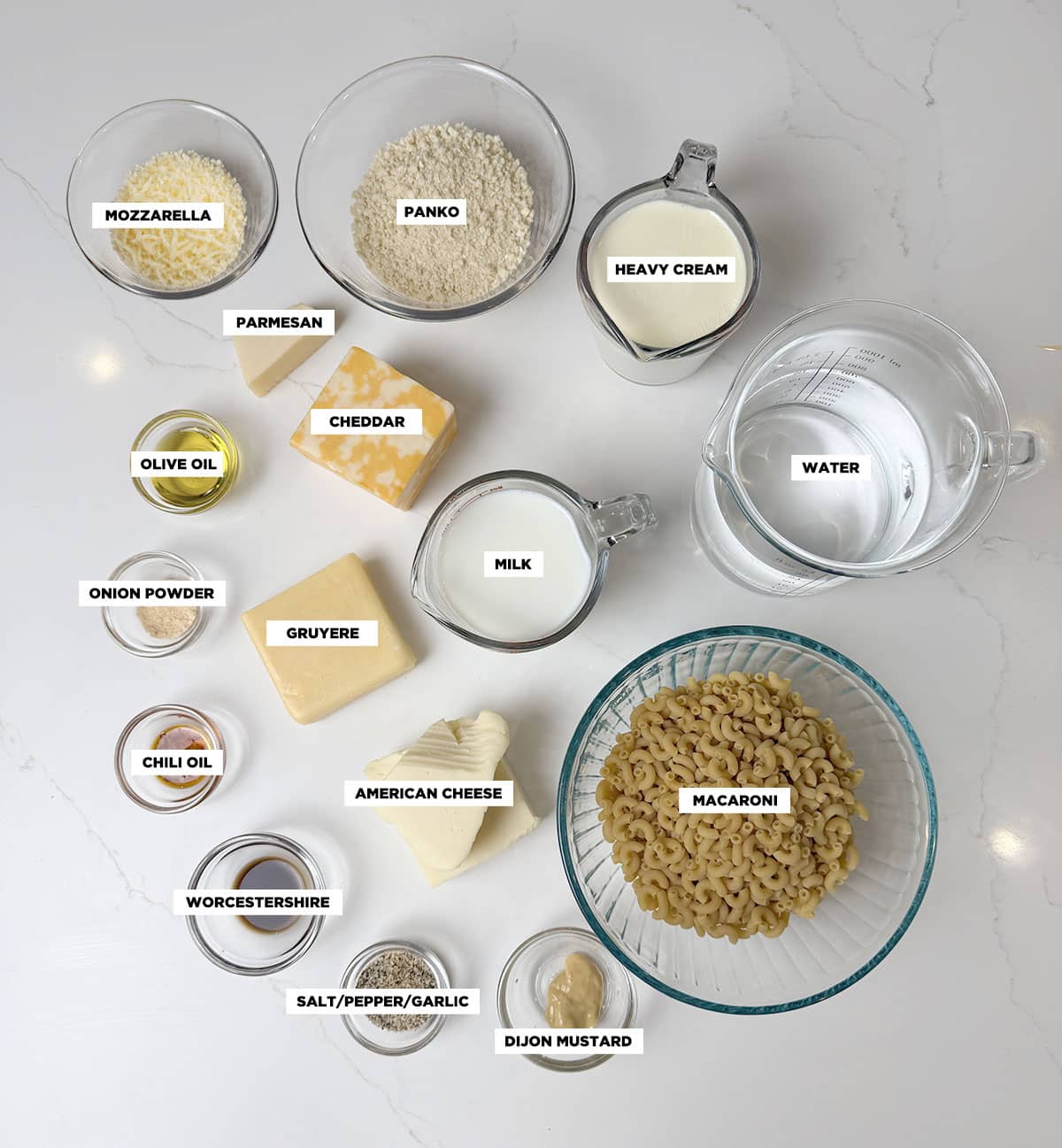
This homemade mac starts with simple ingredients that work together to make a perfectly smooth cheese sauce. You'll cook your elbow macaroni right in a mix of water, milk, and cream - the best way to create a creamy sauce without needing a separate béchamel sauce or flour mixture.

  • Use American cheese for the base (try to get it from the deli counter rather than pre-shredded cheese for the best results).
  • Add shredded extra-sharp cheddar cheese for that classic bite and flavor.
  • A bit of gruyere to make it extra flavorful, and adds creaminess. If you don't have gruyere, double up on the cheddar or even mix in white cheddar, Monterey Jack, or Colby Jack - different types of cheese give you the best texture and flavor.
  • A touch of Dijon mustard, garlic powder, and onion powder balances out the richness, while chili oil or a dash of hot sauce adds just enough heat to make it interesting.
  • The panko bread crumbs and Parmesan cheese create that crispy top that makes this dish feel like true soul food. If you don't have panko, you can also use crushed up Ritz crackers which is also very delicious!
  • Mozzarella cheese adds those extra yummy cheese pulls in every bite!

Step-by-Step Instructions

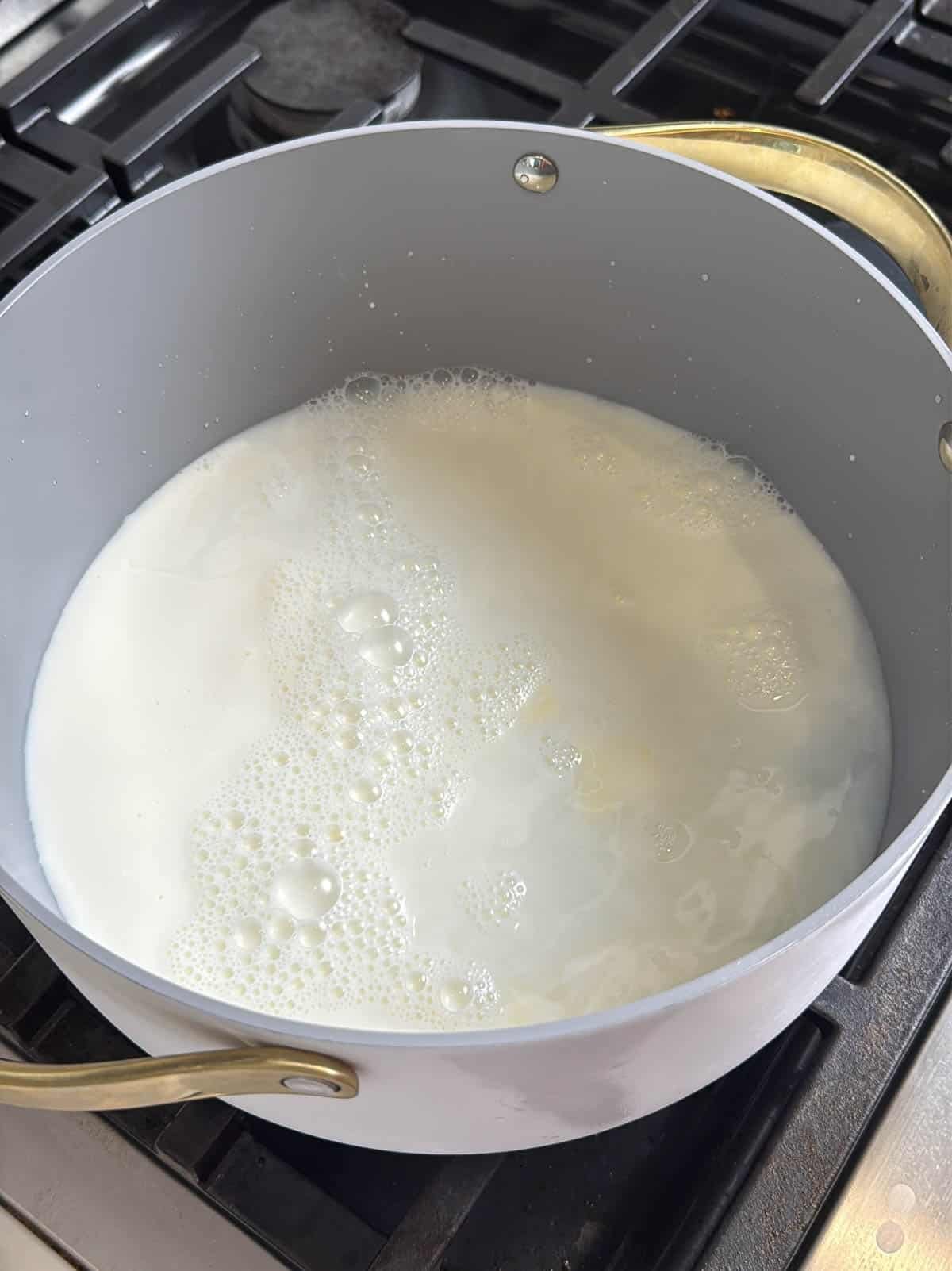
  1. Bring the water, milk and cream to a boil in a large saucepan over high heat.close up of boiling water and milk in a pot
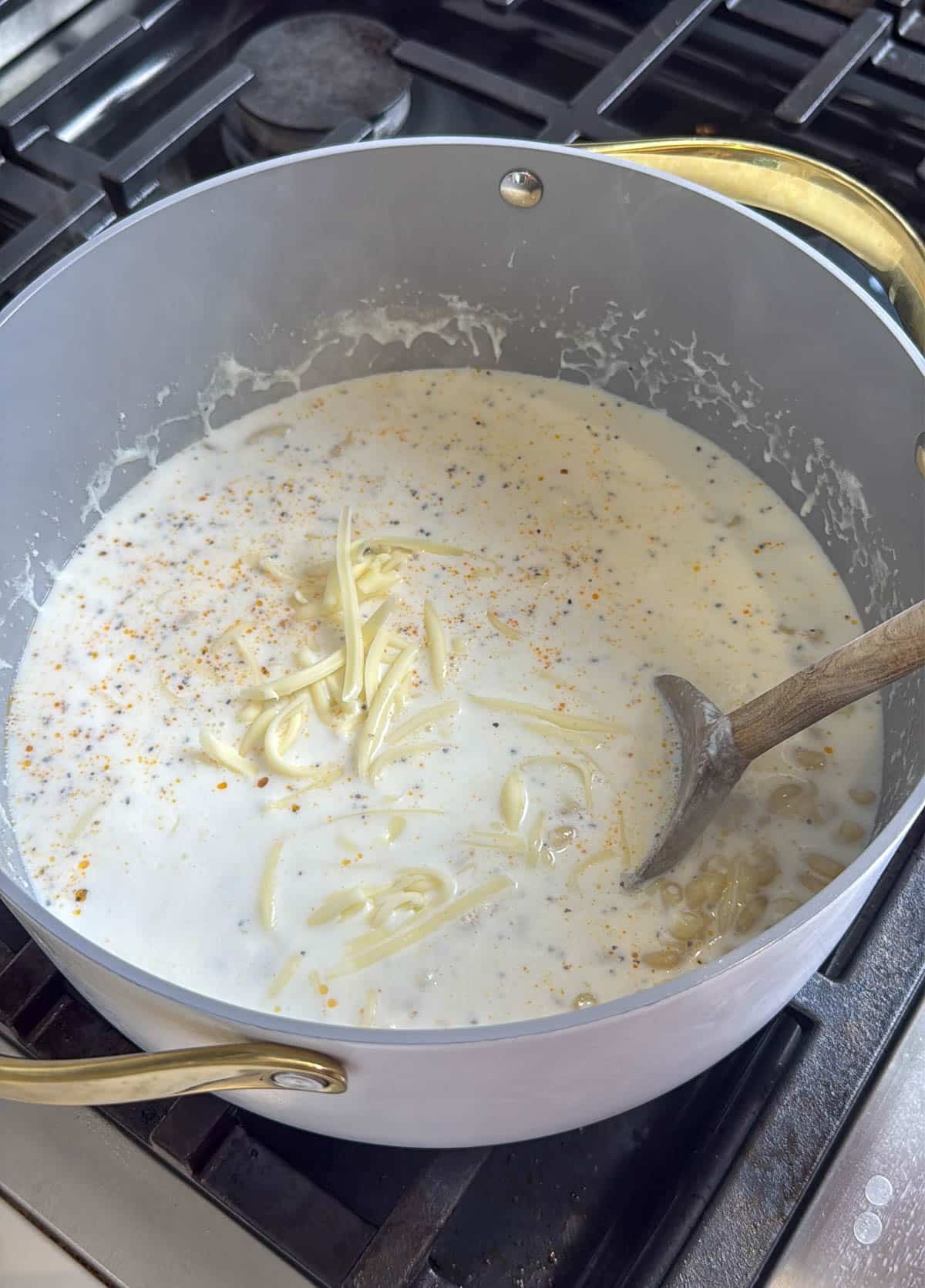
  2. Stir in the elbow macaroni and reduce to medium heat. The liquid should be barely bubbling, not boiling. Cook, stirring frequently, until slightly past al dente, about 7 to 10 minutes. pot of boiling milk and macaroni noodles
  3. Add the American cheese, dijon mustard, chili oil (optional), worchesteshire, and seasonings and stir until the cheese is completely melted and smooth..
  4. Off heat, stir in Colby jack cheese and gruyere. Cover the pan and let it stand for 5 minutes so the cheeses melt gently into a creamy sauce.
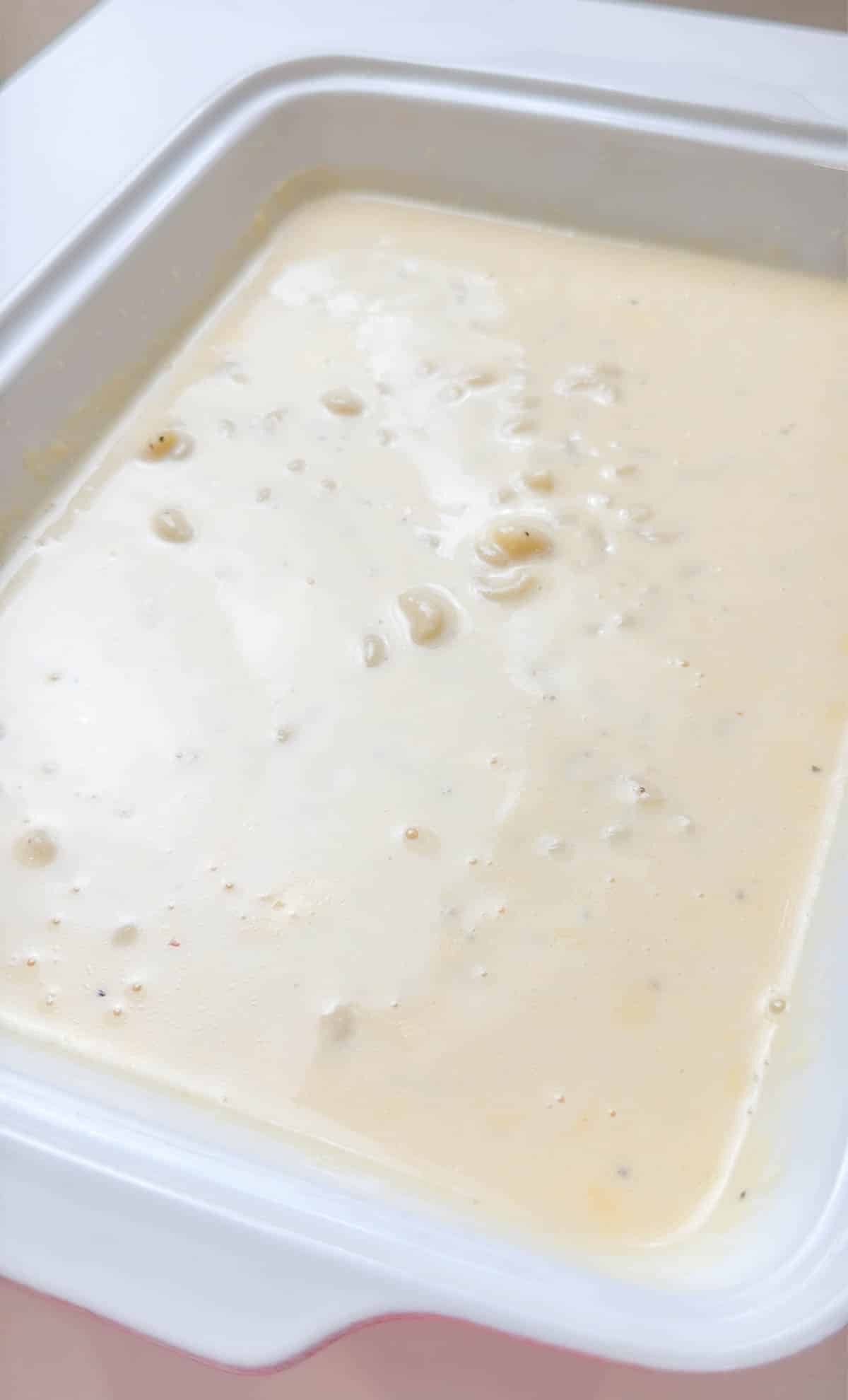
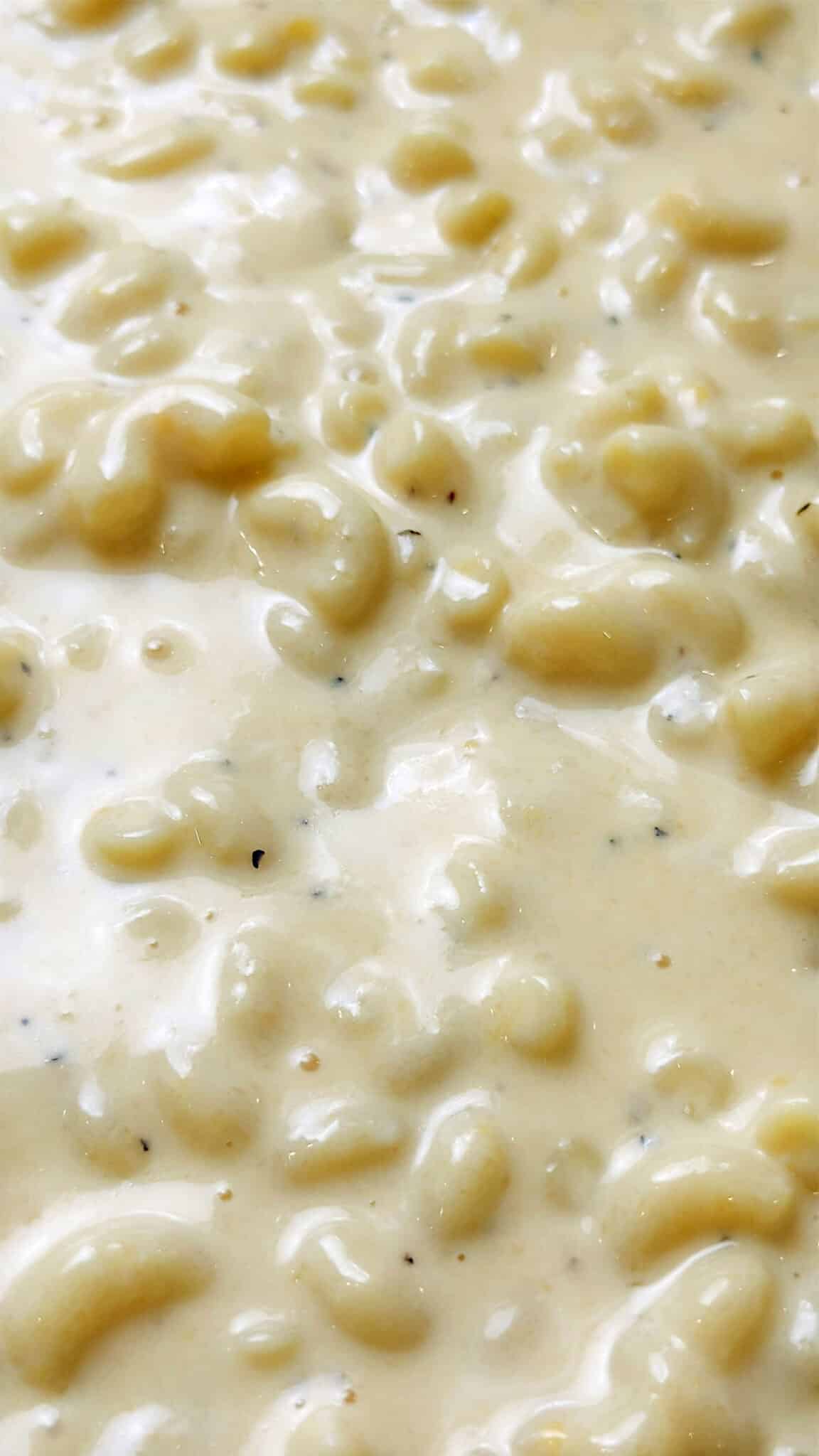
  5. Stir the macaroni until smooth and creamy, mix in the mozzarella, and transfer to a baking dish. It will be very loose and watery but don't worry, it will thicken up as it cools into the perfect thickness!macaroni and cheese sauce in a white casserole dishclose up of creamy mac and cheese
  6. Sprinkle the panko, parmesan, and mozzarella mixture evenly on top and bake in a 400°F oven for 10 minutes, or until the top is crispy and golden.close up of a scoop of creamy baked mac and cheese with drips of cheese coming off the spoon
  7. Serve hot with extra cheese on top if you're feeling bold.

Final Thoughts

This easy baked mac is one of my favorite recipes because it strikes the perfect balance between creamy and crunchy. The American cheese makes it extra smooth, while the sharp cheddar adds depth and the Parmesan breadcrumb topping brings that Southern-style mac flair. Whether it's your first time making homemade mac or you've been chasing the best baked mac for years, this one's a keeper.

FAQ

Can I use skim milk or whole milk?

Whole milk or heavy cream will give you the creamiest sauce, but skim milk works if you want it lighter.

What other cheeses can I use?

Pepper jack, mozzarella cheese, Swiss cheese, or mild cheddar are all great swaps depending on what you have at the grocery store.

Can I make this ahead?

Yes! Assemble the mac and cheese in a casserole dish, cover tightly with plastic wrap and aluminum foil, and refrigerate for up to 1 day. Bake before serving.

How do I store leftovers?

Keep them in an airtight container for up to 3 days in the fridge. Reheat gently over low heat or in the oven covered with foil.

Can I make a stovetop version?

Absolutely - skip the baking step and serve straight from the pan for a quicker, creamier version. It will thicken a it cools.

Recipe

close up of creamy mac and cheese on a serving spoon
Print Recipe
No ratings yet

Creamy Baked Mac And Cheese

Perfectly creamy baked mac and cheese with a crispy crunchy panko topping that all comes together in one pot then finish in the oven! No pre-boiling pasta, no bechemal, just perfectly creamy mac and cheese every time! Perfect for gatherings!
Prep Time20 minutes mins
Cook Time10 minutes mins
baking5 minutes mins
Total Time35 minutes mins
Course: Side Dish
Cuisine: American
Servings: 8 servings
Calories: 281kcal
Author: Liz Marek

Equipment

  • 1 9"x11" Casserole Dish

Ingredients

Mac & Cheese Filling

  • 4 cups water
  • 2 cups milk
  • 2 cup heavy whipping cream
  • 12 ounces elbow macaroni
  • 8 ounces american cheese shredded or torn into small pieces
  • 6 ounces shredded colby jack cheese or other cheddar you like
  • 6 ounces shredded gruyere cheese or more cheddar if you don't want to use gruyere
  • 8 ounces shredded mozzerella cheese
  • 2 teaspoons dijon mustard
  • 1 teaspoon worcestershire sauce
  • ½ teaspoon chili oil optional
  • 1 teaspoon salt
  • ½ teaspoon pepper
  • 1 teaspoon garlic powder
  • 1 teaspoon onion powder

For The Topping

  • ⅔ cup panko bread crumbs or crushed ritz crackers
  • ¼ cup grated parmesan cheese
  • ⅓ cup grated mozzerella cheese

Instructions

  • Bring the water, milk and cream to a boil in a large saucepan over high heat.
  • Stir in the elbow macaroni and reduce to medium heat. The liquid should be barely bubbling, not boiling. Cook, stirring frequently, until slightly past al dente, about 7 to 10 minutes.
  • Add the American cheese, Dijon mustard, chili oil (optional), Worcestershire, and seasonings and stir until the cheese is completely melted and smooth.
  • Off heat, stir in Colby jack cheese and gruyere. Cover the pan and let it stand for 5 minutes so the cheeses melt gently into a creamy sauce.
  • Stir the macaroni until smooth and creamy, mix in the mozzarella, and transfer to a baking dish. The mixture will be runny and thin, don't worry! It will thicken to the perfect creaminess.
  • Sprinkle the top of the mac and cheese with panko, shredded parmesan and mozzerella cheese.
  • Bake in a 400°F oven for 10 minutes, or until the top is crispy and golden.
  • Serve hot with extra cheese and freshly chopped parsley on top if you're feeling bold.

Video

Notes

  • Use a large saucepan or medium pot and keep the heat around medium to medium-low - that helps the creamy cheese sauce develop without separating.
  • Make sure your dairy is close to room temperature before starting; cold cream can cause a grainy cheese sauce.
  • Don't substitute other pasta shapes - elbow macaroni has the perfect size and texture for this creamy baked mac.
  • Avoid overcooking; pasta should be just past al dente so it absorbs the sauce without turning mushy.
  • You can prep it ahead: cover the baking dish with plastic wrap and aluminum foil and refrigerate. Bake before serving for a perfect easy baked mac at your Thanksgiving dinner or any family gathering.
  • For easy cleanup, use a casserole dish or baking dish that can go straight from oven to table.

Nutrition

Serving: 1serving | Calories: 281kcal | Carbohydrates: 9g | Protein: 10g | Fat: 23g | Saturated Fat: 14g | Polyunsaturated Fat: 1g | Monounsaturated Fat: 6g | Trans Fat: 0.3g | Cholesterol: 72mg | Sodium: 770mg | Potassium: 186mg | Fiber: 0.3g | Sugar: 5g | Vitamin A: 833IU | Vitamin C: 0.3mg | Calcium: 433mg | Iron: 1mg

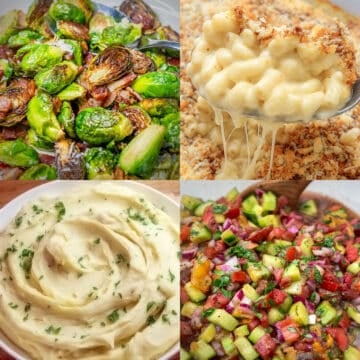
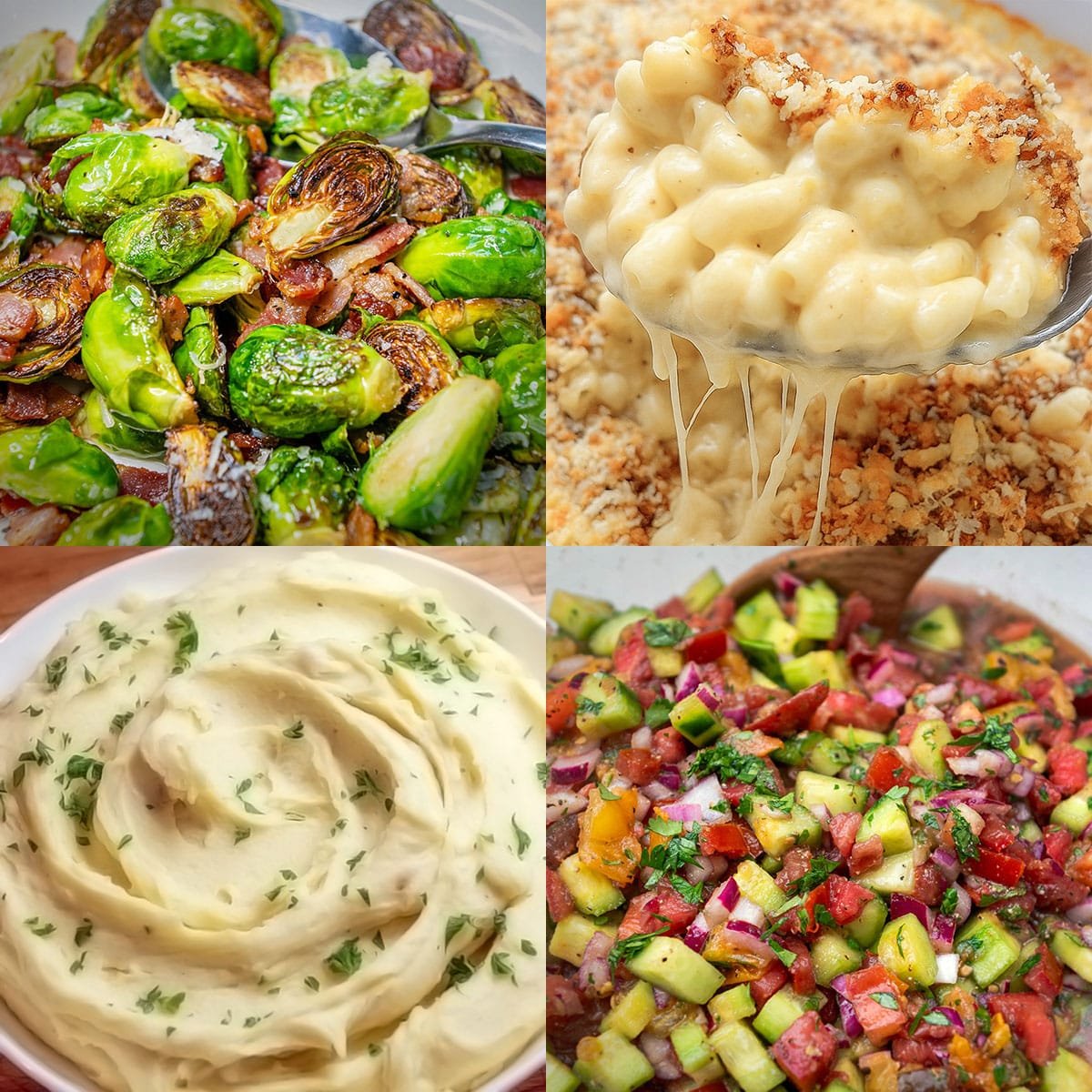
collage of four thanksgiving side dishes

November 17, 2025 Thanksgiving

24 Amazing Thanksgiving Side Dishes 2025

I put together a roundup of the best Thanksgiving side dishes that fit right into any Thanksgiving menu, whether you're building a classic holiday table or trying some new recipes for the big day. These are flavorful, comforting, and easy to make ahead, so you can actually enjoy Thanksgiving day instead of stressing in the kitchen.

When I think about Thanksgiving dinner, I always come back to the same idea: the turkey is fine (I prefer prime rib TBH), but the sides are the best part. Load me up with creamy mashed potatoes, sweet potato casserole, buttery rolls, and every colorful salad you can dream up.

What's On The Menu

  • 1. Robuchon Style Creamy Mashed Potatoes
  • 2. Sweet Potato Casserole
  • 3. Balsamic Glazed Brussels Sprouts
  • 4. Green Bean Casserole Made From Scratch
  • 5. The Best Thanksgiving Stuffing
  • 6. Roasted Butternut Squash Salad
  • 7. Homemade Cranberry Sauce
  • 8. Fast Dinner Rolls
  • 9. Herbed Wild Rice With Pine Nuts
  • 10. The Best Cheesy Baked Mac & Cheese
  • 11. Classic Creamy Sweet Potato Casserole
  • 12. Fennel Orange Salad
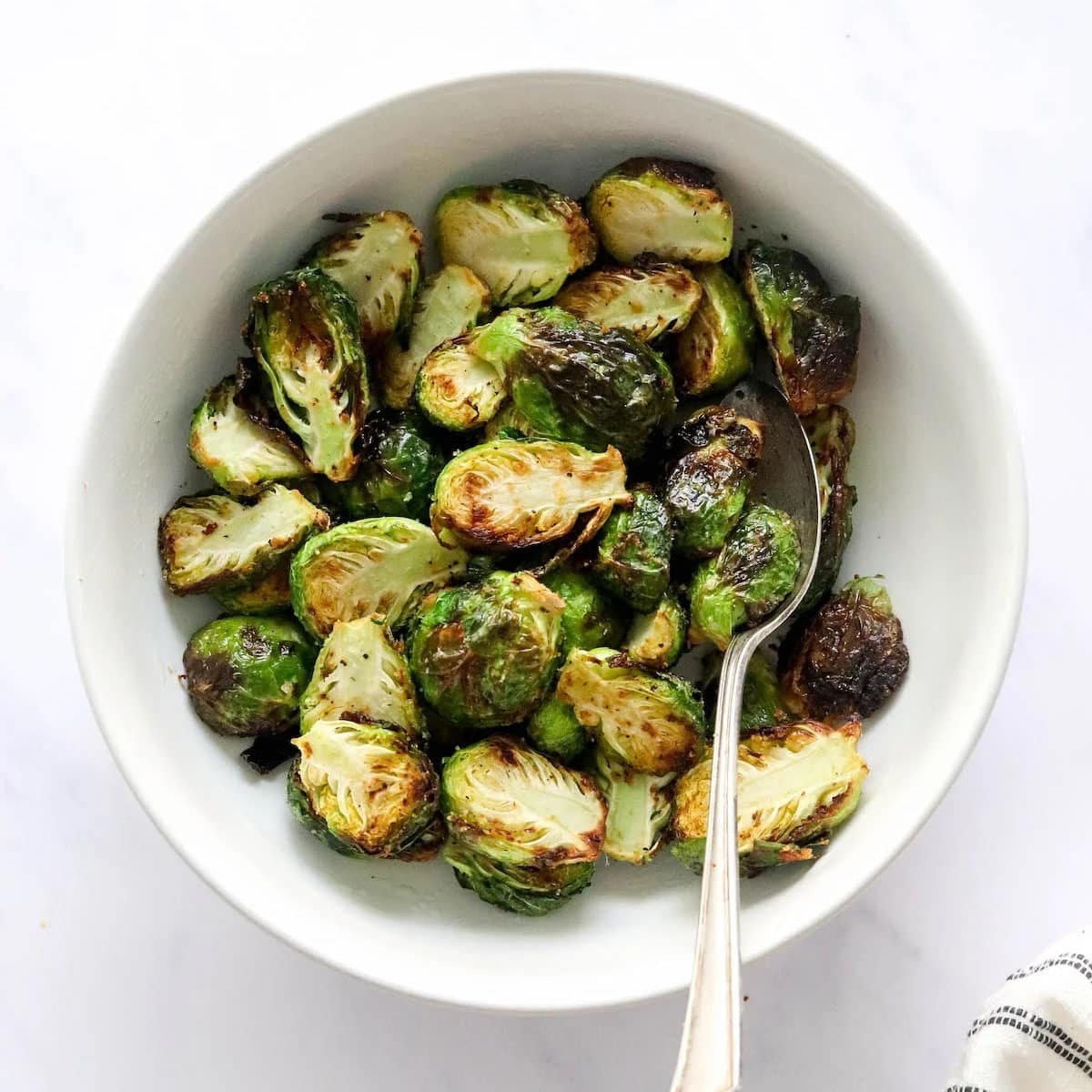
  • 13. Air Fryer Brussels Sprouts
  • 14. Moroccan Tomato Cucumber Salad
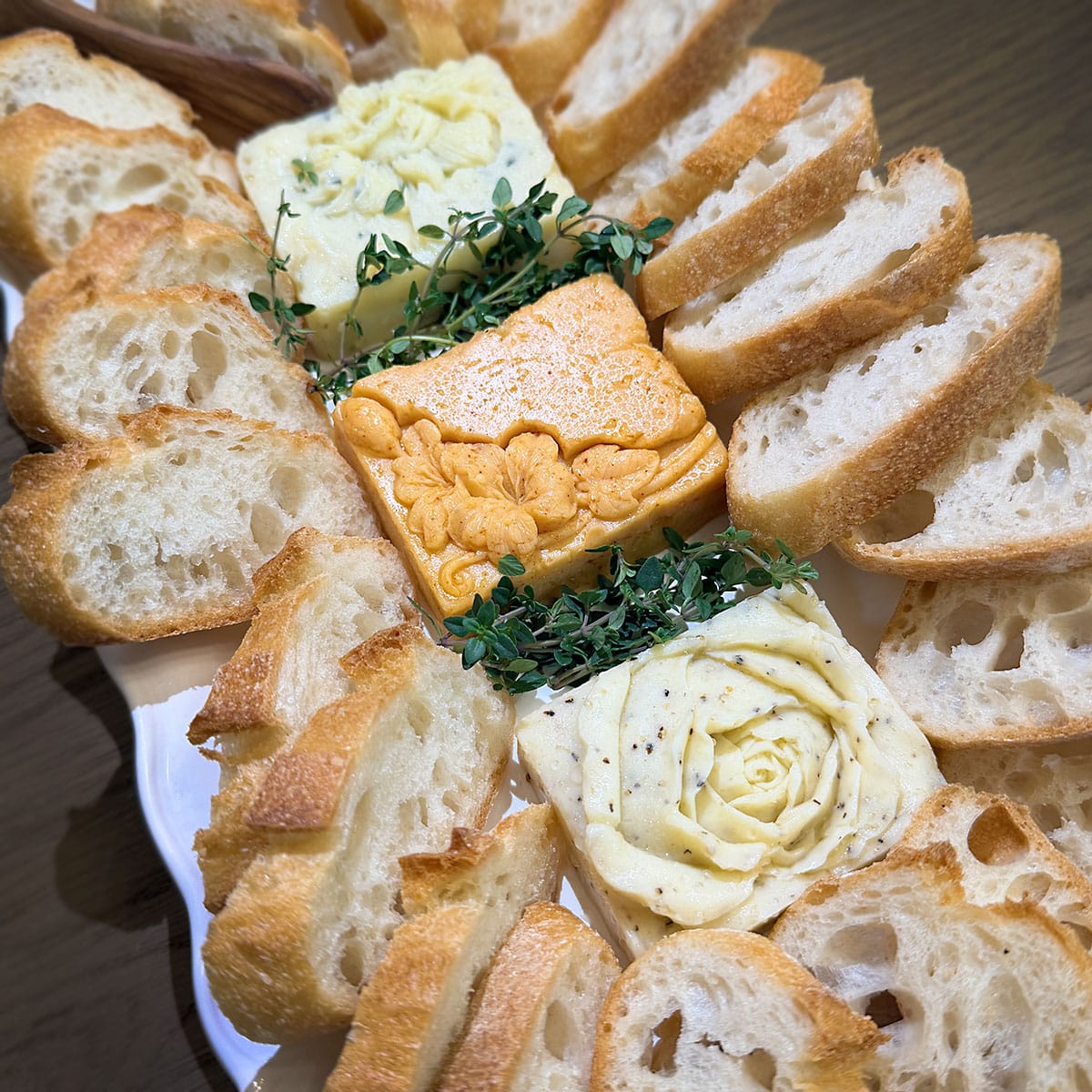
  • 15. Homemade French Butter
  • 16. Oven Roasted Broccoli
  • 17. Honey Glazed Carrots
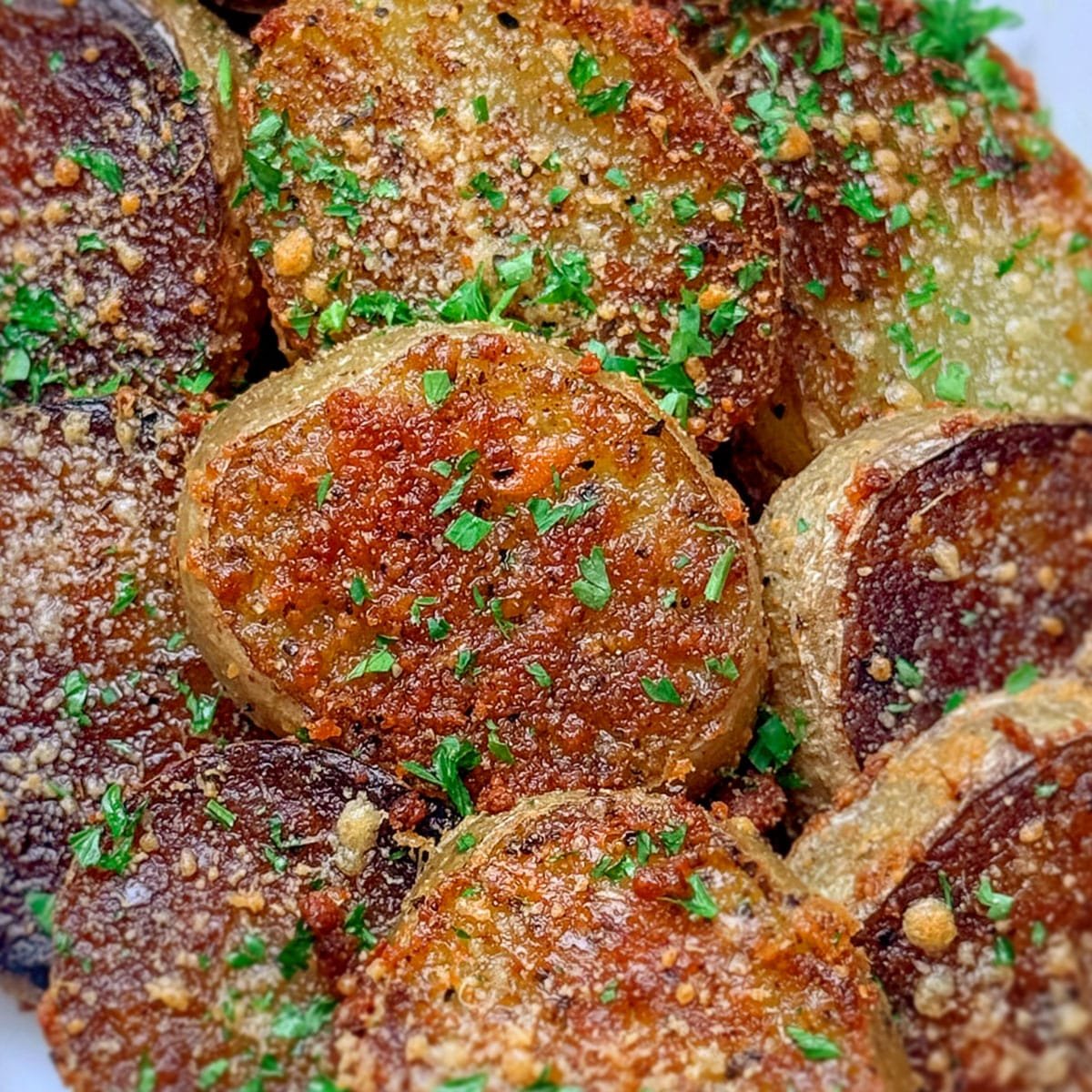
  • 18. Parmesan Roasted Potatoes
  • 19. Crispy Smashed Potatoes
  • 20. Stuffed Shells In Marinara
  • 21. Turkey Gravy (Yes That's A Side)
  • 22. Creamy Mushroom Sauce
  • 23. Bacon Brussel Sprouts
  • 24. Fresh Thanksgiving Fruit Salad

Here are my favorite Thanksgiving side dishes, all numbered so you can plan your whole Thanksgiving meal from start to finish.

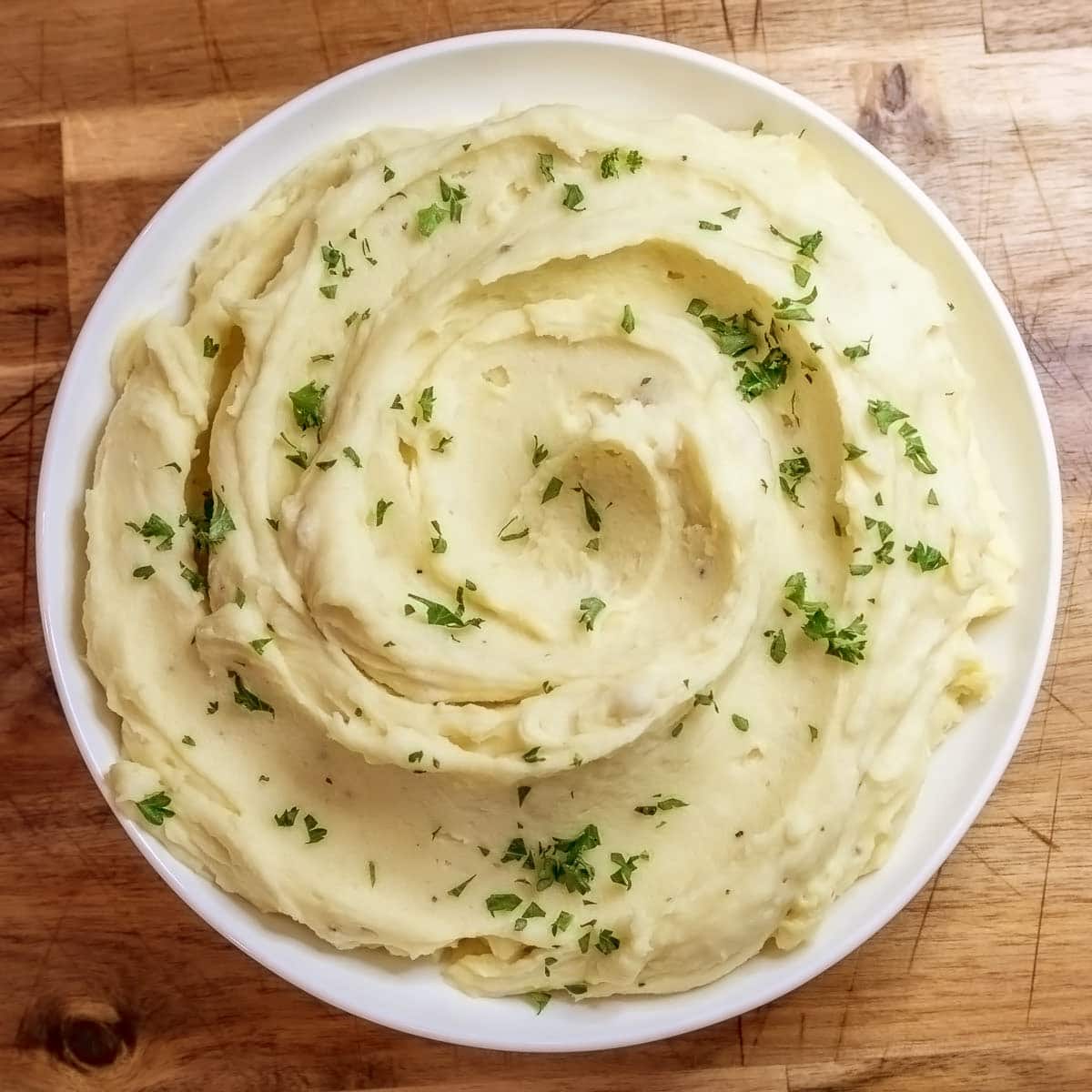
1. Robuchon Style Creamy Mashed Potatoes

Creamy Mashed Potatoes The Whole Family Can Help With

My number-one, non-negotiable side. Robuchon-style creamy mashed potatoes made with heavy cream and a TON of butter for the Thanksgiving table. This is a great way to get the men to compete to see who can whip the potatoes the longest. They stay velvety even at room temperature, which is a great addition when everything else is fighting for space in the oven. For added flavor, you can mix in some sour cream and top with some fresh lemon zest and parsley.

2. Sweet Potato Casserole

Sweet Potato Casserole with Brown Sugar & Honey Butter

close up of classic sweet potato casserole

This is comfort food at its best. Think creamy sweet potatoes with warm spices, brown sugar, and the most ridiculous honey butter melting into every bite. If you're making sweet potato casserole for the first time, this easy recipe will become a family favorite fast.

3. Balsamic Glazed Brussels Sprouts

Balsamic-Roasted Brussels Sprouts

If you've only had sad, boiled brussel sprouts from grocery stores, this will convert you. Toss fresh brussels sprouts in olive oil, balsamic, and garlic, then roast until golden. Finish with toasted pine nuts for a nutty flavor and you've got a flavorful side dish worthy of the star of the show.

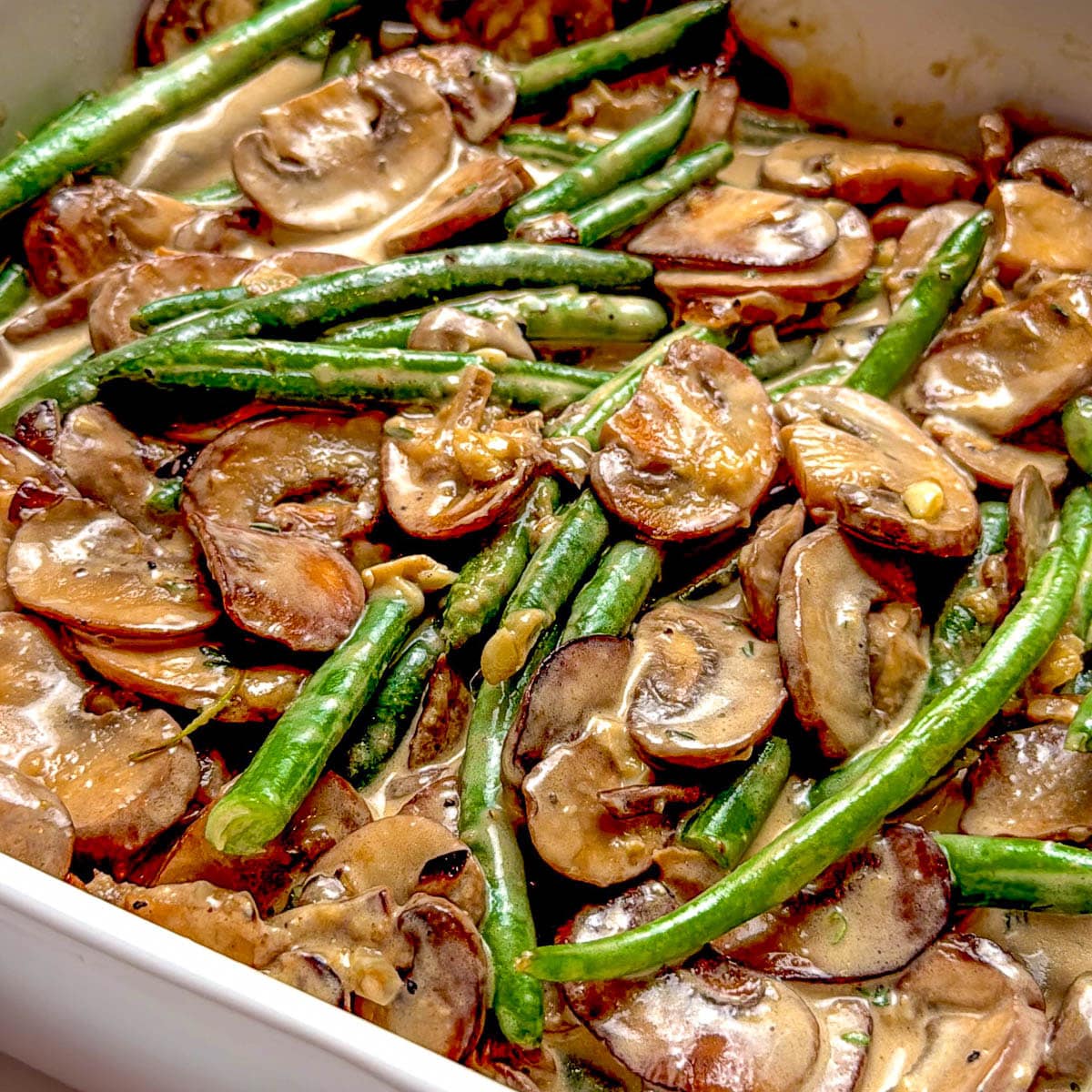
4. Green Bean Casserole Made From Scratch

Traditional Green Bean Casserole with Creamy Homemade Mushroom Sauce

Forget the canned stuff. True recipes for this classic holiday staple use creamy homemade mushroom sauce, fresh green beans, and crispy onions. It tastes like the traditional green bean casserole everyone expects, just upgraded.

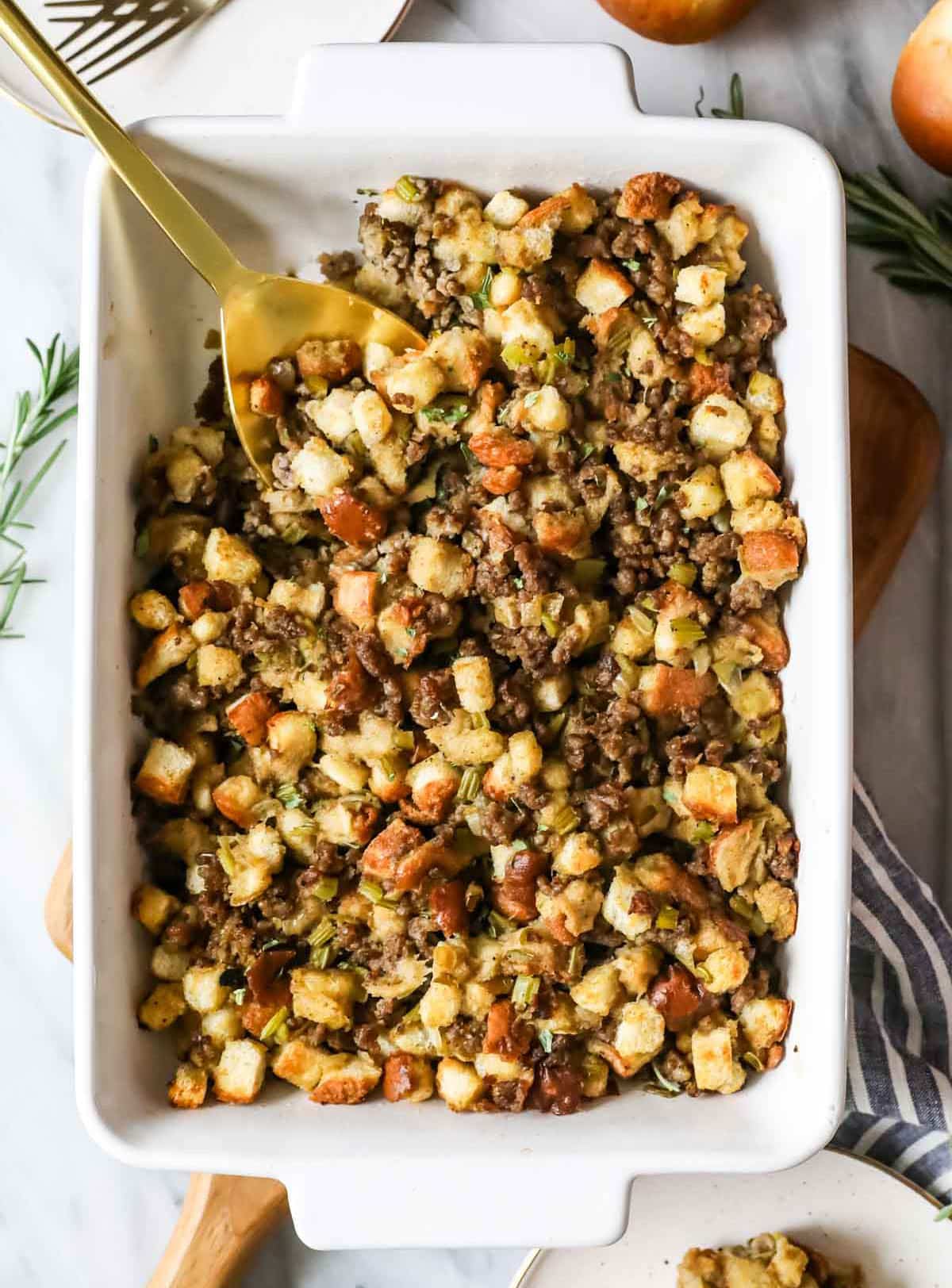
5. The Best Thanksgiving Stuffing

Savory Sausage Stuffing


Stuffing is one of my favorite side dishes because there are so many great options. Classic savory stuffings with fresh herbs and wild rice, or the more traditional oyster stuffing for people who love those old-school family traditions. Both are easy to customize, and both belong on every Thanksgiving meal.

6. Roasted Butternut Squash Salad

Harvest Butternut Squash & Apple Salad with Pomegranate & Goat Cheese

If you're looking to sneak one more vibrant dish onto your holiday table, this salad is the perfect addition. It starts with spring mix (or baby greens) as a base, then you add roasted butternut squash cubes tossed with olive oil, maple syrup, cinnamon and pepper. Then you layer in crisp apple chunks (Honey Crisp or Pink Lady work great), pomegranate arils for juicy pops of color, roasted pepitas for crunch, and creamy goat cheese for tang. The dressing is a simple maple-dijon vinaigrette made from olive oil, apple-cider vinegar, dijon mustard, maple syrup, salt and pepper.

7. Homemade Cranberry Sauce

Cranberry Sauce (Make-Ahead!)

Homemade cranberry sauce is a great addition to any holiday table, especially because it fits perfectly into a make-ahead plan. You can adjust the sweetness, add orange zest, or even stir in a splash of balsamic for brightness.

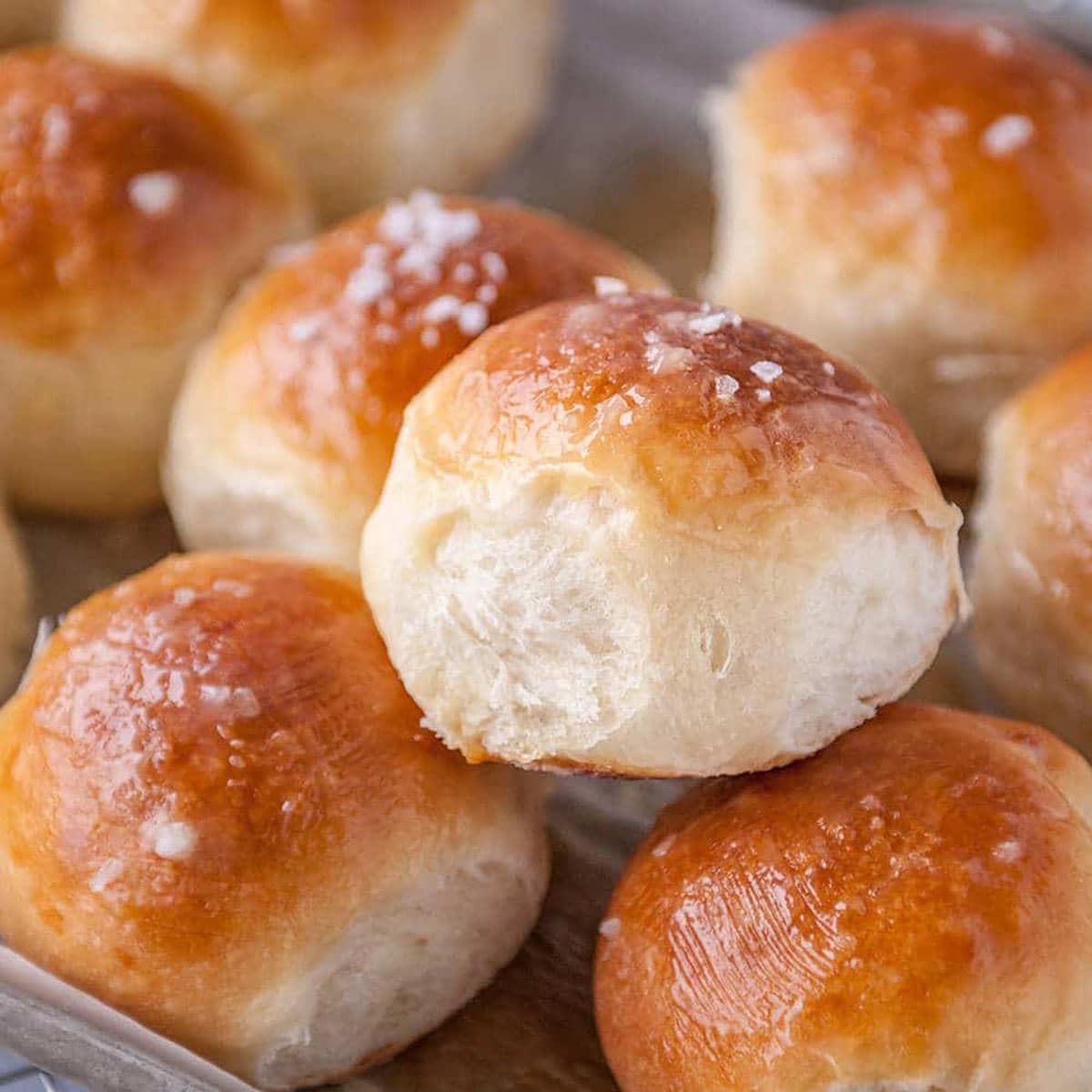
8. Fast Dinner Rolls

Buttery Homemade Dinner Rolls (or Air Fryer Rolls!)

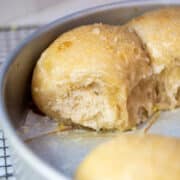
Rolls are a must. Whether you use my homemade dinner rolls recipe or bake them in the air fryer for a quick shortcut, these buttery rolls are based on my fast bread recipe and are a family favorite. Perfect for soaking up turkey gravy.

9. Herbed Wild Rice With Pine Nuts

Wild Rice Pilaf with Fresh Herbs & Toasted Nuts

If you want something outside the usual potatoes recipe rotation, wild rice is a great option. It's earthy, chewy, and pairs beautifully with pine nuts, fresh herbs, and even dried cranberries for something colorful and festive.

10. The Best Cheesy Baked Mac & Cheese

Ritz Cracker-Topped Mac & Cheese

One pot, one casserole dish, one amazing cheesy mac & cheese dish with the perfect crispy ritz-cracker topping. My friends BEG me to make this side dish every year. The secret is in the mix of cheeses that result in those perfect cheese pulls every time!

11. Classic Creamy Sweet Potato Casserole

Creamy Casseroles with Cream Cheese (Potatoes, Squash, You Name It)

There's always room for one more creamy casserole at Thanksgiving dinner. Anything baked with cream cheese, heavy cream, or sour cream tends to disappear fast. Great way to bulk up your Thanksgiving menu when you need one more dish. This recipe easily adapts to other root vegetables, too!

12. Fennel Orange Salad

Fennel-Orange Salad with Avocado & Kalamata Olives

Here's a fresh, vibrant side to add to your holiday table: this fennel-orange salad with avocado and Kalamata olives is a wonderful alternative to the more traditional Thanksgiving sides. The crisp, thinly sliced fennel provides crunch, the sweet citrus segments bring brightness, the creamy avocado adds richness, and the olives give that salty punch. The dressing-olive oil, fresh orange juice, white balsamic vinegar, and champagne vinegar with orange zest-pulls it all together.

13. Air Fryer Brussels Sprouts

Air Fryer Brussel Sprouts or Carrots for Last-Minute Cooking

For the moments when every inch of the oven is taken, the air fryer saves the holiday. Air fryer brussel sprouts, air fryer carrots, even air fryer green beans-quick, crispy, and the perfect emergency side when you need one more flavorful side dish.

14. Moroccan Tomato Cucumber Salad

Colorful Fresh Salads to Break Up the Richness

close up of moroccan tomato salad

A bright, crunchy salad is always a great addition to the Thanksgiving table. This Moroccan salad is SUCH a hit and so easy to make ahead. It tastes even better on the second day!

15. Homemade French Butter

Homemade French Butter with Warm Sourdough Baguette

This feels fancy, but it's actually one of the simplest Thanksgiving side dishes you can make. Homemade French-style butter served at room temperature with slices of warm sourdough baguette is a great addition to any Thanksgiving table. It's also a really fun activity to do with guests! I like to put mine into cute soap molds (brand new of course) freeze and then serve for extra fancyness.

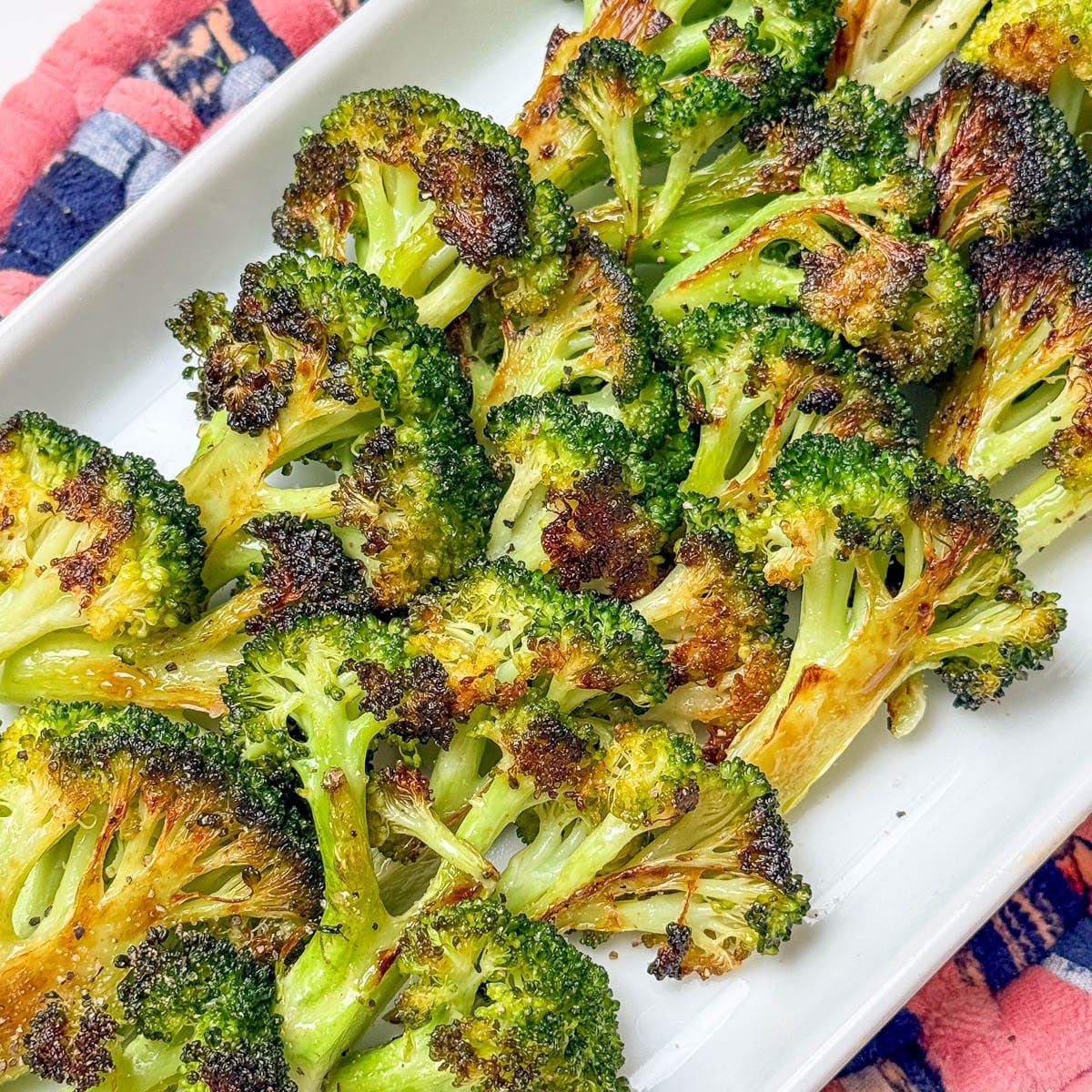
16. Oven Roasted Broccoli

Oven-Roasted Broccoli with Parmesan

If you want a green vegetable that isn't trying to be a creamy casserole, oven roasted broccoli is always a great side. Toss fresh broccoli florets in olive oil, salt, pepper, and garlic powder. Roast until vibrant green with crispy edges, and finish with lemon zest or parmesan cheese. A flavorful side dish that balances the holiday table.

These are the best Thanksgiving sides to mix and match whether you're hosting the whole thing or just bringing a dish. If you want, I can help you build an actual Thanksgiving day cooking schedule, a make-ahead plan, or even rewrite any of these into full recipes in your usual format.

17. Honey Glazed Carrots

Whole Honey-Glazed Carrots

close up of honey glazed carrots on a white plate

These glossy, honey-glazed carrots are a family favorite because they go with everything on the Thanksgiving menu. Olive oil, honey, brown sugar, and a sprinkle of black pepper help the carrots caramelize without turning mushy. They're the perfect addition for picky eaters and look gorgeous next to turkey gravy.

18. Parmesan Roasted Potatoes

Crisp Parmesan Roasted Potatoes Smothered In Butter

This potato recipe is pure golden brown perfection. Thick-cut or baby potatoes tossed with olive oil, parmesan cheese, herbs, and roasted until crisp. It's a great way to add something savory that isn't mashed or scalloped. And if you're searching for the best Thanksgiving sides, Parmesan roasted potatoes are always high on the list.

19. Crispy Smashed Potatoes

The Crispiest, Butteriest, Smashed Potatoes

close up of crispy smashed potatoes on a sheet pan

Crispy smashed potatoes are the fun way to serve potatoes at Thanksgiving dinner. Boil until tender, smash them flat, drizzle with olive oil, and roast until the edges get ridiculously crunchy. Add fresh herbs and flaky salt on top right before serving. They might become the star of the show. Another easy make-ahead dish. Boil potatoes ahead of time and smash them and then bake them right before serving as the turkey rests.

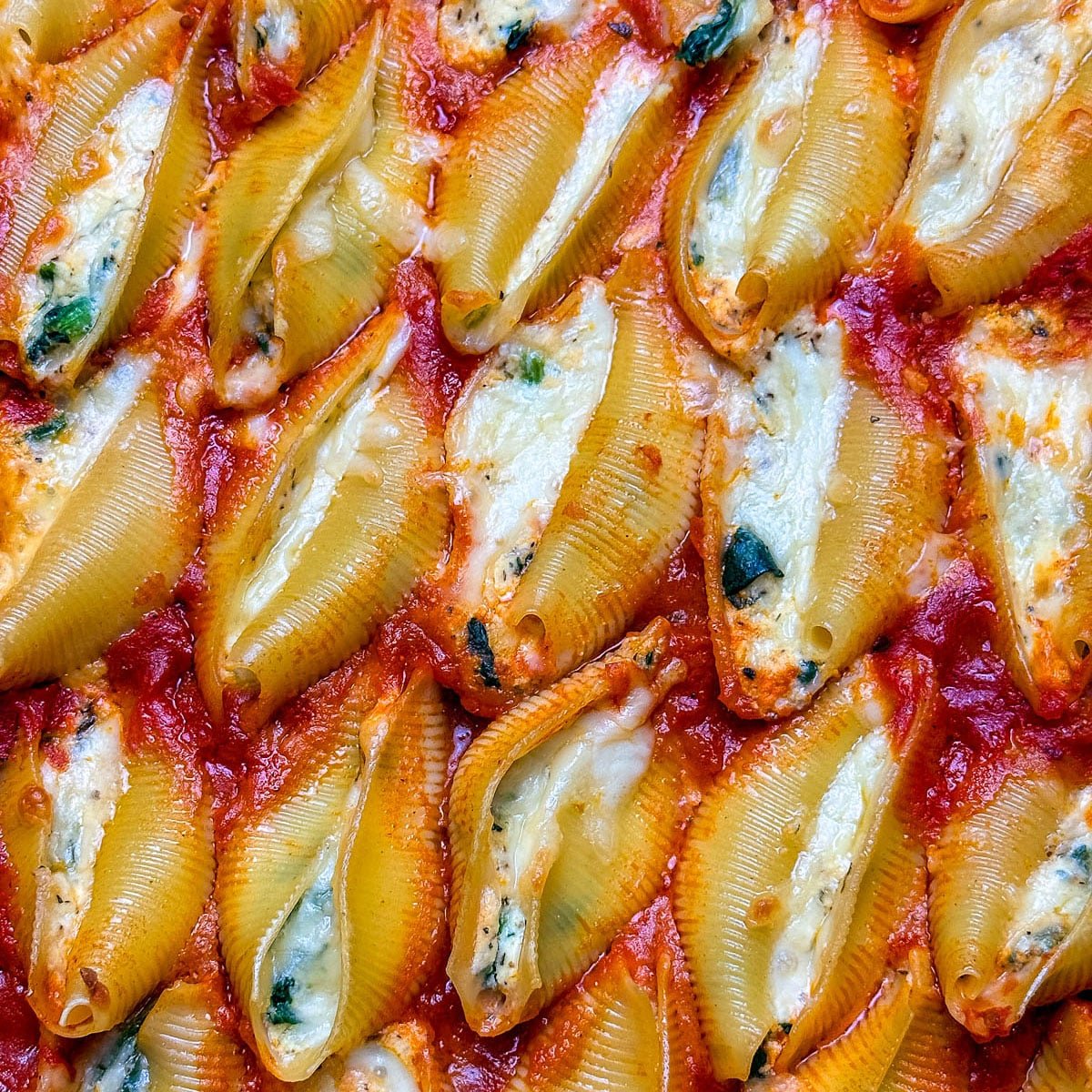
20. Stuffed Shells In Marinara

Stuffed Shells with Spinach & Ricotta

close up of stuffed shells in marinara sauce

Stuffed shells might not be a traditional Thanksgiving staple, but they're one of those great options that round out a holiday menu when you need a hearty dish. Creamy ricotta, fresh green herbs, mozzarella, and marinara tucked into pasta shells make this a comforting, colorful side. Plus, it's an easy recipe to make ahead.

21. Turkey Gravy (Yes That's A Side)

Turkey Gravy (Make-Ahead Friendly!)
You can't have a Thanksgiving meal without a silky, deeply flavored turkey gravy. Whether you're using pan drippings, stock, or a mix of both, this gravy ties everything together from mashed potatoes to savory stuffings. Warm it gently on Thanksgiving day, and it stays perfect even at room temperature.

22. Creamy Mushroom Sauce

Mushroom Cream Sauce for Vegetables or Pasta

finished mushroom sauce

This creamy homemade mushroom sauce is a great addition to anything on the Thanksgiving table: broccoli, turkey, roasted squash, prime rib, even leftover rolls. Made with heavy cream, parmesan, and sautéed mushrooms, it adds instant comfort food vibes to your holiday season. It also works as a quick topping for air fryer green beans or as a drizzle over wild rice.

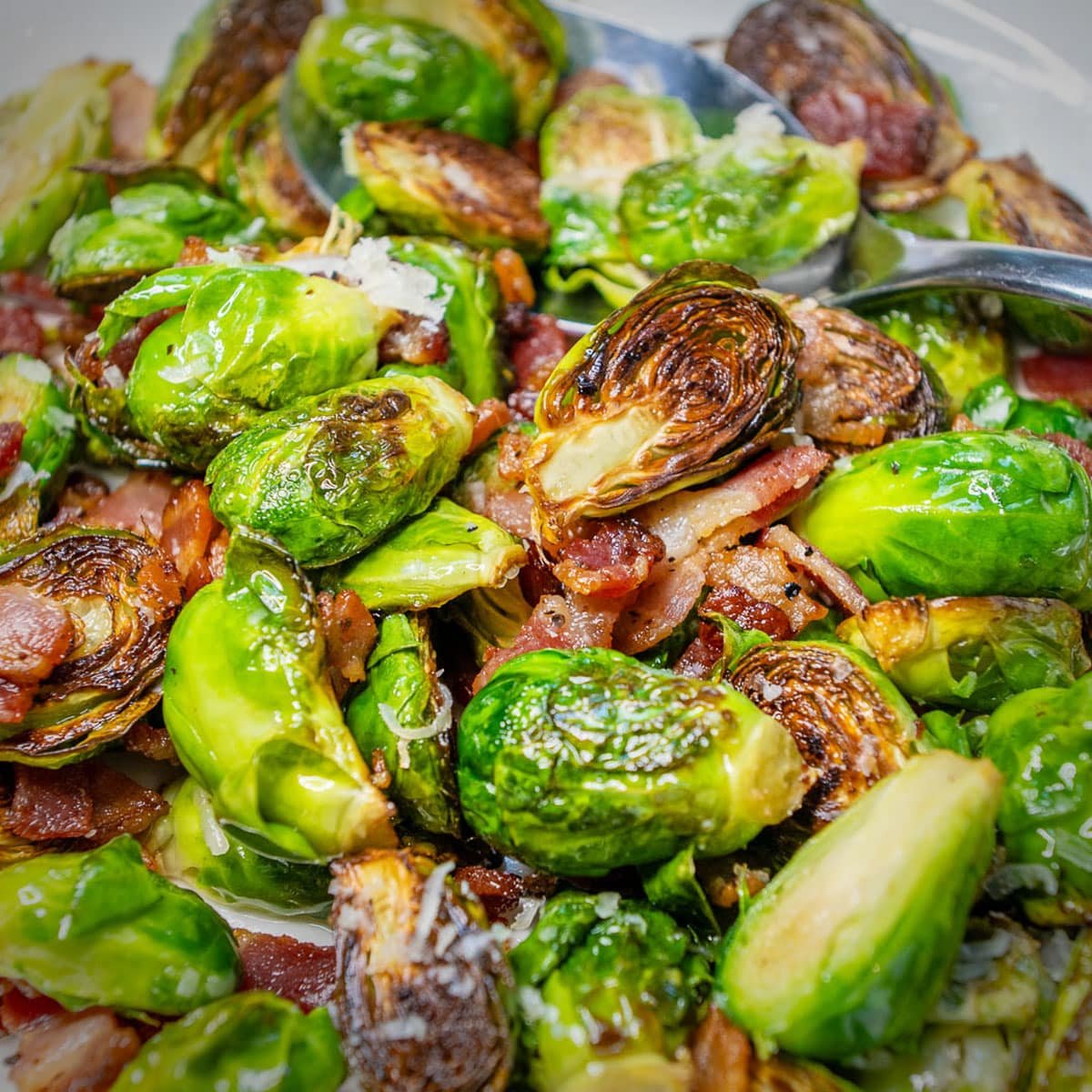
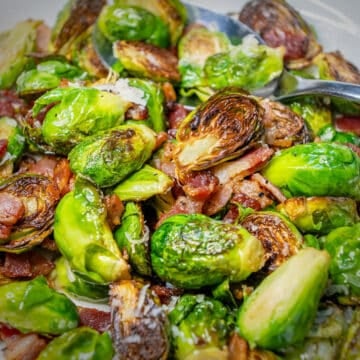
23. Bacon Brussel Sprouts

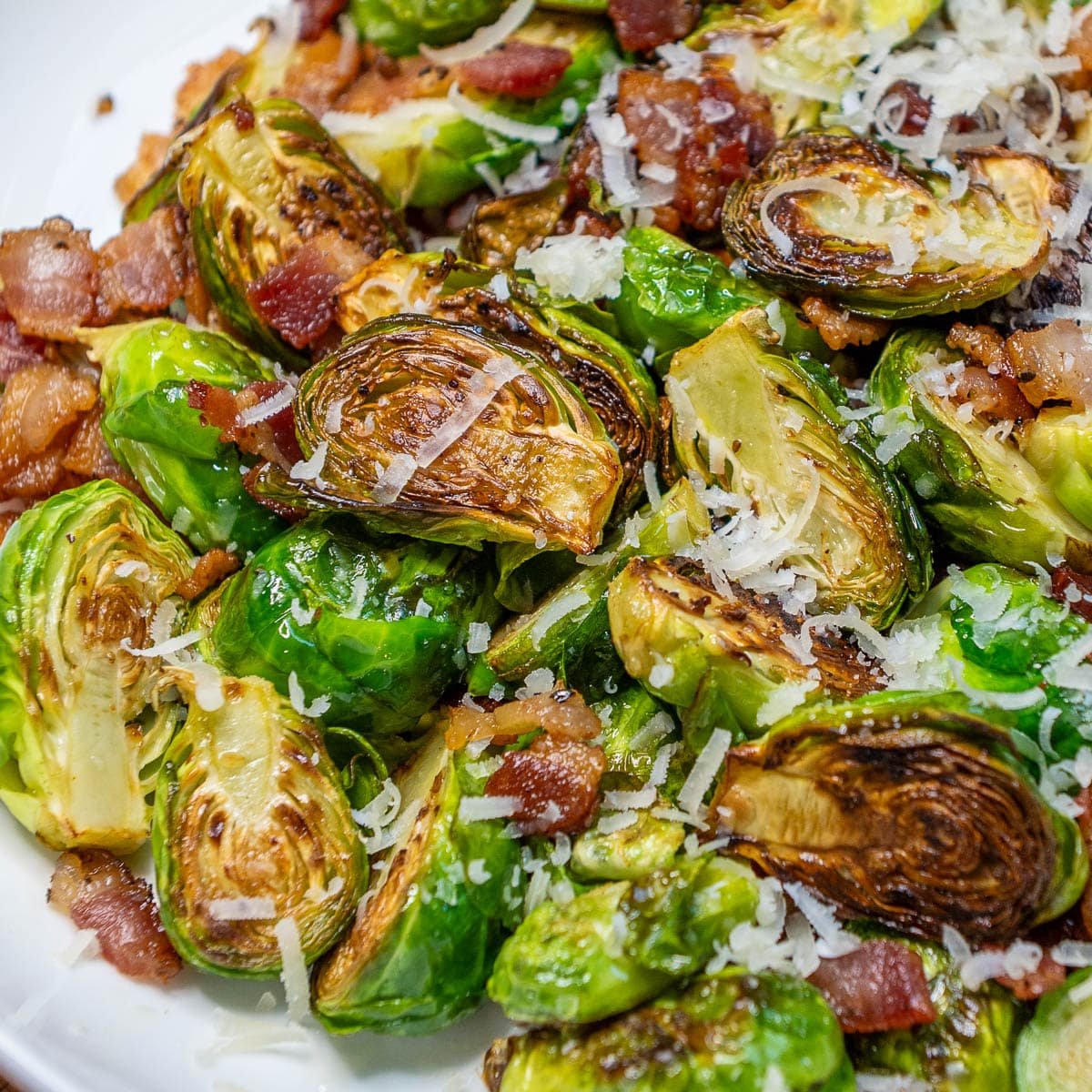
Pan Roasted Bacon Brussels Sprouts with Parmesan & Crispy Bacon

close up of pan roasted bacon brussel sprouts

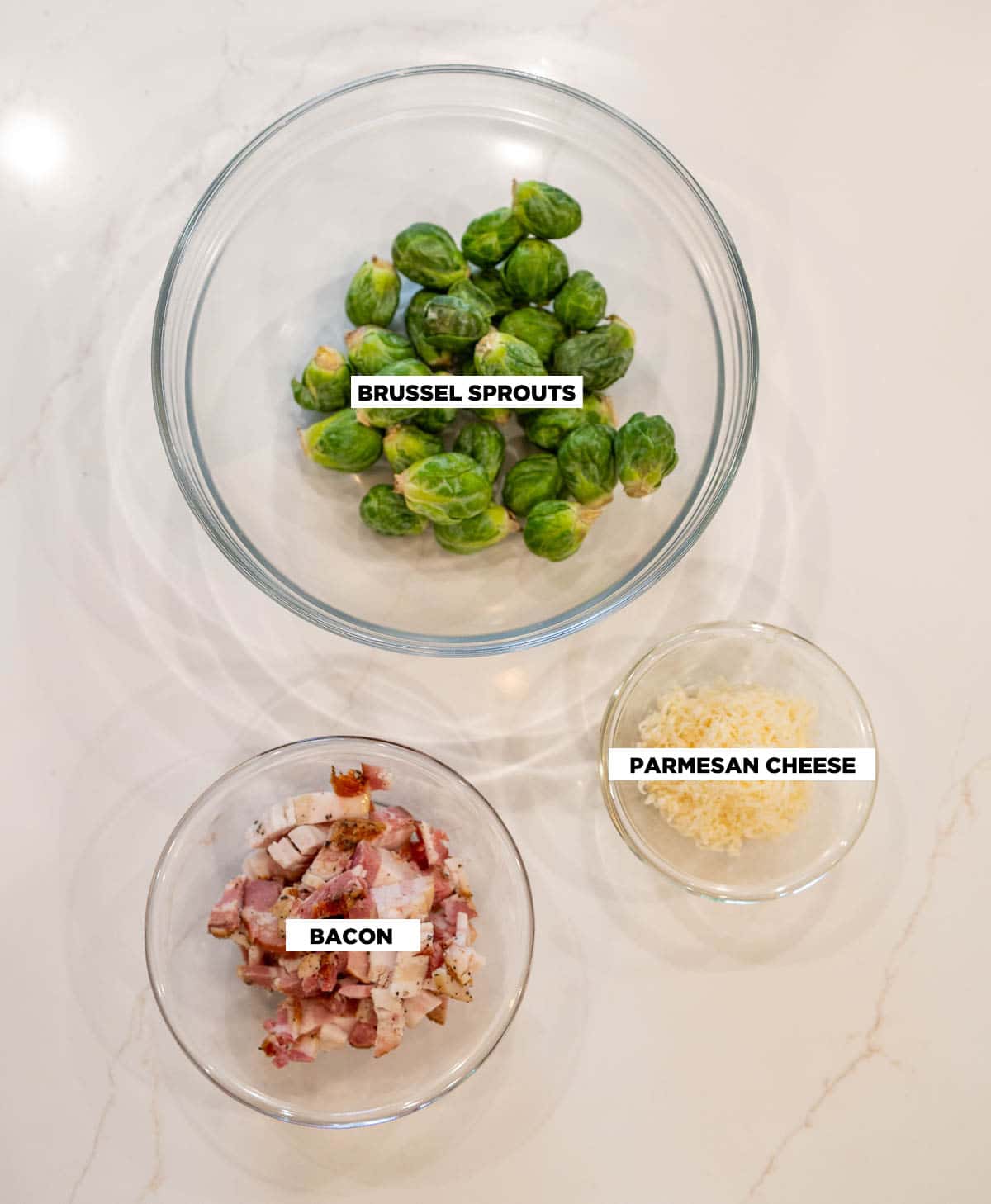
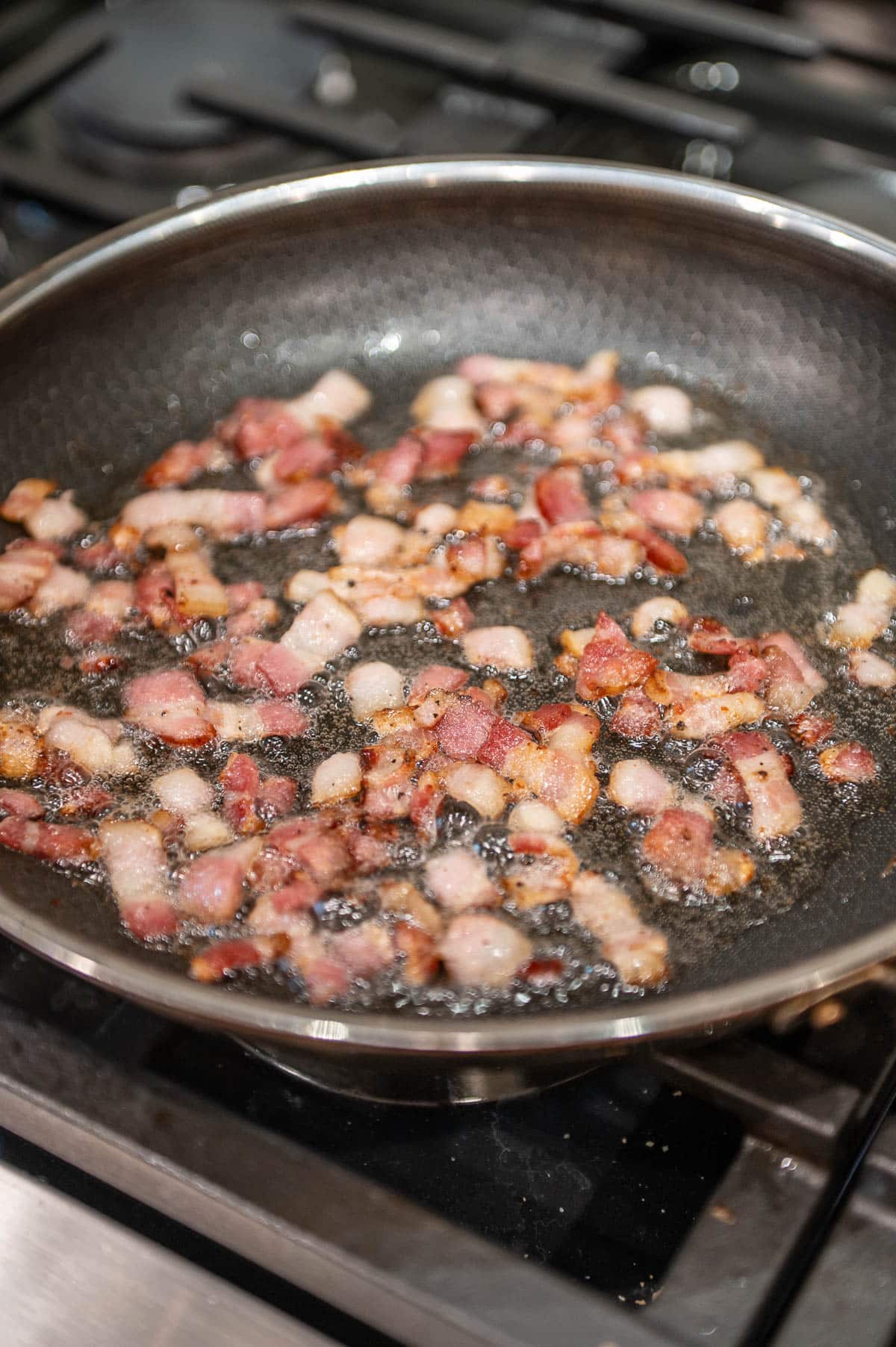
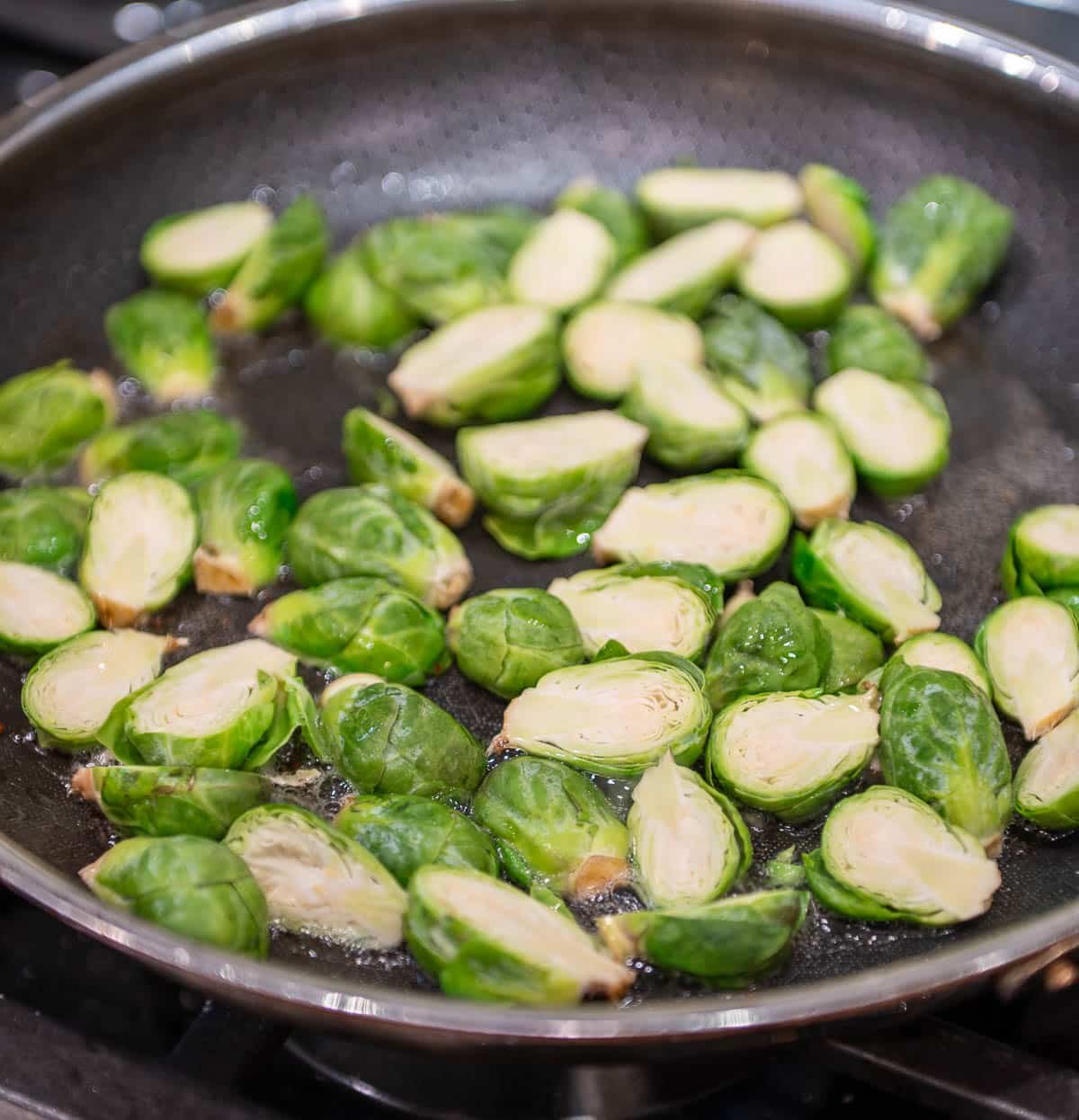
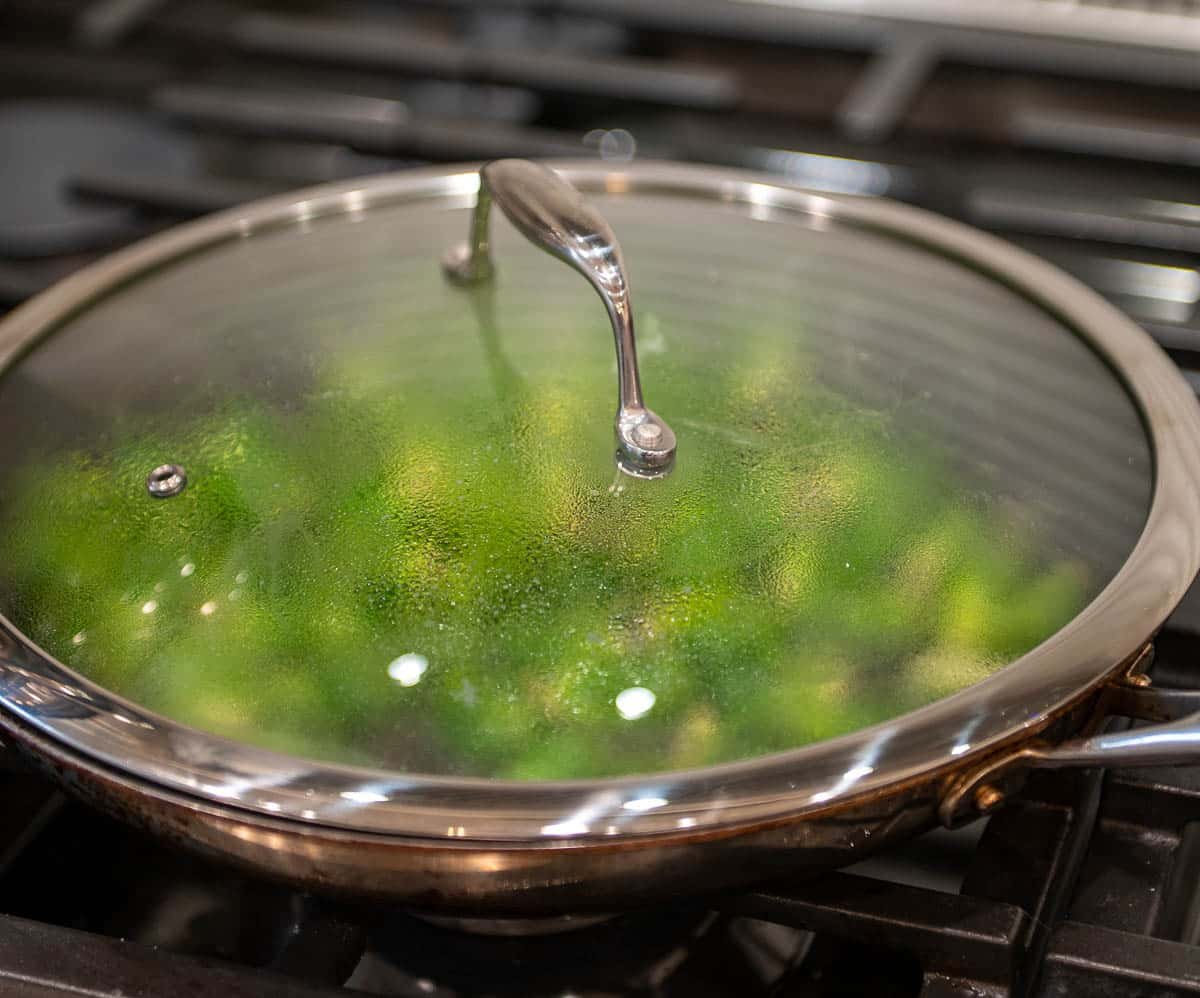
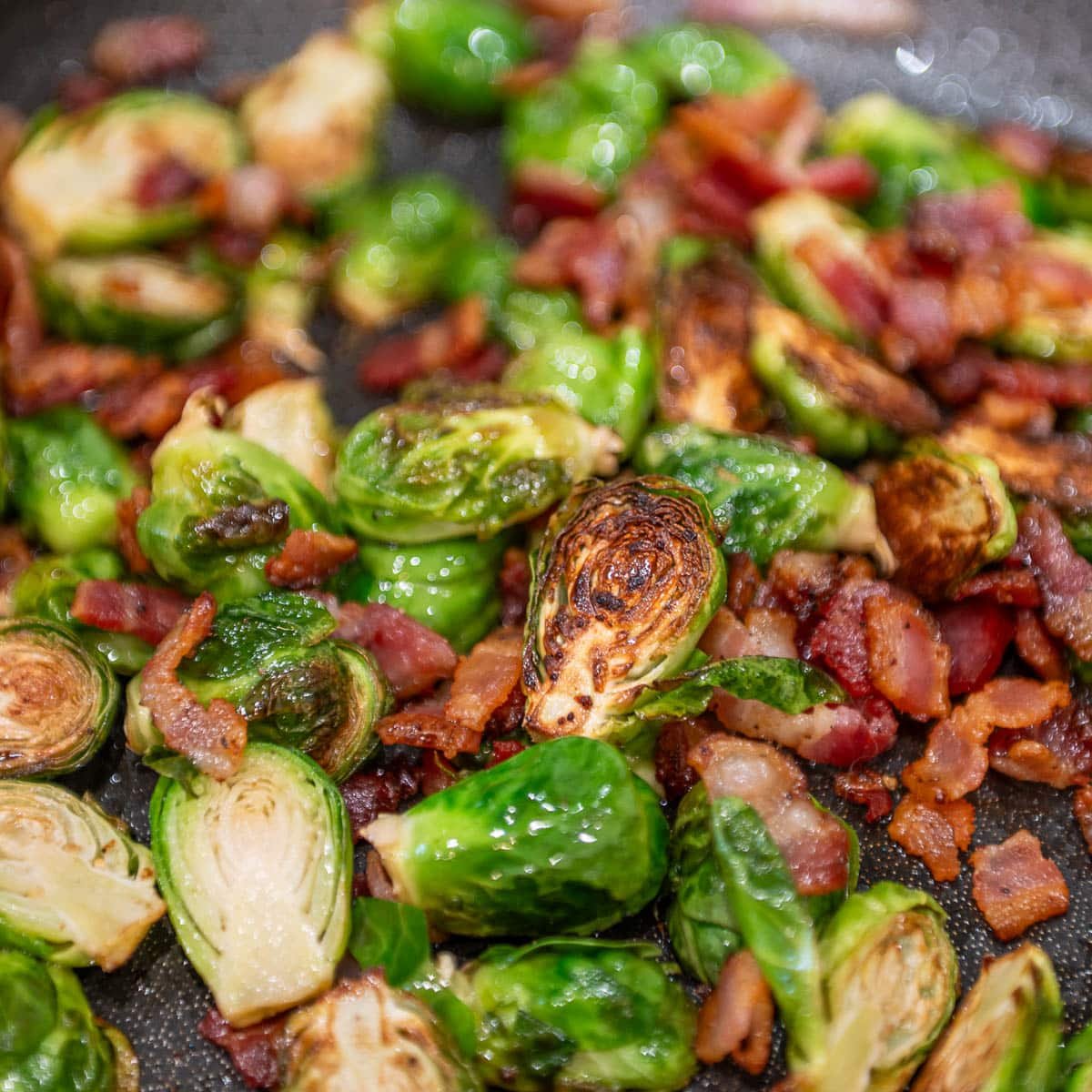
If you've been wanting a side dish that's savory, crisp, and stands out on your Thanksgiving table, this bacon Brussels sprouts recipe is the one. In this version you trim and halve fresh brussels sprouts, cook up thick-cut bacon until it's crispy, use the bacon fat to caramelize the sprouts in a skillet with the lid on so they get tender but browned, then toss everything together and finish with freshly grated Parmesan cheese. A great dish to make when the oven is full!

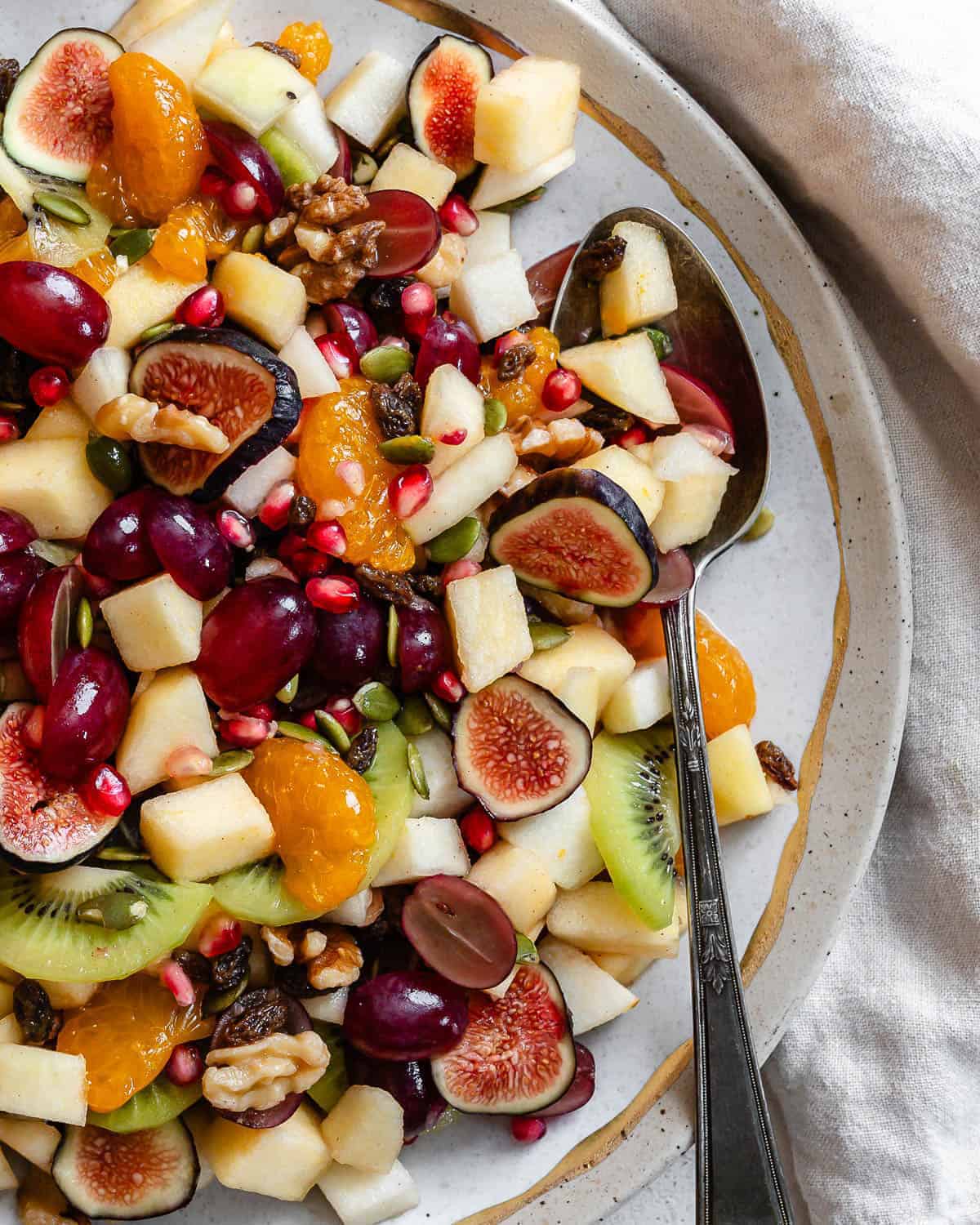
24. Fresh Thanksgiving Fruit Salad

Healthy Thanksgiving Fruit Salad with Warm-Spiced Citrus Dressing

If you're looking for a bright, fresh side to bring to your holiday table, this fruit salad is a standout among the best Thanksgiving side dishes. It's loaded with crisp apples, juicy pears, pomegranate arils, mandarin oranges, and other in-season fruits tossed in a warm, spiced citrus dressing. A light, refreshing, plant-based option.

close up of honey glazed carrots on a white plate

November 14, 2025 Easter

Honey Glazed Carrots

Honey glazed carrots are a popular, easy side dish with a sweet, caramelized finish. They can be prepared quickly on the stovetop or roasted in the oven, with common flavor additions including butter, garlic, and fresh parsley. 

Close-up photo of honey glazed carrots.

These honey glazed carrots are one of my favorite sides to make for holiday dinners. They pair perfectly with turkey, mashed potatoes, and all the cozy Thanksgiving favorites, adding a pop of color and sweetness that everyone looks forward to. Plus, they're simple yet look great on the table. These carrots always make my dinners feel extra special.

What's In This Blog Post?

  • Ingredients Needed
  • Equipment Needed
  • Tips and Tricks for Success
  • How to Make Honey Glazed Carrots
  • Oven Roasting Method (Hands-Off)
  • Frequently Asked Questions

Ingredients Needed

These simple, everyday ingredients come together to create the perfect sweet and savory glaze for your roasted carrots. Here's what you'll need to make this easy side dish.

Ingredient shot for honey glazed carrots, featuring: carrots, honey, brown sugar, butter, and seasoning.
  • Carrots - Whole carrots peel and roast beautifully, giving you that natural sweetness and tender bite. Baby carrots work too, but they may cook slightly faster. You can also use rainbow carrots for a more colorful presentation.
  • Salted Butter - Butter adds richness and helps the glaze cling to the carrots. Substitute with unsalted butter (just add a pinch more salt), olive oil for a dairy-free option, or vegan butter to keep the flavor and consistency similar.
  • Honey - Honey creates that signature glossy, sweet glaze. Substitute with maple syrup (adds a deeper caramel flavor), agave syrup (milder and slightly thinner), or brown rice syrup (thicker, less sweet).
  • Light Brown Sugar - Brown sugar deepens the caramel flavor and helps the glaze thicken. You can substitute with dark brown sugar (richer molasses flavor), coconut sugar (less sweet, more earthy), or additional honey (reduce by 1 tablespoon to avoid an overly runny glaze).
  • Salt & Pepper - Basic seasoning that balances all the sweetness.
  • Optional Seasonings (Garlic Powder, Thyme, Italian Seasoning): These add flavor depth without overpowering the natural sweetness of the carrots.
  • Fresh Parsley (Garnish) - Adds color and brightness to the dish. Substitute with fresh thyme leaves, chives, dill, or a squeeze of lemon juice for a fresh finish.

Equipment Needed

Large Skillet - For this recipe, you'll need a large skillet to sauté the carrots. We prefer HexClad skillets for their hybrid stainless steel and nonstick surface, which allows for even heat distribution, perfect browning, and easy cleanup.

Tips and Tricks for Success

  • Use whole carrots for the best texture; they hold their shape better than baby carrots.
  • Don't skip reducing the glaze-letting it bubble and thicken is what creates that glossy, caramelized coating.
  • Use parchment paper when roasting to prevent sticking and make cleanup easier.
  • Finish with acid (a squeeze of lemon juice) to brighten the sweetness.
  • Use a large skillet or baking sheet so the carrots can spread out; crowding leads to steaming instead of browning.
  • Make it savory and sweet by adding garlic powder, thyme, or a pinch of smoked paprika.
  • Double the glaze if you love extra sauce-just cook it a bit longer so it thickens properly.

How to Make Honey Glazed Carrots

These step-by-step stovetop instructions make this recipe quick and easy! You'll have beautifully glazed carrots on the table before the rest of dinner is even ready.

Whole carrots, unwashed and untrimmed.
Carrots in the process of being peeled.
Carrots that have been peeled and trimmed.
Carrots being washed in a bowl with a brush.
Boiling water in a large skillet.
Carrots added to the skillet with water.
Butter added to the skillet with the carrots.
Honey is being poured  into the skillet with the carrots.
Brown sugar is added to the carrots in the skillet.
Carrots are beginning to caramelize in the skillet.
A close-up photo of the honey glazed carrots with a garnish of freshly chopped parsley.
  1. Prep Carrots: Peel and slice the tops off carrots.
  2. Cook Carrots: Place carrots in a skillet with a small amount of water, cover, and cook over medium heat until crisp-tender (about 8-10 minutes). Drain any remaining water.
  3. Add Glaze Ingredients: Add butter, honey, and seasonings to the carrots in the pan.
  4. Glaze: Cook uncovered over medium heat for another 3-5 minutes, stirring occasionally, until the liquid has reduced into a thick, bubbly glaze that coats the carrots.
  5. Serve: Garnish with fresh parsley if desired and serve immediately. 


Oven Roasting Method (Hands-Off)

  1. Preheat Oven: Preheat oven to 400°F (200°C).
  2. Prep Carrots: Place peeled and cut carrots on a rimmed baking sheet (lined with parchment paper for easy cleanup).
  3. Toss with Glaze: In a small bowl, whisk together melted butter or olive oil, honey, salt, pepper, and any other seasonings (like garlic powder or thyme). Pour over the carrots and toss well to ensure every piece is coated.
  4. Roast: Spread carrots into a single even layer and roast for 30-40 minutes, or until fork-tender and caramelized. Toss them halfway through the cooking time for even browning.
  5. Serve: Remove from the oven, toss with fresh parsley or a squeeze of lemon juice, and serve warm. These carrots pair beautifully with my smoked prime rib for a complete holiday spread.

Frequently Asked Questions

Can I use baby carrots instead of whole carrots?

Yes! Baby carrots work perfectly. Just note they may cook slightly faster, so start checking for tenderness a few minutes early.

How do you thicken the glaze for honey glazed carrots?

Let the glaze simmer uncovered until it reduces and becomes bubbly and syrupy. If it's still too thin, keep cooking for 1-2 more minutes. It will thicken as it cools.

Can I make honey glazed carrots ahead of time?

Yes, you can make them up to a day in advance. Reheat them gently on the stovetop with a splash of water or extra honey to bring the glaze back to life.

Can I make honey glazed carrots without sugar?

Absolutely. Replace the brown sugar with extra honey or use maple syrup. The texture may be slightly thinner, but still delicious.

Can I use frozen carrots for this recipe?

You can, but the texture will be softer. If using frozen carrots, skip the initial steaming step and cook them directly with the glaze until heated through and lightly caramelize

How do I store leftover honey glazed carrots?

Store any leftovers in an airtight container in the refrigerator for up to 4 days. Reheat them gently on the stovetop or in the microwave, adding a splash of water or extra honey if needed to refresh the glaze.

Recipe

close up of honey glazed carrots on a white plate
Print Recipe
No ratings yet

Honey Glazed Carrots

These Honey Glazed Carrots are caramelized, buttery, and sweet. They're the perfect addition to weeknight dinners or holiday meals.
Prep Time5 minutes mins
Cook Time15 minutes mins
Total Time20 minutes mins
Course: Side Dish
Cuisine: American
Servings: 4 servings
Calories: 120kcal
Author: Liz Marek

Ingredients

  • 1 pound whole carrots trimmed and peeled
  • 1 ½ tablespoons butter
  • 3 tablespoons honey
  • 3 tablespoons light brown sugar packed
  • salt and pepper to taste
  • fresh parsley chopped

Instructions

  • Prep Carrots: Peel and slice the tops off carrots.
  • Cook Carrots: Place carrots in a skillet with a small amount of water, cover, and cook over medium heat until crisp-tender (about 8-10 minutes). Drain any remaining water.
  • Add Glaze Ingredients: Add butter, honey, and seasonings to the carrots in the pan.
  • Glaze: Cook uncovered over medium heat for another 3-5 minutes, stirring occasionally, until the liquid has reduced into a thick, bubbly glaze that coats the carrots.
  • Serve: Garnish with fresh parsley if desired and serve immediately. 

Notes

  • Oven Instructions:
    1. Preheat Oven: Preheat oven to 400°F (200°C).
    2. Prep Carrots: Place peeled and cut carrots on a rimmed baking sheet (lined with parchment paper for easy cleanup).
    3. Toss with Glaze: In a small bowl, whisk together melted butter or olive oil, honey, salt, pepper, and any other seasonings (like garlic powder or thyme). Pour over the carrots and toss well to ensure every piece is coated.
    4. Roast: Spread carrots into a single even layer and roast for 30-40 minutes, or until fork-tender and caramelized. Toss them halfway through the cooking time for even browning.
    5. Serve: Remove from the oven, toss with fresh parsley or a squeeze of lemon juice, and serve warm. 
  • Storage Instructions: Store any leftovers in an airtight container in the refrigerator for up to 4 days. Reheat them gently on the stovetop or in the microwave, adding a splash of water or extra honey if needed to refresh the glaze.

Nutrition

Serving: 1g | Calories: 120kcal | Carbohydrates: 22g | Protein: 0.1g | Fat: 4g | Saturated Fat: 3g | Polyunsaturated Fat: 0.2g | Monounsaturated Fat: 1g | Trans Fat: 0.2g | Cholesterol: 11mg | Sodium: 37mg | Potassium: 21mg | Fiber: 0.03g | Sugar: 22g | Vitamin A: 131IU | Vitamin C: 0.1mg | Calcium: 10mg | Iron: 0.1mg
close up of crispy smashed potatoes on a sheet pan

November 14, 2025 Recipe

Crispy Smashed Potatoes

If you've never had smashed potatoes before, you're about to discover your new favorite side dish. These crispy, buttery potatoes are golden brown on the outside and soft and fluffy on the inside - like the perfect cross between roasted potatoes and french fries. They're the kind of simple recipe that ends up stealing the show on Thanksgiving or any cozy dinner table.

A close-up photo of crispy smashed potatoes with freshly chopped herbs on top.

I started making these smashed potatoes after realizing that my kids love anything with that crisp-edge-and-fluffy-middle combo. It's basically the potato version of comfort food. The first time I made them, I used the tiny gold potatoes I had leftover from a Sunday roast, and they turned out so good that I immediately added them to my holiday rotation. Now they show up at almost every big meal, especially Thanksgiving, because they're easy, make-ahead friendly, and everyone fights for the crispy ones.

What's In This Blog Post?

  • Ingredients Needed
  • Equipment Needed
  • Tips and Tricks for Success
  • How to Make Crispy Smashed Potatoes
  • Final Thoughts
  • Frequently Asked Questions

Ingredients Needed

These crispy smashed potatoes come together with just a few pantry staples and fresh herbs. Here's everything you'll need.

Ingredient shot of crispy smashed potatoes, featuring: butter, salt & pepper, olive oil, and baby potatoes.
  • Baby Potatoes - Yukon Golds are my favorite because they stay creamy inside while crisping up beautifully on the outside. Red potatoes also work great. The key is to use small potatoes that are the same size so they cook evenly.
  • Olive Oil - The secret to that golden crunch. You can swap in melted butter or use a mix of both for even more flavor.
  • Salt & Pepper - Don't be shy with the salt; the potatoes soak it up. Freshly cracked black pepper adds just enough bite.
  • Garlic - Garlic powder works well for even flavor, but if you love that roasted garlic aroma, toss in a few smashed cloves on the pan.
  • Fresh Herbs - Rosemary, thyme, or parsley make them feel a little fancy without any extra work.
  • Parmesan Cheese (optional) - Not traditional, but sprinkling a little on right before serving adds a salty crunch that's addictive.

Equipment Needed

Tenderizer mallet - A tenderizer mallet is one of the easiest tools for smashing potatoes. Just press the flat side of the mallet down onto each cooked potato until it cracks and flattens. While a glass or potato masher will also work, the mallet's weight and handle makes the process much easier!

Tips and Tricks for Success

  • Boil the potatoes in heavily salted water. It's like pasta-this is your only chance to season them from the inside.
  • Let them air-dry before smashing so they get extra crispy in the oven.• Don't crowd the pan. Give them breathing room so the edges brown instead of steam.
  • If you want next-level crisp, finish them under the broiler for 2-3 minutes right before serving.
  • These reheat beautifully in an air fryer. They're perfect for leftovers.

How to Make Crispy Smashed Potatoes

From boiling to smashing to roasting, here's how to make these potatoes perfectly crispy from start to finish.

Potatoes in a large pot of water.
Potatoes boiling.
Boiled potatoes drained.
Olive oil on a parchment-lined baking sheet.
Potatoes are added to the baking sheet.
A close-up photo of a tenderizer.
Potatoes are smashed on baking sheet.
Samshed potaotes are seasoned.
A photo of the oven turned to broil.
A close-up photo of crispy smashed potatoes with freshly chopped herbs on top.
Crispy smashed potatoes on a white plate next to steak.
  1. Fill a large pot with salted water and bring to a boil. Add the baby potatoes and cook until they're fork-tender, about 15-20 minutes. You should be able to easily pierce them, but they shouldn't fall apart.
  2. Drain and place potatoes in a single layer on a sheet pan. Air-dry for about 5 minutes. The drier they are, the crispier they'll get later.
  3. Line a sheet pan with parchment paper. Place the potatoes a few inches apart, then use the bottom of a glass, measuring cup, or potato masher to gently flatten them to about ½ inch thick. The cracked edges are what make them extra crispy.
  4. Drizzle the potatoes generously with olive oil or melted butter, then sprinkle with salt, pepper, and garlic. Flip them over and repeat on the other side. You want both sides well coated.
  5. Roast at 425°F (220°C) for 45-55 minutes, until they're golden brown and crunchy around the edges.
  6. Sprinkle with more salt, fresh herbs, and a little Parmesan cheese if you like. Serve them hot. They'll disappear fast!

Final Thoughts

There's something so satisfying about making a recipe that feels fancy but takes almost no effort. These smashed potatoes check all the boxes: easy, make-ahead friendly, and endlessly customizable. Whether you're serving them next to turkey and gravy or just a weeknight roast chicken, they're guaranteed to become a new favorite. These also make an incredible side dish alongside my Instant Pot pot roast - the crispy edges pair perfectly with the rich braising liquid.

Frequently Asked Questions

Can I make smashed potatoes ahead of time?

Yes! Boil and smash them a day in advance, then refrigerate on a baking sheet. When you're ready to serve, just drizzle with oil and roast until crispy.


Can I use large potatoes?

You can, but cut them into smaller pieces first. The charm of smashed potatoes is in their crispy surface area - smaller ones work best.

What if I don't have fresh herbs?

Dried herbs work fine. Just use about one-third of the amount since dried herbs are more concentrated.

Can I use butter instead of oil?

Absolutely. Butter adds a rich, nutty flavor, especially if you use browned butter. Just keep an eye on it so it doesn't burn at high heat.

How do I store leftover smashed potatoes?

Leftover smashed potatoes can be stored in an airtight container in the refrigerator for up to 3-4 days. To bring back their crispiness, reheat them in the oven or air fryer until the edges get crunchy again.

Recipe

Print Recipe
No ratings yet

Crispy Smashed Potatoes

These Crispy Smashed Potatoes are golden, crunchy, and totally addictive. It's the side dish everyone ends up fighting over!
Prep Time20 minutes mins
Cook Time55 minutes mins
Total Time1 hour hr 15 minutes mins
Course: Side Dish
Cuisine: American
Servings: 4 servings
Calories: 244kcal
Author: Liz Marek

Ingredients

  • 2 pounds Yukon gold potatoes
  • 2 tablespoons olive oil extra-virgin
  • 2 tablespoons salt
  • 2 tablespoons black pepper
  • fresh herbs
  • grated parmesan cheese optional

Instructions

  • Fill a large pot with salted water and bring to a boil. Add the baby potatoes and cook until they're fork-tender, about 15-20 minutes. You should be able to easily pierce them, but they shouldn't fall apart.
  • Drain and place potatoes in a single layer on a sheet pan. Air-dry for about 5 minutes. The drier they are, the crispier they'll get later.
  • Line a sheet pan with parchment paper. Place the potatoes a few inches apart, then use the bottom of a glass, measuring cup, or potato masher to gently flatten them to about ½ inch thick. The cracked edges are what make them extra crispy.
  • Drizzle the potatoes generously with olive oil or melted butter, then sprinkle with salt, pepper, and garlic. Flip them over and repeat on the other side. You want both sides well coated.
  • Roast at 425°F (220°C) for 45-55 minutes, until they're golden brown and crunchy around the edges.
  • Sprinkle with more salt, fresh herbs, and a little parmesan cheese if you like. Serve them hot. They'll disappear fast!

Notes

  • Make-Ahead Instructions: Boil and smash them a day in advance, then refrigerate on a baking sheet. When you're ready to serve, just drizzle with oil and roast until crispy.
  • Storage Instructions: Leftover smashed potatoes can be stored in an airtight container in the refrigerator for up to 3-4 days. To bring back their crispiness, reheat them in the oven or air fryer until the edges get crunchy again.

Nutrition

Serving: 1g | Calories: 244kcal | Carbohydrates: 42g | Protein: 5g | Fat: 7g | Saturated Fat: 1g | Polyunsaturated Fat: 1g | Monounsaturated Fat: 5g | Sodium: 3503mg | Potassium: 995mg | Fiber: 6g | Sugar: 2g | Vitamin A: 21IU | Vitamin C: 45mg | Calcium: 43mg | Iron: 2mg

November 12, 2025 Recipe

How to Steam Broccoli

If you've ever wondered how to get that perfectly vibrant green color and tender crisp texture in your steamed broccoli, this is the simple way to do it. Steaming is one of my favorite ways to bring out the flavor of fresh broccoli while keeping all the vitamin C and nutritional value that makes this green vegetable so good for you. It's the quick way to make a healthy side dish that goes with everything from brown rice to grilled chicken-especially on busy weeknights.

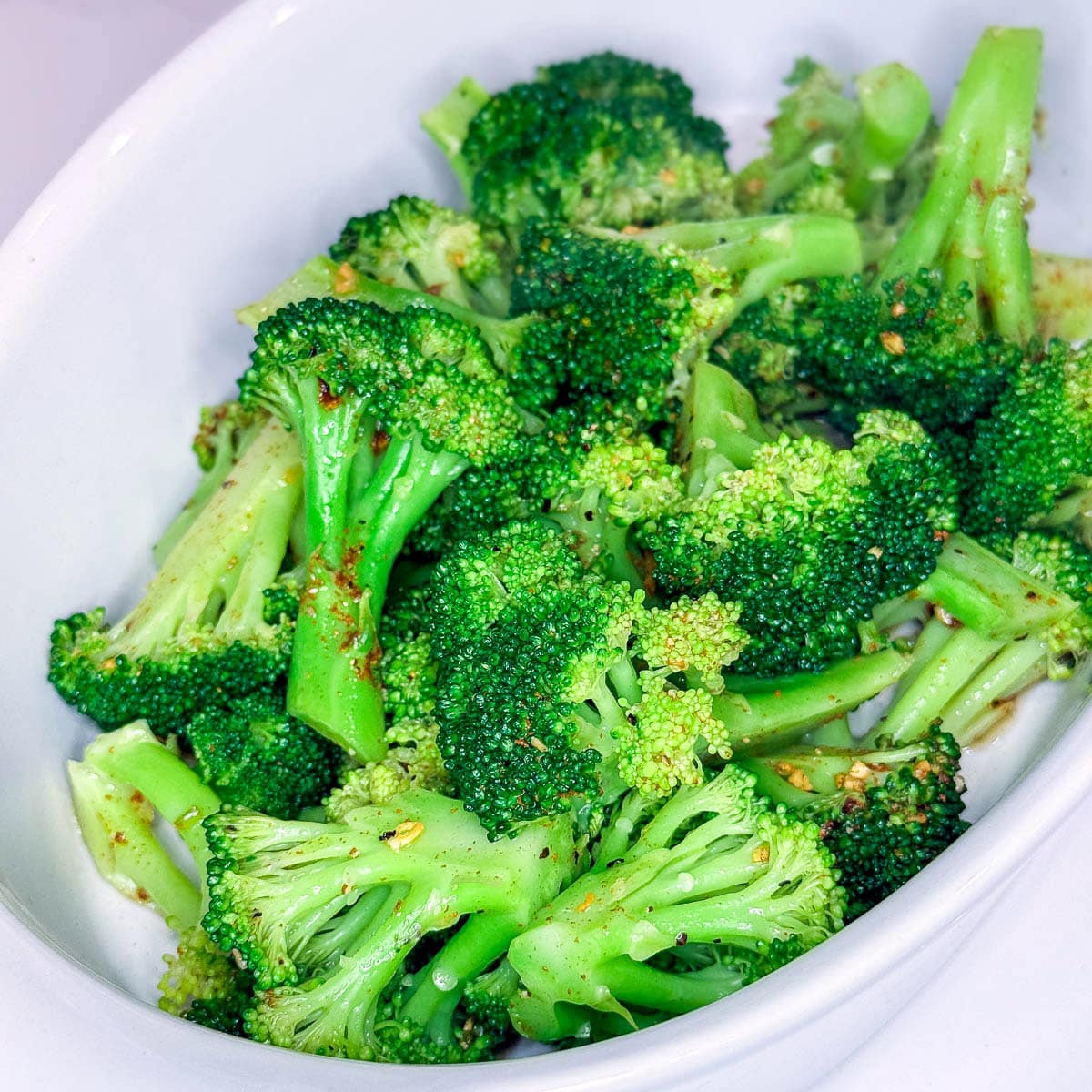
A close-up photo of steamed broccoli.

I used to think I didn't like broccoli until I learned how to steam it properly. Growing up, it was always mushy or gray, which made it taste bitter and sad. Once I figured out how to steam broccoli just until it turns bright green and tender crisp, everything changed. Now it's one of my favorite veggies to cook because it's fast, easy, and always turns out great.

What's In This Blog Post?

  • Ingredients Needed
  • Equipment Needed
  • Tips and Tricks for Success
  • Other Ways to Steam Broccoli
  • How to Make Broccoli Taste Better
  • How to Make Steamed Broccoli
  • Frequently Asked Questions

Ingredients Needed

Steaming broccoli doesn't get easier than this. All you need is broccoli, water, and a touch of salt. Add optional seasoning and garnishes for extra flavor!

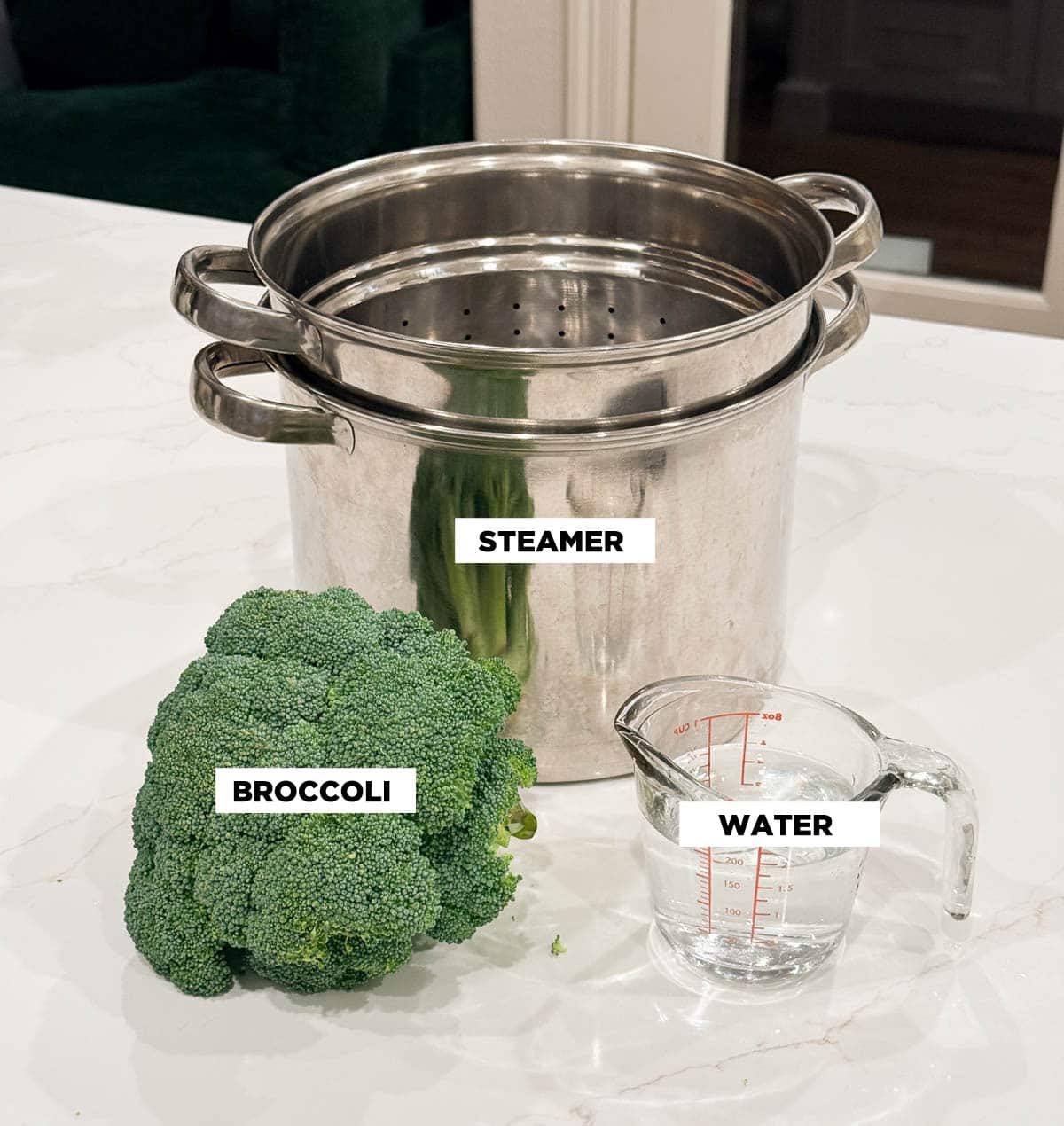
Ingredient shot for how to steam broccoli, featuring: a steamer, broccoli, and water.
  • Broccoli - Start with a head of broccoli or broccoli crowns. Then cut florets into smaller pieces so they cook evenly.
  • Water - You'll need about a cup of water in the bottom of the pan-just an inch of water is perfect for stovetop steaming. Add a steamer basket (or steaming basket) so the broccoli doesn't sit directly in the water. When the steaming water starts to simmer, cover it with a tight-fitting lid and let it cook over medium heat until your broccoli turns that perfect vibrant green color.
  • Seasoning and Garnish - Sprinkle a pinch of salt before or after steaming, and finish with extra virgin olive oil, shredded parmesan, lemon juice, or even a drizzle of balsamic vinegar and sesame seeds. That little touch makes all the difference.

Equipment Needed

Steamer - You'll need a large pot with a tight-fitting lid and a steamer basket (or insert) to keep the broccoli above the water while it cooks. This setup helps steam the florets evenly, keeping them bright green and tender-crisp.

Tips and Tricks for Success

  • For big florets, cook time will be around 5-6 minutes. Smaller pieces only need 3-4.
  • The broccoli is done when it's tender crisp and bright green.
  • To stop it from overcooking, rinse under cold running water or place in an ice bath.
  • Store leftovers in an airtight container for up to 3 days-perfect for meal prep.
  • Don't throw out the broccoli stems! They're great sliced thin in stir-fries or soups.

Other Ways to Steam Broccoli

If you don't have a steamer basket, no problem-there are plenty of easy ways to make it work.

Rice Cooker:
If your rice cooker has a steam tray, it's perfect for this. Add about 1⁄2 a cup of water to the cooker, place your broccoli florets in the tray, close the safe lid, and hit the Steam button. It takes about 5 minutes. If yours doesn't have a tray, you can use a heat-safe bowl inside with just enough steaming water underneath it to create steam.

Microwave Steaming:
This might be one of the easiest ways to steam broccoli fast. Add the cut florets to a microwave-safe bowl with 2-3 tablespoons of water. Cover with a safe lid or plate, leaving a little vent for steam to escape. Microwave on high for 2-3 minutes, then carefully uncover (watch out for the hot steam!). Drain any excess water and season as you like.

Stovetop without Any Equipment:
In a pinch, you can steam broccoli directly in a skillet with about a cup of water and a tight-fitting lid. The trick is to keep the water shallow and the heat source at medium heat so the broccoli steams gently instead of boiling.

How to Make Broccoli Taste Better

Steamed broccoli on its own is great, but a few simple add-ins can turn it into something special. Here are some of my favorite ways to dress it up.

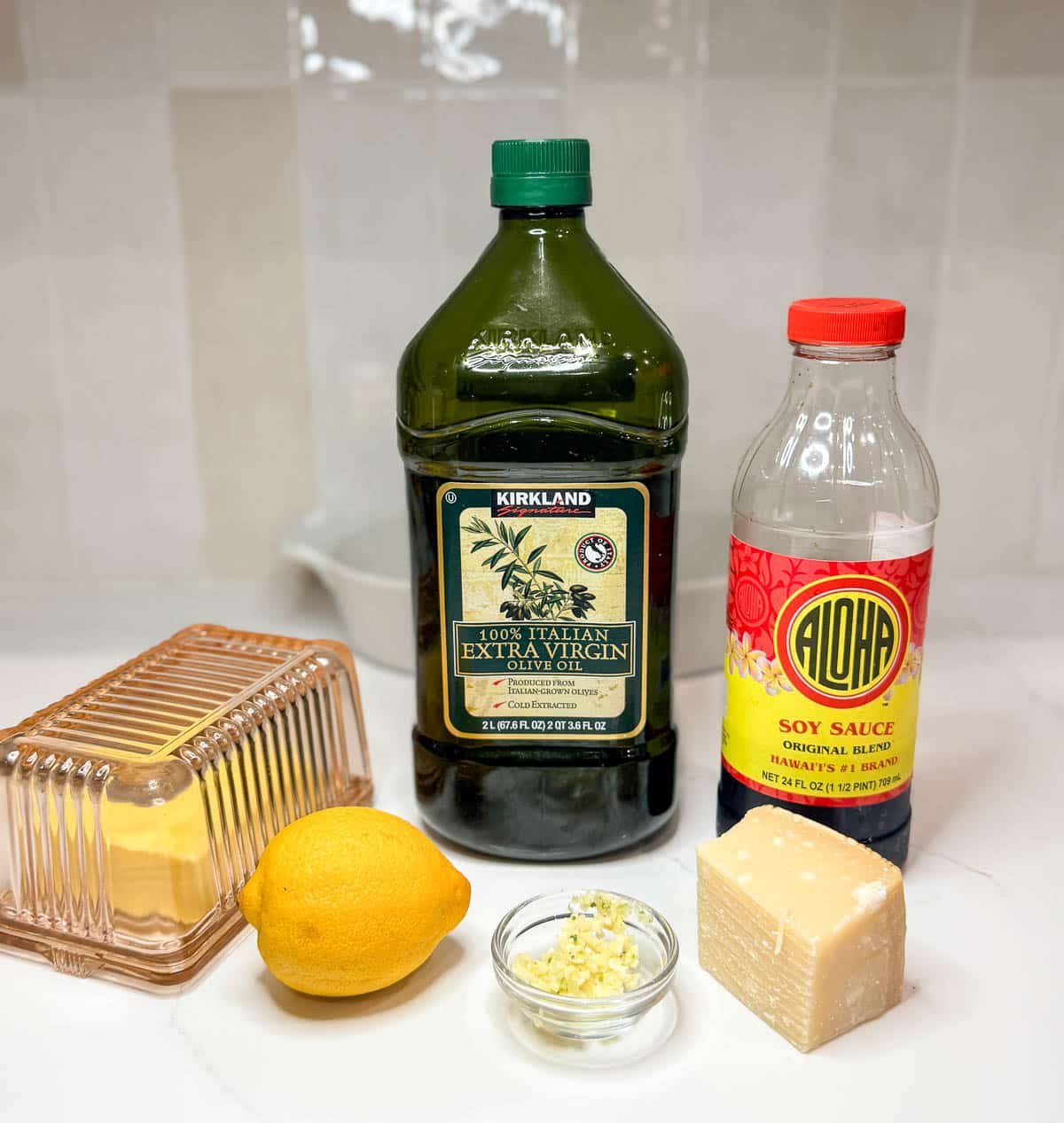
Ingredients to make broccoli taste better: extra-virgin olive oil, soy sauce, butter, lemon, garlic, and parmesan cheese.
  • Drizzle with melted butter, lemon juice, and a sprinkle of garlic salt for a bright, simple finish.
  • Toss with olive oil, red pepper flakes, and a little Parmesan cheese while it's still warm.
  • Make it savory by adding a splash of soy sauce and toasted sesame oil, then sprinkle with
    sesame seeds.
  • Mix with a spoonful of balsamic vinegar and honey for a sweet and tangy glaze.
  • Toss it into a bowl of brown rice, roasted sweet potatoes, or pasta for an easy weeknight bowl.
  • If you want something richer, melt a bit of cheddar cheese or top it with a quick cheese sauce
    for the ultimate comfort food side.

How to Make Steamed Broccoli

Here's an easy, step-by-step guide to steaming broccoli. In just a few minutes, you'll have perfectly cooked broccoli that's tender, crisp, and never mushy!

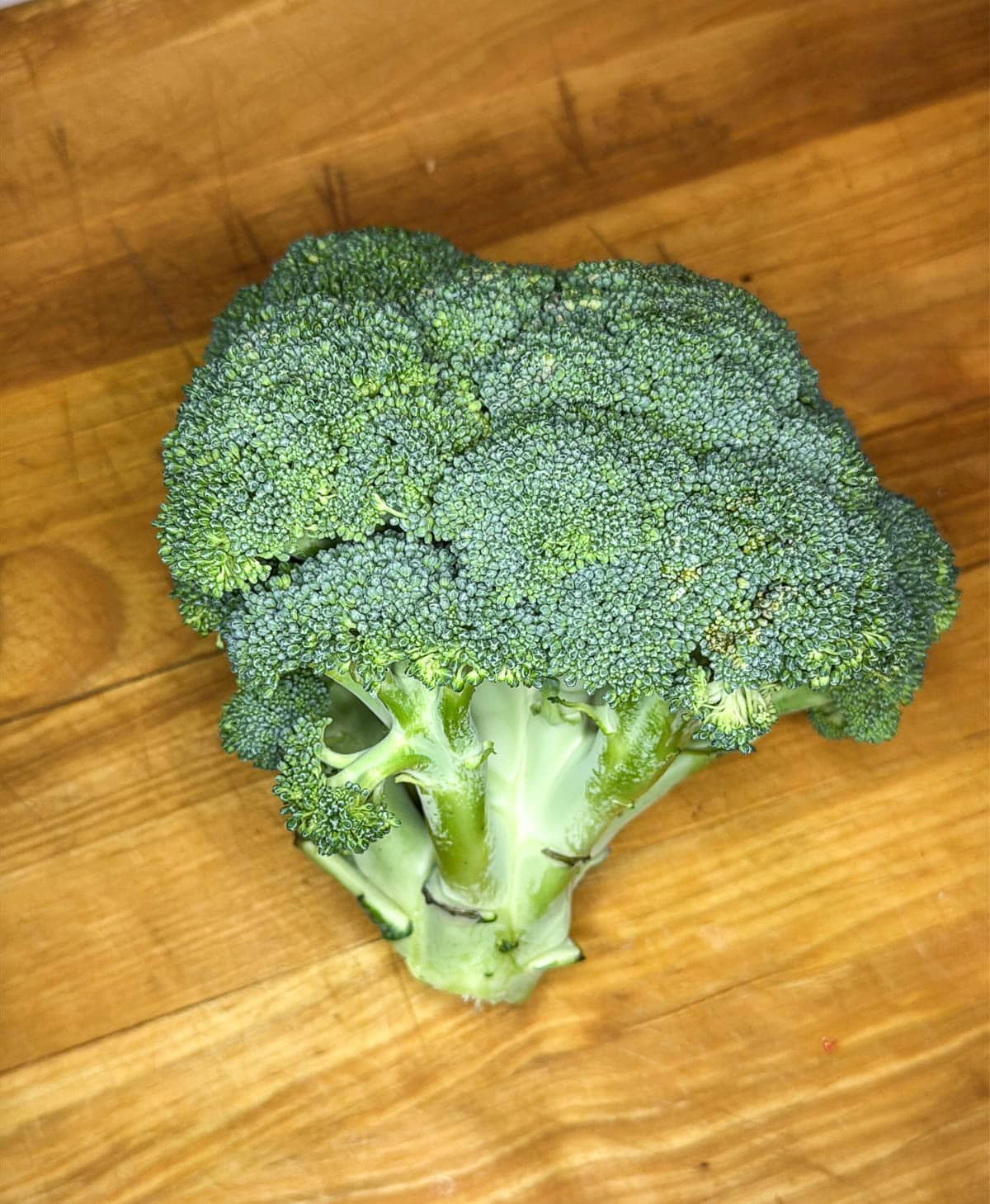
One head of broccoli.
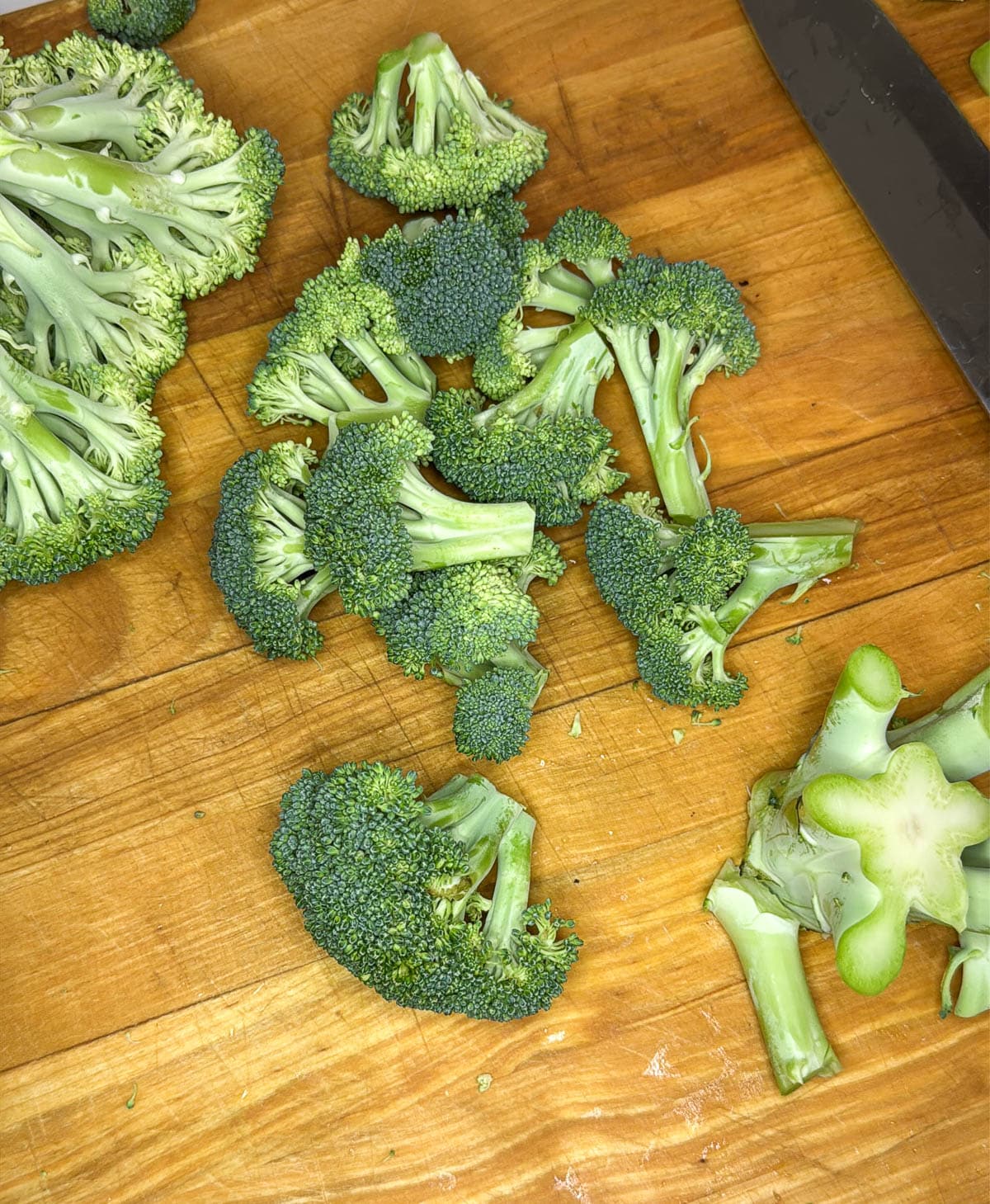
The head of broccoli with the stem cut off.
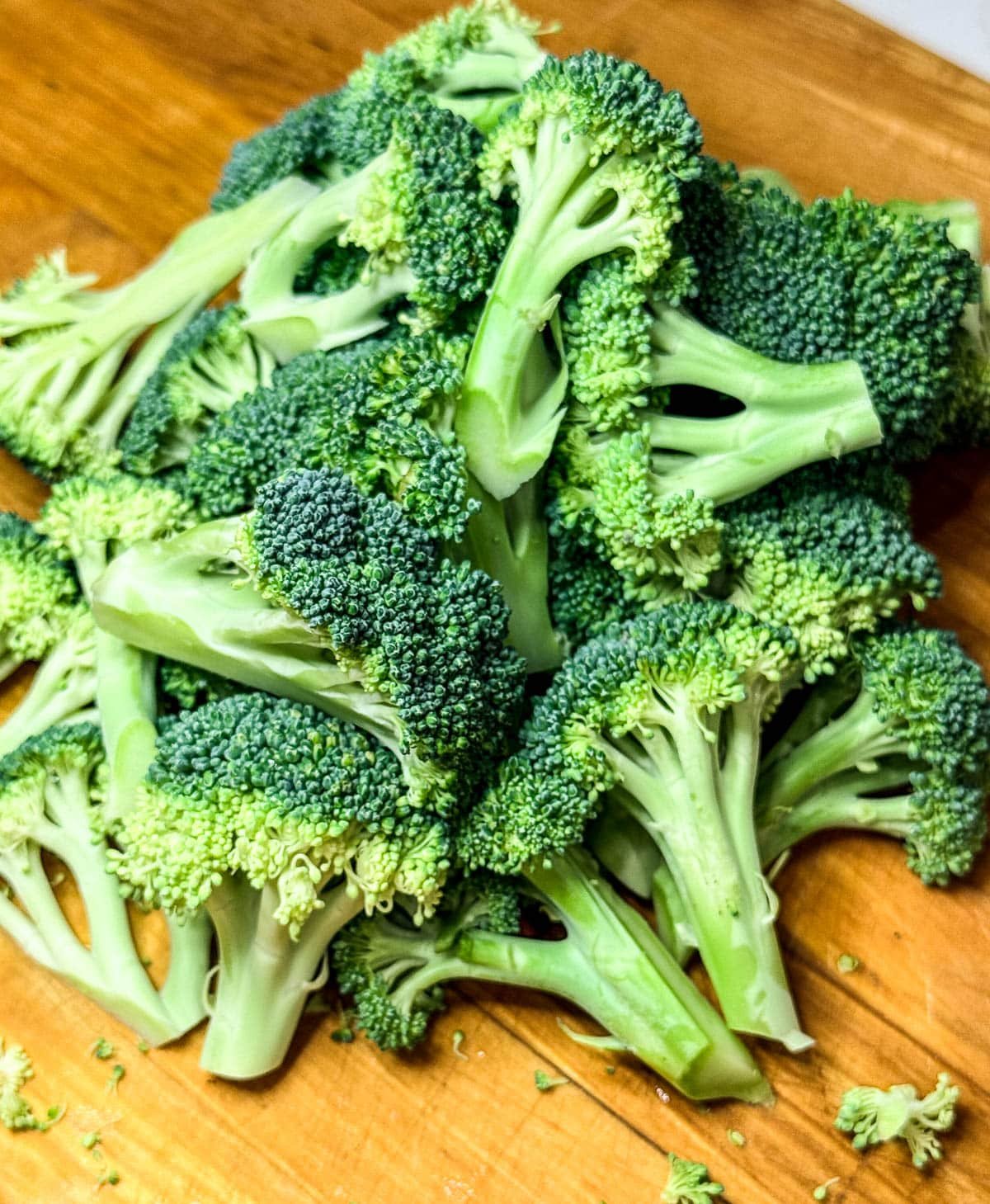
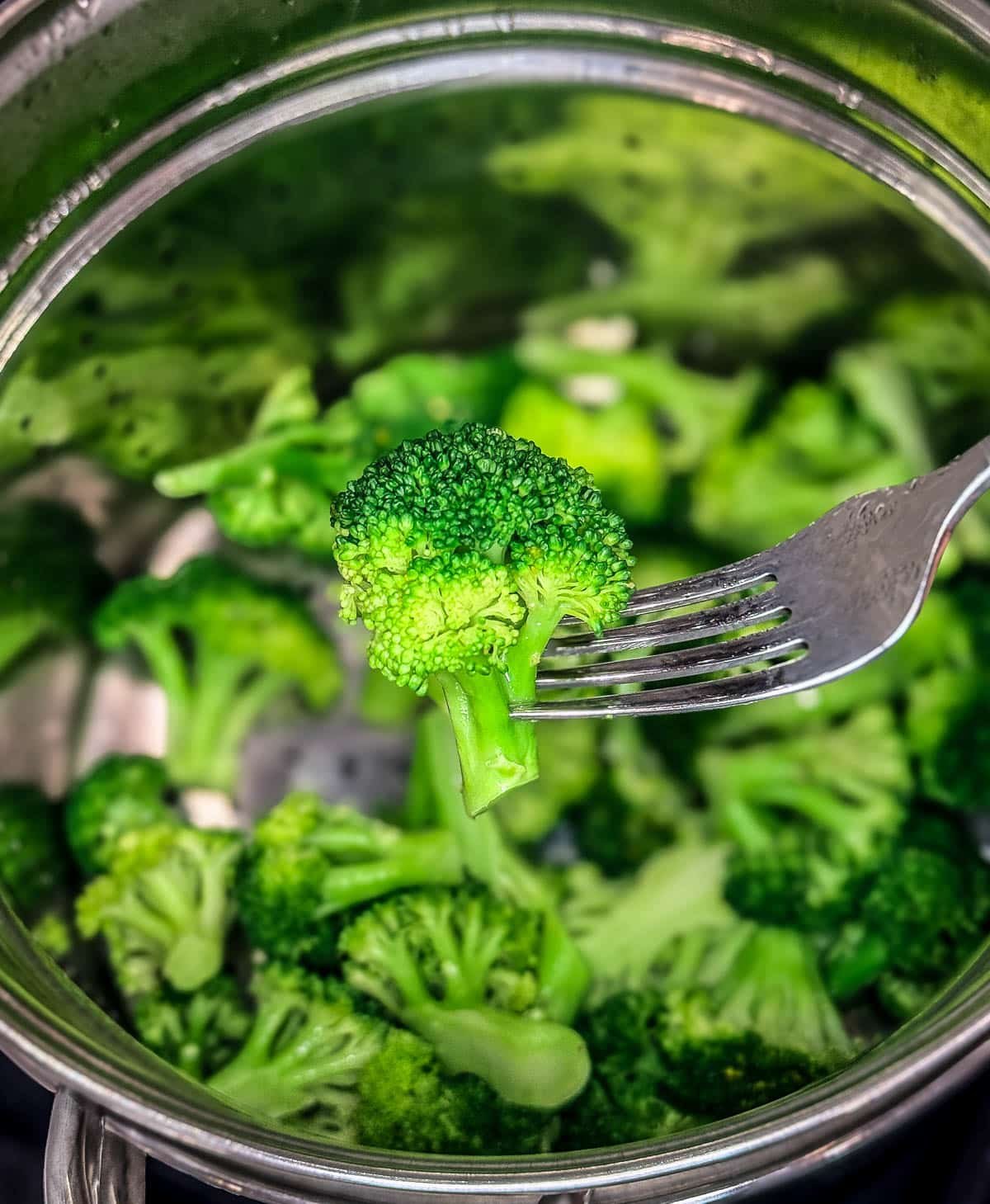
Trimmed and chopped broccoli that is ready to steam.
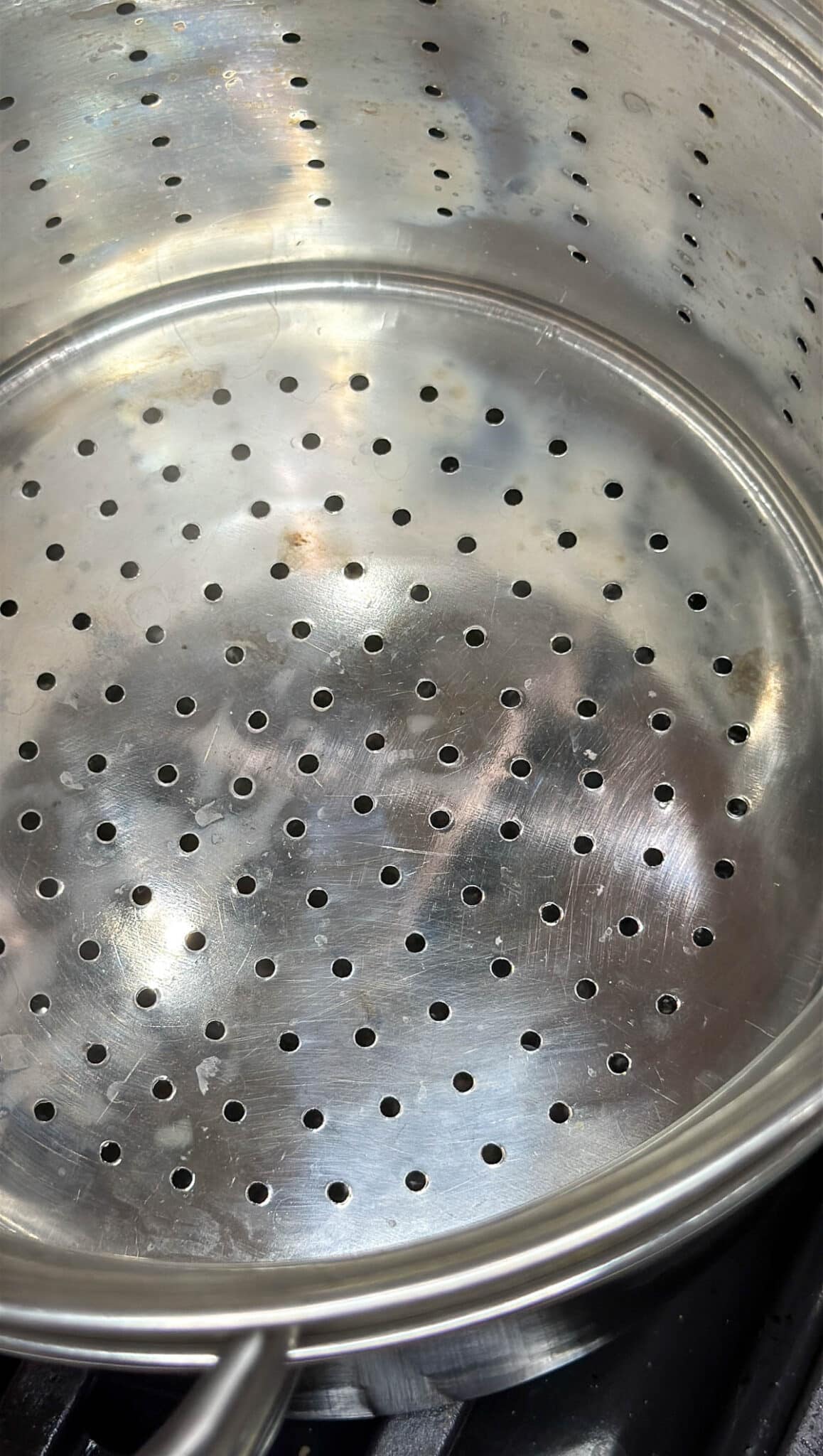
Steamer basket insert.
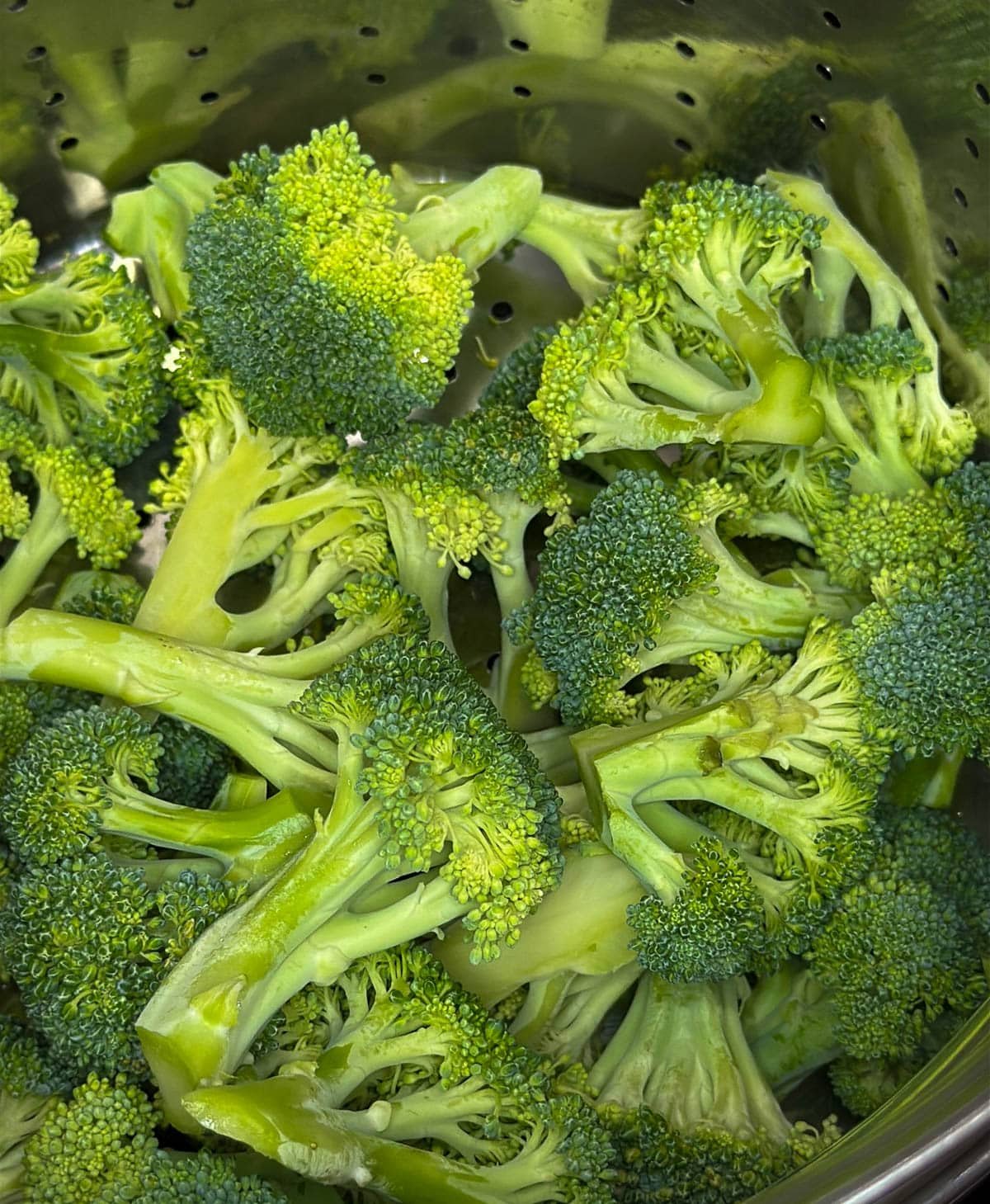
Place broccoli into the steamer.
The finished dish: perfectly crisp, steamed broccoli.
  1. Add an inch of water to the bottom of the pan.
  2. Place the steamer basket over the water.
  3. Bring to a simmer over medium heat.
  4. Add your broccoli florets and cover with a tight-fitting lid.
  5. Steam for 3-5 minutes, until tender crisp and bright green.
  6. Drain any excess water and season as desired.
  7. I finished my steamed broccoli with some melted butter, garlic, and salt.

Frequently Asked Questions

Can I steam broccoli without a steamer basket?

Yes! You can use a metal colander, mesh sieve, or even a heat-safe bowl placed over simmering water. Just make sure the broccoli doesn't touch the water.

Can I steam broccoli ahead of time?

Yes! Store cooled, steamed broccoli in an airtight container in the fridge for up to 3 days. Reheat gently before serving.

Are broccoli stems edible?

There are! Peel off the tough outer layer, then slice or chop them. They're delicious in stir-fries, soups, or even steamed along with the florets.

What's the healthiest way to steam broccoli?

Steaming preserves vitamins and nutrients better than boiling. Serve plain or with a light drizzle of olive oil, lemon juice, or a sprinkle of herbs for extra flavor without extra calories.

Can I steam frozen broccoli?

Yes! Frozen broccoli can be steamed straight from the freezer. Add an extra minute or two to the cooking time and check for tenderness.

Is it better to steam broccoli with or without salt?

You can add a pinch of salt before or after steaming. Steaming with salt is fine, but seasoning afterward lets you better control the flavor.

Recipe

Print Recipe
No ratings yet

How to Steam Broccoli

This easy method shows you how to steam broccoli to perfect crisp-tender goodness every time. Say goodbye to mushy broccoli!
Prep Time5 minutes mins
Cook Time5 minutes mins
Total Time10 minutes mins
Course: Side Dish
Cuisine: American
Servings: 4 servings
Calories: 39kcal
Author: Liz Marek

Equipment

  • 1 Steamer A large pot with a steamer insert and lid.

Ingredients

  • 1 pound broccoli
  • 1 cup water
  • salt to taste

Instructions

  • Add an inch of water to the bottom of the pan.
  • Place the steamer basket over the water.
  • Bring to a simmer over medium heat.
  • Add your broccoli florets and cover with a tight-fitting lid.
  • Steam for 3-5 minutes, until tender crisp and bright green.
  • Drain any excess water and season as desired.

Notes

  • Frozen Option: Frozen broccoli can be steamed straight from the freezer. Add an extra minute or two to the cooking time and check for tenderness.
  • Storage Instructions: Store cooled, steamed broccoli in an airtight container in the fridge for up to 3 days. Reheat gently in a skillet on medium-low heat with a touch of water or oil. Microwave in 30-second increments until warmed through.
  • Serving Suggestions: Serve plain or with a light drizzle of olive oil, lemon juice, or a sprinkle of herbs. For more flavor, add butter, garlic, and soy sauce.

Nutrition

Serving: 1serving | Calories: 39kcal | Carbohydrates: 8g | Protein: 3g | Fat: 0.4g | Saturated Fat: 0.1g | Polyunsaturated Fat: 0.1g | Monounsaturated Fat: 0.04g | Sodium: 40mg | Potassium: 358mg | Fiber: 3g | Sugar: 2g | Vitamin A: 706IU | Vitamin C: 101mg | Calcium: 55mg | Iron: 1mg
close up of stuffed shells in marinara sauce

November 12, 2025 Recipe

Stuffed Shells

If you're craving comfort food that looks fancy but feels like a hug, stuffed shells are it. Big, cozy jumbo pasta shells filled with a creamy ricotta mixture, baked in rich tomato sauce until golden brown and bubbling-it's the kind of hearty meal that makes everyone at the table happy. This shells recipe is simple, satisfying, and perfect for a dinner party or an easy weeknight dinner that feels like you tried way harder than you did.

A close-up photo of Stuffed Shells.


I saw one of those viral TikTok pasta bake videos where people layer sauce, cheese, and shells like edible art, and I couldn't stop thinking about it. I've always loved how the ricotta cheese melts into the sauce, so I wanted to make my own version that balances creamy and tangy, with just enough spice from the red pepper flakes. It's also a great way to use frozen spinach without anyone noticing-it just adds that perfect color and texture.

What's In This Blog Post?

  • Ingredients Needed
  • Tips and Tricks for Success
  • How to Make Stuffed Shells
  • Final Thoughts
  • Frequently Asked Questions

Ingredients Needed

Every ingredient in these Stuffed Shells adds something special. From the creamy ricotta filling to the rich marinara sauce that ties it all together, here's everything you need to make this recipe.

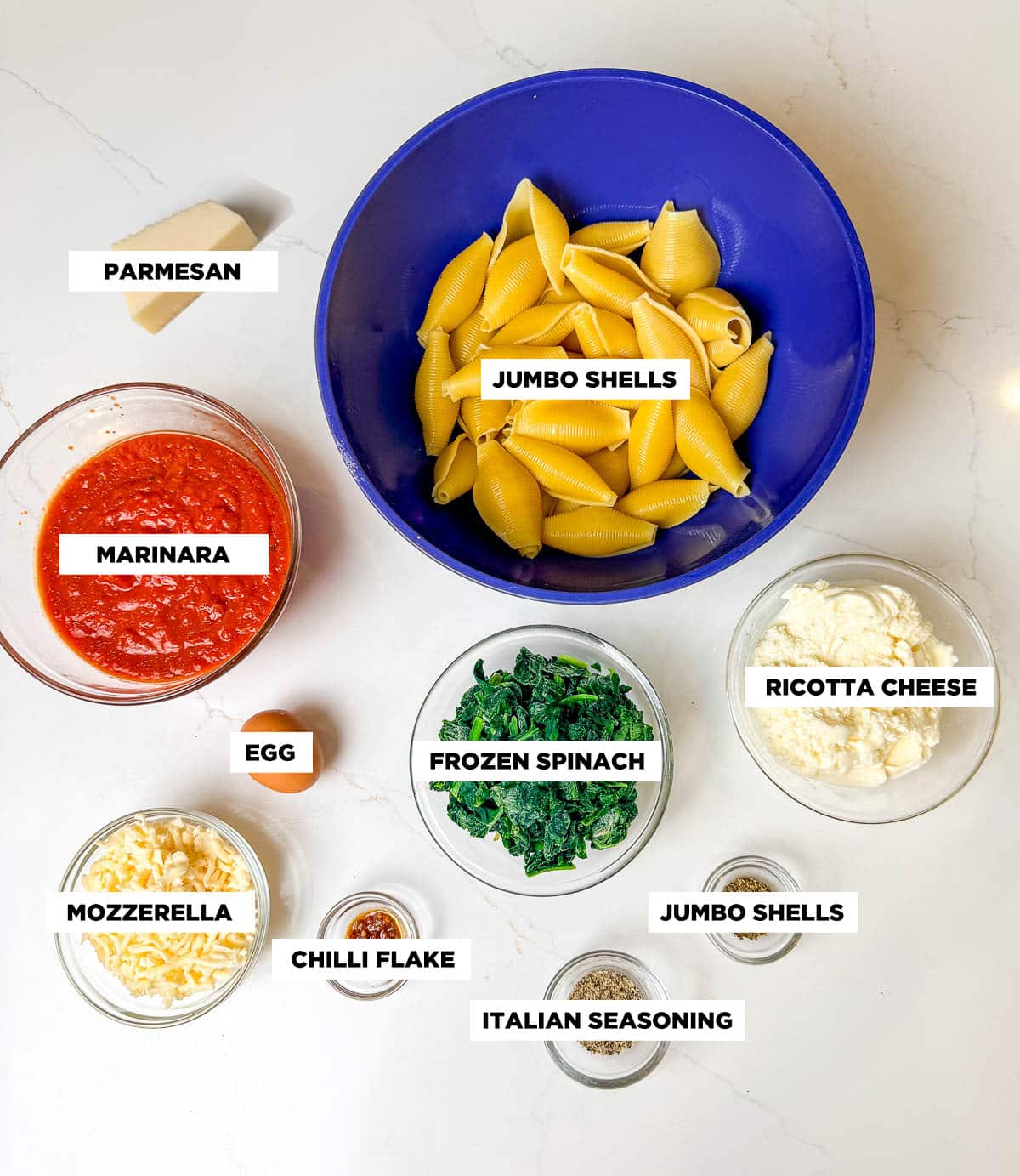
Ingredient shot for Stuffed Shells, featuring: jumbo shells, marinara sauce, ricotta cheese, mozzarella, parmesan cheese, frozen spinach, an egg, chili flakes, Italian seasoning, and SGP.
  • Jumbo Pasta Shells - Large shells are ideal for holding generous scoops of the creamy ricotta filling. Cook them just until al dente so they don't tear when stuffed. Substitute: Manicotti tubes or large pasta shells if jumbo shells aren't available.
  • Whole Milk Ricotta Cheese - The creamy base of the filling, giving the shells their rich texture and flavor. Whole milk ricotta makes the filling smooth and luscious. Substitute: Cottage cheese for a lighter texture, or part-skim ricotta for a lower-fat option. For the best results, drain ricotta in a fine mesh sieve overnight to remove excess moisture.
  • Frozen Spinach - An easy and affordable choice that adds color, nutrients, and texture, with no need to thaw or strain. Substitute: Fresh spinach (sautéed and drained) or finely chopped Swiss chard or kale.
  • Mozzarella Cheese - Adds that signature melty, stretchy layer of cheese. Half is mixed into the filling, and the rest is used on top before baking. Substitute: Provolone or Monterey Jack for a mild melt, or Fontina for a rich, buttery flavor.
  • Parmesan Cheese - Brings a salty, nutty depth that balances the creamy filling. Use part in the cheese mixture and the rest for topping. Substitute: Pecorino Romano for a sharper, more robust flavor.
  • Egg - Helps bind the filling and gives it structure as it bakes. Substitute: Omit for an egg-free version (the filling will be softer), or use a slurry made with cornstarch and water.
  • Dried Italian Seasoning - A classic blend of herbs like basil, oregano, thyme, and rosemary that gives the filling its Italian-inspired flavor.
  • SPG (Salt, Pepper, Garlic) - A balanced blend that adds savory depth to the filling.
  • Red Pepper Flakes - Adds a touch of heat to balance the creamy, cheesy filling. Substitute: Omit for a milder dish or use a small pinch of cayenne for a stronger kick.
  • Marinara Sauce - A rich tomato base that ties the dish together. Spread some in the baking dish and spoon more over the shells before baking. Substitute: Any pasta sauce-store-bought or homemade. Try a meat sauce for extra heartiness or arrabbiata for spice.
  • Olive Oil - Used to coat the cooked shells to prevent sticking and to drizzle before baking for a glossy finish. Substitute: Any neutral oil such as avocado or vegetable oil.
  • Optional Garnishes - Fresh basil or parsley for color and freshness, lemon zest for brightness, and extra Parmesan for added flavor.

Tips and Tricks for Success

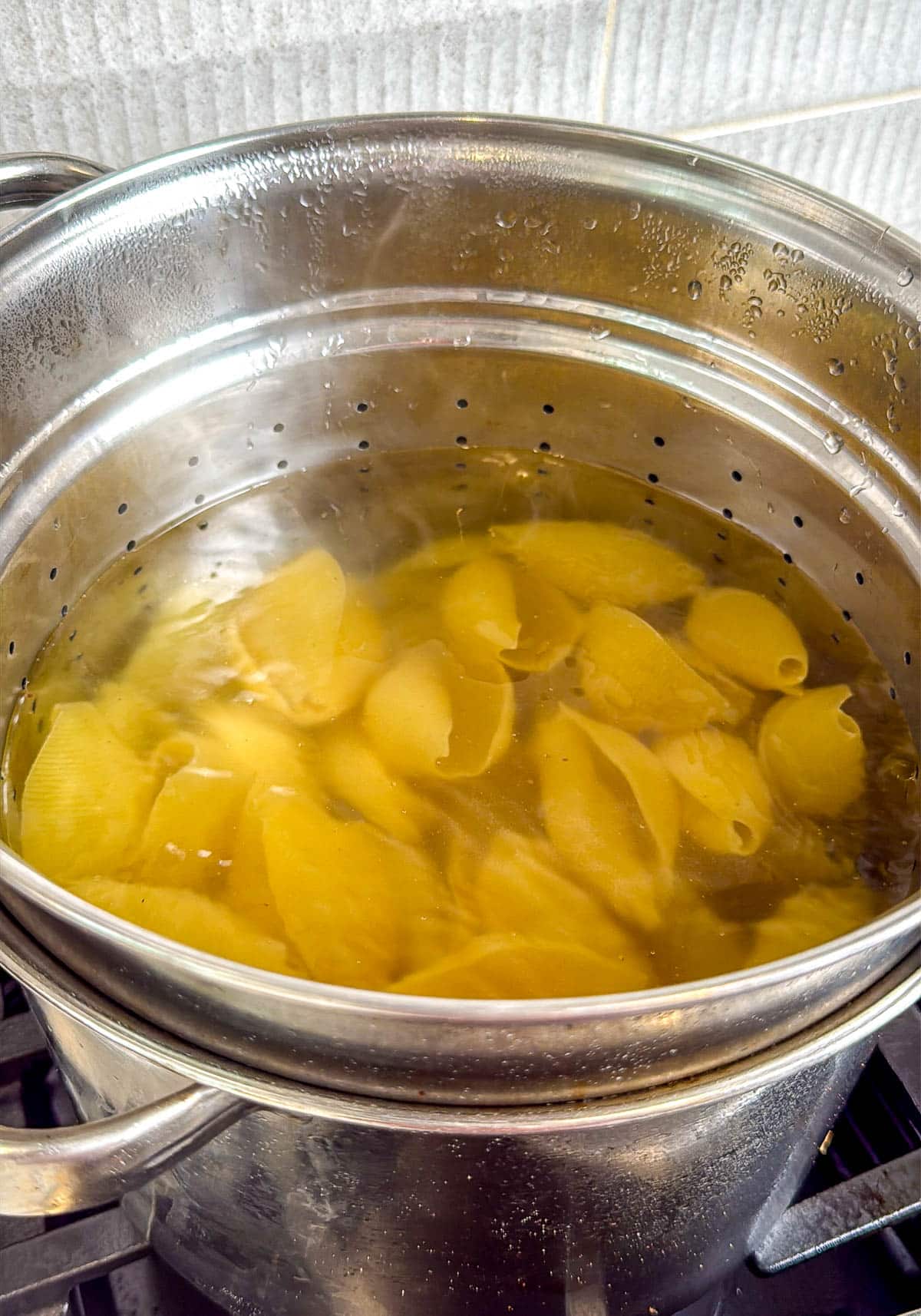
  • Boil your jumbo pasta shells just until al dente (about 6 minutes or according to package directions) so they hold their shape when stuffed.
  • If you've got a cast iron skillet, you can bake right in it for a rustic presentation and even heat distribution.
  • Cover the dish with aluminum foil during the first part of the bake time to trap moisture, then uncover at the end so the top of the shells turns lightly golden brown.
  • A sprinkle of fresh basil or lemon zest on the top of the sauce before serving adds brightness to balance the richness.

How to Make Stuffed Shells

Each step builds layers of flavor and texture, from the creamy ricotta filling to the bubbling, cheesy topping. Here's how to make it all come together.

Jumbo pasta shells boiling in a large pot.
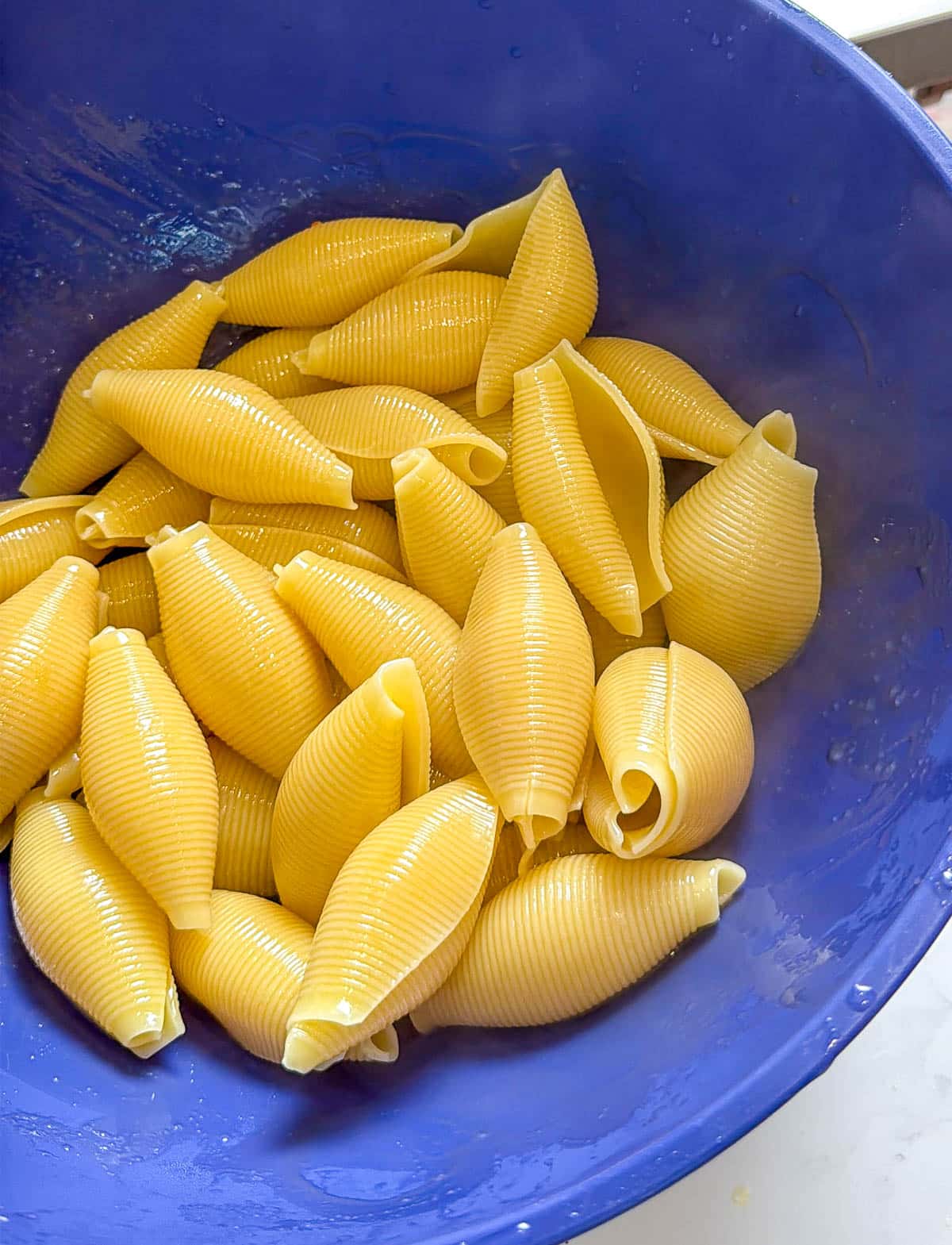
Jumbo pasta shells cooked and drained.
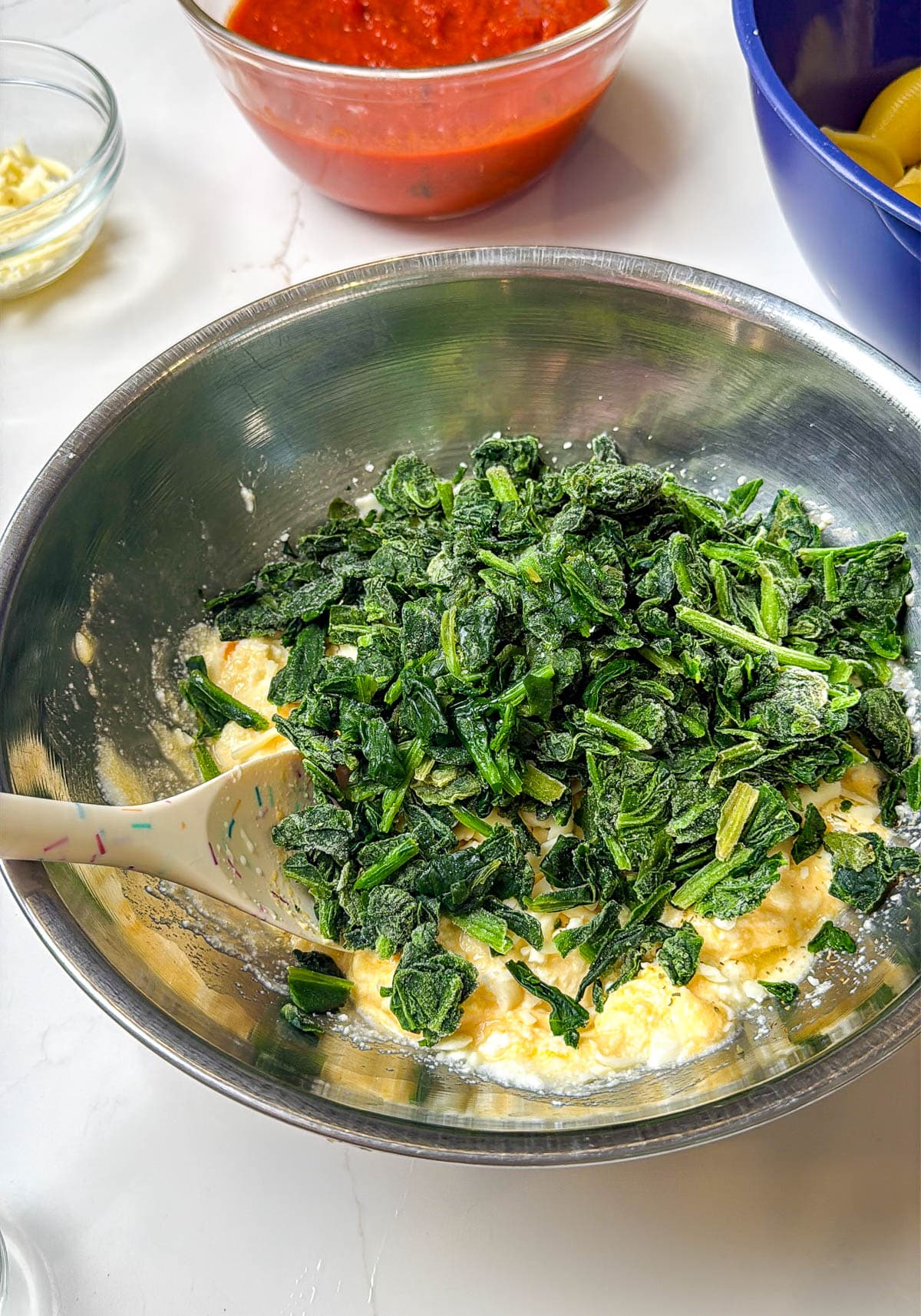
Frozen spinach added to the cheese mixture.
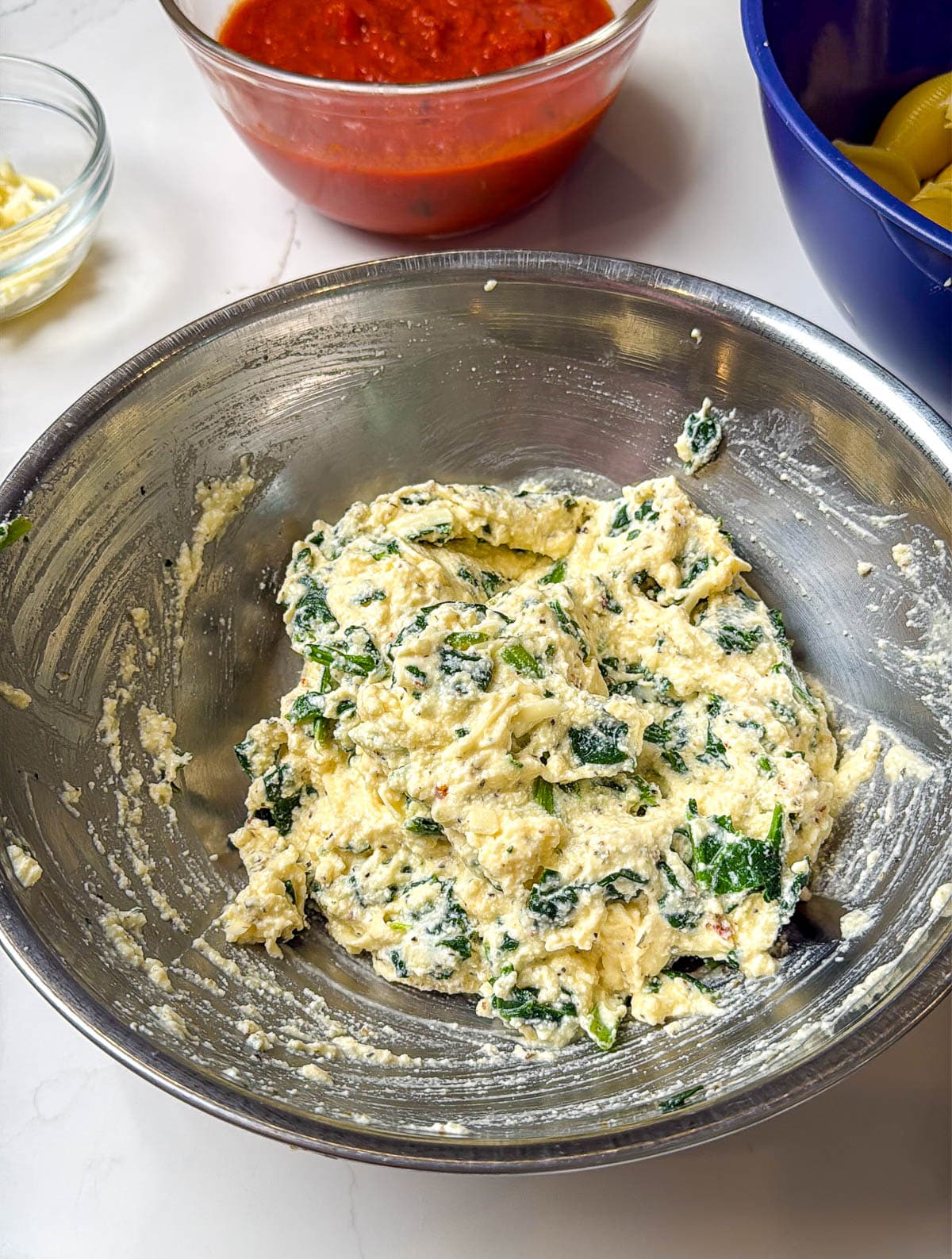
Spinach and cheese mixture fully combined.
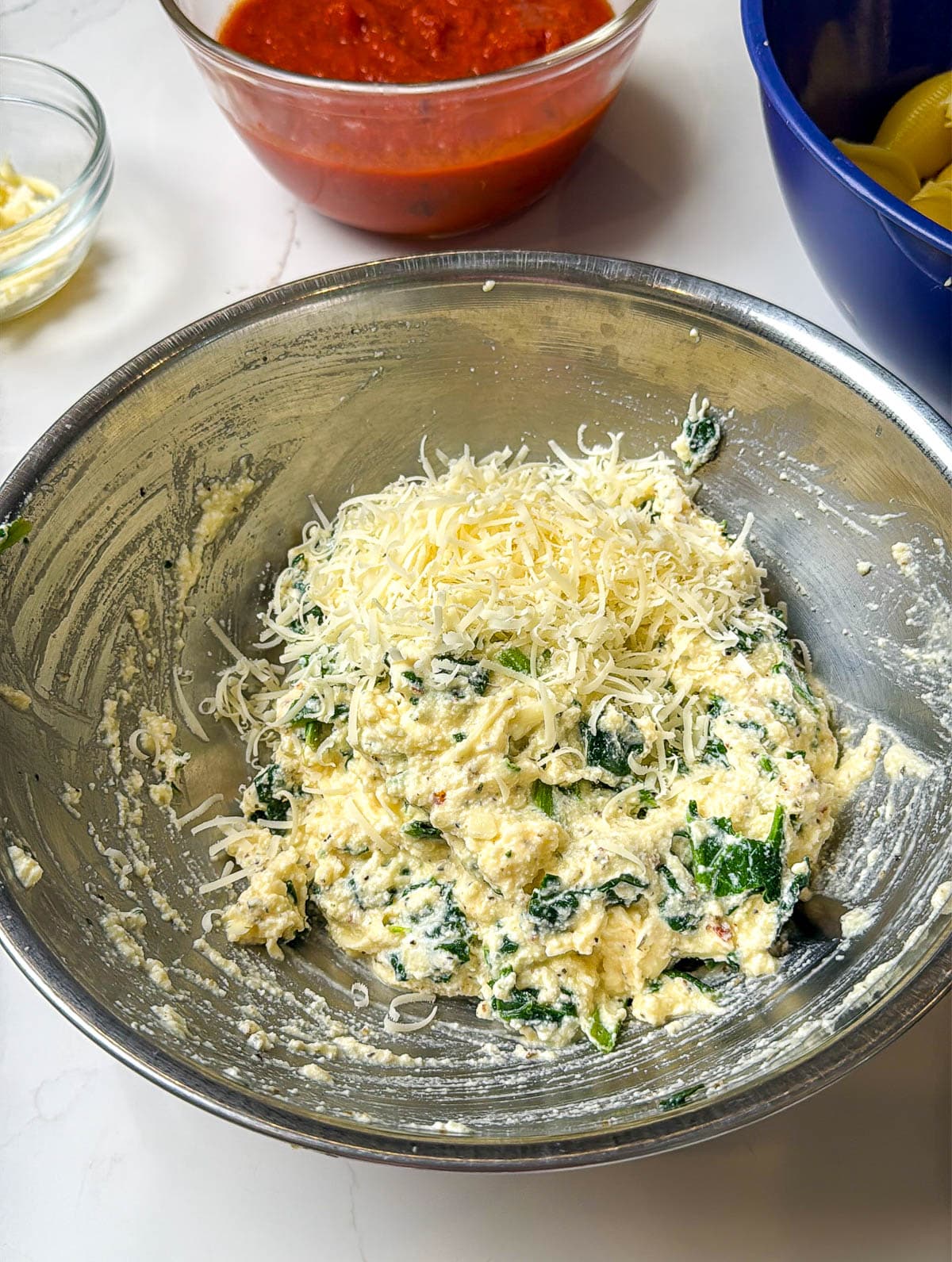
Parmesan cheese added to the cheese and spinach mixture.
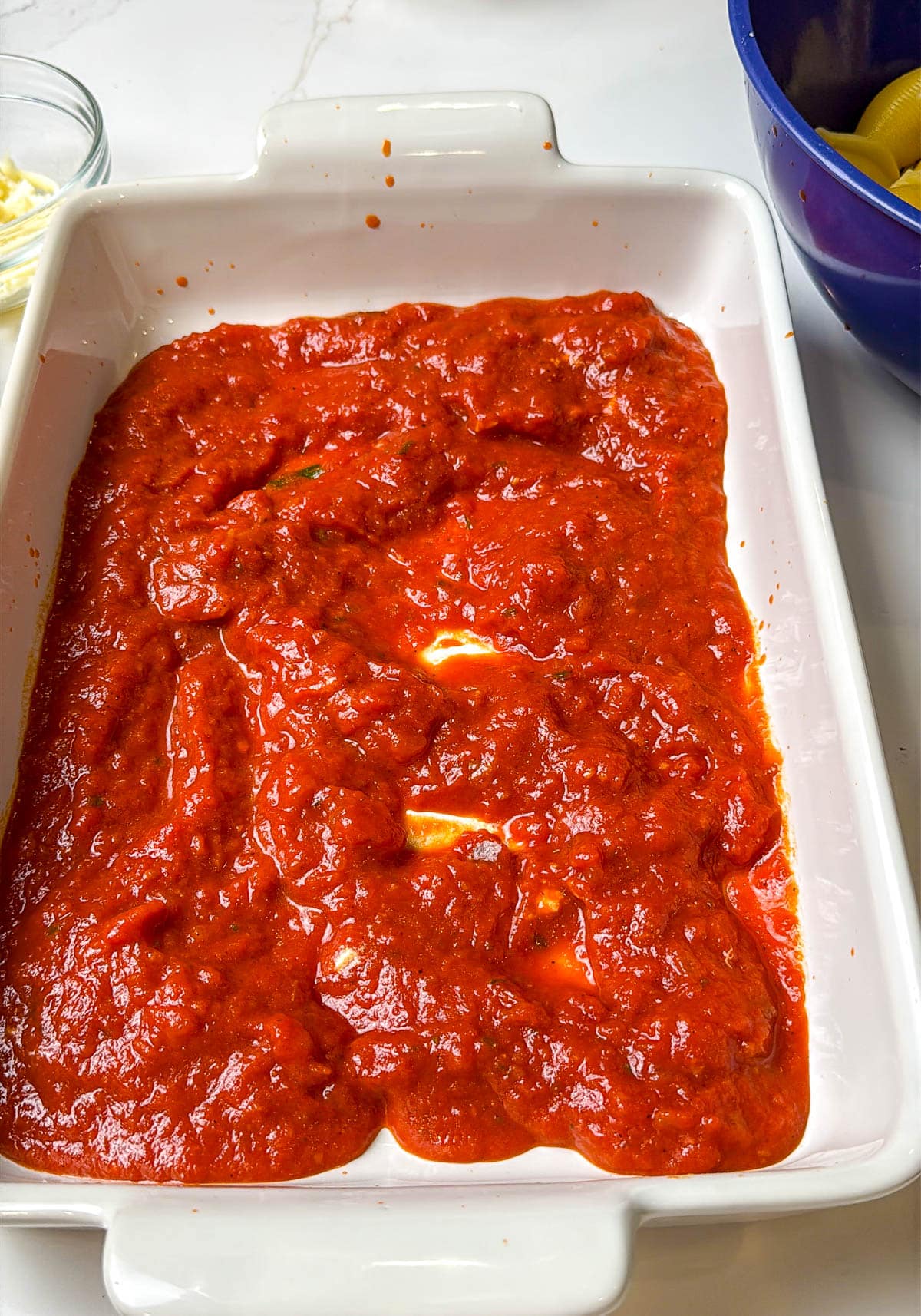
Marinara sauce coating the bottom of the 9x13 baking dish.
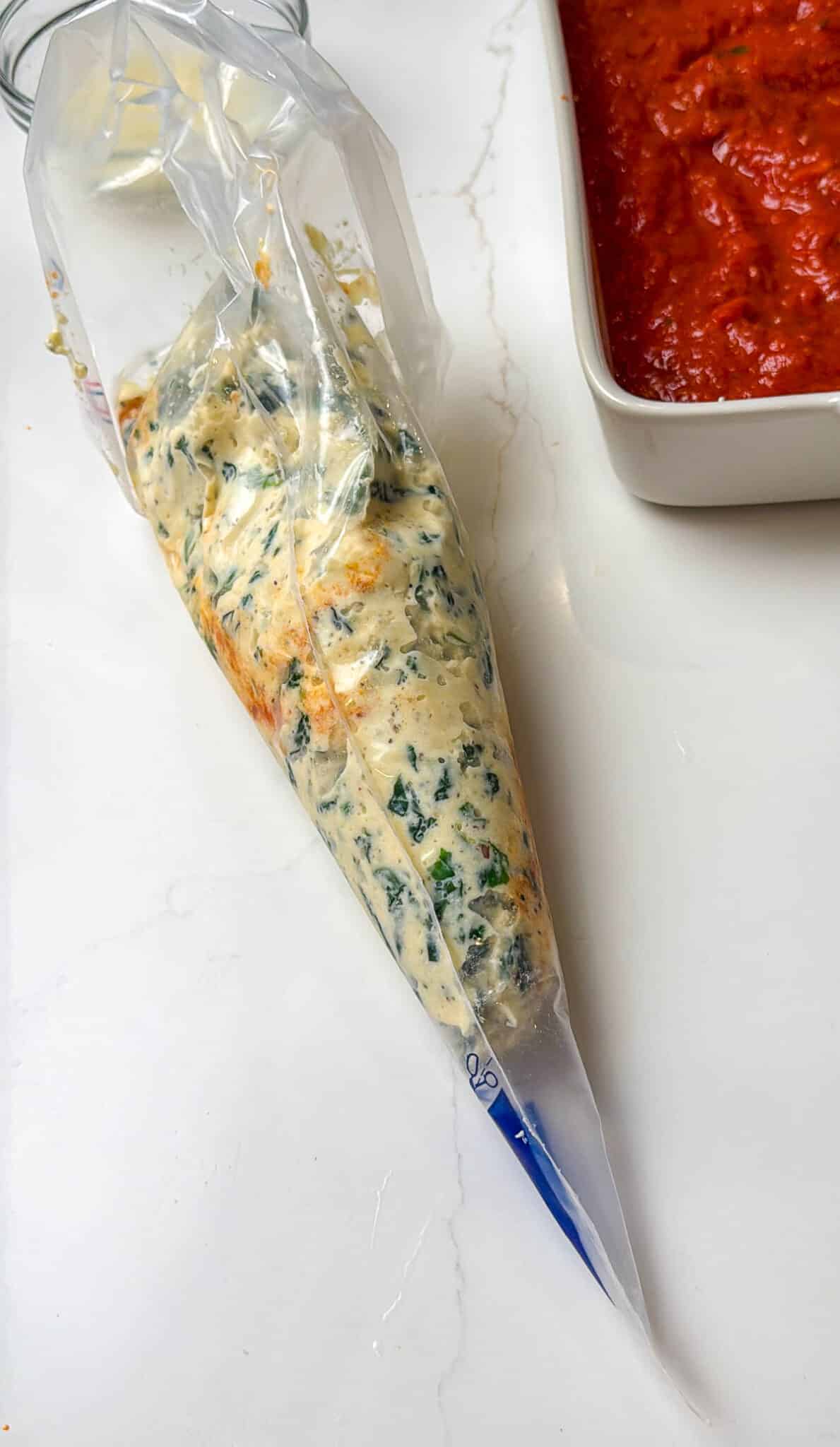
Piping bag filled with ricotta mixture.
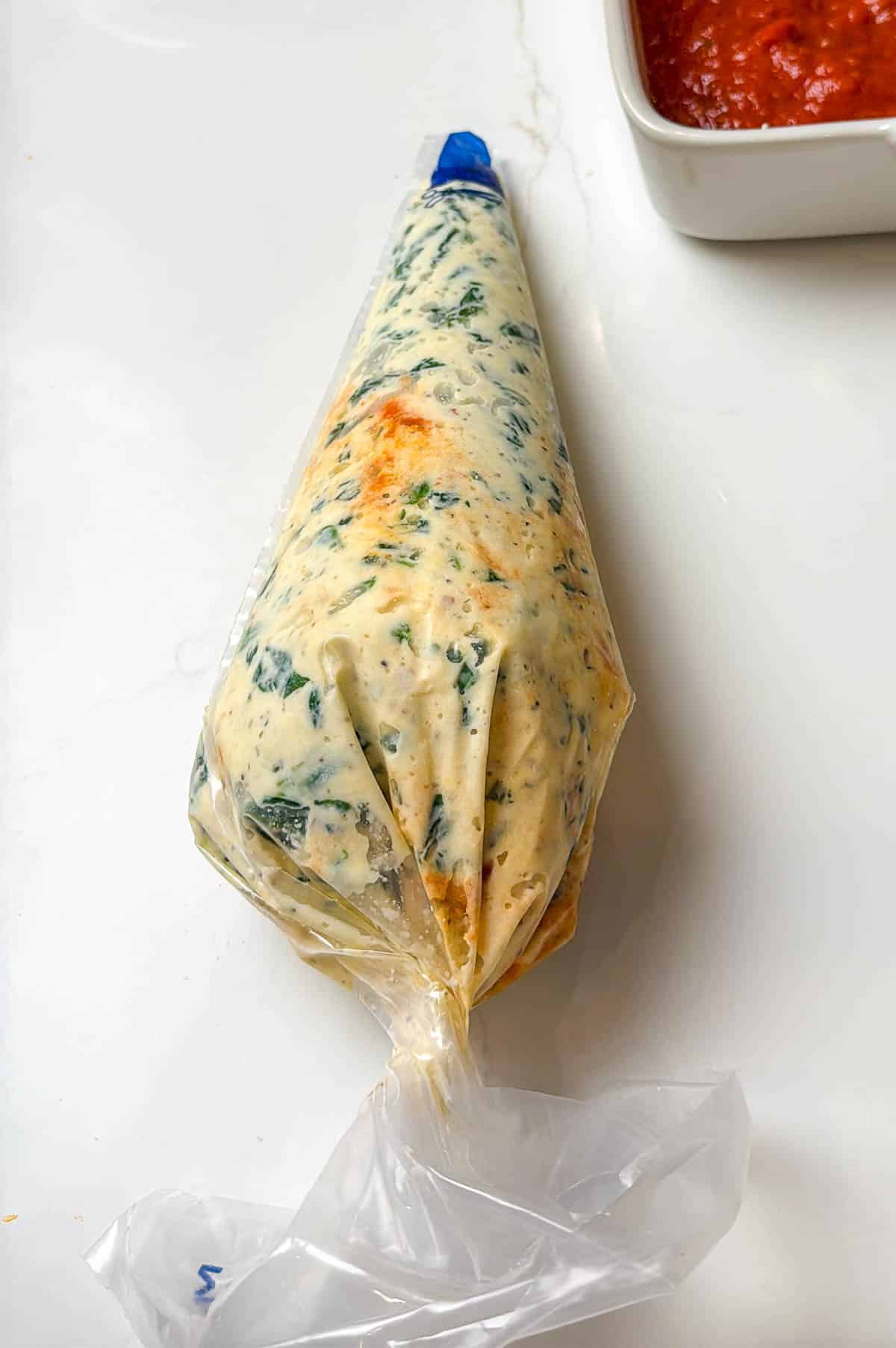
Piping bag is full, twisted closed, and the top is cut open to begin piping.
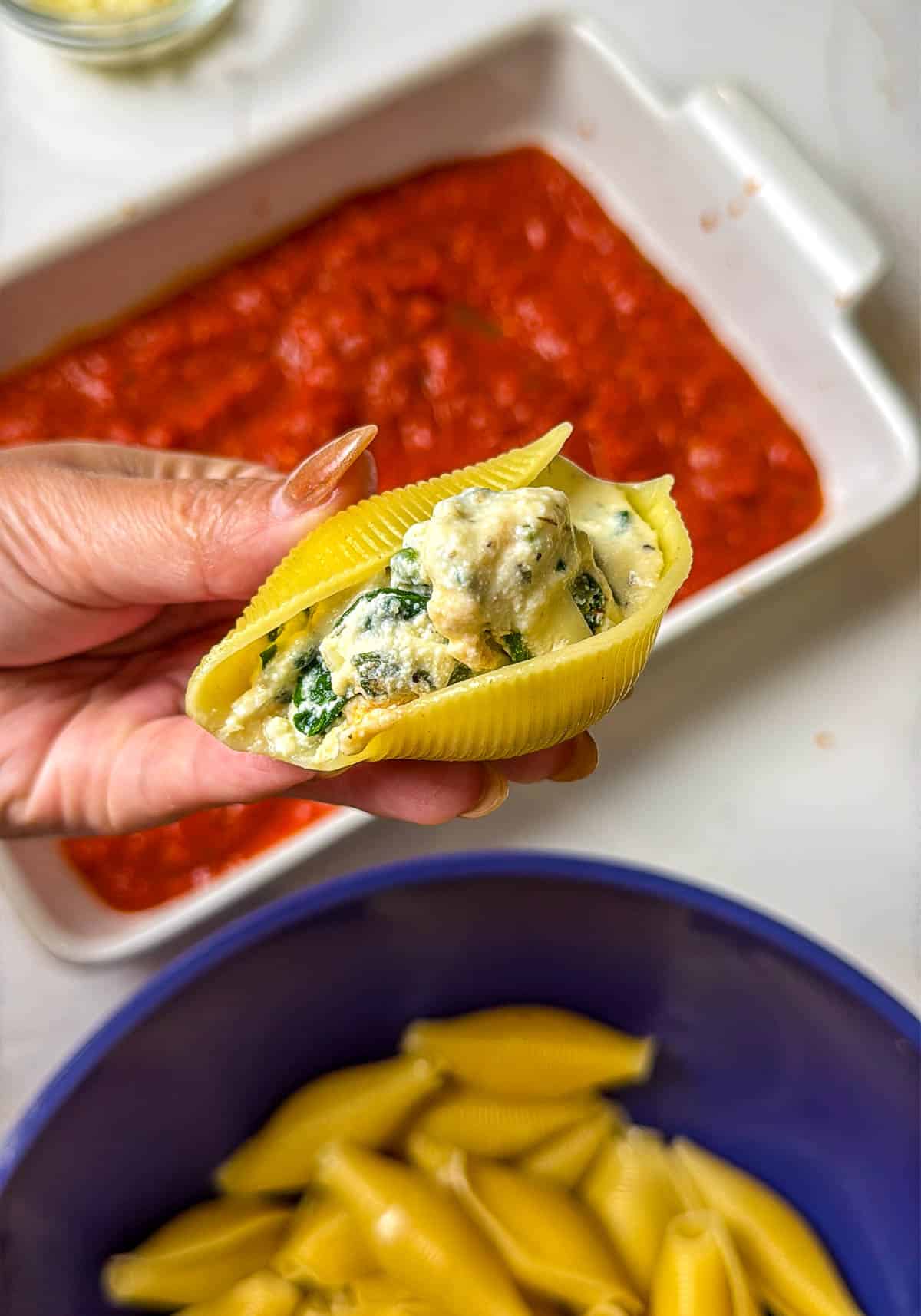
A close-up photo of a pasta shell filled with the ricotta mixture.
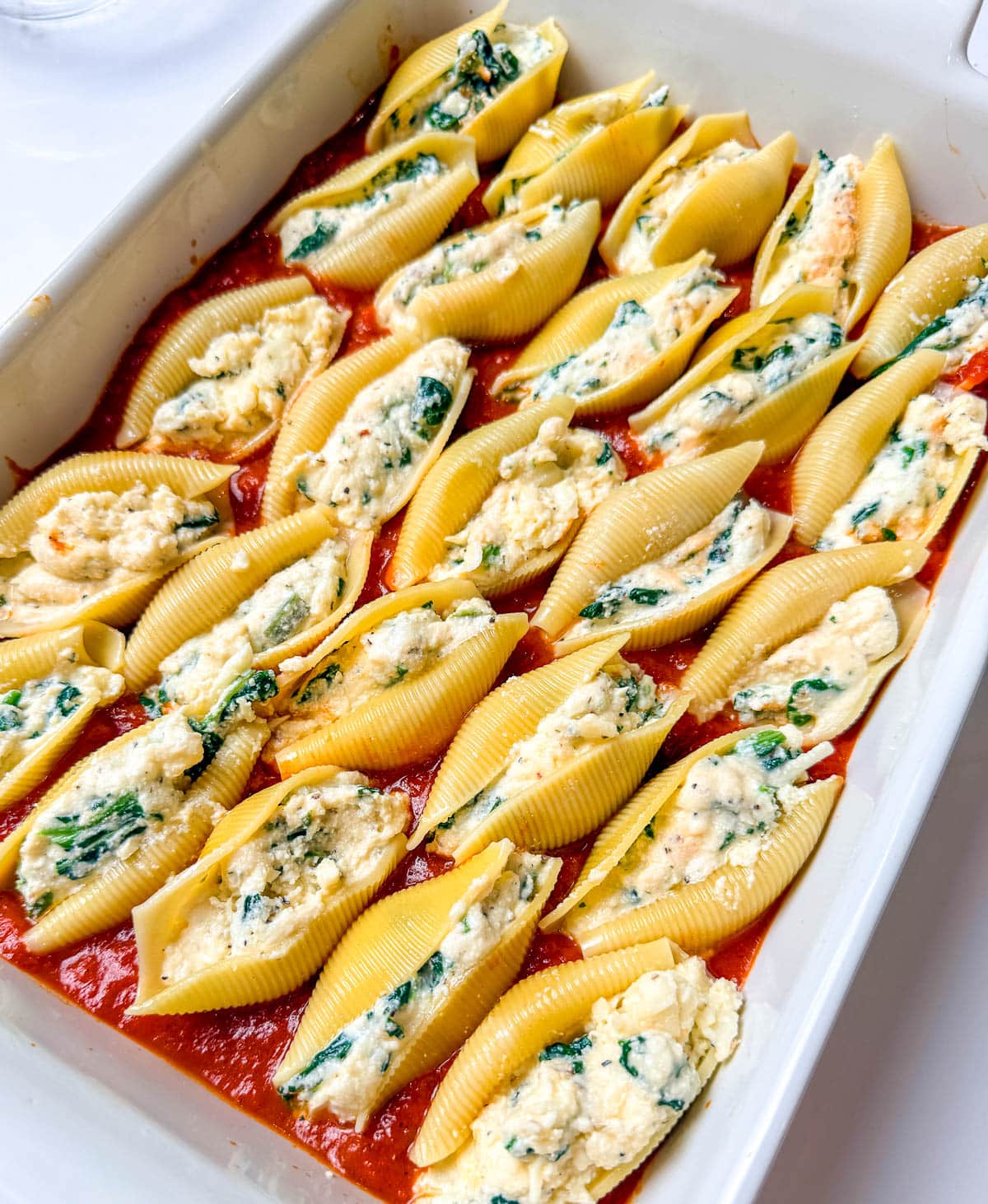
Stuffed pasta shells lined up and placed in the marinara sauce coated baking dish.
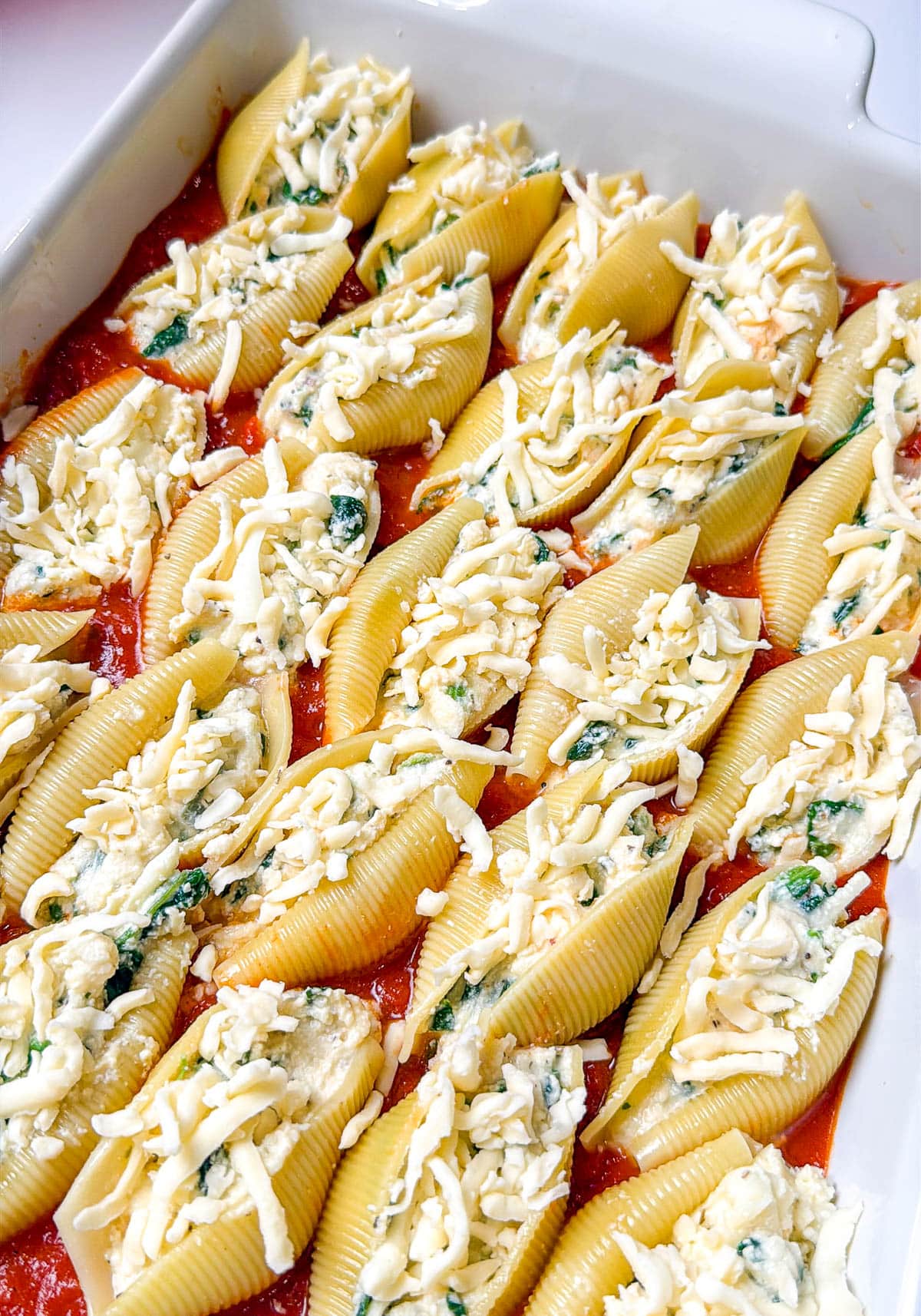
Stuffed shells topped with shredded mozzarella cheese.
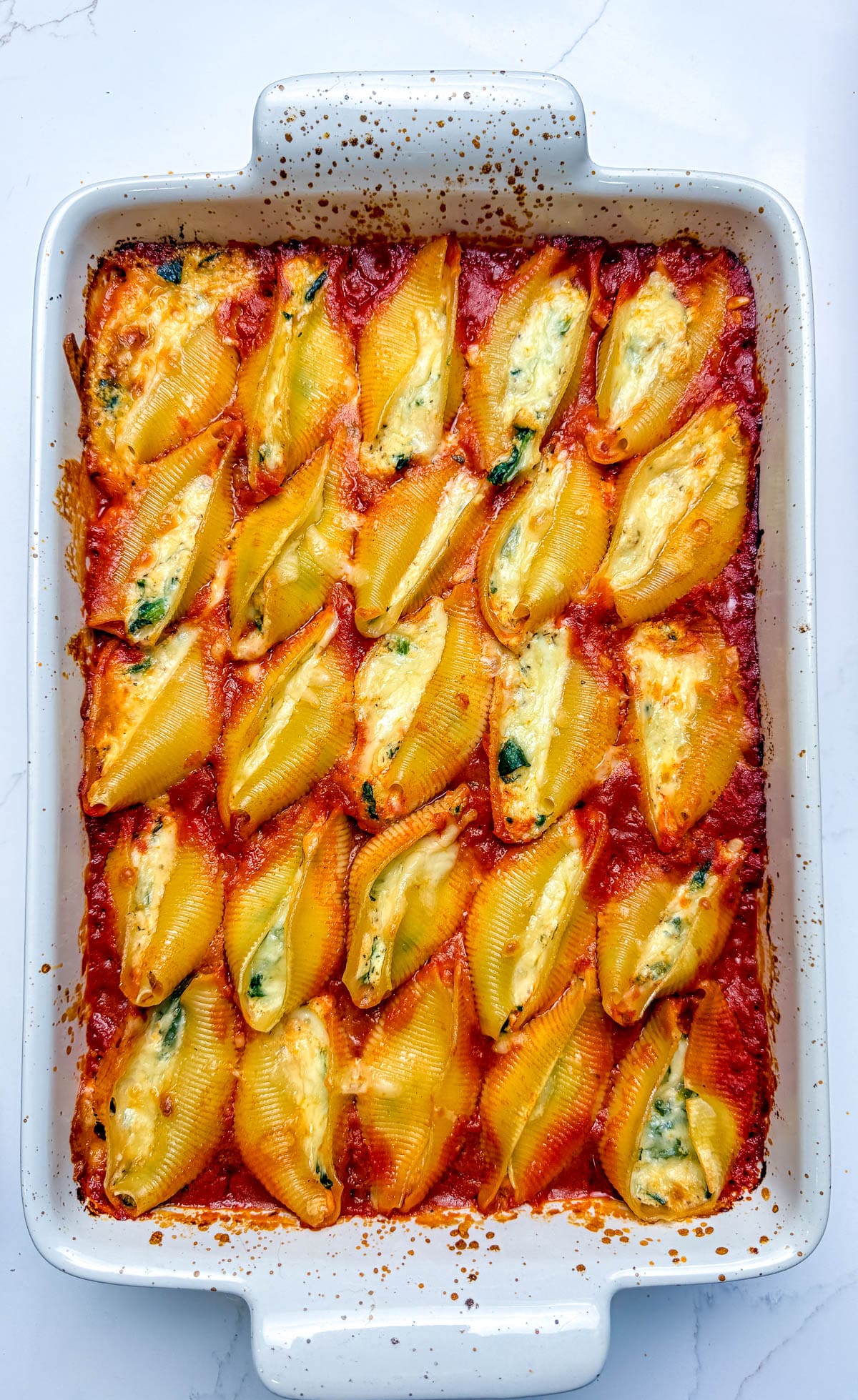
The finished dish, baked to golden perfection!
  1. Preheat the oven to 425°F and bring a large pot of salted water to a boil.
  2. Cook the jumbo pasta shells for 6 minutes until al dente. Drain, rinse under cold water, and toss with a little olive oil to prevent sticking.
  3. In a medium bowl, combine finely chopped spinach, ricotta cheese, half the mozzarella, half the parmesan, the egg, Italian seasoning, SPG, and red pepper flakes. Mix well to form the cheese mixture.
  4. Spread tomato sauce or homemade sauce on the bottom of a 9x13 baking dish.
  5. Fill each shell with about a tablespoon of the ricotta mixture and place in the dish. I used a piping bag to make this easier.
  6. Spoon a little more pasta sauce over the top of the shells and sprinkle with the remaining cheese.
  7. Cover with aluminum foil and bake for 20 minutes. Remove the foil and bake another 5 minutes until bubbly and golden brown.

Final Thoughts

These stuffed shells make the perfect centerpiece for a cozy dinner party or holiday meal. Serve them with dinner rolls, garlic knots, a simple green salad, or a classic caesar salad and some crusty bread to mop up every bit of sauce. Store leftovers in an airtight container and enjoy the next day-honestly, they might taste even better after the flavors have had time to mingle.

Frequently Asked Questions

Can I make stuffed shells ahead of time?

Yes! Assemble them up to a day ahead, cover with aluminum foil, and refrigerate. Just add 10 minutes to the bake time when ready to cook.

Can I freeze them?

Absolutely. Stuff and sauce the shells but skip baking. Freeze in a casserole dish, then bake straight from frozen at 375°F until heated through (about 45-50 minutes).

Can I add meat to the filling?

Definitely! A bit of browned ground beef or Italian sausage mixed into the filling makes this dish even more hearty.

How do I reheat leftovers?

Reheat in a large skillet over medium heat with a splash of pasta sauce, or cover and bake at 350°F until hot.

Recipe

close up of stuffed shells in marinara sauce
Print Recipe
No ratings yet

Stuffed Shells

This Stuffed Shells recipe is a classic Italian comfort food. Made with ricotta, spinach, and mozzarella, then baked in marinara sauce.
Prep Time20 minutes mins
Cook Time25 minutes mins
Total Time45 minutes mins
Course: Main Course
Cuisine: Italian
Servings: 6 servings
Calories: 114kcal
Author: Liz Marek

Ingredients

  • 18-20 Jumbo pasta shells
  • 1 pint whole milk ricotta cheese
  • 5 ounces frozen spinach
  • 4 ounces shredded mozzarella cheese divided in half
  • ¼ cup grated parmesan cheese divided in half
  • 1 egg
  • 1 tablespoon dried Italian seasoning
  • 2 teaspoons SPG
  • ¼ teaspoon red chili flakes
  • 2 cups marinara sauce plus more for serving
  • olive oil for drizzling

Instructions

  • Preheat the oven to 425°F and bring a large pot of salted water to a boil.
  • Cook the jumbo pasta shells for 6 minutes until al dente. Drain, rinse under cold water, and toss with a little olive oil to prevent sticking.
  • In a medium bowl, combine finely chopped spinach, ricotta cheese, half the mozzarella, half the parmesan, the egg, Italian seasoning, SPG, and red pepper flakes. Mix well to form the cheese mixture.
  • Spread tomato sauce or homemade sauce on the bottom of a baking dish.
  • Fill each shell with about a tablespoon of the ricotta mixture and place in the dish.
  • Spoon a little more pasta sauce over the top of the shells and sprinkle with the remaining cheese.
  • Cover with aluminum foil and bake for 20 minutes. Remove the foil and bake another 5 minutes until bubbly and golden brown.

Notes

  • Make-Ahead Option: Assemble them up to a day ahead, cover with aluminum foil, and refrigerate. Just add 10 minutes to the bake time when ready to cook.
  • Freezer Instructions: Stuff and sauce the shells but skip baking. Freeze in a casserole dish, then bake straight from frozen at 375°F until heated through (about 45-50 minutes).
  • Reheating Instructions: Reheat in a large skillet over medium heat with a splash of pasta sauce, or cover and bake at 350°F until hot.

Nutrition

Serving: 1g | Calories: 114kcal | Carbohydrates: 7g | Protein: 8g | Fat: 7g | Saturated Fat: 3g | Polyunsaturated Fat: 0.5g | Monounsaturated Fat: 2g | Trans Fat: 0.003g | Cholesterol: 46mg | Sodium: 608mg | Potassium: 369mg | Fiber: 2g | Sugar: 3g | Vitamin A: 3366IU | Vitamin C: 7mg | Calcium: 192mg | Iron: 2mg

November 10, 2025 Blog

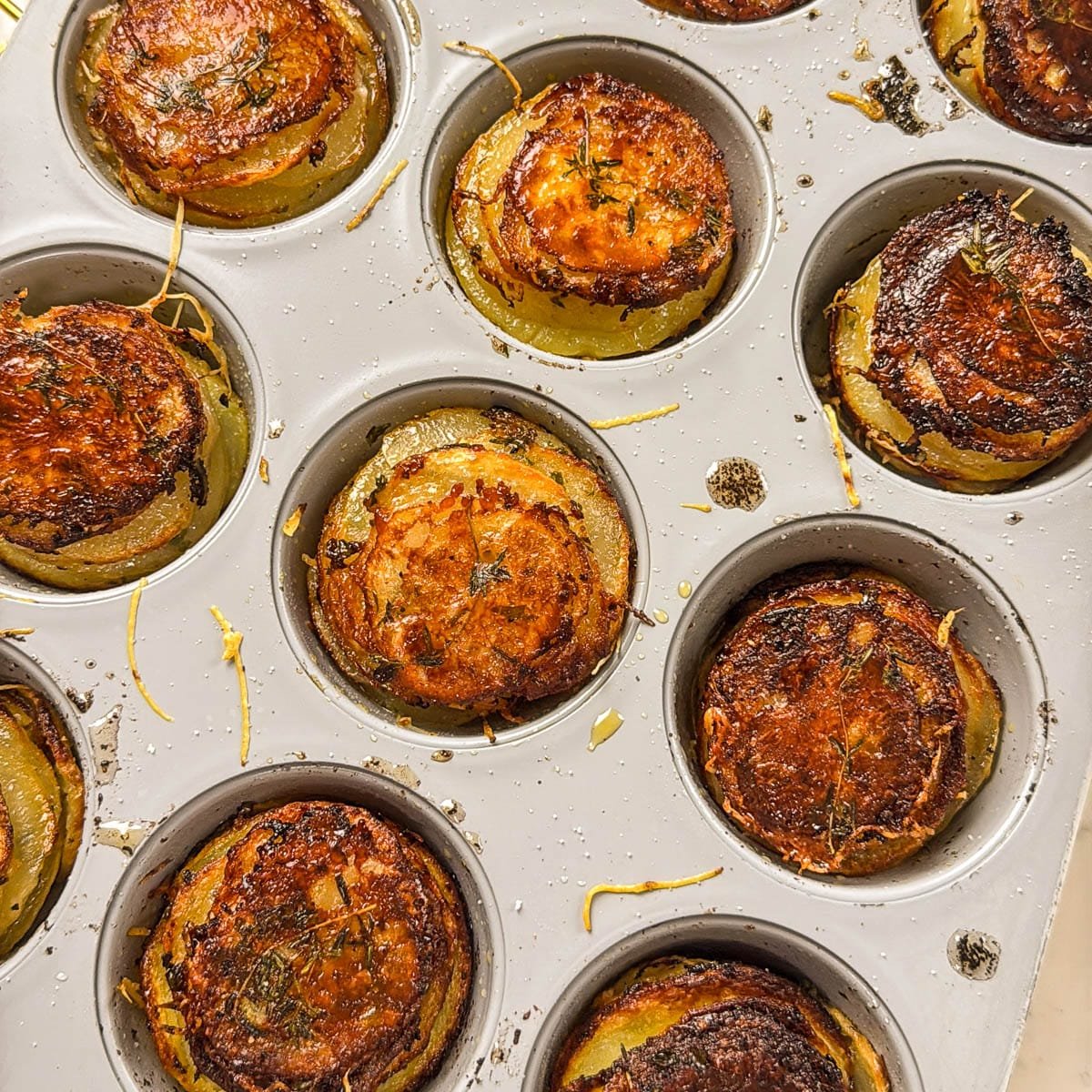
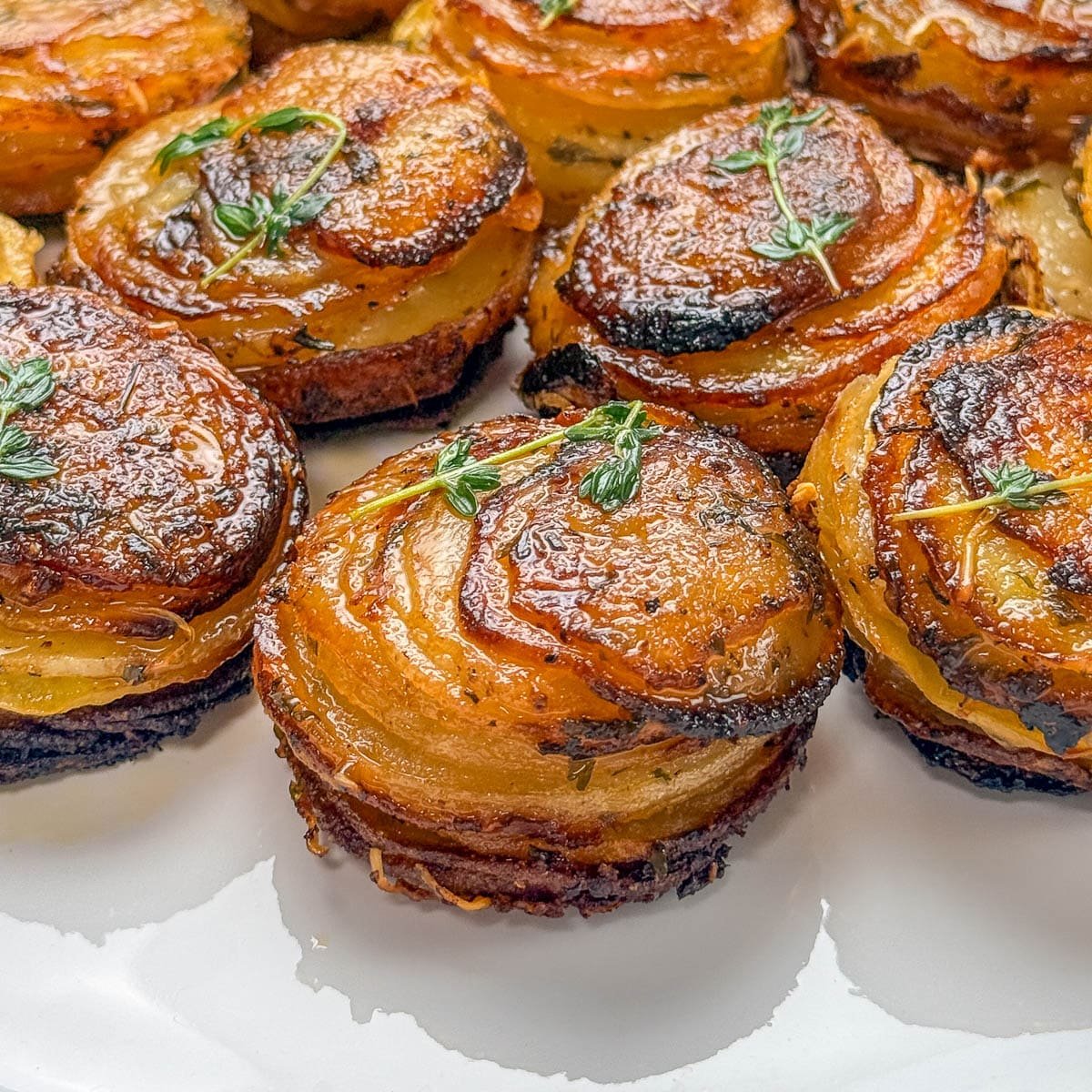
Crispy Parmesan Potato Stacks

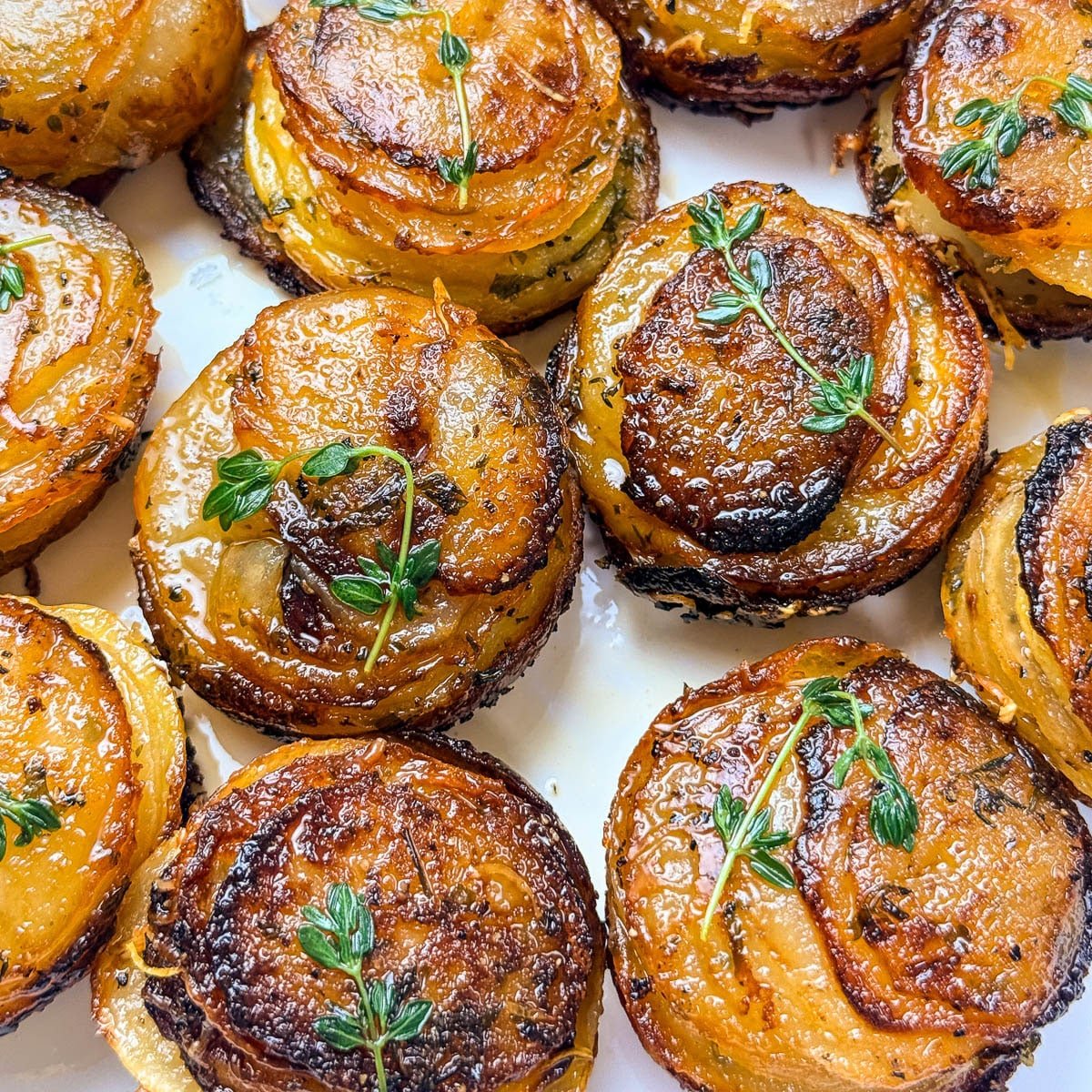
If you've never tried crispy potato stacks before, this is the perfect side dish to start with. These golden brown layers of potatoes are buttery, crisp on the edges, and creamy in the center-basically everything you love about roasted potatoes but stacked up in a muffin tin so they look like something you'd get at a fancy holiday dinner. Whether you're cooking for Thanksgiving, a dinner party, or just want to find a fun twist on your usual potato recipes, this one's a total showstopper.

What's in this blog post

  • Ingredients
  • How to make potato stacks
  • Serving Tips and Tricks
  • FAQ


The inspiration for these potato stacks came from one of those classic Thanksgiving moments where I needed a last-minute side dish that still looked impressive. I wanted something fun and crowd-pleasing, but also so simple that anyone could pull it off without stress. These crispy, golden stacks turned out to be the perfect answer-easy to prep, quick to bake, and absolutely irresistible on the table.

Ingredients

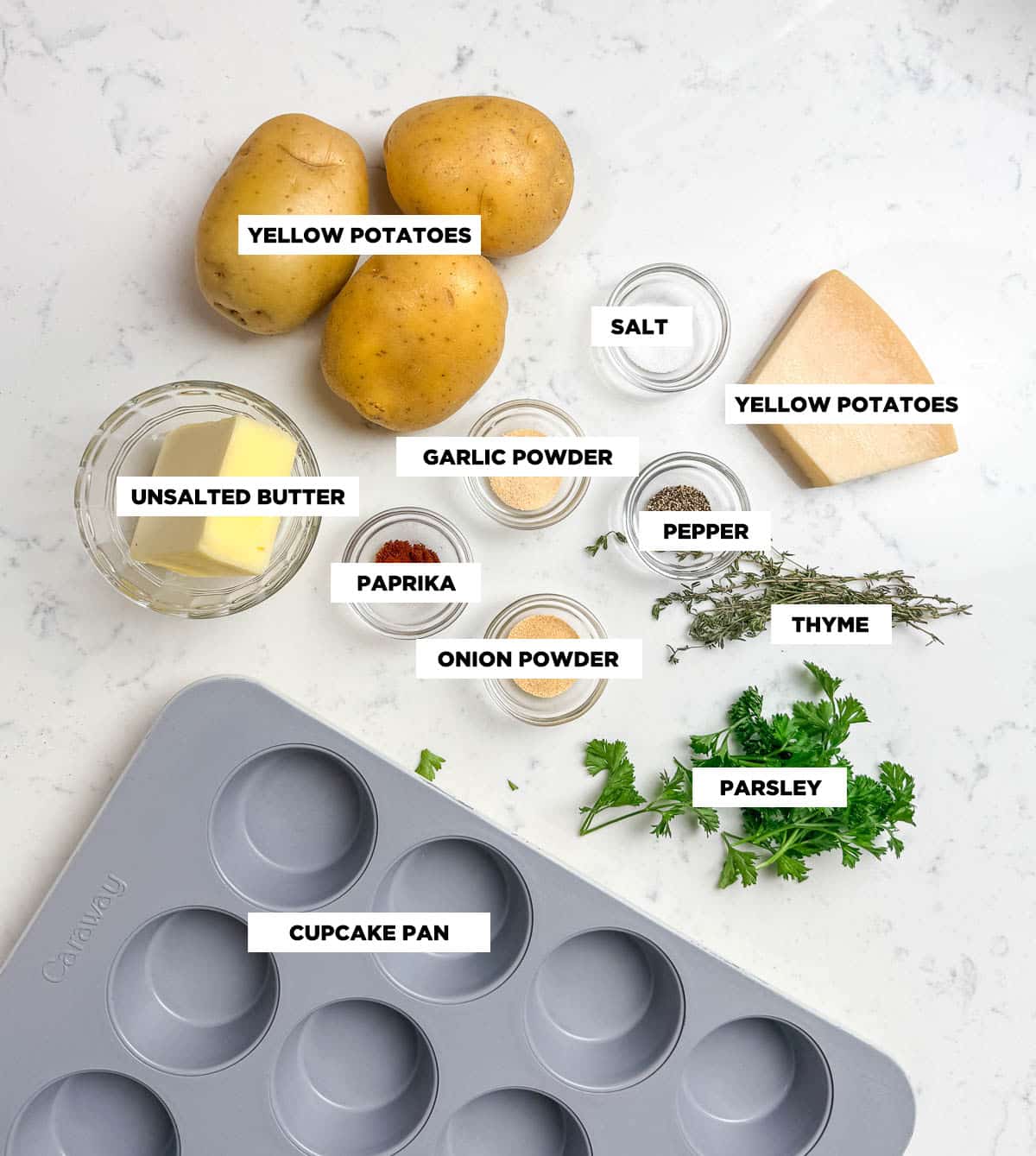
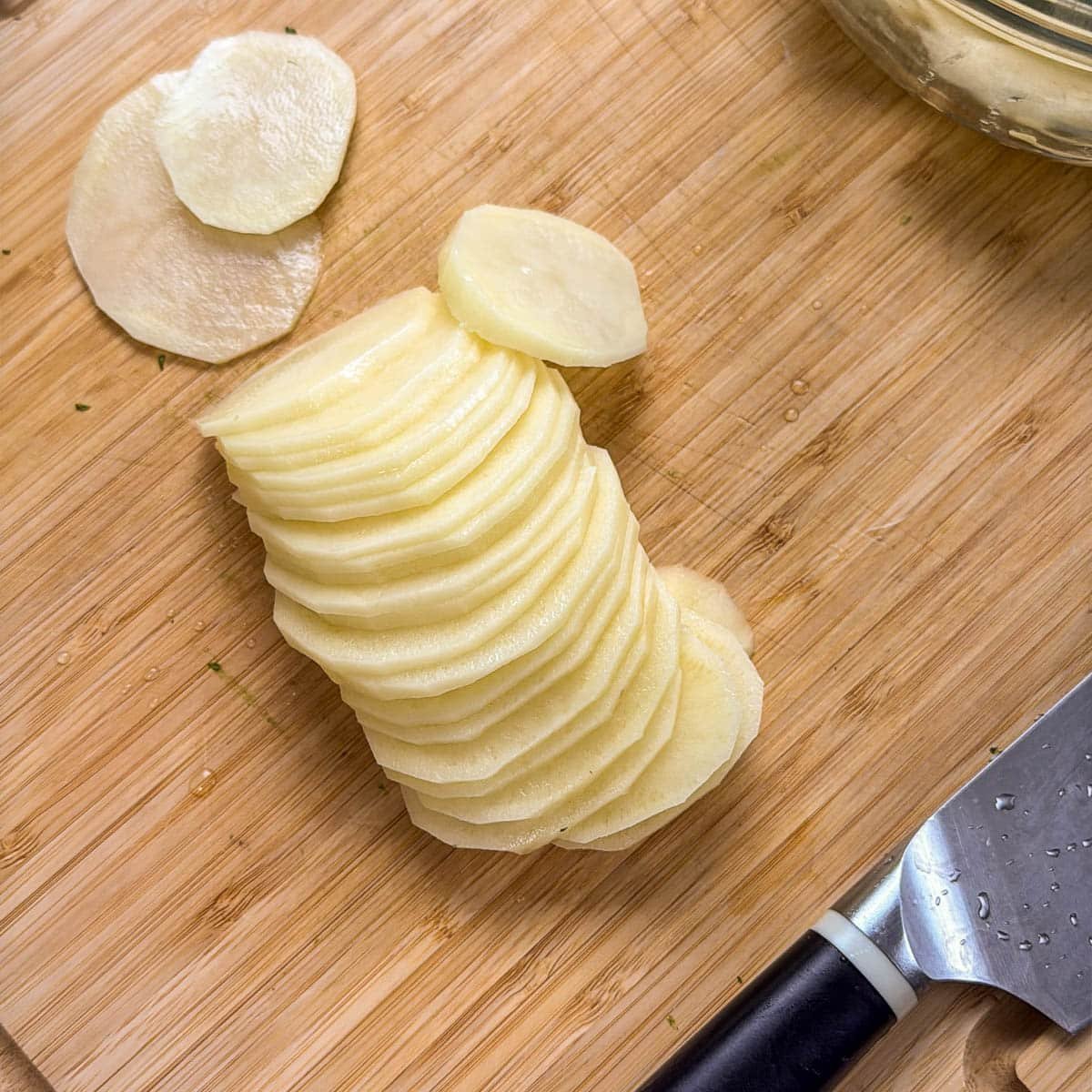
Potatoes - You'll need about 3 pounds of Yukon Gold or yellow potatoes. This kind of potato gives you that buttery flavor and creamy center. You can swap in russet potatoes or even sweet potatoes if you want to experiment with new flavors. Slice them very thin-about 1/16-inch thick. A mandolin slicer is hands-down the best tool for this job, but a sharp knife will do if you're careful. Evenly thin slices of potatoes help them cook at the same rate and get that perfect crispy potato texture.

Butter - Unsalted butter, melted makes the perfect base to coat the sliced potatoes.

Spices - Stir in garlic powder, onion powder, paprika, salt, and pepper. You can play with the spices and make them your own.

Fresh herbs - I'm using parsley and thyme, which add flavor, freshness, and some color to the potato stacks. You can mix up your fresh herbs depending on how you're feeling or what's in your garden.

Cheese - You'll also need grated Parmesan cheese or Parmesan Reggiano to sprinkle between the layers of potatoes. The cheese melts down into the slices, giving each stack a golden brown top and slightly cheesy edges. If you're a sour cream fan, these pair perfectly with a dollop on the side.

How to make potato stacks

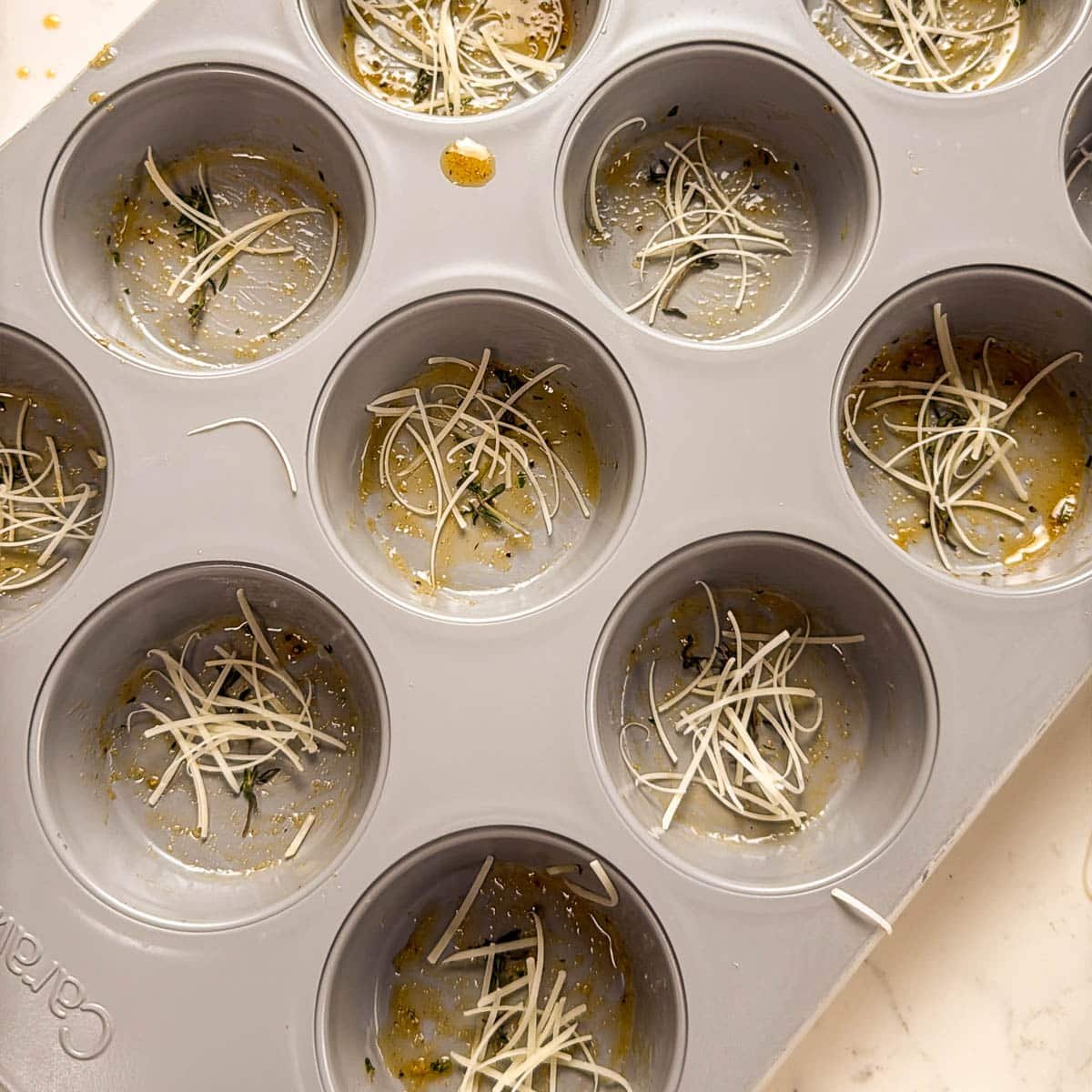
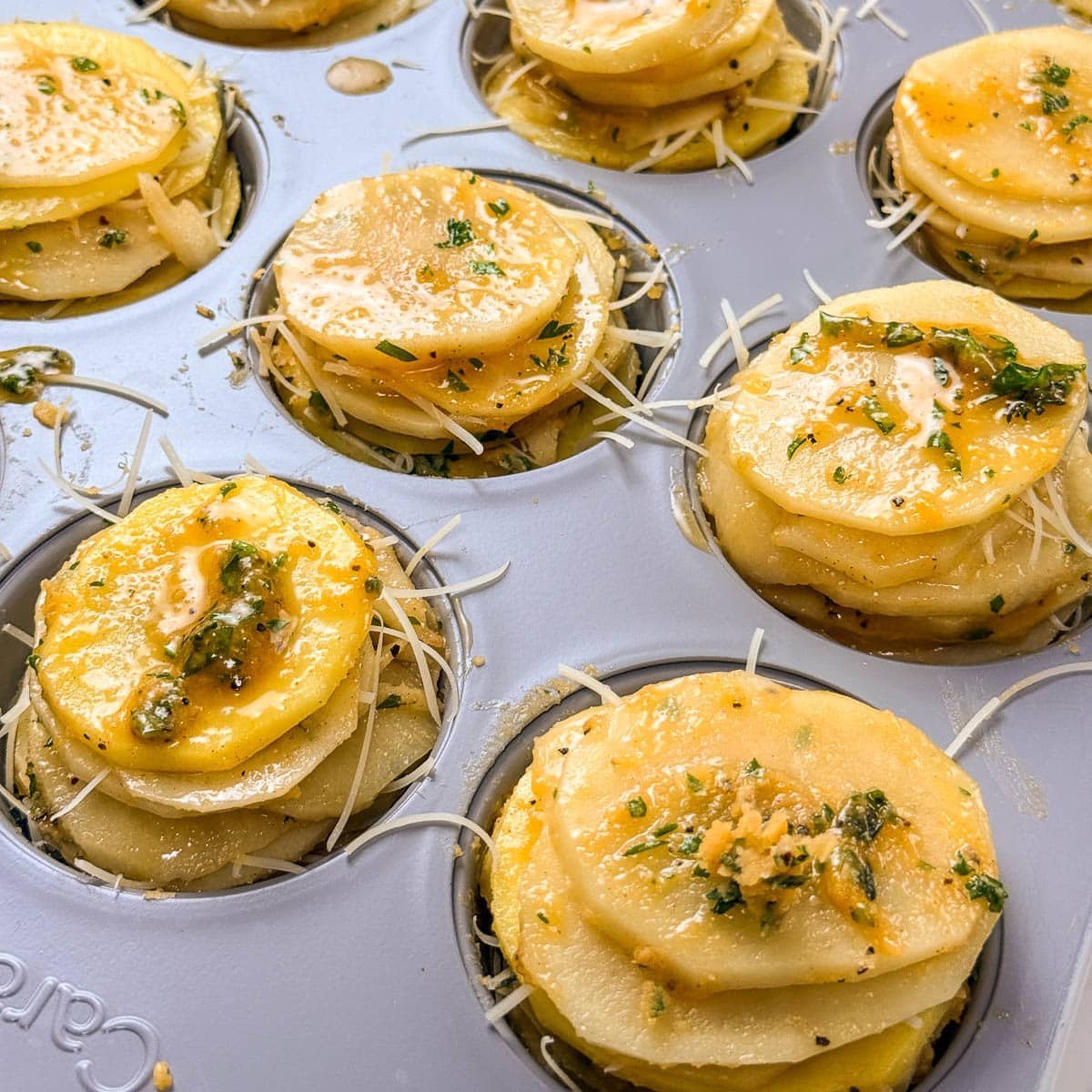
  1. Preheat your oven to 375°F and brush the muffin cups of a muffin tin or muffin pan with neutral oil or cooking spray. If you're using a non-stick cupcake pan like I am, you can skip this step.close up of sliced potatoes on a cutting board
  2. Thinly slice your potatoes. You can peel them or not it doesn't matter. Either use a mandolin or hold the potato with a fork and slice the potato thinly and as evenly as possible.
  3. Drop a small sprig of thyme in the bottom of each cup.cupcake pans shot from above with sprigs of thyme and parmesan
  4. Start stacking your potato slices inside the cupcake tin, working smallest to largest, brushing or spooning on a little of the garlic herb butter as you go.
  5. Sprinkle in some Parmesan cheese halfway through the stack, then continue layering until the muffin cup is extra full. The slices will shrink down as they cook, so don't be afraid to pile them high.Thinly sliced layers of potato stacks in a cupcake tin
  6. Cover the muffin tin tightly with foil and bake for about 25 minutes until tender.
  7. At this point, you can carefully flip the stacks over using a wooden skewer for even crisping.potato stacks after baking shot from above
  8. Remove the foil, turn up the heat to 425°F, and bake until the tops are crispy and golden brown. Keep an eye on them during this step-those last few minutes make all the difference between just browned and perfectly crispy edges.close up of potato stacks after baking

Serving Tips and Tricks

Sprinkle with flakey salt right before serving for that restaurant-style finish. The best part? These look fancy but are made with simple ingredients you probably already have.

If you're hosting a crowd, you can make them ahead of time and reheat on a baking sheet at 350°F for about 10 minutes, or pop them in the air fryer for 5-7 minutes at 375°F. They stay beautifully crisp this way.

Potato stacks are the perfect way to dress up any meal, whether it's a casual weeknight or a full-on fancy holiday dinner. It's such a fun way to showcase layers of potatoes, butter, and herbs, and they always disappear fast.

Next time you're looking for something that feels gourmet but uses everyday ingredients, grab your muffin tin and try this recipe-you'll see why it's one of my best potato recipes yet.

FAQ

Can I use olive oil instead of butter?

Can I use olive oil instead of butter?
Absolutely. Olive oil gives a lighter, more earthy taste, though melted butter gives a richer flavor and creamy center.

What kind of potato works best?

Yukon Gold potatoes are my favorite, but russet potatoes or sweet potatoes will work too, depending on your flavor preference.

Can I prep these ahead of time?

You can! Store the sliced potatoes coated in the garlic butter in a sealed container at room temperature for a few hours or refrigerate up to half a day. Just make sure to drain any liquid before baking.

What should I serve them with?

These crispy potato stacks go with everything from roasted chicken to steak or even as a side for main courses like prime rib. They're the perfect side dish, no matter the occasion.

Recipe

close up of crispy potato stacks shot from above
Print Recipe
No ratings yet

Crispy Parmesan Potato Stacks

Potato stacks are thinly sliced Yukon Gold potatoes layered with garlic herb butter and parmesan, then baked until golden and crispy on the edges with soft, tender centers. An easy, elegant side dish that's perfect for holidays or weeknights.
Prep Time10 minutes mins
Cook Time35 minutes mins
Total Time45 minutes mins
Course: Side Dish
Cuisine: American
Servings: 12 stacks
Author: Liz Marek

Equipment

  • 1 Cupcake Tin

Ingredients

Garlic Butter

  • 4 ounces unsalted butter melted
  • 1 teaspoon garlic powder
  • 1 teaspoon onion powder
  • 1 teaspoon salt
  • ½ teaspoon pepper
  • ¼ teaspoon paprika
  • 2 teaspoons finey chopped thyme

Potato Stacks

  • 3 pounds yukon gold potatoes sliced thinly
  • 12 small sprigs fresh thyme
  • 2 ounces shredded parmesan

Instructions

  • Preheat your oven to 375°F (190°C).
  • Lightly brush the cups of a 12-cup muffin tin with oil. Pile stacks up high for 12 slightly heaped stacks, keeping in mind the potatoes sink down as they cook.
  • Melt butter and stir in garlic, parsley, chopped thyme, salt and black pepper. Set aside to cool.
  • Slice potatoes with skin on, very thinly about 1/16". I highly recommend using a mandolin to get super thin slices of potatoes in relatively little time. Evenly-thick slices are important for even cooking. If you don't have a mandolin, slice carefully with a sharp knife and a fork to hold the potato in place safely.
  • Place the sliced potatoes in a large mixing bowl and toss with cooled garlic herb butter.
  • In each oiled muffin cup, place a small sprig of thyme, followed by slices of potatoes starting with smaller pieces and ending with the larger pieces. About ⅓ and ⅔ of the way up the stack, sprinkle a bit of grated parmesan. For the prettiest stacks, stagger potato slices a little rather than matching them up in a neat column. Divide evenly among the 12 cups. It's okay if the potato stacks are a little taller than the rim of the muffin cups because they will sink down as they cook.
  • Cover the muffin tin tightly with foil. Bake in preheated 375°F (190°C) oven for 25 minutes or whenever potatoes are tender (use a wooden skewer to poke one stack to check - the skewer should easily slide all the way through and back out).
  • Increase oven heat to 425°F (220°C). Remove foil and return to bake uncovered for 13-15 minutes more, or whenever edges are browned and crispy, and tops are golden brown. Keep a close eye on them during the final few minutes of browning. See recipe notes for make ahead tips.
  • I use the same wooden skewer to dislodge the stacks from the muffin tin by gently pushing the tip down one side and flipping it enough to grab it with tongs. Serve upside down (with thyme sprig facing up) with a sprinkle of flaky salt. Enjoy!

Video

Notes

Make ahead - fresh out of oven is usually going to give best results but often it's not possible when hosting a big dinner so here are some options for front-loading the prep:
  • Option 1: Prepare potatoes fully just a couple of minutes shy of total bake time. Transfer them upside-down (thyme sprig facing up) onto a wire rack set over a baking sheet. Keep them at room temperature. Before serving, warm in a 350f (175c) oven for 10 minutes or until hot in the center, then broil to crisp up the edges. Keep an eye on them when broiling. Finish with flaky salt. Air fryer reheats them really well too at 375°F for 5-7 minutes.
  • Option 2: Technically pre-sliced potatoes go brown/grey from oxidization if left out too long. That said, I had a batch in the fridge for half a day after tossing them in the garlic herb butter, with no noticeable issues. The buttery sauce must have acted as an oxidization shield so make sure to coat the potatoes well. Discard the liquid that has collected at the bottom of the bowl and follow the recipe directions for assembly.

Nutrition

Serving: 1stack

November 3, 2025 Bread

Sourdough English Muffins

These sourdough English muffins are the homemade version that ruins the store-bought ones for you. Tender on the inside, crisp and golden on the edges, with the gentle tang of an overnight sourdough fermentation. If you already make my sourdough sandwich bread, this is the next loaf to add to your weekly rotation.

Quick Glance at the Recipe: Soft Sourdough English Muffins

  • Recipe Name: Soft Sourdough English Muffins
  • Why You'll Love It: ender, tangy, full of nooks and crannies. Cooked on the stovetop, no oven needed (unless you want a rescue option).
  • Time and Difficulty: 15 minutes hands-on, 9 hour overnight rise, 24 minutes cook. Beginner-to-intermediate sourdough.
  • Main Ingredients: Active sourdough starter, milk, all-purpose flour, butter, honey, sugar, salt, and cornmeal.
  • Method: Mix, rest, knead, overnight bulk rise, roll out and cut, second rise, cook low and slow in a covered skillet.
  • Texture and Flavor: Soft chewy crumb with classic nooks and crannies, golden crisp edges, gentle tang.
  • Quick Tip: Cook them LOW and slow with a lid on. High heat browns the outside before the inside is set, which is the #1 cause of gummy centers.
ChatGPT
Google AI
Perplexity
Grok
Add us as a trusted site on Google
[feast_advanced_jump_to]

What Makes These Sourdough English Muffins So Good

When I was a kid, English muffins were a special thing in our house. My dad is from New Zealand, where they're a breakfast staple, so every now and then he'd come home with a pack and toast them up for us. I can still remember the smell, warm and buttery and just a little crisp around the edges. He'd slather on way too much butter (the only correct amount) so it melted into every nook and cranny, then top them with strawberry jam. Pure heaven.

This homemade sourdough version takes that memory and pushes it one better. Soft, chewy, freshly cooked, with the tangy depth a long fermentation gives you and the satisfaction of using your sourdough starter on something other than another loaf of bread. Here is why they're worth the overnight wait:

  • Real nooks and crannies. Stovetop cooking traps the fermentation gas pockets in place instead of baking them out. That's the actual mechanic behind the iconic Thomas's-style texture. More on the science in the step-by-step below.
  • Soft, chewy, tender, NOT bread-y. The combo of milk, butter, and honey gives the crumb a softer, more tender feel than a sandwich loaf. They're sturdy enough to hold a fried egg but tender enough to soak up jam.
  • Overnight schedule. Mix at night, cook in the morning. No babysitting bulk fermentation between meetings, your kitchen does the work while you sleep.
  • Versatile beyond breakfast. Yes, eggs benedict and breakfast sandwiches, but also pizza bases, mini sliders, and a base for melted-cheese-and-anything snacks.
  • Beginner-friendly sourdough. No Dutch oven, no scoring, no shaping a boule. If you've already made my easy sourdough focaccia recipe or my sourdough sandwich bread, this is right up there in difficulty.

Sourdough English Muffins Ingredients

These are pantry staples plus an active starter. I always recommend weighing your ingredients on a digital kitchen scale for sourdough; eyeballed flour is the #1 reason beginner doughs come out dense or sticky.

  • Active sourdough starter, bubbly and at least doubled in the last 4 to 6 hours of feeding. This is what gives the muffins their rise and signature tang. If your starter has been napping in the fridge, give it 2 to 3 daily feedings before mixing. No starter yet? Start with my sourdough starter for beginners guide.
  • Whole milk gives the richest, most tender crumb. 2% or non-dairy milk (oat, almond, soy) all work. Warm it to room temperature before mixing so it doesn't shock the starter.
  • Sugar, a small amount to feed the starter and balance the tang. Coconut sugar or brown sugar work as 1:1 swaps. You can skip it for a more savory muffin.
  • Butter adds flavor and softness. Olive oil, coconut oil, or any neutral oil work as 1:1 swaps for vegan or dairy-free.
  • Honey adds sweetness AND helps the edges brown to a deep golden. Maple syrup, agave, or brown sugar all work as swaps. Honey is also what makes them not-vegan, see swaps in Make This Recipe Your Own.
  • All-purpose flour gives the tender, lightly chewy texture you want in an English muffin. You can replace up to 1 cup with whole wheat for a nuttier flavor, or sub bread flour for a chewier crumb (closer to a bagel).
  • Fine sea salt balances flavor and keeps fermentation from running off. Kosher salt works as a swap.
  • Cornmeal, for dusting the baking sheet and the tops of the muffins. This is the gritty texture you remember from Thomas's. Semolina works as a swap, regular flour does NOT (it absorbs into the dough and you lose the texture).

Equipment Needed

Biscuit Cutter - A 3-inch biscuit cutter (or cookie cutter) works perfectly for shaping the muffins into even dough rounds.

Skillet with Lid - A large skillet with a lid is essential for cooking the muffins low and slow, trapping steam to create a tender, golden crust. We prefer HexClad skillets for their hybrid stainless steel and nonstick surface, which allows for even heat distribution, perfect browning, and easy cleanup. Another great option would be a cast-iron skillet.

Tips and Tricks for Success

  • Use an active starter: For best results, make sure your sourdough starter is bubbly and recently fed for the best rise and tangy flavor.
  • Bulk fermentation: Let your first rise happen in a warm place to help the dough develop flavor.
  • Rest the dough: The dough rest period helps relax gluten for a smoother texture.
  • Cook low and slow: Cook on medium-low heat and cover with a lid to ensure golden, tender muffins without burning the outside.
  • Don't skip the cornmeal: Make sure to coat your muffins with cornmeal using baking sheet. This prevents sticking and gives texture.
  • Split with a fork: Open the muffins with a fork rather than a knife to preserve the airy crumb and those signature nooks and crannies.

How To Make Sourdough English Muffins Step-By-Step

Before you begin, make sure your starter is active and bubbly (it should at least double within 4 to 6 hours of feeding). Plan backward from when you want to eat. The whole process takes about 9 to 10 hours from first mix to skillet, so most people mix at night and cook in the morning.

Sourdough English muffin ingredients in a glass bowl.
  1. In a large bowl, combine the active sourdough starter, warm milk, sugar, melted butter, and honey. Whisk until the starter is fully dissolved into the liquid.
Rough looking sourdough dough in a glass bowl.
  1. Add the flour and mix until you form a sticky, shaggy dough. Cover with plastic wrap or a tea towel and rest for 30 to 60 minutes. This rest hydrates the flour and lets the gluten start to relax before you knead.
Close up of sourdough dough on a countertop.
  1. Add the salt and mix to combine. Turn the dough onto a lightly floured surface and knead for about 5 minutes, until it feels smooth and elastic.
Sourdough sandwich bread ingredients in a clear glass bowl covered in plastic wrap.
  1. Place the dough back into the bowl, cover, and let it bulk ferment in a warm spot until doubled in size. This is best to do overnight (8 to 10 hours at 68 to 75º F).

PRO TIP: How to get nooks and crannies? Fermentation produces CO2 gas bubbles that get trapped inside the gluten network. Stovetop cooking sets the outside fast while the inside steams, trapping air pockets that create those nooks and crannies.

Sourdough dough pressed flat on a countertop.
  1. The next morning, the dough should be soft, puffy, and slightly domed. Gently turn it out onto a floured surface and sprinkle a little flour on top. Use your fingertips to press it out to about ½ inch thick.
Sourdough English muffin dough.
  1. Grab a 3-inch biscuit cutter and cut out your muffins. Re-roll scraps gently (don't overwork them) to get all 12.
English muffins on a sheet pan covered in plastic wrap.
  1. Place the muffins on a baking sheet lined with parchment that's been dusted with cornmeal. Sprinkle a little more cornmeal on top, cover with a tea towel, and let them rise at room temperature for 1 hour until they look puffy.
Four English muffins in a skillet.
  1. Preheat a large skillet over LOW heat. This is the most important step. Around 325º F surface temperature is ideal, if you have an infrared thermometer.

    Lightly grease the skillet or use a nonstick pan. Place 4 muffins at a time in the pan, spaced about 2 inches apart. Cover with a lid and cook for 4 minutes on the first side.

PRO TIP: For uniform Thomas's-style muffins with perfectly straight edges, you can use metal english muffin rings (3.5 inch) instead of a biscuit cutter. Grease the rings, place them on the hot skillet, and drop the dough rounds inside. The ring shapes them as they cook. A biscuit cutter works just as well, the muffins will just have slightly more rustic edges. Free-form (no cutter, no rings, just shape by hand) works too but the muffins will be irregular.

Four English muffins in a skillet covered with a lid.
  1. Flip the muffins and cook for another 4 minutes covered. The internal temperature should hit 205 to 210º F when fully cooked through. Pull at 205 for softer, 210 for slightly firmer.
Cooked sourdough English muffins on parchment paper with cornmeal.
  1. Transfer to a wire rack to cool for at least 10 minutes before splitting. Use a FORK, not a knife, to open them up. Stab around the perimeter to pierce the edges, then gently pull them apart so the nooks and crannies stay intact. A knife slices clean through and ruins the texture.

PRO TIP: If the outside is browning faster than the inside is cooking (this happens on cast iron, gas stoves, and any older skillet), pull the muffins from the skillet onto a sheet pan and finish them in a 250º F oven for 8 to 10 minutes. They'll come up to internal temp without burning the crust. This is the rescue every nervous beginner needs to know.

How To Make A Warm Sourdough Environment

Sourdough is run by temperature. If your kitchen runs below 68º F, your bulk rise can take twice as long. Two easy tricks:

  • Oven with the light on. Place the covered bowl inside your oven (turned OFF) with just the oven light on. The light alone holds the inside around 75 to 85º F, which is ideal.
  • Microwave proofing box. Boil a cup of water in the microwave for 2 to 3 minutes, push the mug to the corner, place the covered bowl next to it, and close the door. The residual steam and heat make a warm humid box.

If you bake sourdough often, a Brod and Taylor Sourdough Proofer holds a perfect temp year-round without any of the tricks.

Common Sourdough English Muffin Problems To Avoid

  • Gummy or doughy center. The #1 cause is heat too high, the outside sets and browns before the middle cooks through. Use LOW heat, cover with a lid to trap steam, and check internal temp (205 to 210º F). If you're already in trouble, finish in a 250º F oven for 8 to 10 minutes.
  • Burned outside, raw inside. Same root cause: heat too high. Cast iron and gas stoves run hot, ease back to the lowest setting that still keeps the muffins sizzling gently.
  • No nooks and crannies. Either the dough was over-kneaded (squeezed out the air pockets), the bulk rise was cut short (not enough gas trapped to begin with), or you split with a knife instead of a fork. Knead gently, ferment fully, and stab around with a fork.
  • Muffins didn't rise. Your starter wasn't active enough. Give it 2 to 3 daily feedings before mixing and confirm it doubles within 4 to 6 hours of feeding.
  • Stuck to the skillet. Either not enough cornmeal underneath the muffins, or the pan wasn't greased lightly. Add cornmeal generously, it's part of the flavor too.
  • Dough is too sticky to roll out. Either your starter was wetter than mine, or your kitchen is humid. Add a Tablespoon of flour at a time during the press-out step until the dough is workable. Don't add it during the bulk rise, that throws off the hydration.

Make Ahead and Storage

  • Make ahead the night before. This recipe is already an overnight bulk ferment, so it's built for it. Mix at 8 to 9 pm, cook in the morning.
  • Cold ferment for more flavor. After the bulk rise, you can chill the dough in the fridge up to 24 hours before pressing out and cutting. The cold deepens the tang and makes the dough easier to handle.
  • Storage. Cooled muffins keep airtight at room temperature up to 1 week. Refrigerate up to 2 weeks if your kitchen is humid.
  • Freeze. Slice them in half before freezing so you can toast directly from frozen. Wrap in foil + freezer bag, freeze up to 6 months.

Final Thoughts

This is the recipe that taught me English muffins didn't have to come from a bag with a spinning logo on it. The dad-and-strawberry-jam version of these still lives in my head, and now my own kids ask for them for breakfast on weekends. There is something so satisfying about the smell of these cooking low and slow on the stove on a Saturday morning, especially because you actually slept while the dough did most of the work.

If you're already in your sourdough era, the same starter you built for my beginner sourdough bread is exactly what makes these English muffins so good. Or try my rolls, sandwich loaves, and these muffins in the same week without learning a totally new recipe each time.

Make These Sourdough English Muffins Your Own

Whole wheat blend. Swap up to 1 cup of the all-purpose flour for whole wheat. The crumb gets nuttier and a little denser. Don't go past 1 cup, or the muffins lose their classic soft chew.

Cinnamon raisin English muffins. Knead in ½ cup raisins and 1 teaspoon cinnamon during the final knead. Sprinkle a little cinnamon sugar on top before cooking for extra sparkle.

Use ring molds for Thomas 's-style edges. A set of 3.5-inch metal English muffin rings gives you perfectly straight, uniform sides. Grease the rings, place them on the hot skillet, and drop the dough rounds inside. The dough cooks UP inside the ring instead of spreading sideways.

Vegan version. Swap whole milk for plant milk (oat is my favorite for richness), vegan butter for the butter, and maple syrup or agave for the honey. The muffins still hit on texture, just a touch less browning on the edges.

Eggs Benedict / breakfast sandwich / pizza base. Split, toast, then top with poached eggs and hollandaise for a benedict, bacon-egg-and-cheese for a sandwich, or a smear of marinara and shredded mozzarella under the broiler for mini pizzas. They hold up to all of it.

Sourdough English Muffins FAQs

Why are mine gummy in the middle even though the outside is golden?

Heat was too high. The crust set too fast and the inside didn't have time to fully cook. Move to a lower burner setting, cover with a lid to trap steam, and check internal temp at 205 to 210º F. If you already pulled them and they're gummy, you can rescue them in a 250º F oven for 8 to 10 minutes.

Can I make these without an overnight bulk ferment?

Yes. Skip the overnight and let the dough rise in a warm spot (78 to 80º F) for 3 to 4 hours until doubled. Same-day muffins will have a softer tang and a slightly less complex flavor, but they'll still be great. Cold-retard overnight in the fridge if you want even more tang.

What's the right pan for these?

A heavy nonstick or hybrid skillet (HexClad, cast iron with a smooth, well-seasoned surface) gives the most even heat. Lighter pans run hot and burn the outside. If all you have is a thin nonstick, drop the heat a notch lower than you think you need.

Why use a fork to split them instead of a knife?

The nooks and crannies are gas pockets created during fermentation, suspended inside the crumb. A knife slices straight through them and you lose the texture. A fork stabs into the edges and pulls the muffin apart along the natural fault lines, keeping the cavities intact.

Leave Me A Review
⭐️⭐️⭐️⭐️⭐️

If you tried this Sourdough English Muffin Recipe or any other recipe on my blog, please leave a 🌟 star rating and let me know how it goes in the comments. I love hearing from you!

Recipe

Print Recipe
No ratings yet

Sourdough English Muffins

These Sourdough English Muffins are golden on the outside and tender on the inside. Perfect for breakfast, brunch, or a cozy snack.
Prep Time15 minutes mins
Cook Time24 minutes mins
Rising Time9 hours hrs
Total Time9 hours hrs 39 minutes mins
Course: Appetizer, Breakfast
Cuisine: English
Servings: 12 muffins
Calories: 165kcal
Author: Liz Marek

Equipment

  • 1 biscuit cutter
  • 1 large skillet with lid

Ingredients

  • 1 cup milk
  • 1 tablespoon sugar
  • 2 tablespoons butter melted
  • 1 tablespoon honey
  • ½ cup active sourdough starter
  • 3 cups all-purpose flour
  • 1 teaspoon fine sea salt
  • ¼ cup cornmeal

Instructions

  • Before you begin: Confirm your starter is active and bubbly, it should at least double within 4 to 6 hours of its last feeding. Warm your milk to room temperature so it doesn't shock the starter. Plan backwards from when you want to cook, this is roughly a 9 to 10 hour process from first mix to skillet.
  • In a large bowl, combine the active sourdough starter, warm milk, sugar, melted butter, and honey. Whisk until the starter is fully dissolved.
  • Add the flour and mix until you form a sticky shaggy dough. Cover with plastic wrap or a tea towel and rest 30 to 60 minutes to hydrate the flour.
  • Add the salt and mix to combine.
  • Turn the dough onto a lightly floured surface and knead for about 5 minutes, until smooth and elastic.
  • Place the dough back in the bowl, cover, and let it bulk ferment in a warm spot until doubled, 8 to 10 hours at 68 to 75º F (overnight).
  • The next morning, gently turn the dough out onto a floured surface and dust the top with a little flour. Press it out with your fingertips to about ½ inch thick.
  • Cut into 12 rounds with a 3-inch biscuit cutter (or 3.5-inch english muffin rings). Re-roll scraps gently for the last few.
  • Place the muffins on a baking sheet lined with parchment dusted with cornmeal. Sprinkle more cornmeal on top, cover with a tea towel, and rise at room temperature for 1 hour.
  • Preheat a large skillet over LOW heat (around 325º F surface temp). Lightly grease the skillet.
  • Place 4 muffins in the pan at a time, spaced 2 inches apart. Cover with a lid and cook for 4 minutes on the first side.
  • Flip and cook another 4 minutes covered. Internal temp should reach 205 to 210º F when done.
  • Transfer to a wire rack to cool at least 10 minutes before splitting. Use a fork (not a knife) to open them up and preserve the nooks and crannies.

Video

Notes

Ingredient notes: Whole milk gives the richest crumb; 2% or plant milk work too. Active starter only, do not substitute discard (the rise depends on the active yeast). Honey adds both sweetness AND browning on the crust, swap with maple syrup or agave for vegan.
Equipment notes: HexClad and cast iron give the most even heat. Lighter or thinner skillets run hot and brown the outside before the inside cooks, drop the heat a notch lower than you think you need. English muffin rings (3.5-inch) give Thomas's-style straight edges; a biscuit cutter is fine and gives a slightly more rustic shape.
Same-day option: Skip the overnight bulk rise. Instead, let the dough rise in a warm spot (78 to 80º F) for 3 to 4 hours until doubled, then proceed with cutting and second rise. Same-day muffins have a milder tang.
Cold-retard for more tang: After the bulk rise, chill the dough in the fridge up to 24 hours before pressing out. The cold deepens the tang and makes the dough easier to handle.
Make ahead and storage: Cooled muffins keep airtight at room temperature up to 1 week, in the fridge up to 2 weeks. Freeze sliced (so you can toast from frozen), wrapped in foil + freezer bag, up to 6 months.
Vegan version: Plant milk + vegan butter + maple syrup or agave (skip the honey). All other steps stay the same.
Baking option (if you don't want to use the stovetop): Bake at 375º F for 15 to 20 minutes, internal temp 190º F. Note: oven-baked muffins won't have the same trapped-bubble nooks and crannies, they'll be more like a small dinner roll than a true english muffin.
Critical do-nots:
  • Don't cook on high heat. The outside will set before the inside cooks, leaving you with gummy centers.
  • Don't slice with a knife. Use a fork to preserve the nooks and crannies.
  • Don't substitute regular flour for cornmeal on the pan, it absorbs and you lose the texture.

Nutrition

Serving: 1muffin | Calories: 165kcal | Carbohydrates: 30g | Protein: 4g | Fat: 3g | Saturated Fat: 2g | Polyunsaturated Fat: 0.3g | Monounsaturated Fat: 1g | Trans Fat: 0.1g | Cholesterol: 7mg | Sodium: 217mg | Potassium: 76mg | Fiber: 1g | Sugar: 4g | Vitamin A: 91IU | Vitamin C: 0.01mg | Calcium: 31mg | Iron: 2mg

November 3, 2025 Bread

Sourdough Sandwich Bread

This sourdough sandwich bread is the soft, sliceable, not-too-tangy loaf I bake every week for school lunches and weekend grilled cheeses. Six ingredients, no Dutch oven, no shaping a boule, just a stand loaf pan and a long fermentation. If you can pull off my easy sourdough focaccia recipe, this is the next loaf to tackle.

Sourdough sandwich bread cut into a few slices.

I've made a lot of sourdough recipes over the years, but this sandwich loaf might just be my favorite. The touch of avocado oil and honey in the dough is what keeps it soft and tender, making it perfect for everything from French toast to a basic PB&J. My kids inhale it for school lunches, and I love it toasted with avocado or melted into a grilled cheese. If you also want a smaller, pull-apart version of this same dough, my soft sourdough rolls bake from almost the exact recipe, just divided into 16 individual rolls.

Quick Glance at the Recipe: Soft Sourdough Sandwich Bread

  • Recipe Name: Soft Sourdough Sandwich Bread
  • Why You'll Love It: Soft, not-too-tangy, slices clean for sandwiches and toast. No Dutch oven, no boule shaping, just a loaf pan.
  • Time and Difficulty: 1 hour 30 min hands-on, 10 hours rise, 45 min bake. Beginner-to-intermediate sourdough.
  • Main Ingredients: Active sourdough starter, bread flour, water, honey, avocado oil, salt.
  • Method: Mix, 4 sets of stretch and folds, bulk rise 4 to 8 hours, shape into a loaf pan, second rise 2 hours, bake at 400º F then 375º F.
  • Texture and Flavor: Soft, tender crumb, gentle tang, golden honey-browned crust. Holds a sandwich without flaking apart.
  • Quick Tip: Pull your loaf at an internal temp of 198 to 205º F. Sandwich bread tastes best at the low end of that range; it stays softer than artisan loaves that hit 205 to 210.
ChatGPT
Google AI
Perplexity
Grok
Add us as a trusted site on Google
[feast_advanced_jump_to]

What Makes This Sourdough Sandwich Bread So Good

If you love sourdough but you want a daily loaf that doesn't taste like a sharp artisan boule, this is the recipe. Here is why:

  • Not too tangy. A shorter overnight bulk and the touch of honey keep the sourness gentle so it works for kids, for sandwiches, for French toast. If you want big artisan tang, my beginner sourdough bread is where to go.
  • Soft, sliceable, sandwich-ready. The avocado oil, honey, and brushed melted butter work together to give you a pillowy, tender crumb that holds up to a thick smear of peanut butter, a slice of tomato, or a grilled cheese without crumbling.
  • No Dutch oven, no boule shaping. A standard 9x5 loaf pan is all you need. No scoring, no preheating cast iron, no steam tricks.
  • Fits a working week. Mix at night, bulk overnight, shape and bake in the morning. Or split the timeline with a cold proof in the fridge for two days of flexibility.
  • One dough, three formats. The exact same dough makes sourdough rolls and a half-batch sandwich loaf if you want both on the same dinner table.

Sourdough Sandwich Bread Ingredients

Six pantry staples. The only one that needs effort is an active, bubbly starter, everything else you probably already have. I always recommend weighing your ingredients on a digital kitchen scale for sourdough, eyeballed flour is the #1 reason beginner loaves come out dense.

Ingredient shot for Sourdough Sandwich Bread, featuring: bread flour, water, sourdough starter, avocado oil, honey, and salt.
  • Active sourdough starter, the loaf rises only as well as your starter. Use a starter that's bubbly and at least doubled in the last 4 to 6 hours of feeding. If yours has been napping in the fridge, give it 2 to 3 daily feedings before you mix. No starter yet? Start with my sourdough starter for beginners guide.
  • Warm water, around 95º F (just barely warm to the touch). Anything hotter than about 115º F will kill the wild yeast in your starter. You can swap in warm milk for an even softer, richer crumb.
  • Avocado oil adds moisture without a strong flavor. Olive oil, canola oil, or melted unsalted butter all work as 1:1 swaps.
  • Honey adds gentle sweetness AND helps the crust brown to a deep golden color (it's not just for sweetness, the sugars caramelize beautifully). Maple syrup, agave, or granulated sugar all work as swaps.
  • Bread flour (unbleached), the higher protein gives you that chewy, sliceable structure. You can replace up to half with whole wheat or all-purpose flour for a different texture; see Make This Recipe Your Own below.
  • Salt enhances flavor and keeps the fermentation from running away. Kosher or sea salt is what I use. A pinch of flaky salt on top of the loaf before baking is a great optional finish.

If your starter is stalled before you start this bake, see my sourdough starter troubleshooting guide for the 5 most common rising problems and the exact fixes.

Equipment Needed

Food Scale - A food scale ensures accuracy when measuring ingredients, which is especially important for baking. It helps you achieve the right dough consistency and balance between flour, water, and starter every time.

Digital Thermometer - Use a digital thermometer to check the internal temperature of your rolls after baking. They're perfectly done when they reach 205°F, ensuring a soft, fluffy interior without being underbaked.

Sourdough Essentials - If you're new to sourdough baking, check out my Beginners Sourdough Bread Recipe. The essential tools you will need are a dough scraper, proofing basket, dough whisk, and Weck jars for storing your starter. Not sure how to keep your sourdough starter fed between bakes? My feeding guide walks through the counter and fridge schedules.

How To Make Sourdough Sandwich Bread Step-By-Step

Before you begin, make sure your starter is active and bubbly (it should at least double within 4 to 6 hours of feeding). Lightly grease a 9x5 loaf pan. Plan backward from when you want to bake. This is roughly a 12-hour process from first mix to oven, so most people mix in the morning and bake that night, or mix at night and bake the next morning.

Rough dough in a clear glass bowl.
  1. In a large mixing bowl, combine the active sourdough starter, warm water, avocado oil, and honey. Whisk until smooth. Add the bread flour and salt and mix until a shaggy dough forms. Cover and let it rest for 1 hour.
Hands stretching sourdough douh up out of a glass bowl.
  1. Perform 4 sets of stretch-and-folds, 30 minutes apart. To do one set, grab one edge of the dough with wet hands, stretch it up, and fold it over onto the middle of the dough. Rotate the bowl 90 degrees and repeat on all four sides. Cover the bowl between sets. If you're new to the technique, my how to stretch and fold tutorial walks through 4 sets, 30 minutes apart, with the tight-dough finish signal.

PRO TIP: Stretch-and-folds replace kneading for high-hydration doughs like this one. Each set builds the gluten network a little more without working the dough into a tight ball. By the end of the fourth set, the dough should feel smooth, taut, and noticeably stronger than when you started.

Sourdough sandwich bread ingredients in a clear glass bowl covered in plastic wrap.
  1. After the last fold, cover the bowl and let it bulk ferment for 4 to 8 hours at room temperature, until the dough has roughly doubled and looks bubbly and airy. Warm kitchen = closer to 4 hours. Cool kitchen = closer to 8 or even longer.
rolling dough up in a spiral
  1. Place the dough onto a lightly floured surface. Flatten it down, then shape it into a tight log roughly the length of your loaf pan and place it seam-side down into the greased pan. The dough should reach about halfway up the rim.

PRO TIP: For a softer crust and bigger oven spring, use a second loaf pan as a LID. Spritz the top of the scored dough with water, invert a second matching loaf pan (or a sheet of greased foil) over the top, and bake covered for the first 30 minutes. The trapped steam acts just like a Dutch oven would. This soft sourdough crust hack is the trick @musclemommasourdough has gone viral with on TikTok, and it gives you a noticeably pillowy crust.

Loaf of risen dough in a loaf pan with parchment paper.
  1. Cover loosely and let it second-rise for about 2 hours at room temperature, until the dough is puffy and just cresting over the top of the pan. It should look jiggly when you lightly tap it. Don't skip this second rise; this is where you avoid a gummy crumb.
Loaf of scored dough in a loaf pan with parchment paper.
  1. Preheat your oven to 400º F. Score the top of the loaf with a sharp knife or razor (one long shallow slash down the length is perfect for a sandwich loaf).
  1. Bake for 30 minutes at 400º F, then reduce the oven to 375º F and bake for another 15 minutes, until the crust is deeply golden brown.
Closeup of sourdough sandwich bread slice.
  1. Brush the surface with melted butter. This is the key to a soft crust.

    Remove the loaf from the pan immediately onto a wire rack. Let it cool COMPLETELY before slicing (at least 1 to 2 hours).

    Cutting too early releases the steam and the crumb collapses into a gummy mess.

PRO TIP: For an even softer crumb (advanced move): make a quick tangzhong by whisking 25 g of the bread flour with 125 g of the water in a small pot. Cook over medium heat, whisking constantly, until it thickens into a pudding (about 3 minutes, you'll feel the resistance change). Let it cool, then mix it into the dough at the same time as the rest of the water and flour. This pre-gelatinized starch holds extra moisture in the baked loaf and gives you Japanese milk-bread softness without changing the recipe ratios. Refer to the recipe card below for the precise quantities and timing of the base recipe.

How To Make A Warm Sourdough Environment

Sourdough is run by temperature. If your kitchen is below 68º F, your bulk rise can take twice as long. Here are the two easiest tricks I use:

  • Oven with the light on. Place the covered dough inside your oven (turned OFF) with just the oven light on. The light alone holds the inside around 75 to 85º F, which is ideal for fermentation.
  • Microwave proofing box. Boil a cup of water in the microwave for 2 to 3 minutes, push the mug to the corner, place the covered dough next to it, and close the door. The residual steam and heat make a warm humid box that's perfect for proofing.

If you bake a lot of sourdough, a Brod and Taylor Sourdough Proofer holds a perfect temperature without any of these tricks. I use mine year-round.

Common Sourdough Sandwich Bread Problems To Avoid

  • Gummy or doughy crumb. Almost always under-fermentation or slicing the loaf before it's cooled. Pull at 198 to 205º F internal, then let it cool a full 1 to 2 hours before cutting. The crumb continues to set as it cools.
  • Dense, didn't rise. Your starter wasn't active enough, or the room was too cold during bulk. Give your starter 2 to 3 daily feedings before mixing, and warm up your proofing spot (see above).
  • Loaf collapsed in the oven. Over-proofed. The dough went past peak before it hit the heat. Next time, end the second rise when the dough just crests the rim of the pan, not when it has ballooned a full inch above.
  • Tough, hard crust. Baked too long, or oven runs hot. Pull at the lower end of the temp range (198 to 200º F internal) and tent with foil for the last 10 minutes if the top is browning faster than the inside is cooking.
  • Crumb full of big random holes (tunnels). Shaping was too loose, or the dough wasn't degassed enough when you tucked it into the pan. Shape into a tight log and seal the seam well before second rise.
  • Loaf is short and squatty. Your dough didn't quite double during bulk, OR your pan is too big. Try a 9x5 if you used larger, or split into two 8x4 pans for taller slices.

Final Thoughts

If you've been intimidated by sourdough, this is the recipe to teach you that you can absolutely do this. There's no shaping a boule, no scoring a fancy ear, no juggling a Dutch oven. You mix, you fold a few times, you stick it in a loaf pan, and you bake. It is the most work-parent-friendly sourdough recipe I make.

The other reason I love this one: the dough is the same base as my sourdough rolls, so once you've nailed it you can pivot to dinner rolls without learning a whole new recipe. Make a half-batch sandwich loaf and a half-batch of rolls for the same family dinner and feel like a sourdough wizard.

If you want another everyday sourdough that lives in the breakfast rotation, my soft sourdough english muffins use the same overnight ferment rhythm as this loaf, just cooked low and slow in a covered skillet for that signature nooks-and-crannies texture.

Make This Sourdough Sandwich Bread Your Own

  • Whole wheat blend. Swap up to half the bread flour (250 g) for whole wheat. The crumb gets nuttier and a little denser. Don't go past 50% or the loaf turns into a brick.
  • Second pan as a lid (the TikTok hack). Spritz the scored dough with water, then invert a second matching loaf pan (or greased foil) on top before baking. Bake covered at 400º F for the first 30 minutes, then uncover and reduce to 375º F for the final 15 minutes. The trapped steam mimics a Dutch oven and gives you a softer crust with bigger oven spring.
  • Garlic and herb sandwich loaf. Fold in 1 Tablespoon of dried Italian herbs and 1 teaspoon of garlic powder during the second stretch-and-fold. Brush the top with melted garlic butter when it comes out of the oven.
  • Cinnamon raisin. Sprinkle ¼ cup of raisins and 1 Tablespoon of cinnamon sugar over the dough as you shape, then roll into a log. Don't mix the cinnamon into the dough itself, cinnamon slows yeast activity and you'll get a flat loaf.
  • Use sourdough discard. You can swap discard 1:1 for active starter, but expect a longer bulk rise (8 to 12 hours instead of 4 to 8) and a slightly less dramatic rise overall. If you have a lot of discard kicking around, my sourdough discard pancakes and sourdough discard crackers burn through it fast.
  • Cold retard for flavor. After the bulk rise, instead of shaping right away, transfer the bowl to the fridge for 8 to 24 hours. Pull it out, let it warm at room temperature for 1 hour, then shape and finish as normal. The cold retard builds a deeper tang without bumping the loaf into "too sour" territory.

Sourdough Sandwich Bread FAQs

Why is my sourdough sandwich bread gummy in the middle?

Two main culprits: the loaf was under-fermented during bulk, or you sliced into it before it cooled. Pull at an internal temp of 198 to 205º F, then wait a full 1 to 2 hours before cutting. The crumb sets as it cools, and slicing too early traps the steam inside.

Can I make this dough the night before and bake it in the morning?

Yes. After the bulk rise, shape the dough into the loaf pan, cover, and refrigerate overnight (up to 24 hours). In the morning, pull the pan out and let the dough come to room temperature for 1 to 2 hours until it crests the pan, then bake as normal.

Can I use all-purpose flour instead of bread flour?

Yes, but bread flour gives a stronger structure and a more chewy texture. Using all-purpose flour will make the loaf slightly softer and lighter.

Do I need a stand mixer?

Nope. The stretch-and-fold method does all the gluten development by hand. A stand mixer with a dough hook makes things faster if you have one, but plenty of beginners make this loaf with nothing but a bowl and a spoon.

Can I use this dough to make rolls?

Yes, that's exactly the dough behind my soft sourdough rolls recipe. Divide the dough into 16 equal pieces, shape into rolls, and bake at 375º F for 25 to 28 minutes.

Leave Me A Review
⭐️⭐️⭐️⭐️⭐️

If you tried this Sourdough Sandwich Bread or any other recipe on my blog, please leave a 🌟 star rating and let me know how it goes in the comments. I love hearing from you!

Recipe

Print Recipe
No ratings yet

Sourdough Sandwich Bread

A soft, not-too-tangy sourdough sandwich bread that holds up to lunches, French toast, and grilled cheese. Six pantry ingredients, no Dutch oven, no boule shaping.
Prep Time1 hour hr 30 minutes mins
Cook Time45 minutes mins
Rising Time10 hours hrs
Total Time12 hours hrs 15 minutes mins
Course: Appetizer
Cuisine: American
Servings: 12 servings
Calories: 173kcal
Author: Liz Marek

Equipment

  • 1 Thermometer
  • 1 Food Scale

Ingredients

  • 150 grams active sourdough starter
  • 325 grams warm water
  • 20 grams avocado oil
  • 30 grams honey
  • 500 grams bread flour unbleached
  • 20 grams salt

Instructions

  • Before you begin: Confirm your starter is active and bubbly, it should at least double within 4 to 6 hours of its last feeding. Grease a 9x5 loaf pan. Plan backwards from when you want to bake, this is roughly a 12 hour process from first mix to oven.
  • In a large mixing bowl, combine the active sourdough starter, warm water, avocado oil, and honey. Whisk until smooth. Add the bread flour and salt and mix until a shaggy dough forms. Cover and rest 1 hour.
  • Perform 4 sets of stretch-and-folds, 30 minutes apart. With wet hands, grab one edge of the dough, stretch it up, fold over the center, rotate 90 degrees and repeat on all four sides.
  • Cover and let bulk ferment 4 to 8 hours at room temperature (68 to 80º F), until the dough has roughly doubled and looks bubbly and airy. Warmer room = faster ferment.
  • Lightly flour your work surface. Shape the dough into a tight log the length of the loaf pan and place seam-side down into the greased pan. The dough should reach halfway up the rim.
  • Cover loosely and second-rise 2 hours at room temperature, until the dough is puffy and just crests the top of the pan.
  • Preheat your oven to 400º F. Score the top of the loaf with one long shallow slash down the length.
  • Bake 30 minutes at 400º F, then reduce to 375º F and bake another 15 minutes, until the crust is deeply golden brown.
  • Check the internal temperature with a thermometer. Pull at 198 to 205º F. Lower end of that range = softer crumb, upper end = firmer toast.
  • Remove the loaf from the pan immediately onto a wire rack. Cool completely (at least 1 to 2 hours) before slicing.

Video

Notes

Ingredient notes: Bread flour gives the strongest structure. You can replace up to half with whole wheat for a nuttier flavor, beyond that the crumb gets too dense. Honey can be swapped 1:1 for maple syrup, agave, or granulated sugar. Avocado oil can be swapped 1:1 for olive oil, canola oil, or melted unsalted butter.
Pan options: A 9x5 loaf pan is the default. For a softer crust and bigger oven spring, use the "second pan as a lid" technique: spritz the scored dough with water, invert a matching loaf pan (or greased foil) over the top, and bake covered at 400º F for the first 30 minutes, then uncover and finish at 375º F for the final 15 minutes. The trapped steam mimics a Dutch oven.
Make ahead and storage: After the bulk rise, shape into the pan, cover, and refrigerate up to 24 hours. Let it warm up 1 to 2 hours at room temperature before baking. Baked loaf stores airtight at room temperature up to 3 days. Freeze whole or pre-sliced, wrapped in foil + freezer bag, up to 3 months. Reheat slices straight from frozen in a toaster.
Substitutions: Active starter can be swapped 1:1 for sourdough discard, expect a longer bulk rise (8 to 12 hours).
Tangzhong upgrade (optional, advanced): Whisk 25 g of the bread flour with 125 g of the water in a small saucepan. Cook over medium heat, stirring constantly, until it thickens into a pudding (about 3 minutes). Cool, then add to the dough with the rest of the water and flour at step 1. The pre-gelatinized starch gives you Japanese-milk-bread softness without changing the ratios.
Critical do-nots:
  • Don't slice into the loaf while it's still hot, the crumb will go gummy.
  • Don't skip the second rise, this is where you avoid a dense bottom.
  • Don't mix cinnamon directly into the dough (it slows yeast and you'll get a flat loaf). Sprinkle it during shaping instead.
Nutrition Serving: 1 slice | Calories: 173 kcal | Carbohydrates: 32 g | Protein: 5 g | Fat: 2 g | Saturated Fat: 0.3 g | Polyunsaturated Fat: 1 g | Monounsaturated Fat: 1 g | Sodium: 647 mg | Potassium: 43 mg | Fiber: 1 g | Sugar: 2 g | Vitamin A: 1 IU | Vitamin C: 0.01 mg | Calcium: 7 mg | Iron: 0.4 mg


Nutrition

Serving: 1serving | Calories: 173kcal | Carbohydrates: 32g | Protein: 5g | Fat: 2g | Saturated Fat: 0.3g | Polyunsaturated Fat: 1g | Monounsaturated Fat: 1g | Sodium: 647mg | Potassium: 43mg | Fiber: 1g | Sugar: 2g | Vitamin A: 1IU | Vitamin C: 0.01mg | Calcium: 7mg | Iron: 0.4mg

November 3, 2025 Beef

Instant Pot Beef Stew

This easy Instant Pot Beef Stew is the ultimate hearty comfort food for busy weeknights. It comes together in a fraction of the time thanks to pressure cooking, yet it tastes like it's been slow cooking all day. It's the kind of meal that warms you right up and makes everyone happy.

Close-up photo of Instant Pot Beef Stew in a bowl.


When the weather turns cold, I go into cozy mode really fast! This Instant Pot beef stew recipe makes a very rich and thick broth that's loaded with super tender beef, perfectly cooked potatoes, carrots, and so much flavor. I love making up a batch of fast dinner rolls or some sourdough bread to sop up all of that rich broth. It's seriously the best thing on a chilly evening.

Love tender beef recipes? Check out my braised beef short ribs with red wine reduction or my braised beef next.

What's In This Blog Post?

  • Ingredients Needed
  • Equipment Needed
  • Tips and Tricks for Success
  • How to Make Instant Pot Beef Stew
  • Frequently Asked Questions

Ingredients Needed

These simple, everyday ingredients come together to make the most cozy, flavorful Instant Pot Beef Stew.

Ingredient shot for Instant Pot Beef Stew.
  • Boneless chuck roast - This cut gives you the best flavor and tenderness after pressure cooking. You can also use stew meat, brisket, or even bottom round if that's what you have on hand.
  • Olive oil - Adds rich flavor when searing the beef. Avocado oil or vegetable oil both work great as substitutes.
  • Yellow onion - Adds depth and sweetness as it cooks. White or sweet onions are great alternatives, or use shallots for a milder flavor.
  • Carrots - Bring natural sweetness and color to the stew. Baby carrots, parsnips, or even turnips can be used instead.
  • Celery - Adds a classic stew flavor. You can leave it out or replace it with extra onion or carrot if needed.
  • Garlic - Gives the stew a savory, aromatic base. Substitute with garlic powder if you don't have fresh cloves.
  • Butter - Adds richness and helps with browning. Olive oil or plant-based butter are great dairy-free swaps.
  • Flour - Thickens the stew for that hearty texture. Use cornstarch, arrowroot powder, or a gluten-free flour blend if you prefer.
  • Beef broth - Creates a rich, flavorful base. Low-sodium, chicken, or vegetable broth all work as alternatives.
  • Yukon gold potatoes - Creamy and sturdy, they hold up well under pressure. Red or russet potatoes are great substitutes.
  • Worcestershire sauce - Adds depth and umami flavor. Try coconut aminos or tamari for a gluten-free option.
  • Bay leaf - Gives the stew that classic slow-cooked flavor. You can skip it if you don't have any on hand.
  • Dried thyme - Adds a touch of earthiness. Fresh thyme or Italian seasoning can be used instead.
  • Tomato paste - Creates a rich, thick base with a hint of acidity. You can swap in tomato sauce or crushed tomatoes if needed.
  • Peas - Add sweetness and color at the end. Green beans or corn make good substitutes.
  • Fresh parsley or cilantro - A bright, fresh finishing touch that adds flavor and color before serving.

Equipment Needed

Instant Pot - You'll need an Instant Pot pressure cooker (a 6-quart model works perfectly). The pressure cook setting tenderizes the beef in a fraction of the time compared to stovetop or slow cooker methods, while keeping all those rich flavors locked in.

Tips and Tricks for Success

  • Sear the beef first. Browning over medium-high heat builds incredible flavor through the Maillard reaction.
  • Deglaze with broth. After searing, use a wooden spoon to scrape the brown bits from the bottom of the pot - this keeps you from getting a burn notice and adds tons of flavor.
  • Layer, don't stir. Keep the tomato paste and bay leaf on top before sealing; this helps prevent burning.
  • Use natural release. Let the pressure come down naturally for the best, fork-tender beef. Quick releasing can make the meat tough.
  • Add peas last. Stir in your frozen peas once the stew is done cooking so they stay bright and fresh.
  • Adjust thickness. If you like your stew thicker, simmer it on Sauté mode for a few extra minutes after pressure cooking. For a thinner consistency, stir in a splash of broth or water.

How to Make Instant Pot Beef Stew

Making this stew is easier than it looks. Follow these step-by-step instructions and you'll have a cozy, comforting meal ready in under an hour.

Seared beef chuck roast.
The flat-top griddle is bubbling while being deglazed.
Vegetables and spices are added to the Instant Pot.
Vegetables and spices are being sautéed with butter and garlic.
Flour is added to the vegetables, garlic, and butter, which is then stirred together with a wooden spoon.
Half of the broth is being stirred in to the mixture.
The remaining broth and the rest of the spices and tomato paste are added.
The browned beef is added to the pot.
The beef stew as it cooks in the instant pot.
The Instant Pot Beef Stew after it's finished cooking.
The finished Instant Pot Beef Stew in a bowl.
  1. Cut the chuck roast into 3-4 pieces and sear all sides in some oil. I do this in a big pan or on my flat top so its faster.
  2. Deglaze the pan with a little broth, scrape up all the browned bits and use that in addition to the broth.
  3. Then cut the seared beef into 3" cubes.
  4. Turn the Instant Pot to SAUTE. Add the butter. Sauté the diced celery, onion and carrot with a pinch of salt and pepper until fragrant. 
  5. Add in the garlic and thyme and sauté one more minute.
  6. Sprinkle the flour over the mixture and cook for 2-3 minutes to cook out the raw flour taste.
  7. Add in half the broth and cook while stirring until it begins to bubble and thicken. 
  8. Add in the rest of the broth and stir to combine.
  9. Stir in the carrots, potatoes, Worcestershire sauce, bay leaf, thyme, and the browned beef, along with any meat juices that have collected on the plate and your deglazed pan juices. Pour the tomato sauce on top. Do not stir again.
  10. Close and seal the Instant Pot. Cook on high pressure for 35 minutes, then allow the pressure to release naturally for 20 minutes. Vent the steam valve to release any remaining pressure, then carefully open the lid. Remove and discard the bay leaf.
  11. Add the peas and stir to warm through. Serve hot, sprinkled with fresh parsley or cilantro.

If you want to go all out for a special occasion, my smoked prime rib recipe is the ultimate centerpiece.

Frequently Asked Questions

Can I use a different cut of beef for this recipe?

Yes! While beef chuck roast gives the best flavor and tenderness, you can also use stew meat, brisket, or short ribs. Just make sure to cut the beef into similar-sized pieces for even cooking.

Can I make this Instant Pot Beef Stew ahead of time?

Definitely. This stew actually tastes even better the next day as the flavors meld together. Store it in an airtight container in the fridge for up to 4 days, then reheat gently on the stove or using the sauté function on your Instant Pot.

Can I freeze this beef stew?

Yes! Let the stew cool completely, then portion it into an airtight containers or freezer bags. Freeze for up to 3 months. Thaw overnight in the fridge, then warm it up on the stove or in the microwave.

Can I add other vegetables?

Absolutely. Feel free to mix things up with mushrooms, green beans, peas, or even corn. Just be sure to add delicate veggies after pressure cooking so they don't get too soft.

Why shouldn't I stir before pressure cooking?

It might seem strange, but leaving the tomato paste and heavier ingredients on top prevents it from sticking to the bottom of the pan and causing a burn notice. Everything will mix together beautifully once it cooks and you stir at the end.

Can I make this recipe without an Instant Pot?

Yes! On the stovetop, simmer everything in a large pot or Dutch oven for about 2 to 2½ hours until the beef is tender. In a slow cooker, cook on low for 7-8 hours or high for 4-5 hours.

Can I add wine or vinegar?

A splash of dry red wine or balsamic vinegar adds depth and balances the stew's richness.

Recipe

Print Recipe
No ratings yet

Instant Pot Beef Stew

This Instant Pot Beef Stew is rich, cozy, and full of tender beef and veggies. It's my favorite quick and easy comfort food dinner!
Prep Time20 minutes mins
Cook Time35 minutes mins
Steam Release20 minutes mins
Total Time1 hour hr 15 minutes mins
Course: Main Course
Cuisine: American
Servings: 6 servings
Calories: 256kcal
Author: Liz Marek

Equipment

  • 1 Instant Pot

Ingredients

  • 2 pounds boneless chuck roast
  • 3 tablespoons extra-virgin olive oil divided
  • 2 teaspoons kosher salt divided
  • ½ teaspoon black pepper divided
  • 1 large yellow onion diced
  • 2 carrots diced
  • 2 celery stocks diced
  • 2 cloves garlic diced
  • 2 tablespoons butter
  • 2 tablespoons all purpose flour
  • 14 ounces beef broth
  • 3 yukon gold potatoes cut into 2" pieces
  • 3 carrots cut into 2" pieces
  • 1 tablespoon Worcestershire sauce
  • 1 bay leaf
  • 1 teaspoon dried thyme
  • 12 ounces tomato paste
  • 2 tablespoons water
  • 1 ½ cups frozen peas
  • fresh parsley or cilantro to garnish

Instructions

  • Cut the chuck roast into 3-4 pieces and sear all sides in some oil. I do this in a big pan or on my flat top so its faster.
  • Deglaze the pan with a little broth, scrape up all the browned bits and use that in addition to the broth.
  • Then cut the seared beef into 3" cubes.
  • Turn the Instant Pot to SAUTE. Add the butter. Sauté the diced celery, onion and carrot with a pinch of salt and pepper until fragrant. 
  • Add in the garlic and thyme and sauté one more minute.
  • Sprinkle the flour over the mixture and cook for 2-3 minutes to cook out the raw flour taste.
  • Add in half the broth and cook while stirring until it begins to bubble and thicken.
  • Add in the rest of the broth and stir to combine.
  • Stir in the carrots, potatoes, Worcestershire sauce, bay leaf, thyme, and the browned beef, along with any meat juices that have collected on the plate and your deglazed pan juices. Pour the tomato sauce on top. Do not stir again.
  • Close and seal the Instant Pot. Cook on high pressure for 35 minutes, then allow the pressure to release naturally for 20 minutes. Vent the steam valve to release any remaining pressure, then carefully open the lid. Remove and discard the bay leaf.
  • Add the peas and stir to warm through. Serve hot, sprinkled with fresh parsley or cilantro.

Notes

  • Stovetop Instructions: On the stovetop, simmer everything in a large pot or Dutch oven for about 2 to 2½ hours until the beef is tender. In a slow cooker, cook on low for 7-8 hours or high for 4-5 hours.
  • Make-Ahead Instructions: This stew actually tastes even better the next day as the flavors meld together. Store it in an airtight container in the fridge for up to 4 days, then reheat gently on the stove or using the sauté function on your Instant Pot.
  • Freezer Instructions: Let the stew cool completely, then portion it into an airtight containers or freezer bags. Freeze for up to 3 months. Thaw overnight in the fridge, then warm it up on the stove or in the microwave.

Nutrition

Serving: 1serving | Calories: 256kcal | Carbohydrates: 36g | Protein: 6g | Fat: 11g | Saturated Fat: 4g | Polyunsaturated Fat: 1g | Monounsaturated Fat: 6g | Trans Fat: 0.2g | Cholesterol: 10mg | Sodium: 1578mg | Potassium: 1202mg | Fiber: 6g | Sugar: 11g | Vitamin A: 9486IU | Vitamin C: 35mg | Calcium: 68mg | Iron: 3mg
close up of a keto smash burger

November 3, 2025 4th of July

Smash Burgers Recipe

If you love Shake Shack, you'll love this Smash Burgers Recipe! They're my go-to way to make burgers at home. There's nothing better than a burger with perfectly crispy edges and a juicy center. I love stacking two or three thin patties with a slice of American cheese in between and piling on fresh toppings. And don't forget the burger burger sauce!

A close up photo of the smash burger.

Shake Shack has been one of my favorite restaurants since I tried it for the first time back in 2016 while filming Halloween Wars. Every day after filming, my team and I would head out for an OG smash burger after an exhausting day of filming. I've been obsessed ever since!

A close up photo of a juicy smash burger pressed down by two hands.

I've tested this smash burger recipe over and over to get as close as possible to the burgers I remember. Even though we have a Shake Shack here in town now that opened a couple years ago, I still love making them at home for my family. I often pair this smash burger with my cucumber tomato onion salad. This one and my Instant Pot pot roast are the two recipes Gage requests the most - both are easy, deeply flavorful, and never last long at the table. dd this line: For the ultimate burger experience, try making your own brioche buns using my brioche bread recipe shaped into rolls.

What's In This Blog Post?

  • Ingredients Needed
  • Equipment Needed
  • Tips and Tricks for Success
  • How to Make Smash Burgers
  • Frequently Asked Questions

Ingredients Needed

Ingredients for the Smash BUrgers Recipe.
  • Ground Beef - Use high-quality ground chuck with at least 80/20 fat content for the juiciest burgers. The extra fat helps create that crispy, flavorful crust when you smash the patties on a hot griddle.
  • Melted Butter - A little melted butter mixed into the beef adds richness and helps the patties brown beautifully. It's an easy way to boost flavor without making the burgers greasy.
  • Seasoning - A simple blend of salt, pepper, garlic powder, and onion powder is all you need to bring out the flavor in your Smash Burgers.
  • Worcestershire Sauce - This adds a subtle savory depth (hello, umami!) that makes the burgers taste like they came straight off a restaurant griddle. Just a dash goes a long way.
  • Fish Sauce - It might sound weird, but fish sauce enhances the meaty flavor of the beef without making it taste fishy. Use just a few drops for a secret boost of umami goodness.
  • Liquid Smoke - Just a few dashes add a subtle smoky flavor. A little goes a long way, so use it sparingly!

Equipment Needed

Cast Iron Skillet or Flat-Top Griddle - A hot griddle or cast iron skillet gives each ball of ground beef the perfect browning reaction, creating a crispy crust and maximizing surface area for flavor.

Burger Press - Handy if you want evenly smashed patties every time, but a second spatula or heavy metal tool works in a pinch.

Tips and Tricks for Success

  • Use cold beef: Keep your beef cold until it hits the griddle-this helps the fat stay solid so your burgers sear instead of steam.
  • Preheat the griddle: A super-hot cast iron skillet or griddle is key for getting that signature crispy crust. Wait until it's almost smoking before adding the beef.
  • Don't overwork the meat: Gently form loose balls of beef instead of tightly packed ones-this keeps the texture tender once smashed.
  • Smash once and hold: Press the beef firmly down for about 10-15 seconds, then stop. Smashing just once helps lock in those caramelized edges without squeezing out the juices.
  • Use parchment paper: Place a small square of parchment between the spatula and beef to prevent sticking while smashing.
  • Melt the cheese on the pan: Add cheese right after flipping and cover the burgers briefly with a lid or foil to help it melt perfectly.
  • Toast the buns: Don't skip this step! A lightly toasted bun adds texture and helps keep everything from getting soggy.

How to Make Smash Burgers

Large glass bowl of ground beef.
Large glass bowl of ground beef and remaining ingredients.
Ground beef formed into small balls on a plate.
A blackstone burger press is smashing the burger patty on a hot griddle with parchment paper in between the burger press and the burger patty.
Flattened raw burger on the hot griddle with seasoning on top.
Cooked smash burger flipped to the other side.
The smash burger on a bun and piled with toppings.
The final burger mamde from the Smash Burgers Recipe!
  1. Mix all the ingredients except the ground beef together in a small bowl .
  2. Place the beef into a bowl and break it up gently with a spoon or your hands.
  3. Pour the ingredients on top and mix together very gently until combined.
  4. Once it's thoroughly mixed, scoop into 3 to 4-ounce sized balls and gently press together.
  5. Cover the burger balls with plastic wrap and refrigerate for a minimum of a half hour. You want the meat to be super cold and butter to re-solidify. You could also place them into your freezer for about 15 minutes.
  6. When ready to cook, heat a large cast iron skillet or hot griddle like a Blackstone over high heat until SUPER HOT and is smoking. Drop a tiny sprinkle of water to test it, if it immediately sizzles and bounces around and disappears, it's ready. No need to add oil, there's plenty of fat in the burger.
  7. Remove your burgers from the fridge or freezer and sprinkle them with kosher salt and pepper. Or, you could season them after they're smashed, it's up to you.
  8. Place 2 to 3 balls of meat in the searing hot skillet. After 30 seconds of searing, it's time to smash. Place a piece of parchment over the meat and smash them with a sturdy spatula or burger-smash tool. You want to smash them all the way down until they can't be smashed anymore for that perfectly thin patty. The parchment allows for easier removal and ensures the spatula/smasher doesn't stick to the meat. Leave them alone and let them cook for about 2 to 4 minutes, or until the edges are brown and the centers are barely pink.
  9. Using a thin but sturdy metal spatula to scrape the patties up and flip them over. Immediately place a slice of cheese on top of each patty and let them cook for about a 1-2 minutes longer, depending on how thin they are. When the cheese melts, they're ready - immediately transfer to your prepared buns.
  10. Build your burger with the toppings of your choice. Tomato, lettuce, pickle, burger sauce, and red onion are my go-to toppings.

Frequently Asked Questions

What kind of ground beef should I use (fat ratio)?

Aim for an 80/20 blend (80% lean, 20% fat). That extra fat helps render flavor and moisture, giving you a juicy burger and great crust. Go too lean, and the burger can turn dry.

Can I get a pink or medium interior in a smash burger?

It's tough. Because thin patties cook fast at medium-high heat. If you want some pink, don't smash as aggressively and reduce cook time, but you'll sacrifice some of the classic crust.

How hot should my griddle or skillet be?

Very hot. You want the surface to be nearly smoking. That intense heat gives you that crispy seared exterior during the quick cooking.

Can I use pre-formed patties instead of balling and smashing?

You can, but pre-formed hamburger patties are often overworked and compacted, which reduces the surface area needed for a good smash burger. For best results, start with loosely packed balls and then smash.

How do I store leftover Smash Burgers?

Store cooked patties in an airtight container in the refrigerator for up to 3 days. Reheat them in a hot skillet for about a minute on each side to bring back that crispy edge.

Can I freeze Smash Burger patties?

Absolutely! For uncooked patties, shape them into balls, place them on a baking sheet, and freeze until solid. Then transfer them to a freezer bag or airtight container for up to 3 months. Cook straight from frozen-no need to thaw first!

Can I make Smash Burgers ahead of time?

Yes! You can form the burger balls up to 24 hours in advance. Keep them covered in the fridge until you're ready to cook. This actually helps the flavors meld and ensures the butter solidifies again for maximum juiciness.

Recipe

close up of a keto smash burger
Print Recipe
No ratings yet

Smash Burgers Recipe

This Smash Burgers Recipe makes the BEST burger with perfectly crispy edges. Stacked with melted cheese and my delicious burger sauce!
Prep Time15 minutes mins
Cook Time10 minutes mins
Total Time25 minutes mins
Course: Main Course
Cuisine: American
Servings: 8 patties
Calories: 198kcal
Author: Liz Marek

Equipment

  • 1 flat-top griddle
  • 1 burger press

Ingredients

  • 16 ounces ground chuck 80/20
  • 2 ounces butter (½ stick) melted
  • 1 tablespoon Worcestershire sauce
  • ½ tablespoon fish sauce
  • ½ teaspoon garlic powder
  • ½ teaspoon onion powder
  • 1-2 dashes liquid smoke
  • salt and pepper to taste

Instructions

  • Mix all the ingredients except the ground beef together in a small bowl .
  • Place the beef into a bowl and break it up gently with a spoon or your hands.
  • Pour the ingredients on top and mix together very gently until combined.
  • Once it's thoroughly mixed, scoop into 3 to 4-ounce sized balls and gently press together.
  • Cover the burger balls with plastic wrap and refrigerate for a minimum of a half hour. You want the meat to be super cold and butter to re-solidify. You could also place them into your freezer for about 15 minutes.
  • When ready to cook, heat a large cast iron skillet or hot griddle like a Blackstone over high heat until SUPER HOT and is smoking. Drop a tiny sprinkle of water to test it, if it immediately sizzles and bounces around and disappears, it's ready. No need to add oil, there's plenty of fat in the burger.
  • Remove your burgers from the fridge or freezer and sprinkle them with salt and pepper. Or, you could season them after they're smashed, it's up to you.
  • Place 2 to 3 balls of meat in the searing hot skillet. After 30 seconds of searing, it's time to smash. Place a piece of parchment over the meat and smash them all the way down until they can't be smashed anymore, with a large heavy spatula or burger-smash tool. The parchment allows for easier removal and ensures the spatula/smasher doesn't stick to the meat. Leave them alone and let them cook for about 2 to 4 minutes, or until the edges are brown and the centers are barely pink.
  • Using a thin but sturdy metal spatula to scrape the patties up and flip them over. Immediately place a slice of cheese on top of each patty and let them cook for about a 1-2 minutes longer, depending on how thin they are. When the cheese melts, they're ready - immediately transfer to your prepared buns.
  • Build your burger with the toppings of your choice. Tomato, lettuce, pickle, burger sauce, and red onion are my go-to toppings.

Notes

  • Make-Ahead Instructions: You can form the burger balls up to 24 hours in advance. Keep them covered in the fridge until you're ready to cook. This actually helps the flavors meld and ensures the butter solidifies again for maximum juiciness.
  • Storage Instructions: Store cooked patties in an airtight container in the refrigerator for up to 3 days. Reheat them in a hot skillet for about a minute on each side to bring back that crispy edge.
  • Freezing Instructions: For uncooked patties, shape them into balls, place them on a baking sheet, and freeze until solid. Then transfer them to a freezer bag or airtight container for up to 3 months. Cook straight from frozen-no need to thaw first.

Nutrition

Serving: 1patty | Calories: 198kcal | Carbohydrates: 1g | Protein: 10g | Fat: 17g | Saturated Fat: 8g | Polyunsaturated Fat: 1g | Monounsaturated Fat: 6g | Trans Fat: 1g | Cholesterol: 55mg | Sodium: 200mg | Potassium: 178mg | Fiber: 0.04g | Sugar: 0.3g | Vitamin A: 178IU | Vitamin C: 0.3mg | Calcium: 15mg | Iron: 1mg

October 16, 2025 Bread

Sourdough Rolls

These sourdough rolls are soft, pillowy, slightly tangy, and built to stay fresh for days thanks to the honey + oil combo in the dough. Pull them apart at dinner, smear with butter, watch them disappear. If you love sourdough recipes but the hard crust isn't for everyone in your house, this is the recipe that wins them over. Pairs perfectly with my sourdough sandwich bread (use half the dough for one, half for the other) and the rest of my sourdough cluster.

Sourdough rolls in a pan.

This is hands-down my favorite way to use my sourdough starter. Don't get me wrong, I love a rustic crusty sourdough loaf as much as anyone, but my kids aren't always fans of the hard crust. That's what led me to develop these sourdough rolls, and honestly I think I love them even more than the traditional version. The little bit of oil and honey in the dough keep them soft and fluffy for days, and the crust bakes up thin and tender instead of crunchy.

Quick Glance at the Recipe: Sourdough Rolls

  • Recipe Name: Sourdough Rolls
  • Why You'll Love It: Soft, pillowy, pull-apart rolls with a faint sourdough tang. Stay fresh for days thanks to the honey + oil combo. The same dough makes either 16 rolls or 8 rolls + a sandwich loaf.
  • Time and Difficulty: 12 hours total (90 min active + 10 hours rising + 45 min bake). Beginner-friendly. No stand mixer required.
  • Main Ingredients: Active sourdough starter, warm water, avocado oil, honey, unbleached bread flour, salt.
  • Method: Mix wet + dry, 4 stretch-and-folds 30 minutes apart, bulk ferment 4 to 8 hours, divide, shape, second rise 2 hours, bake at 400º F then 375º F.
  • Texture and Flavor: Soft and pull-apart, lightly tangy, faintly sweet, with a thin, tender crust. Holds up to butter, gravy, soup, and sandwiches.
  • Quick Tip: Bake in a glass dish if you want maximum softness. Glass bakes more gently than metal and gives you pillowier sides. The 205º F internal temp target is what gives you the fully baked but still tender crumb.
ChatGPT
Google AI
Perplexity
Grok
Add us as a trusted site on Google
[feast_advanced_jump_to]

What Makes These Sourdough Rolls Different

Most sourdough roll recipes online use butter + milk + sugar and call it a day. This recipe is different in three specific ways.

  • Honey + oil instead of butter + sugar. Honey is hygroscopic (more on that in the science section below), which means it pulls moisture from the air and holds it in the crumb. Oil coats the gluten strands so they don't bond into a tight chewy network. The combination is what keeps these rolls soft for 2 to 3 days at room temperature, longer than butter-based recipes.
  • Higher internal bake temp (205º F vs the standard 190º F). Most recipes pull rolls at 190º F internal. I bake mine to 205º F because I want the crumb fully set without it going gummy on day 2. The extra browning is a feature. The 205º F target gives you the fully developed crumb of artisan bread but in pull-apart roll form.
  • Sandwich bread version. Same dough, two options: turn the whole batch into 16 rolls, OR turn half into 8 rolls and half into a sourdough sandwich bread loaf.
  • Plus the 8-method warm environment guide. Eight specific warming methods for helping sourdough rise because your sourdough is completely controlled by temperature, and 70% of "my dough didn't rise" problems are temperature problems. See the dedicated section below.

Sourdough Roll Ingredients

Six ingredients. That's the whole list. I always recommend weighing your ingredients with a digital kitchen scale for the most accurate results.

Ingredient shot for Sourdough Rolls, featuring: bread flour, water, sourdough starter, avocado oil, honey, and salt.
  • Active sourdough starter. Must be active (recently fed, bubbly, doubled within 5 hours of feeding), NOT discard. This recipe relies on the wild yeast in the active starter to lift the dough. If your starter isn't strong enough yet, see my sourdough starter guide for the levain test. Here's how to get a recently fed sourdough starter bubbly and at its peak before you mix the dough.
  • Warm water. Lukewarm (around 80º F to 90º F). This is the optimal temperature for yeast to grow. Too hot kills the yeast. Cold water slows the bulk ferment dramatically.
  • Avocado oil. Neutral flavor, high smoke point, coats the gluten strands to keep the crumb tender. Olive oil, canola oil, vegetable oil, or melted butter all work as 1:1 replacement. I prefer avocado for the clean flavor.
  • Honey. Subtle sweetness that helps the crust brown and holds moisture in the crumb for days. Maple syrup, agave, or granulated sugar all work as 1:1 swap, but honey gives the longest shelf life.
  • Unbleached bread flour. Bread flour has more protein than all-purpose, which means more gluten development, which means a structure that holds up to the long fermentation process. You can substitute up to half with whole wheat flour for a nuttier flavor and slightly denser crumb. All-purpose works in a pinch, but the rolls will be slightly less chewy.
  • Salt. Strengthens the gluten network and brings the flavor forward. Use a fine sea salt or kosher salt. Add a sprinkle of flaky salt on top of the rolls after the butter brush for the bakery look.

Why These Rolls Stay Soft For Days (The Science)

Three things in this recipe work together to give you rolls that are still soft on day 3.

Honey is hygroscopic. That word means "attracts and holds water." Honey pulls moisture from the air and locks it into the crumb of your bread. A roll baked with honey will retain moisture noticeably longer than one baked with granulated sugar (which is not hygroscopic). This is the same reason a honey cake stays moist for a week while a regular cake dries out in 3 days.

Oil coats gluten strands. Gluten is a protein network that forms when flour is hydrated and kneaded. Without anything to interfere, gluten strands bond tightly into a chewy, dense network. Oil physically coats each strand, preventing some of those bonds from forming. Less bonding = more tender crumb. Butter (which is only 80% fat and 16% water) does this less effectively than pure oil. That's why this recipe uses both oil AND a brush of butter on top, the oil for crumb tenderness, the butter for color and flavor on the crust.

Bread flour's protein creates structure without chewiness, at the right hydration. Bread flour is about 12 to 13% protein vs 10 to 11% for all-purpose. More protein means more gluten potential, which means more structure to trap gas. But protein only makes things tough when the dough is under-hydrated. At 65% hydration (this recipe), the bread flour develops enough structure to lift soft, pillowy rolls without crossing into chewy territory.

Why 205º F internal temp matters. Most recipes pull rolls at 190º F. I bake to 205º F because at 190º F, the crumb is barely set and can turn gummy as it cools, especially in humid weather. At 205º F the crumb is fully gelatinized (starch fully absorbed water and stabilized into structure) but the crust is still tender because of the lower bake temperature after the initial 400º F. The result: rolls that don't turn gummy on day 2.

The combination of these four factors (honey + oil + bread flour + internal temp) is the engineering behind soft rolls that stay soft.

Optional pro upgrades (worth it if you bake sourdough often):

  • Brod and Taylor Folding Proofer. Holds the dough at a consistent warm temperature regardless of your kitchen. This is the single best investment if your house runs cool.
  • Sourdough Home. Smaller temperature-controlled box for just the starter. Pairs with the proofer for the bake day.

Sourdough Roll Recipe Step-By-Step

For exact measurements, see the recipe card below. This timeline assumes a 70º F to 78º F kitchen. Colder kitchens need more time. See the Warm Sourdough Environment Guide below for getting a consistent rise speed. Watch the video in the recipe card for a visual of how to do a stretch and fold. For the full stretch and fold technique breakdown, see my tutorial with photos and the tight-dough finish signal.

Sourdough rolls dough in a clear glass bowl.
  1. Mix the dough. In a large bowl, combine active sourdough starter , warm water, avocado oil and honey. Whisk until smooth. Add in the bread flour salt. Mix with a wooden spoon or your hand until no dry flour remains. The dough will be shaggy and sticky. Cover and rest 1 hour.
Woman pulling sourdough dough out of a glass bowl.
  1. Stretch and fold #1. With wet hands, lift one side of the dough and stretch it up, then fold it over to the center. Rotate the bowl a quarter turn and repeat. Do this 4 times total (one stretch + fold per side). Cover.
Stretching sourdough dough in a clear bowl.
  1. Stretch and fold #2. 30 minutes later, same thing. 4 stretches.
Stretching dough in a clear bowl.
  1. Stretch and fold #3. 30 minutes later, same thing. The dough should be noticeably smoother and stretchier now.
  1. Stretch and fold #4. 30 minutes later, the final set. The dough should pull into a smooth ball with surface tension. This is when you know the gluten is developed.
sourdough focaccia dough rising in a bowl
  1. Bulk ferment. Cover and let rise at warm room temperature (75º F to 80º F ideal) for 4 to 8 hours, OR refrigerate overnight (8 to 12 hours) for a slower, more flavorful ferment. The dough is ready when it has roughly doubled, looks puffy with bubbles on the surface, and feels airy. Don't go by clock time, go by look.

PRO TIP: Sourdough rises faster in warm kitchens and slower in cold ones. A 75º F kitchen takes about 4 to 6 hours. A 68º F kitchen takes 8 to 10 hours. Use the Warm Sourdough Environment Guide below to speed things up if needed.

Sourdough dough cut in half
  1. Decide your yield. Now's the choose-your-own-adventure moment. ALL the dough = 16 rolls. HALF the dough = 8 rolls. The other half = use for a sourdough sandwich bread loaf, or shape into a small batch of 8 mini rolls (about 60g each), or save for cinnamon roll experiments.
Sourdough rolls on a countertop.
  1. Portion and shape. Turn the dough onto a lightly floured surface. Use a bench scraper to divide. For 16 rolls, weigh out 16 portions of about 65g each. For 8 rolls, weigh out 8 portions of about 130g each. To shape: cup your hand over a piece of dough and roll it in tight little circles on the counter to build surface tension. The roll should feel like a smooth, taut ball.

PRO TIP: If the dough sticks to the counter and won't roll smoothly, your counter has too much flour. The dough needs a tiny bit of grip on the counter to develop surface tension. Wipe off the excess flour and try again.

Sourdough rolls arranged in a pan.
  1. Place in pan. Arrange the shaped rolls in a parchment-lined pan. They should be close together but not touching yet, they'll expand to fill the gaps during the second rise. For 16 rolls, a 9x13 dish works perfectly. For 8 rolls, an 8" or 9" round dish.
Sourdough rolls arranged in a pan.
  1. Second rise (proof). Cover loosely and let rise for about 2 hours, or until the rolls look puffy and touch one another. This is what gives you the soft pillowy interior. Don't skip or rush. PRO TIP: The second rise is shorter than the bulk ferment because the dough is already populated with active yeast. Watch for the rolls to look slightly puffed and just touching their neighbors. That's the signal.
Sourdough rolls in a round pan.
  1. Heat oven. While the rolls are finishing their second rise, heat the oven to 400º F. Brush the tops of the rolls with egg wash.
Sourdough rolls baked in a pan.
  1. Bake high, then drop. Bake at 400º F for 15 minutes (this gives you the initial color and oven spring), then drop the temperature to 375º F and bake another 25 to 30 minutes. Check the internal temperature of the center roll, it should read 205º F when fully done. The crust should be deep golden brown.
Closeup of sourdough rolls covered in melted butter.
  1. Brush with melted butter, cool slightly, serve. As soon as the rolls come out of the oven, brush with a light coat of melted butter and sprinkle with flaky salt. Let cool in the pan for 10 minutes before serving (the crumb finishes setting during this rest). Pull apart and slather with more butter.

Your Complete Warm Sourdough Environment Guide

Sourdough is completely controlled by temperature. If your house is cold, the dough takes much longer to rise. Go by visual cues, not just time. Here are eight ways to keep your dough warm enough for consistent rise speed.

I personally use my Brod and Taylor Folding Proofer so I can get my sourdough to rise at a perfect temperature no matter what's happening with the heat in my house. But if you don't have a proofer, any of these methods will work.

1. Oven with the light on. Place your covered dough inside the oven (turned OFF) and switch on the oven light. The light alone usually keeps the inside around 75º F to 85º F, which is ideal for fermentation. Just don't forget the dough is in there before you preheat to bake something else.

2. Microwave-proofing box. Boil a cup of water in the microwave for 2 to 3 minutes, then push the cup to the corner. Place your covered dough inside and close the door. The residual steam and heat create a warm, humid environment. Reheat the water every few hours if needed.

3. On top of a warm appliance. Set the dough on top of something that gives off gentle heat:

  • A refrigerator (often slightly warm on top from the compressor)
  • A cable box, router, or dehydrator
  • A turned-off but still-warm oven or stovetop

4. Heating pad or electric blanket. Place a folded towel or baking sheet between the heating pad and your bowl to avoid overheating. Set it on the lowest setting and monitor with a thermometer.

5. Warm water bath. Place the bowl or proofing container in a larger bowl of warm water (around 80º F). This gently warms the dough from underneath. Refresh the water if it cools.

6. DIY cooler proofing box. If you don't have a proofer, build one. A small insulated cooler + a mug of hot water inside + your covered dough next to the mug. Close the lid. Refresh the hot water every couple hours.

7. Sunlit spot or near a window. A sunny windowsill can give a nice boost during the day. Make sure direct sunlight doesn't dry the surface of your dough (cover with damp towel) and watch that the spot doesn't get too hot (above 90º F stresses the yeast).

8. Inside the oven with a bowl of hot water. Place your dough on the top rack and a bowl of boiling water on the lower rack. Close the oven door. This creates a warm, steamy chamber, excellent for both bulk ferment AND the final proof of shaped rolls.

The right method depends on your kitchen. Below 65º F, you almost have to use one of these. 70º F to 75º F kitchens can manage without help if you're patient. Above 78º F, your dough will fly along on its own.

Sample Hour-By-Hour Baking Schedule

If you want rolls on the dinner table at 6 PM, here's the timeline. Adjust based on your kitchen temperature.

TimeStep
Night before, 9 PMFeed your sourdough starter. Should peak by 8 to 10 AM.
8 AMConfirm starter has doubled. Mix the dough.
9 AMStretch and fold #1.
9:30 AMStretch and fold #2.
10 AMStretch and fold #3.
10:30 AMStretch and fold #4. Start bulk ferment.
10:30 AM to 2:30 PM (or longer)Bulk ferment. Check at 4 hours. If kitchen is cool, may take 8 hours.
2:30 PMDivide and shape rolls. Place in pan.
2:30 to 4:30 PMSecond rise (about 2 hours).
4:15 PMPreheat oven to 400º F. Brush rolls with butter.
4:30 PMBake at 400º F for 15 minutes.
4:45 PMDrop oven to 375º F. Continue baking until 205º F internal (25 to 30 more minutes).
5:15 PMOut of oven. Brush with butter, sprinkle flaky salt. Rest 10 minutes.
5:25 PMServe.

If your kitchen is cooler, push the start time earlier. The overnight cold ferment option lets you split the work across two days: mix and stretch-fold in the evening, refrigerate overnight, shape and bake in the morning.

Glass vs Metal Pan (What Each Gives You)

Most recipes don't tell you that the pan you bake in changes the texture of the final rolls. Here's the difference.

Glass pan (Pyrex, ceramic baking dish): Bakes more gently than metal because glass conducts heat slower. The bottom of the rolls stays softer and less browned. Best choice if you want maximum pillowy texture all the way around.

Metal pan (aluminum, dark coated): Conducts heat fast. The bottom of the rolls gets a deeper crust. Best choice if you want a slightly crispier base for sturdier sandwich-style rolls.

Cast iron skillet: Like metal but more dramatic. The bottom crust comes out almost like a fried base. Best if you like contrast between top and bottom.

My default is a glass 9x13 dish for soft dinner rolls. I switch to cast iron when I want sturdier rolls for pulled pork sandwiches.

Make-Ahead, Storage, And Reheat

These rolls are best the day they're baked, but they store well with the right setup.

Overnight cold ferment (recommended for advance planning)

After the bulk ferment (step 6), instead of dividing and shaping, cover the bowl and refrigerate up to 36 hours. The cold slows the yeast dramatically without stopping it. The next morning (or up to a day later): take the dough out, let it warm up on the counter for 30 minutes, then divide, shape, second rise, and bake as usual. The overnight cold ferment also develops a deeper, slightly tangier flavor.

Freeze before baking (for "fresh rolls on demand")

After shaping the rolls and placing them in the pan, cover and freeze the whole pan for up to 1 month. When you want to bake: take the pan out 4 to 5 hours before you want to eat, let it thaw and do its second rise on the counter (covered), then bake as usual. This is the best way to have homemade rolls on a busy day with no day-of work.

Storage of baked rolls

  • Room temperature: Store cooled rolls in a sealed container or bread bag at room temperature for up to 3 days. Don't refrigerate (refrigeration stales bread faster).
  • Freezer: Wrap cooled rolls in foil, then a freezer bag, for up to 3 months. Thaw at room temperature for 1 hour before reheating.

Reheat protocol

Heat the oven to 350º F. Wrap the rolls in foil (this keeps moisture in). Bake for 15 to 20 minutes (from room temp) or 25 to 30 minutes (from frozen). The foil tent is the key. Naked reheat dries them out. The result tastes almost as good as day-of.

For a single roll, the microwave works in a pinch: wrap in a slightly damp paper towel and microwave 15 to 20 seconds.

Common Sourdough Roll Problems To Avoid

  • Rolls didn't rise. Most common cause: starter wasn't active enough. Active starter doubles within 5 hours of feeding. Run the levain test before mixing the dough. Second cause: kitchen too cold. Use the warm environment guide above.
  • Rolls are dense and heavy. Bulk ferment was too short. The dough should noticeably double, look puffy, and feel airy before you divide. If it's only slightly bigger, give it more time.
  • Rolls have a gummy interior. Underbaked. Check the internal temperature with a thermometer. 205º F is the target. The visual "golden brown" alone isn't enough.
  • Rolls burnt on top before cooking through. Oven runs hot. Use an oven thermometer to check actual temperature. You can also tent the pan with foil after the first 20 minutes if browning is happening too fast.
  • Rolls stuck together (couldn't pull apart cleanly). Second rise went too long. The dough overflowed its space and over-merged. Pull them apart with a serrated knife after baking, or just embrace the connected look.
  • Rolls are dry on day 2. Storage issue. Sealed container or bread bag, away from heat. Avoid refrigerating. Refresh with the foil reheat method.
  • Dough was too sticky to shape. Either the bulk ferment over-fermented (gluten started to break down) or you didn't develop enough gluten in the stretch-and-folds. Sticky dough that's springy is fine. Sticky dough that's soup is overfermented, start over.
  • Crust is too dark. Drop the oven to 375º F earlier (after 12 minutes instead of 15), or tent with foil for the last 10 minutes.
  • Crust is too pale. Bake longer to hit the 205º F internal target. The butter brush before AND after baking is what gives the golden color.

Make This Sourdough Roll Recipe Your Own

The base recipe is a launchpad. Same dough, different finishes.

  • Cheese rolls. Add ¼ cup shredded sharp cheddar to each roll during shaping. Tuck the cheese into the center as you pinch the roll closed. The cheese melts into pockets during baking.
  • Garlic herb rolls. Mix 2 Tablespoons of finely chopped fresh rosemary or thyme + 2 cloves of minced garlic into the dough during the final stretch and fold. Brush the baked rolls with garlic butter (melted butter + minced garlic + salt) instead of plain butter.
  • Cinnamon-sugar pull-apart rolls (sweet variation). Skip the final salt on top. After shaping, dip each roll in melted butter, then roll in a mixture of ½ cup sugar + 2 teaspoons cinnamon. Place in the pan and bake as usual. Cinnamon roll energy without the heavy frosting.
  • Slider rolls (smaller). Divide the dough into 24 portions of about 45g each instead of 16. Reduce the bake time by about 8 minutes. Perfect size for mini sandwiches, holiday slider buffets, or kid lunches.
  • Whole wheat swap. Replace up to 250g (half) of the bread flour with whole wheat flour. The rolls will be denser, nuttier, and need slightly more water (add 10g if the dough looks dry). 100% whole wheat will give you pucks, don't go all the way.
  • Sandwich loaf instead of rolls. Use half (or all) the dough to shape into a sandwich bread loaf in a 9x5 loaf pan. Same second rise, same bake (35 to 45 minutes at 375º F to 205º F internal). See my sourdough sandwich bread post for the full method.
  • Half rolls, half sandwich loaf. This is my actual default for everyday baking. 8 rolls in a 9" pan + one small sandwich loaf in a 9x5 pan. One dough, two breads, a week of bread.
  • Pull-apart Parker House style. After shaping, dip each roll in melted butter and fold in half before placing in the pan. Bake as usual. The fold lets them pull apart along the seam.
  • Olive oil instead of avocado oil. 1:1 swap. Slightly more Mediterranean flavor. Pairs well with the garlic herb variation.

What To Serve With Sourdough Rolls

These rolls do a lot of heavy lifting on a dinner table. Some pairings:

  • Holiday dinners. Thanksgiving feast (gravy, cranberry sauce), Christmas dinner, Easter ham
  • Soup night. Tomato soup, French onion, chicken noodle, chili
  • Pulled pork or sloppy joe sliders. Use the slider variation
  • Roast chicken or crispy baked chicken thighs. Dunk in the pan drippings
  • Breakfast. Split, toast, top with butter and honey or use for an egg sandwich
  • Just butter. Soft butter, flaky salt, end of conversation

Final Thoughts

These are the rolls that taught my kids to love sourdough. The tang is there but it's gentle. The crust is golden but not crunchy. The crumb stays pillowy for days because of the honey + oil chemistry, not because of any special technique. The recipe is forgiving, the timeline is flexible, and the flex between "all rolls" and "rolls plus a sandwich loaf" means one batch of dough actually feeds a week of meals.

If you've been intimidated by sourdough bread, start here. The skills you build making these rolls (mixing, stretch and fold, bulk ferment, shaping, second rise) are the same skills you need for sourdough sandwich bread, sourdough focaccia, and traditional sourdough bread. Everything else in the cluster is a variation of what you just learned. EASY!

Frequently Asked Questions

Can I make these rolls without honey?

Yes. Honey adds a subtle sweetness and helps with browning, but you can substitute maple syrup, agave, or even granulated sugar.

Can I freeze these rolls?

Yes! Cool completely, then wrap in aluminum foil and store in an airtight container or freezer bag for up to 3 months. Reheat in the oven for a few minutes before serving.

Can I add flavors or mix-ins to the dough?

Absolutely! Herbs, garlic, and cheese can be folded into the dough during the stretch-and-fold process for extra flavor.

Can I use all-purpose flour instead of bread flour?

Yes! All-purpose flour will make the rolls slightly softer and lighter, while bread flour adds more chewiness and structure.

Can I make the dough the night before?

Yes! After the first proof, cover the bowl and refrigerate the dough overnight. Shape and bake the next morning or the following day after a short warm-up.

Do I need a stand mixer to make this sourdough dinner roll recipe?

No, you don't need a stand mixer or dough hook attachment for this recipe. Everything can be done by hand-just a bowl, dough scraper, and a little patience. The stretch-and-fold method develops gluten naturally without kneading at medium speed.

Can I use sourdough discard for this recipe?

No, you'll need an active sourdough starter or active starter that's bubbly and recently fed. Sourdough discard doesn't have enough rising power for a good lift, though you can use it in sourdough discard recipes like crackers or pancakes.

Can I bake the rolls in a different type of pan?

Yes! You can bake them in a baking dish, baking tray, or cast iron skillet. Just make sure to line with parchment paper or lightly grease the pan to prevent sticking.

More Sourdough Recipes To Try

  • Sourdough Sandwich Bread
  • close up of sliced sourdough focaccia
    Easy Sourdough Focaccia Recipe
  • sourdough bread cut open to show crumb
    Beginners Sourdough Bread Recipe Step-By-Step
  • Sourdough English Muffins

Leave Me A Review
⭐️⭐️⭐️⭐️⭐️

If you tried this Sourdough Roll Recipe or any other recipe on my blog, please leave a 🌟 star rating and let me know how it goes in the comments. I love hearing from you!

Recipe

Print Recipe
No ratings yet

Sourdough Rolls

Soft, pillowy, pull-apart sourdough rolls with a faint tang. Honey + oil keep them tender for days. Same dough makes 16 rolls OR 8 rolls plus a sandwich loaf.
Prep Time1 hour hr 30 minutes mins
Cook Time45 minutes mins
Rising Time10 hours hrs
Total Time12 hours hrs 15 minutes mins
Course: Appetizer
Cuisine: American
Servings: 16 rolls
Calories: 173kcal
Author: Liz Marek

Equipment

  • 1 Thermometer
  • 1 Food Scale

Ingredients

  • 150 grams active sourdough starter
  • 325 grams warm water
  • 20 grams avocado oil
  • 30 grams honey
  • 500 grams bread flour unbleached
  • 20 grams salt
  • 30 grams butter melted
  • 1 large egg for the egg wash
  • 1 Tablespoon water for the egg wash

Instructions

  • In a large mixing bowl, whisk together the active sourdough starter, warm water, avocado oil, and honey until smooth. Add the bread flour and salt. Mix by hand until no dry flour remains. Cover and rest 1 hour.
  • Perform 4 sets of stretch-and-folds, 30 minutes apart. The dough should be smooth and stretchy by the end.
  • Cover and bulk ferment 4 to 8 hours at warm room temperature (75º F to 80º F), or refrigerate overnight (8 to 12 hours) for a slower, deeper-flavored ferment. The dough is ready when it has roughly doubled and looks puffy with bubbles on top.
  • Turn the dough onto a lightly floured surface. For 16 rolls, divide into 16 equal portions of about 65g each. For 8 rolls (plus a sandwich loaf with the other half), divide that half into 8 portions of about 130g each.
  • Shape each portion into a smooth ball by cupping your hand over it and rolling in tight circles on the counter to build surface tension.
  • Arrange the shaped rolls in a parchment-lined 9x13 dish (glass for softest) or two 8" round pans. The rolls should be close together but not touching yet.
  • Cover and let second rise for about 2 hours at warm room temperature, until the rolls look puffy and just begin to touch one another.
  • Heat the oven to 400º F. Brush the tops of the rolls with melted butter.
  • Bake at 400º F for 15 minutes (for initial color and oven spring), then reduce the temperature to 375º F and bake another 25 to 30 minutes, until the internal temperature of the center roll reads 205º F. The crust should be deep golden brown.
  • As soon as the rolls come out, brush with another light coat of melted butter and sprinkle with flaky salt. Let cool in the pan 10 minutes before serving.

Video

Notes

Ingredient notes:
  • Starter must be active (recently fed, bubbly, doubled in 5 hours). Discard won't work for this recipe.
  • Avocado oil is my preferred oil but olive, canola, vegetable, or melted butter all swap 1:1.
  • Honey is hygroscopic and is the secret to rolls that stay soft for days. Maple syrup or agave swap 1:1 but reduce shelf life slightly.
  • Bread flour gives the best chew. AP works but the rolls will be slightly less structured.
Method tips:
  • The 4 stretch-and-folds (30 min apart) replace kneading. They develop gluten without a stand mixer.
  • Bulk ferment time depends on kitchen temp. 75º F = 4-6 hours. 68º F = 8-10 hours. Use visual cues (doubled, puffy, bubbly) not just time.
  • The 205º F internal temp target is what prevents day-2 gumminess. Don't skip the thermometer.
  • Glass pan = softest rolls. Metal pan = crustier base. Pick by preference.
Make-ahead and storage:
  • Overnight cold ferment: After bulk ferment, refrigerate up to 36 hours. Warm on counter 30 min before shaping.
  • Freeze before baking: Shape rolls in the pan, cover, freeze up to 1 month. Thaw on counter 4-5 hours, let do second rise, bake.
  • Room temperature storage: Sealed container or bread bag, up to 3 days. Don't refrigerate.
  • Frozen baked rolls: Wrap in foil + freezer bag, up to 3 months. Thaw at room temperature.
  • Reheat: Wrap in foil, 350º F oven for 15-20 minutes (room temp) or 25-30 min (frozen). The foil is essential. Naked reheat dries them out.
Variations:
  • Cheese rolls: + ¼ cup shredded cheddar per roll, tucked into the shape.
  • Garlic herb: + 2 Tablespoons fresh rosemary + 2 cloves garlic in the final fold, garlic butter brush after.
  • Cinnamon sugar pull-apart: dip shaped rolls in butter then cinnamon sugar before placing in pan.
  • Slider rolls: divide into 24 portions of ~45g, reduce bake time by ~8 minutes.
  • Whole wheat: swap up to 250g of bread flour for whole wheat, add 10g water.
  • Sandwich loaf flex: half the dough → 8 rolls, other half → small sandwich loaf in 9x5 pan.
Critical do-nots:
  • Don't use discard. The rolls won't rise.
  • Don't skip the second rise. Dense, gummy rolls.
  • Don't pull at 190º F internal. Day-2 gumminess.
  • Don't refrigerate baked rolls. Stales faster than room temp.
  • Don't reheat without foil. Dries them out.

Nutrition

Serving: 1roll | Calories: 173kcal | Carbohydrates: 32g | Protein: 5g | Fat: 2g | Saturated Fat: 0.3g | Polyunsaturated Fat: 1g | Monounsaturated Fat: 1g | Sodium: 647mg | Potassium: 43mg | Fiber: 1g | Sugar: 2g | Vitamin A: 1IU | Vitamin C: 0.01mg | Calcium: 7mg | Iron: 0.4mg

October 15, 2025 Condiments

Burger Sauce

This Burger Sauce takes any burger from good to seriously good. It's inspired by my favorite smash burger sauce from Shake Shack! It's creamy, tangy, and has a little kick of heat. Whether you're spreading it on a juicy burger, dipping your fries, or drizzling it on a sandwich, you'll want to keep a jar of this in your fridge at all times!

Close-up photo of burger sauce in a small bowl with a spoon.


We love putting this on our homemade smash burgers or using it as a dipping sauce for homemade French fries or tater tots!! I'm telling you, homemade sauces make all the difference. You have to try my Dijon Cream Sauce and Mushroom Cream Sauce. Trust me, it's worth the extra effort!

What's In This Blog Post?

  • Ingredients Needed
  • Tips and Tricks for Success
  • How to Make Burger Sauce
  • Frequently Asked Questions

Ingredients Needed

The best part about this homemade burger sauce? It's made with simple ingredients you already have on hand!

burger sauce ingredients
  • Mayonnaise - The creamy base that ties everything together. Swap with Greek yogurt or sour cream for a lighter option, or use vegan mayo if needed.
  • Ketchup - Adds tangy sweetness and a touch of color. You can substitute with a combination of ketchup and BBQ sauce for a smokier flavor.
  • Mustard - Brings a zesty kick and depth. Yellow mustard keeps it classic, but Dijon mustard or spicy brown mustard adds bolder flavor.
  • Garlic powder - Offers subtle savory notes without overpowering. You can also use a bit of fresh garlic or roasted garlic for a richer taste.
  • Paprika - Adds mild warmth and color. Smoked paprika gives a deeper flavor, while cayenne can be used for extra spice.
  • Diced dill pickles - Give that perfect crunchy, tangy contrast. You can also use dill pickle relish or chop up sweet pickles if you prefer a milder taste.
  • A little pickle juice - Brightens and balances the richness. If you don't have any, use lemon juice, vinegar, or even a dash of Worcestershire sauce or soy sauce for depth.
  • Chili oil or hot sauce (optional) - Adds heat and complexity. I love this Thai & True Hot Chili Oil because it's made with only a few, simple ingredients. If you don't have chili oil, try hot sauce, crushed red pepper flakes, or a dash of cayenne. Feel free to skip it for a milder flavor. I added about ½ teaspoon.

Tips and Tricks for Success

  • Use real pickles: Finely diced dill pickles give a fresher crunch and more flavor than store-bought relish.
  • Not just for burgers: This classic burger sauce is amazing as a fry sauce, a drizzle for a burger bowl, or even over caramelized onions for Animal fries!
  • Mix it up: Add a touch of coconut aminos or soy sauce, island dressing, or a hint of Worcestershire sauce for a flavor twist.
  • Presentation tip: Serve it in a small bowl or ramekin for dipping fries or spreading over the burgers. It makes any burger night feel restaurant-worthy.

How to Make Burger Sauce

Whipping up this burger sauce couldn't be more easy! Just mix, stir, and chill!

Small glass bowl of ingredients for Burger Sauce.
  1. In a small mixing bowl, add mayonnaise, ketchup, and mustard. Whisk together until smooth and well combined.
  2. Stir in the garlic powder, paprika, and a pinch of salt and pepper. Mix until evenly distributed.
  3. Add finely diced pickles and pickle juice.
  4. If you like a little spice, add the chili oil. Skip this if you prefer a milder sauce.
  5. Cover and refrigerate the sauce for at least 30 minutes before serving. This allows the flavors to develop a richer, creamier taste.

Frequently Asked Questions

Can I make this burger sauce ahead of time?

Yes! In fact, it tastes even better when made in advance. Make it up to 3-5 days ahead and store it in an airtight container in the fridge.

How long does burger sauce last in the fridge?

Stored in an airtight container, it'll stay fresh for about one week. Just give it a quick stir before using, as it may separate slightly over time.

What if I don't have chili oil?

No problem! You can skip it entirely or use a few drops of hot sauce, a pinch of cayenne pepper, or red pepper flakes for a little heat.

How can I use this burger sauce besides on burgers?

This sauce is super versatile. Try it as a dip for fries or onion rings or a spread on sandwiches or wraps.

Recipe

Print Recipe
No ratings yet

Burger Sauce

My go-to Burger Sauce combines mayo, ketchup, mustard, and dill pickles into a creamy, tangy spread that makes any burger restaurant-worthy.
Prep Time5 minutes mins
Cook Time0 minutes mins
Chill Time30 minutes mins
Total Time35 minutes mins
Course: condiment
Cuisine: American
Servings: 1 cup
Calories: 819kcal
Author: Liz Marek

Ingredients

  • ½ cup mayonnaise
  • 2 tablespoons ketchup
  • 1 tablespoon mustard
  • ½ teaspoon garlic powder
  • ½ teaspoon paprika
  • 4 tablespoons diced pickle
  • 1 teaspoon pickle juice
  • ¼ teaspoon chili oil
  • salt and pepper to taste

Instructions

  • In a small mixing bowl, add mayonnaise, ketchup, and mustard. Whisk together until smooth and well combined.
  • Stir in garlic powder, paprika, and a pinch of salt and pepper. Mix until evenly distributed.
  • Add finely diced pickles and pickle juice.
  • If you like a little spice, add the chili oil. Skip this if you prefer a milder sauce.
  • Cover and refrigerate the sauce for at least 30 minutes before serving. This allows the flavors to develop a richer, creamier taste.

Video

Notes

  • Chili Oil Substitutes: You can skip it entirely or use a few drops of hot sauce, a pinch of cayenne pepper, or red pepper flakes for a little heat.
  • Storage Instructions: Store in an airtight container for about one week. Just give it a quick stir before using, as it may separate slightly over time.
 

Nutrition

Serving: 1oz | Calories: 819kcal | Carbohydrates: 12g | Protein: 2g | Fat: 85g | Saturated Fat: 13g | Polyunsaturated Fat: 50g | Monounsaturated Fat: 20g | Trans Fat: 0.2g | Cholesterol: 47mg | Sodium: 1224mg | Potassium: 170mg | Fiber: 1g | Sugar: 7g | Vitamin A: 730IU | Vitamin C: 1mg | Calcium: 26mg | Iron: 1mg

October 14, 2025 Cheesecake

Pumpkin Cheesecake

If you're looking for the best Pumpkin Cheesecake recipe to make this fall, this one's it. It's rich, creamy, and full of cozy pumpkin spice. Basically pumpkin pie and cheesecake had a baby. It's always a favorite around the holidays-especially Thanksgiving!

A slice of Pumpkin Cheesecake topped with homemade whipped cream.

I've never really been a huge pumpkin pie fan. It was something my dad always made every year for Thanksgiving and Christmas. For me, the pumpkin pie was really just a way to get whipped cream into my mouth, but this easy pumpkin cheesecake recipe has changed everything for me! It's like the creaminess of the whipped cream and the pumpkin are one! I don't think I'll ever eat pumpkin pie again!

What's In This Blog Post?

  • Ingredients Needed
  • Equipment Needed
  • Tips and Tricks for Success
  • How to Make Pumpkin Cheesecake
  • Making the Graham Cracker Crust
  • Making the Cheesecake Filling
  • Baking the Cheesecake
  • Frequently Asked Questions

Ingredients Needed

This pumpkin cheesecake uses classic and easy-to-find ingredients. If you don't have any pumpkin spice on hand, you can easily make your own!

pumpkin cheesecake ingredients
  • Graham Crackers: Classic honey graham crackers make a buttery, crisp crust. Swap with gingersnaps, vanilla wafers, or Biscoff cookies for extra spice and flavor.
  • Unsalted Butter: Binds the crust and adds rich flavor. If you only have salted butter, reduce the added salt in the filling slightly.
  • Cream Cheese: Use full-fat cream cheese at room temperature for the smoothest, creamiest texture. Reduced-fat versions can make the cheesecake less rich.
  • White Sugar & Brown Sugar: The mix of both adds sweetness and depth. You can use all white sugar in a pinch, but brown sugar brings a subtle molasses note that enhances the pumpkin.
  • Sour Cream: Adds tang and a silky texture to the cheesecake. Plain Greek yogurt works well as a substitute.
  • Heavy Cream: Makes the cheesecake extra rich and creamy. You can use half-and-half, but the texture will be slightly lighter.
  • Eggs & Egg Yolks: Provide structure and richness. Be sure they're at room temperature for a smooth, even batter.
  • Pumpkin Purée: Use 100% pure pumpkin purée, not pumpkin pie filling. Homemade pumpkin purée works too-just make sure it's thick and not watery.
  • Pumpkin Pie Spice: Brings all the warm fall flavors together. If you're out, make your own with cinnamon, nutmeg, ginger, and a pinch of allspice or cloves.
  • Ground Cloves: A little goes a long way! Feel free to skip it if your pumpkin pie spice is already clove-heavy.
  • Vanilla Extract: Rounds out the flavor and adds warmth. Pure vanilla extract gives the best taste, but imitation works in a pinch.

Equipment Needed

9-inch Springform Pan - Essential for baking cheesecakes. The removable sides make it easy to release the cake without damaging the crust.

Food Processor - A food processor quickly crushes graham crackers, but a rolling pin and zip-top bag work just as well.

Stand Mixer - Beating the cream cheese until smooth is key for a creamy texture. A stand mixer with a paddle attachment makes this step easier, but a hand mixer works too.

Tips and Tricks for Success

  • Use room-temperature ingredients: Softened cream cheese, eggs, and dairy blend smoothly for a creamy, lump-free filling.
  • Don't overmix the batter: Mix on low speed just until everything is combined. Overmixing can add air bubbles that cause cracks.
  • Use a water bath (or insulated pan method): Moist heat helps prevent cracks. If you don't want to use a traditional water bath, place your cheesecake pan inside a larger cake pan for insulation.
  • Don't open the oven door: Resist the urge to peek! Sudden temperature changes can cause the cheesecake to collapse or crack.
  • Check for doneness: The center should still jiggle slightly when you gently shake the pan, and it will finish setting as it cools.
  • Chill thoroughly: Refrigerate for at least 6 hours, or overnight, before serving for the creamiest texture and clean slices.
  • Warm the pan before releasing: Run a knife around the edge or briefly warm the sides with a kitchen torch to release it cleanly from the springform pan.
  • For neat slices: Use a sharp knife dipped in hot water and wiped clean between cuts.
  • Add a topping: Try whipped cream, caramel drizzle, or crushed gingersnap cookies for a pretty, fall touch.

How to Make Pumpkin Cheesecake

A whole pumpkin cheesecake topped with homemade whipped cream, and a sprinkle of pumpkin pie spice.

Making the Graham Cracker Crust

  1. Preheat your oven to 350ºF. Move the bottom oven rack to the lowest place in the oven. Place the second oven rack in the middle of the oven.
  2. Blend the graham crackers in a food processor or roll them in a large zip-top bag with a rolling pin until they're finely crushed.
  3. Combine together the graham cracker crumbs, melted butter, and sugar in a medium bowl until it forms together. 
  4. Place a parchment paper round in the bottom of the 9" springform pan (optional) to prevent sticking.
  5. Pour your graham cracker mixture on top of the parchment round and spread it evenly. Press down firmly with a flat measuring cup to compress the crust into the bottom and edges.
  6. Bake the crust for 5 minutes at 350ºF and then let it cool. You should be able to smell the toasty crust near the end of the baking time. 
  7. Place the 9" cheesecake pan into a 10" cake pan (optional). This is an alternative to placing the pan into a water bath. The added insulation of the cake pan will help the cheesecake to bake slowly and evenly and will help prevent cracking. Baking strips wrapped around the springform pan will achieve the same effect. 
Food processor with ingredients for the graham cracker crust.
Graham cracker crust ingredients in a spring-form pan.
Graham cracker crust pressed into spring-form pan.

Making the Cheesecake Filling

  1. Lower the oven to 325ºF and place a sheet pan or roasting pan on the bottom rack and fill it ¾ of the way with hot water. Your cheesecake will sit on the rack above the water.
  2. Place your room-temperature cream cheese into the bowl of your stand mixer with the paddle attachment, or you can use an electric mixer. Beat the cream cheese on low until extra smooth and no longer lumpy.
  3. Sprinkle in your granulated sugar while mixing on low until combined. Mixing the cream cheese and sugar until super smooth will make your cheesecake texture extra creamy.
  4. Add in the room temperature sour cream and heavy cream while mixing on low.
  5. Pour in your room temperature eggs one at a time, on medium speed, letting each one combine fully before adding in the next. 
  6. Next, add the salt, pumpkin pie spice, ground cloves, and vanilla extract. Scrape the sides of the bowl to ensure all of the cream cheese is incorporated.
  7. Pour the cream cheese mixture into your cooled graham cracker crust.
Cream cheese and sugar mixed together using a stand mixer.
Cream cheese, sugar, eggs, sour cream, heavy cream, salt, and vanilla extract mixed together using a stand mixer.
Cheesecake filling in a spring-form pan.

Baking the Cheesecake

  1. Bake the cheesecake at 325ºF for about 80 minutes and do not open the oven door during baking. The cheesecake should be set, but still slightly jiggly in the center and have an internal temperature of 150°F. It will continue to firm up as it sits and cools down.
  2. Turn off the oven and crack the oven door open. Let the cheesecake cool inside the oven for 60 more minutes.
  3. Remove the cheesecake from the oven and place it into the fridge to cool for 6 hours or ideally, overnight. Wait to cover the cheesecake with plastic wrap until it is fully cool, so it doesn't condensate and drip moisture onto the top of the cheesecake.
  4. Run a knife around the outside of the cheesecake to separate it from the pan, or use a kitchen torch to lightly warm the outside and remove the springform pan.
  5. Top with some homemade whipped cream and a light dusting of pumpkin spice!
Spring-form pan with the cheesecake filling in it, placed inside a larger pan.
Whipped cream in a stand mixer.
Stabilized whipped cream in a stand mixer.

Frequently Asked Questions

How do I know when my cheesecake is done baking?

Your cheesecake is done when the edges are set and the center still jiggles slightly when gently shaken. The internal temperature should reach about 150°F for the perfect creamy texture.

Why did my cheesecake crack?

Cracks usually happen from overbaking, mixing too much air into the batter, or cooling it too quickly. To help prevent this, bake slowly, avoid opening the oven door, and let it cool gradually in the oven with the door cracked open.

Do I need a water bath for this cheesecake?

A traditional water bath helps prevent cracks, but you can also place your springform pan inside a larger cake pan for insulation. This "dry" method works just as well and is less messy.

Can I use pumpkin pie filling instead of pumpkin purée?

No. Pumpkin pie filling already contains sugar and spices, which will throw off the flavor and texture. Be sure to use 100% pure pumpkin purée instead.

Can I make Pumpkin Cheesecake ahead of time?

Yes! Cheesecake actually tastes better the next day. You can make it up to 2-3 days ahead and store it covered in the fridge until ready to serve.

How should I store leftovers?

Keep leftover cheesecake covered in the refrigerator for up to 5 days. Store it in an airtight container or cover the pan tightly with plastic wrap.

Can I freeze Pumpkin Cheesecake?

Absolutely! Once fully cooled, wrap the cheesecake (or individual slices) tightly in plastic wrap and foil. Freeze for up to 2 months, then thaw overnight in the fridge before serving.

What should I serve with Pumpkin Cheesecake?

Top it with whipped cream, caramel sauce, or a sprinkle of crushed gingersnap cookies. It's also delicious with a cup of coffee or hot cider!

Recipe

Print Recipe
No ratings yet

Pumpkin Cheesecake

This Pumpkin Cheesecake is rich, creamy, and perfectly spiced. The perfect combination of a classic cheesecake and pumpkin pie!
Prep Time15 minutes mins
Cook Time1 hour hr 20 minutes mins
Cooling7 hours hrs
Total Time8 hours hrs 35 minutes mins
Course: Dessert
Cuisine: American
Servings: 16 servings
Calories: 363kcal
Author: Liz Marek

Equipment

  • 1 9" springboard pan
  • 1 Stand mixer with paddle attachment
  • 1 Food processor

Ingredients

Graham Cracker Crust

  • 6 ounces graham crackers crushed
  • 3 ounces unsalted butter melted
  • 3 ounces granulated sugar

Cheesecake Filling

  • 24 ounces cream cheese softened to room temperature
  • 5 ounces granulated sugar
  • 5 ounces brown sugar
  • 2 ounces sour cream room temperature
  • 2 ounces heavy cream room temperature
  • 2 large eggs warmed to room temperature
  • 2 egg yolks
  • 1 cup pumpkin purée
  • 2 ½ teaspoons pumpkin pie spice
  • ¼ teaspoon ground cloves
  • ½ teaspoon salt
  • 1 tablespoon vanilla extract

Instructions

Making the Graham Cracker Crust

  • Preheat your oven to 350ºF. Move the bottom oven rack to the lowest place in the oven. Place the second oven rack in the middle of the oven.
  • Blend the graham crackers in a food processor or roll them in a large zip-top bag with a rolling pin until they're finely crushed.
  • Combine together the graham cracker crumbs, melted butter, and sugar in a medium bowl until it forms together. 
  • Place a parchment paper round in the bottom of the 9" springform pan (optional) to prevent sticking.
  • Pour your graham cracker mixture on top of the parchment round and spread it evenly. Press down firmly with a flat measuring cup to compress the crust into the bottom and edges.
  • Bake the crust for 5 minutes at 350ºF and then let it cool. You should be able to smell the toasty crust near the end of the baking time. 
  • Place the 9" cheesecake pan into a 10" cake pan (optional). This is an alternative to placing the pan into a water bath. The added insulation of the cake pan will help the cheesecake to bake slowly and evenly and will help prevent cracking. Baking strips wrapped around the springform pan will achieve the same effect. 

Making the Cheesecake Filling

  • Lower the oven to 325ºF and place a sheet pan or roasting pan on the bottom rack and fill it ¾ of the way with hot water. Your cheesecake will sit on the rack above the water.
  • Place your room-temperature cream cheese into the bowl of your stand mixer with the paddle attachment, or you can use an electric mixer. Beat the cream cheese on low until extra smooth and no longer lumpy.
  • Sprinkle in your granulated sugar while mixing on low until combined. Mixing the cream cheese and sugar until super smooth will make your cheesecake texture extra creamy.
  • Add in the room temperature sour cream and heavy cream while mixing on low.
  • Pour in your room temperature eggs one at a time, on medium speed, letting each one combine fully before adding in the next. 
  • Next, add the salt, pumpkin pie spice, ground cloves, and vanilla extract. Scrape the sides of the bowl to ensure all of the cream cheese is incorporated.
  • Pour the cream cheese mixture into your cooled graham cracker crust.

Baking the Cheesecake

  • Bake the cheesecake at 325ºF for about 80 minutes and do not open the oven door during baking. The cheesecake should be set, but still slightly jiggly in the center and have an internal temperature of 150°F. It will continue to firm up as it sits and cools down.
  • Turn off the oven and crack the oven door open. Let the cheesecake cool inside the oven for 60 more minutes.
  • Remove the cheesecake from the oven and place it into the fridge to cool for 6 hours or ideally, overnight. Wait to cover the cheesecake with plastic wrap until it is fully cool, so it doesn't condensate and drip moisture onto the top of the cheesecake.
  • Run a knife around the outside of the cheesecake to separate it from the pan, or use a kitchen torch to lightly warm the outside and remove the springform pan.
  • Top with some homemade whipped cream and a light dusting of pumpkin spice!

Video

Notes

*Note* if you don't have a second oven rack, you can place a cooling rack in the water and place your cheesecake on top so it's not in the water. You can also wrap your cheesecake pan in aluminum foil to prevent water from getting inside.
 
Important Things To Note Before You Start
1. Bring all your ingredients to room temperature or even a little warm (eggs, buttermilk, butter, etc) to ensure your batter does not break or curdle. 
2. Use a scale to weigh your ingredients (including liquids) unless otherwise instructed (Tablespoons, teaspoons, pinch etc). Metric measurements are available in the recipe card. Scaled ingredients are much more accurate than using cups and help ensure the success of your recipe. 
3. Practice Mise en Place (everything in it's place). Measure out your ingredients ahead of time and have them ready before you start mixing to reduce the chances of accidentally leaving something out.
 
Make-Ahead Instructions: Cheesecake actually tastes better the next day. You can make it up to 2–3 days ahead and store it covered in the fridge until ready to serve.
Storage Instructions: Keep leftover cheesecake covered in the refrigerator for up to 5 days. Store it in an airtight container or cover the pan tightly with plastic wrap.
Freezing Instructions: Once fully cooled, wrap the cheesecake (or individual slices) tightly in plastic wrap and foil. Freeze for up to 2 months, then thaw overnight in the fridge before serving.

Nutrition

Serving: 1g | Calories: 363kcal | Carbohydrates: 35g | Protein: 5g | Fat: 23g | Saturated Fat: 13g | Polyunsaturated Fat: 1g | Monounsaturated Fat: 6g | Trans Fat: 0.2g | Cholesterol: 105mg | Sodium: 292mg | Potassium: 142mg | Fiber: 1g | Sugar: 28g | Vitamin A: 3224IU | Vitamin C: 1mg | Calcium: 77mg | Iron: 1mg

October 13, 2025 Thanksgiving

Smoked Turkey

This Smoked Turkey is everything you want in a holiday bird. It's juicy, smoky, and full of flavor. By spatchcocking the whole turkey, tucking butter under the skin, and seasoning it simply with salt, black pepper, and garlic, you'll get crisp golden skin and tender, perfectly cooked meat. This easy, foolproof turkey recipe makes the ultimate centerpiece for the holiday season.

Slices of smoked turkey on a white platter and garnished with fresh herbs.

Smoking a turkey adds a depth of flavor you just can't get from the oven. The slow cooking process infuses the meat with a rich, wood-fired smokiness while keeping it incredibly juicy. Plus, the steady low heat helps render the fat and crisp the skin beautifully without drying out the meat. It's a hands-off, flavorful way to elevate your holiday turkey beyond the classic roast.

A whole, spatchcocked smoked turkey on a white platter with fresh herbs.

This smoked turkey is one of our go-to for the holidays, and it's always the first thing everyone gathers around. We love how spatchcocking gives it that beautiful, golden skin and helps it cook evenly so every bite is juicy and full of flavor. I like to serve it with my Fast Dinner Rolls, Bacon Brussels Sprouts, and a side of these incredible Robuchon-style Creamy Mashed Potatoes. It's the ultimate holiday spread. And for dessert, my Caramel Apple Pie and Pumpkin Pie make the perfect sweet ending to the meal.

What's In This Blog Post

  • Ingredients Needed
  • Equipment Needed
  • Tips and Tricks for Success
  • How to Make Smoked Turkey
  • Frequently Asked Questions

Ingredients Needed

Photo of ingredients, featuring: butter, whole turkey, and a container of salt, pepper, and granulated garlic.
  • Whole Turkey - Choose a fully thawed or fresh turkey for even cooking. A bird this size fits well on most pellet grills or electric smokers. We recommend a natural, non-injected bird for maximum flavor. Scale down to 12-14 lb for smaller groups and adjust cooking time.
  • Butter - Cold butter tucks easily under the turkey skin and slowly melts as the bird smokes, basting the meat and keeping it juicy. You can use unsalted butter to control the salt level or mix in herbs like thyme, sage, or rosemary for extra flavor.
  • Seasoning (SPG) - Equal parts kosher salt, black pepper, and granulated garlic. A simple dry rub that can be enhanced with paprika, onion powder, or dried herbs. Let the seasoned turkey dry brine uncovered in the fridge for 24 hours to help the turkey skin crisp and infuse natural flavor.

Equipment Needed

Meat Thermometer - To ensure the right internal temperature of the meat (120°F), we use the ThermoWorx RFX wireless system. You can monitor the meat's temperature on your phone while it cooks, which is a game-changer because you know exactly when it hits the 120°F mark, so it doesn't overcook. You can also just use any other type of instant-read thermometer if you don't have or want to invest in an RFX.

Smoker - We have a Traeger Ridgeline XL Pellet Grill, but use what you have! You can use any good quality smoker, a Big Green Egg, or even a gas grill. As long as it can reach a high temp and has consistent heat. What's important is cooking to temperature, not time.

Wood Pellets - We use the Traeger Gourmet Blend from Costco, but you can use your favorite wood pellets, which should work just as well. We recommend a mild wood like cherry, apple, or pecan.

Tips and Tricks for Success

  • Spatchcock for even cooking: Removing the backbone helps the turkey lay flat so it cooks faster and more evenly - plus, it makes carving a breeze.
  • Dry brine: Letting the seasoned turkey rest uncovered in the fridge for 24 hours not only deeply seasons the meat but also dries out the skin for a crisp, golden finish.
  • Use cold butter under the skin: Cold, sliced butter stays in place as the turkey cooks and melts slowly, keeping the meat juicy and flavorful.
  • Monitor temperatures closely: Use a reliable meat thermometer or dual-probe setup to track both the breast and thigh temps - they should hit 175°F and 195°F respectively for perfectly cooked meat.
  • Don't rush the smoke: Plan for about 30-40 minutes per pound at 225°F. Low and slow is the key to juicy, smoky turkey.
  • Finish at high heat for crisp skin: If you want that picture-perfect golden crust, raise the Traeger to 375°F for the last 30 minutes of cooking.
  • Let it rest before carving: Rest the turkey for at least 20 minutes after smoking to lock in the juices and make slicing cleaner and easier.
  • Save the backbone for stock: Don't toss it! The backbone makes an incredible base for homemade turkey stock or gravy.

How to Make Smoked Turkey

A raw turkey being cut with scissors.
A raw turkey's neck is being cut out.
A whole, raw turkey being cut into to begin opening up to spatchocok.
A raw, whole turkey being cut into from the inside to get to the breast bone.
A raw, whole turkey is grabbed on both sides and opened up.
Photo of gloved fingers sliding along each side of the breastbone to loosen it from the meat.
Photo of a gloved hand lifting out the breast bone.
Turkey fully spatchcocked.
A raw turkey is being rinsed in the sink with running water.
Raw turkey is being patted with a paper towel to dry.
Raw turkey is fully spatchcocked and lying on the cutting board breast-side up.
  1. Spatchcock the turkey: Place your turkey breast-side down on a sturdy cutting board. Using sharp kitchen shears, cut along both sides of the backbone from tail to neck and remove it completely. Save the backbone for stock later.
  2. Remove the breastbone (optional but recommended): Flip the turkey breast-side up. Slide your fingers along each side of the breastbone to loosen it from the meat, then gently pull it out. This helps the bird cook evenly and makes carving easier later.
  3. Dry and prep the turkey: Rinse the turkey (if desired) and pat it completely dry with paper towels. Moisture on the surface prevents crisp skin, so make sure it's dry all over.
A raw, whole spatchcocked turkey is lying breast-side down. Seasoning is added to the inside.
A gloved hand is lifting up the turkey skin, and butter has been inserted in side.
The turkey is lying breast-side up with the slices of cold butter underneath the skin.
A gloved hand is cutting into the skin of the turkey to create a small pocket.
The drumbstick is inserted into the pocket from the punctured skin.
Another whole is being cut into the turkey skin.
The turkey's wine is inserted into the second hole.
The turkey's legs are being tied together.
The turkey's legs are tied together.
Gloved hands press down on the gold butter that is underneath the skin.
Raw, spatchcocked turkey tied, seasoned, and pull of butter.
The raw, prepped turkey is on a stainless steal rack.
  1. Loosen the skin: Gently use your fingers to separate the skin from the meat, creating small pockets over the breast and thighs. Be careful not to tear the skin - this space is where the butter will go later.
  2. Season the turkey: Sprinkle SPG (salt, pepper, granulated garlic) evenly all over the turkey, including under the skin if possible.
  3. Dry brine: Place the seasoned turkey on a rack set over a sheet pan and refrigerate uncovered for 24 hours. This step helps the skin dry out and the meat absorb flavor.
  4. Add the butter: The next day, slice cold butter into thin pieces and tuck them under the skin, spreading them evenly across the breast and thighs. This helps baste the turkey from the inside as it cooks.
The first round of smoking the turkey.
Instant-read thermometers have been inserted into the smoked turkey for the remainder of the cook time.
The finished Smoked Turkey on a white platter with fresh rosemary as a garnish.
  1. Preheat the smoker: Set your Traeger or pellet smoker to 225°F and preheat it with your choice of pellets - apple, cherry, or hickory work great.
  2. Smoke the turkey: Place the turkey directly on the grill grates, breast side up. Insert one temperature probe in the breast and another in the thigh to monitor both zones. Smoke the turkey for about 30-40 minutes per pound, or roughly 10-12 hours for an 18-pound bird. The spatchcocked shape helps it cook evenly throughout.
  3. Check temperatures: The turkey is done when the thighs reach 195°F and the breast reaches 175°F.
  4. Crisp the skin (optional): For extra-crispy, golden skin, raise the smoker temperature to 375°F for the last 30 minutes of cooking.
  5. Rest the serve: Remove the turkey from the smoker and let it rest for at least 20 minutes before carving. This allows the juices to redistribute for the best flavor and texture.

Frequently Asked Questions

What is the benefit of spatchcocking the turkey?

Spatchcocking helps the entire turkey cook evenly, producing juicy turkey and crispy skin. It also makes the turkey easier to carve and gives it a beautiful presentation.

Can I use a different seasoning instead of SPG?

Yes! SPG (salt, pepper, and granulated garlic) is a simple dry rub, but try paprika, rosemary, fresh thyme, or other herbs for extra depth of flavor.

Do I need to brine the turkey before smoking?

A dry brine is built into this recipe. By seasoning the turkey with SPG and letting it rest uncovered in the fridge for 24 hours, the salt draws moisture to the surface and reabsorbs it for deeper flavor and crispier skin.

Can I do this in the oven?

Yes, you definitely can! You lose the smoky flavor but you still get all the benefits of the moisture and crispy skin!

Can I make this recipe on a different smoker or grill?

Yes! This recipe works great on any pellet grill, electric smoker, or even a charcoal grill set up for indirect heat. Just maintain a steady 225°F temperature and use wood chunks or chips for smoke.

How should I store and reheat leftovers?

Store leftover turkey in an airtight container in the fridge for up to 4 days, or freeze for up to 3 months. Reheat slices gently in the oven at 300°F with a splash of broth, butter, or olive oil to keep them moist.

Recipe

Print Recipe
No ratings yet

Smoked Turkey

This spatchcocked Smoked Turkey recipe is slow-smoked on the Traeger for the most juicy, buttery bird with extra crispy skin!
Prep Time30 minutes mins
Cook Time12 hours hrs
Brine Time1 day d
Total Time1 day d 12 hours hrs 30 minutes mins
Course: Main Course
Cuisine: American
Servings: 16 servings
Calories: 329kcal
Author: Liz Marek

Equipment

  • 1 Instant Read Thermometer
  • 1 Smoker
  • Wood Pellets

Ingredients

  • 1 whole turkey 16-18 pounds
  • 8 ounces butter cold, cut into slices
  • ¼ cup SGP seasoning blend equal parts salt, black pepper, and granulated garlic

Instructions

  • Place your turkey breast-side down on a sturdy cutting board. Using sharp kitchen shears, cut along both sides of the backbone from tail to neck and remove it completely. Save the backbone for stock later.
  • Flip the turkey breast-side up. Slide your fingers along each side of the breastbone to loosen it from the meat, then gently pull it out. This helps the bird cook evenly and makes carving easier later.
  • Rinse the turkey (if desired) and pat it completely dry with paper towels. Moisture on the surface prevents crisp skin, so make sure it's dry all over.
  • Gently use your fingers to separate the skin from the meat, creating small pockets over the breast and thighs. Be careful not to tear the skin - this space is where the butter will go later.
  • Sprinkle SPG (salt, pepper, granulated garlic) evenly all over the turkey, including under the skin if possible.
  • Place the seasoned turkey on a rack set over a sheet pan and refrigerate uncovered for 24 hours. This step helps the skin dry out and the meat absorb flavor.
  • The next day, slice cold butter into thin pieces and tuck them under the skin, spreading them evenly across the breast and thighs. This helps baste the turkey from the inside as it cooks.
  • Set your Traeger or pellet smoker to 225°F and preheat it with your choice of pellets - apple, cherry, or hickory work great.
  • Place the turkey directly on the grill grates, breast side up. Insert one temperature probe in the breast and another in the thigh to monitor both zones. Smoke the turkey for about 30-40 minutes per pound, or roughly 10-12 hours for an 18-pound bird. The spatchcocked shape helps it cook evenly throughout.
  • The turkey is done when the thighs reach 195°F and the breast reaches 175°F.
  • For extra-crispy, golden skin, raise the smoker temperature to 375°F for the last 30 minutes of cooking.
  • Remove the turkey from the smoker and let it rest for at least 20 minutes before carving. This allows the juices to redistribute for the best flavor and texture.

Video

Notes

  • Seasoning Variations: SPG (salt, pepper, and granulated garlic) is a simple dry rub, but try paprika, rosemary, fresh thyme, or other herbs for extra depth of flavor.
  • Dry vs Wet Brine: A dry brine is built into this recipe. By seasoning the turkey with SPG and letting it rest uncovered in the fridge for 24 hours, the salt draws moisture to the surface and reabsorbs it for deeper flavor and crispier skin. A wet brine prevents the skin from getting extra crispy and add too much salt.
  • Storage Instructions: Store leftover turkey in an airtight container in the fridge for up to 4 days, or freeze for up to 3 months. Reheat slices gently in the oven at 300°F with a splash of broth, butter, or olive oil to keep them moist.

Nutrition

Serving: 1g | Calories: 329kcal | Carbohydrates: 0.01g | Protein: 35g | Fat: 21g | Saturated Fat: 10g | Polyunsaturated Fat: 3g | Monounsaturated Fat: 6g | Trans Fat: 1g | Cholesterol: 146mg | Sodium: 271mg | Potassium: 364mg | Sugar: 0.1g | Vitamin A: 444IU | Calcium: 21mg | Iron: 1mg

October 10, 2025 Blog

Pumpkin Chocolate Chip Cookies

These Pumpkin Chocolate Chip Cookies are the ultimate fall treat. Filled with cozy pumpkin spice and chocolate chips in every bite, they're the perfect balance of sweet and spiced. They're incredibly soft and moist, and they somehow taste even better the next day.

Close-up of pumpkin chocolate chip cookies.

I love these pumpkin chocolate chip cookies for so many reasons. They're easy to whip up, don't require a mixer, and make your whole kitchen smell like pumpkin spice heaven. This recipe makes irresistibly moist cookies thanks to the roasted pumpkin purée, and it tastes way better than anything you'll buy at your grocery store.

Pumpkin chocolate chip cookies stacked on top of each other.

I'm totally obsessed with all things pumpkin spice, and this recipe is a must for your fall baking lineup. For more pumpkin recipes, try my Pumpkin Spice Cake, Pumpkin Chocolate Chip Bread, and Pumpkin Cheesecake Bars for the ultimate fall treat spread. There's just something about baking with pumpkin and warm spices that makes the whole season feel cozy and magical!

What's In This Blog Post?

  • Ingredients Needed
  • How to Make Pumpkin Chocolate Chip Cookies
  • Frequently Asked Questions

Ingredients Needed

Luckily, everything you need to make these cookies you probably already have in your pantry! You don't even need a mixer.

Ingredient shot for pumpkin chocolate chip cookies.
  • Unsalted Butter: Using melted butter gives these cookies a rich, chewy texture. If you only have salted butter, reduce the added salt in the recipe by half.
  • Brown Sugar & Granulated Sugar: The mix of both sugars adds a depth of flavor and chewiness. You can use all brown sugar for a softer, richer cookie or all granulated sugar for a slightly crispier edge.
  • Pumpkin Purée: Be sure to use pure pumpkin purée and not pumpkin pie filling. You can substitute homemade pumpkin purée, just make sure to blot or cook it down to remove excess moisture.
  • All-Purpose Flour: Regular all-purpose flour works best, but you can substitute a 1:1 gluten-free flour blend if needed.
  • Pumpkin Pie Spice & Cinnamon: These warm spices give these cookies their cozy flavor. If you don't have pumpkin pie spice, make your own blend with cinnamon, nutmeg, ginger, and cloves.
  • Baking Powder & Baking Soda: This combo helps the cookies rise just enough while staying soft and chewy. Double-check they're fresh for the best results.
  • Semi-Sweet Chocolate Chips: Semi-sweet balances the sweetness perfectly, but feel free to mix in milk, white, or dark chocolate chips.
  • Vanilla Extract: Pure vanilla extract enhances the pumpkin and spice flavors. You can substitute maple extract for a fall-inspired flavor variation.

How to Make Pumpkin Chocolate Chip Cookies

Pumpkin puree has a lot of water content, which can make your cookies spread. Make sure to blot out extra water with a paper towel or cook your pumpkin puree as described below before making your cookies.

Pumpkin puree in a pot.
Wet ingredients in a bow.
Dry ingredients in a bowl.
Dry and wet ingredients added together with chocolate chips.
Dough is fully mixed together.
Dough is ready after being chilled, and scooped.
Scoops of pumpkin chocolate chip cookie dough on a lined baking sheet.
Cookie dough is flattened.
Baked pumpkin chocolate chip cookies.
  1. Reduce moisture from pumpkin purée: Add the pumpkin purée to a saucepan and cook over medium heat for 5-6 minutes, stirring often, to remove excess moisture. Let it cool slightly before using.
  2. Mix wet ingredients: In a medium bowl, whisk together the melted butter, brown sugar, and granulated sugar until no brown sugar lumps remain. Whisk in the vanilla extract and cooled pumpkin purée until smooth. Set aside.
  3. Combine dry ingredients: In a large bowl, whisk together the flour, salt, baking powder, baking soda, cinnamon, and pumpkin pie spice.
  4. Combine wet and dry ingredients: Pour the wet ingredients into the dry ingredients and mix together with a large spoon or rubber spatula until just combined. The dough will be soft. Fold in the chocolate chips as best you can-they may not stick well due to the melted butter, but that's okay.
  5. Chill the dough: Cover the cookie dough and refrigerate for at least 30 minutes or up to 3 days. Chilling is essential to help the dough firm up and prevent the cookies from spreading too much.
  6. Preheat the oven: When ready to bake, preheat your oven to 350°F (177°C) and line two large baking sheets with parchment paper or silicone baking mats.
  7. Scoop and shape: Scoop about 1.5 tablespoons of dough per cookie and roll each portion into a ball. Arrange dough balls 3 inches apart on the baking sheets. Use the back of a spoon or bottom of a cup to slightly flatten the tops-this helps them spread properly.
  8. Bake the cookies: Bake for 11-12 minutes, or until the edges appear set. The centers will look soft and slightly underbaked-this is perfect.
  9. Add finishing touches: Remove cookies from the oven. If they didn't spread much, gently flatten them again with the back of a spoon. For a bakery-style look, press a few extra chocolate chips into the tops while warm.
  10. Cool and serve: Let cookies cool on the baking sheets for at least 10 minutes before transferring to a wire rack. The flavor and texture improve as they cool, becoming chewier and more flavorful. They're even better the next day!

Frequently Asked Questions

Can I use homemade pumpkin purée instead of canned?

Yes! Homemade pumpkin purée works great-just make sure to cook it down or blot it with paper towels to remove excess moisture so the cookies stay chewy, not cakey.

Why do I need to chill the dough?

Chilling the dough is essential because it helps control spreading and improves the flavor. It allows the butter to firm up and the spices to meld for perfectly soft, chewy cookies.

My cookies didn't spread much. What happened?

Pumpkin adds a lot of moisture, which can make the dough thicker. If your cookies don't spread, simply flatten them slightly before baking or right after they come out of the oven.

Can I make the dough ahead of time?

Absolutely. You can chill the dough for up to 3 days before baking or freeze it for up to 2 months. Just thaw in the refrigerator before baking.

How should I store these cookies?

Store them covered or in an airtight container at room temperature for up to a week. They actually taste even better the next day as the pumpkin flavor deepens and the texture becomes extra soft and chewy.

Do I need a stand mixer to make this recipe?

Nope! You don't need a stand mixer at all-this recipe comes together easily with just a whisk. If you prefer, a hand mixer works perfectly too, but a stand mixer isn't necessary to get delicious, perfectly mixed cookies.

Recipe

Print Recipe
No ratings yet

Pumpkin Chocolate Chip Cookies

These Pumpkin Chocolate Chip Cookies are the perfect balance of sweet and spiced. Plus, they're extra moist from pumpkin puree!
Prep Time15 minutes mins
Cook Time12 minutes mins
Chill Time30 minutes mins
Total Time57 minutes mins
Course: Dessert
Cuisine: American
Servings: 18 cookies
Calories: 137kcal
Author: Liz Marek

Ingredients

  • ½ cup unsalted butter melted
  • ¼ brown sugar light or dark, tightly packed
  • ½ cup granulated sugar
  • 1 teaspoon pure vanilla extract
  • 8 tablespoons pumpkin purée
  • 1 ½ cups all-purpose flour
  • ¼ teaspoon salt
  • ¼ teaspoon baking soda
  • ¼ teaspoon baking powder
  • 1 ½ teaspoons ground cinnamon
  • 1 teaspoon pumpkin pie spice
  • ½ cup semisweet chocolate chips

Instructions

  • Add the pumpkin purée to a saucepan and cook over medium heat for 5-6 minutes, stirring often, to remove excess moisture. Let it cool slightly before using.
  • In a medium bowl, whisk together the melted butter, brown sugar, and granulated sugar until no brown sugar lumps remain. Whisk in the vanilla extract and cooled pumpkin purée until smooth. Set aside.
  • In a large bowl, whisk together the flour, salt, baking powder, baking soda, cinnamon, and pumpkin pie spice.
  • Pour the wet ingredients into the dry ingredients and mix together with a large spoon or rubber spatula until just combined. The dough will be soft. Fold in the chocolate chips as best you can-they may not stick well due to the melted butter, but that's okay.
  • Cover the cookie dough and refrigerate for at least 30 minutes or up to 3 days. Chilling is essential to help the dough firm up and prevent the cookies from spreading too much.
  • When ready to bake, preheat your oven to 350°F (177°C) and line two large baking sheets with parchment paper or silicone baking mats.
  • Scoop about 1.5 tablespoons of dough per cookie and roll each portion into a ball. Arrange dough balls 3 inches apart on the baking sheets. Use the back of a spoon or bottom of a cup to slightly flatten the tops-this helps them spread properly.
  • Bake for 11-12 minutes, or until the edges appear set. The centers will look soft and slightly underbaked.
  • Remove cookies from the oven. If they didn't spread much, gently flatten them again with the back of a spoon. For a bakery-style look, press a few extra chocolate chips into the tops while warm.
  • Let cookies cool on the baking sheets for at least 10 minutes before transferring to a wire rack. The flavor and texture improve as they cool, becoming chewier and more flavorful.

Video

Notes

  • Make-Ahead Instructions: You can chill the dough for up to 3 days before baking or freeze it for up to 2 months. Just thaw in the refrigerator before baking.
  • Storage Instructions: Store them covered or in an airtight container at room temperature for up to a week. They actually taste even better the next day as the pumpkin flavor deepens and the texture becomes extra soft and chewy.

Nutrition

Serving: 1cookie | Calories: 137kcal | Carbohydrates: 17g | Protein: 2g | Fat: 7g | Saturated Fat: 4g | Polyunsaturated Fat: 0.3g | Monounsaturated Fat: 2g | Trans Fat: 0.2g | Cholesterol: 14mg | Sodium: 49mg | Potassium: 62mg | Fiber: 1g | Sugar: 8g | Vitamin A: 1198IU | Vitamin C: 0.3mg | Calcium: 13mg | Iron: 1mg
closeup of mushroom cream sauce on a steak

October 8, 2025 Recipe

Mushroom cream sauce

closeup of mushroom cream sauce on a steak

If you're looking for a rich, creamy mushroom sauce that instantly makes dinner feel elevated, this mushroom cream sauce is it. It's buttery, garlicky, and full of that earthy mushroom depth - the kind of creamy sauce that feels like it came from a restaurant but is simple enough for any home cook to pull off. I love spooning it over chicken breast, juicy pork chops, steaks, or tossing it with pasta for an easy weeknight dinner. Honestly, it's an amazing sauce that takes any dish to the next level.

My Inspiration

I've made mushroom cream sauce many different ways over the years. Sometimes thickening with flour, sometimes just with parmesan. It's one of those things that satisfies both Gage's carnivore diet lifestyle and my mostly keto lifestyle. Plus it's just so dang good! Every time we make Ribeyes (which is often), we almost always make this mushroom cream sauce to go along with it.

Ingredient Breakdown

Let's talk ingredients, because each one adds to the complex flavor of this versatile sauce.

Butter and olive oil - Start by melting butter with a drizzle of olive oil (you'll use olive oil three times throughout the recipe). The butter adds richness, and the olive oil keeps it from burning when cooking over medium-high heat.

Mushrooms - Any will work! I love mixing different types of mushrooms like cremini mushrooms, shiitake mushrooms, and button mushrooms for a richer flavor. Cook them in a single layer until golden brown so they caramelize instead of steam.

Garlic cloves - Add them right before the mushrooms are done so they get fragrant but not burnt. Garlic brings that savory sauce base to life.

White wine - A splash of white wine, preferably sauvignon blanc, lifts all those caramelized bits off the pan. If you're skipping wine, just use extra broth (you'll still get amazing depth from the Parmesan cheese later).

Broth - You can use chicken broth, vegetable broth, or even beef broth. The broth gives the sauce a savory backbone that balances the cream.

Heavy cream - This is where the magic happens. It makes the mushroom cream sauce rich and silky. If you prefer light cream or even coconut milk, just add a little cornstarch as described below to help it thicken.

Parmesan cheese - Always grate it fresh. It melts beautifully into the sauce, adding a subtle saltiness and helping it thicken.

Fresh thyme - I love the floral note of fresh thyme in this. It pairs perfectly with mushrooms.

Flour - A little flour and butter is just enough of a roux to thicken the sauce perfectly. You can also use 1 teaspoon of cornstarch mixed with 1 Tablespoon cold water in place of flour.

Step-by-Step Instructions

This sauce comes together very quickly and is best served fresh so make it right before you want to serve it!

sliced mushrooms
sliced mushrooms browning in a pan
closeup of melted butter garlic
heavy cream with mushrooms
finished mushroom sauce
  1. Melt the butter with ½ tablespoon of olive oil in a skillet over medium-high heat.
  2. Add the sliced mushrooms and cook in a single layer until golden brown, about 4-5 minutes. Don't stir too often.
  3. Add the garlic cloves, salt, and pepper, and sauté for another minute.
  4. Deglaze the pan with white wine and stir, scraping the bottom for a minute until the liquid mostly evaporates.
  5. Add in the butter and flour and stir to make a roux. Allow it to cook for 30 seconds.
  6. Stir in chicken broth (or vegetable broth) and stir until it begins to bubble.
  7. Add in the heavy cream, and parmesan cheese. Bring to a gentle simmer over medium heat - not a rapid boil - to avoid splitting the cream.
  8. Add fresh thyme, a little bit of Dijon mustard, and if you want that deep complex flavor, a dash of fish sauce.
  9. Taste and adjust seasoning. If needed, add a splash of extra broth to thin it slightly.

Recipe

closeup of mushroom cream sauce on a steak
Print Recipe
No ratings yet

Mushroom Cream Sauce

A rich and creamy mushroom sauce made with butter, olive oil, garlic, white wine, broth, and heavy cream. Finished with parmesan, and fresh thyme for the best flavor - perfect over chicken, pork chops, steak, or pasta.
Prep Time8 minutes mins
Cook Time12 minutes mins
Total Time20 minutes mins
Course: sauce
Cuisine: American
Servings: 3 cups
Author: Liz Marek

Ingredients

  • 4 Tablespoons butter divided
  • ½ teaspoon olive oil
  • 20 ounces mushrooms
  • ½ teaspoon salt
  • ½ teaspoon pepper
  • 3 whole garlic cloves
  • ¼ cup white wine or rose
  • 1 cup chicken or vegetable broth
  • 1 cup heavy cream
  • ½ cup parmesan cheese
  • 1 Tablespoon Flour
  • 2 teaspoons fresh thyme

Instructions

  • Melt the butter with ½ tablespoon of olive oil in a skillet over medium-high heat.
  • Add the sliced mushrooms and cook in a single layer until golden brown, about 4-5 minutes. Don't stir too often.
  • Add the garlic cloves, salt, and pepper, and sauté for another minute.
  • Deglaze the pan with white wine and stir, scraping the bottom for a minute until the liquid mostly evaporates.
  • Add in the butter and flour and stir to make a roux. Allow it to cook for 30 seconds.
  • Stir in chicken broth (or vegetable broth) and stir until it begins to bubble.
  • Add in the heavy cream, and parmesan cheese. Bring to a gentle simmer over medium heat - not a rapid boil - to avoid splitting the cream.
  • Add fresh thyme, a little bit of Dijon mustard, and if you want that deep complex flavor, a dash of fish sauce.
  • Taste and adjust seasoning. If needed, add a splash of extra broth to thin it slightly.

Video

Notes

Don't stir too often; you want to get some good browning on those mushrooms. 
Any wine will do here except red wines. 
Any kind of mushrooms will work. I like crimini mushrooms because they are always available at my grocery store. 
Don't use pre-grated Parmesan. It has cornstarch it it which effects the ability to melt properly into the sauce.  

Nutrition

Serving: 8ounces

Final Thoughts

This mushroom cream sauce is pure comfort - a savory sauce that goes with almost anything. Pour it over pork chops, roasted chicken, or even pasta for a cozy dinner that tastes gourmet. It's one of those recipes that makes you look like you did a lot of work, but really, it's all about letting those mushrooms and cream shine together.

Frequently Asked Questions

Can I make this without wine?
Absolutely. Just replace the wine with extra broth and don't skip the parmesan - it's essential for the best flavor.

Can I make it dairy-free?
You can! Swap the cream for coconut milk and skip the parmesan if needed. The cornstarch slurry will still give you that creamy texture.

Can I use low-fat cream?
Yes, but use light cream mixed with cornstarch to help it thicken.

Tips & Tricks

  • Always cook your mushrooms in a single layer so they brown evenly.
  • Use medium heat when adding the cream - too hot and it can split.
  • If the sauce gets too thick, whisk in a spoonful of extra broth to loosen it.
  • Store leftovers in an airtight container for 3-4 days in the fridge.
  • This sauce thickens beautifully when reheated over low heat.
B

October 6, 2025 Breakfast

Sourdough Discard Blueberry Muffins

Sourdough discard blueberry muffins are the easiest way to turn a half cup of leftover starter discard into bakery-style muffins with a tall domed top, juicy bursts of blueberry, and a soft, tangy crumb. The discard adds depth and a faint sourdough tang without making the muffins taste sour, and the high-low oven method gives you the kind of dome you usually only get from a coffee shop. If you love sourdough discard recipes, these belong on your breakfast list right next to my sourdough discard pancakes and sourdough discard donuts.

Sourdough discard blueberry muffins on a white plate.

Using sourdough discard in muffins is one of the smartest ways to use your starter, because the discard's acidity reacts with the baking powder for extra tenderness and the natural moisture keeps the crumb soft for days. It is not the leavener (the baking powder does that), it is a flavor and texture ingredient that gives these muffins a quiet little tang you can't get any other way.

If you want a non-discard version, my basic muffin recipe handles blueberries, chocolate chips, and any other mix-in using the same method.

Quick Glance at the Recipe: Sourdough Discard Blueberry Muffins

  • Recipe Name: Sourdough Discard Blueberry Muffins
  • Why You'll Love It: Bakery-tall domed tops, soft tangy interior, juicy blueberries in every bite. Uses up a half cup of starter discard.
  • Time and Difficulty: 10 minutes prep + 25 minutes bake. Beginner-friendly.
  • Main Ingredients: All-purpose flour, sugar, baking powder, buttermilk, melted butter, neutral oil, sourdough discard, egg, vanilla, blueberries. Coarse sugar for topping.
  • Method: Whisk dry ingredients. Whisk wet ingredients. Fold together with blueberries until just combined. Scoop, sprinkle sugar, bake at 425º F for 5 minutes, then 350º F for about 20 minutes.
  • Texture and Flavor: Tall domed top, tender open crumb, sweet vanilla base with a faint sourdough tang. Blueberries burst into pockets of jammy fruit.
  • Quick Tip: The 425º F first, then 350º F method is what gives you the dome. Start hot, finish moderate.
ChatGPT
Google AI
Perplexity
Grok
Add us as a trusted site on Google
[feast_advanced_jump_to]

What Makes This Sourdough Discard Blueberry Muffin Recipe Different

Most sourdough discard muffin recipes online give you a fine but forgettable muffin. A few things make this version different from the rest:

The bakery-tall dome. The 425º F to 350º F method is the single biggest difference between a flat homemade muffin and one that looks like it came from a bakery case. Most recipes either bake at one temperature the whole time or hand-wave through this step. I explain exactly why it works in the science section below so you can troubleshoot if your muffins ever come out flat.

Real fruit-suspension technique. Blueberries sink in muffin batter because they are denser than the batter. The fix is tossing them in a Tablespoon of flour before folding them in. Every recipe says this; almost none explains why it works (the flour coating absorbs surface moisture and creates friction with the batter so the berries hang where you put them).

Butter and oil, not just one. Butter gives flavor; oil keeps the crumb moist for days. Recipes that use just butter dry out by day two. Recipes that use just oil taste flat. Doing both is the bakery-style muffin secret.

Optional overnight rest. I've added a same-day OR overnight version so you can mix the batter the night before, scoop in the morning, and have hot muffins on the table in 30 minutes. Overnight rest also gives the discard time to do a little more flavor development.

Both standard and jumbo formulations. The same recipe scoops into either pan, with the bake times worked out for each. Jumbo muffins are my favorite because the extra batter mass keeps the centers extra moist.

Sourdough Discard Blueberry Muffin Ingredients

Nothing fancy here. I always recommend weighing your ingredients with a digital kitchen scale for the most accurate results.

Photo of ingredients for sourdough discard blueberry muffins, featuring: buttermilk, melted butter, flour, vanilla extract, blueberries, sourdough discard, oil, egg, sugar, baking powder, and salt.
  • All-purpose flour. Standard AP. Don't substitute bread flour (too much gluten, tough crumb). Whole wheat works but the muffins will be denser and nuttier (see the variations section for the swap).
  • Granulated sugar. Standard white sugar. Sweetens the batter and helps the tops brown into that crispy bakery crust.
  • Baking powder. The leavener. Make sure it is fresh. Baking powder dies after about 6 months opened, and tired baking powder is the most common reason muffins don't dome.
  • Salt. Balances sweetness and brings the blueberry flavor forward. Use a fine salt so it dissolves into the batter.
  • Buttermilk. Adds tang and tenderness. The acid also reacts with baking powder for extra lift. Whole-milk buttermilk gives the best texture. If you don't have any on hand, make a buttermilk substitute with 2 teaspoons of lemon juice or vinegar in ¾ cup of milk, sat for 5 minutes.
  • Unsalted butter, melted. Brings the flavor. Cool it for a few minutes after melting so it doesn't shock the egg or curdle the buttermilk.
  • Neutral oil. Keeps the crumb soft for 2 to 3 days. Vegetable, canola, or sunflower oil all work. This is the bakery trick: butter plus oil gives you flavor AND staying power.
  • Sourdough discard. Half a cup of unfed starter from your fridge or counter. Adds tang, moisture, and depth. You can use slightly more or less and make up the difference with extra buttermilk.
  • Egg. One large at room temperature. Cold eggs shock the melted butter and you'll see little fat solids in the batter. Warm a cold egg in warm tap water for 5 minutes if you forgot to set it out.
  • Vanilla extract. Real vanilla, not imitation. Just enough to round out the flavor.
  • Blueberries. Fresh or frozen. Toss in a Tablespoon of flour before folding into the batter to keep them suspended. If using frozen, do NOT thaw first or your batter will turn purple.
  • Coarse sugar for topping (optional). Turbinado sugar or sanding sugar. Adds the sparkly crunchy bakery top. Skip for a softer muffin top.

Why Sourdough Discard, Buttermilk, And The Oven-Temp Drop Matter (The Science)

Three things in this recipe punch above their weight, and understanding them is the difference between OK muffins and great ones.

Sourdough discard's acid + baking powder. Sourdough discard sits between pH 3.5 and 4.5 (about as acidic as orange juice). When that acidic discard hits the baking powder in the batter, the powder reacts more aggressively than it would in a neutral mix. You get extra lift right when the muffins hit the hot oven. Bonus, the acid also weakens the gluten slightly, which is exactly what you want for a tender muffin crumb.

Buttermilk's double job. Buttermilk gives the muffins tang, AND its acid reacts with the baking powder the same way the discard does. Two acidic ingredients in one batter are why these muffins rise so well, even with only baking powder (no baking soda needed).

Why butter plus oil? Butter is about 80% fat and 16% water. Oil is 100% fat. Butter alone tastes great, but the water content means muffins go stale faster. Oil alone keeps them moist for days, but tastes flat. Half and half gives you both: the flavor of butter and the staying power of oil.

How To Make A Muffin Dome Better

This is the part most muffin recipes skip, and it's the reason store-bought muffins look so different from homemade ones. The dome is not magic; it's just oven temperature.

Start at 425° F. When the muffin hits a screaming hot oven, the leaveners (baking powder + acidic discard + acidic buttermilk) all release their gas at once. The batter expands fast, before the flour has had time to set the structure. That rapid expansion is what pushes the top up into a dome instead of letting it spread flat.

Drop to 350º F after 5 minutes. Once the dome is formed, you need to back off. If you stayed at 425º F, the outside would burn before the inside cooked through. Dropping the temperature to 350º F lets the inside finish baking gently while the dome holds its shape.

Why does this only work with cold batter? The contrast between cold batter and a hot oven is what triggers the rapid expansion. If your batter is warm, the leaveners have already started releasing gas and you've lost the spring. Don't let the batter sit too long after mixing; get it into the oven fast.

Why the flour toss keeps blueberries suspended. Blueberries are denser than muffin batter, which is why they sink in unfloured recipes. The flour toss coats the surface of each berry, absorbing the moisture on the skin and giving the batter something to grip. The friction is enough to hold the berries in place while the batter sets around them. This works with frozen berries too, but you have to toss them straight from the freezer, never thawed.

Why frozen berries are actually fine. Frozen blueberries get a bad reputation, but they bake into the same jammy pockets as fresh. The trick is not thawing them. Thawed berries leach purple juice into the batter and turn it gray. Frozen berries (still hard) keep their shape and don't bleed.

Sourdough Discard Blueberry Muffin Recipe Step-By-Step

For exact measurements, see the recipe card below.

Before you start: Set your eggs and buttermilk out for 20 minutes so they're not fridge-cold. Heat your oven to 425º F. Get your muffin pan ready (paper liners or grease the cups).

Sourdough muffin dry ingredients in a clear glass bowl.
  1. In a large bowl, whisk together the dry ingredients: flour, sugar, baking powder, and salt. Set aside.
Sourdough muffin liquid ingredients in a glass bowl.
  1. In a separate bowl, whisk together the wet ingredients: melted butter (cooled a couple of minutes), oil, sourdough discard, buttermilk, egg, and vanilla. The mixture should look smooth and creamy.
Close up of fresh blueberries dusted with flour in a clear glass bowl.
  1. Toss the blueberries with a Tablespoon of the dry flour mix in a small bowl. This is the suspension trick. Don't skip it.
Sourdough discard blueberry muffin batter in a clear glass bowl.
  1. Pour the wet ingredients into the dry ingredients. Add the flour-coated blueberries. Fold gently with a spatula until just combined, about 8 to 10 strokes. The batter will look lumpy, and you'll see streaks of dry flour. STOP MIXING.

PRO TIP: Overmixed muffin batter is the #1 cause of dense, tough muffins. Lumpy batter bakes into tender muffins. Smooth batter bakes into hockey pucks. When in doubt, stop mixing earlier.

Close up of sourdough discard blueberry muffin batter in cupcake liners inside a tin.
  1. Scoop the batter into the muffin pan, filling each cup almost to the top (¾ to ⅞ full). This generous fill is what gives you the tall dome.

    Sprinkle the tops with a pinch of coarse sugar if using.
Closeup of baked sourdough discard blueberry muffins in a cupcake tin.
  1. Bake at 425º F for 5 minutes. Do not open the door.
Closeup of sourdough discard blueberry muffins on a plate.
  1. Drop the oven temperature to 350º F (no need to remove the muffins) and continue baking for about 20 minutes, until a toothpick inserted into the center comes out with just a few moist crumbs.
Closeup of sourdough discard blueberry muffin cut in half on a plate.
  1. Let the muffins cool in the pan for 5 minutes, then transfer to a wire rack. Cooling in the pan too long traps steam and softens the bottoms.

Same-Day vs Overnight Method

These muffins work two ways. Pick what fits your morning.

Same-day method (35 minutes start to finish). Mix wet, mix dry, fold together with the floured blueberries, scoop, bake. The fastest path to muffins.

Overnight method (5 minutes of prep at night, 25 minutes of bake in the morning). Mix the WET ingredients in a bowl and cover. Mix the DRY ingredients in a separate bowl and leave on the counter. Toss the blueberries in flour in a third bowl and refrigerate. In the morning, combine everything, scoop, bake. The overnight rest lets the discard's flavor develop a little more depth.

Why I don't recommend mixing the full batter the night before. Once the leaveners hit the acidic ingredients, the clock is ticking. Mix the night before and the baking powder will have spent itself by morning, you'll get pancakes instead of muffins. Keep wet and dry separate until you bake.

Standard vs Jumbo Muffins

Same batter, two yields. Pick your pan.

Standard muffins (12-cup pan). Fill cups ¾ to ⅞ full. Bake at 425º F for 5 minutes, then 350º F for about 20 minutes. Yields 12 muffins.

Jumbo muffins (6-cup pan). Fill cups almost to the top. Bake at 425º F for 5 minutes, then 350º F for about 25 to 28 minutes. The extra batter mass needs more time to cook through. Yields 6 jumbo muffins. My favorite because the bigger center stays extra moist.

Mini muffins (24-cup pan). Fill cups ⅔ full. Bake at 425º F for 5 minutes, then 350º F for about 10 to 12 minutes. Yields about 24 minis. The dome is less dramatic at this size, that's normal.

Common Sourdough Discard Blueberry Muffin Problems To Avoid

  • Muffins didn't dome. Most common cause: oven wasn't fully preheated to 425º F before the muffins went in. Use an oven thermometer (most home ovens run cool). Second cause: tired baking powder. Open container, check the date, replace if older than 6 months.
  • Sunken middle. The muffin rose, then collapsed. Two possible causes: overmixed batter (gluten developed, then deflated), or the muffins came out too early. The toothpick test should come out with a few moist crumbs, not wet batter.
  • Blueberries sank to the bottom. The flour toss got skipped, or the berries were wet/thawed when added. Fresh berries blot dry before tossing. Frozen berries straight from the freezer.
  • Muffins are dense and heavy. Overmixed batter is the usual cause. The minute the flour streaks disappear, stop mixing. Lumpy batter is correct.
  • Tops burnt before the centers cooked. Oven is running hot, OR you stayed at 425º F too long. Drop to 350º F after exactly 5 minutes, and check at 18 minutes if your oven runs hot.
  • Muffins stuck to the liner. Either the liners were cheap (use unbleached parchment or silicone), or the muffins were eaten while warm (waiting 10 minutes makes them release cleanly).
  • Batter turned purple. Frozen blueberries were thawed before adding. Toss frozen berries straight from the freezer in flour; the cold keeps them from leaching color.
  • Crumb is gummy. Underbaked. Test with a toothpick in the center of the largest muffin, not the smallest, and expect just a few moist crumbs (not wet streaks).

Make This Sourdough Discard Blueberry Muffin Recipe Your Own

  • Jumbo bakery-style. Use a 6-cup jumbo pan and bake 25 to 28 minutes at 350º F after the initial 5 minutes at 425º F. My personal favorite.
  • Streusel topping. Skip the coarse sugar and crumb on a streusel made from ¼ cup brown sugar, ¼ cup flour, 2 Tablespoons cold butter, and a pinch of cinnamon, worked together with your fingers. Sprinkle on top of the batter before baking.
  • Lemon-blueberry. Add 1 Tablespoon of fresh lemon zest to the dry ingredients. Skip the vanilla and use 1 teaspoon of lemon extract instead. Bright, fresh, summer.
  • Whole wheat swap (healthier). Replace half the all-purpose with white whole wheat flour (1 cup AP + ½ cup white whole wheat). Adds fiber and a nuttier flavor. Don't go 100% whole wheat or the muffins will be dense.
  • Vegan version. Replace the egg with a flax egg (1 Tablespoon ground flax + 3 Tablespoons water, sat 5 minutes). Replace butter with melted coconut oil or vegan butter. Replace buttermilk with ¾ cup almond milk + 2 teaspoons lemon juice (sat 5 minutes). Same method, same bake time.
  • Active starter swap (for true sourdough blueberry muffins). Use ½ cup of active, recently-fed sourdough starter instead of discard. Muffins will have a touch more rise (the active yeast adds extra lift on top of the baking powder) and a milder tang. The discard version is the everyday default because it uses up what would otherwise be waste.
  • Frozen vs fresh berries. Use either. Frozen straight from the freezer (no thawing), tossed in flour. Fresh, blotted dry, tossed in flour.
  • Other berries. Raspberries, blackberries, and chopped strawberries all work. Cranberries work too but add an extra Tablespoon of sugar to balance the tartness.
  • Crumb topping vs sugar crystals. Sugar crystals give you the bakery sparkle and gentle crunch. Streusel gives you a richer, more substantial top. Both are good, pick by mood.
  • Lower sugar version. Drop the sugar to ¾ cup (from 1 cup) for a less sweet muffin. The blueberries bring enough natural sweetness that you can get away with this.

Got an active starter instead of discard? Try my lemon blueberry sourdough focaccia, which turns the same fruit combo into a sweet brunch bread.

Closeup of sourdough discard blueberry muffin with it's wrapper pulled down.

Make-Ahead, Storage, And Refresh

Muffins are best the day they're made, but they store well for several days with the right setup.

  • Counter, room temperature. Sealed container with a paper towel underneath (absorbs steam), up to 3 days. The paper towel is the trick, otherwise the bottoms get soggy.
  • Refrigerated. Sealed container, up to 5 days. Refresh in a 300º F oven for 5 minutes to bring back the texture.
  • Frozen. Flash-freeze on a sheet pan for 1 hour, then bag in a freezer-safe bag. Up to 3 months. Thaw at room temperature for 30 minutes, OR microwave for 20 seconds for a hot muffin in the morning.
  • Make-ahead overnight. See the same-day vs overnight section above. Wet and dry separate, fold and bake in the morning.
  • Sourdough discard. Cover and refrigerate up to 1 week before using for this recipe.

Final Thoughts

These muffins are the kind of weekend morning baking that fills the house with the smell of warm blueberries and brown sugar, takes 35 minutes start to finish, and gives you a reason to keep your sourdough starter alive even on weeks you don't bake bread. The dome on top of these muffins makes them feel special even when nothing else in your morning is. EASY!

If you love these and want the rest of the cluster, see my sourdough discard pancakes for the weekday breakfast version, sourdough discard donuts for the weekend special, sourdough pikelets for the 5-minute small bite, and sourdough discard crackers for the savory snack.

If you want the science behind why discard makes these muffins so tender plus storage and freezing protocols, see my full discard recipes hub.

Sourdough Discard Blueberry Muffin FAQs

Can I use an active sourdough starter instead of a discard?

Yes. Use the same ½ cup of active, recently-fed starter in place of the discard. The muffins will have a touch more rise (the active yeast adds extra lift on top of the baking powder) and a slightly milder tang. The discard version is the everyday default because it uses up what would otherwise be waste.

Why are my muffins flat instead of domed?

The two most common causes are: (1) the oven wasn't fully preheated to 425º F when the muffins went in, or (2) the baking powder is tired (older than 6 months opened). Use an oven thermometer to check your actual temperature, and replace your baking powder if you're not sure how old it is.

Why did my blueberries sink to the bottom?

You skipped the flour toss, or the blueberries were wet (thawed frozen berries, or fresh berries that weren't blotted dry). Toss the berries with a Tablespoon of flour from the dry mix before folding into the batter. The flour coating creates friction with the batter that keeps the berries suspended.

Can I use frozen blueberries?

Yes. Use them straight from the freezer; do NOT thaw first. Toss the frozen berries in flour and fold them into the batter immediately. Thawed berries leach purple juice and turn the batter gray.

Do I have to use buttermilk?

Buttermilk gives the best texture and tang, but you can substitute. Mix ¾ cup of regular milk with 2 teaspoons of lemon juice or white vinegar, let it sit for 5 minutes, and use as buttermilk. Plain yogurt or kefir thinned slightly with water also works.

Can I make the batter the night before?

Sort of. Don't combine everything the night before; the baking powder will spend itself by morning, and you'll get flat muffins. DO mix the wet ingredients in one bowl and the dry ingredients in a separate bowl, both covered, and combine in the morning before baking. The discard's flavor also develops a little more during the overnight rest.

How do I make these into jumbo muffins?

Use a 6-cup jumbo muffin pan. Fill cups almost to the top. Bake at 425º F for 5 minutes, then drop to 350º F and bake for 25 to 28 minutes. The extra batter mass needs more time. Yields 6 jumbo muffins.

Can I make these dairy-free or vegan?

Yes. Replace the butter with melted coconut oil or vegan butter. Replace the buttermilk with ¾ cup of dairy-free milk + 2 teaspoons of lemon juice (sat 5 minutes). For fully vegan, also replace the egg with a flax egg (1 Tablespoon ground flax + 3 Tablespoons water, sat 5 minutes).

How long do sourdough discard blueberry muffins last?

In a sealed container at room temperature with a paper towel underneath, up to 3 days. Refrigerated, up to 5 days. Frozen, up to 3 months. Refresh stale muffins in a 300º F oven for 5 minutes.

More Sourdough Discard Recipes To Try

  • closeup of lemon blueberry sourdough focaccia
    Lemon Blueberry Sourdough Focaccia
  • sourdough pikelets
    Sourdough Pikelets
  • Sourdough Donut recipe
    Sourdough Discard Donuts
  • Sourdough Discard Crackers

Leave Me A Review
⭐️⭐️⭐️⭐️⭐️

If you tried this Sourdough Discard Blueberry Muffin Recipe or any other recipe on my blog, please leave a 🌟 star rating and let me know how it goes in the comments. I love hearing from you!

Recipe

B
Print Recipe
No ratings yet

Sourdough Discard Blueberry Muffins

Sourdough discard blueberry muffins with bakery-tall domes, juicy blueberries, and a soft tangy crumb. 35 minutes start to finish. Uses a half cup of starter discard.
Prep Time10 minutes mins
Cook Time25 minutes mins
Total Time35 minutes mins
Course: Breakfast, Dessert, Snack
Cuisine: American
Servings: 12 muffins
Calories: 226kcal
Author: Liz Marek

Ingredients

  • 1 ½ cups all purpose flour
  • 1 cup granulated sugar
  • 2 teaspoons baking powder
  • 1 teaspoon salt
  • ¾ cup buttermilk
  • ¼ cup unsalted butter melted
  • ¼ cup oil
  • ½ cup sourdough discard
  • 1 large egg room temperature
  • 1 teaspoon vanilla extract
  • 1 ½ cups blueberries
  • 1 Tablespoon flour to toss the blueberries in
  • sugar crystals optional
US Customary - Metric

Instructions

  • Heat oven to 425º F. Line a 12-cup standard muffin pan (or a 6-cup jumbo pan) with paper liners.
  • In a large bowl, whisk together flour, sugar, baking powder, and salt.
  • In a separate bowl, whisk together the buttermilk, melted butter (cooled), oil, sourdough discard, egg, and vanilla until smooth.
  • Toss the blueberries with the reserved Tablespoon of flour in a small bowl.
  • Pour the wet ingredients into the dry. Add the floured blueberries. Fold gently with a spatula 8 to 10 strokes until just combined. Batter will be lumpy. Do NOT overmix.
  • Scoop into the prepared muffin pan, filling cups ¾ to ⅞ full (standard) or almost to the top (jumbo).
  • Sprinkle the tops with coarse sugar if using.
  • Bake at 425º F for 5 minutes. Do not open the oven.
  • Drop the temperature to 350º F and bake for about 20 minutes (standard) or 25 to 28 minutes (jumbo), until a toothpick inserted in the center comes out with just a few moist crumbs.
  • Cool in the pan for 5 minutes, then transfer to a wire rack.

Notes

  • Dairy-free Option: Swap the butter for melted coconut oil or vegan butter, and use a dairy-free milk alternative (like almond, oat, or soy milk) with a splash of lemon juice instead of buttermilk.
  • Storage Instructions: Keep cooled muffins in an airtight container at room temperature for 2-3 days. For longer storage, freeze them for up to 2 months and thaw at room temp or warm briefly in the oven.

Nutrition

Serving: 1muffin | Calories: 226kcal | Carbohydrates: 33g | Protein: 3g | Fat: 10g | Saturated Fat: 3g | Polyunsaturated Fat: 2g | Monounsaturated Fat: 4g | Trans Fat: 0.2g | Cholesterol: 27mg | Sodium: 217mg | Potassium: 127mg | Fiber: 1g | Sugar: 19g | Vitamin A: 175IU | Vitamin C: 2mg | Calcium: 53mg | Iron: 1mg

October 5, 2025 Snacks

Sourdough Discard Crackers

Sourdough discard crackers are the simplest way to turn a cup of leftover starter discard into a crispy, savory snack with a salty crunch and a slight tang. Mix, chill, roll thin, dock, bake. You get a homemade cracker that beats anything from a box, with no preservatives and only six ingredients. If you love sourdough discard recipes, these belong in your snack rotation right next to my sourdough discard pancakes and sourdough discard donuts.

A close-up shot of sourdough discard crackers topped with flaky salt in a glass bowl with fresh rosemary on the table.

Quick Glance at the Recipe: Sourdough Discard Crackers

  • Recipe Name: Sourdough Discard Crackers
  • Why You'll Love It: Crispy, savory, just-right salty. 6 simple ingredients. Endlessly customizable with herbs and spices. Uses up a full cup of starter discard.
  • Time and Difficulty: 15 minutes prep + 30 minutes chill + 25 minutes bake. Beginner-friendly.
  • Main Ingredients: Sourdough discard, whole wheat flour, melted butter, fresh rosemary, garlic powder, salt, pepper. Flake salt and olive oil for finishing.
  • Method: Stir, chill, roll thin (1/16-inch), cut, dock with a fork, bake at 350º F for 20 to 25 minutes.
  • Texture and Flavor: Snappy, crispy, savory, with a faint sourdough tang. The flake salt finish is what makes them feel bakery-made.
  • Quick Tip: Roll the dough as thin as you can stand. 1/16-inch is the sweet spot. Thicker dough makes biscuit-textured crackers; thinner dough makes shatter-crisp ones.
ChatGPT
Google AI
Perplexity
Grok
Add us as a trusted site on Google
[feast_advanced_jump_to]

Using sourdough discard in crackers is one of the most underrated ways to use your starter, because crackers are the one baked good where the discard's natural moisture is actually a feature, not just a flavor. The water content from the discard hydrates the flour without you needing to add any extra liquid, and the acidity gives the crackers a quiet little tang you can't get from boxed crackers or even most artisan bakery crackers.

If you want to start with the basics first, my sourdough starter post walks you through how to build a starter from scratch.

What Makes This Sourdough Discard Cracker Recipe Different

Most sourdough discard cracker recipes online give you the same basic formula. A few things make this version different from the rest:

Real crispness science. I explain why crackers get crispy (water has to fully evaporate, which only happens when the dough is thin enough and baked long enough). Once you understand the mechanism, you can troubleshoot any batch that comes out chewy or soft.

The pasta machine shortcut. Rolling crackers by hand to 1/16-inch is hard. A pasta machine gives you perfectly even thinness in about 30 seconds. I cover both methods so you can pick what works for your kitchen.

Six ingredients. Sourdough discard does double duty as both the hydration and the flavor base, so the rest of the ingredient list stays short. Other recipes add water, milk, or oil on top of the discard, which is overcomplicating it.

A heavy variations section. Cheddar, parmesan, everything bagel, smoked paprika, fennel and lemon, sesame, sourdough rye. The base recipe is a launchpad for any flavor profile you want.

Active starter swap. If you have an active fed starter instead of a discard, the swap is 1:1 with a milder tang. Same method, same bake time.

Sourdough Discard Cracker Ingredients

Nothing fancy. I always recommend weighing your ingredients with a digital kitchen scale for the most accurate results.

An ingredient shot featuring flour, sourdough starter, melted butter, fresh rosemary, flake salt, and a small bowl of salt, pepper, and garlic powder.
  • Sourdough discard. A full cup of unfed starter from your fridge or counter. Provides both the hydration AND the flavor base, which is why there's no extra liquid in the recipe. Cold discard from the fridge is best because it firms up the butter and keeps the dough easier to handle.
  • Whole wheat flour. Gives the crackers a nutty, earthy flavor that pairs perfectly with the sourdough tang. You can substitute all-purpose flour 1:1 if that's what you have on hand, the crackers will just be lighter and less nutty.
  • Unsalted butter, melted. Adds richness and helps the dough roll out into a thin, even layer. Olive oil works as a 1:1 swap for a dairy-free version with a slightly different flavor.
  • Fresh rosemary. My favorite herb for crackers. The piney flavor stands up to baking and the small leaves distribute evenly through the dough. Dried herbs work too, use half the amount.
  • Garlic powder. Adds savory depth without the harshness of fresh garlic (which would burn at this bake temperature). Onion powder is a good 1:1 substitute.
  • Salt. Goes into the dough. The flake salt finish on top is separate.
  • Black pepper. Just enough to add a subtle bite. Freshly cracked is best.
  • Flake salt for topping. Maldon is my favorite. The big crunchy flakes are what make these crackers feel professional.
  • Olive oil for brushing. A light brush on top before baking helps the flake salt stick and gives the crackers a glossy, restaurant finish.

Why Sourdough Discard Works So Well In Crackers

Sourdough discard punches above its weight in this recipe for two reasons.

It's both your liquid and your flavor. A standard cracker recipe needs added water or milk for hydration. Sourdough discard is roughly 50% water by weight, so a cup of discard delivers about ½ cup of liquid AND the flour AND the sourdough flavor in a single ingredient. That's why this recipe has no separate water or milk in the list.

The acid weakens the gluten just enough. Sourdough discard sits between pH 3.5 and 4.5 (about as acidic as orange juice). The acid slightly weakens the gluten network in the dough, which is exactly what you want for crackers (crackers should snap, not chew). Without the discard's acid, you'd need to chill the dough longer or use a softer flour.

Why Crackers Get Crispy (The Science)

Crackers are not magic. Crackers are dehydrated dough. Once you understand that, you can make any cracker come out shatter-crisp every time.

Thickness controls evaporation. Water inside the dough has to fully evaporate during baking, or you end up with a chewy biscuit. Thin dough means the water has a short distance to travel out. Thick dough means water gets trapped in the middle, and the inside stays moist. The 1/16-inch target isn't arbitrary; it's the thickness where water can escape fully during a 20 to 25-minute bake at 350º F.

Chilling solidifies the butter and relaxes the gluten. The cold butter in chilled dough rolls thinner without springing back, because gluten relaxes when it's cold. Without chilling, the dough fights you, snaps back as you roll, and you end up with thicker crackers that don't crisp through. 30 minutes minimum in the fridge is the sweet spot. Longer is fine.

Docking with a fork prevents puffing. When the dough hits the hot oven, the water inside turns to steam and tries to expand. With no escape route, the steam pushes the cracker up into a tiny pita pocket. Pricking the dough with a fork (docking) gives the steam an escape route, so the cracker stays flat. Skip this step, and your crackers will puff like mini-bread instead of staying snappy.

Why do the crackers crisp MORE as they cool? Hot crackers right out of the oven feel slightly soft. As they cool, the remaining water in the structure migrates out and evaporates into the cooler air, and the starch retrogrades (locks into a rigid structure). That's the snap-crisp texture you want. Cool on the pan, not on a rack, so they finish drying without breaking.

Why do edges crisp faster than centers? The edges of a rolled-out sheet are slightly thinner than the middle (rolling pin physics). Edges hit the dehydration point sooner. That's why pre-cutting before baking matters: it lets each cracker get more edge exposure. If you bake a whole sheet, then snap it, the middle squares are always chewier than the edge ones.

Sourdough Discard Cracker Recipe Step-By-Step

For exact measurements, see the recipe card below.

Before you start: Take your discard out of the fridge. Melt your butter and let it cool for a couple of minutes so it doesn't kill the dough's structure. Heat your oven only when you're ready to bake (chill time is at least 30 minutes).

Sourdough discard cracker ingredients in a glass bowl with a spoon.
  1. In a medium bowl, stir together the sourdough discard, whole wheat flour, melted (cooled) butter, chopped fresh rosemary, garlic powder, salt, and pepper. Stir with a spatula until the dough comes together into a soft, smooth ball. It shouldn't be sticky. If it is, add a Tablespoon more flour at a time.
Sourdough discard cracker dough in a ziplock bag.
  1. Flatten the dough inside a gallon-sized zip-top bag (easiest), or wrap it in plastic wrap and flatten with your hand into a rectangle. Pop it in the fridge for at least 30 minutes, or up to overnight. The chill is non-negotiable.
Sheet pan covered in parchment paper
  1. Heat your oven to 350º F. Line 2 baking sheets with parchment paper.
Sourdough discard dough rolled out thin.
  1. Cut the chilled dough in half. Working with one piece at a time, place it between 2 sheets of parchment paper (or lightly flour your counter and rolling pin). Roll out to 1/16-inch thick. The dough should be paper-thin, and you should almost be able to see through it.

PRO TIP: If the dough cracks at the edges as you roll, that's normal. Just patch it with your fingers or trim those edges off and roll the trimmings out separately. If the dough is fighting you and springing back, it needs more chill time.

Close up of sourdough discard crackers cut into squares on parchment paper.
  1. Use a pizza wheel or sharp knife to cut the dough into 1¼-inch squares (or whatever shape you like, rectangles, diamonds, triangles all work). Don't separate the cut squares; they'll snap apart cleanly after baking.
  1. Transfer the parchment with the cut crackers onto a baking sheet. Brush the top lightly with olive oil and sprinkle generously with flake salt.
Closeup of cracker dough
  1. Dock every cracker by poking 2 or 3 holes with a fork. This is what keeps them flat.

    Repeat with the second half of the dough on the second baking sheet.
Closeup of sourdough discard crackers baked on a sheetpan with parchment paper.
  1. Bake for 20 to 25 minutes, rotating the pans halfway through, until the crackers are golden brown on the edges and lightly golden in the centers. The edges will brown faster than the centers.
  1. Let the crackers cool COMPLETELY on the pan, at least 15 minutes. They will crisp up more as they cool. Eating them while warm makes them seem chewy, but they're not; they're still finishing. Snap the cooled cracker sheet apart along your cut lines.
Close up of sourdough discard crackers in a glass bowl.
  1. Store in an airtight container with a paper towel underneath to absorb any residual moisture.

PRO TIP: Watch the edges closely after the 18-minute mark. The thinnest spots on the dough crisp fastest and can burn while the center is still pale. Pull the pan when the majority of crackers are golden brown.

The Pasta Machine Hack For Perfectly Thin Crackers

Rolling cracker dough to 1/16-inch by hand is the hardest part of the recipe. A pasta machine does it for you in about 30 seconds.

Why it works: A pasta machine forces dough through progressively thinner settings, which gives you a perfectly even thickness top to bottom (something a rolling pin can't really do because of human hand pressure variation).

The method:

  1. After chilling, cut the dough into 4 equal pieces (smaller than you'd do by hand).
  2. Flatten each piece with your hand so it's flat enough to feed through the machine on the widest setting.
  3. Roll through, fold in half, roll through again on the same setting. Repeat 2 to 3 times until smooth.
  4. Step down one setting at a time, rolling once each time, until you reach setting 5 or 6 (depending on your machine).
  5. Transfer the rolled sheet to a parchment-lined baking sheet, brush with oil, sprinkle with salt, dock, cut, and bake as usual.

Best for: Anyone who makes crackers often, hates the inconsistency of hand-rolling, or wants restaurant-thin results. Worth pulling out the pasta machine just for this.

Common Sourdough Discard Cracker Problems To Avoid

  • Crackers puffed up like mini pitas. You skipped the docking step. Always poke each square with a fork before baking. The steam needs an escape route or it lifts the dough off the pan.
  • The crackers are chewy, not crispy. The dough was too thick, or they didn't bake long enough. The 1/16-inch target is the floor for crispness. If your dough is thicker, you need to bake longer (and lower the temp slightly to keep edges from burning). Crackers also continue crisping as they cool, so if they feel soft and hot, give them 20 minutes to finish.
  • Edges burned before the centers crisped. Two possible causes: oven runs hot, or the dough was rolled unevenly (thinner at the edges, thicker in the middle). Use a pasta machine for even thickness, or check the centers at the 18-minute mark and pull the pan when most are golden.
  • The dough is too sticky to roll. The discard was over-hydrated, or the dough wasn't chilled long enough. Sprinkle a Tablespoon of flour on the dough and chill for another 15 minutes.
  • The dough is too dry and crumbles when rolled. The flour absorbed more water than expected (common with whole wheat). Sprinkle a teaspoon of water at a time and knead it in until the dough holds together.
  • Crackers stuck to the parchment. Either the parchment was actually wax paper (it can't go in the oven), or the parchment was old, and the silicone coating had worn off. Use fresh parchment, not wax paper.
  • The crackers went stale in 2 days. Storage issue. Sealed container with a paper towel underneath, away from heat and humidity. Stale crackers can be revived in a 300º F oven for 3 to 5 minutes.
  • Crackers all look uneven in size. Use a pizza wheel and a ruler if you want perfectly square crackers, or just embrace the rustic look. Uneven shapes don't affect taste, only appearance.

Make This Sourdough Discard Cracker Recipe Your Own

The base recipe is a launchpad. Swap herbs, add cheese, change spices, switch flours.

  • Cheddar crackers. Add ½ cup of finely grated sharp cheddar to the dough. Skip the rosemary, add ½ teaspoon of paprika. The cheese melts into the dough and gives you the kind of snappy cheese cracker that beats anything boxed.
  • Parmesan crackers. Sprinkle 2 Tablespoons of finely grated parmesan on top before baking. Crisps into a savory crust. Pairs well with the rosemary base.
  • Everything bagel. Skip the herbs in the dough. Brush with oil, sprinkle generously with everything bagel seasoning before baking.
  • Smoked paprika and chili flakes. Add 1 teaspoon smoked paprika + ½ teaspoon chili flakes to the dough. Skip the rosemary. Spicy, smoky, addictive.
  • Sesame. Sprinkle 2 Tablespoons of toasted sesame seeds on top before baking (white, black, or a mix). Nutty, restaurant-feel.
  • Fennel and lemon. Add 1 teaspoon of crushed fennel seeds + 1 teaspoon of lemon zest to the dough. Skip the rosemary. A great cheeseboard cracker.
  • Sourdough rye. Swap the whole wheat flour for rye flour (1:1). Add 1 teaspoon of caraway seeds. Dark, earthy, traditional. Best with sharp cheese.
  • Gluten-free version. Swap the whole wheat for a 1:1 gluten-free baking blend (the ones with xanthan gum work best). The dough will be more delicate, roll between parchment sheets, and chill an extra 30 minutes for easier handling.
  • Olive oil instead of butter. Equal swap. Slightly different flavor (more Mediterranean), dairy-free. Use a good extra virgin olive oil.
  • Active starter swap. Use 1 cup of active, recently-fed sourdough starter instead of discard. Crackers will have a slightly milder tang and bake the same way. The discard version is the everyday default because it uses up what would otherwise be waste.
  • Half all-purpose, half whole wheat. ½ cup AP + ½ cup whole wheat gives you a middle-ground texture, less nutty than full whole wheat, more interesting than full AP.

Make-Ahead, Storage, And Refresh

Crackers are best within the first 3 to 4 days, but store well with the right setup.

  • Counter, room temperature. Store crackers sealed in a container with a paper towel underneath (absorbs residual moisture), up to 1 week. The paper towel is the trick that keeps crackers from getting soggy from condensation.
  • Frozen baked crackers. Cooled completely, frozen in a sealed bag, up to 2 months. Crisp back up in a 300º F oven for 3 to 5 minutes before serving.
  • Frozen dough ball. Mix the dough, chill briefly, then freeze the unrolled dough disc in a zip-top bag for up to 2 months. Thaw overnight in the fridge before rolling and baking.
  • Refresh stale crackers. Put the crackers in a 300º F oven for 3 to 5 minutes. This brings back the crisp. Let the crackers cool before eating; they re-crisp as they cool.
  • Sourdough discard. Cover and refrigerate up to 1 week before using for this recipe.

Final Thoughts

Crackers are the kind of pantry project that pays off all week. One batch on a Sunday gives you snacks, charcuterie material, and lunchbox additions for days, all from a cup of discard that would have hit the trash otherwise. Once you've made the base recipe twice, you'll be remixing the flavors every week. EASY!

If you love these and want the rest of the sourdough cluster, see my sourdough discard pancakes for the weekday breakfast version, sourdough discard donuts for the weekend special, sourdough discard blueberry muffins for the bakery-style breakfast, and sourdough pikelets for the 5-minute small bite.

Crackers are my pantry-snack project for the week, but for a sweet weekend bake my discard cinnamon roll recipe uses a full cup of discard with cream cheese frosting on top.

Crackers are my weekday favorite, but for the full lineup and the science behind why discard ages the way it does, see my discard recipes guide.

Frequently Asked Questions

Can I use an active sourdough starter instead of a discard?

Yes. Use 1 cup of active, recently-fed sourdough starter in place of the discard. The crackers will have a slightly milder tang and bake the same way. The discard version is the everyday default because it uses up what would otherwise be waste.

What if I don't have whole wheat flour?

Swap it 1:1 for all-purpose flour. The crackers will be lighter, less nutty, and a little more delicate. Still crispy, still delicious.

Why are my crackers chewy instead of crispy?

The two most common causes: (1) the dough was rolled too thick (anything over ⅛-inch will be biscuit-textured), or (2) the crackers came out of the oven too early. Pull them when the edges are golden brown and let them cool completely on the pan; they crisp up as they cool.

Do I really have to chill the dough?

Yes. Chilling solidifies the butter and relaxes the gluten so the dough rolls thin without springing back. Skip the chill and you'll fight the dough the whole time, end up with thicker crackers, and they won't crisp through. 30 minutes minimum.

Why do I need to dock the crackers with a fork?

Without docking, the water inside the dough turns to steam during baking and puffs the cracker into a tiny pita pocket. Docking (poking holes) gives the steam an escape route so the cracker stays flat.

How thin should I roll the dough?

1/16-inch is the target. Paper-thin. You should almost be able to see through it. Thicker dough won't crisp through; thinner dough crisps fast but can burn at the edges.

Can I use a pasta machine?

Yes, this is the best hack. A pasta machine gives you perfectly even thinness in about 30 seconds. Cut the chilled dough into 4 pieces, feed through the widest setting twice, then step down one setting at a time until you reach setting 5 or 6.

How do I store homemade sourdough crackers?

Sealed container with a paper towel underneath, at room temperature for up to 1 week. The paper towel absorbs residual moisture so the crackers don't get soggy. To refresh stale crackers, bake at 300º F for 3 to 5 minutes and let cool.

Can I make these dairy-free?

Yes. Swap the melted butter for olive oil (1:1). Slightly different flavor, more Mediterranean. The texture stays the same.

Can I freeze the dough?

Yes. Mix and chill briefly, then freeze the unrolled dough disc in a zip-top bag for up to 2 months. Thaw overnight in the fridge before rolling and baking.

More Sourdough Discard Recipes To Try

  • B
    Sourdough Discard Blueberry Muffins
  • Sourdough Donut recipe
    Sourdough Discard Donuts
  • sourdough pikelets
    Sourdough Pikelets
  • sourdough pancakes on a white plate
    Sourdough Discard Pancakes

Leave Me A Review
⭐️⭐️⭐️⭐️⭐️

If you tried this Sourdough Discard Cracker Recipe or any other recipe on my blog, please leave a 🌟 star rating and let me know how it goes in the comments. I love hearing from you!

Recipe

Print Recipe
No ratings yet

Sourdough Discard Crackers

Crispy, savory sourdough discard crackers with rosemary and flake salt. 6 simple ingredients, beginner-friendly, endlessly customizable. Uses a full cup of starter discard.
Prep Time15 minutes mins
Cook Time25 minutes mins
Chill Time30 minutes mins
Total Time1 hour hr 10 minutes mins
Course: Snack
Cuisine: American
Servings: 8 servings
Calories: 137kcal
Author: Liz Marek

Ingredients

  • 1 cup sourdough starter unfed discard
  • 1 cup wheat flour
  • 4 tablespoons unsalted butter melted
  • 4 tablespoons fresh rosemary
  • ½ teaspoon garlic powder
  • ½ teaspoon salt
  • ½ teaspoon black better
US Customary - Metric

Instructions

  • In a medium bowl, stir together the sourdough discard, whole wheat flour, melted butter (cooled), rosemary, garlic powder, salt, and pepper until a smooth dough ball forms.
  • Flatten the dough inside a gallon-sized zip-top bag (easiest) or wrap in plastic and flatten by hand. Refrigerate for at least 30 minutes, up to overnight.
  • Heat oven to 350º F. Line 2 baking sheets with parchment.
  • Cut the chilled dough in half. Roll each half between 2 sheets of parchment (or on a lightly floured counter) to 1/16-inch thick. Paper-thin.
  • Cut into 1¼-inch squares with a pizza wheel or sharp knife. Don't separate, they'll snap apart after baking.
  • Transfer the parchment with the dough onto a baking sheet. Brush the top with olive oil and sprinkle with flake salt.
  • Dock every cracker with 2 or 3 fork holes to prevent puffing.
  • Repeat with the second half of the dough on the second sheet.
  • Bake for 20 to 25 minutes, rotating the pans halfway through, until the edges are golden brown and the centers are lightly golden.
  • Cool COMPLETELY on the pan, at least 15 minutes. They crisp up as they cool. Snap apart along the cut lines and store in an airtight container with a paper towel underneath.

Video

Notes

Ingredient notes:
  • Cold discard straight from the fridge keeps the butter solid in the dough, which makes rolling easier.
  • Whole wheat flour gives the crackers a nutty, earthy flavor. All-purpose flour works too, slightly lighter result.
  • Olive oil swaps 1:1 for the melted butter for a dairy-free version.
Method tips:
  • Roll the dough as thin as you can stand. 1/16-inch is the target.
  • Don't skip the chill. The cold butter + relaxed gluten is what lets you roll thin.
  • Always dock the crackers. Without holes, they puff into mini pitas.
  • Cool COMPLETELY on the pan. They crisp as they cool. Warm crackers feel chewy because they're still drying.
Pasta machine hack:
  • Cut the chilled dough into 4 pieces. Feed each through the widest setting twice (fold in half between passes). Step down one setting at a time until you reach setting 5 or 6. Perfectly even thinness in 30 seconds.
Make-ahead and storage:
  • Counter, sealed with a paper towel underneath, up to 1 week.
  • Frozen baked crackers, up to 2 months. Refresh in a 300º F oven for 3 to 5 minutes.
  • Frozen unrolled dough disc, up to 2 months. Thaw overnight in the fridge before rolling.
  • Sourdough discard in the fridge, up to 1 week before using.
Variations:
  • Cheddar: + ½ cup grated sharp cheddar, skip rosemary, + ½ teaspoon paprika.
  • Parmesan: 2 Tablespoons grated parmesan on top before baking.
  • Everything bagel: skip herbs, brush with oil, sprinkle everything seasoning.
  • Smoked paprika and chili flakes: + 1 teaspoon smoked paprika + ½ teaspoon chili flakes.
  • Sesame: 2 Tablespoons toasted sesame seeds on top.
  • Fennel and lemon: 1 teaspoon crushed fennel + 1 teaspoon lemon zest, skip rosemary.
  • Sourdough rye: swap flour 1:1 for rye, + 1 teaspoon caraway seeds.
  • Gluten-free: swap flour 1:1 for GF blend with xanthan gum, chill 30 minutes longer.
  • Active starter swap: 1 cup active starter for discard, same method.
Critical do-nots:
  • Don't skip docking. Mini pitas instead of crackers.
  • Don't skip chilling. Dough will fight you and won't roll thin.
  • Don't bake on wax paper. Use parchment only.
  • Don't eat warm. They're still finishing crisping for 15 minutes after the oven.

Nutrition

Serving: 1g | Calories: 137kcal | Carbohydrates: 18g | Protein: 3g | Fat: 6g | Saturated Fat: 4g | Polyunsaturated Fat: 0.3g | Monounsaturated Fat: 1g | Trans Fat: 0.2g | Cholesterol: 15mg | Sodium: 147mg | Potassium: 27mg | Fiber: 1g | Sugar: 0.1g | Vitamin A: 204IU | Vitamin C: 0.2mg | Calcium: 7mg | Iron: 1mg

October 5, 2025 Culinary Techniques

Mirepoix Recipe

A classic Mirepoix is made from two parts onion, and one part carrots and celery. This aromatic base of vegetables is a French culinary term dating back to the 18th century, and it's still the foundation of flavor in countless dishes today. By gently cooking the vegetables in fat over medium-low heat, you create a soft, sweet, and savory flavor base that brings depth to soups, stews, sauces, and roasts.

Chopped carrots, celery, and onion in a 2:1:1 ratio, grouped together, side-by-side on a wooden cutting board.

Learning how to make a classic French mirepoix can completely change the way you approach home cooking. It's not just a fancy chef's trick-it's the first step in creating rich flavors and a balanced flavor profile. This aromatic blend shows up in some of my favorite recipes, like my Chicken Gnocchi Soup and Braised Beef Short Ribs.

Once you get the hang of it, you'll start to see how this simple mirepoix mix of onions, carrots, and celery stalks becomes a tool you can rely on, whether you're simmering vegetable stock, layering flavor into gravy, or adding depth to a roast chicken. Mastering this mirepoix recipe is the perfect time saver and a skill that pays off for a long time in everyday French cooking.

What's In This Blog Post?

  • Equipment Needed
  • Ingredients Needed
  • Tips and Tricks for Success
  • How to Make Mirepoix Recipe
  • Mirepoix vs Soffritto
  • Frequently Asked Questions

Equipment Needed

Chef Knife - A sharp, high-quality knife is key for cutting the vegetables into uniform pieces. Whether you're making a quick sauté or prepping a mirepoix base for flavorful soups, a good knife makes chopping easy and precise.

Ingredients Needed

Ingredient shot for Mirepoix recipe: diced onion, three stalks of celery, and seven small peeled carrots.
  • Onion - The backbone of mirepoix. Yellow onions are the most common choice, but white onion or even sweet onions can be used.
  • Celery - Add a clean, herbal note and balance the richness of the other vegetables.
  • Carrots - Bring sweetness and color contrast. Both standard orange and colorful heirloom varieties work well.

Tips and Tricks for Success

  • Stick to the ratio: Traditional mirepoix is 2 parts onion, 1 part carrots, and 1 part celery.
  • Chop evenly: Dice vegetables into uniform pieces so they soften at the same rate.
  • Go low and slow: Sauté over medium to medium-low heat for about 8-10 minutes to draw out sweetness without browning.
  • Cooking fat matters: Use butter for richness in French-inspired dishes or olive oil for a lighter, more neutral base.
  • Add depth: Stir in tomato paste once the vegetables soften for extra richness. A splash of white wine or some fresh herbs can also build much flavor.
  • Think beyond soups: Mirepoix elevates sauces, gravies, roasts, and braised dishes just as much as soups and stews.
  • Store for later: Keep chopped mirepoix in an airtight container in the fridge, or freeze in an ice cube tray for a convenient way to save prep time.

How to Make Mirepoix Recipe

Ingredients for the Mirepoix recipe: Diced onion, three celery stalks, and seven small peeled carrots on a wooden cutting board.
Chopped carrots, celery, and onion in a 2:1:1 ratio, grouped together, side-by-side on a wooden cutting board.
Mirepoix in a dutch oven with butter added on top.
Butter is browning with veggies in the dutch oven.
Veggies are mixed together with the browned butter.
Veggies and browned butter are cooked down and begin to thicken up, shown by the bottom of the white dutch oven showing through the sauce that is developing.
Freshly minced garlic is added to the mirepoix.
Veggies, butter, and garlic are cooked down and soft giving the final product: the Mirepoix.
  1. Wash and peel the vegetables. Peel the carrots and onion, and rinse the celery stalks.
  2. Trim and prep. Cut off the root ends and any rough or wilted tops.
  3. Chop the onion. Dice into small, even pieces for consistent cooking.
  4. Dice the carrots. Cut into small cubes similar in size to the onions.
  5. Dice the celery. Keep the pieces close in size to the onion and carrot.
  6. Combine the vegetables. Place all three into a bowl-this is your mirepoix!
  7. Cook as needed. Sauté in a little olive oil or butter over medium heat until softened and fragrant, or use raw as a flavorful base for soups and stews.

Mirepoix vs Soffritto

A mirepoix and an Italian soffritto both start with a mix of onion, carrot, and celery, but the main difference is how they're cooked and seasoned. Mirepoix is a classic French cooking technique where the vegetables are gently sweated in butter or oil over low heat to create a mild, balanced flavor base for soups, stews, and sauces. A soffritto, on the other hand, is usually cooked in olive oil (sometimes with garlic) until the vegetables caramelize slightly, giving it a deeper, richer flavor that's perfect for pasta sauces, ragùs, and other Italian dishes.

Frequently Asked Questions

Do I have to stick to the 2:1:1 ratio?

Not exactly. The traditional mirepoix ratio balances sweetness, savoriness, and freshness, but you can adjust based on taste. For example, adding more carrots makes it sweeter, while extra celery adds a more herbal, savory note.

Can I make mirepoix ahead of time?

Yes! You can chop the vegetables and store them in an airtight container in the fridge for up to 3 days, or freeze pre-portioned mirepoix for several months. It's a great way to save time on busy cooking days.

Can I add other vegetables to my mirepoix?

Absolutely. While the classic French vegetable base is onion, carrot, and celery, you'll see variations across the world. Add garlic, green bell pepper (like in Cajun cooking's "holy trinity"), or even leeks for a twist.

Can I freeze mirepoix?

Yes, you can freeze uncooked diced mirepoix in a freezer-safe bag or container. You can also cook large batches and freeze them in small portions for quick use in recipes.

Recipe

Print Recipe
No ratings yet

Mirepoix Recipe

This classic mirepoix recipe combines onions, carrots, and celery to create the flavorful base for soups, stews, sauces, and more.
Prep Time10 minutes mins
Cook Time0 minutes mins
Total Time10 minutes mins
Course: Main Course, sauce, Soup
Cuisine: French
Servings: 1 batch
Calories: 97kcal
Author: Liz Marek

Ingredients

  • 1 cup onion diced
  • ½ cup celery diced
  • ½ cup carrots diced

Instructions

  • Wash and peel the vegetables: Peel the carrots and onion, and rinse the celery stalks.
  • Trim and prep: Cut off the root ends and any rough or wilted tops.
  • Chop the onion: Dice into small, even pieces for consistent cooking.
  • Dice the carrots: Cut into small cubes similar in size to the onions.
  • Dice the celery: Keep the pieces close in size to the onion and carrot.
  • Combine the vegetables: Place all three into a bowl-this is your mirepoix!
  • Cook as needed: Sauté in a little olive oil or butter over medium heat until softened and fragrant, or use raw as a flavorful base for soups and stews.

Video

Notes

  • Variations: While the classic trio is onion, carrot, and celery, you can add garlic, leeks, bell peppers, or herbs depending on the recipe. Just remember that additions will shift the flavor.
  • Storage Instructions: You can chop the vegetables and store them in an airtight container in the fridge for up to 3 days, or freeze pre-portioned mirepoix for several months. It's a great way to save time on busy cooking days.

Nutrition

Serving: 1g | Calories: 97kcal | Carbohydrates: 23g | Protein: 3g | Fat: 0.4g | Saturated Fat: 0.1g | Polyunsaturated Fat: 0.1g | Monounsaturated Fat: 0.1g | Sodium: 91mg | Potassium: 570mg | Fiber: 5g | Sugar: 10g | Vitamin A: 10922IU | Vitamin C: 17mg | Calcium: 78mg | Iron: 1mg
close up of pan roasted bacon brussel sprouts

September 29, 2025 Recipe

Bacon Brussel Sprouts

These Bacon Brussel Sprouts are perfectly crispy, savory, and loaded with flavor. Plus, they're ridiculously easy to make. The brussel sprouts caramelize beautifully in the bacon drippings, then get tossed with crispy bacon pieces and a sprinkle of Parmesan cheese. Perfect for holidays, weeknights, or any time you want a quick and delicious side dish.

Bacon Brussel Sprouts on a plate with freshly grated Parmesan cheese sprinkled over the top.

The first time I had these brussel sprouts was at a Friendsgiving about 10 years ago. Until that point, I actually thought I didn't like brussel sprouts! Now we make these bacon brussel sprouts as a side for a lot of our meals, and they are really perfect for holiday dinners. They pair perfectly with just about any main dish, from chicken to steak. Everyone loves them!

What's In This Blog Post?

  • Ingredients Needed
  • Equipment Needed
  • Tips and Tricks for Success
  • How to Make Bacon Brussel Sprouts
  • Final Thoughts
  • Frequently Asked Questions

Ingredients Needed

Ingredients for Bacon Brussel Sprouts, featuring: a bowl of Brussel sprouts, a bowl of bacon cut up into small pieces, and a small bowl of freshly grated Parmesan cheese.
  • Brussel Sprouts - Nutty and slightly earthy, brussel sprouts transform into something sweet and caramelized when roasted. Choose firm, tightly packed sprouts with bright green leaves. If you're roasting them on a baking sheet, arrange in a single layer with the flat side down for maximum browning.
  • Bacon - Crispy bacon adds a smoky richness and extra flavor. If you prefer, swap in pancetta or turkey bacon. You'll also love how the smoky bacon fat coats the brussel sprouts while cooking.
  • Parmesan Cheese - Freshly grated Parmesan melts beautifully over the hot sprouts. A rotary cheese grater helps create finely grated cheese that melts better than store-bought. Try Pecorino Romano for a sharper bite.

Equipment Needed

Large Skillet - For this recipe, you'll need a large skillet with a lid to cook the brussel sprouts evenly and achieve that perfect caramelized texture. We prefer HexClad skillets for their hybrid stainless steel and nonstick surface, which allows for even heat distribution, perfect browning, and easy cleanup.

Rotary Cheese Grater - Using a rotary cheese grater ensures you get a consistent, finely grated Parmesan that melts perfectly over the hot brussel sprouts and bacon, giving the dish a great texture. This cheese grater really is a game-changer. It makes the whole process so easy that you won't want to use pre-grated, store-bought cheese again!

Tips and Tricks for Success

  • Trim and halve the sprouts - Remove any yellow or damaged outer leaves, trim the stems, and cut the sprouts in half for even cooking and caramelization.
  • Dry them well - Pat the brussel sprouts dry after washing. Excess moisture can cause them to steam instead of roast, and we want them crispy!
  • Use a slotted spoon - When removing the cooked bacon, a slotted spoon makes it easy to drain the fat while reserving just enough for the sprouts.
  • Season lightly - Bacon and Parmesan are both salty, so start with a small amount of salt and adjust at the end.
  • Add Parmesan at the end - Sprinkle freshly grated Parmesan cheese right at the end so it melts and doesn't burn.

How to Make Bacon Brussel Sprouts

Small pieces of bacon cooking in a got skillet.
Halved Brussel sprouts cooking in the leftover bacon grease.
The skillet's lid is placed on the skillet to create moisture and cook the Brussel sprouts fully.
Cooked Brussel sprouts with bacon in a skillet.
Cooked Bacon Brussel Sprouts on a plate with freshly grated Parmemsan cheese sprinkled on top.
  1. Prepare the ingredients: rinse brussel sprouts, then trim and cut in half. Cut bacon into small pieces, and finely grate the Parmesan cheese.
  2. Fry the bacon in a skillet over medium heat until crispy.
  3. Transfer the bacon to a paper towel lined plate, and leave the grease in the pan.
  4. Add the brussel sprouts to the pan, stir them until they're nicely coated in the bacon grease, and cover the pan with a lid. Don't stir them until they develop a nice brown side. You will want to cook them on medium heat, so they brown without burning.
  5. Add the bacon back into the pan. Cook, covered, for a few more minutes or until the brussel sprouts are as tender and/or browned as you want.
  6. Add the Parmesan cheese on top, and season with salt & pepper if needed. Serve immediately.

Final Thoughts

These Bacon Brussel Sprouts are a great recipe for when you want something quick and easy yet elevated, thanks to technique and quality ingredients. Crispy bacon, tender caramelized sprouts, and a sprinkle of freshly grated Parmesan make this the perfect, easy side for weeknights and special occasions. Trust me, this recipe will turn any brussel sprouts hater into a believer. I highly recommend you make these alongside my Smoked Beef Tenderloin or my Braised Beef Short Ribs with a side of creamy mashed potatoes.

Frequently Asked Questions

Can I use frozen Brussel sprouts instead of fresh?

Fresh brussel sprouts are best for browning and caramelization, but frozen will work in a pinch. Just thaw and pat them very dry before cooking to avoid excess moisture.

What type of bacon works best?

Thick-cut bacon is ideal because it stays meaty and crisp while rendering plenty of flavor for the brussel sprouts. Regular bacon works too, but keep an eye on cooking time so it doesn't burn.

What other cheeses work besides Parmesan?

Pecorino Romano, Asiago, or even crumbled feta can be used for a different flavor profile. Pecorino is sharper and saltier, while Asiago is milder and nuttier.

Can I make this dish ahead of time?

This recipe tastes best served straight out of the pan when the bacon is crisp and the brussel sprouts are tender with browned edges. If you need to prep ahead, you can trim and halve the brussel sprouts and pre-cook the bacon, then combine everything together just before serving.

How do I reheat leftovers?

Reheat in a skillet over medium heat or in the oven at 375°F until warmed through. This helps the brussel sprouts crisp back up, whereas the microwave may make them soggy.

What can I add to brussel sprouts for extra flavor?

If you want to switch things up, try drizzling your finished Bacon Brussel Sprouts with a little maple syrup or a splash of balsamic vinegar (or glaze). Both add a touch of sweetness that balances out the salty, smoky bacon and makes the sprouts taste even more irresistible.

Can I make Bacon Brussel Sprouts on a sheet pan instead of a skillet?

Yes! If you prefer roasting, spread the trimmed brussel sprouts on a sheet pan in a single layer with the flat side down. Toss them with a little olive oil, salt, and pepper (instead of bacon grease) and roast at 400°F for 20-25 minutes, stirring once halfway through.

Recipe

close up of pan roasted bacon brussel sprouts
Print Recipe
No ratings yet

Bacon Brussel Sprouts

Bacon Brussel Sprouts sautéed until crispy and golden, tossed with bacon, and finished with Parmesan cheese. Perfect for any occasion!
Prep Time10 minutes mins
Cook Time20 minutes mins
Total Time30 minutes mins
Course: Side Dish
Cuisine: American
Servings: 4 servings
Calories: 310kcal
Author: Liz Marek

Ingredients

  • 1 pound brussel sprouts trimmed and halved
  • ½ pound bacon cut into small pieces
  • ¼ cup Parmesan cheese freshly grated
  • salt and pepper to taste

Instructions

  • Prepare the ingredients: rinse brussel sprouts, then trim and cut in half. Cut bacon into small pieces, and finely grate the Parmesan cheese.
  • Fry the bacon in a skillet over medium-high heat until crispy.
  • Transfer the bacon to a paper towel lined plate, and leave the grease in the pan.
  • Add the brussel sprouts to the pan, stir them until they're nicely coated in the bacon grease, and cover the pan with a lid. Don't stir them until they develop a nice brown side. You will want to cook them on medium heat, so they brown without burning.
  • Add the bacon back into the pan. Cook, covered, for a few more minutes or until the Brussels sprouts are as tender and/or browned as you want.
  • Add the Parmesan cheese on top, and season with salt & pepper if needed. Serve immediately.

Video

Notes

  • Can I use frozen Brussel sprouts instead of fresh? Fresh Brussel sprouts are best for browning and caramelization, but frozen will work in a pinch. Just thaw and pat them very dry before cooking to avoid excess moisture.
  • Make-Ahead Instructions: This recipe tastes best served straight out of the pan when the bacon is crisp and the Brussels sprouts are tender with browned edges. If you need to prep ahead, you can trim and halve the Brussels sprouts and pre-cook the bacon, then combine everything together just before serving.
  • Reheating Instructions: Reheat in a skillet over medium heat or in the oven at 375°F until warmed through. This helps the Brussels sprouts crisp back up, whereas the microwave may make them soggy.
     

Nutrition

Serving: 1g | Calories: 310kcal | Carbohydrates: 11g | Protein: 13g | Fat: 24g | Saturated Fat: 9g | Polyunsaturated Fat: 4g | Monounsaturated Fat: 10g | Trans Fat: 0.1g | Cholesterol: 42mg | Sodium: 504mg | Potassium: 559mg | Fiber: 4g | Sugar: 3g | Vitamin A: 925IU | Vitamin C: 96mg | Calcium: 124mg | Iron: 2mg

September 29, 2025 Easter

Sautéed Asparagus

This easy Sautéed Asparagus recipe is my go-to when I'm looking for the perfect side dish to pair with anything from chicken to steak. It's made with only a few simple ingredients, and it's ready in just 5 minutes! Steaming the asparagus in butter with fresh garlic keeps it bright, tender, and full of flavor. It's the best way to cook in-season asparagus and effortlessly elevates any main dish.

The finished dish plated on a white plate with garlic and salt and pepper on top.

I've been making this 5 minute Sautéed Asparagus for my family for years. So long I don't even remember how I learned how to do it this way. All I know is I can't stand wilty/stringy asparagus, and this method of steaming the asparagus in butter makes the perfect asparagus every time. Finish with a squeeze of fresh lemon juice, and serve with a Tomahawk Steak and a side of creamy mashed potatoes.

What's In This Blog Post?

  • Ingredients Needed
  • Equipment Needed
  • Tips and Tricks for Success
  • How to Make Sautéed Asparagus
  • Frequently Asked Questions

Ingredients Needed

Ingredient shot for the Sautéed Asparagus recipe, featuring: a bunch of raw asparagus, two garlic cloves, a small bowl of salt and pepper, and a bowl of butter.
  • Fresh Asparagus - Look for firm, bright green asparagus spears with tight tips at the grocery store. Thin asparagus cooks quickly and stays tender, while thick asparagus has a meatier bite. If fresh asparagus isn't available, you can use frozen asparagus-just thaw and pat dry before cooking.
  • Garlic - Fresh garlic adds a punch of flavor that complements the asparagus beautifully. If you don't have fresh garlic, ½ teaspoon of garlic powder or even minced shallots can be used as a substitute.
  • Salt - Enhances the natural flavor of the asparagus. Kosher salt is ideal, but table salt works too. For a finishing touch, try flaky sea salt just before serving.
  • Black Pepper - Adds a mild heat and depth of flavor. Freshly cracked pepper is best, but pre-ground pepper can be used in a pinch. If you like a little spice, swap it for crushed red pepper flakes.
  • Butter - Brings richness and helps the asparagus caramelize slightly. For a dairy-free option, swap in avocado oil, coconut oil, or even a mix of butter and a little olive oil for a lighter touch.

Equipment Needed

Large Skillet - For this recipe, you'll need a large skillet with a lid to sauté the asparagus. We prefer HexClad skillets for their hybrid stainless steel and nonstick surface, which allows for even heat distribution, perfect browning, and easy cleanup.

Tips and Tricks for Success

  • Trim properly - Bend the asparagus near the bottom and let it snap naturally to remove the tough, woody ends.
  • Use fresh garlic - Minced fresh garlic gives the best flavor, but add it at the end of cooking to prevent burning, which can make garlic bitter.
  • Don't overcook - Asparagus should turn bright green and be tender but crisp. This takes just 2-3 minutes. Any longer and it can become mushy.
  • Add a squeeze of lemon - A quick squeeze of fresh lemon juice right before serving brightens up the dish.
  • Try a butter blend - Use half butter and half olive oil for richness with a lighter finish.
  • Finish with cheese - A sprinkle of Parmesan or crumbled feta takes this simple side to the next level.

How to Make Sautéed Asparagus

Raw asparagus with ends cut off on a marble countertop.
Raw asparagus in a skillet with oil bubbling.
Asparagus sautéing in a skillet with freshly minced garlic on top and seasoned with salt and pepper.
The finished dish plated on a white plate with garlic and salt and pepper on top.
  1. Remove the woody ends of the asparagus by bending gently and letting them break naturally.
  2. Heat a large skillet over medium heat until hot, then add butter (or your choice of cooking oil).
  3. Add asparagus and toss gently to coat.
  4. Cover and cook for 2-3 minutes until the asparagus turns bright green and tender.
  5. Remove from heat, and toss with the fresh garlic at the end of cooking so it doesn't burn and get bitter.
  6. Finish with salt and pepper. Serve immediately.

Frequently Asked Questions

Can I use frozen asparagus for this recipe?

Yes! If fresh asparagus isn't available, you can use frozen. Just thaw it first and pat it dry with a paper towel to prevent excess water from steaming the asparagus instead of sautéing it.

How do I keep asparagus from getting mushy?

The key is not to overcook it. As soon as the asparagus turns bright green and is just tender-crisp (about 2-3 minutes), remove it from the heat. Overcooking is what makes asparagus stringy or mushy.

Can I make this recipe without butter?

Definitely. Olive oil, avocado oil, or even ghee work great as substitutes. Olive oil will give it a lighter, fresher flavor, while ghee adds richness.

What can I add for extra flavor?

A squeeze of fresh lemon juice, a sprinkle of Parmesan cheese, or even a pinch of red pepper flakes can elevate the flavor. Fresh herbs like parsley or dill also pair beautifully with asparagus.

How do I store leftovers?

Place cooled asparagus in an airtight container or plastic bag and refrigerate for up to 3 days. Reheat in a pan over medium-high heat with a touch of butter and a splash of fresh lemon juice for the best flavor.

Recipe

Print Recipe
No ratings yet

Sautéed Asparagus

This Sautéed Asparagus recipe is my favorite easy side, and takes only 5 minutes! They're perfectly tender, buttery, and infused with garlic.
Prep Time2 minutes mins
Cook Time3 minutes mins
Total Time5 minutes mins
Course: Side Dish
Cuisine: American
Servings: 4 servings
Calories: 75kcal
Author: Liz Marek

Ingredients

  • 1 pound asparagus trimmed
  • 1 teaspoon garlic minced
  • 2 tablespoons butter
  • ½ teaspoon salt
  • ½ teaspoon black pepper freshly ground

Instructions

  • Remove the woody ends of the asparagus by bending gently and letting them break naturally.
  • Heat a large skillet over medium heat until hot, then add butter (or your choice of cooking oil).
  • Add asparagus and toss gently to coat.
  • Cover and cook for 2-3 minutes until the asparagus turns bright green and tender.
  • Remove from heat, and toss with the fresh garlic at the end of cooking so it doesn't burn and get bitter.
  • Finish with salt and pepper. Serve immediately.

Video

Notes

  • Can I use frozen asparagus for this recipe? Yes! If fresh asparagus isn't available, you can use frozen. Just thaw it first and pat it dry with a paper towel to prevent excess water from steaming the asparagus instead of sautéing it.
  • Can I make this recipe without butter? Olive oil, avocado oil, or even ghee work great as substitutes. Olive oil will give it a lighter, fresher flavor, while ghee adds richness.
  • Flavor variations: A squeeze of fresh lemon juice, a sprinkle of Parmesan cheese, or even a pinch of red pepper flakes can elevate the flavor. Fresh herbs like parsley or dill also pair beautifully with asparagus.

Nutrition

Serving: 1g | Calories: 75kcal | Carbohydrates: 5g | Protein: 3g | Fat: 6g | Saturated Fat: 4g | Polyunsaturated Fat: 0.3g | Monounsaturated Fat: 1g | Trans Fat: 0.2g | Cholesterol: 15mg | Sodium: 338mg | Potassium: 237mg | Fiber: 2g | Sugar: 2g | Vitamin A: 1034IU | Vitamin C: 7mg | Calcium: 32mg | Iron: 2mg
close up of chicken gnocchi soup in a bowl

September 25, 2025 Chicken

Chicken Gnocchi Soup


Chicken gnocchi soup is the ultimate comfort food. It's a creamy soup filled with pillowy gnocchi, tender chicken, and fresh spinach in a silky broth that's hearty but not too heavy. We like to pair this soup with a crusty bread, like sourdough and focaccia for dipping. It's homemade, ready in 30 minutes, and exactly what you want during soup season.

Chicken gnocchi soup in a white bowl with a side of bread.

The first time I had chicken gnocchi soup at Olive Garden, I knew I was hooked. I made copycat versions for years, but as my cooking skills improved, I started putting my own spin on it. I thicken the broth with a little flour cooked into the mirepoix, add red pepper flakes for just a hint of spice, and load it up with way more rotisserie chicken than the restaurant ever did. Ezra calls this his "favorite soup," and always requests it with his "special bread"-a loaf of homemade focaccia. It's now a staple in our weekly dinner lineup and one of those recipes the whole family looks forward to.

Looking for a faster chicken dinner? My crispy baked chicken thighs are ready in 45 minutes with just five minutes of prep.

What's In This Blog Post

  • Ingredients Needed
  • Tips and Tricks for Success
  • How to Make Chicken Gnocchi Soup
  • Final Thoughts
  • Frequently Asked Questions

Ingredients Needed

Ingredient shot for Chicken Gnocchi Soup, featuring: a rotisserie chicken, chicken broth, heavy cream, red pepper flakes, salt & pepper, flour, butter, carrots, celery, onion, garlic, fresh thyme, spinach, and gnocchi.
  • Rotisserie chicken - Juicy, flavorful, and already cooked, it makes this soup so easy. Leftover roasted chicken breasts or thighs work as well.
  • Celery - Adds a subtle, earthy flavor and crunch to the base. If you don't have celery, you can add extra carrot or onion.
  • Onion - Yellow onions are the most common all-purpose onion, with a strong, slightly sweet flavor that mellows as they cook. White onions can also be used, adding depth and sweetness.
  • Carrots - Bring sweetness and color to the broth. Parsnips can be swapped in if you want something a little different.
  • Garlic - Essential for flavor. You can use garlic powder if you're out of fresh cloves.
  • Butter - Used to sauté the veggies and build richness. Olive oil can be substituted.
  • Flour - Thickens the broth to make it creamy. If you're gluten-free, use cornstarch mixed with water instead.
  • Chicken broth - The heart of this soup. I usually grab low-sodium box chicken stock from the grocery store, but homemade chicken stock brings even more flavor.
  • Heavy cream - Adds rich, creamy texture and depth of flavor. Swap with whole milk or half and half for a lighter version, but heavy cream makes the soup extra indulgent.
  • Potato gnocchi - The star of the dish! Those pillowy gnocchi soak up all the flavor. Store-bought works great, but homemade gnocchi would be next-level.
  • Spinach - Fresh spinach wilts down beautifully. Baby spinach, kale, or even Swiss chard are great alternatives.
  • Fresh thyme - Brings a herby note that ties everything together. Dried thyme works if you don't have fresh.
  • Red pepper flakes - Just a pinch adds warmth and a kick of spice without overpowering the flavor of the soup. You can easily leave it out if you prefer a milder soup.

Tips and Tricks for Success

  • Use a dutch oven for even cooking and perfect simmering.
  • For extra depth, deglaze the veggies with a splash of white wine before adding the broth.
  • Keep the soup at a gentle boil after adding dairy to prevent curdling.
  • Don't skip thickening the mirepoix with flour-it's the secret to a silky, creamy soup.
  • To make this in a slow cooker, sauté the veggies first, then add everything except the half and half and spinach. Cook on low for 4-5 hours and stir those in at the end.
  • Store leftovers in an airtight container in the fridge for up to 3 days. The soup thickens as it sits, but a splash of chicken broth or whole milk brings back the creamy richness when reheating.

How to Make Chicken Gnocchi Soup

Chopped onion, celery, and carrots on a wooden cutting board.
Potato gnocchi sautéing in oil, in a large pot.
Onion, carrot, and celery added to the pot with seasoning.
Minced garlic added to the pot of sautéed vegetables.
Flour added to the pot of sautéed vegetables.
Butter added to the pot of sautéed vegetables and flour to make a roux.
Chicken broth added to the pot of ingredients and simmering.
Freshly chopped spinach and heavy cream added to the soup.
Chicken added and stirred in for the finished soup.
A close-up photo of a wooden spoon holding the finished Chicken Gnocchi Soup.
  1. In a dutch oven, melt the butter over medium heat. Add celery, onion, carrots, garlic, kosher salt, black pepper, and red pepper flakes. Cook until softened.
  2. Sprinkle the flour over the veggies and stir for 2 minutes to cook the flour.
  3. Add 1 cup of chicken broth and stir until the mixture thickens and comes to a gentle boil. Cook for 1 minute.
  4. Stir in the remaining chicken broth and bring to a simmer.
  5. Add shredded rotisserie chicken and gnocchi. Simmer until the gnocchi float, about 5 minutes. This will ensure perfectly tender, pillowy gnocchi.
  6. Remove from the heat and stir in heavy cream and fresh spinach. Adjust seasoning to taste.

Final Thoughts

This creamy chicken gnocchi soup recipe is rich, flavorful, and packed with everything you want in a hearty soup. It's creamy without being too heavy, and the combination of tender chicken, pillowy gnocchi, and fresh spinach makes it a family favorite. It tastes just like the Olive Garden version, but better! Serve it with focaccia or a crisp salad, and you'll have a restaurant-quality meal right at home.

Frequently Asked Questions


What's the best chicken to use?


Rotisserie chicken is my favorite because it's the easiest way to get flavorful, juicy meat. Leftover chicken, cooked chicken thighs, or even shredded skinless chicken breasts also work.


Can I add more veggies?


Yes! Mushrooms can be added with the celery, onion, and carrots. Zucchini works best after the chicken broth is added, and leafy greens like kale or Swiss chard can go in at the end with the fresh spinach.


Can I make this lighter?


Yes! Swap the heavy cream for half and half or whole milk for a lighter version.


How do I store Leftovers?


Cool completely before transferring to an airtight container. Store in the fridge for up to 3 days. This soup doesn't freeze well once dairy is added, but you can freeze the base and stir in the cream and spinach at the end of cooking.

Is this an Olive Garden copycat?

Yes! This is a copycat Olive Garden chicken gnocchi soup with extra rotisserie chicken, pillowy potato gnocchi, and a creamy broth that's even better than the restaurant version.

Recipe

Print Recipe
No ratings yet

Chicken Gnocchi Soup

Chicken Gnocchi Soup packed with veggies, warm spices, and potato gnocchi. Made easy with rotisserie chicken, and ready in 30 minutes!
Prep Time10 minutes mins
Cook Time20 minutes mins
Total Time30 minutes mins
Course: Main Course
Cuisine: American
Servings: 4 servings
Calories: 1040kcal
Author: Liz Marek

Ingredients

  • 1 rotisserie chicken diced
  • 16 ounces potato gnocchi
  • 3 cups low-sodium chicken broth
  • 2 cups heavy cream
  • ¼ cup butter
  • ¼ cup flour
  • 1 cup fresh spinach roughly chopped
  • 1 stalk celery chopped
  • ½ cup carrots diced
  • ½ yellow onion
  • 2 teaspoons garlic minced
  • ½ teaspoon red chili flakes
  • 1 teaspoon thyme
  • salt and pepper to taste

Instructions

  • In a dutch oven, melt the butter over medium heat. Add celery, onion, carrots, garlic, salt, black pepper, and red chili flakes. Cook until softened.
  • Sprinkle the flour over the veggies and stir for 2 minutes.
  • Add 1 cup of chicken broth and stir until the mixture thickens and comes to a gentle boil. Cook for 1 minute.
  • Stir in the remaining chicken broth and bring to a simmer.
  • Add shredded rotisserie chicken and gnocchi. Simmer until the gnocchi float, about 5 minutes.
  • Remove from the heat and stir in heavy cream and spinach. Adjust seasoning to taste.

Video

Notes

  • Can I freeze leftovers? Not with the dairy added-it doesn't freeze well. But you can freeze the base without half and half and spinach, then add those in fresh when reheating.
  • A lighter option: Swap the heavy cream for half and half or whole milk for a lighter version.
  • Adding extra veggies: Mushrooms, zucchini, or even kale would all work beautifully. For the mushrooms, add them at the same time as the celery, onion, and carrots. They'll sauté and release their moisture while the other veggies soften. For the zucchini, add after the chicken broth and before the shredded chicken. And for Kale, add at the same time as the spinach.

Nutrition

Serving: 1g | Calories: 1040kcal | Carbohydrates: 56g | Protein: 54g | Fat: 69g | Saturated Fat: 39g | Polyunsaturated Fat: 3g | Monounsaturated Fat: 14g | Trans Fat: 0.5g | Cholesterol: 309mg | Sodium: 1106mg | Potassium: 388mg | Fiber: 4g | Sugar: 5g | Vitamin A: 4920IU | Vitamin C: 4mg | Calcium: 131mg | Iron: 5mg

September 19, 2025 Beef

Braised Beef Short Ribs

These braised beef short ribs are incredibly tender, fall-off-the-bone, and slow-cooked in a rich red wine sauce for maximum flavor. If you're looking for the best braised beef short ribs recipe, this method delivers restaurant-quality results with simple, step-by-step instructions.

Whether you're making this for a cozy Sunday dinner or a special occasion, these red wine braised short ribs come out perfectly every time-deeply flavorful, fork-tender, and easy enough for beginners.

Braised Beef Short Ribs served on a plate with the red wine sauce, garnished with green onion, and a side of peas and pasta.

Quick Glance: Braised Beef Short Ribs

  • Recipe Name: Braised Beef Short Ribs
  • Why You'll Love It: These braised beef short ribs are rich, cozy, and packed with deep flavor from red wine, aromatics, and slow cooking. They feel fancy enough for guests, but they're surprisingly simple to make.
  • Time and Difficulty: 20 minutes of prep and 2 ½ to 3 hours of braising time.
  • Main Ingredients: Beef short ribs, beef stock, dry red wine, onions, carrots, celery, garlic, tomato paste, butter, flour, thyme, rosemary, and bay leaves.
  • Method: The short ribs are seared until browned, then slowly braised in a Dutch oven with red wine, beef stock, aromatics, and herbs until fork-tender.
  • Texture and Flavor: These short ribs are ultra tender with a rich, silky sauce. The flavor is savory, hearty, and deeply comforting with hints of red wine, herbs, and slow-cooked beef.
  • Quick Tip: Don't rush the sear. Browning the short ribs well at the beginning creates a deeper, richer flavor in the final sauce.
ChatGPT
Google AI
Perplexity
Grok
Add us as a trusted site on Google
[feast_advanced_jump_to]

The first time I had short ribs like this was at one of my favorite local restaurants, and I was blown away by how rich and melt-in-your-mouth tender they were. After testing this recipe multiple times, I finally nailed a version that's just as good-if not better-right at home.

Braised beef short ribs are similar to my braised beef recipe and are one of those dishes that just fit perfectly into real life-they're low-effort once they're in the large Dutch oven, but the slow cooking delivers big, cozy flavors that feel like a dinner party dish. I love making them for Sunday dinner, holidays, or anytime I want a hearty, slow-cooked meal that makes everyone gather around the dinner table. Serve with my creamy mashed potatoes, creamy polenta, or even egg noodles.

Ingredients for Braised Beef Short Ribs

To make these braised beef short ribs, you'll need a handful of simple ingredients that work together to create an incredibly rich and flavorful dish.

Ingredients needed for Braised Beef Short Ribs, featuring: Boneless beef short ribs, mirepoix, beef broth, red wine, oil, butter, garlic, flour, salt & pepper, mustard, tomato paste, thyme, bay leaves, and rosemary.
  • Beef Short Ribs - These are meaty, well-marbled cuts that become beautifully tender during braising. If you can't find boneless short ribs, bone-in short ribs will also work, though they may need a little more cook time.
  • Beef Stock - This forms the base of the braising liquid and adds savory depth to the sauce. Homemade stock is wonderful here, but store-bought is perfectly fine too.
  • Dry Red Wine - A Cabernet Sauvignon or Pinot Noir works well and helps build deep, rich flavor in the sauce. If you prefer not to cook with wine, you can use more beef broth plus a splash of red wine vinegar.
  • Onion, Carrot, and Celery - This classic mirepoix creates the aromatic flavor base for the braising liquid.
  • Garlic - Adds bold, savory flavor and pairs perfectly with the beef and herbs.
  • Oil - Use a neutral oil with a high smoke point, like avocado oil, canola oil, or vegetable oil, for searing the short ribs.
  • Butter - Adds richness and helps sauté the vegetables.
  • Flour - A little flour helps thicken the sauce so it has a silky, luxurious texture.
  • Tomato Paste - Adds richness and umami, especially once it darkens and caramelizes in the pot.
  • Fresh Herbs - Thyme, rosemary, and bay leaves add warmth and classic braised flavor.

Equipment Needed

A large braiser or Dutch oven is the best tool for making braised beef short ribs because it holds heat evenly and keeps moisture trapped inside while the beef slowly cooks.

A heavy pot with a tight-fitting lid helps the short ribs braise gently and evenly, which is the key to getting them perfectly fork-tender while also developing a rich sauce.

Tips and Tricks for Success

  • These simple tips will help you make the best braised beef short ribs every time.
  • Choose meaty, well-marbled short ribs for the best flavor and texture.
  • Sear the ribs until deeply browned to build flavor in the sauce.
  • Don't overcrowd the pan while searing or the meat will steam instead of brown.
  • Let the short ribs rest after cooking so the meat stays juicy and tender.
  • Skim excess fat from the sauce before serving for a cleaner finish.
  • Make them a day ahead if possible because the flavor gets even better overnight.

⭐️⭐️⭐️⭐️⭐️ Reader Review

"The beef literally melts in your mouth! I will make this again
for sure!"
- Michele

How to Make Braised Beef Short Ribs

These braised beef short ribs are easier to make than they look, and the oven does most of the work for you.

  1. Preheat your oven to 325°F. Pat the short ribs dry with paper towels and season them generously with salt and pepper.
browned beef short ribs on a metal pan
  1. Heat the oil in a large Dutch oven over medium-high heat. Once the oil is hot, sear the short ribs on all sides until they're deeply browned. Work in batches if needed so they don't overcrowd the pan. Transfer the browned short ribs to a plate.
  1. Reduce the heat to medium and add the butter. Add the onions, carrots, and celery, then cook for 6 to 8 minutes, stirring occasionally, until the vegetables begin to soften and brown slightly. Add the garlic and cook for 1 more minute.
mirepoix mixed with tomato paste and flour
  1. Add the tomato paste and stir it into the vegetables. Cook for 3 to 4 minutes until it darkens slightly in color.

    Sprinkle in the flour, stir well, and cook for another 2 to 3 minutes to remove the raw flour taste.
red wine mixed with mirepoix in a dutch oven
  1. In a measuring cup or bowl, whisk together the red wine, Dijon mustard, and beef broth. Season with salt and pepper, then pour the mixture into the pot. Stir well, scraping up any browned bits from the bottom of the pan, and bring the liquid to a gentle simmer.
short ribs in braising liquid in a dutch oven
  1. Nestle the short ribs into the braising liquid so they are about three-quarters submerged. Tie the thyme and rosemary together with kitchen twine and place them in the pot. Add the bay leaves around the meat.
braised short ribs in braising liquid in a dutch oven
  1. Cover the pot and transfer it to the oven. Braise for 2 ½ to 3 hours, or until the short ribs are very tender and easily pierced with a fork.
close up of beef short ribs on a plate with peas and mashed potatoes
  1. Remove the pot from the oven and let the short ribs rest, covered, for 30 minutes. Remove the herbs and bay leaves, then skim any excess fat from the surface if desired.

    Serve the braised beef short ribs warm with the sauce spooned over the top. They're especially delicious over mashed potatoes, risotto, polenta, or egg noodles.

PRO TIP: Test your short ribs with a fork to see if they are fall-apart tender. If not, give them more time!

straining beef short ribs in a strainer over a bowl
  1. OPTIONAL: Strain the braising liquid, then reduce it by half to intensify the flavor. It should be thick enough to coat the back of a spoon.
red wine reduction being poured over beef short ribs on a plate
  1. Remove the liquid from the heat and stir in a couple of Tablespoons of cold butter.

    Spoon the liquid over your beef short ribs.

Common Mistakes When Making Braised Beef Short Ribs

Avoiding these common mistakes will help ensure your braised beef short ribs turn out perfectly tender and flavorful.

  • Not browning the beef enough
    A deep sear adds a huge amount of flavor to both the meat and the sauce.
  • Overcrowding the pot
    If the ribs are packed too tightly while searing, they'll steam instead of brown.
  • Using too much braising liquid
    The liquid should come about three-quarters of the way up the meat, not fully cover it.
  • Cooking at too high a temperature
    Low and slow is the key to tender short ribs.
  • Skipping the resting time
    Letting the short ribs rest after braising helps the meat relax and the flavors settle.
tender pieces of beef short ribs on a fork

Final Thoughts

These braised beef short ribs are the kind of meal that feels extra special without being overly complicated. They're rich, comforting, and packed with slow-cooked flavor, making them perfect for everything from holidays to Sunday dinner at home.

If you love big beef showstoppers, my smoked prime rib recipe is incredible for holidays and special occasions.

Frequently Asked Questions

What cut of beef short ribs should I use?

Choose meaty, well-marbled short ribs with enough fat and connective tissue to become tender during braising. Boneless and bone-in both work well here.

Do I need to remove silver skin or tough membrane from the short ribs?

Yes. If you notice silver skin or a tough membrane on the meat, it's a good idea to remove it before cooking because it won't break down during braising.

What does braising mean, and what are the benefits?

Braising is a cooking method where meat is slowly cooked in liquid at a low temperature, usually with a lid. This helps break down connective tissue and creates tender meat and a rich sauce.

Can I use a wine substitute or omit it entirely?

Yes. You can replace the wine with beef stock and a splash of red wine vinegar if you want to keep the same depth and acidity without using alcohol.

What pairs well with braised beef short ribs?

Braised beef short ribs pair beautifully with mashed potatoes, creamy polenta, risotto, or egg noodles. For dessert, chocolate desserts like flourless chocolate cake or chocolate lava cake are delicious options too.

More Dinner Ideas You'll Love

  • Creamy Mashed Potatoes
  • close up of honey glazed carrots on a white plate
    Honey Glazed Carrots
  • close up of crispy smashed potatoes on a sheet pan
    Crispy Smashed Potatoes
  • close up of pan roasted bacon brussel sprouts
    Bacon Brussel Sprouts

Leave Me A Review
⭐️⭐️⭐️⭐️⭐️

If you tried this Chocolate Cupcake Recipe or any other recipe on my blog, please leave a 🌟 star rating and let me know how it goes in the comments. I love hearing from you!

Recipe

Print Recipe
5 from 2 votes

Braised Beef Short Ribs

Braised Beef Short Ribs simmered in a rich red wine sauce making them incredibly tender. Perfect for a cozy dinner or special occasion.
Prep Time15 minutes mins
Cook Time3 hours hrs
Resting Time30 minutes mins
Total Time3 hours hrs 45 minutes mins
Course: Main Course
Cuisine: American
Servings: 4 servings
Calories: 886kcal
Author: Liz Marek

Ingredients

  • 3 pounds boneless short ribs
  • 1 tablespoon oil neutral-flavored
  • 4 tablespoons unsalted butter
  • 1 medium yellow onion finely diced
  • 2 medium carrots peeled and finely diced
  • 3 ribs celery finely diced
  • 4 cloves garlic minced
  • ¼ cup all-purpose flour
  • 2 tablespoons tomato paste
  • 1 tablespoon Dijon mustard
  • 2 cups red wine Bordeaux or Merlot
  • 2 cups beef broth
  • 8-10 sprigs fresh thyme
  • 3 sprigs fresh rosemary
  • 2 fresh bay leaves
  • kosher salt to taste
  • freshly ground black pepper to taste

Instructions

  • Preheat an oven to 325°F. Pat the short ribs dry with a paper towel and season all over with salt and pepper.
  • Add the oil to a dutch oven on medium-high heat. Once the oil is hot, sear the beef on all sides until browned. You may need to do this in batches. Remove the beef from the pan.
  • Decrease the heat to medium and add the butter. Add the diced onions, celery, and carrots to the pot and saute for 6-8 minutes, while stirring occasionally. You really want the veggies to brown a bit. Add the garlic and cook for another minute.
  • Add the tomato paste to the veggies and stir well. Cook for 3-4 minutes, until the tomato paste has darkened in color a bit. Sprinkle in the flour, stir, and cook for another 2-3 minutes.
  • In a large measuring cup, whisk together the red wine, dijon, and beef stock. Season the sauce with salt and pepper, then pour it into the pot and stir well so that there aren't any clumps of flour. Bring the liquid to a gentle simmer.
  • Nestle the short ribs into the pot. It should reach about ¾ of the way up the short ribs. Tie the thyme and rosemary into a bundle with kitchen twine and nestle them in the middle of the meat. Tuck the bay leaves into the sauce around the short ribs. Cover and transfer to the oven.
  • Braise for 2 ½- 3 hours, until the beef is very tender. Remove from the oven and let it rest covered for 30 minutes.
  • Season the short ribs to taste with additional salt and pepper. Discard the herbs and serve the red wine braised short ribs drizzled with the braising liquid over mashed potatoes, risotto, or polenta.

Video

Notes

  • Do I need to remove silver skin or tough membrane? Yes. If there is a visible silver skin (a thin, tough, translucent membrane), you will want to remove it because it doesn't break down during cooking and can interfere with tenderness and texture.
  • Can I use a wine substitute or omit it entirely? Yes. Wine adds acidity, depth, and helps deglaze (lifts up the browned bits from the pot). If you prefer not to cook with alcohol, you can easily substitute with beef stock and a splash of red wine vinegar.

Nutrition

Serving: 1g | Calories: 886kcal | Carbohydrates: 15g | Protein: 69g | Fat: 50g | Saturated Fat: 22g | Polyunsaturated Fat: 3g | Monounsaturated Fat: 20g | Trans Fat: 0.5g | Cholesterol: 231mg | Sodium: 594mg | Potassium: 1790mg | Fiber: 2g | Sugar: 3g | Vitamin A: 712IU | Vitamin C: 7mg | Calcium: 82mg | Iron: 9mg

September 19, 2025 Beef

Braised Beef

This braised beef recipe is one of those meals you look forward to making, especially during the colder months. The cut of meat cooks low and slow until it's perfectly fork tender, soaking up all the delicious flavors from the red wine, fresh herbs, and veggies. It's cozy enough for Sunday dinner but impressive enough for dinner parties.

A close-up shot of a Braised Beef roast on a plate, served with roasted potatoes and carrots, and garnished with green onion.

Gage and I love a good beef chuck roast. It's an inexpensive cut of beef with connective tissue that breaks down over a long time, creating rich flavors. It's also big enough to feed the whole family or make for special occasions. We make 1-2 chuck roasts a week so that he has leftovers for work the next day. We've perfected this beef recipe so you get a glossy sauce and juicy, melt-in-your-mouth beef every single time. And while this recipe is made with potatoes and carrots, we love soaking up the flavor from that delicious red wine and beef sauce with a crusty bread, or even served on top of a some creamy mashed potatoes.

Braised Beef roast on a plate, served with roasted potatoes and carrots, and garnished with green onion.

Braising is one of my favorite cooking techniques-it's basically the best of both worlds when making a beef dish. You start by searing the roast in a large Dutch oven or heavy skillet until deeply golden brown, then let it slowly cook in a little cooking liquid over a lower temperature. That low-and-slow method transforms tougher cuts of meat into juicy bites while the delicious braising liquid becomes a rich sauce. It's hands-down one of my favorite comfort foods and feels like something from fancy restaurants, but it's easy enough for home. If you love braised beef, you should also check out my braised beef short ribs.

What's In This Blog Post?

  • Ingredients Needed
  • Equipment Needed
  • Tips and Tricks for Success
  • How to Make Braised Beef
  • Frequently Asked Questions

Ingredients Needed

Ingredients needed for Braised Beef, featuring: a chuck roast, beef broth, red wine, mustard, tomato paste, butter, oil, garlic, onion, celery, carrots, potatoes, thyme, bay leaves, salt & pepper, and chili flakes.
  • Chuck Roast: This is the ideal cut for braising because of its marbling, which breaks down into tender, juicy meat. If chuck isn't available, you can use brisket, beef shank, or even bone-in short ribs for similar results
  • Beef Broth: Provides the savory backbone of the braising liquid. Chicken broth or vegetable broth can be used if needed, though the flavor will be a bit lighter. For a richer flavor, add a spoonful of beef bouillon or try mushroom broth.
  • Red Wine - Adds acidity and deep flavor that balances the richness of the roast. Dry reds like cabernet sauvignon, merlot, or pinot noir work well. If you prefer to skip wine, substitute with extra broth plus a splash of balsamic or red wine vinegar.
  • Potatoes: Baby potatoes, Yukon golds, or red potatoes hold up best during braising. Russets work too, though they may break down more.
  • Onion: Essential for building flavor in the braising base. Yellow onions are classic, but white onions, red onions, or even shallots can work as substitutes.
  • Carrots: Add natural sweetness to balance the savory flavors. Parsnips or sweet potatoes make good stand-ins if you want something different.
  • Celery: Lends a subtle, earthy flavor to the mirepoix. If you don't have it, just leave it out or add a pinch of celery seed.
  • Garlic: Fresh cloves give the best flavor, but jarred minced garlic is convenient and works fine. If you're out, use ¼ teaspoon garlic powder per clove as a backup.
  • Butter: Finishes the sauce with richness and silkiness.
  • Oil: Used for searing the roast. Choose a high-heat oil like canola, vegetable, or avocado oil. Olive oil also works but has a lower smoke point.
  • Tomato Paste: Brings depth, richness, and a touch of sweetness to the sauce.
  • Mustard: Dijon is best for its tangy, slightly sharp flavor. Yellow mustard is milder, or you can swap with horseradish or a splash of vinegar.
  • Herbs: Bay leaves and thyme are classic aromatics that infuse the braising liquid with earthy flavor. For the thyme, dried herbs work if fresh aren't available (use about ⅓ of the amount).

Equipment Needed

Braiser or Dutch Oven - A large braiser or Dutch oven is the key to success when making braised beef. Both are heavy, thick-walled pots (often made of cast iron) that hold heat evenly and have tight-fitting lids to lock in moisture. This ensures the beef cooks gently and evenly over a long time, keeping it juicy and tender while allowing the cooking liquid to reduce into a rich, flavorful sauce.

Tips and Tricks for Success

  • Sear the meat first: Don't skip this step! Browning adds layers of flavor and gives the roast a beautiful crust.
  • Build flavor with aromatics: Onions, carrots, celery, and garlic create a flavor-packed base for the sauce.
  • Deglaze the pan: After searing, pour in wine or broth to scrape up all those tasty browned bits.
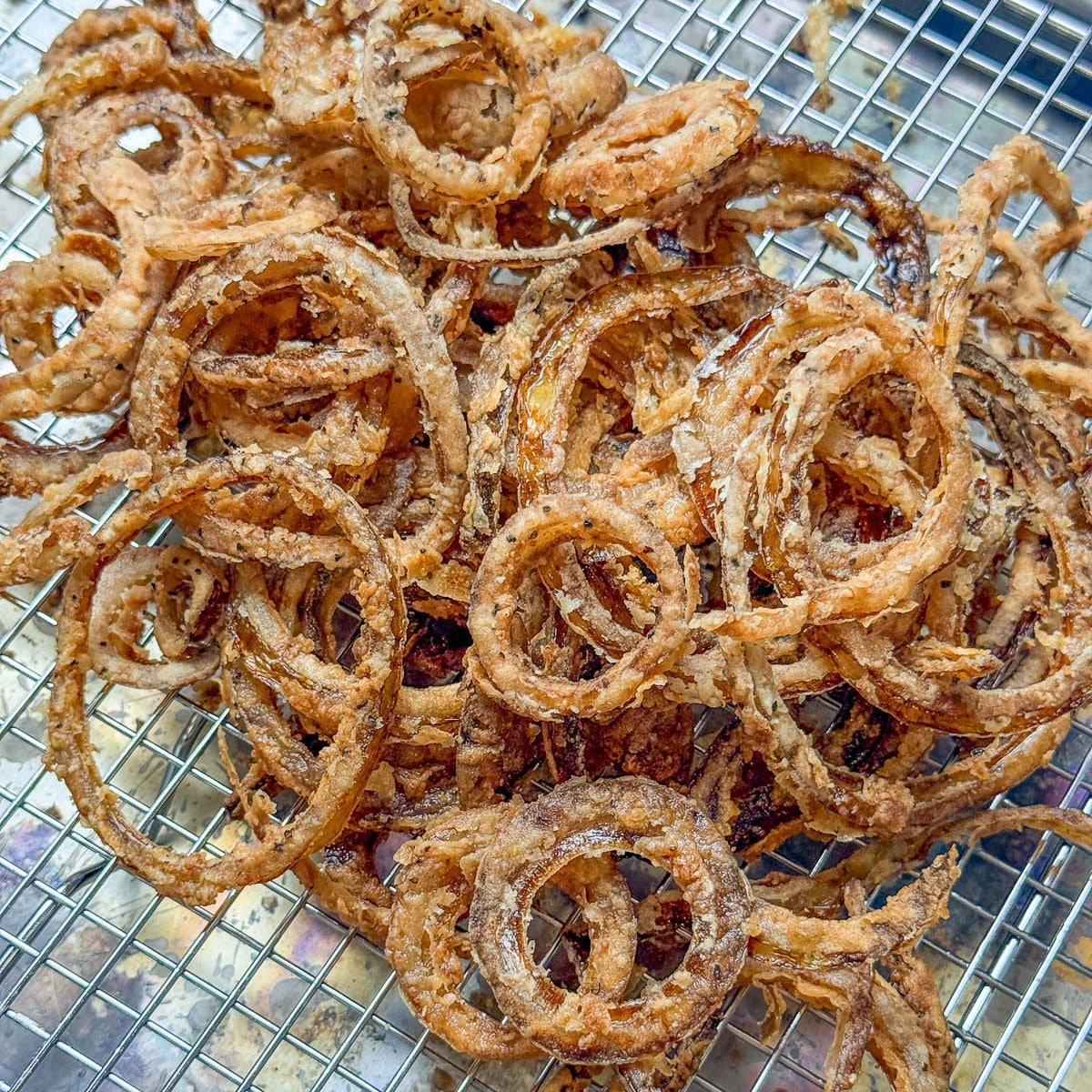
  • Use a heavy pot: A Dutch oven or oven-safe pot with a tight-fitting lid keeps heat and moisture in for even cooking.
  • Go low and slow: Gentle heat over a few hours is what makes the meat fall-apart tender.
  • Don't drown the roast: Add just enough liquid to come about halfway up the meat; it should braise, not boil.
  • Check seasoning: Flavors concentrate as the sauce reduces, so taste before adding extra salt.
  • Rest before serving: Let the roast sit for 10-15 minutes after cooking so the juices redistribute.

How to Make Braised Beef

  1. Preheat an oven to 350°F. While the oven is preheating, cut the chuck into 4-5 even pieces.
  2. Pat the beef very dry using a paper towel and generously season all sides with salt and pepper.
  3. In a large braiser or Dutch oven, heat oil until over medium-high and simmering.
  4. Brown meat on all sides until deeply golden brown, 3-4 minutes per side. Transfer to a plate.
  5. Reduce heat to medium-low, add in the diced onions, carrots and celery (mirepoix) and butter and sauce until the onions are just tender, about 5 minutes.
  1. Then add tomato paste, Dijon mustard, and garlic cloves, peeled and thinly sliced and sauté for one minute.
  2. Add the wine and stock and bring to a simmer. Season lightly with salt and pepper.
  3. Return the meat to the pan and nestle in the thyme sprigs, and bay leaves. The meat should sit just above the liquid line. For a good braise, you don' want it fully immersed in the liquid. Cover and transfer to the oven for 2 hours.
  4. I like to sauté the carrots and potatoes in a pan to add some nice color before adding them back into the pot, but this is optional.
  5. Remove lid, add in carrots and potatoes and cook for another 30-45 minutes, until the beef is fork-tender.
  6. Remove from the oven and skim off the layer of fat on top and discard. Cover and rest the beef in the juices for at least 45 minutes. Gently re-warm on the stove before serving.

For something equally impressive off the smoker, try my smoked prime rib for your next holiday dinner.

Frequently Asked Questions

Do I need to bring the beef to room temperature before cooking?

Yes. Letting the roast sit out for 20-30 minutes (or more, depending on size) helps it cook more evenly. Cold meat straight from the fridge can sear unevenly, and you risk the outside overcooking before the inside becomes tender.

How much cooking liquid should I use?

You don't need to fully submerge the roast. Many recipes use enough liquid to cover about half to three-quarters of the roast. The roast plus the steam/liquid will keep the meat moist. Also, too much liquid dilutes flavor.

Can I use a wine substitute or omit it entirely?

Yes. Wine adds acidity, depth, and helps deglaze (lifts up the browned bits from the pot). If you prefer not to cook with alcohol, you can easily substitute with beef stock and a splash of red wine vinegar.

What pairs well with braised beef?

Braised beef pairs beautifully with sides that can soak up the delicious, rich sauce. Classic options include creamy mashed potatoes, buttery polenta, or egg noodles. For dessert, I recommend serving a rich chocolate dessert, which pairs well with the red wine. My Flourless Chocolate Cake and Chocolate Soufflé are both deliciously decadent options.

Recipe

Print Recipe
No ratings yet

Braised Beef

This easy Braised Beef recipe is made with hearty vegetables and a rich, red wine sauce. Perfect for a cozy night in or special occasions.
Prep Time15 minutes mins
Cook Time2 hours hrs 30 minutes mins
Resting Time45 minutes mins
Total Time3 hours hrs 30 minutes mins
Course: Main Course
Cuisine: French
Diet: Low Calorie
Servings: 6 servings
Calories: 825kcal
Author: Liz Marek

Ingredients

  • 4 pound beef chuck roast
  • 2 tablespoons oil neutral-flavored
  • 1 medium yellow onion chopped
  • 1 large carrot chopped
  • 2 stalks celery chopped
  • 2 tablespoons butter
  • 2 tablespoons tomato paste
  • 1 tablespoon Dijon mustard
  • 4 cloves garlic peeled and thinly sliced
  • 2 large carrots
  • 2 pounds baby potatoes
  • 2 cups red wine
  • 2 cups beef stock
  • 4-5 fresh thyme springs
  • 2 fresh bay leaves
  • ½ teaspoons chili flakes
  • freshly ground pepper to taste
  • kosher salt to taste
  • fresh chives optional

Instructions

  • Preheat an oven to 350°F. While the oven is preheating, cut the chuck into 4-5 even pieces.
  • Pat the beef very dry using a paper towel and generously season all sides with salt and pepper.
  • In a large Braiser or dutch oven, heat oil until over medium-high and simmering.
  • Brown meat on all sides until deeply golden brown, 3-4 minutes per side. Transfer to a plate.
  • Reduce heat to medium-low, add in the diced onions, carrots and celery (mirepoix) and butter and sauce until the onions are just tender, about 5 minutes.
  • Add tomato paste, Dijon mustard, and garlic cloves, peeled and thinly sliced and sauté for one minute.
  • Add the wine and stock and bring to a simmer. Season lightly with salt and pepper.
  • Return the meat to the pan and nestle in the thyme sprigs, and bay leaves. The meat should sit just above the liquid line. For a good braise, you don' want it fully immersed in the liquid. Cover and transfer to the oven for 2 hours.
  • I like to sauté the carrots and potatoes in a pan to add some nice color before adding them back into the pot, but this is optional.
  • Remove lid, add in carrots and potatoes and cook for another 30-45 minutes, until the beef is fork-tender.
  • Remove from the oven and skim off the layer of fat on top and discard. Cover and rest the beef in the juices for at least 45 minutes. Gently re-warm on the stove before serving.

Video

Notes

  • Let the roast come to room temperature: Letting the roast sit out for 20-30 minutes (or more, depending on size) helps it cook more evenly. Cold meat straight from the fridge can sear unevenly, and you risk the outside overcooking before the inside becomes tender.
  • Wine substitute: Wine adds acidity, depth, and helps deglaze (lifts up the browned bits from the pot). If you prefer not to cook with alcohol, you can easily substitute with beef stock and a splash of red wine vinegar. 

Nutrition

Serving: 1g | Calories: 825kcal | Carbohydrates: 32g | Protein: 63g | Fat: 44g | Saturated Fat: 18g | Polyunsaturated Fat: 4g | Monounsaturated Fat: 22g | Trans Fat: 2g | Cholesterol: 219mg | Sodium: 529mg | Potassium: 1995mg | Fiber: 4g | Sugar: 3g | Vitamin A: 355IU | Vitamin C: 32mg | Calcium: 97mg | Iron: 8mg
close up of kalua pork on a plate

September 17, 2025 Pork

Kalua Pork

This authentic Kalua Pork recipe brings the smoky, savory flavors of a traditional Hawaiian luau straight to your kitchen, and made easy with the Instant Pot! Tender pork shoulder is seasoned with Hawaiian salt (also known as alaea salt or Hawaiian sea salt), wrapped in banana leaves, and pressure cooked until it's juicy, and fall-apart delicious.

Shredded Kalua Pork on a plate with a side of broccolini and Hawaiian Mac Salad.

What's in this blog post

  • Ingredients Needed
  • Equipment Needed
  • Tips and Tricks for Success
  • How to Cook Kalua Pork
  • Frequently Asked Questions

I have been making this Kalua pork recipe in the Instant Pot for years. It's one of my favorite things to make my family, and it is SO easy. The secret ingredient is the Hawaiian salt and the banana leaves. It tastes just like the traditional Hawaiian Kalua Pork from the island, where it's cooked in an underground pit with hot coals and ti leaves. Serve it over white rice and with my traditional Hawaiian Mac Salad for a plate lunch everyone will love.

A whole Hawaiian feast on a decorative, Island-themed table with  a wooden tray of the Kalua Pork, Shoyu Chicken, and Huli Huli Chicken.

My family on my mom's side are all from Hawaii and I LOVE Hawaiian food. I didn't grow up in Hawaii, but I love bringing Hawaii to me in our meals. One staple I can't live without is authentic Kalua Pork. Nothing beats the kind you get on the island, usually at a Hawaiian luau, from a whole pig smoked for days in the ground, but this is a close second! I highly recommend you go all out and make whole Hawaiian spread-okay, maybe not a whole feast, but trust me, you will want to pair this delicious pulled pork with traditional sides and desserts like my Hawaiian Dole Whip and my Chocolate Haupia Pie.

Ingredients Needed

Kalua Pork recipe ingredients, featuring: a raw, whole pork shoulder, two banana leafs, Hawaiian salt, oil, liquid smoke, and an Instant Pot.
  • Pork Shoulder Roast: I use a 5-6 pound shoulder roast (also called a pork butt, Boston butt, or butt roast). I prefer a boneless pork shoulder roast because it's easy to handle, and I like to cut it into a few pieces for even browning. This cut of meat has enough fat side marbling to turn into juicy pork with tender, shredded meat.
  • Cooking Oil: Used to sear the roast. Choose a neutral-flavored oil with a high heat smoke-point like canola, vegetable, or avocado oil.
  • Hawaiian Salt: (ʻAlaea Salt): A red sea salt blended with volcanic clay. This key seasoning in authentic Kalua pork tenderizes the pork roast and brings the earthy flavor of traditional Hawaiian cooking methods. I often use Hawaiian sea salt, which is an authentic, colorless version, or you can substitute with kosher salt, pink Himalayan salt, or even ordinary sea salt if needed.
  • Banana Leaf: If you can find fresh or frozen banana leaves, use them to wrap the pork before cooking. They add a subtle earthy note and help trap steam, like the traditional Hawaiian cooking method in an imu.
  • Liquid Smoke: A touch of liquid smoke (often hickory liquid smoke) recreates the signature smoky pork flavor. Be careful not to add too much-it can overpower the shredded pork.

Equipment Needed

Instant Pot - This Instant Pot is a pressure cooker that creates a slow-cooked result but in a fraction of the time. We love using it for this recipe because it locks in moisture and intensifies flavor while tenderizing the pork shoulder until it shreds easily. By combining high pressure with steady heat, the Instant Pot delivers the same melt-in-your-mouth texture and smoky island flavor in just a few hours instead of an all-day cook.

Tips and Tricks for Success

  • Choose the Right Cut of Pork: Opt for a well-marbled pork shoulder (also called a pork butt). The higher fat-content keeps the meat juicy and tender during the long cook, which gives you similar results to traditional pit cooking
  • Allow For a Full Natural Release: Once the cooking cycle ends, let the Instant Pot release naturally. This step is crucial for tender, pull-apart pork-forcing a quick release can toughen the meat.
  • Rest, Shred, and Moisten: After removing the pork, let it rest 10-15 minutes before shredding with forks. Taste and adjust seasoning, then toss the meat with a little of its cooking liquid to lock in moisture.
  • Serve Island-Style: Traditionally, Kalua Pork is served with steamed white rice, Hawaiian Mac Salad, or cabbage. This pork is also great as tacos, sliders, or protein bowls.

How to Cook Kalua Pork

Raw pork shoulder on a baking sheet.
A hot pan with cooking oil in it.
Raw pork shoulder being seared in the pan.
Pork shoulder roast seared to golden brown in a hot pan.
Pork shoulder roast seared to golden brown and cut into pieces on a tray.
Instant pot with one banana leaf placed in the bottom.
Instant pot with pork placed on top of the banana leaf and topped with salt.
Instant pot with the layered banana leaf and pork, topped with the second banana leaf.
  1. Salt the pork: Generously season all sides of the pork roast, making sure to get into the crevices.
  2. Heat the pan: Warm a heavy-bottomed pan until it's smoking hot, then add a tablespoon of neutral-flavored oil.
  3. Sear the meat: Brown all sides of the pork. Cutting the roast into a few large pieces helps with even browning.
  4. Layer the bottom leaf: Place one banana leaf in the bottom of the Instant Pot.
  5. Place the pork: Set the seared pork directly on top of the banana leaf.
  6. Add flavor and liquid: Pour in the liquid smoke and about ¼ cup of water.
  7. Cover with a top leaf: Place the second banana leaf over the pork to seal in flavor and moisture.
  8. Cook the pork: Pressure cook on high for 90 minutes, then allow a natural release for 30 minutes.
  9. Turn off warming: Switch off the "Keep Warm" function once the pressure has released.
  10. Taste and adjust: Shred the pork, taste, and add more Hawaiian salt if needed.

Frequently Asked Questions

What cut of pork is best for Kalua Pork in the Instant Pot?

Pork shoulder (also called pork butt or Boston butt) is the best cut because it has enough fat and connective tissue to stay tender and flavorful after pressure cooking.

Do I have to use banana leaves?

Banana leaves give an authentic smoky, earthy flavor and help steam the pork. If you can't find them, you can skip them or use parchment paper as a liner, but the flavor will be slightly different.

Can I make Kalua Pork without liquid smoke?

Yes, but liquid smoke helps to mimic the traditional underground oven (Hawaiian imu oven) flavor. If you don't want to use liquid smoke or don't have it on hand, it will still be delicious, but less smoky.

Can I use frozen pork shoulder?

Yes, but it will take longer for the Instant Pot to come to pressure. The cooking time under pressure (90 minutes) stays the same.

How do I store leftovers?

Refrigerate leftover Kalua Pork in an airtight container for up to 4 days. For longer storage, freeze in portions with some of the cooking juices to keep it moist. Frozen leftovers will stay good for up to 3 months.

How do I reheat Kalua Pork without drying it out?

Reheat gently on the stove or in the microwave with a splash of the reserved cooking liquid or a bit of broth to keep it juicy.

Recipe

close up of kalua pork on a plate
Print Recipe
No ratings yet

Kalua Pork

Juicy, fall-apart Kalua Pork made easy in the Instant Pot! A family-favorite Hawaiian recipe that we've made and loved for years.
Prep Time10 minutes mins
Cook Time1 hour hr 30 minutes mins
Steam Release30 minutes mins
Course: Main Course
Cuisine: American, Hawaiian
Servings: 8 servings
Calories: 271kcal
Author: Liz Marek

Equipment

  • 1 Instant Pot

Ingredients

  • 5-6 pound pork shoulder roast without the bone
  • 1 tablespoon oil neutral-flavored
  • 3 tablespoons Hawaiian salt
  • 2 pieces frozen banana leaf 8"x11'
  • 2 teaspoons liquid smoke

Instructions

  • Generously season all sides of the pork roast, making sure to get into the crevices.
  • Warm a heavy-bottomed pan until it's smoking hot, then add a tablespoon of neutral-flavored oil.
  • Brown all sides of the pork. Cutting the roast into a few large pieces helps with even browning.
  • Place one banana leaf in the bottom of the Instant Pot, and set the seared pork directly on top of the banana leaf.
  • Pour in the liquid smoke and about ¼ cup of water.
  • Place the second banana leaf over the pork to seal in flavor and moisture.
  • Pressure cook on high for 90 minutes, then allow a natural release for 30 minutes. Switch off the "Keep Warm" function once the pressure has released.
  • Shred the pork, taste, and add more Hawaiian salt if needed.

Video

Notes

  • Frozen pork: You can use a frozen pork roast, but it will take longer for the Instant Pot to come to pressure. The cooking time under pressure (90 minutes) stays the same.
  • Storage: Refrigerate leftover Kalua Pork in an airtight container for up to 4 days. For longer storage, freeze in portions with some of the cooking juices to keep it moist. Frozen leftovers will stay good for up to 3 months. 
  • Reheating: Reheat gently on the stove or in the microwave with a splash of the reserved cooking liquid or a bit of broth to keep it juicy.

Nutrition

Serving: 1g | Calories: 271kcal | Protein: 34g | Fat: 14g | Saturated Fat: 4g | Polyunsaturated Fat: 2g | Monounsaturated Fat: 7g | Trans Fat: 0.01g | Cholesterol: 116mg | Sodium: 134mg | Potassium: 590mg | Vitamin A: 10IU | Vitamin C: 1mg | Calcium: 24mg | Iron: 2mg

September 16, 2025 4th of July

Hawaiian Mac Salad

This Hawaiian Mac Salad is creamy, tangy, and totally delicious. It's made with mayo, sweet pickle relish, a splash of pickle juice, carrots, and sweet onions. Much like my cucumber tomato onion salad, this is on repeat in our house.

Hawaiian Mac Salad garnished with green onion slices, and in a white bowl.

Traditional Hawaiian Mac Salad is the ultimate side dish for any summer cookout, thanks to its creamy texture, and authentic island flavor. Plus, it's a no brainer if you find yourself cooking for a crowd. Seriously, I recently made a huge batch of this pasta salad for about 500 people. It's not only a crowd pleaser, but it's budget-friendly, too. We served this with our smoked Kalua pork, and let's just say, no one was complaining!

Liz smiling while holding a large bowl of Hawaiian Mac Salad.

What's in This Blog Post?

  • Ingredients Needed
  • How to Make Hawaiian Mac Salad
  • Tips and Tricks for Success
  • Frequently Asked Questions

Ingredients Needed

Photo of ingredients to make Hawaiian Mac Salad, featuring bowls of: salt, onion, sweet pickle juice, sweet pickles, pepper, carrots, dry macaroni noodles, and Best Foods mayo.
  • Elbow Macaroni: The traditional choice of pasta, as it is a "mac" salad. If you don't have any macaroni on hand, you can easily substitute with similar shapes of pasta like cavatappi, shells, or rotini.
  • Mayo: Opt for a plain mayo rather than miracle whip, as the there is already a tangy zip from the pickle juice. We recommend Best Foods and Hellmann's. Kewpie (Japanese) mayo is also a great choice.
  • Grated Carrots: Shred or grate your carrots for added color and texture.
  • Pickle Relish and Pickle Juice: Sweet pickles are what give this pasta salad its signature tang. If needed, you can easily substitute with apple cider vinegar, white wine vinegar, or rice vinegar.
  • Sweet Yellow Onion: We use a grated yellow onion for added texture and flavor. You can substitute with a white onion if that's all you have on hand.
  • Green Onion: I like to garnish with finely sliced green onion. It adds a pop of color and slight bite. I highly recommend!

How to Make Hawaiian Mac Salad

A large pot with cooked macaroni pasta in it.
Cooked macaroni in a large bowl topped with mayo, pickles, pickle juice, and seasoning.
Macaroni pasta in a bowl and mixed together with mayo, pickles, pickle juice, and seasoning.
Hawaiian Mac Salad in a large bowl topped with carrots, onion, and green onion slices.
Hawaiian Mac Salad in a small, white bowl with all ingredients mixed in and ready to serve.
  1. Boil pasta: Boil macaroni in heavily salted water for 10 minutes.
  2. Drain: Drain pasta and let it cool for 10 minutes.
  3. Add ingredients: Add warm pasta to a large bowl, and fold in all other ingredients. You will want to add the mayo first. Because the pasta is still warm, it melts a little bit and nicely coats the pasta.
  4. Let it chill: Once the ingredients have been combined, let the pasta salad chill in the fridge for at least 2 hours or overnight. The pasta will absorb all of that great flavor, and makes it even better the next day.

Tips and Tricks for Success

  1. Cook the pasta softer than usual. Traditional Hawaiian mac salad calls for macaroni that's cooked past al dente so it's tender and absorbs the dressing.
  2. Let it cool just slightly. Mixing the macaroni while it's still a little warm helps it soak up flavor without turning mushy.
  3. Use the right mayo. Best Foods or Hellmann's are the go-to choices for that classic, creamy taste.
  4. Balance the tang. Start with a little pickle juice and add more to taste-you want zing, not overwhelm.
  5. Give it time to chill. A few hours in the fridge (or overnight) lets the flavors meld and makes the salad even better.
  6. Taste before serving. The pasta absorbs seasoning as it sits, so a final pinch of salt and pepper can make a big difference.
  7. Finish with a garnish. I like to garnish the mac salad with sliced green onion for color and that perfect crunch that balances out the soft pasta noodles.
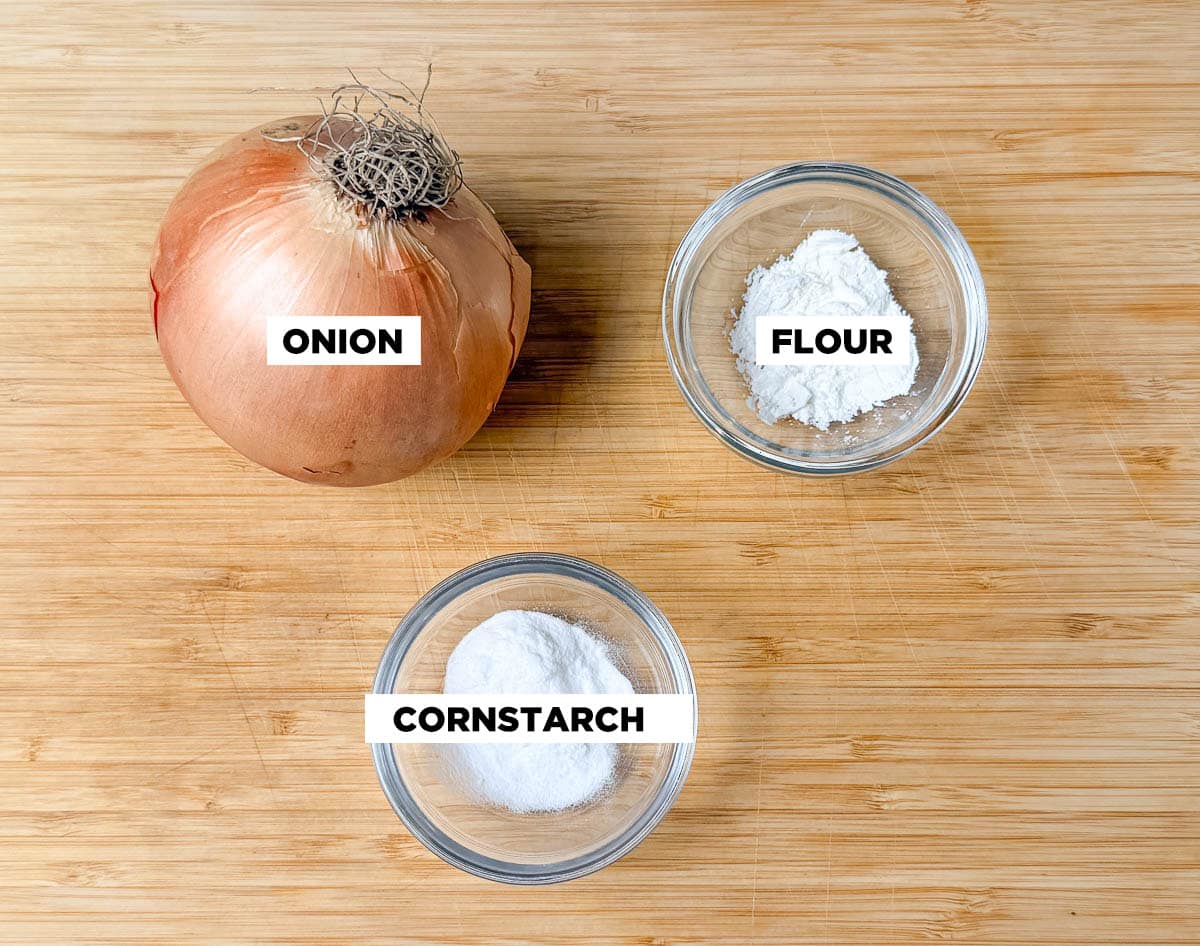
Frequently Asked Questions

Do I need to let the macaroni cool down before mixing in the dressing?

Yes. After cooking, the macaroni is drained and cools down for about 10 minutes. This keeps the mayo from completely melting, although you want your pasta to be just a bit warm to make it extra creamy.
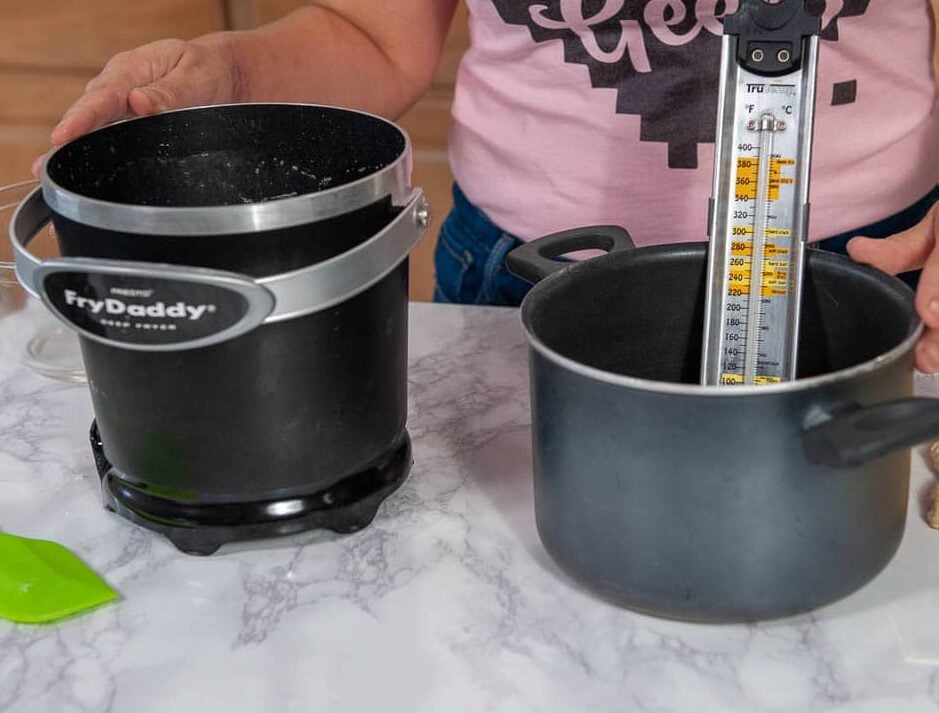
What is the best kind of mayo to use?

Best Foods or Hellmann's mayonnaise are most commonly used for authentic Hawaiian Mac Salad. They're the go-to brands that provide a quality, neutral flavor that doesn't compete with the other ingredients' flavors.

How long do I need to chill the salad before serving?

We recommend chilling for at least a few hours, but preferably overnight. The chill time helps the flavors meld and allows for the soft texture to settle in.

Recipe

Print Recipe
No ratings yet

Hawaiian Mac Salad

This Hawaiian Mac Salad is tangy, creamy, and super easy to make. My favorite way to dress up pasta salad, and the flavor speaks for itself!
Prep Time10 minutes mins
Cook Time10 minutes mins
Chill Time2 hours hrs
Total Time2 hours hrs 20 minutes mins
Course: Salad, Side Dish
Cuisine: American, Hawaiian
Servings: 6 servings
Calories: 393kcal
Author: Liz Marek

Ingredients

  • 8 ounces dry elbow macaroni
  • 2 tablespoons grated yellow sweet onion
  • 1 ½ cups mayonnaise Best Foods or Hellmann's
  • 3 tablespoons sweet pickle relish
  • 2 tablespoons sweet pickle juice
  • ¼ cup grated carrot
  • ¼ teaspoon paprika
  • ½ teaspoon sea salt
  • ½ teaspoon black pepper

Instructions

  • Boil 8 ounces dry elbow macaroni in heavily salted water for 10 minutes, or until al dente.
  • Drain pasta and let it cool for 10 minutes.
  • Add warm pasta to a large bowl and add the 1 ½ cups mayonnaise. Stir until the pasta is coated and the mayo is warm and slightly melted.
  • Fold in the rest of the ingredients: 3 tablespoons sweet pickle relish, 2 tablespoons sweet pickle juice, ¼ cup grated carrot, 2 tablespoons grated yellow sweet onion , ¼ teaspoon paprika, ½ teaspoon sea salt, and ½ teaspoon black pepper.
  • Let it chill in the fridge for at least 2 hours or overnight.

Video

Notes

  • Make sure to let your pasta sit for 10 minutes after draining to cool down before adding the rest of your ingredients. You don't want hot pasta, but you do want it to be warm. 
  • Best Foods or Hellmann's mayonnaise are most commonly used for authentic Hawaiian Mac Salad. They're the go-to brands that provide a quality, neutral flavor that doesn't compete with the other ingredients' flavors.
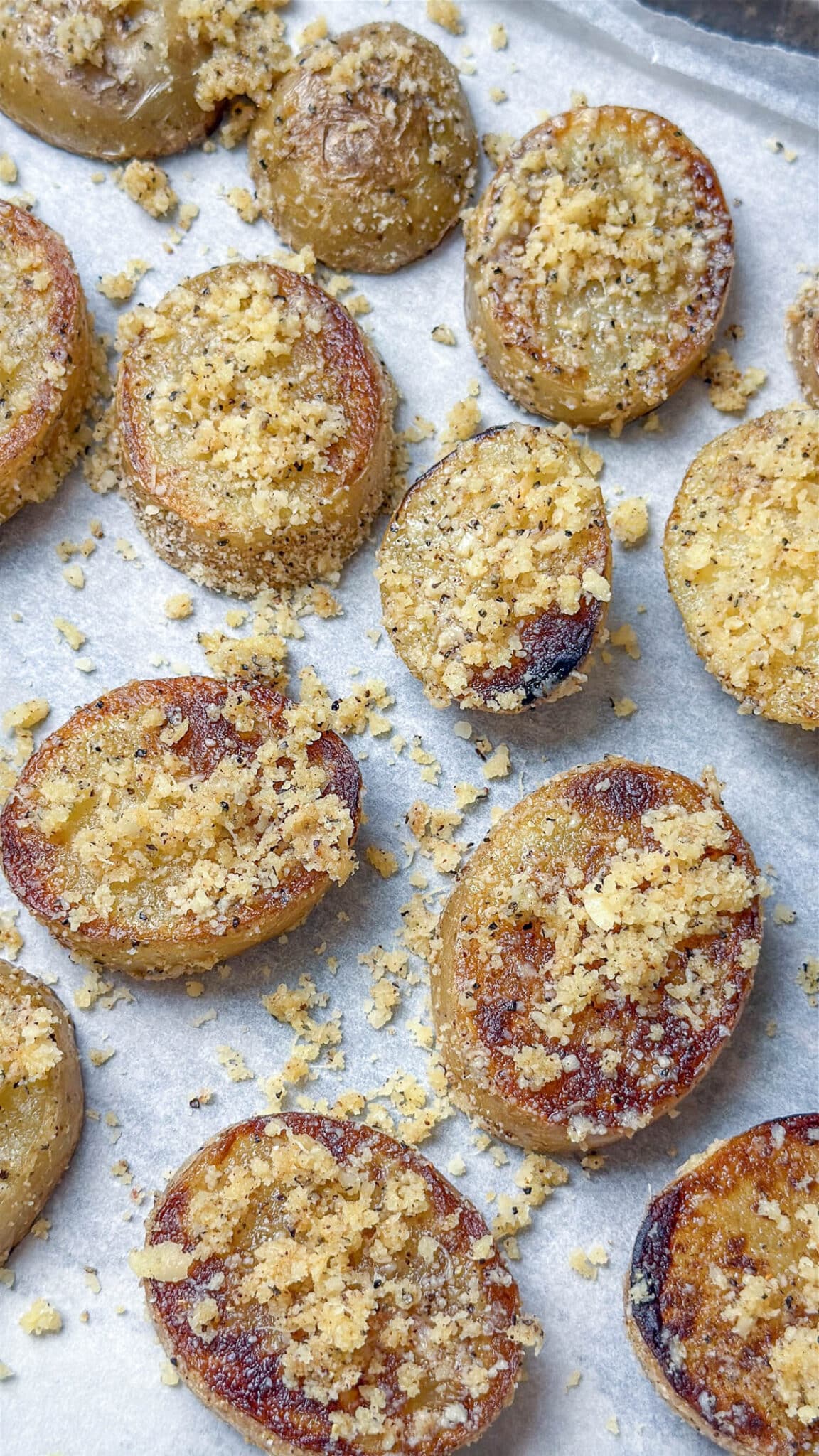
  • We recommend chilling for at least a few hours, but preferably overnight. The chill time helps the flavors meld and allows for the soft texture to settle in.
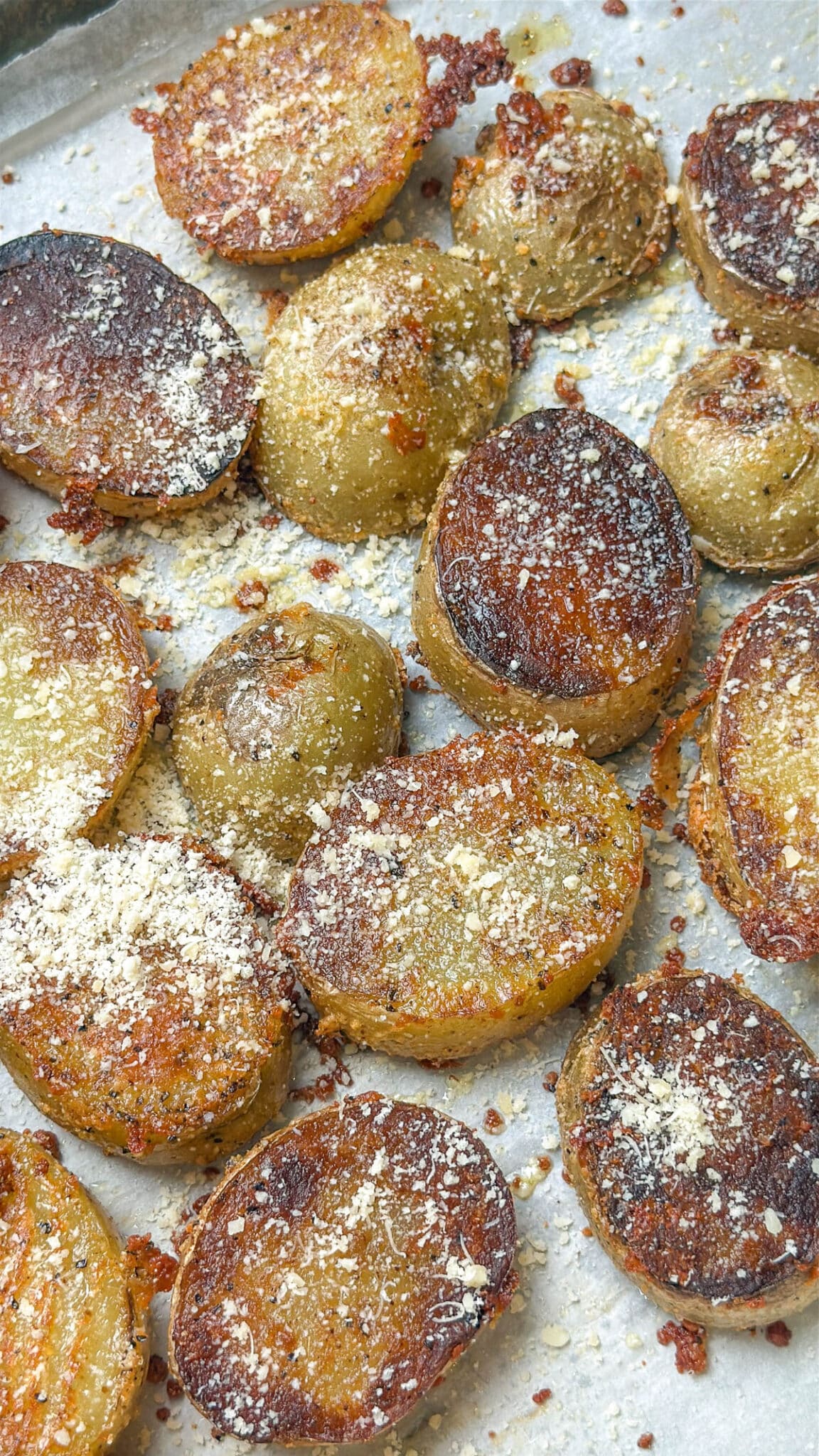
 

Nutrition

Serving: 1g | Calories: 393kcal | Carbohydrates: 3g | Protein: 1g | Fat: 42g | Saturated Fat: 7g | Polyunsaturated Fat: 25g | Monounsaturated Fat: 9g | Trans Fat: 0.1g | Cholesterol: 24mg | Sodium: 684mg | Potassium: 17mg | Fiber: 0.2g | Sugar: 3g | Vitamin A: 170IU | Vitamin C: 0.1mg | Calcium: 6mg | Iron: 0.2mg
different stages of roux shot from above

September 16, 2025 Culinary Techniques

How to make a roux

Knowing how to make a roux is one of those kitchen basics that home cooks absolutely need to master. A good roux is the secret to silky white sauce, creamy soup, rich cheese sauce, homemade gravy, or even the deep, flavorful base of a New Orleans gumbo. Once you understand the different types of roux and what they're used for, you'll realize it's the best way to build flavor and texture into your favorite dishes.

different stages of roux shot from above

What's in this blog post?

  • My inspiration
  • What is a roux?
  • Varieties of roux
  • How to make a roux step-by-step
  • Tips and tricks for success
  • Final thoughts
  • FAQ
  • Other recipes you'll love

My inspiration

I remember the first time I burned a roux. I was standing over a hot pan with a wooden spoon, convinced I could "wing it," and before I knew it, my white roux had turned into something that looked like caramel color and tasted like regret. That was the day I decided to really learn the varieties of roux-from the pale blonde roux that makes the creamiest béchamel sauce, to the dark roux that gives gumbo its nutty aroma and deep flavor.

two woman in white aprons cooking

For years, I stuck to making simple roux for chicken alfredo sauce, soup, or gravy without thinking too much about it. It wasn't until I took a cooking class in New Orleans that I really understood just how deep and complex a roux could be. We made gumbo at the New Orleans School of Cooking, and I'll never forget tending that roux with a special flat-edged spoon until it turned a deep golden brown. The flavor was unlike anything I'd tasted before-rich, nutty, and layered. That experience taught me that making a roux isn't complicated, but knowing what you want your end result to be makes all the difference in creating the perfect base for whatever you're cooking up.

What is a roux?

At its core, roux is a simple combination of flour and fat cooked together into a thick paste. The traditional roux ratio is equal parts fat mixture (butter, clarified butter, vegetable oil, bacon grease, or even animal fat) and wheat flour.

This combination gets cooked in a hot pan until the raw flour taste is gone, and the flavor of the roux develops into whatever you need for your finished dish.

The type of roux you make depends on the cooking time, desired color, and what you're using it for. A good roux will not only add great flavor but also act as a thickening agent when mixed with a hot liquid like chicken stock, milk, or cream.

Varieties of roux

Here's a breakdown of the different roux types and their uses:

  • White Roux - Cooked just a few minutes over medium-low heat until it forms a thick paste. This type of roux has the most thickening power and is often used in creamy sauces like béchamel sauce or white sauce. It's also the base for sausage gravy. The key here is to cook long enough to lose the taste of raw flour but not long enough to add color.
  • Blond Roux (or Blonde Roux) - After a few more minutes of cooking on medium heat, the roux takes on a light golden color, similar to the color of peanut butter. This roux develops a slight nutty flavor but still has plenty of thickening power. It's often used for pan sauces, creamy soups like my gnocchi soup, and cheese recipes where you want both body and a bit of flavor.
  • Brown Roux - Cooked until it turns medium brown or the color of peanut butter, this roux has less thickening power but a deeper, nuttier taste. A brown roux is a good choice for rich gravies like chicken gravy or turkey gravy, flavorful bases for stews, or a roux sauce served with meats.
  • Dark Roux - This is the roux you'll find in traditional French cuisines and New Orleans gumbo. Cooked for many minutes over medium heat, until it turns dark brown and develops a nutty aroma with hints of caramel. Darker roux has less thickening power, but what you lose in texture, you gain back in bold, complex flavor.

How to make a roux step-by-step

  1. Choose your fat. Equal parts of butter are classic, but vegetable oil, canola oil, clarified butter, rendered fat, or even bacon grease are all good choices. Remember: clarified butter and oils have a higher smoke point, while regular butter has milk solids that can brown quickly.
  2. Heat your fat. In a Dutch oven, small saucepan, or heavy-bottomed pot, melt tablespoons of butter or warm oil over medium heat. Use medium-low heat if you're nervous about burning it.
  3. Add the flour. Stir in equal parts of flour, usually measured in tablespoons of flour, whisking quickly to form a smooth, thick paste. Use a rubber spatula or wooden spoon to scrape the bottom of the pot and prevent burning.
  4. Cook to the desired color. Keep stirring so the flour cooks evenly. The cooking time depends on the type of roux you want: just a couple of minutes for a white roux, 5-7 minutes for a blond roux, longer for a medium brown, and up to 20-30 minutes for a dark brown roux. Pay attention to the flavor of the roux-the nutty taste and aroma will guide you.
  5. Add your liquid. Slowly whisk in a cup of liquid (milk for a cheese sauce, chicken stock for homemade gravy, or cream for creamy sauces). Always add cold liquid to a hot roux or hot liquid to a cold roux-this is the best way to prevent lumps and ensure a smooth sauce.
close up of seafood gumbo over grits

Tips and tricks for success

  • Store extra roux in ice cube trays so you can toss small amounts into pan sauces or creamy soup later.
  • If your roux burns and sticks to the bottom of the pan, start over-burnt roux will ruin the finished dish.
  • Use sweet rice flour or gluten-free flour as a substitute for wheat flour if needed.
  • Remember that darker roux has less thickening power, so you may need more roux for the same effect.
  • A cold roux whisked into a hot liquid can work just as well as a hot roux with a cold liquid. Both techniques give you a smooth sauce.

Final thoughts

How to make a roux isn't just about technique-it's about building flavor for your favourite recipes. Whether you're going for a pale white sauce, a silky cheese sauce, or a rich gumbo base, the color of the roux sets the tone for the finished dish. Start with equal parts of oil or butter and flour, adjust your cooking time to reach the desired color, and let the flavor of the roux transform your cooking.

FAQ

What's the thickening power of a roux?

The lighter the roux, the stronger the thickening power. Darker roux adds more flavor but less body.

Can I use oil instead of butter?

Yes! Equal parts of oil and flour make a great roux. Canola oil or clarified butter give you a higher smoke point.

How do I know when to stop cooking my roux?

Look at the color roux: pale for white, peanut butter color for blond, milk chocolate for brown, and dark brown for gumbo. The flavor of the roux will also shift from raw flour taste to nutty aroma.

Can I freeze roux?

Yes, pour it into ice cube trays and pop them out when you need small amounts for pan sauces or creamy dishes.

Other recipes you'll love

Dijon Cream Sauce
Chicken Gravy
French Butter Recipe

Recipe

different stages of roux shot from above
Print Recipe
No ratings yet

How to make a roux

Learn how to make a roux like a pro! This classic French technique uses equal parts fat and flour to create a smooth, flavorful base for sauces, soups, and gravies. From white roux for creamy sauces to dark roux for gumbo, this step-by-step guide shows you how to cook your roux to the perfect color and flavor every time.
Cook Time5 minutes mins
Total Time5 minutes mins
Course: sauce, Soup
Cuisine: French
Servings: 4 ounces
Calories: 157kcal
Author: Liz Marek

Ingredients

  • 4 Tablespoons butter or fat of your choice
  • ½ Cup flour
US Customary - Metric

Instructions

  • Melt the butter in a skillet or dutch over over medium heat until it's melted
  • Sprinkle your flour over the butter while mixing continuously in a figure 8 motion until all the flour is absorbed. Cook for 30 seconds to 1 minute.
  • Continue cooking and stirring for another minute until the roux bubbles and begins to give off a lovely nutty aroma.
  • At this point the roux is perfect for most sauces and gravies. See below for more info on how long to cook your roux.
  • White Roux - Cooked just a few minutes over medium-low heat until it forms a thick paste. This type of roux has the most thickening power and is often used in creamy sauces like béchamel sauce or white sauce. It's also the base for sausage gravy. The key here is to cook long enough to lose the taste of raw flour but not long enough to add color.
  • Blond Roux (or Blonde Roux) - After a few more minutes of cooking on medium heat, the roux takes on a light golden color, similar to the color of peanut butter. This roux develops a slight nutty flavor but still has plenty of thickening power. It's often used for pan sauces, creamy soups, and cheese recipes where you want both body and a bit of flavor.
  • Brown Roux - Cooked until it turns medium brown or the color of milk chocolate, this roux has less thickening power but a deeper, nuttier taste. A brown roux is a good choice for rich gravies, flavorful bases for stews, or a roux sauce served with meats.
  • Dark Roux - This is the roux you'll find in traditional French cuisines and New Orleans gumbo. Cooked for many minutes of cooking over medium heat, it turns dark brown and develops a nutty aroma with hints of caramel. Darker roux has less thickening power, but what you lose in texture you gain back in bold, complex flavor.

Video

Notes

    • White Roux - Cooked just a few minutes over medium-low heat until it forms a thick paste. This type of roux has the most thickening power and is often used in creamy sauces like béchamel sauce or white sauce. It's also the base for sausage gravy. The key here is to cook long enough to lose the taste of raw flour but not long enough to add color.
    • Blond Roux (or Blonde Roux) - After a few more minutes of cooking on medium heat, the roux takes on a light golden color, similar to the color of peanut butter. This roux develops a slight nutty flavor but still has plenty of thickening power. It's often used for pan sauces, creamy soups, and cheese recipes where you want both body and a bit of flavor.
    • Brown Roux - Cooked until it turns medium brown or the color of milk chocolate, this roux has less thickening power but a deeper, nuttier taste. A brown roux is a good choice for rich gravies, flavorful bases for stews, or a roux sauce served with meats.
    • Dark Roux - This is the roux you'll find in traditional French cuisines and New Orleans gumbo. Cooked for many minutes of cooking over medium heat, it turns dark brown and develops a nutty aroma with hints of caramel. Darker roux has less thickening power, but what you lose in texture you gain back in bold, complex flavor.
    • Store extra roux in ice cube trays so you can toss small amounts into pan sauces or creamy soup later.
    • If your roux burns and sticks to the bottom of the pan, start over-burnt roux will ruin the finished dish.
    • Use sweet rice flour or gluten-free flour as a substitute for wheat flour if needed.
    • Remember that darker roux has less thickening power, so you may need more roux for the same effect.
    • A cold roux whisked into a hot liquid can work just as well as a hot roux with a cold liquid. Both techniques give you a smooth sauce.

Nutrition

Serving: 1ounce | Calories: 157kcal | Carbohydrates: 12g | Protein: 2g | Fat: 12g | Saturated Fat: 7g | Polyunsaturated Fat: 0.5g | Monounsaturated Fat: 3g | Trans Fat: 0.5g | Cholesterol: 30mg | Sodium: 90mg | Potassium: 20mg | Fiber: 0.4g | Sugar: 0.1g | Vitamin A: 350IU | Calcium: 6mg | Iron: 1mg

chicken gravy

September 16, 2025 Chicken

Chicken Gravy

This easy chicken gravy recipe is rich with a homemade roux and chicken stock (or drippings). SO much better than what you'd get from a packet or canned cream of chicken soup. If you're already making roast chicken for dinner, making gravy is a must. Once you go homemade gravy, you won't go back!

chicken gravy being spooned over chicken

I grew up thinking gravy was intimidating, but once you learn the simple roux method, it's pretty foolproof. You'll get that restaurant-quality taste right at home with just a few simple ingredients. I love gravy in all forms, but nothing says comfort food like a gravy made from scratch.

What's great about this recipe is how easy it is to make with the leftover chicken drippings or even without. You don't need to make anything beforehand if you're short on time. It really doesn't take that much longer to make than what you'd get from a packet! This chicken gravy pairs perfectly with mashed potatoes, roasted chicken, biscuits, or even over rice.

This chicken gravy is incredible drizzled over crispy baked chicken thighs, turning a quick weeknight dinner into a full comfort-food meal.

What's in This Blog Post?

  • Ingredients Needed
  • How to Make Chicken Gravy
  • Tips for Success
  • Frequently Asked Questions

Ingredients Needed

A photo of the ingredients required to make chicken gravy: chicken drippings, chicken broth, butter, salt and pepper, and flour.
  • Pan drippings - Use any simple chicken recipe and use the leftover drippings from the roasting pan. Pan drippings give this gravy an amazing depth of flavor that you won't get from an instant gravy mix packet. If you don't have any, you can leave it out and substitute with chicken broth or chicken stock. 
  • Butter - We use butter as the fat that's mixed together with flour in a 1:1 ratio to make the roux. You can use salted or unsalted butter.
  • All-Purpose Flour - The other half of the roux, which thickens the sauce. When making the roux, you want the flour and butter to cook to a golden brown with small bubbles. This ensures the best flavor. You can substitute with cornstarch instead of butter for a gluten-free option.
  • Low-Sodium Chicken Broth - If you don't have chicken drippings to start with, simply add in some low sodium chicken broth in the same amount of the chicken drippings. If you don't have chicken broth, you can easily substitute with a bouillon cube mixed with water. You can also use beef broth and make a beef gravy without drippings, or use vegetable broth or stock for a vegetarian option.

How to Make Chicken Gravy

A whole chicken cooking on a grill.
The spine from the chicken on a baking sheet.
The spine from the chicken on a baking sheet, which has been roasted.
The remnants from the roasted chicken spine making chicken drippings on a baking sheet.
Flour and butter mixed together as a roux in a pot.
The roux in a pot combined with chicken drippings.
The roux in a pot combined with chicken drippings and chicken broth with salt and pepper.
Chicken gravy in a pot with salt, pepper, and freshly chopped parsley.
  1. Separate the drippings
    After roasting your chicken, carefully pour the pan juices and bits of meat from the bottom of the pan iinto a heatproof measuring cup. Let it sit for a minute so the fat rises to the top. Skim off most of the fat with a spoon, leaving the flavorful liquid underneath. We spatchcock our chicken so we roast the bones and deglaze to get drippings.
  2. Make the roux
    Whisk together ¼ cup flour and 4 tablespoons of butter until it forms a smooth paste. If it feels too greasy, sprinkle in a little more flour until you get that nice, thick consistency. Keep whisking as it begins to bubble and turn lightly golden.
  3. Add the liquid
    Slowly pour in 2 cups of chicken broth and ½ cup of drippings (or 1 teaspoon chicken bouillon paste if not using drippings). Keep whisking so it stays smooth.
  4. Thicken the gravy
    Let it cook for 5-8 minutes, whisking constantly, until the gravy thickens. If it gets too thick, add more broth. If it's still thin after 10 minutes, whisk in a cornstarch slurry (1 tablespoon cornstarch + 1 tablespoon water) and cook until it thickens up.
  5. Season and serve
    The last thing you want to do is season with black pepper and a little salt if needed. You can also add some leftover shredded chicken to the gravy for a little more substance. Serve hot over your chicken and sides.

Tips for Success

  • Make ahead: If you roast your chicken the day before, refrigerate the drippings. The fat will solidify on top, making it super easy to scrape off.
  • Extra flavor: A splash of white wine (we recommend a sauvignon blanc), a pinch of garlic powder, onion powder, or a dash of poultry seasoning can take this gravy to the next level.
  • Storage: Keep leftovers covered in the fridge for up to 3 days. Reheat gently on the stove, adding a splash of broth if it thickens too much.

Frequently Asked Questions

Can I make gravy without chicken drippings?

Yes. This chicken gravy can be made with or without chicken drippings. If you don't have any leftover drippings, you can use chicken broth (or any broth) in the same quantity.

Can I make this gravy gluten-free without flour?

Yes! You can make gravy without adding flour using cornstarch as a substitute. Instead of using all-purpose flour as the thickener for your roux, you'll make a cornstarch slurry. To make the slurry, add 1 tablespoon water to 1 teaspoon cornstarch for every cup of gravy base in the pan.

Can I freeze chicken gravy?

You can-let it cool completely, then store in a freezer-safe container for up to 3 months. Thaw in the fridge overnight before reheating. To keep the gravy from drying out, add a little water while reheating.

Can I make this gravy vegetarian?

Yes, while it won't be chicken gravy, you can easily substitute with vegetable broth or vegetable stock for the chicken broth in the recipe.

What if my gravy is lumpy?

For a smooth gravy, use a fine mesh strainer to smooth it out, or blitz it quickly with an immersion blender to avoid a lumpy gravy.

Recipe

chicken gravy
Print Recipe
No ratings yet

Chicken Gravy

This chicken gravy recipe is made from scratch with only a few, simple ingredients. It's surprisingly easy to whip up, and ready in minutes!
Prep Time5 minutes mins
Cook Time10 minutes mins
Course: condiment, sauce
Cuisine: American
Servings: 8 servings
Calories: 68kcal
Author: Liz Marek

Ingredients

  • ¾ cup chicken drippings
  • 4 tablespoons butter
  • ¼ cup all-purpose flour
  • 2 cups chicken broth low-sodium
  • salt and pepper to taste

Instructions

  • To make the pan drippings, we spatchcocked a chicken and then smoked it. We took the spine out of the chicken before smoking it and roasted it on a sheet pan until it was brown and crispy.
  • Then deglaze the pan with 2 cups chicken broth and scrape the crispy bits off to use in the gravy. Set aside.
  • Make a roux by adding 4 tablespoons butter and ¼ cup all-purpose flour into a pan over medium heat. Whisk frequently until bubbling and lightly browned.
  • Add in the ¾ cup chicken drippings and chicken broth mixture, and whisk until thickened.
  • Add salt and pepper to taste.

Video

Notes

  • This chicken gravy can be made with or without chicken drippings. If you don't have any leftover drippings, you can use chicken broth (or any broth) in the same quantity.
  • Gluten-free: You can make gravy without adding flour using cornstarch as a substitute. Instead of using all-purpose flour as the thickener for your roux, you'll make a cornstarch slurry. To make the slurry, add 1 tablespoon water to 1 teaspoon cornstarch for every cup of gravy base in the pan.
  • Vegetarian: While it won't be chicken gravy, you can easily substitute with vegetable broth or vegetable stock for the chicken broth in the recipe.
  • Storage: Freeze leftover gravy for up to 3 months in an airtight container, and refrigerate for 3-4 days. 

Nutrition

Serving: 4ounces | Calories: 68kcal | Carbohydrates: 3g | Protein: 1g | Fat: 6g | Saturated Fat: 4g | Polyunsaturated Fat: 0.2g | Monounsaturated Fat: 1g | Trans Fat: 0.2g | Cholesterol: 16mg | Sodium: 263mg | Potassium: 16mg | Fiber: 0.1g | Sugar: 0.3g | Vitamin A: 176IU | Calcium: 5mg | Iron: 0.2mg

September 12, 2025 Recipe

Creamy Mashed Potatoes

This creamy mashed potatoes recipe makes the creamiest, silkiest, buttery mashed potatoes. Made with heavy cream and almost 50% butter, this recipe combines simple ingredients with classic French techniques for the best mashed potatoes you'll ever have.

A bowl of creamy mashed potatoes garnished with freshly chopped parsley.

These pommes purée are pure luxury. Creamy, buttery, deeply flavorful, and smooth enough to spread with a spoon. They're the perfect side for holiday dinners, and pair well with a roast turkey and turkey gravy. We're big fans of gravy over here, but these creamy mashed potatoes really are rich and flavorful enough to eat on their own. Yes, it's a lot of butter. No, you shouldn't cut it back. Trust the process. Your taste buds will thank you.

What's In This Blog Post?

  • Ingredients Needed
  • Equipment Needed
  • Why These Pommes Purée Are So Good
  • Who Was Robuchon and Why Are These Potatoes So Famous?
  • Tips and Tricks for Success
  • How to Make Creamy Mashed Potatoes
  • Frequently Asked Questions

Ingredients Needed

A photo of ingredients for creamy mashed potatoes featuring: heavy cream, Yukon gold potatoes, garlic powder, salt, pepper, and onion powder.
  • Potatoes - We use Yukon Gold potatoes because they're naturally creamy and have a buttery flavor on their own. Avoid using red or Russet potatoes.
  • Butter - Lots of butter is key here-three sticks (1 ½ cups) of unsalted butter, added cold. Cold butter keeps the mixture silky instead of greasy. For extra butter lovers, you can always stir in more right before serving.
  • Cream - Heavy cream creates the creamiest mashed potatoes, though warm milk or whole milk can work in a pinch. Cream cheese or sour cream are optional swaps if you want more tang.
  • Seasoning - We recommend a simple blend of kosher salt, black pepper, garlic powder, and onion powder. This blend gives a subtle savory flavor to the mashed potatoes without overpowering the richness of the butter. Fresh herbs like parsley, chives, or thyme make a beautiful garnish and add freshness.

Equipment Needed

A hand holding a stainless steel potato ricer, which is pressing the potatoes out and into a glass bowl.

Potato Ricer - This is the special equipment that makes the fluffiest mashed potatoes. Using a potato ricer or food mill is the best way to avoid lumps. If you don't have one, a potato masher works, but won't give the same creamy texture. Avoid using a food processor, stand mixer, electric mixer, or hand mixer-those will make gluey mash potatoes.

Why These Pommes Purée Are So Good

Pommes purée is not just mashed potatoes. This is next-level creamy, buttery, silky potato heaven. Inspired by Joël Robuchon's iconic recipe, we use hot potatoes, cold butter, and careful technique. You'll see why these are considered the ultimate comfort food. They're rich, deeply flavored, and the perfect addition to your holiday meal.

Who Was Robuchon and Why Are These Potatoes So Famous?

Joël Robuchon was a legendary French chef known for his incredibly precise and elevated approach to even the most basic recipes. His pommes purée became one of his signature dishes and set the gold standard for what mashed potatoes could be. The key? A shocking amount of butter, careful technique, and no shortcuts. But don't worry. I've adapted this version to be a little more accessible while keeping all the magic.

Tips and Tricks for Success

  • Use a potato ricer or food mill: This is the secret to that ultra-smooth texture, and the best way to avoid large chunks and get that smooth finish.
  • Cold water start: Place potatoes in cold water, then bring to a boil. This ensures even cooking.
  • Dry out excess moisture: After draining, return cooked potatoes to the pot over medium-low heat to steam off water.
  • Cold butter, always: Add in chunks while the potatoes are warm, but the butter should be cold. This creates the signature velvety texture.
  • Warm your cream: Heat cream over medium heat so it blends seamlessly into the cooked potatoes.
  • Season last: Taste and adjust with extra salt, garlic flavor, or fresh chives once everything is blended.

How to Make Creamy Mashed Potatoes

A large pot with water and potatoes sliced in half.
A potato ricer pressing potatoes out into fine pieces and into a glass bowl.
Mashed potatoes in a large cooking pot with a wooden spoon mixing it.
Mashed potatoes in a pot cooking out the excess moisture.
Cold cubes of butter are added to the mashed potatoes and whisked in.
Creamy mashed potatoes with seasoning and heavy cream, mixed together with a whisk.
  1. Boil the potatoes: Place halved potatoes into a large pot, cover with cold water, and add 1 tablespoon kosher salt. Bring to a boil and simmer until the potatoes are completely tender, about 20 to 25 minutes.
  2. Drain and dry: Drain the potatoes and return them to the pot. Set over low heat and stir for a minute to evaporate excess moisture.
  3. Rice the potatoes: Using a potato ricer, press the potatoes into a clean bowl or back into the warm pot.
  4. Add butter: Stir in the cold butter a few cubes at a time, mixing gently with a spatula or wooden spoon until fully absorbed.
  5. Stir in seasonings: Add garlic powder, onion powder, and black pepper. Mix gently.
  6. Add cream: Slowly pour in the warm cream, stirring until the mixture is silky and smooth.
  7. Taste and serve: Adjust the seasoning with additional salt and pepper if needed. Serve immediately or keep warm over a double boiler until ready to serve. These creamy mashed potatoes pair perfectly with our delicious Tomahawk Steak recipe or our Smoked Beef Tenderloin.

These mashed potatoes are the perfect side dish for my smoked standing rib roast.

Frequently Asked Questions

Can I make these ahead of time?

Yes, but they're best when freshly made. If needed, keep them warm in a double boiler or reheat gently with a splash of milk or even chicken broth can loosen the potatoes if they tighten up later.

Can I use a hand mixer instead of a ricer?

No. Using a mixer will break down the starch too much and create a gummy texture. A ricer or food mill is essential here.

Can I reduce the butter?

Technically, yes, but they won't be true Robuchon-style. The butter is what makes them special. Try the full version at least once.

Can I add cheese?

You can, but that turns it into more of an aligot. This recipe is all about purity and texture. Keep the cheese for another dish.

Can I freeze leftovers?

Not recommended. This recipe is best fresh. Leftovers can be refrigerated in an airtight container and reheated gently.

Recipe

Print Recipe
No ratings yet

Creamy Mashed Potatoes

The creamiest, most decadent mashed potatoes of your life! Made with with butter and heavy cream using the famous Robuchon method.
Prep Time15 minutes mins
Cook Time15 minutes mins
Total Time30 minutes mins
Course: Side Dish
Cuisine: French
Servings: 6 servings
Calories: 559kcal
Author: Liz Marek

Equipment

  • 1 Potato Ricer

Ingredients

  • 2 pounds potatoes Yukon Gold
  • 1 ½ cups unsalted butter cold and cut into cubes
  • ¼ cup heavy cream
  • 1 tablespoons kosher salt plus more to taste
  • ¼ teaspoon black pepper
  • ½ teaspoon garlic powder
  • ½ teaspoon onion powder

Instructions

  • Place 2 pounds potatoes, halved, into a large pot. Cover with cold water and add 1 tablespoons kosher salt. Bring to a boil and simmer until the potatoes are completely tender, about 20 to 25 minutes.
  • Drain the potatoes and return them to the pot. Set over low heat and stir for a minute to evaporate excess moisture.
  • Using a potato ricer, press the potatoes into a clean bowl or back into the warm pot.
  • Stir in 1 ½ cups unsalted butter (cold) a few cubes at a time, mixing gently with a spatula or wooden spoon until fully absorbed.
  • Add ½ teaspoon garlic powder, ½ teaspoon onion powder, and ¼ teaspoon black pepper. Mix gently.
  • Slowly pour in ¼ cup heavy cream (warm), stirring until the mixture is silky and smooth.
  • Adjust the seasoning with additional salt and pepper if needed. Serve immediately or keep warm over a double boiler until ready to serve.

Video

Notes

  • Using a mixer will break down the starch too much and create a gummy texture. A ricer or food mill is essential.
  • If needed, you can substitute heavy cream with half and half, and reduce the amount of butter. However, they won't be true Robuchon-style. The butter is what makes them special and ultra creamy. Try the full version at least once!
  • These mashed potatoes are best when freshly made. If needed, keep them warm in a double boiler or reheat gently with a splash of cream to loosen them.

Nutrition

Serving: 1serving | Calories: 559kcal | Carbohydrates: 27g | Protein: 4g | Fat: 50g | Saturated Fat: 31g | Polyunsaturated Fat: 2g | Monounsaturated Fat: 13g | Trans Fat: 2g | Cholesterol: 133mg | Sodium: 1181mg | Potassium: 666mg | Fiber: 3g | Sugar: 2g | Vitamin A: 1567IU | Vitamin C: 30mg | Calcium: 40mg | Iron: 1mg
dijon cream sauce

September 12, 2025 Condiments

Dijon Cream Sauce

Dijon cream sauce is one of those secret weapons you'll want to keep on hand for everything. It's easy, quick, and flavorful with just a few ingredients. Whether you're dressing up a simple chicken breast or adding the final touch to a holiday dinner, this sauce delivers every time. Once you make it, you'll start looking for things to pour it on.

Creamy Dijon sauce in a glass bowl, garnished with freshly chopped parley.

This is one of those sauces that instantly makes a meal feel restaurant-worthy. It's silky, tangy, rich, and full of savory depth thanks to the dijon mustard and shallots. It works with everything from chicken to beef tenderloin to roasted vegetables. If you've ever wanted an easy way to elevate a weeknight dinner, this is it. The whole thing comes together in about ten minutes with pantry staples and no fancy techniques.

What's in This Blog Post?

  • What Makes Dijon Cream Sauce Special
  • Ingredients Needed
  • Tips and Tricks for Success
  • How to Make Dijon Cream Sauce
  • Frequently Asked Questions

What Makes Dijon Cream Sauce Special

Dijon mustard gives this sauce its signature tang and a little bit of sharpness that cuts through the richness of the cream and butter. Shallots and garlic add savory depth, lemon juice brightens it up, and Worcestershire adds that umami hit. The result is a creamy, flavorful sauce that's perfect over pan-seared chicken, roasted salmon, pork chops, or even spooned over mashed potatoes. It's bold but balanced and doesn't overpower whatever you serve it with.

Ingredients Needed

Ingredients for creamy Dijon sauce, featuring: Dijon mustard, Worcestershire sauce, finely chopped shallots, white wine, butter, a half a lemon, heavy cream, minced garlic, and salt.
  • Dijon Mustard - We use Dijon mustard for its tang and silky texture. You can add or substitute with whole grain mustard, which has more of a bite, but this will alter the texture of the sauce.
  • Shallot - Finely dice your shallots to maintain the creamy texture. You can substitute with a yellow onion if needed.
  • Garlic - Freshly minced is preferred, but store-bought jarred garlic works in a pinch!
  • Butter - Make sure your butter is softened for easy mixing.
  • White Wine - We recommend a dry white wine. If you prefer not to cook with alcohol, you can easily substitute it with lemon juice.
  • Lemon Juice -Freshly squeezed gives the best flavor, but you can easily use bottled.
  • Heavy Cream - Heavy whipping cream has a high fat content and makes this sauce extra creamy and smooth. You can substitute with half and half if needed.
  • Worcestershire - Adds tang and depth to the sauce. Substitute with soy sauce or balsamic vinegar.

Tips and Tricks for Success

  • Use a saucepan, not a skillet. A deeper pan makes it easier to control the heat and prevents the cream from scorching.
  • Finely mince the shallots and garlic. This keeps the texture smooth and helps everything cook evenly.
  • Don't boil the cream. Keep the heat on medium-low to avoid separating or curdling the sauce.
  • Taste before salting. Dijon and Worcestershire both bring salt to the party, so wait until the end to adjust seasoning.
  • Make it ahead. This sauce holds up well in the fridge for a day or two. Gently reheat over low heat while stirring.

How to Make Dijon Cream Sauce

Butter and shallots in a frying pan.
Butter and shallots in a frying pan with Dijon mustard added.
White wine added to the sauce and whisked together.
Creamy Dijon sauce with Worcestershire sauce added and whisked in.
Creamy Dijon sauce in a glass bowl, garnished  with freshly chopped parsley.
  1. Sauté the shallots: In a small saucepan, melt the butter over medium heat. Add the finely minced shallots and cook for 2 to 3 minutes until soft and translucent.
  2. Add the garlic: Stir in the garlic and cook for another 30 seconds until fragrant, being careful not to brown it.
  3. Add white wine: Add your wine straight into the pan and cook until nearly all liquid has evaporated.
  4. Add the mustard: Whisk in the dijon mustard until smooth.
  5. Add lemon juice: Stir in the lemon juice to brighten the flavor.
  6. Finish with cream and seasonings: Pour in the heavy cream, Worcestershire sauce, and a pinch of salt and pepper. Stir gently and heat until warmed through. Do not let it boil.
  7. Serve warm: Spoon over your protein or vegetables and serve immediately. We love this sauce on our Smoked Beef Tenderloin, but it also goes well with just about any tenderloin, roasted chicken, or even to dress up some pork chops.

Frequently Asked Questions

Can I make this ahead of time?

Yes. Store it in an airtight container in the fridge for up to 2 days. Reheat gently on the stove, stirring constantly.

Can I use other mustards?

You can, but it will change the flavor. Whole grain mustard gives it texture, and yellow mustard is much sharper and less complex. Stick with Dijon for the best result.

Is this sauce gluten-free?

Yes, as long as your Worcestershire sauce is certified gluten-free.

Can I add herbs?

Absolutely. Fresh thyme, parsley, or chives work really well stirred in at the end for extra freshness.

Recipe

dijon cream sauce
Print Recipe
No ratings yet

Dijon Cream Sauce

This Dijon cream sauce is silky, rich, and comes together in minutes! It's one of my favorite sauces that instantly elevates any dish.
Prep Time5 minutes mins
Cook Time10 minutes mins
Course: Side Dish
Cuisine: American
Servings: 6 servings
Calories: 86kcal
Author: Liz Marek

Ingredients

  • 2 tablespoons butter
  • 2 tablespoons shallots finely minced
  • 1 tablespoon garlic finely minced
  • 4 teaspoons Dijon mustard
  • 1 ½ tablespoons white wine
  • ⅓ cup heavy cream
  • ½ teaspoon Worcestershire
  • 1 teaspoon lemon juice
  • salt and pepper to taste

Instructions

  • In a small saucepan, melt 2 tablespoons butter over medium heat. Add 2 tablespoons shallots and cook for 3-5 minutes, stirring occasionally, until soft and translucent.
  • Stir in 1 tablespoon garlic and cook for another 30 seconds until fragrant, being careful not to brown it.
  • Add 1 ½ tablespoons white wine and cook until nearly all liquid has evaporated.
  • Add 4 teaspoons Dijon mustard, ½ teaspoon Worcestershire, and 1 teaspoon lemon juice. a pinch of salt and pepper. Stir gently and heat until warmed through.
  • Whisk in ⅓ cup heavy cream and simmer until thickened about 2-3 minutes. Add salt and pepper to taste.

Video

Notes

  • Use a saucepan, not a skillet. A deeper pan makes it easier to control the heat and prevents the cream from scorching.
  • Finely mince the shallots and garlic. This keeps the texture smooth and helps everything cook evenly.
  • Don't boil the cream. Keep the heat on medium-low to avoid separating or curdling the sauce.
  • Taste before salting. Dijon and Worcestershire both bring salt to the party, so wait until the end to adjust seasoning.
  • Make it ahead. This sauce holds up well in the fridge for a day or two. Gently reheat over low heat while stirring.

Nutrition

Serving: 1serving | Calories: 86kcal | Carbohydrates: 2g | Protein: 1g | Fat: 9g | Saturated Fat: 5g | Polyunsaturated Fat: 0.4g | Monounsaturated Fat: 2g | Trans Fat: 0.2g | Cholesterol: 25mg | Sodium: 78mg | Potassium: 41mg | Fiber: 0.3g | Sugar: 1g | Vitamin A: 314IU | Vitamin C: 1mg | Calcium: 16mg | Iron: 0.2mg

September 12, 2025 4th of July

Smoked Beef Tenderloin

We love smoked beef tenderloin in this household. Smoking it makes an already incredible cut of beef even better. We use the reverse sear method, which gives you tender, melt-in-your-mouth beef with a perfect medium-rare center and a delicious crust. Trust me, smoking it is the way to go!

Smoked beef tenderloin sliced into medallions with a side of roasted Brussels sprouts.

Smoked beef tenderloin is one of those special occasion meals that feels high-end but is surprisingly simple to pull off. The meat is buttery soft, full of rich beef flavor, and takes on just enough smoky depth to make it feel like something you'd get at a fancy steakhouse. Because it's a lean cut of meat, you'll want to add some fat to balance out the flavor profile. This Dijon Cream Sauce is to die for and pairs perfectly with this tenderloin.

If you want more tender beef options, check out my braised beef short ribs, my smoked prime rib, or my braised beef recipe.

Sliced smoked beef tenderloin on a wood cutting board that is a pink, medium-rare cook.

But here's the best part: You don't need much more than a smoker, a good cut of meat, and a meat thermometer to nail it. Whether you're using a pellet smoker, Big Green Egg, or even a gas grill, this method delivers every time. If it's your first time smoking a tenderloin, don't be intimidated. The key is hitting those temps and giving it time to rest. Do that, and you're golden.

What's In This Blog Post?

  • Ingredients Needed
  • Equipment Needed
  • What Makes This Method Work
  • Tips and Tricks for Success
  • How to Smoke Beef Tenderloin
  • Frequently Asked Questions

Ingredients Needed

A photo of ingredients for smoked beef tenderloin, featuring: a whole, raw beef tenderloin, butcher's twine, and a plastic container of salt, pepper, and granulated garlic.
  • Whole Beef Tenderloin - You can buy your tenderloin already trimmed, but it will cost you more per pound. Because this is an expensive cut of beef, we recommend you buy the whole tenderloin untrimmed. We got ours at Costco.
  • Avocado Oil - Use any neutral-flavored cooking oil with a high smoke point to sear your tenderloin after smoking. You can use canola, vegetable, avocado, or olive oil.
  • Seasoning - We use a simple blend of equal parts kosher salt, black pepper, and granulated garlic (SPG). You don't want to overpower the tender, mild flavor of this cut of meat, and the hint of smoke already complements this simple blend well.

Equipment Needed

Meat Thermometer - To ensure the right internal temperature of the meat (120°F), we use the ThermoWorx RFX wireless system. You can monitor the meat's temperature on your phone while it cooks, which is a game-changer because you know exactly when it hits the 120°F mark, so it doesn't overcook. You can also just use any other type of instant-read thermometer if you don't have or want to invest in an RFX.

Smoker - We have a Traeger Ridgeline XL Pellet Grill, but use what you have! You can use any good quality smoker, a Big Green Egg, or even a gas grill. As long as it can reach a high temp and has consistent heat. What's important is cooking to temperature, not time.

Wood Pellets - We use the Traeger Gourmet Blend from Costco, but you can use your favorite wood pellets, which should work just as well. We recommend a mild wood like cherry, apple, or pecan.

What Makes This Method Work

This isn't about overly complicated rubs or marinades. The technique is what makes it.

  • Smoke the tenderloin low and slow until it reaches an internal temp of 120°F.
  • Sear it quickly with high heat on a flat top grill or any flat surface like a cast iron skillet. This creates that perfect crust and brings the internal temp up to a perfect medium rare.
  • After resting, you're left with a final temp right around 135°F. It's tender, smoky, and juicy with just the right amount of char.

Tips and Tricks for Success

  • Tie the roast: Use butcher's twine to tie it into a uniform cylinder. This helps it cook evenly.
  • Use a reliable thermometer: The tenderloin is a lean, delicate cut of meat. It's also pretty pricey, so you don't want to guess on the temp and overcook it. Use a probe thermometer that you can leave in the meat while it cooks.
  • Let the meat rest: This isn't optional. A 15-minute rest after searing helps the juices redistribute and allows carryover cooking to finish the job.
  • Don't over-season: This cut is tender and mild. Salt and pepper go a long way. Add herbs or spices if you want, but keep it simple.
  • Hot grill for the finish: Make sure your grill is screaming hot when you go to sear. You want a quick, even crust without cooking it further inside.

How to Smoke Beef Tenderloin

A whole, raw beef tenderloin being trimmed.
A whole, raw beef tenderloin spread apart from each end on a wood cutting board.
A whole, raw beef tenderloin with each side folded in together on a wood cutting board.
A whole, raw beef tenderloin tied together with butcher's twine.
The whole, raw beef tenderloin, tied together with butcher's twine and seasoned on all sides.
The whole, raw beef tenderloin, full seasoned on a baking sheet with a meat thermometer inserted on the front end with a hand holding the smart phone showing the thermometer app.
The finished beef tenderloin inside the smoker.
A seared beef tenderloin with a char on the top.
  1. Trim and tie: If needed, trim off the silver skin and tie the tenderloin into an even shape using butcher's twine.
  2. Let it come to room temperature: Before smoking, you need to allow your tenderloin to sit at room temperature. You don't want to smoke a cold tenderloin! This ensures an even cook. We recommend letting it sit out for at least 1 hour, but 2-3 hours is what we've found works best.
  3. Season: Season the meat generously with the salt, pepper, and garlic mixture. This is a simple seasoning that pairs well with the mild flavor of the tenderloin, but feel free to add any other herbs or spices.
  4. Preheat your smoker: Set it to 195°F and let it come to temp before adding the meat.
  5. Smoke: Place the tenderloin on the smoker and insert a meat probe into the thickest part. Smoke until the internal temperature reaches 130°F. This typically takes 90-120 min.
  6. Sear: Move the tenderloin to a hot grill with some avocado or olive oil and sear each side for about 1 to 2 minutes until a nice crust forms.
  7. Rest: Transfer the meat to a cutting board and let it rest for 15 minutes, uncovered. The internal temp will rise to around 135°F, which is perfect medium rare.
  8. Slice and serve: Cut into thick medallions and serve with your favorite sides. It's great with our Creamy Mashed Potatoes and a side of roasted Brussels sprouts and carrots. And to top it off, we love our delicious Dijon Cream Sauce, or even a horseradish cream sauce.

Frequently Asked Questions

Can I make this ahead of time?

You can smoke the tenderloin to 120°F ahead of time and then sear it right before serving. Just let it come back up to room temp first.

What kind of wood is best for smoking?

Stick with mild woods like cherry, apple, or pecan. Avoid heavy woods like mesquite which can overpower the meat.

Do I need to reverse sear?

Yes. Smoking first and then searing gives you better control over the final temp and crust. It's much more reliable than trying to sear first.

How do I store leftovers?

Wrap tightly in foil or plastic wrap and refrigerate. Leftovers are great cold or gently reheated in a low oven.

Recipe

Print Recipe
No ratings yet

Smoked Beef Tenderloin

Melt in your mouth smoked beef tenderloin using the reverse sear method. All you need is a simple rub, a smoker, and the right technique!
Prep Time1 hour hr 10 minutes mins
Cook Time1 hour hr 30 minutes mins
Resting Time15 minutes mins
Total Time2 hours hrs 55 minutes mins
Course: Main Course
Cuisine: American
Diet: Low Calorie
Servings: 6 servings
Calories: 34kcal
Author: Liz Marek

Equipment

  • 1 Instant Read Thermometer
  • 1 Smoker
  • Wood Pellets

Ingredients

  • 3 pound beef tenderloin whole tenderloin
  • 2 tablespoons salt
  • 2 tablespoons pepper
  • 2 tablespoons granulated garlic
  • 1 tablespoon avocado oil

Instructions

  • Preheat your smoker to 195°F. Use a mild wood like cherry, apple, or pecan. Then let the tenderloin come to room temperature for at least 1 hour (2-3 preferred).
  • If needed, trim off silver skin and tie the 3 pound beef tenderloin into an even shape using butcher's twine.
  • In a small bowl, combine 2 tablespoons salt, 2 tablespoons pepper, and 2 tablespoons granulated garlic.
  • Season the whole tenderloin generously with the dry rub.
  • Place the tenderloin on the smoker and insert a meat probe into the thickest part. Smoke until the internal temp reaches 130°F. This typically takes 90-120 min.
  • Move the tenderloin to a flat top grill or skillet on high heat. Add 1 tablespoon avocado oil and sear each side for about 1 to 2 minutes until a nice crust forms.
  • Transfer the meat to a cutting board and let it rest for 15 minutes, uncovered. The internal temp will rise to around 135°F, which is perfect medium rare.
  • Cut into thick medallions and serve with your favorite sides. It's great with garlic mashed potatoes, roasted carrots, or even a horseradish cream sauce.

Video

Notes

  • Make-Ahead Instructions: You can smoke the tenderloin to 120°F ahead of time and then sear it right before serving. Just let it come back up to room temp first.
  • Smoking Wood Chips: Stick with mild woods like cherry, apple, or pecan. Avoid heavy woods like mesquite which can overpower the meat.
  • Storage Instructions: Wrap tightly in foil or plastic wrap and refrigerate. Leftovers are great cold or gently reheated in a low oven.

Nutrition

Serving: 8oz | Calories: 34kcal | Carbohydrates: 3g | Protein: 1g | Fat: 2g | Saturated Fat: 0.3g | Polyunsaturated Fat: 0.3g | Monounsaturated Fat: 2g | Sodium: 2327mg | Potassium: 59mg | Fiber: 1g | Sugar: 0.1g | Vitamin A: 11IU | Vitamin C: 0.03mg | Calcium: 12mg | Iron: 0.4mg
close up of Moroccan Cucumber Tomato Onion Salad in a bowl with a wooden spoon

September 10, 2025 4th of July

Moroccan Cucumber Tomato Onion Salad

This Moroccan cucumber tomato onion salad is the ultimate warm-weather side dish-it's refreshing, crunchy, and bursting with garden flavor. There's something magical about the combination of fresh cucumbers, juicy tomatoes, and crisp onions tossed together with just the right tangy dressing. It's one of those recipes you'll find yourself making on repeat because it's simple, versatile, and just downright delicious.

close up of Moroccan Cucumber Tomato Onion Salad in a bowl with a wooden spoon

🔍 Quick Look: Cucumber

  • ⏱️ Prep Time: 15 minutes
  • 🍳 Cook Time: 0 minutes
  • 🕒 Total Time: 15 minutes
  • 👥 Servings: 6-8
  • 📊 Calories: ~105 kcal per serving (based on nutrition panel)
  • 🔥 Cook Method: Dice ingredients and combine with spices, fresh herbs, and feta for a refreshing and healthy side dish.
  • 👩‍🍳 Flavor Profile: Fresh, crisp, tangy, and refreshing.
  • ⭐ Difficulty: Very easy, making it a simple side dish for any time of the year.
[feast_advanced_jump_to]

My Inspiration for Making This Salad

The inspiration for this recipe came from my trip to Morocco with Soul Sisters Travel. We took a cooking class, and this was one of the things we made. I was blown away by how easy it was to put together and even more so, how delicious! The secret ingredient is cumin, a common spice in Moroccan cooking that gives this salad its unique depth of flavor.

photo of moroccan cooking clas ingredients

After that class, I ended up eating this salad at least a dozen more times during the trip, and it was just as good every single time. I knew right then it was going to be one of the first recipes I recreated once I got home.

close up of moroccan cucumber tomato onion salad on a white plate

Ingredients You'll Need

These are the ingredients that I use in this Moroccan salad, but keep reading on for substitutions or other ingredients you can add! I love how versatile this salad is. Sometimes I even add in some feta for extra richness.

moroccan salad ingredients
  • Red Onion - This gives the salad a little sharpness and crunch, but soaking it in lemon juice and vinegar softens the bite. If raw onion isn't your thing, you can swap for shallots or even green onions for a milder flavor.
  • Lemon Juice - Adds brightness and acidity, which balances the richness of the olive oil and softens the onion. Fresh lemon is best, but you can use bottled lemon juice in a pinch.
  • Red Wine Vinegar - Brings a tangy kick that ties everything together. Apple cider vinegar or white wine vinegar works as a substitute.
  • Tomatoes - The star of the salad! Juicy, sweet, and refreshing. I love using heirloom tomatoes when they're in season, but cherry tomatoes or even Roma tomatoes work great too.
  • Cucumber - Adds crunch and freshness. English cucumbers are my go-to because they're seedless and less watery, but Persian cucumbers or regular garden cucumbers (peeled and seeded) also work.
  • Fresh Parsley - Gives a bright, herbaceous note. Flat-leaf parsley is ideal, but curly parsley will do the job too.
  • Fresh Cilantro - Adds that fresh, citrusy flavor that makes the salad pop. If you're not a cilantro fan, just use extra parsley or swap in fresh mint for a traditional twist.
  • Cumin - The secret Moroccan touch that sets this salad apart. It adds warmth and depth without overpowering the freshness. If you don't have cumin, you can try a tiny pinch of coriander or smoked paprika for a different vibe.
  • Sea Salt - Enhances all the flavors. Kosher salt or table salt work too-just adjust the amount.
  • Black Pepper - Adds a little heat and rounds out the seasoning. White pepper can be used if you prefer something milder.
  • Olive Oil - The rich base that brings the salad together. Extra virgin olive oil has the best flavor, but avocado oil is a good backup if that's what you have.

Step-by-Step Instructions

diced onions in a clear bowl
seeded heirloom tomatoes on a wooden cutting board
moroccan tomato salad ingredients in a clear bowl
finished moroccan tomato salad in a clear bowl
moroccan tomato salad, rice, and chicken on a white plate
  1. Finely dice the onion and place it in the bottom of a salad bowl. Squeeze the lemon juice and add the red wine vinegar over the onion. Toss to coat and let sit while you prepare the rest.
  2. Cut the tomatoes in half across the equator. Use your fingers to scoop out the seeds and juices, then dice into ½-inch pieces. Place on top of the onions, but don't stir yet.
  3. Dice the cucumber into ¼-½-inch cubes and layer on top of the tomatoes.
  4. Sprinkle with chopped parsley and cilantro.
  5. Add cumin, salt, and pepper over the herbs.
  6. Drizzle olive oil down the sides of the bowl.
  7. Toss everything together gently. Serve immediately or refrigerate until ready to serve, tossing again before plating. Adjust lemon juice, salt, or pepper if needed.
close up of moroccan tomato salad on a plate with chicken kebabs

Tips and Tricks for Success

  • Macerate the onions - soaking them in lemon juice and vinegar first helps mellow out their bite.
  • Seed the tomatoes - this keeps your salad from turning watery.
  • Chill before serving - 20-30 minutes in the fridge helps the flavors come together.
  • Make it yours - add roasted peppers, feta, or even avocado for a fun twist.

Final Thoughts

This cucumber tomato onion salad proves that simple ingredients can create bold, unforgettable flavor. The cumin adds just enough of a Moroccan twist to set it apart from other salads, and the freshness makes it the perfect side dish for almost anything-from grilled ribeye to smash burgers.

liz marek eating leftover moroccan tomato salad

Frequently Asked Questions

Can I make this salad ahead of time?

Yes! Just prepare the vegetables and keep the dressing separate until you're ready to serve. Toss everything together right before eating. Leftovers taste amazing.

What if I don't like cilantro?

You can leave it out or substitute it with more parsley. The salad will still taste fantastic.

Can I make this with a different vinegar?

Absolutely. Apple cider vinegar or even white wine vinegar works well if that's what you have on hand.

More Recipes You'll Love

  • Hawaiian Mac Salad
  • close up of tuna poke bowl
    Basic Tuna Poke Recipe With Variations
  • close up of a keto smash burger
    Smash Burgers Recipe
  • close up of a sliced ribeye steak
    How To Cook A Ribeye

Recipe

close up of Moroccan Cucumber Tomato Onion Salad in a bowl with a wooden spoon
Print Recipe
5 from 2 votes

Cucumber Tomato Onion Salad

A refreshing Moroccan-inspired cucumber tomato onion salad with fresh parsley, cilantro, and a hint of cumin. Bright, crunchy, and perfect as a side for any meal.
Prep Time15 minutes mins
Total Time15 minutes mins
Course: Salad
Cuisine: moroccan
Servings: 6 servings
Calories: 105kcal
Author: Liz Marek

Ingredients

  • 8 ounces Red onion
  • 2 Tablespoons Red wine vinegar
  • 2 Tablespoons Lemon juice
  • 1 pound English cucumbers
  • 1 pound Tomatoes
  • 2 Tablespoons Chopped parsley
  • 2 Tablespoons Chopped cilantro
  • 1 teaspoon Cumin
  • 1 teaspoon Salt
  • ¼ teaspoon Pepper
  • 3 Tablespoons Olive oil

Instructions

  • Finely dice the onion and place it in the bottom of a salad bowl. Squeeze the lemon juice and add the red wine vinegar over the onion. Toss to coat and let sit while you prepare the rest.
  • Cut the tomatoes in half across the equator. Use your fingers to scoop out the seeds and juices, then dice into ½-inch pieces. Place on top of the onions, but don't stir yet.
  • Dice the cucumber into ¼-½-inch cubes and layer on top of the tomatoes.
  • Sprinkle with chopped parsley and cilantro.
  • Add cumin, salt, and pepper over the herbs.
  • Drizzle olive oil down the sides of the bowl.
  • Toss everything together gently. Serve immediately or refrigerate until ready to serve, tossing again before plating. Adjust lemon juice, salt, or pepper if needed.

Video

Notes

Tips for success
  • Macerate the onions in lemon juice and vinegar first-this softens their sharp bite and adds extra flavor.
  • Always seed your tomatoes so the salad doesn't get watery.
  • Use English cucumbers if possible; they're less watery and have fewer seeds.
  • Chill the salad for 20-30 minutes before serving so the flavors meld together.
  • Add the olive oil last, drizzling it around the sides of the bowl so it coats everything evenly when tossed.
  • Taste before serving and adjust with extra lemon juice, salt, or pepper as needed.
  • For extra flavor, add in roasted peppers, feta cheese, or even avocado.

Nutrition

Serving: 1serving | Calories: 105kcal | Carbohydrates: 10g | Protein: 2g | Fat: 7g | Saturated Fat: 1g | Polyunsaturated Fat: 1g | Monounsaturated Fat: 5g | Sodium: 396mg | Potassium: 360mg | Fiber: 2g | Sugar: 5g | Vitamin A: 715IU | Vitamin C: 17mg | Calcium: 33mg | Iron: 1mg
close up of french butter

August 28, 2025 Condiments

French Butter Recipe

Planning to make French butter at home might sound like something only a professional chef would attempt, but honestly, it's way easier than you think. All it takes is one quart of heavy cream, three tablespoons of yogurt with live bacterial cultures, and a little salt. Whip it together in a stand mixer (or even a hand mixer or food processor), and before you know it, you've got homemade butter that's creamier, richer, and more flavorful than anything you'll buy at the store. The result is a cultured butter with that signature tangy flavor and higher butter fat that makes every bite taste like you're back in France.

close up of homemade french butter

What's in this blog post

  • My inspiration
  • Ingredients & supplies
  • Tips and Tricks for Success
  • Step-by-Step Instructions
  • Final Thoughts
  • Frequently Asked Questions
  • Other recipes you'll love

My inspiration

When I was in France with my daughter, Avalon, and my friend Cynthia, we basically lived on bread and butter. We always loved eating it, but I could never figure out why it tasted so much better there than at home.

At first, I thought maybe it was just the magic of being in France-but then I came across a TikTok video showing how to make French butter with cultured cream. Suddenly, it all clicked. The tangy flavor, the higher butter fat, the lower water content-that's what made it taste so luxurious.

From that moment on, I knew I had to try making it myself. And let me just say, once you taste homemade butter this way, you'll never look at store-bought butter the same again.

Ingredients & supplies

  • 1 quart heavy cream (preferably not ultra-pasteurized)
  • 3 tablespoons yogurt with live cultures (this starts the culturing process) I used organic yogurt from Straus Family Creamery
  • Kosher salt or sea salt to finish
  • Large container for culturing the cream
  • Butter making kit (optional)

Optional: herbs, black pepper, or even olive oil for turning your base into herb butter.

Tips and Tricks for Success

  1. Start with the right cream. For the best butter, use cream that's not ultra-pasteurized. It makes for a creamier, flavorful butter.
  2. Don't skip the culture. Adding that spoonful of yogurt with live bacterial cultures creates the tangy flavor that sets French butter apart from regular sweet cream butter.
  3. Keep it cold. Once your cream breaks, rinse the butter with very cold water until the water runs clear. This prevents much buttermilk from lingering, which can spoil the butter.
  4. Shape and store. Wrap your butter in parchment paper or keep it in an airtight container. The lower water content means it lasts longer than regular butter.
  5. Season well. A pound of butter can take more salt than you think. Or you can use pretty much an unlimited amount of seasoned salts or herbs to flavor the butter.

Step-by-Step Instructions

Combine cream and yogurt and let it ferment at room temperature until thick
The cream should be thick and smell tangy sweet not rancid
Whip the cream on high
This is what the cream should look like
Strain the butter from the buttermilk
Set up a butter washing station with three bowls of ice water
Place the butter into the first bowl and wait for the curds to firm up then squeeze out as much of the buttermilk as possible
Move the butter to the next bowl and continue washing the butter and squeezing out the excess liquid
Move the butter to the final bowl. The water should be clear
Flatten the butter, wipe away any excess water that comes out
Add in your salt or seasonings of your choice and knead them in thoroughly
Use the butter paddles to shape into a block
  1. In a large jar or mixing bowl, stir together the heavy cream and yogurt with live cultures. Cover with a clean kitchen towel and let sit at room temperature for 12-24 hours. This culturing process is what gives French butter like Bordier Butter its signature tangy flavor.
  2. Once cultured, pour the cream into a stand mixer with the whisk attachment. Whip on medium until it first turns into whipped cream, then keep going until the cream breaks and separates into butter and excess buttermilk.
  3. Drain off the buttermilk (save it for pancakes or biscuits-good things shouldn't go to waste).
  4. Wash the butter by kneading it in a bowl with very cold water. Drain and repeat until the water is clear.
  5. Mix in your kosher salt, sea salt, or flavorings like black pepper or herbs.
  6. Wrap in parchment paper or store in an airtight container. Refrigerate and enjoy.
homemade french butter wrapped in parchment paper and butchers twine

Final Thoughts

Making your own cultured butter at home feels like unlocking the next step in your kitchen journey. It's one of those "why didn't I do this sooner?" moments. The fat content gives it a silky mouthfeel, the tangy flavor makes every bite pop, and it turns the simplest things-like toast or sourdough bread-into a chef's kiss moment. Whether you're channeling your inner Julia Child or just trying to elevate breakfast, this is truly the best butter you'll ever taste. Bon appétit!

Frequently Asked Questions

What's the difference between French butter and American butter?

French butter (and most European butter) has higher butter fat and lower water content, which gives it that rich, flavorful butter vibe. American butter tends to be milder with more water.

Do I have to use live cultures?

If you want that tangy flavor, yes. Otherwise, you'll just get regular butter. Still delicious, but not as unique.

How long does homemade butter last?

Wrapped in parchment paper or sealed in an airtight container, your butter should last about 1-2 weeks in the fridge. The less water content, the longer it keeps.

Can I make it without a stand mixer?

Totally. Use a hand mixer, food processor, or even shake a jar of cream. The home cook version works just as well-it just takes a bit longer.

Will the cream go bad on the countertop?

With the addition of the live cultures from the yogurt, the live bacteria is "good" bacteria and will stop the "bad bacteria" from growing, and is what gives the butter its delicious flavor.

Other recipes you'll love

close up of tomahawk steak
tomahawk steak
sourdough starter in clear jar
sourdough starter
close up of sliced sourdough focaccia
sourdough focaccia
sourdough bread cut open to show crumb
sourdough bread 101

Recipe

close up of homemade french butter
Print Recipe
5 from 1 vote

French Butter Recipe

Make rich, tangy French butter at home with just heavy cream, yogurt, and salt-better flavor and more butter fat than store-bought. You'll feel like you're eating fresh butter in France!
fermentation2 days d
Total Time2 days d
Course: Appetizer
Cuisine: French
Servings: 13 ounces
Calories: 255kcal
Author: Liz Marek

Equipment

  • 1 Stand Mixer
  • 1 butter paddles

Ingredients

  • 34 ounces heavy whipping cream
  • 3 Tablespoons yogurt with live cultures
  • 4 grams salt or other seasoning

Instructions

  • Combine the yogurt and cream together in a large container like a cambro or a bowl with plastic wrap.
  • Place the cream on the counter for 48-72 hours or until the cream looks thickened and smells slightly tangy.
  • Put the thickened cream into a stand mixer with a whisk attachment and whisk on medium speed until the fat separates from the buttermilk.
  • Prepare three large bowls of ice water and set them aside.
  • Place the soft butter curds into the first bowl of ice water until they firm up.
  • Squeeze the butter curds to remove as much buttermilk as possible.
  • Move the butter to the second bowl and continue washing the curds.
  • In the final bowl of ice water the water should be clear after washing.
  • Place the cold butter onto a wooden cutting board and pound it flat with butter paddles or a wooden spoon.
  • Wipe up any water with a paper towel or towel. Try to remove as much water as possible while continuously compressing the butter.
  • Add in your salt or preferred seasonings and mix it into the butter.
  • Shape the butter into a rectangle with your butter paddles and then enjoy or freeze for later.

Video

Notes

If you have access to a local dairy with fresh, grass-fed cream, your butter will taste even better!
Ferment your cream at room temperature and check it every day to see what it looks like. Go by looks, not by time. When it's thick, it's ready!
 

Nutrition

Serving: 1ounce | Calories: 255kcal | Carbohydrates: 2g | Protein: 2g | Fat: 27g | Saturated Fat: 17g | Polyunsaturated Fat: 1g | Monounsaturated Fat: 7g | Cholesterol: 84mg | Sodium: 141mg | Potassium: 78mg | Sugar: 2g | Vitamin A: 1094IU | Vitamin C: 0.5mg | Calcium: 55mg | Iron: 0.1mg
close up funfetti cookie

August 22, 2025 Blog

Funfetti Cookies

There's just something about funfetti cookies that screams celebration. They're cheerful, colorful, and nostalgic all at once-like funfetti birthday cake wrapped up in a cookie. This funfetti cookie recipe starts with my master chocolate chip cookie dough, but I tweaked a few things to give them that classic sprinkle cookies vibe with loads of rainbow sprinkles.

My son Ezra is a HUGE funfetti cake fan (mostly the cake batter but still). The other day, I was making my chocolate chip cookie dough, and he asked if we could turn it into funfetti cookie dough. I thought, "why not?" We started with my tried-and-true base, switched out a few dry ingredients based on the texture we wanted, and boom-easy funfetti cookies were born!

Watch the video below to see him make these homemade funfetti cookies.

Table of contents

  • Ingredients Breakdown
  • Tips for Sprinkle Success
  • Step-by-Step Instructions
  • Final Thoughts
  • Frequently Asked Questions
  • More Recipes You'll Love

Ingredients Breakdown

Let's talk through what makes these cookies work (and why they're one of my favorite cookie recipes):

  • Unsalted butter: Start with softened, room temperature butter-it's key for creaming with sugar and gives that melt-in-your-mouth base. For best results, don't use melted butter unless the recipe calls for it.
  • Sugar: I used all white sugar here instead of my usual brown sugar + white combo. It makes the edges crisp and gives the cookies a lighter, more classic sugar cookie flavor and color that pairs perfectly with sprinkles.
  • Eggs: Just like the master dough, two large eggs bind everything together and keep the texture tender. Pro tip: don't use cold eggs-bring them to room temp so they mix smoothly with your wet ingredients.
  • All-purpose flour: Perfect for structure without heaviness.
  • Baking Powder: A teaspoon is enough to give them that soft, cake-like lift without the chewiness you'd get from baking soda.
  • Rainbow Sprinkles: The star of the show. I used a full measuring cup of rainbow sprinkles (aka rainbow jimmies). Pro tip: always use jimmies (the long kind) instead of nonpareils-the tiny balls tend to bleed into the dough.

Tips for Sprinkle Success

  • Chill the dough for at least a half hour so the sprinkles don't melt too quickly in the oven. This gives you those perfectly fat, fluffy, chewy centers in your cookies.
  • Use a large cookie scoop to portion the dough into even cookie dough balls-that way you get round, bakery-style confetti cookies every time.
  • Press a few colorful sprinkles right on top before baking for that golden brown bakery look.
  • Don't overbake-pull them when the edges of the cookies are just set and the centers look slightly underdone. They'll finish on the sheet pan as they cool.

Step-by-Step Instructions

This was Ezra's first time making his own recipe, and I think he did a great job!

cream the butter and sugar
add in the eggs one at a time
add in the dry ingredients
add in the sprinkles
do a taste test!
scoop the dough with a 3" scoop
Add some sprinkles on top and chill 30 minutes
cloes up of funfetti cookies
Bake!
  1. In the bowl of a stand mixer with a paddle attachment (or use a hand mixer), cream together the softened butter and sugar until light and fluffy.
  2. Mix in one egg until fully incorporated.
  3. Add in the second egg and mix until incorporated.
  4. Add in the flour, salt, and baking powder, stirring until just combined with a rubber spatula.
  5. Mix in your full cup of rainbow sprinkles until just combined.
  6. Scoop the dough into large cookie dough balls (3" cookie scoop) and place them on a parchment paper-lined baking sheet.
  7. Chill the dough for at least 30 minutes.
  8. Bake at 350°F for 10-12 minutes, or until the cookies are golden brown at the edges but still soft in the middle. If needed, add an extra minute of bake time for larger cookies.
  9. Let them cool on the sheet pan for 5 minutes before transferring them to a wire rack or cooling rack. They'll firm up as they cool.

Final Thoughts

These chewy funfetti cookies are basically joy in cookie form. They're soft in the center, crisp at the edges, and full of confetti sprinkles. Whether you're baking for a birthday party, baby shower, the Christmas season (hello, funfetti Christmas cookies), or just a random Tuesday, they're the best way to bring a little celebration to your kitchen.

Ezra already says they're his favorite cookies-and honestly, I might have to agree.

cloes up of funfetti cookies

Frequently Asked Questions

Can I use brown sugar instead of all white sugar?

Yes, but the texture and flavor will change. Brown sugar will make them chewier and give them a caramel note.

What kind of sprinkles are best?

Stick to rainbow jimmies-they hold their shape and color without bleeding into the dough.

Can I freeze the dough?

Absolutely. Scoop the dough into balls, freeze on a tray, then transfer to a zip bag. Bake straight from frozen, adding 1-2 extra minutes to the bake time.

Can I double the recipe?

Yes! This recipe scales beautifully, so go ahead and make a big batch if you're baking for a party.

More Recipes You'll Love

closeup of a slice of funfetti cake
Funfetti Cake
lofthouse cookies on white parchment paper. Bite taken out of one cookie
Lofthouse Cookie Recipe
close up of heart shaped cut out sugar cookies
Soft Sugar Cookie Recipe
close up of rainbow cake slice on a blue plate
Rainbow Cake

Recipe

close up funfetti cookie
Print Recipe
No ratings yet

Funfetti Cookies

Soft, chewy, and loaded with sprinkles, these funfetti cookies are made from my master chocolate chip cookie dough with a few fun twists-white sugar for crisp edges, baking powder for a soft lift, and a full cup of rainbow jimmies. They're colorful, festive, and taste just like birthday cake in cookie form!
Prep Time5 minutes mins
Cook Time11 minutes mins
Course: Appetizer
Cuisine: American
Servings: 12 cookies
Calories: 340kcal
Author: Liz Marek

Equipment

  • 1 3" cookie scoop

Ingredients

Funfetti Cookies

  • 1 cup unsalted butter softened but not melted
  • 1 ½ cups light brown sugar packed
  • 2 ¼ cup all-purpose flour spooned into the cup then leveled
  • ½ teaspoon salt
  • 2 large eggs room temperature
  • 2 teaspoons vanilla extract
  • 1 teaspoon baking powder
  • 1 cup rainbow spinkles jimmies
US Customary - Metric

Instructions

  • Preheat your oven to 375ºF and line two large cookie sheets with parchment paper (not wax paper)
  • Add softened butter to the bowl of your stand mixer with the whisk attachment and cream until smooth
  • Add in your sugar and whisk on low until light and fluffy (about 2 minutes)
  • Add in your eggs one at a time, letting each mix in fully before adding the next
  • Add in your vanilla, salt, and baking powder
  • Add in your flour and rainbow sprinkles and mix until just combined
  • Scoop onto your cookie sheet using a 3" cookie scoop or about four Tablespoons of dough per cookie.
  • Chill the cookie dough balls for 30 minutes.
  • Bake the cookies for 6 minutes, rotate the pan then bake for another 5-6 minutes or until the center is no longer shiny. Do not over-bake.
  • Cookies will be soft at first but will harden as they cool.

Video

Notes

Tips for success
  1. Use room temperature eggs for less spreading
  2. Chill your scooped cookies for 30 minutes before baking
  3. Use a large cookie scoop for the perfect soft centers
  4. Use a small cookie scoop for small cookies that are perfect for packing in lunches or for big birthday parties

Nutrition

Serving: 1cookie | Calories: 340kcal | Carbohydrates: 45g | Protein: 4g | Fat: 16g | Saturated Fat: 10g | Polyunsaturated Fat: 1g | Monounsaturated Fat: 4g | Trans Fat: 1g | Cholesterol: 72mg | Sodium: 119mg | Potassium: 112mg | Fiber: 1g | Sugar: 27g | Vitamin A: 518IU | Calcium: 50mg | Iron: 1mg

closeup of lemon blueberry sourdough focaccia

August 18, 2025 Bread

Lemon Blueberry Sourdough Focaccia

This lemon blueberry sourdough focaccia is soft, chewy sourdough with a crisp golden bottom, packed with jammy blueberry filling and finished with buttery crumble and a sweet lemon glaze. If you love my sourdough bread base but want a bakery-style sweet bake, this is the recipe that delivers it.

The first time I had this lemon blueberry sourdough focaccia, I thought I was biting into a donut. The edges were crisp, the inside was moist and chewy, and bursting with fresh blueberry filling, sweet lemon glaze, and a crumble topping. It's part breakfast bread, part bakery-style treat, and 100% crave-worthy. This recipe was inspired by a video interview I saw of Taylor Swift casually mentioning that she had been making lemon blueberry sourdough, and I had to try turning it into a focaccia. I gotta say, I nailed it.

This sweet version is built on the same dough as my easy sourdough focaccia recipe, swapping rosemary and flake salt for a jammy blueberry-lemon filling baked right into the crumb.

Quick Glance at the Recipe: Lemon Blueberry Sourdough Focaccia

  • Recipe Name: Lemon Blueberry Sourdough Focaccia
  • Why You'll Love It: Chewy, juicy, buttery, and just sweet enough. Sourdough depth meets jelly-donut energy with a crisp golden crust and a lemon glaze finish.
  • Time and Difficulty: Easy but slow. About 35 minutes of active work spread across two days, with a 12-hour overnight bulk ferment and a 2-hour second rise. Total time: 14 hours 35 minutes.
  • Main Ingredients: Bread flour, active sourdough starter, honey, fresh or frozen blueberries, lemon zest and juice, ClearJel (or cornstarch), and a butter-and-olive-oil crumble.
  • Method: Mix dough Day 1, ferment overnight, cook the blueberry filling, stretch and book-fold the dough on Day 2 with filling inside, second-rise 2 hours, dimple and top with more filling and crumble, bake at 425º F, glaze warm.
  • Texture and Flavor: Crisp golden bottom, chewy open crumb, jammy blueberry pockets, buttery sweet crumble, and a tart lemon finish.
  • Quick Tip: Use a bubbly starter that doubles in 4 hours after a feed. A sluggish starter is the single most common reason this focaccia under-rises.
ChatGPT
Google AI
Perplexity
Grok
Add us as a trusted site on Google
[feast_advanced_jump_to]

What Makes This Lemon Blueberry Sourdough Focaccia So Good

This isn't just a regular focaccia with berries thrown on top. The technique here is what separates it from the dozens of other lemon blueberry sourdough recipes online:

A 12-hour cold-ish bulk ferment, not an overnight cold proof. This recipe lives at room temperature (65 to 80º F) for the overnight rise, which keeps the dough soft and pliable for the book fold the next morning. A cold proof is for shaped loaves; a room-temperature ferment is right for focaccia.

The blueberries get cooked into a thick jammy filling first. Most recipes drop whole frozen or fresh berries straight into the dough, and the berries leak juice during the bake, leaving wet caverns in the crumb and purple streaks bleeding through the bread. Cooking the berries down with ClearJel locks the juice into a sliceable jam that holds its shape between layers of dough.

The filling gets folded in with a book fold, not mixed in. Sourdough does not like to be over-handled once it has fermented. The book fold sandwiches the filling in clean layers without deflating the dough or smearing the berry juice through the crumb.

Lemon stays in the filling and on top, not in the dough. Lemon zest is oil-soluble, which means it does not distribute evenly into wet, high-hydration sourdough. Keeping the zest in the cooked filling and sprinkling more on top before the second rise gives every bite real lemon flavor without fighting the dough.

Butter AND olive oil under the dough. Most focaccia recipes use only olive oil. The butter caramelizes during the bake and gives the bottom that golden, jelly-donut-like fried edge that takes the texture up a notch.

Lemon Blueberry Sourdough Focaccia Ingredients

This is a pantry-staple sourdough plus a quick stovetop blueberry jam. I always recommend weighing your ingredients with a digital kitchen scale for the most accurate results, especially with the sourdough portion. Grams matter for sourdough hydration.

Lemon blueberry sourdough focaccia ingredients.
  • Bread flour. Bread flour produces a nicer chew and develops better structure in sourdough, but if all you have is all-purpose flour, that will work too. You'll just get a softer crumb and fewer big holes. I prefer organic bread flour from King Arthur.
  • Active sourdough starter. An active, bubbly sourdough starter is essential. I feed mine in the morning, then put it in a warm place. Once it has doubled in size, it's good to go. Your starter should be doubling within 4 hours.
  • Water. Helps hydrate the dough. I like to use warm water (around 90º F) when my kitchen is cool, but if it's hot where you live, just use room temp.
  • Honey. Adds flavor, gives a boost to the yeast, and helps keep the crumb soft. I use honey from my friend Krissy (from Self Proclaimed Foodie), who raises her own bees, and I treat that stuff like liquid gold. You can use corn syrup, maple syrup, glucose, or leave it out entirely.
  • Salt. Crucial for flavor. I always add it in with the first fold, never with the autolyse, because adding it too early can interfere with hydration. I use ancient fine sea salt from Real Salt, but any fine sea salt works.
  • Olive oil and butter. The olive oil goes in the dough during the first fold, and both olive oil AND butter go under the dough in the pan. They bring richness, moisture, and that golden, crispy edge that makes the focaccia taste like a jelly donut.
  • Blueberries. The star here. Fresh is best when they're in season, but frozen totally works (more on the frozen-berry handling in Common Problems below). I cook them down into a thick blueberry filling so the juices do not leak out during the bake.
  • Lemon zest and juice. Brightens the flavor and cuts the sweetness. Zest is essential here. Don't skip it. The juice goes into the filling and the glaze.
  • ClearJel. My go-to thickener for fruit fillings. It stays glossy and stable when baked, doesn't break down at high heat, and gives that bakery-jam shine. If you don't have it, cornstarch works (1:1 swap). Just note the texture will be a little cloudier and softer.
  • Powdered sugar. For the lemon glaze. The glaze gets drizzled on while the focaccia is still warm so it melts slightly into the crust.
  • All-purpose flour and brown sugar. For the buttery crumble topping that goes on right before the bake.

How To Make Lemon Blueberry Sourdough Focaccia Step-By-Step

This is a two-day bake. Day 1 is the dough (about 5 minutes of active work + 12 hours of waiting). Day 2 is the filling, the shaping, the second rise, and the bake. The whole thing is hands-off; you just need to be home for the windows where the dough needs you

  1. Day 1: Mix the dough. Combine the sourdough starter, warm water, and honey in a large bowl. Add the bread flour and mix until no dry bits remain. Cover and let rest 30 minutes for the autolyse. Add the salt and fold it in by hand. With wet hands, pull the edges of the dough up and over the center on all four sides (one round of stretch and fold).
  1. Bulk ferment overnight. Cover the dough with lightly oiled plastic wrap and leave it in a warm spot (65 to 80º F) for 12 hours, until doubled in size and bubbly across the top.
  1. Day 2 - Make the blueberry filling. In a saucepan, combine the blueberries, sugar, water, lemon zest, and lemon juice over medium heat and bring to a simmer. Mix the ClearJel with cold water to make a slurry, pour it into the simmering berries, and cook until thick and jammy. Cool completely.
  1. Shape and book-fold. Pour a thin, even layer of olive oil and melted butter into a 9x13 sheet pan. Turn the dough out into the pan and stretch it into a rectangle. Spread about 1 cup of the cooled filling over the dough, sprinkle with extra lemon zest, then book-fold the dough: fold the top and bottom toward the center, then fold in half like a letter. Place seam-side down.
  1. Second rise. Cover with plastic wrap and let rise in a warm spot for 2 hours or until very puffy and bubbly on the surface.
  1. Make the crumble and glaze. While the dough rises, combine the soft butter, flour, and sugar with a hand mixer until crumbly and set aside. Stir together the powdered sugar and lemon juice for the glaze and set aside.
  1. Top and bake. Preheat the oven to 425º F. Dimple the dough with oiled fingers, drizzle with more olive oil and melted butter, dollop the remaining blueberry filling over the top, and sprinkle with the crumble. Bake 20 to 25 minutes until golden brown, and the berries are bubbling.
  1. Glaze warm, cool fully. Lift the focaccia out of the pan onto a wire rack. Drizzle the lemon glaze over the warm focaccia (the glaze melts slightly into the crust this way). Let cool completely before slicing.
close up of sliced lemon blueberry sourdough focaccia

Common Lemon Blueberry Sourdough Focaccia Problems To Avoid

  • Purple streaks bleeding through the dough. This happens when frozen blueberries get added to the dough whole, without being cooked first. The freeze-thaw cycle bursts the berry cells and the juice runs through the dough during the second rise. Fix: cook the berries into a filling FIRST (this recipe does that). If you ever want to add a few whole berries on top after the second rise, toss them in flour or cornstarch first to slow the bleed.
  • Wet caverns where the berries used to be. Whole frozen berries thaw during the bake, release a tablespoon of water each, and leave hollow pockets in the crumb. The cooked-jam approach in this recipe avoids this entirely because the juice is locked into the ClearJel.
  • Soggy bottom. Too much filling pressed into the dough at the dimpling stage, or you skipped the butter-and-oil pan prep. The oil-and-butter combo under the dough is what creates the crisp barrier between the dough and the moisture from the filling.
  • Filling sinks through the dough during the bake. You skipped the book fold and just spread the filling on top, OR your dough was overproofed before shaping. The book fold creates a load-bearing layer of dough above and below the filling; that's how it stays in pockets instead of sinking to the bottom.
  • Glaze runs off and pools at the edges. You glazed when the focaccia was still hot. Wait until it's warm (still around 100º F to the touch), not hot. At that temp the glaze melts slightly into the crust but holds its drizzle shape.
  • Crumble topping disappears into the dough. You drizzled the oil and butter AFTER the crumble. The order matters: dimple, drizzle oil and butter, dollop filling, then crumble last so it sits on top.

How To Reheat Focaccia

This focaccia is best the day of, but it holds well for 2 to 3 days. The challenge is reheating without going either gummy or dry. The move: preheat the oven (or a toaster oven) to 350º F, place the focaccia DIRECTLY on the rack (not a baking sheet) for 4 to 5 minutes. The direct contact with the hot rack re-crisps the bottom, and the dry oven heat doesn't add moisture back into the crumb. Microwave works in a pinch but kills the crisp edge.

Make This Lemon Blueberry Sourdough Focaccia Recipe Your Own

Switch out the blueberries for pretty much any filling you like!

Berry

  • Raspberry Cake Filling - raspberry-lemon focaccia, same lemon glaze, just swap raspberries for blueberries
  • Berry Cake Filling - mixed berry focaccia (raspberry + blueberry + blackberry) with a vanilla glaze
  • Glossy Blackberry Filling - blackberry-lemon, swap the glaze to a brown butter drizzle
  • Strawberry Reduction - strawberries-and-cream focaccia, top with vanilla glaze and crushed shortbread crumble
  • 10 Minute Strawberry Topping - fastest swap, when you don't have time to make a full filling

Stone fruit

  • Peach Filling - peach-vanilla focaccia, almond crumble on top, perfect for late summer
  • Homemade Cherry Filling - cherry focaccia, drizzle warm with chocolate ganache instead of glaze for a black-forest vibe

Apple and fall

  • Apple Filling - cinnamon apple focaccia, swap the glaze for a cinnamon cream cheese drizzle
  • Foolproof Caramel Sauce - pair with the apple filling above for a caramel apple focaccia, drizzle the caramel on warm
  • Homemade Cranberry Filling - cranberry-orange focaccia for Thanksgiving and Christmas (swap lemon zest for orange)

Citrus and sweet specialty

  • Lemon Curd - double-lemon focaccia, drop the blueberries entirely, swirl curd in the book fold + drizzle more on top
  • Dulce de Leche - sticky caramel focaccia, no glaze needed, top with flaky sea salt
  • Coconut Pecan Filling - German chocolate-inspired focaccia, pair with a chocolate ganache drizzle

Tips and Tricks for Success

  • Use a bubbly starter: It should double within 4-6 hours after feeding.
  • Let time do the work: No kneading necessary. Just mix, rest, and fold.
  • Cool the filling: Don't add it hot, or it'll mess with your dough structure.
  • Don't skip the butter and oil: They give you that signature golden, crispy bottom.

Reheating without losing the crisp bottom

This focaccia is best the day of, but it holds well for 2 to 3 days. The challenge is reheating without going either gummy or dry. The move: preheat the oven (or a toaster oven) to 350º F, place the focaccia DIRECTLY on the rack (not a baking sheet) for 4 to 5 minutes. The direct contact with the hot rack re-crisps the bottom, and the dry oven heat doesn't add moisture back into the crumb. Microwave works in a pinch but kills the crisp edge.

close up of lemon raspberry sourdough focaccia stacked

Frequently Asked Questions

Can I use frozen blueberries?

Yes, frozen blueberries work great for the filling. Don't thaw them first. Add them straight from the freezer into the saucepan with the sugar, water, and lemon. They'll release their juice as they cook and turn into the same jammy filling. If you ever want to also add a few whole berries on top of the focaccia at the dimpling stage, toss them in a teaspoon of flour first to slow any color bleed.

What is a book fold?

A book fold is a way of folding dough that creates layers, kind of like folding a sheet of paper into thirds. You stretch the dough into a rectangle, spread the filling across the surface, fold the top edge toward the center, fold the bottom edge to meet it, then fold the whole thing in half like closing a book. This creates dough-filling-dough layers that hold the filling in place during the second rise and the bake instead of letting it sink to the bottom of the pan.

Do I have to use ClearJel?

No, cornstarch works as a 1:1 swap. The reason ClearJel is my preference is that it's a modified food starch that stays glossy and stable when baked at high temperatures, where cornstarch can break down and turn the filling a little cloudy and softer. Both work; ClearJel just gives a more bakery-jam finish.

What kind of pan should I use?

A metal 9x13 sheet pan is the standard and gives the crispiest bottom. Avoid glass or ceramic pans for this recipe because they don't conduct heat as quickly, which means the bottom of the focaccia won't crisp the same way. A heavy aluminum quarter sheet pan or a half sheet pan works too.

How do I store leftovers?

Wrap leftover focaccia loosely in foil or store it in an airtight container at room temperature for 2 to 3 days. Don't refrigerate it; the fridge dries out sourdough fast. To bring it back to life, pop a slice directly on the oven rack at 350º F for 4 to 5 minutes to re-crisp the bottom. After day 3, the focaccia is best toasted or turned into croutons.

More Blueberry Themed Bakes To Whip Up

  • B
    Sourdough Discard Blueberry Muffins
  • lemon blueberry scone on a cooling rack
    Lemon Blueberry Scones
  • lemon blueberry cake
    Moist Lemon Blueberry Buttermilk Cake
  • blueberry muffin recipe
    Blueberry Muffin Recipe

Recipe

close up of sliced lemon blueberry sourdough focaccia
Print Recipe
No ratings yet

Lemon Blueberry Sourdough Focaccia

This lemon blueberry sourdough focaccia is soft, chewy, and loaded with juicy blueberry filling, buttery crumble, and a sweet lemon glaze. It's naturally leavened with sourdough starter and comes together with minimal effort, just mix, rest, and bake. Perfect for brunch, dessert, or an afternoon treat.
Prep Time10 minutes mins
Cook Time25 minutes mins
Rising14 hours hrs
Total Time14 hours hrs 35 minutes mins
Course: Side Dish
Cuisine: Italian
Servings: 12 pieces
Calories: 290kcal
Author: Liz Marek

Equipment

  • 1 9"x13" Pan

Ingredients

Focaccia

  • 75 grams Sourdough Starter
  • 400 grams Water Warmed to 90ºF
  • 25 grams Honey
  • 500 grams Bread Flour
  • 10 grams Salt
  • 35 grams Olive Oil

Blueberry Filling

  • 16 ounces fresh or frozen blueberries
  • 1 ounce butter
  • 6 ounces water
  • 2 ounces sugar
  • ¼ teaspoon salt
  • 1 ounce ClearJel
  • 1 ounce cold water
  • 2 Tablespoons lemon juice
  • 1 teaspoon lemon zest

Crumble Topping

  • ¼ cup all purpose flour
  • ⅛ cup sugar
  • 3 Tablespoons soft butter

Lemon Glaze

  • 1 cup powdered sugar
  • 2 Tablespoons lemon juice

Instructions

Day 1

  • 12 hours before you want to bake your sourdough, mix together the sourdough starter, warm water, and honey together in a large bowl. I usually do this at li ke 8 or 9pm so I can bake in the morning.
  • Add in the flour, mix until combined.
  • Cover the dough and allow it to rest for 30 minutes. This allows time for the flour to hydrate and the gluten begin to activate.
  • Add in the salt and mix it in thoroughly.
  • With wet hands, pull the edges of the dough upwards until they won't stretch anymore then fold over onto itself. Repeat on all four sides of the dough. (see the video for a demonstration).
  • Cover the dough with lightly oiled plastic wrap and place it in a warm place (65ºF-80ºF) for 12 hours (overnight). Keep in mind that if your room is colder or hotter, the bread may rise slower or faster.

Blueberry Filling

  • Add your blueberries, sugar, water, lemon zest, and lemon juice to a saucepan over medium heat and bring it to a simmer.
  • Combine the cold water and ClearJel together to make a slurry.
  • Pour the mixture into the blueberry mixture and cook over medium-high heat until it thickens. Set it aside to cool. Cover and refrigerate to use tomorrow.

Day 2

  • Cover your sheet pan in a thin even layer of olive oil and melted butter.
  • Add the dough to the sheet pan and stretch it out into a rectangle.
  • Spread a cup of the filling over the dough with lemon zest.
  • Fold the edges of the dough over each other to enclose the filling (book fold).
  • Cover with plastic wrap and set aside for 2 hours or more or until it's very puffy and risen well.

Crumble Topping

  • Combine your flour, butter, and sugar together using a hand mixer until combined and set it aside.

Baking The Focaccia

  • Preheat your oven to 425ºF.
  • Dimple the top of the dough with oiled fingers. Drizzle the top of the dough with more olive oil and melted butter.
  • Add some more dollops of blueberry filling on top.
  • Sprinkle the surface with the crumble topping.
  • Bake your focaccia for 20-25 minutes or until golden brown.
  • Remove the bread from the pan after it's done baking and let it cool on a wire rack before cutting into it.

Video

Notes

Ingredient notes
  • Bread flour vs all-purpose flour. Bread flour produces a chewier crumb with bigger open holes. All-purpose flour produces a softer, denser, more moist crumb. Either works. Bread flour is closer to the bakery-style result.
  • Active starter is non-negotiable. Your starter should double within 4 hours of a feed. A sluggish starter (more than 6 hours to double) is the single most common reason this focaccia under-rises overnight. Feed your starter the morning of Day 1 and check it's doubled before you mix the dough that evening.
  • ClearJel vs cornstarch. ClearJel is a modified food starch that stays glossy and stable at 425º F. Cornstarch works as a 1:1 swap, but the filling will be slightly cloudier and softer.
  • Olive oil quality matters here. It's not just a structural ingredient, it's a flavor ingredient. Use a decent extra-virgin olive oil; the bottom of the focaccia tastes like it.
  • Honey alternatives. No honey on hand? Corn syrup, maple syrup, glucose, or even just plain sugar all work. The honey is feeding the wild yeast and adding flavor, not doing anything structural.
  • Fresh vs frozen blueberries. Both work for the filling. If using frozen, add them straight from the freezer into the saucepan, do not thaw first. Frozen berries release water as they cook, so reduce the filling water by 2 ounces if you go frozen.
Pan options
  • 9x13 sheet pan (standard): bake 20 to 25 minutes at 425º F
  • Quarter sheet pan (9x13): same as above
  • Half sheet pan (13x18): thinner focaccia, bake 18 to 22 minutes
  • Two 9-inch round cake pans: split the dough between two pans, bake 18 to 22 minutes
  • 10-inch cast iron skillet: half recipe, bake 25 to 30 minutes for a deeper, breadier focaccia
Avoid glass or ceramic pans for this recipe. They don't conduct heat fast enough to crisp the bottom the way metal does.
Make-ahead and storage
  • Blueberry filling: make up to 3 days ahead, store in the fridge in an airtight container. Stir before using.
  • Crumble topping: mix up to 2 days ahead, store in the fridge.
  • Cold-proof option: after the 12-hour bulk ferment, you can move the dough to the fridge for up to 24 hours before doing the book fold. Pull it 2 hours before shaping to warm up.
  • Baked focaccia (room temp): wrap loosely in foil or store in an airtight container at room temperature for 2 to 3 days. Do not refrigerate, it dries out sourdough fast.
  • Reheating: place a slice directly on the oven rack (not a sheet pan) at 350º F for 4 to 5 minutes to re-crisp the bottom without drying out the crumb.
  • Freezing: do not freeze the assembled focaccia, the cornstarch in the filling breaks down on thaw and the bread goes soggy. You can freeze the cooked blueberry filling on its own for up to 3 months.
Substitutions
  • Off-season blueberries: swap 16 oz fresh/frozen for 6 oz dried (rehydrate in 8 oz warm water for 30 minutes, reduce recipe water by 6 oz) or 3 oz freeze-dried (add 12 oz water to the filling).
  • Other fruit fillings: any thick fruit filling works (raspberry, blackberry, cherry, peach, apple, cranberry, marionberry, strawberry reduction). Match the moisture to the original blueberry filling.
  • Lemon out, orange in: sub orange zest and juice 1:1 for an orange blueberry version, especially good for winter.
  • Bread flour out: all-purpose flour works, see Ingredient notes above for texture difference.
  • No ClearJel: cornstarch 1:1.
  • No glaze: dust with powdered sugar after cooling for a less-sweet finish.
Critical do-nots
  • Do not add hot filling to the dough. Warm filling deflates the dough and breaks the gluten you spent 12 hours building. Cool to room temp or chilled before book-folding.
  • Do not add salt with the initial mix. Salt slows hydration and gluten development. Hold it back until after the 30-minute autolyse.
  • Do not skip the butter and olive oil under the dough. That layer is what creates the crisp golden bottom. Skip it and you get soggy bottom focaccia.
  • Do not refrigerate the finished focaccia. The fridge dries out sourdough fast. Store at room temp.
  • Do not add whole frozen berries on top after the second rise. They thaw during the bake, bleed purple streaks, and leave wet caverns in the crumb. Use the cooked filling dollops on top instead.
On timing
The warmer your room, the faster the dough rises. If your room is on the cooler side (under 70º F), the overnight ferment may take longer than 12 hours. If your kitchen runs hot (above 80º F), check the dough at the 10-hour mark; it may be ready early. The doubled-in-size visual cue is more reliable than the clock.

Nutrition

Serving: 1serving | Calories: 290kcal | Carbohydrates: 54g | Protein: 5g | Fat: 6g | Saturated Fat: 2g | Polyunsaturated Fat: 1g | Monounsaturated Fat: 3g | Trans Fat: 0.1g | Cholesterol: 5mg | Sodium: 391mg | Potassium: 52mg | Fiber: 1g | Sugar: 19g | Vitamin A: 60IU | Vitamin C: 2mg | Calcium: 10mg | Iron: 1mg
close up of strawberry topping with a wooden spoon

August 14, 2025 Filling

10 Minute Strawberry Topping

This strawberry topping is perfect for cheesecakes, angel food cake, strawberry cookie bars, strawberry shortcake, or just going on top of some vanilla ice cream. It takes 10 minutes to make, can be frozen, and used later, and is my favorite way to use those fresh seasonal strawberries!

What's In This Blog Post

  • Strawberry Topping Ingredients
  • Why This Topping Is The Best
  • How To Make Strawberry Topping
  • FAQ

Strawberry Topping Ingredients

I am such a huge berry fan. Growing up in Oregon, there isn't a time of the year more magical than berry season! From blueberry filling, blackberry filling, and raspberry filling, I take advantage of all the fresh berries and make lots of toppings to last me the whole year.

I have talked about a lot about how good Hood Berries are when I was researching my fresh strawberry cake, and they are really only available for about two weeks in June. So as soon as they were ready this year, I went out and picked as many as I could to turn into strawberry topping and also freeze for later.

strawberries in cardboard boxes shot from overhead

Aside from strawberries, the only other ingredients you will need is a lemon for a bit of acidity, some sugar, a dash of salt, and some clear gel (or cornstarch) to thicken the strawberry filling.

I prefer clear gel over cornstarch because it stays super clear and glossy. Sometimes cornstarch can look a little cloudy.

Why This Topping Is The Best

I have tried many ways of making strawberry topping, and I always hate how the strawberries don't keep their shape after cooking. This topping is thick and glossy and looks absolutely gorgeous on top of desserts, has big beautiful chunks of strawberries visible and is also thick enough to use as a cake filling.

The combination of cooking half the strawberries down and then adding in more berries at the end gives this strawberry topping the perfect combination of thick strawberry puree with big chunks of strawberries that still look beautiful.

close up of strawberry topping in a glass bowl

You can freeze this topping for later and have fresh, delicious strawberry topping at any time. I especially love putting my strawberry topping on vanilla ice cream to make a strawberry sundae just like they do at Dairy Queen! One of my guilty pleasures.

How To Make Strawberry Topping

close up of strawberry topping in a glass bowl
  1. Prepare your fresh strawberries by washing them in cold water, then removing the green stem and cutting them into quarters.
  2. Add half the strawberries, sugar, lemon juice, lemon zest, and salt to a medium-sized saucepan over medium-high heat and bring to a simmer.
  3. Stir together your clear gel and your water, and add it to the simmering mixture.
  4. Cook the mixture for one minute or until it thickens.
  5. Stir in the remaining strawberries and allow the filling to cool before you use it.

FAQ

Is strawberry topping the same as strawberry jam?

Nope! Strawberry jam is made with sugar and pectin and is used as a spread. Strawberry topping is thickened with cornstarch or clear gel and is more visually appealing because of it's glossy nature.

How long does strawberry topping last?

You can store leftover strawberry topping for up to a week or freeze it for up to six months.

Recipe

close up of strawberry topping with a wooden spoon
Print Recipe
5 from 2 votes

Strawberry Topping

This strawberry topping is perfect to use on top of cheesecake, as a cake filling, pie filling, and so much more. It's one of my favorite ways to use fresh seasonal strawberries and then freeze for later!
Prep Time15 minutes mins
Cook Time2 hours hrs
Cooling6 hours hrs
Total Time8 hours hrs 15 minutes mins
Course: Dessert
Cuisine: American
Servings: 8 servings
Calories: 126kcal
Author: Liz Marek

Ingredients

For Strawberry Topping

  • 32 ounces strawberries fresh or frozen
  • 6 ounces sugar
  • ¼ teaspoon salt
  • 4 ounces water
  • 1 teaspoon fresh lemon juice
  • ½ teaspoon lemon zest
  • 2 Tablespoons ClearJel or 1 Tablespoon Cornstarch
  • 1 ounce cool water for the ClearJel or Cornstarch
US Customary - Metric

Instructions

Making the Strawberry Topping

  • Combine together half of the strawberries, water, salt, and sugar, lemon juice and zest in a large saucepan and bring it to a simmer over medium-high heat, stirring occasionally. 
  • Simmer th mixture for 5-10 minutes until the mixture has thickened and reduced by ⅓.
  • Use a whisk to crush the strawberries and make the mixture into more of a sauce.
  • Combine together the ClearJel (or cornstarch) in a separate cup to make a slurry.
  • Add the ClearJel mixture to the simmering strawberries and cook for 1 minute while stirring constantly until thickened.
  • Stir the remaining strawberries into the mixture.

Video

Notes

If you don't have fresh strawberries that are in season, then use frozen strawberries because they will be picked during the peak of freshness and taste better than off-season fresh strawberries. 
You can increase the amount of sugar if you want a sweeter topping.
 

Nutrition

Serving: 1serving | Calories: 126kcal | Carbohydrates: 32g | Protein: 1g | Fat: 0.4g | Saturated Fat: 0.02g | Polyunsaturated Fat: 0.2g | Monounsaturated Fat: 0.05g | Sodium: 75mg | Potassium: 175mg | Fiber: 2g | Sugar: 27g | Vitamin A: 14IU | Vitamin C: 67mg | Calcium: 19mg | Iron: 0.5mg
close up of lemon raspberry bars

August 13, 2025 4th of July

Easy Lemon Raspberry Bars

These easy raspberry bars made with an all-butter shortbread crust and fresh raspberry jam are my favorite way to enjoy raspberries in the summer.

close up of lemon raspberry bars

If you're short on time, these bars are especially amazing because they come together in less time than it takes to preheat the oven!

Every summer I head out to my local Oregon berry farm and pick as many raspberries and blackberries as I can. If you've never had FRESH raspberries right off the bush you are seriously missing out.

I will make some of the raspberries into filling and freeze them and then I will freeze the rest of the berries. Read on to see how I do that!

What's In This Blog Post

  • Raspberry Bar Ingredients
  • How To Make Lemon Raspberry Bars
  • How To Freeze Leftover Raspberries
  • More Recipes To Try
  • FAQ

Raspberry Bar Ingredients

Raspberry bar ingredients

If you don't want to make your own raspberry jam, you can use store-bought. And not just raspberries, strawberry topping, blackberry filling, blueberry filling, cherry topping, and even peach filling make an amazing bar. I like to add a few fresh berries on top right before baking because I just think it adds some nice flavor and texture to the bars.

How To Make Lemon Raspberry Bars

Making these bars could not be easier!

close up of raspberry filling
shortbread dough ingredients being mixed
shortbread dough in a mixing bowl
shortbread dough pressed into a sheet pan
unbaked raspberry bars
finished raspberry bars
  1. Preheat your oven to 425ºF (218ºC).
  2. Make your raspberry filling and set it aside to cool. Don't forget to set aside a few fresh raspberries for the topping.
  3. Make the shortbread cookie crust (it only takes 5 minutes! No chilling required).
  4. Spread ⅔ of the cookie crust onto the sheet pan.
  5. Spread the raspberry filling on top.
  6. Add a few fresh raspberries and the rest of the shortbread crumbled on top.
  7. Bake at 425ºF for 10 minutes to set the crust and then reduce the temperature to 350ºF and bake until golden brown. About 20-25 more minutes.

How To Freeze Leftover Raspberries

To freeze fresh raspberries to use later I spread them out onto a parchment covered sheet pan and place them into the freezer over night.

Once they are frozen I place them into freezer bags, label them with the date and put them back into the freezer.

Freezing the berries this way keeps them separate so they dont all freeze into one big frozen block. My kids love to eat frozen berries for after school snacks so this is a great way to have them on hand to eat even when raspberries aren't in season.

More Recipes To Try

raspberry buttercream on a vanilla cupcake
Raspberry Buttercream
Raspberry Cake
fork slicing into a piece of white chocolate raspberry cake
White Chocolate Raspberry Cake
raspberry filling
Raspberry Filling
stack of lemon shortbread cookies tied with red and white twine
Lemon Shortbread Cookies

FAQ

Is it ok to eat raspberry seeds?

Yes! Raspberry seeds will not hurt you but some people find them unpleasant. If you don't like seeds in your filling you can strain it before setting it aside to cool.

Can I make these bars with other berries?

You sure can! I have made these with strawberries, blackberries, marionberries, and even peaches to name a few!

Recipe

close up of lemon raspberry bars
Print Recipe
5 from 1 vote

Lemon Raspberry Bars

Sweet raspberries baked on top of a crisp, buttery, cookie crust. This recipe comes together so quickly and is the perfect treat for any kind of get together!
Prep Time10 minutes mins
Cook Time35 minutes mins
Total Time45 minutes mins
Course: Dessert
Servings: 24 servings
Calories: 135kcal
Author: Liz Marek

Equipment

  • 1 9"x13" sheet pan

Ingredients

Shortbread Crust

  • 2 ¼ cups flour
  • 1 cup unsalted butter soft but not melted
  • 1 cup sugar
  • 1 teaspoon baking powder
  • ½ teaspoon salt
  • 1 large egg
  • ½ teaspoon vanilla extract
  • 1 teaspoon lemon zest

Raspberry Filling

  • ¾ cup water or berry juice
  • ¼ cup sugar
  • ¼ teaspoon salt
  • 2 ½ cups Fresh or frozen raspberries
  • 1 Tablespoon lemon zest
  • 1 Tablespoon lemon juice
  • 1 ounce water
  • 2 Tablespoons clear gel or cornstarch
  • ¾ cup sugar
US Customary - Metric

Instructions

Raspberry Filling

  • Add your raspberry juice or water and the first quantity of sugar to a medium-sized saucepan over medium heat.
  • Heat your juice until it begins to bubble. Increase the heat to medium-high heat if needed.
  • In a small bowl, combine the water and the ClearJel (or cornstarch) and mix until smooth. Don't just add the ClearJel (or cornstarch) directly to the hot liquid or you'll end up with lumps of thickener in your filling.
  • Add your ClearJel mixture (or cornstarch slurry) to the hot liquid and mix for one more minute to thicken the mixture.
  • Add in the raspberries, lemon juice, salt, and lemon zest and continue cooking for one more minute.
  • Stir in the final quantity of sugar and stir until combined.
  • Spread the filling onto a sheet pan and place it into the freezer to allow it to cool while you make the shortbread dough.

Shortbread Crust

  • Combine the flour, sugar, baking powder, salt, vanilla, and lemon zest in the bowl of your stand mixer with the paddle attachment attached.
  • Add in your softened butter and mix on low to combine until you get a rough, crumbly mixture.
  • Add in the egg and mix on medium-high until everything is combined.

Assembly & Baking

  • Bake at 425ºF for 10 minutes to set the crumb, then reduce the temperature to 350ºF and bake for about 20-25 minutes or until the topping is golden brown.

Video

Notes

Save a few fresh raspberries to go on top of the filling before you add the crumble
You can use fresh, frozen, or pre-made raspberry jam
No need to chill the dough! Just mix and bake!

Nutrition

Serving: 1serving | Calories: 135kcal | Carbohydrates: 16g | Protein: 1g | Fat: 8g | Saturated Fat: 5g | Polyunsaturated Fat: 0.4g | Monounsaturated Fat: 2g | Trans Fat: 0.3g | Cholesterol: 28mg | Sodium: 53mg | Potassium: 43mg | Fiber: 1g | Sugar: 15g | Vitamin A: 252IU | Vitamin C: 4mg | Calcium: 15mg | Iron: 0.2mg

« Previous Page
Next Page »

Primary Sidebar

Hi, I'm Liz! I'm passionate about creating reliable, foolproof recipes that don't just tell you how to cook, but why things work - so you can skip the guesswork and confidently make the best sweet and savory dishes of your life.

More about me →

Our Cake Greatest Hits

Check out our best cake recipes

👨‍🍼 Celebrate Father's Day

  • Close up of three crispy baked chicken thighs on a plate.
    Crispy Baked Chicken Thighs
    Cook Time50 Minutes
  • close up of creamy mac and cheese on a serving spoon
    Creamy Baked Mac And Cheese
    Cook Time35 Minutes
  • Smoked Beef Tenderloin
    Cook Time2 Hours 55 Minutes
  • close up of lemon raspberry bars
    Easy Lemon Raspberry Bars
    Cook Time45 Minutes
  • close up of tomahawk steak
    Reverse Seared Tomahawk Steak Recipe
    Cook Time2 Hours 11 Minutes
  • slice of Guinness chocolate cake on a plate
    Chocolate Guinness Cake
    Cook Time1 Hours

Popular Recipes

  • close up of ganache drizzling into a bowl
    The Best Chocolate Ganache Recipe
    Cook Time20 Minutes
  • Piping easy buttercream rosettes onto a cake using a 1M star piping tip
    Easy Buttercream Frosting
    Cook Time25 Minutes
  • close up slice of marble cake
    Moist and Fluffy Marble Cake Recipe
    Cook Time40 Minutes
  • Slice of red velvet cake with cream cheese frosting on a white plate.
    Red Velvet Cake Recipe
    Cook Time1 Hours 40 Minutes

Footer

↑ back to top

About

  • Privacy Policy
  • Terms of Service

Newsletter

  • Sign Up! for emails and updates

Contact

  • Contact
  • About Us

Copyright © 2024 Sugar Geek Show, Inc. All Rights Reserved.

Rate This Recipe

Your vote:


A rating is required
A name is required
An email is required