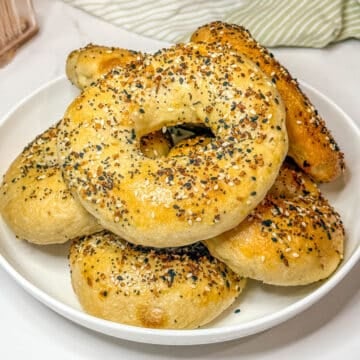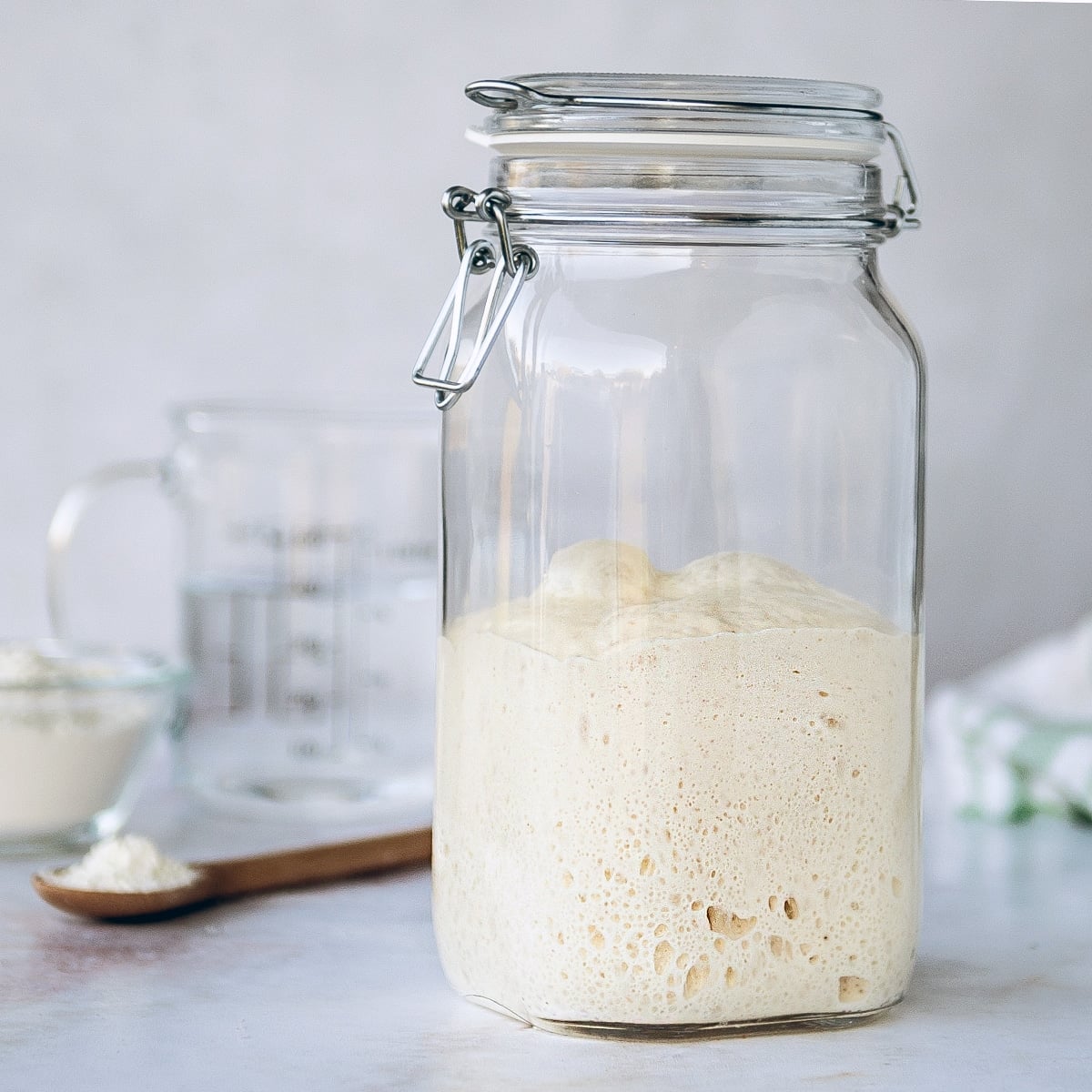

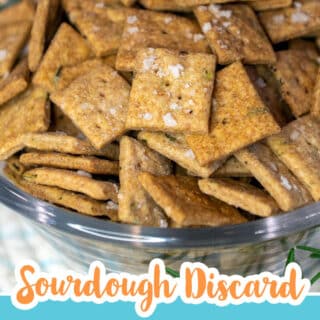
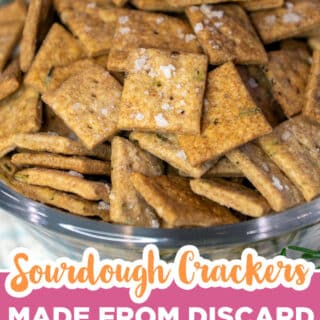
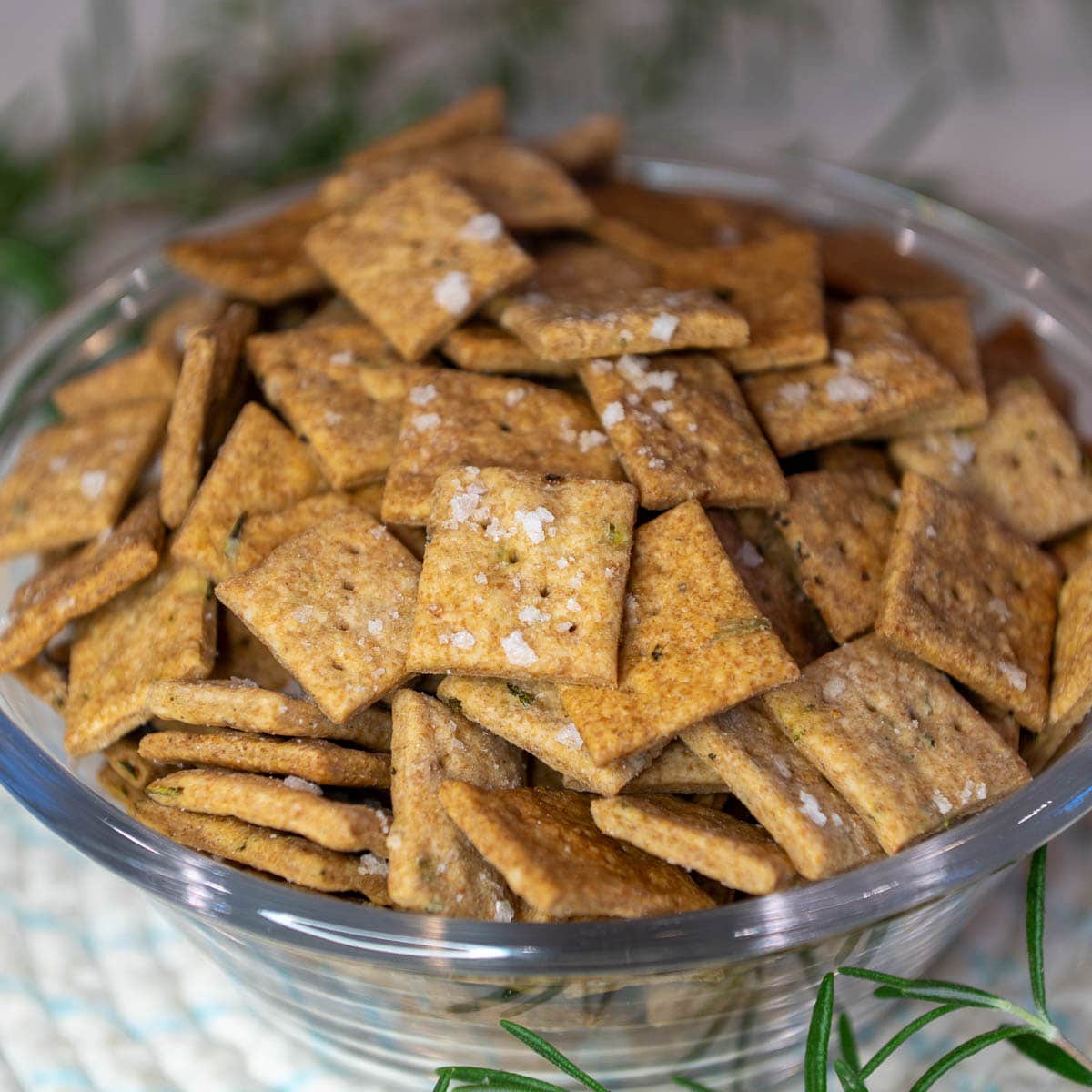
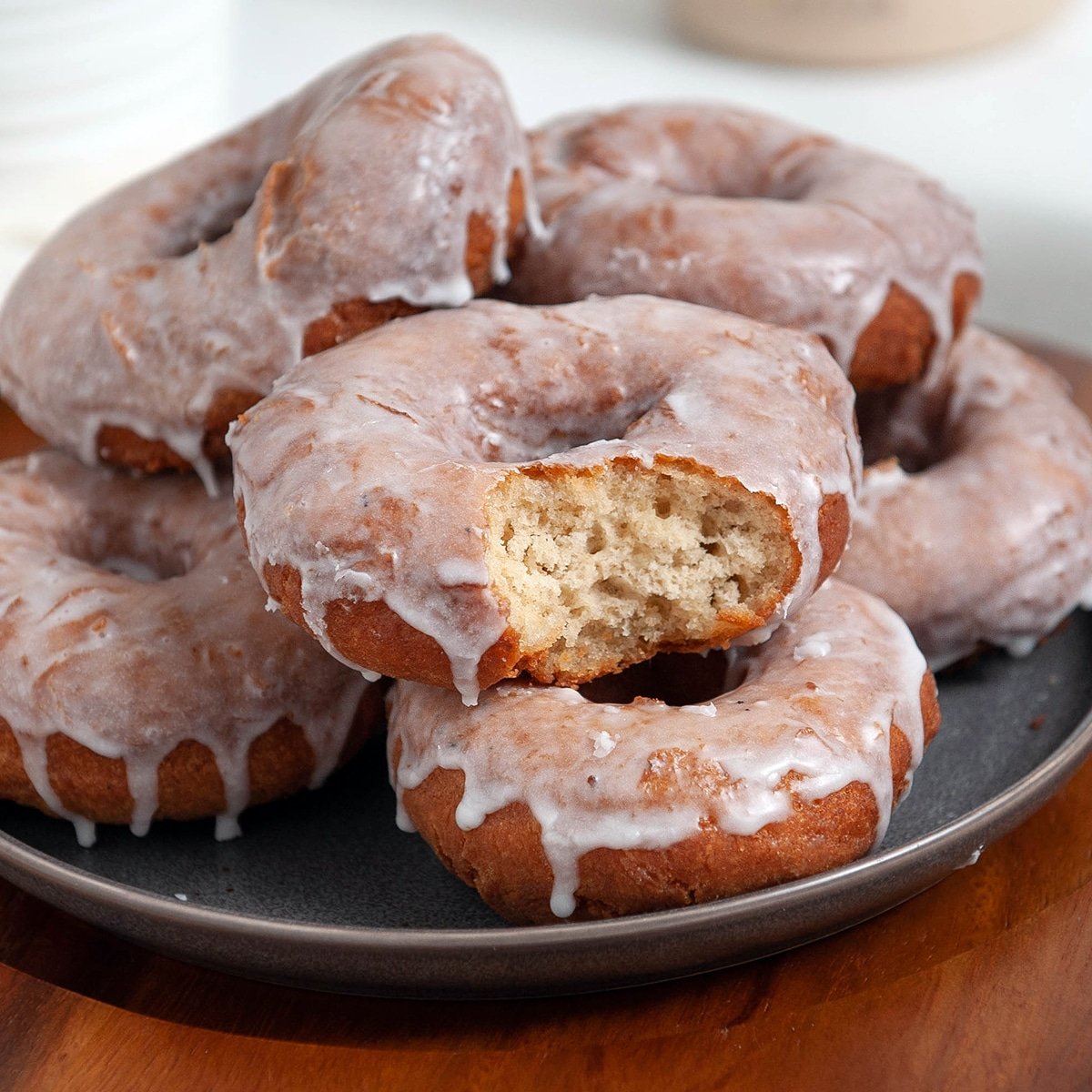
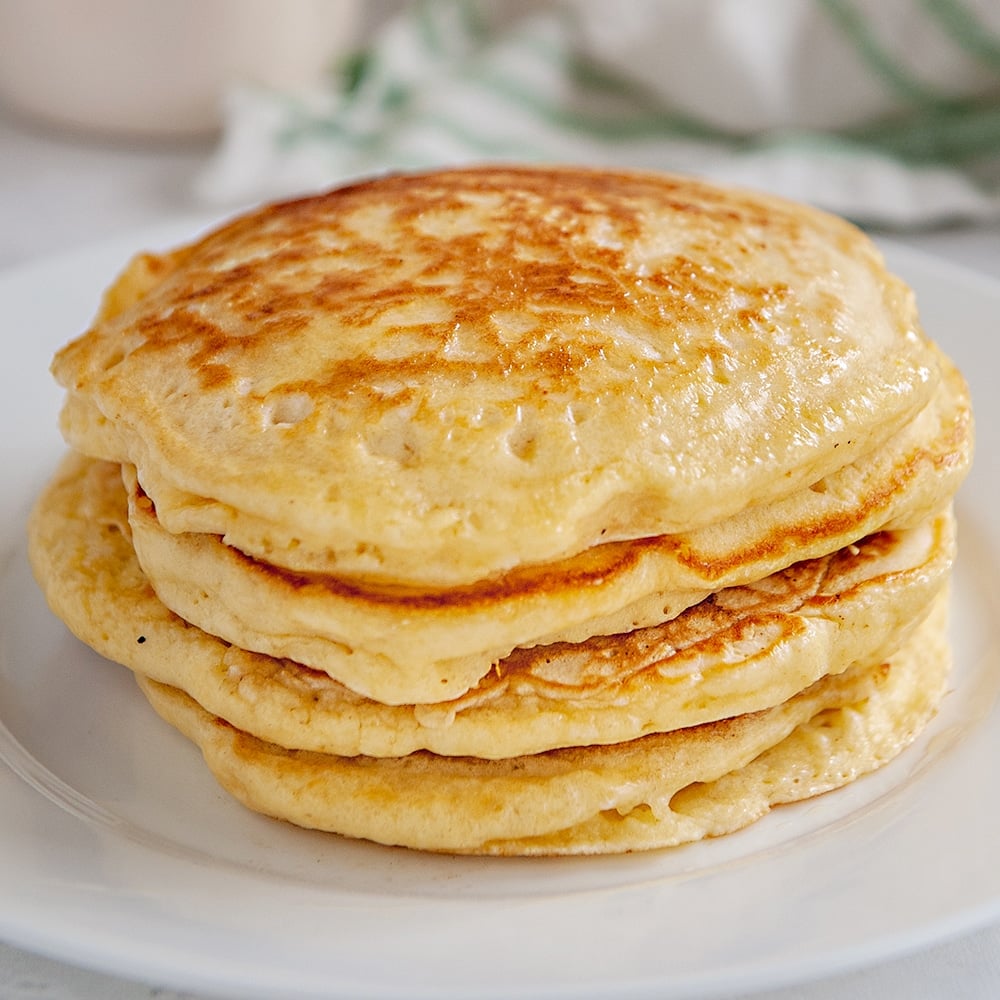
Sourdough discard crackers are the simplest way to turn a cup of leftover starter discard into a crispy, savory snack with a salty crunch and a slight tang. Mix, chill, roll thin, dock, bake. You get a homemade cracker that beats anything from a box, with no preservatives and only six ingredients. If you love sourdough discard recipes, these belong in your snack rotation right next to my sourdough discard pancakes and sourdough discard donuts.
Quick Glance at the Recipe: Sourdough Discard Crackers
- Recipe Name: Sourdough Discard Crackers
- Why You'll Love It: Crispy, savory, just-right salty. 6 simple ingredients. Endlessly customizable with herbs and spices. Uses up a full cup of starter discard.
- Time and Difficulty: 15 minutes prep + 30 minutes chill + 25 minutes bake. Beginner-friendly.
- Main Ingredients: Sourdough discard, whole wheat flour, melted butter, fresh rosemary, garlic powder, salt, pepper. Flake salt and olive oil for finishing.
- Method: Stir, chill, roll thin (1/16-inch), cut, dock with a fork, bake at 350º F for 20 to 25 minutes.
- Texture and Flavor: Snappy, crispy, savory, with a faint sourdough tang. The flake salt finish is what makes them feel bakery-made.
- Quick Tip: Roll the dough as thin as you can stand. 1/16-inch is the sweet spot. Thicker dough makes biscuit-textured crackers; thinner dough makes shatter-crisp ones.
Jump to:
- Quick Glance at the Recipe: Sourdough Discard Crackers
- What Makes This Sourdough Discard Cracker Recipe Different
- Sourdough Discard Cracker Ingredients
- Why Sourdough Discard Works So Well In Crackers
- Why Crackers Get Crispy (The Science)
- Sourdough Discard Cracker Recipe Step-By-Step
- The Pasta Machine Hack For Perfectly Thin Crackers
- Common Sourdough Discard Cracker Problems To Avoid
- Make This Sourdough Discard Cracker Recipe Your Own
- Make-Ahead, Storage, And Refresh
- Final Thoughts
- Sourdough Discard Crackers FAQs
- More Sourdough Discard Recipes To Try
- Leave Me A Review⭐️⭐️⭐️⭐️⭐️
- Recipe
Using sourdough discard in crackers is one of the most underrated ways to use your starter, because crackers are the one baked good where the discard's natural moisture is actually a feature, not just a flavor. The water content from the discard hydrates the flour without you needing to add any extra liquid, and the acidity gives the crackers a quiet little tang you can't get from boxed crackers or even most artisan bakery crackers.
If you want to start with the basics first, my sourdough starter post walks you through how to build a starter from scratch.
What Makes This Sourdough Discard Cracker Recipe Different
Most sourdough discard cracker recipes online give you the same basic formula. A few things make this version different from the rest:
Real crispness science. I explain why crackers get crispy (water has to fully evaporate, which only happens when the dough is thin enough and baked long enough). Once you understand the mechanism, you can troubleshoot any batch that comes out chewy or soft.
The pasta machine shortcut. Rolling crackers by hand to 1/16-inch is hard. A pasta machine gives you perfectly even thinness in about 30 seconds. I cover both methods so you can pick what works for your kitchen.
Six ingredients. Sourdough discard does double duty as both the hydration and the flavor base, so the rest of the ingredient list stays short. Other recipes add water, milk, or oil on top of the discard, which is overcomplicating it.
A heavy variations section. Cheddar, parmesan, everything bagel, smoked paprika, fennel and lemon, sesame, sourdough rye. The base recipe is a launchpad for any flavor profile you want.
Active starter swap. If you have an active fed starter instead of a discard, the swap is 1:1 with a milder tang. Same method, same bake time.
Sourdough Discard Cracker Ingredients
Nothing fancy. I always recommend weighing your ingredients with a digital kitchen scale for the most accurate results.
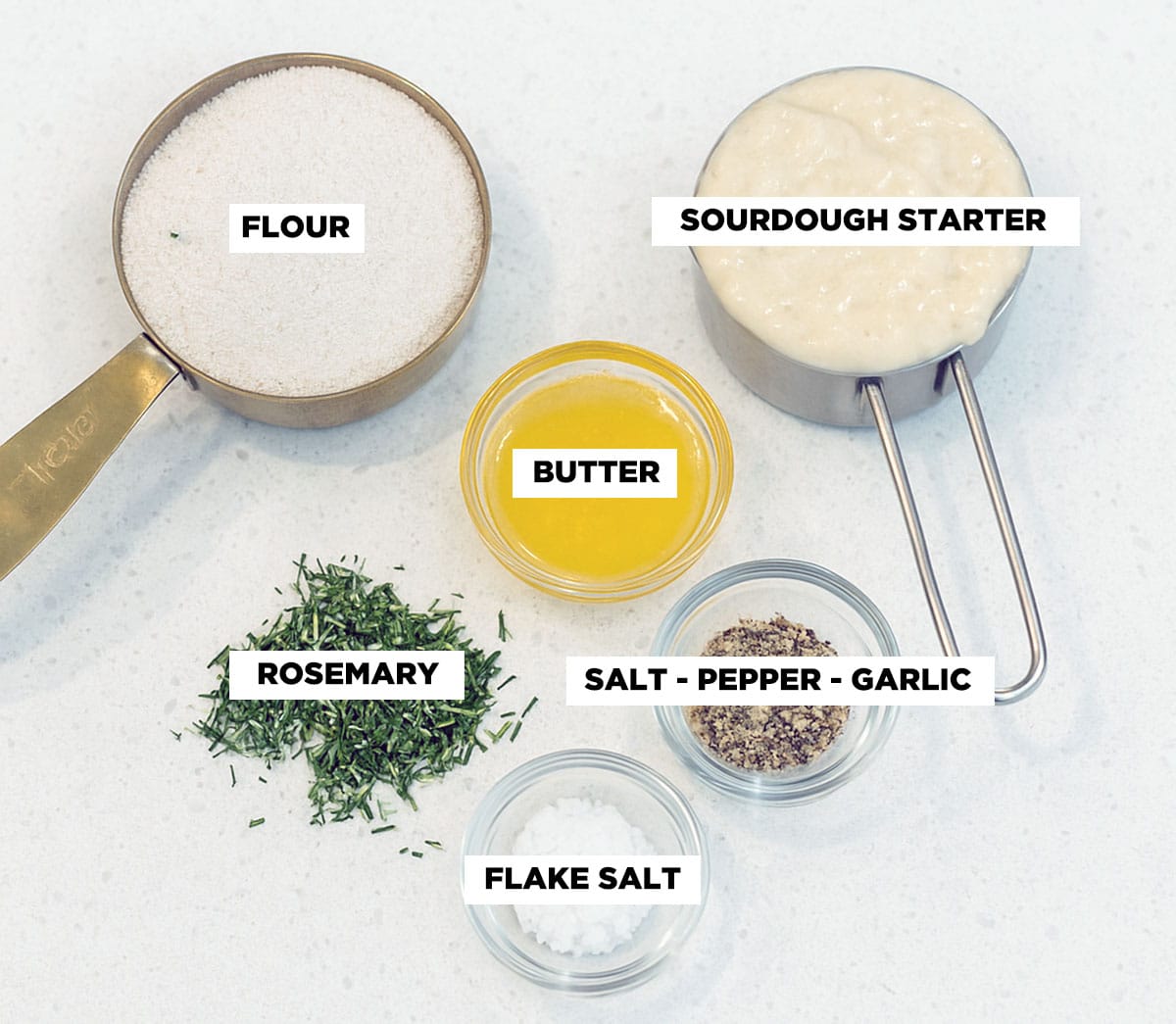
- Sourdough discard. A full cup of unfed starter from your fridge or counter. Provides both the hydration AND the flavor base, which is why there's no extra liquid in the recipe. Cold discard from the fridge is best because it firms up the butter and keeps the dough easier to handle.
- Whole wheat flour. Gives the crackers a nutty, earthy flavor that pairs perfectly with the sourdough tang. You can substitute all-purpose flour 1:1 if that's what you have on hand, the crackers will just be lighter and less nutty.
- Unsalted butter, melted. Adds richness and helps the dough roll out into a thin, even layer. Olive oil works as a 1:1 swap for a dairy-free version with a slightly different flavor.
- Fresh rosemary. My favorite herb for crackers. The piney flavor stands up to baking and the small leaves distribute evenly through the dough. Dried herbs work too, use half the amount.
- Garlic powder. Adds savory depth without the harshness of fresh garlic (which would burn at this bake temperature). Onion powder is a good 1:1 substitute.
- Salt. Goes into the dough. The flake salt finish on top is separate.
- Black pepper. Just enough to add a subtle bite. Freshly cracked is best.
- Flake salt for topping. Maldon is my favorite. The big crunchy flakes are what make these crackers feel professional.
- Olive oil for brushing. A light brush on top before baking helps the flake salt stick and gives the crackers a glossy, restaurant finish.
Why Sourdough Discard Works So Well In Crackers
Sourdough discard punches above its weight in this recipe for two reasons.
It's both your liquid and your flavor. A standard cracker recipe needs added water or milk for hydration. Sourdough discard is roughly 50% water by weight, so a cup of discard delivers about ½ cup of liquid AND the flour AND the sourdough flavor in a single ingredient. That's why this recipe has no separate water or milk in the list.
The acid weakens the gluten just enough. Sourdough discard sits between pH 3.5 and 4.5 (about as acidic as orange juice). The acid slightly weakens the gluten network in the dough, which is exactly what you want for crackers (crackers should snap, not chew). Without the discard's acid, you'd need to chill the dough longer or use a softer flour.
Why Crackers Get Crispy (The Science)
Crackers are not magic. Crackers are dehydrated dough. Once you understand that, you can make any cracker come out shatter-crisp every time.
Thickness controls evaporation. Water inside the dough has to fully evaporate during baking, or you end up with a chewy biscuit. Thin dough means the water has a short distance to travel out. Thick dough means water gets trapped in the middle, and the inside stays moist. The 1/16-inch target isn't arbitrary; it's the thickness where water can escape fully during a 20 to 25-minute bake at 350º F.
Chilling solidifies the butter and relaxes the gluten. The cold butter in chilled dough rolls thinner without springing back, because gluten relaxes when it's cold. Without chilling, the dough fights you, snaps back as you roll, and you end up with thicker crackers that don't crisp through. 30 minutes minimum in the fridge is the sweet spot. Longer is fine.
Docking with a fork prevents puffing. When the dough hits the hot oven, the water inside turns to steam and tries to expand. With no escape route, the steam pushes the cracker up into a tiny pita pocket. Pricking the dough with a fork (docking) gives the steam an escape route, so the cracker stays flat. Skip this step, and your crackers will puff like mini-bread instead of staying snappy.
Why do the crackers crisp MORE as they cool? Hot crackers right out of the oven feel slightly soft. As they cool, the remaining water in the structure migrates out and evaporates into the cooler air, and the starch retrogrades (locks into a rigid structure). That's the snap-crisp texture you want. Cool on the pan, not on a rack, so they finish drying without breaking.
Why do edges crisp faster than centers? The edges of a rolled-out sheet are slightly thinner than the middle (rolling pin physics). Edges hit the dehydration point sooner. That's why pre-cutting before baking matters: it lets each cracker get more edge exposure. If you bake a whole sheet, then snap it, the middle squares are always chewier than the edge ones.
Sourdough Discard Cracker Recipe Step-By-Step
For exact measurements, see the recipe card below.
Before you start: Take your discard out of the fridge. Melt your butter and let it cool for a couple of minutes so it doesn't kill the dough's structure. Heat your oven only when you're ready to bake (chill time is at least 30 minutes).
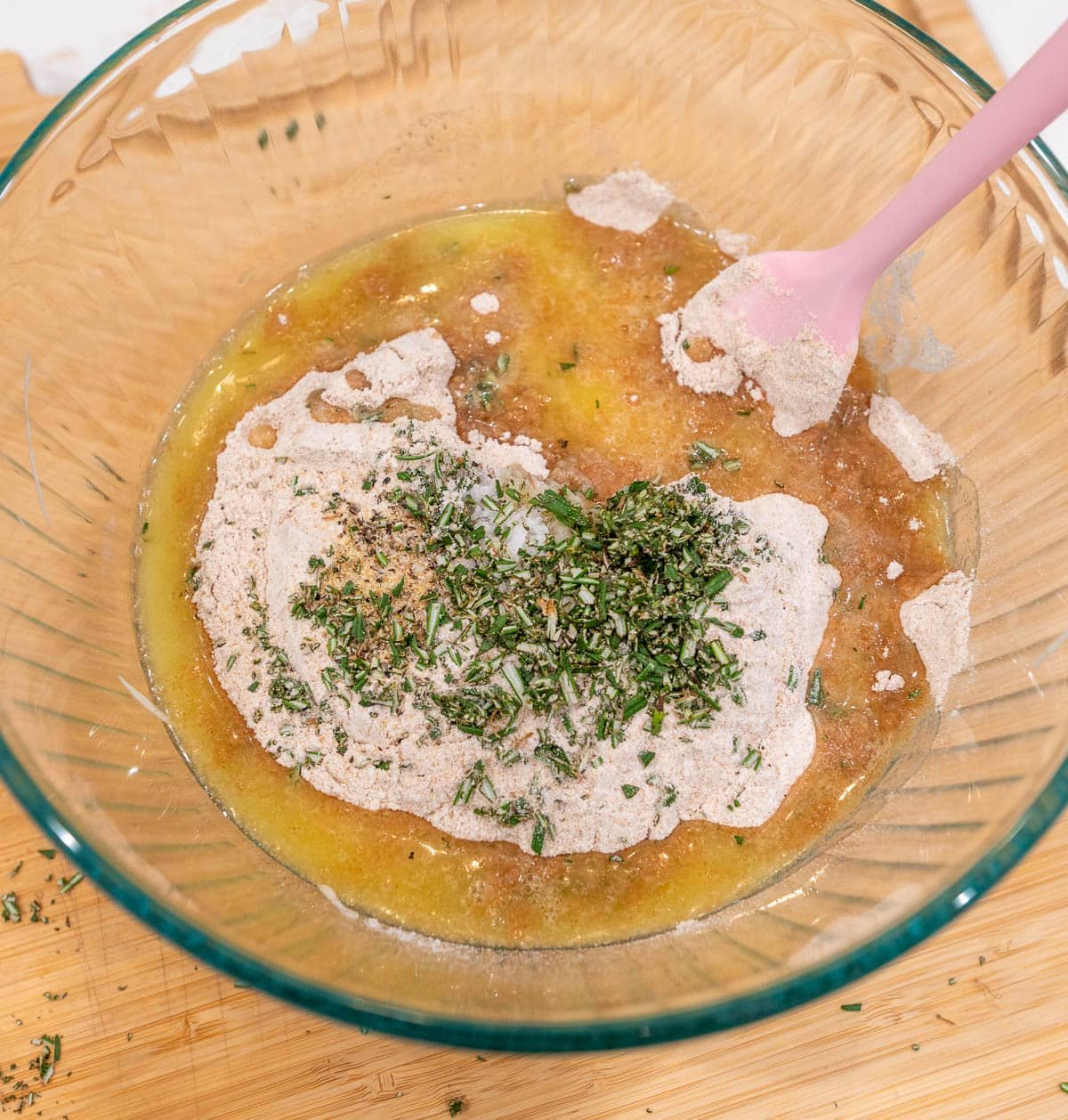
- In a medium bowl, stir together the sourdough discard, whole wheat flour, melted (cooled) butter, chopped fresh rosemary, garlic powder, salt, and pepper. Stir with a spatula until the dough comes together into a soft, smooth ball. It shouldn't be sticky. If it is, add a Tablespoon more flour at a time.
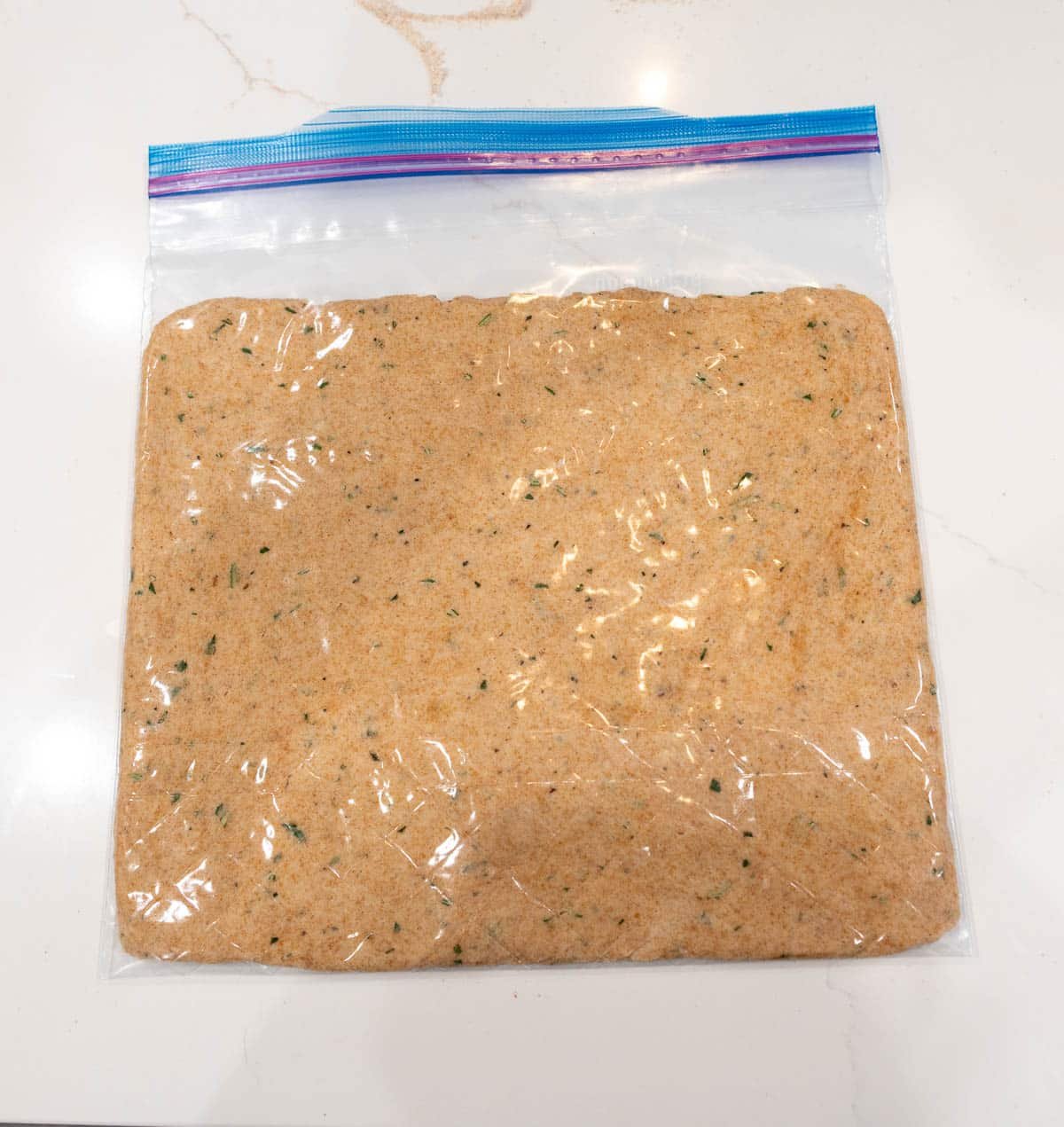
- Flatten the dough inside a gallon-sized zip-top bag (easiest), or wrap it in plastic wrap and flatten with your hand into a rectangle. Pop it in the fridge for at least 30 minutes, or up to overnight. The chill is non-negotiable.
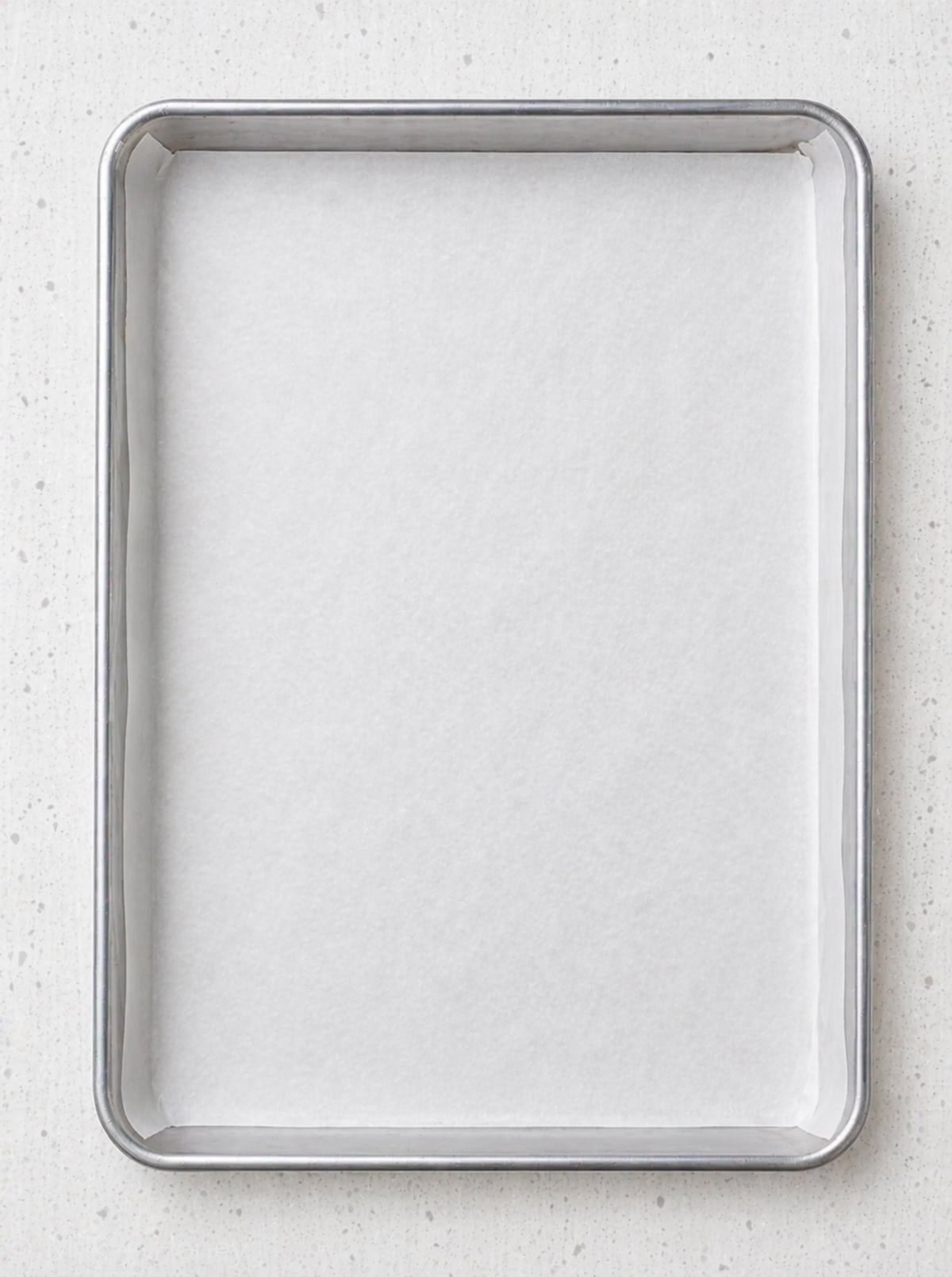
- Heat your oven to 350º F. Line 2 baking sheets with parchment paper.
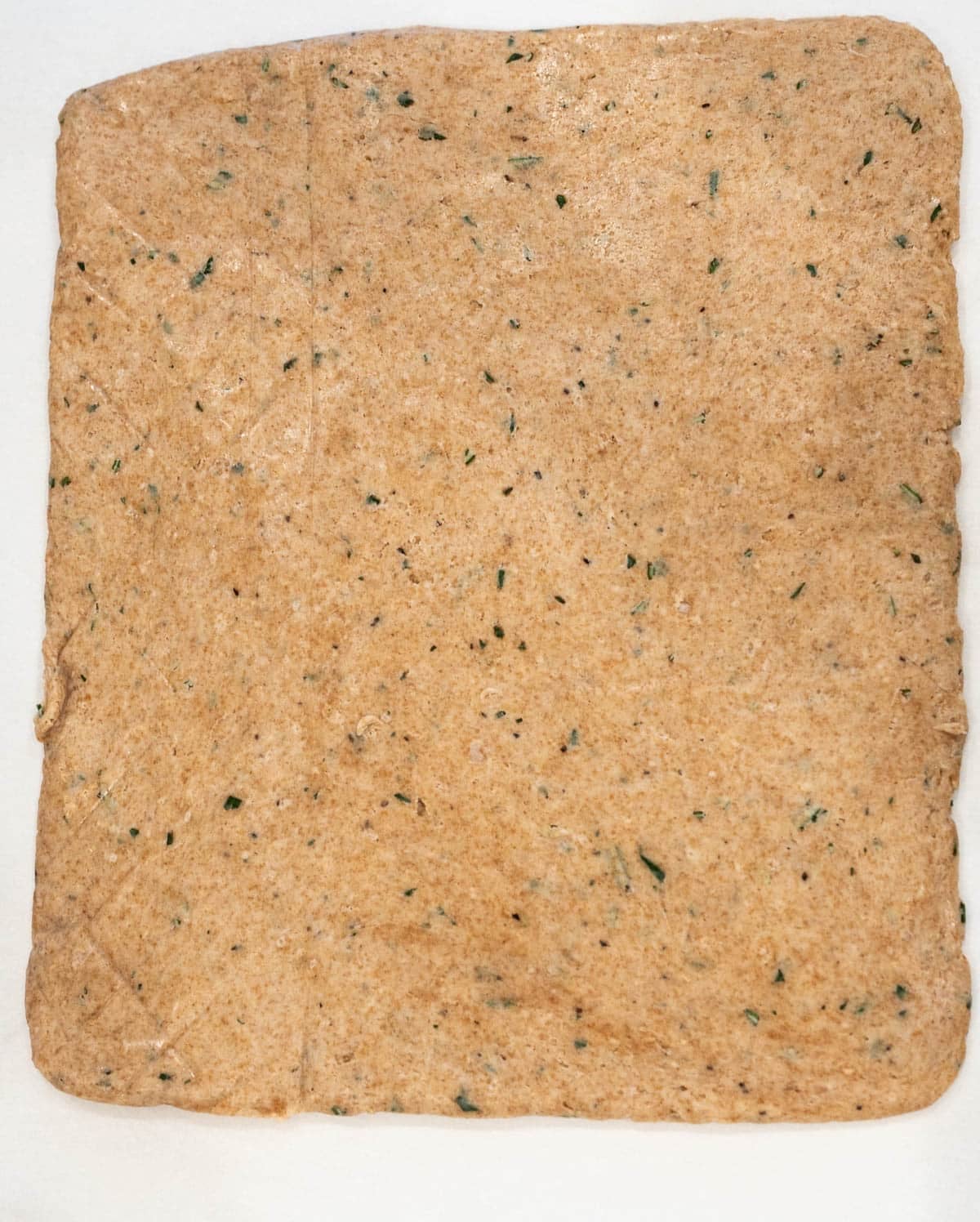
- Cut the chilled dough in half. Working with one piece at a time, place it between 2 sheets of parchment paper (or lightly flour your counter and rolling pin). Roll out to 1/16-inch thick. The dough should be paper-thin, and you should almost be able to see through it.
PRO TIP: If the dough cracks at the edges as you roll, that's normal. Just patch it with your fingers or trim those edges off and roll the trimmings out separately. If the dough is fighting you and springing back, it needs more chill time.
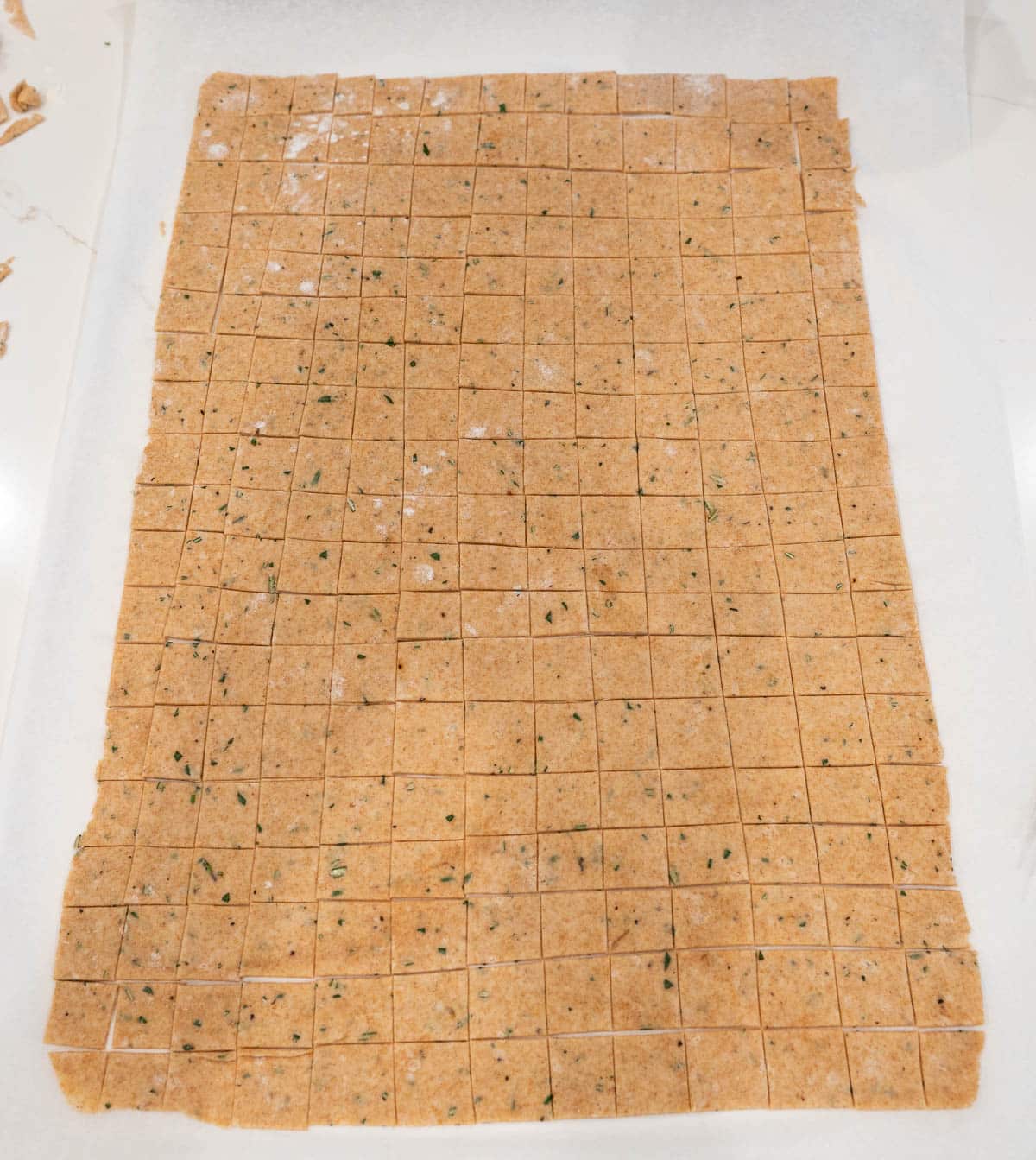
- Use a pizza wheel or sharp knife to cut the dough into 1¼-inch squares (or whatever shape you like, rectangles, diamonds, triangles all work). Don't separate the cut squares; they'll snap apart cleanly after baking.
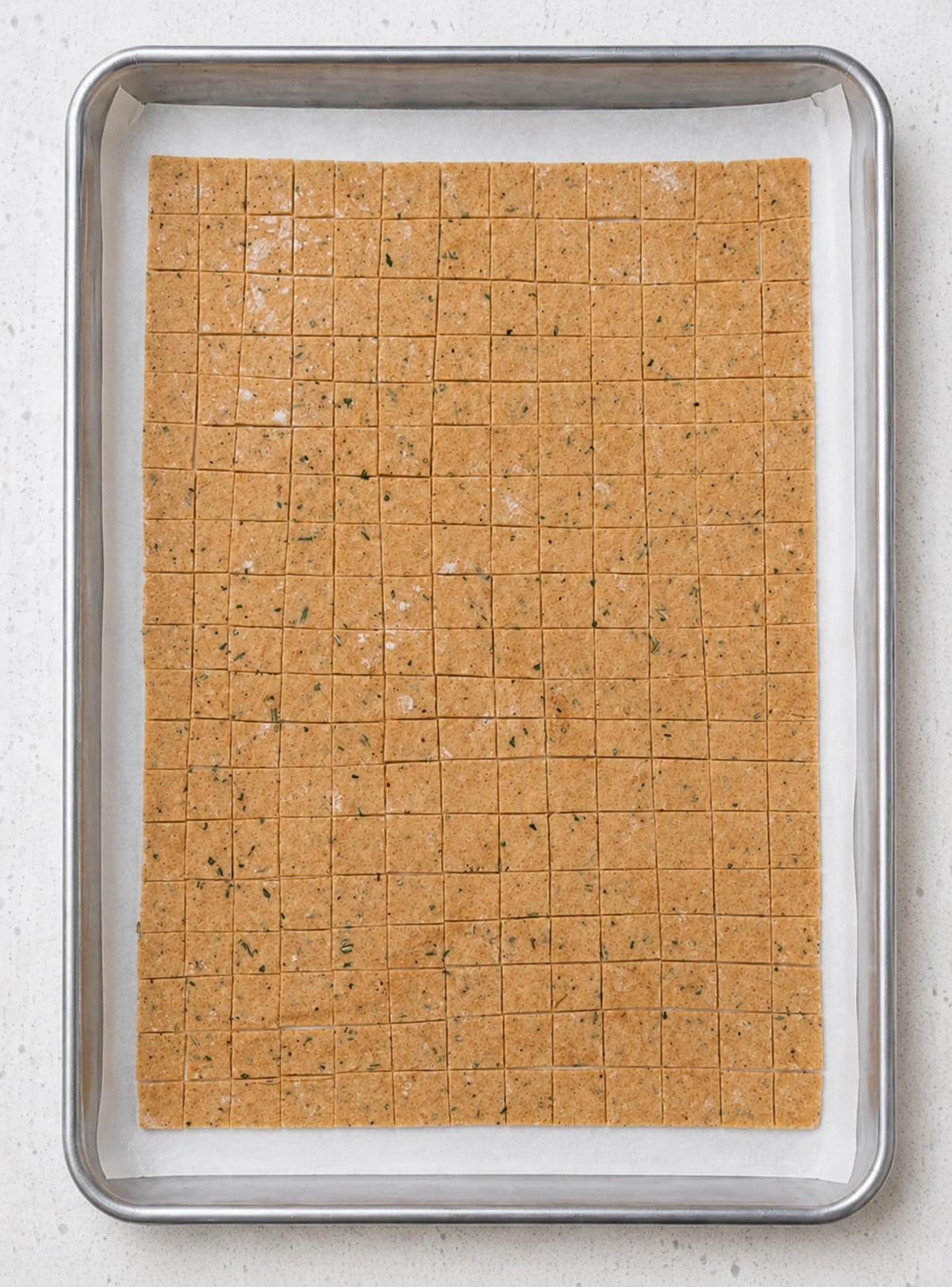
- Transfer the parchment with the cut crackers onto a baking sheet. Brush the top lightly with olive oil and sprinkle generously with flake salt.
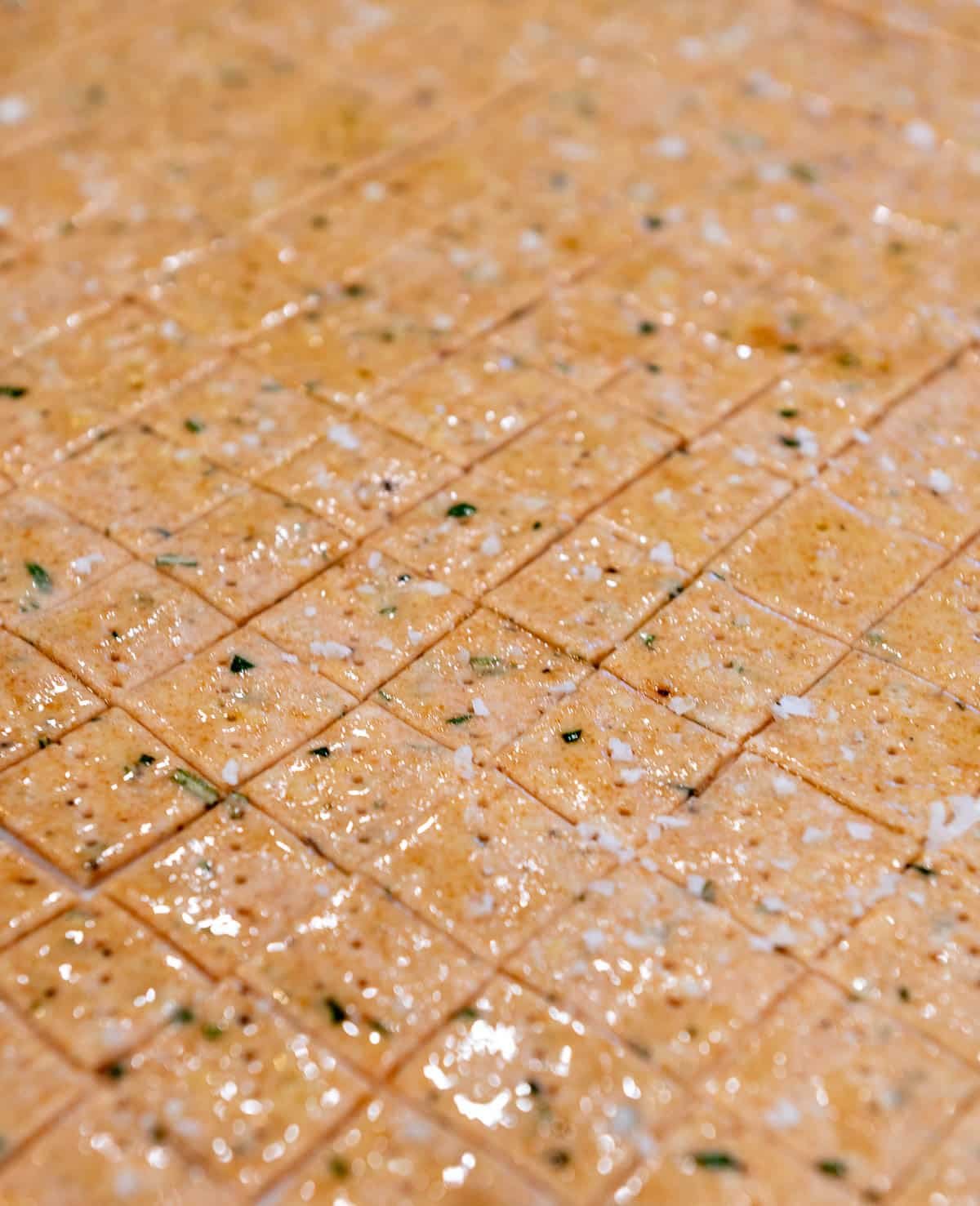
- Dock every cracker by poking 2 or 3 holes with a fork. This is what keeps them flat.
Repeat with the second half of the dough on the second baking sheet.
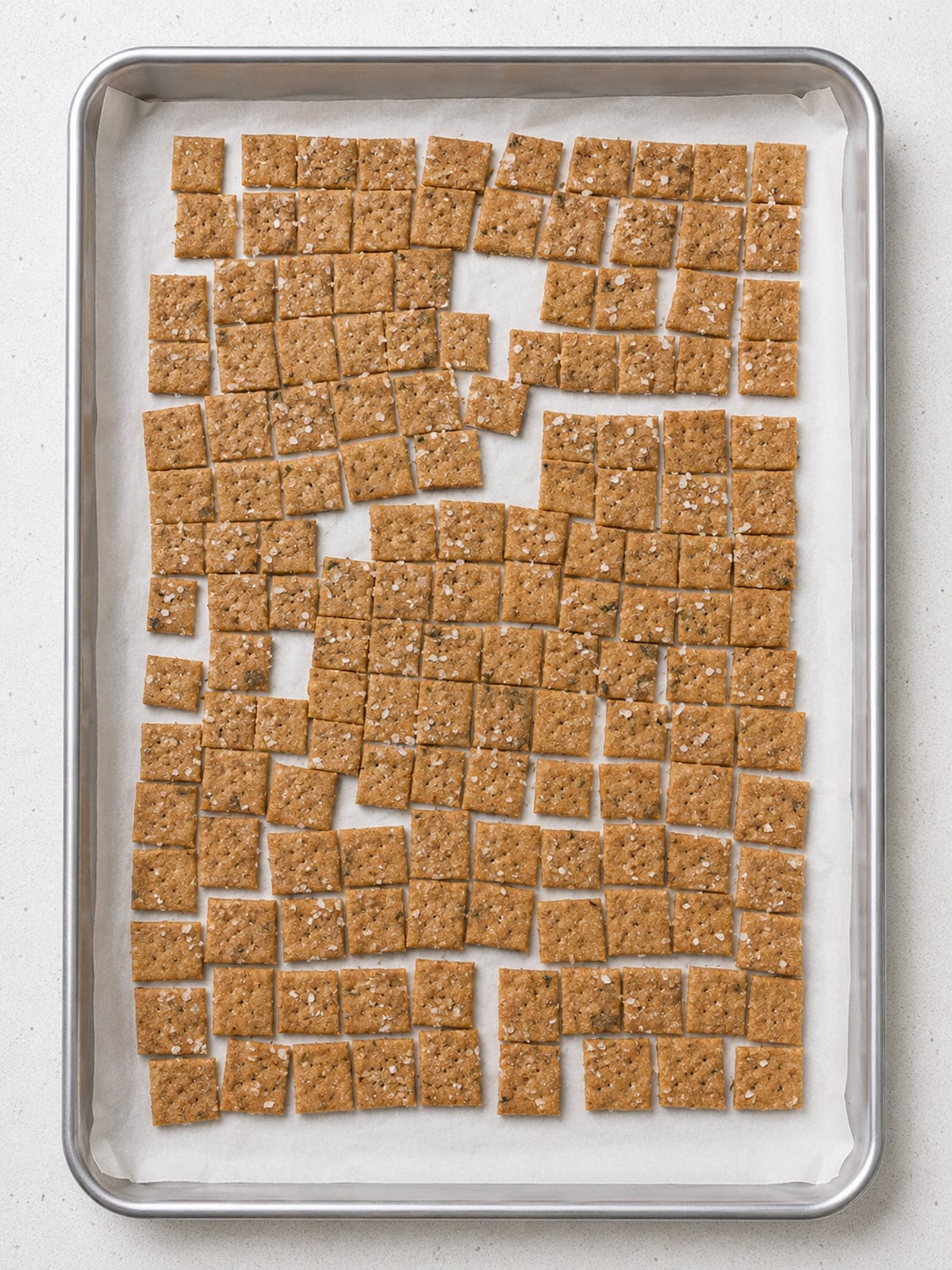
- Bake for 20 to 25 minutes, rotating the pans halfway through, until the crackers are golden brown on the edges and lightly golden in the centers. The edges will brown faster than the centers.
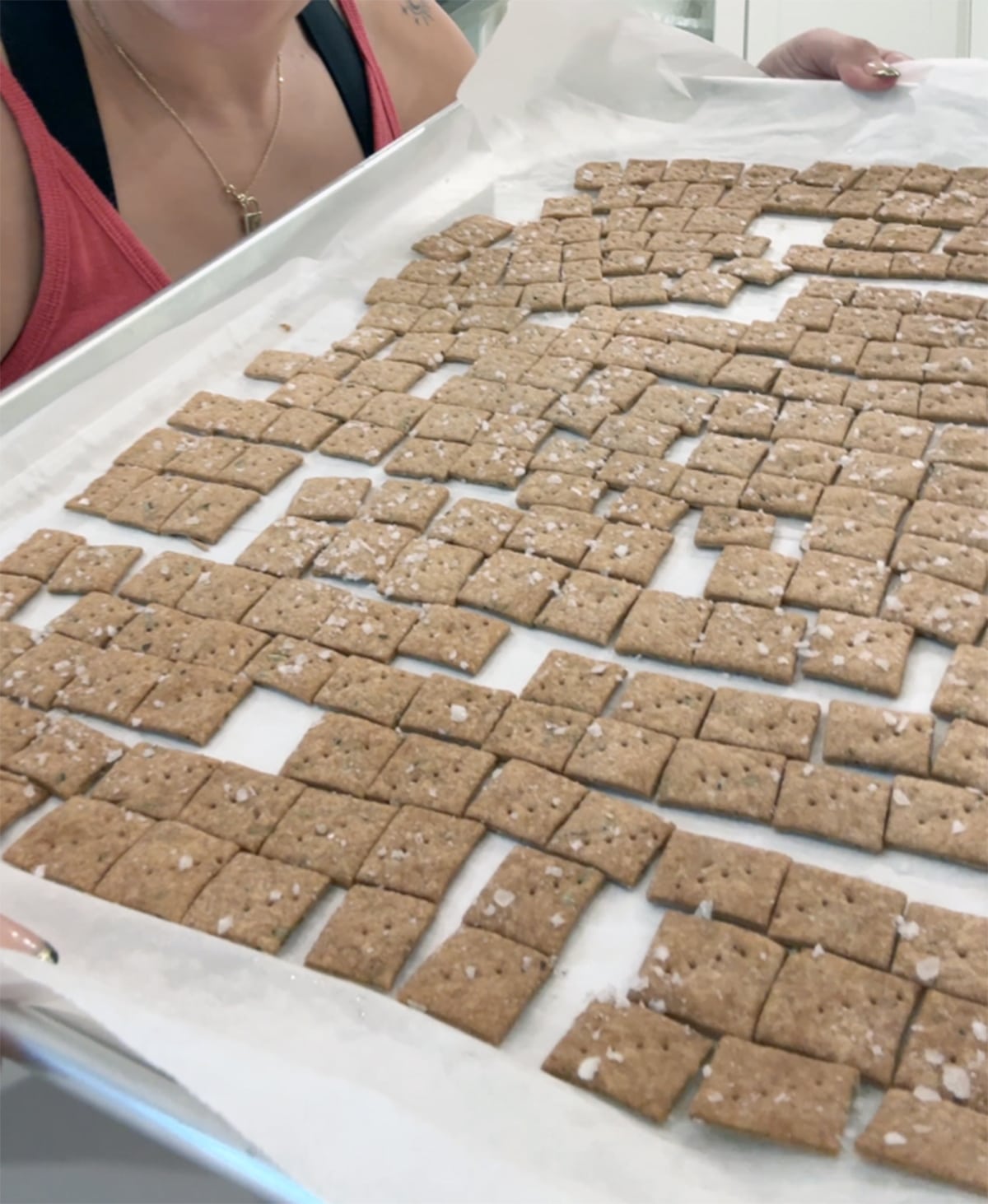
- Let the crackers cool COMPLETELY on the pan, at least 15 minutes. They will crisp up more as they cool. Eating them while warm makes them seem chewy, but they're not; they're still finishing. Snap the cooled cracker sheet apart along your cut lines.
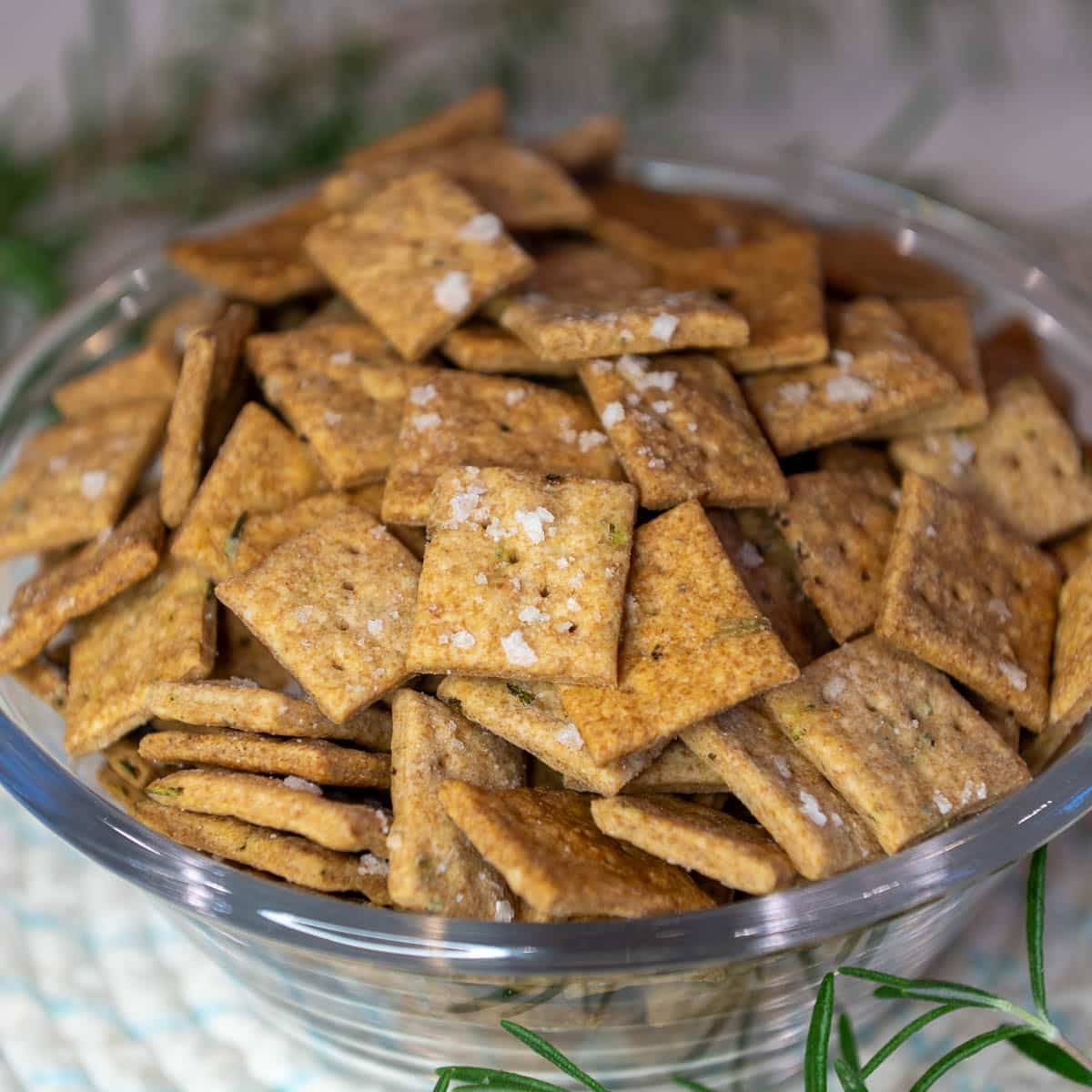
- Store in an airtight container with a paper towel underneath to absorb any residual moisture.
PRO TIP: Watch the edges closely after the 18-minute mark. The thinnest spots on the dough crisp fastest and can burn while the center is still pale. Pull the pan when the majority of crackers are golden brown.
The Pasta Machine Hack For Perfectly Thin Crackers
Rolling cracker dough to 1/16-inch by hand is the hardest part of the recipe. A pasta machine does it for you in about 30 seconds.
Why it works: A pasta machine forces dough through progressively thinner settings, which gives you a perfectly even thickness top to bottom (something a rolling pin can't really do because of human hand pressure variation).
The method:
- After chilling, cut the dough into 4 equal pieces (smaller than you'd do by hand).
- Flatten each piece with your hand so it's flat enough to feed through the machine on the widest setting.
- Roll through, fold in half, roll through again on the same setting. Repeat 2 to 3 times until smooth.
- Step down one setting at a time, rolling once each time, until you reach setting 5 or 6 (depending on your machine).
- Transfer the rolled sheet to a parchment-lined baking sheet, brush with oil, sprinkle with salt, dock, cut, and bake as usual.
Best for: Anyone who makes crackers often, hates the inconsistency of hand-rolling, or wants restaurant-thin results. Worth pulling out the pasta machine just for this.
Common Sourdough Discard Cracker Problems To Avoid
- Crackers puffed up like mini pitas. You skipped the docking step. Always poke each square with a fork before baking. The steam needs an escape route or it lifts the dough off the pan.
- The crackers are chewy, not crispy. The dough was too thick, or they didn't bake long enough. The 1/16-inch target is the floor for crispness. If your dough is thicker, you need to bake longer (and lower the temp slightly to keep edges from burning). Crackers also continue crisping as they cool, so if they feel soft and hot, give them 20 minutes to finish.
- Edges burned before the centers crisped. Two possible causes: oven runs hot, or the dough was rolled unevenly (thinner at the edges, thicker in the middle). Use a pasta machine for even thickness, or check the centers at the 18-minute mark and pull the pan when most are golden.
- The dough is too sticky to roll. The discard was over-hydrated, or the dough wasn't chilled long enough. Sprinkle a Tablespoon of flour on the dough and chill for another 15 minutes.
- The dough is too dry and crumbles when rolled. The flour absorbed more water than expected (common with whole wheat). Sprinkle a teaspoon of water at a time and knead it in until the dough holds together.
- Crackers stuck to the parchment. Either the parchment was actually wax paper (it can't go in the oven), or the parchment was old, and the silicone coating had worn off. Use fresh parchment, not wax paper.
- The crackers went stale in 2 days. Storage issue. Sealed container with a paper towel underneath, away from heat and humidity. Stale crackers can be revived in a 300º F oven for 3 to 5 minutes.
- Crackers all look uneven in size. Use a pizza wheel and a ruler if you want perfectly square crackers, or just embrace the rustic look. Uneven shapes don't affect taste, only appearance.
Make This Sourdough Discard Cracker Recipe Your Own
The base recipe is a launchpad. Swap herbs, add cheese, change spices, switch flours.
- Cheddar crackers. Add ½ cup of finely grated sharp cheddar to the dough. Skip the rosemary, add ½ teaspoon of paprika. The cheese melts into the dough and gives you the kind of snappy cheese cracker that beats anything boxed.
- Parmesan crackers. Sprinkle 2 Tablespoons of finely grated parmesan on top before baking. Crisps into a savory crust. Pairs well with the rosemary base.
- Everything bagel. Skip the herbs in the dough. Brush with oil, sprinkle generously with everything bagel seasoning before baking.
- Smoked paprika and chili flakes. Add 1 teaspoon smoked paprika + ½ teaspoon chili flakes to the dough. Skip the rosemary. Spicy, smoky, addictive.
- Sesame. Sprinkle 2 Tablespoons of toasted sesame seeds on top before baking (white, black, or a mix). Nutty, restaurant-feel.
- Fennel and lemon. Add 1 teaspoon of crushed fennel seeds + 1 teaspoon of lemon zest to the dough. Skip the rosemary. A great cheeseboard cracker.
- Sourdough rye. Swap the whole wheat flour for rye flour (1:1). Add 1 teaspoon of caraway seeds. Dark, earthy, traditional. Best with sharp cheese.
- Gluten-free version. Swap the whole wheat for a 1:1 gluten-free baking blend (the ones with xanthan gum work best). The dough will be more delicate, roll between parchment sheets, and chill an extra 30 minutes for easier handling.
- Olive oil instead of butter. Equal swap. Slightly different flavor (more Mediterranean), dairy-free. Use a good extra virgin olive oil.
- Active starter swap. Use 1 cup of active, recently-fed sourdough starter instead of discard. Crackers will have a slightly milder tang and bake the same way. The discard version is the everyday default because it uses up what would otherwise be waste.
- Half all-purpose, half whole wheat. ½ cup AP + ½ cup whole wheat gives you a middle-ground texture, less nutty than full whole wheat, more interesting than full AP.
Make-Ahead, Storage, And Refresh
Crackers are best within the first 3 to 4 days, but store well with the right setup.
- Counter, room temperature. Store crackers sealed in a container with a paper towel underneath (absorbs residual moisture), up to 1 week. The paper towel is the trick that keeps crackers from getting soggy from condensation.
- Frozen baked crackers. Cooled completely, frozen in a sealed bag, up to 2 months. Crisp back up in a 300º F oven for 3 to 5 minutes before serving.
- Frozen dough ball. Mix the dough, chill briefly, then freeze the unrolled dough disc in a zip-top bag for up to 2 months. Thaw overnight in the fridge before rolling and baking.
- Refresh stale crackers. Put the crackers in a 300º F oven for 3 to 5 minutes. This brings back the crisp. Let the crackers cool before eating; they re-crisp as they cool.
- Sourdough discard. Cover and refrigerate up to 1 week before using for this recipe.
Final Thoughts
Crackers are the kind of pantry project that pays off all week. One batch on a Sunday gives you snacks, charcuterie material, and lunchbox additions for days, all from a cup of discard that would have hit the trash otherwise. Once you've made the base recipe twice, you'll be remixing the flavors every week. EASY!
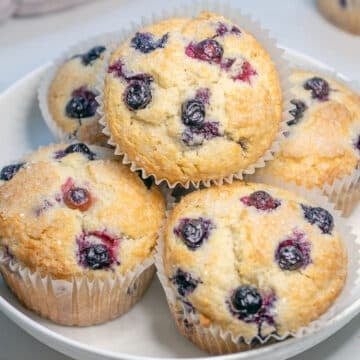
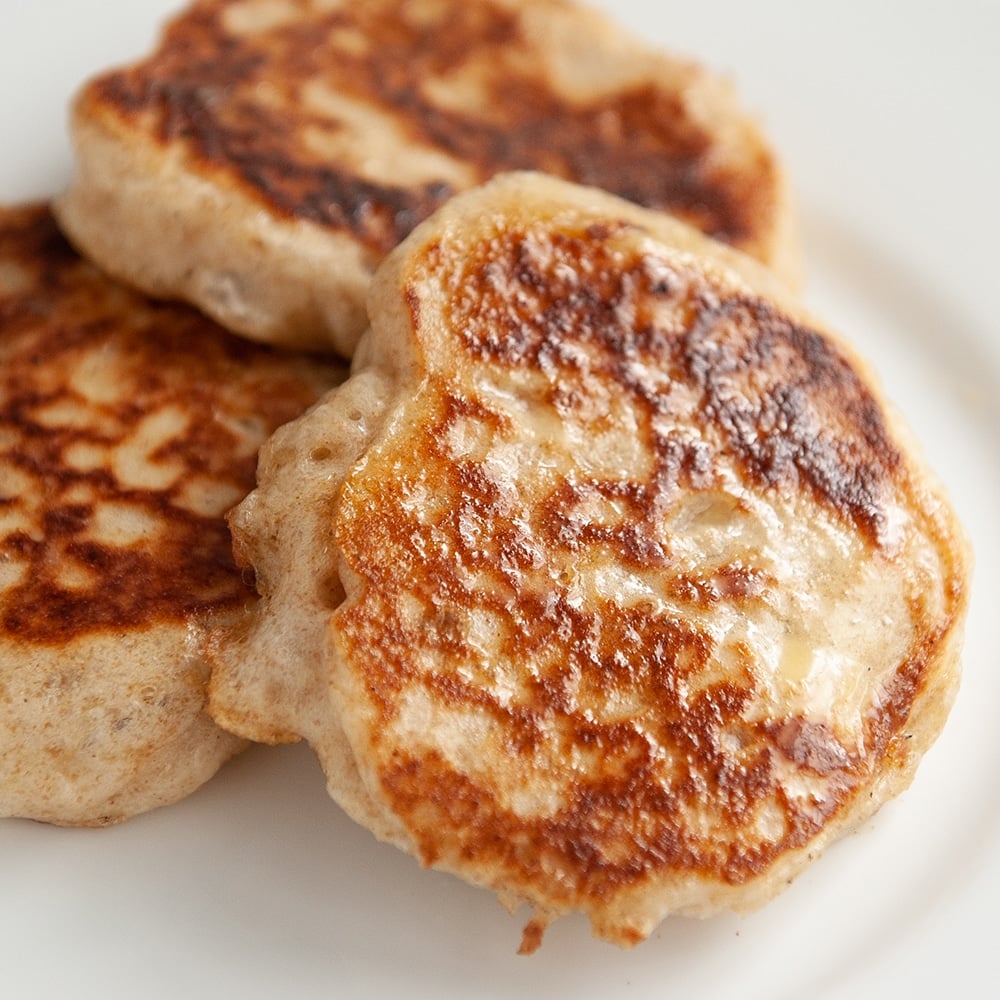
If you love these and want the rest of the sourdough cluster, see my sourdough discard pancakes for the weekday breakfast version, sourdough discard donuts for the weekend special, sourdough discard blueberry muffins for the bakery-style breakfast, and sourdough pikelets for the 5-minute small bite.
Crackers are my pantry-snack project for the week, but for a sweet weekend bake my discard cinnamon roll recipe uses a full cup of discard with cream cheese frosting on top.
Crackers are my weekday favorite, but for the full lineup and the science behind why discard ages the way it does, see my discard recipes guide.
Sourdough Discard Crackers FAQs
Yes. Use 1 cup of active, recently-fed sourdough starter in place of the discard. The crackers will have a slightly milder tang and bake the same way. The discard version is the everyday default because it uses up what would otherwise be waste.
Swap it 1:1 for all-purpose flour. The crackers will be lighter, less nutty, and a little more delicate. Still crispy, still delicious.
The two most common causes: (1) the dough was rolled too thick (anything over ⅛-inch will be biscuit-textured), or (2) the crackers came out of the oven too early. Pull them when the edges are golden brown and let them cool completely on the pan; they crisp up as they cool.
Yes. Chilling solidifies the butter and relaxes the gluten so the dough rolls thin without springing back. Skip the chill and you'll fight the dough the whole time, end up with thicker crackers, and they won't crisp through. 30 minutes minimum.
Without docking, the water inside the dough turns to steam during baking and puffs the cracker into a tiny pita pocket. Docking (poking holes) gives the steam an escape route so the cracker stays flat.
1/16-inch is the target. Paper-thin. You should almost be able to see through it. Thicker dough won't crisp through; thinner dough crisps fast but can burn at the edges.
Yes, this is the best hack. A pasta machine gives you perfectly even thinness in about 30 seconds. Cut the chilled dough into 4 pieces, feed through the widest setting twice, then step down one setting at a time until you reach setting 5 or 6.
Sealed container with a paper towel underneath, at room temperature for up to 1 week. The paper towel absorbs residual moisture so the crackers don't get soggy. To refresh stale crackers, bake at 300º F for 3 to 5 minutes and let cool.
Yes. Swap the melted butter for olive oil (1:1). Slightly different flavor, more Mediterranean. The texture stays the same.
Yes. Mix and chill briefly, then freeze the unrolled dough disc in a zip-top bag for up to 2 months. Thaw overnight in the fridge before rolling and baking.
More Sourdough Discard Recipes To Try
Leave Me A Review
⭐️⭐️⭐️⭐️⭐️
If you tried this Sourdough Discard Cracker Recipe or any other recipe on my blog, please leave a 🌟 star rating and let me know how it goes in the comments. I love hearing from you!
Recipe
Ingredients
- 1 cup sourdough starter unfed discard
- 1 cup wheat flour
- 4 tablespoons unsalted butter melted
- 4 tablespoons fresh rosemary
- ½ teaspoon garlic powder
- ½ teaspoon salt
- ½ teaspoon black better
Instructions
- In a medium bowl, stir together the sourdough discard, whole wheat flour, melted butter (cooled), rosemary, garlic powder, salt, and pepper until a smooth dough ball forms.
- Flatten the dough inside a gallon-sized zip-top bag (easiest) or wrap in plastic and flatten by hand. Refrigerate for at least 30 minutes, up to overnight.
- Heat oven to 350º F. Line 2 baking sheets with parchment.
- Cut the chilled dough in half. Roll each half between 2 sheets of parchment (or on a lightly floured counter) to 1/16-inch thick. Paper-thin.
- Cut into 1¼-inch squares with a pizza wheel or sharp knife. Don't separate, they'll snap apart after baking.
- Transfer the parchment with the dough onto a baking sheet. Brush the top with olive oil and sprinkle with flake salt.
- Dock every cracker with 2 or 3 fork holes to prevent puffing.
- Repeat with the second half of the dough on the second sheet.
- Bake for 20 to 25 minutes, rotating the pans halfway through, until the edges are golden brown and the centers are lightly golden.
- Cool COMPLETELY on the pan, at least 15 minutes. They crisp up as they cool. Snap apart along the cut lines and store in an airtight container with a paper towel underneath.
Video
Notes
- Cold discard straight from the fridge keeps the butter solid in the dough, which makes rolling easier.
- Whole wheat flour gives the crackers a nutty, earthy flavor. All-purpose flour works too, slightly lighter result.
- Olive oil swaps 1:1 for the melted butter for a dairy-free version.
- Roll the dough as thin as you can stand. 1/16-inch is the target.
- Don't skip the chill. The cold butter + relaxed gluten is what lets you roll thin.
- Always dock the crackers. Without holes, they puff into mini pitas.
- Cool COMPLETELY on the pan. They crisp as they cool. Warm crackers feel chewy because they're still drying.
- Cut the chilled dough into 4 pieces. Feed each through the widest setting twice (fold in half between passes). Step down one setting at a time until you reach setting 5 or 6. Perfectly even thinness in 30 seconds.
- Counter, sealed with a paper towel underneath, up to 1 week.
- Frozen baked crackers, up to 2 months. Refresh in a 300º F oven for 3 to 5 minutes.
- Frozen unrolled dough disc, up to 2 months. Thaw overnight in the fridge before rolling.
- Sourdough discard in the fridge, up to 1 week before using.
- Cheddar: + ½ cup grated sharp cheddar, skip rosemary, + ½ teaspoon paprika.
- Parmesan: 2 Tablespoons grated parmesan on top before baking.
- Everything bagel: skip herbs, brush with oil, sprinkle everything seasoning.
- Smoked paprika and chili flakes: + 1 teaspoon smoked paprika + ½ teaspoon chili flakes.
- Sesame: 2 Tablespoons toasted sesame seeds on top.
- Fennel and lemon: 1 teaspoon crushed fennel + 1 teaspoon lemon zest, skip rosemary.
- Sourdough rye: swap flour 1:1 for rye, + 1 teaspoon caraway seeds.
- Gluten-free: swap flour 1:1 for GF blend with xanthan gum, chill 30 minutes longer.
- Active starter swap: 1 cup active starter for discard, same method.
- Don't skip docking. Mini pitas instead of crackers.
- Don't skip chilling. Dough will fight you and won't roll thin.
- Don't bake on wax paper. Use parchment only.
- Don't eat warm. They're still finishing crisping for 15 minutes after the oven.