



This sourdough focaccia is the easiest, most forgiving bread you can make with an active starter. Mix, fold once, let it sit overnight, and bake it the next day in a pool of olive oil with a shower of flaky salt and rosemary. If you can stir, you can pull this off, even if you've never made my no-knead easy focaccia recipe before.
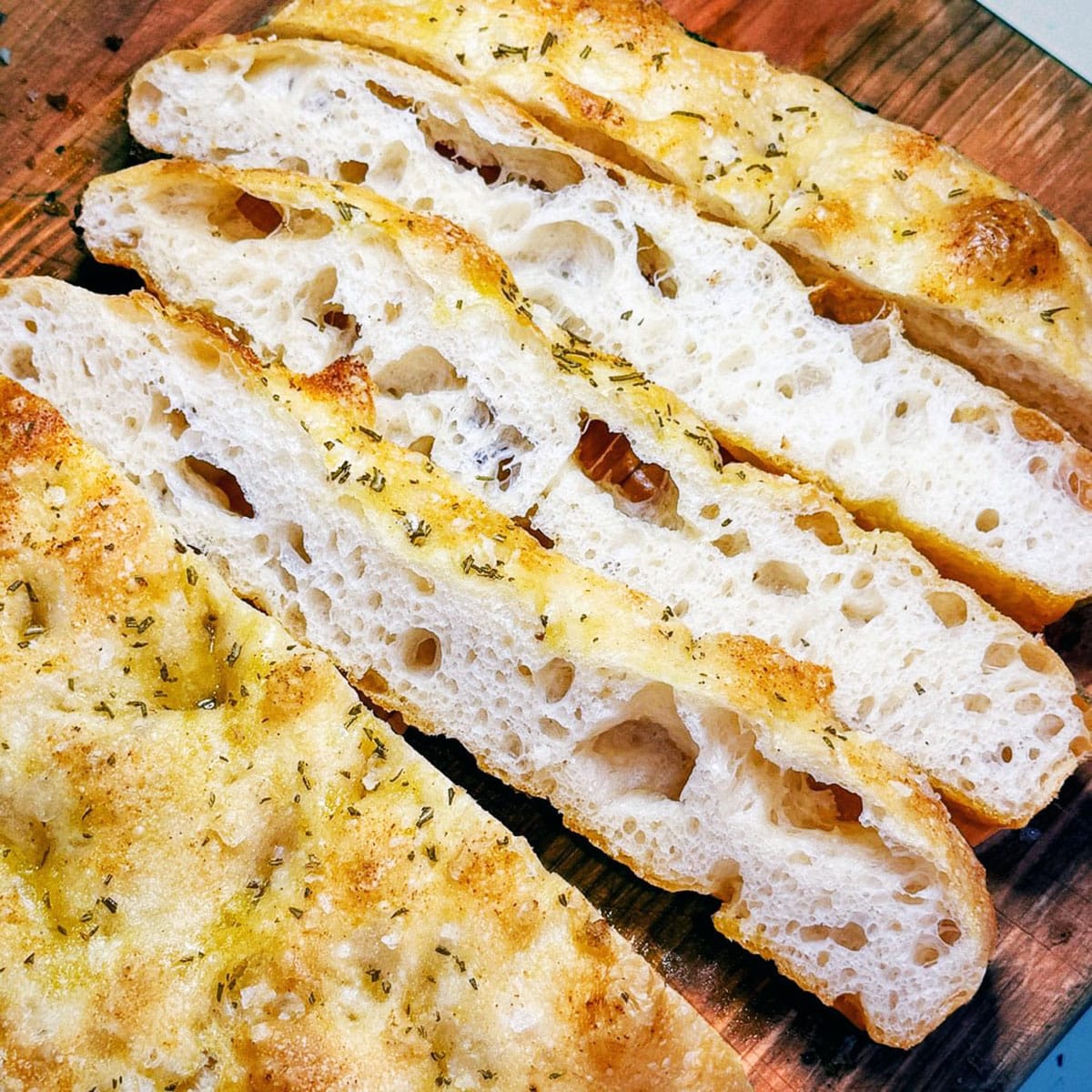
Sourdough focaccia is hands-down my favorite thing to make with a happy starter, second only to my beginner sourdough bread. It's the recipe I push anyone brand new to sourdough to start with. Underproofed? Still tastes great. Overproofed? Even better. No shaping, no scoring, no Dutch oven, just dimple, drown in olive oil, and bake.
Quick Glance at the Recipe: Easy Sourdough Focaccia
- Recipe Name: Easy Sourdough Focaccia
- Why You'll Love It: No kneading, no shaping, no Dutch oven. The most beginner-friendly sourdough bake there is, and the most forgiving if your timing is off.
- Time and Difficulty: 10 minutes of hands-on work, 14 hours total (most of it overnight rise). Beginner-friendly!
- Main Ingredients: Active sourdough starter, bread flour, water, honey, olive oil, flaky sea salt, and fresh rosemary.
- Method: Mix, one coil fold, 12-hour bulk rise, transfer to oiled sheet pan, 1 to 2-hour second rise, dimple, top, bake at 425º F.
- Texture and Flavor: Soft pillowy crumb, chewy interior, crackly olive-oil crust, gentle tang.
- Quick Tip: Look for 50% rise during bulk, NOT doubled. Focaccia wants a less-developed dough than a traditional sourdough loaf, so it has room to puff in the pan.
Jump to:
- Quick Glance at the Recipe: Easy Sourdough Focaccia
- What Makes This Sourdough Focaccia So Good
- Sourdough Focaccia Ingredients
- How To Make Sourdough Focaccia Step-By-Step
- Common Sourdough Focaccia Problems To Avoid
- Final Thoughts
- Make This Sourdough Focaccia Your Own
- Sourdough Focaccia FAQs
- More Sourdough Recipes To Bake
- Leave Me A Review⭐️⭐️⭐️⭐️⭐️
- Recipe
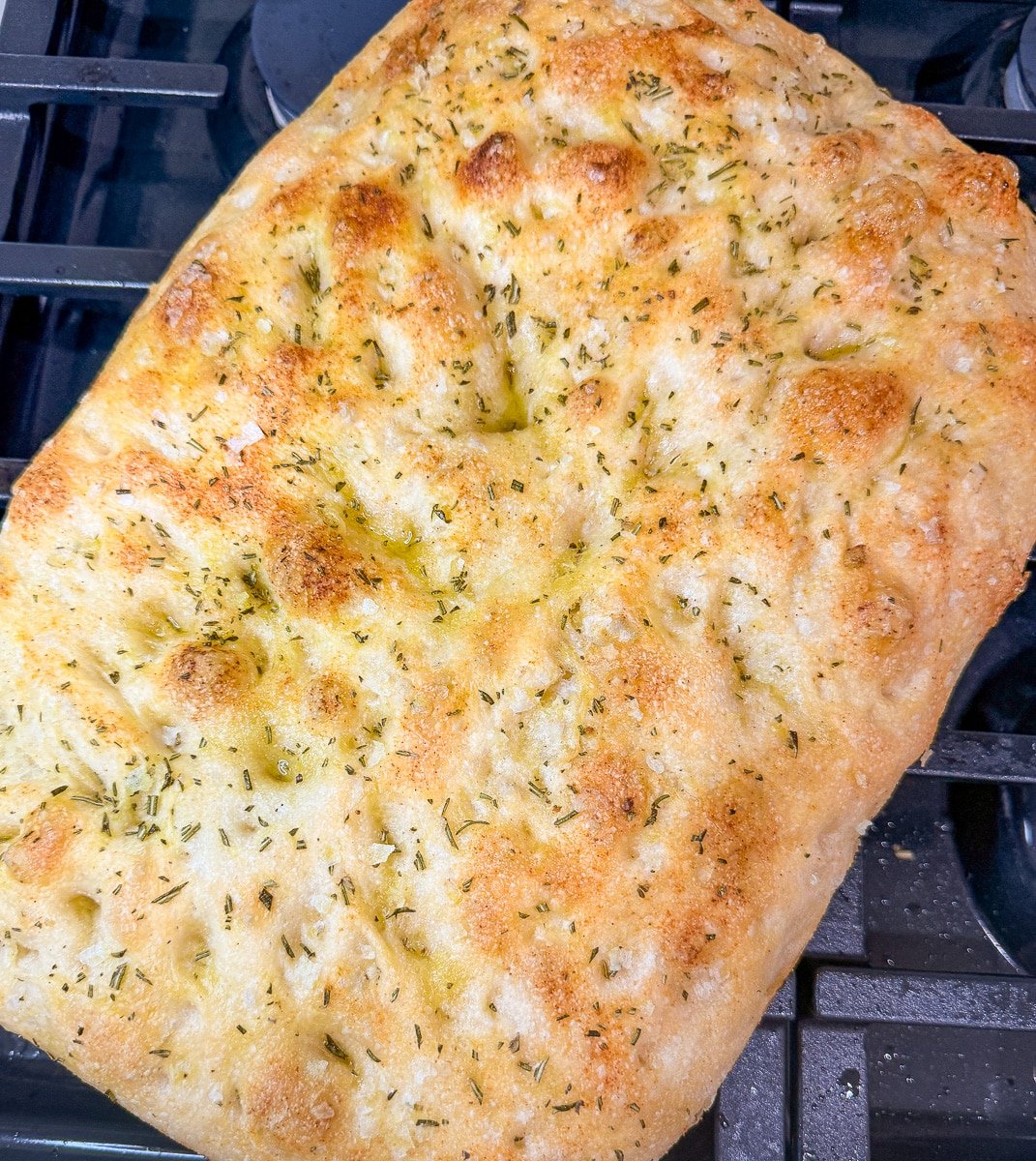
What Makes This Sourdough Focaccia So Good
If you are brand new to sourdough, this is the recipe to start with. Here is why:
- It is endlessly adaptable. Rosemary and salt is the classic, but you can swap in anything you like, fresh tomatoes, olives, garlic, caramelized onions, even ham and cheese. Check out my focaccia bread art recipe for more inspiration!
- It is almost impossible to screw up. Underproofed focaccia still bakes into a tasty flatbread. Overproofed focaccia is somehow even better; the bubbles get bigger, and the crumb gets airier. Sourdough loaves punish you for bad timing. Focaccia loves it.
- No kneading. No shaping. No Dutch oven. You mix the dough in one bowl, do ONE coil fold, and let time do the rest. A 9x13 metal pan is all the special equipment you need.
- The fermentation does the flavor work. A 12-hour overnight rise builds the kind of tangy, complex flavor that a same-day yeasted focaccia just cannot match. Stretch it to 24 or 36 hours in the fridge, and it gets even better.
- It rescues a forgotten dough. If you ever start a loaf of sourdough and forget about it overnight, that "ruined" dough is now perfect focaccia dough. More on that down in the Make This Recipe Your Own section.
Sourdough Focaccia Ingredients
This dough is built from really simple pantry staples. The only thing that matters is that your starter is active and bubbly the night you mix. I always recommend weighing your ingredients on a digital kitchen scale for sourdough, eyeballing flour is the #1 way beginners end up with a dense bake.
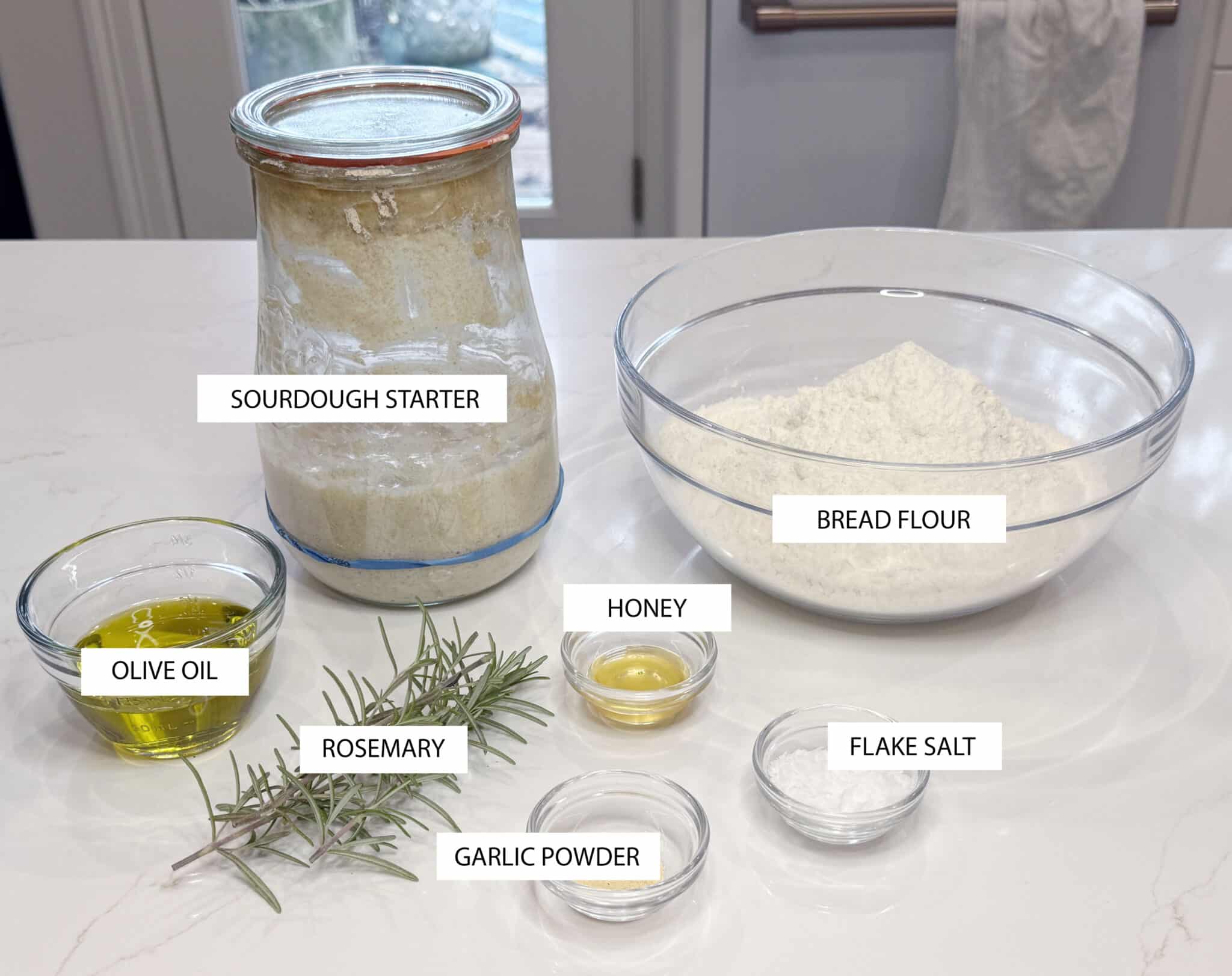
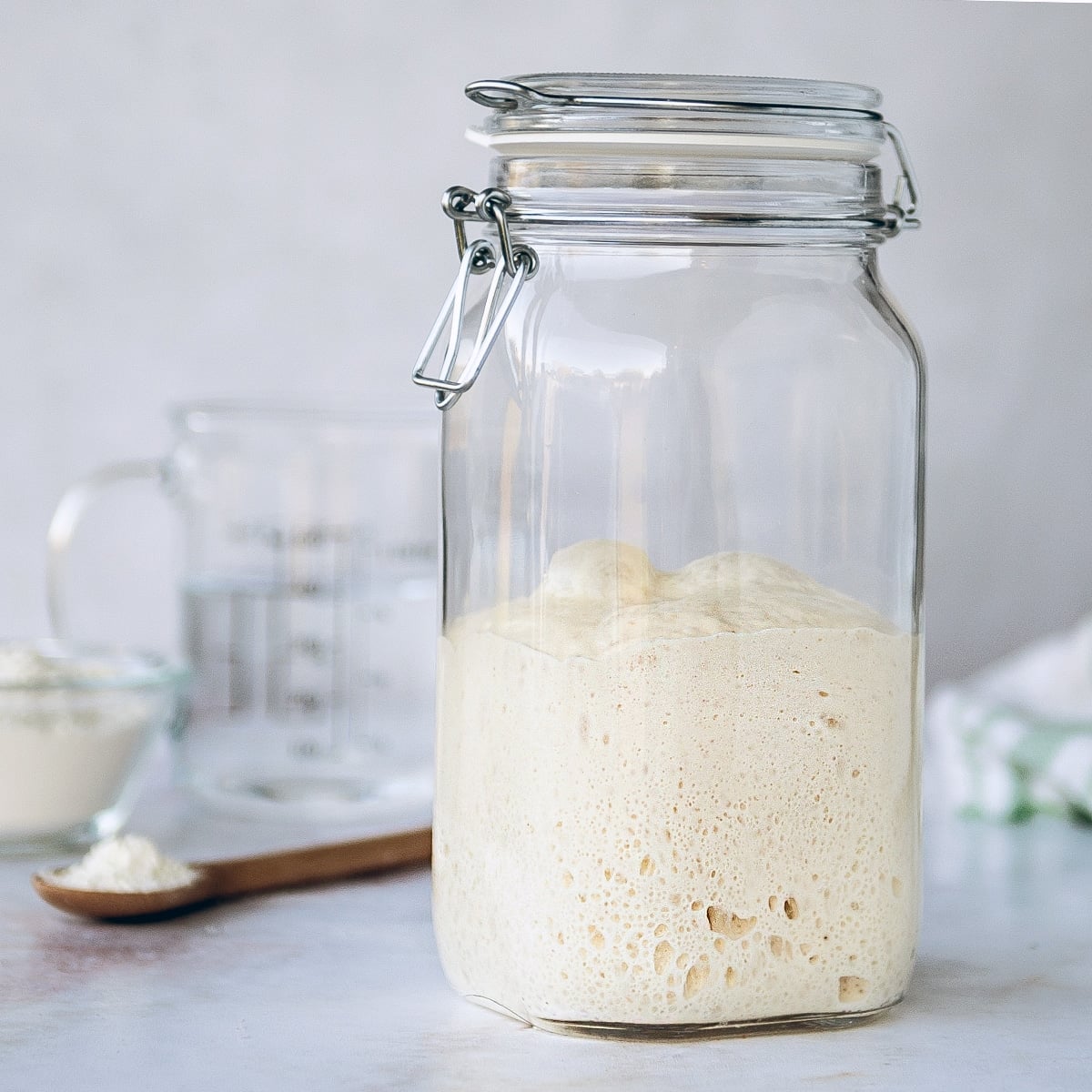
- Sourdough starter, the #1 ingredient for success here is a happy, active, bubbly starter that has at least doubled within the last 4 to 6 hours of feeding. If your starter has been napping in the fridge, give it 2 to 3 daily feedings before you bake. No starter yet? Start with my sourdough starter for beginners guide, it takes about a week to get going.
- Bread flour, with its higher protein, gives you that chewy, open crumb people associate with great focaccia. I love Caputo brand bread flour because it isn't processed the way most American flour is, and it doesn't have any additives. All-purpose flour works too if it's what you have on hand; the result will be softer and slightly moister with a tighter crumb.
- Water, warmed to about 110º F. Not hot, just warm to the touch. Hot water will kill your starter. I aim for water that feels like a comfortable bath.
- Honey, just a touch to feed the yeast and add a little depth of flavor. You can swap in sugar 1:1 if you don't have honey, but honey gives a noticeably nicer finish.
- Olive oil, focaccia lives and dies by olive oil. Use one you actually like the taste of, and you'll taste it in every bite. I go through SO MUCH olive oil that I just buy the giant Costco bottle, but use whatever you have.
- Garlic powder, I add this INTO the dough rather than on top, because raw garlic on the surface burns to bitter little char specks at 425º F. Powder in the dough gets you the flavor without the burn.
- Flaky sea salt, the finishing salt, is what makes focaccia taste like restaurant focaccia. I love Jacobsen flake salt, which is made right here in Oregon. Maldon works too. Regular table salt does not; it dissolves, and you lose the crunch.
- Fresh rosemary, finely chopped. Dried works in a pinch, but fresh is so much better here. Thyme is a great swap.
How To Make Sourdough Focaccia Step-By-Step
Before you begin, make sure your starter is active and bubbly (it should at least double within 4 to 6 hours of feeding). Lightly oil a large bowl for the bulk rise. Plan backward from when you want to bake; this is a roughly 14-hour process. If you want to bake in the morning, mix the dough between 7-9pm the night before.
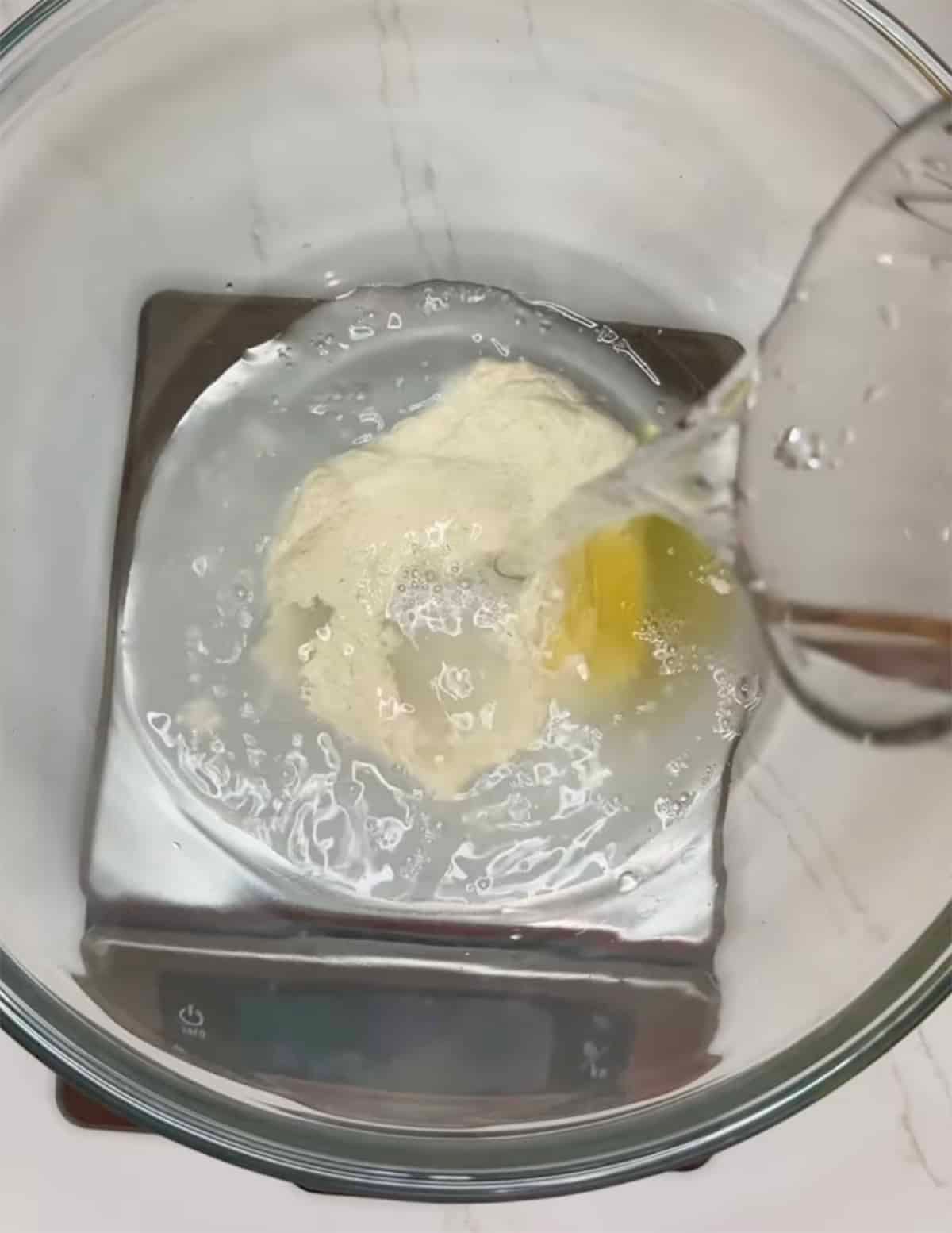
- Whisk the sourdough starter, warm water, and honey together in a large bowl until everything is dissolved.
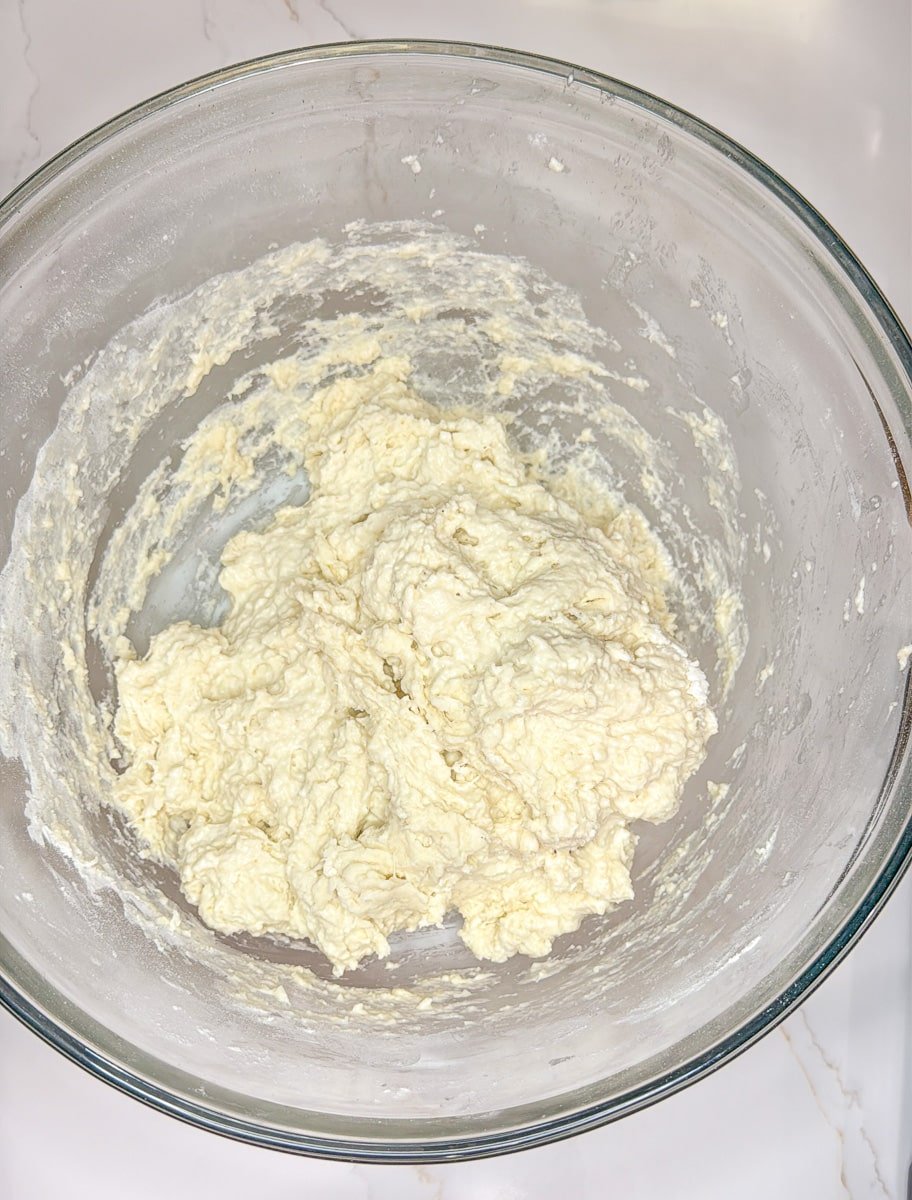
- Add the bread flour, salt, and garlic powder. Mix until a shaggy, sticky dough forms. Cover and let it rest for 30 minutes. This rest hydrates the flour and gets the gluten relaxed and ready to stretch before you do any folding.
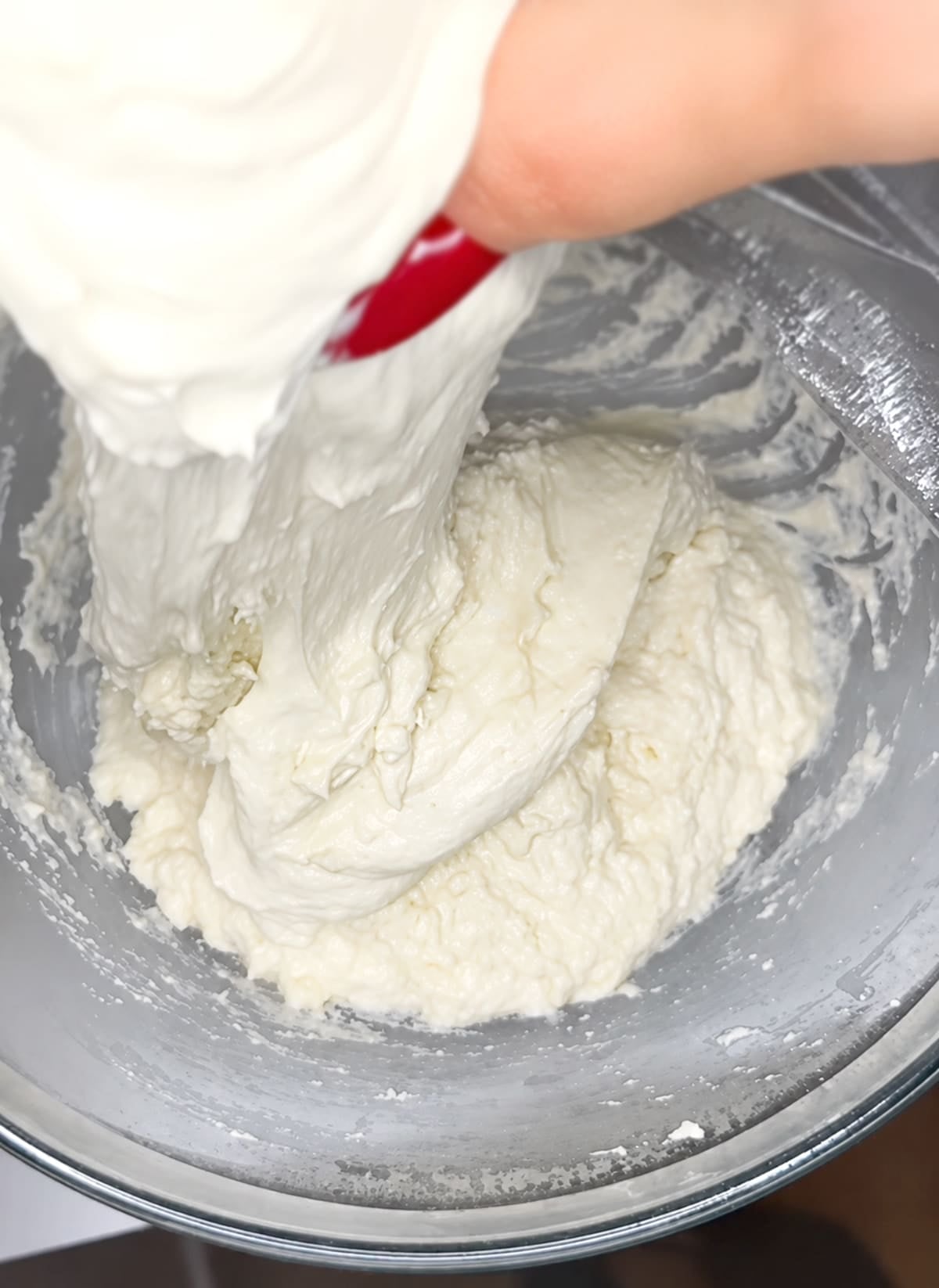
- With wet hands, grab one edge of the dough, stretch it up until it doesn't want to stretch any further, and fold it onto the middle. Rotate the bowl 90 degrees and repeat on all four sides. This is the only fold you'll do, one set of coil folds is plenty for focaccia. For the standalone tutorial, see my sourdough stretch and fold guide with the 4-set method and the tight-and-bouncy finish signal.
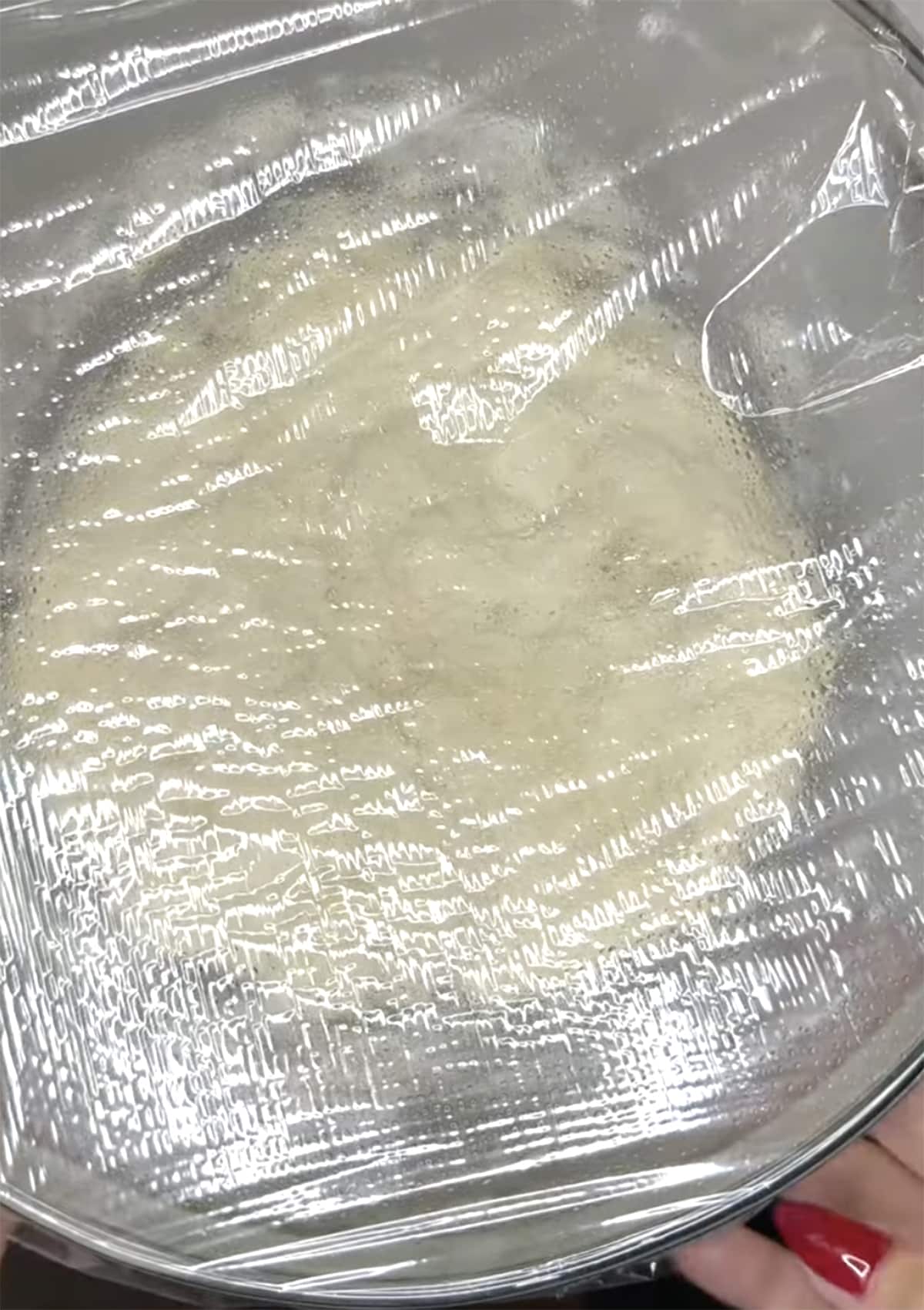
- Cover the bowl with lightly oiled plastic wrap (the oil keeps the dough from sticking as it rises into it) and leave it at room temperature, ideally 68 to 80º F, for 12 hours.
PRO TIP:This is a high-hydration dough at roughly 80% hydration, which is way wetter than a sandwich loaf. If it feels soupy and sticky and unmanageable, that is exactly how it should feel. Don't add more flour to tighten it up, you'll just end up with a dense focaccia.
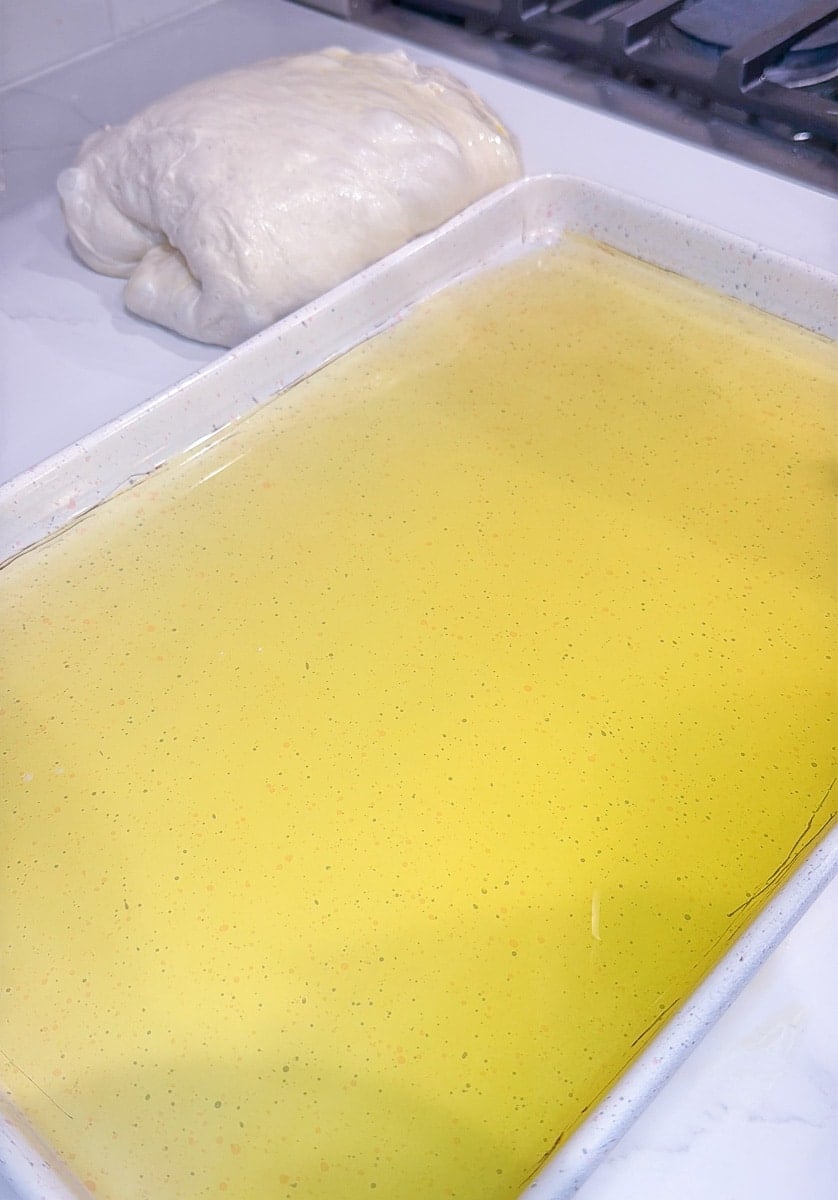
- The next morning, pour a thin layer of olive oil all over the bottom of a 9x13 sheet pan. A layer of parchment underneath the oil helps with sticking if your pan tends to grab.
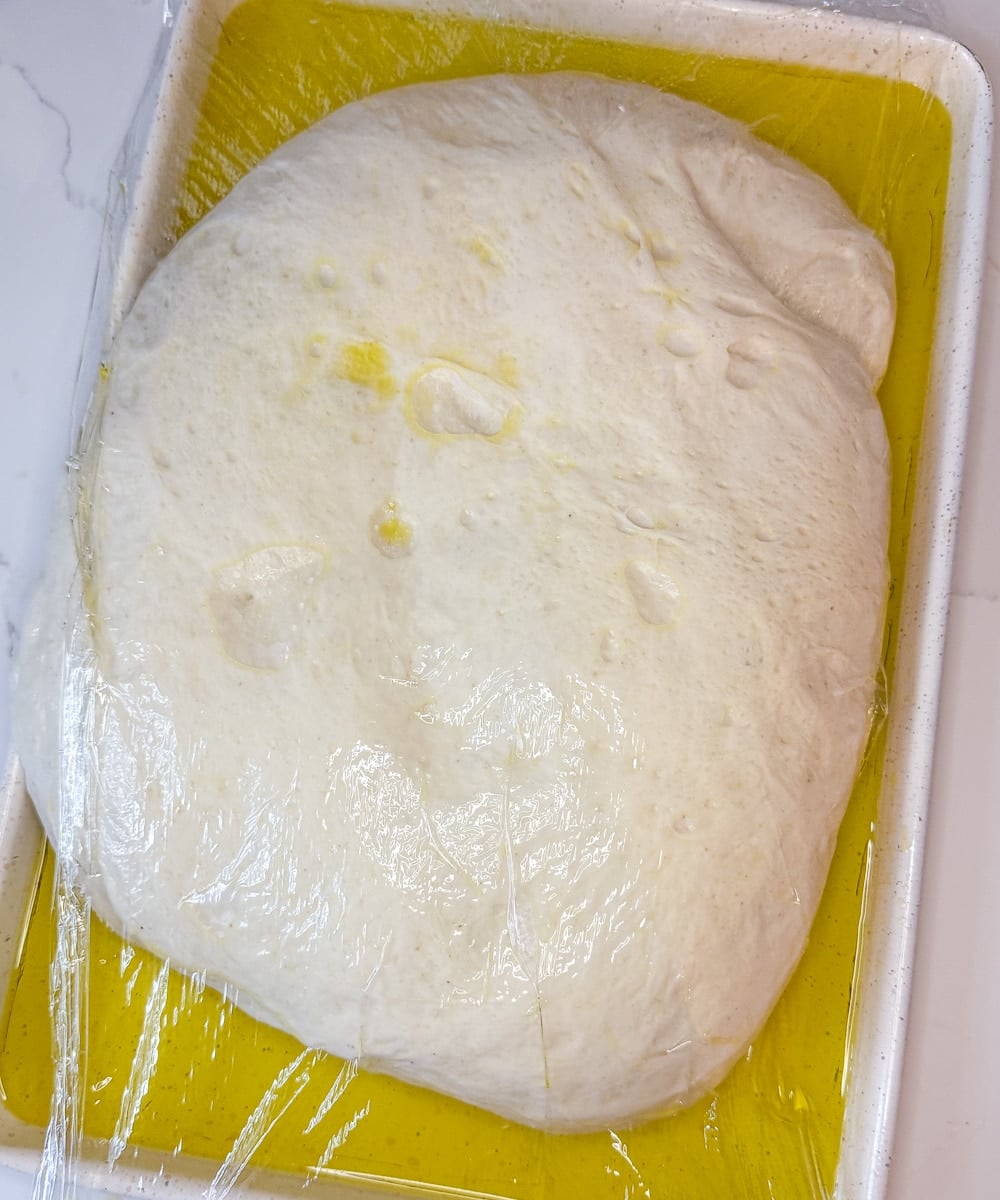
- Dump the dough into the pan, then flip it once so both sides get coated in oil. Cover with plastic wrap and let it rise at room temperature for another 1 to 2 hours, until it's puffy and you see bubbles popping up across the surface. Don't try to stretch it to the corners; the dough will spread on its own as it rises.
PRO TIP: Those dimples are not just for looks. They give the olive oil somewhere to pool, which creates the crispy-on-top, soft-underneath contrast that makes good focaccia good focaccia. They also keep the dough from doming up into a loaf shape in the oven. Press all the way down to the bottom of the pan with confident fingers.
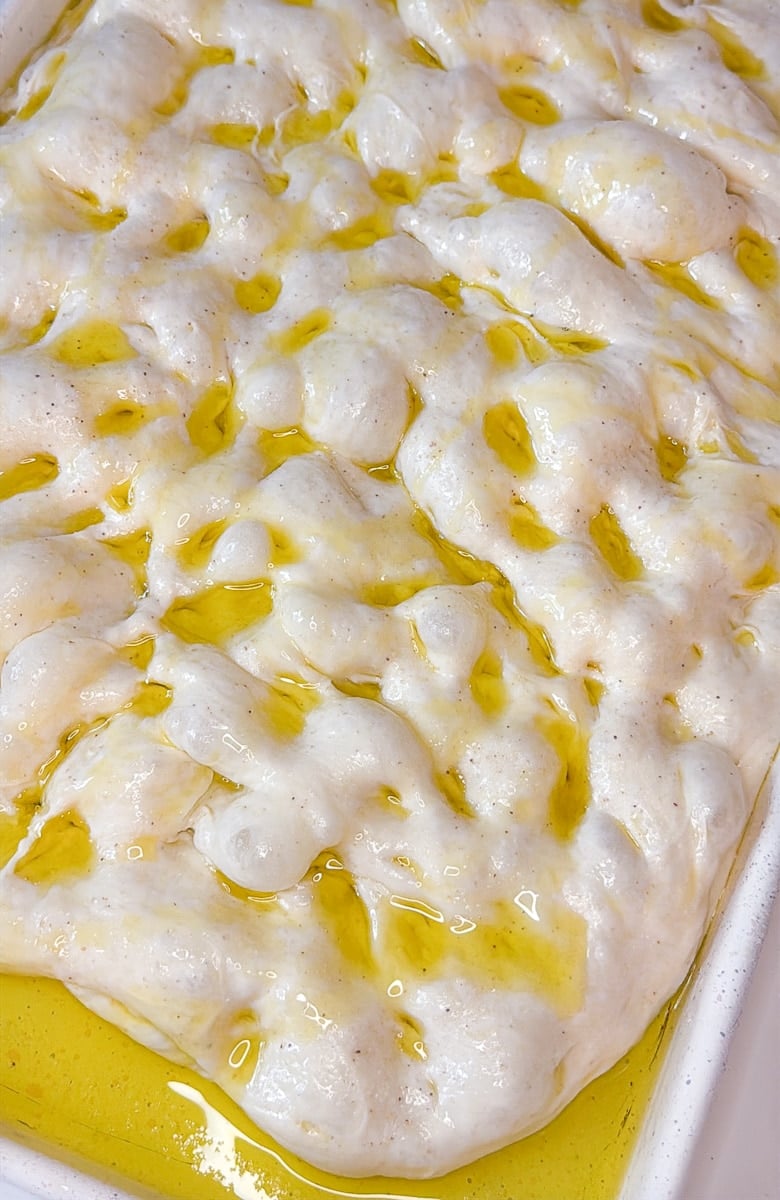
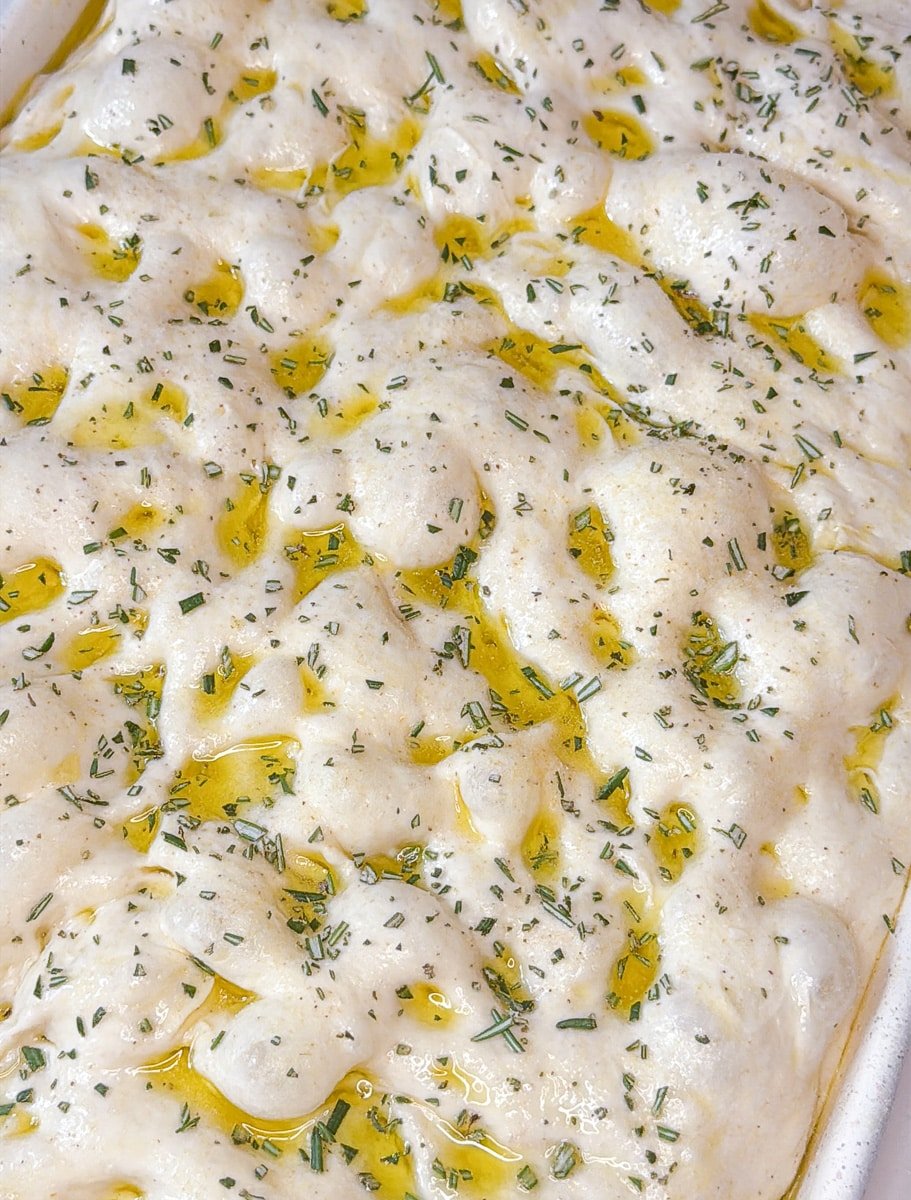
- Preheat your oven to 425º F. With oiled fingertips, press deep dimples all over the surface, all the way down to the bottom of the pan. Drizzle 2 Tablespoons of olive oil over the top so it pools in the dimples. Scatter flake salt, finely chopped rosemary, and any other toppings you like.
- Bake for 25 to 30 minutes, until the top is deeply golden brown and the edges have pulled away from the sides of the pan.
- Immediately lift the focaccia out of the pan and onto a wire cooling rack. If it sits in the pan, the bottom steams, and the crust goes soft. We worked too hard for that crispy bottom to let it go.
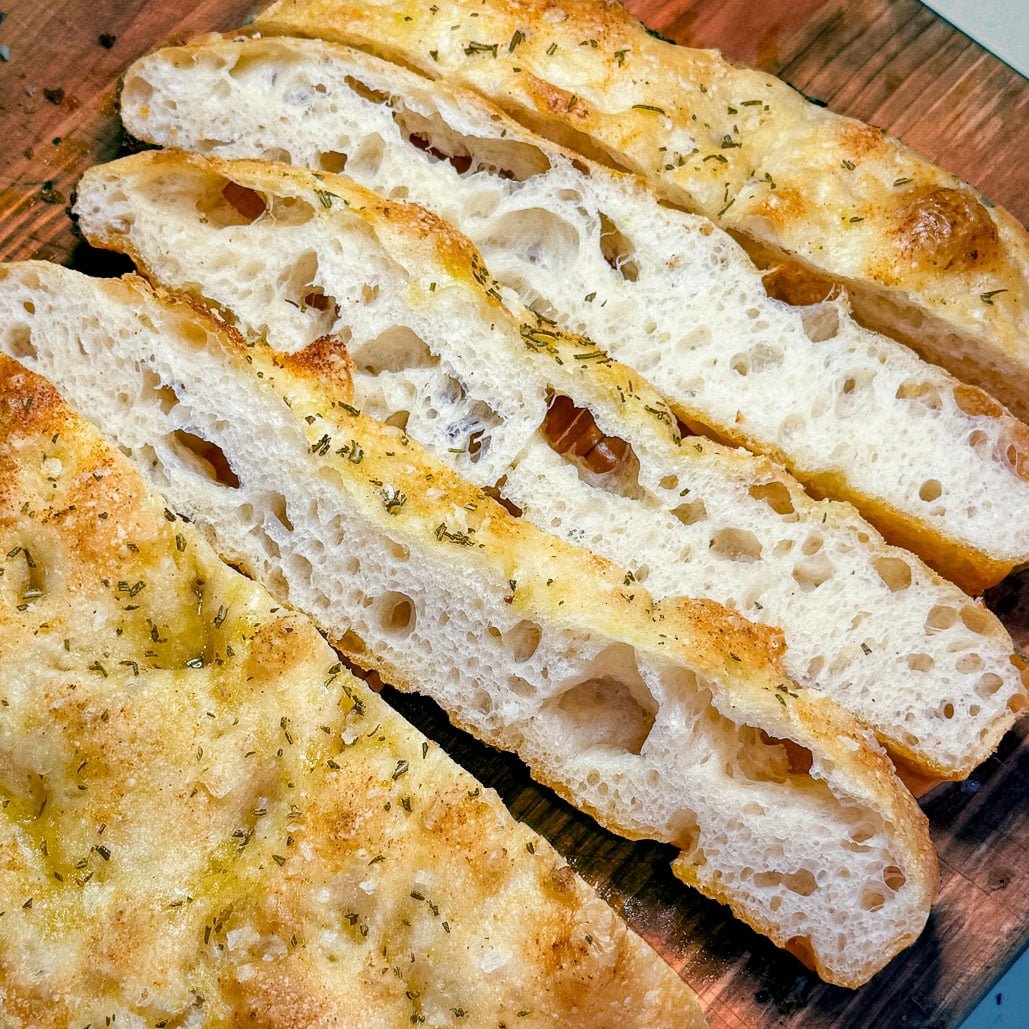
- Wait until it cools fully before slicing and serving up!
Want a sweet version for the weekend? My lemon blueberry sourdough focaccia uses this same dough with a jammy blueberry filling baked right into the crumb. Refer to the recipe card below for the precise quantities and timing.
Common Sourdough Focaccia Problems To Avoid
- Gummy or doughy crumb. Almost always underproofing or pulling it out of the oven too early. The center should read 200 to 210º F when probed. If you're not sure, give it 5 more minutes. Focaccia is forgiving of a slightly darker bake.
- Dense bottom, fluffy top. Your starter wasn't active enough, or your kitchen was too cold during the bulk rise. Cold rooms slow fermentation way down. If your room is under 68º F, find a warmer spot (top of the fridge, inside a turned-off oven with the light on) or extend the bulk to 14 to 18 hours.
- Dough overflowed the bowl overnight. You probably overproofed. Don't panic, dimple it into the pan as usual, but cut the second rise to 30 to 45 minutes since the dough is already past peak. It'll still bake into great focaccia.
- Focaccia stuck to the pan. Either not enough olive oil in the pan, or the pan was new and seasoning-shy. A layer of parchment underneath the oil is the safety net. Cast iron and well-used metal pans rarely stick.
- Olive oil pooled in one corner instead of staying on top. You didn't dimple deep enough. Press all the way down to the bottom of the pan, not just the top inch of the dough.
- No big bubbles, flat surface. This is the dead giveaway for a weak starter. The next time you bake, give your starter a 2 to 3 day spa treatment with fresh feedings before you mix the dough.
Final Thoughts
If you are scared of sourdough, please make this first. There's a reason this is the recipe I push everyone toward, even more than my beginner sourdough bread. You don't need a Dutch oven. You don't need to shape. You don't need to score. You don't even need to nail the timing. You just need a starter, a sheet pan, and a bottle of olive oil you actually like the taste of.
One more reason I love this recipe: my dad has a tough time with regular wheat bread, but he can usually handle long-fermented sourdough like this one just fine. The fermentation breaks down a chunk of the gluten before it ever hits your stomach, which is why a lot of folks with gluten sensitivity (NOT celiac, please talk to your doctor about that) can eat sourdough when regular bread isn't an option. Read more here about why some gluten-sensitive people can still eat sourdough.
The day I figured out you could "save" a forgotten sourdough as focaccia was the day I stopped being scared of overproofing my dough in general. Focaccia is the safety net of the sourdough world. Make it once, mess with the toppings, then start branching out into sourdough rolls, sourdough sandwich bread, and the rest of my sourdough recipes.
If you love how forgiving focaccia is, my sourdough english muffin recipe is the breakfast cousin, same overnight ferment, totally different format, perfect for eggs benedict and toast-and-jam Saturdays.
Make This Sourdough Focaccia Your Own
Same-day vs overnight vs cold-retard. This recipe scales to your schedule. Here is what you get with each option:
- Same-day (no overnight), 4 to 6 hours total at warm room temp (75 to 80º F). Less tang, smaller bubbles, lighter crust. Good if you want focaccia tonight and you have a vigorous starter.
- Overnight room temp (the default), 12 hours at 68 to 80º F. Balanced tang, classic open crumb. This is the recipe as written.
- Cold retard in the fridge, 24 to 48 hours after the bulk rise. The biggest, holiest crumb and the most pronounced sour tang. Pull from the fridge, let it sit at room temp for an hour before dimpling so the dough isn't fridge-cold going into the oven.
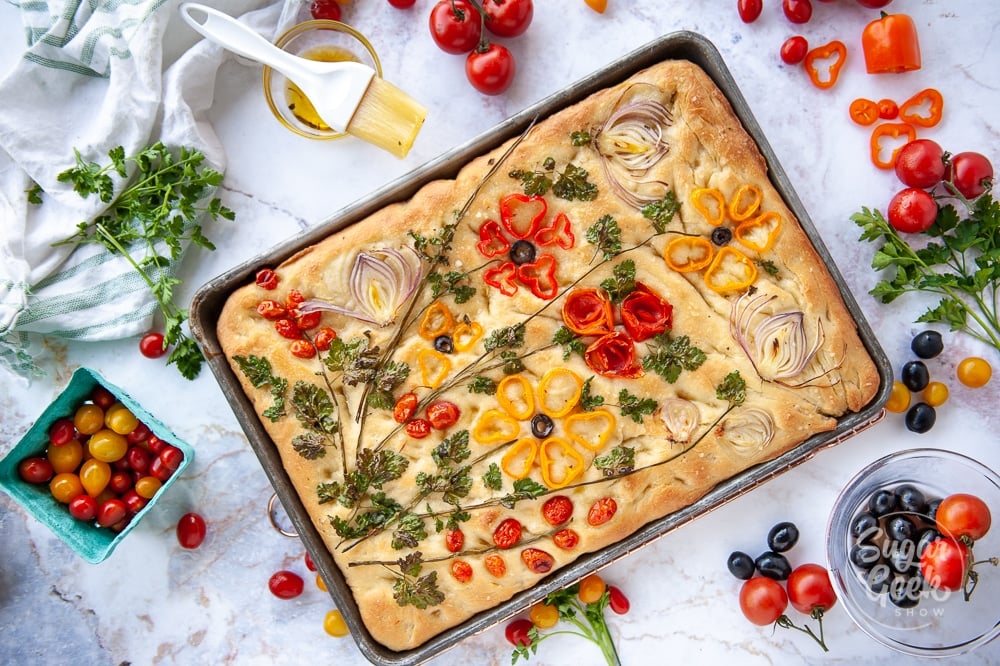
Topping variations. The dough is a blank canvas. You can change up the toppings and make unlimited flavor profiles:
- Cherry tomatoes pressed into the dimples with extra flake salt
- Thinly sliced shallots and fresh thyme
- Roasted garlic cloves and Parmesan
- Olives and lemon zest
- Caramelized onions with goat cheese
- Bacon, cheddar, and chopped scallions
- See my focaccia bread art tutorial for the showstopper version
Sourdough Focaccia FAQs
You're looking for the dough to rise by about 50%, not double. The surface should be domed and jiggly, with visible bubbles under the surface when you peek at it from the side of a clear bowl. Focaccia wants a less-developed dough than a traditional sourdough loaf so it has room to puff in the pan, which is why doubling is too far.
Yes, just slower. Below 68º F, plan on 14 to 18 hours instead of 12. You can also park the dough on top of the fridge or inside a turned-off oven with the light on, both spots usually run 5 to 10 degrees warmer than the rest of the kitchen.
Cast iron is incredible for focaccia; you get an even crispier bottom. Glass works, but bakes a touch slower, so add 3 to 5 minutes and check for that deep golden top. Metal is the middle ground and the easiest to get right the first time.
Wrap a piece in foil and warm it at 350º F for 5 to 7 minutes, or in a toaster oven for 3 to 4. Do NOT microwave, the crust goes rubbery, and the crumb goes gummy. Frozen focaccia goes straight from freezer to a 350º F oven, no thawing needed, just add a few minutes.
More Sourdough Recipes To Bake
Leave Me A Review
⭐️⭐️⭐️⭐️⭐️
If you tried this Sourdough Focaccia Recipe or any other recipe on my blog, please leave a 🌟 star rating and let me know how it goes in the comments. I love hearing from you!
Recipe
Equipment
- 1 9"x13" Pan
Ingredients
- 75 grams Sourdough Starter
- 400 grams Water Warmed to 110ºF
- 25 grams Honey
- 500 grams Bread Flour
- 10 grams Salt
- 2 grams Garlic Powder
- 35 grams Olive Oil
- 2 grams Fresh Rosemary Finely chopped
- 2 grams Flake Salt
Instructions
- Before you begin: Confirm your starter is active and bubbly; it should at least double within 4 to 6 hours of its last feeding. Lightly oil a large mixing bowl for the bulk rise. Plan backwards from when you want to bake, this is roughly a 14 hour process from mix to oven.
- About 12 hours before you want to bake, whisk the sourdough starter, warm water, and honey together in a large bowl until everything is dissolved. I usually mix at 8 or 9pm so I can bake in the morning.
- Add the bread flour, salt, and garlic powder. Mix until combined into a shaggy, sticky dough. Cover and rest 30 minutes to hydrate the flour and wake the gluten.
- With wet hands, pull one edge of the dough up until it stops stretching, then fold it over onto itself. Rotate 90 degrees and repeat on all four sides (one set of coil folds is enough).
- Cover the bowl with lightly oiled plastic wrap and let it bulk ferment at room temperature (68 to 80º F) for 12 hours, until the dough has risen by about 50% and is domed and jiggly with visible bubbles. Cold room = longer ferment.
- The next morning, coat a 9x13 sheet pan with a thin even layer of olive oil. Transfer the dough to the pan and flip it once to coat both sides.
- Cover with plastic wrap and let it second-rise at room temperature for 1 to 2 hours, until very puffy and bubbly. The dough will spread on its own, no stretching needed.
- Preheat your oven to 425º F. With oiled fingertips, press deep dimples through the entire surface, all the way down to the bottom of the pan.
- Drizzle 2 Tablespoons of olive oil over the top so it pools in the dimples. Scatter flake salt, chopped rosemary, and any additional toppings.
- Bake 25 to 30 minutes, until deeply golden brown and the edges pull away from the pan. Internal temperature should read 200 to 210º F.
- Immediately remove the focaccia from the pan onto a wire rack to keep the crust crispy. Let it cool 10 to 15 minutes before slicing.
Video
Notes
- Don't use hot water, anything above 115º F will kill your starter.
- Don't skip the dimpling step, dimples are what create the crispy-on-top, soft-underneath texture.
- Don't leave the focaccia in the pan after baking, the bottom steams and the crust goes soft.



Stephanie says
Best recipe for sourdough focaccia I’ve found yet!! Love your content, Liz!
Elizabeth Marek says
One of the easiest bread recipes I've ever made and so yummy! I hope you love it too!