

Once your starter is alive, the whole game becomes keeping it fed, and knowing how to feed a sourdough starter the right way is what turns a weak, sluggish jar into a strong one that doubles every time and actually rises your bread. If you haven't built one yet, start with my sourdough starter for beginners guide first, then come back here to keep it thriving.
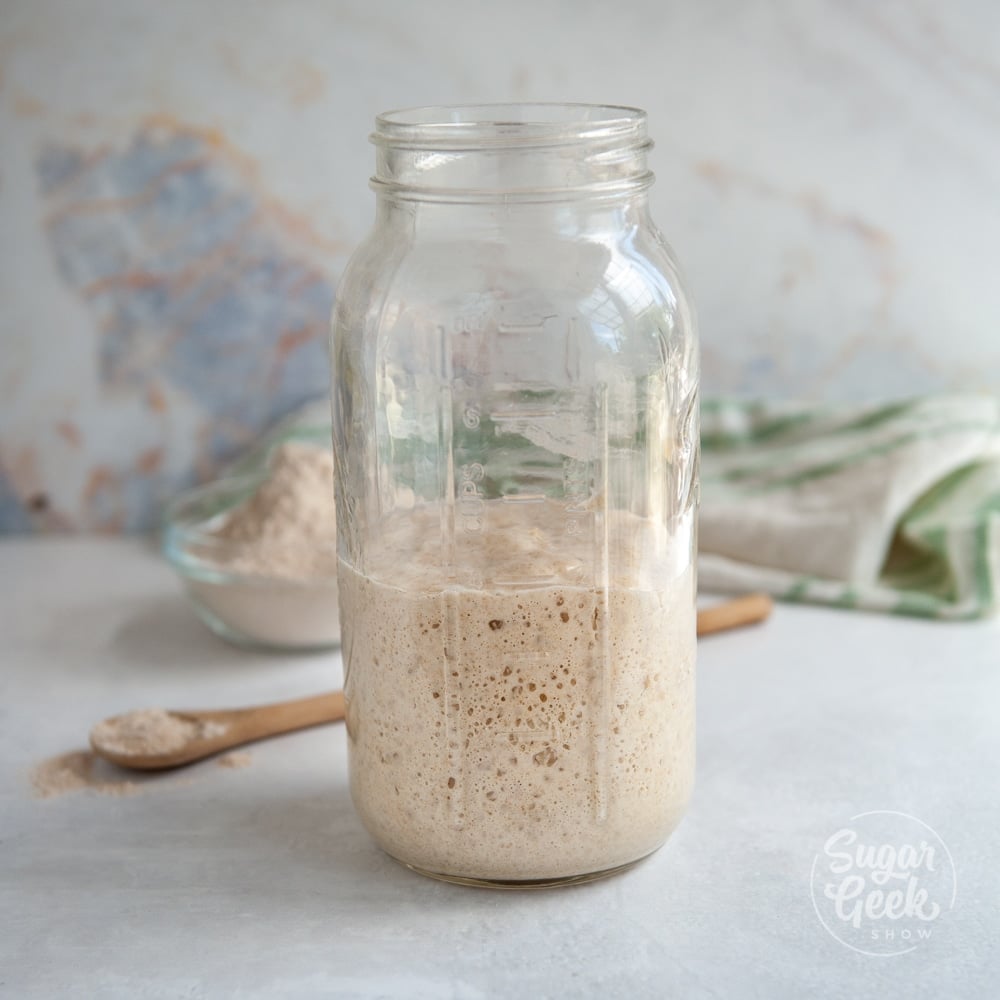
I get more questions about feeding than almost anything else in my inbox, usually some version of "is my starter dead?" or "why won't it rise anymore?" Nine times out of ten, it's not dead, it's just hungry, cold, or on the wrong schedule. I've kept the same starter alive for years now (yes, she has a name), and once you understand what feeding actually does, it stops feeling like a chore and starts feeling like topping off a pet's food bowl. If you've already baked a loaf of my beginner sourdough bread, you know how much a healthy, well-fed starter matters to the final rise.
Quick Glance At The Guide: How To Feed A Sourdough Starter
- Guide Name: How To Feed A Sourdough Starter
- Why You'll Love It: No more wondering how and when to feed your sourdough starter so that it's strong and healthy.
- Time and Difficulty: About 5 minutes per feeding, beginner-friendly
- Main Materials: Unbleached flour, filtered water, a clean non-metal jar, and a kitchen scale
- Method: Discard most of the starter, then add equal parts flour and water by weight (100% hydration)
- Quick Tip: Always feed with warm filtered water (around 90º F) and mark the level on the jar so you can see the rise
Jump to:
- Quick Glance At The Guide: How To Feed A Sourdough Starter
- What Feeding Actually Does For Your Sourdough Starter
- What You Need To Feed A Sourdough Starter
- How To Feed A Sourdough Starter Step-By-Step
- Feeding Schedule: Countertop vs Fridge
- How To Tell When Your Starter Is Hungry Or Ready
- How Long After Feeding Can You Use Your Starter?
- Can You Feed A Sourdough Starter Too Often?
- Cutting Down On Sourdough Discard
- Common Sourdough Starter Feeding Problems To Avoid
- Final Thoughts
- Feeding A Sourdough Starter FAQs
- Sourdough Discard Recipes To Try
What Feeding Actually Does For Your Sourdough Starter
Feeding sounds technical, but it's the simplest thing in the world: you're giving the natural yeast fresh flour to eat and water to live in. The yeast eats the starch in the flour, burps out carbon dioxide (those bubbles), and that gas is exactly what gives your bread its rise later. When your starter runs out of food, it deflates, gets sour, and eventually goes dormant. Feed it on a schedule, and it stays strong, predictable, and ready to bake.
The other thing feeding does is keep the balance tipped toward the good stuff. A regularly fed starter stays acidic and active, which is what keeps it healthy over the long haul. If you've ever made my sourdough discard pancakes or sourdough pikelets, that "discard" is just the portion you remove before each feed, so feeding and discard recipes go hand in hand.
What You Need To Feed A Sourdough Starter
You barely need anything to feed a starter, which is the best part. I always recommend weighing everything with a digital kitchen scale because sourdough is all about ratios by weight, and cups will let you down here. Here's the short list:
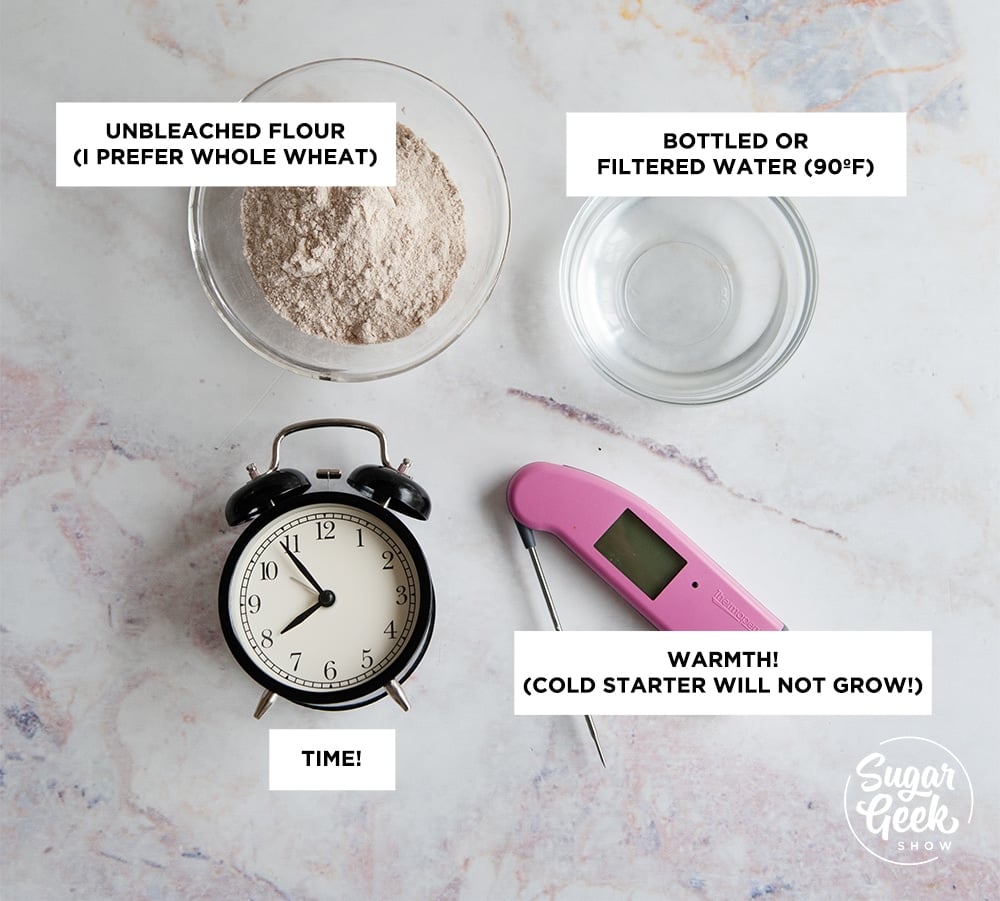
- Unbleached flour: Bread flour or all-purpose works for daily feeding. Bleach stops yeast from growing, so unbleached is the rule. A little whole wheat flour mixed in gives a hungry starter a boost
- Filtered water: Yeast hates chlorine, so skip straight tap water if you can. Warm it to around 90º F to encourage activity
- A clean non-metal jar: Glass or food-safe plastic with straight sides so you can see the rise. Never metal, a starter is acidic enough to eat away at it
- A kitchen scale: For weighing equal parts flour and water so your feedings stay consistent
How To Feed A Sourdough Starter Step-By-Step
Before you start, get your water warm (around 90º F) and your jar handy. A feeding is just three moves: discard, add, stir. It takes about 5 minutes. The classic feeding ratio is 1:1:1 by weight, which means equal parts starter, flour, and water. For example, keep 75g of starter, then feed it 75g of flour and 75g of water.
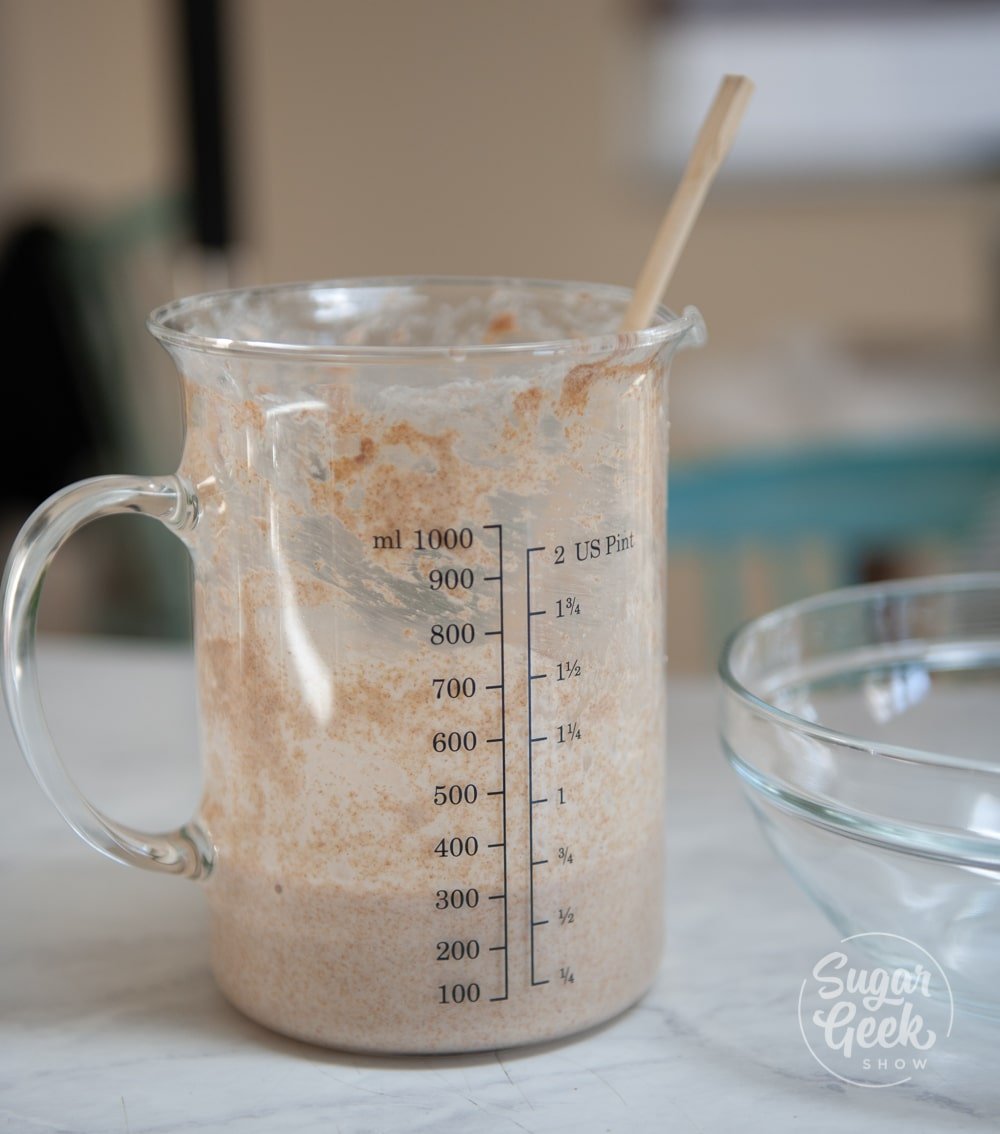
- Stir and discard. Give your starter a stir, then remove most of it, leaving a small amount behind in the jar (about 75g). Save the discard for recipes or toss it.
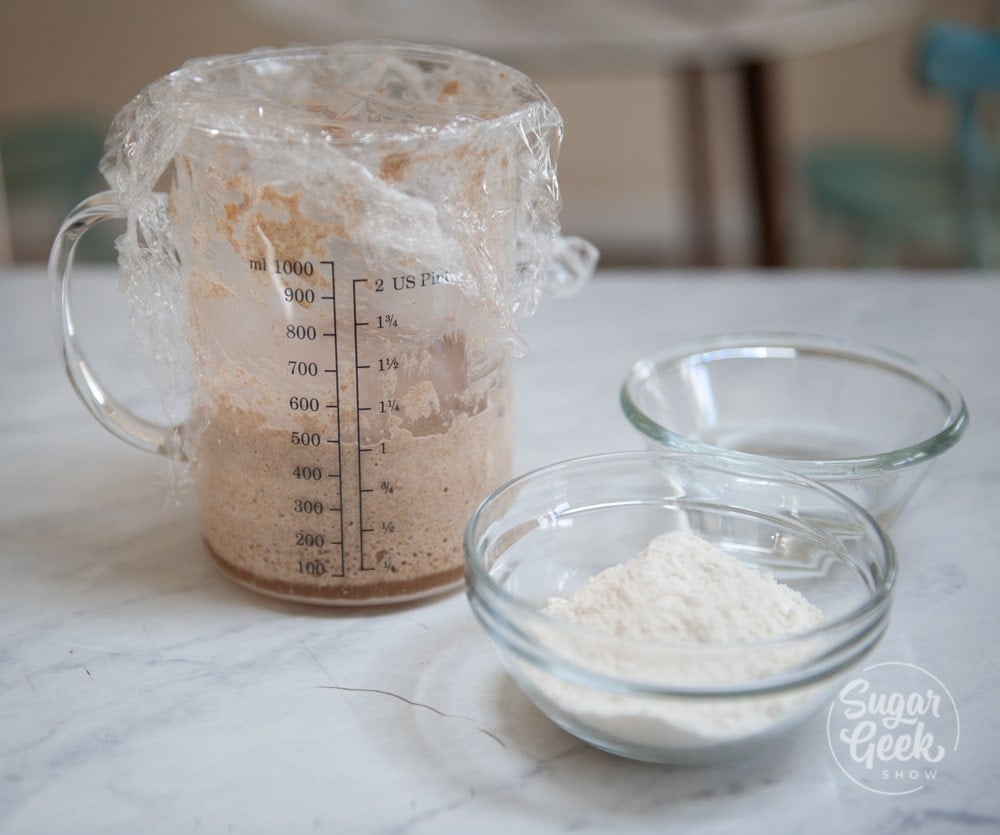
- Add flour and water. Add equal parts unbleached flour and warm filtered water by weight to what's left.
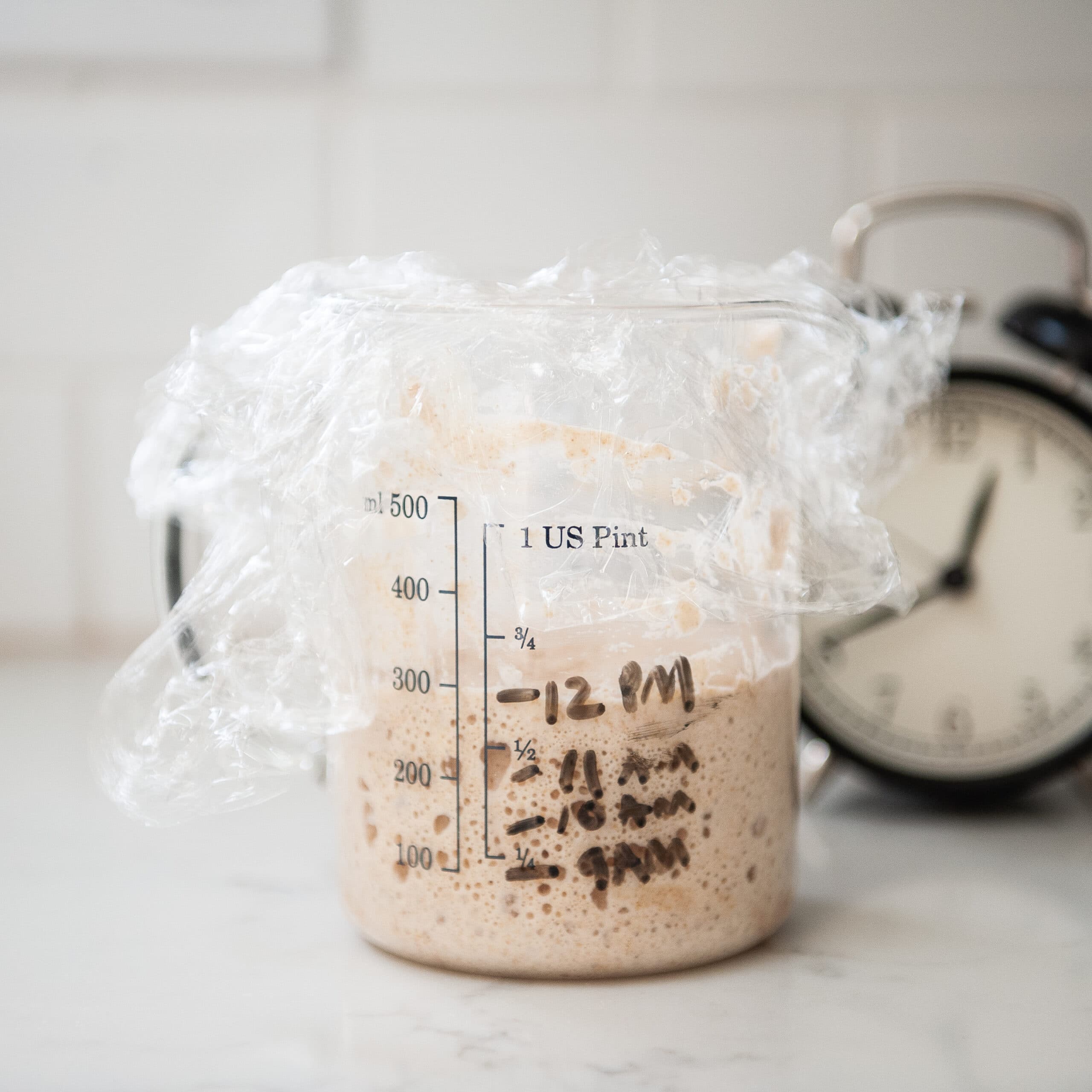
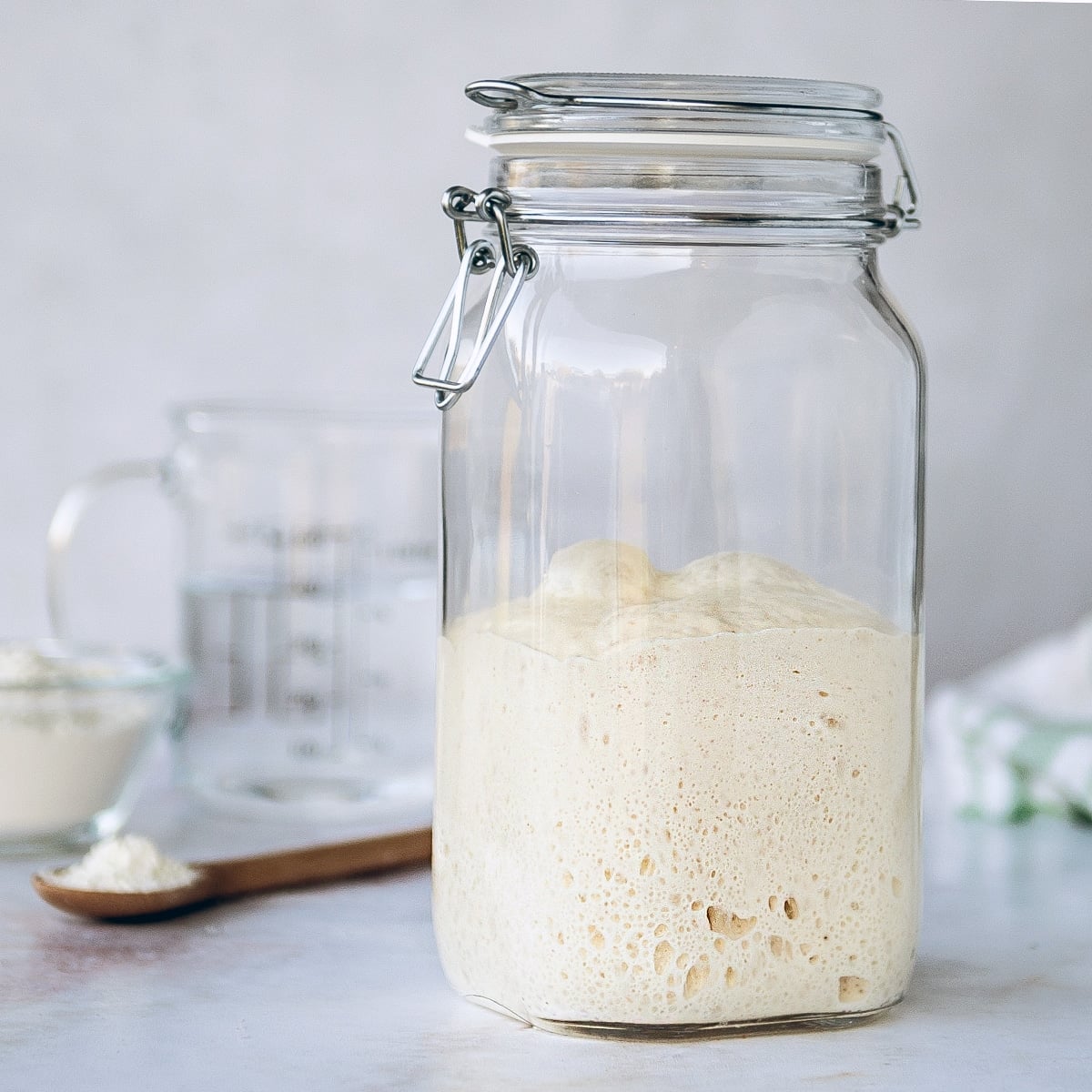
- Mix and mark. Stir until you can't see any dry flour, then mark the starter level on the outside of the jar with a rubber band or marker so you can track the rise. Cover loosely and set it somewhere warm.
Feeding Schedule: Countertop vs Fridge
How often you feed depends entirely on how often you bake, and this is where most people overcomplicate things.
On the counter (baking a few times a week): Keep your starter at room temperature and feed it once a day. A countertop starter is always ready to go, which is great if you bake often, as I do. I make sourdough sandwich bread or sourdough rolls pretty much weekly.
In the fridge (baking once a week or less): Cold slows the yeast way down, so a refrigerated starter only needs feeding about once a week. When you want to bake, pull it out a couple of days ahead and feed it twice a day until it's bubbly and doubling again. Established starters are tough; mine has gone a few weeks in the fridge and bounced right back with a couple of feedings.
PRO TIP: Warmer water and a warmer room mean faster fermentation. If your kitchen runs cold (below 70º F), your starter will feed slower, so lean on warm water and a cozy spot like the oven with just the light on (oven OFF).
How To Tell When Your Starter Is Hungry Or Ready
A fed starter goes on a predictable cycle: it rises to a peak, then slowly falls back down once it runs out of food. Learning to read that cycle is the whole skill.
Signs it's hungry: It's deflated and flat, there's a layer of liquid on top or bottom (that's "hooch," harmless alcohol from the yeast eating), and the smell turns sharp. Drain or stir the hooch back in and feed as usual.
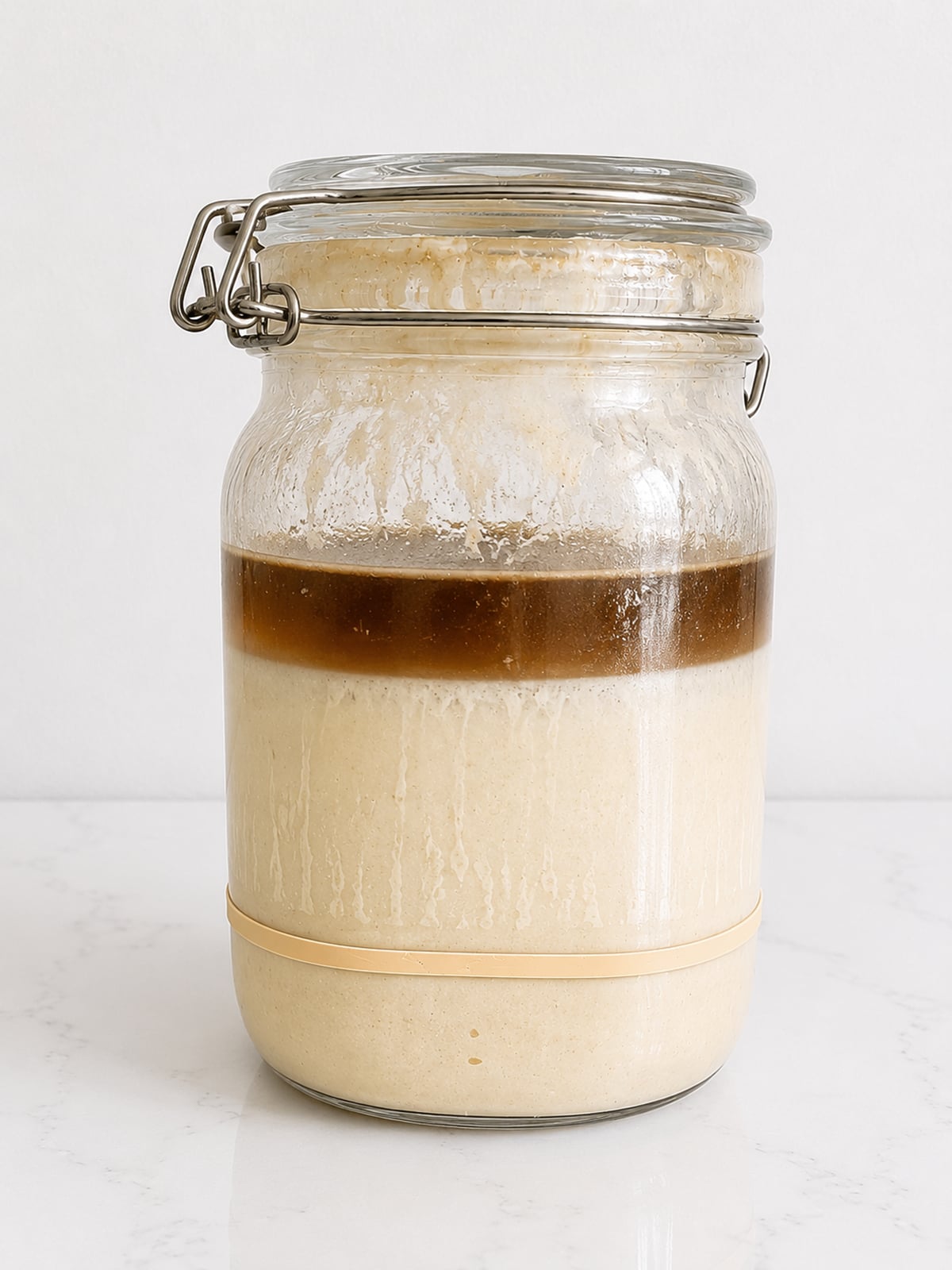
Signs it's at its peak: It's roughly doubled from your marked line, domed on top, and packed with bubbles. This is the strongest, most active moment and the best time to bake.
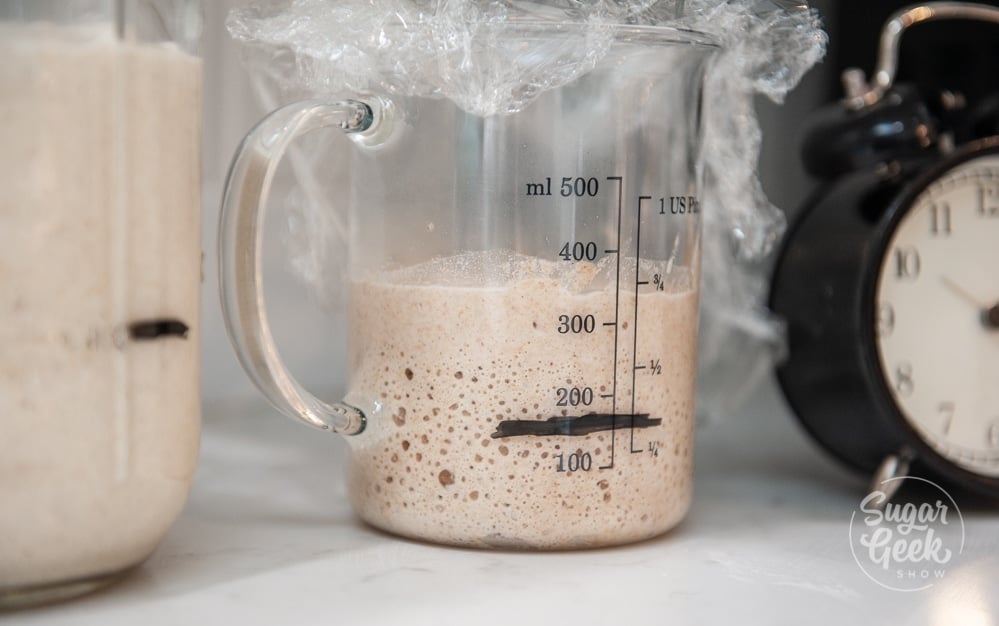
To know it's truly strong enough for bread, do a rise test with a levain. I use 50g unfed starter, 50g warm filtered water at 90º F, and 50g whole wheat flour, then I mark the height and watch it. If it doubles within 5 hours, it's ready to bake. Mine usually triples in about 3 hours. This is the same test I lean on before starting easy sourdough focaccia.
How Long After Feeding Can You Use Your Starter?
This is the question I get the most, and the honest answer is to use it at its peak, not by the clock. After you feed, your starter climbs, hits its high point (the peak), then slowly sinks back down. That peak is when it's the most active and the best moment to bake or build a levain. For a strong, established starter that usually lands a few hours after feeding. Mine triples in about 3 hours, and you're shooting for a starter that can peak within 5 hours of a feed.
The catch is that the peak doesn't last forever. Once your starter starts falling, it's still usable for a little while, but it's getting hungry and losing strength fast. If it's been a full 24 hours and your starter has totally deflated with hooch on top, don't bake with it yet. Feed it again and use it at the next peak. If you're ever unsure whether it's strong enough, run the levain test from the section above and watch for it to double within 5 hours.
PRO TIP: Mark the level on the jar right after you feed and check back every hour. The first time it stops rising and dips even slightly, that's your peak, and that's your window.
Can You Feed A Sourdough Starter Too Often?
Short version: you can't really hurt your starter by feeding it more, but you can waste a lot of flour. Feeding more often, twice a day instead of once, is actually how you strengthen a sluggish starter, so extra feedings are a boost, not a problem. The only "too often" that matters is feeding again before it's eaten through the last feeding, because then you're just diluting the active yeast with fresh flour it isn't ready for. Let it show signs of hunger (deflating, hooch, a sharp, tangy smell) before the next feed.
If your schedule is the real problem, this is where changing your feeding ratio comes in. A bigger feed gives the yeast more food to work through, so it takes longer to peak, which buys you time. Instead of equal parts (1:1:1), you can feed 1 part starter to 2 parts flour and 2 parts water (1:2:2) to stretch the timeline, or go bigger, like 1:5:5, when you need it to hold overnight. As long as you keep the flour and water equal by weight, your hydration stays the same; you're just changing how long it takes to be ready.
Cutting Down On Sourdough Discard
If the discard pile bugs you, and it bugs a lot of people, keep a smaller starter. You really don't need a big jar of it to bake a loaf. Keep something small, around 20 to 25g of starter, then feed it equal parts flour and water from there. Less sourdough starter means less discard at every single feeding. You can always scale up with one bigger feed the day before you plan to bake. Whatever you do pull off, put it to work in sourdough discard crackers or sourdough discard pancakes instead of tossing it down the drain.
Common Sourdough Starter Feeding Problems To Avoid
- Feeding by volume instead of weight: Cups are inconsistent and throw off your hydration. Weigh equal parts of flour and water every time for a predictable starter.
- Using cold water or a cold room: This is the number one reason a starter "won't rise." It's almost never dead; it's cold. Use warm filtered water and a warm, draft-free spot. This is where a sourdough home like the one I have from Brod & Taylor comes in handy!
- Bleached flour: Bleach kills yeast activity. Always feed with unbleached flour, and reach for a little whole wheat when your starter needs a boost.
- Skipping the discard: If you never discard before feeding, you build up too much starter, waste flour, and let acidity climb too high. Discard down to a small amount first, then feed. If you want to use your discard later, put it into a separate jar and store it in the fridge until you're ready to use it.
- Trying to bake before it's strong: A young or underfed starter makes flat, dense loaves. Wait until it reliably doubles within 5 hours before you trust it with a real bake.
- Leaving hooch and panicking: Liquid on top isn't death, it's hunger. Stir it in or pour it off and get back on schedule.
Final Thoughts
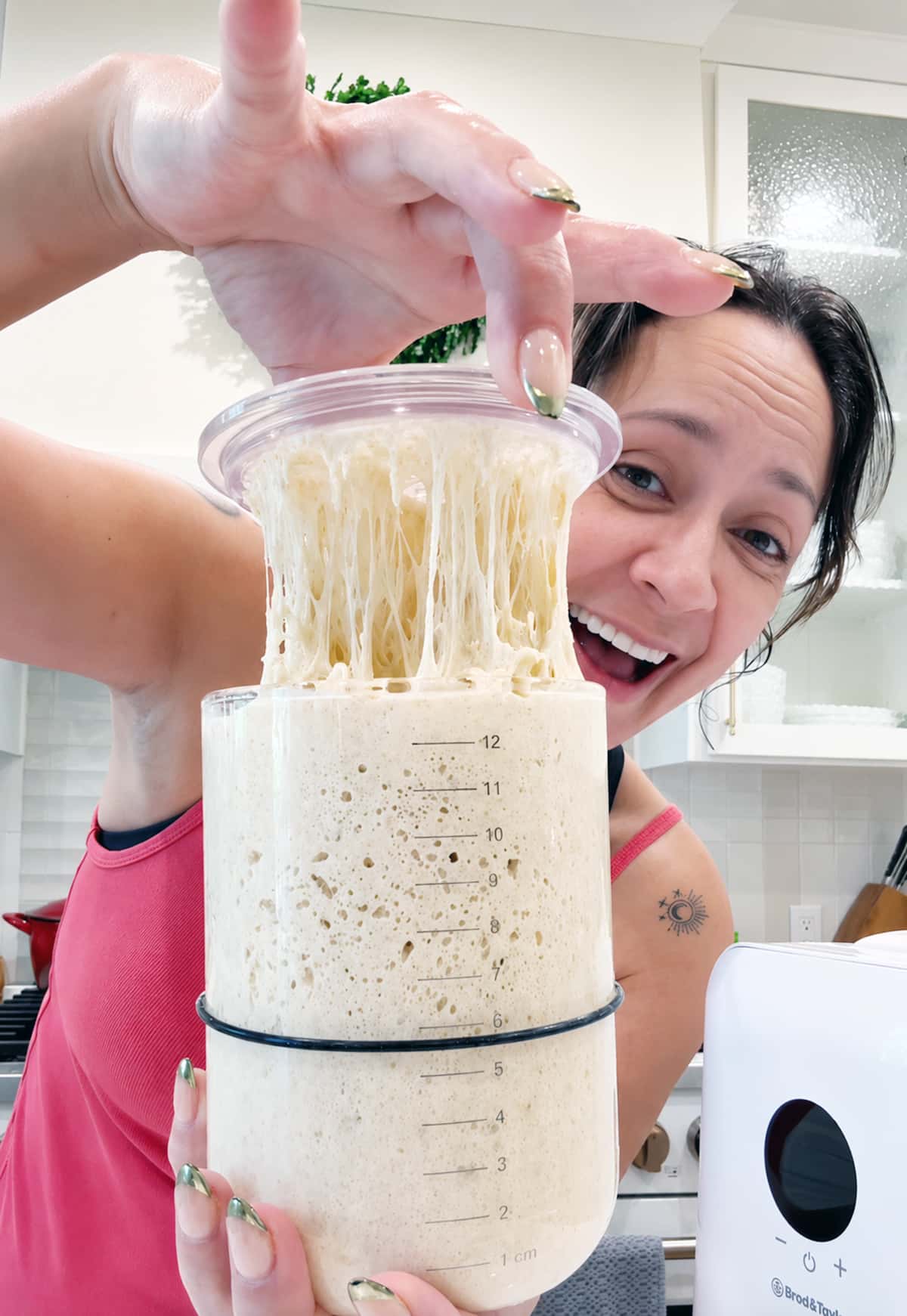
Honestly, feeding a starter is the part that scares people off, and it really shouldn't. It's five minutes, it's flour and water, and your starter is way more forgiving than you think. The only two things that truly kill a starter are letting it get too hot (above 138º F) or starving it for so long it gives up. Everything else, the funky smells, the hooch, the slow days, is just part of having a living thing in your kitchen. Get on a rhythm that matches how often you bake, keep your water warm, and mark that jar. Do that, and you'll have a starter that outlives every gadget in your kitchen and turns out beautiful sourdough bread for years.
Feeding A Sourdough Starter FAQs
Keep it in the refrigerator instead. A cold, established starter only needs to be fed about once a week, and it can survive even longer between feedings without dying. When you want to bake, take it out a couple of days ahead and feed it twice a day until it's active again.
No. That liquid is called hooch, and it's just alcohol the yeast produces when it has eaten through all its food. It means your starter is hungry, not dead. Stir it back in or pour it off, then feed your starter as usual.
Almost certainly not. The most common cause is temperature. A cold starter grows very slowly or seems to stall completely. Feed it with warm filtered water and unbleached flour, then move it somewhere warm like an oven with only the light on.
A reliable everyday ratio is equal parts starter, flour, and water by weight, often written as 1:1:1. Keeping the flour and water equal by weight gives you a 100 percent hydration starter that behaves predictably.
It is hard to kill an established starter. The two real dangers are heat above 138º F, which kills the yeast, and extreme neglect, where it goes unfed for so long that it loses activity. Mold is the other reason to start over, though it is uncommon and usually comes from a dirty container.