

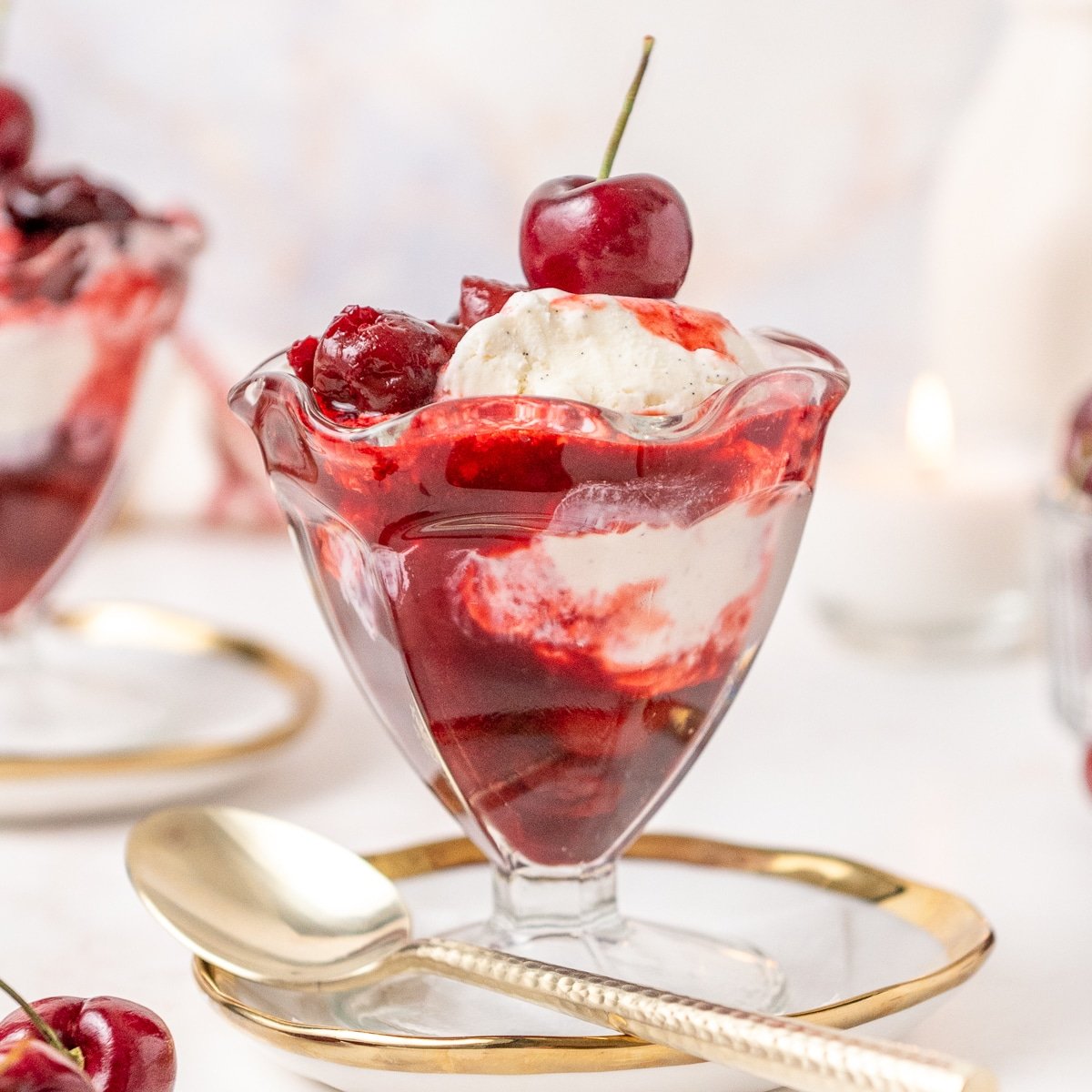
This homemade cherry pie filling tastes WAY better than canned and comes together in 10 minutes with a handful of pantry ingredients. Use it in cherry cheesecake, spoon it into hand pies, or layer it into a Black Forest cake. Once you've made it from scratch, you won't go back to the can.
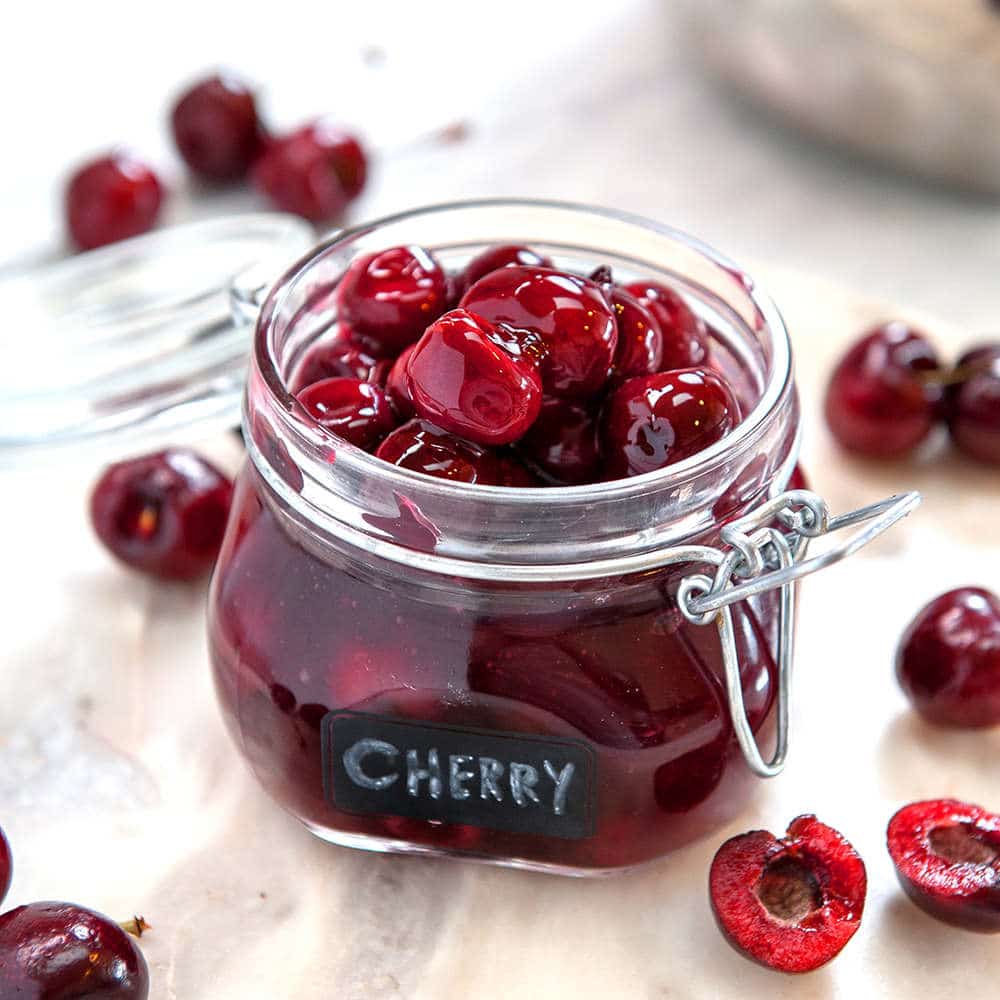
You can make this filling with fresh or frozen cherries. Heat them up with some sugar, a touch of lemon, and your thickener of choice to thicken those juices, and you've got the best cherry pie filling you've ever tasted. Here in Oregon we have the MOST amazing cherries (we're really lucky that way). My favorite are Rainier cherries, sweet and tart and so good right off the tree. If you love this filling, you'll also love my cherries jubilee and my classic cheesecake, which is the perfect base for this filling on top.
Quick Glance at the Recipe: Homemade Cherry Pie Filling
- Recipe Name: Homemade Cherry Pie Filling
- Why You'll Love It: Real cherry flavor, glossy texture, a few ingredients, freezer-friendly
- Time and Difficulty: 27 minutes total, beginner-friendly
- Main Ingredients: Cherries, sugar, water, lemon, salt, Clear Jel or cornstarch
- Method: Simmer cherries with sugar, thicken with a cornstarch or Clear Jel slurry.
- Texture and Flavor: Glossy, just-thick-enough, bright cherry flavor with a citrus lift
- Quick Tip: Match the thickener to the use. See the ClearJel section below before you start
Jump to:
- Quick Glance at the Recipe: Homemade Cherry Pie Filling
- What Makes This Cherry Pie Filling So Good⭐⭐⭐⭐
- Cherry Pie Filling Ingredients
- Sour vs Sweet Cherries: The Sugar Conversion
- Cooking with Sour Cherries Instead of Sweet
- Clear Jel Cook-Type vs Instant: Read This Before You Cook
- How to Pit Cherries
- How To Make Cherry Pie Filling Step-By-Step
- Common Cherry Pie Filling Problems To Avoid
- Final Thoughts
- Make This Recipe Your Own
- Cherry Pie Filling FAQs
- More Fruit Filling Recipes To Try
- Leave Me A Review⭐️⭐️⭐️⭐️⭐️
- Recipe
What Makes This Cherry Pie Filling So Good
⭐⭐⭐⭐
Canned cherry pie filling is overly sweet, gummy from too much corn syrup, and the cherries are bruised and broken. This homemade version fixes all three things. Here's why this cherry pie filling recipe is the one I keep coming back to:
- Real cherry flavor leads, sugar supports. You taste cherries first, not super sweet syrup.
- Glossy and clear, not cloudy. Clear Jel keeps the filling shiny and transparent so the fruit color reads true. Cornstarch works in a pinch, but it dulls the color slightly.
- You control the sweetness. Sour cherries get more sugar, sweet cherries get less, all explained below.
- Fresh OR frozen works. No need to wait for cherry season.
- It freezes for 6 months. Make a big batch in July and pull it out in December for the holidays.
Cherry Pie Filling Ingredients
A handful of pantry staples is all you need. I always recommend weighing your ingredients with a digital kitchen scale for the most accurate results. The thickener is the only ingredient that gets a real heads-up. See the Clear Jel section below before you shop.
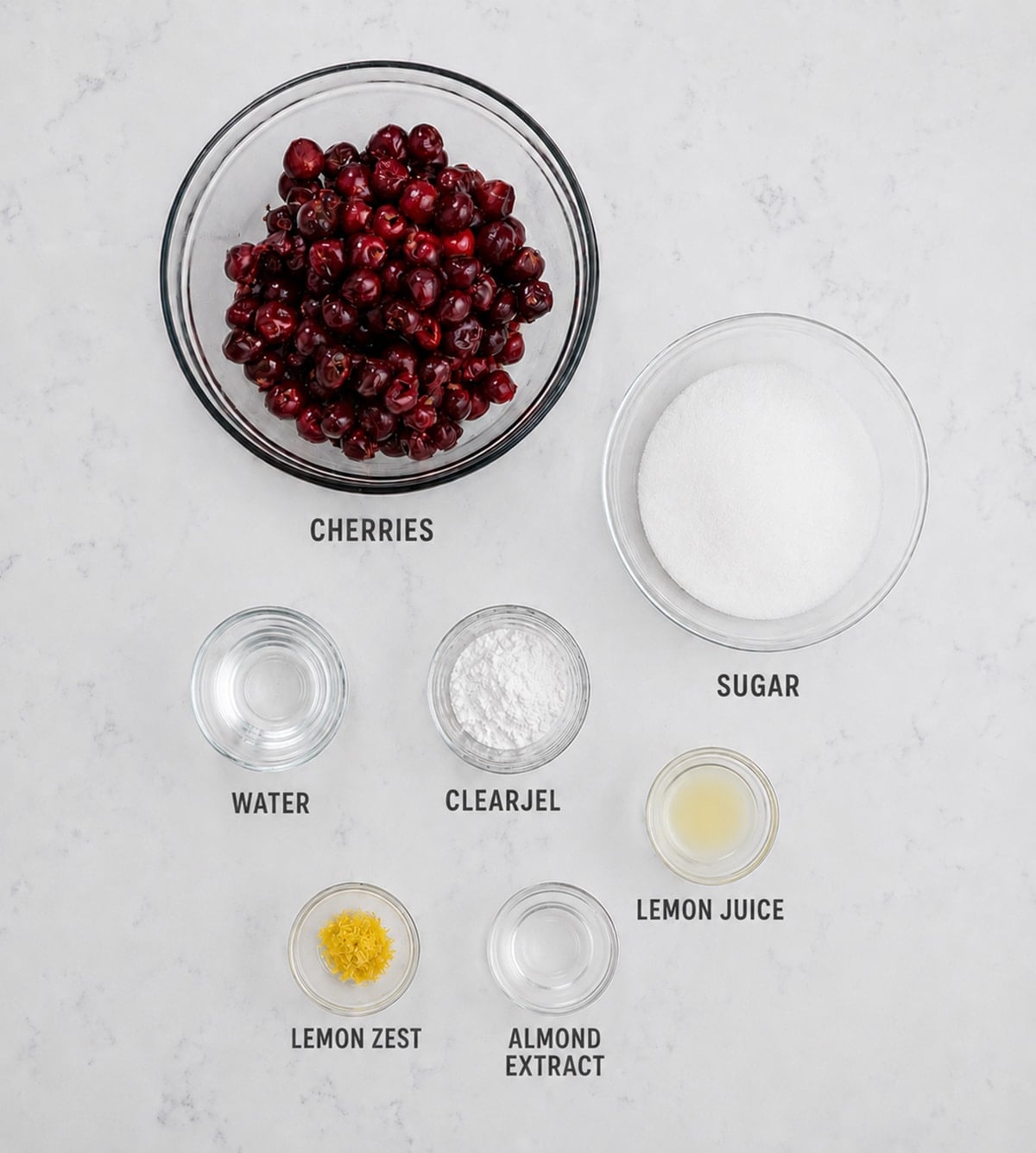
- Cherries, pitted. Any kind works. Sweet (Bing, Rainier) gives a milder, dessert-style filling. Sour (Montmorency, Morello) gives that classic, punchy cherry-pie flavor and is what most American cherry pies are traditionally made with. Frozen cherries work just as well as fresh. If you're using sour cherries, see the dedicated section below, you'll adjust sugar, water, and cook time.
- Granulated sugar. Adjust up or down based on whether your cherries are sweet or sour, see the conversion table below. You can swap sugar for honey or a sugar-free substitute like Swerve if you want to keep it lower in sugar.
- Water, both warm for simmering and cold for the slurry. The simmer water makes the filling saucier. If your cherries are very juicy (sour cherries especially), pull back on the simmer water.
- Fresh lemon juice. Acidity brightens the cherry flavor and helps the Clear Jel set properly.
- Lemon zest. I put a little zest in all my berry recipes, it makes the fruit taste more like itself.
- Salt. Not to make it salty, just to wake up the cherry flavor.
- Clear Jel (preferred) or cornstarch. If you have not used Clear Jel before, this is the modified cornstarch that bakeries use for fruit fillings. It stays clear and shiny, holds up to heat, and doesn't break down when baked or frozen. Cornstarch will work, but the filling will look slightly cloudier.
Why Lemon Matters (The Science)
A splash of lemon does four real jobs in this filling. It's not to make the cherry filling taste like lemons, its to make the cherries taste more like cherries.
1. Lower pH makes cherry aroma molecules more volatile. Most of what you taste as "cherry" is actually smell, benzaldehyde plus a stack of fruity esters. Lower pH means more of those molecules vaporize off the filling and reach your nose. More vapor, more cherry.
2. Citric acid suppresses the sweet receptor. When fillings taste really sweet, your taste receptors get flooded. Citric acid binds to that same receptor and partially blocks it, which dials perceived sweetness DOWN so subtler fruit notes register. Same principle as a pinch of salt in caramel.
3. Acid locks in the red color, and we taste color. Cherries get their red from anthocyanins, which are pH-sensitive. In acidic conditions they're vivid red. Push the pH up and they go muddy brown. Lemon keeps the color bright, and bright red food is perceived as MORE strongly cherry-flavored than dull red even when the chemistry is identical. We taste with our eyes.
4. Esters are more stable at low pH. A lot of fruit aromatics are esters. In neutral conditions they break down during a long simmer. Acid keeps them intact through the cook.
The zest is doing something separate. It's adding limonene and citral, fresh terpenes that ADD their own top note. The juice is a flavor REVEAL. The zest is a flavor ADD. Use both.
Sour vs Sweet Cherries: The Sugar Conversion
You CAN use pretty much any type of cherry for cherry pie filling but understanding how sweet it is will really make a difference in what you add to the filling. If you're using a sweeter cherry like Rainier, Bing, or Black cherries then you'll want to be sure to cut down on the sugar and use lemon juice and zest in your recipe to balance out the sweetness. If you're making your cherry pie filling with sour cherries like montmorency or Morello then you'll want to up the sugar and remove the addition of the lemon juice and zest. You don't need it. I would keep the almond extract in either version because almond pairs beautifully with cherry.
| Cherry type | Examples | Sugar per 32 oz cherries |
|---|---|---|
| Sour / tart | Montmorency, Morello, Balaton | 10 to 12 ounces |
| Mixed | Bing or Rainier blended with a handful of dried tart | 8 ounces (the base recipe) |
| Sweet | Bing, Rainier, Lapins, Sweetheart | 6 to 7 ounces |
Taste your cherries before they go in the pot. If they're sweeter than usual (a warm summer can push the sugar up), pull back by an ounce. You can always add more sugar at the end; you can't pull it out.
Cooking with Sour Cherries Instead of Sweet
Sour cherries are the traditional choice for American cherry pie. They're the kind your grandma used. The flavor is brighter, more cherry-forward, and the acidity balances the sugar in a way sweet cherries just can't. The size is much smaller than a traditional cherry. If you've only ever had cherry pie made with sweet cherries, sour cherries will taste like you're eating cherry pie for the first time. Trust me on this one.
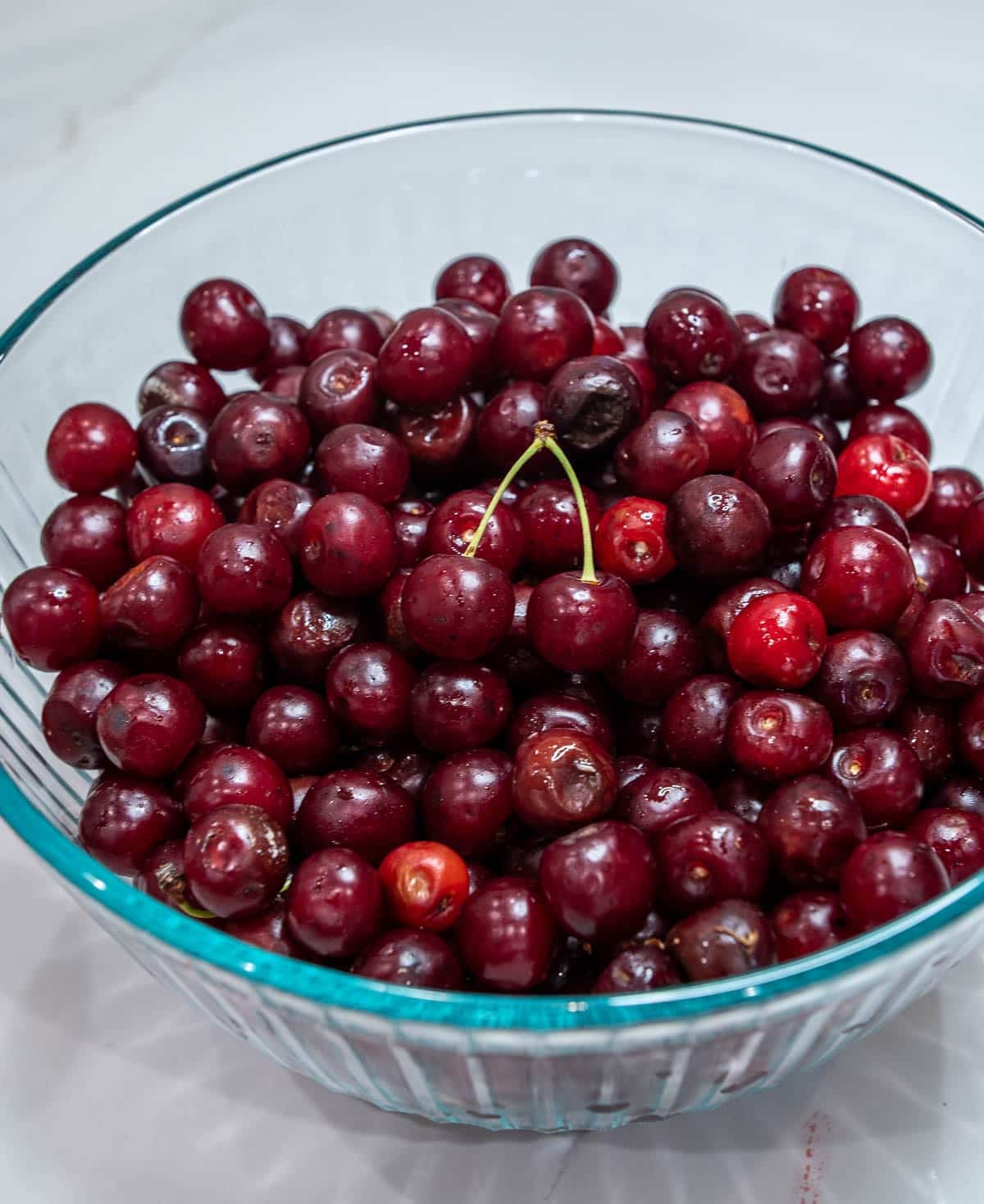
That said, sour cherries are trickier to find, and they cook differently. Here's what to know.
Where to actually find them. Fresh sour cherries have a brutally short season, about 2 to 3 weeks in late June and early July, and most grocery stores don't carry them at all. Your three reliable sources:
- Frozen Montmorency cherries, the easiest year-round option. Look in the freezer aisle near the berries. Cascadian Farm and Stahlbush are two brands that carry them, plus most Whole Foods and natural grocers stock a generic option. Usually pre-pitted, which is a huge time saver.
- Jarred Morello cherries are often imported and are packed in light syrup or water. Trader Joe's and World Market both carry these seasonally. Drain them well before using, and cut the simmer time by half.
- Farmers' markets in late June are the actual fresh window. If you live near a Michigan, Wisconsin, Oregon, or Pacific Northwest growing region, this is the magic window.
How sour cherries cook differently:
- More sugar. 10 to 12 ounces per 32 ounces of cherries (vs 6 to 8 for sweet). Don't go lighter, sour cherries WILL fight you on flavor balance.
- Less added water. Sour cherries are juicier than sweet cherries to begin with, and frozen sour cherries release even more liquid as they thaw. Pull the simmer water back from 8 ounces to 4 ounces. You can always add a splash if it looks too thick.
- Shorter cook time. Sour cherries break down faster than sweet cherries and turn jammier. Pull the pan off the heat as soon as the slurry thickens, don't simmer the filling longer "to develop the flavor" the way you might with a sweet-cherry version. The flavor is already there.
- Pull back on lemon. Sour cherries already have plenty of acidity. Cut the lemon juice from 1 Tablespoon to 1 teaspoon, and skip the zest if you want maximum cherry flavor. You can taste at the end and add more if it needs the brightness, but most of the time the cherries handle it themselves.
- Almond extract is non-optional. ¼ teaspoon of pure almond extract stirred in OFF the heat is the secret to sour cherry pie filling that tastes like the diner version you grew up on. The almond does something to the cherry that no other flavor pairing matches. This is the one place I'd actually call almond extract mandatory in a recipe.
Mixing sweet and sour cherries is a legitimate move and one of my favorite ways to make this. Use 60% sweet (for body and color) and 40% sour (for the punch). Sugar to 8 ounces, water to 4 ounces, and ¼ teaspoon almond extract off the heat. Best of both worlds and you can build it from grocery-store-available cherries year-round (frozen sweet + frozen sour both keep forever).
What if you can only find sweet cherries but want a sour-style pie? Stir in 2 to 3 Tablespoons of dried tart cherries (the Trader Joe's or Costco kind) along with the sugar. They'll plump up in the syrup and add the acidic punch sour cherries would have brought. Not a 1:1 swap for the real thing, but a much better fake-out than just leaning harder on lemon.
Clear Jel Cook-Type vs Instant: Read This Before You Cook
This section exists because the wrong Clear Jel will absolutely ruin your filling, and the labels don't make it obvious which one you're holding.
There are two kinds of Clear Jel, and they are NOT interchangeable:
- Cook-Type Clear Jel (sometimes just labeled "Clear Jel"), this is what we want. It thickens with heat, just like cornstarch. You mix it with cold liquid first to make a slurry, then add it to the hot cherries. This is the one used in canning and in this recipe.
- Instant Clear Jel, this thickens cold. It will clump instantly the moment it touches liquid. You DO NOT slurry this one. Instant Clear Jel gets mixed into your sugar FIRST (so the sugar grains keep the Clear Jel grains apart), and then the sugar-Clear-Jel mix gets stirred into the cherries.
If you've slurry'd Instant Clear Jel and it turned into a lumpy mess, that's why. The label probably said "Instant" in small print. Switch to cook-type, or mix your instant powder with the sugar before it touches any liquid.
PRO TIP: Cook-Type Clear Jel is what canning recipes use because it tolerates the high heat of water-bath canning. Cornstarch breaks down under canning heat. If you plan to can your filling for shelf storage, you MUST use cook-type Clear Jel, never cornstarch.
If you're still not sure which one you have, do the test: drop a pinch into a Tablespoon of cold water. Cook-type sits at the bottom, instant clumps immediately into a jelly-like blob.
How to Pit Cherries
I like to use a cherry pitter to get the pits out. It makes short work of the task and feels very satisfying, nothing like taking the day's aggressions out on some cherries. Pitting cherries is messy business though, so wear an apron or skip the favorite white t-shirt.
If you don't have a cherry pitter, you can pit cherries with a wine bottle and a chopstick. Take off the cherry stem, place the cherry on the rim of the bottle, and use the chopstick to push the pit out through the bottom of the cherry. The bottle conveniently catches the pit. It's slower than a pitter but it works in a pinch.
How To Make Cherry Pie Filling Step-By-Step
Before you start: gather your cherries already pitted, your slurry ingredients measured into a small bowl, and your thickener decision made (cook-type Clear Jel, cornstarch, or instant Clear Jel mixed with the sugar). The cook itself is fast, so the prep matters.
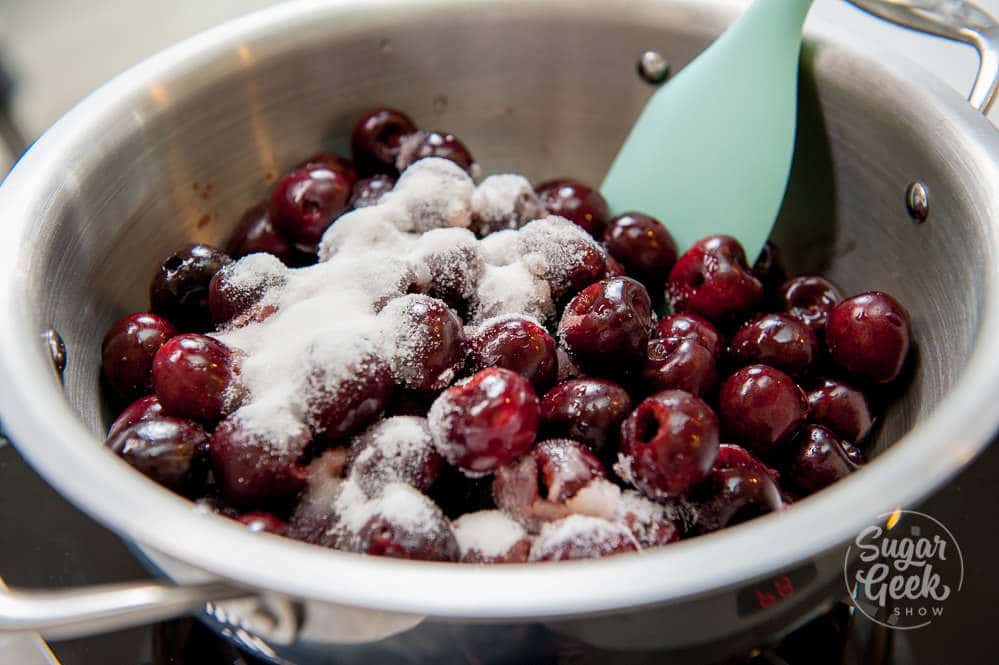
- Simmer the cherries. Combine your pitted cherries, water, salt, and sugar in a large saucepan over medium-high heat. Bring them babies to a simmer, stirring occasionally so the bottom doesn't scorch.
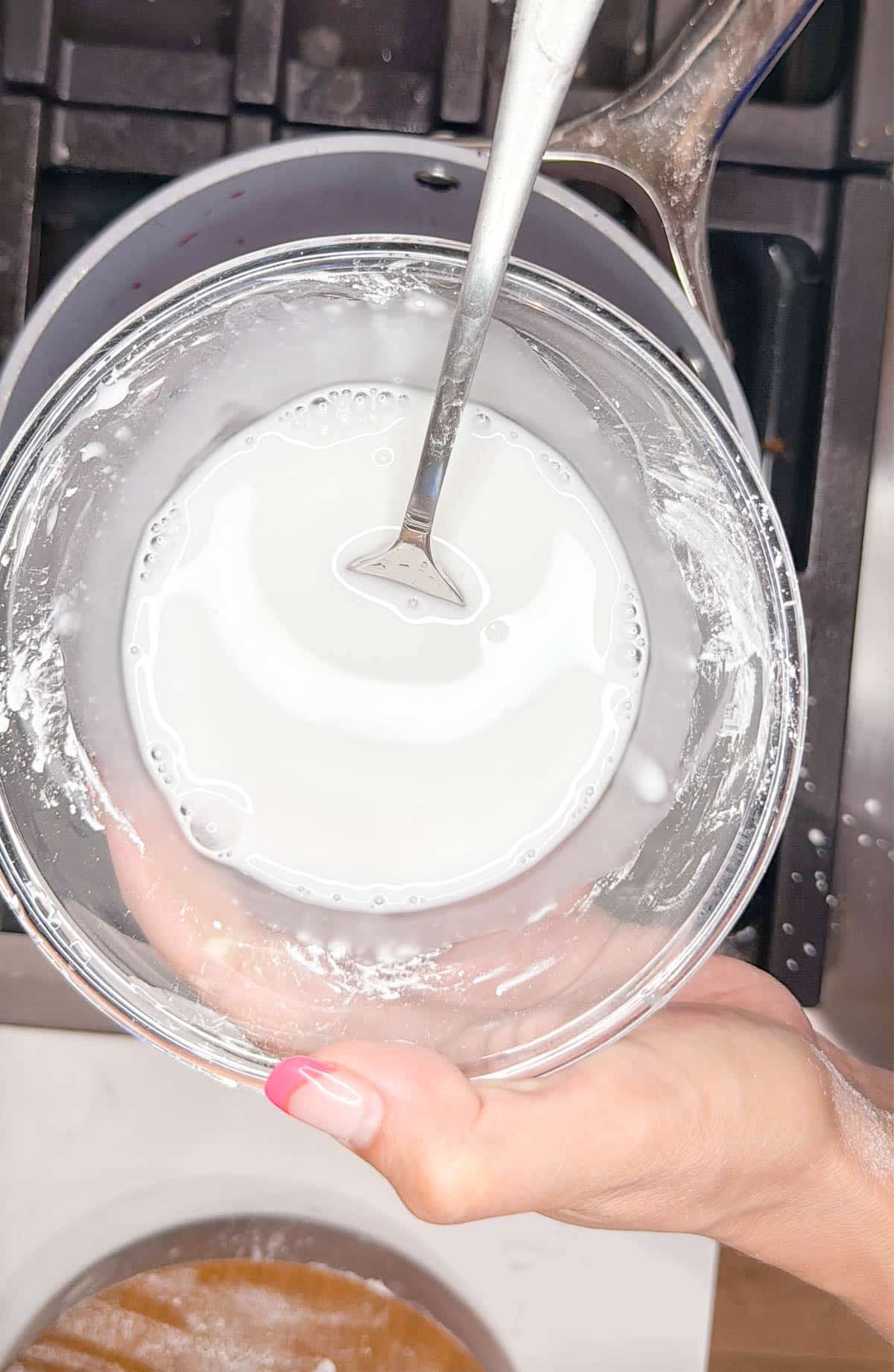
- Mix your slurry. While the cherries come up to temperature, combine your Clear Jel (or cornstarch), lemon juice, 4 ounces of cold water, almond extract, and lemon zest in a small bowl. Mix until smooth, no lumps.
PRO TIP: You cannot add cornstarch or cook-type Clear Jel directly to hot liquid, it will clump on contact and never recover. Dissolving it in cold water first is what gives you a silky-smooth filling. This is the single most common cherry filling fail.
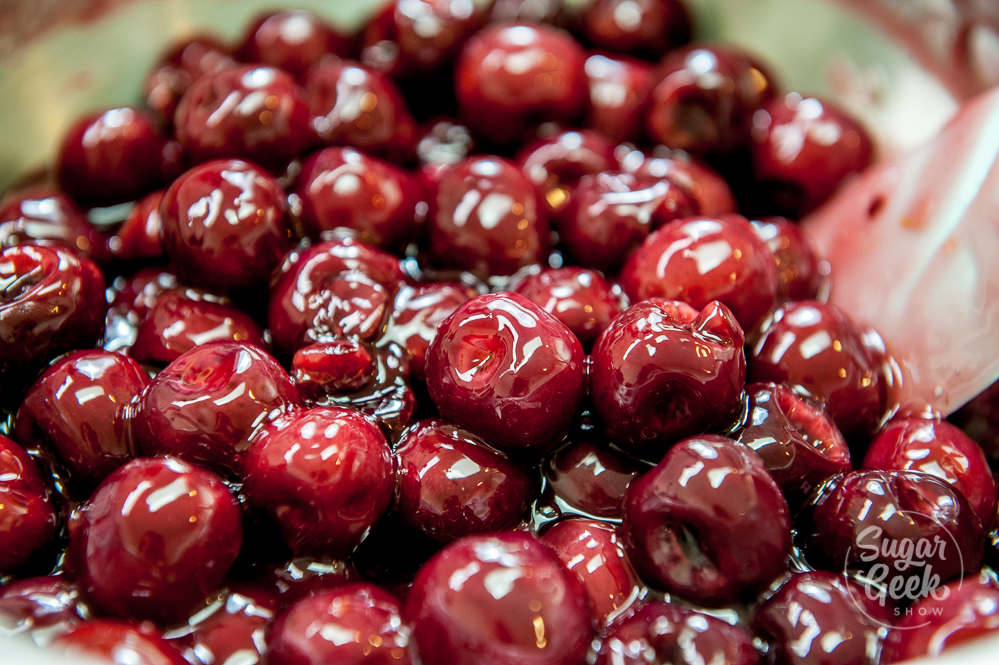
- Reduce the heat and add the slurry. Bring the simmering cherries down to medium heat. Pour the slurry in steadily while you stir, then keep stirring for 1 to 2 minutes until the mixture thickens.
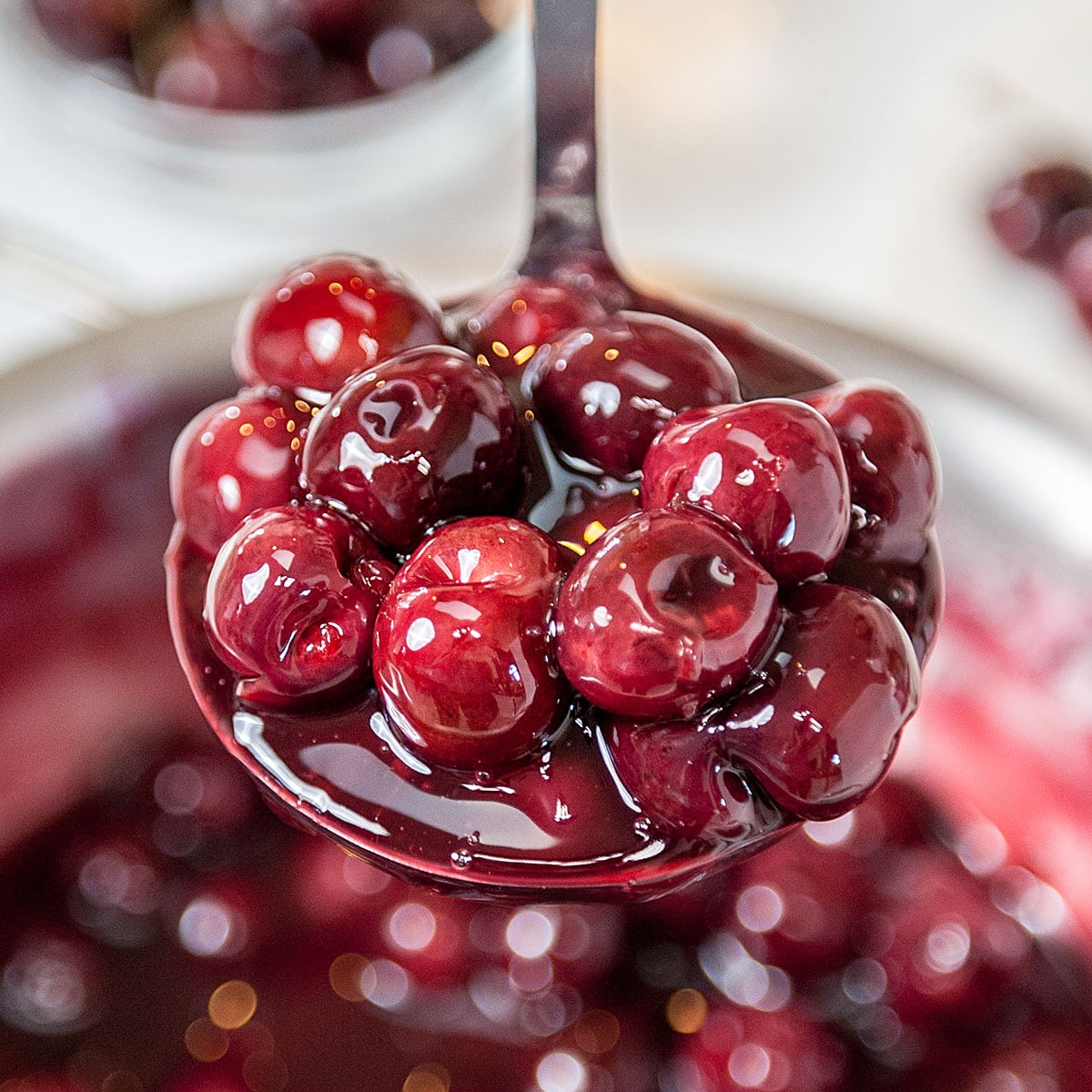
- Pull it off the heat and cool. The filling will continue to thicken as it cools, so don't be tempted to add more thickener while it's still hot. Trust the process.
PRO TIP: Want a thicker, pie-ready filling? Reduce the simmer water from 8 ounces to 4 ounces in step 1. Want a saucier, ice-cream-topping consistency? Keep the full 8 ounces.
Common Cherry Pie Filling Problems To Avoid
- My filling is full of lumps. You used Instant Clear Jel and slurry'd it, or you added the thickener directly to hot liquid without making a slurry first. Fix: switch to cook-type Clear Jel or cornstarch, always slurry in COLD water first.
- My filling is too thin. Two likely causes. (1) The filling did not come to a full simmer after the slurry went in, the heat needs to activate the starch. (2) You used frozen cherries which released extra water. Fix for (1), bring it back up and cook another minute. Fix for (2), see the next bullet.
- I used frozen cherries and the filling is watery. Frozen cherries release roughly 20% more liquid than fresh as they thaw. Either thaw the cherries in a colander first and discard the runoff, or reduce the simmer water from 8 ounces to 4 ounces.
- My pie has a soggy bottom. This is a cherry-pie-specific problem and it's almost never the filling's fault. See the soggy bottom section below.
- My filling tastes flat. You skipped the salt and lemon. They're not optional, they're what makes the cherry taste like cherry instead of like sugar.
Final Thoughts
This cherry pie filling is freaking delicious. I'm not gonna lie. It can be used for so many things, cheesecake, cherry pie, hand pies, ice cream topping, cake filling, waffles, pastries, cobbler, do I need to go on? It's the kind of recipe you make once and then keep making because real cherry flavor ruins you for the canned stuff.
When I see any kind of cherry at the grocery store or the farmers' market, I really cannot resist. I'll eat and eat until I make myself sick. So when I saw these beautiful red cherries at Costco, I had to buy them, but the container was 2 pounds, that's a lot of cherries even for me. I ate my fill and turned the rest into this filling. You can also freeze or can it if you buy a whole bunch of cherries at the farmers' market and then panic because now you have 20 pounds of cherries that you can't explain. cough.
Make This Recipe Your Own
- Swap the fruit. This same method works for blueberries, blackberries, raspberries, mixed berries, peaches, or rhubarb. Adjust sugar to taste (sour fruits need more, sweet fruits need less) and keep everything else the same.
- Spike it. Stir in 1 to 2 Tablespoons of kirsch, amaretto, or bourbon off the heat for a grown-up version. Especially good if you're using this in a Black Forest cake.
- Brown butter the filling. Brown 2 Tablespoons of butter and stir it in at the end for a richer, nuttier finish, my favorite for cobblers and crisps.
- Can it for shelf storage. Use cook-type Clear Jel only, follow a tested canning recipe (USDA or Ball), and water-bath process pint jars for 30 minutes. Cornstarch is NOT safe for canning.
Cherry Pie Filling FAQs
You can, but you'll need to drain them well and skip most of the added water. Canned cherries arrive pre-softened and pre-sweetened, so cut the sugar in half and start tasting before you adjust further. The texture won't be as bright as fresh or frozen, but it's a usable shortcut.
Clear Jel keeps for years if it's been stored airtight and dry, but it does slowly lose thickening power. If you're not sure, do the slurry test in a Tablespoon of water, if it thickens promptly when warmed, you're fine. If it goes in slow motion, double the amount or buy a fresh container.
The zest is doing two things, brightening the cherry flavor and adding a tiny bit of pectin that helps the set. You can skip it without ruining the recipe, but the filling will taste flatter. If you're out of fresh lemon, a few drops of bottled lemon juice (NOT lemon extract) is a passable substitute.
Yes, but pipe a buttercream dam around the edge of each cake layer first, fill the center with filling, then stack. The dam keeps the filling contained and prevents the bulge that ruins layer cake aesthetics. Pair with my stabilized whipped cream for cakes that need to hold up in warm weather.
More Fruit Filling Recipes To Try
Leave Me A Review
⭐️⭐️⭐️⭐️⭐️
If you tried this Cherry Pie Filling Recipe or any other recipe on my blog, please leave a 🌟 star rating and let me know how it goes in the comments. I love hearing from you!
Recipe
Equipment
- Cherry pitter
Ingredients
- 32 ounces cherries pitted
- 4 ounces water
- 8 ounces granulated sugar (see body section for sour vs sweet cherry conversion)
- ¼ teaspoon salt
- 3 Tablespoons ClearJel or 3 Tablespoon cornstarch
- 4 ounces cold water to mix with the Clear Jel
- 1 Tablespoon fresh lemon juice
- 1 small lemon zest
- ¼ teaspoon almond extract
Instructions
- Before you begin: Pit the cherries. Measure the slurry ingredients (Clear Jel or cornstarch, lemon juice, 4 oz cold water, lemon zest) into a small bowl and set it next to the stove. Confirm you have cook-type Clear Jel, not Instant. Instant Clear Jel will clump on contact with liquid.
- Combine the pitted cherries, 4 ounces of water, salt, and sugar in a medium saucepan. Bring to a simmer over medium-high heat, stirring occasionally so the bottom doesn't scorch.
- While the cherries simmer, whisk together the Clear Jel (or cornstarch), 4 ounces of cold water, lemon juice, lemon zest, and almond extract in a small bowl until smooth.
- Reduce the heat to medium. Pour the slurry into the simmering cherries in a steady stream, stirring constantly. Cook for 1 to 2 minutes until the filling thickens and turns glossy.
- Remove from the heat. The filling will continue to thicken as it cools. Transfer to a clean container, cover, and refrigerate.
Video
Notes
- Clear Jel: must be cook-type for this slurry method. If you only have Instant Clear Jel, mix it with the dry sugar before adding to the cherries, do not slurry it.
- Sugar: adjust based on cherry sweetness. Sour cherries need 10 to 12 ounces, sweet cherries need 6 to 7 ounces.
- Use a saucepan large enough for the cherries to bubble freely without splashing. A 3-quart saucepan is the right size for a 32-ounce batch.
- Fridge: 1 week in an airtight container.
- Freezer: 6 months in an airtight, freezer-safe container. Thaw overnight in the fridge before use.
- Canning: Use cook-type Clear Jel only, never cornstarch. Follow a USDA or Ball-tested canning recipe and water-bath process pint jars for 30 minutes.
- Cornstarch in place of Clear Jel: works, but the filling will be slightly cloudier.
- Other fruits: blueberries, blackberries, raspberries, peaches, rhubarb all work with this method, adjust sugar to taste.
- Sugar-free: use Swerve or another granulated sugar substitute 1:1.
- Do not add Clear Jel or cornstarch directly to hot liquid, it will clump.
- Do not slurry Instant Clear Jel, mix it with the dry sugar instead.
- Do not use cornstarch if you plan to can the filling for shelf storage, it is not heat-stable enough for water-bath canning.


Annie says
Delicious! It worked. . . mixed sour and sweet frozen and added lemon and zest, cut the sugar and water.
Liz Marek says
So glad it worked! Thanks for sharing.
Nora K says
DO NOT use clear jel as instructed by this recipe! It ruined my cherries! It's meant to be mixed in with dry ingredients, it doesn't make a slurry at all. It just clumps up and only gets worse when it's heated. What a disappointment!
Also the recipe only needs about 1/2 the amount of sugar. I wonder if the author has actually made this as instructed because I followed the recipe exactly and its inedible, just full of clumps of clear jel.
Elizabeth Marek says
No the clear jel is meant to mix with liquid just like cornstarch and yes I have made it. Many times.
Diane Finnigan says
I’ve just made this cherry recipe and it’s delicious really pleased with the result and I’m fortunate to have fresh cherries in my freezer from my cherry tree 🤗
Kristine says
If making a pie with the cherry filling, what do you recommend for baking time?
Elizabeth Marek says
Until the pie contracts and pulls away from the sides of the pie pan, see my recipe for mealy pie dough for more info 🙂
Ramanpreet K says
Awesome and came out finger licking!!
Michele says
I made this last night with her cheesecake and they were perfect! I will never use canned cherries again! I had to use frozen cherries because fresh aren’t available.
The Sugar Geek Show says
Thank you so much! I'm so glad you loved this recipe
Stephanie K Molsbee says
Could you do an even swap with blueberries?
The Sugar Geek Show says
Absolutely 🙂