


This fast homemade bread recipe gives you two soft, fluffy loaves using instant yeast and six basic ingredients. If you're new to baking bread, start here. It's the recipe I send everyone before they try my brioche bread recipe or anything fancier.
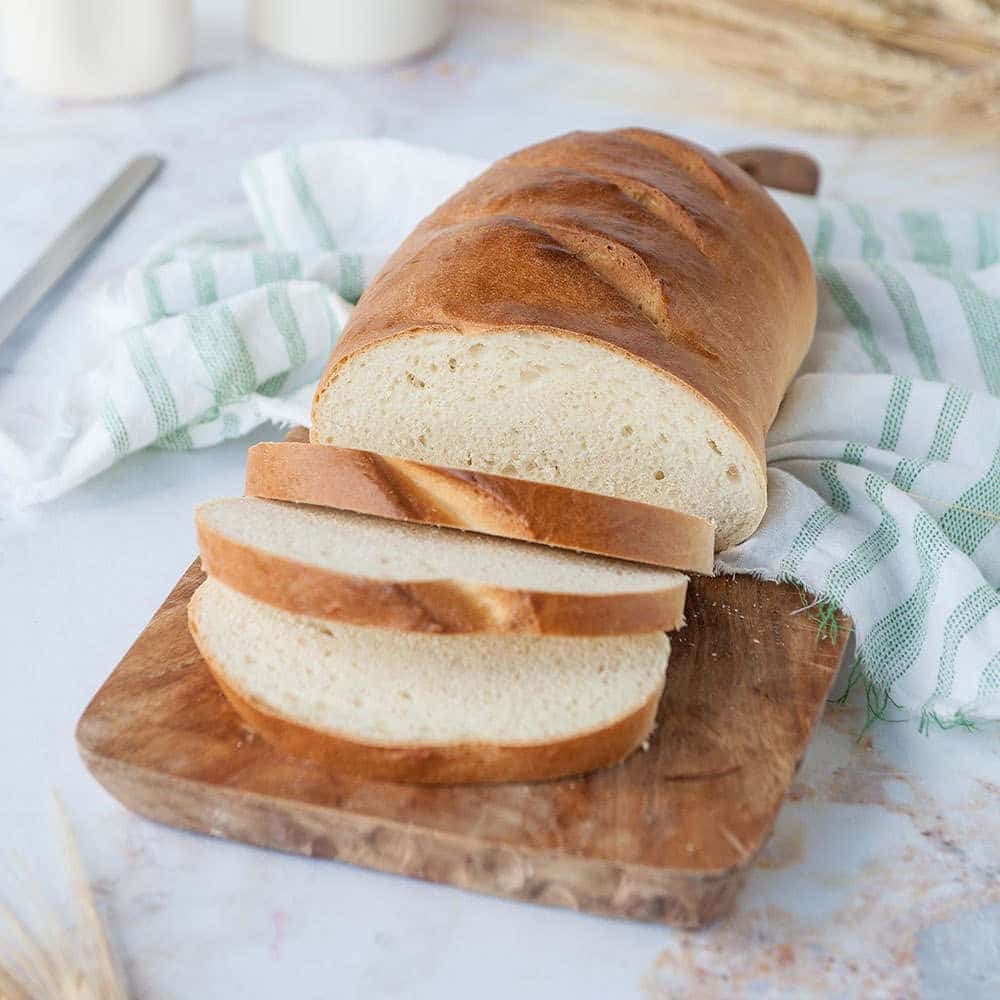
I love this super fast bread for last-minute bread. Sometimes it's 4 pm and suddenly I decide I want fresh bread for dinner! I've had TONS of reviews from people all over the world who have never made bread before but could make this bread perfectly the first time. Shape it free-form on a baking sheet (no special pans needed) or bake it in two loaf pans for sandwich bread. Either way, it's the perfect partner for a bowl of homemade cream of chicken soup.
Quick Glance at the Recipe: Fast Homemade Bread
- Recipe Name: Fast Homemade Bread
- Why You'll Love It: Soft, fluffy white bread with no bread machine and no fancy pans, and first-time bakers nail it.
- Time and Difficulty: About 25 minutes hands-on, 1 hour 40 minutes total free-form (about 2 hours 10 minutes in loaf pans). Easy.
- Main Ingredients: Bread flour, instant yeast, warm milk, sugar, salt, and butter.
- Method: Mix, knead until it passes the windowpane test, a quick 25-minute rise, shape, a short second rise, then bake.
- Texture and Flavor: Soft, tender crumb with a golden, lightly crisp crust. Slightly sweet from the milk and sugar.
- Quick Tip: Add your salt and butter after the first minute of mixing. It makes the dough softer, stretchier, and easier to knead.
Jump to:
- Quick Glance at the Recipe: Fast Homemade Bread
- Why Choose This Homemade Bread Recipe ⭐⭐⭐⭐⭐
- Homemade Bread Ingredients
- How To Make Homemade Bread Step-By-Step
- How To Store Homemade Bread
- Common Homemade Bread Problems To Avoid
- Final Thoughts
- Homemade Bread FAQs
- More Bread Recipes To Try
- Ready To Master Cake Decorating?
- Leave Me A Review⭐️⭐️⭐️⭐️⭐️
- Recipe
Why Choose This Homemade Bread Recipe ⭐⭐⭐⭐⭐
A lot of people are intimidated by making homemade bread. You don't need any special bread machines or even a mixer (although having one will save you some elbow grease).
- It's fast. Instant yeast means a 25-minute first rise instead of 90.
- It's beginner-proof. Clear checkpoints (the poke test and the windowpane test for bread) tell you exactly when your dough is ready.
- It's flexible. Free-form loaves, sandwich loaves in pans, or buns from the same dough. Once you've got the method down, it carries right over to my master sweet dough recipe.
Homemade Bread Ingredients
You only need six ingredients, plus an egg for the wash. I always recommend weighing your ingredients with a digital kitchen scale for the most accurate results. Too much flour is the number one reason homemade bread comes out dense.
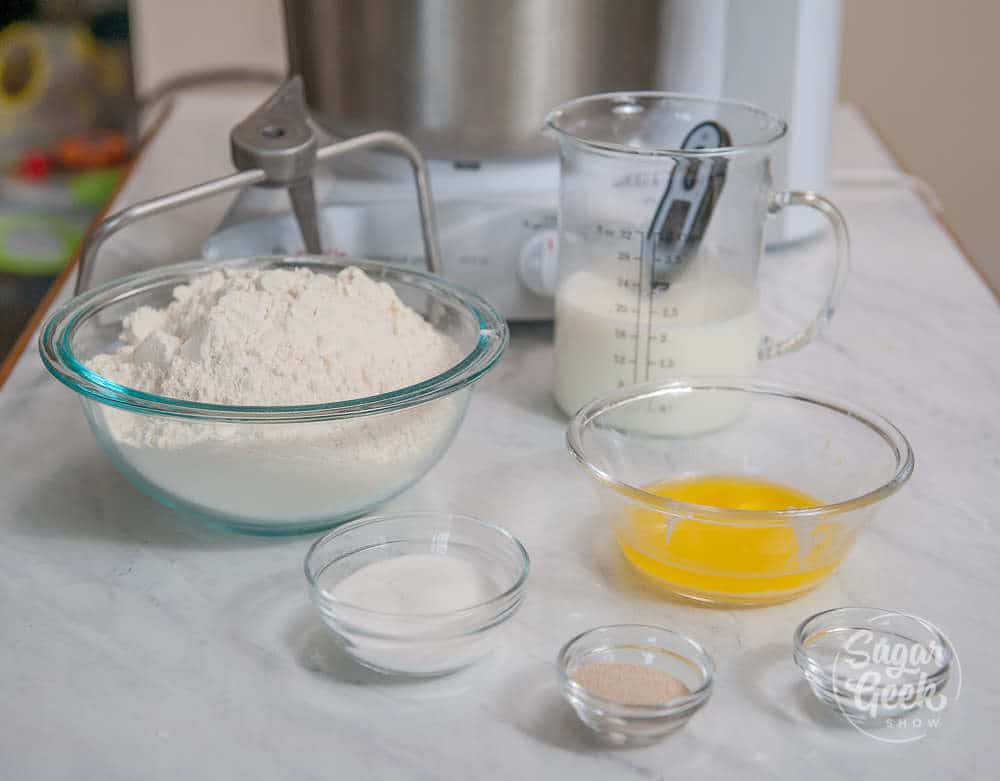
- Bread flour. Gives your bread a soft, chewy structure. All-purpose flour works too. For whole wheat, use a little less flour because wheat flour is denser than white (see the recipe card notes).
- Instant yeast. The secret to fast bread. Instant yeast is like regular yeast on steroids. You don't need to bloom it in the milk and sugar, just mix it in with the flour, and it rises much faster than active dry yeast. I use saf-instant yeast, but any brand that says instant will work (Red Star Instant is another popular one). Only have active dry? It works, it just takes longer to rise (see the recipe card notes).
- Milk. Warm milk makes a soft, tender loaf. Water or almond milk work in its place.
- Sugar. Feeds the yeast and adds a little sweetness.
- Salt. Seasons the bread and strengthens the dough. It goes in after the first minute of mixing.
- Unsalted butter, melted. Adds flavor and softness. You can use oil instead. It also goes in after the first minute.
- Egg. Whisked with water for the egg wash. It gives your loaves that shiny golden brown crust. Without it your bread will be very pale, so use milk if you skip the egg.
How To Make Homemade Bread Step-By-Step
Before you begin, heat your milk to 110 to 115º F. Any hotter and you risk killing your yeast. If you're baking in loaf pans, grease two 9" x 5" pans. For free-form loaves, line a baking sheet with parchment paper.
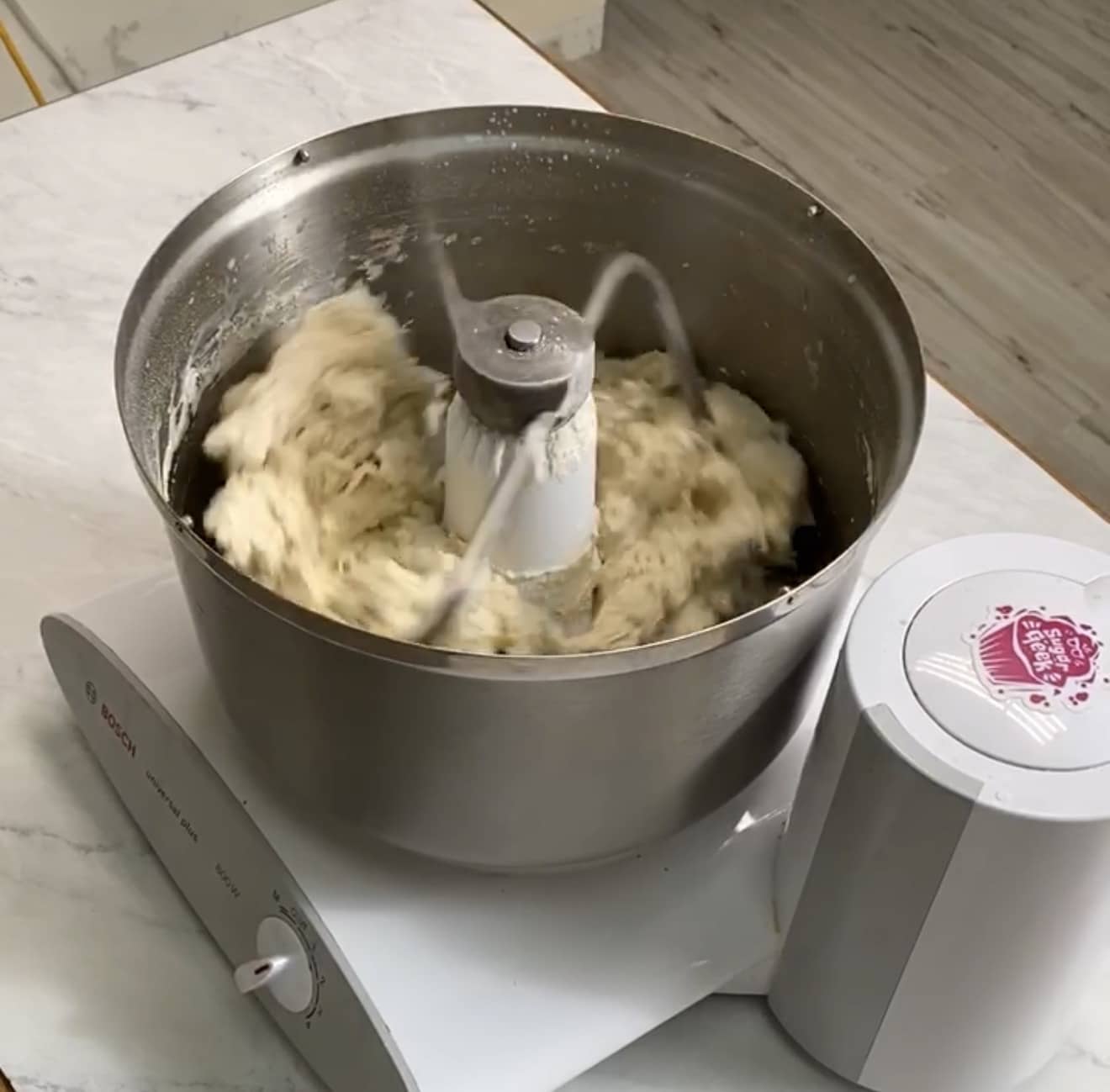
- Mix your flour, instant yeast, sugar, and warm milk in the bowl of your stand mixer with the dough hook for one minute on low speed.
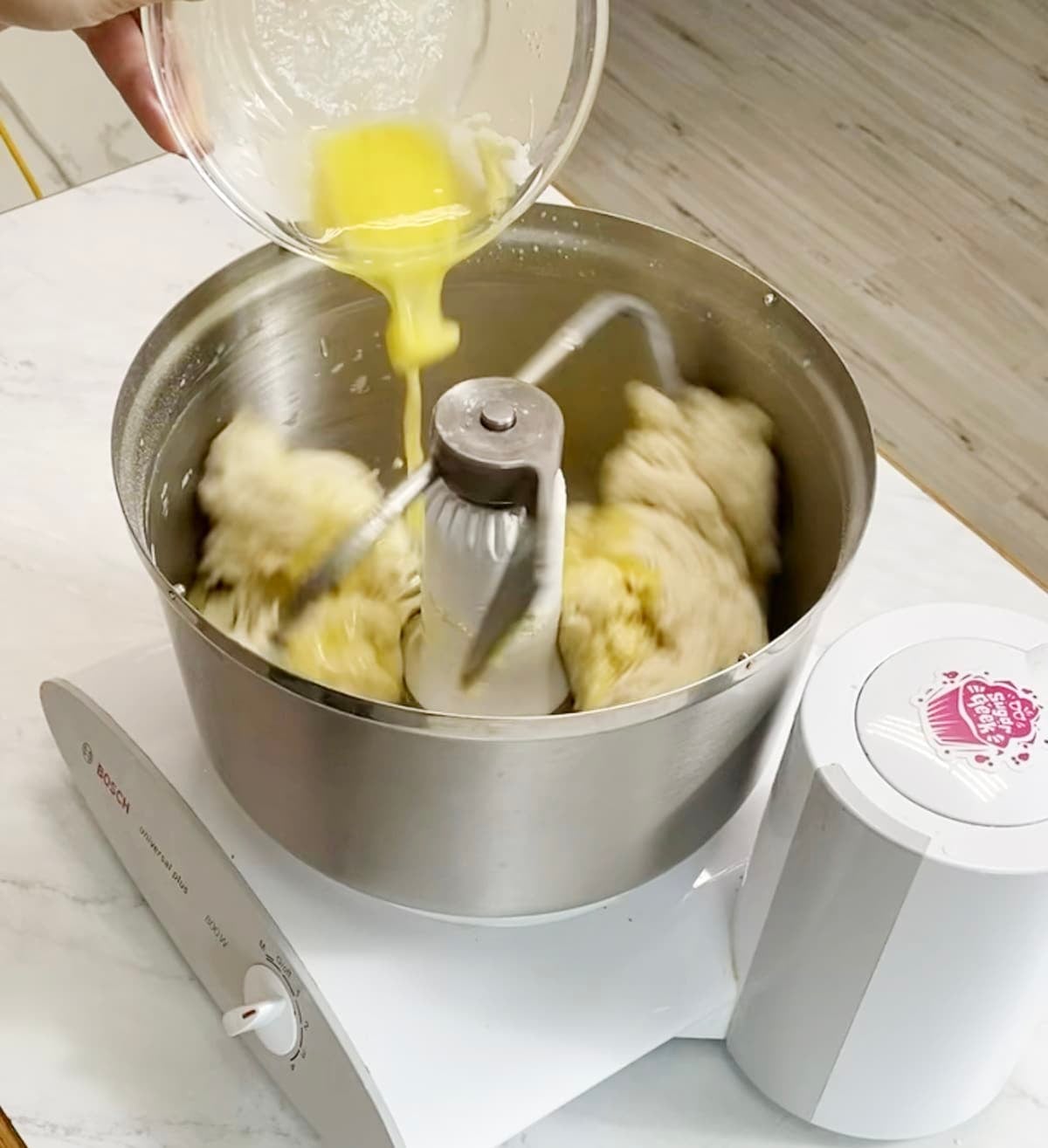
- Add your salt and melted butter. If the butter makes your dough slide around the bowl instead of catching on the hook, sprinkle in a little more flour. If it still won't grab the sides, add a Tablespoon or two of water.
PRO TIP: Holding back the salt and butter lets the water fully hydrate the flour (autolyse) and start developing gluten. Salt tightens gluten strands and slows down helpful flour enzymes, and butter coats the flour proteins so water can't reach them. Delaying both makes your dough softer, stretchier, and easier to knead.
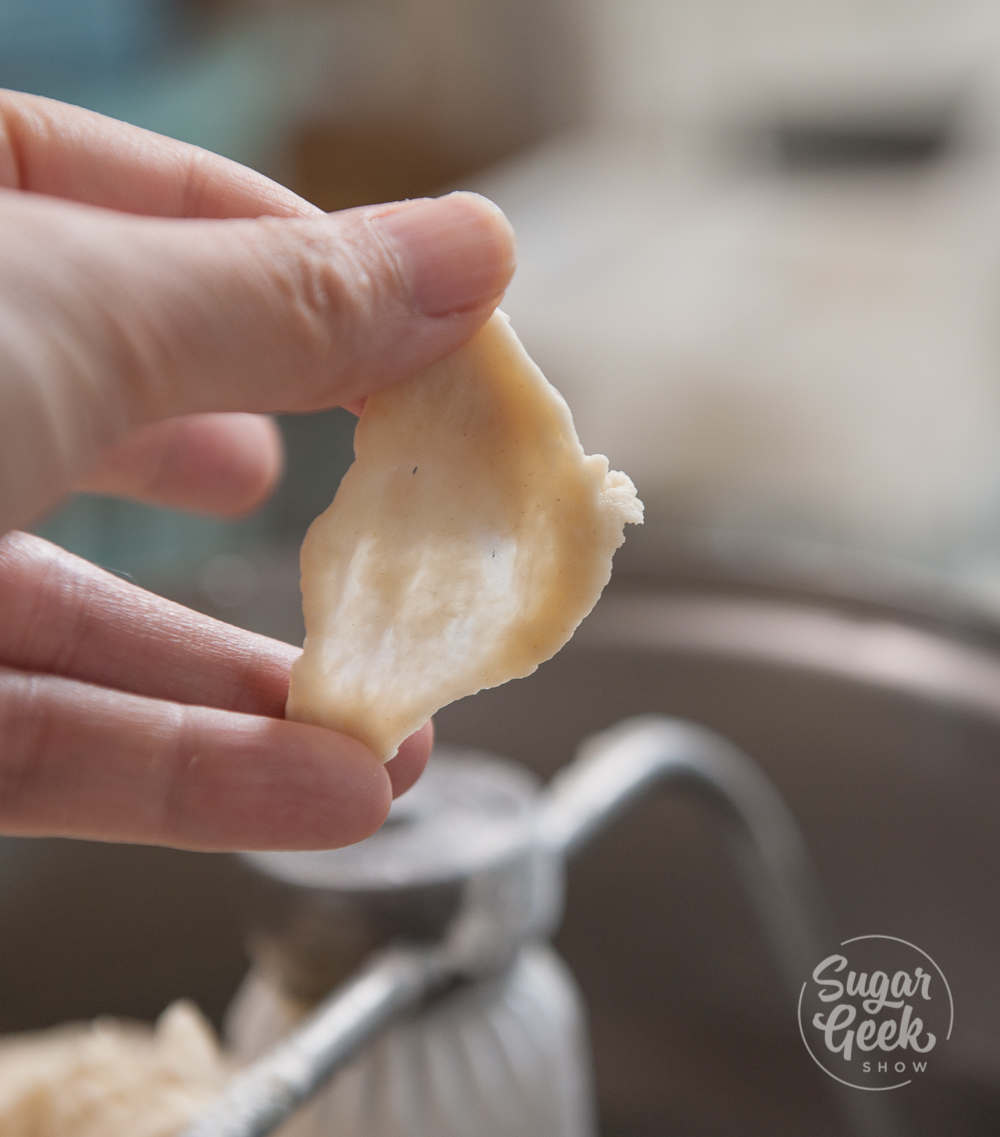
- Knead until your dough passes the windowpane test. Mix on medium speed for 5 minutes. Poke your dough, does it bounce back? Is it smooth and silky? Stretch a piece between your fingers. If you can make it super thin without it tearing, you're good to go. If not, mix for 2 more minutes. No mixer? Knead by hand for 10 to 12 minutes.
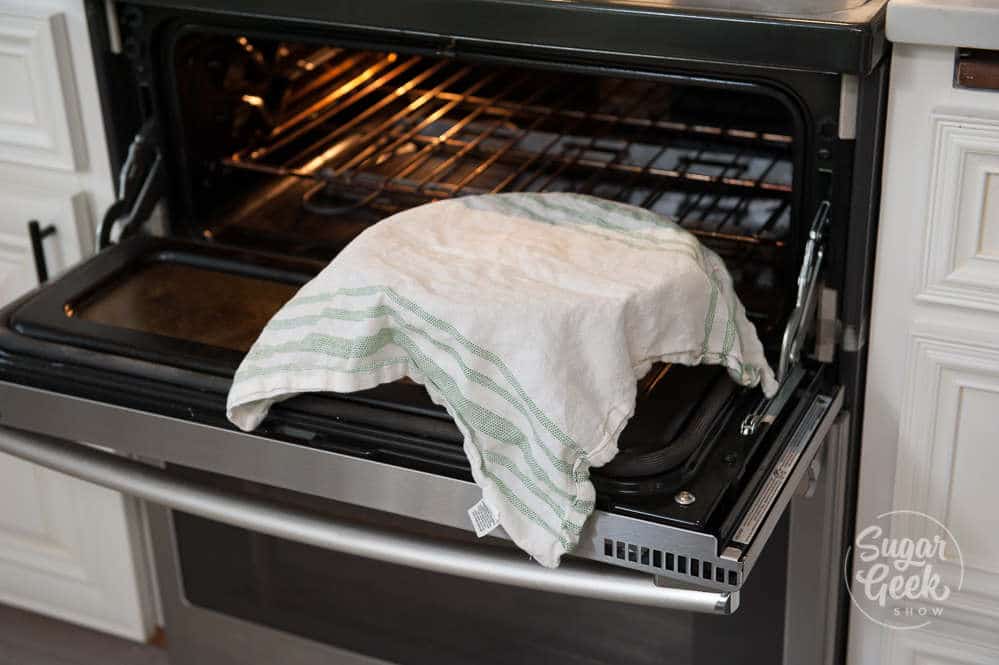
- Let it rise for 25 minutes. Place your dough in a lightly oiled bowl, cover it with a tea towel, and set it somewhere warm until it doubles. I put mine next to an open oven set to 170º F.
PRO TIP: Mixing is the MOST important step in making homemade bread. Developing that gluten is key, and it's basically impossible to over-knead dough by hand, so don't stop early.
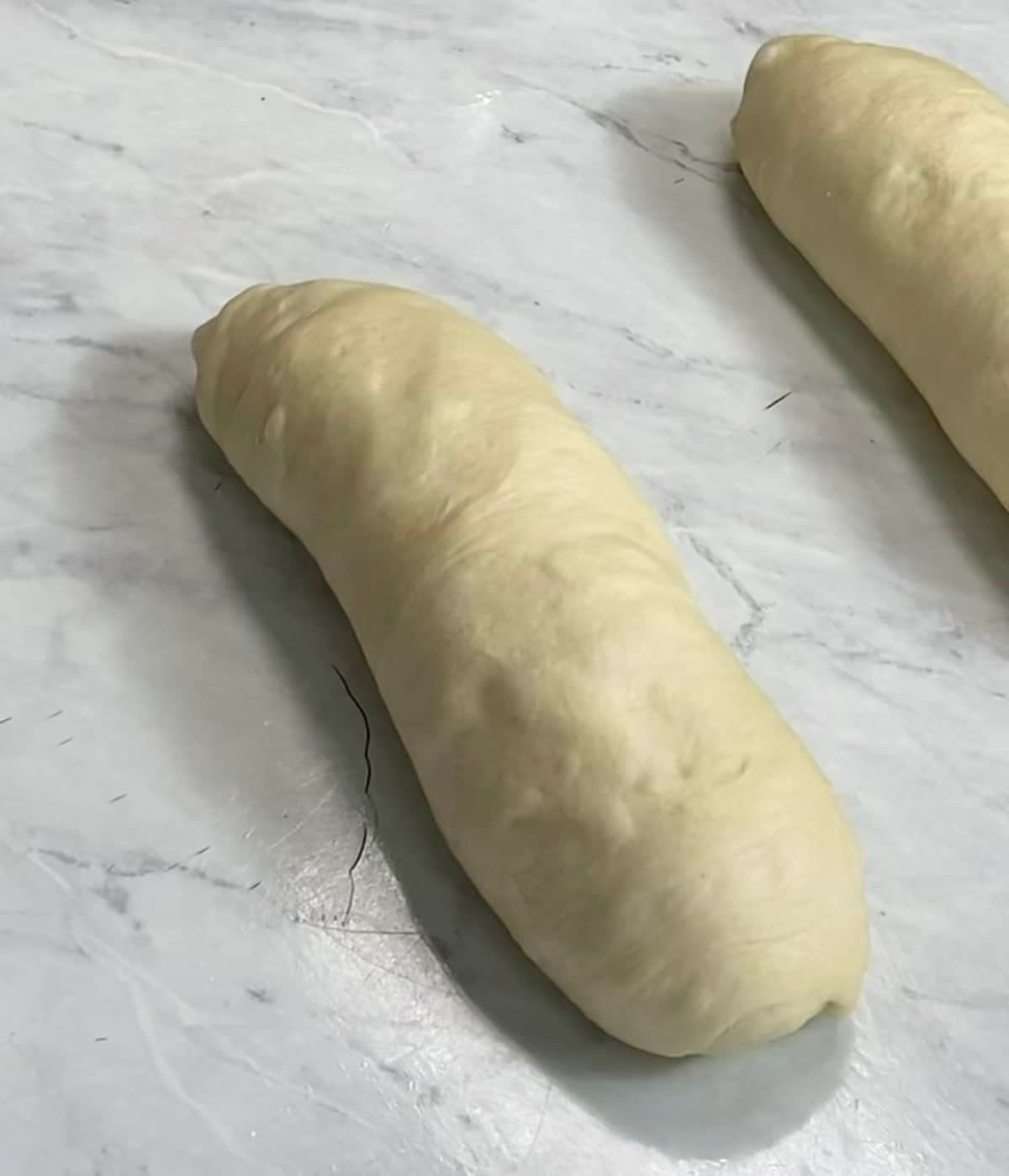
- Shape your loaves. Divide the dough in two and tuck all the rough edges underneath to form a nice smooth skin on top. For free-form loaves, place them on your baking sheet with a good 8" between them. For sandwich bread, place one in each loaf pan.
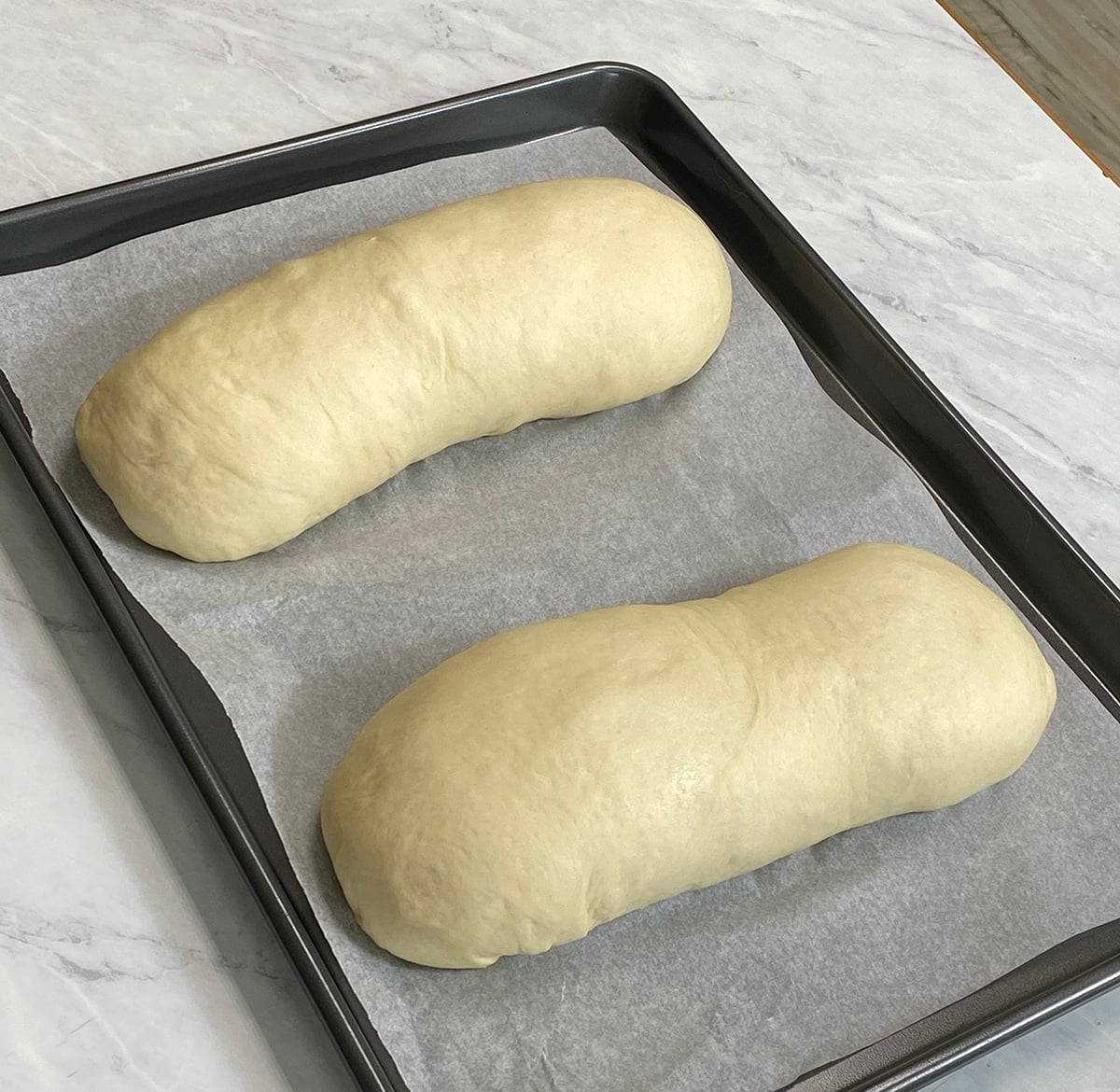
- Give them time to rise. Free-form loaves only need to rest for 20 minutes. Loaf pan loaves need about 45 minutes, until they're domed about 1" above the rim of the pan.
PRO TIP: Don't put your dough IN the oven to rise or the hot temperature will kill your yeast. Right next to the open oven door at the lowest setting is the sweet spot.
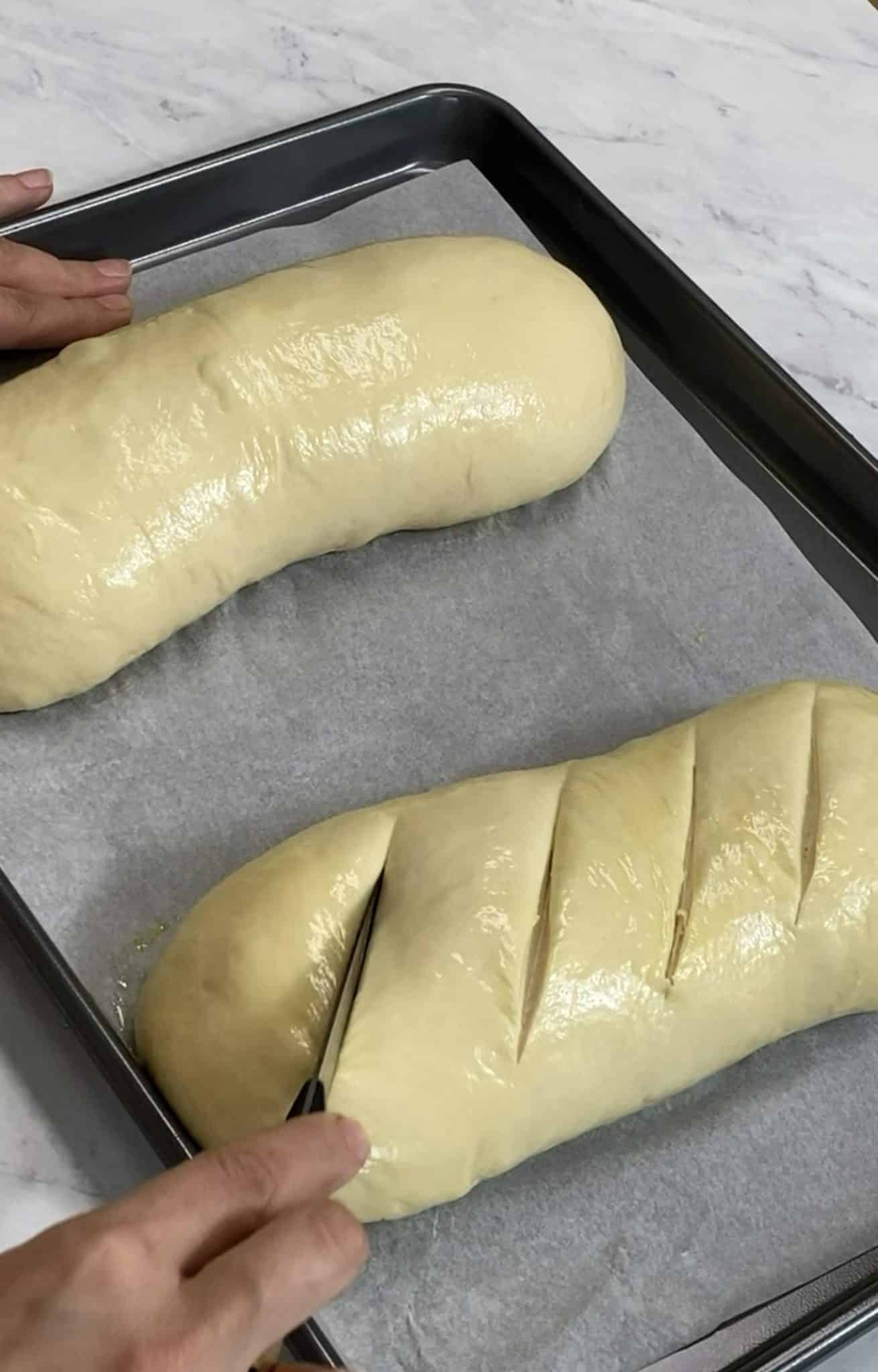
- Egg wash and score. Brush your loaves with egg wash. For free-form loaves, make 3 or 4 slices on top with a sharp knife at a 30º angle about ¼" deep (wow that is super specific I know). For loaf pan loaves, make one slice right down the center. These slices help the bread rise evenly and keep it from tearing.
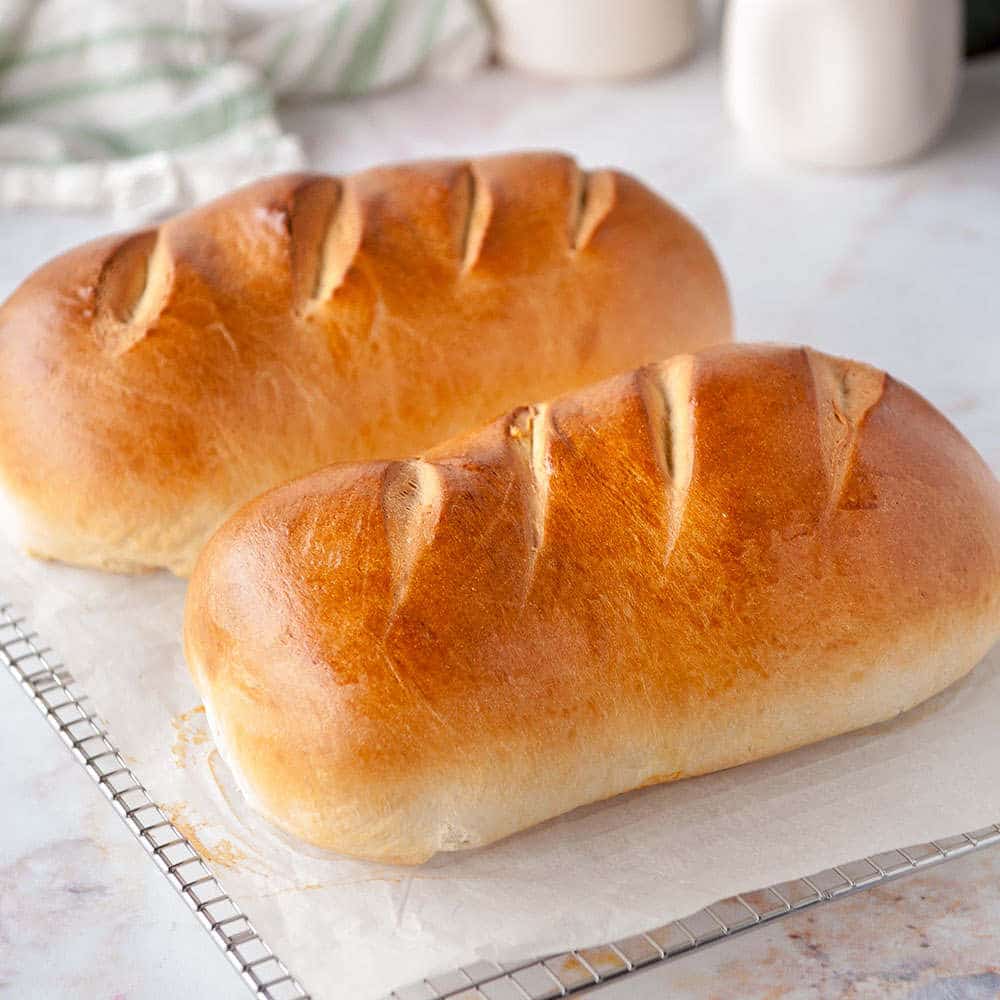
- Bake until golden. Bake free-form loaves at 375º F for 25 to 30 minutes, rotating halfway through for even browning. Bake loaf pan loaves at 350º F for 30 to 35 minutes. The best way to know your bread is done is an instant-read thermometer in the center of the loaf. The internal temperature should be about 190ºF.
How To Store Homemade Bread
We usually devour one whole loaf with dinner and save the other for tomorrow. Here's how to keep it fresh:
- On the counter: Let your bread cool completely, then wrap it in plastic wrap to seal in moisture and leave it on the countertop.
- In the freezer: Wrap cooled loaves well and freeze them for 3 to 6 months.
- To make more: The great thing about this recipe is you can make fresh bread easily whenever you need it, so there's no need to make a huge batch.
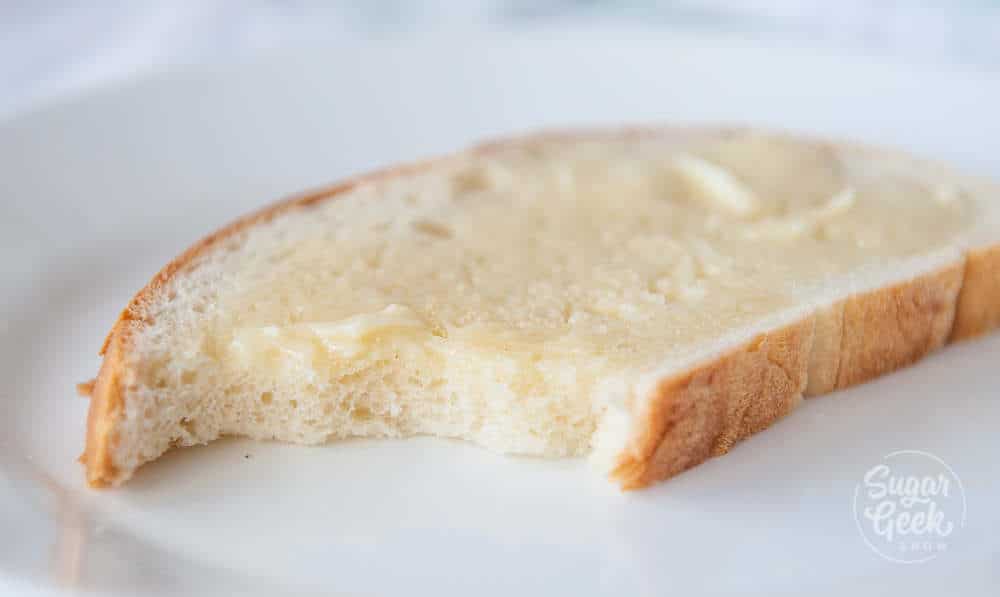
Leftover slices are great toasted and slathered with homemade French butter, or dunked in a bowl of chicken gnocchi soup.
Common Homemade Bread Problems To Avoid
- Dense, heavy bread. Usually too much flour, not enough kneading, or the room wasn't warm enough, and your bread didn't rise. Weigh your flour (or spoon and level it) and don't stop kneading until your dough passes the windowpane test.
- Dough that didn't rise. Your milk was too hot, or the dough proofed inside a hot oven. Both kill the yeast. Keep your milk at 110 to 115º F and proof next to the oven, not in it. If your room is too cold, your dough may also need extra time to rise.
- Slow rise with active dry yeast. The fast timing only works with instant yeast. Active dry needs about 90 minutes for the first rise and 30 minutes for the second.
- Salt and butter added too early. They slow down gluten development, so your dough ends up tighter and harder to knead. Wait until after the first minute of mixing.
- Pale, dull crust. You skipped the egg wash. Use milk if you don't want to use egg.
- Underbaked center. Ovens vary, and some loaves need a few extra minutes. Check the internal temperature instead of the clock.
Final Thoughts
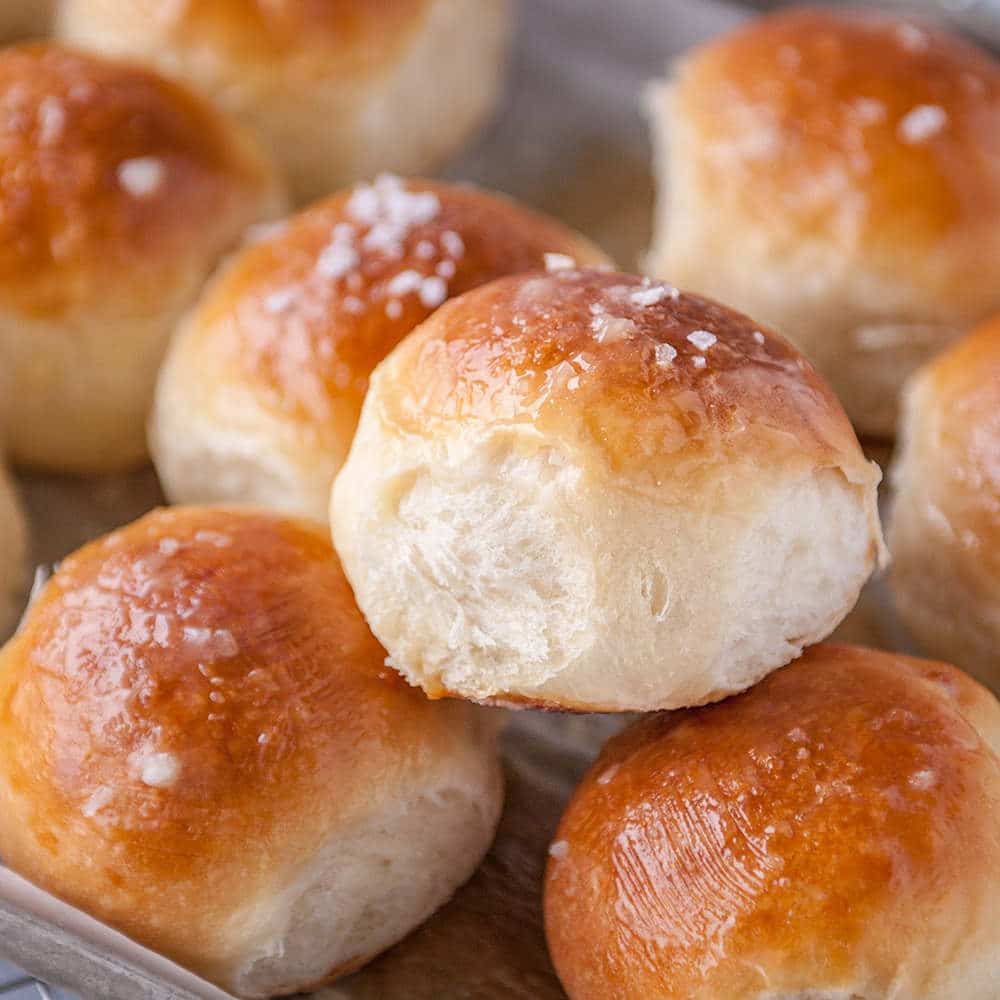
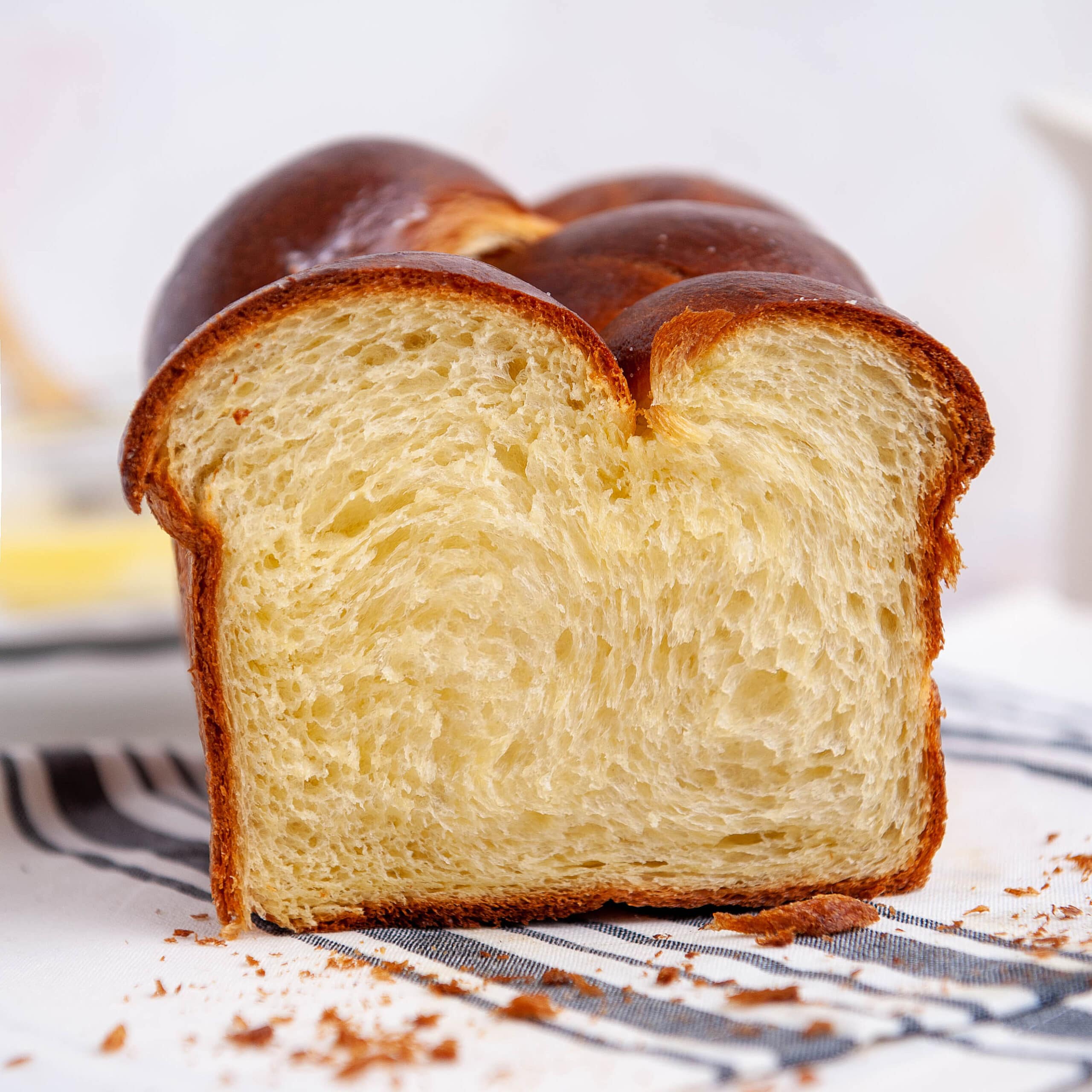
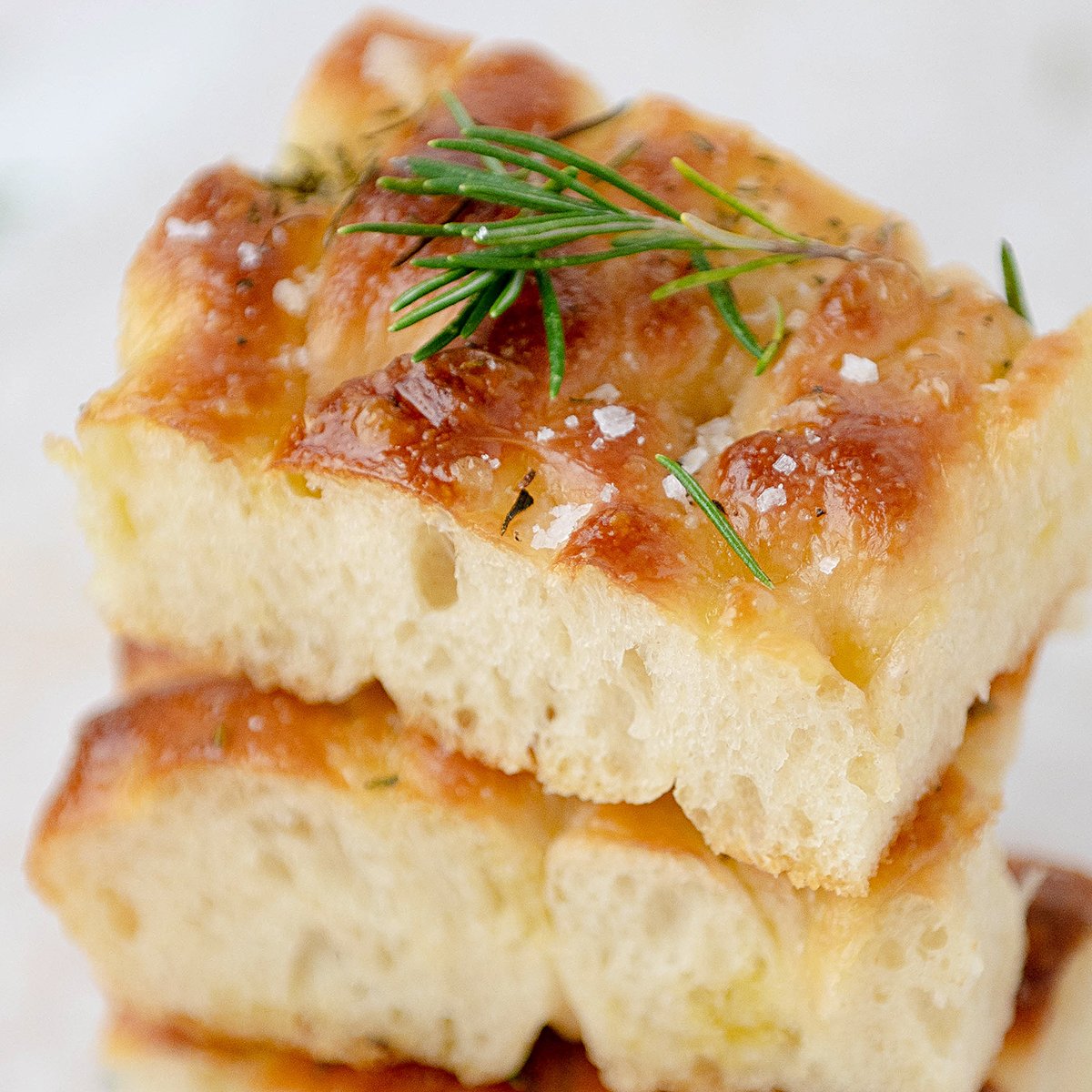
This is the recipe I make when it's 4 pm and I suddenly want fresh bread for dinner, and it's the one I tell every nervous first-time bread baker to try. My one last lesson: don't rush the kneading. The rise is fast, but the gluten still needs its time, and the windowpane test will never lie to you. Once you've got this down, try my soft and buttery dinner rolls, honey whole wheat bread, my easy bagel recipe, an easy focaccia recipe, or my soft homemade cinnamon rolls. And if you want a slower, tangier loaf someday, my sourdough sandwich bread is the next step.
Homemade Bread FAQs
What if my dough is too slippery or too dry?
If the butter is making your dough too slippery and it just slides around the bowl, add a little more flour. If your dough is too dry and won't come together, add a Tablespoon or two of water.
What if my dough is too tight to knead?
If your dough feels too tight, let it rest for 15 minutes, then start mixing again.
Can I make buns or rolls with this dough?
Yes. Divide the dough into smaller pieces after the first rise and shape them into hamburger buns, hot dog buns, hoagie rolls, or dinner rolls. Smaller pieces bake faster, so start checking them early.
Does this bread toast well?
Yes. The soft, fine crumb toasts up beautifully, and readers love it for grilled cheese sandwiches.
How do I reheat homemade bread?
Warm slices or a whole loaf in the microwave for about 10 seconds or in the oven for 2 to 3 minutes.
Can I make just one loaf?
Yes. Halve all of the ingredients, or make the full batch and turn half of the dough into one loaf and the other half into buns.
More Bread Recipes To Try
Ready To Master Cake Decorating?
Join Sugar Geek University and learn professional techniques through detailed cake decorating courses, tutorials, and real kitchen demonstrations by
award-winning cake decorator, Liz Marek.

Leave Me A Review
⭐️⭐️⭐️⭐️⭐️
If you tried this homemade bread recipe or any other recipe on my blog, please leave a 🌟 star rating and let me know how it went in the comments. I love hearing from you!
Recipe
Equipment
- Stand mixer with dough hook (optional)
- Baking sheet and parchment paper, or two 9" x 5" loaf pans
- Instant Read Thermometer
Ingredients
For the dough
- 28 ounces bread flour or all-purpose (about 5 ½ cups, spooned and leveled)
- 10 grams instant yeast must be instant (about 3 teaspoons)
- 2 ounces sugar 4 Tablespoons
- 16 ounces warm milk 110º F, or water (2 cups)
- 1 ½ teaspoon salt
- 2 ounces melted unsalted butter ¼ cup
For the egg wash
- 1 large egg
- 1 Tablespoon water
Instructions
- Before you begin: Heat the milk to 110 to 115º F. For free-form loaves, line a baking sheet with parchment paper. For sandwich loaves, grease two 9" x 5" loaf pans.
For the dough
- Combine the flour, instant yeast, sugar, and warm milk in the bowl of a stand mixer fitted with the dough hook. Mix on low speed for 1 minute.
- Add the salt and melted butter. If the butter makes the dough slide around the bowl instead of catching on the hook, add up to ¼ cup more flour. If it still won't grab the sides of the bowl, add 1 to 2 Tablespoons of water.
- Mix on speed 2 for 5 minutes. Do the windowpane test: stretch a piece of dough between your fingers. If it forms a thin window without tearing, it's ready. If it tears, mix 2 more minutes. Turn the dough onto a lightly floured surface and knead 4 to 5 turns into a smooth ball. (To knead by hand, knead 10 to 12 minutes, until smooth and it passes the windowpane test.) If the dough is too tight to mix or knead, let it rest for 15 minutes, then continue mixing.
- Coat a large bowl with a little olive oil. Place the dough top side down, then flip it over so the top is oiled. Cover with a cloth and let rise in a warm area for 25 minutes, until doubled.
To shape and bake
- Preheat the oven to 375º F for free-form loaves or 350º F for loaf pans. Divide the dough into two loaves and tuck the edges underneath to form a smooth top. Place free-form loaves on the baking sheet about 8" apart, or place one in each loaf pan.
- Let free-form loaves rest 20 minutes. Let loaf pan loaves rise about 45 minutes, until domed about 1" above the rim.
- Whisk the egg and water. Brush the loaves with egg wash. For free-form loaves, make 3 slashes at a 30º angle in the top of each loaf, about ¼" deep. For loaf pan loaves, make one slash right down the center.
- Bake free-form loaves 25 to 30 minutes, rotating halfway, until golden brown. Bake loaf pan loaves 30 to 35 minutes, until the center reaches 190º F on an instant-read thermometer.
Video
Notes
- If you don't have instant yeast, you can use regular active dry yeast, but it takes longer: let the dough rise 90 minutes or until doubled, then let the shaped loaves rest 30 minutes before baking.
- Egg wash: whisk one egg with 1 Tablespoon of water and brush on with a soft pastry brush. Without egg wash your bread will be very pale. You can use milk instead of egg.
- Free-form: 375º F for 25 to 30 minutes on a parchment-lined baking sheet.
- Two 9" x 5" loaf pans: second rise about 45 minutes, then 350º F for 30 to 35 minutes, until 190º F in the center. Total time is about 2 hours 10 minutes, still only about 25 minutes hands-on.
- Buns and rolls: divide the dough into smaller pieces after the first rise. They bake faster, so check them early.
- Wrap cooled bread in plastic wrap and store on the counter.
- Freeze wrapped loaves for 3 to 6 months.
- Reheat slices in the microwave for 10 seconds or in the oven for 2 to 3 minutes.
- Use oil instead of butter.
- Use water or almond milk in place of milk.
- Replace white flour with whole wheat flour (use 24 oz instead of 28 oz because wheat flour is denser).
- Don't proof the dough inside the oven. Place it next to an open oven set to 170º F, not in it.
- Don't add the salt and butter at the start. Wait until after the first minute of mixing.
- Don't use milk hotter than 115º F or you'll kill the yeast.



KniteStarz says
I had to do 7 minutes speed 3, I substituted water, and I turned it into everything bagel bread, but dear Lord this is delicious and the perfect texture! I started making bread 2 years ago and I've made SO many different recipes, but this one might top them all for white bread. I didn't have bread and needed some fast food my husband's lunch. Boy is he going to be a happy man tomorrow! Thanks for the recipe!
Liz Marek says
Everything bagel bread, yes! So glad you love it.
Sarah M in NC says
I’ve never made bread in my life and followed the directions. The loaves turned out beautifully! Thank you for sharing. I wish I could share a picture but I don’t see how to add one to the comment.
Barbara Young says
We started making this bread for Communion at church. It is easy to make and ALWAYS turns out wonderful!!
Liz Marek says
What a wonderful use for it! Thank you for sharing.