

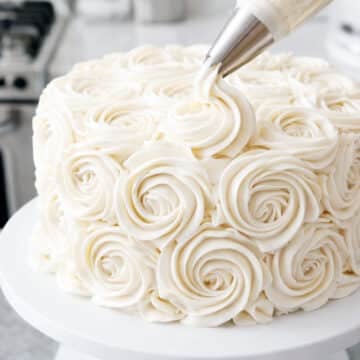
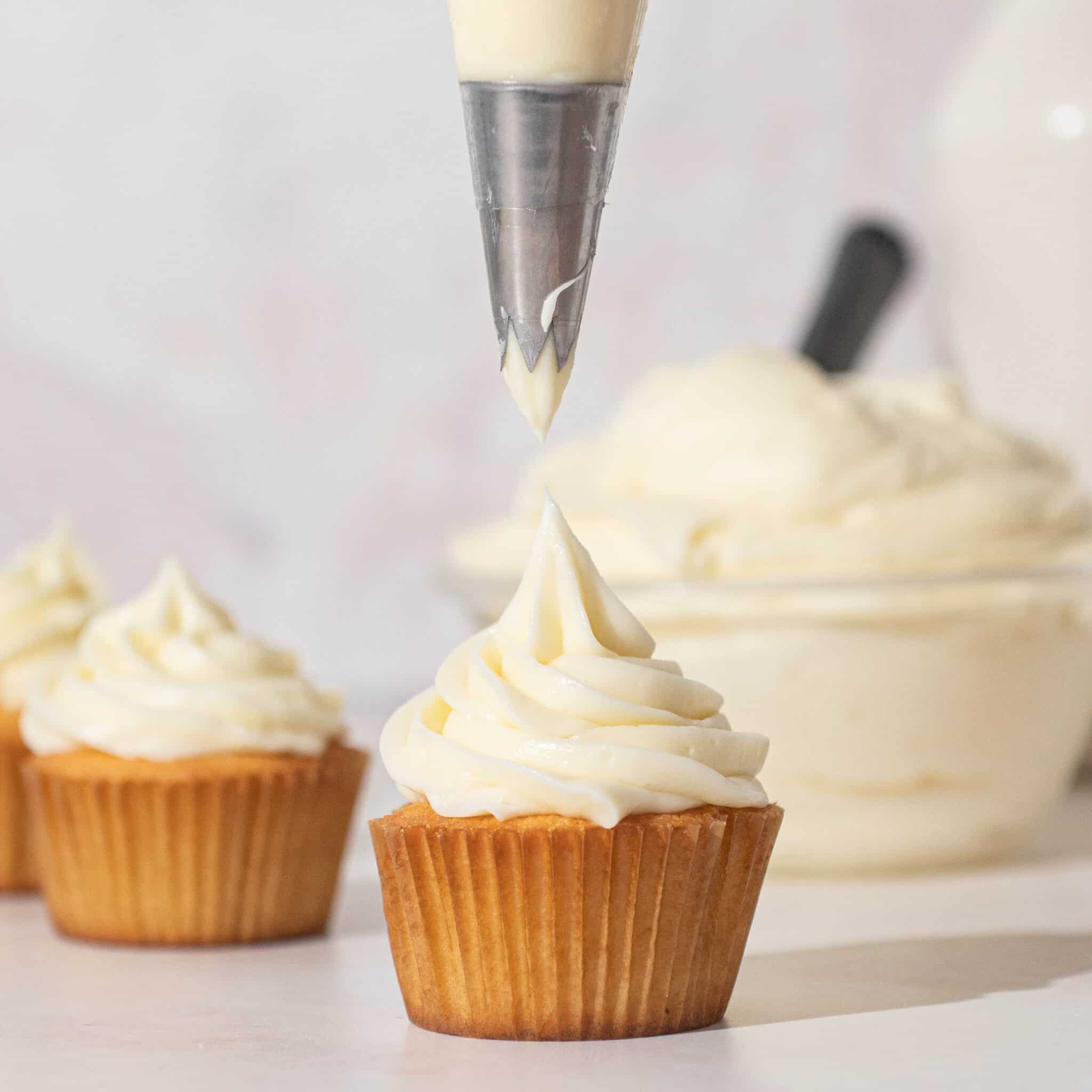
Italian meringue buttercream (IMBC) is a thick and creamy frosting made by whipping egg whites with a hot sugar syrup and softened butter. It's silky smooth, barely sweet, and stable enough to hold up in warm climates where American buttercream falls apart. It is the frosting I reach for on every wedding cake and tiered cake because nothing else comes close to that light, creamy finish.
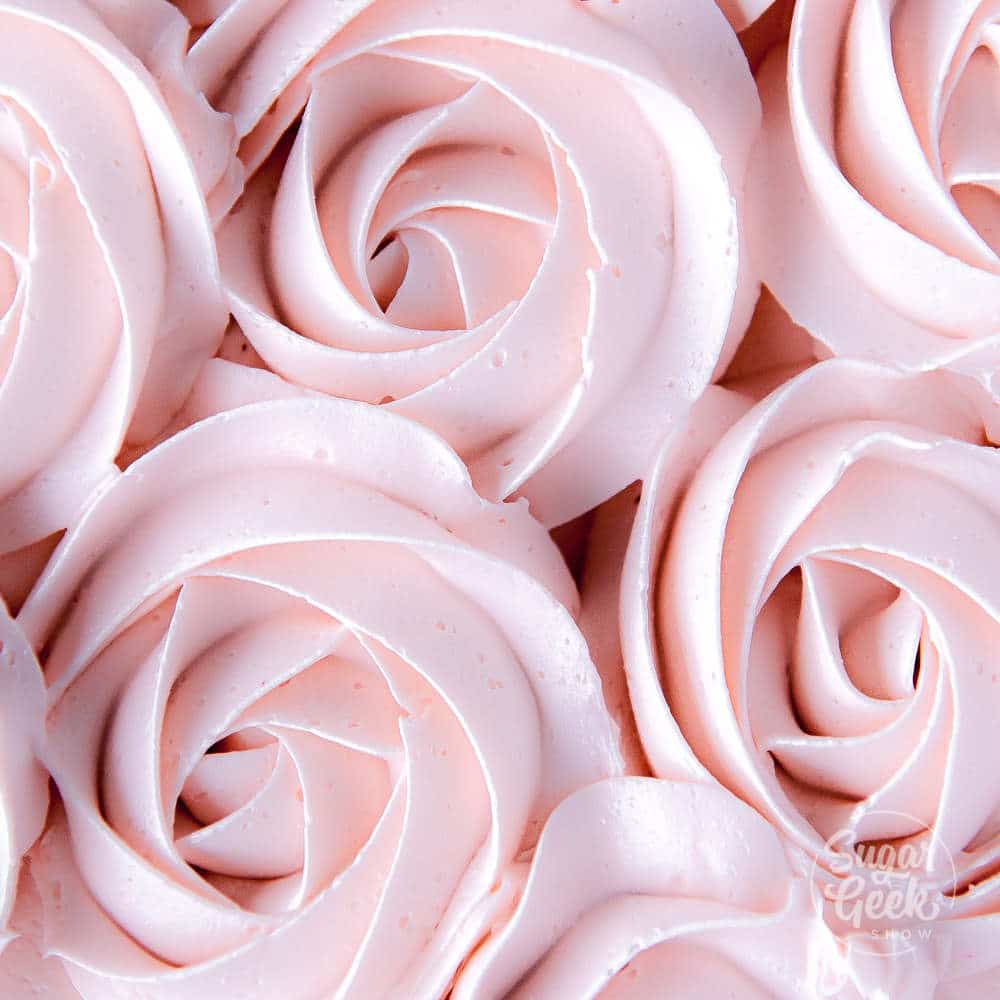
Quick Glance at the Recipe: Italian Meringue Buttercream
- Recipe Name: Italian Meringue Buttercream
- Why You'll Love It: The most stable and least sweet buttercream you can make. Silky smooth, heat-resistant, and perfect for wedding cakes and warm weather
- Time and Difficulty: 40 minutes / Intermediate
- Main Ingredients: Egg whites, granulated sugar, water, unsalted butter, vanilla
- Method: Hot sugar syrup streamed into whipped egg whites, finished with butter
- Texture and Flavor: Light, silky, and creamy with a delicate sweetness and rich buttery finish
- Quick Tip: Start whipping your egg whites when the syrup hits 235º F so they're at soft peaks right when the syrup reaches 240º F
Jump to:
- Quick Glance at the Recipe: Italian Meringue Buttercream
- What Makes This Italian Meringue Buttercream So Good⭐⭐⭐⭐⭐
- Italian Meringue Buttercream Ingredients
- How To Make Italian Meringue Buttercream Step-by-Step
- Cake Batter and Frosting Calculator
- Cups of Batter Needed
- Cups of Frosting Needed
- Common Italian Meringue Buttercream Problems To Avoid
- Final Thoughts
- Italian Meringue Buttercream FAQs
- More Frosting Recipes To Try
- Ready To Master Cake Decorating?
- Leave Me A Review⭐️⭐️⭐️⭐️⭐️
- Recipe
What Makes This Italian Meringue Buttercream So Good
⭐⭐⭐⭐⭐
Italian meringue buttercream is more stable than other meringue buttercreams like my Swiss meringue buttercream because of what happens when the hot syrup hits the egg whites.
- The hottest syrup makes the strongest meringue. Sugar cooked to 240º F streams into the whipping egg whites, cooking them and setting a firm, heat-resistant foam. Swiss meringue only heats the whites to about 160º F.
- Barely sweet. All the sugar is dissolved into the meringue, so it's much less sweet than a powdered sugar buttercream.
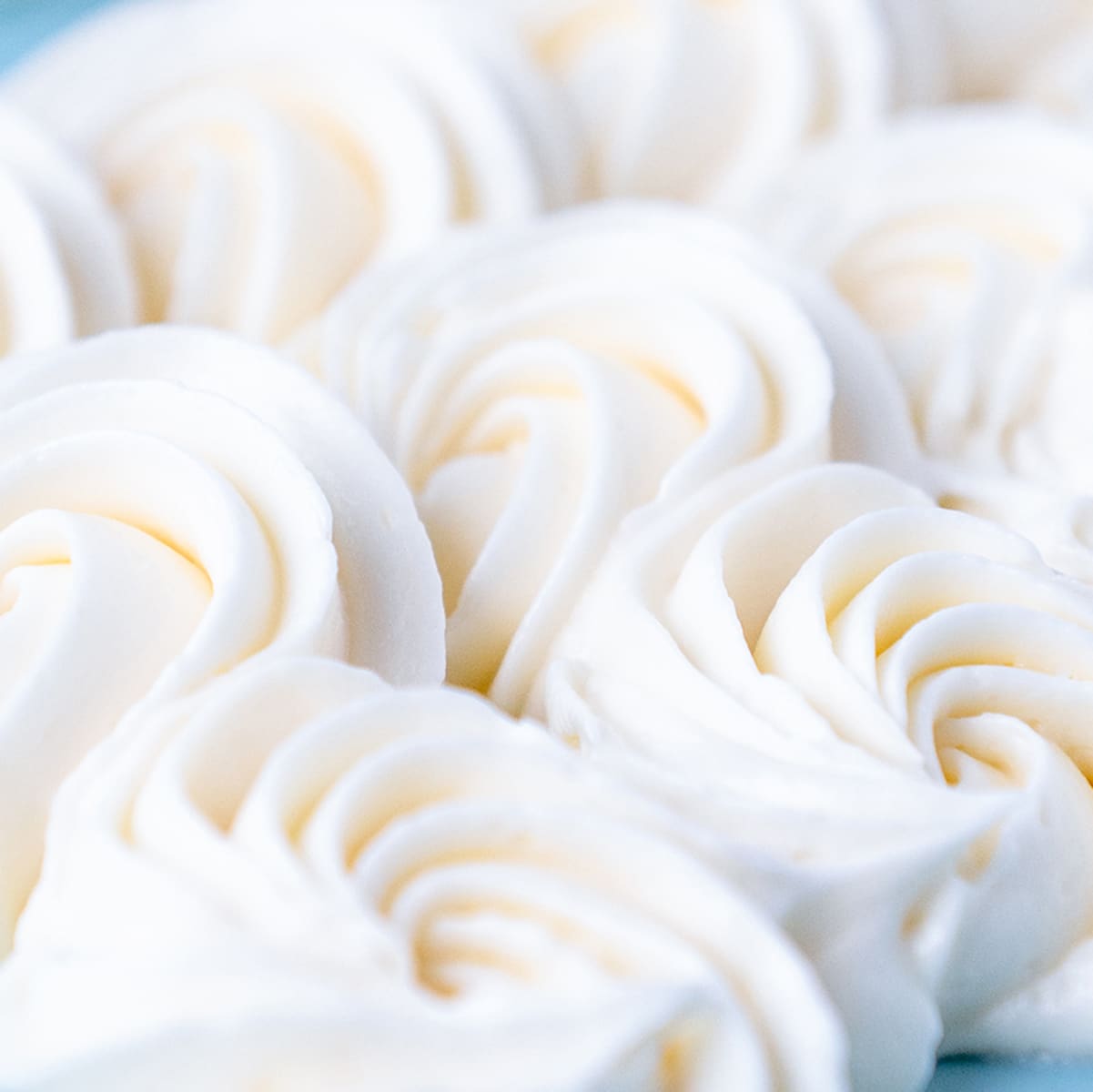
- Silky and stable. Whipping softened butter into the cooled meringue creates a smooth emulsion that pipes cleanly and holds sharp edges.
- Make-ahead friendly. It can be refrigerated or frozen and re-whipped back to silky smooth.
- Need it egg-free? Try my ermine frosting, which is just as silky and not too sweet.
Italian Meringue Buttercream Ingredients
You only need six ingredients to make Italian meringue buttercream, but the quality and temperature of each one matters. I always recommend weighing your ingredients with a digital kitchen scale for the most accurate results.
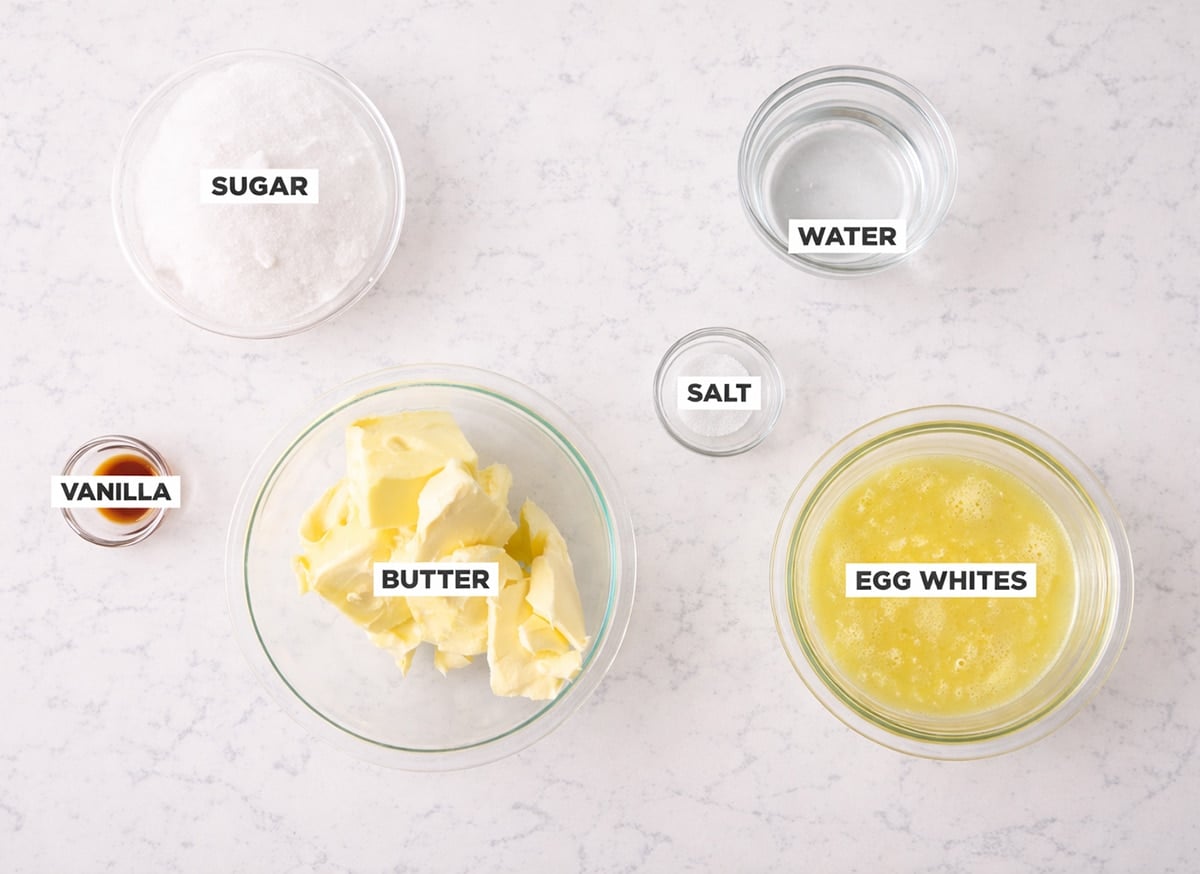
- Egg whites: Give the meringue its structure. Fresh or carton egg whites both work, and the boiling sugar syrup cooks them as it's poured in. About 8 large egg whites makes 8 ounces. No fresh eggs? Mix ½ cup of meringue powder with 1 cup of warm water to replace about 8 egg whites, then make the recipe the same way.
- Granulated sugar: Cooked with water into the hot syrup that stabilizes the meringue. It must reach 240º F (soft ball stage) or the buttercream will be soft and won't hold its shape. Don't swap in powdered sugar here.
- Water: Helps the sugar dissolve and cook evenly into a syrup. It cooks off, so it isn't in the finished buttercream.
- Unsalted butter: Whipped into the cooled meringue to make the buttercream. It must be softened to room temperature, not melted and not cold.
- Salt: Just a little balances the flavor so the buttercream doesn't taste flat.
- Vanilla extract: Use pure vanilla extract or vanilla bean paste, or swap in any flavor you like, like almond extract, lemon emulsion, or freeze-dried fruit powder.
How To Make Italian Meringue Buttercream Step-by-Step
Before you start, have your candy thermometer ready and your butter set out to soften.
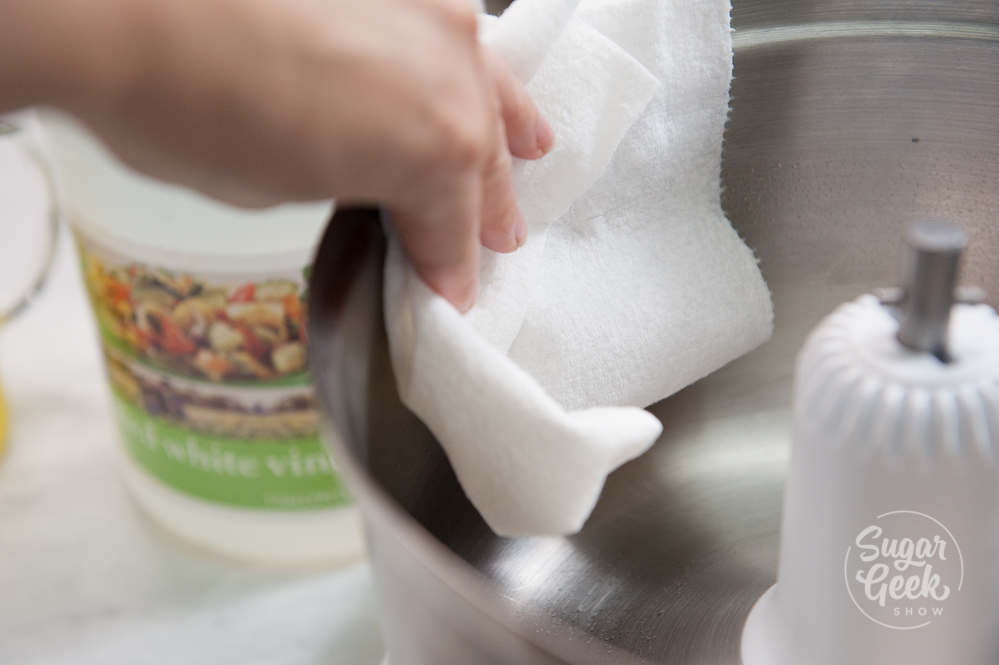
- Wipe down the bowl of your stand mixer and whisk attachment thoroughly with lemon juice or white vinegar and a clean paper towel. Any trace of grease or fat will prevent your egg whites from whipping up properly.
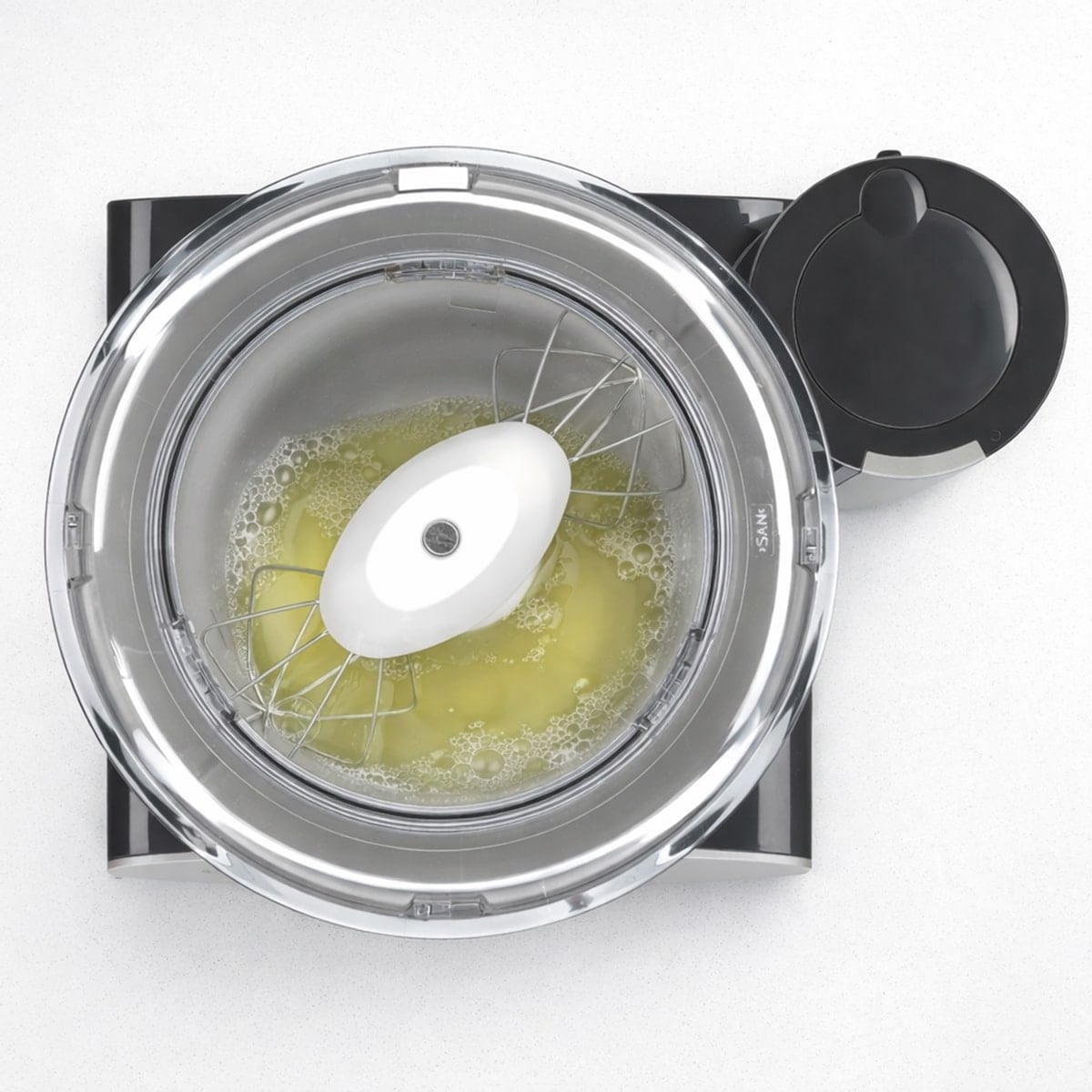
- Add your egg whites to the bowl of your stand mixer with the whisk attachment. Do not start whipping yet.
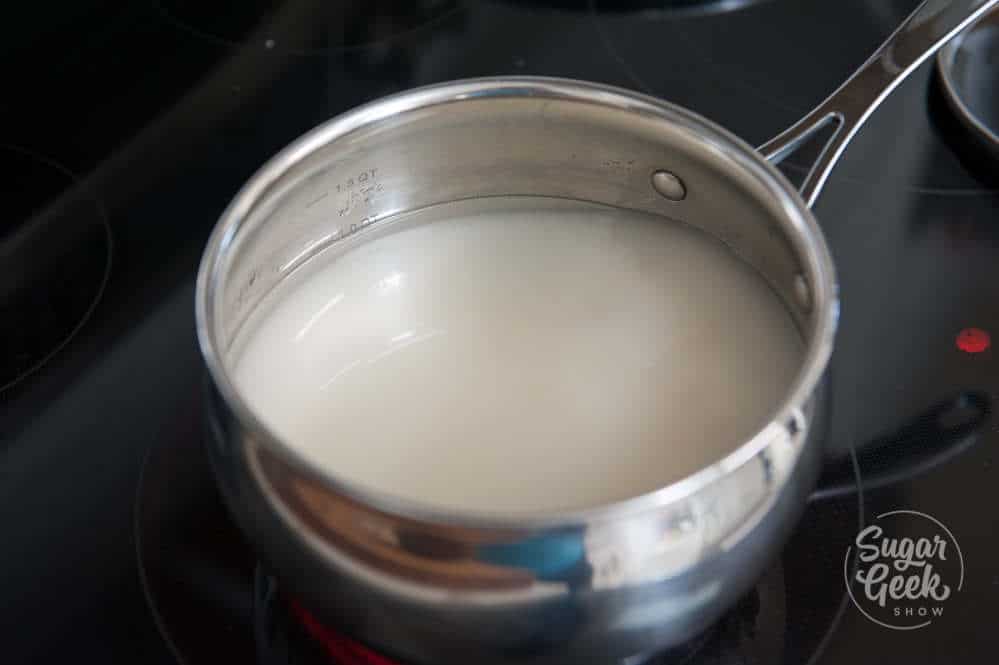
- Combine the sugar and water in a medium saucepan and stir just until the water has distributed evenly through the sugar. Place the lid on the pan and bring to a boil over medium-high heat.
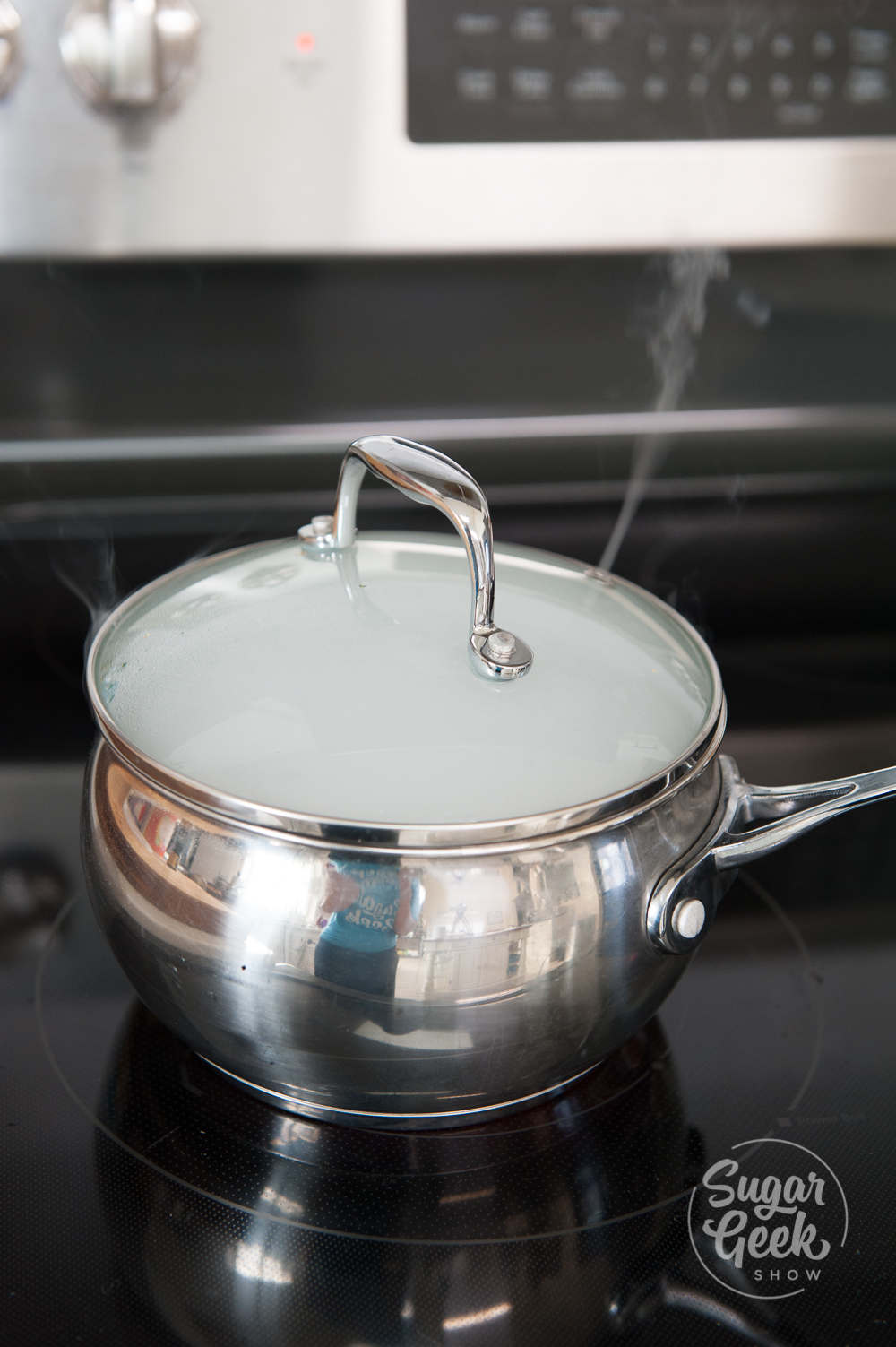
- Keep the lid on for 3 to 4 minutes after it reaches a boil. The steam trapped inside will wash any sugar crystals off the sides of the pan, which prevents the syrup from crystallizing and turning grainy later.
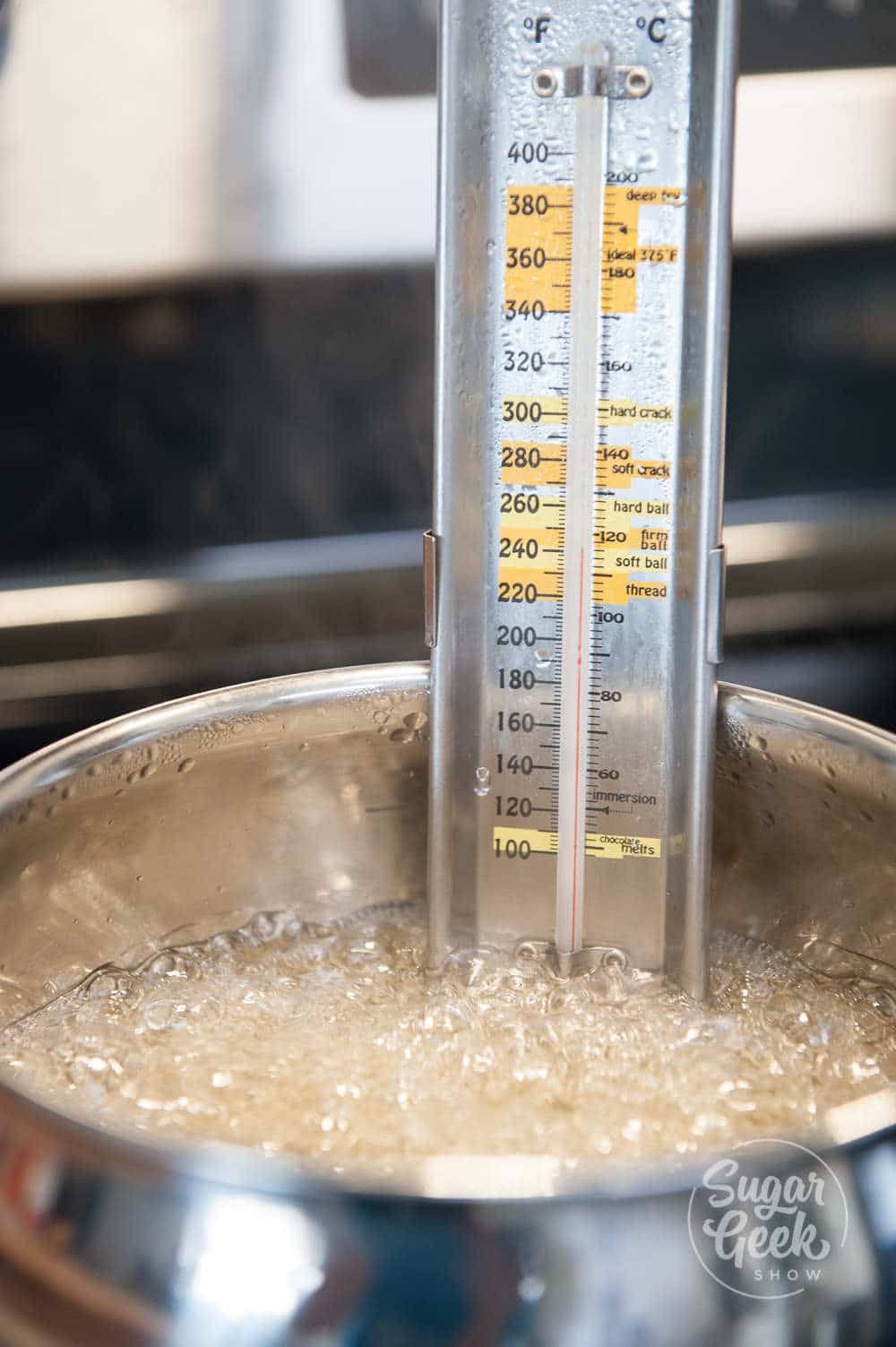
- Remove the lid and carefully insert your candy thermometer. Continue cooking over medium-high heat without stirring until the thermometer reads 235º F. The syrup will be clear and bubbling steadily.
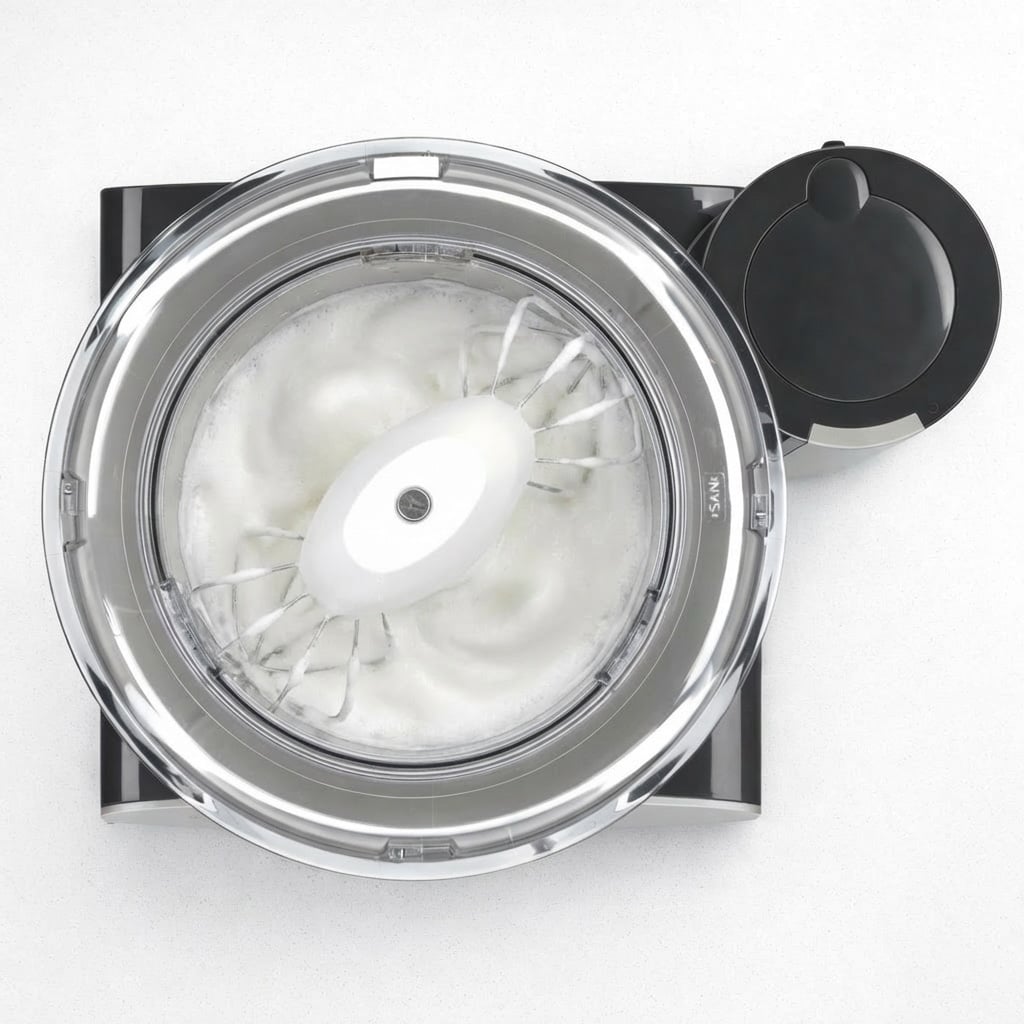
- When the syrup hits 235º F, turn your stand mixer on high and begin whipping your egg whites with the salt to soft peaks. You want them to reach soft peaks at the same time the syrup reaches 240º F, so the timing works out almost perfectly if you start at 235º F. Soft peaks means the whites are foamy and bright white but the tip curls over gently when you lift the whisk.
PRO TIP: I use a metal mixer bowl for this recipe. The syrup is boiling hot when it goes in, and I don't want it to melt or damage my bowl.
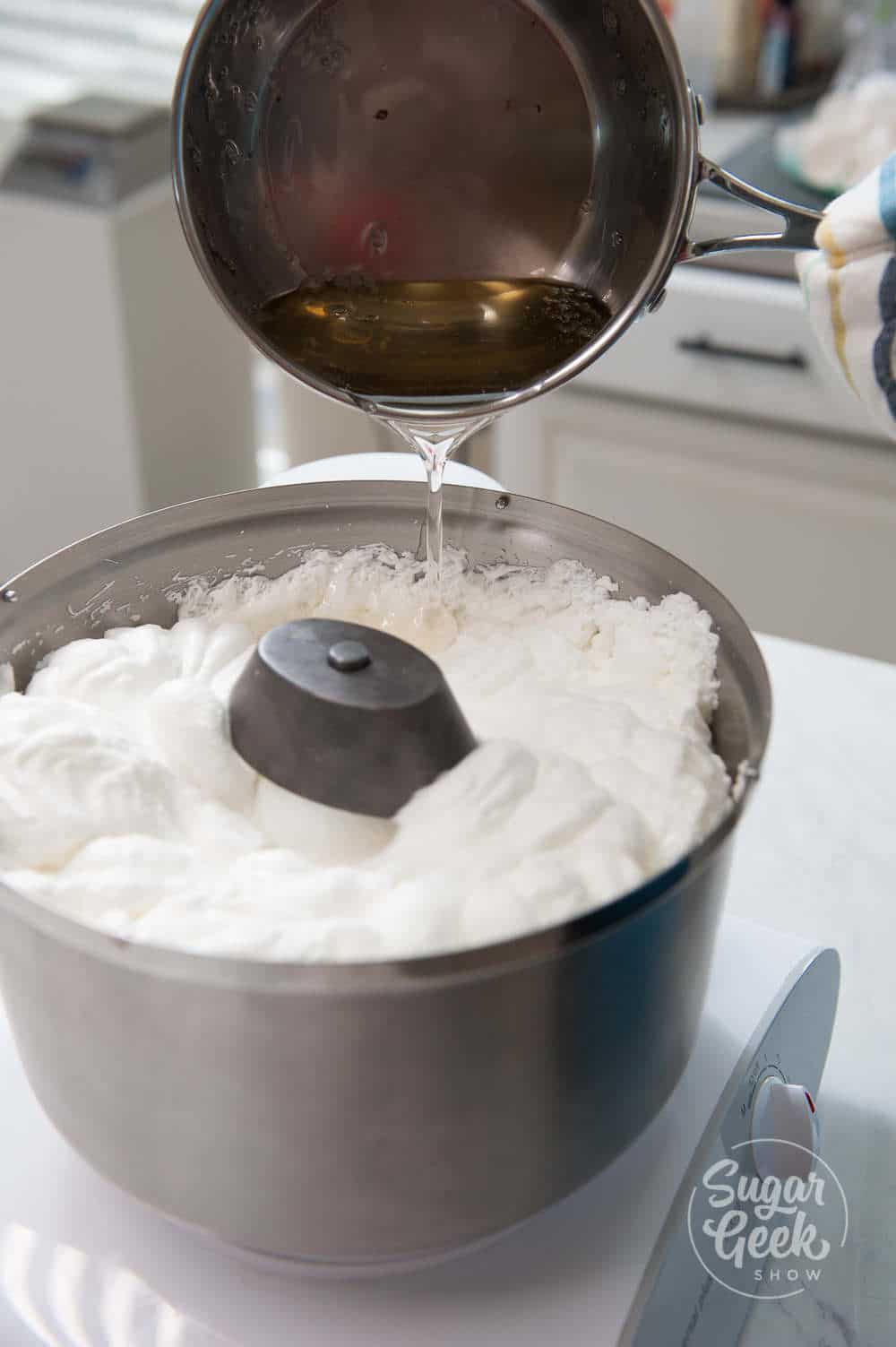
- When the syrup reaches 240º F, reduce the mixer to low speed. With the mixer running, slowly pour the hot syrup in a thin, steady stream down the side of the bowl between the whisk and the bowl wall. Pouring it directly onto the whisk will cause it to splatter and harden on the sides of the bowl. The mixture will immediately increase in volume and turn glossy white.
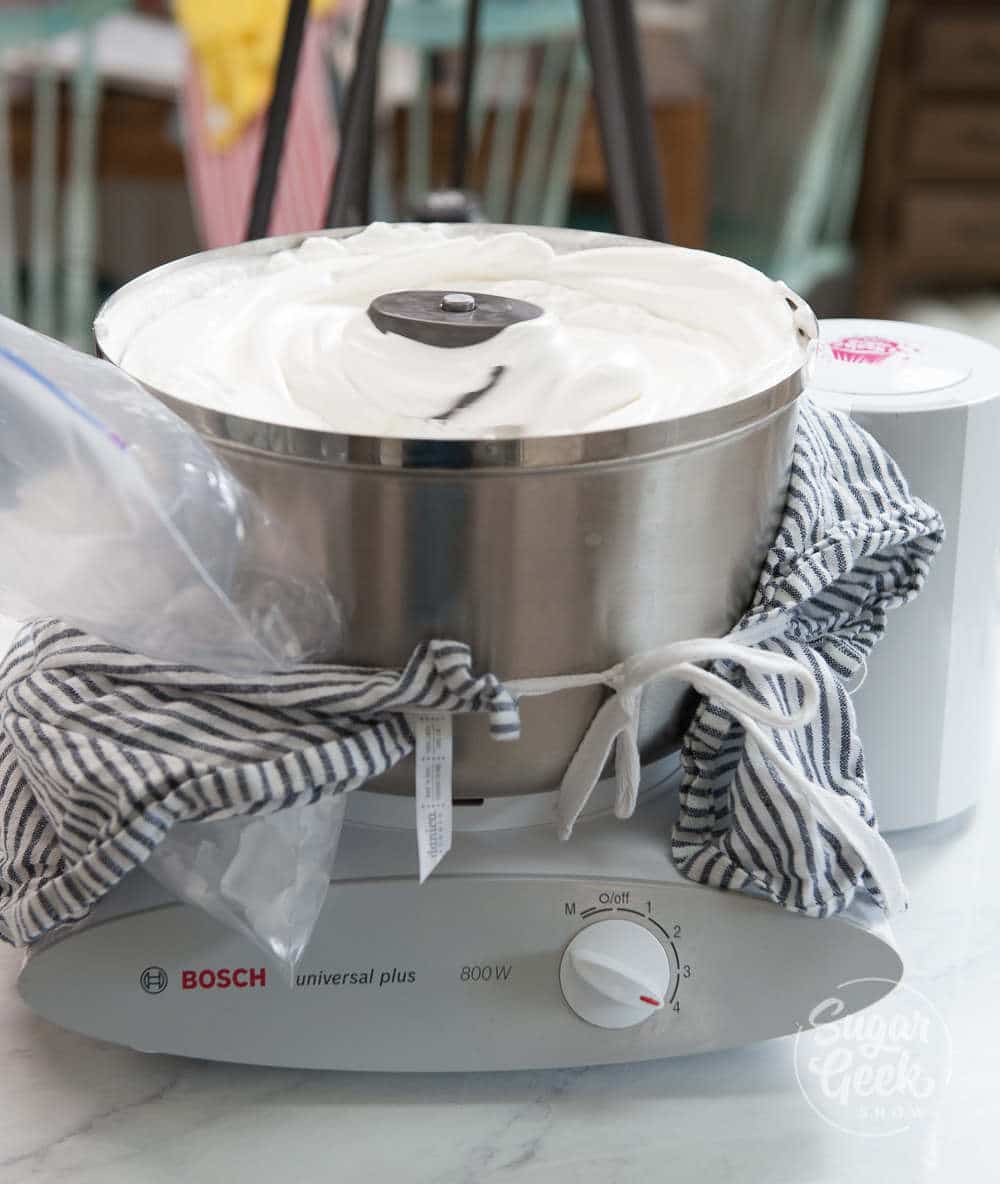
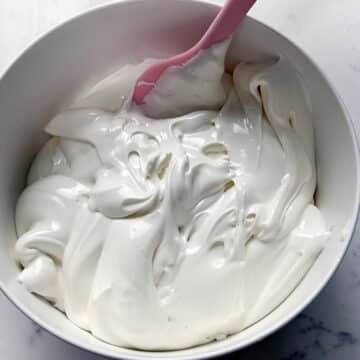
- Increase the mixer speed back to high and whip to very stiff, glossy peaks. To cool the meringue down faster, wrap an ice pack or bag of frozen vegetables against the outside of the bowl with a kitchen towel. The meringue needs to reach room temperature. You should be able to hold your hand against the side of the bowl comfortably with no warmth. This usually takes 10 to 15 minutes of whipping.
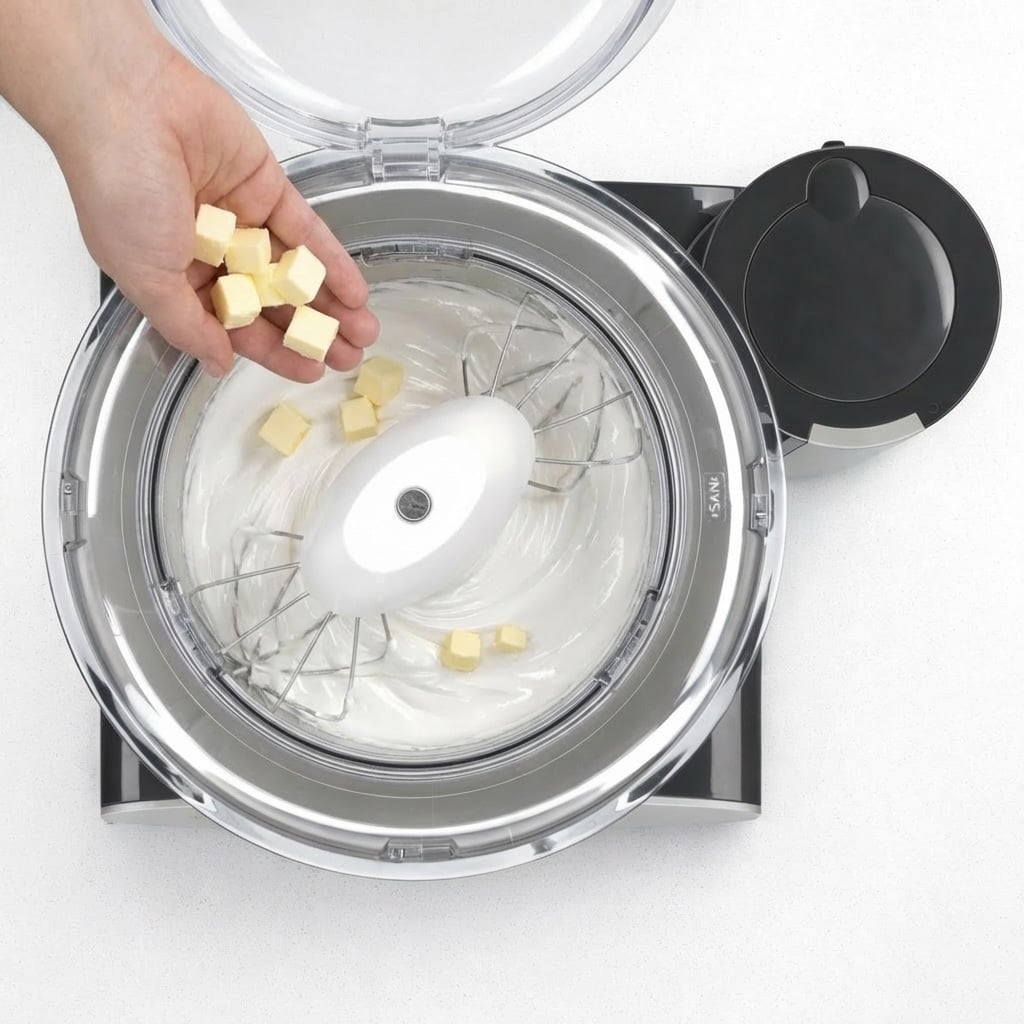
- Once the meringue is completely cool, reduce to medium speed and begin adding the softened butter two tablespoons at a time, waiting a few seconds between additions.
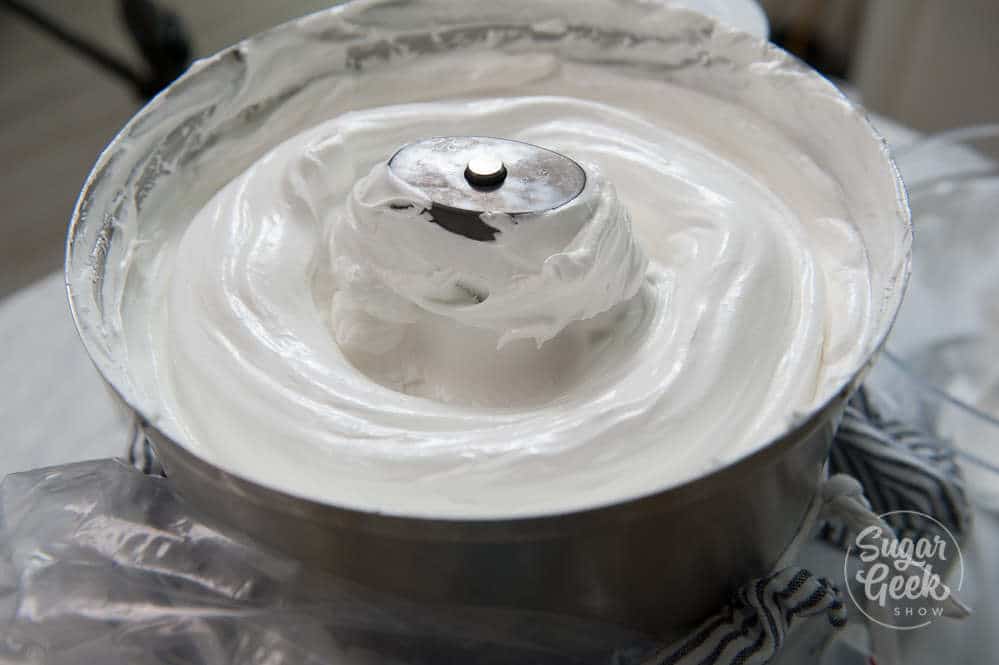
- Once all the butter is incorporated, add the vanilla and increase to high speed. Whip for 10 to 15 more minutes until the buttercream is light, fluffy, and completely smooth with no trace of a buttery taste. It should hold a stiff peak and have a silky sheen.
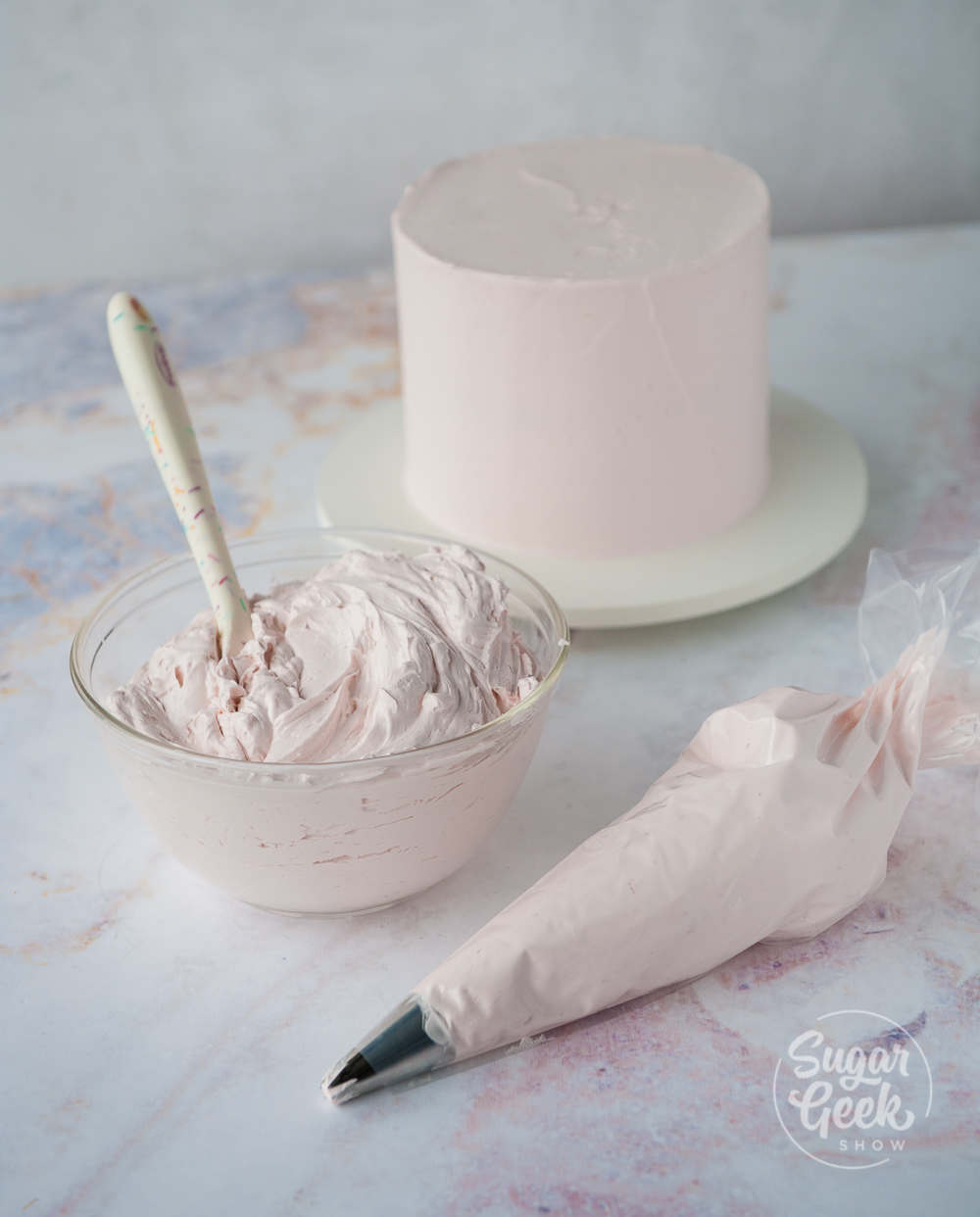
Add food coloring now if desired, mixing on low until fully incorporated.
PRO TIP: If it looks curdled or watery when you add the butter, just keep whipping. It WILL come back together, I promise.
Cake Batter and Frosting Calculator
Select an option below to calculate how much batter or frosting you need. Adjust the servings slider on the recipe card to change the amounts the recipe makes.
Choose a pan type
Choose a cake pan size
(based on 2" tall cake pan)
Choose a cake pan size
(based on 2" tall cake pan)
Cupcake Tin Size
Choose number of pans
Cups of Batter Needed
8 cups
Cups of Frosting Needed
5 cups
Note: measurements are estimated based off the vanilla cake recipe using standard US cake pans and sizes. Measurements used are for 2" tall cake pans only. Your results may vary. Do not overfill cake pans above manufacturer's recommended guidelines.
Common Italian Meringue Buttercream Problems To Avoid
- Starting with any grease in the bowl: Fat is meringue's worst enemy. Even a small amount of grease from butter, oil, or an unwashed bowl will prevent the egg whites from whipping at all. Always wipe down your bowl and whisk with lemon juice or vinegar before starting.
- Adding the butter when the meringue is still warm: This is the most common reason Italian meringue buttercream fails. If the meringue is even slightly warm when the butter goes in, the butter melts rather than emulsifies and you end up with a soupy, broken mess. Be patient. The meringue must be fully at room temperature before you add a single piece of butter.
- Under-cooking the sugar syrup: If your syrup doesn't reach 240º F, the sugar concentration won't be high enough to stabilize the foam. The resulting buttercream will be soft, unstable, and prone to weeping. Always use a reliable candy thermometer and confirm the temperature before pouring.
- Using butter that is too cold or too warm: Cold butter breaks into chunks that don't incorporate smoothly. Melted butter causes the buttercream to collapse. Butter should be softened to the point where it holds its shape but gives easily when you press your finger into it, similar to the texture of soft clay.
Final Thoughts
If you love a buttercream that pipes cleanly, holds its shape, and isn't overly sweet, this is your recipe. Try it on my vanilla cake for a combination that's been a reader favorite for years.
This recipe makes about 8 cups of frosting, and you can easily halve it for a smaller cake. Use the calculator above to see how much you need. Store leftovers in an airtight container in the fridge for up to 2 weeks or freeze for up to 6 months, then bring to room temperature and re-whip with the paddle on low. If it won't come back together, melt about ⅓ cup in the microwave and whip it back into the rest.
It also pipes beautifully for buttercream flowers, even with Russian piping tips. Pipe your flowers ahead, freeze them until firm (about 20 minutes), and let them thaw in the fridge or at room temperature before they go on your cake.
Italian Meringue Buttercream FAQs
Are the egg whites in Italian meringue buttercream safe to eat?
Yes. The boiling sugar syrup cooks the egg whites as it's poured in. You can use fresh egg whites or egg whites from a carton.
Why does my Italian meringue buttercream look curdled or soupy?
Keep whipping first, it usually comes back together. If it's still soupy after a few minutes, pop the bowl in the fridge for about 15 minutes, then whip again.
How long can Italian meringue buttercream sit out?
A cake frosted with Italian meringue buttercream is safe at room temperature for up to 24 hours. After that, keep it in the fridge and let it come back to room temperature before serving.
Can I use Italian meringue buttercream under fondant or in hot weather?
Yes, it works great under fondant. If you live somewhere really hot, you can replace up to half the butter with shortening for extra stability.
How do I color or flavor Italian meringue buttercream?
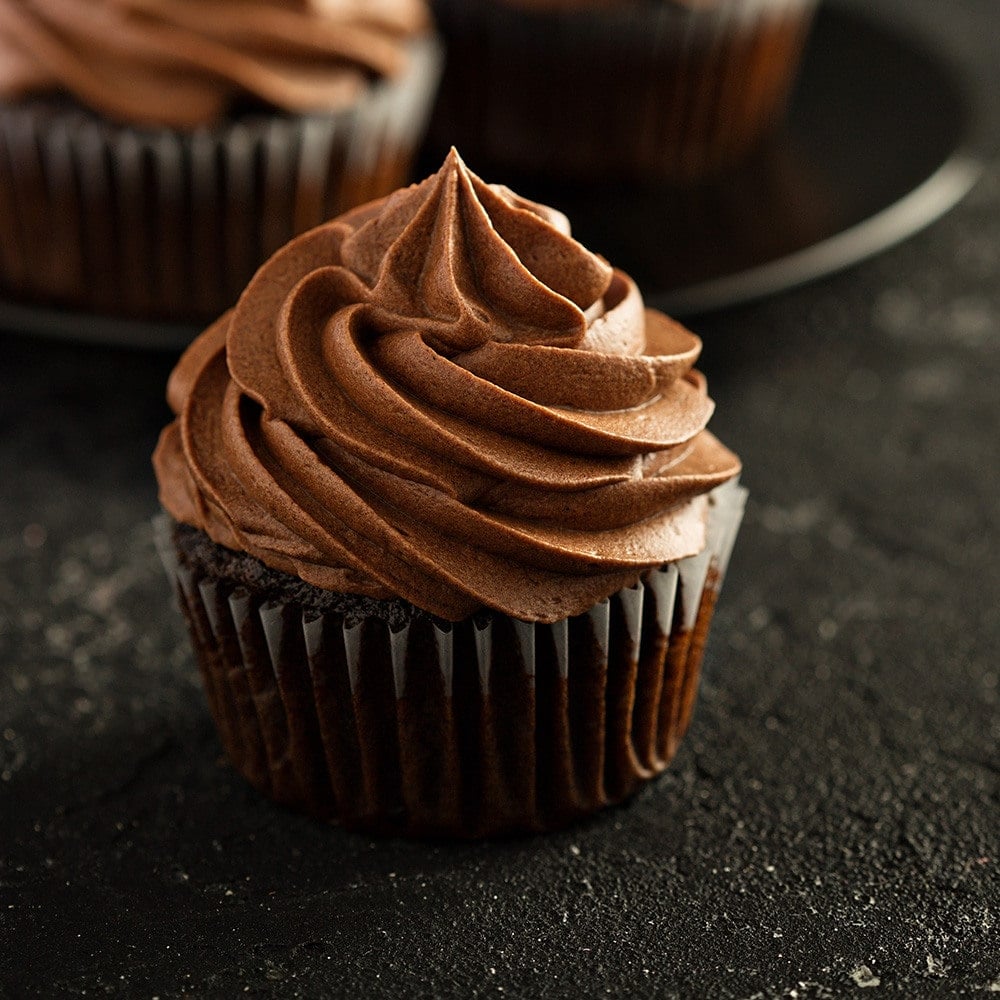
Add gel food coloring at the very end, after all the butter is in. For a whiter buttercream, add a tiny bit of violet and a little white coloring. For chocolate, wait until the buttercream is completely finished, then add about ¼ cup of cocoa powder, or as much as you like. Melted chocolate can leave unmelted chunks, so room temperature ganache is a safer way to go. Add espresso or freeze-dried fruit at the very end too.
More Frosting Recipes To Try
Ready To Master Cake Decorating?
Join Sugar Geek University and learn professional techniques through detailed cake decorating courses, tutorials, and real kitchen demonstrations by
award-winning cake decorator, Liz Marek.

Leave Me A Review⭐️⭐️⭐️⭐️⭐️
If you tried this Italian Meringue Buttercream or any other recipe on my blog, please leave a 🌟 star rating and let me know how it goes in the comments. I love hearing from you!
Recipe
Equipment
- Stand mixer with the whisk attachment
- Candy Thermometer
Ingredients
- 16 ounces granulated sugar
- 8 ounces water
- ¼ teaspoon salt
- 8 ounces egg whites (about 8 large egg whites separated from the yolk)
- 24 ounces unsalted butter softened
- 2 teaspoon vanilla extract
Instructions
- Before you begin: Make sure your butter is softened to room temperature and your mixer bowl and whisk are completely grease-free (wipe them with a little lemon juice or white vinegar). Have your candy thermometer ready.
Make the Buttercream
- On the stovetop, mix together the water and sugar, cover with a lid and bring to a boil on medium-high heat.
- Keep the lid on the pot for 3 to 4 minutes while the mixture simmers to ensure all the sugar granules are dissolved, otherwise, your sugar can get gritty and crystalize. DO NOT MIX.
- Remove the lid, insert the candy thermometer carefully and continue cooking on medium-high until the syrup reaches 240º F.
- When the sugar solution is at about 235º F, begin whipping the egg whites on high speed. Add the salt to the egg whites.
- When the egg whites reach soft peaks, pour the sugar solution in a steady stream on to the whipping whites while mixing on low speed.
- Continue whipping the egg/sugar mixture until it reaches stiff peaks. I wrapped an apron around my bowl with an ice pack to help the meringue cool down faster. You can also cool the meringue by scooping it out of the bowl and placing it into the fridge for 15 minutes.
- Once the meringue is cooled, whip in soft butter and vanilla until the buttercream is light and fluffy and no longer has a butter taste. This can take from 10 to 15 minutes. If it looks curdled and watery just keep whipping. It will come together I promise.


Suzanne says
Have been used to a very basic buttercream. Decided to give this a go for a wedding cake. Wish I had tried this a long time ago. So much easier to work with and a much better taste. Much lighter. Thanks for making my life easier 🥰
Liz Marek says
So glad it made your wedding cake easier, Suzanne! Thank you for giving it a try.
Becky says
Liz, thank you for such detail in your instructions. I am using your recipe for another attempt. Is the ice pack a must, or can the frosting sit to cool before adding butter? What is the secret to getting this frosting to hold piping details? Final question...I want to flavor the frosting with black cocoa. How much can I add without compromising the integrity of the frosting?
Liz Marek says
Thank you so much! The ice pack just speeds things up. You can also scoop the meringue into a bowl and pop it in the fridge for about 15 minutes to cool it. For black cocoa, I'd start with about ¼ cup and add more to taste, but add it only after the buttercream is completely finished.
Tabitha says
My buttercream comes out a little yellow and adding purple/lilac isn’t really fixing it. Am I able to whip the butter so it’s lighter before adding to the meringue or will that change the structure of the butter cream? Xx
Liz Marek says
A tiny bit of violet plus a little white gel color is what I use to get it whiter.
Hannah says
Could I add cocoa or melted chocolate to it to make a chocolate buttercream? And if so, at what point should I add it?? Thanks!
Liz Marek says
Yes! Add it only after the buttercream is completely done (meringue cooled and all the butter added). I'd add about ¼ cup of cocoa powder, but you can add as much as you like. Melted chocolate can leave unmelted chunks in the meringue, so room temperature ganache is a safer way to go.