


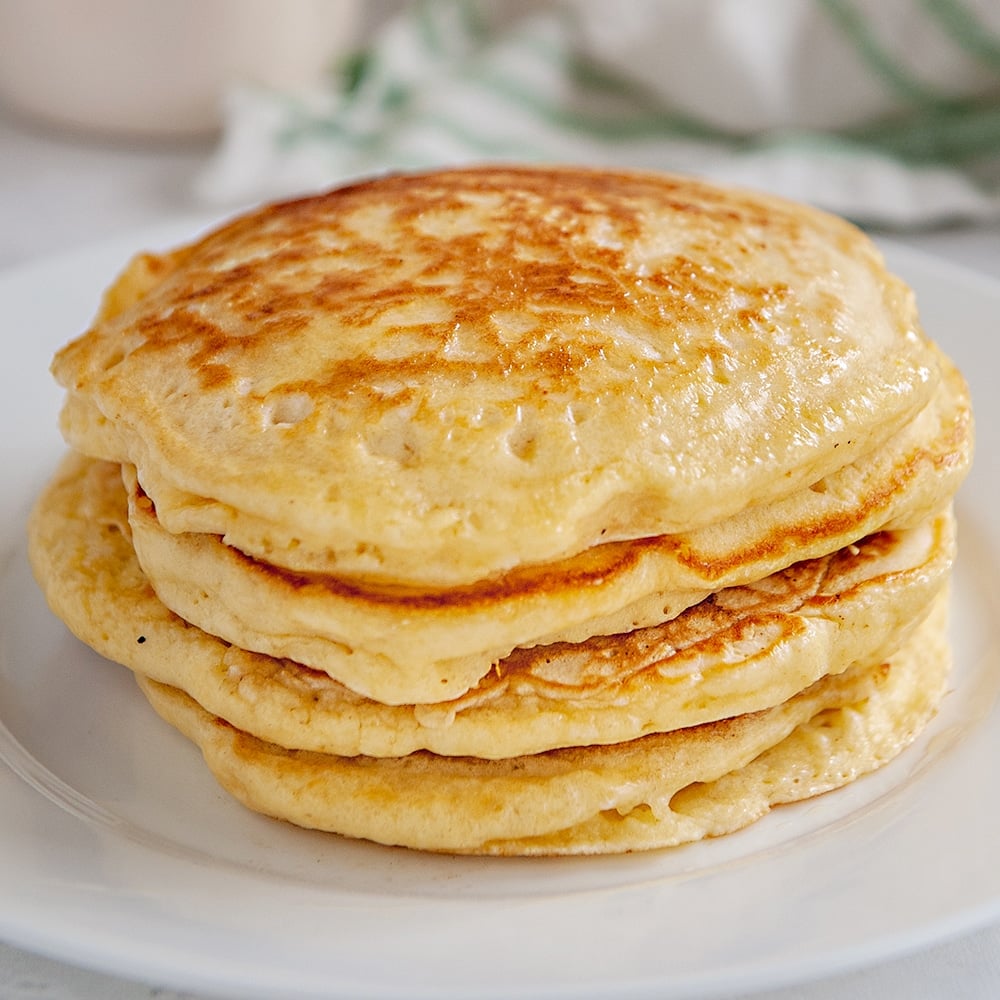
The easiest, fluffiest sourdough discard pancakes you'll ever make. Five minutes to mix, light and tangy, with the crispy edges that come from cooking low and slow in butter. They use up a full cup of sourdough starter discard per batch, which is why I keep a starter alive in the first place. If you love sourdough pikelets, these are their fluffier American breakfast cousin.
Quick Glance at the Recipe: Sourdough Discard Pancakes
- Recipe Name: Sourdough Discard Pancakes
- Why You'll Love It: Fluffy, tangy, easy. Five minutes to mix, 30 minutes to cook a batch of 8. Uses up a full cup of discard so your starter never goes to waste.
- Time and Difficulty: 5 minutes prep + 30 minutes cook + optional overnight ferment. Beginner-friendly.
- Main Ingredients: Sourdough discard, all-purpose flour, milk, eggs, sugar, baking soda, baking powder, salt, oil.
- Method: Combine all ingredients in one bowl. Mix until just combined (lumps are fine). Cook in butter on a preheated medium-low pan, 5 minutes on one side until the edges look dry and holes form on top, then 3 minutes on the second side.
- Texture and Flavor: Fluffy, tender interior with crispy buttery edges. Faintly tangy from the discard without tasting sour.
- Quick Tip: If you want a deeper sourdough tang, ferment the batter overnight in the fridge, but add the baking soda and baking powder right before cooking. The leavener reaction dies in cold batter overnight.
Jump to:
- Quick Glance at the Recipe: Sourdough Discard Pancakes
- What Makes This Sourdough Discard Pancake Recipe Different
- Sourdough Discard Pancake Ingredients
- How To Adjust The Sourdough Flavor Intensity
- How To Make Sourdough Discard Pancakes Step-By-Step
- Same-Day Vs. Overnight Ferment
- Common Sourdough Discard Pancake Problems To Avoid
- Make This Sourdough Discard Pancake Recipe Your Own
- Make-Ahead, Storage, And Reheating
- Final Thoughts
- Sourdough Discard Pancake FAQs
- More Sourdough Discard Recipes To Try
- Leave Me A Review⭐️⭐️⭐️⭐️⭐️
- Recipe
Recently, I decided to dive into making sourdough starter so I could make my own fresh sourdough bread at home. When you make a sourdough starter, you end up with a lot of discard, the part you'd otherwise throw away every time you feed the starter. Not wanting to waste precious flour, I looked up a lot of sourdough discard recipes.
This one is AMAZING. I couldn't believe how delicious these sourdough pancakes were. Surprisingly, they don't taste sour at all, just fluffy, delicious pancakes with a faint tang in the background. They also don't make you feel bloated the way regular pancakes do, because sourdough is one of the healthiest types of bread you can eat. As the yeast goes through fermentation, it breaks down some of the gluten, making it easier to digest and minimizing discomfort. A great option for anyone who has trouble digesting gluten but isn't allergic.
I slather mine in more butter, but my daughter Avalon prefers hers with cinnamon and sugar. Both are right.
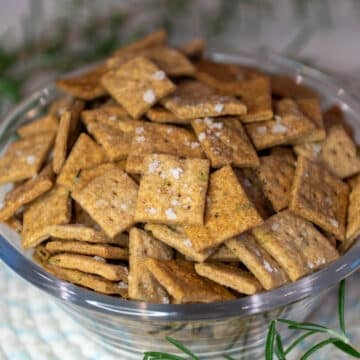
If you'd rather use that cup of discard for a savory snack later in the week, my sourdough discard crackers take 5 minutes to mix and bake up shatter-crisp with flake salt and rosemary.
What Makes This Sourdough Discard Pancake Recipe Different
Most sourdough discard pancake recipes treat the discard as a byproduct, the consolation prize you get for keeping a sourdough starter. I treat it as the whole reason to keep a starter. Discard pancakes are the recipe I make twice a week to justify the jar in my fridge.
A few things make this version different from most discard pancakes you'll find:
- One bowl, no rest required. Same-day pancakes in under 10 minutes of active time. Most recipes ask you to mix, then rest, then add more, then rest again. This one is whisk, scoop, cook.
- A full cup of discard per batch. Some recipes use a half cup or less, which makes them mostly regular pancakes that happen to have some discard in them. A full cup gives you a real sourdough tang and uses up the discard your starter generates each feed.
- Optional overnight ferment for deeper flavor. If you want a sharper tang, you can mix the batter (minus the leaveners) the night before. See the Same-Day vs Overnight section below for the proper protocol.
- Holds up to mix-ins. Sturdy enough for chocolate chips, blueberries, bananas, and even savory additions like cheese or herbs without going gummy.
Sourdough Discard Pancake Ingredients
You only need a few pantry staples to make these pancakes. The trick is using REAL cultured sourdough discard (not a starter substitute) and weighing your flour so you don't end up with a dense, tough pancake. I always recommend weighing your ingredients with a digital kitchen scale for the most accurate results.
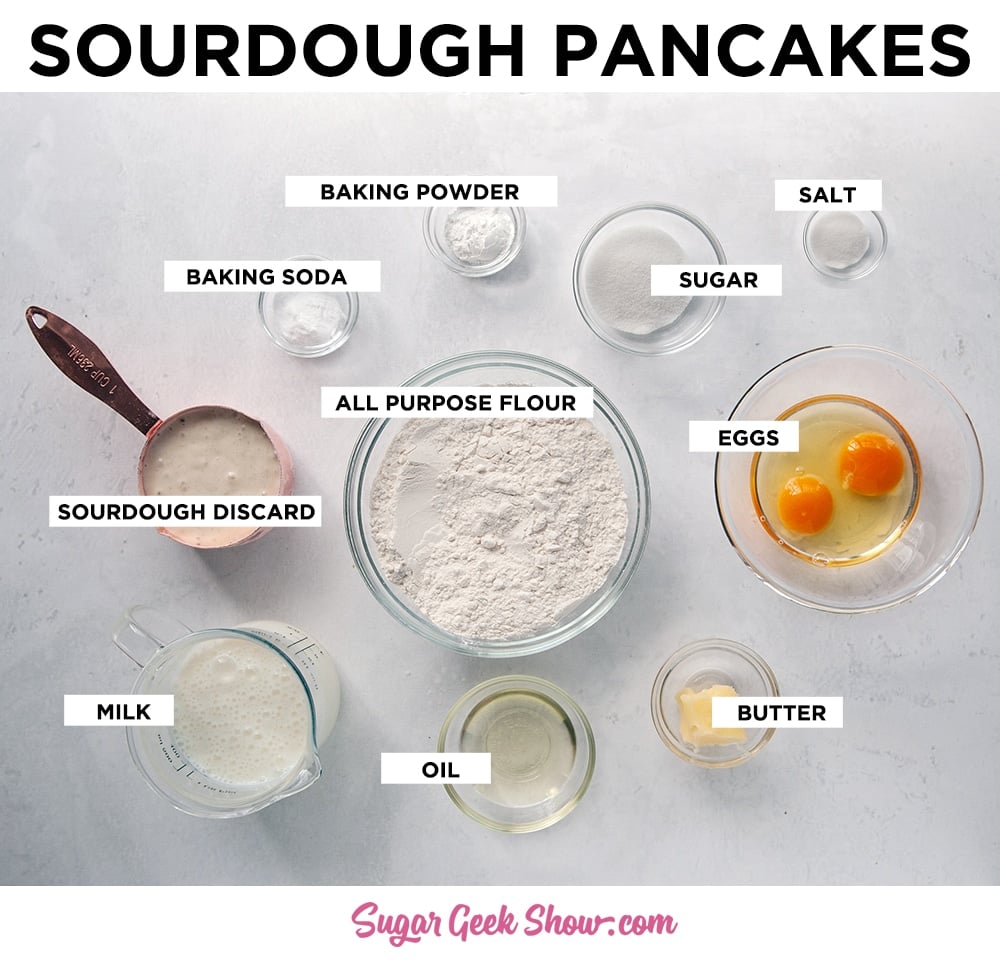
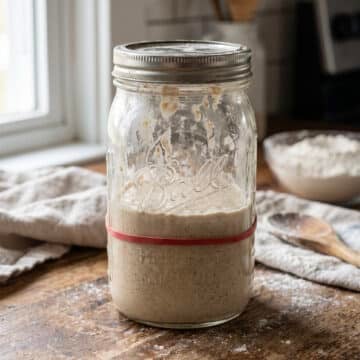
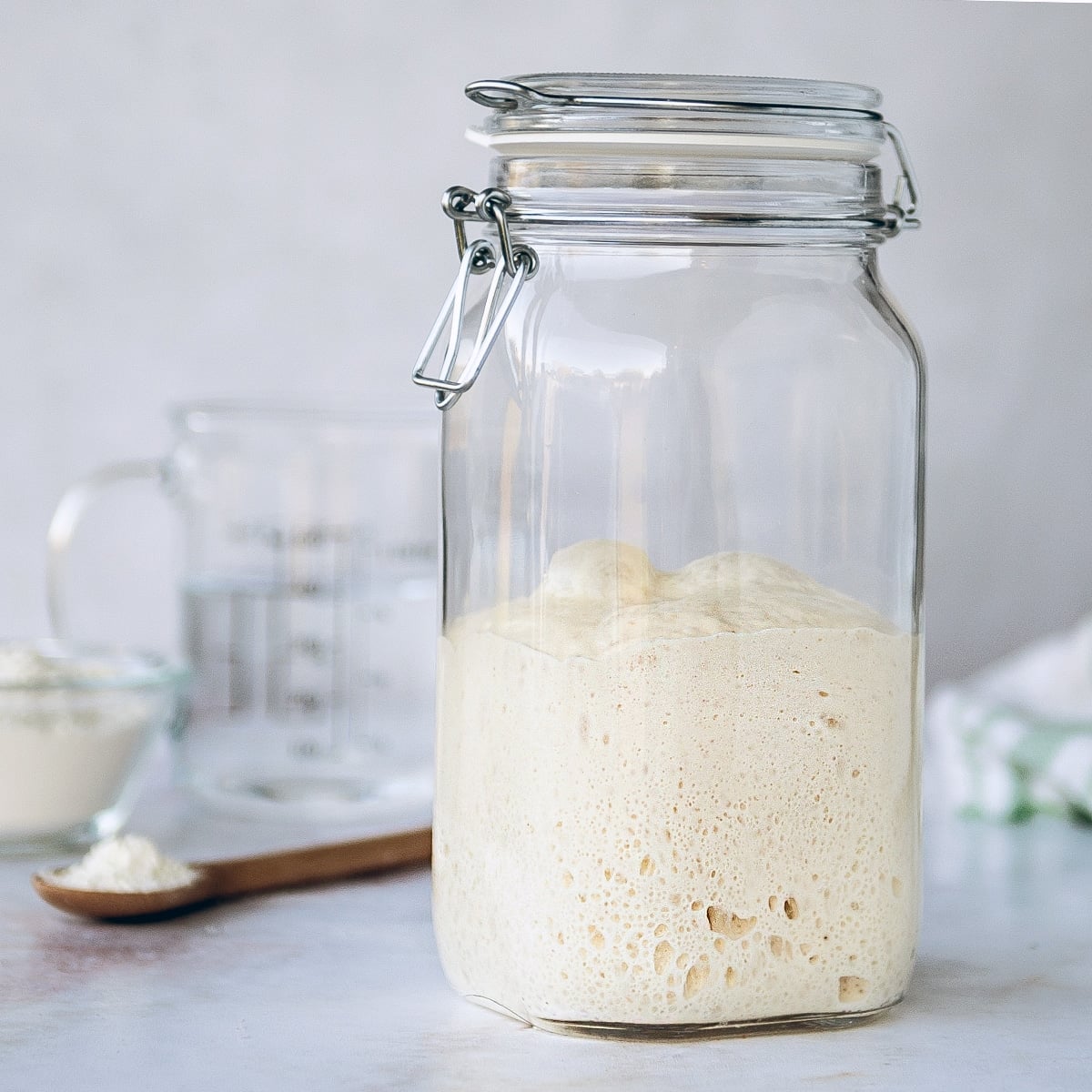
- Sourdough discard is the part of the starter you remove when feeding a sourdough starter, right before you add fresh flour and water. If you have less discard on hand, you can scale down the rest of the recipe proportionally; just know the discard is doing real flavor work here.
- All-purpose flour. Standard AP. Don't substitute cake flour (too tender for the structure) or whole wheat (too dense without adjustments). If you want a whole-wheat version, swap half the AP for whole wheat AND add another 2 Tablespoons of milk to compensate for the extra absorption.
- Sugar. Just three Tablespoons. Sweetens the pancake without making it dessert-level sweet. Drop to 1 Tablespoon if you want savory pancakes for cheese-and-bacon mix-ins.
- Salt. Balances the tang of the sourdough. Don't skip.
- Baking soda + baking powder. Two leaveners working together. Baking soda reacts with the natural acidity in the sourdough discard for immediate lift. Baking powder gives a second push when the pan hits the batter. Don't swap one for the other.
- Milk. Whole milk gives the richest pancake, but 2 percent and skim both work. For dairy-free, oat milk is the closest in texture and tang.
- Eggs. Two large eggs at room temperature. Cold eggs shock the batter, leading to uneven cooking. If you forgot to take them out, drop them in warm tap water for 5 minutes.
- Canola oil. Or any neutral oil. Avocado oil also works, as a reader pointed out. Avoid olive oil because the flavor comes through.
- Butter (for the pan). This is what gives the pancakes their crispy edges.
How To Adjust The Sourdough Flavor Intensity
The "tang" in sourdough discard isn't one flavor; it's two acids working together. Lactic acid and Acetic acid which is a bi-product of the sourdough doing its thing. Understanding which one is doing what is the secret to controlling how sour your pancakes taste.
Lactic acid. This is the mild, creamy, yogurt-like tang. It's the same acid in buttermilk, cultured cream, and sauerkraut. Lactic acid bacteria thrive in cooler temperatures, around 40º F to 70º F. Sourdough discard kept in the fridge develops mostly lactic acid over time. If your discard tastes mildly tangy, like yogurt or buttermilk, lactic acid is doing the work.
Acetic acid. This is the sharper, vinegar-like tang. Acetic acid bacteria thrive in warmer temperatures, around 75º F and up, and need oxygen. Sourdough discard left on the counter develops more acetic acid. If your discard tastes sharply sour, almost vinegary, that's acetic acid.
A same-day batter with fresh discard from the fridge gives you a mild, creamy tang. Pancakes taste lightly sourdoughy without being aggressive. An overnight ferment (batter mixed, sat in the fridge 8-12 hours) deepens the lactic acid, giving a pronounced creamy tang. A same-day batter with discard that's been on the counter for a few days gives you the sharpest, most assertive sour flavor.
So if your pancakes taste too sour, switch to a fresher fridge sourdough discard. If they don't taste sourdoughy enough, try an overnight ferment or use older discard. The acid you're tasting is determined by where and how long your discard has been sitting.
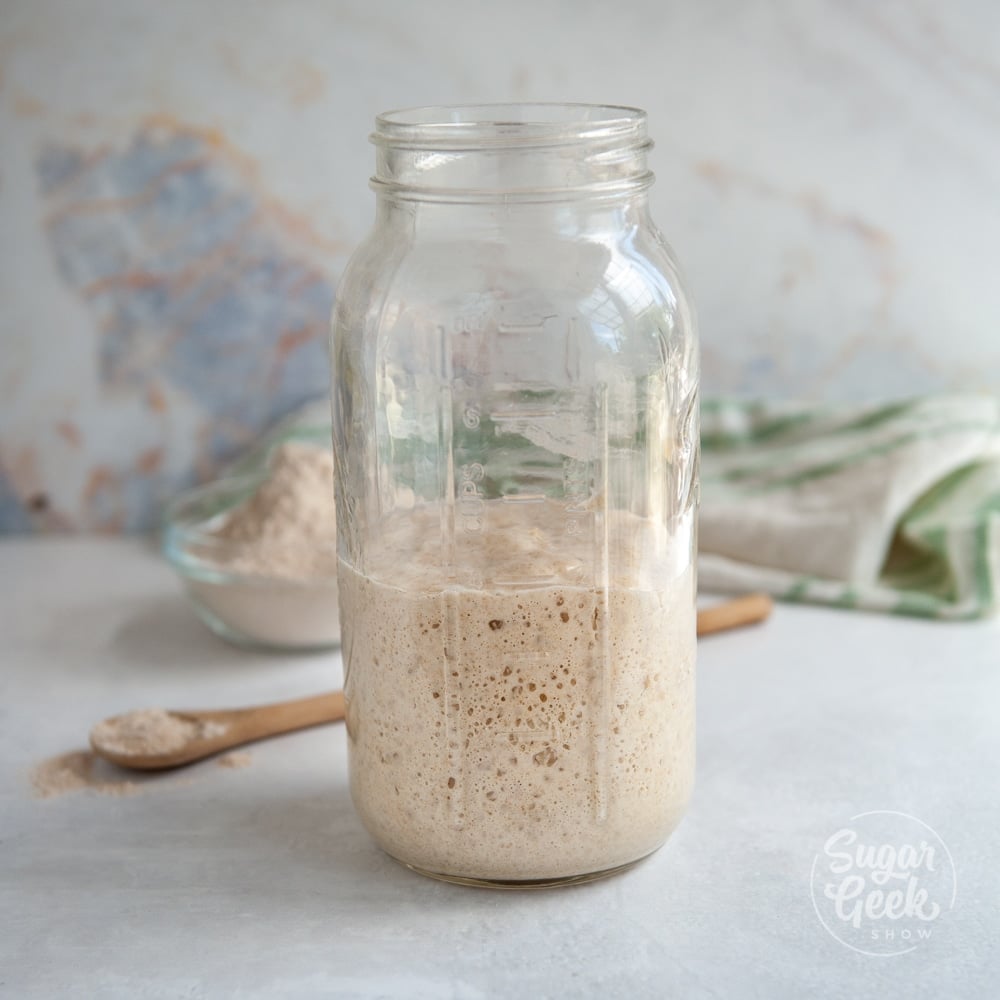
How To Make Sourdough Discard Pancakes Step-By-Step
For exact measurements, see the recipe card below. Pancake batter changes as it sits. The baking soda + acid reaction is immediate and starts to die after 5 minutes. So cook the batter fast. If you need to pause partway through a batch, take the bowl off the warm stove area so the reaction slows.
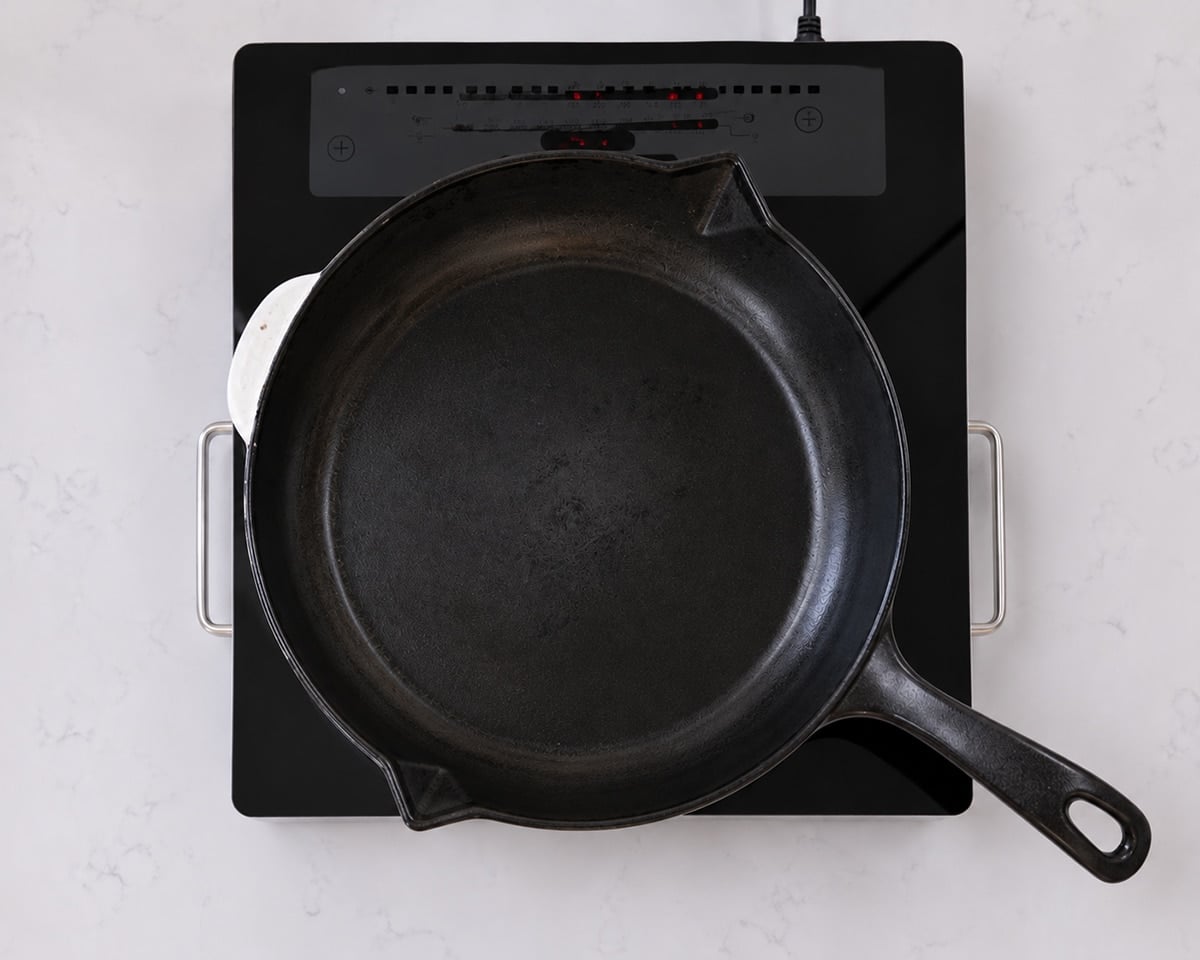
- Preheat your skillet on medium-low heat for 15 minutes. Cast iron is ideal. You're shooting for a surface temperature of 300º F.
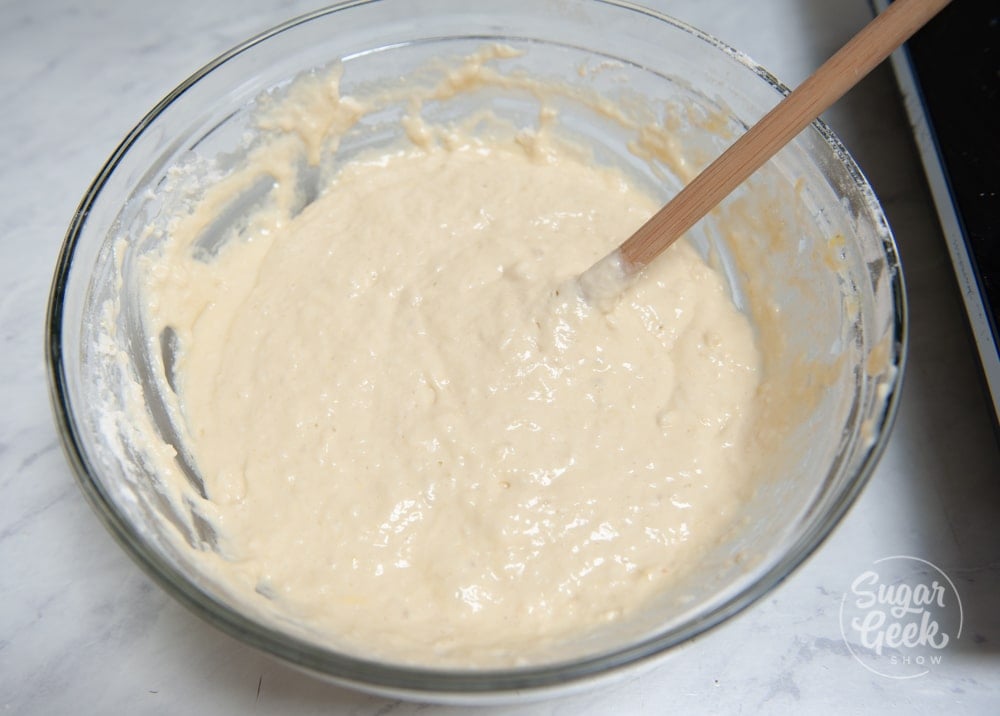
- Combine all ingredients in one bowl and mix until just combined. It will be lumpy. Lumps are fine, even preferred. Over-mixing develops the gluten in the flour and gives you tough, rubbery pancakes.
PRO TIP: Low and slow is the only way to cook fluffy pancakes. If the pan is too hot, the outside browns before the inside cooks through and you end up with a gummy middle. Use a surface thermometer the first time if you have one.
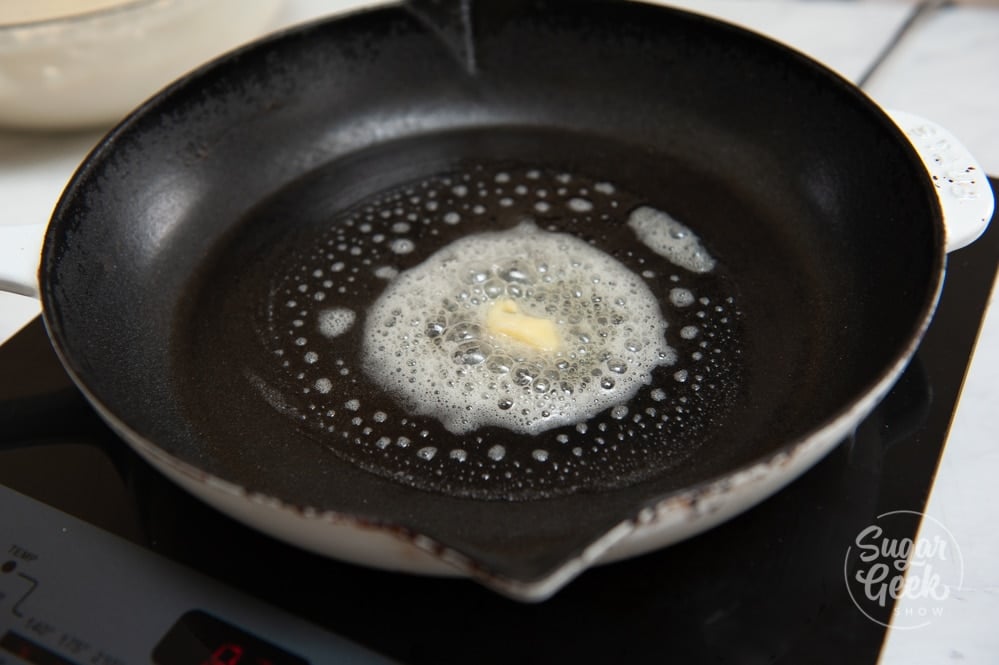
- Melt 1 teaspoon of butter in the hot skillet. Butter is what gives the pancakes their crispy edges.
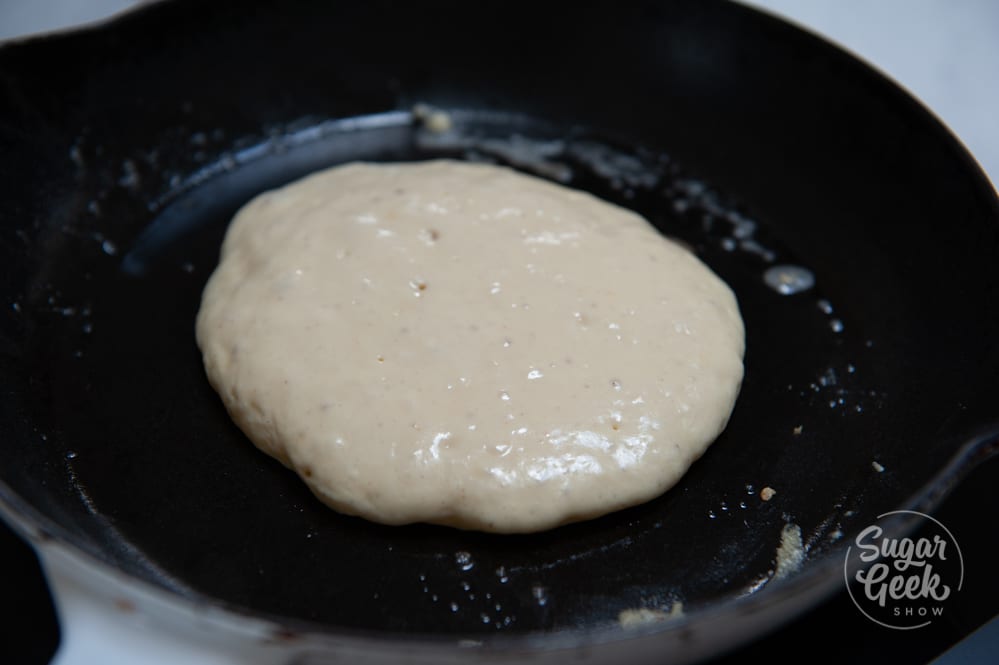
- Pour about ½ cup of batter into the skillet for each pancake. Cook for 5 minutes or until the edges look dry and holes are forming on top.
PRO TIP: The "bubbles on top" rule is the classic doneness cue, but it doesn't tell the whole story. Pancakes are ready to flip when THREE things happen at once: (1) the edges look dry and matte instead of wet and shiny, (2) holes have formed and stayed open on top instead of closing back up, and (3) the bottom side has a clean, dry release when you slide a spatula under. If only the bubbles have appeared, give it another 30 to 60 seconds.
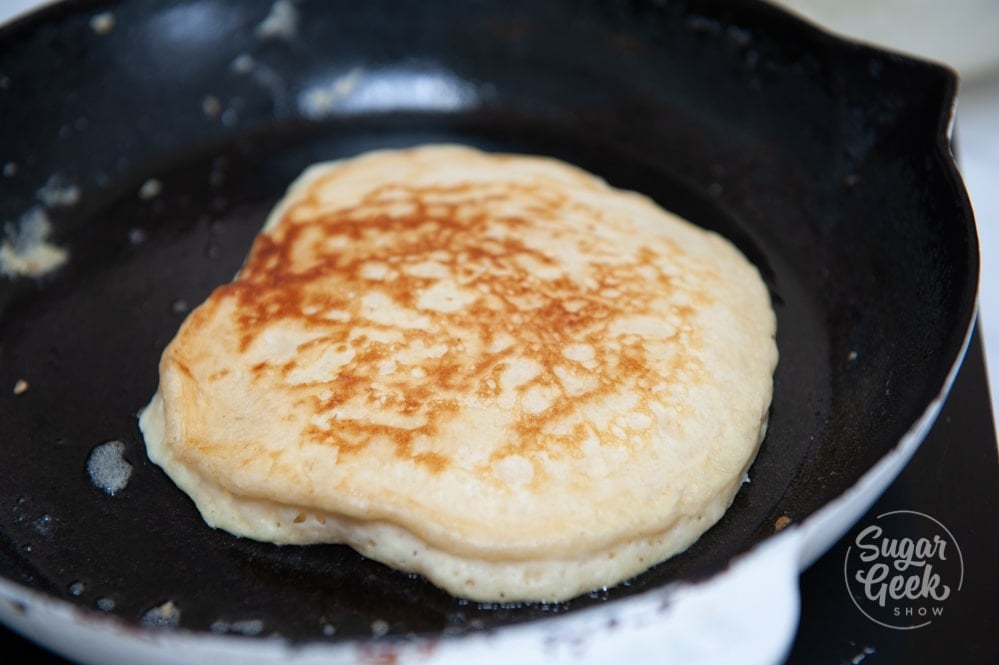
- Flip the pancake and cook for another 3 minutes. Only flip ONCE. Flipping back and forth deflates the pancake and ruins the fluff.
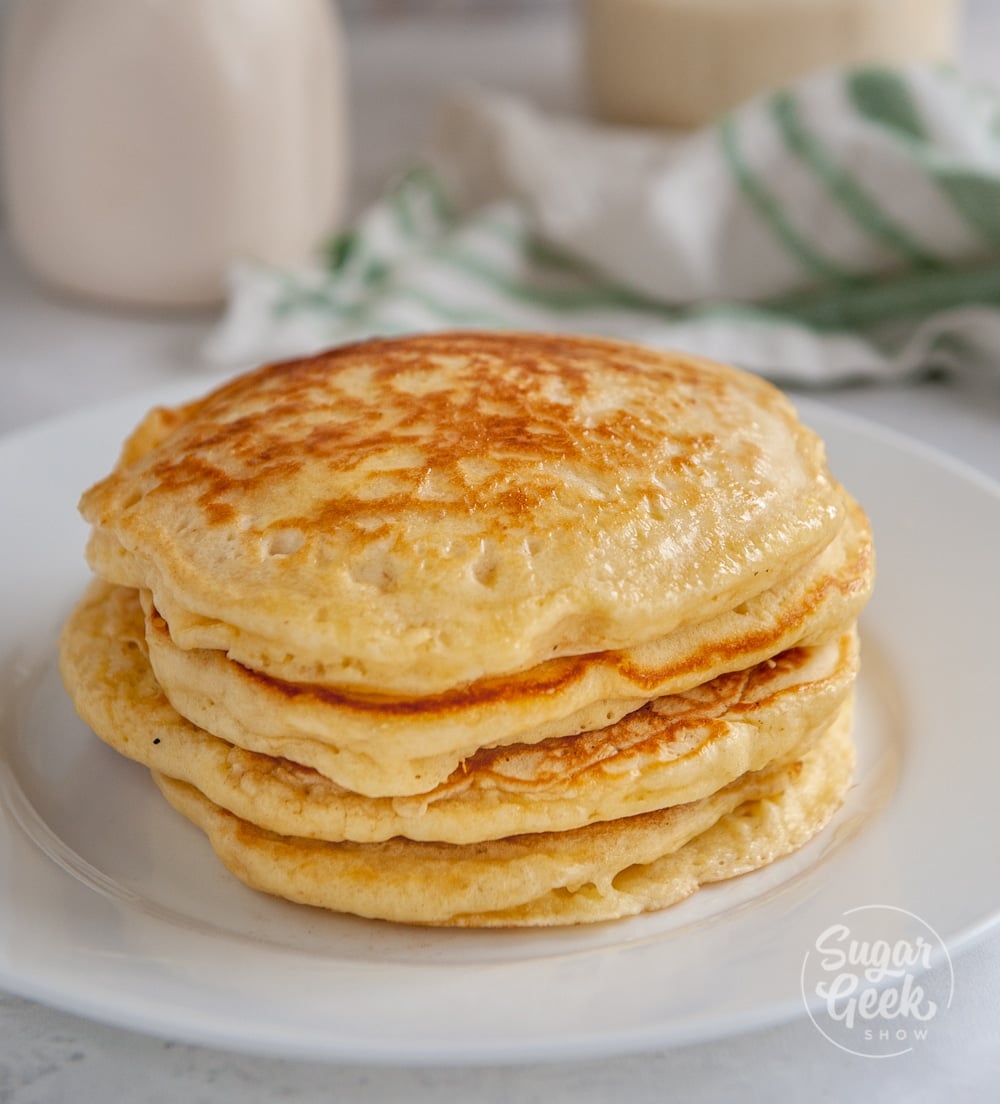
- Serve immediately with more butter and your favorite topping. Avalon's vote is cinnamon and sugar.
Enjoy! I slather mine in more butter, but my daughter Avalon prefers hers with cinnamon and sugar. So good!
Same-Day Vs. Overnight Ferment
The most common question I get on this recipe: "Can I mix the batter the night before?" Yes, but with one important rule.
Same-day (fastest, easiest, mild tang). Mix everything together in one bowl. Cook immediately. Done in under 10 minutes of active time. This is the version I make most mornings.
Overnight ferment (deeper tang, more flavor complexity). Mix everything EXCEPT the baking soda and baking powder the night before. Cover the bowl with plastic wrap and refrigerate. In the morning, whisk in the baking soda and baking powder right before cooking. The reason: baking soda's reaction with sourdough acid is immediate, and the leavener loses most of its lift within 5 to 30 minutes of mixing. If you add it the night before, the reaction is completely dead by morning, and your pancakes come out flat. Adding the leaveners in the morning gives you both the deeper flavor of an overnight ferment AND the fluffy rise from a fresh leavener reaction.
The cold-batter problem. Cold-fermented batter straight from the fridge doesn't spread or rise the same way warm batter does. Cold batter pancakes come out smaller, denser, and slightly less fluffy. Two ways to fix it: pull the bowl out of the fridge 20 minutes before cooking to take the chill off, or add the leaveners and let the batter sit on the counter for 10 minutes before cooking. Either works.
Bottom line. Same-day for speed and reliability. Overnight for flavor depth when you have time to plan. Both are great.
Common Sourdough Discard Pancake Problems To Avoid
- Pancakes are gummy in the middle. The pan was too hot. The outside browned before the inside cooked through. Reduce the heat to low, let the pan come back down, and try again.
- Pancakes are flat and dense. Either you over-mixed the batter (gluten developed, lost the air) or your leaveners are old. Check the date on your baking soda and baking powder. If it's older than 6 months, it needs to be replaced.
- Pancakes are tough and chewy. Same cause as flat ones, over-mixing the batter. Mix until just combined, lumps and all. Lumps are not a problem; they're the goal.
- Edges are burnt, middle is raw. Pan was way too hot. Drop the pan to a lower setting.
- Pancakes don't rise at all in the pan. The mixed batter sat for too long before cooking. The baking soda + sourdough acid reaction is mostly dead within 30 minutes. Cook the batter within 5 minutes of mixing for the best lift.
- Pancakes look dense and don't rise in the pan. Cold-fermented overnight batter going straight from the fridge into the pan. Warm the batter to room temp first, or skip the overnight ferment.
- Pancakes get rubbery as they sit on the plate. Gluten continues to relax and the residual acid keeps working as the pancake cools. Serve hot off the griddle, or hold finished pancakes in a single layer on a wire rack in a 200º F oven (NOT stacked, stacking traps steam and makes them soggy).
- Bubbles formed, but the bottom isn't done yet. This is normal with overnight-fermented or whole-grain batters. The bubble timing is faster than the cooking time. Trust the edges (dry and matte) and the spatula test (clean release) over the bubble cue.
Make This Sourdough Discard Pancake Recipe Your Own
The base recipe is the starting point. Here's how to push it in a dozen directions.
- Egg-white folding for extra fluffy pancakes. Separate the 2 eggs. Whisk the yolks into the wet ingredients as normal. Fold the unwhipped whites in last with a spatula, just until the white streaks are gone. You don't need to whip them, the gentle fold adds loft. Pancakes come out noticeably taller and lighter.
- Sheet pan pancakes (meal prep). Pour the entire batter into a parchment-lined half-sheet pan (12x18), bake at 425º F for 12 to 15 minutes. Slice into squares. One batch yields about 12 squares, perfect for freezer breakfasts.
- Active starter swap. You can use 1 cup of active, recently-fed sourdough starter instead of discard. Pancakes will be milder in tang and slightly more risen (the active yeast adds extra lift on top of the leaveners). Some people prefer the mild version. Discard is the everyday default because it uses up what would otherwise be waste.
- Sweet mix-ins (fold into the batter before cooking). Chocolate chips, blueberries, sliced banana, raspberries, diced apple + cinnamon, lemon zest + poppy seeds, vanilla extract (try a teaspoon, a reader recommended this).
- Savory mix-ins (drop sugar to 1 Tablespoon). Chopped chives + shredded cheddar, crumbled bacon, diced ham + Swiss, roasted corn + jalapeno, sliced scallions + sesame seeds.
- Whole wheat. Swap half the AP for whole wheat AND add 2 extra Tablespoons of milk. Pancakes are slightly nuttier and less light, but still fluffy.
- Dairy-free. Swap whole milk for oat milk (closest in texture), almond milk (thinner, works fine), or coconut milk (richer, slight coconut flavor).
- Pikelet-thick version. Use only 8 oz of milk instead of 14 oz. Batter will be much thicker and you can make my sourdough pikelets instead, which are the thicker, smaller, savory-friendly cousin of these pancakes.
Make-Ahead, Storage, And Reheating
Discard pancakes are the perfect meal-prep breakfast. Here's how to make them ahead.
- Mixed batter (without leaveners) in the fridge. Up to 24 hours. Add baking soda and baking powder right before cooking.
- Mixed batter (with leaveners) in the fridge. Up to 30 minutes. After that the leaveners die and pancakes come out flat. Cook within the window.
- Cooked pancakes at room temperature. Up to 2 hours, single layer or in a 200º F oven on a wire rack. Don't stack while hot (traps steam, makes them soggy).
- Cooked pancakes in the fridge. Airtight container with parchment between layers. Up to 4 days.
- Cooked pancakes in the freezer. Flash-freeze in a single layer on a parchment-lined sheet pan for 1 hour, then transfer to a zip-top bag with parchment between pancakes. Up to 3 months.
- Reheating from frozen. Toaster (best, gives crispy edges back), microwave (15 to 20 seconds, fastest), 325º F oven for 8 minutes (best for a big batch). No need to thaw first.
- Sourdough discard itself. Cover and refrigerate up to a week, freeze in a labeled bag up to 3 months.
Final Thoughts
Sourdough discard pancakes are how you justify keeping a starter when life gets busy and you don't have time to bake a loaf every week. One cup of discard, five minutes of active time, and you've turned the part you'd otherwise throw out into the best breakfast of the week. Avalon votes them up every time.
If your starter is still building strength, my starter not rising troubleshooting guide covers the 5 most common reasons and the fixes for each.
If you love these pancakes and want to branch into the full sourdough cluster, my sourdough pikelets are the thicker, smaller, more savory-friendly cousin, and my sourdough bread is the long-form project once you're ready to graduate from discard recipes.
When you want the weekend project version, my sourdough cinnamon rolls take the discard tang into enriched dough territory with cream cheese frosting on top.
For the full picture on storage, freezing, and the rotation calendar that ties all my discard recipes together, see my master sourdough discard guide.
Sourdough Discard Pancake FAQs
Yes. A reader mentioned adding a teaspoon of vanilla, and her family loves it. It rounds out the flavor and pairs especially well if you're going sweet with maple syrup or cinnamon sugar.
Yes, as long as it doesn't smell like nail polish remover (that's alcohol from the yeast eating itself, time to start fresh). A reader confirmed that older discard works perfectly. Older discard just has a more pronounced sour flavor.
Yes. Pancakes will be milder in tang and slightly more risen. See the "Active starter swap" note in Make This Recipe Your Own above.
Any neutral oil works. A reader used avocado oil, and it came out great. Don't use olive oil because the flavor comes through.
Over-mixed batter. Mix until just combined, lumps and all. Over-mixing develops the gluten and gives you dense, gummy pancakes instead of fluffy ones.
More Sourdough Discard Recipes To Try

Leave Me A Review
⭐️⭐️⭐️⭐️⭐️
If you tried this Sourdough Discard Pancake Recipe or any other recipe on my blog, please leave a 🌟 star rating and let me know how it goes in the comments. I love hearing from you!
Recipe
Ingredients
- 10 ounces all-purpose flour about 2 cups spooned and leveled
- 1 cup sourdough discard more or less is ok
- 1 teaspoon baking soda
- 2 teaspoons baking powder
- 3 Tablespoons Sugar
- 14 ounces milk about 1 ¾ cups
- 2 large eggs
- 2 Tablespoons canola oil
- 1 teaspoon salt
- 4 Tablespoons butter for the pan
Instructions
- Before you begin: Pull your sourdough discard, eggs, and milk out of the fridge 30 minutes before mixing so they're not ice-cold. Cold batter doesn't spread or rise the same way warm batter does. Preheat your skillet on medium-low heat for 15 minutes (surface temp around 300º F).
- Combine all ingredients in one bowl and mix until just combined. It will be lumpy and that's ok. Don't over-mix.
- Melt 1 teaspoon of butter in the hot skillet.
- Pour about ½ cup of batter into the skillet for each pancake. Cook for 5 minutes or until the edges look dry, holes have formed and stayed open on top, and the bottom releases cleanly from the pan.
- Flip the pancake and cook for another 3 minutes. Only flip ONCE.
- Serve immediately with more butter and your favorite topping.
Video
Notes
- A full cup of discard gives you the most sourdough flavor. Less is fine if that's what you have, the pancakes will just be milder.
- Use a kitchen scale to weigh the flour. Cup measurements vary by up to 50 percent depending on how you scoop.
- Save sourdough discard in the fridge for up to a week. Any longer and the flavor turns bitter.
- Mix everything EXCEPT the baking soda and baking powder the night before. Refrigerate overnight.
- In the morning, whisk in the baking soda and baking powder right before cooking. The reaction is immediate and dies within 5 to 30 minutes, so cook the batter fast.
- Cold-fermented batter doesn't spread the same way warm batter does. Bring the bowl out 20 minutes before cooking, or let the batter sit at room temp for 10 minutes after adding the leaveners.
- Cast iron is ideal for even, low-and-slow heat.
- Non-stick griddle works for batch cooking 4 to 6 pancakes at once.
- Sheet pan pancakes: pour all batter into a parchment-lined half-sheet pan and bake at 425º F for 12 to 15 minutes. Slice into squares for meal prep.
- Mixed batter without leaveners: fridge up to 24 hours.
- Mixed batter with leaveners: cook within 30 minutes.
- Cooked pancakes: fridge up to 4 days in an airtight container.
- Cooked pancakes in freezer: flash-freeze single layer for 1 hour, then bag, up to 3 months.
- Reheat from frozen in the toaster (best), microwave 15 to 20 seconds, or 325º F oven for 8 minutes.
- Sweet: chocolate chips, blueberries, banana, lemon zest, vanilla extract
- Savory (drop sugar to 1 Tbsp): chives + cheddar, bacon, ham + Swiss, scallions
- Whole wheat: swap half the AP flour for whole wheat AND add 2 extra tablespoon of milk.
- Dairy-free: oat milk closest in texture, almond milk works, coconut milk adds richness.
- Egg-free: 1 flax egg per egg (1 tablespoon ground flax + 3 tablespoon water, sat 5 minutes). Pancakes are slightly denser.
- Active starter instead of discard: 1:1 swap, milder tang and slightly more rise.
- Don't over-mix the batter. Lumps are good. Tough, rubbery pancakes come from over-mixing.
- Don't flip more than once. Flipping deflates the pancake.
- Don't press down on the pancake with the spatula. Squeezes out the air pockets.
- Don't stack hot pancakes. Traps steam, makes them soggy. Use a wire rack in a 200º F oven to hold them.

cj jett says
The pancakes turned out great- but the layout of this page all spread out all over and a ridiculous number of ads ruins the entire thing
Liz Marek says
So glad the pancakes turned out great!
Grace says
They turned out great. I added a teaspoon of vanilla and my family loves them. I make them all the time.
Denise O'Connell says
This was a great discard recipe. They turned out amazing and fluffy