

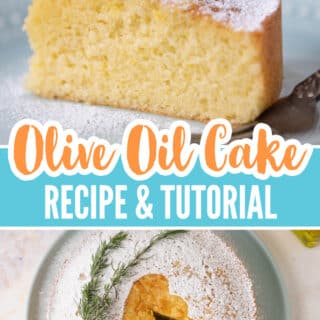


This lemon olive oil cake is a bright, tender Italian-style dessert that comes together in just 40 minutes. Perfect for Mother's Day, dinner parties, or any time you want something simple and special. For more citrus baking, try my Lemon Cake Recipe.
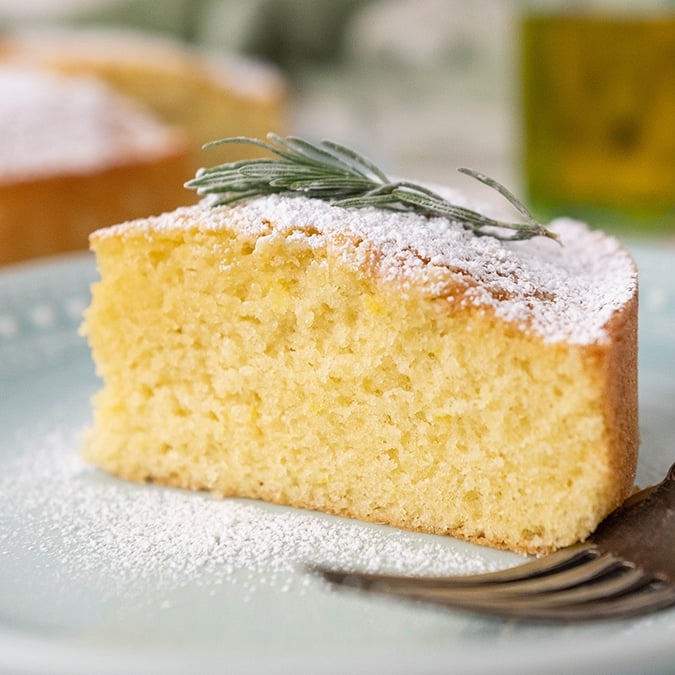
Quick Glance: Lemon Olive Oil Cake
- Recipe Name: Lemon Olive Oil Cake
- Why You'll Love It: Bright, fresh, and tender with real lemon juice and plenty of zest. Not too sweet and surprisingly simple.
- Time and Difficulty: Easy. About 15 minutes prep and 25 minutes in the oven.
- Main Ingredients: Extra-virgin olive oil, fresh lemon juice, lemon zest, eggs, flour
- Method: Whip eggs and sugar until fluffy, drizzle in olive oil, add wet and dry ingredients, and bake in a single 9-inch pan.
- Texture and Flavor: Tender, moist, fragrant, bright, and not too sweet.
- Quick Tip: Use good-quality extra-virgin olive oil. It's the star flavor alongside the lemon, and the cheap stuff will taste flat.
Jump to:
Lemon olive oil cake is one of those desserts that feels fancy but takes almost no effort. It's light, not too sweet, and has that perfect balance of bright citrus and rich olive oil flavor that makes it feel like something you'd order at an Italian restaurant. I love serving it for Mother's Day brunch, dinner parties, or anytime I want a dessert that isn't a traditional frosted cake.
The cake is naturally dairy-free (the only dairy was the buttermilk powder and it's no longer needed), making it a great option for guests with dietary restrictions. It's also beautifully versatile, topped with just powdered sugar it feels elegant and simple, or dressed up with fresh berries, a dollop of whipped cream, or a drizzle of lemon curd for something more special.
What Makes This Lemon Olive Oil Cake So Good
Whipping the eggs and sugar first is the key to the cake's light texture. Most cakes rely on creaming butter and sugar together to build structure, but olive oil cakes whip air into the eggs instead. That aerated egg mixture is what gives you a tender, slightly springy crumb without any butter.
Using real lemon juice instead of water adds another layer of flavor and acidity. The acid in lemon juice reacts with the baking powder for a better rise and gives the cake a bright, fresh citrus note that you can't get from extract alone. Paired with the zest of two whole lemons, the citrus flavor comes through in every bite.
Extra-virgin olive oil does double duty: it keeps the cake moist for days and gives it a distinctive, slightly fruity flavor that sets it apart from every other cake in your recipe box. Since the olive oil is one of the two main flavors (along with the lemon), using a quality oil makes a noticeable difference.
Lemon Olive Oil Cake Ingredients
The beauty of an olive oil cake is that the ingredient list is short, and most of these are pantry staples. What you choose matters more than how many things you use.
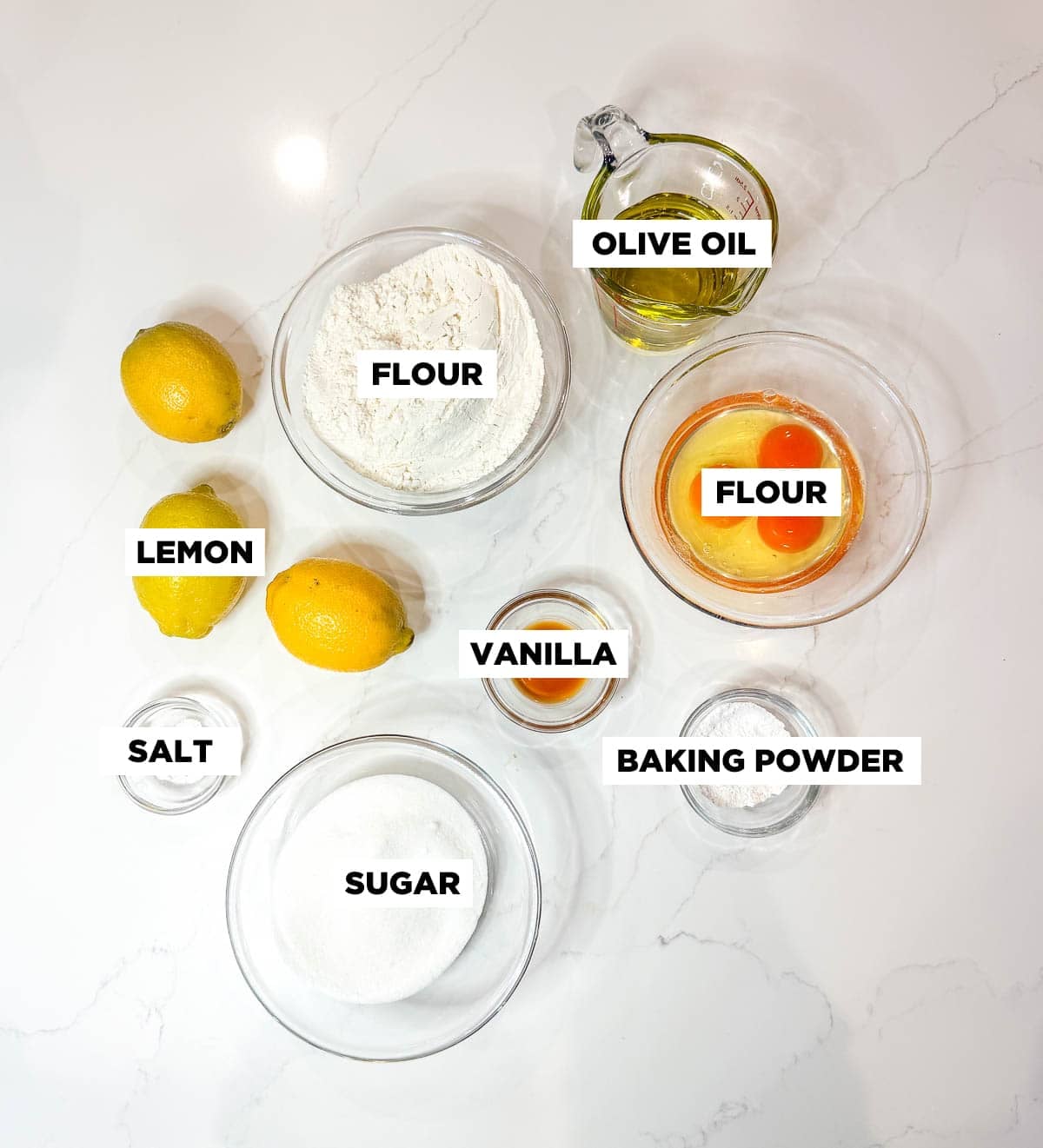
- Extra-Virgin Olive Oil. Use a good-quality extra-virgin olive oil you'd be happy to drizzle over a salad. It's one of the two main flavors in this cake, so cheap or off-brand oil will taste flat. A mild, fruity Italian or California olive oil works beautifully. Don't substitute canola or vegetable oil unless you don't mind losing the signature flavor.
- Fresh Lemon Juice. Real lemon juice, not bottled, brings bright acidity and fresh flavor. The acid also reacts with the baking powder for extra lift. Two medium lemons will give you the 3 ounces you need.
- Lemon Zest. Zest is where the essential oils live, which means most of the lemon's aromatic flavor. Using the zest of two whole lemons gives this cake its bright, fragrant citrus flavor. Zest only the yellow skin, not the bitter white pith underneath.
- Eggs. Room-temperature eggs whip up with more volume than cold ones. The whipped eggs and sugar create the cake's structure, so this step matters.
- Granulated Sugar. Regular white sugar. It sweetens the cake and helps the whipped eggs hold their air.
- All-Purpose Flour. Standard all-purpose works perfectly here. Cake flour would make the cake too delicate for the moisture from the olive oil and lemon juice.
- Baking Powder. Gives the cake its lift. Make sure yours is fresh, older baking powder loses its power.
- Vanilla Extract. Rounds out the flavor and balances the lemon. Use real vanilla extract, not imitation.
- Kosher Salt. Balances the sweetness and brings out the other flavors.
- Powdered Sugar. For dusting the top. It's all the "frosting" this cake needs.
Tips For Success
- Use a kitchen scale for the most consistent results. Weight measurements beat cup measurements every time.
- Bring your eggs to room temperature before whipping. Cold eggs won't whip up to the same volume.
- Zest before juicing. It's much easier to zest a whole, firm lemon than a squeezed one.
- Use a microplane or fine zester. Coarse zest gives you bitter white pith in the cake.
- Drizzle the olive oil in slowly while whipping so it emulsifies with the eggs without deflating them.
- Don't overmix once the flour goes in. Fold just until combined. Overmixing develops gluten and makes the cake tough.
Lemon Olive Oil Cake Step-By-Step
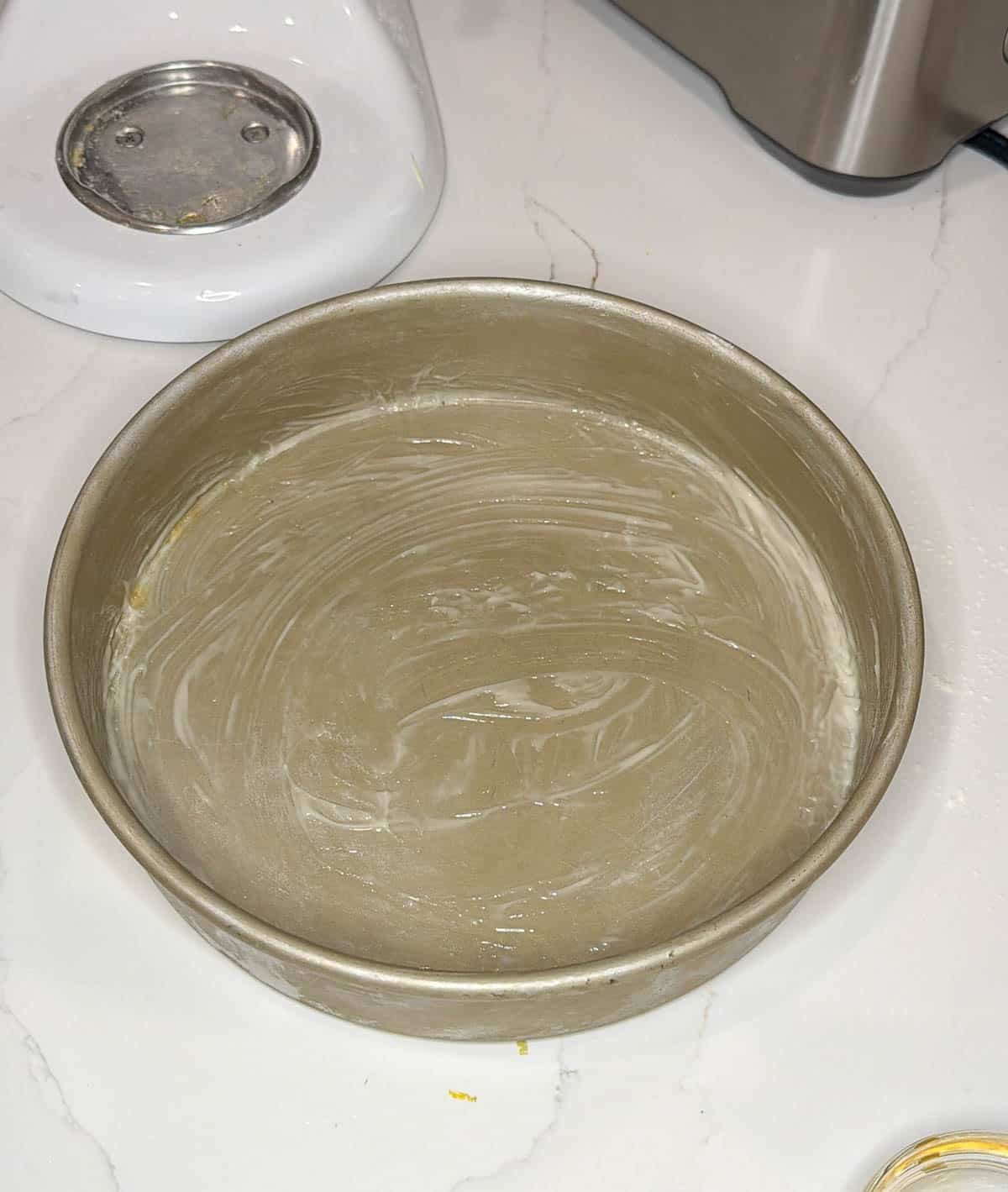
- Preheat the oven to 350°F (177°C) and prepare a 9-inch cake pan with cake goop or parchment paper. You can also use a springform pan or loaf pan if you prefer, just adjust the baking time.
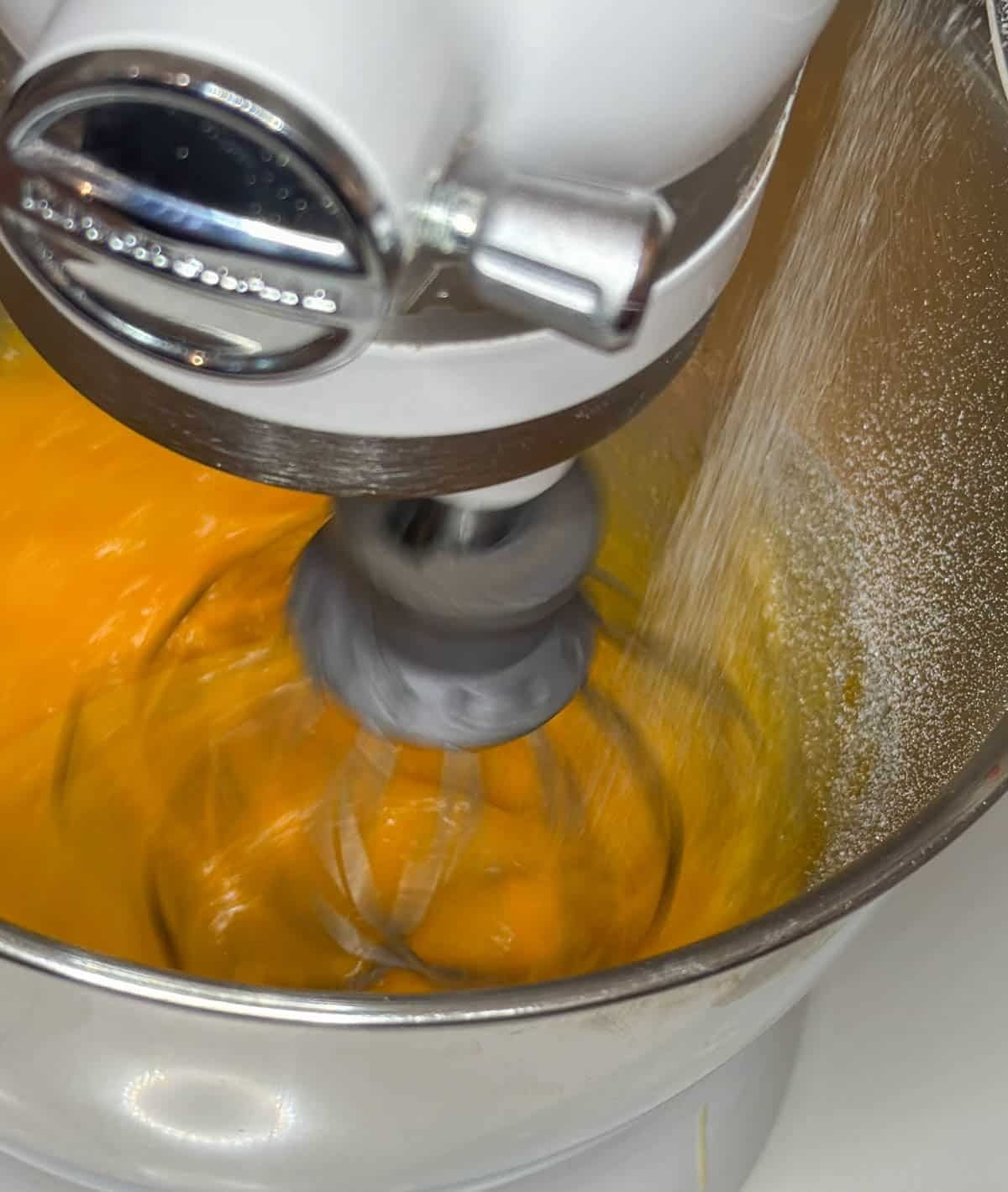
- In the bowl of a stand mixer fitted with the whisk attachment, whisk the eggs on medium-high speed until foamy. With the mixer still running, slowly sprinkle in the granulated sugar until all of it is added. Take your time with this. Continue whipping on high until the mixture reaches the ribbon stage. This will take a few minutes.
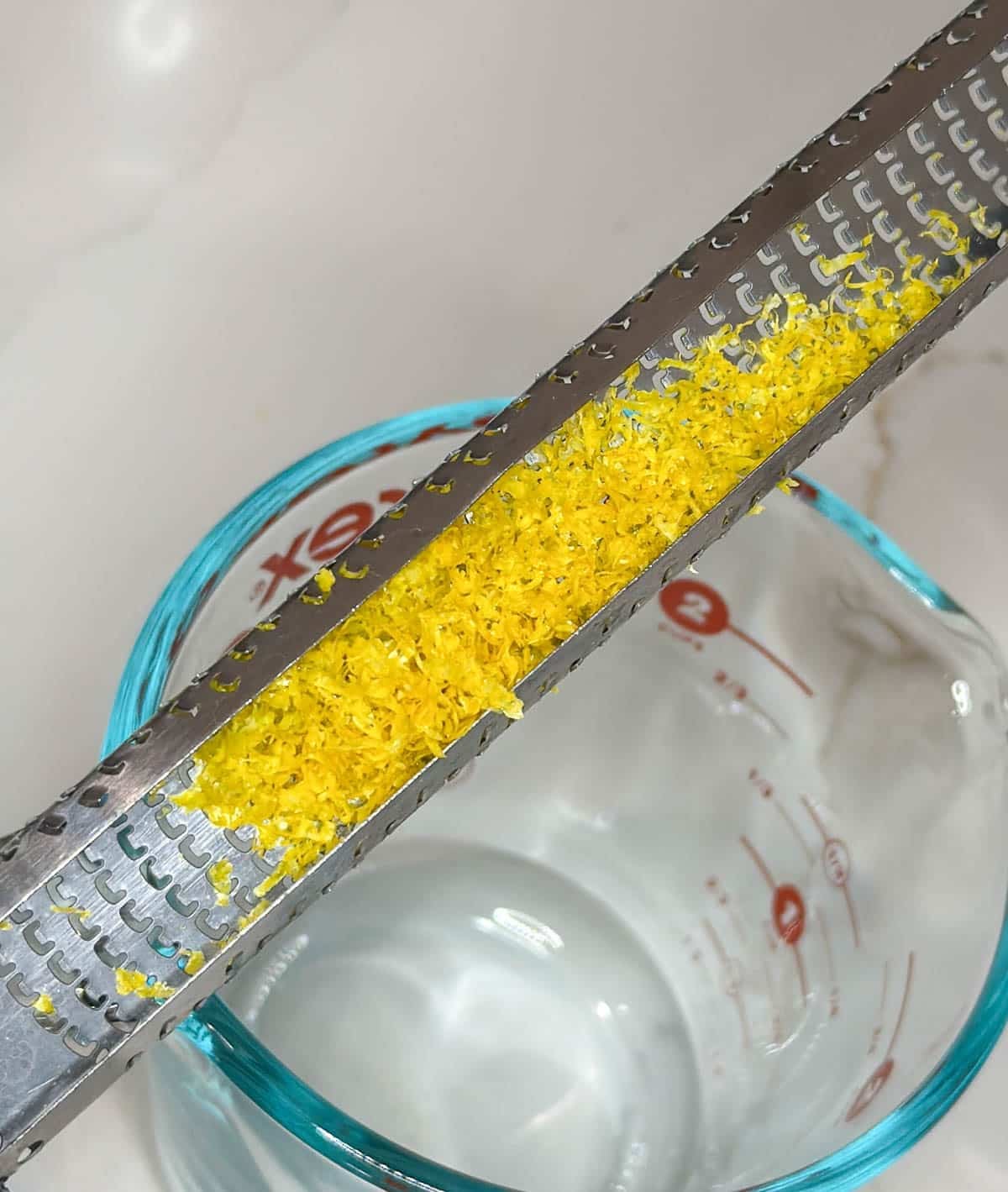
- While the mixer is going, zest and juice your two lemons.
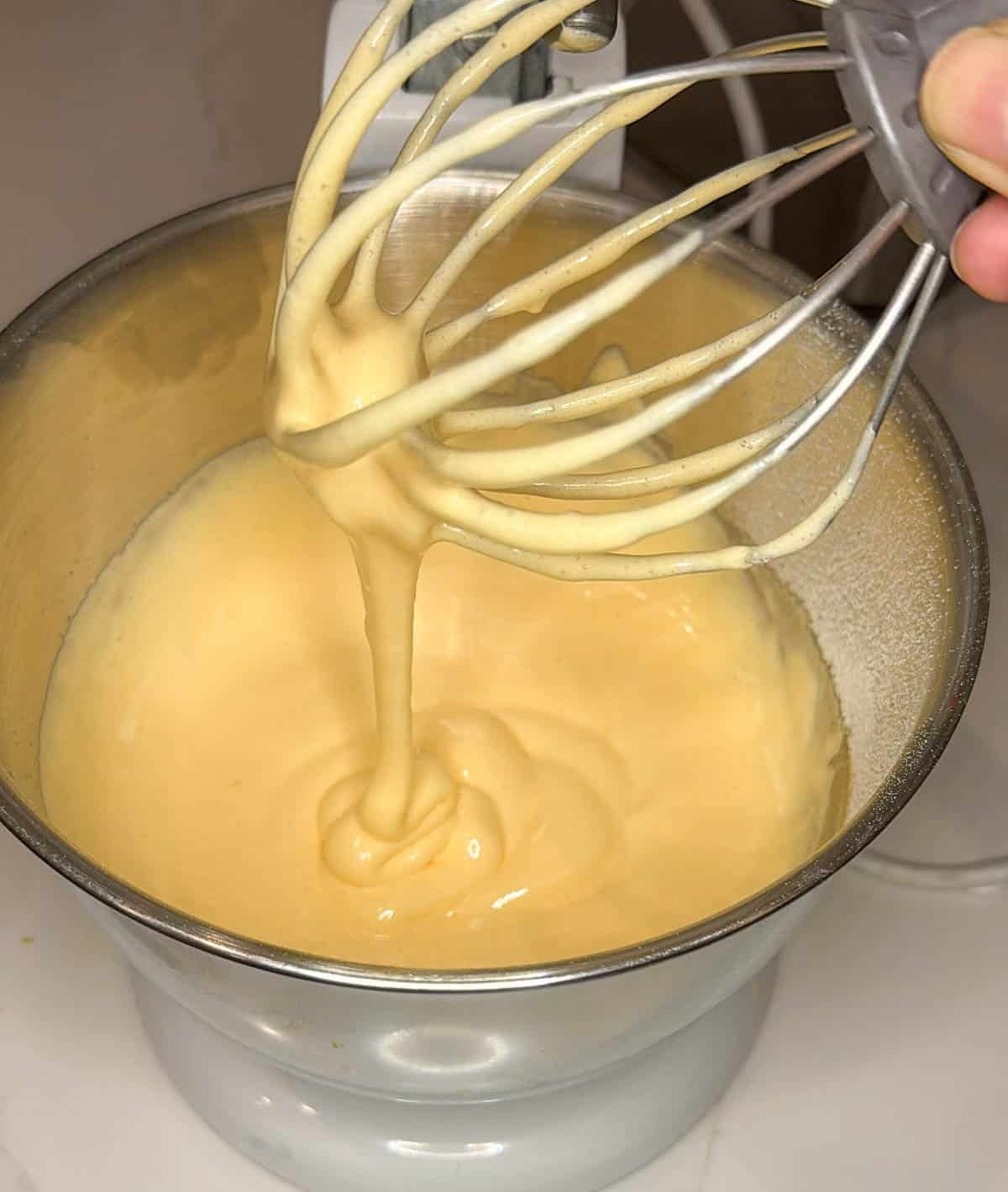
- You'll know the egg mixture is ready when the mixture is thick, foamy, and sort of lays on the surface for a few seconds when you drizzle it back on itself.
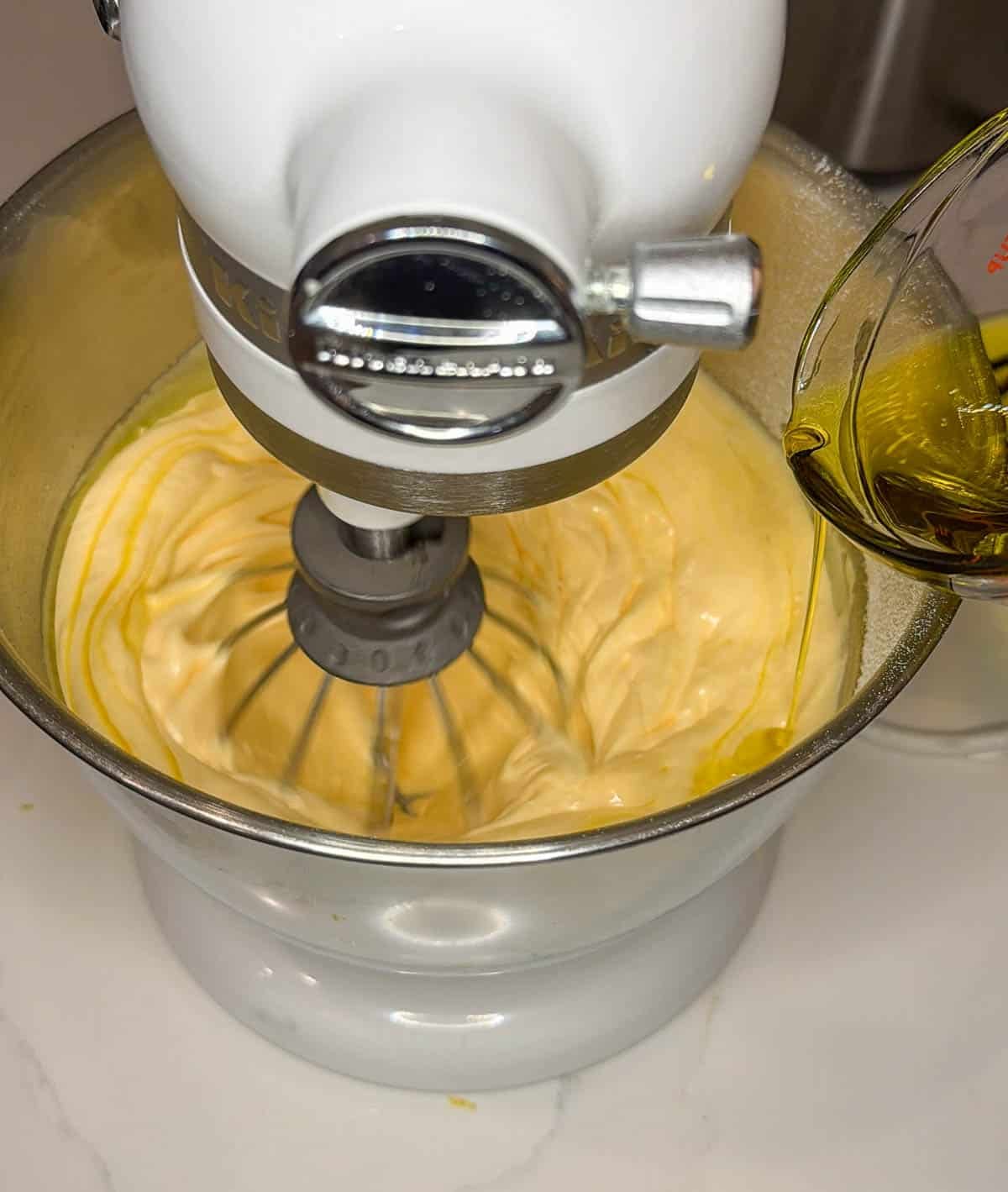
- While the mixer is still running, slowly drizzle the olive oil down the side of the bowl between the whisk blades until fully incorporated.
Add the lemon juice, zest, and vanilla extract. Mix briefly on low until combined.
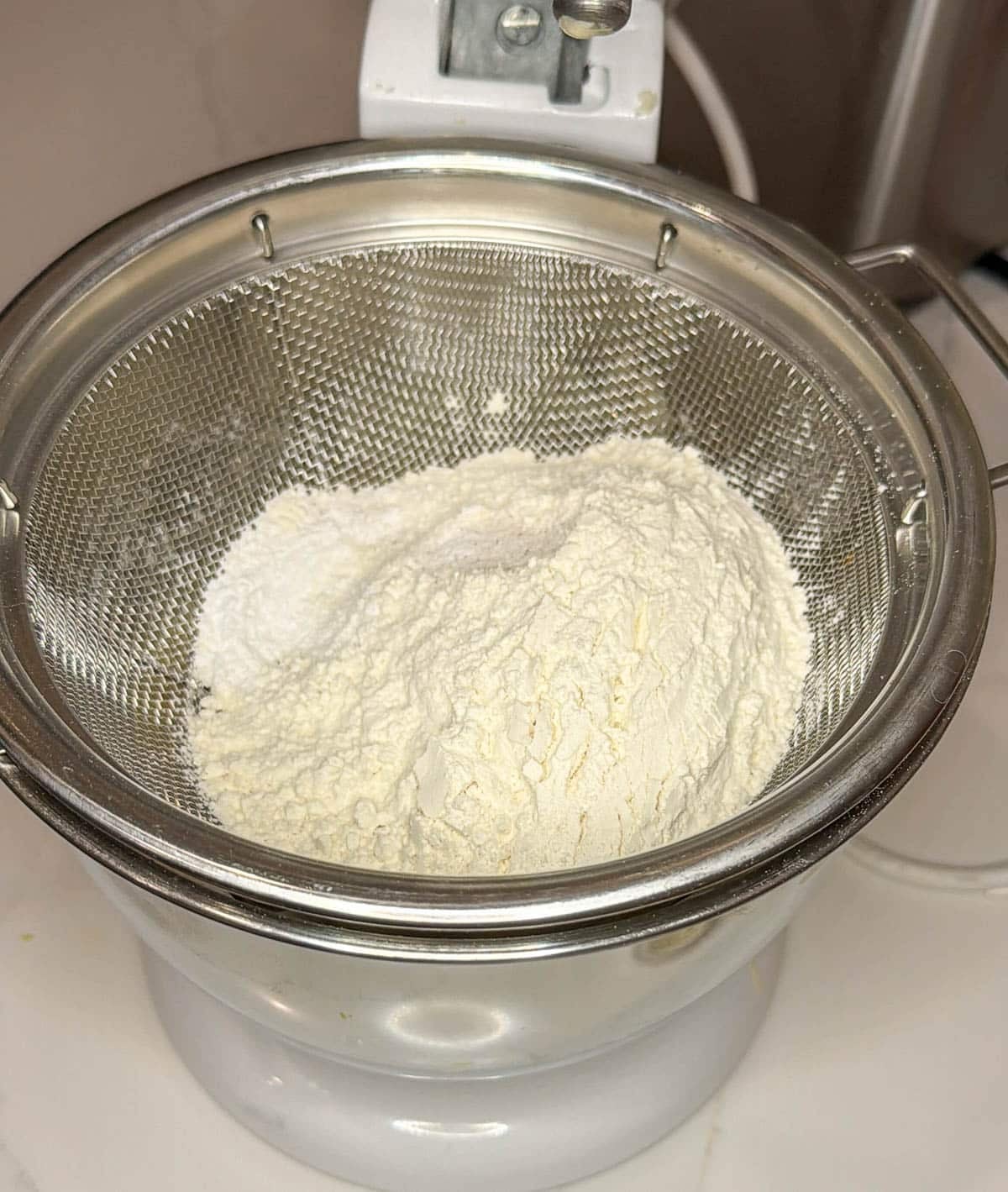
- Place a sifter over the bowl and sift in the flour, baking powder, and salt.
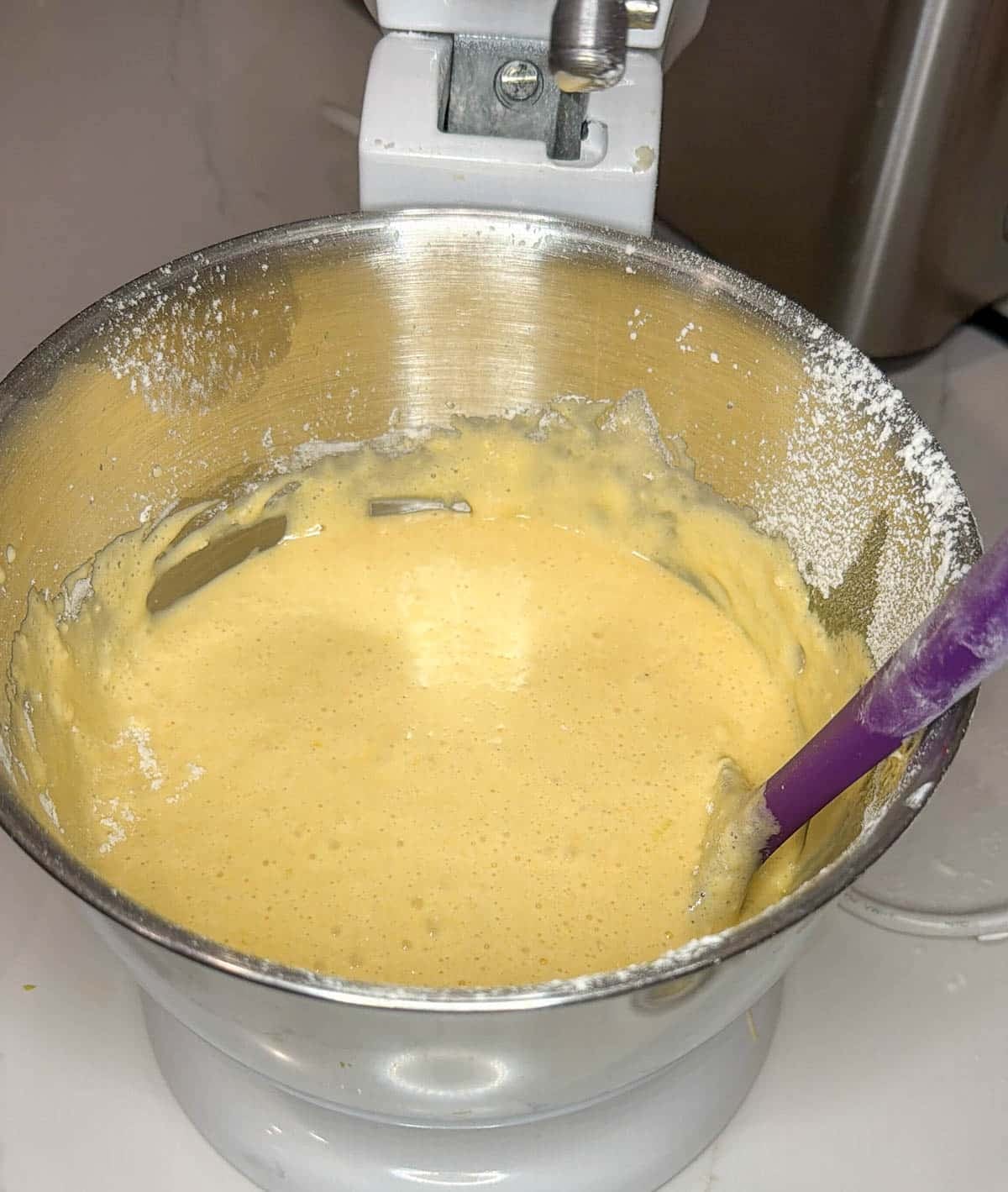
- Fold everything together with a rubber spatula until you no longer see any flour streaks. Do not overmix.
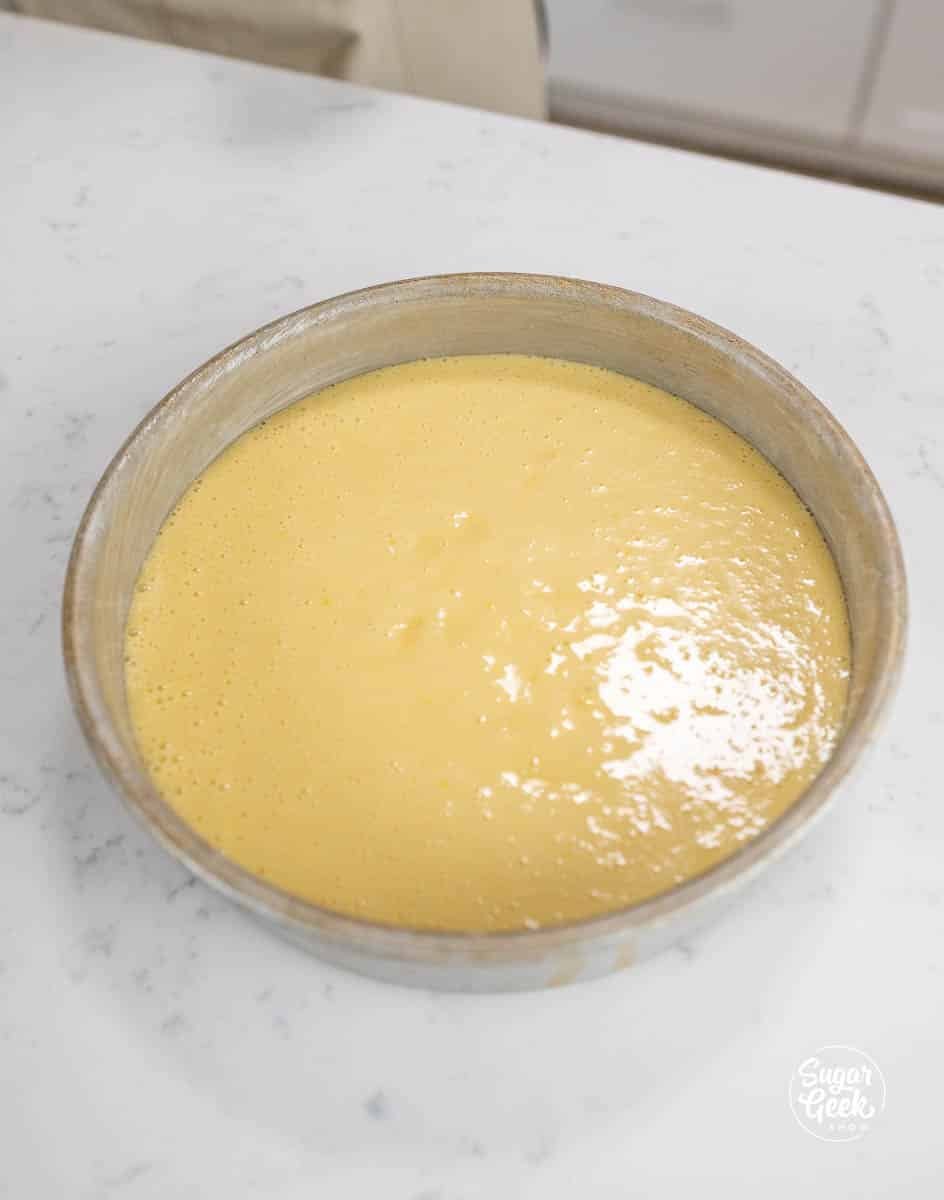
- Pour the batter into the prepared pan.
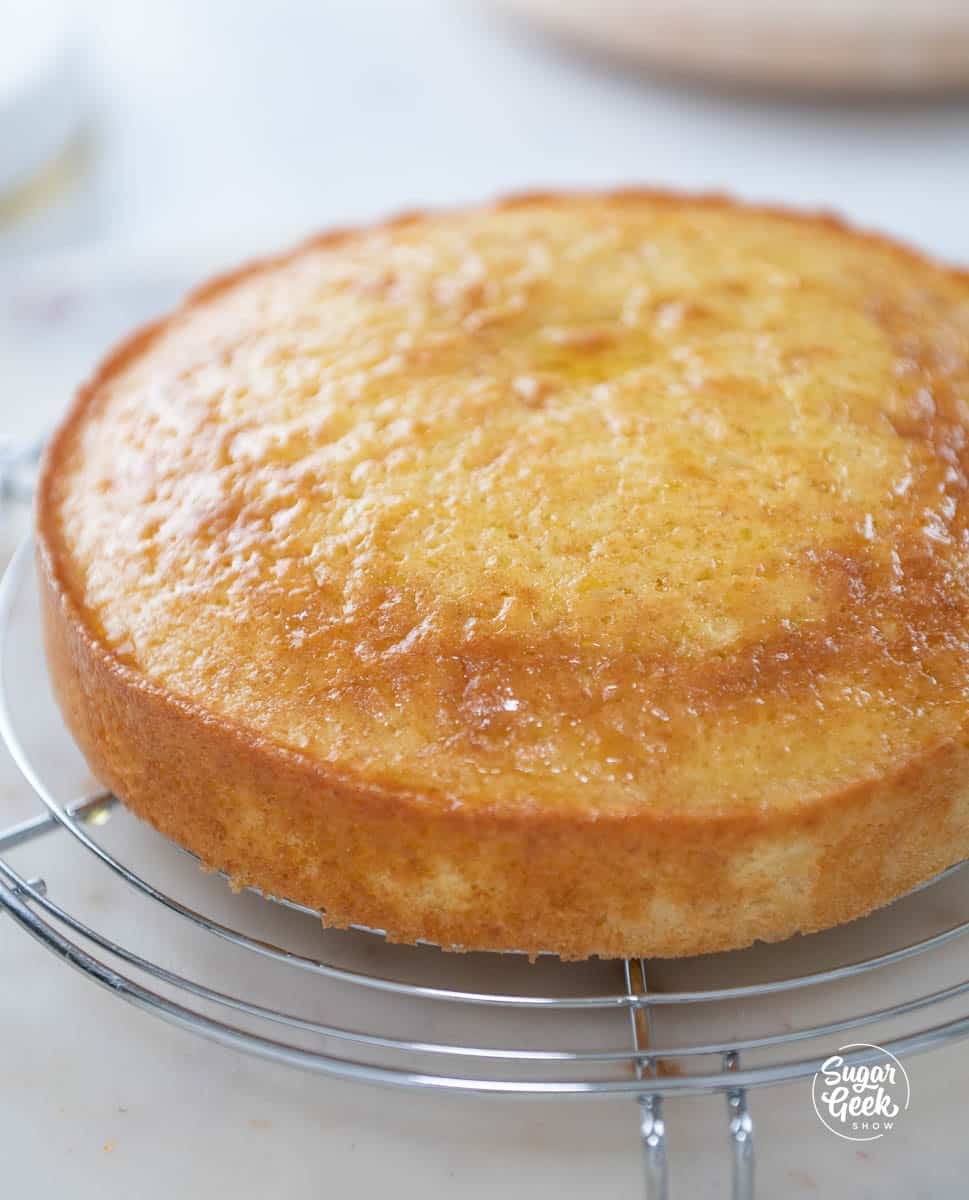
- Bake for 25 -30 minutes, or until the cake is golden brown and a toothpick inserted into the center comes out clean.
Cool the cake in the pan for 10 minutes, then turn it out onto a wire rack to cool completely.
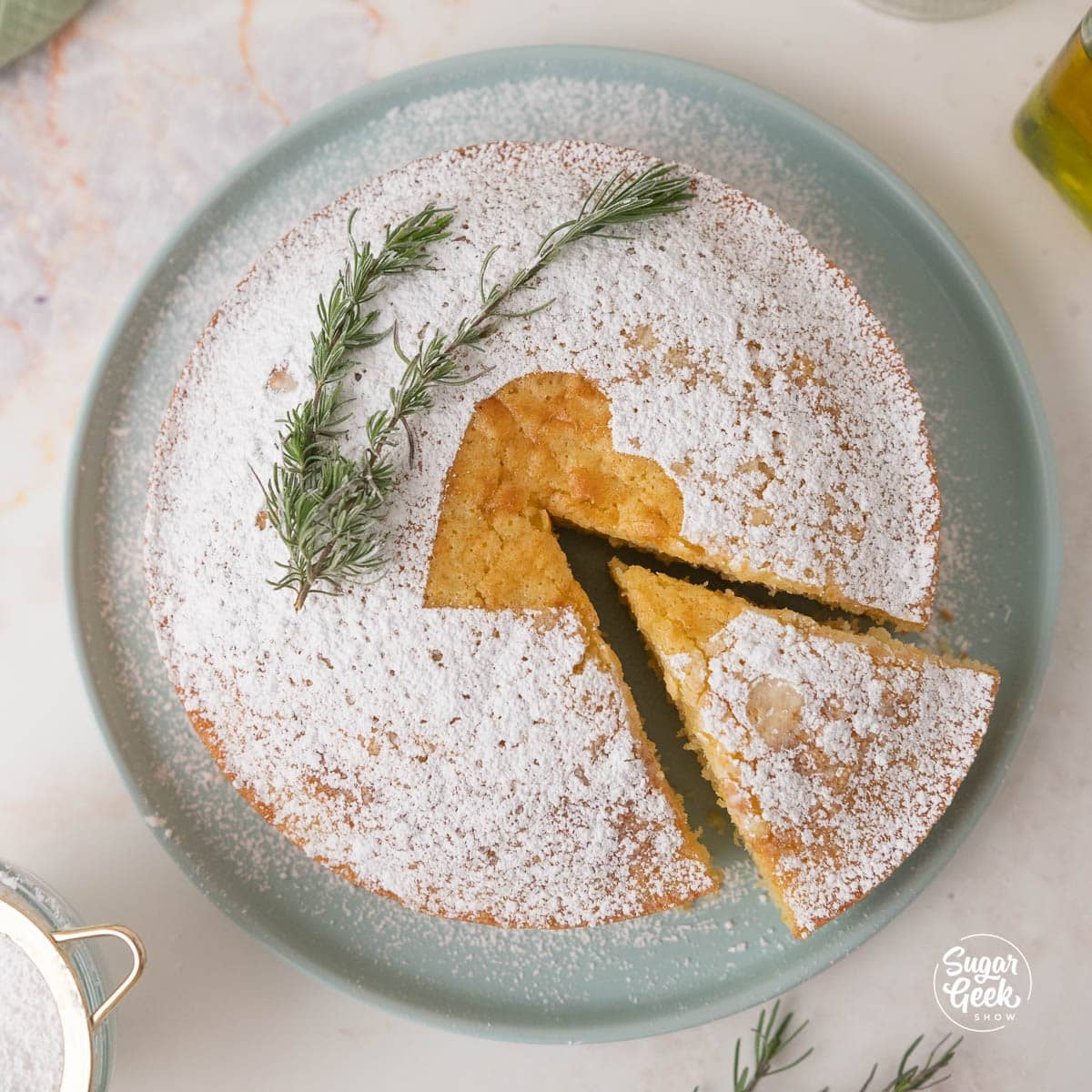
- Place the cooled cake on a serving plate and dust the top with powdered sugar. For a pretty pattern, lay a paper doily or cutout shape on top before dusting, then lift it away. Top with fresh berries, lemon curd, or a dollop of whipped cream if you want something more.
Common Lemon Olive Oil Cake Problems To Avoid
- Opening the oven door during baking. The cake will sink in the middle.
- Using low-quality olive oil. The oil flavor comes through in the finished cake, so it has to taste good.
- Using bottled lemon juice instead of fresh. Bottled lemon juice tastes metallic and flat. Fresh is non-negotiable.
- Zesting too deeply. If you zest into the white pith, your cake will taste bitter.
- Cold eggs. Cold eggs won't whip to full volume, and your cake will be denser.
- Overmixing after the flour goes in. Fold just until combined. Overmixing develops gluten and toughens the cake.
Lemon Olive Oil Cake FAQs
Yes, but in a subtle, pleasant way. The olive oil flavor is rich and slightly fruity, not savory or heavy. Paired with the bright lemon, it tastes more like a fragrant Mediterranean dessert than a salad.
Technically, yes, but the cake won't have the signature flavor that makes olive oil cake special. If you're going to substitute, you may want to try a different recipe. The olive oil is the point.
Olive oil contains heart-healthy monounsaturated fats, so many people consider it a slightly healthier choice than butter. That said, this is still a dessert with sugar and flour, so moderation matters.
Fresh berries (strawberries, blueberries, raspberries) are my favorite. A dollop of stabilized whipped cream, a drizzle of lemon curd, or a scoop of vanilla ice cream all work beautifully. This cake also pairs great with espresso or a glass of Prosecco.
Yes. The flavor actually deepens overnight, so this is a great make-ahead cake. Bake it, let it cool completely, wrap it tightly in plastic wrap, and store at room temperature for up to 5 days. You can also freeze the unfrosted cake for up to 2 months.
Yes. Pour the batter into a greased 9x5-inch loaf pan and bake for about 35 to 45 minutes, or until a toothpick comes out clean. Check for doneness starting at 35 minutes.
Yes, substitute a 1:1 gluten-free all-purpose flour blend (look for one that contains xanthan gum). The texture will be slightly different but still delicious.
More Easy Dessert Recipes To Try


Leave Me A Review
⭐️⭐️⭐️⭐️⭐️
If you tried this Lemon Olive Oil Cake Recipe or any other recipe on my blog, please leave a 🌟 star rating and let me know how it goes in the comments. I love hearing from you!
Recipe
Equipment
- 1 9" x 2" cake pan
Ingredients
- 3 large eggs room temperature
- 5 ounces granulated sugar
- 6 ounces extra-virgin olive oil
- 4 ounces lemon juice
- 2 teaspoons lemon zest zest from two lemons
- ½ teaspoon vanilla extract
- 7 ounces all purpose flour
- 1.5 teaspoons baking powder
- ½ teaspoon kosher salt
- ¼ cup powdered sugar for dusting
Instructions
- Preheat the oven to 350°F and coat an 9" cake pan with cake goop or parchment paper. You can also use a springform pan or loaf pan if you prefer, just adjust the baking time.
- In the bowl of a stand mixer fitted with the whisk attachment, whisk the eggs on medium-high speed until foamy.
- With the mixer still running, slowly sprinkle in the granulated sugar until all of it is added. Continue whipping on high until the mixture reaches the ribbon stage. The mixture should be thick, foamy, and lay on the surface for a few seconds when drizzled back on itself.
- With the mixer still running, slowly drizzle the olive oil down the side of the bowl between the whisk blades until fully incorporated.
- Add the lemon juice, zest, and vanilla extract. Mix briefly on low until combined.
- Place a sifter over the bowl and sift in the flour, baking powder, and salt.
- Fold everything together with a rubber spatula until you no longer see any flour streaks. Do not overmix.
- Pour the batter into the prepared pan and smooth the top with a spatula.
- Bake for 25-30 minutes, or until the cake is golden brown and a toothpick inserted into the center comes out clean.
- Cool the cake in the pan for 10 minutes, then turn it out onto a wire rack to cool completely.
- Place the cooled cake on a serving plate and dust the top with powdered sugar. For a pretty pattern, lay a paper doily or cutout shape on top before dusting, then lift it away.
- Store in an airtight container at room temperature for up to 5 days.
Video
Notes
- Use good-quality extra-virgin olive oil. It's one of the main flavors in the cake, so cheap or off-brand oil will taste flat.
- Use fresh lemon juice only. Bottled lemon juice tastes metallic and dull. Two medium lemons give you the 3 ounces you need.
- Zest your lemons before juicing. A microplane or fine zester gives you the cleanest zest without the bitter white pith underneath.
- This cake is naturally dairy-free. Perfect for guests with dietary restrictions.
- A 9-inch round cake pan is the recommended size and gives you the quick 25-minute bake.
- Springform pan works beautifully for easy release and a clean presentation.
- 9x5-inch loaf pan also works. Bake for 35 to 45 minutes and check for doneness starting at 35.
- This cake tastes even better the next day. The flavor deepens overnight.
- Store in an airtight container at room temperature for up to 5 days.
- Freeze the unfrosted cake for up to 2 months. Wrap tightly in plastic wrap and thaw on the counter still wrapped before serving.
- Top with a simple dusting of powdered sugar for an elegant finish.
- Pair with fresh berries, whipped cream, lemon curd, or a scoop of vanilla ice cream.
- Serve with coffee, espresso, or a glass of Prosecco.
- At elevations above 5,000 feet, reduce the baking powder by ¼ teaspoon and increase the oven temperature by 25°F to prevent the cake from collapsing.
- Do not use bottled lemon juice. Fresh only.
- Do not zest into the white pith. It will make the cake bitter.
- Do not overmix after the flour goes in. Fold just until combined.
- Do not open the oven door during baking. The cake will sink in the middle.




Leave a Reply