
• Skip to primary navigation
  • Skip to main content
  • Skip to primary sidebar
  • Father's Day
  • Recipes
  • Free Tutorials
  • Sign Up
  • About Liz

Sugar Geek Show logo

menu icon
go to homepage
  • Father's Day
  • Recipes
  • Free Tutorials
  • Sign Up
  • About Liz
subscribe
search icon
Homepage link
  • Father's Day
  • Recipes
  • Free Tutorials
  • Sign Up
  • About Liz
×
Home

Blog

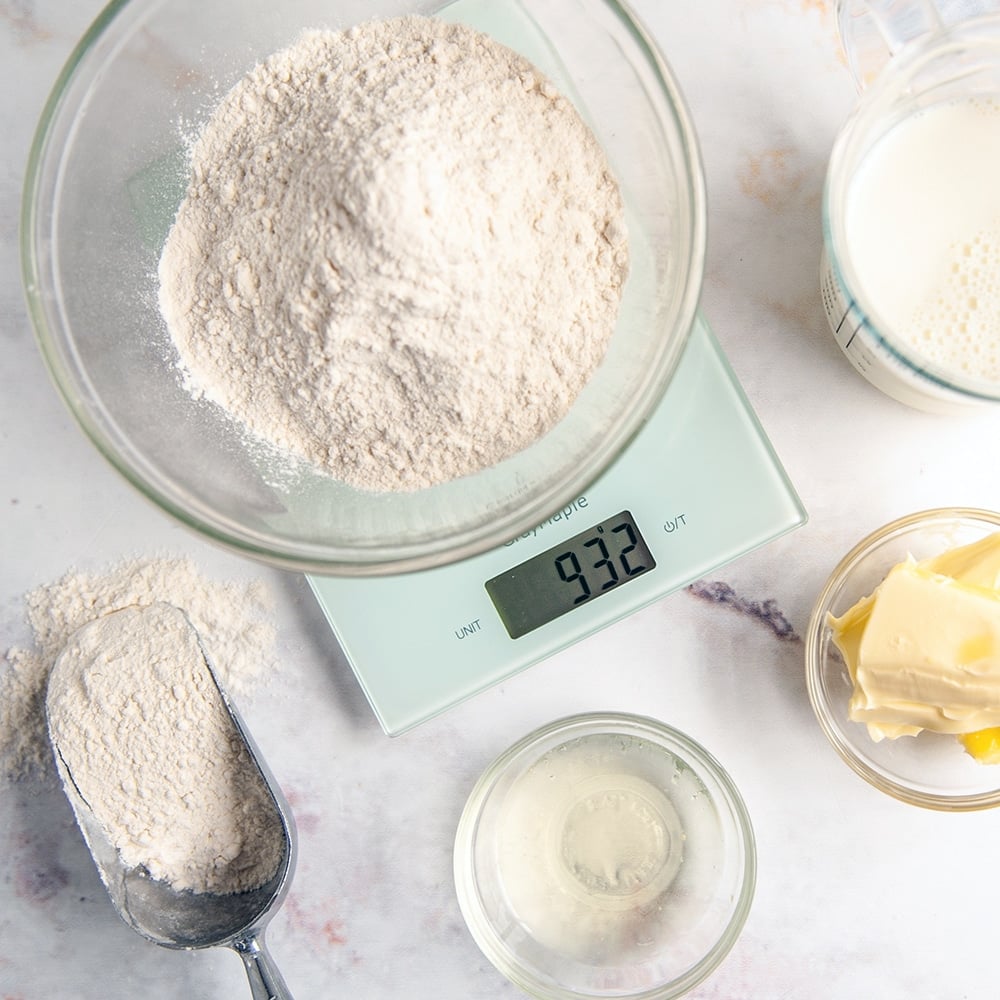
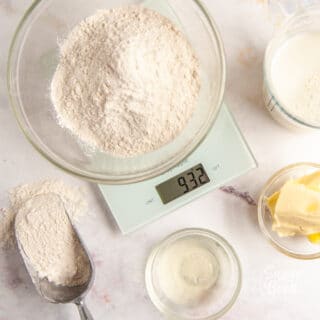
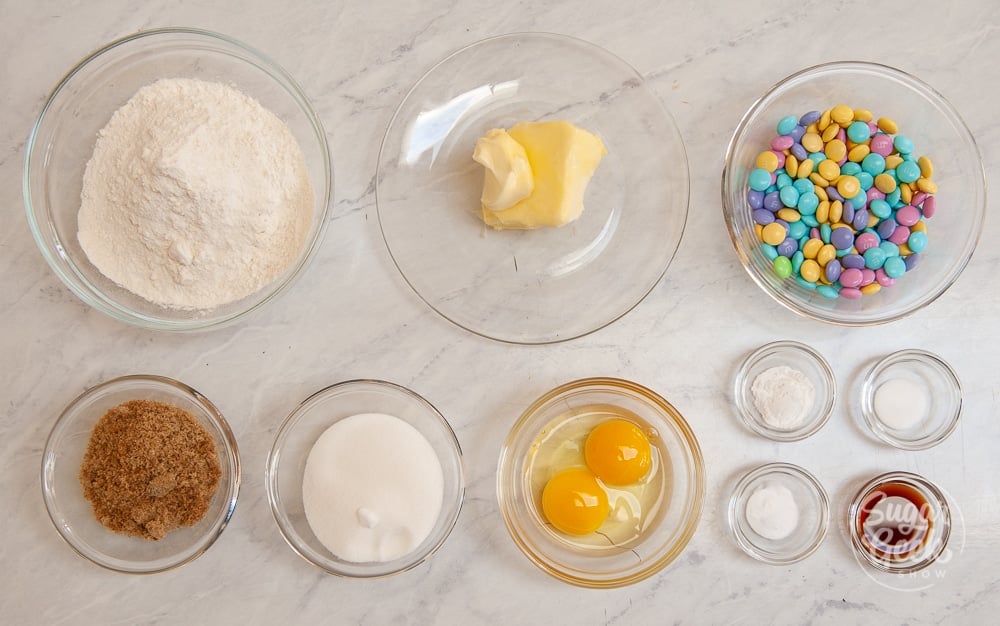
ingredients in clear bowls surrounding digital kitchen scale

May 11, 2020 Blog

How To Use A Digital Kitchen Scale

I use a digital kitchen scale in pretty much every single recipe I post to this blog. Why? Because I want recipes like my french macarons and lemon blueberry cake to turn out perfectly for you every single time. No guessing, no stressing. Let me show you how easy it is to use a kitchen scale for baking.

With a digital kitchen scale, you can easily add your ingredients to your mixing bowl quickly and accurately without dirtying extra cups and dishes. Best of all, you can double and triple recipes easily and get repeatable results every single time.

Don't be intimidated by using a kitchen scale for baking. It's so easy to do and saves you from wasting ingredients, time and from getting frustrated!

What's the difference between measuring cups and a kitchen scale?

Measuring cups measure by volume (how much physical space a substance occupies). A kitchen scale measures by weight or its total mass.

Ever heard that saying, "What's heavier, a pound of feathers or a pound of rocks?" It's a trick question because they both weigh the same. But a pound of feathers might take up a whole room whereas a pound of rocks could fit in the palm of your hand.

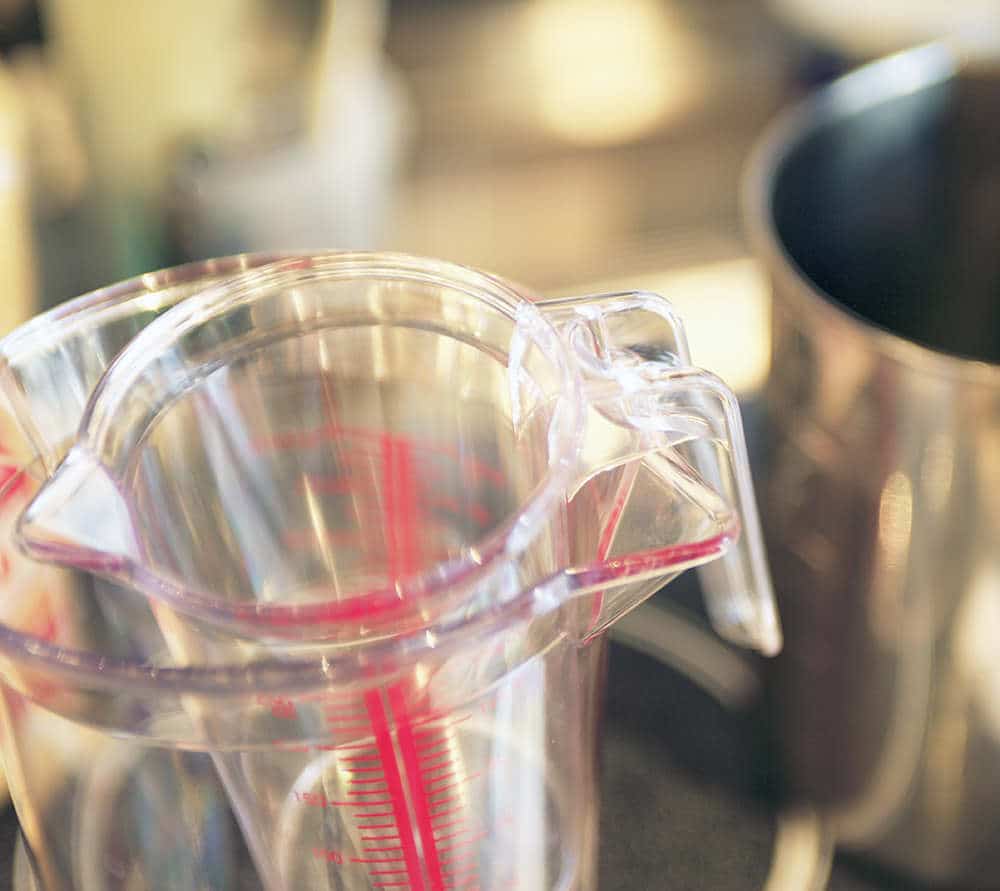
measuring cups

Why should you use a digital kitchen scale?

I never used a digital kitchen scale until I went to pastry school. Until that point, I had always used measuring cups for everything. Not that I was some great baker. I had very limited knowledge of how to even read a recipe when I decided to attend pastry school. But I knew I wanted to not only make beautiful cakes but I wanted them to taste good too!

Our chef made three simple demonstrations. In the first demonstration, he had three measuring cups in front of him. One filled with water, one with flour and one with chocolate chips. Most people with a little experience baking know that one cup equals 8 ounces right? At least that's what I thought.

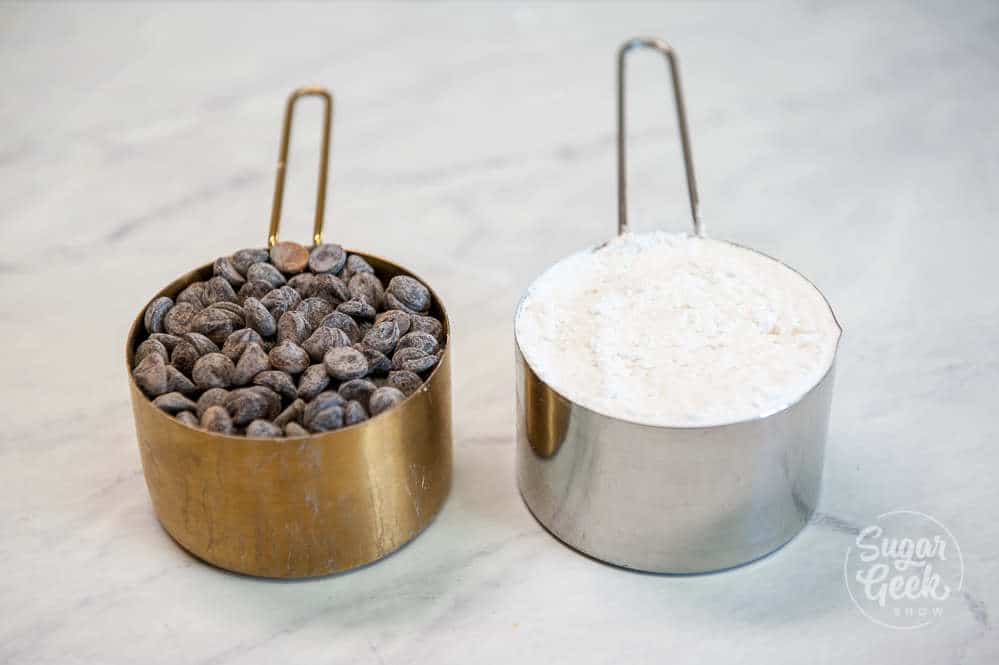
Our chef weighed each cup which revealed that while the cup of water did weigh 8 ounces, the cup of flour only weighed 5 ounces and the cup of chocolate chips weighed 6 ounces. Simply to prove the point that not all ingredients that fill the space of a cup are the same amounts.

one cup of chocolate chips and one cup of flour side by side

So if you see a recipe that says you need 8 ounces of chocolate chips and you think, oh I know how much that is and reach for your cup. You've sadly shorted yourself 2 ounces of chocolate which could cause your recipe to fail and you wouldn't even know why.

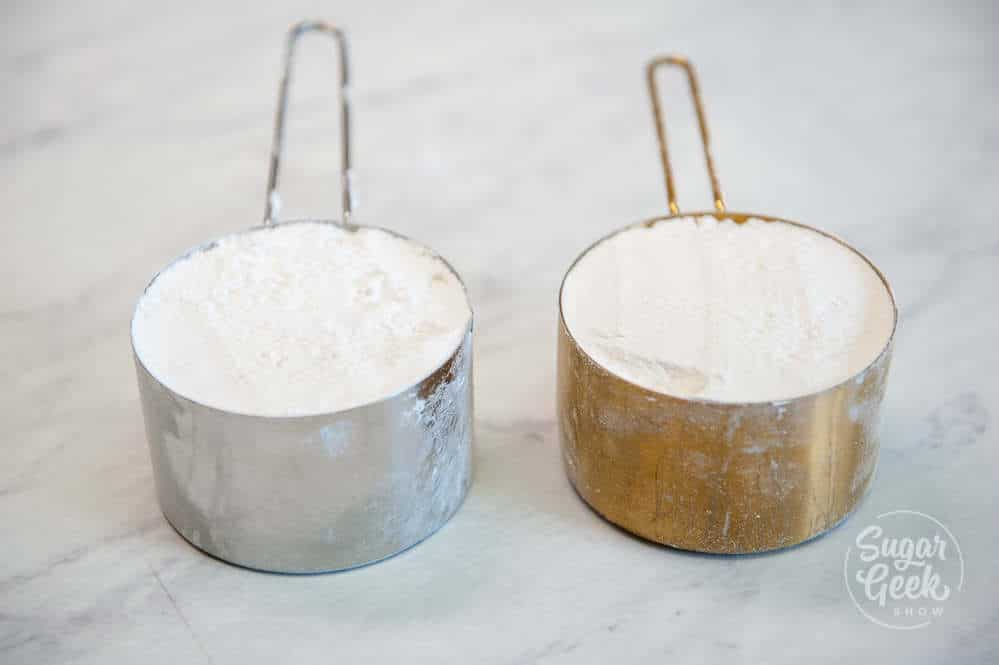
In the second demonstration, he asked one of us to come to the front and scoop up some flour any way we thought would be best. The student did as he was instructed and scooped up the flour then leveled it off with his finger. He then weighed the cup of flour. It was 7 ounces! Two full ounces more than what was in the first cup of flour.

Depending on how you scoop, how packed your flour is and how humid the air is (yes even humidity affects the flour), you can have vastly different amounts of flour each time you scoop. Extra flour can definitely change your recipe.

Two cups of flour don't always weigh the same

In the last demonstration, he asked for another volunteer. This student was given a simple recipe for chocolate chip cookies. All the ingredients were in containers in front of them. Flour, butter, sugar, eggs, etc. The student was asked to measure out the recipe as quickly as he could according to the directions using measuring cups and measuring spoons. Meanwhile, the chef prepared the same recipe using a scale.

You can probably guess where this is going. The student barely had time to measure out the first two ingredients before the chef had completely scaled everything he needed and was ready to mix up his cookie dough. When you're baking professionally (or even as a hobby) time is money.

So let's review why a scale is so necessary for baking accurately

  • Measuring cups can only measure volume, not density. One cup of flour is not the same as one cup of sugar or one cup of chocolate.
  • Measuring cups are not accurate. It's virtually impossible to scoop the same amount of an ingredient twice and can lead to failed recipes. Measuring cups can also cause problems when doubling or tripling recipes because each small discrepancy in measuring is compounded with every scoop. 
  • Measuring with cups takes a lot more time and results in a lot more dirty dishes. You might need to use a different measuring cup for every type of ingredients depending on what it is (oil, milk, sugar, flour etc). 

What is the best digital kitchen scale?

There are TONS of scales out there and are very common. You can pick up a cheap scale at pretty much any store that sells kitchen supplies. You just need a scale that can handle a few pounds of weight, is big enough that you can see the digital readout even with a big bowl on top and has the option to switch between grams and ounces.

This is the Bakers Math digital kitchen scale that I use currently and have used for years.  It's a bit bulky but I like being able to see the screen so easily even with a big bowl on top.  Since I am a professional baker and bake almost every day, I really like this scale.

This scale can hold up to 17 lbs and is priced at roughly $45 on Amazon.

digital kitchen scale

This is the OXO Good Grips compact kitchen scale we used in pastry school. It's pretty thin and easy to tuck away when you're not using it. The best part is, the screen pulls out so you can access the buttons and view the screen pretty easily even with a bowl on top. The downside is they don't last that long and if you drop them, they can break. But they are a good beginner scale.

This scale can hold up to 5 pounds and is priced at $29 on Amazon

compact digital kitchen scale with pullout display

How do you use a digital kitchen scale step-by-step

The first time I read a recipe that used ounces and grams instead of measuring cups, I was definitely intimidated! This was so foreign! I immediately felt out of my element. But as soon as I was shown how to use the digital kitchen scale, I was amazed at how much easier it actually was to use a scale instead of measuring cups.

A digital kitchen scale typically has a few different buttons on it depending on your model. A power button, a mode button that changes the measurements from ounces to grams and a zero or tare button. Read the instructions that come with your scale and familiarize yourself with the location of these buttons.

How to use a digital kitchen scale

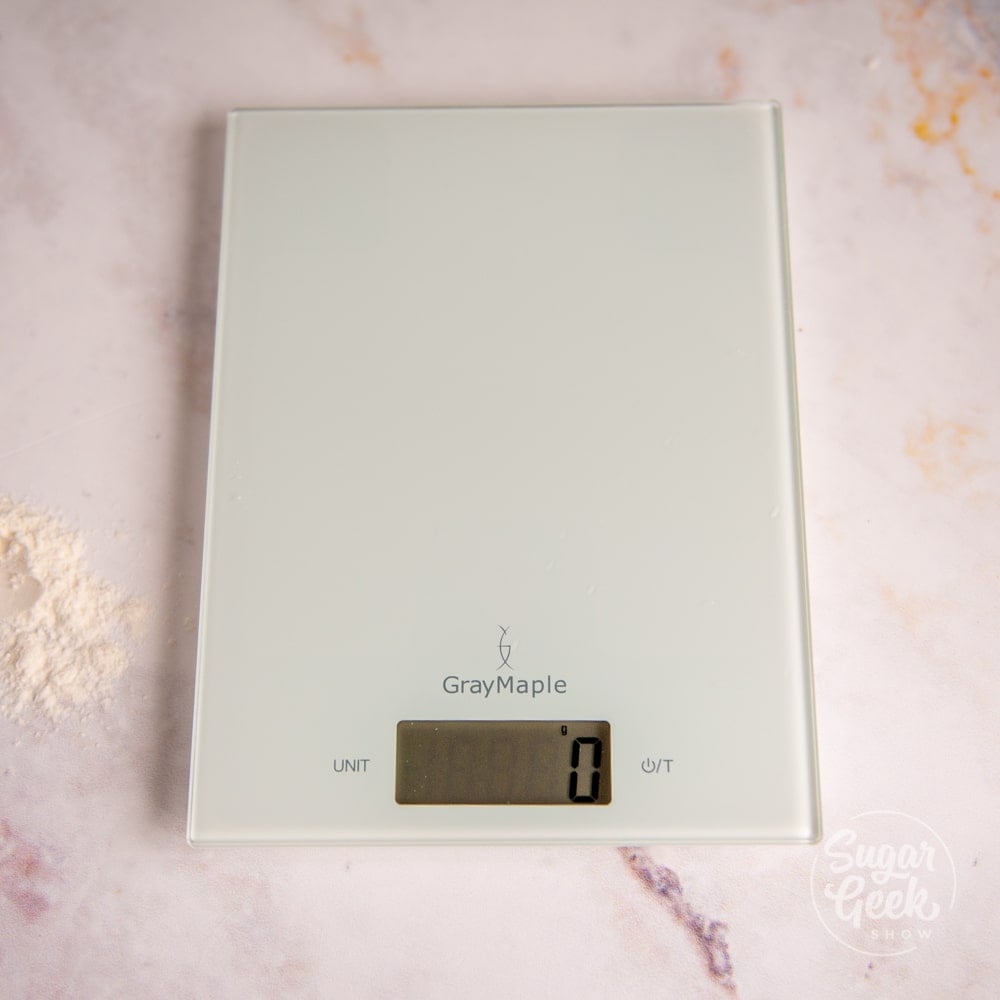
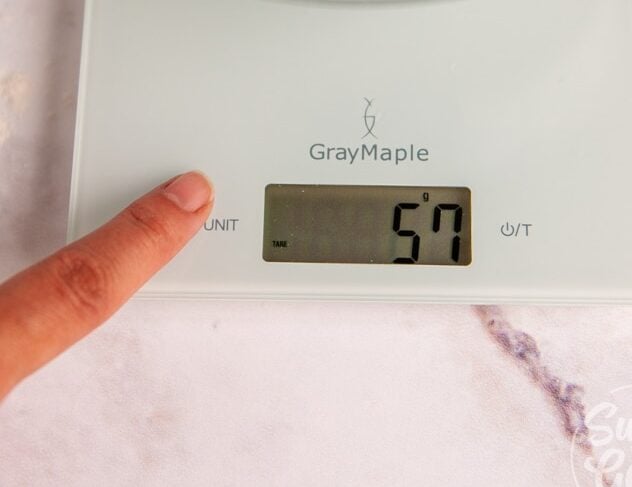
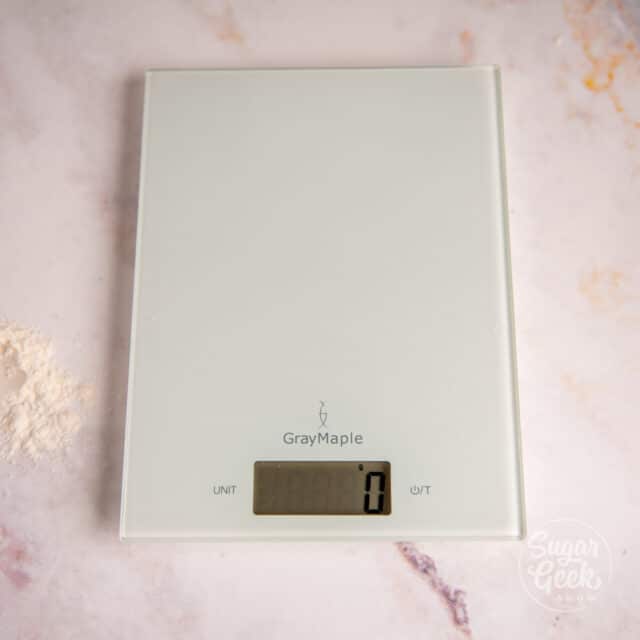
  1. Turn the scale on using the power buttonwhite digital kitchen scale on a white background
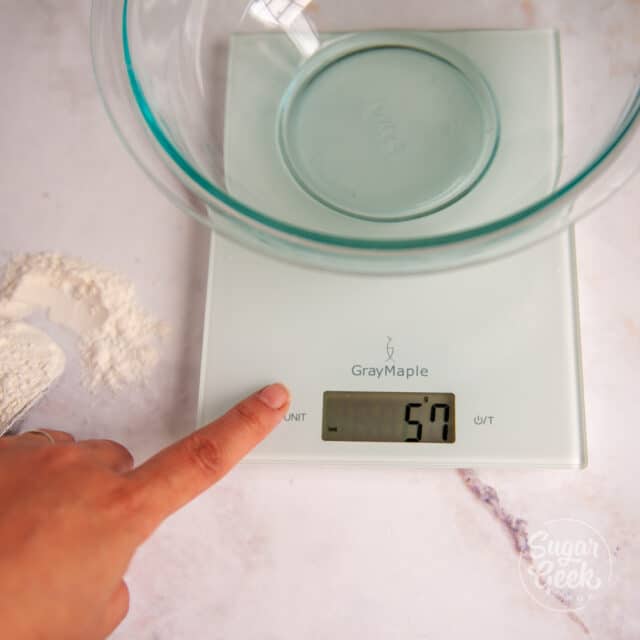
  2. Set your scale to the unit of measurement your recipe calls for (ounces = oz, grams = g) using the "mode" button or "unit" button. Press the button until the display reads the correct measurement.digital kitchen scale with clear bowl on top
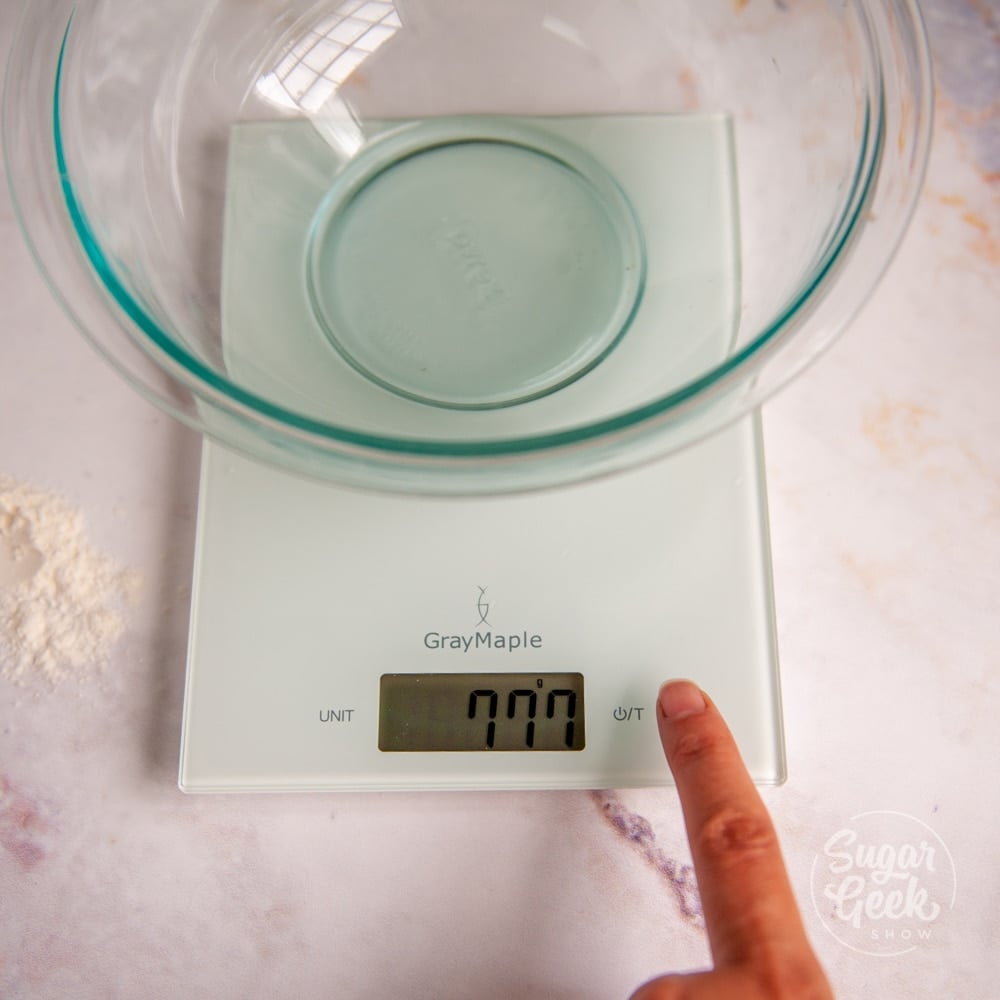
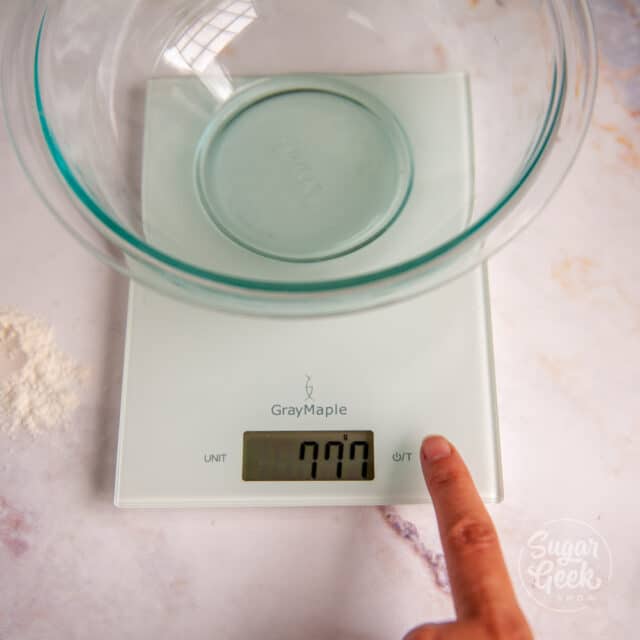
  3. Place your chosen container such as a mixing bowl on top of the scale. You will see that the scale will register and display the weight of the bowl. Press the "zero" button or "tare" button to remove the weight of the bowl and bring the display back to zero.clear bowl on digital kitchen scale
  4. Add your first ingredient according to the recipe instructions. Once your display reads the correct amount, stop. If you add too much, take a little out. So easy.
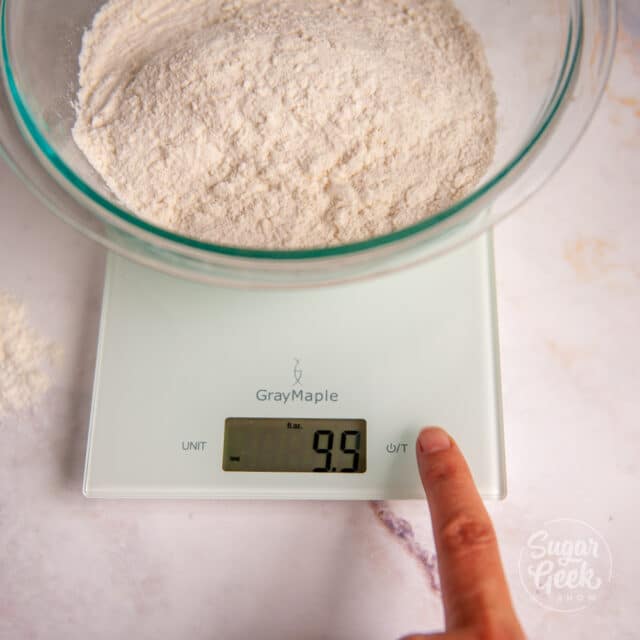
  5. Press the "tare" button again to zero out the weight of the ingredients you just added.flour in a clear bowl on top of a digital kitchen scale
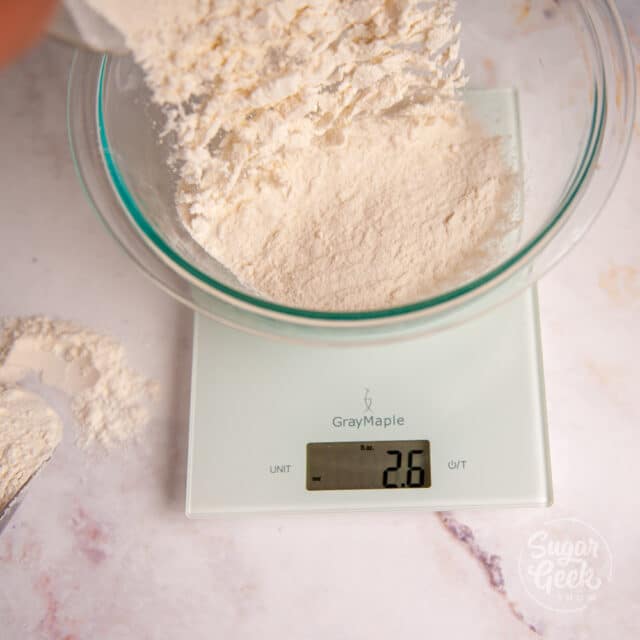
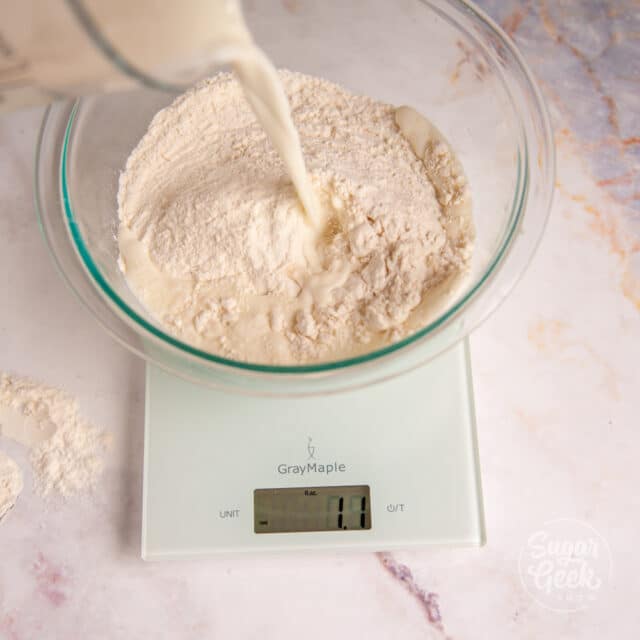
  6. Begin adding in the next ingredient according to the recipe until the display reads the amount you need.milk being poured into a bowl of flour on a digital kitchen scale

That's it! Super simple way to add ingredients with supreme accuracy and no fear of making mistakes in your recipe.

It might feel a little strange the first time you do this but I promise you it gets easier and soon you'll be wondering how you ever dealt with using cups!

What if my recipe doesn't have weight measurements?

If you have a recipe that you love but it's in cups you can convert it to weight! The best thing to do is convert yourself, don't rely on google because you'll get vastly different results.

Remember how I said that each person scoops differently? You gotta rely on your own scoops. Especially if you've already made the recipe with success.

Simply measure out the ingredients with measuring cups as you usually would and then weigh them. I round to the nearest half decimal for ease. So If I scoop and get 4.7 ounces, I round up to an even 5.

Write down your measurements and boom, you now have a recipe in ounces (or grams) that you can reliably recreate each time. Hypothetically, if you ever needed to give the recipe to another person (like if you opened a bakery) and you needed to ensure they recreate your great grandmother's secret cookie recipe exactly the way you do, you know they will.

This is my chart that I use for converting common ingredients to weight in my recipes.

[optin-monster slug="rghpnntg0s1f7mce0cun"]

Should I weigh my liquids or measure them in fluid ounces?

Oh fluid ounces, how confusing you are. Whoever came up with that one needs to be shot. It really causes a lot of confusion because of the word "ounces". It makes you THINK that you're measuring by weight but alas, you are still measuring by volume.

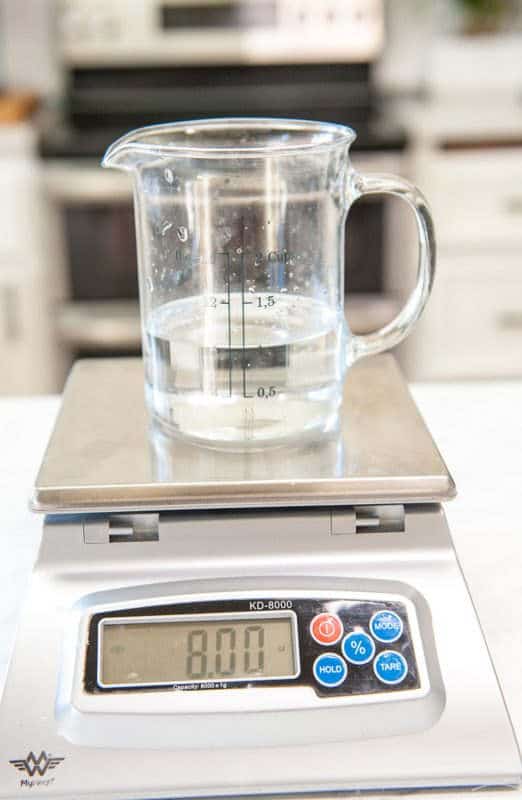
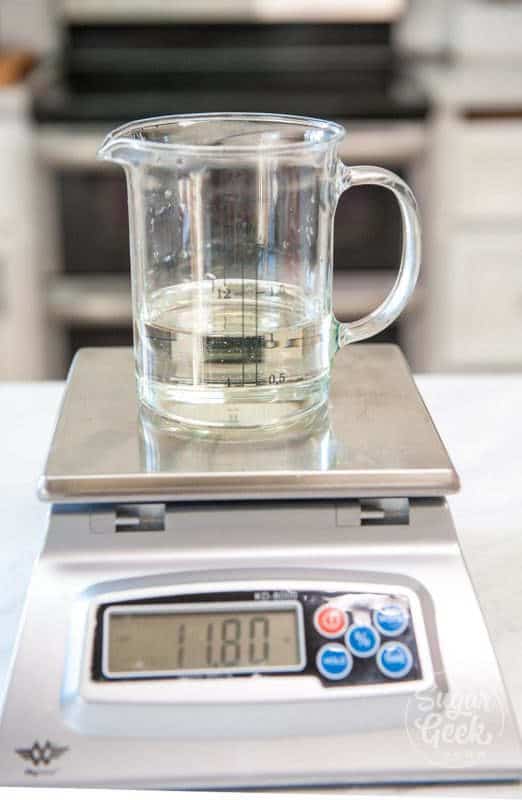
Not all fluids that fill an 80z cup weigh the same because of differences in density. 8 fluid ounces of water weighs 8oz but 8 fluid ounces of corn syrup actually weighs almost 12 ounces! Crazy huh. That's because corn syrup is denser (heavier) than water.

For the sake of ease, in my recipes I weigh everything. It's so much easier to just list the weight. Especially in recipes where the liquids are combined separately from the dry ingredients. I might weigh out 8 ounces of milk, zero out the weight, then 4 ounces of sour cream, zero it out, then 4 ounces of oil. All within a minute and no need to dirty multiple measuring cups.

If you come across a recipe that specifically lists fluid ounces then either convert to ounces or use a measuring cup. Rule #1 to recipe success is to follow the recipe first.

What if I need grams instead of ounces?

Recently a lot of people have been asking me for my recipes in grams instead of ounces because that is the standard way of measuring in their country. I am SLOWLY converting all my recipe cards to also include grams but a kitchen scale should have the option of switching between grams or ounces.

You can also convert recipes that are listed in ounces to grams pretty easily.

1 ounce = 28.35 grams. So if you have 8 ounces and you want to know how many grams it is, multiply 8 by 28.35 to get the grams measurement. There are also many online metric calculators that can help you convert recipes to grams.

What about measuring spoons?

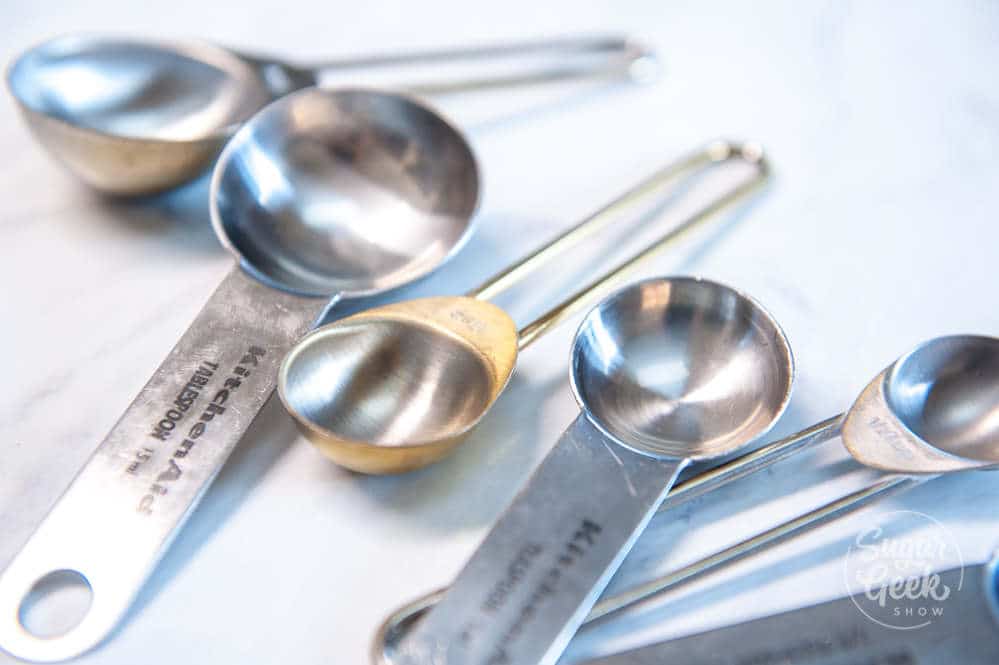
Ok so technically measuring spoons go against everything I have just talked about because they are a volume measurement. The reason for this is that typically you are measuring such small amounts, it would be difficult to measure them accurately with a regular scale.

It is worth noting that measuring spoons are different sizes depending on where you are in the world. A USA Tablespoon holds 14.8 ml. In the Uk its 15 ml. In Australia, the standard is a whopping 20 ml.

So make sure your spoons match the country your recipe is from or you could accidentally add too much or too little of an ingredient.

measuring spoons measure volume

When I worked at a bakery, our recipes were so large that things like baking powder and salt were by weight and not with measuring spoons.

I hope this has answered a lot of your questions about why and how to use a digital kitchen scale for baking more accurately. As always you can leave me a comment with any questions you have and be sure to watch this video of me showing my husband how to use a kitchen scale.

Do you want to learn more about professional baking? Check out my how to decorate your first cake post!

Click on this image to go to the how to decorate your first cake tutorial

Recipe

white digital kitchen scale on white background
Print Recipe
4.95 from 20 votes

How To Use A Digital Kitchen Scale For Baking

Measuring cups are innacurate, slow and messy! Baking is a science. Accuracy is very important. Don't risk wasting your ingredients, use a kitchen scale for your baking.
Author: Liz Marek

Equipment

  • Digital Kitchen Scale

Instructions

How To Use A Kitchen Scale

  • Turn the scale on
    white digital kitchen scale on a white background
  • Choose your standard of measure (grams = gr) or (ounces = oz)
    I never use fluid ounces.
    digital kitchen scale with clear bowl on top
  • Place your chosen container such as a mixing bowl on top of the scale. You will see that the scale will register and display the weight of the bowl
    clear bowl on digital kitchen scale
  • Press the zero or tare button on your scale to remove the weight of the bowl and bring the display back to zero. Basically you are telling the scale to ignore the bowl and only measure what goes into the bowl. 
    clear bowl on digital kitchen scale
  • Start adding your first ingredients such as flour until your display shows the correct amount has been added. You can easily subtract ingredients if you add too much.
    flour being added to a clear mixing bowl on top of a digital kitchen scale
  • Press the tare or zero button to bring the display back to zero
    flour in a clear bowl on top of a digital kitchen scale
  • Measure your next ingredient and continue this way with the rest of the recipe (you can also switch back and forth between grams and ounces if needed)
    milk being poured into a bowl of flour on a digital kitchen scale

Video

Notes

** Affiliate link to the scales shown in this video
(I may earn a small amount of $ if you use this link at no additional cost to you)
OXO Kitchen Scale 
My Weigh Kitchen Scale
 
mothers day dessert ideas featured image

May 9, 2020 Blog

20 Mothers Day Recipes Ideas

Do you want to bake something special for Mother's Day? Check out these delicious recipes that will make Mom feel special and appreciated on her big day. 

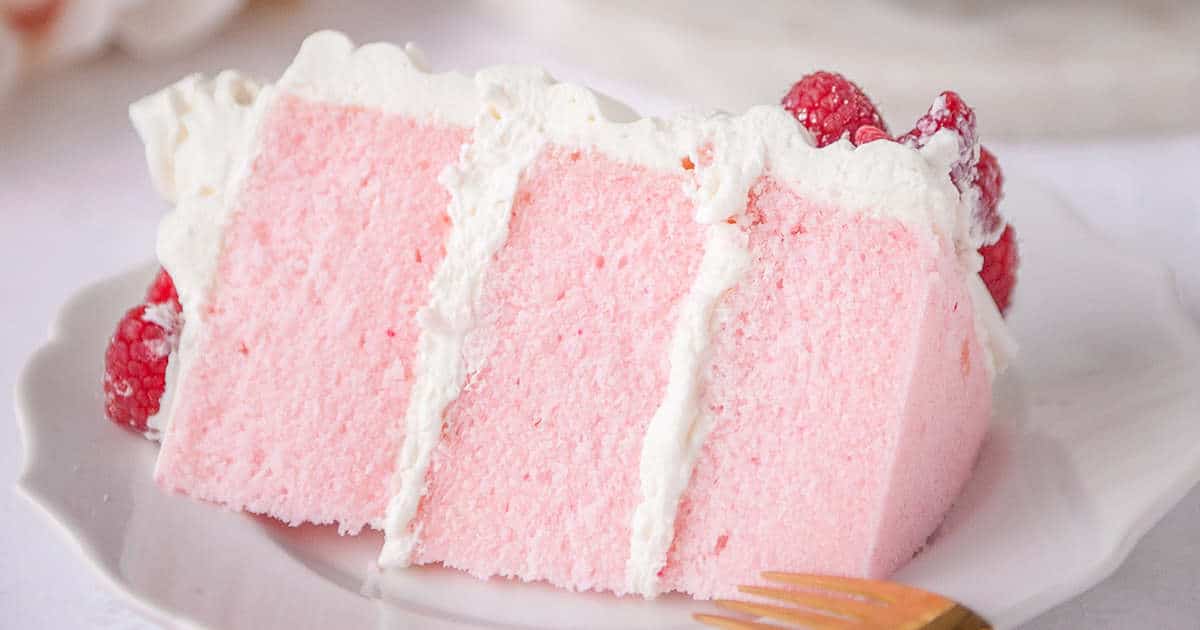
Pink Velvet Cake 

slice of pink velvet cake on a white plate with fresh raspberries

This light and fluffy pink velvet cake looks absolutely stunning and will surely impress mom! Frosted with a simple stabilized whipped cream, you can bake this today, frost it in minutes and surprise mom with this pretty pink cake tomorrow! 

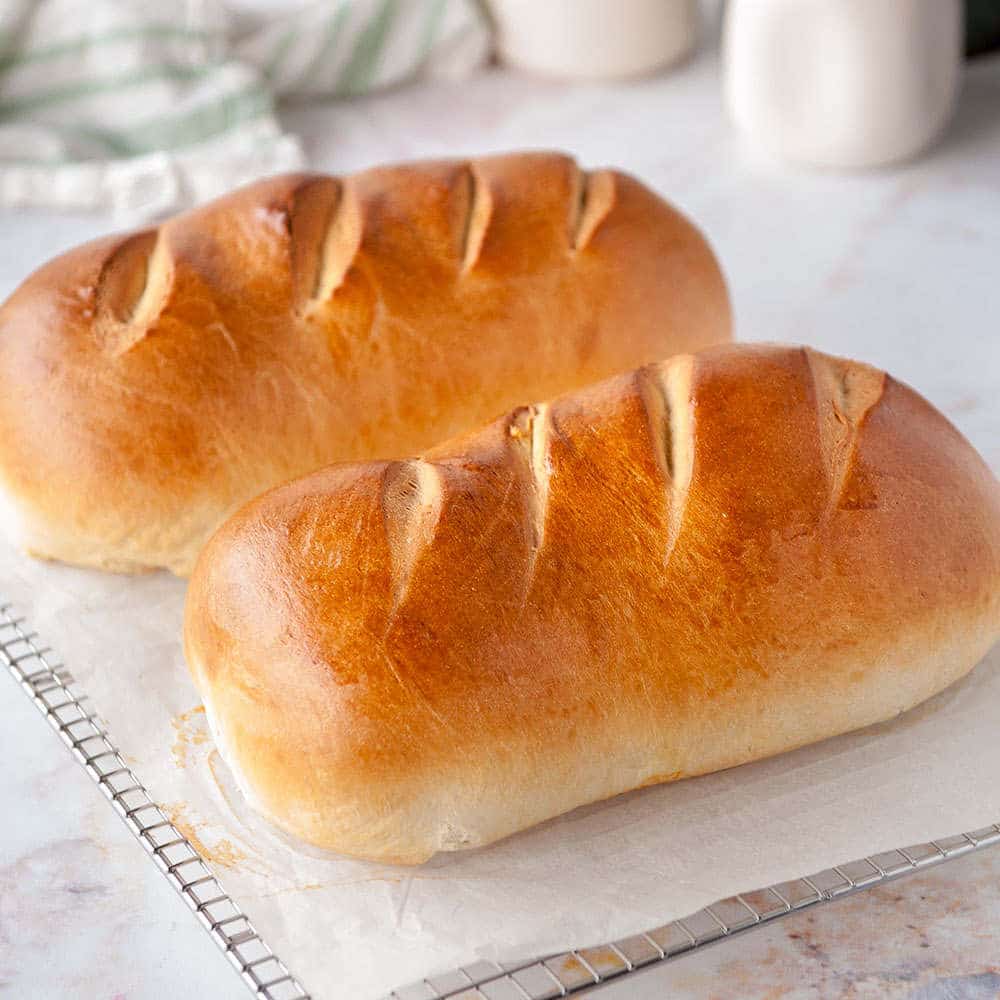
Fast Homemade Bread

two loaves of homemade bread on cooling a rack on a white background

If you're making Mom a special dinner for Mother's Day (which you totally should be!) don't forget the homemade bread! This fast bread recipe only takes 60 minutes to make including rising and baking! You can also turn this recipe into dinner rolls! What's better than fresh bread? 

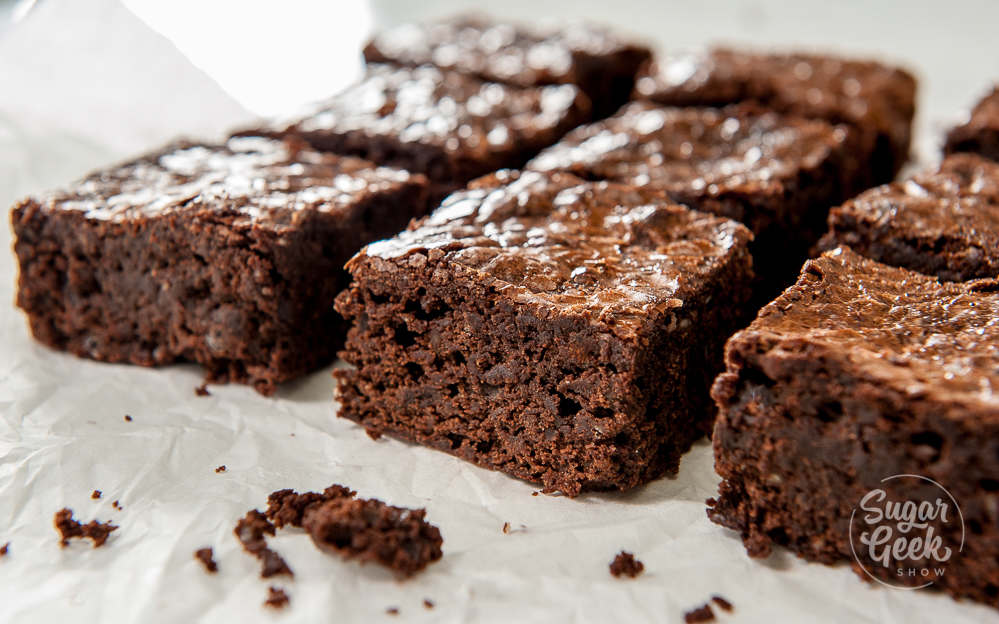
Chewy Chocolate Brownieshomemade brownies cut into squares on parchment paper

Is mom a chocolate lover? You can bake up a fresh batch of homemade fudgy brownies in less than 30 minutes! If you want to add even more chocolate, top them with some yummy chocolate ganache and pretty sprinkles to make mom feel extra loved! 

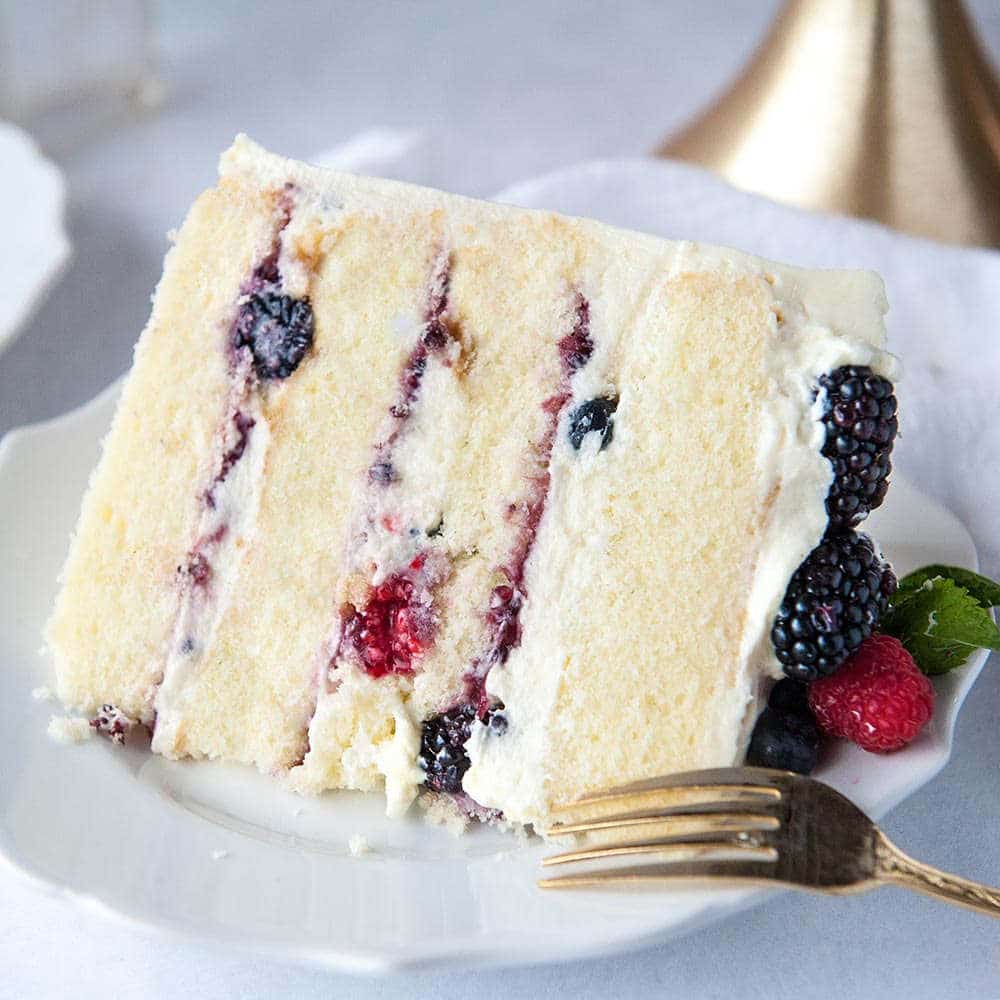
Berry Chantilly Cakeberry Chantilly cake

If Mom is a fan of Whole Foods Berry Chantilly cake, you can make her one from scratch! She will be so impressed! Decorating this cake with fresh berries makes the cake not only beautiful but simple to make. 

Hand Pies

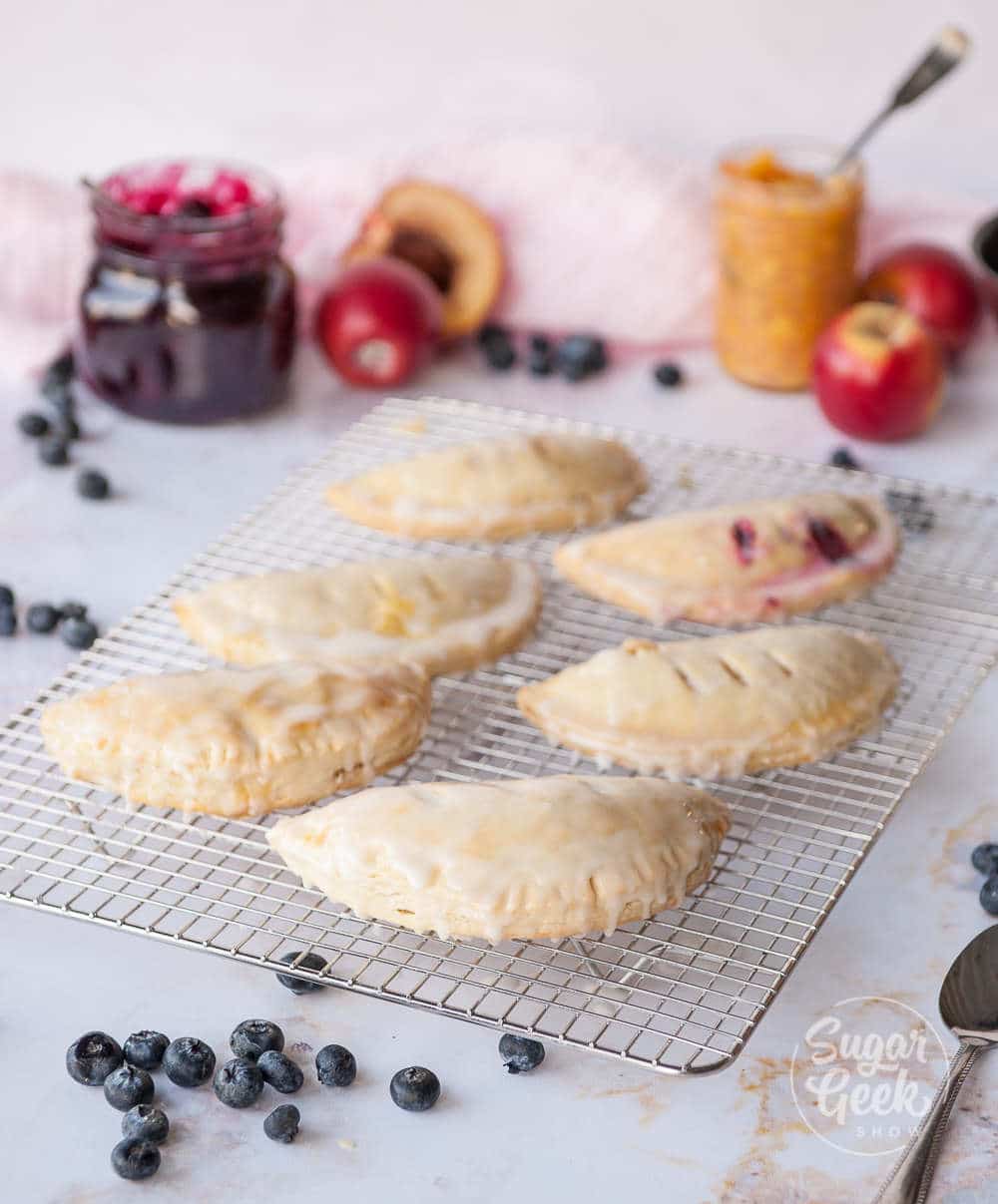
hand pies on a cooling rack with ingredients surrounding them

What's better than giving mom her favorite pie? How about giving her a pie she can eat with one hand 😀 Hand pies are so fun to make and so easy to customize with different fillings like lemon curd, cherry filling, berry filling or apple filling! I make mine in the air-fryer for crisp hand pies without all the hot oil. 

Brown Butter Buttermilk Pancakes

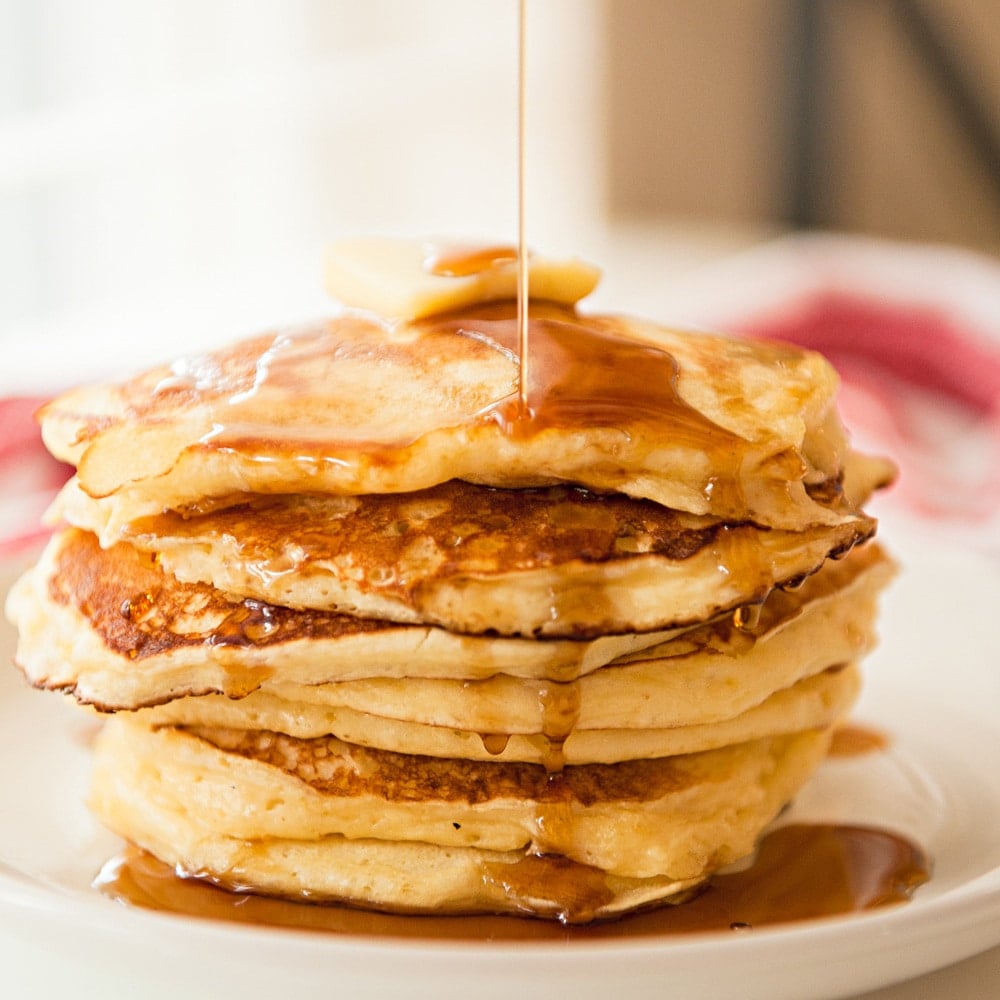
stack of brown butter buttermilk pancakes with syrup being drizzled on top

Everyone loves homemade pancakes for breakfast but you can REALLY impress mom with these brown butter pancakes! Put these on a tray with flowers, her favorite coffee, and some fresh fruit, and Mom will be in heaven! 

Don't worry, browning butter is easy to do and makes baked goods taste even more amazing! 

Strawberry Shortcake

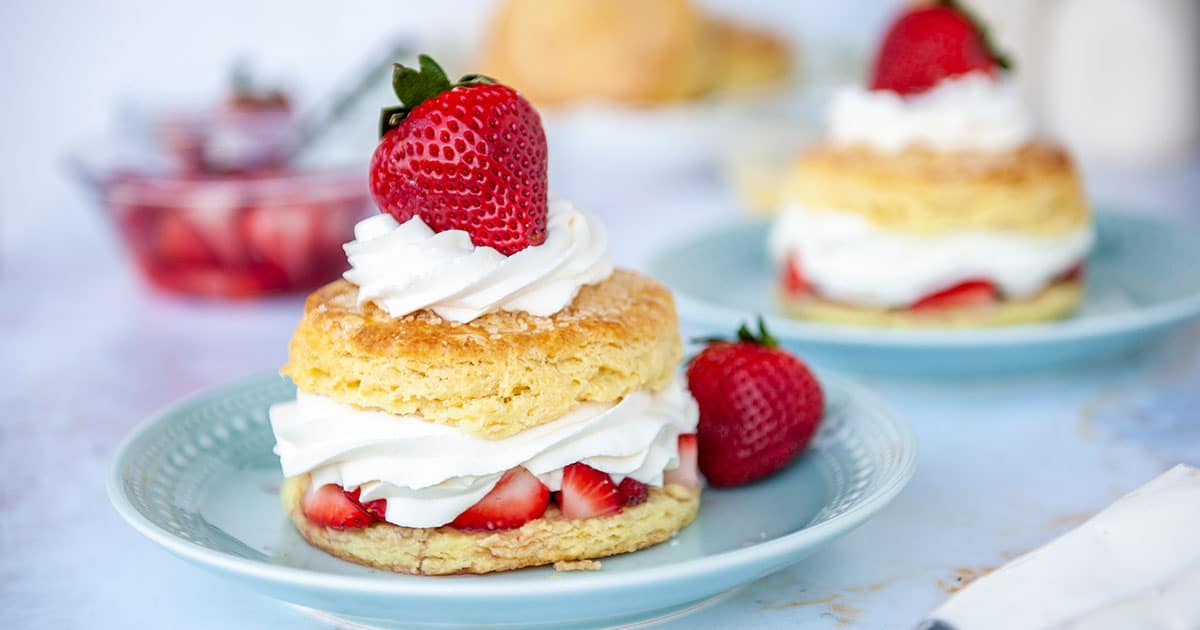
strawberry shortcake on blue plate with fresh strawberries

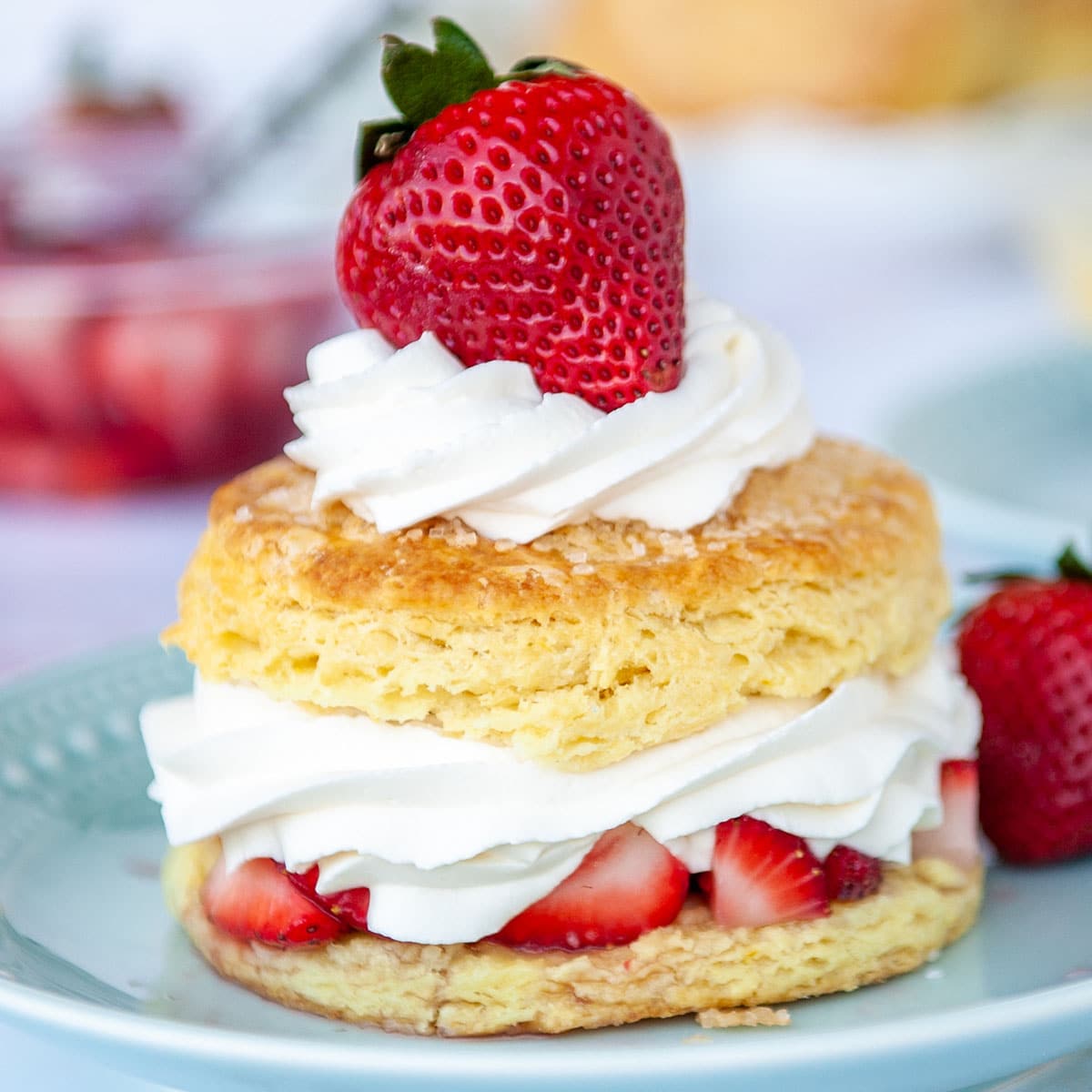
Strawberry shortcakes make the cutest individual desserts! Soft and flakey buttermilk biscuits topped with fresh berries and homemade whipped cream. They look so impressive but don't tell anyone they were really easy to make. 

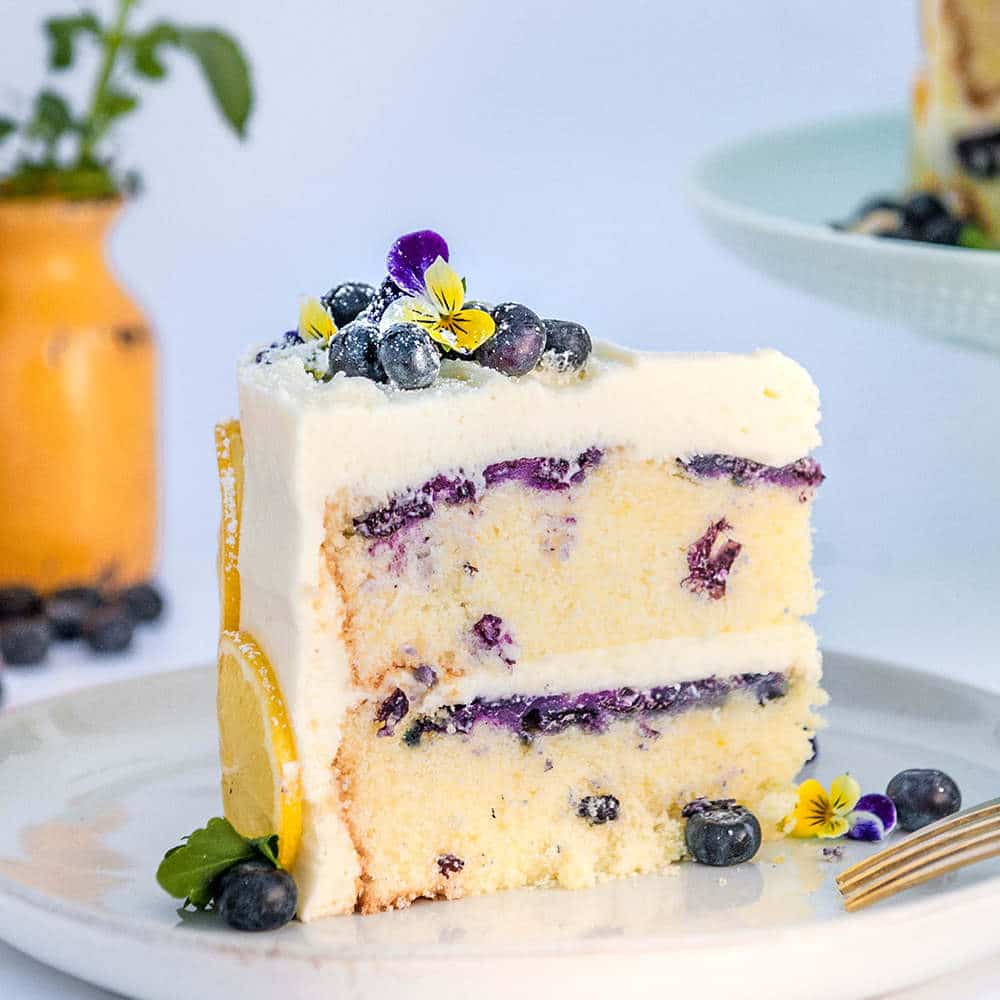
Lemon Blueberry Buttermilk Cake

slice of lemon blueberry cake on a white plate

Is Mom a big fan of lemon blueberry? Make her this lemon blueberry buttermilk cake and she will be amazed by the natural flavor of the soft and moist lemon cake and not-too-sweet cream cheese frosting. 

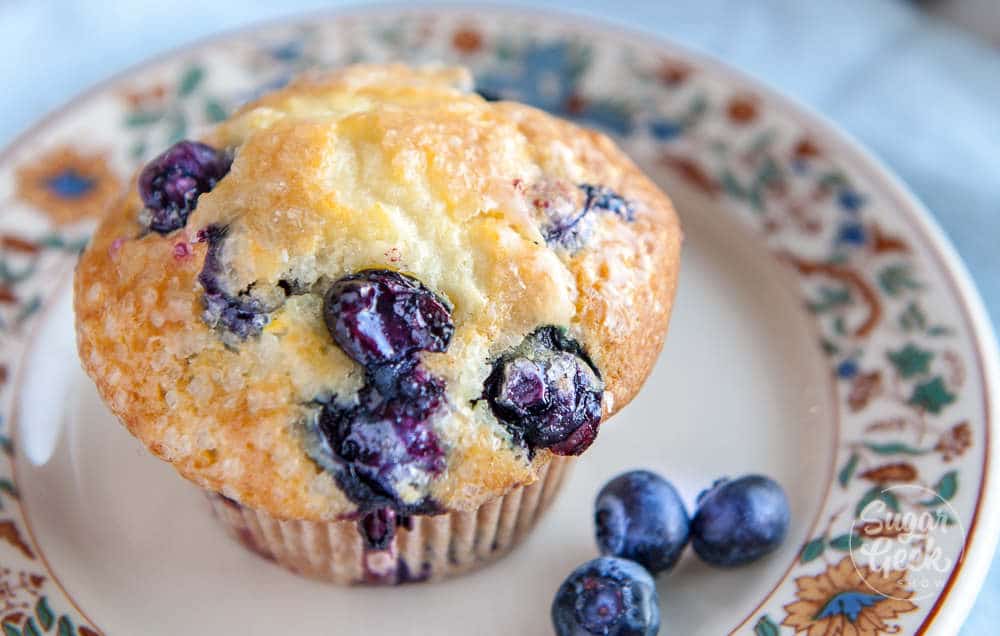
Lemon Blueberry Muffins

lemon blueberry muffin on a plate with floral pattern on the rim

Intimidated by making a big cake for Mom? Don't worry, you can bake up these moist and delicious lemon blueberry muffins! Not a fan of lemon blueberry? You can start with this basic muffin recipe and add-in whatever ingredients mom loves best. 

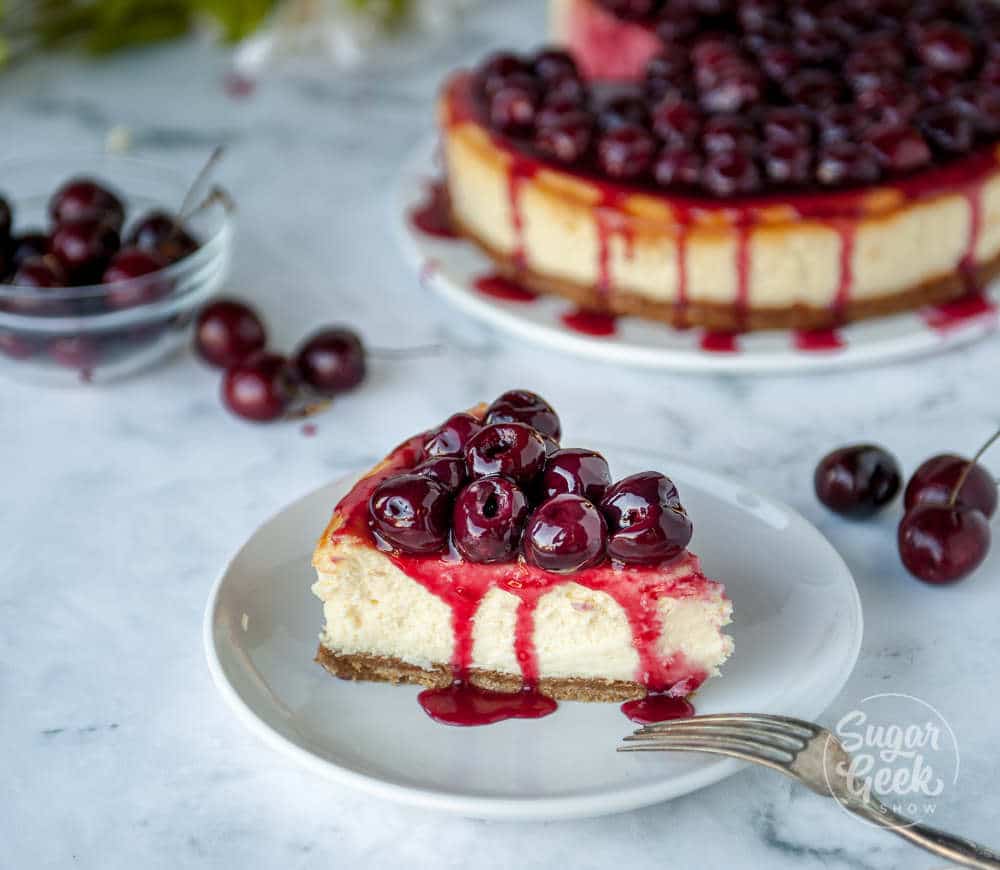
Cherry Cheesecake

slice of cherry cheesecake on a white plate with cheesecake in the background

It's no surprise that Moms love cheesecake! Make this classic cherry cheesecake today and enjoy it tomorrow! Not a fan of cherries? You can switch up the toppings and use chocolate ganache, lemon curd or even berry filling instead. 

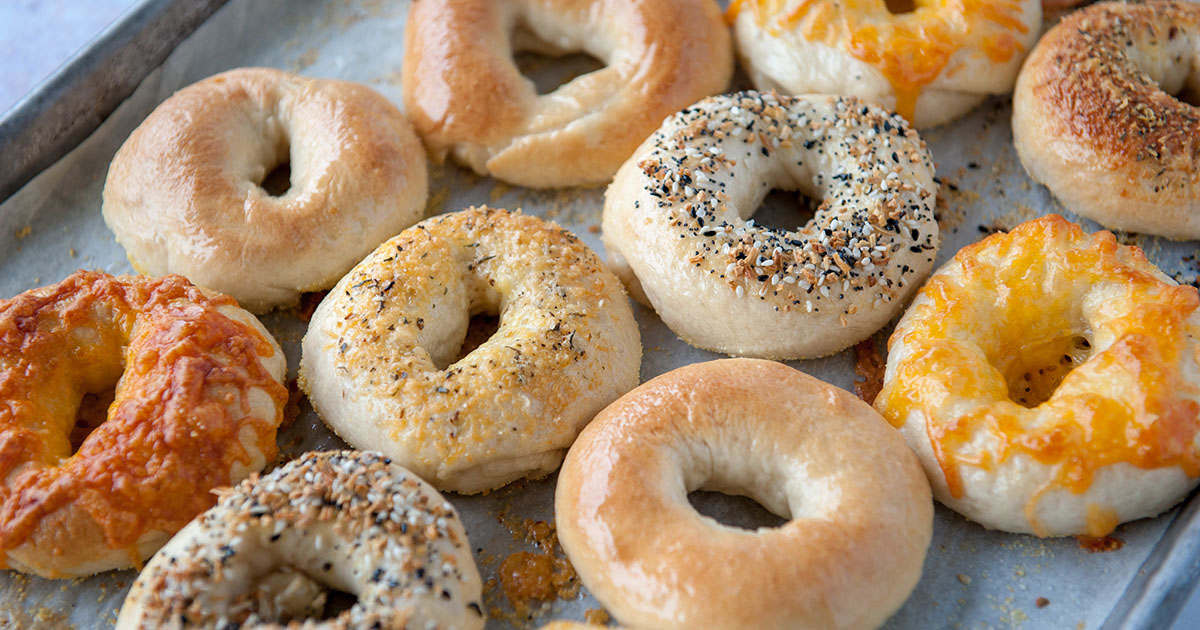
Homemade Bagels

homemade bagels shot from overhead

You might be shocked to find out that making homemade bagels is pretty easy! I promise! The best part is you can top them with Mom's favorite toppings like everything bagel seasoning, cheese or just go plain! 

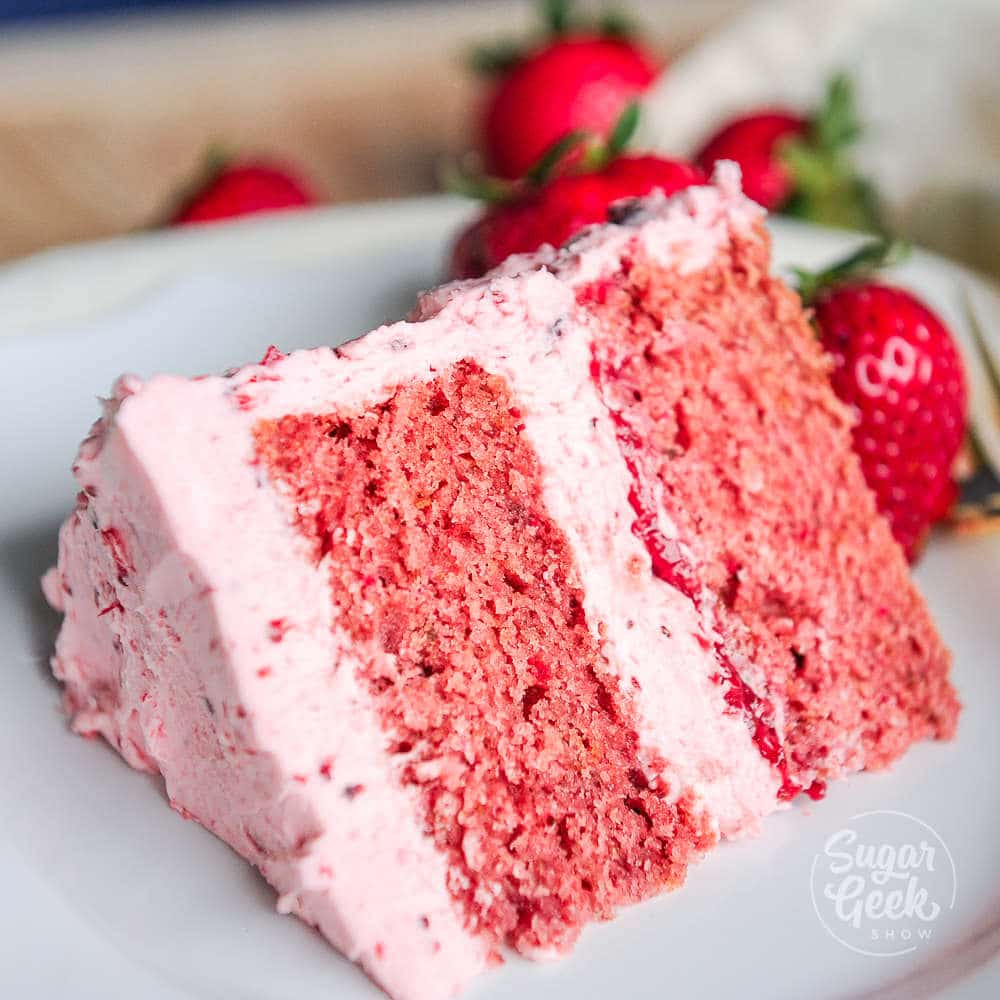
Fresh Strawberry Cake

slice of fresh strawberry cake on a white plate with strawberries behind it

There's a reason this fresh strawberry cake made with real strawberries is #1 for strawberry cake recipe! No fake strawberry flavor in this cake thanks to strawberry reduction and fresh strawberry buttercream. The taste is heaven for the strawberry lover! 

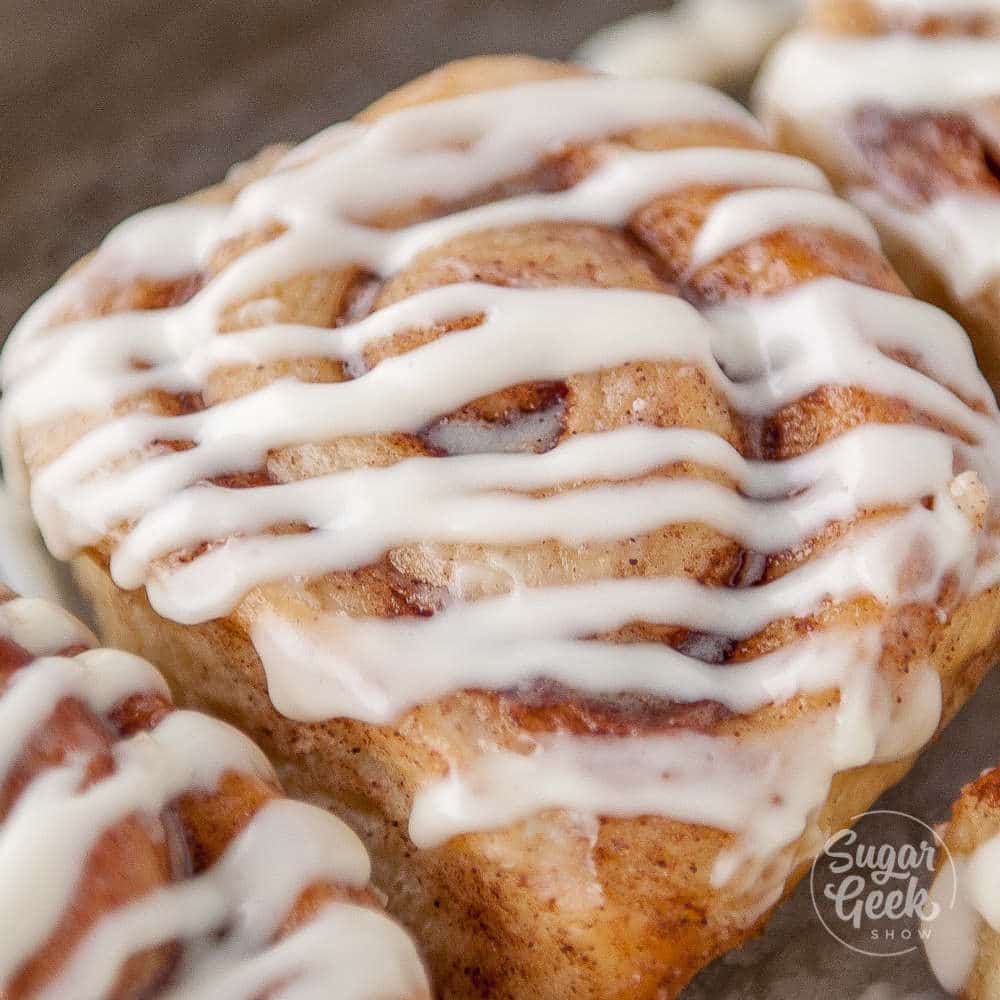
Cinnamon Rolls

closeup of cinnamon rolls

Is there anything better than fresh cinnamon rolls in the morning? You can prep these cinnamon rolls today and store them in the fridge overnight so they can be baked first thing in the morning! 

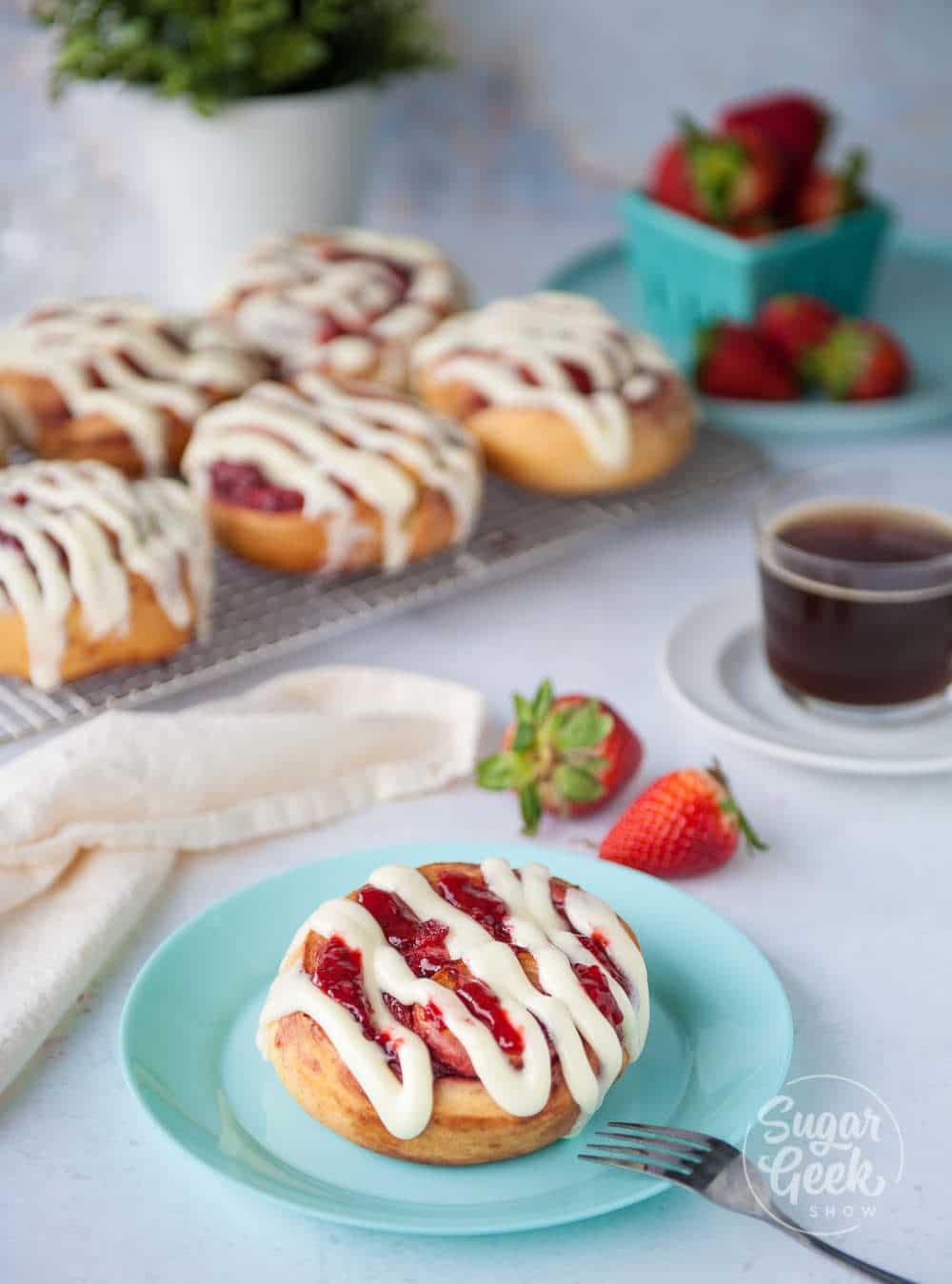
Want to take cinnamon rolls up a notch? Turn them into strawberry cinnamon rolls! 

strawberry cinnamon roll on a blue plate with strawberry cinnamon rolls in the background

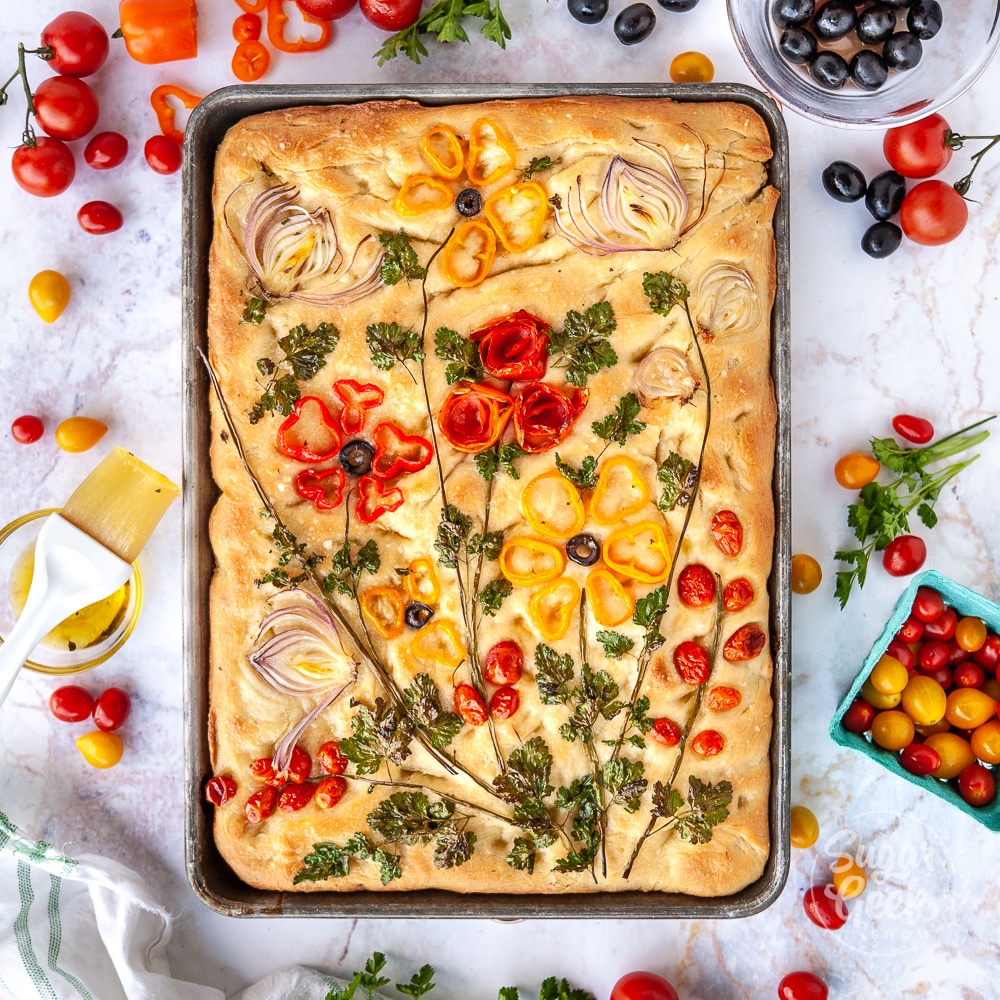
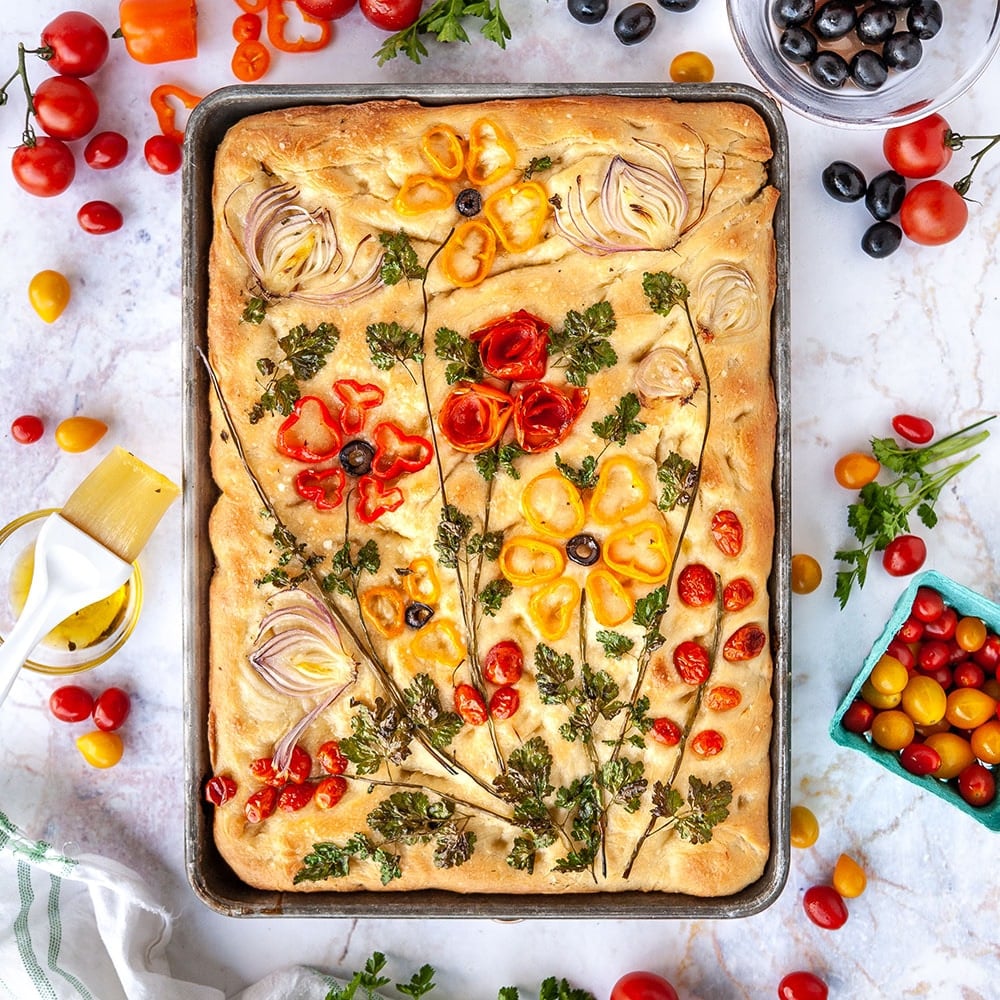
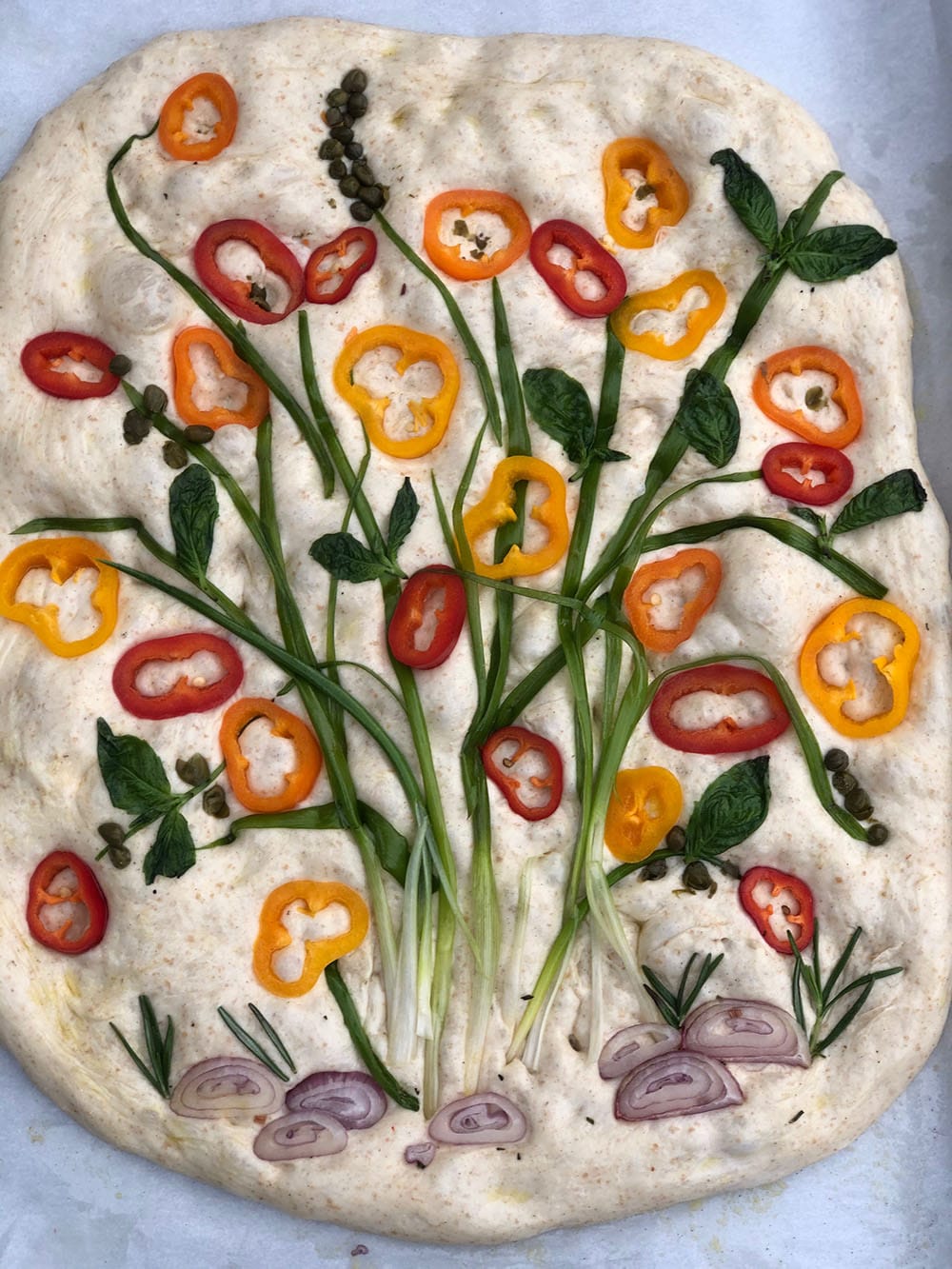
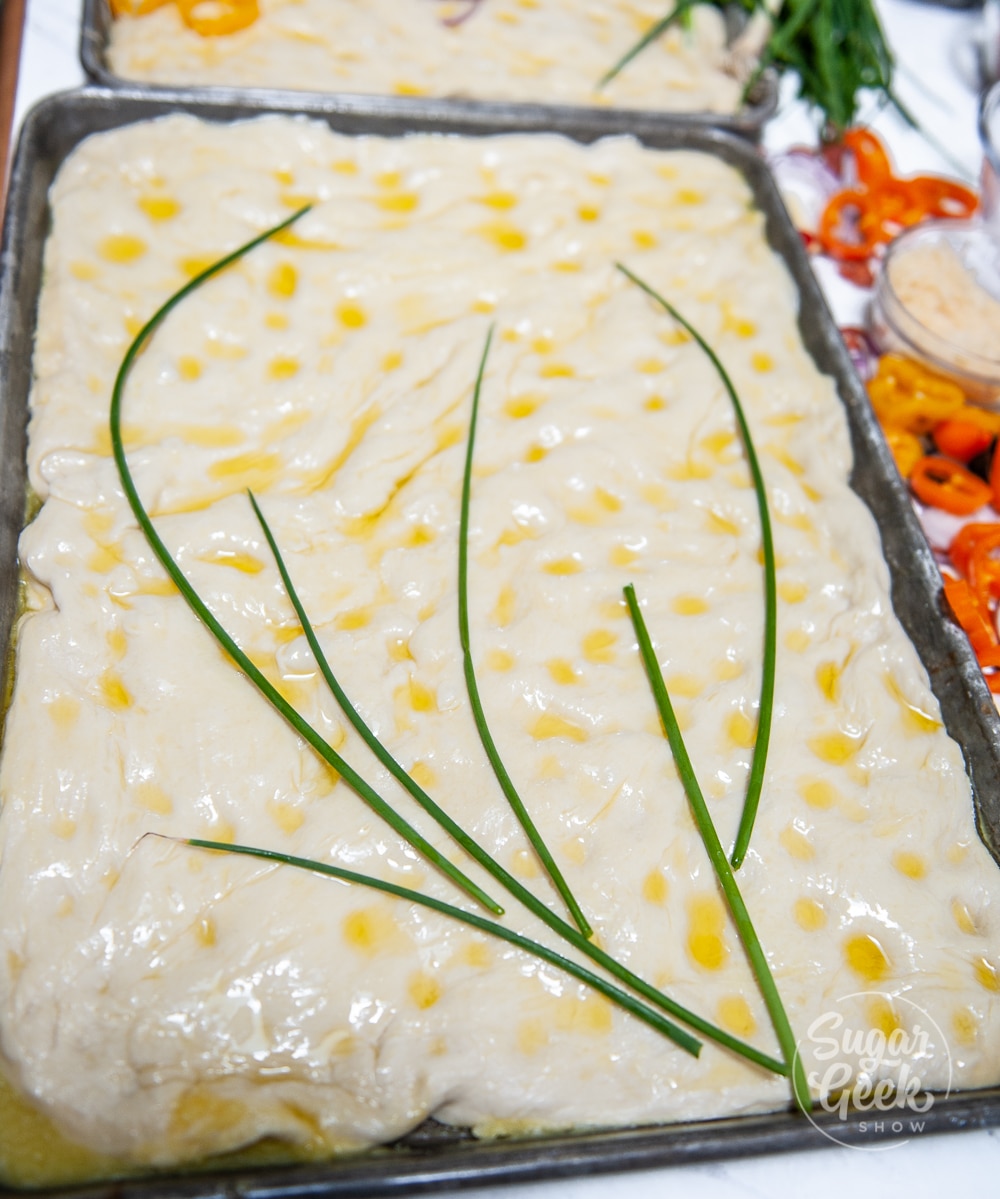
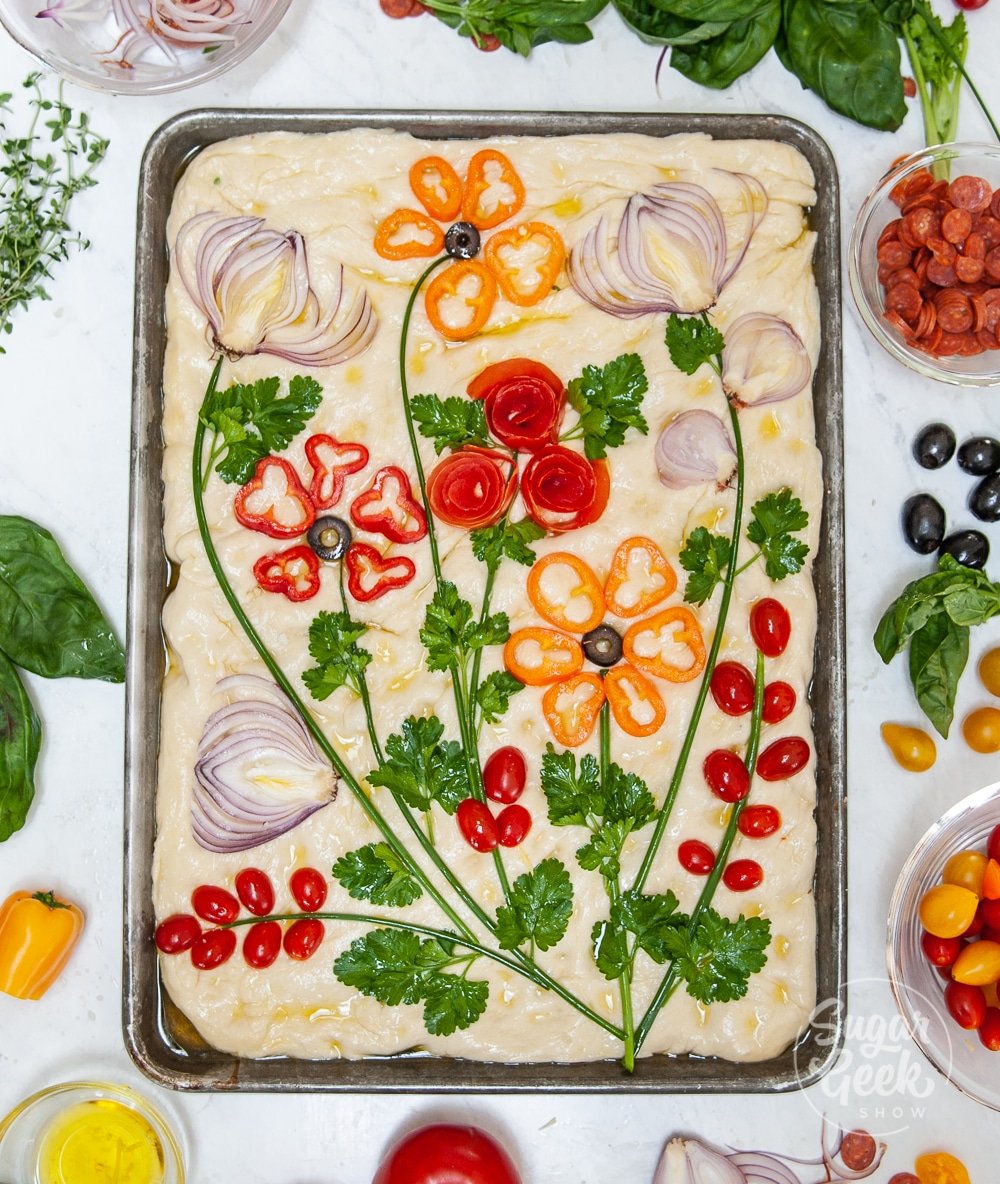
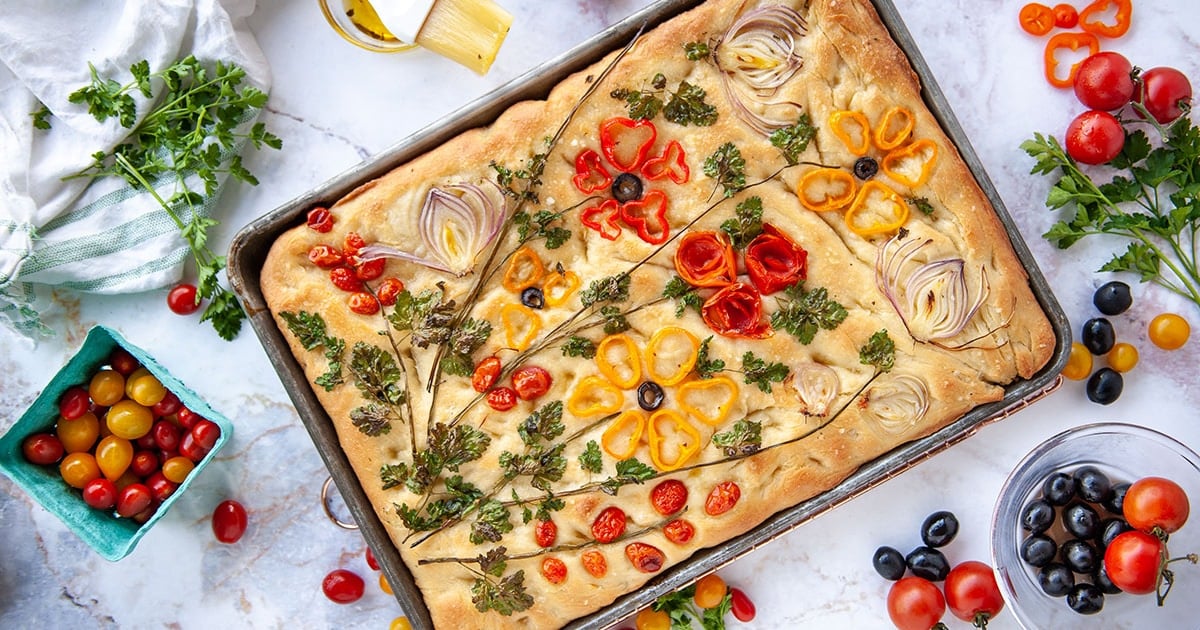
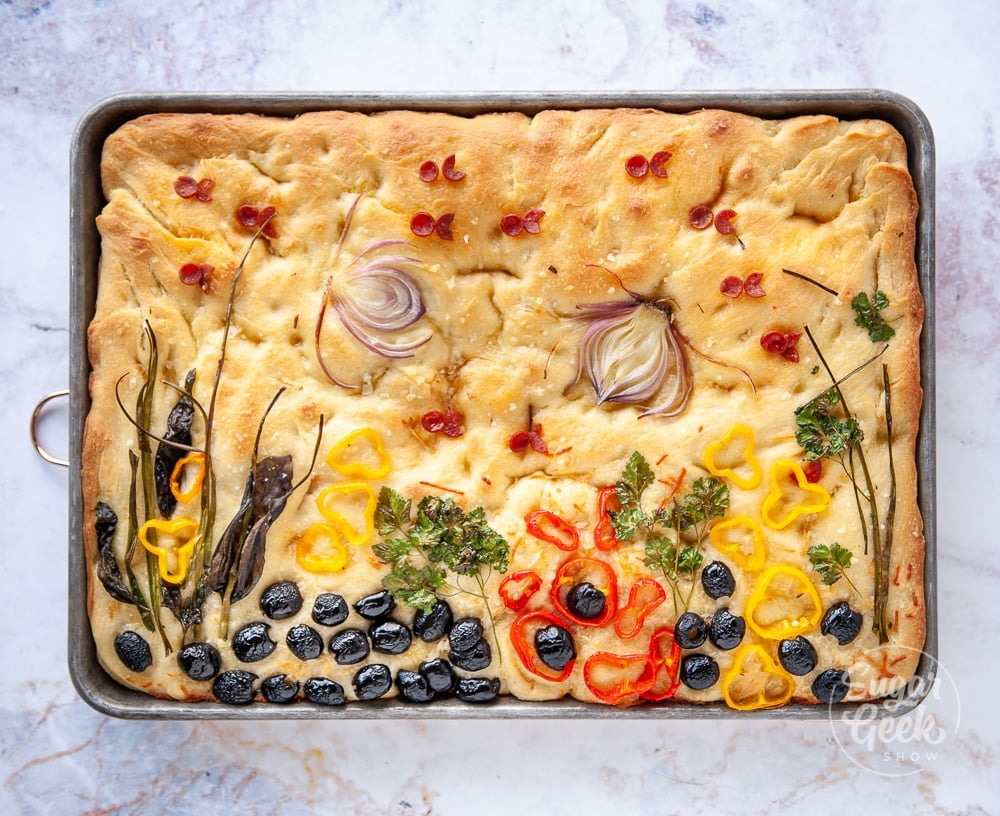
Decorative Focaccia Art

focaccia bread art shot from above

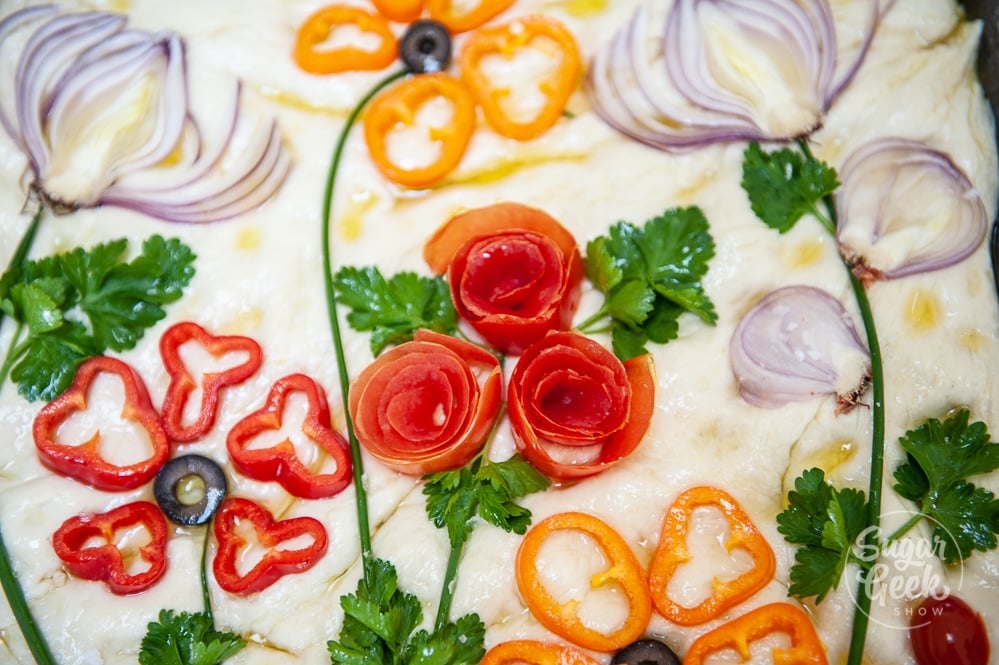
Seriously impress mom with this focaccia bread art! Combine art and bread into one using fresh veggies to make a floral bouquet that you can eat! The perfect surprise for a Mother's Day dinner. 

Chocolate Macarons

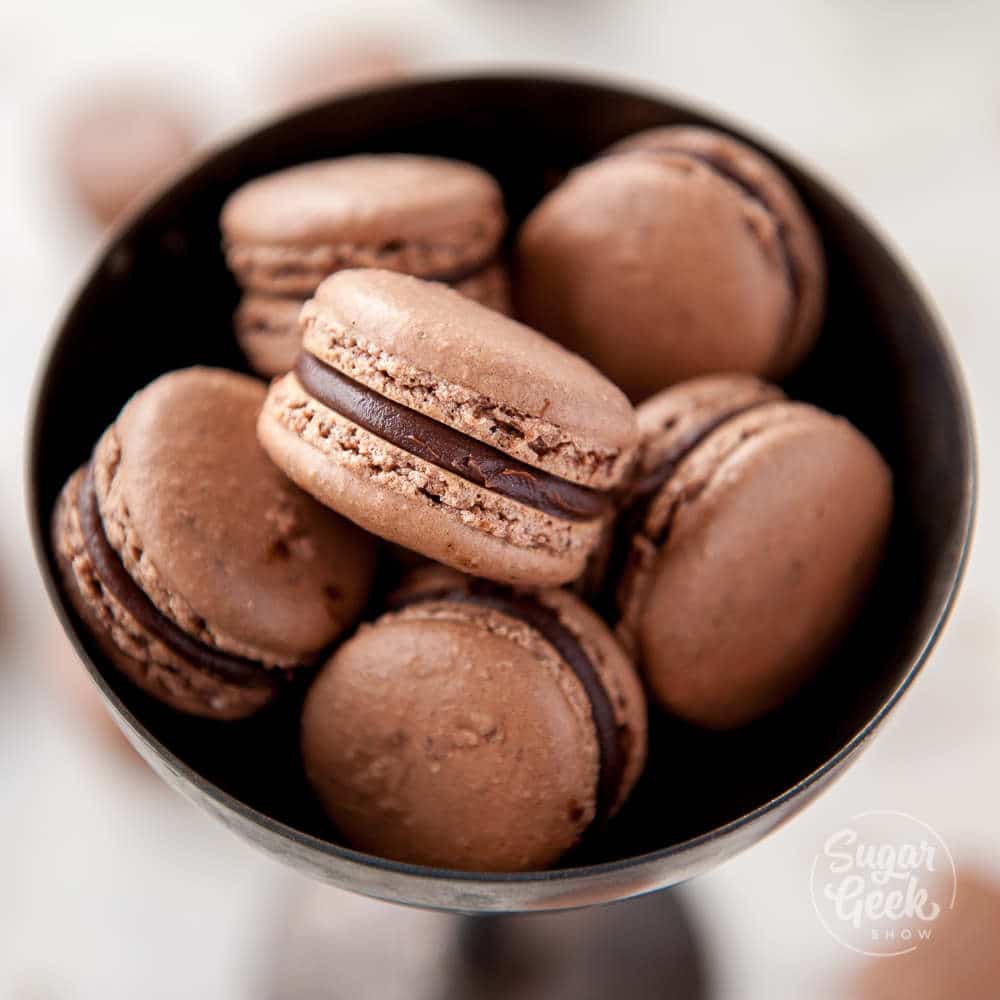
You may be intimidated by chocolate macarons but don't be! So many people have told me that they have made these successfully on the first try! Fill them with chocolate ganache for the ultimate chocolate treat. 

Easy Chocolate Cake

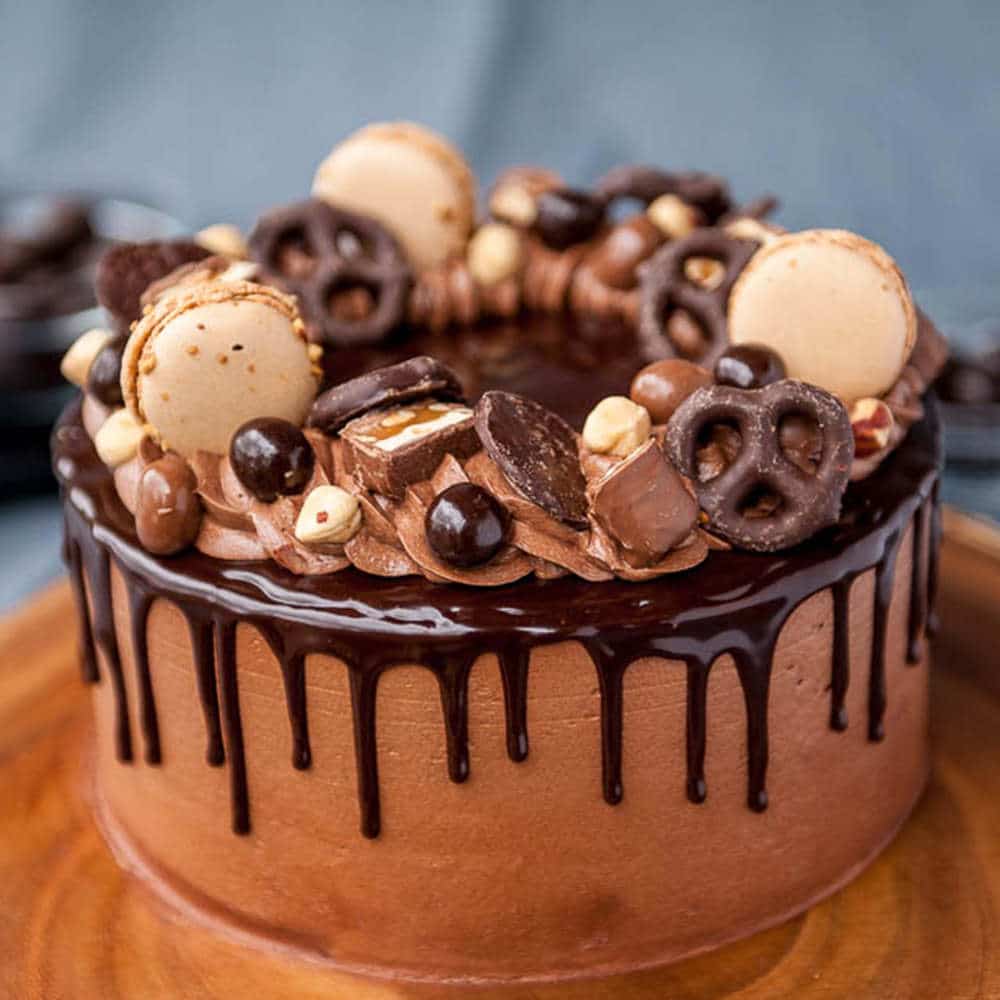
easy chocolate cake with chocolate drip

You don't even have to have a stand mixer for this easy chocolate cake with chocolate ganache drip! Top it with your Mom's favorite chocolate candies! 

Chocolate Mirror Glaze Cake

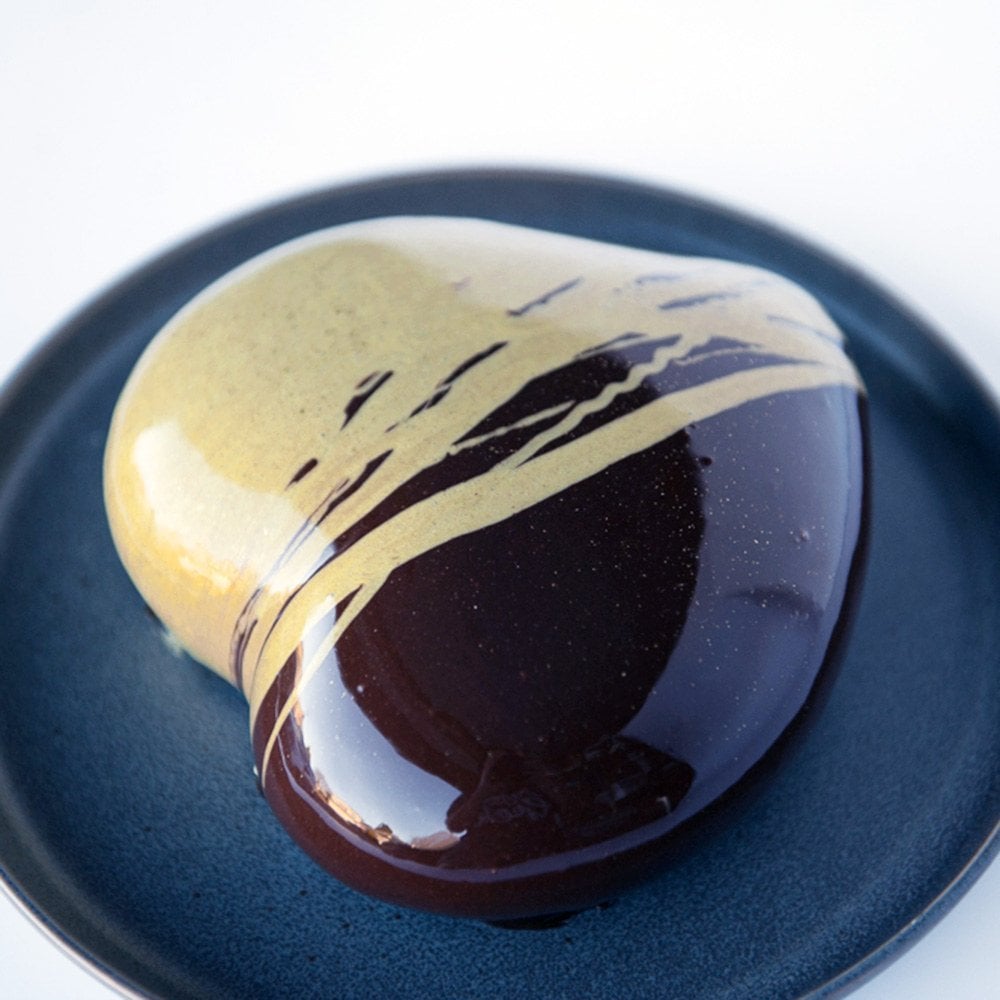
chocolate mirror glaze cake with gold drizzle on a black plate

Nothing says fancy like a mirror glaze cake! Filled with creamy chocolate mousse and chocolate cake and finished with a shiny chocolate mirror glaze! You can customize the colors so easily. Not only this cake impressive but it's delicious! 

Cream Tart

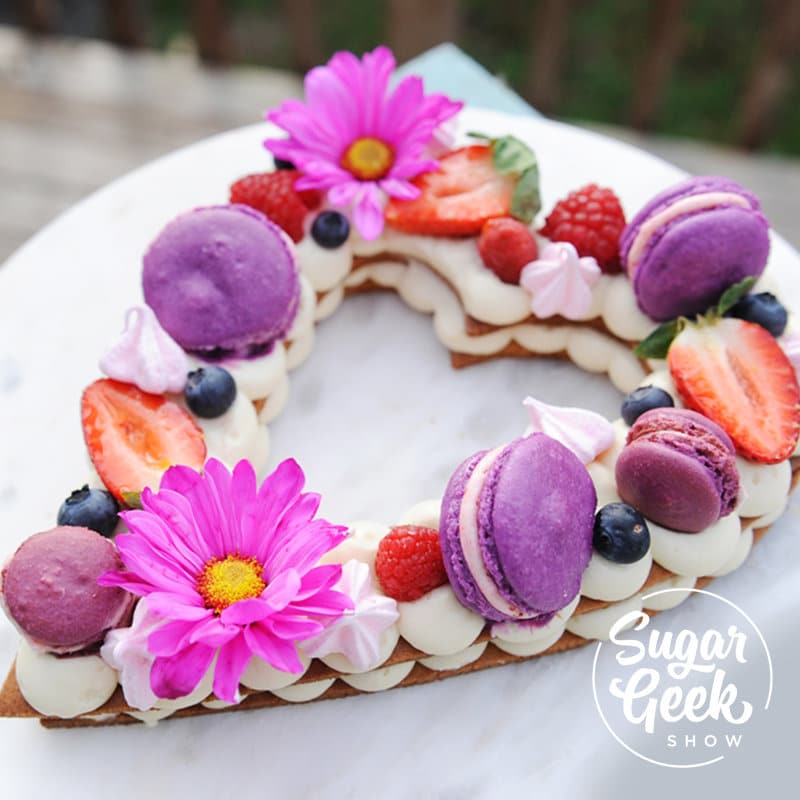
cream tart in the shape of a heart topped with fresh flowers, fruit and macarons

I cannot get over how pretty these cream tarts are for Mother's Day! You can make a simple heart or you can cut the Almond Sable into M.O.M for an even more personalized dessert! Filled with homemade pastry cream and topped with fresh fruit and french macarons! This is the ultimate Mother's Day dessert! 

Lofthouse Cookie Recipe

homemade lofthouse cookies on parchment paper

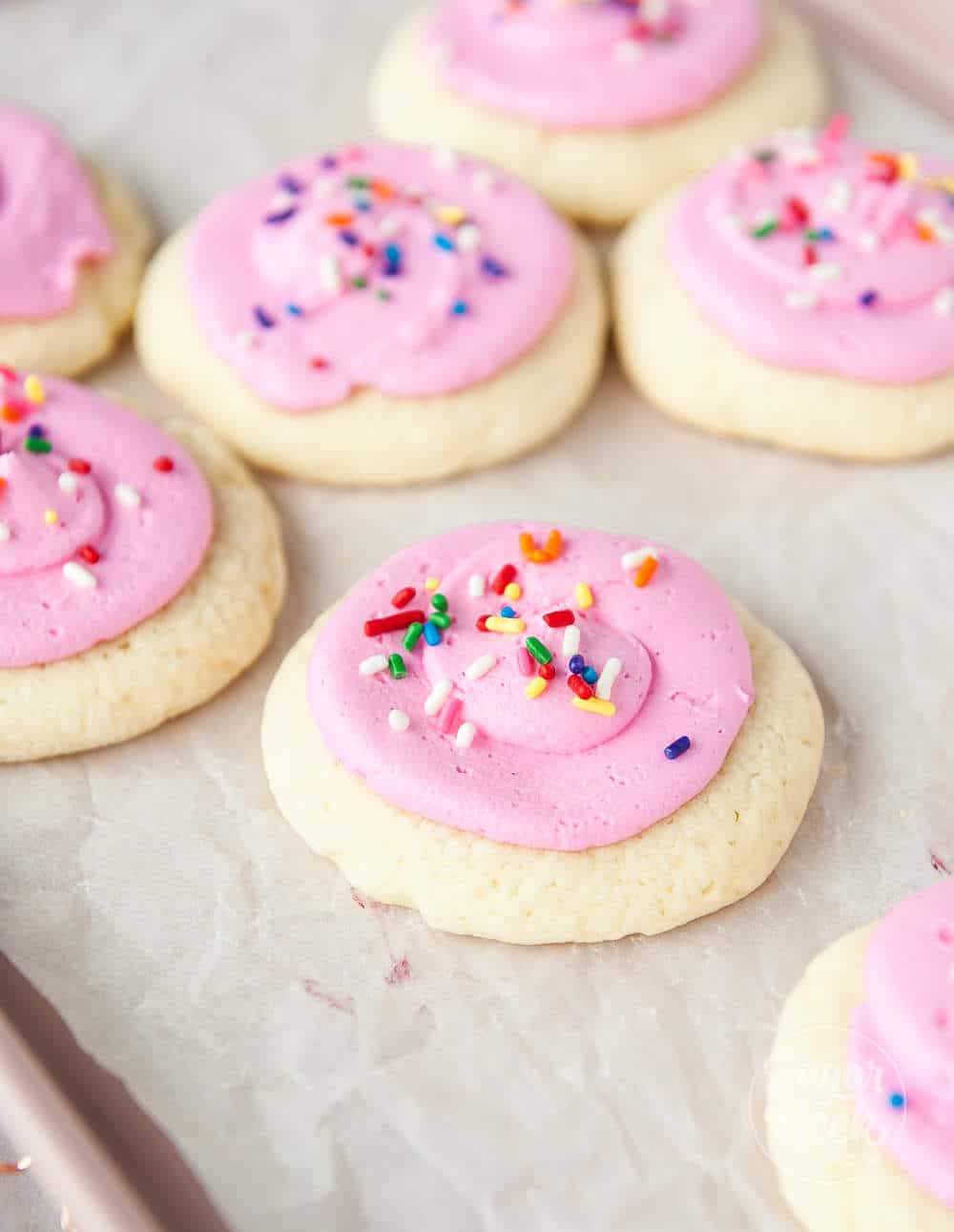
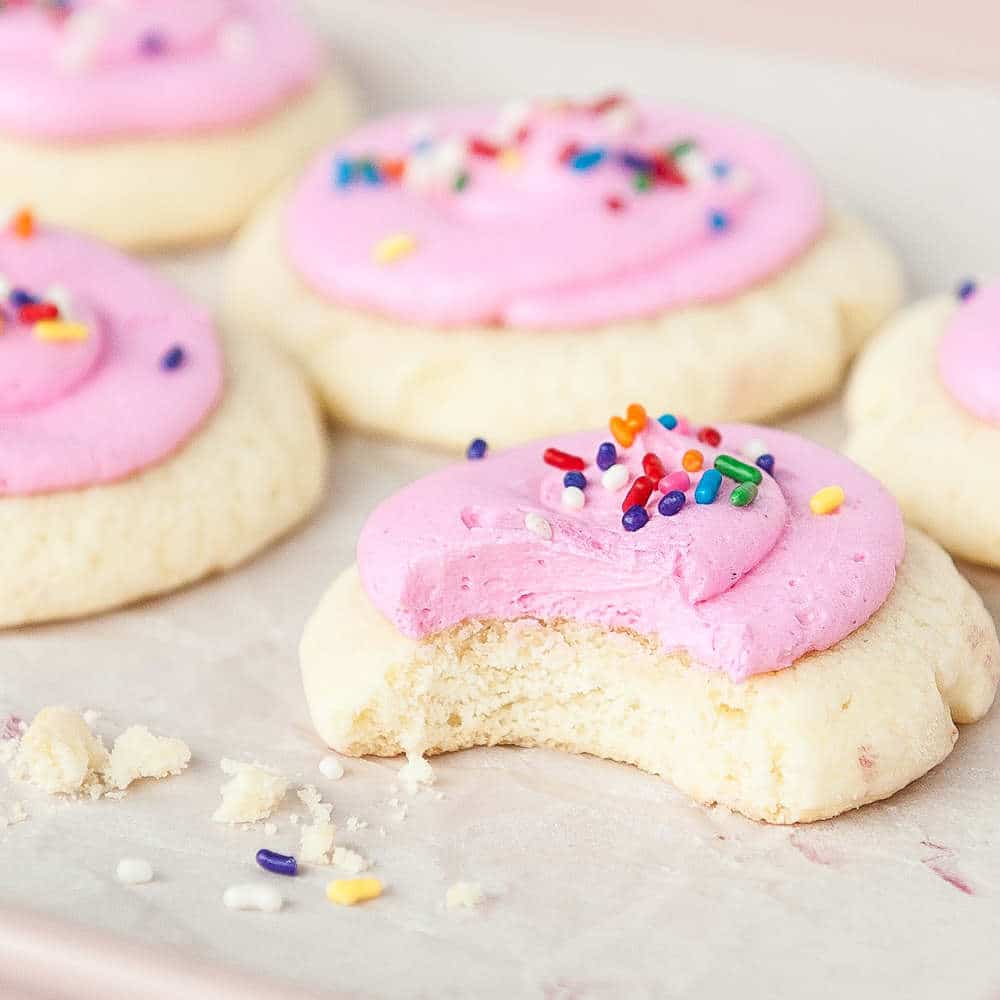
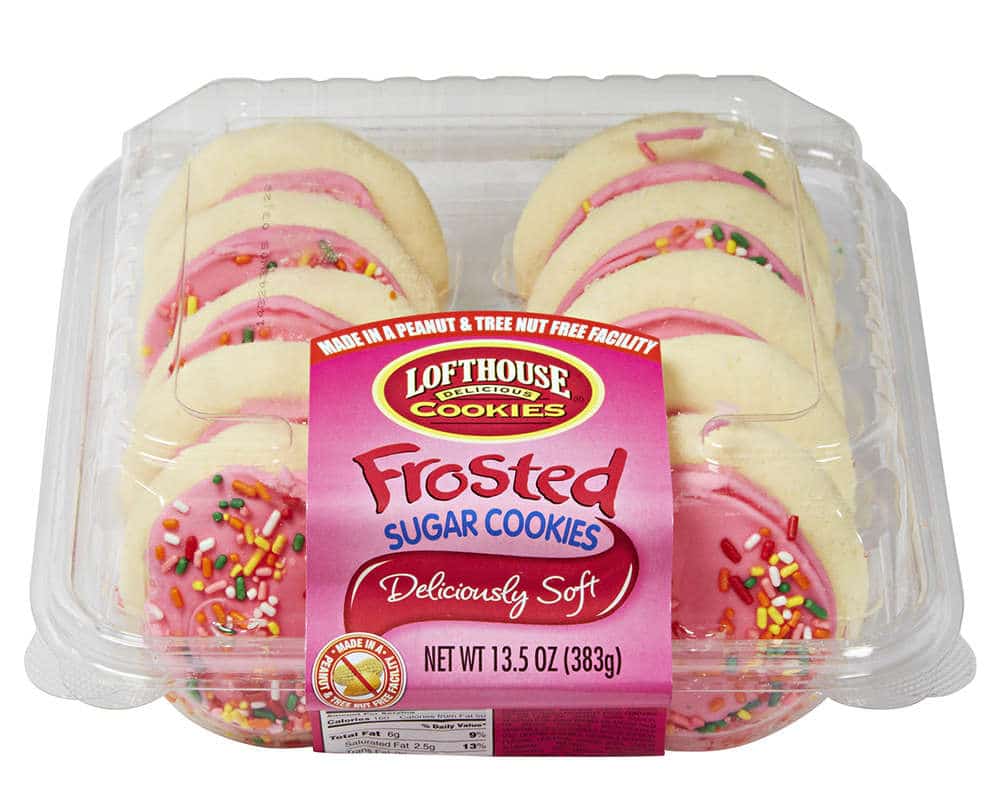
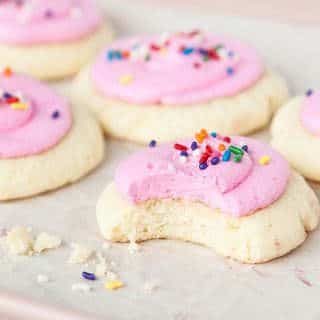
If your Mom is a fan of the original Lofthouse Cookies,  she will flip over this copycat recipe! Soft and buttery with frosting and sprinkles. Even better than the original because these are made from scratch!

Chocolate Bundt Cake

chocolate bundt cake with fresh strawberries

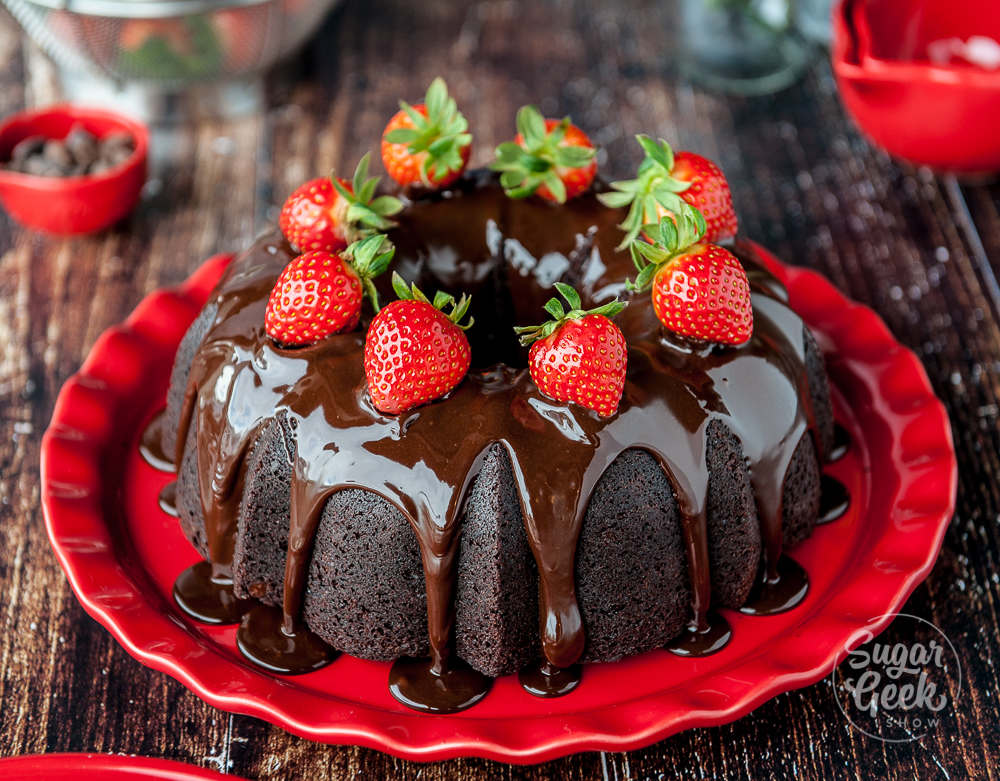
Want to make Mom a special cake but don't have a lot of time or decorating capabilities? A chocolate bundt cake or vanilla bundt cake is the way to go! Super easy to make and so impressive looking. The perfect cake for the whole family to enjoy after Mother's Day dinner. 

I hope these desserts inspired you to make something special for your Mom this Mother's Day! Remember, Mom doesn't want a lot for Mother's Day, and showing your appreciation for all she does for you is the best gift you can give. 


sourdough pikelets

May 7, 2020 Breakfast

Sourdough Pikelets

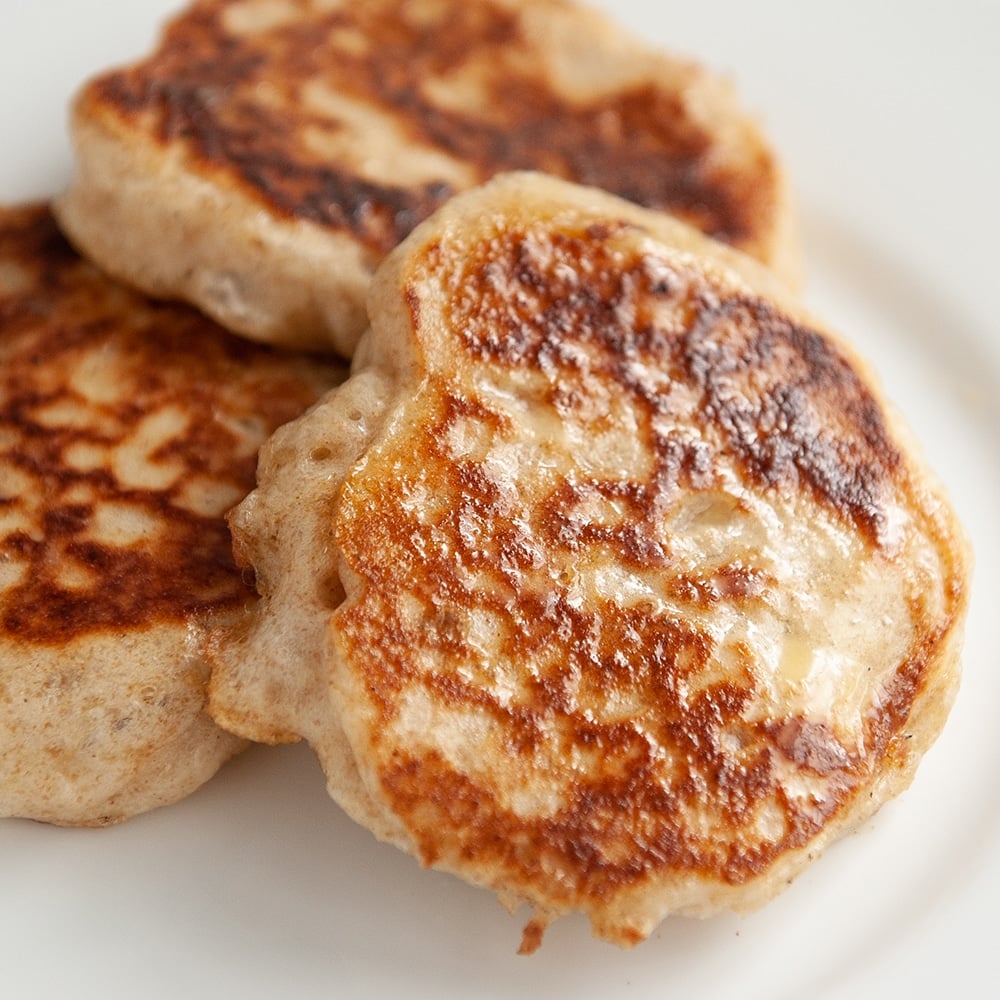
Sourdough pikelets are the easiest and tastiest way to use up that leftover sourdough starter discard. They are even easier to make than my sourdough pancakes and take less than 5 minutes to make. I like to add a few chopped chives to my pikelets and have them for breakfast!

sourdough pikelets

Quick Glance at the Recipe: Sourdough Pikelets

  • Recipe Name: Sourdough Pikelets (Sourdough Discard Recipe)
  • Why You'll Love It: Five minutes start to finish, uses up your sourdough discard, and works for sweet OR savory breakfast. Crispy edges, soft middle.
  • Time and Difficulty: 1 minute prep + 8 minutes cook. Beginner-friendly.
  • Main Ingredients: Sourdough discard, sugar, salt, baking soda, butter. That's it.
  • Method: Stir baking soda, salt, and sugar into a cup of unfed sourdough discard. Cook in butter on a preheated medium-low pan, low and slow, 5 minutes on one side and 3 on the other.
  • Texture and Flavor: Crisp buttery edges, soft, slightly tangy interior with the holes of a crumpet. Less airy than a pancake, more substantial than a crepe.
  • Quick Tip: Low and slow is the only way to cook these. If the pan is too hot, the outside burns before the inside cooks through.
ChatGPT
Google AI
Perplexity
Grok
Add us as a trusted site on Google
[feast_advanced_jump_to]

I know people don't care much about family history and recipes but this is truly the first family recipe I have shared here on Sugar Geek Show so darn it, I'm going to share a little bit about why I love pikelets!

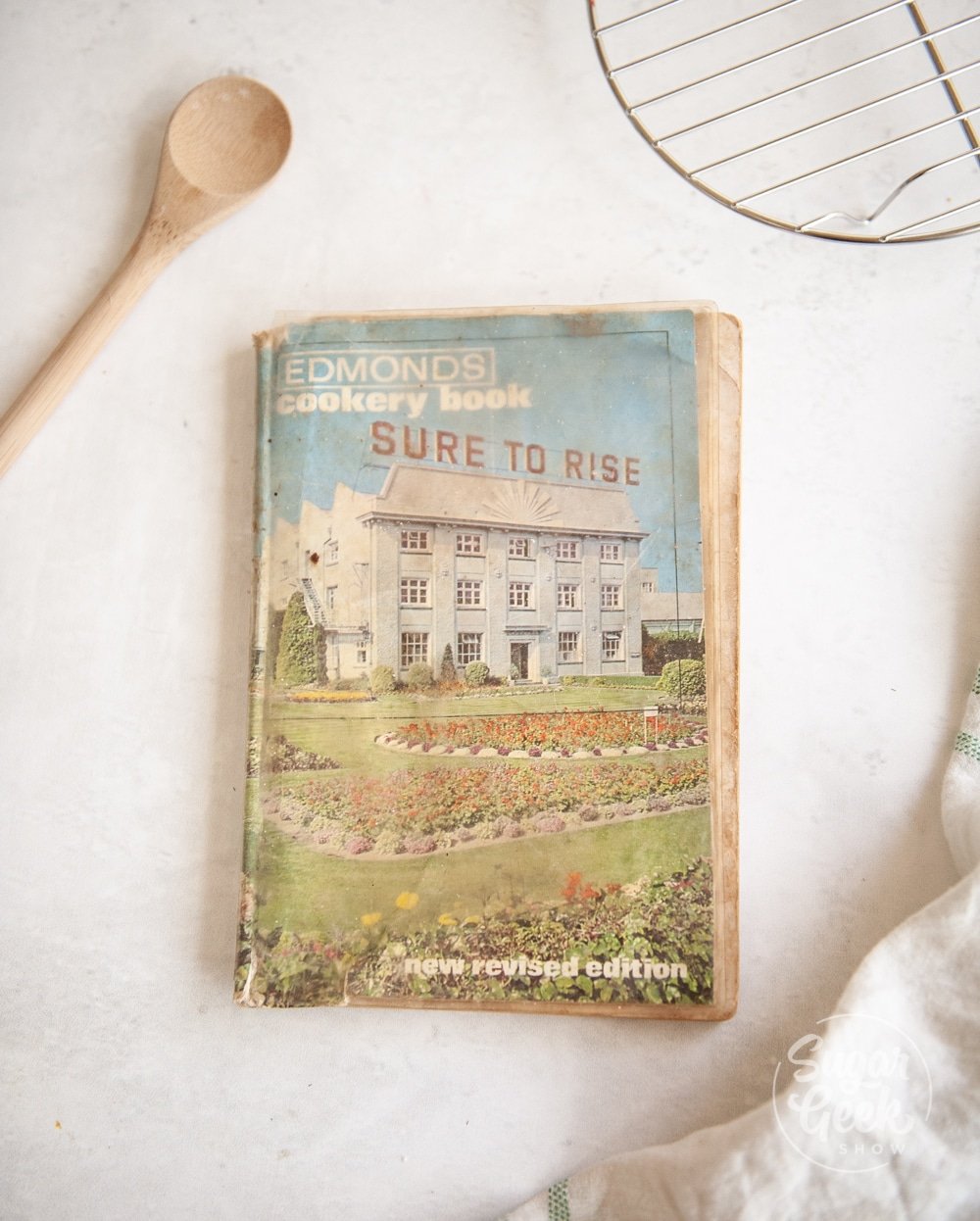
Pikelets are a part of my childhood. I had never even had a pancake until I was in my teens. My dad is from New Zealand, and if you're from New Zealand, this is your version of the Betty Crocker cookbook. The Edmonds Cookery Book. Everything we made pretty much originated from this book. This is the actual cookbook my Mom and Dad used. I never thought to even ask my Dad if he still had it because he isn't much of a baker or a cook and my Mom has long since passed away.

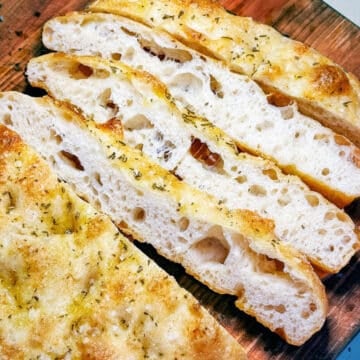
I recently invited him over to test out some sourdough bread, sourdough focaccia, and a sweeter lemon blueberry sourdough focaccia I was making. He has a gluten intolerance and I wondered if he could actually eat sourdough bread because I had read that people with an intolerance can actually eat it with no pain. Hop on over to my sourdough bread recipe to see how that went!

As I was making the bread, I decided to make some pikelets out of the discard and it brought back all my memories of eating them as a kid. I quickly called my Dad and asked him if he still had that old cookbook and what do you know... he did. Now, these sourdough pikelets are not exactly like the ones I had growing up, these are made from discard while the ones I had growing up were made with fresh flour and baking powder. But the texture is almost identical and quite delicious! Ok, that's my schpeel about pikelets 😀

edmonds baking powder cookbook on white background surrounded by wooden spoon, towel and cooling rack

What Is A Pikelet?

A pikelet is similar to a pancake but pancakes are made with a thinner batter and are usually eaten at breakfast. Pikelets are made with a thicker batter and can be eaten at any time of the day.

I often like to add savory ingredients to my pikelets, such as chives, cheese, bacon, or even roasted corn! Mmmmmm so good.

A pikelet is actually the same thing as a crumpet, except it is not cooked in a metal ring. Pikelets are commonly referred to as the poor people's crumpet because not everyone could afford a metal ring to bake in!

If you love a sourdough breakfast bread, my sourdough English muffins are the proper bread version with all the same nooks and crannies.

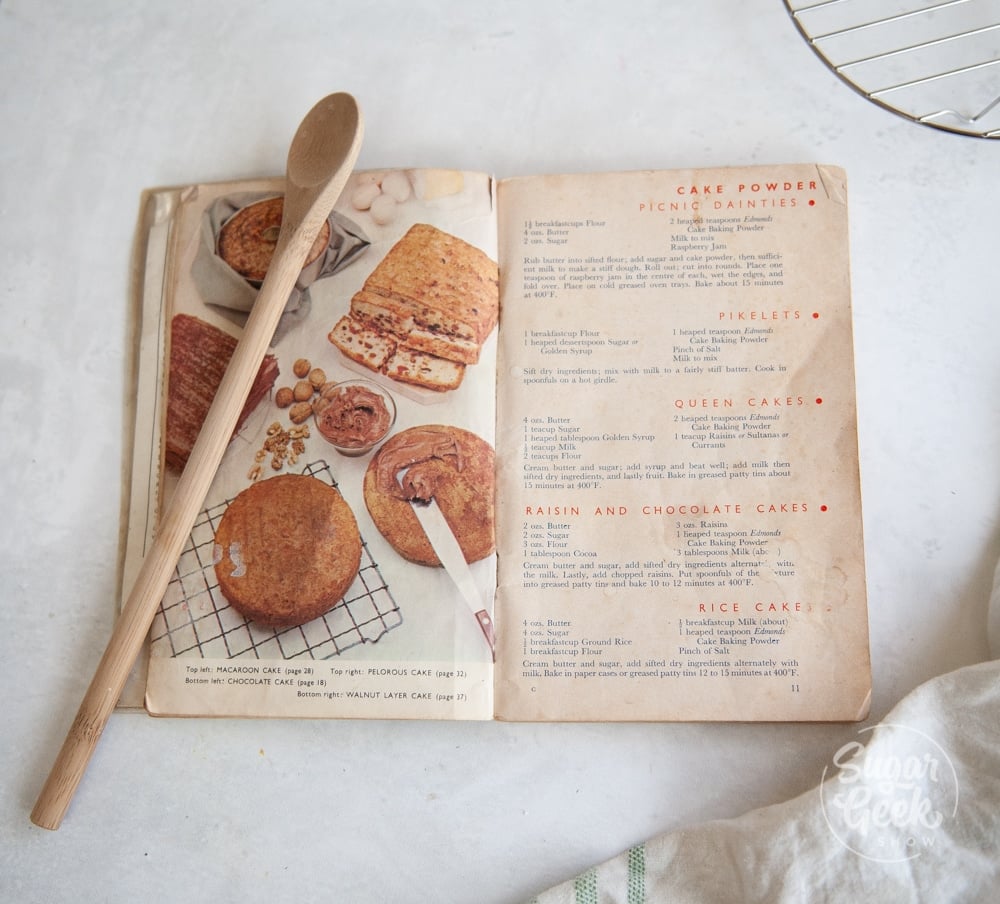
edmonds cookery book open on white background with wooden spoon on top

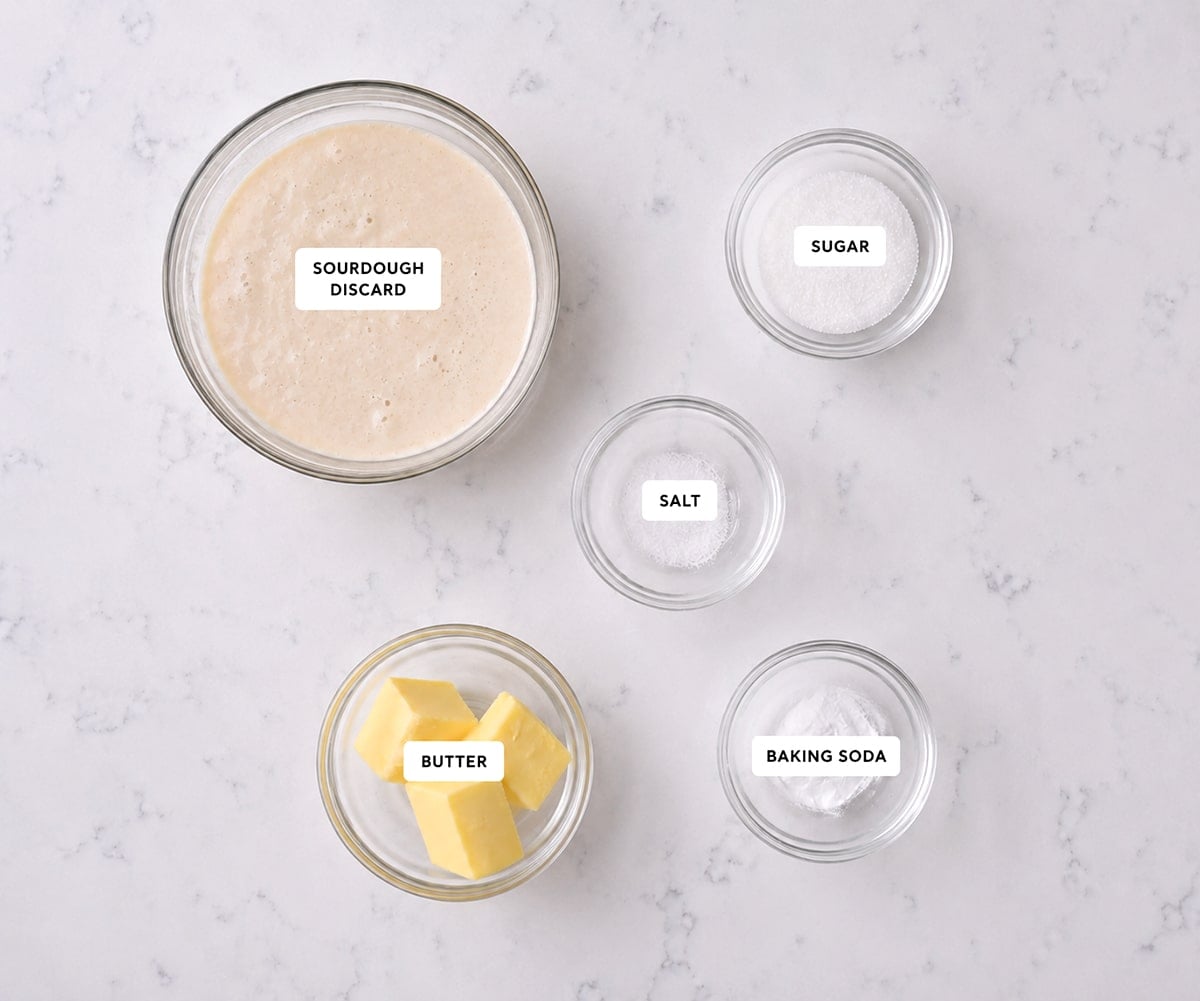
Sourdough Pikelet Ingredients

You only need a few ingredients to make easy sourdough pikelets from your discard. I typically have about a cup of discard leftover. If you have more or less, you can adjust these ingredients as needed. I always recommend weighing your ingredients with a digital kitchen scale for the most accurate results.

Sourdough pikelet ingredients.
  • Sourdough discard. Unfed sourdough starter straight from the fridge or counter, no need to wake it up. This is the ENTIRE base of the recipe, so use discard you'd actually want to eat (not weeks-old liquid alcohol-smelling stuff).
  • Sugar. Just a teaspoon. Gives the pikelets the faint sweetness of a pancake. If you're going fully savory, leave it out (a reader asked about this, and it works fine).
  • Salt. Balances the tang of the sourdough. Don't skip.
  • Baking soda. This is the most important ingredient after the discard. Baking soda reacts with the natural acidity in the sourdough discard and gives the batter its rise. Without it, you'd have a dense, flat pikelet.
  • Butter. For the pan. This is what gives the pikelet its crispy edges. Don't substitute oil unless you have to; the butter flavor is part of the point.

How To Make Pikelets Step-By-Step

For exact measurements, see the recipe card below.

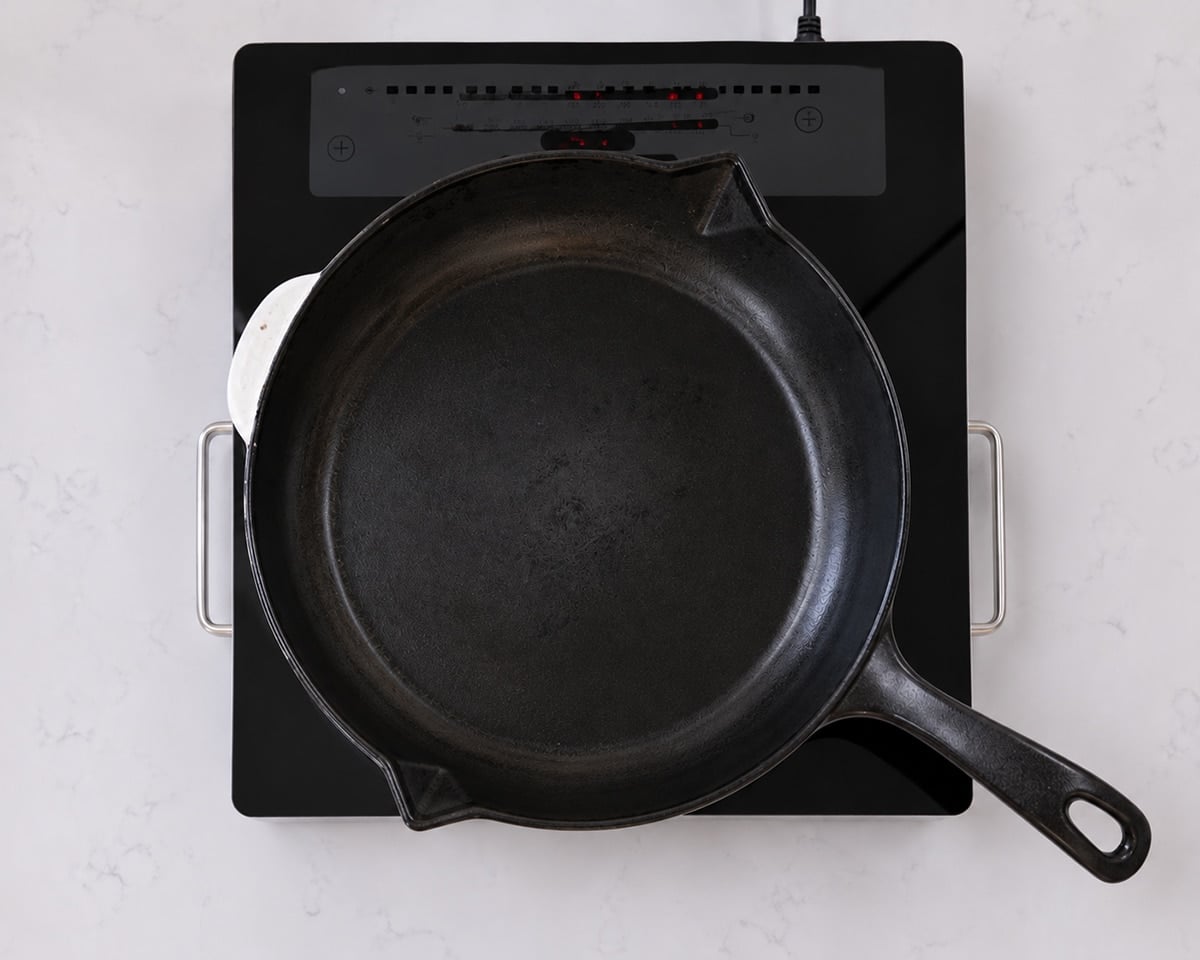
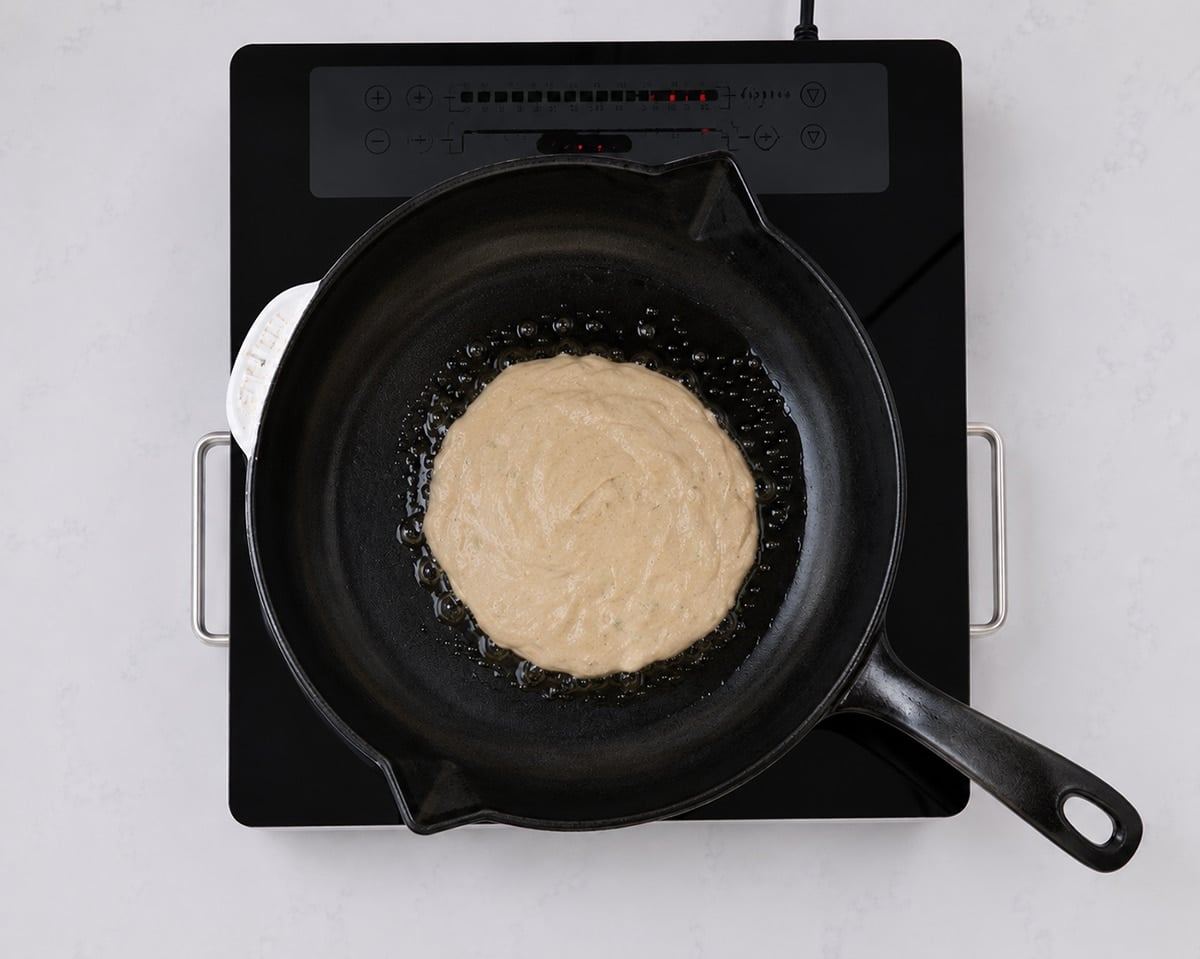
Hot cast iron pan on an electric cooktop.
  1. Preheat your pan for 15 minutes on medium-low heat. Cast iron is ideal. The surface temp should be around 300º F.
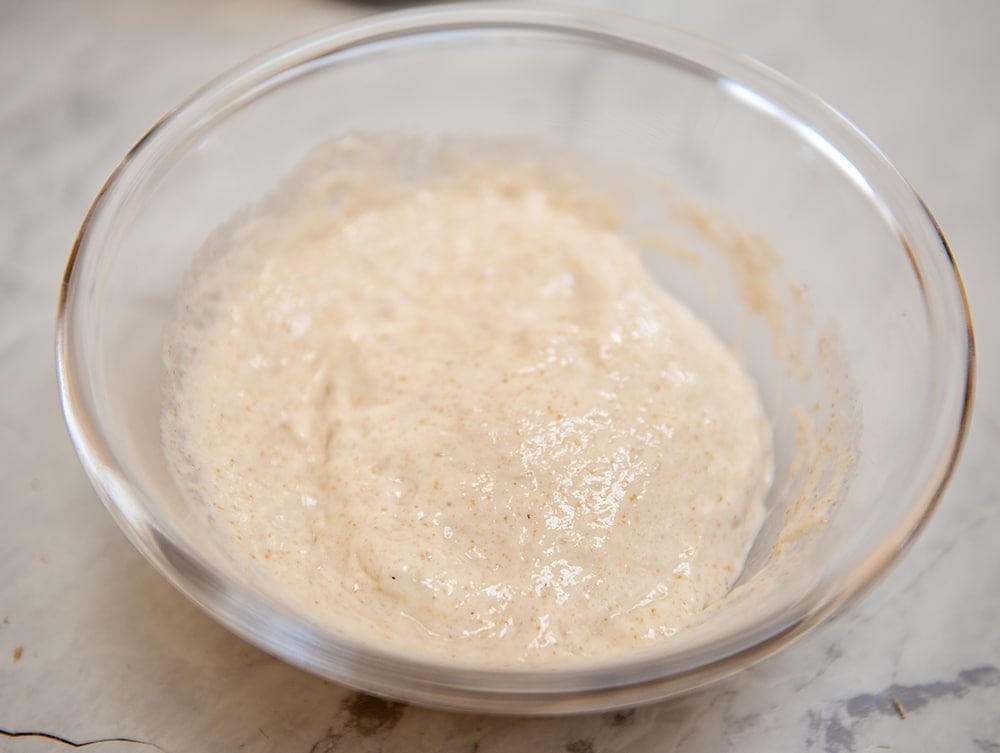
Sourdough discard pikelet batter in a glass bowl.
  1. Add the baking soda, salt, and sugar to your sourdough discard and stir. You'll immediately notice the batter puffs up from the baking soda reacting with the acidity in the discard.

PRO TIP: The key to perfect pikelets is cooking them LOW AND SLOW. If your pan is too hot, the outside burns before the inside cooks through, and you end up with a raw, doughy center. Use a surface thermometer the first time if you have one.

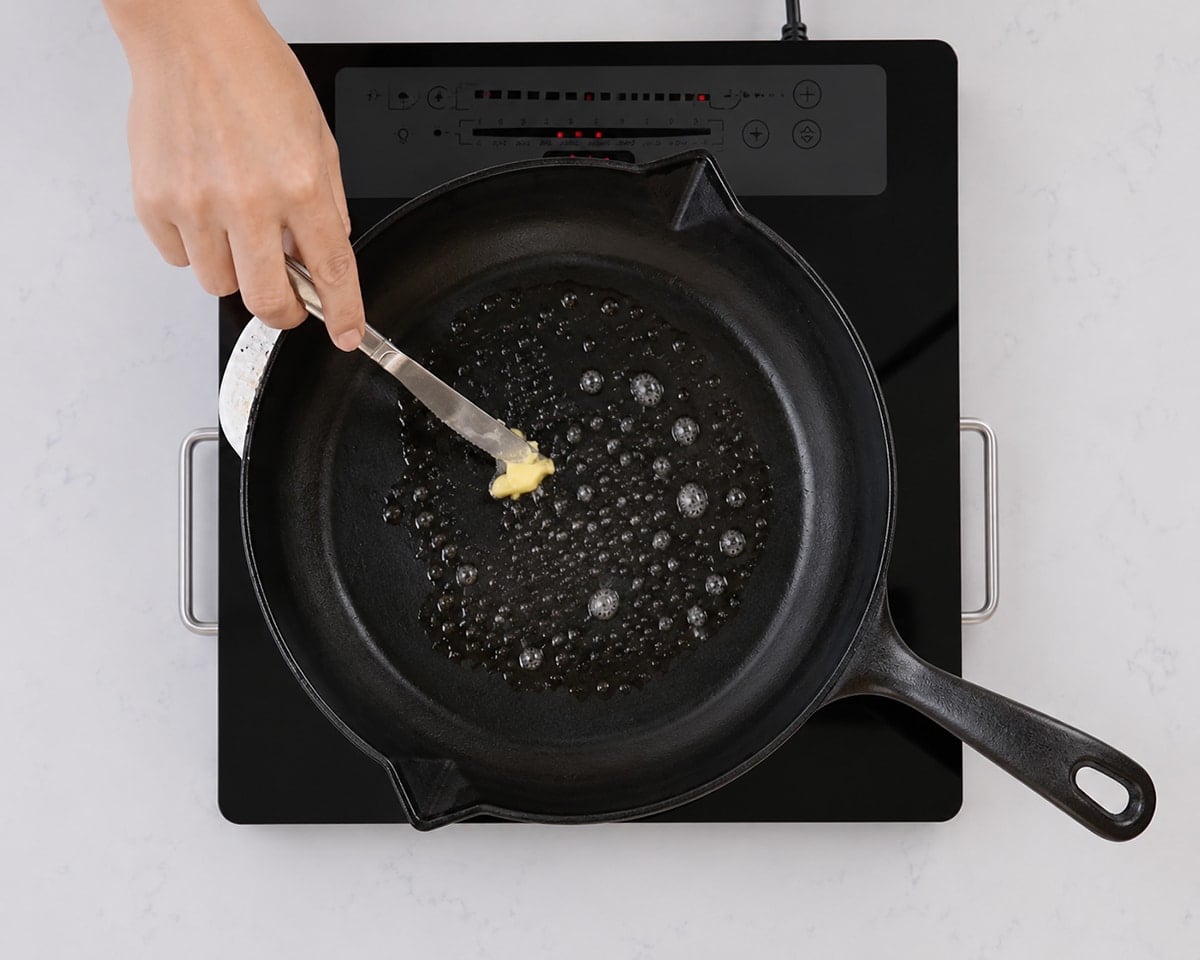
Hand melting butter with a butter knife in a hot cast iron pan on an electric stovetop.
  1. Add some butter to the pan and let it melt. This makes our pikelets nice and crispy!
Sourdough pikelet batter in a hot cast iron pan.
  1. The batter will be thick, so I use my hands to divide it. You can get about three small pikelets from one cup of discard. Pour the batter into the pan from the bowl, and then pinch the dough with your fingers to separate it.
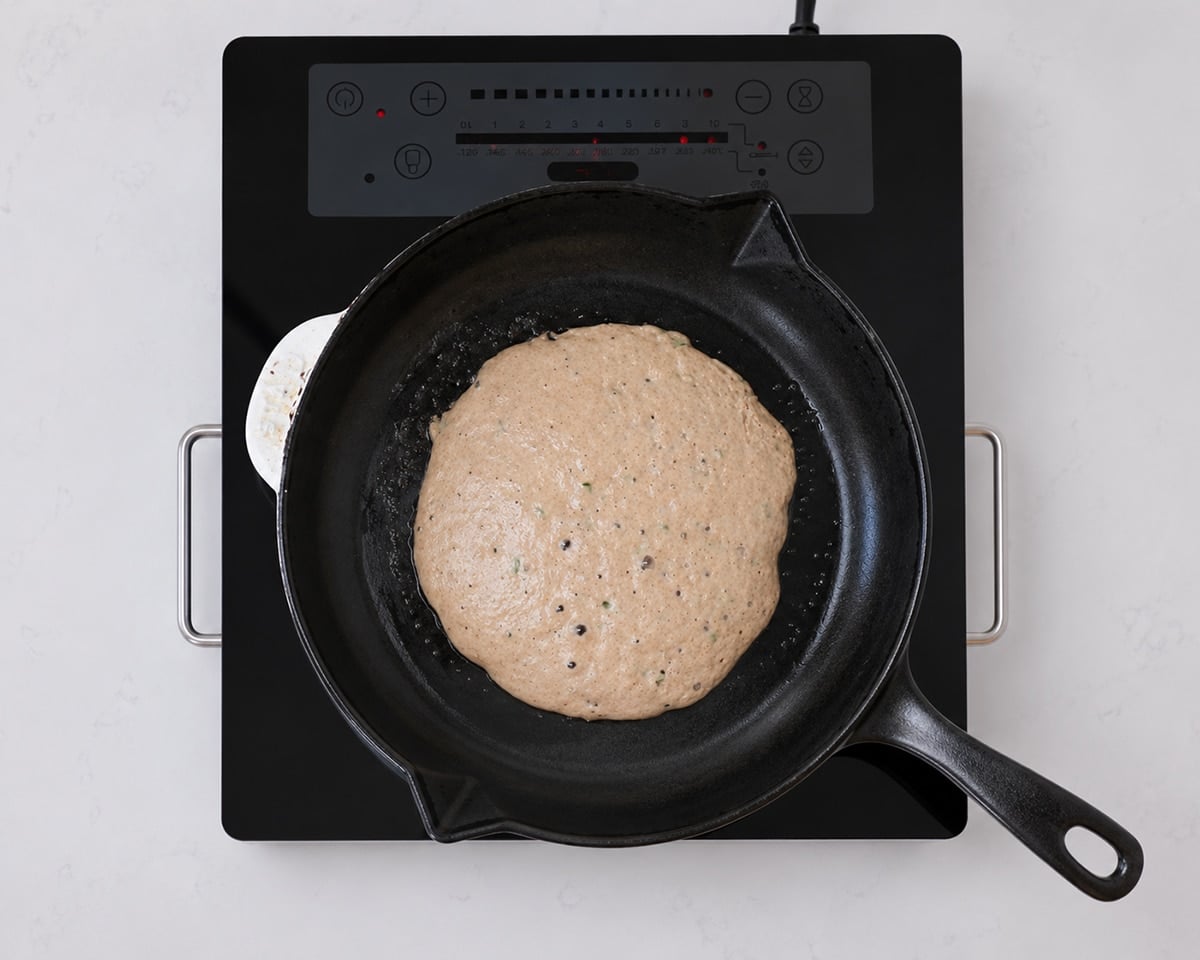
Sourdough pikelet batter in a hot cast iron pan.
  1. Cook the pikelets for 5 minutes on one side, or until the edges start to look dry and you can see some holes forming on top.
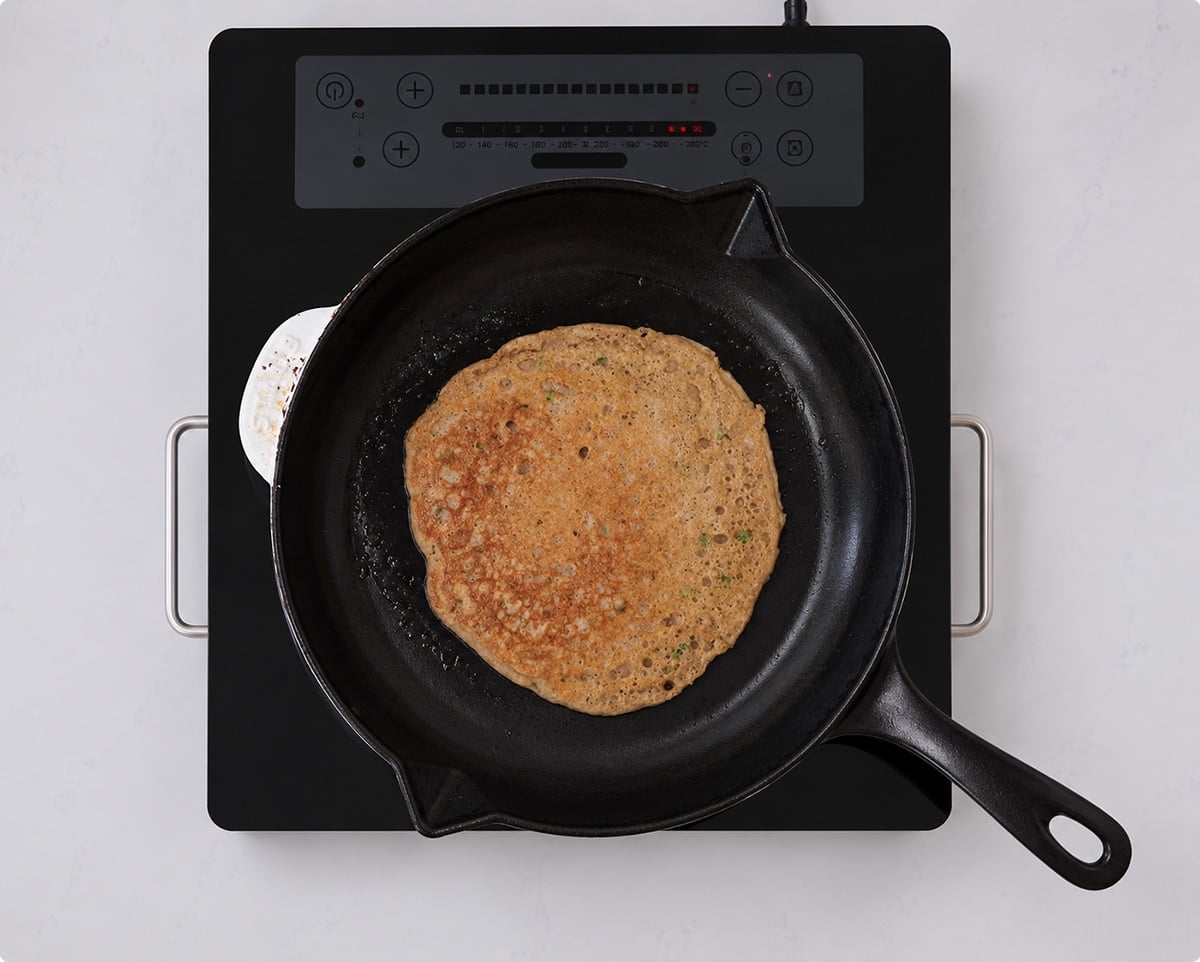
Sourdough pikelet cooking in a hot cast iron pan.
  1. Flip the pikelet over and cook for another 3 minutes.
sourdough pikelets

Common Sourdough Pikelet Problems To Avoid

Sour aftertaste. Discard was way too old. Toss anything that smells like nail polish remover (that's alcohol, the yeast eating itself) and start with fresher discard next time.

Pikelets are doughy in the middle. Pan was too hot. Reduce to low and give the pan time to come back down before pouring the next batch.

Pikelets are dense and flat. Forgot the baking soda, or the discard was too old and lost most of its acidity. Use discard that's no more than a week old in the fridge.

Batter is too thin to hold a shape. Discard was too runny. Add a Tablespoon of flour to thicken it, or just let it sit 5 minutes for the gluten to relax and thicken on its own.

Pikelets are burning on the outside but raw inside. Pan too hot, full stop. Low and slow.

Make-Ahead And Storage

  • Cooked pikelets, room temperature. Airtight container, 1 day. After that the texture goes soft.
  • Cooked pikelets, freezer. Cool completely, single-layer flash freeze for 30 minutes, then bag. Up to 2 months. Reheat in a hot pan for 1 minute per side, or in the toaster.
  • Sourdough discard, fridge. Up to 1 week in a covered jar. Bring to room temperature before mixing the batter.
  • Already-mixed batter. Use within 30 minutes. The baking soda reaction loses lift the longer it sits.

For best results, hide from other family members and devour immediately!

If freezer breakfasts are your thing, my sourdough sandwich bread freezes great in slices too, and sourdough rolls freeze straight from the oven for dinner all week.

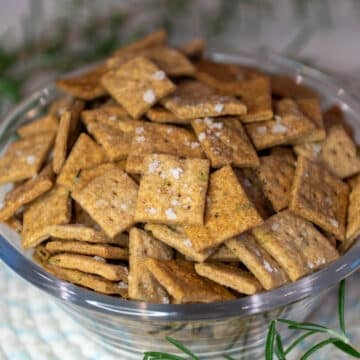
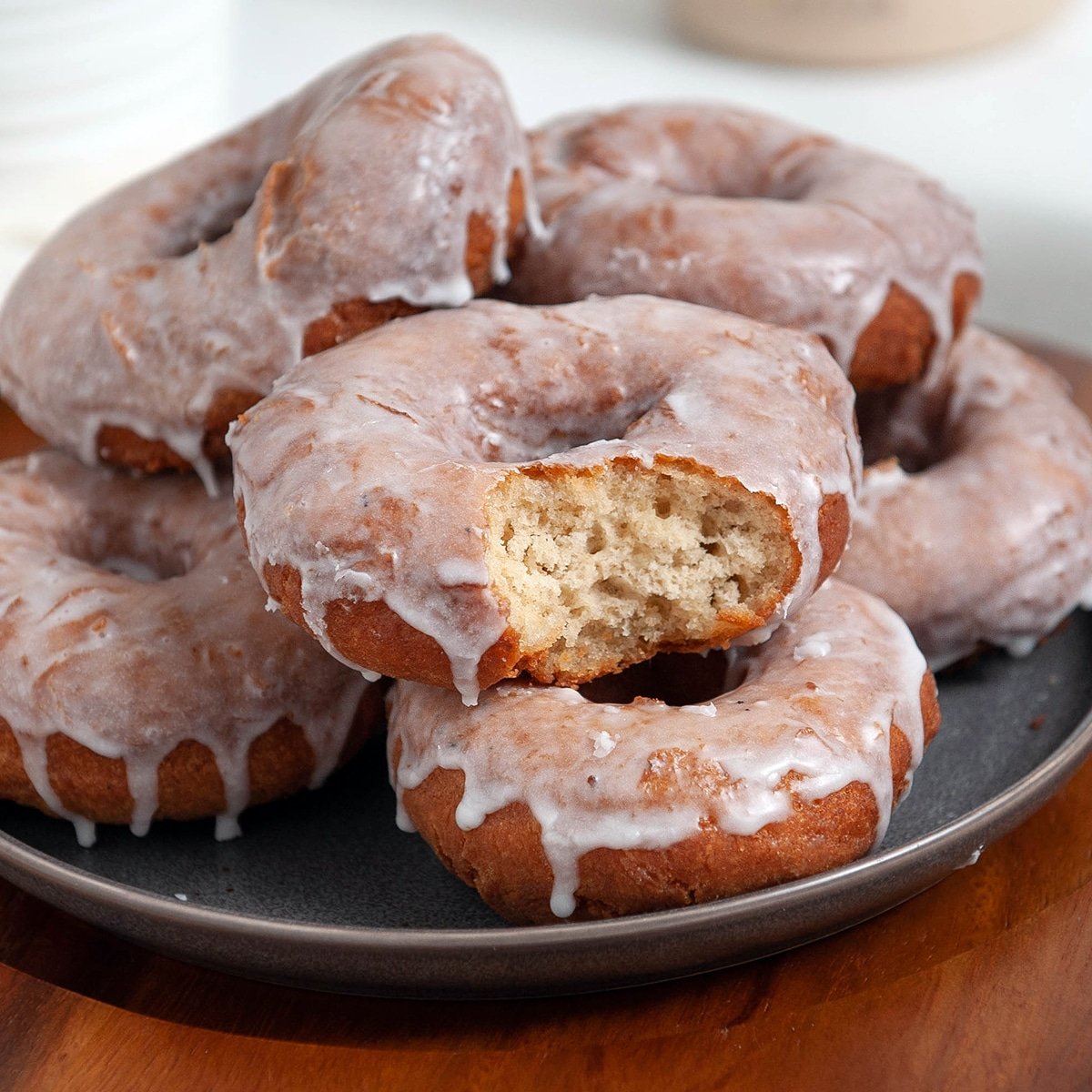
If you want a savory snack, try my rosemary sourdough discard crackers, same 5-minute prep, but they bake into shatter-crisp crackers with flake salt. For a sweet breakfast, my sourdough discard pancakes use a full cup of discard. And my sourdough discard donuts turn it into a weekend treat.

Sourdough Pikelet FAQs

Can I omit the sugar?

Yes. A reader asked about this for savory pikelets and they come out fine without it. The pikelet will be less sweet (obviously) but the texture is the same. Great if you're planning to top with cheese, chives, bacon, or smoked salmon.

Can I add mix-ins to the batter?

Absolutely. Chopped chives, shredded cheese, crumbled bacon, roasted corn, blueberries, chocolate chips, lemon zest, all work. Stir them in after the baking soda has done its puffing.

My pikelet is sticking to the pan. What do I do?

Add more butter and make sure the pan is hot enough to set the bottom (test by flicking a drop of water on the pan, it should sizzle, not just sit there). If the pan is properly preheated and well-buttered, sticking shouldn't happen.

Can I use active fed starter instead of discard?

Yes, but it's a waste of an active starter that could have made bread. Discard pikelets are the whole point. If you're going to use fed starter, your pikelets will be slightly more risen and a touch milder in flavor.

More Sourdough Discard Recipes To Try

  • B
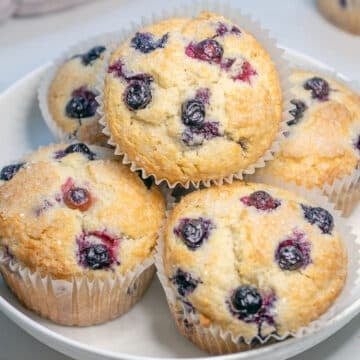
    Sourdough Discard Blueberry Muffins
  • Sourdough Discard Crackers
  • Sourdough Donut recipe
    Sourdough Discard Donuts
  • sourdough pancakes on a white plate
    Sourdough Discard Pancakes

Leave Me A Review
⭐️⭐️⭐️⭐️⭐️

If you tried this Sourdough Discard Pikelet Recipe or any other recipe on my blog, please leave a 🌟 star rating and let me know how it goes in the comments. I love hearing from you!

Recipe
sourdough pikelets
Print Recipe
4.91 from 41 votes

Sourdough Pikelets

How to make light and fluffy sourdough pikelets from your sourdough discard in less than 5 minutes. Super easy and so delicious!
Prep Time1 minute min
Cook Time8 minutes mins
Total Time9 minutes mins
Course: Breakfast
Cuisine: American
Servings: 3 pikelets
Calories: 39kcal
Author: Liz Marek

Ingredients

  • 1 cup sourdough discard unfed
  • 1 teaspoon sugar
  • ¼ teaspoon salt
  • ½ teaspoon baking soda
  • 1 Tablespoon butter
US Customary - Metric

Instructions

  • Before you begin: Pull your sourdough discard out of the fridge so it's not ice-cold when you add the baking soda. The reaction works at any temperature but room-temp discard puffs faster.
  • Preheat your pan on medium-low for 15 minutes (surface temp should be around 300º F).
  • Combine all your ingredients together (except the butter) in a bowl. You'll notice the mixture gets puffy and bubbly.
  • Melt the butter in the hot pan.
  • Use your hands to divide the batter into three pikelets by pouring the batter into the pan from the bowl and then pinching the dough with your fingers to separate it.
  • Cook your pikelets for 5 minutes or until the edges start to look dry and you can see some holes forming on top.
  • Flip your pikelet over and cook for another 3 minutes.
  • Serve warm and enjoy!

Video

Notes

  1. Ingredient notes:
    • Use sourdough discard that's no more than a week old in the fridge. Older discard loses acidity and the baking soda reaction doesn't puff as well.
    • Skip the sugar if you're going fully savory. A reader confirmed this works fine.
    • Butter (not oil) is what gives the pikelets their crispy edges. Worth the upgrade.
    Pan options:
    • Cast iron is ideal for even, low-and-slow heat.
    • Non-stick works if you don't have cast iron, but cook a touch slower since non-stick holds heat differently.
    • A griddle works for batch cooking 6 or more pikelets at once.
    Make-ahead and storage:
    • Cooked pikelets at room temperature, 1 day in an airtight container.
    • Cooked pikelets in the freezer, up to 2 months. Flash freeze single-layer for 30 minutes, then bag. Reheat in a hot pan or toaster.
    • Sourdough discard in the fridge, up to 1 week in a covered jar.
    • Already-mixed batter loses lift after 30 minutes, so mix right before cooking.
    Mix-in ideas (savory or sweet):
    • Chopped chives, shredded cheese, crumbled bacon, roasted corn
    • Blueberries, chocolate chips, lemon zest, banana
    • Stir in after the baking soda puffs the batter
    Critical do-nots:
    • Don't cook the pikelets on high heat. Low and slow only. High heat burns the outside and leaves the inside raw.
    • Don't skip the baking soda. It's the only leavener.
    • Don't use discard that smells like nail polish remover. That's alcohol from the yeast eating itself. Start with fresher discard.

Nutrition

Serving: 1serving | Calories: 39kcal | Carbohydrates: 1g | Protein: 1g | Fat: 4g | Saturated Fat: 2g | Cholesterol: 10mg | Sodium: 410mg | Sugar: 1g | Vitamin A: 117IU


sourdough pancakes on a white plate

May 7, 2020 Breakfast

Sourdough Discard Pancakes

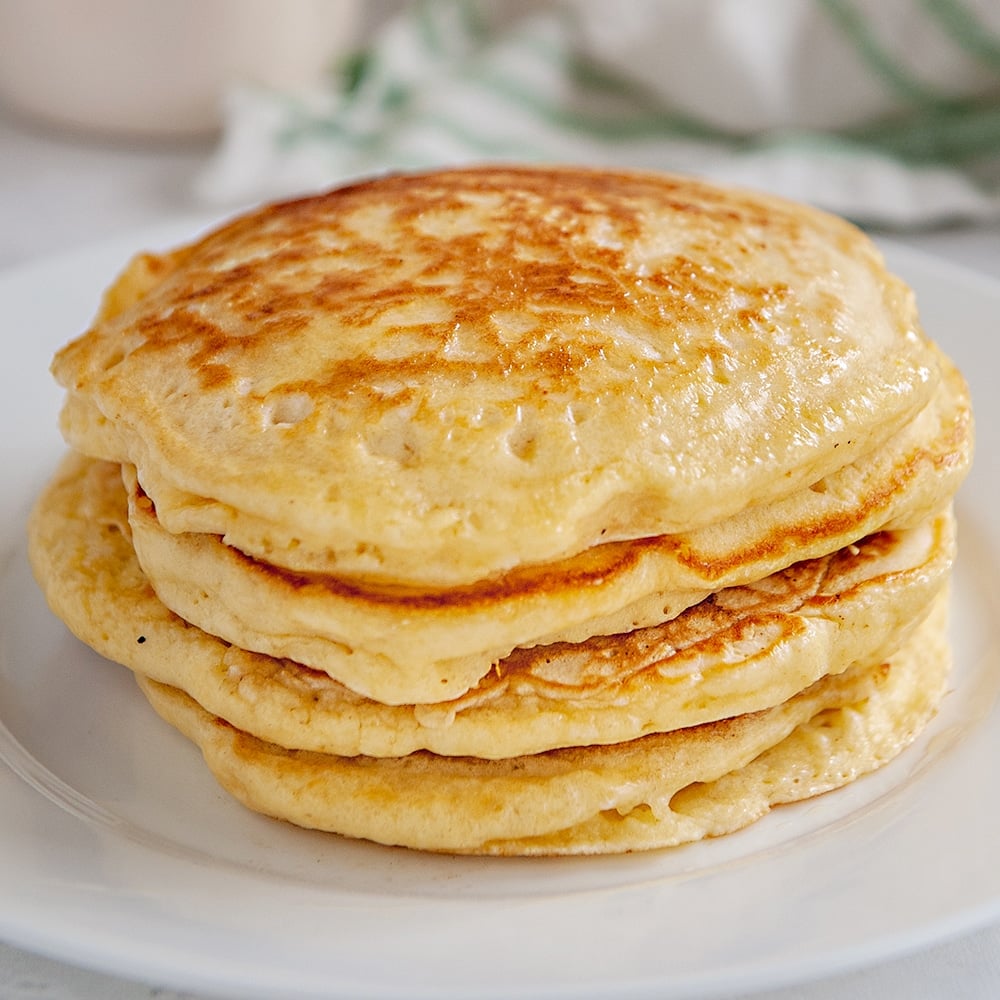
The easiest, fluffiest sourdough discard pancakes you'll ever make. Five minutes to mix, light and tangy, with the crispy edges that come from cooking low and slow in butter. They use up a full cup of sourdough starter discard per batch, which is why I keep a starter alive in the first place. If you love sourdough pikelets, these are their fluffier American breakfast cousin.

sourdough pancakes on a white plate

Quick Glance at the Recipe: Sourdough Discard Pancakes

  • Recipe Name: Sourdough Discard Pancakes
  • Why You'll Love It: Fluffy, tangy, easy. Five minutes to mix, 30 minutes to cook a batch of 8. Uses up a full cup of discard so your starter never goes to waste.
  • Time and Difficulty: 5 minutes prep + 30 minutes cook + optional overnight ferment. Beginner-friendly.
  • Main Ingredients: Sourdough discard, all-purpose flour, milk, eggs, sugar, baking soda, baking powder, salt, oil.
  • Method: Combine all ingredients in one bowl. Mix until just combined (lumps are fine). Cook in butter on a preheated medium-low pan, 5 minutes on one side until the edges look dry and holes form on top, then 3 minutes on the second side.
  • Texture and Flavor: Fluffy, tender interior with crispy buttery edges. Faintly tangy from the discard without tasting sour.
  • Quick Tip: If you want a deeper sourdough tang, ferment the batter overnight in the fridge, but add the baking soda and baking powder right before cooking. The leavener reaction dies in cold batter overnight.
ChatGPT
Google AI
Perplexity
Grok
Add us as a trusted site on Google
[feast_advanced_jump_to]

Recently, I decided to dive into making sourdough starter so I could make my own fresh sourdough bread at home. When you make a sourdough starter, you end up with a lot of discard, the part you'd otherwise throw away every time you feed the starter. Not wanting to waste precious flour, I looked up a lot of sourdough discard recipes.

This one is AMAZING. I couldn't believe how delicious these sourdough pancakes were. Surprisingly, they don't taste sour at all, just fluffy, delicious pancakes with a faint tang in the background. They also don't make you feel bloated the way regular pancakes do, because sourdough is one of the healthiest types of bread you can eat. As the yeast goes through fermentation, it breaks down some of the gluten, making it easier to digest and minimizing discomfort. A great option for anyone who has trouble digesting gluten but isn't allergic.

I slather mine in more butter, but my daughter Avalon prefers hers with cinnamon and sugar. Both are right.

If you'd rather use that cup of discard for a savory snack later in the week, my sourdough discard crackers take 5 minutes to mix and bake up shatter-crisp with flake salt and rosemary.

What Makes This Sourdough Discard Pancake Recipe Different

Most sourdough discard pancake recipes treat the discard as a byproduct, the consolation prize you get for keeping a sourdough starter. I treat it as the whole reason to keep a starter. Discard pancakes are the recipe I make twice a week to justify the jar in my fridge.

A few things make this version different from most discard pancakes you'll find:

  • One bowl, no rest required. Same-day pancakes in under 10 minutes of active time. Most recipes ask you to mix, then rest, then add more, then rest again. This one is whisk, scoop, cook.
  • A full cup of discard per batch. Some recipes use a half cup or less, which makes them mostly regular pancakes that happen to have some discard in them. A full cup gives you a real sourdough tang and uses up the discard your starter generates each feed.
  • Optional overnight ferment for deeper flavor. If you want a sharper tang, you can mix the batter (minus the leaveners) the night before. See the Same-Day vs Overnight section below for the proper protocol.
  • Holds up to mix-ins. Sturdy enough for chocolate chips, blueberries, bananas, and even savory additions like cheese or herbs without going gummy.

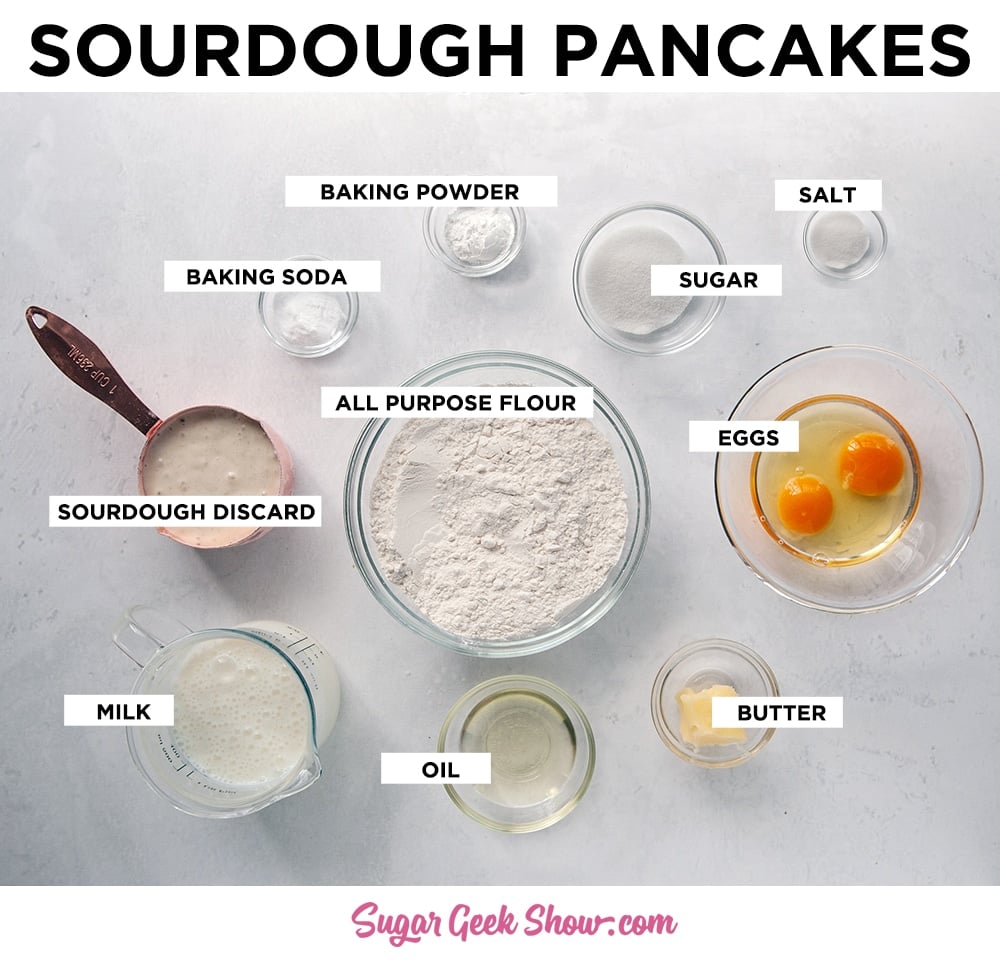
Sourdough Discard Pancake Ingredients

You only need a few pantry staples to make these pancakes. The trick is using REAL cultured sourdough discard (not a starter substitute) and weighing your flour so you don't end up with a dense, tough pancake. I always recommend weighing your ingredients with a digital kitchen scale for the most accurate results.

sourdough pancakes ingredients
  • Sourdough discard is the part of the starter you remove when feeding a sourdough starter, right before you add fresh flour and water. If you have less discard on hand, you can scale down the rest of the recipe proportionally; just know the discard is doing real flavor work here.
  • All-purpose flour. Standard AP. Don't substitute cake flour (too tender for the structure) or whole wheat (too dense without adjustments). If you want a whole-wheat version, swap half the AP for whole wheat AND add another 2 Tablespoons of milk to compensate for the extra absorption.
  • Sugar. Just three Tablespoons. Sweetens the pancake without making it dessert-level sweet. Drop to 1 Tablespoon if you want savory pancakes for cheese-and-bacon mix-ins.
  • Salt. Balances the tang of the sourdough. Don't skip.
  • Baking soda + baking powder. Two leaveners working together. Baking soda reacts with the natural acidity in the sourdough discard for immediate lift. Baking powder gives a second push when the pan hits the batter. Don't swap one for the other.
  • Milk. Whole milk gives the richest pancake, but 2 percent and skim both work. For dairy-free, oat milk is the closest in texture and tang.
  • Eggs. Two large eggs at room temperature. Cold eggs shock the batter, leading to uneven cooking. If you forgot to take them out, drop them in warm tap water for 5 minutes.
  • Canola oil. Or any neutral oil. Avocado oil also works, as a reader pointed out. Avoid olive oil because the flavor comes through.
  • Butter (for the pan). This is what gives the pancakes their crispy edges.

How To Adjust The Sourdough Flavor Intensity

The "tang" in sourdough discard isn't one flavor; it's two acids working together. Lactic acid and Acetic acid which is a bi-product of the sourdough doing its thing. Understanding which one is doing what is the secret to controlling how sour your pancakes taste.

Lactic acid. This is the mild, creamy, yogurt-like tang. It's the same acid in buttermilk, cultured cream, and sauerkraut. Lactic acid bacteria thrive in cooler temperatures, around 40º F to 70º F. Sourdough discard kept in the fridge develops mostly lactic acid over time. If your discard tastes mildly tangy, like yogurt or buttermilk, lactic acid is doing the work.

Acetic acid. This is the sharper, vinegar-like tang. Acetic acid bacteria thrive in warmer temperatures, around 75º F and up, and need oxygen. Sourdough discard left on the counter develops more acetic acid. If your discard tastes sharply sour, almost vinegary, that's acetic acid.

A same-day batter with fresh discard from the fridge gives you a mild, creamy tang. Pancakes taste lightly sourdoughy without being aggressive. An overnight ferment (batter mixed, sat in the fridge 8-12 hours) deepens the lactic acid, giving a pronounced creamy tang. A same-day batter with discard that's been on the counter for a few days gives you the sharpest, most assertive sour flavor.

So if your pancakes taste too sour, switch to a fresher fridge sourdough discard. If they don't taste sourdoughy enough, try an overnight ferment or use older discard. The acid you're tasting is determined by where and how long your discard has been sitting.

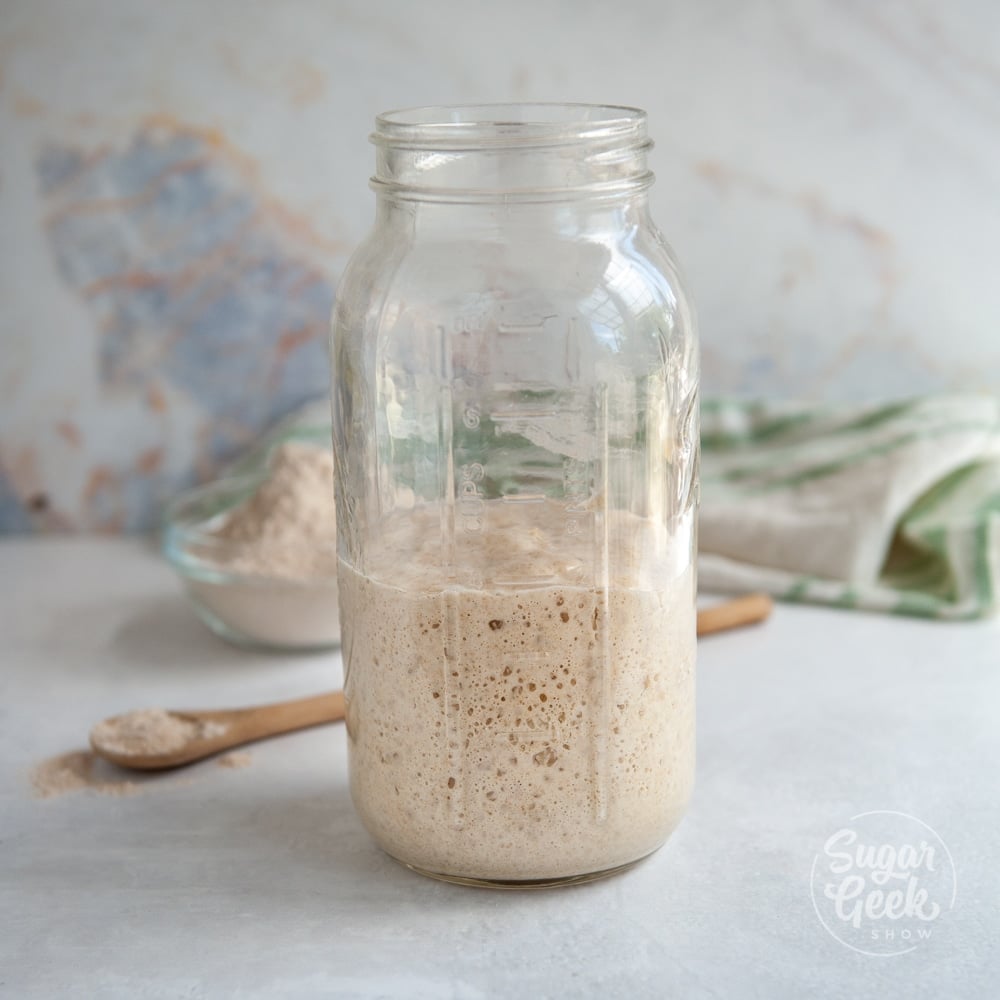
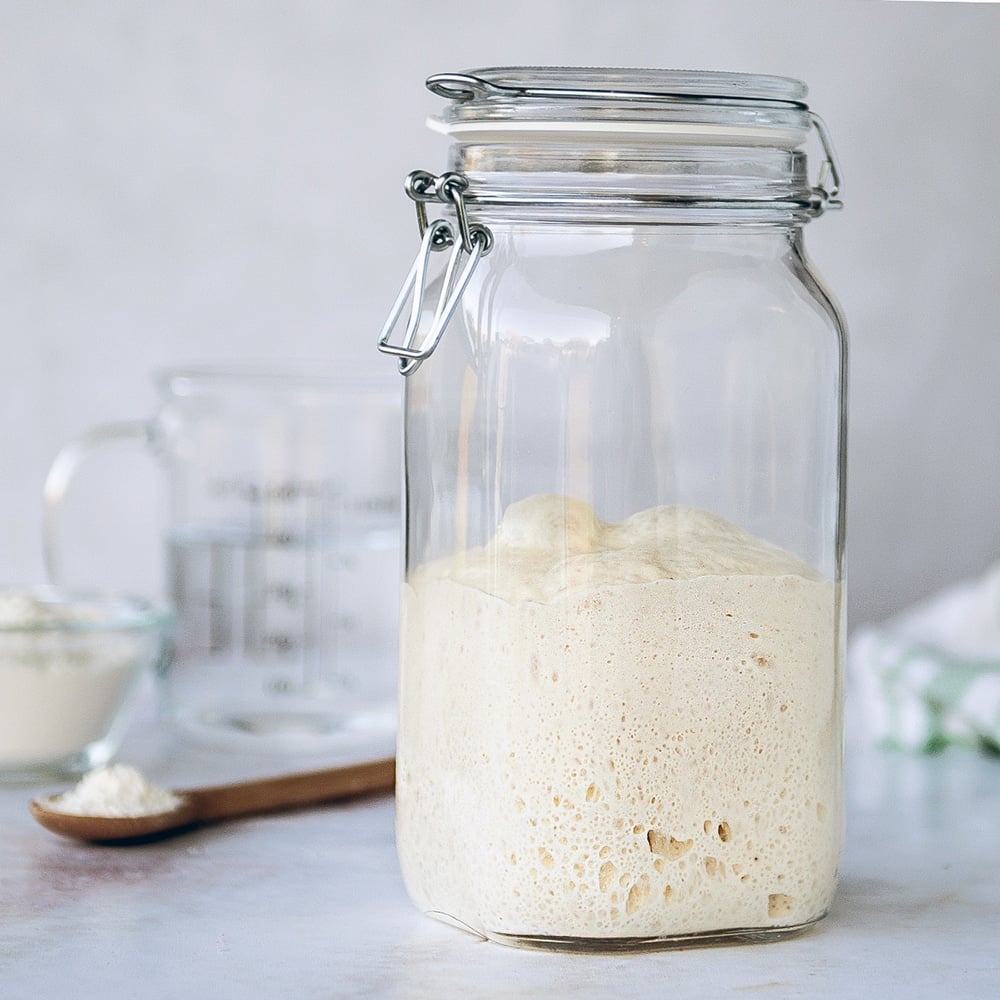
sourdough starter in clear jar

How To Make Sourdough Discard Pancakes Step-By-Step

For exact measurements, see the recipe card below. Pancake batter changes as it sits. The baking soda + acid reaction is immediate and starts to die after 5 minutes. So cook the batter fast. If you need to pause partway through a batch, take the bowl off the warm stove area so the reaction slows.

Cast iron skillet heating on a portable electric cooktop.
  1. Preheat your skillet on medium-low heat for 15 minutes. Cast iron is ideal. You're shooting for a surface temperature of 300º F.
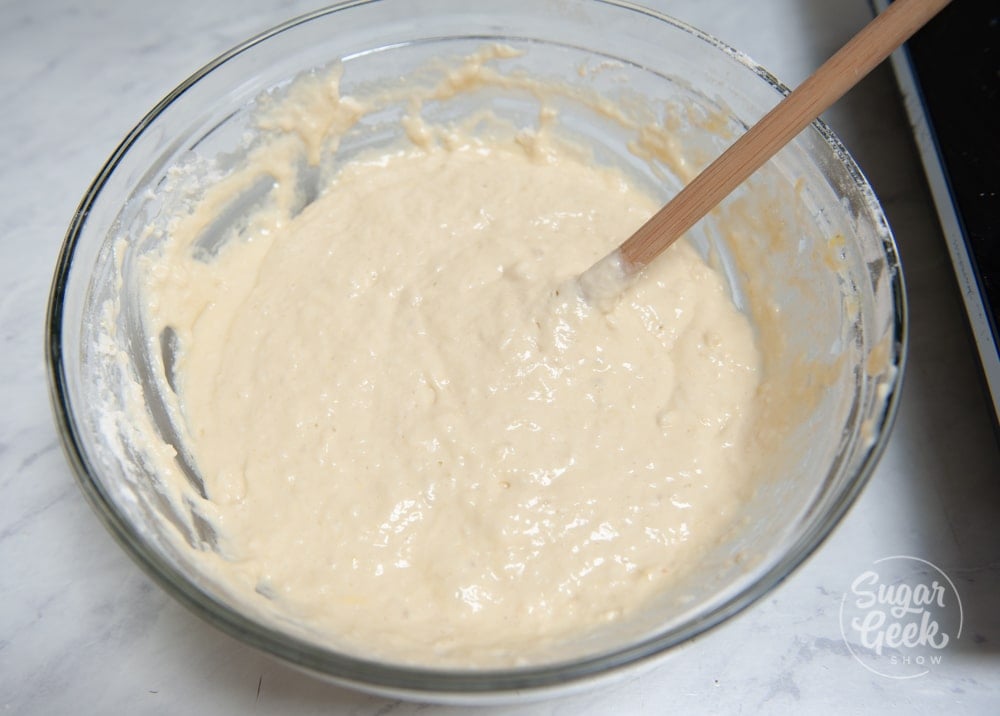
sourdough pancake batter in a clear bowl with a wooden spoon
  1. Combine all ingredients in one bowl and mix until just combined. It will be lumpy. Lumps are fine, even preferred. Over-mixing develops the gluten in the flour and gives you tough, rubbery pancakes.

PRO TIP: Low and slow is the only way to cook fluffy pancakes. If the pan is too hot, the outside browns before the inside cooks through and you end up with a gummy middle. Use a surface thermometer the first time if you have one.

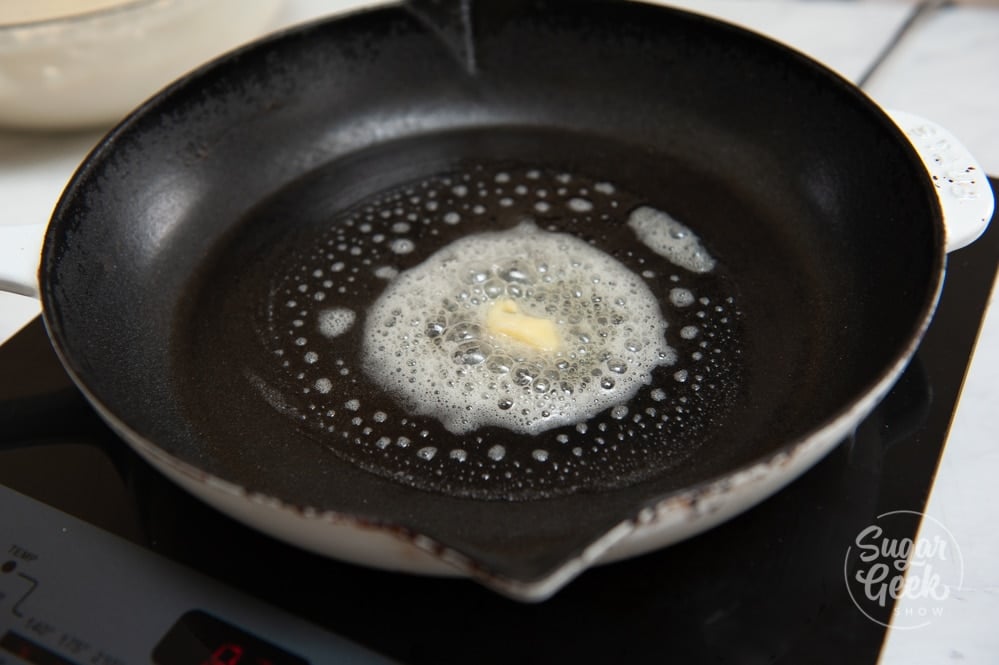
melted butter in a hot cast iron skillet
  1. Melt 1 teaspoon of butter in the hot skillet. Butter is what gives the pancakes their crispy edges.
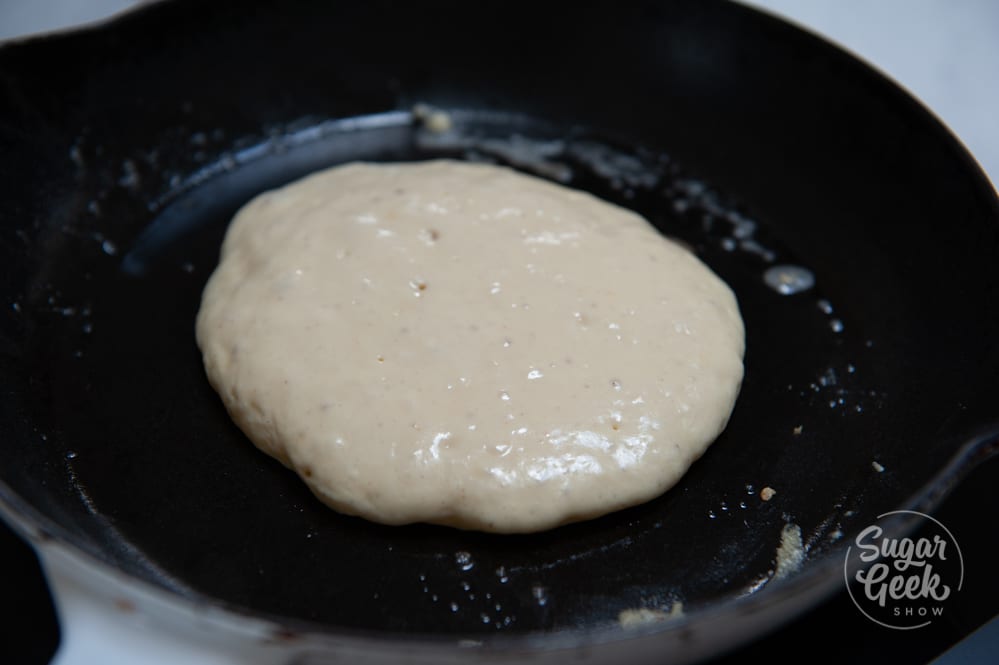
sourdough pancake batter in a cast iron skillet
  1. Pour about ½ cup of batter into the skillet for each pancake. Cook for 5 minutes or until the edges look dry and holes are forming on top.

PRO TIP: The "bubbles on top" rule is the classic doneness cue, but it doesn't tell the whole story. Pancakes are ready to flip when THREE things happen at once: (1) the edges look dry and matte instead of wet and shiny, (2) holes have formed and stayed open on top instead of closing back up, and (3) the bottom side has a clean, dry release when you slide a spatula under. If only the bubbles have appeared, give it another 30 to 60 seconds.

Sourdough pancake in a cast iron pan
  1. Flip the pancake and cook for another 3 minutes. Only flip ONCE. Flipping back and forth deflates the pancake and ruins the fluff.
sourdough pancakes on white plate
  1. Serve immediately with more butter and your favorite topping. Avalon's vote is cinnamon and sugar.

Enjoy! I slather mine in more butter, but my daughter Avalon prefers hers with cinnamon and sugar. So good!

Same-Day Vs. Overnight Ferment

The most common question I get on this recipe: "Can I mix the batter the night before?" Yes, but with one important rule.

Same-day (fastest, easiest, mild tang). Mix everything together in one bowl. Cook immediately. Done in under 10 minutes of active time. This is the version I make most mornings.

Overnight ferment (deeper tang, more flavor complexity). Mix everything EXCEPT the baking soda and baking powder the night before. Cover the bowl with plastic wrap and refrigerate. In the morning, whisk in the baking soda and baking powder right before cooking. The reason: baking soda's reaction with sourdough acid is immediate, and the leavener loses most of its lift within 5 to 30 minutes of mixing. If you add it the night before, the reaction is completely dead by morning, and your pancakes come out flat. Adding the leaveners in the morning gives you both the deeper flavor of an overnight ferment AND the fluffy rise from a fresh leavener reaction.

The cold-batter problem. Cold-fermented batter straight from the fridge doesn't spread or rise the same way warm batter does. Cold batter pancakes come out smaller, denser, and slightly less fluffy. Two ways to fix it: pull the bowl out of the fridge 20 minutes before cooking to take the chill off, or add the leaveners and let the batter sit on the counter for 10 minutes before cooking. Either works.

Bottom line. Same-day for speed and reliability. Overnight for flavor depth when you have time to plan. Both are great.

Common Sourdough Discard Pancake Problems To Avoid

  • Pancakes are gummy in the middle. The pan was too hot. The outside browned before the inside cooked through. Reduce the heat to low, let the pan come back down, and try again.
  • Pancakes are flat and dense. Either you over-mixed the batter (gluten developed, lost the air) or your leaveners are old. Check the date on your baking soda and baking powder. If it's older than 6 months, it needs to be replaced.
  • Pancakes are tough and chewy. Same cause as flat ones, over-mixing the batter. Mix until just combined, lumps and all. Lumps are not a problem; they're the goal.
  • Edges are burnt, middle is raw. Pan was way too hot. Drop the pan to a lower setting.
  • Pancakes don't rise at all in the pan. The mixed batter sat for too long before cooking. The baking soda + sourdough acid reaction is mostly dead within 30 minutes. Cook the batter within 5 minutes of mixing for the best lift.
  • Pancakes look dense and don't rise in the pan. Cold-fermented overnight batter going straight from the fridge into the pan. Warm the batter to room temp first, or skip the overnight ferment.
  • Pancakes get rubbery as they sit on the plate. Gluten continues to relax and the residual acid keeps working as the pancake cools. Serve hot off the griddle, or hold finished pancakes in a single layer on a wire rack in a 200º F oven (NOT stacked, stacking traps steam and makes them soggy).
  • Bubbles formed, but the bottom isn't done yet. This is normal with overnight-fermented or whole-grain batters. The bubble timing is faster than the cooking time. Trust the edges (dry and matte) and the spatula test (clean release) over the bubble cue.

Make This Sourdough Discard Pancake Recipe Your Own

The base recipe is the starting point. Here's how to push it in a dozen directions.

  • Egg-white folding for extra fluffy pancakes. Separate the 2 eggs. Whisk the yolks into the wet ingredients as normal. Fold the unwhipped whites in last with a spatula, just until the white streaks are gone. You don't need to whip them, the gentle fold adds loft. Pancakes come out noticeably taller and lighter.
  • Sheet pan pancakes (meal prep). Pour the entire batter into a parchment-lined half-sheet pan (12x18), bake at 425º F for 12 to 15 minutes. Slice into squares. One batch yields about 12 squares, perfect for freezer breakfasts.
  • Active starter swap. You can use 1 cup of active, recently-fed sourdough starter instead of discard. Pancakes will be milder in tang and slightly more risen (the active yeast adds extra lift on top of the leaveners). Some people prefer the mild version. Discard is the everyday default because it uses up what would otherwise be waste.
  • Sweet mix-ins (fold into the batter before cooking). Chocolate chips, blueberries, sliced banana, raspberries, diced apple + cinnamon, lemon zest + poppy seeds, vanilla extract (try a teaspoon, a reader recommended this).
  • Savory mix-ins (drop sugar to 1 Tablespoon). Chopped chives + shredded cheddar, crumbled bacon, diced ham + Swiss, roasted corn + jalapeno, sliced scallions + sesame seeds.
  • Whole wheat. Swap half the AP for whole wheat AND add 2 extra Tablespoons of milk. Pancakes are slightly nuttier and less light, but still fluffy.
  • Dairy-free. Swap whole milk for oat milk (closest in texture), almond milk (thinner, works fine), or coconut milk (richer, slight coconut flavor).
  • Pikelet-thick version. Use only 8 oz of milk instead of 14 oz. Batter will be much thicker and you can make my sourdough pikelets instead, which are the thicker, smaller, savory-friendly cousin of these pancakes.

Make-Ahead, Storage, And Reheating

Discard pancakes are the perfect meal-prep breakfast. Here's how to make them ahead.

  • Mixed batter (without leaveners) in the fridge. Up to 24 hours. Add baking soda and baking powder right before cooking.
  • Mixed batter (with leaveners) in the fridge. Up to 30 minutes. After that the leaveners die and pancakes come out flat. Cook within the window.
  • Cooked pancakes at room temperature. Up to 2 hours, single layer or in a 200º F oven on a wire rack. Don't stack while hot (traps steam, makes them soggy).
  • Cooked pancakes in the fridge. Airtight container with parchment between layers. Up to 4 days.
  • Cooked pancakes in the freezer. Flash-freeze in a single layer on a parchment-lined sheet pan for 1 hour, then transfer to a zip-top bag with parchment between pancakes. Up to 3 months.
  • Reheating from frozen. Toaster (best, gives crispy edges back), microwave (15 to 20 seconds, fastest), 325º F oven for 8 minutes (best for a big batch). No need to thaw first.
  • Sourdough discard itself. Cover and refrigerate up to a week, freeze in a labeled bag up to 3 months.

Final Thoughts

Sourdough discard pancakes are how you justify keeping a starter when life gets busy and you don't have time to bake a loaf every week. One cup of discard, five minutes of active time, and you've turned the part you'd otherwise throw out into the best breakfast of the week. Avalon votes them up every time.

If your starter is still building strength, my starter not rising troubleshooting guide covers the 5 most common reasons and the fixes for each.

If you love these pancakes and want to branch into the full sourdough cluster, my sourdough pikelets are the thicker, smaller, more savory-friendly cousin, and my sourdough bread is the long-form project once you're ready to graduate from discard recipes.

When you want the weekend project version, my sourdough cinnamon rolls take the discard tang into enriched dough territory with cream cheese frosting on top.

For the full picture on storage, freezing, and the rotation calendar that ties all my discard recipes together, see my master sourdough discard guide.

Sourdough Discard Pancake FAQs

Can I add vanilla extract?

Yes. A reader mentioned adding a teaspoon of vanilla, and her family loves it. It rounds out the flavor and pairs especially well if you're going sweet with maple syrup or cinnamon sugar.

What if my sourdough discard is old? Will it still work?

Yes, as long as it doesn't smell like nail polish remover (that's alcohol from the yeast eating itself, time to start fresh). A reader confirmed that older discard works perfectly. Older discard just has a more pronounced sour flavor.

Can I use an active fed starter instead of a discard?

Yes. Pancakes will be milder in tang and slightly more risen. See the "Active starter swap" note in Make This Recipe Your Own above.

Can I substitute the canola oil with something else?

Any neutral oil works. A reader used avocado oil, and it came out great. Don't use olive oil because the flavor comes through.

Why are my pancakes gummy?

Over-mixed batter. Mix until just combined, lumps and all. Over-mixing develops the gluten and gives you dense, gummy pancakes instead of fluffy ones.

More Sourdough Discard Recipes To Try

  • B
    Sourdough Discard Blueberry Muffins
  • Sourdough Discard Crackers
  • Sourdough Donut recipe
    Sourdough Discard Donuts
  • Sourdough English Muffins

Leave Me A Review
⭐️⭐️⭐️⭐️⭐️

If you tried this Sourdough Discard Pancake Recipe or any other recipe on my blog, please leave a 🌟 star rating and let me know how it goes in the comments. I love hearing from you!

Recipe

sourdough pancakes on a white plate
Print Recipe
4.84 from 121 votes

Sourdough Discard Pancake Recipe

How to make light, fluffy, and delicious sourdough pancakes from your discard. Five minutes to mix, fluffy in the pan, perfect for using up your starter discard. A great way to start the day with a tangy, hearty breakfast.
Prep Time5 minutes mins
Cook Time5 minutes mins
Total Time10 minutes mins
Course: Breakfast
Cuisine: American
Servings: 8 pancakes
Calories: 276kcal
Author: Liz Marek

Ingredients

  • 10 ounces all-purpose flour about 2 cups spooned and leveled
  • 1 cup sourdough discard more or less is ok
  • 1 teaspoon baking soda
  • 2 teaspoons baking powder
  • 3 Tablespoons Sugar
  • 14 ounces milk about 1 ¾ cups
  • 2 large eggs
  • 2 Tablespoons canola oil
  • 1 teaspoon salt
  • 4 Tablespoons butter for the pan
US Customary - Metric

Instructions

  • Before you begin: Pull your sourdough discard, eggs, and milk out of the fridge 30 minutes before mixing so they're not ice-cold. Cold batter doesn't spread or rise the same way warm batter does. Preheat your skillet on medium-low heat for 15 minutes (surface temp around 300º F).
  • Combine all ingredients in one bowl and mix until just combined. It will be lumpy and that's ok. Don't over-mix.
  • Melt 1 teaspoon of butter in the hot skillet.
  • Pour about ½ cup of batter into the skillet for each pancake. Cook for 5 minutes or until the edges look dry, holes have formed and stayed open on top, and the bottom releases cleanly from the pan.
  • Flip the pancake and cook for another 3 minutes. Only flip ONCE.
  • Serve immediately with more butter and your favorite topping.

Video

Notes

Ingredient notes:
  • A full cup of discard gives you the most sourdough flavor. Less is fine if that's what you have, the pancakes will just be milder.
  • Use a kitchen scale to weigh the flour. Cup measurements vary by up to 50 percent depending on how you scoop.
  • Save sourdough discard in the fridge for up to a week. Any longer and the flavor turns bitter.
Optional overnight ferment:
  • Mix everything EXCEPT the baking soda and baking powder the night before. Refrigerate overnight.
  • In the morning, whisk in the baking soda and baking powder right before cooking. The reaction is immediate and dies within 5 to 30 minutes, so cook the batter fast.
  • Cold-fermented batter doesn't spread the same way warm batter does. Bring the bowl out 20 minutes before cooking, or let the batter sit at room temp for 10 minutes after adding the leaveners.
Pan options:
  • Cast iron is ideal for even, low-and-slow heat.
  • Non-stick griddle works for batch cooking 4 to 6 pancakes at once.
  • Sheet pan pancakes: pour all batter into a parchment-lined half-sheet pan and bake at 425º F for 12 to 15 minutes. Slice into squares for meal prep.
Make-ahead and storage:
  • Mixed batter without leaveners: fridge up to 24 hours.
  • Mixed batter with leaveners: cook within 30 minutes.
  • Cooked pancakes: fridge up to 4 days in an airtight container.
  • Cooked pancakes in freezer: flash-freeze single layer for 1 hour, then bag, up to 3 months.
  • Reheat from frozen in the toaster (best), microwave 15 to 20 seconds, or 325º F oven for 8 minutes.
Mix-in ideas:
  • Sweet: chocolate chips, blueberries, banana, lemon zest, vanilla extract
  • Savory (drop sugar to 1 Tbsp): chives + cheddar, bacon, ham + Swiss, scallions
Substitutions:
  • Whole wheat: swap half the AP flour for whole wheat AND add 2 extra tablespoon of milk.
  • Dairy-free: oat milk closest in texture, almond milk works, coconut milk adds richness.
  • Egg-free: 1 flax egg per egg (1 tablespoon ground flax + 3 tablespoon water, sat 5 minutes). Pancakes are slightly denser.
  • Active starter instead of discard: 1:1 swap, milder tang and slightly more rise.
Critical do-nots:
  • Don't over-mix the batter. Lumps are good. Tough, rubbery pancakes come from over-mixing.
  • Don't flip more than once. Flipping deflates the pancake.
  • Don't press down on the pancake with the spatula. Squeezes out the air pockets.
  • Don't stack hot pancakes. Traps steam, makes them soggy. Use a wire rack in a 200º F oven to hold them.


Nutrition

Serving: 1pancake | Calories: 276kcal | Carbohydrates: 34g | Protein: 7g | Fat: 12g | Saturated Fat: 5g | Polyunsaturated Fat: 2g | Monounsaturated Fat: 5g | Trans Fat: 0.2g | Cholesterol: 68mg | Sodium: 511mg | Potassium: 232mg | Fiber: 1g | Sugar: 7g | Vitamin A: 323IU | Calcium: 119mg | Iron: 2mg
Ukulele Cake standing upright with girl holding ukulele behind to show how similar they are

May 1, 2020 Course Preview

Ukulele Cake Tutorial

Skill level: Intermediate

Learn to make this adorable ukulele cake that defies gravity and looks just like the real thing. In this online course, you will learn step-by-step every part of making this cake, including the wood grain, making a complicated rounded bottom that supports the cake, the strings and fret board, and how to make this cake stand up on its own.

This cake was a ton of fun to make, and everyone at the birthday party loved it. Let's get our tools and materials together and let's get started!

1:04:23 Minutes of Instruction

What You Will Learn

  • How to make a gravity-defying ukulele cake
  • Learn how to create a cake structure with a rounded bottom
  • How to make paint realistic wood grain
  • Learn all the tips and tricks needed to make the strings and instrument details

Ukulele Cake standing upright with girl holding ukulele behind to show how similar they are

Tutorial Chapters

  1. The ukulele structure 0:26
  2. Stacking the cake 7:54
  3. Frosting the cake 10:03
  4. Covering the sides in fondant 12:58
  5. Attaching the neck 19:23
  6. Covering the front and back in fondant 20:35
  7. Shaping the neck 23:02
  8. Attaching the cake to the board 29:30
  9. Painting the ukulele wood 34:06
  10. Coloring the fondant details 38:21
  11. Airbrushing 41:30
  12. Adding details 44:02
  13. Adding frets 48:04
  14. Adding strings 59:47
  15. Final details 1:03:15

Downloads

Materials List

Ukulele Template 01

Ukulele Template 02

Ukulele Cake standing upright with girl holding ukulele behind to show how similar they are

May 1, 2020 Paid Video

Ukulele Cake

Skill level: Intermediate

Learn to make this adorable ukulele cake that defies gravity and looks just like the real thing. In this online course, you will learn step-by-step every part of making this cake, including the wood grain, making a complicated rounded bottom that supports the cake, the strings and fret board, and how to make this cake stand up on its own.

This cake was a ton of fun to make, and everyone at the birthday party loved it. Let's get our tools and materials together and let's get started!

1:04:23 Minutes of Instruction

What You Will Learn

  • How to make a gravity-defying ukulele cake
  • Learn how to create a cake structure with a rounded bottom
  • How to make paint realistic wood grain
  • Learn all the tips and tricks needed to make the strings and instrument details

Tutorial Chapters

  1. The ukulele structure 0:26
  2. Stacking the cake 7:54
  3. Frosting the cake 10:03
  4. Covering the sides in fondant 12:58
  5. Attaching the neck 19:23
  6. Covering the front and back in fondant 20:35
  7. Shaping the neck 23:02
  8. Attaching the cake to the board 29:30
  9. Painting the ukulele wood 34:06
  10. Coloring the fondant details 38:21
  11. Airbrushing 41:30
  12. Adding details 44:02
  13. Adding frets 48:04
  14. Adding strings 59:47
  15. Final details 1:03:15

Downloads

Materials List

Ukulele Template 01

Ukulele Template 02

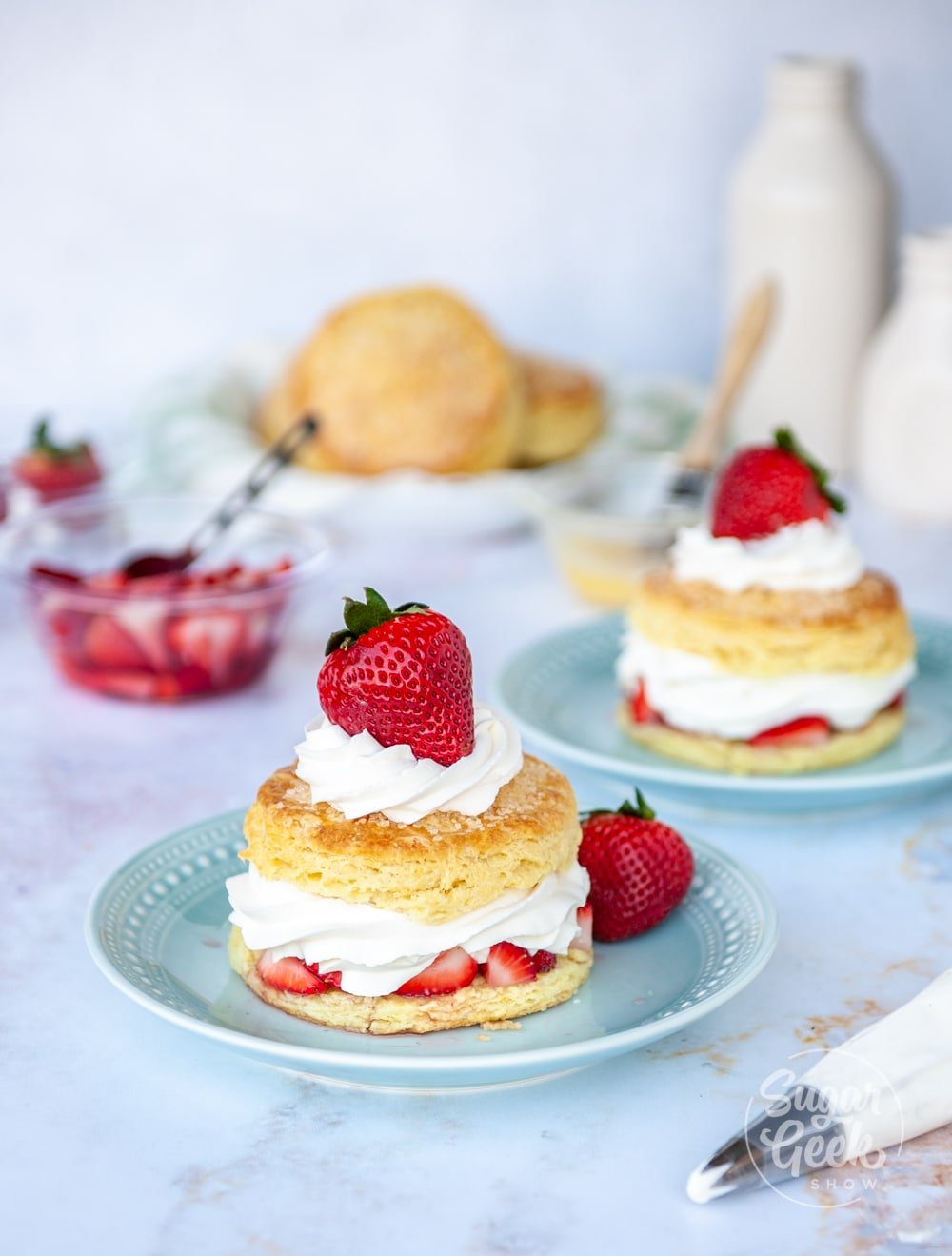
closeup of strawberry shortcake on blue plate

April 29, 2020 Biscuits and Scones

Strawberry Shortcake Biscuits Recipe

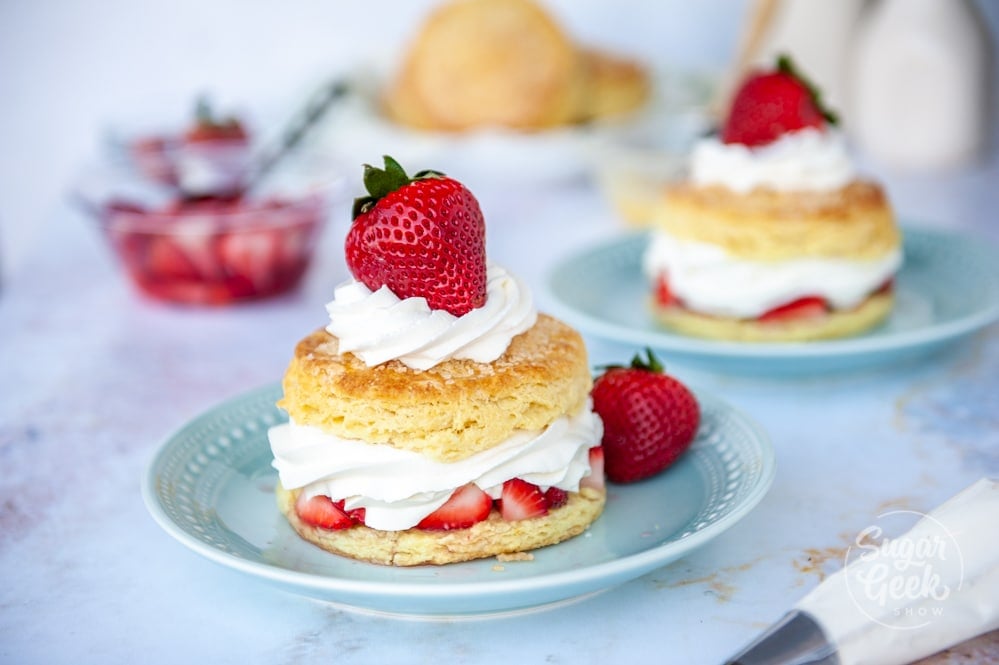
What makes this strawberry shortcake the BEST is its flakey buttermilk biscuits, sweet homemade stabilized whipped cream, and fresh strawberries. This recipe comes together in less than 25 minutes!

two strawberry shortcakes on blue plates on a white background

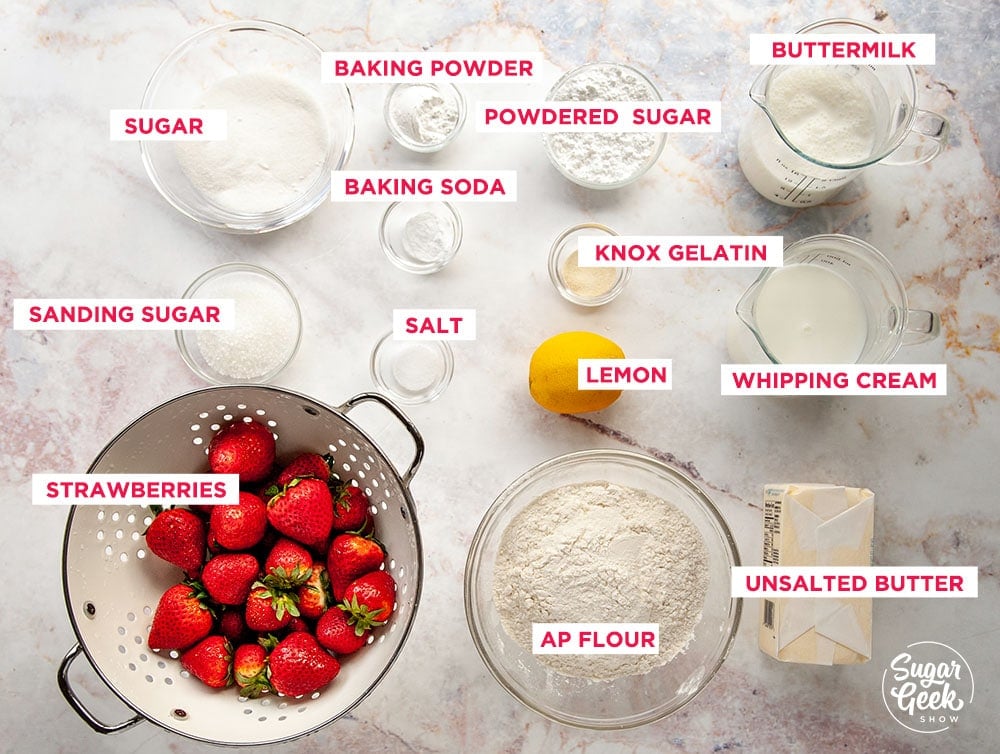
Ingredients

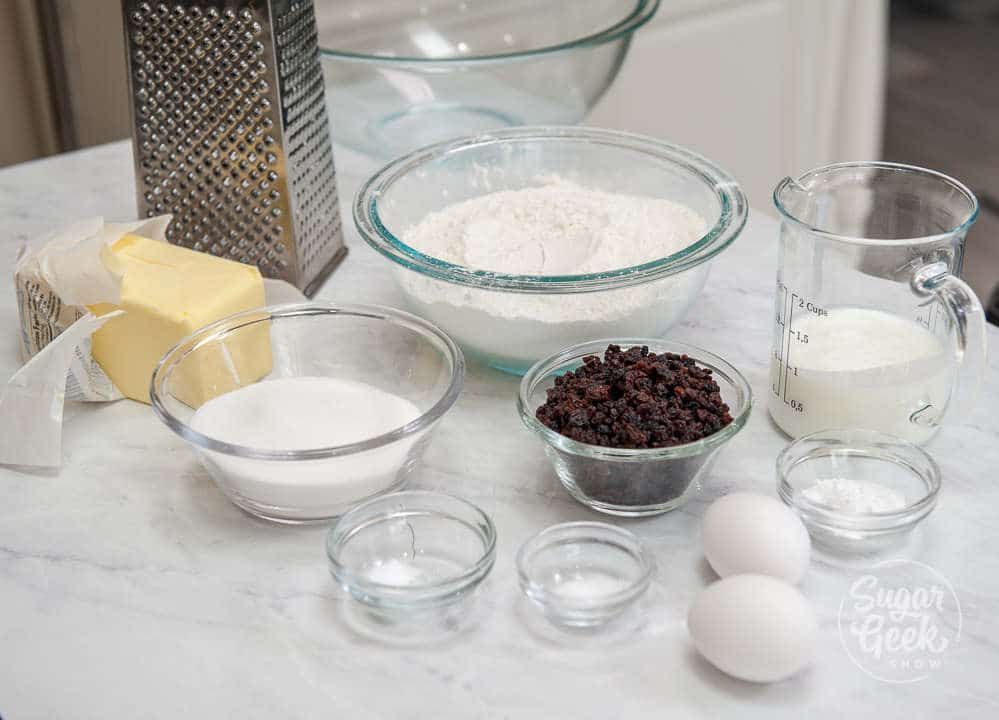
ingredients for strawberry shortcake

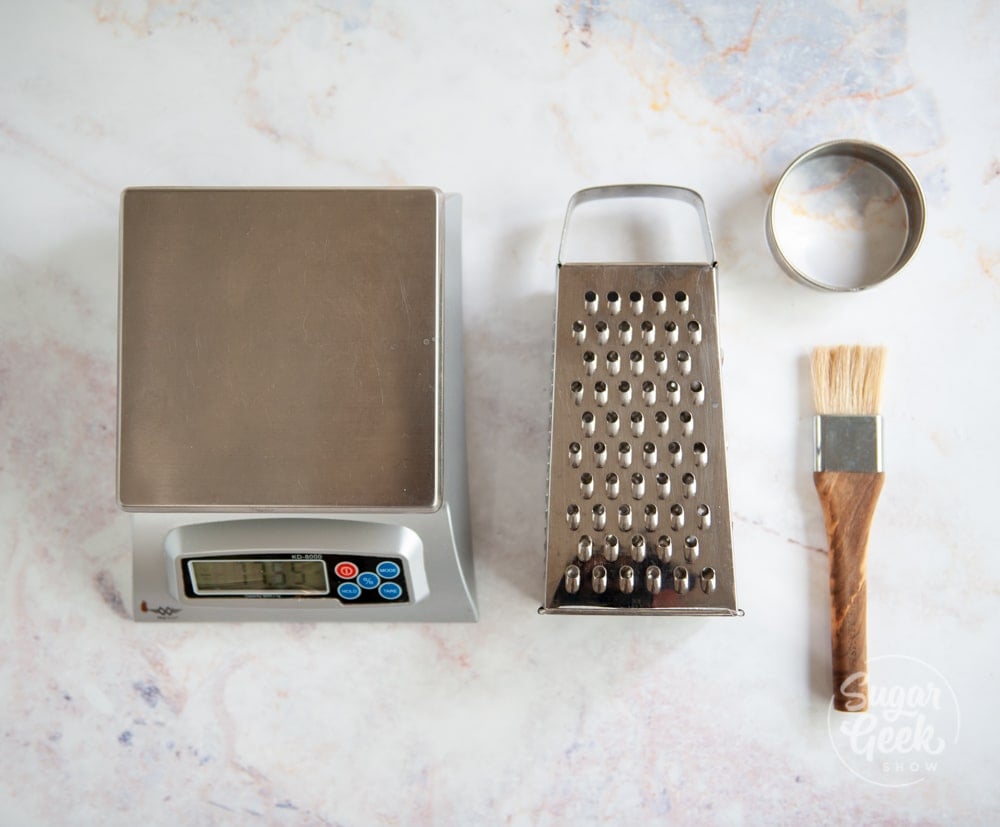
Equipment

These tools will save you a lot of time and make this super easy. A kitchen scale, a sharp metal cutter about 4"-5" round, a cheese grater, and a pastry brush.

Why use a kitchen scale? Read more about using a kitchen scale for baking in this blog post.

equipment for making strawberry shortcake

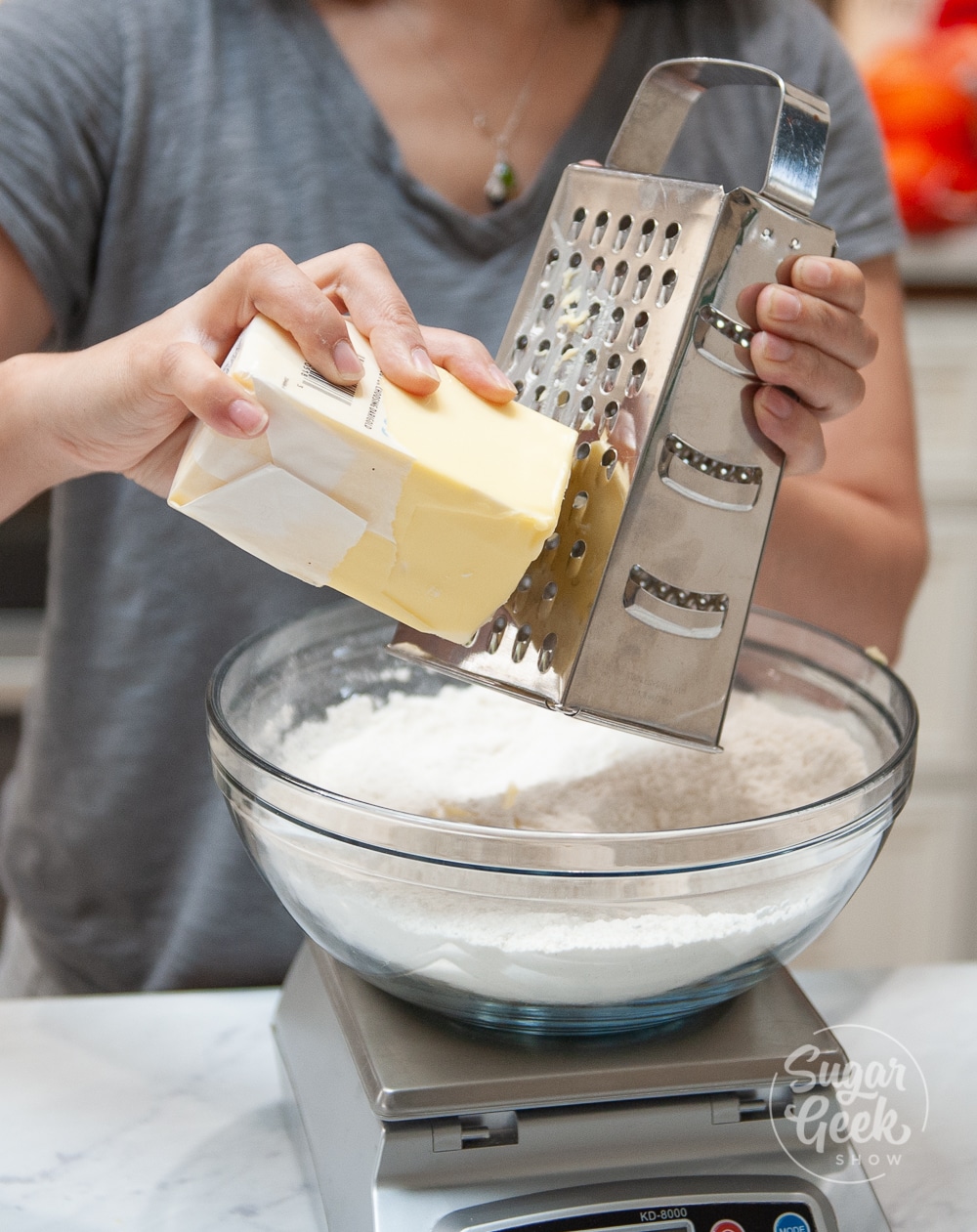
Protip - Use a kitchen scale to weigh all your ingredients in one bowl. Shred cold butter directly into the bowl for easy measuring and cleanup! 

How to Make Strawberry Shortcake

To Make Strawberry Filling

The strawberry filling is incredibly easy. So easy, there are only three steps. Perfect for home cooks!

Protip - Use the freshest strawberries you can find. Locally grown strawberries will taste MUCH better than the ones at the grocery store (unless they are sourced locally). 

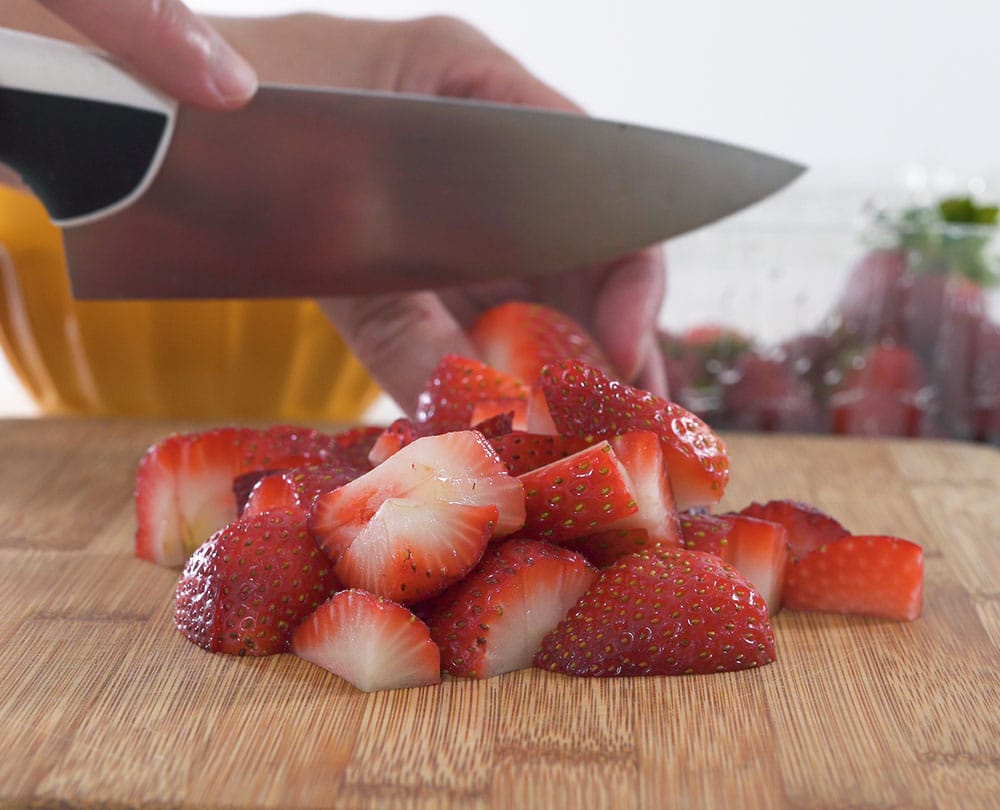
Step 1 - Cut off the tops of your strawberries then slice them into fourths (or smaller pieces if you desire).

Close Up of Strawberry Slices on a Wooden Cutting Board

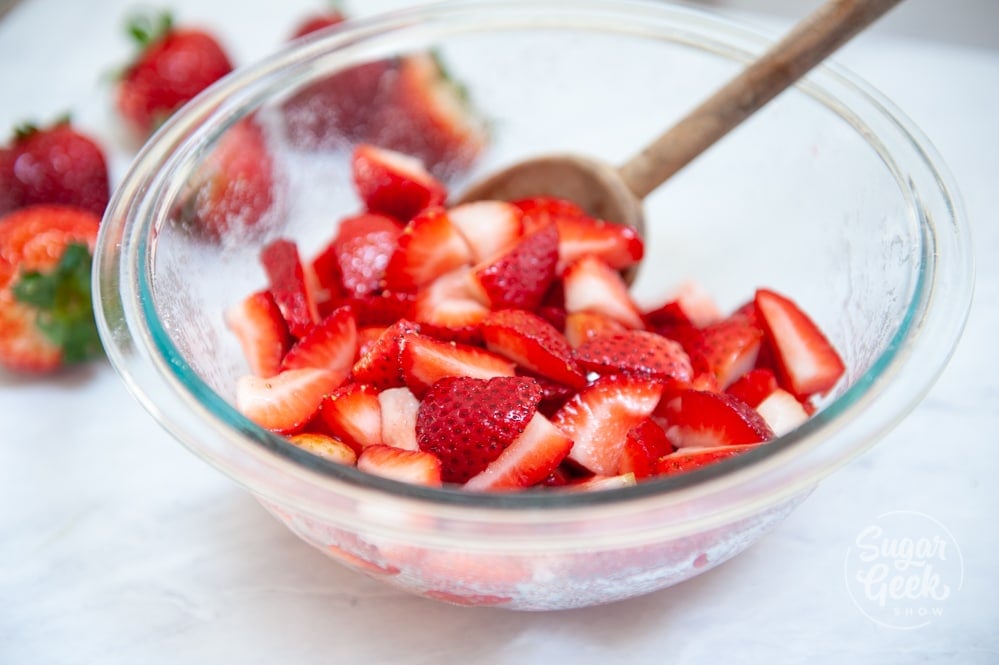
Step 2 - Place strawberries, lemon juice, and sugar into a bowl and stir until sugar is evenly distributed onto the strawberries.

sliced strawberries and sugar in clear bowl with wooden spoon

Step 3 - Walk away! The sugar will draw out the moisture from the strawberries and turn the juice into a thick syrup.  So easy!

How To Make The Sweet Biscuits Step-By-Step

Strawberry shortcake would not be complete without the biscuits! Shortcake refers to the way butter is cut into flour and "shortens" the gluten to make a tender, fluffy "cake".

These biscuits are extra-large so they make the perfect-sized strawberry shortcake for one.

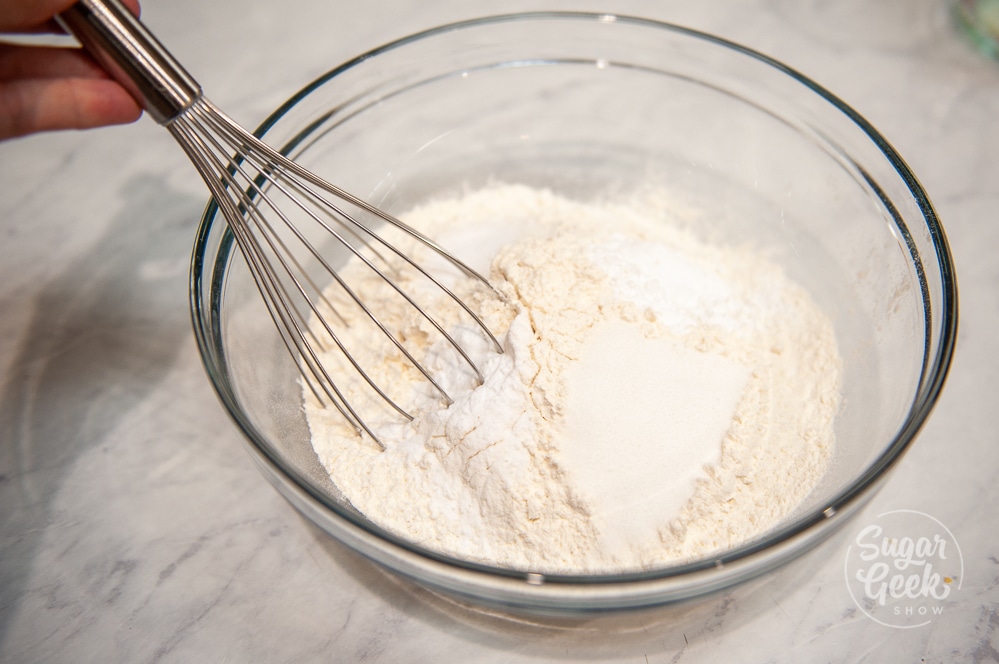
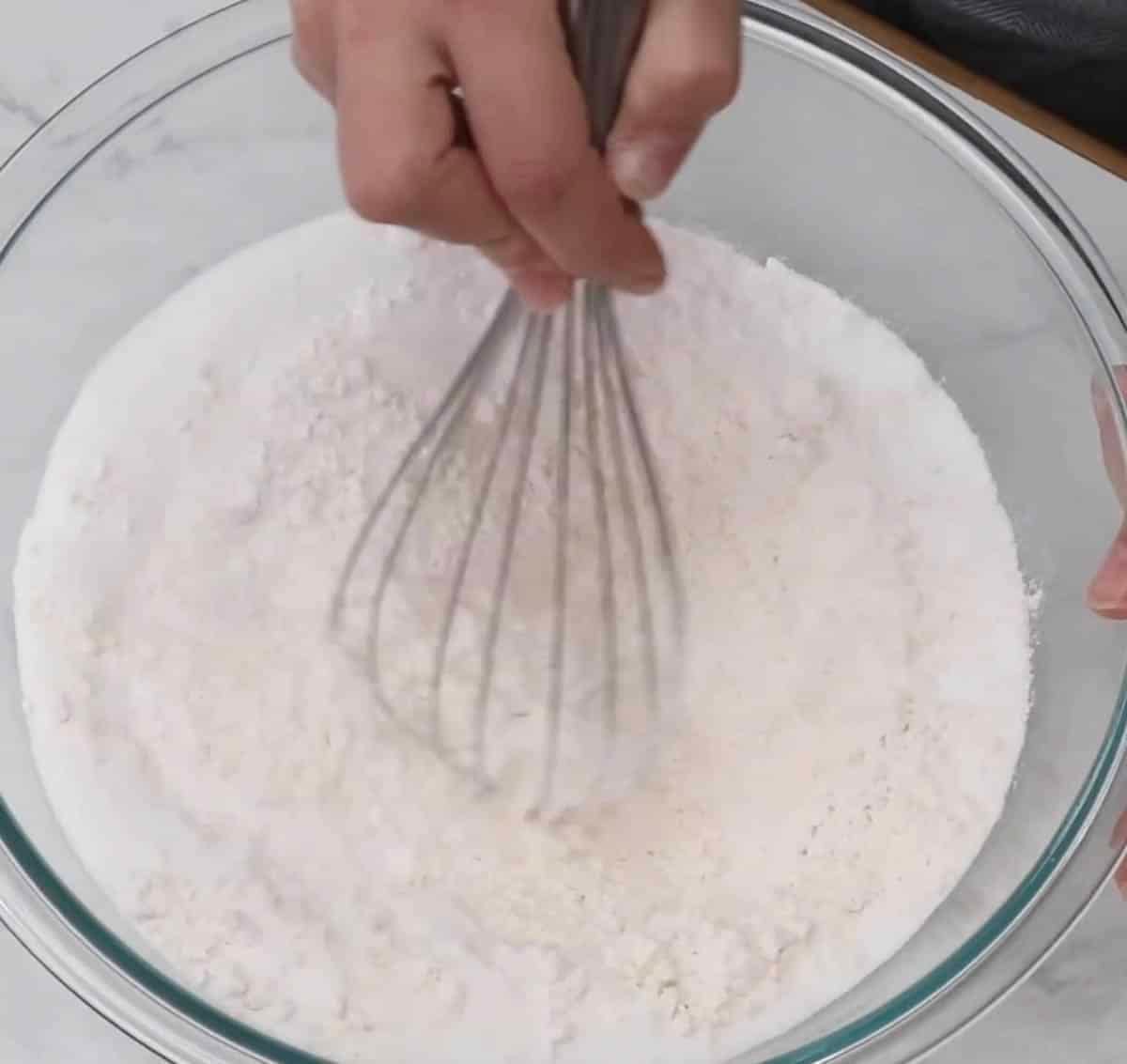
Step 1 - Add your flour, sugar, baking powder, baking soda, and salt into a large bowl and whisk to combine.

strawberry shortcake dry ingredients in a clear bowl with metal whisk

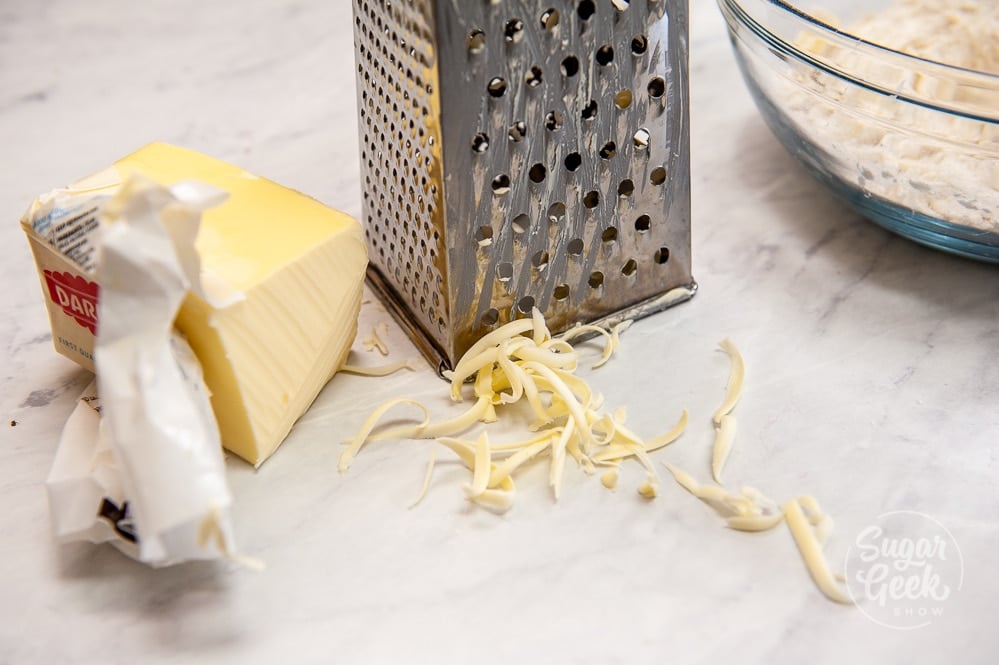
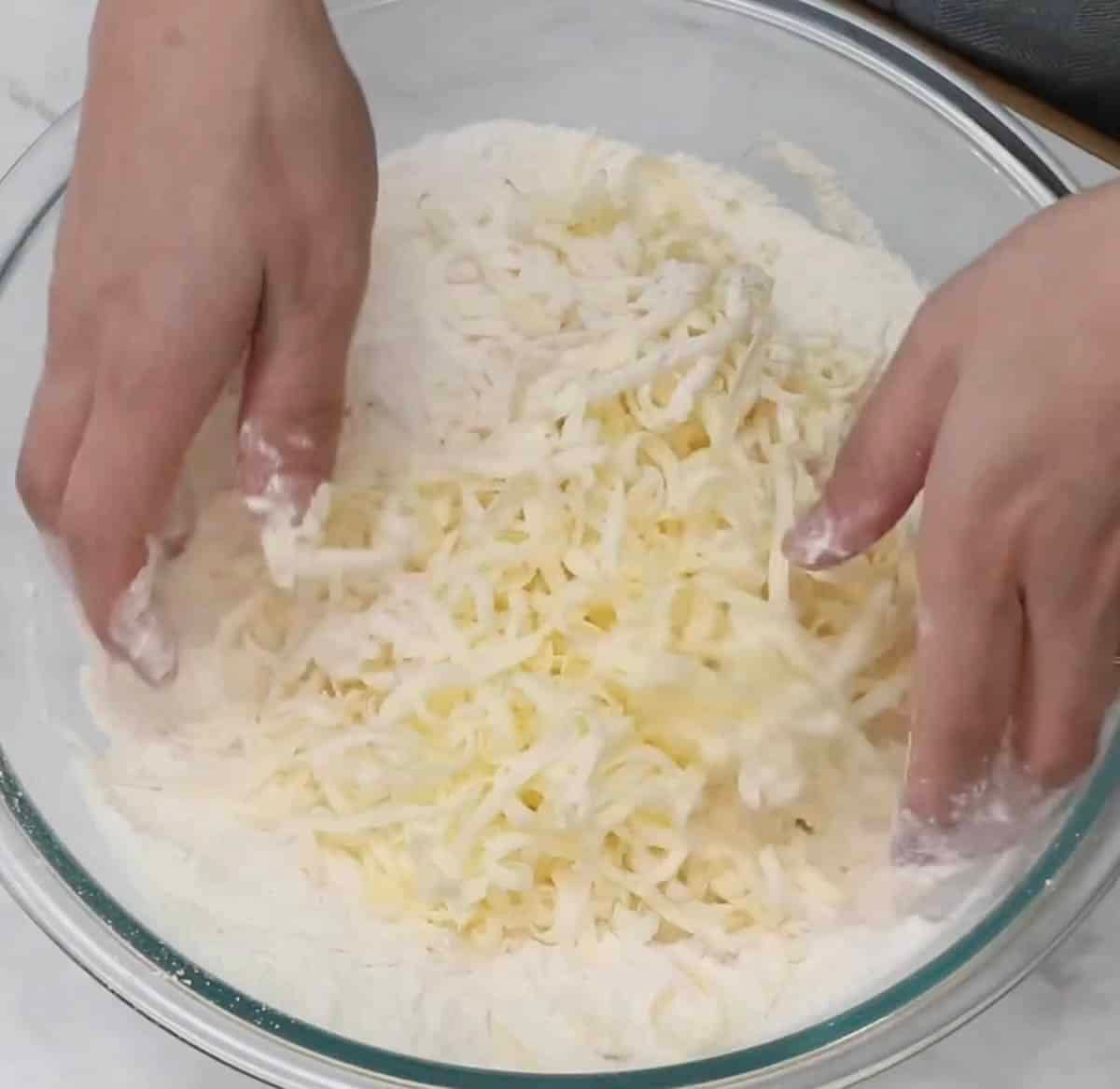
Step 2 - Place the whole bowl onto the scale and press the tare or zero button to remove the weight of the bowl. Make sure the mode is set to ounces (or grams if that's what you're using). Start shredding in your COLD butter until you reach the right amount.

shredding cold butter into dry ingredients on top of a scale

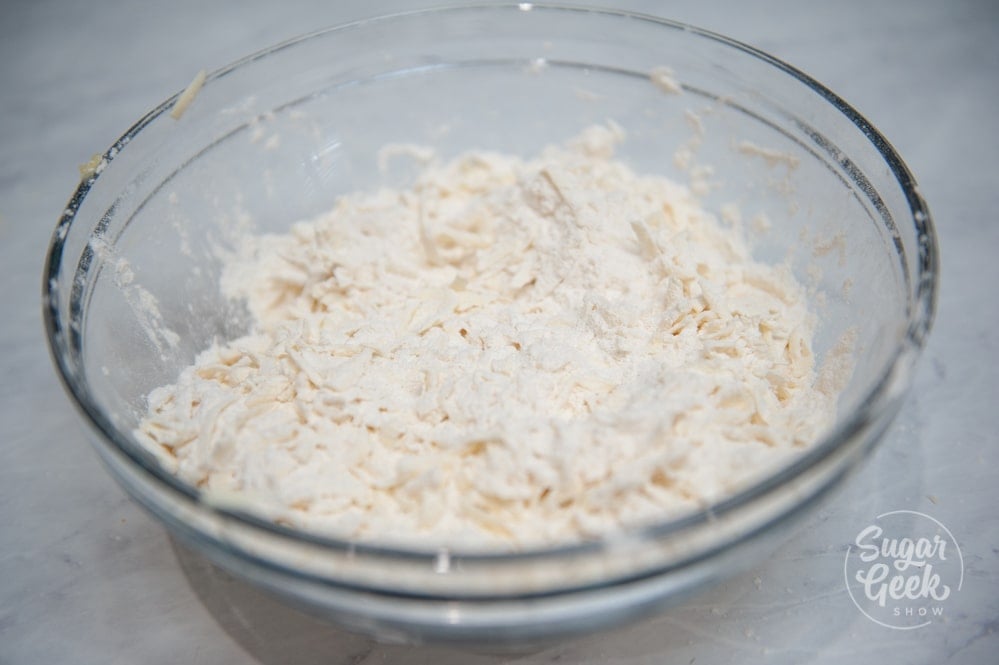
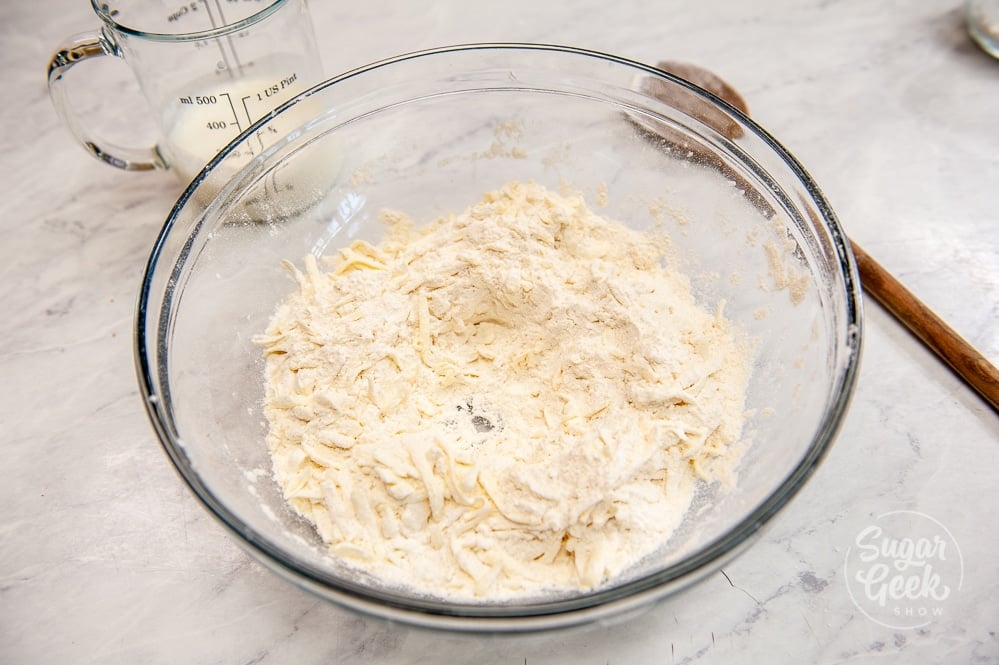
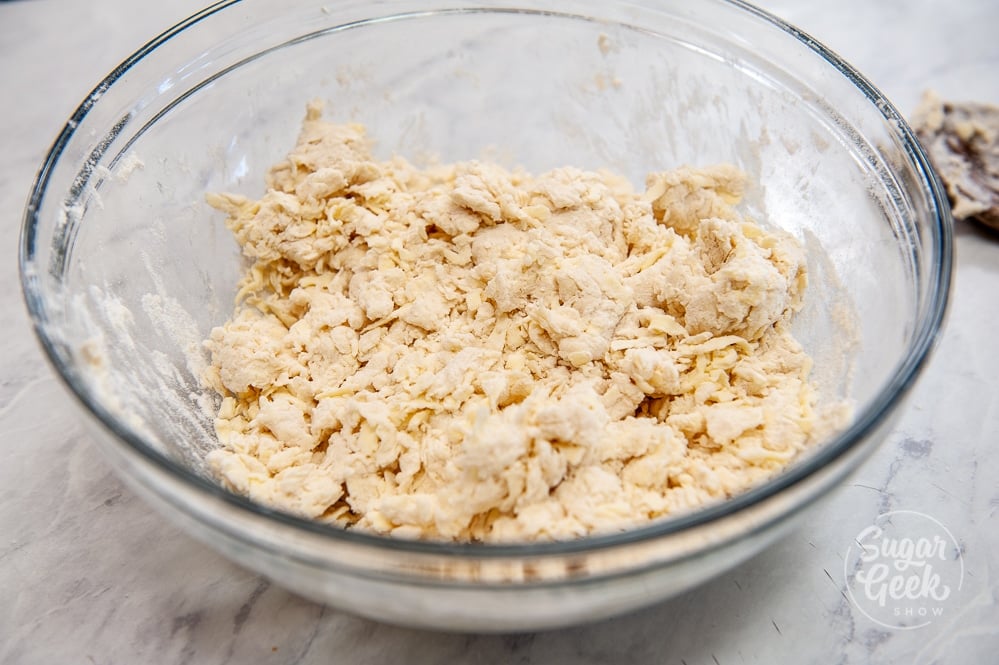
Step 3 - Toss the flour and butter together quickly to coat all the butter with the flour mixture. Quickly begin breaking the butter pieces into smaller pieces with your fingers until the mixture looks like chunky sand.

butter and flour mixture for strawberry shortcake in clear blowl

Protip - If your hands are very hot, place them in ice water for one minute, dry them off quickly, and then rub the butter into the flour. You can also use a fork. 

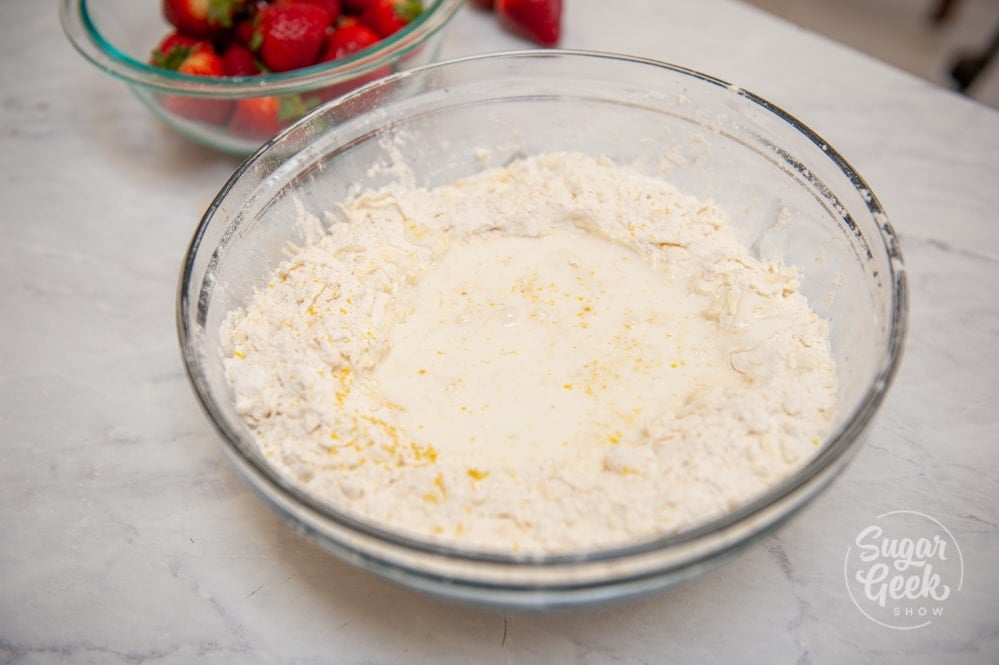
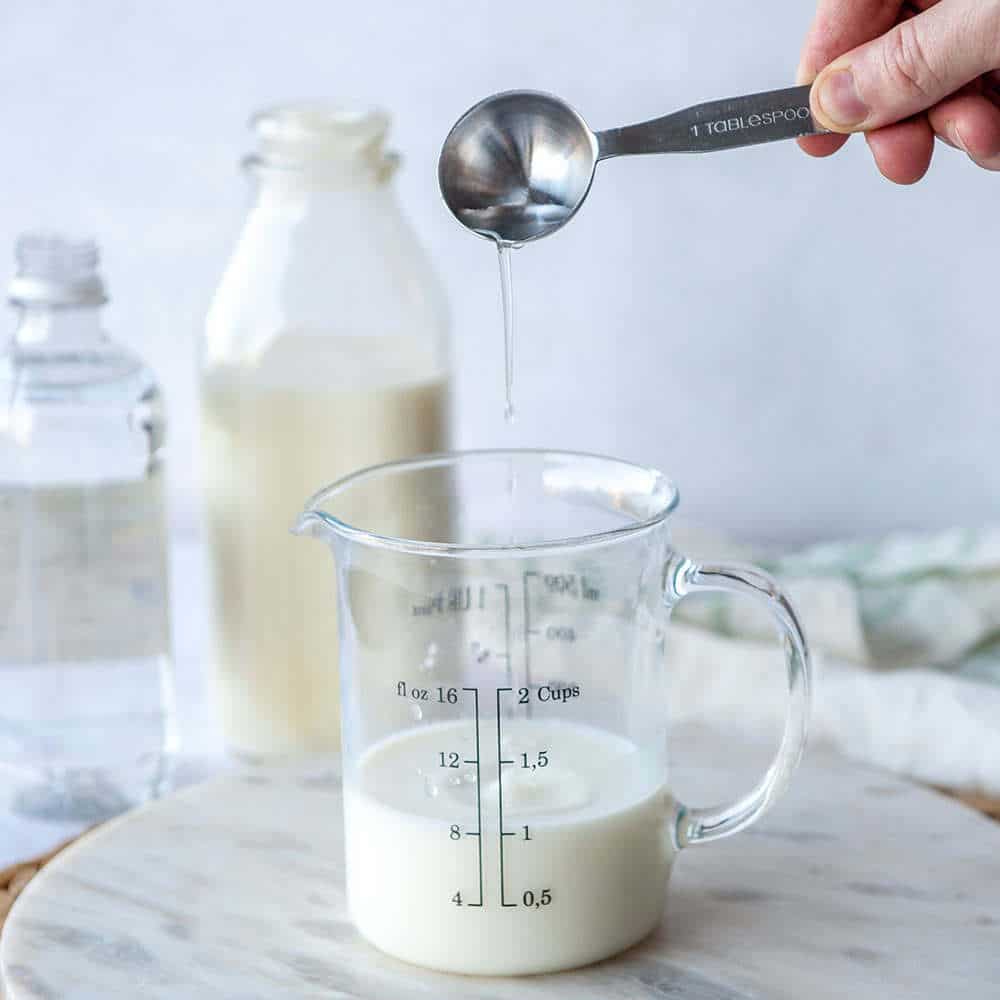
Step 4 -  Combine the milk and lemon juice (or use buttermilk). Make a well in the center of your butter/flour mixture and add in your cold milk/lemon juice or buttermilk and lemon zest.

buttermilk in flour/butter mixture in clear bowl

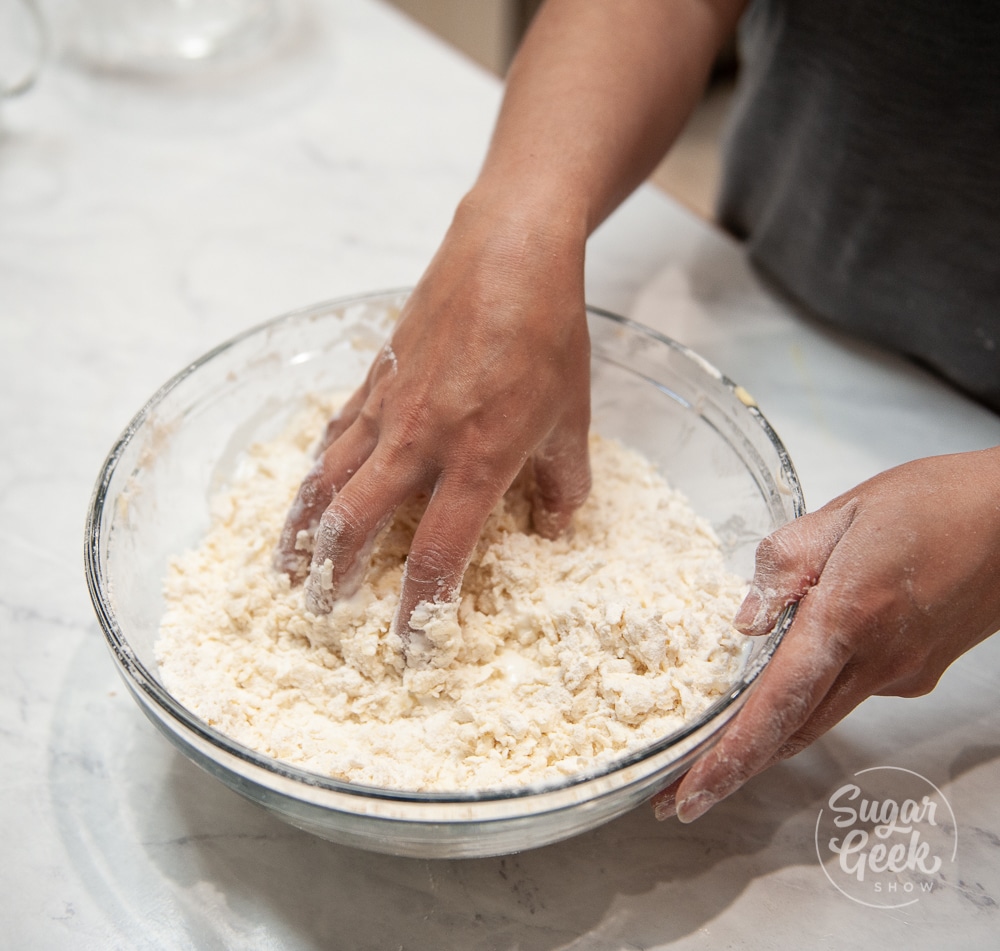
Step 5 - Make a "claw" with one hand and begin mixing the flour into the milk until no dry flour remains. The dough will look chunky and rough, this is normal!

mixing biscuit ingredients with hand

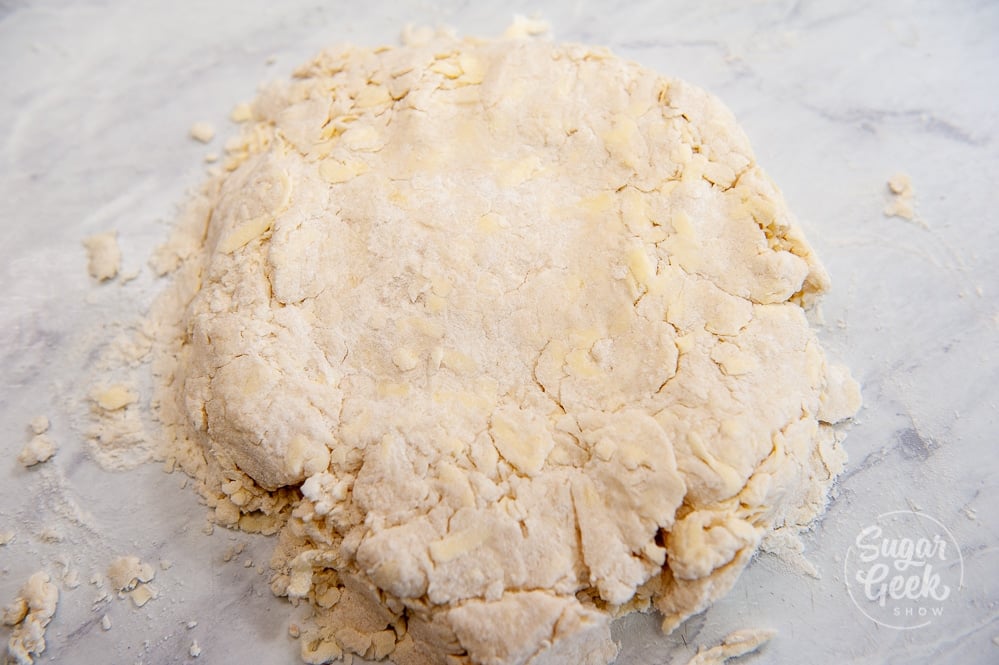
Step 6 - Dump the biscuit dough onto the counter and smoosh it together into a roughly round flat shape about 2" tall.

rough biscuit dough pressed together on a white countertop

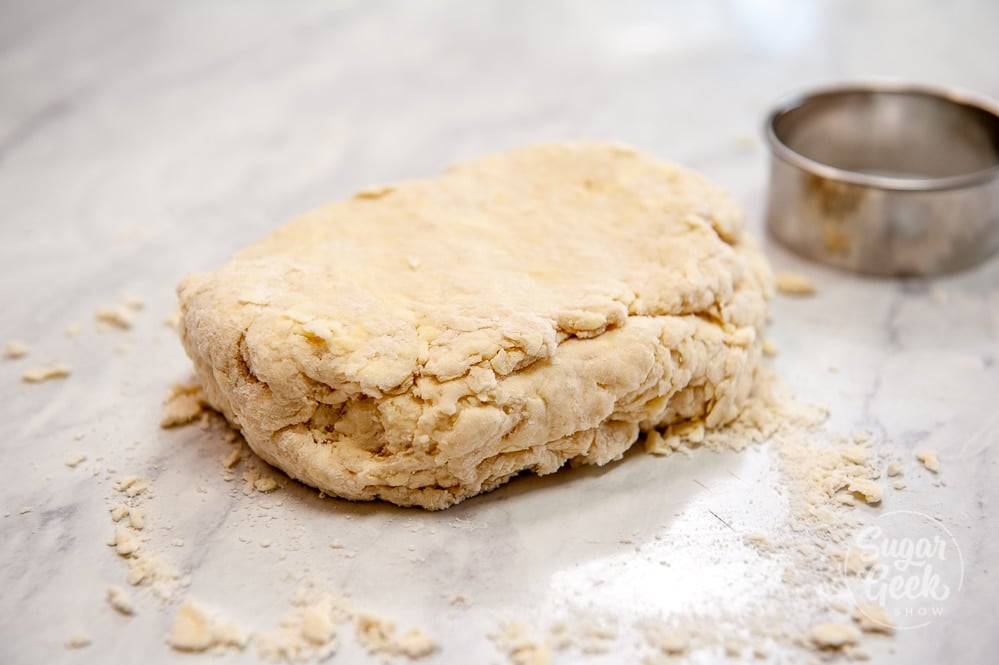
Step 7 - Take half the mass of dough and fold it over onto itself. This will be really rough at first.

rough biscuit dough folded in half on white countertop

Push the dough down until it's 2" tall again. This is one "turn". This is what develops layers of butter in our dough and causes them to puff up!

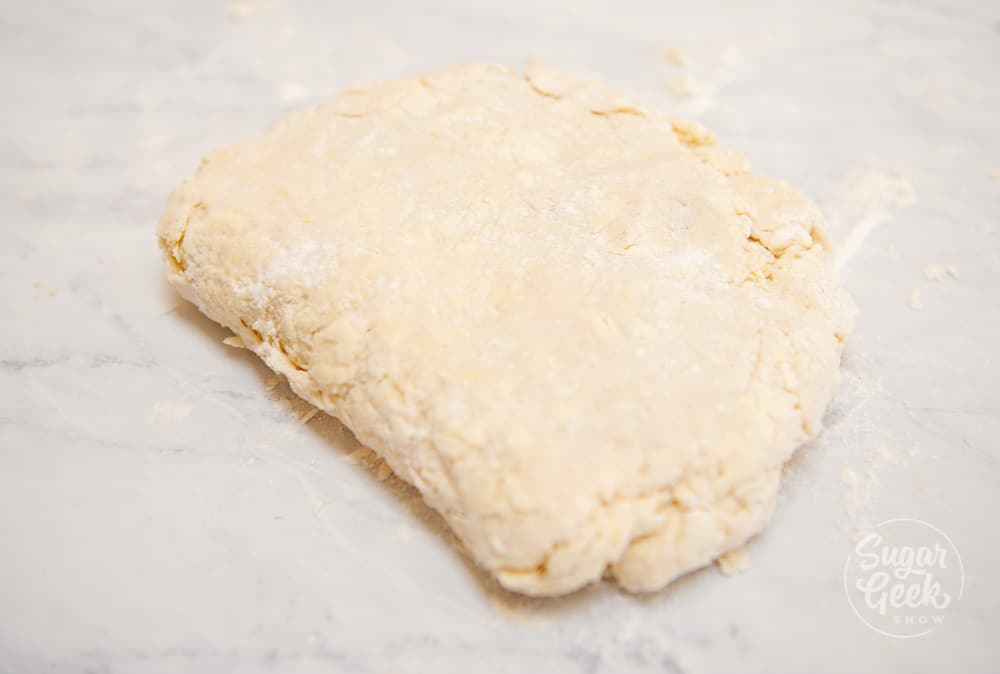
Step 8 - Rotate the dough 45º and fold the dough over again and press down. This is turn 2. Repeat this step until you have made 4 or 5 turns. The dough will look slightly smoother and more combined after turn 5.

biscuit dough folded in half

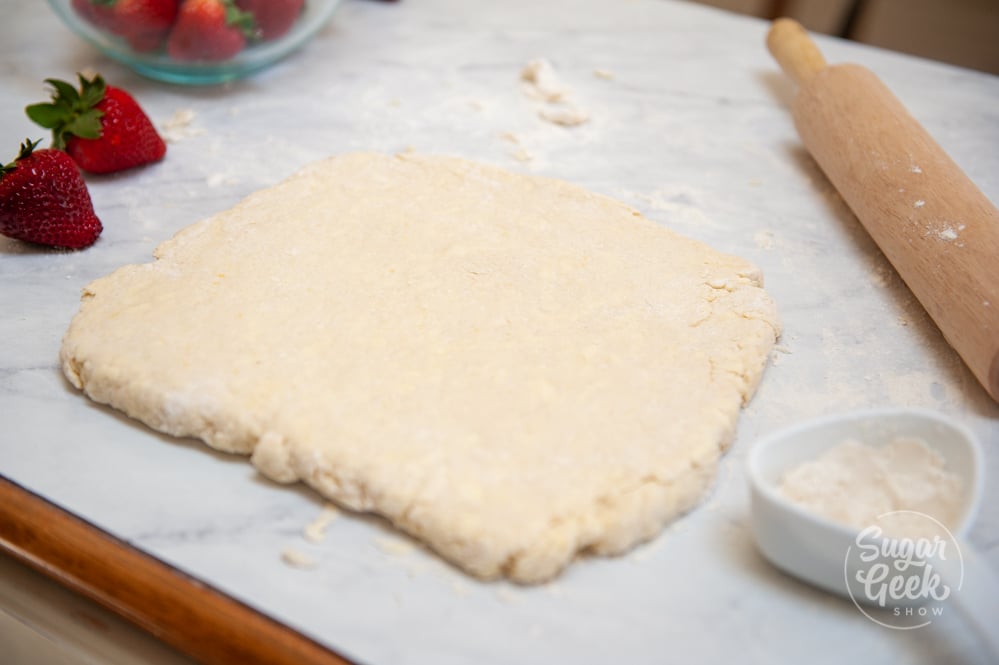
Step 9 - With a lightly floured rolling pin, roll the biscuit dough out until its about 1" tall.

biscuit dough rolled out on white countertop

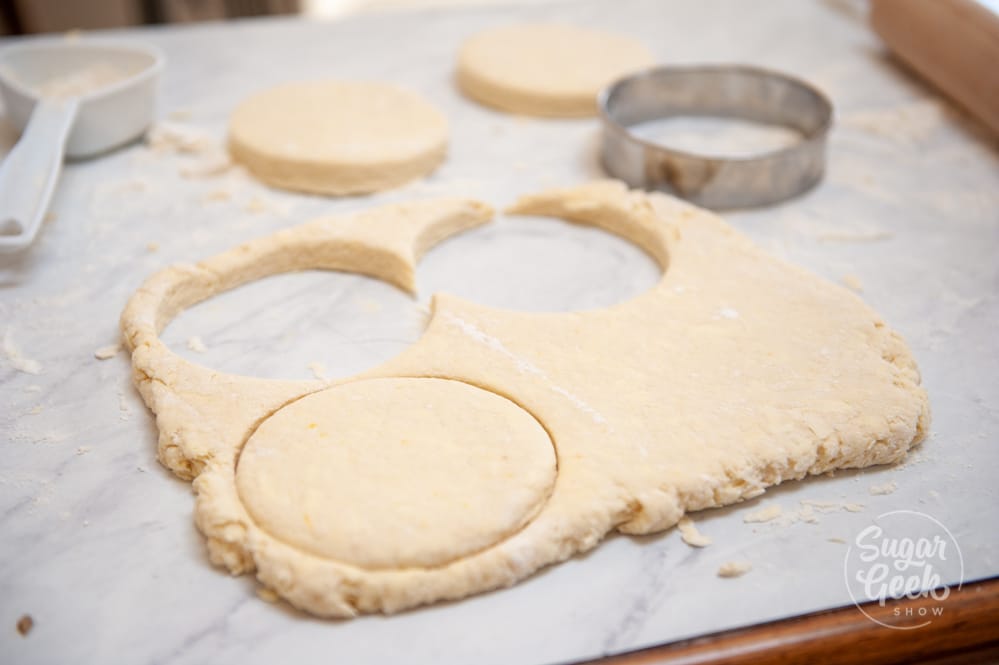
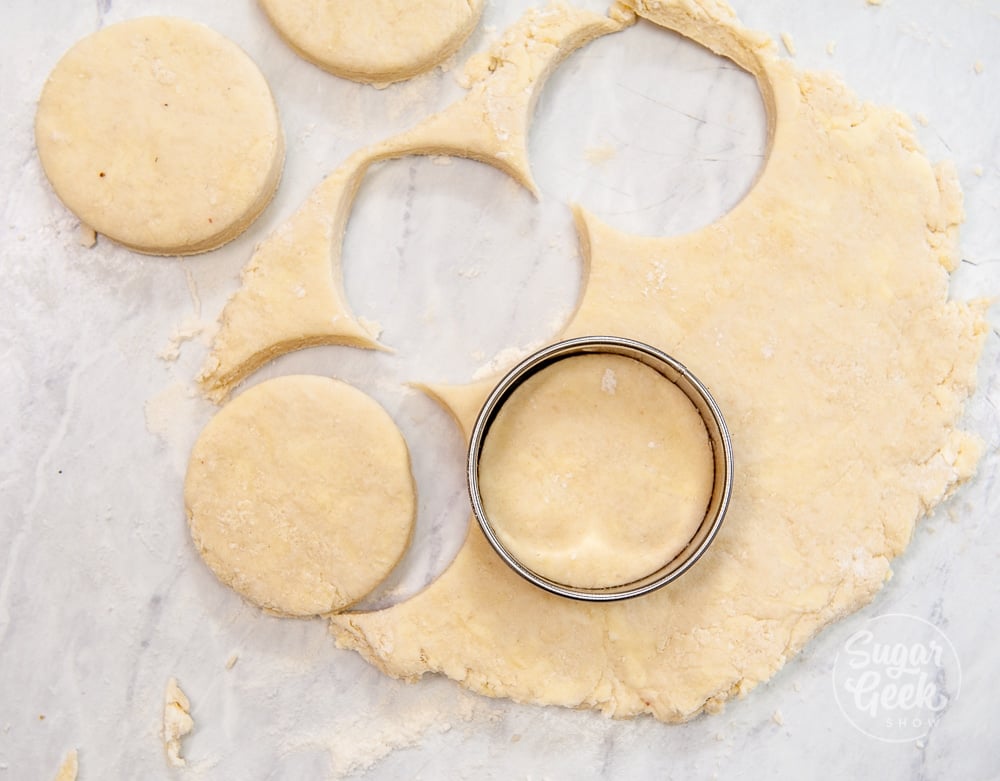
Step 10 - Use a metal cutter to cut out your biscuits. I get about 4 biscuits.

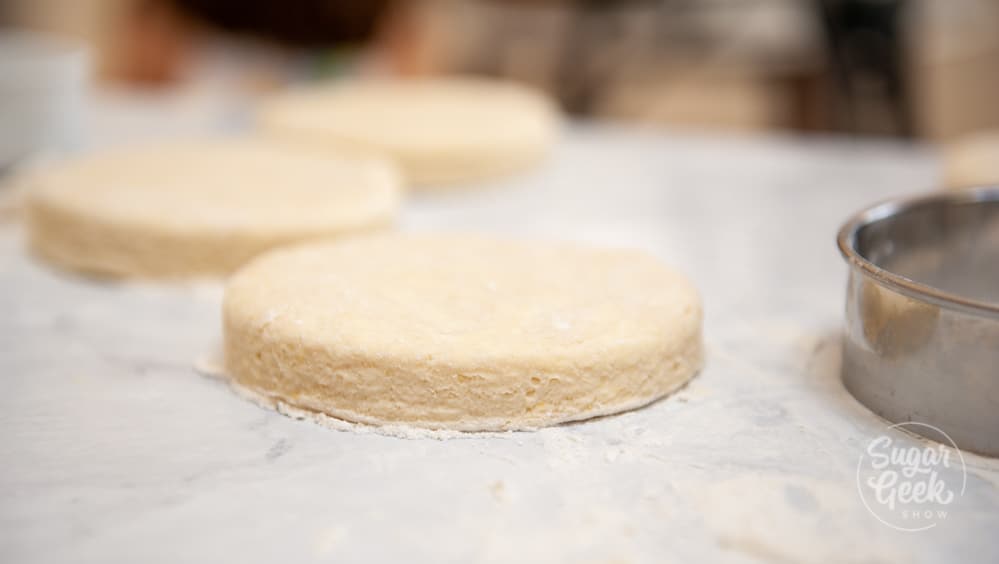
Pro tip - Press your metal cutter straight down and lift straight up to keep your biscuit layers intact. If you twist at all, you will seal the layers shut and your biscuits won't rise. 

biscuits cut out of dough
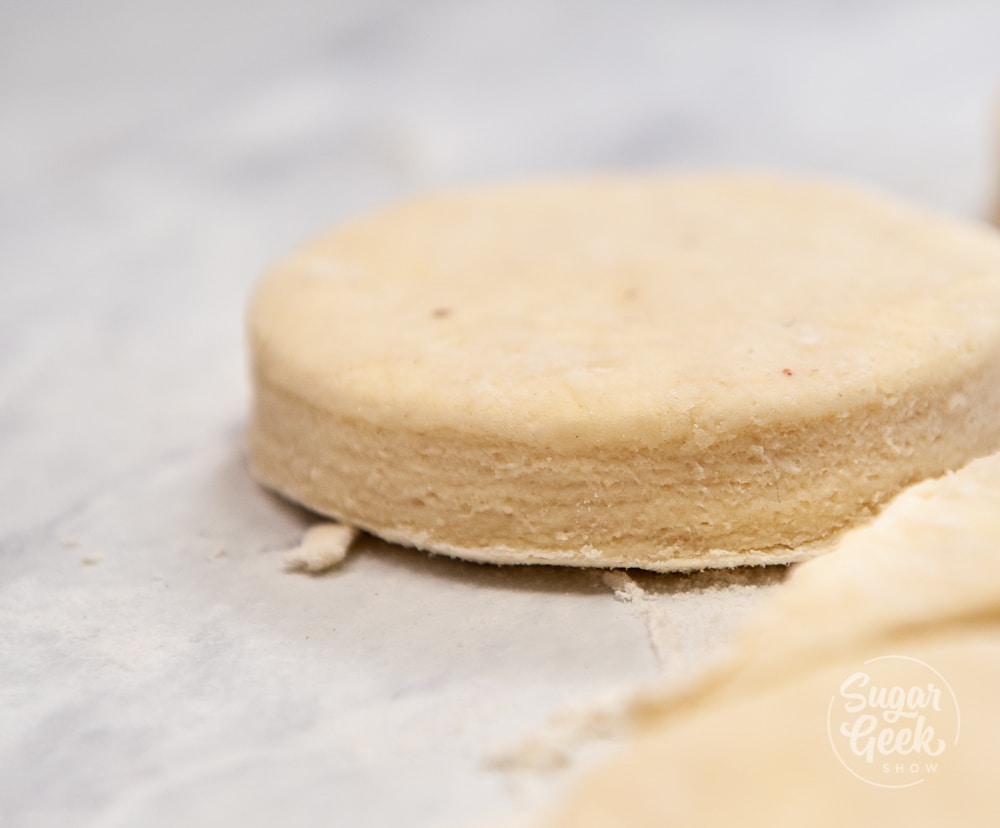
close up of raw biscuit to show layers

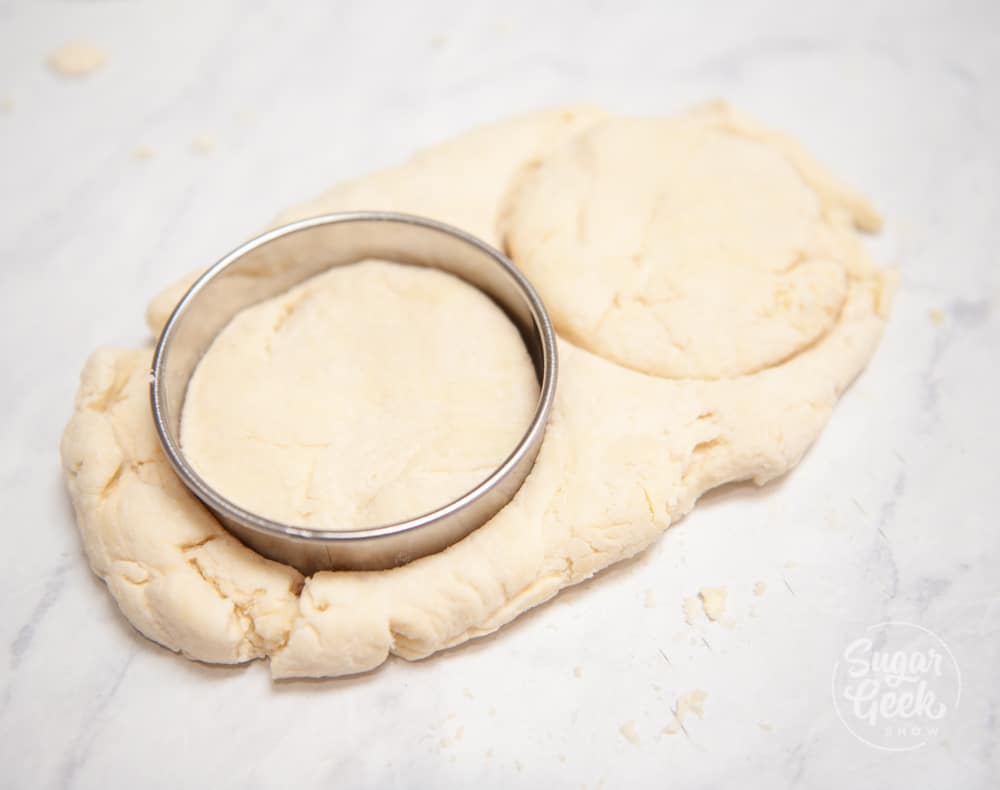
I press together the leftover dough to cut two more. They won't be as pretty but they still taste good!

metal cutter cutting out biscuits from leftover dough

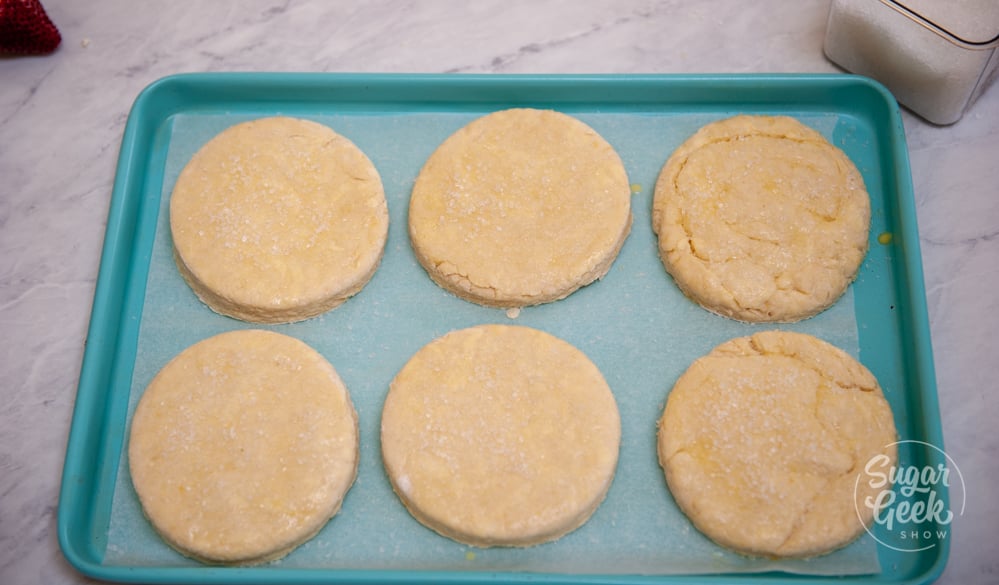
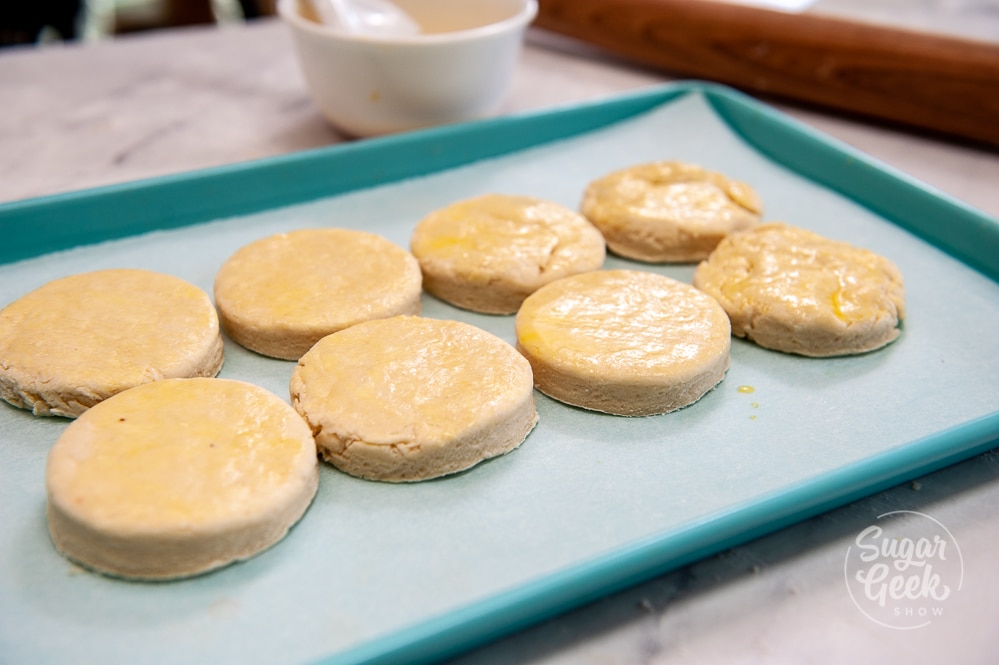
Step 11 -  Arrange your biscuits onto a baking sheet with some parchment paper on top to prevent sticking. I leave about ¼" space between the biscuits to help them rise higher! Biscuits like to be close to each other.

raw biscuits arranged on a cookie sheet with parchment paper

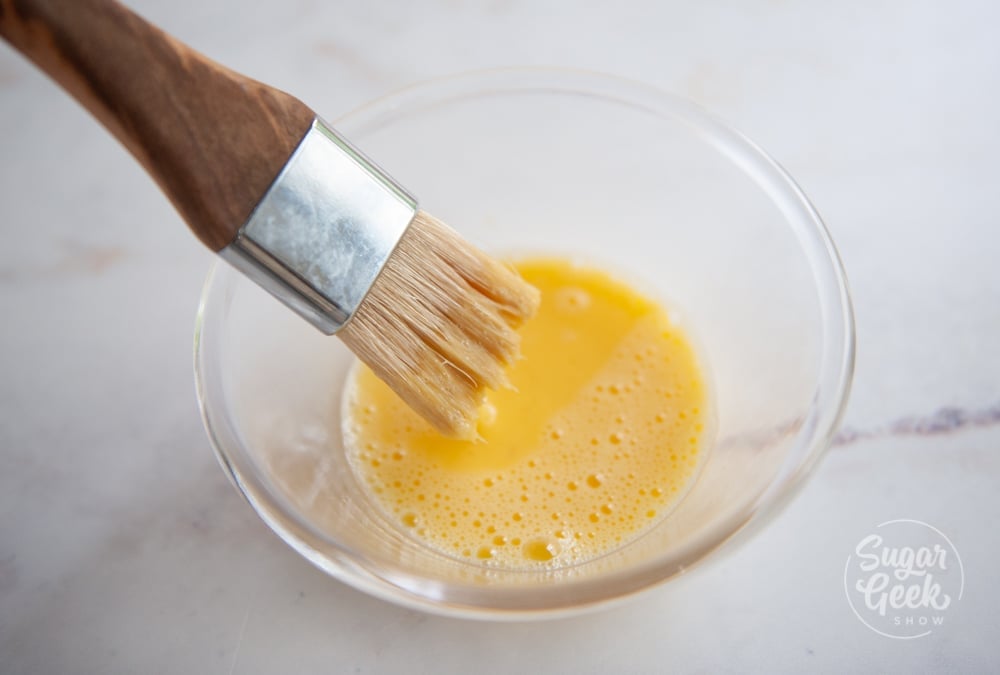
Step 12 - In a medium bowl, whisk together your egg and 1 tablespoon of water. Brush the tops of your biscuits with the egg wash. This promotes browning. *see notes*

closeup of eggwash and pastry brush in clear bowl

Step 13 - Sprinkle the tops of the biscuits generously with sanding sugar or granulated sugar.

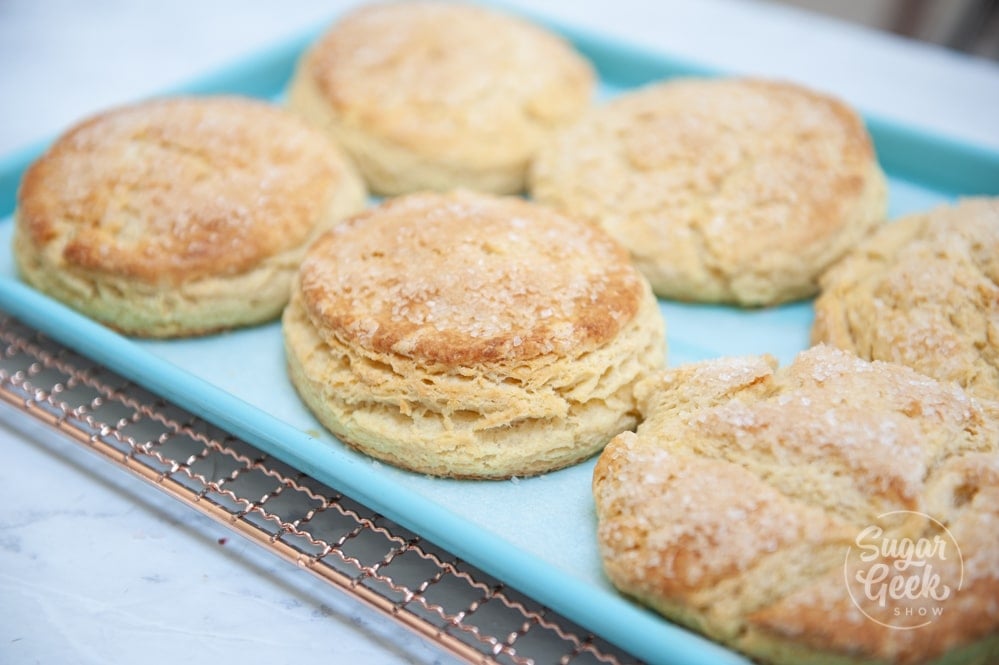
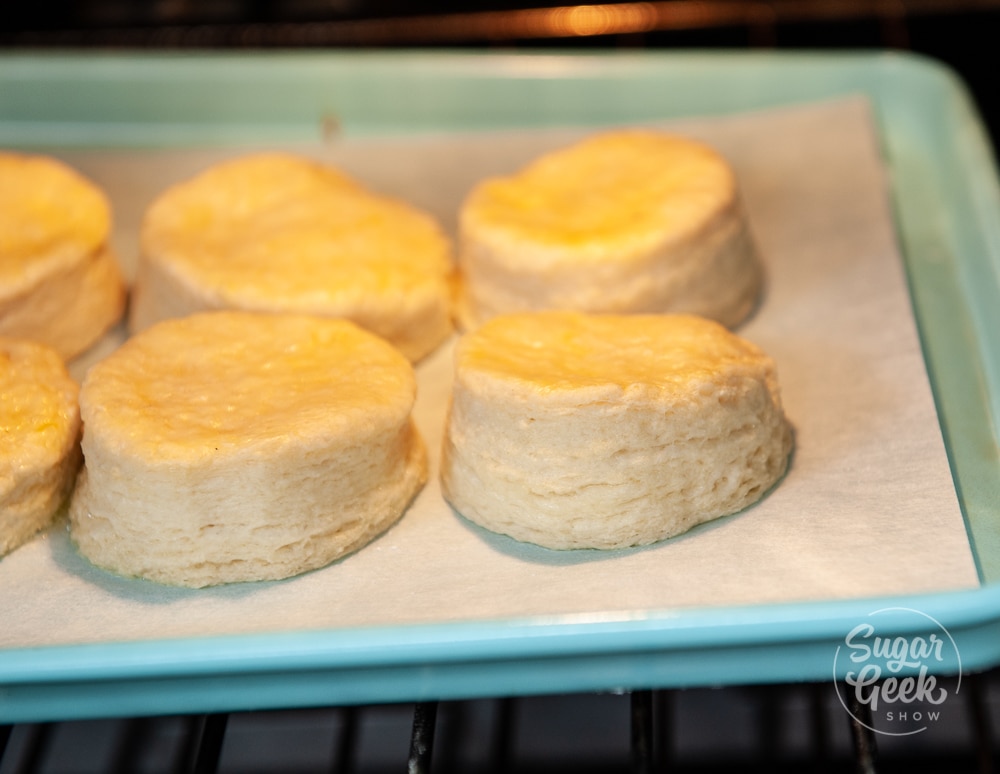
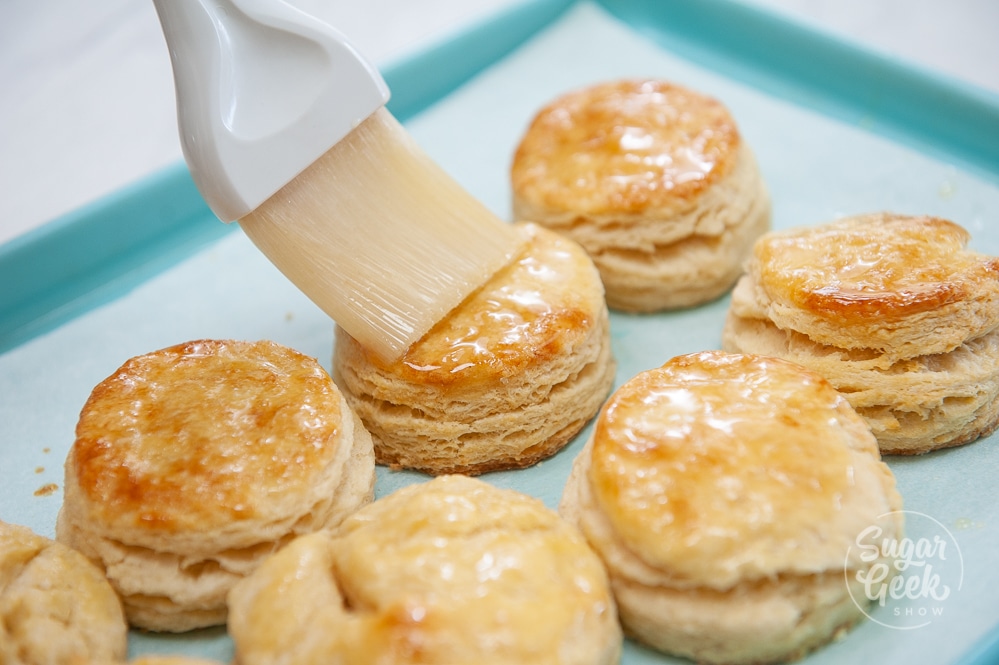
Step 14 - Bake biscuits for 25-30 minutes or until they are golden brown on top. I use a thermometer to check the internal temperature. Biscuits are done at 205ºF-215ºF. No one likes under-baked biscuits.

Place the biscuits onto a cooling rack before assembly.

freshly baked biscuits on blue sheet pan

How To Make Stabilized Whipped Cream

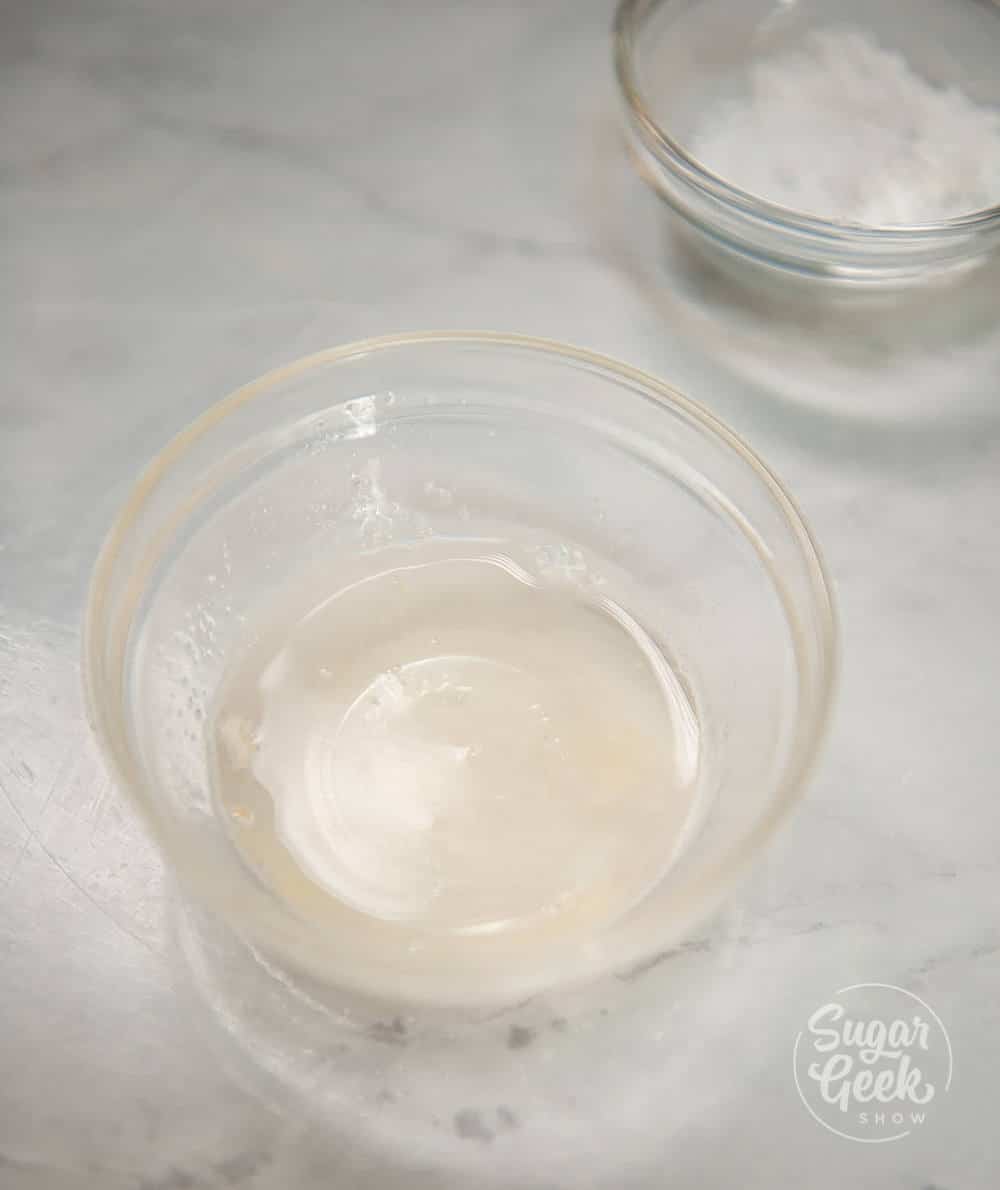
Step 1 - Place the gelatin into the water and let it absorb while you start whipping the cream.

gelatin in cold water

Step 2 - Place your cold heavy whipping cream into the stand mixer with the whisk attachment.

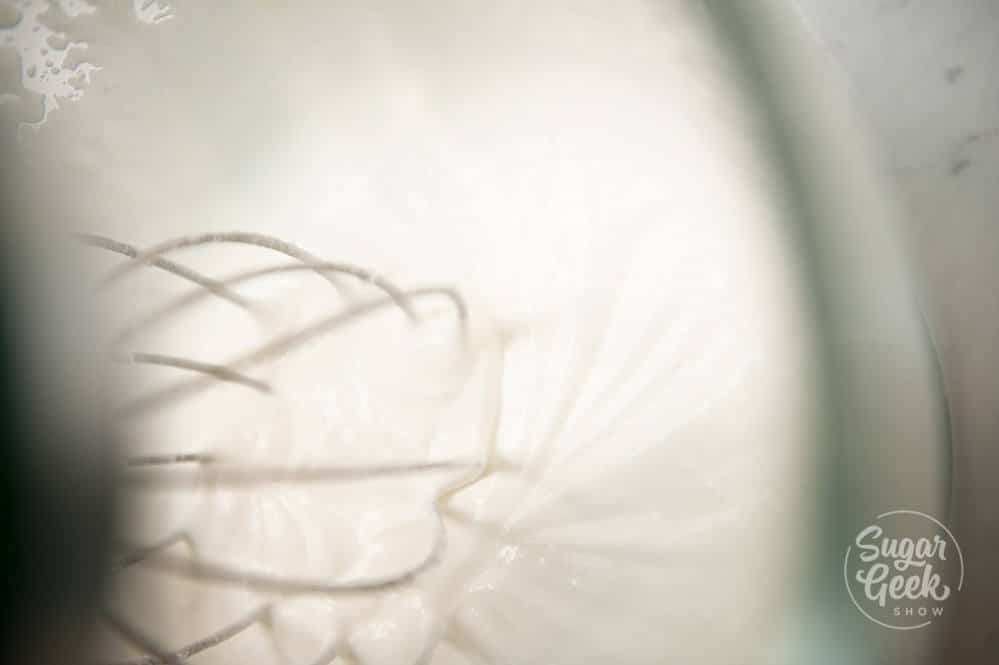
Step 3  - Whisk on medium until soft peaks form, and you're just starting to see lines in the whipped cream. Add in your powdered sugar and vanilla extract. Mix on low until combined.

whipping cream in stand mixer

Step 4 - Melt the gelatin in the microwave for 10 seconds. The gelatin should look clear. If it's not, warm it for another 5 seconds. Don't overheat it. Add in the teaspoon of heavy cream and stir lightly to combine.

Step 5 - While mixing on low, pour in your gelatin and mix until you reach firm but smooth peaks. Not crumbly or chunky. Now you have stabilized fresh whipped cream!

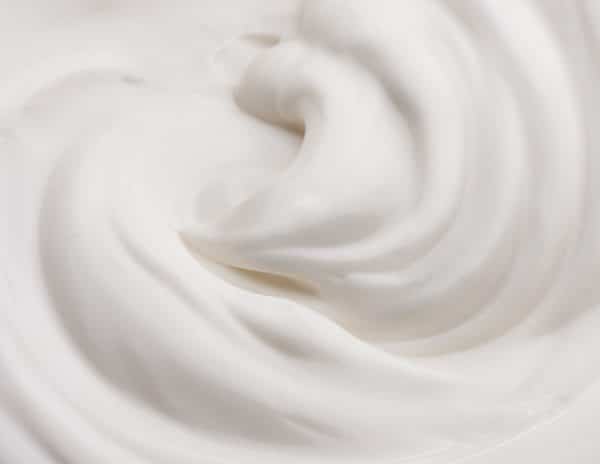
close up of stabilized whipped cream

Pro tip -  Check out my blog post to see more ways to stabilize whipped cream with cream of tartar, pudding mix, and more. 

Assembling The Strawberry Shortcakes

Time to put our delicious strawberry shortcakes together!

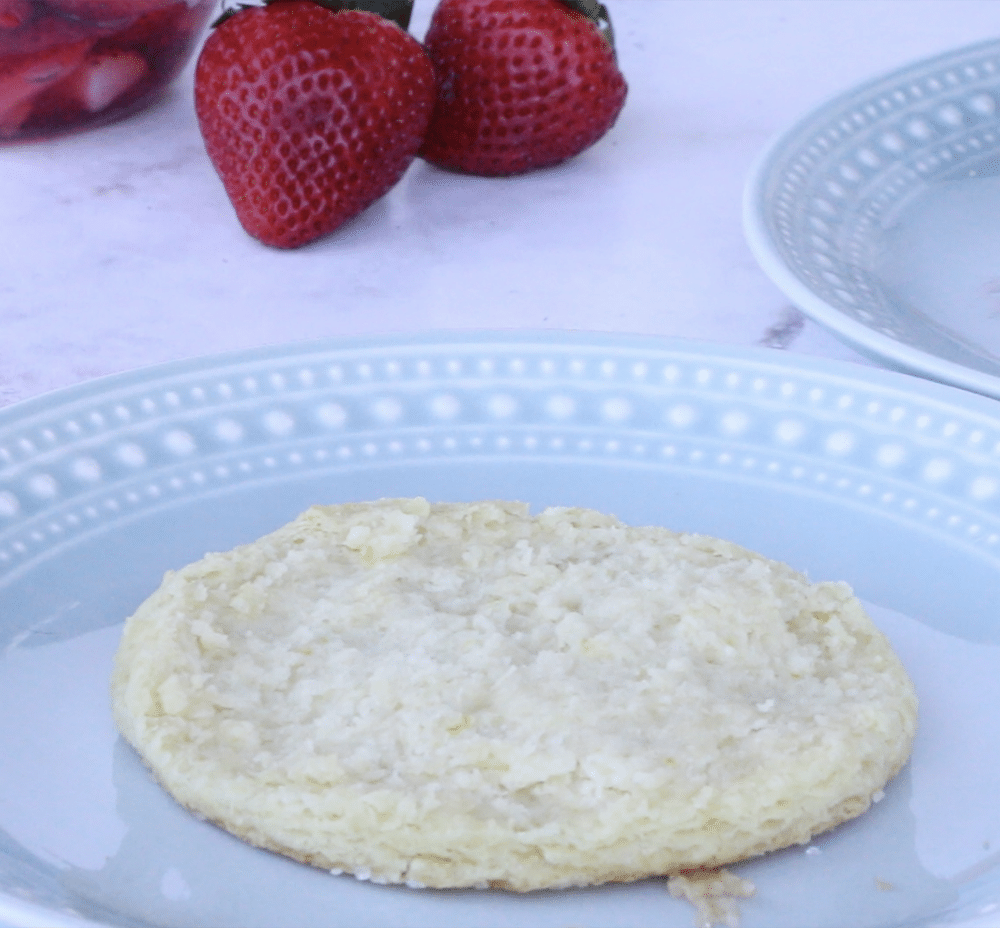
Step 1 -  Use a knife to split the biscuits in half.

bottom half of sliced biscuit on blue plate

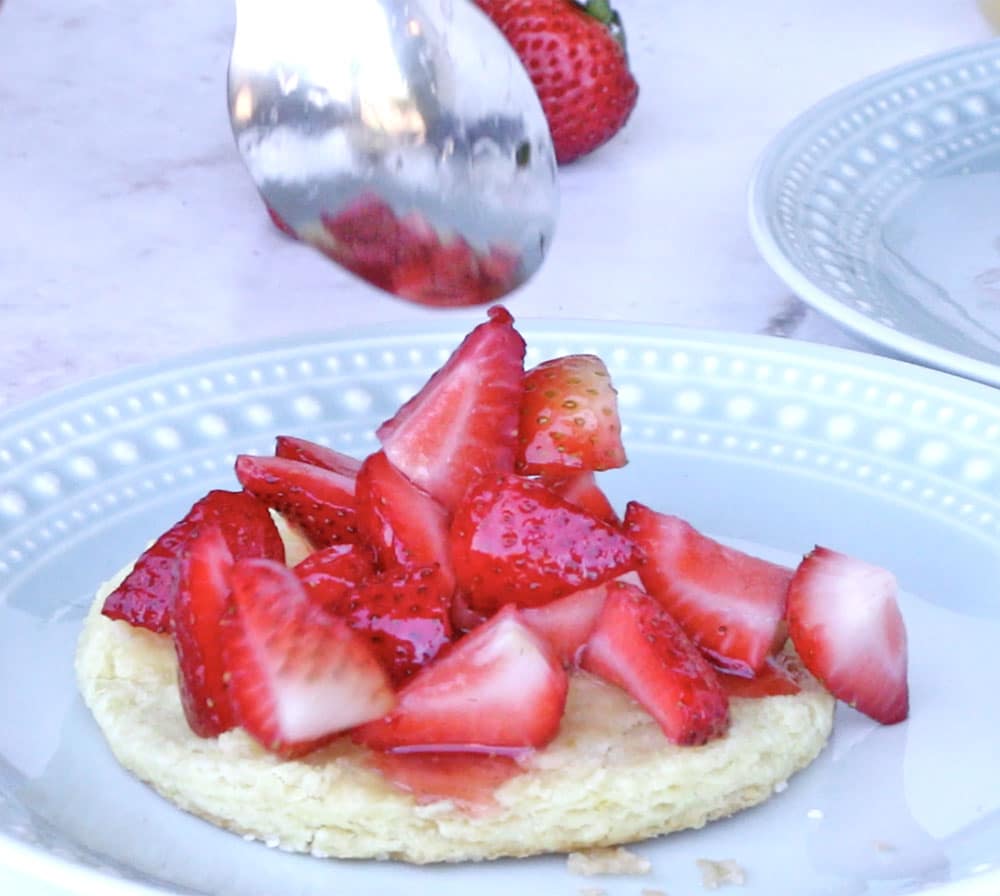
Step 2 - Scoop a big helping of those juicy strawberries onto your biscuit. All that syrup is going to soak into the biscuit and will taste amazing.

strawberries being spooned onto half of a biscuit

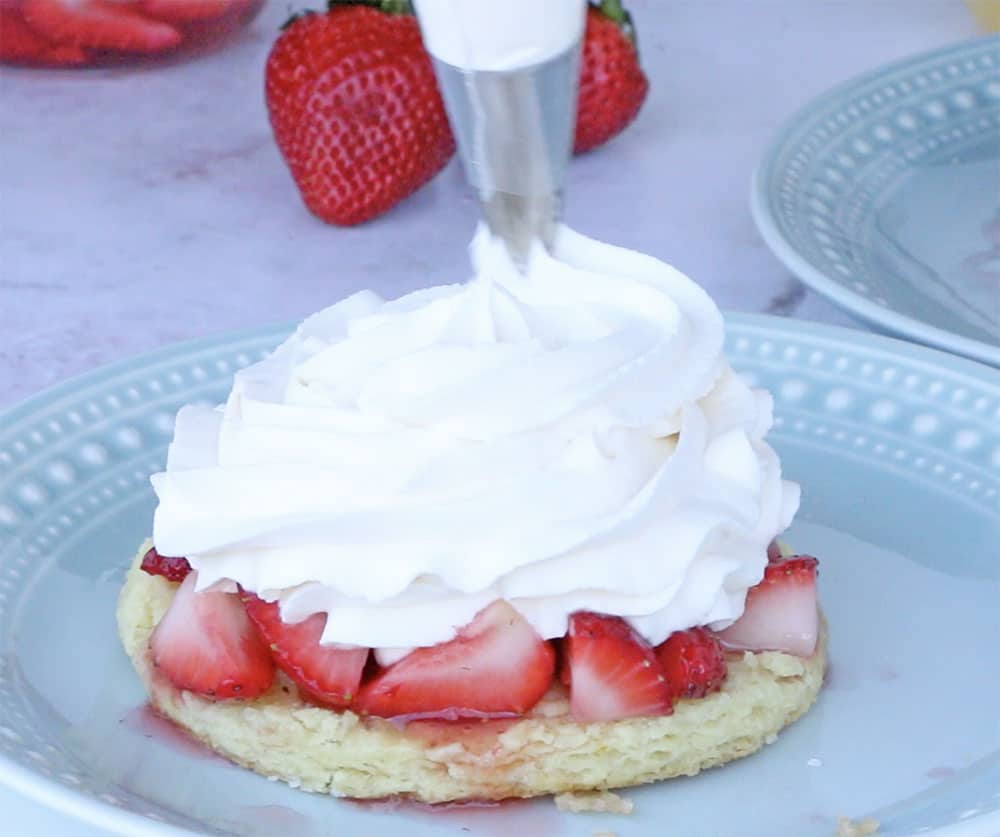
Step 3 - You can use a piping bag with a 1M piping tip or just use a spoon to layer up some of your whipped cream on top of the strawberries. I like to add about ¼ to ½ cup of whipped cream.

stabilized whipped cream being piped onto strawberries and sliced biscuit

Step 4 -  Place the other half of the biscuit on top, top with whipped cream and a strawberry, and serve!

strawberry shortcake on blue plates with ingredients in background

Because we have used stabilized whipped cream, you can make these strawberry shortcakes up to 24 hours ahead of time and place them in the fridge to be served later. You can also make the biscuits recipe ahead of time and assemble them the next day so that the strawberries don't make them soggy.

Related Recipes

Flaky Buttermilk Biscuits
Bacon Cheddar Chive Biscuits
How To Make Buttermilk
Strawberry Cinnamon Rolls
Strawberry Cake With Strawberry Buttercream 

⭐⭐⭐⭐⭐ Have you made this recipe? Leave me a review below! 

Recipe

closeup of strawberry shortcake on blue plate
Print Recipe
5 from 5 votes

Easy Homemade Strawberry Shortcake

Strawberry shortcake is the perfect individual-sized summer dessert with loads of fresh strawberries, homemade whipped cream and tender biscuits!
Prep Time10 minutes mins
Cook Time25 minutes mins
Total Time35 minutes mins
Course: Appetizer, Dessert, Side Dish
Cuisine: American
Servings: 6 servings
Calories: 961kcal
Author: Liz Marek

Equipment

  • Cheese grater
  • Kitchen Scale
  • pastry brush
  • 4" Metal Circle Cutter

Ingredients

Sweet Buttermilk Biscuits

  • 20 ounces all-purpose flour
  • 3 Tablespoons granulated sugar
  • 1 Tablespoon baking powder
  • 2 teaspoons baking soda
  • 2 teaspoons salt
  • 6 ounces unsalted butter cold, grated or cut into small pieces
  • 12 ounces milk cold (or buttermilk)
  • 1 whole lemon zest
  • 1 Tablespoon lemon juice
  • 1 large egg for egg wash or you can use milk
  • 2 ounces sanding sugar or crystal sugar for topping biscuits

Strawberry Filling

  • 20 ounces fresh strawberries
  • 3 ounces granulated sugar
  • 1 Tablespoon lemon juice (from the lemon above)

Stabilized Whipped Cream

  • 16 ounces heavy whipping cream
  • 1 ounce powdered sugar or more if you like sweeter whipped cream
  • 1 teaspoon vanilla extract
  • 1 ½ Tablespoons cold water
  • 1 teaspoon powdered gelatin
  • 1 teaspoon heavy cream
US Customary - Metric

Instructions

Strawberry Filling

  • Wash your strawberries and set aside 6 pretty ones for garnish. Cut the tops off. Slice the strawberries into 4-5 pieces depending on how big the strawberry is.
  • Combine the chopped strawberries with the sugar and lemon juice and stir. Set aside while you make your biscuits.

Biscuits

  • Preheat your oven to 425ºF (218ºC)
  • Sift together flour, sugar, baking powder and salt
  • Combine your milk and lemon juice (or use buttermilk)
  • Grate cold butter into the dry ingredients (using a scale makes this very easy)
  • Toss the ingredients together to coat all the butter with the flour mixture
  • Make a well in the center of your dry ingredients and then add in the cold buttermilk and lemon zest. Pull the dry ingredients towards the center and then mix with your hands in the shape of a "claw" or fork until the dough forms a loose sticky ball. Do not over-mix.
  • Flatten the dough roughly with your hands or rolling pin to about 2" in height. Fold in half. This will be messy! Flatten dough once again.
  • Rotate your dough 45º and fold in half again. Repeat 5-7 times. If the dough becomes stretchy, place it in the fridge for 10 minutes to relax the gluten.
  • Use a 4" round biscuit cutter make your biscuits. Press striaght down and lift straight up. Do not twist.
  • Place the biscuits on a parchment lined sheet pan with about ¼" of space in between the biscuits and brush with milk or egg wash on top. Do not brush the sides. Sprinkle with sanding sugar for extra crunch and sweetness if desired.
  • Bake biscuits for 25-30 minutes or until they are golden brown on top. I use a thermometer to check the internal temperature. Biscuits are done at 205ºF-215ºF. No one likes under-baked biscuits

Stabilized Whipped Cream

  • Place the gelatin into the water and let it absorb while you start whipping the cream.
  • Add your heavy whipping cream to the bowl of your stand mixer with the whisk attachment. Whisk on medium until you start to see lines appear in the surface.
  • Place the powdered sugar and vanilla into the whipped cream and mix on low until just combined.
  • Melt your gelatin in the microwave in 5 second increments until it appears clear. Add 1 teaspoon of cold heavy cream to the melted gelatin.
  • While mixing on low, pour in the gelatin mixture and mix until soft but firm peaks have developed. Do not over-mix or your whipped cream will look crumbly and broken.

Strawberry Shortcake Assembly

  • Split your biscuits in half with a fork or knife and place the bottom onto a plate.
  • Scoop a healthy portion of the strawberries onto the biscuit.
  • Pipe the stabilized whipped cream onto the strawberries with a 1M piping tip and piping bag (or you can simply spoon it on top)
  • Place the other half of the biscuit on top, top with whipped cream and a strawberry, and serve!
    So pretty!

Video

Notes

  1. You can use milk or water in place of egg wash
  2. Use a sharp metal cutter for the best layers. Press straight down and lift straight up.  Do not twist. 
  3. Grating your COLD butter directly into the flour mixture saves time and prevents the butter from melting into the flour. 
  4. Squish leftover dough together to make extra biscuits that look ugly but taste great!
  5. Bake biscuits close together for maximum rise 
  6. You can store pre-made biscuits in the fridge for up to 24 hours before serving. 

Nutrition

Serving: 1serving | Calories: 961kcal | Carbohydrates: 103g | Protein: 15g | Fat: 55g | Saturated Fat: 34g | Cholesterol: 203mg | Sodium: 1249mg | Potassium: 455mg | Fiber: 3g | Sugar: 28g | Vitamin A: 1971IU | Vitamin C: 2mg | Calcium: 227mg | Iron: 5mg
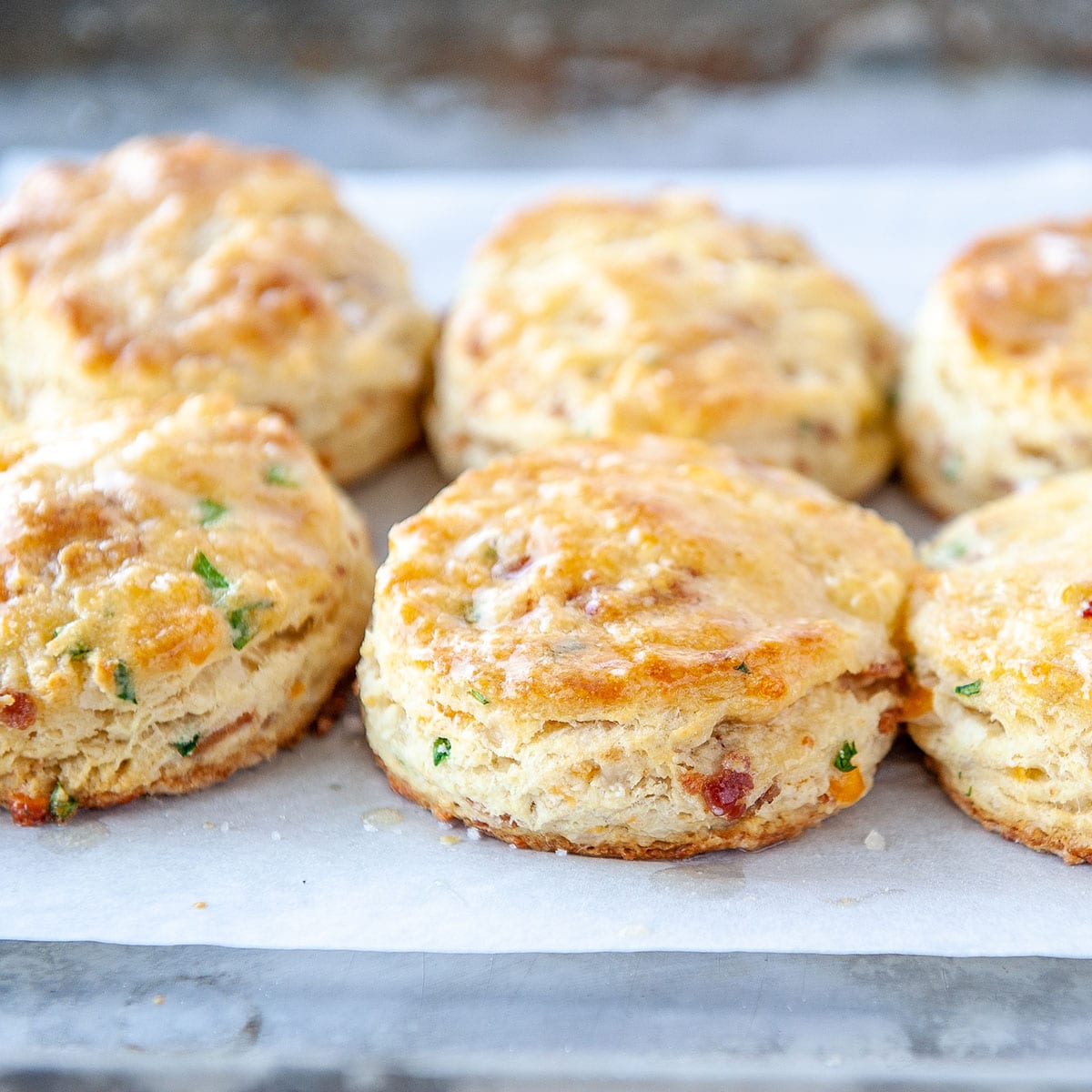
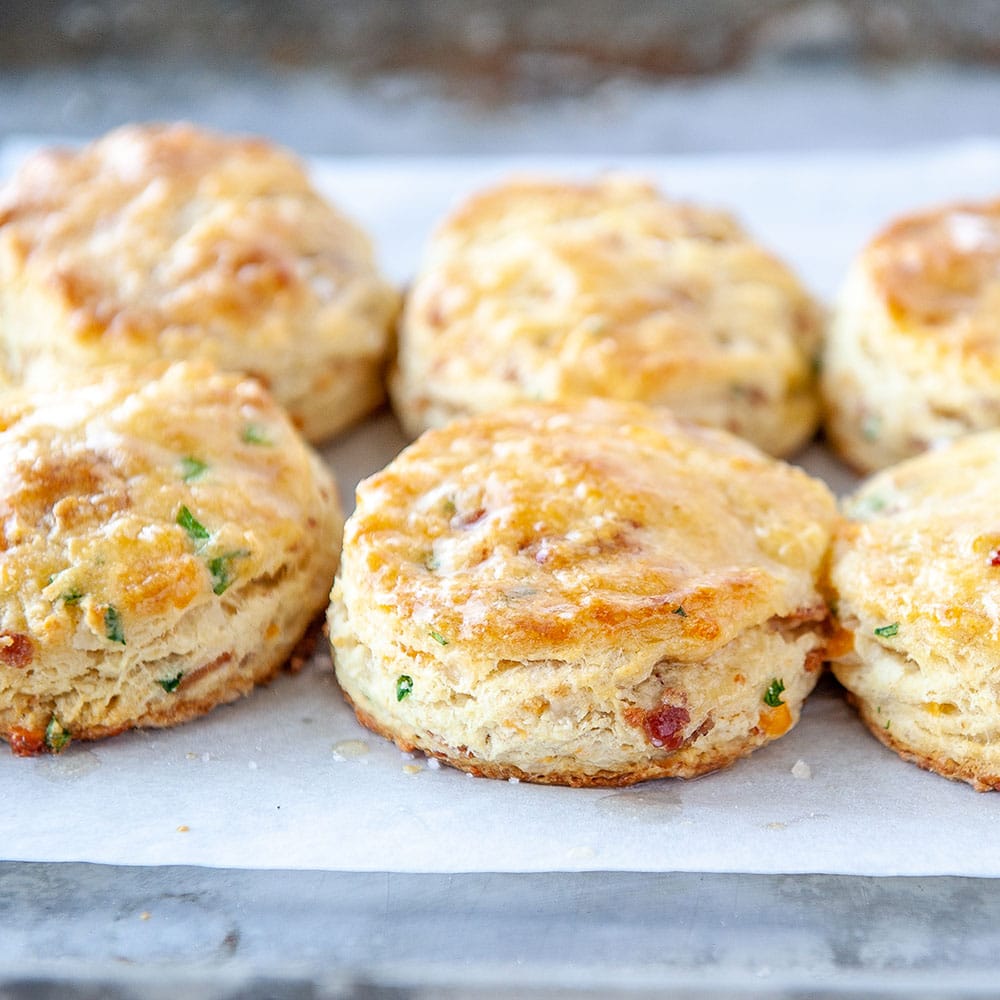
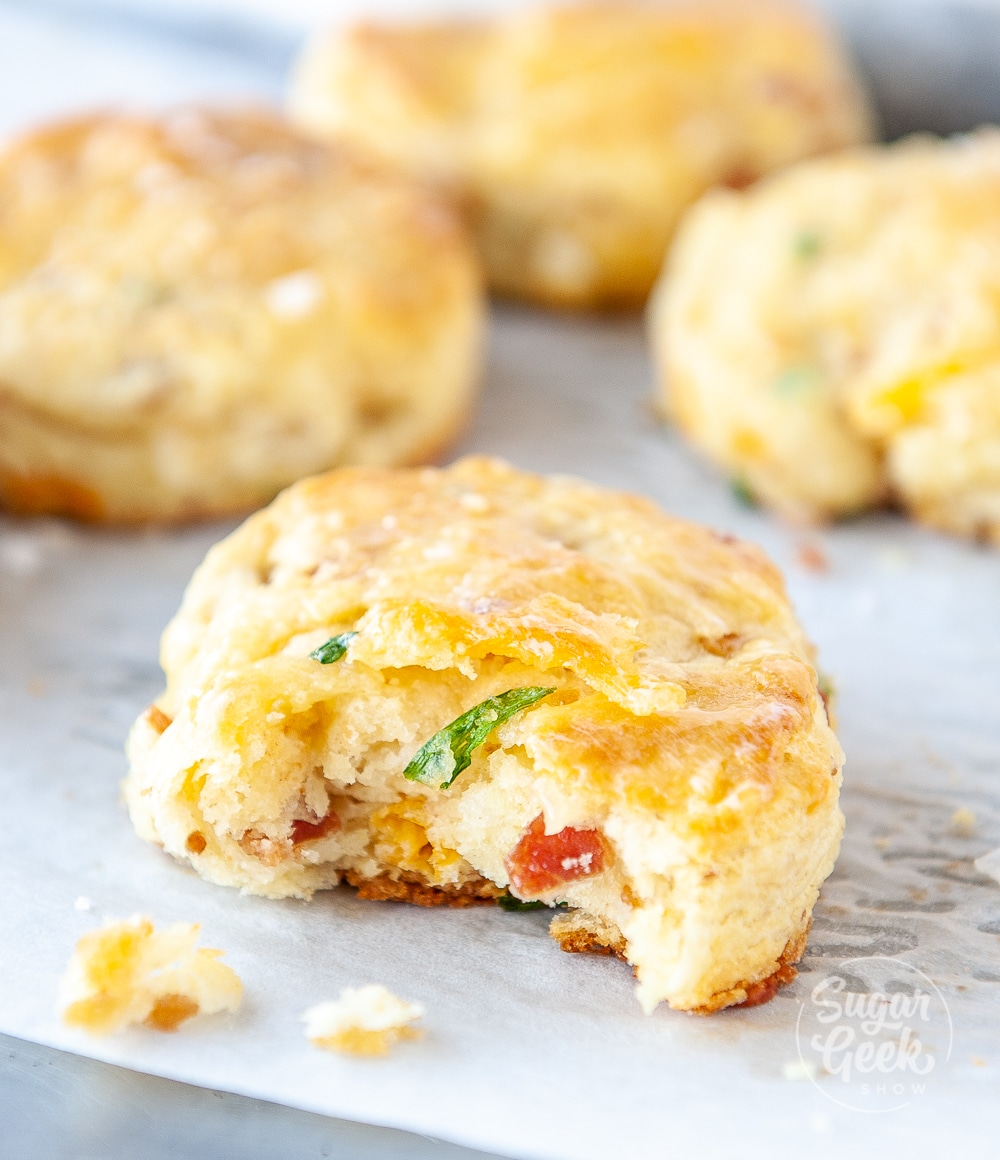
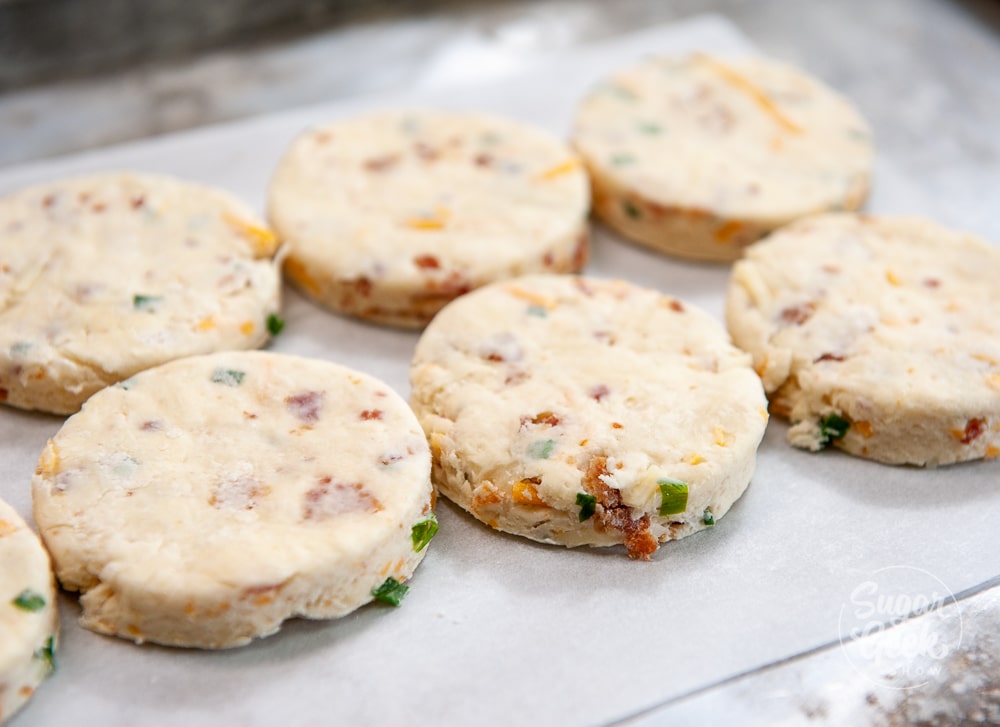
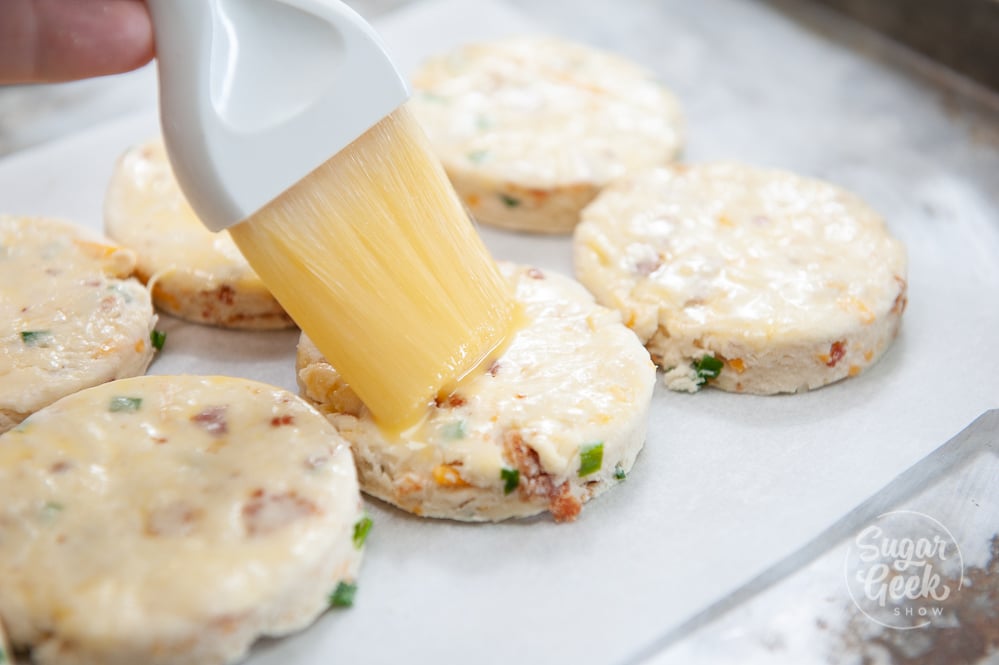
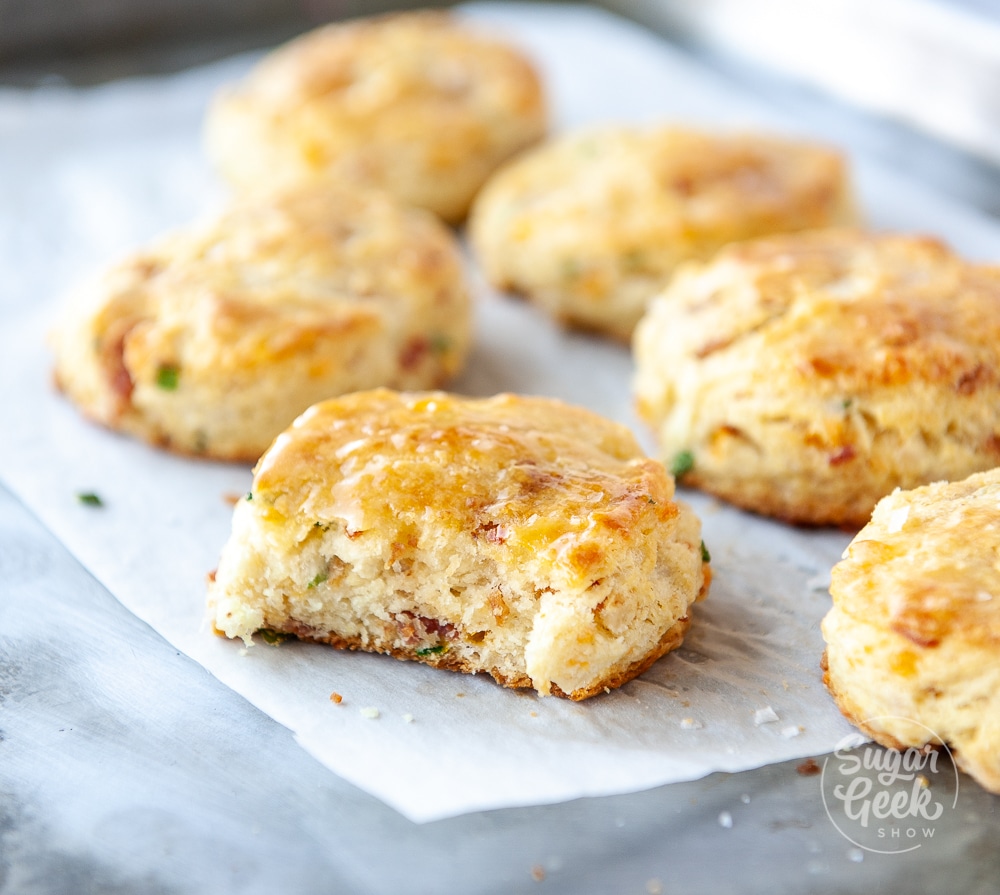
bacon cheddar biscuits on parchment paper on metal pan

April 28, 2020 Biscuits and Scones

Easy Bacon Cheddar Chive Biscuits

Tender, flaky biscuits loaded with bits of crispy bacon, shredded cheddar cheese, and fresh chives. It's a whole meal in a biscuit and is ready to eat in only 20 minutes. These biscuits are adapted from my master flaky biscuit recipe. 

cheddar bacon chive biscuits on parchment paper on a metal sheet pan

What makes these biscuits so great!

Easy To Make - You only need one bowl and your hand for mixing! 

Fast - Minutes to assemble and only 20 minutes to bake!

Customizable - The flavor options are endless!

What's in this blog post

  • What makes these biscuits so great!
  • What ingredients do you need?
  • Useful Tools & Equipment
  • Step-By-Step Instructions
  • FAQ
  • Related Recipes
  • ⭐⭐⭐⭐⭐ Have you made this recipe? Leave me a review below! 

What ingredients do you need?

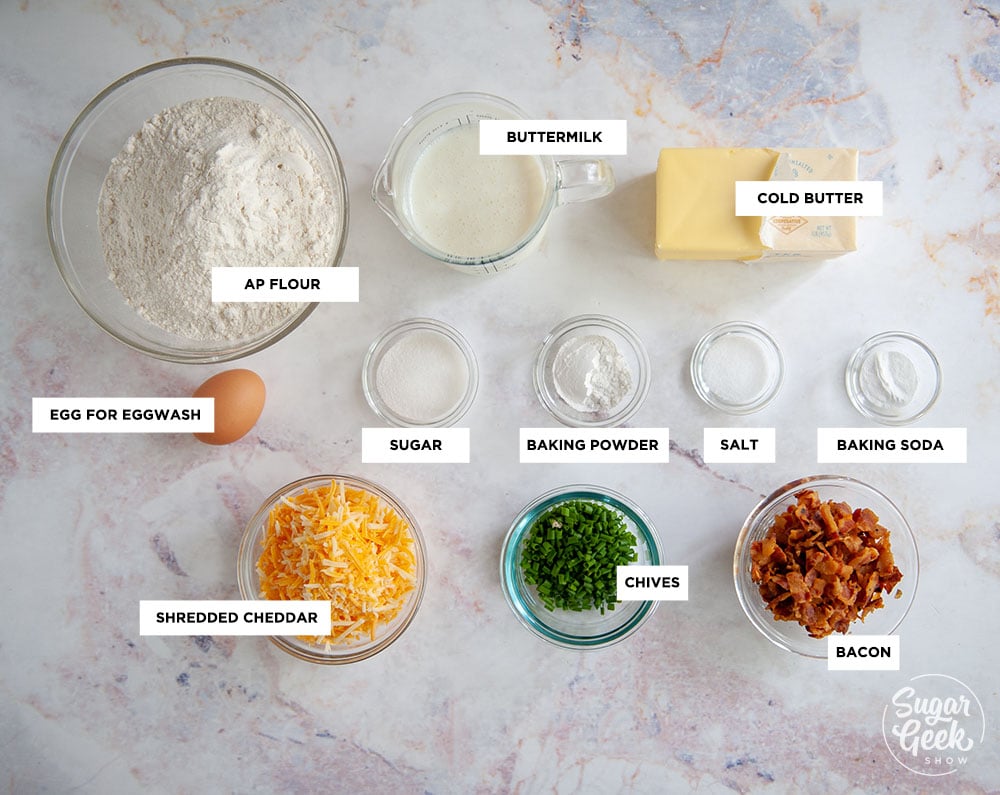
ingredients needed to make bacon cheddar chive biscuits in clear bowls shot from above

Buttermilk - Southern recipes often use buttermilk because of the addition of flavor and also it's tenderizing qualities. 

Cold Unsalted Butter - Cold butter is extremely important to this recipe. Cold butter holds its shape in the dough and creates those beautiful layers. We're using unsalted so we can control the salt level of our biscuits. 

Baking Powder - Gives our biscuits a fluffy and soft texture

Baking Soda - Reacts with the buttermilk to provide lift, color, and flavor

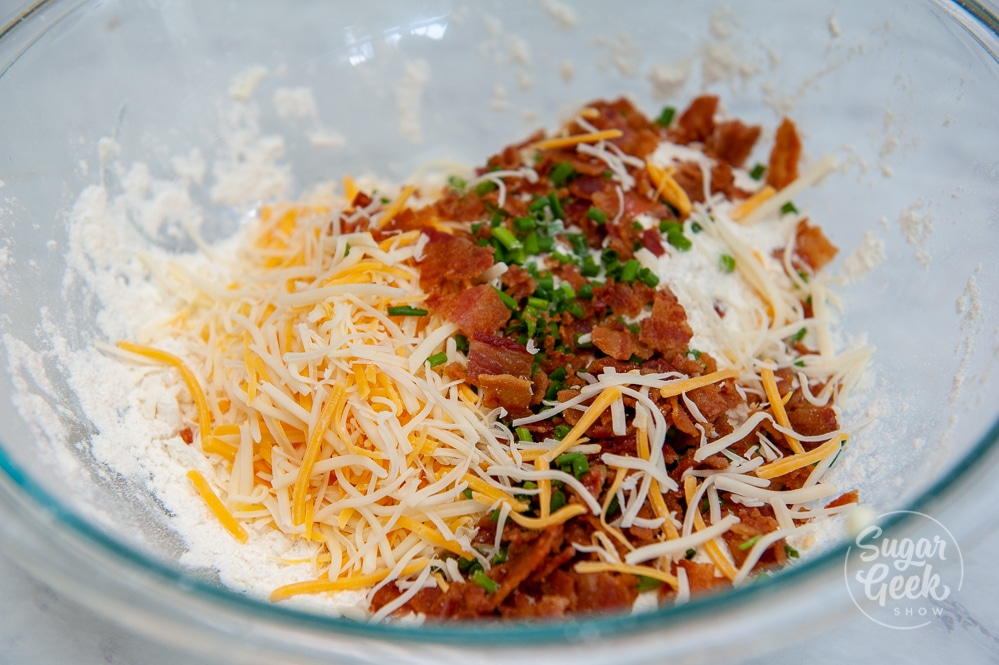
Shredded Cheddar - I like Colby jack cheese but you can use any hard cheese you prefer like pepper jack, white cheddar, or even parmesan. Stay away from soft cheeses. Shred your own since packaged cheese contains cornstarch which is drying. 

Chives - I love the garlicky flavor of chives but you can leave them out or switch them out for another herb like rosemary or thyme. 

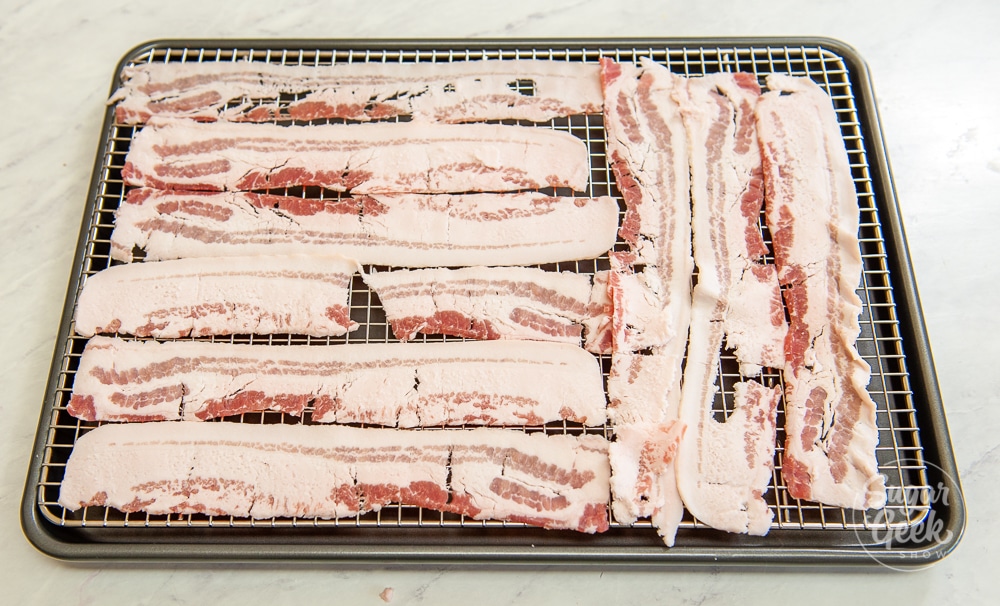
Cooked Bacon - Bacon adds tons of flavor. Pre-cook your bacon before mixing into the dough to keep it crisp. Switch out the bacon for ham or prosciutto! 

Useful Tools & Equipment

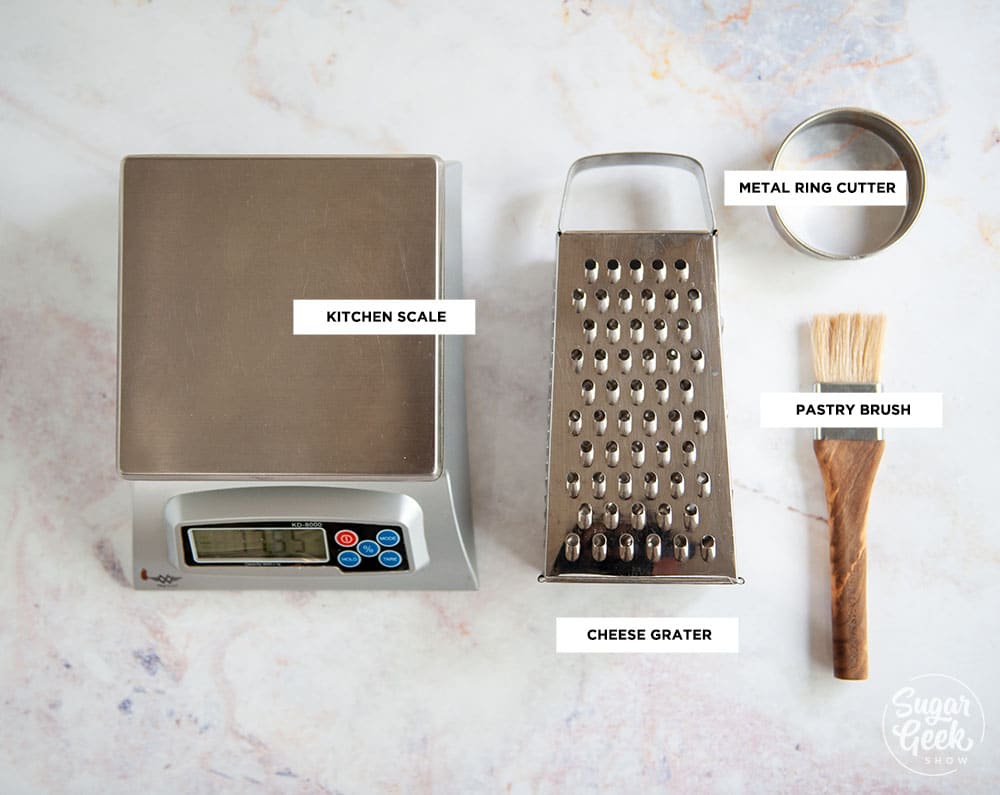
tools needed to make bacon cheddar chive biscuits on white background

Kitchen Scale - Makes measuring incredibly easy and fewer dishes to clean. This is my favorite kitchen scale. You can learn more about how to use a kitchen scale for baking here. 

Cheese Grater - I have tried many many different types of cheese graters but for whatever reason, I love this one the most. It makes huge chunky pieces of butter when I grate it cold and produces the best flaky biscuits. No cheese grater? Use a fork to "cut" the butter into your flour or use a pastry cutter. 

Metal Cutter - A sharp metal ring cutter is going to produce the flakiest and tallest biscuits. If you don't have a metal cutter you can use a drinking glass or even a soda can cut in half. 

Pastry Brush - A pastry brush is great for applying egg wash evenly for a beautiful golden brown biscuit. No Pastry brush? You can use a clean, unused paintbrush, paper towel, or even your fingers. 

Pro Tip -  Preheat your oven for at least 30 minutes. Perhaps the secret to the flakiest biscuits is using COLD butter and a HOT oven. A hot oven immediately causes butter to melt, water to evaporate lift those layers.  

close up image of bacon cheddar chive biscuit with bite taken out of it

I honestly love making fresh biscuits for breakfast. It feels like you get a lot of reward for very little effort involved. I have broken down my process of making tall flaky biscuits below so you can follow along.

I've also included tons of tips for getting biscuits with a perfectly browned top, how to easily measure butter and ideas for more mix-ins to customize your biscuits. 


Step-By-Step Instructions

Step 1 - Prepare your mix-ins. I learned this trick for cooking bacon in pastry school. Arrange the bacon on a cooling rack (heat safe) and place that onto a sheet pan. Bake in a 400ºF oven for 15-20 minutes until it's nice and crispy. Let it cool and chop it up! 

The cooling rack drains the fat away from the bacon and everything cooks evenly. Super easy.  

strips of raw bacon arranged on a cooling rack on metal sheet pan

Step 2 - While the bacon is cooking, chop your chives, and shred your cheese. How much you use is up to you. I just grabbed a handful of chives (about ¼ cup) and shredded about a cup of cheese. 

Step 3 - Once your bacon has cooled and has been chopped, you can start making your biscuits. Begin by placing the flour, sugar, salt, baking powder, and baking soda into a large bowl. Whisk to distribute everything evenly.

flour, sugar, salt, baking powder, baking soda in clear bowl with metal whisk

Step 4 - Turn on your kitchen scale, place the bowl of ingredients on top. Press the zero or tare button to remove the weight of the bowl and ingredients. The display should say zero. 

Step 5 - Start grating your COLD butter directly into the bowl. So easy and such a time saver. No transferring butter from a separate bowl to the flour and getting soft. Halfway through I toss the butter and flour so I don't end up with a huge ball of butter. Then I continue grating until I have added the right amount. 

Woman grating cold butter into a bowl of dry ingredients sitting on top of a kitchen scale

Step 6 - Toss the flour and butter together until all the butter is coated with flour. Do this quickly and lightly to avoid warming the butter up with your hands. You can also use a spoon if you have really hot hands. 

flour, sugar, salt, baking powder and baking soda in a clear bowl combined with shredded cold butter

Step 7 - Add in your chopped bacon, chives, and cheddar cheese and toss to combine. 

shredded cheese, bacon, and chives in mixing bowl with flour butter mixture

Step 8 - Make a well in the center of your ingredients and add in the COLD buttermilk. Straight from the fridge if you can. Again, you can place the bowl of ingredients onto your scale, press the tare button to zero out the weight of the bowl, and add in the milk until you reach the correct amount. 

Step 9 - Make a "claw" with one hand and mix. The goal is to get rid of all the dry flour, not to make a smooth dough. The dough will look rough and should look rough. Ugly dough makes delicious biscuits. (I didn't have a photo of this so I used the photos from my master biscuits recipe or you can watch the video in the recipe card for a visual)

mixing biscuit ingredients with hand

Step 10 - Once the dough looks like this, pour it onto a lightly floured surface

cheddar bacon biscuit ingredients in a clear bowl with wooden spoon

Step 11 - Press the dough into a rough circle shape. Don't worry if it's not sticking together. 

cheddar bacon chive biscuit dough pressed into a circle

Step 12 - Now we will begin folding the dough over onto itself. It will be rough and messy at first. This fold is called a "turn". 

cheddar bacon chive biscuit dough folded over onto itself

Step 13 - Now press the dough down until its about 2" tall. Then turn the dough 45º (so the top of the dough is rotated until it's facing your right hand) Now repeat the fold once again and press flat to 2" tall again. This is turn 2. 

Pro Tip - Folding butter into dough this way is also called lamination and is the process of creating layers of butter between layers of flour. This butter expands during baking and is what causes flaky layers of butter to form. 

Step 14 - Repeat this process 4-5 times to create layers. If the dough ever feels stiff or stretchy, put it in the fridge for 10 minutes to let the gluten relax and continue folding. After the last fold, roll your dough out with a lightly floured rolling in until your dough is about 1" tall. 

bacon cheddar chive biscuit dough rolled out on. a white background with ingredients surrounding

Pro Tip - Press straight down and pull straight for the best layers. Twisting will cause the dough to seal and stop your biscuits from rising.  

Step 15 - Cut out your biscuits using a sharp metal cutter. I can usually get about 12 biscuits at first. Cut as close together as you can.  Arrange them on a parchment covered sheet pan with about ¼" of space in between the biscuits which helps them rise evenly. 

bacon cheddar chive biscuits on parchment paper on a metal baking sheet

Step 16 - Press the leftover dough together. It will look ugly, it's ok. Get as many biscuits as you can out of the leftover dough. These generally don't rise as much because the layers are now misaligned but they will still taste great. 

Step 17 - Brush the tops of your biscuits with egg wash. ONLY the tops. Any drips down the sides will seal your layers together and prevent them from rising. 

brushing bacon cheddar chive biscuits with egg wash

Step 18 - Preheat your oven to 375ºF. Bake the biscuits for 20-25 minutes. I rotate mine halfway through to promote even browning. 

Step 19 - When your biscuits are done, take a moment to appreciate those gorgeous layers!! so pretty! Then immediately brush the tops with melted butter and sprinkle on some flaky salt (optional).  

bacon cheddar chive biscuits on white parchment paper on metal baking sheet with a bit taken out of one

FAQ

Can I make the biscuits bigger?

You can change the size of your biscuits if you want them smaller or larger. The baking time will need to be adjusted. Smaller biscuits bake faster, larger biscuits will take more time. 

What are other options for an egg wash?

You can use milk instead of eggs to promote browning on top of your biscuits. 

What other mix-ins can I use?

The options for adding in other goodies into your biscuits are pretty much endless! Use your imagination.  You can use ham cut into small pieces, shredded parmesan, chopped fresh rosemary, roasted garlic, prosciutto, jalapenos, thyme, or pepper jack cheese. 

Can you freeze biscuits?

To freeze uncooked biscuits, place the whole pan of biscuits on parchment paper into the freezer overnight. The next day you can remove them from the parchment paper and place them into a freezer bag for up to 3 months.
To bake your frozen biscuits, let the biscuit defrost first then bake them as usual. 
You can also freeze the leftover biscuits after they are baked. Just defrost the biscuit and re-warm it in the oven to refresh the texture of the biscuits. 

Related Recipes

Flaky Buttermilk Biscuits
How To Make Buttermilk
How To Use A Kitchen Scale For Baking
Fast Bread Recipe

⭐⭐⭐⭐⭐ Have you made this recipe? Leave me a review below! 

Recipe

bacon cheddar biscuits on parchment paper on metal pan
Print Recipe
4.50 from 2 votes

Easy Bacon Cheddar Chive Biscuits

Fluffy bacon cheddar chive biscuits come together in one bowl and only take 20 minutes to bake. The perfect easy breakfast.
Prep Time10 minutes mins
Cook Time20 minutes mins
Total Time30 minutes mins
Course: Appetizer, Dessert, Side Dish
Cuisine: American
Servings: 15 biscuits
Calories: 316kcal
Author: Liz Marek

Equipment

  • Kitchen Scale
  • Cheese grater
  • pastry brush
  • Metal cutter

Ingredients

Bacon Cheddar Chive Biscuits

  • 20 ounces all-purpose flour
  • 2 tablespoons granulated sugar
  • 1 tablespoon baking powder
  • 2 teaspoons baking soda
  • 2 teaspoons salt
  • 6 ounces unsalted butter cold, grated or cut into small pieces
  • 12 ounces buttermilk cold
  • 8 pieces bacon about ¼ cup baked and chopped
  • 6 Tablespoons fresh chives about ¼ cup finely chopped
  • 2 ounces melted butter for the tops of the biscuits
  • 1 Tablespoon flaky salt for topping (optional)
  • 4 ounces cheese shredded

Egg Wash

  • 1 whole egg
  • 1 Tablespoon water
US Customary - Metric

Instructions

  • Preheat your oven to 375ºF. Place the oven rack in the middle of the oven. Butter and buttermilk should be very cold, straight out of the fridge. Pre-measure the rest of your ingredients so mixing goes as quickly as possible.

For The Egg Wash

  • Whisk the egg and water together until no egg white remains

For The Biscuits

  • Sift together the flour, sugar, baking powder, baking soda, and salt in a large bowl.
  • Grate the cold butter into the dry ingredients (using a scale makes this very easy) Halfway through, toss the butter into the flour and then continue until you've grated the total amount of butter into the flour mixture.
  • Toss the ingredients together to coat all the butter with the flour mixture. Work quickly so you don't melt the butter with the heat of your hands.
  • Add in the chopped bacon and chives and toss to combine
  • Make a well in the center of your dry ingredients and then add in the cold buttermilk. Pull the dry ingredients towards the center. Make "claw" with your hand or use a fork and mix the dough with the intention of getting rid of all the dry flour. The dough will look rough and shaggy. Don't over-mix it or try to make it smooth.
  • Turn the dough out onto a lightly floured countertop
  • Flatten the dough roughly with your hands or rolling pin to about 2" in height. Do your best to lift half the dough and fold it in half. This will be messy! Flatten dough down to 2" again.
  • Rotate your dough 45º and fold in half again. Repeat 4-5 times. If the dough becomes stretchy or tough, place it in the fridge for 10 minutes to relax the gluten. Then continue folding.
  • Roll the dough out to 1" thick with a rolling pin dusted with flour.
  • Use a 3" round biscuit cutter or sharp knife to make your biscuits. Press straight down and lift straight up. Do not twist.
  • Place the biscuits on a parchment-lined sheet pan with about ¼" of space in between the biscuits. Brush the biscuits egg wash *see note. Do not brush the sides.
  • Bake the biscuits at 375° F for 15-20 minutes or until they are golden brown. Rotate the pan halfway through baking for even browning.
  • Immediately brush the tops of the biscuits with melted butter and sprinkle on flaky salt. Serve warm. Store leftover biscuits in an airtight container in the fridge. Re-heat to refresh them before serving.

Video

Notes

  1. Use COLD butter and buttermilk straight from the fridge for the best results. No buttermilk? Make your own homemade buttermilk
  2. Use a cheese grater to measure out your cold butter directly into the dry ingredients
  3. Preheat your oven 30 minutes ahead of time to give the biscuits the best lift
  4. Use a scale to easily measure all your ingredients into the same bowl. Learn more about how to use a kitchen scale for the best results in baking. 
  5. You can use milk instead of egg for the wash
  6. Use a sharp metal cutter and press straight down into your biscuit dough and lift straight up for the tallest, flakiest biscuit layers. 

Nutrition

Serving: 1biscuit | Calories: 316kcal | Carbohydrates: 32g | Protein: 6g | Fat: 18g | Saturated Fat: 10g | Cholesterol: 43mg | Sodium: 587mg | Potassium: 181mg | Fiber: 1g | Sugar: 3g | Vitamin A: 472IU | Vitamin C: 1mg | Calcium: 71mg | Iron: 2mg

closeup of flaky buttermilk biscuit on top of other biscuits

April 19, 2020 Biscuits and Scones

Flaky Homemade Buttermilk Biscuits

Making flaky buttermilk biscuits from scratch is so much easier than you think and uses only a few simple ingredients! The secret is in how you add the butter! Read on to learn how I make perfect flaky buttermilk biscuits from scratch. 

closeup of flaky buttermilk biscuit on top of other biscuits

I have loved flaky buttermilk biscuits all my life. Growing up, we always made them from the can (that blue one that pops when you open it). I used to peel each layer one by one and eat it to make them last longer. I had no idea that you could make them so easily from scratch and they taste 1000 times better!


Customize this recipe with your favorite additions like bacon, cheese, rosemary or blueberries and make biscuits your whole family will love! These biscuits are also perfect for strawberry shortcake!

What's in this recipe?

  • What ingredients do you need for buttermilk biscuits?
  • How To Make Perfect Flaky Buttermilk Biscuits
  • Related Recipes
  • ⭐⭐⭐⭐⭐ Have you made this recipe? Leave me a review below! 

What ingredients do you need for buttermilk biscuits?

blog-hero

Buttermilk - The magic ingredient. It brings a nice tang to your biscuits while adding very little fat. It also reacts with the baking soda and helps the biscuits rise better. Don't have buttermilk? Make your own!

Baking Powder and Baking Soda - For that ultimate rise, fluffy texture and flavor.

Salt - I like to use pink Himalayan sea salt for a little extra fun flavor, but table salt is fine too! 

Sugar - Sugar not only adds a little sweetness to the biscuits but it also makes them more tender and lends to that crispy top layer. 

Cold Unsalted Butter - Arguably the most important ingredient because of how you use it. If your butter is too warm, you won't get any layers. The bigger the pieces of butter, the more visible the layers. Smaller pieces result in a finer and more tender crumb in your biscuit. I find grating cold butter to be the best of both worlds.

Shortening or Lard - Just a little bit to coat the flour mixture reduces gluten development and helps those biscuits reach maximum fluffiness!

All-Purpose Flour - Just enough protein for good gluten development but not so much that you end up with hard lumps for biscuits. Also called plain flour (not self-rising). 

How To Make Perfect Flaky Buttermilk Biscuits

I'm using a kitchen scale to weigh everything. It makes this recipe super simple and you only need one bowl (yay less dishes!)

Place your empty bowl onto the kitchen scale and press the tare (or zero) button to remove the weight of the bowl. Add your flour, baking soda, baking powder, sugar, and salt and lightly mix with a spoon to make sure all the ingredients are distributed evenly throughout the flour. 

Add in your shortening or lard and work it into the dough with your fingers until it resembles a sand texture.

flour, sugar, salt, baking powder and baking soda in a clear bowl combined with shredded cold butter

Press the tare button again to bring everything back to zero. Then grate the cold butter directly into the flour until your scale says you have added the right amount of butter. This is much easier than measuring the butter out and trying to grate out the perfect amount before the butter melts in your hand or you grate your fingertips!

Also, grating directly into the flour means you don't have to touch the butter so less chance of it melting from the heat of your hands. 

Cold butter is the most important part of this recipe! So starting with one big block of cold butter and only grating what you need makes this step super easy. 

cold grated butter in front of a metal grater on white countertop

Lightly toss together the mixture to coat the butter in the flour. There shouldn't be any pieces of butter stuck together, everything should be coated in flour. Try to do this quickly so that you don't transfer the heat of your hands to the butter and melt it. 

Then make a well in the center of the mix. 

Pour COLD buttermilk into the center well and push the flour on the outside towards the center.

loose biscuit dough in clear bowl on white countertopIf you want to add in any mix-ins like chopped chives, rosemary, bacon, ham, blueberries, nuts, raisins, now is the time. Or you can leave them plain and they'll be delicious!

Make a claw with your hand (or use a fork) and lightly mix until you have a rough looking sticky ball. DO NOT OVER-MIX! Sorry to go all-caps on you but this is a mistake many people make. Ugly biscuit dough is delicious biscuit dough.

Lightly flour your surface and gently press your mixture together on the counter until it roughly flat. 

rough biscuit dough pressed together on a white countertop

Take your shaggy, rough dough and fold it over onto itself. Then gently press down on top to make it flat again and about as thick as it started. It will be very messy and that is normal. Just go with it. That is one fold.

rough biscuit dough folded in half on white countertop

Now turn your dough 45º and repeat the same process of folding and flattening. 

Fold it 4-5 times, rotating after each turn. This is going to make those beautiful fluffy layers of buttery biscuit. You don't want to go any more than 5, though, or it could get really tough. And we're going for fluffy. 

If at any time your dough feels very stretchy and won't fold, place the whole thing in the fridge on a plate or sheet pan and let it relax for 10 minutes. Gluten gets stretchy when you handle it but will relax if you leave it alone. 

After you're done folding, go ahead and press the dough down with lightly floured rolling pin and roll it out to be about 1 inch thick. Time to cut our biscuits!

biscuit dough rolled out with round cutter cutting out biscuits shot from above

You can use a round biscuit cutter or you can just cut your dough into squares using a sharp knife.

When you're cutting your biscuits, it's really important to press straight down and lift straight up when cutting. If you twist at all, it will seal off those layers of butter and your biscuits won't rise evenly.

You might not think 1" is thick enough but look at all those layers! They are going to get TALL when we bake them. 

close up of biscuit layers in dough

Try your best to have as little waste as possible, I'm using a 3" wide cutter and got about 12 nice biscuits out of one batch. You can squish together the leftover dough to make the last few biscuits, but don't completely re-knead it, or it'll be super tough.

These biscuits look a little ugly but still taste good!

Line 2 baking sheet pans with parchment paper and then arrange about 8 biscuits on each pan. You want your biscuits to be fairly close together,  just so they're about touching each other. This will help them rise up evenly and straight up.

biscuits arranged on a blue cookie sheet with parchment paper after being brushed with egg wash

Brush the tops of your buttermilk biscuits with an egg wash (1 egg + 1 tablespoon water whisked together.) DO NOT brush the sides, or it will seal those beautiful layers. If you don't add egg wash, you won't get that nice brown on top, so don't skip this step. You can also use milk if you don't want to use an egg wash.

If you want to make these ahead of time, you can freeze them before egg washing. Then you don't even have to defrost them, just take them out, egg wash and bake them up! 

biscuits inside an oven showing the layers of butter

I couldn't resist taking a photo of these baking in the oven! Look how tall they are after only 10 minutes! Each one of those buttery layers is letting off a ton of steam which makes the biscuits rise as they bake.

Bake in the center rack for 10 minutes, then rotate and bake for another 5 minutes or until the tops of your biscuits are nice and golden brown!

When the biscuits come out of the oven I like to brush them with MORE melted butter! So good!

freshly made buttermilk biscuits being brushed with melted butter

Obviously, buttermilk biscuits are best enjoyed the day they are made but you can put them into a ziplock bag at room temperature and store leftovers. Refresh them for a few minutes in the oven at 350º. I love using leftover biscuits to make egg and cheese sandwiches! 

Related Recipes

Cheddar Bacon Chive Biscuits 
How To Make Buttermilk 
Keto Biscuits

⭐⭐⭐⭐⭐ Have you made this recipe? Leave me a review below! 

Recipe

Stack of flaky biscuits on a plate.
Print Recipe
4.84 from 6 votes

Flaky Buttermilk Biscuits

Flaky, buttery, tender buttermilk biscuits taste the best when they are homemade! No fancy ingredients, just a few simple techniques and tips will make these the best buttermilk biscuits you've ever had!
Prep Time10 minutes mins
Cook Time20 minutes mins
Total Time30 minutes mins
Course: Appetizer, Dessert, Side Dish
Cuisine: American
Servings: 15 biscuits
Calories: 240kcal
Author: Liz Marek

Ingredients

  • 20 ounces all purpose flour
  • 2 tablespoons granulated sugar
  • 2 tablespoon baking powder
  • 1 teaspoon salt
  • 2 ounces shortening or lard
  • 12 ounces buttermilk cold
  • 6 ounces unsalted butter cold, grated or cut into small pieces
US Customary - Metric

Instructions

  • Preheat your oven to 400ºF
  • Sift together flour, sugar, baking powder, baking soda and salt
  • Work the shortening in to the flour mixture with your fingers until it resembles a sandy texture.
  • Grate cold butter into the dry ingredients (using a scale makes this very easy)
  • Toss the ingredients together to coat all the butter with the flour mixture
  • Make a well in the center of your dry ingredients and then add in the cold buttermilk. Pull the dry ingredients towards the center and then mix with your hands in the shape of a "claw" or fork until the dough forms a loose sticky ball. Do not over-mix.
  • Flatten the dough roughly with your hands or rolling pin to about 2" in height. Fold in half. This will be messy! Flatten dough once again.
  • Rotate your dough 45º and fold in half again. Repeat 5-7 times. If the dough becomes stretchy, place it in the fridge for 10 minutes to relax the gluten.
  • Use a 3" round biscuit cutter or sharp knife to make your biscuits. Press striaght down and lift straight up. Do not twist.
  • Place the biscuits on a parchment lined sheet pan with about ¼" of space in between the biscuits and brush with milk or egg wash on top. Do not brush the sides. Sprinkle with sanding sugar for extra crunch and sweetness if desired.
  • Bake at 400ºF for 5 minutes to set the tops and get a good rise then reduce the temp to 350° F and bake for 15 minutes or until they are golden brown. Rotate half way through baking for even browning.

Video

Notes

Use COLD butter and buttermilk straight from the fridge for best results. No buttermilk? Make your own homemade buttermilk
Use a cheese grater to measure out your cold butter directly into the dry ingredients
Preheat your oven 30 minutes ahead of time to give the biscuits the best lift
Use a scale to easily measure all your ingredients into the same bowl
 

Nutrition

Serving: 1biscuit | Calories: 240kcal | Carbohydrates: 32g | Protein: 5g | Fat: 10g | Saturated Fat: 6g | Cholesterol: 27mg | Sodium: 483mg | Potassium: 155mg | Fiber: 1g | Sugar: 3g | Vitamin A: 321IU | Calcium: 69mg | Iron: 2mg
focaccia bread decorated with vegetables to look like flowers shot from above

April 16, 2020 Bread

Focaccia Bread Art

Making focaccia bread art is not only fun but delicious! These edible works of art inspired by the creations of Vineyard Baker on Instagram are fun for the whole family to make. I recommend cutting one batch of focaccia in half to make two smaller pieces of bread and decorate them individually. That's what I did with my daughter and we had a blast!

focaccia bread decorated with vegetables to look like flowers shot from above

I have been wanting to try this focaccia bread art trend for a long time. I am obsessed with the magical bread art that I see on vineyard bakers page. My favorite is this sunflower named Vincent Van Dough. I love me a good bread pun! I think we could be best friends. 

If you want a slow-fermented, tangier base for your focaccia garden, my sourdough focaccia recipe is the dough I reach for, it holds dimples and divots beautifully and the crumb takes paint-like vegetable patterns without sagging.

What's in this blog post

  • Ingredients Needed
  • Day 1 Timeline
  • Day 2 Timeline
  • Focaccia bread art ideas
slices of bell pepper, olives and other vegetables on baked focaccia shot from above

At the time of this blog post, the world was in quarantine so our days are filled with lots of fun projects to keep ourselves and the kids busy. This was the perfect fun project for my five-year-old Avalon and I to do together. 

I just prepped all the ingredients and the focaccia ahead of time so all she had to do was decorate!

Ingredients Needed

These are the types of ingredients you can use to decorate your bread art. Get creative with what you have!

thinly sliced red onions and shallots on white table
  • Red onions - thinly sliced to look like flowers
  • Mini bell Peppers - sliced vertically (so they stay round) to look like small flowers or sliced horizontally (in strips) to make big sunflowers!
  • Chives  - Make great flower stems
  • Green Onions -  Also make great flower stems or seaweed
  • Parsley - Perfect for leaves
  • Basil - Also great for leaves or seaweed
  • Cherry Tomatoes - Sliced in half length-wise and dried with a paper towel. Makes great flower centers or seed pods
  • Olives - Rocks or centers of flowers
  • Capers - Seed pods
  • Rosemary - Small plants
  • Thyme - Small plants
  • Pepperoni - We shaped ours into fish
  • Sausage - Flower centers or seed pods
  • Shredded Parmesan - Sand or dirt
  • Tomatoes - Use a sharp knife to make tomato roses!
bell peppers, tomato roses, red onions and parsley on raw focaccia dough in the design of flowers

How do you make focaccia bread art?

Start off with my easy focaccia bread recipe. I mix this dough up the night before I want to bake it. The long proof in the fridge gives it flavor and a lovely chewy interior with a thin and crispy crust. 

Day 1 Timeline

Day 1 - In the late afternoon or evening, I mix up my focaccia dough and set it aside to bulk ferment (rise) in a warm area (70ºF). This takes anywhere from 2-3 hours because of the large amount of oil in the dough and depending on how warm your room is. The warmer it is, the faster the dough will rise. 

After your dough house doubled in size, dump it out onto your work surface. Divide the dough into two pieces if you desire. 

Prepare two sheet pans with a thin layer of olive oil that coats the entire surface. 

Stretch the dough onto the pan. I got mine all the way to the edges because I made a double batch but if you are using a single batch, just shape it roughly in the center of the pan as much as you can. Here is a beautiful example from Vineyard Baker. 

focaccia bread with sliced bell peppers, chives, herbs and shallots shot from above

Cover your sheet pan in plastic wrap to keep the dough from drying out and then place it into the fridge overnight for the second proof. 

Day 2 Timeline

Take your focaccia out of the fridge and let it come to room temperature for about 30 minutes. You want the dough to be nice and bubbly before you start decorating so that the dough doesn't envelop your veggies. I like to prep my toppings while the focaccia is warming up. 

focaccia dough with sprigs of chives arranged on top in a metal sheet pan

Dimple the top of your focaccia as usual, add your olive oil and flakey salt. as directed in the recipe. Now you're ready to decorate! Go crazy! Have fun! Put the art in focaccia bread art!

After you top your focaccia, coat all the herbs with a layer of olive oil to prevent them from burning while you bake. 

sliced red onions, bell peppers, tomato roses, parsley and cherry tomatoes on raw focaccia dough shot from above

Focaccia bread art ideas

Now is the time to get creative with your focaccia bread art! Use your imagination! If you search focaccia bread art on Pinterest you will see TONS of inspiration! 

I wanted to make as many flowers as possible so mine was more like a flower bouquet.

focaccia bread art

Avalon went under the sea themed so she had lots of fish and sea creatures on hers. I especially love how Avalon used the sliced shallots so they looked like octopus swimming. So clever. 

focaccia bread art

Both were delicious! 

If you have any bread leftover, cover it with plastic wrap and store it in the fridge. Bake it for 10 minutes in an oven at 350ºF to refresh it before eating and it will taste good as new!

Recipe

focaccia bread decorated with vegetables to look like flowers shot from above
Print Recipe
4.92 from 104 votes

Focaccia Bread Art Recipe

This easy focaccia recipe is the best! Just mix, rest, stretch and chill overnight to let all that amazing flavor develop. Perfect for using as a base for those beautiful focaccia bread art projects.
Prep Time10 minutes mins
Cook Time25 minutes mins
Resting1 day d 25 minutes mins
Course: Appetizer, Side Dish
Cuisine: Italian
Servings: 24 servings
Calories: 168kcal
Author: Liz Marek

Equipment

  • Stand mixer with a dough hook

Ingredients

  • 16 ounces warm water (110ºF) divided into two bowls 2 cups
  • 1 Tablespoon granulated sugar
  • 7 grams active dry yeast (2 ½ teaspoons)
  • 2 ounces olive oil ¼ cup
  • 1 teaspoon salt
  • 1 Tablespoon flakey salt
  • 24 ounces bread flour or all-purpose flour (5 cups spooned and leveled)
  • 4 ounces olive oil for the pan and for drizzling on top of the focaccia after rising (½ cup)
  • 2 Tablespoons fresh rosemary chopped
  • Vegetables, herbs and meats for topping
US Customary - Metric

Instructions

  • Combine your first cup of warm water with your yeast and sugar and mix to combine. Set it aside for about 5 minutes or until it looks foamy
  • Place the water/yeast mixture in the bowl of your stand mixer with the bread hook attached. You can also make this dough by hand with a bowl and spoon but you'll have to use some elbow grease.
  • Add in about 1 cup of flour and mix on low until combined
  • Add in the rest of your water, the olive oil and the salt and half of your remaining flour. Mix on low until combined
  • Continue adding in your flour while mixing on low until the dough pulls away from the sides of the bowl. If it's still too sticky, add in a couple more Tablespoons of flour until it comes together. The dough will be very soft though
  • Keep mixing on low until your dough develops enough gluten that when you touch it, it bounces back. I took my dough out of the bowl and finished kneading it on the countertop for about 2 minutes until the dough bounced back.
  • Place your dough into a bowl with about a Tablespoon of olive oil. Cover with plastic wrap and let rise in a warm place for 1-2 hours or until it has doubled in size. If you're using active dry yeast, it will take longer to proof to double. Keep an eye on it.
  • Pour enough olive oil into a 12"x17" sheet pan (or any pan of similar size) so there is a thin layer of oil covering the entire bottom of the pan
  • Put some olive oil on your hands to prevent sticking and then pull the focaccia dough out of the bowl. It will be very loose. Divide into two if you deisre. Lay it in the pan and begin stretching it. If it shrinks back, walk away for about 15 minutes to let the gluten relax before you stretch again. Don't worry about getting it to the edges if you divided it in half.
  • Once you're done stretching, cover it with plastic wrap and place it into the fridge overnight to develop flavor.
  • When you're ready to bake your bread, take it out of the fridge and let it warm up for about 30 minutes. Dimple the surface with your oiled fingers to create some areas where the olive oil can collect.
  • Drizzle a good amount olive oil onto the top of the bread until all the dimples have a little oil in them. Sprinkle flakey salt on top.
  • After your focaccia has risen for 30 minutes, decorate the top any way you like with veggies, herbs and meats. See the blog post above for more ideas.
  • Brush all your veggies and herbs with more olive oil to prevent burning.
  • Bake in the oven at 450ºF for 20-25 minutes or until the focaccia bread is nice and golden.
  • Because of the toppings, this bread is best enjoyed the day of. Refrigerate leftovers. Re-heating the bread in the oven for 5-10 minutes at 350ºF will bring back that chewy texture.

Video

Notes

I place my dough near my oven set to 170ºF to help the dough rise. Mine usually only takes about 1 hour if my room is warm.
Let your cold focaccia rise for 30 minutes before decorating to prevent the dough from enveloping the toppings
Brush the toppings with vegetable oil to prevent burning in the oven

Nutrition

Serving: 1serving | Calories: 168kcal | Carbohydrates: 21g | Protein: 4g | Fat: 8g | Saturated Fat: 1g | Sodium: 1mg | Potassium: 31mg | Fiber: 1g | Sugar: 1g | Vitamin A: 5IU | Vitamin C: 1mg | Calcium: 5mg | Iron: 1mg


King Protea sugar flower and eucalyptus sugar foliage on white wafer paper wedding cake

April 15, 2020 Course Preview

King Protea and Eucalyptus Cake Tutorial

Skill level: Intermediate

Guest instructor Anna Astashkina of Astashkina Cakes, based in Chicago, Illinois joins us for this amazing King Protea and Eucalyptus cake project. Anna is an award-winning cake designer and sugar artist known for her elegant modern painted cakes featuring nature - inspired floral arrangements and unique textures.

2:16:37 Minutes of Instruction

What You Will Learn

  • How to make a King Protea sugar flower
  • Learn how to create realistic recalyptus foliage
  • How to create a stunningly elegant wedding cake texture
  • Anna's tips and tricks to arrange and produce this beautiful cake project

Tutorial Chapters

  1. Coloring the gum paste 0:55
  2. Making the eucalyptus 7:50
  3. Dusting the eucalyptus 26:21
  4. Assembling the eucalyptus 31:12
  5. Making protea leaves 41:11
  6. Dusting protea leaves 49:56
  7. Finishing the leaves 53:26
  8. Making the protea center 54:55
  9. Making the protea petals 1:09:13
  10. Attaching layers of petals 1:15:42
  11. Dusting the protea flower 1:39:40
  12. Finishing the leaves 1:48:48
  13. Adding wafer paper 1:52:51
  14. Adding sugar texture 2:05:42
  15. Arranging the protea and leaves 2:07:43

Downloads

Materials List

King Protea sugar flower and eucalyptus sugar foliage on white wafer paper wedding cake

April 15, 2020 Paid Video

King Protea and Eucalyptus Cake

Skill level: Intermediate

Guest instructor Anna Astashkina of Astashkina Cakes, based in Chicago, Illinois joins us for this amazing King Protea and Eucalyptus cake project. Anna is an award-winning cake designer and sugar artist known for her elegant modern painted cakes featuring nature - inspired floral arrangements and unique textures.

2:16:37 Minutes of Instruction

What You Will Learn

  • How to make a King Protea sugar flower
  • Learn how to create realistic eucalyptus foliage
  • How to create a stunningly elegant wedding cake texture
  • Anna's tips and tricks to arrange and produce this beautiful cake project

Tutorial Chapters

  1. Coloring the gum paste 0:55
  2. Making the eucalyptus 7:50
  3. Dusting the eucalyptus 26:21
  4. Assembling the eucalyptus 31:12
  5. Making protea leaves 41:11
  6. Dusting protea leaves 49:56
  7. Finishing the leaves 53:26
  8. Making the protea center 54:55
  9. Making the protea petals 1:09:13
  10. Attaching layers of petals 1:15:42
  11. Dusting the protea flower 1:39:40
  12. Finishing the leaves 1:48:48
  13. Adding wafer paper 1:52:51
  14. Adding sugar texture 2:05:42
  15. Arranging the protea and leaves 2:07:43

Downloads

Materials List

M&M cookies on cooling

April 8, 2020 Blog

Easy M&M Cookie Recipe

These M&M cookies bake up soft and chewy and are perfect for any occasion

M&M cookies are the perfect easy cookie for Holidays. Switch up the colors (thankfully M&M's come in so many colors) and you've got yourself a super simple festive treat in no time. All you need is a glass of milk or a bowl of ice cream to make your life complete. Follow my tips in the blog post for getting thick and chewy cookies with no spreading. No chilling required!

M&M cookies on cooling

M&M's are one of the most popular candies in the USA. They are an American tradition. M&M's were created in the 1940s, by Forrest Mars, Sr. By the 1950s, M&M's were wildly popular and solidified their place in candy history. Regular M&M's make a great snack but also taste amazing baked into desserts! 

ingredients for M&M cookies in clear bowls on a white background shot from above

Ingredients for easy M&M cookies from scratch

Making M&M cookies from scratch is really easy. I promise. It's all about the ingredients being the right temperature to get those perfect soft and chewy cookies. If you want to learn more about what makes cookies crispy, chewy or cakey, you should check out my cookie 101 post.  

  • Granulated Sugar - Provides sweetness and crisp edges on your cookies. It's also important for creaming with the butter to create air in the cookie dough. 
  • Brown Sugar - Also provides sweetness to the M&M cookies but the molasses in the brown sugar also keeps the cookies nice and soft, even after days of storage. 
  • Unsalted butter - Using unsalted butter is important so that your cookies do not taste salty.  Make sure your butter is room temperature (soft enough to leave an indent with your finger but still holds its shape) so that it creams properly with the sugar. Too hard, or too melted and you won't get the proper lift in your cookies. 
  • Eggs - Hold everything together. Make sure they are room temperature so that they emulsify with your butter properly. Cold eggs equal lots of spreading and flat cookies. We are using an extra egg yolk in this recipe for added moisture and chew factor.
  • Salt - Some salt is important. It brings out the flavor in your recipe without making it taste salty.
  • Flour - Just the right amount to hold everything together so the cookies don't spread but not so much that they taste dry.
  • Baking Powder - Gives our cookies a nice lift, making them super soft
  • Baking Soda - Also adds lift as well as flavor
  • Vanilla - Gives the cookies a nice flavor. Without it, they would taste very bland. 
  • M&Ms - The star of the M&M cookies! Switch out the colors to whatever your event calls for. I always set aside about ¼ cup of M&M's to use for the tops of my cookies after scooping.

pastel M&Ms in a clear bowl

How to make M&M cookies from scratch

Making the M&M cookie dough could not be easier. Just cream together your butter, sugar, and salt until light and fluffy. Add in your egg plus egg yolk and mix until smooth. Then add in the flour, baking powder, baking soda, and M&Ms. Mix until it's all combined.  

Scoop your dough with a #20 cookie scoop (about 2 Tablespoons) and place them onto a parchment-lined cookie sheet. 

I always add a few extra M&Ms on top so that you can really see the color after the dough spreads out. About five M&Ms per cookie.

M&M cookie dough balls on a parchment covered cookie sheet

Bake your cookies for 5 minutes at 350ºF then rotate the pan to promote even baking. Bake for another 6-7 minutes or until the center of the cookie is no longer shiny. Don't over bake them! They will get firmer as they cool. If you bake them too long, they will get hard and crunchy.

When the M&M cookies come out of the oven, they will be very puffy but will settle down as they cool. 

freshly baked M&M cookies on blue cookie sheet M&M cookies cooling on parchment paper

You can also freeze cookie dough balls to bake any time you want a warm cookie.  No need to defrost. Just add a couple of minutes to the baking time. 

M&M cookie broken open to show the soft interior

Store baked M&M cookies in a cookie jar, ziplock bag or any airtight container at room temperature for up to two weeks. 

M&M cookies on a blue plate with more cookies on a cooling rack behind the plate

More cookie recipes to try

Soft & Chewy Chocolate Chip Cookies

Recipe

mm cookies piled on top of each other
Print Recipe
4.95 from 60 votes

Easy M&M Cookie Recipe

These M&M cookies are soft and chewy with crispy edges! Packed with tons of M&M candies and no chilling! We loved making these M&M cookies for Easter but because M&M's come in so many colors you can easily switch up the colors and make them for any special occasion.
Prep Time5 minutes mins
Cook Time10 minutes mins
Course: Dessert
Cuisine: American
Servings: 16 cookies
Calories: 2447kcal
Author: Liz Marek

Equipment

  • Stand mixer with paddle attachment

Ingredients

  • 9 ounces all-purpose flour 2 cups spooned and leveled
  • 1 teaspoon baking powder
  • ½ teaspoon baking soda
  • 4 ounces unsalted butter ½ cup, room temperature
  • 4 ounces granulated sugar ½ cup
  • 2 ounces brown sugar ¼ cup
  • 1 large egg room temperature
  • 1 large egg yolk room temperature
  • 2 teaspoons vanilla extract
  • 10 ounces M&M candy 2 cups
  • ½ tsp salt
US Customary - Metric

Instructions

  • Preheat your oven to 350ºF and line two cookie sheets with parchment paper.
  • Cream the softened butter, white sugar and brown sugar together in the bowl of your stand mixer with the paddle attachment until light and fluffy. About 2 minutes.
  • Add in your egg, egg yolk and vanilla and cream on low until combined. Scrape the bowl to make sure everything is combined evenly.
  • Add in the flour, baking powder, baking soda and salt and mix on low until combined.
  • Scoop the dough onto your cookie sheet using a #20 scoop (about two tablespoons per scoop) and place a few M&M's on top so you can see the colors when they bake.
  • Bake for 10-12 minutes or until the center of the cookie is no longer shiny. Cookies will be pale.
  • Allow your cookies to cool on the pan for 5 minutes before transferring them to a wire rack to cool the rest of the way. Store at room temperature in an air tight container for up to two weeks.

Video

Notes

Tips for success
  1. Use room temperature butter for the best results
  2. Use room temperature eggs.  I place my eggs (in the shell) into a bowl of warm water for 5 minutes. Room temperature eggs make thicker cookies. 
  3. Cream your butter and sugar for 1-2 minutes until light and fluffy in color before adding in eggs 

Nutrition

Serving: 1cookie | Calories: 2447kcal | Carbohydrates: 346g | Protein: 33g | Fat: 103g | Saturated Fat: 62g | Cholesterol: 614mg | Sodium: 748mg | Potassium: 892mg | Fiber: 6g | Sugar: 170g | Vitamin A: 3349IU | Calcium: 375mg | Iron: 13mg

 
homemade soft pretzels on a light blue plate

April 5, 2020 Blog

Easy Soft Pretzel Recipe

The best soft pretzel recipe is super easy and is ready in only 60 minutes

I love making this soft pretzel recipe. It's the same dough I use for my easy homemade bagel recipe. These soft pretzels are soft & chewy with a touch of tang from the baking soda bath and lots of chunky salt on top!

homemade soft pretzels on a light blue plate

Soft Pretzel Ingredients

Soft pretzels, like most bread, has very few ingredients. But each ingredient has a specific job to do to make the perfect soft pretzel recipe.

  • Flour - The main ingredient in soft pretzels. Bread flour is preferred because of its high levels of protein which produce more gluten and therefore, chewier bread. You can also use All-purpose flour or plain flour. Replace half the flour with whole wheat flour for whole wheat soft pretzels.
  • Sugar - You can leave out this small amount of sugar but it does provide a little flavor to the soft pretzels, keeps them soft and is also food for the yeast.
  • Melted butter - A little bit of melted butter or oil also keeps your soft pretzels nice and soft as well as providing flavor.
  • Instant Yeast - You can't have soft pretzels without yeast! I am using Instant Yeast which is very fast-acting. You can also use regular active dry yeast but you will need to proof (let rise) your soft pretzels longer. Please read the notes at the bottom of the recipe.
  • Warm Water - Adding warm water (110º-115ºF) activates the yeast and provides a warm environment for it to begin growing. Water also hydrates the flour and activates the gluten in the dough.
  • Salt - Very important to the final flavor of your soft pretzels. If you forget the salt, you will have very bland tasting bread. I am also using kosher salt to top my pretzels but you can also use chunky sea salt or flakey salt if that's all you have.
  • Baking Soda - Just a quick 20-second boil in a baking soda and water bath is the secret to getting that deep brown soft pretzel color. The original soft pretzel recipe used lye but that can be very dangerous so we're going to stick with baking soda.

flour, water, sugar, salt, melted butter, yeast in clear bowls on white countertop

How to make soft pretzel dough

Making soft pretzel dough is just like making any kind of yeast dough. There are three things to accomplish.

  1. Combining Ingredients - Combine flour, sugar, and yeast and whisk to distribute the yeast evenly. Then add in the warm water/butter to activate the yeast and the gluten in the flour. Then add in the salt. We add the salt at the end because adding salt too early can stop the yeast from growing.  mixing dough in stand mixer with dough hook
  2. Kneading - Developing the gluten in the dough is key. I mix my dough on medium-high speed for 5-6 minutes but each batch is different and each mixer is different. Always use a dough hook or knead by hand until you can stretch a small piece of dough between your fingers and make a semi-transparent window. If your dough is too dry, add a little water. If it's too wet, add a little flour. Making bread is more flexible than making a cake but kneading very important. It is very hard to over-knead dough but very common to under-knead. The under-mixed dough will not rise very well. dough proofing in bowl
  3. Proofing - Letting your dough rise until it has doubled is key for developing flavor and texture in your pretzel recipe. If you're using instant yeast, this will happen very quickly (in about 30 minutes). If you're using active dry yeast, this might take 60-90 minutes.

How to shape soft pretzels easily

Shaping soft pretzels might seem intimidating but it's so simple. Even my daughter can do this. So let's break it down into steps.

  1. Divide your pretzel dough into 12 equal pieces (about 4oz each) and begin rolling into a long skinny snake. When you handle the dough, the gluten activates and starts to shrink back. After your snake can't be rolled any further, let it rest for 5 minutes while you work on the next piece of dough. Continue in this way of resting and rolling until you can get each piece of dough rolled. out to about 22" long. shaping pretzel dough by rolling into long skinny snakespretzel dough rolled out to 22" long on white countertop
  2. Place the first snake in front of you like a big "U"shape pretzel dough snake into a U
  3. Now cross the ends over each other like this. cross the right side of the U over the left side
  4. Then twist them together one more time so it looks like this. twist the left and right side together one more time
  5. Now bring the ends down towards the bottom of the "U" and you have a pretzel shape! I glued my ends down with a dab of water and a paintbrush. fold the twist down to the bottom of the U and glue the ends in place with a dab of water
  6. Let your pretzels rest so they get nice and puffy (about 10 minutes for instant yeast, 20 minutes for active dry yeast)soft pretzels shaped and placed on parchment paper ready to boil

How to boil soft pretzels in baking soda

While your soft pretzels are resting, bring your water and baking soda to a simmer.

Now drop your pretzels into the simmering water and let them cook for 10-15 seconds per side. Don't go any longer or they will get really chewy and bitter when you bake them. I actually set a stopwatch timer on my phone for 20 seconds then flip at 10 seconds so I could be really accurate.

boiling soft pretzels in a baking soda and water bath for 20 seconds

After 20 seconds, scoop out your soft pretzels and place them onto a baking sheet with parchment paper and a generous amount of cornflour sprinkled on top to prevent sticking. Or you can use a silicone baking mat.

sprinkling salt onto freshly boiled pretzels on parchment paper with cornflour

Sprinkle some of your chunky salt on top and bake!

freshly baked pretzels on baking sheet with white parchment paper

You can see a few bumps on the surface of my pretzels because I made a BIG mistake! I was trying to hide these from the husband to take photos later. So I set them aside and covered the sheet pan of freshly baked soft pretzels with plastic wrap before they were totally cool and it dissolved the salt causing that bump.

soft pretzels on white background

They still tasted yummy though! We actually dipped our soft pretzels in a yummy mustard sauce but you can also go with nacho cheese dip!

soft pretzel being dipped in mustard sauce

Soft pretzels are best enjoyed the day you make them so don't feel bad for eating them all in one sitting 😀

Want more bread recipes? Check these out!

Easy bagel recipe
Fast Bread recipe
Homemade dinner rolls

Recipe

homemade soft pretzels on a light blue plate
Print Recipe
5 from 8 votes

Easy Soft Pretzel Recipe

An easy soft pretzel recipe that makes soft, chewy and golden brown pretzels right in your own kitchen in less than 60 minutes!
Prep Time10 minutes mins
Cook Time20 minutes mins
Proofing30 minutes mins
Course: Appetizer
Cuisine: german
Servings: 12 soft pretzels
Calories: 280kcal
Author: Liz Marek

Equipment

  • Stand mixer with dough hook

Ingredients

  • 30 ounces bread flour or all-purpose flour
  • 1 Tablespoon sugar
  • 2 Tablespoons melted unsalted butter (or olive oil)
  • 14 grams instant yeast or active dry (see notes below recipe)
  • 16 ounces warm water (110ºF)
  • 2 teaspooons salt

Baking Soda Bath

  • 64 ounces water (8 cups)
  • 2 ounces baking soda (¼ cup)

Mustard Sauce

  • 4 oz mayonnaise
  • 4 oz Dijon mustard
  • 2 oz honey
  • 1 Tablespoon yellow mustard
US Customary - Metric

Instructions

  • Heat your water to 110º-115ºF. Combine the water with the sugar and melted butter and set aside
  • Place your flour and yeast into the bowl of your stand mixer with the dough hook attached. Mix for 5 seconds to distribute the yeast.
  • Pour in your hot water mixture while mixing on low, just until everything is moistened.
  • Sprinkle in your salt.
  • Increase the speed to medium-high (speed 4 on a kitchenaid, speed 2 on the bosch) and mix for 6 minutes. If your dough is too dry, add a tablespoon or two of water until the dough sticks to the sides of the bowl. If it's too wet, sprinkle in a little flour.
  • Poke the dough, does it bounce back? The dough is ready to proof. You can also do the window test (see blog post). If the dough isn't ready, mix for another two minutes.
  • Form the dough into a ball and place it into an oiled bowl. Cover and let the dough proof for 30 minutes or until it has doubled in size. (proof 90 minutes if you're using active dry yeast).
  • Divide your dough into 12 equal sized pieces (or use a scale to make 4 oz pieces).
  • Begin rolling your dough out into a long skinny snake. When it becomes too stretchy, move to the next piece of dough and let the previous piece rest. Continue in this way until all 12 pieces are 22" long.
  • Shape your snake into a big "U". Twist the ends together twice then fold down onto the bottom of the "U". Glue the ends in place with a dab of water.
  • Set aside to rest for 10 minutes (for instant yeast, 20 minutes for active dry yeast)
  • Bring 8 cups of water to a simmer with ¼ cup of baking soda
  • Prepare two sheet pans with parchment paper. Sprinkle a good amount of corn flour (semolina) on top. This prevents the soft pretzels from sticking.
  • Preheat your oven to 425ºF
  • Place your soft pretzel into the boiling water and cook for 20 seconds (10 seconds. per side) then drain with a slotted spoon before placing onto the parchment paper.
  • Sprinkle some of your chunky salt on top of the pretzels and bake
  • Bake at 425 for 15-20 minutes or until golden brown

Mustard Sauce

  • Mix together mayonnaise, Dijon, honey and yellow mustard until smooth and serve in a small bowl with fresh soft pretzels

Video

https://youtu.be/4Zgg71---Qg

Notes

  1. To proof bread, I turn my oven on to 170ºF and open the door then place my dough on the door near the opening of the oven to proof, not INSIDE the oven. 
  2. If you don't have instant yeast your can use regular active yeast but it will take longer to proof. You don't need to change the amount of yeast.
    1. Let your dough proof for 90 minutes or until it doubles in size
    2. Divide the dough, shape, let rest for 20 minutes before baking.
  3. You can replace half the white flour with wheat flour for whole wheat bagels
  4. You can use oil instead of melted butter 
  5. Do not boil for more than 15  seconds per side or your pretzels will get bitter tasting

Nutrition

Serving: 1soft pretzel | Calories: 280kcal | Carbohydrates: 53g | Protein: 9g | Fat: 3g | Saturated Fat: 1g | Cholesterol: 5mg | Sodium: 1384mg | Potassium: 82mg | Fiber: 2g | Sugar: 1g | Vitamin A: 58IU | Calcium: 15mg | Iron: 1mg

chocolate chip cookie split in half with melted chocolate chips. Shot from the top

April 1, 2020 4th of July

Master chocolate chip cookie recipe

One chocolate chip cookie recipe to rule them all

How many times have you read a recipe that started with "The BEST chocolate chip cookie recipe ever!"? I know I have too many times. Unfortunately, one person's idea of the BEST might not be mine, or yours! The best chocolate chip cookie recipe is the one you like the best. Whether it's thick and chewy, thin and crispy or light and cakey. Use this ONE chocolate chip cookie recipe to make the perfect chocolate chip cookie.

chocolate chip cookie split in half with melted chocolate chips. Shot from the top

So let's dive into what makes a chocolate chip cookie chewy, cakey or crispy and what you can add or subtract from a basic chocolate chip cookie recipe to make your cookies exactly the way you want them to be. 

chocolate chip cookie tests on cookie sheets and cooling rack shot from above

Before I wrote this blog post I did a TON of testing. A ton. I baked so many cookies I think I couldn't see straight. I almost overdosed on brown sugar and butter. But it was all worth it. I haven't even listed all the tests here on this blog post because I don't want to bore you but I included the most interesting results. 

I started my testing with a standard chocolate chip recipe from the back of my favorite Ghirardelli semi-sweet chocolate chips bag. This is listed as the "control" recipe to which all my tweaks were made from. 

How to make perfect standard chocolate chip cookies

This might come as a shock to you but I am not really that good at making cookies. I have more problems with cookies than any other type of recipe. Maybe it's because I didn't grow up baking so I never learned those cookie making fundamentals. 

So if you're like me and you're new to cookie making, let's go over a few basics to making the perfect chocolate chip cookies.

chocolate chip cookie ingredients

Read the recipe - Read through the recipe once to make sure you have all the ingredients and tools you need to understand the basic flow of the recipe. Reading ahead will ensure you leave yourself enough time to get everything done.

Gather your ingredients - Get all your ingredients out so if you find that you're missing something, you have time to get it before you start mixing.

Room temperature ingredients are important - One of my tests included using a cold egg and a room temperature egg to see if that made a difference in the cookie. The cookie made with a cold egg was very flat/thin. The cookie made with a room temperature egg was much thicker and cohesive looking. So all our future tests used room temperature eggs. We warm our eggs by placing them in a bowl of very warm water for 5 minutes. Soften cold butter carefully in the microwave (do not melt) or cut into chunks and leave at room temperature for 20 minutes.

egg in a clear bowl of hot water on white background

Measuring - If at all possible, measure your ingredients by weight for the best results but if your recipe is in cups, make sure you measure correctly. To measure cups of flour, spoon the flour into the cup until it's full and then level it off with a knife.

Need to convert to cups? Download my FREE conversion chart! This will work for all my recipes.

Don't substitute - When you first try out a recipe, resist the urge to make any substitutions where possible. Make the recipe as it reads and then once you know how it turns out, you can make adjustments based on your preferences. 

Follow the directions - This goes back to reading the recipe. Make sure you follow the directions (also referred to as the method) You can't just dump all the ingredients into the bowl and have them turn out. Save yourself from wasting time and ingredients and follow the instructions.

Traditional Chocolate Chip Cookie Recipe (control)

So now that we got all that out of the way, let's start baking cookies. I'm using the recipe on the back of the Ghirardelli chocolate chip bag as the control. I followed the recipe on the back but with a few notes for specifics below since one person's idea of creaming could be very different than another person's idea.

back of ghirardelli chocolate chip bag

This recipe is also listed below in the recipe card with notes for making the cookies crispy, chewy or cakey based on these experiments.

  1. Creamed softened but not melted unsalted butter and sugar with paddle attachments for  2 minutes on medium speed. 
  2. Eggs room temperature and added one at a time while mixing on medium speed. 
  3. Used a #20 medium cookie scoop on a parchment paper-lined baking sheet.
  4. The cookie dough was not chilled.
  5. Baked the cookies at 375ºF 10 minutes

classic chocolate chip cookies in a white bowl on a white background with school book and milk in the background

Result: Fair amount of spread, nice golden edge, chewy, soft on the inside. little more doughy when warm, gets chewier as it cools.

Rating - Crispy: 2 Chewy: 2 Cakey: 0

Chocolate chip cookie ingredients: What do they do?

So if we wanted to make adjustments to this control recipe, what do you do? Well, first of all, we need to understand what the role of each ingredient is so we can tweak this chocolate chip cookie recipe successfully.

chocolate chip cookie tests on a white background shot from above

Flour - Makes cookies thicker and cakier but also drier. Less flour makes them thinner and crispier.

Brown Sugar - Makes cookies chewier but too much makes them crispy and dark

Eggs - Adds moisture and structure to the cookies but also makes them spread. Room temperature eggs made a better cookie with less spread. 

Baking powder - Makes cookies fluffier and lighter in color.

Baking soda - Gives cookies flavor, color and lift.

Butter - When creamed with the sugar makes cookies fluffy and chewy when melted makes them thinner and crispier.

Scoop size - For every test, I scooped with a #20 cookie scoop and also did a double scoop to see if they baked up differently. Across the board, the larger scoops resulted in thicker cookies with less spread. 

Chilling - I didn't notice much of a difference with chilling cookies. I know some people SWEAR by chilling. They may have been ever so slightly thicker but not a huge difference.

Chocolate Chip Cookie Tests

Hard, dry, crispy or doughy? I tried to recreate some problems that someone might have with their cookies to see what would happen. These are my results! I know this is a TON of information so feel free to scroll past if you're not into geeky experiments about cookie ingredients like I am. 

As I said earlier, I used the Ghiradelli chocolate chip cookie recipe and semi-sweet chocolate chips. I have rated my tests as far as crispy, chewy and cakey goes on a scale of 1-3. Each test starts with the standard control recipe from Test 1 and then I change one thing to see what happens. 

chocolate chip cookies with too much flour on a pink baking sheet

Test 1: Too much flour This was my first test and it really was an accident. I meant to make a half batch of the cookie recipe and forgot to half the flour. Result? Hockey pucks. Oops. 

  1. Used double the amount of flour 

Result: Didn't spread at all, very dry. Crispy:0 Chewy: 0 Cakey: 3

Test 2: Dough chilled for 24 hours. I wanted to see if chilling really was necessary for the cookies to turn out since so many recipes say that chilling is absolutely necessary. 

  1. Regular Ghirardelli recipe
  2. Creamed butter with paddle attachments
  3. Softened butter
  4. Scooped and Chilled (fridge) 24 hours. Don't wait for them to room temp. 
  5. Baked 350 12 mins (needed extra time because of the cold dough) 

Result: Call me crazy but I couldn't see any difference in taste or texture between the chilled or unchilled dough. Crispy: 2 Chewy: 2 Cakey: 0

chocolate chip cookies made with melted butter on a blue plate on a wooden background

Test 3: Melted butter. Some recipes I come across say that melting the butter makes a chewier cookie so I decided to try it out for myself. I melted the butter, let it cool so it wasn't hot and then mixed it with the sugar. The mixture wouldn't cream so I just mixed it until combined, then I added in my eggs and dry ingredients. The dough was very soft and easy to scoop. 

Result: These cookies spread a lot more than the cookies that used softened butter and seemed a little oily and doughy in the center. These cookies got a lot crunchier as they cooled. Crispy: 3 Chewy: 3 Cakey: 0

chewy chocolate chip cookies on a floral plate on wooden background

Test 4 - All brown sugar. Brown sugar is what gives cookies their chew so I thought if I used all brown sugar, the cookies would be really chewy.

Result: These cookies did not spread as much and where thicker. They were chewy in the center but crispy around the edges. Crispy: 3 Chewy: 2 Cakey 1

cakey chocolate chip cookies on a white plate

Test 5 - baking powder instead of baking soda. I wondered what would happen if I used baking powder instead of soda, did it really matter?

Result: Didn't spread as much, lighter in color, puffed up more and took one extra minute to bake. The taste was very mild. Crispy: 1 Chewy: 2 Cakey 2

Chocolate chip cookies with extra flour added on a parchment paper lined baking sheet

Test 6 - More flour (1 extra ounce). This time I only added one extra ounce of flour to see if it would stop my cookies from spreading as much. 

Result: Thicker cookie, doughier, softer, not as much spread. Got chewier as it cooled. 

Test 7 - Extra egg yolk. I read that extra eggs can make your cookies moister and cakier so I gave it a try. 

Result: Moister cookie, chewier and more flavor.
Crispy: 1 Chewy: 2 Cakey 2

bakery style chocolate chip cookie

Test 8 - Double scoop. I wanted to see what would happen if I made my cookies twice as big, what would happen.

Result:  These cookies were very thick and reminded me of the cookies you get in a bakery! I loved them! Same taste and texture as the classic cookie. Note: These took two extra minutes to bake. 
Rating - Crispy: 2 Chewy: 2 Cakey: 0

So what have we learned?

I narrowed these tests down to three results for successfully tweaking a chocolate chip cookie recipe to your liking. 

The MOST important thing I have learned is that a room temperature egg makes all the difference and that you don't need to chill your cookie dough which is a relief for impatient people like me.

For chewy chocolate chip cookies add 2 extra ounces (¼ cup) of flour, 2 extra egg yolks, and replace all the white sugar with brown sugar.

For cakey chocolate chip cookies, add 2 extra ounces (¼ cup) of flour and replace the baking soda with an equal amount of baking powder.

For crispy chocolate chip cookies, use melted butter, increase the white sugar by 4 ounces (½ cup) and decrease the brown sugar by 4 ounces (½ cup).chewy chocolate chip cookies on a floral plate with wooden background

What was my favorite test? I prefer the thicker, cakier cookie with more flour (test 6). Perfect for dunking in milk. My husband's favorite cookie was the thinner, crispier cookie (test 3) although he happily ate all the leftover cookies throughout the week. Avalon's favorite cookie was the small chewy cookie.

Whichever you prefer, I hope this guide has helped you make the perfect chocolate chip cookie that's perfect for you! 

plate of chocolate chip cookies in a white bowl with. schoolbook and glass of milk behind it

Recipe

chocolate chip cookie split in half with melted chocolate chips. Shot from the top
Print Recipe
4.98 from 35 votes

Master Chocolate Chip Cookie Recipe

The best chocolate chip cookies are the ones you like the best. Make chewy, crispy or cakey cookies using this one master chocolate chip cookie recipe!
Prep Time5 minutes mins
Cook Time11 minutes mins
Course: Appetizer
Cuisine: American
Servings: 24 cookies
Calories: 221kcal
Author: Liz Marek

Ingredients

Master Chocolate Chip Cookie Recipe

  • 1 cup unsalted butter softened but not melted
  • ¾ cup light brown sugar packed
  • ¾ cup granulated sugar
  • 2 ¼ cup all-purpose flour spooned into the cup then leveled
  • ½ teaspoon salt
  • 2 large eggs room temperature
  • 2 teaspoons vanilla extract
  • 1 teaspoon baking soda
  • 2 cups chocolate chopped or chocolate chips
US Customary - Metric

Instructions

  • Preheat your oven to 375ºF and line two large cookie sheets with parchment paper (not wax paper)
  • Add softened butter to the bowl of your stand mixer with the whisk attachment and cream until smooth
  • Add in your brown sugar and white sugar and whisk on low until light and fluffy (about 2 minutes)
  • Add in your eggs one at a time, letting each mix in fully before adding the next
  • Add in your vanilla, salt, and baking soda
  • Add in your flour and chocolate chips and mix until just combined
  • Scoop onto your cookie sheet using a #20 cookie scoop or about two Tablespoons of dough per cookie.
  • Bake for 6 minutes, rotate the pan then bake for another 5-6 minutes or until the center is no longer shiny. Do not over-bake.
  • Cookies will be soft at first but will harden as they cool.

Video

Notes

Tips for success
  1. Use room temperature eggs for less spreading
  2. No need to chill your dough
  3. For chewy chocolate chip cookies add 2 extra ounces (¼ cup) of flour, 2 extra egg yolks, and replace all the white sugar with brown sugar.
  4. For cakey chocolate chip cookies, add 2 extra ounces (¼ cup) of flour and replace the baking soda with an equal amount of baking powder.
  5. For crispy chocolate chip cookies, use melted butter, increase the white sugar by 4 ounces (½ cup) and decrease the brown sugar by 4 oz (½ cup).

Nutrition

Serving: 1cookie | Calories: 221kcal | Carbohydrates: 25g | Protein: 2g | Fat: 13g | Saturated Fat: 8g | Cholesterol: 36mg | Sodium: 106mg | Potassium: 72mg | Fiber: 1g | Sugar: 15g | Vitamin A: 259IU | Calcium: 16mg | Iron: 1mg


Light Fury Cake with gelatin waterfalls, edible crystals and cookie topper

April 1, 2020 Course Preview

Light Fury Cake Tutorial

Skill level: Intermediate

In this tutorial, you will learn how to create a gravity defying, floating island structure, how to make gummy crystals, gelatin waterfalls and a fun light fury cookie cake topper with isomalt eyes! Lots of fun techniques in this cake!

56:36 Minutes of Instruction

What You Will Learn

  • How to make a gravity-defying Cavern cake
  • Learn how to create a faux-3D Light Fury dragon cookie cake topper
  • How to make marbled edible gems without gelatin
  • Learn how to make stalagmites
  • How to make edible waterfalls

Tutorial Chapters

  1. Making Kohakutou crystals 0:28
  2. Making gelatin waterfalls 2:52
  3. Finishing the crystals 4:39
  4. Building the structure 5:25
  5. Stacking the cake 9:08
  6. Covering in fondant 12:40
  7. Creating stalagmites 18:00
  8. Making the topper 20:12
  9. Covering the topper in fondant 21:37
  10. Defining the eyes and body 24:01
  11. Painting the body 29:09
  12. Painting the eyes 35:38
  13. Attaching the crystals 40:15
  14. Finishing the isomalt eyes 45:40
  15. Adding glitter 49:05
  16. Attaching the topper 51:57
  17. Attaching the waterfalls 54:16

Downloads

Materials List

Light Fury Template

Light Fury Cake with gelatin waterfalls, edible crystals and cookie topper

April 1, 2020 Paid Video

Light Fury Cake

Skill level: Intermediate

In this tutorial, you will learn how to create a gravity defying, floating island structure, how to make gummy crystals, gelatin waterfalls and a fun light fury cookie cake topper with isomalt eyes! Lots of fun techniques in this cake!

56:36 Minutes of Instruction

What You Will Learn

  • How to make a gravity-defying Cavern cake
  • Learn how to create a faux-3D Light Fury dragon cookie cake topper
  • How to make marbled edible gems without gelatin
  • Learn how to make stalagmites
  • How to make edible waterfalls

Tutorial Chapters

  1. Making Kohakutou crystals 0:28
  2. Making gelatin waterfalls 2:52
  3. Finishing the crystals 4:39
  4. Building the structure 5:25
  5. Stacking the cake 9:08
  6. Covering in fondant 12:40
  7. Creating stalagmites 18:00
  8. Making the topper 20:12
  9. Covering the topper in fondant 21:37
  10. Defining the eyes and body 24:01
  11. Painting the body 29:09
  12. Painting the eyes 35:38
  13. Attaching the crystals 40:15
  14. Finishing the isomalt eyes 45:40
  15. Adding glitter 49:05
  16. Attaching the topper 51:57
  17. Attaching the waterfalls 54:16

Downloads

Materials List
Light Fury Template

loaf of honey whole wheat bread shot from above with three slices in front on a white background

March 24, 2020 Bread

Honey Whole Wheat Bread Recipe

Need a fast whole-wheat homemade bread recipe? After my fast bread recipe went viral, I had a ton of requests for a whole wheat version. This is the BEST whole wheat bread I've ever had.

So soft, moist, and a little bit sweet from the honey. This recipe makes two loaves of bread because if you're like me, the first loaf will be gone on day one.

If you've never made your homemade bread before, don't worry. I'll explain how to do every step with detailed instructions and photos. Once you get the hang of it, you will see how easy and DELICIOUS homemade bread really can be. No bread pan needed, no bread machine. Just fresh, warm whole-wheat bread whenever you need it. 

Ingredients Needed & Suggested Replacements

This honey whole wheat bread recipe is made from just a few simple ingredients. Note that I am using INSTANT yeast which is the secret to making bread in under an hour. 

You can use active dry yeast but it will take MUCH longer to proof your bread. See the notes at the bottom of the recipe card for using active dry yeast instead of instant. 

  • Whole wheat flour - A healthier option for those trying to incorporate more fiber into your diet. 
  • Honey - I'm using some delicious local wildflower honey which also helps keep the wheat bread moist and soft.
  • Instant yeast - Sav-Instant yeast is the brand that I use but any brand will be ok. It might also say rapid yeast. For using active dry yeast, please see the notes at the bottom of the recipe card below. 
  • Milk (or water) - Hydrates the wheat to develop texture. You can use water or any other type of milk if you prefer to make your whole wheat bread dairy-free.
  • Salt - Gives the bread flavor. If you skip the salt you'll have a very bland loaf.
  • Melted unsalted butter - Adds flavor and moisture to the wheat bread recipe. You can replace the butter with olive oil if you prefer to keep the recipe dairy-free.
  • Whey Protein Powder - (optional) - Adding a little protein powder is a great way to make your whole wheat bread even healthier
sliced whole wheat bread top view with butter spread on one slice on white background

Tips For Success

  • You need to knead - Mixing your dough for long enough is key to a tall and fluffy loaf. Don't go by time, go by looks and do the windowpane test to see if enough gluten has developed. Not mixing enough will cause your bread to have a tight texture, be very dense, and not rise. If this is your first time making bread, I highly recommend using the windowpane test to make sure you have kneaded your bread enough.
  • Warm place - You must put your bread in a warm place to rise properly. By warm, I mean like 75ºF-90ºF. The easiest way to do this is to turn your oven onto the lowest setting for 10 minutes then turn it off. Open the door to the oven and place your bread on the door to rise. I recently remodeled my kitchen and got a cafe oven that has a proofing setting! SO nice if you bake bread a lot.
  • Time - This is another thing you have to give your bread. Time is what lets the yeast do its thing and let the dough rise. Depending on how old your yeast is, how warm your room is, and even what kind of water you use, your bread could rise faster or slower. Go by how much your bread has risen rather than adhering to any hard and fast rules about timing in this recipe. They are there for guidance but your eyes are the best tool you have.

Step-By-Step Instructions

  1. Warm your milk gently in the microwave or stovetop until it reaches 110ºF 
  2. Combine the whole wheat flour, instant yeast, honey, and milk in the bowl of your stand mixer with the dough hook attached and mix for one minute to combine the ingredients and hydrate your flour.close up of wheat bread dough in a mixing bowl
  3. Add in the salt and melted butter then mix on low until combined. If the dough is too dry, add a Tablespoon of water until the dough sticks to the sides of the bowl. Close up of whole wheat dough in a mixer
  4. Mix for 5 minutes on speed 2.
  5. The dough will start out sticking to the bowl but then gradually "clean" the sides of the bowl and form into a ball.close up of whole wheat bread dough in a mixing bowl
  6. After 5 minutes, check to see if the dough bounces back when you poke it. If it's still too soft then keep mixing for another 2 minutes or until the dough bounces back when you poke it. I highly recommend doing the windowpane test to see when your dough has been mixed enough. close up of hands pulling dough very thinly
  7. Knead the dough on a lightly floured work surface for 4-5 turns until you can form a smooth ball. close up of a smooth ball of dough on a white background
  8. Place the dough top side down into a greased bowl. Cover the dough with a cloth and place in a warm area for 60 minutes to let the bread rise until it has doubled in size. This is the first rise. My oven has a proofing option but if yours doesn't, just turn your oven on to the lowest setting for 10 minutes then turn it off. Leave the door open and put the bread near the open door. close up of bread dough in a glass bowl in front of an oven
  9. After your bread is proofed, preheat your oven to 375ºF
  10. Divide your dough into two even pieces with a knife.bench scraper cutting dough in half
  11. Shape the pieces into loaves by tucking the edges underneath and pinching them together. They don't have to be perfect!close up of hand pinching and shaping dough
  12. At this point, you can put your loaves into loaf pans if you want a more traditionally shaped loaf of bread but you really don't need one! I just put mine on a sheet pan lined with parchment paper.bread dough shaped into loaves on a sheetpan
  13. Let your loaves rest for 30 minutes. This is technically the second rise but because we are using instant yeast, we don't have to wait long! You can also place the dough into the fridge at this point and bake it the next day if you want to prep ahead.
  14. Brush your loaves with egg wash to promote a nice golden brown color.
  15. Use a sharp knife to make four slashes at a 30º angle in the top of the loaf, about ¼" deep. These slashes make the loaves look nice and also keeps the crust from tearing while it bakes in the oven.close up of unbaked bread loaf cut with a knife
  16. Bake your loaves for about 25-30 minutes or until golden brown. You can also use a thermometer to check the center of your bread. If the temperature reads 190º - 200ºF your bread is done. close up of wheat bread sliced from above
  17. Move your freshly baked bread to a wire rack. For best results, allow the bread to cool fully before slicing into it. 

FAQ

Is whole wheat bread healthy?

Whole wheat bread is considered healthier than white bread because it contains more fiber and whole grains than white bread.
Fiber stops your body from processing carbs as quickly so it doesn't spike your blood sugar. Fiber is also good for your digestive system. 
To make your whole wheat bread even healthier, you can add in 1 Tablespoon flaxseed meal, 2 Tablespoons roasted sunflower seeds, and 2 Tablespoons rolled oats (plus more for the top of the dough.)
Add the flax, seeds, and oats with the salt. 

How can you make whole wheat bread soft

The honey and milk in this recipe help to keep the whole wheat bread soft. If you want your loaf to be even softer, replace one cup of wheat flour with white flour or bread flour. 
Replace the butter with oil to keep the bread even softer.

More Bread Recipes

Homemade dinner rolls
Fast Bread Recipe
Sweet dough master recipe
Focaccia Bread Recipe
Brioche Bread
Pumpkin Shaped Bread

Recipe

loaf of honey whole wheat bread shot from above with three slices in front on a white background
Print Recipe
5 from 13 votes

Honey Whole Wheat Bread Recipe

This soft and fluffy honey whole wheat bread only takes 60 minutes to make and is pretty much the most amazing bread I've ever had. No special pans or bread machines. You won't believe how easy it is to make your own homemade whole wheat bread.
Prep Time10 minutes mins
Cook Time25 minutes mins
proofing35 minutes mins
Total Time1 hour hr 10 minutes mins
Course: Appetizer
Cuisine: American
Servings: 24 servings
Calories: 122kcal
Author: Liz Marek

Equipment

  • Stand mixer with dough hook

Ingredients

  • 24 ounces Whole wheat flour
  • 10 grams instant yeast (needs to be instant)
  • 3 ounces honey
  • 16 ounces warm milk (110ºF) or water
  • 1 ½ teaspoon salt
  • 2 ounces melted unsalted butter
US Customary - Metric

Instructions

  • Heat milk to 110ºF-115ºF
  • Combine whole wheat flour, instant yeast, honey, and milk in the bowl of your stand mixer with the dough hook attached and mix for one minute
  • Add in salt and melted butter
  • Add in a little more flour if the dough is not sticking to the bowl. Add a little water if it seems too dry. Make sure the dough is mixing and not just spinning in the bowl.
  • Mix for 5 minutes on speed 2. The dough will start out sticking to the bowl but then gradually "clean" the sides of the bowl and form into a ball
  • After 5 minutes, check to see if the dough bounces back when you poke it. If it's still too soft then keep mixing for another 2 minutes or until the dough bounces back when you poke it or perform the windowpane test to see if it has mixed enough.
  • Knead the dough on a lightly floured surface for 4-5 turns until you can form a smooth ball
  • Coat a large bowl in a little vegetable oil
  • Place the dough top side down into the bowl to get the top of the dough covered in oil then flip it over. Cover with a cloth and place in a warm area for 60 minutes to rise until the dough doubles in size *see notes*
  • Preheat your oven to 375ºF
  • Divide your dough into two loaves (or more if you want to make hoagie's or rolls)
  • Let your loaves rest for 30 minutes
  • Brush your loaves with egg wash to promote a nice golden brown color
  • Use a sharp knife to make four slashes at a 30º angle in the top of the loaf, about ¼" deep. These slashes make the loaves look nice and also keeps the crust from tearing while it bakes in the oven.
  • Bake your loaves for about 25-30 minutes or until golden brown. You can also use a thermometer to check the center of your bread. If the temperature reads 190º - 200ºF your bread is done.

Video

Notes

  1. For softer bread, replace ¾ cup whole wheat flour with 1 cup white flour (AP or bread flour)
  2. I turn my oven on to 170ºF and open the door then place my dough on the door near the opening of the oven to proof, not INSIDE the oven. 
  3. If you don't have instant yeast your can use regular active yeast but it will take longer to proof. 
    1. Let your dough proof for 90 minutes or until it doubles in size
    2. Divide the dough, shape, brush with egg wash, make cuts with the knife and let rest for 30 minutes before baking. 
  4. Egg wash - crack one egg and whisk with 1 Tablespoon of water. Use a soft pastry brush to brush it onto the loaves. If you don't use egg wash your bread will be very pale. You can also use milk instead of egg for the wash.  
  5. You can use oil instead of butter
  6. You can use water or almond milk in place of milk

Nutrition

Serving: 1serving | Calories: 122kcal | Carbohydrates: 23g | Protein: 4g | Fat: 3g | Saturated Fat: 1g | Cholesterol: 5mg | Sodium: 163mg | Potassium: 107mg | Fiber: 3g | Sugar: 2g | Vitamin A: 62IU | Calcium: 10mg | Iron: 1mg
 

March 17, 2020 Blog

Fast Bread Recipe

I love this super fast bread recipe for last-minute bread. Sometimes it's 4 pm and suddenly I decide I want fresh bread for dinner!

If you are new to baking bread, this easy bread recipe is for you. I've had TONS of reviews from people all over the world who have never made bread before but could make this bread perfectly the first time. 

homemade loaf of bread on wooden cutting board with white towel and white background

What ingredients do you need to make bread fast

** Check the notes at the bottom of the recipe card below for recipe alternatives and substitutions**

fast bread ingredients

A lot of people are intimidated by making homemade bread. You don't need any special bread machines or even a mixer (although having one will save you some elbow grease). 

You only need these ingredients to make a fast bread recipe in 60 minutes

  • Bread Flour (or all-purpose flour)
  • Milk (or water)
  • Sugar
  • Instant Yeast (you can use regular active dry yeast, see notes at the bottom of the recipe card)
  • Salt
  • Egg wash

The secret to fast bread is using Instant yeast. I'm using saf-instant yeast. You can usually find instant yeast right next to the regular yeast at the grocery store. 

You don't have to use saf-instant yeast, any brand that says instant will work. Red Star Instant yeast is another popular brand. 

saf-instant yeast

Instant yeast is like regular yeast on steroids. You don't need to mix it with the milk and sugar to bloom it. Just mix it in with the flour, add in the liquid and mix! Using instant yeast makes this bread recipe extra easy because you don't have to bloom the yeast, just mix it in with the flour, sugar, and milk. 

Instant yeast rises much faster than active dry yeast which makes this fast bread recipe so great. 

How do you make easy homemade bread fast?

Combine your flour, yeast, sugar and warm (110ºF) milk in the bowl of your stand mixer and combine for one minute at low speed. 

Don't add in your salt and butter right away, it can get in the way of the yeast activating. 

After one minute, add in the salt and butter. If your dough is too slippery from the butter, sprinkle in ¼ cup of flour to soak up the butter and is kneading properly in the bowl and not just spinning round and round. If the dough is still not sticking to the sides of the bowl, add a couple of tablespoons of water. 

Let the dough mix on medium speed for 5 minutes. 

How do you know when the bread dough is done mixing?

Mixing is the MOST important step in making homemade bread. Developing that gluten is key. 

Poke your dough, does it bounce back? That's a sign it's ready.

checking fast bread recipe for gluten development

Roll a piece of dough in your hand, is it smooth and silky? If so, then it's ready. If it's sticky and lumpy, it needs more mixing.

You can test to see if your bread has developed enough gluten by doing the windowpane test. Start by pulling off some of the dough and carefully stretching it between your fingers to make a little window. 

window test for gluten development

If you can make it super thin without it breaking, then you're good to go. 

If the dough isn't ready, keep mixing for another 2 minutes on medium speed or until the gluten test can be performed successfully. Don't worry about over-mixing. 

You can do all of this by hand but it will take longer. Probably about 10-15 minutes of kneading. Don't worry, it's basically impossible to over-knead dough by hand. 

How do you proof bread fast?

Time to let this dough rise! Place it into a lightly oiled bowl and cover it with a tea towel to keep in the moisture. 

proofing bread by the oven

Place your dough in a warm area to rise for 25 minutes. That's it! Super easy! (If you're using active dry yeast instead of instant, let the dough rise 90 minutes)

I put mine next to an open oven set to 170F. Don't put your dough IN the oven or the hot temperature will kill your yeast. 

How do you make easy bread loaves fast?

The best part about this bread other than how fast it is, you don't need any special loaf pans. 

Just shape your loaves into two (or three or four depending on how many loaves you want). I've even made hamburger buns and hotdog buns with this recipe.

shaping the dough into two loaves

Tuck all the rough edges underneath to form a nice smooth skin on top. This will make your bread look really lovely after it's baked. 

tuck the rough edges of the dough underneath the loaf
make sure the skin of the dough is tight and smooth

Place your two loaves onto a pan with some parchment paper. Make sure they have a good 8" between them so they don't end up touching as they bake. 

Let them rest on the pan for 20 minutes. (If you're using active dry yeast, let the bread rise for 30 minutes)

Brush the surface of your loaves with some egg wash to promote browning. 

Brush the loaf with egg wash

Then make 3 or 4 slices on top of the loaf with a sharp knife at a 30º angle about ¼" deep. (wow that is super specific I know).  

make four slices in your bread loaf

These slices help the bread rise evenly and keep it from tearing. 

Bake your bread for 25-30 minutes at 375ºF. I rotated my loaves halfway through baking to prevent uneven browning. 

two loaves of homemade bread on cooling a rack on a white background

And that is how you make the MOST amazing, super easy fast bread recipe in only 60 minutes. 

If you want to take your bread baking further, my brioche bread recipe gives you that buttery, croissant-like richness with the same satisfying process.

How long does this homemade bread last?

We devoured one whole loaf with dinner and saved the other loaf for tomorrow. The great thing about this fast bread recipe is you can make more bread easily whenever you need it. 

Wrap your loaf in plastic wrap to seal in moisture and leave it on the countertop. 

You can reheat slices or the whole loaf either in the microwave for 10 seconds or in the oven for 2-3 minutes. 

three slices of homemade bread on a white background
slice of warm homemade bread with butter on top an bite taken out of the bread

Need more bread recipes? Check these out
Easy Soft Dinner Rolls
Easy Focaccia Bread
Master Sweet Dough Recipe

Recipe

Print Recipe
4.92 from 291 votes

Fast Bread Recipe

Need bread fast? This soft and fluffy bread only takes 60 minutes to make and is pretty much the most amazing bread I've ever had. No special pans or bread machines. You won't believe how easy it is to make your own homemade bread.
Prep Time10 minutes mins
Cook Time20 minutes mins
proofing30 minutes mins
Total Time1 hour hr
Course: Appetizer
Cuisine: American
Servings: 24 servings
Calories: 147kcal
Author: Liz Marek

Equipment

  • Stand mixer with dough hook

Ingredients

  • 28 ounces bread flour or all purpose (about 5 ½ cups, spooned and leveled)
  • 10 grams instant yeast needs to be instant (about 3 teaspoons)
  • 2 ounces sugar 4 Tablespoons
  • 16 ounces warm milk (110ºF) or water (two cups)
  • 1 ½ teaspoon salt
  • 2 ounces melted unsalted butter ¼ cup
US Customary - Metric

Instructions

  • Heat milk to 110ºF-115ºF
  • Combine flour, instant yeast, sugar, and milk in the bowl of your stand mixer with the dough hook attached and mix for one minute
  • Add in salt and melted butter
  • Add in a ¼ cup more flour if the dough is not sticking to the bowl because of the butter. If the dough is still not sticking to the bowl, add in 1-2 Tablespoons of water.
  • Mix for 5 minutes on speed 2
  • After 5 minutes, take a piece of dough and stretch it between your fingers. If you can make a very thin "window" that does not tear then you have developed enough gluten and you can shape your dough.
  • If the window tears, then mix for 2 more minutes.
  • Knead the dough on a lightly floured surface for 4-5 turns until you can form a smooth ball
  • Coat a large bowl in a little olive oil
  • Place the dough top side down into the bowl to get the top of the dough covered in oil then flip it over. Cover with a cloth and place in a warm area for 25 minutes to rise until the dough doubles in size *see notes*
  • Preheat your oven to 375ºF
  • Divide your dough into two loaves (or more if you want to make hoagie's or rolls)
  • Let your loaves rest for 20 minutes
  • Brush your loaves with egg wash to promote a nice golden brown color
  • Use a sharp knife to make three slashes at a 30º angle in the top of the loaf, about ¼" deep. These slashes make the loaves look nice and also keeps the crust from tearing while it bakes in the oven.
  • Bake your loaves for about 25-30 minutes or until golden brown. You can also use a thermometer to check the center of your bread. If the temperature reads 190º - 200º your bread is done.

Video

Notes

** I turn my oven on to 170ºF and open the door then place my dough on the door near the opening of the oven to proof, not INSIDE the oven. 
** If you don't have instant yeast your can use regular active yeast but it will take longer to proof. 
1. Let your dough proof for 90 minutes or until it doubles in size
2. Divide the dough, shape, brush with egg wash, make cuts with the knife and let rest for 30 minutes before baking. 
** Egg wash - crack one egg and whisk with 1 Tablespoon of water. Use a soft pastry brush to brush it onto the loaves. If you don't use egg wash your bread will be very pale. You can also use milk instead of egg for the wash.  
** You can use oil instead of butter
** You can use water  or almond milk in  place of milk
** You can replace white flour with wheat flour (use 24 oz instead 28 oz because wheat flour is denser than white flour)

Nutrition

Serving: 1serving | Calories: 147kcal | Carbohydrates: 27g | Protein: 4g | Fat: 2g | Saturated Fat: 1g | Cholesterol: 5mg | Sodium: 115mg | Potassium: 37mg | Fiber: 1g | Sugar: 2g | Vitamin A: 59IU | Calcium: 6mg | Iron: 1mg
 
Sugared Sheet Wedding Cake Tutorial

March 15, 2020 Course Preview

Sugared Sheet Wedding Cake Tutorial

Skill level: Intermediate

The sugared sheet technique is the latest trending technique that brides everywhere are asking for. This technique combines the jewelstone beauty of the past geode cake trends with a clean, modern look that's sure to satisfy brides wanting the best of both worlds.

Easily colored and versatile, this technique is one of the more difficult looks to pull off. In this tutorial, I cover how to achieve sugared sheets using different materials, as well as how to fix problems you might have with applying the sheets to the tiers.

Gelatin sails and string lights combine to create a stunning look that will wow wedding guests and please brides looking for a unique take on current trends.

1:00:15 Minutes of Instruction

What You Will Learn

  • Learn how to create the sugared sheet technique and how to apply it to cake tiers
  • How to beautiful abstract elements using gelatin
  • Learn how to add string lights to make the sugared sheets pop
  • Tips and tricks for getting your sugared sheets to stick and avoid cracking or falls

Tutorial Chapters

  1. Preparing the sugar 1:03
  2. 6" sugared sheet 3:04
  3. Rolling the sugar crystals 11:21
  4. Sanding sugar 16:51
  5. 8" sugared sugar crystals 20:31
  6. Painting the edge with gold 32:11
  7. Making the gelatin sail 34:19
  8. Wafer paper petals 39:19
  9. Adding a tea light 43:52
  10. Gelatin sheets 46:10
  11. Stacking the cakes 49:39
  12. Adding lights to the cake 50:22
  13. Adding final decorations 55:49

Downloads

Materials List

Sugared Sheet Wedding Cake Tutorial

March 15, 2020 Paid Video

Sugared Sheet Wedding Cake

Skill level: Intermediate

The sugared sheet technique is the latest trending technique that brides everywhere are asking for. This technique combines the jewelstone beauty of the past geode cake trends with a clean, modern look that's sure to satisfy brides wanting the best of both worlds.

Easily colored and versatile, this technique is one of the more difficult looks to pull off. In this tutorial, I cover how to achieve sugared sheets using different materials, as well as how to fix problems you might have with applying the sheets to the tiers.

Gelatin sails and string lights combine to create a stunning look that will wow wedding guests and please brides looking for a unique take on current trends.

1:00:15 Minutes of Instruction

What You Will Learn

  • Learn how to create the sugared sheet technique and how to apply it to cake tiers
  • How to beautiful abstract elements using gelatin
  • Learn how to add string lights to make the sugared sheets pop
  • Tips and tricks for getting your sugared sheets to stick and avoid cracking or falls

Tutorial Chapters

  1. Preparing the sugar 1:03
  2. 6" sugared sheet 3:04
  3. Rolling the sugar crystals 11:21
  4. Sanding sugar 16:51
  5. 8" sugared sugar crystals 20:31
  6. Painting the edge with gold 32:11
  7. Making the gelatin sail 34:19
  8. Wafer paper petals 39:19
  9. Adding a tea light 43:52
  10. Gelatin sheets 46:10
  11. Stacking the cakes 49:39
  12. Adding lights to the cake 50:22
  13. Adding final decorations 55:49

Downloads

Materials List

slice of rainbow cake on blue plate white background and whole cake in background

March 14, 2020 Blog

Rainbow Cake

This rainbow cake just makes me feel so happy. I absolutely LOVED slicing into it to see all those gorgeous colorful layers! The best part is, this rainbow cake isn't just for looks, it tastes absolutely amazing. You won't have a crumb leftover. 

slice of rainbow cake on blue plate white background and whole cake in background

This rainbow cake is very special to me. I've been waiting to make it for a long time. Ever since we found out we were pregnant with our son, Ezra, I knew I wanted to make him a rainbow cake for his half birthday (6 months). 

Most people know that my husband and I had to go through a lot of infertility treatments to get our dear Avalon. I'm not ashamed of it. I think we should talk more about infertility and how common it is. So we feel less alone.

We started treatments TWO years ago. Nothing was working. My body was fighting against me. I was not in a good place emotionally or mentally.

It might sound crazy but I had a dream we had a son. I didn't tell anyone but I held onto hope as best I could.

closeup of buttercream frosting on gold drip cake with rainbow sprinkles

We had honestly almost given up that we would ever have a second child. But I just felt in my soul that we had a second child waiting for us. So we didn't give up. 

After all those treatments and all those medications, we ended up with ONE single egg. If you've gone through IVF you. know that the chances of that ONE egg taking are extremely low. I did not get my hopes up. 

But that one egg did stick. And here we are with our beautiful baby boy. Our rainbow after the storm. Our lucky charm. The completion of our family. 

6 month old baby boy on white background with rainbow cake slices around him

What cake recipe is best for rainbow cake?

So the first thing that we have to do is bake our rainbow layers. This might sound intimidating but it's actually really easy. 

We're going to use my favorite cake, white velvet. Not only. is this cake delicious, but it's also very white so it will take the color well.

white velvet cake withe ermine frosting

If you try to add color to a vanilla cake that has egg yolks in it, those yolks will distort your colors while baking. 

The other reason white velvet is perfect for making a rainbow cake is that it won't get over-mixed when you add the color.

I've added color to white velvet so many times, making everything from pink velvet, green velvet, and even blue velvet. The texture always turns out amazing. 

How to make rainbow cake layers

Get your 8"x2" cake pans ready. You might not have 6 cake pans all the same size (I don't) so keep your cake batter in the fridge while your other cakes are baking. They are really thin so they bake up fast.

Coat your cake pan in a layer of cake goop and preheat your oven to 335ºF. I also put a piece of parchment paper in the bottom of my pans so that they were easier to take out of the pan since they would be so thin. 

8" cake pan with parchment paper and cake goop

To make our rainbow cake layers, all you have to do is mix up your batter (follow the recipe below) and then divide your batter into 6 bowls evenly.

Each bowl holds 15 ounces of cake batter. I used a kitchen scale to weigh mine out so they would all be equal. 

6 bowls of white velvet cake ready to be colored

I'm using electric colors from Americolor and I'm not making an EXACT rainbow, this rainbow is more Lisa Frank style. I really like these electric colors because they make super bright neon colors and you don't have to use a lot of food color. 

Colors I used

  1. Electric Purple
  2. Electric Blue
  3. Electric Green
  4. Electric Yellow
  5. Electric Orange
  6. Electric Pink
americolor electric colors

You can totally go classic rainbow and use red instead of pink, violet instead of electric purple and royal blue instead of electric blue. 

Add a drop or two of color to each bowl and stir with a spoon until combined. Make sure for the green you use a little yellow and a little green so the green is more vibrant. 

For the orange, use a little orange and a little yellow to make the orange more vibrant. 

For the purple, add a little pink and purple to make the purple more vibrant. 

6 bowls of white velvet cake all colored rainbow

Pour your batter into your cake pans (I baked three at a time and put 15 ounces of batter in each pan).

When they are done baking, they will start to pull a tiny bit from the edges of the pan (that's normal) let them cool a bit in the pan before turning out onto a cooling rack to fully cool down.

rainbow cakes finished baking and cooling on racksI put my cakes into the freezer for about 30 minutes to firm them up before trimming off the dome, the brown sides, and the brown bottom.

Trimming your cakes just makes the slices extra perfect and beautiful when you slice them. 

layers of rainbow cake stacked on top of each other

How to decorate a rainbow cake

Time to decorate our rainbow cake! I'm using my easy buttercream because it comes together so fast. You could use any buttercream though like swiss meringue buttercream, Italian meringue buttercream or even cream cheese frosting. 

Place your first layer onto your cake board. I'm working on a turntable to make this whole process easier. 

Apply a thin layer of buttercream. Shoot for about ¼" of frosting. 

Keep your spatula nice and flat so your buttercream has an even thickness. 

I'm starting with the purple because that makes sense to me in my brain but you could start with the pink if you want to go in the opposite direction. 

layers of rainbow cake with buttercream frosting in between

Continue frosting and stacking this way with the rest of the layers and then give the whole cake a nice crumb coat to seal in all those rainbow crumbs. 

rainbow cake with layer of frosting for the crumb coat

Chill your cake for 15 minutes to firm up that layer of buttercream. 

Finish your cake with a final layer of buttercream and smooth it out with your bench scraper and offset spatula. 

rainbow cake with smooth layer of buttercream frosting

After chilling my cake, I added some fancy sprinkles to the bottom border of the cake, then I transferred my cake to a cake board. 

I'm finishing this cake with a water ganache drip. I used 5 ounces of white candy melts, 1 ounce of chocolate candy melts and 6 ounces of water.

making water ganache

After melting, I added a few drops of electric yellow food coloring to make a gold candy melt color.  I dripped this water ganache onto my chilled cake. Then painted gold with some truly mad plastics gold dust and vodka. 

Make sure your mixture of dust and vodka is fairly thick, like paint so that you get good coverage. 

rainbow cake with gold drip and rainbow sprinkles

Then I added some little swirls of white frosting on top and added some more sprinkles. I used a 1M piping tip to do the swirls. 

And we're done with our rainbow cake! Doesn't it look so pretty! I love how the slices look and they are the perfect accent to this month's Ezra photo. 

Be sure to check out my other popular cake recipes for more delicious tried and true cake recipes that never disappoint.

slice of rainbow cake on blue plate and gold fork

Cake Batter and Frosting Calculator

Select an option below to calculate how much batter or frosting you need. Adjust the servings slider on the recipe card to change the amounts the recipe makes.

Choose a pan type

Choose a cake pan size
(based on 2" tall cake pan)

Choose a cake pan size
(based on 2" tall cake pan)

Choose a cake pan size
(based on 2" tall cake pan)

Cupcake Tin Size

Choose number of pans

Cups of Batter Needed

8 cups

Cups of Frosting Needed

5 cups

Note: measurements are estimated based off the vanilla cake recipe using standard US cake pans and sizes. Measurements used are for 2" tall cake pans only. Your results may vary. Do not overfill cake pans above manufacturer's recommended guidelines.

Recipe

slice of rainbow cake on blue plate white background and whole cake in background
Print Recipe
4.93 from 455 votes

Rainbow Cake

Not only is this rainbow cake beautiful and colorful, but it also tastes really delicious. Made from my famous white velvet cake recipe and easy buttercream, this rainbow cake makes the perfect special occasion cake!
*note* if you adjust the cake pan size using the calculator, keep in mind that the pans should only be filled halfway (1" tall) so the layers are not too big. The calculator is formulated for 2" tall layers.
Prep Time20 minutes mins
Cook Time20 minutes mins
Total Time40 minutes mins
Course: Dessert
Cuisine: American
Servings: 14 cups
Calories: 853kcal
Author: Liz Marek

Equipment

  • Stand Mixer
  • Whisk Attachment
  • Paddle Attachment
  • Turntable
  • Offset Spatula
  • Bench scraper
  • Piping Bag
  • 1M Piping Tip

Ingredients

Rainbow Cake Ingredients

  • 24 oz cake flour
  • 24 oz granulated sugar
  • 1 teaspoon salt
  • 2 tablespoon baking powder
  • 1 teaspoon baking soda
  • 10 oz egg whites room temperature
  • 6 oz vegetable oil
  • 18 oz buttermilk room temperature or slightly warm
  • 12 oz butter unsalted and softened
  • 1 Tablespoon vanilla extract

Easy Buttercream Frosting Ingredients

  • 8 oz pasteurized egg whites
  • 32 oz powdered sugar
  • 32 oz unsalted butter softened but not melted
  • 2 teaspoon vanilla extract
  • ½ teaspoon salt
  • 1 dot purple food coloring to make the buttercream white

Gold Drip

  • 5 oz white candy melts
  • 1 oz chocolate candy melts
  • 1 oz hot water
  • 1 teaspoon Truly mad plastics super gold dust
  • ¼ teaspoon everclear or vodka or lemon extract
US Customary - Metric

Instructions

  • NOTE: It is SUPER IMPORTANT that all the room temperature ingredients listed above are room temperature and measured by weight so that the ingredients mix and incorporate correctly.
    Heat oven to 335º F/168º C
  • Prepare six ( 8"x2") cake pans with cake goop and place a round piece of parchment paper in the bottom of the pan for easy removal of the cake
  • Combine 8 oz of the buttermilk and the oil together and set aside. 
  • Combine the remaining buttermilk, egg whites, and vanilla together, whisk to break up the eggs and set aside. 
  • Combine flour, sugar, baking powder, baking soda and salt in the bowl of a stand mixer with the paddle attachment. Mix 10 seconds to combine. 
  • Add your softened butter to the dry ingredients and mix on low until mixture resembles coarse sand (about 30 seconds).
  • Add in your milk/oil mixture and let mix until dry ingredients are moistened and then bump up to med (setting 4 on my KitchenAid) and let mix for 2 full minutes to develop the cake's structure. If you don't let your cake mix on this step your cake could collapse. 
  • Scrape your bowl and then reduce speed to low. Add in your egg white/milk mixture in three batches, letting the batter mix for 15 seconds between additions. Scrape down the sides again to make sure everything has incorporated.
  • Divide your batter into 6 bowls. Weigh 15 ounces of batter for each bowl.
  • Color each bowl with your Electric food colors. ½ teaspoon for pink for the pink layer, ¼ teaspoon yellow plus ¼ teaspoon orange for orange layer, ½ teaspoon yellow for yellow layer, ¼ teaspoon yellow plus ½ teaspoon green for green layer, ½ teaspoon blue for blue layer, ¼ teaspoon pink and ½ teaspoon purple for the purple layer.
  • Bake your layers for 20-24 minutes or until the edges JUST start pulling away from the cake pan. Do not under-bake or the middle of the cake will collapse.
  • IMMEDIATELY TAP PAN FIRMLY on countertop once to release the steam from the cake. This stops the cake from shrinking. 
  • Let cakes cool for 10 minutes inside the pan before flipping them out. The cake will shrink a bit and that is normal.
    Freeze your cake layers 30-60 minutes before trimming your cakes. Frost and fill with buttercream frosting.
  • After your buttercream is smooth, place the cake back into the fridge for 15 minutes before you apply your drip.
  • Wait for your drip to set before painting with gold paint. Finish the cake with buttercream rosettes and more sprinkles.

Easy Buttercream Instructions

  • Place powdered sugar and pasteurized egg whites in the bowl of your stand mixer with the whisk attachment.
  • Mix on low to combine then increase speed to high.
  • Add the butter in small chunks while mixing. Continue mixing until all the butter is added in. Then add in your vanilla and salt.
  • Mix on high until light and fluffy and no longer tastes like butter. Add a dot of purple food coloring to reduce the yellow appearance of the buttercream (optional).
  • Remove the whisk attachment and replace it with the paddle attachment. Mix on low for 10 minutes to remove bubbles from the buttercream.

Gold Drip Instructions

  • Melt the chocolate in the microwave in 15-second increments until almost fully melted.
  • Add in your hot water and microwave another 15 seconds
  • Stir until smooth. Then add in your yellow food coloring. Stir until smooth.
  • Place water ganache into a piping bag, snip off the tip and drip the ganache around the edge of your chilled cake. After it sets, you can mix your gold dust and vodka together and paint the drip gold

Video

Notes

This cake is very TALL (about 7") so your slices will be very tall. You could cut them in half but then you'd ruin the rainbow. 
*note* if you adjust the cake pan size using the calculator, keep in mind that the pans should only be filled halfway (1" tall) so the layers are not too big. The calculator is formulated for 2" tall layers. 
Important Things To Note Before You Start
1. Bring all your ingredients to room temperature or even a little warm (eggs, buttermilk, butter, etc) to ensure your batter does not break or curdle. 
2. Use a scale to weigh your ingredients (including liquids) unless otherwise instructed (Tablespoons, teaspoons, pinch etc). Metric measurements are available in the recipe card. Scaled ingredients are much more accurate than using cups and help ensure the success of your recipe. 
3. Practice Mise en Place (everything in it's place). Measure out your ingredients ahead of time and have them ready before you start mixing to reduce the chances of accidentally leaving something out.
4. Chill your cakes before frosting and filling. You can cover a frosted and chilled cake in fondant if you wish. This cake is also great for stacking. I always keep my cakes chilled in the refrigerator before delivery for easy transporting. Learn more about decorating your first cake. 
5. If the recipe calls for specific ingredients like cake flour, replacing it with all purpose flour and cornstarch is not recommended unless specified in the recipe that it’s ok. Substituting ingredients may cause this recipe to fail. 
All purpose flour is a plain flour with no rising agents. It has a protein level of 10%-12%
Cake flour is a soft, low protein flour of 9% or less. 
Cake flour sources: UK - Shipton Mills Cake & Pastry Flour

Nutrition

Serving: 1serving | Calories: 853kcal | Carbohydrates: 92g | Protein: 7g | Fat: 52g | Saturated Fat: 34g | Cholesterol: 115mg | Sodium: 365mg | Potassium: 207mg | Fiber: 1g | Sugar: 70g | Vitamin A: 1416IU | Calcium: 97mg | Iron: 1mg
 
buttermilk substitute

March 11, 2020 Blog

The Magic Of Buttermilk Plus 5 Substitutions

Buttermilk is one of those ingredients that can seem a little mysterious. Despite its name, it's not milk with butter in it-far from it! This humble kitchen staple has a fascinating history, is an essential player in many baking recipes, and is easy to make substitutions for those times you just don't have any on hand. Read on for more!

I never used to buy buttermilk that often until I created the red velvet cake recipe. I never got so many compliments on a cake. Soon enough people were begging me for a white velvet cake recipe and a black velvet cake recipe.

What's In This Blog Post

  • How Buttermilk Is Made
  • Why Is Buttermilk So Good For Baking?
  • How do you make a homemade buttermilk substitute?
  • Can you freeze buttermilk?

How Buttermilk Is Made

Traditionally, buttermilk was the liquid left behind after churning butter from cream. In this process, the cream would naturally ferment, thanks to the friendly bacteria present, creating a tangy and slightly acidic liquid.

Modern buttermilk, however, is usually cultured buttermilk, made by adding live bacterial cultures to pasteurized milk. These bacteria (commonly Lactococcus lactis or Lactobacillus bulgaricus) ferment the lactose in milk, creating lactic acid. This process thickens the milk slightly and gives buttermilk its signature tangy flavor and acidity.

Buttermilk is low in fat and contains most of the protein originally in the milk. True buttermilk ferments naturally into a thick, tangy cream and is acidic in nature. Don't worry, cultured buttermilk has also been pasteurized (just like all commercial milk) to kill any bacteria and make it safe for drinking. 

making buttermilk

Why Is Buttermilk So Good For Baking?

The lactic acid found in buttermilk is the secret to its power in baking. Here's why:

  • Tenderizes Gluten: The lactic acid in buttermilk helps break down gluten in baked goods, resulting in softer, more tender textures. This is why buttermilk biscuits, cakes, and buttermilk pancakes made with buttermilk are so fluffy.
  • Leavening Agent Partner: When paired with baking soda, the acid in buttermilk reacts to create carbon dioxide bubbles, which help your baked goods rise beautifully.
  • Flavor Booster: Its tangy flavor adds depth to cakes, muffins, and even bread.
white velvet cake recipe

How do you make a homemade buttermilk substitute?

Don't worry if you don't have buttermilk in your fridge; there are plenty of substitutes that mimic its acidity and thickness:

  1. Milk + Acid: Mix 1 cup of milk (whole or low-fat) with 1 tablespoon of vinegar or lemon juice. Let it sit for 5-10 minutes until it curdles slightly.
  2. Yogurt + Milk: Thin out plain yogurt with 1-2 Tablespoons of milk until it reaches buttermilk consistency. This is an excellent option for baking.
  3. Sour Cream + Water: Mix equal parts sour cream and water to create a tangy buttermilk substitute.
  4. Non-Dairy Milk + Acid: Use almond, soy, or oat milk, and add 1 tablespoon of vinegar or lemon juice per cup to create a plant-based alternative to buttermilk.
  5. Buttermilk Powder: If you have powdered buttermilk in your pantry, simply rehydrate it according to the package instructions.

Can you freeze buttermilk?

If you're like me and you can't resist a deal, you might be tempted to buy buttermilk in big containers from places like COSTCO or Smart Food Service. If you've got more buttermilk than you can use, you can easily freeze it. 

I HIGHLY suggest freezing it in pre-measured portions for easy measuring later. 

A popular technique is to pour buttermilk into ice cube trays. One ounce per cube so you can easily count out how many ounces you need depending on the recipe you are making. 

frozen cubes of buttermilk
Frozen cubes of milk

Defrost and go! How easy is that?

To measure my ice cubes accurately, I use my kitchen scale. Place the tray on. your scale and press the tare button to bring the weight back to zero. 

Pour your buttermilk into the first cube until you reach one ounce then stop. Move onto the next cube and continue this way until the. the whole tray is full. 

Ready to see what buttermilk can do? Check out these recipes!

White velvet buttermilk cake
Red velvet buttermilk cake
Pink velvet buttermilk cake
Black velvet buttermilk cake
Sweet Irish soda bread
Lemon blueberry buttermilk cake

Recipe

jar of buttermilk
Print Recipe
4.86 from 7 votes

Buttermilk Substitute

This buttermilk substitute only uses two ingredients and takes 5 minutes to make. Need buttermilk for a recipe? Don't rush to the grocery store when you can make your own buttermilk substitute at home. 
Prep Time5 minutes mins
Cook Time5 minutes mins
Course: Drinks
Cuisine: American
Servings: 8 ounces
Calories: 18kcal
Author: Liz Marek

Ingredients

  • 8 ounces milk any kind
  • 1 Tablespoon white vinegar or lemon juice
US Customary - Metric

Instructions

  • Add your vinegar to your milk and stir. Let stand for 5 minutes before using it.

Notes

You can use any type of milk for this recipe including plant-based milks or nut milk.
 

Nutrition

Serving: 8ounces | Calories: 18kcal | Carbohydrates: 1g | Protein: 1g | Fat: 1g | Saturated Fat: 1g | Cholesterol: 3mg | Sodium: 12mg | Potassium: 37mg | Sugar: 1g | Vitamin A: 46IU | Calcium: 32mg
onward wizard staff tutorial

March 10, 2020 Free Tutorials

Onward Wizard Staff Cake Tutorial

This Onward wizard staff cake tutorial is one of my favorite collaboration projects. I made it as part of a video swap with a few of my YouTuber friends, and it gave me an excuse to finally try making a glowing isomalt gem without a mold. The result is a sculpted wizard staff with a glowing diamond gem, a modeling chocolate hand, a hand-bent PVC handle, and a crackled fondant board, all inspired by Disney Pixar's Onward.

Quick Glance: Onward Wizard Staff Cake

  • Tutorial Name: Onward Wizard Staff Cake
  • Why You'll Love It: Glowing isomalt gem, sculpted modeling chocolate hand, and a movie-night-worthy fan project that uses every cake-decorating skill you have
  • Time and Difficulty: 6 to 8 hours • Advanced
  • Main Materials: Isomalt, modeling chocolate, fondant, foil tape, PVC pipe, fairy lights, ivory food coloring
  • Method: Cast a custom isomalt gem in a foil-covered paper mold, sculpt the hand in modeling chocolate, bend the PVC handle with a heat gun, texture and paint the staff to look like wood
  • Visual Style: Sculpted, fantasy, fan-art-meets-cake-decorating
  • Quick Tip: Hide the LED light behind the gem rather than embedding it inside. Way easier and looks just as magical from the front.
[feast_advanced_jump_to]

What Is the Onward Wizard Staff

The wizard staff is one of the central props from Disney Pixar's 2020 movie Onward, a fantasy adventure where two elf brothers go on a quest to bring back their late father using a magical staff. The staff has a glowing gem at the top that powers all the magic, which made it the perfect candidate for an isomalt-and-LED cake project.

I made this staff as part of a YouTube collaboration with a few of my decorator friends, and decorated it as a movie-release tribute. The whole project comes together in 6 to 8 hours of sculpting and finishing time, not counting the dry time for fondant.

onward wizard staff with glowing isomalt gem

Equipment and Supplies Needed

For the gem:

  • Isomalt (I use ready-to-melt sticks)
  • Heavy duty aluminum foil tape
  • Cardstock or thick paper for the mold template
  • Battery-operated LED tea light or single fairy light
  • Gold or amber food-safe luster dust (optional, for tinting)

For the hand:

  • Blue modeling chocolate (homemade or store-bought)
  • Modeling tools (ball tool, knife tool)
  • Plastic wrap for storage

For the staff:

  • ½ inch PVC pipe (length depends on your design)
  • Heat gun
  • Heatproof gloves
  • Modeling chocolate or fondant for the wood layer
  • Wood-grain modeling tool or veining tool
  • Ivory food coloring
  • Soft food-safe brush for painting

For the base and details:

  • Cake board
  • Crackled fondant (recipe linked below)
  • Plain fondant (for the painted plaid shirt detail)
  • Food-safe paint or food coloring + clear alcohol for painting
close up of modeling chocolate hand holding wizard staff

Free Paper Diamond Mold Template

Download my free paper diamond mold template below. You'll print it, fold the diamond shape, cover the inside with aluminum foil tape, and pour your hot isomalt directly into the mold to set.

[optin-monster slug="indznicadkrnszobbp4a"]

How to Make the Glowing Isomalt Gem

The isomalt gem is the star of the staff. Here's how to make a custom one without buying a mold.

I designed my gem using a paper diamond template, then covered the inside of the paper mold with heavy duty aluminum foil tape. Foil tape gives you a smooth, heat-safe surface that the hot isomalt won't stick to or melt through.

Pour the melted isomalt into the foil-lined mold and let it cool completely before peeling away the paper. The gem pops out clean every time.

A few options I considered for the lighting:

Hiding a single LED behind the gem and embedding it into the fondant prong holding the gem. This is what I went with. The light shines through the back of the gem and looks magical from the front. The back isn't perfect but the camera (and your guests) only see the front.

Embedding a fairy light inside a gummy candy gem. Pretty, but the gummy texture diffuses the light too softly and there was no good way to switch it on once it was inside.

Running battery-operated fairy lights through the staff and switching them on at the base. The wires would have to come out somewhere visible, which broke the look.

onward wizard staff tutorial

How to Sculpt the Modeling Chocolate Hand

The hand on the staff is made of blue modeling chocolate. Modeling chocolate behaves a lot like water-based sculpting clay but is firmer and harder to blend, so it holds detail really well once you smooth it.

I learned a lot of my hand-sculpting technique from this hand sculpting video from sculptor Philippe Feraut, who is one of my heroes. For a more detailed walkthrough of how I sculpt knuckles, fingers, and realistic hand shape, watch my Hulk fist tutorial. I go step by step in that one and the same technique applies here.

For the wizard staff specifically, the hand is gripping the staff so you only need to sculpt the front of the fingers and the knuckles. The back of the hand is hidden against the staff, which makes this a great first hand-sculpting project if you're new to it.

How to Bend PVC Pipe with a Heat Gun

This was the discovery of the project for me. I had no idea PVC pipe was so easy to bend with just a heat gun.

Heat the section of PVC you want to curve evenly with a heat gun until it goes soft and pliable, then bend it carefully into your desired shape. Hold the bend until the PVC cools and locks in place. Done.

For the wizard staff, I added a slight curve to the top so the gem and hand sat at a more natural angle. Any time you're making a sculpted cake and need a slight bend in the PVC support, this is the trick. Wear heatproof gloves and keep the heat moving so you don't melt or scorch one spot.

How to Texture and Paint the Wizard Staff

The wood texture on the staff is simpler than it looks.

Cover the PVC in a layer of modeling chocolate or fondant. Use a modeling tool or veining tool to drag long, irregular lines down the length of the staff to mimic wood grain. Add a few knots and bumps for realism.

Once the texture is set, brush ivory food coloring over the entire surface. Wipe off the excess with a clean paper towel. The food coloring stays in the texture grooves and gives you instant aged-wood depth without needing to airbrush or layer multiple paints.

How to Cover the Board with Crackled Fondant

The cake board for the staff is covered in crackled fondant, which gives it that earthy, weathered look that fits the fantasy theme. The full crackled fondant tutorial walks through how to apply, paint, and seal the crackle pattern.

The plaid shirt detail (a callback to the brothers' fashion in the movie) is painted directly onto white fondant with food coloring and a fine brush. Pick two or three colors, draw your grid, and fill in the squares for instant plaid.

Common Problems to Avoid

  • Crackled fondant cracking too much (or not enough). Follow the crackled fondant tutorial linked above for the right ratio of fondant to crackle medium.
  • Isomalt sticking to the mold. This usually means the foil tape wasn't pressed flat against the paper mold. Make sure every surface is smooth and creased into corners before pouring.
  • LED light visible from the front. Tuck the LED deep into the fondant prong behind the gem, not flush with the back. The deeper the light sits, the more it diffuses through the gem.
  • Modeling chocolate hand cracking. Modeling chocolate gets brittle when cold. Work with it at warm room temperature and re-knead any pieces that start to crack before you sculpt.
  • PVC pipe melting instead of bending. Keep the heat gun moving constantly. Holding it in one spot too long melts a soft pocket that won't bend evenly.
  • Wood texture looking too uniform. Vary the depth and direction of your texture lines. Real wood grain is irregular, not perfectly straight.

Final Thoughts

This is one of those projects that uses almost every cake-decorating skill you have. Sculpting, isomalt, PVC bending, texturing, painting, fondant work. If you're an intermediate cake decorator looking to push into more advanced sculpted projects, the wizard staff is a fun way to try a bunch of techniques at once without committing to a full character cake.

If you make it, I'd love to see it. Tag me on Instagram so I can share it.

Onward Staff FAQs

Do I have to use isomalt for the gem?

No, you can substitute clear hard candy (like a melted lollipop) or even a clear gelatin gem if you want to skip isomalt. The isomalt gives the cleanest, most glass-like finish and holds up at room temperature better than gelatin, but if you cannot find isomalt, both alternatives work.

What kind of LED should I use?

A small battery-operated LED tea light or a single LED from a fairy light strand both work. Go with a warm white or amber LED for a magical glow that matches the gem color. Avoid colored LEDs unless you want a colored gem.

How long does the modeling chocolate hand keep?

A modeling chocolate sculpture keeps at room temperature for several weeks if stored in an airtight container away from sunlight and heat. The hand on the wizard staff will stay in display condition for at least one week before it starts to soften or lose detail.

Can I substitute fondant for modeling chocolate on the hand?

Yes, you can use fondant if that is what you have on hand, but the result will be different. Fondant is softer and harder to hold sharp sculpted detail, so the hand will look smoother and less defined. Modeling chocolate is preferred for any sculpted human or animal feature.

Is this project safe to eat?

The cake portion is fully edible. The PVC pipe, foil tape, fairy lights, and any battery-operated LEDs are not edible and must be removed before serving. Always disclose any non-edible components to anyone eating the cake.

Can I make this without a heat gun for the PVC?

The heat gun is the easiest way to bend PVC. If you do not have one, you can submerge the PVC in boiling water for a few minutes to soften it, then bend. The result is similar but messier. A blow dryer on the highest setting can work for very small bends but is much slower.

More Tutorials To Try

  • Hulk Fist Sculpting Tutorial
    Hulk Fist Tutorial
  • gold crackled fondant
    Gold Crackled Fondant Tutorial
  • close up of a white cake with gold drip and pink piped borders on a blue plate
    How To Decorate A Cake (Beginners Guide)
  • vintage cake with fresh flowers
    Vintage Cake With Buttercream Piping

Ready To Master Cake Decorating?

Join Sugar Geek University and learn professional techniques through detailed cake decorating courses, tutorials, and real kitchen demonstrations by
award-winning cake decorator, Liz Marek.

Start Learning Now


kohakutou candy cut into crystal shapes on a white background

March 5, 2020 Candy

Kohakutou Crystal Gummy Candy

Kohakutou is one of the most visually stunning candies you can make at home, and the crystallized sugar crust that forms overnight is pure magic with zero extra effort. Unlike gelatin-based gummies, this Japanese crystal candy is completely plant-based, sets up firmer, and develops a crackly exterior that gives way to a chewy, jewel-like center.

Kohakutou candy cut into crystal shapes on a white background.

Quick Glance: Kohakutou Crystal Gummy Candy

  • Recipe Name: Kohakutou Crystal Gummy Candy
  • Why You'll Love It: These gorgeous Japanese crystal candies look like precious gemstones but require almost no skill to make.
  • Time and Difficulty: 20 minutes active time + 2 to 3 days drying time | Easy
  • Main Ingredients: Telephone brand agar agar powder, granulated sugar, water, food coloring, flavoring extract
  • Method: Stovetop boiling, pour into molds or pan, unmold and slice, dry on rack
  • Texture and Flavor: Chewy and firm interior with a crackly crystallized sugar crust. Flavor is entirely customizable based on the extract and coloring you choose.
  • Quick Tip: Telephone brand agar agar is not optional here. Other brands will not crystallize correctly, and your candy will stay soft.
ChatGPT
Google AI
Perplexity
Grok
Add us as a trusted site on Google
[feast_advanced_jump_to]

I first saw this Kohakutou recipe on Emmymade in Japan's YouTube channel. I was fascinated by the crystalizing gummies and thought they would be great for a geode cake. 

Kohakutou Ingredients

Here is everything you need to make kohakutou crystal gummy candy. The ingredient list is short, but quality and brand matter more in this recipe than almost any other.

Kohakutou ingredients on a white countertop.

Telephone brand agar agar powder sets the candy firm enough to unmold and slice cleanly while still maintaining a chewy interior. Do not substitute any other brand or type of agar agar.

Granulated white sugar creates the supersaturated solution that crystallizes on the candy's surface over time. Do not use powdered sugar or coconut sugar, as they will not crystallize the same way.

Water is the base of the entire mixture. Use filtered water if your tap water has a strong taste.

Gel food coloring gives kohakutou its jewel-toned appearance. Gel coloring is concentrated and will not add extra liquid that could affect the set. Liquid food coloring can make the colors appear washed out.

Flavoring extract is entirely up to you. Citrus extracts like lemon, lime, and orange work beautifully. Start with half a teaspoon and adjust to taste, since some extracts are stronger than others.

Luster dust or edible gold paint (optional) is brushed onto the finished candy to add a metallic shimmer. This step is purely decorative but makes a stunning presentation.

Why This Recipe Works So Well

The magic behind kohakutou comes down to two things: agar agar and supersaturated sugar.

Agar agar is a plant-based gelling agent derived from red algae. It behaves very differently from gelatin. Where gelatin only needs to bloom in cold water before dissolving, agar agar must be boiled in order to activate. If you do not bring it to a full boil, the agar will not gel properly and your candy will be soft and sticky instead of firm and sliceable. This is also why kohakutou is naturally vegan and why it sets up at room temperature rather than in the fridge.

The crystallization happens because of the extremely high sugar concentration in the recipe. When the candy is exposed to air over 48 to 72 hours, moisture slowly evaporates from the surface, and the sugar molecules begin to recrystallize into a thin, sparkling crust. The inside stays chewy and soft while the outside becomes crackly and opaque. This is the same principle behind rock candy and other supersaturated sugar confections.

Telephone brand agar agar powder is specifically required because of its particular gelling strength and purity. Other brands, including many commonly sold in health food stores, have different gel strengths that will not produce the same crystallization or texture. This is the one ingredient where substitution will not work.

Kohakutou Gummy Candy Step-By-Step

Agar agar powder blooming in water inside a saucepan.
  1. Bloom the agar agar Pour cool water into a medium saucepan. Sprinkle the agar agar powder over the surface of the water and let it absorb for 5 minutes. Do not stir yet.
Simmering agar agar powder and water in a metal saucepan.
  1. Simmer the agar mixture Bring the mixture to a simmer over medium heat and cook for 2 to 3 minutes, stirring constantly with a spatula. The mixture will turn glossy as the agar activates.
Pouring sugar in agar agar mixture in a metal saucepan.
  1. Add the sugar Sprinkle in the granulated sugar and continue cooking for another 2 to 3 minutes, stirring constantly, until fully dissolved.
Saucepan with simmering kohakutou mixture inside with a rubber spatula.
  1. Add flavor and citric acid Remove the saucepan from the heat. Stir in your candy flavoring and citric acid.
Pouring kohakutou mixture into a rectangular glass dish.
  1. Pour into dish Pour the mixture immediately into a lightly oiled heatproof glass dish.
Wooden skewer swirling drops of food coloring into kohakutou mixture.
  1. Add color Drop a few drops of liquid food coloring on top and swirl with a toothpick. You can blend it fully for a solid color or leave it streaked for a more realistic gemstone look.
Hands holding kohakutou mixture in a rectangular glass dish.
  1. Refrigerate to set Place the dish in the refrigerator for 2 to 3 hours until fully set.
Pink gloved hands cutting kohakutou crystals into gem shapes with a small knife.
  1. Cut into crystal shapes Remove the set gummy from the dish and place it on a cutting board. Use a sharp knife to cut it into irregular, angular crystal shapes.
Kohakutou crystal gummy candy on a sheetpan.
  1. Dry at room temperature Place the cut pieces on a parchment-lined baking sheet and leave them at room temperature for 2 to 3 days. A hard crystallized crust will form on the outside while the inside stays chewy. Rotate them as needed.
Kohakutou crystal candy.
  1. Finishing touches (optional) Once fully crystallized, you can brush the candy with edible gold or silver luster dust mixed with a small amount of clear extract or lemon extract for a metallic shimmer. This makes the gems look even more like precious stones.

Final Thoughts

When the crystals are fresh, they are very clear and super pretty. Very firm and pretty transparent. You could honestly use them on a cake just like this but they started getting a crystal skin on them fairly quickly. 

These edible crystals would be amazing on a geode cake or as favors. I have so many ideas! We all were dying to try the crystal candy and I actually thought it was really good. The texture is not as chewy as regular gummy candy but still very good. I love the contrast between the gummy center and the crunchy exterior. 

Kohakutou Crystal Gummy Candy FAQs

What is kohakutou?

Kohakutou (also spelled kohakutoh or kohaku-to) is a traditional Japanese candy whose name translates roughly to "amber sugar." It is made by simmering agar agar with a high concentration of sugar, pouring it into a mold, refrigerating until set, and then allowing the cut pieces to dry at room temperature for 2 to 3 days. During the drying period, the outer layer crystallizes into a sparkling, crackly crust while the interior remains soft and chewy. The finished candy resembles colorful gemstones or geodes.

Why do you need Telephone brand agar agar specifically?

Not all agar agar is the same. Different brands are processed with different gel strengths. Telephone brand has been consistently tested to produce the correct crystallization for kohakutou. Other brands, even those labeled as pure agar agar powder, often have a different gel strength that produces candy that either stays permanently soft or sets too hard without ever developing the crystal crust. It is available on Amazon and in many Asian grocery stores.

How long does it take for kohakutou to crystallize?

The crystallization process takes 2 to 3 days at room temperature after the candy has been cut. You will notice the exterior beginning to turn opaque and sparkly within the first 24 hours. The exact timing depends on your environment since lower humidity speeds up crystallization and higher humidity slows it down.

Can I make kohakutou without agar agar?

No. Agar agar is the only ingredient that will produce the correct texture and allow crystallization to happen. Gelatin will not work because it has a different protein structure and will not crystallize. Pectin will also not produce the same results.

Is kohakutou vegan?

Yes. Agar agar is derived from red algae, making it completely plant-based. Traditional gelatin gummies are made from animal collagen and are not vegan, but kohakutou is a fully vegan candy.

Why is my kohakutou not crystallizing?

The most common causes are using the wrong agar agar brand, not simmering the agar mixture long enough, or storing the candy in an airtight container after cutting. Make sure you are drying the pieces uncovered at room temperature in a relatively dry environment. High humidity can significantly slow or prevent crystallization.

How do I get the gem shape?

There is no right or wrong way to cut kohakutou. The irregular, angular cuts are what give it the gemstone appearance. Use a sharp chef's knife and make confident cuts at varying angles. Jagged and uneven is actually what you want here.

How long does kohakutou last?

Properly stored at room temperature in a dry, open container, kohakutou will last up to 2 weeks. The crystal crust helps preserve the candy by sealing out moisture. If the candy becomes sticky, it has absorbed humidity and the surface crystals have dissolved.

Can I add flavoring to kohakutou?

Yes. Candy flavoring is stirred in after removing the mixture from the heat. Citrus flavors are especially popular because the bright, tart flavor pairs well with the sweet candy. Rose, lychee, and other floral or fruity flavors also work beautifully.

What does citric acid do in this recipe?

Citric acid adds a subtle tartness that balances the sweetness of the candy and enhances fruit-based flavorings. It is the same ingredient that gives sour candy its pucker. You can find it in most grocery stores in the canning aisle or online.

More Candy Recipes You'll Love

  • close up of three gummy crystals
    Gummy Crystals
  • overhead shot of homemade gummy bears
    Gummy Bear Recipe
  • wine gummy recipe
    Wine Gummy Recipe
  • Beer Gummy Recipe
    Beer Gummy Recipe

Leave Me A Review
⭐️⭐️⭐️⭐️⭐️

If you tried this Chocolate Cupcake Recipe or any other recipe on my blog, please leave a 🌟 star rating and let me know how it goes in the comments. I love hearing from you!

Recipe

kohakutou candy cut into crystal shapes on a white background
Print Recipe
4.82 from 105 votes

Kohakutou Crystal Gummy Candy

Kohakutou is a Japanese candy made from Agar Agar. It is made by pouring flavored jelly into a dish and allowing it to set before cutting or tearing into crystal shapes. The candy develops a crunchy outer crust after a few days but remains delightfully chewy inside.
Prep Time5 minutes mins
Cook Time6 minutes mins
chilling2 hours hrs
Course: Dessert
Cuisine: Japanese
Servings: 100 crystals
Calories: 53kcal
Author: Liz Marek

Equipment

  • Saucepan
  • Container

Ingredients

  • 12 grams agar agar (telephone brand)
  • 14 ounces cool water
  • 24 ounces sugar
  • ¼ teaspoon candy flavoring
  • ⅛ teaspoon citric acid optional - adds a tart flavor
  • 3 drops liquid food coloring I used Americolor airbrush color
US Customary - Metric

Instructions

  • Place cool water into a medium-sized saucepan
  • Sprinkle agar agar powder over the water and let it absorb for 5 minutes
  • Bring the mixture to a simmer and cook for 2-3 minutes stirring constantly with a spatula
  • Sprinkle in your sugar and continue cooking for another 2-3 minutes
  • Remove from the heat and add in candy flavoring and citric acid
  • Pour the mixture into a heatproof, glass dish that has been lightly oiled to prevent sticking
  • Add a few drops of liquid food coloring on top and swirl with a toothpick. You can blend fully or leave it streaked
  • Place the container into the fridge for 2-3 hours until set
  • Remove the set gummy from the container and cut into crystal shapes using a sharp knife
  • Place the crystal gummies onto a parchment covered cookie sheet and let dry at room temperature for 2-3 days until a hard crust forms on the outside

Video

Notes

elephone brand agar agar is required for this recipe. Other brands have a different gel strength and will not crystallize correctly. It is available on Amazon and at Asian grocery stores.
Do not store in an airtight container. Once the crystals have formed, trapped humidity will dissolve the crust. Store loosely covered at room temperature for up to 2 weeks.
Crystallization time varies by environment. Low humidity speeds it up, high humidity slows it down. If you live in a humid climate, place the candy near a fan or in an air-conditioned room to help the process along.
For the gem shapes, use a sharp knife and cut at irregular angles. Uneven and jagged cuts look the most realistic. There is no wrong way to do it.
To add a metallic finish, mix edible gold or silver luster dust with a tiny amount of lemon extract and brush it onto the finished crystals. This is optional but makes a stunning presentation.
Citric acid amount can be adjusted to taste depending on how tart you want the candy. Start with less and add more if you want a stronger sour flavor.
Candy flavoring is very concentrated. Start with a small amount, taste the mixture before pouring, and add more if needed.

Nutrition

Serving: 5crystals | Calories: 53kcal | Carbohydrates: 14g | Protein: 1g | Fat: 1g | Saturated Fat: 1g | Sodium: 1mg | Potassium: 3mg | Fiber: 1g | Sugar: 14g | Calcium: 2mg | Iron: 1mg
{ "@context": "https://schema.org", "@type": "WebPage", "name": "Kohakutou Crystal Gummy Candy", "url": "https://sugargeekshow.com/kohakutou-crystal-gummy-candy/", "description": "How to make kohakutou crystal gummy candy using Telephone brand agar agar, with crystallization science and step-by-step instructions.", "about": [ { "@type": "Thing", "name": "Kohakutou", "sameAs": "https://en.wikipedia.org/wiki/Kohakutou" }, { "@type": "Thing", "name": "Agar", "sameAs": "https://en.wikipedia.org/wiki/Agar" }, { "@type": "Thing", "name": "Crystallization", "sameAs": "https://en.wikipedia.org/wiki/Crystallization" }, { "@type": "Thing", "name": "Confectionery", "sameAs": "https://en.wikipedia.org/wiki/Confectionery" }, { "@type": "Thing", "name": "Gummy candy", "sameAs": "https://en.wikipedia.org/wiki/Gummy_candy" }, { "@type": "Thing", "name": "Japanese cuisine", "sameAs": "https://en.wikipedia.org/wiki/Japanese_cuisine" }, { "@type": "Thing", "name": "Supersaturation", "sameAs": "https://en.wikipedia.org/wiki/Supersaturation" }, { "@type": "Thing", "name": "Red algae", "sameAs": "https://en.wikipedia.org/wiki/Red_algae" }, { "@type": "Thing", "name": "Veganism", "sameAs": "https://en.wikipedia.org/wiki/Veganism" }, { "@type": "Thing", "name": "Wagashi", "sameAs": "https://en.wikipedia.org/wiki/Wagashi" } ] }
Whiskey barrel cake tutorial

March 1, 2020 Course Preview

Whiskey Barrel Cake Tutorial

Skill level: Intermediate

Cheers! I had the privilege of making a 40th birthday cake for a whiskey connoisseur and his closest friends.

This cake features a realistic whiskey barrel shape, edible metal details, a marbled cake board, a rounded bottom that seamlessly supports the cake and a working spigot inside that will let you put whiskey (or whatever beverage you are legally allowed to serve) at the event. This cake was a show-stopper, several attendants couldn't believe that it actually was cake or that it held whiskey inside.

1:41:13 Minutes of Instruction

What You Will Learn

  • How to make a realistic whiskey barrel cake with a working spigot inside
  • Learn how to create a rounded cake base without using rice cereal treats
  • How to add engraved lettering to a cake design
  • Learn how to add a working spigot to the cake that can be filled with any drink

Tutorial Chapters

  1. Measuring the styrofoam base 1:14
  2. Carving the styrofoam base 5:42
  3. Building the cake stand 9:03
  4. Cutting threaded rod 13:57
  5. Preparing the board 14:56
  6. The whiskey spigot structure 29:01
  7. Stacking the cake 35:50
  8. Adding a middle cake board 44:34
  9. Adding straw supports 49:00
  10. Carving the cake 50:30
  11. Cutting the whiskey container 56:10
  12. Covering in buttercream 57:47
  13. Covering in fondant 1:02:56
  14. Pressing in letters 1:08:41
  15. Airbrushing the cake 1:17:38
  16. Decorating the board 1:26:22
  17. Barrel details 1:33:11

Downloads

Materials List

Whiskey barrel cake tutorial

March 1, 2020 Paid Video

Whiskey Barrel Cake

Skill level: Intermediate

Cheers! I had the privilege of making a 40th birthday cake for a whiskey connoisseur and his closest friends.

This cake features a realistic whiskey barrel shape, edible metal details, a marbled cake board, a rounded bottom that seamlessly supports the cake and a working spigot inside that will let you put whiskey (or whatever beverage you are legally allowed to serve) at the event. This cake was a show-stopper, several attendants couldn't believe that it actually was cake or that it held whiskey inside.

1:41:13 Minutes of Instruction

What You Will Learn

  • How to make a realistic whiskey barrel cake with a working spigot inside
  • Learn how to create a rounded cake base without using rice cereal treats
  • How to add engraved lettering to a cake design
  • Learn how to add a working spigot to the cake that can be filled with any drink

Tutorial Chapters

  1. Measuring the styrofoam base 1:14
  2. Carving the styrofoam base 5:42
  3. Building the cake stand 9:03
  4. Cutting threaded rod 13:57
  5. Preparing the board 14:56
  6. The whiskey spigot structure 29:01
  7. Stacking the cake 35:50
  8. Adding a middle cake board 44:34
  9. Adding straw supports 49:00
  10. Carving the cake 50:30
  11. Cutting the whiskey container 56:10
  12. Covering in buttercream 57:47
  13. Covering in fondant 1:02:56
  14. Pressing in letters 1:08:41
  15. Airbrushing the cake 1:17:38
  16. Decorating the board 1:26:22
  17. Barrel details 1:33:11

Downloads

Materials List

sweet irish soda bread

February 29, 2020 Quick Breads

Grandma's sweet Irish soda bread recipe

Sweet Irish soda bread is the perfect treat to make for Saint Patrick's Day. Forget the green desserts, your guests will LOVE this authentic sweet bread served warm and slathered with lots of butter! This pairs perfectly with my chocolate Guinness cake recipe!

sweet irish soda bread

Sweet Irish soda bread is a little different than Authentic Irish soda bread, which is made with only four ingredients. Soft pastry or cake flour, buttermilk, salt, and baking soda. This simple bread is made to be served as part of a meal like a hearty Irish stew. Sweet Irish soda bread has more ingredients like eggs, butter, sugar, dried fruits and seeds added so it's more of a dessert served on its own. 

🔍 Quick Look: How to Cook The Best Irish Soda Bread

  • ⏱️ Prep Time: 10 minutes
  • 🍳 Cook Time: 60 minutes
  • 🕒 Total Time: 1 hour 10 minutes
  • 👥 Servings: 12
  • 📊 Calories: ~304 kcal per serving (based on nutrition panel)
  • 🔥 Cook Method: Combine shredded butter with the dry ingredients, then mix in the buttermilk and eggs. Shape into a loaf, cut a cross on top, then bake for an hour.
  • 👩‍🍳 Flavor Profile: Crunchy crust with a soft, sweet, and tender interior.
  • ⭐ Difficulty: Very easy, perfect as a side-dish for St. Patrick's Day.

"My mom has made this Irish soda bread every St. Patrick's Day since I can remember. We love eating it with corned beef and cabbage or Irish stew. This recipe has been passed down from my great grandmother, whose family lived in Ireland and immigrated to America." - Emily

So here is Grandma's Irish soda bread, posted with permission 🙂 

[feast_advanced_jump_to]

Ingredients Needed

Sweet Irish soda bread is made with ingredients you probably already have on hand, with a few exceptions like buttermilk and currants. But you can get these at any grocery store.

sweet irish soda bread ingredients
  • All-Purpose Flour - This is the structure of the bread. It provides the gluten that holds everything together and gives the loaf its tender but sturdy crumb.
    Substitution: Cake flour will give you a softer texture, or you can use a 1:1 gluten-free baking flour blend that contains xanthan gum.
  • Baking Powder - Adds extra lift and lightness, especially in this sweeter, enriched version of Irish soda bread. It helps create a softer crumb than a strictly traditional loaf. Substitution: You can increase the baking soda slightly and add a little extra acid like lemon juice, but baking powder gives the most reliable rise.
  • Baking Soda - Reacts with the acidity in the buttermilk to create carbon dioxide bubbles, helping the bread rise quickly. It also helps with browning and flavor.
    Substitution: If omitted, increase baking powder slightly, though the flavor will be a bit less traditional.
  • Salt - Balances the sweetness and enhances the overall flavor of the bread.
    Substitution: Fine sea salt or kosher salt both work well. Adjust slightly if using a coarser salt.
  • Granulated Sugar - Sweetens the loaf and keeps the crumb tender and moist. This is what gives this version that classic Irish American sweetness. Substitution: Light brown sugar for a deeper flavor, or reduce slightly if you prefer a less sweet loaf.
  • Currants or Raisins - Add small bursts of sweetness and texture throughout the bread. Currants are more traditional, but raisins are very common. Substitution: Dried cranberries, golden raisins, or chopped dried apricots work beautifully.
  • Caraway Seeds (Optional) - Add a subtle earthy, slightly anise-like flavor that pairs nicely with the sweet dough.
    Substitution: Leave them out entirely, or use fennel seeds for a similar flavor note.
  • Eggs - Add richness, structure, and tenderness. They help bind the dough together in this enriched version. Substitution: Unsweetened applesauce or a flax egg can work, though the texture will be slightly different.
  • Buttermilk - Provides the acidity needed to activate the baking soda and adds tangy flavor and tenderness. Substitution: Milk mixed with lemon juice or vinegar and allowed to sit for a few minutes works well. Or you can make your own buttermilk substitution.
  • Unsalted Butter (Grated Cold) - Creates a tender, slightly flaky texture when cut into the flour and adds rich flavor. Substitution: Salted butter with reduced added salt, or cold coconut oil for a dairy-free option.
  • Melted Unsalted Butter (For Finishing) Brushed on top before or after baking for added flavor and a softer crust. Substitution: Melted salted butter, heavy cream brushed on top, or an egg wash for shine.

Step-By-Step Instructions

Making sweet Irish soda bread could not be easier. Just five easy steps!

  1. Sift together the flour, baking soda, baking powder, salt, and sugar in a bowl.
  1. Grate your cold butter and add to the flour mixture.
buttermilk and dry ingredients in a bowl
  1. Whisk your buttermilk with your eggs and add to the mixture.  
adding currents to dough mixture
  1. Add in your currents and caraway seeds. Rub the butter into the flour mixture with your hands until crumbly.
irish soda bread formed into a ball
  1. Stir until you get a sticky ball, then fold the dough over 7-8 times to incorporate the dough into a ball. 
irish soda bread dough in a dutch oven
  1. Dust the surface with some flour then slice a cross on top (for the fairies). Bake for 1 hour and the top is golden brown or the internal temperature reads 190º-200ºF
Irish soda bread in a cast iron pan surrounded by ingredients on a wooden backdrop

Expert Tips

Here are some expert tips that make a huge difference in getting the best Irish soda bread with a tender crumb and beautiful rise:

  • Keep your butter cold
    Cold butter is key for a tender, bakery-style texture. When small pieces of butter melt during baking, they create little pockets that make the bread softer instead of dense. If your kitchen is warm, you can even pop the cubed butter in the freezer for 10 minutes before mixing.
  • Don't overmix the dough
    This is probably the most important tip. Overmixing develops too much gluten, which makes the bread tough instead of tender. Mix just until the dough comes together. It should look slightly shaggy, not smooth.
  • Cut a deep cross in the top
    Use a sharp knife to cut about ½ to 1 inch deep. This helps the dense dough expand evenly while baking and prevents cracking in random places. It also helps the center bake through properly.
  • Bake until deeply golden brown
    Don't pull it out too early. A rich golden crust means the inside is fully baked. If you tap the bottom, it should sound hollow.

FAQ

What is the difference between traditional Irish soda bread and sweet Irish soda bread?

Traditional Irish soda bread is made with just flour, baking soda, salt, and buttermilk. It's not sweet and does not contain eggs, butter, or dried fruit. Sweet Irish soda bread, which is more common in Irish American kitchens, includes sugar, butter, eggs, and currants or raisins for a richer, more tender loaf.

Why is my soda bread dense?

Irish soda bread is naturally a bit denser than yeast bread, but if it's overly heavy, it's usually from overmixing the dough or adding too much flour. Mix just until combined and avoid packing in extra flour when shaping.

How should I store Irish soda bread?

Store it wrapped tightly at room temperature for up to two days. Because it doesn't contain preservatives, it's best enjoyed fresh. You can also freeze it tightly wrapped for longer storage.

Can I make this ahead of time?

Irish soda bread is best the day it's baked, but you can bake it a day ahead and warm slices in the oven before serving.

More Recipes You'll Love

  • slice of chocolate cake with white frosting and caramel drip on a dark plate
    Irish Cream Cake
  • irish soda bread on white fabric
    Traditional Irish Soda Bread Recipe
  • slice of Guinness chocolate cake on a plate
    Chocolate Guinness Cake
  • close up of green velvet cake slice on a white plate
    Green Velvet Cake

Love This Recipe? Leave Me A Review!

⭐⭐⭐⭐⭐

"One of the BEST soda bread recipes I've tried!!"

-Stephanie

⭐⭐⭐⭐⭐

"Amazing! This recipe was perfect. Easy and soooo delicious. Thanks!"

-Amy

Recipe

sweet irish soda bread
Print Recipe
4.80 from 24 votes

Grandma's Sweet Irish Soda Bread Recipe

Soft and sweet Irish soda bread made with buttermilk. This recipe is straight from Grandma's recipe tin.
Prep Time10 minutes mins
Cook Time1 hour hr
Course: Appetizer
Cuisine: irish
Servings: 12 people
Calories: 304kcal
Author: Liz Marek

Equipment

  • Cast iron pan or dutch oven
  • Cheese grater

Ingredients

  • 16 ounces all purpose flour
  • 3 teaspoons baking powder
  • ¼ teaspoon baking soda
  • ½ teaspoon salt
  • 7 ounces granulated sugar
  • 4 ounces currents or raisins
  • 1 teaspoon caraway seed optional
  • 2 large eggs room temperature
  • 8 ounces buttermilk room temperature
  • 4 ounces unsalted butter cold
  • 1 tablespoon unsalted butter for greasing pans
US Customary - Metric

Instructions

  • Preheat oven to 350° F
  • Lightly grease cast iron pan with unsalted butter
  • Sift together flour, baking powder, baking soda, salt and sugar in a medium bowl
  • Grate your cold butter into the dry ingredients
  • Sprinkle in caraway seeds and currants (or raisins). Mix together to combine.
  • In a separate bowl, whisk together eggs and buttermilk.
  • Add buttermilk mixture to the dry ingredients and mix with a spoon (or your hand) until the dry ingredients are moistened.
  • Place the dough on your workbench and fold 7-8 and shape it into a ball. Do not over-work the bread or it will be tough.
  • Dust the surface generously with flour and use a sharp knife to cut an x on top to allow the dough to spread and rise evenly.
  • Place the dough into the cast iron pan.
  • Bake for 1 hour and the top is golden brown or the internal temperature reads 190º-200ºF

Video

Notes

You can substitute buttermilk for regular milk plus 2 Tablespoons of white vinegar added
You can also use powdered buttermilk with water
For the best possible results, read through the blog post and recipe to avoid common mistakes.
Use a scale to weigh your ingredients (including liquids) unless otherwise instructed (Tablespoons, teaspoons, pinch etc). Metric measurements are available in the recipe card. Scaled ingredients are much more accurate than using cups and help ensure the success of your recipe. 
Metric measurements (grams) are available by clicking the small box under the ingredients in the recipe card labeled “metric”
Practice Mise en Place (everything in it's place). Measure out your ingredients ahead of time and have them ready before you start mixing to reduce the chances of accidentally leaving something out.
Try to use the same ingredients as the recipe calls for. If you must make a substitution, be aware that the recipe may not come out the same. I try to list substitutions where possible.

Nutrition

Serving: 1serving | Calories: 304kcal | Carbohydrates: 47g | Protein: 6g | Fat: 11g | Saturated Fat: 6g | Cholesterol: 60mg | Sodium: 156mg | Potassium: 180mg | Fiber: 1g | Sugar: 18g | Vitamin A: 348IU | Calcium: 78mg | Iron: 2mg
 

irish soda bread on white fabric

February 27, 2020 Quick Breads

Traditional Irish Soda Bread Recipe

Today we're making traditional Irish soda bread for Saint Patricks day! Irish soda bread is soft and tender on the inside and has a delightfully crunchy crust on the outside.

irish soda bread on white fabric

No yeast required to make traditional Irish soda bread. All you need is four simple ingredients.

  1. Pastry or cake flour
  2. Baking soda
  3. Buttermilk
  4. Salt

That's it! These four ingredients make some delicious bread that tastes amazing fresh out of the oven and slathered in butter and jam.

traditional irish soda bread

Do you have to use pastry or cake flour for Authentic Irish soda bread to turn out?

I have seen a lot of recipes online for Irish soda bread that uses All-Purpose flour and honestly, if you use this flour your bread will be very tough. You really need to use that low protein, soft flour such as cake or pastry flour so that your bread will be nice and fluffy and not dense.

traditional irish soda bread ingredients in clear bowls and a measuring cup

Read on below for the history of Irish soda bread and why cake and pastry flour was used instead of All-purpose or plain flour.

What is Traditional Irish soda bread?

Soda bread is a quick bread that is made with baking soda instead of yeast. It became popular in Ireland around the time of the Irish potato famine of 1845-1849 as an inexpensive but nourishing food.

traditional irish soda bread

The traditional Irish soda bread recipe only uses four ingredients, Flour, Salt, Baking Soda, Buttermilk.  

I'm typically a sucker for truly traditional and authentic recipes but I must say I prefer modern alterations that have butter and eggs added. Some variations also include raisins or currents which give Irish soda bread a bit more flavor.

Do you need buttermilk for Authentic Irish soda bread?

Traditional Irish soda bread is made from inexpensive ingredients that were available at the time.

Sour milk was actually what was originally used, not buttermilk. Sour milk is milk that has gone sour. Not great for drinking. So dairies had to think of a way to sell milk that was otherwise useless.

buttermilk in glass bottle on white napkin. Small cow toy in the background

Buying sour milk was cheaper than buying fresh milk so it was a great option for baking with. But to make sour milk work in a recipe, baking soda was needed to cause a reaction (aka bubbles) to get the bread to rise.

Nowadays, we have buttermilk which is similar to sour milk. If you don't have buttermilk, you can add two tablespoons of white vinegar or lemon juice to two cups of regular milk and stir.

how to make buttermilk pancakes without buttermilk

You can also add 1 ½ teaspoons of cream of tartar to the milk and get similar results.

Voila, homemade buttermilk.

You can also buy powdered buttermilk that you add to water so you can have buttermilk whenever you want without worrying about it spoiling in the fridge.

How do you make Irish soda bread?

Making Irish soda bread could not be easier. Simple sift together the cake flour, baking soda, and salt and then make a well in the center. Add in half your buttermilk and gently fold the dry ingredients from the outside in towards the center. Then add in the rest of the milk and fold until everything is moistened.

making traditional irish soda bread in a bowl with a wooden spoon

Form into a rough ball shape, dust the surface with some flour and don't forget to cut a cross on top!

traditional irish soda bread in cast iron dutch oven

Bake in a dutch oven or a heavy pan with a cake pan on top. That's it!

What does the cross mean on Irish soda bread?

A cross is often cut onto the top of Irish soda bread before baking. This cut allows the bread to properly spread without splitting and become misshapen. These four sections are also known as "farls".  When serving, divide the bread into quarters using the cross on top of the loaf as a guide.

Irish legend also states that this cross on the bread keeps evil spirits at bay!

traditional irish soda bread wrapped in white fabric in a basket

Is Irish soda bread really Irish?

Soda bread was not invented in Ireland but the Irish made it what it is today out of necessity. When baking soda became available as a rising agent, the Irish began using it to make inexpensive bread from the soft winter wheat flour (aka cake or pastry flour) that is commonly grown in Ireland's harsh environment.

old irish farmhouse ruins

Traditionally, yeast is used to make bread but it needs hard wheat flour (aka All-purpose flour) to work well which was expensive and hard to come by.

After the 20th century, while the rest of the world moved towards yeasted bread, the Irish stuck with their soda bread and it has thusly named Irish soda bread.

What does Irish soda bread taste like?

The first time I ate Irish soda bread I was a little surprised it wasn't very bread-like. Bread is in the name after all. But really, Irish soda bread is like a giant scone. Soft and fluffy on the inside but with a crunchy crumbly crust.

Traditional Irish Soda bread sliced on a plate with butter spread on. Loaf in background

The taste of traditional Irish soda bread is pretty bland. Not much flavor going on in this bread because it's really meant to be served alongside a meal like Irish Stew. The texture of authentic Irish soda bread is firm but not tough and has a wonderful crunchy outer crust.

Sweet Irish soda bread may have sugar, eggs, butter and other ingredients like caraway seeds and raisins added. This modern version of Irish soda bread is more like a sweet biscuit or scone than bread and is much softer to eat but is more like a dessert.

sweet irish soda bread

What's the best way to eat Irish soda bread?

So if Irish soda bread is like a giant scone then the best way to eat it is like you're eating a scone. Warm with a little bit of butter or jam tastes the best.

two slices of traditional irish soda bread with jam and butter spread on top

Slice your Irish soda bread and toast it for a minute or two to warm it up then top it with some soft butter. I actually love a warm slice of Irish soda bread in the morning with my coffee.

Want more Irish recipes? Check these out!

Sweet Irish soda bread
Bailey's Irish Cream Cake
Green velvet cake
Guinness Cake

Recipe

irish soda bread on white fabric
Print Recipe
4.86 from 7 votes

Traditional Irish Soda Bread

Traditional Irish soda bread made with only four ingredients. The secret is using cake flour for the most authentic tasting Irish soda bread.
Prep Time5 minutes mins
Cook Time45 minutes mins
Course: Side Dish
Cuisine: irish
Servings: 8 servings
Calories: 235kcal
Author: Liz Marek

Equipment

  • Dutch oven or large covered pot

Ingredients

  • 16 ounces cake flour or pastry flour (9% protein or lower)
  • 1 ½ teaspoons baking soda
  • 1 teaspoon salt
  • 14 ounces buttermilk or 14 ounces milk plus 2 Tablespoons white vinegar
US Customary - Metric

Instructions

  • Preheat your oven to 425ºF
  • Sift together your flour, baking soda and salt in a large bowl
  • Make a well in the center and then add in half your buttermilk, stir gently to combine
  • Add in the rest of your buttermilk and continue to gently stir until a sticky dough forms
  • Place the sticky dough onto a flour-dusted work bench
  • Fold the dough a few times (2-3) to form a ball but do not over-work it or the bread will be tough.
  • Use a sharp knife to cut a "cross" in the top of the dough to allow for expanding during baking
  • Place the dough into your dutch oven and cover. Bake at 425ºF for 30 minutes then uncover and bake for another 15 minutes or until the internal temperature of your bread reaches 195ºF-200ºF
  • Serve your Irish soda bread warm with some butter and jam or along side a hearty stew. This bread will keep for up to two days but is really meant to be eaten on the day it's made.

Video

Notes

Cake or pastry flour is very important in this recipe for a nice tender bread. Look for soft flour or low protein flour in your area with a protien content of 9% or less. 
You can substitute buttermilk for regular milk plus 2 Tablespoons of white vinegar added
You can also use powdered buttermilk with water
For the best possible results, read through the blog post and recipe to avoid common mistakes.
Use a scale to weigh your ingredients (including liquids) unless otherwise instructed (Tablespoons, teaspoons, pinch etc). Metric measurements are available in the recipe card. Scaled ingredients are much more accurate than using cups and help ensure the success of your recipe. 
Metric measurements (grams) are available by clicking the small box under the ingredients in the recipe card labeled “metric”
Practice Mise en Place (everything in it's place). Measure out your ingredients ahead of time and have them ready before you start mixing to reduce the chances of accidentally leaving something out.
Try to use the same ingredients as the recipe calls for. If you must make a substitution, be aware that the recipe may not come out the same. I try to list substitutions where possible.

Nutrition

Serving: 1serving | Calories: 235kcal | Carbohydrates: 44g | Protein: 8g | Fat: 3g | Saturated Fat: 1g | Cholesterol: 5mg | Sodium: 549mg | Potassium: 124mg | Fiber: 1g | Sugar: 3g | Vitamin A: 82IU | Calcium: 66mg | Iron: 1mg

slice of cheesecake on a white plate with whole cheesecake in the background

February 17, 2020 4th of July

Classic Cheesecake Recipe

Smooth and creamy classic cheesecake recipe with a buttery graham cracker crust

How to make a classic cheesecake recipe with a perfectly creamy center, zero cracks, and the perfect crunchy graham cracker crust! Don't be intimidated by cheesecake! The hardest part is waiting for it to bake and cool before you devour it!
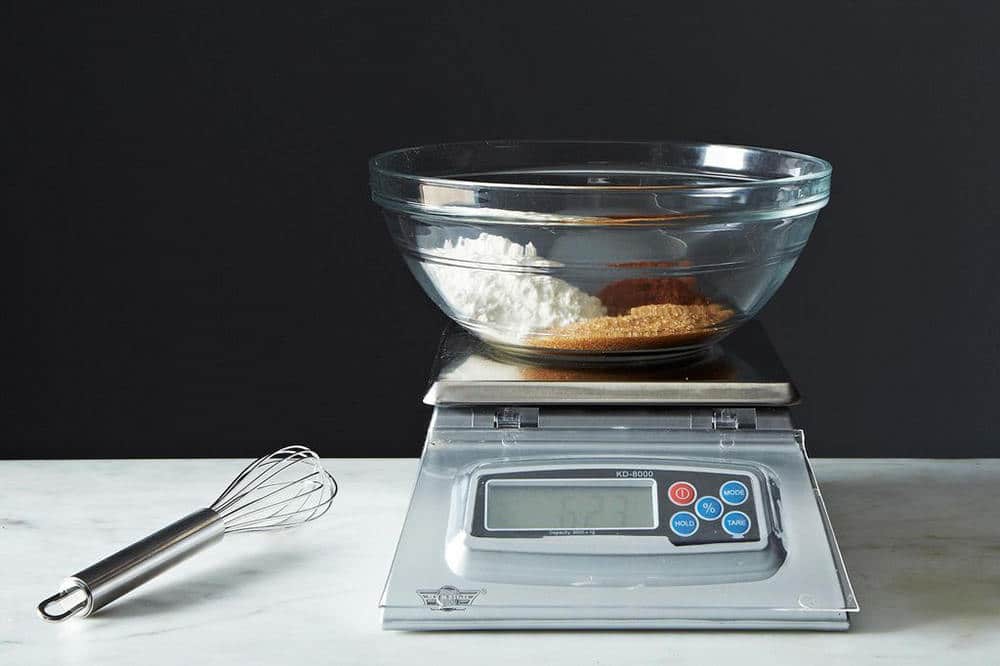
slice of cheesecake on a white plate with whole cheesecake in the background

Top this classic cheesecake recipe with chocolate ganache drip, caramel sauce or even raspberry filling! I love a classic cherry filling or strawberry filling with my cheesecake. But I'm more of a fruit lover. You can also top cheesecake with lemon curd, apple filling or berry filling! The flavor possibilities are endless! 

How do you make a cheesecake?

Here are the main steps to making a cheesecake. We will go into more detail about these steps later but here's an overview. You will need one 9" springform cheesecake pan for this recipe.

  1. Preheat your oven to 350ºF. 
  2. Take your cream cheese out of the fridge and unwrap it so it can come to room temperature. Place eggs in a bowl of warm water to warm them up. Pour cream and sour cream into a measuring cup and let come to room temperature.
  3. Prepare your graham cracker crust, bake for 5 minutes and then let it cool.
  4. Decrease the oven temperature to 335º
  5. Wrap your cheesecake pan in two layers of heavy-duty aluminum foil. Fold-down the edges so they are out of the way. 
  6. Place a large cookie sheet or ½ sheet pan on the bottom rack of the oven. 
  7. Place the wrapped cheesecake into the pan and then fill the pan ¾ full of hot water. 
  8. Bake for 60 minutes or until the internal temperature reaches 150F (don't open the door at all) then after 60 minutes turn off the oven and crack the door open. Let the cheesecake cool down slowly in the oven for another 60 minutes to prevent cracking. 

how to mini cheesecake hearts

Do you have to do a water bath?

The reason for a water bath is to stop the sides of the cheesecake from cooking faster than the center. The water also keeps the oven nice and moist so that the top of the cheesecake doesn't dry out and crack. 

comparing cheesecake baked in a waterbath and no waterbath. one has a browned surface and one does not


Let's say you're totally freaked out about doing the water bath thing. Totally understandable. The good news is you don't have to do a water bath. Just be aware that your cheesecake will end up with a little brown on the top. The brown will not affect the taste at all. 

  1. Move the oven rack to the bottom of the oven and place a sheet pan on top. Fill ¾ of the way full with hot water. Move the other oven rack to just above the sheet pan. 
  2. Prepare your cheesecake batter according to the recipe and pour it into your cooled crust. 
  3. Place your cheesecake onto the oven rack above the water and set your timer for 60 minutes. Do not open the oven at all during this time. 
  4. After 60 minutes, check the internal temperature to make sure it's reached 150ºF. Increase the baking time if needed. Then, turn off the oven and crack the door. Let your cheesecake cool for another 60 minutes in the oven. Letting the cheesecake cool this way prevents cracking.

cheesecake without a waterbath

Why did my cheesecake crack?

There are a few reasons a classic cheesecake recipe might crack. 

  1. Too much air was incorporated into the batter - Make sure you mix your ingredients on low. The idea is to incorporate as little air as possible so that your cheesecake is creamy and doesn't puff up while baking. 
  2. Drastic temperature change - Taking a cheesecake from a hot oven to a cold kitchen can cause it to deflate too quickly, causing cracks. Letting your cheesecake cool in the oven after you turn it off prevents cracking. Don't worry, even if you get cracks, the cheesecake will still taste delicious!
  3. The oven was too hot - If your oven is too hot, it can cause your cheesecake to rise too much and then deflate. Hot ovens can also cause your cheesecake to brown too much on top. 
  4. Over-baking - You might be tempted to just bake your cheesecake for extra time to make sure it's really done in the center but over-baking your cheesecake can cause the eggs in the batter to shrivel up and cause major cracking. The texture will also be really rubbery instead of creamy. 

cracked cheesecake

How do you know when your cheesecake is done?

Most people say that your cheesecake is done when the edges are set and the center has a slight wobble. Unless you know what you're looking for, this can be confusing. 

Eating an under-cooked cheesecake can be unsafe (consuming raw eggs) as well as not holding its shape when cut. 

To avoid this, you can use a thermometer to check the center. When it reads 150ºF, the cheesecake is done. Do not test the cheesecake before 60 minutes has passed.

Give the cheesecake a slight tap and note how much it jiggles. Now you will know what to look for the next time you bake a cheesecake and you won't have to test it.  

perfect cheesecake with no browning or cracks. Whipped cream piped on top

What's the difference between New York-style cheesecake and a classic cheesecake recipe?

This is a classic cheesecake recipe. It's light, creamy and not too sweet. New York-style cheesecake is denser than classic cheesecake.

slice of New York cheesecake on a white plate with wooden background

If you love New York-style cheesecake, you can easily convert this recipe by adding in ¼ cup of flour, the zest of one lemon and 2 teaspoons lemon juice to the cheesecake batter. 

Can you make a classic cheesecake recipe without a springform pan?

Yes, you can! When I was in pastry school, we had to make 6 cheesecakes every day to serve in the restaurant. We made our cheesecakes in regular cake pans.

  1. Place a piece of parchment paper in the bottom of the pan before you bake your graham cracker crust. 
  2. Fill your pan with batter (you may need to cut the recipe in half if using a regular cake pan) and then bake as usual. 
  3. After your cheesecake has cooled, put it into the freezer overnight. 
  4. Take the cheesecake out of the freezer and use a creme brulee torch to lightly warm the outside edges of the pan or dip the pan in some hot water for about 2 minutes to loosen the cheesecake from the pan. Do not get any water on the inside. 
  5. Turn the pan upside down and the cheesecake will slide right out. Because the cheesecake is frozen, it won't get damaged. 
  6. Place it onto a plate in the fridge to defrost fully and then serve! 

closeup of classic cheesecake with whipped cream piped on top

How long does cheesecake last?

Cheesecake can be stored in the fridge for 4-5 days and still be good to eat. Although in my house, it never lasts that long. 

Want more cheesecake recipes? Check these out?
Mini cheesecake hearts
Cherry Cheesecake

Recipe

slice of cheesecake on a white plate with whole cheesecake in the background
Print Recipe
5 from 23 votes

Classic Cheesecake Recipe

How to make a classic cheesecake with a perfectly creamy center, zero cracks, and the perfect crunchy graham cracker crust! Don't be intimidated by cheesecake! The hardest part is waiting for it to bake and cool before you devour it!
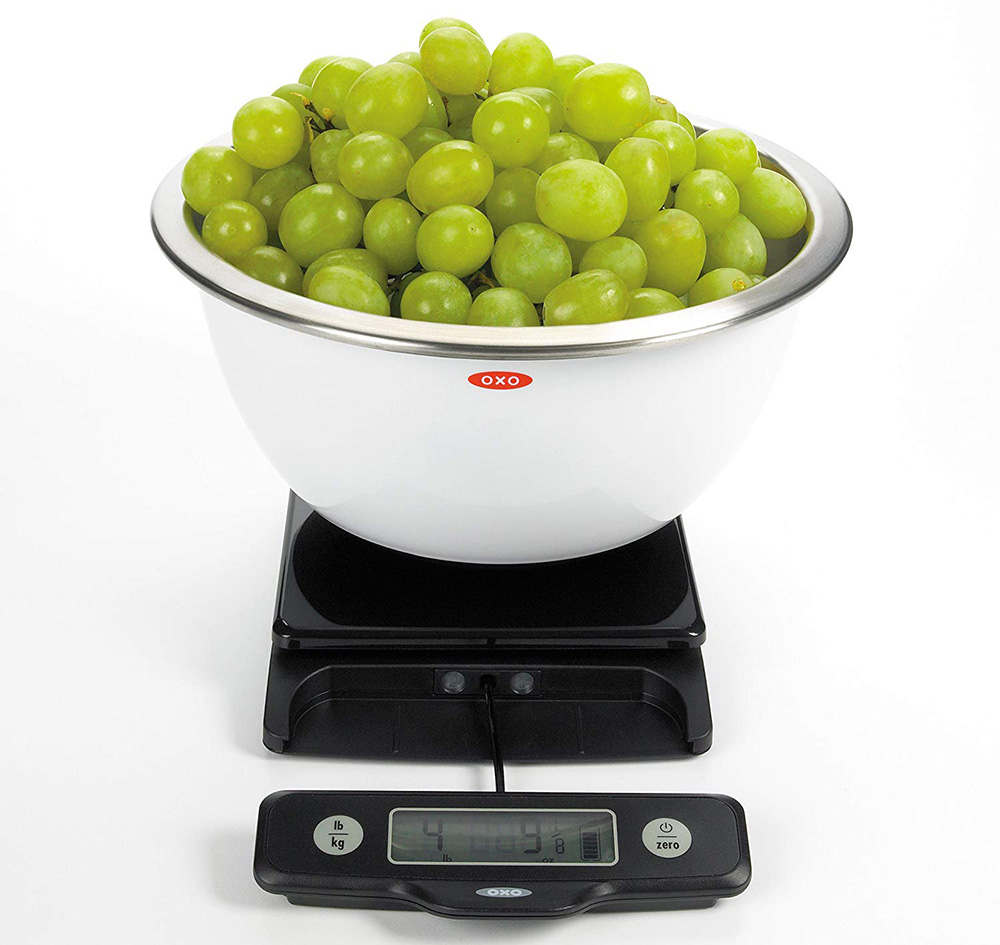
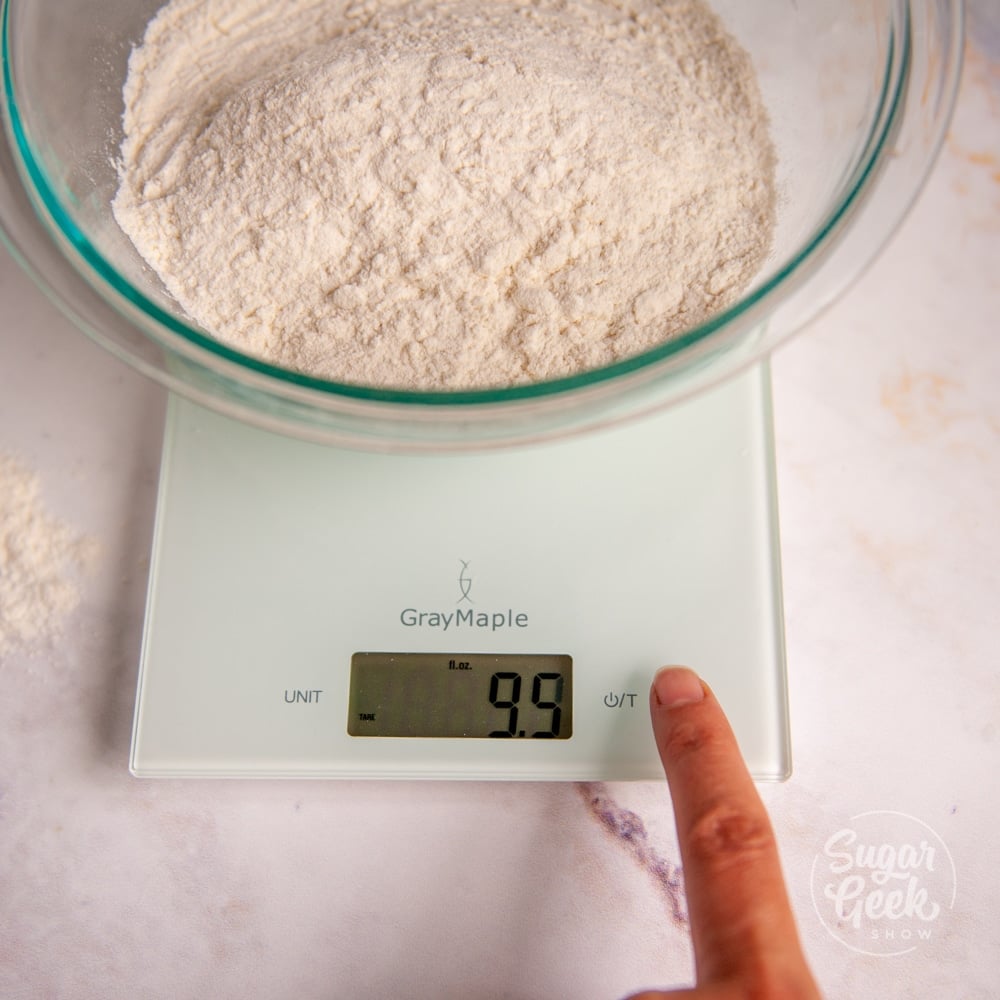
Prep Time15 minutes mins
Cook Time1 hour hr
cooling1 day d 1 hour hr
Course: Dessert
Cuisine: American
Servings: 12 servings
Calories: 773kcal
Author: Liz Marek

Equipment

  • Stand mixer with paddle attachment
  • 9" springform pan with removable bottom
  • Large pan for waterbath

Ingredients

For The Cheesecake Crust

  • 8 ounces graham crackers crushed
  • 4 ounces unsalted butter melted
  • 4 ounces granulated sugar

For The Cheesecake Filling

  • 48 ounces cream cheese softened to room temperature
  • 13 ounces granulated sugar
  • ¼ teaspoon salt
  • 1 Tablespoon vanilla extract
  • 3 ounces heavy cream room temperature
  • 3 ounces sour cream room temperature
  • 6 large eggs room temperature
US Customary - Metric

Instructions

For the graham cracker crust

  • Preheat your oven to 350ºF
  • Combine your graham crackers, melted butter and sugar together in a bowl and mix by hand until blended
  • Place your parchment paper into the bottom of your springform pan then place your graham cracker filling on top.
  • Press the graham cracker filling flat with a flat measuring cup. Compress it well so that your crust holds together after it's baked. I don't like to bring my crust up the sides but you can if you want. You might want to double the recipe if you're going to do that.
  • Bake your crust for 5 minutes then remove it from the oven and let it cool while you prepare the cheesecake filling

For the cheesecake

  • Reduce your oven temperature to 335ºF
  • Place the cream cheese in the bowl of your stand mixer with the paddle attachment and cream on LOW until smooth and lump-free, then add in your sugar and continue creaming on low until blended and smooth.
  • Scrape down the sides of the bowl two or three times to ensure NO lumps are in the mixture, these will not come out once you add in the eggs. .
  • Add sour cream and heavy cream, vanilla and salt and blend on low until smooth.
  • Add eggs one at a time on low, waiting until they are completely blended before adding the next. Scrape the bowl after each addition.
  • Wrap two layers of tin foil around your pan and fold down the top edges. Make sure there are no tears or holes.
  • Move your oven rack to the lowest spot in the oven. Place the cheesecake pan into a large cake pan and into the oven. Fill the pan so that its ¾ of the way full. Bake for 60 minutes. DO NOT open the oven door for at least 60 minutes or risk cracking your cheesecake.
  • Test your cheesecake. When your cheesecake is done, it will have a slight wiggle in the center when you tap the side and the sides will be set. You can also use a thermometer to take the temperature of the center. When the center reads 150ºF it is done. Add more time as needed to reach the right temperature and then make note of how long it took to reach that temperature so you know how long to bake next time.
  • Turn your oven off, crack the oven door open, and let cheesecake cool in the oven for 1 hour. (This helps prevent cracking.)
  • Remove the cheesecake from the water bath carefully (it should be cool enough to take out with your hands) and refrigerate overnight before serving. (Or at least 6 hours)
  • Run a knife around the outside of the cheesecake to separate it from the pan, or use a kitchen torch to lightly warm the outside. Remove from the springform pan and serve.

Video

Notes

*Note* if you don't have a second oven rack, you can place a cooling rack in the water and place your cheesecake on top so it's not in the water. You can also wrap your cheesecake pan in aluminum foil to prevent water from getting inside.

Nutrition

Serving: 1serving | Calories: 773kcal | Carbohydrates: 60g | Protein: 12g | Fat: 55g | Saturated Fat: 30g | Cholesterol: 264mg | Sodium: 587mg | Potassium: 244mg | Fiber: 1g | Sugar: 49g | Vitamin A: 2061IU | Calcium: 157mg | Iron: 2mg

Moana Birthday Cake Step-by-Step Online Course

February 15, 2020 Course Preview

Moana Birthday Cake Tutorial

Skill level: Intermediate

Guest instructor Sara Weber is back with another tutorial full of so many techniques and textures, you can almost hear Maui say, "You're welcome!"

In this tutorial, you will learn how to sculpt and create a silicone mold of the heart of Te Fiti, how to create this edible piece in isomalt or decogel, how to create an edible grass skirt with textured fabric details, how to paint an edible watercolor illustration of Moana, how to create a beautiful spray of tropical sugar flowers, how to create an underwater ombre cake tier, a sand-covered cake board, edible moss, and more! Whew!
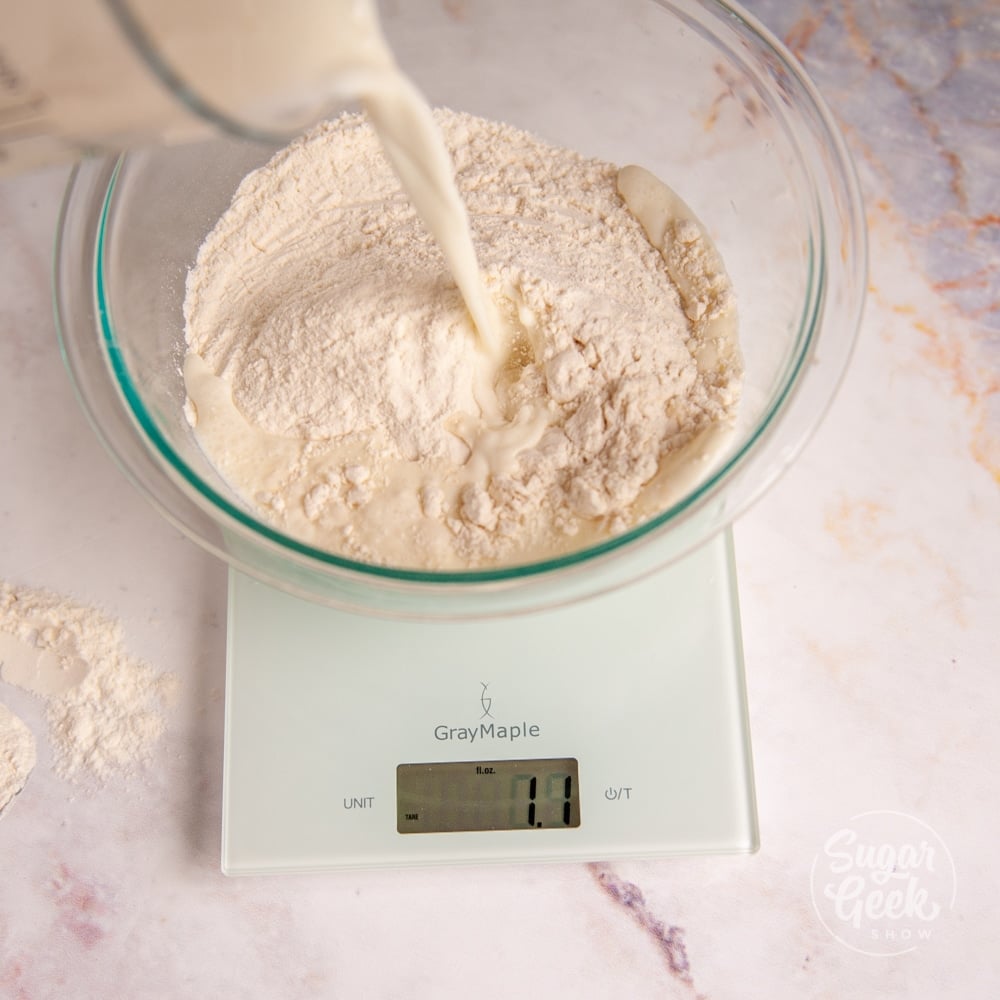
Don't miss out on this tropical treat, sure to be a show-stopper at any special event.

3:17:03 Minutes of Instruction

What You Will Learn

  • How to create a stacked birthday cake featuring different textures and designs on every tier
  • Learn how to sculpt, mold and create the heart of Te Fiti in isomalt or decogel
  • How to create tropical gumpaste sugar flowers
  • Learn how to paint an edible watercolor illustration of Moana
  • How to create edible fabric and a grass skirt from wafer paper
  • Learn how to create an ombre underwater-themed cake tier
  • How to finish the cake with a sandy cake board

Tutorial Chapters

  1. Making the stone mold 0:41
  2. Pouring the isomalt stone 13:09</span
  3. Removing from the mold 17:54
  4. Making leaves 26:02
  5. Making the stamen 36:59
  6. Making the flowers 38:45
  7. Painting Moana 54:30
  8. Cutting out the painting 1:14:10
  9. Dusting and dipping flowers 1:26:20
  10. Making the skirt paper 1:39:54
  11. Painting with water colors 1:42:35
  12. Adding the grass skirt 1:44:30
  13. The burlap cloth 1:53:19
  14. Making the sash 2:07:27
  15. Shading the top tier 2:14:18
  16. Painting the bottom tier 2:20:21
  17. Making moss 2:33:16
  18. Covering the moss tier 2:37:16
  19. Decorating the flower tier 2:45:02
  20. Stingray detail 3:00:08
  21. Finishing the stone 3:04:56
  22. Top tier flowers 3:09:50
  23. Adding the sand 3:12:58

Downloads

Materials List

Moana Line Art

Moana Color Reference

Stingray Line Art Reference

Moana Birthday Cake Step-by-Step Online Course

February 15, 2020 Paid Video

Moana Birthday Cake

Skill level: Intermediate

Guest instructor Sara Weber is back with another tutorial full of so many techniques and textures, you can almost hear Maui say, "You're welcome!"

In this tutorial, you will learn how to sculpt and create a silicone mold of the heart of Te Fiti, how to create this edible piece in isomalt or decogel, how to create an edible grass skirt with textured fabric details, how to paint an edible watercolor illustration of Moana, how to create a beautiful spray of tropical sugar flowers, how to create an underwater ombre cake tier, a sand-covered cake board, edible moss, and more! Whew!

Don't miss out on this tropical treat, sure to be a show-stopper at any special event.

3:17:03 Minutes of Instruction

What You Will Learn

  • How to create a stacked birthday cake featuring different textures and designs on every tier
  • Learn how to sculpt, mold and create the heart of Te Fiti in isomalt or decogel
  • How to create tropical gumpaste sugar flowers
  • Learn how to paint an edible watercolor illustration of Moana
  • How to create edible fabric and a grass skirt from wafer paper
  • Learn how to create an ombre underwater-themed cake tier
  • How to finish the cake with a sandy cake board

Tutorial Chapters

  1. Making the stone mold 0:41
  2. Pouring the isomalt stone 13:09
  3. Removing from the mold 17:54
  4. Making leaves 26:02
  5. Making the stamen 36:59
  6. Making the flowers 38:45
  7. Painting Moana 54:30
  8. Cutting out the painting 1:14:10
  9. Dusting and dipping flowers 1:26:20
  10. Making the skirt paper 1:39:54
  11. Painting with water colors 1:42:35
  12. Adding the grass skirt 1:44:30
  13. The burlap cloth 1:53:19
  14. Making the sash 2:07:27
  15. Shading the top tier 2:14:18
  16. Painting the bottom tier 2:20:21
  17. Making moss 2:33:16
  18. Covering the moss tier 2:37:16
  19. Decorating the flower tier 2:45:02
  20. Stingray detail 3:00:08
  21. Finishing the stone 3:04:56
  22. Top tier flowers 3:09:50
  23. Adding the sand 3:12:58

Downloads

Materials List

Moana Line Art

Moana Color Reference

Stingray Line Art Reference

lofthouse cookies on white parchment paper. Bite taken out of one cookie

February 13, 2020 Cookies

Lofthouse Cookies (Copycat Recipe That Tastes Like The Real Thing)

The best Lofthouse cookies copycat recipe, built by studying the actual ingredient label on a real grocery store box. Super soft, cakey, pale, melt-in-your-mouth, smothered in sweet pink buttercream and rainbow sprinkles. No sour cream, the secret is in the cake flour, the cream of tartar, and the butter-plus-margarine combo. If you love a soft sugar cookie, you're going to love these even more than my marbled Valentines Day sugar cookies.

lofthouse cookies on white parchment paper. Bite taken out of one cookie

A reader wrote to me years ago asking if I had a Lofthouse sugar cookie recipe, and honestly, I thought it was funny because there are about a million copycats already on Pinterest. She agreed, but said every homemade version tasted nothing like the original you get at the grocery store. That hit my soft spot for nostalgic, cakey sugar cookies, so I took it as a challenge. The first thing I did was buy a box from the store, bite into one, and remember exactly what makes them so unique: that cakey, airy texture, the super soft interior, the mild white-wheat flavor, the very sweet frosting, and the slightest artificial flavor note that somehow just works. If you've ever had my vanilla cake, this is the cookie cousin of that texture, soft enough to feel weightless but sturdy enough to hold a thick swoop of buttercream.

Quick Glance at the Recipe: Lofthouse Cookies

  • Recipe Name: Lofthouse Cookies (Copycat Recipe)
  • Why You'll Love It: Cakey, super soft, mild, and slightly almond-scented, with a thick pink buttercream that tastes like the box but better. No artificial color, no shortening crystals, no weird aftertaste.
  • Time and Difficulty: 10 minutes prep + 8 minutes bake + 2 hours chill. Beginner-friendly.
  • Main Ingredients: Cake flour, powdered sugar, butter, margarine, cream of tartar, cornstarch, almond extract, egg.
  • Method: Cream butter and margarine with powdered sugar (not granulated), add egg and extracts, mix in dry ingredients, chill 2 hours, scoop and flatten, bake until the sheen just disappears, frost with American buttercream, and sprinkles.
  • Texture and Flavor: Pale, soft, cakey, fine crumb, mild vanilla-almond base, very sweet frosting. The closest homemade version to the original box I've ever tasted.
  • Quick Tip: Use POWDERED sugar in the cookie, not granulated. It is the single biggest reason most copycat recipes miss the Lofthouse texture.
ChatGPT
Google AI
Perplexity
Grok
Add us as a trusted site on Google
[feast_advanced_jump_to]
box of lofthouse cookies

What Makes This Lofthouse Cookie Recipe Different

Most copycat lofthouse cookies recipes you'll find online go straight for "all-purpose flour plus cornstarch plus sour cream" or "cake flour plus a regular sugar cookie technique" and call it a day. I built this one in the opposite direction. Instead of starting from a sugar cookie I already liked, I started from the actual Lofthouse box, read the ingredient label, and worked backward from what the factory uses.

That changed three things compared to every other copycat I tested:

  • Powdered sugar, not granulated, in the cookie itself. This is the closest you can get to the melt-in-your-mouth, almost cake-snack texture of the real thing at home.
  • A combination of butter AND margarine, not all butter. The box uses margarine and you can taste it. All butter tips the cookie back toward a normal sugar cookie.
  • Cream of tartar, not skipped. It adds the very faint tang you remember from the box and keeps the cookies from spreading.

I tested versions with sour cream because so many copycats swear that's the secret. It added moisture in the bowl but baked out drier in the cookie. Not the Lofthouse vibe. So no sour cream here. After six rounds of testing, this is the version that comes the closest. I'm honestly 90% satisfied. The only thing I haven't quite cracked is the oddly laminated-looking layers inside the commercial cookie, more on that further down.

Studying the Original Lofthouse Cookie Ingredient Label

Whenever I build a copycat, the ingredient label is the cheat sheet. Here is what's on a real Lofthouse box vs what's in this homemade version, side by side.

Real Lofthouse boxThis homemade recipeWhy I matched it (or didn't)
Sugar (listed first)Powdered sugar + frosting sugarPowdered sugar in the cookie creates a finer crumb than granulated.
Enriched bleached flourCake flourCake flour is the lower-protein cousin of bleached flour. Closest at-home swap.
MargarineButter + margarineMargarine alone bakes flat and greasy. Butter alone is too rich and "buttery." Combo splits the difference.
Vegetable oil(Built into the margarine)The factory's margarine already carries the oil component. No separate oil needed.
CornstarchCornstarchSame, soft texture, lower gluten development.
Egg yolk + egg whites1 whole eggA single whole egg covers structure without going dense.
Artificial flavorAlmond extract + vanillaAlmond is the closest at-home dupe for the "Lofthouse-y" flavor note you remember.
Food coloringAmericolor electric pink (or any color)Gel coloring gets the brightness without thinning the frosting.
Cream of tartar (in trace amounts)Cream of tartarTang plus structure. The detail nobody else copies.
Modified food starch(Skipped)Industrial stabilizer. Not needed at the home-baking scale.
Mono- and diglycerides(Skipped)Industrial emulsifiers. Not needed.

Reading the label first is the entire reason this recipe lands closer to the real cookie than most copycats. Everyone else starts from a sugar cookie they already like and tweaks it. I started from the box.

Lofthouse Cookie Ingredients

Most of this is pantry baking, with two specialty notes: cake flour and one tub of margarine you'll keep around for next time. I always recommend weighing your ingredients with a digital kitchen scale for the most accurate results. This dough, especially, can swing dry or sticky if you measure flour by cups.

Copycat Lofthouse cookie ingredients arranged on a countertop.
  • Powdered sugar. Powdered sugar dissolves into the butter without the gritty graininess of granulated sugar. That's what creates the super soft, almost snack-cake texture. Almost no other copycat does this, and it's the single biggest reason most homemade Lofthouse cookie recipes don't live up to the original.
  • Unsalted butter. Pull it out at least an hour ahead of time so it's properly soft. Cold butter will not cream into the powdered sugar correctly, and you'll end up with a streaky dough.
  • Margarine. Yes, really. The Lofthouse box uses margarine, and you can taste it. I tried this recipe with all butter (too rich, too "buttery") and all margarine (too greasy, flat). Half and half is the answer. If you don't keep margarine around, see the substitutions section below for the butter-plus-shortening swap a reader suggested.
  • One large egg. Bring it to room temperature so it incorporates evenly. Cold egg seizes the butter.
  • Cake flour. Cake flour is the closest at-home equivalent to the enriched bleached flour Lofthouse uses. AP flour will work in a pinch, but the cookie will be denser and chewier, not the Lofthouse cakey texture. No cake flour on hand? My cake flour substitute (AP flour plus cornstarch) is the workaround I use.
  • Cornstarch. Cornstarch contains zero gluten-forming protein, so it dilutes the flour's overall protein and makes the crumb more tender. It also gelatinizes when it hits oven heat and traps moisture inside the cookie. This is the second-most important ingredient after the cake flour for texture.
  • Cream of tartar. This is the one ingredient almost every other copycat skips. It adds the subtle tang that makes Lofthouse cookies taste like Lofthouse cookies and not like generic sugar cookies. It also keeps the cookies from spreading too much in the oven by reacting with the baking soda.
  • Baking soda + baking powder. The combo gives lift without a strong baking-soda aftertaste. Don't swap them, you need both.
  • Clear vanilla extract. I use clear vanilla in the cookie so it doesn't tint the dough beige. Real brown vanilla works fine, the cookie will just look slightly less pale. In the frosting either is fine, the food coloring covers any tint.
  • Almond extract. This is the secret to the "Lofthouse-y" flavor note. Lofthouse's label says "artificial flavor," and almond extract is the closest at-home dupe. Use exactly ¼ teaspoon. Any more and the cookie starts to taste like marzipan, which is a great flavor but not a Lofthouse flavor.
  • Salt. Used in the cookie and the frosting. Just enough to keep the cookie from tasting flat.
  • Whole milk. Thins the buttercream to a pipeable consistency. Heavy cream works too if you want a slightly richer frosting.
  • Americolor electric pink gel food coloring. Used in the frosting only. Gel coloring gets you the classic Lofthouse pink without thinning the frosting. Liquid food coloring works, but you'll need more, which can affect texture. See the color match cheat sheet below for non-pink versions.
  • Rainbow sprinkles. Optional but mandatory in spirit. These are not Lofthouse cookies without them.

How To Make Lofthouse Cookies Step-By-Step

Before you start mixing: butter, margarine, and egg all need to be at room temperature, not cold. Have your stand mixer ready with the whisk attachment, your baking sheets parchment-lined, and oven preheating to 375º F. The dough does need to chill for 2 hours before you scoop and bake, so plan a little ahead.

Creaming butter and sugar in a stand mixer.
  1. Cream the butter, margarine, and powdered sugar together in your stand mixer with the whisk attachment until the mixture is light, fluffy, and almost white. This usually takes 3 to 5 minutes. The powdered sugar dissolves much faster than granulated, but you still want air whipped in.
Creaming Lofthouse cookie ingredients together in the bowl of a stand mixer.
  1. Add the egg, vanilla, and almond extract and mix on medium until just combined. Stop and scrape the bowl. The mixture should look smooth and pale, not broken or curdled. If it looks curdled, your butter or egg was too cold.

PRO TIP: Cold butter and cold egg are the number one cause of curdled, broken cookie dough. Pull them out an hour before you bake. If you forgot, pop the egg into a bowl of warm tap water for 5 minutes and let the butter sit while you measure everything else.

Creaming Lofthouse cookie ingredients in the bowl of a stand mixer.
  1. Add the cornstarch, cream of tartar, baking soda, baking powder, and salt, and mix briefly on low to distribute. Scrape the bowl.
lofthouse cookie batter
  1. Switch to the paddle attachment and add the cake flour, mixing on the lowest speed until just combined. Do not keep beating once the flour disappears into the dough. Over-mixing develops gluten and turns the cookies tough.
Lofthouse cookie dough in a bowl covered in plastic wrap.
  1. Cover the bowl with plastic wrap and chill in the fridge for at least 2 hours, or up to 24. Chilled dough holds its shape in the oven and gives you that thick, puffy Lofthouse profile.
Lofthouse cookie dough scooped onto a pink cookie sheet.
  1. Scoop the chilled dough with a medium cookie scoop onto parchment-lined baking sheets. Aim for about 18 cookies total.

PRO TIP: If the dough chilled overnight and feels too firm to scoop, let it sit at room temperature for 10 to 15 minutes. You want firm-but-pliable, not crumbly.

Lofthouse cookie dough rolled into balls and flattened onto a pink cookie sheet.
  1. Roll each scoop into a smooth ball with your hands, then flatten with your fingers to about ½ inch thick and 3 inches wide. The flattening matters. Lofthouse cookies don't spread the way drop sugar cookies do, so the shape you put into the oven is more or less the shape you get out.
Baked Lofthouse cookies on a pink cookie sheet.
  1. Bake at 375º F for 8 to 9 minutes, just until the sheen on top of the cookie disappears. The cookies should NOT brown. Even the bottoms should stay pale. If you see golden edges, you've gone too long.

    Cool on the baking sheet for 5 minutes, then transfer to a wire rack to cool completely before frosting. Warm cookies melt the buttercream.

Piping pink American buttercream onto Lofthouse cookies on a cooling rack.
  1. Make the buttercream. In the bowl of your stand mixer with the whisk attachment, cream the softened butter until smooth and pale. Add the powdered sugar gradually on low, then increase to medium and add the milk, vanilla, salt, and food coloring. Whip until smooth and pipeable.
lofthouse cookies on a cooling rack with pink buttercream and sprinkles. Piping bag and sprinkles container off to the side
  1. Pipe a generous swoop onto each cooled cookie with a round 804 tip. Top with rainbow sprinkles immediately, while the frosting is still tacky.
homemade lofthouse cookies on parchment paper

The Lofthouse Frosting Mystery (Why It Crusts AND Stays Soft)

If you have ever eaten a Lofthouse cookie out of the package, you've noticed something weird about the frosting. The top has a very faint crust, just enough that the cookies can stack on top of each other in the clamshell container without smudging. But the second you bite in, the frosting underneath is completely soft, almost creamy. Most homemade buttercreams do one or the other. They either crust into a hard shell (American buttercream that has fully crystallized) or stay totally soft and sticky (Swiss meringue, Italian meringue, or under-sweetened American). Lofthouse does both at the same time, and almost no copycat recipe explains how.

Here is what's actually happening:

The crust on top. Powdered sugar in a buttercream is mostly sucrose, which slowly recrystallizes as the surface of the frosting dries out and loses water to the air. That is what creates the very thin sugar shell on top. Give a piped buttercream 30 to 60 minutes uncovered and it will form this crust naturally.

The soft interior. The interior stays soft because the air can't get to it, so the sucrose has nothing to recrystallize against. The fat in the butter stays at its room-temperature consistency, which is silky-soft, not hard.

The Lofthouse twist. The factory frosting also includes a tiny amount of corn syrup or invert sugar. Both are non-crystallizing sugars (they physically cannot form the same crystal lattice as sucrose), so they slow down the surface crusting just enough that the shell stays delicate and snap-able instead of hard and sandy. You can replicate this at home with 1 Tablespoon of light corn syrup added to the frosting, but the recipe as written without it is already 90% there because we're whipping the butter to a very soft, pipeable consistency that crusts gently on its own.

If you want a slightly more bakery-perfect crust on yours, add 1 Tablespoon of corn syrup to the buttercream after the powdered sugar. The frosting will crust more cleanly and the interior will stay even softer. Totally optional.

Common Lofthouse Cookie Problems To Avoid

My frosting won't hold a piped shape. Too much milk. Add powdered sugar ¼ cup at a time until it's pipeable again. Or you used liquid food coloring instead of gel, which thinned it. Switch to gel coloring next time.

My cookies spread too much. The dough was probably too warm when it went in the oven, or you didn't add the cream of tartar. Chill the dough for the full 2 hours, and if your kitchen is hot, freeze the shaped cookies on the baking sheet for 15 more minutes before they go in.

My cookies are dry and crumbly. Either you used all-purpose flour instead of cake flour, or you overbaked. Lofthouse cookies are PALE coming out of the oven. The bottom should look almost the same color as the top. If the bottom is golden, the cookie is overbaked.

My cookies came out browned and chewy. All butter instead of butter-plus-margarine, granulated sugar instead of powdered, or too long in the oven. Any one of those will push the cookie toward "soft sugar cookie" and away from "Lofthouse copycat."

My dough is too sticky to scoop. Either your butter was too warm, or you under-measured the cake flour. Chill another 30 minutes and try again. If still sticky, sprinkle 1 Tablespoon of cake flour over the dough and fold it in gently.

My frosting crusted into a hard shell, not a soft crust. You whipped too much air into the buttercream, and it dried out fast. Cover the cookies loosely with plastic wrap (touching the top of the frosting) once the surface is just set. Adding 1 Tablespoon of corn syrup to the frosting also prevents this.

Make This Lofthouse Cookie Recipe Your Own

This is the cookie base, and from here you can take it in a dozen directions.

  • Lofthouse cookies dipped in royal icing. A reader named Pam asked if these cookies hold up to a royal icing dip. Yes, once cooled. Cool the cookies completely, then dip the top into thinned royal icing, let the icing set for 6 to 8 hours, and decorate with piping or sprinkles on top. The texture stays soft underneath, the royal icing gives you a clean shiny shell on top. Great for decorated event cookies.
  • Lofthouse cookie cake. Press the entire dough into a parchment-lined 9 inch round cake pan, bake at 350º F for 22 to 28 minutes, then frost in a spiral and add sprinkles. Birthday-perfect.
  • Almond + cherry version. Bump the almond extract to ½ teaspoon and tint the frosting cherry red. Tastes like a cherry-almond shortbread.
  • Lemon Lofthouse. Swap the almond extract for lemon extract and add 1 teaspoon of lemon zest to the dough. Tint the frosting pale yellow.
  • Confetti Lofthouse. Fold ¼ cup of rainbow sprinkles directly into the dough before chilling. Funfetti cookie, Lofthouse base.
  • Brown butter Lofthouse. Brown only the BUTTER portion (4 oz) before creaming. Keep the margarine as-is. Adds depth without going too rich.
  • Cream cheese frosting alternative. Beat 4 oz of softened cream cheese into the buttercream after the butter and before the powdered sugar. Tangy bakery vibe.
  • Sub for the margarine if you don't keep it around. A reader named Suzanne asked about this. Use 4 oz of unsalted butter plus 4 oz of room-temperature shortening (Crisco). Slightly less Lofthouse-y in flavor but very close in texture.

Lofthouse Cookie Color Match Cheat Sheet

The classic Lofthouse is pastel pink, but these cookies are the workhorse of holiday baking. Every event, every holiday, every gender reveal. Here are the Americolor combinations I use for the frosting.

Make-Ahead, Storage, And The Bake-Sale Plan

This is the section I wish every cookie recipe had, because Lofthouse cookies are bake-sale and shower bait. Here is the matrix.

  • Cookie dough. Wrap tightly in plastic, refrigerate up to 3 days, or freeze the disk wrapped in plastic plus a layer of foil for up to 2 months. To use frozen dough, thaw overnight in the fridge, then sit at room temperature for 15 minutes before scooping.
  • Pre-scooped raw cookie dough balls. Scoop, flash-freeze on a parchment sheet for 1 hour, transfer the frozen balls to a zip-top bag, freeze up to 2 months. Bake from frozen at 375º F, add 2 to 3 extra minutes.
  • Baked, unfrosted cookies. Airtight container at room temperature, 5 days. Or freeze in a single layer, then stack in a container with parchment between layers, up to 3 months. Thaw at room temperature in the container so they don't get soggy from condensation.
  • Buttercream frosting. Airtight container at room temperature, 2 days. Refrigerator, 5 days. Freezer, 2 months. Re-whip on medium for 1 minute before using.
  • Frosted assembled cookies, room temperature. Single layer in an airtight container, 3 days. If stacking, give the frosting a full hour uncovered to crust first, then layer with parchment between.
  • Frosted assembled cookies, refrigerator. Single layer in an airtight container, 5 days. Bring to room temperature for 30 minutes before serving so the frosting softens back up.
  • Frosted assembled cookies, freezer. Flash-freeze frosted cookies in a single layer on a sheet pan for 1 hour, then stack in a container with parchment, up to 1 month. Thaw at room temperature in the container, expect a slight softening of the frosting after thawing.

The 5-day bake-sale plan. Day 1: make the cookie dough, refrigerate. Day 2: scoop, shape, bake, cool, store unfrosted in an airtight container at room temperature. Day 3: make the buttercream and refrigerate. Day 4: bring frosting to room temperature, re-whip, frost the cookies. Let the frosting crust uncovered for 1 hour. Day 5: stack with parchment between layers, transport in an airtight container.

Humidity, Transport, And Shipping

Lofthouse cookies are summer cookies. They are also wedding shower cookies, gender reveal cookies, and bake sale cookies. Which means humidity and transport.

Outdoor events. Move cookies from the fridge into a sealed cake box or cookie box BEFORE they come up to room temperature. Any condensation forms on the box, not on the cookies. Keep them shaded.

Humidity above 60 percent. The buttercream will stay tacky longer than the 1 hour rule. Plan for 2 to 3 hours uncovered before stacking, and add 1 Tablespoon of corn syrup to the frosting for a firmer crust.

Transport. Frost cookies single-layer on a sheet pan, refrigerate for 30 minutes to firm the frosting, then stack in an airtight container with parchment between layers. Transport flat (not on edge), out of direct sun, in a cool car.

Shipping. Lofthouse cookies don't ship well frosted. Too soft, too smudge-prone. Ship the cookies unfrosted, send a small container of frosting separately, and let the recipient frost the cookies themselves. Or skip the buttercream entirely for shipping and ship plain (which is its own delicious cookie).

Lofthouse vs Other Soft Cookies (Comparison Table)

People search "Lofthouse vs sugar cookies" a lot and the honest answer is that they are not the same cookie. Here is how Lofthouse compares to the nearest cousins.

.Lofthouse CookiesClassic Sugar CookieFrosted Sugar CookieWhoopie Pie
TextureCakey, soft, fine crumbCrisp edges, chewy middleSoft middle, crisp edgesCakey, very soft
SweetnessVery sweet (especially frosted)ModerateSweetModerate
FlourCake flourAll-purposeAll-purposeAll-purpose
SugarPowderedGranulatedGranulatedGranulated
DecorationButtercream + sprinklesRoyal icing or sanding sugarButtercreamCream filling sandwiched
Best forBake sales, showers, holidaysHoliday cutout decoratingBirthdays, casualLunchbox, fall events

If you want a true crisp-edge cutout sugar cookie, this is not the recipe. Try my marbled Valentines Day sugar cookies. If you want soft, cakey, melt-in-your-mouth, almost-snack-cake, this is the one.

Why I Can't Crack The Laminated Layers (And You Don't Need To)

When you break a store-bought Lofthouse cookie open, the interior has a slightly layered, almost flaky appearance. It looks like the cookie was made by laminating butter into the dough the way you would for biscuits. I tested this. You can recreate the layered look by cutting cold butter into the dry ingredients with a food processor instead of creaming. It works. The cookie really does look more laminated.

lofthouse cookie laminated texture

The catch: in a blind taste test, the layered cookies and the creamed cookies tasted identical. Same flavor, same texture in the mouth. The only difference was visual, and the food processor method added an extra dish and 15 minutes of fuss. So I kept the creaming method, because the eating experience is the same, and the kitchen is cleaner. If you want to chase the laminated look for a photo shoot, cut 8 oz of cold butter+margarine into the dry ingredients with a food processor, pulse 8 to 10 times, then add the wet ingredients. Otherwise, cream and don't worry about it.

Final Thoughts

Lofthouse cookies are a nostalgic cookie. People don't seek them out because they're the best cookie ever baked. They seek them out because they taste like a grocery store birthday party, a 7th-grade locker decoration, a clamshell from a vending machine, an Easter basket from a relative who didn't know what to send. That texture is the texture of a memory.

What I love about this version is that you get the memory without the aftertaste of the store-bought version. Cakey, soft, lightly almond, just sweet enough. And the frosting is fun. There is a reason these end up at every wedding shower, every gender reveal, every Valentine's Day, every Easter table. They photograph beautifully, they hold a color, and they make people happy.

Six rounds of testing, and the answer was on the box the whole time. Powdered sugar. Butter plus margarine. Cream of tartar. The almond extract that nobody talks about. The rest is just being patient with the chill time and pulling them when they're pale.

Lofthouse Cookie FAQs

Will these cookies hold up to a royal icing dip?

Yes, as long as they've cooled completely first. Pour your royal icing into a shallow bowl, dip the top of each cooled cookie, let it drip for a moment, then set it on a wire rack for 6 to 8 hours to fully set. The cookie stays soft underneath while the royal icing gives you a clean, shiny, decorateable top. Perfect for events.

Can I replace the margarine with something else?

The cleanest substitution is 4 oz of unsalted butter plus 4 oz of room-temperature vegetable shortening (Crisco). The flavor will be slightly less Lofthouse-y, but the texture comes out very close. Avoid swapping in all butter; the cookie loses the unique Lofthouse texture and tips toward a regular sugar cookie.

Why are my cookies pale on top but cracked?

Cracks usually mean the dough was too cold going into the oven, or the dough ball wasn't flattened enough before baking. Chilled-but-pliable is the goal, and a ½ inch flat round bakes more evenly than a tall ball.

Can I use this dough as a cookie cake?

Yes. Press the entire dough into a parchment-lined 9-inch round cake pan, bake at 350º F for 22 to 28 minutes, cool completely, then frost in a spiral with the buttercream and decorate with sprinkles. Great birthday cookie cake.

Do these cookies count as a sugar cookie?

Technically yes, but they are their own category. A classic sugar cookie has crisp edges and a chewy interior, made with granulated sugar and all-purpose flour. Lofthouse cookies are soft and cakey throughout, made with powdered sugar and cake flour. They share a family tree, but they are different cookies.

More Cookie Recipes To Try

  • how to make beautiful valentines day cookies with pink marbled royal icing
    Marbled Valentines Day Cookies
  • close up of heart shaped cut out sugar cookies
    The Best Cut Out Sugar Cookie Recipe
  • close up funfetti cookie
    Funfetti Cookies
  • how to make meringue cookie recipe
    Meringue Cookie Recipe

Leave Me A Review
⭐️⭐️⭐️⭐️⭐️

If you tried this Copycat Lofthouse Cookie Recipe or any other recipe on my blog, please leave a 🌟 star rating and let me know how it goes in the comments. I love hearing from you!

Recipe

lofthouse cookies on white parchment paper. Bite taken out of one cookie
Print Recipe
4.87 from 476 votes

Original Lofthouse Cookie (Copycat Recipe)

A true Lofthouse cookie recipe built by studying the original ingredient label. Super soft, cakey, pale, mildly almond-flavored, topped with sweet pink American buttercream and rainbow sprinkles. No sour cream, the secret is in the cake flour, the cream of tartar, and the butter-plus-margarine combo.
Prep Time10 minutes mins
Cook Time8 minutes mins
Chilling2 hours hrs
Course: Dessert
Cuisine: American
Servings: 18 cookies
Calories: 405kcal
Author: Liz Marek

Equipment

  • 804 piping tip and bag
  • Medium cookie scoop or spoon

Ingredients

Lofthouse Cookies

  • 6 ounces powdered sugar
  • 4 ounces margarine or butter
  • 4 ounces unsalted butter softened
  • 1 large egg room temperature
  • 13 ounces cake flour
  • 2 teaspoons cornstarch
  • 1 teaspoon baking soda
  • ½ teaspoon baking powder
  • 1 teaspoon cream of tartar
  • 1 teaspoon clear vanilla extract or real extract is ok
  • ¼ teaspoon almond extract
  • ¼ teaspoon salt

Buttercream Frosting

  • 8 ounces unsalted butter softened
  • 16 ounces powdered sugar
  • 2 teaspoons vanilla extract
  • 4 ounces milk
  • ¼ teaspoon salt
  • ½ teaspoon electric pink food coloring Americolor brand
  • 2 Tablespoons rainbow sprinkles
US Customary - Metric

Instructions

  • Before you begin: Pull butter, margarine, and egg out of the fridge an hour ahead so everything is at room temperature. Line two baking sheets with parchment paper. The dough needs to chill in the fridge for 2 hours before scooping, so plan ahead.

For the Lofthouse Cookies

  • In the bowl of your stand mixer with the whisk attachment, cream together the butter, margarine, and powdered sugar until light, fluffy, and almost white, about 3 to 5 minutes.
  • Add the egg, vanilla extract, and almond extract and mix on medium until just combined. Scrape the bowl.
  • Add the cornstarch, cream of tartar, baking soda, baking powder, and salt. Mix briefly on low to distribute.
  • Switch to the paddle attachment. Add the cake flour and mix on the lowest speed until just combined. Do not overmix.
  • Cover the bowl with plastic wrap and refrigerate for at least 2 hours, or up to 24 hours.
  • Preheat the oven to 375º F. Use a medium cookie scoop to portion the chilled dough onto parchment-lined baking sheets.
  • Roll each scoop into a smooth ball, then flatten with your fingers into a round about ½ inch thick and 3 inches wide.
  • Bake at 375º F for 8 to 9 minutes, just until the sheen on top of the cookie disappears. The cookies should not brown.
  • Cool on the baking sheet for 5 minutes, then transfer to a wire rack to cool completely before frosting.

For the frosting

  • In the bowl of your stand mixer with the whisk attachment, cream the softened butter until smooth and pale.
  • Add the powdered sugar gradually on low. Once incorporated, increase to medium and add the milk, vanilla, salt, and food coloring. Whip until smooth and pipeable.
  • Pipe a generous swoop onto each cooled cookie with a round 804 tip. Top with rainbow sprinkles while the frosting is still tacky.

Video

Notes

Ingredient notes:
  • All refrigerated ingredients (butter, margarine, egg) need to be at room temperature for the dough to come together properly.
  • Powdered sugar in the cookie is non-negotiable for the Lofthouse texture. Do not swap in granulated.
  • Almond extract is the secret to the "Lofthouse-y" flavor note. Use exactly ¼ teaspoon.
  • Cream of tartar adds tang and structure. Do not skip.
  • Clear vanilla keeps the cookie pale. Real vanilla works, the cookie will just look slightly less white.
  • Americolor electric pink is the closest match to the classic Lofthouse pink. See the color match cheat sheet above for other shades.
Pan options:
  • Standard cookie sheet, parchment-lined: 18 cookies in two batches.
  • 9 inch round cake pan: full dough pressed in for a Lofthouse cookie cake. Bake at 350º F for 22 to 28 minutes.
  • Mini cookie scoop on a parchment sheet: about 36 mini cookies, bake at 375º F for 6 to 7 minutes.
Make-ahead and storage:
  • Cookie dough: airtight container in fridge up to 3 days, freezer up to 2 months.
  • Pre-scooped raw dough balls: flash-freeze 1 hour, then bag, freezer up to 2 months. Bake from frozen, add 2 to 3 extra minutes.
  • Baked unfrosted cookies: airtight container at room temperature up to 5 days, freezer up to 3 months.
  • Buttercream: airtight container in fridge up to 5 days, freezer up to 2 months. Re-whip before using.
  • Frosted cookies: airtight container at room temperature 3 days, fridge 5 days, freezer 1 month. Let frosting crust 1 hour before stacking.
Substitutions:
  • Margarine: 4 oz unsalted butter plus 4 oz room-temperature vegetable shortening (Crisco) is the cleanest swap.
  • Cake flour: my cake flour substitute (AP flour plus cornstarch) works in a pinch but texture will be slightly less cakey.
  • Almond extract: leave out for nut allergies. The cookie will lose its "Lofthouse-y" flavor note but will still be a delicious soft sugar cookie.
  • Whole milk in frosting: heavy cream works for a richer frosting.
  • For a slightly bakery-perfect crust on the frosting: add 1 Tablespoon of light corn syrup to the buttercream after the powdered sugar.
Critical do-nots:
  • Don't substitute granulated sugar for powdered sugar in the cookie. You will lose the Lofthouse texture entirely.
  • Don't use all butter or all margarine. The combo is the point.
  • Don't skip the cream of tartar.
  • Don't overbake. Lofthouse cookies are PALE coming out of the oven. Even the bottoms should be pale. Golden = overbaked.
  • Don't use cold ingredients. Butter, margarine, and egg all need to be at room temperature.

Nutrition

Serving: 1serving | Calories: 405kcal | Carbohydrates: 51g | Protein: 3g | Fat: 21g | Saturated Fat: 11g | Polyunsaturated Fat: 2g | Monounsaturated Fat: 7g | Trans Fat: 1g | Cholesterol: 52mg | Sodium: 195mg | Potassium: 81mg | Fiber: 0.5g | Sugar: 35g | Vitamin A: 723IU | Vitamin C: 0.01mg | Calcium: 24mg | Iron: 0.3mg
four mini heart cheesecakes on a marble background

February 12, 2020 Blog

Mini Cheesecake Hearts

Mini cheesecake hearts are a fun and easy way to customize individual cheesecakes

I love making mini cheesecake hearts for special occasions like Valentine's Day or Mother's Day. Mini cheesecake hearts are made with my cream traditional cheesecake recipe but with a brownie bottom instead of a graham cracker crust. 

four mini heart cheesecakes on a marble background

Each mini cheesecake heart can easily be customized with flavors so everyone can get what they want! 
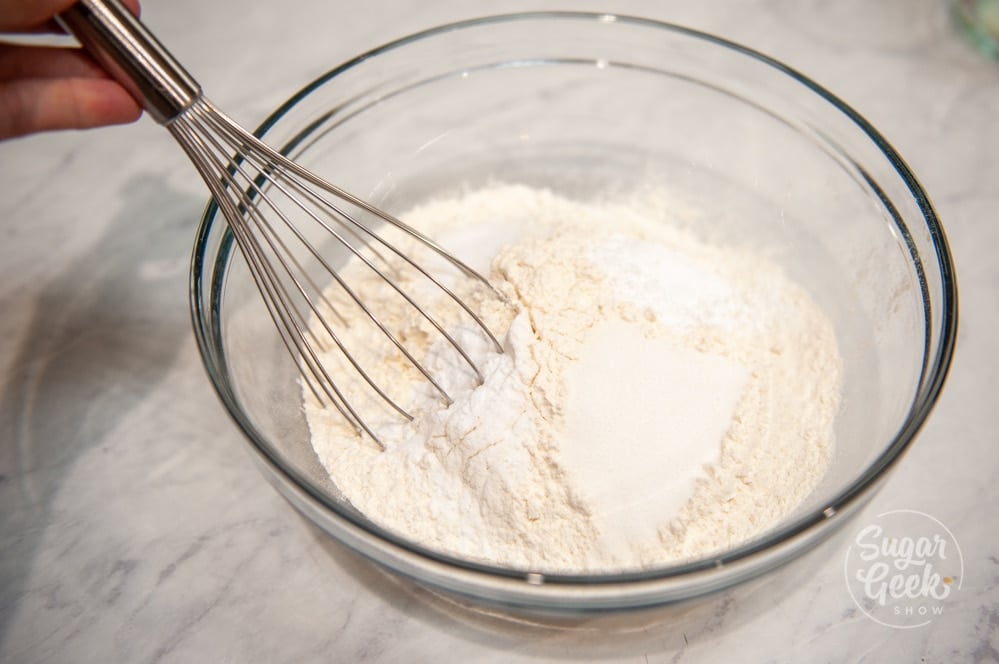
Today I'm going to show you how to make four different mini heart cheesecakes using one recipe! I am also using these mini heart cheesecake pans so if you don't have some, you might want to get these! 
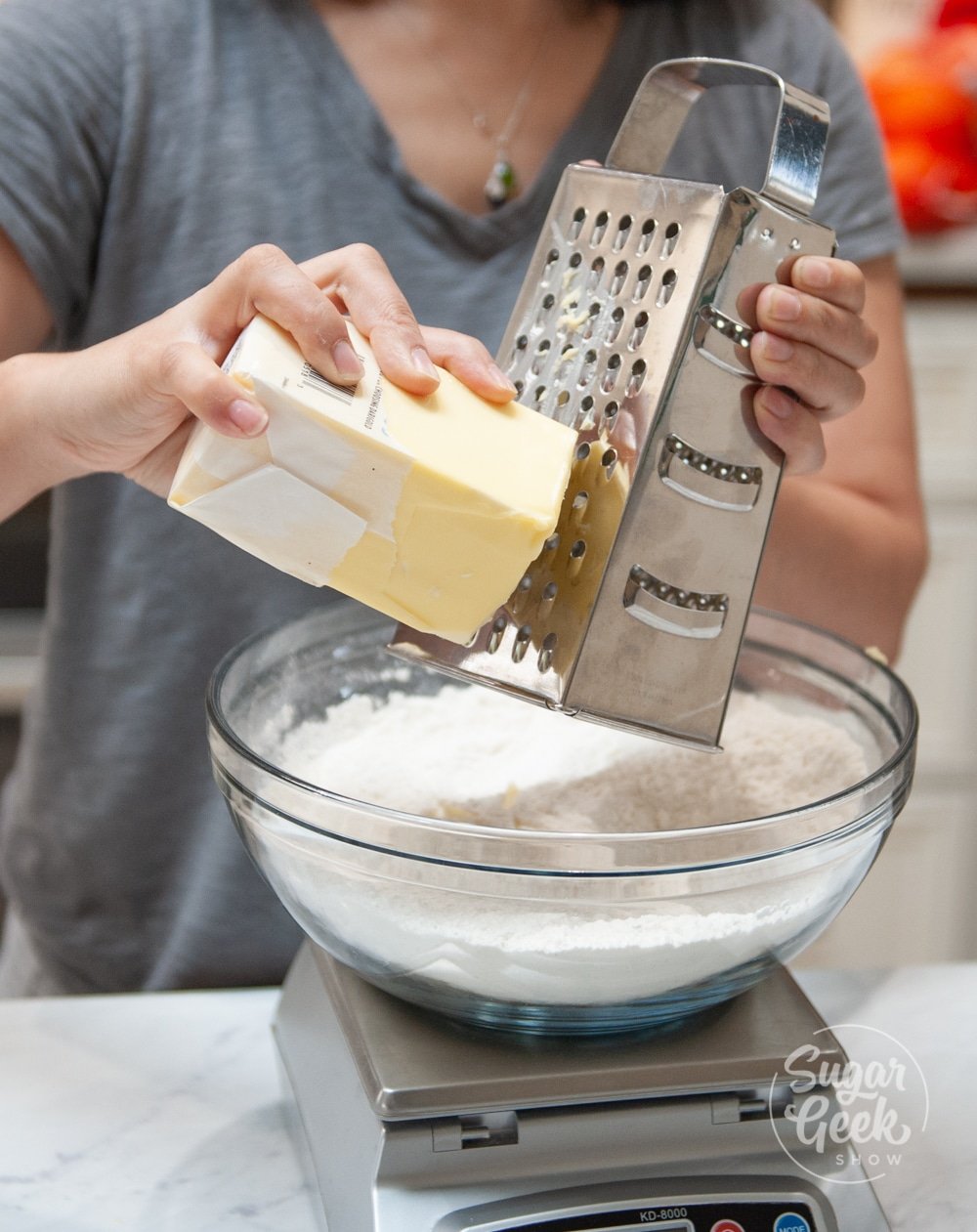
four mini cheesecake heart pans

How to make mini heart cheesecakes 

Making the mini cheesecake hearts is pretty simple. Just follow these steps. 

  1. Brownie Layer - Mix the brownie layer up and bake in your mini heart cheesecake pans, be careful not to overbake them. I didn't line my pans with parchment paper because I served my cheesecake hearts on the removable bottom but if you want to remove the cheesecakes after baking then be sure to place some parchment on the bottom of the pan. You can cut the parchment into a heart shape using the bottom of the pan as a guide. Let the cheesecakes cool after baking. 
  2. While your brownie layer is baking and cooling, make your cheesecake filling. Divide the filling evenly between four bowls. You can now customize the flavors. I chose to make one cheesecake chocolate by adding in some cocoa powder. Another cheesecake oreo by mixing in some crushed oreo crumbs and another strawberry marble by swirling in some strawberry puree. The options are endless!
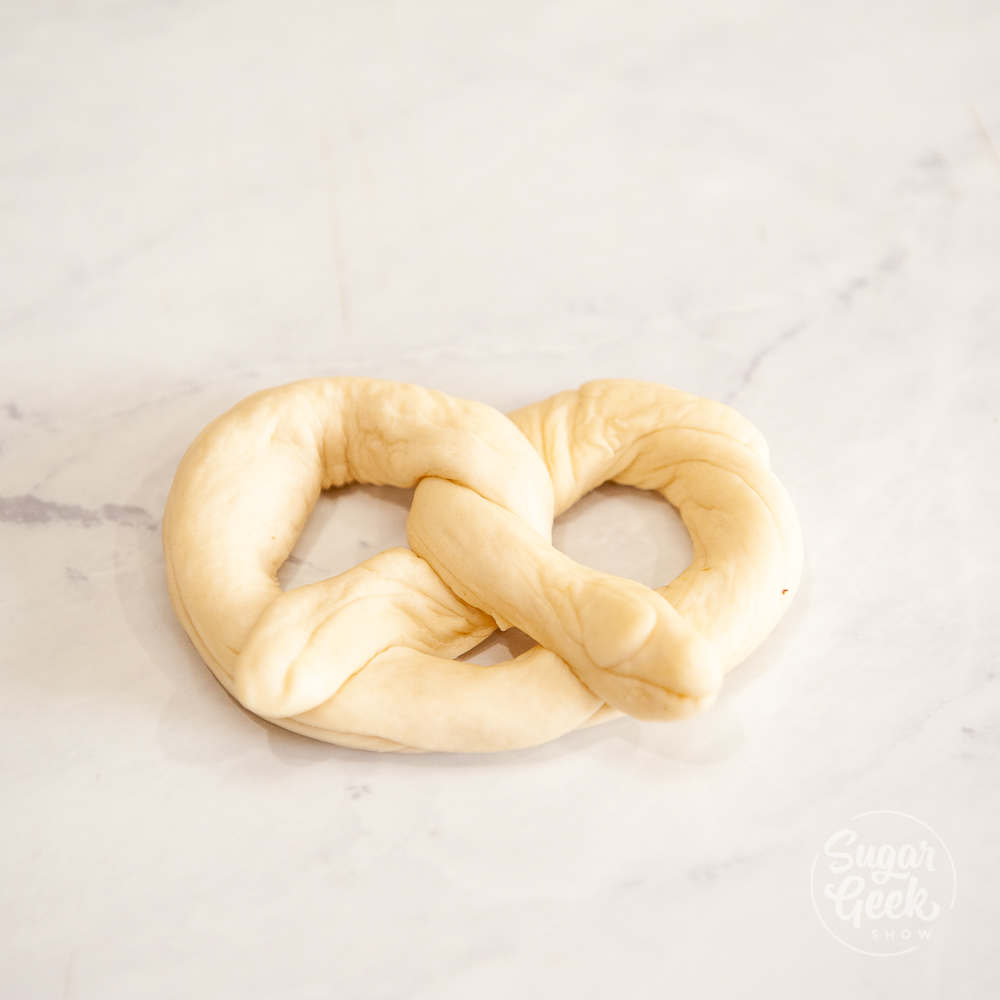
  3. Bake your mini cheesecake hearts in a water bath. Make sure the pans are wrapped well with one or two layers of aluminum foil to prevent water leaking in. A water bath keeps the cheesecakes from over-baking around the edges and turning brown.
  4. Once your cheesecakes have reached an internal temperature of 150ºF they are done. Crack the door of your oven and let the cheesecakes cool in the oven for 60 minutes to prevent the tops from cracking. 
  5. Once the mini cheesecake hearts are cool, place them into the freezer to freeze overnight.  

four mini cheesecake heart pans
how to mini cheesecake hearts

How to remove mini cheesecakes from the pans

After your cheesecakes are cool you want to remove them from the pan. The freezing helps them to keep a smooth side and not to crack. I use a kitchen torch to warm the side of the pan just until you see a little moisture forming on the inside of the pan. 

Use a small knife to carefully slide between the cheesecake and pan in any places it's not releasing. 

Carefully remove the outside piece of the mold and lift out your cheesecake. 

mini cheesecake being removed from the pan with a kitchen torch

How to decorate mini cheesecake hearts

Once your mini cheesecake hearts are chilled you can decorate them! 
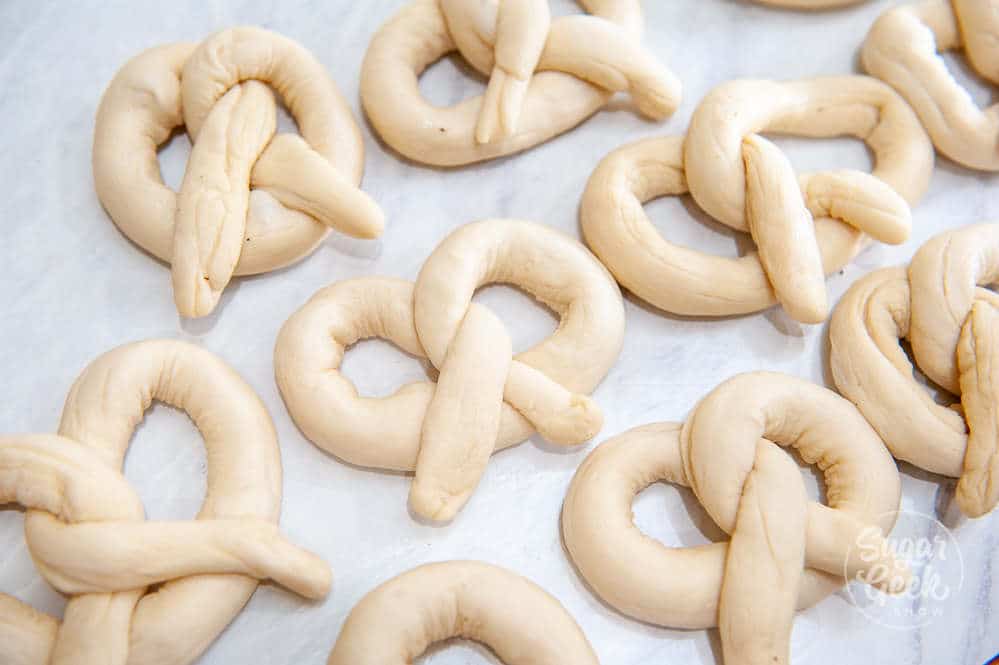
For my chocolate cheesecake heart, I decided to glaze it with chocolate ganache glaze so it was really shiny. Place your frozen cheesecake on a small cooling rack or on an upside-down bowl and then glaze liberally. Don't forget a pan underneath the cheesecake to catch the glaze. 

mini cheesecake heart being glazed with chocolate ganache

I used the leftover ganache glaze to pipe a little ganache swirl on top for chocolate overload! I wanted to add a chocolate-covered strawberry as well but restrained myself from going to the store to buy one strawberry haha. 

For the other mini cheesecakes I just added a little stabilized whipped cream but you can add more strawberry sauce, sprinkles, fresh fruit, anything you want! 

To see a full step-by-step tutorial of how I made these mini cheesecake hearts be sure to watch the video in the recipe card below. 

These mini cheesecake hearts are the perfect dessert for Valentine's day. 

Want more Valentine's Day recipes? 
Cherry cheesecake 
Chocolate Mirror Glaze Heart
Marble Valentine's Day Cookies
Cream Tart

Recipe

four mini heart cheesecakes on a marble background
Print Recipe
5 from 5 votes

Mini Heart Cheesecakes

These mini heart cheesecakes with brownie bottom are the perfect desserts to customize any flavor! Everyone gets their personal dessert.
Prep Time20 minutes mins
Cook Time40 minutes mins
Freezing1 day d
Course: Dessert
Cuisine: American
Servings: 4 servings
Calories: 1755kcal
Author: Liz Marek

Equipment

  • Mini heart cheesecake pans
  • Kitchen torch
  • Aluminum foil
  • Large pan for the water bath

Ingredients

Brownie Batter

  • 4 ounces unsalted butter room temperature
  • 2 ounces chocolate dark, semi-sweet or milk
  • 2 large eggs room temperature
  • 3 ounces granulated sugar
  • 2 ounces brown sugar
  • 1 ounce cocoa powder sifted
  • 2.5 ounces  all purpose flour  or cake flour for a more tender brownie
  • 1 teaspoon vanilla extract
  • ½ teaspoon salt

Cheesecake Batter

  • 24 ounces cream cheese room temperature
  • 6 ounces granulated sugar
  • ⅛ teaspoon salt
  • ½ tablespoon vanilla extract
  • 2 ounces heavy cream room temperature
  • 2 ounces sour cream room temperature
  • 3 large eggs room temperature
  • 2 ounces semi-sweet chocolate melted
  • 2 ounces strawberry Puree cooled
  • 1 ounce oreo cookies crushed

Chocolate Ganache Glaze (make on day 2)

  • 4 ounces heavy whipping cream
  • 4 ounces semi-sweet or dark chocolate
  • 1 ounce unsalted butter softened

Strawberry Puree

  • 4 ounces strawberries fresh or frozen
  • 1 Tablespoon sugar
  • 1 teaspoon lemon juice
US Customary - Metric

Instructions

Brownie Layer Instructions

  • Preheat your oven to 350ºF and line cheesecake pans with parchment paper on the bottom (or you can serve them on the pan.) No need to grease the sides.
  • Melt your butter and chocolate together in a heatproof bowl over simmering water or in the microwave. Let cool until it no longer feels hot to the touch.
  • Whisk together your sugar, salt, vanilla and eggs in a bowl until just combined.
  • Sift together the flour and cocoa to remove lumps and then set aside.
  • Add your melted chocolate mixture to the egg mixture and whisk until just combined.
  • Add your chocolate egg mixture to the flour mixture and stir gently until just combined and no flour lumps are visible. Do not over-mix
  • Divide your batter into the pans. Place the pans in the center of the oven and bake until a toothpick comes out from the center with a few sticky moist crumbs. It's better to under-bake than over-bake because it will go back in the oven with the cheesecake.
  • Bake at 350 for 14-15 minutes. Remove from the oven and let cool while you prepare your cheesecake batter.

Strawberry Puree

  • Blend strawberries until smooth (or you can blend after you cook, it doesn't matter)
  • Place in a medium saucepan with the sugar and heat until the sugar dissolves. Add in the lemon juice and let cool

Plain Cheesecake Batter Instructions

  • Reduce the oven temperature to 335ºF.
  • Use the paddle attachment to blend together the cream cheese and sugar until smooth and lump-free.
  • Scrape down the sides of the bowl two or three times.
  • Add sour cream and cream, and then mix on low until smooth.
  • Add eggs one at a time while mixing on low, scrape the bowl after each addition and mix until just combined and smooth.
  • Divide the cheesecake batter into four bowls.
  • For the oreo cheesecake batter, add your oreo crumbs to the bowl and stir until combined. Pour into the pan over the brownie batter
  • For the plain cheesecake with hearts, fill your cheesecake pan with plain batter. Place the strawberry coulis into a squeeze bottle or piping bag. Make a ring of dots (see video for more details) and then drag a toothpick through the dots to make a ring of hearts. Pipe another heart in the center.
  • Combine one ounce of cheesecake batter with 2 ounces strawberry coulis and blend together. Spoon the plain cheesecake batter into the pan over the brownie layer, alternating with the strawberry batter. Marble the two together with a toothpick or skewer.
  • For the chocolate cheesecake, combine the cheesecake batter with the sifted cocoa powder and combine until smooth and then pour into your cheesecake pan over the cooled brownie.
  • Wrap each pan in two layers of tin foil (if you haven't yet) and place into a large sheet pan.
  • Move the bottom oven rack to the lowest place in the oven. Place the sheet pan with cheesecakes onto the rack. Using a measuring cup, fill the pan halfway with hot water.
  • Bake for 35-40 minutes or until the cheesecake has a jiggle in the center while tapping on the side of the pan. DO NOT open the oven door, or your cheesecake could crack.
  • After 35 minutes, crack the oven door open and let cool for 1 hour. Remove the cheesecakes from the water bath and place into the freezer overnight.
  • After your cheesecakes are frozen, you can use a kitchen torch to lightly warm the sides of your pan and then release the cheesecakes without damaging them.
  • Glaze your chocolate cheesecake and use the leftover glaze to pipe a chocolate rosette using a small star tip and piping bag
  • I decorated the rest of my cheesecakes with stabilized whipped cream but you could do anything you like
  • Let cheesecakes defrost in the fridge overnight or for at least 6 hours before serving.

Video

Nutrition

Serving: 1serving | Calories: 1755kcal | Carbohydrates: 132g | Protein: 26g | Fat: 130g | Saturated Fat: 75g | Cholesterol: 617mg | Sodium: 1095mg | Potassium: 732mg | Fiber: 6g | Sugar: 104g | Vitamin A: 4506IU | Vitamin C: 17mg | Calcium: 315mg | Iron: 6mg

 
homemade cherry filling in a glass jar with the lid open. Black label with cherry written on the front. Cherries surrounding the jar on a white table

February 7, 2020 Filling

Homemade Cherry Pie Filling

This homemade cherry pie filling tastes WAY better than canned and comes together in 10 minutes with a handful of pantry ingredients. Use it in cherry cheesecake, spoon it into hand pies, or layer it into a Black Forest cake. Once you've made it from scratch, you won't go back to the can.

homemade cherry filling in a glass jar with the lid open. Black label with cherry written on the front. Cherries surrounding the jar on a white table

You can make this filling with fresh or frozen cherries. Heat them up with some sugar, a touch of lemon, and your thickener of choice to thicken those juices, and you've got the best cherry pie filling you've ever tasted. Here in Oregon we have the MOST amazing cherries (we're really lucky that way). My favorite are Rainier cherries, sweet and tart and so good right off the tree. If you love this filling, you'll also love my cherries jubilee and my classic cheesecake, which is the perfect base for this filling on top.

Quick Glance at the Recipe: Homemade Cherry Pie Filling

  • Recipe Name: Homemade Cherry Pie Filling
  • Why You'll Love It: Real cherry flavor, glossy texture, a few ingredients, freezer-friendly
  • Time and Difficulty: 27 minutes total, beginner-friendly
  • Main Ingredients: Cherries, sugar, water, lemon, salt, Clear Jel or cornstarch
  • Method: Simmer cherries with sugar, thicken with a cornstarch or Clear Jel slurry.
  • Texture and Flavor: Glossy, just-thick-enough, bright cherry flavor with a citrus lift
  • Quick Tip: Match the thickener to the use. See the ClearJel section below before you start
ChatGPT
Google AI
Perplexity
Grok
Add us as a trusted site on Google
[feast_advanced_jump_to]

What Makes This Cherry Pie Filling So Good
⭐⭐⭐⭐

Canned cherry pie filling is overly sweet, gummy from too much corn syrup, and the cherries are bruised and broken. This homemade version fixes all three things. Here's why this cherry pie filling recipe is the one I keep coming back to:

  • Real cherry flavor leads, sugar supports. You taste cherries first, not super sweet syrup.
  • Glossy and clear, not cloudy. Clear Jel keeps the filling shiny and transparent so the fruit color reads true. Cornstarch works in a pinch, but it dulls the color slightly.
  • You control the sweetness. Sour cherries get more sugar, sweet cherries get less, all explained below.
  • Fresh OR frozen works. No need to wait for cherry season.
  • It freezes for 6 months. Make a big batch in July and pull it out in December for the holidays.

Cherry Pie Filling Ingredients

A handful of pantry staples is all you need. I always recommend weighing your ingredients with a digital kitchen scale for the most accurate results. The thickener is the only ingredient that gets a real heads-up. See the Clear Jel section below before you shop.

  • Cherries, pitted. Any kind works. Sweet (Bing, Rainier) gives a milder, dessert-style filling. Sour (Montmorency, Morello) gives that classic, punchy cherry-pie flavor and is what most American cherry pies are traditionally made with. Frozen cherries work just as well as fresh. If you're using sour cherries, see the dedicated section below, you'll adjust sugar, water, and cook time.
  • Granulated sugar. Adjust up or down based on whether your cherries are sweet or sour, see the conversion table below. You can swap sugar for honey or a sugar-free substitute like Swerve if you want to keep it lower in sugar.
  • Water, both warm for simmering and cold for the slurry. The simmer water makes the filling saucier. If your cherries are very juicy (sour cherries especially), pull back on the simmer water.
  • Fresh lemon juice. Acidity brightens the cherry flavor and helps the Clear Jel set properly.
  • Lemon zest. I put a little zest in all my berry recipes, it makes the fruit taste more like itself.
  • Salt. Not to make it salty, just to wake up the cherry flavor.
  • Clear Jel (preferred) or cornstarch. If you have not used Clear Jel before, this is the modified cornstarch that bakeries use for fruit fillings. It stays clear and shiny, holds up to heat, and doesn't break down when baked or frozen. Cornstarch will work, but the filling will look slightly cloudier.

Why Lemon Matters (The Science)

A splash of lemon does four real jobs in this filling. It's not to make the cherry filling taste like lemons, its to make the cherries taste more like cherries.

1. Lower pH makes cherry aroma molecules more volatile. Most of what you taste as "cherry" is actually smell, benzaldehyde plus a stack of fruity esters. Lower pH means more of those molecules vaporize off the filling and reach your nose. More vapor, more cherry.

2. Citric acid suppresses the sweet receptor. When fillings taste really sweet, your taste receptors get flooded. Citric acid binds to that same receptor and partially blocks it, which dials perceived sweetness DOWN so subtler fruit notes register. Same principle as a pinch of salt in caramel.

3. Acid locks in the red color, and we taste color. Cherries get their red from anthocyanins, which are pH-sensitive. In acidic conditions they're vivid red. Push the pH up and they go muddy brown. Lemon keeps the color bright, and bright red food is perceived as MORE strongly cherry-flavored than dull red even when the chemistry is identical. We taste with our eyes.

4. Esters are more stable at low pH. A lot of fruit aromatics are esters. In neutral conditions they break down during a long simmer. Acid keeps them intact through the cook.

The zest is doing something separate. It's adding limonene and citral, fresh terpenes that ADD their own top note. The juice is a flavor REVEAL. The zest is a flavor ADD. Use both.

Sour vs Sweet Cherries: The Sugar Conversion

You CAN use pretty much any type of cherry for cherry pie filling but understanding how sweet it is will really make a difference in what you add to the filling. If you're using a sweeter cherry like Rainier, Bing, or Black cherries then you'll want to be sure to cut down on the sugar and use lemon juice and zest in your recipe to balance out the sweetness. If you're making your cherry pie filling with sour cherries like montmorency or Morello then you'll want to up the sugar and remove the addition of the lemon juice and zest. You don't need it. I would keep the almond extract in either version because almond pairs beautifully with cherry.

Cherry typeExamplesSugar per 32 oz cherries
Sour / tartMontmorency, Morello, Balaton10 to 12 ounces
MixedBing or Rainier blended with a handful of dried tart8 ounces (the base recipe)
SweetBing, Rainier, Lapins, Sweetheart6 to 7 ounces

Taste your cherries before they go in the pot. If they're sweeter than usual (a warm summer can push the sugar up), pull back by an ounce. You can always add more sugar at the end; you can't pull it out.

Cooking with Sour Cherries Instead of Sweet

Sour cherries are the traditional choice for American cherry pie. They're the kind your grandma used. The flavor is brighter, more cherry-forward, and the acidity balances the sugar in a way sweet cherries just can't. The size is much smaller than a traditional cherry. If you've only ever had cherry pie made with sweet cherries, sour cherries will taste like you're eating cherry pie for the first time. Trust me on this one.

That said, sour cherries are trickier to find, and they cook differently. Here's what to know.

Where to actually find them. Fresh sour cherries have a brutally short season, about 2 to 3 weeks in late June and early July, and most grocery stores don't carry them at all. Your three reliable sources:

  • Frozen Montmorency cherries, the easiest year-round option. Look in the freezer aisle near the berries. Cascadian Farm and Stahlbush are two brands that carry them, plus most Whole Foods and natural grocers stock a generic option. Usually pre-pitted, which is a huge time saver.
  • Jarred Morello cherries are often imported and are packed in light syrup or water. Trader Joe's and World Market both carry these seasonally. Drain them well before using, and cut the simmer time by half.
  • Farmers' markets in late June are the actual fresh window. If you live near a Michigan, Wisconsin, Oregon, or Pacific Northwest growing region, this is the magic window.

How sour cherries cook differently:

  • More sugar. 10 to 12 ounces per 32 ounces of cherries (vs 6 to 8 for sweet). Don't go lighter, sour cherries WILL fight you on flavor balance.
  • Less added water. Sour cherries are juicier than sweet cherries to begin with, and frozen sour cherries release even more liquid as they thaw. Pull the simmer water back from 8 ounces to 4 ounces. You can always add a splash if it looks too thick.
  • Shorter cook time. Sour cherries break down faster than sweet cherries and turn jammier. Pull the pan off the heat as soon as the slurry thickens, don't simmer the filling longer "to develop the flavor" the way you might with a sweet-cherry version. The flavor is already there.
  • Pull back on lemon. Sour cherries already have plenty of acidity. Cut the lemon juice from 1 Tablespoon to 1 teaspoon, and skip the zest if you want maximum cherry flavor. You can taste at the end and add more if it needs the brightness, but most of the time the cherries handle it themselves.
  • Almond extract is non-optional. ¼ teaspoon of pure almond extract stirred in OFF the heat is the secret to sour cherry pie filling that tastes like the diner version you grew up on. The almond does something to the cherry that no other flavor pairing matches. This is the one place I'd actually call almond extract mandatory in a recipe.

Mixing sweet and sour cherries is a legitimate move and one of my favorite ways to make this. Use 60% sweet (for body and color) and 40% sour (for the punch). Sugar to 8 ounces, water to 4 ounces, and ¼ teaspoon almond extract off the heat. Best of both worlds and you can build it from grocery-store-available cherries year-round (frozen sweet + frozen sour both keep forever).

What if you can only find sweet cherries but want a sour-style pie? Stir in 2 to 3 Tablespoons of dried tart cherries (the Trader Joe's or Costco kind) along with the sugar. They'll plump up in the syrup and add the acidic punch sour cherries would have brought. Not a 1:1 swap for the real thing, but a much better fake-out than just leaning harder on lemon.

Clear Jel Cook-Type vs Instant: Read This Before You Cook

This section exists because the wrong Clear Jel will absolutely ruin your filling, and the labels don't make it obvious which one you're holding.

There are two kinds of Clear Jel, and they are NOT interchangeable:

  • Cook-Type Clear Jel (sometimes just labeled "Clear Jel"), this is what we want. It thickens with heat, just like cornstarch. You mix it with cold liquid first to make a slurry, then add it to the hot cherries. This is the one used in canning and in this recipe.
  • Instant Clear Jel, this thickens cold. It will clump instantly the moment it touches liquid. You DO NOT slurry this one. Instant Clear Jel gets mixed into your sugar FIRST (so the sugar grains keep the Clear Jel grains apart), and then the sugar-Clear-Jel mix gets stirred into the cherries.

If you've slurry'd Instant Clear Jel and it turned into a lumpy mess, that's why. The label probably said "Instant" in small print. Switch to cook-type, or mix your instant powder with the sugar before it touches any liquid.

PRO TIP: Cook-Type Clear Jel is what canning recipes use because it tolerates the high heat of water-bath canning. Cornstarch breaks down under canning heat. If you plan to can your filling for shelf storage, you MUST use cook-type Clear Jel, never cornstarch.

If you're still not sure which one you have, do the test: drop a pinch into a Tablespoon of cold water. Cook-type sits at the bottom, instant clumps immediately into a jelly-like blob.

How to Pit Cherries

I like to use a cherry pitter to get the pits out. It makes short work of the task and feels very satisfying, nothing like taking the day's aggressions out on some cherries. Pitting cherries is messy business though, so wear an apron or skip the favorite white t-shirt.

If you don't have a cherry pitter, you can pit cherries with a wine bottle and a chopstick. Take off the cherry stem, place the cherry on the rim of the bottle, and use the chopstick to push the pit out through the bottom of the cherry. The bottle conveniently catches the pit. It's slower than a pitter but it works in a pinch.

How To Make Cherry Pie Filling Step-By-Step

Before you start: gather your cherries already pitted, your slurry ingredients measured into a small bowl, and your thickener decision made (cook-type Clear Jel, cornstarch, or instant Clear Jel mixed with the sugar). The cook itself is fast, so the prep matters.

cherries and sugar in a medium saucepan
  1. Simmer the cherries. Combine your pitted cherries, water, salt, and sugar in a large saucepan over medium-high heat. Bring them babies to a simmer, stirring occasionally so the bottom doesn't scorch.
clearjel slurry in a clear bowl
  1. Mix your slurry. While the cherries come up to temperature, combine your Clear Jel (or cornstarch), lemon juice, 4 ounces of cold water, almond extract, and lemon zest in a small bowl. Mix until smooth, no lumps.

PRO TIP: You cannot add cornstarch or cook-type Clear Jel directly to hot liquid, it will clump on contact and never recover. Dissolving it in cold water first is what gives you a silky-smooth filling. This is the single most common cherry filling fail.

closeup of shiny cherry filling in a pot
  1. Reduce the heat and add the slurry. Bring the simmering cherries down to medium heat. Pour the slurry in steadily while you stir, then keep stirring for 1 to 2 minutes until the mixture thickens.
close up of finished cherry filling
  1. Pull it off the heat and cool. The filling will continue to thicken as it cools, so don't be tempted to add more thickener while it's still hot. Trust the process.

PRO TIP: Want a thicker, pie-ready filling? Reduce the simmer water from 8 ounces to 4 ounces in step 1. Want a saucier, ice-cream-topping consistency? Keep the full 8 ounces.

Common Cherry Pie Filling Problems To Avoid

  • My filling is full of lumps. You used Instant Clear Jel and slurry'd it, or you added the thickener directly to hot liquid without making a slurry first. Fix: switch to cook-type Clear Jel or cornstarch, always slurry in COLD water first.
  • My filling is too thin. Two likely causes. (1) The filling did not come to a full simmer after the slurry went in, the heat needs to activate the starch. (2) You used frozen cherries which released extra water. Fix for (1), bring it back up and cook another minute. Fix for (2), see the next bullet.
  • I used frozen cherries and the filling is watery. Frozen cherries release roughly 20% more liquid than fresh as they thaw. Either thaw the cherries in a colander first and discard the runoff, or reduce the simmer water from 8 ounces to 4 ounces.
  • My pie has a soggy bottom. This is a cherry-pie-specific problem and it's almost never the filling's fault. See the soggy bottom section below.
  • My filling tastes flat. You skipped the salt and lemon. They're not optional, they're what makes the cherry taste like cherry instead of like sugar.

Final Thoughts

This cherry pie filling is freaking delicious. I'm not gonna lie. It can be used for so many things, cheesecake, cherry pie, hand pies, ice cream topping, cake filling, waffles, pastries, cobbler, do I need to go on? It's the kind of recipe you make once and then keep making because real cherry flavor ruins you for the canned stuff.

When I see any kind of cherry at the grocery store or the farmers' market, I really cannot resist. I'll eat and eat until I make myself sick. So when I saw these beautiful red cherries at Costco, I had to buy them, but the container was 2 pounds, that's a lot of cherries even for me. I ate my fill and turned the rest into this filling. You can also freeze or can it if you buy a whole bunch of cherries at the farmers' market and then panic because now you have 20 pounds of cherries that you can't explain. cough.

Make This Recipe Your Own

  • Swap the fruit. This same method works for blueberries, blackberries, raspberries, mixed berries, peaches, or rhubarb. Adjust sugar to taste (sour fruits need more, sweet fruits need less) and keep everything else the same.
  • Spike it. Stir in 1 to 2 Tablespoons of kirsch, amaretto, or bourbon off the heat for a grown-up version. Especially good if you're using this in a Black Forest cake.
  • Brown butter the filling. Brown 2 Tablespoons of butter and stir it in at the end for a richer, nuttier finish, my favorite for cobblers and crisps.
  • Can it for shelf storage. Use cook-type Clear Jel only, follow a tested canning recipe (USDA or Ball), and water-bath process pint jars for 30 minutes. Cornstarch is NOT safe for canning.


Cherry Pie Filling FAQs

Can I make this filling with canned cherries?

You can, but you'll need to drain them well and skip most of the added water. Canned cherries arrive pre-softened and pre-sweetened, so cut the sugar in half and start tasting before you adjust further. The texture won't be as bright as fresh or frozen, but it's a usable shortcut.

My Clear Jel is older than a year, is it still good?

Clear Jel keeps for years if it's been stored airtight and dry, but it does slowly lose thickening power. If you're not sure, do the slurry test in a Tablespoon of water, if it thickens promptly when warmed, you're fine. If it goes in slow motion, double the amount or buy a fresh container.

Does the lemon zest matter or can I skip it?

The zest is doing two things, brightening the cherry flavor and adding a tiny bit of pectin that helps the set. You can skip it without ruining the recipe, but the filling will taste flatter. If you're out of fresh lemon, a few drops of bottled lemon juice (NOT lemon extract) is a passable substitute.

Can I use this filling in a layer cake without it bleeding into the buttercream?

Yes, but pipe a buttercream dam around the edge of each cake layer first, fill the center with filling, then stack. The dam keeps the filling contained and prevents the bulge that ruins layer cake aesthetics. Pair with my stabilized whipped cream for cakes that need to hold up in warm weather.

Leave Me A Review
⭐️⭐️⭐️⭐️⭐️

If you tried this Cherry Pie Filling Recipe or any other recipe on my blog, please leave a 🌟 star rating and let me know how it goes in the comments. I love hearing from you!

Recipe

homemade cherry filling in a glass jar with the lid open. Black label with cherry written on the front. Cherries surrounding the jar on a white table
Print Recipe
4.50 from 10 votes

Cherry Pie Filling

Make your own homemade cherry pie filling for pies, cheesecakes, pastries, hand pies, and more. Stovetop ready in under 30 minutes, freezer-friendly for up to 6 months.
Prep Time15 minutes mins
Cook Time12 minutes mins
Total Time27 minutes mins
Course: Dessert
Cuisine: American
Servings: 4 cups
Calories: 386kcal
Author: Liz Marek

Equipment

  • Cherry pitter

Ingredients

  • 32 ounces cherries pitted
  • 4 ounces water
  • 8 ounces granulated sugar (see body section for sour vs sweet cherry conversion)
  • ¼ teaspoon salt
  • 3 Tablespoons ClearJel or 3 Tablespoon cornstarch
  • 4 ounces cold water to mix with the Clear Jel
  • 1 Tablespoon fresh lemon juice
  • 1 small lemon zest
  • ¼ teaspoon almond extract
US Customary - Metric

Instructions

  • Before you begin: Pit the cherries. Measure the slurry ingredients (Clear Jel or cornstarch, lemon juice, 4 oz cold water, lemon zest) into a small bowl and set it next to the stove. Confirm you have cook-type Clear Jel, not Instant. Instant Clear Jel will clump on contact with liquid.
  • Combine the pitted cherries, 4 ounces of water, salt, and sugar in a medium saucepan. Bring to a simmer over medium-high heat, stirring occasionally so the bottom doesn't scorch.
  • While the cherries simmer, whisk together the Clear Jel (or cornstarch), 4 ounces of cold water, lemon juice, lemon zest, and almond extract in a small bowl until smooth.
  • Reduce the heat to medium. Pour the slurry into the simmering cherries in a steady stream, stirring constantly. Cook for 1 to 2 minutes until the filling thickens and turns glossy.
  • Remove from the heat. The filling will continue to thicken as it cools. Transfer to a clean container, cover, and refrigerate.

Video

Notes

Ingredient notes
  • Clear Jel: must be cook-type for this slurry method. If you only have Instant Clear Jel, mix it with the dry sugar before adding to the cherries, do not slurry it.
  • Sugar: adjust based on cherry sweetness. Sour cherries need 10 to 12 ounces, sweet cherries need 6 to 7 ounces.
Pan options
  • Use a saucepan large enough for the cherries to bubble freely without splashing. A 3-quart saucepan is the right size for a 32-ounce batch.
Make-ahead and storage
  • Fridge: 1 week in an airtight container.
  • Freezer: 6 months in an airtight, freezer-safe container. Thaw overnight in the fridge before use.
  • Canning: Use cook-type Clear Jel only, never cornstarch. Follow a USDA or Ball-tested canning recipe and water-bath process pint jars for 30 minutes.
Substitutions
  • Cornstarch in place of Clear Jel: works, but the filling will be slightly cloudier.
  • Other fruits: blueberries, blackberries, raspberries, peaches, rhubarb all work with this method, adjust sugar to taste.
  • Sugar-free: use Swerve or another granulated sugar substitute 1:1.
Critical do-nots
  • Do not add Clear Jel or cornstarch directly to hot liquid, it will clump.
  • Do not slurry Instant Clear Jel, mix it with the dry sugar instead.
  • Do not use cornstarch if you plan to can the filling for shelf storage, it is not heat-stable enough for water-bath canning.

Nutrition

Serving: 0.25cup | Calories: 386kcal | Carbohydrates: 99g | Protein: 2g | Fat: 1g | Saturated Fat: 0.1g | Polyunsaturated Fat: 0.1g | Monounsaturated Fat: 0.1g | Sodium: 149mg | Potassium: 511mg | Fiber: 5g | Sugar: 86g | Vitamin A: 146IU | Vitamin C: 19mg | Calcium: 34mg | Iron: 1mg

heart lollipop cake

February 3, 2020 Course Preview

Heart Lollipop Cake

How to make a colorful heart lollipop cake with pastel striped buttercream frosting

Lollipop cakes are still trending and it's easy to see why. They are so easily customizable! I loved making my marble lollipop cake and my spring meringue pop cake. But I got a lot of questions asking how to make lollipops opaque. 

heart lollipop cake

So in this tutorial not only am I going to show you how I make beautiful, opaque lollipops inspired by conversations heart candy, I'm also going to show you how to make some pretty stripes on buttercream. 

You can take this basic cake design, switch up the colors, the lollipop shapes and flavors and make a completely different design. The possibilities are endless!
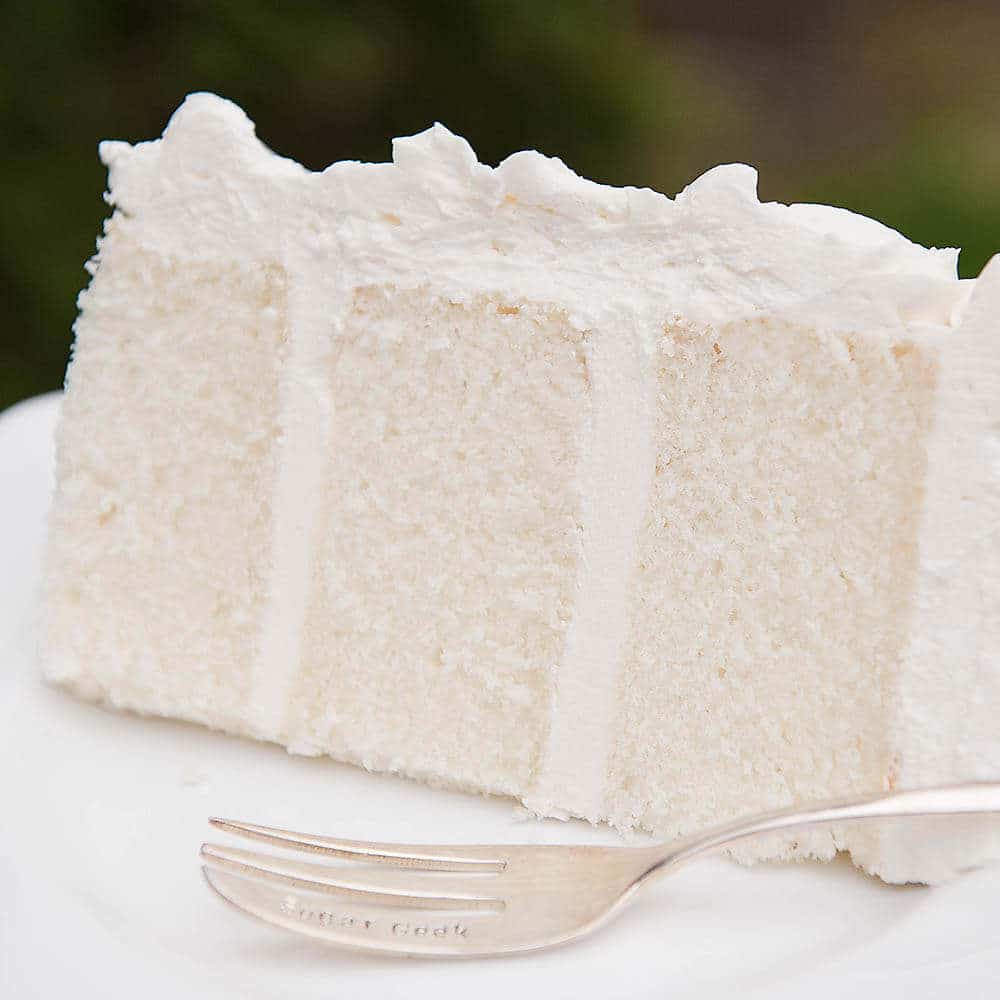
Materials list 

  • Wilton heart mold (large)
  • Wilton heart mold (small)
  • lollipop sticks
  • candy flavoring 
  • food coloring (electric yellow, electric pink and electric purple)
  • white food coloring
  • bengel stripe cake comb 
  • candy thermometer
  • distilled water (to avoid yellowing in the sugar)
  • PME glaze 
  • bench scraper
  • offset spatula
  • turntable
  • cardboard round
  • cake board or plate

Recipes used in this tutorial

Pink velvet cake (three 6"x2" round cakes)
Italian buttercream 
Heart lollipops 

How to make your heart lollipop cake

The first thing we need to do is make our cake. I'm using my pink velvet buttermilk cake with Italian buttercream but really, you could use any cake flavor and frosting that you like! 
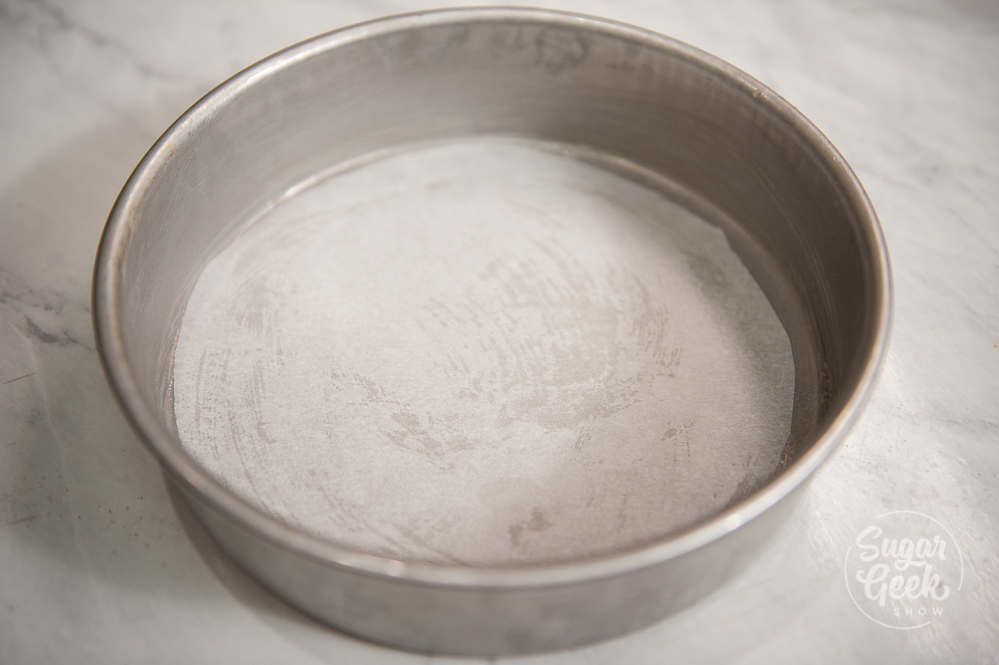
Stack and fill your cake to the crumbcoat stage and then refrigerate it until it's chilled. If you need to know more about how to stack and fill a cake, you can watch my how to make your first cake tutorial. 

how to make a cake tutorial

How to make your heart lollipops

To make your heart lollipops you'll need a heart mold! I used a Wilton heart mold (large and small). I cut a little x in the base of the mold to make room for my lollipop sticks and then taped down the sticks to keep them straight. 

lollipop mold filled with homemade lollipop candy

Make your lollipop candy mixture, add flavoring and color them. The key to getting opaque lollipops instead of transparent lollipops is to add a drop or two of white food coloring to the melted candy mixture. 

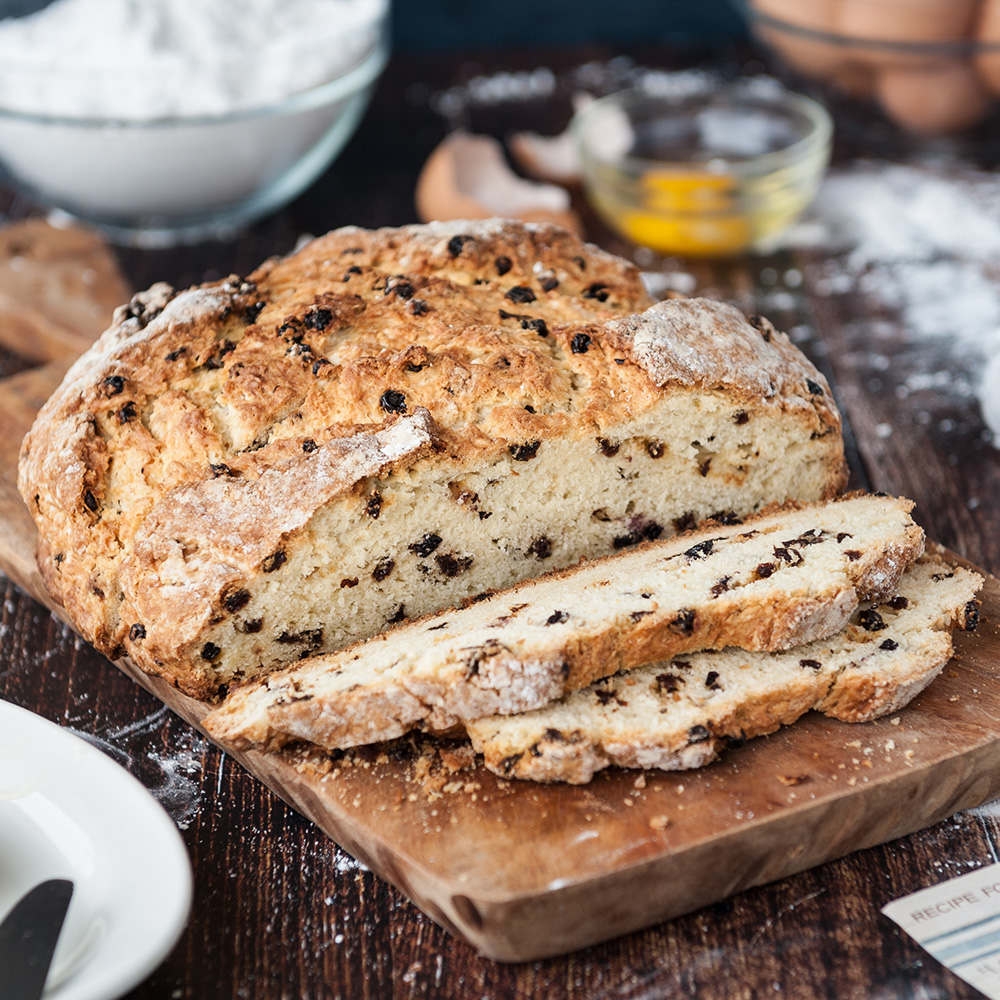
If you live in a humid area then you will want to spray your lollipops with an edible glaze spray like PME glaze to keep the lollipops from getting sticky and melting. 

I made 12 lollipops for my cake but only ended up using 7 so it's up to you if you want to make 6 or 7. I used the leftover sugar to make heart candies in the small heart mold to place down the front of the cake. 

homemade candy hearts

Once your candy hearts are made, time to finish up the cake. 

Place about 1 cup of buttercream into three bowls. Color each bowl with some food coloring. I used electric yellow, electric pink and electric purple for my colors. The same colors I used for the lollipops. 

Put the buttercream into piping bags and snip off the tip of the bag (about ¼" opening)

Apply another thick coat of buttercream to your crumb-coated cake. Straighten the sides with your bench scraper and smooth the top with an offset spatula. 

cake covered in buttercream with colorful strips

Use the Bengel strip comb to make the stripes in the side of the cake. Chill the cake for 15 minutes. 

Use the piping bag to squeeze the colored buttercream into the indented spaces. 

Use the bench scraper to slowly scrape away the excess buttercream until you can see the stripes clearly. Fill in any holes or gaps with more buttercream and continue scraping until everything looks nice. 

heart lollipop cake

All that's left to do is insert your lollipops and place your heart candies on the cake and you're done! 


Conversation Heart Cake Tutorial

February 1, 2020 Paid Video

Conversation Heart Cake

Skill level: Intermediate

Learn how to make this gravity defying conversation heart cake. In this tutorial we'll be focusing on building a matte board cake structure, isomalt board, paneling with modeling chocolate and using sugar press stamps for lettering. The perfect cake for Valentine's Day!

55:38 Minutes of Instruction

What You Will Learn

  • How to make a gravity-defying heart-shaped cake
  • Learn how to support cake from the bottom to the top
  • How to color and smooth modeling chocolate to the outside
  • Learn how to create letters and words that look just like a conversation heart candy
  • How to make a beautiful cake board with conversation hearts inside of it

Tutorial Chapters

  1. Cutting Threaded Rod 0:35
  2. Making the heart structure 8:42
  3. Assembling the structure 18:14
  4. Decorating the board 19:15
  5. Stacking the cake 26:13
  6. Crumb Coating 36:01
  7. Coloring the Modeling Chocolate 37:14
  8. Covering in Buttercream 38:31
  9. Covering in Modeling Chocolate 42:01
  10. Adding the letters 51:10
  11. Painting the words 53:43

Downloads

Materials List

Conversation Heart Cake Tutorial

February 1, 2020 Course Preview

Conversation Heart Cake Tutorial

Skill level: Intermediate

Learn how to make this gravity defying conversation heart cake. In this tutorial we'll be focusing on building a matte board cake structure, isomalt board, paneling with modeling chocolate and using sugar press stamps for lettering. The perfect cake for Valentine's Day!

55:38 Minutes of Instruction

What You Will Learn

  • How to make a gravity-defying heart-shaped cake
  • Learn how to support cake from the bottom to the top
  • How to color and smooth modeling chocolate to the outside
  • Learn how to create letters and words that look just like a conversation heart candy
  • How to make a beautiful cake board with conversation hearts inside of it

Tutorial Chapters

  1. Cutting Threaded Rod 0:35
  2. Making the heart structure 8:42
  3. Assembling the structure 18:14
  4. Decorating the board 19:15
  5. Stacking the cake 26:13
  6. Crumb Coating 36:01
  7. Coloring the Modeling Chocolate 37:14
  8. Covering in Buttercream 38:31
  9. Covering in Modeling Chocolate 42:01
  10. Adding the letters 51:10
  11. Painting the words 53:43

Downloads

Materials List

Close up of pink Italian meringue buttercream piped into rosettes.

January 30, 2020 Frosting and Icing

Italian Meringue Buttercream

Italian meringue buttercream is the gold standard of professional frostings: silky smooth, barely sweet, and stable enough to hold up in warm climates where American buttercream falls apart. It is the frosting I reach for on every wedding cake and tiered cake because nothing else comes close to that light, creamy finish without the sugar overload.

Close up of pink Italian meringue buttercream piped into rosettes.

Quick Glance: Italian Meringue Buttercream

  • Recipe Name: Italian Meringue Buttercream
  • Why You'll Love It: The most stable and least sweet buttercream you can make - silky smooth, heat-resistant, and perfect for professional cakes and warm climates
  • Time and Difficulty: 40 minutes / Intermediate
  • Main Ingredients: Egg whites, granulated sugar, water, unsalted butter, vanilla
  • Method: Hot sugar syrup streamed into whipped egg whites, finished with butter
  • Texture and Flavor: Light, silky, and creamy with a delicate sweetness and rich buttery finish
  • Quick Tip: The meringue must be completely cool before you add the butter. If it's too warm, the butter will melt, and the whole thing will look soupy
ChatGPT
Google AI
Perplexity
Grok
Add us as a trusted site on Google
[feast_advanced_jump_to]

Why This Recipe Works

Italian meringue buttercream is more stable than other meringue-based buttercreams like Swiss-meringue buttercream because of what happens to the egg whites when the hot syrup hits them. Sugar cooked to 240°F has lost most of its moisture through evaporation, concentrating the sugar to a very high level. When that hot syrup streams into whipping egg whites, two things happen simultaneously: the heat partially pasteurizes the egg whites, and the concentrated sugar bonds into the protein foam, creating a structure that is far more rigid and heat-resistant than what you get from Swiss meringue buttercream, which only heats egg whites to around 160°F.
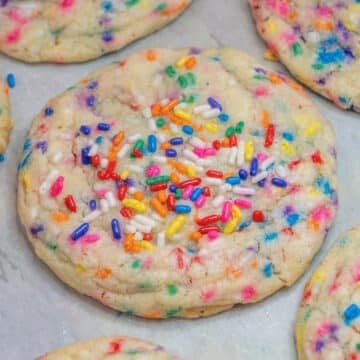
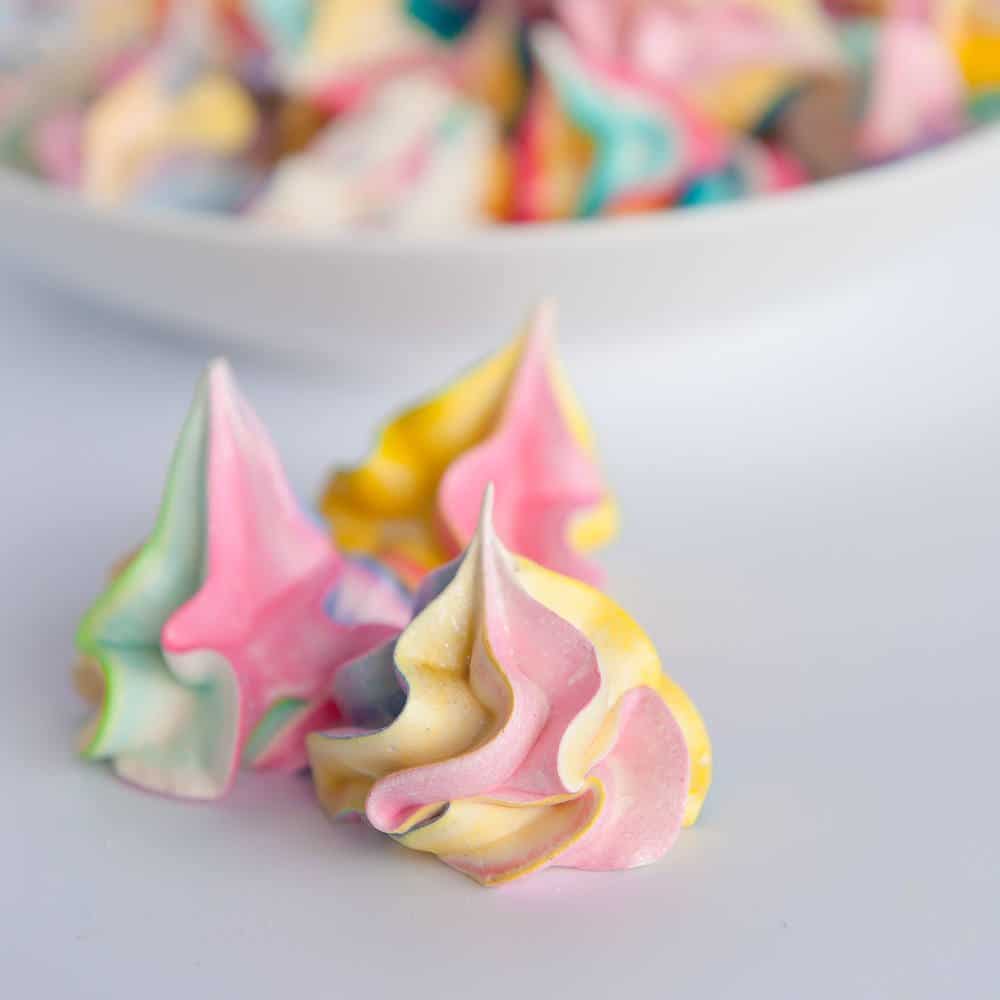
The reason Italian meringue buttercream is also the least sweet is that the sugar is dissolved into the egg white foam rather than sitting in a base of powdered sugar. There's no confectioners' sugar in this recipe at all, which means no starchy aftertaste and no grittiness.

When you whip butter into the cooled meringue, the fat droplets from the butter become physically trapped within the protein network of the meringue foam, creating a true emulsion. This is why the buttercream can be rewhipped after refrigerating or freezing. The protein structure rebuilds as it returns to temperature.

Italian Meringue Buttercream Ingredients

You only need six ingredients to make Italian meringue buttercream, but the quality and temperature of each one matters. Here's what you need and why it works.

Italian meringue buttercream ingredients in bowls on a white countertop.

Fresh egg whites provide the foam structure that makes Italian meringue buttercream so stable. Fresh egg whites are strongly preferred over pasteurized carton egg whites because the heat treatment used to pasteurize them can partially damage the proteins, making them harder to whip to stiff peaks. If carton egg whites are all you have, make sure they are at room temperature and be prepared to whip them significantly longer than usual.

Granulated sugar is cooked with water to create the hot syrup that stabilizes the meringue. The sugar must reach exactly 240°F (soft ball stage) so that enough moisture has evaporated and the sugar concentration is high enough to set the foam properly. Under-cooking the syrup results in a soft, unstable buttercream that won't hold its shape. Do not substitute powdered sugar here since the recipe depends on the syrup-making process.

Water is combined with the sugar to help it dissolve and cook evenly into a syrup. It fully evaporates during the cooking process and is not present in the finished buttercream.

Unsalted butter is whipped into the cooled meringue to create the final buttercream. It must be softened to room temperature, not melted, and not cold. Softened butter has the right fat crystal structure to emulsify smoothly into the meringue. Unsalted butter is used so the salt level in the recipe can be controlled precisely. For a more stable buttercream in very high heat environments, you can substitute up to half the butter with solid vegetable shortening, which has a higher melting point than dairy butter.

Salt enhances and balances the flavor of the buttercream. Without it, the buttercream can taste flat and one-dimensional. Use a small amount since it should not be detectable as saltiness, only as depth of flavor.

Vanilla extract is the primary flavoring in this recipe. Use a high-quality pure vanilla extract or vanilla bean paste for the best flavor. You can substitute any flavoring you prefer, including almond extract, lemon emulsion, freeze-dried fruit powder, or espresso powder.

How To Make Italian Meringue Buttercream Step-by-Step

Before you start, make sure your butter is fully softened and your equipment is completely grease-free. Those two things alone will determine whether your buttercream comes together perfectly or gives you trouble.

Hand wiping down a metal bowl with a paper towel.
  1. Wipe down the bowl of your stand mixer and whisk attachment thoroughly with lemon juice or white vinegar and a clean paper towel. Any trace of grease or fat will prevent your egg whites from whipping up properly. The bowl should feel completely clean and slightly tacky.
Egg whites in the bowl of a mixer with the whisk attachments attached.
  1. Add your egg whites to the bowl of your stand mixer with the whisk attachment. Do not start whipping yet.
Close up of metal saucepan with water and sugar on a stovetop.
  1. Combine the sugar and water in a medium saucepan and stir just until the water has distributed evenly through the sugar. Place the lid on the pan and bring to a boil over medium-high heat.
Metal saucepan with the lid on a black stovetop.
  1. Keep the lid on for 3 to 4 minutes after it reaches a boil. The steam trapped inside will wash any sugar crystals off the sides of the pan, which prevents the syrup from crystallizing and turning grainy later.
Candy thermometer inserted into a metal pot of boiling sugar.
  1. Remove the lid and carefully insert your candy thermometer. Continue cooking over medium-high heat without stirring until the thermometer reads 235°F. The syrup will be clear and bubbling steadily.
Mixer with egg whites whipped to soft peaks on a white countertop.
  1. When the syrup hits 235°F, turn your stand mixer on high and begin whipping your egg whites with the salt to soft peaks. You want them to reach soft peaks at the same time the syrup reaches 240°F, so the timing works out almost perfectly if you start at 235°F. Soft peaks means the whites are foamy and bright white but the tip curls over gently when you lift the whisk.
Metal saucepan pouring hot sugar into a mixer whipping egg whites.
  1. When the syrup reaches 240°F, reduce the mixer to low speed. With the mixer running, slowly pour the hot syrup in a thin, steady stream down the side of the bowl between the whisk and the bowl wall. Pouring it directly onto the whisk will cause it to splatter and harden on the sides of the bowl. The mixture will immediately increase in volume and turn glossy white.
Metal mixer whipping Italian meringue with ice and towels wrapped around the base.
  1. Increase the mixer speed back to high and whip to very stiff, glossy peaks. To cool the meringue down faster, wrap an ice pack or bag of frozen vegetables against the outside of the bowl with a kitchen towel. The meringue needs to reach room temperature. You should be able to hold your hand against the side of the bowl comfortably with no warmth. This usually takes 10 to 15 minutes of whipping.
  1. Once the meringue is completely cool, reduce to medium speed and begin adding the softened butter two tablespoons at a time, waiting a few seconds between additions. The mixture may look curdled and soupy at this stage. This is completely normal. Keep whipping and it will come together.
Close up of iItalian meringue buttercream in a metal mixer.
  1. Once all the butter is incorporated, add the vanilla and increase to high speed. Whip for 10-15 more minutes until the buttercream is light, fluffy, and completely smooth with no trace of a buttery taste. It should hold a stiff peak and have a silky sheen.

    Add food coloring now if desired, mixing on low until fully incorporated.

Batter & Frosting Calculator

Cake Batter and Frosting Calculator

Select an option below to calculate how much batter or frosting you need. Adjust the servings slider on the recipe card to change the amounts the recipe makes.

Choose a pan type

Choose a cake pan size
(based on 2" tall cake pan)

Choose a cake pan size
(based on 2" tall cake pan)

Choose a cake pan size
(based on 2" tall cake pan)

Cupcake Tin Size

Choose number of pans

Cups of Batter Needed

8 cups

Cups of Frosting Needed

5 cups

Note: measurements are estimated based off the vanilla cake recipe using standard US cake pans and sizes. Measurements used are for 2" tall cake pans only. Your results may vary. Do not overfill cake pans above manufacturer's recommended guidelines.

This recipe makes 8 cups of frosting, enough to frost and fill a two-layer 8-inch cake or frost about 24 cupcakes. Store leftovers in an airtight container in the fridge for up to 2 weeks or freeze for up to 6 months. Bring to room temperature and rewhip before using.

If you love a buttercream that pipes cleanly, holds its shape, and doesn't taste like a bag of powdered sugar, this is your recipe. Try it on my vanilla cake for a combination that's been a reader favorite for years.

italian meringue buttercream in a bowl, piping bag and frosted no a cake

Common Mistakes To Avoid

Starting with any grease in the bowl. Fat is meringue's worst enemy. Even a small amount of grease from butter, oil, or an unwashed bowl will prevent the egg whites from whipping at all. Always wipe down your bowl and whisk with lemon juice or vinegar before starting.

Adding the butter when the meringue is still warm. This is the most common reason Italian meringue buttercream fails. If the meringue is even slightly warm when the butter goes in, the butter melts rather than emulsifies and you end up with a soupy, broken mess. Be patient. The meringue must be fully at room temperature before you add a single piece of butter.

Under-cooking the sugar syrup. If your syrup doesn't reach 240°F, the sugar concentration won't be high enough to stabilize the foam. The resulting buttercream will be soft, unstable, and prone to weeping. Always use a reliable candy thermometer and confirm the temperature before pouring.

Panicking when it looks curdled. Almost everyone's Italian meringue buttercream goes through a broken, soupy, or curdled-looking stage when the butter first goes in. This is not a failure. Keep whipping on medium-high and the emulsion will come together within a few minutes and the texture will turn silky and smooth.

Using butter that is too cold or too warm. Cold butter breaks into chunks that don't incorporate smoothly. Melted butter causes the buttercream to collapse. Butter should be softened to the point where it holds its shape but gives easily when you press your finger into it, similar to the texture of soft clay.

Italian Meringue FAQs

What is the difference between Italian meringue buttercream and Swiss meringue buttercream?

Both are made with egg whites and butter, but the process is different. Swiss meringue buttercream heats the egg whites and sugar together over a double boiler to about 160°F before whipping, while Italian meringue buttercream uses a hot sugar syrup cooked to 240°F that streams directly into the egg whites as they whip. The higher temperature of Italian meringue buttercream creates a more stable foam structure and a more heat-resistant final buttercream. Italian meringue buttercream is generally considered the more advanced and more stable of the two.

Why does Italian meringue buttercream look curdled?

The curdled appearance happens when the butter is slightly cooler or warmer than the meringue and the fat and water temporarily separate before fully emulsifying. Keep whipping at medium-high speed and it will come back together into a smooth, silky texture within a few minutes. If it looks soupy rather than curdled, the meringue was still too warm when the butter went in. Refrigerate the bowl for 10 to 15 minutes and rewhip.

Can you color Italian meringue buttercream?

Yes. Add gel food coloring in the final step after all the butter and flavoring are fully incorporated. Use gel or paste colors rather than liquid food coloring, as liquid can thin the buttercream slightly. Add a small amount at a time and mix on low until you reach your desired shade. Colors will deepen slightly as the buttercream sits.

How long does Italian meringue buttercream last?

Italian meringue buttercream keeps at room temperature for 2 to 3 days, in the refrigerator for up to 2 weeks, and in the freezer for up to 6 months. Before using refrigerated or frozen buttercream, bring it fully to room temperature and rewhip in your stand mixer until it returns to its original light, smooth consistency. It may look broken at first but keep whipping and it will come back together.

Can you use pasteurized egg whites from a carton?

Fresh egg whites give the most reliable results. The heat treatment used to pasteurize carton egg whites can damage the proteins, making them harder to whip to stiff peaks. If fresh eggs are not available, carton egg whites can work. Make sure they are fully at room temperature and be prepared to whip them longer than you would fresh whites. Results can vary by brand.

How do you make Italian meringue buttercream more stable for hot weather?

Replace up to half the butter in the recipe with solid white vegetable shortening. Shortening has a significantly higher melting point than butter, which gives the buttercream more resistance to heat and humidity. The texture will be slightly less silky and the flavor less rich than all-butter, but the stability improvement in warm climates is significant.

Can you flavor Italian meringue buttercream with something other than vanilla?

Yes. Italian meringue buttercream takes on added flavors very well. Popular options include almond extract, lemon or orange emulsion, espresso powder dissolved in a teaspoon of hot water, melted and cooled chocolate, fresh fruit puree, or freeze-dried fruit ground into a powder. Add your flavoring in the final mixing step in place of or in addition to the vanilla.

More Frosting Recipes To Try

  • close up of a red velvet cupcake with cream cheese frosting piped on top surrounded by other cupcakes
    Easy Cream Cheese Frosting
  • chocolate fudge frosting on a cupcake
    Chocolate Fudge Frosting
  • Piping squiggle of chocolate buttercream
    The BEST Chocolate Buttercream Frosting
  • Piping easy buttercream rosettes onto a cake using a 1M star piping tip
    Easy Buttercream Frosting

Watch: How To Decorate A Cake Step-by-Step

Before you start decorating, watch the video below where I show you every step of decorating a cake from start to finish. Seeing the process in action makes it much easier to follow along

- Liz Marek.

Start Learning Now
smiling woman holding a decorated cake in her hands

Recipe

Close up of pink Italian meringue buttercream piped into rosettes.
Print Recipe
4.91 from 213 votes

Italian Meringue Buttercream

Silky smooth Italian buttercream is the most stable of all the buttercreams and is not very sweet. It is made by pouring hot sugar syrup into whipping egg whites and then finished with butter, salt and flavoring.
Prep Time15 minutes mins
Cook Time10 minutes mins
cooling15 minutes mins
Total Time40 minutes mins
Course: Dessert
Cuisine: Italian
Servings: 8 cups
Calories: 846kcal
Author: Liz Marek

Equipment

  • Stand mixer with the whisk attachment
  • Candy Thermometer

Ingredients

  • 16 ounces granulated sugar
  • 8 ounces water
  • ¼ teaspoon salt
  • 8 ounces egg whites (about 8 large egg whites separated from the yolk)
  • 24 ounces unsalted butter softened
  • 2 teaspoon vanilla extract
US Customary - Metric

Instructions

  • On the stovetop, mix together the water and sugar, cover with a lid and bring to a boil on medium-high heat.
  • Keep the lid on the pot for 3-4 minutes while the mixture simmers to ensure all the sugar granules are dissolved, otherwise, your sugar can get gritty and crystalize. DO NOT MIX.
  • Remove the lid, insert the candy thermometer carefully and continue cooking on medium-high until the syrup reaches 240° F.
  • When the sugar solution is at about 235° F, begin whipping the egg whites on high speed. Add the salt to the egg whites.
  • When the egg whites reach soft peaks, pour the sugar solution in a steady stream on to the whipping whites while mixing on low speed.
  • Continue whipping the egg/sugar mixture until it reaches stiff peaks. I wrapped an apron around my bowl with an ice pack to help the meringue cool down faster. You can also cool the meringue by scooping it out of the bowl and placing it into the fridge for 15 minutes.
  • Once the meringue is cooled, whip in soft butter and vanilla until the buttercream is light and fluffy and no longer has a butter taste. This can take from 10-15 minutes. If it looks curdled and watery just keep whipping. It will come together I promise.

Video

Notes

  • Make sure your sugar syrup reaches exactly 240°F. Under-cooking it will result in a soft, unstable buttercream that won't hold its shape.
  • Keep the lid on the pot for the first few minutes to prevent sugar crystals from forming on the sides of the pan.
  • Begin whipping your egg whites when the syrup hits 235°F so they reach soft peaks right as the syrup is ready.
  • The meringue must be completely cool to room temperature before adding butter or the buttercream will become soupy.
  • Use softened but not melted butter. It should hold its shape but give easily when pressed.
  • If the buttercream looks curdled or soupy, keep whipping. It will come together.
  • To store, refrigerate for up to 2 weeks or freeze for up to 6 months. Bring to room temperature and rewhip before using.
  • For extra stability in warm climates, replace up to half the butter with solid vegetable shortening.

Nutrition

Serving: 2ounces | Calories: 846kcal | Carbohydrates: 57g | Protein: 4g | Fat: 69g | Saturated Fat: 44g | Polyunsaturated Fat: 3g | Monounsaturated Fat: 18g | Trans Fat: 3g | Cholesterol: 183mg | Sodium: 131mg | Potassium: 69mg | Sugar: 57g | Vitamin A: 2125IU | Calcium: 24mg | Iron: 0.1mg
{ "@context": "https://schema.org", "@type": "WebPage", "@id": "https://sugargeekshow.com/italian-meringue-buttercream/", "name": "Italian Meringue Buttercream", "about": [ {"@type": "Thing", "name": "Meringue", "sameAs": "https://en.wikipedia.org/wiki/Meringue"}, {"@type": "Thing", "name": "Buttercream", "sameAs": "https://en.wikipedia.org/wiki/Buttercream"}, {"@type": "Thing", "name": "Egg white", "sameAs": "https://en.wikipedia.org/wiki/Egg_white"}, {"@type": "Thing", "name": "Sugar syrup", "sameAs": "https://en.wikipedia.org/wiki/Simple_syrup"}, {"@type": "Thing", "name": "Butter", "sameAs": "https://en.wikipedia.org/wiki/Butter"}, {"@type": "Thing", "name": "Vanilla extract", "sameAs": "https://en.wikipedia.org/wiki/Vanilla_extract"}, {"@type": "Thing", "name": "Emulsion", "sameAs": "https://en.wikipedia.org/wiki/Emulsion"}, {"@type": "Thing", "name": "Cake decorating", "sameAs": "https://en.wikipedia.org/wiki/Cake_decorating"}, {"@type": "Thing", "name": "Confectionery", "sameAs": "https://en.wikipedia.org/wiki/Confectionery"}, {"@type": "Thing", "name": "Vegetable shortening", "sameAs": "https://en.wikipedia.org/wiki/Shortening"} ] }

slice of pink velvet cake with whipped cream frosting and fresh raspberries on a white plate

January 28, 2020 Cake

Pink Velvet Cake

Homemade Pink velvet cake covered in a thick layer of stabilized whipped cream and fresh raspberries. If you loved my white velvet buttermilk cake and my red velvet cake, this is the cake for you. This pretty pink cake is perfect for Valentine's Day. 

slice of pink velvet cake with whipped cream frosting and fresh raspberries on a white plate

What does pink velvet cake taste like?

Pink velvet cake is a vanilla-flavored cake. The pink color comes from just a touch of pink food coloring although you could use natural colorings like strawberry or raspberry emulsion to get that pretty pink color without any artificial colors. 

I like to use a liquid pink food coloring instead of a gel because it mixes into the milk/egg mixture better than a gel which can leave behind a few specks. If all you have is gel food coloring then mix it with a teaspoon of warm water and stir well before adding it into your cake batter. 

pink velvet cake layer showing the crumb

three layers of pink velvet cake with whipped cream in between the layers

How do you make a pink velvet layer cake?

Making a layer cake doesn't have to be hard. Follow these simple steps to making a beautiful pink velvet layer cake. 

  1. Bake your pink velvet cake layers and let them cool
  2. Trim off the dome and the brown sides of the cake if you want your cake slice to be really pretty
  3. Make your stabilized whipped cream
  4. Place your first layer of cake onto your cake board or plate
  5. Use an offset spatula to spread a layer of whipped cream on top of the cake then place your second layer of cake on top of the whipped cream. Repeat with the final layer of cake. 
  6. Spread a thin layer of whipped cream all over your cake and then put the whole cake into the freezer for 10 minutes
  7. Spread a final layer of whipped cream on top of the cake
  8. Use a bench scraper to make the sides straight and an offset spatula to make the top flat
  9. Optional: use a cake comb to make the sides more interesting
  10. Finish the cake design with some swirls of whipped cream on top using a 1M piping tip and finish with some fresh raspberries. 
pink velvet cake frosted in stabilized whipped cream with fresh raspberries on top

If you want to learn more about the basics of stacking and frosting a cake you can check out this tutorial on making your first cake. 

how to make a cake tutorial

What makes a cake velvet cake?

A lot of people ask what makes a cake a velvet cake. The answer is in the texture of the cake. Velvet cakes make use of buttermilk and sometimes vinegar that reacts with baking soda to create a delicious velvet-textured cake. 

Buttermilk is one of those magical ingredients that really adds tenderness to baked goods. It also leaves behind a slightly tangy flavor that cuts down on the sweetness of a cake. 

slice of pink velvet cake on a white plate in front of pink velvet layer cake in the background

What makes velvet cake so moist?

Velvet cakes are super moist because of the buttermilk and the oil. No need for simple syrup, these cakes stay moist for days. 

Don't have buttermilk? It's ok! You can substitute buttermilk for 10 ounces of milk with 2 Tablespoons of white vinegar or lemon juice added. Stir and let sit for 5 minutes then add it to your recipe. 

Pink velvet cake with stabilized whipped cream should be stored in the refrigerator because of the dairy in the whipped cream but cold cake doesn't taste so great. I take my cake out of the fridge for about an hour or two before it will be served to give the cake a chance to warm up. 

three slices of pink velvet cake on white plates shot overhead

Other velvet cake recipes you might enjoy

Black Velvet Cake
Authentic Red Velvet Cake With Cream Cheese Frosting
White Velvet Cake With Ermine Frosting
Green Velvet Cake

Cake Batter and Frosting Calculator

Select an option below to calculate how much batter or frosting you need. Adjust the servings slider on the recipe card to change the amounts the recipe makes.

Choose a pan type

Choose a cake pan size
(based on 2" tall cake pan)

Choose a cake pan size
(based on 2" tall cake pan)

Choose a cake pan size
(based on 2" tall cake pan)

Cupcake Tin Size

Choose number of pans

Cups of Batter Needed

8 cups

Cups of Frosting Needed

5 cups

Note: measurements are estimated based off the vanilla cake recipe using standard US cake pans and sizes. Measurements used are for 2" tall cake pans only. Your results may vary. Do not overfill cake pans above manufacturer's recommended guidelines.

Recipe

slice of pink velvet cake with whipped cream frosting and fresh raspberries on a white plate
Print Recipe
4.90 from 141 votes

Pink velvet buttermilk cake recipe

Homemade pink velvet cake gets its flavor and velvety texture from buttermilk. The stabilized whipped cream and fresh raspberries add a touch of sweetness. A moist, tender cake that is great for any special occasion. This recipe makes three 6"x2" tall cakes.
Prep Time10 minutes mins
Cook Time40 minutes mins
Total Time40 minutes mins
Course: Dessert
Cuisine: American
Servings: 8 cups
Calories: 656kcal
Author: Liz Marek

Equipment

  • Stand Mixer
  • Whisk Attachment
  • Paddle Attachment

Ingredients

Pink Velvet Cake Ingredients

  • 13 oz cake flour
  • 12 oz granulated sugar
  • 1 teaspoon salt
  • 1 tablespoon baking powder
  • ½ teaspoon baking soda
  • 5 oz egg whites room temperature
  • 4 oz vegetable oil
  • 10 oz buttermilk room temperature or slightly warm
  • 6 oz butter unsalted and softened
  • 2 teaspoon vanilla
  • 2 drops electric pink food coloring

Stabilized Whipped Cream

  • 24 ounces Heavy whipping cream
  • 4 ounces powdered sugar
  • 2 teaspoons powdered gelatin
  • 1 Tablespoon cold water
  • 1 teaspoon vanilla extract
  • 1 teaspoon heavy whipping cream
  • 1 cup fresh raspberries (optional) garnish
US Customary - Metric

Instructions

  • NOTE: It is SUPER IMPORTANT that all the room temperature ingredients listed above are room temperature and measured by weight so that the ingredients mix and incorporate correctly.
    Heat oven to 335º F/168º C — 350º F/177º C. I tend to use lower setting to prevent my cakes from getting too dark on the outside before the inside is done baking.
  • Prepare two three 6"x2" cake pans with cake goop or another preferred pan spray. Fill your pans about ¾ of the way full of batter. 
  • Combine flour, sugar, baking powder, baking soda and salt in the bowl of a stand mixer with the paddle attachment. Mix 10 seconds to combine. 
  • Combine ½ cup of the milk and the oil together and set aside. 
  • Combine the remaining milk, egg whites, pink food coloring and vanilla together, whisk to break up the eggs and set aside. 
  • Add your softened butter to the dry ingredients and mix on low until mixture resembles a coarse sand (about 30 seconds). Add in your milk/oil mixture and let mix until dry ingredients are moistened and then bump up to med (setting 4 on my kitchenaid) and let mix for 2 minutes to develop the cakes structure. If you don't let your cake mix on this step your cake could collapse. 
  • Scrape your bowl and then reduce speed to low. Add in your egg white mixture in three batches, letting the batter mix for 15 seconds between additions. 
  • Scrape down the sides again to make sure everything has incorporated then pour into prepared pans.
    Bake 35-40 minutes until a toothpick inserted into the center comes out cleanly but the cake has not begun to shrink yet from the sides of the pan. 
    IMMEDIATELY TAP PAN FIRMLY on countertop once to release the steam from the cake. This stops the cake from shrinking. 
  • Let cakes cool for 10 minutes inside the pan before flipping them out. The cake will shrink a bit and that is normal. Flip onto a cooling rack and let cool fully. I chill my cakes before handling or you can wrap them in plastic wrap and freeze them to trap moisture in the cake. Thaw on the countertop while still wrapped before frosting. 

Stabilized Whipped Cream

  • Sprinkle your gelatin over the water and let bloom for 5 minutes. 
  • Melt gelatin for 5 seconds in the microwave. If not fully melted do another 3 seconds. You can tell gelatin is melted when there are no granules of unmelted gelatin visible.
    After dissolving your gelatin, add in 1 teaspoon of heavy cream and mix. If your gelatin is too cold, heat again until it's melted (5 seconds).
  • In a cold mixing bowl, whip your heavy cream to soft peaks
  • Add in your powdered sugar and vanilla and mix until combined
  • Turn your mixer down to low and drizzle in your gelatin and mix until whipped cream forms stiff peaks. Do not over-mix or your whipped cream will turn into butter.

Video

Notes

IMPORTANT: Make sure all your ingredients are at room temp and you're using a scale to measure. Substituting ingredients may cause this recipe to fail. (see notes at the bottom of the recipe)
Important Things To Note Before You Start
1. Bring all your ingredients to room temperature or even a little warm (eggs, buttermilk, butter, etc) to ensure your batter does not break or curdle. 
2. Use a scale to weigh your ingredients (including liquids) unless otherwise instructed (Tablespoons, teaspoons, pinch etc). Metric measurements are available in the recipe card. Scaled ingredients are much more accurate than using cups and help ensure the success of your recipe. 
3. Practice Mise en Place (everything in it's place). Measure out your ingredients ahead of time and have them ready before you start mixing to reduce the chances of accidentally leaving something out.
4. Chill your cakes before frosting and filling. You can cover a frosted and chilled cake in fondant if you wish. This cake is also great for stacking. I always keep my cakes chilled in the refrigerator before delivery for easy transporting. 
5. If the recipe calls for specific ingredients like cake flour, replacing it with all purpose flour and cornstarch is not recommended unless specified in the recipe that it’s ok. Substituting ingredients may cause this recipe to fail. 

Nutrition

Serving: 1serving | Calories: 656kcal | Carbohydrates: 62g | Protein: 7g | Fat: 43g | Saturated Fat: 29g | Cholesterol: 111mg | Sodium: 410mg | Potassium: 226mg | Fiber: 1g | Sugar: 39g | Vitamin A: 1233IU | Vitamin C: 1mg | Calcium: 115mg | Iron: 1mg


« Previous Page
Next Page »

Primary Sidebar

Hi, I'm Liz! I'm passionate about creating reliable, foolproof recipes that don't just tell you how to cook, but why things work - so you can skip the guesswork and confidently make the best sweet and savory dishes of your life.

More about me →

Our Cake Greatest Hits

Check out our best cake recipes

👨‍🍼 Celebrate Father's Day

  • Close up of three crispy baked chicken thighs on a plate.
    Crispy Baked Chicken Thighs
    Cook Time50 Minutes
  • close up of a sliced ribeye steak
    How To Cook A Ribeye
    Cook Time24 Hours 14 Minutes
  • close up of creamy mac and cheese on a serving spoon
    Creamy Baked Mac And Cheese
    Cook Time35 Minutes
  • close up of a keto smash burger
    Smash Burgers Recipe
    Cook Time25 Minutes
  • Hawaiian Mac Salad
    Cook Time2 Hours 20 Minutes
  • Smoked Beef Tenderloin
    Cook Time2 Hours 55 Minutes

Popular Recipes

  • close up of ganache drizzling into a bowl
    The Best Chocolate Ganache Recipe
    Cook Time20 Minutes
  • Piping easy buttercream rosettes onto a cake using a 1M star piping tip
    Easy Buttercream Frosting
    Cook Time25 Minutes
  • close up slice of marble cake
    Moist and Fluffy Marble Cake Recipe
    Cook Time40 Minutes
  • Slice of red velvet cake with cream cheese frosting on a white plate.
    Red Velvet Cake Recipe
    Cook Time1 Hours 40 Minutes

Footer

↑ back to top

About

  • Privacy Policy
  • Terms of Service

Newsletter

  • Sign Up! for emails and updates

Contact

  • Contact
  • About Us

Copyright © 2024 Sugar Geek Show, Inc. All Rights Reserved.

Rate This Recipe

Your vote:


A rating is required
A name is required
An email is required