
• Skip to primary navigation
  • Skip to main content
  • Skip to primary sidebar
  • Father's Day
  • Recipes
  • Free Tutorials
  • Sign Up
  • About Liz

Sugar Geek Show logo

menu icon
go to homepage
  • Father's Day
  • Recipes
  • Free Tutorials
  • Sign Up
  • About Liz
subscribe
search icon
Homepage link
  • Father's Day
  • Recipes
  • Free Tutorials
  • Sign Up
  • About Liz
×
Home

Blog

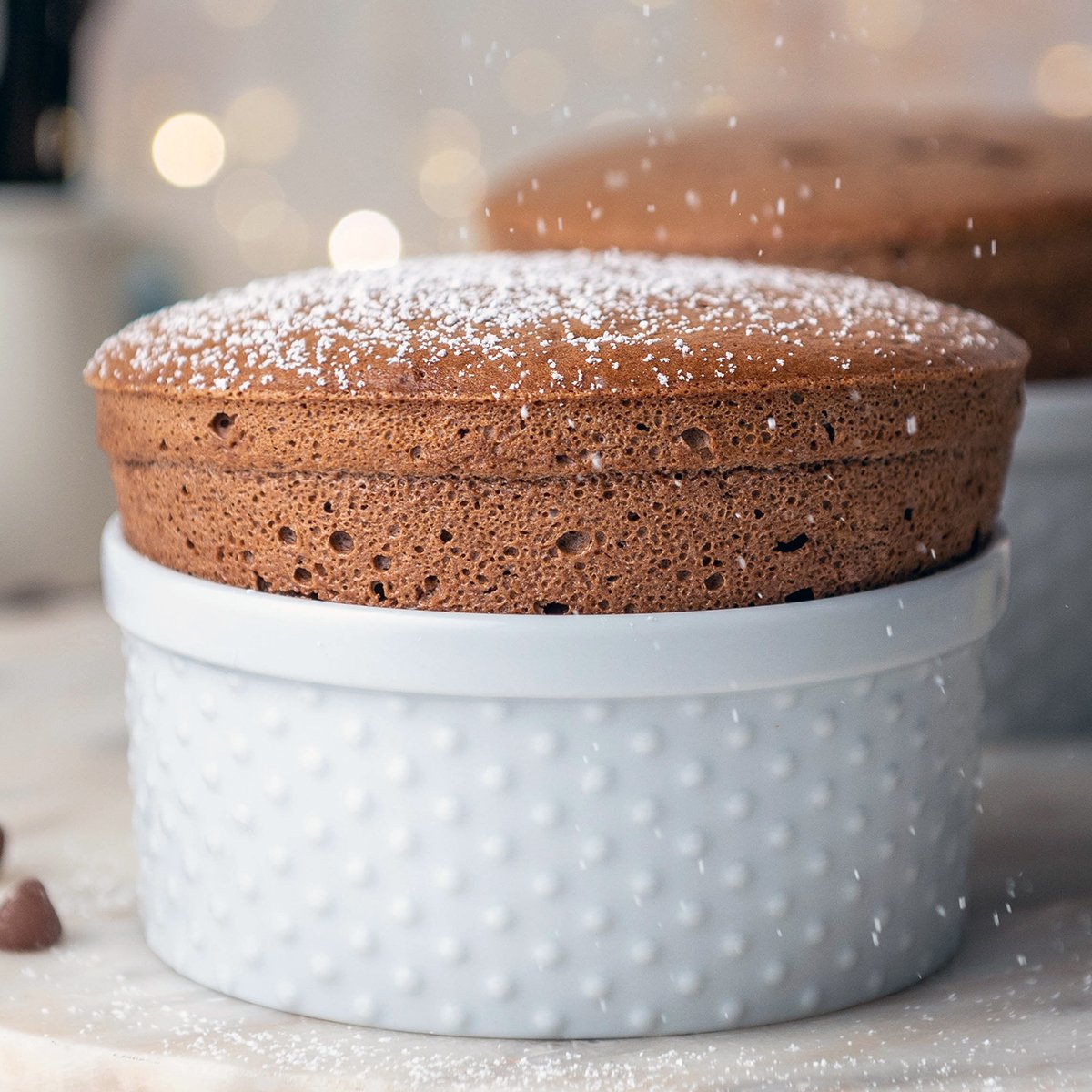
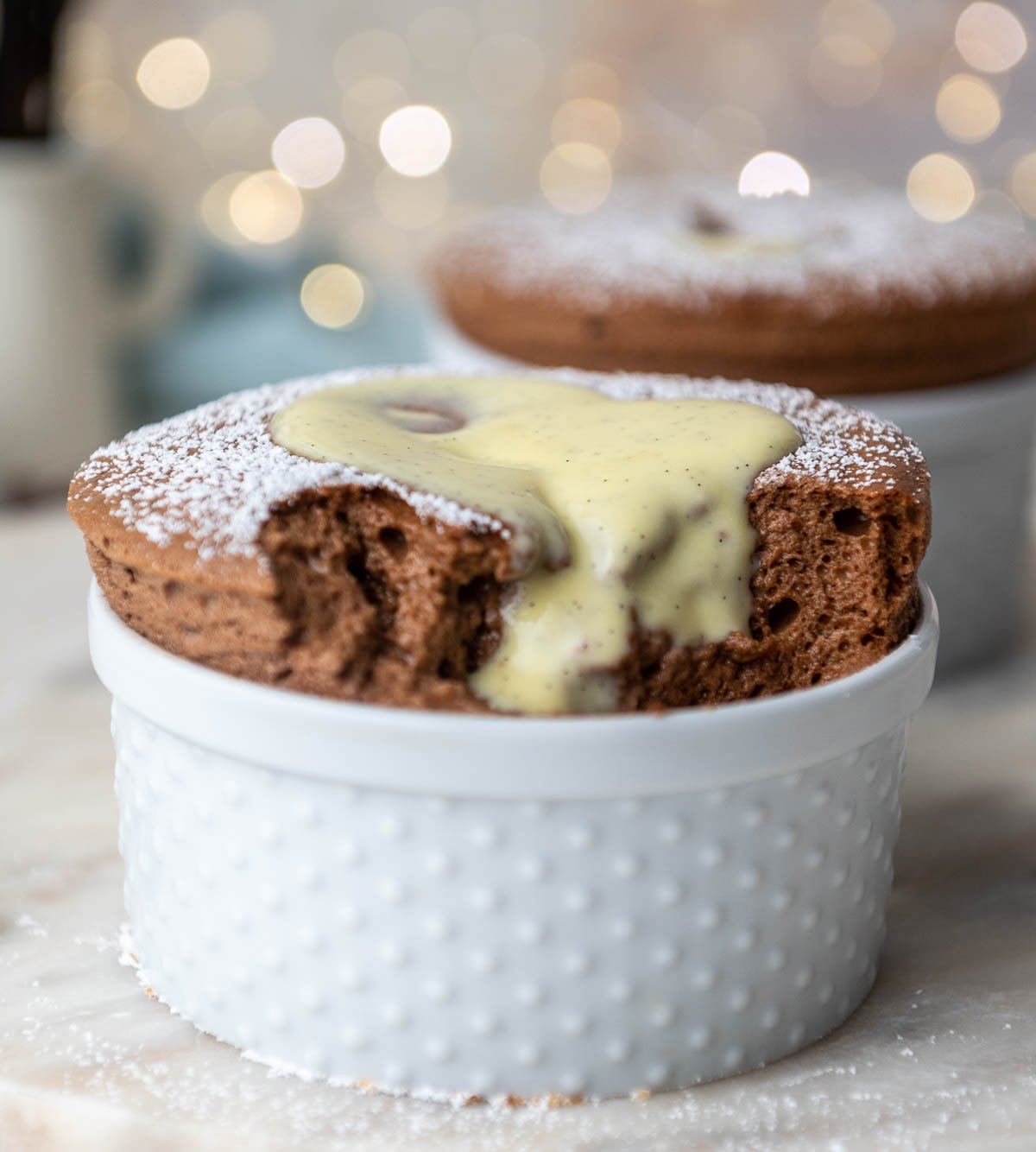
closeup of chocolate souffle

January 20, 2022 Blog

Chocolate Soufflé With Crème Anglaise

This is how to get a perfectly light and airy chocolate soufflé with an intense chocolate flavor and topped with a creamy cremé Anglaise vanilla sauce. Follow Chef Christophe Rull's foolproof tips and tricks to get your chocolate soufflé to rise nice and tall. Anyone can make a soufflé!

closeup of chocolate soufflé

Don't be intimidated by the idea of baking a soufflé! This recipe will walk you through step-by-step how to prepare and bake chocolate soufflé that tastes light, airy, creamy, chocolatey, and stands tall every time you make it!

I've got all my tips and tricks to share with you, and this recipe will ensure you have all the information you need to successfully bake a chocolate soufflé!

What's In This Blog Post

  • Chocolate Soufflé Ingredients
  • Crème Anglaise Ingredients
  • Preparing the Crème Anglaise
  • How to Make Chocolate Soufflé Step-by-Step
  • Baking the Chocolate Soufflé
  • Tips for the Perfect Chocolate Soufflé
  • FAQ
  • More Recipes You'll Love

Chocolate Soufflé Ingredients

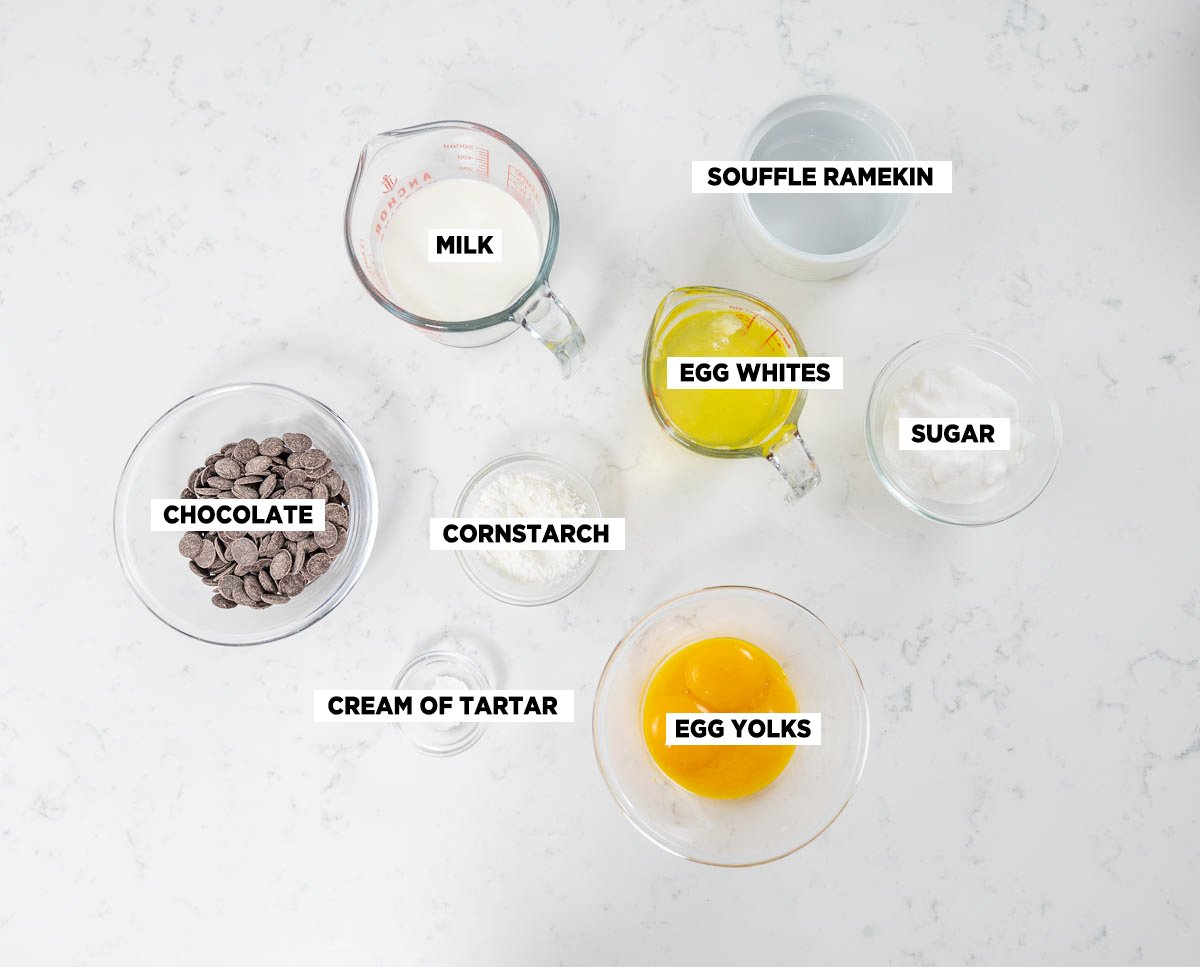
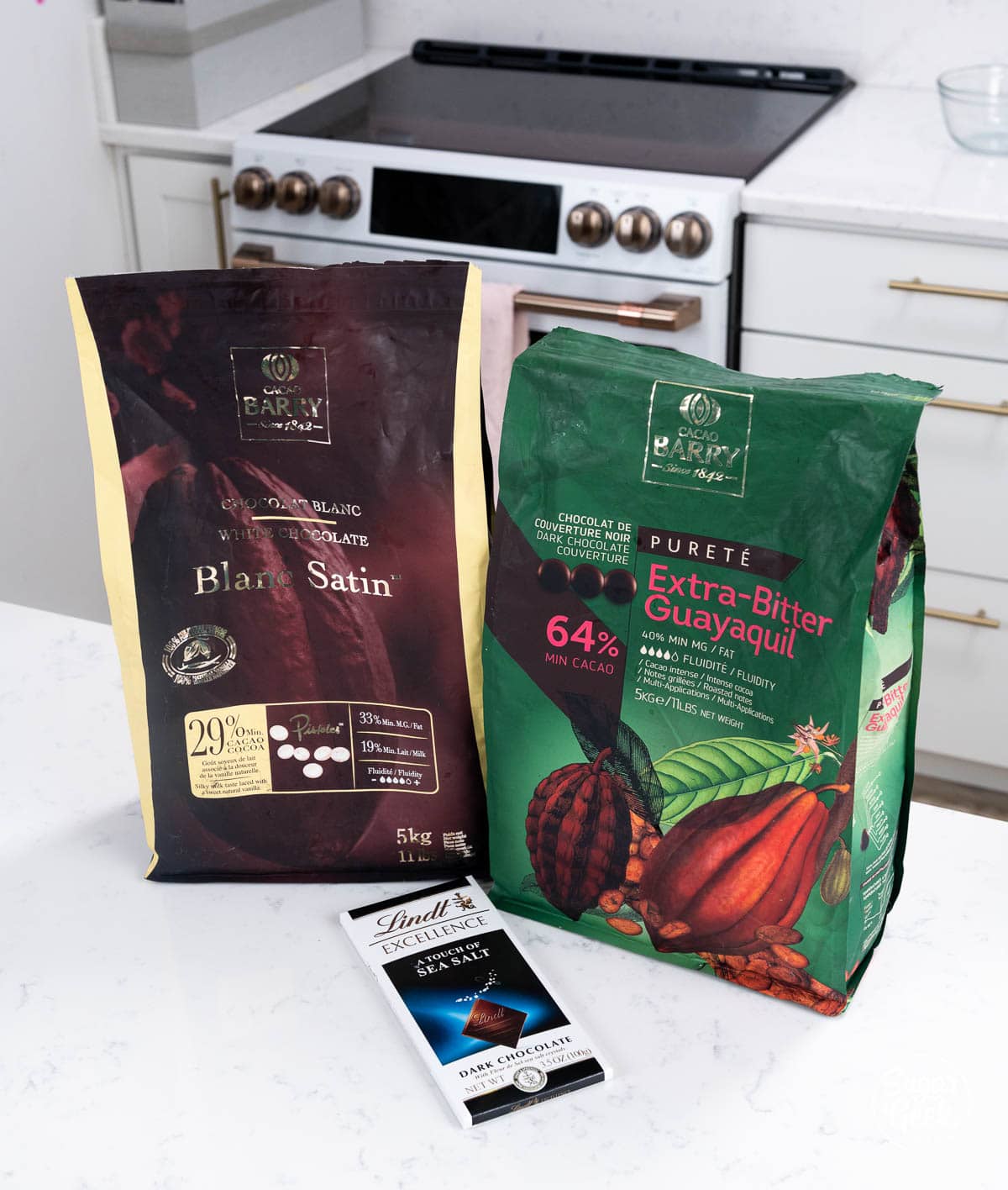
There aren't any tricky ingredients in this recipe but you might want to double-check your chocolate. I use extra-bitter Guayaquil but you could just look for a nice bar of dark chocolate at your grocery store like Lindt and just chop it up. You want to avoid chocolate chips because they contain thickeners that stop them from melting smoothly.

chocolate souffle ingredients

Crème Anglaise Ingredients

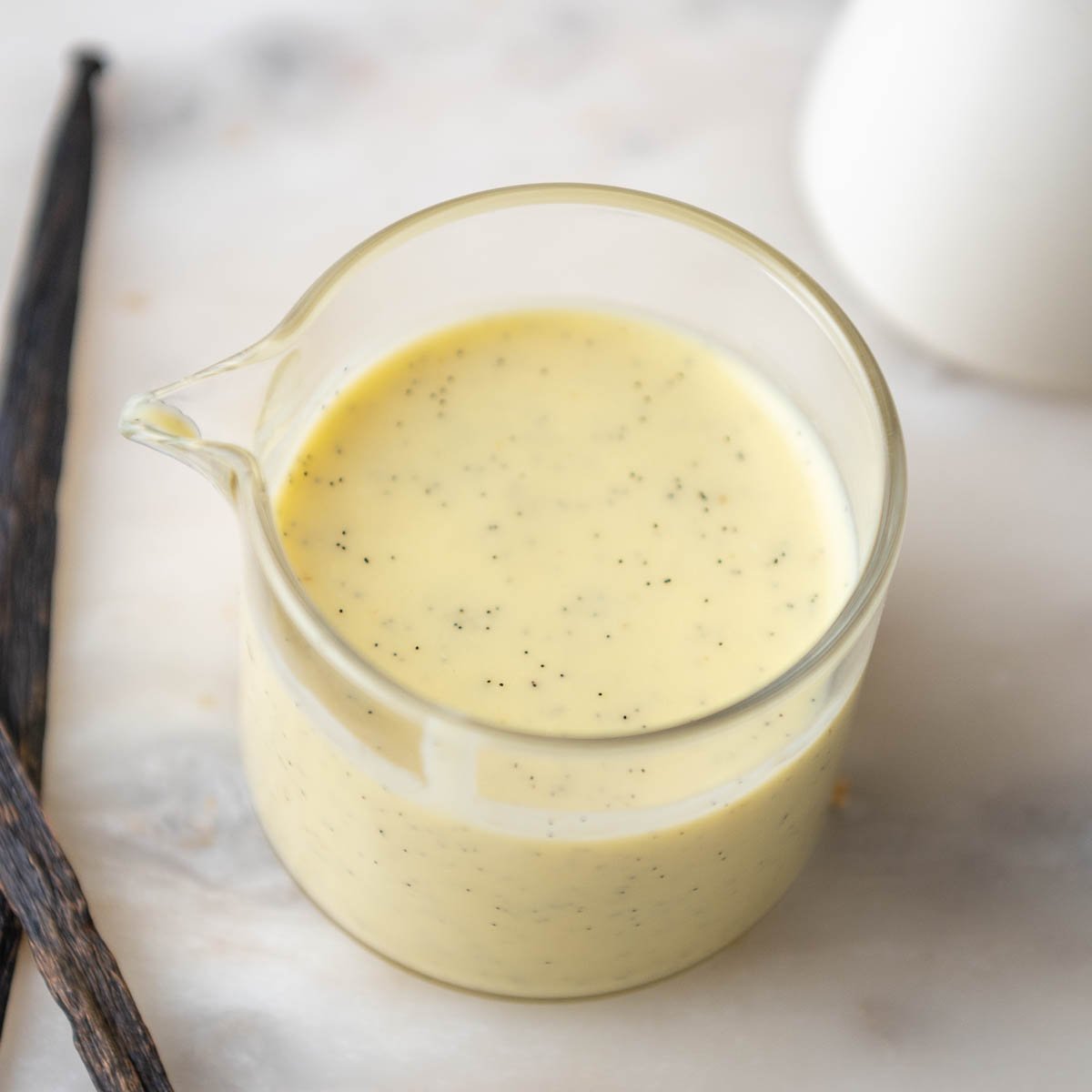
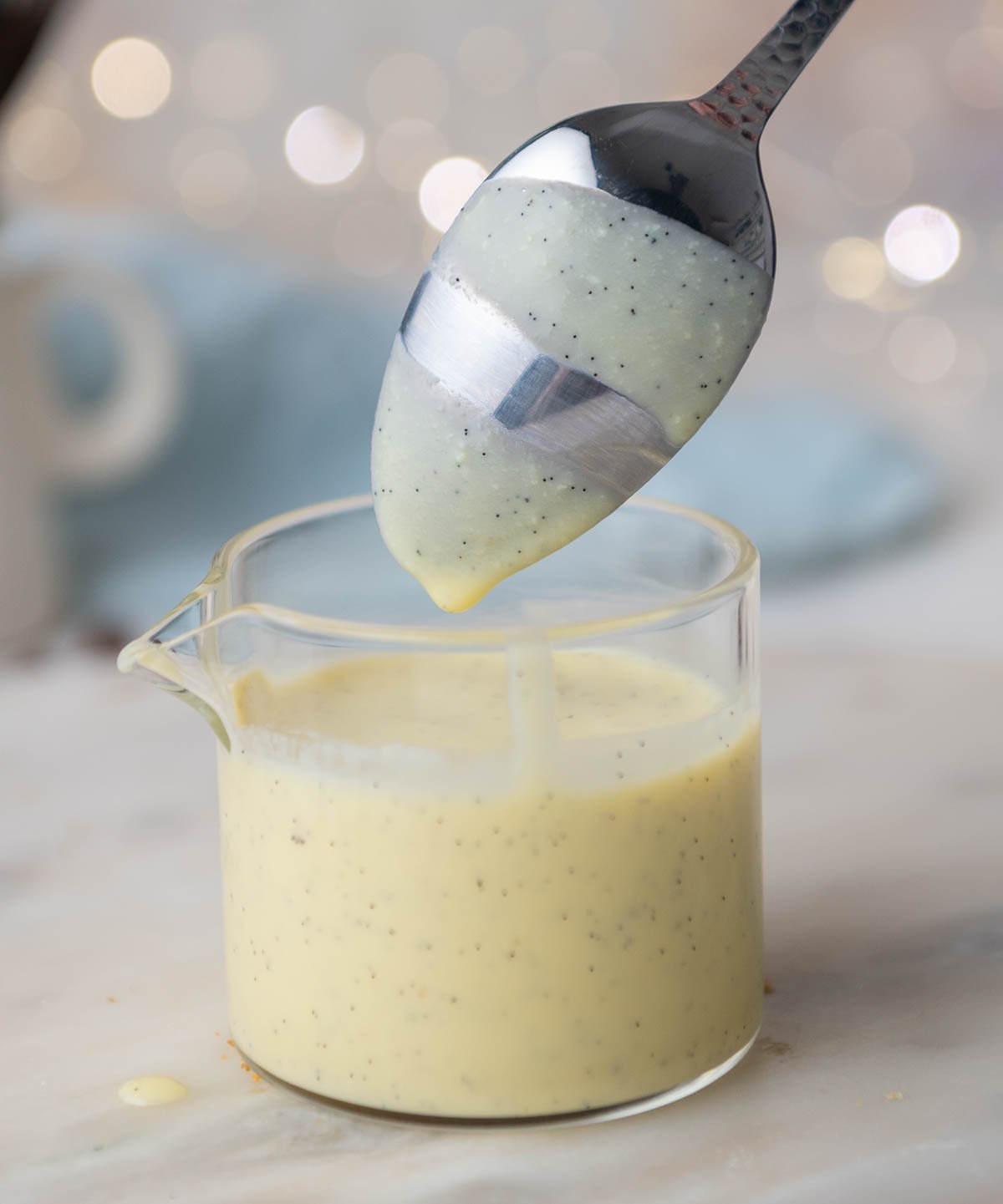
close up of creme anglaise vanilla sauce

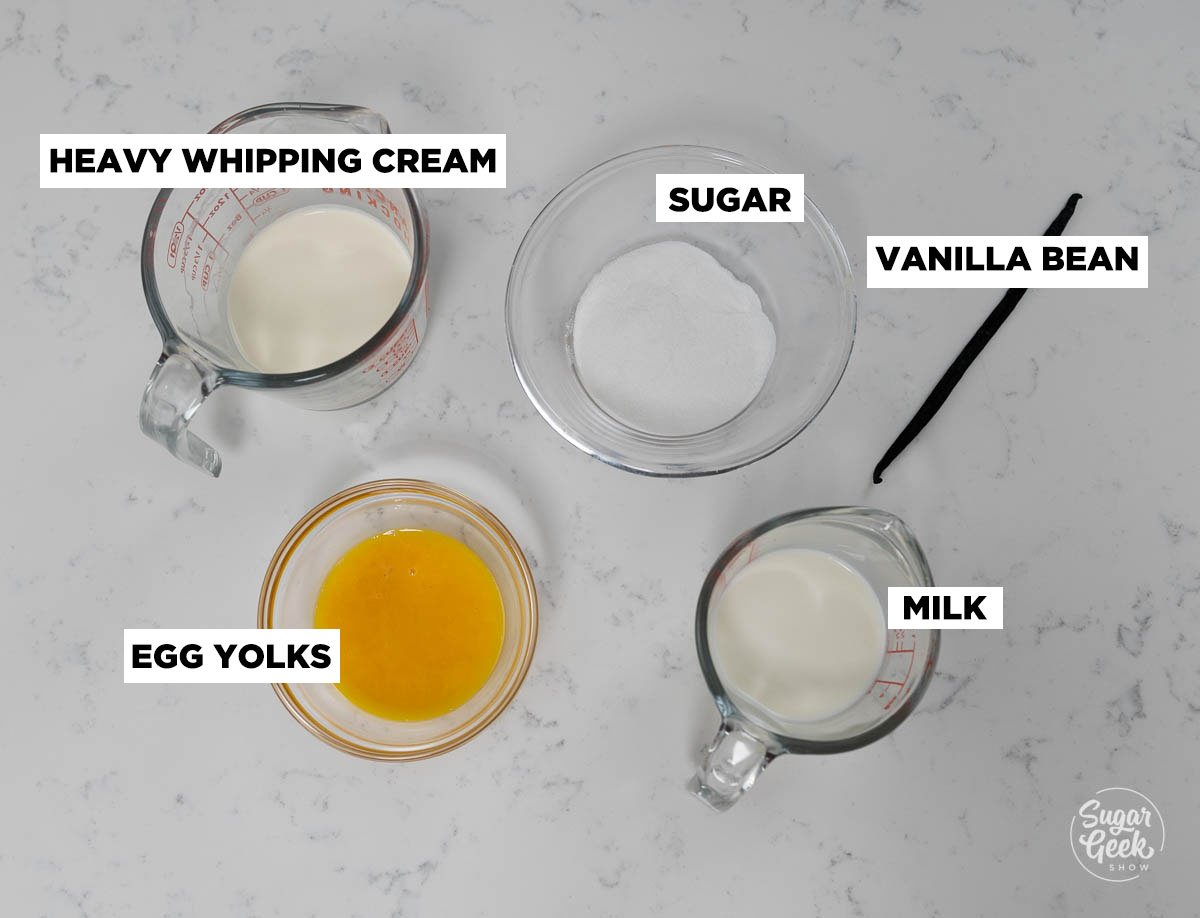
To make crème anglaise you only need three ingredients: milk, eggs, and a vanilla bean.

Don't have a vanilla bean? No problem! You can substitute with 1 teaspoon of vanilla bean paste or a high-quality vanilla extract.

Preparing the Crème Anglaise

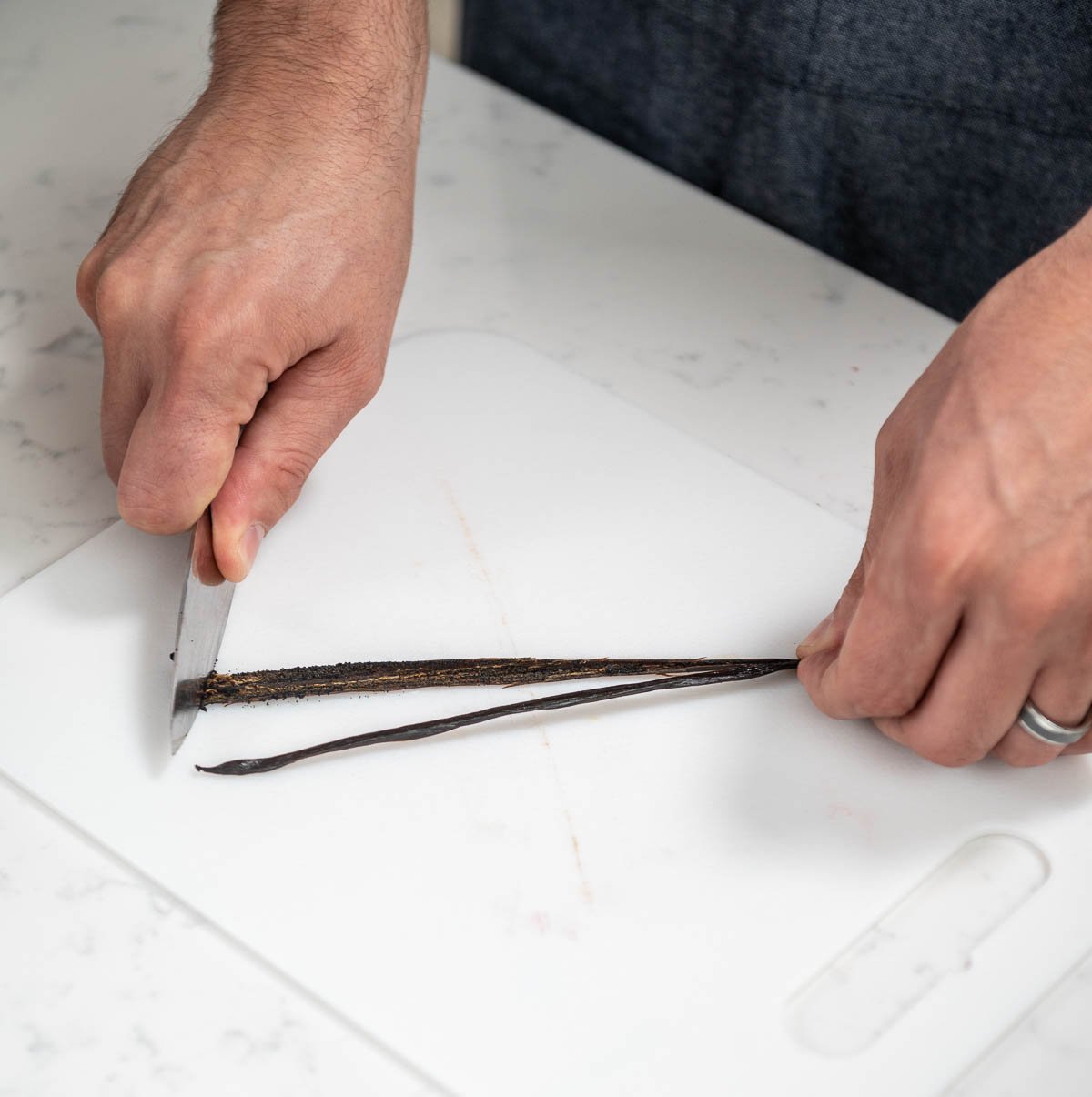
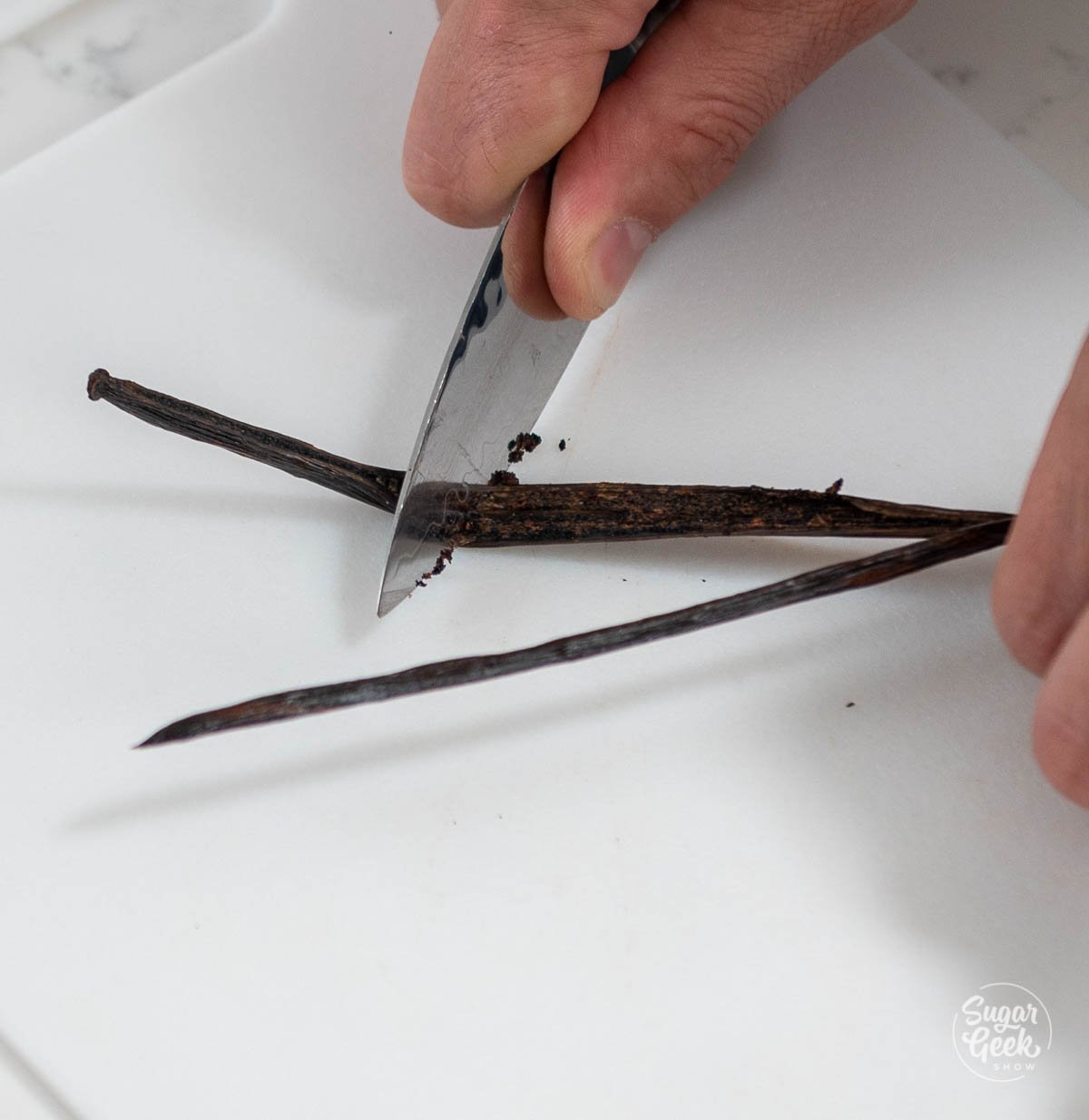
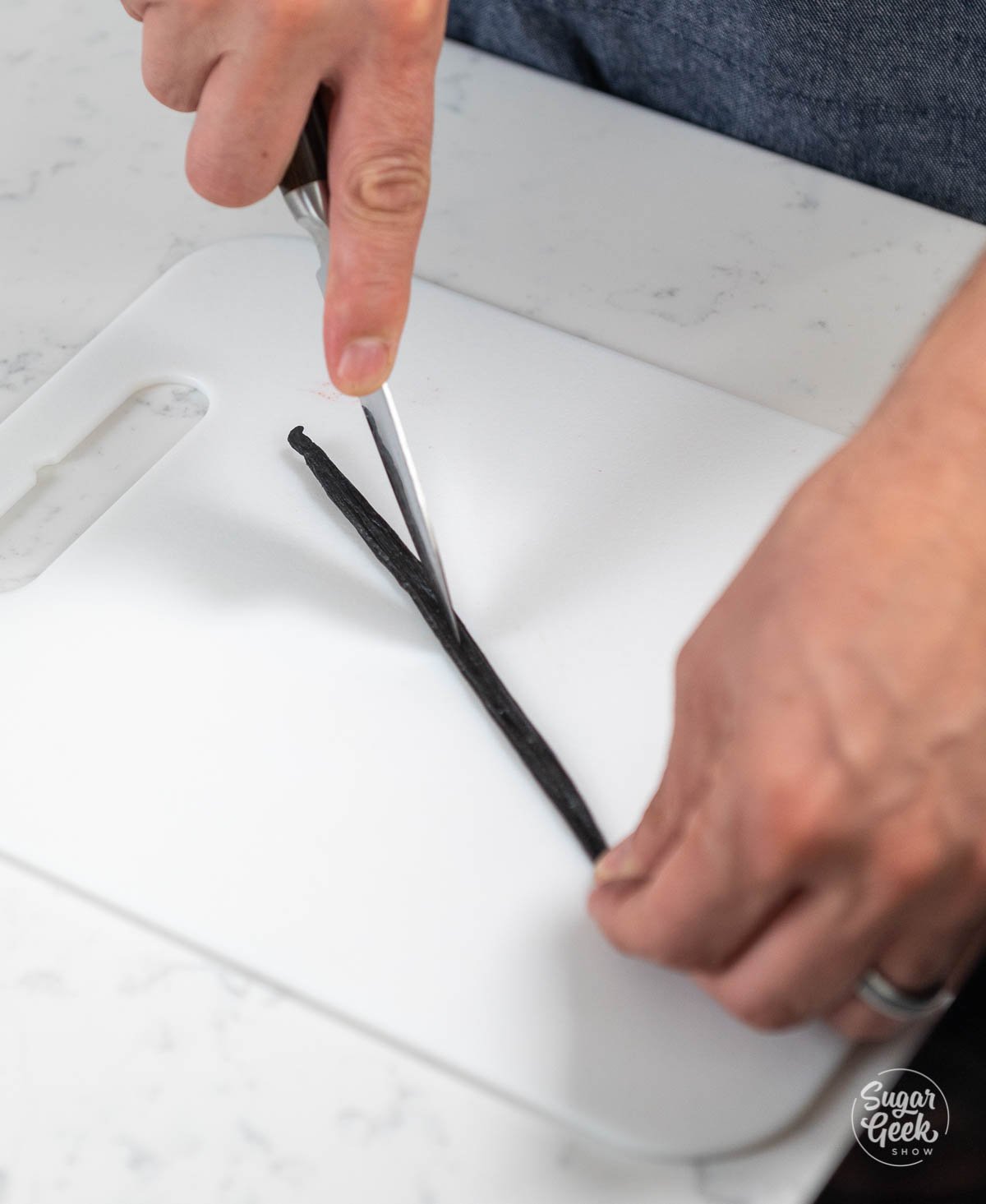
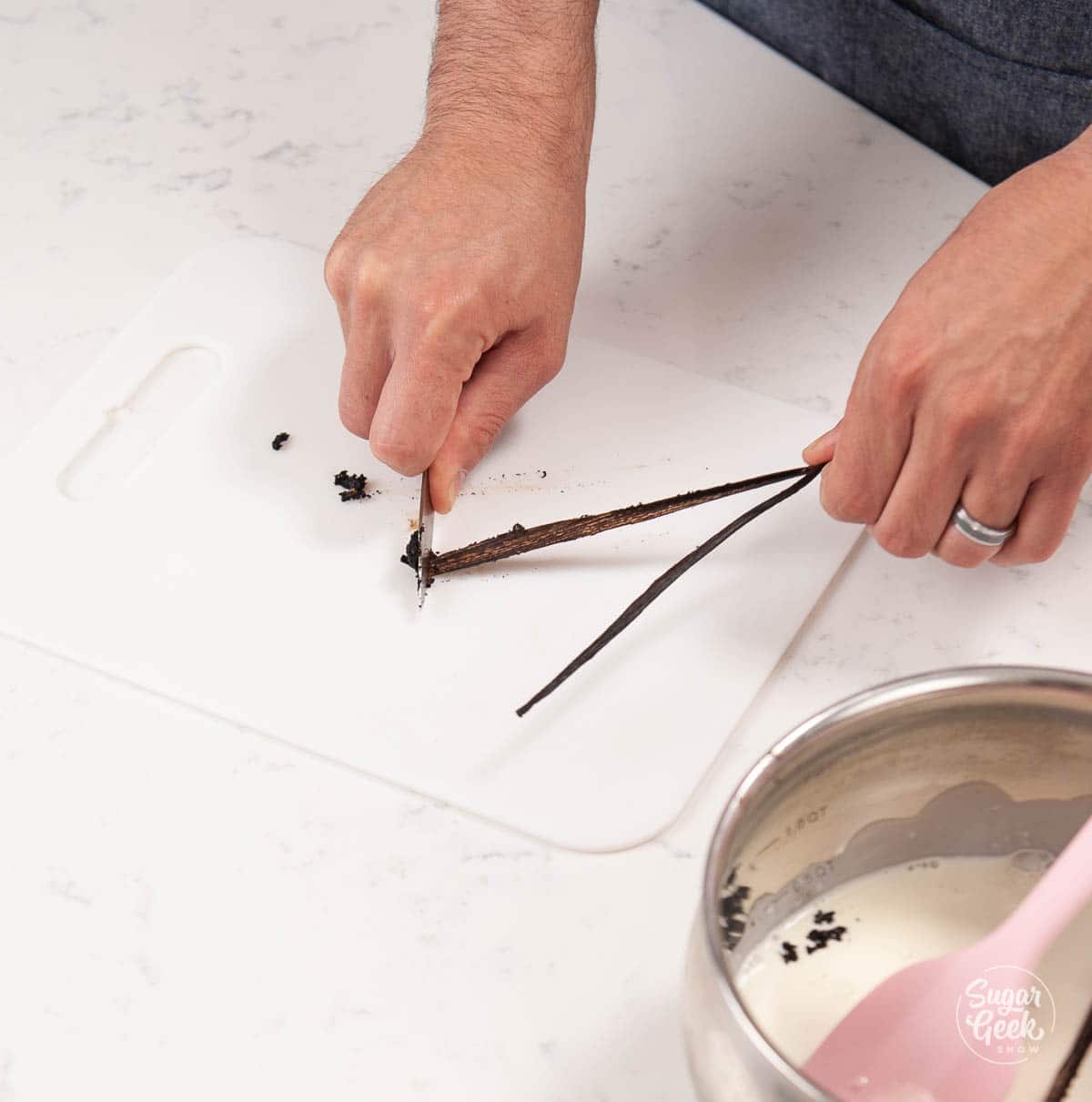
  1. First, cut your vanilla bean in half lengthwise and carefully scrape the seeds out with a knife.
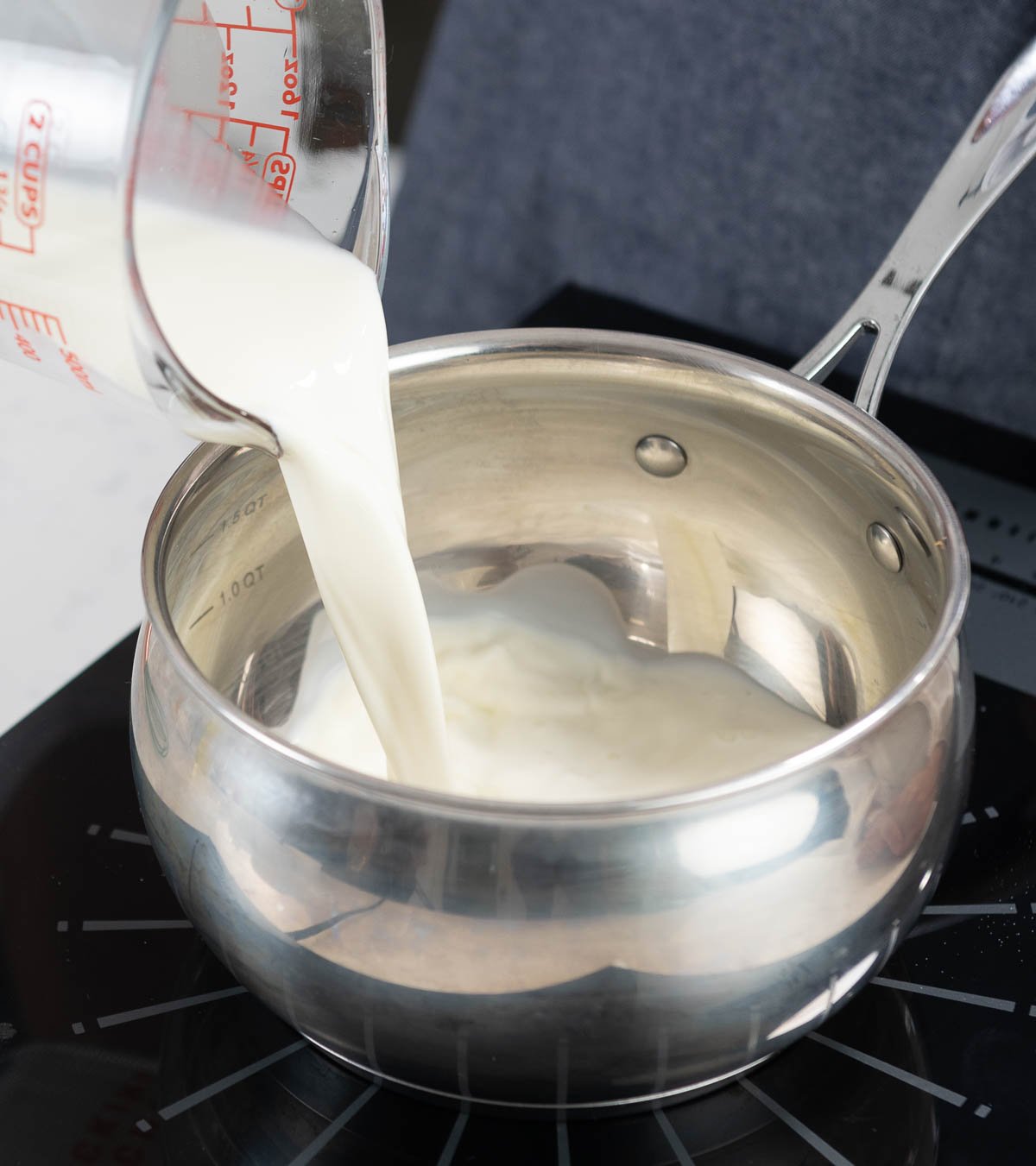
  2. Next, pour the milk into a saucepan. Turn the heat onto medium heat.
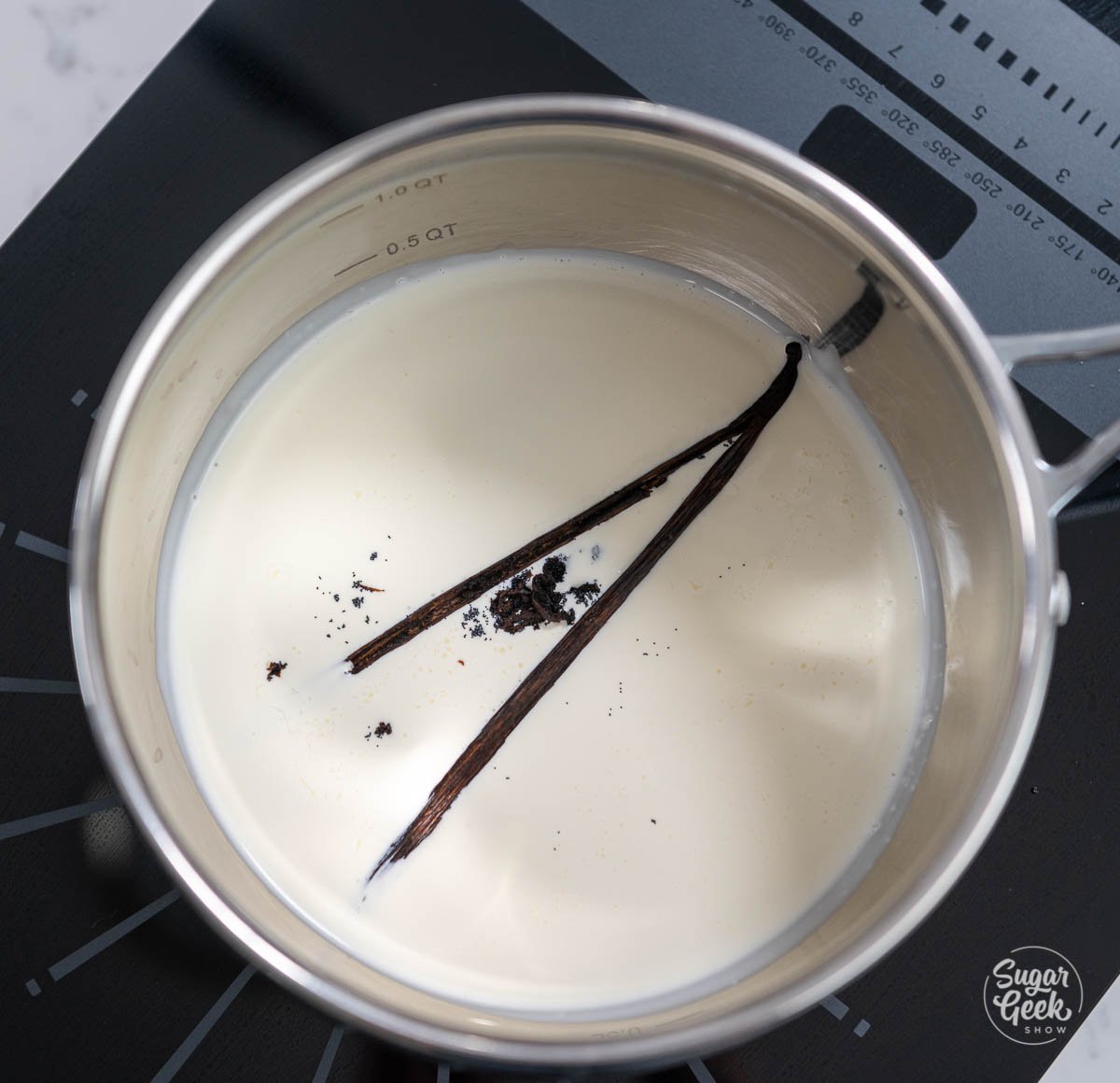
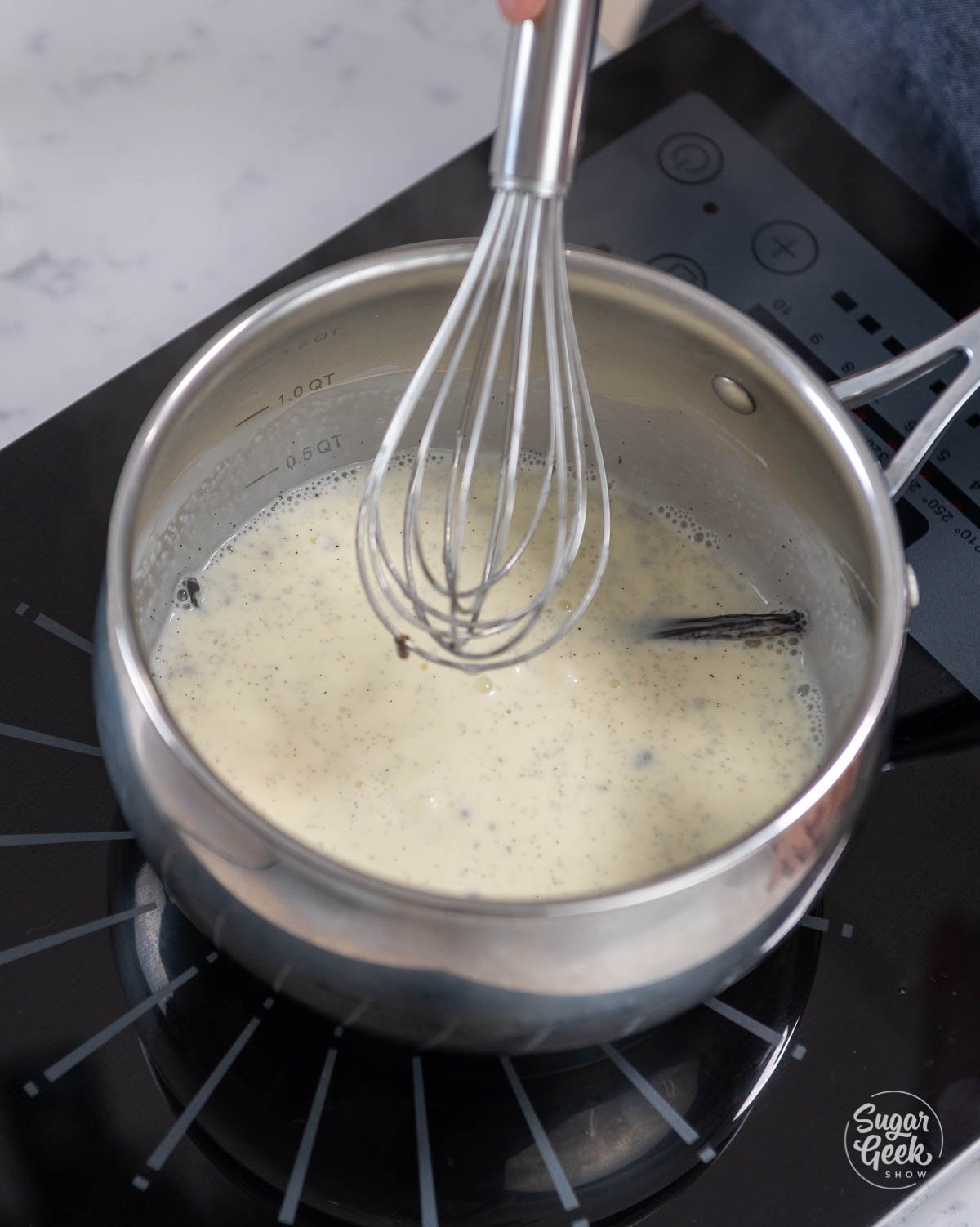
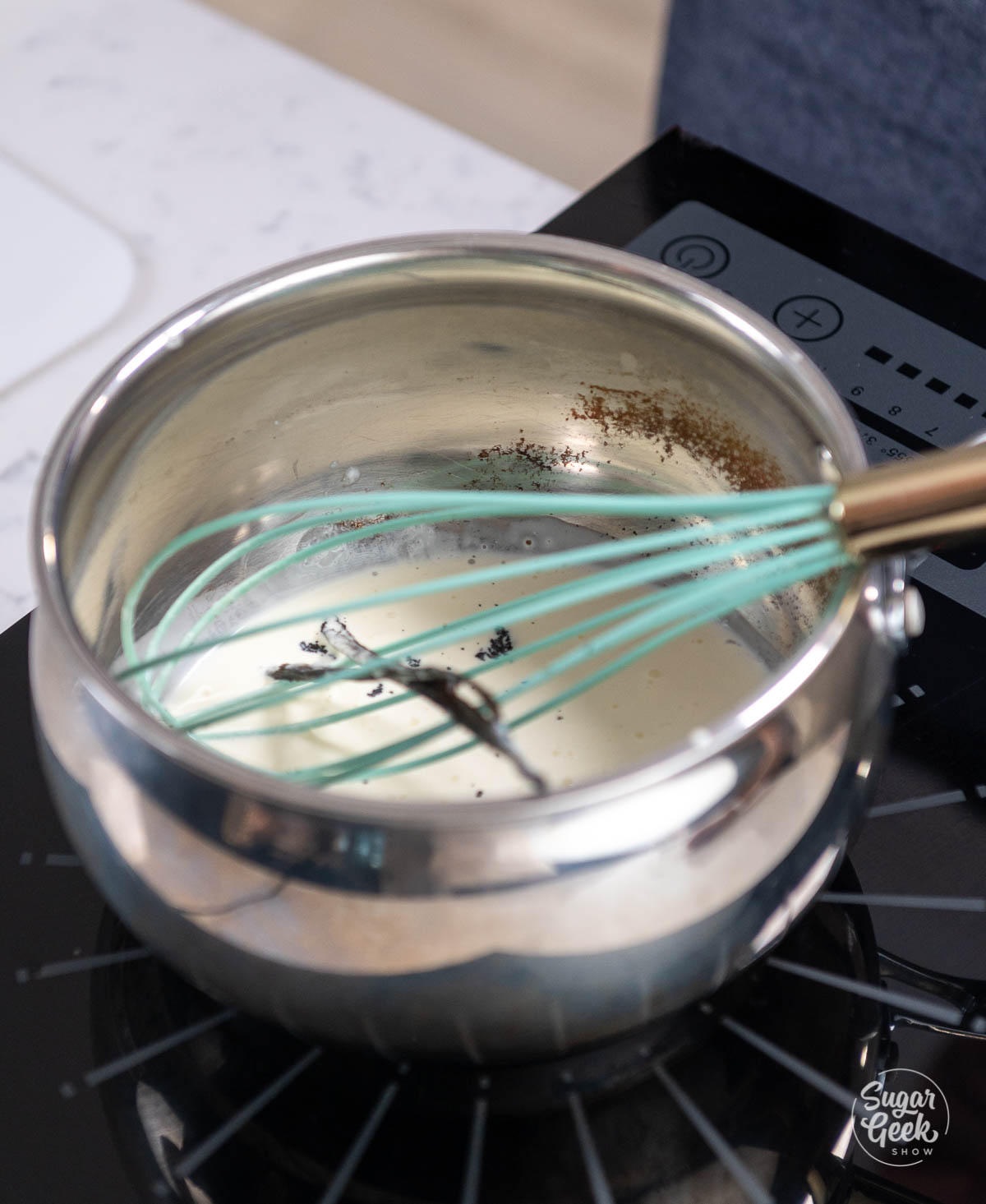
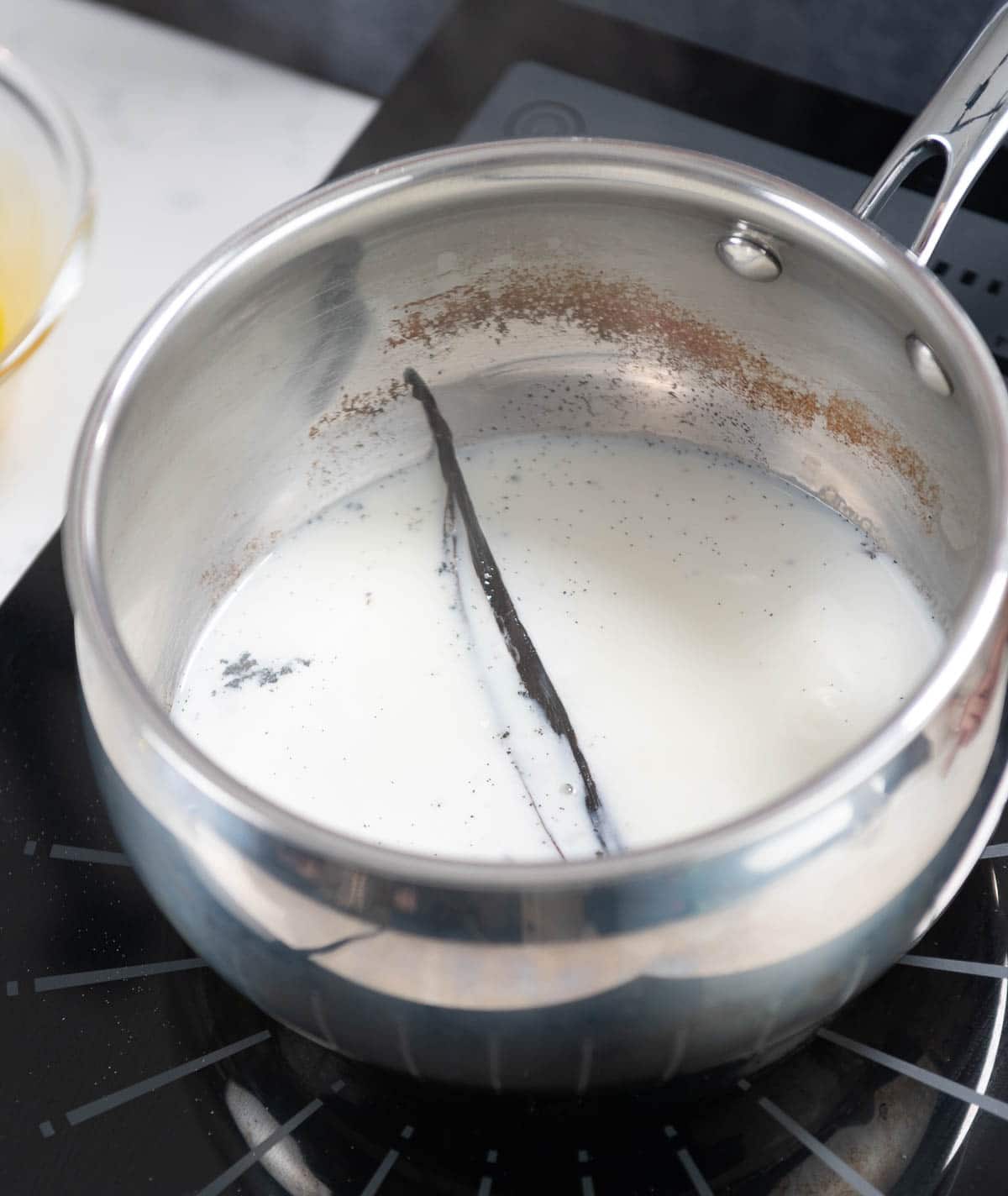
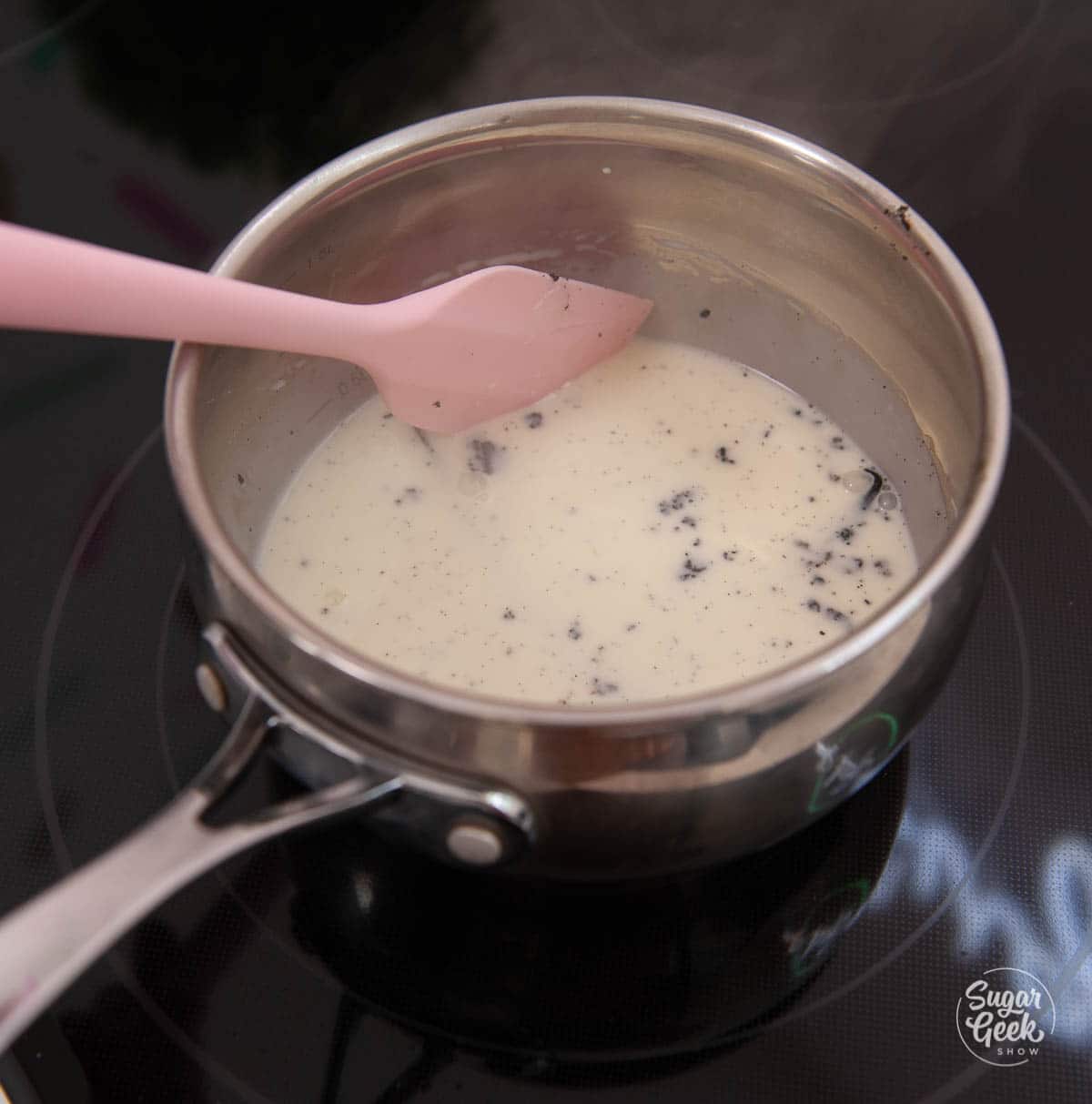
  3. Then, add the vanilla bean seeds and the pod into the milk.vanilla bean pod and seeds in a saucepan with milk
  4. Bring the milk to a simmer, and then remove it from the heat. We are not trying to boil the milk, just heat it enough to enfuse it with the vanilla flavor.
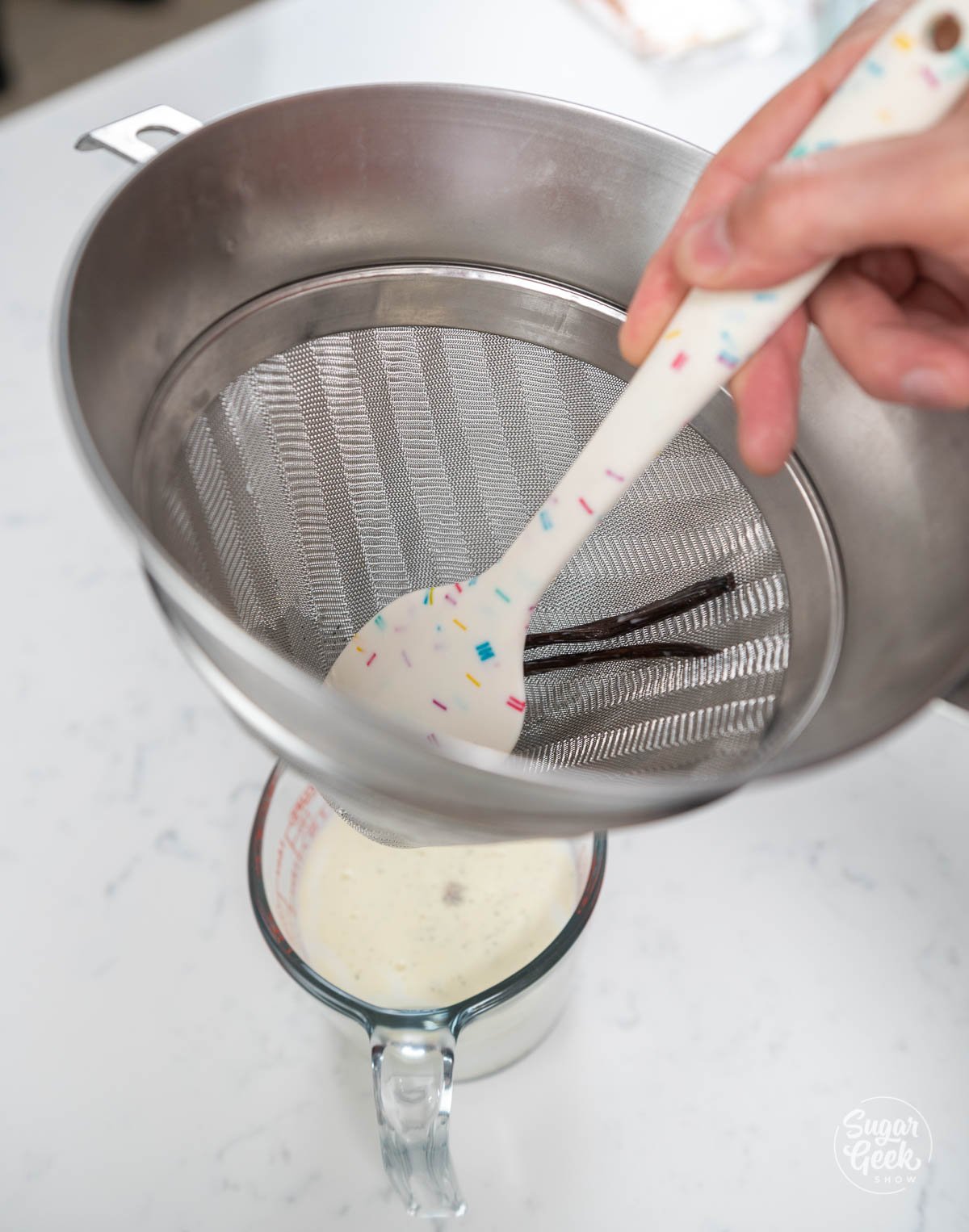
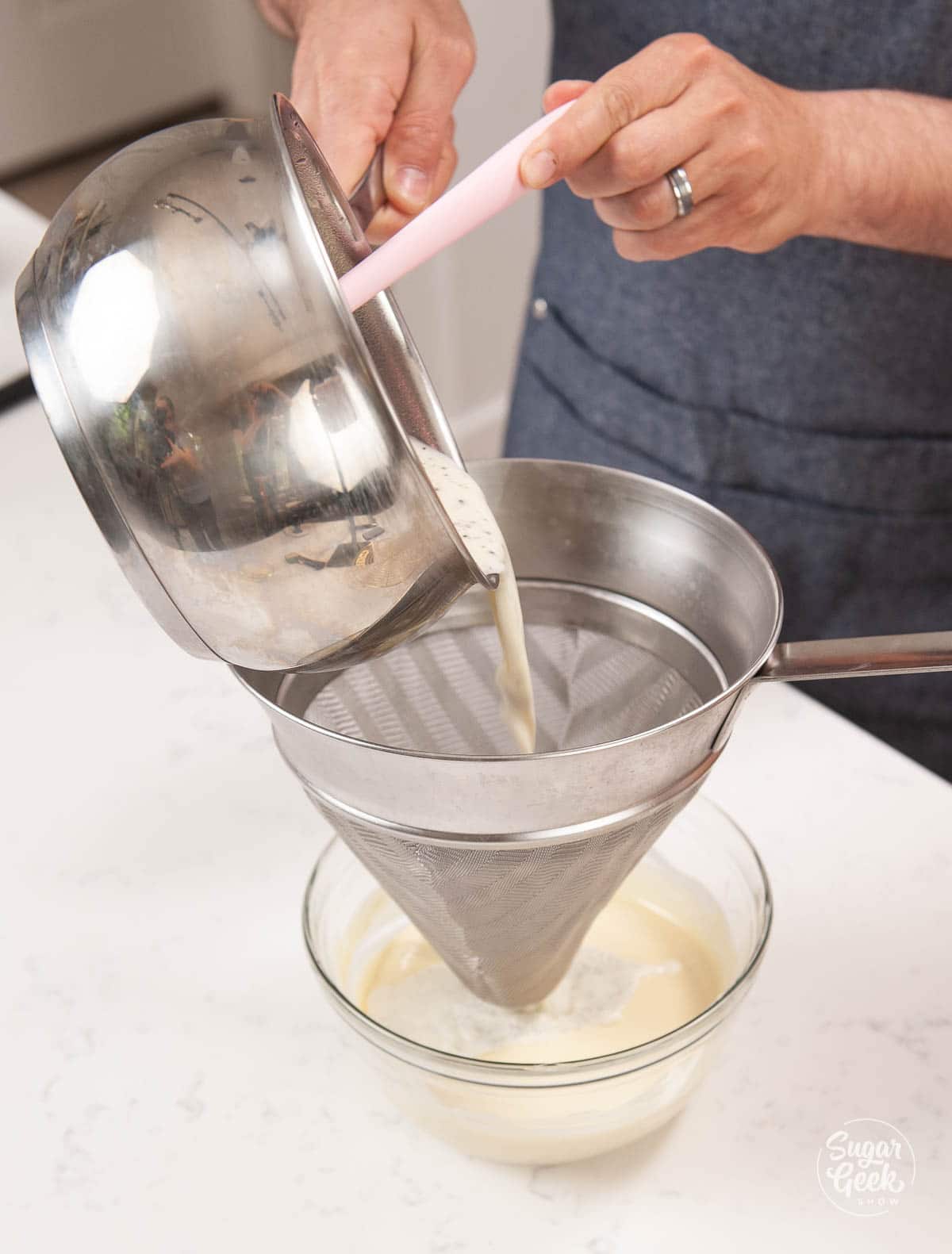
  5. Next, strain the milk and vanilla bean mixture to remove the vanilla bean pod.
  6. In a mixing bowl, whisk the egg yolks to break them up.
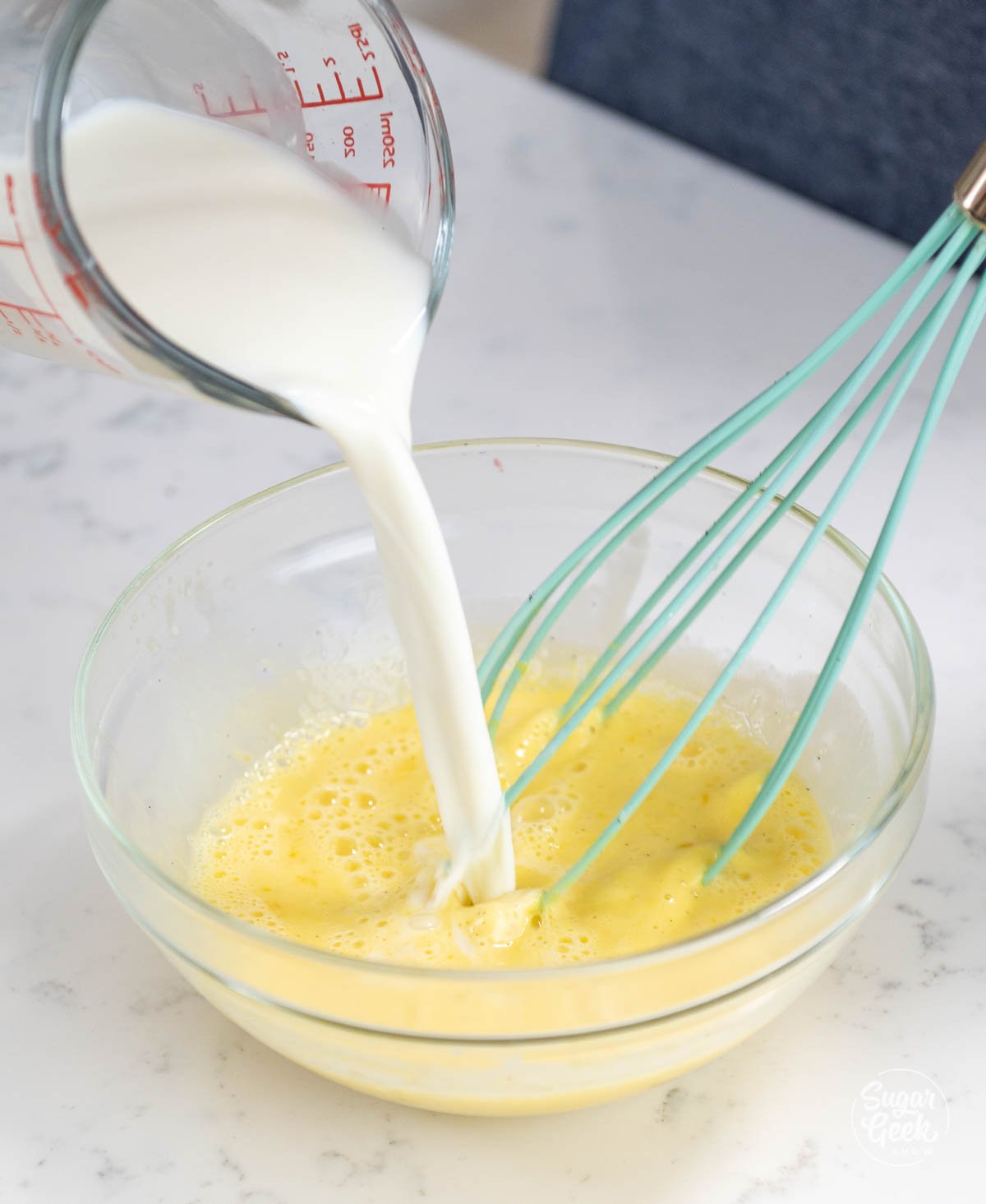
  7. Add in ⅓ of the hot milk mixture into the egg yolks, and whisk to combine them. This will heat the eggs up just enough that they wont curdle when you add them into the saucepan with the rest of the cream. adding hot milk to egg mixture
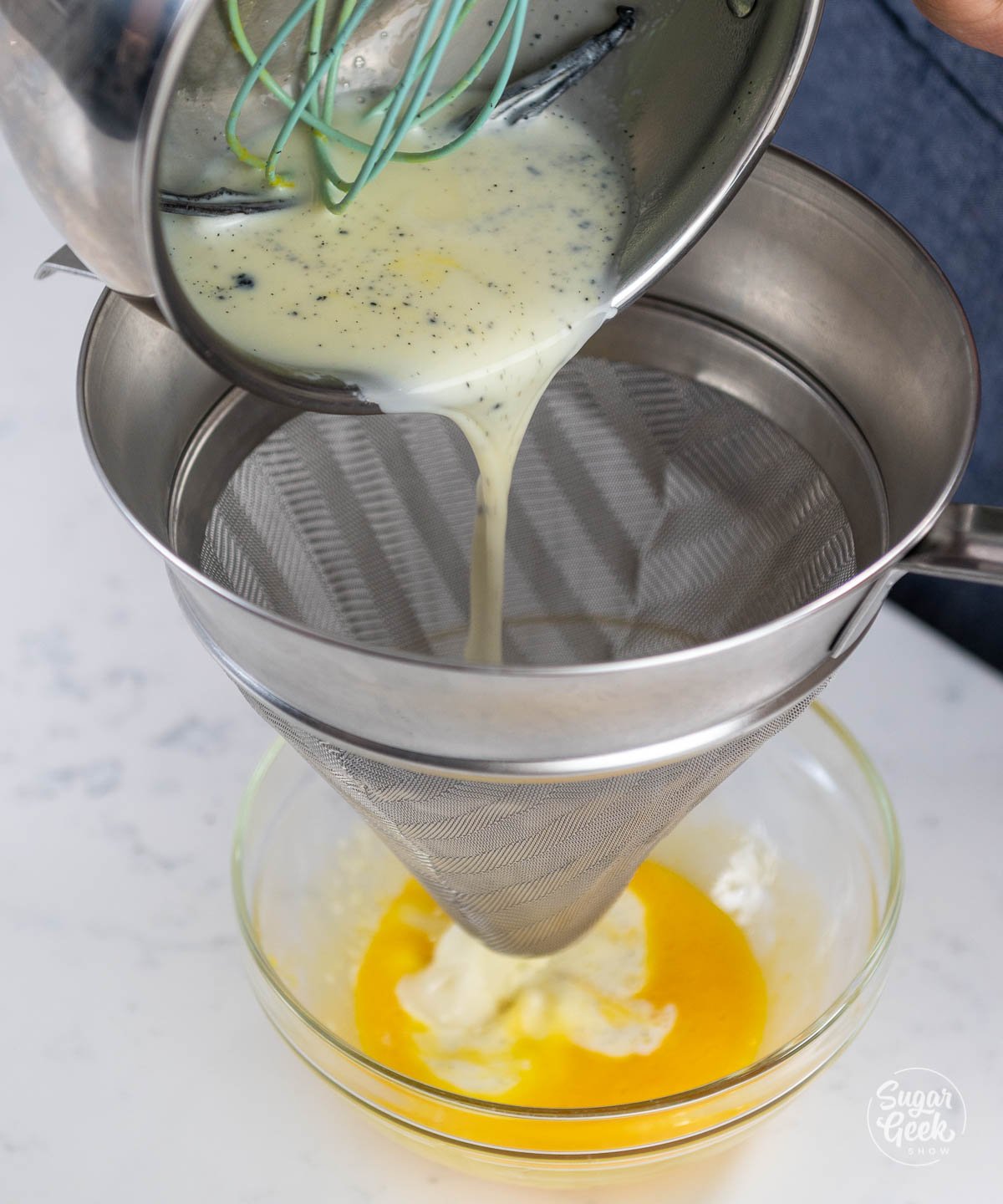
  8. Once they are combined, add the egg yolk mixture back into the saucepan and turn the heat back up to medium.adding egg mixture into cream mixture in a saucepan
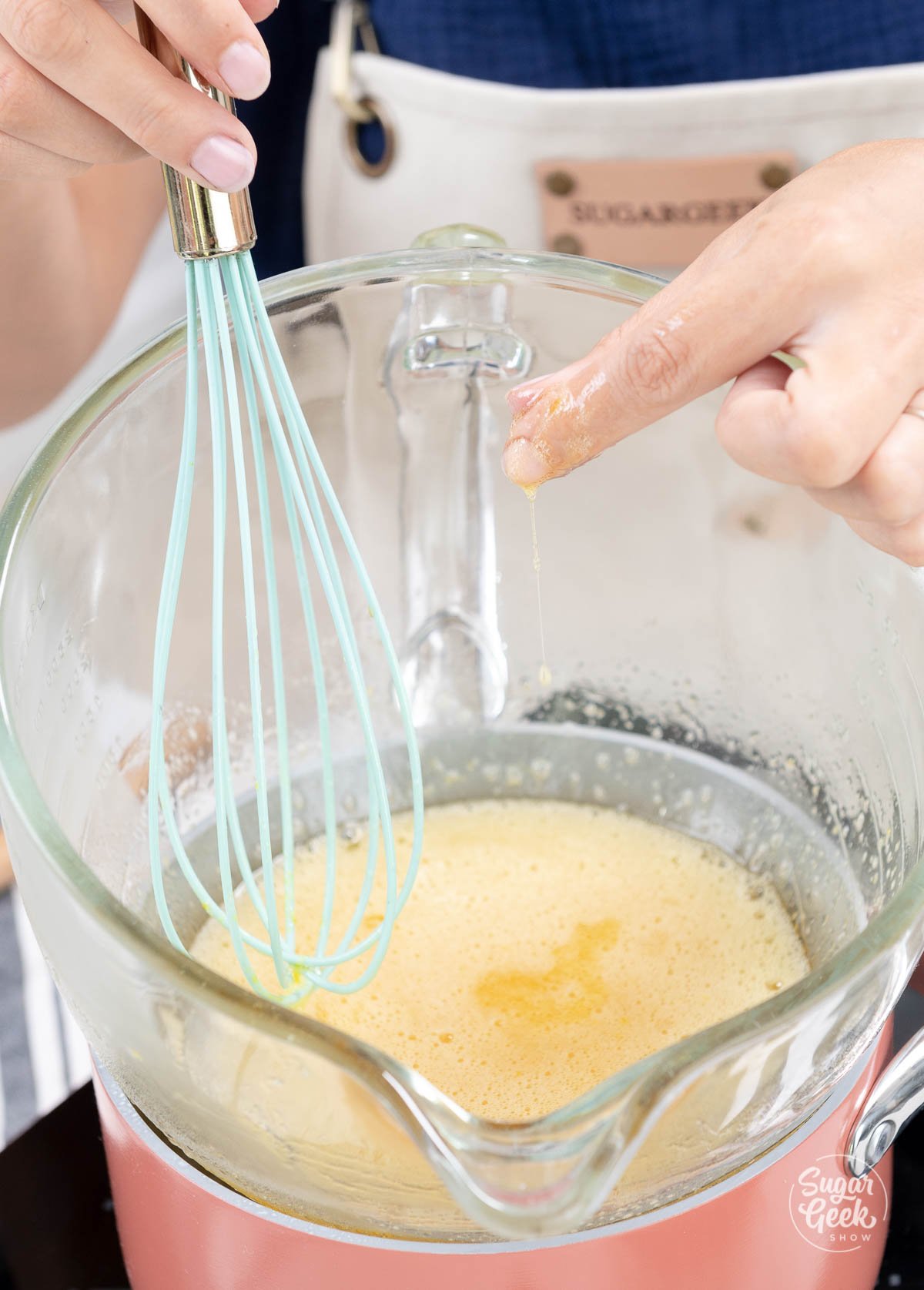
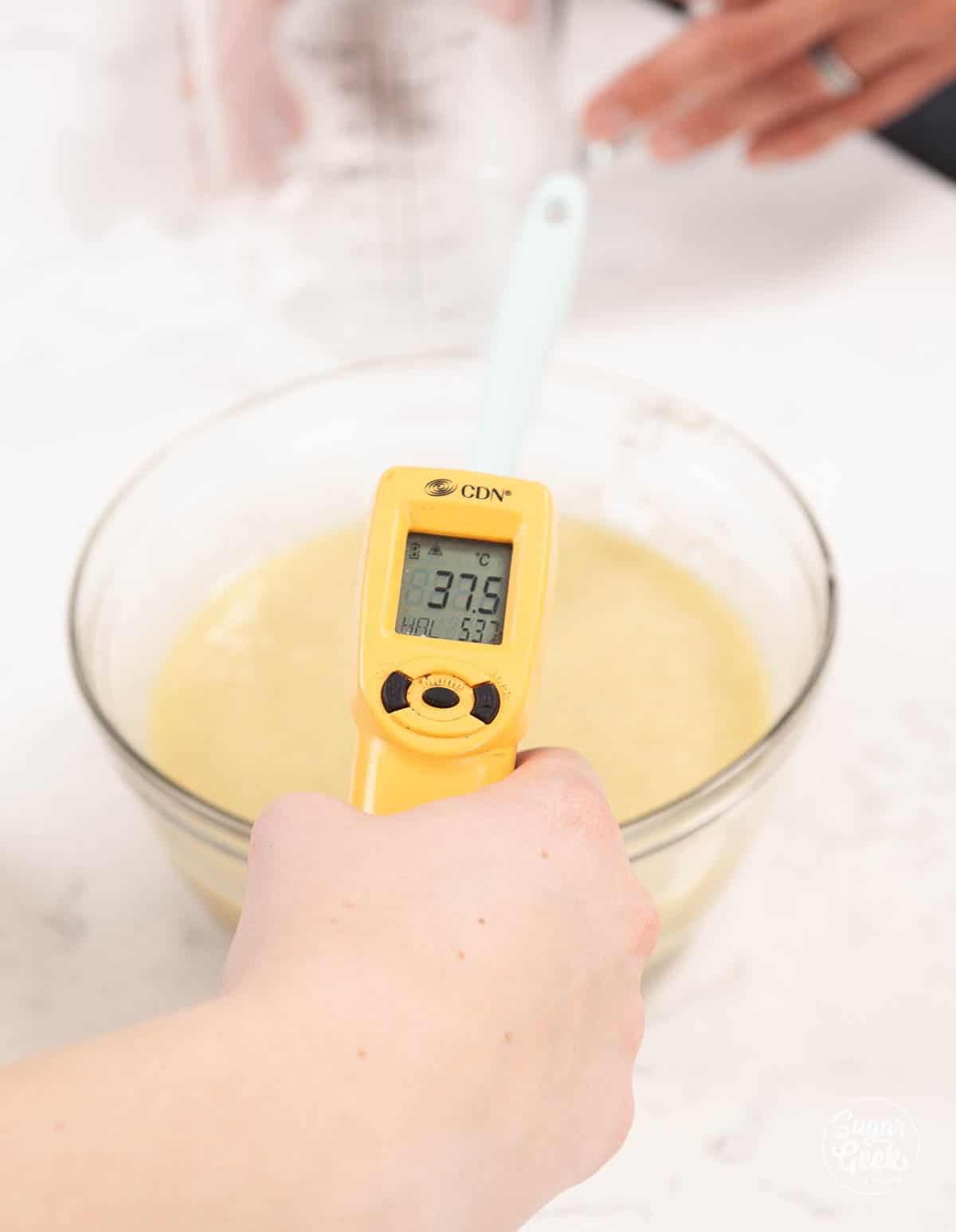
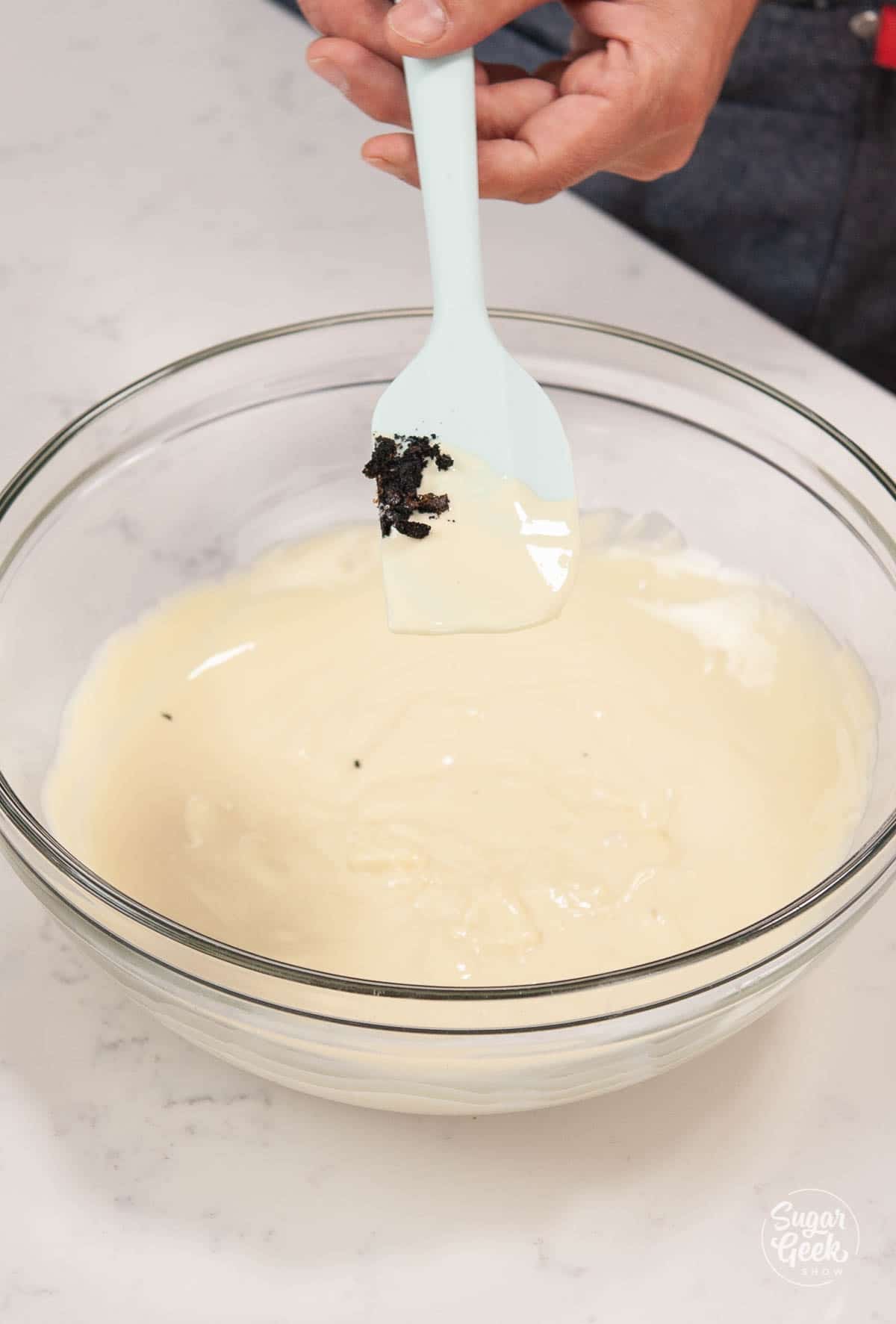
  9. Then, over medium heat, whisk the mixture constantly until it begins to bubble and thicken. Be very careful not to overheat the mixture. testing the thickness of creme anglaise
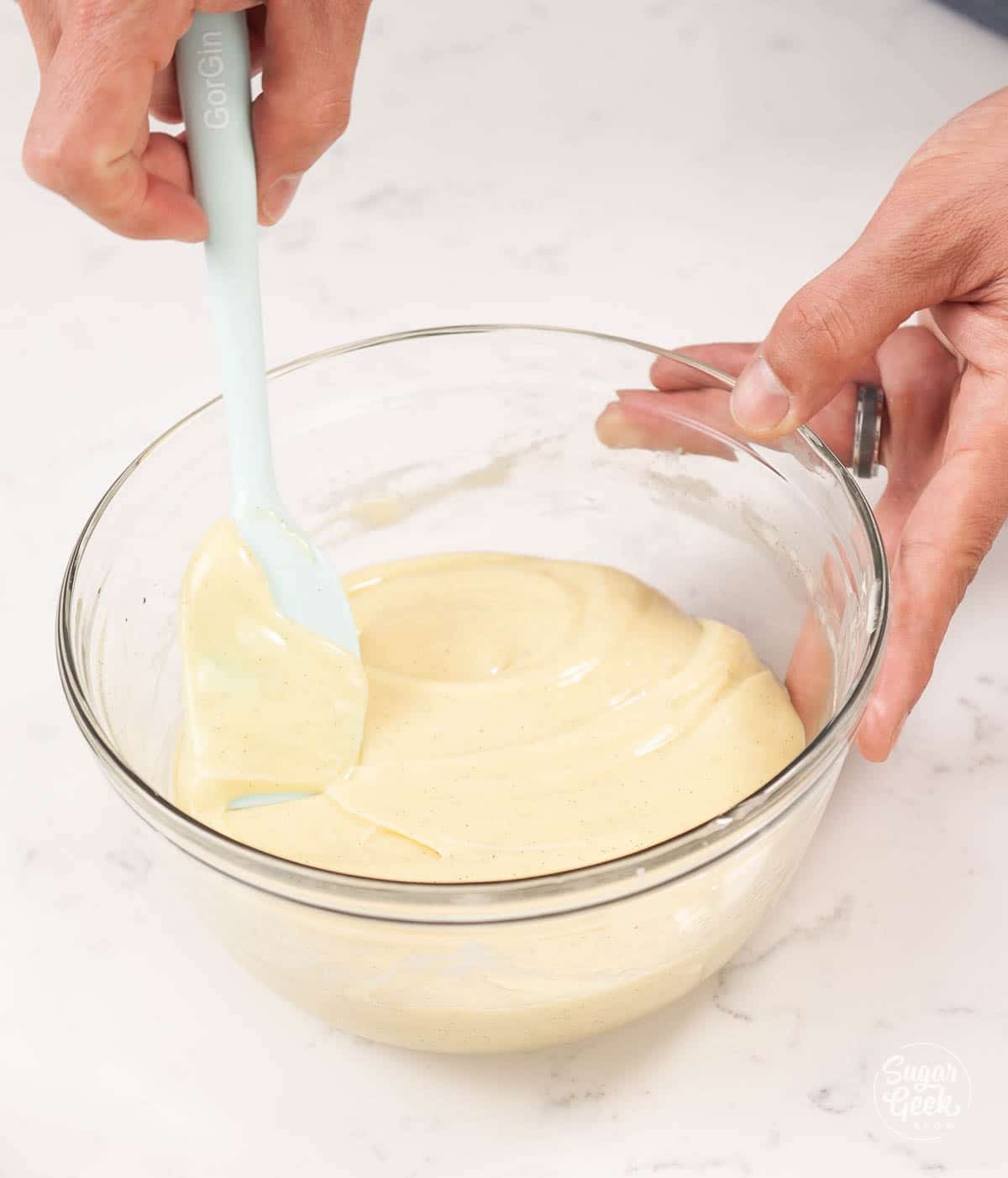
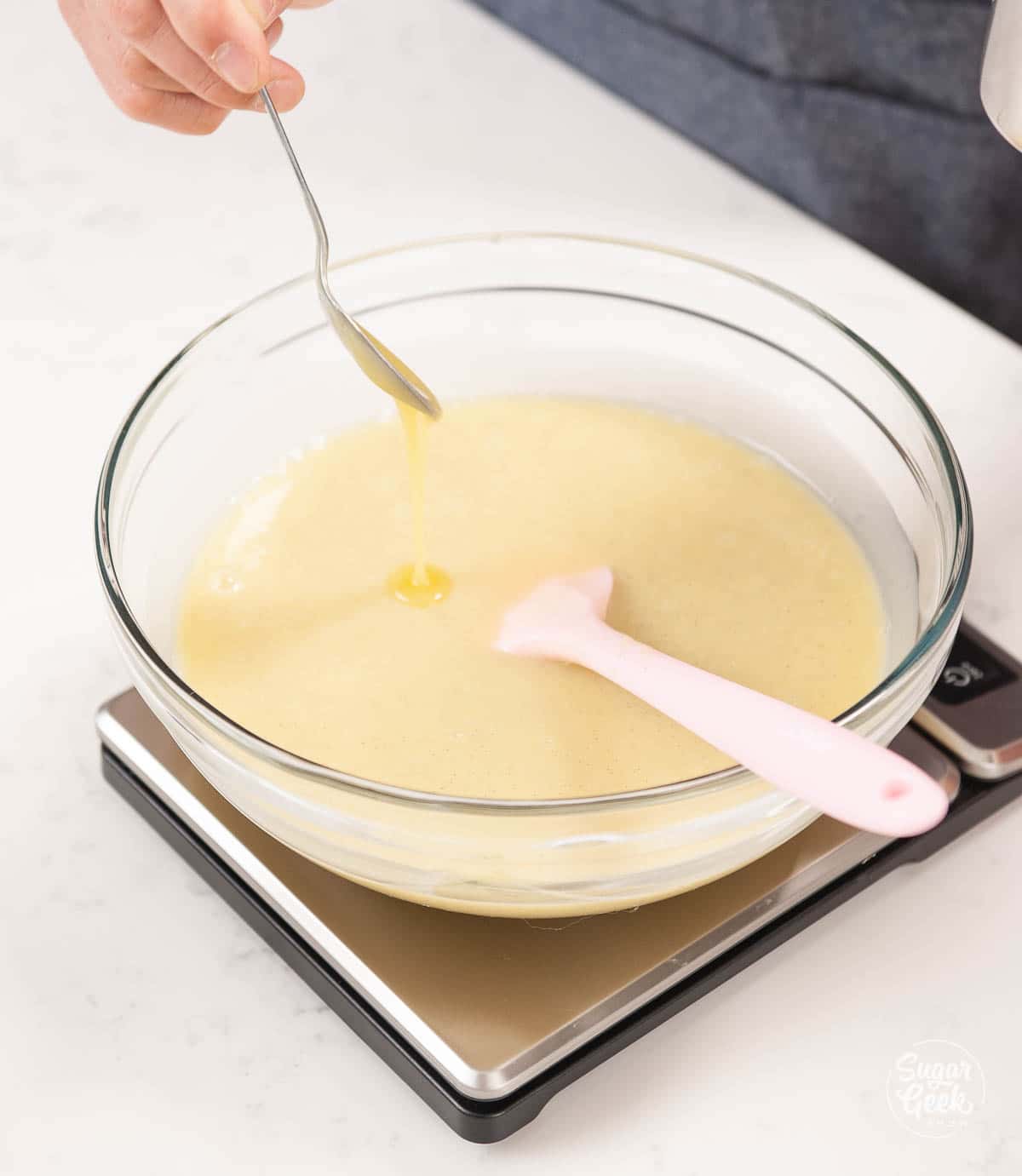
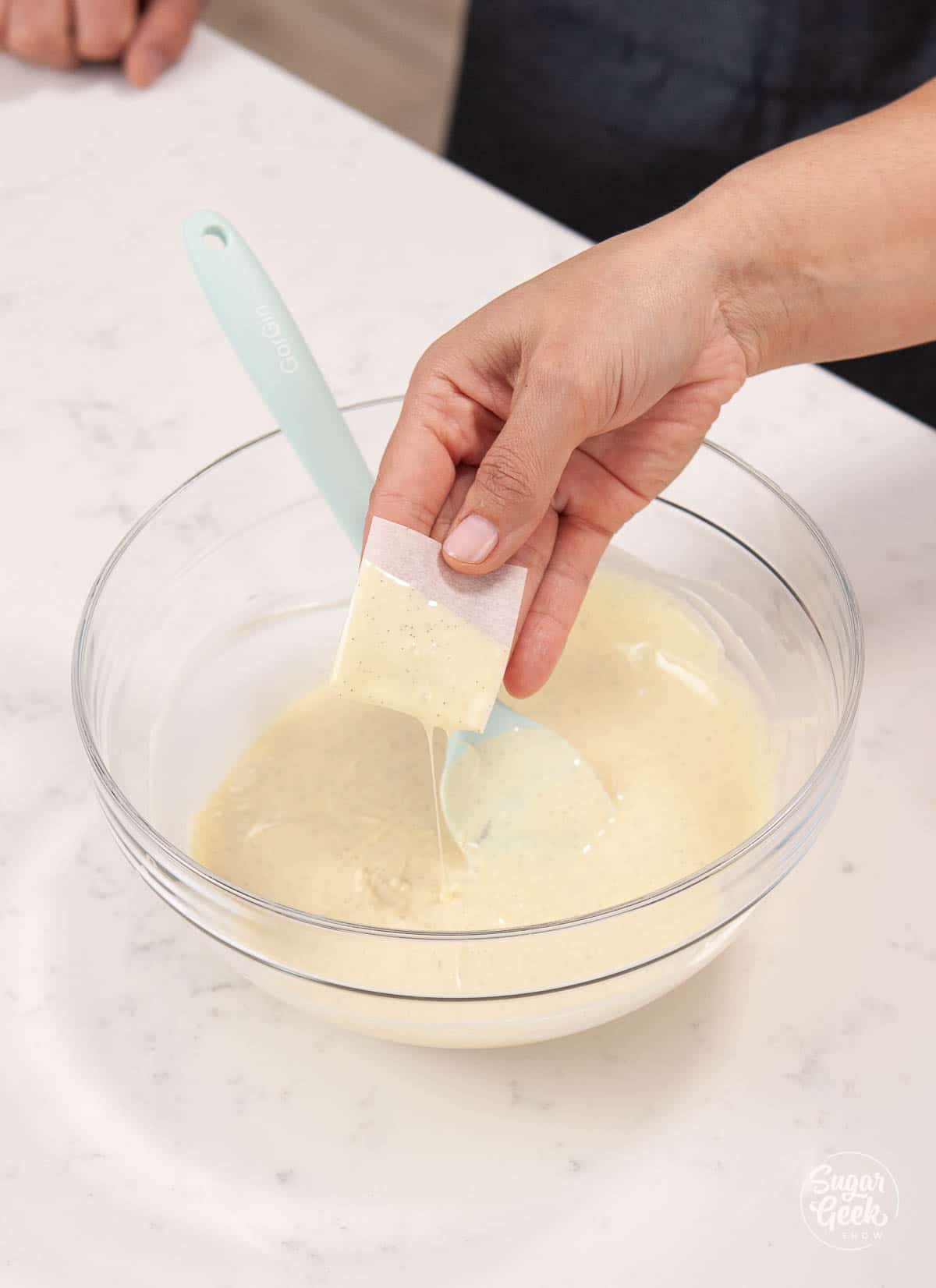
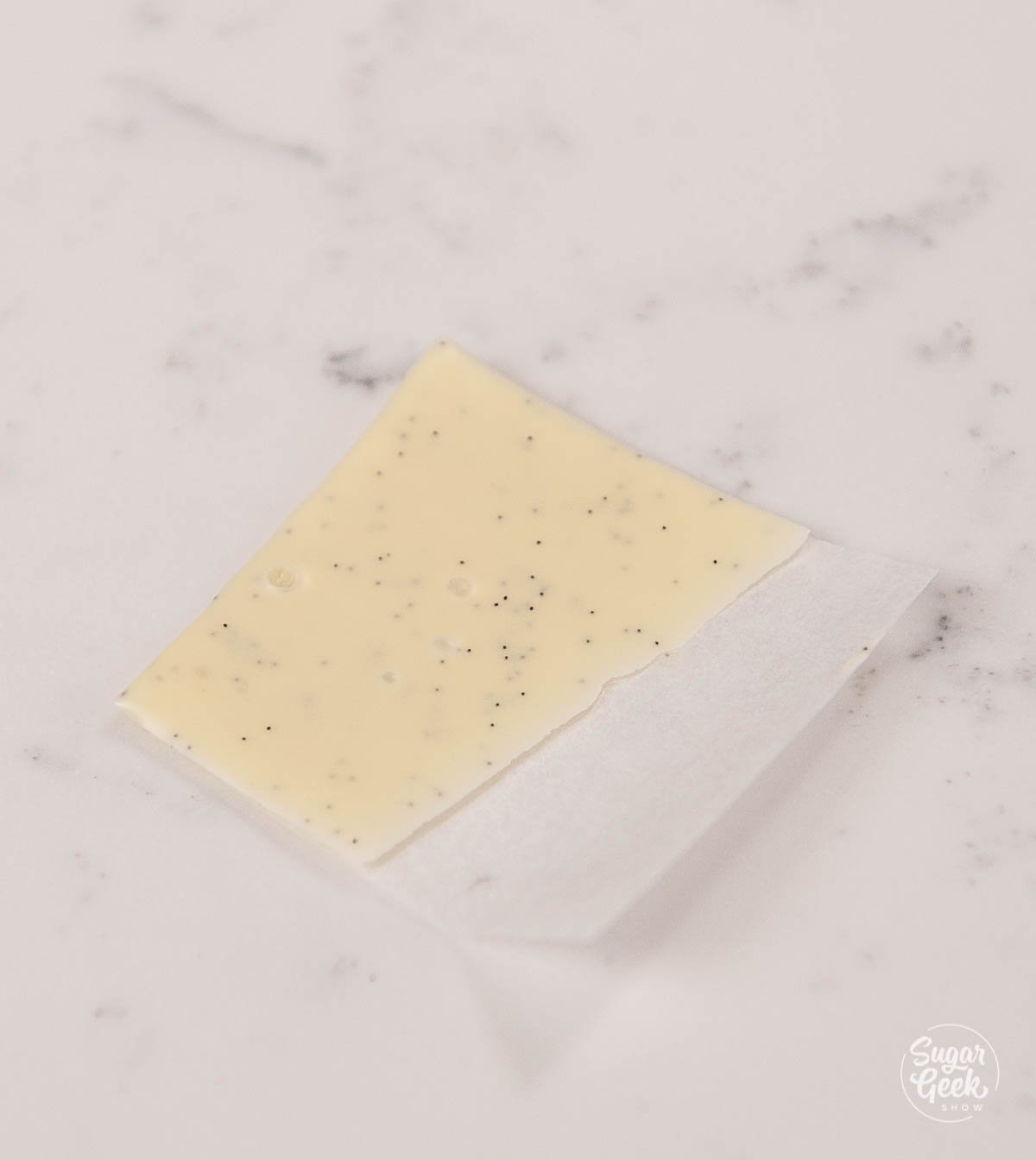
  10. When the mixture is thick enough to coat the back of a spoon and you can drag your finger through the center without the sauce dripping (a la nappe), your crème anglaise is ready.
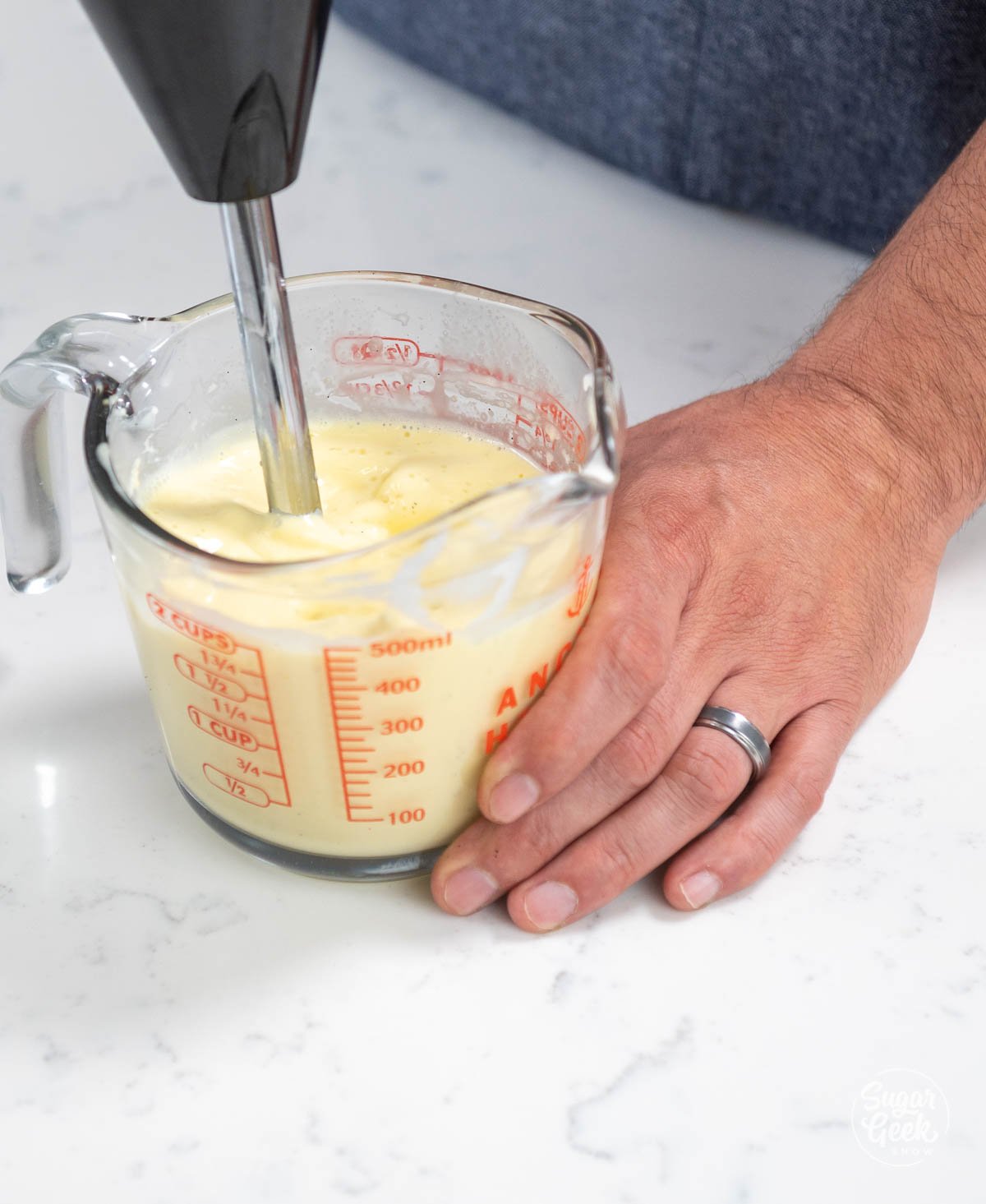
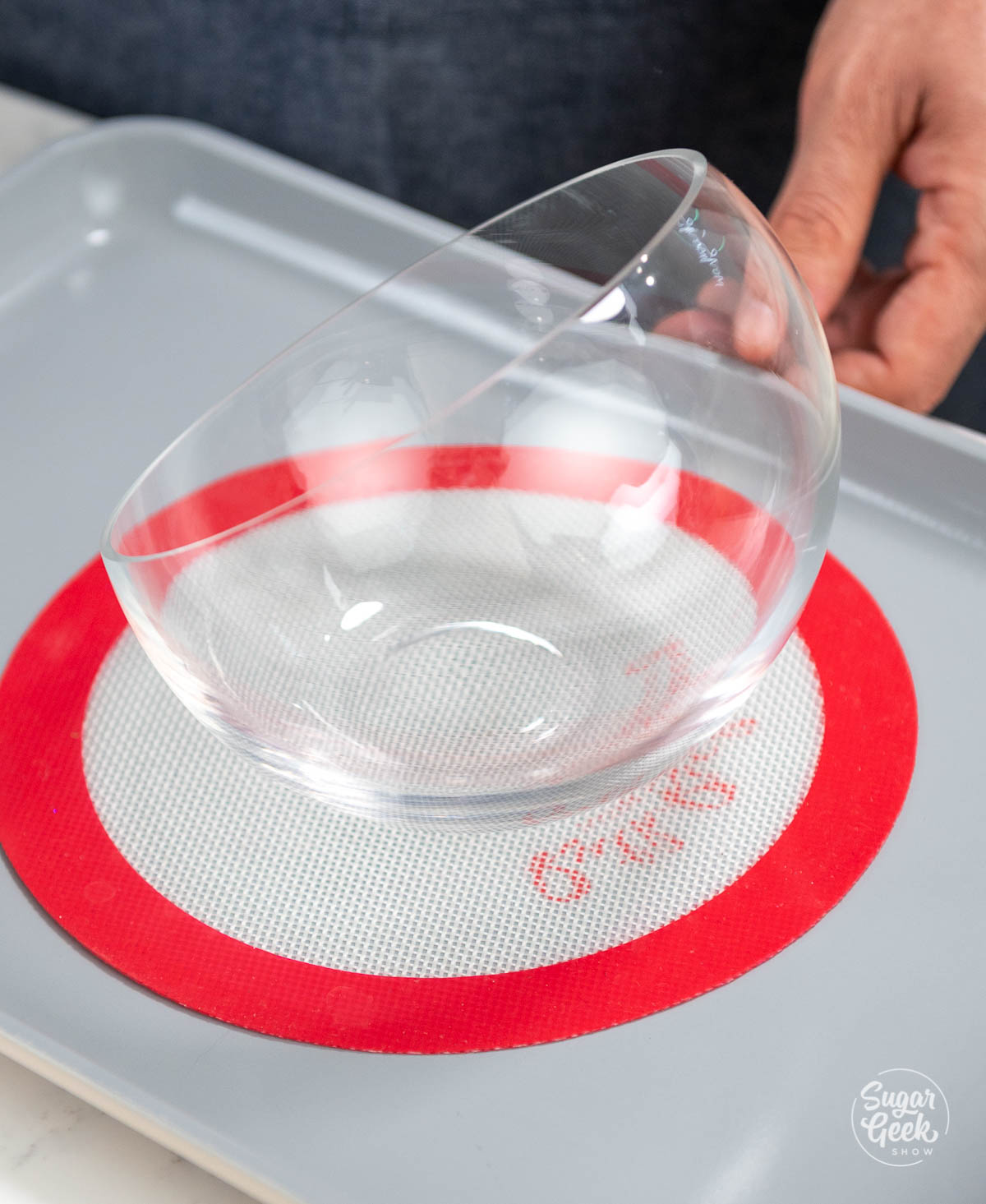
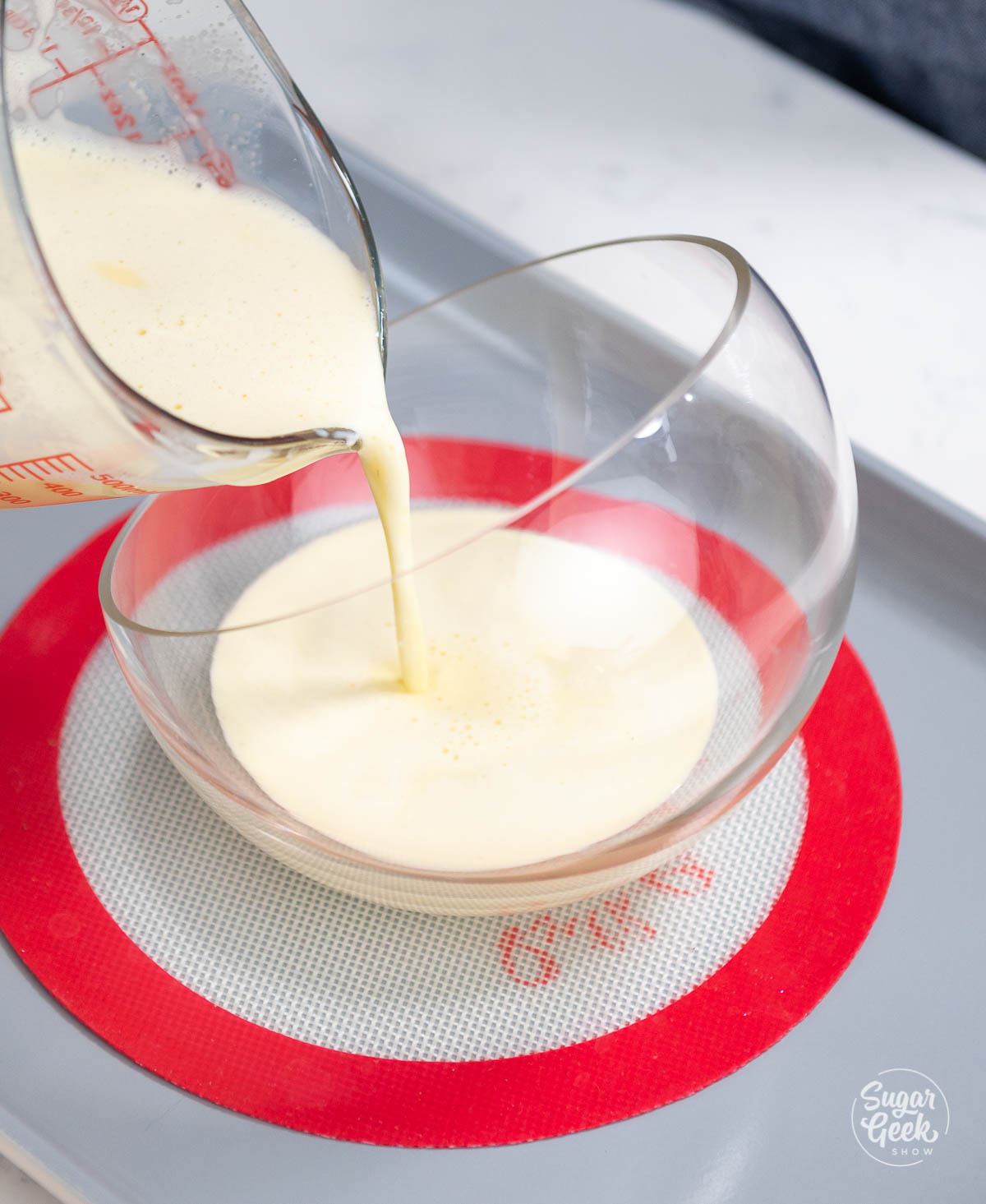
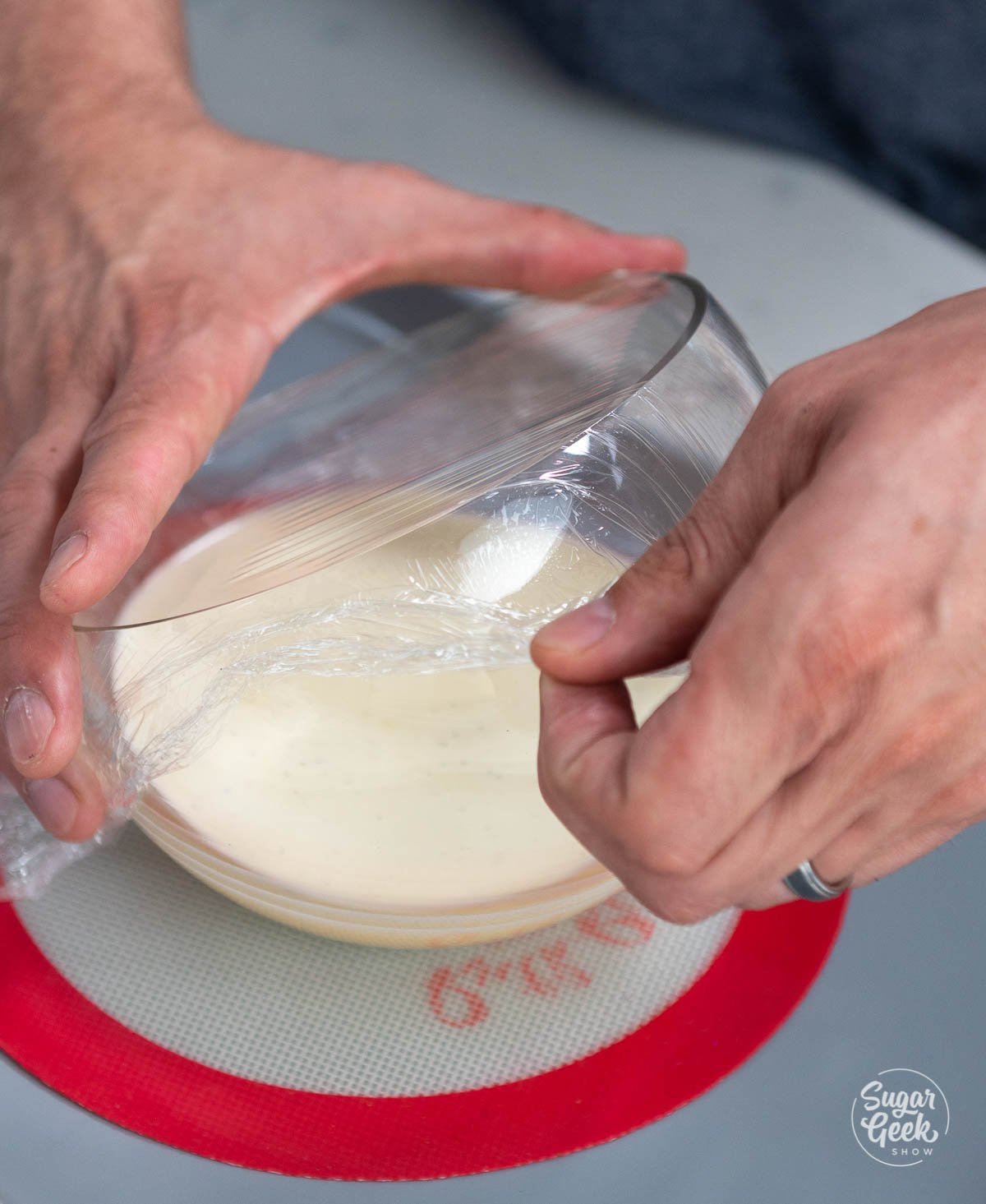
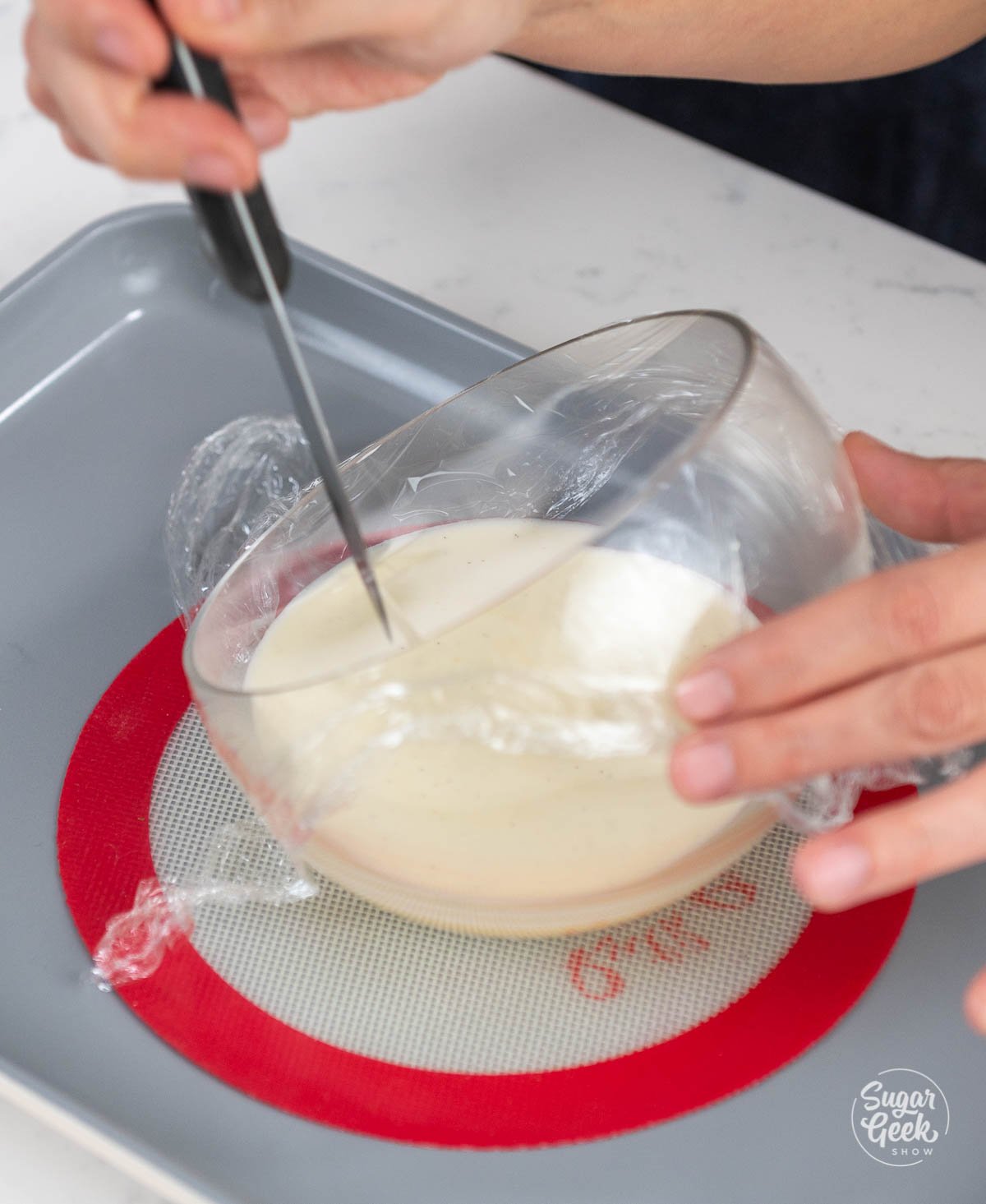
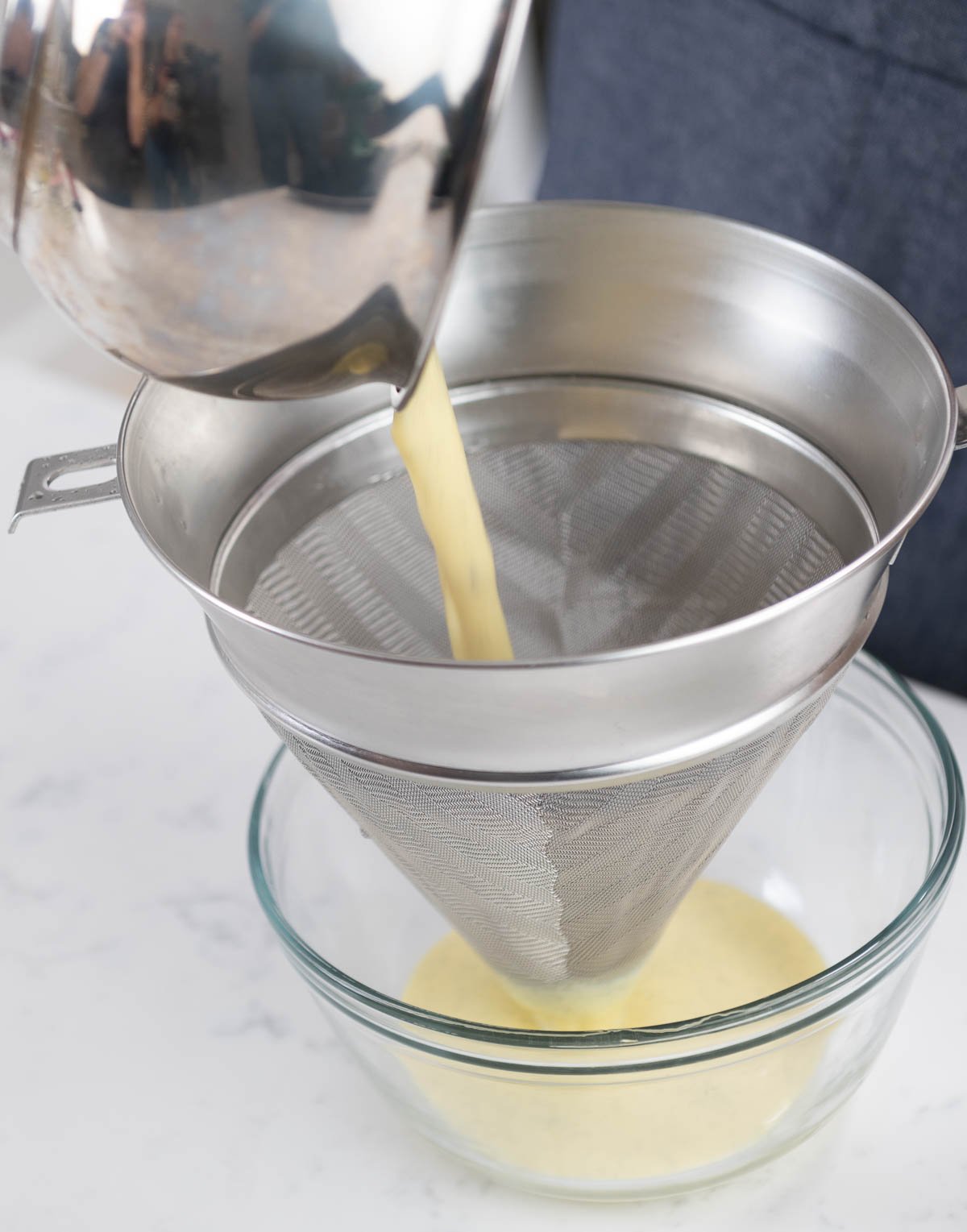
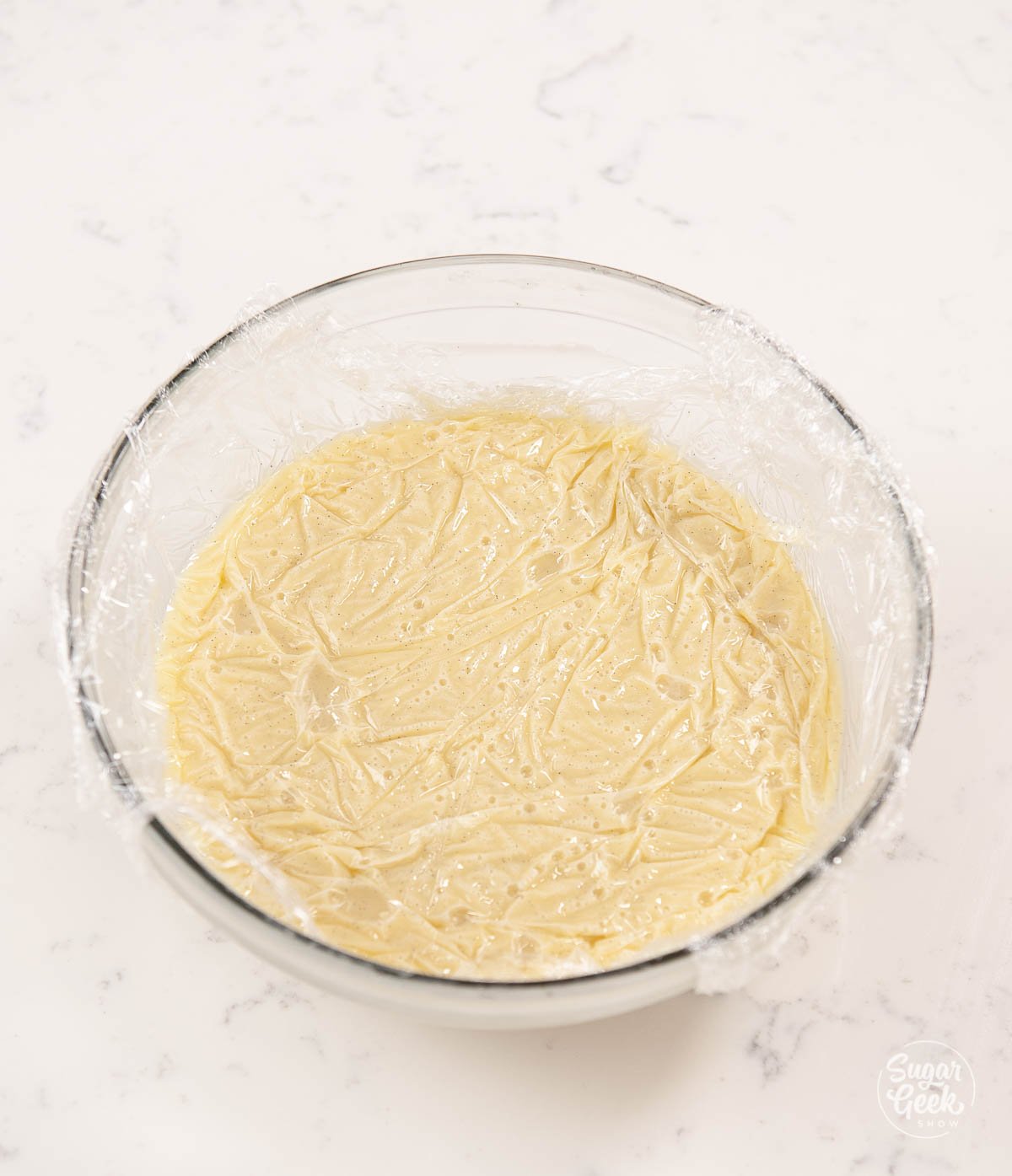
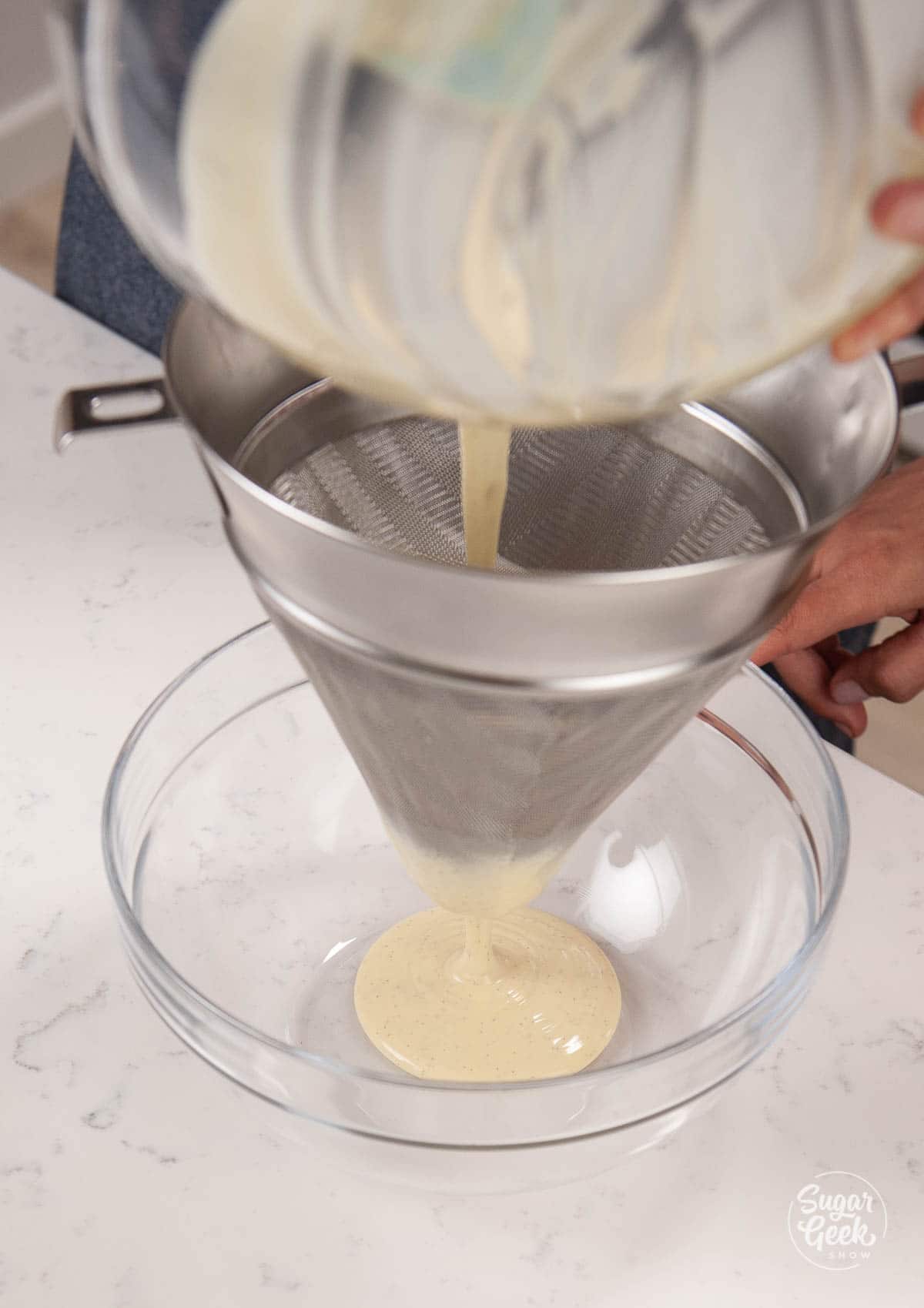
  11. Strain the anglaise into a bowl to remove the vanilla fibers, and then cover it with plastic wrap (make sure the plastic wrap is touching the top of the sauce). straining creme anglaise
  12. Allow it to cool and set it aside until you're ready to drizzle it onto your soufflé.

How to Make Chocolate Soufflé Step-by-Step

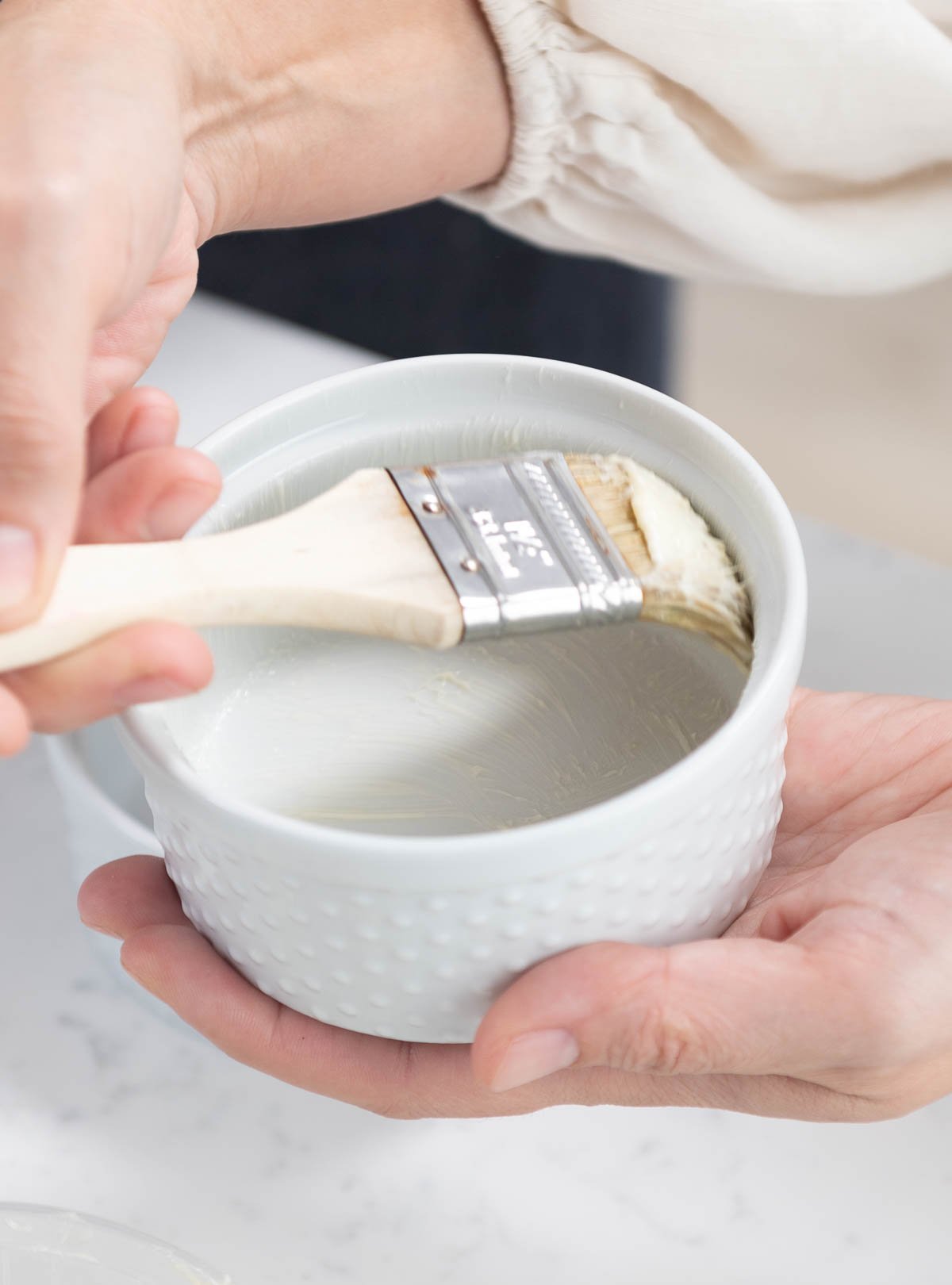
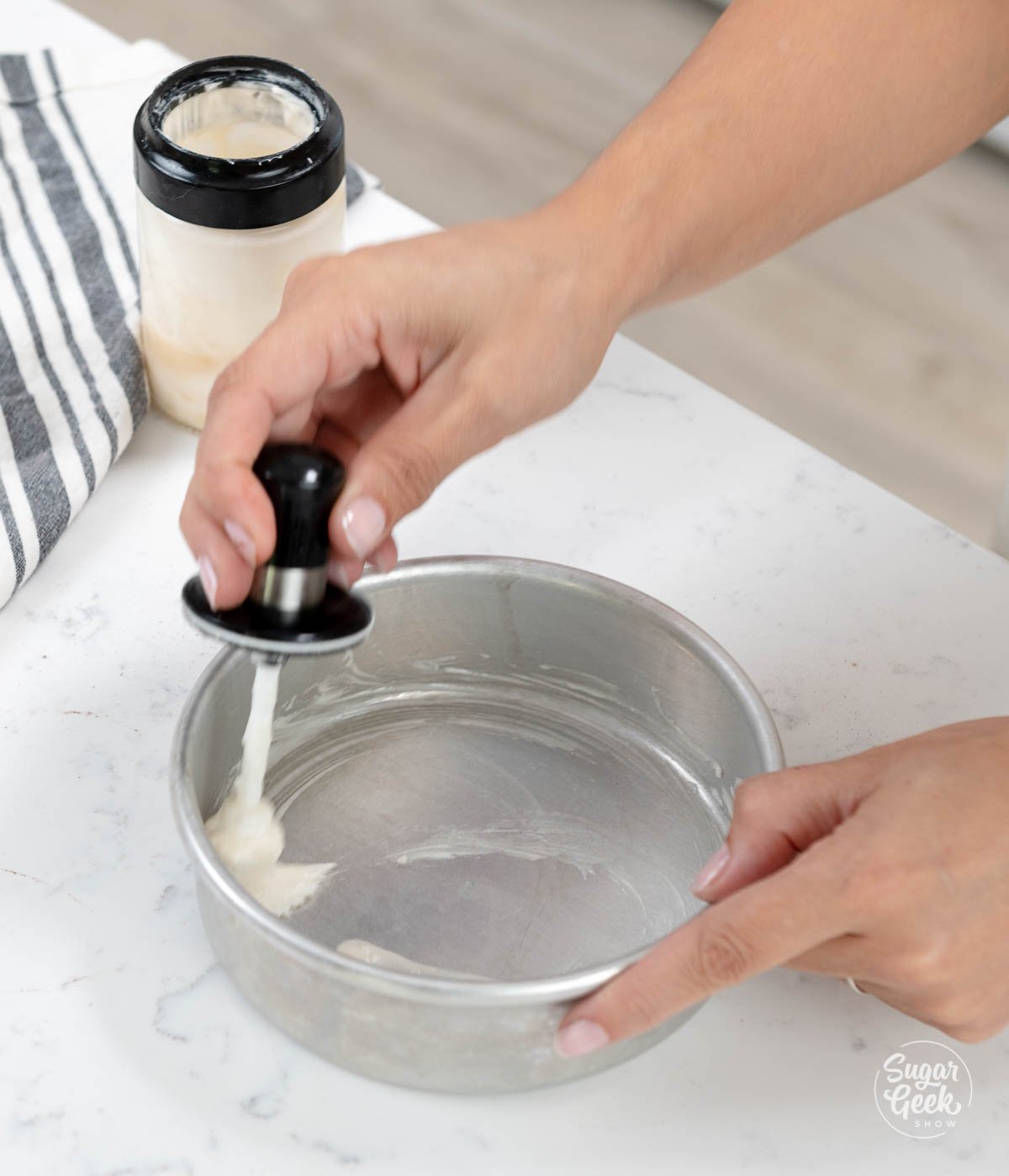
  1. Prepare the ramekins by brushing them with soft but not melted butter in a vertical direction. This will help the soufflé to raise straight up. I'm using four, 4" x 2" ramekins but you can use smaller ramekins if you'd like.
  2. Then, coat the butter with a thin layer of granulated sugar. Add one Tablespoon of sugar to the ramekin and roll the sugar around to coat all sides evenly then remove the excess sugar by tapping it back into a separate bowl. Set the ramekins aside.
  3. Preheat your oven to 360°F (182°C)
  4. Add your milk to a heavy bottom saucepan and bring it to a boil over medium heat.
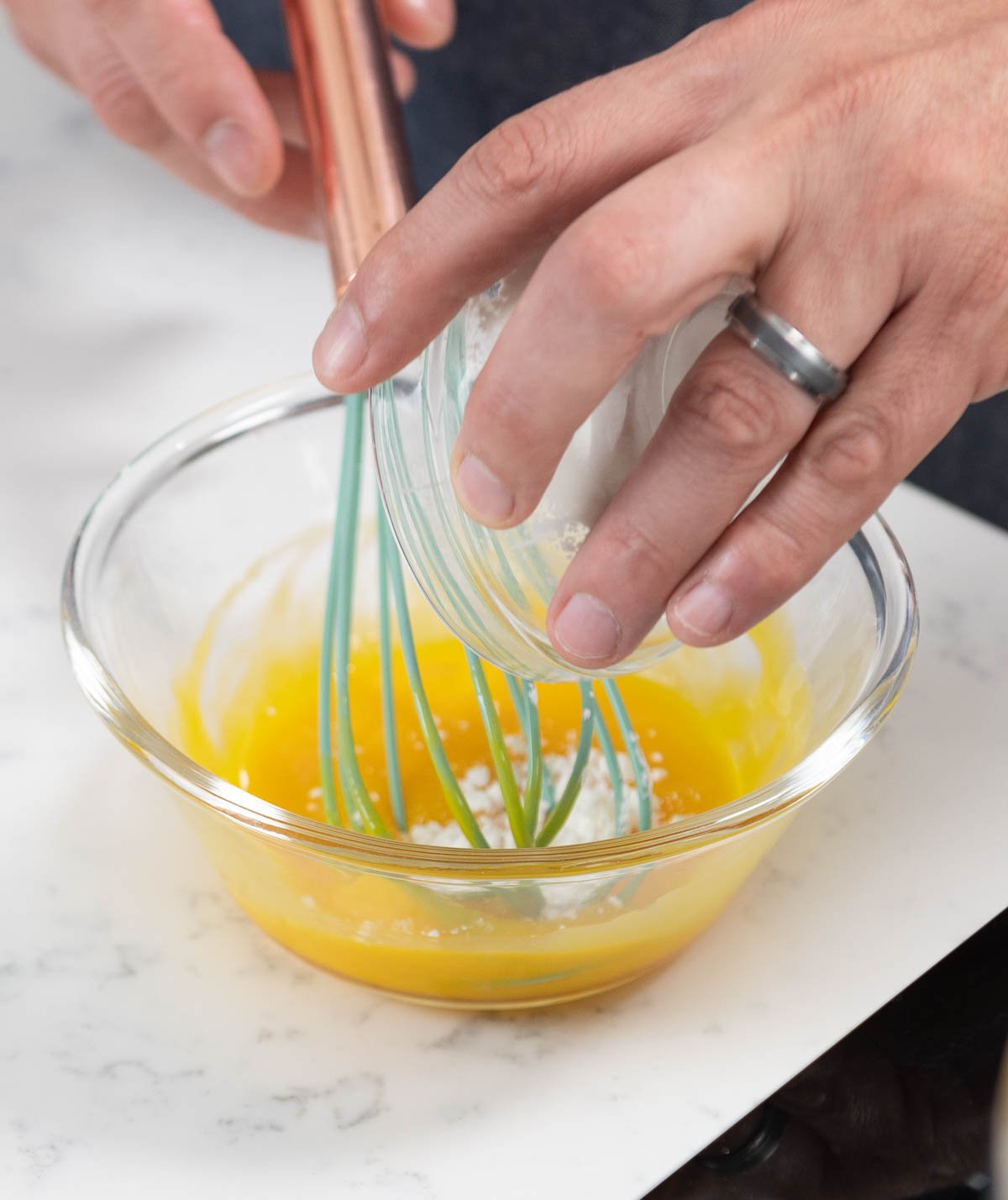
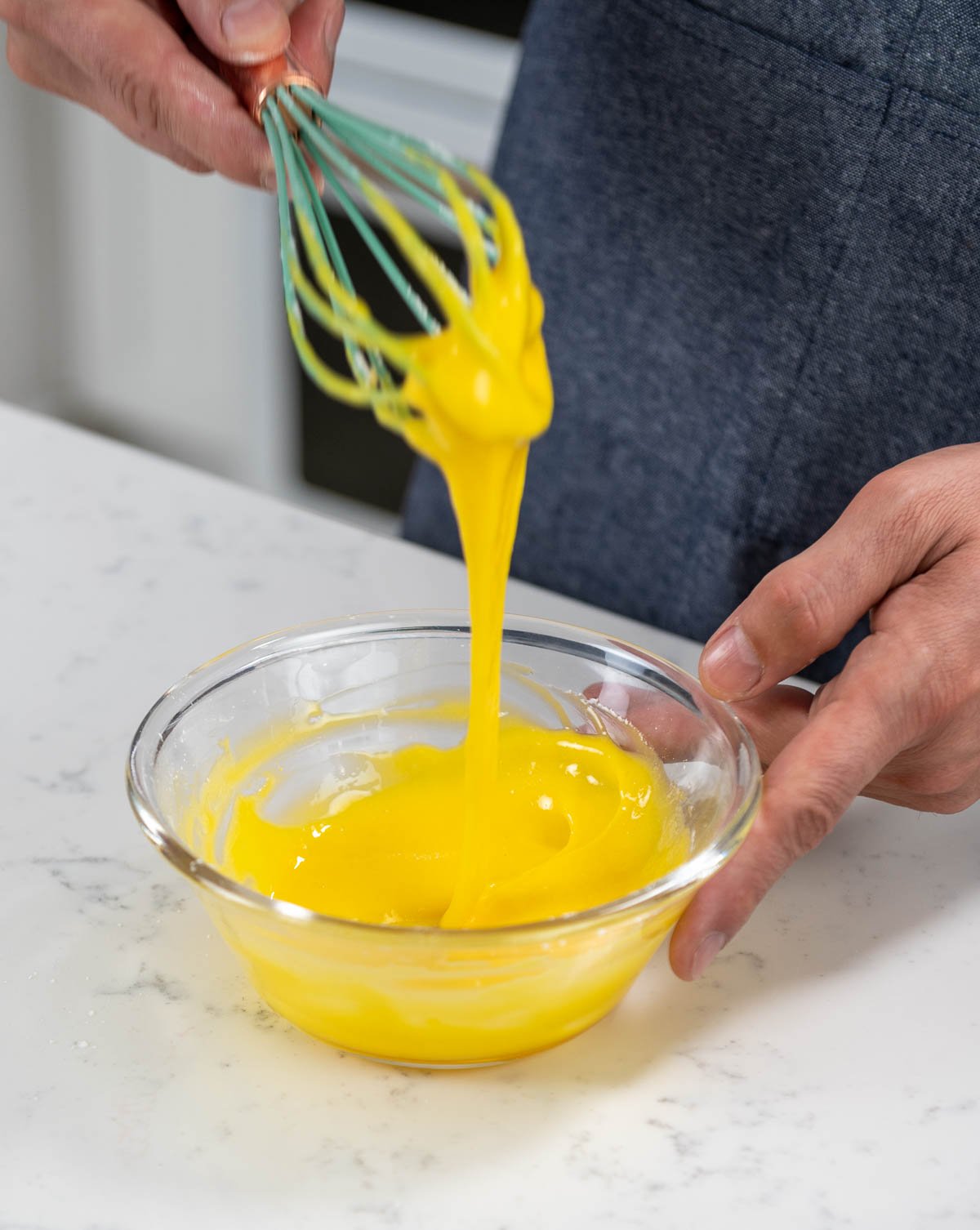
  5. Next, in a separate bowl, combine the egg yolk and cornstarch by whisking it until the mixture is smooth and the cornstarch is dissolved. Really whisk it together so you don't get any clumps of cornstarch.
  6. Add about ⅓ cup of the hot milk to the egg yolks and mix. This is tempering the eggs so they don't curdle. Pour the egg/milk mixture back into the pot with the rest of the hot milk and whisk.
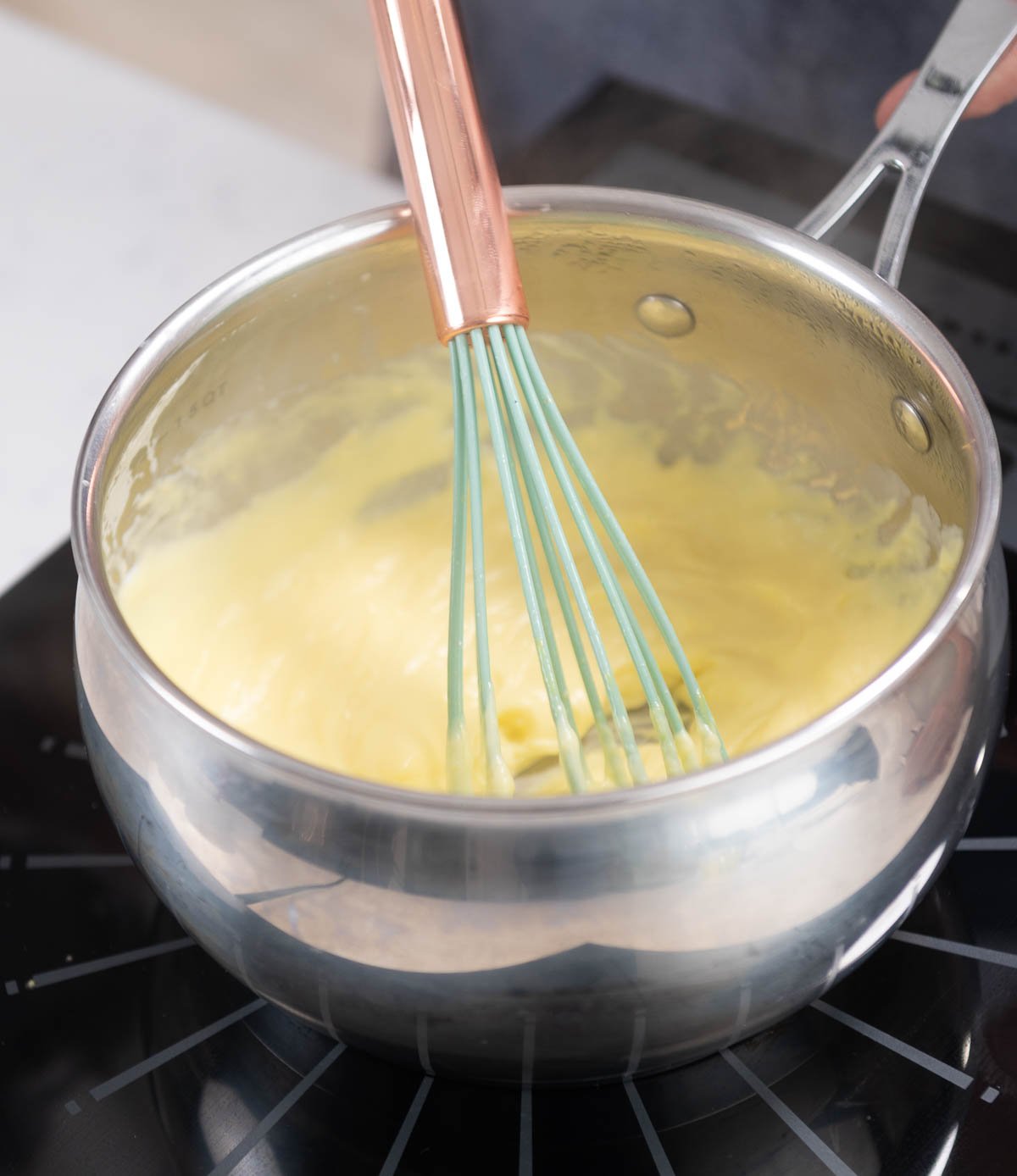
  7. Stir it constantly over medium heat until the mixutre begins to bubble and thicken. Be careful not to cook the eggs too quickly. If its getting too hot, lift the pot away from the heat and continue whisking.
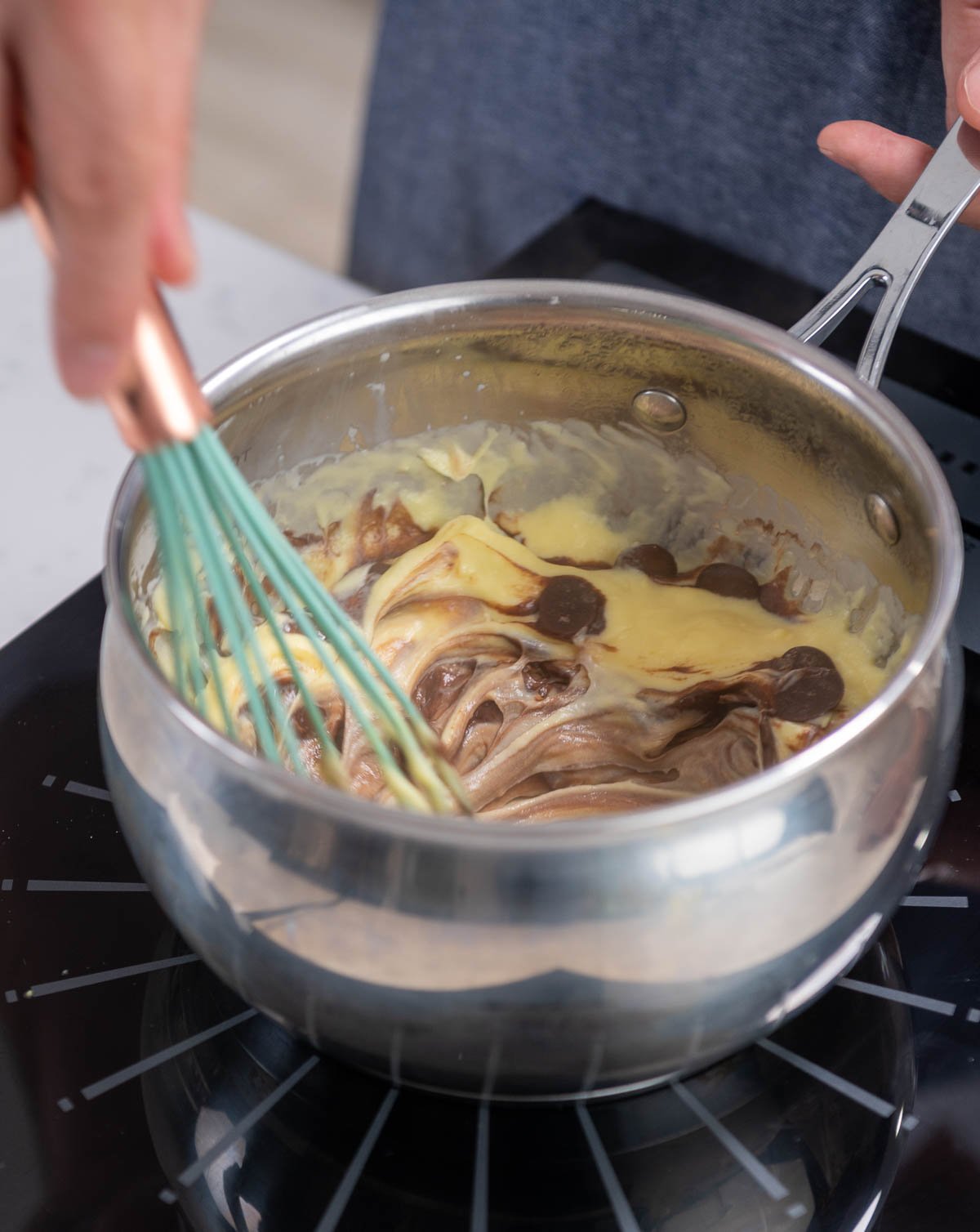
  8. Remove the pot from heat, and then add the chocolate to the saucepan.
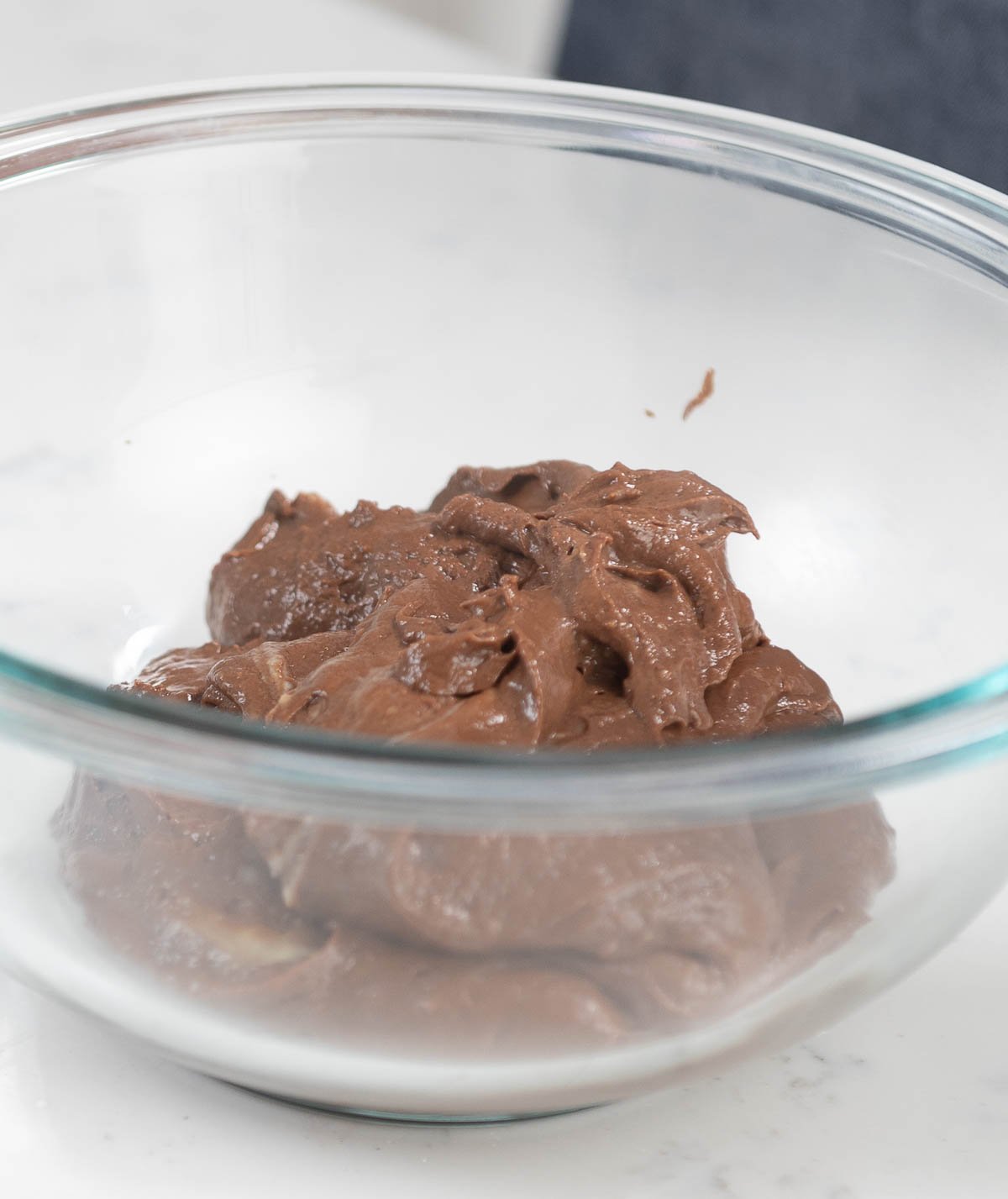
  9. Keep stirring the mixture until the chocolate is fully incorporated and melted.
  10. Then, transfer the chocolate mixture to a bowl and set it aside.
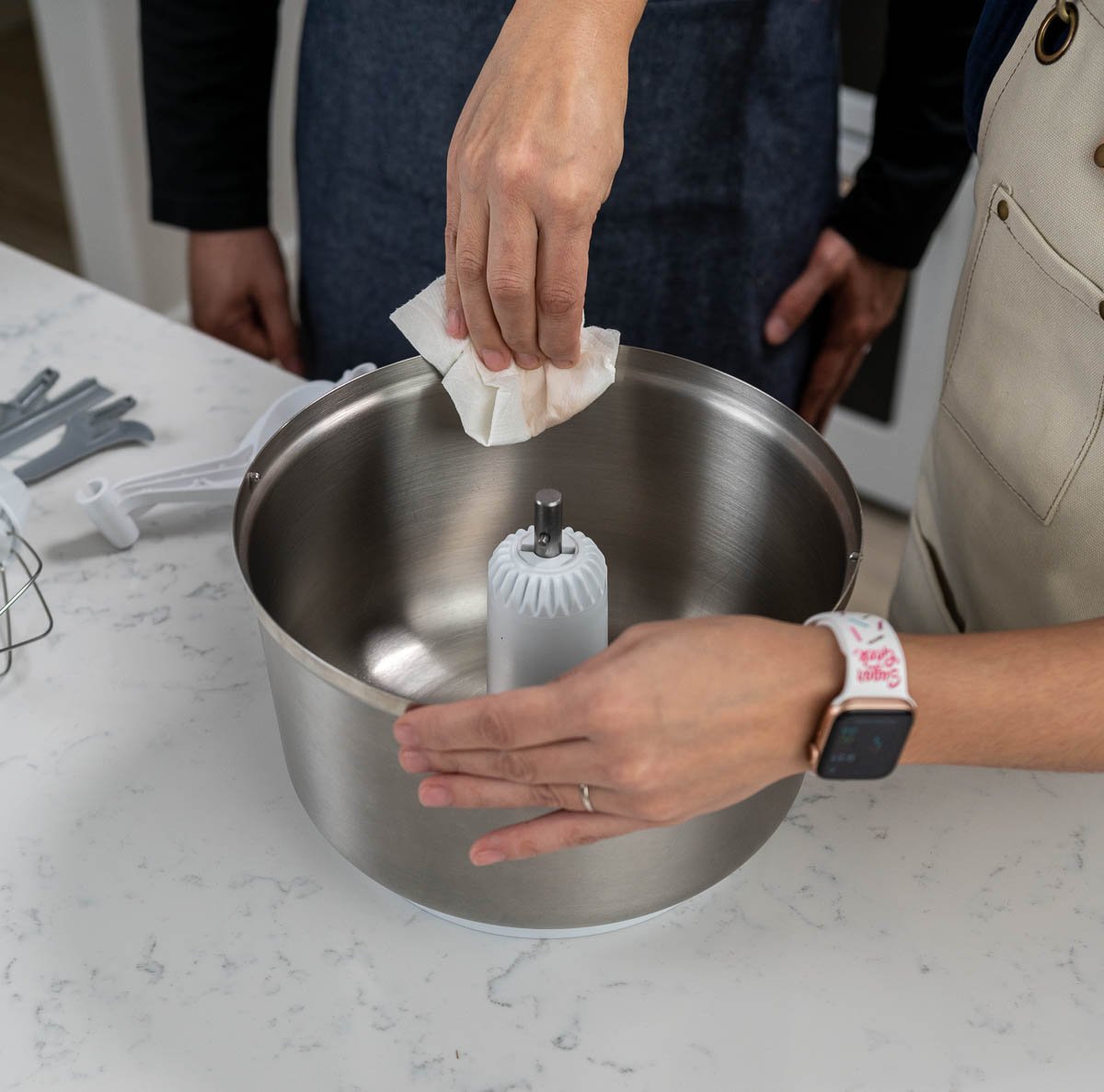
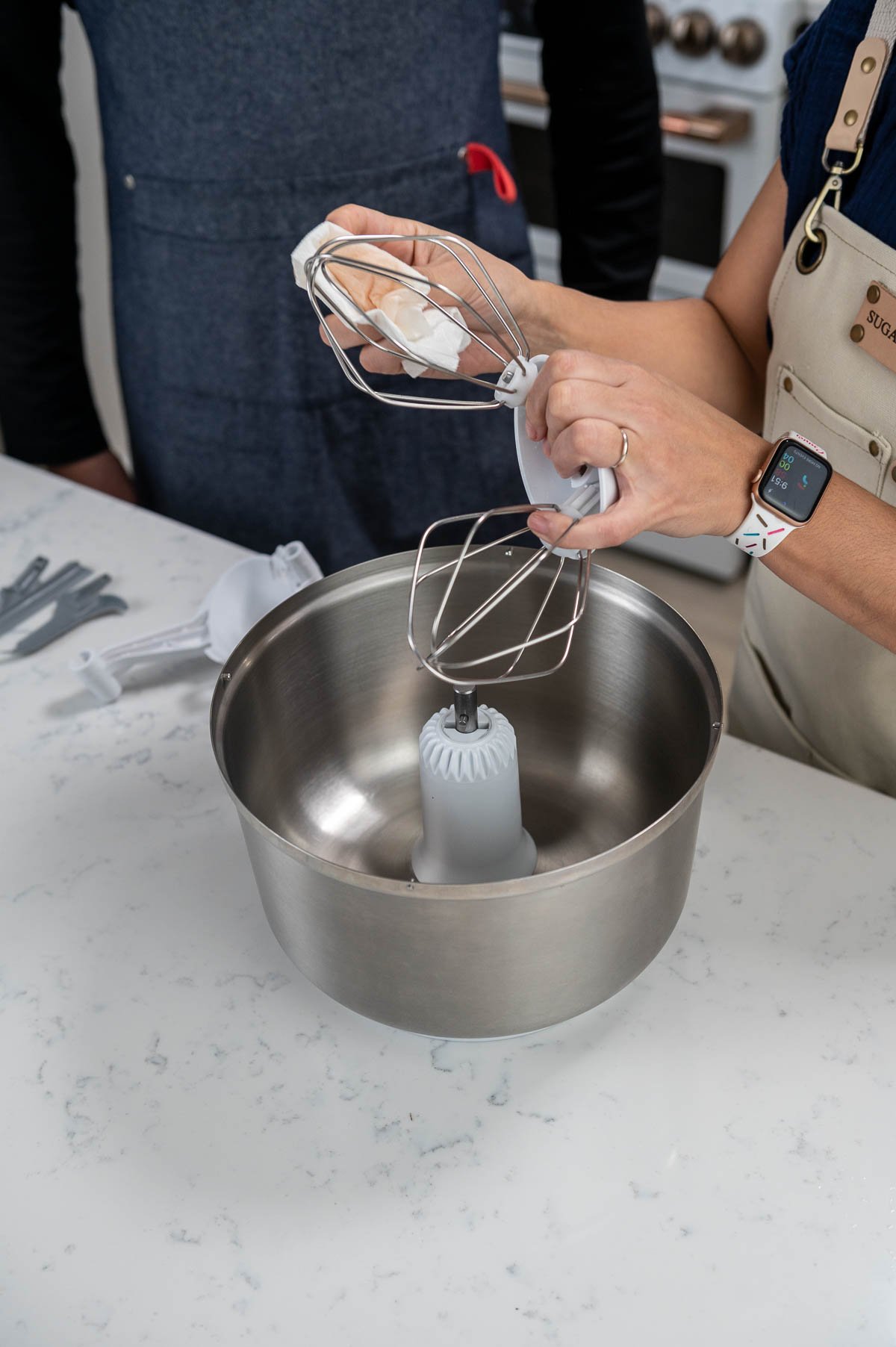
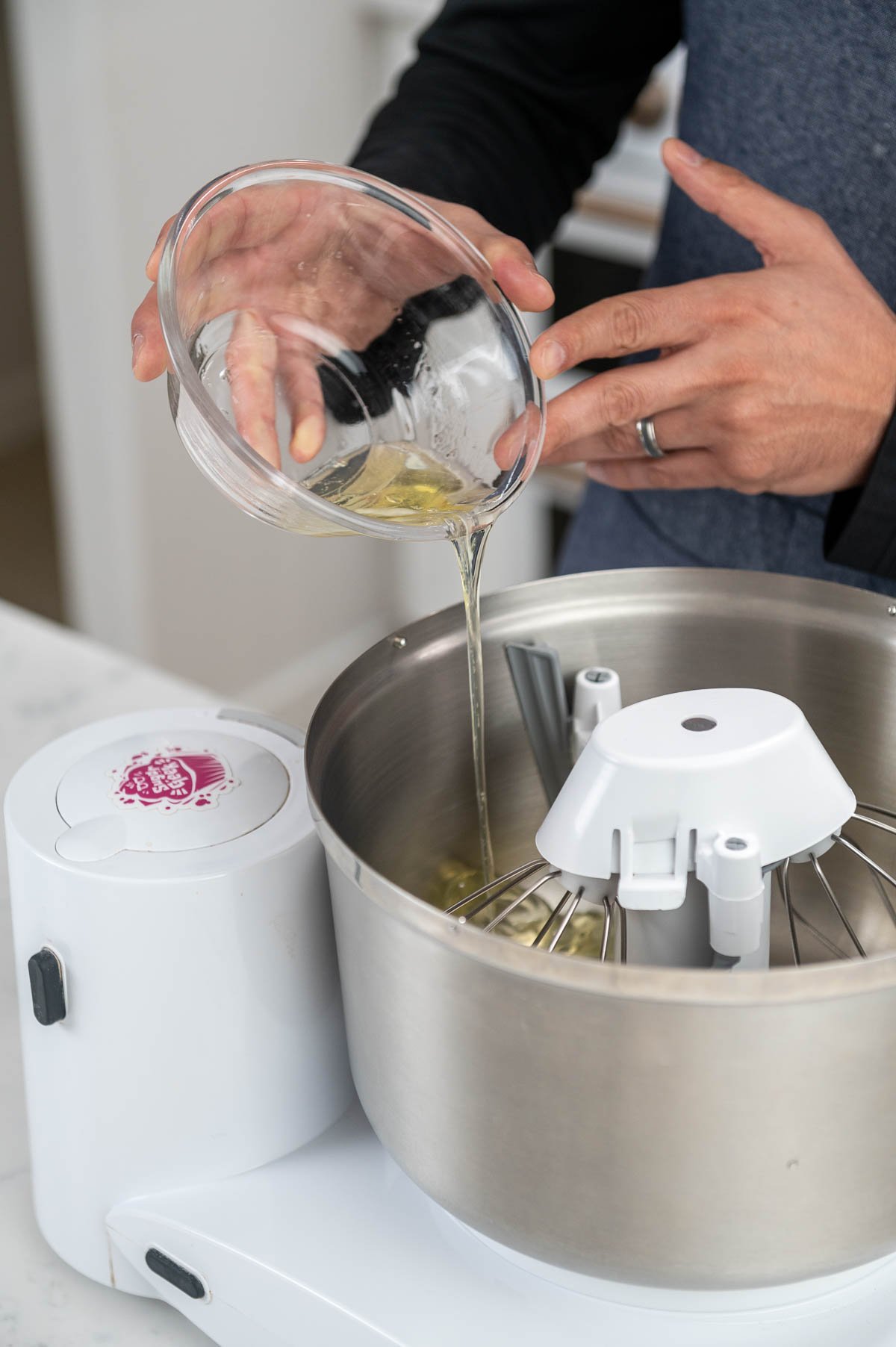
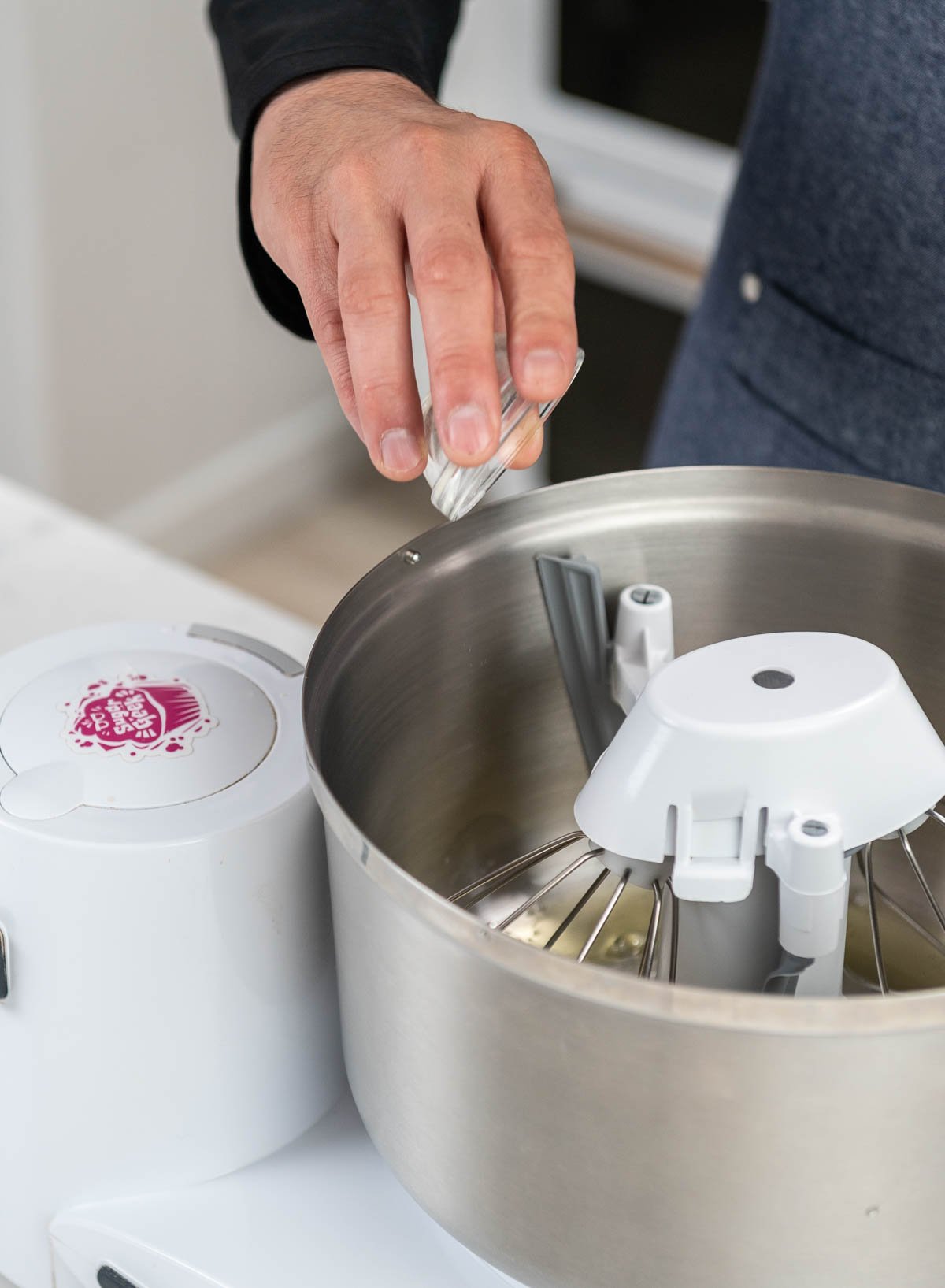
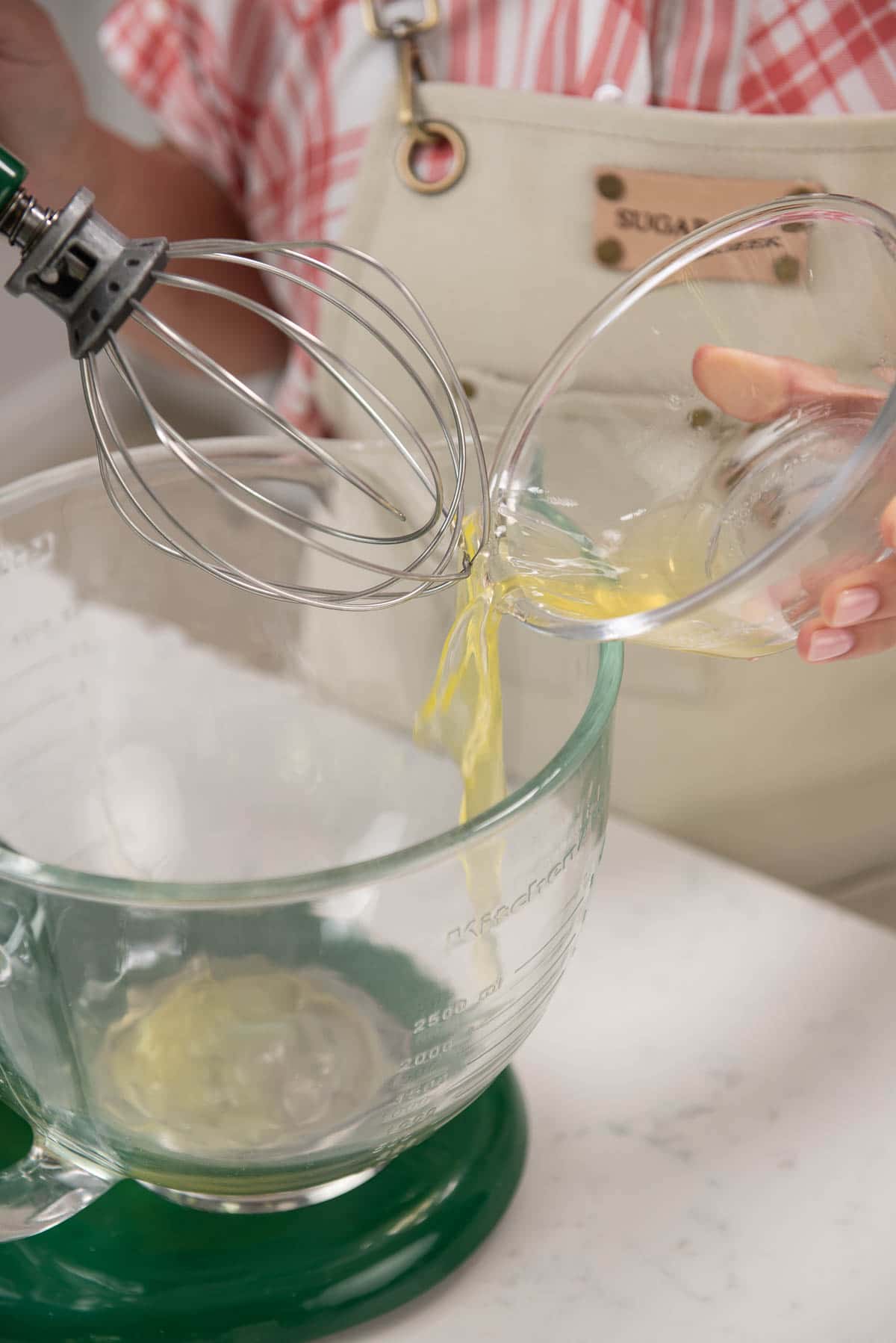
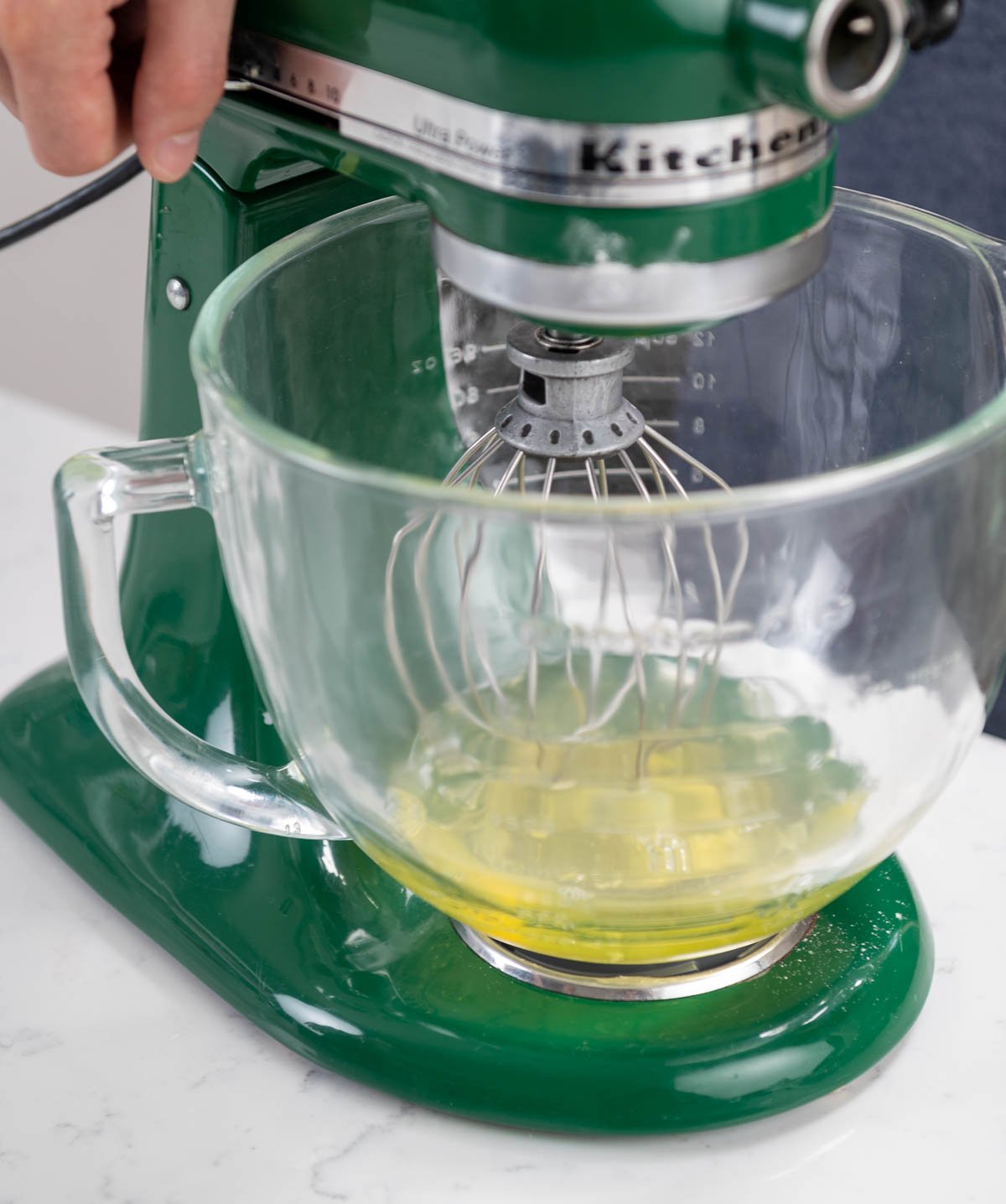
  11. Next, in the bowl of your stand mixer with the whisk attachment, add in your egg whites and a pinch of cream of tartar. Make sure your bowl is very clean, use a little bit of white vinegar to clean your bowl and whisk attachment if needed.
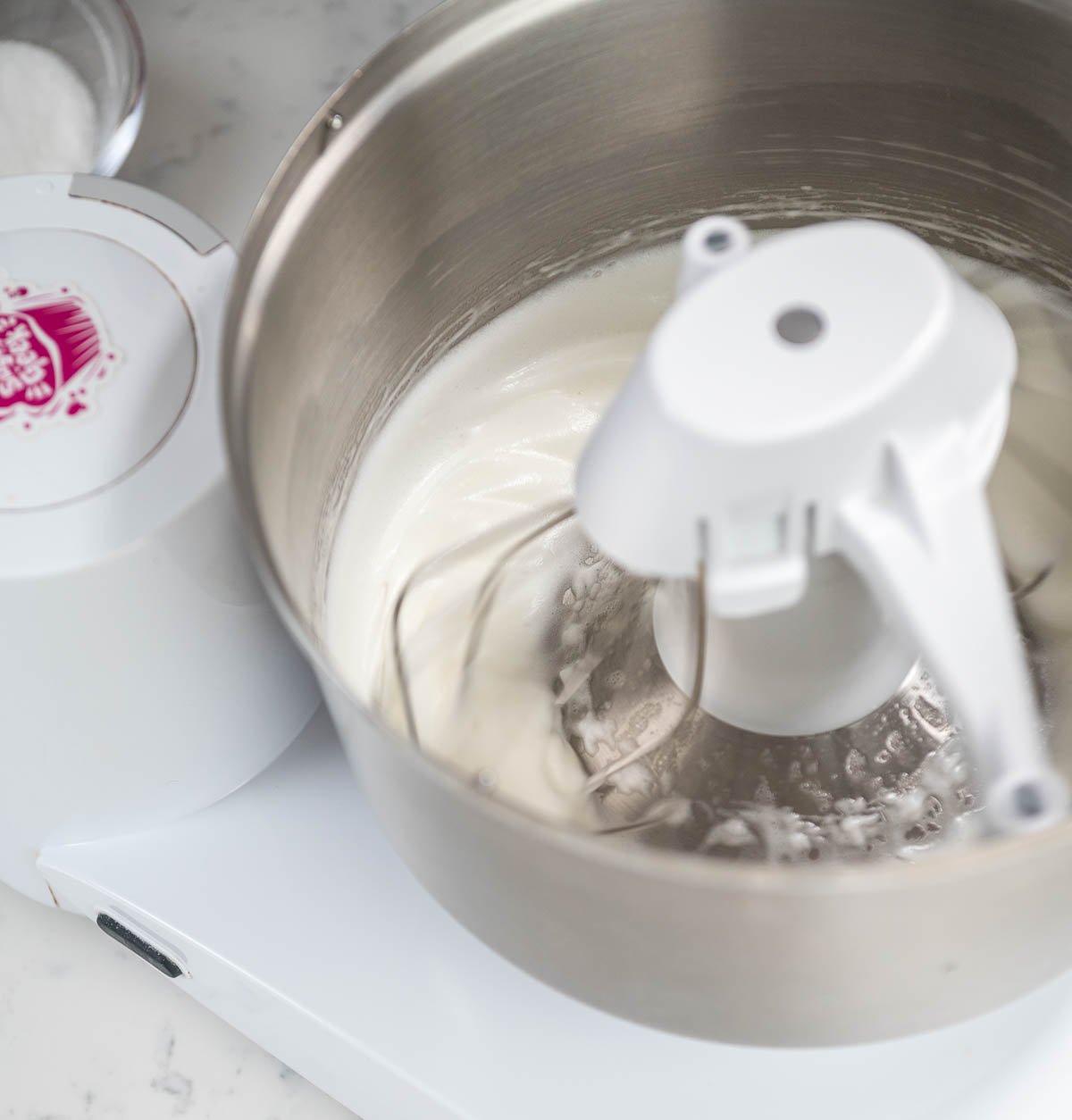
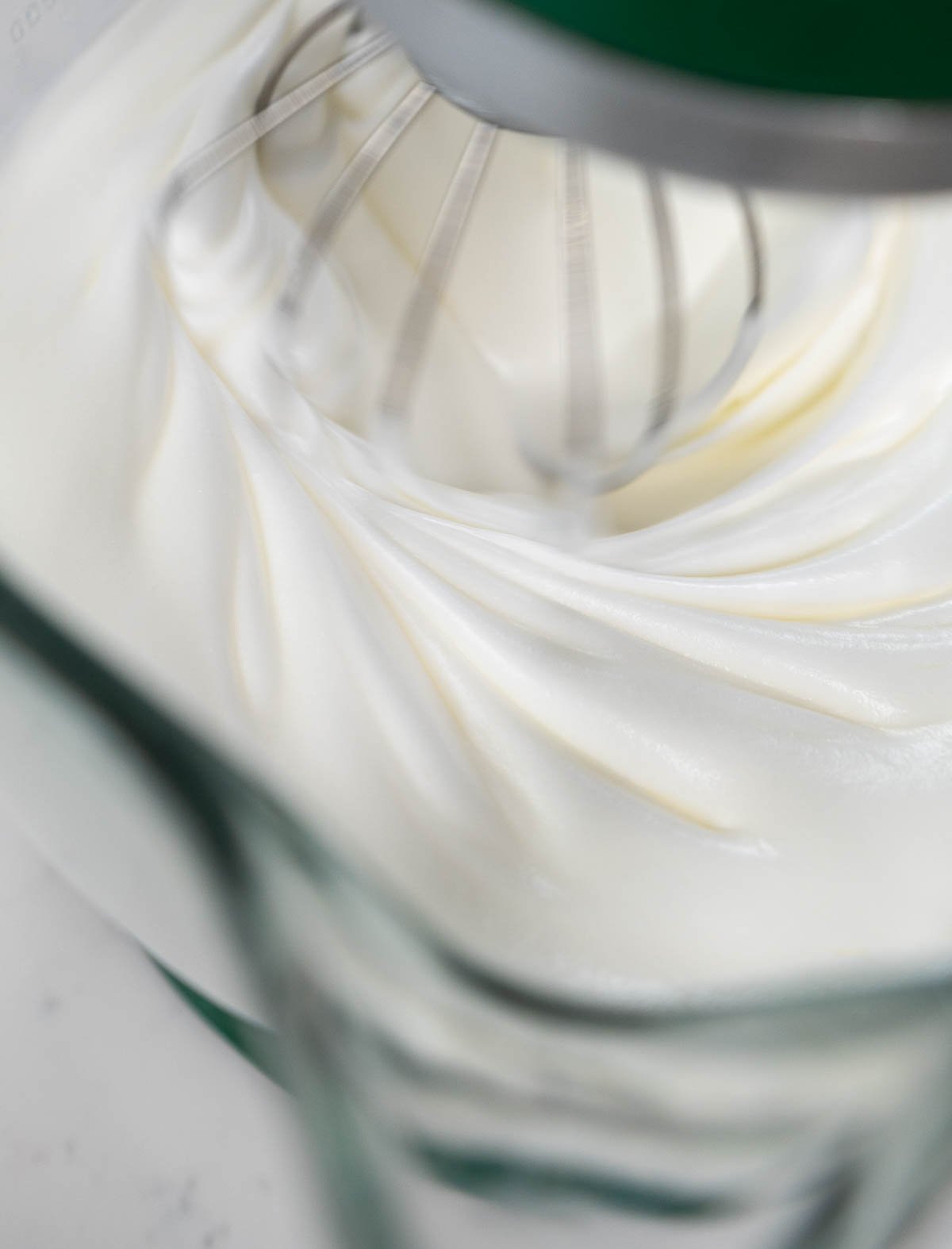
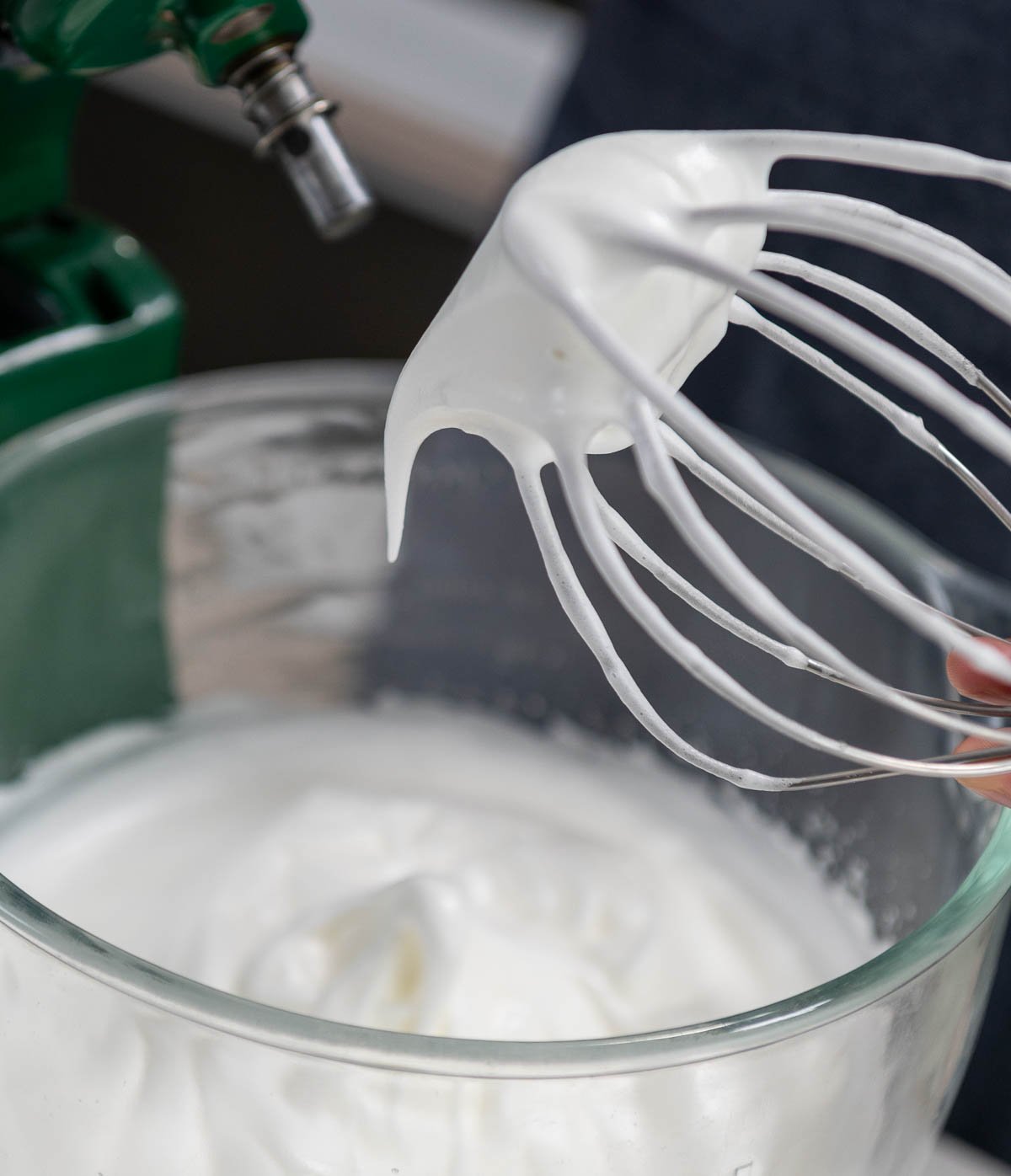
  12. Whip the egg whites on medium speed until you reach soft peaks (lines beginning to form in the surface of the meringue).soft peaks
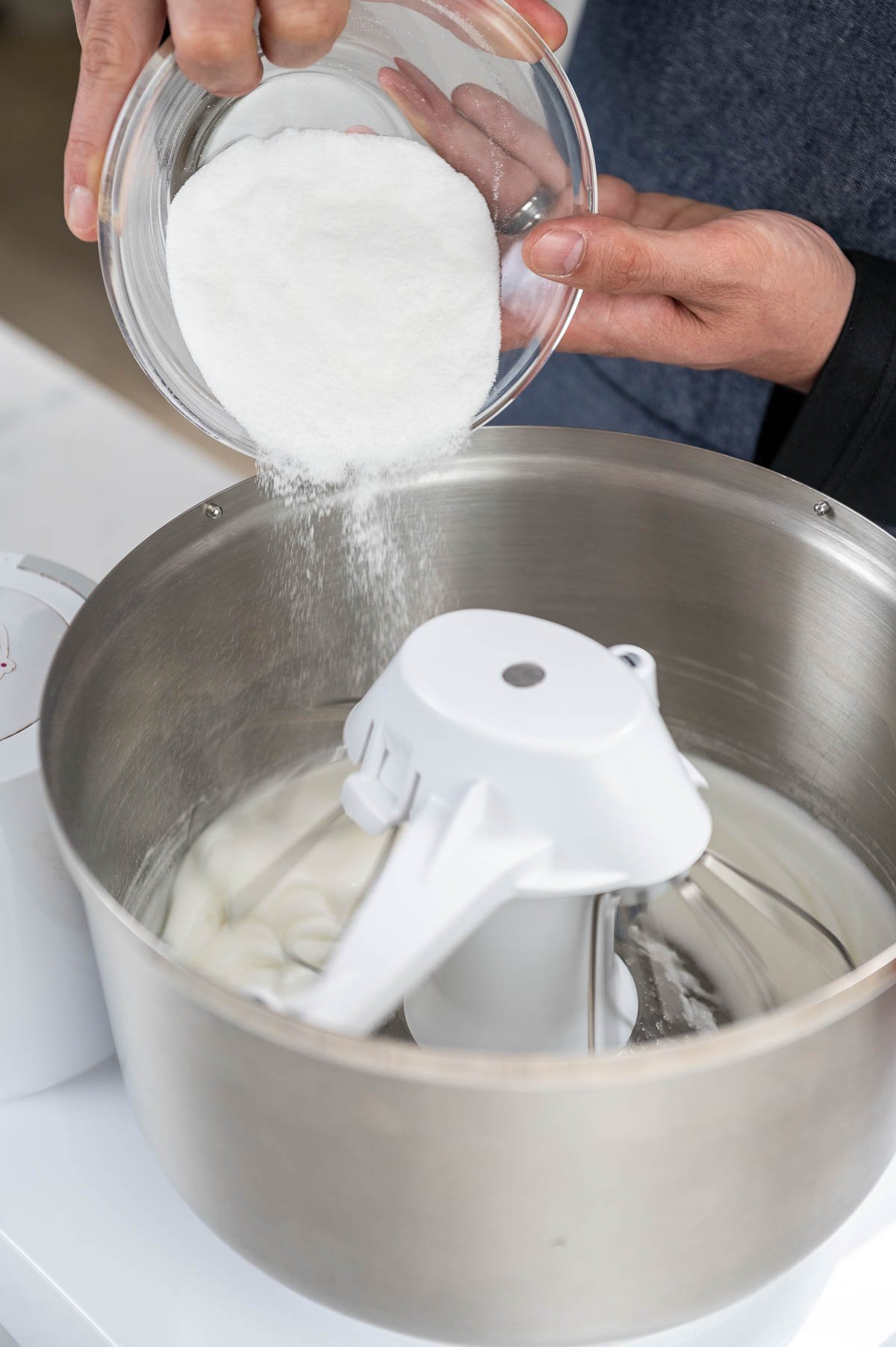
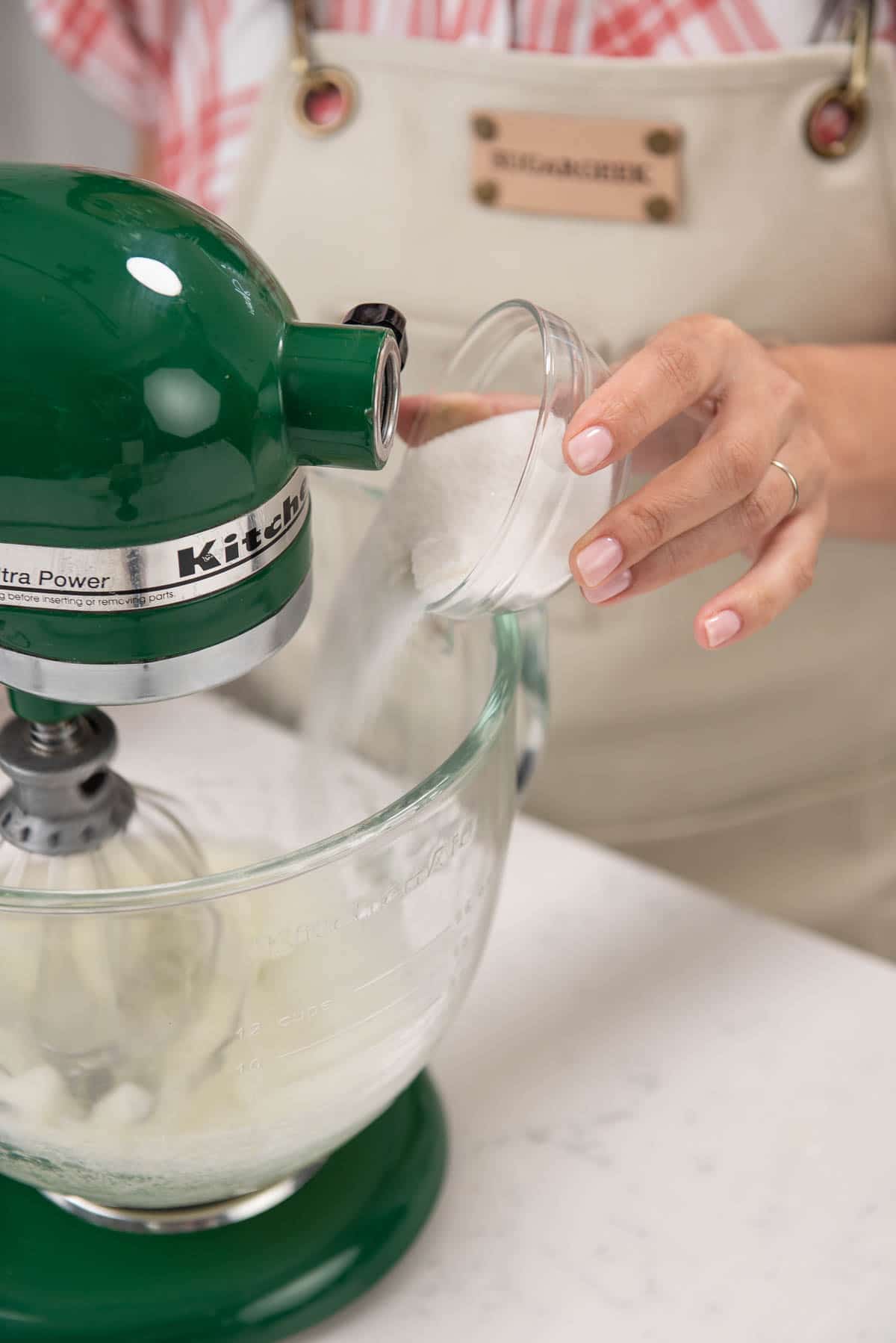
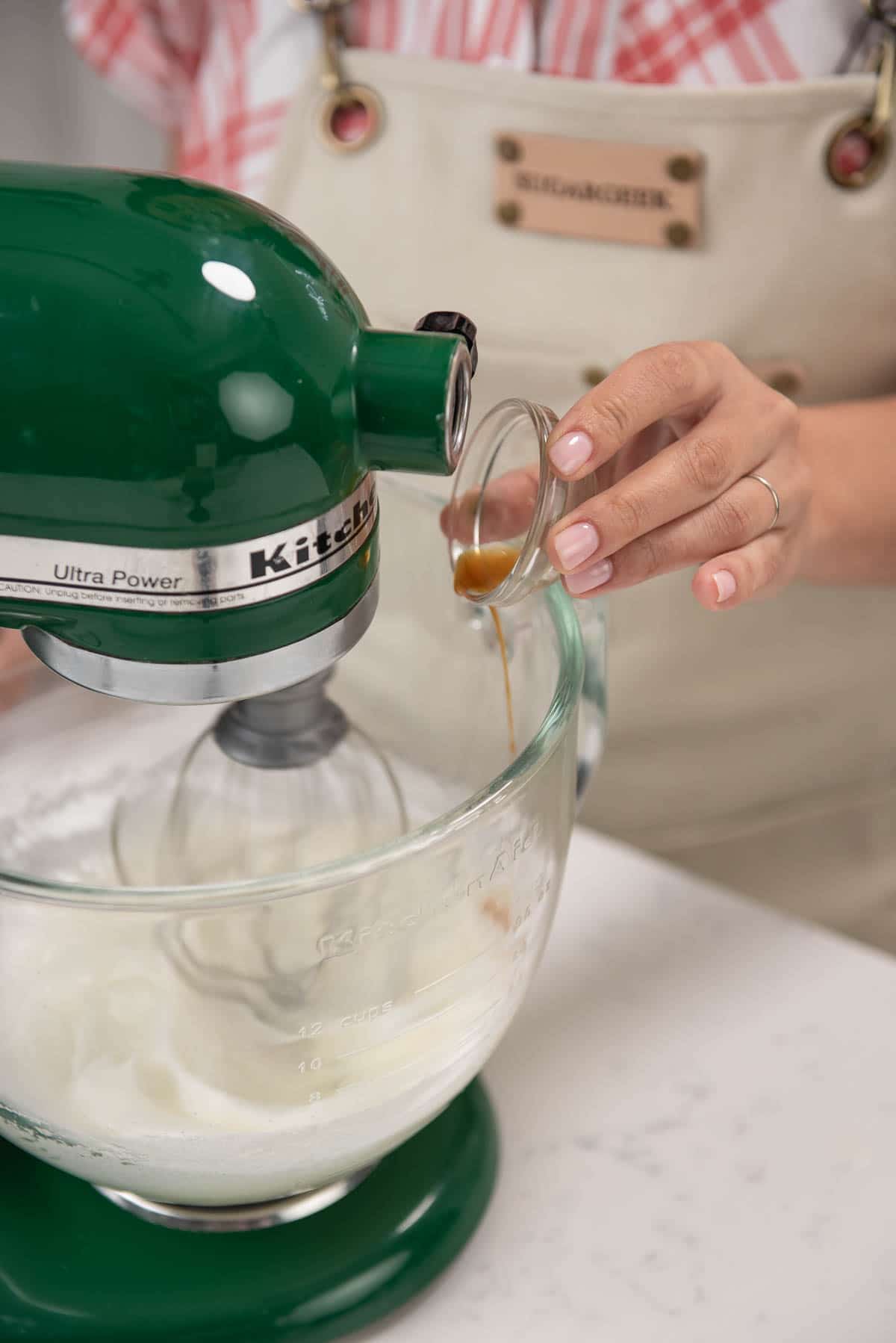
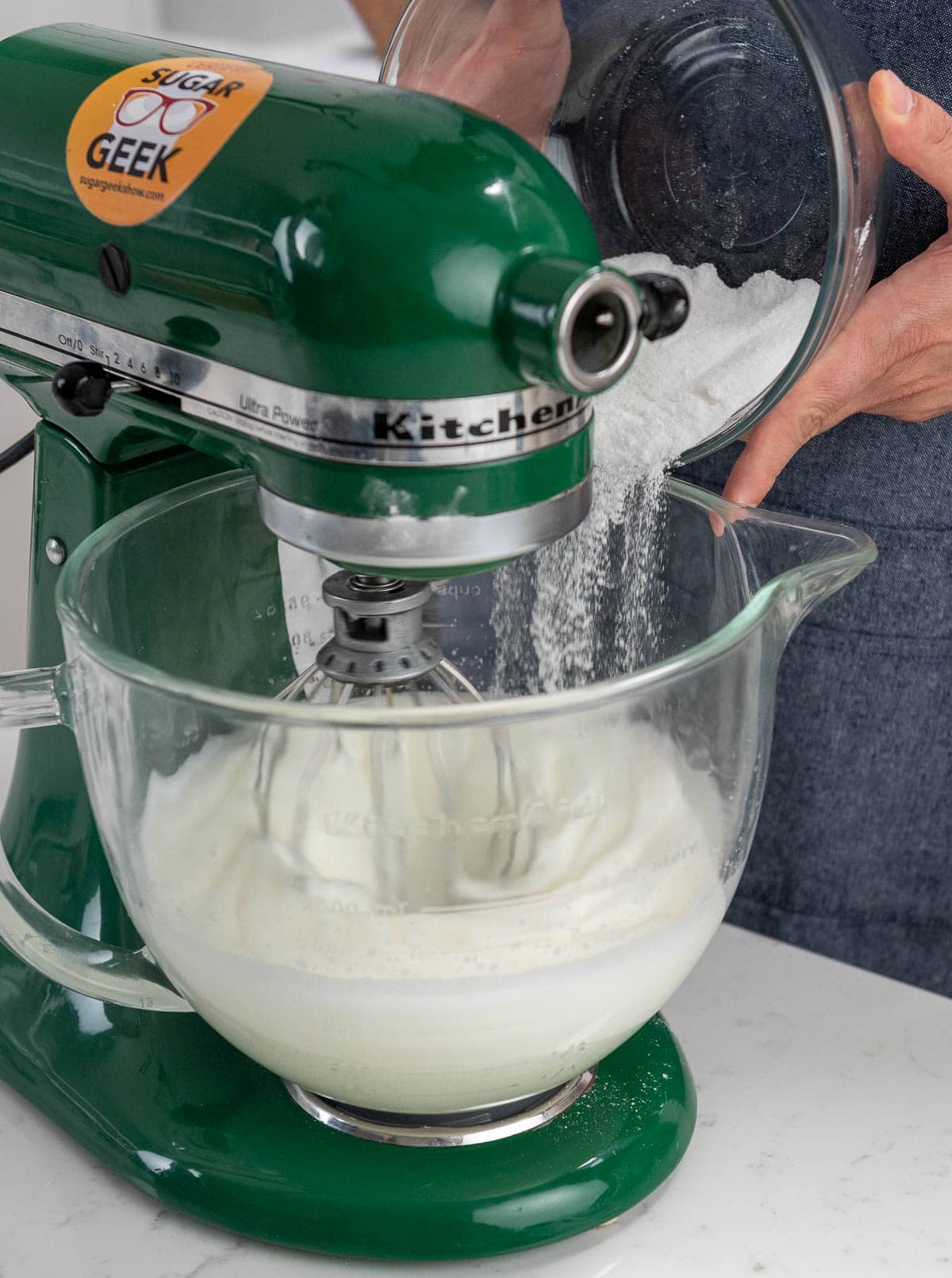
  13. Slowly add in your sugar while mixing on low.
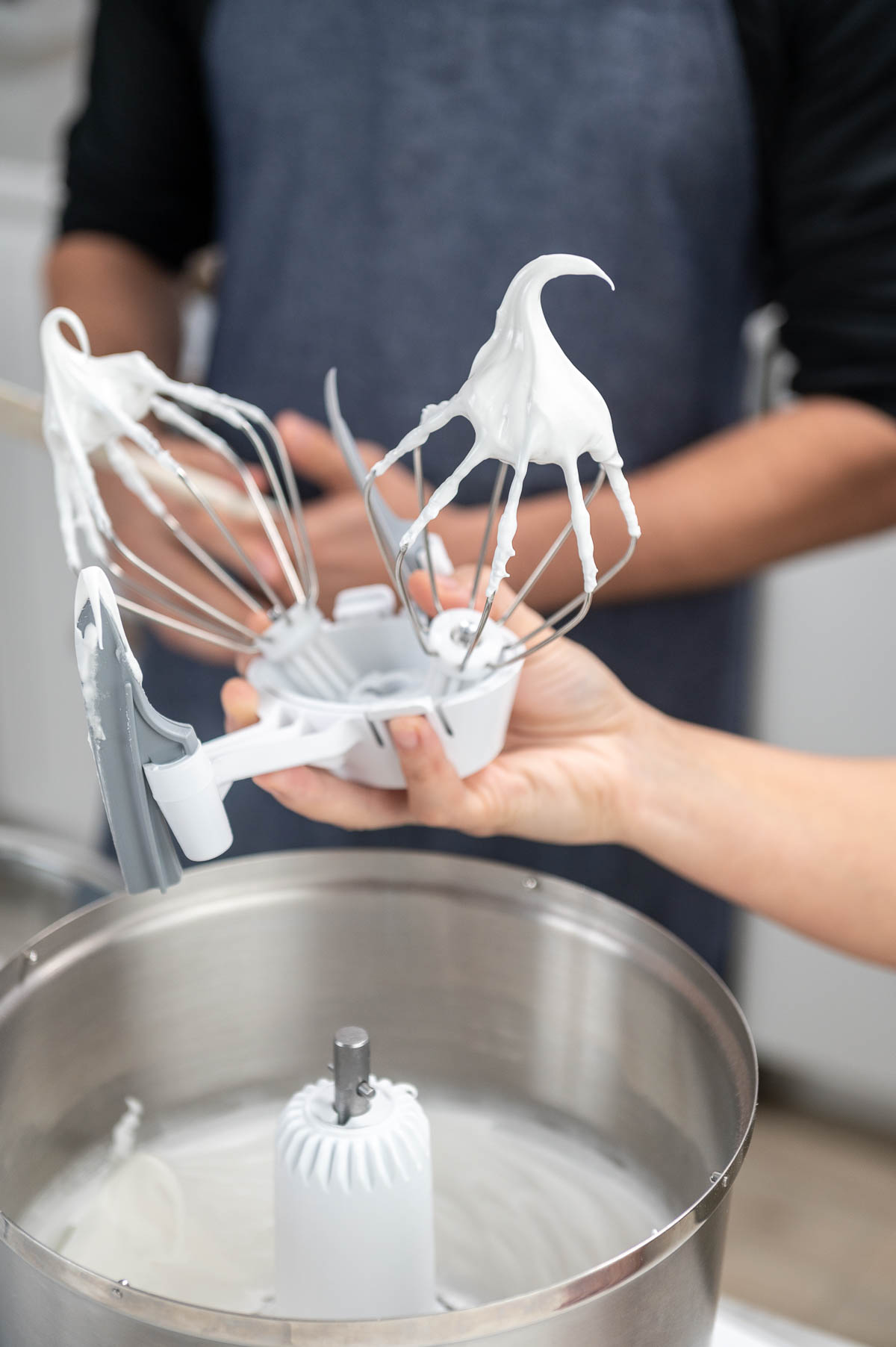
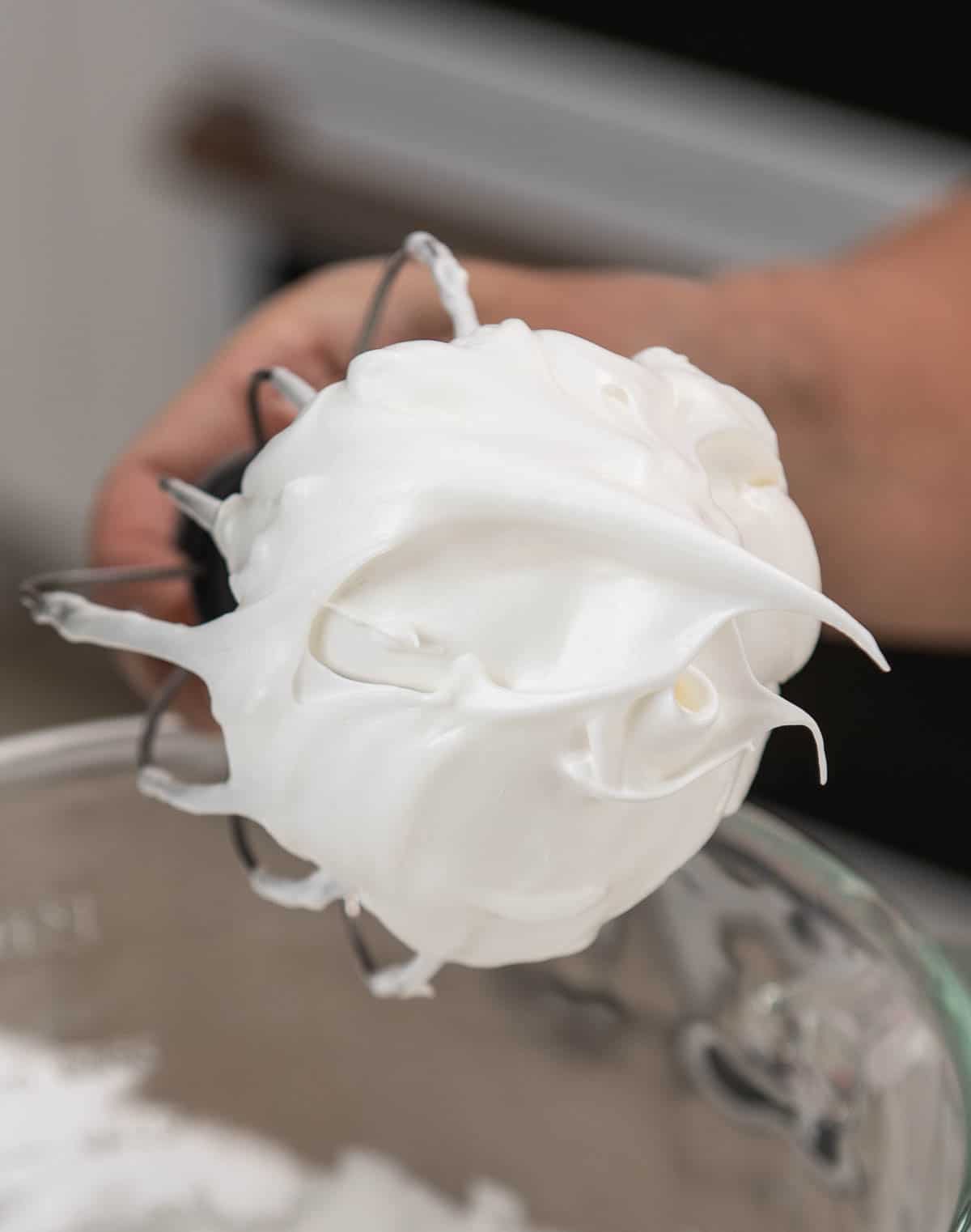
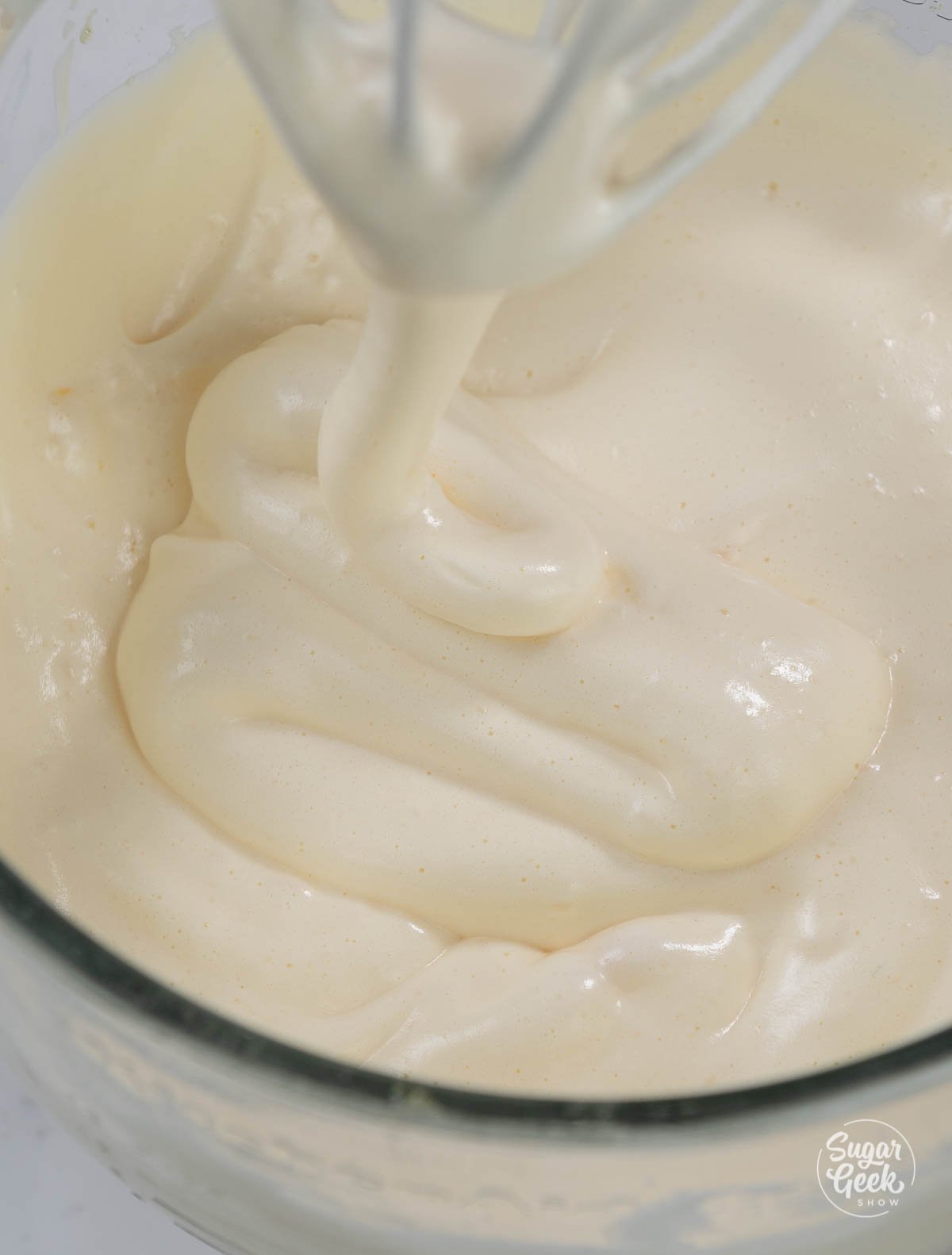
  14. Continue to whip the egg whites at medium speed until they have reached a smooth medium peak (meringue holds its shape but the tip does not stand straigh up).
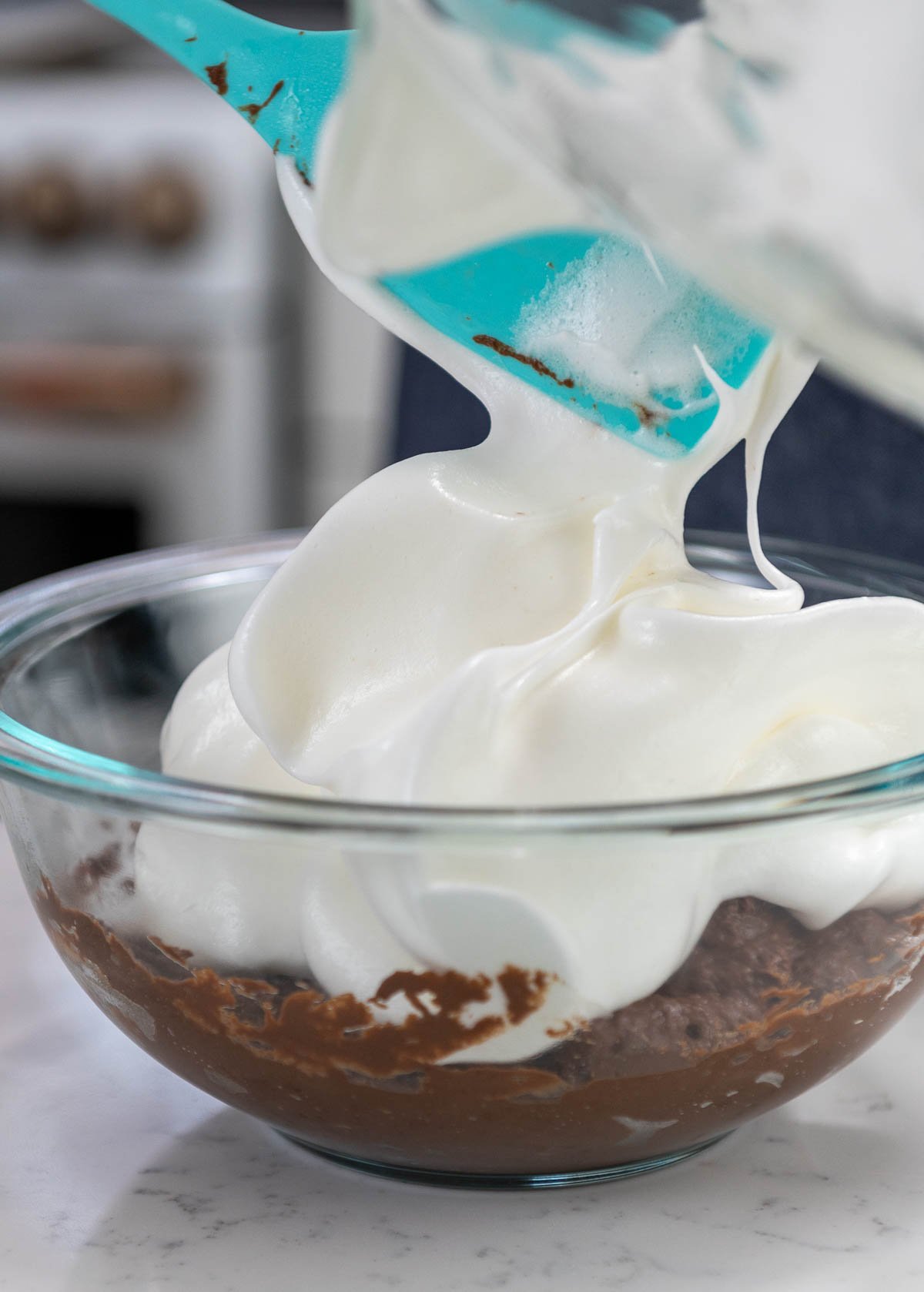
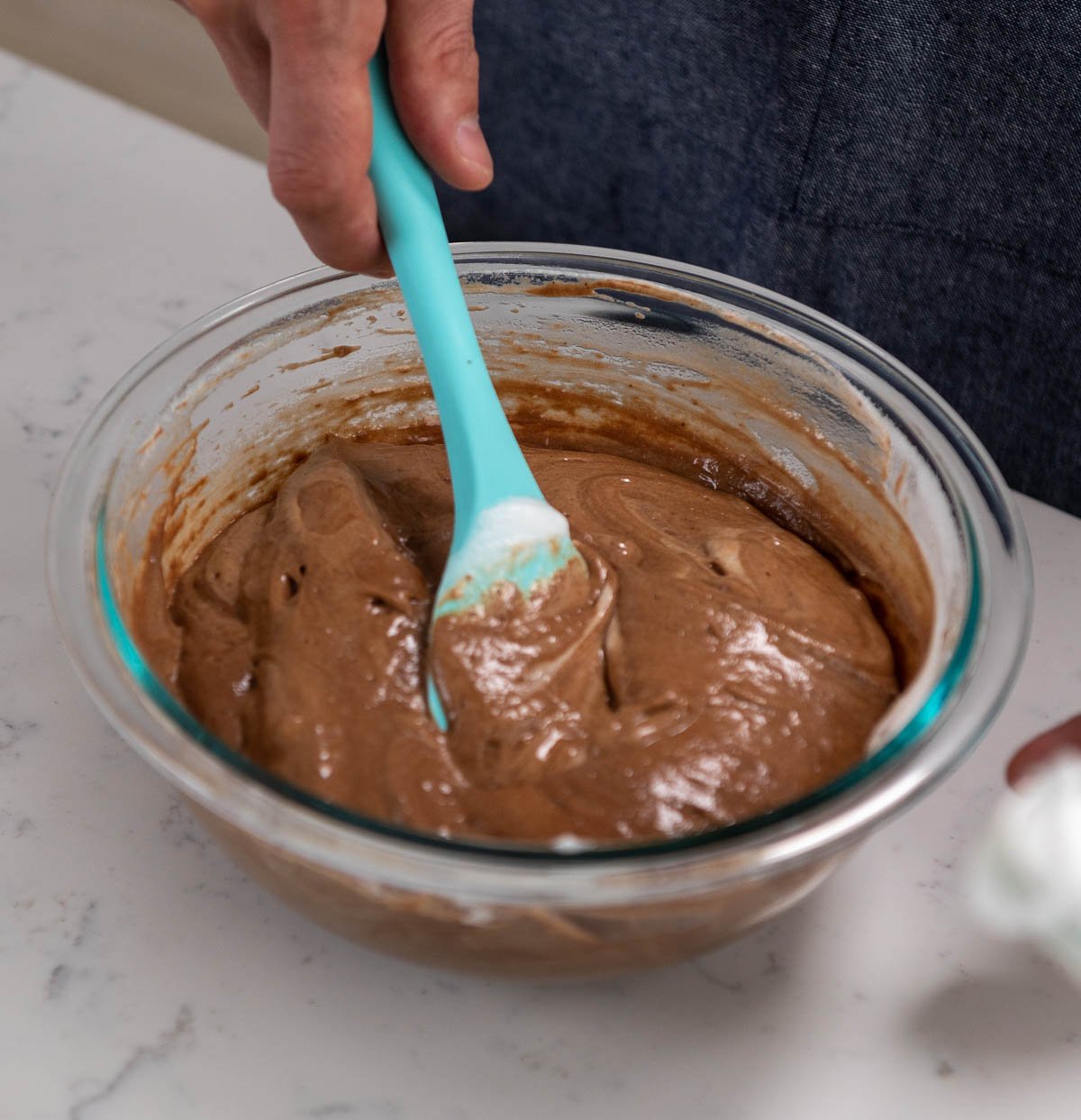
  15. Then, add in ⅓ of the meringue to the chocolate pastry cream and mix them together until they are fully incorporated. You do not need to be gentle at this point.
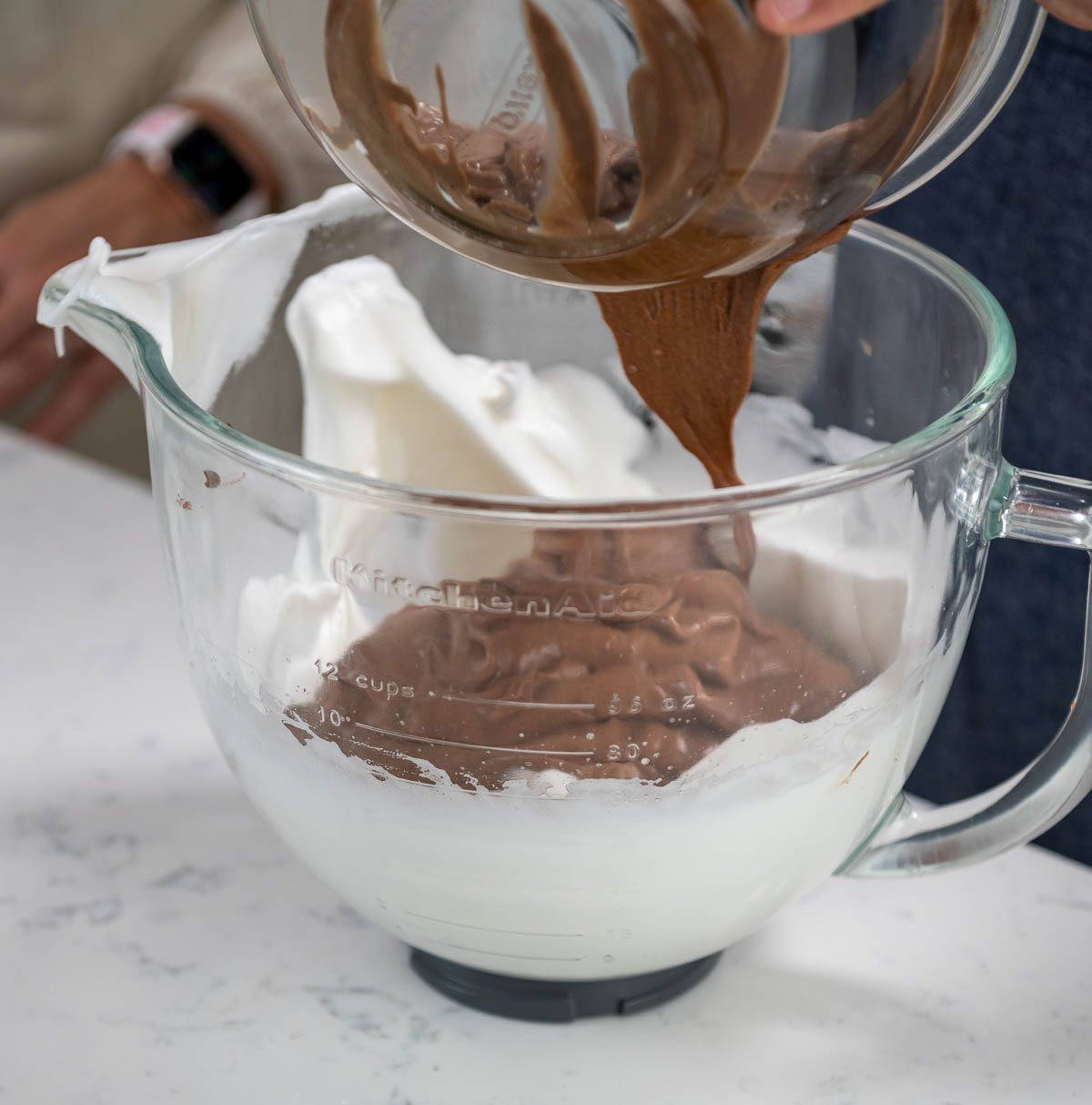
  16. Add the chocolate mixture into the bowl with the rest of the whipped egg whites.
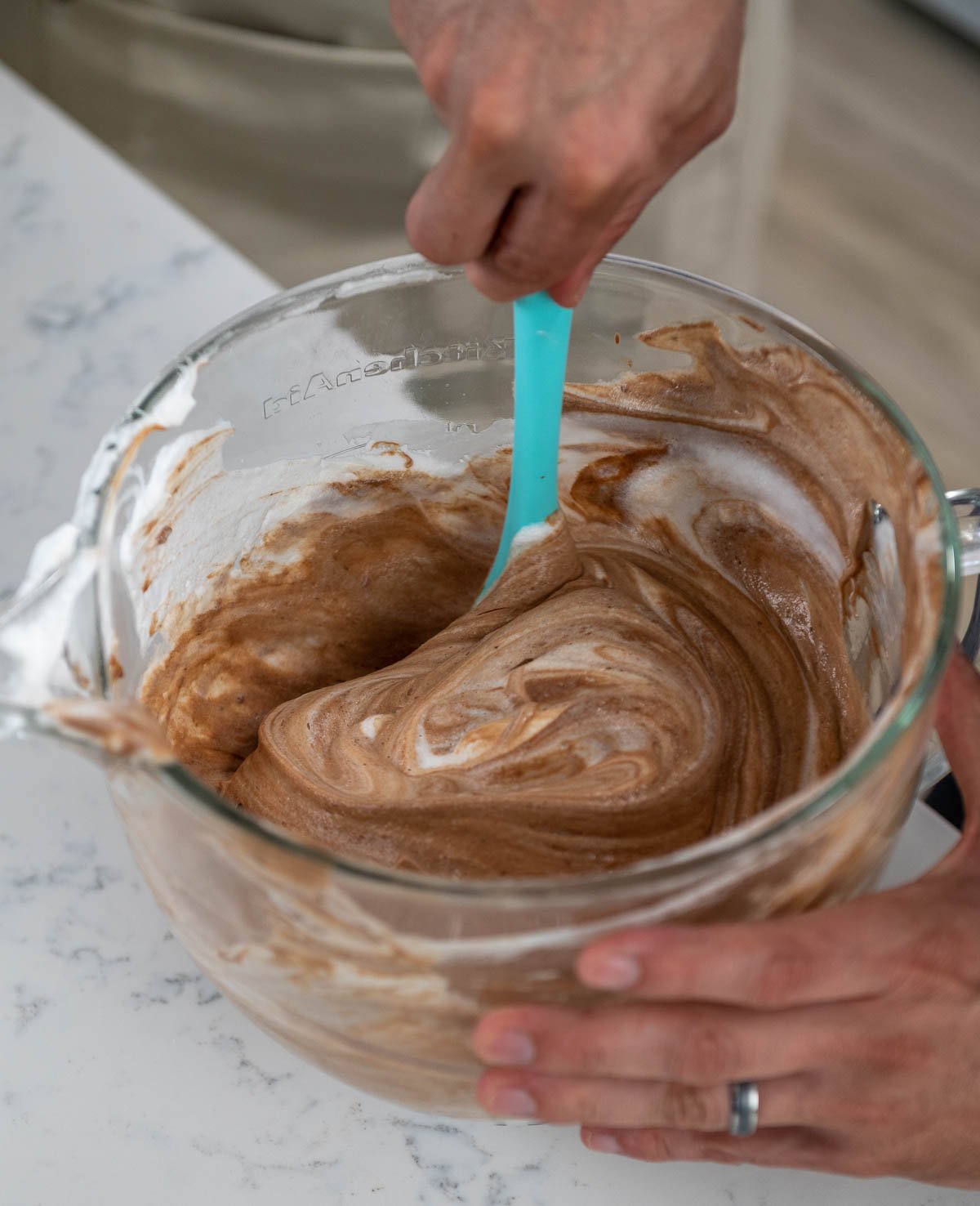
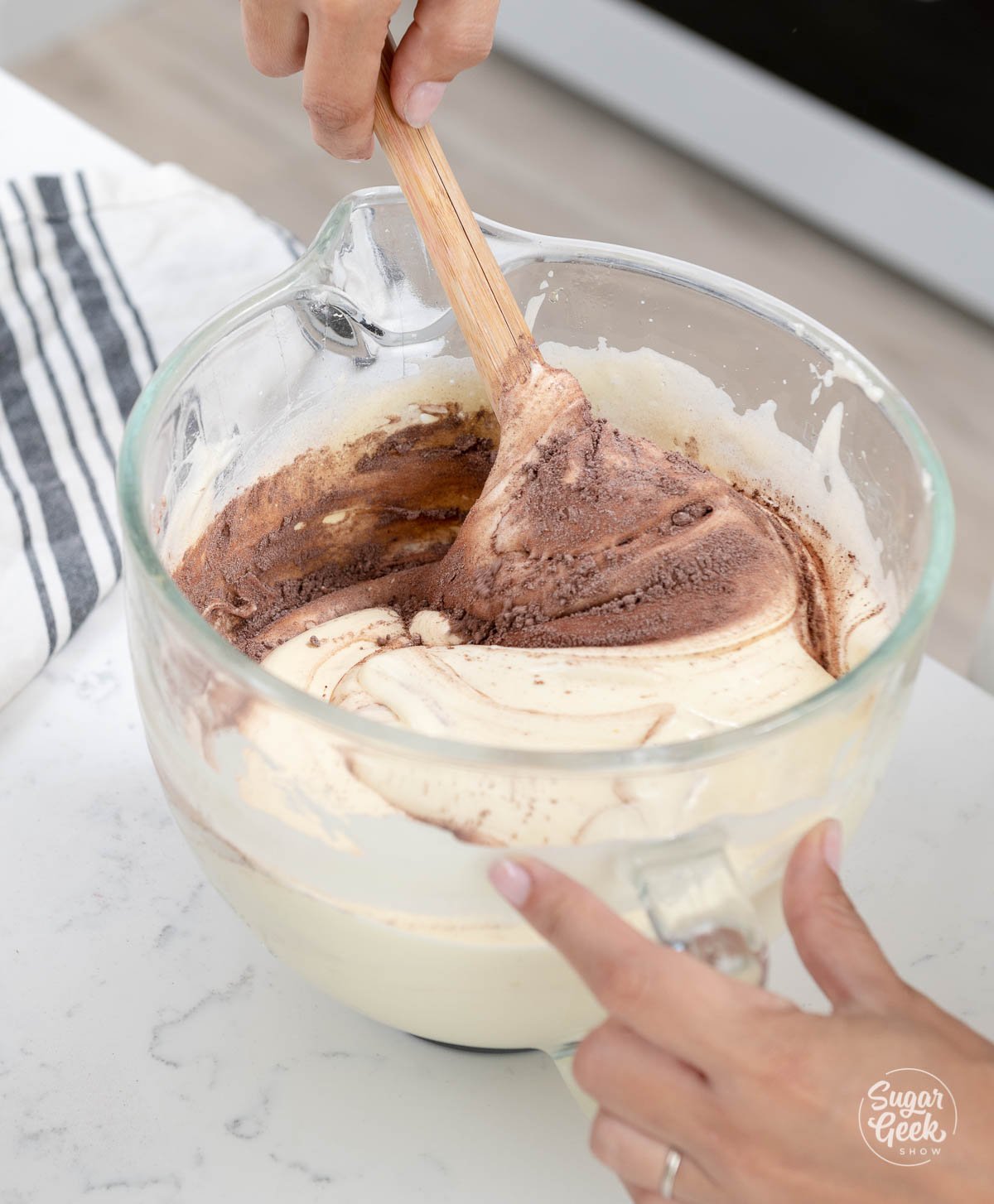
  17. Next, gently fold the egg whites and chocolate mixture together carefully. Try not to deflate the egg whites too much. You only want to fold them until they are fully incorporated.

Baking the Chocolate Soufflé

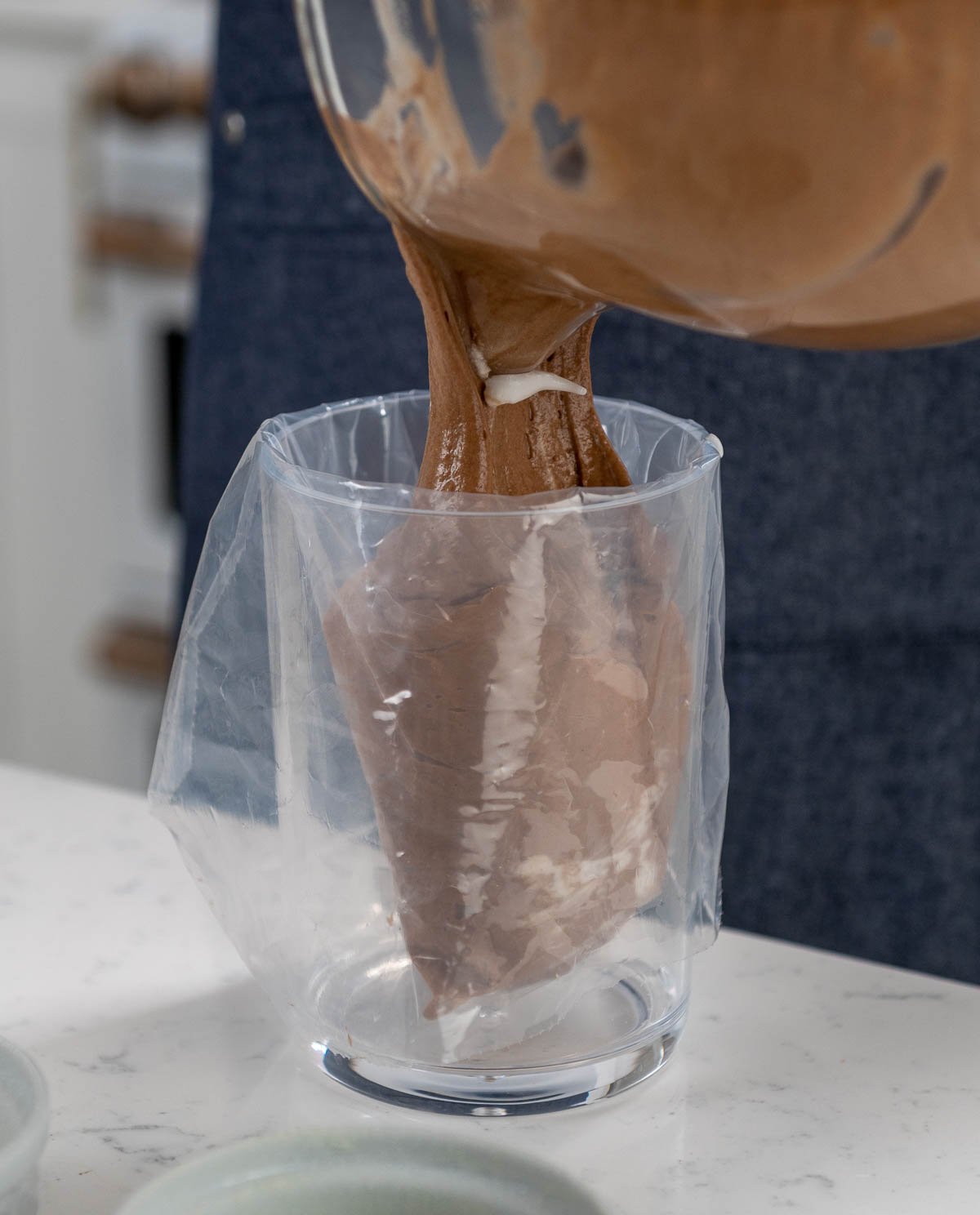
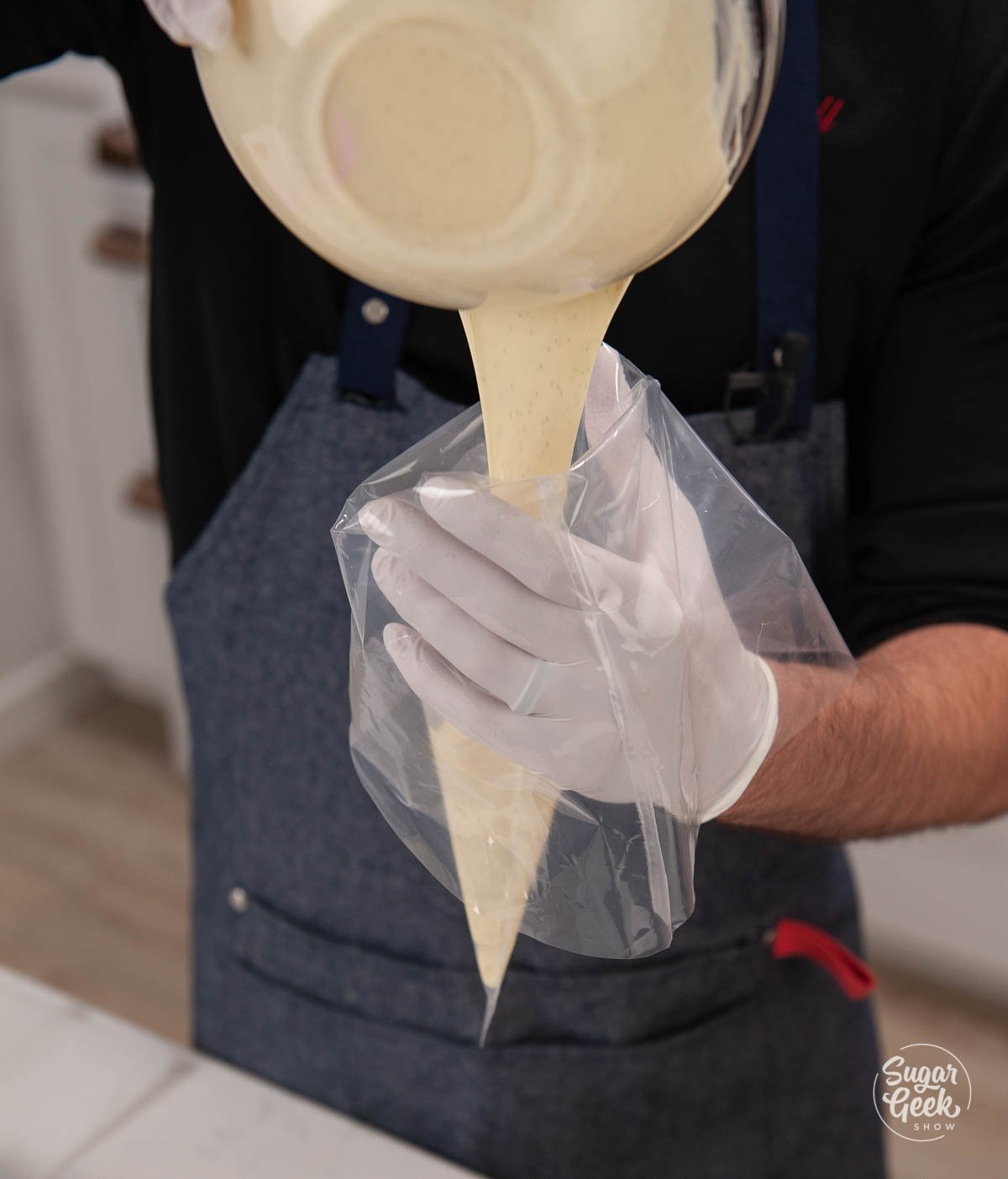
  1. First, pour the soufflé mixture into a large piping bag.
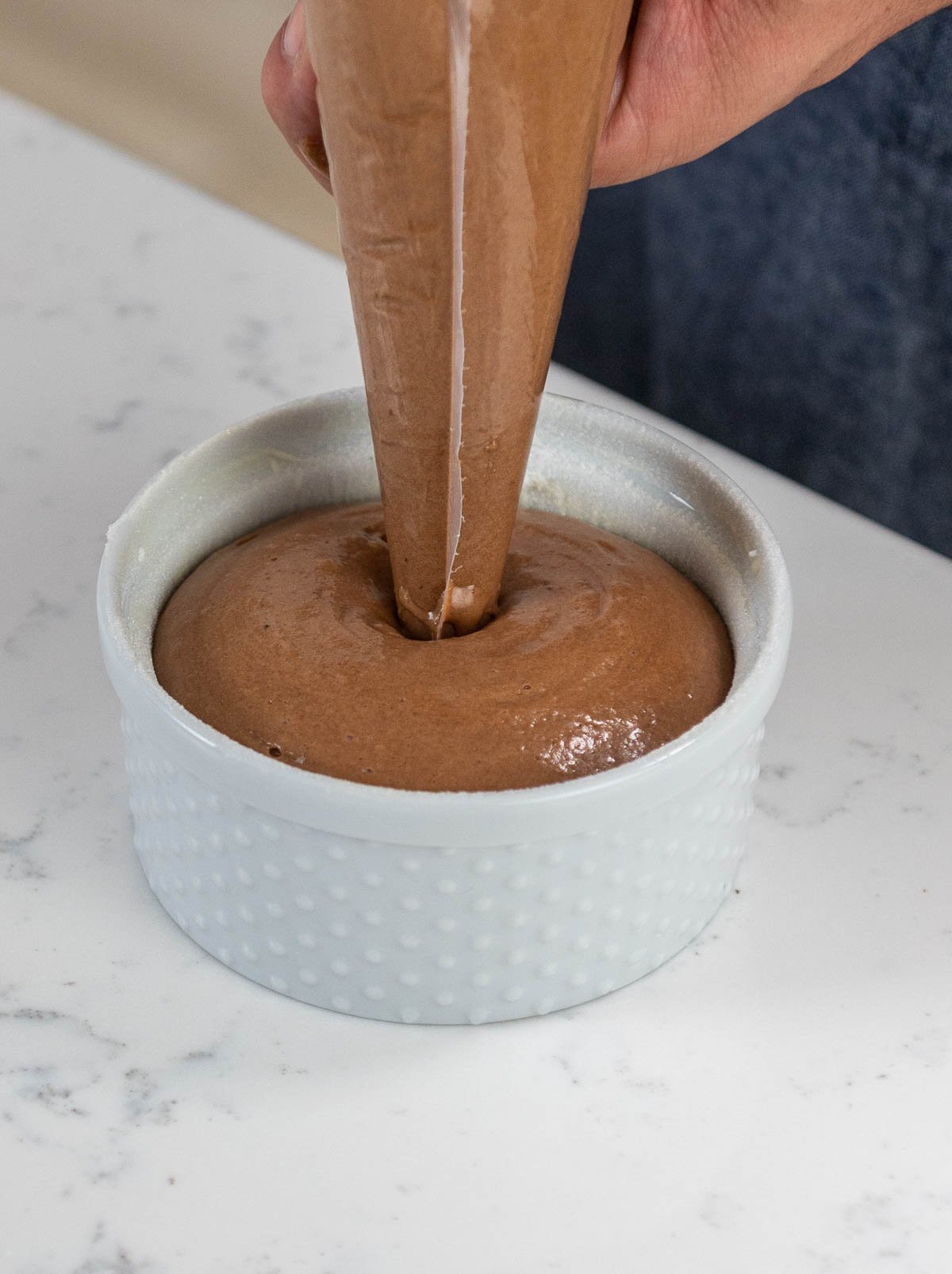
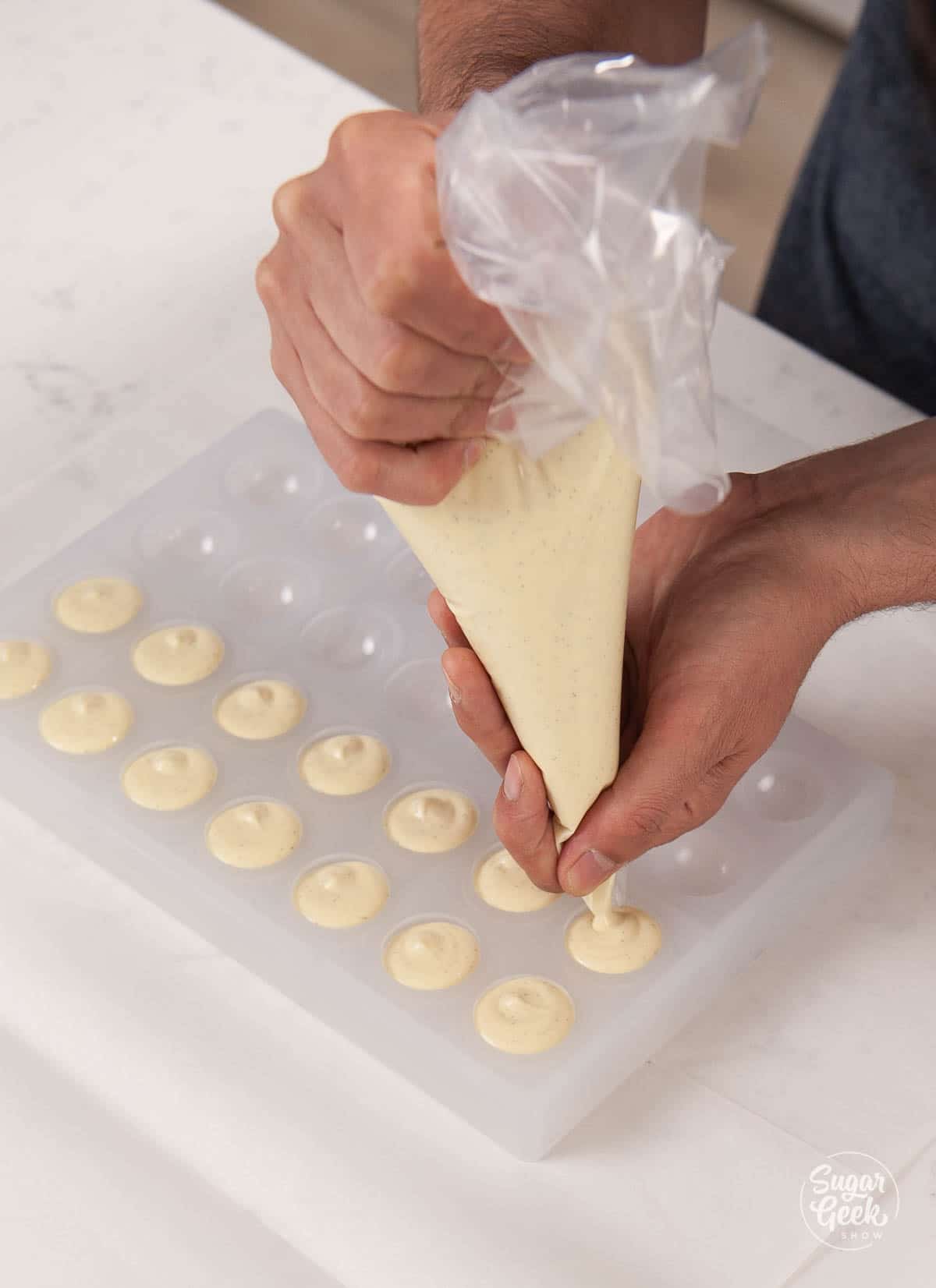
  2. Snip the tip off the bag (about 1cm wide) and pipe the soufflé mixture into the ramekin. Keep the tip of the bag inside the batter as you squeeze. When the ramekin is full, stop the pressure and lift up.
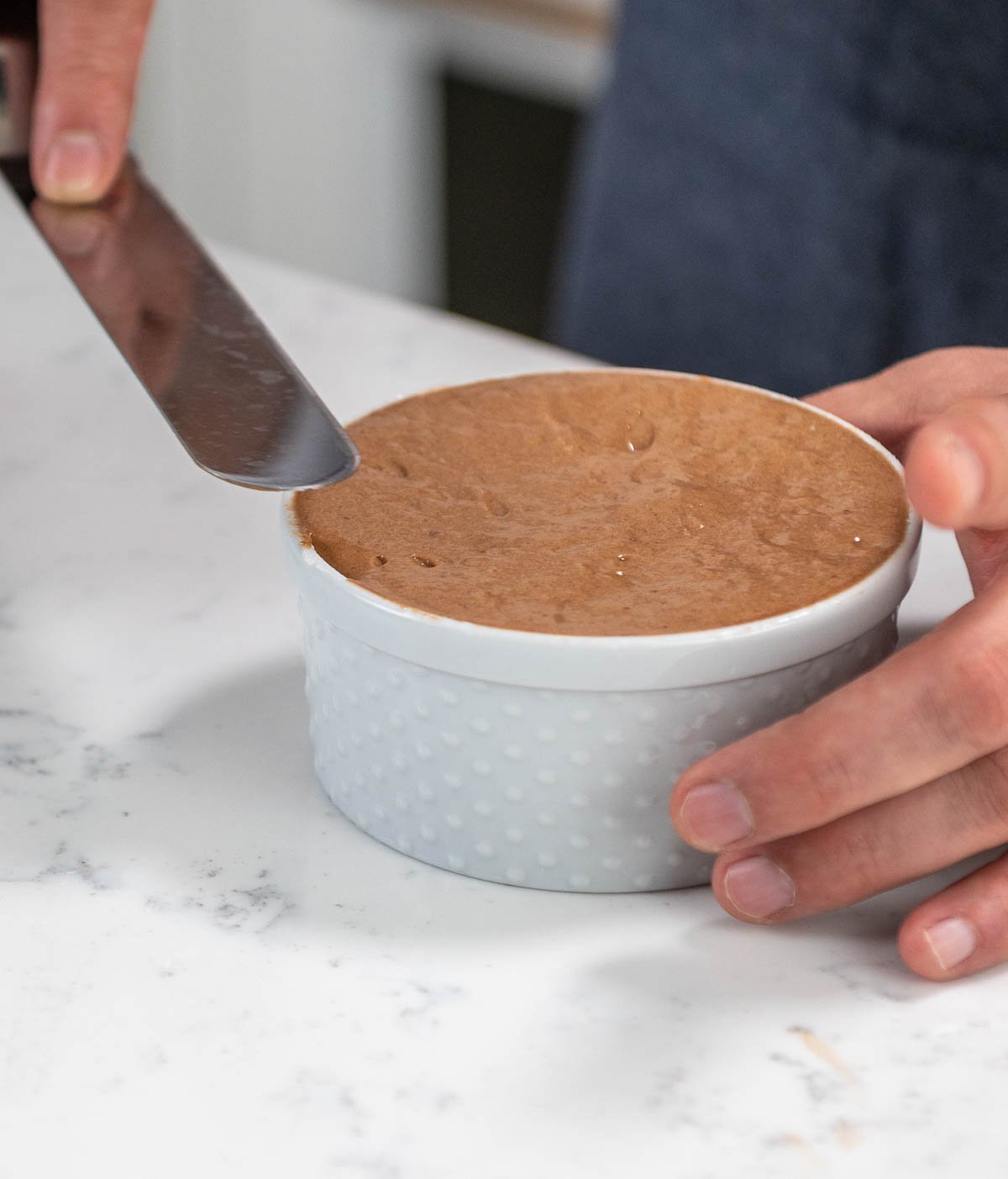
  3. Using a flat spatula, level off the top of the soufflé mixture to the edge of the ramekin.
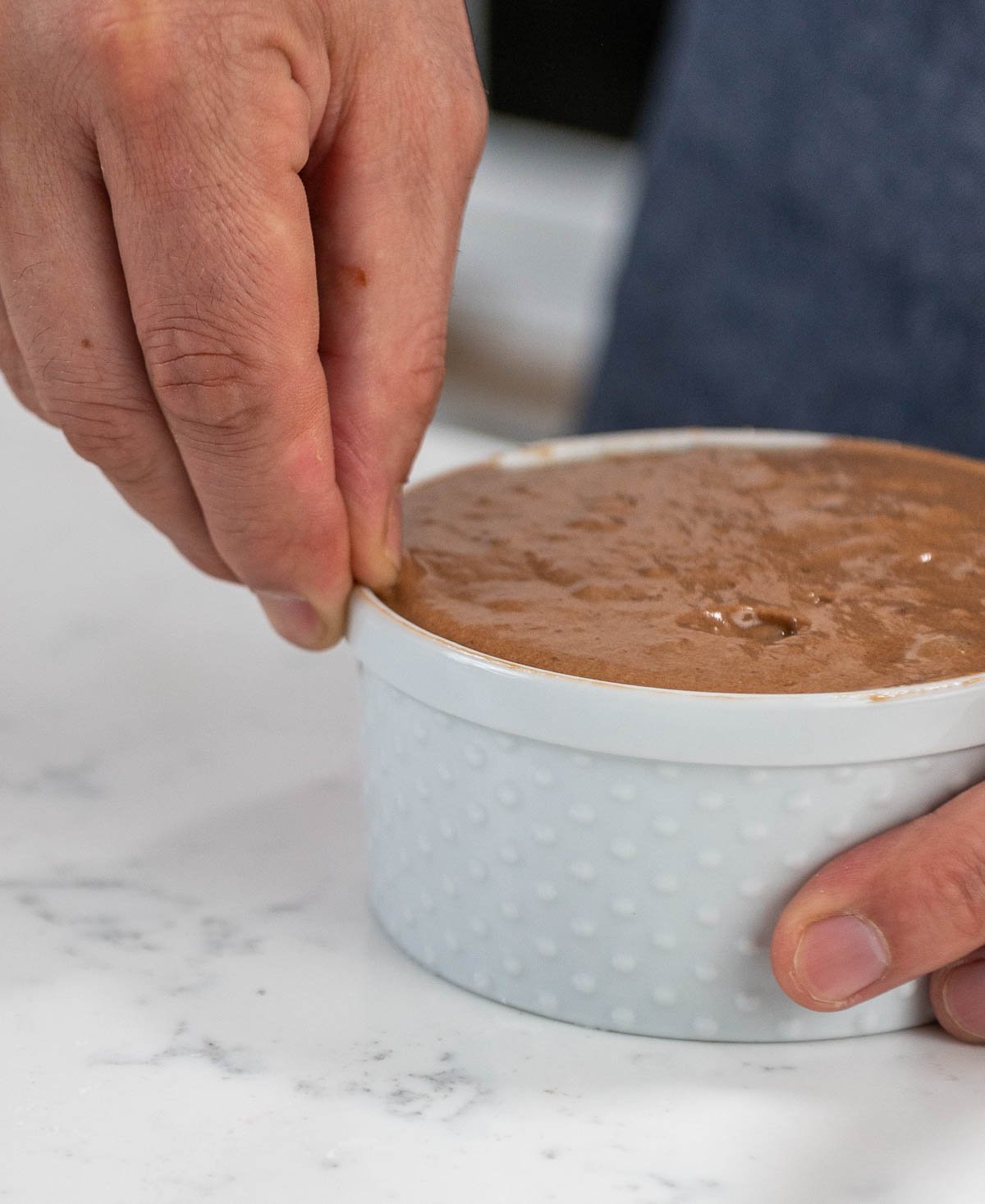
  4. Next, using the edge of your thumbnail, clean the very top edge around the ramekin to create a space between the batter and the edge of the ramekin. Make sure there is no batter on the edges or outsides of your ramekin.
  5. Repeat filling, leveling, and cleaning up the edges for each of your ramekins.
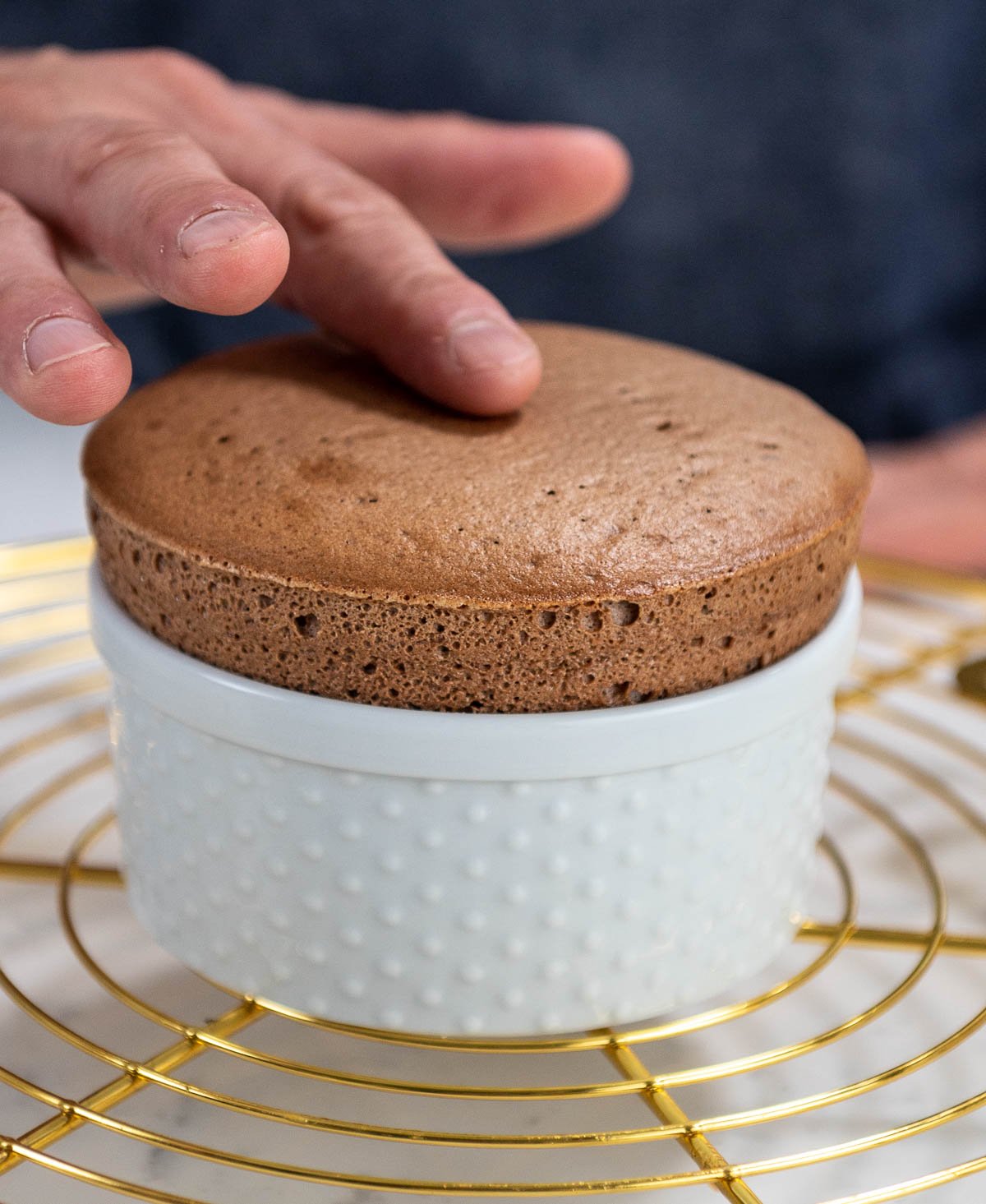
  6. Place the soufflés in a 360°F (182°C) oven for 15 minutes. Do not open the oven.You will know the soufflé is done when it has risen and has a very slight jiggle (but also a slight bounce back when it's gently touched).
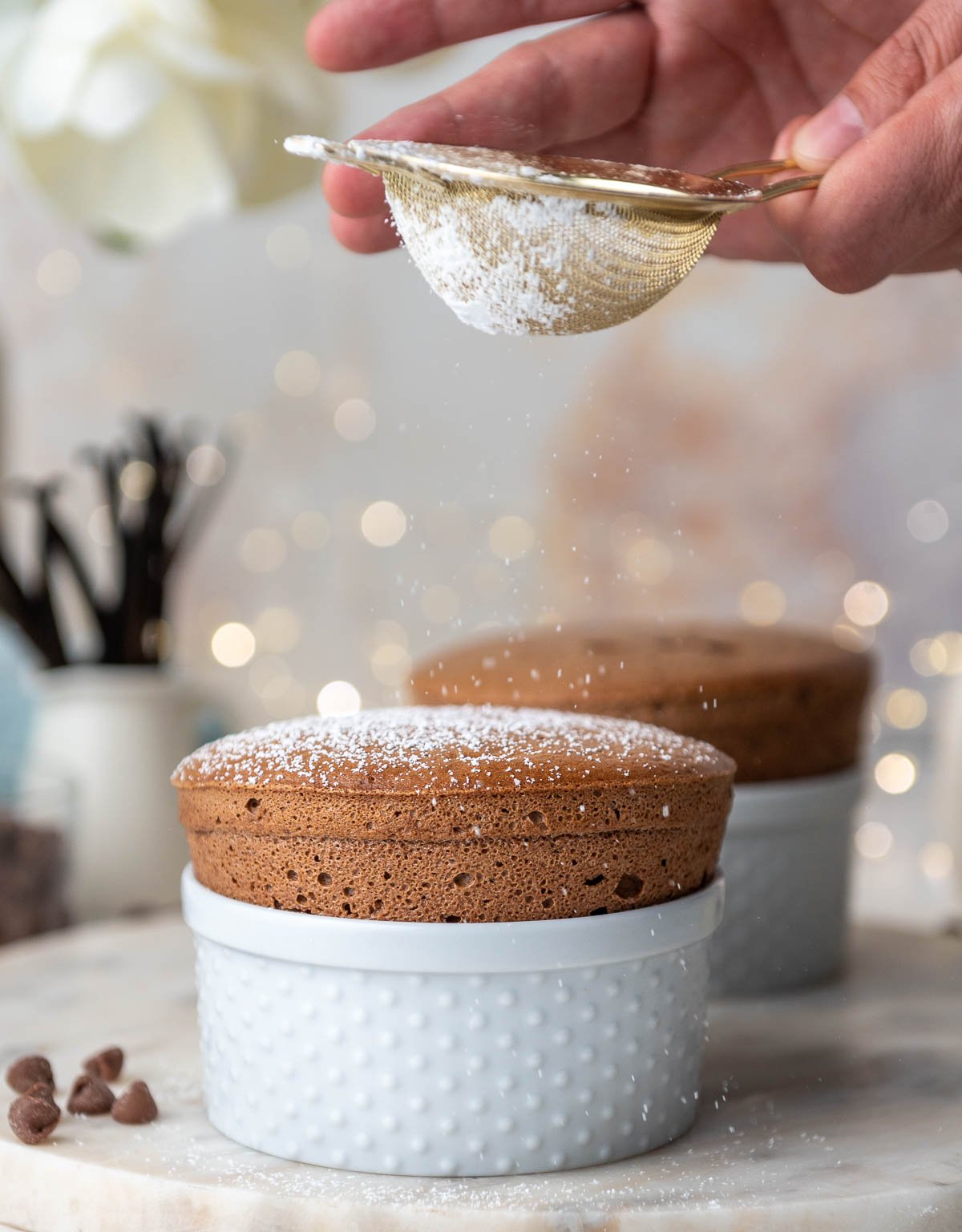
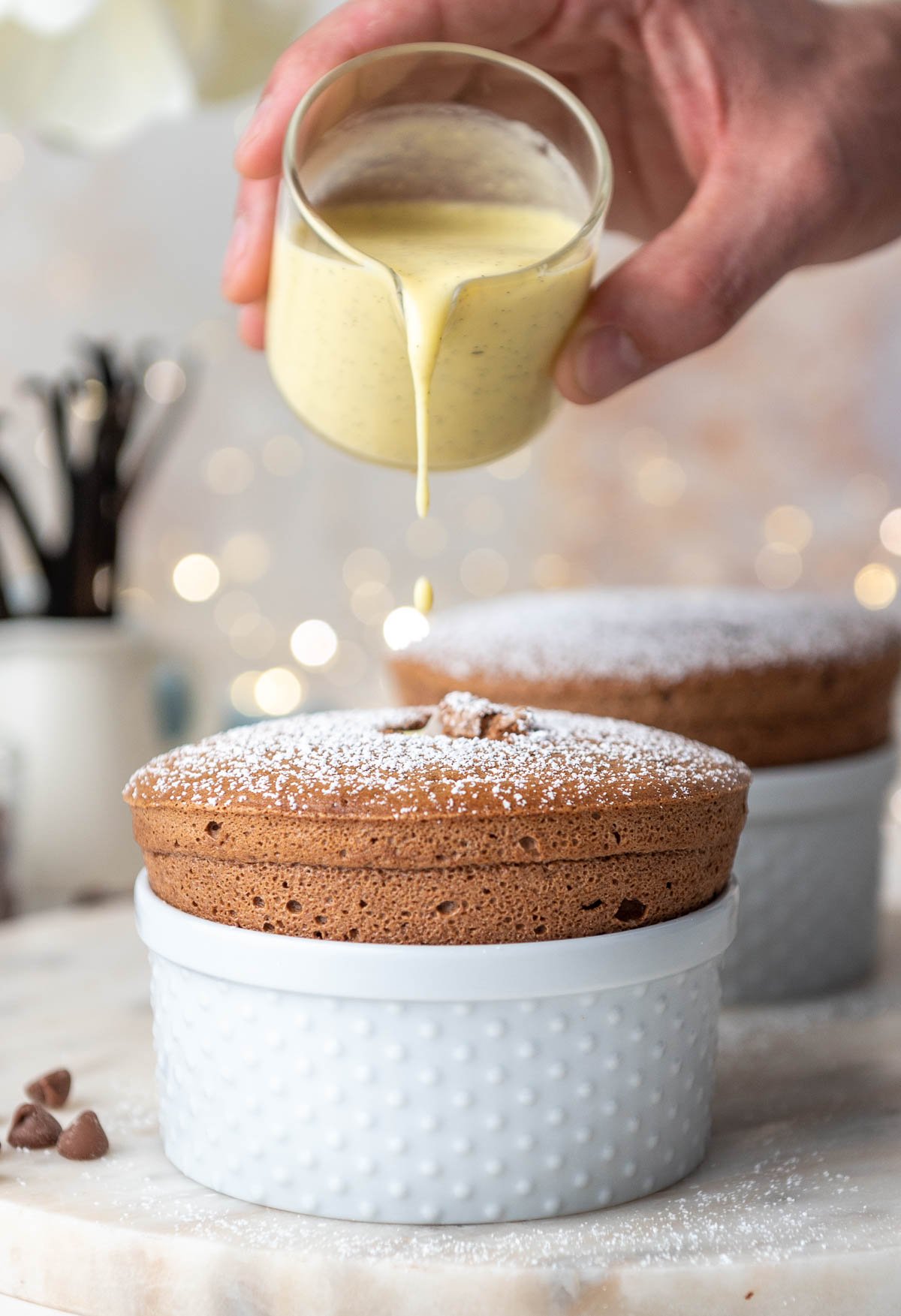
  7. Serve the soufflé immediately. Garnish with powdered sugar and/or a drizzle of the crème anglaise sauce.

Tips for the Perfect Chocolate Soufflé

  • Practice Mise en Place (everything in its place). Measure out your ingredients ahead of time and have them ready right before you start mixing to reduce the chances of accidentally leaving something out.
  • The chocolate you use matters! Avoid using chocolate chips. Why? Because they contain thickeners that stop the chocolate from melting smoothly. I would recommend chopping up a bar of Lindt dark chocolate since it's relatively easy to find at the grocery store. If you want to use the same chocolate I did, I used extra-bitter guayaquil.
  • Be patient with your eggs. This is key to ensuring the correct taste and texture of your soufflé. You will want to be mindful of the recipe instructions and be careful to not cook the eggs too quickly.
  • Fold the egg whites and chocolate mixture gently. Start by taking your spatula and going around the edge of the bowl just under the mixture, then cut through the center. Repeat this until everything looks combined and then stop. You don't want to go overboard otherwise you will remove all of the air you've mixed into the soufflé. Why does that matter? Because we want air trapped inside the mixture so that when it is baked, your soufflé stands tall and does not collapse.
  • Whip your French meringue on medium. Whipping this meringue on a lower speed will create smaller bubbles, helping your souffle rise higher in the oven. Big bubbles pop faster than small bubbles.
  • Waiting for your oven to pre-heat? Chill the mixture in the refrigerator for 5 minutes while your oven heats up. Keeping the ingredients from getting too warm will help keep your soufflé from falling.

FAQ

What does a chocolate soufflé taste like?

A chocolate soufflé is light and airy on the outside, and creamy on the inside. It is rich with chocolate flavor and will almost melt in your mouth as you eat it.

What is a chocolate soufflé made of?

Chocolate, eggs yolks, egg whites, whole milk, granulated sugar, cornstarch, and cream of tartar.

What's the difference between a chocolate soufflé and a chocolate lava cake?

A chocolate soufflé is fully baked, and a chocolate lava cake is not. Chocolate lava cakes have a runny texture in the center, and chocolate soufflé has a more creamy texture.

What can I bake a soufflé in?

Ramekins are ideal to use if you are baking individual soufflés. If you want to bake a larger soufflé, you can use a soufflé dish or any other casserole dish that has deep sides. Ceramic or heatproof glass dishes work best.

Why did my chocolate soufflé fall?

Your chocolate soufflé most likely collapsed because it cooled down. You can avoid this by only taking the soufflé out of the oven when you are ready to serve it. Timing is key!

Another reason your soufflé may have deflated is that you did not fold the egg whites and chocolate mixture carefully enough. A gentle fold is the key to keeping all of the air inside of the mixture so that when the soufflé is baked it stands tall.

Soufflés trap heat inside the dish which is what causes them to rise. As soon as you take a soufflé out of the oven, the heat begins to escape and this will cause the soufflé to fall naturally.

Why does my soufflé taste eggy?


If your chocolate soufflé tastes more like scrambled eggs than custard, you may have cooked the eggs too quickly.

Chocolate soufflé should have a subtle egg flavor. Anything more than a subtle egg flavor would indicate a mistake was made while preparing the soufflé.

chocolate soufflé covered in sauce

More Recipes You'll Love

Chocolate Lava Cake

Death By Chocolate Cake

Pastry Cream Recipe

Crème Anglaise Recipe

Recipe

closeup of chocolate souffle
Print Recipe
5 from 4 votes

Chocolate Soufflé with Crème Anglaise

This recipe will walk you through step-by-step how to prepare and bake chocolate soufflé that tastes light, airy, creamy, chocolatey, and stands tall every time you make it!
Prep Time15 minutes mins
Cook Time15 minutes mins
Total Time30 minutes mins
Course: Dessert
Cuisine: French
Servings: 4 people
Calories: 316kcal
Author: Liz Marek

Equipment

  • Mixer with whip attachment
  • mixing bowl
  • pot
  • Whisk
  • brush
  • fine mesh strainer
  • ramekins (I'm using four, 4" ceramic ramekins)

Ingredients

Crème Anglaise

  • 250 grams whole milk
  • 60 grams egg yolks
  • 30 grams granulated sugar
  • 1 vanilla bean

Chocolate Soufflé

  • 250 grams whole milk
  • 60 grams egg yolk
  • 16 grams cornstarch
  • 125 grams 64% dark chocolate My favorite is Cacao Barry 64% Guayaquil chocolate
  • 250 grams fresh egg whites room temperature
  • 100 grams granulated sugar
  • 1 Pinch cream of tartar

Instructions

Making the Crème Anglaise Sauce

  • First, cut your vanilla bean in half lengthwise and carefully scrape the seeds out with a knife.
  • Next, pour the milk into a saucepan. Turn the heat on to medium heat.
  • Then, add in the vanilla bean seeds and the pod into the milk.
  • Bring the milk to a simmer, and then remove it from the heat.
  • Next, strain the milk and vanilla bean mixture over the saucepan to remove the vanilla bean pod.
  • In a mixing bowl, whisk the egg yolks to break them up.
  • Add in ⅓ of the hot milk mixture into the egg yolks, and whisk to combine them.
  • Once they are combined, add the egg yolk mixture back into the saucepan and turn the heat back up to medium.
  • Then, over medium heat, whisk the mixture constantly until it begins to bubble and thicken. Be very careful not to overheat the mixture.
  • When the mixture is thick enough to coat the back of a spoon and you can drag your finger through the center without the sauce dripping (a la nappe), your crème anglaise is ready.
  • Strain the anglaise into a bowl to remove the vanilla fibers, and then cover it with plastic wrap.
  • Allow to cool and set it aside until you're ready to drizzle it onto your soufflé.

Preparing the Chocolate Soufflé Mixture

  • Begin by preparing the ramekins by brushing them with butter in a vertical direction.
  • Then, coat the butter with a thin layer of granulated sugar. Set them aside.
  • Preheat your oven to 360°F (182°C)
  • In a heavy bottom potbelly over medium heat, bring the milk to a boil.
  • Next, in a separate bowl, combine the egg yolk and cornstarch by whisking it until the mixture is smooth and the cornstarch is dissolved. Really whisk it together so you don't get any clumps of cornstarch.
  • Add about ⅓ cup of the warm milk to the egg yolks and mix. This is tempering the eggs. Once you've done this, pour the egg/milk mixture back into the pot with the rest of the hot milk.
  • Stir it constantly over medium heat to cook the egg/milk mix to a boil. Be careful not to cook the eggs too quickly.
  • Remove the pot from heat, and then add the chocolate to the pot.
  • Keep stirring the mixture until the chocolate is fully incorporated.
  • Then, transfer the chocolate mixture to a bowl and set it aside.
  • Next, in the bowl of your stand mixer, add in your egg whites and a pinch of cream of tartar. Make sure your bowl is very clean, use a little bit of white vinegar to clean your bowl and whisk attachment if needed.
  • Begin to whip the egg whites in the bowl of your stand mixer on medium speed while bringing them to a soft peak.
  • Then, slowly add in the sugar while mixing.
  • Continue to whip the egg whites at medium speed until they have reached a smooth medium peak.
  • Then, once the egg whites have a smooth medium peak, add ⅓ of the egg whites to the chocolate pastry cream and mix them together until they are fully incorporated.
  • Now, pour the chocolate mixture into the bowl with the rest of the whipped egg whites.
  • Next, gently fold the egg whites and chocolate mixture together carefully. Try not to deflate the egg whites too much. You only want to fold them until they are fully incorporated.

Baking the Chocolate Soufflé

  • First, pour the soufflé mixture into a large, prepared piping bag.
  • Then, keeping the tip of the piping bag down in the prepared ramekin, fill the ramekin to the top making sure there are no air bubbles.
  • Using a flat spatula, level off the top of the ramekin.
  • Next, using the edge of your thumbnail, clean the very top edge around the ramekin to create a border. Make sure there is no batter on the edges or outsides of your ramekin.
  • Repeat filling, leveling, and cleaning up the edges for each of your ramekins.
  • Place the soufflés in a 360°F (182°C) oven for 15 minutes. You will know the soufflé is done when it has risen and has a very slight jiggle (but also a slight bounce back when it's gently touched).
  • Serve the soufflé immediately. Optional: Garnish with powdered sugar and/or a drizzle of the crème anglaise sauce.

Video

Notes

Important Things To Note Before You Start
  1. Practice Mise en Place (everything in its place). Measure out your ingredients ahead of time and have them ready right before you start mixing to reduce the chances of accidentally leaving something out.
  2. The chocolate you use matters! Avoid using chocolate chips. Why? Because they contain thickeners that stop the chocolate from melting smoothly. I would recommend chopping up a bar of Lindt dark chocolate since it's relatively easy to find at the grocery store. If you want to use the same chocolate I did, I used extra-bitter guayaquil.
  3. Be patient with your eggs. This is key to ensuring the correct taste and texture of your soufflé. You will want to be mindful of the recipe instructions and be careful to not cook the eggs too quickly.
  4. Fold the egg whites and chocolate mixture gently. Start by taking your spatula and going around the edge of the bowl just under the mixture, then cut through the center. Repeat this until everything looks combined and then stop. You don't want to go overboard otherwise you will remove all of the air you've mixed into the soufflé. Why does that matter? Because we want air trapped inside the mixture so that when it is baked, your soufflé stands tall and does not collapse.
  5. Whip your French meringue on medium. Whipping this meringue on a lower speed will create smaller bubbles, helping your souffle rise higher in the oven. Big bubbles pop faster than small bubbles.
  6. Waiting for your oven to pre-heat? Chill the mixture in the refrigerator for 5 minutes while your oven heats up. Keeping the ingredients from getting too warm will help keep your soufflé from falling.

Nutrition

Calories: 316kcal | Carbohydrates: 43g | Protein: 9g | Fat: 12g | Saturated Fat: 5g | Polyunsaturated Fat: 1g | Monounsaturated Fat: 4g | Cholesterol: 339mg | Sodium: 63mg | Potassium: 262mg | Fiber: 1g | Sugar: 39g | Vitamin A: 635IU | Calcium: 193mg | Iron: 1mg
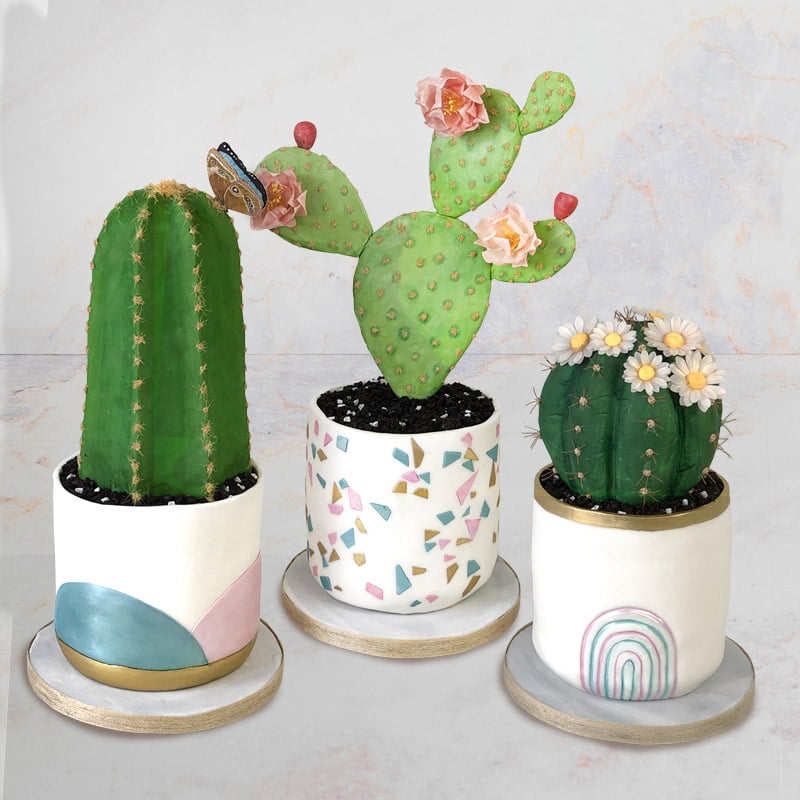
three cakes sculpted to look like realistic cacti in plant pots

January 15, 2022 Course Preview

Cactus Cake Trio Tutorial

Skill level: Intermediate

Guest instructor Sara Weber returns for not one, not two, but three awesome, realistic cactus cakes in edible pots.

Each cactus is unique and features a host of tips and tricks, as Sara walks you through the process step-by-step. Learn to make three different realistic cacti, edible flower blossoms for each, and three different decorated pots, featuring a dipped pot, an intricately carved pattern on a pot, and a terrazzo tile pattern that's sure to be one of those "how did they make that?!" moments for your guests at the special occasion.

Sara showcases how to make the structure for the prickly pear, and how to protect and cover your structure in a food-safe way. There's tons of tricks and tips in this tutorial, so let's get our tools together and let's get started!

3:54:57 Minutes of Instruction

What You Will Learn

  • Learn how to create three different realistic cactus cakes in plant pots
  • How to plan out and structure these cakes using wooden dowels
  • Learn how to create a tall, ball and prickly pear cactus from edible materials
  • How to make edible soil
  • Learn how to make three different decorations for edible plant pots

Three cakes sculpted to look like cacti in plant pots

Tutorial Chapters

  1. Overview of the structure 0:33
  2. Measuring the pots 2:20
  3. Cutting the dowel rods 4:53
  4. Covering the dowel rods 7:05
  5. Finding the cake board center 8:25
  6. Adding the dowel rods 10:54
  7. Cutting the thick dowel rods 13:08
  8. Carving and crumb coating the cakes 22:19
  9. Putting the cakes on the boards 33:57
  10. Adding the ganache 39:20
  11. Paneling the cakes with fondant 53:13
  12. Coloring the fondant terrazzo tiles 1:07:39
  13. Coloring the modeling chocolate 1:15:24
  14. Making the fondant terrazzo tiles 1:17:55
  15. Paneling the terrazzo pot 1:30:14
  16. Decorating the dipped pot 1:45:28
  17. Decorating the carved pot 1:57:19
  18. Making the marble bases 2:06:49
  19. Making rice treat cactus toppers 2:09:23
  20. Carving the rice treat base 2:15:39
  21. Making the chocolate ridges 2:19:48
  22. Covering the tall cactus in fondant 2:25:40
  23. Covering the ball cactus in fondant 2:31:22
  24. Making the prickly pear cactus topper 2:43:38
  25. Shading the cacti 2:59:23
  26. Making the cactus spines 3:07:03
  27. Making the spines for the ball cactus 3:10:51
  28. Decorating the tall cactus 3:12:25
  29. Adding the prickly pear spines 3:18:07
  30. Making the flower toppers 3:20:29
  31. Decorating the ball cactus 3:41:46
  32. Finalizing the prickly pear cactus 3:45:56
  33. Making and adding the soil 3:49:03

Downloads

Materials List

Prickly Pear Template

Butterfly Wing Template

Pot Template

Petal Template

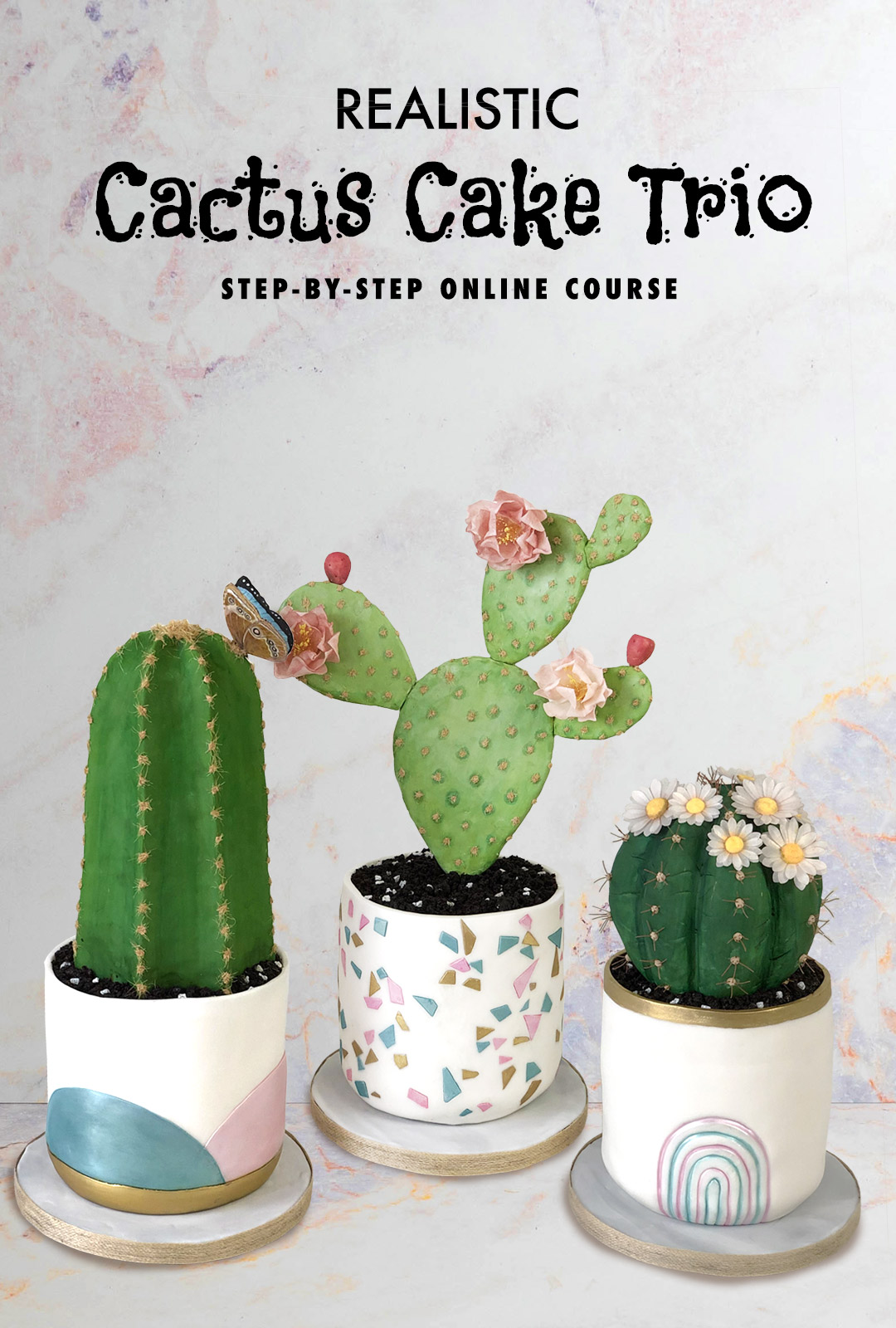
three cakes sculpted to look like realistic cacti in plant pots

January 15, 2022 Paid Video

Cactus Cake Trio

Skill level: Intermediate

Guest instructor Sara Weber returns for not one, not two, but three awesome, realistic cactus cakes in edible pots.

Each cactus is unique and features a host of tips and tricks, as Sara walks you through the process step-by-step. Learn to make three different realistic cacti, edible flower blossoms for each, and three different decorated pots, featuring a dipped pot, an intricately carved pattern on a pot, and a terrazzo tile pattern that's sure to be one of those "how did they make that?!" moments for your guests at the special occasion.

Sara showcases how to make the structure for the prickly pear, and how to protect and cover your structure in a food-safe way. There's tons of tricks and tips in this tutorial, so let's get our tools together and let's get started!

3:54:57 Minutes of Instruction

What You Will Learn

  • Learn how to create three different realistic cactus cakes in plant pots
  • How to plan out and structure these cakes using wooden dowels
  • Learn how to create a tall, ball and prickly pear cactus from edible materials
  • How to make edible soil
  • Learn how to make three different decorations for edible plant pots

Tutorial Chapters

  1. Overview of the structure 0:33
  2. Measuring the pots 2:20
  3. Cutting the dowel rods 4:53
  4. Covering the dowel rods 7:05
  5. Finding the cake board center 8:25
  6. Adding the dowel rods 10:54
  7. Cutting the thick dowel rods 13:08
  8. Carving and crumb coating the cakes 22:19
  9. Putting the cakes on the boards 33:57
  10. Adding the ganache 39:20
  11. Paneling the cakes with fondant 53:13
  12. Coloring the fondant terrazzo tiles 1:07:39
  13. Coloring the modeling chocolate 1:15:24
  14. Making the fondant terrazzo tiles 1:17:55
  15. Paneling the terrazzo pot 1:30:14
  16. Decorating the dipped pot 1:45:28
  17. Decorating the carved pot 1:57:19
  18. Making the marble bases 2:06:49
  19. Making rice treat cactus toppers 2:09:23
  20. Carving the rice treat base 2:15:39
  21. Making the chocolate ridges 2:19:48
  22. Covering the tall cactus in fondant 2:25:40
  23. Covering the ball cactus in fondant 2:31:22
  24. Making the prickly pear cactus topper 2:43:38
  25. Shading the cacti 2:59:23
  26. Making the cactus spines 3:07:03
  27. Making the spines for the ball cactus 3:10:51
  28. Decorating the tall cactus 3:12:25
  29. Adding the prickly pear spines 3:18:07
  30. Making the flower toppers 3:20:29
  31. Decorating the ball cactus 3:41:46
  32. Finalizing the prickly pear cactus 3:45:56
  33. Making and adding the soil 3:49:03

Downloads

Materials List

Prickly Pear Template

Butterfly Wing Template

Pot Template

Petal Template

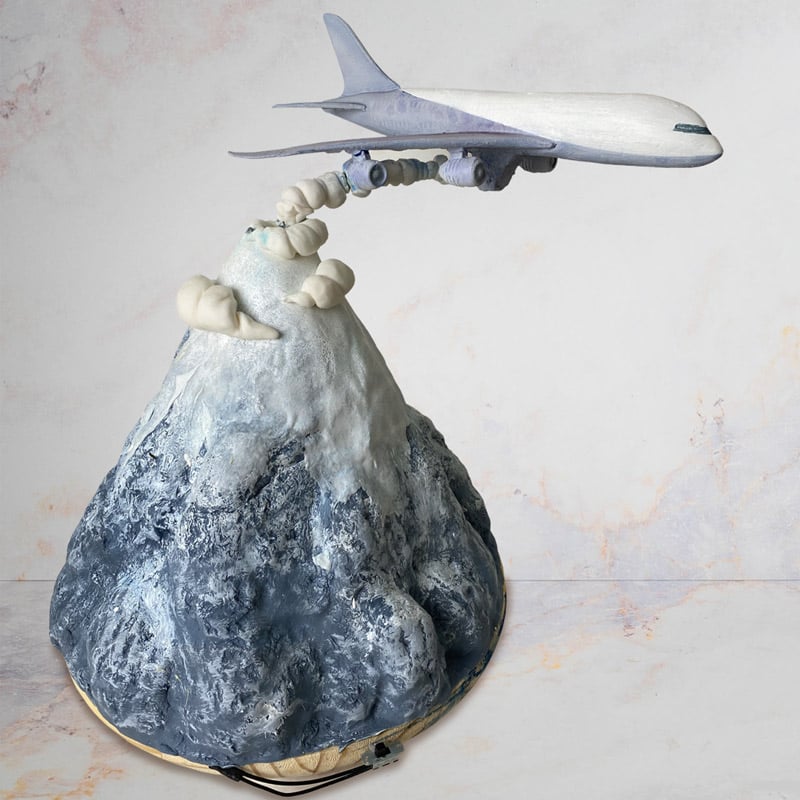
cake sculpted to look like an airplane flying around a snowcapped mountain

December 25, 2021 Course Preview

Rotating Airplane Cake Tutorial

Skill level: Advanced

In this tutorial, you will learn how to create a realistic snow-capped mountain with a rotating airplane made from edible materials that appears to fly around the mountain!

This tutorial is packed with high-level tips and tricks, everything from how to make food-safe molds of complicated shapes and toys like the airplane I molded, to hooking up motors and structure that will create some really cool special effects.

2:06:47 Minutes of Instruction

What You Will Learn

  • Learn how to create a chocolate airplane from a mold you will make yourself
  • How to create the structure and use motors that will make the airplane rotate around the cake
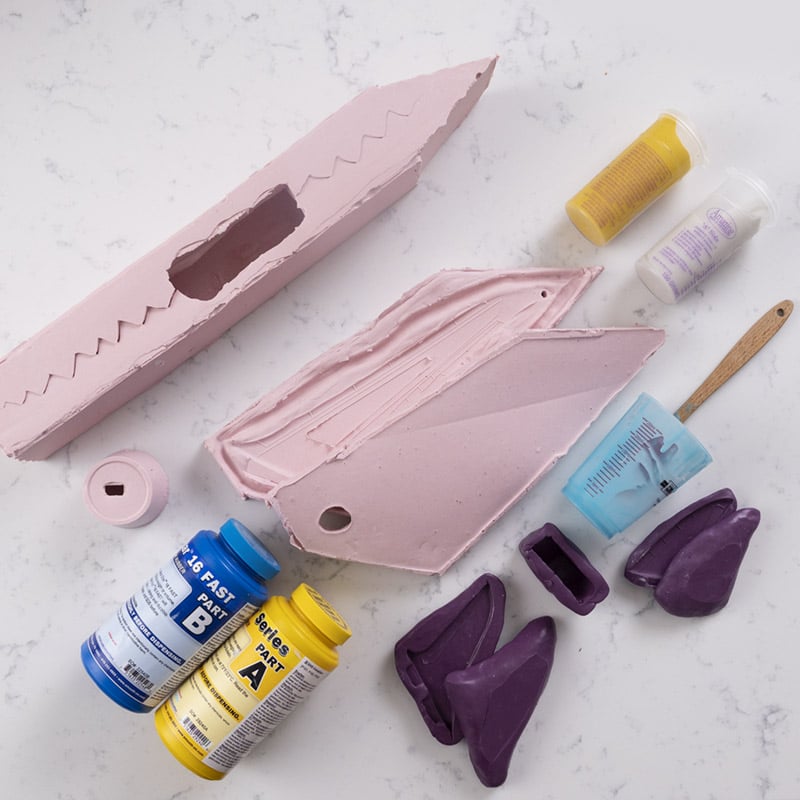
  • Learn how to create one-part, two-part and pour molds using food-safe materials
  • How to airbrush the plane to add realistic details and designs
  • Learn how to sculpt and create a snow-capped mountain

Tutorial Chapters

  1. Stacking the cake 0:30
  2. Overview of the motor 5:40
  3. How to bend threaded rod 13:04
  4. How to cut threaded rod 14:23
  5. Making the structure 16:04
  6. Making the foam core box 20:39
  7. Attaching the motor to the base 23:29
  8. Adding the cake board 25:26
  9. Adding the rice cereal treats 26:22
  10. Adding the cake 27:54
  11. Overview of the tools 30:31
  12. Assessing the object 34:51
  13. Adding the clay 36:45
  14. Making the box 44:12
  15. Making the mold base 46:27
  16. Cutting out the walls 48:21
  17. Gluing the walls 51:54
  18. Mixing the silicone 54:10
  19. Pouring the silicone 56:55
  20. Removing the box and toy 59:06
  21. Testing the one-part mold 1:01:47
  22. Removing the test mold 1:04:05
  23. Preparing the wings 1:05:24
  24. Making a two-part mold 1:08:09
  25. Pouring the wing silicone: Part 1 1:20:36
  26. Pouring the wing silicone: Part 2 1:22:59
  27. Making a silicone rubber one-part mold 1:26:53
  28. Making a pour mold 1:30:03
  29. Unboxing the molds 1:30:36
  30. Making the chocolate molds 1:33:43
  31. Unmolding the chocolate pieces 1:36:28
  32. Shaving down the chocolate molds 1:40:45
  33. Attaching the rudder and elevators 1:41:24
  34. Coloring the fondant 1:42:27
  35. Adding and texturing the fondant 1:44:26
  36. Painting the snow 1:47:47
  37. Adding the fondant snowcap 1:49:18
  38. Making the airplane base 1:51:41
  39. Adding the airplane base 1:53:20
  40. Adding the wings 1:55:51
  41. Attaching the airplane 1:56:45
  42. Adding the fondant clouds 1:58:12
  43. Painting the plane 2:01:28
  44. Airbrushing the plane 2:03:29

Downloads

Materials List

cake sculpted to look like an airplane flying around a snowcapped mountain

December 25, 2021 Paid Video

Rotating Airplane Cake

Skill level: Advanced

In this tutorial, you will learn how to create a realistic snow-capped mountain with a rotating airplane made from edible materials that appears to fly around the mountain!

This tutorial is packed with high-level tips and tricks, everything from how to make food-safe molds of complicated shapes and toys like the airplane I molded, to hooking up motors and structure that will create some really cool special effects.

2:06:47 Minutes of Instruction

What You Will Learn

  • Learn how to create a chocolate airplane from a mold you will make yourself
  • How to create the structure and use motors that will make the airplane rotate around the cake
  • Learn how to create one-part, two-part and pour molds using food-safe materials
  • How to airbrush the plane to add realistic details and designs
  • Learn how to sculpt and create a snow-capped mountain

Tutorial Chapters

  1. Stacking the cake 0:30
  2. Overview of the motor 5:40
  3. How to bend threaded rod 13:04
  4. How to cut threaded rod 14:23
  5. Making the structure 16:04
  6. Making the foam core box 20:39
  7. Attaching the motor to the base 23:29
  8. Adding the cake board 25:26
  9. Adding the rice cereal treats 26:22
  10. Adding the cake 27:54
  11. Overview of the tools 30:31
  12. Assessing the object 34:51
  13. Adding the clay 36:45
  14. Making the box 44:12
  15. Making the mold base 46:27
  16. Cutting out the walls 48:21
  17. Gluing the walls 51:54
  18. Mixing the silicone 54:10
  19. Pouring the silicone 56:55
  20. Removing the box and toy 59:06
  21. Testing the one-part mold 1:01:47
  22. Removing the test mold 1:04:05
  23. Preparing the wings 1:05:24
  24. Making a two-part mold 1:08:09
  25. Pouring the wing silicone: Part 1 1:20:36
  26. Pouring the wing silicone: Part 2 1:22:59
  27. Making a silicone rubber one-part mold 1:26:53
  28. Making a pour mold 1:30:03
  29. Unboxing the molds 1:30:36
  30. Making the chocolate molds 1:33:43
  31. Unmolding the chocolate pieces 1:36:28
  32. Shaving down the chocolate molds 1:40:45
  33. Attaching the rudder and elevators 1:41:24
  34. Coloring the fondant 1:42:27
  35. Adding and texturing the fondant 1:44:26
  36. Painting the snow 1:47:47
  37. Adding the fondant snowcap 1:49:18
  38. Making the airplane base 1:51:41
  39. Adding the airplane base 1:53:20
  40. Adding the wings 1:55:51
  41. Attaching the airplane 1:56:45
  42. Adding the fondant clouds 1:58:12
  43. Painting the plane 2:01:28
  44. Airbrushing the plane 2:03:29

Downloads

Materials List

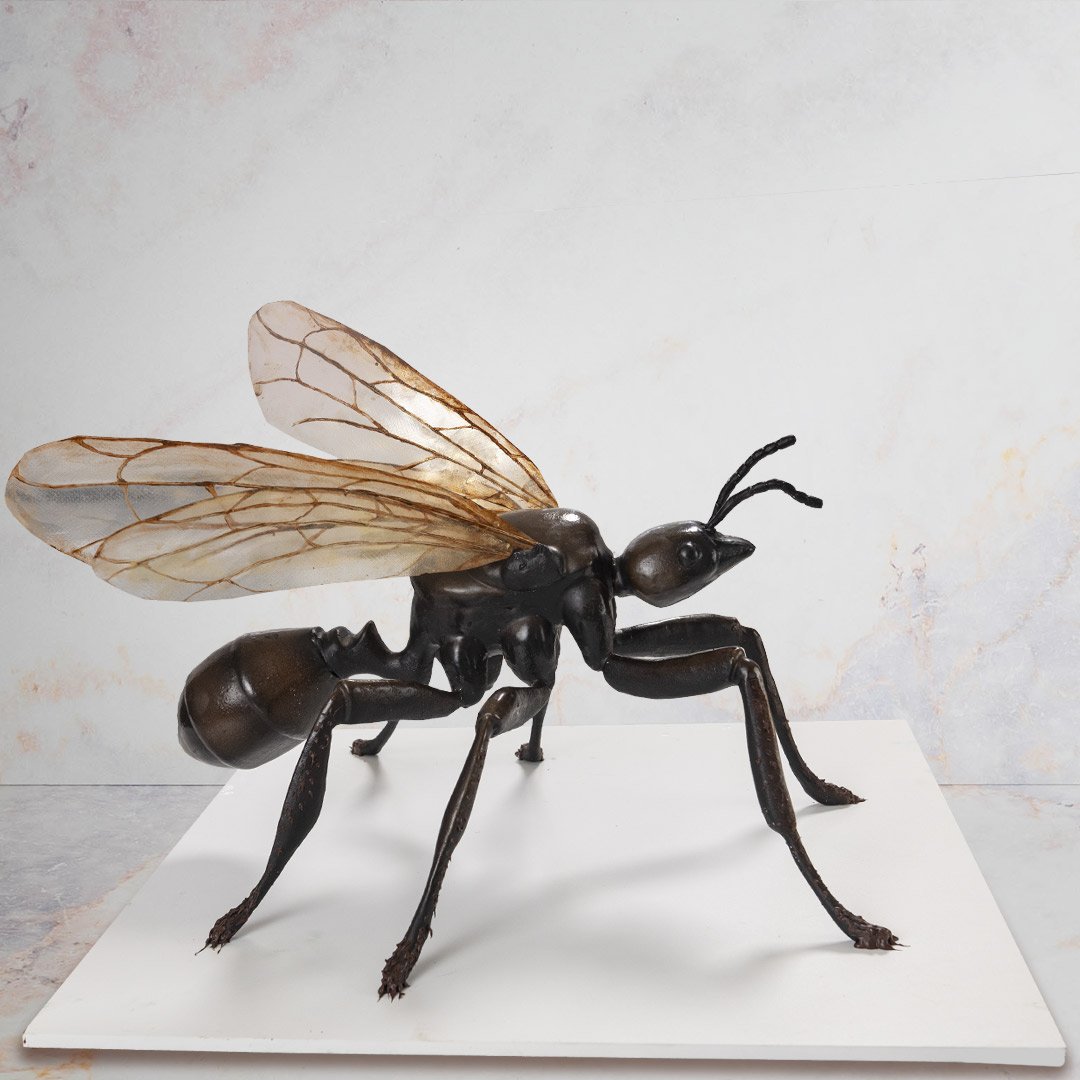
Chocolate sculpted to look like a giant ant with gelatin wings

December 14, 2021 Course Preview

Chocolate Ant Showpiece Tutorial

Skill level: Advanced

Ever wanted to learn how to create a free-standing edible showpiece made from just chocolate? Liz Marek breaks down how to create an enormous chocolate ant in this exciting tutorial.

In this course, you will learn how to create a giant ant featured in Liz's episode on Disney's Foodtastic series streaming on Disney+ made from tempered chocolate. Learn two different ways to make robot coupe, a moldable, chocolate medium that can be used like modeling chocolate. You will learn how to airbrush onto chocolate, something that can be very difficult to do with the oil-based nature of chocolate.

You will learn how to create the ant facial details, the antennae and eyes, along with the wings made from edible materials.

There's a lot to cover in this video, so let's get our tools together, and let's get started.

2:25:30 Minutes of Instruction

What You Will Learn

  • How to create an enormous ant showpiece made from tempered chocolate
  • Learn how to make two different kinds of robot coupe
  • How to make edible giant wings and how to airbrush with cocoa butter

Tutorial Chapters

  1. Scaling the ant 0:28
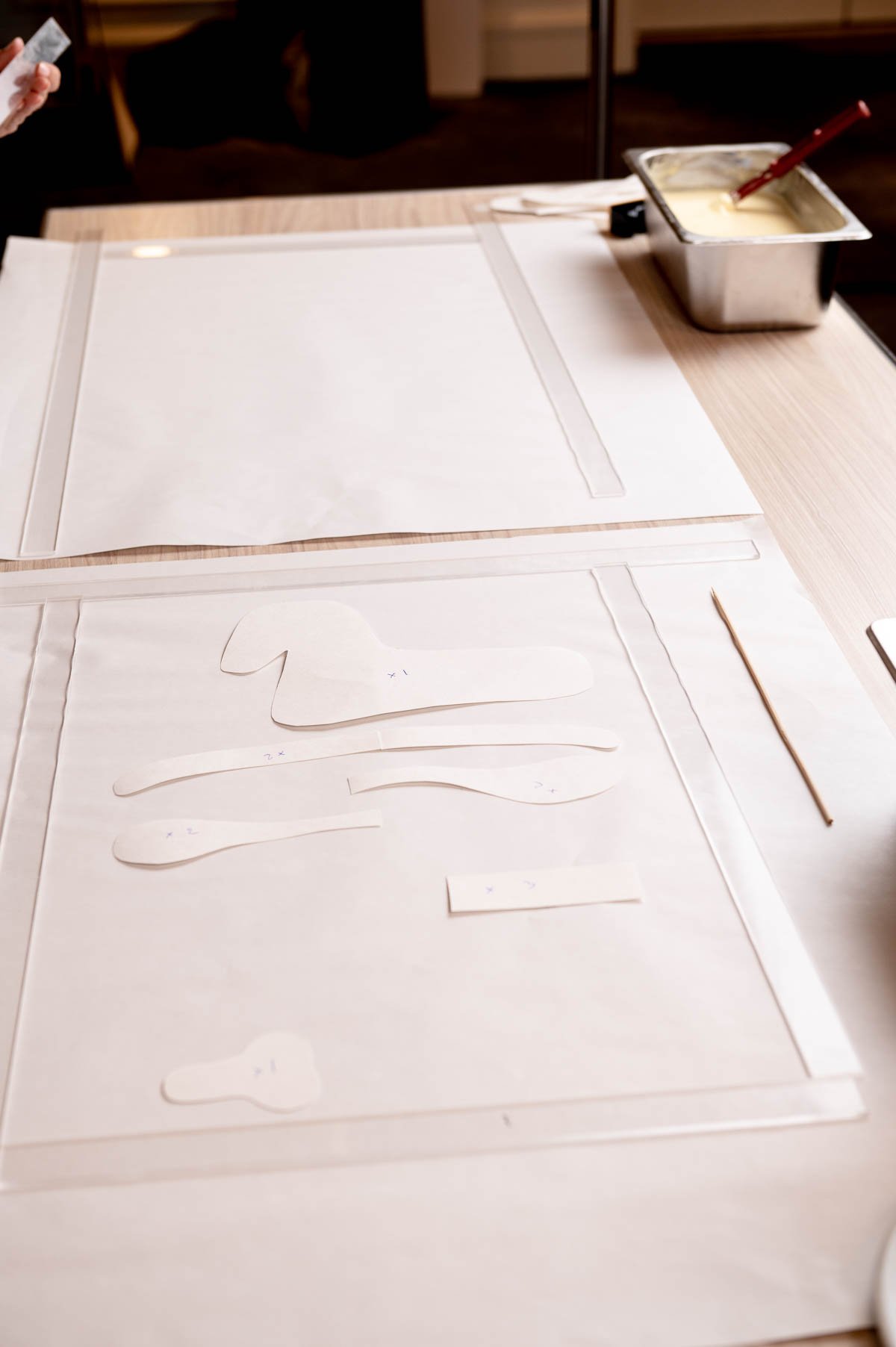
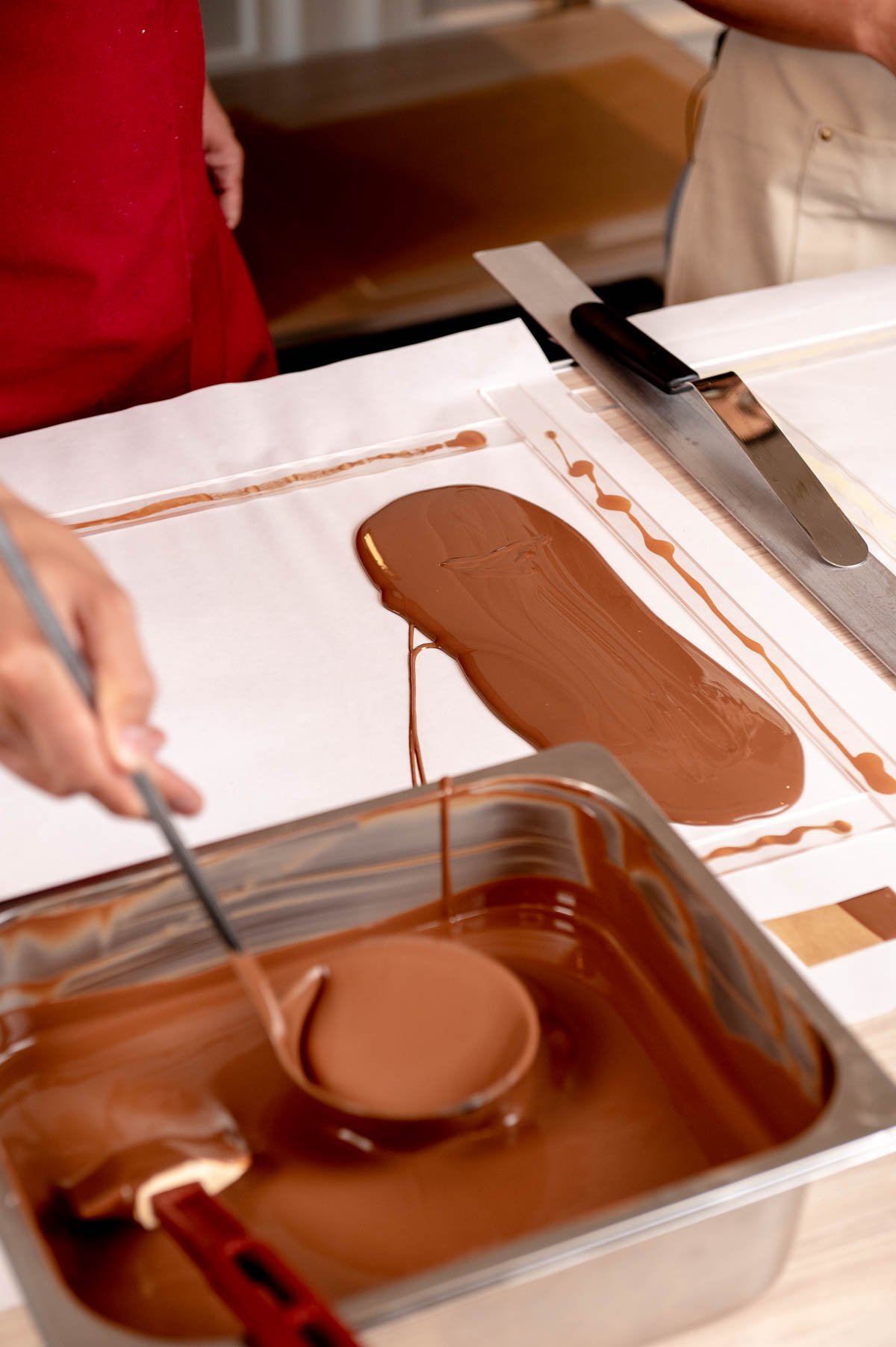
  2. Tempering the chocolate 6:46
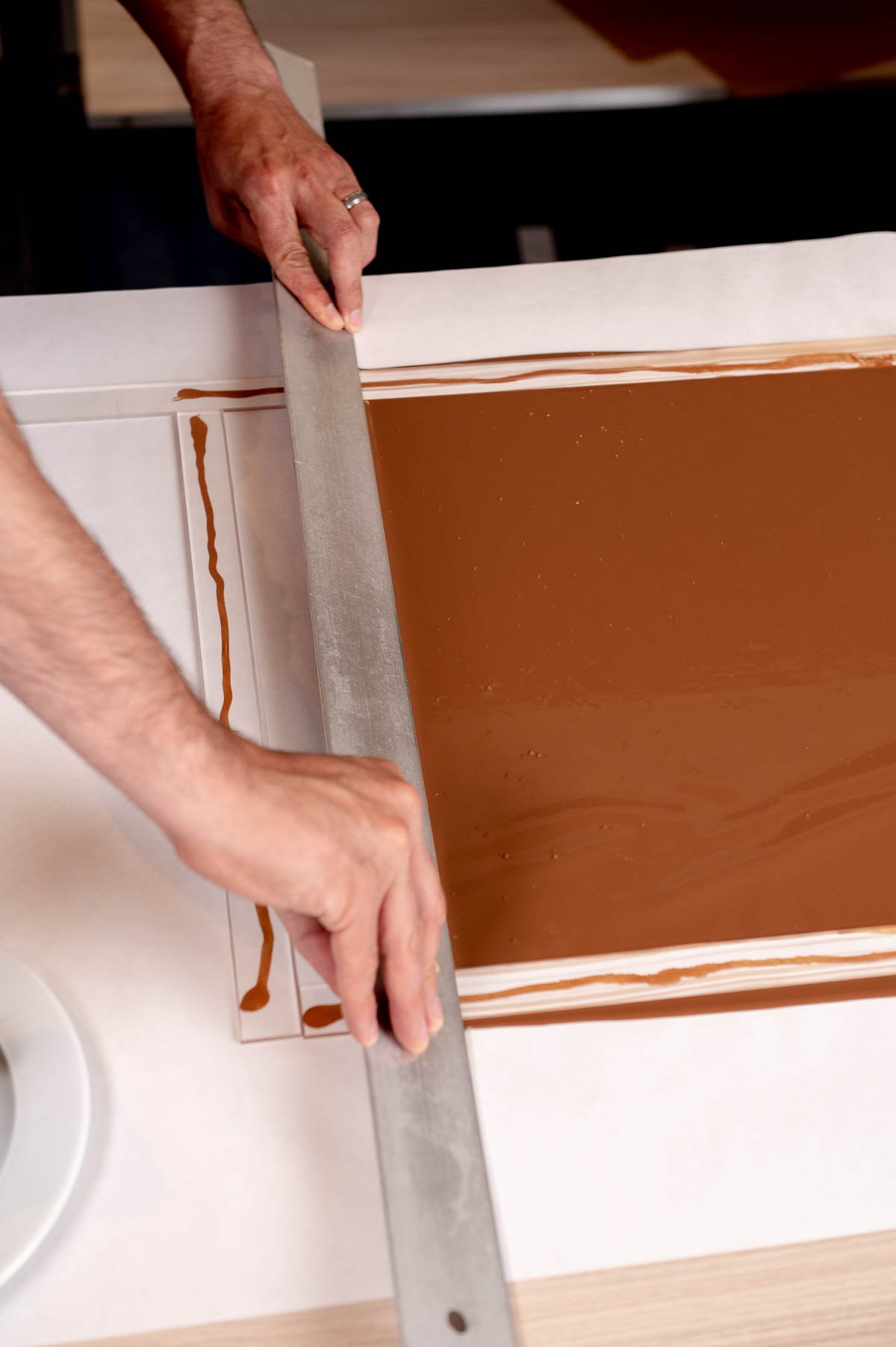
  3. Pouring the chocolate 9:57
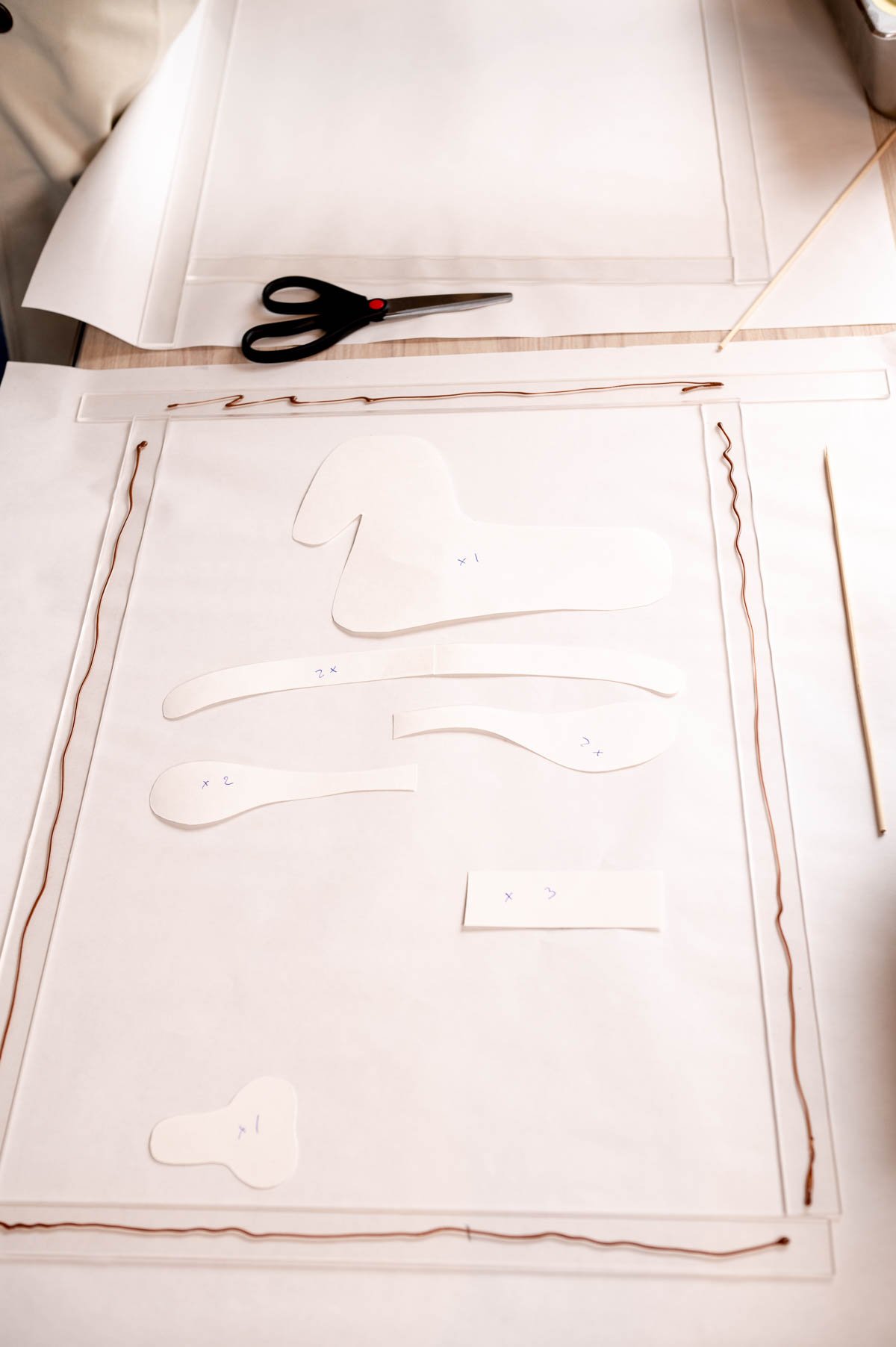
  4. Making wings from templates 12:32
  5. Making wings from templates 14:46
  6. Making sheet gelatin 16:25
  7. Pouring the wings 18:15
  8. Making the wings 21:10
  9. Putting the molded pieces together 25:56
  10. Shaping the body 30:56
  11. Connecting the body pieces 38:03
  12. Building up the body Pt. 1 50:30
  13. Smoothing down the chocolate 56:36
  14. Building up the body Pt. 2 1:05:01
  15. Smoothing the body Pt. 2 1:11:46
  16. Shining the body Pt. 1 1:16:07
  17. Making the legs Pt. 1 1:22:11
  18. How to make robot coupe 1:28:37
  19. Building the legs Pt. 2 1:30:16
  20. Cutting out the wings 1:34:16
  21. Painting the wings 1:36:20
  22. Building up the legs 1:40:51
  23. Smoothing the legs 1:44:49
  24. Shining the legs 1:48:30
  25. Building the body Pt. 3 1:48:50
  26. Setting up the airbrushing equipment 1:55:10
  27. Tempering the cocoa butter 2:02:43
  28. Painting the ant 2:04:25
  29. Adding the eyes 2:07:35
  30. Shining the ant Pt. 1 2:10:52
  31. Painting the ant Pt. 2 2:14:36
  32. Glossing the cocoa butter 2:17:42
  33. Shining the ant Pt. 3 2:19:07
  34. Putting it all together 2:21:55
  35. Finishing touches 2:24:12

Downloads

Materials List

Left Wing Template 01

Left Wing Template 02

Right Wing Template 01

Right Wing Template 02

Ant Reference 01

Ant Reference 02

Ant Wing Reference

Chocolate sculpted to look like a giant ant with gelatin wings

December 14, 2021 Paid Video

Chocolate Ant Showpiece

Skill level: Advanced

Ever wanted to learn how to create a free-standing edible showpiece made from just chocolate? Liz Marek breaks down how to create an enormous chocolate ant in this exciting tutorial.

In this course, you will learn how to create a giant ant featured in Liz's episode on Disney's Foodtastic series streaming on Disney+ made from tempered chocolate. Learn two different ways to make robot coupe, a moldable, chocolate medium that can be used like modeling chocolate. You will learn how to airbrush onto chocolate, something that can be very difficult to do with the oil-based nature of chocolate.

You will learn how to create the ant facial details, the antennae and eyes, along with the wings made from edible materials.

There's a lot to cover in this video, so let's get our tools together, and let's get started.

2:25:30 Minutes of Instruction

What You Will Learn

  • How to create an enormous ant showpiece made from tempered chocolate
  • Learn how to make two different kinds of robot coupe
  • How to make edible giant wings and how to airbrush with cocoa butter

Tutorial Chapters

  1. Scaling the ant 0:28
  2. Tempering the chocolate 6:46
  3. Pouring the chocolate 9:57
  4. Making wings from templates 12:32
  5. Making wings from templates 14:46
  6. Making sheet gelatin 16:25
  7. Pouring the wings 18:15
  8. Making the wings 21:10
  9. Putting the molded pieces together 25:56
  10. Shaping the body 30:56
  11. Connecting the body pieces 38:03
  12. Building up the body Pt. 1 50:30
  13. Smoothing down the chocolate 56:36
  14. Building up the body Pt. 2 1:05:01
  15. Smoothing the body Pt. 2 1:11:46
  16. Shining the body Pt. 1 1:16:07
  17. Making the legs Pt. 1 1:22:11
  18. How to make robot coupe 1:28:37
  19. Building the legs Pt. 2 1:30:16
  20. Cutting out the wings 1:34:16
  21. Painting the wings 1:36:20
  22. Building up the legs 1:40:51
  23. Smoothing the legs 1:44:49
  24. Shining the legs 1:48:30
  25. Building the body Pt. 3 1:48:50
  26. Setting up the airbrushing equipment 1:55:10
  27. Tempering the cocoa butter 2:02:43
  28. Painting the ant 2:04:25
  29. Adding the eyes 2:07:35
  30. Shining the ant Pt. 1 2:10:52
  31. Painting the ant Pt. 2 2:14:36
  32. Glossing the cocoa butter 2:17:42
  33. Shining the ant Pt. 3 2:19:07
  34. Putting it all together 2:21:55
  35. Finishing touches 2:24:12

Downloads

Materials List

Left Wing Template 01

Left Wing Template 02

Right Wing Template 01

Right Wing Template 02

Ant Reference 01

Ant Reference 02

Ant Wing Reference

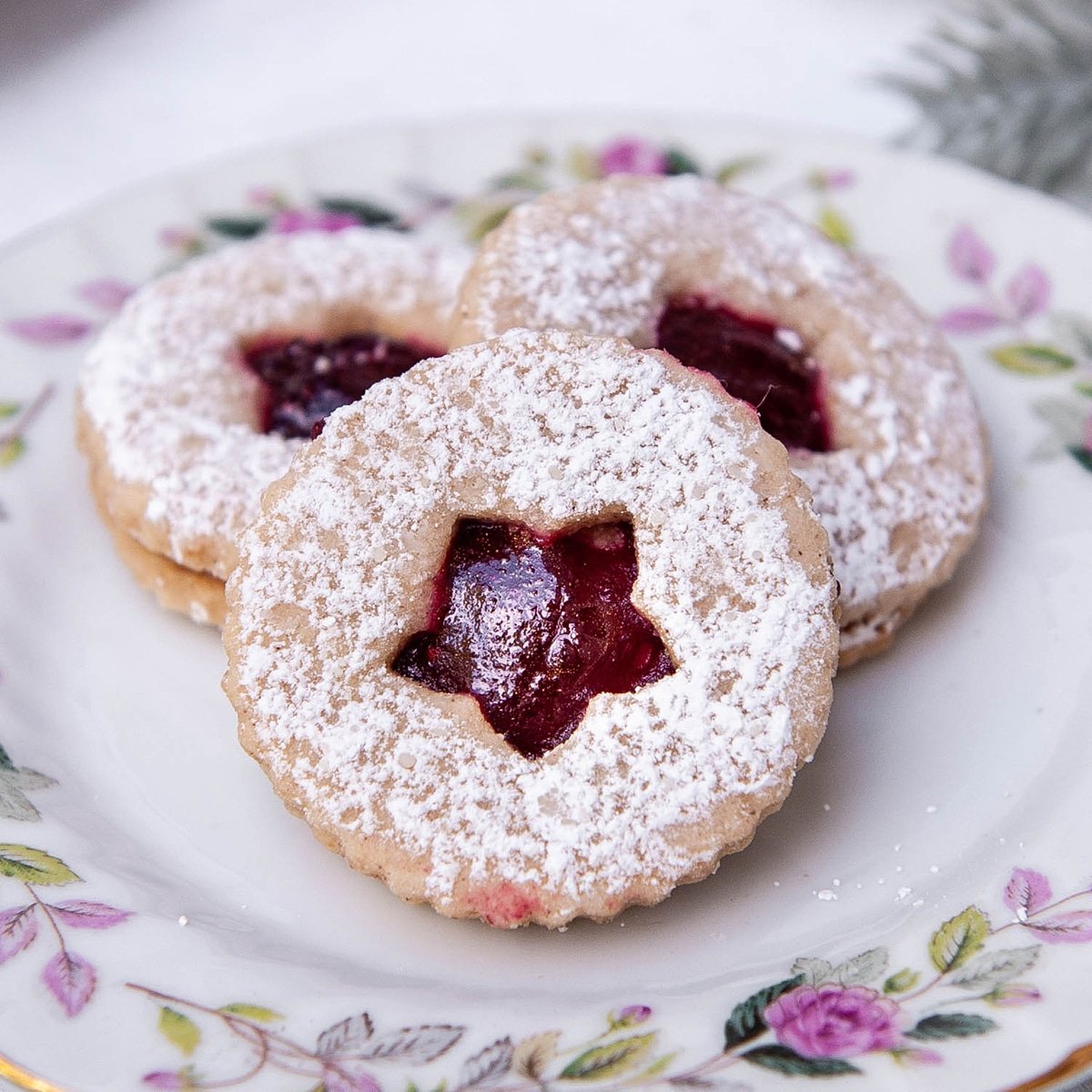
close up of linzer cookies on a floral plate

December 10, 2021 Blog

Linzer Cookies

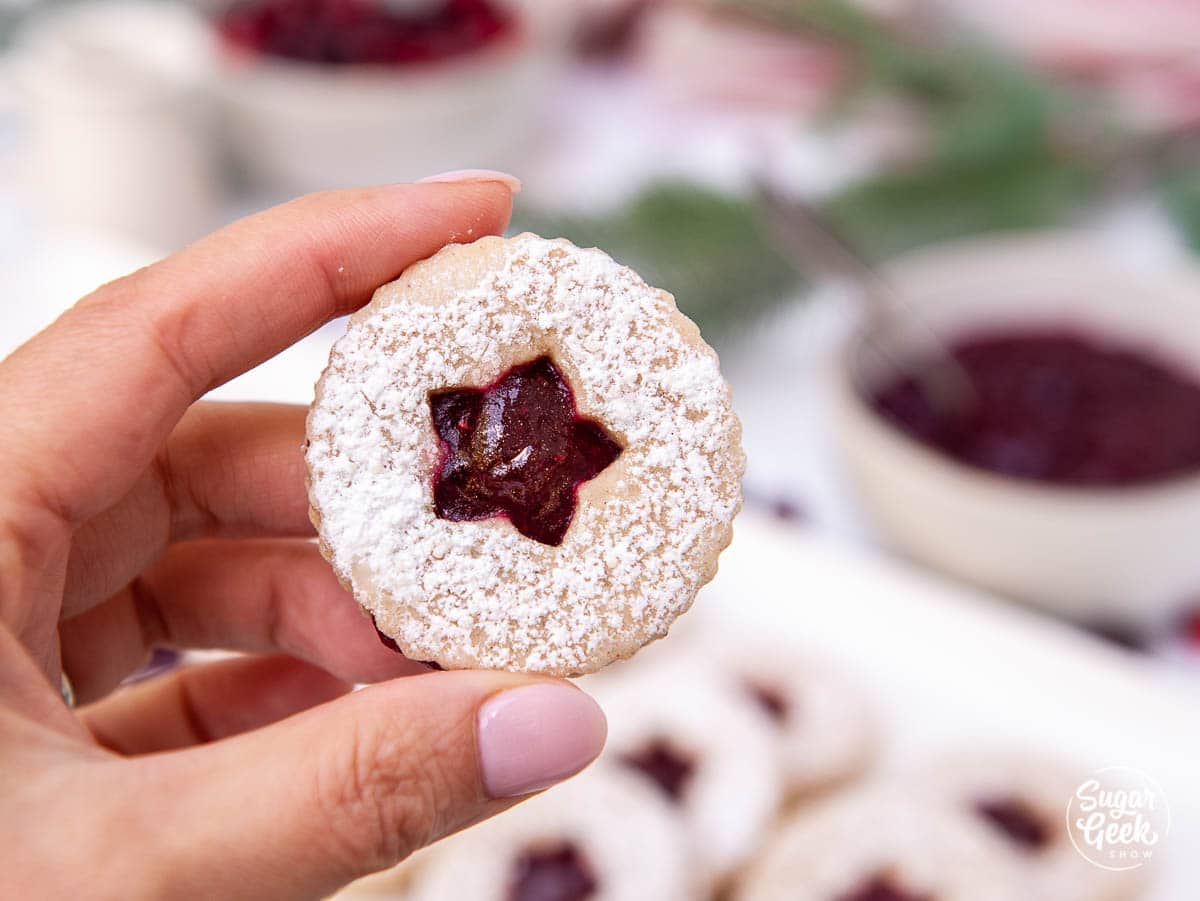
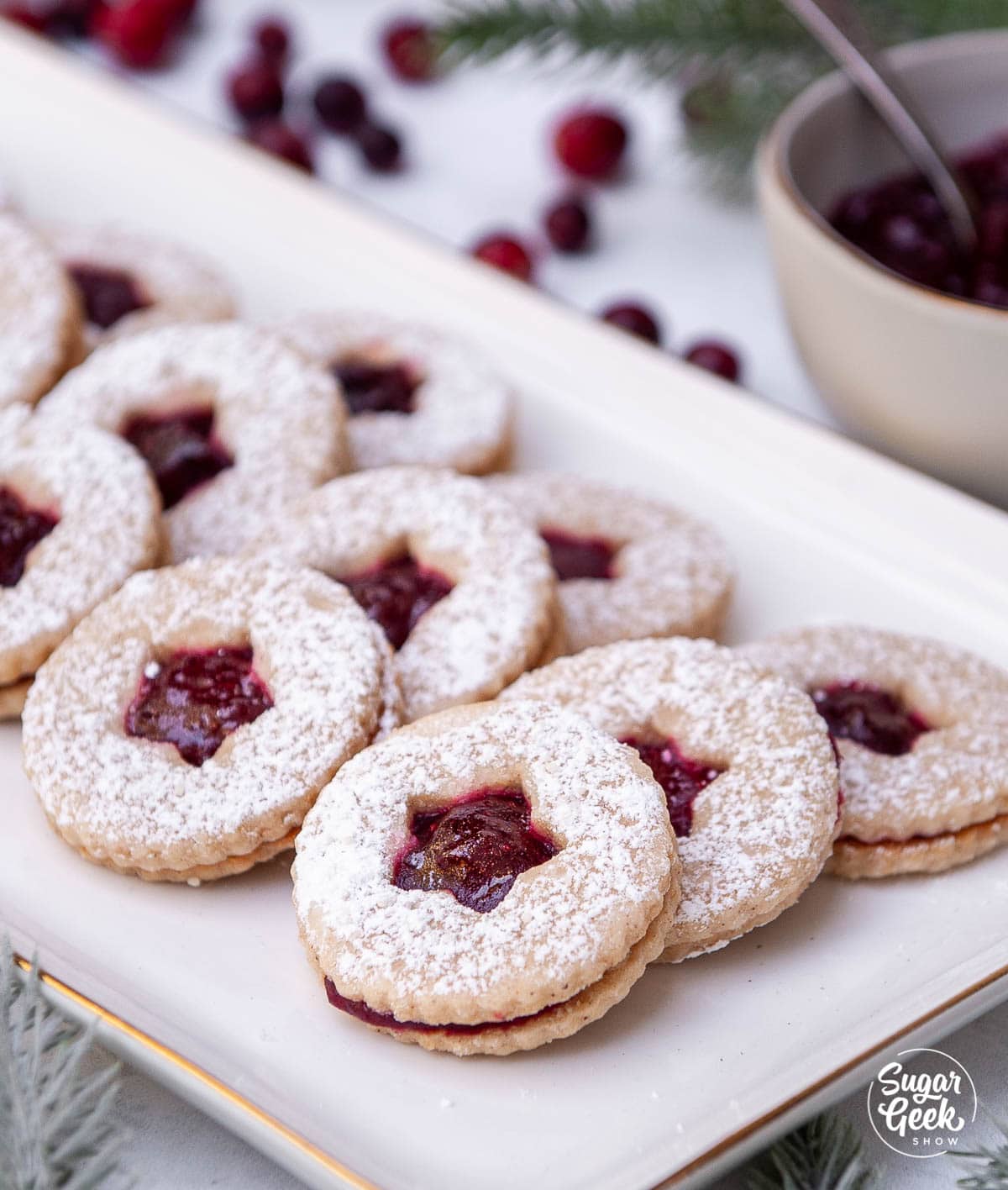
Linzer cookies are a holiday staple. They are crisp, buttery, and melt-in-your-mouth delicious! Dusted with powdered sugar and filled with homemade cranberry sauce, these might be the best Christmas cookies ever!

close up of linzer cookies on a floral plate

These Linzer cookies will make you the star of the Christmas cookie exchange! What's more, if you enjoy baking and giving homemade cookies as gifts, these package really nicely if you wait 24 hours after the cookies have been assembled and the jam has had some time to set!

What's In This Blog Post

  • Linzer Cookie Ingredients
  • How to Make Cranberry Filling for Linzer Cookies
  • How to Make Linzer Cookie Dough
  • How to Assemble Linzer Cookies
  • How do you use a Linzer cookie cutter?
  • FAQ
  • More Recipes You'll Love

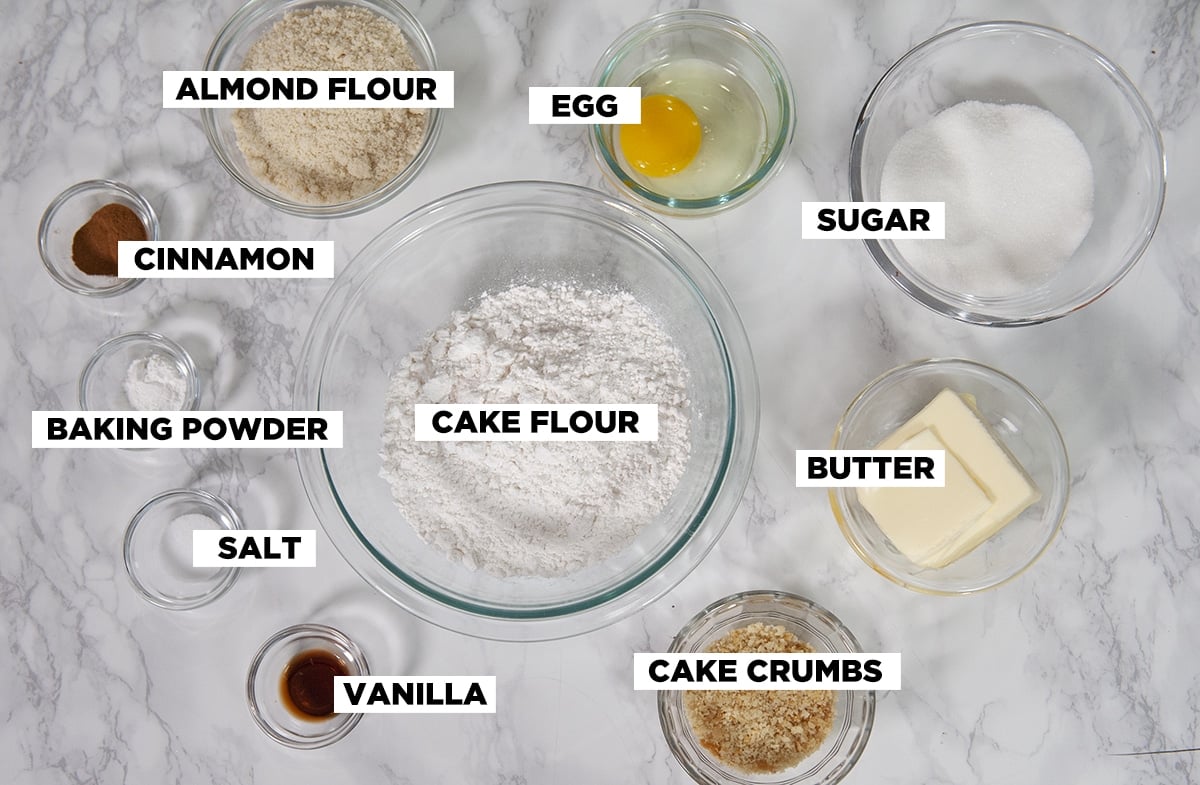
Linzer Cookie Ingredients

linzer cookie ingredients

Almond flour - We are using almond flour today, but you could use any kind of nut flour like hazelnut or pistachio! 

Cake flour - If you don't have cake flour, remove 3 Tablespoons of All-Purpose flour and replace it with cornstarch.

If you're located in another country, you can find cake flour but it might need to be ordered online. In the UK, look for Shipton mills cake and pastry flour. 

Cranberry Jam - I'm making a yummy cranberry jam for my Linzer cookies, but any kind of sweet jam or filling will work! You can even use store-bought jam if you don't want to make your own.

Cake Crumbs - I always have leftover cake laying around, so this isn't an uncommon ingredient in my house. If you don't have extra cake crumbs on hand, you can either buy a cupcake or cake from the store and crumble that up, or just use more cake flour. The cake crumbs add more flavor to your cookies.

How to Make Cranberry Filling for Linzer Cookies

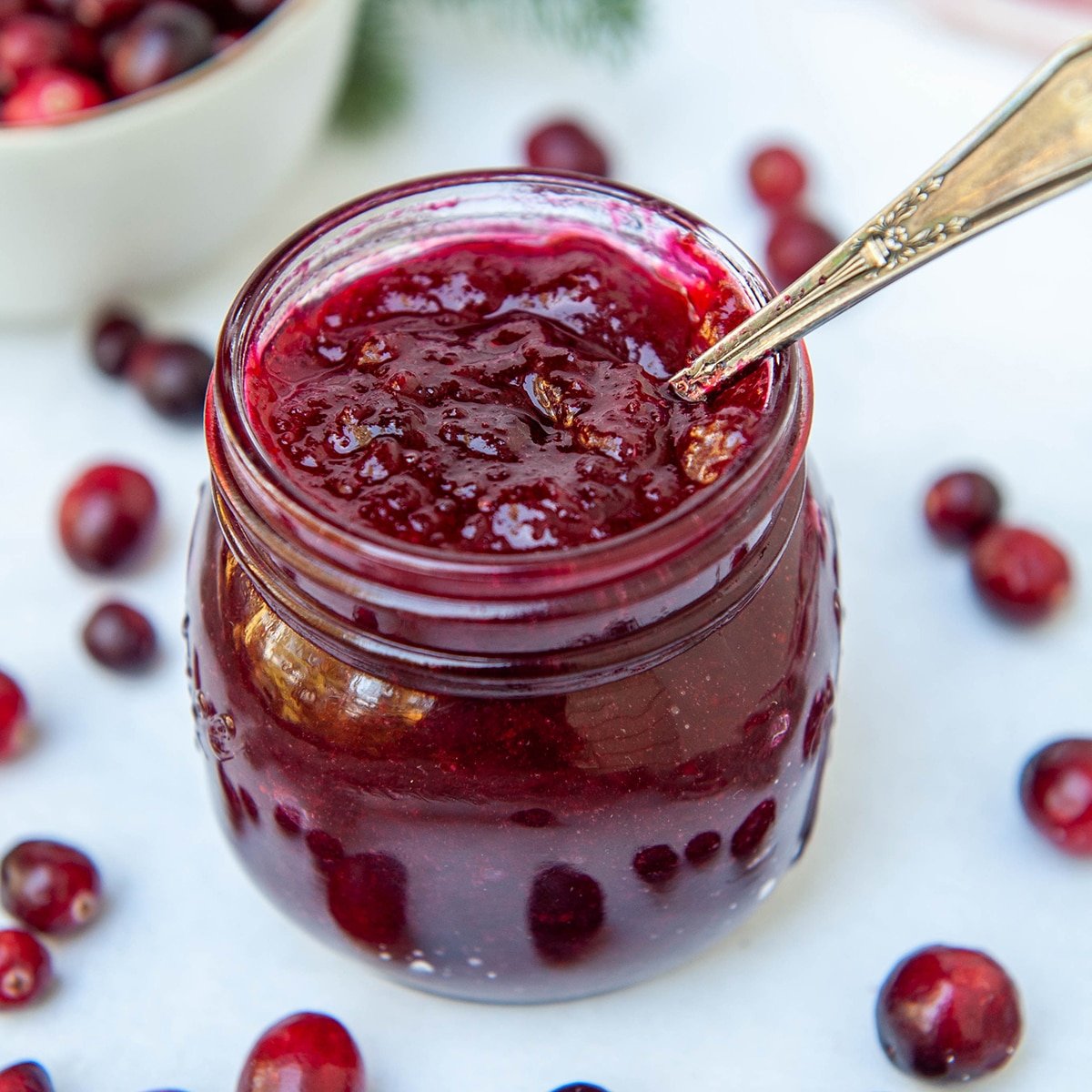
I like to make my cranberry filling ahead of time to allow it to cool down completely. You can easily make this a few days in advance. Don't like cranberry? Try making raspberry filling instead.

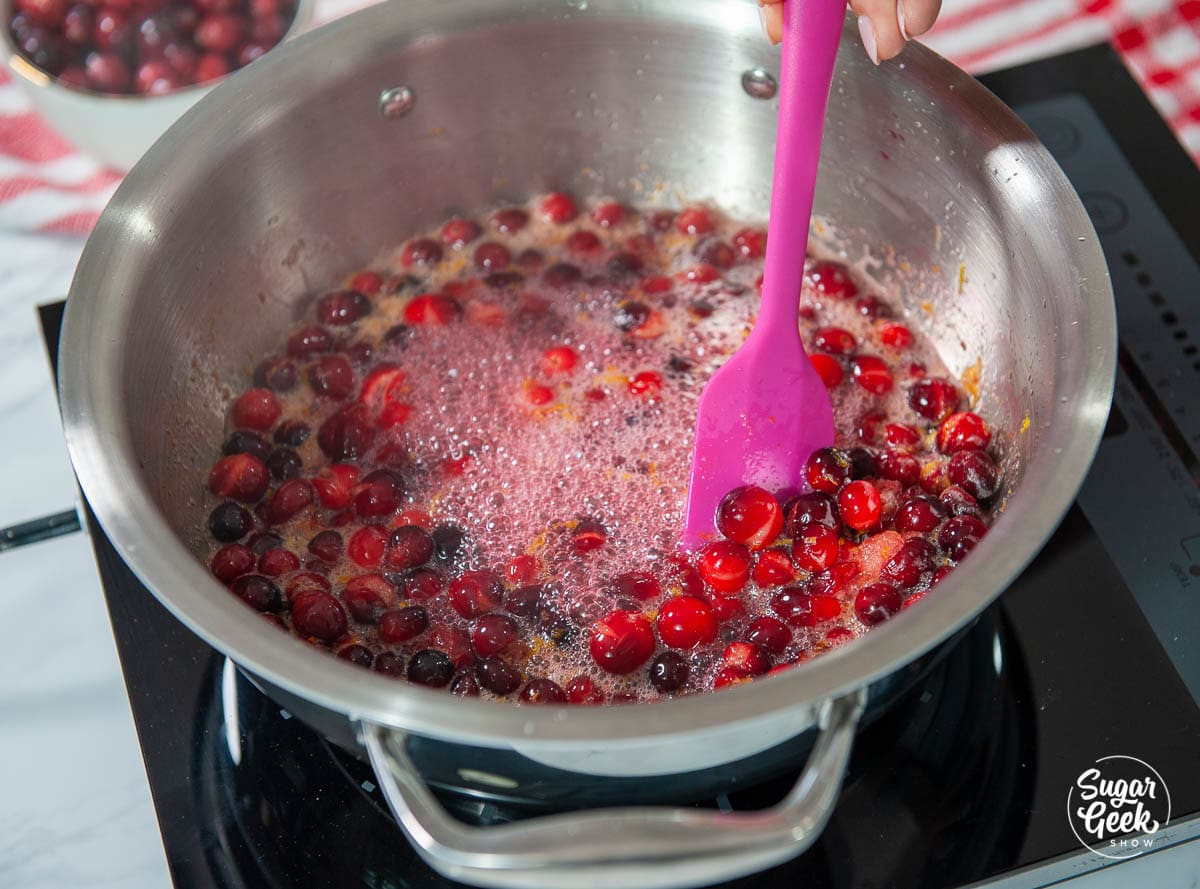
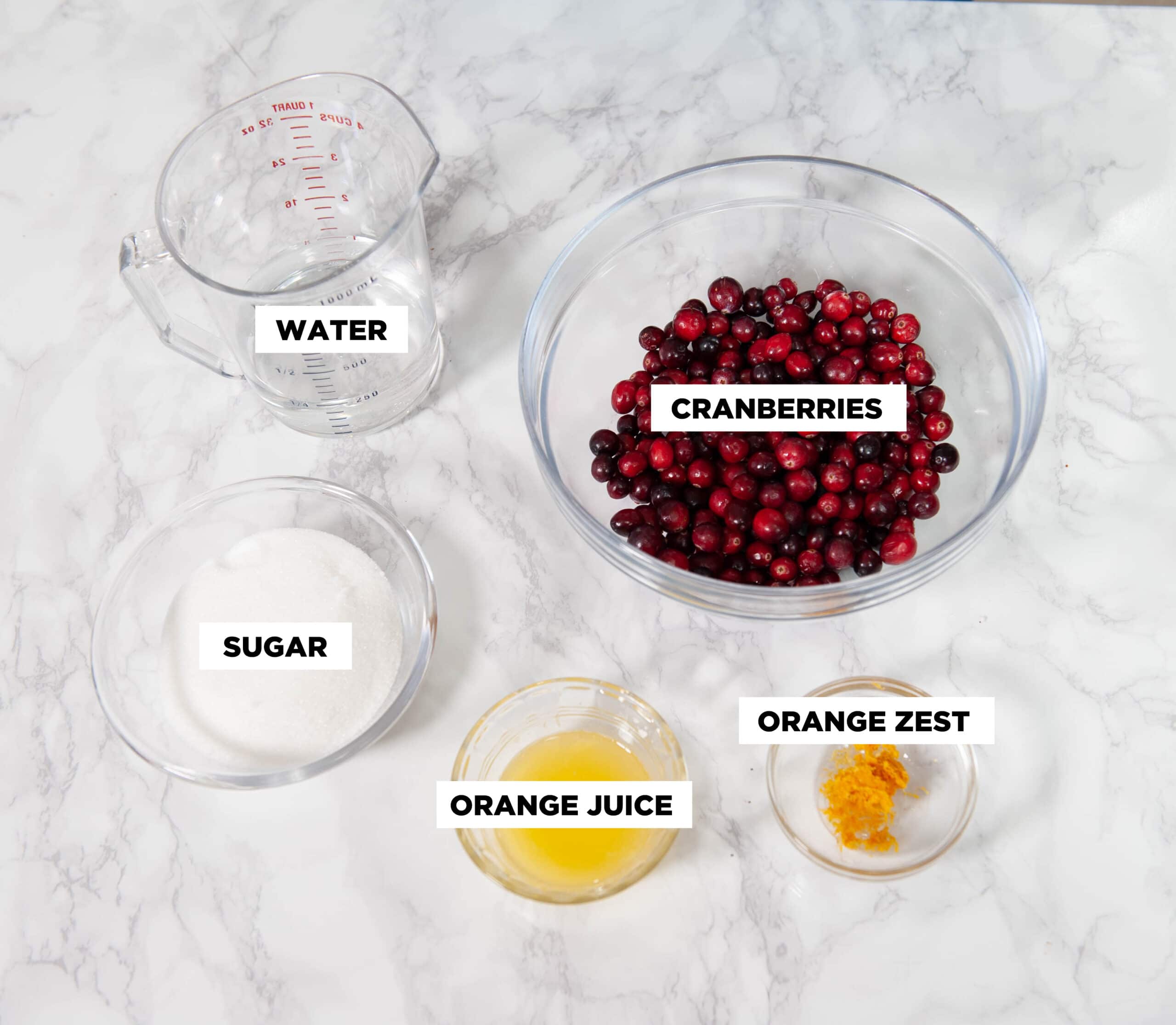
  1. Combine the water, sugar, zest, juice, and cranberries together in a saucepan over medium-high heat until it begins to simmer. Stir occasionally to prevent burning.cranberry filling ingredients simmering in a stainless steel pot
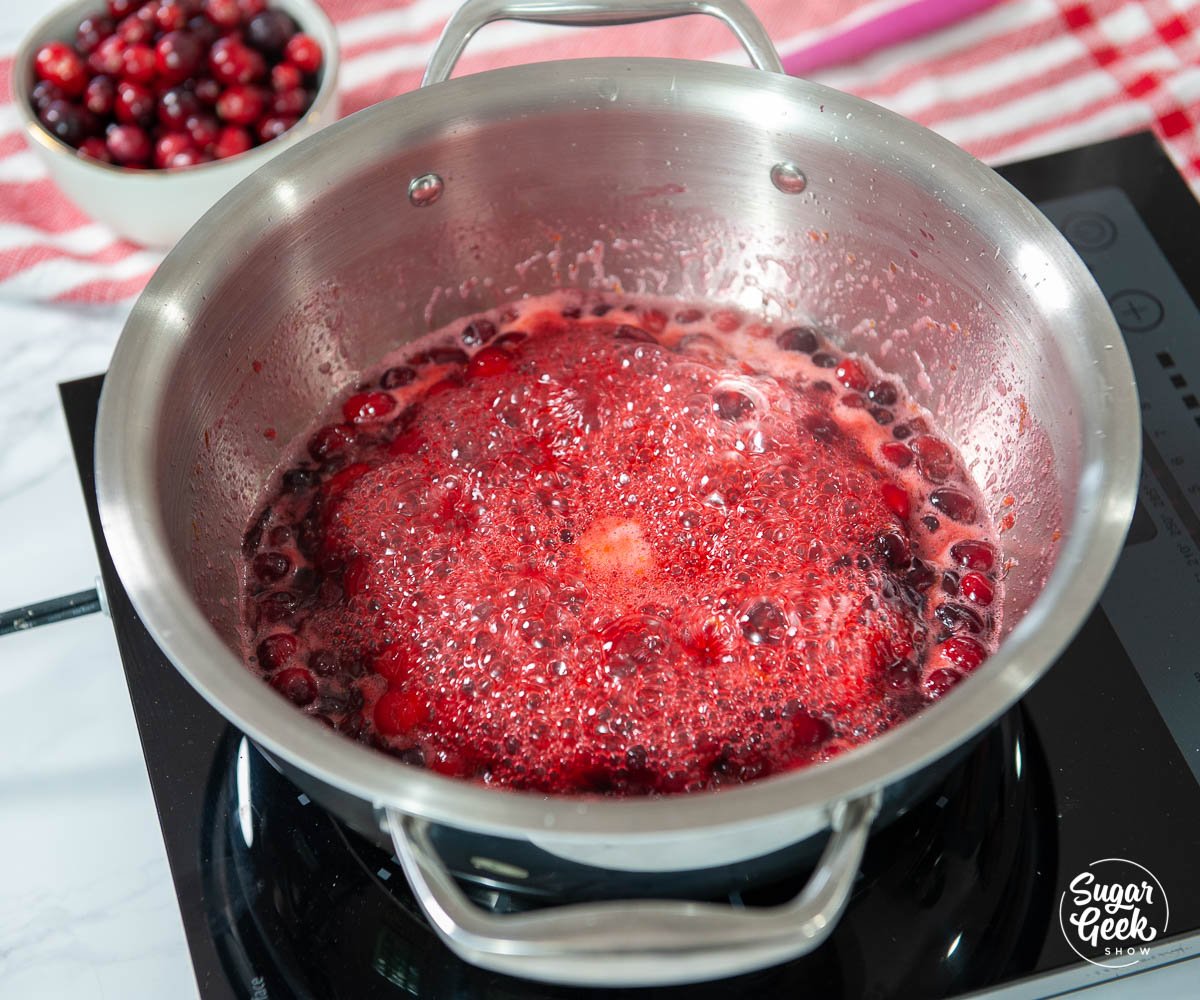
  2. Lower the heat to medium and let the mixture reduce for about 10 minutes or until the mixture is thickened. simmering cranberry filling in a stainless steel pot
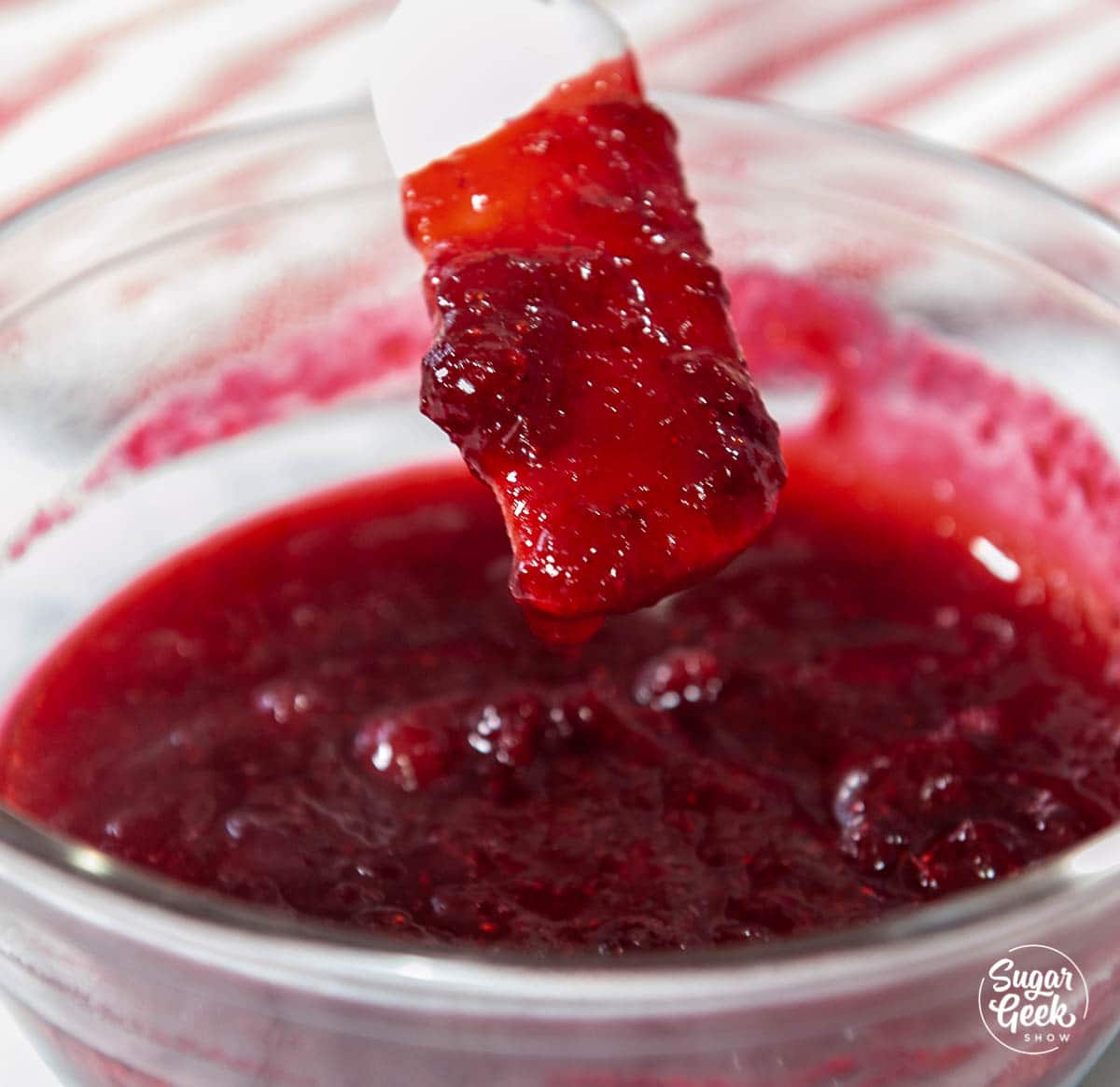
  3. Remove from the heat and let the mixture cool before using. closeup shot of cranberry filling on a spatula
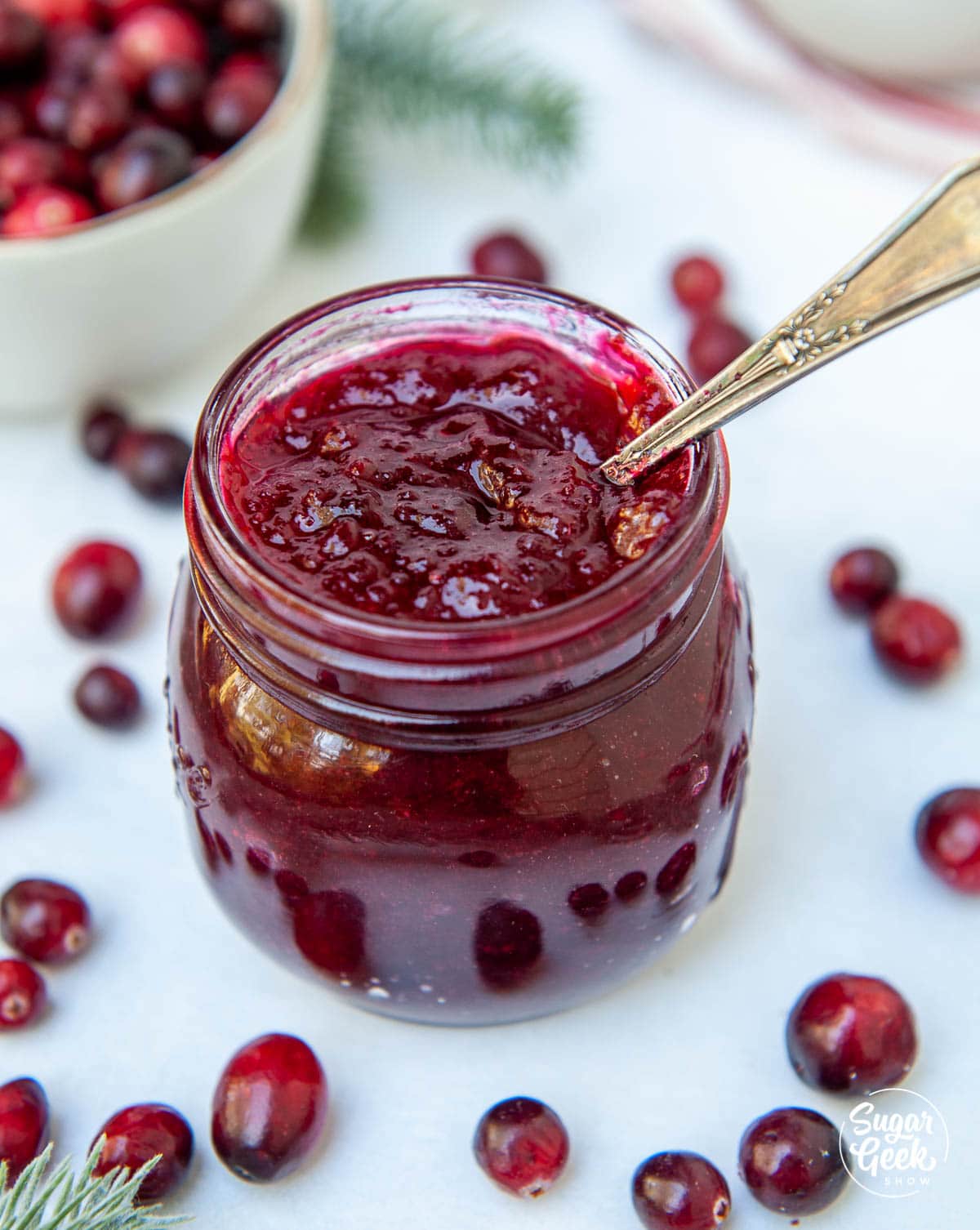
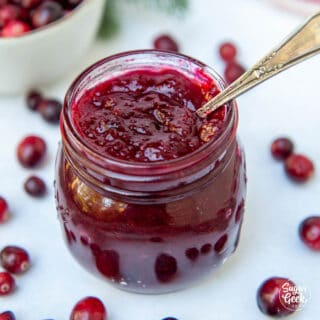
  4. Once your filling is cool, use an immersion blender or blender to make your cranberry filling smoother and easier to pipe. Totally optional. cranberry filling in a glass jar with a spoon

Pro-Tip: For a thicker filling, combine 2 teaspoons of cornstarch with 1 Tablespoon of cool water to make a slurry. Add the cornstarch to the filling at the end of cooking, and then cook it for an extra minute to thicken. 

How to Make Linzer Cookie Dough

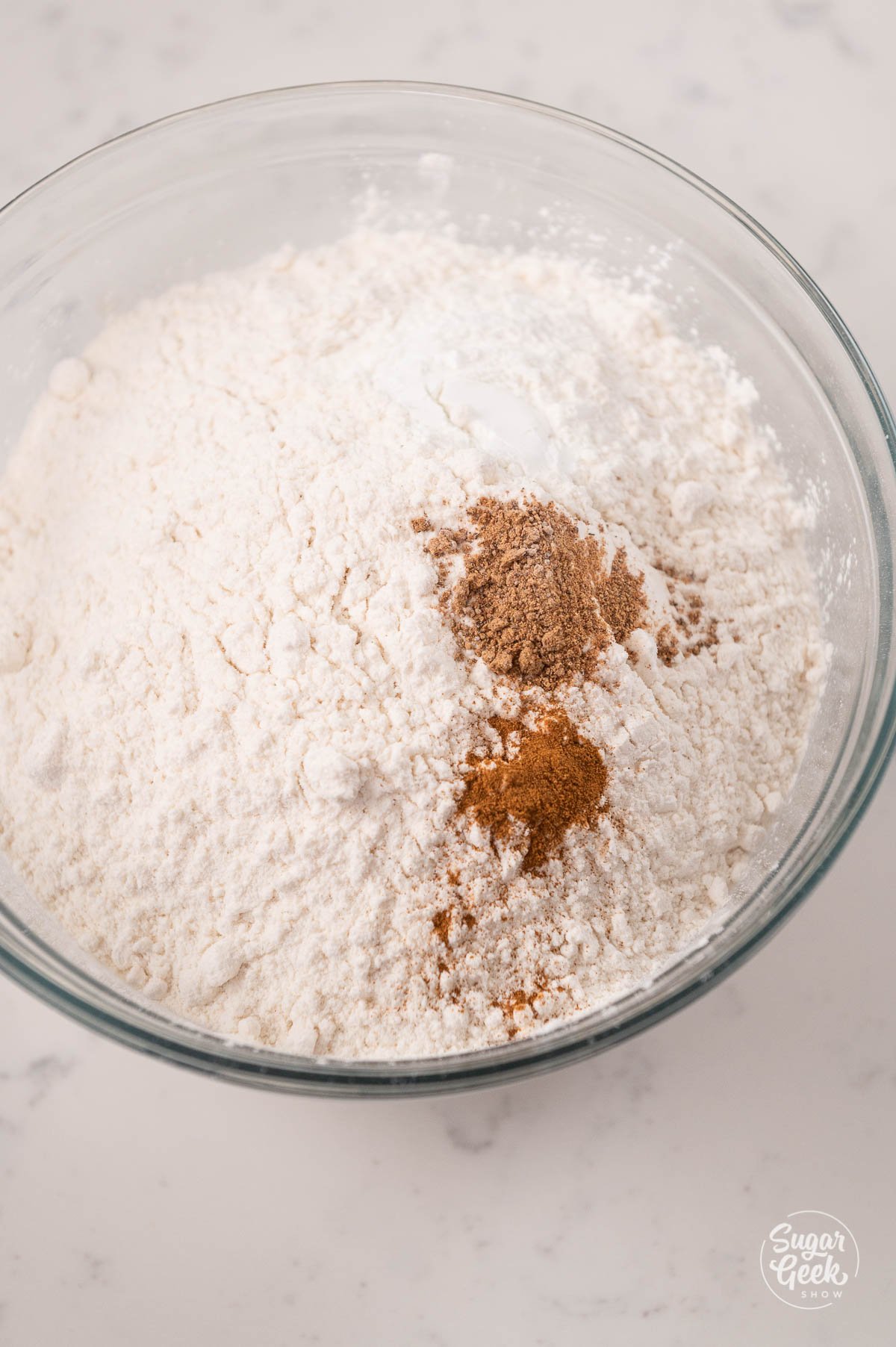
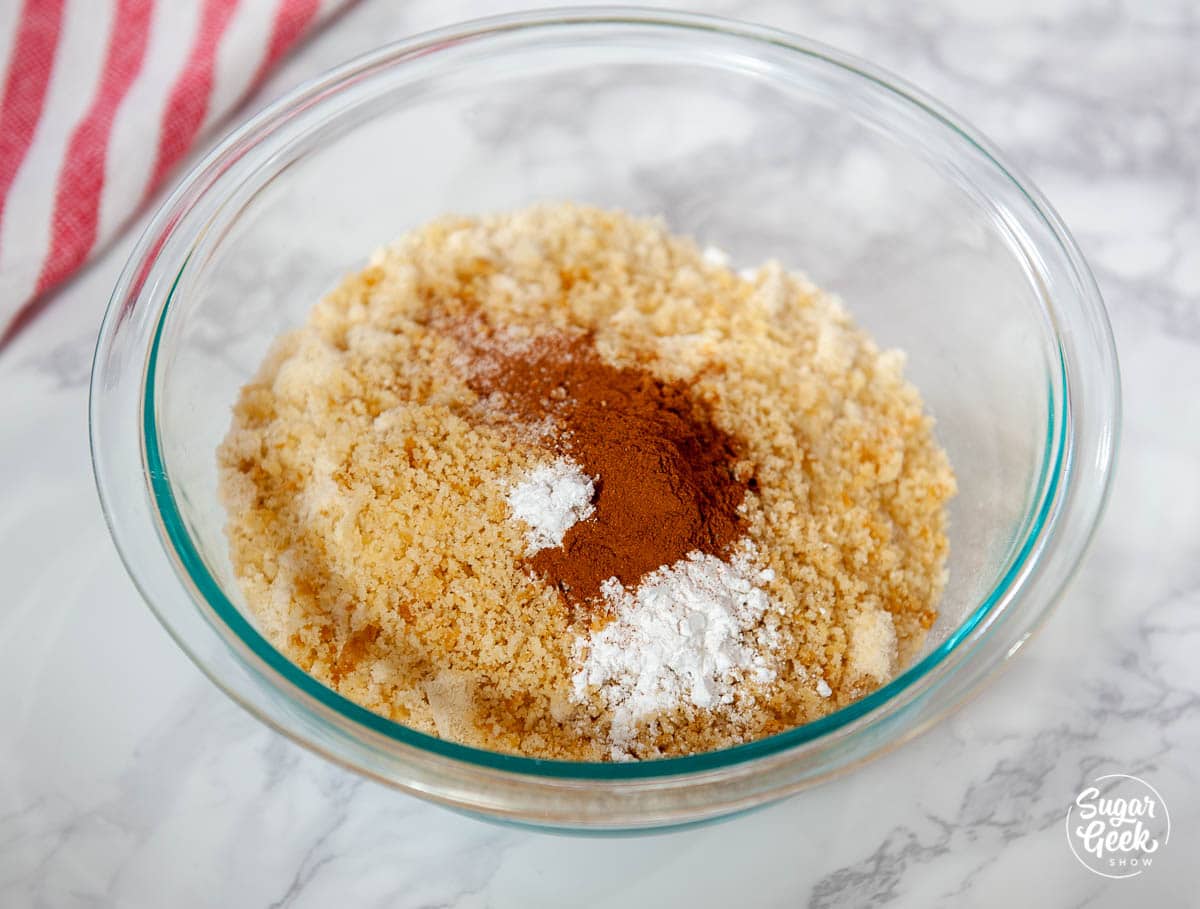
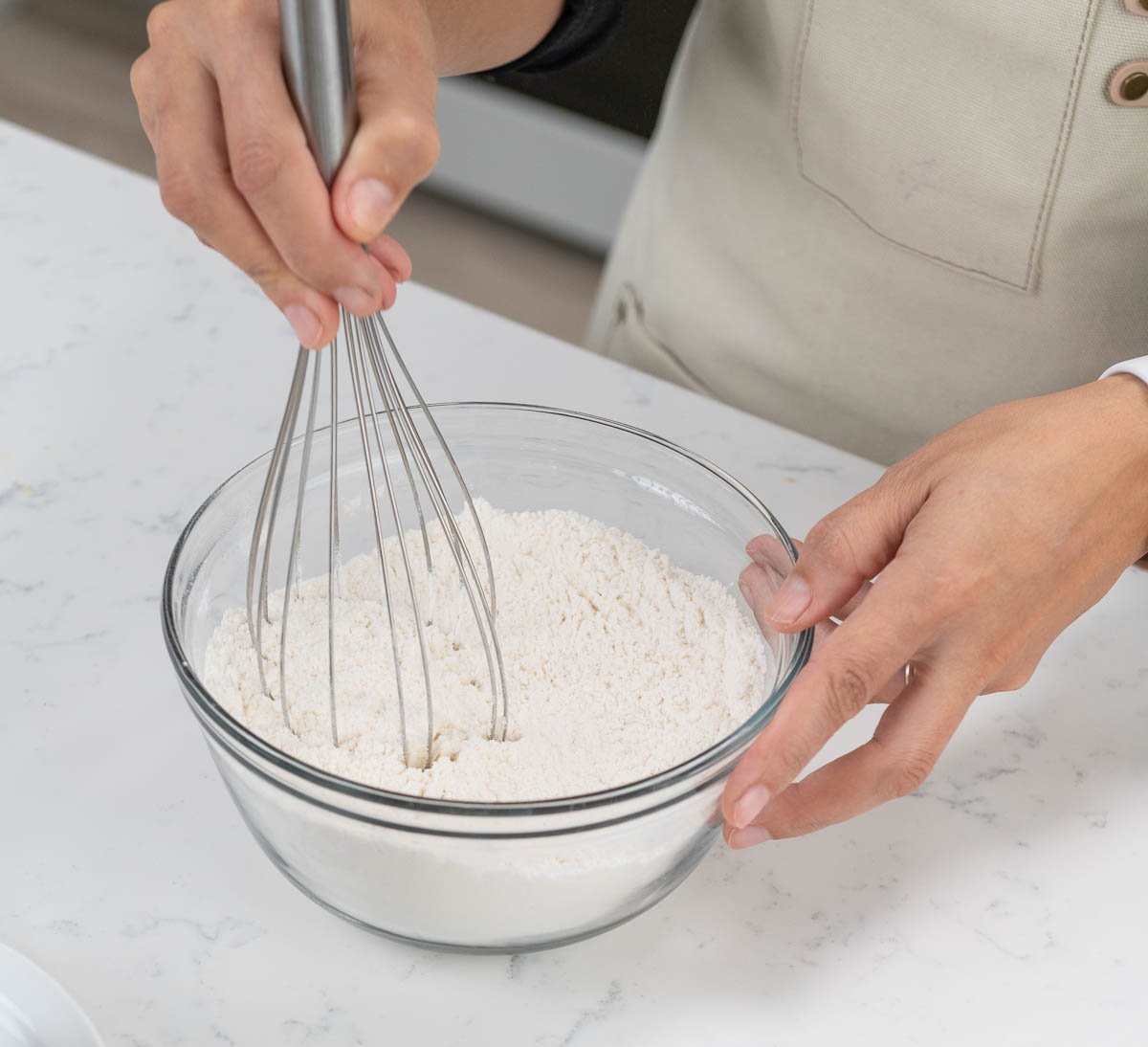
  1. Combine your cake crumbs, cake flour, cinnamon, baking powder, salt, and almond flour together with a whisk. (If you don't have cake crumbs you can replace them with more almond flour) Set aside. Pro-Tip: You can use any kind of nut flour for this recipe including hazelnut, pistachio, or cashew! Linzer cookie ingredients in a glass bowl
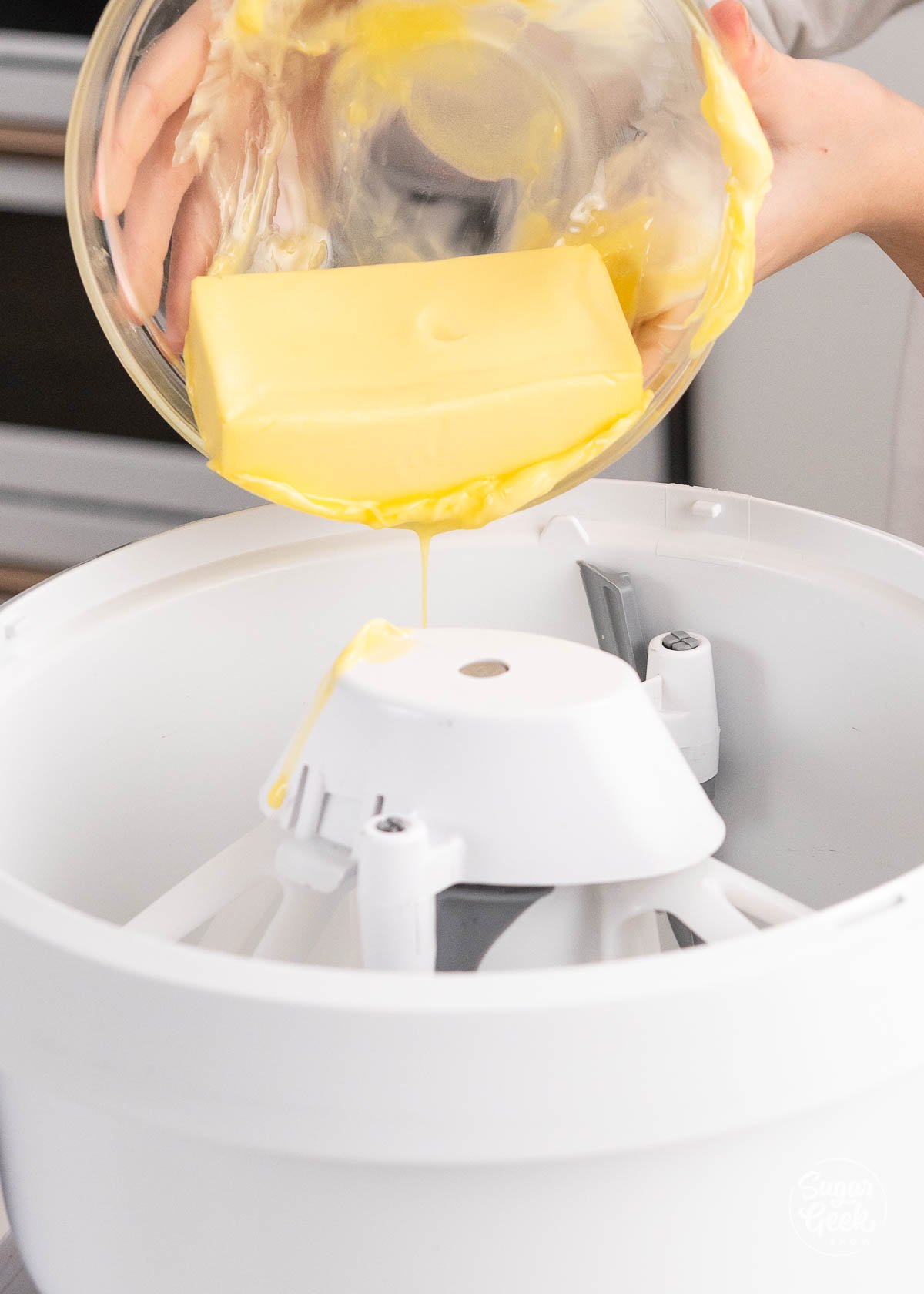
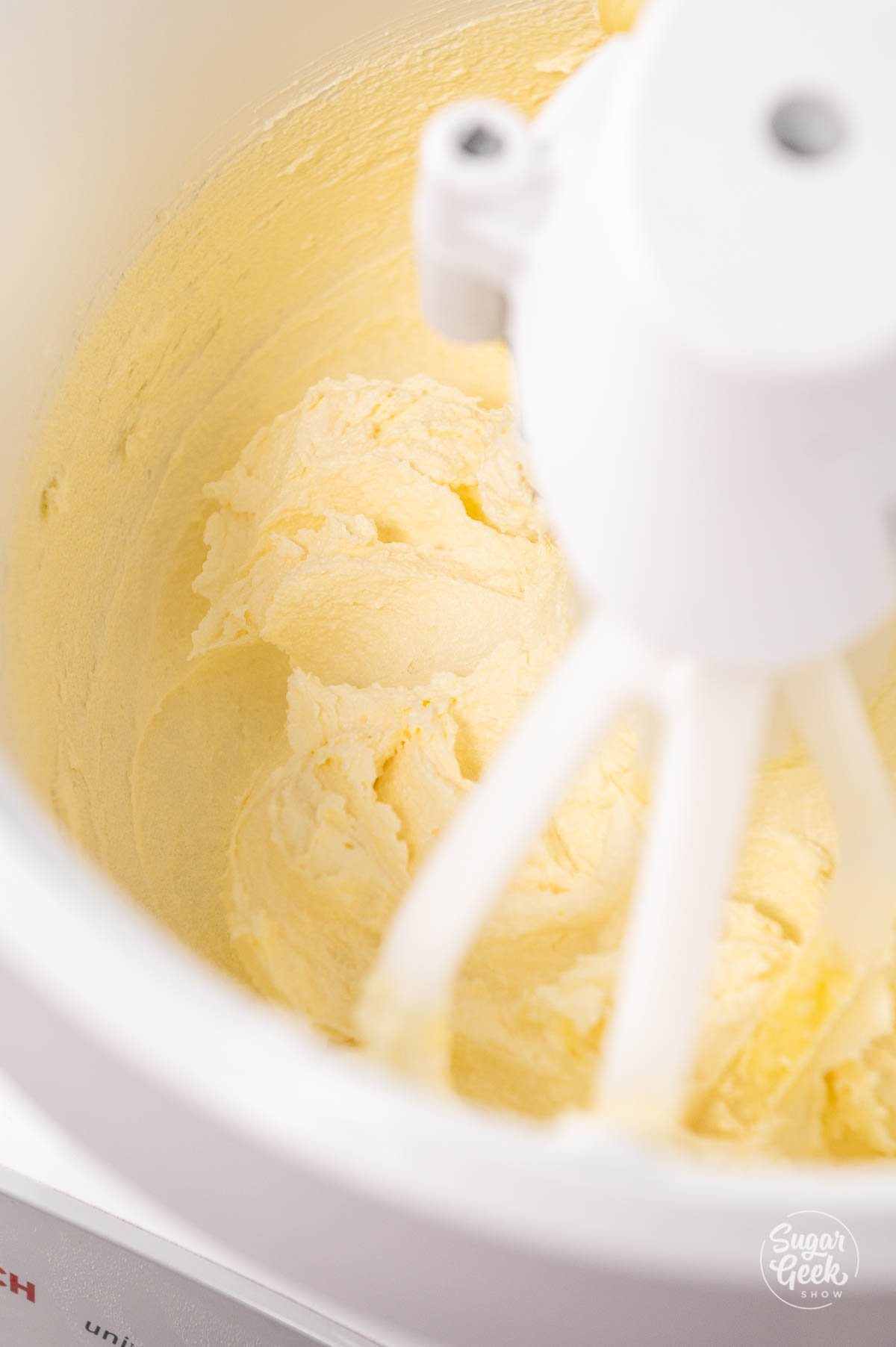
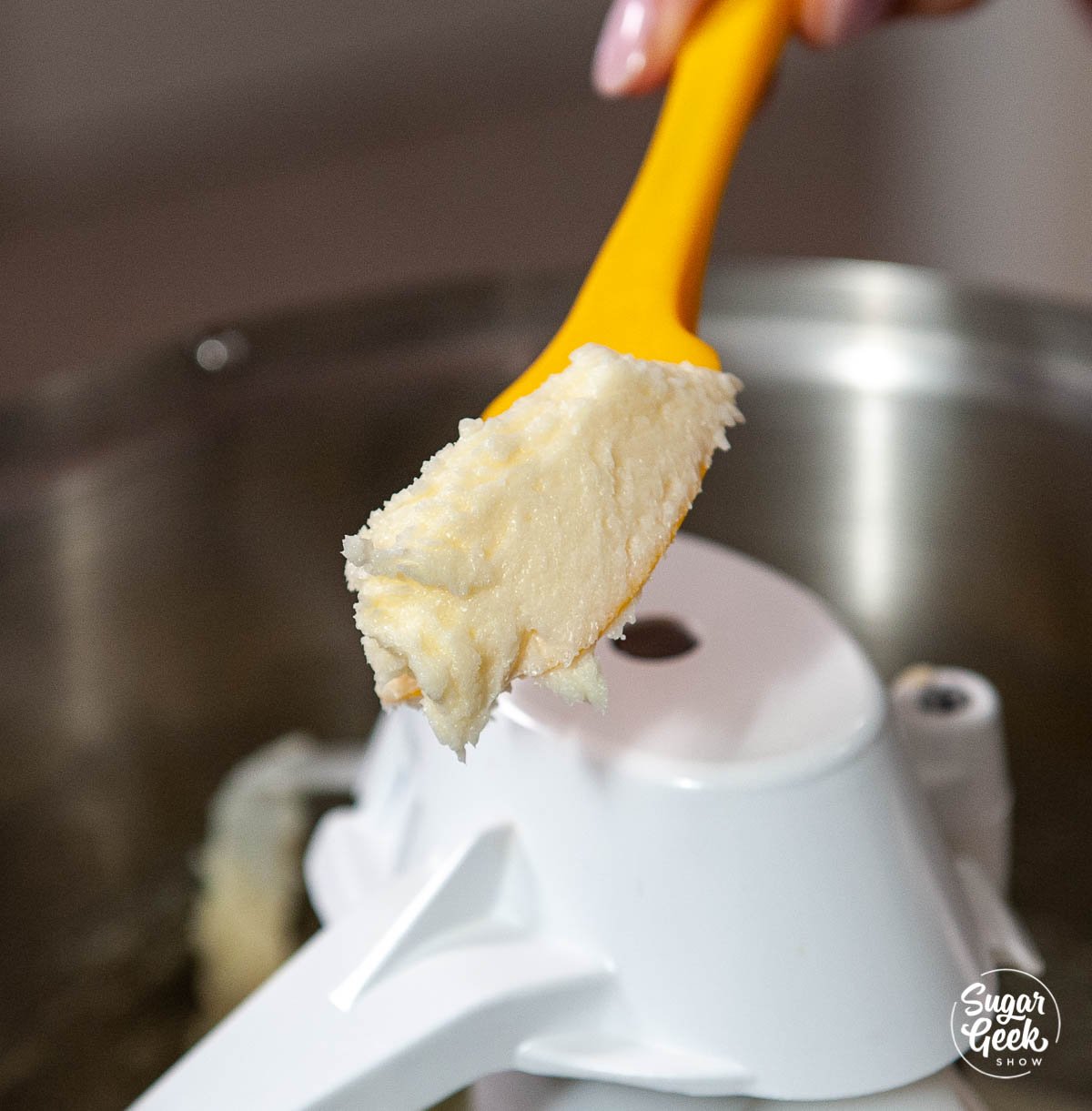
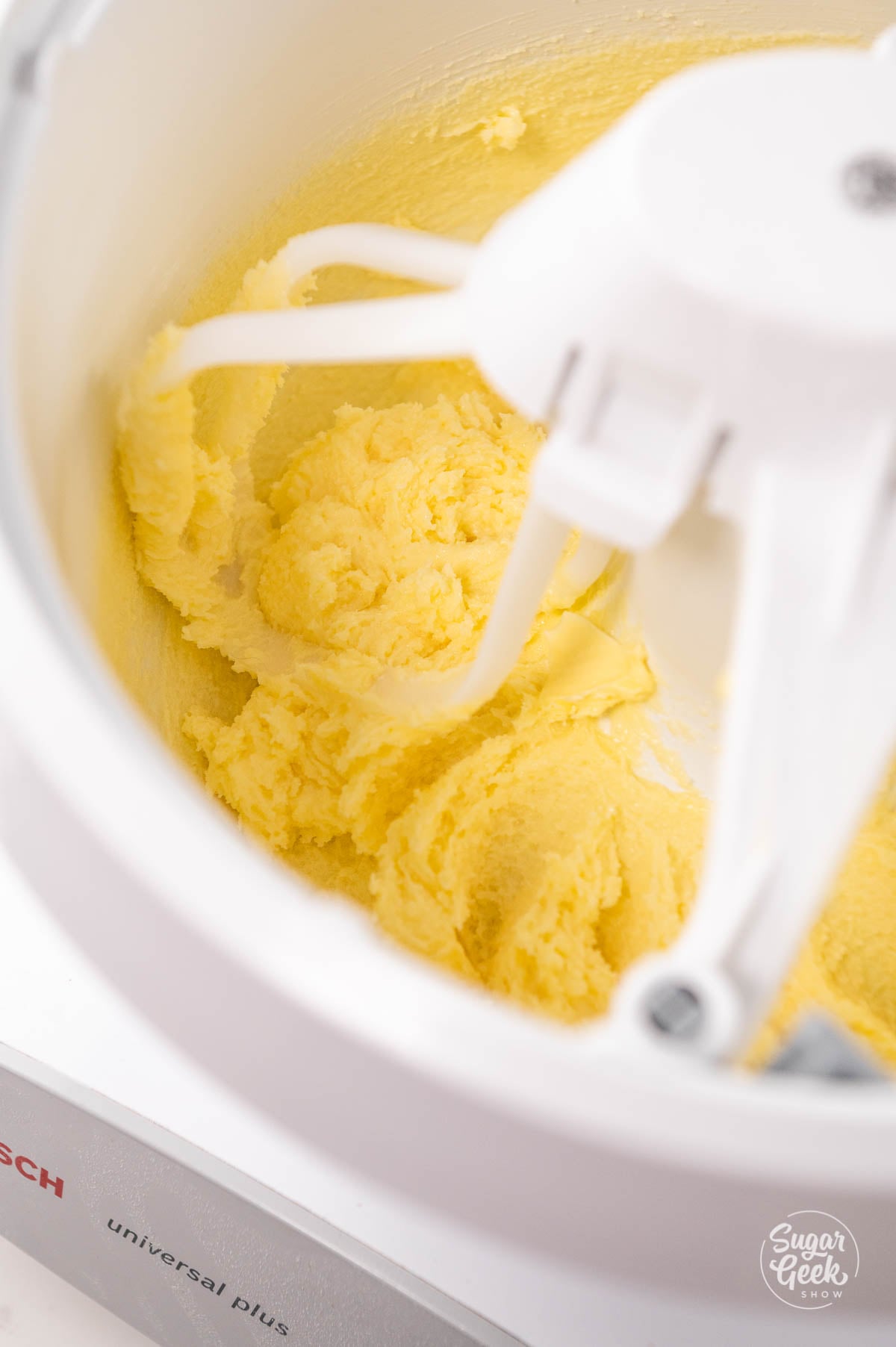
  2. In the bowl of your stand mixer, cream the room temperature butter and the sugar until it's light and fluffy. butter and sugar creamed together on an orange spatula
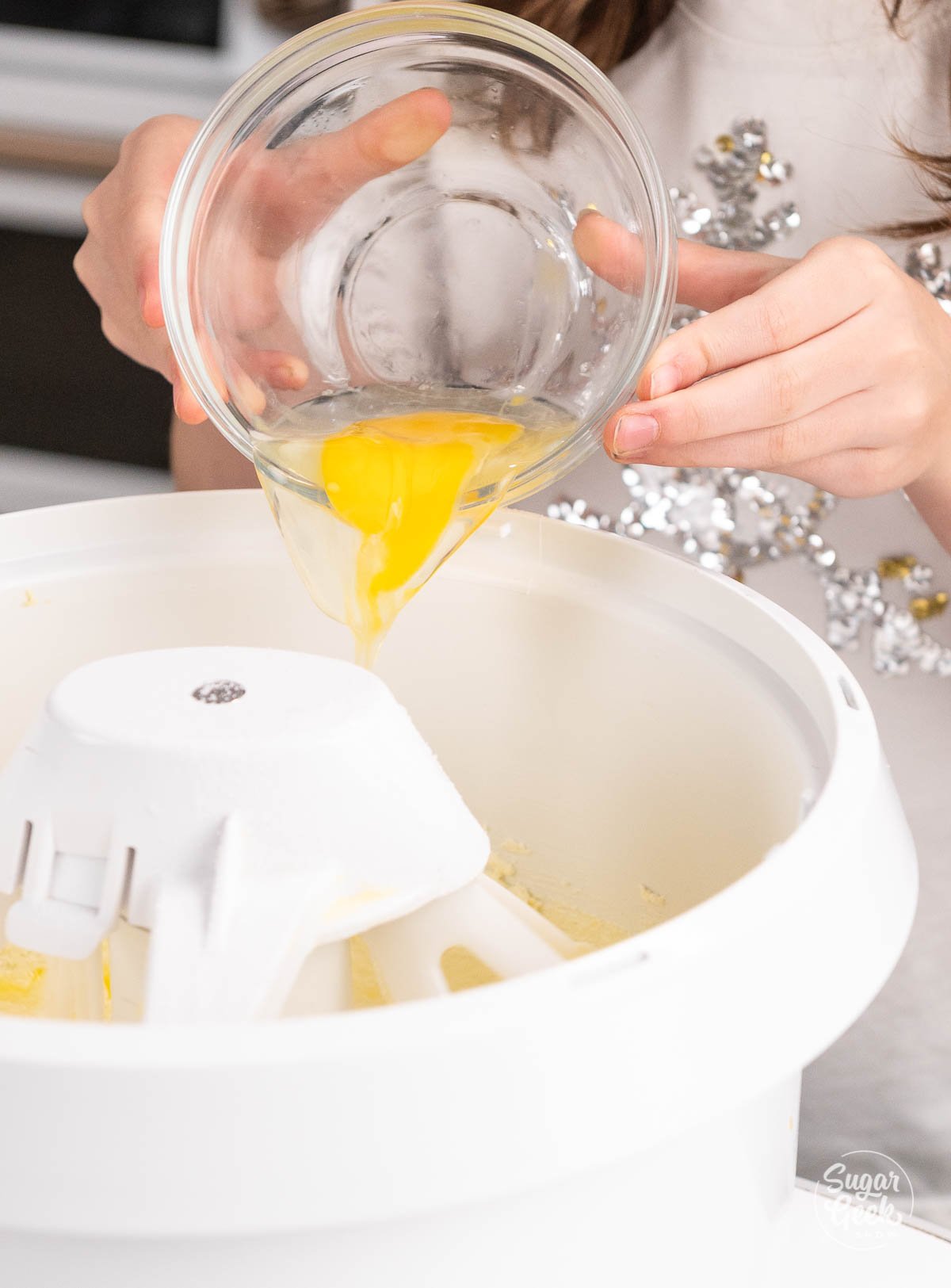
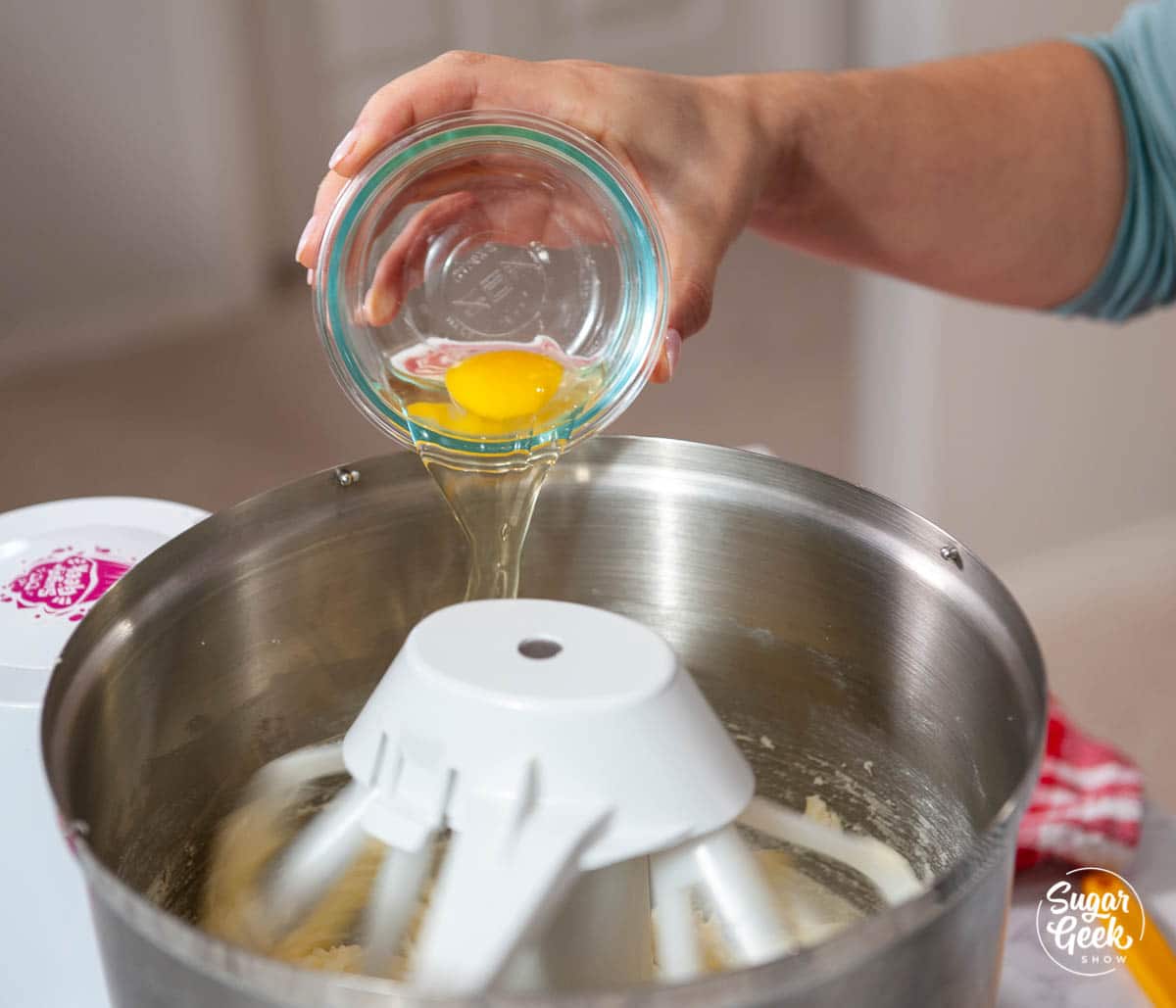
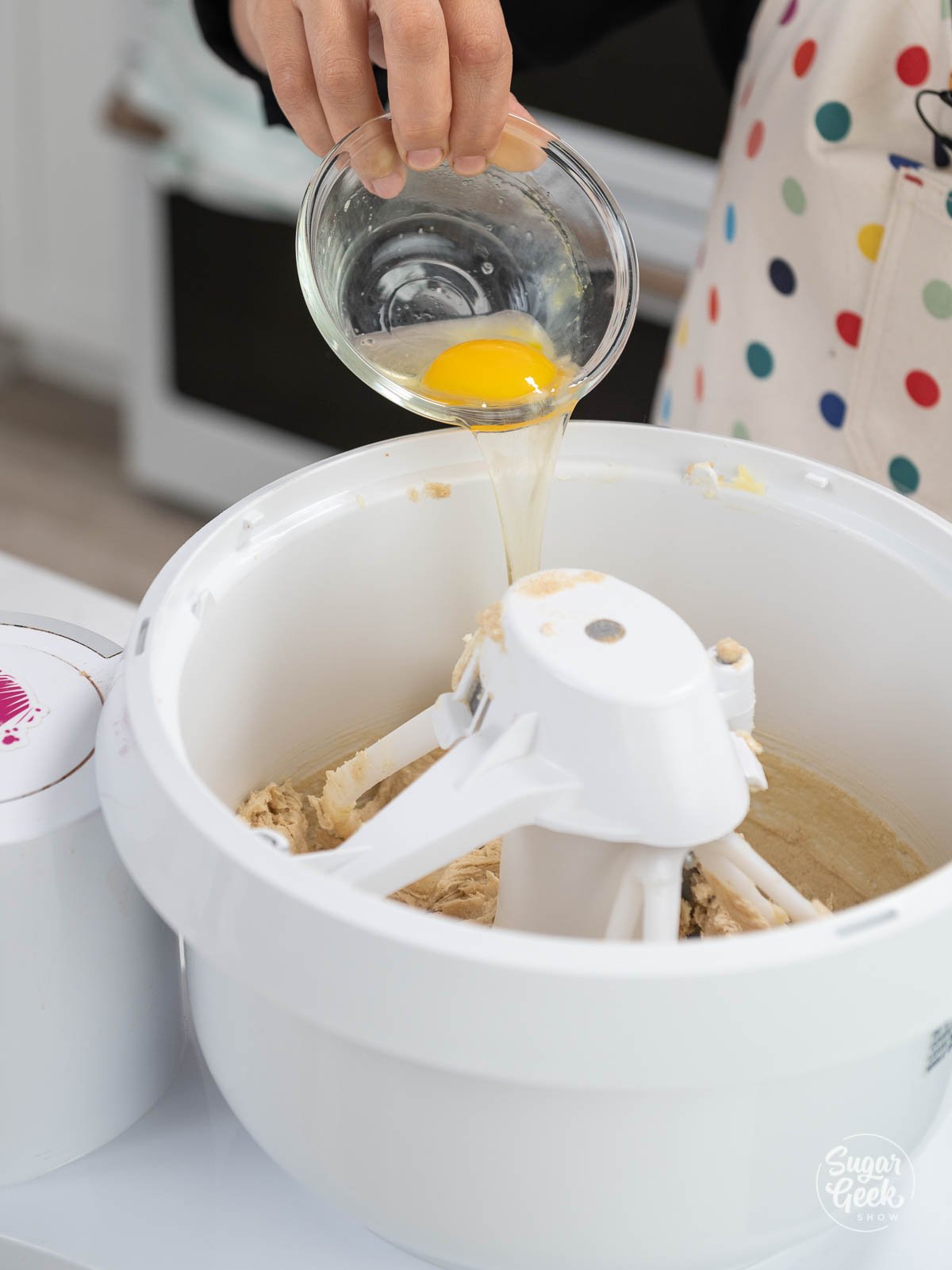
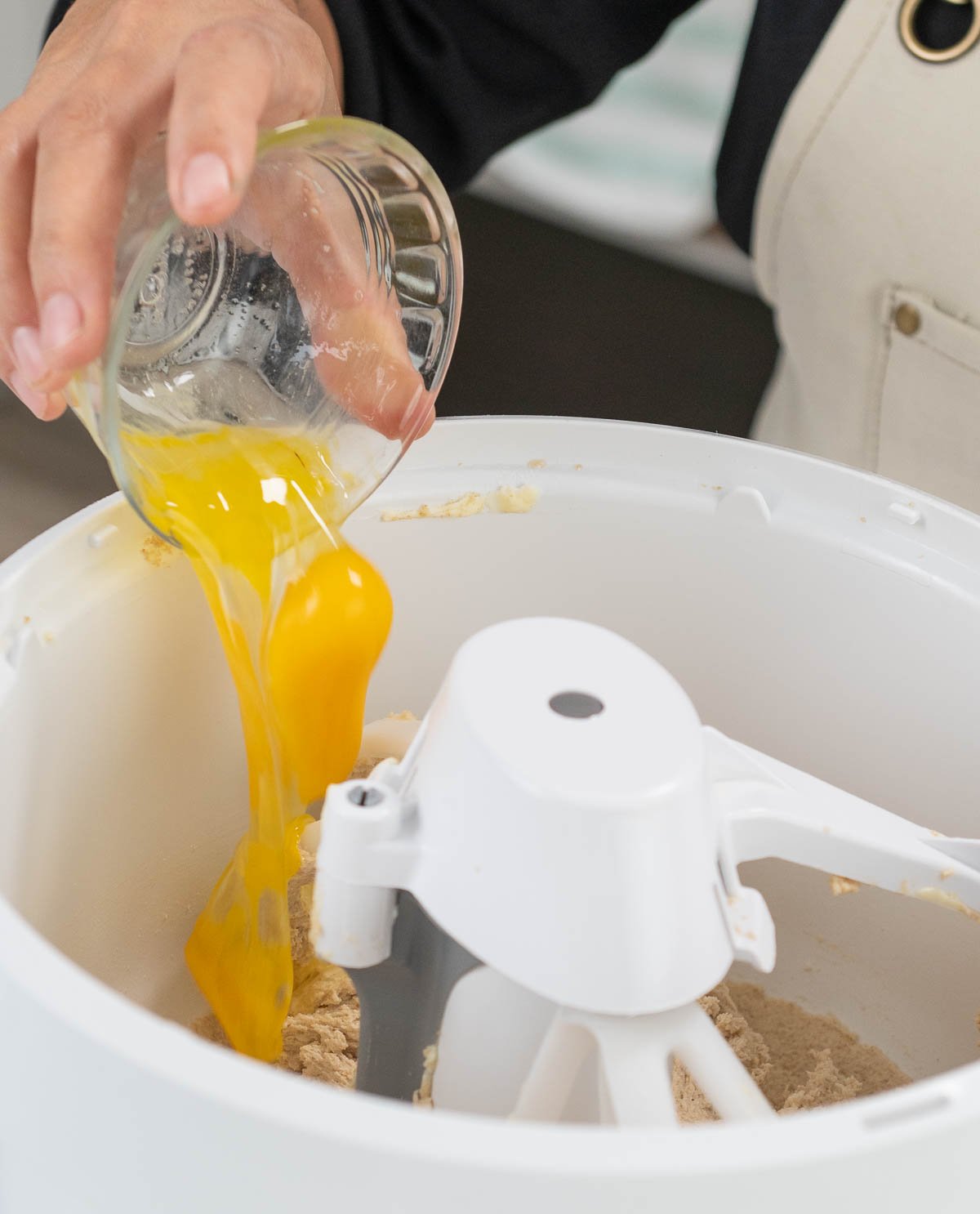
  3. Add the room temperature egg and vanilla to your butter/sugar mixture and mix it until it's incorporated. adding egg to linzer cookie mixture in a mixing bowl
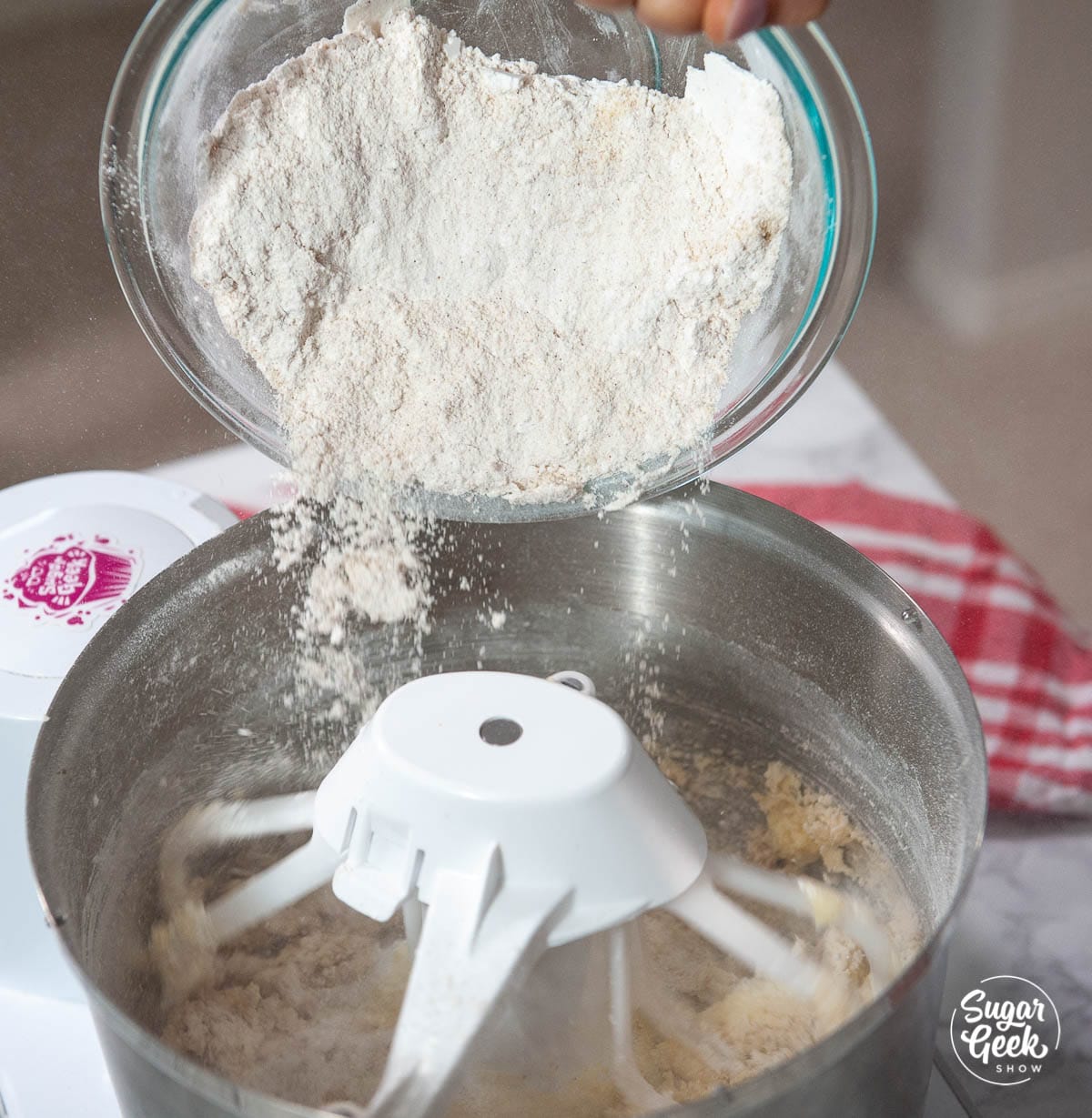
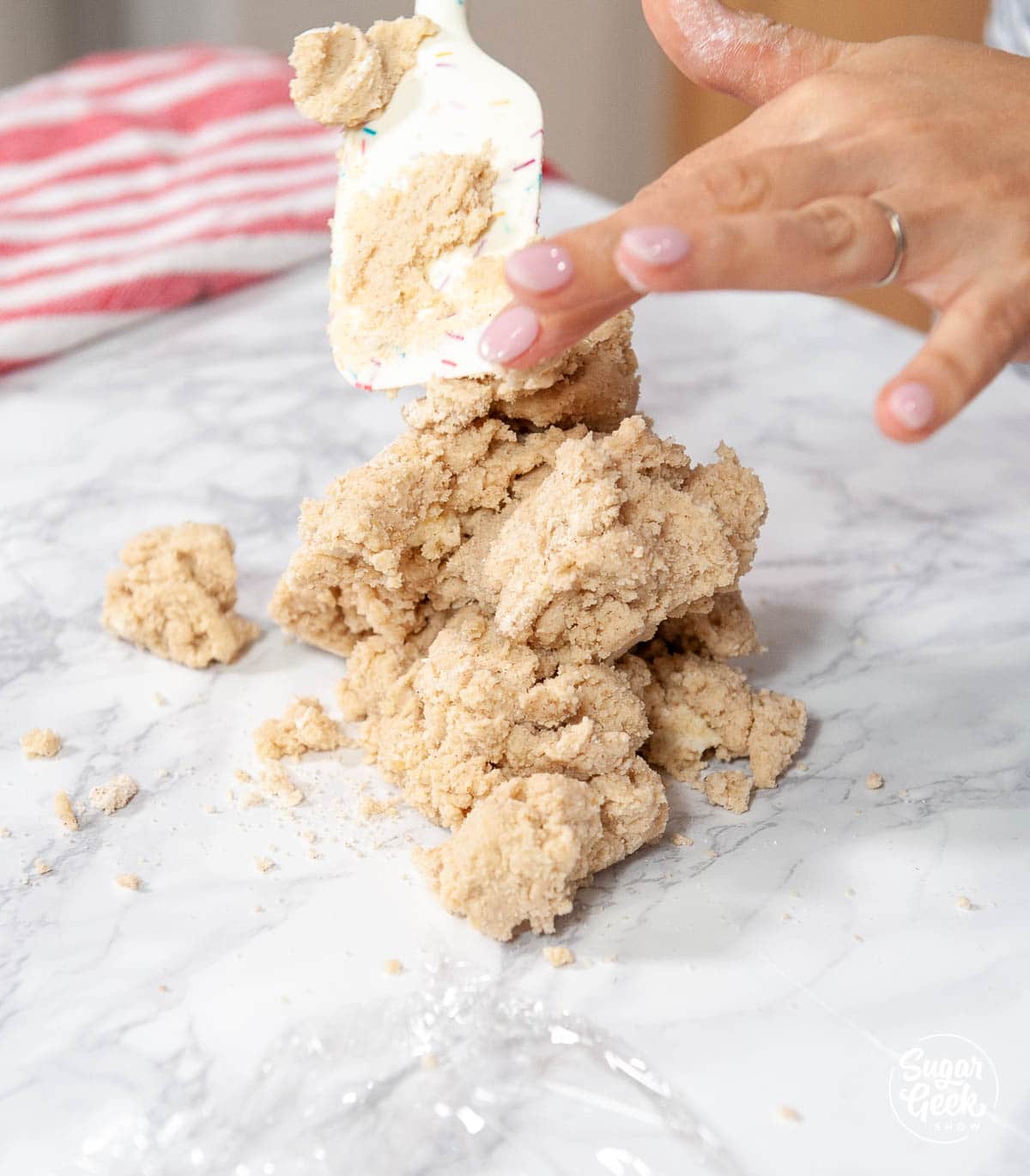
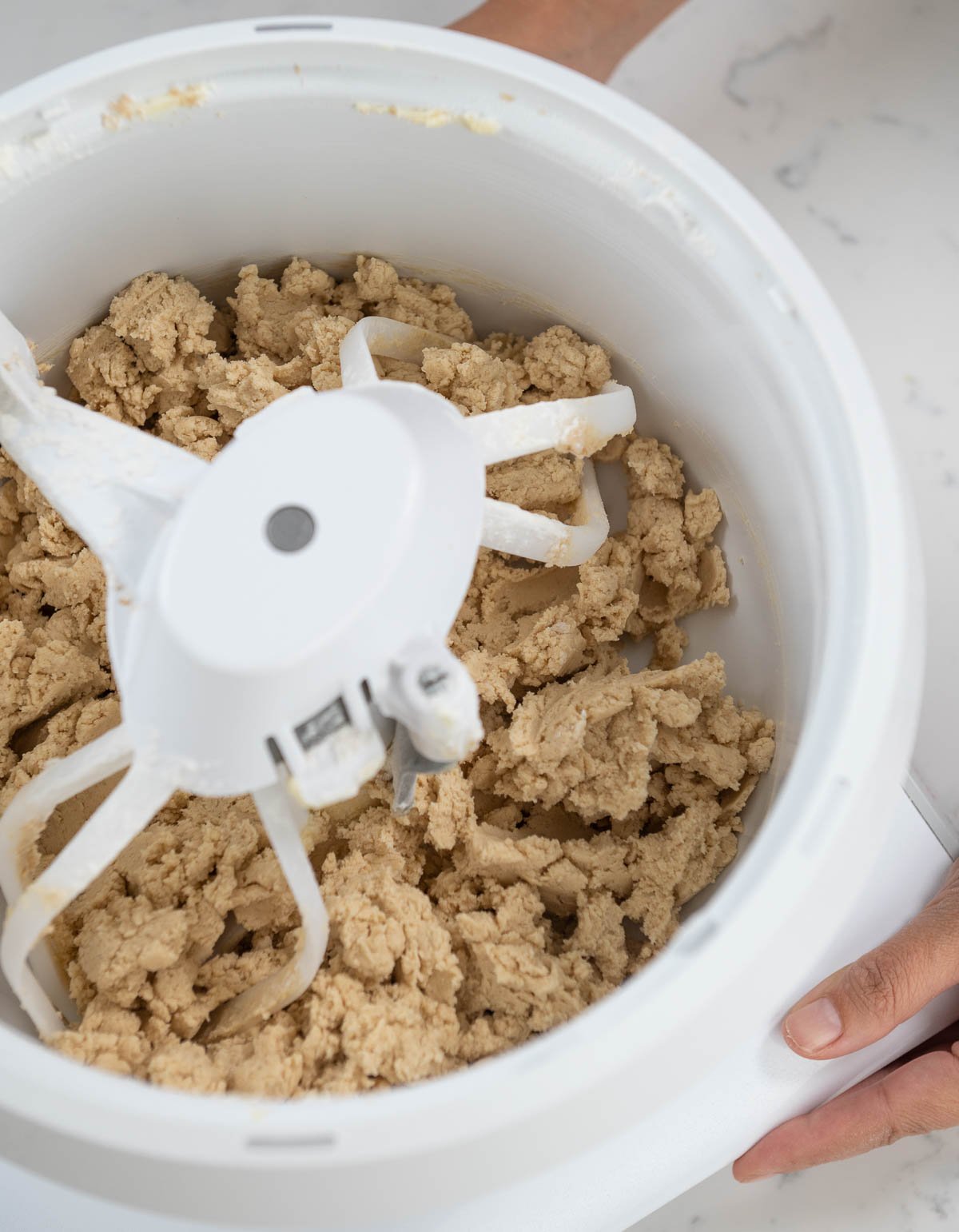
  4. While mixing on low, add in your flour mixture and mix until the dough comes together. Don't over-mix it. adding flour to the linzer cookie dough mixture
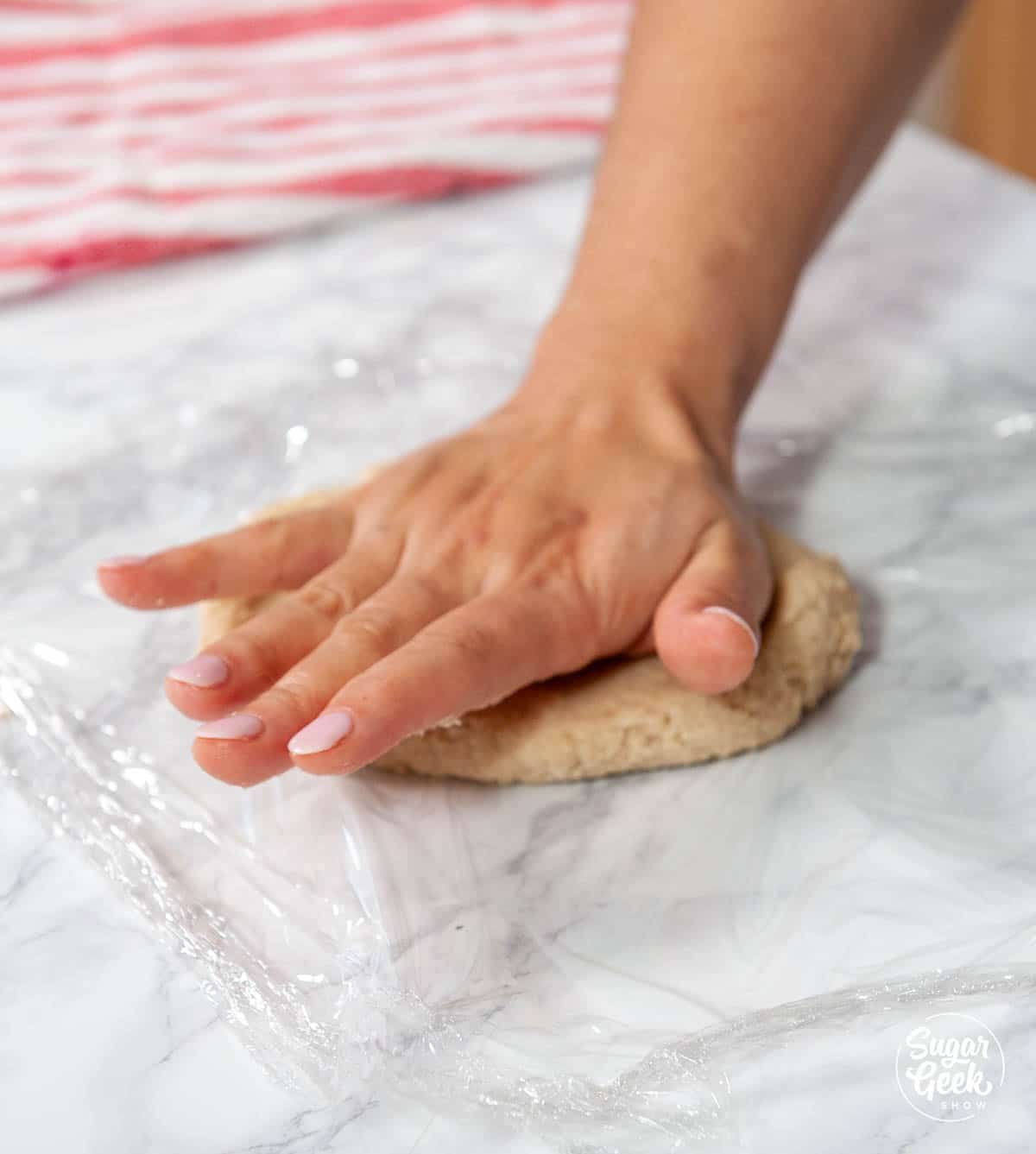
  5. Divide the dough into two flattened disks. pressing linzer cookie dough into disks
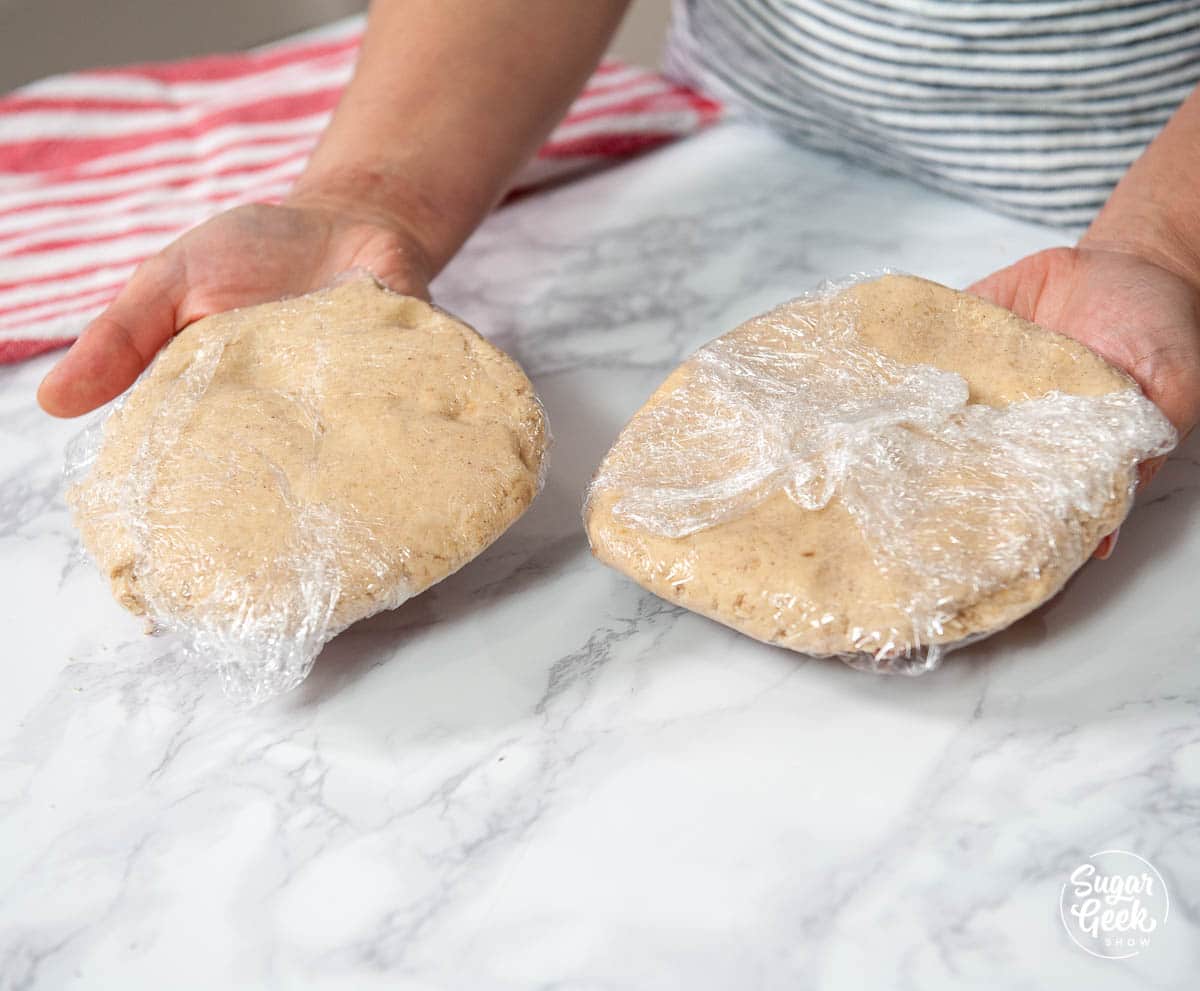
  6. Wrap in plastic and refrigerate for an hour or overnight. 

How to Assemble Linzer Cookies

  1. Preheat your oven to 325ºF and line a cookie sheet with some parchment paper.
  2. Let your dough warm up until you can roll it out without it cracking. Mine took about an hour. linzer cookie dough wrapped in plastic wrap and flattened into a disk
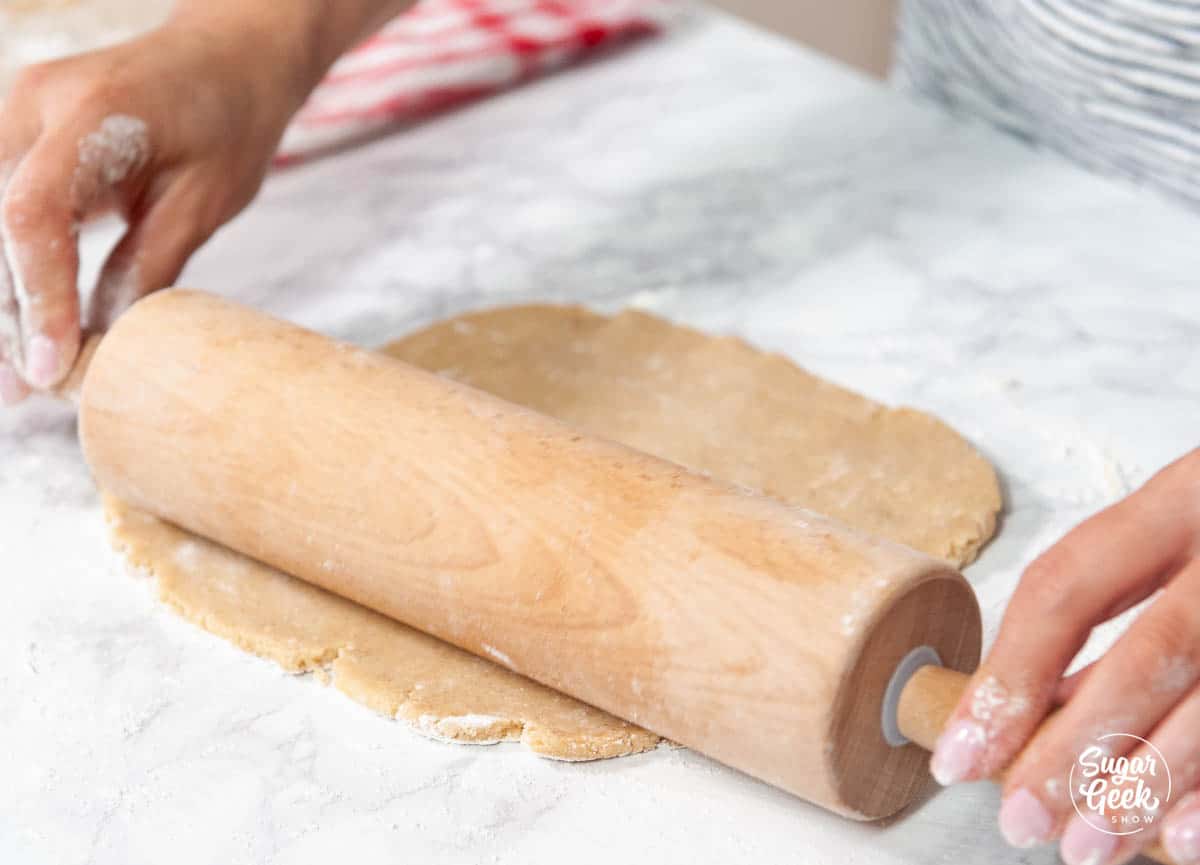
  3. Dust the rolling pin and the surface with some flour to prevent sticking. Roll out your dough to ⅛″ thick. rolling Linzer cookie dough out with a wooden rolling pin
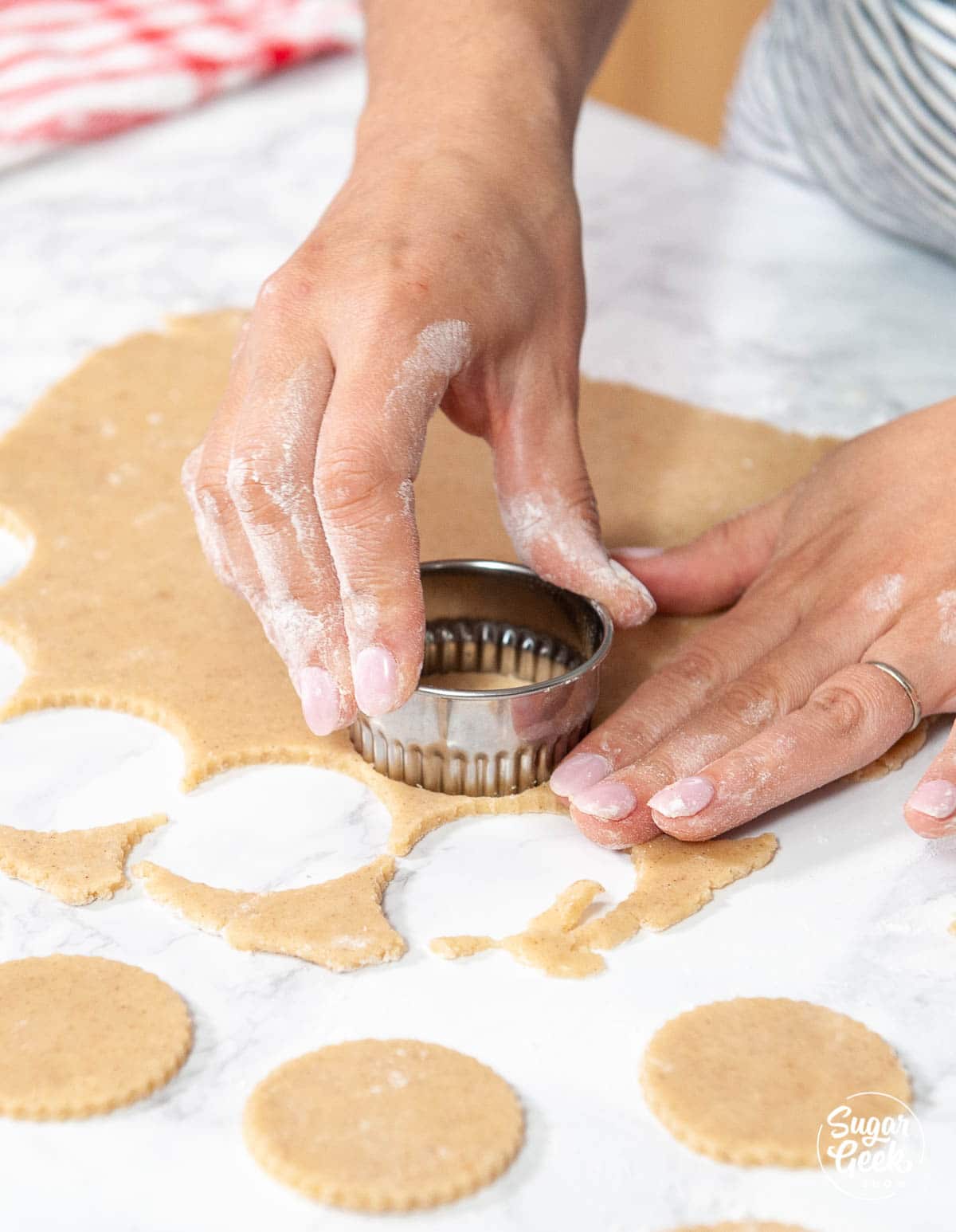
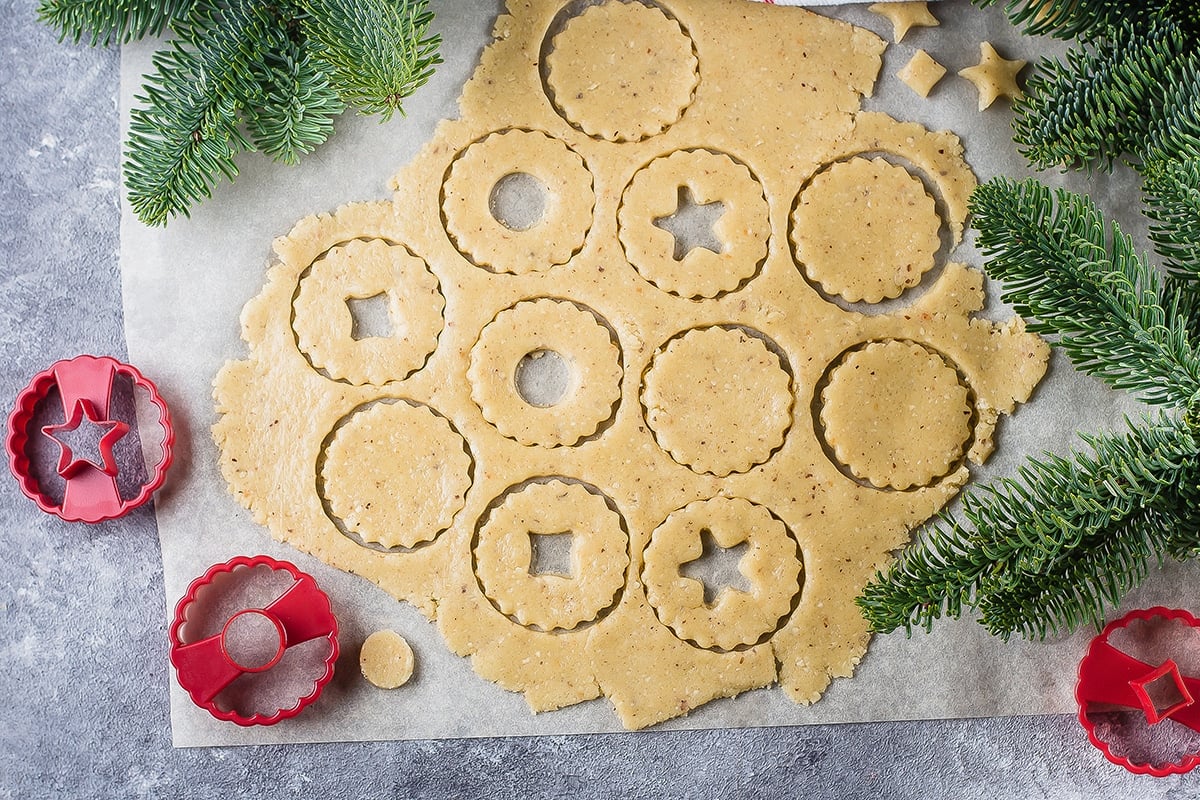
  4. Use the Linzer cookie cutter without the window attachment and cut out 24 backs. cutting linzer cookies
  5. Bake for 10-12 minutes or until the edges begin to turn golden brown.
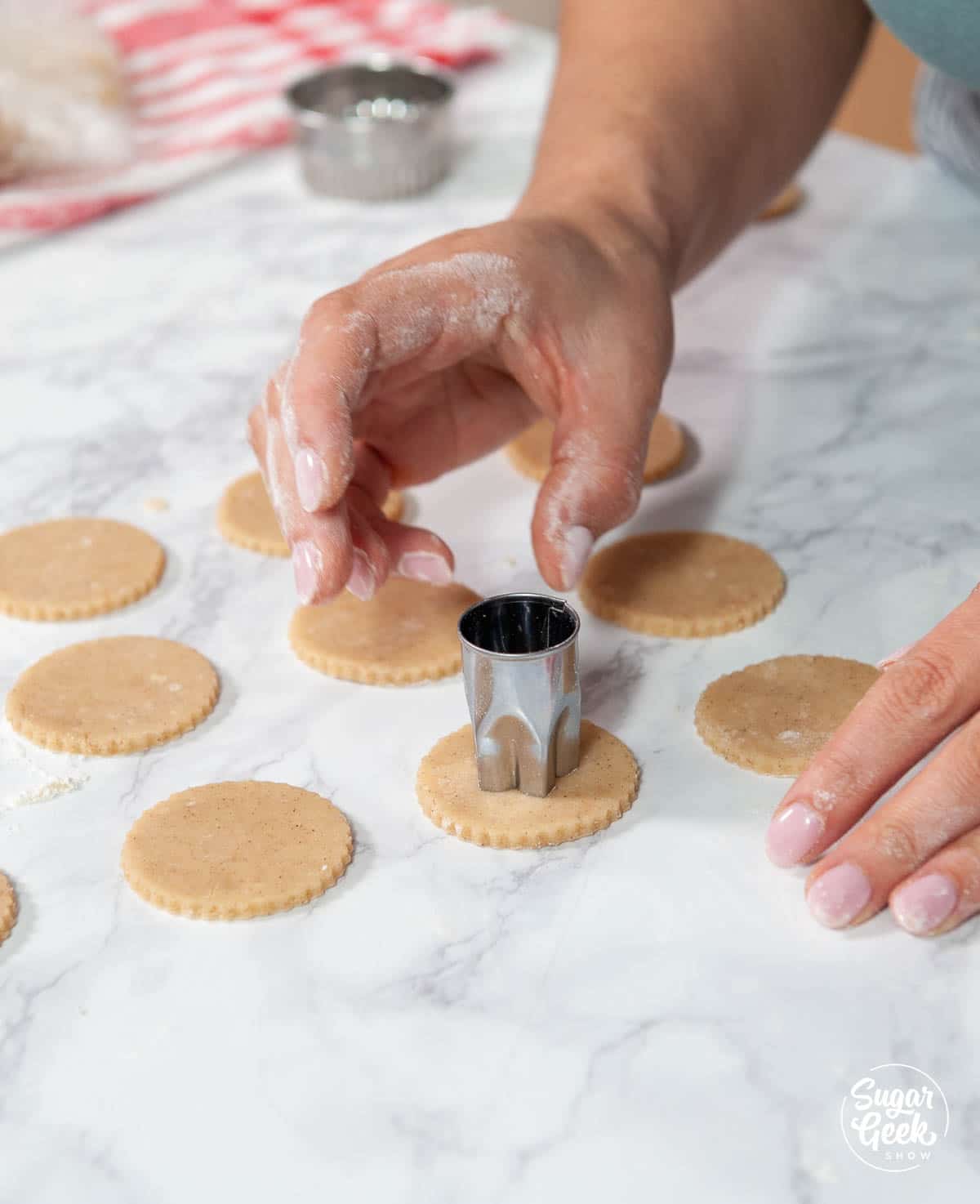
  6. Use the Linzer cookie cutter WITH the window attachment and cut out 24 fronts. cutting linzer cookies
  7. Bake for 9-11 minutes or until the edges just begin to turn golden brown. Pro-Tip: If you have any leftover dough you can press it together and roll out more fronts and backs and bake them off.  
  8. Transfer your baked cookies to a cooling rack to allow them to cool.
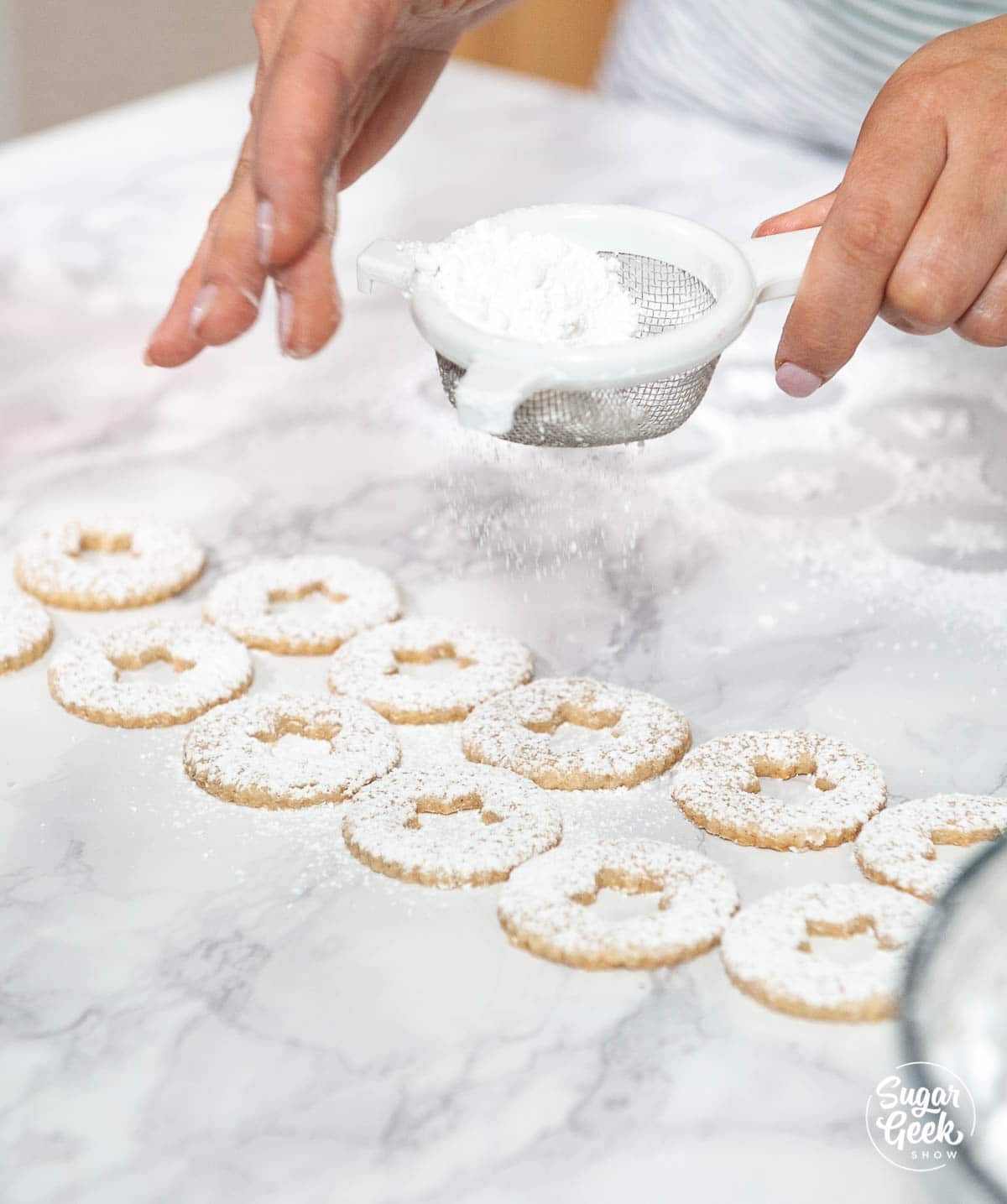
  9. Dust the fronts with some powdered sugar.dusting linzer cookies with powdered sugar
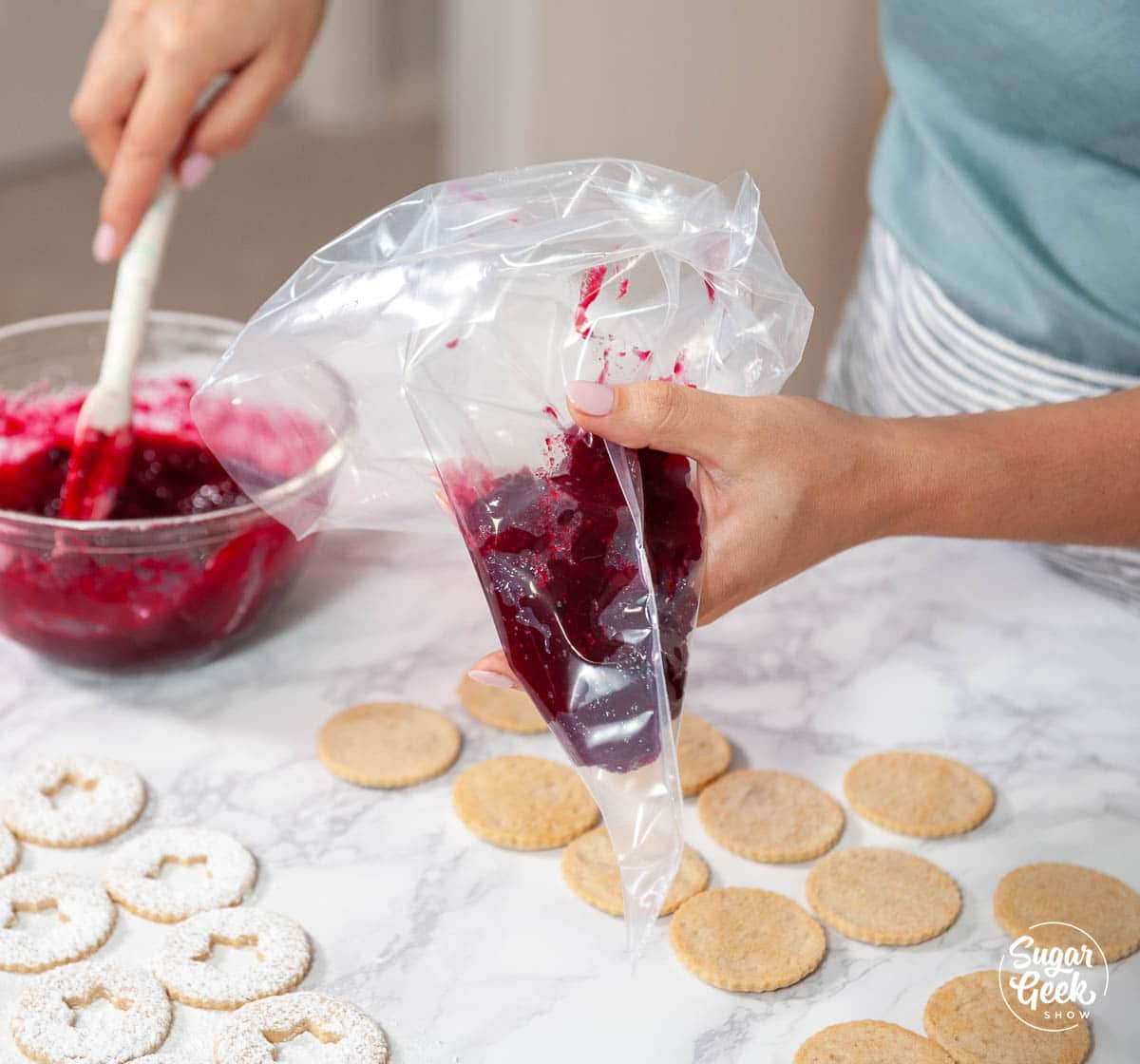
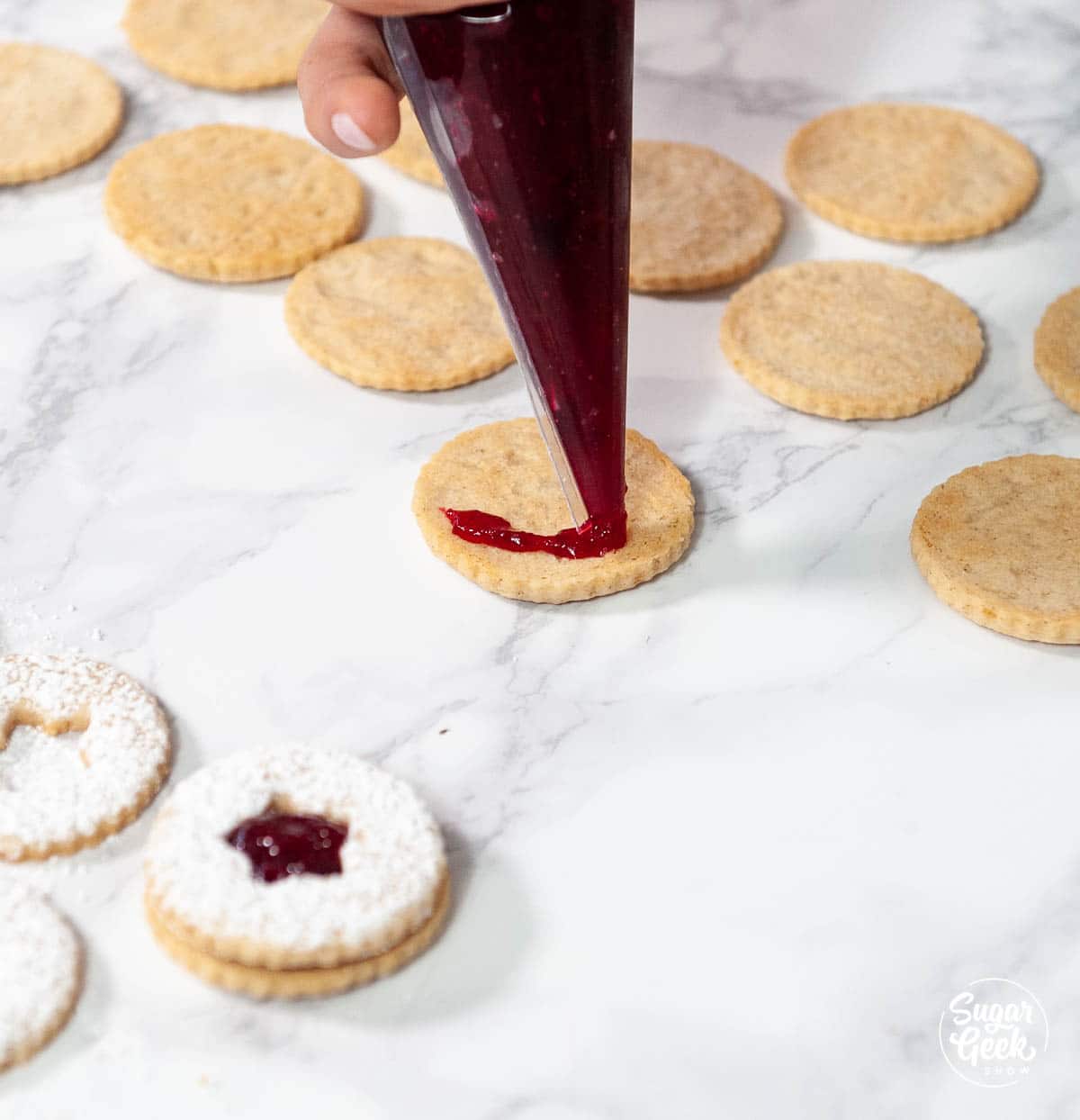
  10. Fill a piping bag with your cranberry filling. Pipe some filling around the outside of one of the back cookies, about ¼″ thick. filling linzer cookies with cranberry filling
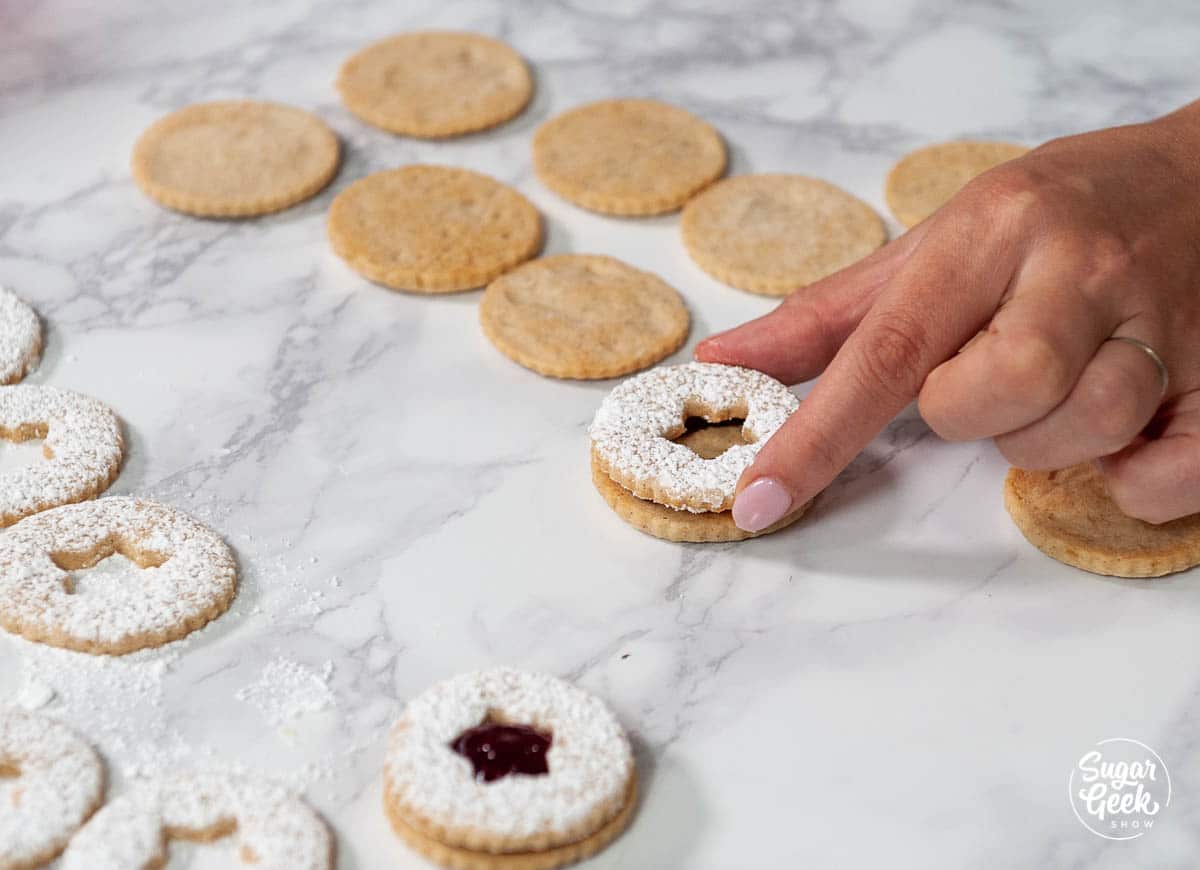
  11. Place the front cookie on top and gently press down. pressing linzer cookies together
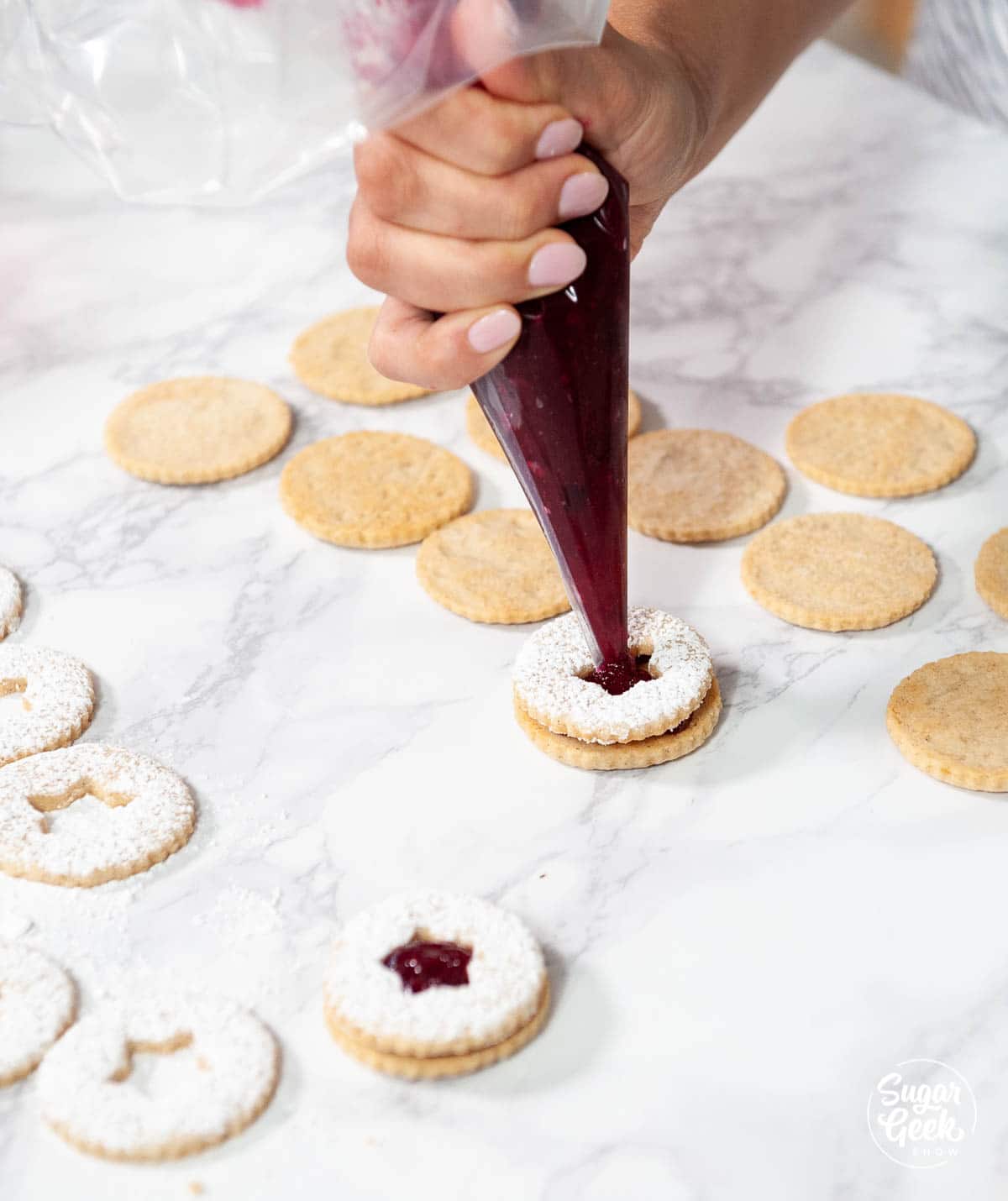
  12. Fill the center of the cookie with some more cranberry filling.filling the center of a linzer cookie with more filling

Your cranberry filling will develop a skin after 24 hours and will then be suitable to package if you desire. 

How do you use a Linzer cookie cutter?

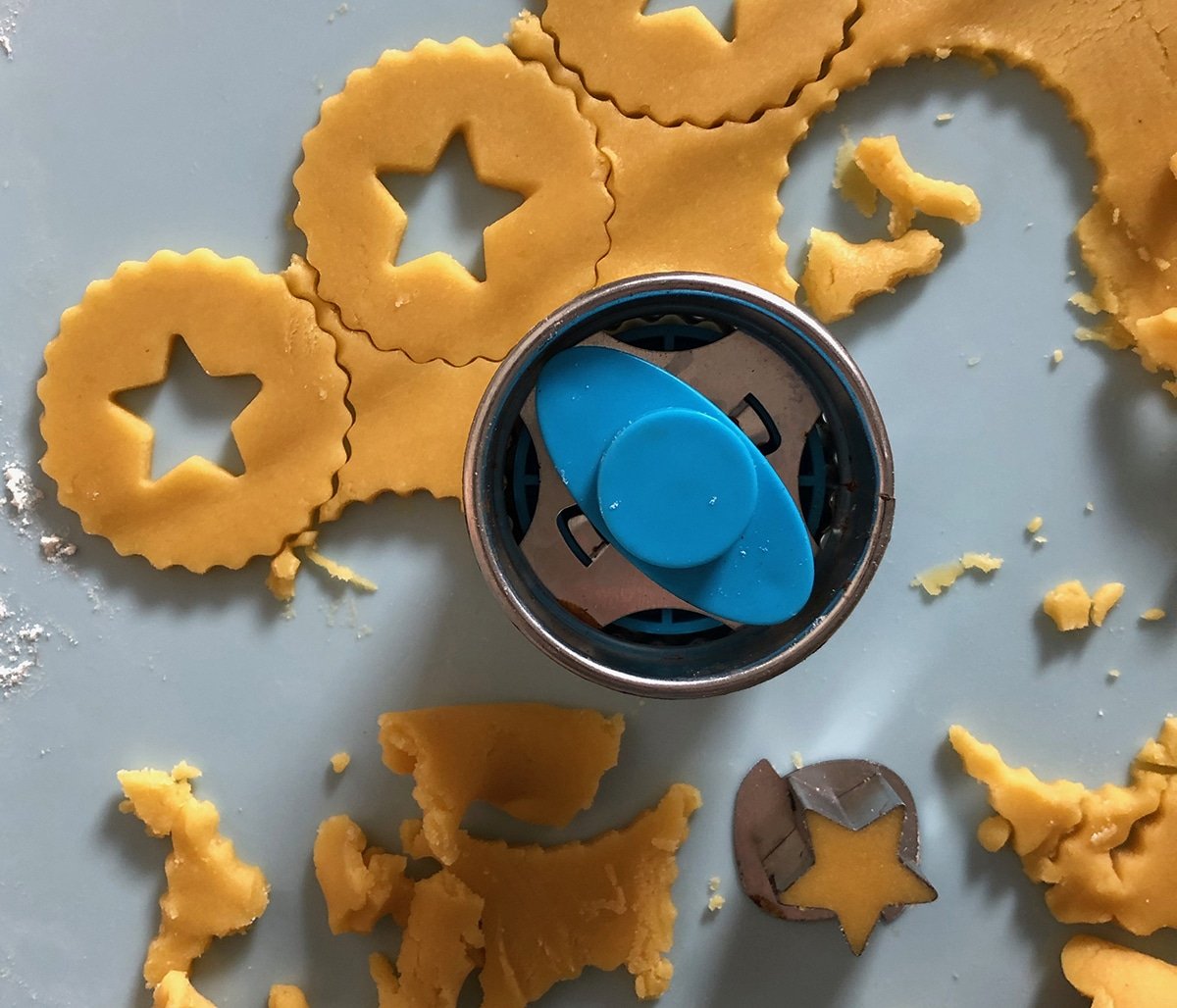
Linzer cookies are often made using a Linzer cookie cutter. These cookie cutters usually have a fluted outer edge and a center cutter that is detachable so that you can make the cookies with the center cut out. 

close up of linzer cookie cutter with cookie dough

Some Linzer cookie cutters are all one piece. Use one side to cut the backs of the cookies and then flip the cutter over to cut the front of the cookie with the window.

Linzer cookies being cut from dough shot from above
close up of a womans hand holding a linzer cookie

FAQ

Do I need a Linzer cookie cutter?

You don't have to have a Linzer cookie cutter to make these cookies. You can use any cookie cutter that you have, and then use another, smaller cutter to make the window. Whatever cookie cutter you use, be sure to dust it with a little flour to prevent sticking while you cut your cookies. 

How do you store Linzer cookies?

You can freeze the dough before rolling it out for up to 6 months (thaw in the fridge) or freeze the finished cookies airtight for 1 month.

What flavor Linzer cookies are there?

There are all kinds of Linzer cookie variations. They can be filled with any type of sweet filling like raspberry, strawberry, cranberry, or even chocolate ganache. 

What is the filling of a traditional Linzer cookie?

Traditional Linzer cookies are made with either apricot or red currant jam.

Can I freeze the cranberry filling if I have leftovers?

Absolutely! Allow the cranberry filling to cool to room temperature, and then store any leftovers in a freezer-safe storage container for up to 6 months.

When were Linzer cookies invented?

In the 1850s, Franz Holzlhuber, an Austrian immigrant, who immigrated to America as a musician, artist, and poet is credited for bringing Linzertorte to America. A Linzer cookie is a variation of Linzertorte.

What nationality are Linzer cookies?

Linzer cookies are Austrian German.

Why are they called Linzer cookies?

Linzer cookies are an Austrian sweet made from the dough of a Linzer torte which just happens to be the oldest written recipe in existence. Named after the city of Linz, Austria, the torte is a kind of pie with a sweet black currant filling, sliced nuts, and an almond-based lattice crust. Dating back to 1655 when nuts were much easier to come by than ground-up wheat flour and less expensive. 

Eventually, someone had the grand idea to cut that dough into cookies shaped like hearts, stars, and circles. Half of the cookies would get the center cut out and this is called a Linzer eye. After the Linzer cookies were baked, they were traditionally filled with a black currant jam and dusted with powdered sugar. 

More Recipes You'll Love

Homemade Cranberry Sauce

Pumpkin Spice Cake

Tart Dough Recipe

Chocolate Peppermint Cookies

Hot Chocolate Cocoa Bombs

linzer cookies on a white plate

Recipe

close up of linzer cookies on a floral plate
Print Recipe
4.84 from 6 votes

Linzer Cookie Recipe

Linzer cookies are a traditional Christmas cookie made from a crispy, buttery tart dough, dusted with powdered sugar and filled with a sweet cranberry jam.
Prep Time15 minutes mins
Cook Time10 minutes mins
cooling2 hours hrs
Total Time2 hours hrs 25 minutes mins
Course: Dessert
Cuisine: german
Servings: 30 cookies
Calories: 133kcal
Author: Liz Marek

Equipment

  • Linzer cookie cutter (or two cutters, one about 2" and one ½")

Ingredients

Linzer Cookies

  • 6 ounces unsalted butter room temperature
  • 4 ounces granulated sugar
  • ½ teaspoon vanilla extract
  • 1 large egg room temperature
  • 1 ounce cake crumbs or cake flour
  • 8 ounces cake flour or substitute with All purpose flour, remove 3 Tablespoons of flour and replace with 3 Tablespoons of cornstarch.
  • 1 teaspoons ground cinnamon
  • 1 teaspoon baking powder
  • ½ teaspoon salt
  • 3 ounces almond flour or hazelnut flour, a combination of both, or pistachio flour

Cranberry Filling

  • 12 ounces cranberries
  • 7 ounces sugar
  • 8 ounces water
  • 1 Tablespoon orange zest
  • 3 Tablespoons orange juice
US Customary - Metric

Instructions

Cranberry Jam Instructions

  • Combine water, sugar, zest, juice, and cranberries together in a saucepan over medium-high heat until it begins to simmer. Stir occasionally to prevent burning.
  • Reduce the heat to medium and let the mixture reduce for about 10 minutes or until the mixture is thickened. 
  • Remove from the heat and let the mixture cool before using.
  • Once your filling is cool, use an immersion blender or blender to make your cranberry filling smoother and easier to pipe (optional). Pro-Tip: For a thicker filling, combine 2 teaspoon cornstarch with 1 Tablespoon cool water to make a slurry. Add the cornstarch to the filling at the end of cooking, and then cook it for an extra minute to thicken. 

Linzer Cookie Dough Instructions

  • Combine your cake crumbs, cake flour, cinnamon, baking powder, salt, and almond flour together with a whisk. (If you don't have cake crumbs you can replace them with more almond flour) Set aside. Pro-Tip: You can use any kind of nut flour for this recipe including hazelnut, pistachio, or cashew! 
  • In the bowl of your stand mixer, cream the room temperature butter and the sugar until it's light and fluffy. 
  • Add the room temperature egg and vanilla to your butter/sugar mixture and mix it until it's incorporated. 
  • While mixing on low, add in your flour mixture and mix until the dough comes together. Don't over-mix it. 
  • Divide the dough into two flattened disks.
  • Refrigerate for an hour or overnight.

Cookie Assembly Instructions

  • Preheat your oven to 325ºF and line a cookie sheet with some parchment paper.
  • Let your dough warm up until you can roll it out without it cracking. Mine took about an hour.
  • Dust the rolling pin and the surface with some flour to prevent sticking. Roll out your dough to ⅛″ thick. 
  • Use the Linzer cookie cutter without the window attachment and cut out 24 backs.
  • Bake for 10-12 minutes or until the edges begin to turn golden brown.
  • Use the Linzer cookie cutter WITH the window attachment and cut out 24 fronts.
  • Bake for 9-11 minutes or until the edges just begin to turn golden brown. Pro-Tip: If you have any leftover dough you can press it together and roll out more fronts and backs and bake them off.
  • Transfer your baked cookies to a cooling rack to allow them to cool.
  • Dust the fronts with some powdered sugar.
  • Fill a piping bag with your cranberry filling. Pipe some filling around the outside of one of the back cookies, about ¼″ thick. 
  • Place the front cookie on top and gently press down. 
  • Fill the center of the cookie with some more cranberry filling.

Video

Notes

Important Things To Note Before You Start
  1. Bring your butter and eggs to room temperature or even a little warm to ensure your batter does not break or curdle. 
  2. Use a scale to weigh your ingredients (including liquids) unless otherwise instructed (Tablespoons, teaspoons, pinch etc). Metric measurements are available in the recipe card. Scaled ingredients are much more accurate than using cups and help ensure the success of your recipe. 
  3. Practice Mise en Place (everything in it's place). Measure out your ingredients ahead of time and have them ready before you start mixing to reduce the chances of accidentally leaving something out.
  4. If the recipe calls for specific ingredients like cake flour, replacing it with all purpose flour and cornstarch is not recommended unless specified in the recipe that it's ok. Substituting ingredients may cause this recipe to fail. 
  5. If you're in the UK, search for Shipton mills cake and pastry flour. If you're in another part of the country, search for low protein cake flour.
  6. You can use any kind of nut flour including pistachio, cashew, or hazelnut in place of almond flour.
  7. You can substitute cake crumbs for more almond flour. The cake crumbs just add moisture to the cookie.
  8. You can blend your cranberry filling so that it's smoother if you desire.
  9. Your cranberry filling will develop a skin after 24 hours, and will then your cookies will be suitable to package up. These cookies are excellent for holiday cookie exchanges and homemade gifts!

Nutrition

Serving: 1cookie | Calories: 133kcal | Carbohydrates: 18g | Protein: 2g | Fat: 6g | Saturated Fat: 3g | Cholesterol: 18mg | Sodium: 43mg | Potassium: 38mg | Fiber: 1g | Sugar: 11g | Vitamin A: 161IU | Vitamin C: 3mg | Calcium: 17mg | Iron: 1mg
 
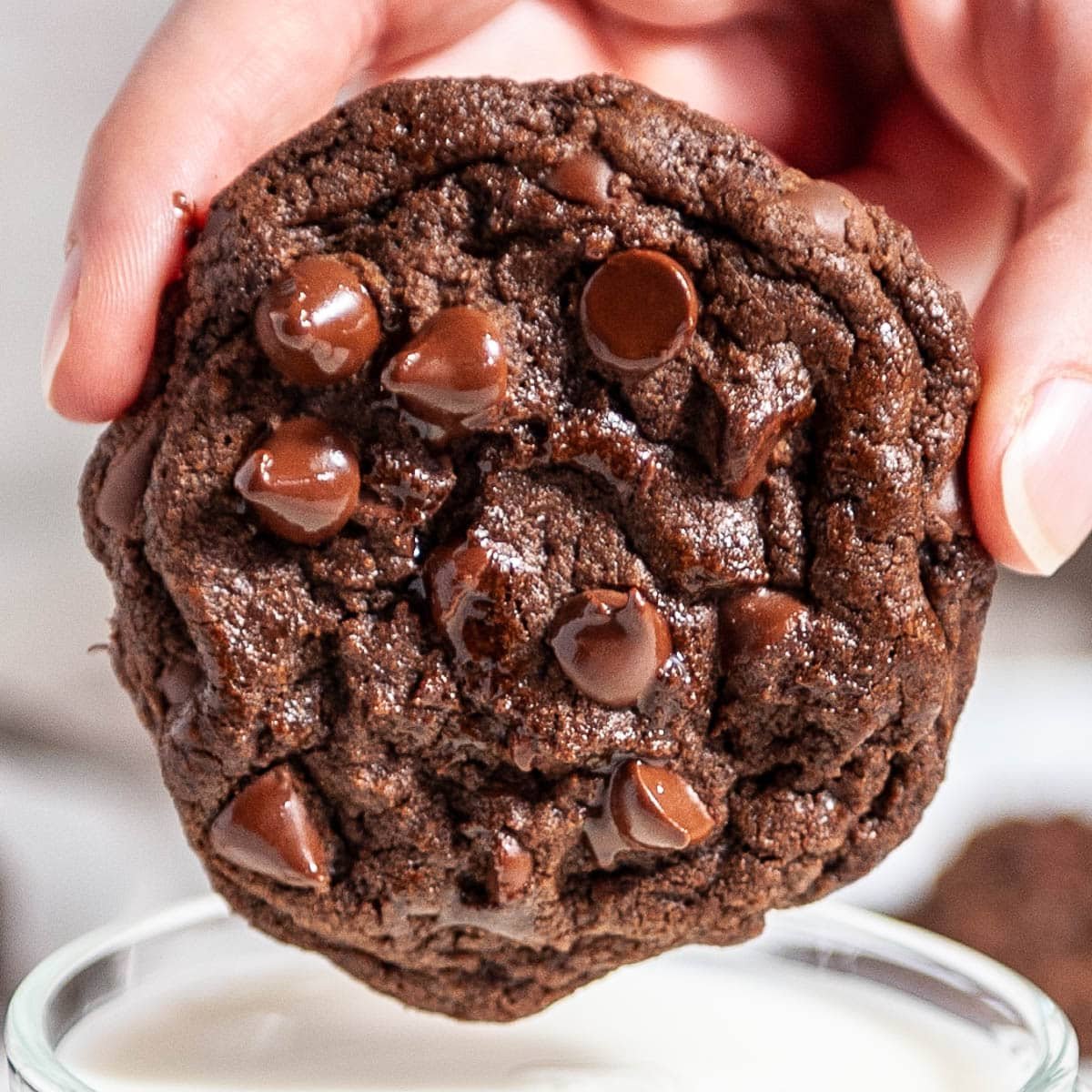
close up shot of double chocolate chip cookie

December 10, 2021 4th of July

Chewy Double Chocolate Chip Cookies

These chewy double chocolate chip cookies are a chocolate lover's dream come true! Rich, chocolatey, moist, and chewy. These cookies are basically brownie cookies. Oh, and they only take 20 minutes to make! 

close up shot of double chocolate chip cookie

Double chocolate cookies are nice and chewy and go perfectly with a tall glass of cold milk. Make a big batch ahead of time for a special gathering or freeze them and have a cookie to cure those chocolate cravings any time.

What's In This Blog Post

  • Double Chocolate Chip Cookie Ingredients
  • Why These Are The Best
  • Instructions
  • FAQ
  • More Recipes You'll Love

Double Chocolate Chip Cookie Ingredients

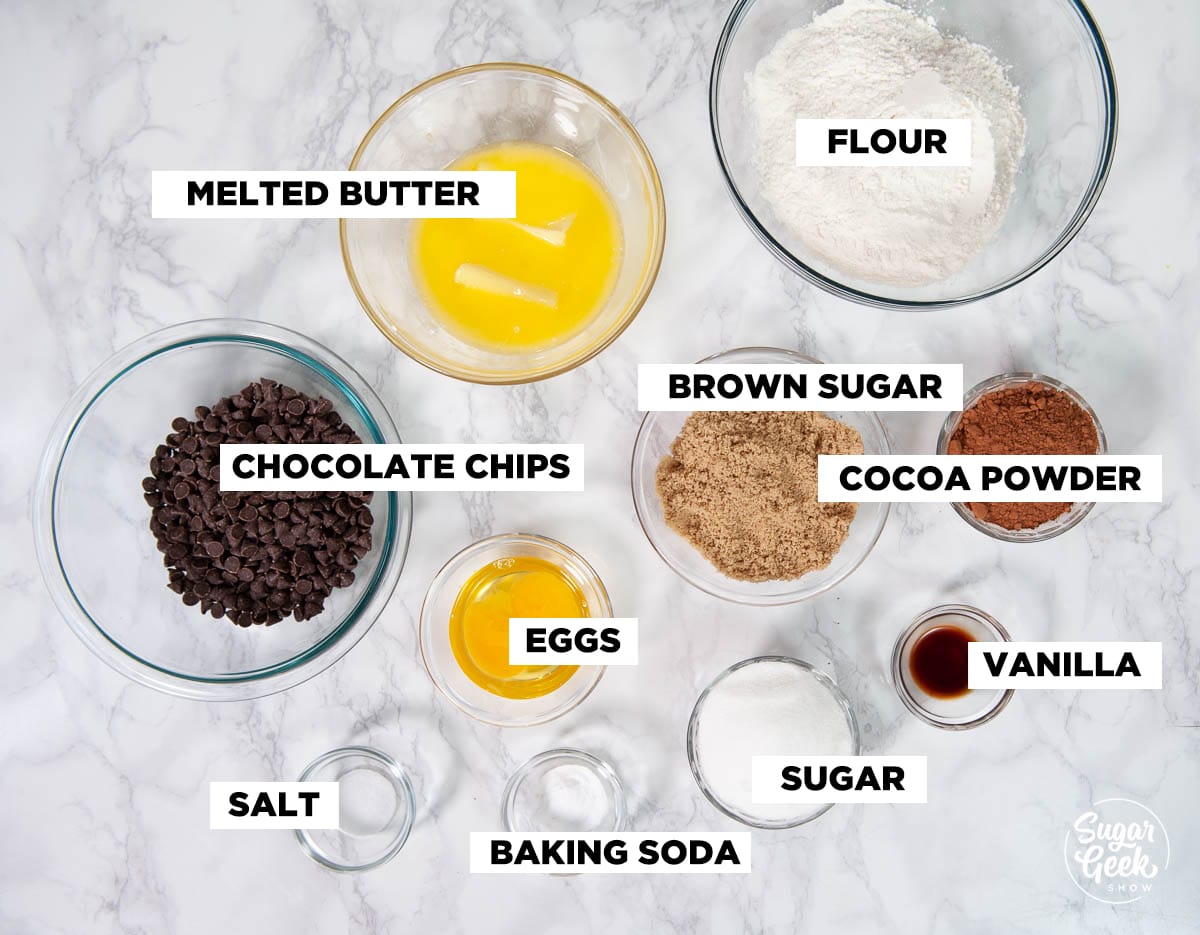
I like the ease of using chocolate chips, but you can make these the best cookies ever by adding chopped chocolate instead. You can use anything really, peanut butter chips, white chocolate chips, semi-sweet chocolate chips, or dark chocolate chips. The flavor combos are endless.

double chocolate chip cookie ingredients

This recipe uses all-purpose flour, which results in a perfectly chewy cookie.

I used natural cocoa powder in this recipe (Hershey's is a common brand) because the alkaline nature of the cocoa powder reacts with the baking soda to give that perfect rise and texture, resulting in a thicker cookie. You can absolutely use Dutch process cocoa powder but for best results, replace the baking soda with baking powder instead.

Light brown sugar adds a little moisture and flavor to these cookies but you can use white sugar or dark brown sugar.

I like to use a kitchen scale to measure my ingredients because it makes it so much easier to get accurate measurements, especially when measuring flour.

Why These Are The Best

If you are a chocolate lover like my daughter, then you will LOVE these cookies. They have everything a chocolate lover is looking for.

  • A little crispy on the outside, soft and chewy in the center.
  • Big chocolate chunks.
  • Lots of chocolate flavor without being overly sweet.
  • 10 minutes to make and 10 minutes to bake!
  • Freeze these cookies and take one out whenever you have a chocolate craving.

Instructions

  1. Bring your cold ingredients to room temperature. Room temperature ingredients mix together properly and create an emulsion; cold ingredients will split, and the dough will spread during baking.
  2. Preheat your oven to 350ºF (176ºC). Preheating is important for baking cookies so they puff up and don't spread.
  3. Prepare your cookie sheet pan with parchment paper or a silicone baking mat.
  4. Melt the unsalted butter in a medium bowl.
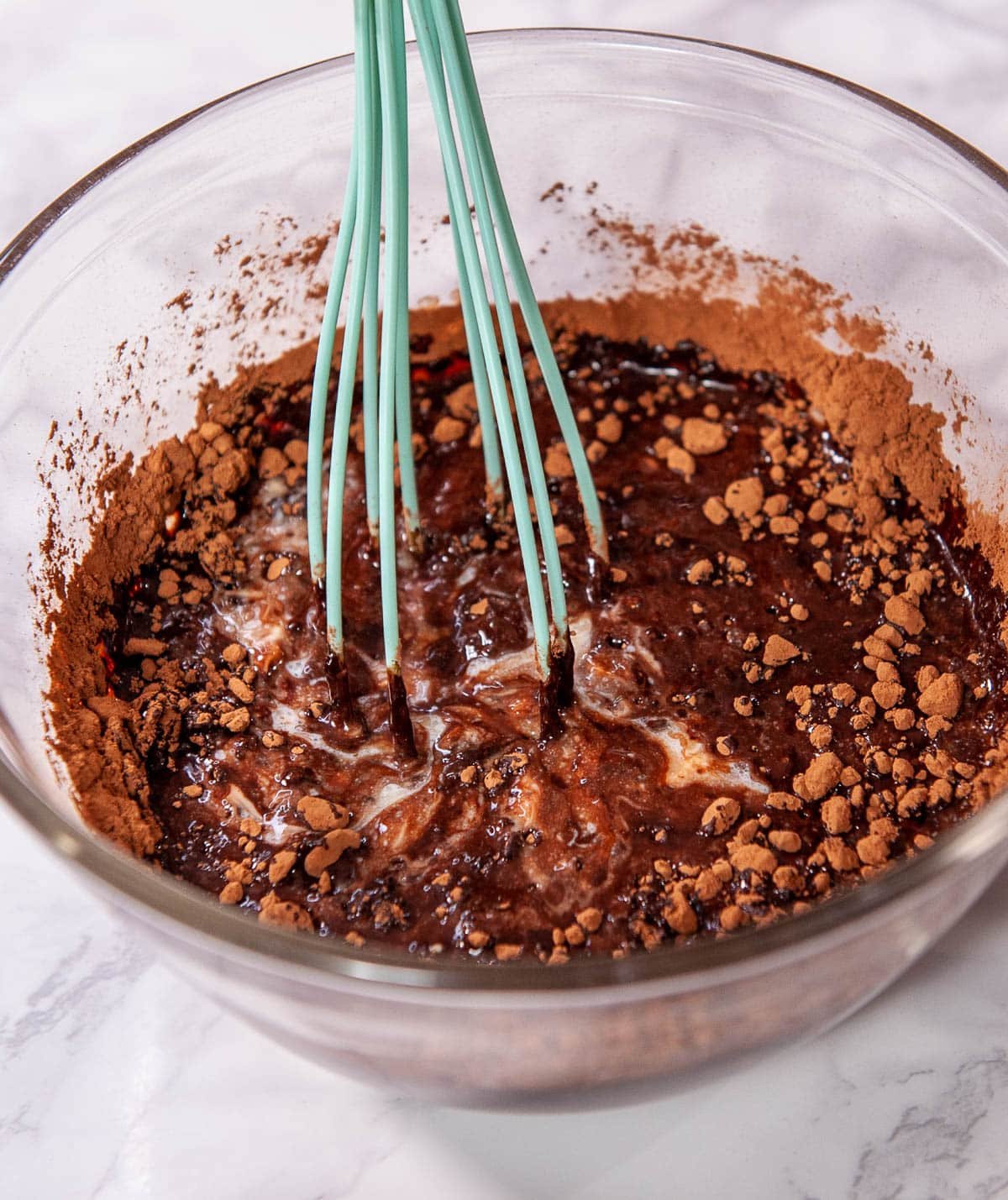
  5. Once the butter is melted, add in the cocoa powder and stir it until it's smooth and combined. Adding cocoa powder to the butter hydrates the cocoa and helps make a ooey-gooey chocolate cookie!close up of melted butter and cocoa powder being whisked in a glass bowl
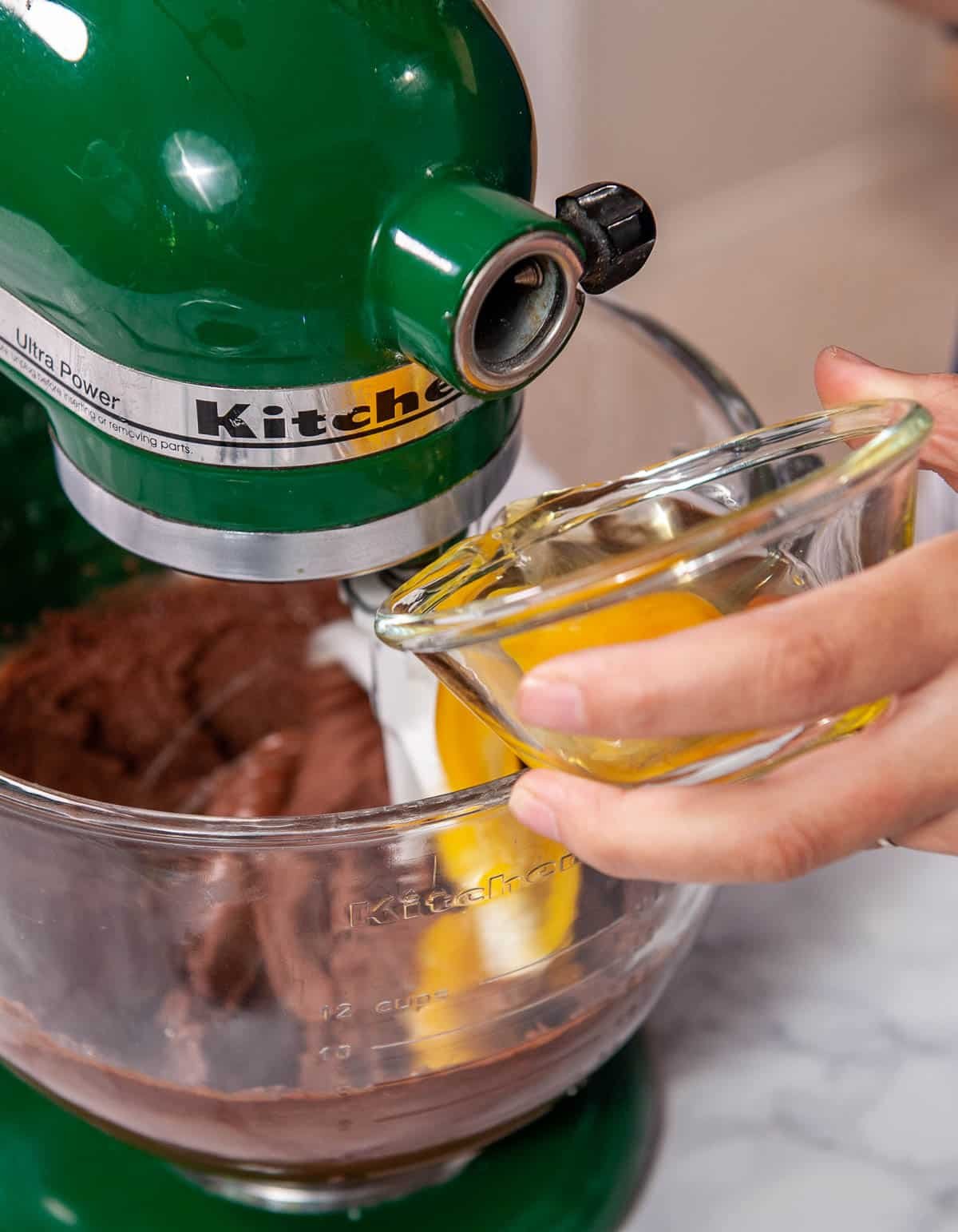
  6. While mixing on low, add in the room temperature eggs, letting each egg mix in fully before adding in the next. If you add all the eggs in at once, they may not fully mix in.close up of eggs being added to double chocolate chip cookie recipe
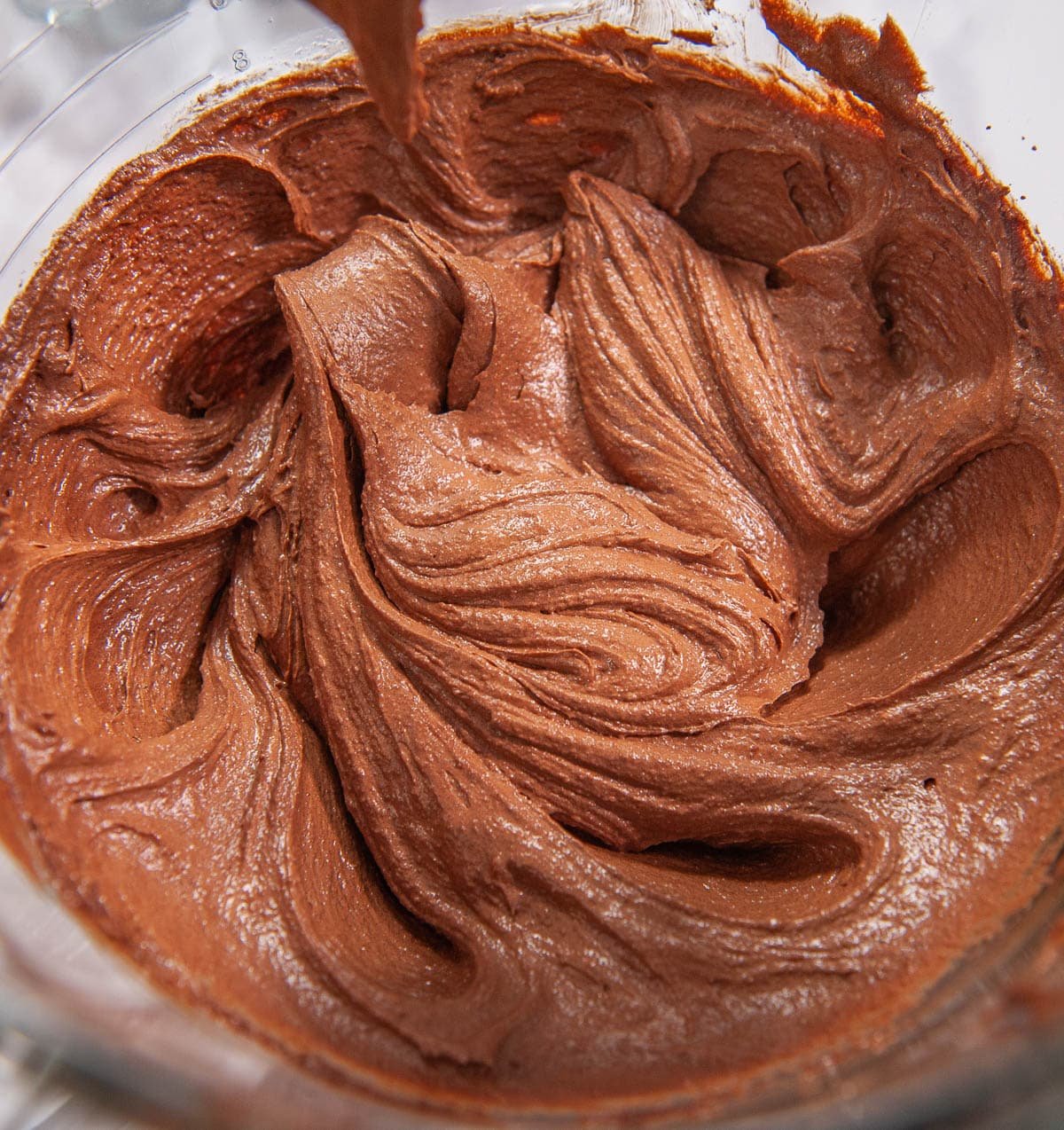
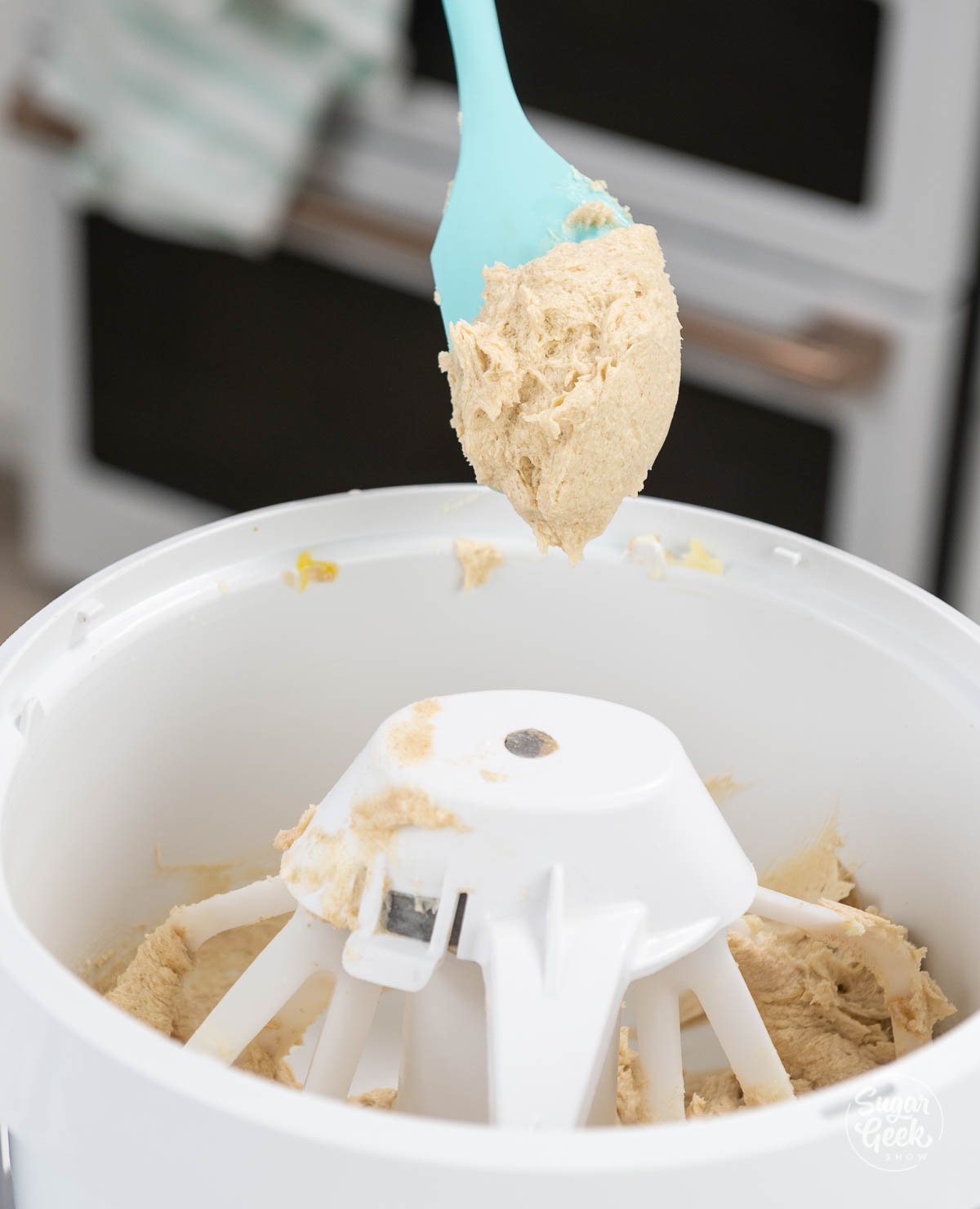
  7. Add in the vanilla extract and mix everything on medium speed for two minutes until the mixture is light and fluffy.closeup of whipped eggs, cocoa powder, and butter
  8. Scrape down the sides of the bowl to make sure everything is combined.
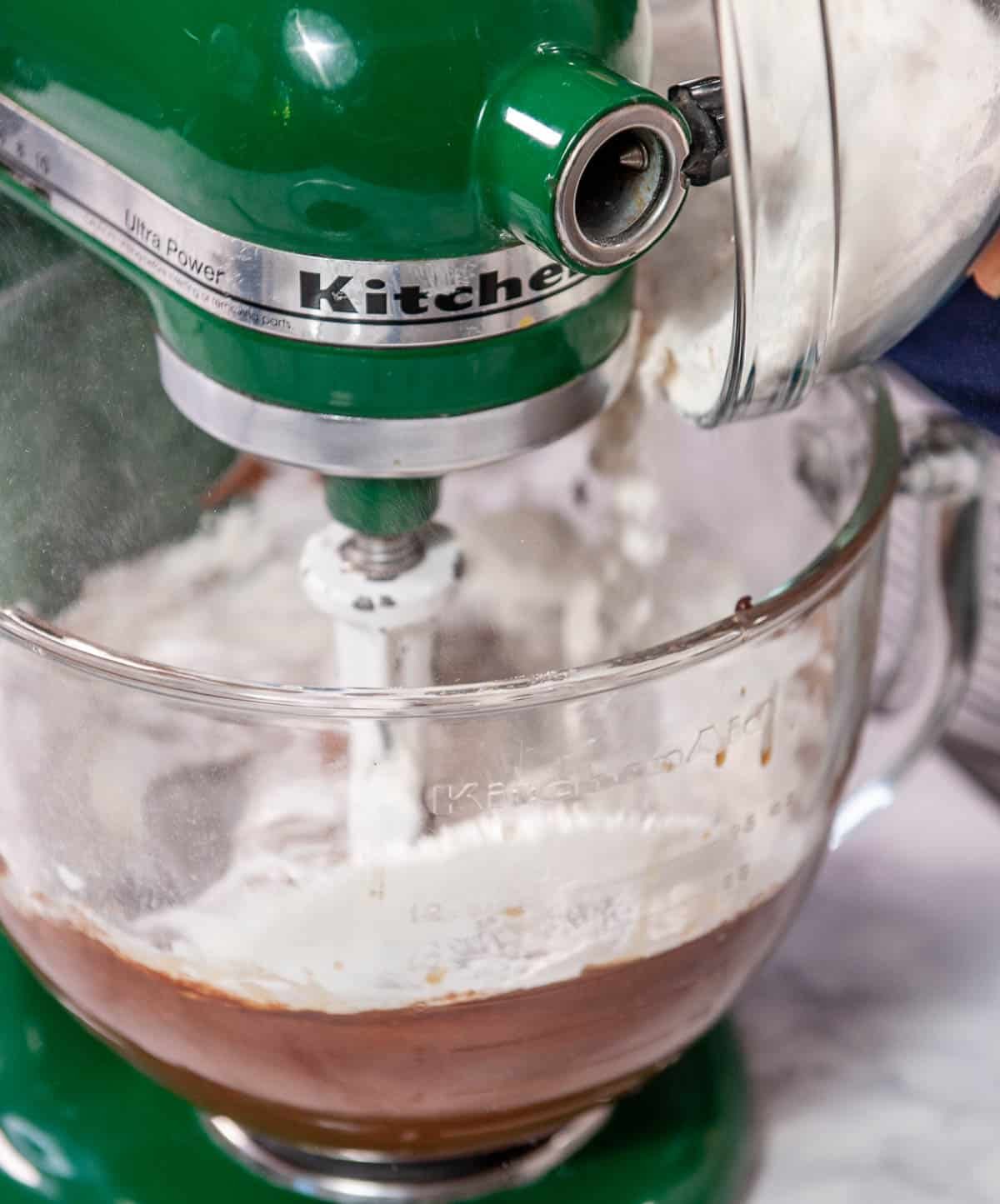
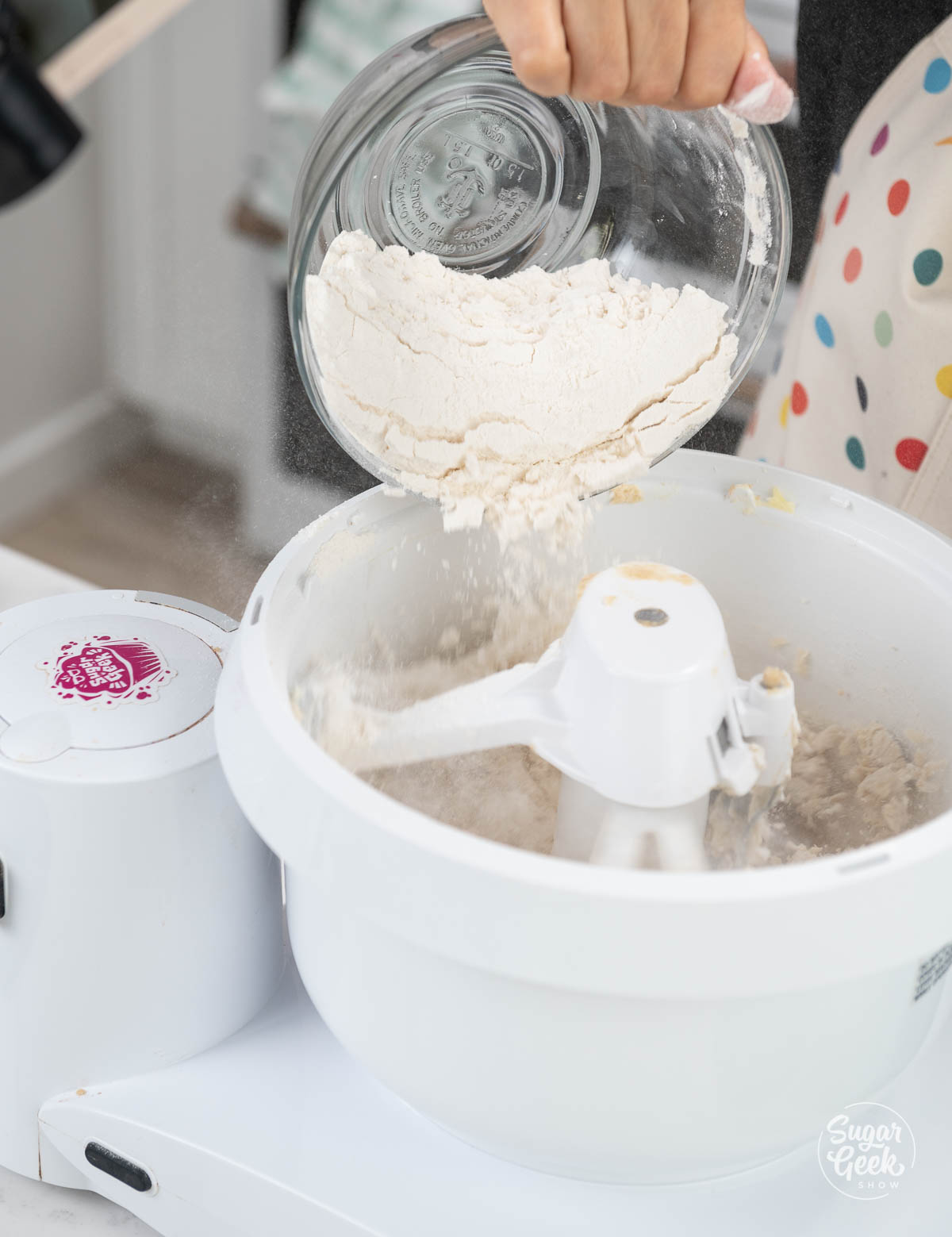
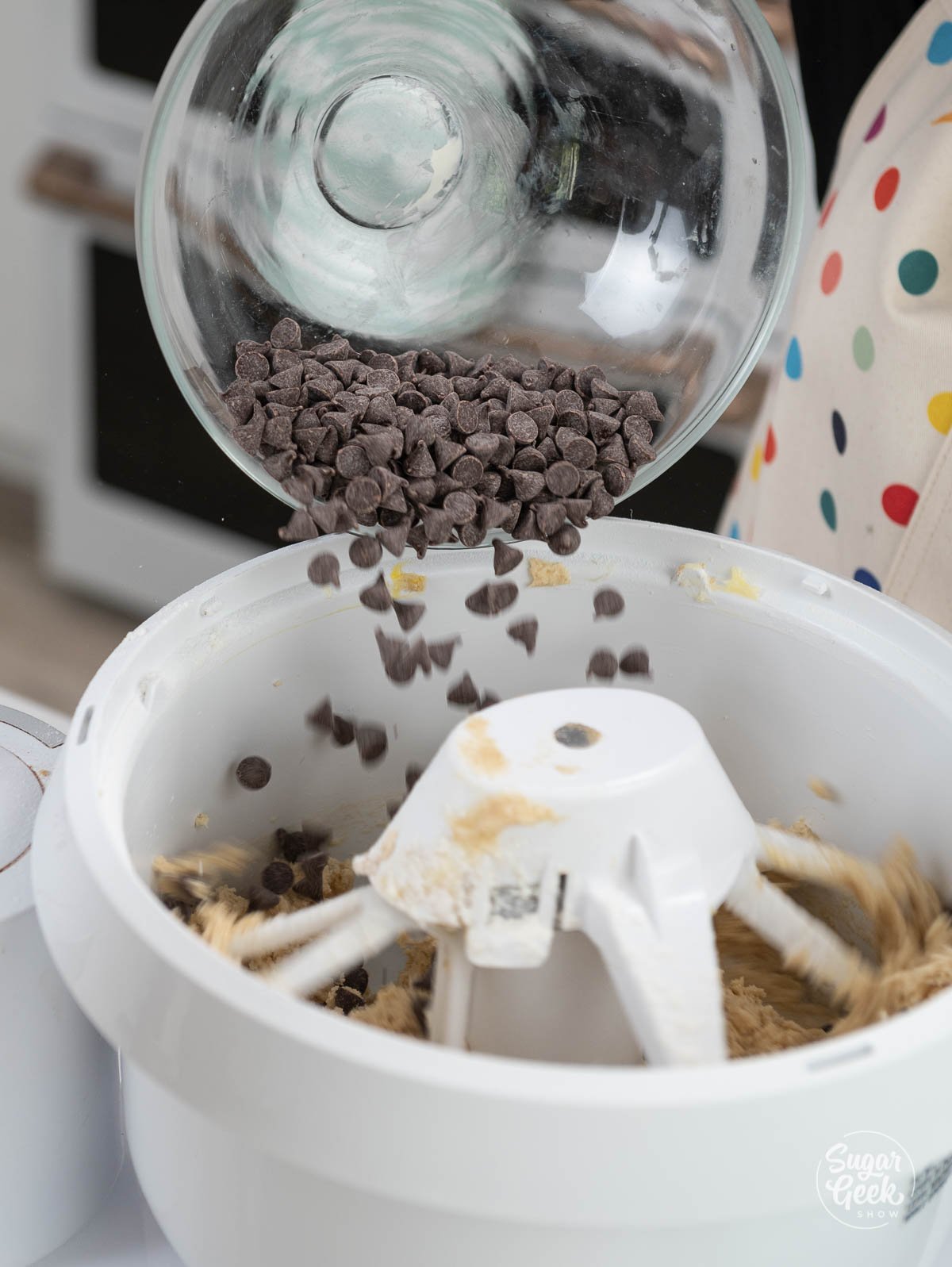
  9. Add in your dry ingredients (flour, baking soda, and salt) and the chocolate chips.double chocolate chip cookie ingredients in a mixing bowl
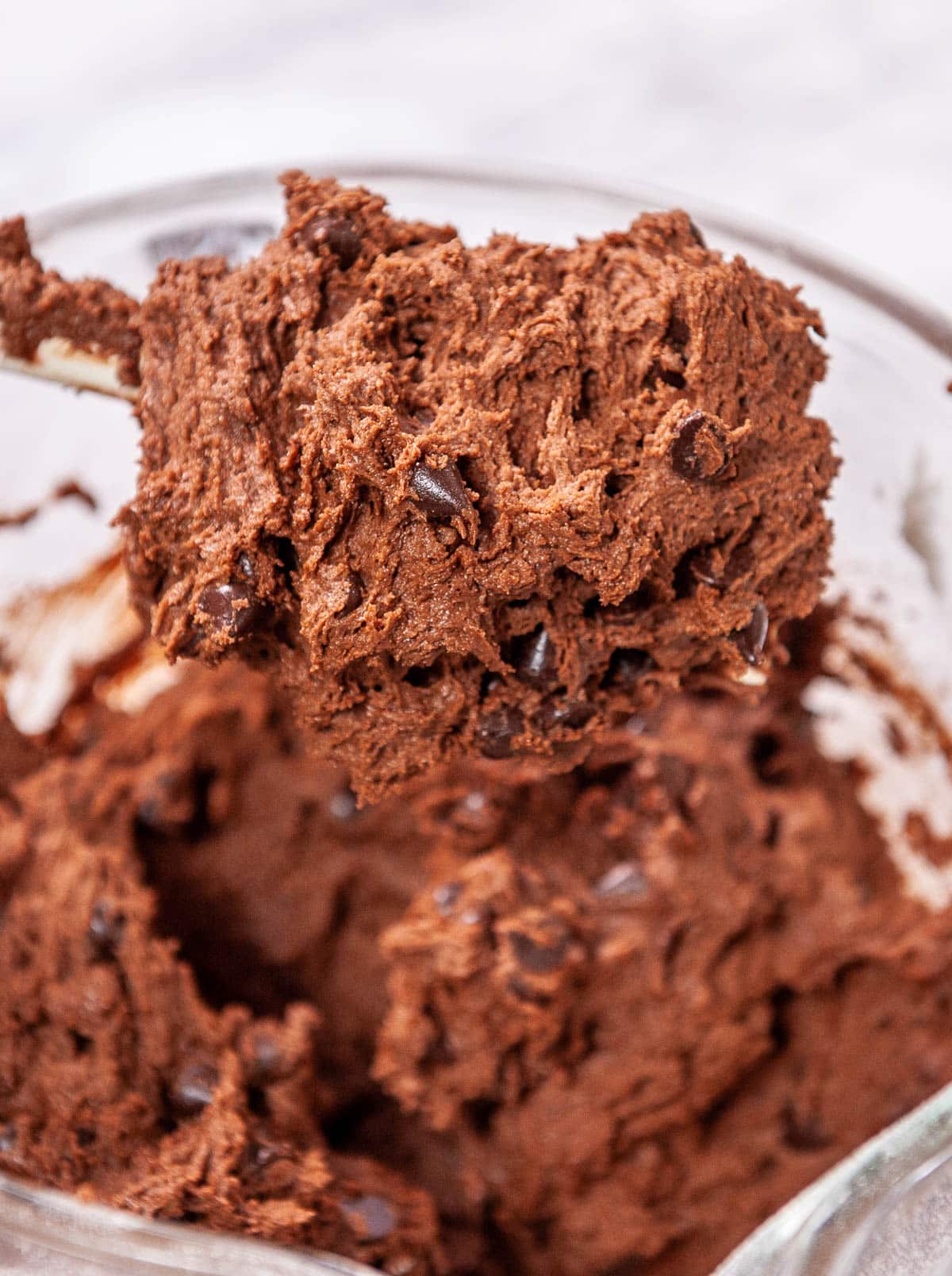
  10. Mix everything until JUST combined. Do not over-mix. closeup of double chocolate chip cookie dough
  11. Use a small cookie scoop to make small dough balls (about two Tablespoons).
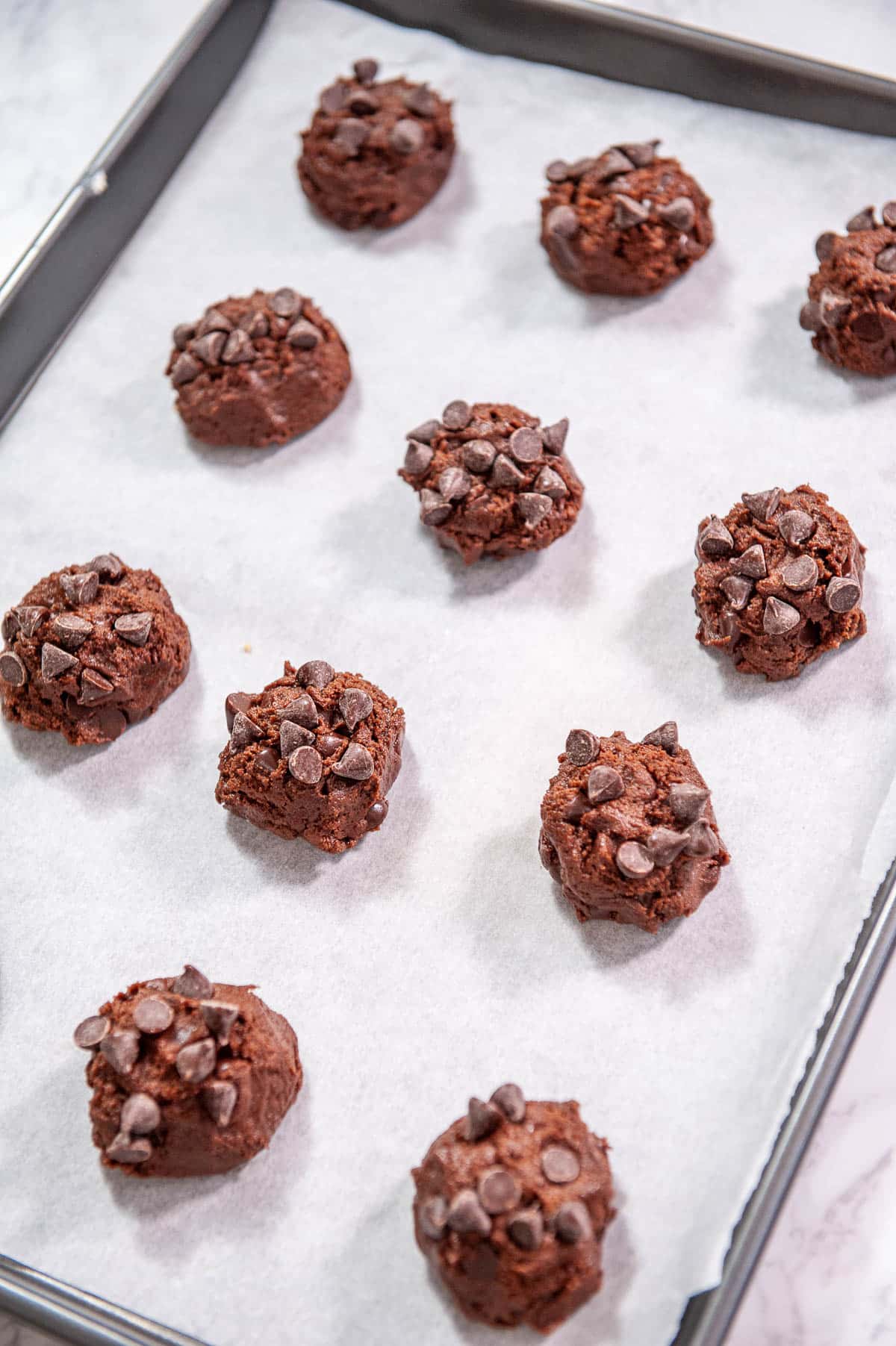
  12. Dip each ball into some of the chocolate chips and then place them onto the prepared cookie sheet about 3" apart with the chocolate chip cookies facing up.double chocolate chip cookie dough balls on a sheet pan
  13. Place the cookies into the fridge for 30 minutes. This allows time for the flour to absorb the moisture and for the butter to firm up, resulting in a thicker cookie that spreads less.
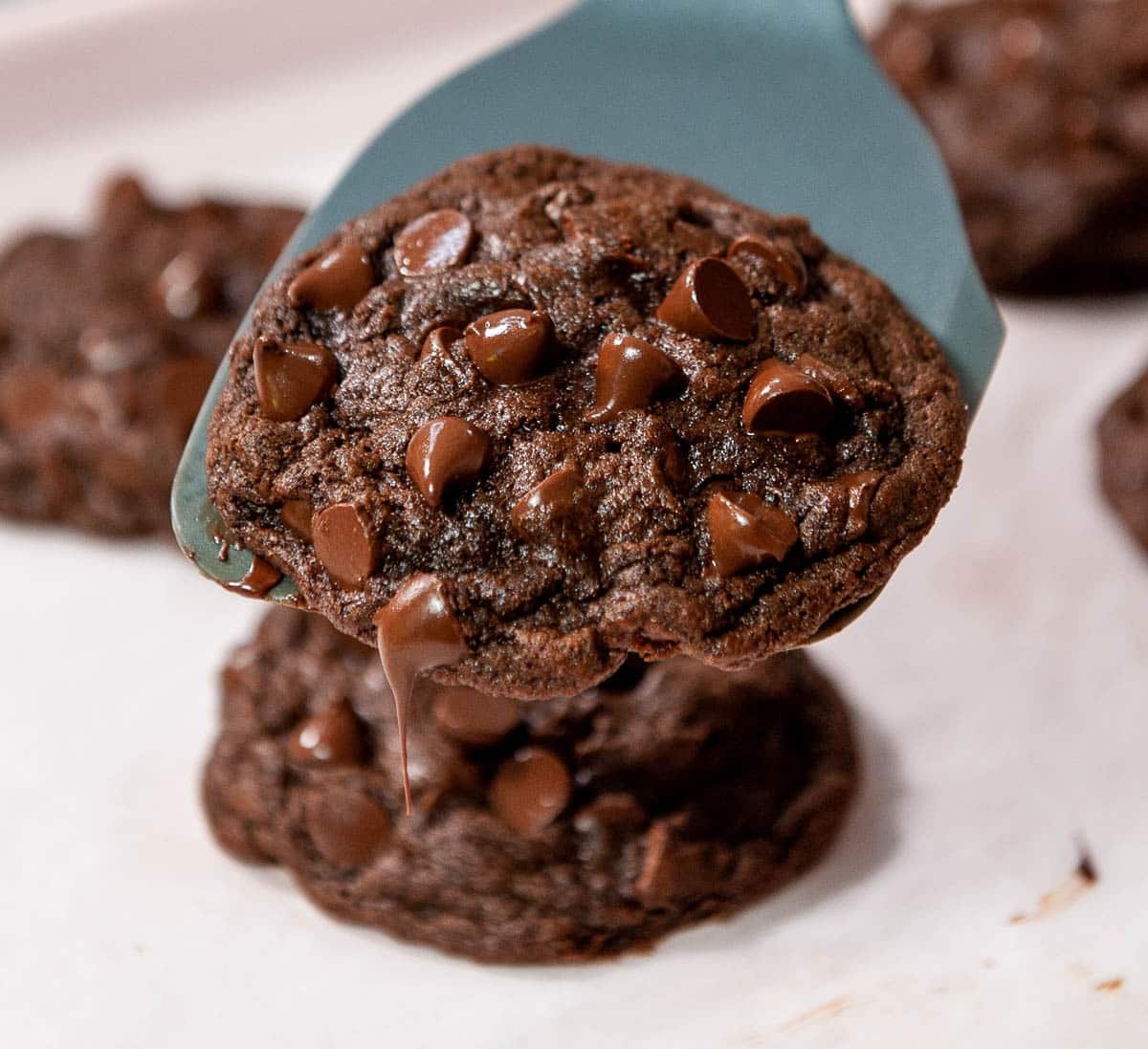
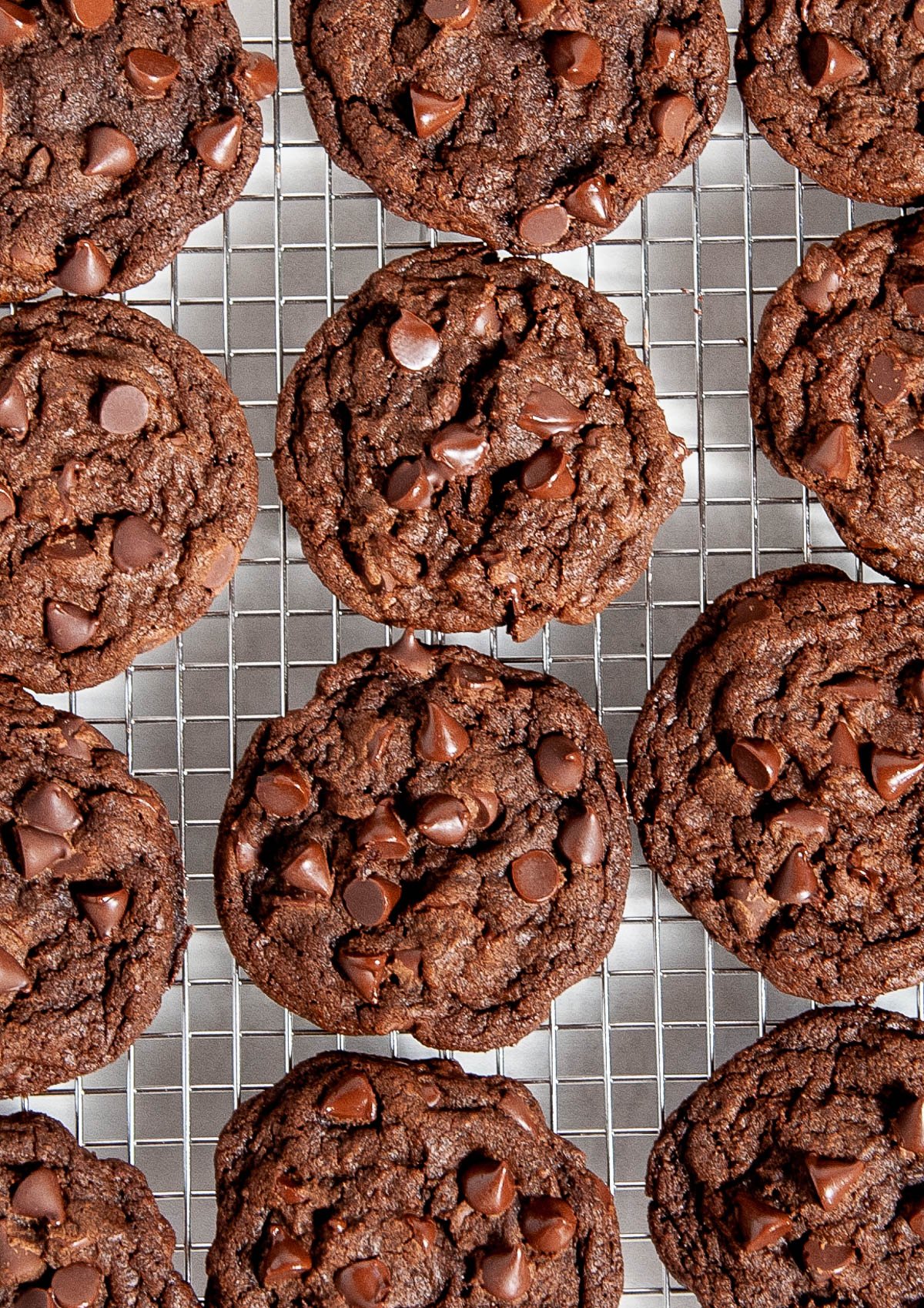
  14. Bake the cookies for 10 minutes or until the center of the cookie just starts to lose it's shine, and the edges are set. Resist the urge to over-bake the cookies, or they will be hard and dry.top view of double chocolate chip cookies on a cooling rack
  15. Place your sheet of cookies on a cooling rack for 5 minutes, then transfer them off the cookie sheet to cool on the wire rack to cool fully.

FAQ

Do I need a stand mixer to make chocolate chip cookies?

No, you do not need a stand mixer, but it can save you a lot of work if you do have one. If you do not have a stand mixer, you can absolutely mix this cookie dough by hand. Just be sure to mix by consistency, and not by time. You will get a nice arm workout from doing it!

What is the difference between this recipe and your chocolate chip cookies recipe?

This recipe is based on my chocolate chip cookie recipe, so they do taste similar. The only difference between these cookies and my chewy chocolate chip cookies is a little more butter and some delicious cocoa powder. I'm using HERSHEY'S cocoa powder, but you can use any kind of cocoa powder that you want. 

Why are my cookies so hard?

Overworked dough is usually the culprit for hard cookies. When you mix the dough longer than you need to after adding flour, it will form more gluten and result in tougher or harder cookies. Your cookies can also get tough from over-baking.

How long do chocolate chip cookies last at room temperature?

If you store your cookies in an airtight container at room temperature, they will last for up to 5 days.

More Recipes You'll Love

Master Chocolate Chip Cookies

Copycat Chocolate Chip Crumbl Cookies

Easy Homemade Brownies

Death by Chocolate Cake

Recipe

double chocolate chip cookie held by a hand close up being dunked in a glass mug of milk
Print Recipe
4.84 from 316 votes

Chewy Double Chocolate Chip Cookies

These chewy double chocolate chip cookies are perfect for the chocolate lover in your life! These cookies are moist, tender, rich, and chocolatey. Oh, and they only take 20 minutes to make!
Prep Time10 minutes mins
Cook Time10 minutes mins
Total Time20 minutes mins
Course: Dessert
Cuisine: American
Servings: 24 cookies
Calories: 194kcal
Author: Liz Marek

Equipment

  • #20 cookie scoop

Ingredients

  • 1 ⅛ cups unsalted butter melted (2 sticks + 2 tablespoon butter)
  • 1 cup light brown sugar packed
  • 1 cup granulated sugar packed
  • 2 large eggs room temperature
  • 2 teaspoons vanilla extract
  • 2 cups all purpose flour
  • ¾ cup cocoa powder natural
  • 1 teaspoon baking soda
  • ½ teaspoon salt
  • 2 cups chocolate chips semi-sweet
US Customary - Metric

Instructions

Double Chocolate Chip Cookie Instructions

  • Preheat your oven to 350ºF (177ºC) and prepare a sheet pan with parchment paper. 
  • First, melt the unsalted butter in a medium-sized mixing bowl.
  • Once the butter is melted, add in the cocoa powder and vanilla extract and stir it until it's smooth and combined. 
  • Combine the butter mixture with the brown sugar and white sugar in the bowl of your stand mixer with the paddle attachment attached and mix on medium speed until light and fluffy. About 2 minutes.
  • Next, add in the room temperature eggs while mixing on low, letting each mix in fully before adding the next.
  • Mix again on medium speed for 1-2 minutes until it's light and airy.
  • Scrape the bowl.
  • While mixing on low, add in the flour, salt, baking soda, and chocolate chips.
  • Next, mix the dough just enough so that it's combined. 
  • With a #20 cookie scoop, divide the dough into 2 Tablespoon-sized cookie dough balls. I like to dip the top of the ball into a bowl of chocolate chips to get even more chocolate into the cookies!
  • Next, place the cookie dough balls onto a sheet pan about 3″ apart.
  • Chill your cookies in the fridge for 30 minutes.
  • Bake the cookies for about 10 minutes, or until they are no longer shiny in the center and the edges are set.
  • Allow the cookies to cool for 5 minutes on the baking sheet.
  • Transfer the cookies to a cooling rack to allow them to cool all the way.

Video

Notes

Important Things To Note Before You Start
  1. Bring your eggs to room temperature. I like to put my eggs (still in the shell) in a bowl of hot water for 5 minutes. Room temperature eggs ensures that everything creams up nice and fluffy and you get that craggly top to your cookies.
  2. Let your cookie dough rest for 30 minutes for less cookie spread.
  3. If you have leftover dough, bake up all of the cookies and then you can freeze them. That way, you can have thaw and have baked cookies whenever you want!
  4. It is important to not crowd the pan, these are large cookies and will bake into each other. When too many cookies are on the pan they don't bake as evenly and can spread more than they do with more space. More space around the cookie allows more even air flow and makes a prettier cookie. 

Nutrition

Serving: 1cookie | Calories: 194kcal | Carbohydrates: 27g | Protein: 2g | Fat: 9g | Saturated Fat: 6g | Cholesterol: 38mg | Sodium: 105mg | Potassium: 73mg | Fiber: 1g | Sugar: 17g | Vitamin A: 288IU | Calcium: 17mg | Iron: 1mg
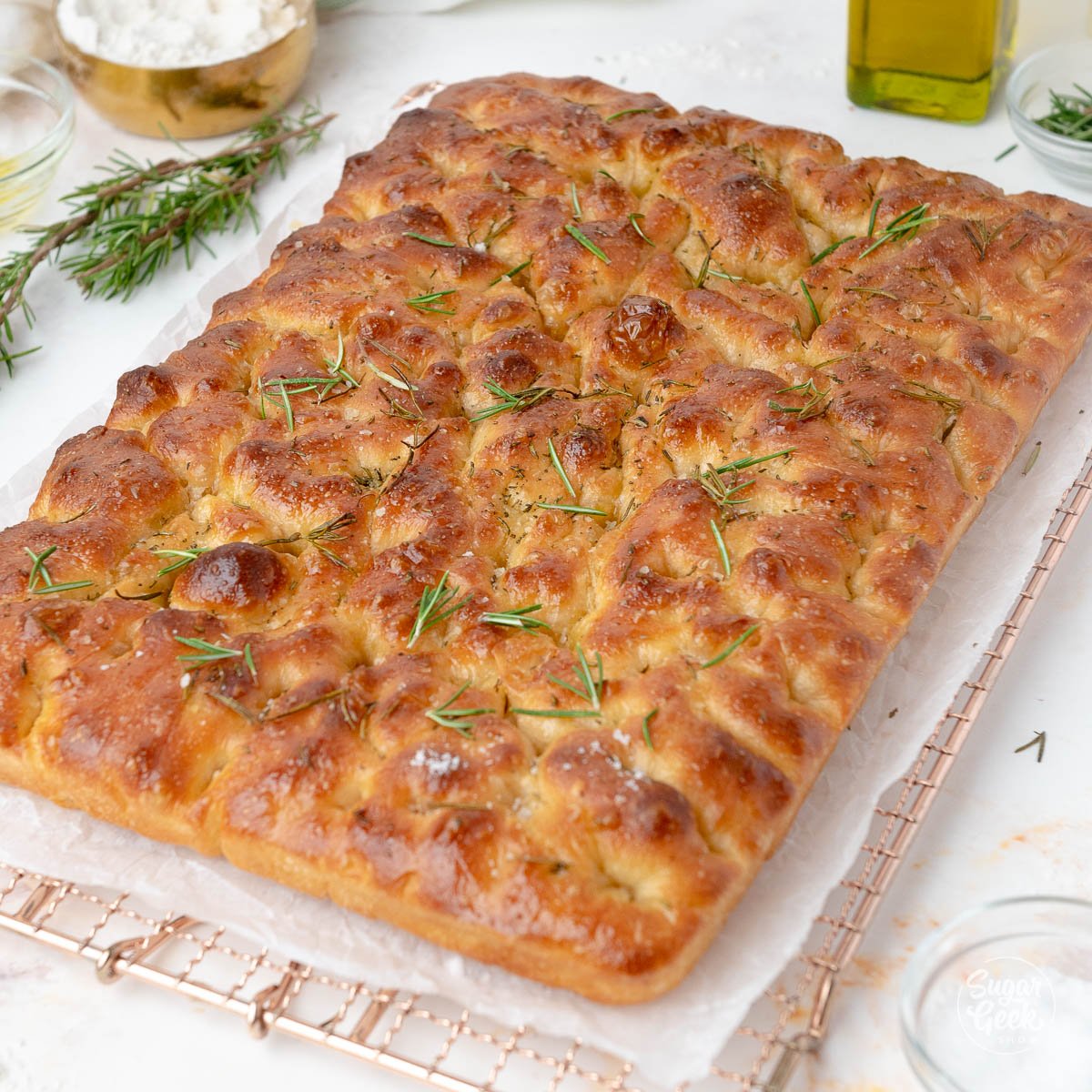
closeup of focaccia bread

December 10, 2021 4th of July

Easy Focaccia Recipe

This focaccia recipe is ultra-soft and chewy and my favorite bread to make as an appetizer or side dish for dinner. Making focaccia is super easy, only requires a few steps, and you can even turn this delicious recipe into edible focaccia bread art! The most important thing to have when it comes to making focaccia is patience. Don't rush yourself and you'll be very happy with the results!

closeup of focaccia bread

In my house, we eat focaccia at least once a week. We typically buy it from a local bakery that is literally the only place within 20 miles that sells it. They sell out quickly so you have to arrive really early to make sure you get some. Sometimes they wouldn't even make it because the person who usually makes it isn't there. Talk about disappointment!

So I decided to make my own easy focaccia recipe that comes together quickly! Most of the time needed for this recipe is spent just waiting for the yeast to do its thing and create all that yummy flavor.

If you love baking bread from scratch, my easy homemade bagel recipe is another great one to add to your rotation.

My overnight sourdough focaccia uses the same dimpling-and-olive-oil technique but trades instant yeast for a 12 hour fermentation that builds bigger flavor.

What's In This Blog Post

  • Focaccia Recipe Ingredients
  • How to Make Focaccia Step-by-Step
  • Focaccia Recipe Variations
  • FAQ
  • Understanding How Yeast Works
  • More Recipes You'll Love

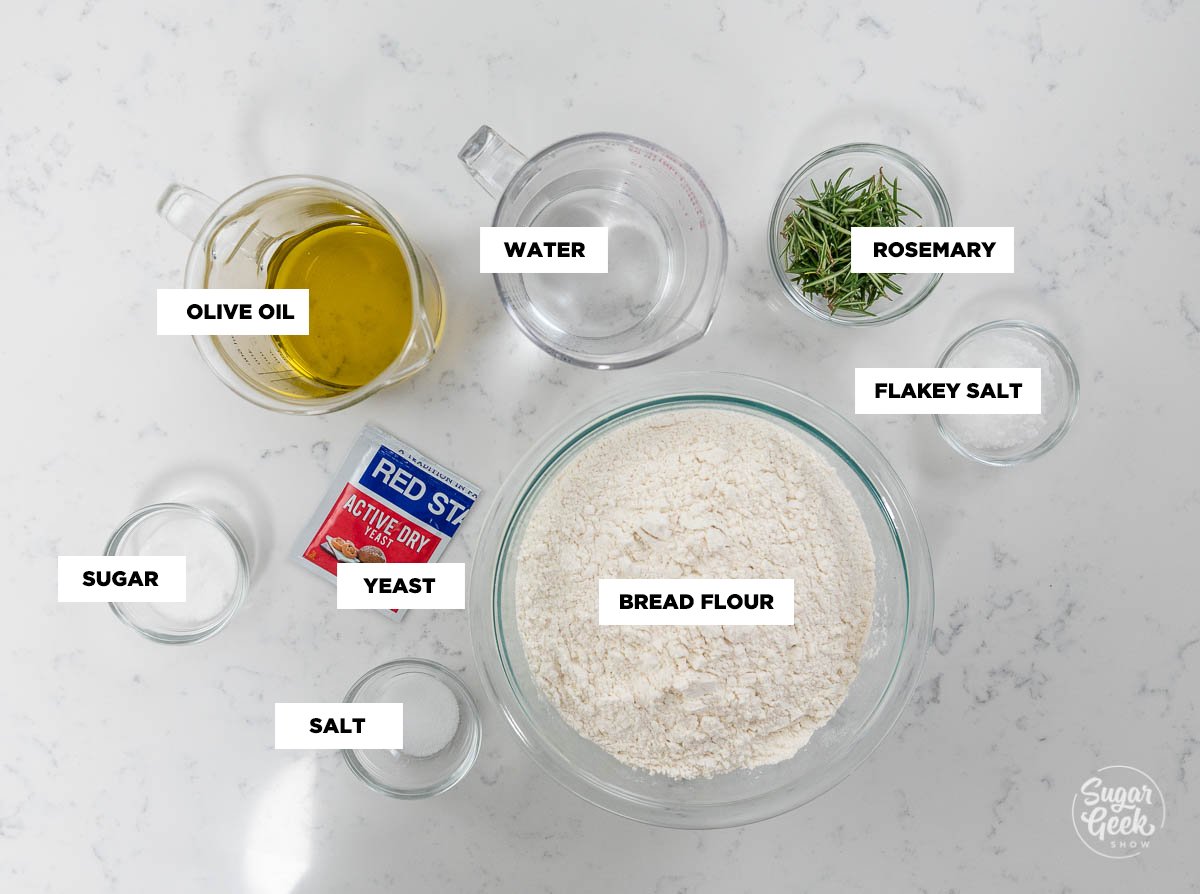
Focaccia Recipe Ingredients

focaccia bread ingredients

Focaccia has a very specific texture. It's got a crisp outer layer and a soft and chewy interior with lots of flavor. I've had some really bad focaccia in my day, so I know what to avoid when it comes to focaccia recipes.

Bread flour - Bread flour is going to give you focaccia that has the best chewy texture and biggest bubbles, but you can use all-purpose flour if that's all you have. Bread flour has the highest protein content which results in more gluten development and a chewier bread.

Olive oil - Olive oil is arguably the most important ingredient you'll need other than yeast. Olive oil gives the focaccia that crispy outer texture, moisture, and flavor. You might think that there is too much olive oil in this recipe. But you have to trust me, you need it!

Toppings - I'm using rosemary on top of my focaccia, but you can use any fresh herb that you like along with your preferred cheeses, meats, or vegetables. The options truly are endless. Get creative!

Flake Salt - I love the texture and taste of flake salt which is a type of finishing salt but if you only have table salt then skip this step to avoid making the focaccia too salty.

How to Make Focaccia Step-by-Step

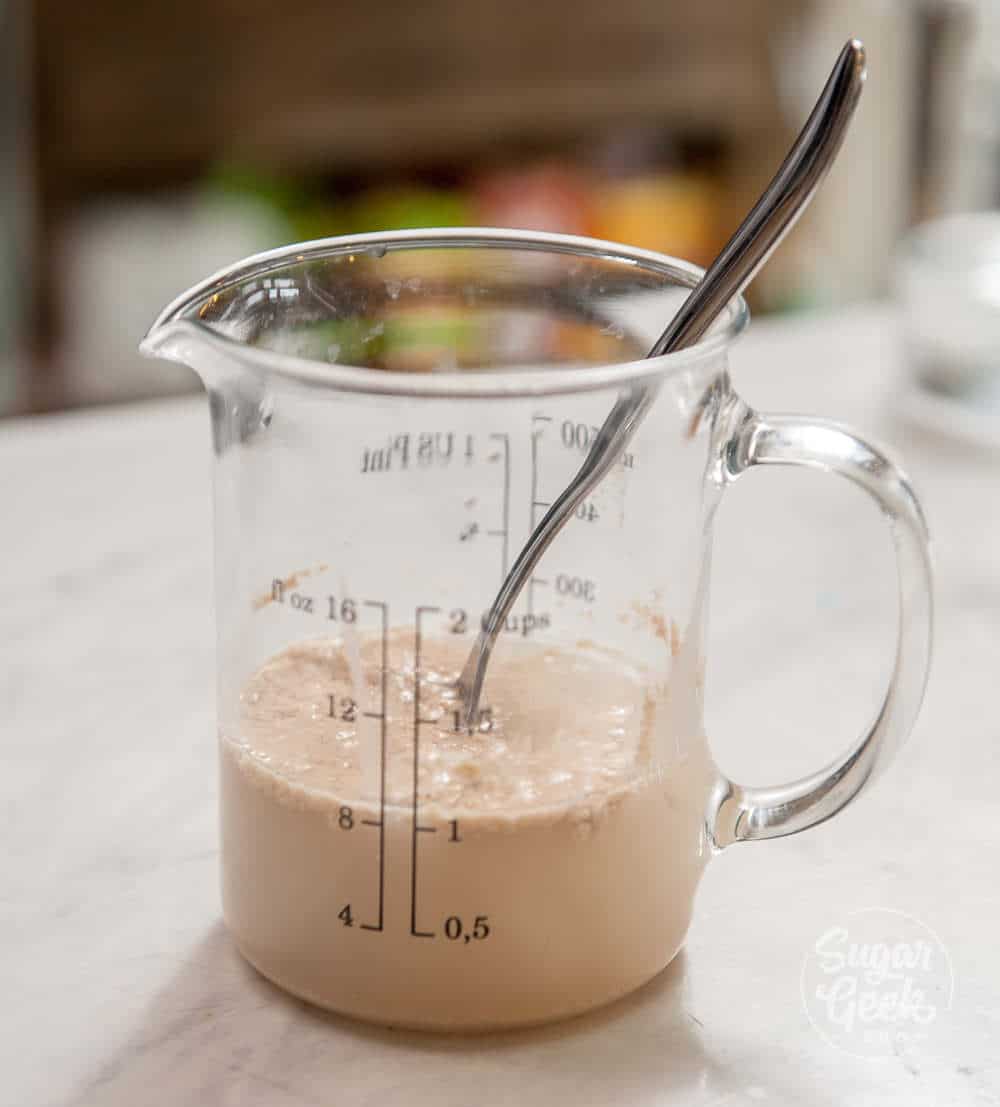
  1. Combine 8 ounces of your warm water (110ºF or 43ºC), yeast, and sugar and set it aside for 5 minutes or until it's foamy. If your yeast does not start growing it may be dead so make sure you have fresh yeast before starting.
  2. Put your yeast mixture and one cup of flour into the bowl of your Bosch stand mixer with the dough hook attached. Mix to combine. You can use a bowl and a spoon and then knead it by hand if you want to, but it will just take longer.
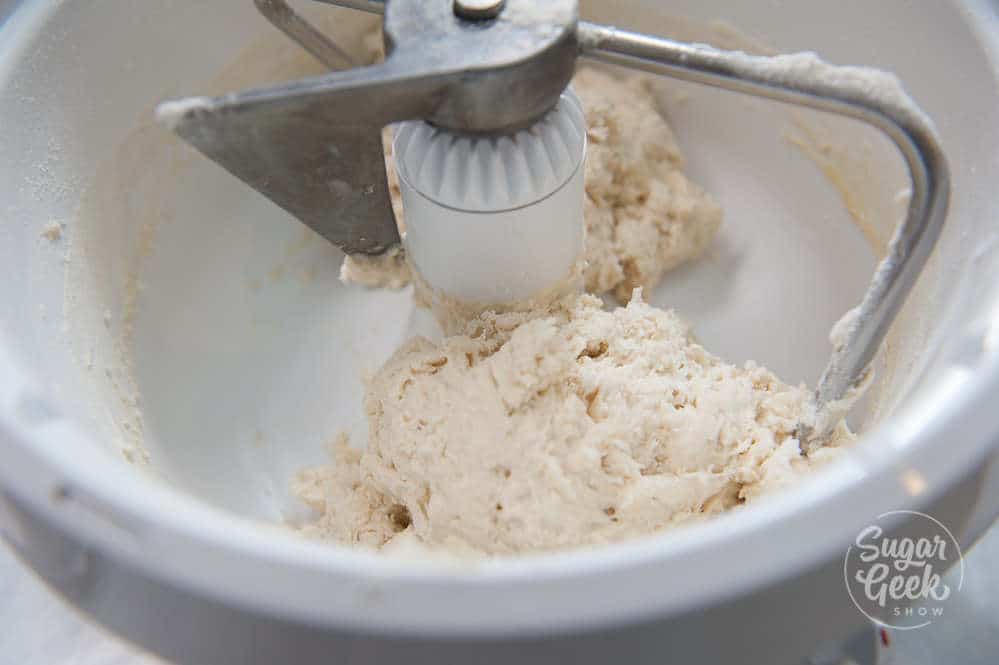
  3. Next add in the rest of your water, the olive oil, and the salt, and mix to combine.
  4. Then, keep adding in the rest of your flour while mixing on low until your dough starts pulling away from the sides of the bowl.
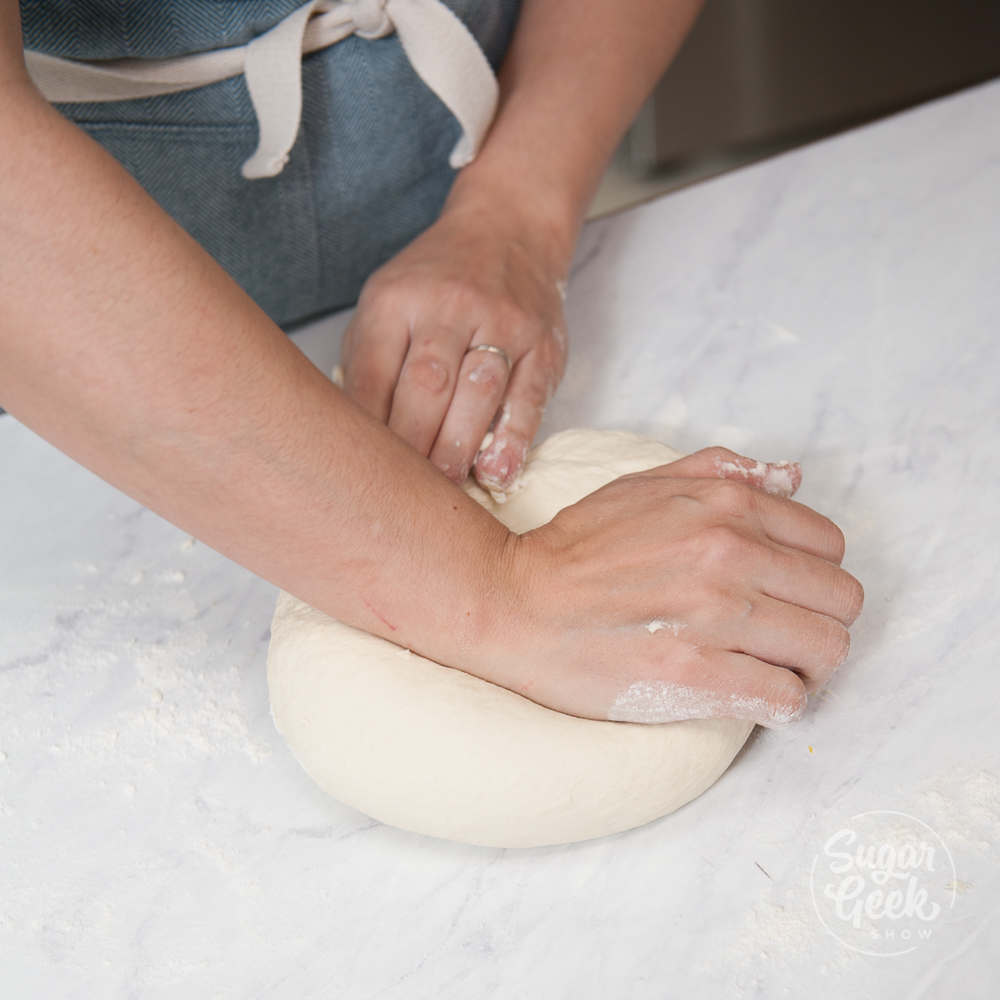
  5. Take the sticky dough out of the bowl and finish kneading it on the table with a tiny bit of flour until the dough looks smooth and bounces back when you touch it with your finger.
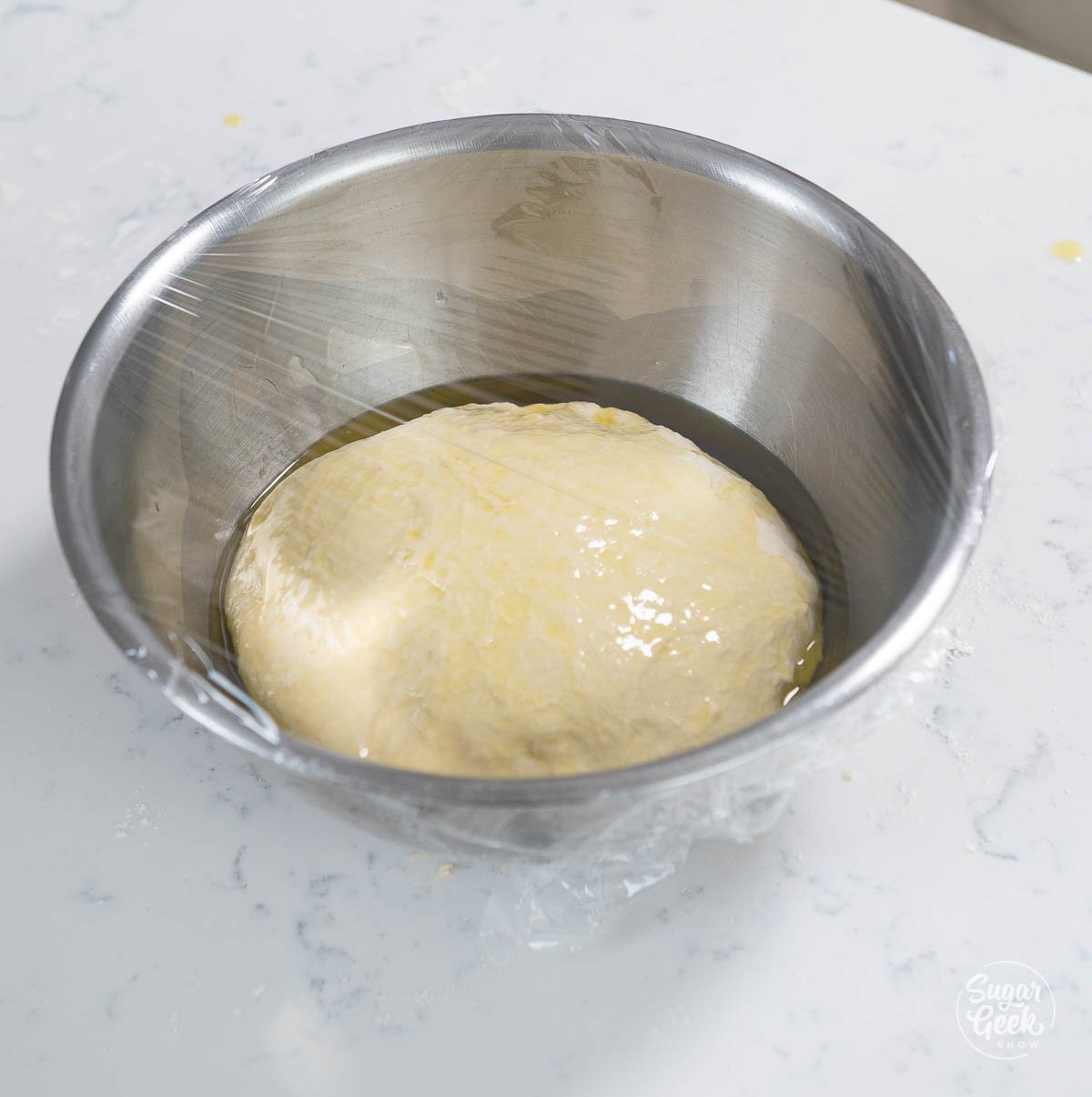
  6. Next, put the dough into a bowl greased with olive oil.
  7. Cover the bowl with plastic wrap, and place the covered bowl in a warm area for 1-2 hours or until the dough has doubled in size. I put my bread in my oven turned OFF with just the light on to proof my bread, or in a proofing drawer.
    focaccia bread dough in a bowl with olive oil
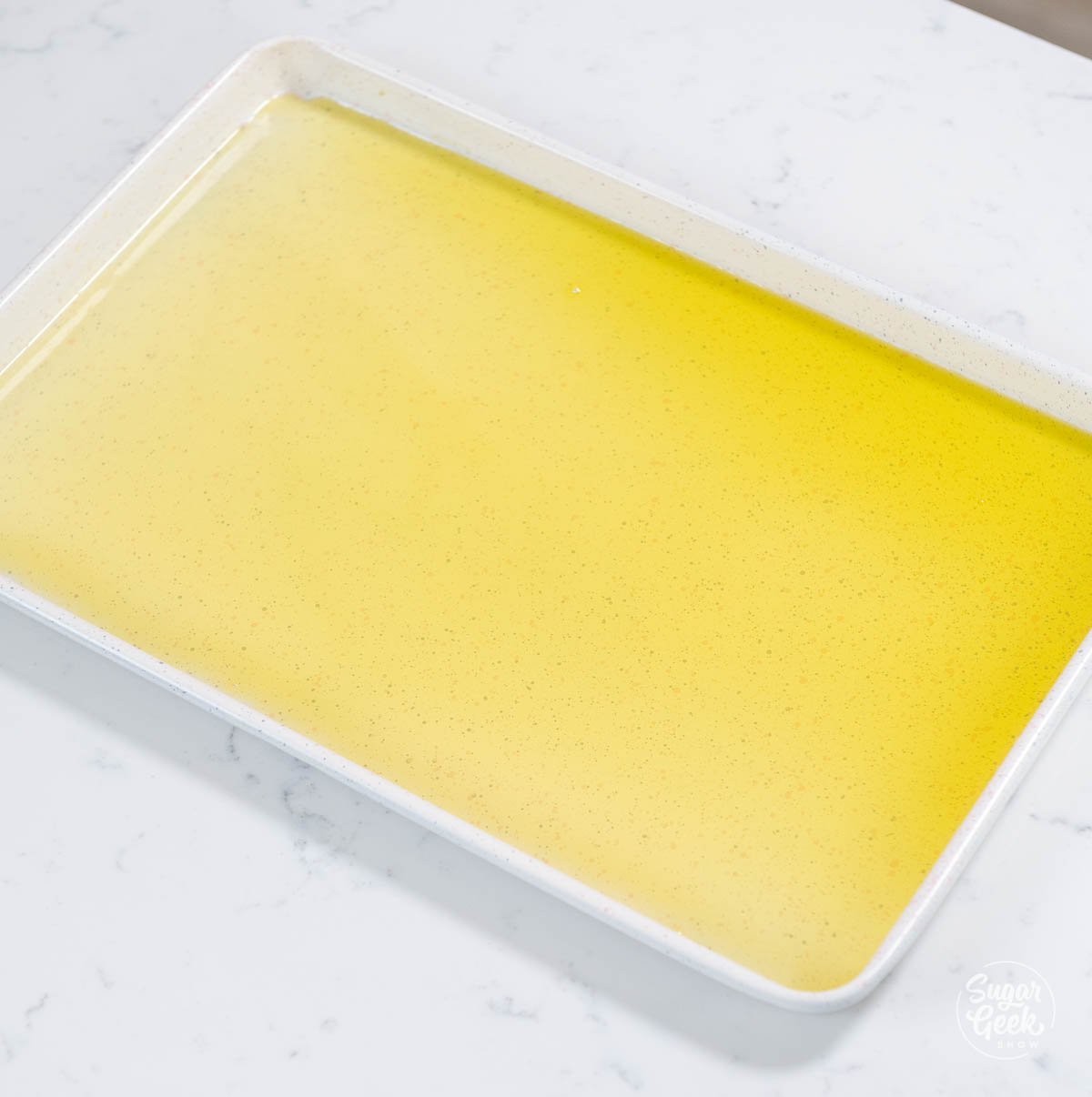
  8. Then, prepare your baking pan by covering the bottom of the pan with a thin layer of olive oil. I know this looks like a lot but trust me, you need it. You want it to be a swimming pool of oil!
    olive oil in a pan
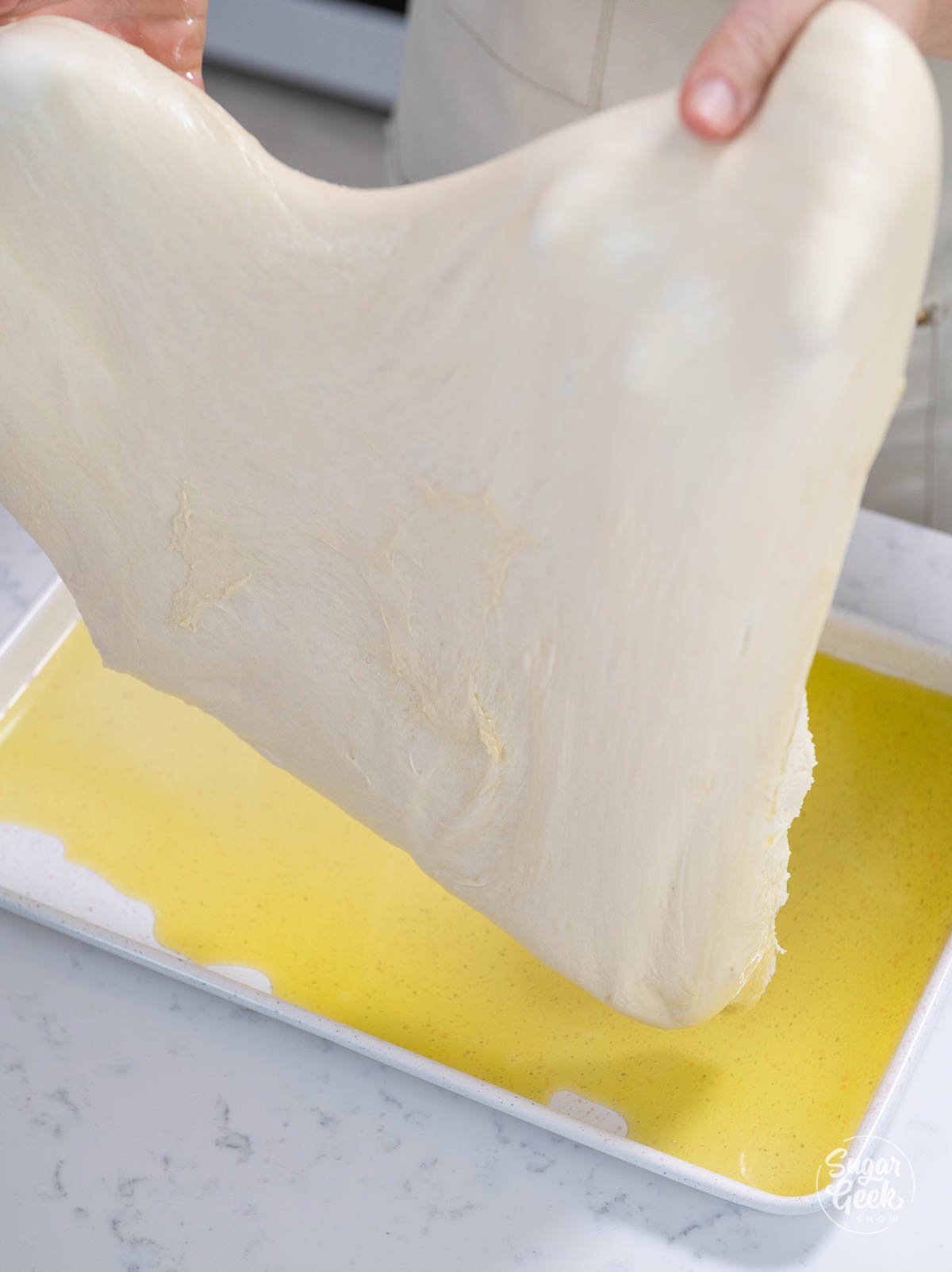
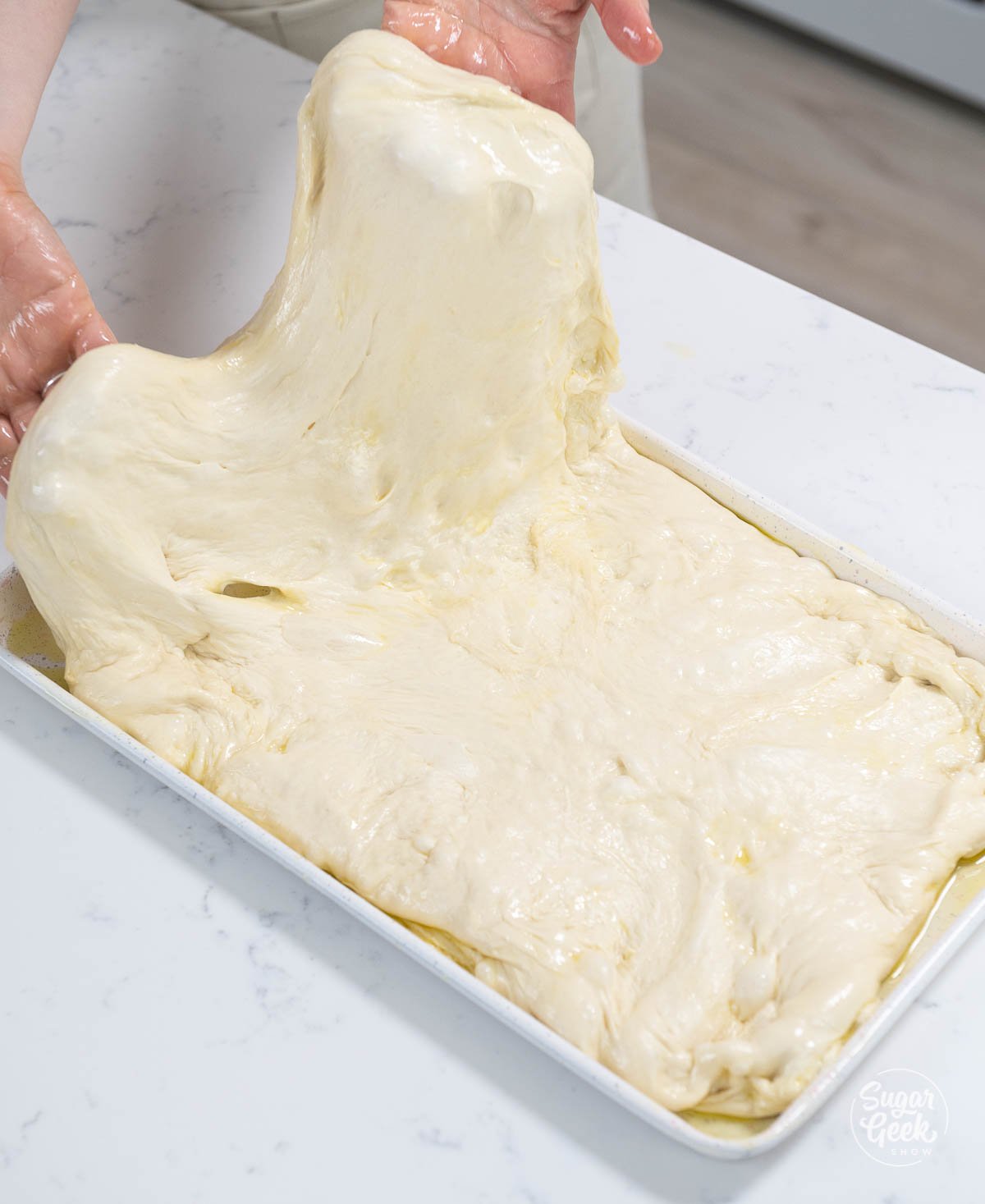
  9. Take your very soft dough out of the bowl and stretch it with your hands to make it longer.
    stretching focaccia bread dough
  10. Next, place it into the pan with the oil and use your hands to stretch it out to the edges.
  1. Combine 8 ounces of your warm water (110ºF or 43ºC), yeast, and sugar and set it aside for 5 minutes or until it's foamy. If your yeast does not start growing it may be dead so make sure you have fresh yeast before starting.
  2. Put your yeast mixture and one cup of flour into the bowl of your Bosch stand mixer with the dough hook attached. Mix to combine. You can use a bowl and a spoon and then knead it by hand if you want to, but it will just take longer.
  3. Next add in the rest of your water, the olive oil, and the salt, and mix to combine.
  4. Then, keep adding in the rest of your flour while mixing on low until your dough starts pulling away from the sides of the bowl.
  5. Take the sticky dough out of the bowl and finish kneading it on the table with a tiny bit of flour until the dough looks smooth and bounces back when you touch it with your finger.
  6. Next, put the dough into a bowl greased with olive oil.
  7. Cover the bowl with plastic wrap, and place the covered bowl in a warm area for 1-2 hours or until the dough has doubled in size. I put my bread in my oven turned OFF with just the light on to proof my bread, or in a proofing drawer.
    focaccia bread dough in a bowl with olive oil
  8. Then, prepare your baking pan by covering the bottom of the pan with a thin layer of olive oil. I know this looks like a lot but trust me, you need it. You want it to be a swimming pool of oil!
    olive oil in a pan
  9. Take your very soft dough out of the bowl and stretch it with your hands to make it longer.
    stretching focaccia bread dough
  10. Next, place it into the pan with the oil and use your hands to stretch it out to the edges. If the dough shrinks back, let the dough rest for 20 minutes then come back and stretch it some more. Letting the dough rest relaxes the gluten and keeps it from shrinking. Keep doing this until you can get the dough all the way to the edges of the pan.
    stretching focaccia bread dough
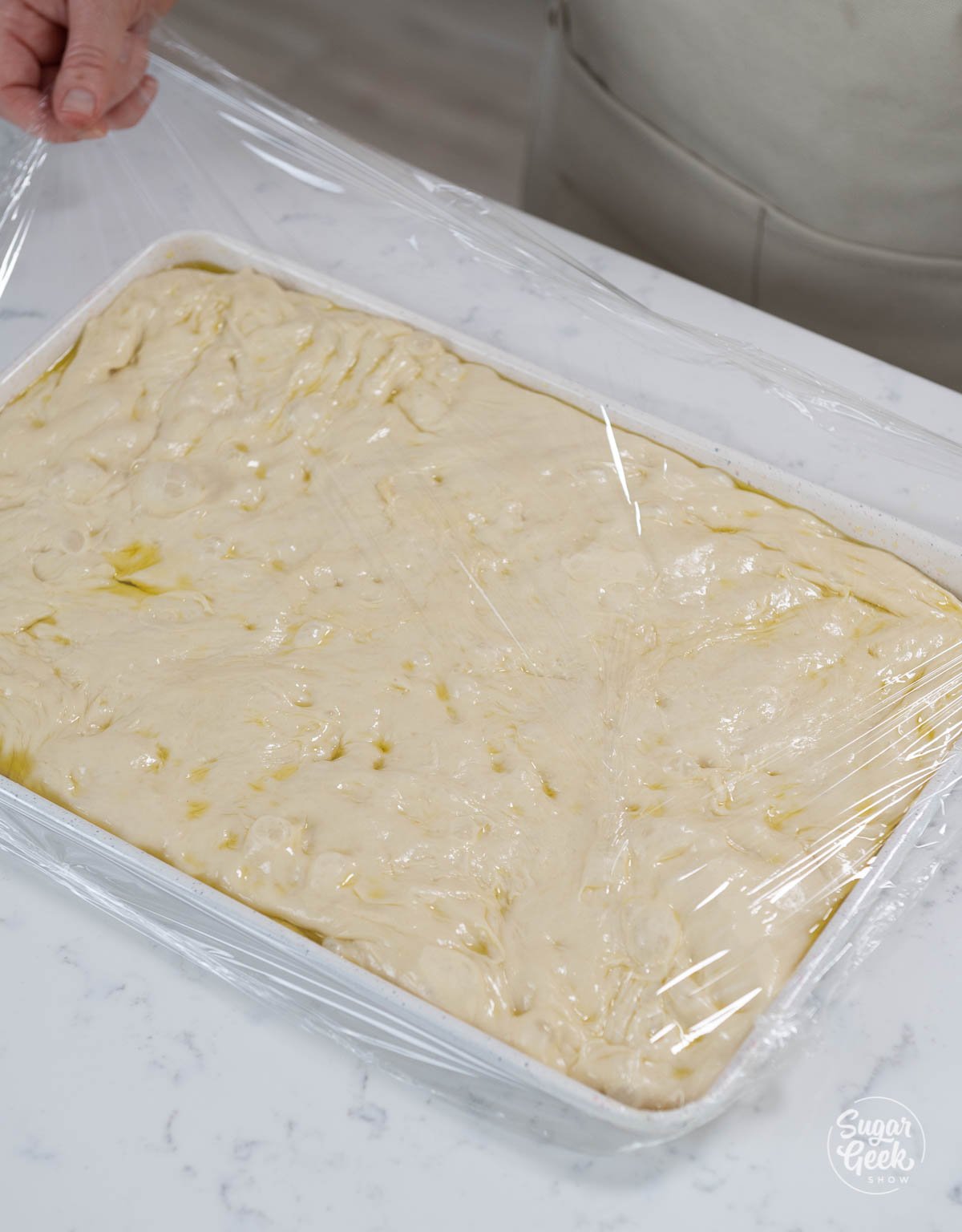
  11. Cover the pan with some plastic wrap and put it in the fridge overnight. The yeast will continue eating those sugars and rise very slowly. The next day, you should have some nice bubbles on top of the dough.
    focaccia bread dough covered with plastic wrap
  12. Preheat your oven to 450ºF (232ºC) and take your dough out of the fridge.
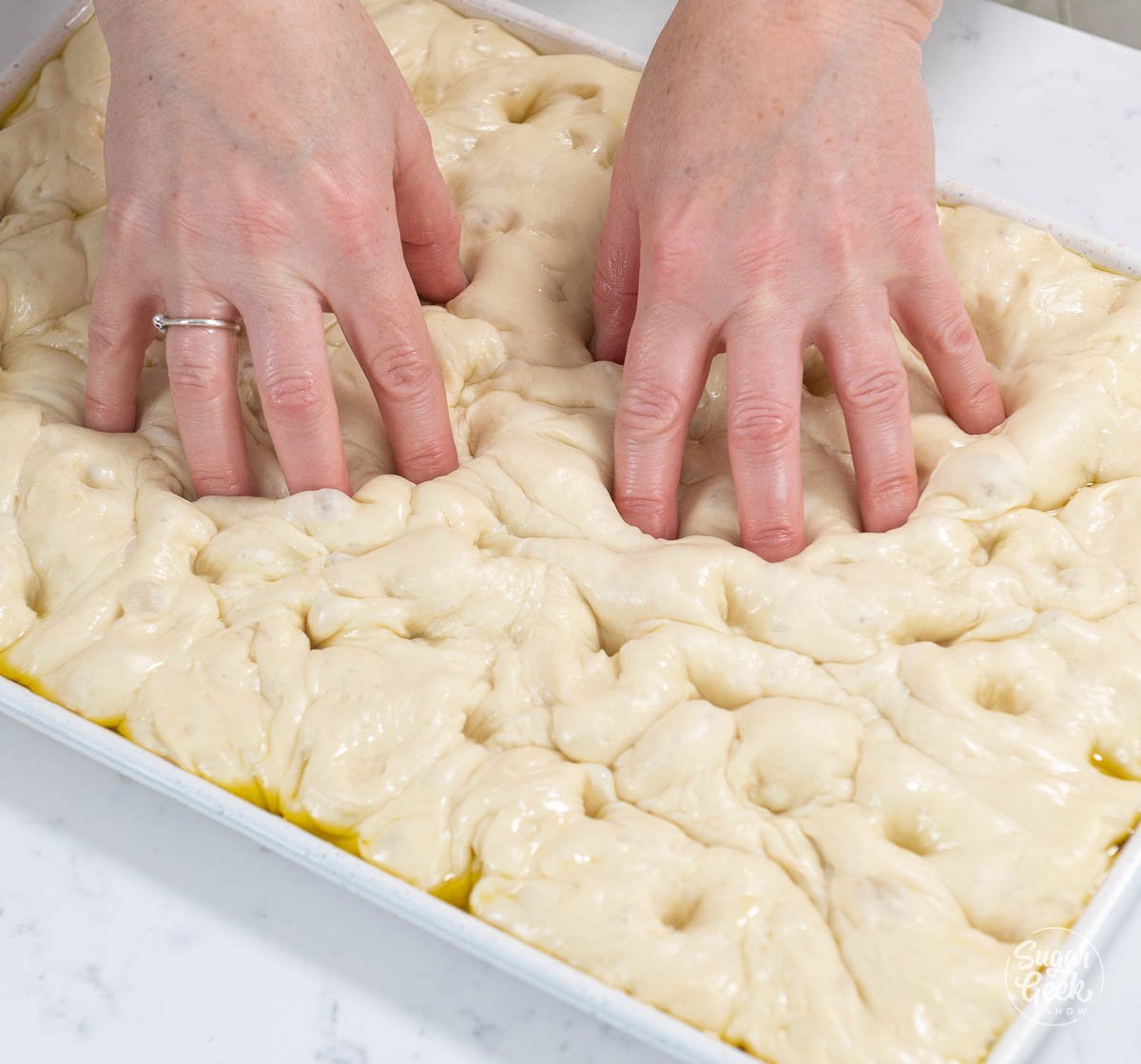
  13. Use your fingers to pop the big bubbles and press dimples into the surface of the dough.
    pressing indents into focaccia bread dough with fingertips
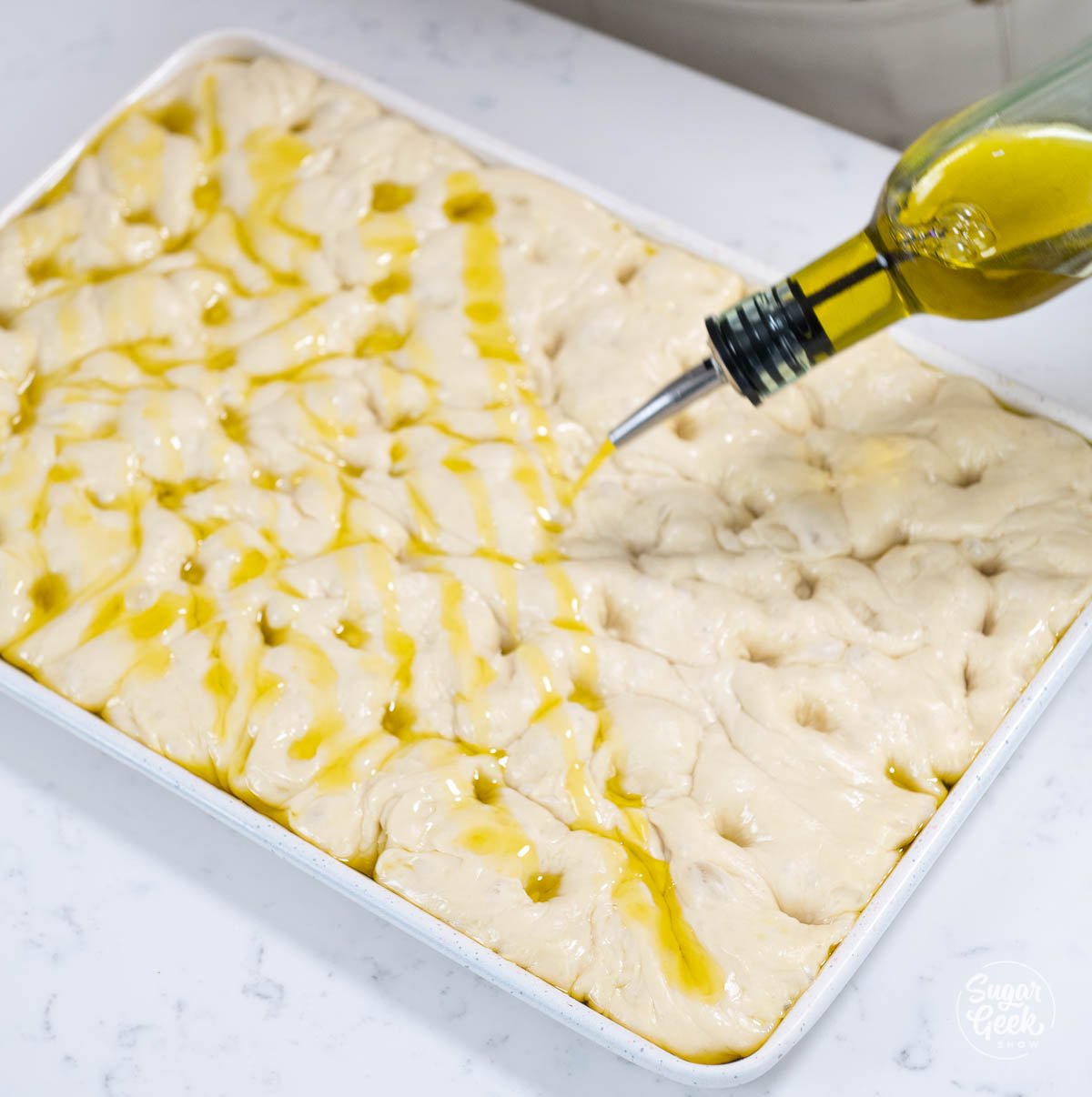
  14. Drizzle olive oil onto the top of the dough so that it settles in those dimples.
    drizzling olive oil into focaccia bread dimples
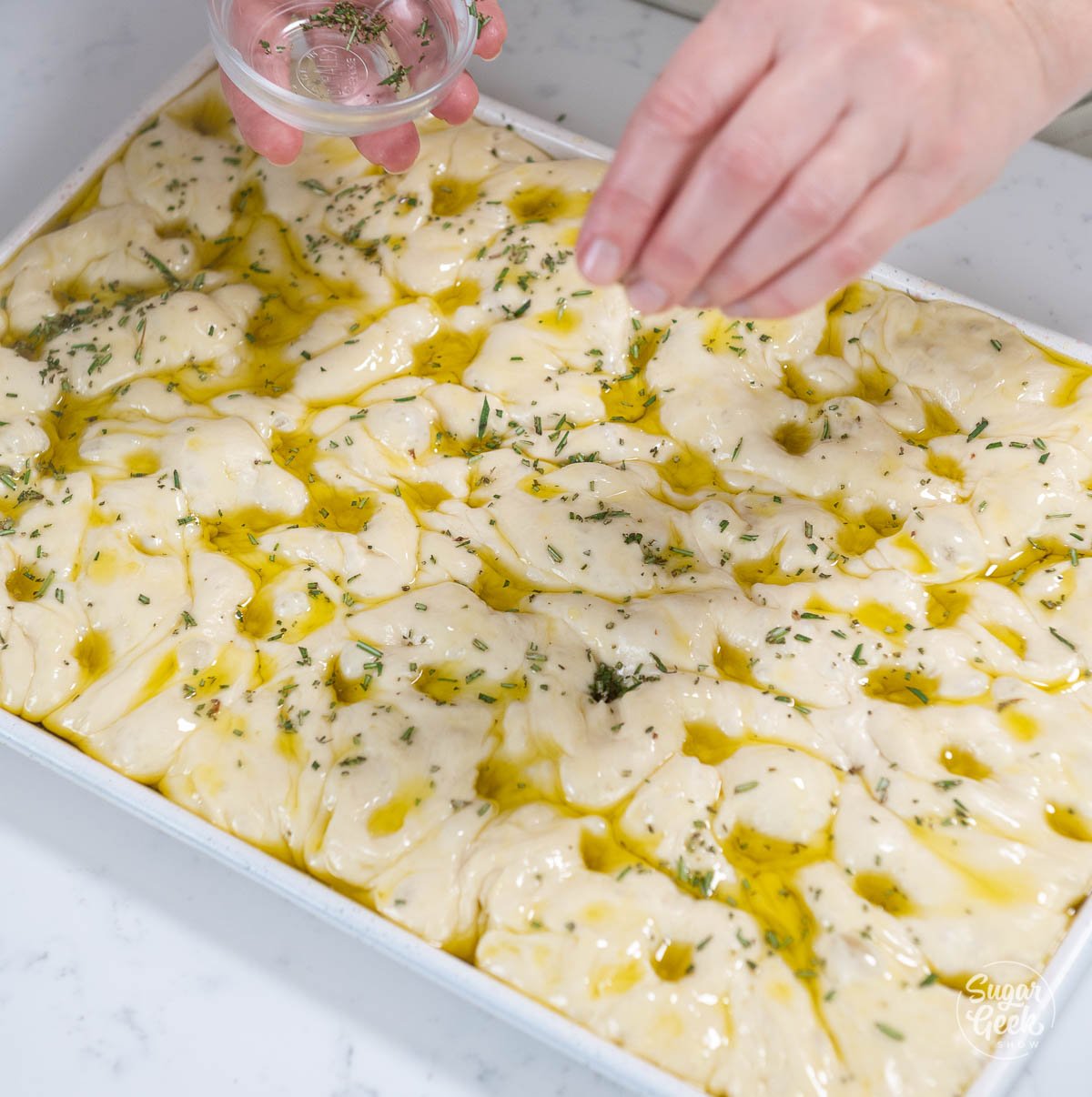
  15. Sprinkle a healthy amount of flakey sea salt and chopped rosemary on top of the dough.
    adding rosemary and flakey salt to the top of the focaccia
  16. Bake the dough in a preheated oven (450ºF or 232ºC) on the middle rack for 25 minutes or until it's golden brown!
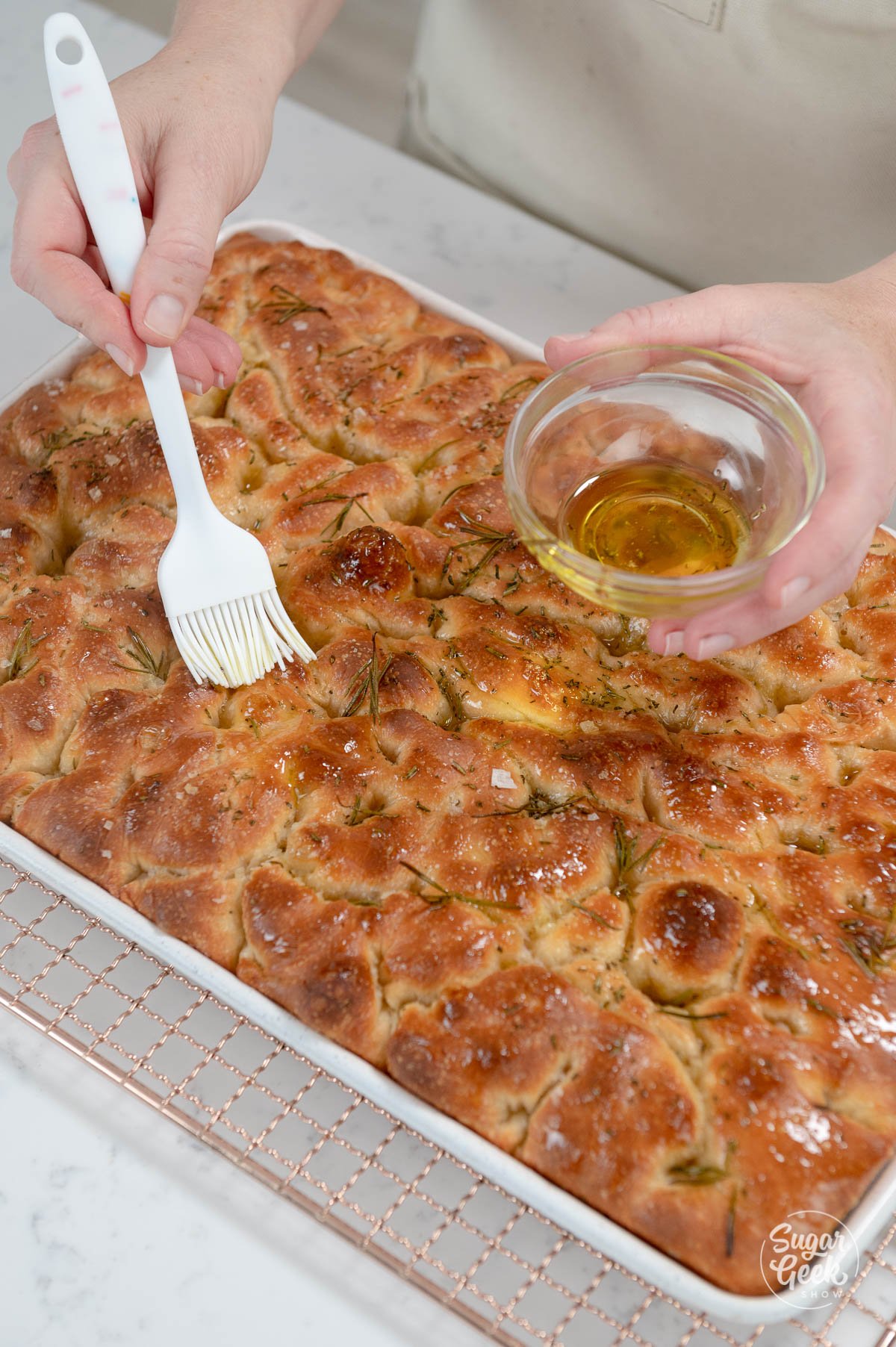
  17. Finally, brush the baked focaccia with more olive oil before serving.
    brushing focaccia with more olive oil
  1. stretching focaccia bread dough
  2. Cover the pan with some plastic wrap and put it in the fridge overnight. The yeast will continue eating those sugars and rise very slowly. The next day, you should have some nice bubbles on top of the dough.
    focaccia bread dough covered with plastic wrap
  3. Preheat your oven to 450ºF (232ºC) and take your dough out of the fridge.
  4. Use your fingers to pop the big bubbles and press dimples into the surface of the dough.
    pressing indents into focaccia bread dough with fingertips
  5. Drizzle olive oil onto the top of the dough so that it settles in those dimples.
    drizzling olive oil into focaccia bread dimples
  6. Sprinkle a healthy amount of flakey sea salt and chopped rosemary on top of the dough.
    adding rosemary and flakey salt to the top of the focaccia
  7. Bake the dough in a preheated oven (450ºF or 232ºC) on the middle rack for 25 minutes or until it's golden brown!
  8. Finally, brush the baked focaccia with more olive oil before serving.
    brushing focaccia with more olive oil
focaccia bread recipe

Focaccia Recipe Variations

Focaccia is an Italian-style flatbread that is very chewy and similar in texture to pizza dough. There are many ways to customize your focaccia recipe which is probably why it's so popular! Here are some flavor variations, including the one I am making today which is Focaccia al rosmarino.

  1. Focaccia al rosmarino - Focaccia bread covered in olive oil, freshly chopped rosemary, and flakey sea salt (or kosher salt).
  2. Focaccia alla salvia - Focaccia bread baked in olive oil and topped with freshly chopped sage and flakey salt.
  3. Rosemary garlic focaccia - Top your focaccia with olive oil, chopped rosemary, garlic, and thyme.
  4. Cheesy focaccia - Cover your focaccia in olive oil, garlic salt, and a good amount of Italian cheese like pecorino romano, parmesan or asiago. Sprinkle with freshly chopped parsley fresh out of the oven, and serve with marinara sauce.
  5. Focaccia pizza - The options here are endless. Add marinara sauce, pepperoni, and mozzarella cheese or any pizza toppings you like!
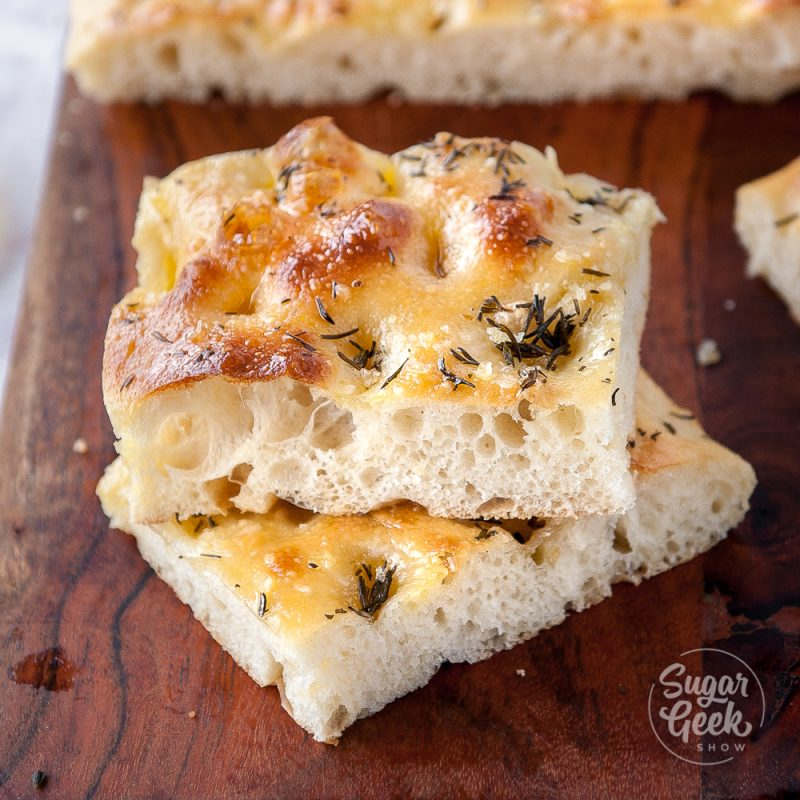
focaccia bread sliced into squares on a wooden cutting board
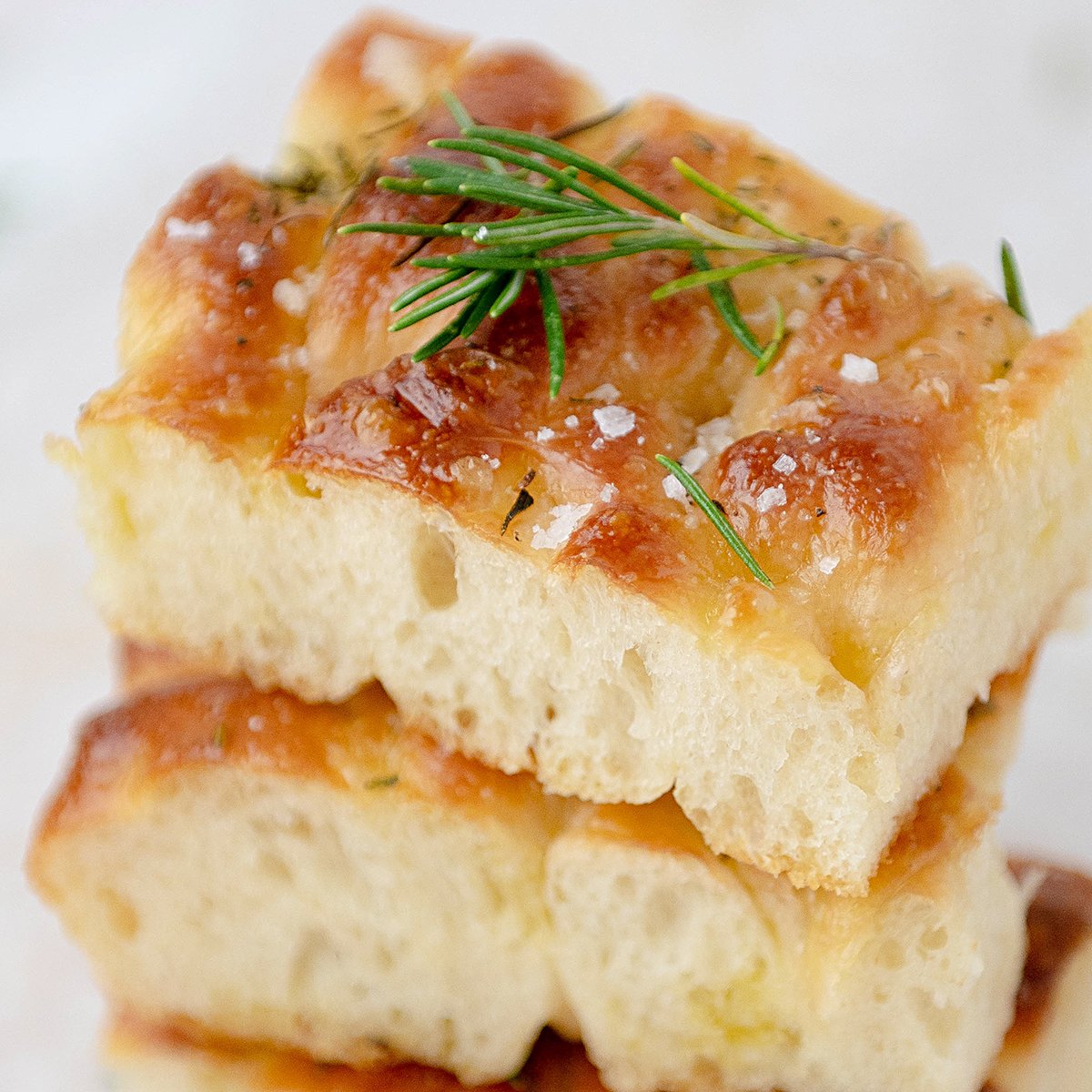
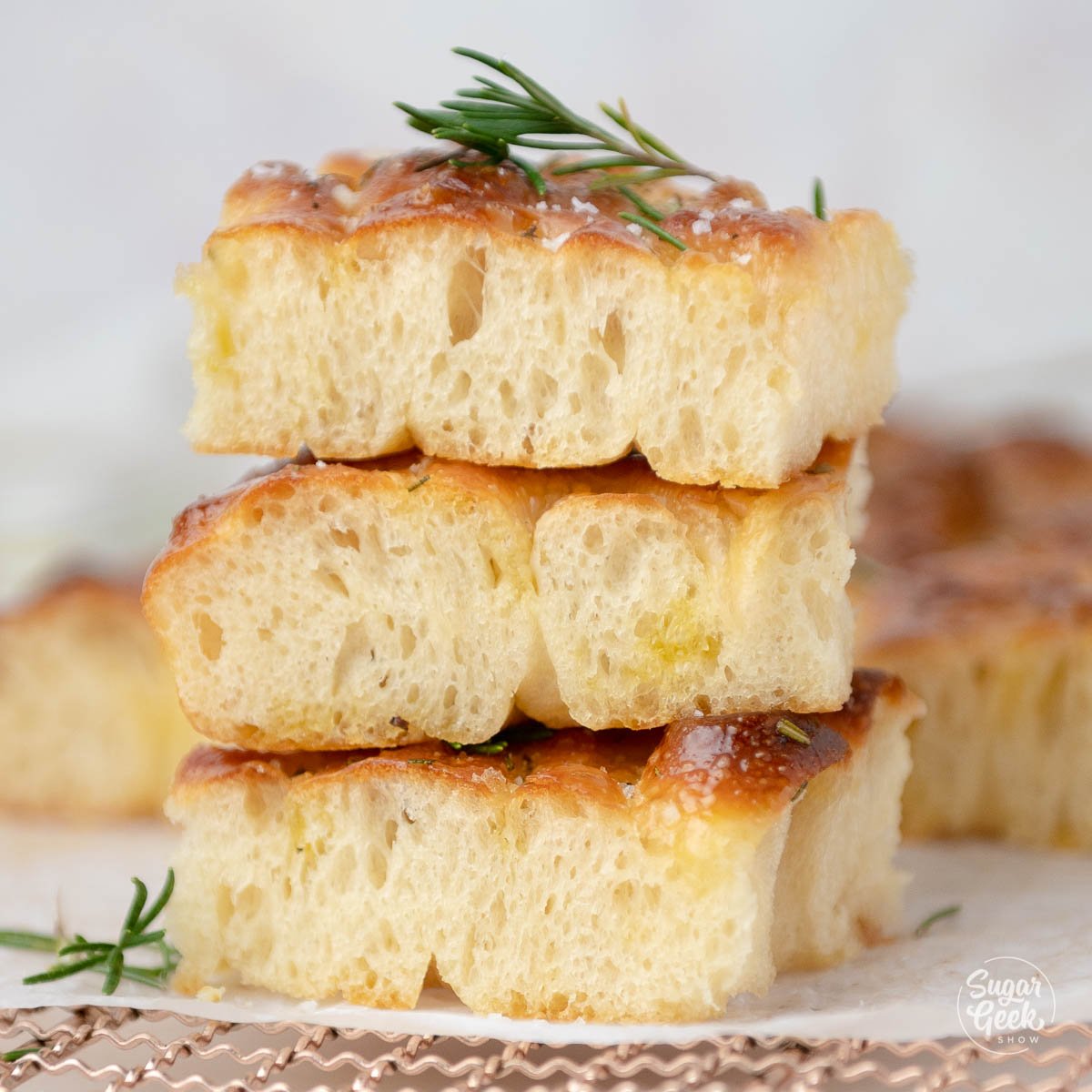
slices of baked focaccia with rosemary and flakey salt stacked on top of each other

FAQ

Can I use fresh yeast instead of active dry yeast?

Yes, you can. For this recipe, use one small cake (0.6 ounce) of compressed fresh yeast in lieu of 1 packet (.25 ounces) of active dry yeast.

How do you store focaccia bread?

Wrap it tightly in plastic wrap and store it at room temperature. It should stay fresh for about 2 days.

You can also refrigerate your focaccia and keep it fresh for about 4 days if you wrap it tightly in plastic wrap.

What do you serve focaccia with?

Focaccia is excellent sandwich bread because it is thick enough that it can be sliced in half horizontally and still maintain its shape.

It also goes really well with soup, salad, or anything that compliments the flavors you put into your dough (e.g. if you went heavy on the Italian seasonings, pair it with Italian dishes). But in reality, the possibilities are endless!

Is focaccia bread hard or soft?

Focaccia is soft, light, and chewy, but it should also have a crisp and salty crust.

Why is my focaccia not fluffy or chewy?

It could be the type of flour you used. The best flour to use to make focaccia bread is bread flour which gives you fluffy baked bread. Or, it could also be because you did not knead the dough enough for the gluten to form a structure which can result in flat or dense bread.

Why didn't my dough rise?

Check the expiration date on your yeast. Has it expired? Expired yeast is dead yeast that will not release carbon dioxide (which is what makes the bread dough rise).

Why is my focaccia dense?

If your focaccia is flat and dense, you likely did not knead the dough enough before you baked it. The kneading process is what develops the gluten structure and what makes your baked bread lighter in texture.

Make sure you keep kneading the dough until it looks smooth and bounces back when you touch it with your finger.

Understanding How Yeast Works

The basics of making a yeast-risen dough like this easy focaccia recipe are all the same, but different recipes may have slightly varied steps. This guide can help you understand how yeast-risen doughs work if you're not familiar.

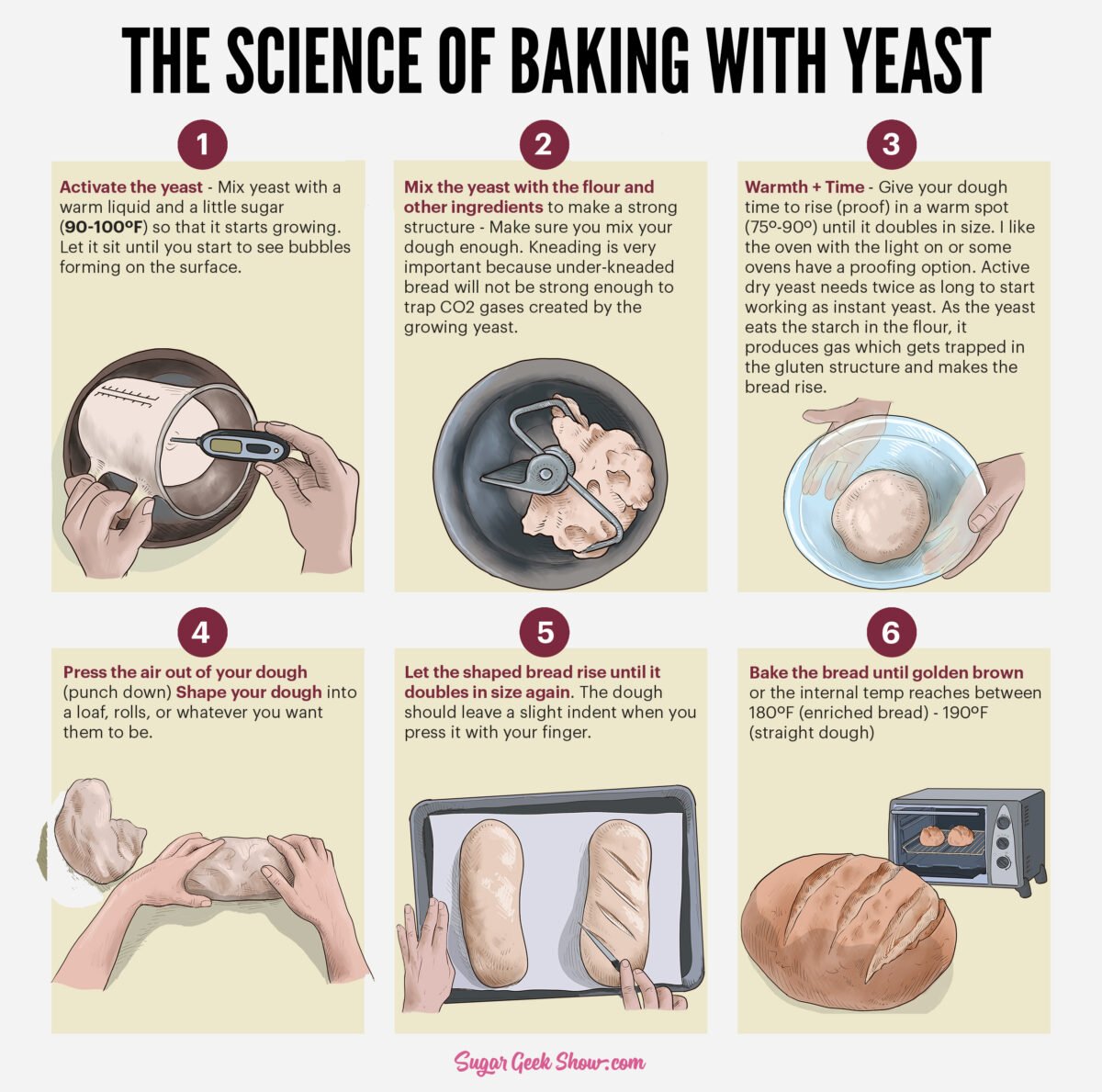
Here you'll see an infographic showing you the steps of baking bread using yeast. While this graphic is not specific to this focaccia recipe, it gives you a general idea of the steps needed to use yeast leading up to when it's time to bake your bread.

  1. Activate the yeast - Mix yeast with a warm liquid (90ºF-100ºF) so that it starts growing.
  2. Develop a strong gluten structure - Make sure you mix your dough enough. It should look like a smooth ball and pass the windowpane test. Kneading is very important because under-kneaded bread will not be strong enough to trap CO2 gases created by the growing yeas and therefore will not rise.
  3. Warmth + Time - Give your dough time to rise (proof) in a warm spot (80º-90º) until it doubles in size. I like the oven with the light on or some ovens have a proofing option. If you're using instant yeast, the rising will happen a lot faster if you are using regular active yeast it will take longer. Cold environments will also stunt your yeast and your dough will take a lot longer to rise. 
  4. Shape your dough to prepare your focaccia (jump to the recipe to see the additional steps).
  5. Let it rise until it doubles in size again and then bake!

When you add yeast to the flour and add in warmth and a little bit of moisture, the yeast begins to eat the starch in the flour. As it eats the sugar, it produces CO2 (yes, bread is made of tiny yeast farts). Then that CO2 gets trapped in the gluten we developed during the mixing stage and expands, giving rise to your bread. If you're missing one of these steps, your focaccia won't turn out. 

closeup of focaccia bread

More Recipes You'll Love

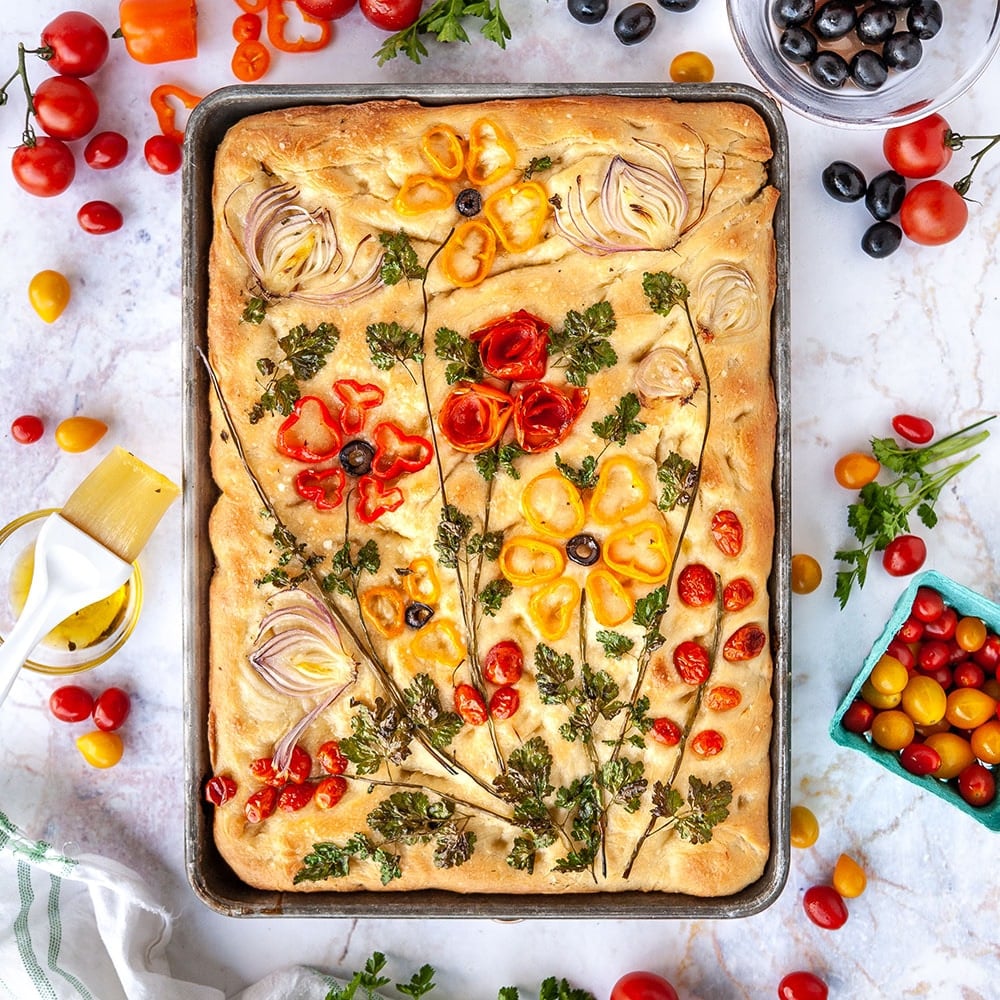
Focaccia Bread Art

Easy Homemade Panettone

Easy Homemade Bagels

Master Sweet Dough Recipe

Recipe

closeup of focaccia bread
Print Recipe
4.88 from 16 votes

Easy Focaccia Recipe

This easy focaccia recipe is the best! Just mix, rest, stretch, and chill the dough overnight to let all that amazing flavor develop. Take it out of the fridge and bake it fresh with rosemary and flakey salt.
Prep Time10 minutes mins
Cook Time25 minutes mins
Resting1 day d 25 minutes mins
Course: Appetizer, Side Dish
Cuisine: Italian
Servings: 24 servings
Calories: 168kcal
Author: Liz Marek

Equipment

  • Stand mixer with a dough hook
  • 9" x 13" sheet pan

Ingredients

  • 16 ounces warm water (110ºF) divided into two bowls 2 cups
  • 1 Tablespoon granulated sugar
  • 7 grams active dry yeast (2 ½ teaspoons)
  • 2 ounces olive oil ¼ cup
  • 1 teaspoon salt
  • 1 Tablespoon flakey salt
  • 24 ounces bread flour or all-purpose flour (5 cups spooned and leveled)
  • 4 ounces olive oil for the pan and for drizzling on top of the focaccia after rising (½ cup)
  • 2 Tablespoons fresh rosemary chopped
US Customary - Metric

Instructions

Easy Focaccia Recipe Instructions

  • Combine 8 ounces of your warm water (110ºF or 43ºC), yeast, and sugar and set it aside for 5 minutes or until it's foamy.
  • Put your yeast mixture and one cup of flour into the bowl of your Bosch stand mixer with the dough hook attached. Mix to combine. You can use a bowl and a spoon and then knead it by hand if you want to, but it will just take longer.
  • Next add in the rest of your water, the olive oil, and the salt, and mix to combine.
  • Then, keep adding in the rest of your flour while mixing on low until your dough starts pulling away from the sides of the bowl.
  • Take the sticky dough out of the bowl and finish kneading it on the table with a tiny bit of flour until the dough looks smooth and bounces back when you touch it with your finger.
  • Next, put the dough into a bowl greased with olive oil.
  • Cover the bowl with plastic wrap, and place the covered bowl in a warm area for 1-2 hours or until the dough has doubled in size. I put my bread in my oven turned OFF with just the light on to proof my bread, or in a proofing drawer.
  • Then, prepare your baking pan by covering the bottom of the pan with a thin layer of olive oil. I know this looks like a lot but trust me, you need it. You want it to be a swimming pool of oil!
  • Take your very soft dough out of the bowl and stretch it with your hands to make it longer.
  • Next, place it into the pan with the oil and use your hands to stretch it out to the edges. If the dough shrinks back, let the dough rest for 20 minutes then come back and stretch it some more. Letting the dough rest relaxes the gluten and keeps it from shrinking. Keep doing this until you can get the dough all the way to the edges of the pan.
  • Cover the pan with some plastic wrap and put it in the fridge overnight. The yeast will continue eating those sugars and rise very slowly. The next day, you should have some nice bubbles on top of the dough.
  • Preheat your oven to 450ºF (232ºC) and take your dough out of the fridge.
  • Use your fingers to pop the big bubbles and press dimples into the surface of the dough.
  • Drizzle olive oil onto the top of the dough so that it settles in those dimples.
  • Sprinkle a healthy amount of flakey sea salt and chopped rosemary on top of the dough.
  • Bake the dough in a preheated oven (450ºF or 232ºC) on the middle rack for 25 minutes or until it's golden brown!
  • Finally, brush the baked focaccia with more olive oil before serving.

Video

Notes

Important Things To Note Before You Start
  1. Use a scale to weigh your ingredients (including liquids) unless otherwise instructed (Tablespoons, teaspoons, pinch etc). Metric measurements are available in the recipe card. Scaled ingredients are much more accurate than using cups and help ensure the success of your recipe. 
  2. Practice Mise en Place (everything in it's place). Measure out your ingredients ahead of time and have them ready before you start mixing to reduce the chances of accidentally leaving something out.
  3. I place my dough near my oven set to 170ºF (77ºC) to help the dough rise. Mine usually only takes about 1 hour if my room is warm.
Tips For Success
  • If your yeast does not start growing it may be dead so make sure you have fresh yeast before starting.
  • I put my bread in my oven turned OFF with just the light on to proof my bread, or in a proofing drawer.
  • If your yeast does not start growing it may be dead so make sure you have fresh yeast before starting
  • I put my bread in my oven turned OFF with just the light on to proof my bread, or in a proofing drawer.
  • If the dough shrinks back, let the dough rest for 20 minutes then come back and stretch it some more. Letting the dough rest relaxes the gluten and keeps it from shrinking. Keep doing this until you can get the dough all the way to the edges of the pan

Nutrition

Serving: 1serving | Calories: 168kcal | Carbohydrates: 21g | Protein: 4g | Fat: 8g | Saturated Fat: 1g | Sodium: 1mg | Potassium: 31mg | Fiber: 1g | Sugar: 1g | Vitamin A: 5IU | Vitamin C: 1mg | Calcium: 5mg | Iron: 1mg
 
hot chocolate bomb molds

December 5, 2021 Blog

Best Hot Chocolate Bomb Mold

I want to show you the COOLEST and easiest way to make hot cocoa bombs using a 3 piece mold! It makes it so easy! Just add your chocolate up to the first line, add in the inner liner and then the top piece and chill the chocolate until it sets. Then BOOM! Perfectly flat hot chocolate bomb shells with flat edges. This mold is a lot easier than using the polycarbonate molds and look just as shiny!

I like the 70mm size but they come in 50mm as well. I also teach you FOUR trendy hot cocoa bomb designs like the grinch, a gingerbread man, a sparkly snowman and a golden Christmas tree! Stick around for the end of the video to see how I rate the "pop" and color of each hot chocolate bomb!

Whats In This Blog Post

  • The Three Piece Hot Chocolate Bomb Mold
  • Ingredients To Make Hot Chocolate Bombs
    • Gingerbread Man Bomb
    • Grinch Hot Chocolate Bomb
    • Snowman Hot Chocolate Bomb
    • Gold Christmas Tree Bomb
  • How To Use The Three Piece Mold
  • How To Assemble Your Hot Chocolate Bombs
  • Decorating Your Hot Chocolate Bombs
    • Gingerbread Man
    • Grinch Bomb
    • Snowman Bomb
    • Gold Christmas Tree Bomb
  • FAQ

The Three Piece Hot Chocolate Bomb Mold

I got this three-piece mold from this ETSY shop and it comes with six sets but you can also buy them individually online if you search for three-piece mold. You can also find the three-piece mold in other shapes like hearts and eggs.

three piece hot chocolate bomb mold

Ingredients To Make Hot Chocolate Bombs

candy melts and almond bar

If you are a beginner, I highly recommend you use these meltables from sweet tooth fairy. You can get them at Michaels or Walmart and they are very smooth and tasty! They come in lots of colors and even flavors! Or you can use almond bark which is really inexpensive but the taste suffers so keep that in mind.

If you want to color your meltables make sure you use candy colors not food coloring or it will ruin your chocolate. I usually just buy the color of meltables that I want to use to save time to color my hot chocolate bombs.

candy food coloring

I prefer the taste and texture of real chocolate usually but it is a bit more work. I like Cacoa Barry couverture chocolate. If you want to learn to temper your own chocolate you can check out this tutorial. If you don't need a lot of chocolate, you can also use LINDT chocolate bars which is a really nice quality.

bag of chocolate

I use cocoa butter colors from Chef Rubber to color my real chocolate. Just melt them down and mix them into tempered chocolate.

colored cocoa butter

Here's a list of all the ingredients I used to decorate my hot chocolate bombs.

Gingerbread Man Bomb

gingerbread man hot chocolate bomb
  • Pumpkin spice meltables
  • White meltables
  • Black meltables
  • Chocolate meltables
  • Pink petal dust for cheeks
  • Mini marshmallows
  • Freeze-dried mini marshmallows
  • 2 Tablespoons Cocoa mix

Grinch Hot Chocolate Bomb

grinch hot chocolate bomb
  • White couverture chocolate (requires tempering)
  • Yellow cocoa butter
  • Green cocoa butter
  • Red heart sprinkle
  • Heart marshmallow
  • Mini marshmallows
  • Freeze-dried mini marshmallows
  • 2 Tablespoons Cocoa mix

Snowman Hot Chocolate Bomb

snowman hot chocolate bomb
  • White meltables
  • Crystal sugar sprinkles
  • Flash dust
  • Black meltables
  • Orange modeling chocolate
  • Freeze-dried lucky charm marshmallows
  • Strawberry Nesquick

Gold Christmas Tree Bomb

christmas tree hot chocolate bomb
  • White couverture chocolate (requires tempering)
  • Gold highlighter dust
  • Green chocolate (I used the leftover from the grinch bomb)
  • Gold star sprinkle
  • Silver dragees
  • Jimmy sprinkles for the gold powder

How To Use The Three Piece Mold

three piece hot chocolate bomb mold

The first thing you want to do is melt down your chocolate. You can use meltables if you don't want to temper your chocolate or you can use real chocolate and follow my chocolate tempering tutorial. If you use real chocolate and don't temper it, it may not come out of the mold and will be very fragile and possibly streaked-looking.

  1. Make sure your molds are clean but polishing them with a paper towel
  2. Melt down your meltables or temper your chocoate. It's best to do one color at a time and make all your shells first.melted chocolate
  3. Pour a couple spoonfuls of melted chocolate into the bottom mold up to the line. Its ok if you overfill a little.adding chocolate to the hot cocoa bomb mold
  4. Press in the inner liners.pressing the insert into three piece hot chocolate bomb mold
  5. Add the top piece to the three piece mold and press down until the chocolate reaches the top of the sphere.pressing the three piece mold together
  6. Place the mold into the fridge for 5-10 minutes or until the chocolate contracts (shrinks) in the mold and it can easily be removed. If you see a spot where the chocolate is still stuck to the mold then put it back in the fridge until it fully releases. pointing to where the chocolate is still stuck to the three piece hot chocolate bomb mold
  7. Take the hot chocolate mold shell out of the mold and remove the inner liner. removing the liner from the hot chocolate bomb
  8. Place your shells aside until you finish all the shells you want. I just put mine on a sheet pan to the side.

To clean your hot chocolate bomb molds, wash them in hot water, then hand dry.

How To Assemble Your Hot Chocolate Bombs

  1. To avoid getting fingerprints on your shells, I recommend wearing gloves.
  2. Warm a plate in the microwave for about 1 minute to make it warm.
  3. Place one half of the shell onto the plate to slightly melt the edge. Then repeat with the other half of the mold. warming a hot chocolate bomb shell
  4. Place one half of the shell onto a small bowl or a cupcake pan to hold the shell in place. chocolate bomb shell on a small bowl
  5. Fill the mold with two Tablespoons of hot chocolate mix filling a hot chocolate bomb shell with hot chocolate mix
  6. Add in whatever marshmallows, candies or mix-ins that you like hot chocolate bomb shell filled with marshmallows and candy
  7. Place the other shell on top and press with light firm pressure to seal the bombsealing a hot chocolate bomb with gloved hands
  8. Use your gloved finger to wipe off the excess chocolate
  9. Continue putting all your bombs together before decorating to speed up the process. I put mine on a cupcake pan to hold them in place.
  10. Decorate your bombsdecorating hot chocolate bombs
  11. Pour on one cup of steaming hot milk and watch them pop! melted hot chocolate bomb

Decorating Your Hot Chocolate Bombs

Gingerbread Man

gingerbread man hot chocolate bomb
  1. Place some white chocolate into a piping bag
  2. Pipe on the dots around the sphere, the ovals for the eyes and the hair
  3. Add some black chocolate into a piping bag
  4. Pipe on the dots for the eyes and the mouth
  5. Use a paintbrush to add some pink dust for the cheeks

Grinch Bomb

grinch hot chocolate bomb
  1. Place some of the green hot chocolate into a piping bag and snip off the tip. You don't want the opening to be really big.
  2. Drizzle the chocolate over the top of the bomb in a quick back and forth motion.
  3. While the chocolate is still wet, add the red heart sprinkle on top.

Snowman Bomb

snowman hot chocolate bomb
  1. Place some of the crystal sprinkles into a bowl
  2. Use your gloved hands to spread some melted white chocolate around the hot chocolate bomb
  3. Roll the bomb into the sprinkles and coat it well
  4. Add some flash dust to the bomb to give it sparkle
  5. Mold a small carrot shaped nose out of the orange modeling chocolate
  6. Attach the nose to the snowman with a bit of white chocolate
  7. Add some black melted chocolate into a piping bag and pipe on the eyes and the mouth

Gold Christmas Tree Bomb

christmas tree hot chocolate bomb
  1. Add some jimmy sprinkles into a bowl
  2. Add 1-2 teaspoons of gold luster dust and stir
  3. Roll your hot chocolate bomb in the sprinkles until it's evenly covered
  4. Pipe a Christmas tree on top of the bomb
  5. Add a star sprinkle and some silver dragees to finish the Christmas tree

More recipes you'll love!

How to temper chocolate the easy way

Chocolate caramel candy

How to temper chocolate with EZ temper

How to make chocolate covered strawberries

FAQ

What is a good size for hot chocolate bombs?

I prefer the 70mm bombs because it's the perfect amount of cocoa for an extra-large coffee mug

Why isn't my hot chocolate bomb coming out of the mold?

If you are using real chocolate that contains cocoa butter, it will not contract when it cools down unless you temper it (see blog post for more info on tempering). Using candy melts like Sweet Tooth Fairy Meltables, almond bark, or tempered chocolate is advised for shiny and stable hot chocolate bombs.

Do I have to temper my chocolate with a three-piece hot chocolate bomb mold?

If you are using real chocolate then you will always need to temper it but you can use meltables or real chocolate in the three piece mold and get very shiny shells.

Recipe

hot chocolate bomb molds
Print Recipe
5 from 1 vote

Three Piece Mold Hot Chocolate Bombs

Have you ever wondered what the best mold is to make those trendy viral hot chocolate bombs? Check out the three piece mold! Perfect hot chocolate bomb shells with no tempering required.
Prep Time10 minutes mins
cooling10 minutes mins
Total Time20 minutes mins
Course: Dessert
Cuisine: American
Servings: 6 servings
Calories: 97kcal
Author: Liz Marek

Equipment

  • Three Piece Hot Chocolate Bomb Mold

Ingredients

Gingerbread Man Hot Chocolate Bombs

  • 8 ounces pumpkin spice meltables
  • 1 ounce chocolate meltables
  • 2 Tablespoons cocoa mix
  • 1 Tablespoon freeze dried mini marshmallows
  • 2 Tablespoons Mini Marshmallows
  • 1 ounce black meltables
  • 1 ounce white meltables
  • ¼ teaspoon pink petal dust

Grinch Hot Chocolate Bomb

  • 8 ounces white couverture chocolate tempered
  • ¼ teaspoon yellow cocoa butter
  • ¼ teaspoon green cocoa butter
  • 2 Tablespoons Cocoa Mix
  • 1 Tablespoon mini freeze-dried marshmallows
  • 1 Tablesoon mini marshmallows
  • 1 heart marshmallow
  • 1 red heart sprinkle

Snowman Hot Cocoa Bomb

  • 8 ounces white meltables
  • ¼ cup clear crystal sprinkles
  • ¼ teaspoon flash dust
  • 1 ounce black meltables
  • 1 teaspoon orange modeling chocolate or fondant
  • 1 Tablespoon freeze-dried lucky charms marshmallows
  • 1 Tablespoon mini marshmallows
  • 2 Tablespoons Strawberry Newsquick

Gold Christmas Tree Bomb

  • 8 ounces white couverture chocolate tempered
  • 1 teaspoon gold highlighter dust
  • 1 Tablespoon green chocolate either meltables or leftover from the grinch
  • 1 small gold star sprinkle
  • ¼ tespoon silver dragees
  • ¼ cup jimmy sprinkles for the gold powder
  • 2 Tablespoons cocoa mix
  • 1 Tablespoon freeze-dried mini marshmallows
  • 1 Tablespoon mini marshmallows
  • 1 teaspoon crushed peppermint

Instructions

Hot Chocolate Bomb Assembly

  • Pour your desired chocolate into the bottom mold up to the line near the bottom.
  • Place your insert inside and press down a little
  • Place the top mold on and press down until the chocolate fills the entire sphere
  • Put the hot chocolate bomb mold into the fridge to chill for 10-15 minutes or until the chocolate pulls away from the mold
  • Remove the shells carefully from the mold and remove the insert from the shell
  • Make all your shells at once before assembling your bombs
  • Heat a ceramic plate in the microwave and heat on high for 1 minute until hot
  • Place your first shell on the hot plate and melt the edge slightly
  • Place your shell onto a small pinch bowl or cupcake pan to keep it in place
  • Fill the shell with your desired cocoa mix, marshmallows or candies
  • Heat the other half of your shell and place it on top of the filled shell
  • Press together firmly for 5 seconds then wipe off the excess chocolate with a gloved finger
  • Decorate the hot chocolate bomb as desired. See the the video in this blog for ideas!

Video

Notes

I am using the 70mm three-piece mold 
If you're using real chocolate that contains cocoa butter you will need to temper your chocolate to make sure it releases from the mold and is shiny and strong. 
If you do not want to temper your chocolate then I recommend you use meltables or almond bark which does not contain cocoa butter and does not need to be tempered. 
Be sure to use cocoa butter colors to color real chocolate
Use candy food coloring to color meltables or use pre-colored meltables. Do not use regular food coloring or it will ruin the chocolate. 

Nutrition

Serving: 1serving | Calories: 97kcal | Carbohydrates: 20g | Protein: 1g | Fat: 3g | Saturated Fat: 2g | Polyunsaturated Fat: 1g | Monounsaturated Fat: 1g | Trans Fat: 1g | Sodium: 136mg | Potassium: 1mg | Fiber: 1g | Sugar: 15g | Vitamin A: 2IU | Calcium: 17mg | Iron: 1mg
Gingerbread house with powdered sugar snow, isomalt icicles, edible trees and fence

December 1, 2021 Course Preview

DIY Gingerbread House Tutorial

Skill level: Intermediate

Guest instructor Mitchie Curran returns for this fun holiday special! In this video, you will learn how to take a store-bought gingerbread house kit give it the ol' fixer-upper treatment, taking a broken-down double-wide and converting it into a cozy upscale bungalow. Mitchie offers several tips and tricks that will level-up your gingerbread house into an amazing snowy masterpiece.

Mitchie also breaks down how to make ginger clay, a special material that works just like modeling chocolate, how to bake your own gingerbread house kits, and a fast trick for getting your gingerbread pieces to stick together.

There's a lot to cover in this tutorial, so let's get our tools together and let's get started!

51:35 Minutes of Instruction

What You Will Learn

  • How to upgrade a store-bought gingerbread house kit or bake your own gingerbread house kit into a beautiful cozy gingerbread cottage
  • Learn how to make ginger clay
  • Mitchie's trick on getting gingerbread to stick together without using royal icing (and waiting forever for it to dry)

Tutorial Chapters

  1. Overview of the equipment 0:35
  2. Assessing the gingerbread 5:05
  3. Cutting the gingerbread 8:01
  4. Trimming the pieces 11:22
  5. Making ginger clay 13:00
  6. Coloring the ginger clay 15:59
  7. Making a color wash 18:42
  8. Gluing the gingerbread together 19:55
  9. Making your own gingerbread 23:04
  10. Rolling out the gingerbread dough 27:54
  11. Cutting out gingerbread pieces 32:02
  12. Making the decorations 34:15
  13. Decorating the house 37:54

Downloads

Materials List

Gingerbread house with powdered sugar snow, isomalt icicles, edible trees and fence

December 1, 2021 Paid Video

DIY Gingerbread House Tutorial

Skill level: Intermediate

Guest instructor Mitchie Curran returns for this fun holiday special! In this video, you will learn how to take a store-bought gingerbread house kit give it the ol' fixer-upper treatment, taking a broken-down double-wide and converting it into a cozy upscale bungalow. Mitchie offers several tips and tricks that will level-up your gingerbread house into an amazing snowy masterpiece.

Mitchie also breaks down how to make ginger clay, a special material that works just like modeling chocolate, how to bake your own gingerbread house kits, and a fast trick for getting your gingerbread pieces to stick together.

There's a lot to cover in this tutorial, so let's get our tools together and let's get started!

51:35 Minutes of Instruction

What You Will Learn

  • How to upgrade a store-bought gingerbread house kit or bake your own gingerbread house kit into a beautiful cozy gingerbread cottage
  • Learn how to make ginger clay
  • Mitchie's trick on getting gingerbread to stick together without using royal icing (and waiting forever for it to dry)

Tutorial Chapters

  1. Overview of the equipment 0:35
  2. Assessing the gingerbread 5:05
  3. Cutting the gingerbread 8:01
  4. Trimming the pieces 11:22
  5. Making ginger clay 13:00
  6. Coloring the ginger clay 15:59
  7. Making a color wash 18:42
  8. Gluing the gingerbread together 19:55
  9. Making your own gingerbread 23:04
  10. Rolling out the gingerbread dough 27:54
  11. Cutting out gingerbread pieces 32:02
  12. Making the decorations 34:15
  13. Decorating the house 37:54

Downloads

Materials List

close up of christmas crack

November 29, 2021 Blog

Christmas Crack Recipe

This Christmas Crack recipe is so easy to make and only takes 30 minutes! This candy is called "Christmas crack," because it cracks in your mouth when you bite it! It's just a simple caramel poured over saltine crackers and topped with melted chocolate and sprinkles! Follow this recipe for the perfect caramel that's hard enough to crack but not so hard it breaks your teeth!

closeup of christmas crack on a red plate

The first time I made Christmas crack I didn't use a candy thermometer. I just kind of eyeballed it. This resulted in a slightly runny caramel and not so much "crack". The next time I used my handy candy thermometer and it was a lot easier! So if you have one, you should def use it for this! Takes all the guesswork out of it.

What this Christmas cracker recipe actually reminds me of is a homemade TWIX candy. The saltine cracker turns into a wonderfully crisp, almost cookie layer. The caramel is firm but not so firm that it hurts to bite into. The chocolate and salty cracker really sends this candy into the next dimension and is TRULY hard to stop eating! This was the first Christmas candy I made with my family and now it's officially a tradition. 

What's in this blog post?

  • Christmas Crack Ingredients
  • How To Make The Toffee
  • Christmas Cracker Recipe Assembly Instructions
  • What is Christmas Crack?
  • FAQ
  • More Recipes You'll Love

Christmas Crack Ingredients

With only five ingredients (including sprinkles) this recipe is hard to mess up! The true hero is using a candy thermometer to cook your caramel so you get the perfect crack! If you don't have a candy thermometer then make sure you boil the caramel for a full 5 minutes.

If you don't have any chocolate chips on hand, you can chop up a bar of chocolate, and that works just as well! Experiment with flavored chocolates to make your Christmas crack recipe your own!

How To Make The Toffee

  1. Preheat your oven to 400ºF (204ºC) and line your pan with a silicone mat, tinfoil, or parchment paper coated with pan spray or cake goop. I used cake goop around the edges of my pan and silicone mat.close up of greasing a sheet pan
  2. Line the bottom of your pan with crackers in an even layer. I had to trim my last layer to make it all fit. Set the pan with crackers aside.placing saltine crackers on a sheet pan
  3. Place the brown sugar, butter, and salt into a medium saucepan on medium heat and stir it until the butter is melted. Use a silicone or wooden spoon to prevent your sugar from crystalizing. christmas crack ingredients in a saucepan
  4. Increase the temperature to medium-high and continue to cook the caramel. You will want to cook it until the temperature reads 280ºF (138ºC) on your candy thermometer which takes about 5 minutes. Watch the sugar cook and stir regularly to keep the butter from separating from the sugar. While a candy thermometer isn't required, it will help ensure the success of your Christmas cracker recipe.closeup of candy thermometer in a pot of toffee
  5. Once the toffee reaches the desired temperature, remove it from the heat.
  6. Pour the toffee over the crackers and spread it with a spatula to coat the crackers evenly.smoothing toffee over saltine crackers
  7. Place the crackers into the oven for 3-5 minutes or until they start to bubble again. Then, remove them from the oven.

Christmas Cracker Recipe Assembly Instructions

  1. Spread the chocolate chips evenly over the hot cracker toffee. sprinkling chocolate chips onto crackers and toffee
  2. Place them back in the oven for 1 minute to melt the chocolate. Or let sit on the countertop for 5 minutes until the chocolate gets soft and looks glossy.
  3. Remove the pan from the oven, and slowly spread the chocolate chips evenly over the toffee with your offset spatula.smoothing chocolate chips with an offset spatula
  4. Dust the sprinkles over the top or add any kind of toppings you want like chopped nuts, toasted coconut flakes, pretzels, or even candy!adding sprinkles to christmas crack
  5. Put the Christmas crackers into the freezer for at least 20 minutes or let them sit at room temperature overnight to harden.
  6. Since you used a silicone mat and/or goop, the crackers will lift out of the pan easily and then you can crack the bar into pieces! This is the fun part!closeup of cracking christmas crack candy

What is Christmas Crack?

Christmas Crack, which is also referred to as Christmas cracker candy, is a type of candy made up of saltine crackers coated in caramel or toffee and topped with melted chocolate. This tasty treat has many nicknames including Christmas Crack, cracker candy, and even caramel bark.

Christmas Crack has a nice crunch to it, and the ingredients you will need to make it may already be in your pantry!

The perfect bite of salty and sweet, Christmas Crack is a festive holiday treat the whole family can enjoy. It's also a delicious, homemade gift you can prepare in large quantities to wrap and give to your coworkers, friends, and family around the holidays. Did someone say holiday cookie exchange?

closeup of Christmas crack

FAQ

Why is my Christmas Crack chewy?

Being a little chewy is normal and makes for a better mouthfeel than super hard, break your tooth caramel but if it's TOO chewy it can be a bit sticky. Make sure you heat your brown sugar mixture to 280ºF (138ºC) or let it boil for 5 minutes before removing it from the heat. 

What can I use instead of saltine crackers?

No saltine crackers? No problem! You can use any kind of cracker you want or even pretzels! The best part about Christmas Crack is every family can make it their own. You could use graham crackers, water biscuits, Ritz, Club crackers, or even pretzels.

Can you freeze Christmas crack?

Yes! If you want to freeze your leftover Christmas crack for later, you can store it in a freezer-safe, airtight container for up to 3 months.

Why did my toffee get grainy?

If you don't cook your sugar at a high enough temperature or if you use a metal spoon to mix, you can shock your sugar and cause it to crystalize. Always use a rubber spatula or wooden spoon to mix sugar.

Why is my toffee too hard?

Don't be tempted to let your toffee boil for too long or you can end up with a very hard candy that will not be easy on the teeth.

More Recipes You'll Love

Chocolate Caramel Candy

Caramel Sauce Recipe

Homemade Sticky Buns

Recipe

close up of christmas crack
Print Recipe
5 from 6 votes

Christmas Crack Recipe

This Christmas cracker candy (also known as Christmas Crack) is highly addictive and CRACKS when you bite into it! Follow this foolproof recipe for the perfect candy every time in less than 20 minutes!
Prep Time10 minutes mins
Cook Time10 minutes mins
Total Time20 minutes mins
Course: Dessert
Cuisine: American
Servings: 35 pieces
Calories: 47kcal
Author: Liz Marek

Equipment

  • 18"x13" ½ sheet pan
  • candy thermometer (optional)

Ingredients

  • 1-2 sleeves saltine crackers (about 45) make sure they are salted
  • 12 ounces dark brown sugar (packed) (1.5 cup packed)
  • 12 ounces unsalted butter (1.5 cup)
  • ¼ teaspoon salt
  • 12 ounces chopped chocolate or chocolate chips (2 cups)
  • ½ cup decorative sprinkles or alternative topping
US Customary - Metric

Instructions

  • Preheat your oven to 400ºF (204ºC) and line your pan with a silicone mat or parchment paper coated with pan spray or cake goop. I used cake goop around the edges of my pan and silicone mat.
  • Line the bottom of your pan with crackers in an even layer and set it aside.

Toffee

  • Place the brown sugar, butter, and salt into a medium sauce pan on medium-high heat and stir it until the butter is melted.
  • Next, cook the caramel. You will want to cook it until the temperature reads 280ºF (138ºC) on your candy thermometer which takes about 5 minutes. Watch the sugar cook and stir regularly to keep the butter from separating from the sugar. While a candy thermometer isn't required, it will help ensure the success of your Christmas cracker recipe.
  • Once the toffee reaches the desired temperature, remove it from heat.
  • Then, pour the toffee over the crackers and spread it with a spatula to coat the crackers evenly.
  • Place the crackers into the oven for 3-5 minutes or until they start to bubble again. Then, remove them from the oven.

Christmas Cracker Assembly

  • Spread the choocolate chips evenly over the hot cracker toffee.
  • Place them back in the oven for 1 minute to melt the chocolate. Or let it sit on the countertop for 5 minutes until the chocolate melts.
  • Remove the pan from the oven, and slowly spread the chocolate chips evenly over the toffee with an offset spatula.
  • Add sprinkles over the top or any kind of toppings you want like chopped nuts, toasted coconut flakes, pretzels, or even candy!
  • Put the Christmas crackers into the freezer for at least 20 minutes. You can also let them sit overnight at room temperature.
  • Since you used a silicone mat and/or goop, the crackers will lift out of the pan easily. You will just lift and crack into them into your desired pieces.

Video

Notes

Important Things To Note Before You Start
  1. Use a scale to weigh your ingredients (including liquids) unless otherwise instructed (Tablespoons, teaspoons, pinch, etc). Metric measurements are available in the recipe card. Scaled ingredients are much more accurate than using cups and help ensure the success of your recipe. 
  2. Practice Mise en Place (everything in its place). Measure out your ingredients ahead of time and have them ready before you start mixing to reduce the chances of accidentally leaving something out.
  3. While it isn't required, a candy thermometer will help you ensure the success of your recipe.
  4. You will be working with hot sugar, so please make sure you are working safely.
  5. There are so many ways to personalize this candy, have fun with the toppings and cracker combinations. Have everything ready to go before you start. Once the sugar starts cooking you don't want to walk away. It also cools pretty quickly, so it's best to be prepared to get through every step.
  6. If you are using salted butter, then you can omit the added salt. If you are using unsalted crackers then use more salt, ½ tsp. You could also use flakey salt on top. 

Nutrition

Serving: 3pieces | Calories: 47kcal | Carbohydrates: 1g | Protein: 1g | Fat: 5g | Saturated Fat: 3g | Cholesterol: 14mg | Sodium: 18mg | Potassium: 2mg | Fiber: 1g | Sugar: 1g | Vitamin A: 162IU | Calcium: 2mg
vanilla bundt cake with vanilla glaze

November 21, 2021 Blog

Moist Vanilla Bundt Cake Recipe

This moist vanilla bundt cake has a tender crumb and golden crust. Covered in not one but two glazes, this vanilla bundt cake recipe ensures that this cake stays moist for days!

vanilla bundt cake with vanilla glaze

It's easier than ever to bake a vanilla bundt cake that rises up beautifully with a golden crust on the outside and releases well from the bundt cake pan. Since it stays fresh for up to 5 days while keeping it room temperature, this vanilla bundt cake is perfect to make a few days before your family comes to visit for the holidays!

Read on to learn everything you ever needed to know about making moist vanilla bundt cake! 

What's In This Blog Post

  • Vanilla Bundt Cake Ingredients
  • How to Make Vanilla Bundt Cake
  • Make Your Own Simple Syrup Using These Steps
  • Preparing the Vanilla Glaze
  • Bundt Cake Decorating Instructions
  • FAQ
  • Where did the bundt cake come from?
  • More Recipes You'll Love

Vanilla Bundt Cake Ingredients

bundt cake ingredients

Buttermilk: Buttermilk is the magic ingredient to make any cake moist and delicious. If you do not have buttermilk, you can use one of my preferred buttermilk substitutes.

Vegetable oil: I use vegetable oil to keep my cakes moist like my red velvet cake and my pumpkin spice cake.

High-quality vanilla: I prefer the vanilla from Nielsen-Massey. Vanilla is very expensive, but when it's the only flavor in your cake, now is the time to use it. The better the vanilla quality, the better the cake will taste!

How to Make Vanilla Bundt Cake

  1. Preheat the oven to 350ºF (177ºC) and adjust the rack to the lower-middle of the oven so it's not too close to the top element.
  2. Coat your bundt cake pan in a thin, even layer of cake goop or another pan release that contains flour. Oil sprays will not work and may cause your bundt cake to stick to the pan.
  3. In a medium-sized bowl, whisk together the flour, baking powder, baking soda, and salt. Then, set it aside.
  4. Next, using another medium-sized bowl, combine together your room temperature buttermilk, oil, and vanilla extract and then set it aside.
  5. In the bowl of your stand mixer, cream the room temperature butter on low speed until it's smooth using the paddle attachment.
  6. Then, sprinkle in your sugar and cream it until it is light and fluffy. Scrape the bowl if needed.
  7. While mixing on low, add in your room temperature eggs one at a time. Let them mix fully before you add the next egg.
  8. Next, add in ⅓ of your flour mixture, and then ⅓ of your liquid mixture. Repeat this process two more times. Scrape the bowl as needed. Mix the ingredients just until they are combined. Do not over-mix.
  9. Pour the batter (the batter will be thick) into your prepared bundt cake pan. how full to fill a bundt cake pan
  10. Bake the cake at 350ºF (177ºC) for 45-50 minutes, or until a skewer inserted into the deepest part of the cake comes out clean. My cake took exactly 47 minutes to bake.
  11. Remove the cake from the oven, and let it cool for 15 minutes before turning it out onto a cooling rack.the best bundt cake pan to use

Make Your Own Simple Syrup Using These Steps

  1. Place water and sugar in a medium-sized saucepan.
  2. Then, heat the water and sugar in a saucepan and bring it to a boil.
  3. Once it's brought to a boil, remove the pan from heat.
  4. Then, add in vanilla extract.
  5. Let it cool.

Preparing the Vanilla Glaze

  1. Sift powdered sugar into a medium-sized bowl.
  2. Add in your buttermilk and extract and stir until it is smooth and creamy.
  3. Then, add a couple of drops of white food coloring if you want your glaze to be more opaque.

Bundt Cake Decorating Instructions

  1. When you first take the cake out of the oven, brush ⅓ of your simple syrup over the top of the cake.
  2. Let it cool for 15 minutes.
  3. Then, turn the cake over onto a cooling rack. I put my cake on a cardboard cake round to prevent sticking. Make sure the cooling rack is over a cookie sheet to catch any glaze drips.the best bundt cake pan to use
  4. Brush the cake all over with the simple syrup and then let it cool for 2 hours.
  5. Drizzle your thick, vanilla cake glaze over the top of your cooled cake.
  6. Once the glaze stops dripping, you can transfer the cake to a cake plate.how to decorate a bundt cake
  7. Keep your bundt cake covered with plastic wrap, or keep it at room temperature inside a cake dome to keep it from drying out. 

FAQ

What makes a bundt cake a bundt cake?

A bundt cake is literally any cake that is baked in a bundt cake pan. 

Can I add flavor to my bundt cake?

You can change the flavor of your bundt cake by switching out the extracts, adding in zest, dried fruits, nuts, chocolate, or even puree. The flavor possibilities are endless!

How full do you fill a bundt cake pan?

Fill your pan about ⅔ of the way in your bundt cake pan. You will do this in order to avoid the cake batter from spilling out the top or getting a dome. Once your bundt pan is filled, tap your filled pan on the counter a couple of times to avoid bubbles. 

How long does vanilla bundt cake last?

It can be kept at room temperature for up to 5 days or frozen for 6 months (defrost the frozen cake before serving).

How do I remove a cake that's stuck in the bundt pan?

Wet a towel with boiling hot water (be careful). Then, use tongs to wring out the excess water and then place it over the top of your cake pan to warm it up. This should help the cake release.

If all else fails, remove the cake from the pan and then patch it up as best you can and cover it with frosting. 

Why is my vanilla bundt cake sticking to the pan?


Here are 4 reasons why your bundt cake might be sticking:

#1 The cake pan was not greased with a flour-based cooking spray. I prefer using cake goop. It's easy, inexpensive to make, and creates a beautiful crust that helps the bundt cake release. 

#2 Not greasing thoroughly. Don't forget to grease the nooks and crannies as well as the center tube. Use a pastry brush and create a nice even layer to grease the pan.

#3 You removed the cake from the pan too soon. It's important to let that crusty layer cool down so it doesn't pull away from the hot cake. Let the cake cool for 15 mins in the pan before turning it out onto a cooling rack. Then, let it cool for another 2 hours before cutting into it.

#4 Your cake is too cold. Don't leave your cake in the pan for too long otherwise, the sugar will fully solidify and glue your cake to the pan. Wiggle it a bit to get your bundt cake to release.

#5 Your nonstick bundt pan may be damaged or dirty. Don't scratch your nonstick surfaces, and always handwash the pan with a soft dishcloth and soapy water.

What's the best bundt pan to use?

Aluminum bundt cake pans will give you the best results.

Pans made of silicone, ceramic, or glass may look nice but they do not produce that nice brown outer crust that gives the bundt cake its classic look.

I'm using the Nordic Ware Platinum Collection Anniversary Bundt Pan, which is widely regarded as the best bundt cake pan. It has a non-stick surface for easy release, and it is lightweight with handles that make it easier to flip. 

How do I keep a vanilla bundt cake moist?

Using buttermilk and oil in your cake batter will keep it moist, but the last step to a super moist bundt cake is using glaze.

I prefer to make two glazes. One is a thin glaze called simple syrup that is brushed on all sides of the cake while it's still warm. Then a second glaze which is thicker and flavored slightly with vanilla and citrus oil seals in all that moisture so the cake doesn't dry out. 

Where did the bundt cake come from?

Bundt cakes are believed to have originated from Germany. They are similar to the Gugelhupf cakes from Europe which are made from a yeasted dough (usually with nuts and fruits) and baked in a decorative, tube-shaped pan. These cakes are usually taller and skinnier than a typical bundt cake. 

The word "bund" in German means "tied" or "bind," so one theory is that a "bund cake" is so named because it was served at social gatherings or for people that you were emotionally or socially tied to. 

When German immigrants came to America, they couldn't bring their Gugelhupf pans with them because they were made of cast iron or thick ceramic, and therefore they were too heavy to travel with. Today, bundt cake pans as we know them are a little lighter, shorter, and rounder than traditional Gugelhupf pans. 

gugelhupf cake
Traditional alsatian pastry: Kouglof with raisins and almonds

In the 1940s, H. David Dalquist who co-founded the company Nordic Ware created an aluminum version of the traditional Gugelhupf pan. A "t" was added to the name bund for trademark reasons and thus the first "bundt cake pan" was born. And it flopped! No one was interested in buying them.  

Nordic Ware almost discontinued the pan due to a lack of interest. In 1966, Ella Helfrich took second place at the annual Pillsbury Bake-Off and won $5,000 with her bundt cake recipe, the tunnel of fudge. This resulted in over 200,000 requests for the bundt cake pan from the public. Since then, over 60 million bundt cake pans have been sold, and it is the most sold pan in the USA. 

close up of moist vanilla bundt cake
vanilla bundt cake

More Recipes You'll Love

Chocolate Bundt Cake

Moist and Fluffy Vanilla Cupcakes

Basic Muffin Recipe

White Velvet Buttermilk Cake Recipe

Moist Vanilla Cake with Easy Buttercream

Recipe

close up of vanilla bundt cake with vanilla glaze and slice cut out of the cake
Print Recipe
4.86 from 95 votes

Moist Vanilla Bundt Cake Recipe

The most amazing moist vanilla bundt cake that is firm enough to hold it's shape in a bundt pan but still tender enough to enjoy for days. Buttermilk and a touch of orange make this the best vanilla bundt cake ever. Add in fresh fruit, nuts, chocolate, spices, or puree to switch up the flavors to your liking.
Prep Time5 minutes mins
Cook Time45 minutes mins
Course: Dessert
Cuisine: American
Servings: 14 servings
Calories: 601kcal
Author: Liz Marek

Equipment

  • bundt cake pan
  • pastry brush

Ingredients

Vanilla Bundt Cake Ingredients

  • 16 ounces All Purpose Flour
  • 1 teaspoon baking powder
  • 1 teaspoon baking soda
  • ½ teaspoon salt
  • 10 ounces unsalted butter softened
  • 14 ounces granulated sugar
  • 3 large eggs room temperature
  • 8 ounces buttermilk room temperature
  • 3 ounces vegetable oil
  • 2 teaspoons vanilla extract

Simple Syrup

  • 4 ounces granulated sugar
  • 4 ounces water
  • 1 teaspoon vanilla extract

Vanilla Glaze

  • 8 ounces powdered sugar sifted
  • 3 Tablespoons buttermilk
  • ¼ teaspoon orange or lemon extract
  • 1 teaspoon vanilla extract
  • 2-3 drops white food coloring optional
US Customary - Metric

Instructions

Vanilla Bundt Cake Instructions

  • Preheat the oven to 350ºF (177ºC) and adjust the rack to the lower-middle of the oven so it's not too close to the top element.
  • Coat your bundt cake pan in a thin, even layer of cake goop or another pan release that contains flour. Oil sprays will not work and may cause your bundt cake to stick to the pan.
  • In a medium-sized bowl, whisk together the flour, baking powder, baking soda, and salt. Then, set it aside.
  • Next, using another medium-sized bowl, combine together your room temperature buttermilk, oil, and vanilla extract and then set it aside.
  • In the bowl of your stand mixer, cream the room temperature butter on low speed until it's smooth using the paddle attachment.
  • Then, sprinkle in your sugar and cream it until it is light and fluffy. Scrape the bowl if needed.
  • While mixing on low, add in your room temperature eggs one at a time. Let them mix fully before you add the next egg.
  • Next, add in ⅓ of your flour mixture, and then ⅓ of your liquid mixture. Repeat this process two more times. Scrape the bowl as needed. Mix the ingredients just until they are combined. Do not over-mix.
  • Pour the batter (the batter will be thick) into your prepared bundt cake pan.
  • Bake the cake at 350ºF (177ºC) for 45-50 minutes, or until a skewer inserted into the deepest part of the cake comes out clean. My cake took exactly 47 minutes to bake.
  • Remove the cake from the oven, and let it cool for 15 minutes before turning it out onto a cooling rack.

Simple Syrup Glaze Instructions

  • Place water and sugar in a medium-sized saucepan.
  • Then, heat the water and sugar in a saucepan and bring it to a boil.
  • Once it's brought to a boil, remove the pan from heat.
  • Then, add in vanilla extract.
  • Let it cool.

Vanilla Bundt Cake Glaze Instructions

  • Sift powdered sugar into a medium-sized bowl.
  • Add in your buttermilk and extract and stir until it is smooth and creamy.
  • Then, add a couple of drops of white food coloring if you want your glaze to be more opaque.

Decorating Instructions

  • When you first take the cake out of the oven, brush ⅓ of your simple syrup over the top of the cake.
  • Let it cool for 15 minutes.
  • Then, turn the cake over onto a cooling rack. I put my cake on a cardboard cake round to prevent sticking. Make sure the cooling rack is over a cookie sheet to catch any glaze drips.
  • Brush the cake all over with the simple syrup and then let it cool for 2 hours.
  • Drizzle your thick, vanilla cake glaze over the top of your cooled cake.
  • Once the glaze stops dripping, you can transfer the cake to a cake plate.
  • Keep your bundt cake covered with plastic wrap, or keep it at room temperature inside a cake dome to keep it from drying out. 

Video

Notes

If you do not have buttermilk, you can use one of my preferred buttermilk substitutes.
Important Things To Note Before You Start
  1. Bring all your ingredients to room temperature or even a little warm (eggs, buttermilk, butter, etc) to ensure your batter does not break or curdle. 
  2. Use a scale to weigh your ingredients (including liquids) unless otherwise instructed (Tablespoons, teaspoons, pinch etc). Metric measurements are available in the recipe card. Scaled ingredients are much more accurate than using cups and help ensure the success of your recipe. 
  3. Practice Mise en Place (everything in it's place). Measure out your ingredients ahead of time and have them ready before you start mixing to reduce the chances of accidentally leaving something out.
  4. If the recipe calls for specific ingredients like cake flour, replacing it with all-purpose flour and cornstarch is not recommended unless specified in the recipe that it's ok. Substituting ingredients may cause this recipe to fail. 
  5. Do not overmix the cake or you can over-work the gluten and get big holes called tunneling.
  6. Add eggs one at a time while beating just until the yolk disappears.
  7. Always add the dry ingredients alternately with the liquid, beginning and ending with the dry ingredients.
  8. To prevent air bubbles, slowly spoon the batter into the prepared pan.
  9. Open the door of the oven only when ready to check for doneness.

Nutrition

Serving: 1g | Calories: 601kcal | Carbohydrates: 87g | Protein: 6g | Fat: 27g | Saturated Fat: 18g | Cholesterol: 91mg | Sodium: 203mg | Potassium: 110mg | Fiber: 1g | Sugar: 61g | Vitamin A: 598IU | Calcium: 50mg | Iron: 2mg
 

closeup of nutella stuffed cookies

November 17, 2021 4th of July

Nutella Stuffed Chocolate Chip Cookies

You will love these soft and chewy chocolate chip cookies stuffed to the brim with molten Nutella filling. The buttery and crispy edge of my classic chocolate chip cookies combined with that sweet, hazelnut flavor is unbeatable. Serve with a cold glass of milk or a scoop of ice cream and it makes for the perfect cozy-day treat.

closeup of nutella stuffed cookies

First, we need to make the "stuff" for our stuffed cookies. I'm using Nutella because I love how that classic, hazelnut flavor combines with buttery chocolate chip cookies. You can stuff a cookie with anything, though! You can use marshmallows to make a s'mores cookie, Reese's for a peanut butter cookie, or even Oreos for a cookies and cream cookie.

Heads up, there is some chilling required in this recipe, but you wouldn't want your Nutella oozing out the sides of your cookie and making a sad mess, right? We want gorgeous, gooey lava centers for our stuffed cookies. Make sure you read this recipe all the way through before beginning. This will help you plan out your time accordingly. If you are in a hurry and don't have time to do the proper chilling, the cookies could possibly not have the desired outcome.

What's In This Recipe

  • Ingredients
  • How to make Nutella stuffed cookies step-by-step
    • Nutella Prep
    • Making The Cookie Dough
    • How To Stuff The Cookies
  • FAQ
  • More Cookie Recipes You'll Love

Ingredients

nutella stuffed cookie ingredients

Nutella/Hazelnut spread: You can use any brand of hazelnut chocolate spread at your local store. This spread has different additives than just a regular ganache has, so it could behave differently if you choose to replace the Nutella with a homemade ganache.

Eggs: Cold eggs work best for this recipe to prevent spreading, to learn more about the science of the chocolate chip cookie, check out my master chocolate chip recipe. Also, depending on where you live in the world, your eggs might be larger or smaller. I'm using an egg that weighs about 1.6 ounces.

How to make Nutella stuffed cookies step-by-step

Nutella Prep

  1. Line a cookie sheet that fits in your freezer with parchment paper. placing dollops of nutella on a parchment paper lined sheet pan
  2. Scoop the Nutella into 2 teaspoon size dollops. This recipe will make about 20 cookies.
  3. Place them in the freezer for about an hour (or overnight) before beginning the cookie process. They soften very quickly so it is easiest to have the Nutella portions frozen and work quickly.

Making The Cookie Dough

  1. In a bowl, whisk together the flour, salt, and baking soda. combining dry ingredients in a mixing bowl
  2. In the bowl of your stand mixer with the paddle attachment, add in the butter and mix until smooth. I'm using my Bosch Universal Plus mixer, but you can use a KitchenAid, or hand mixer as well.
  3. Add in both the brown sugar and white sugar and cream together on medium speed until pale and fluffy, this could take about 2-4 minutes or more depending on your mixer.adding brown sugar to a mixing bowl
  4. While mixing on low, add in the eggs one at a time, mixing until fully incorporated before adding the next. adding an egg to the mixing bowl
  5. Add the teaspoon of vanilla and mix briefly until combined. Your mixture should look homogenous and not curdled. closeup of cookie dough
  6. Gradually add the flour mixture and mix until just combined.adding flour to cookie mixture
  7. Finally, add in the chocolate chips and mix until evenly distributed. Save a few to add to the tops of the cookies for decoration.adding chocolate chips to mixer

How To Stuff The Cookies

  1. Using a #20 size scoop (roughly 3 Tablespoons), scoop the cookie dough onto a sheet pan lined with parchment paper. It's okay if all of the dough balls are on one sheet pan, you will not be baking them all together at this point.scooping cookie dough
  2. Refrigerate the dough balls for at least 30 minutes. The dough will be easier to work with once it's cold and it will allow the flour to absorb the moisture in the batter, which prevents spreading!scooping cookie dough onto the sheet pans
  3. Once your dough balls have chilled, and the Nutella balls are frozen, you'll want to stuff your cookies.
  4. Divide your dough ball into 2 even pieces. dividing cookie dough balls in half
  5. Flatten the pieces slightly. flattening cookie dough
  6. Sandwich the frozen nutella in between the two flattened pieces of cookie dough and press the dough around the nutella so it's totally covered. wrapping cookie dough around nutellanutella stuffed cookies
  7. Place all of the stuffed cookies back on the tray and refrigerate for another hour, or overnight. This will give the dough and Nutella time to come to the same temperature, resulting in a more even bake. placing cookie dough balls on a sheet pan with parchment paper
  8. An hour before you're ready to bake, preheat your oven to 375°F and prepare a cookie sheet with parchment paper.
  9. Place 6 cookies onto the pan and top with a few extra chocolate chips so they look extra pinterest worthy after baking. (optional) adding chocolate chips to the top of cookie dough
  10. Bake at 375°F for 10-15 minutes. Check the progress of the cookie at 10 minutes, the center may appear to be underdone, but it should look baked, and not "wet". If it does appear wet and shiny over the Nutella ball, continue to bake for an extra 2 minutes at a time until it is finished baking. nutella stuffed cookies baked example
  11. Cool the cookies on the tray for 5-10 minutes before attempting to move them to a cooling rack. The molten center will make it weak and could possible crack the cookie when you try to move it. Also, let it cool a bit before biting into it so the lava center doesn't burn the skin in your mouth. Ouch!
  12. After cooling you can store the cookies at room temperature for up to 1 week. Nutella is shelf-stable, but if you're stuffing your cookies with other ingredients be sure to check if they need refrigeration such as cream cheese filling.

FAQ

  • Can I stuff my cookies with anything besides Nutella?
  • Yes, you can! Stuffed cookies are super popular right now. Get creative with using caramel, candies, cream cheese filling, and pretty much anything else your brain can imagine! You can even stuff your cookies with other cookies like Oreos or candy bars!

    More Cookie Recipes You'll Love

    1. Chewy Double Chocolate Chip Cookies
    2. Authentic Snickerdoodle Cookies
    3. Chocolate Chip Crumbl Cookies (Copycat Recipe)
    4. Lofthouse Cookies (Copycat Recipe)
    5. Chocolate Macarons
    6. Red Velvet Cookies

    Recipe

    closeup of nutella stuffed cookies
    Print Recipe
    4.94 from 15 votes

    Nutella Stuffed Cookies

    Soft and chewy chocolate chip cookies stuffed with creamy Nutella. The ultimate must make gourmet cookie!
    Prep Time5 minutes mins
    Cook Time10 minutes mins
    chilling1 hour hr
    Total Time1 hour hr 15 minutes mins
    Course: Dessert
    Cuisine: American
    Servings: 20 Cookies
    Calories: 247kcal
    Author: Liz Marek

    Equipment

    • #20 size scoop (roughly 3 Tablespoons)
    • Cookie sheet
    • Stand mixer (hand mixer works too)

    Ingredients

    • 8 ounces unsalted butter softened, but not melted (2 cups)
    • 5 ounces brown sugar (¾ cup)
    • 5 ounces white sugar (¾ cup)
    • 12 ounces all purpose flour (2 ½ cups)
    • 1 teaspoon salt
    • 1.5 teaspoons baking soda
    • 2 large cold eggs
    • 1 teaspoon vanilla extract
    • 6 ounces semi-sweet chocolate chips
    • 6 ounces hazelnut spread (Nutella) (1 cup)
    US Customary - Metric

    Instructions

    The Nutella Centers

    • Line a cookie sheet that fits in your freezer with parchment paper. Scoop the Nutella into about 20, 2 teaspoon size dollops. This recipe will make about 20 cookies.
    • Place them in the freezer for about an hour before beginning the cookie process. They soften very quickly so it is easiest to have the Nutella portions frozen hard.

    The Cookie Dough

    • Prepare a cookie sheet with parchment paper.
    • In a separate bowl, combine the flour, salt, and baking soda.
    • In the bowl of your stand mixer with the paddle attachment, add butter and mix until smooth.
      I'm using my Bosch Universal Plus mixer, but you can use a KitchenAid, or hand mixer as well.
    • Add both sugars and cream together on medium speed until pale and fluffy, this could take about 2-4 minutes.
    • Add the eggs, one at a time until fully incorporated into the sugar mixture.
    • Add the teaspoon of vanilla and mix briefly.
    • Gradually add the flour mixture and mix until just combined.
    • Finally, add the chocolate chips and mix until evenly distributed. Save a few to add to the tops of the cookies for decoration.

    Stuffing and Baking the Cookies

    • Using a #20 size scoop (roughly 3 Tablespoons), scoop the cookie dough onto a sheet pan lined with parchment. It's okay if all of the dough balls are on one sheet pan, you will not be baking them all together.
      You can adjust the size of your dollop and cookie scoop to be a larger cookie or a smaller cookie. Just remember your baking time will need to adjust too. 
    • Refrigerate the dough balls for at least 30 minutes. The dough will be easier to work with once it's cold and it will allow the flour to absorb the moisture in the batter, which prevents spreading!
    • Once your dough balls have chilled, and the Nutella balls are frozen, you'll want to stuff your cookies.
      Divide your dough ball into 2 pieces, place the Nutella ball onto the bottom piece, and sandwich the other half on top. Make sure to completely cover the Nutella, and have a little more of the dough on the bottom of the cookie.
    • Place all of the stuffed cookies back on the tray and refrigerate for another hour, or overnight. This will give the dough and Nutella time to come to the same temperature, resulting in a more even bake.
    • An hour before you're ready to bake, preheat your oven to 375°F and prepare a cookie sheet with parchment paper.
    • Place 6 cookies onto the pan and top with a few extra chocolate chips. (optional)
    • Bake at 375°F for 10-15 minutes. Check the progress of the cookie at 10 minutes, the center may appear to be underdone, but it should look baked, and not "wet". If it does appear wet and shiny over the Nutella ball, continue to bake for an extra 2 minutes at a time until it is finished baking.
    • Cool the cookies on the tray for 5-10 minutes before attempting to move them to a cooling rack. The molten center will make it weak and could possible crack the cookie when you try to move it. Also, let it cool a bit before biting into it so the lava center doesn't burn the skin in your mouth. Ouch!
    • Transfer to a cooling rack and store at room temperature for up to 1 week. Nutella is shelf-stable, but if you're stuffing your cookies with other ingreidnets be sure to check the expiration date.

    Video

    Notes

    • Make sure you read this recipe all the way through before beginning. This will help you plan out your time accordingly. The prep of this recipe has a lot of start and stop steps in it. If you are in a hurry and don't have time to do the proper chilling, the cookies could possibly not have the desired outcome. 
    • You can use any brand of hazelnut chocolate spread at your local store. This spread has different additives than just a regular ganache has, so it could behave differently if you choose to replace the Nutella with a homemade ganache. If you decide to try this, let me know how it works out! 
    • You can adjust the size of your dollop and cookie scoop to be a larger cookie or a smaller cookie. Just remember your baking time will need to adjust too. 
    • Cold eggs work best for this recipe to prevent spreading, to learn more about the science of the chocolate chip cookie, check out my master recipe.

    Nutrition

    Serving: 1cookie | Calories: 247kcal | Carbohydrates: 32g | Protein: 2g | Fat: 13g | Saturated Fat: 8g | Polyunsaturated Fat: 1g | Monounsaturated Fat: 3g | Trans Fat: 1g | Cholesterol: 25mg | Sodium: 203mg | Potassium: 79mg | Fiber: 1g | Sugar: 17g | Vitamin A: 288IU | Calcium: 17mg | Iron: 1mg
    materials used to make one-part, two-part and pour molds

    November 15, 2021 Course Preview

    Mold-Making Basics Tutorial

    Skill level: Intermediate

    Mold-making is one of the fundamental skills needed to take your cake creations to the next level. Everything can be sculpted, but when it comes to certain objects that need to look like they were made by a machine, creating a mold can be the next best thing.

    In this tutorial, you will learn all of the basics needed to create one-part, two-part, and pour molds. You will learn: how to plan out a mold, how to prep your piece for molding, an easy way to clean the bits of clay from your mold after casting it, how to make sure the chocolate gets into every part of it with no air-holes or gaps and what to do when things go wrong.

    Please note: this tutorial covers all the aspects of getting started making food-safe molds and mold making. Liz does not show how to create a cake or assemble the chocolate airplane in this tutorial.

    1:03:50 Minutes of Instruction

    What You Will Learn

    • Learn how to make one-part, two-part, and pour molds
    • Liz's tips and tricks to making a successful mold you can use again and again
    • The types of materials you should use (and shouldn't use) to make sure your molds cure correctly and don't leak or break

    Tutorial Chapters

    1. Overview of the tools 0:52
    2. Assessing the object 5:10
    3. Adding the clay 7:05
    4. Making the box 14:32
    5. Making the mold base 16:47
    6. Cutting out the walls 18:39
    7. Gluing the walls 22:14
    8. Mixing the silicone 24:29
    9. Pouring the silicone 27:15
    10. Removing the box and toy 29:25
    11. Testing the one-part mold 32:06
    12. Removing the test mold 34:24
    13. Preparing the wings 35:44
    14. Making a two-part mold 38:28
    15. Pouring the wing silicone: part 1 50:57
    16. Pouring wing silicone: part 2 53:19
    17. Making a silicone rubber one-part mold 57:13
    18. Making a pour mold 1:00:23
    19. Unboxing the molds 1:00:56

    Downloads

    Materials List

    materials used to make one-part, two-part and pour molds

    November 15, 2021 Paid Video

    Mold-Making Basics

    Skill level: Intermediate

    Mold-making is one of the fundamental skills needed to take your cake creations to the next level. Everything can be sculpted, but when it comes to certain objects that need to look like they were made by a machine, creating a mold can be the next best thing.

    In this tutorial, you will learn all of the basics needed to create one-part, two-part, and pour molds. You will learn: how to plan out a mold, how to prep your piece for molding, an easy way to clean the bits of clay from your mold after casting it, how to make sure the chocolate gets into every part of it with no air-holes or gaps and what to do when things go wrong.

    Please note: this tutorial covers all the aspects of getting started making food-safe molds and mold making. Liz does not show how to create a cake or assemble the chocolate airplane in this tutorial.

    1:03:50 Minutes of Instruction

    What You Will Learn

    • Learn how to make one-part, two-part, and pour molds
    • Liz's tips and tricks to making a successful mold you can use again and again
    • The types of materials you should use (and shouldn't use) to make sure your molds cure correctly and don't leak or break

    Tutorial Chapters

    1. Overview of the tools 0:52
    2. Assessing the object 5:10
    3. Adding the clay 7:05
    4. Making the box 14:32
    5. Making the mold base 16:47
    6. Cutting out the walls 18:39
    7. Gluing the walls 22:14
    8. Mixing the silicone 24:29
    9. Pouring the silicone 27:15
    10. Removing the box and toy 29:25
    11. Testing the one-part mold 32:06
    12. Removing the test mold 34:24
    13. Preparing the wings 35:44
    14. Making a two-part mold 38:28
    15. Pouring the wing silicone: part 1 50:57
    16. Pouring wing silicone: part 2 53:19
    17. Making a silicone rubber one-part mold 57:13
    18. Making a pour mold 1:00:23
    19. Unboxing the molds 1:00:56

    Downloads

    Materials List

    stack of red velvet cookies

    November 12, 2021 Blog

    Stuffed Red Velvet Cookies

    Red velvet cookies STUFFED with cream cheese frosting and drizzled with melted white chocolate chips are the perfect treat for Valentine's day. This red velvet cookie recipe isn't just colored red, it gets it's true red velvet flavor from a mixture of buttermilk, cocoa powder and baking soda. If you love my classic red velvet cake, you'll love this cookie recipe.

    stack of red velvet cookies

    To me, red velvet just isn't red velvet without cream cheese frosting. You may think stuffing a cookie is complicated but it couldn't be simpler and the result truly takes these cookies to the next level of delicious! All you have to do is freeze your frosting first then mold the cookie dough balls around the frozen balls before baking. 

    After you cookies have cooled down, all that's left to do is drizzle on that white chocolate and you'll have the most amazing red velvet cookies you've ever had!

    If these cookies leave you craving more red velvet, my red velvet layer cake is the full from-scratch version with cream cheese frosting between every layer.

    hands breaking a red velvet cookie in half

    What's In This Blog Post

    • Red Velvet Cookie Ingredients
    • How To Make The Cream Cheese Filling
    • Making The Red Velvet Cookie Dough
    • Putting The Cookies Together
    • How To Store Red Velvet Cookies
    • FAQ

    Red Velvet Cookie Ingredients

    red velvet cookie ingredients

    Buttermilk is the secret ingredient here. The tangy flavor is the secret to a true red velvet flavor. If you don't have any buttermilk don't worry, you can make your own buttermilk substitute with regular milk and some white vinegar. 

    Natural cocoa powder like Hershey's is preferred for this recipe (not dutch process cocoa) because it's acidic and will react to the addition of buttermilk and baking soda, adding to the overall flavor of the cookies. 

    Full fat cream cheese is needed for the cookie filling. I prefer Philadelphia brand cream cheese which you can find in most grocery stores. 

    White chocolate chips are needed for that final drizzle on top of the red velvet cookies. Not only does it taste delicious but it looks so pretty! I prefer a bar of Lindt white chocolate that you can chop finely and temper easily so the chocolate sets up on top of the cookies. You can use any kind of white chocolate that you like but I would look for a brand that contains cocoa butter which tastes better than fake chocolate like candy wafers or candy melts.

    Red food coloring is needed to ensure the vibrancy of the red color in these cookies. I prefer the use of a nice super red food color gel over liquid food coloring or if you don't want to use food coloring you can use a teaspoon of beet powder which is a nice natural alternative.

    How To Make The Cream Cheese Filling

    You'll want to make the cream cheese filling first so that it has time to freeze while you prepare the cookie dough.

    1. Combine the cream cheese, sugar, flour, and salt in the bowl of your stand mixer with the whisk attachment or a hand mixer on low speed until smooth. Take care not to over mix as cream cheese liquifies the more it is mixed.cream cheese filling dollops on a blue sheet pan with parchment paper
    2. Scoop the frosting (or pipe it) into small balls (about 2 Tablespoons worth) onto a parchment lined cookie sheet.
    3. Place the cookie sheet into the freezer for at least 1 hour or until they are firm.

    Making The Red Velvet Cookie Dough

    1. In a separate bowl, combine the all purpose flour, cocoa powder, baking soda, and salt. Whisk them together and set them aside. 
    2. In the bowl of your stand mixer with paddle attachment attached, cream together the room temperature, unsalted butter, white sugar, and brown sugar until it is pale and fluffy. This takes about 2-3 minutes. close up of whipped sugar and butter on a blue spatula
    3. While mixing on low, add the eggs to the creamed butter mixture one at a time, waiting until each egg is fully incorporated before adding the next. 
    4. Add in the vanilla extract, red food coloring and buttermilk. Mix until just combined. 
    5. Add the dry ingredients mixture to the wet ingredients gradually while the mixer is running on low, until the dough is fully combined. Make sure to scrape the bottom of the bowl so all of the butter and sugar are evenly mixed into the dough. red velvet cookie dough
    6. Cover the dough with plastic wrap and chill the cookie dough for at least 60 minutes or overnight. Chilling your cookie dough is an important step to hydrating the flour. If you don't give the flour time to hydrate, your cookies will spread too much during baking.red velvet cookie dough in a clear bowl with clear wrap on top

    Putting The Cookies Together

    1. Preheat your oven to 350ºF (176ºC) and prepare two cookie sheets with parchment paper.
    2. Portion the cookie dough out into roughly 2oz portions using a medium cookie scoop. scooping red velvet cookie dough
    3. Working quickly with the cold dough, divide it in 2 pieces and flatten them slightly. two hands separating red velvet cookie dough into two pieces
    4. Form the two pieces around your frozen ball of cream cheese frosting. sandwiching cookie dough around cream cheese filling
    5. Place the cookie back onto the cookie sheet and chill the cookies for 10 minutes. 

      Note: The cream cheese filling dollops do not freeze hard, so working quickly so it all doesn't get too sticky is ideal. This dough is also very sticky, if it becomes too sticky dip your fingers in some flour to help, or put the dough back in fridge.
    6. Place your cookies onto your prepared baking sheet pan. I put about 6 cookies on each sheet pan to allow room to spread.balls of red velvet cookie dough on a cookie sheet
    7. Bake the cookies in the preheated oven for approximately 12-14 minutes. The center will look underbaked, if it appears wet, bake for another 1-2 minutes until it doesn't appear wet anymore.baked red velvet cookies
    8. Once the cookies have cooled, temper some white chocolate and place it in a piping bag or parchment paper cone and drizzle across the top of the cookies.

    The texture of these cookies bake up with a wonderful crisp edge and chewy centers. 

    How To Store Red Velvet Cookies

    Because these cookies contain cream cheese, they should be stored in the fridge in an air-tight container to prevent drying out. However, they can be left at room temperature for about 4 hours safely.

    Storing cookies in an air-tight container helps the cookies retain moisture. 

    Baked goods begin to stale after 24 hours so they should be eaten within 48 hours for the best flavor and texture.

    If you're not going to enjoy those cookies within 48 hours you can freeze them! I like to freeze mine first then wrap them individually and put them into a ziplock freezer bag to prevent freezer burn and to keep them from sticking to each other.

    FAQ

    What flavor is red velvet?

    The main flavor of red velvet is vanilla and cocoa powder but what truly gives red velvet its name is the velvety texture and the hint of tang that comes from using buttermilk and cream cheese in the recipe.

    Why didn't my red velvet cookies turn out red?

    If you don't use enough red food coloring or you don't use gel-based food coloring then the color of the cocoa powder will dominate the red and the cookies will look more brown rather than red.

    Recipe

    stack of red velvet cookies
    Print Recipe
    4.80 from 166 votes

    Red Velvet Cookies Stuffed With Cream Cheese

    The secret to the best red velvet cookies is buttermilk and baking soda! These cookies are soft and chewy and taste just like red velvet cake, right down to the fluffy cream cheese frosting stuffed inside and the white chocolate drizzle on top.
    Prep Time5 minutes mins
    Cook Time12 minutes mins
    chilling1 hour hr
    Total Time1 hour hr 17 minutes mins
    Course: Dessert
    Cuisine: American
    Servings: 18 cookies
    Calories: 311kcal
    Author: Liz Marek

    Ingredients

    Red Velvet Cookies

    • 1 ounce cocoa powder
    • 12 ounces all-purpose flour
    • 1 teaspoon soda
    • ½ teaspoon salt
    • 7 ounces unsalted butter room temperature
    • 5 ounces brown sugar
    • 5 ounces white sugar
    • 2 large eggs room temperature
    • ½ teaspoon vanilla
    • 1 Tablespoon red food color gel
    • 1 Tablespoon buttermilk
    • 4-6 ounces white chocolate for decoration

    Cream Cheese Filling

    • 6 ounces cream cheese room temp
    • 5 ounces powdered sugar
    • ½ teaspoon salt
    • 1 Tablespoon flour
    US Customary - Metric

    Instructions

    Cream Cheese Filling

    • Using a hand mixer or stand mixer, combine the cream cheese, sugar, flour and salt until smooth. Take care not to over mix as cream cheese liquifies the more it is mixed.
    • Place the cream cheese mixture into a piping bag and pipe or scoop about 2 teaspoon-sized mounded disk-shaped onto parchment and place them in the freezer. Let them freeze for at least 30 minutes.

    Red Velvet Cookies

    • In a separate bowl combine the flour, cocoa powder, baking soda, and salt. Whisk it together and set it aside.
    • In the bowl of your stand mixer, cream together the butter and white sugar, and brown sugar until it is pale and fluffy.
    • Add the eggs one at a time until each egg is fully incorporated.
    • Add the vanilla, red food coloring, and buttermilk. Mix it together until just combined.
    • Add in the flour mixture gradually while the mixer is running on low, until the dough is fully mixed. Make sure to scrape the bottom of the bowl so all of the butter and sugar are evenly mixed into the dough.
    • Chill the cookie dough for at least 60 minutes or overnight.
    • Using a medium sized cookie scoop, scoop a 2oz size ball of dough. Working quickly with the cold dough, pull it in 2 pieces and sandwich a dollop of cold cream cheese filing in the center and gently form the dough around it into a ball. Place it back onto the cookie sheet and chill the cookies for 10 minutes.
      The cream cheese filling dollops do not freeze hard, so working quickly so it all doesn't get too sticky is ideal. This dough is also very sticky, if it becomes too sticky dip your fingers in some flour to help, or put the dough back in fridge.
    • Place 6 cookies on a sheet pan and bake them in a 350ºF oven for approximately 12-14 minutes. The center will look underbaked, if it appears wet, bake for another 1-2 minutes until it doesn't appear wet anymore.
    • Once the cookies has cooled, temper your white chocolate and place in a piping bag or parchment paper cone and drizzle across the cooled cookie. Give the cookie at least 30 minutes for the chocolate to set up before trying to handle it.

    Video

    Notes

    Red Velvet cake is traditionally a very moist cake, and so this is a very moist cookie. This is why the dough is on the stickier side. If you keep your dough cool and coat your hands in a little flour it should help.
    I also used a spatula to move the cream cheese dollops from the tray to the cookie.
    The cream cheese filling doesn't freeze hard and wants to soften very quickly, which is why I recommend moving fast. 
    Follow this tutorial on how to temper white chocolate for the drizzle. 
    Keep your cookies in the fridge in an airtight container for up to 5 days. They can be at room temperature for up to 4 hours. 

    Nutrition

    Serving: 1cookie | Calories: 311kcal | Carbohydrates: 43g | Protein: 3g | Fat: 15g | Saturated Fat: 9g | Polyunsaturated Fat: 1g | Monounsaturated Fat: 4g | Trans Fat: 1g | Cholesterol: 36mg | Sodium: 248mg | Potassium: 96mg | Fiber: 1g | Sugar: 28g | Vitamin A: 406IU | Vitamin C: 1mg | Calcium: 38mg | Iron: 1mg

    closeup of panettone

    November 9, 2021 Blog

    Homemade Panettone Recipe

    Panettone is a sweet, soft, and buttery bread similar to brioche but it is loaded with candied orange, raisins, currents, and baked in a paper mold. It's also referred to as Italian Christmas bread because it is traditionally baked for the Holidays and shared with friends and family. You only need 20 minutes of active work time to make this bread! The rest is letting the dough rise and bake! Super easy!

    closeup of panettone

    This recipe is inspired by the original creator of the slow-rise Pannetone (Jim Lahey from Sullivan Street Bakery's) recipe from Gourmet magazine that uses a cold rise method. This is the PERFECT way to make Panettone in my opinion because it's so easy to make the day before and bake it up fresh when you're ready to eat it. Plus the longer rise time adds a wonderful depth of flavor to the Panettone.

    Dividing the dough into individual Panettone wrappers is fantastic for Holiday parties or events and makes serving super easy. If you'd rather bake a loaf you can use this recipe for that too!

    What's in this blog post

    • Panettone ingredients
    • Creative Panettone flavor options
    • How to make panettone step-by-step
    • FAQ
    • What is panettone?
    • Understanding how yeast works
    • How to store leftover panettone
    • You might also like

    Panettone ingredients

    ingredients used in this recipe

    Traditionally, Panettone is filled with candied oranges, raisins, currants, and zest but you can really be creative with your Panettone filling.

    Classic Panettone usually calls for the raisins to be soaked in rum for at least 8 hours to make them plump but for this recipe, we are skipping that step because modern-day raisins are already pretty soft and plump. I did do one test where I used soaked raisins and they kind of shredded apart during the mixing process.

    Panettone is usually made with sourdough starter but modern recipes use instant yeast to make a sponge which speeds along the process without sacrificing flavor. If you don't have instant yeast you can use dry active yeast but keep in mind you may have to let your dough rise for longer to double in size.

    You will also need some Panettone wrappers. I'm using these smaller ones but they come in literally dozens and dozens of sizes. I didn't have much luck finding them in stores locally so be prepared to buy some online. You could use cupcake wrappers if you can't find Panettone wrappers.

    Creative Panettone flavor options

    Pistachio Cranberry Panettone - dried cranberries, pistachios, orange zest

    Chocolate Orange Panettone - candied oranges, cocoa powder, chocolate chips

    Black Forest Panettone - dried cherries, candied oranges, chocolate chips

    homemade panettone with parchment paper and a decorative ribbon wrapped around the middle

    How to make panettone step-by-step

    Making this slow-rise Panettone only requires 20 minutes of actual work time. The rest of the time is giving your dough time to develop flavor and for yeast to do its thing. This is what your schedule should look like.

    Day 1 Evening - Make the sponge. Cover it with plastic wrap and place it into the fridge to rise overnight.

    Day 2 Morning - Make the dough and set it in a warm place to rise for 30 minutes.

    Day 2 Midday - Dived dough into panettone wrappers and let them rise for 30 minutes or place into the fridge overnight to bake the next morning.

    Day 2 - Bake and enjoy!

    For the sponge

    1. In a medium sized bowl, sprinkle the yeast into the flour and stir until combined.
      hand holding small bowl of yeast over a bowl of flour
    2. Add in the water, and stir until all the flour is moistened.
      hand holding bowl of water over flour mixture
    3. Place the sponge into a bowl and cover it with plastic wrap.
      hands holding plastic wrap over dough in a clear bowl
    4. Place the sponge into the fridge overnight to develop flavor and allow time for the flour to absorb the water.

    For the dough

    Make sure your eggs and butter are at room temperature. Room temperature ingredients are important for creating a proper emulsion (ingredients that are mixed together cohesively). Keep in mind room temperature is typically about 72ºF and may take several hours to come to room temperature naturally. This is why I usually warm my eggs in a bowl of warm water and microwave my butter carefully to soften it. I rarely remember to take my ingredients out soon enough to naturally come to room temperature.

    I also take my sponge out of the fridge about 30 minutes before I use it so it's not too cold.

    1. Combine the flour and salt together in a bowl and set it aside.
    2. In the bowl of your stand mixer, cream the softened butter and honey together with the paddle attachment until smooth.
      pouring honey into the bowl of a stand mixer
      creamed butter and honey
    3. While mixing on low, add in the room temperature eggs one at a time, letting the first one mix in fully before adding in the next.
      adding eggs to butter and honey mixture
    4. Then add in the vanilla and mix until smooth and no longer curdled.
    5. While mixing on low, add in the sponge to the egg/butter mix. The dough will look broken, mix until its uniform in texture.
      adding sponge to the dough mixture
    6. Add in the flour, mix it until it all comes together. About 3 minutes.
    7. Switch to your dough hook.
    8. Mix on medium-low for 8 minutes to develop the panettones structure or until the dough looks fairly smooth and passes the windowpane test. (Pull a small piece of dough off and gently stretch it between your fingers to make it as thin as possible. If you can do this without it tearing, it's ready for the next step).
      close up of panettone dough
      windowpane test
    9. Add in the dried fruits, zest and salt and mix until combined.
      adding dry fruit and zest to panettone dough
    10. Cover the bowl with plastic wrap and let the dough rise at room temperature for 30 minutes.
    11. If you are using the mini panettone papers portion your dough into about 3 oz balls using a scale.
      portioning panettone dough using a kitchen scale
    12. Roll the pieces of dough into balls by tucking the edges to the underside of the ball.
    13. Place the balls into panettone papers and then place onto a sheet pan. This should make approximately 25 mini pannetone. You can also use larger papers or loaf pans lined with parchment paper.
      placing panettone dough balls in panettone wrappers
    14. Cover the panettone lightly with plastaic wrap and let them proof in the papers for about 30 min or until they double in size. If your dough is cold from fermenting in the fridge, this could take longer.
    15. Brush the tops of the doughs with an egg wash (mixed egg/yolk and a pinch of salt).
      egg washing panettone in wrappers
    16. Bake the panettone for approximately 25 minutes. This time will vary depending on the size of bread you are baking. The bread is done with it is nicely browned on top and has an internal temp of about 200ºF.
      panettone on a plate
    17. Let the panettone cool slightly before eating but its best enjoyed warm with some butter and jam! Yum!

    I love eating leftover Panettone (yes on rare occasions that happens) by toasting it and smothering it in butter.

    Note: Panettone baked in larger wrappers should be cooled upside down to prevent collapse. Place two skewers into the base of your loaf and flip it upside down inside a large pot or supported by two containers until the loaf is barely warm to the touch.

    An added bonus of making your panettone in mini papers is that you don't have to take that extra step of letting your panettone cool upside down to prevent collapse.

    toasted panettone with butter

    FAQ

    Is panettone a bread or a cake?

    Technically I will call this a bread based on its leavening with yeast and use of bread flour. It is a sweet bread enriched with butter, honey, and fruit, intended to be eaten as a treat as cake would, so that may be where it gets its ambiguous category.

    How is panettone traditionally eaten?

    Traditionally in Italy it is eaten with mascarpone cheese and a sweet liqueur, I like to eat it warm or toasted with butter and a cup of hot coffee!

    Why is panettone enjoyed around Christmas?

    This is an enriched bread with butter and sugar and fruits, and higher quality flours which were traditionally more expensive, making it more of a treat that you wouldn't splurge on the rest of the year.

    How do I store leftover panettone?

    Wrap it in plastic wrap and either freeze for later enjoyment or wrap it and leave it at room temp if you intend to finish the bread within a week. Refresh bread by lightly toasting it or warming it in the oven before eating.

    What does panettone taste like?

    It is a rich bread much like brioche, but with the bright sweet surprise of fruit and citrus.

    How do you pronounce panettone?

    The correct pronunciation of panettone is pah-neht-tohn

    Can I use sourdough starter instead of yeast?

    Yes! There are many variations of this traditional bread, probably as many as there are families in Italy. Before store-bought yeast was available sourdough was a common leavening agent for bread. You can swap the pre-ferment with your sourdough starter in equal parts. Make sure your starter is well fed and active, not too sour, and not too loose, a bit stiffer starter will perform better in this dough. Sourdough will move slower, so if you choose to try it with a starter it will double all of your proofing time, so be patient!

    What is panettone?

    Panettone is a sweet bread baked with fruits and raisins that is traditionally enjoyed during the holiday season. This bread is often confused with a cake because of its tender, buttery cake-like texture.

    Understanding how yeast works

    The basics of making a yeast-risen dough are all the same but different recipes may have slightly varied steps. This guide can help you understand how yeast-risen doughs work if you're not familiar.

    Here you'll see an infographic showing you the steps of baking bread using yeast. While this graphic is not specific to this panettone recipe, it gives you a general idea of the steps needed to use yeast leading up to when it's time to bake your bread.

    1. Activate the yeast - Mix yeast with a warm liquid (90-100ºF) so that it starts growing.
    2. Develop a strong gluten structure - Make sure you mix your dough enough. It should look like a smooth ball and pass the windowpane test. Kneading is very important because under-kneaded bread will not be strong enough to trap CO2 gases created by the growing yeas and therefore will not rise.
    3. Warmth + Time - Give your dough time to rise (proof) in a warm spot (80º-90º) until it doubles in size. I like the oven with the light on or some ovens have a proofing option. If you're using instant yeast, the rising will happen a lot faster if you are using regular active yeast it will take longer. Cold environments will also stunt your yeast and your dough will take a lot longer to rise. 
    4. Shape your dough to prepare your panettone (jump to the recipe to see the additional steps).
    5. Let it rise until it doubles in size again and then bake!

    When you add yeast to the flour and add in warmth and a little bit of moisture, the yeast begins to eat the starch in the flour. As it eats the sugar, it produces CO2 (yes, bread is made of tiny yeast farts). Then that CO2 gets trapped in the gluten we developed during the mixing stage and expands, giving rise to your bread. If you're missing one of these steps, your panettone won't turn out. 

    But don't worry! I'm going to walk you through this step-by step! You got this!

    How to store leftover panettone

    To store leftover panettone, wrap it tightly using plastic wrap and then place it in a resealable bag or wrap it in foil. Homemade panettone will stay fresh at room temperature if stored correctly for up to 7 days. 

    If you wish to freeze your homemade panettone, you can either freeze it in slices or as a loaf. You will need to wrap the leftovers with plastic wrap, and then store it in a sealed, freezer-safe bag. The panettone can be frozen for up to 3 months. Then when it's time to defrost your panettone, take it out of the freezer and pop it in the refrigerator to begin to thaw (then move it to the kitchen counter to bring it to room temperature which will take several hours). 

    You might also like

    Master sweet dough recipe

    Buche de Noel (Yule Log Cake)

    Soft homemade brioche bread recipe

    Grandma's sweet Irish soda bread recipe

    Sourdough Starter

    Sourdough Bread

    Recipe

    closeup of panettone
    Print Recipe
    4.80 from 35 votes

    Easy Panettone Recipe (Italian Christmas Bread)

    Panettone is a sweet, soft, and buttery bread similar to brioche but it is loaded with candied orange, raisins, currents, and baked in a paper mold. It's also referred to as Italian Christmas bread because it is traditionally baked for the Holidays and shared with friends and family.
    Prep Time5 minutes mins
    Cook Time25 minutes mins
    Proofing14 hours hrs
    Total Time14 hours hrs 30 minutes mins
    Course: Appetizer
    Cuisine: Italian
    Servings: 24 mini panettone (2"x2 ⅜")
    Calories: 214kcal
    Author: Liz Marek

    Equipment

    • 2.75" Panettone Wrappers

    Ingredients

    Sponge

    • 8 ounces water 70ºF
    • 15 grams instant yeast
    • 10 ounces bread flour

    Dough

    • 8 ounces butter (room temperature) softened
    • 4 ounces honey
    • 1 teaspoon salt
    • 2 eggs (room temperature)
    • 2 egg yolks (room temperature)
    • 1 teaspoon vanilla
    • 12 ounces bread flour
    • 3 ounces raisins
    • 2 ounce candied orange peel
    • 3 ounces dried cranberries
    • 2 ounces dried currants
    • 1 tablespoon lemon zest
    US Customary - Metric

    Instructions

    For the sponge

    • Mix yeast into flour, add to water, and mix until smooth.
    • Cover and place in fridge until double in size or overnight.

    For the dough

    • In a bowl, combine 12 ounces of flour with salt. Set aside.
    • In your stand mixer, cream the softened butter and honey.
    • Slowly add eggs, yolks, and vanilla. Mix until almost combined, the eggs and butter wont fully incorprate at this stage.
    • Add sponge to the egg/butter mix. The dough will look broken, mix until it uniform in texture, then add flour, mix until it all comes together, about 3 minutes. Switch to your dough hook.
    • Add the fruits and zest into the dough and mix with dough hook on low for 8 minutes to develop gluten.
    • Cover the bowl and let dough rise for 30 minutes at room temp. If you need more time place dough in the fridge to ferment slower.
    • If you are using the mini panettone papers portion your dough into about 3 oz balls and place into papers. This should make approximately 25 mini pannetone. You can also use larger papers or loaf pans.
    • Cover lightly and let proof in the papers for about 30 min, if your dough is cold from fermenting in the fridge, this could take longer.
    • Brush the tops of the doughs with an egg wash (mixed egg/yolk and a pinch of salt). On a sheet pan evenly spaced, place panettone into a 375* oven for approximately 25 minutes. This time will vary on the size of bread you are baking. The bread is done with it is nicely browned on top and has an internal temp of about 200* when a probe thermometer is inserted into the middle.
    • Let breads cool, but can be enjoyed warm.

    Video

    Notes

    Making this slow-rise Panettone only requires 20 minutes of actual work time. The rest of the time is giving your dough time to develop flavor and for yeast to do its thing. This is what your schedule should look like.
    Day 1 - Make the sponge. Cover it with plastic wrap and place it into the fridge to rise overnight (12-15 hours).
    Day 2 - Make the dough and place it into the panettone paper containers of your choice.
    Day 2 - Let the dough rise until double before baking (about 60-90 minutes) or cover with plastic wrap and place into the fridge overnight to bake the next morning.
    Tips for success
    1. Instant yeast is best for this recipe so rise times are not as long. See the blog post for yeast substitutions using an active dry or sourdough starter.
    2. Brush your Panettone before you bake it with egg wash for a golden, shiny finish. 
    3. If you're baking a large loaf, be sure to cool it upside down using skewers to prevent the loaf from collapsing. (see photo in blog post)

    Nutrition

    Serving: 1roll | Calories: 214kcal | Carbohydrates: 32g | Protein: 4g | Fat: 8g | Saturated Fat: 5g | Polyunsaturated Fat: 1g | Monounsaturated Fat: 2g | Trans Fat: 1g | Cholesterol: 20mg | Sodium: 169mg | Potassium: 90mg | Fiber: 1g | Sugar: 10g | Vitamin A: 239IU | Vitamin C: 1mg | Calcium: 11mg | Iron: 1mg
    close up of cranberry filling in a jar with a spoon

    November 6, 2021 Filling

    Homemade Cranberry Filling

    Homemade cranberry filling is so easy to make and perfect for the holiday season! All you really need is one bag of cranberries, some sugar, water, an orange, and 10 minutes of your time. This filling is nice and thick and can be incorporated into easy buttercream, homemade whipped cream, used as a cake filling, tart filling, Linzer cookies, and more!

    close up of cranberry filling in a jar with a spoon

    What's great about this cranberry filling recipe is that it's got some real texture to it. But if you prefer your filling to be a bit smoother, just blend up your cranberry filling after it has cooled down to make it nice and smooth. 

    What's In This Blog Post

    • Homemade Cranberry Filling Ingredients
    • How to Make Cranberry Filling Step-By-Step
    • More Cranberry Filling Ingredients Combinations
    • FAQ
    • More Recipes You'll Love

    Homemade Cranberry Filling Ingredients

    cranberry sauce ingredients in clear bowls

    How to Make Cranberry Filling Step-By-Step

    1. In a saucepan, combine water, sugar, zest, juice, and cranberries together over medium-high heat until it begins to simmer. Stir occasionally to prevent burning.
      cranberry filling ingredients simmering in a stainless steel pot
    2. Reduce the heat to medium and let the mixture reduce for about 10 minutes or until the mixture is thickened. It will thicken even more as it cools.
      simmering cranberry filling in a stainless steel pot
    3. Remove from the heat and let the mixture cool before using. 
      closeup shot of cranberry filling on a spatula
    4. Once your filling is cool, use an immersion blender or blender to make your cranberry filling smoother. This is totally optional. 
    5. Store in an airtght container in the fridge for up to 2 weeks or freeze for 6 months.
      cranberry filling in a glass jar with a spoon

    More Cranberry Filling Ingredients Combinations

    Try out some of these combinations and make this homemade cranberry filling your own!

    In place of water you can use: 

    • Apple juice
    • Apple cider
    • Orange juice
    • Red Wine

    In place of sugar try:

    • Brown sugar
    • Maple syrup
    • Honey
    • Corn syrup
    • Agave syrup

    In place of orange zest and juice:

    • Lemon
    • Lime

    Add more flavors by adding in other fruits like blueberries, strawberries, or apple chunks. You could even add in spices like cinnamon, cloves, and nutmeg for some warmth and extra flavor! It's all up to you to customize this filling and make it your own! 

    closeup of homemade cranberry sauce in a white bowl

    FAQ

    What recipes use cranberry filling?

    My absolute favorite recipe to use cranberry filling is to make Linzer cookies! You can also use cranberry filling to enhance easy buttercream or homemade whipped cream. In addition to those, cranberry filling can also be used as a cake or tart filling.

    How do you make cranberry filling thicker?

    If you want to thicken your cranberry filling further, combine 2 teaspoons of cornstarch with 1 Tablespoon of cool water to make a slurry. Add the slurry into the cranberry filling at the end of cooking and cook for 1 extra minute until it's thickened. 

    How long does it take to cool homemade cranberry filling?

    Cranberry filling takes about 2 hours in the fridge to cool completely. This homemade cranberry filling is quite thick when it cools down due to the natural pectin in the cranberries skin.

    What tastes good with cranberries?

    Cranberries are extremely tart and pair well with sweeter fruits like oranges, apples, and pineapples. The sweetness of these fruits will help cut through the tartness of the cranberries.

    Can you eat raw cranberries?

    Yes! They are very tart in flavor so they can be a little jarring to eat on their own, but you can definitely eat raw cranberries if you desire.

    Can I use frozen cranberries to make cranberry filling?

    Absolutely! It will take longer to cook the cranberries down if they are frozen solid, but no recipe adjustments are needed to make cranberry filling with frozen cranberries.

    More Recipes You'll Love

    Traditional Linzer Cookies

    Fresh Blueberry Filling

    Apple Pie Filling

    Lemon Curd

    Recipe

    closeup of cranberry sauce in a clear jar with a spoon
    Print Recipe
    4.50 from 4 votes

    Homemade Cranberry Filling

    This sweet and tart homemade cranberry filling only takes four ingredients and 10 minutes to make! This recipe accommodates several other ingredient substitutions and flavor ideas!
    Prep Time1 minute min
    Cook Time10 minutes mins
    Total Time11 minutes mins
    Course: Side Dish
    Cuisine: American
    Servings: 1 cup
    Calories: 774kcal
    Author: Liz Marek

    Ingredients

    • 12 ounces fresh cranberries
    • 7 ounces sugar or maple syrup, brown sugar, honey, etc
    • 8 ounces water or apple juice, orange juice, red wine, etc
    • 1 Tablespoon orange zest or lemon, lime
    • 3 Tablespoons fresh squeezed orange juice or lemon, lime
    US Customary - Metric

    Instructions

    Homemade Cranberry Filling Instructions

    • In a saucepan, combine water, sugar, zest, juice, and cranberries together over medium-high heat until it begins to simmer. Stir occasionally to prevent burning.
    • Reduce the heat to medium and let the mixture reduce for about 10 minutes or until the mixture is thickened. It will thicken even more as it cools.
    • Remove from the heat and let the mixture cool before using. This takes about 2 hours in the fridge to cool completely.
    • Once your filling is cool, use an immersion blender or blender to make your cranberry filling smoother. This is totally optional.
    • Store in an airtight container in the fridge for up to 2 weeks or freeze for 6 months.

    Video

    Notes

    Try out some of these combinations and make this homemade cranberry filling your own!
    In place of water you can use: 
    • Apple juice
    • Apple cider
    • Orange juice
    • Red Wine
    In place of sugar try:
    • Brown sugar
    • Maple syrup
    • Honey
    • Corn syrup
    • Agave syrup
    In place of orange zest and juice:
    • Lemon
    • Lime
    You can even add in other fruits like blueberries, strawberries, or apple chunks. 
    Add in spices like cinnamon, cloves, and nutmeg for some extra flavor but it's all up to you!
    Other Important Things to Note Before You Start:
    1. Cranberry sauce is naturally high in pectin and will thicken as it cools. Allow 2 hours for cooling or better yet, make it the day before. 
    2. Use a scale to weigh your ingredients (including liquids) unless otherwise instructed (Tablespoons, teaspoons, pinch etc). Metric measurements are available in the recipe card. Scaled ingredients are much more accurate than using cups and help ensure the success of your recipe. 
    3. Practice Mise en Place (everything in it's place). Measure out your ingredients ahead of time and have them ready before you start mixing to reduce the chances of accidentally leaving something out.

    Nutrition

    Serving: 2ounces | Calories: 774kcal | Carbohydrates: 200g | Protein: 1g | Fat: 1g | Sodium: 14mg | Fiber: 1g | Sugar: 198g | Vitamin C: 8mg
     

    November 1, 2021 4th of July

    Copycat Chocolate Chip Crumbl Cookies

    Copycat Crumbl chocolate chip cookies are thick, gooey, and caramelized on the edges in a way that regular chocolate chip cookies simply cannot match, and making them at home means your whole kitchen smells like the inside of that little pink shop. This is the recipe I reach for when I want a truly over-the-top cookie experience, and it might have edged out my classic chocolate chip cookie recipe as my personal favorite. Five simple ingredients you already have, one bowl, and 30 minutes of chilling is all it takes.

    hand pulling cookie apart chocolate melting inside

    Quick Glance: Copycat Chocolate Chip Crumbl Cookies

    • Recipe Name: Copycat Chocolate Chip Crumbl Cookies
    • Why You'll Love It: These giant, gooey cookies have a craggly caramelized exterior, a soft and buttery center, and taste almost identical to the real thing straight from the pink box.
    • Time and Difficulty: 10 minutes prep + 30 minutes chill + 10 to 12 minutes bake | Easy
    • Main Ingredients: All-purpose flour, butter, brown sugar, white sugar, egg, vanilla, milk chocolate chips
    • Method: Cream butter and sugar, add egg and flour, chill dough, bake at high heat
    • Texture and Flavor: Thick and cakey with a gooey, buttery center and crispy caramelized edges. Rich milk chocolate flavor throughout.
    • Quick Tip: Do not overbake. The cookies should still look slightly raw in the center when you pull them out. They continue cooking on the hot pan.
    ChatGPT
    Google AI
    Perplexity
    Grok
    Add us as a trusted site on Google
    [feast_advanced_jump_to]

    Why This Recipe Works

    The signature Crumbl cookie texture comes from three deliberate choices: the size, the chill, and the bake temperature.

    At 5 ounces per cookie (roughly the size of a tennis ball), these are significantly larger than a standard cookie. The mass means the outside can develop a caramelized, slightly crispy edge while the center stays completely gooey and underbaked. A smaller cookie would cook through entirely at the same oven temperature. The size is not optional if you want that signature texture. My sea salt chocolate chip cookies use a much smaller format and bake through completely by comparison.

    Chilling the dough for at least 30 minutes before baking is what prevents the cookies from spreading out flat. Cold butter takes longer to melt in the oven, which gives the flour more time to set before the fat liquefies. It also gives the flour time to fully hydrate, which deepens the flavor and produces a more cohesive dough that holds its thick shape. Overnight chilling produces an even better result if you have the time. I use the same overnight chill technique in my double chocolate chip cookies for the same reason.

    The combination of brown sugar and white sugar is intentional. White sugar encourages spread and crispness at the edges. Brown sugar adds hygroscopic moisture that keeps the center soft and chewy for days. Together, they give you the best of both, crispy caramelized edges and a center that stays soft even after the cookie cools.

    Baking at 375 degrees rather than a lower temperature is what creates that caramelized edge so quickly. The higher heat drives the Maillard reaction at the surface before the center has time to fully cook through. This is exactly what gives Crumbl cookies their distinctive craggly, golden exterior.

    The egg temperature also matters. A cold egg straight from the fridge produces a thicker cookie with less spread. A room-temperature egg produces slightly more spreading. For the most authentic Crumbl look, use a cold egg.

    Chocolate Chip Copycat Crumbl Cookie Ingredients

    The ingredients to make chocolate chip copycat crumbl cookies are totally normal things you can find in your pantry.

    photo of baking ingredients on countertop

    Unsalted butter must be softened to room temperature before mixing. It should be soft enough to leave an indent when you press it but still holding its shape, not greasy or melted. I use this same standard for butter temperature across all my baking recipes including my easy buttercream frosting and American buttercream. Room temperature butter creams properly with the sugar and gives you that light, fluffy base that creates the craggly top.

    Brown sugar adds moisture, a light molasses flavor, and a subtle chewiness that keeps the center soft. Do not substitute all white sugar as the cookies will be crispier throughout and lose that gooey center.

    White sugar contributes sweetness and helps the edges caramelize and crisp up in the oven. The combination of both sugars is what gives you the contrast between the crispy edge and the soft center.

    All-purpose flour provides the structure. Measure by weight for the most consistent results. Too much flour and the dough will be crumbly. Too little and the cookies will spread flat. I talk about proper flour measurement in more detail in my vanilla cake recipe.

    Baking soda and baking powder work together to give these cookies their lift and that signature domed, cakey thickness. Both are needed for the right texture.

    Salt balances the sweetness and deepens the chocolate flavor. Do not skip it.

    Egg at cold temperature produces a thicker cookie with less spread, which is what you want for the authentic Crumbl look. If your dough is too dry and crumbly and will not form into balls, add a small amount of extra egg rather than liquid. Not all eggs weigh the same and a typical large egg in the US weighs about 1.6 ounces.

    Vanilla extract rounds out the flavor. Use pure vanilla extract for the best result.

    Milk chocolate chips are what Crumbl uses and they give the cookies that sweeter, creamier chocolate flavor compared to semi-sweet. Use large chips or Hershey's milk chocolate kisses for the most authentic look. Save a few to press into the tops of the cookies before baking. If you love chocolate cookies, my double chocolate chip cookies use a similar method with a chocolate dough base.

    Common Mistakes To Avoid

    Using melted or cold butter. The butter must be softened to room temperature before creaming. Cold butter will not cream properly and produces a dense, flat cookie. Melted butter causes too much spread. It should be soft enough to leave a finger indent but still holding its shape. I cover butter temperature in depth in my American buttercream recipe since it is the same principle.

    Skipping the chill. Chilling is not optional for this recipe. Unchilled dough spreads out flat and you lose the thick, cakey center that makes these cookies special. Thirty minutes is the minimum and overnight produces an even better result.

    Overbaking. These cookies should come out of the oven looking underdone. The center should still appear slightly raw and glossy. They firm up significantly as they cool on the hot pan. If they look fully baked in the oven they will be dry and hard once cool.
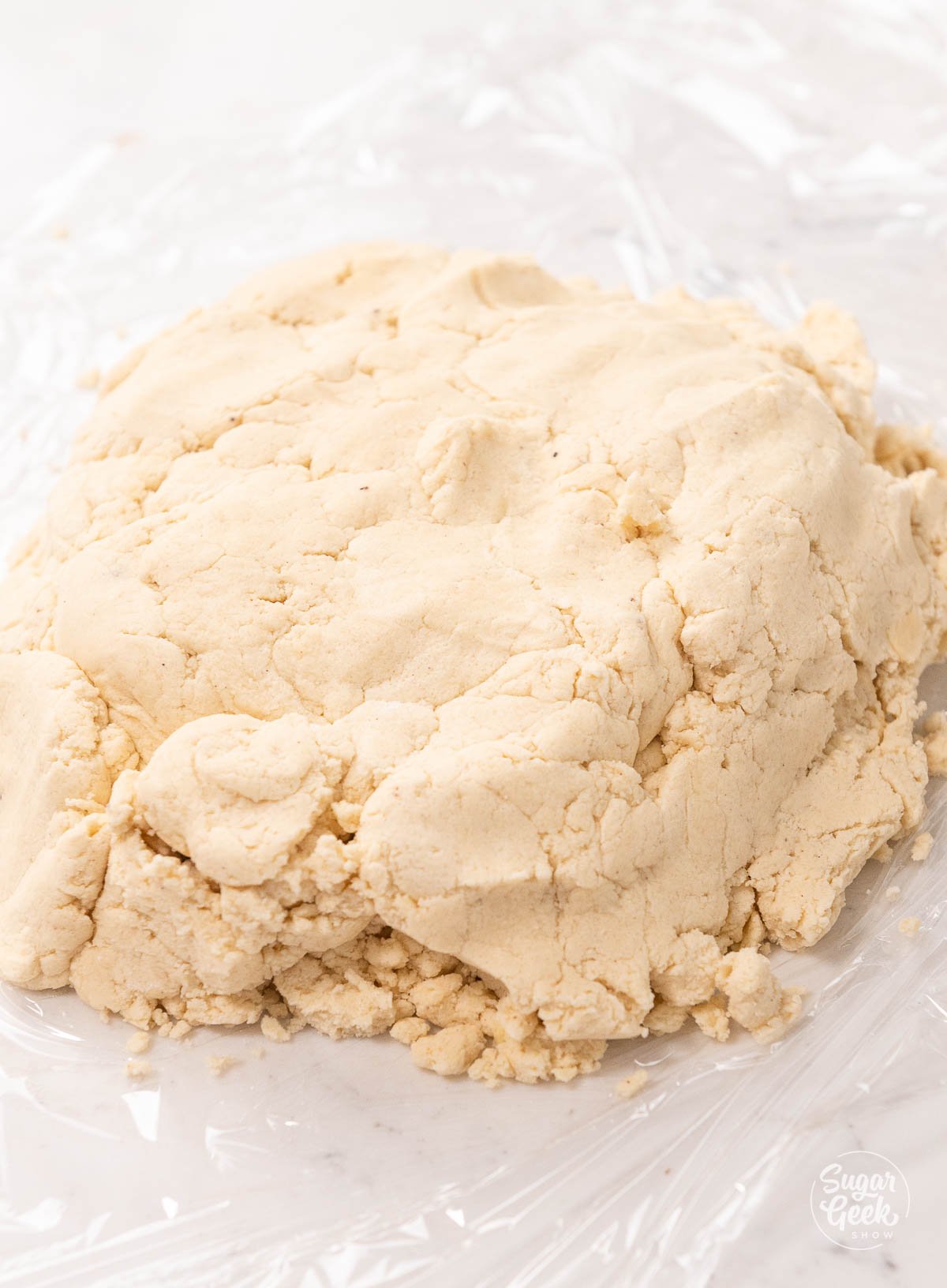
    Crowding the pan. Only 4 cookies per tray. These are large cookies and need space for airflow. Too many on one pan causes uneven baking and encourages spreading.

    Using the wrong chocolate chips. Crumbl uses large milk chocolate chips, not semi-sweet. The sweeter, creamier flavor of milk chocolate is part of what makes these taste like the original.

    Not scraping the bowl. Butter and sugar hide at the bottom and sides of the bowl during creaming. Always scrape down thoroughly before adding the flour so everything is evenly incorporated. I mention this in almost every recipe because it is one of the most commonly skipped steps in baking.

    That gives you links in the opening, Why This Recipe Works, Ingredients, and Common Mistakes sections. What notes would you like in the recipe card?

    How To Make Chocolate Chip Copycat Crumbl Cookies Step-By-Step

    Sheet pan covered in parchment paper
    1. Prepare your pans. Line two cookie sheets with parchment paper and set aside. Make sure you have enough refrigerator space for both trays.
    whisking dry ingredients in a bowl
    1. Mix the dry ingredients. In a separate bowl, combine the flour, baking soda, baking powder, and salt. Whisk together and set aside. Always measure your flour by weight for the most accurate results.
    Creamed butter in the bottom of a mixer bowl.
    1. Cream the butter and sugar. In the bowl of your stand mixer with the paddle attachment, add the butter and mix until smooth. Add both sugars and cream together on medium speed until pale and fluffy, about 3 to 5 minutes. Do not forget to scrape the bowl between additions.
    Pouring egg into a mixer.
    1. Add the egg and vanilla. Add the egg and mix on medium until fully incorporated. Add the vanilla and mix briefly.
    mixing cookie dough in a mixer
    1. Add the flour. Gradually add the flour mixture and mix until just combined. Do not overmix. If the batter is too thick and crumbly and will not form into balls, add a small amount of extra egg.
    chocolate chip cookie dough in the mixer
    1. Add the chocolate chips. Add the chocolate chips and mix until evenly distributed. Save a few to press into the tops of the cookies before baking.
    cookie dough ball on a food scale
    1. Scoop the dough. Scoop and measure the dough into 5-ounce balls, roughly the size of a tennis ball. Place 4 dough balls on each cookie sheet, evenly spaced. Gently press each ball down slightly. This recipe makes 8 cookies total across 2 trays.
    four chocolate chip cookies on a baking sheet, hand wearing a glove pressing down on a cookie dough ball
    1. Add chips to tops. Press a few extra chocolate chips onto the tops of each cookie.
    hands wearing pink gloves pointing at smushed cookie dough ball on a baking sheet
    1. Chill. Refrigerate the trays for at least 30 minutes or overnight. Do not skip this step. Chilling is what prevents spreading and gives you that thick, cakey texture.

      Preheat your oven to 375 degrees while the dough is chilling.
    four chocolate chip cookies on parchment paper on a baking sheet in the oven
    1. Bake. Bake on the middle rack for 10 to 12 minutes. Do not overbake. The cookies will still look slightly raw in the center and the edges will be lightly browned. They continue cooking on the hot pan as they cool.
    chocolate chip cookies pulled apart and exposing the melted chocolate on the inside
    1. Cool. Let the cookies cool on the pan for 5 minutes before transferring to a cooling rack. Store in an airtight container for up to 1 week.

    PRO TIP: These cookies are best served warm. Microwave for 10 to 15 seconds before eating for that gooey, melted chocolate experience.

    Chocolate Chip Copycat Crumbl Cookies FAQs

    Can I make smaller Crumbl cookies?

    Yes but the texture will be different. The thick, gooey center is a result of the large size. Smaller cookies will bake through more quickly and lose that signature underdone center. If you make smaller cookies, reduce the bake time and watch them closely.

    Do Crumbl cookies require chilling?

    Yes. Chilling the dough before baking is what prevents the cookies from spreading flat and gives you that thick, domed shape. The minimum is 30 minutes but overnight chilling produces an even better result because it gives the flour more time to fully hydrate.

    How do I get the craggly top?

    The craggly top comes from room temperature butter that is creamed properly with the sugar and from pressing the dough balls down slightly before chilling. Do not skip the creaming step and make sure your butter is at room temperature, not cold.

    Can I use semi-sweet chocolate chips?

    You can, but the flavor will be noticeably different. Crumbl uses milk chocolate chips specifically for their sweeter, creamier flavor. Semi-sweet chips produce a more intense chocolate flavor that does not taste as much like the original.

    How long do these cookies last?

    Stored in an airtight container at room temperature, these cookies stay fresh for up to 1 week. Warm them in the microwave for 10 to 15 seconds before eating to bring back the gooey center.

    Can I freeze the dough?

    Yes. Portion the dough into 5-ounce balls, place on a tray, freeze until solid, then transfer to a zip-lock bag. Bake from frozen at 375 degrees adding 2 to 3 extra minutes to the bake time.

    More Cookie Recipes To Try

    • Pumpkin Chocolate Chip Cookies
    • close up shot of double chocolate chip cookie
      Chewy Double Chocolate Chip Cookies
    • Sea Salt Chocolate Chip Cookies
    • chocolate chip cookie split in half with melted chocolate chips. Shot from the top
      Master chocolate chip cookie recipe

    Leave Me A Review
    ⭐️⭐️⭐️⭐️⭐️

    If you tried this Chocolate Chip Copycat Crumbl Cookie Recipe or any other recipe on my blog, please leave a 🌟 star rating and let me know how it goes in the comments. I love hearing from you!

    Recipe

    Print Recipe
    4.84 from 455 votes

    Copycat Chocolate Chip Crumbl Cookie

    Looking for a true copycat Crumbl cookie recipe? Big dense and chewy milk chocolate chip cookies with that signature craggily look on top. Put them in that cute little pink box and you'll hardly be able to tell the difference!
    Prep Time10 minutes mins
    Cook Time11 minutes mins
    Chilling30 minutes mins
    Total Time51 minutes mins
    Course: Dessert
    Cuisine: American
    Servings: 8 5 oz cookies
    Calories: 547kcal
    Author: Liz Marek

    Ingredients

    • 4 ounces butter softened, but not melted (½ cup)
    • 5.25 ounces brown sugar (¾ cup)
    • 5.25 ounces white sugar (¾ cup)
    • 11.25 ounces all purpose flour (2 ¼ cups)
    • 1 teaspoon baking soda
    • 1 teaspoon baking powder
    • ½ teaspoon salt
    • 1 large egg cold (room temperature egg if you want your cookies to spread more)
    • 1 teaspoon vanilla extract
    • 2 cups milk chocolate chips extra large! (I actually used mini Hershey's kisses)
    US Customary - Metric

    Instructions

    Making the dough

    • Prepare a cookie sheet with a piece of parchment paper.
    • In a separate bowl, combine the flour, baking soda, baking powder, and salt.
    • In the bowl of your stand mixer with the paddle attachment, add butter and mix until smooth.
      I'm using my Bosch Universal Plus mixer, but you can use a KitchenAid, or hand mixer as well.
    • Add both sugars and cream together on medium speed until pale and fluffy. About 3-5 minutes.
    • Add the egg and mix until fully incorporated. Add the vanilla.
    • Gradually add the flour mixture and mix until just combined.
    • Add the chocolate chips and mix until evenly distributed. (Save a few to use on the tops of your cookies.)

    Forming and baking the cookies

    • Scoop and measure the dough into 5 ounce balls. (Or about the size of a tennis ball.)
    • Place 4 dough balls onto a cookie sheet, evenly spaced. Gently press them down slightly. This batch will make 8, 5 oz cookies so divide them onto 2 separate trays.
    • (optional) Add a few chocolate chips on top to get pinterest-worthy cookies.
    • Preheat your oven to 375°F
    • Chill the dough in the refrigerator for 30 minutes or overnight.
    • Bake in a 375°F oven on the middle rack for 10-12 minutes. Do not overbake these! They will still look slightly raw in the center and be lightly browned on the edges.
    • Cool the cookies for 5 minutes on the pan, then transfer them to a cooling rack. Store in an airtight container for up to 1 week.
    • Pro-Tip: I like to warm these cookies up in the microwave and eat them warm for that gooey-chocolate experience!

    Video

    Notes

    Use a kitchen scale to measure your ingredients, especially the flour. Too much flour makes the dough crumbly and the cookies dry. Too little and they spread flat. Weight measurements give you consistent results every time.
    Bring your butter to room temperature before mixing. It should be soft enough to leave a finger indent but still holding its shape. Cold butter will not cream properly and melted butter causes too much spread.
    Do not overbake. Pull the cookies out when the edges are lightly browned and the centers still look slightly raw and glossy. They continue cooking on the hot pan as they cool. Overbaked cookies will be dry and hard.
    Chilling the dough is not optional. At least 30 minutes in the refrigerator is required to prevent spreading and get that thick, cakey shape. Overnight chilling produces an even better result.
    Only place 4 cookies per tray. These are large cookies and need space for even airflow. Crowding the pan causes uneven baking and spreading.
    Use large milk chocolate chips for the most authentic Crumbl flavor. Mini Hershey's kisses also work great. Semi-sweet chips will give you a noticeably different flavor.
    These cookies are best served warm. Microwave for 10 to 15 seconds before eating to bring back the gooey, melted chocolate center.
    To freeze the dough, portion into 5 ounce balls, freeze on a tray until solid, then store in a zip-lock bag for up to 3 months. Bake from frozen at 375 degrees, adding 2 to 3 extra minutes to the bake time.

    Nutrition

    Serving: 1cookie | Calories: 547kcal | Carbohydrates: 86g | Protein: 5g | Fat: 21g | Saturated Fat: 13g | Polyunsaturated Fat: 1g | Monounsaturated Fat: 3g | Trans Fat: 1g | Cholesterol: 62mg | Sodium: 409mg | Potassium: 131mg | Fiber: 1g | Sugar: 54g | Vitamin A: 388IU | Calcium: 50mg | Iron: 2mg
    { "@context": "https://schema.org", "@type": "WebPage", "name": "Copycat Chocolate Chip Crumbl Cookies", "url": "https://sugargeekshow.com/recipe/copycat-chocolate-chip-crumbl-cookies/", "description": "How to make copycat Crumbl chocolate chip cookies at home with thick, gooey centers and caramelized edges using simple pantry ingredients.", "about": [ { "@type": "Thing", "name": "Cookie", "sameAs": "https://en.wikipedia.org/wiki/Cookie" }, { "@type": "Thing", "name": "Chocolate chip cookie", "sameAs": "https://en.wikipedia.org/wiki/Chocolate_chip_cookie" }, { "@type": "Thing", "name": "Butter", "sameAs": "https://en.wikipedia.org/wiki/Butter" }, { "@type": "Thing", "name": "Brown sugar", "sameAs": "https://en.wikipedia.org/wiki/Brown_sugar" }, { "@type": "Thing", "name": "Maillard reaction", "sameAs": "https://en.wikipedia.org/wiki/Maillard_reaction" }, { "@type": "Thing", "name": "Milk chocolate", "sameAs": "https://en.wikipedia.org/wiki/Milk_chocolate" }, { "@type": "Thing", "name": "Baking", "sameAs": "https://en.wikipedia.org/wiki/Baking" }, { "@type": "Thing", "name": "Gluten", "sameAs": "https://en.wikipedia.org/wiki/Gluten" }, { "@type": "Thing", "name": "Caramelization", "sameAs": "https://en.wikipedia.org/wiki/Caramelization" }, { "@type": "Thing", "name": "Confectionery", "sameAs": "https://en.wikipedia.org/wiki/Confectionery" } ] }

    Cake sculpted to look like a monster truck

    November 1, 2021 Course Preview

    Monster Truck Cake Tutorial

    Skill level: Intermediate

    For my son's 2nd birthday, it was pretty easy to pick a theme, monster trucks! Ezra is constantly talking about trucks so we went all out for his party, and the cake was no exception.

    In this tutorial, you will learn how to make a gravity-defying monster truck birthday cake and actually can roll around, so we made a texas sheet cake that it put tire treads into. And speaking of tires, yes, the tires are edible too!

    There's many cool details and tricks in this tutorial, so let's get our tools together and let's get started.

    1:03:36 Minutes of Instruction

    What You Will Learn

    • How to make a birthday cake in the shape of a monster truck
    • Learn how to create the structure to support this gravity-defying design
    • How to hand-paint the flames and make the edible tires

    Cake sculpted to look like a monster truck

    Tutorial Chapters

    1. Adding the monster clay 0:37
    2. Building the mold casing 8:05
    3. Adding the tire to the mold 10:40
    4. Adding the Oomoo 11:35
    5. Making the chocolate tire 13:37
    6. Cutting the threaded rod 15:05
    7. Making the base 16:00
    8. Adding the tires 22:35
    9. Adding the chassis 25:26
    10. Painting the base and tires 28:07
    11. Stacking and carving the cake 32:18
    12. Crumb coating the cake 35:56
    13. Covering the cake in fondant 39:26
    14. Adding the fenders 46:55
    15. Adding the bumpers and lights 50:25
    16. Adding the grill 55:10
    17. Adding the straws 56:34
    18. Painting the details 58:30
    19. Painting the flames 59:39
    20. Adding the shock absorbers 1:02:23

    Downloads

    Materials List
    Truck Template

    Cake sculpted to look like a monster truck

    November 1, 2021 Paid Video

    Monster Truck Cake

    Skill level: Intermediate

    For my son's 2nd birthday, it was pretty easy to pick a theme, monster trucks! Ezra is constantly talking about trucks so we went all out for his party, and the cake was no exception.

    In this tutorial, you will learn how to make a gravity-defying monster truck birthday cake and actually can roll around, so we made a texas sheet cake that it put tire treads into. And speaking of tires, yes, the tires are edible too!

    There's many cool details and tricks in this tutorial, so let's get our tools together and let's get started.

    1:03:36 Minutes of Instruction

    What You Will Learn

    • How to make a birthday cake in the shape of a monster truck
    • Learn how to create the structure to support this gravity-defying design
    • How to hand-paint the flames and make the edible tires

    Tutorial Chapters

    1. Adding the monster clay 0:37
    2. Building the mold casing 8:05
    3. Adding the tire to the mold 10:40
    4. Adding the Oomoo 11:35
    5. Making the chocolate tire 13:37
    6. Cutting the threaded rod 15:05
    7. Making the base 16:00
    8. Adding the tires 22:35
    9. Adding the chassis 25:26
    10. Painting the base and tires 28:07
    11. Stacking and carving the cake 32:18
    12. Crumb coating the cake 35:56
    13. Covering the cake in fondant 39:26
    14. Adding the fenders 46:55
    15. Adding the bumpers and lights 50:25
    16. Adding the grill 55:10
    17. Adding the straws 56:34
    18. Painting the details 58:30
    19. Painting the flames 59:39
    20. Adding the shock absorbers 1:02:23

    Downloads

    Materials List
    Truck Template

    October 30, 2021 Blog

    Moist Gingerbread Cake

    This perfectly spiced gingerbread cake is super moist and paired with delicious brown sugar Swiss meringue buttercream. The best wintery cake to make you feel warm and cozy inside and out!

    This gingerbread cake recipe is super simple to make and you don't even need a stand mixer to make it! Decorate yours however you like with your favorite holiday sprinkles, or you can make your very own miniature, gingerbread men cookies to sit on top like I did!


    What's In This Blog Post

    • Gingerbread Cake Ingredients
    • How to Make Gingerbread Cake Step-By-Step
    • How to Make Brown Sugar Swiss Meringue Buttercream
    • How to Make White Chocolate Water Ganache
    • How To Decorate A Gingerbread Cake
    • FAQ
    • More Recipes You'll Love

    Gingerbread Cake Ingredients

    gingerbread cake ingredients

    The most important ingredient in your gingerbread cake is ginger! We're using freshly grated ginger and ground ginger for tons of ginger flavor. You can grate your own ginger or buy your own pre-made. But trust me, you don't want to leave it out. 

    One of the reasons this cake is so moist is because it uses dark brown sugar, un-sulfured molasses, buttermilk, and a little bit of oil. I'm using canola oil which has the most neutral oil, but you could also use vegetable oil. 

    grandmas sulfured molasses in a jar

    Make sure your molasses is un-sulfured and not black-strap molasses which is very bitter and too strong of a flavor for baking. 

    Another key ingredient of this recipe is buttermilk! Did you know that buttermilk is often used in baking because the acidity breaks down the gluten protein, resulting in a more tender cake? It's true. If you find that you do not have or cannot get access to buttermilk, you can make your own buttermilk substitute. 

    How to Make Gingerbread Cake Step-By-Step

    1. Preheat your oven to 335°F (170°C). Bring your buttermilk, eggs, and coffee to room temperature. Measure out all of your ingredients by weight with a food scale. I do not recommend converting this recipe to cups because you can accidentally add too much flour which will make your cake dry. gingerbread cake liquid ingredients in a large glass bowl
    2. In a large bowl, add your molasses, oil, coffee, vanilla, melted butter, eggs, freshly grated ginger, and buttermilk. Whisk everything together to break up the egg yolks and combine, and then set it aside.gingerbread cake dry ingredients in a white stand mixer bowl
    3. In the bowl of your stand mixer, add the AP flour, brown sugar, cinnamon, powdered ginger, salt, and baking soda. Add the paddle attachment and mix on low for a few seconds to combine. I'm using my Bosch Universal Plus mixer, you can also use a hand mixer or even a whisk for this cake.adding liquid ingredients to dry ingredients while mixingclose up of gingerbread cake batter in a mixing bowl
    4. While mixing on low, add in your wet ingredient mixture and mix it until it's just combined (takes about 10-15 seconds). Mix with a spatula to make sure there are no pockets of flour.
    5. Prepare three, 6″x2″ cake pans or two, 8″x2″ cake pans with cake goop or your preferred pan release.pouring gingerbread cake batter into cake pans
    6. Divide the batter into your greased cake pans. I like to weigh my pans with a scale to see if I divided the batter evenly.
    7. Bake at 335°F (170°C) for 35-40 minutes (for 6″ pans, less for 8″ pans).
    8. Remove your cakes from the oven once the tops are set and a toothpick comes out clean. Let your cakes rest in the pans for 10-15 minutes or until the pans are just barely warm.
    9. Flip the cakes out onto a cooling rack. Wrap them in plastic wrap to cool at room temperature until you are ready to stack, or freeze the cakes for 30 minutes. Do NOT stack warm cakes. You can wrap and freeze these cakes for a few days before they lose too much moisture.gingerbread cake on a cooling rackgingerbread cakes on a cooling rack

    I made brown sugar Swiss meringue buttercream to go with this cake because I love how silky and smooth it is, but this cake would also go great with cream cheese frosting, whipped cream frosting, ermine buttercream, or my easy buttercream recipe.

    How to Make Brown Sugar Swiss Meringue Buttercream

    1. Bring two inches of water to a simmer over medium-high heat. Once it's simmering, reduce the heat to medium-low.
    2. Place your egg whites and brown sugar together in the metal bowl of your stand mixer and whisk to combine.egg whites and brown sugar in a metal mixing bowl
    3. Place the bowl on top of the simmering water and whisk continuously until the grains of sugar are dissolved. Don't walk away or you could accidentally cook your eggs. Pro-tip - (or oops I accidentally multi-tasked and got distracted tip) if you do walk away and see some bits of cooked egg, you can strain it out and then continue with your buttercream. It's not ruined.hand touching egg whites and brown sugar mix
    4. Once you cannot feel any grains of sugar, take the egg mixture off the heat and attach it to your stand mixer with the whisk attachment.
    5. Turn the mixer onto high and let your eggs whip until you reach stiff, STIFF peaks. Stiff peaks is when the meringue stands straight up from the whisk. This can take 5-15 minutes depending on the strength of your mixer.egg and brown sugar mixture whisking on a stand mixer
    6. Because I'm impatient, I like to scoop out my meringue and place it onto a cookie sheet to cool down quickly in the fridge. You can stick the whole bowl in the fridge but it takes much longer. You can't whip in the butter until the meringue is cool or it will melt the butter and you'll be left with brown sugar soup!brown sugar meringue on a green sheet pan
    7. After about 10-20 minutes, your meringue shouldn't feel warm anymore. Scoop it back into the bowl and start mixing on medium speed while adding in your chunks of room temperature butter. Some people have had issues with their buttercream becoming soupy cause the meringue was too warm.
    8. Add in your salt, vanilla, and cinnamon.Close up of brown sugar buttercream on a whisk
    9. Increase the speed to high and whip the buttercream until it's light and fluffy and doesn't taste like butter anymore.

    Pro-Tip: If your buttercream is too cold and seems like it's clinging to the sides of the bowl and whisk you can fix it. Remove about 1 cup of the buttercream and place it into a bowl. Microwave it until it's barely melted. It took me about 30 seconds.

    Pour the half-melted buttercream back into the bowl and continue mixing, it should get light and fluffy now. 

    How to Make White Chocolate Water Ganache

    1. Combine your chocolate and water together and microwave it for about 1 minute until the chocolate begins to melt. Stir until it's smooth.
    2. Add in 1 teaspoon of white food coloring so that the drip is nice and white and not transparent. Set the water ganache aside to cool to about 90ºF. Make sure your cake is cold and your water ganache is cooled, or it will drip too far down the side of the cake.
    Click on this image to go to the how to decorate your first cake tutorial

    How To Decorate A Gingerbread Cake

    If you want to learn more about the fundamentals of decorating a cake, check out my how to decorate your first cake tutorial. 

    1. Place your first layer of cake onto a 6″ round cake board or directly onto your cake plate. Spread a thin layer of buttercream on top that is about ¼″ thick. 
    2. Repeat with the second layer of cake. Try to keep your layers of buttercream an even thickness.
    3. Cover the entire cake with a thin layer of buttercream. This is called the crumb coat. Then place the cake into the freezer for about 15 minutes to firm up the crumb coat.
    4. Apply your final coat of buttercream and smooth out the sides and top with a bench scraper and an offset spatula.  
    5. Place your cake back into the fridge to chill while you make your water ganache. 
    6. Drip the water ganache down the sides of the cake and fill in the center with the leftover ganache. Smooth out any gaps with a spatula or spoon. 
    7. Wait until the ganache sets or put the cake into the fridge for 10 minutes before adding your swirls of buttercream. I was not patient and the buttercream ended up pushing some of the ganache over the edges of the cake and ruined my drip a little.
    8. I added these cute little gingerbread cookies to the top of my cake. The lines are just piped with melted white chocolate. Super easy and tasty!

    FAQ

    Can gingerbread cake be frozen?

    Yes! If you want to freeze your gingerbread cake, wrap it tightly in plastic wrap and then store it into a freezer-safe storage bag. If you store it properly, gingerbread cake can be stored for up to 2 months in the freezer.

    Why is my gingerbread cake dry?

    Most likely your gingerbread cake is dry because your oven is too hot. Check your oven with an oven thermometer and reduce the temperature accordingly if it is running hotter than you need it to be.

    Can this recipe be made into cupcakes?

    Yes! This recipe also makes about 24 cupcakes (depending on your pan size). Fill the liners ⅔ way full and bake for about 20 minutes until the center of the cupcake is set.

    Why did my gingerbread cake set in the center?

    Make sure to position your oven rack in the center and place the pans side-by-side on the middle rack. Do not open the oven door for at least 30 minutes and make sure to bake until a toothpick comes out of the center clean. Weighing your ingredients instead of converting to cups will also ensure you have the right ratios for ingredients.

    More Recipes You'll Love

    Gingerbread House Recipe

    Gingerbread Cookies

    Water Ganache

    Brown Butter Buttercream


    Cake Batter and Frosting Calculator

    Select an option below to calculate how much batter or frosting you need. Adjust the servings slider on the recipe card to change the amounts the recipe makes.

    Choose a pan type

    Choose a cake pan size
    (based on 2" tall cake pan)

    Choose a cake pan size
    (based on 2" tall cake pan)

    Choose a cake pan size
    (based on 2" tall cake pan)

    Cupcake Tin Size

    Choose number of pans

    Cups of Batter Needed

    8 cups

    Cups of Frosting Needed

    5 cups

    Note: measurements are estimated based off the vanilla cake recipe using standard US cake pans and sizes. Measurements used are for 2" tall cake pans only. Your results may vary. Do not overfill cake pans above manufacturer's recommended guidelines.


    Recipe

    Print Recipe
    4.83 from 34 votes

    Moist Gingerbread Cake

    This super moist spiced gingerbread cake recipe made with smooth and creamy brown sugar buttercream. The perfect cake for Christmas!
    Prep Time5 minutes mins
    Cook Time35 minutes mins
    Total Time40 minutes mins
    Course: Dessert
    Cuisine: American
    Servings: 12 servings
    Calories: 870kcal
    Author: Liz Marek

    Equipment

    • Three 6"x2" cake pans
    • Stand mixer with whisk attachment

    Ingredients

    Gingerbread Cake

    • 15 ounces all-purpose flour
    • 10 ounces dark brown sugar
    • 1.5 teaspoons baking soda
    • 1.5 teaspoons salt
    • 3 teaspoons ground ginger powdered
    • 3 teaspoons ground cinnamon
    • 3 teaspoons grated ginger fresh, or from a tube
    • ¼ teaspoon ground cloves
    • 8 ounces buttermilk room temperature
    • 4 ounces unsalted butter melted, not hot
    • 4 ounces canola oil or vegetable
    • 2 ounces coffee room temperature
    • 1 teaspoon vanilla extract
    • 4 ounces un-sulfured molasses I used Grandma's brand
    • 2 large eggs room temperature

    Brown Sugar Swiss Meringue Buttercream

    • 8 ounces egg whites  fresh is better, you can use boxed if needed
    • 14 ounces light brown sugar
    • ¾ teaspoon salt
    • 18 ounces unsalted butter room temperature
    • 1 Tablespoon vanilla extract
    • 1 Tablespoon ground cinnamon

    White Chocolate Water Ganache

    • 6 ounces white chocolate I prefer guittard white chocolate wafers
    • 1 ounce warm water
    US Customary - Metric

    Instructions

    Gingerbread Cake

    • Preheat your oven to 335°F (170°C). Bring your buttermilk, eggs, and coffee to room temperature. Measure out all of your ingredients by weight with a food scale. I do not recommend converting this recipe to cups because you can accidentally add too much flour which will make your cake dry. 
    • In a large bowl, add your molasses, oil, coffee, vanilla, melted butter, eggs, freshly grated ginger, and buttermilk. Whisk everything together to break up the egg yolks and combine, and then set it aside.
    • In the bowl of your stand mixer, add the AP flour, brown sugar, cinnamon, powdered ginger, salt, and baking soda. Add the paddle attachment and mix on low for a few seconds to combine. I'm using my Bosch Universal Plus mixer, you can also use a hand mixer or even a whisk for this cake.
    • While mixing on low, add in your wet ingredient mixture and mix it until it's just combined (takes about 10-15 seconds). Mix with a spatula to make sure there are no pockets of flour.
    • Prepare three, 6″x2″ cake pans or two, 8″x2″ cake pans with cake goop or your preferred pan release.
    • Divide the batter into your greased cake pans. I like to weigh my pans with a scale to see if I divided the batter evenly.
    • Bake at 335°F (170°C) for 35-40 minutes (for 6″ pans, less for 8″ pans).
    • Remove your cakes from the oven once the tops are set and a toothpick comes out clean. Let your cakes rest in the pans for 10-15 minutes or until the pans are just barely warm.
    • Flip the cakes out onto a cooling rack. Wrap them in plastic wrap to cool at room temperature until you are ready to stack, or freeze the cakes for 30 minutes. Do NOT stack warm cakes. You can wrap and freeze these cakes for a few days before they lose too much moisture.

    Brown Sugar Swiss Meringue Buttercream

    • Bring two inches of water to a simmer over medium-high heat. Once it's simmering, reduce the heat to medium-low.
    • Place your egg whites and brown sugar together in the metal bowl of your stand mixer and whisk to combine.
    • Place the bowl on top of the simmering water and whisk continuously until the grains of sugar are dissolved. Don't walk away or you could accidentally cook your eggs. Pro-tip - (or oops I accidentally multi-tasked and got distracted tip) if you do walk away and see some bits of cooked egg, you can strain it out and then continue with your buttercream. It's not ruined.
    • Once you cannot feel any grains of sugar, take the egg mixture off the heat and attach it to your stand mixer with the whisk attachment.
    • Turn the mixer onto high and let your eggs whip until you reach stiff, STIFF peaks. Stiff peaks is when the meringue stands straight up from the whisk. This can take 5-15 minutes depending on the strength of your mixer.
    • Because I'm impatient, I like to scoop out my meringue and place it onto a cookie sheet to cool down quickly in the fridge. You can stick the whole bowl in the fridge but it takes much longer. You can't whip in the butter until the meringue is cool or it will melt the butter and you'll be left with brown sugar soup!
    • After about 10-20 minutes, your meringue shouldn't feel warm anymore. Scoop it back into the bowl and start mixing on medium speed while adding in your chunks of room temperature butter. Some people have had issues with their buttercream becoming soupy cause the meringue was too warm.
    • Add in your salt, vanilla, and cinnamon.
    • Increase the speed to high and whip the buttercream until it's light and fluffy and doesn't taste like butter anymore.

    White Chocolate Water Ganache

    • Combine your chocolate and water together and microwave it for about 1 minute until the chocolate begins to melt. Stir until it's smooth.
    • Add in 1 teaspoon of white food coloring so that the drip is nice and white and not transparent. Set the water ganache aside to cool to about 90ºF. Make sure your cake is cold and your water ganache is cooled, or it will drip too far down the side of the cake.

    Video

    Notes

    Important Things To Note Before You Start
    1. Bring all your ingredients to room temperature or even a little warm (eggs, buttermilk, butter, etc) to ensure your batter does not break or curdle. 
    2. Use a scale to weigh your ingredients (including liquids) unless otherwise instructed (Tablespoons, teaspoons, pinch etc). Metric measurements are available in the recipe card. Scaled ingredients are much more accurate than using cups and help ensure the success of your recipe. 
    3. Practice Mise en Place (everything in it's place). Measure out your ingredients ahead of time and have them ready before you start mixing to reduce the chances of accidentally leaving something out.
    4. Chill your cakes before frosting and filling. You can cover a frosted and chilled cake in fondant if you wish. This cake is also great for stacking. I always keep my cakes chilled in the refrigerator before delivery for easy transporting. Learn more about decorating your first cake. 
    5. If the recipe calls for specific ingredients like cake flour, replacing it with all purpose flour and cornstarch is not recommended unless specified in the recipe that it’s ok. Substituting ingredients may cause this recipe to fail. 
    All purpose flour is a plain flour with no rising agents. It has a protein level of 10%-12%
    Cake flour is a soft, low protein flour of 9% or less. 
    Cake flour sources: UK - Shipton Mills Cake & Pastry Flour
    6. If your buttercream is too cold and seems like it’s clinging to the sides of the bowl and whisk you can fix it. Remove about 1 cup of the buttercream and place it into a bowl. Microwave it until it’s barely melted. It took me about 30 seconds.
    Pour the half-melted buttercream back into the bowl and continue mixing, it should get light and fluffy now. 
    7. If you do not have buttermilk to make the cake, you can use one of my buttermilk substitutes.
    8. Almost any frosting will pair nicely with this gingerbread cake including the SMBC I've included in this recipe, easy buttercream, ermine, whipped cream, or cream cheese.

    Nutrition

    Serving: 1serving | Calories: 870kcal | Carbohydrates: 92g | Protein: 8g | Fat: 53g | Saturated Fat: 28g | Cholesterol: 145mg | Sodium: 662mg | Potassium: 336mg | Fiber: 2g | Sugar: 64g | Vitamin A: 1375IU | Calcium: 124mg | Iron: 3mg
    close up slice of marble cake

    October 30, 2021 Blog

    Moist and Fluffy Marble Cake Recipe

    Moist and fluffy marble cake made from scratch doesn't have to be complicated. Many times, you guys have asked me for an easy marble cake recipe that did not require two cake recipes. After a lot of testing, I finally have the PERFECT recipe for you based on my ever-popular vanilla cake recipe! 

    What makes this cake so amazing is all you have to do is make the vanilla cake and then flavor part of the cake with my chocolate mixture to make the chocolate batter then swirl it all together! Simple!

    Pair it with chocolate frosting and ganache drip and you've got yourself a vanilla and chocolate lover's dream cake!

    If you like a fun mix-in layer cake, my homemade Oreo cake folds chopped Oreos into a soft white cake the same easy way.

    The light half of this marble cake is built on my white cake from scratch, swirled together with chocolate batter for that classic marbled look.

    What's In This Blog Post

    • Marble Cake Ingredients
    • Cake Batter Instructions
    • Marbling the Cake Batter Step-by-Step
    • How to Make Ganache Frosting
    • Ganache Drip Instructions
    • Decorating Step-by-Step
    • What is marble cake made of?
    • Why is it called a marble cake?
    • FAQ
    • More Cake Recipes You'll Love

    Marble Cake Ingredients

    Buttermilk - Buttermilk adds moisture, delicate texture, and flavor to the cake. If you do not have buttermilk, you can make your own using my preferred buttermilk substitutes.

    Cake flour - Cake flour has a lower protein content than all-purpose flour. What this means is that when you use cake flour in your cake recipe, your cake will be more tender and have a softer crumb.

    PRO TIP: Do not fall for the "just add cornstarch to regular flour" trick. It does not work for this recipe. Your cake will look and taste like cornbread.

    If you're in the UK search for Shipton mills soft cake and pastry flour or flour that has a protein level of 9% or less.

    Cake Batter Instructions

    1. Prepare three 8"x2" cake pans with cake goop or another preferred pan spray. Preheat the oven to 335ºF (168ºC).
    2. Bring your butter, milk, and eggs to room temperature. It's really important when making a cake for the ingredients to all be slightly warm so they create an emulsion.
    3. Heat the water until it's simmering and then combine it with your cocoa powder.
    4. Stir it until the cocoa powder is moistened. It will look lumpy, but that is normal.
      blooming cocoa powder with hot water in a clear bowl and metal whisk
    5. Set it aside and let it cool while you prepare the cake batter.
    6. In a separate container, combine ¾ cup of the milk and the oil together and set it aside.
    7. In a separate container, combine the remaining milk, eggs, vanilla, and almond extract together. Whisk it to break up the eggs, and then set it aside.
    8. In the bowl of your stand mixer, combine the flour, sugar, baking powder, baking soda, and salt with the paddle attachment. Mix for 10 seconds to combine everything.
    9. Add your softened butter to the flour mixture and mix on low until the mixture resembles coarse sand (this takes about 30 seconds). This style of mixing is called the reverse creaming method, and it will result in a very velvety, moist cake. A lot of my other cake recipes like brown butter cake and white velvet buttermilk cake use this method.
    10. Add in your milk/oil mixture and mix it on low until the dry ingredients are moistened.
    11. Increase the speed to medium (setting 2 on my Bosch Mixer, setting 4 on a KitchenAid) and let it mix for 2 minutes to develop the cake's structure. If you don't let your cake mix on this step, your cake could collapse.
    12. Scrape your bowl and then reduce the speed to low.
    13. Add in your egg mixture in three batches, letting the batter mix for 15 seconds between additions.
    14. Scrape down the sides again to make sure everything has incorporated.

    Marbling the Cake Batter Step-by-Step

    1. Take out ⅓ of your batter and combine it with the cooled chocolate mixture and fold it gently until it's combined.
    2. Layer your batter into your pans, starting with vanilla, then chocolate, and ending with vanilla.
    3. Use a butter knife to swirl them together gently to create the marbling effect. Do not over-mix or your cake will not have a marbled interior.
      Vanilla and chocolate cake batter in a cake pan and lightly marbled together
    4. Bake the cakes for 35-40 minutes at 335ºF (168ºC) or until a toothpick inserted into the center comes out cleanly (but the cake has not begun to shrink yet from the sides of the pan). IMMEDIATELY TAP THE PAN FIRMLY on the countertop once to release the steam from the cake. This stops the cake from shrinking. Your bake time may vary depending on your oven and the size of cake pans you use.
    5. Let the cakes cool for 10 minutes inside of the pan before flipping them out. The cake will shrink a bit and that is normal.
      marble cake freshly baked in a cake pan, cooling on a wire rack
    6. Flip the cake onto a cooling rack and let it cool completely. I chill my cakes before handling them, or you can wrap them in plastic wrap and freeze them to trap moisture in the cake.
    7. Thaw the cake on the countertop while it's still wrapped before frosting.

    How to Make Ganache Frosting

    1. Place your chocolate into a heatproof bowl.
    2. Heat your cream until it just begins to simmer. Do not boil it or your ganache will be grainy.
    3. Pour the hot cream over your chocolate.
    4. Let it sit for 5 minutes.
    5. Add your vanilla and salt to the chocolate mixture and whisk it until it's smooth and creamy.
    6. Pour your ganache into a shallow pan and let it cool to peanut butter consistency. Mine takes about 20 minutes to thicken up.
    7. Frost your cake with the ganache and then place it in the fridge for 20 minutes. This cake also pairs well with easy buttercream or chocolate Swiss meringue buttercream.
    8. Dust it with cocoa powder using a soft (new) makeup brush to make the velvet texture.

    Ganache Drip Instructions

    1. Heat the cream until it's just steaming, and then pour it over chocolate.
    2. Let it sit for 5 minutes.
    3. Whisk it until it's smooth.
    4. Let it cool until it's slightly warm to the touch before piping it onto your CHILLED cake. 

    Decorating Step-by-Step

    If you need to learn more or are new to cake decorating, check out my blog post on how to decorate your first cake step-by-step.

    1. Place your first cake layer onto your cake plate, and then spread on a layer of the ganache about ¼" thick. Repeat this step with the last two cake layers. I like using ganache because it's super stable and delicious, but chocolate buttercream or easy buttercream would also pair well.
    2. Cover the whole cake in a thin layer of ganache. This is called the crumb coat.
    3. Then, put the entire cake in the fridge for 20 minutes. 
    4. Prepare your chocolate drip and let it cool to 90ºF (32ºC).
    5. Apply your final layer of ganache and smooth it out with your offset spatula and bench scraper. 
    6. Using a soft (new) makeup brush, apply some cocoa powder to the outside of the ganache to make it look like it has a velvet texture. 
    7. Put your drip ganache into a piping bag and snip off the tip.
    8. Drip the ganache all the way around the top of the cake and finish it off with sprinkles.
    marble cake frosted with chocolate ganache with chocolate ganache drip and sprinkles on top

    What is marble cake made of?

    Marble cake is made when you add a small amount of dark-colored batter to light-colored batter, and then lightly mix it to give the cake a marbled appearance. 

    Why is it called a marble cake?

    The idea of marbling two different colored batters into a cake originated in nineteenth-century Germany. Marble cake made its way to America with German immigrants before the Civil War. Originally, the cakes were marbled with molasses and spices.

    three slices of marble cake with chocolate frosting on white plates with gold forks

    In 1889, a recipe appeared in a popular cookbook that took advantage of Americans' obsession with chocolate and replaced molasses with chocolate. Thus, the popular marble cake that we know about today was born. 

    During the 50's all the way through the 70's, bakeries in New York were adding almond extract to their marble cake batter as a signature flavor and sometimes referred to it as German marble cake. This was originally more of a snacking cake meant to be sliced and served without frosting and eaten with tea or coffee.

    three slices of marble cake on three white plates with gold forks. Shot from above. Surrounded by three copper mugs, greenery and cherry blossoms

    FAQ

    Can I bake this cake in other pans?

    Surprisingly, I get this question a lot. This recipe is meant to be baked in three 8" x 2" cake pans so that you get three nice layers of cake in each slice. But you can definitely use other sizes of cake pans like a ¼ sheet pan or square pans.

    You may need to increase or decrease the recipe to fit the size of your pan.

    Can I use this recipe to make cupcakes?

    You can also use this recipe to make cupcakes, but it makes a lot! My cupcakes baked at 350ºF for 15 minutes but you should bake them until the center bounces back when you touch it. 

    Can I use this recipe to make a bundt cake or individual loaves?

    Yes, you may use a bundt pan or a loaf pan. Just follow the same process of taking out ⅓ of the batter and adding in the bloomed cocoa powder to make the vanilla cake batter chocolate.

    Can I use regular milk instead of buttermilk?

    Yes, you can. But you will need to create a homemade buttermilk substitute first using regular milk along with other ingredients. There are several buttermilk substitutes I would recommend in place of buttermilk for this recipe.

    Why is my marble cake dry?

    Whenever you're introducing cocoa powder into a cake recipe, it can dry the cake out. You can avoid dry cake when you bloom your cocoa powder before mixing it with your vanilla cake batter.

    Blooming is when you combine the cocoa powder with hot water, coffee or cold oil and let it sit for a few minutes until it starts to look spongy. Now that the cocoa powder is moistened, it won't suck up all the moisture from your vanilla cake batter. 

    Why did my marble cake crack?

    Your oven temperature was most likely too high. Check your oven with an oven thermometer and reduce the temperature accordingly if it is running hotter than you need it to be.

    More Cake Recipes You'll Love

    Cinnamon Toast Cake

    Chocolate Bundt Cake

    Triple Chocolate Cake

    Irish Cream Cake

    Chocolate Drip

    Recipe

    close up slice of marble cake
    Print Recipe
    4.92 from 236 votes

    Moist and Fluffy Marble Cake Recipe

    You can transform my favorite vanilla cake into the best marble cake by adding a little chocolate! Super easy and super tasty!
    Prep Time10 minutes mins
    Cook Time40 minutes mins
    Total Time40 minutes mins
    Course: Dessert
    Cuisine: American, german
    Servings: 9 cups
    Calories: 822kcal
    Author: Liz Marek

    Equipment

    • Stand Mixer
    • Paddle Attachment

    Ingredients

    Marble Cake Ingredients

    • 16 ounces cake flour
    • 16 ounces granulated sugar
    • 1 teaspoon salt
    • 1 Tablespoon baking powder
    • 1 teaspoon baking soda
    • 4 large eggs room temperature
    • 5 ounces vegetable oil
    • 14 ounces buttermilk room temperature or slightly warm
    • 8 ounces butter unsalted and softened
    • 2 teaspoon vanilla
    • ½ teaspoon almond extract
    • 1 ounce cocoa powder dutch or natural
    • 3 ounces hot water
    • 1 Tablespoon cocoa powder for dusting

    Ganache Frosting

    • 16 ounces semi-sweet chocolate
    • 16 ounces heavy whipping cream
    • ¼ teaspoon salt
    • 1 teaspoon vanilla extract

    Ganache Drip

    • 6 ounces semi-sweet chocolate
    • 4 ounces heavy whipping cream
    US Customary - Metric

    Instructions

    Cake Batter Instructions

    • Prepare three 8″x2″ cake pans with cake goop or another preferred pan spray. Preheat your oven to 335ºF (168ºC).
    • Bring your butter, milk, and eggs to room temperature. It's really important when making a cake for the ingredients to all be slightly warm so they create an emulsion.
    • Heat the water until it's simmering and then combine it with your cocoa powder.
    • Stir it until the cocoa powder is moistened. It will look lumpy, but that is normal.
    • Set it aside and let it cool while you prepare the cake batter.
    • In a separate container, combine ¾ cup of the milk and the oil together and set it aside.
    • In a separate container, combine the remaining milk, eggs, vanilla, and almond extract together. Whisk it to break up the eggs, and then set it aside.
    • In the bowl of your stand mixer, combine the flour, sugar, baking powder, baking soda, and salt with the paddle attachment. Mix for 10 seconds to combine everything.
    • Add your softened butter to the flour mixture and mix on low until the mixture resembles coarse sand (this takes about 30 seconds). This style of mixing is called the reverse creaming method, and it will result in a very velvety, moist cake. A lot of my other cake recipes like brown butter cake and white velvet buttermilk cake use this method.
    • Add in your milk/oil mixture and mix it on low until the dry ingredients are moistened.
    • Increase the speed to medium (setting 2 on my Bosch Mixer, setting 4 on a KitchenAid) and let it mix for 2 minutes to develop the cake's structure. If you don't let your cake mix on this step, your cake could collapse.
    • Scrape your bowl and then reduce the speed to low.
    • Add in your egg mixture in three batches, letting the batter mix for 15 seconds between additions.
    • Scrape down the sides again to make sure everything has incorporated.

    Marbling the Cake Batter Instructions

    • Take out ⅓ of your batter and combine it with the cooled chocolate mixture and fold it gently until it's combined.
    • Layer your batter into your pans, starting with vanilla, then chocolate, and ending with vanilla.
    • Use a butter knife to swirl them together gently. Do not over-mix or your cake will not have a marbled interior.
    • Bake the cakes for 35-40 minutes at 335ºF (168ºC) or until a toothpick inserted into the center comes out cleanly (but the cake has not begun to shrink yet from the sides of the pan). IMMEDIATELY TAP THE PAN FIRMLY on the countertop once to release the steam from the cake. This stops the cake from shrinking.
    • Let the cakes cool for 10 minutes inside of the pan before flipping them out. The cake will shrink a bit and that is normal.
    • Flip the cake onto a cooling rack and let it cool completely. I chill my cakes before handling them, or you can wrap them in plastic wrap and freeze them to trap moisture in the cake.
    • Thaw the cake on the countertop while it's still wrapped before frosting.

    Ganache Frosting Instructions

    • Place your chocolate into a heatproof bowl.
    • Heat your cream until it just begins to simmer. Do not boil it or your ganache will be grainy.
    • Pour the hot cream over your chocolate.
    • Let it sit for 5 minutes.
    • Add in your vanilla and salt to the chocolate mixture and whisk it until it's smooth and creamy.
    • Pour your ganache into a shallow pan and let it cool to peanut butter consistency. Mine takes about 20 minutes to thicken up.
    • Frost your cake with the ganache and then place it into the fridge for 20 minutes. This cake also pairs well with easy buttercream or chocolate Swiss meringue buttercream.
    • Dust it with cocoa powder using a soft (new) makeup brush to make the velvet texture.

    Ganache Drip Instructions

    • Heat the cream until it's just steaming, and then pour it over chocolate.
    • Let it sit for 5 minutes.
    • Whisk it until it's smooth.
    • Let it cool until it's slightly warm to the touch before piping it onto your CHILLED cake. 

    Video

    Notes

    Buttermilk substitute - regular milk plus 2 Tablespoons of vinegar or lemon juice. You can also use powdered buttermilk. 
    Important Things To Note Before You Start
    1. Bring all your ingredients to room temperature or even a little warm (eggs, buttermilk, butter, etc) to ensure your batter does not break or curdle. 
    2. Use a scale to weigh your ingredients (including liquids) unless otherwise instructed (Tablespoons, teaspoons, pinch etc). Metric measurements are available in the recipe card. Scaled ingredients are much more accurate than using cups and help ensure the success of your recipe. 
    3. Practice Mise en Place (everything in it's place). Measure out your ingredients ahead of time and have them ready before you start mixing to reduce the chances of accidentally leaving something out.
    4. Chill your cakes before frosting and filling. You can cover a frosted and chilled cake in fondant if you wish. This cake is also great for stacking. I always keep my cakes chilled in the refrigerator before delivery for easy transporting. Learn more about decorating your first cake. 
    5. If the recipe calls for specific ingredients like cake flour, replacing it with all purpose flour and cornstarch is not recommended unless specified in the recipe that it’s ok. Substituting ingredients may cause this recipe to fail. 
    All purpose flour is a plain flour with no rising agents. It has a protein level of 10%-12%
    Cake flour is a soft, low protein flour of 9% or less. 
    Cake flour sources: UK - Shipton Mills Cake & Pastry Flour

    Nutrition

    Serving: 1serving | Calories: 822kcal | Carbohydrates: 73g | Protein: 10g | Fat: 56g | Saturated Fat: 36g | Cholesterol: 150mg | Sodium: 455mg | Potassium: 463mg | Fiber: 5g | Sugar: 44g | Vitamin A: 1162IU | Vitamin C: 1mg | Calcium: 138mg | Iron: 3mg

    October 28, 2021 Blog

    Chocolate Raspberry Galaxy Bonbons

    Chef Christophe Rull shows us how to create these shiny, chocolate galaxy bonbons filled with a smooth raspberry puree filling and decadent chocolate ganache. Learn how to make tempered cocoa butter colors from scratch, airbrush a unique galaxy pattern, and fill and close your bonbons.

    What's In This Blog Post

    • Chocolate Raspberry Galaxy Bonbon Ingredients
    • Tools and Equipment
    • Before you begin
    • How to make the raspberry filling
    • How to make the ganache filling
    • How to make cocoa butter colors
    • How to make airbrush the bonbon shells
    • How to make the bonbon shell
    • How to fill and close the bonbons
    • More chocolate recipes & tutorials

    Chocolate Raspberry Galaxy Bonbon Ingredients

    Tools and Equipment

    Every chocolatier is going to be familiar with these tools but if you're new to chocolate work, make sure you get these basic chocolate-making supplies before you attempt to make molded chocolates.

    Before you begin

    You must have properly tempered chocolate before you begin the bonbon process. If you need to learn how to temper chocolate you can watch Chef Christophe's previous video on tempering chocolate using the EZ Temper Machine or you can use my easy chocolate tempering method.

    You also want to have a clean mold! I'm using a polycarbonate mold from Cacao Barry.

    How to make the raspberry filling

    1. Pour the raspberry puree into a medium saucepan over medium heat.
    2. In a separate bowl, mix the sugar and NH Pectin together.
    3. Bring the raspberry puree to a boil, then slowly whisk in the sugar and pectin together. Mix thoroughly to ensure you do not have any lumps.
    4. Boil for a few minutes to activate the NH Pectin (this will allow the raspberry puree to solidify and be ready to use in our bonbons).
    5. Turn off the heat and transfer the filling to separate container
    6. Put a sheet of plastic wrap on top so it's touching the surface and cool completely. Store this raspberry mixture somewhere that's room temperature (you don't want it to be too warm otherwise it will not firm up, and you don't want it to be too cold otherwise it may be too difficult to create your bonbons).

    How to make the ganache filling

    1. Add your chocolate to a heat-safe container.
    2. Heat up the glucose in the microwave for about 10 seconds.
    3. Add the heavy whipping cream and glucose into a sauce pan.
    4. Bring it to a simmer over medium heat (stirring occasionally). Be careful not to boil or burn the cream.
    5. Carefully pour the hot mixture over your chocolate. Mix together.
    6. Add in your butter in chunks.
    7. Use an immersion blender to mix the butter with the ganache. Hold the immersion blender at a slight angle under the surface of the ganache to blend. Do not incorporate any air.
    8. Fill a large piping bag with your ganache filling and twist the top closed so the filling doesn't spill out.
    9. Cool the ganache in the piping bag to below 86ºF (30ºC). Pro-Tip: place your piping bag onto the counter to cool the ganache faster.

    How to make cocoa butter colors

    1. Melt the cocoa butter and white chocolate in the microwave in 30 second increments to prevent burning.
    2. Bring the temperature down to 91ºF (33ºC) and add 1% of cocoa butter paste (See Christophe's tempering chocolate recipe) to temper the cocoa butter. This will make the bonbons shinier!
    3. Cool the cocoa butter down to 86ºF (30ºC).
    4. To color your own cocoa butter, stir in your cocoa butter flowers. Using Power Flowers is a great way to get really vibrant chocolate colors. (Our raspberry color- red 4 pieces of red, 4 pieces of white.) (Our purple color- 1 ¼ red, ¾ blue, and 2 ½ white)
    5. Store this cocoa butter mixture at 86ºF (30ºC) until you're ready to use it. (it is not needed but you can easily achieve this using a Waring Chocolate Warmer.)
    6. Repeat this process for any additional colors you want to use to create your galaxy bonbons.
    7. For the black cocoa butter, I prefer the pre-made "Abyss" from Chef Rubber. Make sure to temper it by adding 1% of cocoa butter paste at 91ºF (33ºC) and cooling to 86ºF (30ºC) as well.
    8. Pour the colored cocoa butters into new bowls over a cheese cloth which will strain any lumps and gritty pieces to give you smooth, cocoa butters that are ready to create chocolate bonbon shells!

    How to make airbrush the bonbon shells

    1. Place some parchment paper onto your work surface to catch the chocolate and get your bench scraper ready.
    2. Dip a brush into one of your cocoa butter colors, and then flick the brush using your finger to create paint-like splatter across each and every one of the bonbon cavities. This will create the top layer of the speckles on your galaxy bonbon (I would recommend you use white cocoa butter for this step).
    3. Once you are happy with your speckles, turn the bonbon tray upside down and wipe it across a paper towel to clean the excess cocoa butter.
    4. Refrigerate the bonbon tray for about 5 minutes to allow it to set before you add in more colors.
    5. When you're ready to add your second color (we used purple), use a spoon to add a small drop into each bonbon cavity.
    6. Once you've added your second color to each cavity, use a cotton ball, a paintbrush, or your finger to wipe and swirl the color around. It does not need to be perfect but what you do not want is a thick layer of purple (otherwise you won't see the other colors).
    7. When you're happy with your second layer of color, turn the bonbon tray upside down and wipe it across a paper towel to clean the excess cocoa butter.
    8. Add your next colored cocoa butter (we used red) to an air gun. Be sure to check the temperature of the cocoa butter you are putting into the air gun and it should be about 86ºF (30ºC). If it is a little cold, you can heat it up in the microwave in 5 second increments until it reaches the desired temperature.
    9. Airbrush the black cocoa butter on lightly to each and every bonbon cavity. Once you're happy with your third colored cocoa butter and are satisfied with the airbrushing, turn the bonbon tray upside down and wipe it across a paper towel to clean the excess cocoa butter. If you wish to add airbrush more color in, be sure to wipe the bonbon tray each time you add more color and clean it.
    10. If you are working with one air gun, empty the air gun and add in your next color (for this step we used black cocoa butter). It's important to check the temperature of the cocoa butter you are putting into the air gun and it should be about 86ºF (30ºC).
    11. Use a large airbrush to spray the black cocoa butter generously across the bonbon mold to fill each and every bonbon cavity (the larger airbrush will make this process go faster, but if you only have a small airbrush that is okay it may just take a little bit longer).
    12. Turn the bonbon tray upside down and wipe it across a paper towel to clean the excess black cocoa butter from the mold.
    13. Stand the bonbon mold tray on its side to allow the chocolate to crystallize for about 10 minutes.

    How to make the bonbon shell

    You must have properly tempered chocolate before you begin the bonbon process. If you need to learn how to temper chocolate you can watch Chef Christophe's previous video on tempering chocolate using the EZ Temper Machine or you can use my easy chocolate tempering method.

    1. Place some parchment paper onto your work surface to catch the chocolate and get your bench scraper ready.
    2. Melt your dark chocolate either in the microwave or on a double boiler.
    3. Add in a few handfuls of tempered (chocolate comes tempered) chocolate to bring the temperature down. Stirring occasionally, cool your chocolate to 95ºF (35ºC).
    4. Add in the cocoa butter and mix.
    5. When you're ready to fill the bonbon mold with your filling, pour the chocolate into a piping bag and then cut a small hole in the piping bag (⅛") in the tip.
    6. Once each cavity has been filled with filling, pick the mold up by holding the edges and try not to put your hands agains the cavities directly or the heat from your hands can ruin the temper of the chocolate shells. Tap the edge of the mold with your bench scraper to release any air bubbles.
    7. Turn the mold over and tap out the excess chocolate to create a nice thin shell.
    8. Scrape off the excess chocolate from the surface of the mold with your bench scraper.
    9. Set your mold on its side for five minutes to help the chocolate to set evenly. You can see in this photo how even the chocolate is on all sides.

    How to fill and close the bonbons

    1. Check the temperature of your dark chocolate ganache filling inside the piping bag (ideally you want it to be between 77-84ºF (25-29ºC).
    2. Pipe the dark chocolate ganache filling into each cavity about half way.
    3. Refrigerator for 10 minutes to set.
    4. Using a mixer, add the set raspberry jelly and mix it so that it is creamier in texture so that it is easier to pipe.
    5. Fill a large piping bag with the raspberry filling, and then cut a small hole in the piping bag (⅛") in the tip.
    6. Pipe the raspberry filling into each cavity in a tight, spiral motion on top of the chocolate ganache. The mold cavities should be almost full but not quite 100% full (there needs to be a little bit of room in order to close the bonbons).
    7. Gently and carefully tap the bonbon mold on the counter to get rid of any air bubbles.
    8. Let is set at room temperature for about 30 minutes. It helps if your room is colder than 70ºF. You can put the bonbons in the fridge but you can risk adding condensation to the ganache which can compromise the integrity of the bonbon and mold can grow.
    9. When you are ready to close your bonbons, pipe tempered chocolate onto the back of the bonbon until it's halfway covered using the pinching technique.
    10. Place your acetate onto the back of the mold and use the bench scraper to scrape away the excess chocolate.
    11. Place the bonbons into the fridge for 30 minutes to 1 hour (Christophe prefers to allow them to crystallize for up to 24 hours).
    12. De-mold your bonbons by quickly turning the mold over onto parchment paper to release them from the mold. Twist the mold back and forth to allow the bonbons to release from the mold and then tap the mold onto parchment paper again if they did not come out of the mold on the first try.

    More chocolate recipes & tutorials

    White chocolate bonbons with vanilla bean ganache

    Hot chocolate bombs

    How to temper chocolate in the microwave

    Recipe

    Print Recipe
    5 from 6 votes

    Chocolate Raspberry Galaxy Bonbons

    Learn how to make shiny galaxy bonbons with a raspberry chocolate center with chef Christophe Rull!
    Prep Time10 minutes mins
    Cook Time30 minutes mins
    Total Time40 minutes mins
    Course: Dessert
    Cuisine: French
    Servings: 50 bonbons
    Calories: 190kcal
    Author: Liz Marek

    Equipment

    • bonbon mold
    • heatgun
    • acetate sheets
    • Bench scraper
    • fine mesh strainer
    • infrared thermometer

    Ingredients

    Raspberry Filling

    • 250 grams raspberry puree Or make your own (see notes below)
    • 25 grams granulated sugar
    • 2.5 grams pectin NH

    Dark Chocolate Ganache

    • 440 grams heavy whipping cream
    • 60 grams glucose or corn syrup
    • 300 grams dark chocolate I use 64% extra bitter Guayaquil by Cacao Barry
    • 120 grams unsalted butter (cut into chunks) 80% butter fat works best (Plugra, or European butter)

    Chocolate Shells

    • 1000 grams couverture dark chocolate
    • 10 grams pre-tempered cocoa butter (optional) see blog post

    Galaxy Design

    • 100 grams cocoa butter
    • 100 grams white chocolate I use Zéphyr 34% white chocolate by Cacao Barry
    • colored cocoa butter or color your own using Flower Power cocoa butter colors

    Instructions

    Making the shell

    • Before you start anything, make sure to CLEAN YOUR MOLDS! Polycarbonate molds work best to make the shiniest bonbons, but you have to temper your chocoalte and cocoa butter correctly. If your chocolate isn't tempered, the bonbons won't come out of the mold.

    The raspberry filling

    • Pour the raspberry puree into a medium saucepan over medium heat. 
    • In a separate bowl, mix the sugar and NH Pectin together. 
    • Bring the raspberry puree to a boil, then slowly whisk in the sugar and pectin together. Mix thoroughly to ensure you do not have any lumps.
    • Boil for a few minutes to activate the NH Pectin (this will allow the raspberry puree to solidify and be ready to use in our bonbons). 
    • Turn off the heat and transfer the filling to a separate container.
    • Put a sheet of plastic wrap on top so it's touching the surface and cool completely to room temperature.

    The dark chocolate ganache

    • Add your chocolate to a heat-safe container. 
    • Heat up the glucose in the microwave for about 10 seconds. 
    • Add the heavy whipping cream and glucose into a sauce pan.
    • Bring it to a simmer over medium heat (stirring occasionally). Be careful not to boil or burn the cream.
    • Carefully pour the hot mixture over your chocolate. Mix together.
    • Add in your butter in chunks.
    • Use an immersion blender to mix the butter with the ganache. Hold the immersion blender at a slight angle under the surface of the ganache to blend. Do not incorporate any air.
    • Fill a large piping bag with your ganache filling and twist the top closed so the filling doesn't spill out. 
    • Cool the ganache in the piping bag to below 86ºF (30ºC).
      Pro-Tip: place your piping bag onto the counter to cool the ganache faster.

    Making cocoa butter colors

    • Melt the cocoa butter and white chocolate in the microwave in 30-second increments to prevent burning.
    • Bring the temperature down to 91ºF (33ºC) and add 1% of cocoa butter paste (See Christophe's tempering chocolate recipe) to temper the cocoa butter. This will make the bonbons shinier! 
    • Cool the cocoa butter down to 86ºF (30ºC).
    • To color your own cocoa butter, stir in your cocoa butter flowers. Using Power Flowers is a great way to get really vibrant chocolate colors.
      (Our raspberry color- red 4 pieces of red, 4 pieces of white.) (Our purple color- 1 ¼ red, ¾ blue, and 2 ½ white)
    • Store this cocoa butter mixture at 86ºF (30ºC) until you're ready to use it. (it is not needed but you can easily achieve this using a Waring Chocolate Warmer.) 
    • Repeat this process for any additional colors you want to use to create your galaxy bonbons.
    • For the black cocoa butter, I prefer the pre-made "Abyss" from Chef Rubber. Make sure to temper it by adding 1% of cocoa butter paste at 91ºF (33ºC) and cooling to 86ºF (30ºC) as well.
    • Pour the colored cocoa butters into new bowls over a cheese cloth which will strain any lumps and gritty pieces to give you smooth, cocoa butters that are ready to create chocolate bonbon shells!

    Video

    Notes

    EZ Tempering Machine
    Waring Chocolate Warmer
    Cacoa Barry Chocolate
    Cocoa Butter Drops
    Thermometer
    • Raspberry puree: If you don't have premade raspberry puree, make your own by mixing together 250 grams of raspberries, 25 grams of simple syrup, cooking that down, mixing it with an immersion blender, and then cooking it down with the pectin. 
    • If you haven't watched Christophe's video on how to temper chocolate with the EZ Temper machine, you'll want to watch that first.
    • Also learn how to make beautiful chocolate decorations like curls, squares, discs, and a tiara in Christophe's easy decorations tutorial.
    • No tempering machine? No problem! You can temper your chocolate in the microwave or use the traditional seeding method to get your chocolate tempered.

    Nutrition

    Serving: 1bonbon | Calories: 190kcal | Carbohydrates: 16g | Protein: 2g | Fat: 15g | Saturated Fat: 9g | Polyunsaturated Fat: 1g | Monounsaturated Fat: 5g | Trans Fat: 1g | Cholesterol: 13mg | Sodium: 9mg | Potassium: 55mg | Fiber: 3g | Sugar: 10g | Vitamin A: 132IU | Vitamin C: 1mg | Calcium: 14mg | Iron: 1mg

    chocolate horse showpiece

    October 20, 2021 Blog

    Chocolate Rocking Horse Showpiece

    Chef Christophe Rull shows us how to transform tempered chocolate into a 3D rocking horse showpiece! These are some of the techniques that a pastry chef needs to create strong and stable chocolate sculptures!

    chocolate horse

    I was so excited to see how Christophe made this showpiece, I tried to make one of my own alongside his demonstration but I made mine into a rocking unicorn haha!

    What's In This Blog Post

    • Chocolate Rocking Horse Ingredients
    • Tools & Equipment
    • Making The Chocolate Pieces
    • Assembling The Chocolate Horse

    Chocolate Rocking Horse Ingredients

    You want to start with tempered chocolate! This is super important for a strong and stable showpiece. So if you don't know how to temper chocolate, make sure you watch Christophe's tutorial on how to temper chocolate with cocoa butter or you can temper your own chocolate using a traditional seeding method or in a microwave.

    Tools & Equipment

    You can download your free horse template here.

    Horse Template #1

    Horse Template #2

    Horse Template #3

    Making The Chocolate Pieces

    1. Lay your newsprint down onto the table and then place your large sheet of acetate over the top.
    2. Arrange all your templates on top of the acetate to make sure you have enough space for all the pieces.horse templates
    3. Make a border with your ¼" plexiglass spacers around the templates. Remove the templates and set them aside for now.
    4. Fill your pastry bag with the tempered chocolate and glue the spacers down.
    5. Fill the center of the square with tempered chocolate.tempered chocolate
    6. Use a ruler or straight edge to make the chocolate flat and even.
    7. Once the chocolate starts to look slightly matte (after about 5 minutes) trace between the chocolate and the plexiglass border and remove the border.tracing on tempered chocolate
    8. Place the template on top of the chocolate and trace around it with your skewer to cut out the shapes. Work quickly before the chocolate fully sets. tracing chocolate horse onto tempered chocolate
    9. You can make extra pieces just in case of breakage.
    10. Remove the templates and discard them.
    11. Place the chocolate pieces on top of a large sheet pan or plexiglass with parchment paper underneath. Put some parchment on top of the chocolate. Place a large piece of plexiglass or heavy sheet pan on top so as the chocolate sets in the cooler, it does not curl.
    12. After 10 minutes you can take the chocolate out of the cooler.
    13. Remove the chocolate pieces from the surrounding chocolate. If you have any cracked pieces watch the video to watch how Christophe fixes broken pieces. chocolate horse pieces
    14. Brush the chocolate pieces with a wire brush to create a wooden texture. Brush off the excess chocolate dust with a pastry brush.

    Assembling The Chocolate Horse

    1. Begin attaching the legs with tempered chocolate and set the pieces with cold spray. Pay close attention to making sure your pieces are straight. Turn the horse over and attach the legs to the other side.
    2. Wipe off any excess chocolate with your fingers to keep the structure clean looking.
    3. Attach the curved pieces of chocolate to the base with tempered chocolate and set with cold spray.
    4. Attach all the cross pieces with tempered chocolate and set with cold spray.
    5. Attach the horse to the base with tempered chocolate and cold spray, making sure the horse is straight up and down.
    6. Attach the seat, rocking horse handles and tail and you're done! We used a food processor to blend the chocolate and form it into the handles, check out Christophe's chocolate flower for more information.
    chocolate rocking horse

    More Chocolate Recipes & Tutorials

    Hot Chocolate Bombs

    Chocolate Ganache 101

    Water Ganache Drip

    How To Temper Chocolate In The Microwave

    Recipe

    chocolate horse showpiece
    Print Recipe
    5 from 2 votes

    Chocolate Horse Showpiece

    A chocolate horse showpiece makes a great centerpiece for a fun party or event. Chef Christophe Rull shows us how to transform tempered chocolate into a strong and stable chocolate horse! You can use these same techniques for many different types of projects.
    Prep Time10 minutes mins
    Cook Time10 minutes mins
    Assembly30 minutes mins
    Total Time50 minutes mins
    Course: Dessert
    Cuisine: French
    Servings: 10 servings
    Calories: 528kcal
    Author: Liz Marek

    Equipment

    • Newsprint
    • Large and Small Acetate Sheets
    • ¼" thick acrylic strips
    • Horse Template
    • Wire Brush
    • EZ Temper Machine (optional)
    • Cold Spray

    Ingredients

    For the tempered chocolate

    • 1000 grams couverature chocolate
    • 10 grams tempered cocoa butter paste (optional)

    Instructions

    Making the Chocolate Pieces

    • Lay your newsprint down onto the table and then place your large sheet of acetate over the top.
    • Arrange all your templates on top of the acetate to make sure you have enough space for all the pieces.
    • Make a border with your ¼" plexiglass spacers around the templates. Remove the templates and set them aside for now.
    • Fill your pastry bag with the tempered chocolate and glue the spacers down.
    • Fill the center of the square with tempered chocolate.
    • Use a ruler or straight edge to make the chocolate flat and even.
    • Once the chocolate starts to look slightly matte (after about 5 minutes) and is slightly tacky but not fully set. You may need to start tracing in areas where it is set. The chocolate doesn't always set at the same time.
    • Trace between the chocolate and the plexiglass border and remove the border.
    • Place the template on top of the chocolate and trace around it with your skewer to cut out the shapes. Work quickly before the chocolate fully sets.
    • You can make extra pieces just in case of breakage.
    • Remove the templates and discard them.
    • Place the chocolate pieces on top of a large sheet pan or plexiglass with parchment paper underneath. Put some parchment on top of the chocolate. Place a large piece of plexiglass or heavy sheet pan on top so as the chocolate sets in the cooler, it does not curl.
    • After 10 minutes you can take the chocolate out of the cooler.
    • Remove the chocolate pieces from the surrounding chocolate. If you have any cracked pieces watch the video to watch how Christophe fixes broken pieces.
    • Brush the chocolate pieces with a wire brush to create a wooden texture. Brush off the excess chocolate dust with a pastry brush.

    Assembling the Chocolate Horse

    • Begin attaching the legs with tempered chocolate and set the pieces with cold spray. Pay close attention to making sure your pieces are straight.
    • Wipe off any excess chocolate with your fingers to keep the structure clean looking.
    • Attach the curved pieces of chocolate to the base with tempered chocolate and set with cold spray.
    • Attach all the cross pieces with tempered chocolate and set with cold spray.
    • Attach the horse to the base with tempered chocolate and cold spray, making sure the horse is straight up and down.
    • Finally, attach the seat to the top of the horse.
    • You can add more details like eyes, ears, handles or other decorations and details if you want.

    Video

    Notes

    EZ Tempering Machine
    Waring Chocolate Warmer
    Cacao Barry Chocolate
    Cocoa Butter Drops
    Thermometer
    If you haven't watched Christophe's video on how to temper chocolate with the EZ Temper machine, you'll want to watch that first.
    No tempering machine? No problem! You can temper your chocolate in the microwave or use the traditional seeding method to get your chocolate tempered.

    Nutrition

    Serving: 1serving | Calories: 528kcal | Carbohydrates: 49g | Protein: 6g | Fat: 43g | Saturated Fat: 26g | Polyunsaturated Fat: 1g | Monounsaturated Fat: 14g | Sodium: 5mg | Fiber: 10g | Sugar: 34g
    closeup of pumpkin shaped bread

    October 15, 2021 Bread

    Easy Pumpkin Shaped Bread

    This pumpkin-shaped bread is the easiest fall centerpiece you will ever make, and it comes together in under an hour from start to finish. Soft, fluffy, lightly enriched with milk and olive oil, and tied with kitchen twine before baking so the loaf bakes into perfect pumpkin segments. It is the same fast dough I use in my soft and buttery dinner rolls, shaped into a holiday showpiece with about ten extra minutes of effort.closeup of pumpkin shaped bread

    My daughter Avalon loved it the first year I posted the recipe so much that she made her own video on it, and we have had it on our Thanksgiving table every year since. If you love my fast bread recipe or my brioche bread recipe, you already know the technique. The pumpkin shape is just kitchen twine and a single short proof.

    Quick Glance at the Recipe: Easy Pumpkin Shaped Bread

    • Recipe Name: Easy Pumpkin Shaped Bread
    • Why You'll Love It: A jaw-dropping holiday centerpiece that takes under 60 minutes from start to finish, thanks to instant yeast and a single short proof.
    • Time and Difficulty: Easy. 10 minutes prep, 25 minutes proof, 25 to 30 minutes in the oven.
    • Main Ingredients: Bread flour, instant yeast, sugar, warm milk, salt, olive oil, plus kitchen twine and a cinnamon stick for the stem.
    • Method: Mix and knead a soft enriched dough, single proof until doubled, divide and shape into two balls, tie loosely with twine, score the sides, egg wash, and bake until golden.
    • Texture and Flavor: Soft, pillowy, slightly sweet from the milk and sugar with a tender crumb. Mild enough to serve next to roast turkey, soup, or stew, or to slice and toast with butter and jam.
    • Quick Tip: Tie the twine LOOSELY. The dough needs room to expand in the oven, and tight twine will strangle the loaf and split the segments instead of defining them.
    ChatGPT
    Google AI
    Perplexity
    Grok
    Add us as a trusted site on Google
    [feast_advanced_jump_to]

    What Makes This Pumpkin-Shaped Bread Different
    ⭐⭐⭐⭐

    Most pumpkin-shaped bread recipes I see online fall into one of two camps. Either they are dense enriched doughs that need three hours of proofing time, or they are sweet pumpkin puree quick breads that are really just my pumpkin chocolate chip bread in a different pan. Mine is neither. It is a fast, fluffy, savory-leaning enriched yeast bread that uses instant yeast and a single short proof to get you from mixer to oven in about 40 minutes. The pumpkin shape comes from kitchen twine, not from any pumpkin ingredient, which means this loaf doubles as a bread basket centerpiece next to your turkey OR a sweet breakfast bread toasted with butter and jam.

    • Bread flour for crisp pumpkin segments. Bread flour is 12 to 13 percent protein versus 10 to 11 percent for all-purpose, which means stronger gluten and a loaf that holds the pumpkin segments crisply through oven spring instead of melting into a blob. All-purpose works in a pinch but the segments will be softer and rounder.
    • Twine before bake, not after. Some recipes tell you to tie the twine after baking, which gives you a round loaf with string on top. Tying before baking, while the dough still has half its rise left, is what forces the dough to balloon up between the strings and creates the deep, defined pumpkin grooves you actually see in the photos.
    • Instant yeast for the fast timeline. Active dry yeast needs to bloom in warm liquid for 10 minutes and then proofs for 60 to 90 minutes. Instant yeast goes straight into the flour and the dough proofs in about 25 minutes once shaped. The recipe card has the longer timing if active dry is all you have.
    • Milk and olive oil for tenderness. Plain water doughs bake up chewy and lean. Milk adds sugar and fat that brown the crust and tenderize the crumb, and olive oil keeps the bread soft for two to three days on the counter without going stale. The same combo carries my soft and buttery dinner rolls and my brioche bread recipe.

    Pumpkin-Shaped Bread Ingredients

    This is a pantry-friendly enriched yeast dough. Bread flour, instant yeast, warm milk, sugar, salt, and a fat. That is the whole list. I always recommend weighing your ingredients with a digital kitchen scale for the most accurate results, especially with the flour, since a heavy hand on the scoop can turn a soft loaf into a brick.

    pumpkin shaped bread ingredients in bowls on a white countertop.
    • Bread flour. The higher protein gives the loaf the structure to hold the pumpkin segments through the bake. All-purpose works if it is what you have, but the segments will be a little softer and rounder. If using whole wheat, drop the total to 24 ounces because whole wheat absorbs more liquid than white flour. My honey whole wheat bread recipe is built on that same swap.
    • Instant yeast. Goes straight into the flour with everything else. Do not confuse with active dry yeast, which has to bloom in warm liquid first. If you only have active dry, use the same amount but bloom it in the warm milk and sugar for 10 minutes before adding the flour, and expect the proof to take 90 minutes instead of 25.
    • Granulated sugar. Feeds the yeast and gives the crust a deeper golden color thanks to Maillard browning. Two ounces is just enough to support the yeast without turning the bread sweet.
    • Warm milk. Liquid, fat, sugar, and protein all in one. Bring it to 110 to 115 degrees F, no hotter, or you will kill the yeast. Whole milk gives the richest result, but 2 percent works fine. Almond milk, oat milk, or water all work as direct subs if you are dairy free, just expect a slightly less rich crumb.
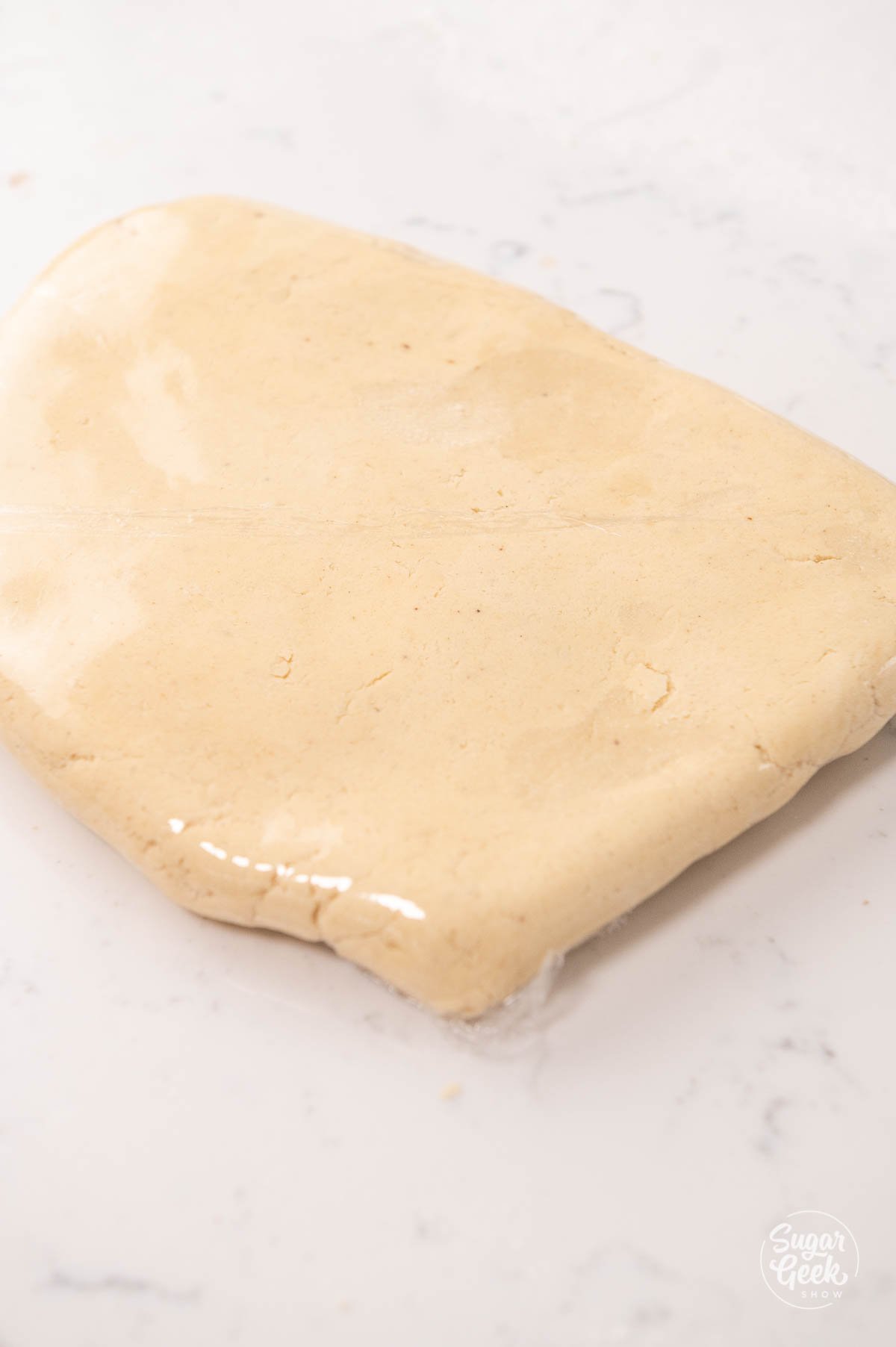
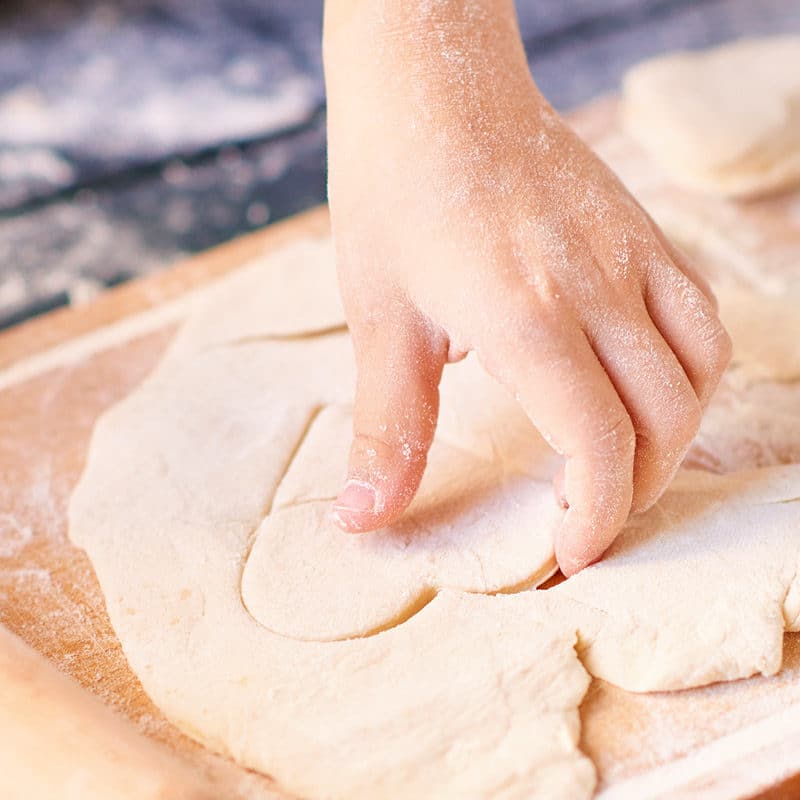
    • Salt. Non-negotiable. Salt slows the yeast just enough to give the gluten time to develop, plus it carries the flavor of the whole loaf. Add it after the initial mix so it never touches the yeast directly.
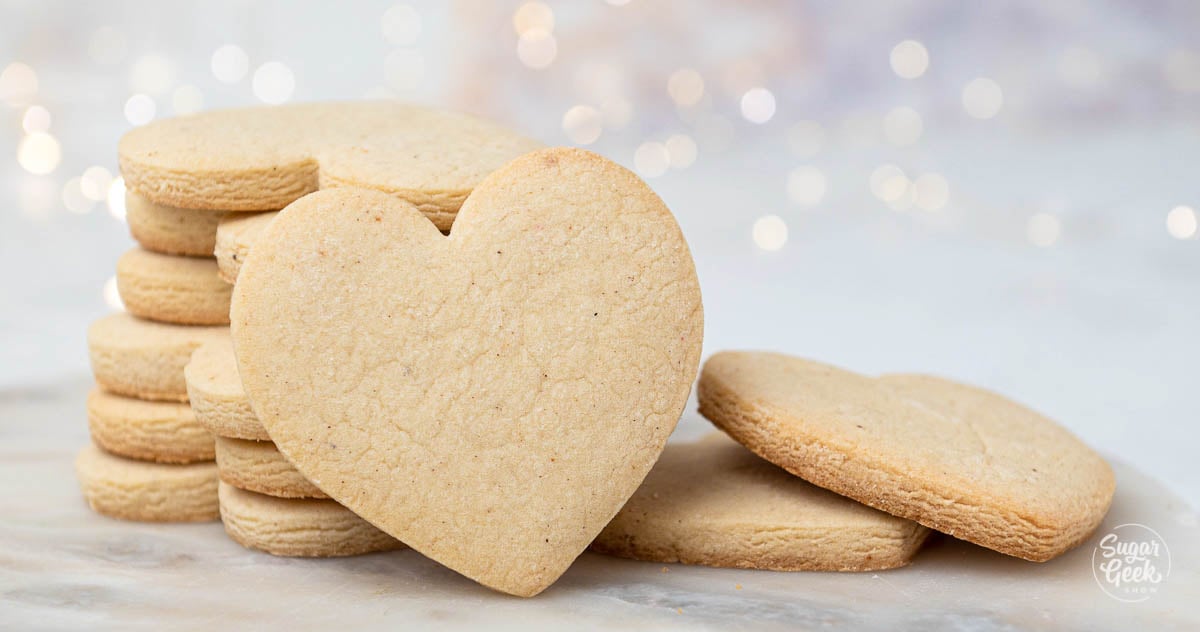
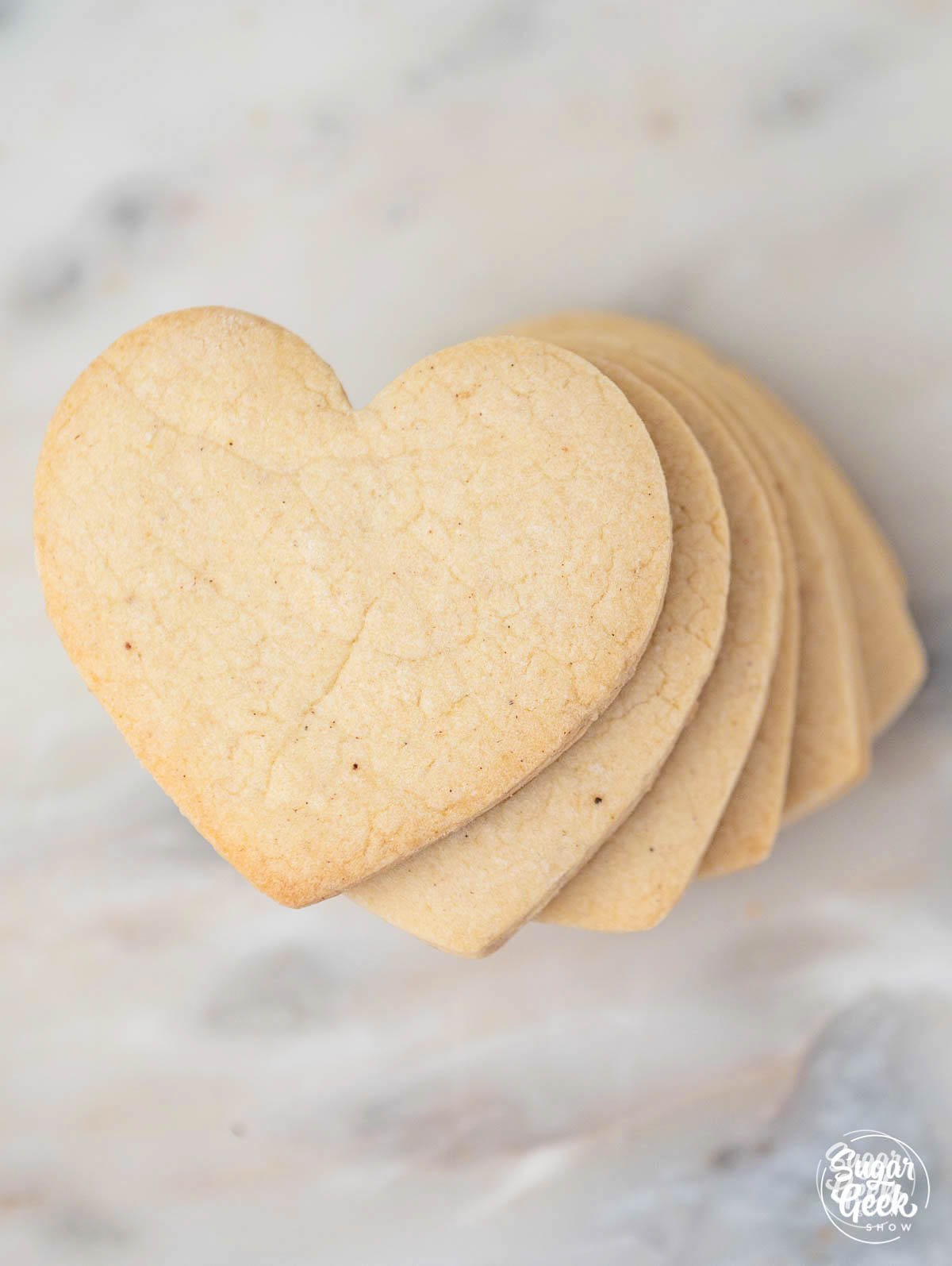
    • Olive oil. Adds fat that keeps the crumb soft and tender for two or three days. Avocado oil, melted butter, or any neutral fat all work as substitutes. Butter gives a more dinner-roll flavor, olive oil keeps it savory-leaning, which I prefer next to roast turkey or a bowl of soup.
    • Egg (for the wash). One egg whisked with a tablespoon of water gives you the deep golden brown lacquered top you see in the photos. Without the egg wash the bread will look pale and matte. If you do not have an egg, brushing with milk gets you about 80 percent of the way there.
    • Cinnamon stick or candy apple stick (for the stem). Press into the center after baking to finish the pumpkin shape. Not edible, but it is what sells the visual.

    How To Make Pumpkin-Shaped Bread Step-By-Step

    Pull the cold ingredients out of the fridge and warm the milk to 110º-115ºF before you start. Preheat your oven to 375ºF while the dough is doing its single proof. Line a baking sheet with parchment paper and cut four pieces of kitchen twine (about 20 inches long each) before you shape the loaves so you are not scrambling with sticky hands. Refer to the recipe card for exact weights and timing.

    Bread ingredients in the bowl of a stand mixer.
    1. Mix the dough. Combine bread flour, instant yeast, sugar, and warm milk in the bowl of your stand mixer with the dough hook attached and mix on low for one minute.
    Adding olive oil to bread ingredients in a mixing bowl.
    1. Adjust and knead. Add the salt and olive oil, then knead on speed 2 for about 8 minutes, or until the dough is smooth, elastic, and pulling cleanly away from the sides of the bowl.
    Bread dough in the bowl of a stand mixer with the dough attachment.
    1. If the dough is too wet, add flour a tablespoon at a time. If too dry, add water a tablespoon at a time. The dough should look smooth and elastic.
    Bread dough in a glass bowl with a towel.
    1. First proof. Knead the dough on a lightly floured surface for 4 or 5 turns to form a smooth ball. Place it top side down into a lightly oiled bowl, then flip it so the top is coated in oil.

    PRO TIP: Run the windowpane test for bread after 5 minutes of kneading. Pinch off a piece of dough and stretch it between your fingers. If it stretches into a thin translucent window without tearing, the gluten is developed and you can stop. If it tears, knead another 2 minutes and test again.

    Bread dough proofing in a glass bowl.
    1. Cover with a clean cloth and proof in a warm spot for about 25 minutes, or until the dough has doubled in size.
    Bread dough shaped into a smooth ball.
    1. Divide and shape. Punch the dough down and divide into two equal pieces. Pull the edges of each piece up and into the center to form a smooth taut ball. Pinch the seam closed underneath.

    PRO TIP: No warm spot in your kitchen? Turn your oven on to 170ºF, then turn it off and open the door. Set the bowl on the open door near the warm air, NOT inside the oven. The residual heat is the perfect proofing temperature without cooking the dough.

    Bakers twine arranged in a criss cross pattern on a sheet pan lined with parchment paper.
    1. Arrange the twine. Lay two 20-inch pieces of twine in a cross on your lined baking sheet, then lay two more across the first two so you have eight spokes radiating from a center point. Place a shaped dough ball seam side down on top of the twine.
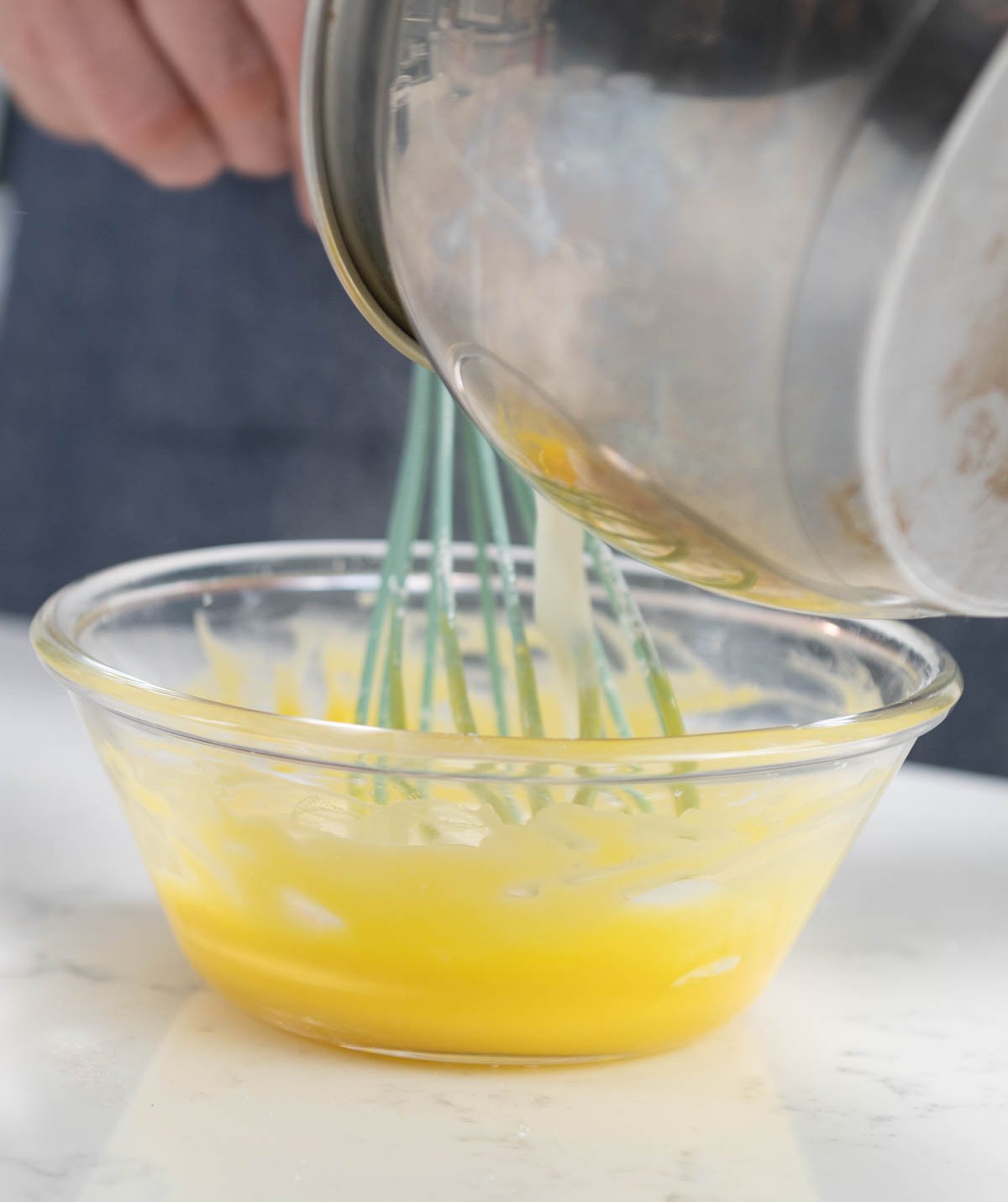
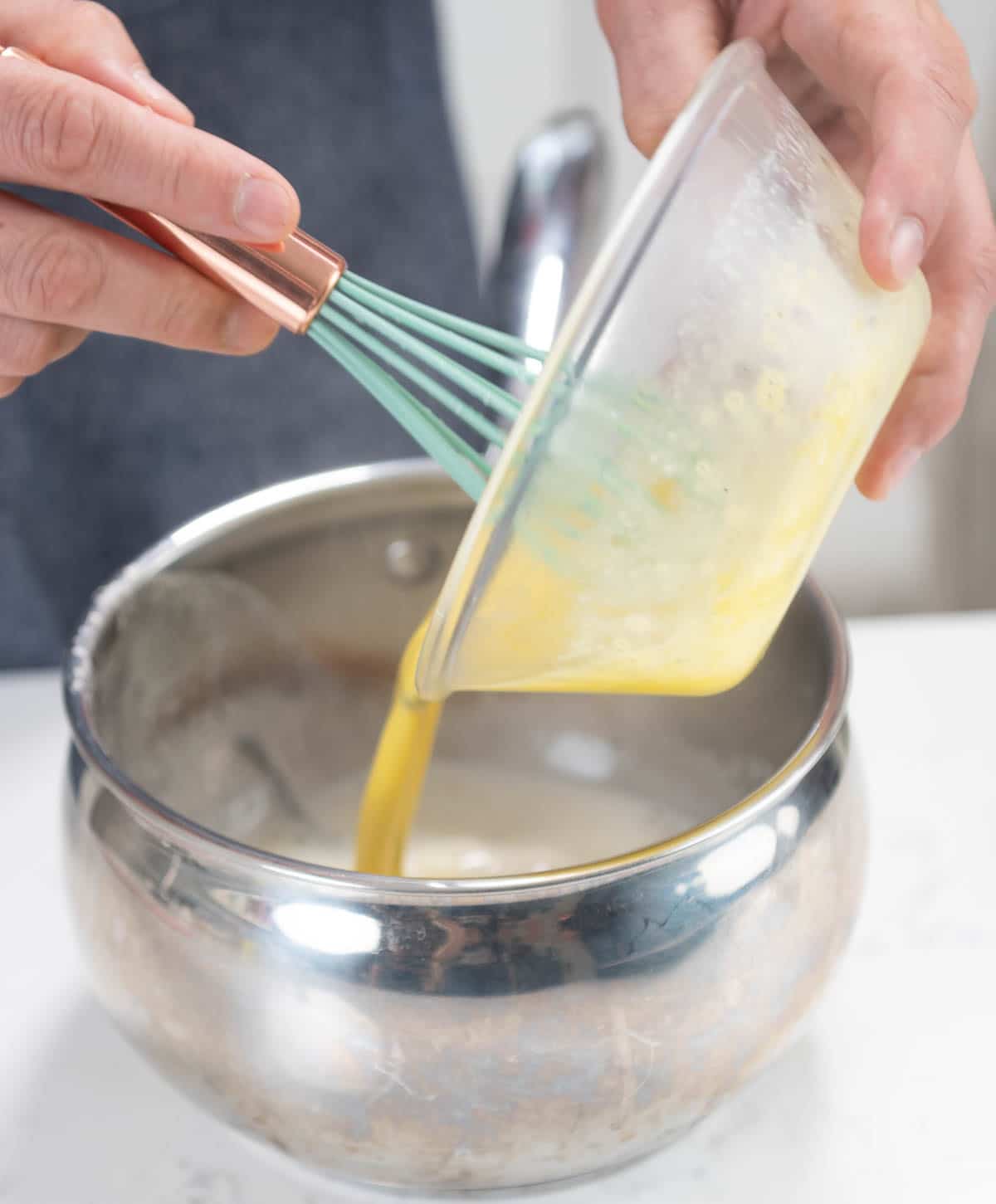
    Egg washing bread dough with bakers twine and parchment.
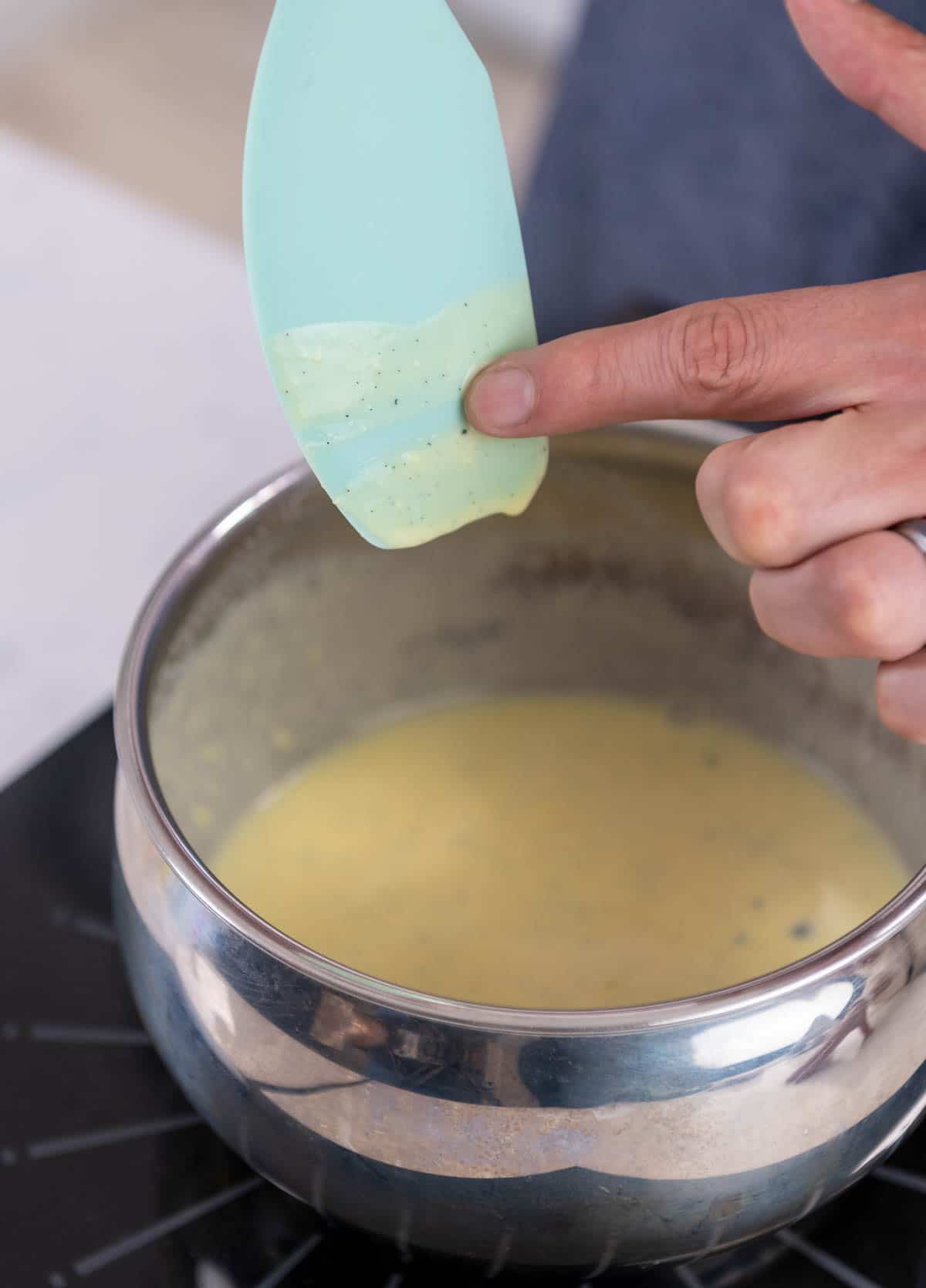
    1. Egg wash. Whisk one egg with one tablespoon of water and brush a thin even coat over the dough ball. The wash is what gives the loaf its golden lacquer.
    Hands tying bakers twine around a round ball of bread dough.
    1. Tie loosely. Bring opposite ends of each twine piece up and over the loaf and tie them in a loose knot on top of the dough. The twine should sit ON the surface, not dig into it. Trim the long ends close to the knot.
    Tied bread dough with bakers twine and scored.
    1. Score the sides. Use a razor blade or sharp paring knife to cut a few shallow wheat-pattern slashes into the side of each segment between the twine. The slashes look beautiful AND they give the dough a controlled place to expand.

    PRO TIP: Loose is the keyword here. The bread will roughly double in size again during oven spring, and tight twine will split the loaf through the segments instead of puffing up between them. Loose ties give you deep, defined pumpkin grooves. Tight ties give you a torn loaf.

    Baked pumpkin shaped bread on a cooling rack.
    1. Bake. Bake at 375ºF for 25 to 30 minutes, or until the loaves are deep golden brown and the internal temperature reads 190º- 200ºF on an instant-read thermometer.
    Inserting a stick into pumpkin shaped bread.
    1. Cool, untie, and add the stem. Let the loaves cool on the pan for 10 minutes, then carefully snip and slide the twine out of the grooves. Press a cinnamon stick or candy apple stick into the center as the pumpkin stem. Brush with melted butter for a glossy finish if you want. Serve warm.

    Common Pumpkin-Shaped Bread Problems To Avoid

    • The twine bakes into the bread. Almost always a tie that was too tight, or dough that over-proofed in the pan before going in the oven. Tie loosely, and if your dough has already doubled in the bowl, get it into the oven within 5 to 10 minutes of tying.
    • The segments fade, and the loaf bakes round. A too-loose tie, or all-purpose flour with not enough protein to hold the segments. Tighten the twine a touch (still loose, not strangling), and switch to bread flour if you used all-purpose.
    • The bread is pale on top. You skipped or under-applied the egg wash. One whole egg whisked with one tablespoon of water, brushed in an even coat right before the loaves go in the oven. Milk gets you part of the way there but it will still bake lighter than the photos.
    • The crumb is dense and tight. Either the yeast was killed by milk that was too hot (over 120ºF), or the proof was too short. The dough should double in size before you shape it. If it has not doubled in 25 minutes, give it another 10 to 15. Cold kitchens proofs slower.
    • The dough never came together in the mixer. Likely too dry. Add water one tablespoon at a time on speed 2 until the dough hydrates and starts to clear the sides of the bowl. Flour absorbs different amounts of water depending on humidity, brand, and how you measured it.

    Final Thoughts

    This pumpkin-shaped bread is one of those recipes that looks like you spent the whole afternoon in the kitchen but actually fits between two episodes of a sitcom. It has been on my Thanksgiving table since 2021, and the centerpiece moment of pulling it out of the oven still gets the same reaction every year. Bake one loaf and tuck it into a bread basket next to my crispy baked chicken thighs for an easy weeknight dinner, or bake both and use them as edible décor down the middle of the holiday table next to a spatchcock turkey and a bowl of homemade cranberry sauce. Either way, do not skip the kitchen twine. The twine IS the recipe.

    Pumpkin-Shaped Bread FAQs

    Does this bread taste like pumpkin?

    No. There is no pumpkin puree, pumpkin spice, or pumpkin flavor in the recipe. The pumpkin name refers to the shape only. The flavor is mildly sweet and on the savory side overall, closer to a soft dinner roll than to a sweet pumpkin loaf, which is what makes it work next to roast turkey or a bowl of soup.

    Why is my pumpkin bread not pumpkin-shaped after baking?

    The most common reason is tight twine, which strangles the dough and causes the segments to tear instead of puff. The second most common reason is all-purpose flour, which does not have enough protein to hold the segments crisply. Tie loosely and use bread flour for the best definition.

    Can I make pumpkin shaped bread ahead of time?

    Yes. Bake the loaves the day before, let them cool completely, then wrap tightly in plastic wrap and store at room temperature overnight. Refresh in a 300º F oven for 5 to 10 minutes before serving to bring back the soft texture. Do not refrigerate enriched bread. The fridge dries it out faster than the counter.

    What kind of twine do I use?

    100 percent natural cotton kitchen twine, sometimes labeled baker's twine or butcher's twine. Do not use synthetic or polyester string. Anything plastic will melt in the oven. Cotton twine is safe up to baking temperatures.

    Can I freeze pumpkin-shaped bread?

    Yes. Cool completely, wrap tightly in plastic wrap and then foil, and freeze for up to one month. Thaw at room temperature, then warm in a 300º F oven for 10 minutes to revive the soft crumb and golden crust before serving.


    More Bread Recipes To Try

    • closeup of sliced brioche bread
      Brioche Bread Recipe
    • focaccia bread decorated with vegetables to look like flowers shot from above
      Focaccia Bread Art
    • loaf of honey whole wheat bread shot from above with three slices in front on a white background
      Honey Whole Wheat Bread Recipe
    • closeup of homemade dinner rolls with butter and sea salt
      Fast Dinner Rolls

    Leave Me A Review
    ⭐️⭐️⭐️⭐️⭐️

    If you tried this pumpkin-shaped bread or any other recipe on my blog, please leave a 🌟 star rating and let me know how it goes in the comments. I love hearing from you!

    Recipe

    closeup of pumpkin shaped bread
    Print Recipe
    4.85 from 142 votes

    Pumpkin Shaped Bread

    This soft and fluffy pumpkin shaped bread only takes 60 minutes to make and creates the most beautiful centerpiece for your fall holiday table. A lightly enriched yeast dough tied with kitchen twine bakes into perfect pumpkin segments, finished with a cinnamon stick stem.
    Prep Time10 minutes mins
    Cook Time20 minutes mins
    proofing30 minutes mins
    Total Time1 hour hr
    Course: Appetizer
    Cuisine: American
    Servings: 24 servings
    Calories: 158kcal
    Author: Liz Marek

    Equipment

    • Stand mixer with dough hook
    • Razor blade
    • Bakers twine

    Ingredients

    • 28 ounces bread flour or all purpose (about 5 ½ cups, spooned and leveled)
    • 10 grams instant yeast needs to be instant (about 3 teaspoons)
    • 2 ounces sugar (4 Tablespoons)
    • 18 ounces warm milk (110ºF) or water (two cups)
    • 1 ½ teaspoons salt
    • 2 ounces olive oil or melted butter (¼ cup)
    • 1 large egg for the egg wash
    • 1 Tablespoon water for the egg wash
    • 1 large cinnamon stick or caramel apple stick for the stem
    • 1 Tablespoon melted butter to brush onto the finished bread
    US Customary - Metric

    Instructions

    • Mix the dough. Combine bread flour, instant yeast, sugar, and warm milk in the bowl of your stand mixer with the dough hook attached. Mix on low for one minute.
    • Adjust and knead. Add the salt and olive oil, then knead on speed 2 for about 8 minutes, or until the dough is smooth, elastic, and clearing the sides of the bowl. Add flour 1 tablespoon at a time if too wet, or 1 tablespoon of water at a time if too dry.
    • After 5 minutes, run the windowpane test by pinching off a piece of dough and stretching it between your fingers. If it stretches thin without tearing, the gluten is developed. If it tears, knead 2 more minutes and test again.
    • First proof. Turn the dough out onto a lightly floured surface and knead 4 or 5 turns to form a smooth ball. Place seam side up in a lightly oiled bowl, then flip so the top is coated. Cover with a clean cloth and proof in a warm spot for about 25 minutes, or until doubled in size.
    • Divide and shape. Punch the dough down, divide into two equal pieces, and shape each into a smooth round by pulling the edges into the center. Pinch the seam closed underneath.
    • Arrange the twine. For each loaf, lay two 20-inch pieces of twine in a cross on the parchment-lined pan, then lay two more across the first two for a total of eight spokes radiating from a center point. Place the shaped dough seam side down on top of the twine.
    • Egg wash. Whisk 1 egg with 1 tablespoon of water and brush a thin even coat over each loaf using a soft pastry brush. Do not skip the wash or the bread will bake pale.
    • Tie loosely. Bring opposite ends of each twine piece up and over the loaf and tie a loose knot on top of the dough. The twine should sit on the surface, not cut into it. Trim the long ends close to the knot.
    • Score the sides. Use a razor blade or sharp paring knife to cut a few shallow wheat-pattern slashes into the side of each segment between the twine.
    • Bake. Bake at 375º F for 25 to 30 minutes, or until the loaves are deep golden brown and the internal temperature reads 190 to 200º F on an instant-read thermometer.
    • Cool, untie, and add the stem. Cool on the pan for 10 minutes, then carefully snip and slide the twine out of the grooves. Press a cinnamon stick or candy apple stick into the center as the pumpkin stem. Brush with melted butter for a glossy finish if desired. Serve warm.

    Video

    Notes

    • Ingredient notes: Bread flour gives the best segment definition. All-purpose works but the segments will be softer. Whole wheat works at 24 ounces (not 28) because it absorbs more liquid.
    • Instant vs. active dry yeast: This recipe is written for instant yeast. If using active dry, bloom it in the warm milk and sugar for 10 minutes first, then expect the proof to take 90 minutes instead of 25. Shape, egg wash, tie, and score, then rest 30 minutes before baking.
    • Proofing trick: Turn your oven on to 170º F, then turn it off and open the door. Set the bowl on the open oven door (NOT inside the oven) for the perfect proofing environment.
    • Egg wash substitute: Brush with milk for similar (but slightly paler) browning if you are out of eggs or have an allergy.
    • Make-ahead and storage: Bake the day before, cool completely, wrap tightly in plastic at room temperature. Refresh in a 300º F oven for 5 to 10 minutes before serving. Do not refrigerate. Freezes well for up to one month wrapped in plastic and foil.
    • Critical do-nots: Do not tie the twine tight. Do not use synthetic string. Do not skip the egg wash if you want the lacquered golden top. Do not over-proof on the pan after tying. Get the loaves in the oven within 5 to 10 minutes of tying.

    Nutrition

    Serving: 1serving | Calories: 158kcal | Carbohydrates: 27g | Protein: 4g | Fat: 4g | Saturated Fat: 1g | Polyunsaturated Fat: 1g | Monounsaturated Fat: 2g | Trans Fat: 0.02g | Cholesterol: 9mg | Sodium: 153mg | Potassium: 41mg | Fiber: 1g | Sugar: 2g | Vitamin A: 27IU | Vitamin C: 0.01mg | Calcium: 8mg | Iron: 0.4mg

    Cake with hand painted graffiti and an edible red dress with Cruella cake topper

    October 15, 2021 Course Preview

    Cruella Birthday Cake Tutorial

    Skill level: Intermediate

    Bring your punk rock fashionistas to this party, we're making a Cruella birthday cake! I got the chance to make this cake for an artistic little girl that's really into the new Disney movie and I had a blast making this.

    This cake features a flowing edible red dress, newsprint graffiti, and a polka dot patterned cake inside, making the cake slices really stand out and be dalmatian-themed. This cake will knock the socks off your guests and inspire youngsters to explore their fashion interests.

    Please note: the arcylic Cruella cake topper is not part of this tutorial. You can get the downloadable template to make it here (scroll to the bottom and click on the 'free download' button)

    32:48 Minutes of Instruction

    What You Will Learn

    • Learn the internal structure to support the extra tall double barrel cake
    • How to make the flowing edible dress
    • Learn how to hand-paint and add premade graffiti elements to the cake
    • How to make the polka-dot patterned cake

    Cake decorated with an edible red dress, newsprint graffiti and hand painted details to look like Cruella movie

    Tutorial Chapters

    1. Making the cake pops 0:37
    2. Making the white cakes 5:38
    3. Adding the batter 6:45
    4. Making the wafer paper dress 9:31
    5. Airbrushing the dress 10:23
    6. Frosting the cakes 11:42
    7. Making the structure 16:07
    8. Stacking the cakes 18:08
    9. Covering the cake in fondant 19:57
    10. Painting the cake 25:33
    11. Adding the wafer paper newsprint 27:45
    12. Adding the dress 30:18

    Downloads

    Materials List
    Newsprint Template

    Cake with hand painted graffiti and an edible red dress with Cruella cake topper

    October 15, 2021 Paid Video

    Cruella Birthday Cake

    Skill level: Intermediate

    Bring your punk rock fashionistas to this party, we're making a Cruella birthday cake! I got the chance to make this cake for an artistic little girl that's really into the new Disney movie and I had a blast making this.

    This cake features a flowing edible red dress, newsprint graffiti, and a polka dot patterned cake inside, making the cake slices really stand out and be dalmatian-themed. This cake will knock the socks off your guests and inspire youngsters to explore their fashion interests.

    Please note: the arcylic Cruella cake topper is not part of this tutorial. You can get the downloadable template to make it here (scroll to the bottom and click on the 'free download' button)

    32:48 Minutes of Instruction

    What You Will Learn

    • Learn the internal structure to support the extra tall double barrel cake
    • How to make the flowing edible dress
    • Learn how to hand-paint and add premade graffiti elements to the cake
    • How to make the polka-dot patterned cake

    Tutorial Chapters

    1. Making the cake pops 0:37
    2. Making the white cakes 5:38
    3. Adding the batter 6:45
    4. Making the wafer paper dress 9:31
    5. Airbrushing the dress 10:23
    6. Frosting the cakes 11:42
    7. Making the structure 16:07
    8. Stacking the cakes 18:08
    9. Covering the cake in fondant 19:57
    10. Painting the cake 25:33
    11. Adding the wafer paper newsprint 27:45
    12. Adding the dress 30:18

    Downloads

    Materials List
    Newsprint Template

    close up of chocolate flower

    October 14, 2021 Blog

    Chocolate Flower Cake Topper

    Chef Christophe Rull shows us some amazing chocolate techniques with this chocolate flower showpiece. Learn how to sculpt with tempered chocolate, assemble a chocolate flower and add color with cocoa butter. This chocolate flower makes an amazing topper for a wedding cake!

    What's in this blog post

    • Chocolate flower tools & equipment
    • Chocolate flower ingredients
    • How to make the flower petals
    • How to make the flower base
    • Making the chocolate tendrils
    • Assembling the chocolate flower
    • How to color the flower with cocoa butter

    Chocolate flower tools & equipment

    These are the tools that Christophe used very often for making not only a chocolate flower but a lot of types of chocolate sculptures. You can purchase the petal mold here if you want to use this exact mold. Any silicone or polycarbonate sphere mold will work for the base. Here are some options on Amazon.

    Some other things you might not have on hand that Chef Christophe uses.

    EZ Temper Machine - A fantastic tool for tempering chocolate easily and quickly. You simply add in some unmelted cocoa butter the day before, let the machine bring it to the perfect temperature for proper crystalization then you can add that pre-tempered cocoa butter paste to melted chocolate (1-2% of the total chocolate mass) at 34ºC and then voila, tempered chocolate!adding tempered cocoa butter to melted chocolate in front of the ez temper machine

    Waring Chocolate Warmer - If you don't have a chocolate tempering machine, keeping your chocolate in temper can be a challenge. The Waring chocolate warmer keeps your tempered chocolate at the exact temperature it needs to be to stay in temper which allows you to work with your chocolate for longer without the need to re-temper.

    waring chocolate warmer

    Chocolate flower ingredients

    We are using Zephyr white chocolate from Cocao Barry which is a fantastic chocolate to work with but any white chocolate couverture is going to work great.

    You will also need some colored cocoa butter. I got this from Chef Rubber which has a very extensive inventory of colored cocoa butter products.

    We are also using tempered cocoa butter paste from the EZ Temper machine but if you don't have the EZ temper you can temper your cocoa butter using the traditional tempering method.

    white chocolate flower ingredients

    How to make the flower petals

    Begin by making sure your chocolate is in temper. Chef Christophe recommends you always do a test to make sure your chocolate is properly crystallizing. Better safe than sorry! If you need a refresher on how to temper chocolate using the EZ Temper machine you can watch this video or you can use my method for tempering in the microwave.

    1. Cut your acetate to be just a bit bigger than the petal mold
    2. Fill your piping bag with some tempered chocolate and tie the opening to work clean. adding tempered chocolate to a piping bag
    3. Use the pinch and release method to fill the petal cavities with white chocolate.Filling the petal mold with tempered chocolate
    4. Place the sheet of acetate on top of the mold and press to make sure your petals are completely filled. pressing acetate onto the petal mold
    5. Use your bench scraper to press the the chocolate flat and remove the excess chocolate from the mold.using a bench scraper to remove the excess chocolate
    6. Place the piping bag into the chocolate warmer to keep it at the proper temperature to use later.
    7. Set the mold in the fridge to crystalize.

    How to make the flower base

    1. Use your piping bag to fill your 2" sphere mold (you only need 2 half) but you can make extras just in case.
    2. Fill your 1.5" sphere mold to make two full spheres. fill 1" sphere mold with chocolate
    3. Place the spheres into the fridge to set while you work on the tendrils.

    Making the chocolate tendrils

    Did you know you can sculpt with tempered chocolate? I was amazed by this technique.

    1. Start by adding your unmelted chocolate pieces into a food processor. chocolate in a food processor
    2. Turn the food processor on and blend until the chocolate forms a ball. Do not over-mix it. Now it's ready to sculpt.
    3. Use your hands and your cake board to roll out some long tendrils.
    4. Cut the end to the length you want it to be.
    5. sharpen the tip and bend it into a nice artistic shape.
    6. The chocolate will set as it cools and be very strong. chocolate tendrils

    Assembling the chocolate flower

    1. Turn your petal mold over (opening side down) and pull the mold off the petals so they don't break. de-molding chocolate petals from a mold
    2. Unmold your spheres.demolding chocolate spheres
    3. Use your spatula and kitchen torch to melt the top of the half sphere just a bit.
    4. Place the second sphere on top and use the cold spray to set the sphere. glueing two chocolate spheres together
    5. Working quickly, dip the rounded tip of the flower petal into the tempered chocolate, lay the petal against the base of the chocolate sphere and use the cold spray to set it. Arrange the petals at a slight angle to create movement. attaching chocolate petals to the chocolate base
    6. Continue adding petals around until you have a few layers of petals.
    7. You can pipe a little tempered chocolate in the center of the flower and use the airbrush to add texture to the center of the flower.
    8. Glue another sphere on top of the 2" base at a 45" angle as we did before with the spatula and kitchen torch.
    9. Attach you tendrils to the back of the base with some more tempered chocolate and set with the cold spray.
    10. Attach the chocolate flower to the front of the sphere with melted chocolate and set with cold spray.

    How to color the flower with cocoa butter

    1. Melt your colored cocoa butter in the microwave. Cool to 30ºC.
    2. Add your tempered cocoa butter paste at 29ºC to your melted colored cocoa butter.
    3. Add the melted cocoa butter to your airbrush and you can color the flower.
    4. Start with yellow and then add highlights with red.

    Now your chocolate flower is complete! It can be attached to the cake with a little melted chocolate.

    finished chocolate flower

    Chef Christophe uses a Waring dehydrator to store his airbrush and cocoa butter to keep it at the correct temperature for airbrushing.

    Recipe

    close up of chocolate flower
    Print Recipe
    5 from 2 votes

    Chocolate Flower Cake Topper

    Chef Christophe Rull shows us some amazing chocolate techniques with this chocolate flower showpiece. Learn how to sculpt with tempered chocolate, assemble a chocolate flower and add color with cocoa butter. This chocolate flower makes an amazing topper for a wedding cake!
    Prep Time30 minutes mins
    Cook Time20 minutes mins
    cooling20 minutes mins
    Total Time1 hour hr 10 minutes mins
    Course: Dessert
    Cuisine: French
    Servings: 1 flower
    Calories: 2271kcal
    Author: Liz Marek

    Equipment

    • Sphere Molds
    • Petal Mold
    • Acetate
    • Bench scraper
    • infrared thermometer
    • Piping Bag
    • Air Brush
    • EZ Temper Machine (optional)
    • Waring Chocolate Warmer (optional)

    Ingredients

    • 200 grams tempered white chocolate https://sugargeekshow.com/how-to-temper-chocolate-with-cocoa-butter/
    • 200 grams white chocolate couverature
    • 2 Tablespoons red cocoa butter
    • 1 Tablespoon yellow cocoa butter
    • 2 Tablespoons tempered cocoa butter paste optional, if you don't have the EZ temper then you will have to temper the colored cocoa butter and chocolate using either the microwave or traditional seeding method

    Instructions

    How to Make the Flower Petals

    • Cut your acetate to be just a bit bigger than the petal mold.
    • Fill your piping bag with some tempered chocolate and tie the opening to work clean.
    • Use the pinch and release method to fill the petal cavities with white chocolate.
    • Place the sheet of acetate on top of the mold and press to make sure your petals are completely filled.
    • Use your bench scraper to press the the chocolate flat and remove the excess chocolate from the mold.
    • Place the piping bag into the chocolate warmer to keep it at the proper temperature to use later.
    • Set the mold in the fridge to crystalize.

    How to Make the Flower Base

    • Use your piping bag to fill your 2″ sphere mold (you only need 2 half) but you can make extras just in case.
    • Fill your 1.5″ sphere mold to make two full spheres.
    • Place the spheres into the fridge to set while you work on the tendrils.

    Making the Chocolate Tendrils

    • Start by adding your unmelted chocolate pieces into a food processor.
    • Turn the food processor on and blend until the chocolate forms a ball. Do not over-mix it. Now it's ready to sculpt.
    • Use your hands and your cake board to roll out some long tendrils.
    • Cut the end to the length you want it to be.
    • Sharpen the tip and bend it into a nice artistic shape.
    • The chocolate will set as it cools and be very strong.

    Assembling the Chocolate Flower

    • Turn your petal mold over (opening side down) and pull the mold off the petals so they don't break.
    • Unmold your spheres.
    • Use your spatula and kitchen torch to melt the top of the half sphere just a bit.
    • Place the second sphere on top and use the cold spray to set the sphere.
    • Working quickly, dip the rounded tip of the flower petal into the tempered chocolate, lay the petal against the base of the chocolate sphere and use the cold spray to set it. Arrange the petals at a slight angle to create movement.
    • Continue adding petals around until you have a few layers of petals.
    • You can pipe a little tempered chocolate in the center of the flower and use the airbrush to add texture to the center of the flower.
    • Glue another sphere on top of the 2″ base at a 45″ angle as we did before with the spatula and kitchen torch.
    • Attach you tendrils to the back of the base with some more tempered chocolate and set with the cold spray.
    • Attach the chocolate flower to the front of the sphere with melted chocolate and set with cold spray.

    How to Color the Flower with Cocoa Butter

    • Melt your colored cocoa butter in the microwave. Cool to 30ºC.
    • Add your tempered cocoa butter paste at 29ºC to your melted colored cocoa butter.
    • Add the melted cocoa butter to your airbrush and you can color the flower.
    • Start with yellow and then add highlights with red.

    Video

    Nutrition

    Calories: 2271kcal | Carbohydrates: 248g | Protein: 28g | Fat: 137g | Saturated Fat: 84g | Polyunsaturated Fat: 4g | Monounsaturated Fat: 37g | Cholesterol: 84mg | Sodium: 363mg | Potassium: 1372mg | Fiber: 8g | Sugar: 236g | Vitamin A: 120IU | Vitamin C: 2mg | Calcium: 815mg | Iron: 3mg
    hand pulling a slice of black forest cake from the whole cake

    October 11, 2021 Blog

    Traditional Black Forest Cake

    Everything about this rich black forest cake (Schwarzwälder Kirschtorte) is mouthwatering. Three light and fluffy layers of genoise sponge cake, similar to a roll cake, are soaked with a kirsch cherry liqueur, layered with sweet whipped cream, and covered in Kirsch-soaked cherries and chocolate shavings.

    hand pulling a slice of black forest cake from the whole cake

    The black forest cake is probably Germany's most well-known contribution to the cake world. It's a beloved dessert that is widely admired all over the world and has become an iconic cake. Keep reading to learn how to recreate a traditional black forest cake from scratch.

    Table of Contents

    • Ingredients
    • How to Make Black Forest Cake
      • Preparing the kirsch Soaked Cherries
      • Making the Chocolate Genoise
      • How to Make the Stabilized Whipped Cream Filling
      • How to Assemble the Black Forest Cake
    • FAQ
    • More Cake Recipes

    Ingredients

    black forest cake ingredients

    These are some important ingredients to note that you may not have on hand.

    Kirsch Cherry Liqueur - This somewhat spicy and fiery liqueur is what the black forest cake is named for! It gives it its distinctive flavor. You can omit the liqueur if you desire and use an extra Tablespoon of sugar in your cherry syrup.

    Cake Flour - This flour can typically be found in most grocery stores in the baking aisle. Cake flour is a soft flour with a lower protein content than all-purpose flour resulting in very soft and delicate sponge cakes.

    Dutched Cocoa Powder - This cocoa powder is different than a natural cocoa powder such as Hershey's. It has been alkalized so the flavor of the cocoa powder is much smoother and richer. Typically you cannot switch out cocoa powder without changing the rising agents but since genoise doesn't have any rising agents, you can switch the cocoa powder to any brand with no issues.

    How to Make Black Forest Cake

    Preparing the kirsch Soaked Cherries

    close up of kirsch soaked cherries in a glass bowl

    I like to make the Kirsch soaked cherries a day or two in advance but really you can make them as far in advance as you want and just store them in the fridge until you're ready to use them. The sugar and alcohol will preserve the cherries and the flavor just gets better and better.

    1. If your cherries are fresh, go ahead and pit them and set them aside. Make sure you reserve 8 cherries for the decoration of the cake later. You can also use frozen or canned cherries. If you use canned cherries in syrup then use the syrup as the water and omit the sugar from the recipe. pitting fresh cherries into a bowl
    2. Combine the water, sugar and cherries in a medium saucepan over medium-high heat and bring to a simmer.making kirsch soaked cherries in a pink saucepan
    3. Once the sugar granules have dissolved (after about 1 minute) then remove the mixture from the heat.
    4. Add in your Kirsch and stir to combine. adding kirsch to cherry mixture
    5. Transfer the cherries and syrup to a covered container and place it into the fridge. The longer it sits, the more the flavors will develop. If you're in a rush you can use them right away, the flavor just wont be as strong.kirsch soaked cherries in a mason jar

    Making the Chocolate Genoise

    Genoise is a very light sponge cake with no leavening. It gets all its lift from how well you whip the eggs and how delicately you mix in the flour. Kinda like making french macarons, you don't want to mix too much or too little. Genoise is also very dry so you'll want to make sure you give it a really good soak with that kirsch cherry juice!

    Depending on how well you folded your batter, your cakes may be very tall or very short. If your layers are shorter, don't despair! They will still taste delicious.

    1. In a separate bowl, melt the butter until warm, but not hot. Set it aside.
    2. In a large bowl, sift together the cake flour, cocoa powder, and salt. This aerates the dry ingredients so it's easier to fold into the egg mixture later and avoid getting flour lumps. sifting dry ingredients for genoise
    3. Place the eggs, sugar, and salt in the bowl of your stand mixer. Place the bowl over a pot of simmering water and whisk the mixture until it's slightly warm, around 100ºF. I just feel the mixture with my fingertips, if I can't feel any grains of sugar I know it's ready.hand rubbing egg mixture between fingertips
    4. Whip egg mixture on high for about 5-10 minutes until the mixture triples in volume. The batter will make a "ribbon" when the whisk is lifted. If the ribbon sits on top of the mixture for a few seconds before melding back in, the mixture is ready. Pro-Tip: Make sure to whip for long enough, there is no leavening agent in this cake, so the egg volume will help our cakes rise. close up of egg mixture at the ribbon stage
    5. Sift ⅓ of your flour mixture into the egg mixture and fold to combine. Try to deflate the mixture as little as possible. Sift and fold in another ⅓rd of the mixture and then finally the last portion. Make sure no lumps remain.folding in sifted flour and cocoa
    6. Scoop 1 cup of the batter into a separate bowl and fold the butter into it. This will make it easier to add the butter to the rest of the batter without deflating it.
    7. Add the butter mixture and vanilla to the egg/flour mixture and fold them together carefully. adding vanilla to genoise batter
    8. Coat three 6-inch cake pans with cake goop. Some people also like to put parchment circles on the bottom of the pan to prevent sticking.applying cake goop to cake pans
    9. Divide the genoise batter evenly between the 3 pans.pour genoise batter into a cake pan
    10. Bake the cakes at 350ºF for 25 minutes or until the center of the cake is set. Try not to open the oven to look at the cakes until after 20 minutes of baking as the movement and temperature change can cause the cakes to fall.
    11. Let the cakes cool for about 10 minutes and then gently loosen the edges of the cakes from the pan with a knife and turn the cake out onto a cooling rack to cool fully before frosting.close up of genoise on a cooling rack

    How to Make the Stabilized Whipped Cream Filling

    I love to use my stabilized whipped cream to frost and fill this cake because once it sets up, it's much easier to cut without the whole cake falling apart.

    1. Sprinkle the gelatin over the water and let it bloom for 5 minutes.sprinkling gelatin over water to bloom
    2. Melt the gelatin in the microwave for 10-15 seconds or until you no longer see any granules and the mixture looks clear.
    3. Add the Tablespoon of cream to the gelatin and stir to combine.
    4. Begin whisking your heavy cream in the bowl of your stand mixer fitted with the whisk attachment attached until it begins to get thick and foamy. adding heavy cream to the bowl of a stand mixer
    5. Add in your powdered sugar and continue mixing on medium speed until you start seeing lines beginning to form on the surface of the whipped cream (medium peak stage) and reduce the speed to low. whipped cream whipping in the bowl of a stand mixer
    6. Add in your vanilla.
    7. Slowly drizzle in the gelatin mixture and continue mixing until stiff peaks form that hold their shape but do not over-mix. stabilized whipped cream

    How to Assemble the Black Forest Cake

    1. Trim the bottom and top of your chocolate cake layers with a serrated knife to make them level and for them to be easier to soak with the syrup. trimming genoise cake layers
    2. Place your first cake layer onto a cake cardboard or onto a cake platter. Soak the layer generously with the kirsch syrup, don't forget the side of the cake! soaking a genoise cake layer with syrup
    3. Add a thick layer of your whipped cream and spread it evenly.
    4. Place some of your cherries onto the layer of whipped cream. Make sure the whipped cream and cherries are level with each other. adding cherries to whipped cream on a cake
    5. Place the next layer of cake on top and continue with this process a second time. soaking genoise with kirsch syrup
    6. Cover the whole cake in a layer of whipped cream and then freeze the cake for about 20 minutes. crumbcoat on genoise cake
    7. Then cover the cake in your final layer of whipped cream and make it smooth or leave it rough if you like a rustic look. smoothing genoise with whipped cream
    8. Cover the bottom of the cake with some chocolate shavings. I use a vegetable peeler and a block of chocolate. shaving chocolate with a vegetable peeler
    9. Make your chocolate drip by combining the chocolate and cream and mixing until smooth. Wait until it cools to 90ºF and then pipe the drip on top of the cake. piping ganache onto the top of the genoise
    10. Cover the top of the cake with the leftover ganache and smooth it out. covering the cake with ganache
    11. Finish the cake with some rosettes of whipped cream and more fresh cherries and shredded chocolate. You could also use maraschino cherries if you'd like.adding cherries to the top of the genoise cake

    FAQ

    Why are my layers so flat?

    Depending on how well you mix your genoise, your cake layers' height will vary. Try not to over-mix.

    Why is my whipped cream so soft

    You may have under-whipped the cream. Make sure you reach firm peaks.

    Do I have to use alcohol (Kirsch)?

    A traditional black forest cake uses Kirsch in the syrup and the whipped cream but you can leave it out and replace it with more cherry juice if you want.


    Why is it called black forest cake?

    Black forest cake actually gets its name from a distinct type of fiery kirsch alcohol made from Black Forest sour cherries, known as Schwarzwälder Kirsch or Kirsch Wasser (cherry firewater). It is very strong tasting on its own but in the cake, you can barely taste it. Although you can make this cake without the Kirsch, you can't technically call it a black forest cake but if want to, don't worry, I won't tell on you :D.

    The Black Forest Cake, which is thought in some circles to have been created in its modern form by patissier Josef Keller in 1915, is legally protected. It was granted protected status in 2013 by the European Commission when it decided that any dessert taking the name had to use the cake's original ingredients, including Kirsch, a brandy made from the fermented sour cherries that grow in the region. 

    What's the difference between black forest cake and chocolate cake?

    You can't just bake up any old chocolate cake, add some cherries on top and call it an authentic black forest cake. Now really, there aren't any black forest cake police roaming around ready to arrest you for your transgression but technically, a black forest cake is made with chocolate sponge cake soaked with a simple syrup made from Kirsch, Kirsch soaked cherries, layered with whipped cream, and topped with more cherries and shaved chocolate.

    If it falls outside of those specifications, it's a chocolate cake which is also delicious!

    What is the taste of Black Forest cake?

    Black forest cake is made with a genoise sponge cake, so it has a slight chocolate flavor and less moisture than traditional chocolate cake. To add moisture and flavor, the cake is soaked in kirsch cherry liqueur, and layered with sweet whipped cream. It isn't just chocolate cake with cherries, it has a very distinct flavor.

    black forest cake

    More Cake Recipes

    Authentic Red Velvet Cake

    Stabilized Whipped Cream

    Cherry Filling

    German Chocolate Cake

    Coconut Pecan Filling

    Recipe

    hand pulling a slice of black forest cake from the whole cake
    Print Recipe
    4.79 from 33 votes

    Traditional Black Forest Cake Recipe

    Kirsch soaked chocolate genoise layered with sweet whipped cream and Kirsch soaked cherries. This traditional German cake always impresses with its combination of chocolate, cherry and cream.
    Prep Time20 minutes mins
    Cook Time25 minutes mins
    Decorating20 minutes mins
    Total Time1 hour hr 5 minutes mins
    Course: Dessert
    Cuisine: german
    Servings: 12 servings
    Calories: 149kcal
    Author: Liz Marek

    Ingredients

    Chocolate Genoise

    • 2 ounces melted butter, warm not hot
    • 2.5 ounces cake flour
    • 2 ounces dutched cocoa powder
    • 6 large eggs
    • 7 ounces sugar
    • ½ teaspoon salt
    • ½ teaspoon vanilla extract

    Kirsch Soaked Cherries

    • 3.5 ounces sugar
    • 4 ounces water
    • 2 ounces kirschwasser
    • 12 ounces cherries, dark sweet or tart

    Stablized Whipped Cream

    • 24 ounces heavy whipping cream
    • 4 ounces powdered sugar
    • 2 teaspoons powdered gelatin I use KNOX brand
    • 3 Tablespoons cold water
    • 2 teaspoons vanilla extract
    • 1 Tablespoon heavy whipping cream

    Chocolate Drip

    • 6 ounces semi-sweet or milk chocolate
    • 4 ounces heavy whipping cream
    US Customary - Metric

    Instructions

    How to Make Kirsch-Soaked Cherries

    • If your cherries are fresh, go ahead and pit them and set them aside. Make sure you reserve 8 cherries for the decoration of the cake later.
      TIP: You can also use frozen or canned cherries. If you use canned cherries in syrup then use the syrup as the water and omit the sugar from the recipe.
    • Combine the water, sugar and cherries in a medium saucepan over medium-high heat and bring to a simmer.
    • Once the sugar granules have dissolved (after about 1 minute) remove the mixture from the heat.
    • Add in your Kirsch and stir to combine.
    • Transfer the cherries and syrup to a covered container and place it into the fridge.
      TIP: The longer it sits, the more the flavors will develop. If you're in a rush you can use them right away, the flavor just won't be as strong.

    How to Make Chocolate Genoise Cake

    • In a separate bowl, melt the butter until warm, but not hot. Set it aside.
    • In a large bowl, sift together the cake flour, cocoa powder, and salt.
      TIP: This aerates the dry ingredients so it's easier to fold into the egg mixture later and avoid getting flour lumps.
    • Place the eggs, sugar, and salt in the bowl of your stand mixer. Place the bowl over a pot of simmering water and whisk the mixture until it's slightly warm, around 100ºF.
      TIP: I just feel the mixture with my fingertips, if I can't feel any grains of sugar I know it's ready.
    • Whip the egg mixture on high for about 5-10 minutes until the mixture triples in volume. The batter will make a "ribbon" when the whisk is lifted.
      TIP: If the ribbon sits on top of the mixture for a few seconds before melding back in, the mixture is ready.
      Make sure to whip for long enough, there is no leavening agent in this cake, so the egg volume will help our cakes rise.
    • Sift ⅓ of your flour mixture into the egg mixture and fold to combine. Try to deflate the mixture as little as possible. Sift and fold in another ⅓rd of the mixture and then finally the last portion. Make sure no lumps remain.
    • Scoop 1 cup of the batter into a separate bowl and fold the butter into it.
      TIP: This will make it easier to add the butter to the rest of the batter without deflating it.
    • Add the butter mixture and vanilla to the egg/flour mixture and fold them together carefully.
    • Coat three 6 inch cake pans with cake goop.
      TIP: Some people also like to put parchment circles on the bottom of the pan to prevent sticking.
    • Divide the genoise batter evenly between the 3 pans.
    • Bake the cakes at 350ºF for 25 minutes or until the center of the cake is set.
      TIP: Try not to open the oven to look at the cakes until after 20 minutes of baking as the movement and temperature change can cause the cakes to fall.
    • Let the cakes cool for about 10 minutes and then gently loosen the edges of the cakes from the pan with a knife and turn the cake out onto a cooling rack to cool fully before frosting.
      TIP: Depending on how well you folded your batter, your cakes may be very tall or very short. If your layers are shorter, don't despair! They will still taste delicious.

    How to Make the Stabilized Whipped Cream Filling

    • Sprinkle the gelatin over the water and let it bloom for 5 minutes.
    • Melt the gelatin in the microwave for 10-15 seconds or until you no longer see any granules and the mixture looks clear.
    • Add the Tablespoon of cream to the gelatin and stir to combine.
    • Begin whisking your heavy cream in the bowl of your stand mixer fitted with the whisk attachment attached until it begins to get thick and foamy.
    • Add in your powdered sugar and continue mixing on medium speed until you start seeing lines beginning to form on the surface of the whipped cream (medium peak stage), and reduce the speed to low.
    • Add in your vanilla.
    • Slowly drizzle in the gelatin mixture and continue mixing until stiff peaks form that hold their shape but do not over-mix.

    How To Make The Ganache Drip

    • Combine the cream and chocolate and microwave or heat over a double boiler until melted. Stir until smooth. Pipe at 90ºF onto a chilled cake.

    How to Assemble the Black Forest Cake

    • Trim the bottom and top of your cakes with a serrated knife to make them level and for them to be easier to soak with the syrup.
    • Place your first cake layer onto a cake cardboard or onto a cake platter. Soak the layer generously with the kirsch syrup, don't forget the side of the cake!
    • Add a thick layer of your whipped cream and spread it evenly.
    • Place some of your cherries onto the layer of whipped cream. Make sure the whipped cream and cherries are level with each other.
    • Place the next layer of cake on top and continue with this process a second time.
    • Cover the whole cake in a layer of whipped cream and then freeze the cake for about 20 minutes.
    • Then cover the cake in your final layer of whipped cream and make it smooth or leave it rough if you like a rustic look.
    • Cover the bottom of the cake with some chocolate shavings. I use a vegetable peeler and a block of chocolate.
    • Make your ganache drip by combining the chocolate and cream and mixing until smooth. Wait until it cools to 90ºF and then pipe the drip on top of the cake.
    • Cover the top of the cake with the leftover ganache and smooth it out.
    • Finish the cake with some rosettes of whipped cream and more fresh cherries and shredded chocolate. You could also use maraschino cherries if you'd like.

    Video

    Notes

    Depending on how well your fold your genoise batter, your cake layers will be taller or shorter. If they are shorter, don't despair! They will still taste delicious.
    I like to make the Kirsch soaked cherries a day or two in advance but really you can make them as far in advance as you want and just store them in the fridge until you're ready to use them. The sugar and alcohol will preserve the cherries and the flavor just gets better and better.
    Genoise is a very light sponge cake with no leavening. It gets all its lift from how well you whip the eggs and how delicately you mix in the flour. Kinda like making french macarons, you don't want to mix too much or too little. Genoise is also very dry so you'll want to make sure you give it a really good soak with that kirsch cherry juice!
    If you don't want alcohol in your black forest cake you can omit the Kirsch and use more cherry juice.
    FAQ
    Why are my layers so flat?
    Depending on how well you mix your genoise, your cake layers' height will vary. Try not to over-mix.
    Why is my whipped cream so soft?
    You may have under-whipped the cream. Make sure you reach firm peaks.
    Do I have to use alcohol (Kirsch)?
    A traditional black forest cake uses Kirsch in the syrup and the whipped cream but you can leave it out and replace it with more cherry juice if you want.
    Caraway pans ► https://ap.carawayhome.com/sugargeekshow10 

    Nutrition

    Serving: 1serving | Calories: 149kcal | Carbohydrates: 29g | Protein: 3g | Fat: 2g | Saturated Fat: 1g | Polyunsaturated Fat: 1g | Monounsaturated Fat: 1g | Trans Fat: 1g | Cholesterol: 82mg | Sodium: 129mg | Potassium: 37mg | Fiber: 1g | Sugar: 25g | Vitamin A: 119IU | Calcium: 14mg | Iron: 1mg
    close up of white chocolate bonbon

    October 6, 2021 Blog

    White Chocolate Bonbons With Vanilla Bean Ganache

    These bonbons have a thin and shiny chocolate shell filled with a truly amazing silky soft, white chocolate vanilla bean ganache. I actually thought I didn't like white chocolate until I tasted these bonbons! No joke!

    close up of white chocolate bonbon

    Chef Christophe Rull shows us how to achieve the perfect chocolate bonbons step by step. If you're a novice chocolatier and want to move into making your own flavored bonbons and ganache fillings, you don't want to miss this valuable information! Keep reading to learn how!

    Table of contents

    • What is a bonbon?
    • Chocolate bonbon ingredients
    • Chocolate bonbon equipment
    • How to make white chocolate vanilla bean ganache
    • How to temper the chocolate

    What is a bonbon?

    A bonbon is a small molded chocolate candy. They are usually filled with things like ganache, sauces, liqueurs, or other sweet fillings. Remember those chocolate-covered cherries from Christmas? That's a kind of bonbon. But in my opinion, the worst version.

    In this blog post, Chef Christophe Rull is going to show you how to make your own bonbons! Never buy stale Valentine's day candy again or start selling your own custom bonbon flavors. Once you get the basics down, you'll be making bonbons like crazy!

    christophe rull and liz marek holding a tray of bonbons

    Chocolate bonbon ingredients

    chocolate bonbon ingredients

    Since the main ingredient to bonbons is chocolate, make sure you're using very high-quality couverature chocolate. The better the quality, the better the taste.

    To make these chocolate bonbons we are using really high-quality white chocolate from Cacoa Barry. This chocolate is really nice and thin and perfect for making a shiny, delicious chocolate bonbon.

    Since vanilla is our main flavor, we're going all out and using a very fat and juicy Tahitian vanilla bean or you can save some money by using vanilla bean paste or even a good vanilla extract. If you use extract you won't have the pretty specs of vanilla bean in your shell but it will still taste yummy!

    Another ingredient you might not have on hand is trimoline which is a form of invert sugar much like corn syrup. Trimoline prevents crystalization, adds sweetness, and gives the ganache a very smooth texture. The best substitutions for trimoline are molasses, honey, corn syrup, or glucose syrup.

    Chocolate bonbon equipment

    Every chocolatier is going to be familiar with these tools but if you're new to chocolate work, make sure you get these basic chocolate-making supplies before you attempt to make molded chocolates.

    • Bonbon mold
    • Immersion blender
    • Bench scraper
    • Heat gun
    • Infrared Thermometer
    • Acetate
    • Fine strainer
    • Large piping bag

    How to make white chocolate vanilla bean ganache

    It's extremely important to make sure you have properly tempered chocolate before you begin the bonbon process. If you need to learn how to temper chocolate you can watch Chef Christophe's previous video on tempering chocolate using the EZ Temper Machine or you can use my easy chocolate tempering method.

    First, we want to make our white chocolate ganache. This needs time to firm up so you want to make it at least 6 hours or a day in advance.

    1. Melt your white chocolate in the microwave in 30 second increments to prevent burning or over a double boiler until it reaches 104ºF (40ºC). Set it aside.
    2. Add your heavy cream and trimoline to a medium saucepan.
    3. Scrape the vanilla bean seeds by cutting down the center of the bean first and then scraping the seeds with the flat side of a knife. scraping vanilla seeds from a vanilla bean pod
    4. Add the vanilla bean seeds to the saucepan.vanilla bean ganache ingredients in a saucepan
    5. Bring your cream to a simmer over medium-high heat (stirring occasionally) and let it simmer for 1 minute and then remove it from the heat. Don't boil the cream.
    6. Strain the mixture through a fine strainer to remove any bits of bean pod. straining vanilla bean ganache
    7. Add half of the cream mixture to your melted chocolate and stir until smooth. Starting with half will help prevent separation.melted white chocolate vanilla bean ganache
    8. Then add in the rest of the cream and stir until smooth. It may look curdled before it looks smooth and that is normal. Just keep mixing.
    9. Cool your ganache to around 104ºF (40ºC) so it doesn't melt your butter.ganache cooling
    10. Pour your ganache into a tall measuring cup or glass and add in your softened butter. adding softened butter to ganache in a measuring cup
    11. Use an immersion blender to mix the butter with the ganache. Hold the immersion blender at a slight angle under the surface of the ganache to blend. Do not incorporate any air. blending ganache with an immersion blender
    12. Cool your ganache to 34ºF and add in your tempered cocoa butter from the EZ Temper machine. If you don't have an EZ Temper you can skip this step. The tempered cocoa butter will help the ganache set up much faster than untempered cocoa butter. adding pre-tempered cocoa butter to ganache
    13. Place some plastic wrap on top of the ganache and set it aside to firm up (make sure your room is below 70ºF) or your ganache and chocolate may not set up. If your room is too warm you can place the ganache in the fridge but your room should be below 70ºF anyway to be working with chocolate. vanilla bean ganache in a clear glass bowl with plastic wrap on top

    How to temper the chocolate

    Once again, we are using the EZ temper machine to temper our chocolate. If you do not have an EZ temper machine then follow the instructions for tempering in the microwave or the seeding method for white chocolate.

    1. Melt 1000 grams couverature white chocolate to 100ºF-114ºF (45ºC) either in the microwave or on a double boiler.
    2. Add the seeds of one vanilla bean pod (optional but looks and tastes amazing!) adding vanilla bean seeds to melted white chocolate
    3. Strain the melted chocolate to remove any large fibersstraining white chocolateadding vanilla bean seeds to melted white chocolate
    4. Cool the chocolate to 95ºF (34ºC) by adding small amounts of un-melted chocolate and stirring.
    5. At 34ºC, add 10 grams of your pre-crystalized cocoa butter from the EZ temper machine.
    6. Stir your chocolate continuously until it reaches 84ºF (29ºC). Stirring helps distribute the crystals and makes a stronger final product.
    7. Test your chocolate by dipping a piece of parchment paper into the tempered chocolate and set it on the table. Your room should be colder than 70ºF. testing white chocolate for proper temper on a square of parchment paper
    8. If the chocolate contracts and sets within 5 minutes and has a nice shine and snap, your chocolate is tempered and you can move forward. If your chocolate is not tempered then add another 5 grams of tempered cocoa butter and stir until well combined and re-do the test. close up of tempered chocolate on a square of parchment paper
    9. It's helpful to have a Waring chocolate warmer to keep your chocolate tempered while you work on your bonbons, otherwise you will have to keep an eye on the temperature of your chocolate and warm it when necessary. Be careful not to over-heat it or you can break the temper.

    How to make chocolate bonbon shells

    1. Place some parchment paper onto your work surface to catch the chocolate and get your bench scraper ready.
    2. Fill a large piping bag with your tempered chocolate and twist the top closed so the chocolate doesn't spill out. filling a piping bag with tempered white chocolate
    3. Cut a small hole (⅛") in the tip for the chocolate.
    4. Begin filling each bonbon cavity all the way to the top with the chocolate by pinching and releasing the opening of the piping bag. Watch the video to see Chef Christophe demonstrate this technique. This takes practice to be consistent with each mold.filling bonbon mold with tempered chocolate
    5. Pick the mold up by holding the edges and try not to put your hands agains the cavities directly or the heat from your hands can ruin the temper of the chocolate shells. Tap the edge of the mold with your bench scraper to release any air bubbles. tapping bubbles out of the chocolate bonbon sells
    6. Turn the mold over and tap out the excess chocolate to create a nice thin shell.tapping out excess chocolate from a bonbon mold
    7. Scrape off the excess chocolate from the surface of the mold with your bench scraper.scraping off excess chocolate from bonbon mold
    8. Set your mold on its side for five minutes to help the chocolate to set evenly. You can see in this photo how even the chocolate is on all sides. chocolate bonbon mold backlit
    9. Place the mold cavity side opening down onto parchment paper for 20 minutes to crystalize. You can also scrape up your excess chocolate to use another time.

    How to fill and close your chocolate bonbon

    1. Fill your piping bag with your ganache and twist the top to make sure it doesn't spill out the top. Cut ⅛" off the tip of the piping bag.
    2. Fill your bonbon shells with your ganache filling just shy (⅛") of the top of the shell using the same pinching and release method used earlier. This space is left so you can close the bonbon. The goal is to have the bottom of the shell the same thickness as the sides. filling the bonbon cavity with tempered chocolate
    3. Let your bonbons crystalize at room temperature until the ganache has firmed up. It helps if your room is colder than 70ºF. You can put the bonbons in the fridge but you can risk adding condensation to the ganache which can compromise the integrity of the bonbon and mold can grow. testing ganache for firmness
    4. Once the ganache has set, pipe the tempered chocolate onto the back of the bonbon until it's ¾ covered using the pinching technique. piping chocolate ganache onto the back of your bonbon mold
    5. Place your acetate onto the back of the mold and use the bench scraper to scrape away the excess chocolate. placing acetate on the back of the bonbon moldclosing the bonbon mold with acetate and bench scraper
    6. Place the bonbons into the fridge for 10 minutes. You will see the chocolate pull away from the mold as it contracts.
    7. De-mold your bonbons by quickly turning the mold over onto parchment paper to release them from the mold. chocolate mold on parchment paper
    white chocolate vanilla bean bonbons

    Recipe

    close up of white chocolate bonbon
    Print Recipe
    4.67 from 3 votes

    White Chocolate Bonbons with Vanilla Bean Ganache

    Learn to make shiny and professional-looking white chocolate bonbons with vanilla bean ganache with celebrity pastry chef, Christophe Rull. Christophe teaches us how to prepare a delicious ganache, how to make beautiful bonbon shells, and how to fill and close your bonbons.
    Prep Time20 minutes mins
    Cook Time2 minutes mins
    Cooling30 minutes mins
    Total Time52 minutes mins
    Course: Dessert
    Cuisine: French
    Servings: 100 bonbons
    Calories: 15kcal
    Author: Liz Marek

    Equipment

    • bonbon mold
    • heatgun
    • acetate sheets
    • Bench scraper
    • fine mesh strainer
    • infrared thermometer

    Ingredients

    For the white chocolate vanilla bean ganache

    • 263 grams cream
    • 67 grams trimoline
    • 1 grade A vanilla bean
    • 500 grams couverture white chocolate
    • 100 grams white chocolate

    For the bonbon shells

    • 1000 grams couverture white chocolate
    • 1 grade A vanilla bean
    • 10 grams pre-tempered cocoa butter optional (see blog post)
    US Customary - Metric

    Instructions

    For the ganache

    • Melt your white chocolate in the microwave in 30 second increments to prevent burning or over a double boiler until it reaches 104ºF (40ºC). Set it aside.
    • Add your heavy cream and trimoline to a medium saucepan.
    • Scrape the vanilla bean seeds by cutting down the center of the bean first and then scraping the seeds with the flat side of a knife.
    • Add the vanilla bean seeds to the saucepan.
    • Bring your cream to a simmer over medium-high heat (stirring occasionally) and let it simmer for 1 minute and then remove it from the heat. Don't boil the cream.
    • Strain the mixture through a fine strainer to remove any bits of bean pod.
    • Add half of the cream mixture to your melted chocolate and stir until smooth. Starting with half will help prevent separation.
    • Then add in the rest of the cream and stir until smooth. It may look curdled before it looks smooth and that is normal. Just keep mixing.
    • Cool your ganache to around 104ºF (40ºC) so it doesn't melt your butter.
    • Pour your ganache into a tall measuring cup or glass and add in your softened butter.
    • Use an immersion blender to mix the butter with the ganache. Hold the immersion blender at a slight angle under the surface of the ganache to blend. Do not incorporate any air.
    • Cool your ganache to 34ºF and add in your tempered cocoa butter from the EZ Temper machine. If you don't have an EZ Temper you can skip this step. The tempered cocoa butter will help the ganache set up much faster than untempered cocoa butter.
    • Place some plastic wrap on top of the ganache and set it aside to firm up (make sure your room is below 70ºF) or your ganache and chocolate may not set up. If your room is too warm you can place the ganache in the fridge but your room should be below 70ºF anyway to be working with chocolate.

    Chocolate bonbon shells

    • Place some parchment paper onto your work surface to catch the chocolate and get your bench scraper ready.
    • Fill your piping bag with your tempered chocolate and twist the ends so the chocolate doesn't spill out.
    • Cut a small hole (⅛") in the tip for the chocolate.
    • Begin filling each bonbon cavity all the way to the top with the chocolate by pinching and releasing the opening of the piping bag.
    • Pick the mold up by holding the edges and try not to put your hands agains the cavities directly or the heat from your hands can ruin the temper of the chocolate shells. Tap the edge of the mold with your bench scraper to release any air bubbles.
    • Turn the mold over and tap out the excess chocolate to create a nice thin shell.
    • Scrape off the excess chocolate from the surface of the mold with your bench scraper.
    • Set your mold on its side for five minutes to help the chocolate to set evenly.
    • Place the mold cavity side opening down onto parchment paper for 20 minutes.

    Filling and closing the bonbons

    • Fill your bonbon shells just shy of the top of the shell to leave room to close the shell.
    • Let your bonbons crystalize at room temperature until the ganache has firmed up. It helps if your room is colder than 70ºF. You can put the bonbons in the fridge but you can risk adding condensation to the ganache which can compromise the integrity of the bonbon and mold can grow.
    • Pipe the tempered chocolate onto the back of the bonbon until it's halfway covered using the pinching technique.
    • Place your acetate onto the back of the mold and use the bench scraper to scrape away the excess chocolate.
    • Place the bonbons into the fridge for 10 minutes.
    • De-mold your bonbons by quickly turning the mold over onto parchment paper to release them from the mold.

    Video

    Notes

    EZ Tempering Machine
    Waring Chocolate Warmer
    Cacoa Barry Chocolate
    Cocoa Butter Drops
    Thermometer
    • If you haven't watched Christophe's video on how to temper chocolate with the EZ Temper machine, you'll want to watch that first.
    • Also learn how to make beautiful chocolate decorations like curls, squares, discs, and a tiara in Christophe's easy decorations tutorial.
    • No tempering machine? No problem! You can temper your chocolate in the microwave or use the traditional seeding method to get your chocolate tempered.

    Nutrition

    Serving: 1bonbon | Calories: 15kcal | Carbohydrates: 1g | Protein: 1g | Fat: 1g | Saturated Fat: 1g | Polyunsaturated Fat: 1g | Monounsaturated Fat: 1g | Cholesterol: 4mg | Sodium: 2mg | Potassium: 5mg | Fiber: 1g | Sugar: 1g | Vitamin A: 39IU | Vitamin C: 1mg | Calcium: 4mg | Iron: 1mg
    closeup of caramel apples

    October 4, 2021 Candy

    Caramel Apples Recipe

    Homemade caramel apples are everything you want fall to taste like, and making them from scratch is so much better than anything you can buy at a fair or grocery store. Crisp, tart apples coated in thick, buttery caramel that actually sticks and sets perfectly without sliding off. Pair these with my candy apple recipe and you have the ultimate fall candy spread.

    Glossy caramel apples on a silicone mat.

    Quick Glance at the Recipe

    • Recipe Name: Caramel Apples Recipe
    • Why You'll Love It: Classic homemade caramel apples with rich, buttery caramel that sticks perfectly to fresh apples.
    • Time and Difficulty: Easy recipe with about 10 minutes prep and 20 minutes cooking time.
    • Main Ingredients: Granny Smith apples, brown sugar, corn syrup, butter, heavy cream, and vanilla.
    • Method: Remove wax from apples, cook caramel to 240°F, then dip chilled apples until evenly coated.
    • Texture and Flavor: Crisp tart apples covered in chewy, buttery caramel.
    • Quick Tip: Wash apples in hot water first to remove the wax so the caramel sticks perfectly.
    ChatGPT
    Google AI
    Perplexity
    Grok
    Add us as a trusted site on Google
    [feast_advanced_jump_to]

    After I posted my candy apple recipe, I got so many requests for caramel apples. Not only are they a fun family project, but making them from scratch tastes so much better than store-bought versions.

    The caramel in this recipe is similar to my salted caramel sauce, but cooked slightly thicker so it clings beautifully to the apples without sliding off. The result is rich, buttery caramel with the perfect chewy texture.

    You can even use this caramel to make chocolate caramel candy or drizzle it over desserts.

    Whether you're making them for Halloween, a fall party, or just because you're craving a classic caramel apple, this recipe delivers that nostalgic fairground flavor, only better because it's made fresh in your own kitchen.

    Ready in about 30 minutes of active time (plus an overnight apple chill), this easy caramel apples recipe is one of the most fun homemade treats you can make during apple season. If you love caramel, try my salted caramel sauce next.

    Why This Recipe Works

    • The biggest reason homemade caramel apples fail is the wax. Store-bought apples are coated in food-grade wax to keep them shiny and fresh. The moment hot caramel touches that wax coating, the wax melts and your caramel slides right down to the bottom of the apple. A hot water bath before dipping strips that wax completely so the caramel has bare apple skin to grip.
    • Chilling the apples overnight is the other non-negotiable step. A cold apple cools the caramel the instant it makes contact, so instead of sliding down it firms into an even, clingy layer. Room temperature apples cannot do this. The caramel stays liquid too long and pools at the base.
    • Corn syrup is what keeps the caramel smooth and glossy. It prevents the sugar molecules from bonding into gritty crystals as the caramel cooks and cools. Without it you risk grainy caramel that looks and feels sandy rather than silky.
    • Cooking to exactly 240 to 245 degrees is the difference between chewy caramel and hard candy. Below 240 degrees the caramel is too soft and runs off the apple. Above 245 degrees you are heading toward a crunchy, jaw-breaking caramel that is not pleasant to bite through.
    • Letting the caramel cool to 190 to 200 degrees before dipping is the step most people skip because they are impatient. Caramel above 210 degrees is too fluid and slides straight off even a cold apple. At dipping temperature it is still pourable but thick enough to coat and stay put.

    Caramel apple ingredients

    One of the best parts about this recipe is its simplicity. Most of these ingredients are probably already in your pantry.

    Caramel apple ingredients in bowls on a countertop.
    • Granny Smith Apples (8 to 10 medium). Granny Smiths are my favorite because their tartness cuts through the sweetness of the caramel. Fuji and Honeycrisp also work well. Choose firm apples that are small to medium. Large apples mean less caramel per bite and a harder-to-handle final product.
    • Brown Sugar (15 ounces). Brown sugar gives the caramel its deep, molasses-rich flavor. I use light brown sugar. Dark brown sugar will work but produces a stronger, more molasses-forward flavor.
    • Corn Syrup (8 ounces). Corn syrup prevents the caramel from crystallizing while cooking and helps the caramel stick smoothly to the apples. Glucose syrup can be used as a substitute. Do not substitute maple syrup or honey, they behave differently and will change your texture.
    • Unsalted Butter (2.5 ounces). Butter adds richness and helps emulsify the caramel so it stays smooth and glossy. Coconut oil or vegan butter can be used if needed, but the flavor will shift.
    • Heavy Cream (10 ounces). Heavy cream adds both fat and liquid, loosening the cooked sugar while keeping the caramel smooth and creamy. Evaporated milk is a good substitute if you don't have cream.
    • Salt (½ teaspoon). Salt balances the sweetness and wakes up the caramel flavor. Without it, the caramel tastes flat.
    • Vanilla Extract (1 Tablespoon). Vanilla rounds out the caramel flavor. You can also experiment with cinnamon, pumpkin spice, almond extract, or chai-infused cream for seasonal variations.

    PRO TIP: Don't forget you'll need a candy thermometer for the caramel, a silicon mat, and apple sticks!

    Caramel Apples Recipe Step-By-Step

    Step 1: Prepare Your Apples

    The #1 problem people have is the caramel sliding off the apple after dipping. This is caused by the caramel melting the wax that apples are coated in when they are dipped, and then the caramel has nothing to stick to.

    Washing your apples 24 hours in advance gives them plenty of time to dry. Excess water from washing your apples can cause bubbles in your caramel.

    caramel apple tools on a countertop
    1. Bring a large pot of water to almost boiling and then remove it from the heat.
    granny smith apples in Pot of hot water
    1. Submerge your apples in the hot water for 1 minute, use a wooden spoon to push them down or rotate them as needed. Don't worry if your apples get discolored from the heat of the water. You won't be able to tell after you dip and they get discolored anyway from the hot caramel.
    wiping apple with towel
    1. Remove the apples from the hot water and rub the surface with a clean towel to remove any wax residue. Pay special attention to the top and bottom stem area to remove water as well.
    hands with pink gloves inserting apple sticks into green apples
    1. Twist off the stems from the apples.

      Insert your candy apple sticks. I place my apple onto the work surface and then push the stick into the apple rather than holding the apple and pushing the stick in. This way you can make sure the sticks are all straight up and down. Make sure you are using apple sticks, which are thicker and sturdier than wooden skewers, which can break under the weight of the apple after dipping.
    green and red apples on a sheetpan with a pink silicone mat
    1. Place your apples onto a lined baking sheet (with a silicone mat or greased parchment paper) and then put them into the fridge to chill overnight.

    Step 2: Make the Caramel

    Once your apples are prepared, you can make your caramel.

    caramel apple ingredients in
    1. In a heavy-bottomed saucepan, combine the brown sugar, corn syrup, cream, salt, and butter. Mix to combine.
    pot of boiling caramel
    1. Stir over medium-high heat until the butter melts. Once melted, stop stirring and allow the caramel to come to a boil.
    hand brushing the inside of a medium saucepan
    medium sauce pan simmering with pot cover on
    1. Use a wet pastry brush to wash down the sides of the pan to prevent sugar crystals. Cover the pot with a lid and cook for about 5 minutes so the condensation washes down the sides.

    womans hand placing a candy thermometer into a saucepan of caramel cooking
    close up of candy thermometer cooking in caramel
    1. Attach a candy thermometer and cook until the caramel reaches 240-245°F.
    pink gloved hand pouring vanilla into a pot of cooked caramel
    1. Remove the caramel from the heat and carefully stir in the vanilla.
    pot of caramel dripping from a spoon back into the pot
    1. Allow the caramel to cool for about 5-10 minutes until it reaches roughly 190-200°F, which is the perfect dipping temperature.

    Step 3: Dip The Apples

    apple being dipped into caramel
    1. Tilt the pot slightly and roll each apple in the caramel until evenly coated.
    holding a dipped caramel apple by the stick over a pot of caramel
    1. Let excess caramel drip off and gently scrape the bottom of the apple on the edge of the pot. This prevents too much caramel from pooling at the bottom of the caramel apples.

    PRO TIP: Leave some space between the caramel and the stick so some of the apple is showing. This makes a cleaner, more professional final look.

    caramel apples on a silicone mat
    1. Place the dipped apples onto a silicone mat or greased parchment paper.
    close up of caramel apple with a bite taken out of it
    1. Allow the caramel apples to cool completely before serving. The caramel will be firm, and shiny but soft enough to bite into. You can also cut the caramel apple into slices before serving.

    Step 4: Optional Caramel Apple Toppings

    Caramel apples are easy to customize with toppings. Some favorites include:

    • Chopped peanuts
    • Pecans
    • Toasted coconut flakes
    • Crushed Oreos
    • Butterfinger pieces
    • Mini M&M's
    • Sprinkles

    You can also drizzle the apples with tempered chocolate for a glossy finish that stays stable at room temperature.

    adding toppings to caramel apples
    caramel apples covered in chocolate, sprinkles, and candy

    Expert Tips

    Wash Apples Thoroughly
    Removing the wax coating is essential for caramel to stick.

    Use Cold Apples
    Cold apples help the caramel set quickly and prevent sliding.

    Cook Caramel to the Correct Temperature
    240°F is the firm-ball stage that creates chewy caramel.

    Let Caramel Cool Slightly
    Caramel that is too hot will slide off the apple.

    Common Mistakes To Avoid

    Skipping the hot water wash. Store-bought apples are coated in wax and that wax will cause your caramel to slide off the moment it makes contact. Submerging in near-boiling water for one minute and rubbing dry removes the wax completely and gives the caramel a clean surface to bond to.

    Using apples that are wet or warm. Moisture on the apple surface causes the caramel to bubble and slide. Warm apples do not set the caramel quickly enough and you will end up with a pool of caramel at the base. Make sure the apples are bone dry and refrigerator cold before dipping.

    Dipping when the caramel is too hot. Caramel straight off the stove is too fluid and will slide right off even a perfectly cold apple. Let it cool to 190 to 200 degrees before dipping. If you do not have a thermometer, wait 5 to 8 minutes after removing from heat and test by dipping one apple first.

    Not cooking the caramel to the correct temperature. Under-cooked caramel is too soft and will slowly drip down the apple as it cools. Use a candy thermometer and make sure you hit 240 to 245 degrees for the right chewy texture.

    Using weak sticks that bend after dipping. Wooden skewers are too thin and can snap under the weight of a caramel-coated apple. Use proper candy apple sticks, which are thicker and sturdier, and push them in firmly before chilling so they are fully secured.

    FAQ

    What apples are best for caramel apples?


    Granny Smith apples are the most popular because their tart flavor balances the sweetness of the caramel. Fuji and Honeycrisp apples also work well.

    Should apples be cold before dipping?

    Yes. Cold apples help the caramel set quickly and prevent it from sliding down the apple.

    How do you keep the caramel from sliding off apples?

    Wash apples in hot water to remove wax, dry them thoroughly, and cook the caramel to 240°F before dipping.

    What is the difference between candy apples and caramel apples?


    Candy apples have a hard candy shell made from sugar and corn syrup, while caramel apples have a soft, chewy caramel coating made from butter, cream, and sugar.

    How long do caramel apples last?


    Caramel apples will keep for up to two weeks in the refrigerator when stored in an airtight container.

    What's the best way to eat a caramel apple?


    You can bite into it, but many people prefer cutting it into wedges first so it's easier to eat.

    More Apple Recipes

    • Finished mini apple pie with ice cream.
      Mini Apple Pies
    • apple filling in glass jar with lid and black label on front that says apple filling
      Apple Filling
    • Apple Turnover Recipe
    • close up of french apple tart on a blue plate
      Apple Tart Recipe
    • picture of apple gallette
      Apple Galette
    • close up of candy apples
      The Best Candy Apple Recipe
    • apple pie
      Caramel Apple Pie
    • closeup of fresh apple cake recipe with brown butter buttercream on grey plate
      Fresh Apple Cake Recipe

    Leave Me A Review
    ⭐️⭐️⭐️⭐️⭐️

    If you tried this Caramel Apple Recipe or any other recipe on my blog, please leave a 🌟 star rating and let me know how it goes in the comments. I love hearing from you!

    Recipe

    caramel apples on a silicone mat
    Print Recipe
    4.81 from 26 votes

    Easy Caramel Apples

    Rich, buttery, and soft caramel apples are so easy to make! All you need are a few ingredients that you probably already have in your pantry and 30 minutes! Easy caramel apples are great for serving as individual treats or during the holidays.
    Prep Time10 minutes mins
    Cook Time20 minutes mins
    Total Time30 minutes mins
    Course: Dessert
    Cuisine: American
    Servings: 8 servings
    Calories: 566kcal
    Author: Liz Marek

    Equipment

    • Candy Thermometer
    • heavy bottom sauce pan
    • Apple sticks
    • silicone mat
    • clean pastry brush
    • wooden spoon

    Ingredients

    • 8-10 medium granny smith apples
    • 15 ounces brown sugar
    • 8 ounces corn syrup
    • 2.5 ounces unsalted butter
    • 10 ounces heavy cream
    • ½ teaspoon salt
    • 1 Tablespoon vanilla extract
    US Customary - Metric

    Instructions

    Day 1 - Apple Preparation

    • Bring a large pot of water to almost a boil then remove it from the heat
    • Submerge your apples in the water for 1 minute to remove the wax from the apples.
    • Dry the apples well, rubbing with pressure to make sure all the wax is removed.
    • Remove the stems from the apples by twisting them off.
    • Place your stick into apples, making sure the apple stands up straight up. Give your apple a little shake to make sure the stick is secure.
    • Place all your apples onto a sheet pan lined with a silicone mat and put them into the fridge to chill overnight or until you are ready to dip your apples.

    Day 2 - Making Caramel Apples

    • In a heavy bottom sauce pan, combine the brown sugar, corn syrup, cream, salt, and butter.
    • Over medium-high heat stir the mixture until butter has melted and then continue to cook the mixture without any further stirring.
    • Use a clean pastry brush with water to wash down the sides of the pot to prevent crystalization.
    • Place the lid on the saucepan and let the mixture boil for 5 minutes. The condensation will also wash down the sides of the pot to prevent crystalization.
    • Attach your candy thermometer to the side of the pan and continue to cook the caramel until it reached 240-245ºF
    • Remove the caramel from the heat and stir in the vanilla, taking care not to burn yourself as the caramel will bubble up when you add it.
    • Let the caramel cool down for 5-10 minutes. It will be ready to dip around 190-200ºF. If your caramel is too runny, allow it to cool for 5 more minutes, it will continue to set up.
    • Using an oven mitt to hold your pot of caramel at an angle, gently roll your apple in the caramel until evenly coated.
    • Let the excess caramel drip off the bottom and gently scrap the excess on the edge of the pan before placing the apple on the silicone mat to cool.
    • Let the apples cool completely. Placing the apples in the fridge will speed up the cooling, however you need to wrap them after coming out of the fridge or they will condensate. Apples will last in the fridge in an airtight container for a few days.

    Video

    Notes

    Caramel cooked 240-245ºF will result in a nice firm caramel that will not slide down the apple but will also be soft enough to bite into. 
    It is recommended that you slice your apples before eating them
    You can pour excess caramel into candy molds and wrap them in wax paper to make soft caramel candies. 
    If your caramel starts to get too thick while you are dipping it, return it to medium heat until it's softened again and begin dipping again. 
    To clean your saucepan, fill your pot with hot water and bring it to a boil for 5 minutes. Set the pot aside and let it cool down then wash it as usual. 

    Nutrition

    Serving: 1serving | Calories: 566kcal | Carbohydrates: 100g | Protein: 2g | Fat: 20g | Saturated Fat: 13g | Polyunsaturated Fat: 1g | Monounsaturated Fat: 5g | Trans Fat: 0.3g | Cholesterol: 59mg | Sodium: 190mg | Potassium: 304mg | Fiber: 4g | Sugar: 94g | Vitamin A: 841IU | Vitamin C: 9mg | Calcium: 85mg | Iron: 1mg
    Cake sculpted to look like a realistic turkey sitting in a roasting pan

    October 1, 2021 Course Preview

    Turkey Dinner Cake Tutorial

    Skill level: Intermediate

    Guest instructor Kristin Eagles from The Girl Next Door Bakes showcases a realistic turkey cake that will make your guests wonder, "Are we having second dinner?"

    Kristin breaks down how to create this amazing cake, giving tips on how to place it in a turkey roaster pan, how to stack and carve the cake layers, how to provide internal support for the turkey legs and how to paint it and give it a realistic shine that will look just like the real thing.

    45:00 Minutes of Instruction

    What You Will Learn

    • How to make a cake that looks just like a real turkey
    • Learn how to create the internal structure to support the turkey legs
    • How to paint the cake to look just like a delicious cooked turkey

    Tutorial Chapters

    1. Stacking the cakes 1:30
    2. Carving the body 4:55
    3. Making the turkey tail 13:42
    4. Frosting the cake 15:55
    5. Making the drumsticks 17:48
    6. Making the fondant turkey skin 19:59
    7. Covering the turkey in fondant 25:07
    8. Covering the legs in fondant 29:43
    9. Making the wings 32:21
    10. Painting and adding the glaze 35:26

    Downloads

    Materials List

    Turkey Template 01

    Turkey Template 02

    Turkey Reference 01

    Turkey Reference 02

    Cake sculpted to look like a realistic turkey sitting in a roasting pan

    October 1, 2021 Paid Video

    Turkey Dinner Cake

    Skill level: Intermediate

    Guest instructor Kristin Eagles from The Girl Next Door Bakes showcases a realistic turkey cake that will make your guests wonder, "Are we having second dinner?"

    Kristin breaks down how to create this amazing cake, giving tips on how to place it in a turkey roaster pan, how to stack and carve the cake layers, how to provide internal support for the turkey legs and how to paint it and give it a realistic shine that will look just like the real thing.

    45:00 Minutes of Instruction

    What You Will Learn

    • How to make a cake that looks just like a real turkey
    • Learn how to create the internal structure to support the turkey legs
    • How to paint the cake to look just like a delicious cooked turkey

    Tutorial Chapters

    1. Stacking the cakes 1:30
    2. Carving the body 4:55
    3. Making the turkey tail 13:42
    4. Frosting the cake 15:55
    5. Making the drumsticks 17:48
    6. Making the fondant turkey skin 19:59
    7. Covering the turkey in fondant 25:07
    8. Covering the legs in fondant 29:43
    9. Making the wings 32:21
    10. Painting and adding the glaze 35:26

    Downloads

    Materials List

    Turkey Template 01

    Turkey Template 02

    Turkey Reference 01

    Turkey Reference 02

    chocolate decorations

    September 29, 2021 Blog

    Basic Chocolate Decorations With Chef Christophe Rull

    Making simple chocolate decorations is one of the first things a pastry chef in training learns (right after learning how to properly temper chocolate). Today Chef Christophe is going to show us how to make simple chocolate shapes, chocolate curls, and a beautiful chocolate tiara!

    Chef Christophe has so many great tips and tricks for you in this blog post like how to clean your surface without water, and the best way to get gold dust to stick to chocolate! I can't wait for you to see them! So let's get our tools together and let's get started!


    Tools & Equipment Needed

    • EZ Tempering Machine
    • Chocolate Warmer
    • Offset Spatula
    • Acetate Sheets
    • Tiara Template
    • Circle Cutters
    • Cake Comb With Teeth (for chocolate curls)
    • Bench Scraper
    • Small Paring Knife
    • Piping Bag (for tiara)
    • 6" cake dummy or coffee can
    • Grand Marnier (alcohol)
    • Gold Luster Dust
    • Airbrush
    • Tape

    If you haven't watched Christophe's video on how to temper chocolate with the EZ Temper machine, you'll want to watch that first.

    No tempering machine? No problem! You can temper your chocolate in the microwave or use the traditional seeding method to get your chocolate tempered.

    How To Make Chocolate Circles

    1. Prepare your tempered dark chocolate and keep it in the warmer at 89ºF (32ºC). The working temperature for both white chocolate and milk chocolate is between 82ºF and 86ºF (29ºC and 30ºC).waring chocolate warmer
    2. Place your acetate on top of your work surface.
    3. Spread your tempered chocolate over your acetate sheet very thin and as evenly as possible with your offset spatula. spreading chocolate on acetate with an offset spatula
    4. Pick the acetate up carefully and move it over to detach it from the chocolate that went over the edges.
    5. After a few minutes, the chocolate will begin to lose it's shine and look matte but is still soft.
    6. Now is the time to use your circle cutter to cut some shapes. Work quickly. cutting circles out of thin chocolate
    7. You can also use a knife to free-hand shapes or use different size cutters.
    8. Place the acetate and chocolate in between two pieces of parchment paper and sandwich between two sheet pans to fully crystalize. (About 10 minutes in the refrigerator.) This is to prevent the chocolate from curling. chocolate on acetate between two sheet pans
    9. Clean your surface with a bench scraper, not water so you do not contaminate your surface.
    10. Carefully peel the acetate off the back of the squares and handle them with gloved hands so that you avoid leaving fingerprints.chocolate circles on a tart

    How To Make Chocolate Squares

    1. Prepare your tempered chocolate and keep it in the warmer at 89ºF (32ºC)
    2. Place your acetate on top of your work surface
    3. Spread your tempered chocolate over your acetate sheet very thin and as evenly as possible with your offset spatula.
    4. Pick the acetate up carefully and move it over to detach it from the chocolate that went over the edges.
    5. After a few minutes, the chocolate will begin to lose it's shine and look matte but is still soft.
    6. Use a ruler to cut the lines in the chocolate to make your squares. cutting chocolate squares on acetate with a knife and ruler
    7. Place the acetate and chocolate in between two pieces of parchment paper and sandwich between two sheet pans to fully crystalize. (About 10 minutes in the refrigerator.) This is to prevent the chocolate from curling.
    8. Clean your surface with a bench scraper, not water so you do not contaminate your surface.
    9. Carefully peel the acetate off the back of the squares and handle them with gloved hands so that you avoid leaving fingerprints.removing chocolate squares from acetate

    How To Make Chocolate Curls

    1. Prepare your tempered chocolate and keep it in the warmer at 89ºF (32ºC)
    2. Place your acetate (6"X18") on top of your work surface
    3. Spread your tempered chocolate over your acetate sheet very thin and as evenly as possible with your offset spatula. spreading tempered chocolate on acetate with an offset spatula
    4. Use your cake comb to remove some of the chocolate from the acetate and make lines.using a cake comb to scrape lines into chocolate on acetate
    5. Pick the acetate up carefully and move it over to detach it from the chocolate that went over the edges. holding acetate with lines of chocolate on top
    6. Wait for the chocolate to lose it's shine and look matte but still soft
    7. Carefully twist the acetate over onto itself. twisting chocolate on acetate
    8. Let it fully crystalize (5-10 minutes)twisted acetate with chocolate
    9. Carefully peel off the acetate from the curls. Some will break and that is normal and to be expected. peeling acetate off chocolate curls
    close up of chocolate curls

    Now you can add the curls to the top of your tarts or cakes!

    chocolate curls on a tart

    How To Make A Chocolate Tiara

    1. Prepare your tempered chocolate and keep it in the warmer at 89ºF (32ºC)
    2. Place your acetate over your tiara template and tape it down so that it doesn't shift.
    3. Pour your tempered chocolate into your piping bag and snip off the tip, not too big! adding chocolate to a piping bag
    4. Pipe the chocolate onto the acetate, following the lines of the template. piping chocolate into a tiara shape
    5. After your chocolate loses it's shine but is still soft, you can tape the tiara to the styrofoam dummy to give it a curve.taping the chocolate tiara to a styrofoam dummy
    6. Allow the tiara to fully crystalize in the fridge for 5 minutes.
    7. Mix 1 Tablespoon Grand Marnier and 1 teaspoon super gold dust together. Grand Marnier makes the gold stick to the chocolate really well so that it doesn't rub off! So cool!adding grand marnier to gold powder
    8. Add the gold mixture to your airbrush and spray your chocolate tiara. adding gold mixture to an airbrushairbrushing a chocolate tiara gold
    9. Very carefully remove the styro from the paper by lifting the paper, not lifting the chocolate.
    10. Bend the acetate off the back of the tiara carefully to release it from the acetate. removing the chocolate tiara from the acetate
    11. Now you can place the tiara on top of the cake! placing a chocolate tiara on top of the cake

    There are so many fun ways to make tempered chocolate decorations and we're barely scratching the surface. we've got more fun chocolate projects coming to you from Chef Christophe so let us know in the comments what you want to learn!

    More Chocolate Recipes & Tutorials

    How to temper chocolate with the EZ Temper machine

    How to temper chocolate the easy way

    6 Easy chocolate decorations

    How to make hot chocolate bombs

    Chocolate covered strawberries

    Recipe

    chocolate decorations
    Print Recipe
    5 from 1 vote

    Easy Chocolate Decorations

    Chef Christophe Rull shows us how to make easy chocolate decorations including chocolate curls, circles, squares, and a beautiful golden chocolate tiara!
    Prep Time15 minutes mins
    Cook Time0 minutes mins
    Cooling30 minutes mins
    Total Time45 minutes mins
    Course: Dessert
    Cuisine: American
    Servings: 10 servings
    Calories: 304kcal
    Author: Liz Marek

    Equipment

    • EZ Tempering Machine
    • Waring Chocolate Warmer
    • Thermometer
    • Acetate strips and sheets
    • Spatula
    • Piping Bags

    Ingredients

    • 600 grams Chocolate https://www.cacao-barry.com/en-US/chocolate-couverture-cocoa/chd-p64ebpu/extra-bitter-guayaquil
    • 6 grams Cocoa Butter https://ifigourmet.com/collections/chocolate-products/products/cocoa-butter-1

    Instructions

    How To Temper Chocolate

    • Place your cocoa butter into the internal warmer of the EZ Tempering Machine the day before you need it. Let it warm overnight. If you don't have an EZ Tempering Machine, temper your chocolate using the traditional seeding method.
    • Melt 600 grams of bittersweet chocolate in the microwave or over a double boiler to 113ºF (45ºC) It's important to melt the chocolate to this temperature so that all the crystals in the cocoa butter are broken down properly and new crystals can re-form successfully.
    • Add in a few handfuls of tempered (chocolate comes tempered) chocolate to bring the temperature down. Stirring occasionally, cool your chocolate to 95ºF (35ºC).
    • At 89ºF (32ºC) add in 6-7 grams (1-2% of total chocolate weight) of your tempered cocoa butter paste from the EZ temper machine to the melted chocolate.
    • Stir and cool the mixture to 32ºF. At this point, the chocolate is tempered but make sure you do a test to make sure your chocolate is in temper before using it.
    • Carefully warm your chocolate to the ideal working temperature (usually found on the side of the bag if your chocolate is from Cacoa Barry) before using.

    How To Make Chocolate Decorations

    • After you've tempered your chocolate, you can do almost anything with it! Make sure to keep it at the correct working temperatures for the type of chocolate you are using.
      Dark chocolate: 89ºF (32ºC)
      White and milk chocolate: 82ºF and 86ºF (29ºC and 30ºC)
    • Watch the video tutorial or read the blog post above for steps on how to make chocolate circles, squares, curls, and a tiara.

    Video

    Notes

    Chocolate Tiara Template
    EZ Tempering Machine
    Waring Chocolate Warmer
    Cacoa Barry Chocolate
    Cocoa Butter Drops
    Thermometer
    If you haven't watched Christophe's video on how to temper chocolate with the EZ Temper machine, you'll want to watch that first.
    No tempering machine? No problem! You can temper your chocolate in the microwave or use the traditional seeding method to get your chocolate tempered.
     

    Nutrition

    Serving: 1serving | Calories: 304kcal | Carbohydrates: 36g | Protein: 2g | Fat: 21g | Saturated Fat: 12g | Polyunsaturated Fat: 1g | Monounsaturated Fat: 7g | Sodium: 10mg | Potassium: 174mg | Fiber: 3g | Sugar: 31g | Calcium: 14mg | Iron: 2mg
    adding tempered cocoa butter to melted chocolate in front of the ez temper machine

    September 23, 2021 Blog

    How To Temper Chocolate With Cocoa Butter

    Chef Christophe Rull (former Executive Pastry Chef of the Park Hyatt Aviara and one of the stars of the Bake Squad) shows us his favorite chocolate tempering machine for making the perfect batch of tempered chocolate.

    So if you're looking to take the leap into working with chocolate, you don't want to miss this blog post. We'll be going over the basics of chocolate composition, why we need to temper, and of course, HOW to temper with this amazing machine! You won't believe how easy it is (I know I was blown away!)

    Ingredients & Equipment

    When you need to make a lot of chocolate pieces at a time, you don't have time to melt small batches at a time like I do with the microwave method. But there are still some time-saving techniques you can adopt using the tools that Christophe uses.

    EZ-Temper Machine: The EZ-Temper machine is a great little gadget that melts cocoa butter to the exact temperature it needs to be for the good crystals in cocoa butter to form. It can be held at that temperature indefinitely so that any time you need tempered chocolate, you just add it to your melted chocolate and you're good to go! Super duper easy and time-saving.

    Cocoa Butter Drops: I love these small cocoa butter drops from IFI Gourmet because they are really small and able to be melted perfectly in the EZ Tempering Machine.

    All you have to do is add 1-2% of this melted cocoa butter to your melted chocolate at 89ºF (32ºC), stir, and your chocolate is tempered!

    Waring Chocolate Warmer: This is a must for big chocolate projects. After your chocolate is tempered, the waring chocolate warmer keeps your chocolate at the perfect temperature so that you don't have to worry about your chocolate getting too cold and falling out of temper before you can use it.

    Thermometer: You simply cannot temper chocolate without a trusty thermometer! I love the infrared thermometer from Thermoworks because it's super accurate and you don't have to touch the chocolate to get a reading. Sometimes the difference between tempered and untempered is two degrees so it's important to always know the temperature of your chocolate.

    Cold Spray: A good, food-safe cold spray is a must for quickly setting your chocolate pieces.

    What's In This Blog Post?

    • Ingredients & Equipment
    • Why Do You Need To Temper Chocolate?
    • What Chocolate Should I Use For Tempering?
    • How To Store Tempered Chocolate

    Why Do You Need To Temper Chocolate?

    When you melt chocolate, you are breaking up all the components that make up chocolate (cocoa solids, cocoa butter, sugar, milk, etc). If you were to just let this chocolate solidify naturally, you will notice that the chocolate has some streaks in it (cocoa butter separation), it will not be shiny and will most likely have a grainy texture (untempered crystalline structure).

    Tempering chocolate controls how the cocoa butter solidifies so that only the proper crystals form and all the components come back together to form a smooth, strong, and shiny chocolate once again.

    When you're making gravity-defying showpieces, high-end chocolate pastries, and showpieces, your chocolate needs to be tempered to perfection.

    Chistophe posing next to a large chocolate showpiece created with different types of tempered chocolate

    Tempering is also important for when you're using chocolate in polycarbonate molds like you use to make shiny hot chocolate bombs or for making bonbons.

    So we only need to temper "real" chocolate. Real chocolate contains cocoa butter and is derived from the cocoa pod, not imitation chocolate which may contain wax or palm kernel oil in place of cocoa butter which cannot be tempered.

    What Chocolate Should I Use For Tempering?

    Whenever you hear us talk about "real" chocolate, we're referring to chocolate that is derived from a cocoa pod and contains cocoa butter. If your chocolate doesn't have cocoa butter, tempering won't work.

    Christophe and I both love to use Cacao Barry chocolate. The chocolate not only tastes delicious but there are SO many options for flavor and workability. The best part is, every bag says right on the side what the cocoa solid content is, the cocoa butter content and what temperatures it needs to be tempered to. So it's great for aspiring chocolatiers.

    For today's lesson we are using Cacao Barry extra bitter, Guayaquil which has 64% cocoa and 40% fluidity which makes it perfect for making little toppers that need to be strong and shiny.

    You, of course, can use any kind of chocolate that you like but just keep in mind that different chocolates will have different amounts of fluidity even if they do contain cocoa butter. You can add in more cocoa butter to get your chocolate more fluid but be careful, it is possible to add too much.

    We also really love working with Cacoa Barry because they put a lot of effort into ethically sourcing their chocolate and paying their workers a fair wage. Learn more about how chocolate is made from bean to bar.

    It is possible to use imitation chocolate for some projects but for our purposes, we will only be talking about using real chocolate.

    How To Temper Chocolate With An EZ Temper Machine

    EZ Temper Machine

    Tempering chocolate can seem really complicated but it's pretty simple. We are heating and cooling the chocolate to specific temperatures to make the good, strong crystals in the cocoa butter form and for all the components to come back together. Most people's problems come from not using the right chocolate or not knowing what temperatures their specific chocolate needs to be tempered to.

    If you're a beginner, I highly suggest using the same chocolate Christophe is using or at least real chocolate that is 60-70% cocoa content.

    Remember to turn your EZ Temper on the day before you need to use it so that your cocoa butter has time to melt down to the correct temperature and be ready to use.

    Step 1 - Melt 600 grams of bittersweet chocolate in the microwave or over a double boiler to 113ºF (45ºC) It's important to melt the chocolate to this temperature so that all the crystals in the cocoa butter are broken down properly and new crystals can re-form successfully.

    melted chocolate in a clear bowl

    Step 2 - Add in a few handfuls of tempered (chocolate comes tempered) chocolate to bring the temperature down. Stirring occasionally, cool your chocolate to 95ºF (35ºC).adding tempered chocolate to melted chocolate

    Step 3 - When your chocolate is at 95ºF (35ºC) add in 6 grams (1-2% of total chocolate weight) of your tempered cocoa butter paste from the EZ temper machine to the melted chocolate. adding tempered cocoa butter to melted chocolate

    Step 4 - Stir and cool the mixture to 32ºF. At this point, the chocolate is tempered but make sure you do a test to make sure your chocolate is in temper before using it. bowl of tempered chocolate

    How Do I Know If My Chocolate Is In Temper?

    It's always a good idea to test your chocolate to see if its tempered properly before you start using it because it's easy to test, it's not easy to scrape untempered chocolate out of your mold and start all over.

    To test your chocolate, dip a piece of parchment paper into your chocolate and lay it on the table. Your chocolate should solidify in about 5 minutes. The surface should look smooth, shiny. The chocolate should snap in half and not melt too easily in your hands.testing the temper of chocolate on parchment paper

    Note: Your room should be between 64ºF (18ºC) - 68ºF (20ºC) for your chocolate to solidify properly. A warm room and chocolate do not mix.

    If you see some streaks in your chocolate (blooming) a dull surface or the chocolate is not solidifying, you may need to add more tempered cocoa butter or re-temper your chocolate and pay closer attention to your temperatures and make sure you are stirring well to distribute the cocoa butter crystals evenly.

    How To Store Tempered Chocolate

    Now that our chocolate is tempered, you want to keep it that way! Christophe stores his tempered chocolate in a warming machine at exactly 89ºF (32ºC) so that it's ready to use at any moment.

    waring chocolate warmer

    You can leave the chocolate in the warmer as long as you need to.

    Once you are done with your chocolate it's a good idea to pour it out onto parchment so it doesn't solidify into your warmer. Then you can chop it up and store it in a container to be used again later when you need some tempered chocolate.

    How To Make A Chocolate Heart Topper With Tempered Chocolate

    Making a simple chocolate cake topper is a great way to add detail to a cake that is really simple to reproduce, tastes amazing and looks amazing! All you need is a heart cookie cutter, a 3" circle cutter, some metallic dust, kitchen torch, brush and cold spray.

    Step 1: Place the heart cutter and circle cutter on top of some parchment paper on a sheet pan. Pour the tempered chocolate into the mold until it's about ½" thick. Pouring tempered chocolate into a heart cookie cutter

    Step 2: Repeat the process with the round cutter.

    Step 3: Place the sheet pan into the fridge for about 10 minutes. The cold causes the tempered chocolate to contract and pull away from the cutters.tempered chocolate inside a heart and circle cookie cutter

    Step 4: Remove the chocolate from the cookie cutters with gloved hands so you don't leave fingerprints.

    Step 5: Use a paintbrush to cover the chocolate in the metallic dust.brushing the chocolate with metallic dust

    Step 6: Use a toothpick or other sharp tool to write a word in the dust. I wrote the word "love". engraving chocolate with a wooden skewer

    Step 7: Use your kitchen torch to heat the tip of your offset spatula and melt the center of the chocolate circle slightly. melting the tip of the chocolate heart with hot spatula

    Step 8: Place the heart on top of the circle and use the cold spray to set the melted chocolate and it will hold the heart in place. setting melted chocolate with cold spray

    Step 9: Now you can place your heart topper on top of the cake!chocolate heart cake topper

    So now you know the basics of how Christophe tempers his chocolate in large batches to create so many different things! As you can imagine, now that we have the basics down, we will be building upon these basic concepts for all our future chocolate projects.

    FAQ

    What If I Don't Have A Tempering Machine?

    If you don't have an EZ Temper machine or warmer, you can always temper your chocolate by hand using the seeding method. You'll have to pay close attention to your temperatures to make sure your chocolate stays at the proper temperatures by moving the bowl back onto the simmering water if it gets too cold. Make sure you don't get it too hot or it will fall out of temper and you'll have to start all over again.

    More Chocolate Recipes & Tutorials

    Hot Chocolate Bombs

    Chocolate Ganache 101

    Water Ganache Drip

    How To Temper Chocolate In The Microwave

    Recipe

    adding tempered cocoa butter to melted chocolate in front of the ez temper machine
    Print Recipe
    5 from 2 votes

    Chocolate Tempering With The EZ Tempering Machine

    Chef Christophe Rull shows us how he tempers large amounts of chocolate easily and efficiently with the EZ Temper machine so he can create beautiful and shiny pastries, chocolates and showpieces.
    Prep Time15 minutes mins
    Cook Time0 minutes mins
    Cooling30 minutes mins
    Total Time45 minutes mins
    Course: Dessert
    Cuisine: American
    Servings: 10 servings
    Calories: 304kcal
    Author: Liz Marek

    Equipment

    • EZ Tempering Machine
    • Waring Chocolate Warmer
    • Thermometer

    Ingredients

    • 600 grams Chocolate https://www.cacao-barry.com/en-US/chocolate-couverture-cocoa/chd-p64ebpu/extra-bitter-guayaquil
    • 6 grams Cocoa Butter https://ifigourmet.com/collections/chocolate-products/products/cocoa-butter-1

    Instructions

    • Place your cocoa butter into the internal warmer of the EZ Tempering Machine the day before you need it. Let it warm overnight.
    • Melt 600 grams of bittersweet chocolate in the microwave or over a double boiler to 113ºF (45ºC) It's important to melt the chocolate to this temperature so that all the crystals in the cocoa butter are broken down properly and new crystals can re-form successfully.
    • Add in a few handfuls of tempered (chocolate comes tempered) chocolate to bring the temperature down. Stirring occasionally, cool your chocolate to 95ºF (35ºC).
    • At 89ºF (32ºC) add in 6-7 grams (1-2% of total chocolate weight) of your tempered cocoa butter paste from the EZ temper machine to the melted chocolate.
    • Stir and cool the mixture to 32ºF. At this point, the chocolate is tempered but make sure you do a test to make sure your chocolate is in temper before using it.
    • Carefully warm your chocolate to the ideal working temperature (usually found on the side of the bag if your chocolate is from Cacoa Barry) before using.

    Video

    Notes

    EZ Tempering Machine
    Waring Chocolate Warmer
    Cacoa Barry Chocolate
    Cocoa Butter Drops
    Thermometer

    Nutrition

    Serving: 1serving | Calories: 304kcal | Carbohydrates: 36g | Protein: 2g | Fat: 21g | Saturated Fat: 12g | Polyunsaturated Fat: 1g | Monounsaturated Fat: 7g | Sodium: 10mg | Potassium: 174mg | Fiber: 3g | Sugar: 31g | Calcium: 14mg | Iron: 2mg
    close up of candy apples

    September 21, 2021 Blog

    The Best Candy Apple Recipe

    The perfect shiny red candy apples have a super thin layer of sweet candy coating with no bubbles and the perfect amount of cinnamon flavor. Not only is making your own candy apples from scratch incredibly easy (compared to unwrapping 100's of cinnamon candies and melting them) you won't believe how good they taste! Read on for all my tips and tricks for perfectly shiny and sparkly homemade candy apples. 

    close up of candy apples

    This perfect candy apple recipe is exactly what you need to wow at your next Halloween party or if you've had many fails before, this recipe will fix all your problems!

    What's In This Blog Post

    • Candy Apple Ingredients & Equipment Needed
    • How To Make Candy Apples Step By Step
    • What Ingredients Were Used To Make The First Candy Apple?
    • Candy Apple FAQ

    Candy Apple Ingredients & Equipment Needed

    overhead shot of candy apple ingredients

    Candy Thermometer - The most important thing for this candy apple recipe is to use a candy thermometer to ensure you cook your sugar all the way to the hard crack stage. You can check your sugar the old fashioned way but its a risk and trust me you don't want to do all the work of boiling sugar only for it to fail.

    Wooden Sticks - If you don't have any you can make your own by cutting a ¼" dowel into 5" long pieces and sharpening one end with a pencil sharpener or even use popsicle sticks or wooden skewers.

    Silicone Mat - If you don't have a silicone mat you can use a sheet of aluminum foil to rest your candy apples on.

    Light Corn Syrup - Corn syrup in this recipe keeps the candy from crystalizing and makes it extra shiny! If you don't have any corn syrup you can use glucose or just replace the corn syrup with more white sugar equal in weight.

    Food Coloring - This is a must if you want the best candy apples that are a beautiful red color! You can use liquid or gel food coloring.

    Edible Glitter - This is absolutely optional but you can get edible glitter at most craft stores like michales or JoAnn fabrics.Crisp Apples - I think the only way to make a true great candy apple is to use green granny smith apples. They are tart and not sweet and go perfectly with the sweetness of the cinnamon sugar coating.

    Cinnamon Candy - I'm using cinnamon candy in my recipe because I could not find any cinnamon extract ANYWHERE! Maybe there is a shortage? If you don't have cinnamon candy, you can use ¼ teaspoon cinnamon extract instead or 1 teaspoon ground cinnamon which tastes SO GOOD but does leave some specs in the finish of the candy apple. If you're feeling really bougie, try adding a little nutmeg, clove, or pumpkin spice! Yum!

    How To Make Candy Apples Step-By-Step

    Making candy apples is really a two-day process. Not because it takes a long time but it's just easier. So here's my process. 

    Day 1

    1. WASH THEM APPLES! And I mean like wash them really really well. Apples come with this wax coating that causes annoying bubbles to appear under the sugar. The best way to wash your apples is to scrub every inch of them in hot hot water with a paper towel or to even heat some water until it just starts to steam (not boil) and dunk your apples in the water for 1 minute. Rose Bakes says to add some baking soda to the water too. Rotate them with a spoon to make sure you submerge the whole apple. 
      note* It will brown the apples but once you dip them in sugar, you won't be able to tell. wiping apple with towel
    2. Scoop them out with a slotted spoon and dry them well with paper towels and store the apples in the fridge overnight. Don't worry about removing the stems yet. Cold apples are the best apples for dipping.
    3. You CAN dip the apples right away but you risk getting bubbles from leftover water on the apples so make sure you dry them really really well, especially the top and bottom.

    Day 2

    1. Gather all your pre-measured ingredients for the candy apples so you are prepared and not rushed. 
    2. Place a silicone mat or a sheet of tinfoil sprayed with a little cooking spray onto a sheet pan for the dippled apples to go on. candy apple supplies shot from above
    3. Keep a bowl of ice water nearby and wear some gloves for protection against hot sugar drips! If you do happen to get some sugar on your hand, you can quickly remove the glove and the sugar will come with it instead of burning your hand or you can quickly dip your hand in the ice water to harden the sugar and stop it from burning.
    4. Remove the stems from your apples and insert the sticks. Make sure the apple is sitting on the work surface and then push the stick in, this will ensure your sticks are straight up and down. green apples with sticks inside
    5. In a heavy-bottomed saucepan, combine sugar, syrup, and water, and then mix it gently with a wooden spoon to combine.sugar, water and corn syrup in a large saucepan
    6. Bring the sugar mixture to a boil over medium-high heat with the lid on the saucepan. Let it simmer for 5 minutes. This ensures all the sugar dissolves and your mixture does not crystalize.
    7. Remove the lid and add in your cinnamon candies and your candy thermometer. candy thermometer in candy apple mixture
    8. Over medium heat, without any further stirring begin to heat the sugar mixture until it reaches 300ºF. The candy cooks slowly so it could take up to 30 minutes to reach this temperature. It could take more or less time, keep a close eye on your thermometer. Be patient, it will get there. You might notice your temperature hangs out for a while at 250ºF and that is normal because the water is still evaporating. Once all the water is gone, the temp will begin to rise again. 
    9. Once your sugar has reached 300ºF, remove the pan from the heat. This is when you will add your food coloring and your edible glitter (if you want). close up of candy apple sugar
    10. Let the candy cool slightly to about 270-280ºF before dipping your apples.
    11. Now you can tilt the saucepan and roll your apples in the hot sugar to coat them. You only need a thin coat!dipping a green apple in candy apple mixture
    12. Lift the apple out and let the excess drip off. I even scrape the bottom of mine a bit on the edge of the pot so I don't get a bunch of excess sugar pooling around the bottom of the apple.close up of coated candy apple
    13. Place the apple onto the silicone mat and in about 10-15 minutes your candy apples will be ready to enjoy! So yummy!close up of candy apples being placed onto a pink silicone mat

    Can you believe how GORGEOUS these candy apples turned out? So so shiny and really tasty! If you've never had a candy apple before, give it a try! You might be surprised how good they are. The perfect combination of a little tart and a little sweet with a little crunch! Definitely my favorite homemade dessert for the fall season.

    If you love making candy that doubles as a centerpiece, you have to try kohakutou crystal gummy candy.

    If you prefer a soft, chewy caramel coating instead of a hard candy shell, try my caramel apples recipe.

    close up of candy apples on a black cake pedestal

    What Ingredients Were Used To Make The First Candy Apple?

    Candy Apple FAQ

    How Long Does It Take For Candy Apples To Harden?

    When your sugar is cooked to 300ºF the candy should harden fully within 10 minutes and be ready to eat.

    Why Are My Candy Apples Sticky?

    The sugar coating your candy apples will get sticky over time as they absorb moisture from the air. The other thing could be that you didn't cook the sugar to 300ºF.

    How Do I Prevent Bubbles In My Candy Apples?

    Make sure you wash your apples really well to remove all the wax from the surface of the apples, dry them really well and dip them the day after you wash them.

    How Do I Color My Candy Apples?

    You can add any type of food coloring to your sugar mixture. For more opaque colors, add a couple of drops of white food coloring as well.

    Can I Flavor My Candy Apples?

    Yes, its very easy to add extracts or candy flavoring to candy apple sugar.

    How Do I Store Candy Apples?

    It's best to store candy apples in the fridge and enjoy them within 24-48 hours of making them.

    How Do You Eat A Candy Apple?

    The candy is very hard and although you COULD bite into it, it's much easier to slice it first then enjoy.

    What Ingredients Where Used To Make The First Candy Apple

    Candy apples are covered in hard candy, flavored with cinnamon. But where did they come from? I did some digging and found out that candymaker William W. Kolb is credited with inventing the first candy apple in Newark, New Jersey in 1908. His candies were made with sugar, corn syrup, red food coloring, and powdered cinnamon. 

    Kolb was looking for ways to sell his cinnamon candy during Christmas but no one was buying. He decided to showcase his cinnamon candy by dipping green apples into the cinnamon candy and placing them in his window display. 

    The bad news is no one wanted to buy his cinnamon candies but they were crazy for is candy apples! Candy apples quickly became very popular as not only a Christmas treat but also became popular to give out to trick-or-treaters during Halloween. They remained popular treats until the 1970s where old wives' tales began to circulate about blades or needles being placed into apples. 

    If you've ever actually bitten into a candy apple then you know that sugar is very sharp! So my theory is some kid actually cut their mouth on the sugar because no actual recorded reports of razor blades or needles found in candy apples have ever been found. For this reason, I always cut my candy apple into slices to eat it instead of biting into the hard candy.

    Recipe

    candy apples on a black platter
    Print Recipe
    4.91 from 11 votes

    Shiny Candy Apple Recipe

    Perfectly smooth and shiny candy apples with no bubbles! Follow all my tips and tricks for the BEST candy apple recipe!
    Prep Time10 minutes mins
    Cook Time30 minutes mins
    cooling10 minutes mins
    Course: Dessert
    Cuisine: American
    Servings: 8 apples
    Calories: 549kcal
    Author: Liz Marek

    Equipment

    • heavy bottom saucepan
    • Candy Thermometer
    • silicone mat
    • clean pastry brush
    • Apple skewers
    • nitrile gloves (optional for precaution while dipping)

    Ingredients

    • 8-10 small granny smith apples
    • 30 ounces granulated sugar
    • 12 ounces water
    • 6 ounces corn syrup
    • ¼ teaspoon food coloring, optional
    • 8 ounces cinnamon hard candy
    • ¼ teaspoon flash dust optional
    US Customary - Metric

    Instructions

    • Soak your apples in very hot/boiling water for 10-15 seconds to melt wax coating off the skins. Rub and dry your apples well, placing them in the fridge to chill and dry overnight (or at least a few hours). Cold apples make for better candy apples.
    • Remove the stems from the apples.
    • Before you begin cooking the sugar, secure sticks into apples. Make sure the apple is sitting on the work surface and then push the stick in, this will ensure your sticks are straight up and down.
      Place the apples onto a sheet pan with a silicone mat on top and store them in the fridge until you're ready to dip them. (You can also use a sheet of aluminum foil greased with oil if you don't have a silicone mat.)
    • In a heavy bottom saucepan, combine the sugar, syrup, and water. Mix gently to combine with a wooden spoon.
    • Once the mixture begins to boil, cover the mixture with a lid for 5 minutes to ensure the sugar is all dissolved.
    • After 5 minutes, remove the lid and wash down the sides of the pan with a clean pastry brush and water. This removes sugar crystals that could cause your candy to crystalize while it's cooking.
    • Attach your candy thermometer to the pot and add in your cinnamon candy if you wish. If you're using extracts or food coloring, add it later when the sugar reaches 280ºF so the flavor and color don't cook out.
    • Over medium-high heat, continue cooking the sugar until it reaches 300ºF without any further stirring. This could take up to 30 minutes to reach this temperature. It could take more or less time, keep a close eye on your thermometer. Be patient, it will get there.
    • Once your sugar has reached 300ºF, remove the pan from the heat. Stir gently and let the candy cool slightly, to 280ºF so the bubbling calms down, or you will get bubbles in your apples.
    • Using a hot pad, hold your pan at an angle and being to gently roll your apple into the candy. The less time the apple spends in the candy the thinner the coating will be on the apple. Try to dip your apple deep enough that the candy coats almost to the core, this will prevent it from sliding off your apple.
    • Let the excess candy drip off of the apple before placing it on your silicone mat to cool completely.
    • If your candy starts to get too thick, you can re-heat it on the stovetop for a few minutes until it's liquid again.
    • Pour the leftover candy into silicone molds to use later or make little hard candies!

    Video

    Notes

    Caramel Apple Recipe
    Chef Master Food Color Use this code to get 10% off your order!!! ► SUGARGEEKTEN
    The cinnamon candy/flavor is optional, you can omit it or replace it with any flavor you like. If you don't have cinnamon candies you can use ¼ teaspoon of ground cinnamon or cinnamon extract, which is very potent so go easy with it. Cinnamon oil is very concentrated as well, so also go easy with that. 
    Once the candy starts cooking the process goes fast, so make sure you have everything ready to go before you start. 
    Sugar attracts moisture, so after your candy apple has had time to cool completely you can wrap it in a cellophane bag to give it a little longer shelf life before it gets sticky. If you choose to cool your apples in your refrigerator, wrap them immediately as they will begin to condensate as soon as you remove them from the fridge.  
    Work cautiously with sugar, it can cause severe burns. Keep a bowl of ice water nearby in case of a burn, do not try to wipe the hot sugar from your skin. Working in gloves will allow an extra layer of protection, but you can still get burned through the glove. 

    Nutrition

    Serving: 1apple | Calories: 549kcal | Carbohydrates: 143g | Protein: 1g | Fat: 1g | Saturated Fat: 1g | Polyunsaturated Fat: 1g | Monounsaturated Fat: 1g | Sodium: 18mg | Potassium: 162mg | Fiber: 4g | Sugar: 138g | Vitamin A: 80IU | Vitamin C: 7mg | Calcium: 14mg | Iron: 1mg
    « Previous Page
    Next Page »

    Primary Sidebar

    Hi, I'm Liz! I'm passionate about creating reliable, foolproof recipes that don't just tell you how to cook, but why things work - so you can skip the guesswork and confidently make the best sweet and savory dishes of your life.

    More about me →

    Our Cake Greatest Hits

    Check out our best cake recipes

    👨‍🍼 Celebrate Father's Day

    • Close up of three crispy baked chicken thighs on a plate.
      Crispy Baked Chicken Thighs
      Cook Time50 Minutes
    • close up of a sliced ribeye steak
      How To Cook A Ribeye
      Cook Time24 Hours 14 Minutes
    • close up of creamy mac and cheese on a serving spoon
      Creamy Baked Mac And Cheese
      Cook Time35 Minutes
    • close up of a keto smash burger
      Smash Burgers Recipe
      Cook Time25 Minutes
    • Hawaiian Mac Salad
      Cook Time2 Hours 20 Minutes
    • Smoked Beef Tenderloin
      Cook Time2 Hours 55 Minutes

    Popular Recipes

    • close up of ganache drizzling into a bowl
      The Best Chocolate Ganache Recipe
      Cook Time20 Minutes
    • Piping easy buttercream rosettes onto a cake using a 1M star piping tip
      Easy Buttercream Frosting
      Cook Time25 Minutes
    • close up slice of marble cake
      Moist and Fluffy Marble Cake Recipe
      Cook Time40 Minutes
    • Slice of red velvet cake with cream cheese frosting on a white plate.
      Red Velvet Cake Recipe
      Cook Time1 Hours 40 Minutes

    Footer

    ↑ back to top

    About

    • Privacy Policy
    • Terms of Service

    Newsletter

    • Sign Up! for emails and updates

    Contact

    • Contact
    • About Us

    Copyright © 2024 Sugar Geek Show, Inc. All Rights Reserved.

    Rate This Recipe

    Your vote:


    A rating is required
    A name is required
    An email is required