
• Skip to primary navigation
  • Skip to main content
  • Skip to primary sidebar
  • Easter Recipes
  • Recipes
  • Sign Up
  • About Liz

Sugar Geek Show logo

menu icon
go to homepage
  • Easter Recipes
  • Recipes
  • Sign Up
  • About Liz
subscribe
search icon
Homepage link
  • Easter Recipes
  • Recipes
  • Sign Up
  • About Liz
×
Home

Blog

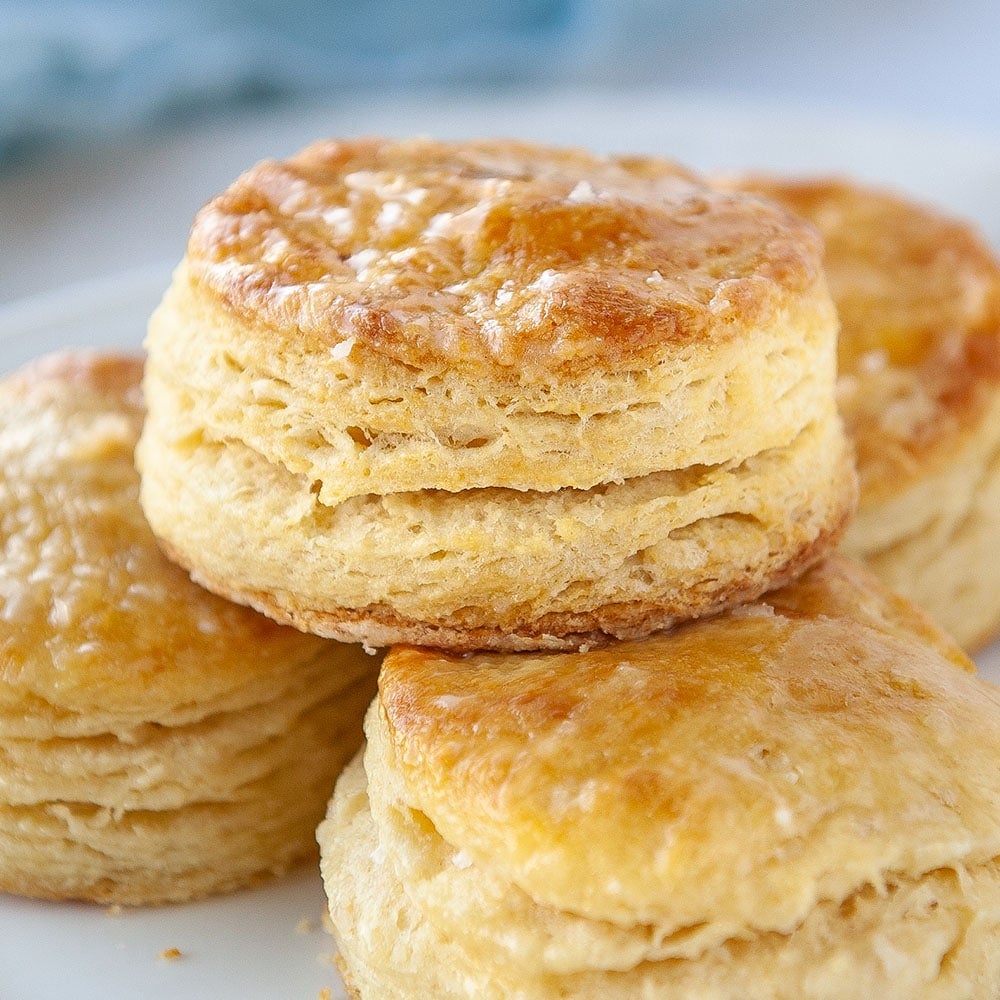
closeup of flaky buttermilk biscuit on top of other biscuits

April 19, 2020 Biscuits and Scones

Flaky Homemade Buttermilk Biscuits

Making flaky buttermilk biscuits from scratch is so much easier than you think and uses only a few simple ingredients! The secret is in how you add the butter! Read on to learn how I make perfect flaky buttermilk biscuits from scratch. 
closeup of flaky buttermilk biscuit on top of other biscuits

I have loved flaky buttermilk biscuits all my life. Growing up, we always made them from the can (that blue one that pops when you open it). I used to peel each layer one by one and eat it to make them last longer. I had no idea that you could make them so easily from scratch and they taste 1000 times better!


Customize this recipe with your favorite additions like bacon, cheese, rosemary or blueberries and make biscuits your whole family will love! These biscuits are also perfect for strawberry shortcake!

What's in this recipe?

  • What ingredients do you need for buttermilk biscuits?
  • How To Make Perfect Flaky Buttermilk Biscuits
  • Related Recipes
  • ⭐⭐⭐⭐⭐ Have you made this recipe? Leave me a review below! 

What ingredients do you need for buttermilk biscuits?

blog-hero

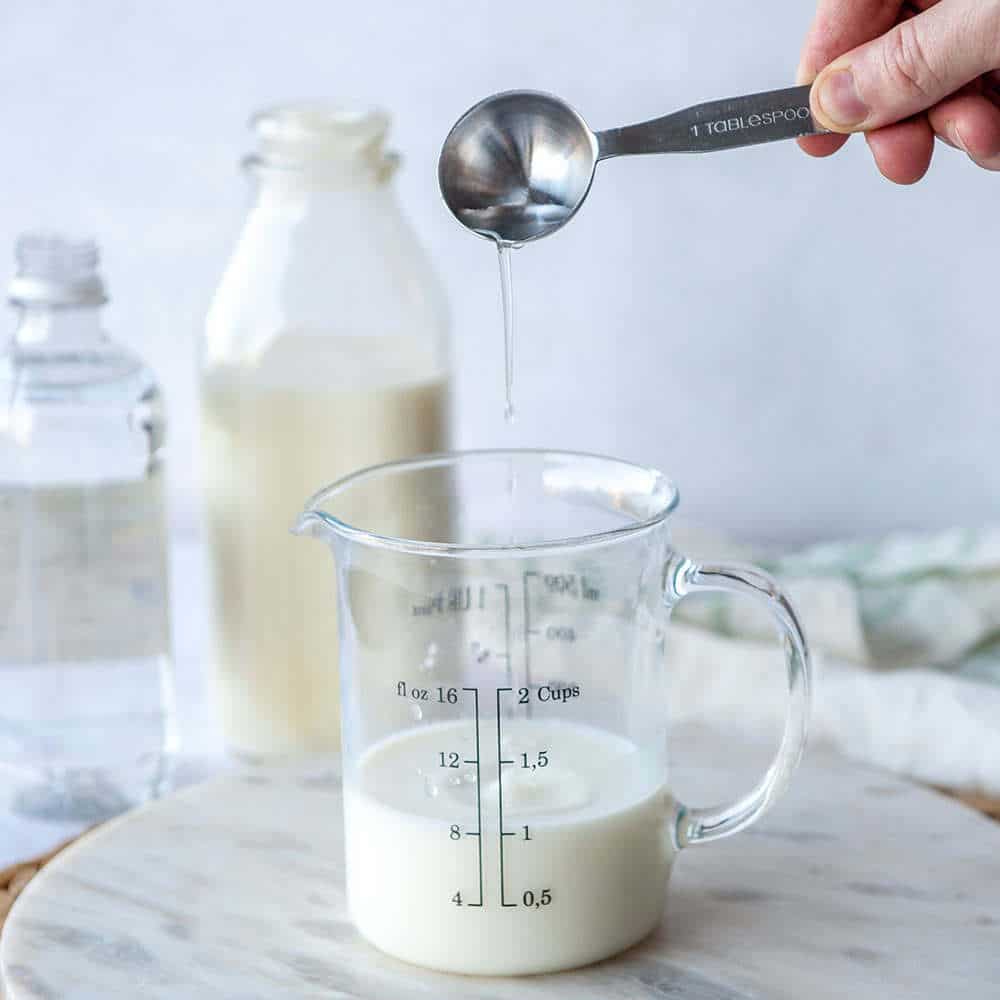
Buttermilk - The magic ingredient. It brings a nice tang to your biscuits while adding very little fat. It also reacts with the baking soda and helps the biscuits rise better. Don't have buttermilk? Make your own!

Baking Powder and Baking Soda - For that ultimate rise, fluffy texture and flavor.

Salt - I like to use pink Himalayan sea salt for a little extra fun flavor, but table salt is fine too! 

Sugar - Sugar not only adds a little sweetness to the biscuits but it also makes them more tender and lends to that crispy top layer. 

Cold Unsalted Butter - Arguably the most important ingredient because of how you use it. If your butter is too warm, you won't get any layers. The bigger the pieces of butter, the more visible the layers. Smaller pieces result in a finer and more tender crumb in your biscuit. I find grating cold butter to be the best of both worlds.

Shortening or Lard - Just a little bit to coat the flour mixture reduces gluten development and helps those biscuits reach maximum fluffiness!

All-Purpose Flour - Just enough protein for good gluten development but not so much that you end up with hard lumps for biscuits. Also called plain flour (not self-rising). 

How To Make Perfect Flaky Buttermilk Biscuits

I'm using a kitchen scale to weigh everything. It makes this recipe super simple and you only need one bowl (yay less dishes!)

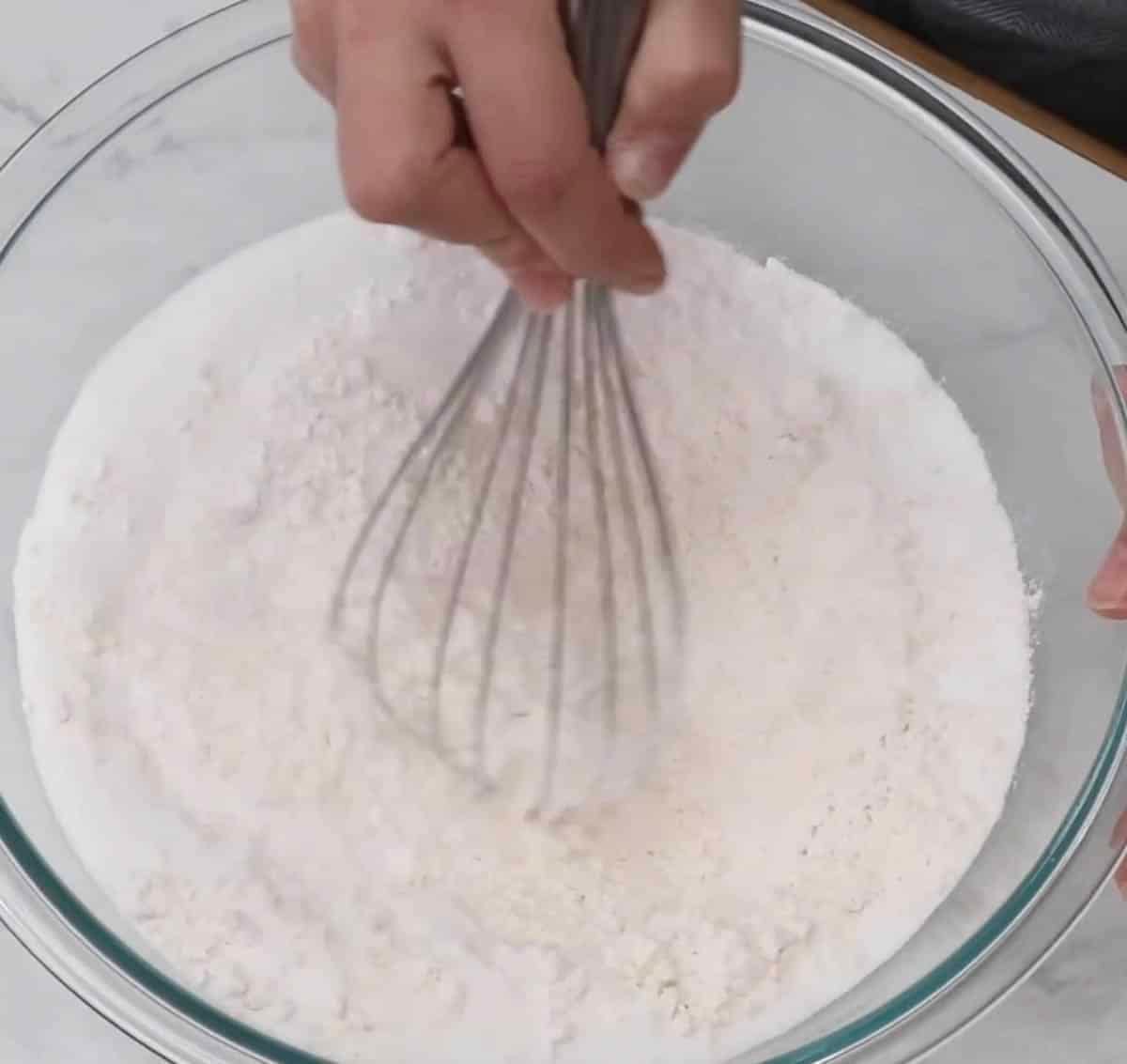
Place your empty bowl onto the kitchen scale and press the tare (or zero) button to remove the weight of the bowl. Add your flour, baking soda, baking powder, sugar, and salt and lightly mix with a spoon to make sure all the ingredients are distributed evenly throughout the flour. 

Add in your shortening or lard and work it into the dough with your fingers until it resembles a sand texture.
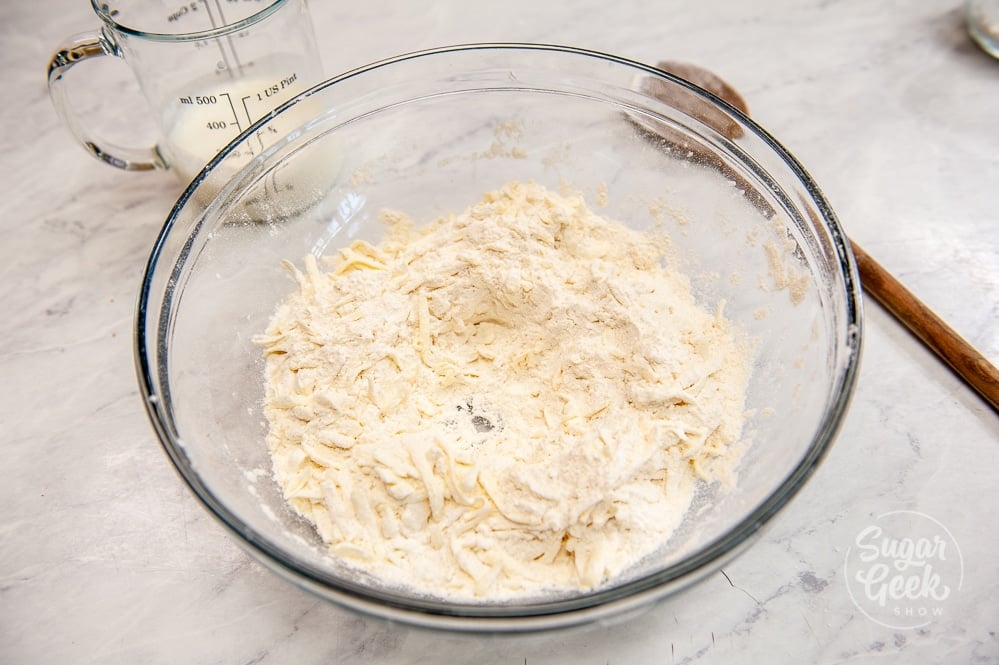
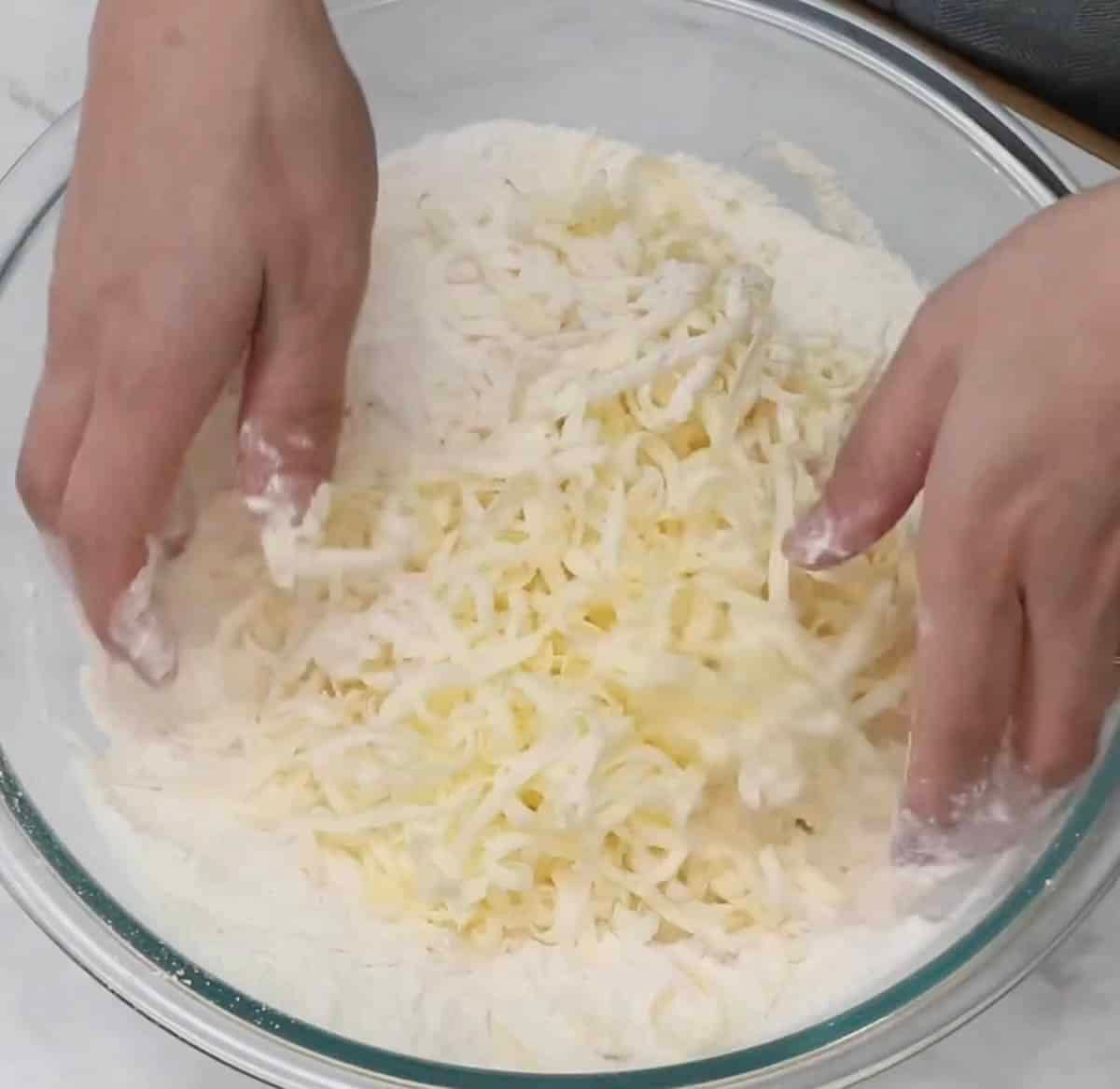
flour, sugar, salt, baking powder and baking soda in a clear bowl combined with shredded cold butter

Press the tare button again to bring everything back to zero. Then grate the cold butter directly into the flour until your scale says you have added the right amount of butter. This is much easier than measuring the butter out and trying to grate out the perfect amount before the butter melts in your hand or you grate your fingertips!

Also, grating directly into the flour means you don't have to touch the butter so less chance of it melting from the heat of your hands. 

Cold butter is the most important part of this recipe! So starting with one big block of cold butter and only grating what you need makes this step super easy. 
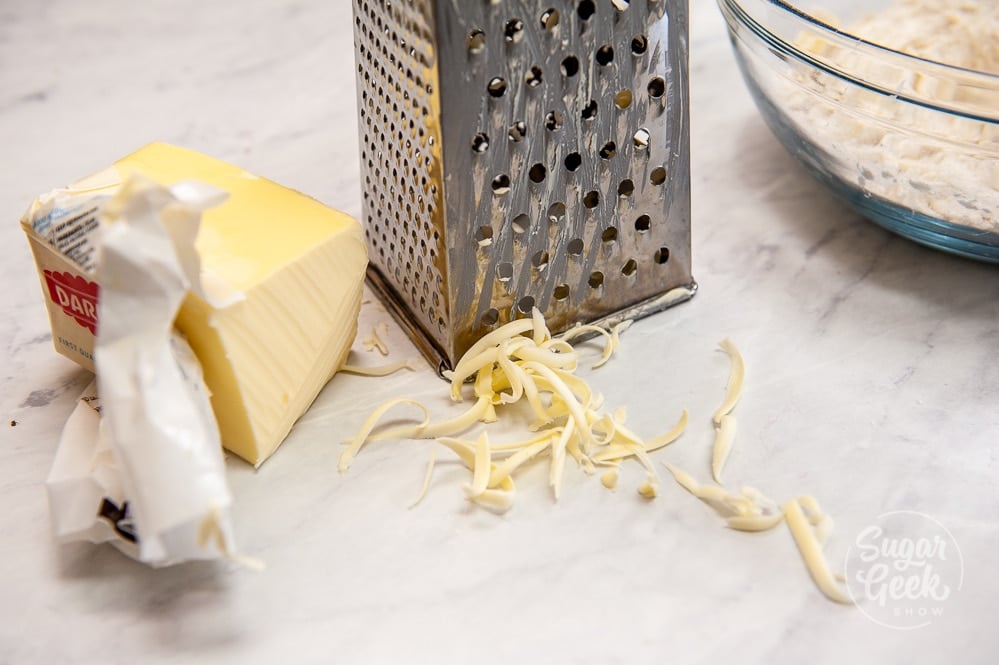
cold grated butter in front of a metal grater on white countertop

Lightly toss together the mixture to coat the butter in the flour. There shouldn't be any pieces of butter stuck together, everything should be coated in flour. Try to do this quickly so that you don't transfer the heat of your hands to the butter and melt it. 

Then make a well in the center of the mix. 

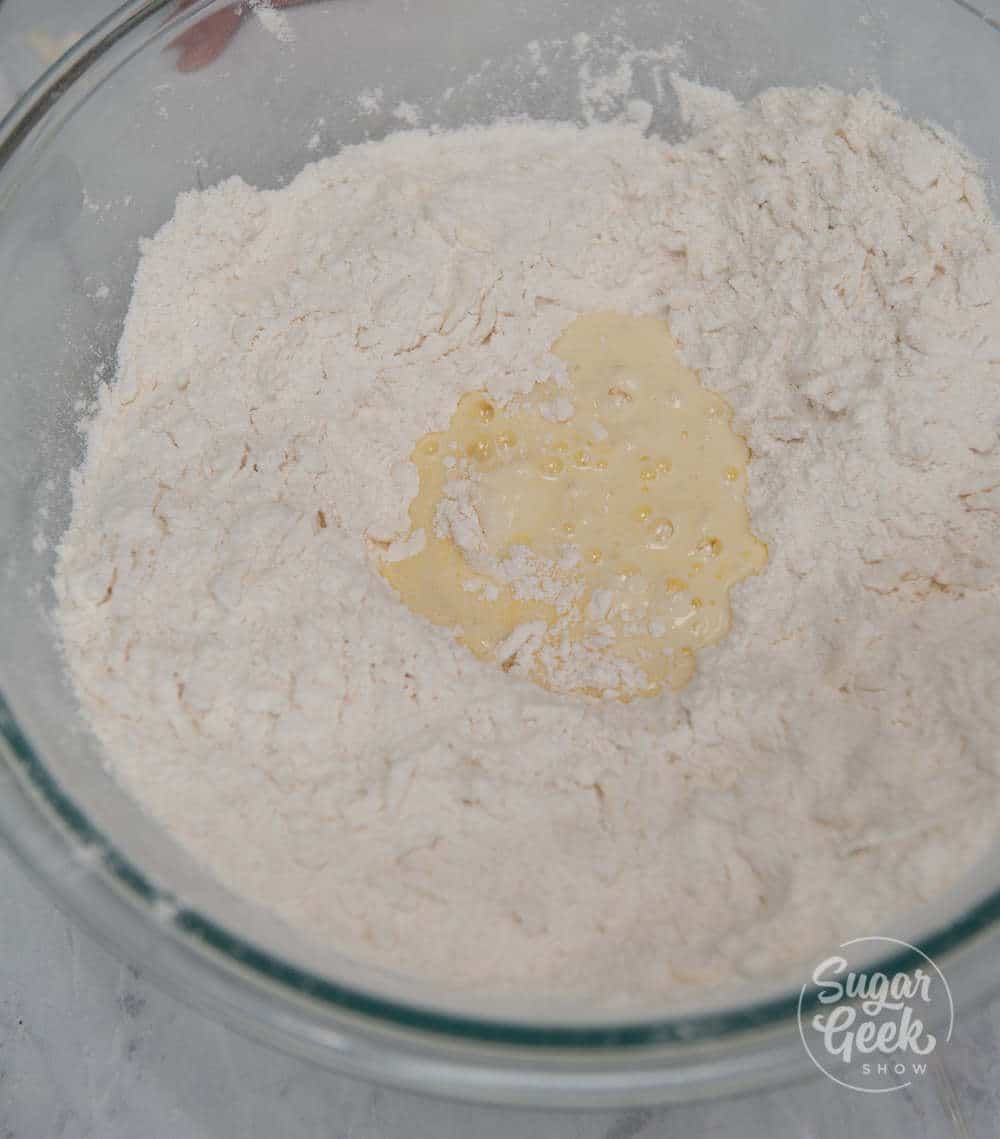
Pour COLD buttermilk into the center well and push the flour on the outside towards the center.
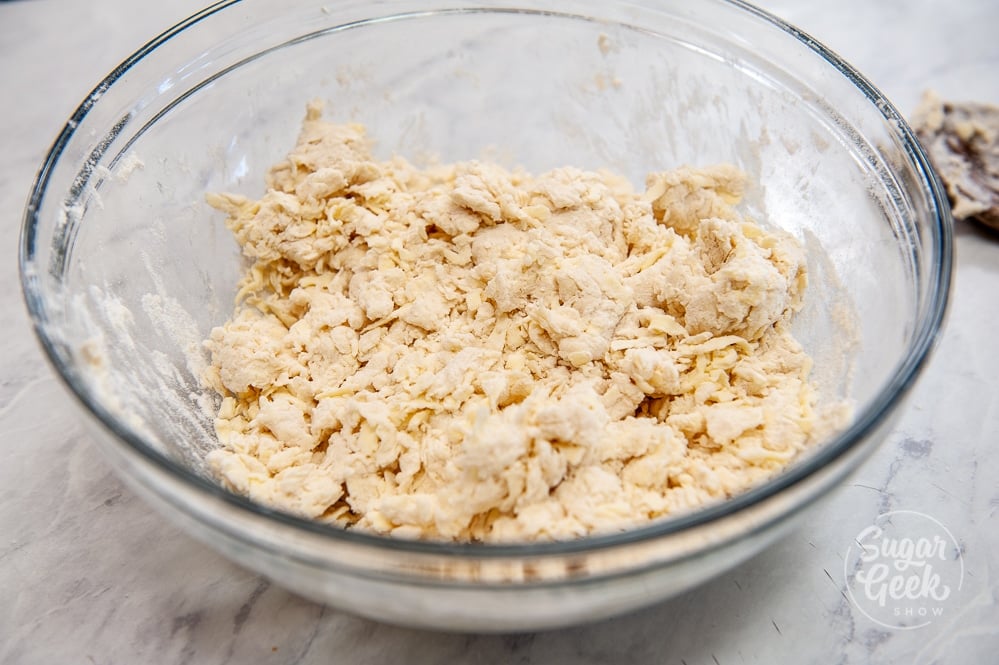
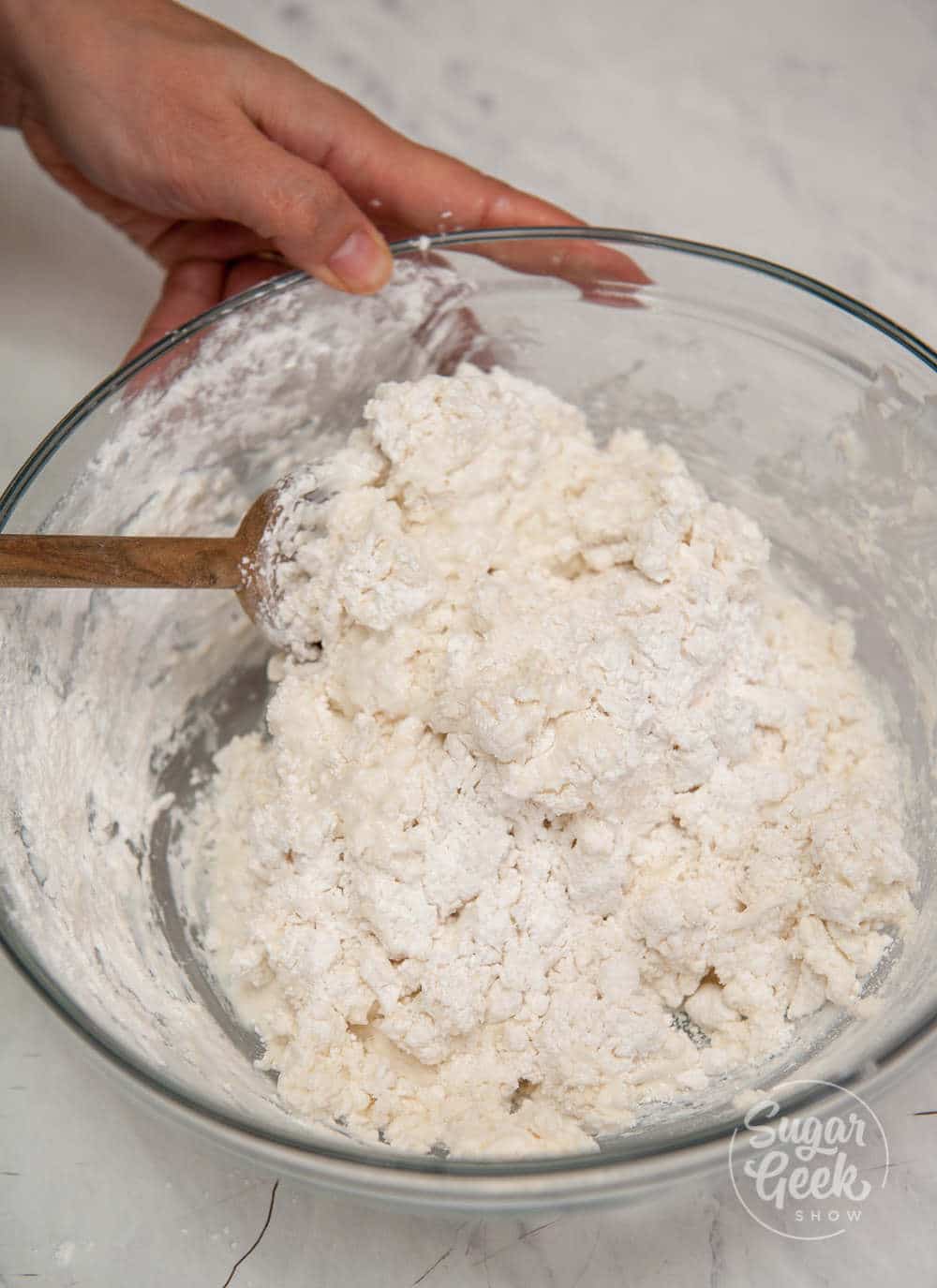
loose biscuit dough in clear bowl on white countertopIf you want to add in any mix-ins like chopped chives, rosemary, bacon, ham, blueberries, nuts, raisins, now is the time. Or you can leave them plain and they'll be delicious!

Make a claw with your hand (or use a fork) and lightly mix until you have a rough looking sticky ball. DO NOT OVER-MIX! Sorry to go all-caps on you but this is a mistake many people make. Ugly biscuit dough is delicious biscuit dough.

Lightly flour your surface and gently press your mixture together on the counter until it roughly flat. 
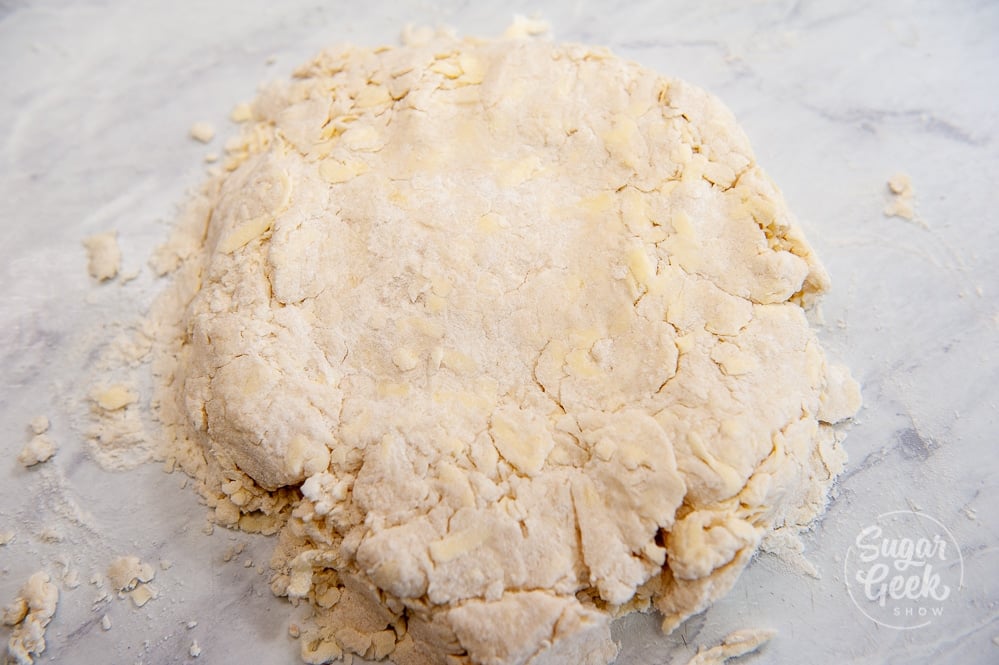
rough biscuit dough pressed together on a white countertop

Take your shaggy, rough dough and fold it over onto itself. Then gently press down on top to make it flat again and about as thick as it started. It will be very messy and that is normal. Just go with it. That is one fold.
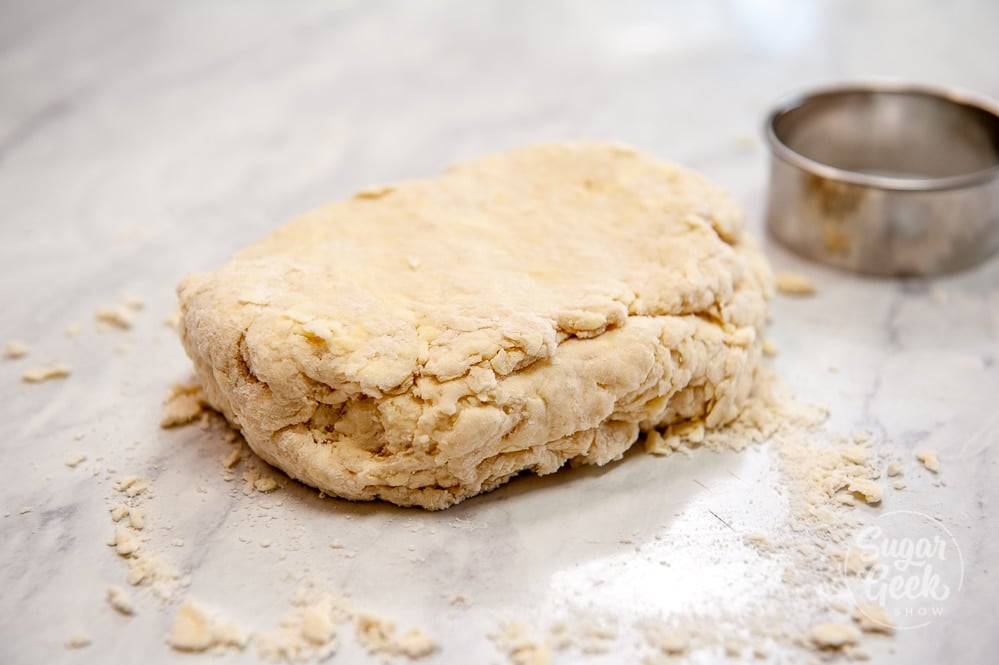
rough biscuit dough folded in half on white countertop

Now turn your dough 45º and repeat the same process of folding and flattening. 

Fold it 4-5 times, rotating after each turn. This is going to make those beautiful fluffy layers of buttery biscuit. You don't want to go any more than 5, though, or it could get really tough. And we're going for fluffy. 

If at any time your dough feels very stretchy and won't fold, place the whole thing in the fridge on a plate or sheet pan and let it relax for 10 minutes. Gluten gets stretchy when you handle it but will relax if you leave it alone. 

After you're done folding, go ahead and press the dough down with lightly floured rolling pin and roll it out to be about 1 inch thick. Time to cut our biscuits!
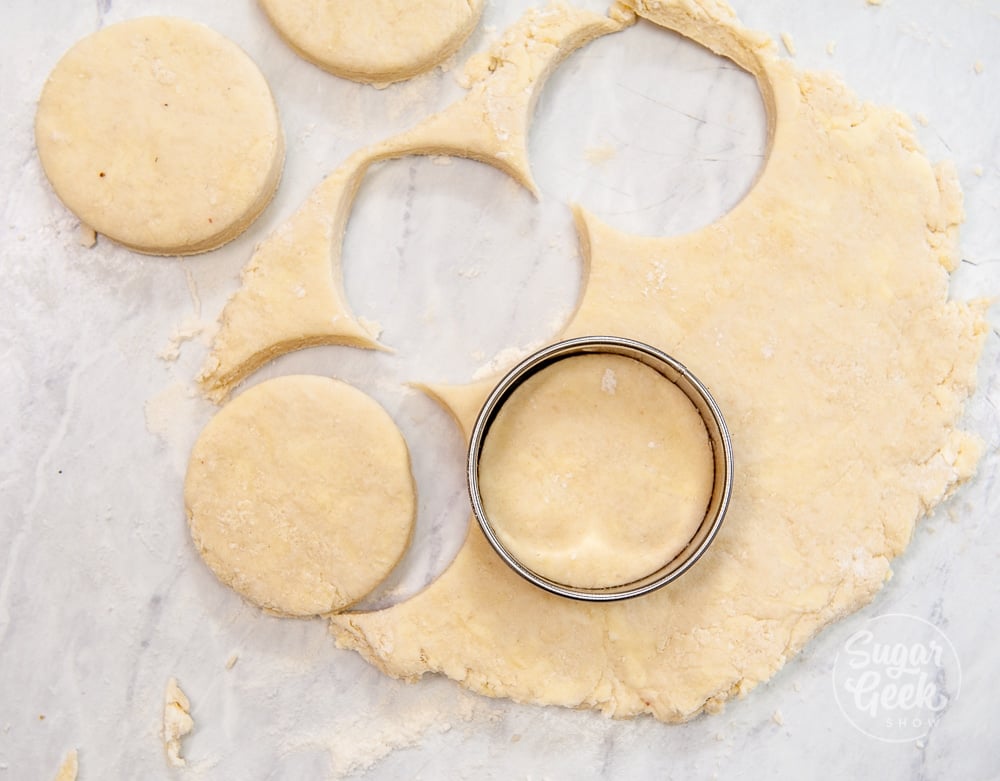
biscuit dough rolled out with round cutter cutting out biscuits shot from above

You can use a round biscuit cutter or you can just cut your dough into squares using a sharp knife.

When you're cutting your biscuits, it's really important to press straight down and lift straight up when cutting. If you twist at all, it will seal off those layers of butter and your biscuits won't rise evenly.

You might not think 1" is thick enough but look at all those layers! They are going to get TALL when we bake them. 
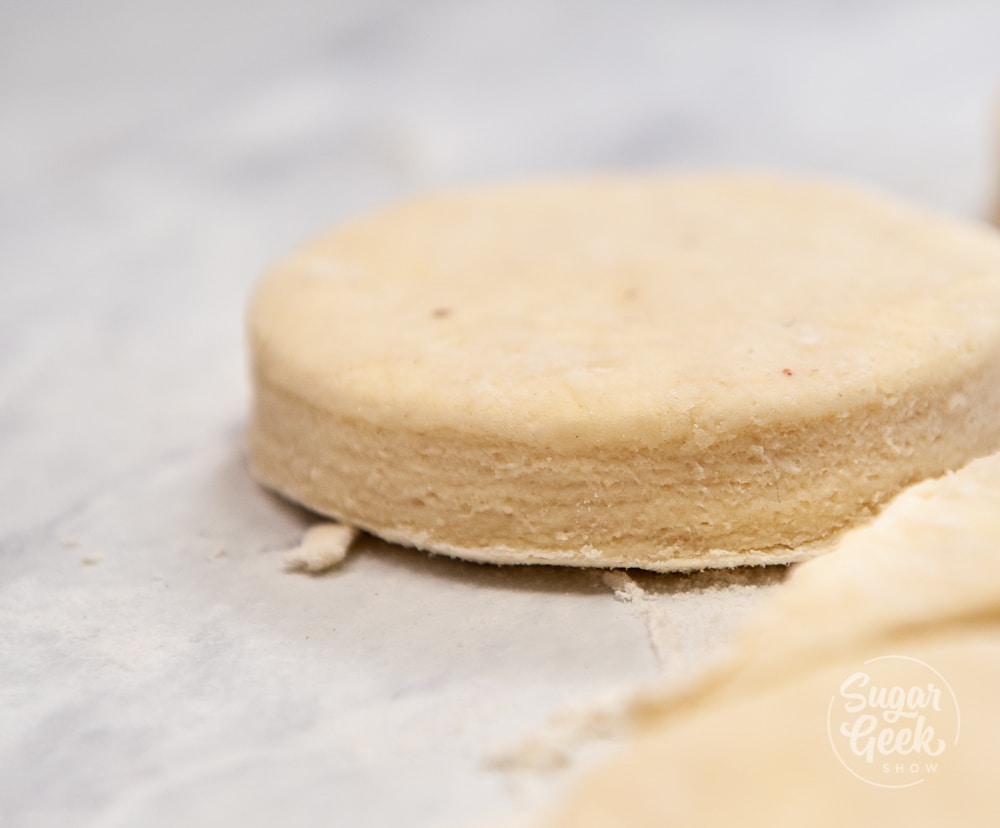
close up of biscuit layers in dough

Try your best to have as little waste as possible, I'm using a 3" wide cutter and got about 12 nice biscuits out of one batch. You can squish together the leftover dough to make the last few biscuits, but don't completely re-knead it, or it'll be super tough.

These biscuits look a little ugly but still taste good!

Line 2 baking sheet pans with parchment paper and then arrange about 8 biscuits on each pan. You want your biscuits to be fairly close together,  just so they're about touching each other. This will help them rise up evenly and straight up.
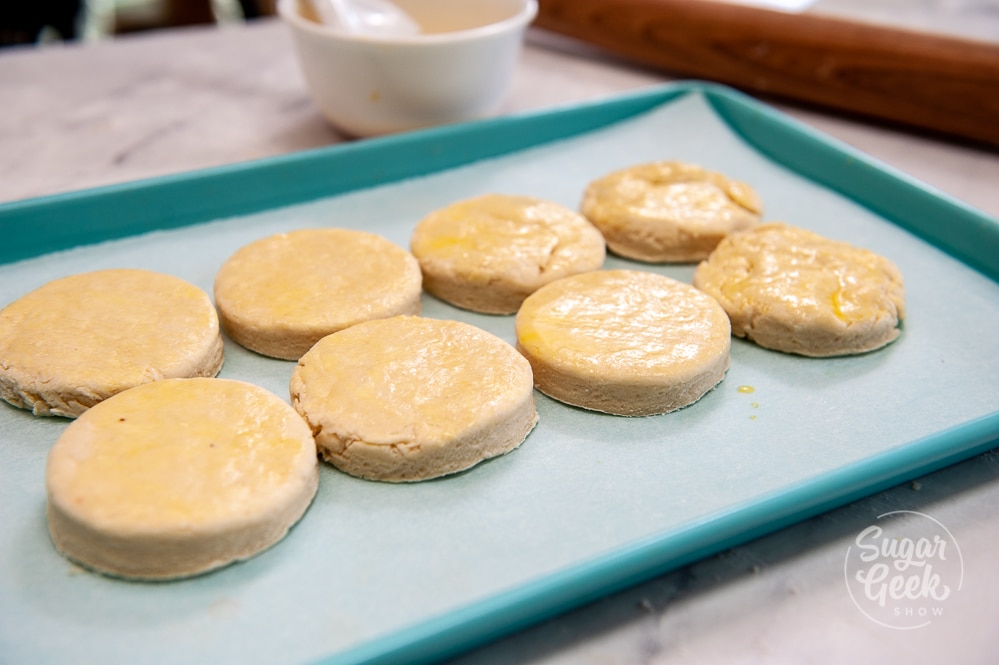
biscuits arranged on a blue cookie sheet with parchment paper after being brushed with egg wash

Brush the tops of your buttermilk biscuits with an egg wash (1 egg + 1 tablespoon water whisked together.) DO NOT brush the sides, or it will seal those beautiful layers. If you don't add egg wash, you won't get that nice brown on top, so don't skip this step. You can also use milk if you don't want to use an egg wash.

If you want to make these ahead of time, you can freeze them before egg washing. Then you don't even have to defrost them, just take them out, egg wash and bake them up! 
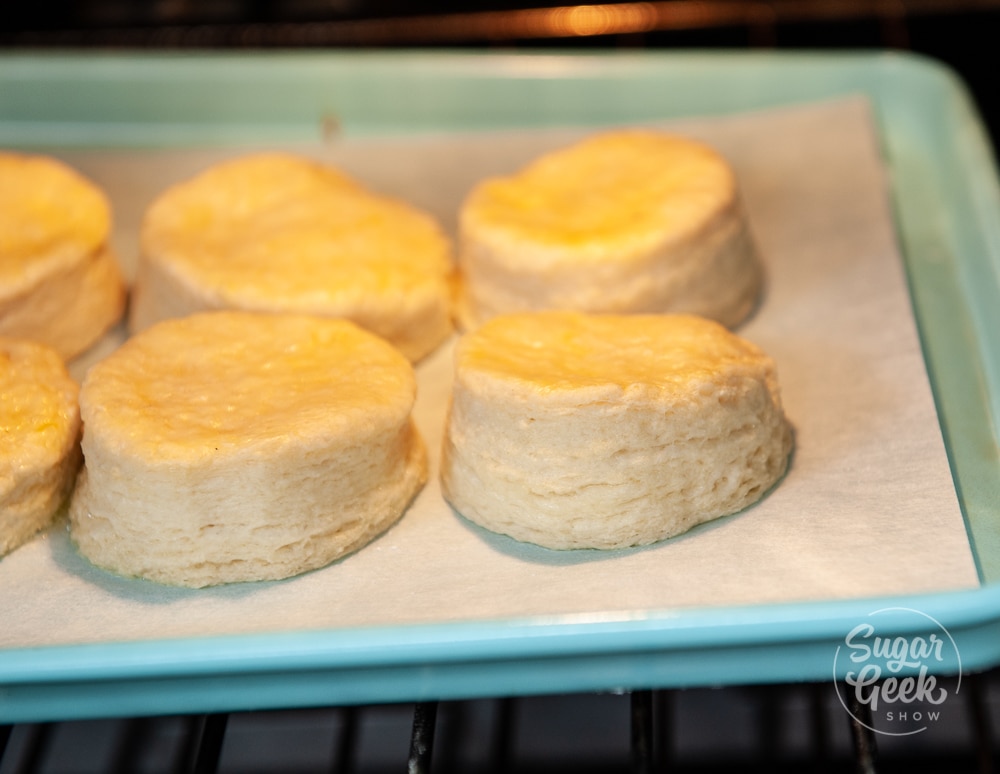
biscuits inside an oven showing the layers of butter

I couldn't resist taking a photo of these baking in the oven! Look how tall they are after only 10 minutes! Each one of those buttery layers is letting off a ton of steam which makes the biscuits rise as they bake.

Bake in the center rack for 10 minutes, then rotate and bake for another 5 minutes or until the tops of your biscuits are nice and golden brown!

When the biscuits come out of the oven I like to brush them with MORE melted butter! So good!
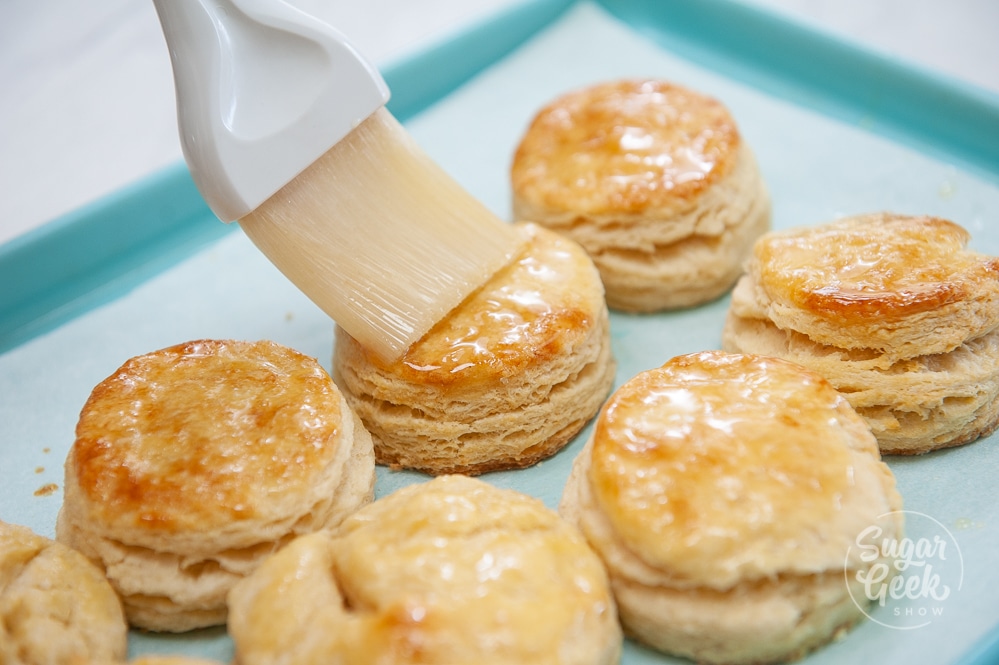
freshly made buttermilk biscuits being brushed with melted butter

Obviously, buttermilk biscuits are best enjoyed the day they are made but you can put them into a ziplock bag at room temperature and store leftovers. Refresh them for a few minutes in the oven at 350º. I love using leftover biscuits to make egg and cheese sandwiches! 

Related Recipes

Cheddar Bacon Chive Biscuits 
How To Make Buttermilk 
Keto Biscuits

⭐⭐⭐⭐⭐ Have you made this recipe? Leave me a review below! 

Recipe
Print Recipe
4.84 from 6 votes

Flaky Buttermilk Biscuits

Flaky, buttery, tender buttermilk biscuits taste the best when they are homemade! No fancy ingredients, just a few simple techniques and tips will make these the best buttermilk biscuits you've ever had!
Prep Time10 minutes mins
Cook Time20 minutes mins
Total Time30 minutes mins
Course: Appetizer, Dessert, Side Dish
Cuisine: American
Servings: 15 biscuits
Calories: 240kcal
Author: Liz Marek

Ingredients

  • 20 ounces all purpose flour
  • 2 tablespoons granulated sugar
  • 2 tablespoon baking powder
  • 1 teaspoon salt
  • 2 ounces shortening or lard
  • 12 ounces buttermilk cold
  • 6 ounces unsalted butter cold, grated or cut into small pieces
US Customary - Metric

Instructions

  • Preheat your oven to 400ºF
  • Sift together flour, sugar, baking powder, baking soda and salt
  • Work the shortening in to the flour mixture with your fingers until it resembles a sandy texture.
  • Grate cold butter into the dry ingredients (using a scale makes this very easy)
  • Toss the ingredients together to coat all the butter with the flour mixture
  • Make a well in the center of your dry ingredients and then add in the cold buttermilk. Pull the dry ingredients towards the center and then mix with your hands in the shape of a "claw" or fork until the dough forms a loose sticky ball. Do not over-mix.
  • Flatten the dough roughly with your hands or rolling pin to about 2" in height. Fold in half. This will be messy! Flatten dough once again.
  • Rotate your dough 45º and fold in half again. Repeat 5-7 times. If the dough becomes stretchy, place it in the fridge for 10 minutes to relax the gluten.
  • Use a 3" round biscuit cutter or sharp knife to make your biscuits. Press striaght down and lift straight up. Do not twist.
  • Place the biscuits on a parchment lined sheet pan with about ¼" of space in between the biscuits and brush with milk or egg wash on top. Do not brush the sides. Sprinkle with sanding sugar for extra crunch and sweetness if desired.
  • Bake at 400ºF for 5 minutes to set the tops and get a good rise then reduce the temp to 350° F and bake for 15 minutes or until they are golden brown. Rotate half way through baking for even browning.
Video

Notes

Use COLD butter and buttermilk straight from the fridge for best results. No buttermilk? Make your own homemade buttermilk
Use a cheese grater to measure out your cold butter directly into the dry ingredients
Preheat your oven 30 minutes ahead of time to give the biscuits the best lift
Use a scale to easily measure all your ingredients into the same bowl
 

Nutrition

Serving: 1biscuit | Calories: 240kcal | Carbohydrates: 32g | Protein: 5g | Fat: 10g | Saturated Fat: 6g | Cholesterol: 27mg | Sodium: 483mg | Potassium: 155mg | Fiber: 1g | Sugar: 3g | Vitamin A: 321IU | Calcium: 69mg | Iron: 2mg
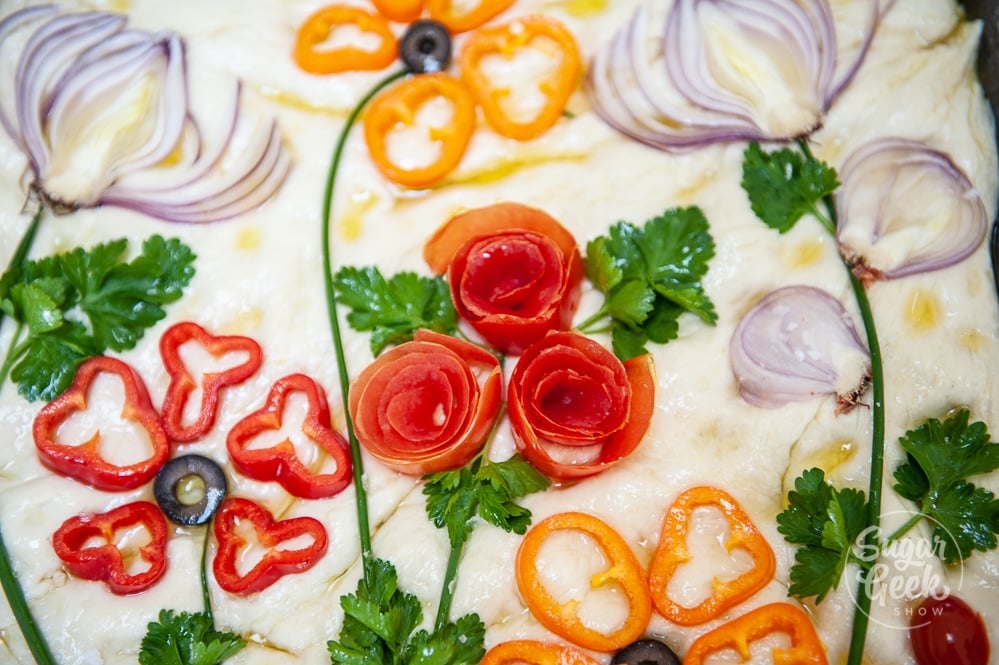
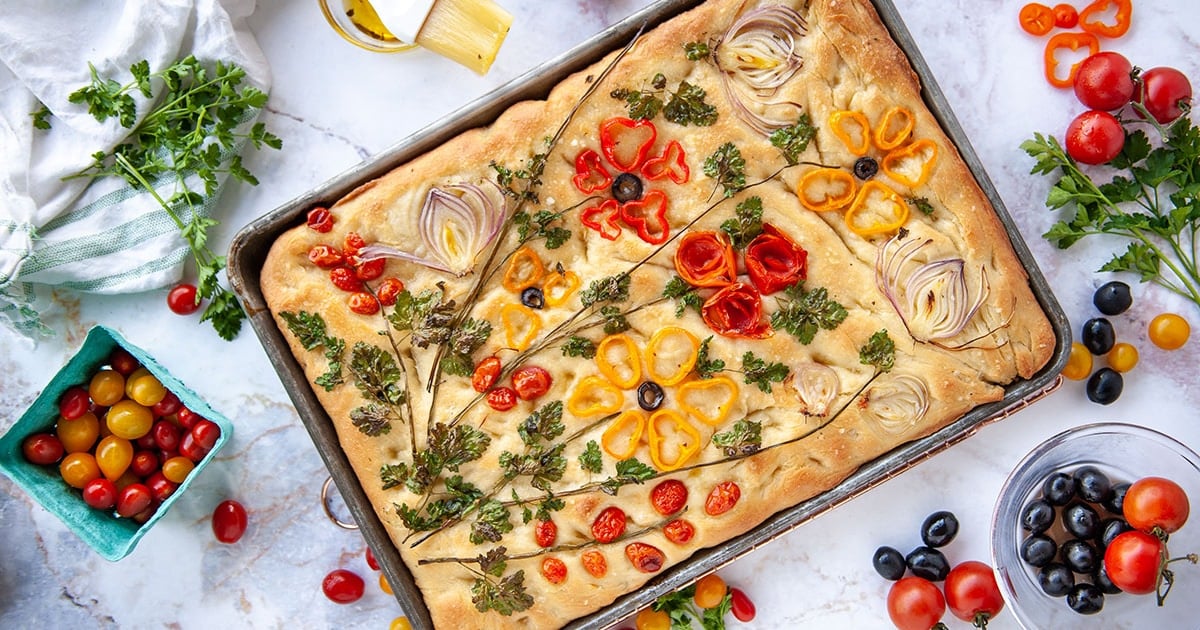
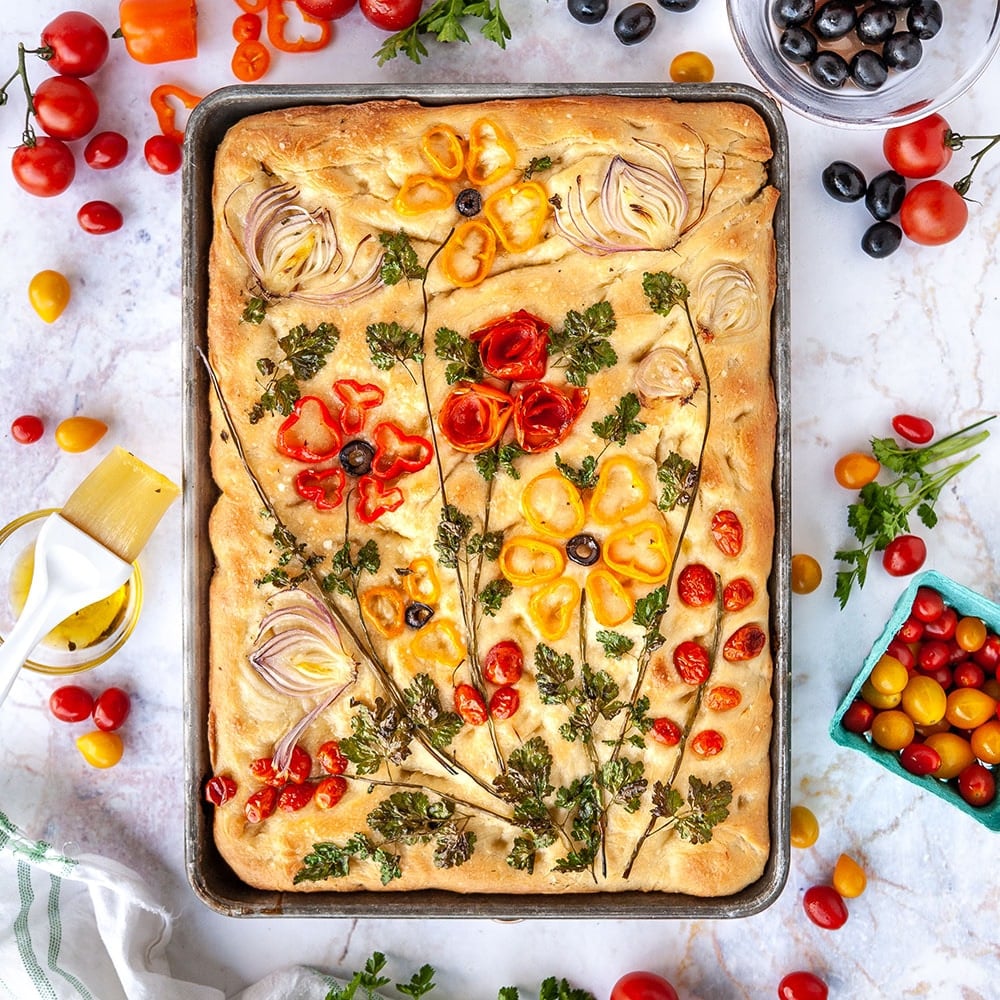
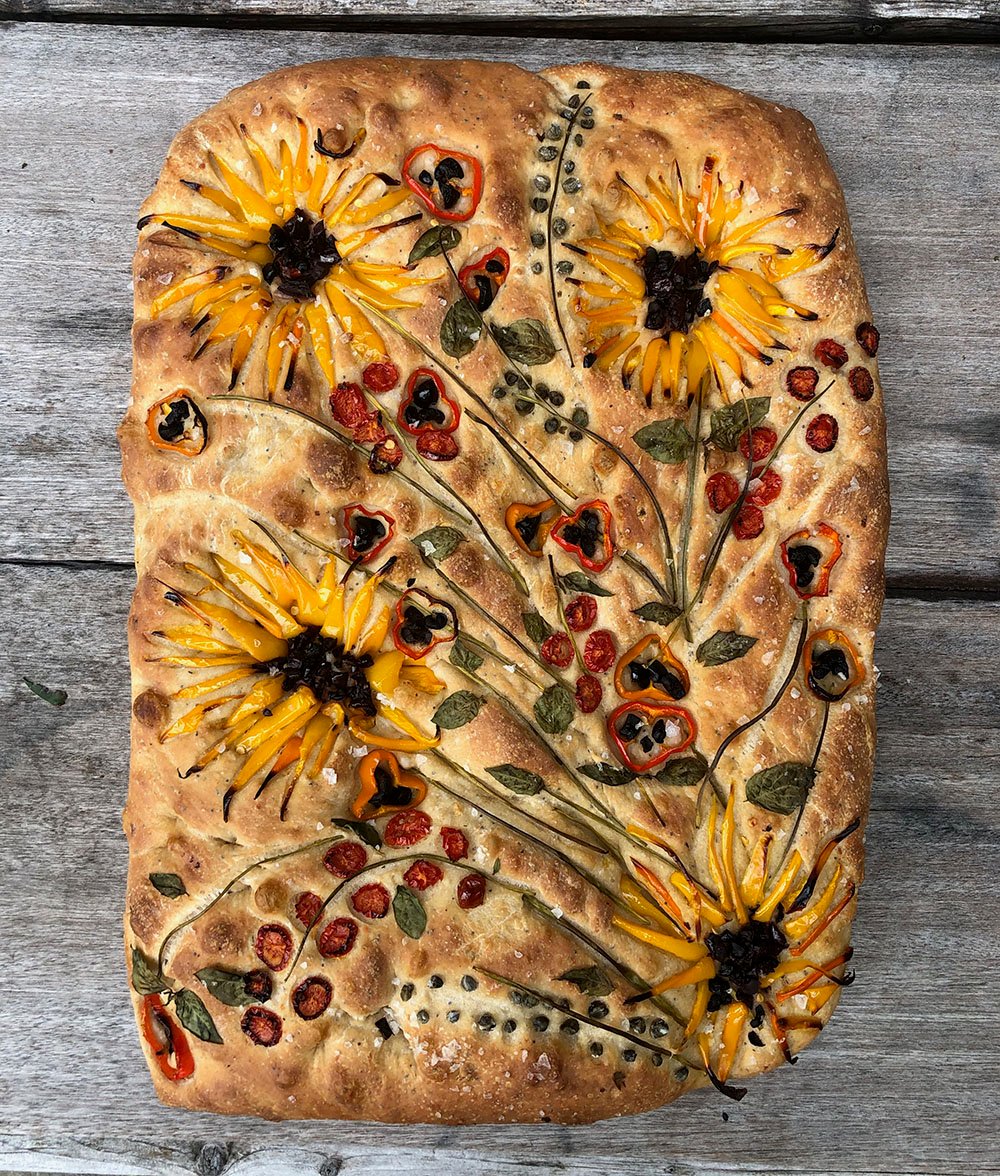
focaccia bread decorated with vegetables to look like flowers shot from above

April 16, 2020 Recipe

Focaccia Bread Art

Making focaccia bread art is not only fun but delicious! These edible works of art inspired by the creations of Vineyard Baker on Instagram are fun for the whole family to make. I recommend cutting one batch of focaccia in half to make two smaller pieces of bread and decorate them individually. That's what I did with my daughter and we had a blast!

focaccia bread decorated with vegetables to look like flowers shot from above

I have been wanting to try this focaccia bread art trend for a long time. I am obsessed with the magical bread art that I see on vineyard bakers page. My favorite is this sunflower named Vincent Van Dough. I love me a good bread pun! I think we could be best friends. 

What's in this blog post

  • Ingredients Needed
  • Day 1 Timeline
  • Day 2 Timeline
  • Focaccia bread art ideas
slices of bell pepper, olives and other vegetables on baked focaccia shot from above

At the time of this blog post, the world was in quarantine so our days are filled with lots of fun projects to keep ourselves and the kids busy. This was the perfect fun project for my five-year-old Avalon and I to do together. 

I just prepped all the ingredients and the focaccia ahead of time so all she had to do was decorate!

Ingredients Needed

These are the types of ingredients you can use to decorate your bread art. Get creative with what you have!

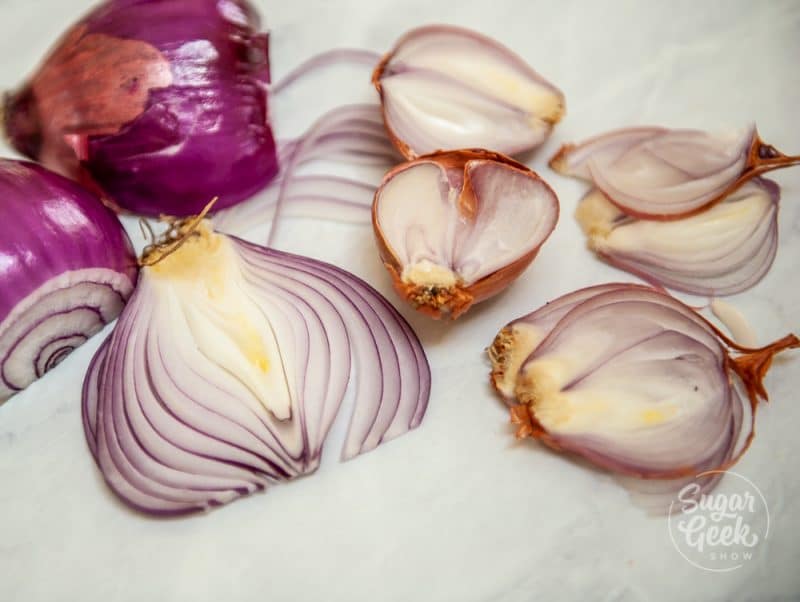
thinly sliced red onions and shallots on white table
  • Red onions - thinly sliced to look like flowers
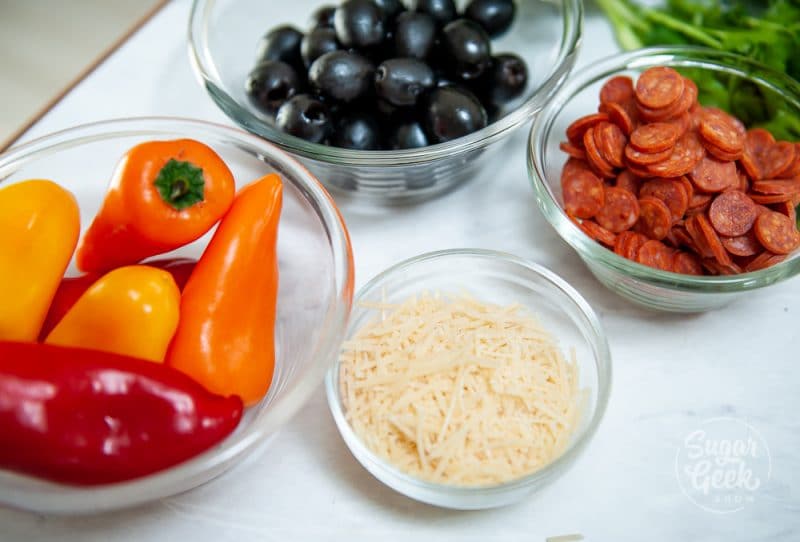
  • Mini bell Peppers - sliced vertically (so they stay round) to look like small flowers or sliced horizontally (in strips) to make big sunflowers!
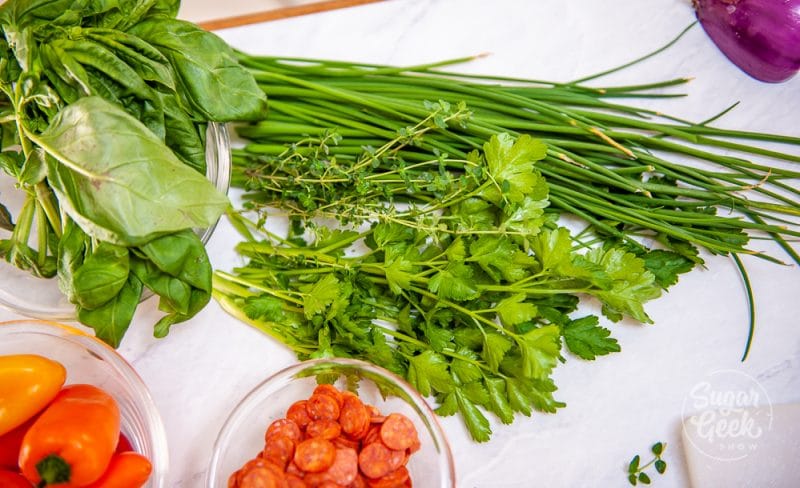
  • Chives  - Make great flower stems
  • Green Onions -  Also make great flower stems or seaweed
  • Parsley - Perfect for leaves
  • Basil - Also great for leaves or seaweed
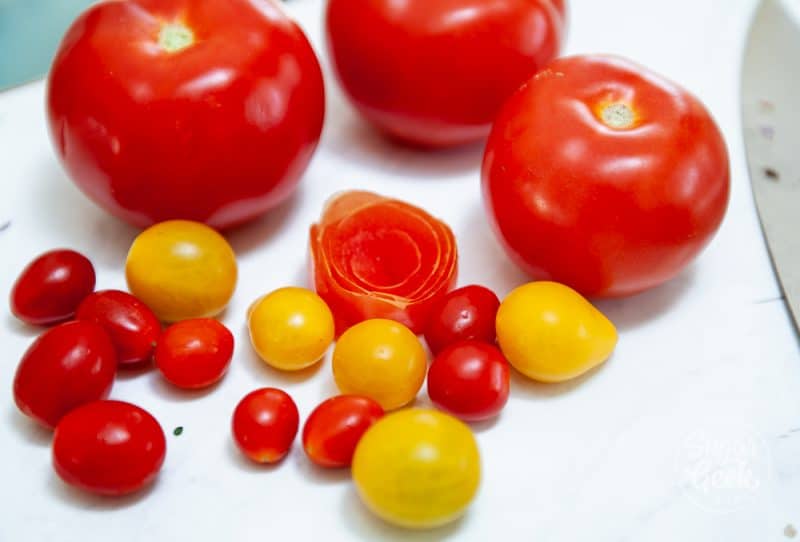
  • Cherry Tomatoes - Sliced in half length-wise and dried with a paper towel. Makes great flower centers or seed pods
  • Olives - Rocks or centers of flowers
  • Capers - Seed pods
  • Rosemary - Small plants
  • Thyme - Small plants
  • Pepperoni - We shaped ours into fish
  • Sausage - Flower centers or seed pods
  • Shredded Parmesan - Sand or dirt
  • Tomatoes - Use a sharp knife to make tomato roses!
bell peppers, tomato roses, red onions and parsley on raw focaccia dough in the design of flowers

How do you make focaccia bread art?

Start off with my easy focaccia bread recipe. I mix this dough up the night before I want to bake it. The long proof in the fridge gives it flavor and a lovely chewy interior with a thin and crispy crust. 

Day 1 Timeline

Day 1 - In the late afternoon or evening, I mix up my focaccia dough and set it aside to bulk ferment (rise) in a warm area (70ºF). This takes anywhere from 2-3 hours because of the large amount of oil in the dough and depending on how warm your room is. The warmer it is, the faster the dough will rise. 

After your dough house doubled in size, dump it out onto your work surface. Divide the dough into two pieces if you desire. 

Prepare two sheet pans with a thin layer of olive oil that coats the entire surface. 

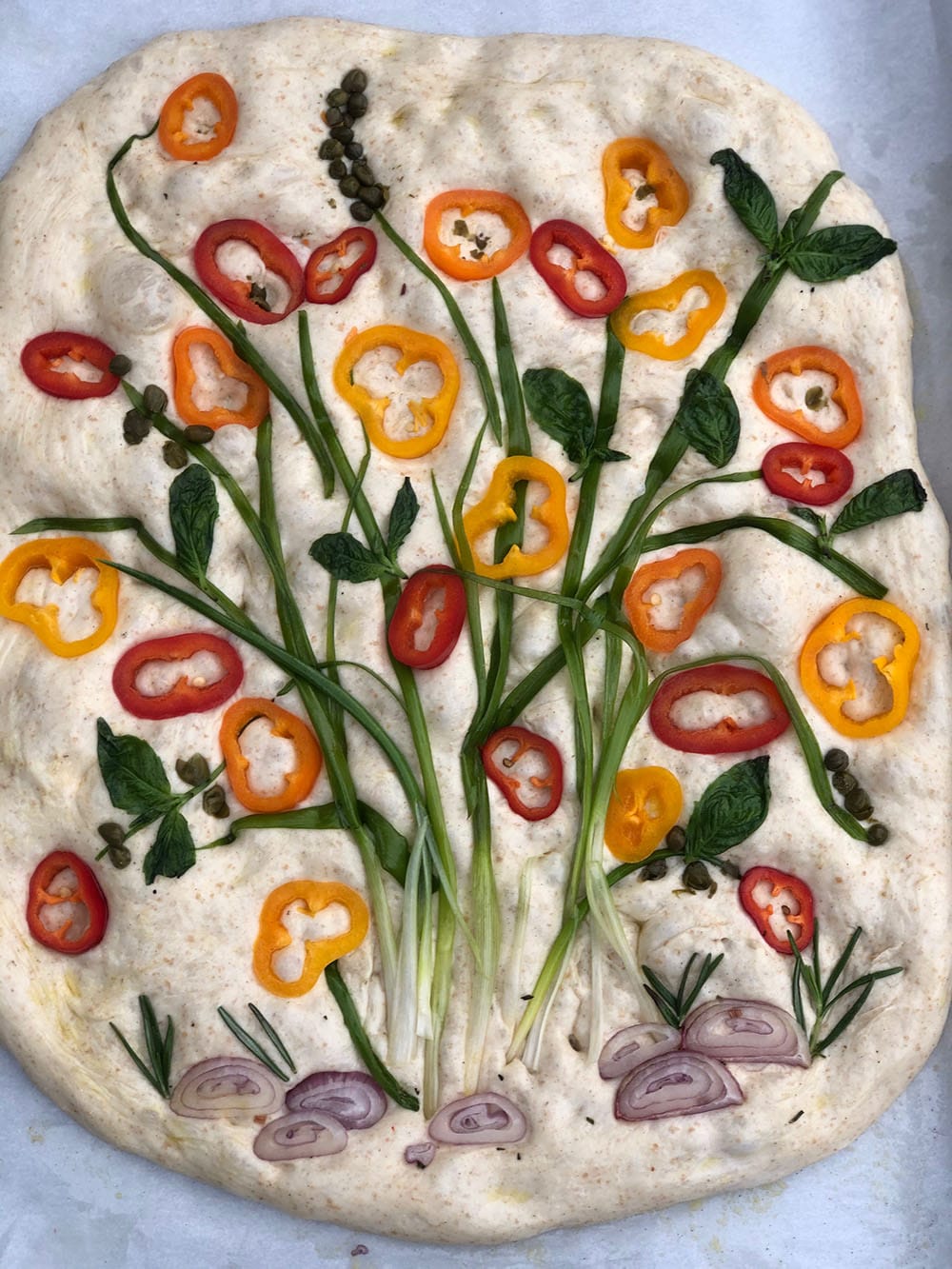
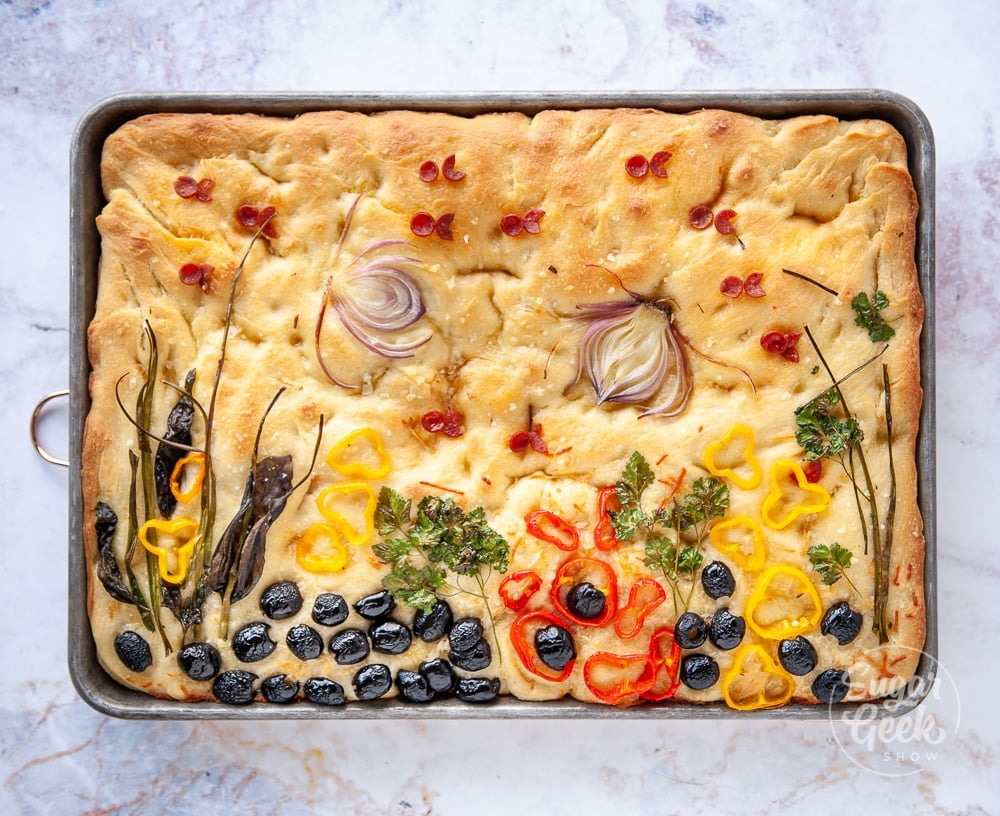
Stretch the dough onto the pan. I got mine all the way to the edges because I made a double batch but if you are using a single batch, just shape it roughly in the center of the pan as much as you can. Here is a beautiful example from Vineyard Baker. 

focaccia bread with sliced bell peppers, chives, herbs and shallots shot from above

Cover your sheet pan in plastic wrap to keep the dough from drying out and then place it into the fridge overnight for the second proof. 

Day 2 Timeline

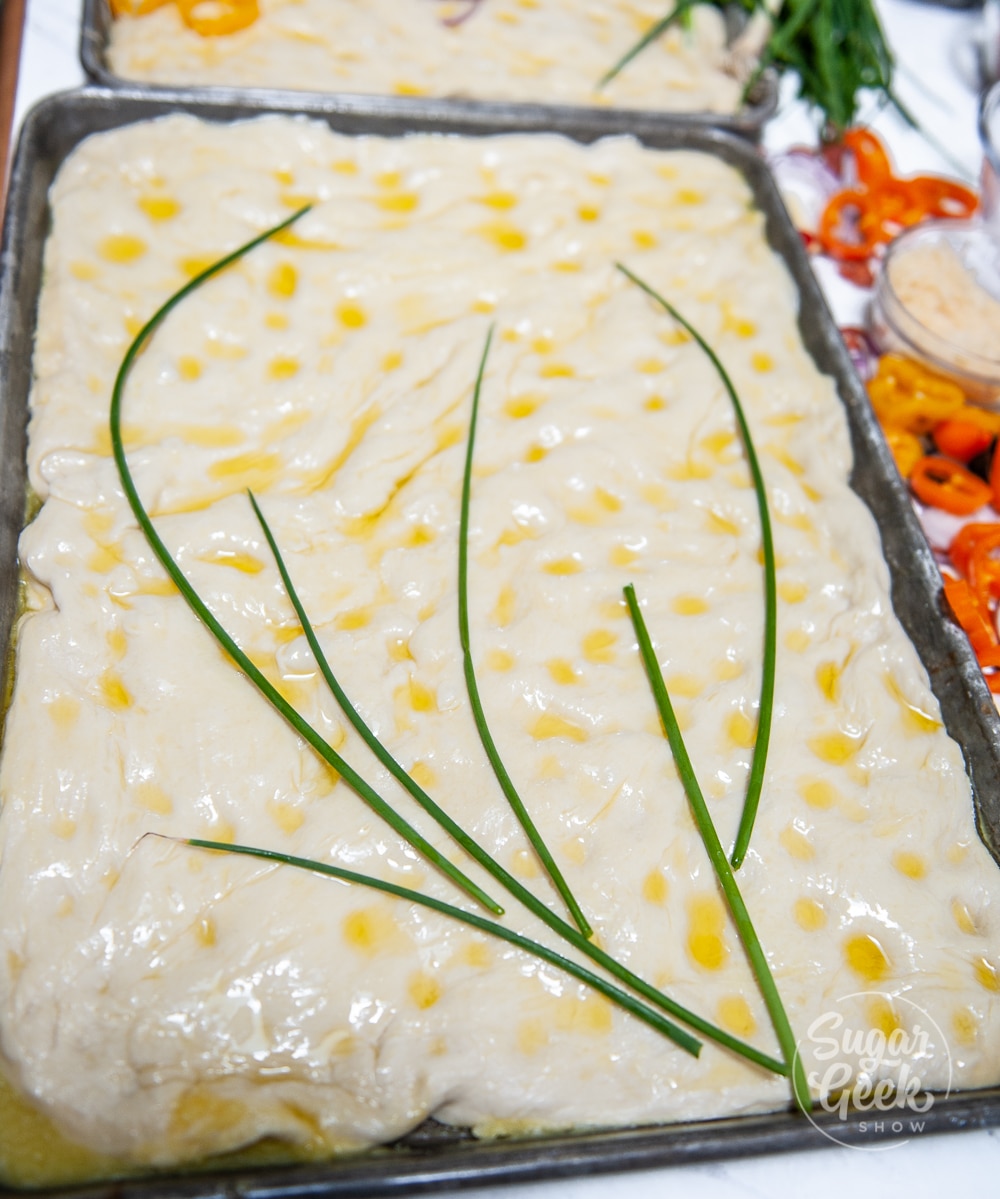
Take your focaccia out of the fridge and let it come to room temperature for about 30 minutes. You want the dough to be nice and bubbly before you start decorating so that the dough doesn't envelop your veggies. I like to prep my toppings while the focaccia is warming up. 

focaccia dough with sprigs of chives arranged on top in a metal sheet pan

Dimple the top of your focaccia as usual, add your olive oil and flakey salt. as directed in the recipe. Now you're ready to decorate! Go crazy! Have fun! Put the art in focaccia bread art!

After you top your focaccia, coat all the herbs with a layer of olive oil to prevent them from burning while you bake. 

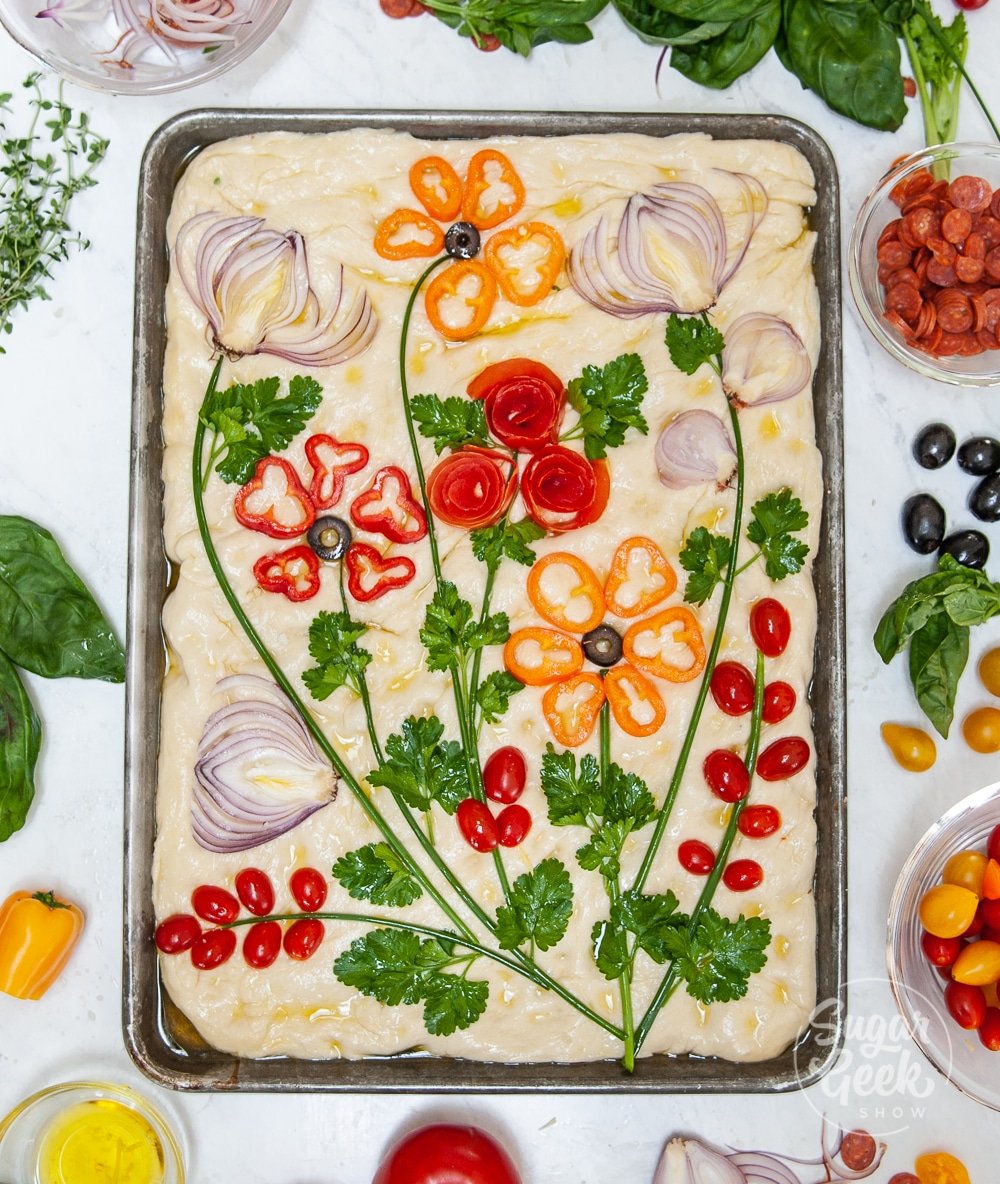
sliced red onions, bell peppers, tomato roses, parsley and cherry tomatoes on raw focaccia dough shot from above

Focaccia bread art ideas

Now is the time to get creative with your focaccia bread art! Use your imagination! If you search focaccia bread art on Pinterest you will see TONS of inspiration! 

I wanted to make as many flowers as possible so mine was more like a flower bouquet.

focaccia bread art

Avalon went under the sea themed so she had lots of fish and sea creatures on hers. I especially love how Avalon used the sliced shallots so they looked like octopus swimming. So clever. 

focaccia bread art

Both were delicious! 

If you have any bread leftover, cover it with plastic wrap and store it in the fridge. Bake it for 10 minutes in an oven at 350ºF to refresh it before eating and it will taste good as new!

Recipe

focaccia bread decorated with vegetables to look like flowers shot from above
Print Recipe
4.92 from 103 votes

Focaccia Bread Art Recipe

This easy focaccia recipe is the best! Just mix, rest, stretch and chill overnight to let all that amazing flavor develop. Perfect for using as a base for those beautiful focaccia bread art projects.
Prep Time10 minutes mins
Cook Time25 minutes mins
Resting1 day d 25 minutes mins
Course: Appetizer, Side Dish
Cuisine: Italian
Servings: 24 servings
Calories: 168kcal
Author: Liz Marek

Equipment

  • Stand mixer with a dough hook

Ingredients

  • 16 ounces warm water (110ºF) divided into two bowls 2 cups
  • 1 Tablespoon granulated sugar
  • 7 grams active dry yeast (2 ½ teaspoons)
  • 2 ounces olive oil ¼ cup
  • 1 teaspoon salt
  • 1 Tablespoon flakey salt
  • 24 ounces bread flour or all-purpose flour (5 cups spooned and leveled)
  • 4 ounces olive oil for the pan and for drizzling on top of the focaccia after rising (½ cup)
  • 2 Tablespoons fresh rosemary chopped
  • Vegetables, herbs and meats for topping
US Customary - Metric

Instructions

  • Combine your first cup of warm water with your yeast and sugar and mix to combine. Set it aside for about 5 minutes or until it looks foamy
  • Place the water/yeast mixture in the bowl of your stand mixer with the bread hook attached. You can also make this dough by hand with a bowl and spoon but you'll have to use some elbow grease.
  • Add in about 1 cup of flour and mix on low until combined
  • Add in the rest of your water, the olive oil and the salt and half of your remaining flour. Mix on low until combined
  • Continue adding in your flour while mixing on low until the dough pulls away from the sides of the bowl. If it's still too sticky, add in a couple more Tablespoons of flour until it comes together. The dough will be very soft though
  • Keep mixing on low until your dough develops enough gluten that when you touch it, it bounces back. I took my dough out of the bowl and finished kneading it on the countertop for about 2 minutes until the dough bounced back.
  • Place your dough into a bowl with about a Tablespoon of olive oil. Cover with plastic wrap and let rise in a warm place for 1-2 hours or until it has doubled in size. If you're using active dry yeast, it will take longer to proof to double. Keep an eye on it.
  • Pour enough olive oil into a 12"x17" sheet pan (or any pan of similar size) so there is a thin layer of oil covering the entire bottom of the pan
  • Put some olive oil on your hands to prevent sticking and then pull the focaccia dough out of the bowl. It will be very loose. Divide into two if you deisre. Lay it in the pan and begin stretching it. If it shrinks back, walk away for about 15 minutes to let the gluten relax before you stretch again. Don't worry about getting it to the edges if you divided it in half.
  • Once you're done stretching, cover it with plastic wrap and place it into the fridge overnight to develop flavor.
  • When you're ready to bake your bread, take it out of the fridge and let it warm up for about 30 minutes. Dimple the surface with your oiled fingers to create some areas where the olive oil can collect.
  • Drizzle a good amount olive oil onto the top of the bread until all the dimples have a little oil in them. Sprinkle flakey salt on top.
  • After your focaccia has risen for 30 minutes, decorate the top any way you like with veggies, herbs and meats. See the blog post above for more ideas.
  • Brush all your veggies and herbs with more olive oil to prevent burning.
  • Bake in the oven at 450ºF for 20-25 minutes or until the focaccia bread is nice and golden.
  • Because of the toppings, this bread is best enjoyed the day of. Refrigerate leftovers. Re-heating the bread in the oven for 5-10 minutes at 350ºF will bring back that chewy texture.

Video

Notes

I place my dough near my oven set to 170ºF to help the dough rise. Mine usually only takes about 1 hour if my room is warm.
Let your cold focaccia rise for 30 minutes before decorating to prevent the dough from enveloping the toppings
Brush the toppings with vegetable oil to prevent burning in the oven

Nutrition

Serving: 1serving | Calories: 168kcal | Carbohydrates: 21g | Protein: 4g | Fat: 8g | Saturated Fat: 1g | Sodium: 1mg | Potassium: 31mg | Fiber: 1g | Sugar: 1g | Vitamin A: 5IU | Vitamin C: 1mg | Calcium: 5mg | Iron: 1mg


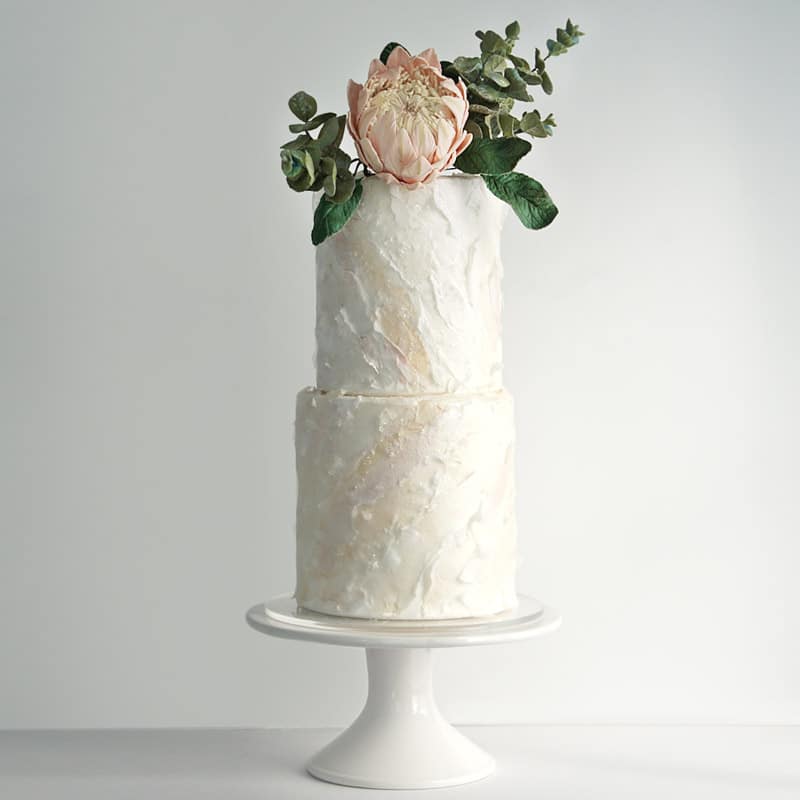
King Protea sugar flower and eucalyptus sugar foliage on white wafer paper wedding cake

April 15, 2020 Course Preview

King Protea and Eucalyptus Cake Tutorial

Skill level: Intermediate

Guest instructor Anna Astashkina of Astashkina Cakes, based in Chicago, Illinois joins us for this amazing King Protea and Eucalyptus cake project. Anna is an award-winning cake designer and sugar artist known for her elegant modern painted cakes featuring nature - inspired floral arrangements and unique textures.

2:16:37 Minutes of Instruction

What You Will Learn

  • How to make a King Protea sugar flower
  • Learn how to create realistic recalyptus foliage
  • How to create a stunningly elegant wedding cake texture
  • Anna's tips and tricks to arrange and produce this beautiful cake project

Tutorial Chapters

  1. Coloring the gum paste 0:55
  2. Making the eucalyptus 7:50
  3. Dusting the eucalyptus 26:21
  4. Assembling the eucalyptus 31:12
  5. Making protea leaves 41:11
  6. Dusting protea leaves 49:56
  7. Finishing the leaves 53:26
  8. Making the protea center 54:55
  9. Making the protea petals 1:09:13
  10. Attaching layers of petals 1:15:42
  11. Dusting the protea flower 1:39:40
  12. Finishing the leaves 1:48:48
  13. Adding wafer paper 1:52:51
  14. Adding sugar texture 2:05:42
  15. Arranging the protea and leaves 2:07:43

Downloads

Materials List

King Protea sugar flower and eucalyptus sugar foliage on white wafer paper wedding cake

April 15, 2020 Paid Video

King Protea and Eucalyptus Cake

Skill level: Intermediate

Guest instructor Anna Astashkina of Astashkina Cakes, based in Chicago, Illinois joins us for this amazing King Protea and Eucalyptus cake project. Anna is an award-winning cake designer and sugar artist known for her elegant modern painted cakes featuring nature - inspired floral arrangements and unique textures.

2:16:37 Minutes of Instruction

What You Will Learn

  • How to make a King Protea sugar flower
  • Learn how to create realistic eucalyptus foliage
  • How to create a stunningly elegant wedding cake texture
  • Anna's tips and tricks to arrange and produce this beautiful cake project

Tutorial Chapters

  1. Coloring the gum paste 0:55
  2. Making the eucalyptus 7:50
  3. Dusting the eucalyptus 26:21
  4. Assembling the eucalyptus 31:12
  5. Making protea leaves 41:11
  6. Dusting protea leaves 49:56
  7. Finishing the leaves 53:26
  8. Making the protea center 54:55
  9. Making the protea petals 1:09:13
  10. Attaching layers of petals 1:15:42
  11. Dusting the protea flower 1:39:40
  12. Finishing the leaves 1:48:48
  13. Adding wafer paper 1:52:51
  14. Adding sugar texture 2:05:42
  15. Arranging the protea and leaves 2:07:43

Downloads

Materials List

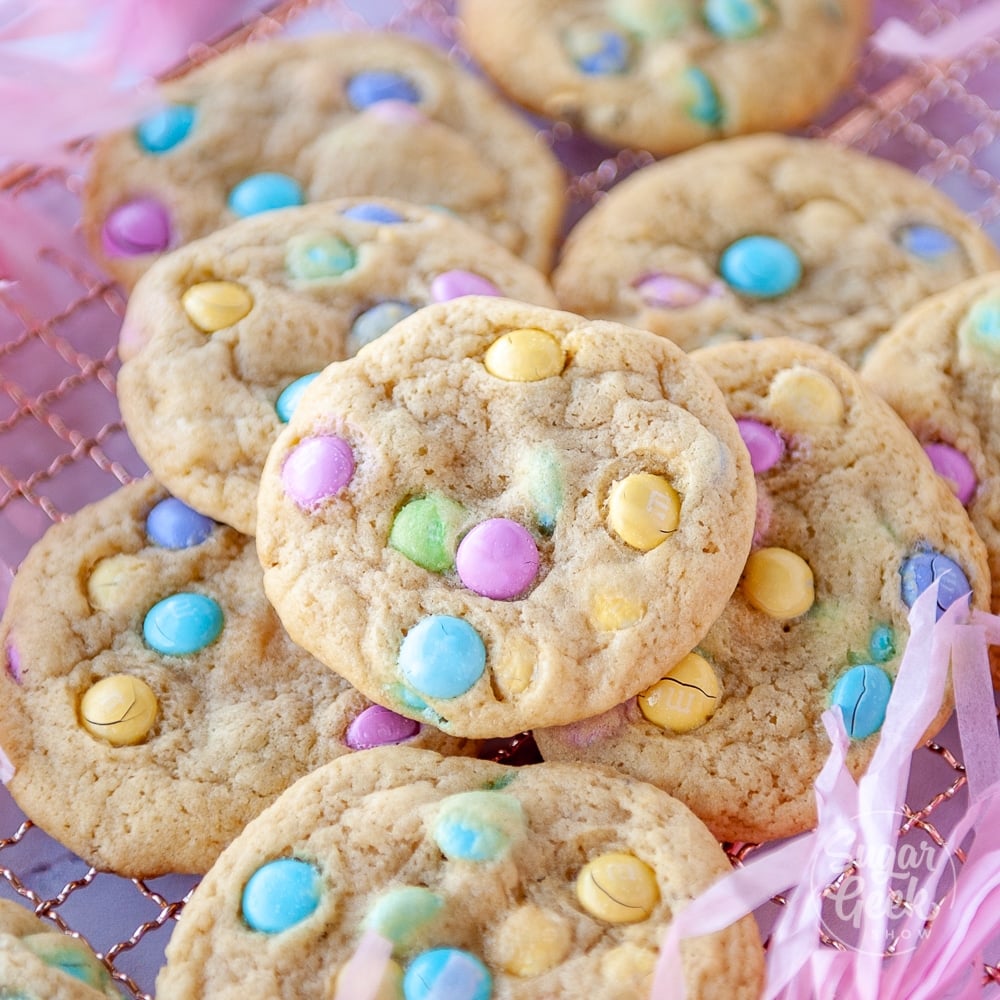
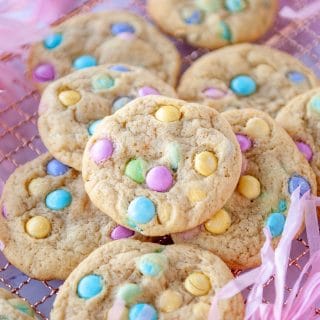
M&M cookies on cooling

April 8, 2020 Blog

Easy M&M Cookie Recipe

These M&M cookies bake up soft and chewy and are perfect for any occasion

M&M cookies are the perfect easy cookie for Holidays. Switch up the colors (thankfully M&M's come in so many colors) and you've got yourself a super simple festive treat in no time. All you need is a glass of milk or a bowl of ice cream to make your life complete. Follow my tips in the blog post for getting thick and chewy cookies with no spreading. No chilling required!

M&M cookies on cooling

M&M's are one of the most popular candies in the USA. They are an American tradition. M&M's were created in the 1940s, by Forrest Mars, Sr. By the 1950s, M&M's were wildly popular and solidified their place in candy history. Regular M&M's make a great snack but also taste amazing baked into desserts! 

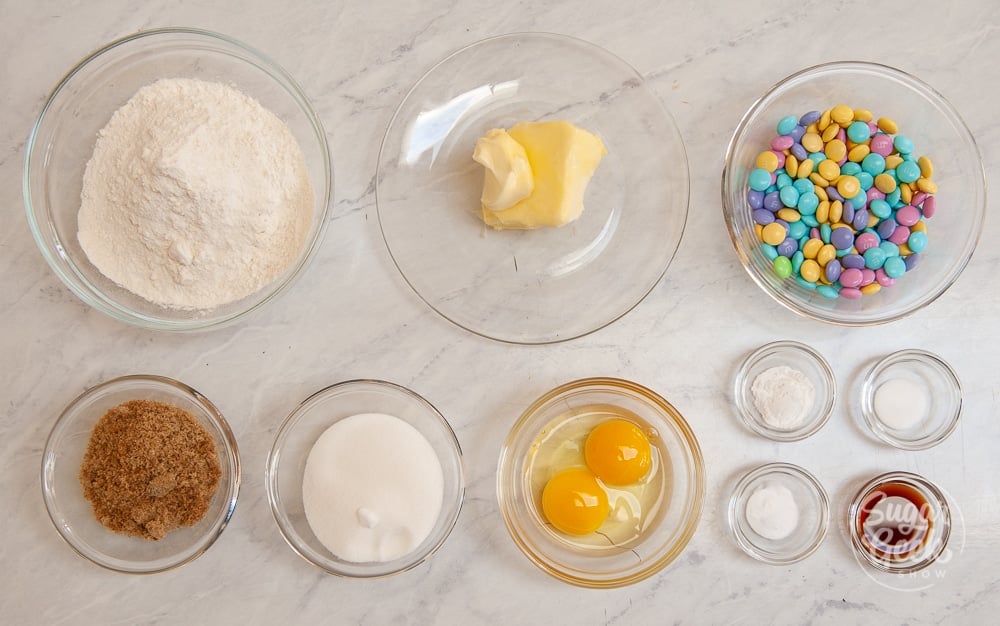
ingredients for M&M cookies in clear bowls on a white background shot from above

Ingredients for easy M&M cookies from scratch

Making M&M cookies from scratch is really easy. I promise. It's all about the ingredients being the right temperature to get those perfect soft and chewy cookies. If you want to learn more about what makes cookies crispy, chewy or cakey, you should check out my cookie 101 post.  

  • Granulated Sugar - Provides sweetness and crisp edges on your cookies. It's also important for creaming with the butter to create air in the cookie dough. 
  • Brown Sugar - Also provides sweetness to the M&M cookies but the molasses in the brown sugar also keeps the cookies nice and soft, even after days of storage. 
  • Unsalted butter - Using unsalted butter is important so that your cookies do not taste salty.  Make sure your butter is room temperature (soft enough to leave an indent with your finger but still holds its shape) so that it creams properly with the sugar. Too hard, or too melted and you won't get the proper lift in your cookies. 
  • Eggs - Hold everything together. Make sure they are room temperature so that they emulsify with your butter properly. Cold eggs equal lots of spreading and flat cookies. We are using an extra egg yolk in this recipe for added moisture and chew factor.
  • Salt - Some salt is important. It brings out the flavor in your recipe without making it taste salty.
  • Flour - Just the right amount to hold everything together so the cookies don't spread but not so much that they taste dry.
  • Baking Powder - Gives our cookies a nice lift, making them super soft
  • Baking Soda - Also adds lift as well as flavor
  • Vanilla - Gives the cookies a nice flavor. Without it, they would taste very bland. 
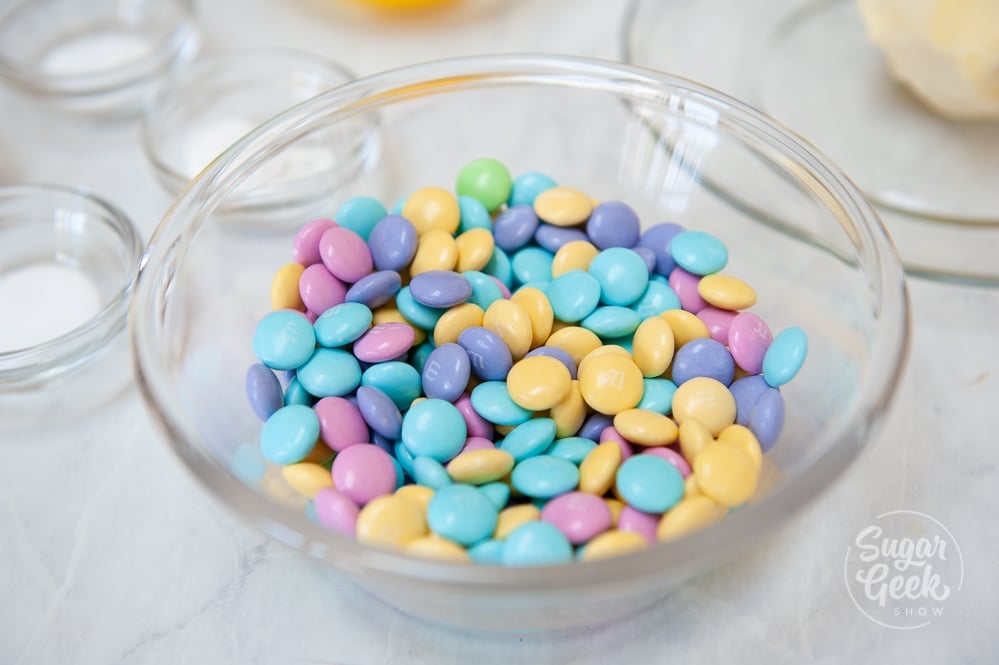
  • M&Ms - The star of the M&M cookies! Switch out the colors to whatever your event calls for. I always set aside about ¼ cup of M&M's to use for the tops of my cookies after scooping.

pastel M&Ms in a clear bowl

How to make M&M cookies from scratch

Making the M&M cookie dough could not be easier. Just cream together your butter, sugar, and salt until light and fluffy. Add in your egg plus egg yolk and mix until smooth. Then add in the flour, baking powder, baking soda, and M&Ms. Mix until it's all combined.  

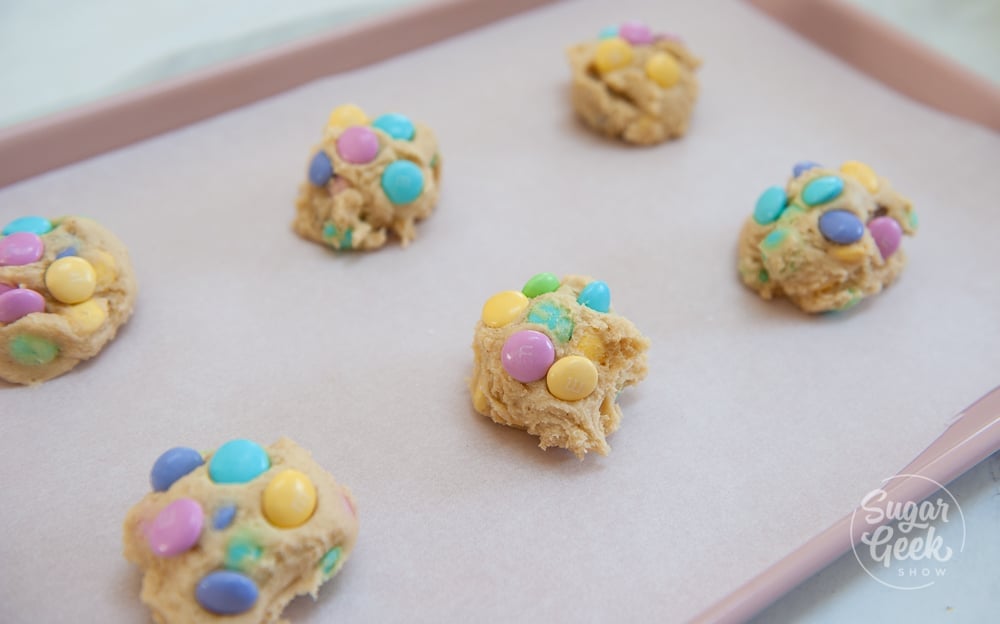
Scoop your dough with a #20 cookie scoop (about 2 Tablespoons) and place them onto a parchment-lined cookie sheet. 

I always add a few extra M&Ms on top so that you can really see the color after the dough spreads out. About five M&Ms per cookie.

M&M cookie dough balls on a parchment covered cookie sheet

Bake your cookies for 5 minutes at 350ºF then rotate the pan to promote even baking. Bake for another 6-7 minutes or until the center of the cookie is no longer shiny. Don't over bake them! They will get firmer as they cool. If you bake them too long, they will get hard and crunchy.

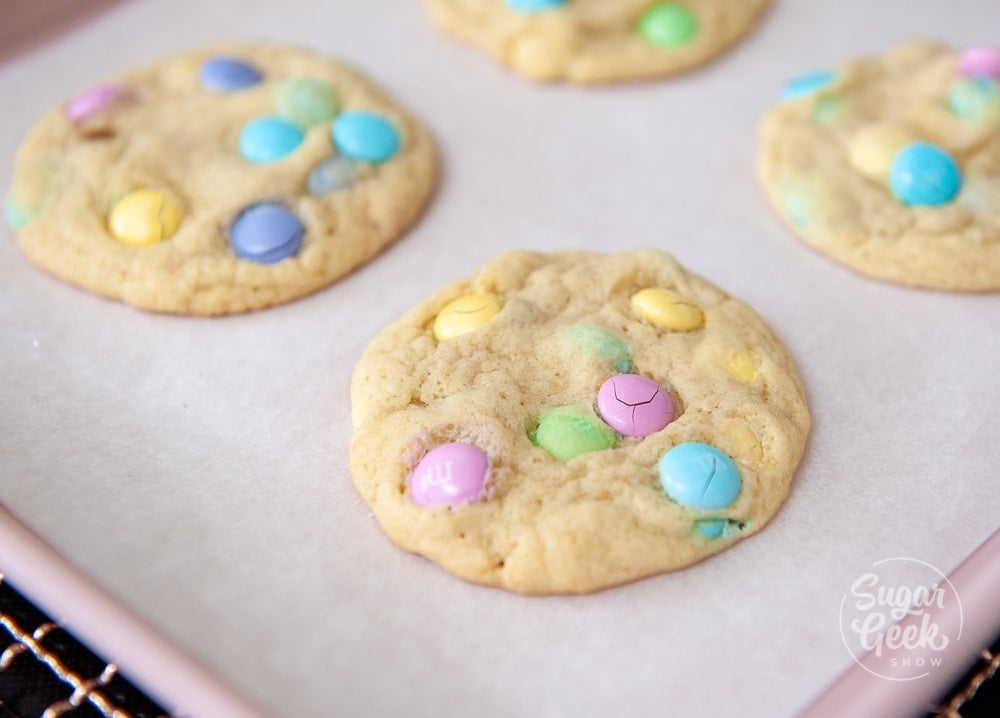
When the M&M cookies come out of the oven, they will be very puffy but will settle down as they cool. 

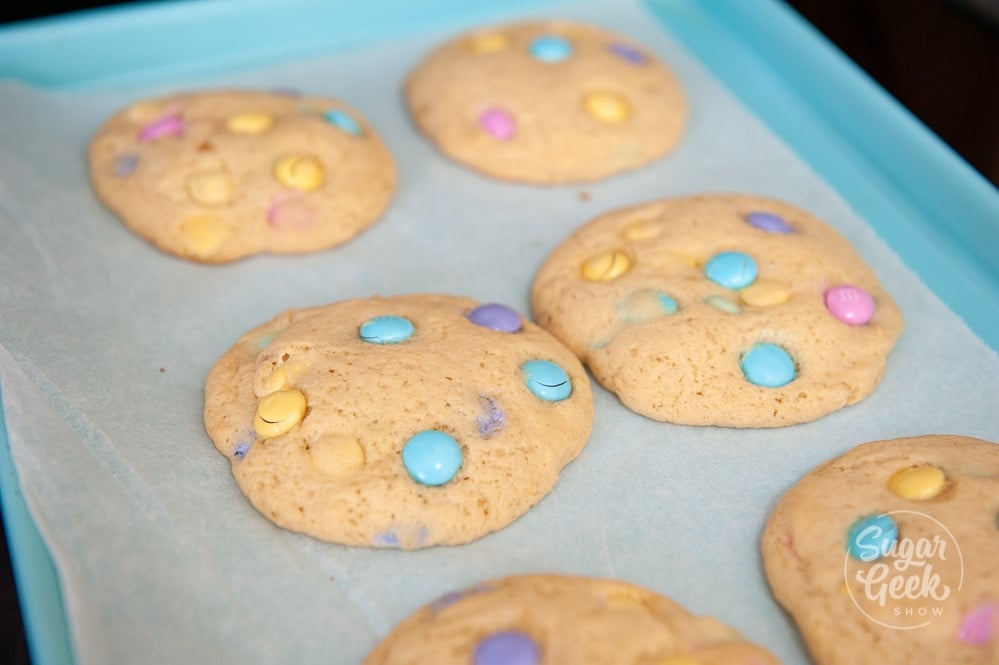
freshly baked M&M cookies on blue cookie sheet M&M cookies cooling on parchment paper

You can also freeze cookie dough balls to bake any time you want a warm cookie.  No need to defrost. Just add a couple of minutes to the baking time. 

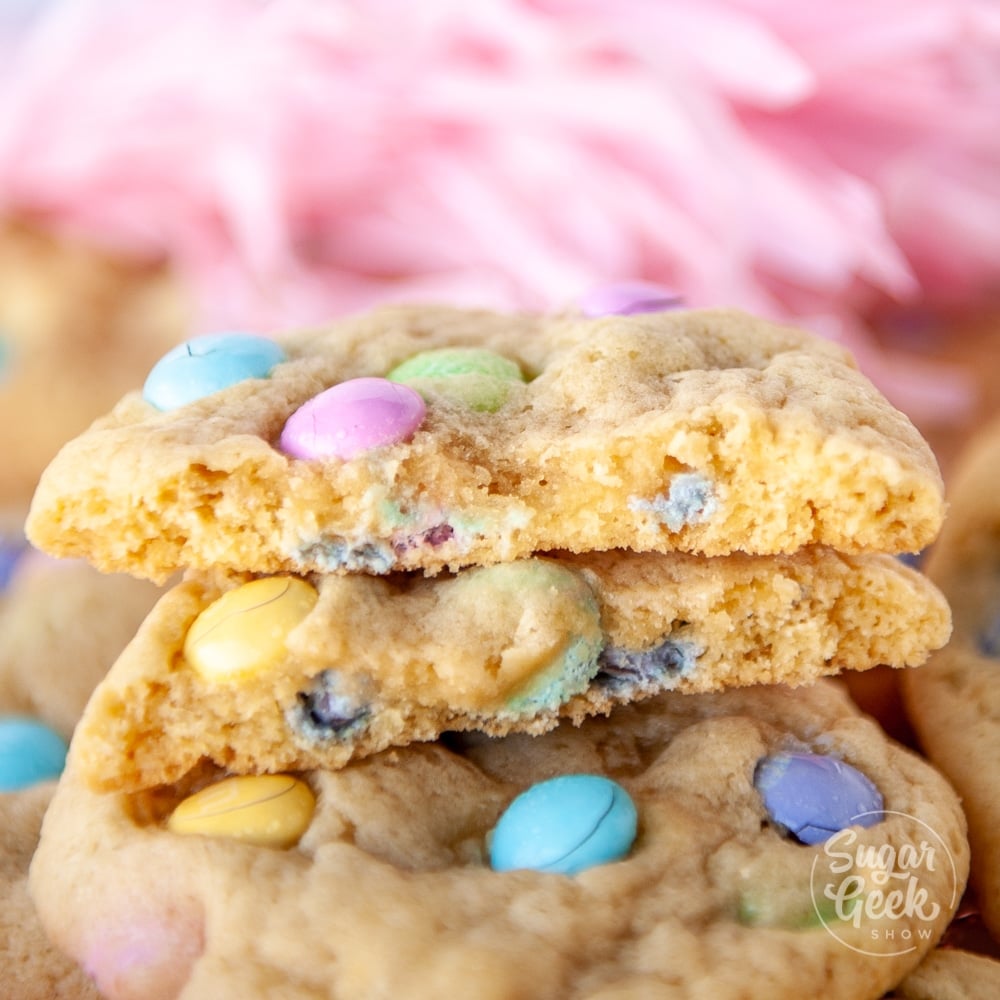
M&M cookie broken open to show the soft interior

Store baked M&M cookies in a cookie jar, ziplock bag or any airtight container at room temperature for up to two weeks. 

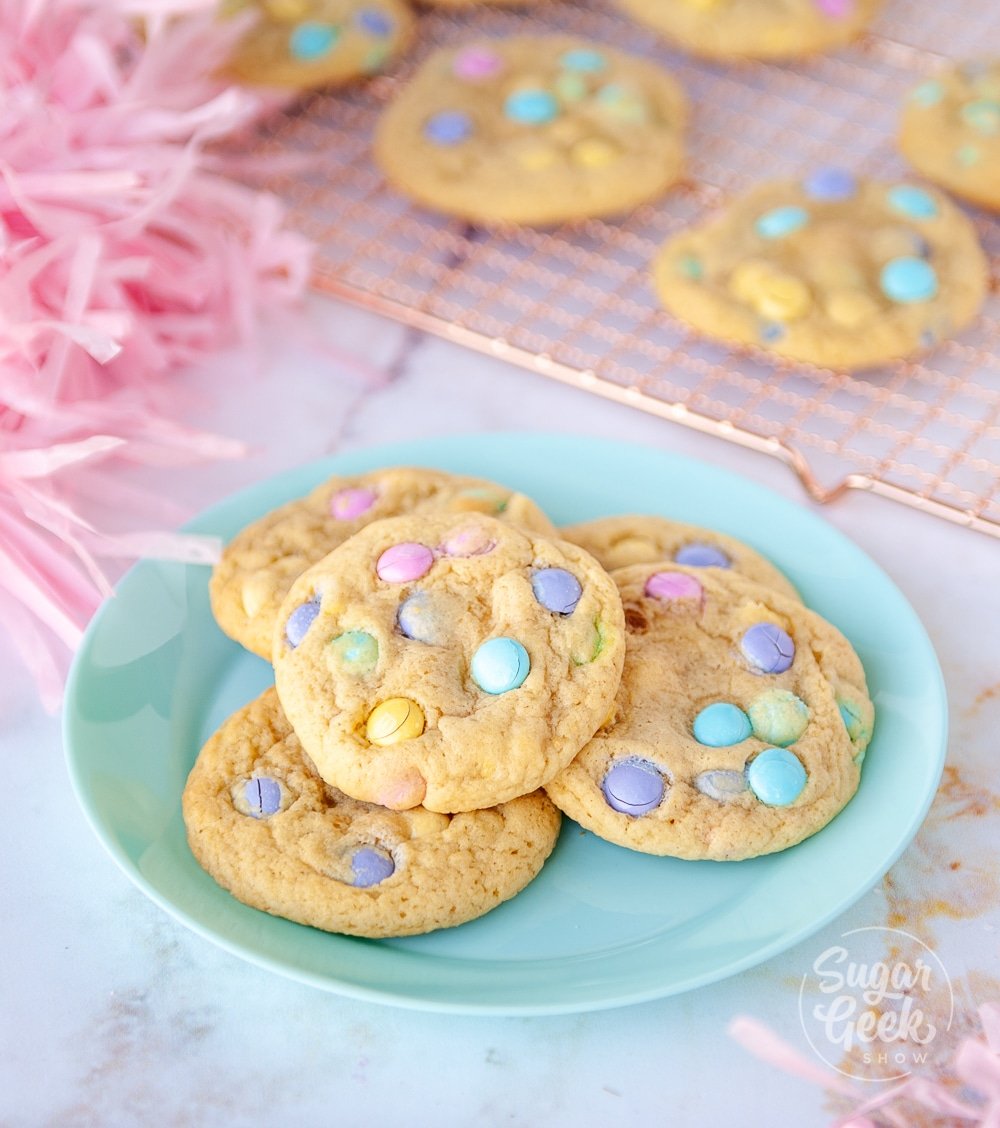
M&M cookies on a blue plate with more cookies on a cooling rack behind the plate

More cookie recipes to try

Soft & Chewy Chocolate Chip Cookies

Recipe

mm cookies piled on top of each other
Print Recipe
4.95 from 60 votes

Easy M&M Cookie Recipe

These M&M cookies are soft and chewy with crispy edges! Packed with tons of M&M candies and no chilling! We loved making these M&M cookies for Easter but because M&M's come in so many colors you can easily switch up the colors and make them for any special occasion.
Prep Time5 minutes mins
Cook Time10 minutes mins
Course: Dessert
Cuisine: American
Servings: 16 cookies
Calories: 2447kcal
Author: Liz Marek

Equipment

  • Stand mixer with paddle attachment

Ingredients

  • 9 ounces all-purpose flour 2 cups spooned and leveled
  • 1 teaspoon baking powder
  • ½ teaspoon baking soda
  • 4 ounces unsalted butter ½ cup, room temperature
  • 4 ounces granulated sugar ½ cup
  • 2 ounces brown sugar ¼ cup
  • 1 large egg room temperature
  • 1 large egg yolk room temperature
  • 2 teaspoons vanilla extract
  • 10 ounces M&M candy 2 cups
  • ½ tsp salt
US Customary - Metric

Instructions

  • Preheat your oven to 350ºF and line two cookie sheets with parchment paper.
  • Cream the softened butter, white sugar and brown sugar together in the bowl of your stand mixer with the paddle attachment until light and fluffy. About 2 minutes.
  • Add in your egg, egg yolk and vanilla and cream on low until combined. Scrape the bowl to make sure everything is combined evenly.
  • Add in the flour, baking powder, baking soda and salt and mix on low until combined.
  • Scoop the dough onto your cookie sheet using a #20 scoop (about two tablespoons per scoop) and place a few M&M's on top so you can see the colors when they bake.
  • Bake for 10-12 minutes or until the center of the cookie is no longer shiny. Cookies will be pale.
  • Allow your cookies to cool on the pan for 5 minutes before transferring them to a wire rack to cool the rest of the way. Store at room temperature in an air tight container for up to two weeks.

Video

Notes

Tips for success
  1. Use room temperature butter for the best results
  2. Use room temperature eggs.  I place my eggs (in the shell) into a bowl of warm water for 5 minutes. Room temperature eggs make thicker cookies. 
  3. Cream your butter and sugar for 1-2 minutes until light and fluffy in color before adding in eggs 

Nutrition

Serving: 1cookie | Calories: 2447kcal | Carbohydrates: 346g | Protein: 33g | Fat: 103g | Saturated Fat: 62g | Cholesterol: 614mg | Sodium: 748mg | Potassium: 892mg | Fiber: 6g | Sugar: 170g | Vitamin A: 3349IU | Calcium: 375mg | Iron: 13mg

 
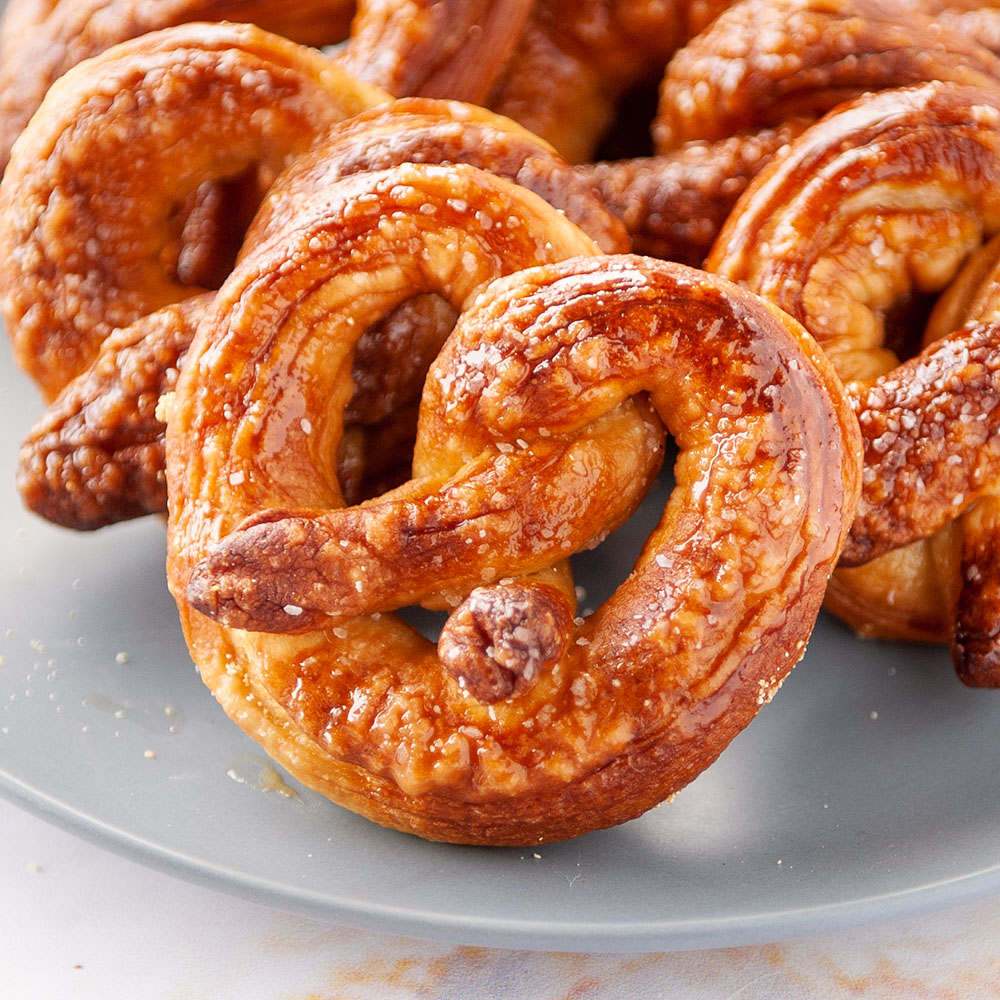
homemade soft pretzels on a light blue plate

April 5, 2020 Blog

Easy Soft Pretzel Recipe

The best soft pretzel recipe is super easy and is ready in only 60 minutes

I love making this soft pretzel recipe. It's the same dough I use for my easy homemade bagel recipe. These soft pretzels are soft & chewy with a touch of tang from the baking soda bath and lots of chunky salt on top!

homemade soft pretzels on a light blue plate

Soft Pretzel Ingredients

Soft pretzels, like most bread, has very few ingredients. But each ingredient has a specific job to do to make the perfect soft pretzel recipe.

  • Flour - The main ingredient in soft pretzels. Bread flour is preferred because of its high levels of protein which produce more gluten and therefore, chewier bread. You can also use All-purpose flour or plain flour. Replace half the flour with whole wheat flour for whole wheat soft pretzels.
  • Sugar - You can leave out this small amount of sugar but it does provide a little flavor to the soft pretzels, keeps them soft and is also food for the yeast.
  • Melted butter - A little bit of melted butter or oil also keeps your soft pretzels nice and soft as well as providing flavor.
  • Instant Yeast - You can't have soft pretzels without yeast! I am using Instant Yeast which is very fast-acting. You can also use regular active dry yeast but you will need to proof (let rise) your soft pretzels longer. Please read the notes at the bottom of the recipe.
  • Warm Water - Adding warm water (110º-115ºF) activates the yeast and provides a warm environment for it to begin growing. Water also hydrates the flour and activates the gluten in the dough.
  • Salt - Very important to the final flavor of your soft pretzels. If you forget the salt, you will have very bland tasting bread. I am also using kosher salt to top my pretzels but you can also use chunky sea salt or flakey salt if that's all you have.
  • Baking Soda - Just a quick 20-second boil in a baking soda and water bath is the secret to getting that deep brown soft pretzel color. The original soft pretzel recipe used lye but that can be very dangerous so we're going to stick with baking soda.

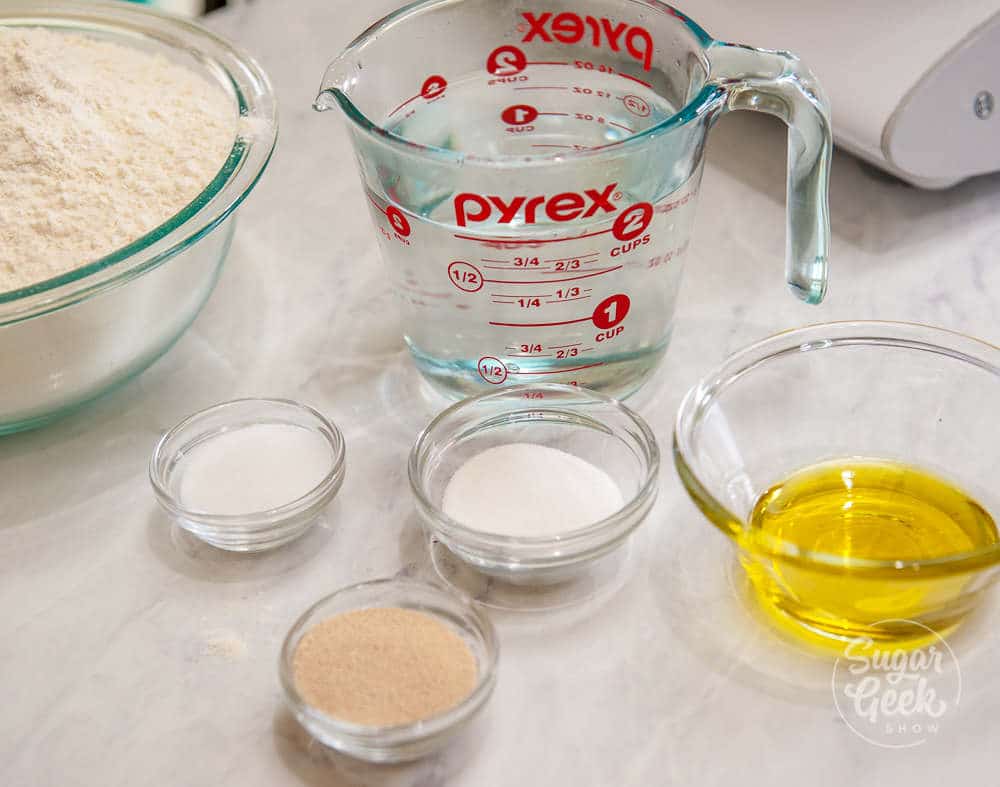
flour, water, sugar, salt, melted butter, yeast in clear bowls on white countertop

How to make soft pretzel dough

Making soft pretzel dough is just like making any kind of yeast dough. There are three things to accomplish.

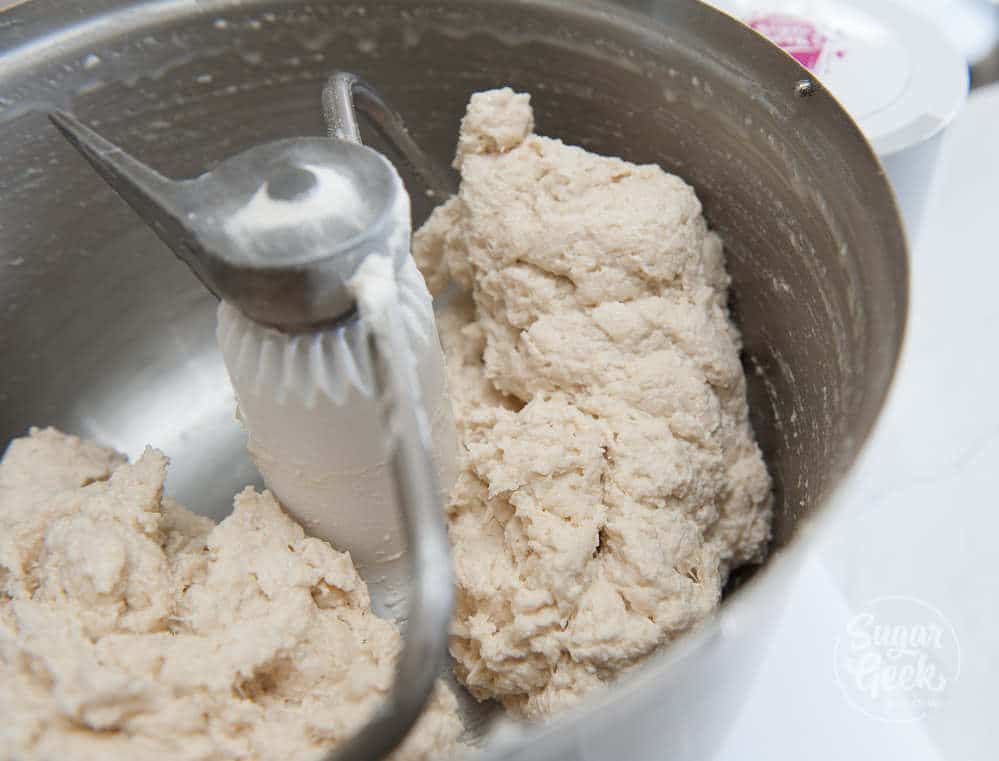
  1. Combining Ingredients - Combine flour, sugar, and yeast and whisk to distribute the yeast evenly. Then add in the warm water/butter to activate the yeast and the gluten in the flour. Then add in the salt. We add the salt at the end because adding salt too early can stop the yeast from growing.  mixing dough in stand mixer with dough hook
  2. Kneading - Developing the gluten in the dough is key. I mix my dough on medium-high speed for 5-6 minutes but each batch is different and each mixer is different. Always use a dough hook or knead by hand until you can stretch a small piece of dough between your fingers and make a semi-transparent window. If your dough is too dry, add a little water. If it's too wet, add a little flour. Making bread is more flexible than making a cake but kneading very important. It is very hard to over-knead dough but very common to under-knead. The under-mixed dough will not rise very well. dough proofing in bowl
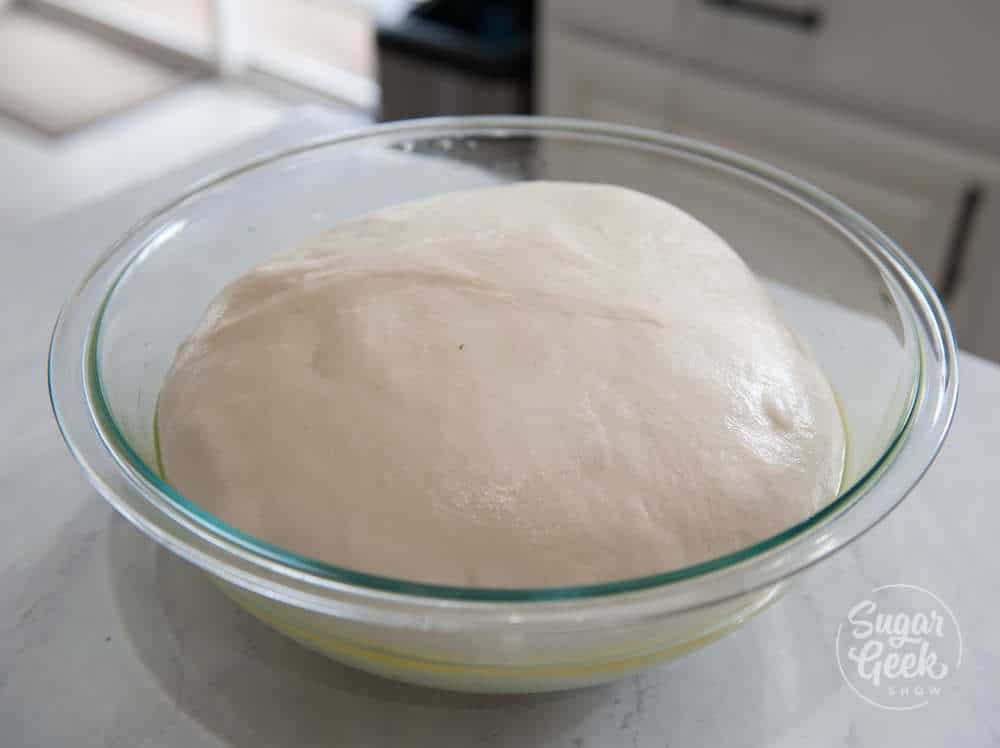
  3. Proofing - Letting your dough rise until it has doubled is key for developing flavor and texture in your pretzel recipe. If you're using instant yeast, this will happen very quickly (in about 30 minutes). If you're using active dry yeast, this might take 60-90 minutes.

How to shape soft pretzels easily

Shaping soft pretzels might seem intimidating but it's so simple. Even my daughter can do this. So let's break it down into steps.

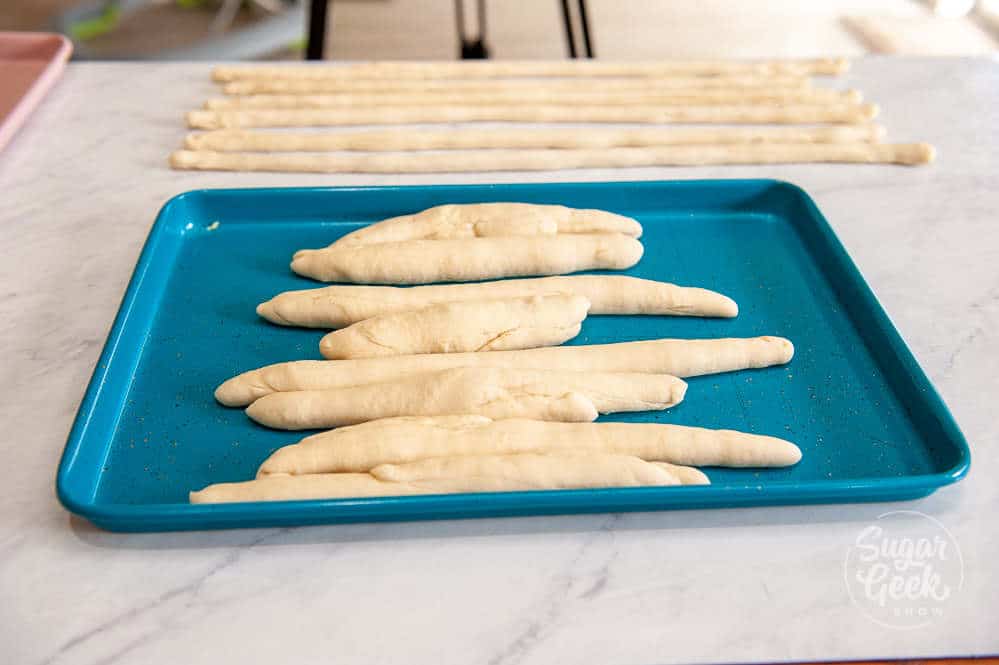
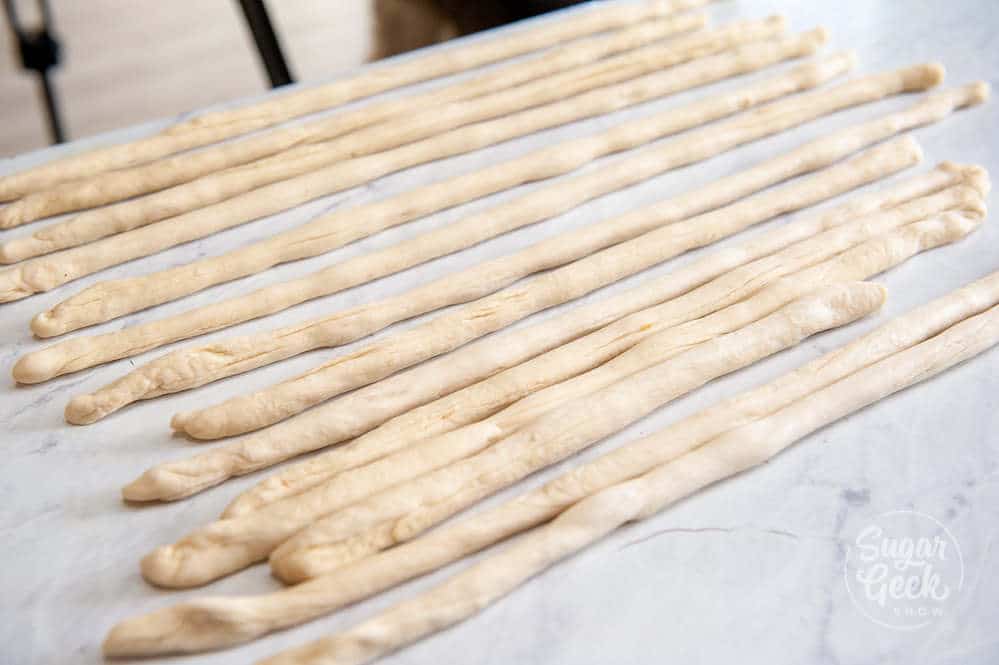
  1. Divide your pretzel dough into 12 equal pieces (about 4oz each) and begin rolling into a long skinny snake. When you handle the dough, the gluten activates and starts to shrink back. After your snake can't be rolled any further, let it rest for 5 minutes while you work on the next piece of dough. Continue in this way of resting and rolling until you can get each piece of dough rolled. out to about 22" long. shaping pretzel dough by rolling into long skinny snakespretzel dough rolled out to 22" long on white countertop
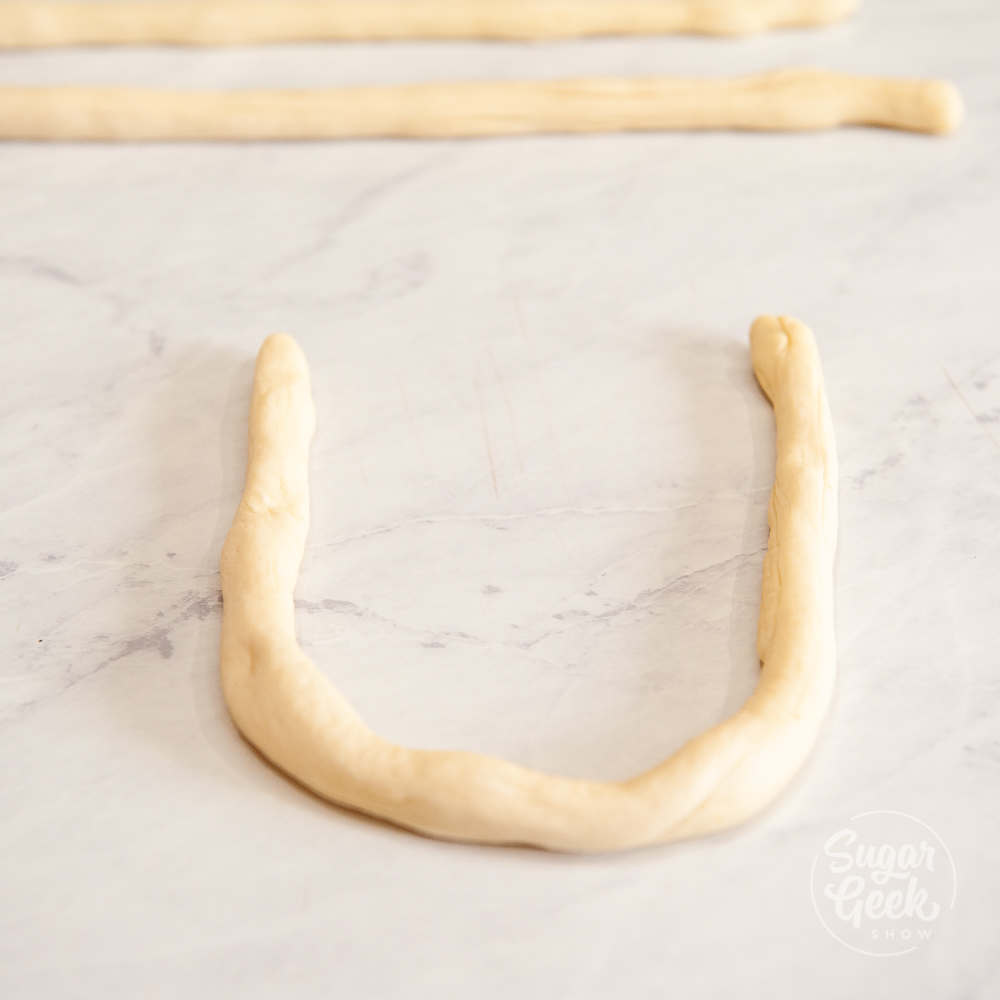
  2. Place the first snake in front of you like a big "U"shape pretzel dough snake into a U
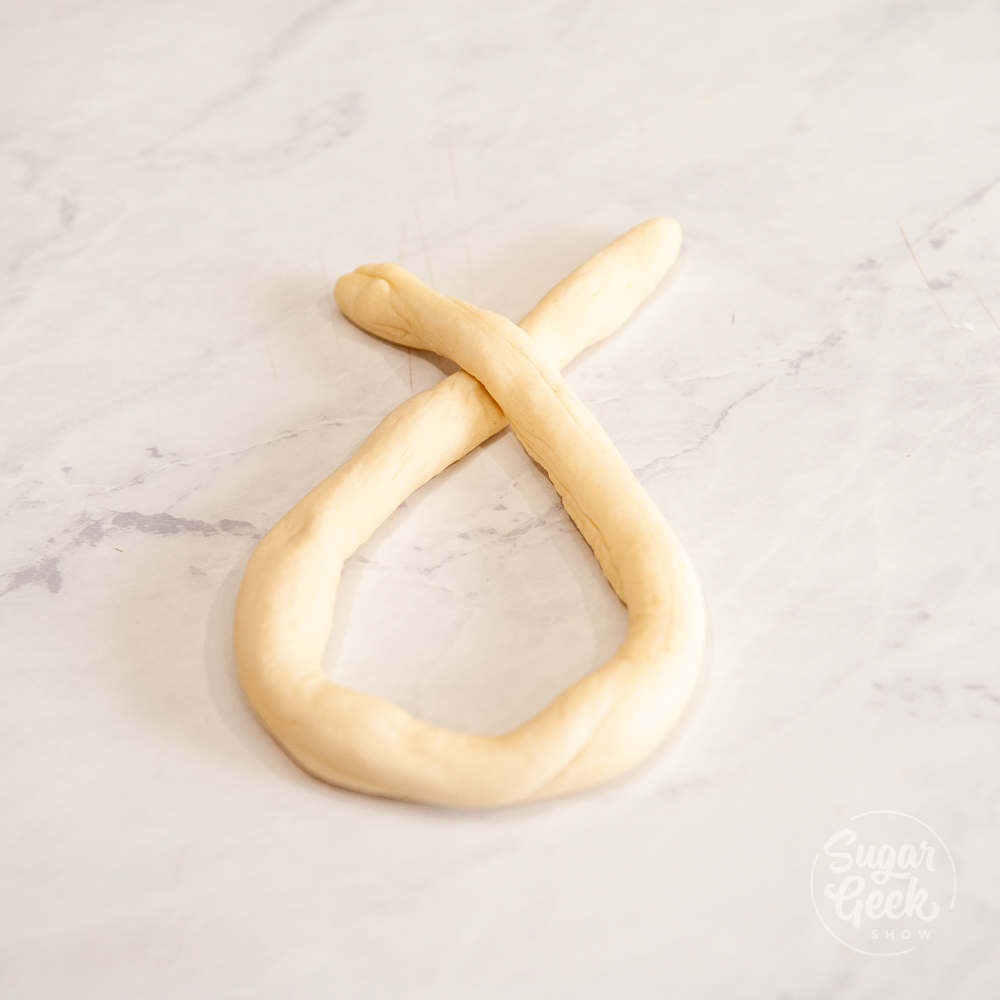
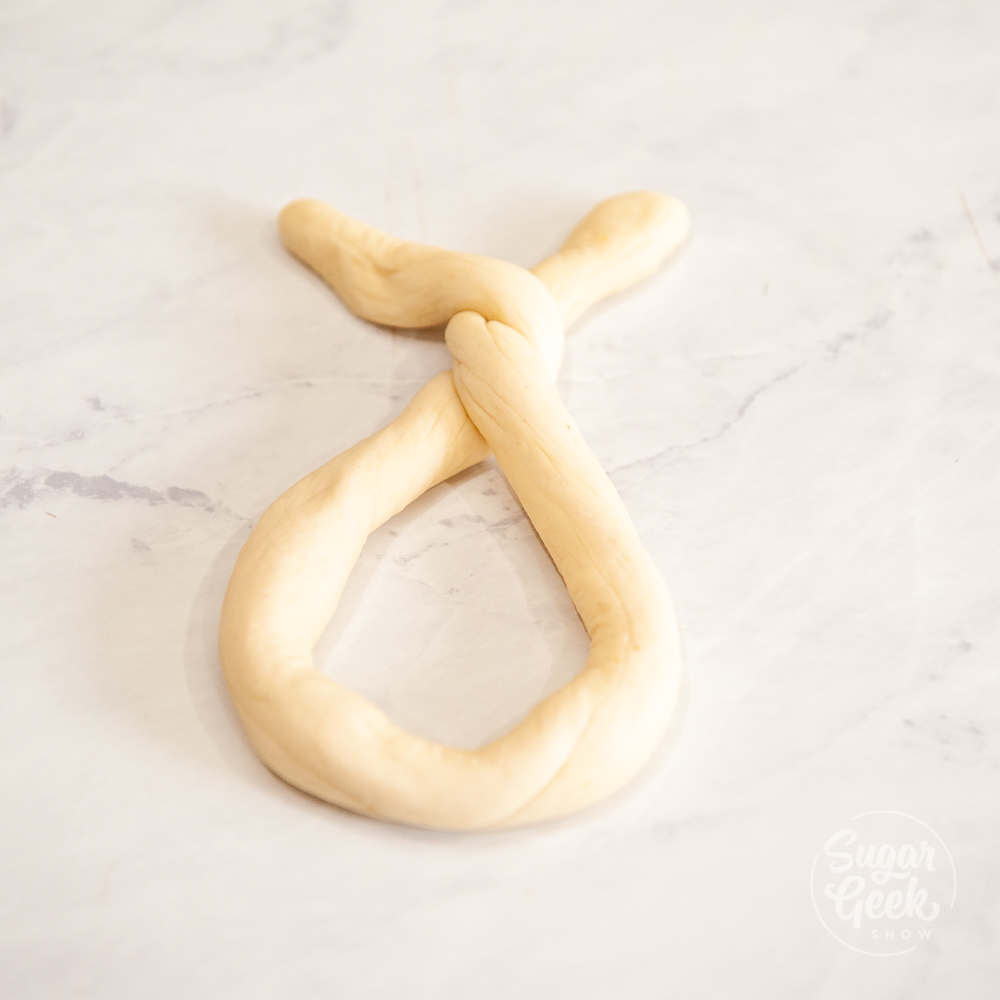
  3. Now cross the ends over each other like this. cross the right side of the U over the left side
  4. Then twist them together one more time so it looks like this. twist the left and right side together one more time
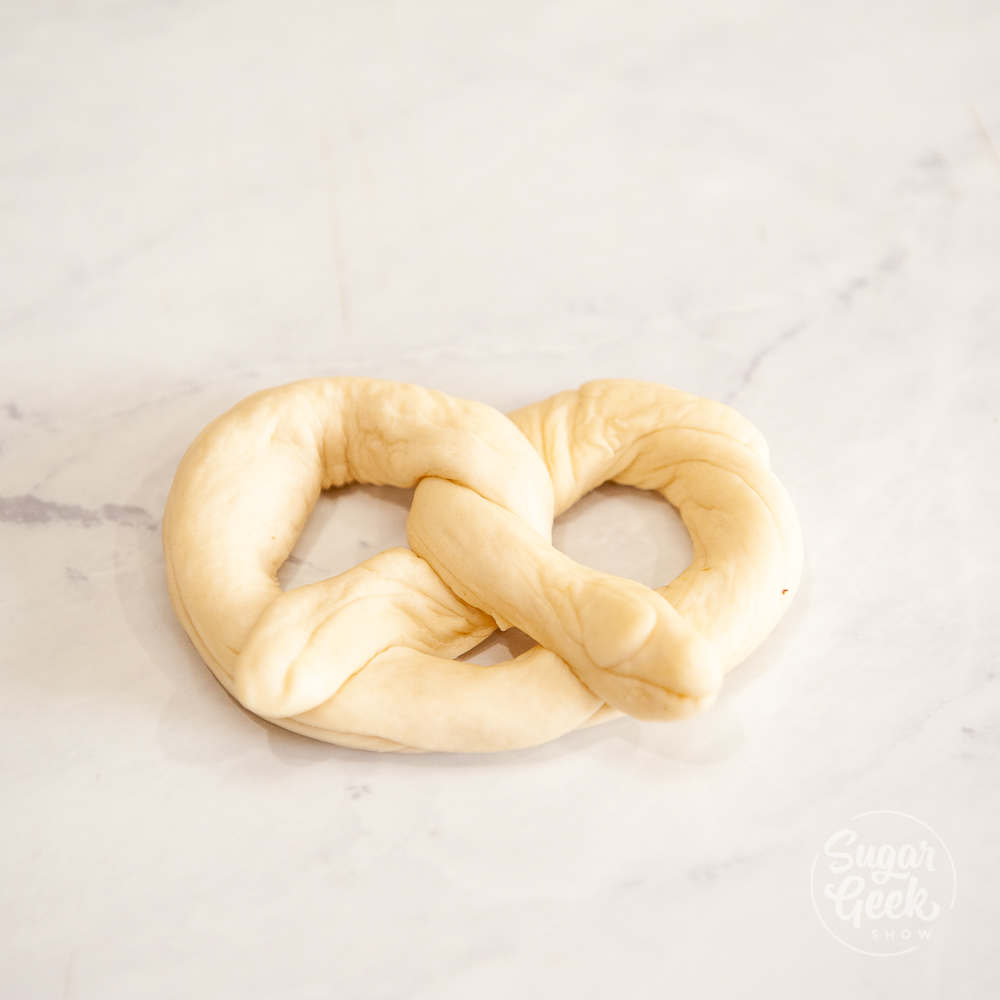
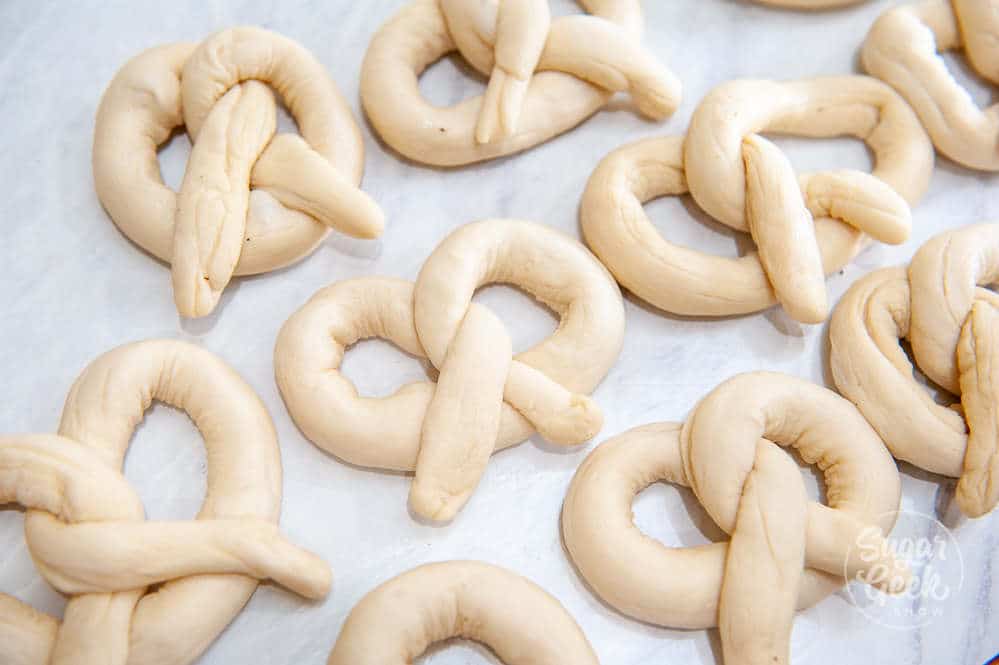
  5. Now bring the ends down towards the bottom of the "U" and you have a pretzel shape! I glued my ends down with a dab of water and a paintbrush. fold the twist down to the bottom of the U and glue the ends in place with a dab of water
  6. Let your pretzels rest so they get nice and puffy (about 10 minutes for instant yeast, 20 minutes for active dry yeast)soft pretzels shaped and placed on parchment paper ready to boil

How to boil soft pretzels in baking soda

While your soft pretzels are resting, bring your water and baking soda to a simmer.

Now drop your pretzels into the simmering water and let them cook for 10-15 seconds per side. Don't go any longer or they will get really chewy and bitter when you bake them. I actually set a stopwatch timer on my phone for 20 seconds then flip at 10 seconds so I could be really accurate.

boiling soft pretzels in a baking soda and water bath for 20 seconds

After 20 seconds, scoop out your soft pretzels and place them onto a baking sheet with parchment paper and a generous amount of cornflour sprinkled on top to prevent sticking. Or you can use a silicone baking mat.

sprinkling salt onto freshly boiled pretzels on parchment paper with cornflour

Sprinkle some of your chunky salt on top and bake!

freshly baked pretzels on baking sheet with white parchment paper

You can see a few bumps on the surface of my pretzels because I made a BIG mistake! I was trying to hide these from the husband to take photos later. So I set them aside and covered the sheet pan of freshly baked soft pretzels with plastic wrap before they were totally cool and it dissolved the salt causing that bump.

soft pretzels on white background

They still tasted yummy though! We actually dipped our soft pretzels in a yummy mustard sauce but you can also go with nacho cheese dip!

soft pretzel being dipped in mustard sauce

Soft pretzels are best enjoyed the day you make them so don't feel bad for eating them all in one sitting 😀

Want more bread recipes? Check these out!

Easy bagel recipe
Fast Bread recipe
Homemade dinner rolls

Recipe

homemade soft pretzels on a light blue plate
Print Recipe
5 from 8 votes

Easy Soft Pretzel Recipe

An easy soft pretzel recipe that makes soft, chewy and golden brown pretzels right in your own kitchen in less than 60 minutes!
Prep Time10 minutes mins
Cook Time20 minutes mins
Proofing30 minutes mins
Course: Appetizer
Cuisine: german
Servings: 12 soft pretzels
Calories: 280kcal
Author: Liz Marek

Equipment

  • Stand mixer with dough hook

Ingredients

  • 30 ounces bread flour or all-purpose flour
  • 1 Tablespoon sugar
  • 2 Tablespoons melted unsalted butter (or olive oil)
  • 14 grams instant yeast or active dry (see notes below recipe)
  • 16 ounces warm water (110ºF)
  • 2 teaspooons salt

Baking Soda Bath

  • 64 ounces water (8 cups)
  • 2 ounces baking soda (¼ cup)

Mustard Sauce

  • 4 oz mayonnaise
  • 4 oz Dijon mustard
  • 2 oz honey
  • 1 Tablespoon yellow mustard
US Customary - Metric

Instructions

  • Heat your water to 110º-115ºF. Combine the water with the sugar and melted butter and set aside
  • Place your flour and yeast into the bowl of your stand mixer with the dough hook attached. Mix for 5 seconds to distribute the yeast.
  • Pour in your hot water mixture while mixing on low, just until everything is moistened.
  • Sprinkle in your salt.
  • Increase the speed to medium-high (speed 4 on a kitchenaid, speed 2 on the bosch) and mix for 6 minutes. If your dough is too dry, add a tablespoon or two of water until the dough sticks to the sides of the bowl. If it's too wet, sprinkle in a little flour.
  • Poke the dough, does it bounce back? The dough is ready to proof. You can also do the window test (see blog post). If the dough isn't ready, mix for another two minutes.
  • Form the dough into a ball and place it into an oiled bowl. Cover and let the dough proof for 30 minutes or until it has doubled in size. (proof 90 minutes if you're using active dry yeast).
  • Divide your dough into 12 equal sized pieces (or use a scale to make 4 oz pieces).
  • Begin rolling your dough out into a long skinny snake. When it becomes too stretchy, move to the next piece of dough and let the previous piece rest. Continue in this way until all 12 pieces are 22" long.
  • Shape your snake into a big "U". Twist the ends together twice then fold down onto the bottom of the "U". Glue the ends in place with a dab of water.
  • Set aside to rest for 10 minutes (for instant yeast, 20 minutes for active dry yeast)
  • Bring 8 cups of water to a simmer with ¼ cup of baking soda
  • Prepare two sheet pans with parchment paper. Sprinkle a good amount of corn flour (semolina) on top. This prevents the soft pretzels from sticking.
  • Preheat your oven to 425ºF
  • Place your soft pretzel into the boiling water and cook for 20 seconds (10 seconds. per side) then drain with a slotted spoon before placing onto the parchment paper.
  • Sprinkle some of your chunky salt on top of the pretzels and bake
  • Bake at 425 for 15-20 minutes or until golden brown

Mustard Sauce

  • Mix together mayonnaise, Dijon, honey and yellow mustard until smooth and serve in a small bowl with fresh soft pretzels

Video

https://youtu.be/4Zgg71---Qg

Notes

  1. To proof bread, I turn my oven on to 170ºF and open the door then place my dough on the door near the opening of the oven to proof, not INSIDE the oven. 
  2. If you don't have instant yeast your can use regular active yeast but it will take longer to proof. You don't need to change the amount of yeast.
    1. Let your dough proof for 90 minutes or until it doubles in size
    2. Divide the dough, shape, let rest for 20 minutes before baking.
  3. You can replace half the white flour with wheat flour for whole wheat bagels
  4. You can use oil instead of melted butter 
  5. Do not boil for more than 15  seconds per side or your pretzels will get bitter tasting

Nutrition

Serving: 1soft pretzel | Calories: 280kcal | Carbohydrates: 53g | Protein: 9g | Fat: 3g | Saturated Fat: 1g | Cholesterol: 5mg | Sodium: 1384mg | Potassium: 82mg | Fiber: 2g | Sugar: 1g | Vitamin A: 58IU | Calcium: 15mg | Iron: 1mg

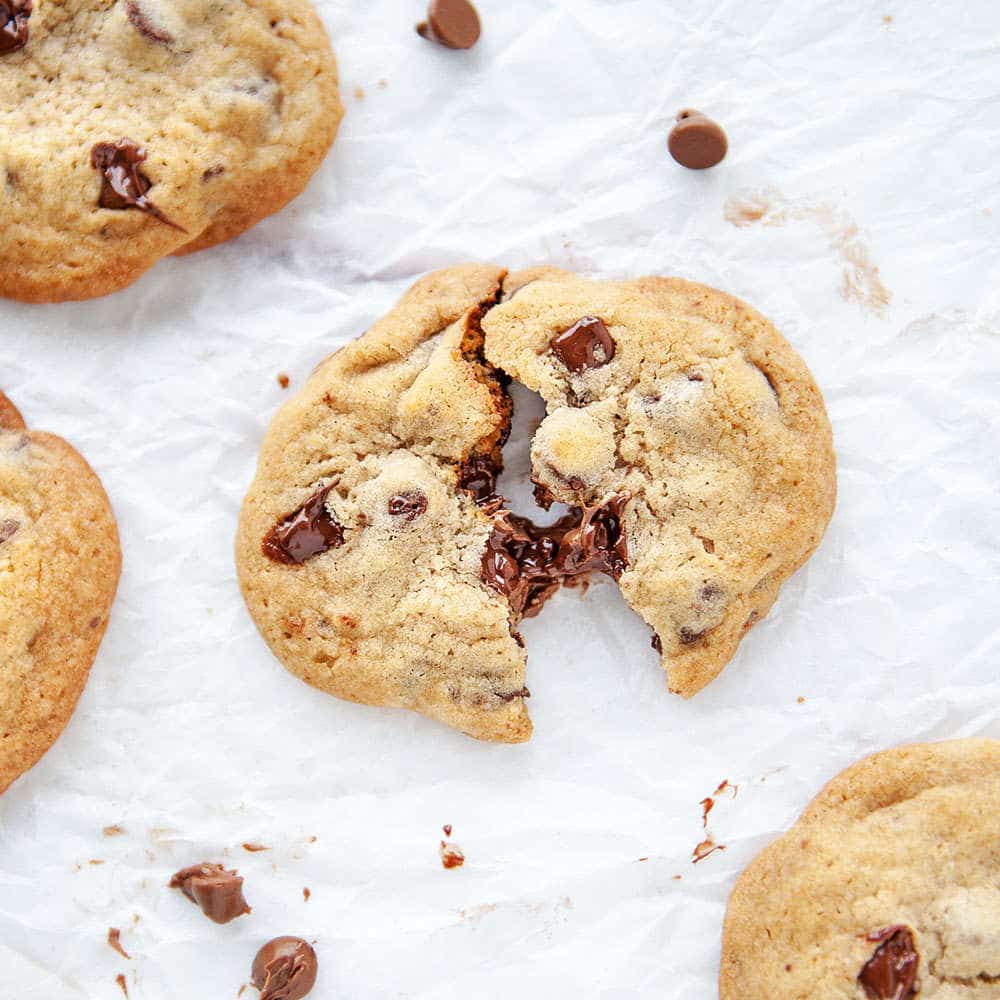
chocolate chip cookie split in half with melted chocolate chips. Shot from the top

April 1, 2020 Blog

Master chocolate chip cookie recipe

One chocolate chip cookie recipe to rule them all

How many times have you read a recipe that started with "The BEST chocolate chip cookie recipe ever!"? I know I have too many times. Unfortunately, one person's idea of the BEST might not be mine, or yours! The best chocolate chip cookie recipe is the one you like the best. Whether it's thick and chewy, thin and crispy or light and cakey. Use this ONE chocolate chip cookie recipe to make the perfect chocolate chip cookie.

chocolate chip cookie split in half with melted chocolate chips. Shot from the top

So let's dive into what makes a chocolate chip cookie chewy, cakey or crispy and what you can add or subtract from a basic chocolate chip cookie recipe to make your cookies exactly the way you want them to be. 

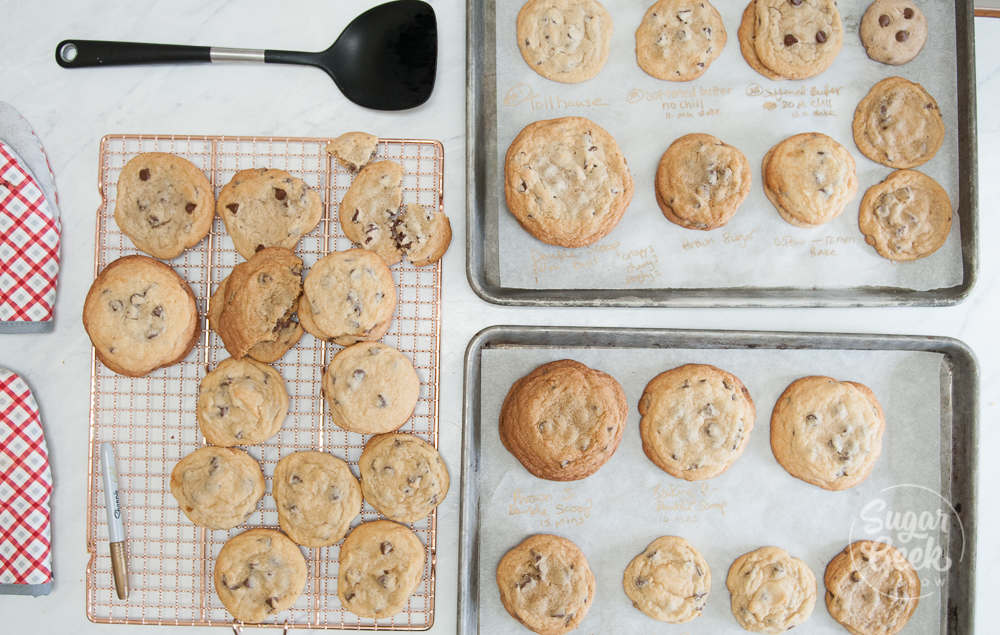
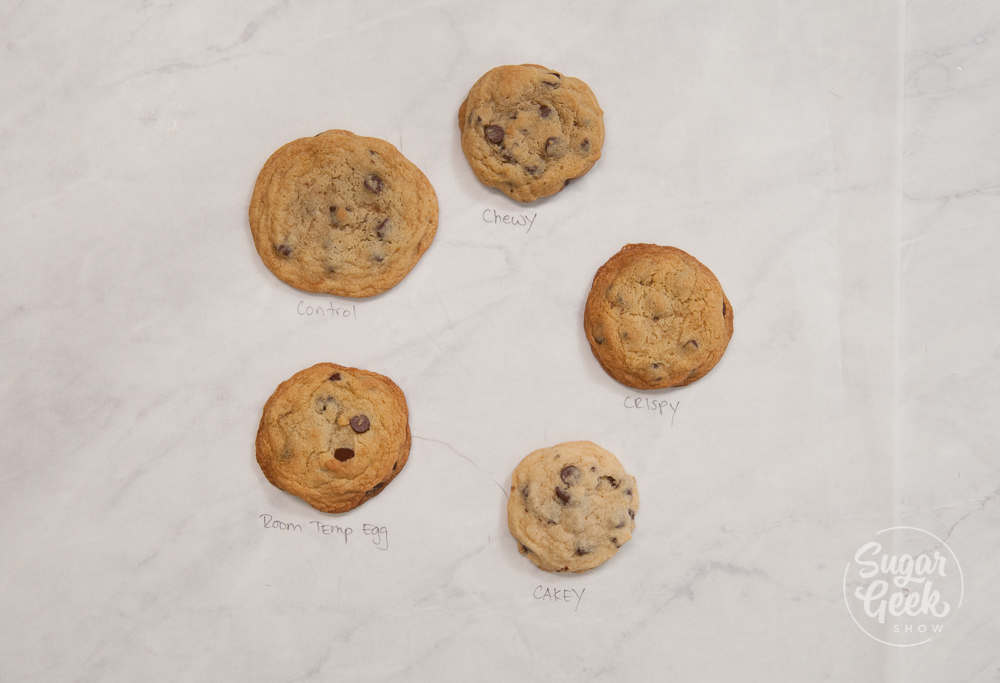
chocolate chip cookie tests on cookie sheets and cooling rack shot from above

Before I wrote this blog post I did a TON of testing. A ton. I baked so many cookies I think I couldn't see straight. I almost overdosed on brown sugar and butter. But it was all worth it. I haven't even listed all the tests here on this blog post because I don't want to bore you but I included the most interesting results. 

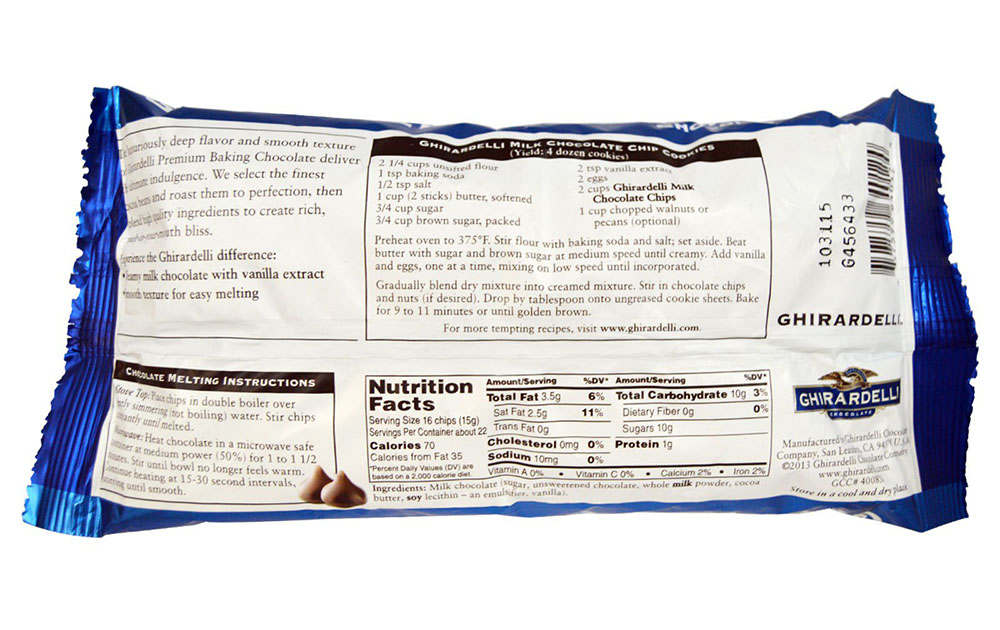
I started my testing with a standard chocolate chip recipe from the back of my favorite Ghirardelli semi-sweet chocolate chips bag. This is listed as the "control" recipe to which all my tweaks were made from. 

How to make perfect standard chocolate chip cookies

This might come as a shock to you but I am not really that good at making cookies. I have more problems with cookies than any other type of recipe. Maybe it's because I didn't grow up baking so I never learned those cookie making fundamentals. 

So if you're like me and you're new to cookie making, let's go over a few basics to making the perfect chocolate chip cookies.

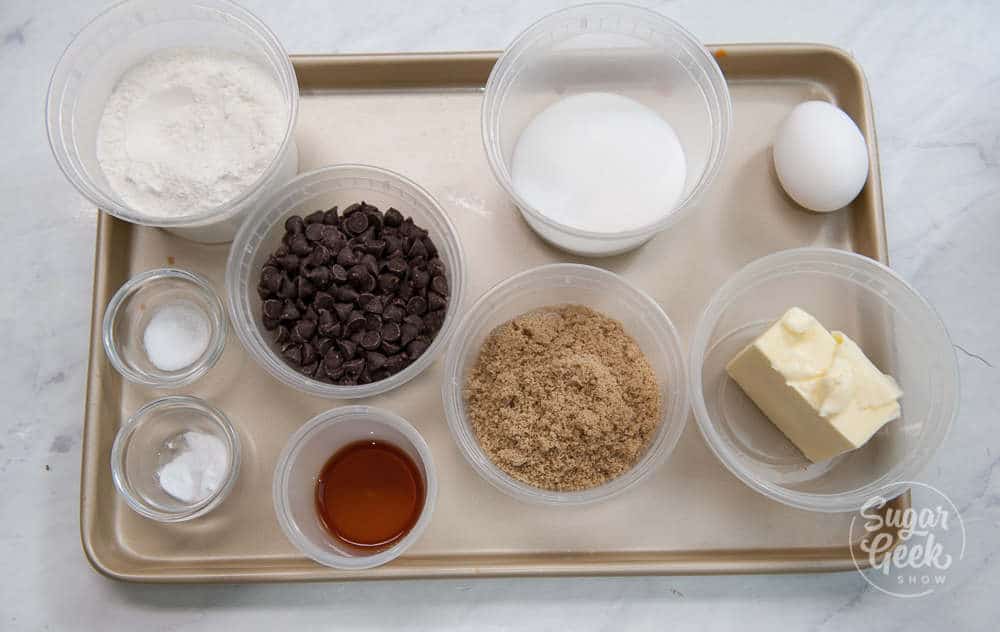
chocolate chip cookie ingredients

Read the recipe - Read through the recipe once to make sure you have all the ingredients and tools you need to understand the basic flow of the recipe. Reading ahead will ensure you leave yourself enough time to get everything done.

Gather your ingredients - Get all your ingredients out so if you find that you're missing something, you have time to get it before you start mixing.

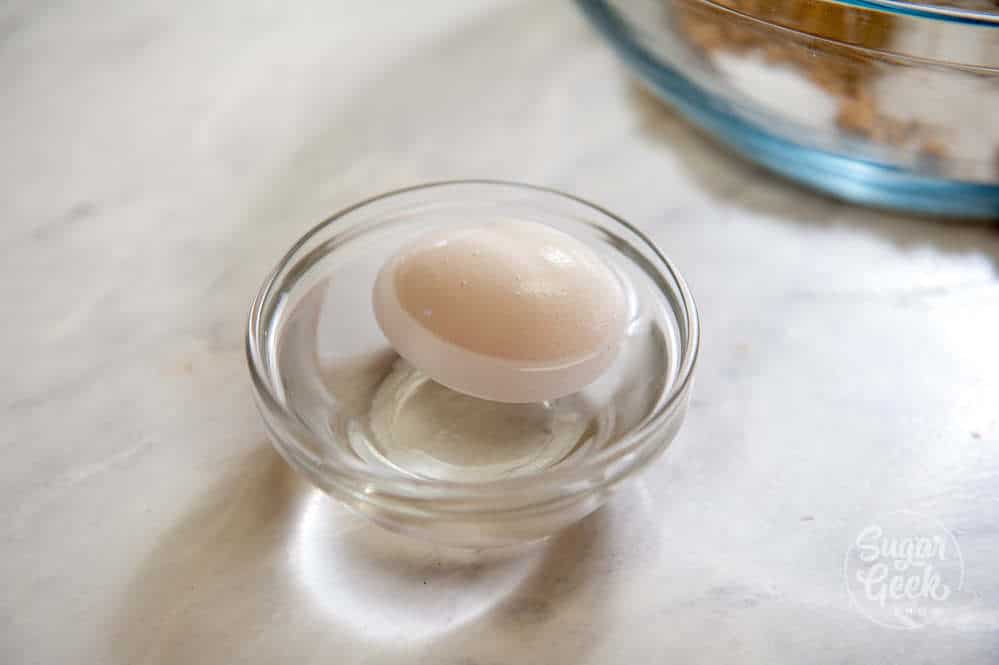
Room temperature ingredients are important - One of my tests included using a cold egg and a room temperature egg to see if that made a difference in the cookie. The cookie made with a cold egg was very flat/thin. The cookie made with a room temperature egg was much thicker and cohesive looking. So all our future tests used room temperature eggs. We warm our eggs by placing them in a bowl of very warm water for 5 minutes. Soften cold butter carefully in the microwave (do not melt) or cut into chunks and leave at room temperature for 20 minutes.

egg in a clear bowl of hot water on white background

Measuring - If at all possible, measure your ingredients by weight for the best results but if your recipe is in cups, make sure you measure correctly. To measure cups of flour, spoon the flour into the cup until it's full and then level it off with a knife.

Need to convert to cups? Download my FREE conversion chart! This will work for all my recipes.

Don't substitute - When you first try out a recipe, resist the urge to make any substitutions where possible. Make the recipe as it reads and then once you know how it turns out, you can make adjustments based on your preferences. 

Follow the directions - This goes back to reading the recipe. Make sure you follow the directions (also referred to as the method) You can't just dump all the ingredients into the bowl and have them turn out. Save yourself from wasting time and ingredients and follow the instructions.

Traditional Chocolate Chip Cookie Recipe (control)

So now that we got all that out of the way, let's start baking cookies. I'm using the recipe on the back of the Ghirardelli chocolate chip bag as the control. I followed the recipe on the back but with a few notes for specifics below since one person's idea of creaming could be very different than another person's idea.

back of ghirardelli chocolate chip bag

This recipe is also listed below in the recipe card with notes for making the cookies crispy, chewy or cakey based on these experiments.

  1. Creamed softened but not melted unsalted butter and sugar with paddle attachments for  2 minutes on medium speed. 
  2. Eggs room temperature and added one at a time while mixing on medium speed. 
  3. Used a #20 medium cookie scoop on a parchment paper-lined baking sheet.
  4. The cookie dough was not chilled.
  5. Baked the cookies at 375ºF 10 minutes

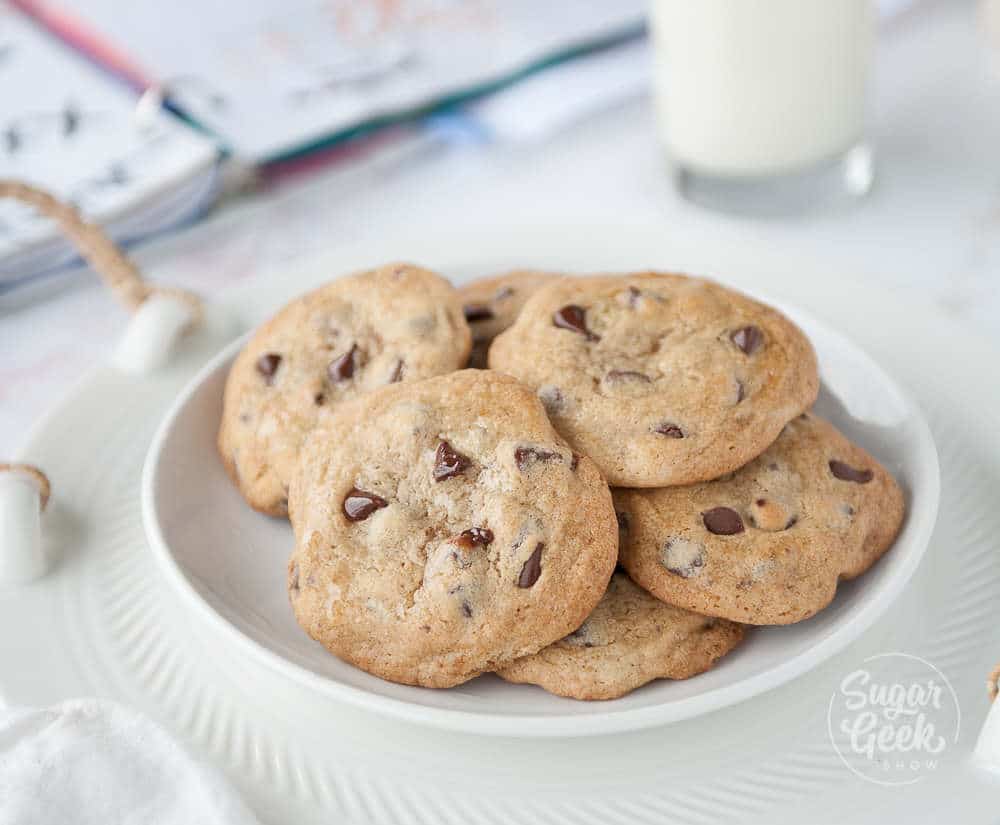
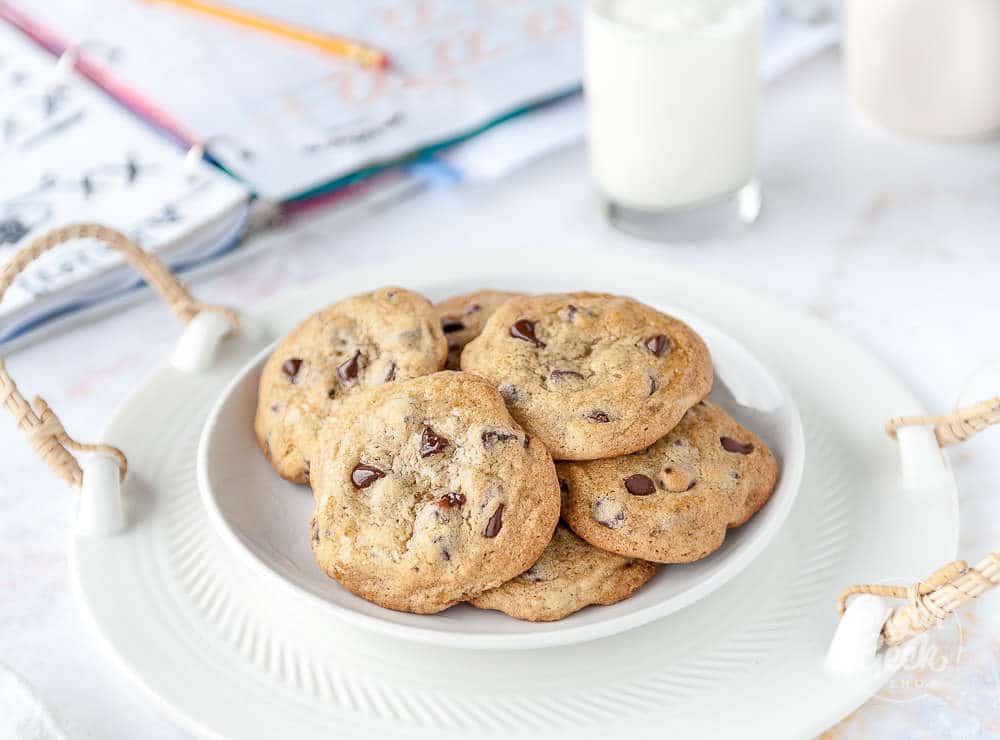
classic chocolate chip cookies in a white bowl on a white background with school book and milk in the background

Result: Fair amount of spread, nice golden edge, chewy, soft on the inside. little more doughy when warm, gets chewier as it cools.

Rating - Crispy: 2 Chewy: 2 Cakey: 0

Chocolate chip cookie ingredients: What do they do?

So if we wanted to make adjustments to this control recipe, what do you do? Well, first of all, we need to understand what the role of each ingredient is so we can tweak this chocolate chip cookie recipe successfully.

chocolate chip cookie tests on a white background shot from above

Flour - Makes cookies thicker and cakier but also drier. Less flour makes them thinner and crispier.

Brown Sugar - Makes cookies chewier but too much makes them crispy and dark

Eggs - Adds moisture and structure to the cookies but also makes them spread. Room temperature eggs made a better cookie with less spread. 

Baking powder - Makes cookies fluffier and lighter in color.

Baking soda - Gives cookies flavor, color and lift.

Butter - When creamed with the sugar makes cookies fluffy and chewy when melted makes them thinner and crispier.

Scoop size - For every test, I scooped with a #20 cookie scoop and also did a double scoop to see if they baked up differently. Across the board, the larger scoops resulted in thicker cookies with less spread. 

Chilling - I didn't notice much of a difference with chilling cookies. I know some people SWEAR by chilling. They may have been ever so slightly thicker but not a huge difference.

Chocolate Chip Cookie Tests

Hard, dry, crispy or doughy? I tried to recreate some problems that someone might have with their cookies to see what would happen. These are my results! I know this is a TON of information so feel free to scroll past if you're not into geeky experiments about cookie ingredients like I am. 

As I said earlier, I used the Ghiradelli chocolate chip cookie recipe and semi-sweet chocolate chips. I have rated my tests as far as crispy, chewy and cakey goes on a scale of 1-3. Each test starts with the standard control recipe from Test 1 and then I change one thing to see what happens. 

chocolate chip cookies with too much flour on a pink baking sheet

Test 1: Too much flour This was my first test and it really was an accident. I meant to make a half batch of the cookie recipe and forgot to half the flour. Result? Hockey pucks. Oops. 

  1. Used double the amount of flour 

Result: Didn't spread at all, very dry. Crispy:0 Chewy: 0 Cakey: 3

Test 2: Dough chilled for 24 hours. I wanted to see if chilling really was necessary for the cookies to turn out since so many recipes say that chilling is absolutely necessary. 

  1. Regular Ghirardelli recipe
  2. Creamed butter with paddle attachments
  3. Softened butter
  4. Scooped and Chilled (fridge) 24 hours. Don't wait for them to room temp. 
  5. Baked 350 12 mins (needed extra time because of the cold dough) 

Result: Call me crazy but I couldn't see any difference in taste or texture between the chilled or unchilled dough. Crispy: 2 Chewy: 2 Cakey: 0

chocolate chip cookies made with melted butter on a blue plate on a wooden background

Test 3: Melted butter. Some recipes I come across say that melting the butter makes a chewier cookie so I decided to try it out for myself. I melted the butter, let it cool so it wasn't hot and then mixed it with the sugar. The mixture wouldn't cream so I just mixed it until combined, then I added in my eggs and dry ingredients. The dough was very soft and easy to scoop. 

Result: These cookies spread a lot more than the cookies that used softened butter and seemed a little oily and doughy in the center. These cookies got a lot crunchier as they cooled. Crispy: 3 Chewy: 3 Cakey: 0

chewy chocolate chip cookies on a floral plate on wooden background

Test 4 - All brown sugar. Brown sugar is what gives cookies their chew so I thought if I used all brown sugar, the cookies would be really chewy.

Result: These cookies did not spread as much and where thicker. They were chewy in the center but crispy around the edges. Crispy: 3 Chewy: 2 Cakey 1

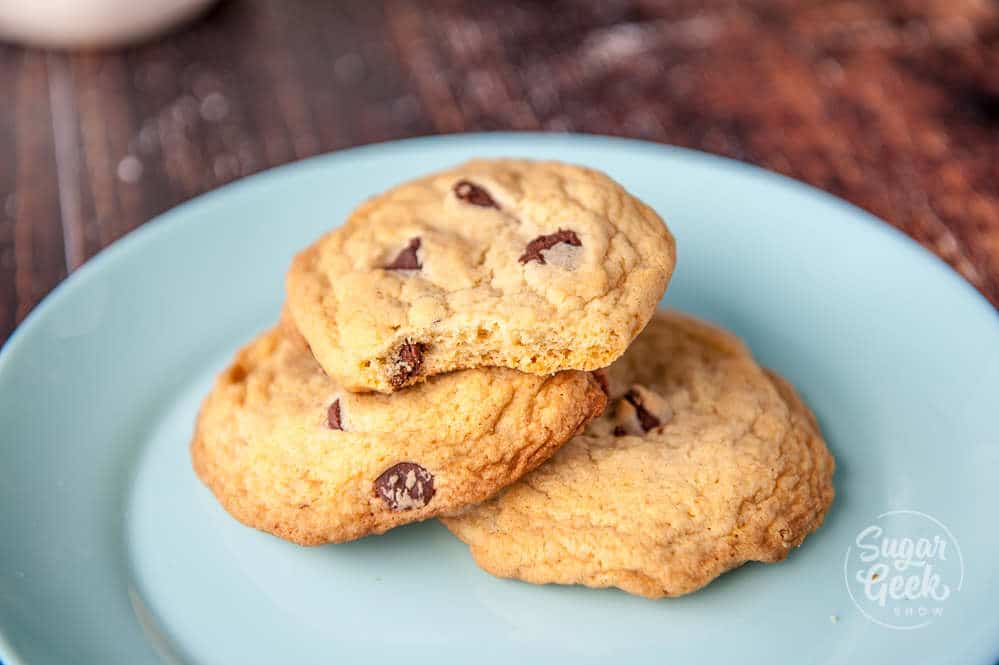
cakey chocolate chip cookies on a white plate

Test 5 - baking powder instead of baking soda. I wondered what would happen if I used baking powder instead of soda, did it really matter?

Result: Didn't spread as much, lighter in color, puffed up more and took one extra minute to bake. The taste was very mild. Crispy: 1 Chewy: 2 Cakey 2

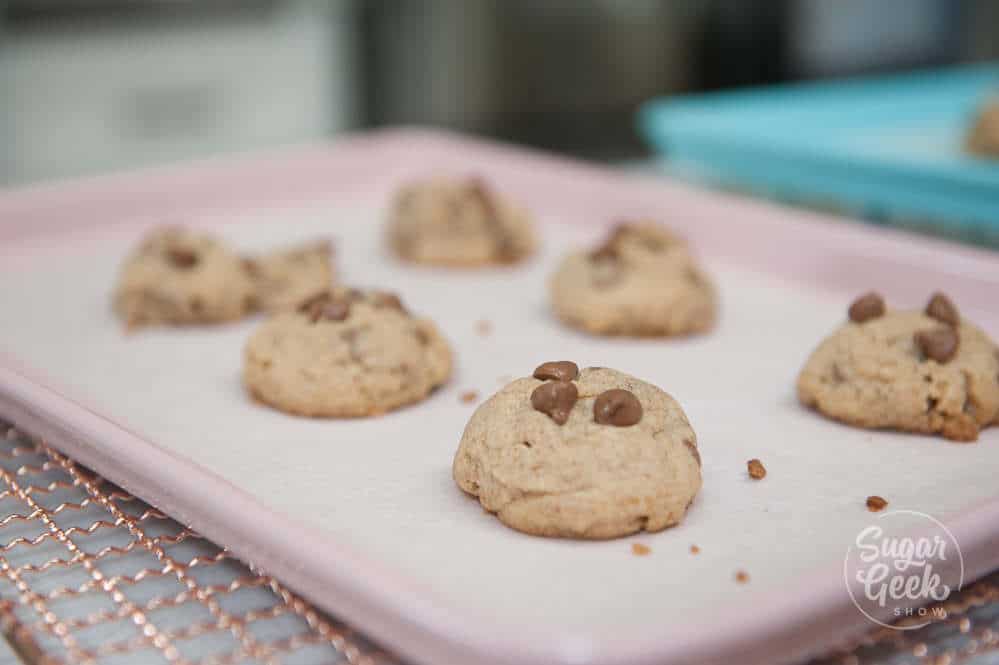
Chocolate chip cookies with extra flour added on a parchment paper lined baking sheet

Test 6 - More flour (1 extra ounce). This time I only added one extra ounce of flour to see if it would stop my cookies from spreading as much. 

Result: Thicker cookie, doughier, softer, not as much spread. Got chewier as it cooled. 

Test 7 - Extra egg yolk. I read that extra eggs can make your cookies moister and cakier so I gave it a try. 

Result: Moister cookie, chewier and more flavor.
Crispy: 1 Chewy: 2 Cakey 2

bakery style chocolate chip cookie

Test 8 - Double scoop. I wanted to see what would happen if I made my cookies twice as big, what would happen.

Result:  These cookies were very thick and reminded me of the cookies you get in a bakery! I loved them! Same taste and texture as the classic cookie. Note: These took two extra minutes to bake. 
Rating - Crispy: 2 Chewy: 2 Cakey: 0

So what have we learned?

I narrowed these tests down to three results for successfully tweaking a chocolate chip cookie recipe to your liking. 

The MOST important thing I have learned is that a room temperature egg makes all the difference and that you don't need to chill your cookie dough which is a relief for impatient people like me.

For chewy chocolate chip cookies add 2 extra ounces (¼ cup) of flour, 2 extra egg yolks, and replace all the white sugar with brown sugar.

For cakey chocolate chip cookies, add 2 extra ounces (¼ cup) of flour and replace the baking soda with an equal amount of baking powder.

For crispy chocolate chip cookies, use melted butter, increase the white sugar by 4 ounces (½ cup) and decrease the brown sugar by 4 ounces (½ cup).chewy chocolate chip cookies on a floral plate with wooden background

What was my favorite test? I prefer the thicker, cakier cookie with more flour (test 6). Perfect for dunking in milk. My husband's favorite cookie was the thinner, crispier cookie (test 3) although he happily ate all the leftover cookies throughout the week. Avalon's favorite cookie was the small chewy cookie.

Whichever you prefer, I hope this guide has helped you make the perfect chocolate chip cookie that's perfect for you! 

plate of chocolate chip cookies in a white bowl with. schoolbook and glass of milk behind it

Recipe

chocolate chip cookie split in half with melted chocolate chips. Shot from the top
Print Recipe
4.98 from 35 votes

Master Chocolate Chip Cookie Recipe

The best chocolate chip cookies are the ones you like the best. Make chewy, crispy or cakey cookies using this one master chocolate chip cookie recipe!
Prep Time5 minutes mins
Cook Time11 minutes mins
Course: Appetizer
Cuisine: American
Servings: 24 cookies
Calories: 221kcal
Author: Liz Marek

Ingredients

Master Chocolate Chip Cookie Recipe

  • 1 cup unsalted butter softened but not melted
  • ¾ cup light brown sugar packed
  • ¾ cup granulated sugar
  • 2 ¼ cup all-purpose flour spooned into the cup then leveled
  • ½ teaspoon salt
  • 2 large eggs room temperature
  • 2 teaspoons vanilla extract
  • 1 teaspoon baking soda
  • 2 cups chocolate chopped or chocolate chips
US Customary - Metric

Instructions

  • Preheat your oven to 375ºF and line two large cookie sheets with parchment paper (not wax paper)
  • Add softened butter to the bowl of your stand mixer with the whisk attachment and cream until smooth
  • Add in your brown sugar and white sugar and whisk on low until light and fluffy (about 2 minutes)
  • Add in your eggs one at a time, letting each mix in fully before adding the next
  • Add in your vanilla, salt, and baking soda
  • Add in your flour and chocolate chips and mix until just combined
  • Scoop onto your cookie sheet using a #20 cookie scoop or about two Tablespoons of dough per cookie.
  • Bake for 6 minutes, rotate the pan then bake for another 5-6 minutes or until the center is no longer shiny. Do not over-bake.
  • Cookies will be soft at first but will harden as they cool.

Video

Notes

Tips for success
  1. Use room temperature eggs for less spreading
  2. No need to chill your dough
  3. For chewy chocolate chip cookies add 2 extra ounces (¼ cup) of flour, 2 extra egg yolks, and replace all the white sugar with brown sugar.
  4. For cakey chocolate chip cookies, add 2 extra ounces (¼ cup) of flour and replace the baking soda with an equal amount of baking powder.
  5. For crispy chocolate chip cookies, use melted butter, increase the white sugar by 4 ounces (½ cup) and decrease the brown sugar by 4 oz (½ cup).

Nutrition

Serving: 1cookie | Calories: 221kcal | Carbohydrates: 25g | Protein: 2g | Fat: 13g | Saturated Fat: 8g | Cholesterol: 36mg | Sodium: 106mg | Potassium: 72mg | Fiber: 1g | Sugar: 15g | Vitamin A: 259IU | Calcium: 16mg | Iron: 1mg


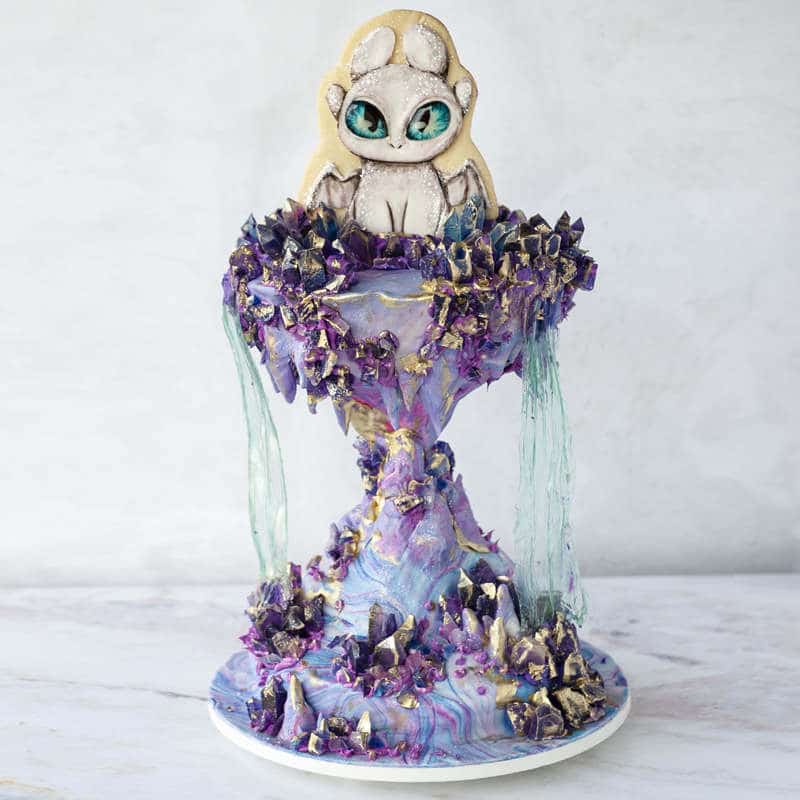
Light Fury Cake with gelatin waterfalls, edible crystals and cookie topper

April 1, 2020 Course Preview

Light Fury Cake Tutorial

Skill level: Intermediate

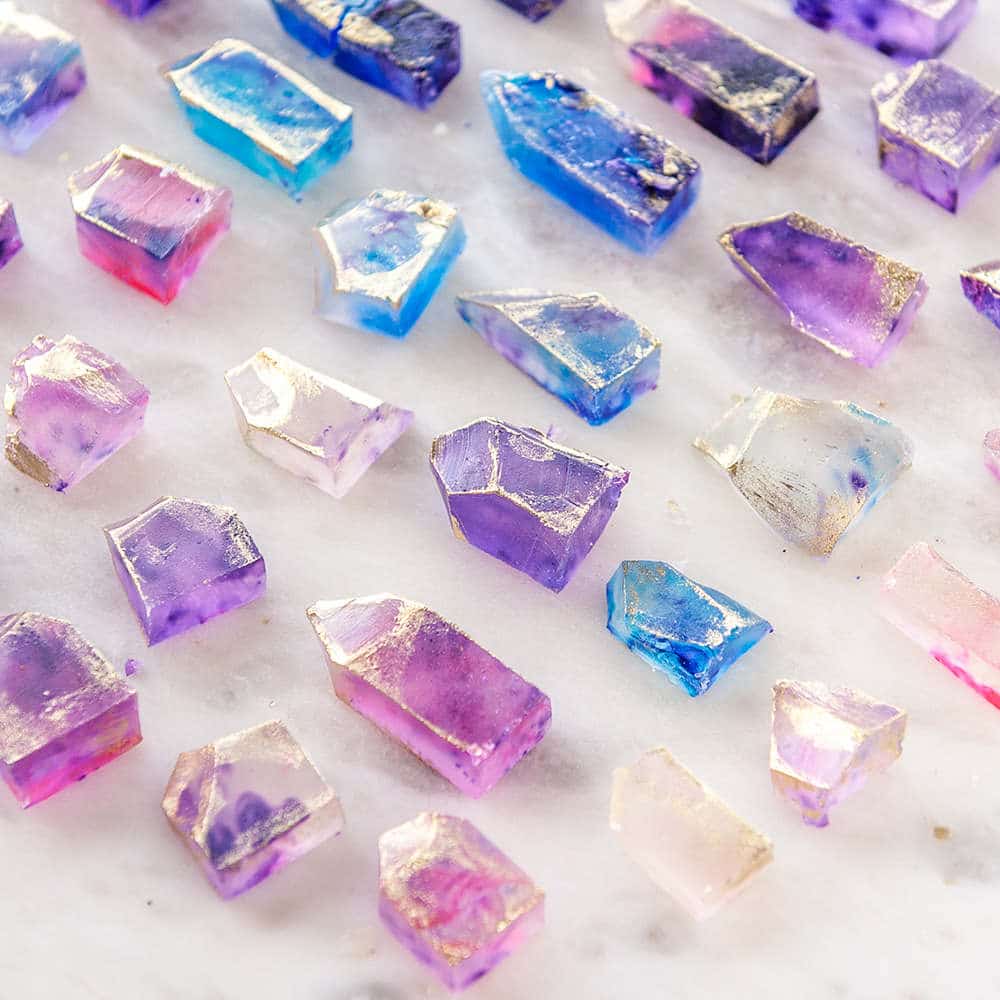
In this tutorial, you will learn how to create a gravity defying, floating island structure, how to make gummy crystals, gelatin waterfalls and a fun light fury cookie cake topper with isomalt eyes! Lots of fun techniques in this cake!

56:36 Minutes of Instruction

What You Will Learn

  • How to make a gravity-defying Cavern cake
  • Learn how to create a faux-3D Light Fury dragon cookie cake topper
  • How to make marbled edible gems without gelatin
  • Learn how to make stalagmites
  • How to make edible waterfalls

Tutorial Chapters

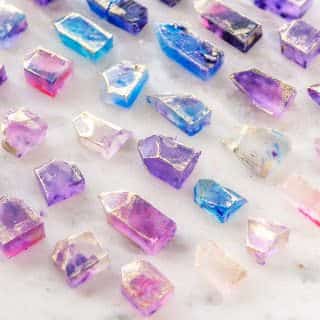
  1. Making Kohakutou crystals 0:28
  2. Making gelatin waterfalls 2:52
  3. Finishing the crystals 4:39
  4. Building the structure 5:25
  5. Stacking the cake 9:08
  6. Covering in fondant 12:40
  7. Creating stalagmites 18:00
  8. Making the topper 20:12
  9. Covering the topper in fondant 21:37
  10. Defining the eyes and body 24:01
  11. Painting the body 29:09
  12. Painting the eyes 35:38
  13. Attaching the crystals 40:15
  14. Finishing the isomalt eyes 45:40
  15. Adding glitter 49:05
  16. Attaching the topper 51:57
  17. Attaching the waterfalls 54:16

Downloads

Materials List

Light Fury Template

Light Fury Cake with gelatin waterfalls, edible crystals and cookie topper

April 1, 2020 Paid Video

Light Fury Cake

Skill level: Intermediate

In this tutorial, you will learn how to create a gravity defying, floating island structure, how to make gummy crystals, gelatin waterfalls and a fun light fury cookie cake topper with isomalt eyes! Lots of fun techniques in this cake!

56:36 Minutes of Instruction

What You Will Learn

  • How to make a gravity-defying Cavern cake
  • Learn how to create a faux-3D Light Fury dragon cookie cake topper
  • How to make marbled edible gems without gelatin
  • Learn how to make stalagmites
  • How to make edible waterfalls

Tutorial Chapters

  1. Making Kohakutou crystals 0:28
  2. Making gelatin waterfalls 2:52
  3. Finishing the crystals 4:39
  4. Building the structure 5:25
  5. Stacking the cake 9:08
  6. Covering in fondant 12:40
  7. Creating stalagmites 18:00
  8. Making the topper 20:12
  9. Covering the topper in fondant 21:37
  10. Defining the eyes and body 24:01
  11. Painting the body 29:09
  12. Painting the eyes 35:38
  13. Attaching the crystals 40:15
  14. Finishing the isomalt eyes 45:40
  15. Adding glitter 49:05
  16. Attaching the topper 51:57
  17. Attaching the waterfalls 54:16

Downloads

Materials List
Light Fury Template

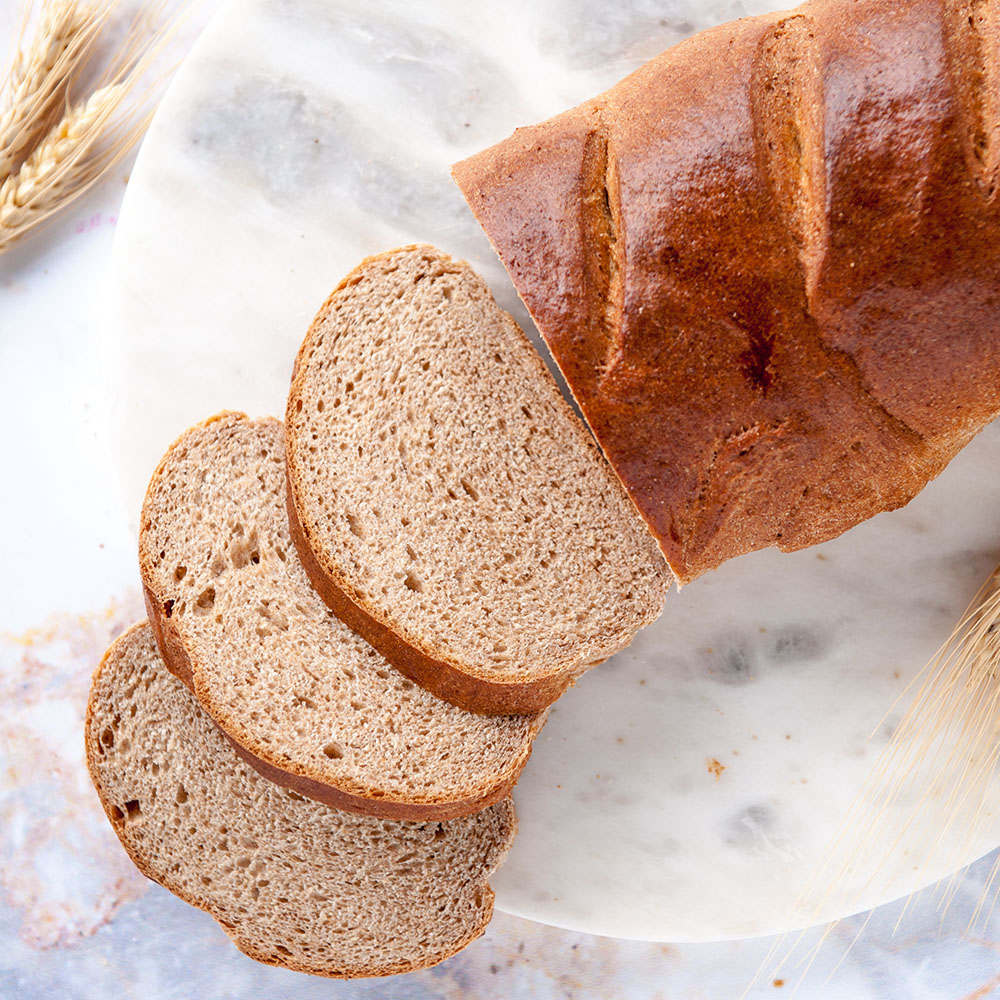
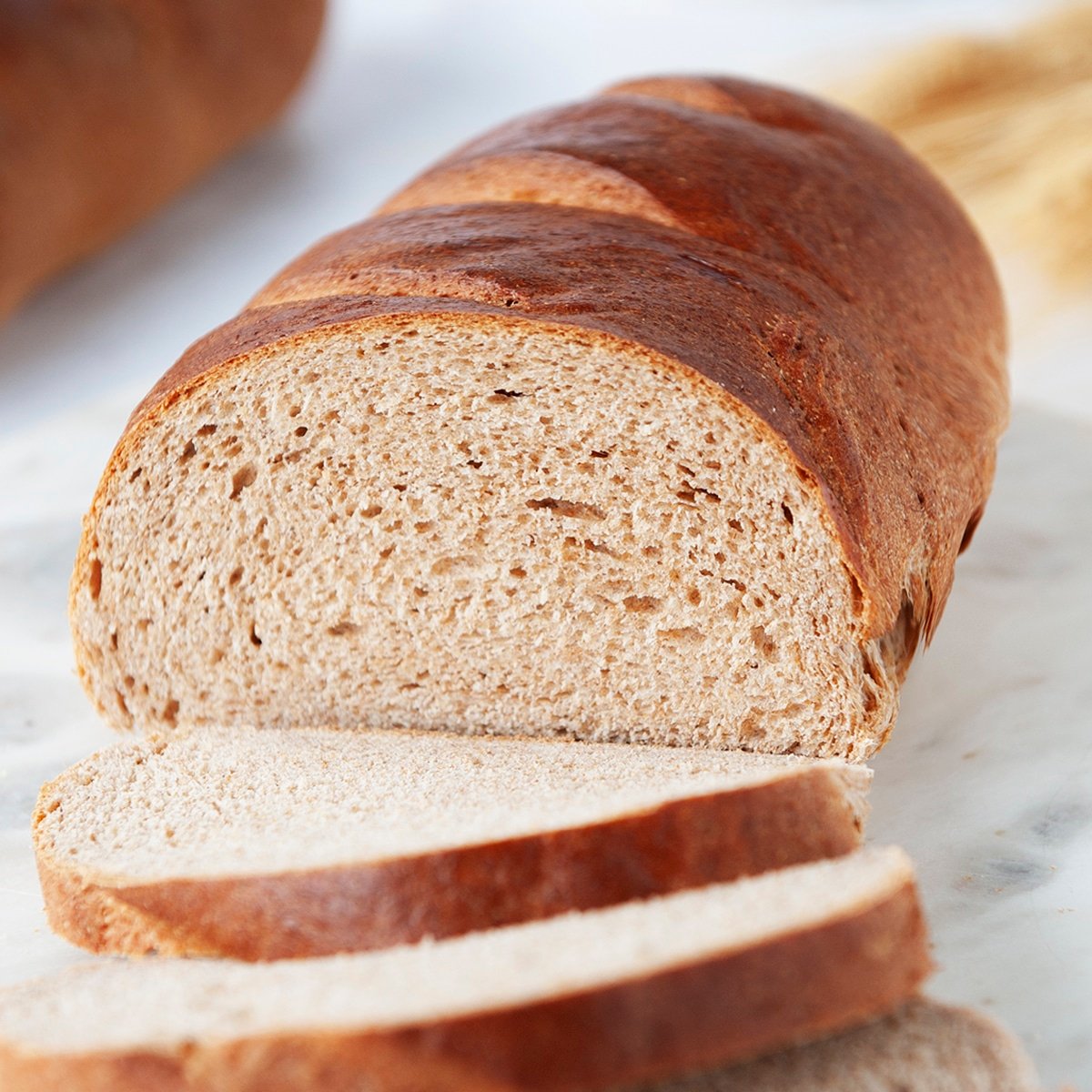
loaf of honey whole wheat bread shot from above with three slices in front on a white background

March 24, 2020 Recipe

Honey Whole Wheat Bread Recipe

Need a fast whole-wheat homemade bread recipe? After my fast bread recipe went viral, I had a ton of requests for a whole wheat version. This is the BEST whole wheat bread I've ever had.

So soft, moist, and a little bit sweet from the honey. This recipe makes two loaves of bread because if you're like me, the first loaf will be gone on day one.

If you've never made your homemade bread before, don't worry. I'll explain how to do every step with detailed instructions and photos. Once you get the hang of it, you will see how easy and DELICIOUS homemade bread really can be. No bread pan needed, no bread machine. Just fresh, warm whole-wheat bread whenever you need it. 

Ingredients Needed & Suggested Replacements

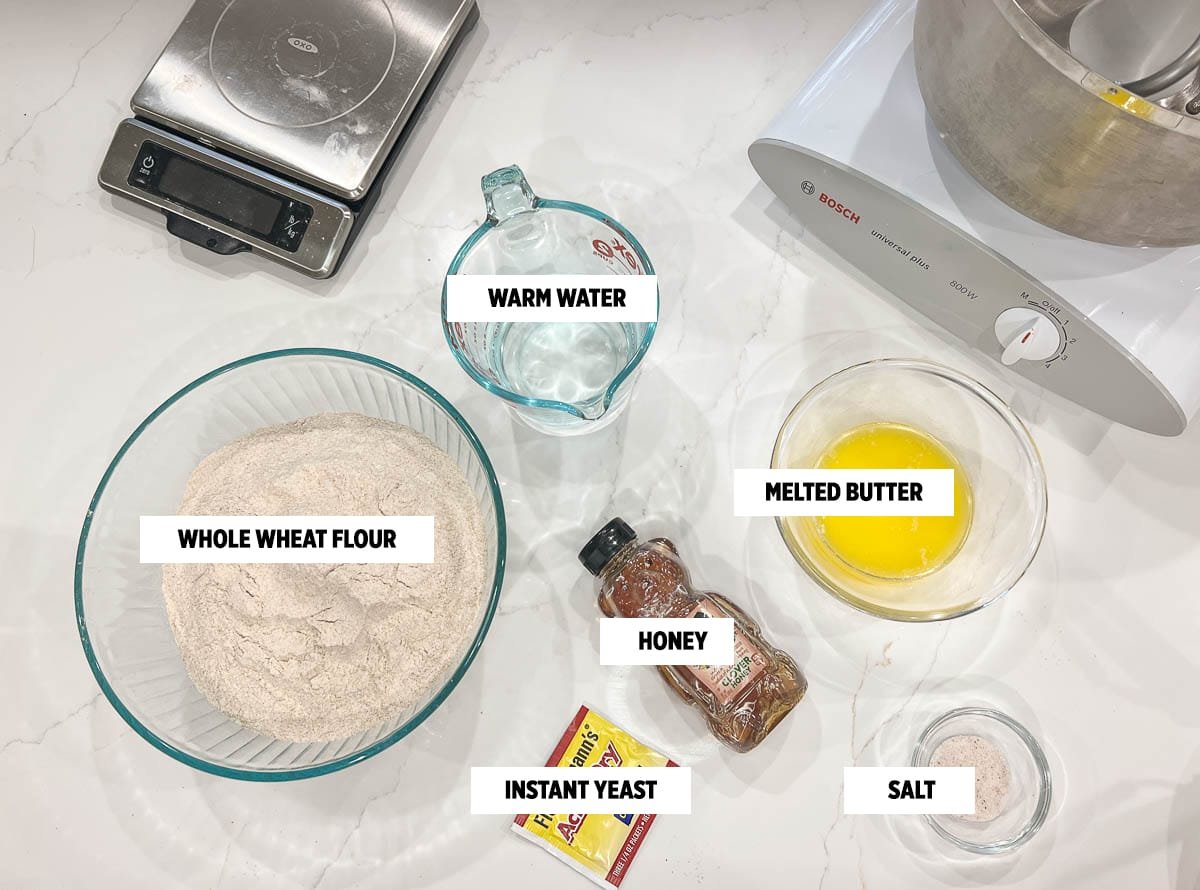
This honey whole wheat bread recipe is made from just a few simple ingredients. Note that I am using INSTANT yeast which is the secret to making bread in under an hour. 

You can use active dry yeast but it will take MUCH longer to proof your bread. See the notes at the bottom of the recipe card for using active dry yeast instead of instant. 

  • Whole wheat flour - A healthier option for those trying to incorporate more fiber into your diet. 
  • Honey - I'm using some delicious local wildflower honey which also helps keep the wheat bread moist and soft.
  • Instant yeast - Sav-Instant yeast is the brand that I use but any brand will be ok. It might also say rapid yeast. For using active dry yeast, please see the notes at the bottom of the recipe card below. 
  • Milk (or water) - Hydrates the wheat to develop texture. You can use water or any other type of milk if you prefer to make your whole wheat bread dairy-free.
  • Salt - Gives the bread flavor. If you skip the salt you'll have a very bland loaf.
  • Melted unsalted butter - Adds flavor and moisture to the wheat bread recipe. You can replace the butter with olive oil if you prefer to keep the recipe dairy-free.
  • Whey Protein Powder - (optional) - Adding a little protein powder is a great way to make your whole wheat bread even healthier
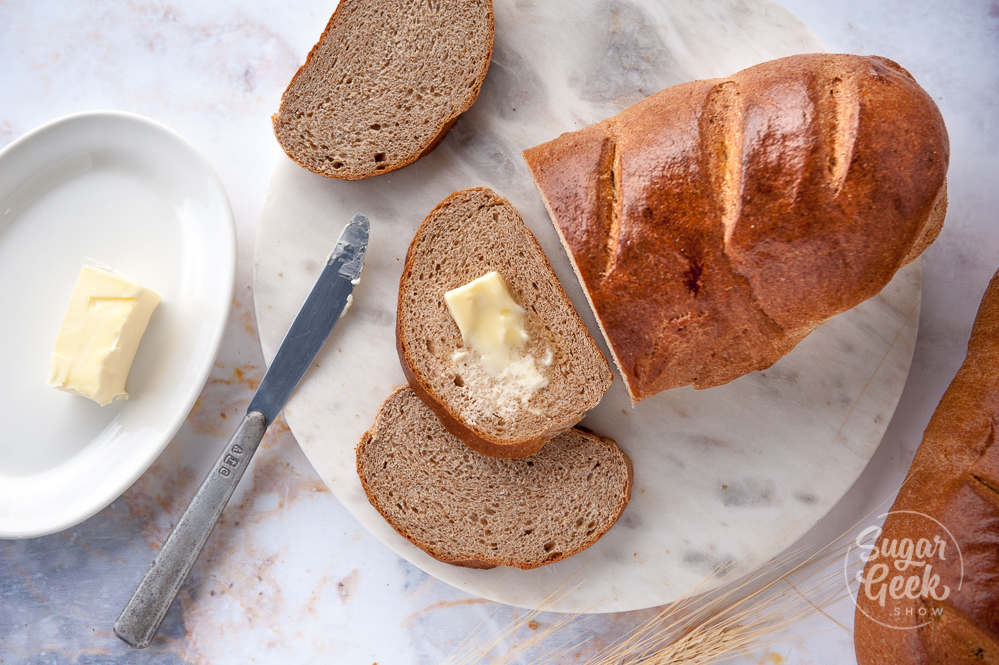
sliced whole wheat bread top view with butter spread on one slice on white background

Tips For Success

  • You need to knead - Mixing your dough for long enough is key to a tall and fluffy loaf. Don't go by time, go by looks and do the windowpane test to see if enough gluten has developed. Not mixing enough will cause your bread to have a tight texture, be very dense, and not rise. If this is your first time making bread, I highly recommend using the windowpane test to make sure you have kneaded your bread enough.
  • Warm place - You must put your bread in a warm place to rise properly. By warm, I mean like 75ºF-90ºF. The easiest way to do this is to turn your oven onto the lowest setting for 10 minutes then turn it off. Open the door to the oven and place your bread on the door to rise. I recently remodeled my kitchen and got a cafe oven that has a proofing setting! SO nice if you bake bread a lot.
  • Time - This is another thing you have to give your bread. Time is what lets the yeast do its thing and let the dough rise. Depending on how old your yeast is, how warm your room is, and even what kind of water you use, your bread could rise faster or slower. Go by how much your bread has risen rather than adhering to any hard and fast rules about timing in this recipe. They are there for guidance but your eyes are the best tool you have.

Step-By-Step Instructions

  1. Warm your milk gently in the microwave or stovetop until it reaches 110ºF 
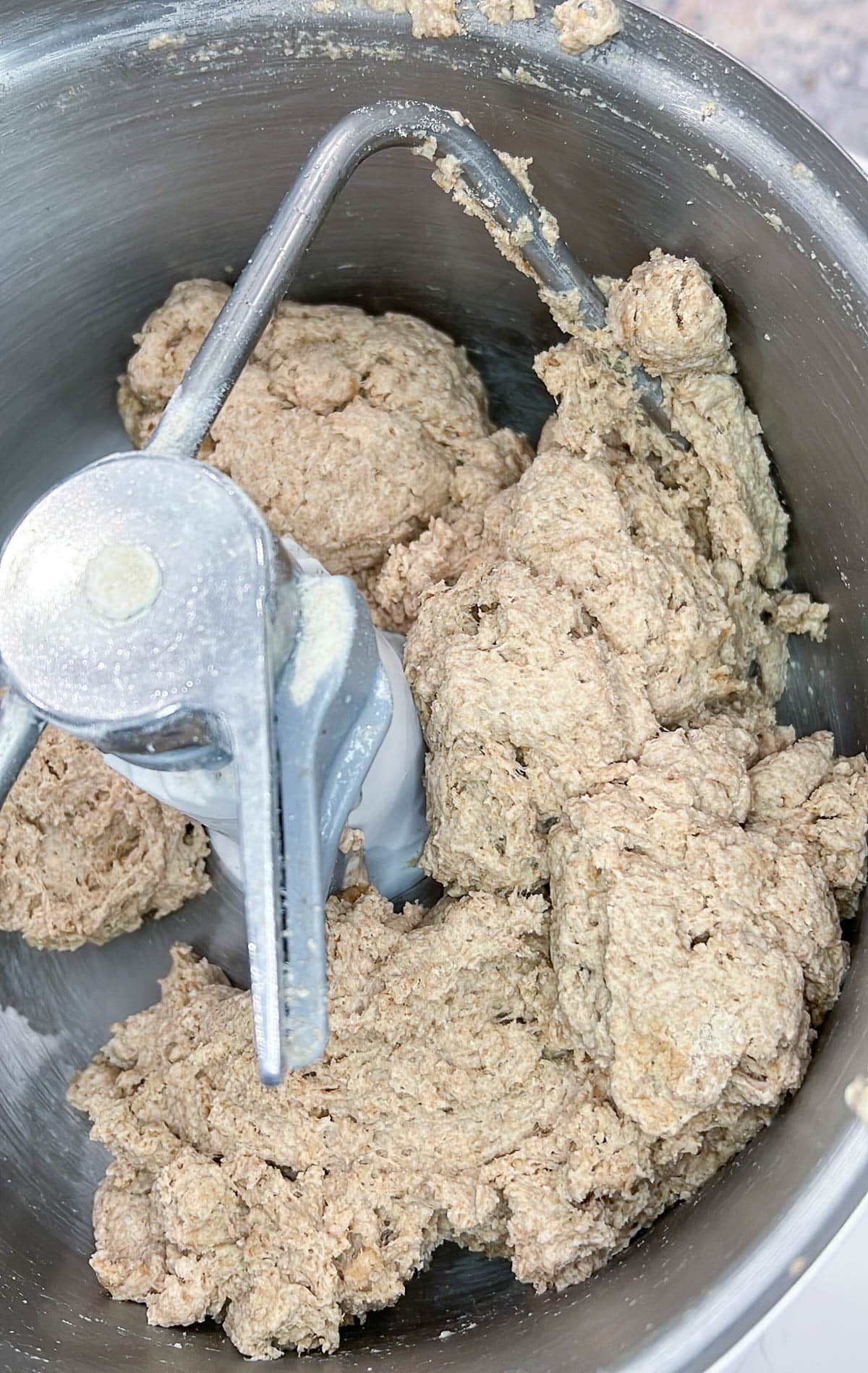
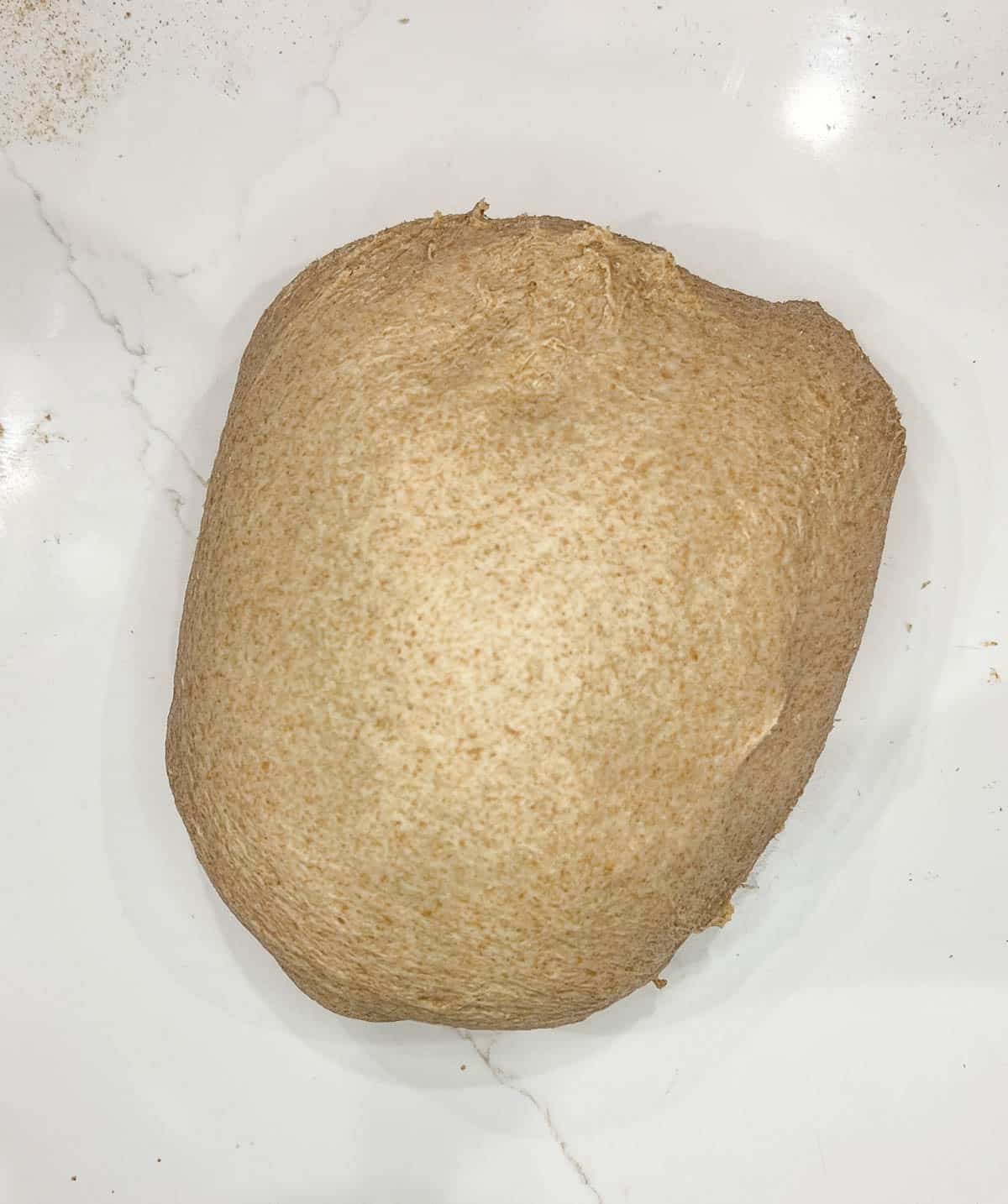
  2. Combine the whole wheat flour, instant yeast, honey, and milk in the bowl of your stand mixer with the dough hook attached and mix for one minute to combine the ingredients and hydrate your flour.close up of wheat bread dough in a mixing bowl
  3. Add in the salt and melted butter then mix on low until combined. If the dough is too dry, add a Tablespoon of water until the dough sticks to the sides of the bowl. Close up of whole wheat dough in a mixer
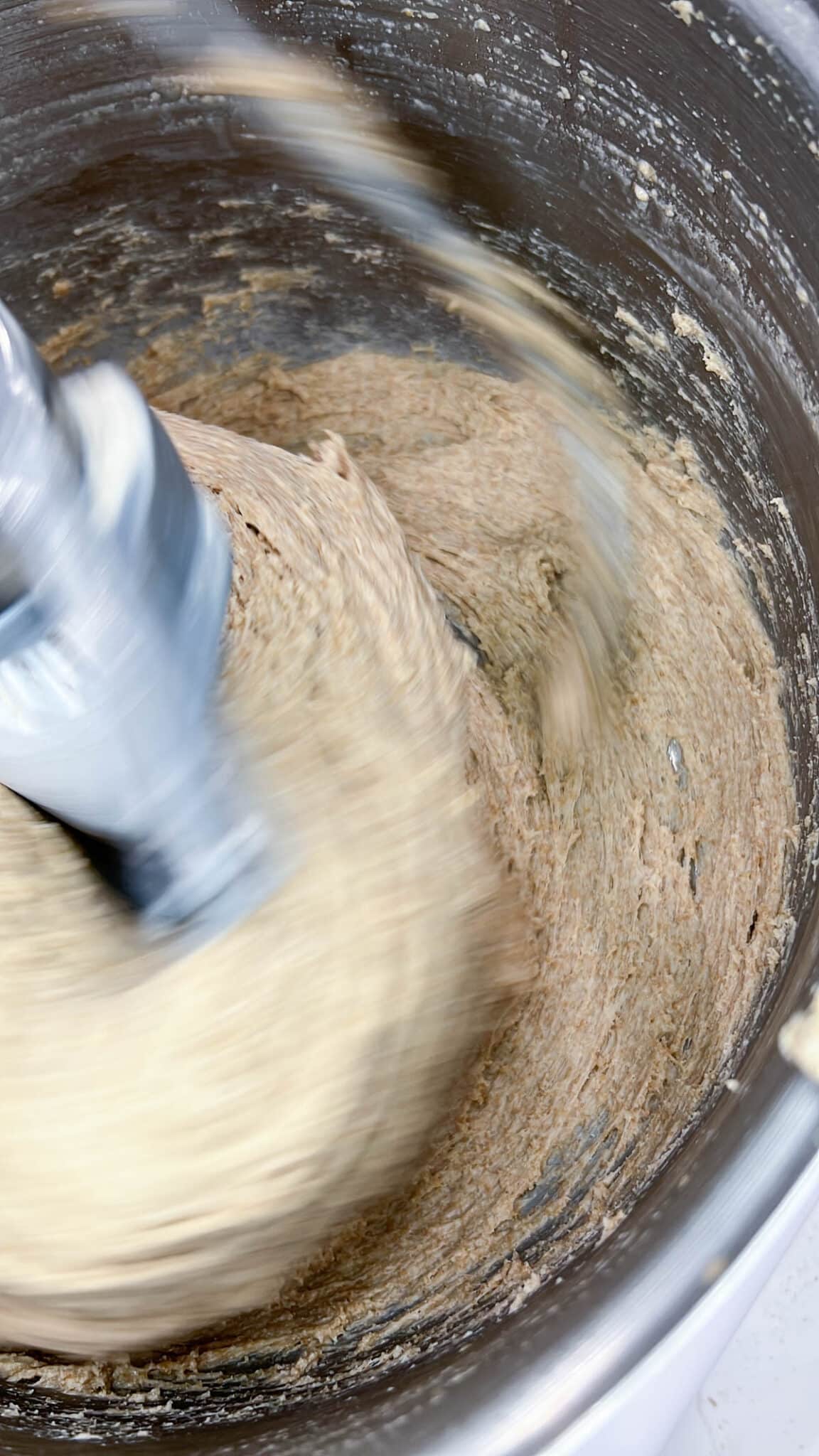
  4. Mix for 5 minutes on speed 2.
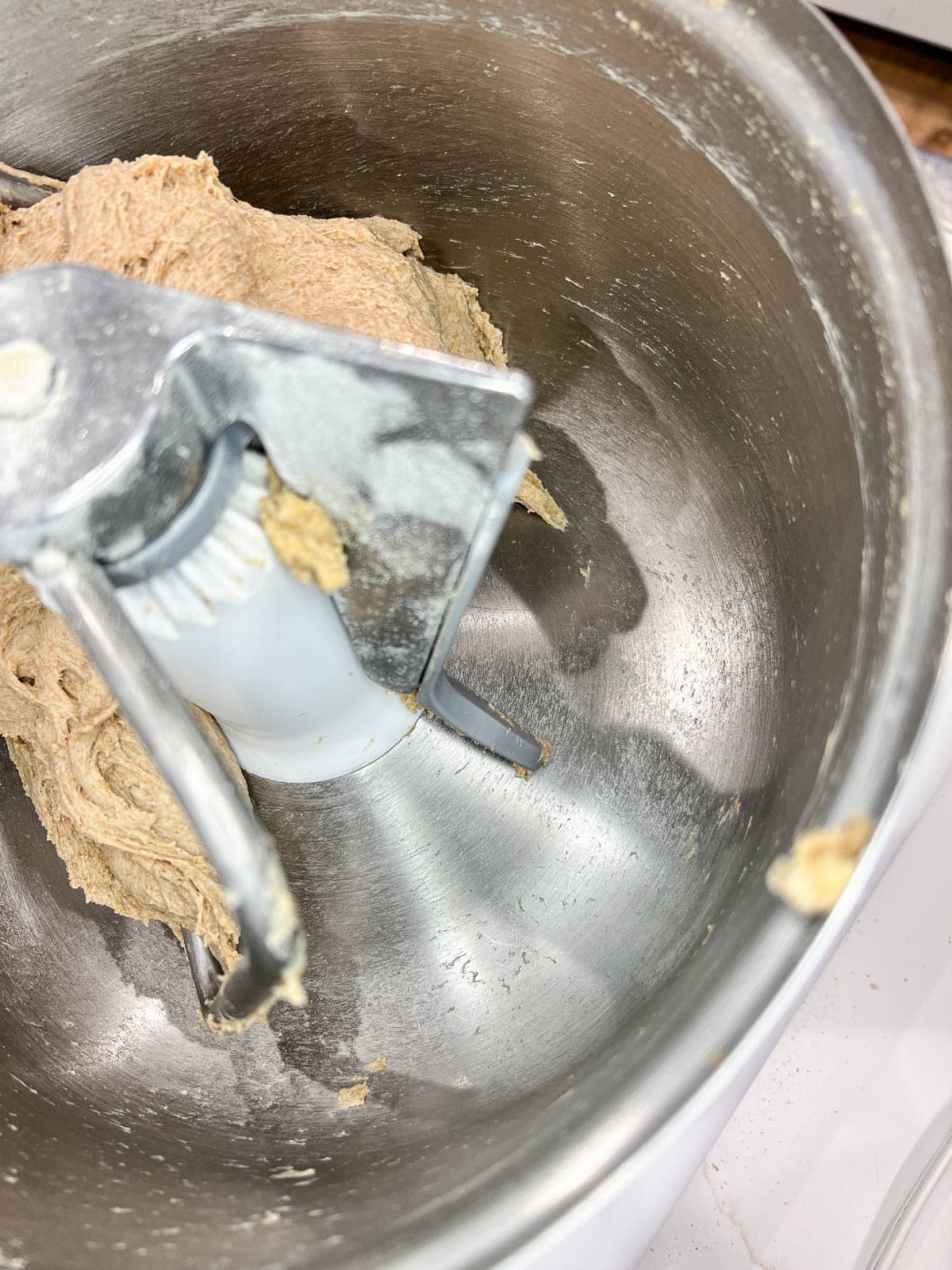
  5. The dough will start out sticking to the bowl but then gradually "clean" the sides of the bowl and form into a ball.close up of whole wheat bread dough in a mixing bowl
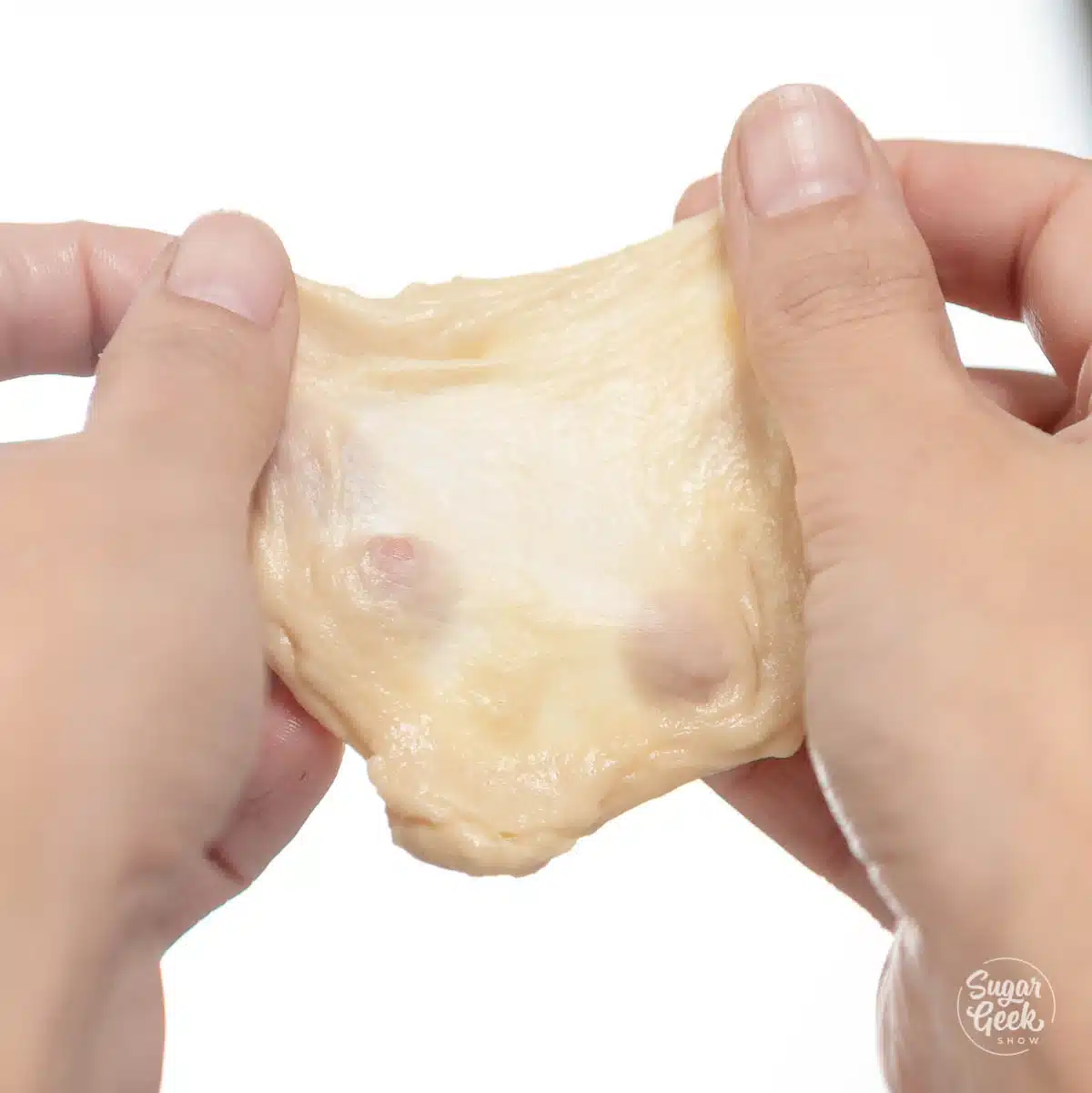
  6. After 5 minutes, check to see if the dough bounces back when you poke it. If it's still too soft then keep mixing for another 2 minutes or until the dough bounces back when you poke it. I highly recommend doing the windowpane test to see when your dough has been mixed enough. close up of hands pulling dough very thinly
  7. Knead the dough on a lightly floured work surface for 4-5 turns until you can form a smooth ball. close up of a smooth ball of dough on a white background
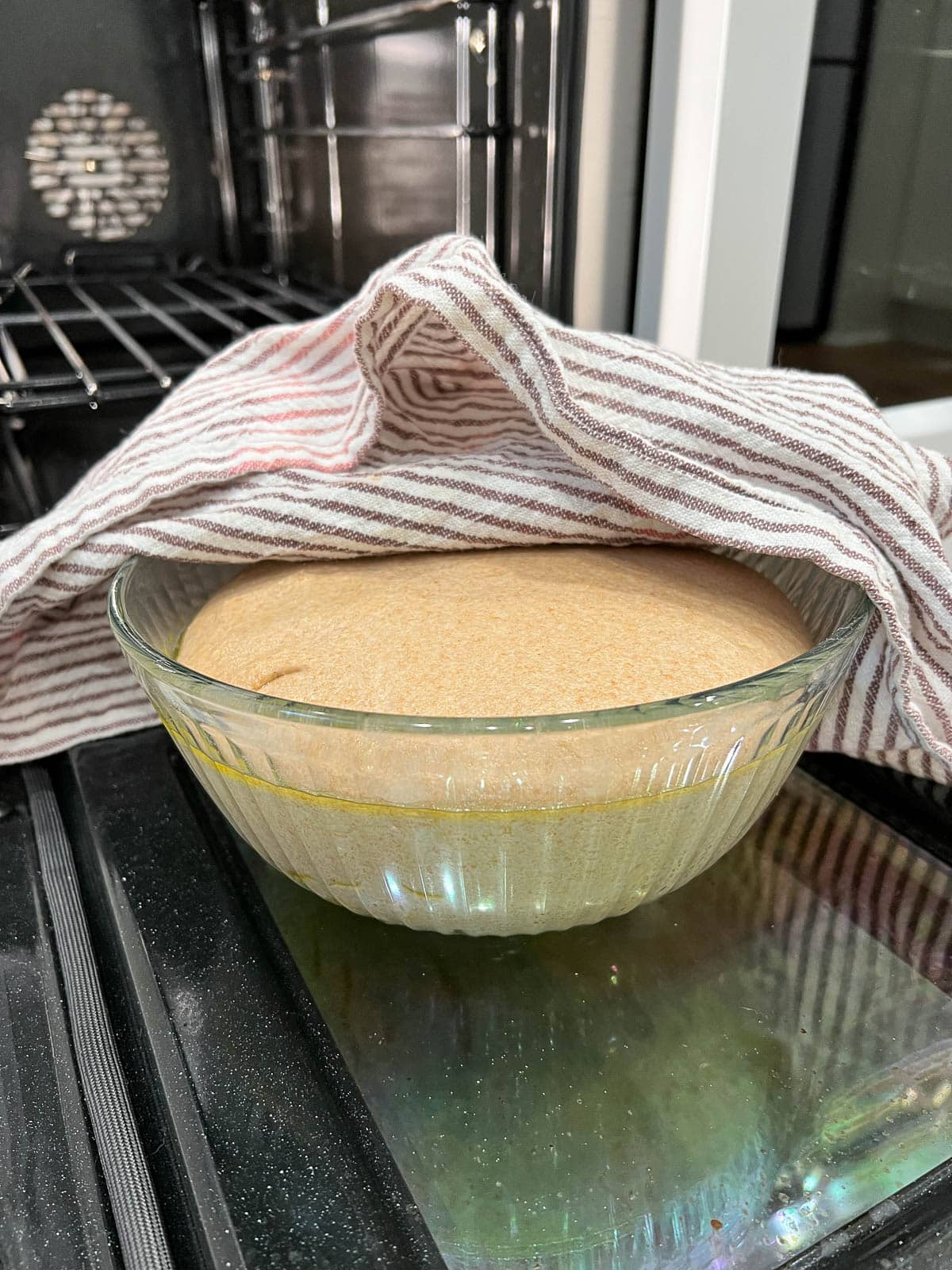
  8. Place the dough top side down into a greased bowl. Cover the dough with a cloth and place in a warm area for 60 minutes to let the bread rise until it has doubled in size. This is the first rise. My oven has a proofing option but if yours doesn't, just turn your oven on to the lowest setting for 10 minutes then turn it off. Leave the door open and put the bread near the open door. close up of bread dough in a glass bowl in front of an oven
  9. After your bread is proofed, preheat your oven to 375ºF
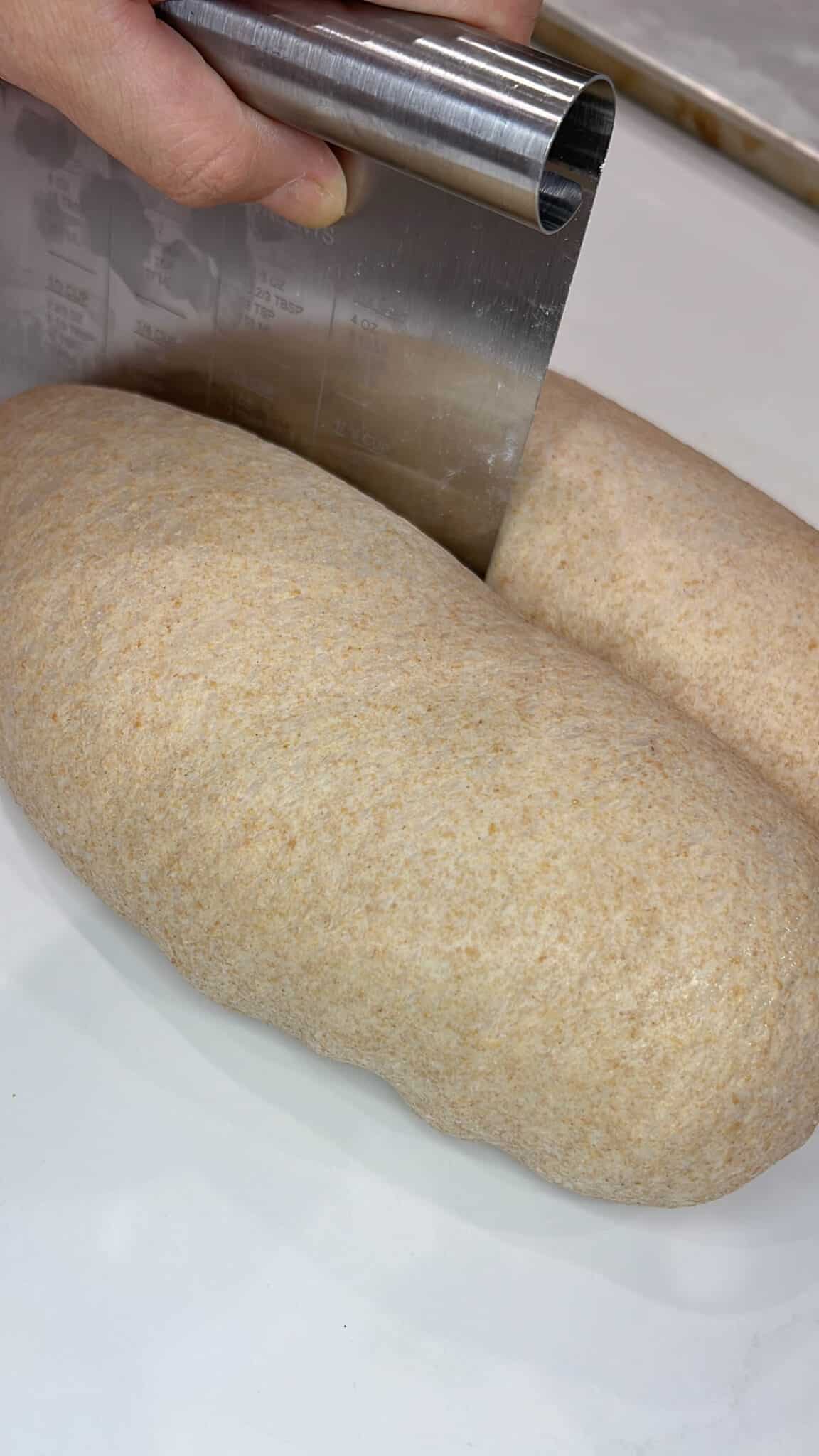
  10. Divide your dough into two even pieces with a knife.bench scraper cutting dough in half
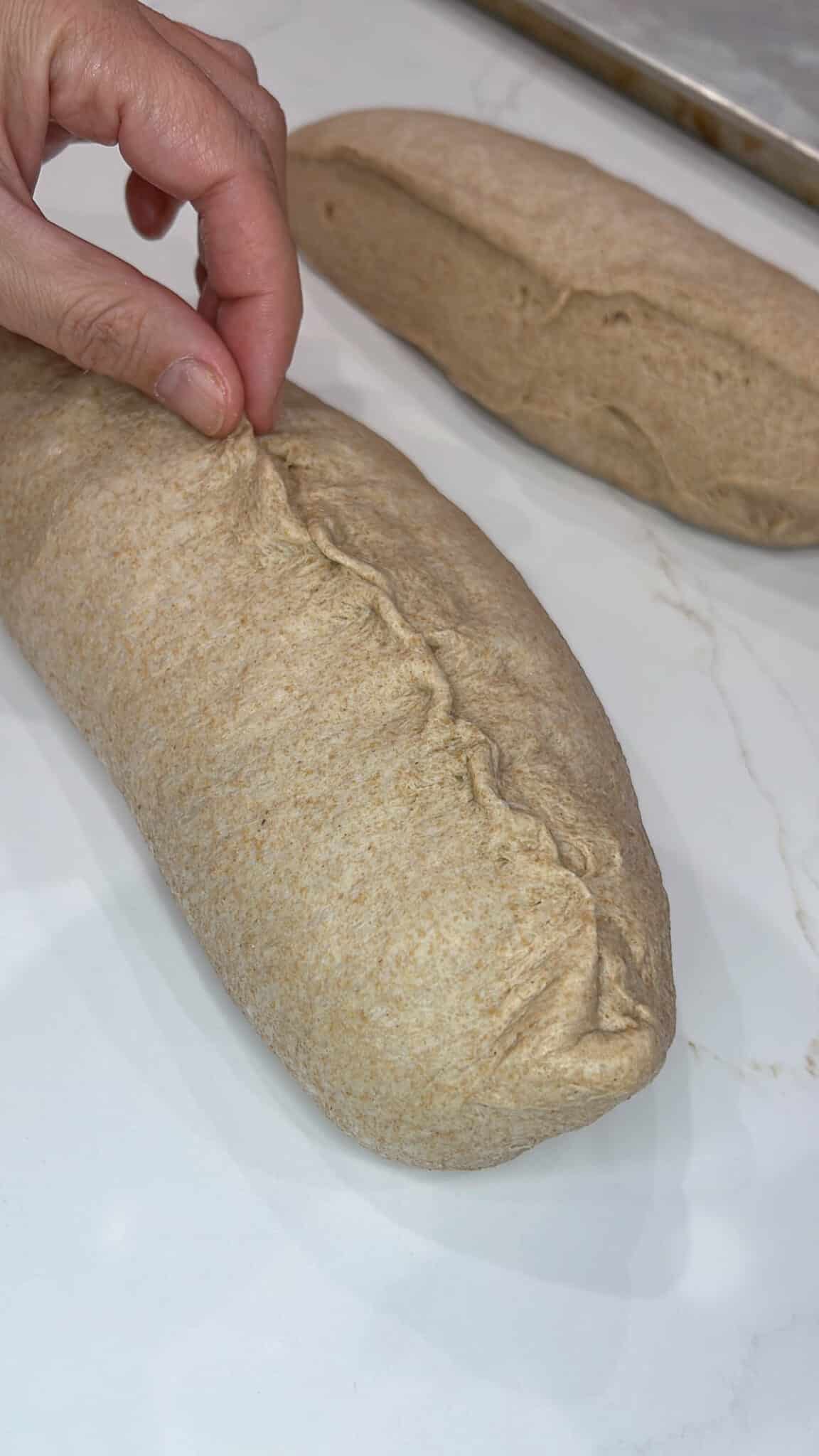
  11. Shape the pieces into loaves by tucking the edges underneath and pinching them together. They don't have to be perfect!close up of hand pinching and shaping dough
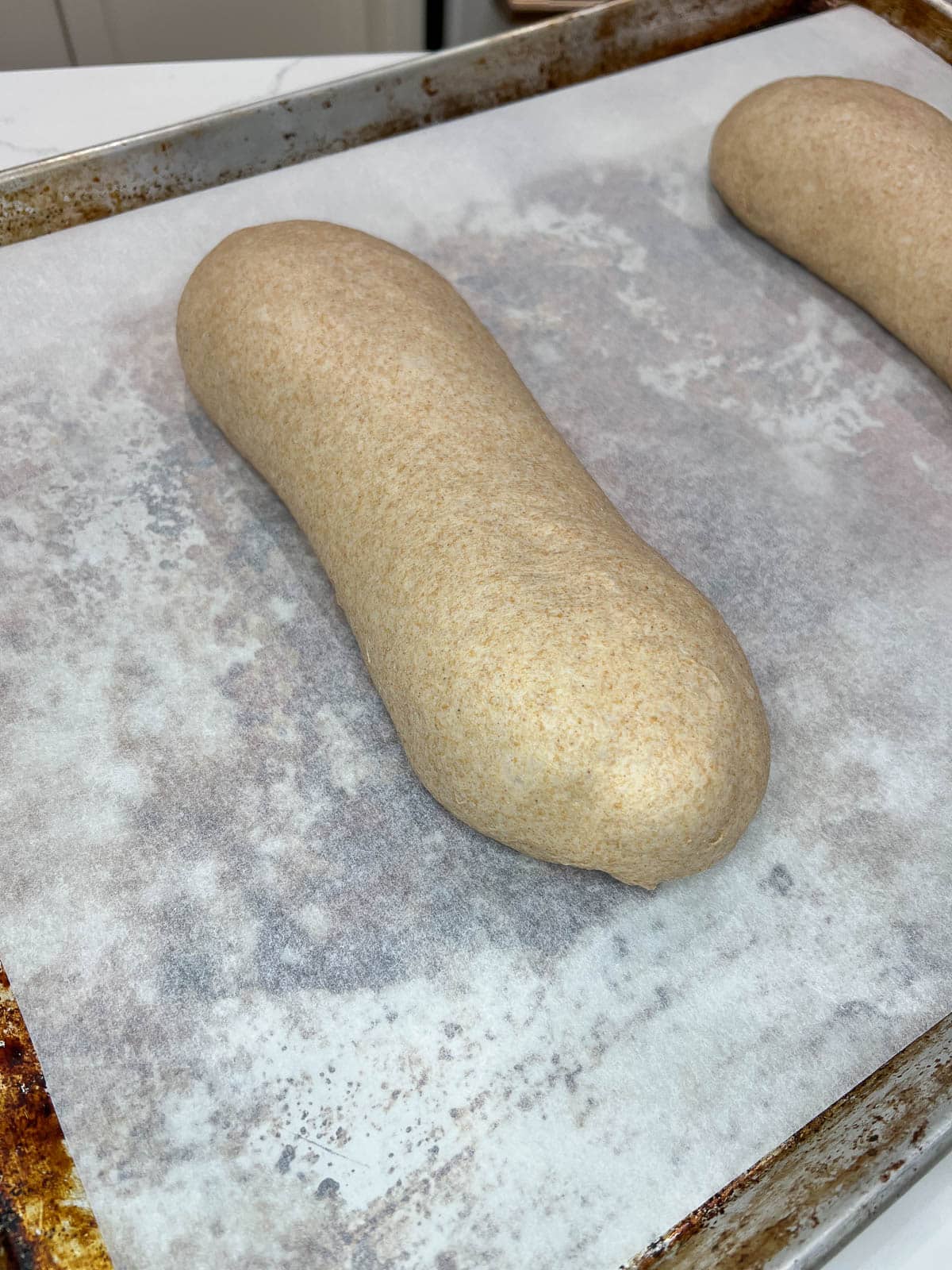
  12. At this point, you can put your loaves into loaf pans if you want a more traditionally shaped loaf of bread but you really don't need one! I just put mine on a sheet pan lined with parchment paper.bread dough shaped into loaves on a sheetpan
  13. Let your loaves rest for 30 minutes. This is technically the second rise but because we are using instant yeast, we don't have to wait long! You can also place the dough into the fridge at this point and bake it the next day if you want to prep ahead.
  14. Brush your loaves with egg wash to promote a nice golden brown color.
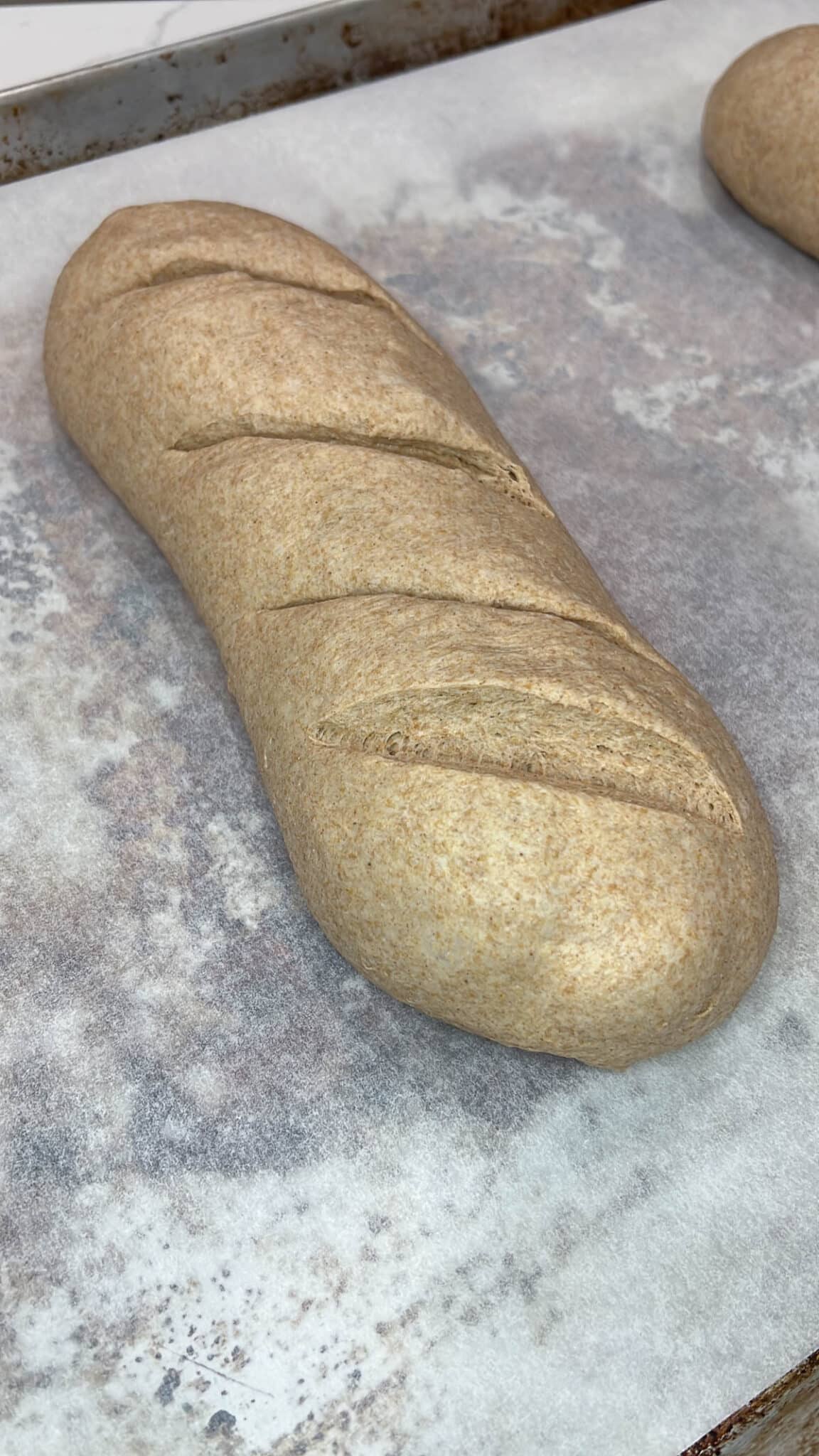
  15. Use a sharp knife to make four slashes at a 30º angle in the top of the loaf, about ¼" deep. These slashes make the loaves look nice and also keeps the crust from tearing while it bakes in the oven.close up of unbaked bread loaf cut with a knife
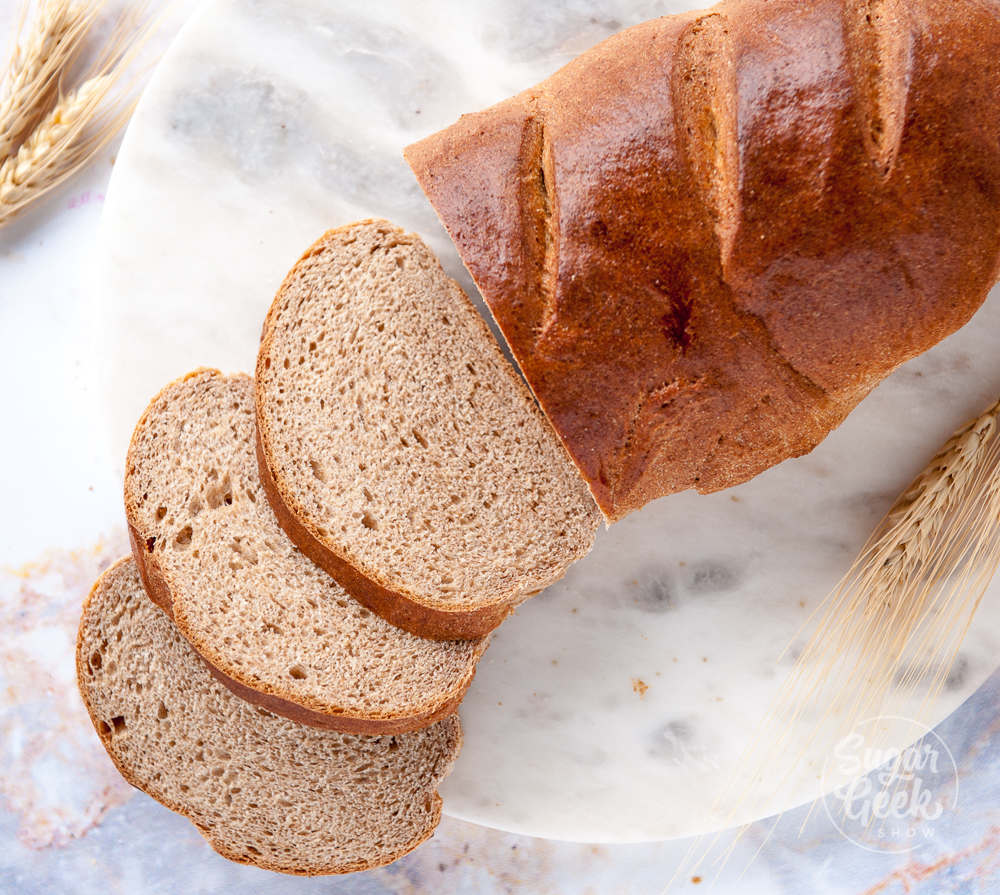
  16. Bake your loaves for about 25-30 minutes or until golden brown. You can also use a thermometer to check the center of your bread. If the temperature reads 190º - 200ºF your bread is done. close up of wheat bread sliced from above
  17. Move your freshly baked bread to a wire rack. For best results, allow the bread to cool fully before slicing into it. 

FAQ

Is whole wheat bread healthy?

Whole wheat bread is considered healthier than white bread because it contains more fiber and whole grains than white bread.
Fiber stops your body from processing carbs as quickly so it doesn't spike your blood sugar. Fiber is also good for your digestive system. 
To make your whole wheat bread even healthier, you can add in 1 Tablespoon flaxseed meal, 2 Tablespoons roasted sunflower seeds, and 2 Tablespoons rolled oats (plus more for the top of the dough.)
Add the flax, seeds, and oats with the salt. 

How can you make whole wheat bread soft

The honey and milk in this recipe help to keep the whole wheat bread soft. If you want your loaf to be even softer, replace one cup of wheat flour with white flour or bread flour. 
Replace the butter with oil to keep the bread even softer.

More Bread Recipes

Homemade dinner rolls
Fast Bread Recipe
Sweet dough master recipe
Focaccia Bread Recipe
Brioche Bread
Pumpkin Shaped Bread

Recipe

loaf of honey whole wheat bread shot from above with three slices in front on a white background
Print Recipe
5 from 12 votes

Honey Whole Wheat Bread Recipe

This soft and fluffy honey whole wheat bread only takes 60 minutes to make and is pretty much the most amazing bread I've ever had. No special pans or bread machines. You won't believe how easy it is to make your own homemade whole wheat bread.
Prep Time10 minutes mins
Cook Time25 minutes mins
proofing35 minutes mins
Total Time1 hour hr 10 minutes mins
Course: Appetizer
Cuisine: American
Servings: 24 servings
Calories: 122kcal
Author: Liz Marek

Equipment

  • Stand mixer with dough hook

Ingredients

  • 24 ounces Whole wheat flour
  • 10 grams instant yeast (needs to be instant)
  • 3 ounces honey
  • 16 ounces warm milk (110ºF) or water
  • 1 ½ teaspoon salt
  • 2 ounces melted unsalted butter
US Customary - Metric

Instructions

  • Heat milk to 110ºF-115ºF
  • Combine whole wheat flour, instant yeast, honey, and milk in the bowl of your stand mixer with the dough hook attached and mix for one minute
  • Add in salt and melted butter
  • Add in a little more flour if the dough is not sticking to the bowl. Add a little water if it seems too dry. Make sure the dough is mixing and not just spinning in the bowl.
  • Mix for 5 minutes on speed 2. The dough will start out sticking to the bowl but then gradually "clean" the sides of the bowl and form into a ball
  • After 5 minutes, check to see if the dough bounces back when you poke it. If it's still too soft then keep mixing for another 2 minutes or until the dough bounces back when you poke it or perform the windowpane test to see if it has mixed enough.
  • Knead the dough on a lightly floured surface for 4-5 turns until you can form a smooth ball
  • Coat a large bowl in a little vegetable oil
  • Place the dough top side down into the bowl to get the top of the dough covered in oil then flip it over. Cover with a cloth and place in a warm area for 60 minutes to rise until the dough doubles in size *see notes*
  • Preheat your oven to 375ºF
  • Divide your dough into two loaves (or more if you want to make hoagie's or rolls)
  • Let your loaves rest for 30 minutes
  • Brush your loaves with egg wash to promote a nice golden brown color
  • Use a sharp knife to make four slashes at a 30º angle in the top of the loaf, about ¼" deep. These slashes make the loaves look nice and also keeps the crust from tearing while it bakes in the oven.
  • Bake your loaves for about 25-30 minutes or until golden brown. You can also use a thermometer to check the center of your bread. If the temperature reads 190º - 200ºF your bread is done.

Video

Notes

  1. For softer bread, replace ¾ cup whole wheat flour with 1 cup white flour (AP or bread flour)
  2. I turn my oven on to 170ºF and open the door then place my dough on the door near the opening of the oven to proof, not INSIDE the oven. 
  3. If you don't have instant yeast your can use regular active yeast but it will take longer to proof. 
    1. Let your dough proof for 90 minutes or until it doubles in size
    2. Divide the dough, shape, brush with egg wash, make cuts with the knife and let rest for 30 minutes before baking. 
  4. Egg wash - crack one egg and whisk with 1 Tablespoon of water. Use a soft pastry brush to brush it onto the loaves. If you don't use egg wash your bread will be very pale. You can also use milk instead of egg for the wash.  
  5. You can use oil instead of butter
  6. You can use water or almond milk in place of milk

Nutrition

Serving: 1serving | Calories: 122kcal | Carbohydrates: 23g | Protein: 4g | Fat: 3g | Saturated Fat: 1g | Cholesterol: 5mg | Sodium: 163mg | Potassium: 107mg | Fiber: 3g | Sugar: 2g | Vitamin A: 62IU | Calcium: 10mg | Iron: 1mg
 

March 17, 2020 Blog

Fast Bread Recipe

I love this super fast bread recipe for last-minute bread. Sometimes it's 4 pm and suddenly I decide I want fresh bread for dinner!

If you are new to baking bread, this easy bread recipe is for you. I've had TONS of reviews from people all over the world who have never made bread before but could make this bread perfectly the first time. 

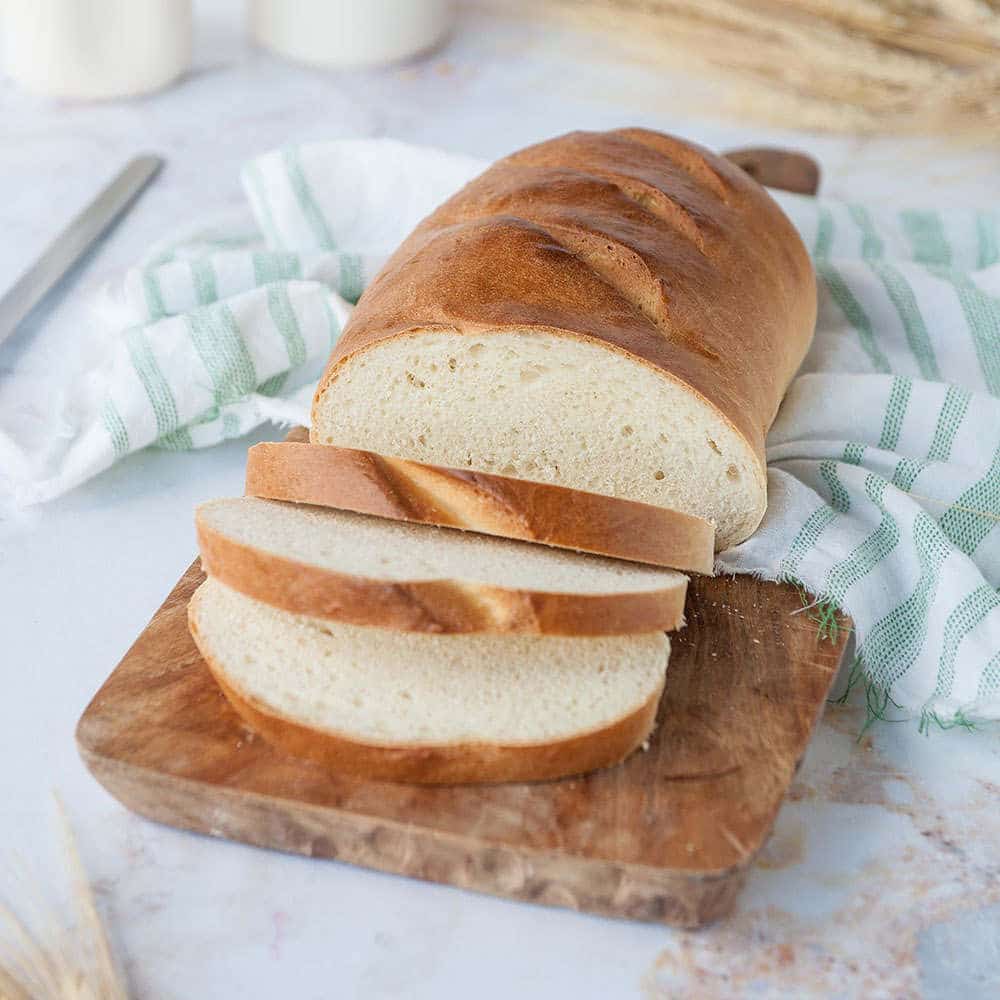
homemade loaf of bread on wooden cutting board with white towel and white background

What ingredients do you need to make bread fast

** Check the notes at the bottom of the recipe card below for recipe alternatives and substitutions**

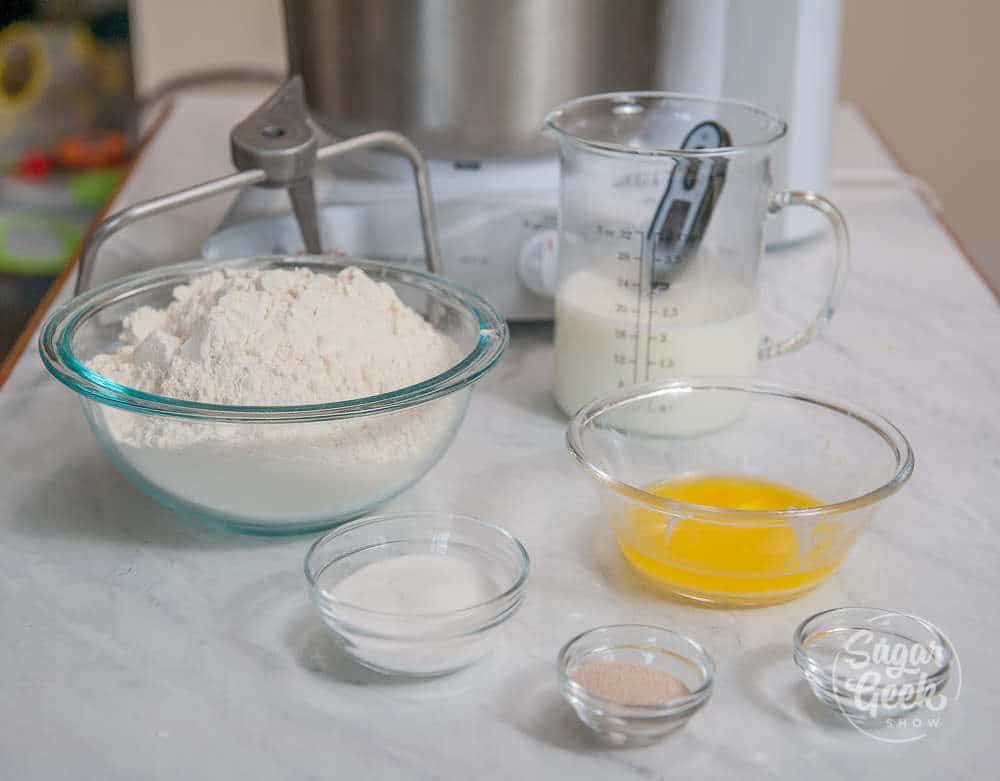
fast bread ingredients

A lot of people are intimidated by making homemade bread. You don't need any special bread machines or even a mixer (although having one will save you some elbow grease). 

You only need these ingredients to make a fast bread recipe in 60 minutes

  • Bread Flour (or all-purpose flour)
  • Milk (or water)
  • Sugar
  • Instant Yeast (you can use regular active dry yeast, see notes at the bottom of the recipe card)
  • Salt
  • Egg wash

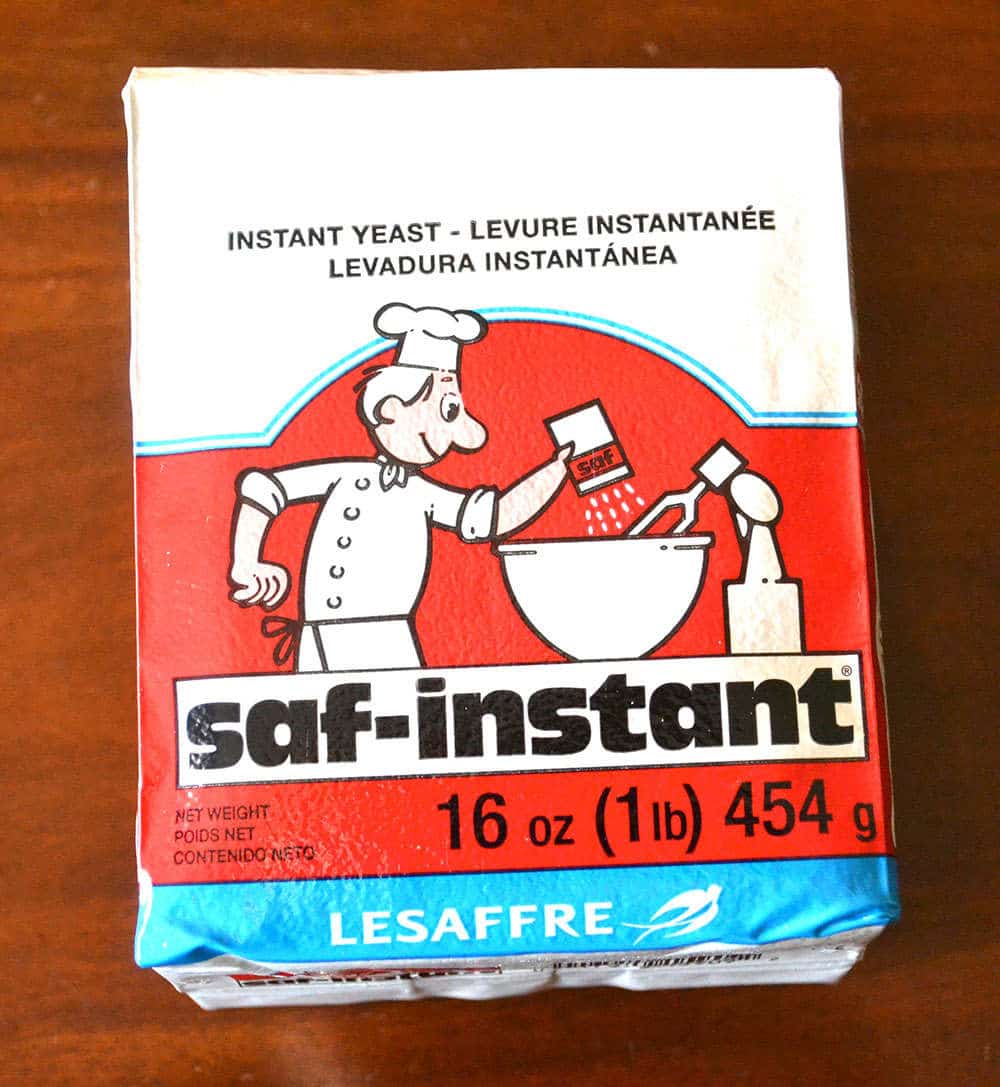
The secret to fast bread is using Instant yeast. I'm using saf-instant yeast. You can usually find instant yeast right next to the regular yeast at the grocery store. 

You don't have to use saf-instant yeast, any brand that says instant will work. Red Star Instant yeast is another popular brand. 

saf-instant yeast

Instant yeast is like regular yeast on steroids. You don't need to mix it with the milk and sugar to bloom it. Just mix it in with the flour, add in the liquid and mix! Using instant yeast makes this bread recipe extra easy because you don't have to bloom the yeast, just mix it in with the flour, sugar, and milk. 

Instant yeast rises much faster than active dry yeast which makes this fast bread recipe so great. 

How do you make easy homemade bread fast?

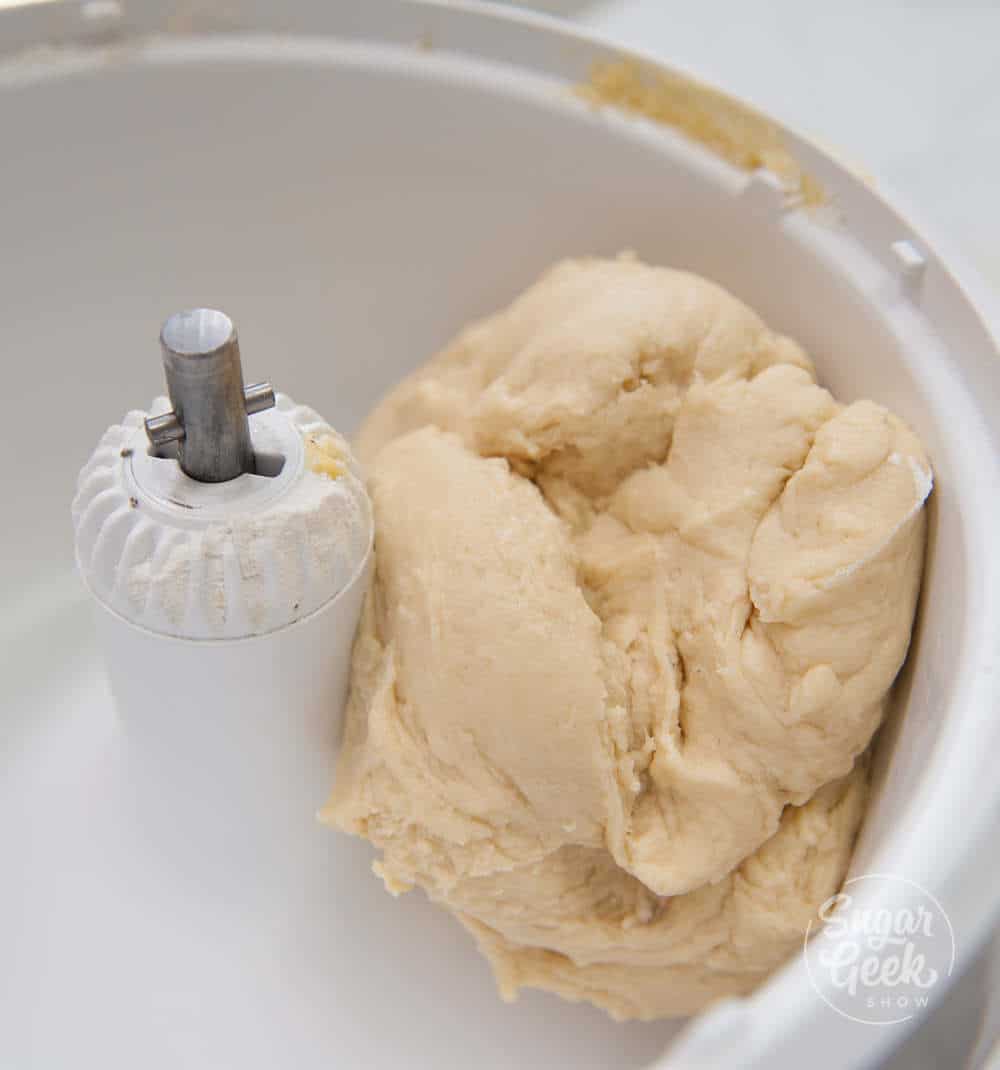
Combine your flour, yeast, sugar and warm (110ºF) milk in the bowl of your stand mixer and combine for one minute at low speed. 

Don't add in your salt and butter right away, it can get in the way of the yeast activating. 

After one minute, add in the salt and butter. If your dough is too slippery from the butter, sprinkle in ¼ cup of flour to soak up the butter and is kneading properly in the bowl and not just spinning round and round. If the dough is still not sticking to the sides of the bowl, add a couple of tablespoons of water. 

Let the dough mix on medium speed for 5 minutes. 

How do you know when the bread dough is done mixing?

Mixing is the MOST important step in making homemade bread. Developing that gluten is key. 

Poke your dough, does it bounce back? That's a sign it's ready.

checking fast bread recipe for gluten development

Roll a piece of dough in your hand, is it smooth and silky? If so, then it's ready. If it's sticky and lumpy, it needs more mixing.

You can test to see if your bread has developed enough gluten by doing the windowpane test. Start by pulling off some of the dough and carefully stretching it between your fingers to make a little window. 

window test for gluten development

If you can make it super thin without it breaking, then you're good to go. 

If the dough isn't ready, keep mixing for another 2 minutes on medium speed or until the gluten test can be performed successfully. Don't worry about over-mixing. 

You can do all of this by hand but it will take longer. Probably about 10-15 minutes of kneading. Don't worry, it's basically impossible to over-knead dough by hand. 

How do you proof bread fast?

Time to let this dough rise! Place it into a lightly oiled bowl and cover it with a tea towel to keep in the moisture. 

proofing bread by the oven

Place your dough in a warm area to rise for 25 minutes. That's it! Super easy! (If you're using active dry yeast instead of instant, let the dough rise 90 minutes)

I put mine next to an open oven set to 170F. Don't put your dough IN the oven or the hot temperature will kill your yeast. 

How do you make easy bread loaves fast?

The best part about this bread other than how fast it is, you don't need any special loaf pans. 

Just shape your loaves into two (or three or four depending on how many loaves you want). I've even made hamburger buns and hotdog buns with this recipe.

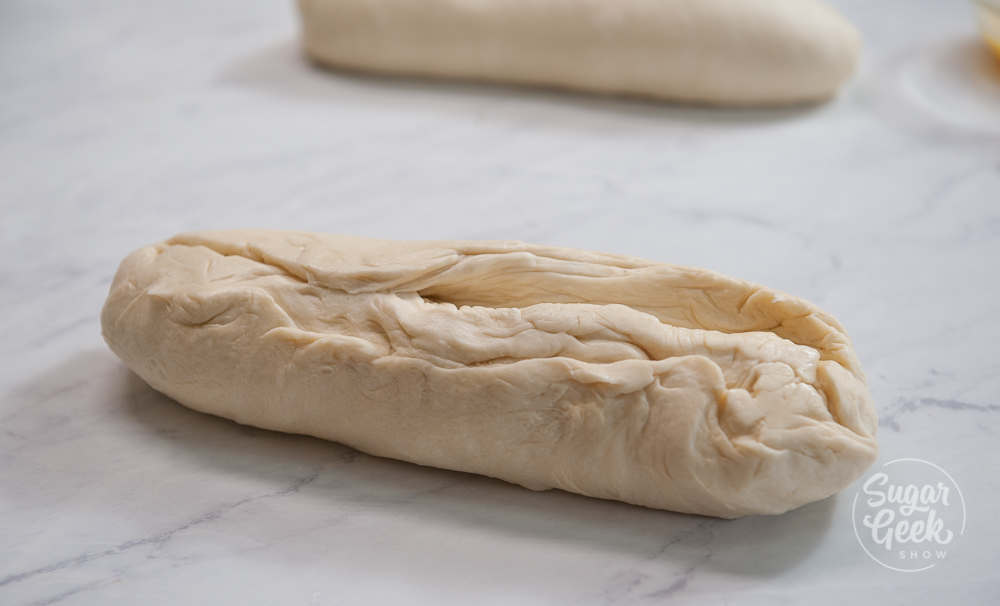
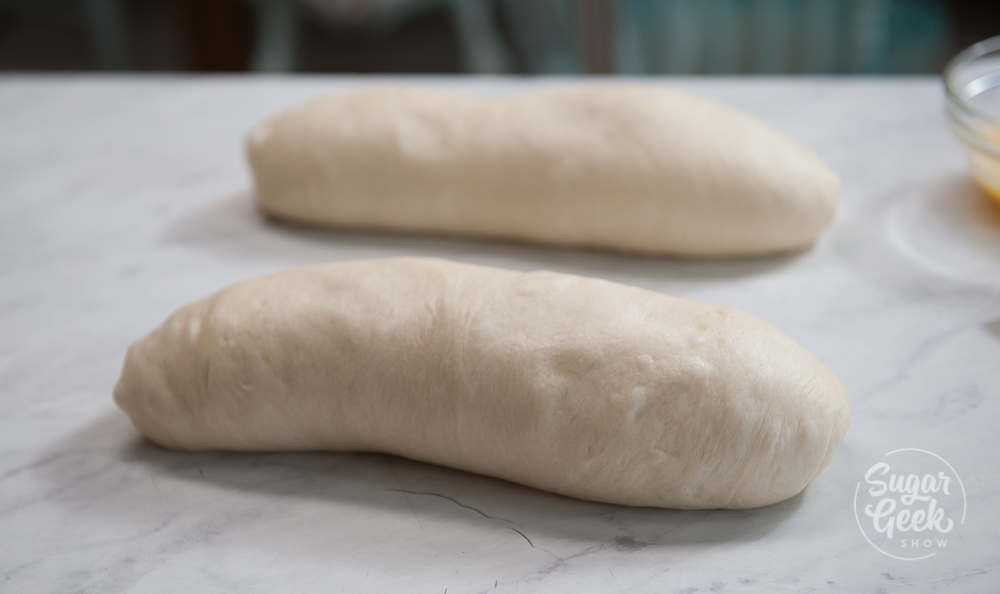
shaping the dough into two loaves

Tuck all the rough edges underneath to form a nice smooth skin on top. This will make your bread look really lovely after it's baked. 

tuck the rough edges of the dough underneath the loaf
make sure the skin of the dough is tight and smooth

Place your two loaves onto a pan with some parchment paper. Make sure they have a good 8" between them so they don't end up touching as they bake. 

Let them rest on the pan for 20 minutes. (If you're using active dry yeast, let the bread rise for 30 minutes)

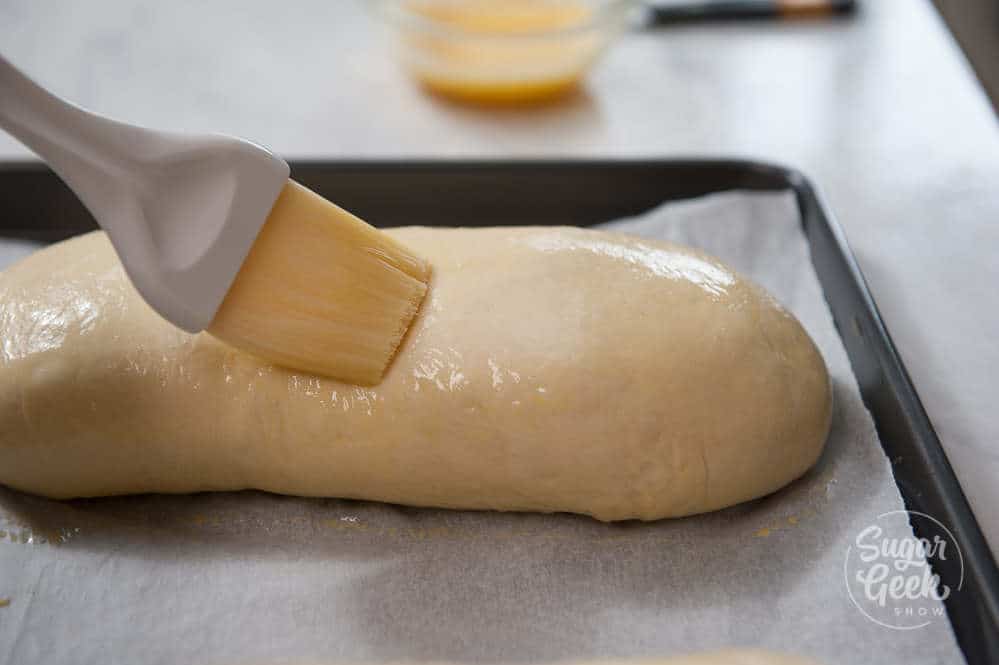
Brush the surface of your loaves with some egg wash to promote browning. 

Brush the loaf with egg wash

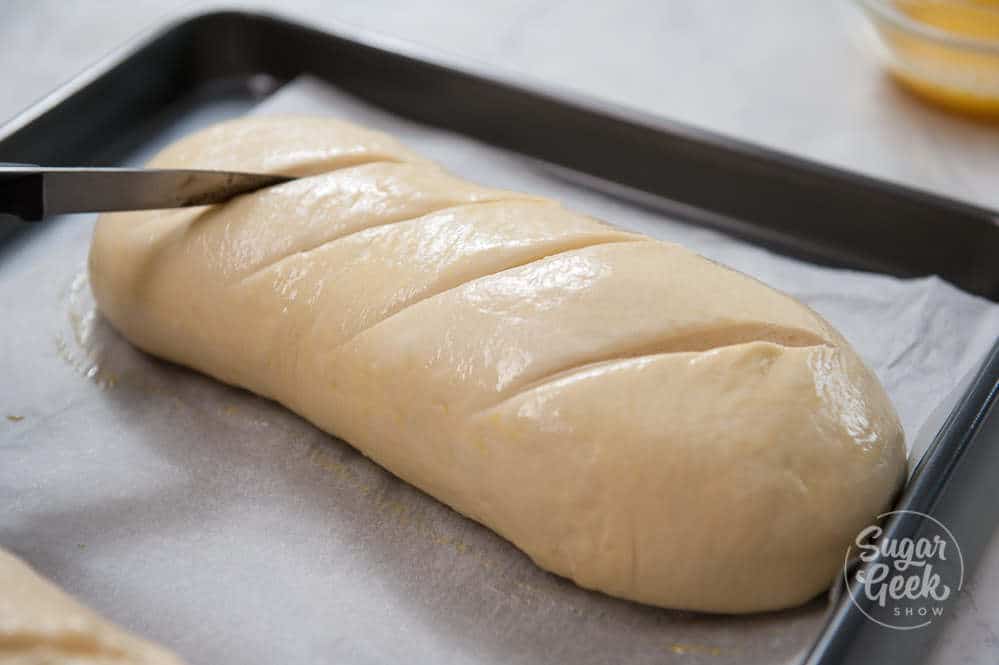
Then make 3 or 4 slices on top of the loaf with a sharp knife at a 30º angle about ¼" deep. (wow that is super specific I know).  

make four slices in your bread loaf

These slices help the bread rise evenly and keep it from tearing. 

Bake your bread for 25-30 minutes at 375ºF. I rotated my loaves halfway through baking to prevent uneven browning. 
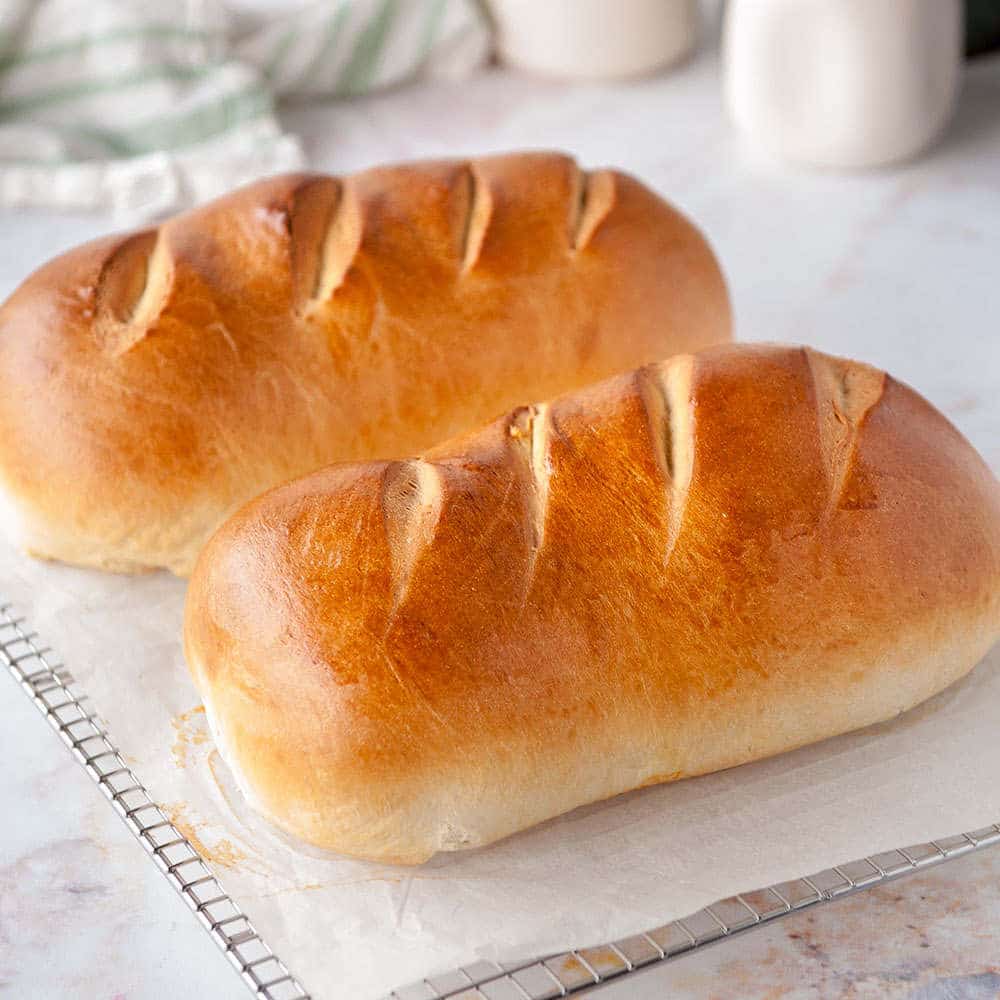
two loaves of homemade bread on cooling a rack on a white background

And that is how you make the MOST amazing, super easy fast bread recipe in only 60 minutes. 

How long does this homemade bread last?

We devoured one whole loaf with dinner and saved the other loaf for tomorrow. The great thing about this fast bread recipe is you can make more bread easily whenever you need it. 

Wrap your loaf in plastic wrap to seal in moisture and leave it on the countertop. 

You can reheat slices or the whole loaf either in the microwave for 10 seconds or in the oven for 2-3 minutes. 

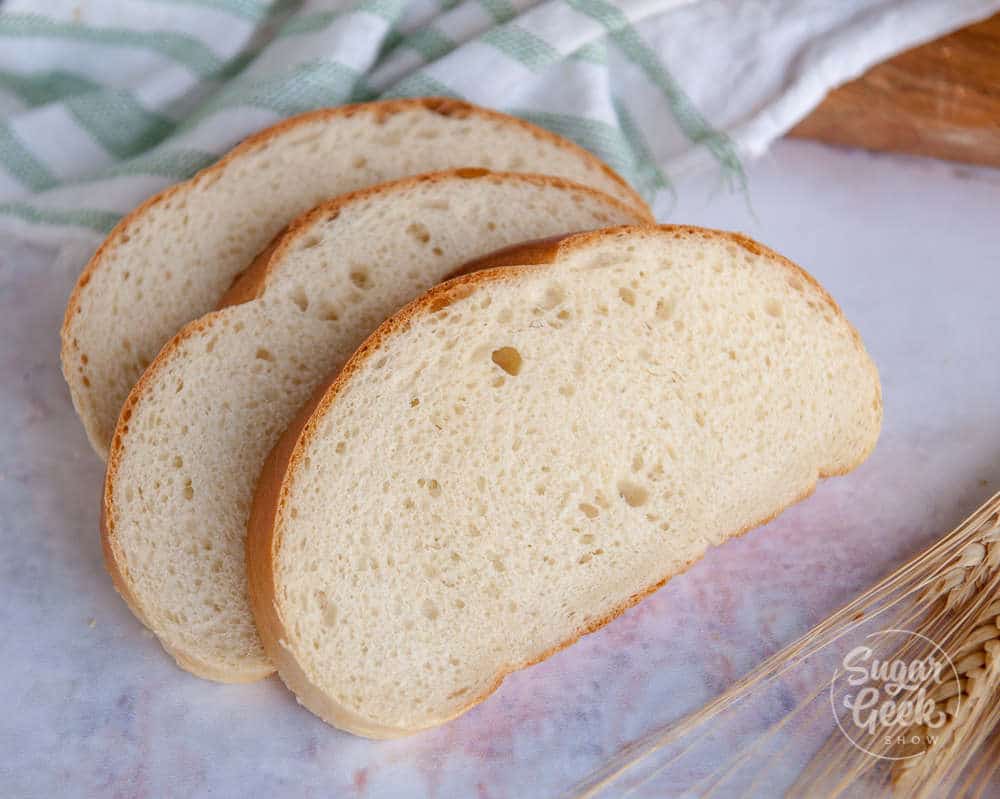
three slices of homemade bread on a white background
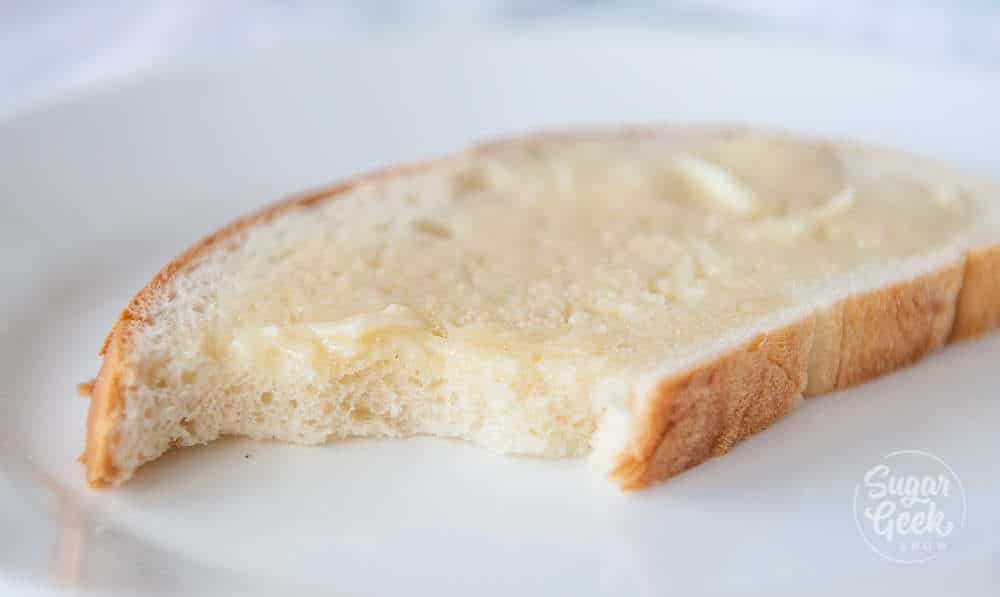
slice of warm homemade bread with butter on top an bite taken out of the bread

Need more bread recipes? Check these out
Easy Soft Dinner Rolls
Easy Focaccia Bread
Master Sweet Dough Recipe

Recipe

Print Recipe
4.92 from 287 votes

Fast Bread Recipe

Need bread fast? This soft and fluffy bread only takes 60 minutes to make and is pretty much the most amazing bread I've ever had. No special pans or bread machines. You won't believe how easy it is to make your own homemade bread.
Prep Time10 minutes mins
Cook Time20 minutes mins
proofing30 minutes mins
Total Time1 hour hr
Course: Appetizer
Cuisine: American
Servings: 24 servings
Calories: 147kcal
Author: Liz Marek

Equipment

  • Stand mixer with dough hook

Ingredients

  • 28 ounces bread flour or all purpose (about 5 ½ cups, spooned and leveled)
  • 10 grams instant yeast needs to be instant (about 3 teaspoons)
  • 2 ounces sugar 4 Tablespoons
  • 16 ounces warm milk (110ºF) or water (two cups)
  • 1 ½ teaspoon salt
  • 2 ounces melted unsalted butter ¼ cup
US Customary - Metric

Instructions

  • Heat milk to 110ºF-115ºF
  • Combine flour, instant yeast, sugar, and milk in the bowl of your stand mixer with the dough hook attached and mix for one minute
  • Add in salt and melted butter
  • Add in a ¼ cup more flour if the dough is not sticking to the bowl because of the butter. If the dough is still not sticking to the bowl, add in 1-2 Tablespoons of water.
  • Mix for 5 minutes on speed 2
  • After 5 minutes, take a piece of dough and stretch it between your fingers. If you can make a very thin "window" that does not tear then you have developed enough gluten and you can shape your dough.
  • If the window tears, then mix for 2 more minutes.
  • Knead the dough on a lightly floured surface for 4-5 turns until you can form a smooth ball
  • Coat a large bowl in a little olive oil
  • Place the dough top side down into the bowl to get the top of the dough covered in oil then flip it over. Cover with a cloth and place in a warm area for 25 minutes to rise until the dough doubles in size *see notes*
  • Preheat your oven to 375ºF
  • Divide your dough into two loaves (or more if you want to make hoagie's or rolls)
  • Let your loaves rest for 20 minutes
  • Brush your loaves with egg wash to promote a nice golden brown color
  • Use a sharp knife to make three slashes at a 30º angle in the top of the loaf, about ¼" deep. These slashes make the loaves look nice and also keeps the crust from tearing while it bakes in the oven.
  • Bake your loaves for about 25-30 minutes or until golden brown. You can also use a thermometer to check the center of your bread. If the temperature reads 190º - 200º your bread is done.

Video

Notes

** I turn my oven on to 170ºF and open the door then place my dough on the door near the opening of the oven to proof, not INSIDE the oven. 
** If you don't have instant yeast your can use regular active yeast but it will take longer to proof. 
1. Let your dough proof for 90 minutes or until it doubles in size
2. Divide the dough, shape, brush with egg wash, make cuts with the knife and let rest for 30 minutes before baking. 
** Egg wash - crack one egg and whisk with 1 Tablespoon of water. Use a soft pastry brush to brush it onto the loaves. If you don't use egg wash your bread will be very pale. You can also use milk instead of egg for the wash.  
** You can use oil instead of butter
** You can use water  or almond milk in  place of milk
** You can replace white flour with wheat flour (use 24 oz instead 28 oz because wheat flour is denser than white flour)

Nutrition

Serving: 1serving | Calories: 147kcal | Carbohydrates: 27g | Protein: 4g | Fat: 2g | Saturated Fat: 1g | Cholesterol: 5mg | Sodium: 115mg | Potassium: 37mg | Fiber: 1g | Sugar: 2g | Vitamin A: 59IU | Calcium: 6mg | Iron: 1mg
 
Sugared Sheet Wedding Cake Tutorial

March 15, 2020 Course Preview

Sugared Sheet Wedding Cake Tutorial

Skill level: Intermediate

The sugared sheet technique is the latest trending technique that brides everywhere are asking for. This technique combines the jewelstone beauty of the past geode cake trends with a clean, modern look that's sure to satisfy brides wanting the best of both worlds.

Easily colored and versatile, this technique is one of the more difficult looks to pull off. In this tutorial, I cover how to achieve sugared sheets using different materials, as well as how to fix problems you might have with applying the sheets to the tiers.

Gelatin sails and string lights combine to create a stunning look that will wow wedding guests and please brides looking for a unique take on current trends.

1:00:15 Minutes of Instruction

What You Will Learn

  • Learn how to create the sugared sheet technique and how to apply it to cake tiers
  • How to beautiful abstract elements using gelatin
  • Learn how to add string lights to make the sugared sheets pop
  • Tips and tricks for getting your sugared sheets to stick and avoid cracking or falls

Tutorial Chapters

  1. Preparing the sugar 1:03
  2. 6" sugared sheet 3:04
  3. Rolling the sugar crystals 11:21
  4. Sanding sugar 16:51
  5. 8" sugared sugar crystals 20:31
  6. Painting the edge with gold 32:11
  7. Making the gelatin sail 34:19
  8. Wafer paper petals 39:19
  9. Adding a tea light 43:52
  10. Gelatin sheets 46:10
  11. Stacking the cakes 49:39
  12. Adding lights to the cake 50:22
  13. Adding final decorations 55:49

Downloads

Materials List

Sugared Sheet Wedding Cake Tutorial

March 15, 2020 Paid Video

Sugared Sheet Wedding Cake

Skill level: Intermediate

The sugared sheet technique is the latest trending technique that brides everywhere are asking for. This technique combines the jewelstone beauty of the past geode cake trends with a clean, modern look that's sure to satisfy brides wanting the best of both worlds.

Easily colored and versatile, this technique is one of the more difficult looks to pull off. In this tutorial, I cover how to achieve sugared sheets using different materials, as well as how to fix problems you might have with applying the sheets to the tiers.

Gelatin sails and string lights combine to create a stunning look that will wow wedding guests and please brides looking for a unique take on current trends.

1:00:15 Minutes of Instruction

What You Will Learn

  • Learn how to create the sugared sheet technique and how to apply it to cake tiers
  • How to beautiful abstract elements using gelatin
  • Learn how to add string lights to make the sugared sheets pop
  • Tips and tricks for getting your sugared sheets to stick and avoid cracking or falls

Tutorial Chapters

  1. Preparing the sugar 1:03
  2. 6" sugared sheet 3:04
  3. Rolling the sugar crystals 11:21
  4. Sanding sugar 16:51
  5. 8" sugared sugar crystals 20:31
  6. Painting the edge with gold 32:11
  7. Making the gelatin sail 34:19
  8. Wafer paper petals 39:19
  9. Adding a tea light 43:52
  10. Gelatin sheets 46:10
  11. Stacking the cakes 49:39
  12. Adding lights to the cake 50:22
  13. Adding final decorations 55:49

Downloads

Materials List

slice of rainbow cake on blue plate white background and whole cake in background

March 14, 2020 Blog

Rainbow Cake

This rainbow cake just makes me feel so happy. I absolutely LOVED slicing into it to see all those gorgeous colorful layers! The best part is, this rainbow cake isn't just for looks, it tastes absolutely amazing. You won't have a crumb leftover. 

slice of rainbow cake on blue plate white background and whole cake in background

This rainbow cake is very special to me. I've been waiting to make it for a long time. Ever since we found out we were pregnant with our son, Ezra, I knew I wanted to make him a rainbow cake for his half birthday (6 months). 

Most people know that my husband and I had to go through a lot of infertility treatments to get our dear Avalon. I'm not ashamed of it. I think we should talk more about infertility and how common it is. So we feel less alone.

We started treatments TWO years ago. Nothing was working. My body was fighting against me. I was not in a good place emotionally or mentally.

It might sound crazy but I had a dream we had a son. I didn't tell anyone but I held onto hope as best I could.

closeup of buttercream frosting on gold drip cake with rainbow sprinkles

We had honestly almost given up that we would ever have a second child. But I just felt in my soul that we had a second child waiting for us. So we didn't give up. 

After all those treatments and all those medications, we ended up with ONE single egg. If you've gone through IVF you. know that the chances of that ONE egg taking are extremely low. I did not get my hopes up. 

But that one egg did stick. And here we are with our beautiful baby boy. Our rainbow after the storm. Our lucky charm. The completion of our family. 

6 month old baby boy on white background with rainbow cake slices around him

What cake recipe is best for rainbow cake?

So the first thing that we have to do is bake our rainbow layers. This might sound intimidating but it's actually really easy. 

We're going to use my favorite cake, white velvet. Not only. is this cake delicious, but it's also very white so it will take the color well.

white velvet cake withe ermine frosting

If you try to add color to a vanilla cake that has egg yolks in it, those yolks will distort your colors while baking. 

The other reason white velvet is perfect for making a rainbow cake is that it won't get over-mixed when you add the color.

I've added color to white velvet so many times, making everything from pink velvet, green velvet, and even blue velvet. The texture always turns out amazing. 

How to make rainbow cake layers

Get your 8"x2" cake pans ready. You might not have 6 cake pans all the same size (I don't) so keep your cake batter in the fridge while your other cakes are baking. They are really thin so they bake up fast.

Coat your cake pan in a layer of cake goop and preheat your oven to 335ºF. I also put a piece of parchment paper in the bottom of my pans so that they were easier to take out of the pan since they would be so thin. 

8" cake pan with parchment paper and cake goop

To make our rainbow cake layers, all you have to do is mix up your batter (follow the recipe below) and then divide your batter into 6 bowls evenly.

Each bowl holds 15 ounces of cake batter. I used a kitchen scale to weigh mine out so they would all be equal. 

6 bowls of white velvet cake ready to be colored

I'm using electric colors from Americolor and I'm not making an EXACT rainbow, this rainbow is more Lisa Frank style. I really like these electric colors because they make super bright neon colors and you don't have to use a lot of food color. 

Colors I used

  1. Electric Purple
  2. Electric Blue
  3. Electric Green
  4. Electric Yellow
  5. Electric Orange
  6. Electric Pink
americolor electric colors

You can totally go classic rainbow and use red instead of pink, violet instead of electric purple and royal blue instead of electric blue. 

Add a drop or two of color to each bowl and stir with a spoon until combined. Make sure for the green you use a little yellow and a little green so the green is more vibrant. 

For the orange, use a little orange and a little yellow to make the orange more vibrant. 

For the purple, add a little pink and purple to make the purple more vibrant. 

6 bowls of white velvet cake all colored rainbow

Pour your batter into your cake pans (I baked three at a time and put 15 ounces of batter in each pan).

When they are done baking, they will start to pull a tiny bit from the edges of the pan (that's normal) let them cool a bit in the pan before turning out onto a cooling rack to fully cool down.

rainbow cakes finished baking and cooling on racksI put my cakes into the freezer for about 30 minutes to firm them up before trimming off the dome, the brown sides, and the brown bottom.

Trimming your cakes just makes the slices extra perfect and beautiful when you slice them. 

layers of rainbow cake stacked on top of each other

How to decorate a rainbow cake

Time to decorate our rainbow cake! I'm using my easy buttercream because it comes together so fast. You could use any buttercream though like swiss meringue buttercream, Italian meringue buttercream or even cream cheese frosting. 

Place your first layer onto your cake board. I'm working on a turntable to make this whole process easier. 

Apply a thin layer of buttercream. Shoot for about ¼" of frosting. 

Keep your spatula nice and flat so your buttercream has an even thickness. 

I'm starting with the purple because that makes sense to me in my brain but you could start with the pink if you want to go in the opposite direction. 

layers of rainbow cake with buttercream frosting in between

Continue frosting and stacking this way with the rest of the layers and then give the whole cake a nice crumb coat to seal in all those rainbow crumbs. 

rainbow cake with layer of frosting for the crumb coat

Chill your cake for 15 minutes to firm up that layer of buttercream. 

Finish your cake with a final layer of buttercream and smooth it out with your bench scraper and offset spatula. 

rainbow cake with smooth layer of buttercream frosting

After chilling my cake, I added some fancy sprinkles to the bottom border of the cake, then I transferred my cake to a cake board. 

I'm finishing this cake with a water ganache drip. I used 5 ounces of white candy melts, 1 ounce of chocolate candy melts and 6 ounces of water.

making water ganache

After melting, I added a few drops of electric yellow food coloring to make a gold candy melt color.  I dripped this water ganache onto my chilled cake. Then painted gold with some truly mad plastics gold dust and vodka. 

Make sure your mixture of dust and vodka is fairly thick, like paint so that you get good coverage. 

rainbow cake with gold drip and rainbow sprinkles

Then I added some little swirls of white frosting on top and added some more sprinkles. I used a 1M piping tip to do the swirls. 

And we're done with our rainbow cake! Doesn't it look so pretty! I love how the slices look and they are the perfect accent to this month's Ezra photo. 

Be sure to check out my other popular cake recipes for more delicious tried and true cake recipes that never disappoint.

slice of rainbow cake on blue plate and gold fork

Cake Batter and Frosting Calculator

Select an option below to calculate how much batter or frosting you need. Adjust the servings slider on the recipe card to change the amounts the recipe makes.

Choose a pan type

Choose a cake pan size
(based on 2" tall cake pan)

Choose a cake pan size
(based on 2" tall cake pan)

Choose a cake pan size
(based on 2" tall cake pan)

Cupcake Tin Size

Choose number of pans

Cups of Batter Needed

8 cups

Cups of Frosting Needed

5 cups

Note: measurements are estimated based off the vanilla cake recipe using standard US cake pans and sizes. Measurements used are for 2" tall cake pans only. Your results may vary. Do not overfill cake pans above manufacturer's recommended guidelines.

Recipe

slice of rainbow cake on blue plate white background and whole cake in background
Print Recipe
4.93 from 455 votes

Rainbow Cake

Not only is this rainbow cake beautiful and colorful, but it also tastes really delicious. Made from my famous white velvet cake recipe and easy buttercream, this rainbow cake makes the perfect special occasion cake!
*note* if you adjust the cake pan size using the calculator, keep in mind that the pans should only be filled halfway (1" tall) so the layers are not too big. The calculator is formulated for 2" tall layers.
Prep Time20 minutes mins
Cook Time20 minutes mins
Total Time40 minutes mins
Course: Dessert
Cuisine: American
Servings: 14 cups
Calories: 853kcal
Author: Liz Marek

Equipment

  • Stand Mixer
  • Whisk Attachment
  • Paddle Attachment
  • Turntable
  • Offset Spatula
  • Bench scraper
  • Piping Bag
  • 1M Piping Tip

Ingredients

Rainbow Cake Ingredients

  • 24 oz cake flour
  • 24 oz granulated sugar
  • 1 teaspoon salt
  • 2 tablespoon baking powder
  • 1 teaspoon baking soda
  • 10 oz egg whites room temperature
  • 6 oz vegetable oil
  • 18 oz buttermilk room temperature or slightly warm
  • 12 oz butter unsalted and softened
  • 1 Tablespoon vanilla extract

Easy Buttercream Frosting Ingredients

  • 8 oz pasteurized egg whites
  • 32 oz powdered sugar
  • 32 oz unsalted butter softened but not melted
  • 2 teaspoon vanilla extract
  • ½ teaspoon salt
  • 1 dot purple food coloring to make the buttercream white

Gold Drip

  • 5 oz white candy melts
  • 1 oz chocolate candy melts
  • 1 oz hot water
  • 1 teaspoon Truly mad plastics super gold dust
  • ¼ teaspoon everclear or vodka or lemon extract
US Customary - Metric

Instructions

  • NOTE: It is SUPER IMPORTANT that all the room temperature ingredients listed above are room temperature and measured by weight so that the ingredients mix and incorporate correctly.
    Heat oven to 335º F/168º C
  • Prepare six ( 8"x2") cake pans with cake goop and place a round piece of parchment paper in the bottom of the pan for easy removal of the cake
  • Combine 8 oz of the buttermilk and the oil together and set aside. 
  • Combine the remaining buttermilk, egg whites, and vanilla together, whisk to break up the eggs and set aside. 
  • Combine flour, sugar, baking powder, baking soda and salt in the bowl of a stand mixer with the paddle attachment. Mix 10 seconds to combine. 
  • Add your softened butter to the dry ingredients and mix on low until mixture resembles coarse sand (about 30 seconds).
  • Add in your milk/oil mixture and let mix until dry ingredients are moistened and then bump up to med (setting 4 on my KitchenAid) and let mix for 2 full minutes to develop the cake's structure. If you don't let your cake mix on this step your cake could collapse. 
  • Scrape your bowl and then reduce speed to low. Add in your egg white/milk mixture in three batches, letting the batter mix for 15 seconds between additions. Scrape down the sides again to make sure everything has incorporated.
  • Divide your batter into 6 bowls. Weigh 15 ounces of batter for each bowl.
  • Color each bowl with your Electric food colors. ½ teaspoon for pink for the pink layer, ¼ teaspoon yellow plus ¼ teaspoon orange for orange layer, ½ teaspoon yellow for yellow layer, ¼ teaspoon yellow plus ½ teaspoon green for green layer, ½ teaspoon blue for blue layer, ¼ teaspoon pink and ½ teaspoon purple for the purple layer.
  • Bake your layers for 20-24 minutes or until the edges JUST start pulling away from the cake pan. Do not under-bake or the middle of the cake will collapse.
  • IMMEDIATELY TAP PAN FIRMLY on countertop once to release the steam from the cake. This stops the cake from shrinking. 
  • Let cakes cool for 10 minutes inside the pan before flipping them out. The cake will shrink a bit and that is normal.
    Freeze your cake layers 30-60 minutes before trimming your cakes. Frost and fill with buttercream frosting.
  • After your buttercream is smooth, place the cake back into the fridge for 15 minutes before you apply your drip.
  • Wait for your drip to set before painting with gold paint. Finish the cake with buttercream rosettes and more sprinkles.

Easy Buttercream Instructions

  • Place powdered sugar and pasteurized egg whites in the bowl of your stand mixer with the whisk attachment.
  • Mix on low to combine then increase speed to high.
  • Add the butter in small chunks while mixing. Continue mixing until all the butter is added in. Then add in your vanilla and salt.
  • Mix on high until light and fluffy and no longer tastes like butter. Add a dot of purple food coloring to reduce the yellow appearance of the buttercream (optional).
  • Remove the whisk attachment and replace it with the paddle attachment. Mix on low for 10 minutes to remove bubbles from the buttercream.

Gold Drip Instructions

  • Melt the chocolate in the microwave in 15-second increments until almost fully melted.
  • Add in your hot water and microwave another 15 seconds
  • Stir until smooth. Then add in your yellow food coloring. Stir until smooth.
  • Place water ganache into a piping bag, snip off the tip and drip the ganache around the edge of your chilled cake. After it sets, you can mix your gold dust and vodka together and paint the drip gold

Video

Notes

This cake is very TALL (about 7") so your slices will be very tall. You could cut them in half but then you'd ruin the rainbow. 
*note* if you adjust the cake pan size using the calculator, keep in mind that the pans should only be filled halfway (1" tall) so the layers are not too big. The calculator is formulated for 2" tall layers. 
Important Things To Note Before You Start
1. Bring all your ingredients to room temperature or even a little warm (eggs, buttermilk, butter, etc) to ensure your batter does not break or curdle. 
2. Use a scale to weigh your ingredients (including liquids) unless otherwise instructed (Tablespoons, teaspoons, pinch etc). Metric measurements are available in the recipe card. Scaled ingredients are much more accurate than using cups and help ensure the success of your recipe. 
3. Practice Mise en Place (everything in it's place). Measure out your ingredients ahead of time and have them ready before you start mixing to reduce the chances of accidentally leaving something out.
4. Chill your cakes before frosting and filling. You can cover a frosted and chilled cake in fondant if you wish. This cake is also great for stacking. I always keep my cakes chilled in the refrigerator before delivery for easy transporting. Learn more about decorating your first cake. 
5. If the recipe calls for specific ingredients like cake flour, replacing it with all purpose flour and cornstarch is not recommended unless specified in the recipe that it’s ok. Substituting ingredients may cause this recipe to fail. 
All purpose flour is a plain flour with no rising agents. It has a protein level of 10%-12%
Cake flour is a soft, low protein flour of 9% or less. 
Cake flour sources: UK - Shipton Mills Cake & Pastry Flour

Nutrition

Serving: 1serving | Calories: 853kcal | Carbohydrates: 92g | Protein: 7g | Fat: 52g | Saturated Fat: 34g | Cholesterol: 115mg | Sodium: 365mg | Potassium: 207mg | Fiber: 1g | Sugar: 70g | Vitamin A: 1416IU | Calcium: 97mg | Iron: 1mg
 
buttermilk substitute

March 11, 2020 Blog

The Magic Of Buttermilk Plus 5 Substitutions

Buttermilk is one of those ingredients that can seem a little mysterious. Despite its name, it's not milk with butter in it-far from it! This humble kitchen staple has a fascinating history, is an essential player in many baking recipes, and is easy to make substitutions for those times you just don't have any on hand. Read on for more!

I never used to buy buttermilk that often until I created the red velvet cake recipe. I never got so many compliments on a cake. Soon enough people were begging me for a white velvet cake recipe and a black velvet cake recipe.

What's In This Blog Post

  • How Buttermilk Is Made
  • Why Is Buttermilk So Good For Baking?
  • How do you make a homemade buttermilk substitute?
  • Can you freeze buttermilk?

How Buttermilk Is Made

Traditionally, buttermilk was the liquid left behind after churning butter from cream. In this process, the cream would naturally ferment, thanks to the friendly bacteria present, creating a tangy and slightly acidic liquid.

Modern buttermilk, however, is usually cultured buttermilk, made by adding live bacterial cultures to pasteurized milk. These bacteria (commonly Lactococcus lactis or Lactobacillus bulgaricus) ferment the lactose in milk, creating lactic acid. This process thickens the milk slightly and gives buttermilk its signature tangy flavor and acidity.

Buttermilk is low in fat and contains most of the protein originally in the milk. True buttermilk ferments naturally into a thick, tangy cream and is acidic in nature. Don't worry, cultured buttermilk has also been pasteurized (just like all commercial milk) to kill any bacteria and make it safe for drinking. 

making buttermilk

Why Is Buttermilk So Good For Baking?

The lactic acid found in buttermilk is the secret to its power in baking. Here's why:

  • Tenderizes Gluten: The lactic acid in buttermilk helps break down gluten in baked goods, resulting in softer, more tender textures. This is why buttermilk biscuits, cakes, and buttermilk pancakes made with buttermilk are so fluffy.
  • Leavening Agent Partner: When paired with baking soda, the acid in buttermilk reacts to create carbon dioxide bubbles, which help your baked goods rise beautifully.
  • Flavor Booster: Its tangy flavor adds depth to cakes, muffins, and even bread.
white velvet cake recipe

How do you make a homemade buttermilk substitute?

Don't worry if you don't have buttermilk in your fridge; there are plenty of substitutes that mimic its acidity and thickness:

  1. Milk + Acid: Mix 1 cup of milk (whole or low-fat) with 1 tablespoon of vinegar or lemon juice. Let it sit for 5-10 minutes until it curdles slightly.
  2. Yogurt + Milk: Thin out plain yogurt with 1-2 Tablespoons of milk until it reaches buttermilk consistency. This is an excellent option for baking.
  3. Sour Cream + Water: Mix equal parts sour cream and water to create a tangy buttermilk substitute.
  4. Non-Dairy Milk + Acid: Use almond, soy, or oat milk, and add 1 tablespoon of vinegar or lemon juice per cup to create a plant-based alternative to buttermilk.
  5. Buttermilk Powder: If you have powdered buttermilk in your pantry, simply rehydrate it according to the package instructions.

Can you freeze buttermilk?

If you're like me and you can't resist a deal, you might be tempted to buy buttermilk in big containers from places like COSTCO or Smart Food Service. If you've got more buttermilk than you can use, you can easily freeze it. 

I HIGHLY suggest freezing it in pre-measured portions for easy measuring later. 

A popular technique is to pour buttermilk into ice cube trays. One ounce per cube so you can easily count out how many ounces you need depending on the recipe you are making. 

frozen cubes of buttermilk
Frozen cubes of milk

Defrost and go! How easy is that?

To measure my ice cubes accurately, I use my kitchen scale. Place the tray on. your scale and press the tare button to bring the weight back to zero. 

Pour your buttermilk into the first cube until you reach one ounce then stop. Move onto the next cube and continue this way until the. the whole tray is full. 

Ready to see what buttermilk can do? Check out these recipes!

White velvet buttermilk cake
Red velvet buttermilk cake
Pink velvet buttermilk cake
Black velvet buttermilk cake
Sweet Irish soda bread
Lemon blueberry buttermilk cake

Recipe

jar of buttermilk
Print Recipe
4.86 from 7 votes

Buttermilk Substitute

This buttermilk substitute only uses two ingredients and takes 5 minutes to make. Need buttermilk for a recipe? Don't rush to the grocery store when you can make your own buttermilk substitute at home. 
Prep Time5 minutes mins
Cook Time5 minutes mins
Course: Drinks
Cuisine: American
Servings: 8 ounces
Calories: 18kcal
Author: Liz Marek

Ingredients

  • 8 ounces milk any kind
  • 1 Tablespoon white vinegar or lemon juice
US Customary - Metric

Instructions

  • Add your vinegar to your milk and stir. Let stand for 5 minutes before using it.

Notes

You can use any type of milk for this recipe including plant-based milks or nut milk.
 

Nutrition

Serving: 8ounces | Calories: 18kcal | Carbohydrates: 1g | Protein: 1g | Fat: 1g | Saturated Fat: 1g | Cholesterol: 3mg | Sodium: 12mg | Potassium: 37mg | Sugar: 1g | Vitamin A: 46IU | Calcium: 32mg
onward wizard staff tutorial

March 10, 2020 Blog

Onward Wizard Staff

How to make an Onward wizard staff with glowing isomalt gem

onward wizard staff tutorial

This is how I made a fun Onward wizard staff with glowing isomalt gem as part of a collaboration with some of my YouTuber friends. Check out all the videos in this collaboration by clicking the links below. 

I basically decided to make the wizard staff because I wanted to experiment with making an isomalt gem without a mold. I designed a mold for my isomalt using a paper diamond template. I covered it in aluminum foil tape and poured my isomalt in. Worked perfectly!

You can download my paper diamond mold template here. 

[optin-monster slug="indznicadkrnszobbp4a"]

paper diamond mold

I thought about using my gummy candy recipe and embedding the light inside but I wasn't sure how I would turn the light on once it was inside the gummy. 

onward wizard staff with glowing isomalt gem

I also considered putting battery operated fairy lights inside the gem and running the switch down the handle of the wizard staff but I didn't want the wire showing out the end. 

So my solution was to just hide the light behind the gem and imbed it into the fondant prong. It wasn't a perfect solution but it looks great from the front. Just don't look at the back haha. 

The hand is made out of blue modeling chocolate. I really enjoy making hands ever since I watched this hand sculpting video from my sculptor hero Philippe Feraut. Modeling chocolate actually behaves very similarly to water-based clay but it's much firmer and harder to blend together. 

close up of modeling chocolate hand holding wizard staff

I didn't go into too much detail of how to make this hand because I only had a short amount of time for my YouTube video but if you want to learn more about how I make hands, you can watch my Hulk hand sculpting tutorial. This tutorial goes more into depth in all the steps I take to form the knuckles and fingers for a realistic shape. 

modeling chocolate hulk fist tutorial

Another fun thing I figured out how to do in this tutorial was how to bend PVC pipe. Who knew it was so easy? Just a little heat from my heat gun and it bent so easily. 

There have been so many times I was making a sculpted cake and I needed a slight bend in my PVC. I should have tried this ages ago. 

how to bend pvc pipe with a heat gun

I really like how the wood texture turned out on the wizard staff. Just some simple texturing with a modeling tool is all you need and some ivory food coloring. Brush it on and wipe off the excess. 

The plaid shirt is just painted fondant and the board is covered in crackled fondant. 

Check out the full video tutorial below on how I made this Wizard staff with a glowing gem from the movie ONWARD.

Are you excited to see the new movie ONWARD? 


kohakutou candy cut into crystal shapes on a white background

March 5, 2020 Blog

Kohakutou Crystal Gummy Candy

Kohakutou candy recipe

Kohakutou is a Japanese candy made from Agar Agar and translates to "amber candy". Kohakutou is made by pouring flavored jelly into a dish and allowing it to set before cutting or tearing into crystal shapes. The candy develops a crunchy outer crust after a few days but remains delightfully chewy inside.

kohakutou candy cut into crystal shapes on a white background

I first saw this recipe on Emmymade in Japan's YouTube channel. I was fascinated by the crystalizing gummies and thought they would be great for a geode cake. 

How do you make Kohakutou?

Making the kohakutou is actually really simple. You dissolve the agar agar into the water and bring it to a boil. This is different than using gelatin, you would never boil gelatin, only bloom and then dissolve it. 

making kokakutou in a saucepan

Then you add in the sugar. Let the sugar mixture boil for 2-3 minutes. There is a lot of sugar because of two reasons. 

  1. This is candy. Candy is usually very sweet and full of sugar
  2. There needs to be a high amount of sugar to start the chain reaction of crystalization

Take the mixture off the heat and add in some flavoring. I used cotton candy flavoring because I didn't want to color my jelly and cotton candy was clear. I also added a small amount of citric acid to add a little tartness to the candy and cut the sweet taste.

kokakutou in a small container with drops of food coloring

Pour the sugar mixture about ½" thick into a lightly oiled container. I ended up using two containers. Add a few drops of liquid food coloring and swirl it together. 

I noticed that the color likes to sit on top of the jelly so I had to use a skewer to kind of make circles going from the top of the jelly down to the bottom. I decided not to fully mix it because I liked the swirls.

swirling colors together to make kokakutou

Put the mixture into the fridge and let it chill for a few hours. Mine set in only one hour. 

How do you make edible crystals?

Once your mixture is set, you can pull it out of the container and slice it into crystals shapes.

set kokakutou candy out of the container

I started by cutting my jelly into strips, then into 1" tall rectangles. I used my paring knife to cut the tip into a point so it resembled a crystal shape. 

I put the cut off pieces onto a tray as well to use later. No waste!

cut kokakutou into crystal shape

When the crystals are fresh, they are very clear and super pretty. Very firm and pretty transparent. You could honestly use them on a cake just like this but they started getting a crystal skin on them fairly quickly. 

After one day, this is what they looked like. 

crystalized kokakutou

What does Kohakutou taste like?

We all were dying to try the crystal candy and I actually thought it was really good. The texture is not as chewy as regular gummy candy but still very good. I love the contrast between the gummy center and the crunchy exterior. 

kokakutou candy on a white background

The crystals will continue to get a thicker crust over a few days. I painted my edges with a touch of gold paint and thought they looked really beautiful. 

kokakutou broken open to show the gummy inside

These edible crystals would be amazing on a geode cake or as favors. I have so many ideas! The best part of these crystal gummies is that they are really inexpensive to make. I used the recommended brand of agar agar (telephone brand) and it was about .80 a packet. Way cheaper than isomalt and a lot easier on the teeth. 

How long does Kohakutou candy last?

You can store the candy in an airtight container at room temperature for about two weeks before they start to dry out and get too hard. 

Want more gummy candy ideas? Check these out

Wine Gummy
Real Gummy Bear Recipe
Beer Gummy

Recipe

kohakutou candy cut into crystal shapes on a white background
Print Recipe
4.82 from 105 votes

Kohakutou Crystal Gummy Candy

Kohakutou is a Japanese candy made from Agar Agar. It is made by pouring flavored jelly into a dish and allowing it to set before cutting or tearing into crystal shapes. The candy develops a crunchy outer crust after a few days but remains delightfully chewy inside.
Prep Time5 minutes mins
Cook Time6 minutes mins
chilling2 hours hrs
Course: Dessert
Cuisine: Japanese
Servings: 100 crystals
Calories: 53kcal
Author: Liz Marek

Equipment

  • Saucepan
  • Container

Ingredients

  • 12 grams agar agar (telephone brand)
  • 14 ounces cool water
  • 24 ounces sugar
  • ¼ teaspoon candy flavoring
  • ⅛ teaspoon citric acid optional - adds a tart flavor
  • 3 drops liquid food coloring I used Americolor airbrush color
US Customary - Metric

Instructions

  • Place cool water into a medium-sized saucepan
  • Sprinkle agar agar powder over the water and let it absorb for 5 minutes
  • Bring the mixture to a simmer and cook for 2-3 minutes stirring constantly with a spatula
  • Sprinkle in your sugar and continue cooking for another 2-3 minutes
  • Remove from the heat and add in candy flavoring and citric acid
  • Pour the mixture into a heatproof, glass dish that has been lightly oiled to prevent sticking
  • Add a few drops of liquid food coloring on top and swirl with a toothpick. You can blend fully or leave it streaked
  • Place the container into the fridge for 2-3 hours until set
  • Remove the set gummy from the container and cut into crystal shapes using a sharp knife
  • Place the crystal gummies onto a parchment covered cookie sheet and let dry at room temperature for 2-3 days until a hard crust forms on the outside

Video

Notes

The recommended brand of Agar Agar is "telephone" brand. If you use a different brand of Agar Agar your results may not be the same. 
For the best possible results, read through the blog post and recipe to avoid common mistakes.
Use a scale to weigh your ingredients (including liquids) unless otherwise instructed (Tablespoons, teaspoons, pinch etc). Metric measurements are available in the recipe card. Scaled ingredients are much more accurate than using cups and help ensure the success of your recipe. 
Metric measurements (grams) are available by clicking the small box under the ingredients in the recipe card labeled “metric”
Practice Mise en Place (everything in it's place). Measure out your ingredients ahead of time and have them ready before you start mixing to reduce the chances of accidentally leaving something out.
Try to use the same ingredients as the recipe calls for. If you must make a substitution, be aware that the recipe may not come out the same. I try to list substitutions where possible.

Nutrition

Serving: 5crystals | Calories: 53kcal | Carbohydrates: 14g | Protein: 1g | Fat: 1g | Saturated Fat: 1g | Sodium: 1mg | Potassium: 3mg | Fiber: 1g | Sugar: 14g | Calcium: 2mg | Iron: 1mg

 
Whiskey barrel cake tutorial

March 1, 2020 Course Preview

Whiskey Barrel Cake Tutorial

Skill level: Intermediate

Cheers! I had the privilege of making a 40th birthday cake for a whiskey connoisseur and his closest friends.

This cake features a realistic whiskey barrel shape, edible metal details, a marbled cake board, a rounded bottom that seamlessly supports the cake and a working spigot inside that will let you put whiskey (or whatever beverage you are legally allowed to serve) at the event. This cake was a show-stopper, several attendants couldn't believe that it actually was cake or that it held whiskey inside.

1:41:13 Minutes of Instruction

What You Will Learn

  • How to make a realistic whiskey barrel cake with a working spigot inside
  • Learn how to create a rounded cake base without using rice cereal treats
  • How to add engraved lettering to a cake design
  • Learn how to add a working spigot to the cake that can be filled with any drink

Tutorial Chapters

  1. Measuring the styrofoam base 1:14
  2. Carving the styrofoam base 5:42
  3. Building the cake stand 9:03
  4. Cutting threaded rod 13:57
  5. Preparing the board 14:56
  6. The whiskey spigot structure 29:01
  7. Stacking the cake 35:50
  8. Adding a middle cake board 44:34
  9. Adding straw supports 49:00
  10. Carving the cake 50:30
  11. Cutting the whiskey container 56:10
  12. Covering in buttercream 57:47
  13. Covering in fondant 1:02:56
  14. Pressing in letters 1:08:41
  15. Airbrushing the cake 1:17:38
  16. Decorating the board 1:26:22
  17. Barrel details 1:33:11

Downloads

Materials List

Whiskey barrel cake tutorial

March 1, 2020 Paid Video

Whiskey Barrel Cake

Skill level: Intermediate

Cheers! I had the privilege of making a 40th birthday cake for a whiskey connoisseur and his closest friends.

This cake features a realistic whiskey barrel shape, edible metal details, a marbled cake board, a rounded bottom that seamlessly supports the cake and a working spigot inside that will let you put whiskey (or whatever beverage you are legally allowed to serve) at the event. This cake was a show-stopper, several attendants couldn't believe that it actually was cake or that it held whiskey inside.

1:41:13 Minutes of Instruction

What You Will Learn

  • How to make a realistic whiskey barrel cake with a working spigot inside
  • Learn how to create a rounded cake base without using rice cereal treats
  • How to add engraved lettering to a cake design
  • Learn how to add a working spigot to the cake that can be filled with any drink

Tutorial Chapters

  1. Measuring the styrofoam base 1:14
  2. Carving the styrofoam base 5:42
  3. Building the cake stand 9:03
  4. Cutting threaded rod 13:57
  5. Preparing the board 14:56
  6. The whiskey spigot structure 29:01
  7. Stacking the cake 35:50
  8. Adding a middle cake board 44:34
  9. Adding straw supports 49:00
  10. Carving the cake 50:30
  11. Cutting the whiskey container 56:10
  12. Covering in buttercream 57:47
  13. Covering in fondant 1:02:56
  14. Pressing in letters 1:08:41
  15. Airbrushing the cake 1:17:38
  16. Decorating the board 1:26:22
  17. Barrel details 1:33:11

Downloads

Materials List

sweet irish soda bread

February 29, 2020 Quick Breads

Grandma's sweet Irish soda bread recipe

Sweet Irish soda bread is the perfect treat to make for Saint Patrick's Day. Forget the green desserts, your guests will LOVE this authentic sweet bread served warm and slathered with lots of butter! This pairs perfectly with my chocolate Guinness cake recipe!

sweet irish soda bread

Sweet Irish soda bread is a little different than Authentic Irish soda bread, which is made with only four ingredients. Soft pastry or cake flour, buttermilk, salt, and baking soda. This simple bread is made to be served as part of a meal like a hearty Irish stew. Sweet Irish soda bread has more ingredients like eggs, butter, sugar, dried fruits and seeds added so it's more of a dessert served on its own. 

🔍 Quick Look: How to Cook The Best Irish Soda Bread

  • ⏱️ Prep Time: 10 minutes
  • 🍳 Cook Time: 60 minutes
  • 🕒 Total Time: 1 hour 10 minutes
  • 👥 Servings: 12
  • 📊 Calories: ~304 kcal per serving (based on nutrition panel)
  • 🔥 Cook Method: Combine shredded butter with the dry ingredients, then mix in the buttermilk and eggs. Shape into a loaf, cut a cross on top, then bake for an hour.
  • 👩‍🍳 Flavor Profile: Crunchy crust with a soft, sweet, and tender interior.
  • ⭐ Difficulty: Very easy, perfect as a side-dish for St. Patrick's Day.

"My mom has made this Irish soda bread every St. Patrick's Day since I can remember. We love eating it with corned beef and cabbage or Irish stew. This recipe has been passed down from my great grandmother, whose family lived in Ireland and immigrated to America." - Emily

So here is Grandma's Irish soda bread, posted with permission 🙂 

[feast_advanced_jump_to]

Ingredients Needed

Sweet Irish soda bread is made with ingredients you probably already have on hand, with a few exceptions like buttermilk and currants. But you can get these at any grocery store.

sweet irish soda bread ingredients
  • All-Purpose Flour - This is the structure of the bread. It provides the gluten that holds everything together and gives the loaf its tender but sturdy crumb.
    Substitution: Cake flour will give you a softer texture, or you can use a 1:1 gluten-free baking flour blend that contains xanthan gum.
  • Baking Powder - Adds extra lift and lightness, especially in this sweeter, enriched version of Irish soda bread. It helps create a softer crumb than a strictly traditional loaf. Substitution: You can increase the baking soda slightly and add a little extra acid like lemon juice, but baking powder gives the most reliable rise.
  • Baking Soda - Reacts with the acidity in the buttermilk to create carbon dioxide bubbles, helping the bread rise quickly. It also helps with browning and flavor.
    Substitution: If omitted, increase baking powder slightly, though the flavor will be a bit less traditional.
  • Salt - Balances the sweetness and enhances the overall flavor of the bread.
    Substitution: Fine sea salt or kosher salt both work well. Adjust slightly if using a coarser salt.
  • Granulated Sugar - Sweetens the loaf and keeps the crumb tender and moist. This is what gives this version that classic Irish American sweetness. Substitution: Light brown sugar for a deeper flavor, or reduce slightly if you prefer a less sweet loaf.
  • Currants or Raisins - Add small bursts of sweetness and texture throughout the bread. Currants are more traditional, but raisins are very common. Substitution: Dried cranberries, golden raisins, or chopped dried apricots work beautifully.
  • Caraway Seeds (Optional) - Add a subtle earthy, slightly anise-like flavor that pairs nicely with the sweet dough.
    Substitution: Leave them out entirely, or use fennel seeds for a similar flavor note.
  • Eggs - Add richness, structure, and tenderness. They help bind the dough together in this enriched version. Substitution: Unsweetened applesauce or a flax egg can work, though the texture will be slightly different.
  • Buttermilk - Provides the acidity needed to activate the baking soda and adds tangy flavor and tenderness. Substitution: Milk mixed with lemon juice or vinegar and allowed to sit for a few minutes works well. Or you can make your own buttermilk substitution.
  • Unsalted Butter (Grated Cold) - Creates a tender, slightly flaky texture when cut into the flour and adds rich flavor. Substitution: Salted butter with reduced added salt, or cold coconut oil for a dairy-free option.
  • Melted Unsalted Butter (For Finishing) Brushed on top before or after baking for added flavor and a softer crust. Substitution: Melted salted butter, heavy cream brushed on top, or an egg wash for shine.

Step-By-Step Instructions

Making sweet Irish soda bread could not be easier. Just five easy steps!

  1. Sift together the flour, baking soda, baking powder, salt, and sugar in a bowl.
  1. Grate your cold butter and add to the flour mixture.
buttermilk and dry ingredients in a bowl
  1. Whisk your buttermilk with your eggs and add to the mixture.  
adding currents to dough mixture
  1. Add in your currents and caraway seeds. Rub the butter into the flour mixture with your hands until crumbly.
irish soda bread formed into a ball
  1. Stir until you get a sticky ball, then fold the dough over 7-8 times to incorporate the dough into a ball. 
irish soda bread dough in a dutch oven
  1. Dust the surface with some flour then slice a cross on top (for the fairies). Bake for 1 hour and the top is golden brown or the internal temperature reads 190º-200ºF
Irish soda bread in a cast iron pan surrounded by ingredients on a wooden backdrop

Expert Tips

Here are some expert tips that make a huge difference in getting the best Irish soda bread with a tender crumb and beautiful rise:

  • Keep your butter cold
    Cold butter is key for a tender, bakery-style texture. When small pieces of butter melt during baking, they create little pockets that make the bread softer instead of dense. If your kitchen is warm, you can even pop the cubed butter in the freezer for 10 minutes before mixing.
  • Don't overmix the dough
    This is probably the most important tip. Overmixing develops too much gluten, which makes the bread tough instead of tender. Mix just until the dough comes together. It should look slightly shaggy, not smooth.
  • Cut a deep cross in the top
    Use a sharp knife to cut about ½ to 1 inch deep. This helps the dense dough expand evenly while baking and prevents cracking in random places. It also helps the center bake through properly.
  • Bake until deeply golden brown
    Don't pull it out too early. A rich golden crust means the inside is fully baked. If you tap the bottom, it should sound hollow.

FAQ

What is the difference between traditional Irish soda bread and sweet Irish soda bread?

Traditional Irish soda bread is made with just flour, baking soda, salt, and buttermilk. It's not sweet and does not contain eggs, butter, or dried fruit. Sweet Irish soda bread, which is more common in Irish American kitchens, includes sugar, butter, eggs, and currants or raisins for a richer, more tender loaf.

Why is my soda bread dense?

Irish soda bread is naturally a bit denser than yeast bread, but if it's overly heavy, it's usually from overmixing the dough or adding too much flour. Mix just until combined and avoid packing in extra flour when shaping.

How should I store Irish soda bread?

Store it wrapped tightly at room temperature for up to two days. Because it doesn't contain preservatives, it's best enjoyed fresh. You can also freeze it tightly wrapped for longer storage.

Can I make this ahead of time?

Irish soda bread is best the day it's baked, but you can bake it a day ahead and warm slices in the oven before serving.

More Recipes You'll Love

  • slice of chocolate cake with white frosting and caramel drip on a dark plate
    Irish Cream Cake
  • irish soda bread on white fabric
    Traditional Irish Soda Bread Recipe
  • slice of Guinness chocolate cake on a plate
    Chocolate Guinness Cake
  • close up of green velvet cake slice on a white plate
    Green Velvet Cake

Love This Recipe? Leave Me A Review!

⭐⭐⭐⭐⭐

"One of the BEST soda bread recipes I've tried!!"

-Stephanie

⭐⭐⭐⭐⭐

"Amazing! This recipe was perfect. Easy and soooo delicious. Thanks!"

-Amy

Recipe

sweet irish soda bread
Print Recipe
4.80 from 24 votes

Grandma's Sweet Irish Soda Bread Recipe

Soft and sweet Irish soda bread made with buttermilk. This recipe is straight from Grandma's recipe tin.
Prep Time10 minutes mins
Cook Time1 hour hr
Course: Appetizer
Cuisine: irish
Servings: 12 people
Calories: 304kcal
Author: Liz Marek

Equipment

  • Cast iron pan or dutch oven
  • Cheese grater

Ingredients

  • 16 ounces all purpose flour
  • 3 teaspoons baking powder
  • ¼ teaspoon baking soda
  • ½ teaspoon salt
  • 7 ounces granulated sugar
  • 4 ounces currents or raisins
  • 1 teaspoon caraway seed optional
  • 2 large eggs room temperature
  • 8 ounces buttermilk room temperature
  • 4 ounces unsalted butter cold
  • 1 tablespoon unsalted butter for greasing pans
US Customary - Metric

Instructions

  • Preheat oven to 350° F
  • Lightly grease cast iron pan with unsalted butter
  • Sift together flour, baking powder, baking soda, salt and sugar in a medium bowl
  • Grate your cold butter into the dry ingredients
  • Sprinkle in caraway seeds and currants (or raisins). Mix together to combine.
  • In a separate bowl, whisk together eggs and buttermilk.
  • Add buttermilk mixture to the dry ingredients and mix with a spoon (or your hand) until the dry ingredients are moistened.
  • Place the dough on your workbench and fold 7-8 and shape it into a ball. Do not over-work the bread or it will be tough.
  • Dust the surface generously with flour and use a sharp knife to cut an x on top to allow the dough to spread and rise evenly.
  • Place the dough into the cast iron pan.
  • Bake for 1 hour and the top is golden brown or the internal temperature reads 190º-200ºF

Video

Notes

You can substitute buttermilk for regular milk plus 2 Tablespoons of white vinegar added
You can also use powdered buttermilk with water
For the best possible results, read through the blog post and recipe to avoid common mistakes.
Use a scale to weigh your ingredients (including liquids) unless otherwise instructed (Tablespoons, teaspoons, pinch etc). Metric measurements are available in the recipe card. Scaled ingredients are much more accurate than using cups and help ensure the success of your recipe. 
Metric measurements (grams) are available by clicking the small box under the ingredients in the recipe card labeled “metric”
Practice Mise en Place (everything in it's place). Measure out your ingredients ahead of time and have them ready before you start mixing to reduce the chances of accidentally leaving something out.
Try to use the same ingredients as the recipe calls for. If you must make a substitution, be aware that the recipe may not come out the same. I try to list substitutions where possible.

Nutrition

Serving: 1serving | Calories: 304kcal | Carbohydrates: 47g | Protein: 6g | Fat: 11g | Saturated Fat: 6g | Cholesterol: 60mg | Sodium: 156mg | Potassium: 180mg | Fiber: 1g | Sugar: 18g | Vitamin A: 348IU | Calcium: 78mg | Iron: 2mg
 

irish soda bread on white fabric

February 27, 2020 Quick Breads

Traditional Irish Soda Bread Recipe

Today we're making traditional Irish soda bread for Saint Patricks day! Irish soda bread is soft and tender on the inside and has a delightfully crunchy crust on the outside.

irish soda bread on white fabric

No yeast required to make traditional Irish soda bread. All you need is four simple ingredients.

  1. Pastry or cake flour
  2. Baking soda
  3. Buttermilk
  4. Salt

That's it! These four ingredients make some delicious bread that tastes amazing fresh out of the oven and slathered in butter and jam.

traditional irish soda bread

Do you have to use pastry or cake flour for Authentic Irish soda bread to turn out?

I have seen a lot of recipes online for Irish soda bread that uses All-Purpose flour and honestly, if you use this flour your bread will be very tough. You really need to use that low protein, soft flour such as cake or pastry flour so that your bread will be nice and fluffy and not dense.

traditional irish soda bread ingredients in clear bowls and a measuring cup

Read on below for the history of Irish soda bread and why cake and pastry flour was used instead of All-purpose or plain flour.

What is Traditional Irish soda bread?

Soda bread is a quick bread that is made with baking soda instead of yeast. It became popular in Ireland around the time of the Irish potato famine of 1845-1849 as an inexpensive but nourishing food.

traditional irish soda bread

The traditional Irish soda bread recipe only uses four ingredients, Flour, Salt, Baking Soda, Buttermilk.  

I'm typically a sucker for truly traditional and authentic recipes but I must say I prefer modern alterations that have butter and eggs added. Some variations also include raisins or currents which give Irish soda bread a bit more flavor.

Do you need buttermilk for Authentic Irish soda bread?

Traditional Irish soda bread is made from inexpensive ingredients that were available at the time.

Sour milk was actually what was originally used, not buttermilk. Sour milk is milk that has gone sour. Not great for drinking. So dairies had to think of a way to sell milk that was otherwise useless.

buttermilk in glass bottle on white napkin. Small cow toy in the background

Buying sour milk was cheaper than buying fresh milk so it was a great option for baking with. But to make sour milk work in a recipe, baking soda was needed to cause a reaction (aka bubbles) to get the bread to rise.

Nowadays, we have buttermilk which is similar to sour milk. If you don't have buttermilk, you can add two tablespoons of white vinegar or lemon juice to two cups of regular milk and stir.

how to make buttermilk pancakes without buttermilk

You can also add 1 ½ teaspoons of cream of tartar to the milk and get similar results.

Voila, homemade buttermilk.

You can also buy powdered buttermilk that you add to water so you can have buttermilk whenever you want without worrying about it spoiling in the fridge.

How do you make Irish soda bread?

Making Irish soda bread could not be easier. Simple sift together the cake flour, baking soda, and salt and then make a well in the center. Add in half your buttermilk and gently fold the dry ingredients from the outside in towards the center. Then add in the rest of the milk and fold until everything is moistened.

making traditional irish soda bread in a bowl with a wooden spoon

Form into a rough ball shape, dust the surface with some flour and don't forget to cut a cross on top!

traditional irish soda bread in cast iron dutch oven

Bake in a dutch oven or a heavy pan with a cake pan on top. That's it!

What does the cross mean on Irish soda bread?

A cross is often cut onto the top of Irish soda bread before baking. This cut allows the bread to properly spread without splitting and become misshapen. These four sections are also known as "farls".  When serving, divide the bread into quarters using the cross on top of the loaf as a guide.

Irish legend also states that this cross on the bread keeps evil spirits at bay!

traditional irish soda bread wrapped in white fabric in a basket

Is Irish soda bread really Irish?

Soda bread was not invented in Ireland but the Irish made it what it is today out of necessity. When baking soda became available as a rising agent, the Irish began using it to make inexpensive bread from the soft winter wheat flour (aka cake or pastry flour) that is commonly grown in Ireland's harsh environment.

old irish farmhouse ruins

Traditionally, yeast is used to make bread but it needs hard wheat flour (aka All-purpose flour) to work well which was expensive and hard to come by.

After the 20th century, while the rest of the world moved towards yeasted bread, the Irish stuck with their soda bread and it has thusly named Irish soda bread.

What does Irish soda bread taste like?

The first time I ate Irish soda bread I was a little surprised it wasn't very bread-like. Bread is in the name after all. But really, Irish soda bread is like a giant scone. Soft and fluffy on the inside but with a crunchy crumbly crust.

Traditional Irish Soda bread sliced on a plate with butter spread on. Loaf in background

The taste of traditional Irish soda bread is pretty bland. Not much flavor going on in this bread because it's really meant to be served alongside a meal like Irish Stew. The texture of authentic Irish soda bread is firm but not tough and has a wonderful crunchy outer crust.

Sweet Irish soda bread may have sugar, eggs, butter and other ingredients like caraway seeds and raisins added. This modern version of Irish soda bread is more like a sweet biscuit or scone than bread and is much softer to eat but is more like a dessert.

sweet irish soda bread

What's the best way to eat Irish soda bread?

So if Irish soda bread is like a giant scone then the best way to eat it is like you're eating a scone. Warm with a little bit of butter or jam tastes the best.

two slices of traditional irish soda bread with jam and butter spread on top

Slice your Irish soda bread and toast it for a minute or two to warm it up then top it with some soft butter. I actually love a warm slice of Irish soda bread in the morning with my coffee.

Want more Irish recipes? Check these out!

Sweet Irish soda bread
Bailey's Irish Cream Cake
Green velvet cake
Guinness Cake

Recipe

irish soda bread on white fabric
Print Recipe
4.86 from 7 votes

Traditional Irish Soda Bread

Traditional Irish soda bread made with only four ingredients. The secret is using cake flour for the most authentic tasting Irish soda bread.
Prep Time5 minutes mins
Cook Time45 minutes mins
Course: Side Dish
Cuisine: irish
Servings: 8 servings
Calories: 235kcal
Author: Liz Marek

Equipment

  • Dutch oven or large covered pot

Ingredients

  • 16 ounces cake flour or pastry flour (9% protein or lower)
  • 1 ½ teaspoons baking soda
  • 1 teaspoon salt
  • 14 ounces buttermilk or 14 ounces milk plus 2 Tablespoons white vinegar
US Customary - Metric

Instructions

  • Preheat your oven to 425ºF
  • Sift together your flour, baking soda and salt in a large bowl
  • Make a well in the center and then add in half your buttermilk, stir gently to combine
  • Add in the rest of your buttermilk and continue to gently stir until a sticky dough forms
  • Place the sticky dough onto a flour-dusted work bench
  • Fold the dough a few times (2-3) to form a ball but do not over-work it or the bread will be tough.
  • Use a sharp knife to cut a "cross" in the top of the dough to allow for expanding during baking
  • Place the dough into your dutch oven and cover. Bake at 425ºF for 30 minutes then uncover and bake for another 15 minutes or until the internal temperature of your bread reaches 195ºF-200ºF
  • Serve your Irish soda bread warm with some butter and jam or along side a hearty stew. This bread will keep for up to two days but is really meant to be eaten on the day it's made.

Video

Notes

Cake or pastry flour is very important in this recipe for a nice tender bread. Look for soft flour or low protein flour in your area with a protien content of 9% or less. 
You can substitute buttermilk for regular milk plus 2 Tablespoons of white vinegar added
You can also use powdered buttermilk with water
For the best possible results, read through the blog post and recipe to avoid common mistakes.
Use a scale to weigh your ingredients (including liquids) unless otherwise instructed (Tablespoons, teaspoons, pinch etc). Metric measurements are available in the recipe card. Scaled ingredients are much more accurate than using cups and help ensure the success of your recipe. 
Metric measurements (grams) are available by clicking the small box under the ingredients in the recipe card labeled “metric”
Practice Mise en Place (everything in it's place). Measure out your ingredients ahead of time and have them ready before you start mixing to reduce the chances of accidentally leaving something out.
Try to use the same ingredients as the recipe calls for. If you must make a substitution, be aware that the recipe may not come out the same. I try to list substitutions where possible.

Nutrition

Serving: 1serving | Calories: 235kcal | Carbohydrates: 44g | Protein: 8g | Fat: 3g | Saturated Fat: 1g | Cholesterol: 5mg | Sodium: 549mg | Potassium: 124mg | Fiber: 1g | Sugar: 3g | Vitamin A: 82IU | Calcium: 66mg | Iron: 1mg

slice of cheesecake on a white plate with whole cheesecake in the background

February 17, 2020 Blog

Classic Cheesecake Recipe

Smooth and creamy classic cheesecake recipe with a buttery graham cracker crust

How to make a classic cheesecake recipe with a perfectly creamy center, zero cracks, and the perfect crunchy graham cracker crust! Don't be intimidated by cheesecake! The hardest part is waiting for it to bake and cool before you devour it!

slice of cheesecake on a white plate with whole cheesecake in the background

Top this classic cheesecake recipe with chocolate ganache drip, caramel sauce or even raspberry filling! I love a classic cherry filling or strawberry filling with my cheesecake. But I'm more of a fruit lover. You can also top cheesecake with lemon curd, apple filling or berry filling! The flavor possibilities are endless! 

How do you make a cheesecake?

Here are the main steps to making a cheesecake. We will go into more detail about these steps later but here's an overview. You will need one 9" springform cheesecake pan for this recipe.

  1. Preheat your oven to 350ºF. 
  2. Take your cream cheese out of the fridge and unwrap it so it can come to room temperature. Place eggs in a bowl of warm water to warm them up. Pour cream and sour cream into a measuring cup and let come to room temperature.
  3. Prepare your graham cracker crust, bake for 5 minutes and then let it cool.
  4. Decrease the oven temperature to 335º
  5. Wrap your cheesecake pan in two layers of heavy-duty aluminum foil. Fold-down the edges so they are out of the way. 
  6. Place a large cookie sheet or ½ sheet pan on the bottom rack of the oven. 
  7. Place the wrapped cheesecake into the pan and then fill the pan ¾ full of hot water. 
  8. Bake for 60 minutes or until the internal temperature reaches 150F (don't open the door at all) then after 60 minutes turn off the oven and crack the door open. Let the cheesecake cool down slowly in the oven for another 60 minutes to prevent cracking. 

how to mini cheesecake hearts

Do you have to do a water bath?

The reason for a water bath is to stop the sides of the cheesecake from cooking faster than the center. The water also keeps the oven nice and moist so that the top of the cheesecake doesn't dry out and crack. 

comparing cheesecake baked in a waterbath and no waterbath. one has a browned surface and one does not


Let's say you're totally freaked out about doing the water bath thing. Totally understandable. The good news is you don't have to do a water bath. Just be aware that your cheesecake will end up with a little brown on the top. The brown will not affect the taste at all. 

  1. Move the oven rack to the bottom of the oven and place a sheet pan on top. Fill ¾ of the way full with hot water. Move the other oven rack to just above the sheet pan. 
  2. Prepare your cheesecake batter according to the recipe and pour it into your cooled crust. 
  3. Place your cheesecake onto the oven rack above the water and set your timer for 60 minutes. Do not open the oven at all during this time. 
  4. After 60 minutes, check the internal temperature to make sure it's reached 150ºF. Increase the baking time if needed. Then, turn off the oven and crack the door. Let your cheesecake cool for another 60 minutes in the oven. Letting the cheesecake cool this way prevents cracking.

cheesecake without a waterbath

Why did my cheesecake crack?

There are a few reasons a classic cheesecake recipe might crack. 

  1. Too much air was incorporated into the batter - Make sure you mix your ingredients on low. The idea is to incorporate as little air as possible so that your cheesecake is creamy and doesn't puff up while baking. 
  2. Drastic temperature change - Taking a cheesecake from a hot oven to a cold kitchen can cause it to deflate too quickly, causing cracks. Letting your cheesecake cool in the oven after you turn it off prevents cracking. Don't worry, even if you get cracks, the cheesecake will still taste delicious!
  3. The oven was too hot - If your oven is too hot, it can cause your cheesecake to rise too much and then deflate. Hot ovens can also cause your cheesecake to brown too much on top. 
  4. Over-baking - You might be tempted to just bake your cheesecake for extra time to make sure it's really done in the center but over-baking your cheesecake can cause the eggs in the batter to shrivel up and cause major cracking. The texture will also be really rubbery instead of creamy. 

cracked cheesecake

How do you know when your cheesecake is done?

Most people say that your cheesecake is done when the edges are set and the center has a slight wobble. Unless you know what you're looking for, this can be confusing. 

Eating an under-cooked cheesecake can be unsafe (consuming raw eggs) as well as not holding its shape when cut. 

To avoid this, you can use a thermometer to check the center. When it reads 150ºF, the cheesecake is done. Do not test the cheesecake before 60 minutes has passed.

Give the cheesecake a slight tap and note how much it jiggles. Now you will know what to look for the next time you bake a cheesecake and you won't have to test it.  

perfect cheesecake with no browning or cracks. Whipped cream piped on top

What's the difference between New York-style cheesecake and a classic cheesecake recipe?

This is a classic cheesecake recipe. It's light, creamy and not too sweet. New York-style cheesecake is denser than classic cheesecake.

slice of New York cheesecake on a white plate with wooden background

If you love New York-style cheesecake, you can easily convert this recipe by adding in ¼ cup of flour, the zest of one lemon and 2 teaspoons lemon juice to the cheesecake batter. 

Can you make a classic cheesecake recipe without a springform pan?

Yes, you can! When I was in pastry school, we had to make 6 cheesecakes every day to serve in the restaurant. We made our cheesecakes in regular cake pans.

  1. Place a piece of parchment paper in the bottom of the pan before you bake your graham cracker crust. 
  2. Fill your pan with batter (you may need to cut the recipe in half if using a regular cake pan) and then bake as usual. 
  3. After your cheesecake has cooled, put it into the freezer overnight. 
  4. Take the cheesecake out of the freezer and use a creme brulee torch to lightly warm the outside edges of the pan or dip the pan in some hot water for about 2 minutes to loosen the cheesecake from the pan. Do not get any water on the inside. 
  5. Turn the pan upside down and the cheesecake will slide right out. Because the cheesecake is frozen, it won't get damaged. 
  6. Place it onto a plate in the fridge to defrost fully and then serve! 

closeup of classic cheesecake with whipped cream piped on top

How long does cheesecake last?

Cheesecake can be stored in the fridge for 4-5 days and still be good to eat. Although in my house, it never lasts that long. 

Want more cheesecake recipes? Check these out?
Mini cheesecake hearts
Cherry Cheesecake

Recipe

slice of cheesecake on a white plate with whole cheesecake in the background
Print Recipe
5 from 23 votes

Classic Cheesecake Recipe

How to make a classic cheesecake with a perfectly creamy center, zero cracks, and the perfect crunchy graham cracker crust! Don't be intimidated by cheesecake! The hardest part is waiting for it to bake and cool before you devour it!
Prep Time15 minutes mins
Cook Time1 hour hr
cooling1 day d 1 hour hr
Course: Dessert
Cuisine: American
Servings: 12 servings
Calories: 773kcal
Author: Liz Marek

Equipment

  • Stand mixer with paddle attachment
  • 9" springform pan with removable bottom
  • Large pan for waterbath

Ingredients

For The Cheesecake Crust

  • 8 ounces graham crackers crushed
  • 4 ounces unsalted butter melted
  • 4 ounces granulated sugar

For The Cheesecake Filling

  • 48 ounces cream cheese softened to room temperature
  • 13 ounces granulated sugar
  • ¼ teaspoon salt
  • 1 Tablespoon vanilla extract
  • 3 ounces heavy cream room temperature
  • 3 ounces sour cream room temperature
  • 6 large eggs room temperature
US Customary - Metric

Instructions

For the graham cracker crust

  • Preheat your oven to 350ºF
  • Combine your graham crackers, melted butter and sugar together in a bowl and mix by hand until blended
  • Place your parchment paper into the bottom of your springform pan then place your graham cracker filling on top.
  • Press the graham cracker filling flat with a flat measuring cup. Compress it well so that your crust holds together after it's baked. I don't like to bring my crust up the sides but you can if you want. You might want to double the recipe if you're going to do that.
  • Bake your crust for 5 minutes then remove it from the oven and let it cool while you prepare the cheesecake filling

For the cheesecake

  • Reduce your oven temperature to 335ºF
  • Place the cream cheese in the bowl of your stand mixer with the paddle attachment and cream on LOW until smooth and lump-free, then add in your sugar and continue creaming on low until blended and smooth.
  • Scrape down the sides of the bowl two or three times to ensure NO lumps are in the mixture, these will not come out once you add in the eggs. .
  • Add sour cream and heavy cream, vanilla and salt and blend on low until smooth.
  • Add eggs one at a time on low, waiting until they are completely blended before adding the next. Scrape the bowl after each addition.
  • Wrap two layers of tin foil around your pan and fold down the top edges. Make sure there are no tears or holes.
  • Move your oven rack to the lowest spot in the oven. Place the cheesecake pan into a large cake pan and into the oven. Fill the pan so that its ¾ of the way full. Bake for 60 minutes. DO NOT open the oven door for at least 60 minutes or risk cracking your cheesecake.
  • Test your cheesecake. When your cheesecake is done, it will have a slight wiggle in the center when you tap the side and the sides will be set. You can also use a thermometer to take the temperature of the center. When the center reads 150ºF it is done. Add more time as needed to reach the right temperature and then make note of how long it took to reach that temperature so you know how long to bake next time.
  • Turn your oven off, crack the oven door open, and let cheesecake cool in the oven for 1 hour. (This helps prevent cracking.)
  • Remove the cheesecake from the water bath carefully (it should be cool enough to take out with your hands) and refrigerate overnight before serving. (Or at least 6 hours)
  • Run a knife around the outside of the cheesecake to separate it from the pan, or use a kitchen torch to lightly warm the outside. Remove from the springform pan and serve.

Video

Notes

*Note* if you don't have a second oven rack, you can place a cooling rack in the water and place your cheesecake on top so it's not in the water. You can also wrap your cheesecake pan in aluminum foil to prevent water from getting inside.

Nutrition

Serving: 1serving | Calories: 773kcal | Carbohydrates: 60g | Protein: 12g | Fat: 55g | Saturated Fat: 30g | Cholesterol: 264mg | Sodium: 587mg | Potassium: 244mg | Fiber: 1g | Sugar: 49g | Vitamin A: 2061IU | Calcium: 157mg | Iron: 2mg

Moana Birthday Cake Step-by-Step Online Course

February 15, 2020 Course Preview

Moana Birthday Cake Tutorial

Skill level: Intermediate

Guest instructor Sara Weber is back with another tutorial full of so many techniques and textures, you can almost hear Maui say, "You're welcome!"

In this tutorial, you will learn how to sculpt and create a silicone mold of the heart of Te Fiti, how to create this edible piece in isomalt or decogel, how to create an edible grass skirt with textured fabric details, how to paint an edible watercolor illustration of Moana, how to create a beautiful spray of tropical sugar flowers, how to create an underwater ombre cake tier, a sand-covered cake board, edible moss, and more! Whew!

Don't miss out on this tropical treat, sure to be a show-stopper at any special event.

3:17:03 Minutes of Instruction

What You Will Learn

  • How to create a stacked birthday cake featuring different textures and designs on every tier
  • Learn how to sculpt, mold and create the heart of Te Fiti in isomalt or decogel
  • How to create tropical gumpaste sugar flowers
  • Learn how to paint an edible watercolor illustration of Moana
  • How to create edible fabric and a grass skirt from wafer paper
  • Learn how to create an ombre underwater-themed cake tier
  • How to finish the cake with a sandy cake board

Tutorial Chapters

  1. Making the stone mold 0:41
  2. Pouring the isomalt stone 13:09</span
  3. Removing from the mold 17:54
  4. Making leaves 26:02
  5. Making the stamen 36:59
  6. Making the flowers 38:45
  7. Painting Moana 54:30
  8. Cutting out the painting 1:14:10
  9. Dusting and dipping flowers 1:26:20
  10. Making the skirt paper 1:39:54
  11. Painting with water colors 1:42:35
  12. Adding the grass skirt 1:44:30
  13. The burlap cloth 1:53:19
  14. Making the sash 2:07:27
  15. Shading the top tier 2:14:18
  16. Painting the bottom tier 2:20:21
  17. Making moss 2:33:16
  18. Covering the moss tier 2:37:16
  19. Decorating the flower tier 2:45:02
  20. Stingray detail 3:00:08
  21. Finishing the stone 3:04:56
  22. Top tier flowers 3:09:50
  23. Adding the sand 3:12:58

Downloads

Materials List

Moana Line Art

Moana Color Reference

Stingray Line Art Reference

Moana Birthday Cake Step-by-Step Online Course

February 15, 2020 Paid Video

Moana Birthday Cake

Skill level: Intermediate

Guest instructor Sara Weber is back with another tutorial full of so many techniques and textures, you can almost hear Maui say, "You're welcome!"

In this tutorial, you will learn how to sculpt and create a silicone mold of the heart of Te Fiti, how to create this edible piece in isomalt or decogel, how to create an edible grass skirt with textured fabric details, how to paint an edible watercolor illustration of Moana, how to create a beautiful spray of tropical sugar flowers, how to create an underwater ombre cake tier, a sand-covered cake board, edible moss, and more! Whew!

Don't miss out on this tropical treat, sure to be a show-stopper at any special event.

3:17:03 Minutes of Instruction

What You Will Learn

  • How to create a stacked birthday cake featuring different textures and designs on every tier
  • Learn how to sculpt, mold and create the heart of Te Fiti in isomalt or decogel
  • How to create tropical gumpaste sugar flowers
  • Learn how to paint an edible watercolor illustration of Moana
  • How to create edible fabric and a grass skirt from wafer paper
  • Learn how to create an ombre underwater-themed cake tier
  • How to finish the cake with a sandy cake board

Tutorial Chapters

  1. Making the stone mold 0:41
  2. Pouring the isomalt stone 13:09
  3. Removing from the mold 17:54
  4. Making leaves 26:02
  5. Making the stamen 36:59
  6. Making the flowers 38:45
  7. Painting Moana 54:30
  8. Cutting out the painting 1:14:10
  9. Dusting and dipping flowers 1:26:20
  10. Making the skirt paper 1:39:54
  11. Painting with water colors 1:42:35
  12. Adding the grass skirt 1:44:30
  13. The burlap cloth 1:53:19
  14. Making the sash 2:07:27
  15. Shading the top tier 2:14:18
  16. Painting the bottom tier 2:20:21
  17. Making moss 2:33:16
  18. Covering the moss tier 2:37:16
  19. Decorating the flower tier 2:45:02
  20. Stingray detail 3:00:08
  21. Finishing the stone 3:04:56
  22. Top tier flowers 3:09:50
  23. Adding the sand 3:12:58

Downloads

Materials List

Moana Line Art

Moana Color Reference

Stingray Line Art Reference

lofthouse cookies on white parchment paper. Bite taken out of one cookie

February 13, 2020 Cookies

Copycat Lofthouse Sugar Cookies

Recently, a reader wrote to me asking if I had a Lofthouse sugar cookies recipe, and honestly, I thought it was funny because there are about a million copycat Lofthouse cookies on Pinterest. She agreed, but said every homemade version tasted nothing like the original Lofthouse cookie you get at the grocery store. That immediately hit my soft spot for nostalgic, soft sugar cookies, so I took it as a challenge.

lofthouse cookies on white parchment paper. Bite taken out of one cookie

Obviously, the first thing I did was buy a box from the grocery store. The moment I bit into one of those frosted sugar cookies again, I remembered exactly what makes them so unique: the cakey, airy texture, super soft cookie interior, mild flavor of white wheat flour, that super sweet frosting, and the slightest artificial flavor note that somehow just… works.

box of lofthouse cookies

These cookies do not taste like traditional sugar cookies at all. They reminded me so much of the ones I used to get as a kid when the bakery lady would hand out full cookies-warm memories that absolutely shaped my love of baking.

Studying the "Original" Ingredients

Whenever I create copycat cookies or similar recipes, I always start by reading the ingredient label. The Lofthouse list is long and packed with things like vegetable oil, egg whites, food coloring, artificial flavor, unusual starch content, and a combination of butter-like ingredients. But the biggest clues were right at the top:

lofthouse cookie ingredients
  • Sugar types listed first
  • Enriched bleached flour (basically cake flour), which explains that airy texture
  • Margarine, not butter
  • Cornstarch, which keeps the cookie from drying out
  • Vegetable oil, which adds softness like in cake
  • Egg yolk and egg whites, giving structure without making the cookie dense

Right away, I knew I needed a flour mixture that would mimic the mild flavor of white wheat and cake-flour tastes, plus a wet-ingredient blend that leaned toward a soft texture rather than a chewy one.

How To Make Lofthouse Cookies

I started testing copycat Lofthouse cookies by pulling inspiration from older sugar cookie formulas. One recipe used powdered sugar instead of granulated, and I remembered someone once telling me that confectioners' sugar helps create incredibly soft sugar cookies. That made sense - the original recipe has that melt-in-your-mouth texture.

lofthouse cookie batter
lofthouse cookie dough being portioned out onto a parchment lined cookie sheet with cookie scoop in the background
how to form lofthouse sugar cookies
freshly baked lofthouse cookies on a parchment lined baking tray
  1. Grab your stand mixer, fit it with the paddle attachment.
  2. Cream together the combination of butter and margarine and the powdered sugar until light and fluffy. This really nails that nostalgic lofthouse cookie flavor.
  3. Add in your vanilla, almond extract, and egg, and mix on medium until combined.
  4. Add in your baking soda, baking powder, salt, cream of tartar, and cornstarch, and mix until combined
  5. Mix in the cake flour & cornstarch and mix until just combined.
  6. Chill the dough wrapped in plastic wrap for a couple of hours so it can firm up.
  7. After chilling, use a cookie scoop to portion cookie dough balls onto parchment paper-lined sheet pans. Flatten each dough ball to about ½-inch thickness using your fingers or a butter knife.
  8. Place each baking sheet in the fridge again for a few minutes while your oven preheats. Chilled dough is essential here because excess flour will make these much drier cookies than the original, and we want that soft texture.
  9. Roll the chilled dough into balls and then flatten with your fingers into cookies that are about ½" thick and 3" wide. 
  10. When you drop the dough onto the cookie sheet, give each scoop plenty of room-they spread a lot.
  11. Bake for eight minutes only or until that sheen JUST disappears. Overbaking will ruin that iconic mouth texture.

Once baked, the cookies puff up a ton and settle as they cool on parchment paper. You'll notice the airy texture right away-almost like little vanilla snack cakes.

Frosting Like a True Lofthouse Cookie

These cookies depend heavily on the frosting. I used an American buttercream made with powdered sugar and just enough heavy cream to get a smooth, pipeable consistency.

lofthouse cookies on a cooling rack with pink buttercream and sprinkles. Piping bag and sprinkles container off to the side
copycat lofthouse cookies with pink buttercream frosting and rainbow sprinkles
  1. In the bowl of your stand mixer (or using a hand mixer) cream your butter until smooth using the whisk attachment
  2. Start adding your powdered sugar while mixing on low until it's all incorporated.
  3. Add in your vanilla, milk, salt, and food coloring and mix until smooth.
  4. Pipe on top of the cookies with a round tip (I used an 804).
  5. Rainbow sprinkles optional but highly recommended.

If you like a tangier, richer frosting, you can even beat in a little cream cheese for a frosted sugar cookie that tastes closer to similar recipes you'd find in a bakery.

Store your homemade Lofthouse cookies in an airtight container at room temperature, and they stay soft for days.

Comparing to the Real Thing

I tested this recipe six times. I even tried versions with sour cream-because some copycat cookies swear that's the secret-and while sour cream added moisture, it created drier cookies once baked. Not the Lofthouse vibe.

My homemade Lofthouse cookies? I'm honestly 90% satisfied. They're cakey, super soft, lightly flavored, and incredibly close to the original. The only thing I haven't quite cracked is the oddly laminated-looking layers inside the commercial cookie. Maybe one day.

But the nostalgic taste, the soft texture, the frosting, the look-this is easily the closest homemade version I've ever made.

Oh, and these cookies actually made an appearance in Ezra's five-month photo on Instagram, sitting right next to him like proud little sugar-cookie models. So I guess they're officially part of our family now.

Want more cookie recipes? Check these out! 

Marbled Valentines Day Sugar Cookies
Meringue cookies
Strawberry Macarons

Recipe

lofthouse cookies on white parchment paper. Bite taken out of one cookie
Print Recipe
4.87 from 476 votes

Original Lofthouse Cookie (Copycat Recipe)

Looking for a true copycat Lofthouse cookie recipe? Look no further! These cookies are super soft, cakey and perfectly sweet, just like the Lofthouse cookies you remember. No sourcream, the secret is in the cake flour!
Prep Time10 minutes mins
Cook Time8 minutes mins
Chilling2 hours hrs
Course: Dessert
Cuisine: American
Servings: 18 cookies
Calories: 405kcal
Author: Liz Marek

Equipment

  • 804 piping tip and bag
  • Stand mixer with whisk and paddle attachment or hand mixer
  • Medium cookie scoop or spoon

Ingredients

Lofthouse Cookies

  • 6 ounces powdered sugar
  • 4 ounces margarine or butter
  • 4 ounces unsalted butter softened
  • 1 large egg room temperature
  • 13 ounces cake flour
  • 2 teaspoons cornstarch
  • 1 teaspoon baking soda
  • ½ teaspoon baking powder
  • 1 teaspoon cream of tartar
  • 1 teaspoon clear vanilla extract or real extract is ok
  • ¼ teaspoon almond extract
  • ¼ teaspoon salt

Buttercream Frosting

  • 8 ounces unsalted butter softened
  • 16 ounces powdered sugar
  • 2 teaspoons vanilla extract
  • 4 ounces milk
  • ½ teaspoon electric pink food coloring Americolor brand
  • 2 Tablespoons rainbow sprinkles
  • ¼ teaspoon salt
US Customary - Metric

Instructions

For the Lofthouse Cookies

  • In the bowl of your stand mixer with the whisk attachment (or you can use a hand mixer) cream together the butter, margarine and powdered sugar until light and fluffy
  • Add in your vanilla, almond extract and egg and mix on medium until combined
  • Add in your baking soda, baking powder, salt, cream of tartar and cornstarch and mix until combined
  • Switch to the paddle attachment and mix in your cake flour just until combined. Do not overmix (or you can do this by hand)
  • Scoop your batter onto a parchment-lined baking sheet with a medium-sized cookie scoop (or you can use a spoon)
  • Cover with plastic wrap and chill in the fridge for 2 hours (or up to 24 hours)
  • Preheat your oven to 375ºF
  • Roll the chilled dough into balls and then flatten with your fingers into cookies that are about ½" thick and 3" wide. Arrange on a cookie sheet lined with parchment paper.
  • Bake your cookies for 8-9 minutes or just until the sheen disappears from the top of the cookie. Place onto a cooling rack to cool fully before frosting with buttercream and finishing with sprinkles
  • Store leftover cookies in an airtight container for up to a week or freeze

For the frosting

  • In the bowl of your stand mixer (or using a hand mixer) cream your butter until smooth using the whisk attachment
  • Start adding your powdered sugar while mixing on low until it's all incorporated.
  • Add in your vanilla, milk, salt, and food coloring and mix until smooth.
  • Pipe on top of the cookies with a round tip (I used an 804) and top with sprinkles

Video

Nutrition

Serving: 1serving | Calories: 405kcal | Carbohydrates: 51g | Protein: 3g | Fat: 21g | Saturated Fat: 11g | Cholesterol: 53mg | Sodium: 131mg | Potassium: 78mg | Fiber: 1g | Sugar: 35g | Vitamin A: 725IU | Calcium: 23mg | Iron: 1mg
 
four mini heart cheesecakes on a marble background

February 12, 2020 Blog

Mini Cheesecake Hearts

Mini cheesecake hearts are a fun and easy way to customize individual cheesecakes

I love making mini cheesecake hearts for special occasions like Valentine's Day or Mother's Day. Mini cheesecake hearts are made with my cream traditional cheesecake recipe but with a brownie bottom instead of a graham cracker crust. 

four mini heart cheesecakes on a marble background

Each mini cheesecake heart can easily be customized with flavors so everyone can get what they want! 

Today I'm going to show you how to make four different mini heart cheesecakes using one recipe! I am also using these mini heart cheesecake pans so if you don't have some, you might want to get these! 

four mini cheesecake heart pans

How to make mini heart cheesecakes 

Making the mini cheesecake hearts is pretty simple. Just follow these steps. 

  1. Brownie Layer - Mix the brownie layer up and bake in your mini heart cheesecake pans, be careful not to overbake them. I didn't line my pans with parchment paper because I served my cheesecake hearts on the removable bottom but if you want to remove the cheesecakes after baking then be sure to place some parchment on the bottom of the pan. You can cut the parchment into a heart shape using the bottom of the pan as a guide. Let the cheesecakes cool after baking. 
  2. While your brownie layer is baking and cooling, make your cheesecake filling. Divide the filling evenly between four bowls. You can now customize the flavors. I chose to make one cheesecake chocolate by adding in some cocoa powder. Another cheesecake oreo by mixing in some crushed oreo crumbs and another strawberry marble by swirling in some strawberry puree. The options are endless!
  3. Bake your mini cheesecake hearts in a water bath. Make sure the pans are wrapped well with one or two layers of aluminum foil to prevent water leaking in. A water bath keeps the cheesecakes from over-baking around the edges and turning brown.
  4. Once your cheesecakes have reached an internal temperature of 150ºF they are done. Crack the door of your oven and let the cheesecakes cool in the oven for 60 minutes to prevent the tops from cracking. 
  5. Once the mini cheesecake hearts are cool, place them into the freezer to freeze overnight.  

four mini cheesecake heart pans
how to mini cheesecake hearts

How to remove mini cheesecakes from the pans

After your cheesecakes are cool you want to remove them from the pan. The freezing helps them to keep a smooth side and not to crack. I use a kitchen torch to warm the side of the pan just until you see a little moisture forming on the inside of the pan. 

Use a small knife to carefully slide between the cheesecake and pan in any places it's not releasing. 

Carefully remove the outside piece of the mold and lift out your cheesecake. 

mini cheesecake being removed from the pan with a kitchen torch

How to decorate mini cheesecake hearts

Once your mini cheesecake hearts are chilled you can decorate them! 

For my chocolate cheesecake heart, I decided to glaze it with chocolate ganache glaze so it was really shiny. Place your frozen cheesecake on a small cooling rack or on an upside-down bowl and then glaze liberally. Don't forget a pan underneath the cheesecake to catch the glaze. 

mini cheesecake heart being glazed with chocolate ganache

I used the leftover ganache glaze to pipe a little ganache swirl on top for chocolate overload! I wanted to add a chocolate-covered strawberry as well but restrained myself from going to the store to buy one strawberry haha. 

For the other mini cheesecakes I just added a little stabilized whipped cream but you can add more strawberry sauce, sprinkles, fresh fruit, anything you want! 

To see a full step-by-step tutorial of how I made these mini cheesecake hearts be sure to watch the video in the recipe card below. 

These mini cheesecake hearts are the perfect dessert for Valentine's day. 

Want more Valentine's Day recipes? 
Cherry cheesecake 
Chocolate Mirror Glaze Heart
Marble Valentine's Day Cookies
Cream Tart

Recipe

four mini heart cheesecakes on a marble background
Print Recipe
5 from 5 votes

Mini Heart Cheesecakes

These mini heart cheesecakes with brownie bottom are the perfect desserts to customize any flavor! Everyone gets their personal dessert.
Prep Time20 minutes mins
Cook Time40 minutes mins
Freezing1 day d
Course: Dessert
Cuisine: American
Servings: 4 servings
Calories: 1755kcal
Author: Liz Marek

Equipment

  • Mini heart cheesecake pans
  • Kitchen torch
  • Aluminum foil
  • Large pan for the water bath

Ingredients

Brownie Batter

  • 4 ounces unsalted butter room temperature
  • 2 ounces chocolate dark, semi-sweet or milk
  • 2 large eggs room temperature
  • 3 ounces granulated sugar
  • 2 ounces brown sugar
  • 1 ounce cocoa powder sifted
  • 2.5 ounces  all purpose flour  or cake flour for a more tender brownie
  • 1 teaspoon vanilla extract
  • ½ teaspoon salt

Cheesecake Batter

  • 24 ounces cream cheese room temperature
  • 6 ounces granulated sugar
  • ⅛ teaspoon salt
  • ½ tablespoon vanilla extract
  • 2 ounces heavy cream room temperature
  • 2 ounces sour cream room temperature
  • 3 large eggs room temperature
  • 2 ounces semi-sweet chocolate melted
  • 2 ounces strawberry Puree cooled
  • 1 ounce oreo cookies crushed

Chocolate Ganache Glaze (make on day 2)

  • 4 ounces heavy whipping cream
  • 4 ounces semi-sweet or dark chocolate
  • 1 ounce unsalted butter softened

Strawberry Puree

  • 4 ounces strawberries fresh or frozen
  • 1 Tablespoon sugar
  • 1 teaspoon lemon juice
US Customary - Metric

Instructions

Brownie Layer Instructions

  • Preheat your oven to 350ºF and line cheesecake pans with parchment paper on the bottom (or you can serve them on the pan.) No need to grease the sides.
  • Melt your butter and chocolate together in a heatproof bowl over simmering water or in the microwave. Let cool until it no longer feels hot to the touch.
  • Whisk together your sugar, salt, vanilla and eggs in a bowl until just combined.
  • Sift together the flour and cocoa to remove lumps and then set aside.
  • Add your melted chocolate mixture to the egg mixture and whisk until just combined.
  • Add your chocolate egg mixture to the flour mixture and stir gently until just combined and no flour lumps are visible. Do not over-mix
  • Divide your batter into the pans. Place the pans in the center of the oven and bake until a toothpick comes out from the center with a few sticky moist crumbs. It's better to under-bake than over-bake because it will go back in the oven with the cheesecake.
  • Bake at 350 for 14-15 minutes. Remove from the oven and let cool while you prepare your cheesecake batter.

Strawberry Puree

  • Blend strawberries until smooth (or you can blend after you cook, it doesn't matter)
  • Place in a medium saucepan with the sugar and heat until the sugar dissolves. Add in the lemon juice and let cool

Plain Cheesecake Batter Instructions

  • Reduce the oven temperature to 335ºF.
  • Use the paddle attachment to blend together the cream cheese and sugar until smooth and lump-free.
  • Scrape down the sides of the bowl two or three times.
  • Add sour cream and cream, and then mix on low until smooth.
  • Add eggs one at a time while mixing on low, scrape the bowl after each addition and mix until just combined and smooth.
  • Divide the cheesecake batter into four bowls.
  • For the oreo cheesecake batter, add your oreo crumbs to the bowl and stir until combined. Pour into the pan over the brownie batter
  • For the plain cheesecake with hearts, fill your cheesecake pan with plain batter. Place the strawberry coulis into a squeeze bottle or piping bag. Make a ring of dots (see video for more details) and then drag a toothpick through the dots to make a ring of hearts. Pipe another heart in the center.
  • Combine one ounce of cheesecake batter with 2 ounces strawberry coulis and blend together. Spoon the plain cheesecake batter into the pan over the brownie layer, alternating with the strawberry batter. Marble the two together with a toothpick or skewer.
  • For the chocolate cheesecake, combine the cheesecake batter with the sifted cocoa powder and combine until smooth and then pour into your cheesecake pan over the cooled brownie.
  • Wrap each pan in two layers of tin foil (if you haven't yet) and place into a large sheet pan.
  • Move the bottom oven rack to the lowest place in the oven. Place the sheet pan with cheesecakes onto the rack. Using a measuring cup, fill the pan halfway with hot water.
  • Bake for 35-40 minutes or until the cheesecake has a jiggle in the center while tapping on the side of the pan. DO NOT open the oven door, or your cheesecake could crack.
  • After 35 minutes, crack the oven door open and let cool for 1 hour. Remove the cheesecakes from the water bath and place into the freezer overnight.
  • After your cheesecakes are frozen, you can use a kitchen torch to lightly warm the sides of your pan and then release the cheesecakes without damaging them.
  • Glaze your chocolate cheesecake and use the leftover glaze to pipe a chocolate rosette using a small star tip and piping bag
  • I decorated the rest of my cheesecakes with stabilized whipped cream but you could do anything you like
  • Let cheesecakes defrost in the fridge overnight or for at least 6 hours before serving.

Video

Nutrition

Serving: 1serving | Calories: 1755kcal | Carbohydrates: 132g | Protein: 26g | Fat: 130g | Saturated Fat: 75g | Cholesterol: 617mg | Sodium: 1095mg | Potassium: 732mg | Fiber: 6g | Sugar: 104g | Vitamin A: 4506IU | Vitamin C: 17mg | Calcium: 315mg | Iron: 6mg

 
homemade cherry filling in a glass jar with the lid open. Black label with cherry written on the front. Cherries surrounding the jar on a white table

February 7, 2020 Filling

Homemade Cherry Filling

Homemade cherry filling tastes WAY better than canned and is made with only six ingredients and 10 minutes

homemade cherry filling in a glass jar with the lid open. Black label with cherry written on the front. Cherries surrounding the jar on a white table

You can make cherry filling from scratch using fresh or frozen cherries. Heat them up with some sugar, a touch of lemon, and some cornstarch to thicken those juices and you've got the best cherry filling you've ever tasted! Use this cherry filling to top your cherry cheesecake, make a cherry pie, or use it with German chocolate cake! 

Here in Oregon, we have the MOST amazing cherries. We're really lucky that way. My favorite cherries are Rainier cherries! They are sweet and tart and taste so amazing right off the tree. 

What's in this blog post

  • What ingredients do you need for cherry filling?
  • What cherries are best for cherry filling?
  • How to pit cherries
  • How to make cherry filling
  • More recipes you'll love

What ingredients do you need for cherry filling?

The only thing you need for cherry filling is cherries, sugar, and a thickening agent for the juice, but I've added in a couple of other ingredients that really bring out the flavor of those cherries!

  1. Cherries - Any kind will do, I'm using black cherries that I got from my grocery store
  2. Sugar - Sweetens the filling, but you could totally leave it out if you want to keep your cherry filling sugar-free. Or you can replace sugar with honey or a sugar-free substitute like Swerve. 
  3. Water - A little extra water makes the filling saucier, but you don't have to add it if your cherries are really juicy. Sour cherries tend to be juicier than sweet cherries. You're looking for about a cup of liquid.
  4. Lemon zest - I put a little lemon zest in all my berry recipes. Lemon brings out the flavor of cherries and makes them taste fresher. 
  5. Salt - just a dash of salt to bring out the flavor, not to make the filling salty
  6. ClearGel or Cornstarch - If you haven't made many fillings, then you've probably never heard of ClearGel. It's basically a better cornstarch. It stays really clear and super shiny so your filling will look more like canned cherry filling. Cornstarch works great too but the color is a little cloudier and the filling doesn't stay as smooth. If you plan on making a lot of fruit fillings, you should order some ClearGel and give it a try! I just love how beautiful and shiny the cherry filling looks.

When I see any kind of cherry at the grocery store or at the farmers' market, I really cannot resist! I'll eat and eat until I make myself sick. 

So when I saw these beautiful red cherries at Costco, I had to buy them, but the container was 2 pounds! That's a lot of cherries! Even for me. 

freshly washed cherries in a white colander

So I decided to eat my fill and make the rest into a yummy cherry filling so I can use it later. I'm using fresh cherries, but you can definitely do the same thing with frozen cherries. 

What cherries are best for cherry filling?

You can use any kind of cherry for a cherry filling. Much like making apple filling, you should use whatever you have and adjust your sugar content to match. If you're using sour cherries for sour cherry pie, then you'll want to add more sugar. If you're using sweet cherries, then you'll use less sugar. 

closeup of shiny cherry filling in a pot

How to pit cherries

I like to use a cherry pitter to get the pits out of my cherry. It makes short work of the task and feels very satisfying. Nothing like taking the days aggressions out on some cherries! I use this cherry pitter but you can find them in most kitchen stores. 

Pitting cherries is messy business though so wear an apron or don't wear your favorite white t-shirt. 

using a cherry pitter to remove the pit from cherries

If you don't have a cherry pitter, you can pit cherries with a wine bottle and a chopstick. Take off the cherry stem and place the cherry in the opening of the wine bottle on its side. Use the chopstick to push through the side of the cherry and push the pit out. 

The bottle conveniently catches the cherry pit!

pitted cherries in a bowl

How to make cherry filling

If you've stuck with me this far, then I'm sure you're ready to just get to the good part. Making the cherry filling! It could not be simpler. 

All you have to do is combine your pitted cherries, water (or juice), and sugar in a saucepan over medium-high heat. Bring them babies to a simmer. 

cherries and sugar in a medium saucepan

Reduce your heat to medium and combine that ClearGel (or cornstarch) with the second measurement of cold water, lemon zest, and juice. Mix it up to make a slurry. You can't just add cornstarch straight to hot liquid or you'll get lumps. Dissolving it in cold water first and then adding it to hot liquid ensures a silky smooth filling. 

Pour the cornstarch slurry into the hot cherries and stir for 1-2 minutes until the mixture thickens. It will thicken even more when it's cool so don't worry if it doesn't look thick enough. 

cherry filling on a ladle close to the camera with pan of cherry filling blurry in the background

This cherry filling is freaking delicious. I'm not gonna lie! It can be used for so many things! Cheesecake, cherry pie, hand pies, ice cream topping, cake filling, waffles, pastries, cobbler... do I need to go on? 

You can also freeze or can cherry filling if you buy a whole bunch of cherries at the farmers market and then panic because now you have 20 pounds of cherries that you can't explain. *cough*... 

cherry filling in a glass jar on a white table with cherries surrounding it

More recipes you'll love

slice of cherry cheesecake on a black plate
Cherry Cheesecake
cherries jubilee in a clear bowl
Cherries Jubilee
slice being removed from black forest cake
Black Forest Cake
stabilized whipped cream
Stabilized Whipped Cream
pie crust tutorial
Pie Dough Recipe


Recipe

homemade cherry filling in a glass jar with the lid open. Black label with cherry written on the front. Cherries surrounding the jar on a white table
Print Recipe
4.50 from 10 votes

Cherry Filling Recipe

Make your own cherry filling for pies, cheesecakes, pastries and more
Prep Time15 minutes mins
Cook Time12 minutes mins
Total Time27 minutes mins
Course: Dessert
Cuisine: American
Servings: 4 cups
Calories: 364kcal
Author: Liz Marek

Equipment

  • Cherry pitter

Ingredients

  • 32 ounces cherries pitted
  • 8 ounces water
  • 8 ounces granulated sugar
  • ¼ teaspoon salt
  • 3 Tablespoons ClearJel or 3 Tablespoon cornstarch
  • 1 Tablespoon fresh lemon juice
  • 1 small lemon zest
  • 4 ounces cold water to mix with the cornstarch
US Customary - Metric

Instructions

  • Combine together your cherries, water, salt, and sugar in a large saucepan and bring to a simmer over medium high heat, while stirring occasionally
  • Combine together your ClearJel, lemon juice, 4 ounces water, and lemon zest to make a slurry
  • Add your ClearJel to the simmering mixture and cook for 1-2 minutes until thickened. The mixture will continue to thicken as it cools
  • Cherry filling can be kept in the fridge for one week or frozen for 6 months or more

Video

Notes

You can substitute cherries for other fruits.

Nutrition

Calories: 364kcal | Carbohydrates: 93g | Protein: 2g | Fat: 1g | Saturated Fat: 1g | Sodium: 150mg | Potassium: 503mg | Fiber: 5g | Sugar: 86g | Vitamin A: 145IU | Vitamin C: 19mg | Calcium: 29mg | Iron: 1mg
heart lollipop cake

February 3, 2020 Course Preview

Heart Lollipop Cake

How to make a colorful heart lollipop cake with pastel striped buttercream frosting

Lollipop cakes are still trending and it's easy to see why. They are so easily customizable! I loved making my marble lollipop cake and my spring meringue pop cake. But I got a lot of questions asking how to make lollipops opaque. 

heart lollipop cake

So in this tutorial not only am I going to show you how I make beautiful, opaque lollipops inspired by conversations heart candy, I'm also going to show you how to make some pretty stripes on buttercream. 

You can take this basic cake design, switch up the colors, the lollipop shapes and flavors and make a completely different design. The possibilities are endless!

Materials list 

  • Wilton heart mold (large)
  • Wilton heart mold (small)
  • lollipop sticks
  • candy flavoring 
  • food coloring (electric yellow, electric pink and electric purple)
  • white food coloring
  • bengel stripe cake comb 
  • candy thermometer
  • distilled water (to avoid yellowing in the sugar)
  • PME glaze 
  • bench scraper
  • offset spatula
  • turntable
  • cardboard round
  • cake board or plate

Recipes used in this tutorial

Pink velvet cake (three 6"x2" round cakes)
Italian buttercream 
Heart lollipops 

How to make your heart lollipop cake

The first thing we need to do is make our cake. I'm using my pink velvet buttermilk cake with Italian buttercream but really, you could use any cake flavor and frosting that you like! 

Stack and fill your cake to the crumbcoat stage and then refrigerate it until it's chilled. If you need to know more about how to stack and fill a cake, you can watch my how to make your first cake tutorial. 

how to make a cake tutorial

How to make your heart lollipops

To make your heart lollipops you'll need a heart mold! I used a Wilton heart mold (large and small). I cut a little x in the base of the mold to make room for my lollipop sticks and then taped down the sticks to keep them straight. 

lollipop mold filled with homemade lollipop candy

Make your lollipop candy mixture, add flavoring and color them. The key to getting opaque lollipops instead of transparent lollipops is to add a drop or two of white food coloring to the melted candy mixture. 

If you live in a humid area then you will want to spray your lollipops with an edible glaze spray like PME glaze to keep the lollipops from getting sticky and melting. 

I made 12 lollipops for my cake but only ended up using 7 so it's up to you if you want to make 6 or 7. I used the leftover sugar to make heart candies in the small heart mold to place down the front of the cake. 

homemade candy hearts

Once your candy hearts are made, time to finish up the cake. 

Place about 1 cup of buttercream into three bowls. Color each bowl with some food coloring. I used electric yellow, electric pink and electric purple for my colors. The same colors I used for the lollipops. 

Put the buttercream into piping bags and snip off the tip of the bag (about ¼" opening)

Apply another thick coat of buttercream to your crumb-coated cake. Straighten the sides with your bench scraper and smooth the top with an offset spatula. 

cake covered in buttercream with colorful strips

Use the Bengel strip comb to make the stripes in the side of the cake. Chill the cake for 15 minutes. 

Use the piping bag to squeeze the colored buttercream into the indented spaces. 

Use the bench scraper to slowly scrape away the excess buttercream until you can see the stripes clearly. Fill in any holes or gaps with more buttercream and continue scraping until everything looks nice. 

heart lollipop cake

All that's left to do is insert your lollipops and place your heart candies on the cake and you're done! 


Conversation Heart Cake Tutorial

February 1, 2020 Paid Video

Conversation Heart Cake

Skill level: Intermediate

Learn how to make this gravity defying conversation heart cake. In this tutorial we'll be focusing on building a matte board cake structure, isomalt board, paneling with modeling chocolate and using sugar press stamps for lettering. The perfect cake for Valentine's Day!

55:38 Minutes of Instruction

What You Will Learn

  • How to make a gravity-defying heart-shaped cake
  • Learn how to support cake from the bottom to the top
  • How to color and smooth modeling chocolate to the outside
  • Learn how to create letters and words that look just like a conversation heart candy
  • How to make a beautiful cake board with conversation hearts inside of it

Tutorial Chapters

  1. Cutting Threaded Rod 0:35
  2. Making the heart structure 8:42
  3. Assembling the structure 18:14
  4. Decorating the board 19:15
  5. Stacking the cake 26:13
  6. Crumb Coating 36:01
  7. Coloring the Modeling Chocolate 37:14
  8. Covering in Buttercream 38:31
  9. Covering in Modeling Chocolate 42:01
  10. Adding the letters 51:10
  11. Painting the words 53:43

Downloads

Materials List

Conversation Heart Cake Tutorial

February 1, 2020 Course Preview

Conversation Heart Cake Tutorial

Skill level: Intermediate

Learn how to make this gravity defying conversation heart cake. In this tutorial we'll be focusing on building a matte board cake structure, isomalt board, paneling with modeling chocolate and using sugar press stamps for lettering. The perfect cake for Valentine's Day!

55:38 Minutes of Instruction

What You Will Learn

  • How to make a gravity-defying heart-shaped cake
  • Learn how to support cake from the bottom to the top
  • How to color and smooth modeling chocolate to the outside
  • Learn how to create letters and words that look just like a conversation heart candy
  • How to make a beautiful cake board with conversation hearts inside of it

Tutorial Chapters

  1. Cutting Threaded Rod 0:35
  2. Making the heart structure 8:42
  3. Assembling the structure 18:14
  4. Decorating the board 19:15
  5. Stacking the cake 26:13
  6. Crumb Coating 36:01
  7. Coloring the Modeling Chocolate 37:14
  8. Covering in Buttercream 38:31
  9. Covering in Modeling Chocolate 42:01
  10. Adding the letters 51:10
  11. Painting the words 53:43

Downloads

Materials List

Italian meringue buttercream rosettes on a cake

January 30, 2020 Frosting and Icing

Italian Meringue Buttercream

How to make a classic Italian meringue buttercream

Italian meringue buttercream (IMBC) is a thick and creamy frosting that is made by whipping egg whites with sugar syrup and softened butter.

italian meringue buttercream rosettes Italian meringue buttercream is similar to Swiss meringue buttercream (SMBC) except the sugar is cooked 240ºF before being added to the whipping egg whites. The cooked sugar syrup results in a more stable and silky smooth buttercream. 

People love Italian meringue buttercream because it is the most stable of all the buttercreams and it is also the least sweet. So if you live in warm environments like Florida, California or Texas, Italian meringue is going to work very well for you. 

You can substitute half of the butter for vegetable shortening for more stability in high heat areas. 

italian meringue buttercream in a bowl, piping bag and frosted no a cake

What ingredients do you need for Italian Meringue Buttercream?

Fresh egg whites - Don't use boxed (pasteurized) egg whites, chances are they will not whip into a stiff meringue which is vital to a stable buttercream frosting. 

Sugar - Make sure you cook your sugar to the proper temperature (240ºF) to ensure all the water has evaporated and the sugar is stable enough to be whipped into the frosting

Butter - Use softened, butter (but not melted) to whip into your cooled meringue so that it incorporates smoothly. I prefer to use unsalted butter so that I can control the amount of salt that is in my buttercream. Remember, the higher the quality of butter you use, the better your buttercream will taste. 

Salt - Just a little salt helps bring out the flavor of the Italian meringue buttercream

Vanilla - I use a good amount of vanilla to flavor my Italian meringue buttercream but you can use whatever flavoring you desire. You can also use vanilla beans, emulsions or ground up freeze-dried fruit. 

How do you make Italian meringue buttercream?

Here are the steps to making Italian meringue buttercream

  1. Wipe down your bowl and attachments with lemon juice or white vinegar to make sure there are no traces of oil or fat on them that would prevent your meringue from whipping up
  2. Place your egg whites into the bowl of your stand mixer with the whisk attachment.
  3. Combine your sugar and water together in a medium-sized saucepan and stir to distribute the water evenly.
  4. Cover with a lid and bring to a boil. Leave the lid on for 5 minutes to ensure all the sugar granules are dissolved or your sugar could crystallize and become grainy. 
  5. Remove the lid and insert your candy thermometer. Continue boiling the mixture without stirring until the thermometer reaches 235ºF
  6. Begin whisking your egg whites on high to soft peaks
  7. When your syrup reaches 240ºF, reduce the speed of your mixer to low and drizzle in your hot syrup. Try to drizzle between the whisk attachment and the side of the bowl to prevent the syrup from splattering. 
  8. Increase the speed back to high and whip to very stiff peaks. Place ice packs at the base of your mixer to cool the meringue down to room temperature as you're mixing or remove the meringue once it's stiff enough and place it into the fridge for 15 minutes to cool it down. 
  9. Once your meringue is completely cool, you can whip in your butter, salt, and vanilla until the buttercream is light and fluffy and no longer tastes like butter. 
  10. Now you can add in food coloring if you desire

Can you color Italian Meringue Buttercream?

You can add coloring by adding a couple of drops of your favorite food coloring into the bowl as it's whipping in the final step. Or you can divide your buttercream and hand-mix in food coloring. 

italian meringue buttercream colored light pink in a bowl with a spatula

How long does Italian Buttercream last?

Italian buttercream can be left at room temperature for 2-3 days. I usually refrigerate leftover buttercream if I'm not going to use it in 24 hours. It can be frozen for 6 months or more. Bring the buttercream to room temperature and re-whip until it's a smooth consistency before you use it. 

Other buttercream recipes you might want to try
Swiss Meringue Buttercream Recipe
American Buttercream
Ermine Buttercream

Cake Batter and Frosting Calculator

Select an option below to calculate how much batter or frosting you need. Adjust the servings slider on the recipe card to change the amounts the recipe makes.

Choose a pan type

Choose a cake pan size
(based on 2" tall cake pan)

Choose a cake pan size
(based on 2" tall cake pan)

Choose a cake pan size
(based on 2" tall cake pan)

Cupcake Tin Size

Choose number of pans

Cups of Batter Needed

8 cups

Cups of Frosting Needed

5 cups

Note: measurements are estimated based off the vanilla cake recipe using standard US cake pans and sizes. Measurements used are for 2" tall cake pans only. Your results may vary. Do not overfill cake pans above manufacturer's recommended guidelines.

Recipe

Italian meringue buttercream rosettes on a cake
Print Recipe
4.91 from 213 votes

Italian Meringue Buttercream

Silky smooth Italian buttercream is the most stable of all the buttercreams and is not very sweet. It is made by pouring hot sugar syrup into whipping egg whites and then finished with butter, salt and flavoring.
Prep Time15 minutes mins
Cook Time10 minutes mins
cooling15 minutes mins
Total Time40 minutes mins
Course: Dessert
Cuisine: Italian
Servings: 8 cups
Calories: 849kcal
Author: Liz Marek

Equipment

  • Stand mixer with the whisk attachment
  • Candy Thermometer

Ingredients

  • 16 ounces granulated sugar
  • 8 ounces water
  • ¼ teaspoon salt
  • 8 large egg whites
  • 24 ounces unsalted butter softened
  • 2 teaspoon vanilla extract
US Customary - Metric

Instructions

  • On a stovetop, mix together the water and sugar, cover with a lid and bring to a boil on medium-high heat.
  • Keep the lid on the pot for 3-4 minutes and bring to ensure all the sugar granules are dissolved, otherwise, your sugar can get gritty and crystalize.
  • Remove the lid, insert the candy thermometer carefully and continue cooking on medium-high until the syrup reaches 240° F.
  • When the sugar solution is at about 235° F, begin whipping the egg whites on high speed. Add the salt to the egg whites.
  • When the egg whites reach soft peaks, pour the sugar solution in a steady stream on to the whipping whites while mixing on low speed.
  • Continue whipping the egg/sugar mixture until it reaches stiff peaks. I wrapped an apron around my bowl with an ice pack to help the meringue cool down faster. You can also cool the meringue by scooping it out of the bowl and placing it into the fridge for 15 minutes.
  • Once the meringue is cooled, whip in soft butter and vanilla until the buttercream is light and fluffy and no longer has a butter taste. This can take from 10-15 minutes. If it looks curdled and watery just keep whipping. It will come together I promise.

Video

Notes

  • Make sure your sugar syrup reaches 240°F (soft ball stage) for proper structure. Undercooking will result in a soft, unstable buttercream.
  • Keep the lid on the pot for the first few minutes to prevent sugar crystals from forming.
  • Begin whipping egg whites around 235°F so they reach soft peaks when the syrup is ready.
  • The meringue must be completely cool to room temperature before adding butter, or the buttercream will become soupy.
  • Use softened but not melted butter. If your butter is too warm, the buttercream may collapse.
  • If the buttercream looks curdled or watery, keep mixing-it will come together.
  • If the buttercream is too soft, chill for 10-15 minutes and rewhip.
  • This buttercream is best used at room temperature and should be rewhipped after chilling.

Nutrition

Serving: 2ounces | Calories: 849kcal | Carbohydrates: 57g | Protein: 4g | Fat: 69g | Saturated Fat: 44g | Cholesterol: 183mg | Sodium: 139mg | Potassium: 74mg | Sugar: 57g | Vitamin A: 2125IU | Calcium: 23mg | Iron: 1mg
 

slice of pink velvet cake with whipped cream frosting and fresh raspberries on a white plate

January 28, 2020 Cake

Pink Velvet Cake

Homemade Pink velvet cake covered in a thick layer of stabilized whipped cream and fresh raspberries. If you loved my white velvet buttermilk cake and my red velvet cake, this is the cake for you. This pretty pink cake is perfect for Valentine's Day. 

slice of pink velvet cake with whipped cream frosting and fresh raspberries on a white plate

What does pink velvet cake taste like?

Pink velvet cake is a vanilla-flavored cake. The pink color comes from just a touch of pink food coloring although you could use natural colorings like strawberry or raspberry emulsion to get that pretty pink color without any artificial colors. 

I like to use a liquid pink food coloring instead of a gel because it mixes into the milk/egg mixture better than a gel which can leave behind a few specks. If all you have is gel food coloring then mix it with a teaspoon of warm water and stir well before adding it into your cake batter. 

pink velvet cake layer showing the crumb

three layers of pink velvet cake with whipped cream in between the layers

How do you make a pink velvet layer cake?

Making a layer cake doesn't have to be hard. Follow these simple steps to making a beautiful pink velvet layer cake. 

  1. Bake your pink velvet cake layers and let them cool
  2. Trim off the dome and the brown sides of the cake if you want your cake slice to be really pretty
  3. Make your stabilized whipped cream
  4. Place your first layer of cake onto your cake board or plate
  5. Use an offset spatula to spread a layer of whipped cream on top of the cake then place your second layer of cake on top of the whipped cream. Repeat with the final layer of cake. 
  6. Spread a thin layer of whipped cream all over your cake and then put the whole cake into the freezer for 10 minutes
  7. Spread a final layer of whipped cream on top of the cake
  8. Use a bench scraper to make the sides straight and an offset spatula to make the top flat
  9. Optional: use a cake comb to make the sides more interesting
  10. Finish the cake design with some swirls of whipped cream on top using a 1M piping tip and finish with some fresh raspberries. 
pink velvet cake frosted in stabilized whipped cream with fresh raspberries on top

If you want to learn more about the basics of stacking and frosting a cake you can check out this tutorial on making your first cake. 

how to make a cake tutorial

What makes a cake velvet cake?

A lot of people ask what makes a cake a velvet cake. The answer is in the texture of the cake. Velvet cakes make use of buttermilk and sometimes vinegar that reacts with baking soda to create a delicious velvet-textured cake. 

Buttermilk is one of those magical ingredients that really adds tenderness to baked goods. It also leaves behind a slightly tangy flavor that cuts down on the sweetness of a cake. 

slice of pink velvet cake on a white plate in front of pink velvet layer cake in the background

What makes velvet cake so moist?

Velvet cakes are super moist because of the buttermilk and the oil. No need for simple syrup, these cakes stay moist for days. 

Don't have buttermilk? It's ok! You can substitute buttermilk for 10 ounces of milk with 2 Tablespoons of white vinegar or lemon juice added. Stir and let sit for 5 minutes then add it to your recipe. 

Pink velvet cake with stabilized whipped cream should be stored in the refrigerator because of the dairy in the whipped cream but cold cake doesn't taste so great. I take my cake out of the fridge for about an hour or two before it will be served to give the cake a chance to warm up. 

three slices of pink velvet cake on white plates shot overhead

Other velvet cake recipes you might enjoy

Black Velvet Cake
Authentic Red Velvet Cake With Cream Cheese Frosting
White Velvet Cake With Ermine Frosting
Green Velvet Cake

Cake Batter and Frosting Calculator

Select an option below to calculate how much batter or frosting you need. Adjust the servings slider on the recipe card to change the amounts the recipe makes.

Choose a pan type

Choose a cake pan size
(based on 2" tall cake pan)

Choose a cake pan size
(based on 2" tall cake pan)

Choose a cake pan size
(based on 2" tall cake pan)

Cupcake Tin Size

Choose number of pans

Cups of Batter Needed

8 cups

Cups of Frosting Needed

5 cups

Note: measurements are estimated based off the vanilla cake recipe using standard US cake pans and sizes. Measurements used are for 2" tall cake pans only. Your results may vary. Do not overfill cake pans above manufacturer's recommended guidelines.

Recipe

slice of pink velvet cake with whipped cream frosting and fresh raspberries on a white plate
Print Recipe
4.90 from 141 votes

Pink velvet buttermilk cake recipe

Homemade pink velvet cake gets its flavor and velvety texture from buttermilk. The stabilized whipped cream and fresh raspberries add a touch of sweetness. A moist, tender cake that is great for any special occasion. This recipe makes three 6"x2" tall cakes.
Prep Time10 minutes mins
Cook Time40 minutes mins
Total Time40 minutes mins
Course: Dessert
Cuisine: American
Servings: 8 cups
Calories: 656kcal
Author: Liz Marek

Equipment

  • Stand Mixer
  • Whisk Attachment
  • Paddle Attachment

Ingredients

Pink Velvet Cake Ingredients

  • 13 oz cake flour
  • 12 oz granulated sugar
  • 1 teaspoon salt
  • 1 tablespoon baking powder
  • ½ teaspoon baking soda
  • 5 oz egg whites room temperature
  • 4 oz vegetable oil
  • 10 oz buttermilk room temperature or slightly warm
  • 6 oz butter unsalted and softened
  • 2 teaspoon vanilla
  • 2 drops electric pink food coloring

Stabilized Whipped Cream

  • 24 ounces Heavy whipping cream
  • 4 ounces powdered sugar
  • 2 teaspoons powdered gelatin
  • 1 Tablespoon cold water
  • 1 teaspoon vanilla extract
  • 1 teaspoon heavy whipping cream
  • 1 cup fresh raspberries (optional) garnish
US Customary - Metric

Instructions

  • NOTE: It is SUPER IMPORTANT that all the room temperature ingredients listed above are room temperature and measured by weight so that the ingredients mix and incorporate correctly.
    Heat oven to 335º F/168º C — 350º F/177º C. I tend to use lower setting to prevent my cakes from getting too dark on the outside before the inside is done baking.
  • Prepare two three 6"x2" cake pans with cake goop or another preferred pan spray. Fill your pans about ¾ of the way full of batter. 
  • Combine flour, sugar, baking powder, baking soda and salt in the bowl of a stand mixer with the paddle attachment. Mix 10 seconds to combine. 
  • Combine ½ cup of the milk and the oil together and set aside. 
  • Combine the remaining milk, egg whites, pink food coloring and vanilla together, whisk to break up the eggs and set aside. 
  • Add your softened butter to the dry ingredients and mix on low until mixture resembles a coarse sand (about 30 seconds). Add in your milk/oil mixture and let mix until dry ingredients are moistened and then bump up to med (setting 4 on my kitchenaid) and let mix for 2 minutes to develop the cakes structure. If you don't let your cake mix on this step your cake could collapse. 
  • Scrape your bowl and then reduce speed to low. Add in your egg white mixture in three batches, letting the batter mix for 15 seconds between additions. 
  • Scrape down the sides again to make sure everything has incorporated then pour into prepared pans.
    Bake 35-40 minutes until a toothpick inserted into the center comes out cleanly but the cake has not begun to shrink yet from the sides of the pan. 
    IMMEDIATELY TAP PAN FIRMLY on countertop once to release the steam from the cake. This stops the cake from shrinking. 
  • Let cakes cool for 10 minutes inside the pan before flipping them out. The cake will shrink a bit and that is normal. Flip onto a cooling rack and let cool fully. I chill my cakes before handling or you can wrap them in plastic wrap and freeze them to trap moisture in the cake. Thaw on the countertop while still wrapped before frosting. 

Stabilized Whipped Cream

  • Sprinkle your gelatin over the water and let bloom for 5 minutes. 
  • Melt gelatin for 5 seconds in the microwave. If not fully melted do another 3 seconds. You can tell gelatin is melted when there are no granules of unmelted gelatin visible.
    After dissolving your gelatin, add in 1 teaspoon of heavy cream and mix. If your gelatin is too cold, heat again until it's melted (5 seconds).
  • In a cold mixing bowl, whip your heavy cream to soft peaks
  • Add in your powdered sugar and vanilla and mix until combined
  • Turn your mixer down to low and drizzle in your gelatin and mix until whipped cream forms stiff peaks. Do not over-mix or your whipped cream will turn into butter.

Video

Notes

IMPORTANT: Make sure all your ingredients are at room temp and you're using a scale to measure. Substituting ingredients may cause this recipe to fail. (see notes at the bottom of the recipe)
Important Things To Note Before You Start
1. Bring all your ingredients to room temperature or even a little warm (eggs, buttermilk, butter, etc) to ensure your batter does not break or curdle. 
2. Use a scale to weigh your ingredients (including liquids) unless otherwise instructed (Tablespoons, teaspoons, pinch etc). Metric measurements are available in the recipe card. Scaled ingredients are much more accurate than using cups and help ensure the success of your recipe. 
3. Practice Mise en Place (everything in it's place). Measure out your ingredients ahead of time and have them ready before you start mixing to reduce the chances of accidentally leaving something out.
4. Chill your cakes before frosting and filling. You can cover a frosted and chilled cake in fondant if you wish. This cake is also great for stacking. I always keep my cakes chilled in the refrigerator before delivery for easy transporting. 
5. If the recipe calls for specific ingredients like cake flour, replacing it with all purpose flour and cornstarch is not recommended unless specified in the recipe that it’s ok. Substituting ingredients may cause this recipe to fail. 

Nutrition

Serving: 1serving | Calories: 656kcal | Carbohydrates: 62g | Protein: 7g | Fat: 43g | Saturated Fat: 29g | Cholesterol: 111mg | Sodium: 410mg | Potassium: 226mg | Fiber: 1g | Sugar: 39g | Vitamin A: 1233IU | Vitamin C: 1mg | Calcium: 115mg | Iron: 1mg


heart lollipops on a blue background

January 24, 2020 Blog

Heart Lollipops

I love the holidays! It's the perfect excuse to make a treat like these heart lollipops! Every year for Valentine's Day, I make a tutorial for my YouTube channel. I've made countless mirror glaze cakes, marbled cookies, giant Hershey kisses cakes, golden drip cakes, cream tarts, and 24-layer chocolate cakes. 

heart lollipop recipe

Be sure to check out my marbled lollipop cake and meringue pop cake if you want more lollipop projects!

This year I was inspired by a candy that I don't usually like to eat but is a Valentine's day icon. The conversation heart! 

Funny enough, I bought a bag of these to use as a color reference and Avalon wanted to try one. I thought for sure she wouldn't like them but she really did! Must be a kid thing. I'm pretty sure I loved them when I was a kid too. 

heart lollipops

What ingredients do you need to make homemade heart lollipops 

The ingredients for making your own heart lollipops are actually very simple. 

Granulated Sugar - the main ingredient in lollipops is sugar of course!
Corn Syrup - Also a type of sugar, but it helps keep the lollipops from crystallizing
Distilled Water - Important for keeping your lollipop mixture from turning yellow. I got a gallon for $1 at my grocery store. 
Candy Flavoring - Very important unless you want your lollipops to just taste like straight sugar. 
Liquid Food coloring - I find that regular liquid food coloring works best (not gel) 
White Food Coloring - A drop of white food coloring makes the lollipops opaque. Leave this part out if you want them to be clear. 
Citric Acid - Adds a bit of tartness to your candy. Totally optional. 

candy flavoring

What Equipment And Tools Do You Need To Make Heart Lollipops?

To make candy, we're going to need a few supplies. You can purchase these online or in the candy decorating aisle at stores like Michaels or Joanns.   

  • Stainless steel pot with a heavy bottom to evenly distribute heat
  • Candy thermometer 
  • Lollipop sticks
  • Silicone Heart Mold
  • Culinary torch
  • Silicone gloves for protecting your hands
  • Large bowl filled with ice and water
  • Three silicone bowls for mixing

How do you make the lollipop candy?

Making the heart lollipop candy is super simple. Most of the time is spent waiting for the sugar to reach the correct temperature. 

making homemade lollipops

Place your sugar, water and corn syrup into a medium-sized saucepan. Cover it with a lid and bring to a boil over medium-high heat. Leave the lid on for 5 minutes to ensure all the sugar granules dissolve then remove the lid. Do not stir your mixture at all, this can cause crystallization. 

lollipop candy covered with lid to prevent crystallization

Reduce the heat to medium and insert your candy thermometer to the side of your saucepan. Continue to let the lollipop mixture cook (without stirring) until the thermometer reaches 300ºF which is the hard crack stage. 

Immediately take your saucepan off the heat and immerse the bottom of the pan into the bowl of ice water to stop the cooking process. Stir in your citric acid if desired. Your lollipop candy is now ready to be flavored and colored!

How to make the heart lollipops

Use an x-acto blade to poke a small X into the base of each heart, about ⅛" from the bottom to make room for the lollipop stick. Insert a lollipop stick into each hole and push the stick into the mold about halfway. Make sure the lollipop stick is not touching the bottom of the mold so the candy can reach all sides. I taped down the sticks to make sure they stayed straight. 

preparing the lollipop mold

Divide your candy into three silicone containers. Add in a drop of white food coloring and regular liquid food coloring and then one dropper full (about ¼ teaspoon) of flavoring into the bowl and then stir with a lollipop stick. 

If your sugar get's too cold, just put it in the microwave for 10 seconds to warm it up again. Make sure you wear your gloves to avoid getting any sugar burns. 

Pour your sugar into the prepared mold just until the top of the stick is covered. 

lollipop mold filled with homemade lollipop candy

Let the heart lollipops cool down completely before unmolding them. I used my creme brulee torch to make the backside of the heart shiny. 

Immediately place the heart lollipops into wrappers to keep them from getting sticky or use them as cake toppers! They will get a little sticky and this is normal. 

heart lollipop cake

I also used the leftover lollipop sugar to make these little candy hearts! 

homemade candy hearts

Recipe

heart lollipops
Print Recipe
5 from 5 votes

Heart lollipop recipe

Homemade heart lollipops are fun and easy to make. The flavors and colors can be easily customized. The perfect homemade treat!
Prep Time5 minutes mins
Cook Time30 minutes mins
cooling15 minutes mins
Total Time35 minutes mins
Course: Dessert
Cuisine: American
Servings: 12 lollipops
Calories: 214kcal
Author: Liz Marek

Equipment

  • Candy Thermometer
  • Kitchen Torch (optional)
  • Silicone Heart Mold

Ingredients

Lollipop Recipe

  • 16 oz granulated sugar
  • 10 oz corn syrup
  • 4 oz distilled water (or bottled)
  • 1 ½ teaspoon candy flavoring
  • white food coloring
  • liquid food coloring (optional)
  • 1 teaspoon citric acid
US Customary - Metric

Instructions

  • Prepare your lollipop mold by poking a small x in the base of the heart mold (see blog post for photo example) and inserting lollipop sticks.
  • Combine sugar, corn syrup and water in a heavy-bottomed, stainless steel pot over med-high heat. Bring to a boil
  • Cover the mixture with the lid and let condensation build for 5 minutes (this helps to wash the sugar off the sides of the pan). Remove lid and reduce heat to medium. 
  • Insert candy thermometer and let mixture cook (do not stir) until it reaches 300ºF.
  • Remove mixture from heat and stir in citric acid
  • Divide the mixture into three silicone bowls and add ½ teaspoon of flavoring to each bowl and then the desired amount of food coloring. I did one drop each of white and liquid food coloring per bowl. Stir until combined.
  • If your sugar gets too hard, microwave it to soften for about 10 seconds. Then pour into your prepared lollipop molds and let harden before removing them.
  • Torch the backside of the lollipops with a creme brulee torch to make them shiny then wrap in lollipop packaging or use as a cake topper. Lollipops will be sticky.

Video

Nutrition

Serving: 1lollipop | Calories: 214kcal | Carbohydrates: 56g | Fat: 1g | Sodium: 15mg | Sugar: 56g | Calcium: 3mg | Iron: 1mg

overhead shot of homemade gummy bears

January 23, 2020 Candy

Gummy Bear Recipe

This gummy bear recipe has the perfect chew and tastes just like real gummy bears. This recipe has been updated (12/05/2025) so it no longer includes sorbitol, making it even easier to make! The original recipe can still be found in the notes section of the recipe card.

overhead shot of homemade gummy bears

The best part is, these do not need to be refrigerated. Just like real gummy bears, you can put these in a bag and eat them at any time.

There are some special ingredients in this recipe that you will probably have to buy ahead of time, though so be sure to check out the shopping list before you start.

What's In This Blog Post

  • Gummy Bear Ingredients
  • What tools do you need for this gummy bear recipe?
  • Gummy Bear Instructions
  • Making the gummy bears
  • FAQ
  • Other Gummy Recipes You Might Like

Gummy Bear Ingredients

Before you get started, get your ingredients together. You will probably need to order some of these online, but shipping is fast and easy!

gummy bear recipe ingredients

Granulated Sugar - The main sweetener in this recipe, which you probably already have
Water or flavored liquid like juice - I like to use water and then use candy flavorings and food coloring for my gummy bears, but you can use fruit juice and leave out the granulated sugar for a healthier option.
Glucose - Gives the gummy bears that chewy texture and keeps them nice and soft. You can also replace glucose with corn syrup, golden syrup, or honey for a more natural option.
Gelatin - Helps set the gummy bears and gives them a nice chew. You can replace gelatin with agar agar if you would like a vegetarian option, but be sure to follow the substitution suggestions on the box.
Citric Acid - This is actually really easy to find in grocery stores with the canning supplies. Citric acid is the sour taste from citrus fruits and gives gummy bears that tart flavor.
Candy Flavoring - I'm using Lorran oils candy flavoring, which can be found at stores that sell candy-making supplies like Michaels or Joann's. If you're using juice, you can leave this part out.

What tools do you need for this gummy bear recipe?

It's pretty hard to make gummy bears without a gummy bear mold! I got this one off of Amazon, and it came with three droppers as well. A great deal!

gummy bear mold

It's also a good idea to have a scale for measuring your ingredients. Using cups is not super accurate so your results may not turn out the same if you try to convert. Read my blog post on how to use a kitchen scale for baking.

The only other tools you will need are a medium-sized saucepan and some food coloring if you want to color your gummy bears.

Gummy Bear Instructions

Making the actual gummy bear recipe is super simple.

  1. Pour your gelatin into your water or juice and stir to combine. Let the gelatin absorb the liquid for 5 minutes.gelatin and water mixture
  2. Combine together your sugar and water in your saucepan and bring it to a boil until it reaches 240ºF.
  3. Then add in your gelatin mixture and stir until it's all melted.
  4. Remove the pot from the heat and stir in your corn syrup and the citric acid.
  5. Let your mixture sit for 5-10 minutes so the foam can rise to the surface.
  6. Scoop off your foam. If you don't scoop off the foam, it won't go away later. I just use a spoon.
  7. Divide your gummy bear mixture into three bowls. I poured mine through a strainer to remove any lumps of sugar or gelatin left behind. gummy bear mixture divided into three bowls with coloring and flavoring added
  8. Next, add in your candy flavoring. I chose raspberry, strawberry, and tropical punch. My bottles came with a dropper, so I used about two full droppers per bowl. I guess about ½ teaspoon of flavoring.
  9. Then I added a drop of food coloring. Pink for the. strawberry, blue for the raspberry, and yellow for the tropical punch.

Making the gummy bears

I sprayed my mold with some grapeseed oil first so that the gummies come out nice and shiny, and it prevents sticking. Spray the molds, then turn them upside down on some paper towels to drain the excess oil.

gummy bear recipe

All that's left to do is use the dropper tool to fill our mold. You should have just enough gummy bear mixture to fill all three of your molds to the top.

Put your molds into the fridge for 6-24 hours before unmolding them!

FAQ

Can you make these gummy bears with alcohol?

You can make these gummy bears grown-up gummies by substituting the water for wine or vodka! Makes a great gift or treat for a party!

Other Gummy Recipes You Might Like


Wine Gummy Recipe
Beer Gummy Recipe
Homemade Jell-O Recipe

Recipe

gummy bear recipe
Print Recipe
4.86 from 307 votes

Gummy Bear Recipe

This gummy bear recipe makes shelf-stable gummy bears that taste just like the real thing! Switch up the flavors and colors and make them unique
Prep Time10 minutes mins
Cook Time5 minutes mins
cooling6 hours hrs
Course: Dessert
Cuisine: American
Servings: 105 gummy bears
Calories: 173kcal
Author: Liz Marek

Equipment

  • Food Scale
  • Gummy Bear Molds

Ingredients

  • 225 grams juice or water
  • 50 grams KNOX gelatin about 6 packets
  • 160 grams sugar
  • 60 grams water
  • 200 grams corn syrup glucose, honey or golden syrup can be subbed
  • 10 grams citric acid leave out if you're using alcohol
  • ¼ teaspoon candy flavoring I used raspberry, strawberry and tropical punch
US Customary - Metric

Instructions

  • Combine gelatin, and juice (or water) in a heatproof container. Stir gently to combine. Let sit for 5 minutes to give your gelatin time to bloom.
  • Combine the sugar and the water in a large saucepan and bring to a boil. Once the steam begins to disappear and the mixture begins to look thick and bubbly (around 240ºF) turn off the heat.
  • Add in the gelatin mixture in chunks, the corn syrup, citric acid and the candy flavoring.
  • Mix until everything is melted.
  • Let the mixture sit for 10 minutes and allow the mixture to clear and foam to collect at the top. After 10 minutes the foam should be able to be easily scooped off the surface with a spoon.
  • Transfer the mixture to a squeeze bottle and pipe into molds.
  • Let your gummy bears chill in the fridge for 6 hours until the bears are set but 24 hours is best. Once they are set they can be stored at room temperature.

Video

Notes

If your gummy mixture gets too thick, you can reheat it in 10-second increments to get it fluid again.
### **Original gummy bear recipe with sorbitol Formula**
* 8 ounces granulated sugar
* 3 tablespoons sorbitol
* 8 ounces corn syrup (glucose, honey, or golden syrup can be substituted)
* 6 ounces cool water (fruit juice, wine, or vodka can be substituted)
* 44 grams KNOX gelatin (about 6 packets)
* 2 teaspoons citric acid (leave out if using alcohol)
* 1 ½ teaspoons candy flavoring (raspberry, strawberry, tropical punch, etc.)
**Instructions**
1. Combine the gelatin and water (or flavored liquid) in a heatproof container. Stir gently to combine. Let sit for 5 minutes to allow the gelatin to bloom.
2. In a medium saucepan, combine the corn syrup, sugar, and sorbitol. Stir gently to combine, then bring to a simmer over medium–high heat.
3. Once simmering, wash down the sides of the pan with water using a clean pastry brush to dissolve any stray grains of sugar.
4. Remove the mixture from the heat. Add the citric acid and stir in the bloomed gelatin mixture with a spatula until the gelatin is fully melted.
5. Let the mixture sit for 10 minutes to allow it to clarify and for any foam to rise. After 10 minutes, skim the foam off the surface with a spoon.
6. Strain the liquid and divide it into bowls as needed. Add food coloring and candy flavoring to each portion. (Example: pink, blue, yellow.)
7. Lightly oil your gummy molds and wipe out the excess. Pour the mixture into the prepared molds.
8. Chill the molds in the refrigerator for **6 hours minimum**, or ideally **24 hours** for best texture. Once set, the gummies can be stored at room temperature.
--

Nutrition

Serving: 20gummy bears | Calories: 173kcal | Carbohydrates: 45g | Protein: 0.002g | Fat: 0.1g | Polyunsaturated Fat: 0.001g | Sodium: 2mg | Potassium: 3mg | Fiber: 0.004g | Sugar: 45g | Vitamin A: 0.02IU | Vitamin C: 0.02mg | Calcium: 1mg | Iron: 0.02mg
 
chocolate swiss meringue piped onto a cake

January 22, 2020 Blog

Chocolate Swiss Meringue Buttercream

Chocolate Swiss meringue buttercream (SMBC) is my favorite of all the buttercreams and fairly easy to make. It's incredibly silky smooth and tastes like chocolate ice cream!

chocolate swiss meringue piped onto a cake

Swiss meringue buttercream is made by dissolving sugar in egg whites at a very low heat. Then you whip them up into a thick meringue, let it cool, and then whip in some soft butter, salt, and vanilla extract.

You can change the flavor of Swiss meringue by adding in chocolate, different flavors of fruit puree, or just switching out the extracts.

If you don't want to bother with dissolving the sugar, you can always use my easy buttercream recipe which is a great shortcut that results in a smooth buttercream that is SUPER similar to traditional Swiss meringue buttercream but not quite as stable as Italian buttercream.

What's in this blog post

  • Ingredients
  • How to make the frosting
  • FAQ
  • Other recipes you might like

Ingredients

chocolate swiss meringue buttercream ingredients

Fresh egg whites are the base for a successful Swiss meringue buttercream. Fresh egg whites have a stronger protien structure than pastuerized egg whites so they are preferred. Just make sure you don't get any bits of egg yolk in the buttercream or that can cause your meringue to deflate.

Make sure your butter has been softened to room temperature (about 72ºF) so it whips in with the meringue without curdling. 

You can use melted chocolate or cocoa powder to make chocolate Swiss meringue buttercream. Melted chocolate will make a slightly stronger buttercream.

How to make the frosting

  1. Fill a medium-sized saucepan with about two inches of water and bring it to a simmer.
  2. Place your metal or glass mixing bowl on top of the simmering pot of water.
  3. The bottom of the bowl should not touch the water. Watch out for escaping steam, it can make the bowl hot to the touch.
  4. Place your egg whites and sugar in the bowl and whisk them together. Occasionally whisk the mixture to keep the outer edge of the egg whites from curdling and cooking. 
  5. Once the sugar is dissolved (feel with your fingers) you can remove the bowl from the pot of water.
  6. Place the mixing bowl onto the stand mixer and mix the egg whites into a very stiff meringue. This can take 5-10 minutes. Don't worry, you can't really over-do this part.
  7. The meringue tips should stand straight up to make stiff peaks and feel very dense when the meringue is whipped properly. 
  8. Place a bag of ice next to the bowl as you're mixing to cool the meringue down.
  9. Once your meringue has cooled, whip in your softened butter, cooled melted chocolate, vanilla, and salt. Make sure you whip until your buttercream no longer has any taste of butter. It should be very light and creamy and dissolve in your mouth. 
  10. After your buttercream has whipped, I like to switch to the paddle attachment and mix on low for 10 minutes to remove any excess air bubbles. 
chocolate swiss meringue buttercream

FAQ

Why won't my meringue whip up

Egg whites could have been too old or you got some grease in the mixture. Clean all your utensils again and use fresh egg whites. 

Why does my buttercream look curdled

When fat (butter) tries to mix with water (egg whites) it has to be the same temperature. If your buttercream is curdled, chances are your butter was too cold. Either torch the side of the bowl with a creme brulee torch while mixing on low until it comes together or remove ¼ cup of the mixture, melt it in the microwave and pour it back in to bring it all together. 

My buttercream is too soft

If your buttercream is too soft and seems soupy, it might be too warm. Put the whole bowl into the fridge for 20 minutes then try whipping again. 

The buttercream tastes gritty

You may not have dissolved your sugar all the way which can cause the meringue to crystalize. There isn't anything you can do to fix the grain other than starting over. 

My buttercream tastes like pure butter

It is very common for people to under whip the buttercream. If you taste butter, continue whipping. Incorporating air is what makes the buttercream taste so amazing. 

How do you store chocolate swiss meringue buttercream?

Chocolate swiss meringue buttercream can be kept at room temperature for 48 hours although I personally refrigerate after 24 hours if I don't need it. It can be kept in the fridge for 2 weeks or you can freeze it for 2 months or more. 
Always re-mix your buttercream before using it to make it creamy again. If it's cold, bring it to room temperature first, then whip until it's creamy and smooth. 

Other recipes you might like

Ermine Frosting
Cream Cheese Frosting
American Buttercream 
Swiss Meringue Buttercream

Cake Batter and Frosting Calculator

Select an option below to calculate how much batter or frosting you need. Adjust the servings slider on the recipe card to change the amounts the recipe makes.

Choose a pan type

Choose a cake pan size
(based on 2" tall cake pan)

Choose a cake pan size
(based on 2" tall cake pan)

Choose a cake pan size
(based on 2" tall cake pan)

Cupcake Tin Size

Choose number of pans

Cups of Batter Needed

8 cups

Cups of Frosting Needed

5 cups

Note: measurements are estimated based off the vanilla cake recipe using standard US cake pans and sizes. Measurements used are for 2" tall cake pans only. Your results may vary. Do not overfill cake pans above manufacturer's recommended guidelines.

Recipe

chocolate swiss meringue piped onto a cake
Print Recipe
4.91 from 962 votes

Chocolate Swiss Meringue Buttercream

Silky smooth, chocolate swiss meringue buttercream is light, creamy and melts in your mouth.
Prep Time20 minutes mins
Cook Time5 minutes mins
cooling10 minutes mins
Course: Dessert
Cuisine: American
Servings: 48 ounces
Calories: 118kcal
Author: Liz Marek

Equipment

  • Stand Mixer

Ingredients

Chocolate Swiss Meringue Buttercream

  • 8 ounces fresh egg whites
  • 16 ounces granulated sugar
  • 24 ounces unsalted butter softened
  • 4 ounces Chocolate (or cocoa powder) melted and cooled to 90º
  • ½ teaspoon salt
  • 2 teaspoons vanilla extract
US Customary - Metric

Instructions

  • Melt your chocolate in a heatproof bowl in 15 seconds until just melted. Do not overheat. Cool to 90ºF
  • Bring 2" of water to a boil in a medium saucepan then reduce heat until it's just simmering. Place your metal or glass mixing bowl on top. The bowl should not be touching the water.
  • Place egg whites and sugar in the bowl and whisk occasionally to dissolve the sugar and keep the egg whites from cooking. Once the mixture reaches 110ºF or you can no longer feel any granules of sugar in between your fingers, it's ready
  • Place the bowl on your stand mixer and whip on high until you reach VERY stiff peaks. The tips should stand straight up when you touch them and the meringue should feel very thick and dense.
  • Place a large bag of ice under the bowl as you're mixing to cool the meringue down.
  • Reduce the speed to low. Slowly add in your butter in small chunks, then your salt, melted and cooled chocolate and vanilla extract.
  • Increase the speed back to high and whip until the color is light and fluffy. Give it a taste, if it still tastes buttery, keep whisking.
  • Reduce the speed to low again and then drizzle in your cooled chocolate and vanilla and mix until smooth.

Video

Notes

Make sure you use fresh egg whites with no trace of egg yolk in them for the best results.
If you use melted chocolate, make sure it is cooled before adding it to the buttercream.
 

Nutrition

Serving: 2ounces | Calories: 118kcal | Carbohydrates: 11g | Protein: 1g | Fat: 8g | Saturated Fat: 5g | Cholesterol: 20mg | Sodium: 30mg | Potassium: 9mg | Fiber: 1g | Sugar: 10g | Vitamin A: 257IU | Calcium: 3mg | Iron: 1mg


strawberry cinnamon rolls

January 17, 2020 Blog

Strawberry Cinnamon Rolls

These strawberry cinnamon rolls are filled with thick strawberry reduction and fresh strawberries. Roll them up, cut them, and let them rise overnight. Bake them fresh in the morning and glaze with lemon cream cheese frosting while still warm for the most amazing strawberry cinnamon rolls ever!

strawberry cinnamon rolls

How to make a strawberry reduction for strawberry cinnamon rolls

Strawberry cinnamon rolls start off with strawberry reduction. I add a little bit more sugar to this recipe because the cinnamon rolls are not very sweet so you need that added sugar. 

fresh strawberries in strawberry cake

Unless strawberries are in season, I will use frozen strawberries which are always in season. 

Combine your sugar and strawberries (frozen or thawed, it doesn't matter) in a medium saucepan and bring to a simmer. Stir occasionally to prevent burning. 
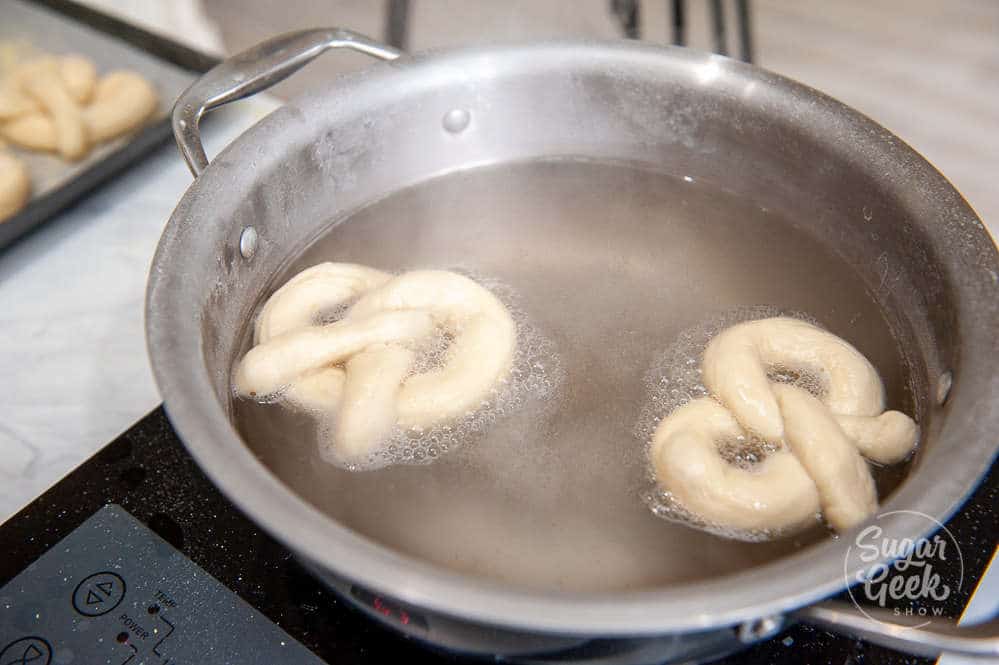
Once the strawberries are defrosted you can use an immersion blender to break down the berries a bit but they will break down on their own as the mixture cooks. 

 Let the strawberry reduction reduce for 5-10 minutes then add in your ClearJel slurry (or you can use cornstarch). Put the strawberry reduction into the fridge to cool overnight. 

strawberry reduction

How to make the strawberry cinnamon roll dough

Make your sweet dough by combining the warmed milk (110ºF), one Tablespoon of sugar and yeast in a measuring cup or bowl and let it sit until it's foamy. 

Combine the yeast mixture with the flour in the bowl of your stand mixer with the dough attachment and mix until just combined. Then add in the rest of your ingredients. 

You can do this by hand as well, you'll just have to use some elbow grease. 

Let the dough mix on low for a few minutes and then bump the speed up to medium. You want to let the dough mix until it all starts clinging to the dough hook and bounces back when you press it with your finger. 

sweet dough
Combine flour and yeast mixture and combine, Then add in sugar, eggs, salt and butter

If the dough is too wet and isn't clinging to the dough hook you can add in ¼ cup of flour to make it stiffer. If the dough is too dry, add 1 Tablespoon of water. 

You can also test the dough by doing the window test. Take a small piece of the dough and stretch it between your fingers. If you can make the dough super thin until you can almost see through it, enough gluten has developed and the dough is ready. 

closeup of sweet dough rising in a bowl

Place the dough into a buttered bowl, cover it with a towel to keep it moist and place it in a warm area to rise for 90 minutes. I turn my oven on to 170ºF, open the door and place the bowl on the oven door because my kitchen is usually too cold. Dough likes to rise around 90ºF. 

How to assemble strawberry cinnamon rolls

Roll your dough out into a rectangle. You want the thickness of the dough to be about ¼". Spread a thin layer of strawberry reduction all over the top of the dough, avoid the back ½" so you can seal the rolls. 

Sprinkle some freshly chopped strawberries over the top of the reduction (optional). 

strawberry cinnamon rolls assembly

Then roll up your dough into a nice tight spiral. I admit some of my strawberry filling oozed out a bit and it was kind of a messy process. I just spooned the leftovers back into the rolls. I had a little leftover reduction that I used to fill in some gaps after the rolls were done baking.
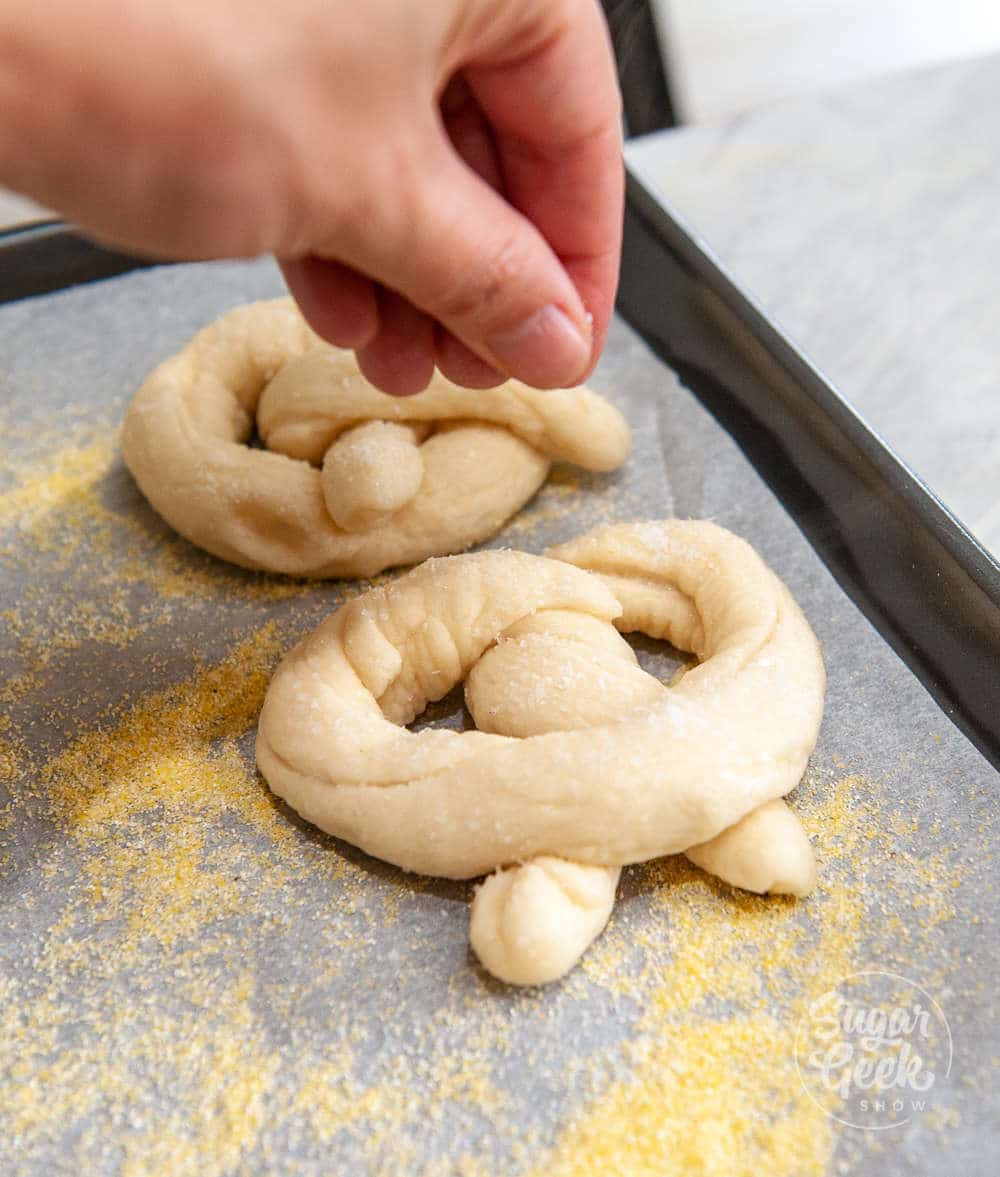
strawberry cinnamon roll log

Cut the spiral into 8-10 equal-sized rolls. Arrange these onto a large baking sheet lined with parchment paper. Cover the rolls with plastic wrap, make sure the edges are pulled tight against the metal to prevent air from getting in. 

Place the pan of rolls into the fridge overnight. 

strawberry cinnamon rolls wrapped in plastic wrap

Bring the rolls out of the fridge about two hours before you want to bake them and let them warm up and double in size. 

Brush the rolls with some egg wash and then bake the rolls in the oven at 350ºF for about 30 minutes or until the internal temperature reads 180º-200ºF. 

baked strawberry cinnamon rolls

How to make cream cheese frosting for strawberry cinnamon rolls

Making the cream cheese frosting is super easy. Just cream your cream cheese until it's nice and smooth so you don't have any lumps. I find a hand mixer works best. Then add in your softened butter and sifted powdered sugar. 

Then add in your heavy cream, salt and lemon extract. You can add more or less cream depending on how thick or thin you want your frosting. I like mine pretty thin. 
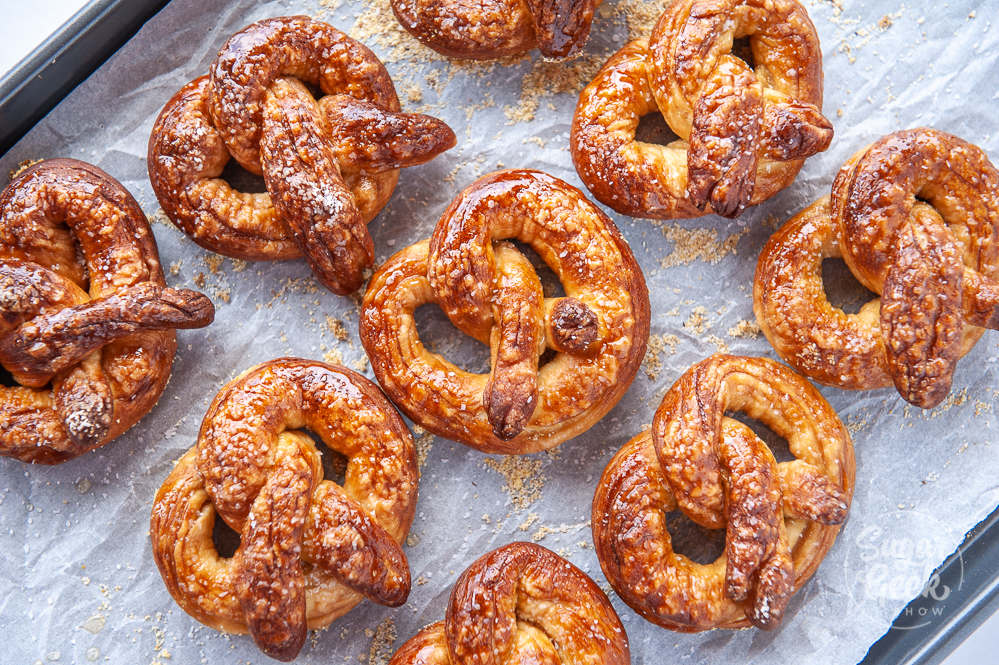
cream cheese frosting

Drizzle the frosting over the top of your warm rolls with a piping bag or a spoon and serve! 

These strawberry cinnamon rolls with cream cheese frosting make the most amazing weekend brunch. The rolls are HUGE, like the size of my hand. If you want smaller rolls then you can cut your spiral into 12 slices instead of 8. 

strawberry cinnamon rolls with cream cheese frosting

I made these strawberry cinnamon rolls as part of my son's four-month photoshoot which you can see here. 

strawberry cream cheese cinnamon rolls

Recipe

strawberry cinnamon rolls
Print Recipe
4.80 from 5 votes

Strawberry Cinnamon Rolls With Cream Cheese Frosting

Soft and fluffy strawberry cinnamon rolls fresh from the oven and frosted with lemon cream cheese frosting. The perfect brunch!
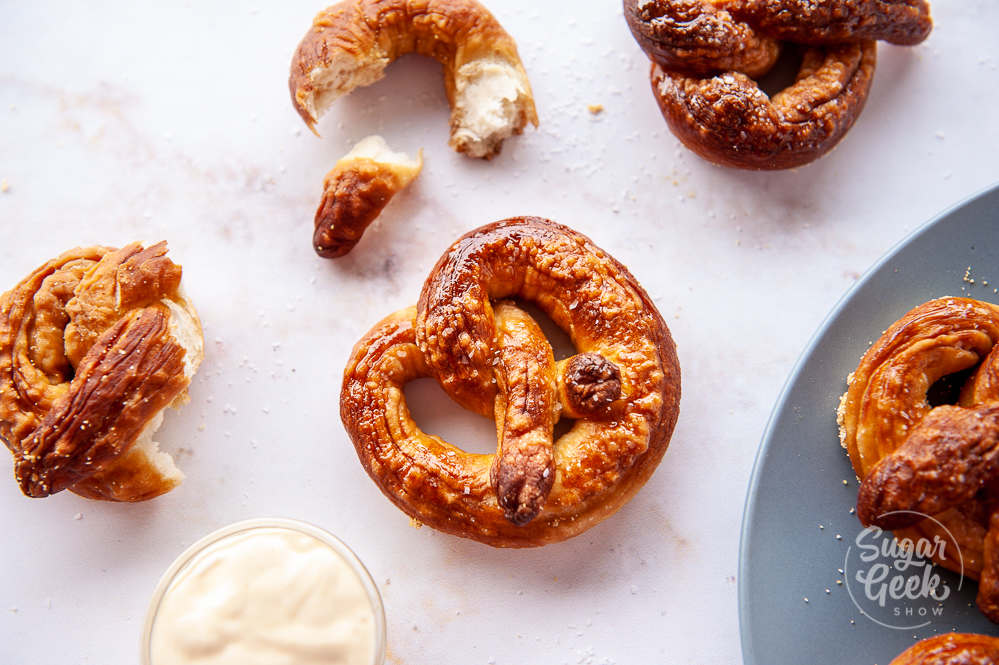
Prep Time20 minutes mins
Cook Time25 minutes mins
Proofing2 hours hrs 30 minutes mins
Course: Dessert
Cuisine: American
Servings: 8 Rolls
Calories: 655kcal
Author: Liz Marek

Equipment

  • Stand mixer with dough hook
  • One sheet pan (13"x18") or similar sized pan
  • Parchment Paper

Ingredients

Cinnamon Roll Dough

  • 4 ounces milk 110ºF
  • 5 grams dried instant yeast
  • 14 ounces all-purpose flour or bread flour
  • 4 ounces butter softened
  • 2 ounces sugar
  • ½ teaspoon salt
  • 2 large eggs room temperature

Strawberry Reduction

  • 16 ounces fresh or frozen strawberries
  • 6 ounces granulated sugar
  • 2 teaspoons lemon juice
  • 2 teaspoons lemon zest
  • 4 Tablespoons ClearJel or 2 Tablespoons cornstarch
  • 2 ounces water
  • 1 cup fresh strawberries chopped

Cream cheese frosting

  • 4 ounces cream cheese softened
  • 4 ounces unsalted butter softened
  • 3 ounces powdered sugar
  • ¼ teaspoon salt
  • 2 ounces heavy whipping cream or less if you like a thicker consistency
  • 1 teaspoon vanilla extract
US Customary - Metric

Instructions

  • Warm milk to 110ºF. Add in 1 Tablespoon of your sugar and then the yeast and whisk to combine. Set aside for 5 minutes or until foamy.
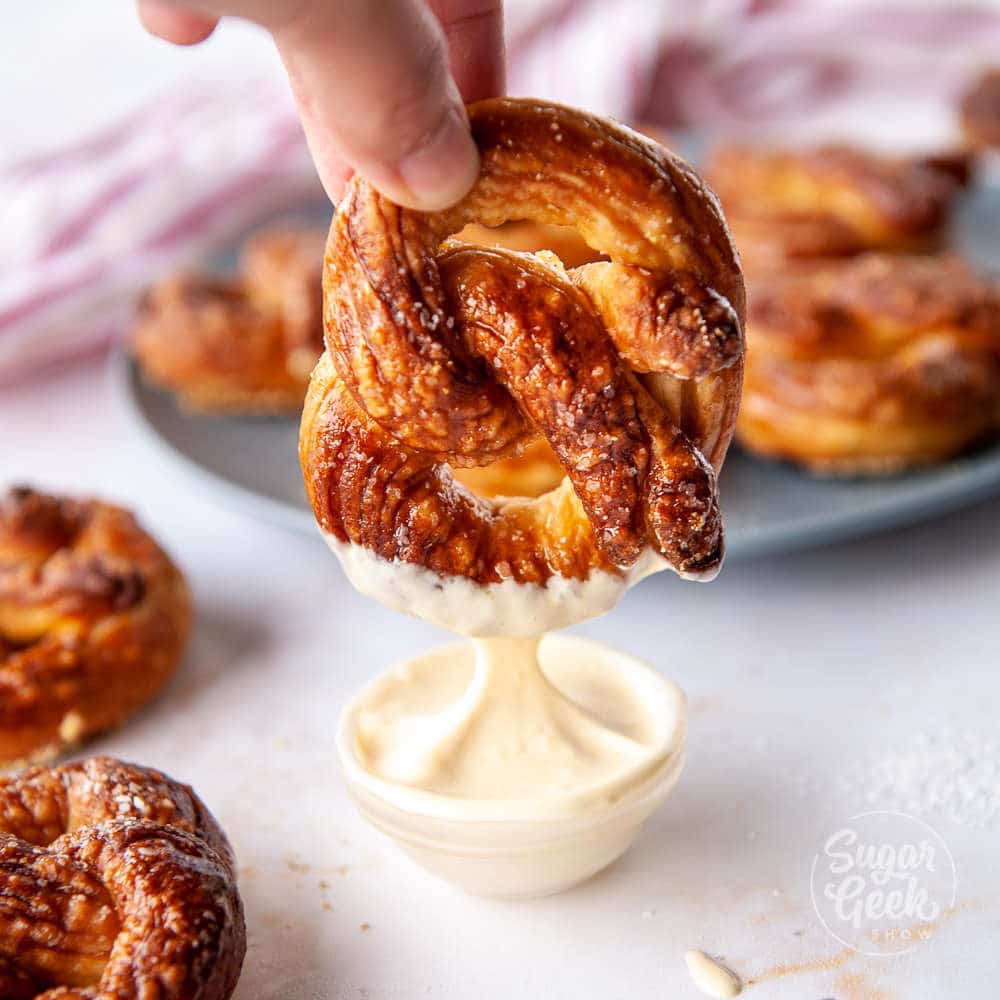
  • Place flour in the mixing bowl with the yeast/milk mixture and stir until combined
  • Add in your eggs one at a time, letting each combine before you add the next
  • Add in sugar, butter and salt and mix on low until combined
  • Let mix on low for 5-10 minutes until the dough pulls away from the sides of the bowl and bounces back when you touch it. You can also do the window test (see blog post for example)
  • Shape the dough into a smooth ball and then place it into a greased bowl. Cover with a tea towel and let rise for 90 minutes in a warm place
    ***How to proof**(Pre-heat oven to 170ºF, leave the oven door OPEN and place a bowl of warm water in the back of the oven. Then place your covered bowl of dough onto the open oven door. Proof until double in size.)

For the strawberry filling

  • Combine strawberries and sugar in a medium saucepan and bring to a simmer
  • Crush berries with a spoon or immersion blender as the mixture cooks for 5-10 minutes on medium heat.
  • Combine ClearJel with lemon juice, zest, and water to make a slurry and add it to your simmering strawberries. Mix until thickened and then let cool.

To make the rolls

  • Line a 13"x18" sheet pan with parchment paper (or similar sized pan)
  • Once your dough has proofed, roll out the dough 10" wide, ¼" thick. It doesn't matter how long. Spread the strawberry filling over the surface evenly, all the way to the edges, except keep one edge without filling so you can seal it.
  • Sprinkle freshly chopped strawberries over the filling
  • Roll up the dough length-wise. Make sure the first roll is very tight so you get a nice spiral, then continue pushing the dough until you reach the edge. Brush a little water or egg wash along the bare edge so it seals the loose edge of the dough.
  • Cut the roll into 8-10 equal slices and arrange on your parchment covered pan
  • Cover loosely with a tea towel and let proof to double (about 90 minutes) then bake (or cover tightly with plastic wrap and put in the fridge if you want to bake them the next day. Let come to room temperature and proof to double before baking. This can take 1.5-2 hours depending on how warm your kitchen is)
  • Bake at 350ºF for 25-30 minutes or until golden brown depending on the size of your rolls. (Internal temperature reaches 200ºF)

For the cream cheese frosting

  • Cream the cream cheese with a hand mixer until smooth. Then add in the softened butter and cream until smooth.
  • Add in the powdered sugar, salt, vanilla and cream until smooth and the desired consistency. Drizzle over warm rolls. Add more cream for thinner frosting.
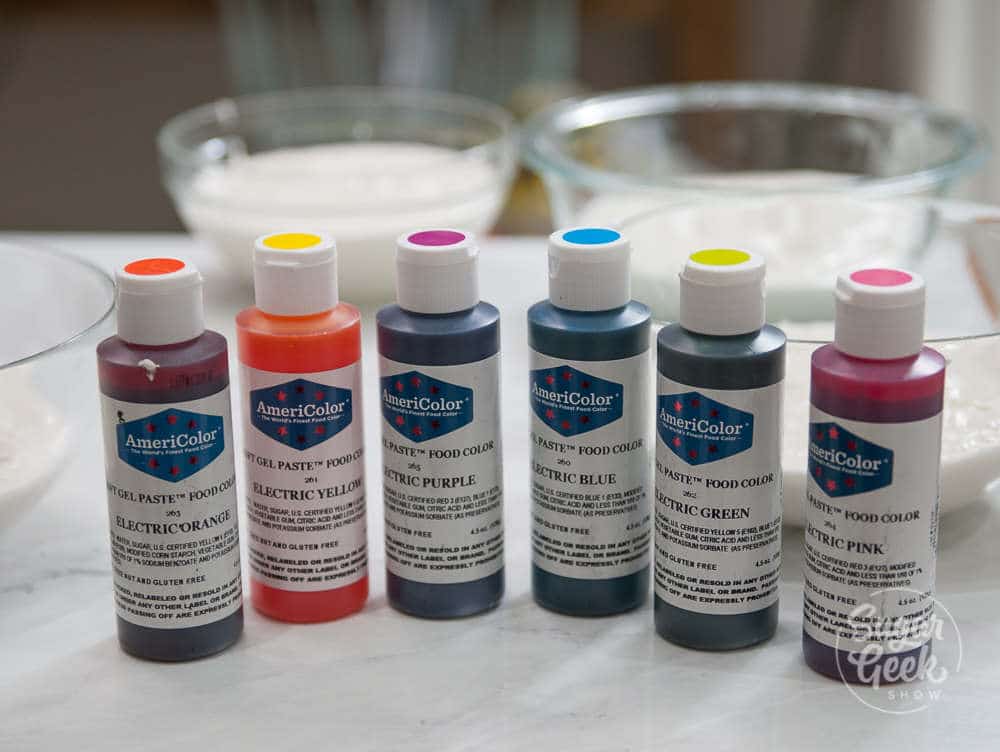
Video

Nutrition

Serving: 1roll | Calories: 655kcal | Carbohydrates: 83g | Protein: 9g | Fat: 33g | Saturated Fat: 20g | Cholesterol: 140mg | Sodium: 470mg | Potassium: 203mg | Fiber: 3g | Sugar: 43g | Vitamin A: 1109IU | Vitamin C: 34mg | Calcium: 66mg | Iron: 3mg


Baby Yoda Cake Step-by-Step Online Course

January 15, 2020 Course Preview

Baby Yoda Star Wars Cake Tutorial

This is the absolute best baby Yoda tutorial! Complete with templates and full step-by-step instructions. Edible sugar eyes, modeling chocolate body, fondant clothes, and gummy soup!
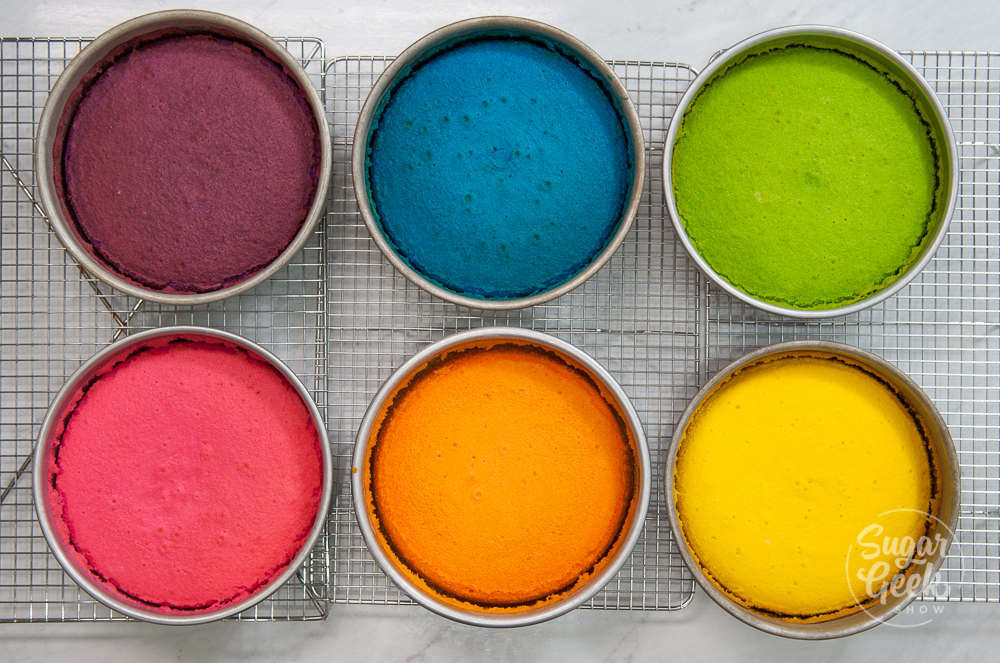
Skill level: Intermediate

Learn how to make the baby Yoda Star Wars cake from instructor Elizabeth Marek. You will learn how to create a sculpted baby master from rice cereal treats or from similarly sized cake rounds.
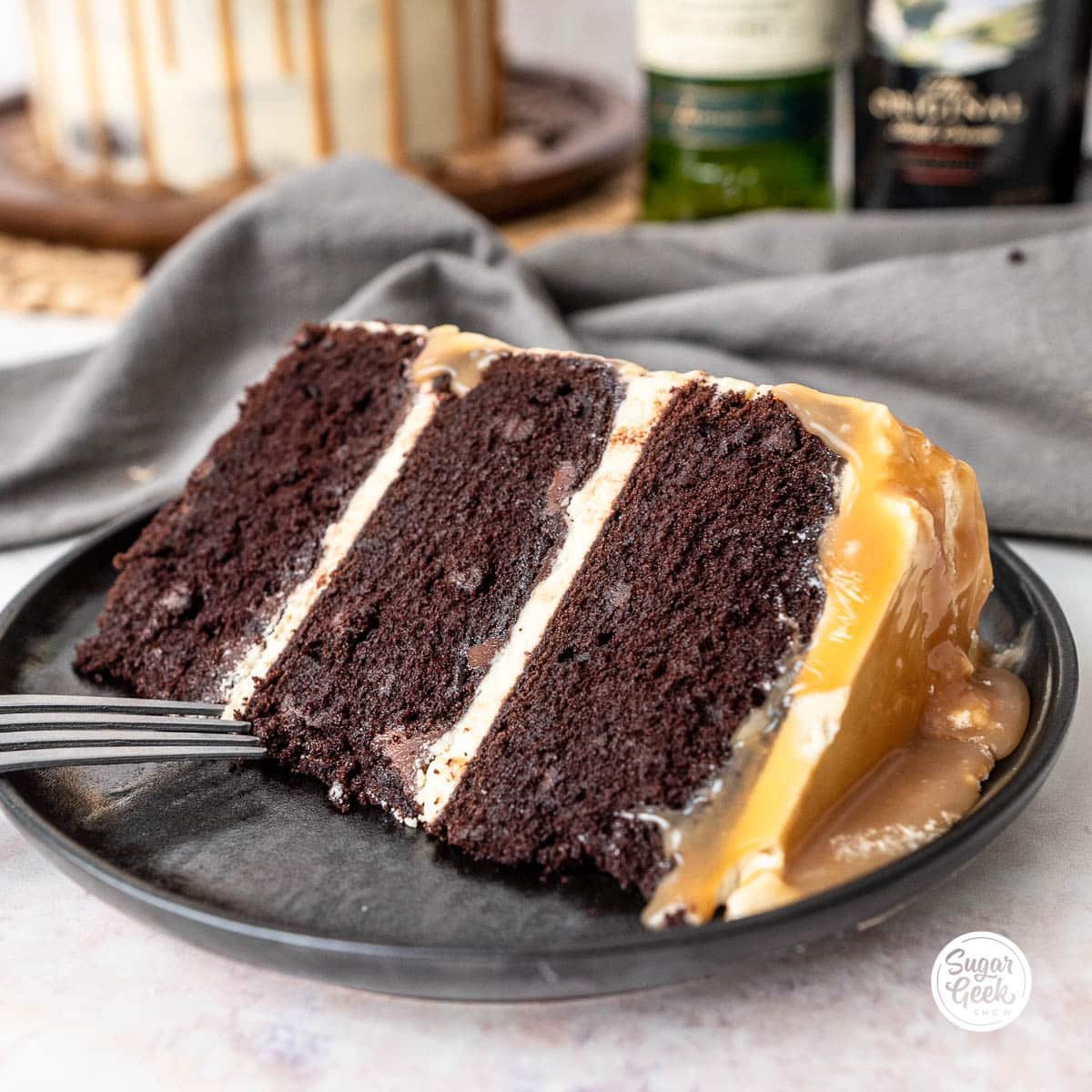
 

Elizabeth shows how to make step-by-step edible eyeballs, how to sculpt the face and measure the proportions of the face. Techniques on realistic skin tones, adding shadow and depth are covered, as well as how to make the clothing and textures.
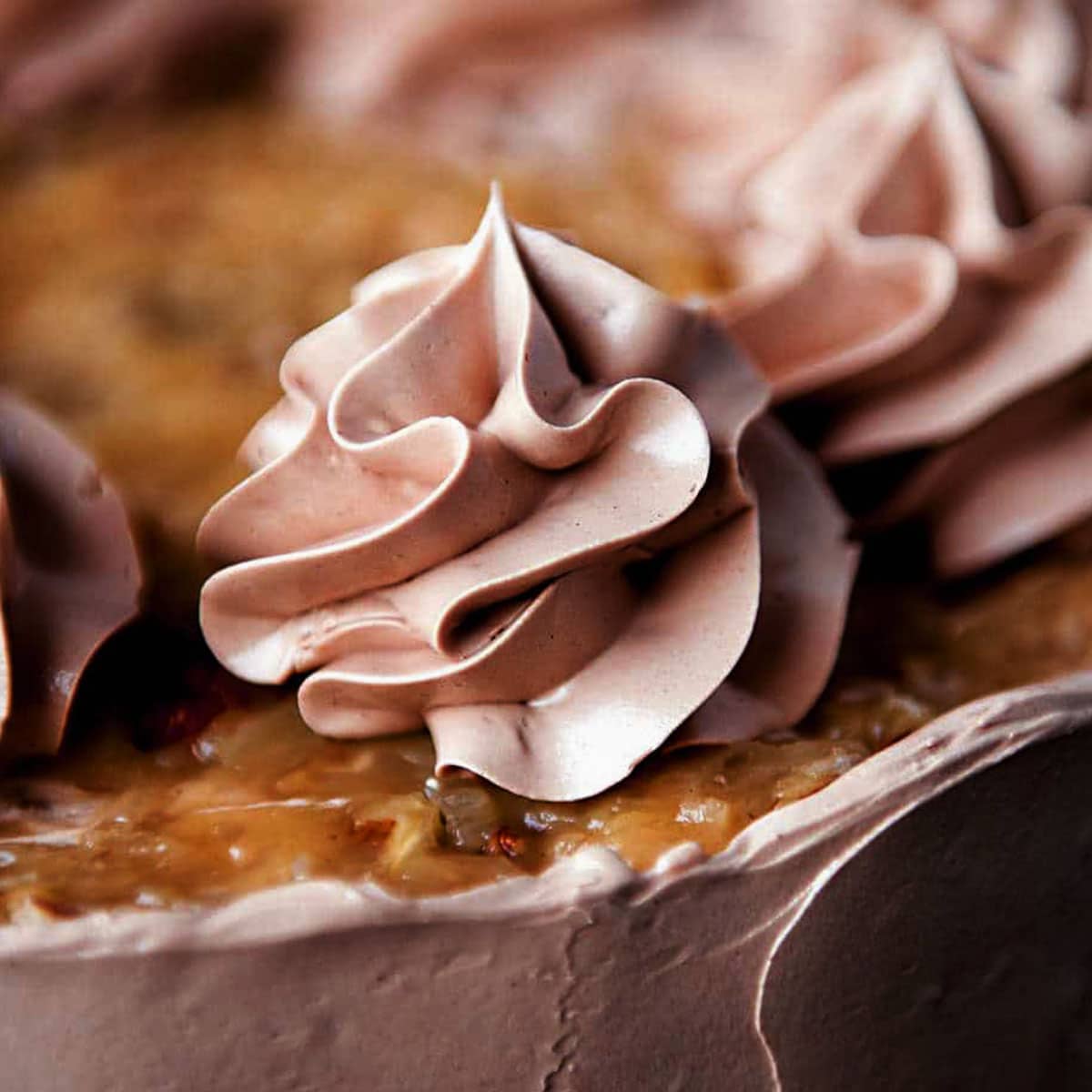
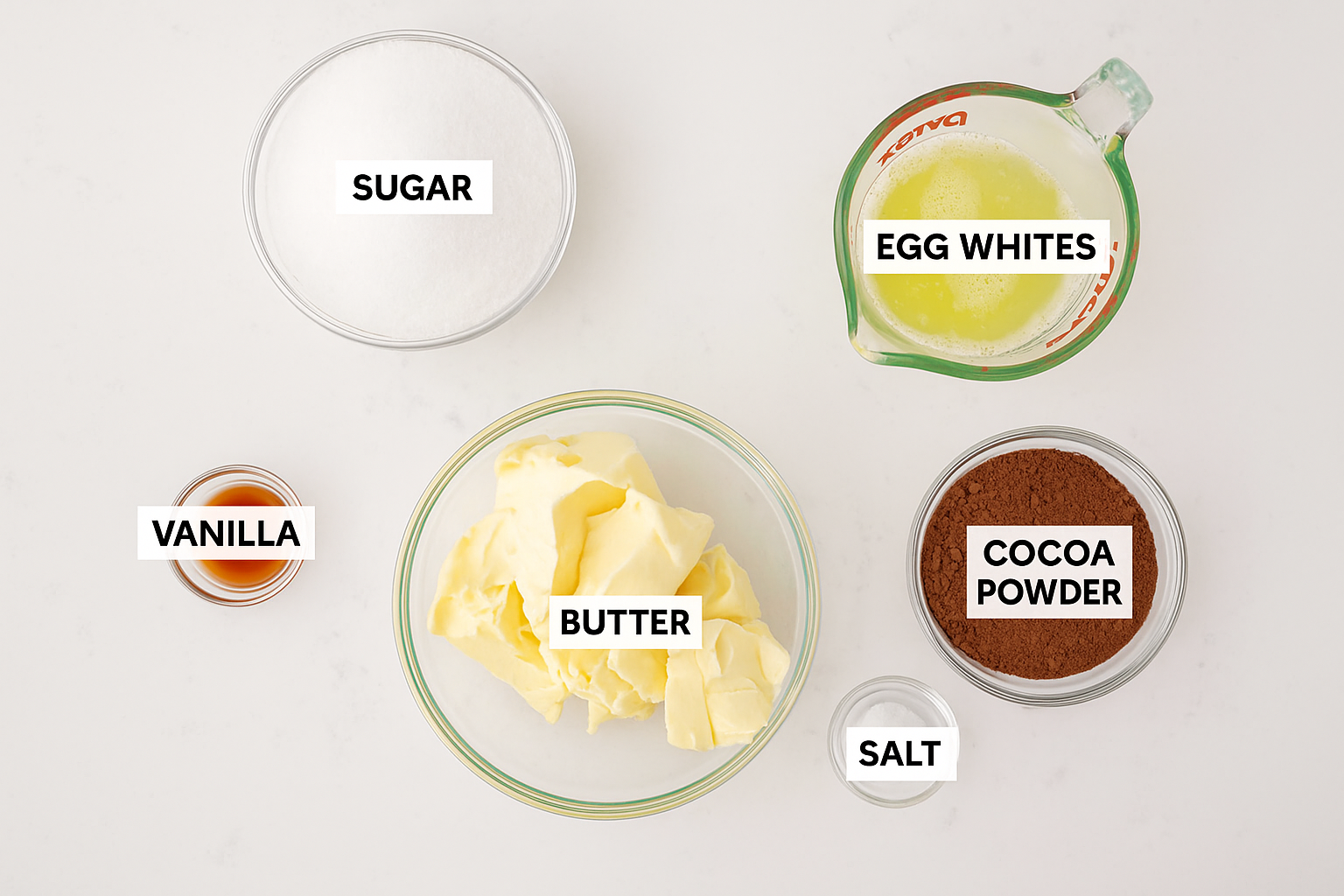
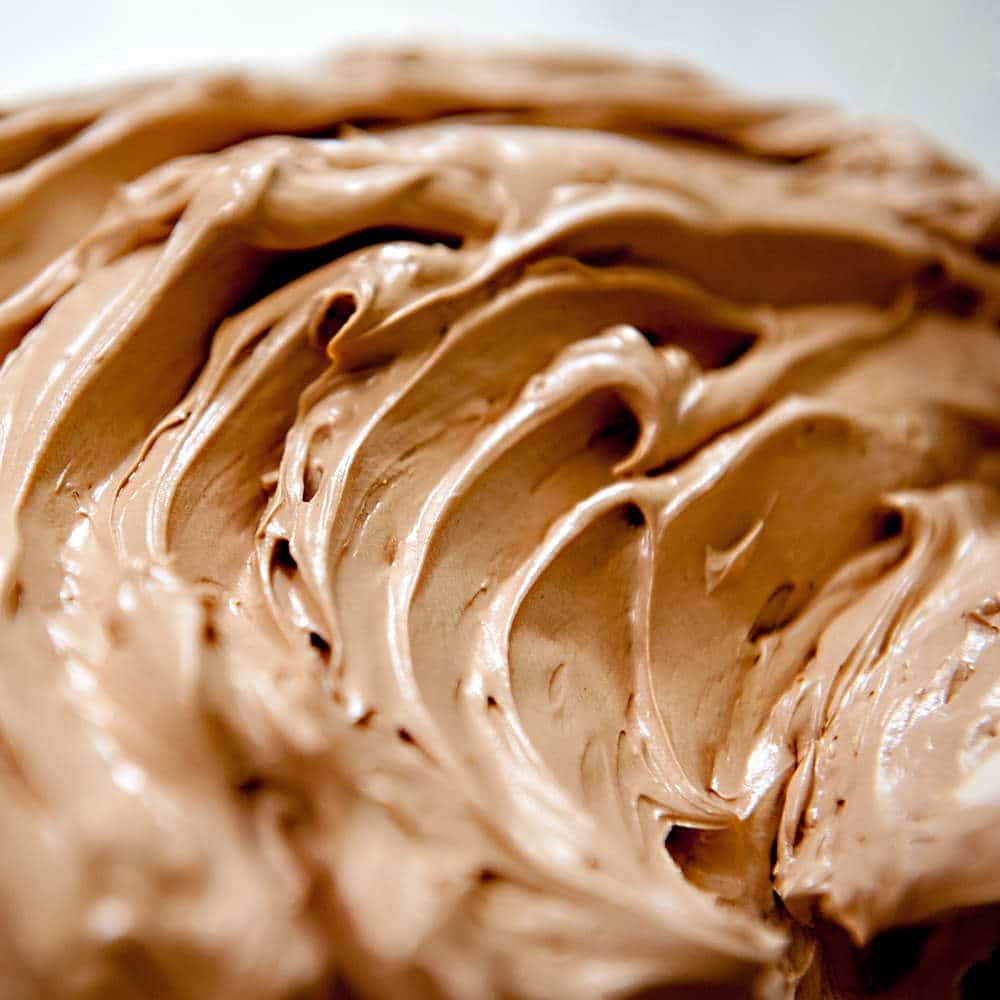
1:32:29 Minutes of Instruction

What You Will Learn

  • How to make a baby Yoda Star Wars sculpted cake (or keepsake version with rice cereal treats inside)
  • Learn how to make realistic large edible eyes
  • How to make a cake version or a 'keepsake' version
  • Learn how to make a simple cake structure and make it food-safe
  • How to scale reference photos

Tutorial Chapters

  1. Preparing the cakes 0:46
  2. Making the eyes 1:18
  3. Making the structure 4:42
  4. Stacking and carving the cake 7:05
  5. The arms structure 16:36
  6. Adding the head and eyes 19:52
  7. Adding the cheeks and mouth 29:00
  8. Smoothing 47:26
  9. Adding the ears 50:17
  10. Building up the back of the head 57:48
  11. Covering in fondant 1:00:51
  12. Making the arms 1:06:31
  13. Making the collar 1:09:50
  14. Making the cup 1:15:26
  15. Making hands 1:21:07
  16. Filling the cup 1:31:09


Downloads

Materials List

Eyeball Template

Scale Reference 01

Scale Reference 02

Baby Yoda Cake Step-by-Step Online Course

January 15, 2020 Paid Video

Baby Master Cake

Skill level: Intermediate

Learn how to make the baby master cake from instructor Elizabeth Marek. You will learn how to create a sculpted baby master from rice cereal treats or from similarly sized cake rounds.

Elizabeth shows how to make step-by-step edible eyeballs, how to sculpt the face and measure the proportions of the face. Techniques on realistic skin tones, adding shadow and depth are covered, as well as how to make the clothing and textures.

1:32:29 Minutes of Instruction

What You Will Learn

  • How to make a baby alien sculpted cake (or keepsake version with rice cereal treats inside)
  • Learn how to make realistic large edible eyes
  • How to make a cake version or a 'keepsake' version
  • Learn how to make a simple cake structure and make it food-safe
  • How to scale reference photos

Tutorial Chapters

  1. Preparing the cakes 0:46
  2. Making the eyes 1:18
  3. Making the structure 4:42
  4. Stacking and carving the cake 7:05
  5. The arms structure 16:36
  6. Adding the head and eyes 19:52
  7. Adding the cheeks and mouth 29:00
  8. Smoothing 47:26
  9. Adding the ears 50:17
  10. Building up the back of the head 57:48
  11. Covering in fondant 1:00:51
  12. Making the arms 1:06:31
  13. Making the collar 1:09:50
  14. Making the cup 1:15:26
  15. Making hands 1:21:07
  16. Filling the cup 1:31:09

Downloads

Materials List

Eyeball Template

Scale Reference 01

Scale Reference 02

January 7, 2020 Course Preview

Koala Cake Tutorial

Koala cake tutorial to help raise awareness for the Australian bush fires help and rescue

koala cake tutorial

Hey sugar geeks! I wanted to make this video to help bring awareness to the horrible fires going on in Australia right now. I know sometimes it can feel like there isn't anything we can do to help when we are far away but every little bit helps.

Check out the links below to support the efforts to putting out fires and helping save the Koalas and other wildlife.

You can help the devastated animal population by giving to wildlife rescue and treatment groups like
*fact sources CNN

WIRES
Port Macquarie Koala Hospital 
Currumbin Wildlife Hospital
Australian Red Cross 

Materials and supplies

Tree trunk - Three 6" round cakes
Koala Body - Four 6" round cakes
Koala head - Two 6" round cakes
Four lbs chocolate
Two batches easy buttercream
Two batches rice cereal treats for sculpting 
10 lbs fondant
½" sheet cake boards avare cake board 
¼" pvc pipe
¼" adaptors (one male adaptor, two 45º, one "T")
⅛" armature wire
18 guage floral wire
tylose powder
Green food coloring
Edible water colors or airbrush colors 
brown airbrush color
edible glitter
black fondant
2 ounces white chocolate
Clear isomalt
Black isomalt 
PME clear glaze spray

Tools
Pvc cutters
Modeling tools
x-acto blade
creme brulee torch
2" silicone sphere molds for eyes
1" cabachon mold
paint brushes
airbrush
aluminum foil tape 

January 7, 2020 Blog

Koala Cake Tutorial

Koala cake tutorial to help raise awareness for the Australian bush fires help and rescue

koala cake tutorial

Hey sugar geeks! I wanted to make this video to help bring awareness to the horrible fires going on in Australia right now. I know sometimes it can feel like there isn't anything we can do to help when we are far away but every little bit helps.

Check out the links below to support the efforts to putting out fires and helping save the Koalas and other wildlife.

You can help the devastated animal population by giving to wildlife rescue and treatment groups like
*fact sources CNN

WIRES
Port Macquarie Koala Hospital 
Currumbin Wildlife Hospital
Australian Red Cross 

Materials and supplies

Tree trunk - Three 6" round cakes
Koala Body - Four 6" round cakes
Koala head - Two 6" round cakes
Four lbs chocolate
Two batches easy buttercream
Two batches rice cereal treats for sculpting 
10 lbs fondant
½" sheet cake boards avare cake board 
¼" pvc pipe
¼" adaptors (one male adaptor, two 45º, one "T")
⅛" armature wire
18 guage floral wire
tylose powder
Green food coloring
Edible water colors or airbrush colors 
brown airbrush color
edible glitter
black fondant
2 ounces white chocolate
Clear isomalt
Black isomalt 
PME clear glaze spray

Tools
Pvc cutters
Modeling tools
x-acto blade
creme brulee torch
2" silicone sphere molds for eyes
1" cabachon mold
paint brushes
airbrush
aluminum foil tape 

« Previous Page
Next Page »

Primary Sidebar

Hi, I'm Liz! I'm passionate about creating reliable, foolproof recipes that don't just tell you how to cook, but why things work - so you can skip the guesswork and confidently make the best sweet and savory dishes of your life.

More about me →

Our Cake Greatest Hits

Check out our best cake recipes

🐰 Celebrate Easter

  • pink speckled cake with easter eggs on top
    Speckled Easter Cake
    Cook Time50 Minutes
  • bunny butt cake on a cake board
    Bunny Butt Cake
    Cook Time3 Hours
  • Carrot cake bar held up by a server
    Carrot Cake Bars
    Cook Time1 Hours 30 Minutes
  • M&M cookies on cooling
    Easy M&M Cookie Recipe
  • Moist carrot cake with pineapple, toasted coconut, candied pecans and big chunks of carrots. Frosted with brown butter cream cheese frosting
    Carrot Cake With Pineapple Recipe
    Cook Time55 Minutes
  • slice of pink velvet cake with whipped cream frosting and fresh raspberries on a white plate
    Pink Velvet Cake
    Cook Time40 Minutes

Popular Recipes

  • close up of ganache drizzling into a bowl
    The Best Chocolate Ganache Recipe
    Cook Time20 Minutes
  • Piping easy buttercream rosettes onto a cake using a 1M star piping tip
    Easy Buttercream Frosting
    Cook Time10 Minutes
  • close up slice of marble cake
    Moist and Fluffy Marble Cake Recipe
    Cook Time40 Minutes
  • close up of red velvet cake slice
    Red Velvet Cake Recipe
    Cook Time1 Hours 40 Minutes

Footer

↑ back to top

About

  • Privacy Policy
  • Terms of Service

Newsletter

  • Sign Up! for emails and updates

Contact

  • Contact
  • About Us

Copyright © 2024 Sugar Geek Show, Inc. All Rights Reserved.

Rate This Recipe

Your vote:


A rating is required
A name is required
An email is required