


These sourdough English muffins are the homemade version that ruins the store-bought ones for you. Tender on the inside, crisp and golden on the edges, with the gentle tang of an overnight sourdough fermentation. If you already make my sourdough sandwich bread, this is the next loaf to add to your weekly rotation.

Quick Glance at the Recipe: Soft Sourdough English Muffins
- Recipe Name: Soft Sourdough English Muffins
- Why You'll Love It: ender, tangy, full of nooks and crannies. Cooked on the stovetop, no oven needed (unless you want a rescue option).
- Time and Difficulty: 15 minutes hands-on, 9 hour overnight rise, 24 minutes cook. Beginner-to-intermediate sourdough.
- Main Ingredients: Active sourdough starter, milk, all-purpose flour, butter, honey, sugar, salt, and cornmeal.
- Method: Mix, rest, knead, overnight bulk rise, roll out and cut, second rise, cook low and slow in a covered skillet.
- Texture and Flavor: Soft chewy crumb with classic nooks and crannies, golden crisp edges, gentle tang.
- Quick Tip: Cook them LOW and slow with a lid on. High heat browns the outside before the inside is set, which is the #1 cause of gummy centers.
Jump to:
- Quick Glance at the Recipe: Soft Sourdough English Muffins
- What Makes These Sourdough English Muffins So Good
- Sourdough English Muffins Ingredients
- Equipment Needed
- Tips and Tricks for Success
- How To Make Sourdough English Muffins Step-By-Step
- How To Make A Warm Sourdough Environment
- Common Sourdough English Muffin Problems To Avoid
- Make Ahead and Storage
- Final Thoughts
- Make These Sourdough English Muffins Your Own
- Sourdough English Muffins FAQs
- More Sourdough Recipes To Try
- Leave Me A Review⭐️⭐️⭐️⭐️⭐️
- Recipe
What Makes These Sourdough English Muffins So Good
When I was a kid, English muffins were a special thing in our house. My dad is from New Zealand, where they're a breakfast staple, so every now and then he'd come home with a pack and toast them up for us. I can still remember the smell, warm and buttery and just a little crisp around the edges. He'd slather on way too much butter (the only correct amount) so it melted into every nook and cranny, then top them with strawberry jam. Pure heaven.
This homemade sourdough version takes that memory and pushes it one better. Soft, chewy, freshly cooked, with the tangy depth a long fermentation gives you and the satisfaction of using your sourdough starter on something other than another loaf of bread. Here is why they're worth the overnight wait:
- Real nooks and crannies. Stovetop cooking traps the fermentation gas pockets in place instead of baking them out. That's the actual mechanic behind the iconic Thomas's-style texture. More on the science in the step-by-step below.
- Soft, chewy, tender, NOT bread-y. The combo of milk, butter, and honey gives the crumb a softer, more tender feel than a sandwich loaf. They're sturdy enough to hold a fried egg but tender enough to soak up jam.
- Overnight schedule. Mix at night, cook in the morning. No babysitting bulk fermentation between meetings, your kitchen does the work while you sleep.
- Versatile beyond breakfast. Yes, eggs benedict and breakfast sandwiches, but also pizza bases, mini sliders, and a base for melted-cheese-and-anything snacks.
- Beginner-friendly sourdough. No Dutch oven, no scoring, no shaping a boule. If you've already made my easy sourdough focaccia recipe or my sourdough sandwich bread, this is right up there in difficulty.

Sourdough English Muffins Ingredients
These are pantry staples plus an active starter. I always recommend weighing your ingredients on a digital kitchen scale for sourdough; eyeballed flour is the #1 reason beginner doughs come out dense or sticky.
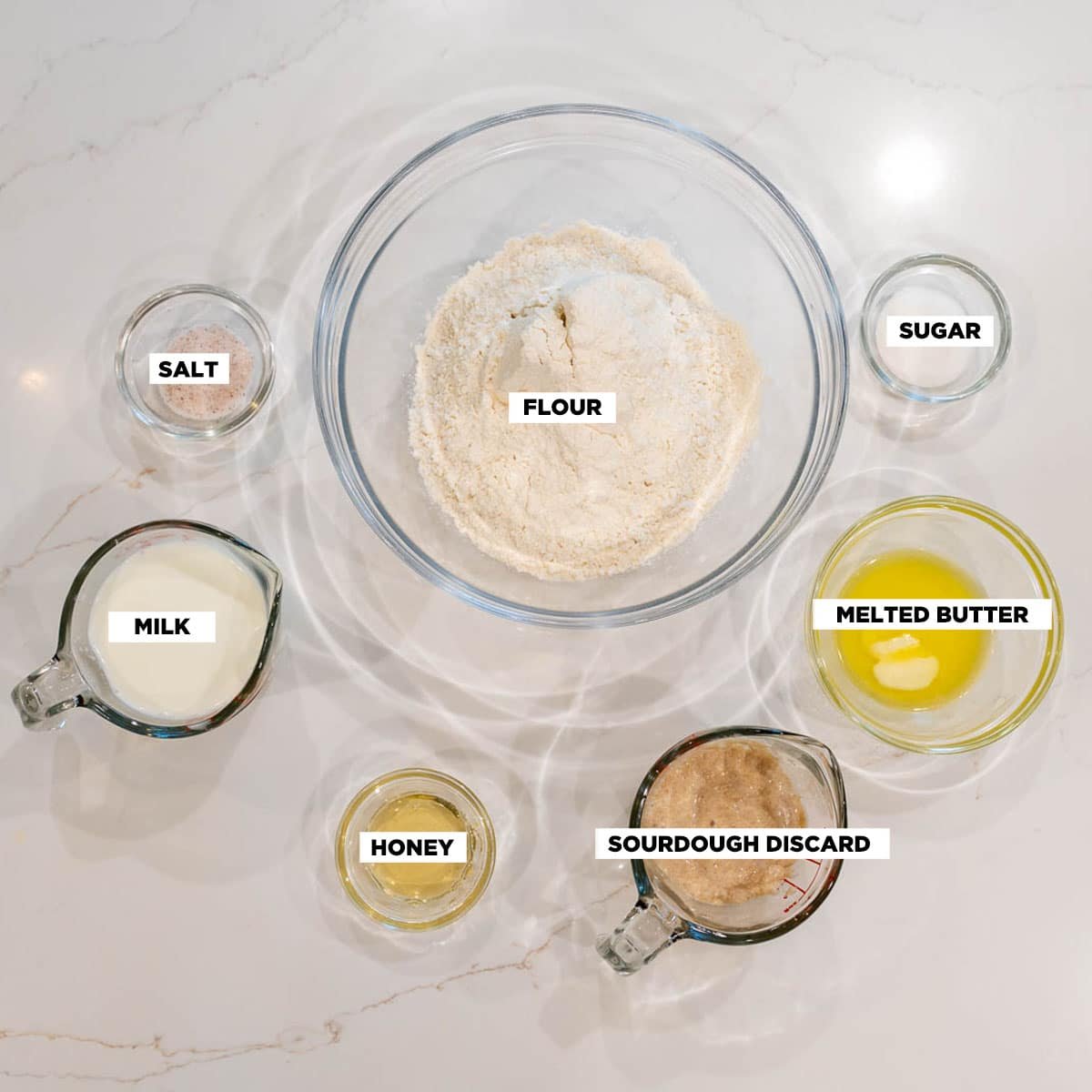
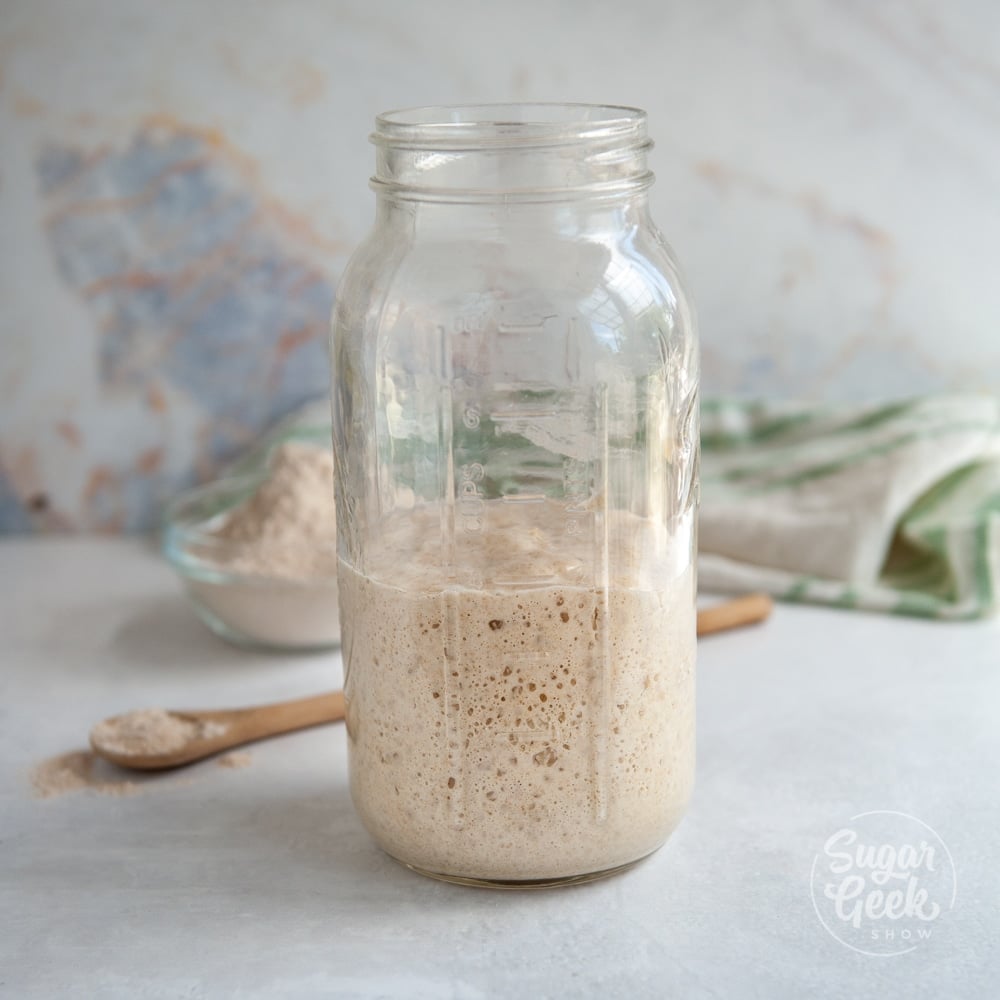
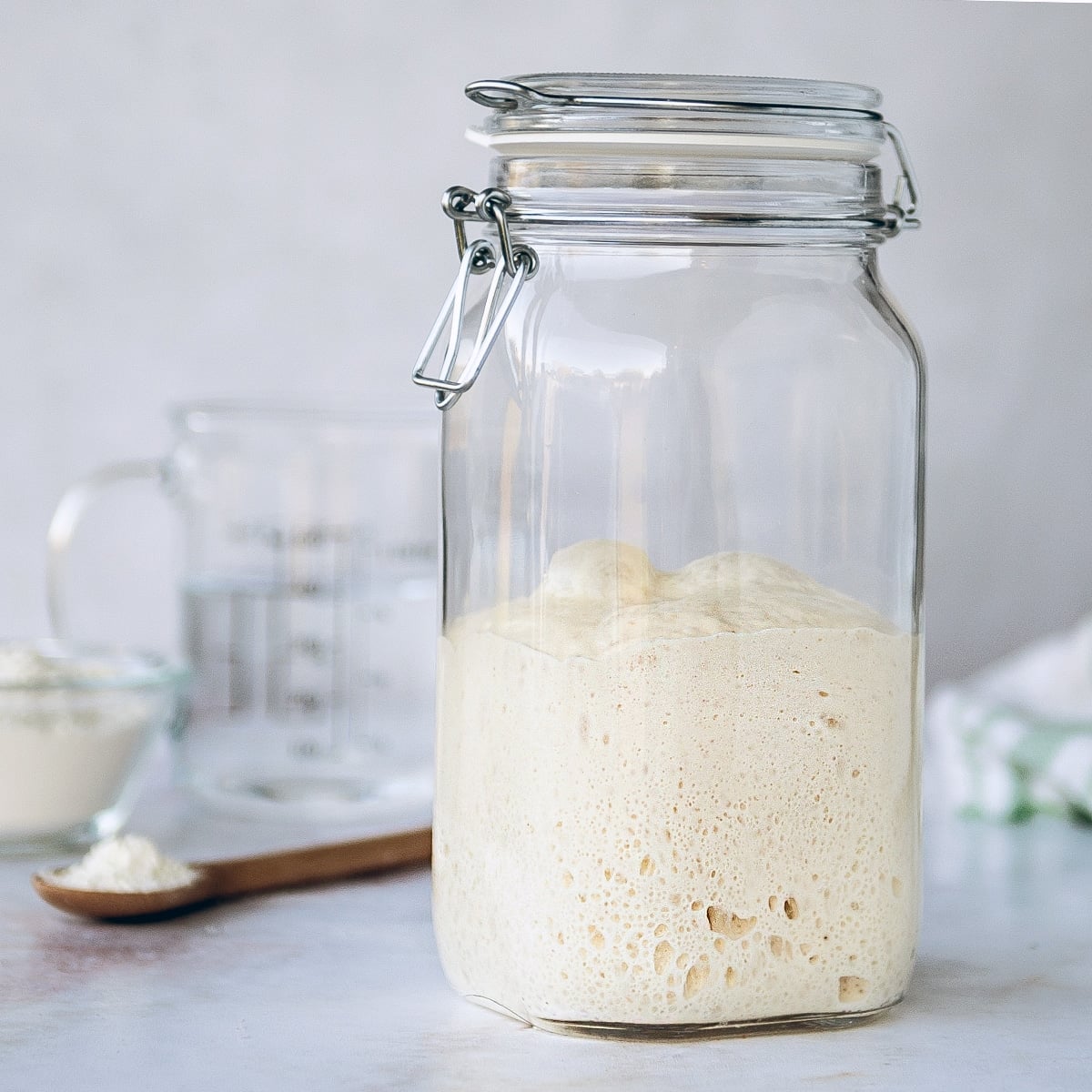
- Active sourdough starter, bubbly and at least doubled in the last 4 to 6 hours of feeding. This is what gives the muffins their rise and signature tang. If your starter has been napping in the fridge, give it 2 to 3 daily feedings before mixing. No starter yet? Start with my sourdough starter for beginners guide.
- Whole milk gives the richest, most tender crumb. 2% or non-dairy milk (oat, almond, soy) all work. Warm it to room temperature before mixing so it doesn't shock the starter.
- Sugar, a small amount to feed the starter and balance the tang. Coconut sugar or brown sugar work as 1:1 swaps. You can skip it for a more savory muffin.
- Butter adds flavor and softness. Olive oil, coconut oil, or any neutral oil work as 1:1 swaps for vegan or dairy-free.
- Honey adds sweetness AND helps the edges brown to a deep golden. Maple syrup, agave, or brown sugar all work as swaps. Honey is also what makes them not-vegan, see swaps in Make This Recipe Your Own.
- All-purpose flour gives the tender, lightly chewy texture you want in an English muffin. You can replace up to 1 cup with whole wheat for a nuttier flavor, or sub bread flour for a chewier crumb (closer to a bagel).
- Fine sea salt balances flavor and keeps fermentation from running off. Kosher salt works as a swap.
- Cornmeal, for dusting the baking sheet and the tops of the muffins. This is the gritty texture you remember from Thomas's. Semolina works as a swap, regular flour does NOT (it absorbs into the dough and you lose the texture).
Equipment Needed
Biscuit Cutter - A 3-inch biscuit cutter (or cookie cutter) works perfectly for shaping the muffins into even dough rounds.
Skillet with Lid - A large skillet with a lid is essential for cooking the muffins low and slow, trapping steam to create a tender, golden crust. We prefer HexClad skillets for their hybrid stainless steel and nonstick surface, which allows for even heat distribution, perfect browning, and easy cleanup. Another great option would be a cast-iron skillet.
Tips and Tricks for Success
- Use an active starter: For best results, make sure your sourdough starter is bubbly and recently fed for the best rise and tangy flavor.
- Bulk fermentation: Let your first rise happen in a warm place to help the dough develop flavor.
- Rest the dough: The dough rest period helps relax gluten for a smoother texture.
- Cook low and slow: Cook on medium-low heat and cover with a lid to ensure golden, tender muffins without burning the outside.
- Don't skip the cornmeal: Make sure to coat your muffins with cornmeal using baking sheet. This prevents sticking and gives texture.
- Split with a fork: Open the muffins with a fork rather than a knife to preserve the airy crumb and those signature nooks and crannies.
How To Make Sourdough English Muffins Step-By-Step
Before you begin, make sure your starter is active and bubbly (it should at least double within 4 to 6 hours of feeding). Plan backward from when you want to eat. The whole process takes about 9 to 10 hours from first mix to skillet, so most people mix at night and cook in the morning.
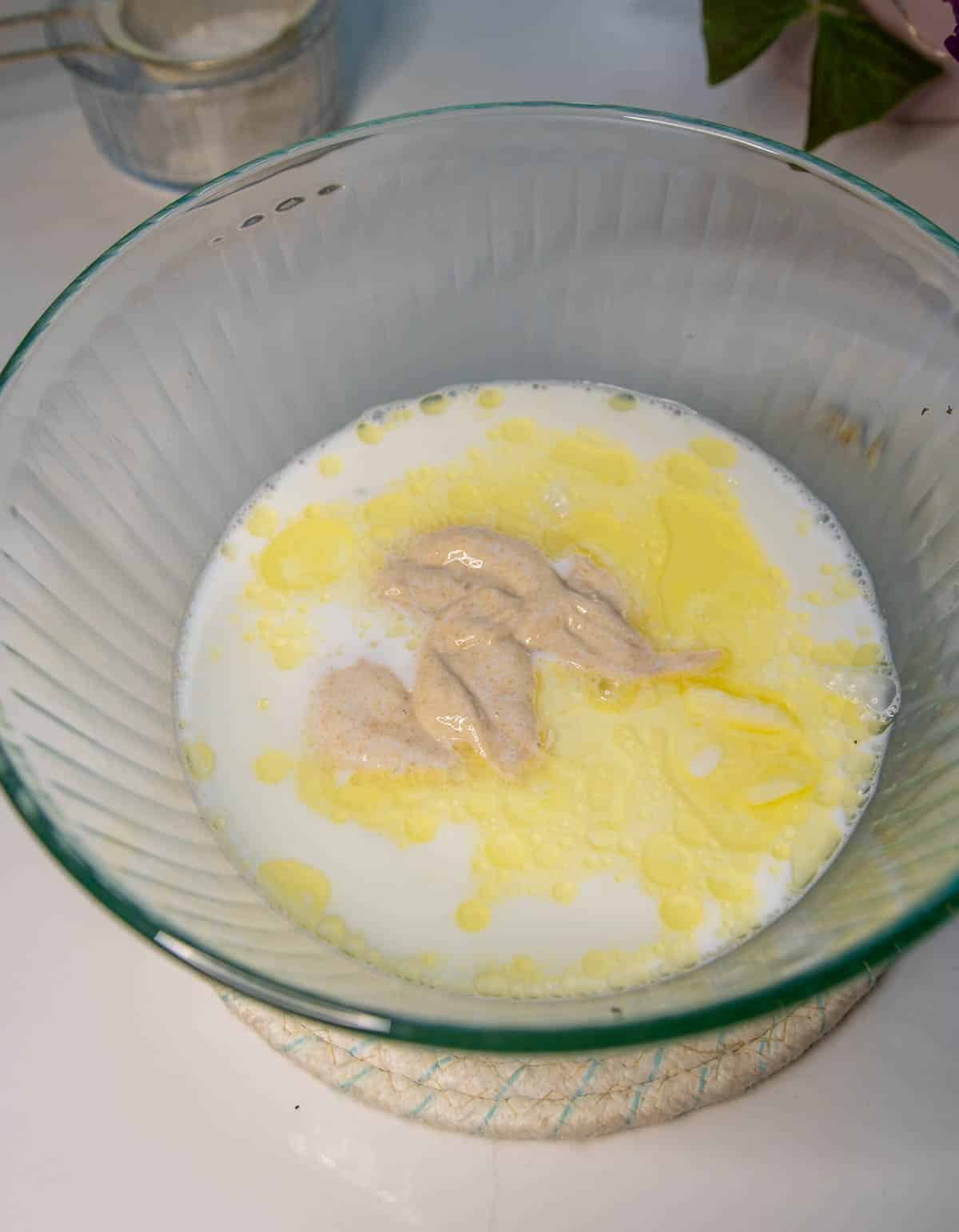
- In a large bowl, combine the active sourdough starter, warm milk, sugar, melted butter, and honey. Whisk until the starter is fully dissolved into the liquid.
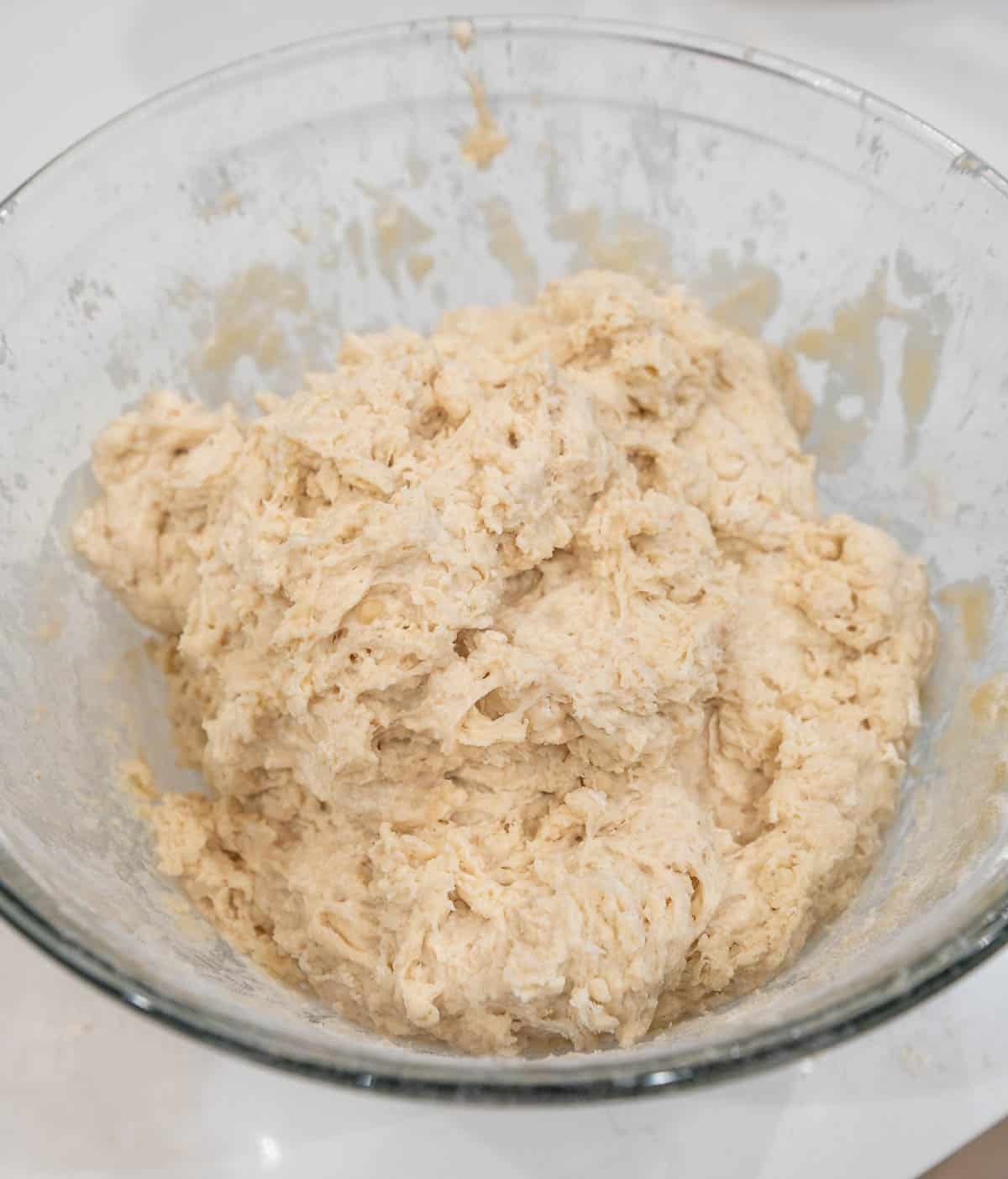
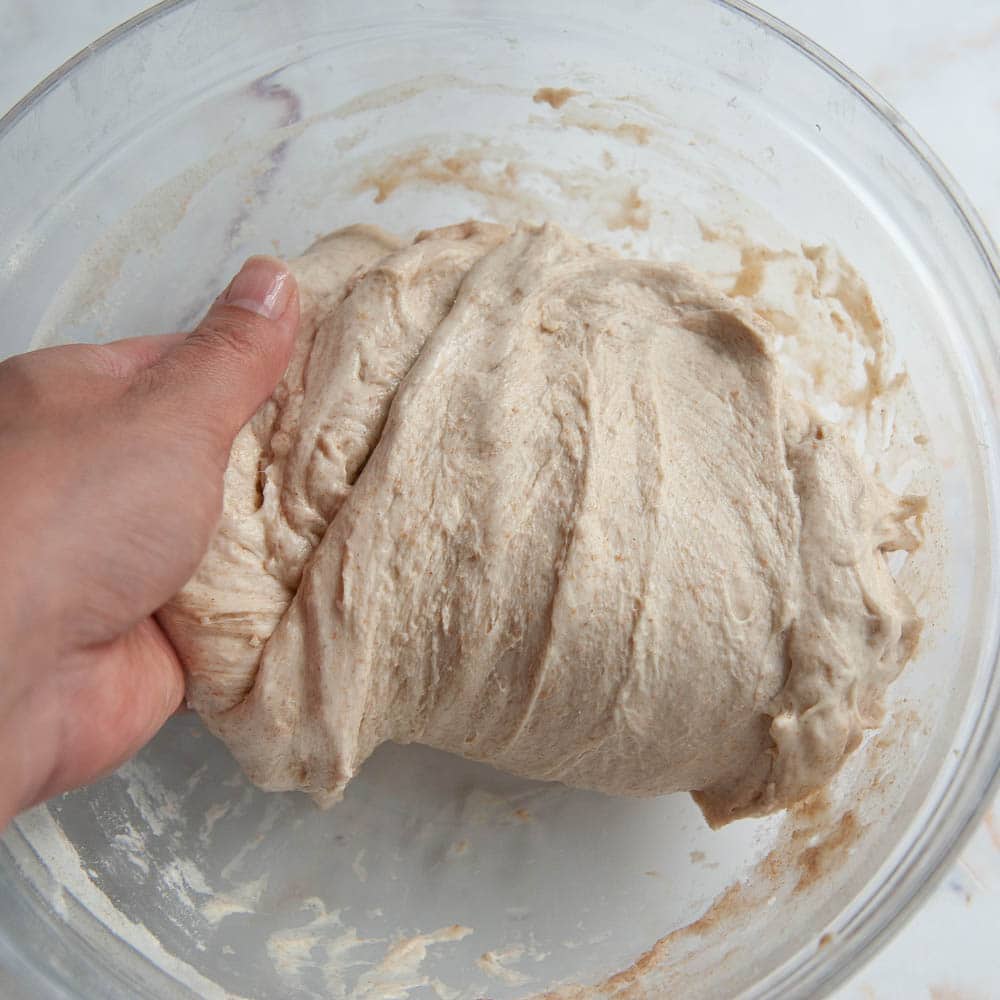
- Add the flour and mix until you form a sticky, shaggy dough. Cover with plastic wrap or a tea towel and rest for 30 to 60 minutes. This rest hydrates the flour and lets the gluten start to relax before you knead.
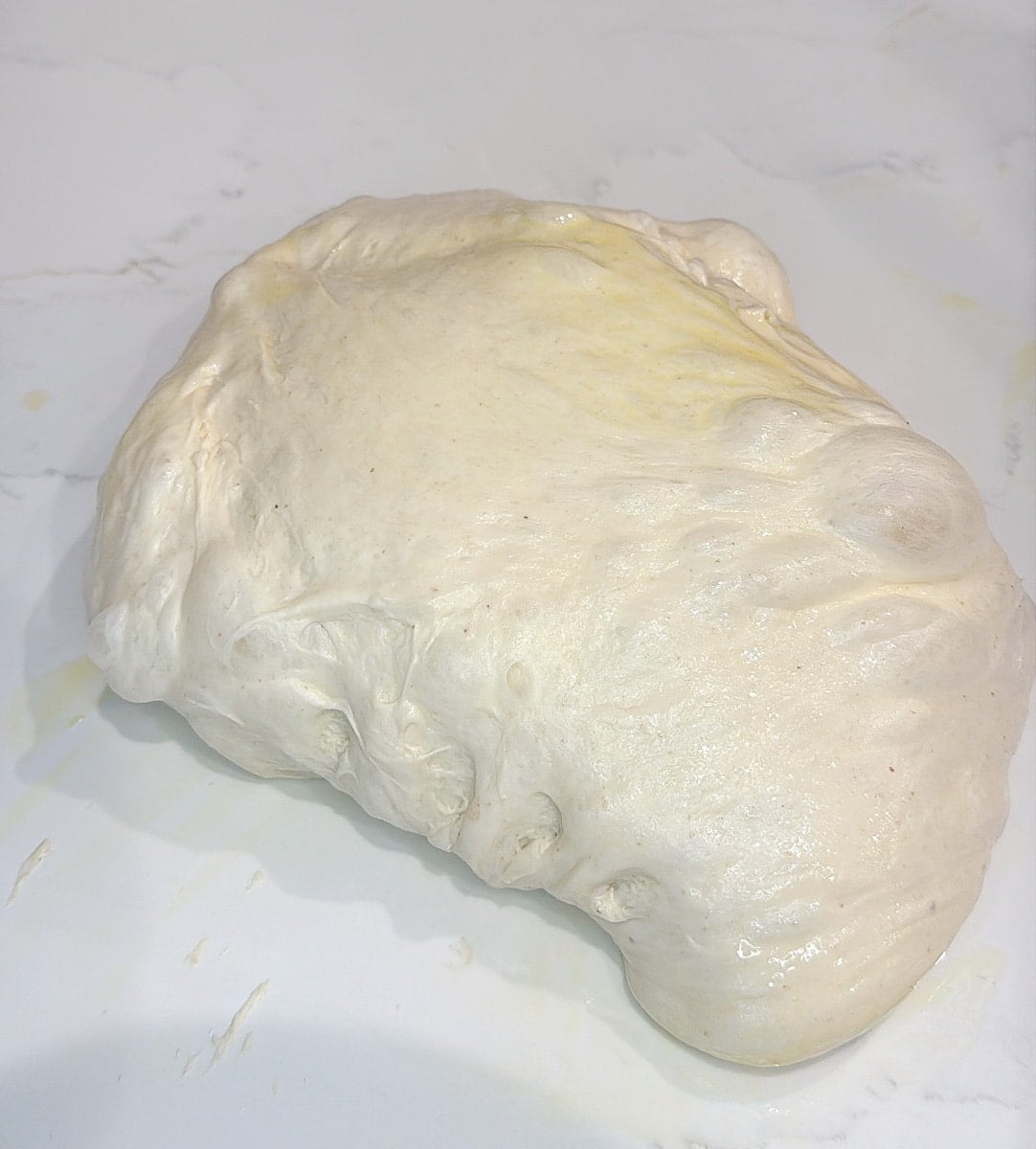
- Add the salt and mix to combine. Turn the dough onto a lightly floured surface and knead for about 5 minutes, until it feels smooth and elastic.
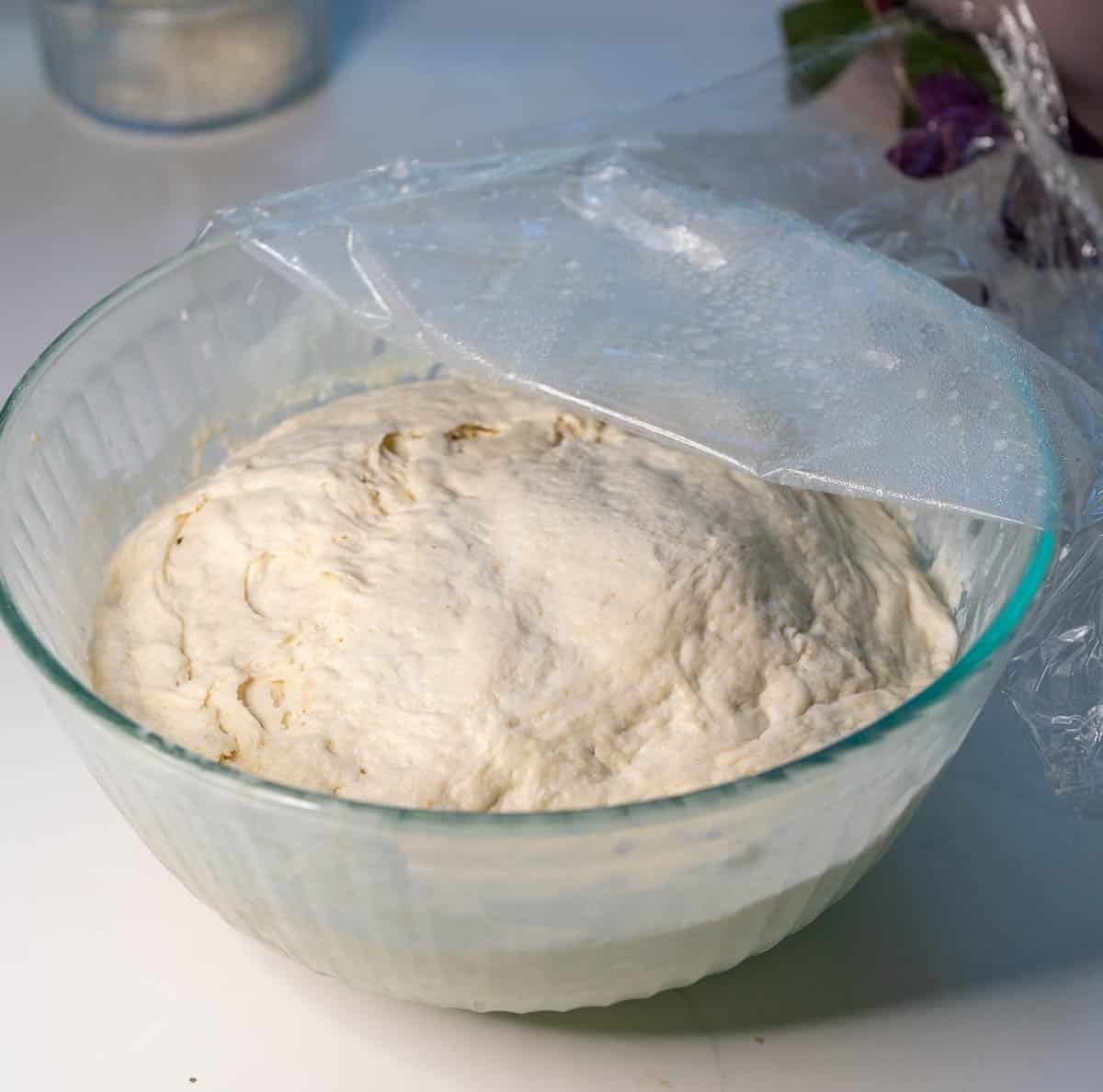
- Place the dough back into the bowl, cover, and let it bulk ferment in a warm spot until doubled in size. This is best to do overnight (8 to 10 hours at 68 to 75º F).
PRO TIP: How to get nooks and crannies? Fermentation produces CO2 gas bubbles that get trapped inside the gluten network. Stovetop cooking sets the outside fast while the inside steams, trapping air pockets that create those nooks and crannies.
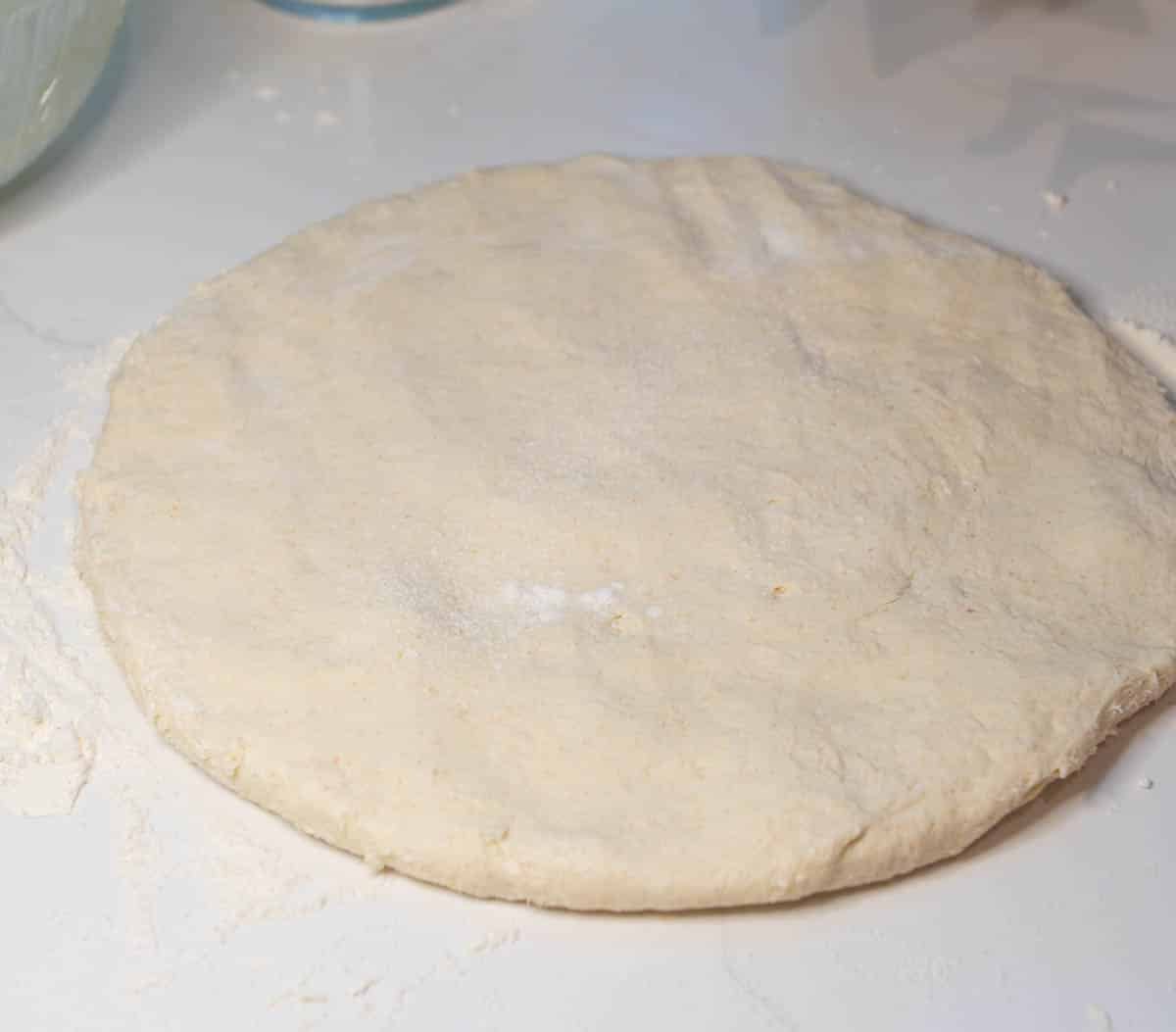
- The next morning, the dough should be soft, puffy, and slightly domed. Gently turn it out onto a floured surface and sprinkle a little flour on top. Use your fingertips to press it out to about ½ inch thick.
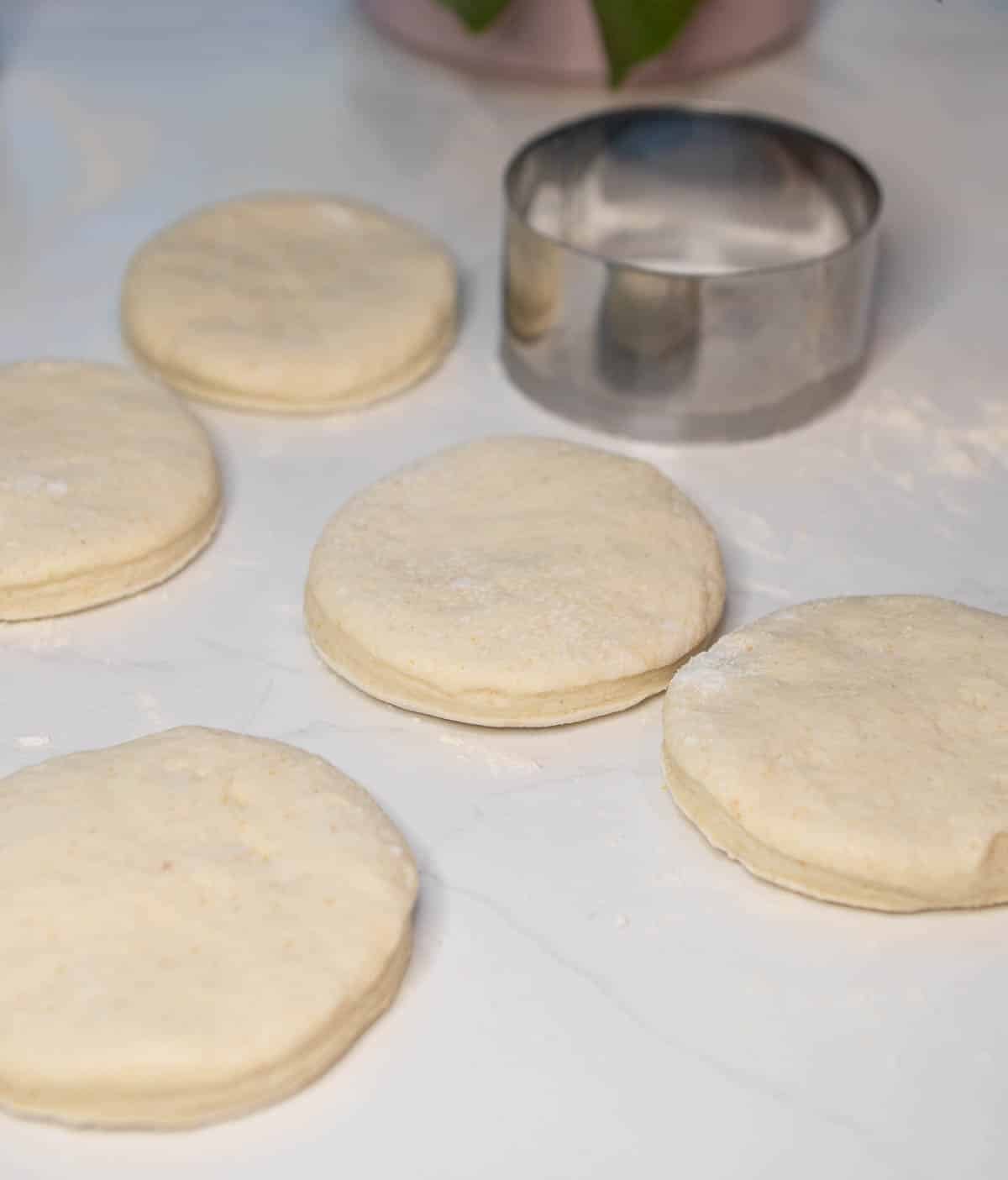
- Grab a 3-inch biscuit cutter and cut out your muffins. Re-roll scraps gently (don't overwork them) to get all 12.
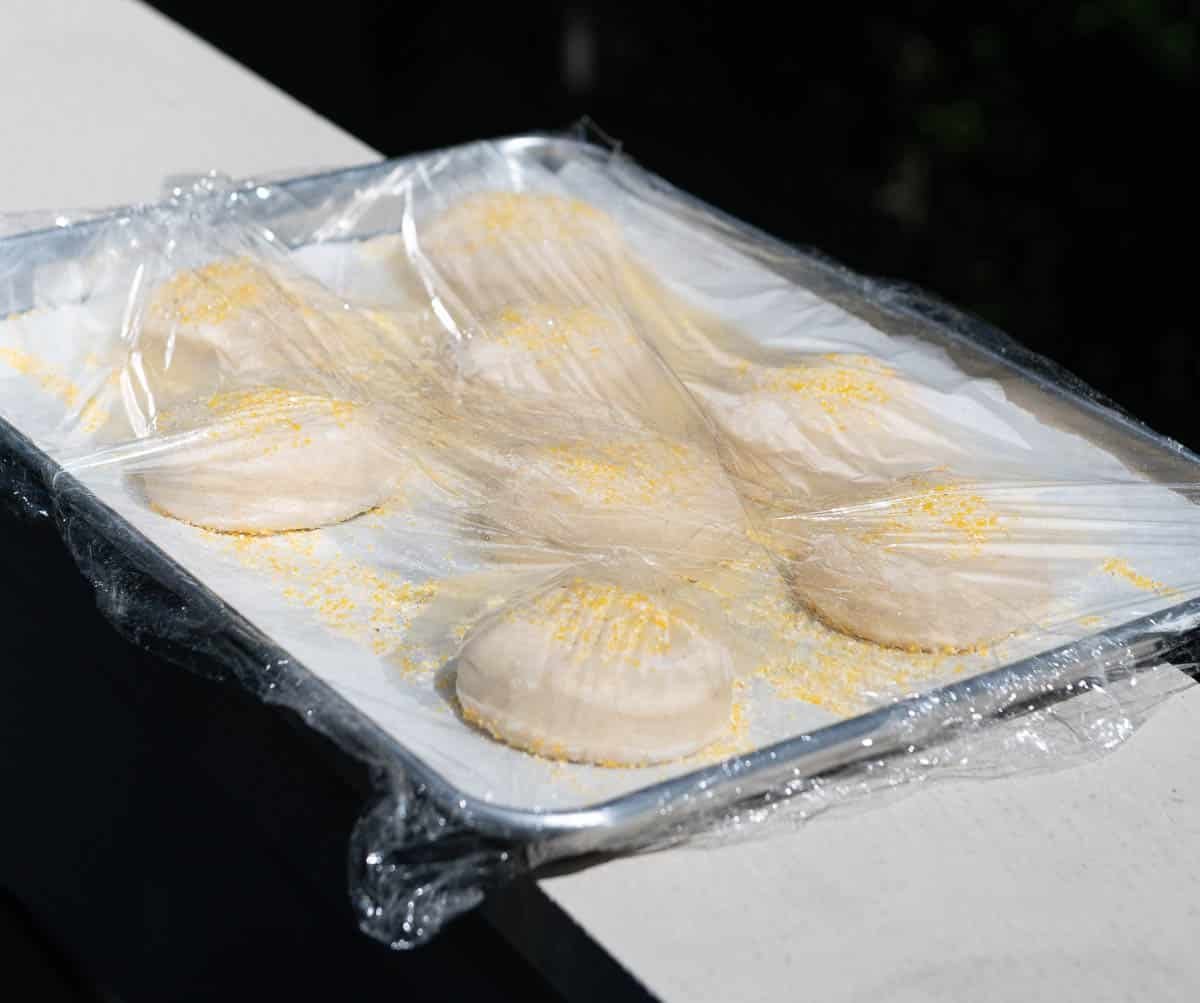
- Place the muffins on a baking sheet lined with parchment that's been dusted with cornmeal. Sprinkle a little more cornmeal on top, cover with a tea towel, and let them rise at room temperature for 1 hour until they look puffy.
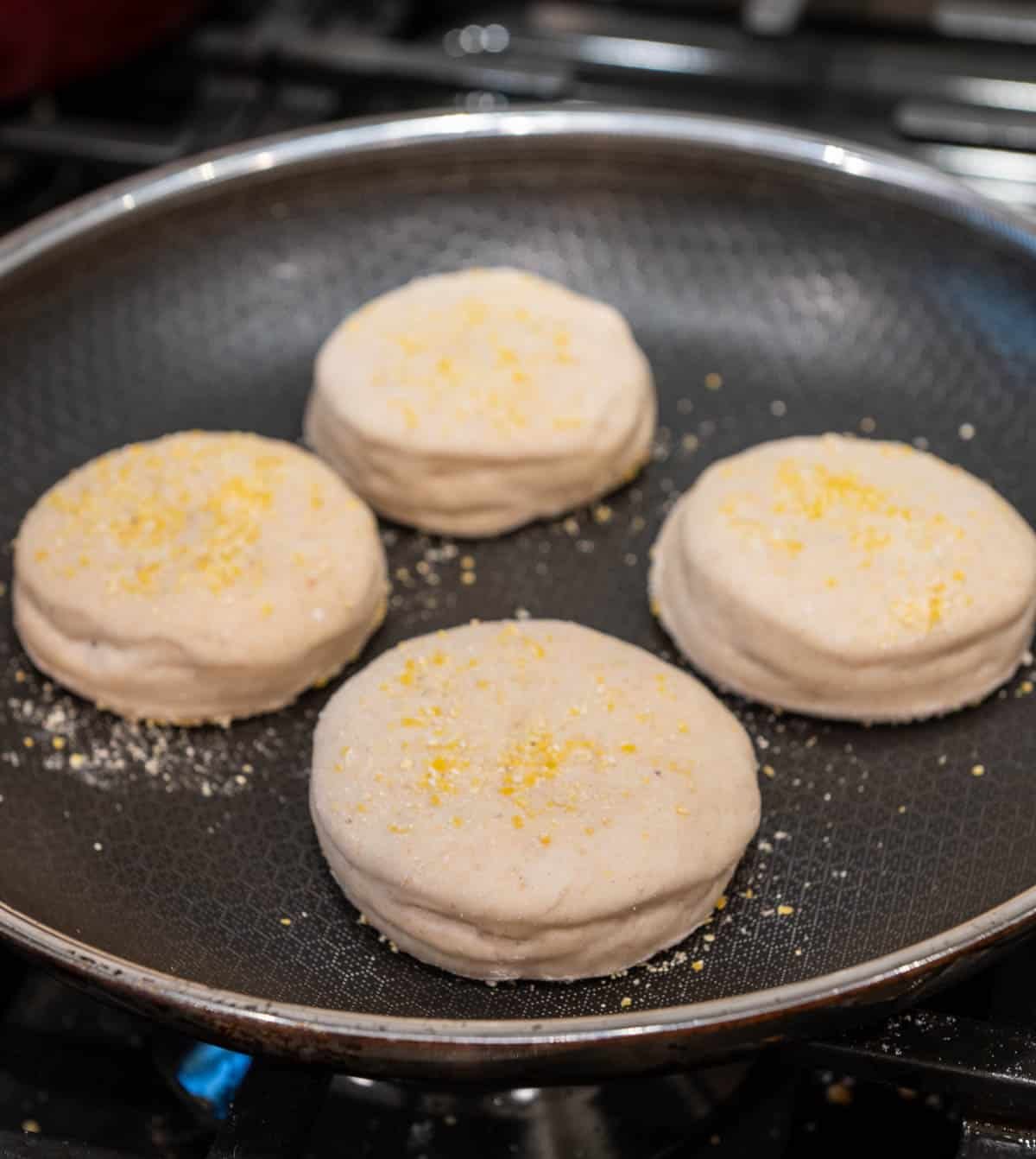
- Preheat a large skillet over LOW heat. This is the most important step. Around 325º F surface temperature is ideal, if you have an infrared thermometer.
Lightly grease the skillet or use a nonstick pan. Place 4 muffins at a time in the pan, spaced about 2 inches apart. Cover with a lid and cook for 4 minutes on the first side.
PRO TIP: For uniform Thomas's-style muffins with perfectly straight edges, you can use metal english muffin rings (3.5 inch) instead of a biscuit cutter. Grease the rings, place them on the hot skillet, and drop the dough rounds inside. The ring shapes them as they cook. A biscuit cutter works just as well, the muffins will just have slightly more rustic edges. Free-form (no cutter, no rings, just shape by hand) works too but the muffins will be irregular.

- Flip the muffins and cook for another 4 minutes covered. The internal temperature should hit 205 to 210º F when fully cooked through. Pull at 205 for softer, 210 for slightly firmer.

- Transfer to a wire rack to cool for at least 10 minutes before splitting. Use a FORK, not a knife, to open them up. Stab around the perimeter to pierce the edges, then gently pull them apart so the nooks and crannies stay intact. A knife slices clean through and ruins the texture.
PRO TIP: If the outside is browning faster than the inside is cooking (this happens on cast iron, gas stoves, and any older skillet), pull the muffins from the skillet onto a sheet pan and finish them in a 250º F oven for 8 to 10 minutes. They'll come up to internal temp without burning the crust. This is the rescue every nervous beginner needs to know.
How To Make A Warm Sourdough Environment
Sourdough is run by temperature. If your kitchen runs below 68º F, your bulk rise can take twice as long. Two easy tricks:
- Oven with the light on. Place the covered bowl inside your oven (turned OFF) with just the oven light on. The light alone holds the inside around 75 to 85º F, which is ideal.
- Microwave proofing box. Boil a cup of water in the microwave for 2 to 3 minutes, push the mug to the corner, place the covered bowl next to it, and close the door. The residual steam and heat make a warm humid box.
If you bake sourdough often, a Brod and Taylor Sourdough Proofer holds a perfect temp year-round without any of the tricks.
Common Sourdough English Muffin Problems To Avoid
- Gummy or doughy center. The #1 cause is heat too high, the outside sets and browns before the middle cooks through. Use LOW heat, cover with a lid to trap steam, and check internal temp (205 to 210º F). If you're already in trouble, finish in a 250º F oven for 8 to 10 minutes.
- Burned outside, raw inside. Same root cause: heat too high. Cast iron and gas stoves run hot, ease back to the lowest setting that still keeps the muffins sizzling gently.
- No nooks and crannies. Either the dough was over-kneaded (squeezed out the air pockets), the bulk rise was cut short (not enough gas trapped to begin with), or you split with a knife instead of a fork. Knead gently, ferment fully, and stab around with a fork.
- Muffins didn't rise. Your starter wasn't active enough. Give it 2 to 3 daily feedings before mixing and confirm it doubles within 4 to 6 hours of feeding.
- Stuck to the skillet. Either not enough cornmeal underneath the muffins, or the pan wasn't greased lightly. Add cornmeal generously, it's part of the flavor too.
- Dough is too sticky to roll out. Either your starter was wetter than mine, or your kitchen is humid. Add a Tablespoon of flour at a time during the press-out step until the dough is workable. Don't add it during the bulk rise, that throws off the hydration.
Make Ahead and Storage
- Make ahead the night before. This recipe is already an overnight bulk ferment, so it's built for it. Mix at 8 to 9 pm, cook in the morning.
- Cold ferment for more flavor. After the bulk rise, you can chill the dough in the fridge up to 24 hours before pressing out and cutting. The cold deepens the tang and makes the dough easier to handle.
- Storage. Cooled muffins keep airtight at room temperature up to 1 week. Refrigerate up to 2 weeks if your kitchen is humid.
- Freeze. Slice them in half before freezing so you can toast directly from frozen. Wrap in foil + freezer bag, freeze up to 6 months.
Final Thoughts
This is the recipe that taught me English muffins didn't have to come from a bag with a spinning logo on it. The dad-and-strawberry-jam version of these still lives in my head, and now my own kids ask for them for breakfast on weekends. There is something so satisfying about the smell of these cooking low and slow on the stove on a Saturday morning, especially because you actually slept while the dough did most of the work.
If you're already in your sourdough era, the same starter you built for my beginner sourdough bread is exactly what makes these English muffins so good. Or try my rolls, sandwich loaves, and these muffins in the same week without learning a totally new recipe each time.
Make These Sourdough English Muffins Your Own
Whole wheat blend. Swap up to 1 cup of the all-purpose flour for whole wheat. The crumb gets nuttier and a little denser. Don't go past 1 cup, or the muffins lose their classic soft chew.
Cinnamon raisin English muffins. Knead in ½ cup raisins and 1 teaspoon cinnamon during the final knead. Sprinkle a little cinnamon sugar on top before cooking for extra sparkle.
Use ring molds for Thomas 's-style edges. A set of 3.5-inch metal English muffin rings gives you perfectly straight, uniform sides. Grease the rings, place them on the hot skillet, and drop the dough rounds inside. The dough cooks UP inside the ring instead of spreading sideways.
Vegan version. Swap whole milk for plant milk (oat is my favorite for richness), vegan butter for the butter, and maple syrup or agave for the honey. The muffins still hit on texture, just a touch less browning on the edges.
Eggs Benedict / breakfast sandwich / pizza base. Split, toast, then top with poached eggs and hollandaise for a benedict, bacon-egg-and-cheese for a sandwich, or a smear of marinara and shredded mozzarella under the broiler for mini pizzas. They hold up to all of it.
Sourdough English Muffins FAQs
Heat was too high. The crust set too fast and the inside didn't have time to fully cook. Move to a lower burner setting, cover with a lid to trap steam, and check internal temp at 205 to 210º F. If you already pulled them and they're gummy, you can rescue them in a 250º F oven for 8 to 10 minutes.
Yes. Skip the overnight and let the dough rise in a warm spot (78 to 80º F) for 3 to 4 hours until doubled. Same-day muffins will have a softer tang and a slightly less complex flavor, but they'll still be great. Cold-retard overnight in the fridge if you want even more tang.
A heavy nonstick or hybrid skillet (HexClad, cast iron with a smooth, well-seasoned surface) gives the most even heat. Lighter pans run hot and burn the outside. If all you have is a thin nonstick, drop the heat a notch lower than you think you need.
The nooks and crannies are gas pockets created during fermentation, suspended inside the crumb. A knife slices straight through them and you lose the texture. A fork stabs into the edges and pulls the muffin apart along the natural fault lines, keeping the cavities intact.
More Sourdough Recipes To Try


Leave Me A Review
⭐️⭐️⭐️⭐️⭐️
If you tried this Sourdough English Muffin Recipe or any other recipe on my blog, please leave a 🌟 star rating and let me know how it goes in the comments. I love hearing from you!
Recipe
Equipment
- 1 biscuit cutter
- 1 large skillet with lid
Ingredients
- 1 cup milk
- 1 tablespoon sugar
- 2 tablespoons butter melted
- 1 tablespoon honey
- ½ cup active sourdough starter
- 3 cups all-purpose flour
- 1 teaspoon fine sea salt
- ¼ cup cornmeal
Instructions
- Before you begin: Confirm your starter is active and bubbly, it should at least double within 4 to 6 hours of its last feeding. Warm your milk to room temperature so it doesn't shock the starter. Plan backwards from when you want to cook, this is roughly a 9 to 10 hour process from first mix to skillet.
- In a large bowl, combine the active sourdough starter, warm milk, sugar, melted butter, and honey. Whisk until the starter is fully dissolved.
- Add the flour and mix until you form a sticky shaggy dough. Cover with plastic wrap or a tea towel and rest 30 to 60 minutes to hydrate the flour.
- Add the salt and mix to combine.
- Turn the dough onto a lightly floured surface and knead for about 5 minutes, until smooth and elastic.
- Place the dough back in the bowl, cover, and let it bulk ferment in a warm spot until doubled, 8 to 10 hours at 68 to 75º F (overnight).
- The next morning, gently turn the dough out onto a floured surface and dust the top with a little flour. Press it out with your fingertips to about ½ inch thick.
- Cut into 12 rounds with a 3-inch biscuit cutter (or 3.5-inch english muffin rings). Re-roll scraps gently for the last few.
- Place the muffins on a baking sheet lined with parchment dusted with cornmeal. Sprinkle more cornmeal on top, cover with a tea towel, and rise at room temperature for 1 hour.
- Preheat a large skillet over LOW heat (around 325º F surface temp). Lightly grease the skillet.
- Place 4 muffins in the pan at a time, spaced 2 inches apart. Cover with a lid and cook for 4 minutes on the first side.
- Flip and cook another 4 minutes covered. Internal temp should reach 205 to 210º F when done.
- Transfer to a wire rack to cool at least 10 minutes before splitting. Use a fork (not a knife) to open them up and preserve the nooks and crannies.
Video
Notes
- Don't cook on high heat. The outside will set before the inside cooks, leaving you with gummy centers.
- Don't slice with a knife. Use a fork to preserve the nooks and crannies.
- Don't substitute regular flour for cornmeal on the pan, it absorbs and you lose the texture.