



Jump to:
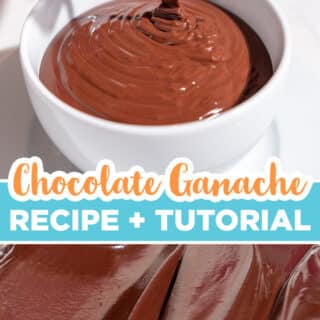
This is an easy chocolate ganache recipe for smooth, shiny, and delicious dark, milk, or white chocolate ganache. Make decadent drips on the side of your layer cake, let it set up to make a creamy frosting, or form it into rich truffles. Perfect this baking staple with a few easy tips and tricks explained in this blog post
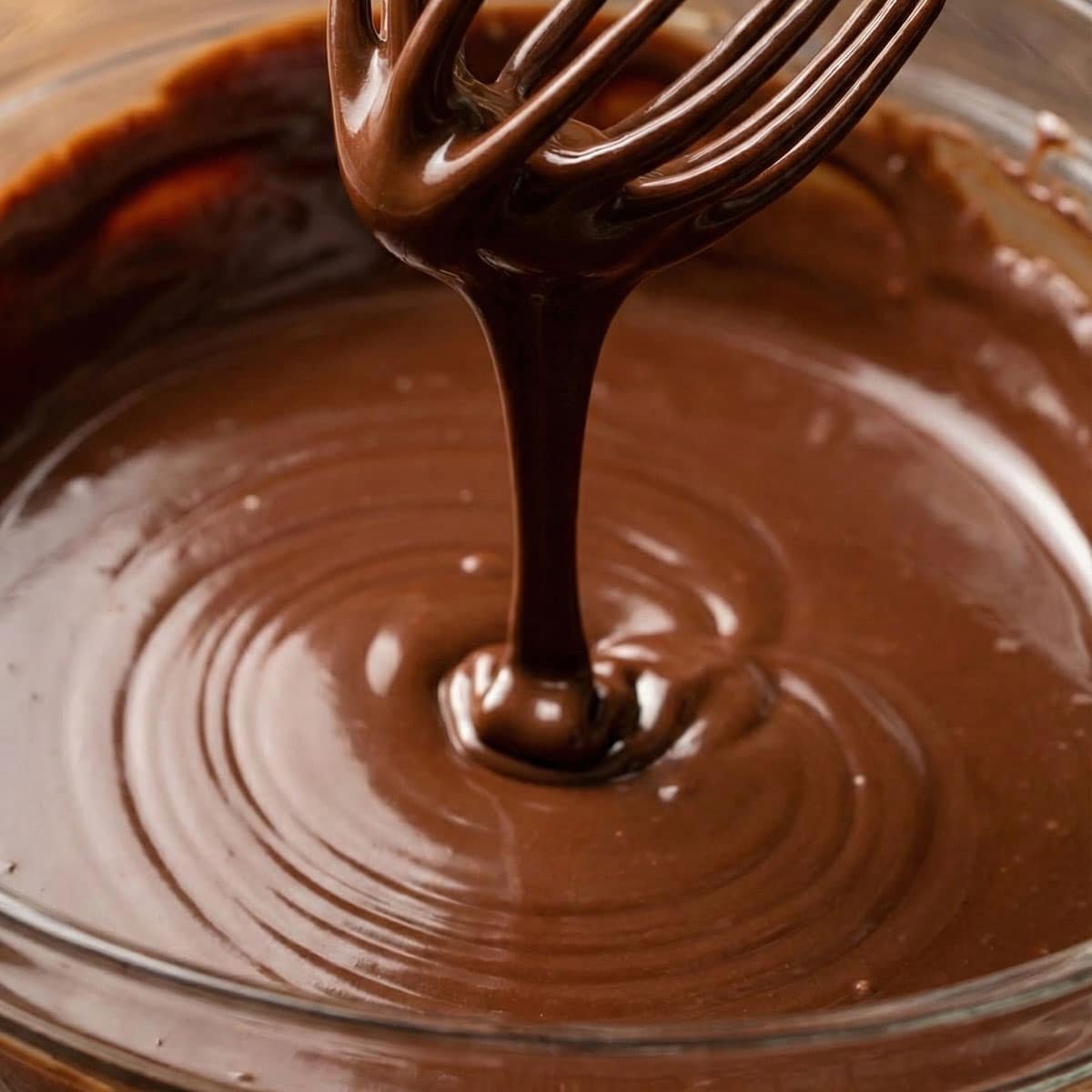
Most ganache recipes don't explain why things go wrong, and it can be really intimidating when you fail to mix just two ingredients together. The secret is, that not all chocolate is the same! Different brands of chocolate can change your ratio and sometimes lead to broken, oily, or hard ganache. Follow my tips for how to fix ganache when these problems occur, and understand the science behind it!
Table of contents
Chocolate Ganache Ingredients
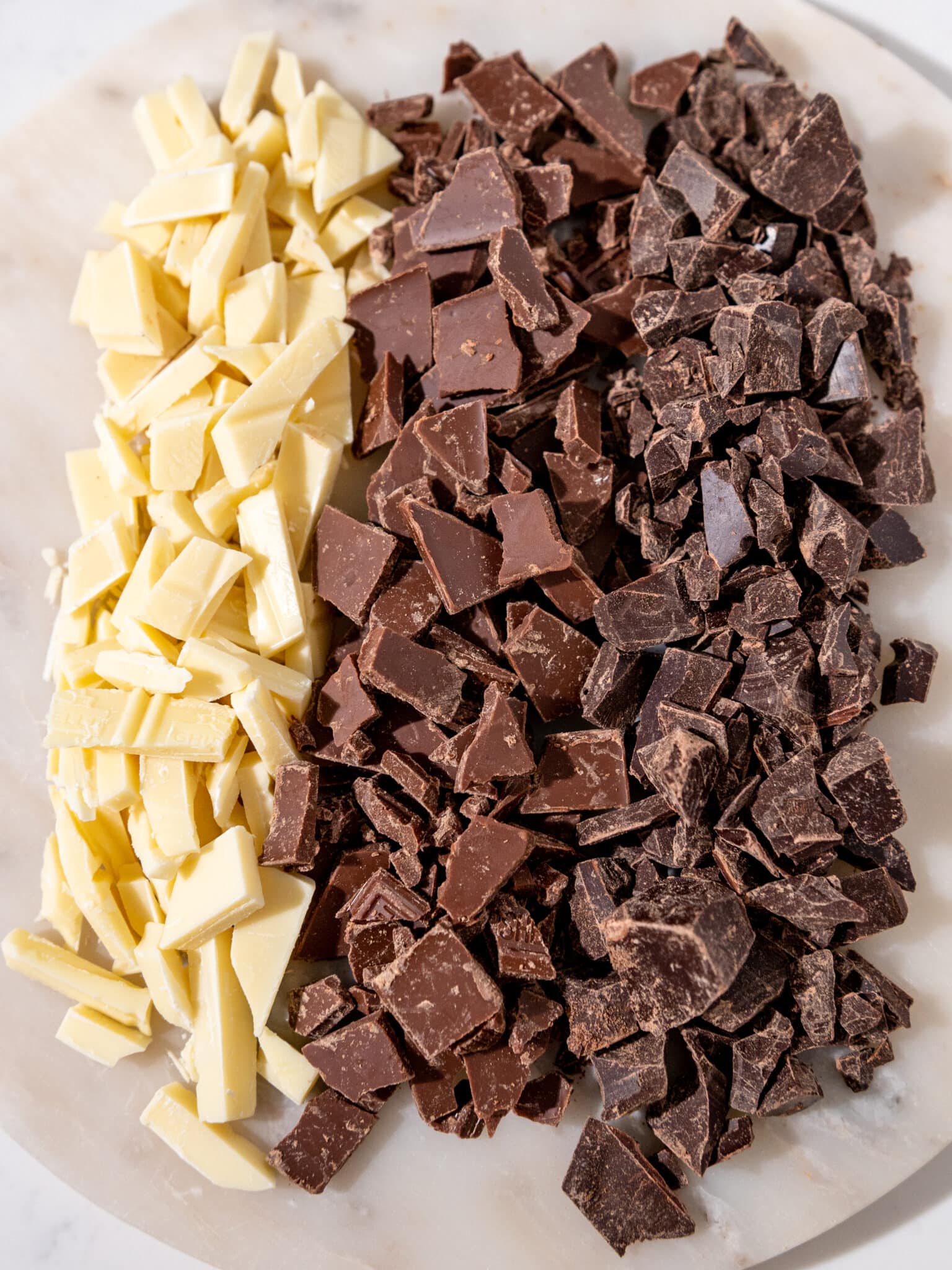
Chocolate: Whether you're using dark, milk, or white chocolate it's important to use good quality chocolate. The better the quality, the better tasting your ganache will be. You also want to make sure that cocoa butter is listed in the ingredients on the back, instead of hydrogenated palm kernel oil. Cocoa butter means that it is "real" chocolate instead of candy melts, and won't be as waxy. Some bags of semi-sweet chocolate chips at the grocery store do not contain cocoa butter, so make sure to check the back. Some brands I like are Ghirardelli, Lindt, Guittard, or Callebaut.
Heavy cream or heavy whipping cream gives ganache the right consistency that's perfectly creamy and thick.
Vanilla and Salt are optional for ganache, but it adds a little something extra that enhances the flavor of the chocolate.
Corn syrup and butter are sometimes added to the ganache to make it extra creamy and shiny.
How to Make Chocolate Ganache
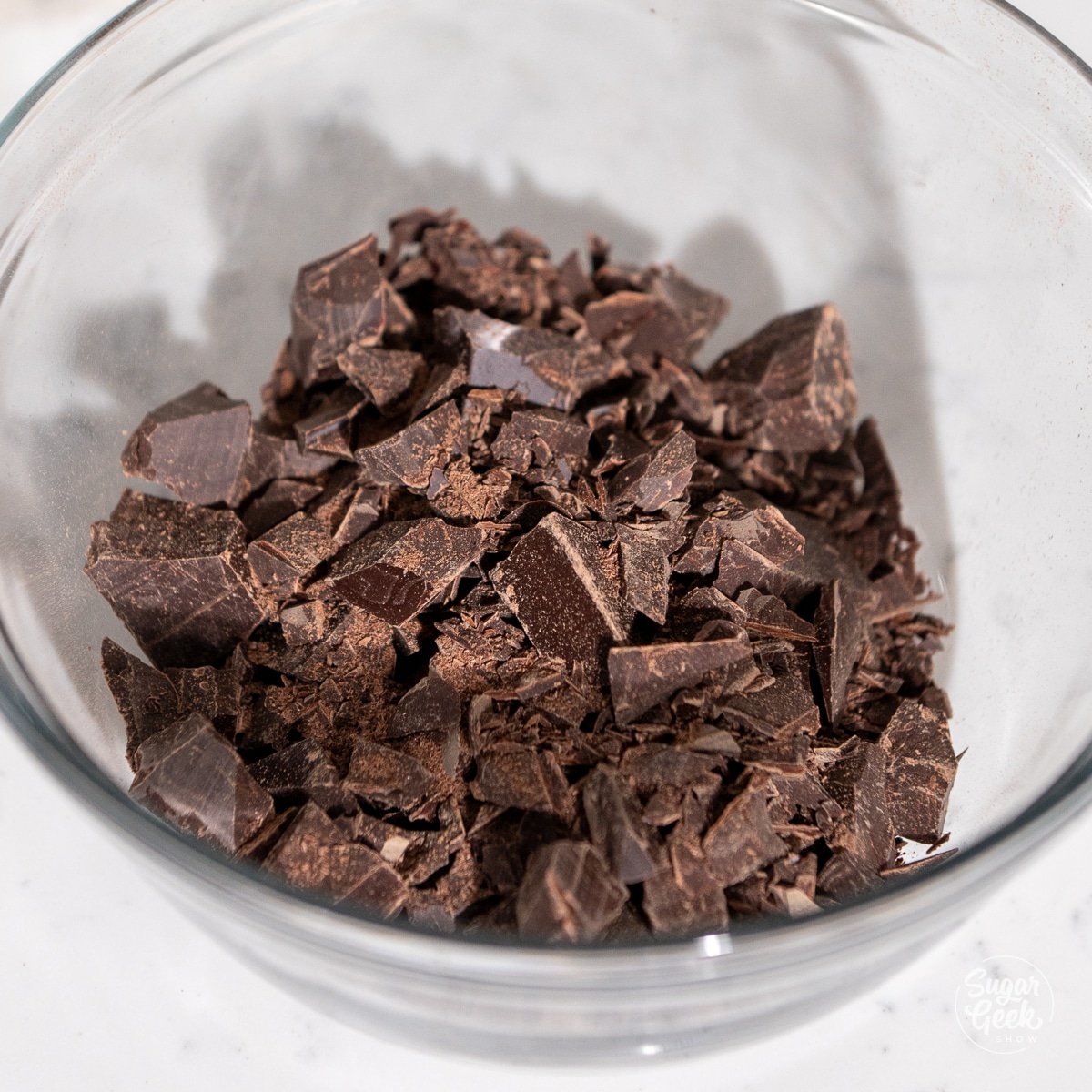
- Measure out the chocolate with a food scale and chop it into fine pieces so that it melts more easily. Place the chocolate in a medium heatproof bowl.

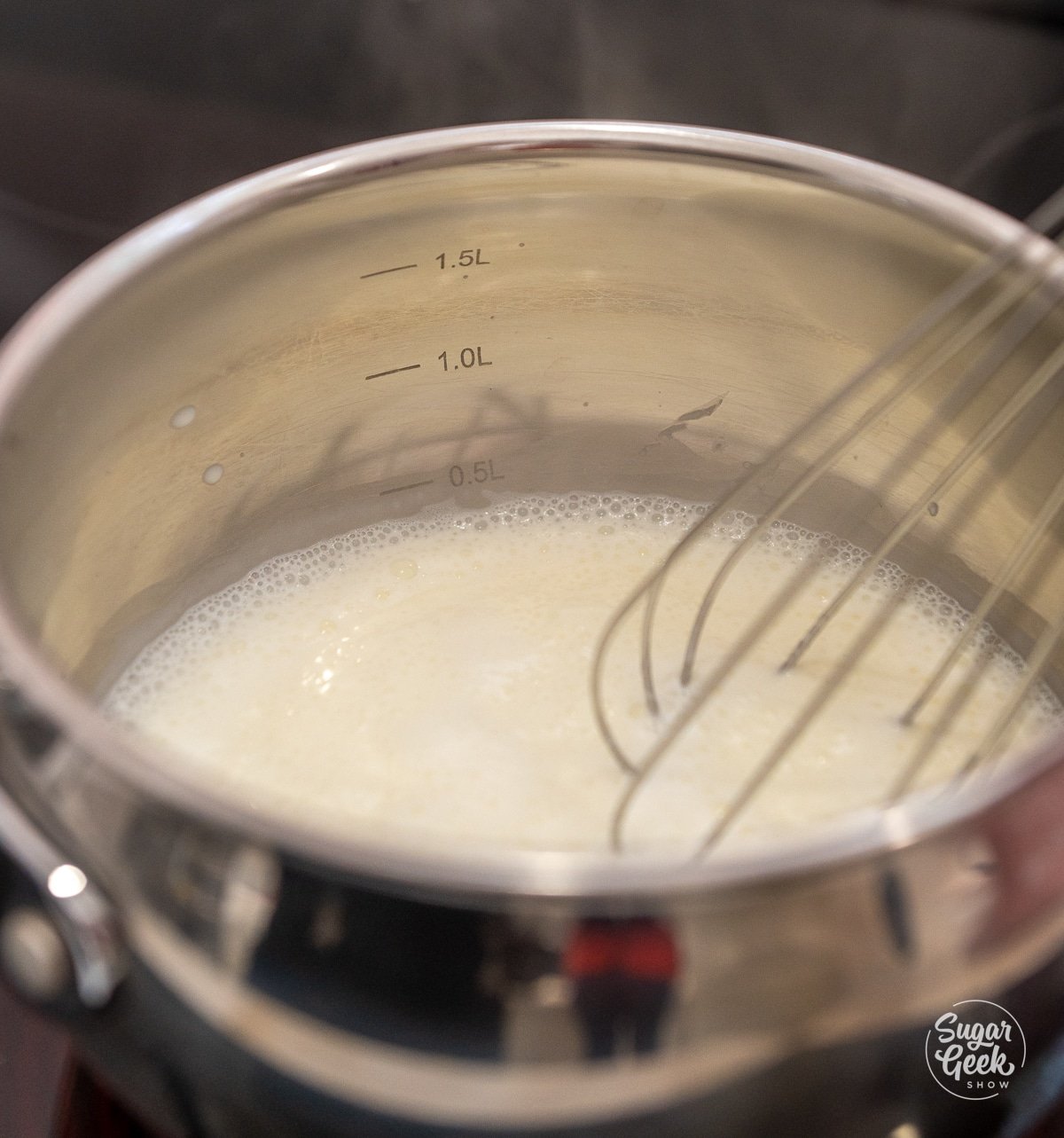
- Heat the cream on the stovetop in a small saucepan until steam just begins to rise from the surface. Whisk occasionally to prevent burning and don't walk away or your cream could boil over.

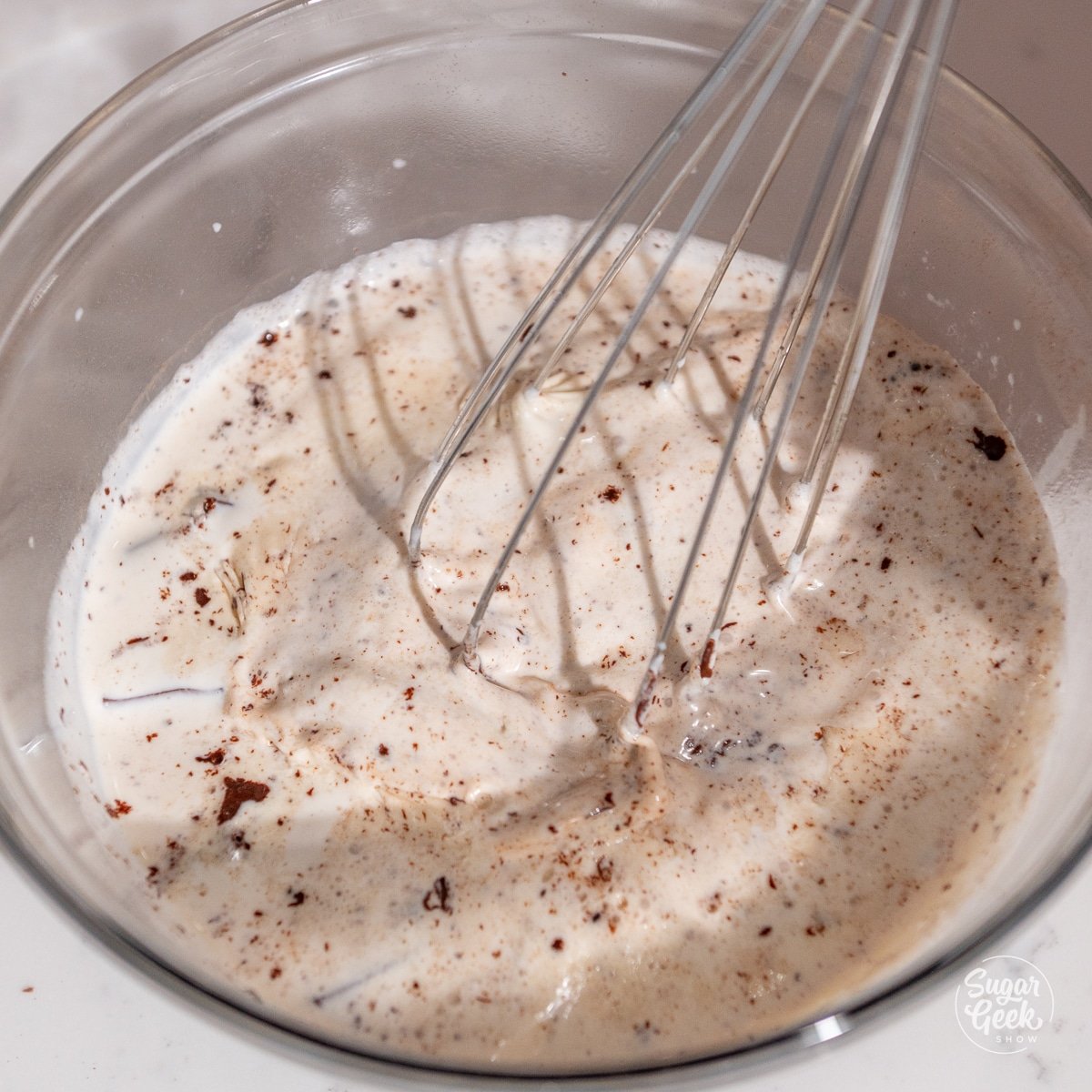
- Pour the hot cream over the chopped chocolate and push the chocolate down so it's all under the surface of the cream. Let the mixture of chocolate and cream sit for 5 minutes.
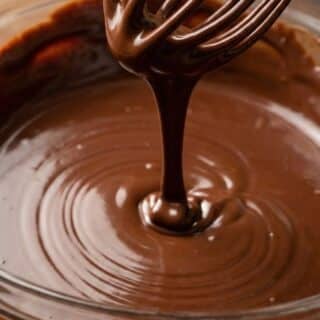
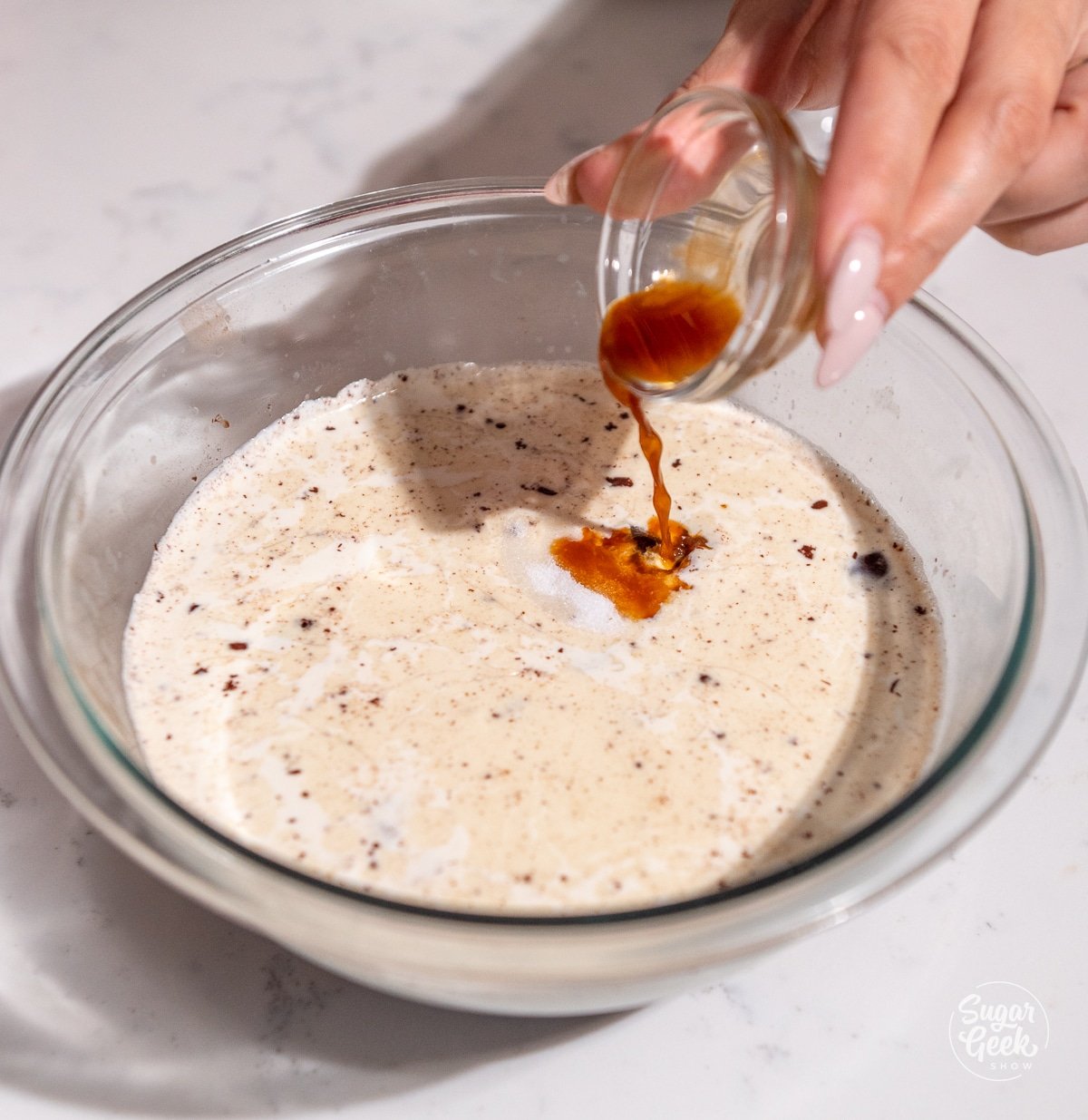
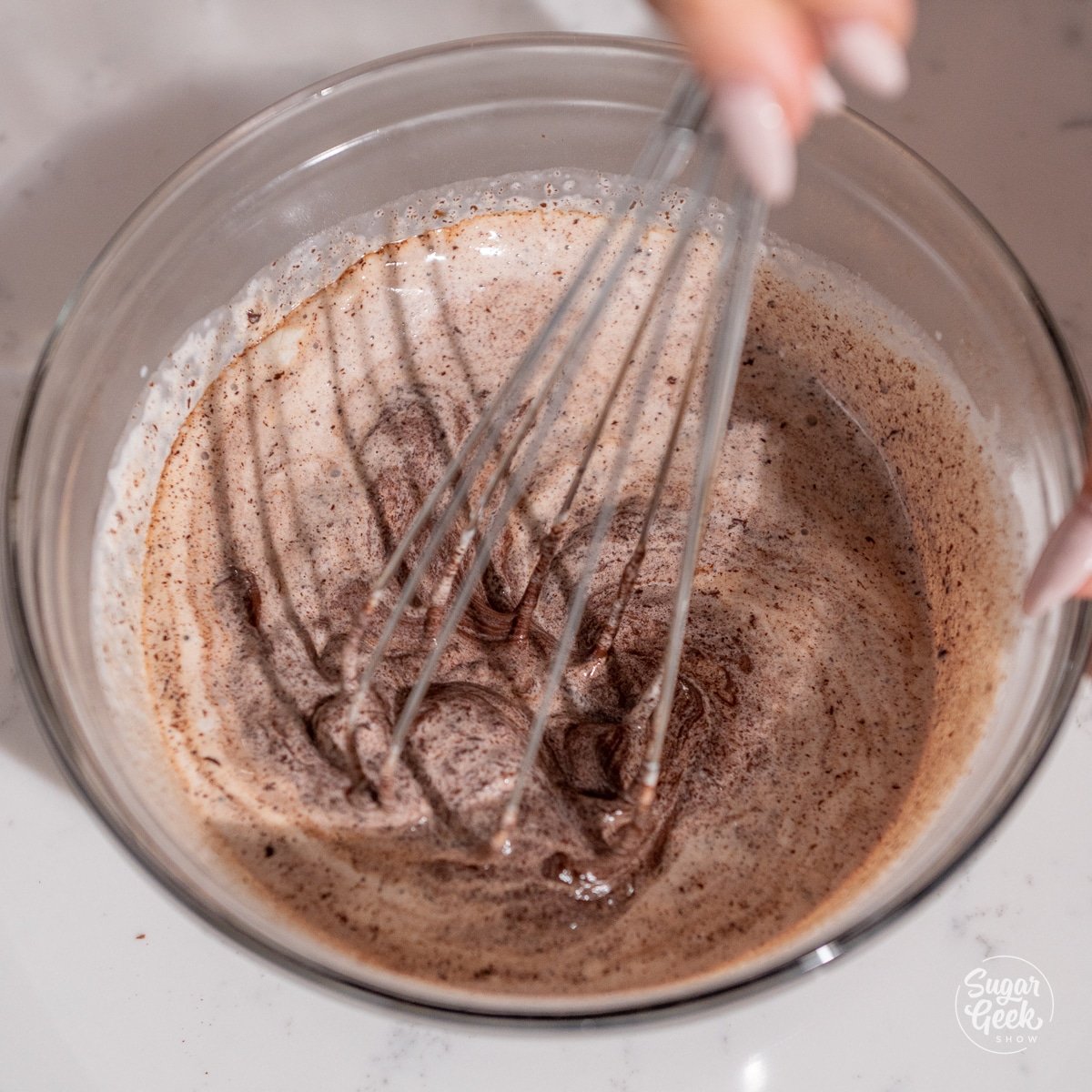
- Add the vanilla and salt, then whisk the cream and chocolate together until it's smooth. Start with small circles in the center until the chocolate and cream start creating an emulsion.

- If you have lumps or un-melted chocolate you can use an immersion blender to make your ganache super creamy and lump-free.
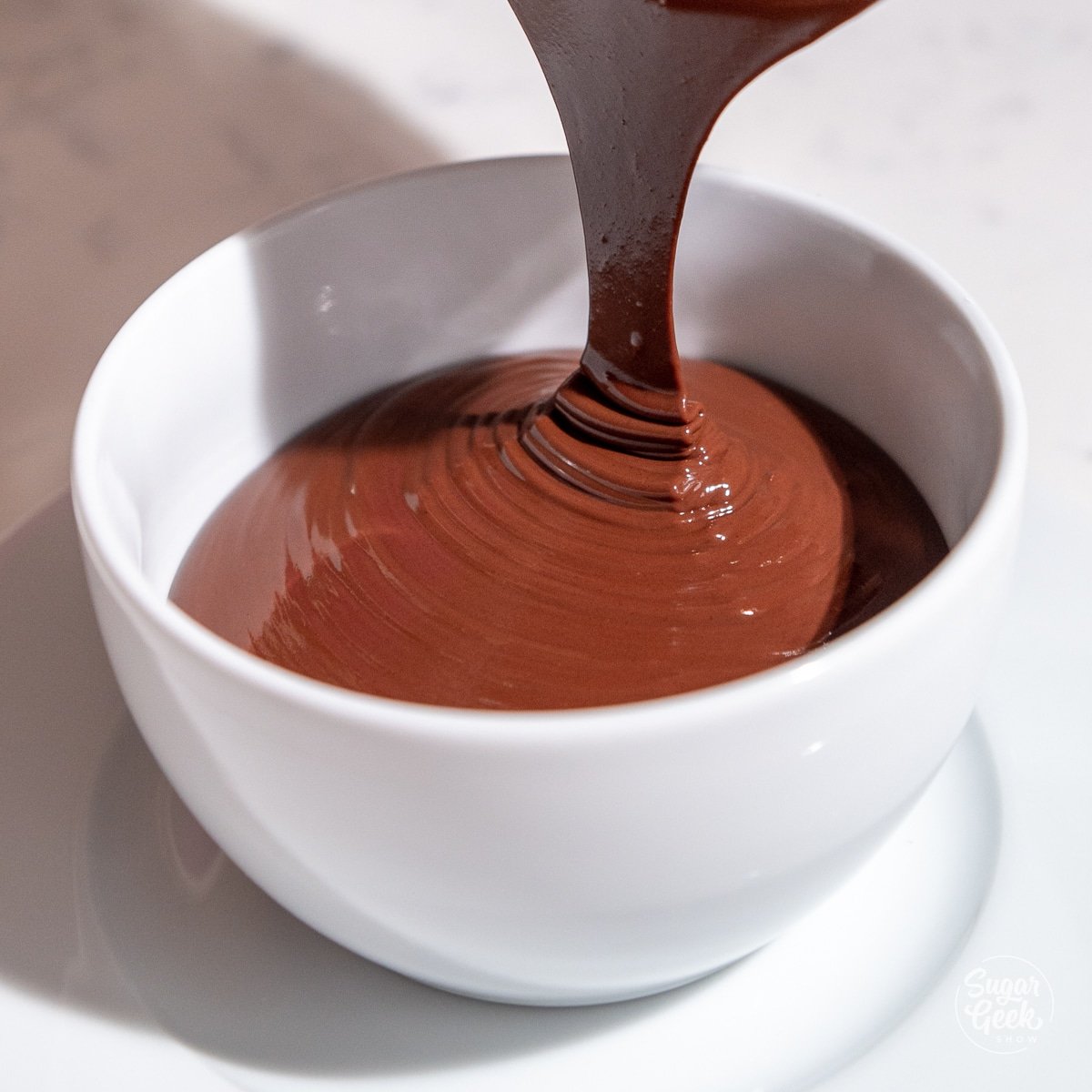
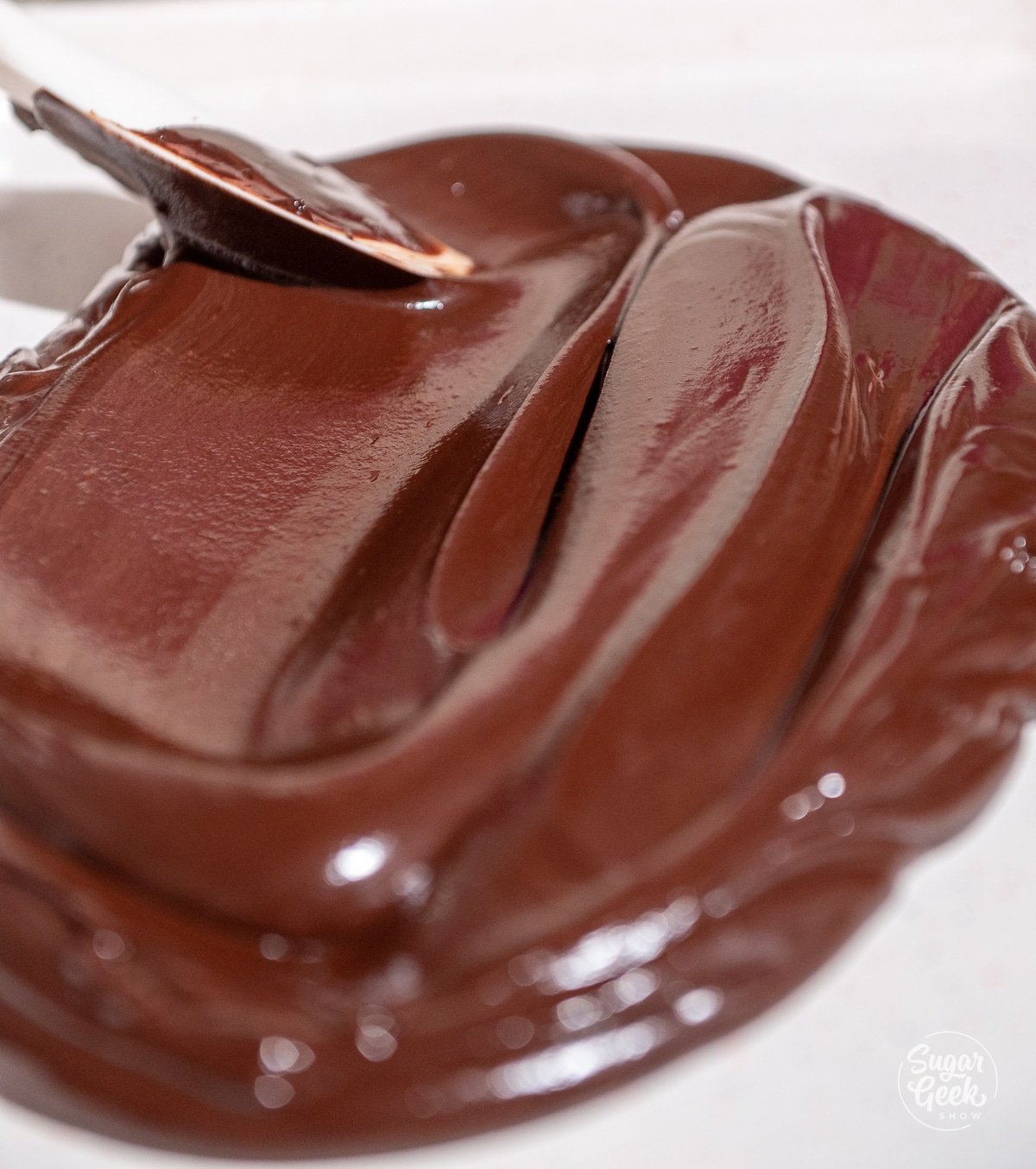
- Use the warm ganache for piping and drizzling, or pour it into a bowl. Pro-tip: Cool your ganache faster by pouring it into a baking sheet pan.

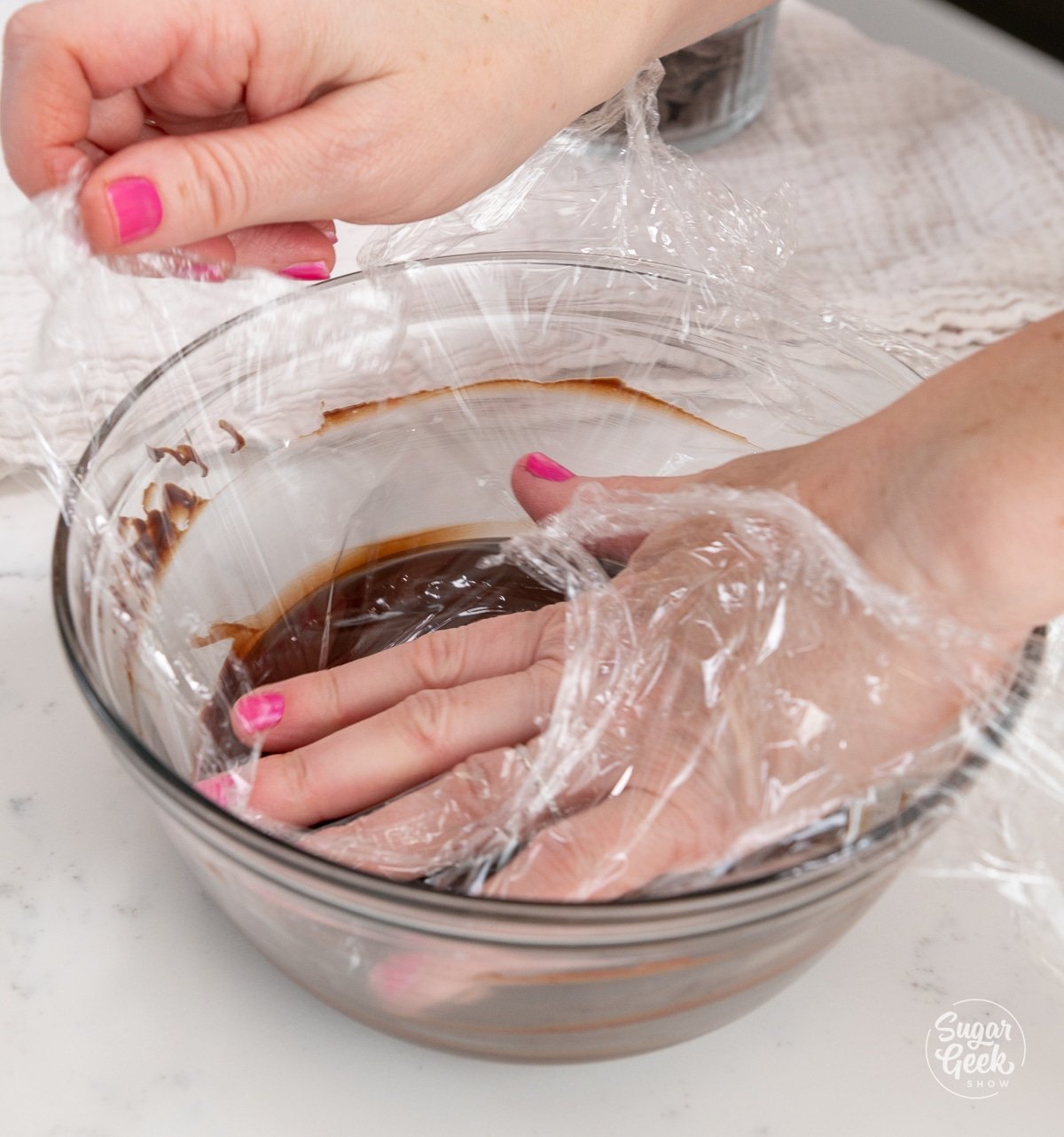
- Cover the ganache with plastic wrap touching the top and set it aside to rest at room temperature for about 4 hours or overnight.

- Store leftover ganache at room temperature for up to 48 hours, in the fridge for up to 1 week, or seal it in an airtight container and freeze for 6 months.

Using Chocolate Ganache In 6 Ways
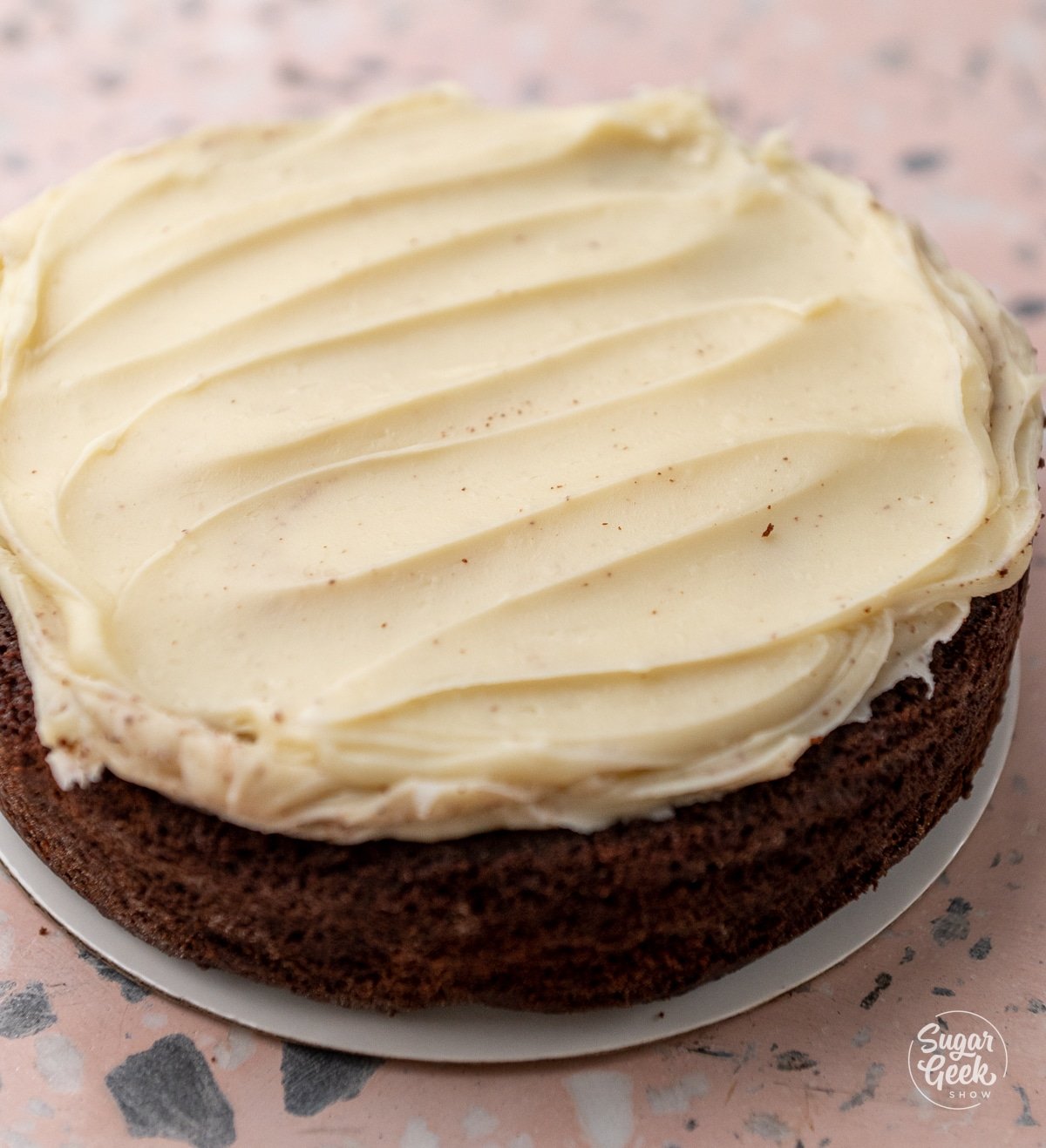
- Fill the layers of a cake with the set ganache.

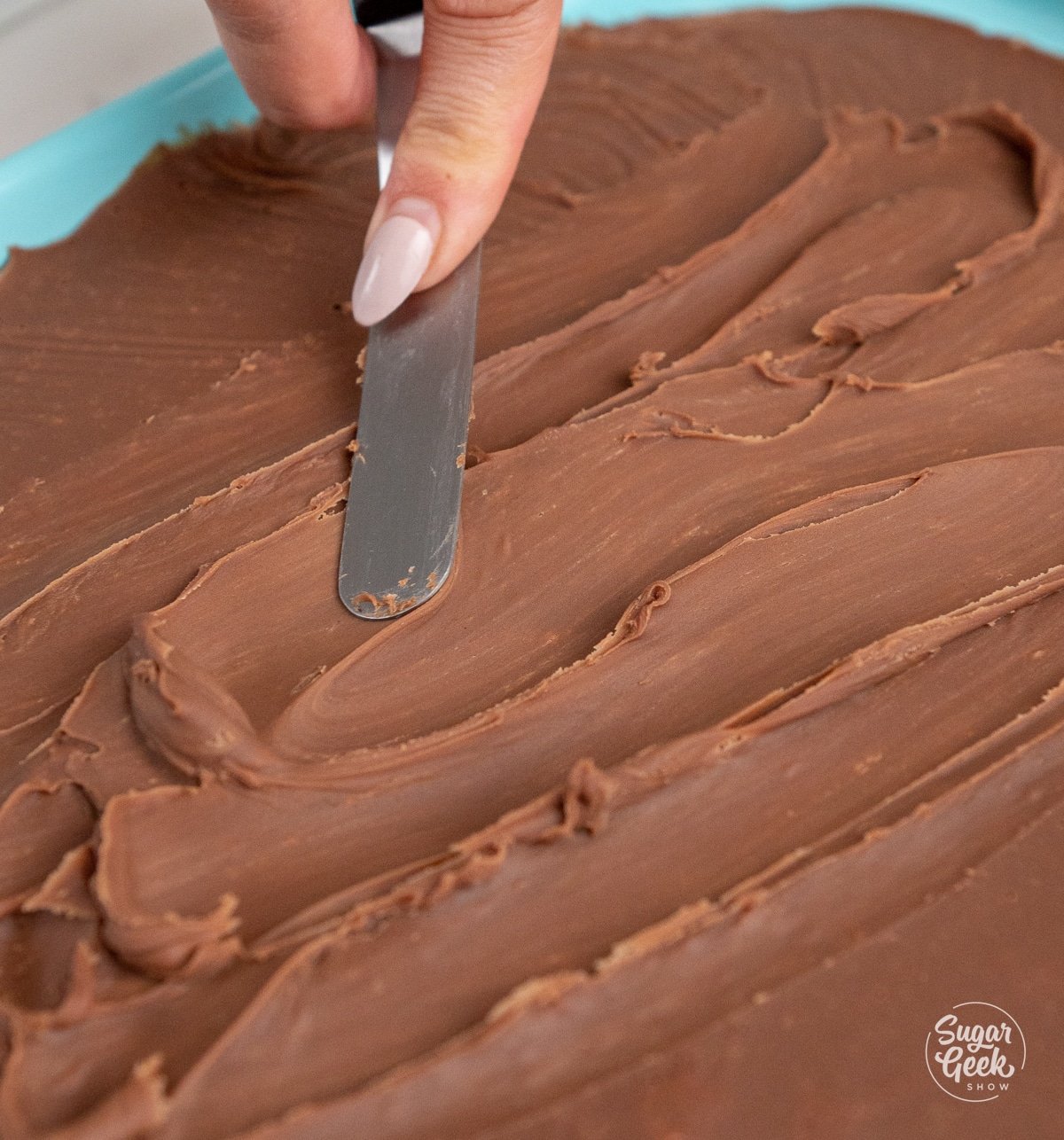
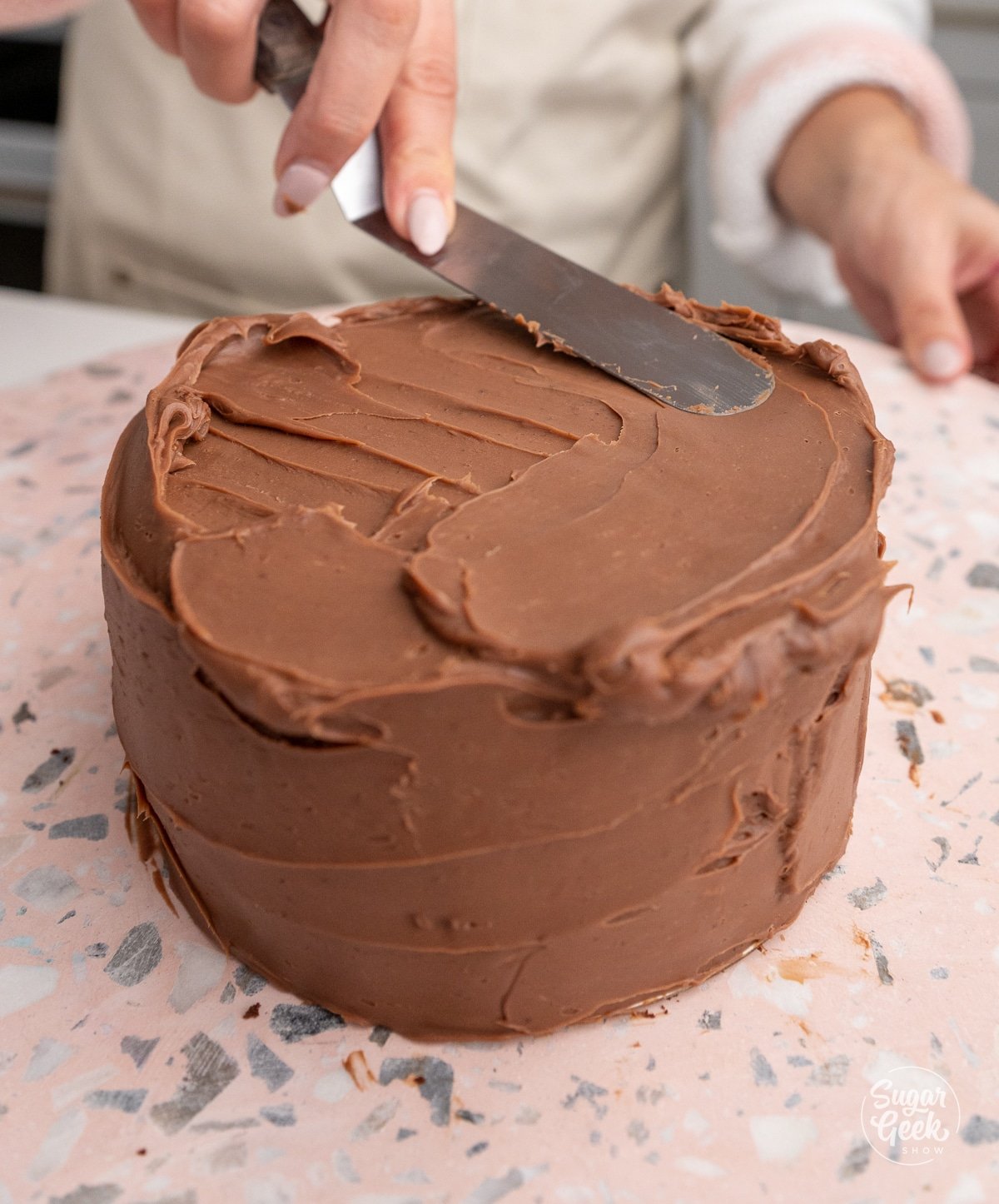
- Frost the outside of a cake with set ganache at peanut butter consistency.

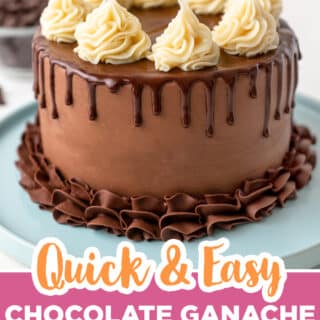
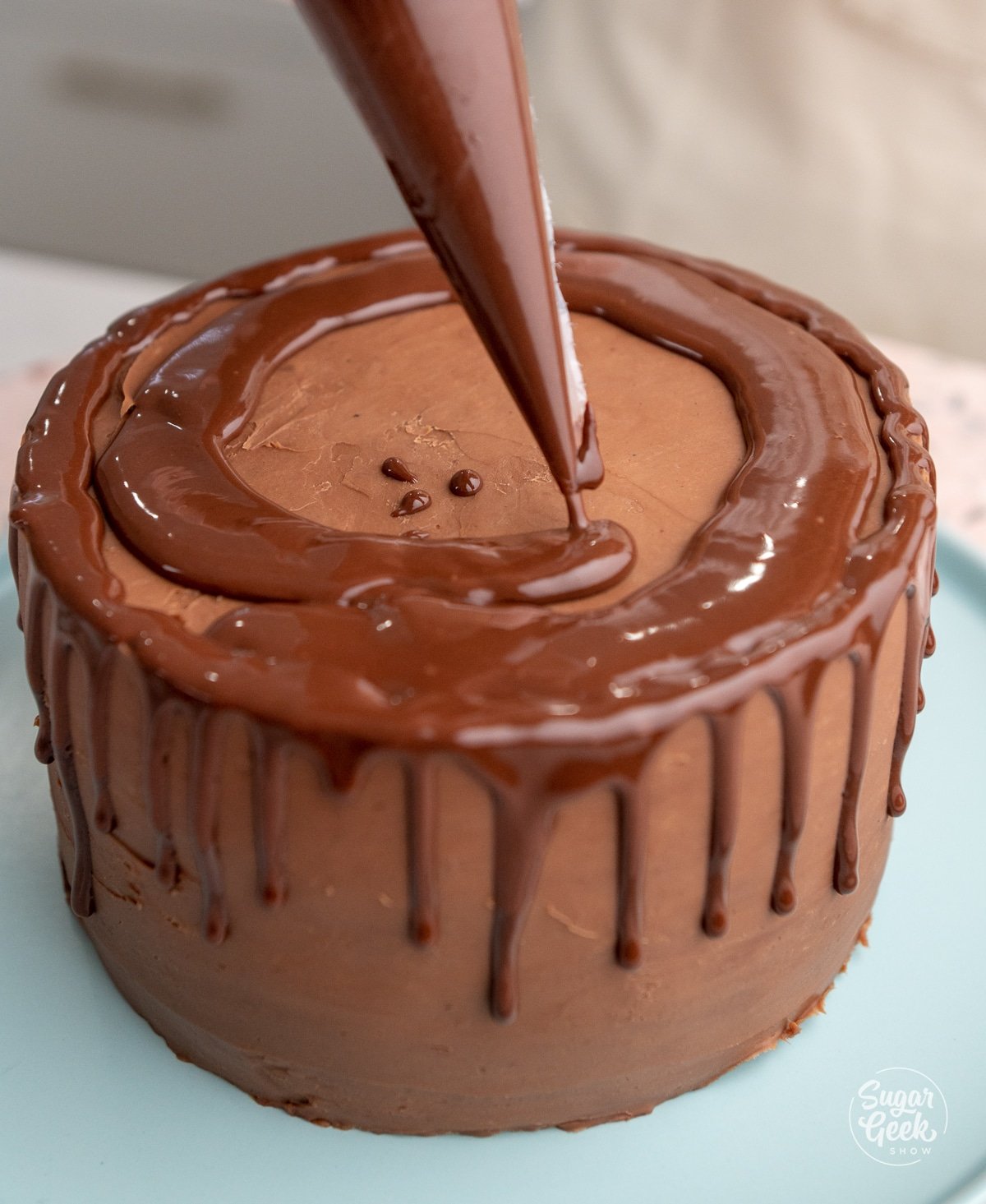
- Place the ganache into a piping bag and create a drip to decorate a cake with warm soft ganache.

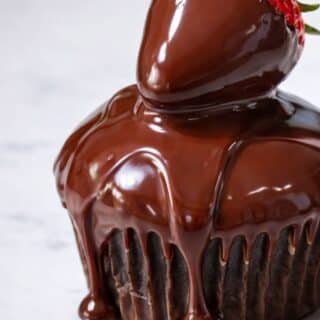
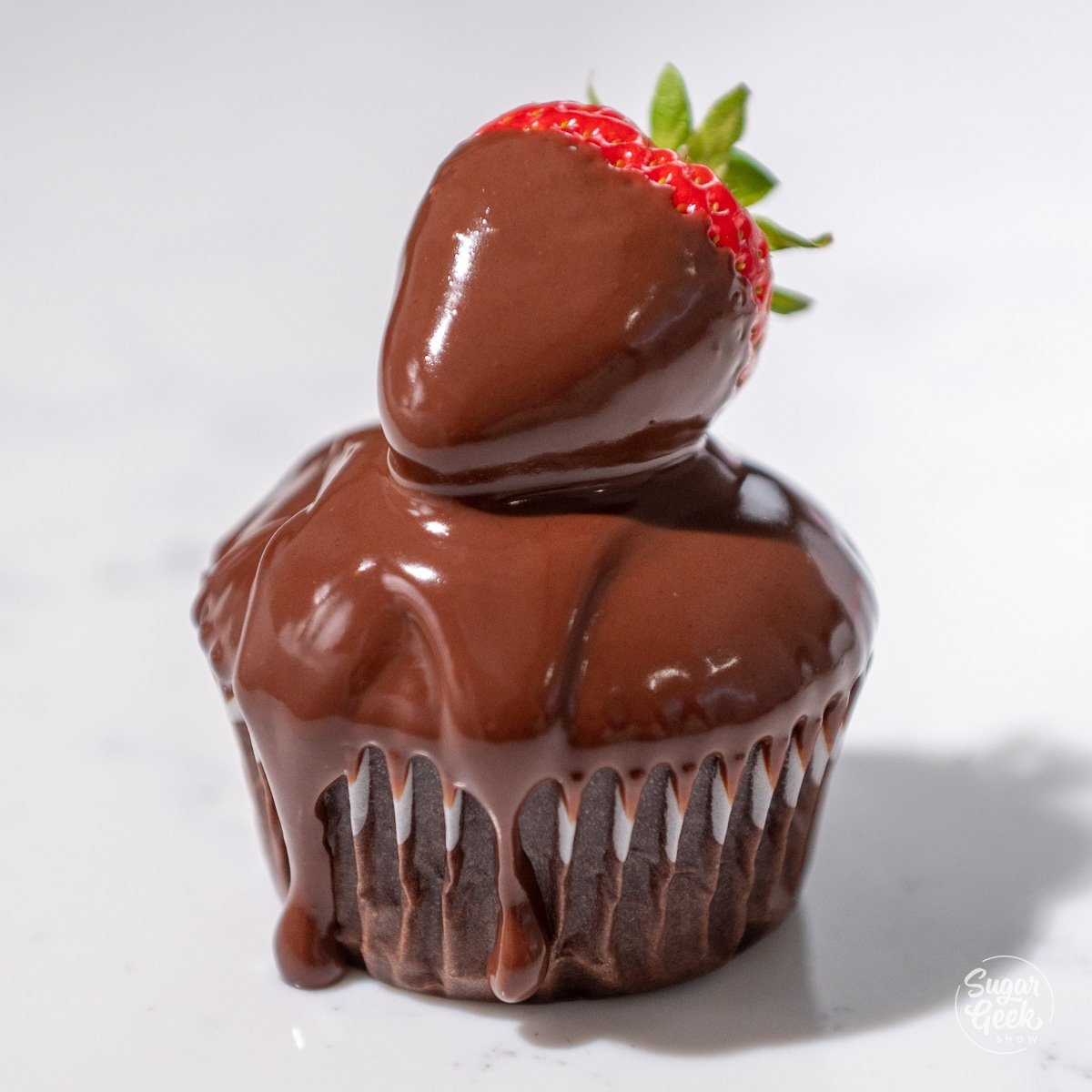
- Dip cupcakes or strawberries in a bowl of soft ganache.
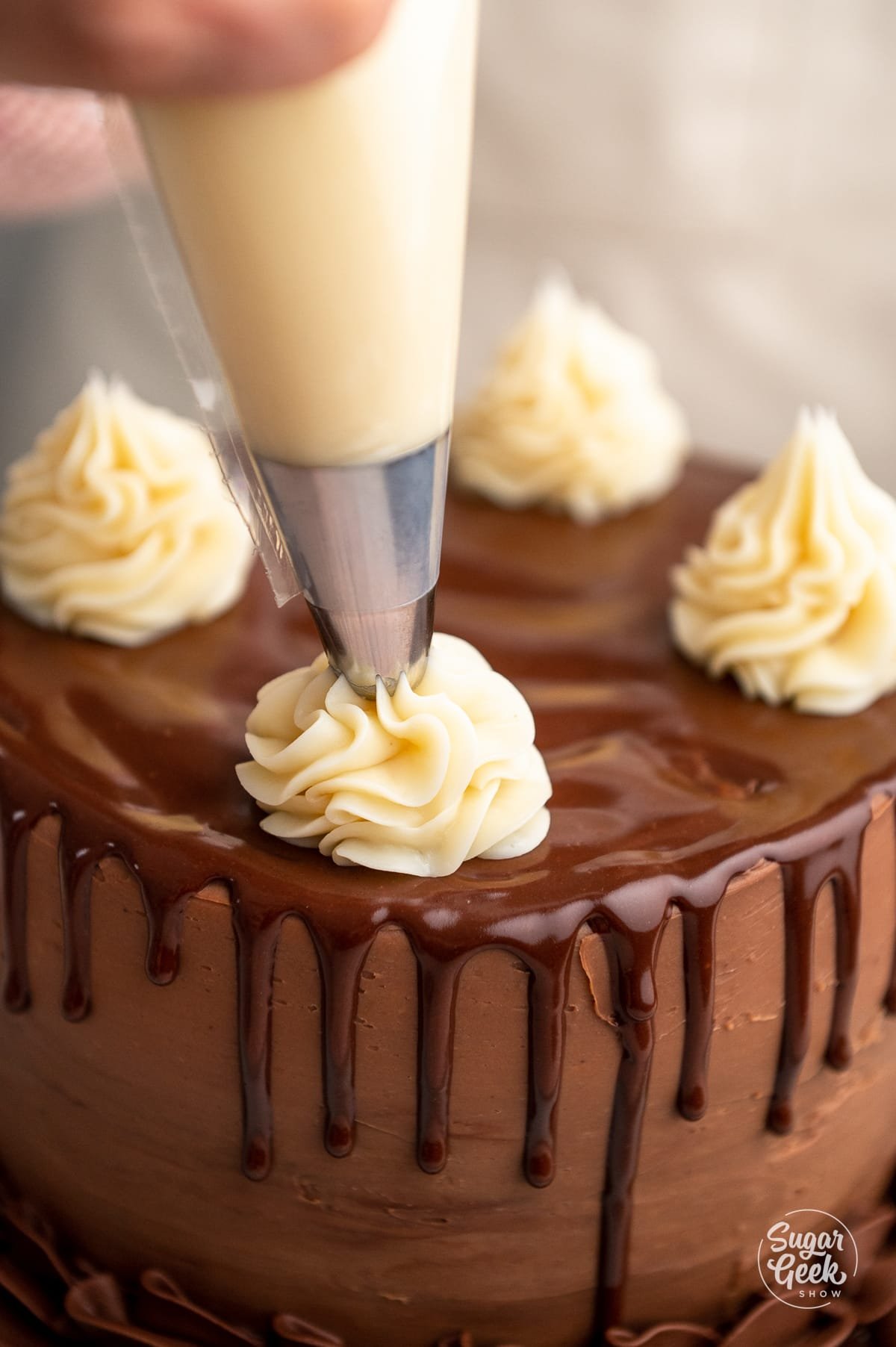
- Pipe dollops of ganache on top of a cake or cupcakes.

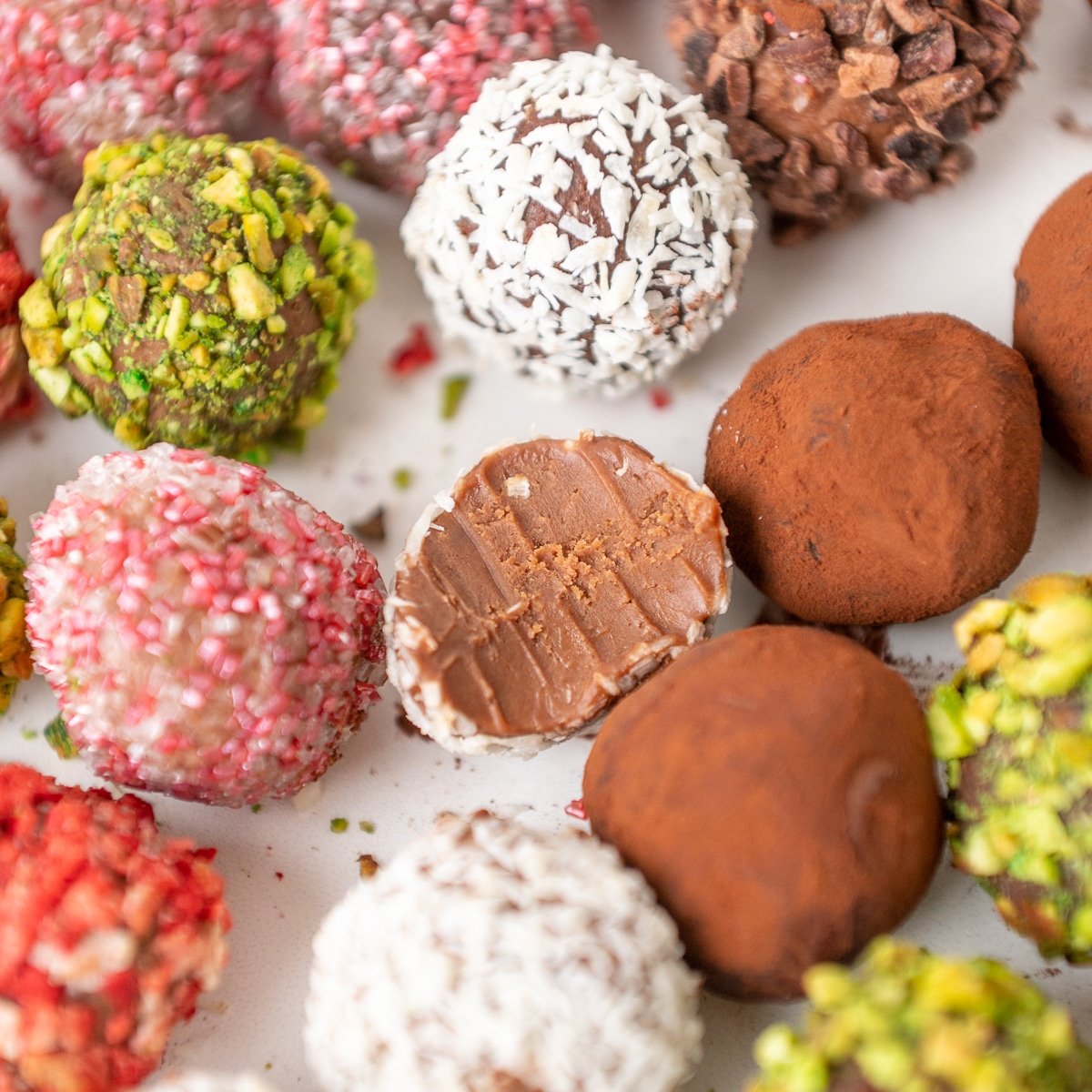
- Roll ganache into balls and decorate with various toppings for truffles.
Chocolate Ganache Ratios
Depending on which chocolate ganache recipe you are following, you might use more or less chocolate and cream. The "ratios" refer to the ratio of chocolate and cream that you use. The first number refers to the amount of chocolate, the second is the amount of cream. Different ratios will create a softer or firmer ganache.
IMPORTANT TIP: The brand of chocolate that you use matters, as each chocolate has a different amount of cocoa and cocoa butter inside. I'm using Guittard chocolate for these ratios, but it may vary if you're using a different brand. If you have another favorite chocolate, start with these ratios and add more cream or chocolate as needed until you get your perfect consistency.
Dark Chocolate Ganache Drip Ratio - 1:1
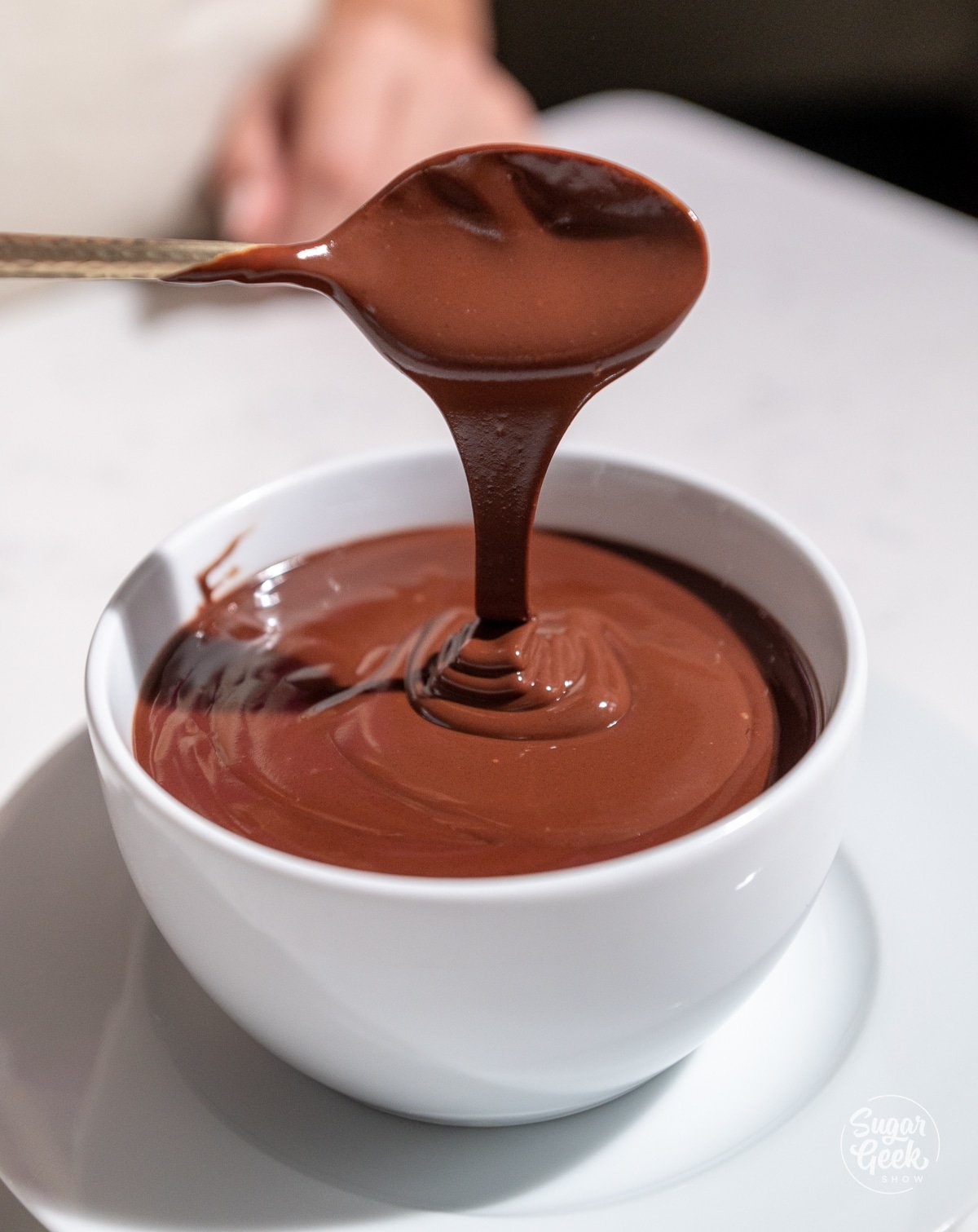
- A 1:1 ratio is one part chocolate and one part cream (equal parts chocolate and cream) are typically used for very soft frostings, a chocolate drip, or for a glaze. For example, this would be 8 ounces of chocolate and 8 ounces of cream.
- This soft ganache can also be whipped to make a whipped ganache frosting.

Dark Chocolate Ganache Frosting Ratio - 2:1
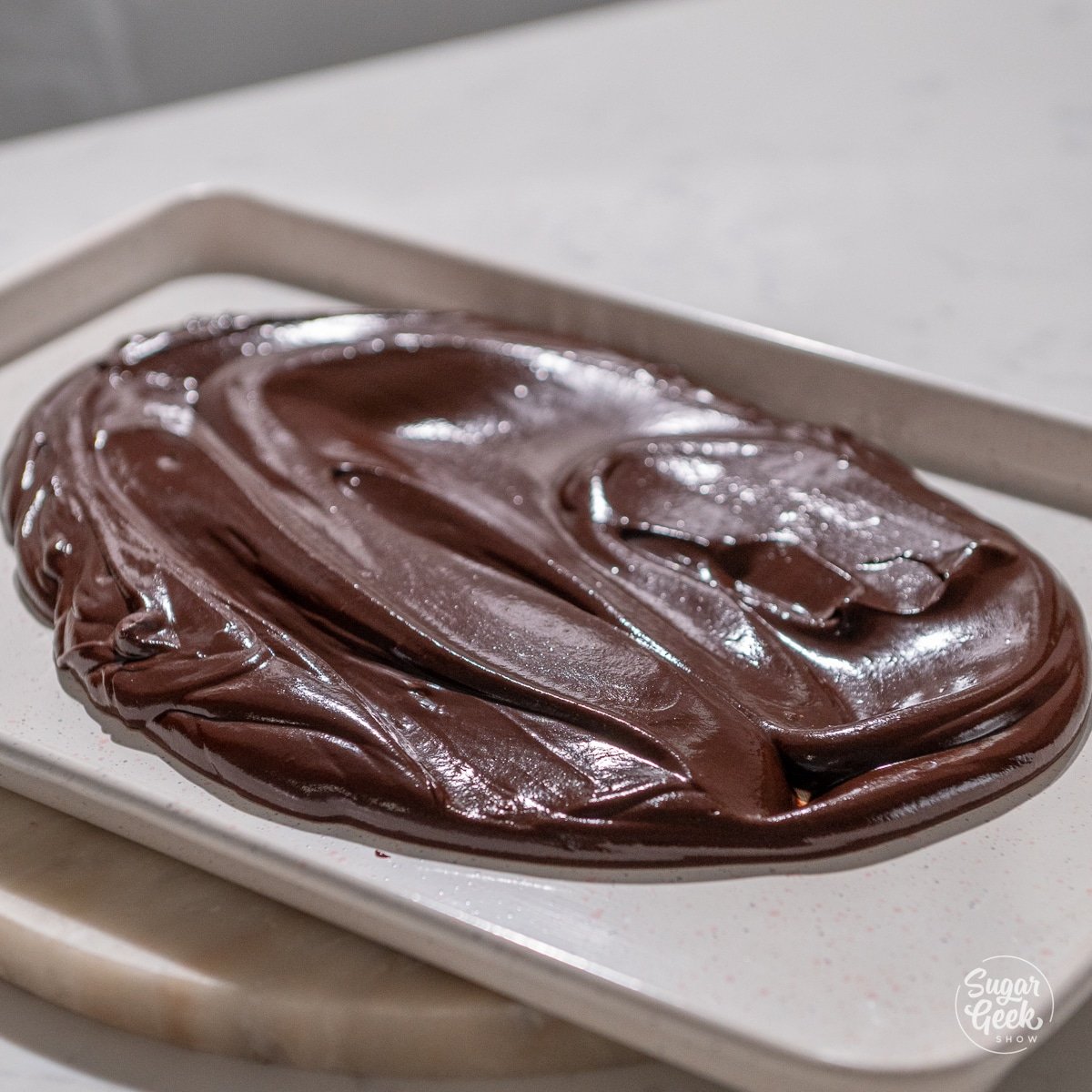
- A 2:1 ratio is two parts dark or semisweet chocolate and 1 part cream, so twice as much chocolate as cream. When it firms up at room temperature for a few hours, it's typically used for making truffles or a stiff chocolate ganache frosting. This would be 16 ounces of chocolate and 8 ounces of cream, or 32 ounces of chocolate and 16 ounces of cream.
- Pro-tip: Flavor your ganache by steeping herbs or spices in the cream. Tea makes for some excellent flavors in ganache like my rose chocolate truffle recipe.
Milk Chocolate Ganache Frosting Ratio - 2.5:1
- Milk chocolate has a 2.5 to 1 ratio meaning you multiply the amount of cream by 2.5, so 20 ounces of milk chocolate and 8 ounces of cream.
- Milk chocolate is great for making ganache but because it contains more sugar and milk solids, it is not as stable as dark chocolate. You will need to use a bit more chocolate for this ganache to set firm.
White Chocolate Ganache Frosting Ratio - 3:1
- White chocolate doesn't contain any cocoa to help it set, only cocoa butter so you need to use a lot more chocolate to get it to set properly. I use a 3:1 ratio but I know some people go as high as 4:1.
- Did you know that white chocolate ganache doesn't sweat and is ideal to use in really hot environments like Florida, the Caribbean, and Texas?
Chocolate Ganache Temperatures
Warm Ganache: The temperature of your chocolate ganache also matters. When your chocolate ganache is first made and still warm, it is very liquid. This is the ideal format for glazing, making drip cakes, or using on top of ice cream.
Cooled Ganache: Letting chocolate ganache sit at room temperature for a few hours allows the chocolate to cool down and become semi-solid once again. This sort of half-set stage is what I call the peanut butter consistency stage and is ideal for frosting, using it as a cake filling, or rolling into truffles. If your chocolate ganache is too cold, it can become too solid and difficult to spread. You can always microwave it for a few seconds to get it back to that peanut butter consistency.
FAQ and Problem-Solving
If you have any lumps you can re-heat the whole thing in the microwave for 30-second increments until it's smooth or you can use an immersion blender to make it super creamy.
If your ganache is breaking (oil separating from the chocolate) you can whisk in a tablespoon of warm water or cream. Keep adding a tablespoon at a time until it comes together.
Ganache can get grainy from whisking when the cream is too hot. Always let your chocolate/cream stand for 5 minutes before whisking. If your ganache is grainy, just re-melt the whole thing over a double boiler and let it re-set. If you don't re-melt it, the ganache will have a very bad mouthfeel.
If your ganache is too thin and isn't setting, add some more melted chocolate and whisk to combine. I would start with 2 ounces and see where you're at before adding more to avoid making the ganache too stiff. If your ganache becomes too stiff you can add 1 ounce of warm cream to loosen it up.
Ganache can be left at room temperature for 48 hours, refrigerated for 1 week, or frozen for 6 months. Warm the ganache up in the microwave in 15-second bursts or let it come to room temperature naturally.
Related Recipes
Recipe
Ingredients
Firm Setting Ganache 2:1
- 16 ounces dark or semi-sweet chocolate
- 8 ounces heavy whipping cream
- ¼ teaspoons salt
- 1 teaspoon vanilla extract or any other extract
Soft Ganache Frosting 1:1
- 8 ounces 60% high quality chocolate Such as callebaut - about $8/lb
- 8 ounces heavy whipping cream
- ¼ teaspoon salt
- ½ teaspoon vanilla extract
Soft White Chocolate Ganache 3:1
- 18 ounces white chocolate
- 6 ounces heavy whipping cream
- ¼ teaspoon salt
Soft Milk Chocolate Ganache 2.5:1
- 13 ounces milk chocolate
- 5 ounces heavy whipping cream
- ¼ teaspoon salt
Instructions
- IMPORTANT NOTES: Ganache ratios change depending on how you’re going to use them, and the type of chocolate you're using. I'm using Guittard chocolate for these ratios, if you’re using a different brand and it’s not as thick or thin as you want it, you may have to add more cream or chocolate. The darker the chocolate and the more cocoa %, the firmer it will set.Using a scale is recommended for accuracy and to ensure your ganache turns out.
- Measure out the chocolate with a food scale and chop it into fine pieces so that it melts more easily. Place the chocolate in a medium heatproof bowl.
Making Chocolate Ganache
- Heat the cream on the stovetop in a small saucepan until steam just begins to rise from the surface. Whisk occasionally to prevent burning and don't walk away or your cream could boil over.
- Pour the hot cream over the chopped chocolate and push the chocolate down so it's all under the surface of the cream. Let the mixture of chocolate and cream sit for 5 minutes.
- Whisk the cream and chocolate together until it's smooth. Start with small circles in the center until the chocolate and cream start creating an emulsion.
- If you have lumps or un-melted chocolate you can use an immersion blender to make your ganache super creamy and lump-free.
- Use the warm ganache for piping and drizzling, or pour it into a baking sheet pan. I cool mine to 90ºF before doing the drip for a cake so it doesn't run too much down the size of the cake. For best results always drip on a cold cake.
- Cover the ganache with plastic wrap touching the top and set it aside to rest at room temperature for about 4 hours or overnight. If you don't do this crusty film can form on the surface.
- When the ganache reaches "peanut butter consistency" it is ready to use for frosting cakes, piping, or forming into truffles.
- Store leftover ganache at room temperature for up to 48 hours, in the fridge for up to 1 week, or seal it in an airtight container and freeze for 6 months.

Amarie says
I always come here for my ganache recipes. Love the updates! ❤️
Petra Robinson says
I want to make a chocolate cake for a birthday.
I want to whip some ganache for the filling and that would be a 1:1 ration
I also want to frost the outside but not with whipped ganache but just with ganache, what ratio would you suggest? I do not want it to set firm.
Cassandra Rice says
Liz you are awesome! I have following you for years.
Sugar Geek Show says
Thank you so much!
Marilyn says
Callebaut Chocolate Milk 33.6 Percent Easi-Melt Buttons Callets, what is the ratio for a ganache for frosting and piping? Thanks
Veena says
Hiya,would 1:1 ratio work if I am using Callebaut 53% for frosting and filling?
Thanku
Elizabeth Marek says
It might be a little soft, I would do maybe 1.25 to 1
Mel says
Terrific video which answered every question I had. Thank you!
Nelly says
Hi Liz, I live in the bahamas I can't seem to find guittard chocolate or the Callebaut chocolate. I bought a chocolate that's 56% should I use 1:1 or 2:1 ratio? Please if you can help me i would appreciate it very much
Elizabeth Marek says
You might have to do an experiment and see what you like best. Try 1:1 and let it sit at room temperature overnight to see how it sets up. If it's too thin, melt down more chocolate and add it to the ganache and let it set for another 24 hours. You will find your perfect ratio. It should be that beautiful peanut butter consistency after 24 hours and not hard.