
Not only can you eat pumpkin seed shells, but you also should! They are delicious and provide some healthy fiber. Follow my roasted pumpkin seed recipe to learn how to take your freshly harvested Jack-O-Lantern seeds from trash to a tasty snack!
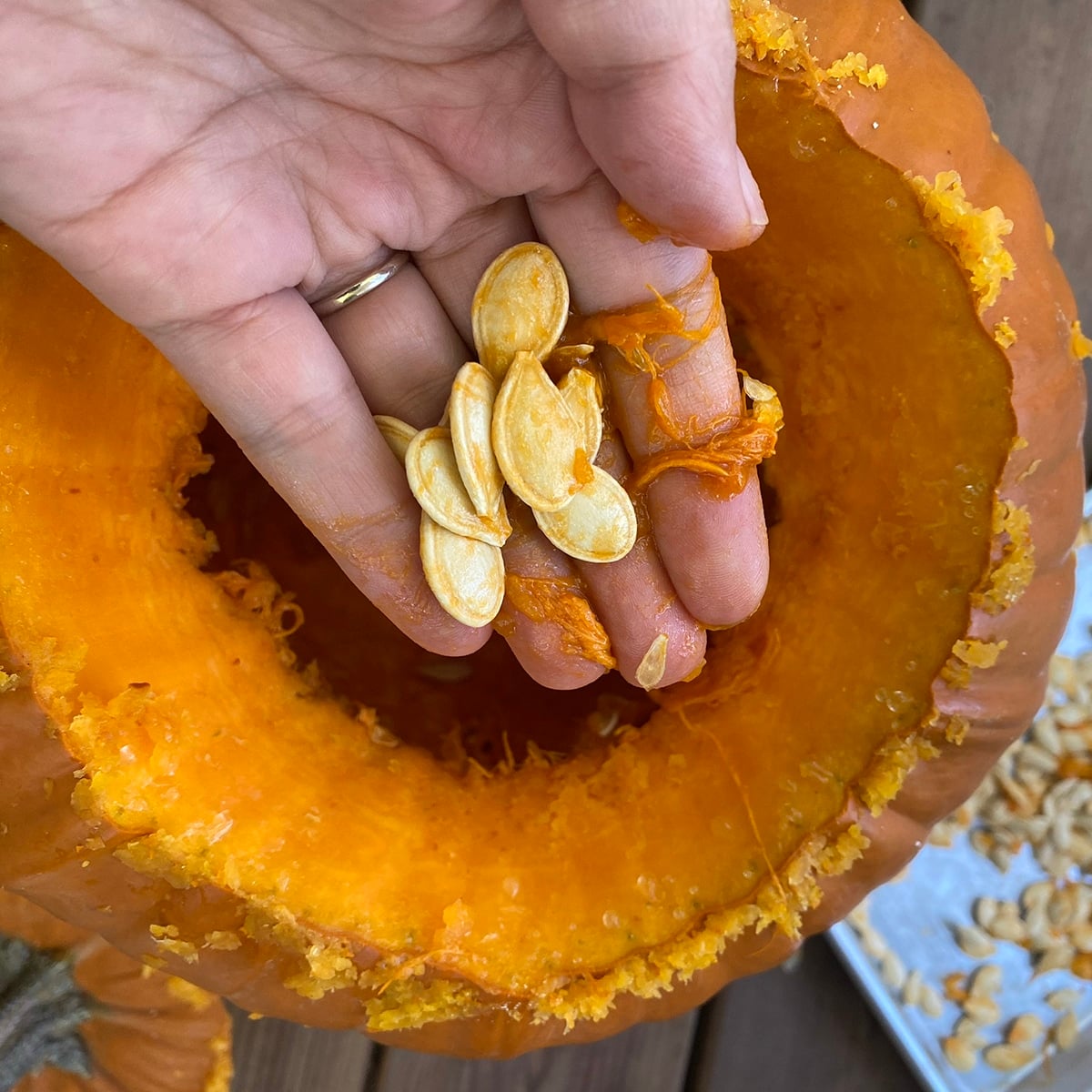
The first time I ever made roasted pumpkin seeds, I was in kindergarten, and I was skeptical about the whole thing. We had just scooped all this slimy orange stringy stuff out of a pumpkin, and now we were going to EAT it? But I tried one, and that was the end of that. I have looked forward to pumpkin seed season every year since. Even before I had kids, I would head out to the pumpkin patch every fall and carve one up, honestly half for the fun of it and half because I wanted the seeds. Now my kids love them as much as I do, and we go through a ridiculous amount every October between the pumpkin carving and the pumpkin bread baking, and I'm not even a little bit sorry about it.
Quick Glance: This Guide
- Guide Name: Can You Eat Pumpkin Seed Shells?
- Why You'll Love It: A straight answer on whether the shell is edible, why whole seeds have more than double the fiber of shelled ones, and the reason plain-roasted shells taste like cardboard when they don't have to.
- What You'll Learn: What the shell actually is, the fiber difference between whole and shelled seeds, whether you chew or swallow them, who genuinely needs to be careful, what the current research says about the old seed-avoidance advice, the difference between hulled and hull-less varieties, and why hand-shelling a bowl of carving pumpkin seeds is a waste of an afternoon.
- Time to Read: About 10 minutes.
- Method: Understand the shell, then cook it correctly instead of fighting it.
- Best Audience: Anyone who just carved a pumpkin and is staring at a bowl of seeds wondering if the white part is food, plus anyone whose last batch came out chewy.
- Quick Tip: If your seeds always come out tough, the shell isn't the problem. Not boiling them first is. Ten minutes in salted water softens the shell and seasons it before it ever hits the oven.
Jump to:
- Quick Glance: This Guide
- What Makes This Pumpkin Seed Shell Guide Different
- Can You Eat Pumpkin Seed Shells?
- Shelled Vs Unshelled Pumpkin Seeds
- Do You Chew Pumpkin Seed Shells Or Swallow Them Whole?
- Why Pumpkin Seed Shells Taste Bad When You Roast Them Plain
- Who Should Be Careful Eating Pumpkin Seed Shells
- Hulled Vs Hull-Less Pumpkin Seeds
- How To Shell Pumpkin Seeds (And Why It's Usually Not Worth It)
- Common Pumpkin Seed Shell Problems To Avoid
- Final Thoughts
- Pumpkin Seed Shell FAQs
- More Ways To Use Your Pumpkins
- Leave Me A Review ⭐️⭐️⭐️⭐️⭐️
What Makes This Pumpkin Seed Shell Guide Different
Most of what comes up when you search this question is written by nutrition sites, and they all stop at the same place. Here's what's actually in this guide.
A cooking answer, not just a safety answer. Yes the shell is edible. That was never really the question. The question is why yours taste like cardboard, and that is a technique problem, not a food problem.
The fiber math. Whole seeds have more than double the fiber of shelled pepitas, and that difference IS the shell. Once you know that, throwing it away stops making sense.
What the current research actually says. The old advice about avoiding seeds if you have diverticulitis has been overturned, and almost nothing written for home cooks has caught up.
Straight talk about shelling them. Yes, you can shell pumpkin seeds at home. No, you should not. I will tell you exactly how long that takes and what to do instead.
Can You Eat Pumpkin Seed Shells?
Yes. The whole seed is food and, when prepared properly, can be quite tasty!
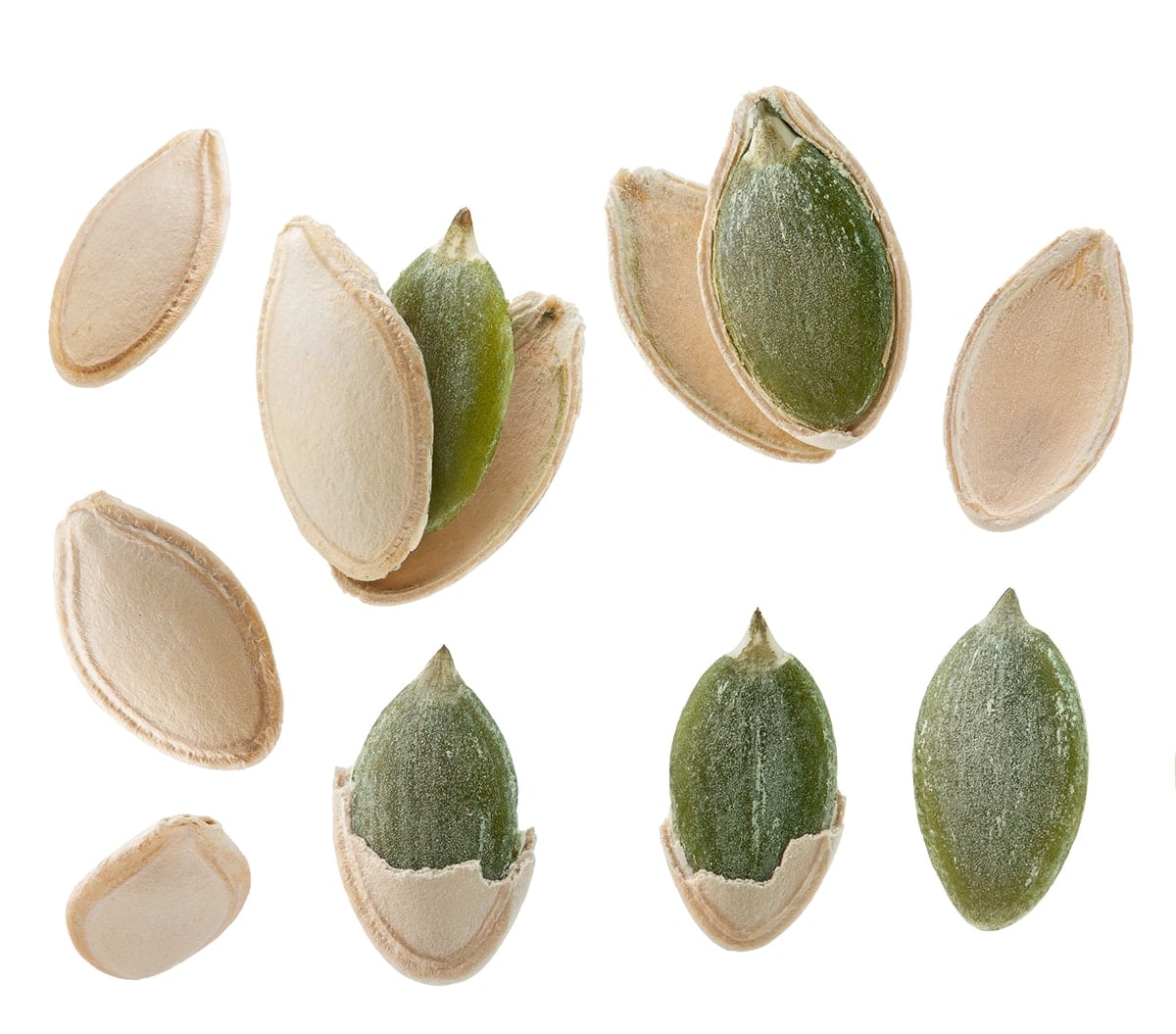
What you are looking at when you scoop out a carving pumpkin is a seed with two parts. There is a flat, cream-colored outer shell, sometimes called the hull or the husk, and inside it there is a flat olive-green kernel. That green kernel is what gets sold in stores as a pepita. Both parts are edible, and when you roast seeds straight out of a jack-o'-lantern you are eating both at once.
There is no need to shell them, no need to peel them, and no reason to spit anything out. People do sometimes crack the shell with their teeth and eat only the green inside, the same way you'd eat a sunflower seed, and that's a preference, not a rule.
Shelled Vs Unshelled Pumpkin Seeds
The shell is where most of the fiber in a pumpkin seed lives.
According to Healthline, whole pumpkin seeds with the shell on carry roughly 5 grams of fiber per ounce, while shelled pepitas carry only about 2 grams. That is more than double, so don't go throwing that shell away!
The green kernel inside is where the fat, protein, magnesium, and zinc are concentrated. So the two parts are doing different jobs. Eat the whole seed, and you get both. Eat only the pepita, and you get a richer, softer, milder seed with a fraction of the fiber.
Neither one is wrong. But if you are already going to the trouble of scooping seeds out of a pumpkin you carved, the version with the shell on is the one that's better for you AND the one that costs you nothing extra.
PRO TIP: The shell is almost entirely insoluble fiber, which is the kind your body does not break down. That is completely normal, and it is the point. It is also why whole seeds fill you up faster than pepitas do.
Do You Chew Pumpkin Seed Shells Or Swallow Them Whole?
Chew them. Always.
A properly roasted whole pumpkin seed should be crisp enough to break apart cleanly when you bite it, the way a good cracker does. If you find yourself swallowing them whole because they will not break down, that is your seeds telling you they were not roasted properly. Usually this is because your seeds were not dried before roasting or not roasted long enough.
Swallowing whole seeds is not dangerous for most adults, but it defeats the purpose. Unchewed shells pass straight through, so you get the roughage and none of the flavor. Chewing is also what releases the salt that soaked into the shell during boiling, which is the whole reason to boil them in the first place.
If you are eating them and thinking "these are a chore," go back and read the next section. That is a fixable problem.
Why Pumpkin Seed Shells Taste Bad When You Roast Them Plain
The pumpkin shell is made mostly of tough cellulose fiber. When you toss raw seeds in oil and throw them straight in the oven, which is how almost every roasted pumpkin seed recipe tells you to do it, two things go wrong at once.
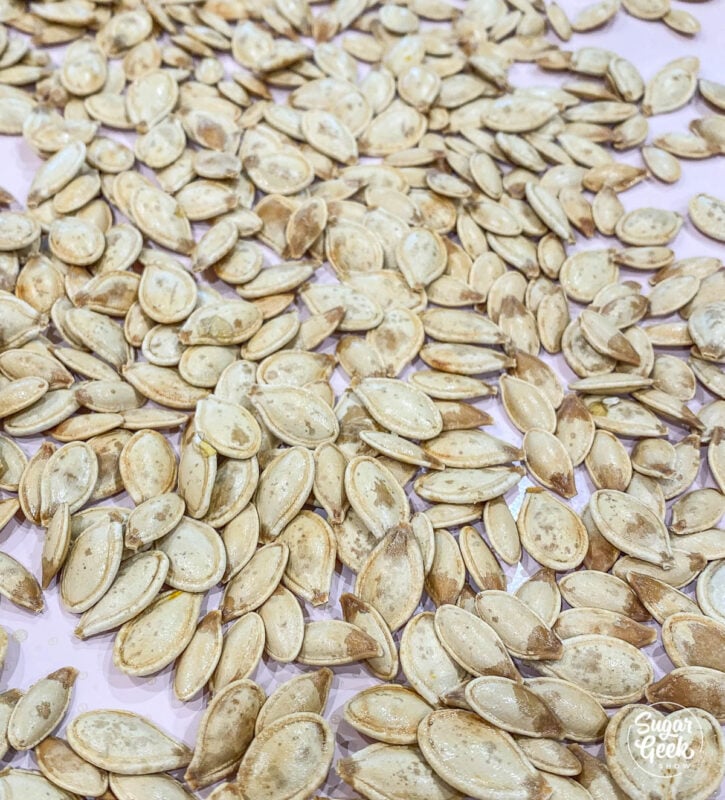
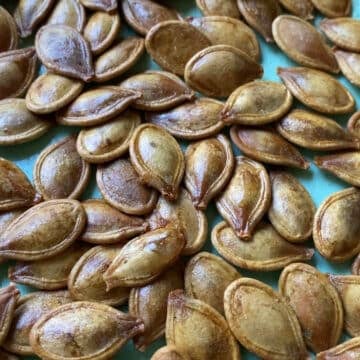
First, the shell stays leathery (like in the first photo above). Dry heat alone does not soften that fiber; it just dries it out, so you end up gnawing on something papery instead of biting through something crisp.
Second, and this is the big one, salt cannot get through it. When you sprinkle salt on the outside of a whole seed after roasting, that salt sits on the shell. The shell tastes salty for about half a second, and then you are chewing an unseasoned kernel. That's the "salty outside, bland inside" complaint, and it is not your imagination.
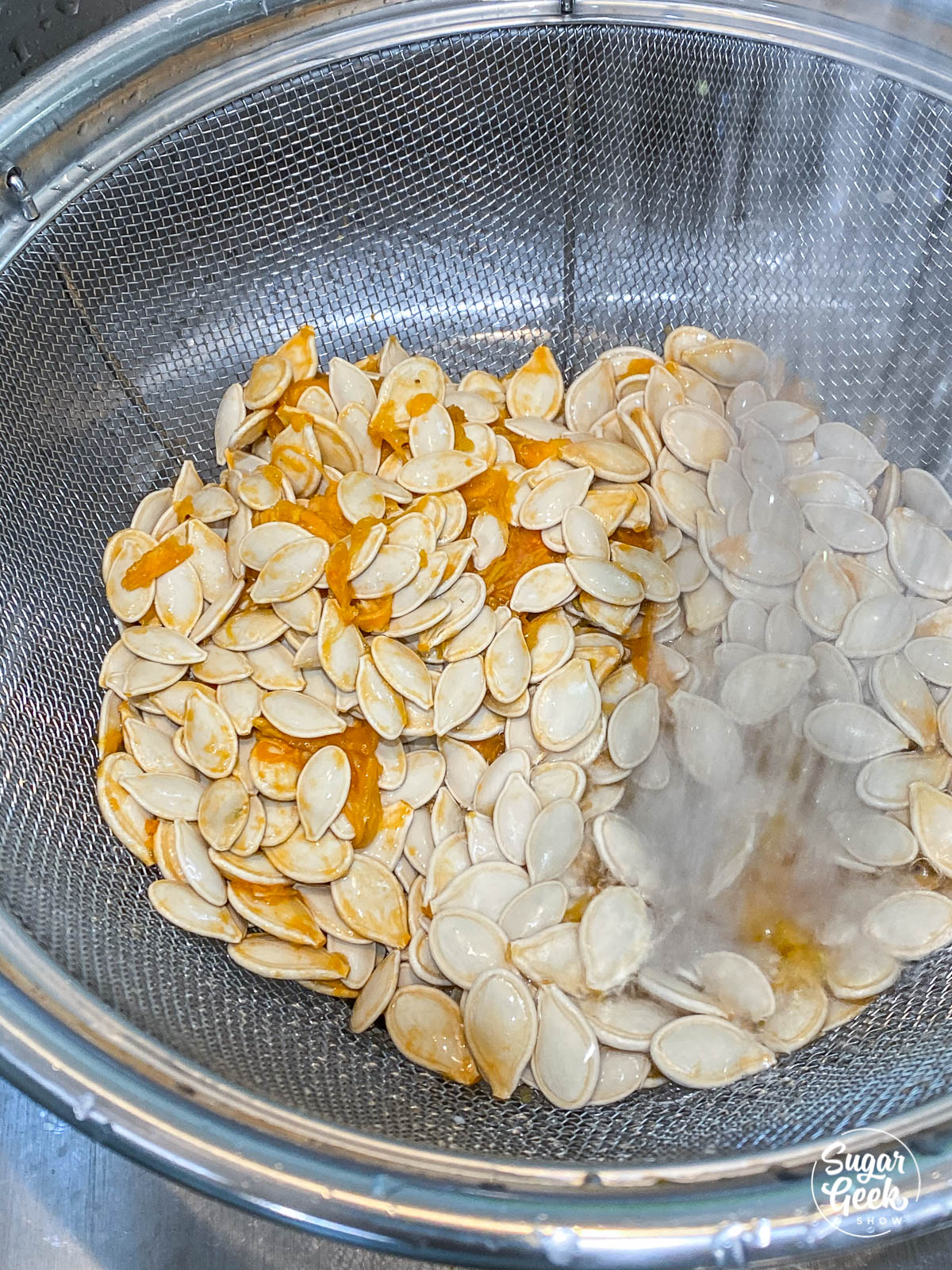
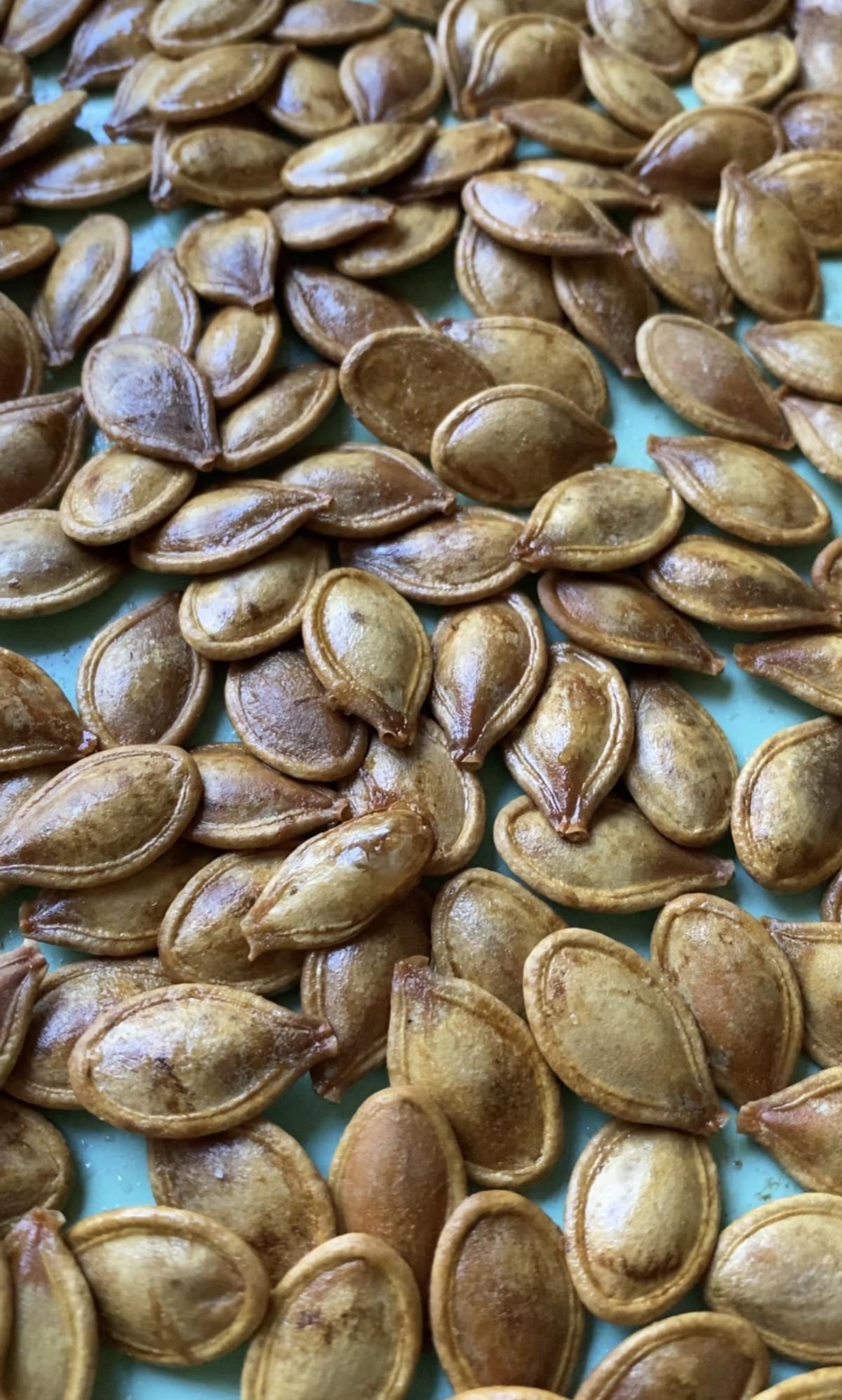
Boiling the seeds in well-salted water for 10 minutes before they ever see the oven solves both problems (second photo above). The water softens the cellulose so the shell can actually crisp instead of toughen, and the brine carries salt into the shell rather than leaving it on top. That's the entire premise of my roasted pumpkin seeds recipe, and it is the difference between seeds you eat because they're there and seeds you eat until they're gone.
PRO TIP: If you do one thing, let it be this: dry the seeds well after boiling. Any water still clinging to them will steam in the oven instead of crisping, and you will have gone to the trouble of boiling them only to end up chewy anyway.
Who Should Be Careful Eating Pumpkin Seed Shells
For most people, whole pumpkin seeds are just a high-fiber snack. There are three situations worth knowing about.
Young kids and choking
Whole pumpkin seeds are small, hard, and exactly the shape that causes trouble for toddlers. If you are carving pumpkins with little ones, which is most of us, keep whole roasted seeds away from kids under about four, and supervise older ones while they eat. Shelled pepitas are the safer option for that age group.
Digestive conditions
Healthline notes that people with inflammatory bowel disease may want to limit or avoid whole pumpkin seeds, because a sudden load of insoluble fiber can aggravate symptoms. The same logic applies if you're recovering from GI surgery or your doctor has you on a low-fiber diet for any reason. This is a talk-to-your-doctor situation, not a blanket rule.
The diverticulitis myth
For decades, anyone with diverticulitis was told to avoid nuts, seeds, and popcorn, on the theory that the particles could lodge in the pouches along the colon wall and cause a flare. A lot of people still believe it, and a lot of what you'll find online still repeats it.
The research does not support it. A study published in the Annals of Internal Medicine in May 2025, led by Dr. Anne Peery at the University of North Carolina at Chapel Hill, followed nearly 30,000 women from 2003 to 2022 and found no link between eating seeds, nuts or popcorn and the risk of diverticulitis. The authors wrote that the findings "refute the widely held belief that dietary intake of particulate matter should be avoided to prevent diverticulitis."
I am a cake person, not a doctor, so if you have been given specific dietary instructions, please follow them and ask your own physician before changing anything. But if you have been avoiding pumpkin seeds for years because of advice someone gave you in the nineties, it is worth a conversation.
Hulled Vs Hull-Less Pumpkin Seeds
Not every pumpkin seed comes with a shell, which is why this question confuses people.
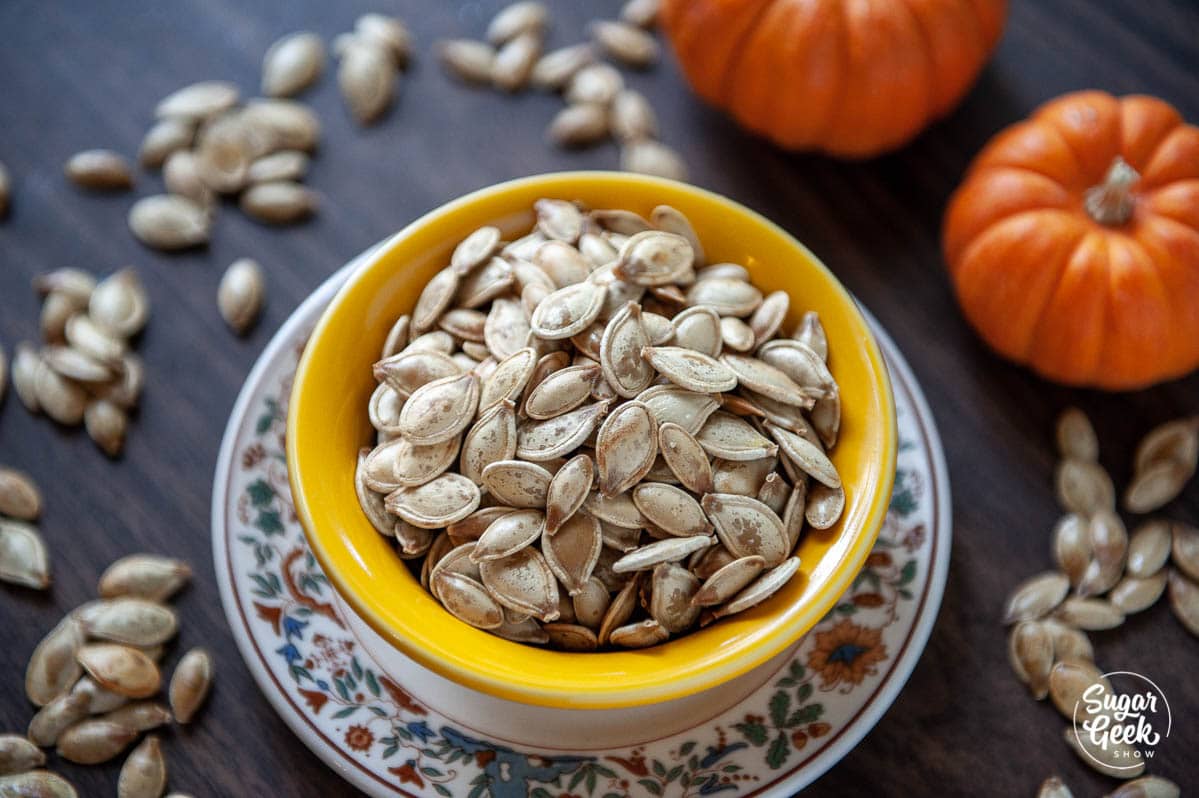
The green pepitas you buy in a bag at the store usually are not shelled jack-o'-lantern seeds. They come from specific pumpkin varieties that grow their seeds without any hull at all, thanks to a natural mutation. The most famous of those is the Austrian Styrian oil pumpkin, and if you want to grow your own, Kakai and Lady Godiva are the two varieties most US seed companies carry. Kakai is the fun one because the striped fruit looks great on a porch and the seeds are the best you can grow.
So the two things you're choosing between are:
- Hulled seeds from a carving pumpkin, a pie pumpkin or most winter squash. Flat, cream-colored shell around a green kernel. More fiber, more crunch, needs the boiling step to be worth eating.
- Hull-less seeds from a dedicated seed variety. Dark green, no shell, ready to roast as-is. Richer and more tender, less fiber, and you can skip the boil entirely since there is no shell to soften.
If you're standing in your kitchen with a bowl of jack-o'-lantern guts, you have the first kind. That's not a bad thing at all, it just means HOW you decide to roast them matters.
How To Shell Pumpkin Seeds (And Why It's Usually Not Worth It)
You can shell pumpkin seeds at home. Roast them first so the shells go brittle, then either crack them one at a time with your teeth or your fingernails, or spread them on a towel and roll a rolling pin over them gently to fracture the shells, then try to separate the pieces by hand or by floating them in a bowl of water so the lighter shell fragments rise.
Now here is why I don't do it. A medium carving pumpkin gives you around two cups of seeds. Shelling that by hand is a solid hour or more of fiddly work, you will crush a good portion of the kernels doing it, and what you end up with is a small handful of broken pepitas that you could have bought in a bag for a few dollars. Commercial pepitas are not hand-shelled, they come from hull-less varieties that never grew a shell in the first place, which is why nobody can match that result at home.
If you want pepitas, buy pepitas or grow a hull-less variety next season. If you have a bowl of carving pumpkin seeds in front of you, boil them and roast them shell-on. That's the move.
Common Pumpkin Seed Shell Problems To Avoid
- Your seeds are too tough to chew. The shell was never softened. Dry heat alone will not do it, so boil them in salted water for 10 minutes before roasting. This is the single most common reason whole seeds are unpleasant.
- The shells taste salty, but the seed inside is bland. Salt sprinkled on after roasting sits on the outside of the shell and never gets past it. Salting the boiling water is what carries seasoning into the seed.
- The shells are chewy instead of crisp. Leftover water after boiling steams the seeds instead of crisping them. Drain well and pat dry before adding any oil.
- You're getting shell stuck in your teeth. Usually means the seeds were underroasted, so the shell bent instead of shattering. Go by color, not the clock, and pull them when they're golden brown.
- Whole seeds upset your stomach. That's a big jump in insoluble fiber, especially if you ate a lot in one sitting. Start with a smaller portion and drink water with them.
Final Thoughts
Every year I see people scoop out a beautiful bowl of seeds, roast them plain, take one bite, and decide they just don't like pumpkin seeds. I get it, because that version genuinely isn't good. But the problem isn't the shell; it's how you prepare the pumpkin seeds before eating.
Once I figured out that boiling them first was the whole ballgame, pumpkin seeds went from a thing we did because it felt wasteful not to, to a thing my kids ask about the second we get back from the pumpkin patch. The shell is not something to work around. It's the crunchiest, highest-fiber part of the whole seed, and it takes 10 extra minutes to make it taste like something you want to keep eating.
Save your seeds. Boil them. Then go make a pumpkin pie with what's left of the pumpkin.
Pumpkin Seed Shell FAQs
Are pumpkin seed shells the same as pepitas?
No. Pepitas are the green kernel found inside the shell, and most pepitas sold in stores come from special hull-less pumpkin varieties that never grow a shell at all. A whole pumpkin seed from a carving pumpkin is the cream-colored shell plus the green pepita inside it.
Can dogs eat pumpkin seed shells?
Plain roasted pumpkin seeds are generally not toxic to dogs, but the shells are tough and can be a choking or digestive risk, especially for small dogs, and seeds roasted with salt and oil are not something to share. Check with your vet before giving your dog any, and never give them seeds seasoned for people.
Do you have to remove the shells before roasting?
No, and you shouldn't. Roasting seeds shell-on is the standard way to do it and the shell is what gives them their crunch. Removing shells before roasting is not practical at home and destroys most of the kernels in the process.
Are raw pumpkin seed shells safe to eat?
They're safe, but raw shells are tough and unpleasant to chew, and raw seeds have none of the flavor that develops during roasting. If you want to eat them raw, hull-less varieties are much better suited to it than shells from a carving pumpkin.
Why do my pumpkin seed shells taste bitter?
A bitter taste usually means the pumpkin itself was bitter, which is worth taking seriously. Very bitter squash and gourds can contain high levels of cucurbitacin. If your raw seeds or the flesh taste bitter, don't eat them and throw the pumpkin out. A slightly burnt taste is different, and that just means they roasted too long.
More Ways To Use Your Pumpkins
Leave Me A Review ⭐️⭐️⭐️⭐️⭐️
If this guide answered your pumpkin seed question, or if you tried the boiling method on your own seeds, let me know how it went in the comments. I love hearing from you!