

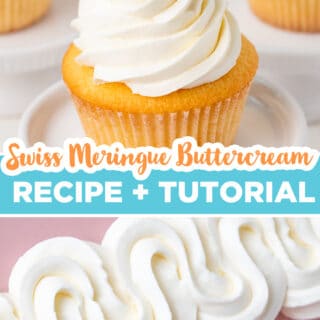


Swiss meringue buttercream is the frosting I reach for when I want something that tastes elegant rather than just sweet, with a silky, cloud-like texture that is unlike anything you can buy at the store. It is less sweet than American buttercream, more stable than whipped cream, and has a smooth, melt-in-your-mouth quality that makes every cake taste more professional. It pairs beautifully with my vanilla cake or vanilla cupcakes for a combination that never fails. It's also a perfect match for my fluffy white cake.
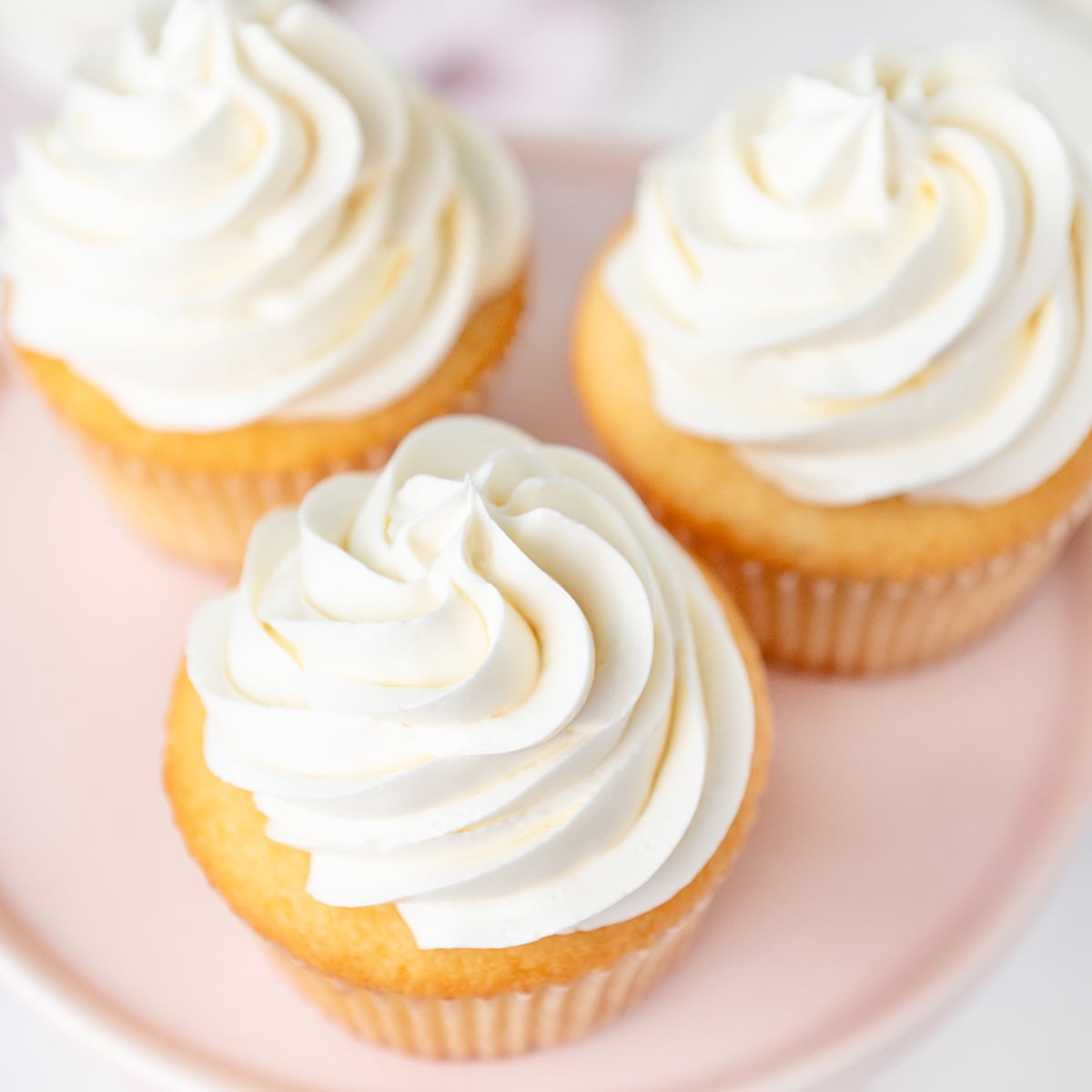
Quick Glance: Swiss Meringue Buttercream
- Recipe Name: Swiss Meringue Buttercream
- Why You'll Love It: This is the frosting that professional bakers use on wedding cakes and high-end celebration cakes. It is silky, not too sweet, and stable enough to pipe, stack, and refrigerate without losing its texture.
- Time and Difficulty: 25 minutes active + 10 minutes cooling | Intermediate
- Main Ingredients: Fresh egg whites, granulated sugar, unsalted butter, vanilla extract, salt
- Method: Double boiler to cook egg whites and sugar, whipped to stiff meringue, butter whipped in gradually
- Texture and Flavor: Incredibly light and silky with a subtle sweetness and rich buttery flavor. Much less sweet than American buttercream.
- Quick Tip: Cool your meringue completely before adding butter. Warm meringue melts the butter and turns your buttercream into soup.
Jump to:
- Quick Glance: Swiss Meringue Buttercream
- What Makes This Swiss Meringue Buttercream Different
- Swiss Meringue Buttercream Ingredients
- Swiss Meringue Buttercream Step-By-Step
- Batter & Frosting Calculator
- Cake Batter and Frosting Calculator
- Cups of Batter Needed
- Cups of Frosting Needed
- Common Swiss Meringue Buttercream Problems To Avoid
- Swiss Meringue Buttercream FAQs
- More Frosting Recipes To Try
- Leave Me A Review⭐️⭐️⭐️⭐️⭐️
- Recipe
What Makes This Swiss Meringue Buttercream Different
Swiss meringue buttercream gets its silky texture from a process called the Swiss method, which involves cooking egg whites and sugar together over a double boiler before whipping them into a meringue. This is different from Italian meringue buttercream, which uses a hot sugar syrup poured into already-whipping egg whites, and from easy buttercream, which skips the cooking entirely.
Cooking the egg whites with the sugar serves two purposes. First, it dissolves the sugar completely, which is what gives SMBC its smooth, non-gritty texture. American buttercream made with powdered sugar always has a slightly grainy finish by comparison. Second, it gently pasteurizes the egg whites so they are safe to eat in their uncooked meringue form.
The meringue needs to cool to room temperature before the butter goes in because fat and heat do not mix well. Butter that is too warm will melt into the meringue instead of emulsifying with it, which is why chilling the meringue for 10 minutes is a non-negotiable step. When the butter is added correctly at the right temperature, the proteins in the meringue trap tiny air bubbles throughout the fat, creating that signature light, whipped texture.
The final step of switching to the paddle attachment and mixing on low for 15 to 20 minutes is what separates a good SMBC from a great one. The paddle pushes out air bubbles and gives the buttercream an ultra-smooth, almost satin-like finish that is perfect for sharp edges and detailed piping.
Swiss Meringue Buttercream Ingredients
Here is everything you need to make Swiss meringue buttercream. Five ingredients, and each one plays a specific role.
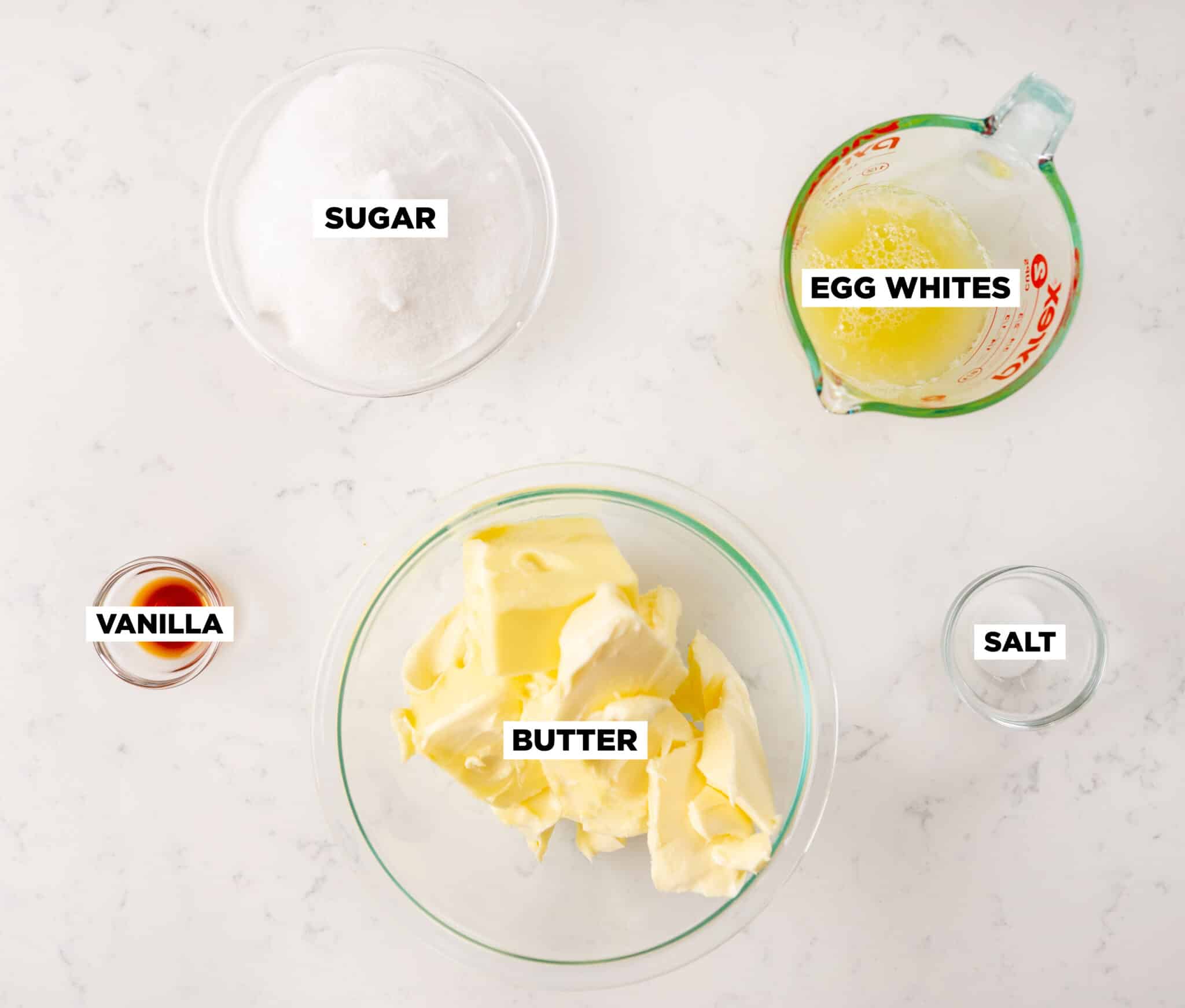
Fresh egg whites create a more stable meringue than carton egg whites. Separating eggs yourself gives you the best results. The leftover egg yolks can be used for Boston cream pie or creme brulee so nothing goes to waste.
Granulated sugar dissolves into the egg whites over the double boiler and is what gives SMBC its smooth, non-gritty texture. Do not substitute powdered sugar here.
Unsalted butter must be at room temperature, soft enough to dent easily with your finger but not greasy or melting. This is the most important ingredient to get right. Cold butter will not emulsify into the meringue and warm butter will melt it. Salted butter can be used but will affect the flavor and you should omit the added salt.
Vanilla extract is the primary flavor of Swiss meringue buttercream, so quality matters. A good vanilla bean paste or pure vanilla extract makes a noticeable difference. Nielsen Massey is a great brand that uses sustainable practices.
Salt balances the sweetness and enhances the butter flavor. Do not skip it.
Swiss Meringue Buttercream Step-By-Step
PRO TIP: Wipe your bowl out with white vinegar first. A very clean metal bowl works best because meringue whips up more easily in metal than plastic.
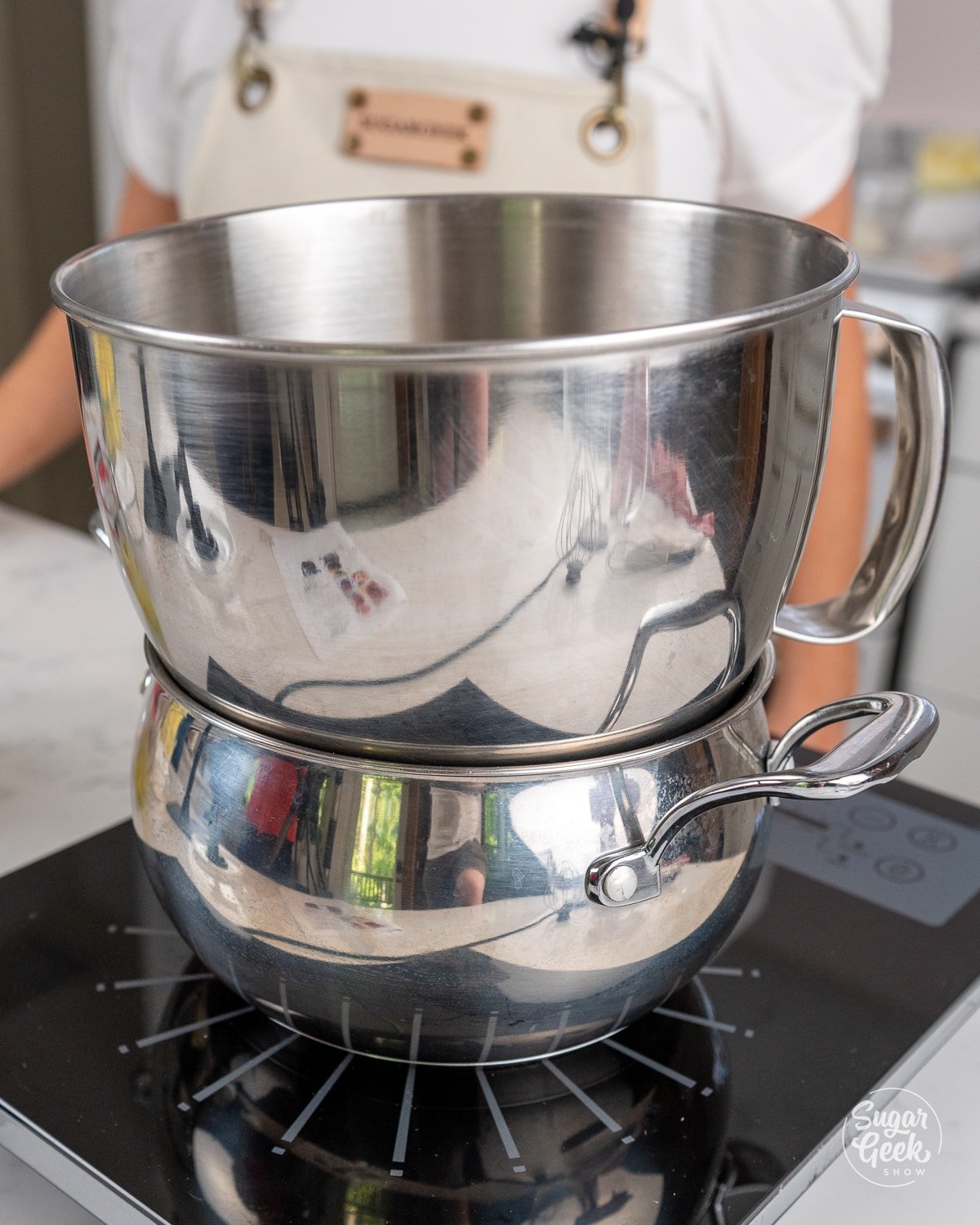
- Set up your double boiler. Fill a large pot with about 2 inches of water and bring it to a simmer. Place the metal bowl of your stand mixer on top of the pot. The water should not touch the bottom of the bowl.
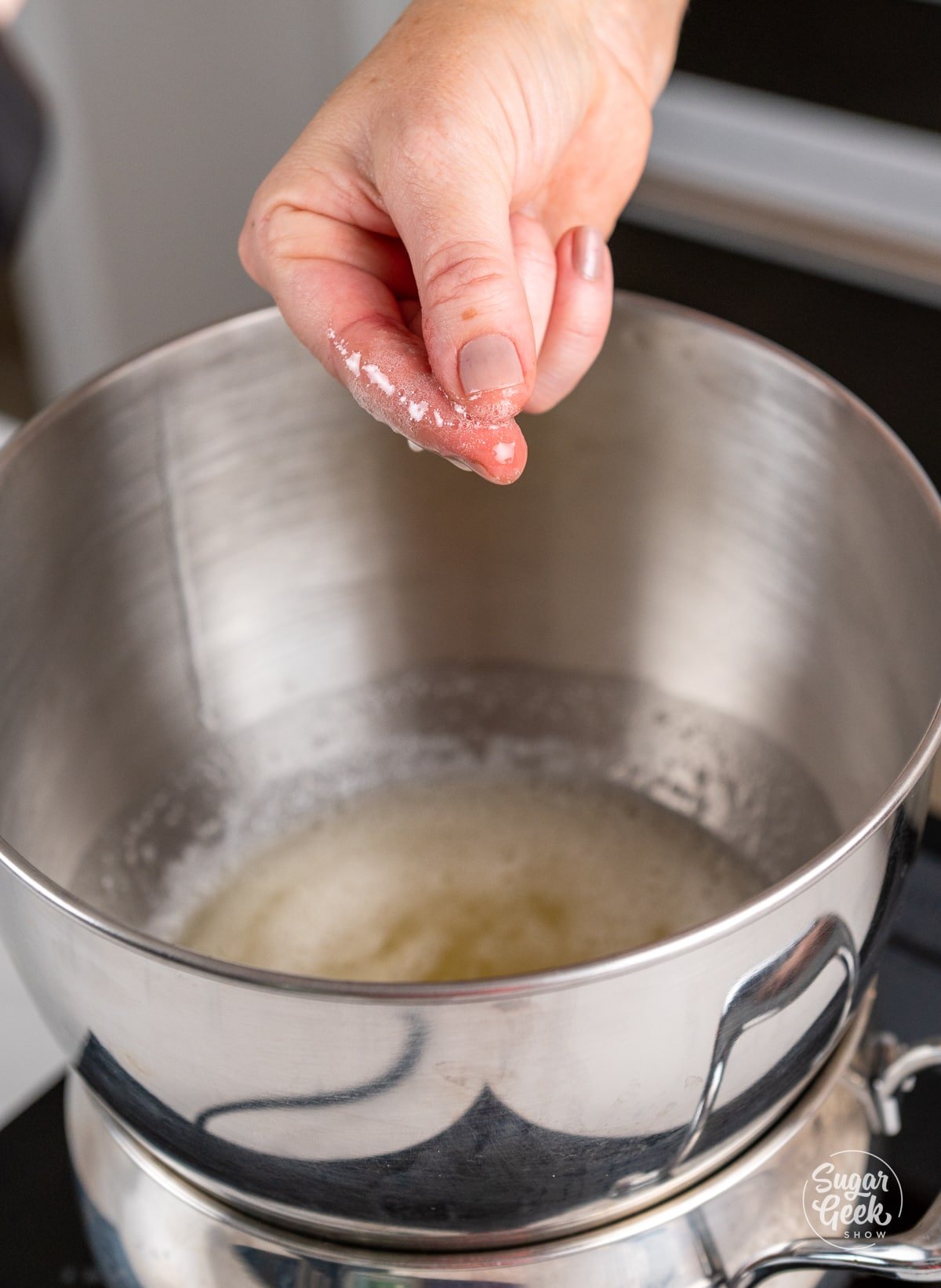
- Combine and cook. Whisk together the egg whites, sugar, and salt in the mixing bowl.
Cook the egg white mixture until it reaches 110 degrees, whisking constantly along the sides of the bowl to distribute the heat evenly. If you do not have a thermometer, rub a bit of the mixture between your fingers. When you can no longer feel any sugar granules, it is done.
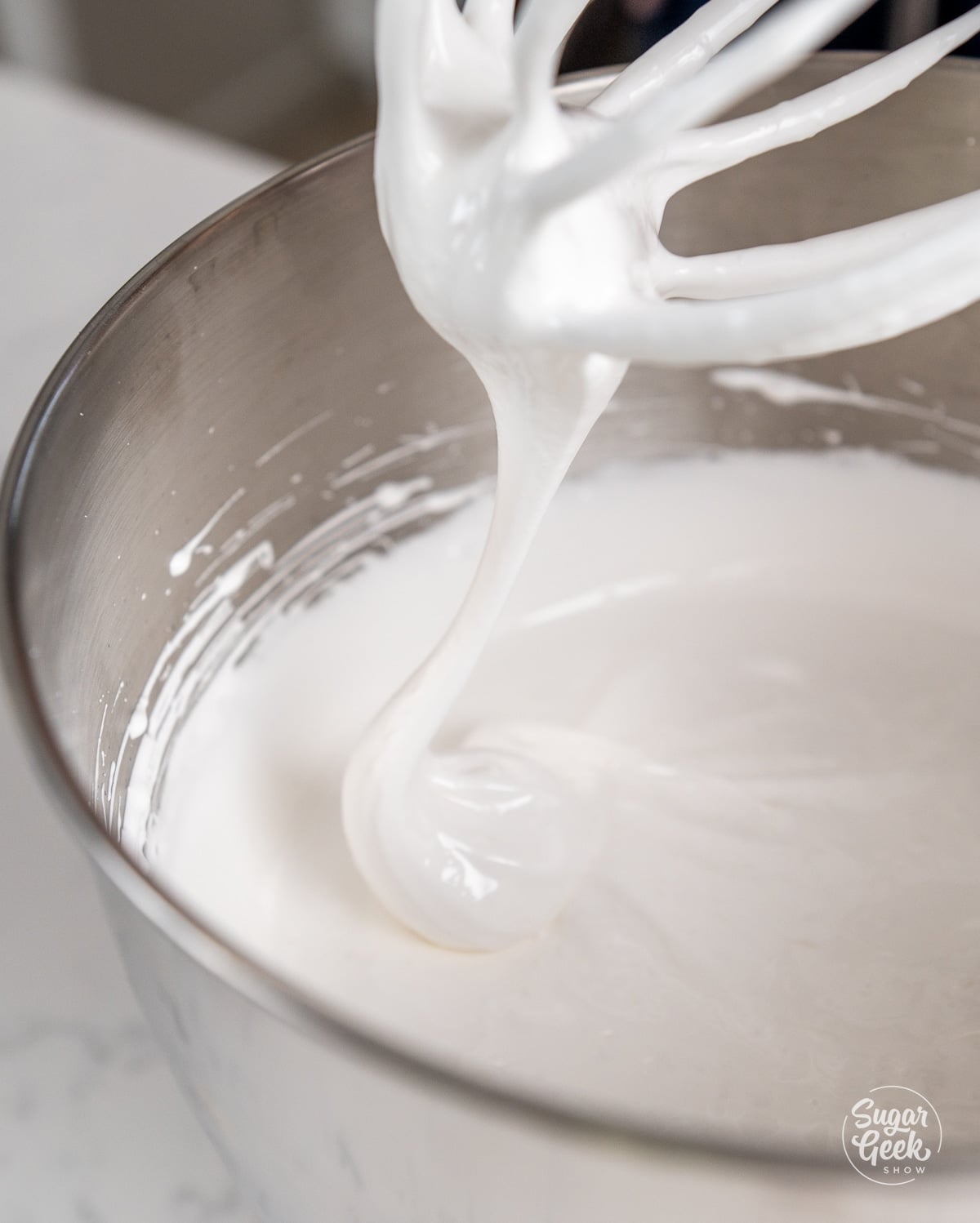
- Whip the meringue. Remove the bowl from the heat and transfer it to your stand mixer with the whisk attachment. You can use a hand mixer and a large bowl if needed, but it will take considerably longer. Whip on medium-high speed for 10 to 15 minutes until you reach glossy, stiff peaks. The meringue should be bright white and hold a firm shape.
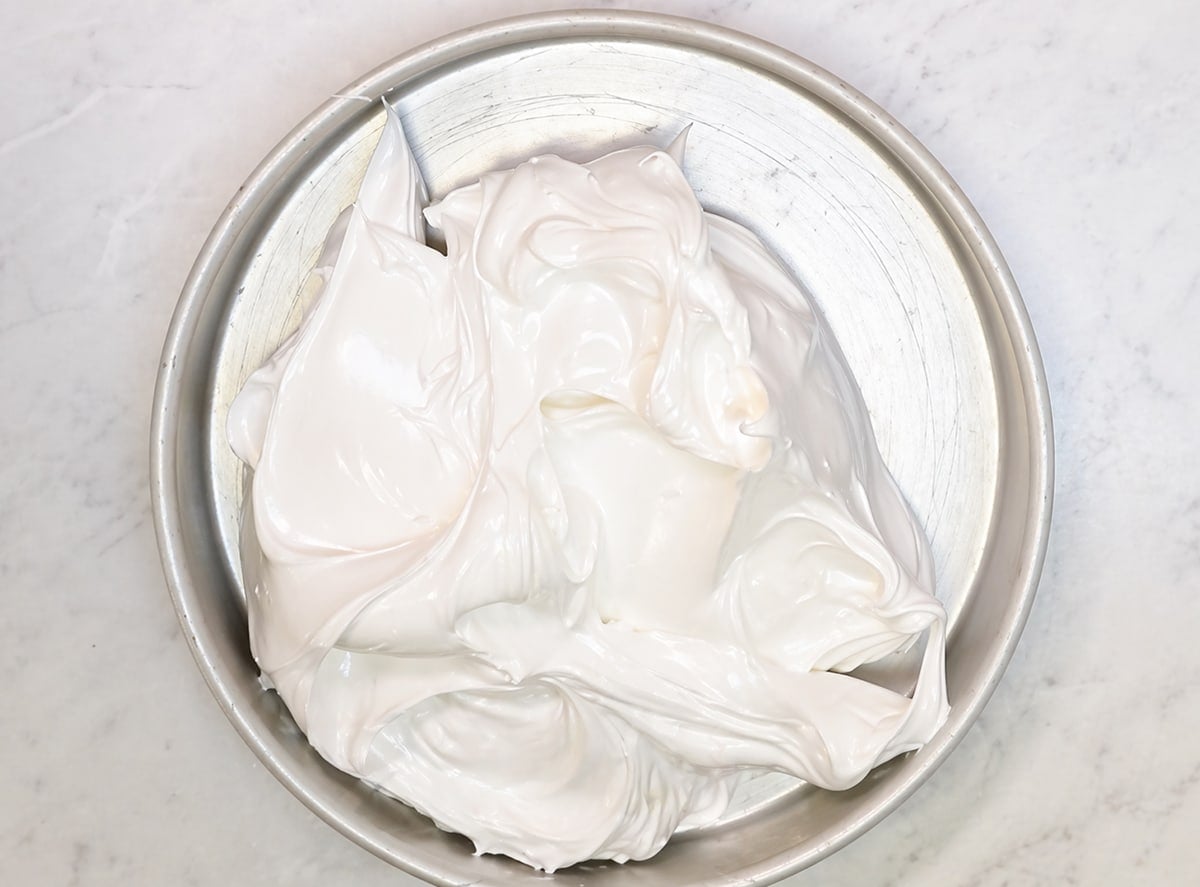
- Cool the meringue. Pour the meringue into a shallow dish and refrigerate for about 10 minutes to cool it to room temperature. You can also leave it in the bowl and refrigerate, but it will take longer to cool. Do not skip this step. Warm meringue will melt your butter and turn your buttercream into soup.
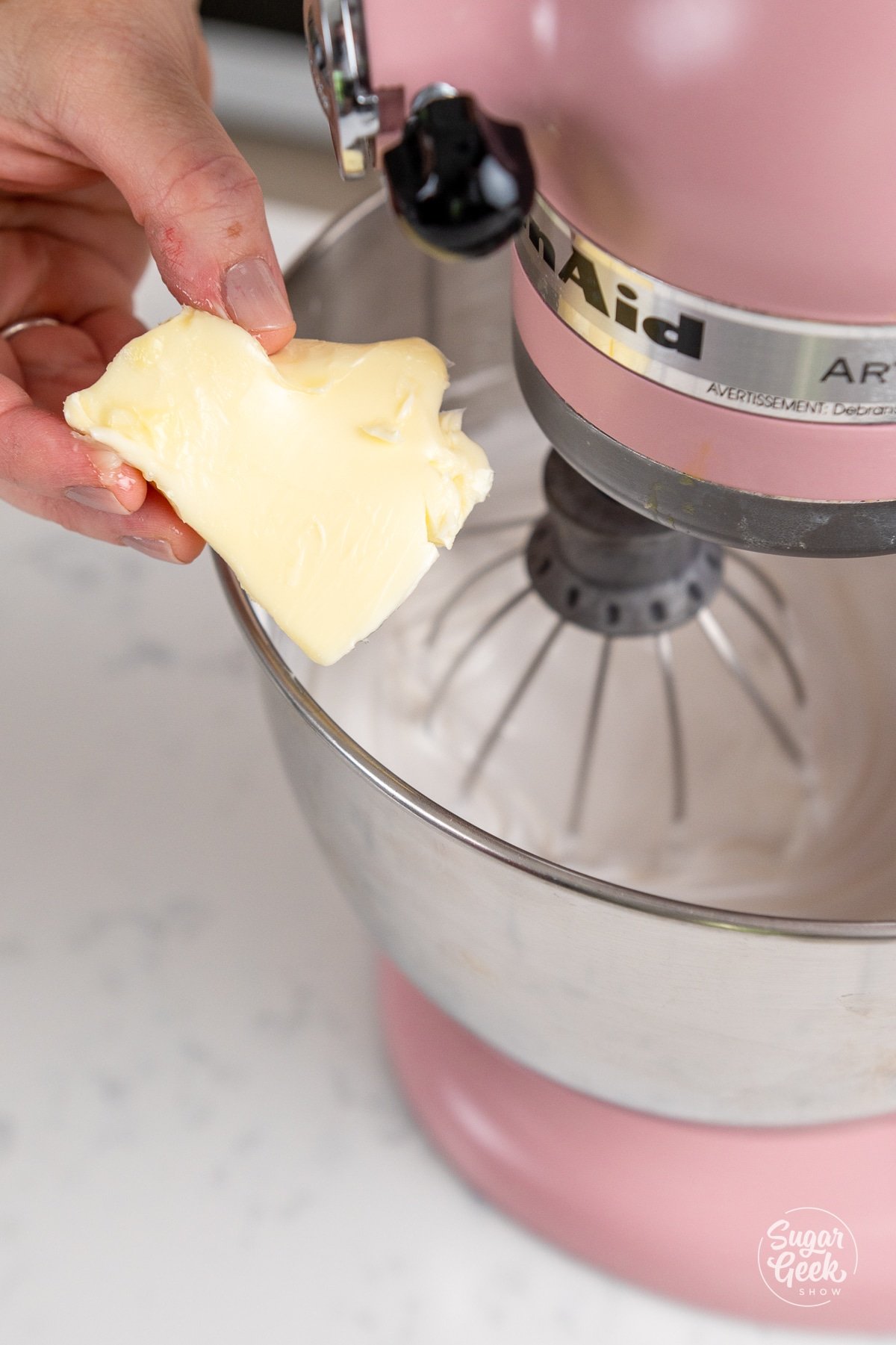
- Add the butter. Once the meringue is cooled, return it to your stand mixer with the whisk attachment. Add the room-temperature butter and vanilla and mix until fully combined.
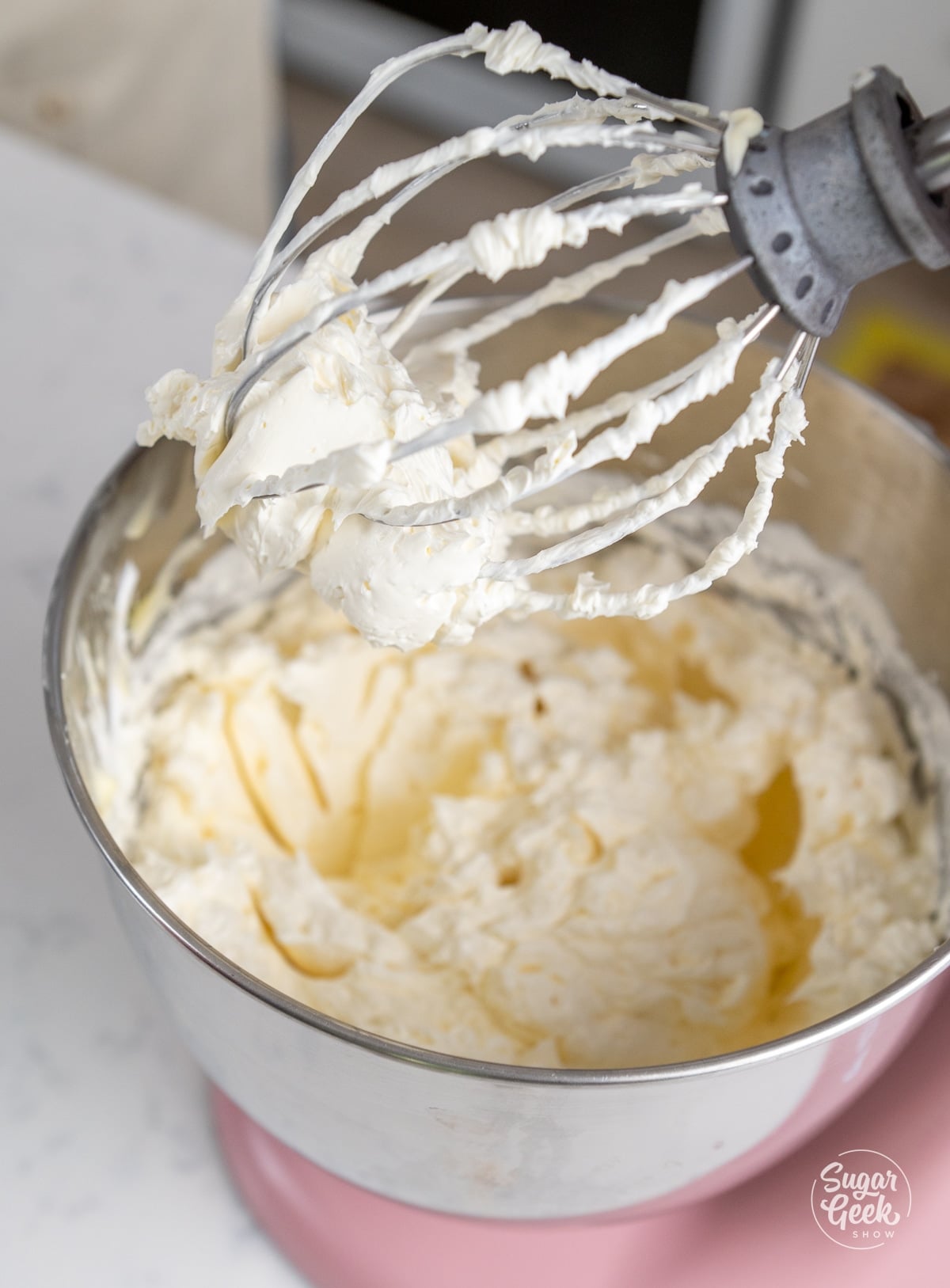
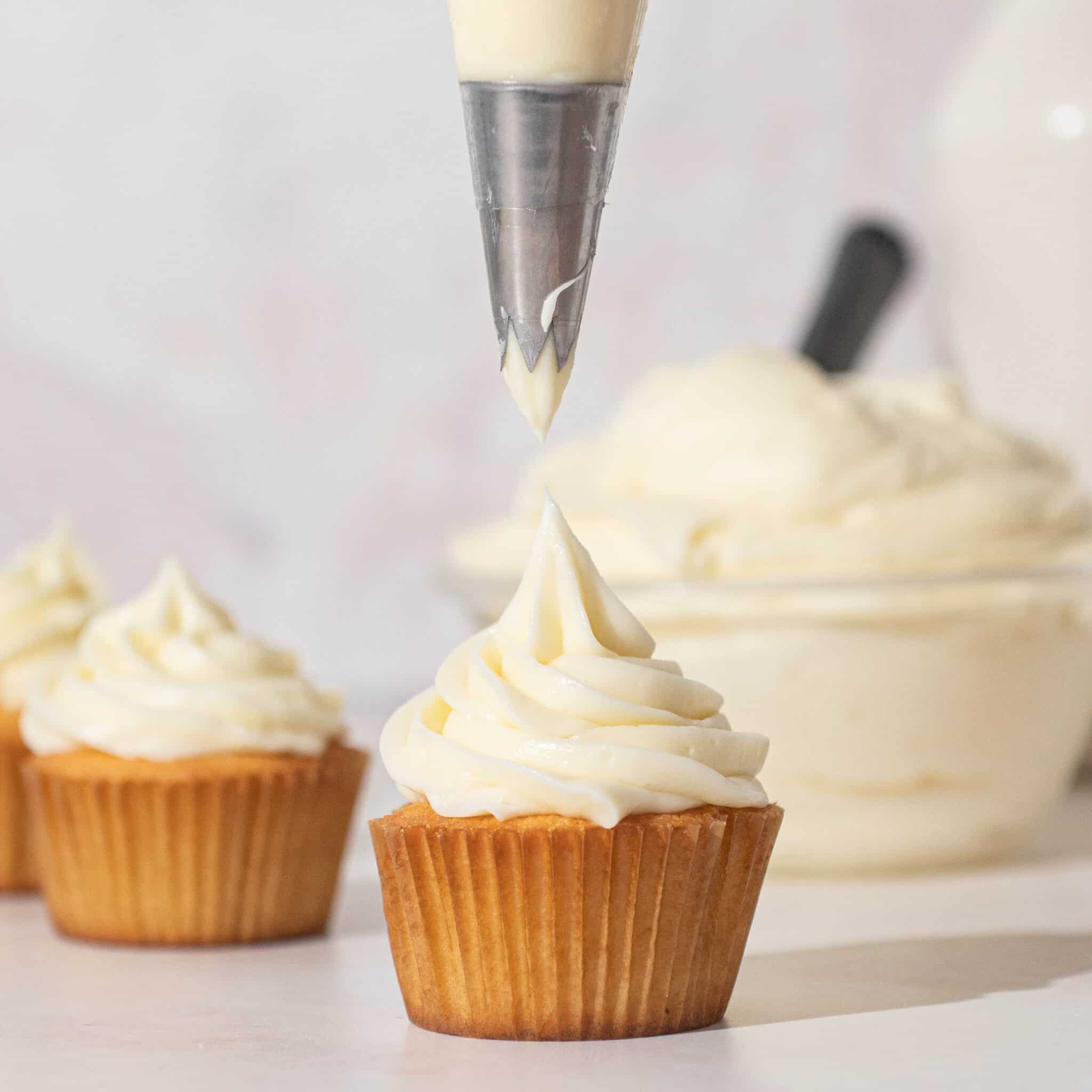
- Whip until fluffy. Whip the buttercream on medium-high speed until it is white, fluffy, and no longer tastes buttery. This takes 8 to 10 minutes. Pro tip: add a drop or two of violet gel food coloring to counteract the yellow from the butter and make your buttercream brighter white.
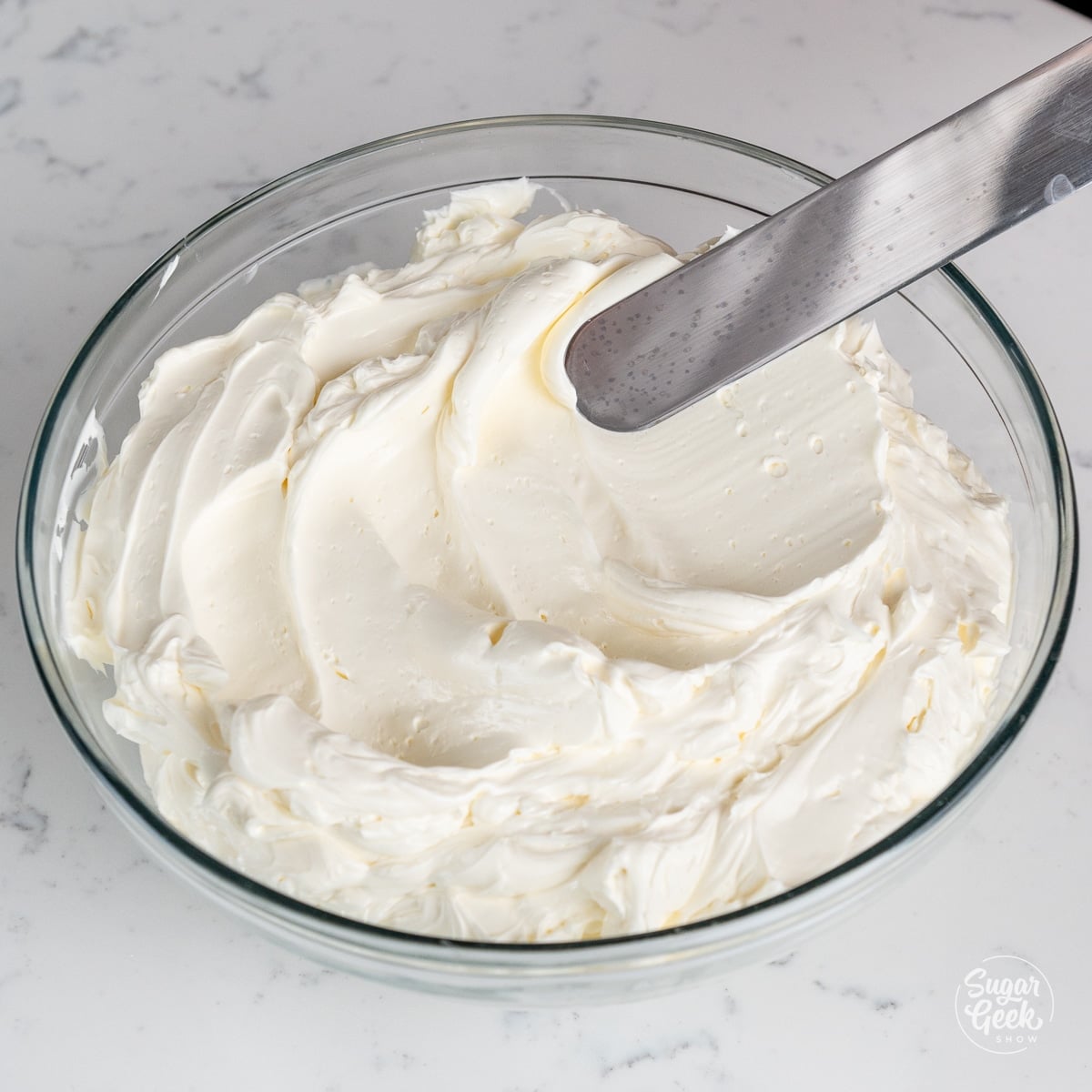
- Finish with the paddle. Switch to the paddle attachment and mix on low speed for 15 to 20 minutes. This removes air bubbles and creates an ultra-smooth, silky texture. This step is optional but if you want that perfectly creamy, professional finish, do not skip it.
Batter & Frosting Calculator
Cake Batter and Frosting Calculator
Select an option below to calculate how much batter or frosting you need. Adjust the servings slider on the recipe card to change the amounts the recipe makes.
Choose a pan type
Choose a cake pan size
(based on 2" tall cake pan)
Choose a cake pan size
(based on 2" tall cake pan)
Cupcake Tin Size
Choose number of pans
Cups of Batter Needed
8 cups
Cups of Frosting Needed
5 cups
Note: measurements are estimated based off the vanilla cake recipe using standard US cake pans and sizes. Measurements used are for 2" tall cake pans only. Your results may vary. Do not overfill cake pans above manufacturer's recommended guidelines.
This recipe makes enough to frost and fill a two-layer 8-inch cake or frost about 24 cupcakes. Store leftovers in an airtight container in the fridge for 1 week or freeze for up to 6 months.
Common Swiss Meringue Buttercream Problems To Avoid
Using carton egg whites. Carton egg whites are pasteurized at high heat which denatures some of the proteins and makes them harder to whip into a strong, stable meringue. Fresh egg whites from whole eggs give you a much more reliable result.
Any fat in the bowl. Even a trace of fat from egg yolk or residue will prevent your egg whites from whipping properly. Wipe your bowl and whisk with white vinegar before starting to remove any grease.
Not cooking to the right temperature. The egg white and sugar mixture needs to reach 110 degrees, and all sugar granules need to be fully dissolved. Under-cooking leaves a gritty texture in the finished buttercream.
Adding butter to warm meringue. This is the most common failure point. If the meringue is still warm when the butter goes in, the butter melts and the buttercream looks like soup. Cool the meringue to room temperature before adding any butter, no exceptions.
Butter that is too cold. Cold butter will not emulsify smoothly into the meringue and will leave lumps. Your butter should be soft enough to press your finger into easily but still holding its shape.
Stopping too soon. SMBC goes through a curdled, broken-looking stage before it comes together. Many people panic and stop at this point thinking it has failed. Keep mixing. It will come together into a smooth, fluffy buttercream within a few minutes.
Skipping the paddle step. The whisk incorporates air, which gives you volume. The paddle removes excess air, which gives you smoothness. If you want a truly silky finish for sharp-edged cakes, the 15 to 20 minutes on the paddle makes all the difference.
Swiss Meringue Buttercream FAQs
Yes. SMBC is one of the best frostings to use under fondant because it creates a smooth, firm surface when chilled. Frost your cake, refrigerate it until the buttercream is firm, then apply your fondant over the cold surface for the cleanest finish.
Both are meringue-based buttercreams, but they use different methods. Swiss meringue heats the egg whites and sugar together over a double boiler before whipping. Italian meringue buttercream pours a hot sugar syrup into already-whipping egg whites. Italian is considered slightly more stable and has a firmer texture. Swiss is a bit easie
SMBC is more heat-stable than American buttercream but it will soften in very warm temperatures. It holds up well in air-conditioned environments and is stable enough for tiered cakes and wedding cakes. In high heat or direct sun, any butter-based frosting will eventually soften.
Yes. Store it in an airtight container in the fridge for up to 1 week. When you are ready to use it, bring it back to room temperature and re-whip it with the paddle attachment until smooth and fluffy again.
A frosted cake can sit at room temperature for up to 2 days in a cool environment. For longer storage, refrigerate the cake and bring it to room temperature before serving.
Yes. Once your buttercream is finished, fold in melted and cooled dark chocolate to taste. The exact ratios depend on how chocolatey you want the final result, so start with a small amount and add more until you reach your desired flavor.
Yes. Use gel food coloring rather than liquid for the most vibrant results. Add color after the buttercream is fully whipped and mix until evenly distributed. Adding a tiny drop of violet gel helps neutralize the yellow from the butter and gives you a truer white base to start from.
More Frosting Recipes To Try
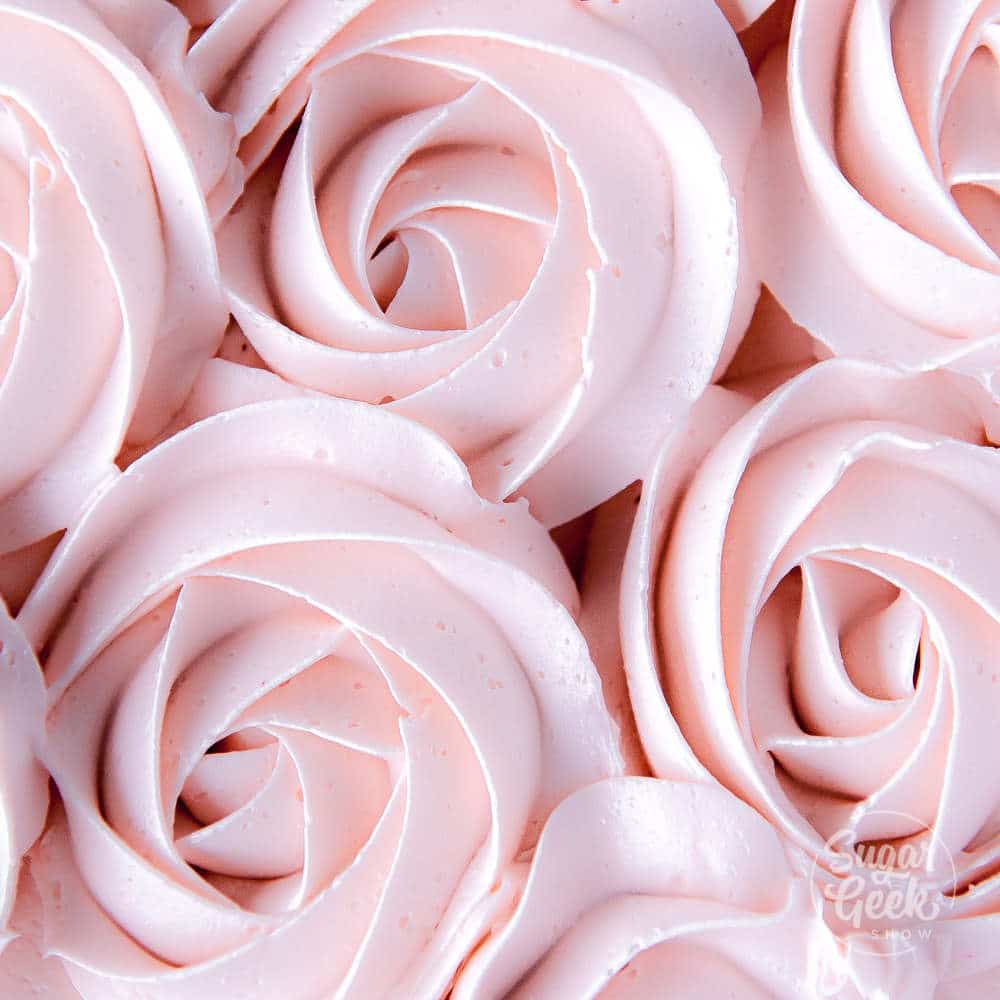
Leave Me A Review
⭐️⭐️⭐️⭐️⭐️
If you tried this Swiss Meringue Buttercream Recipe or any other recipe on my blog, please leave a 🌟 star rating and let me know how it goes in the comments. I love hearing from you!
Recipe
Equipment
- 1 stand mixer with the whisk and paddle attachments
Ingredients
Swiss Meringue Buttercream Ingredients
- 8 ounces fresh egg whites about 8
- 16 ounces granulated sugar
- 24 ounces unsalted butter room temperature. You can use salted butter, but it will affect the taste and you need to leave out additional salt
- 2 teaspoons vanilla extract
- ½ teaspoon salt
Instructions
Making Swiss Meringue Buttercream
- Fill a large pot with about 2 inches of water and bring it to a simmer.
- Place the metal bowl of your stand mixer on top of the pot of water to create a bain-marie (or double boiler). The water should not touch the bottom of the bowl.
- Whisk together the egg whites, sugar, and salt in the mixing bowl. Pro-tip: Wipe your bowl out with white vinegar before making the meringue. A very clean metal bowl will work best for this as the meringue is easier to whip up in metal rather than plastic.
- Cook the egg white mixture until it reaches 110ºF (43ºC) and constantly whisk the sides of the bowl to distribute the heat evenly. If you don't have an instant-read thermometer, when you can no longer feel any sugar granules in the egg whites with your finger, it's done.
- Remove the bowl from the heat and transfer it to your stand mixer with the whisk attachment. You can use a hand mixer and a large bowl to mix your meringue, it will just take a lot longer to mix.
- Whip the egg and sugar mixture on medium-high speed for 10 to 15 minutes, or until you reach glossy, stiff peaks.
- Pour your meringue out into a shallow dish and refrigerate it for about 10 minutes to cool the meringue to room temperature. You can also put your entire bowl of meringue into the fridge, but it will take longer to cool. If you don't cool the meringue it will melt your butter and then you'll have buttercream soup.
- Once your meringue is cooled, put it back in your stand mixer bowl with the whisk attachment.
- Add the room-temperature butter, vanilla, and mix until it's all combined.
- Whip the buttercream on medium/high speed until it is white, fluffy, and doesn't taste buttery, this can take 8-10 minutes. Pro-Tip: To counteract the yellow in your buttercream, add a drop or two of violet food color gel to make it whiter.
- Switch to a paddle attachment and mix it on low speed for 15-20 minutes to make the buttercream very smooth and remove air bubbles. This isn't required, but if you want really creamy frosting, you do not want to skip it!
- This recipe is enough to frost and fill a two-layer 8" x 2" cake, or frost about 24 cupcakes. Store any leftovers in an airtight container in the fridge for 1 week, or freeze for up to 6 months.

Sammi Chesnut says
Could I use SMBC on cake pops? to make into flowers?
The Sugar Geek Show says
Yes you can
Uuumart says
Hello! I have made this recipe before it's the best, love it. My question was this, I'm doing my first wedding cake and want to use this recipe but I will need to set up the cake the day before, I am aware that the texture changes a bit as it sits but I was wondering if u had any recommendations? Would it help texture and stability if I added a little ganache? Keep it refrigerated? Or do u have good results leaving it for a day? Any opinions would be very helpful! I apologize for the long comment! Haha
The Sugar Geek Show says
I would definitely keep it refrigerated until the day of the event to prevent sagging and other problems then bring it to room temperature a few hours before it will be cut
Azrah Essop says
Hi there,
Can i use this recipe to pipe rosettes around the side of a cake? Im worried it will slide off?
The Sugar Geek Show says
Yes, I use it to pipe all the time. Make sure your cake has a crumbcoat first
Aimee says
Planning to use my buttercream to decorate cupcakes like Santa hats. Every looked good thickness wise until I added the gel food coloring. It seems a bit thin to hold the shape of the Santa hat. Anything I can do to thicken it up more?
The Sugar Geek Show says
You can put it in the fridge for 20 minutes then mix again with the paddle attachment
Giovanna Rodriguez says
Hi! I did it with pasteurized egg whites and came out perfectly 🙂
Claire says
Hi Liz, I am making a birthday cake with Your Swiss Meringue Butter recipe. After frosting and decorating the cake, is it safe to leave it on the table at room temperature in a cake box overnite? As I am travelling with the cake on a train for 2 hours. Shall I refrigerate the cake or just leave it out on table. Will the cream crack after refrigerate?
The Sugar Geek Show says
Yes you can, the meringue is safe to be at room temperature but I would travel with the cake refrigerated because it makes it more stable. You can even insulate a box with thin foam to make it like a little fridge
H says
Hello Liz,
I made a batch last night(which looked fine) and left it at room temp on the counter. This morning it looked firm and separated, so I re-whipped it before piping on my cupcakes. It didn’t look as fluffy and felt a bit dense. After piping, the frosting became firm, kinda like butter. Is it due to temperature? My room temp is around 66-68F. What did I do wrong?
The Sugar Geek Show says
Yes the buttercream will become firmer if the room is cold. Theres nothing wrong with that, it's normal.
Jean Martin says
Hi Liz! I made some SMBC then refrigerated the iced cake overnight. When it came time to cover it with fondant it was 60F rainy NY weather ... it softened even before I could finish applying the fondant. So it bulged and looked horrible. I was so afraid of this happening that I cooked the egg whites longer until 175F and even added cream of tartar while whipping and meringue powder in the end . What did I do wrong? Help please!
The Sugar Geek Show says
why did you cook the egg whites for longer? 175 is pretty hot. Im not sure why that happened but I only warm my egg whites until the sugar melts. About 110ªF
Maro cakes says
Can I use maringue powder instead of egg whites and if ok , what is the exact measure then ?
The Sugar Geek Show says
I have not tried this recipe with meringue powder
Erika says
Hi Liz! The recipe calls for fresh egg whites, can I use egg whites that are sold in the store (ie: All Whites)?
The Sugar Geek Show says
No you can't, they won't whip up. If you want to use pasteurized egg whites then use my easy buttercream recipe https://sugargeekshow.com/easy-buttercream-frosting/
Cake-a-lily, LLC says
I use pasteurized carton egg whites all the time for smbc. You just need to add some cream of tartar to the egg whites.
The Sugar Geek Show says
Thanks for the tip! I'll try that 🙂
Peta Young says
Hi, thanks for the tip how much cream of tartar do you add and when do you add it please, if you are using the pasteurized egg whites ?
The Sugar Geek Show says
1/8 of a teaspoon added to the egg whites while they are whipping into a meringue
Claire Bevington says
This is so helpful, thanks Liz!! When should I add my colour? Thank you 🙂
The Sugar Geek Show says
I add mine at the end once it's all whipped up 🙂
Jenna Uttridge says
Hi! I absolutely love this recipe. I was wondering if you had any tips on how I would turn this recipe into a chocolate SMBC xx
The Sugar Geek Show says
Just add in 2 ounces of cocoa powder or 8 ounces of melted chocolate cooled to 90ºF
Tonia says
I've tried your easy buttercream recipe and it was easy but tasted like I iced the cake with butter. The texture and color was nice but taste exactly like butter. Does the Swiss have a better taste ?
The Sugar Geek Show says
If the buttercream tastes like butter it's not been whipped enough. Keep whipping until it tastes like cream.
Nessma says
Is this enough for 2 dozen of cupcakes or I need to double the amount ?
The Sugar Geek Show says
Its enough 🙂
Derusha says
Hi,
I know that swiss meringue becomes spongy when refrigerated and will need to be rewhipped to achieve that smooth consistency. Does the same apply if I refrigerate a cake that has already been frosted with swiss meringue? Or will it keep its smooth and fluffy texture
The Sugar Geek Show says
It doesn't have quite the same spongy texture on a cake because it's a thin layer and you aren't smoothing it. It's already in place and smooth.
Zettie says
Hi Liz,
I would like to use this and color a batch yellow and one red. I have Rainbow Dust progel. How many drops of color should I use? Would a yellow buttercream go with the red velvet cake? Or would the white cake be better? And then how many drops of red?? Many questions I Know. Thanks so much in advance.
The Sugar Geek Show says
I wouldn't put yellow frosting on a red cake, it will look like ketchup and mustard IMO. There is no exact science to adding color to frosting. Just add until it's the color you want it to be. Start with a few drops and keep going. SMBC doesn't usually get very dark though
Crystal Gilks says
Hi, I know this is old but add the food coloring to the meringue and it will change your life! The butter stops it from incorporating well. You'll get richer colors by doing it this way.