


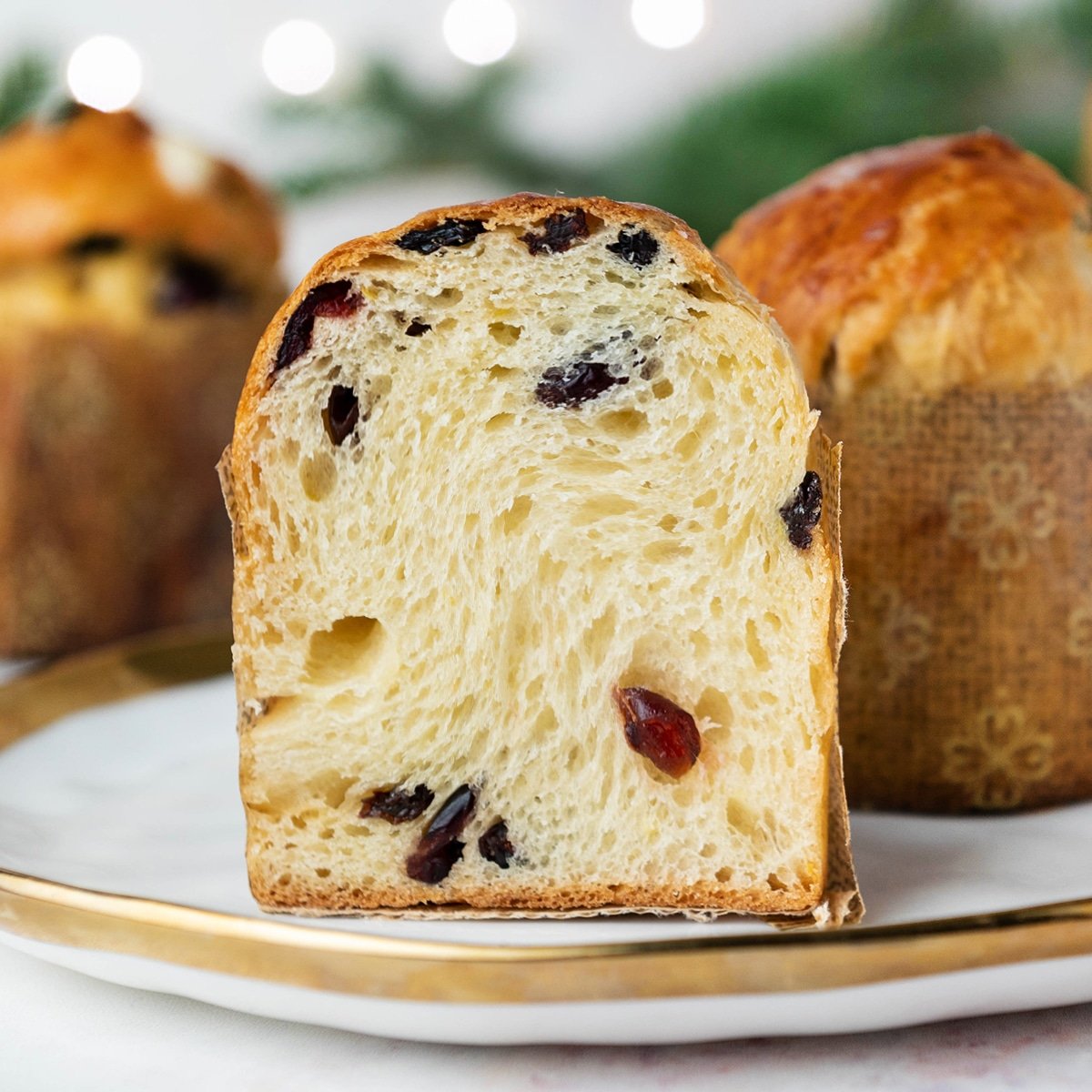
This homemade panettone recipe makes a sweet, soft, buttery Italian Christmas bread loaded with candied orange, raisins, cranberries, and currants, and the best part is you only need 20 minutes of active work. The rest happens while you sleep: the dough does a slow overnight rise in the fridge, which not only makes this incredibly easy to manage but builds a depth of flavor that same-day panettone just can't match. This is the cold-rise method, inspired by Jim Lahey of Sullivan Street Bakery, and it is the most approachable way to make panettone at home. If you love enriched doughs, my soft homemade brioche and master sweet dough recipe both use a similar butter-and-egg base and make great warmup projects before tackling panettone.
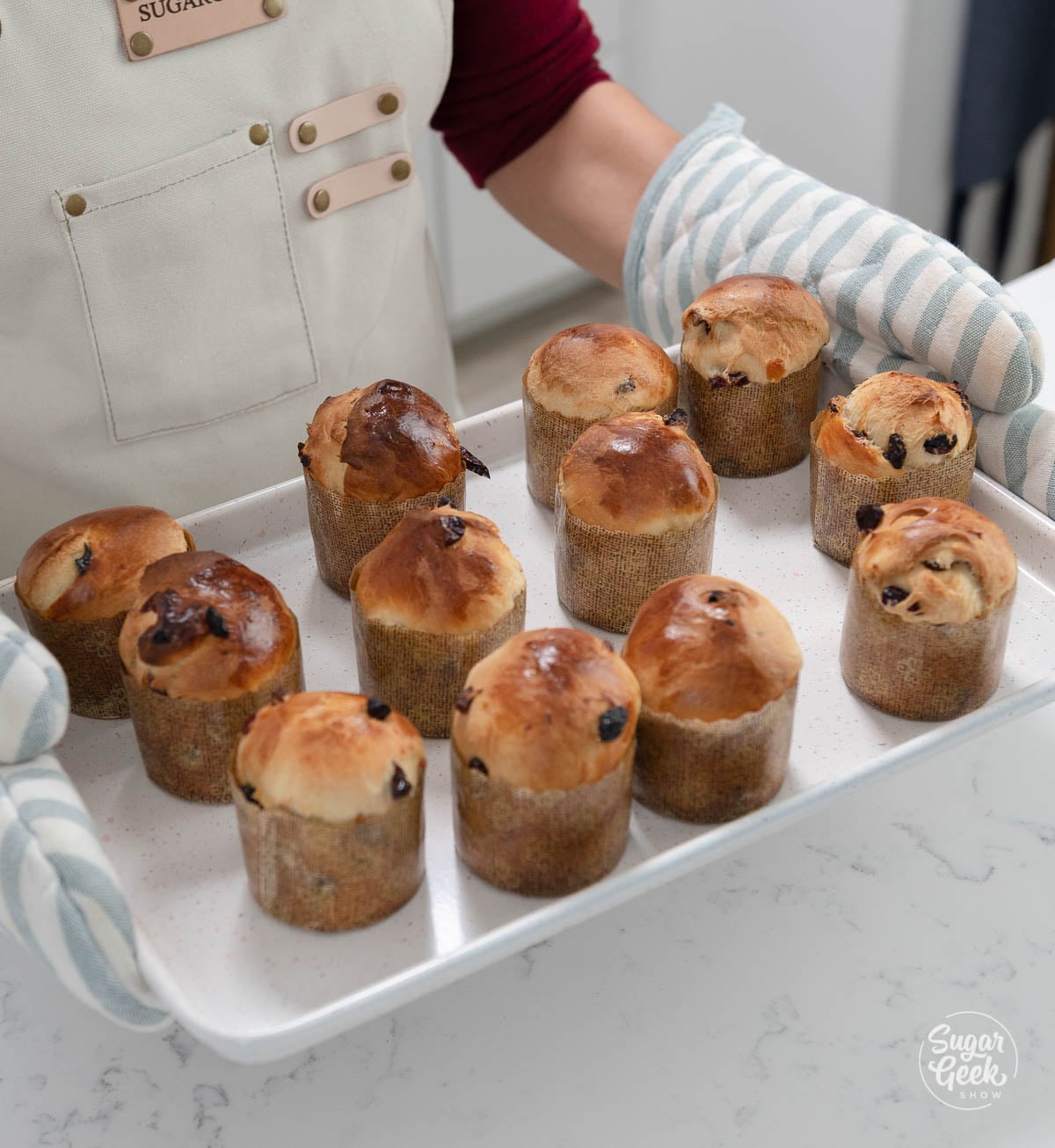
One batch makes about 18 mini panettone baked in individual paper molds, which is absolutely perfect for holiday gifting, parties, and potlucks. Everyone gets their own little bread. You can also bake it as one or two larger loaves if you prefer. The flavor variations alone (Pistachio Cranberry! Chocolate Orange! Black Forest!) make this one of my favorite holiday baking projects of the year.
If you have never made a yeast bread before, don't be intimidated. I have a full breakdown of how yeast works in the post below, and this recipe is genuinely forgiving once you understand the two-day schedule. Speaking of which, read the schedule before you start. This is a two-day project and knowing what's happening on each day makes everything feel manageable instead of overwhelming.
Quick Glance at the Recipe
- Recipe Name: Homemade Panettone Recipe (Italian Christmas Bread)
- Why You'll Love It: Sweet, buttery, fruit-studded Italian Christmas bread with only 20 minutes of active work. Cold-rise method builds incredible flavor overnight.
- Time and Difficulty: Intermediate. 20 minutes active work. Two-day schedule: sponge on Day 1 evening, dough and bake on Day 2. Plan for a full overnight rise.
- Main Ingredients: Bread flour, butter, honey, eggs and egg yolks, instant yeast, candied orange, raisins, cranberries, currants, lemon zest, vanilla.
- Method: Make the sponge the night before and refrigerate overnight. Day 2, cream butter and honey, add eggs and sponge, mix in flour, fold in fruits, portion into molds, proof until doubled, egg wash, bake at 375º F.
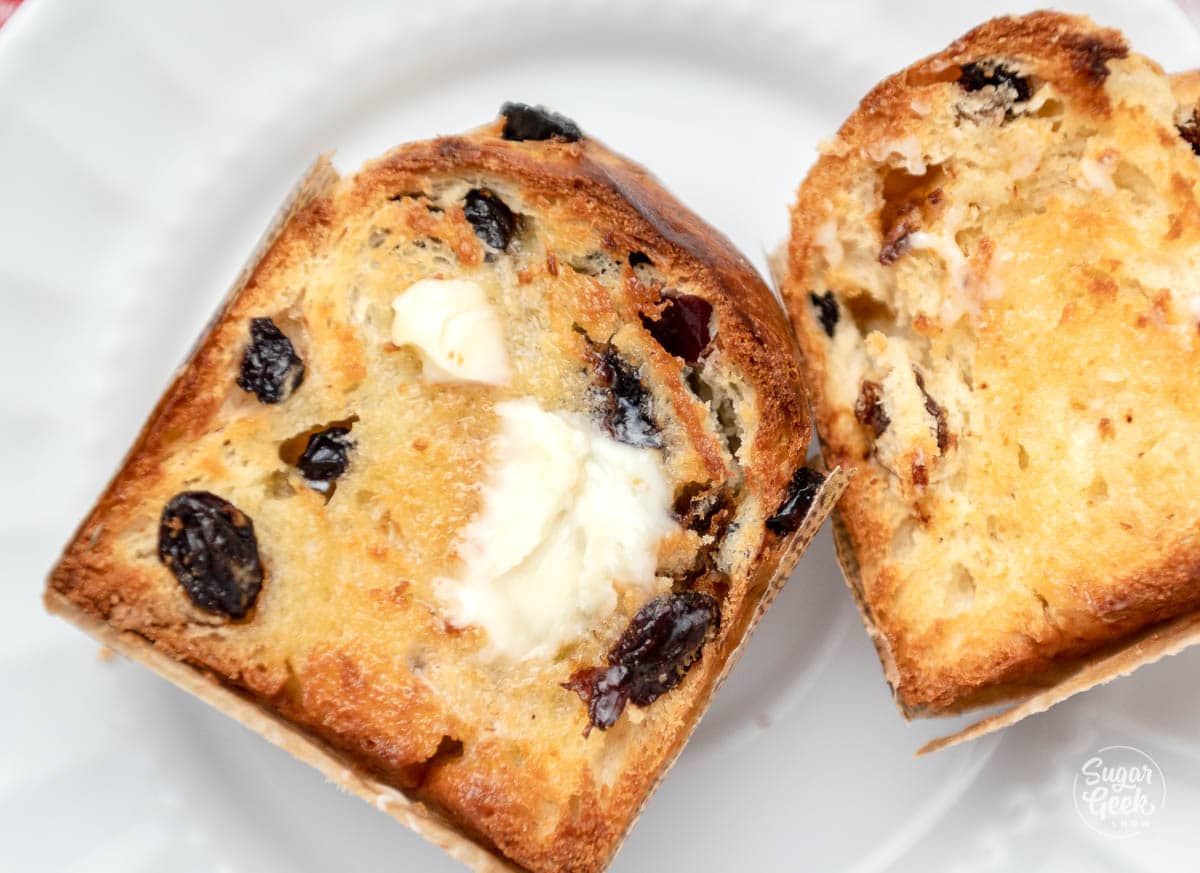
- Texture and Flavor: Soft, pillowy, and buttery with a slight sweetness and a warm citrus and vanilla scent. Slightly richer than brioche, lighter than a cake, with pockets of juicy dried fruit in every bite.
- Quick Tip: Make the sponge the evening before you plan to bake. Refrigerating it overnight develops flavor and makes the dough much easier to work with the next day.
Jump to:
- Quick Glance at the Recipe
- What Makes This Panettone Recipe Different?
- What Is Panettone?
- Two-Day Baking Schedule
- Panettone Ingredients
- How To Make Panettone Step-By-Step
- Why Do You Cool Panettone Upside Down?
- Understanding How Yeast Works In Panettone
- Creative Panettone Flavor Variations
- What To Do With Leftover Panettone
- How To Gift Panettone
- Common Panettone Problems To Avoid
- Final Thoughts
- Homemade Panettone Recipe FAQs
- More Sweet Breads and Holiday Recipes to Try
- Leave Me A Review⭐️⭐️⭐️⭐️⭐️
- Recipe
What Makes This Panettone Recipe Different?
Most homemade panettone recipes in English are either simplified to the point of not really tasting like panettone, or they ask you to maintain a lievito madre starter for weeks. This one sits in the sweet spot: the cold overnight sponge takes the place of a full starter, giving you the slow fermentation and flavor complexity of the traditional method without the multi-day commitment.
The mini mold format is also the move for most home bakers. Instead of one large loaf that requires hanging upside down on skewers for two hours while you anxiously watch it (not that I've been there), you get about 18 individual mini panettone that set in their molds quickly and don't need the upside-down treatment at all. They're also infinitely more giftable, which is kind of the whole point of panettone.
What Is Panettone?
Panettone (pronounced "pan-eh-TOH-neh") is a sweet Italian bread baked with candied fruit and dried fruit, traditionally made for Christmas and gifted to friends and family. It originated in Milan and is now one of the most iconic holiday foods in Italy and Italian communities worldwide. Despite its cake-like appearance and tender crumb, panettone is a bread, not a cake. The fluffy, domed structure comes from a long yeast fermentation, not from baking powder or baking soda.
Traditional panettone is made with a sourdough starter called lievito madre, which takes several days to prepare and refresh. This recipe uses instant yeast with a cold overnight sponge instead, which achieves a similar depth of flavor in a fraction of the time and is genuinely manageable in a home kitchen. You get the same airy, buttery, fruit-studded result without a multi-day starter project.
Two-Day Baking Schedule
Read this before you start. This is the single most important section in the post.
Day 1, evening (20 minutes): Make the sponge. Stir yeast into bread flour, add water, mix until smooth, cover, and put in the fridge. That's it. The sponge will slowly ferment and develop flavor overnight while you sleep.
Day 2, morning or midday (about 45 minutes active): Take the sponge out of the fridge 30 minutes before you start, to take the chill off. Make the dough: cream butter and honey, add eggs and sponge, mix in flour, knead until the dough passes the windowpane test, fold in fruits. Portion into molds and let rise until doubled (about 30 to 90 minutes depending on how cold your dough is). Egg wash and bake.
Day 2, afternoon or evening: Bake, cool, eat warm with butter.
Optional Day 3 variation: After portioning into molds on Day 2, cover them with plastic wrap and refrigerate overnight for a third day. Bake fresh on Day 3. This is my favorite way, because the extra cold proof adds even more flavor and makes morning baking incredibly easy.
Panettone Ingredients
This is a pantry-friendly recipe with a few specialty items you may need to source ahead of time. I always recommend weighing your ingredients with a digital kitchen scale. Volume measurements are not precise enough for enriched bread doughs. This is the full ingredient list for the whole recipe; the recipe card below splits everything out by the sponge and the dough.
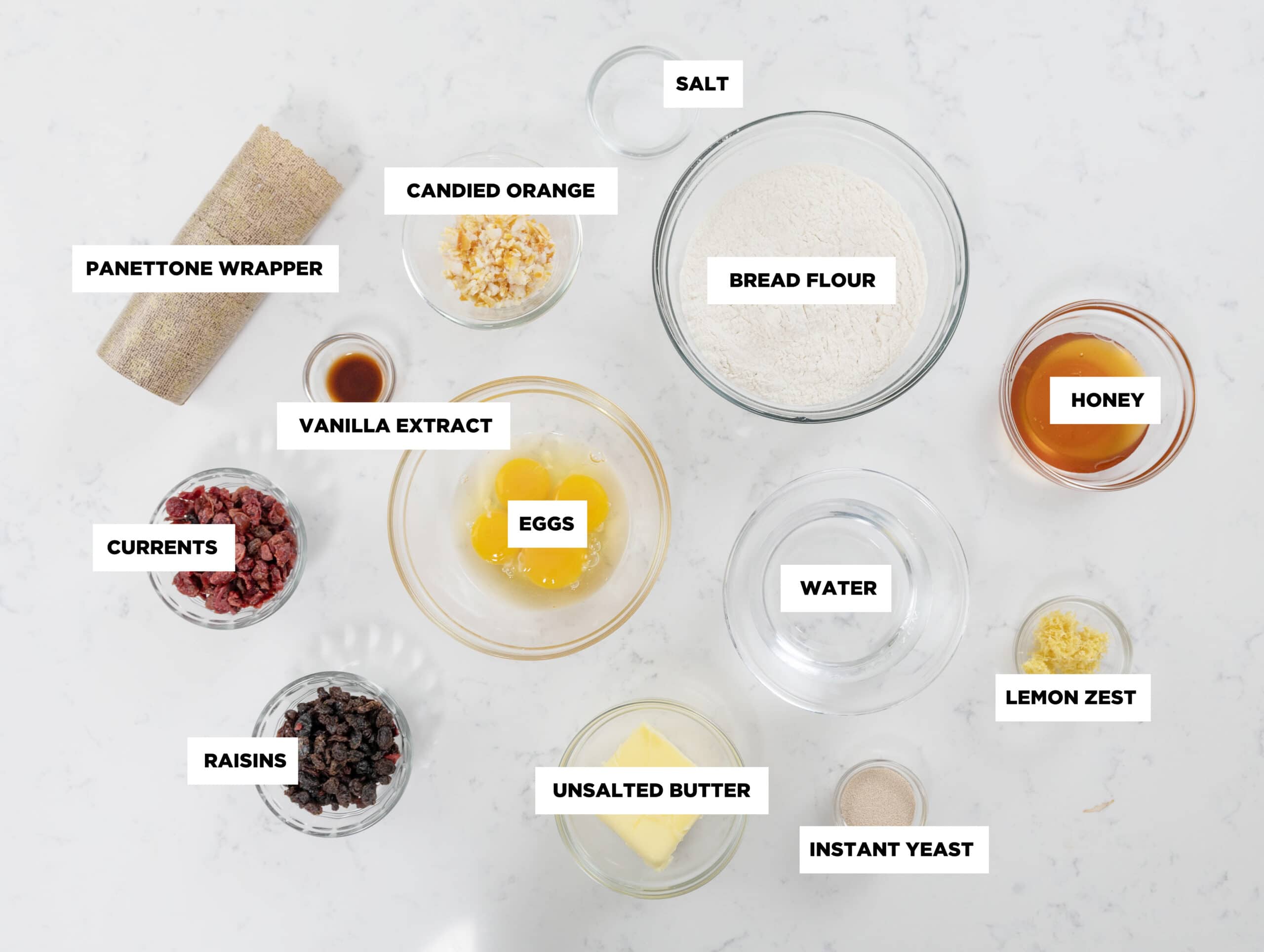
- Bread flour (22 ounces total, divided: 10 ounces for the sponge, 12 ounces for the dough). Bread flour has a higher protein content than all-purpose (about 12 to 13 percent vs. 10 to 11 percent), which means more gluten development and a stronger, more elastic dough that can hold up the heavy butter, egg, and fruit load in panettone. Italian bread flour is ideal if you can find it, since it's finely milled and gives an especially nice chewy texture, but any bread flour works. If all-purpose flour is all you have, it works, but reduce the water in the sponge by about 10 percent (from 8 ounces down to about 7 ounces) and expect a slightly denser crumb. Instant yeast (15 grams).
- Instant yeast goes directly into the flour without needing to be activated first. Do not substitute active dry yeast at a 1:1 ratio; it needs to be bloomed in warm water first and you'll need to increase the amount by about 25 percent. See the FAQ below for sourdough starter guidance.
- Water (8 ounces, 70º F). Room temperature water, not warm. The long cold fermentation does the work here. Warm water would make the sponge rise too fast and over-ferment before morning.
- Unsalted butter (8 ounces, softened). Room temperature is essential. Cold butter won't cream properly and will break the emulsion, giving you a greasy, separated dough. If you forget to take it out, microwave in 5-second bursts until pliable, not melted.
- Honey (4 ounces). Sweetens the dough and adds a subtle floral complexity. Any mild honey works, but avoid strongly flavored varieties like buckwheat, which will compete with the citrus notes. No honey? Swap in the same weight of another liquid sweetener, maple syrup, agave, or glucose all work.
- Eggs and egg yolks (2 whole eggs plus 2 yolks, room temperature). The yolks add richness, color, and a tender crumb. The whole eggs provide structure. Room temperature eggs emulsify more easily into the creamed butter and honey; cold eggs will cause the mixture to look broken and curdled.
- Vanilla extract (1 teaspoon). Use real vanilla, not imitation. The flavor here is subtle and imitation vanilla tastes noticeably artificial in a delicate bread.
- Salt (1 teaspoon). Goes in with the dough flour. Salt controls yeast activity and strengthens gluten structure.
- Raisins (3 ounces). Classic panettone fruit. Modern raisins are plump enough without soaking. If you do soak them, use dark rum or orange juice and dry them well; they can shred during kneading if too wet.
- Candied orange peel (2 ounces). The most distinctive panettone flavor. Homemade candied peel is markedly better than store-bought, which can taste waxy and overly sweet.
- Dried cranberries (3 ounces). Adds tartness that balances the rich, sweet dough. A great modern addition to the classic fruit blend.
- Dried currants (2 ounces). Small and intensely flavored. They distribute evenly through the dough and add complexity.
- Lemon zest (1 Tablespoon). Brightens everything. Zest from a fresh lemon only; jarred or dried zest won't give you the same aromatic hit.
- Panettone paper molds. I use 2.75-inch mini molds for about 18 individual panettone. These are hard to find locally but easy to order online. If you can't find them, cupcake liners work as a substitute. For a single large panettone, use a 7-inch wide by 4-inch tall paper panettone mold, or a 10-inch cake pan with parchment lining. You can also use a loaf pan lined with parchment paper.
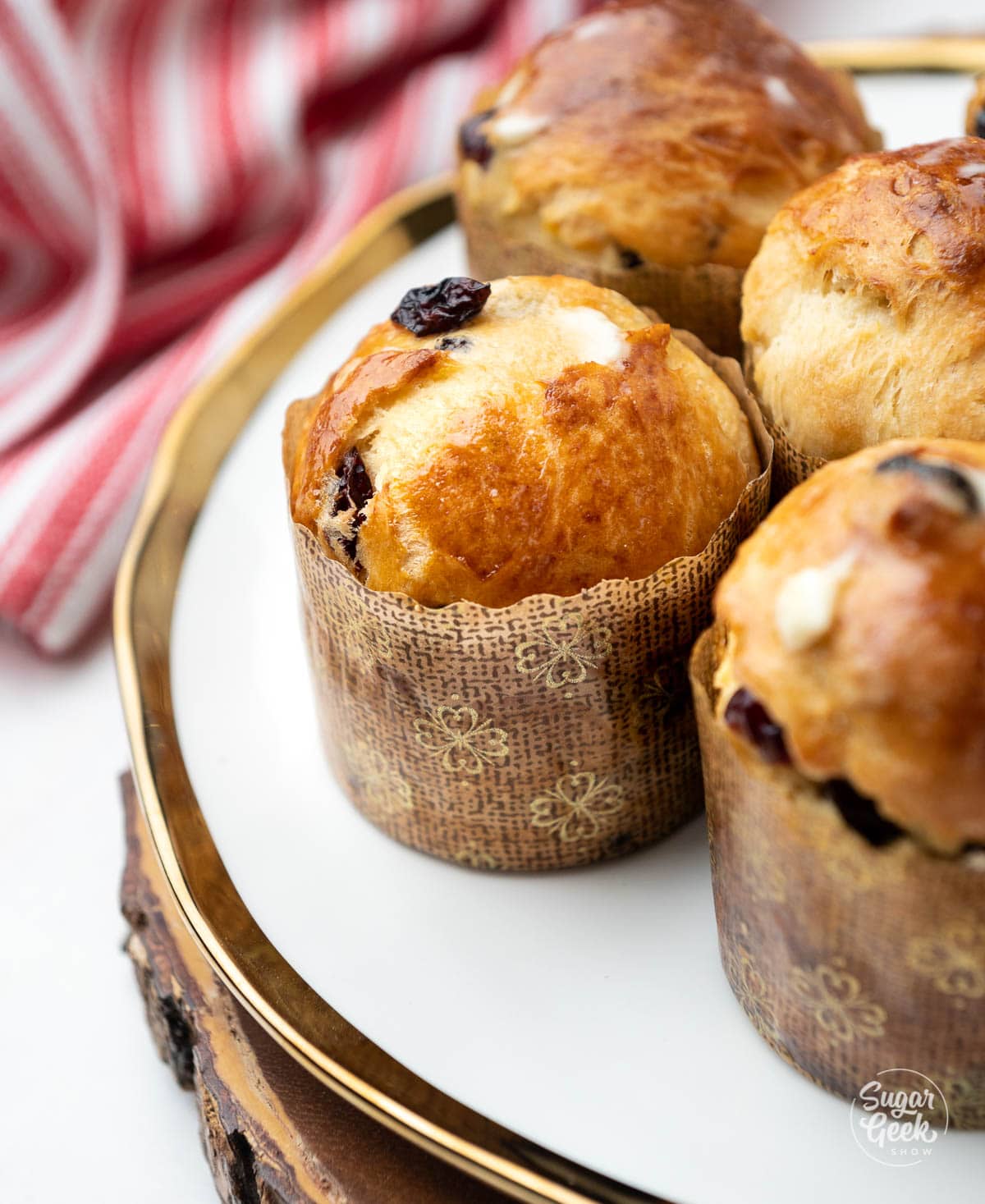
How To Make Panettone Step-By-Step
How To Make Panettone Step-By-Step Make sure your butter and eggs are at room temperature and your molds are ready before you begin Day 2. Refer to the recipe card for exact weights and timing; this is the high-level overview.
Day 1 Evening - Make the Sponge
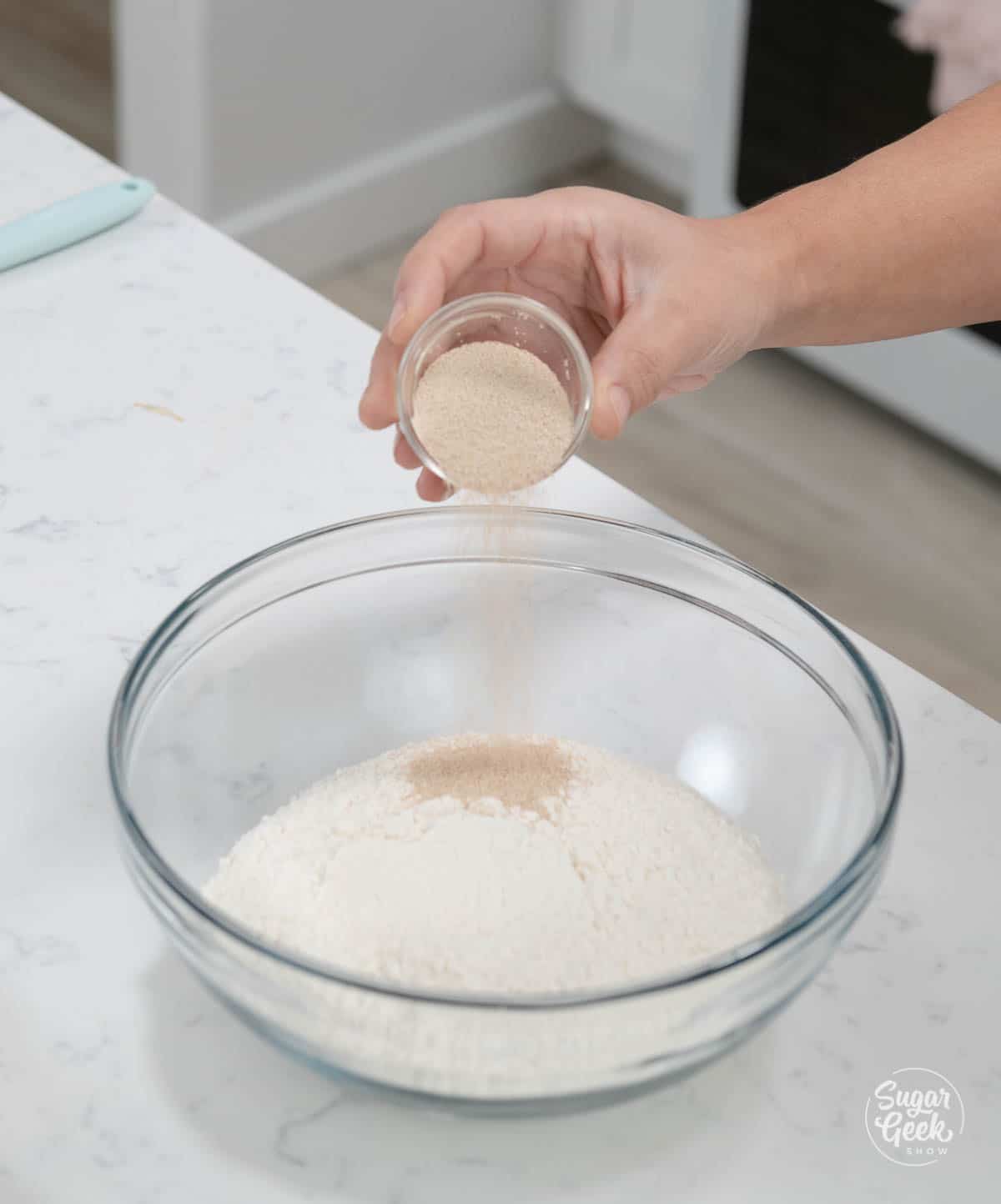
- Mix the sponge. Stir the instant yeast into the sponge's bread flour, add the room-temperature water, and mix until all the flour is moistened and a rough, shaggy dough forms. It will be sticky and lumpy, that's fine.
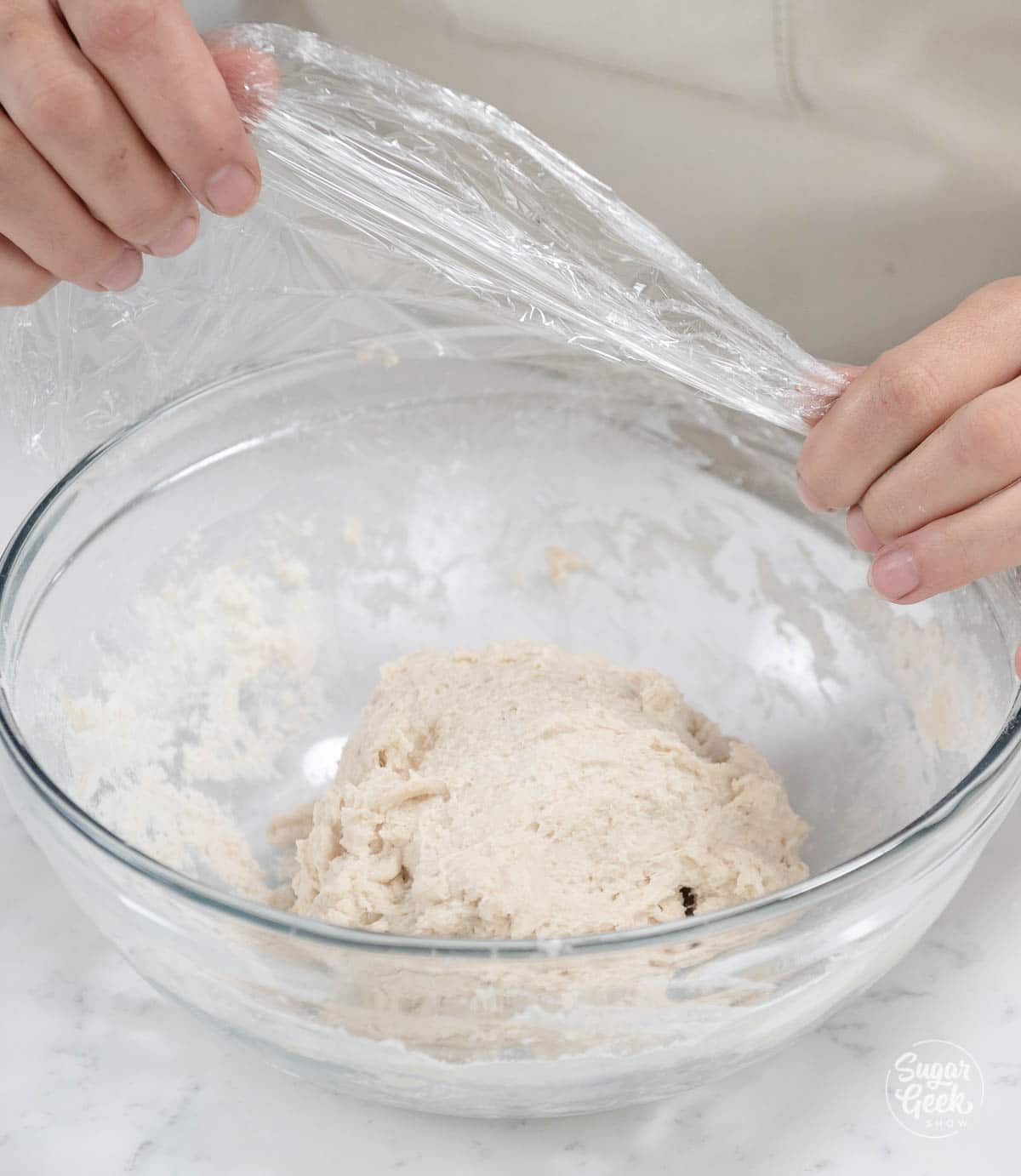
- Cover tightly and refrigerate overnight (12 to 15 hours), until it has doubled and smells pleasantly yeasty and slightly tangy. The longer it ferments the more flavor you build, so overnight is best, but even a 30-minute rest will work in a pinch.
Day 2 Morning - Make the Dough
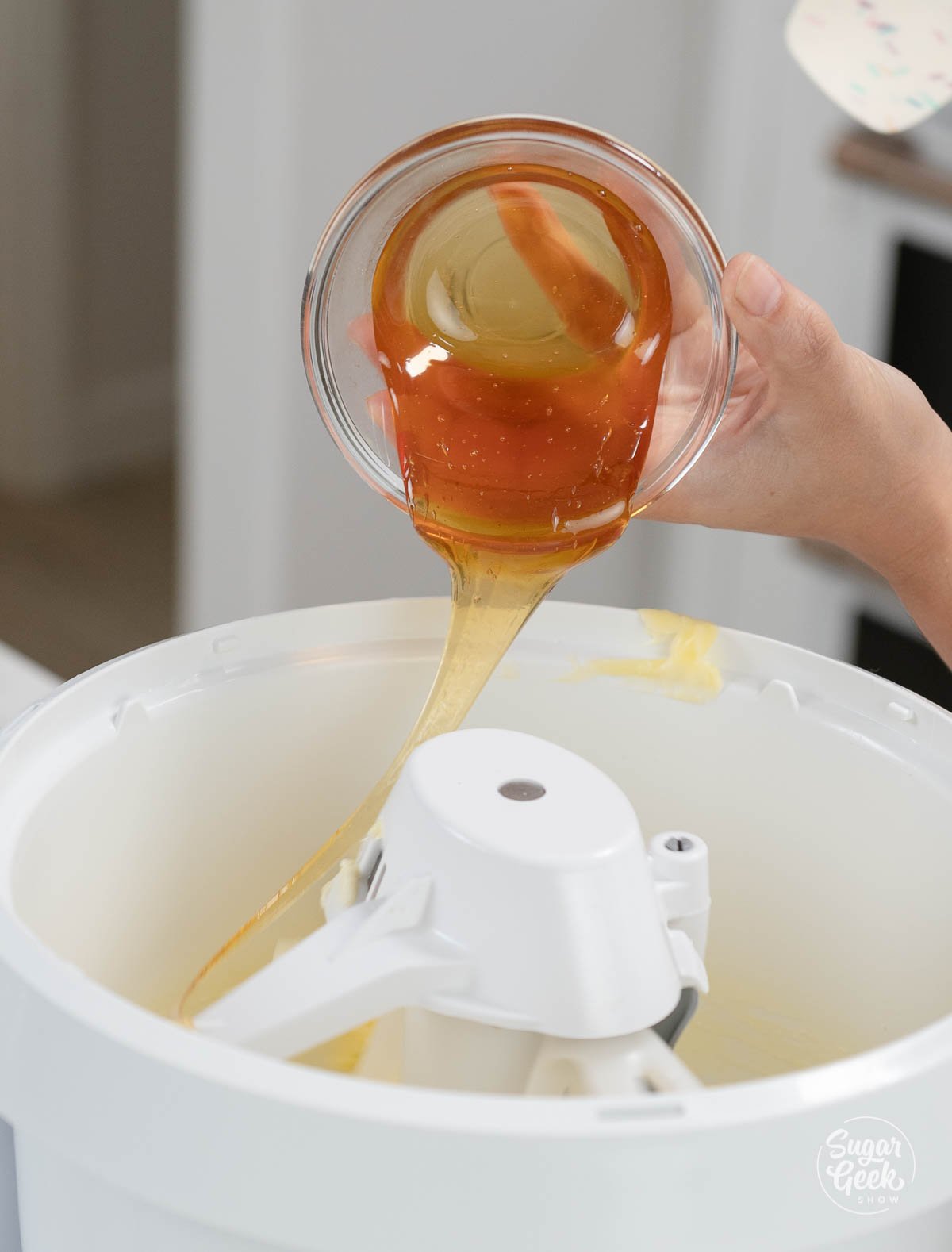
- Cream the butter and honey. In a stand mixer fitted with the paddle, cream the softened butter and honey until smooth.
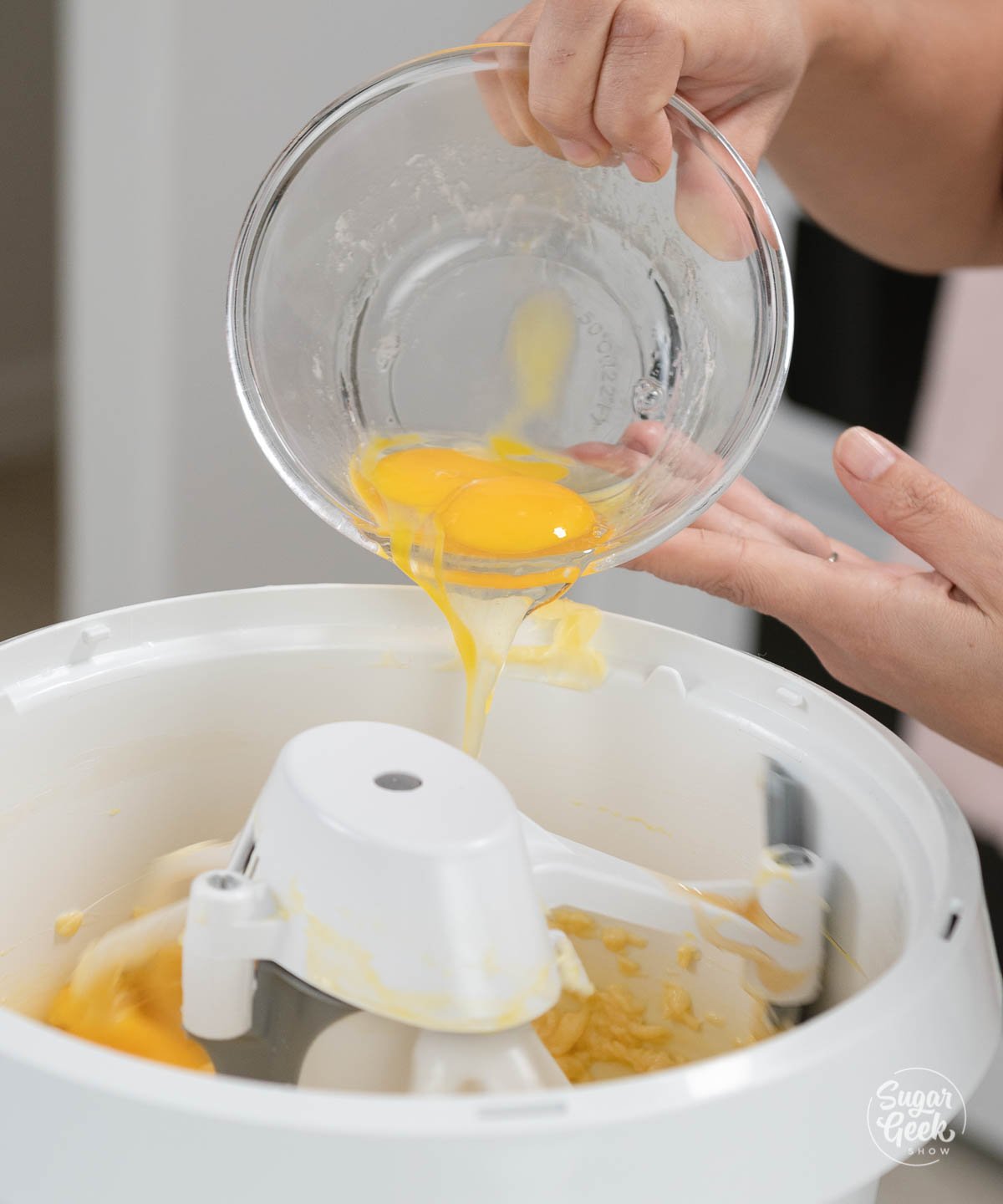
- Add the room-temperature eggs one at a time, then the yolks and vanilla. The mixture may look slightly curdled, that is normal, keep mixing.
PRO TIP: Remove the sponge from the fridge 30 minutes before starting the dough to take the chill off. And switch to the dough hook once the flour is incorporated, since the hook develops gluten far better than the paddle.
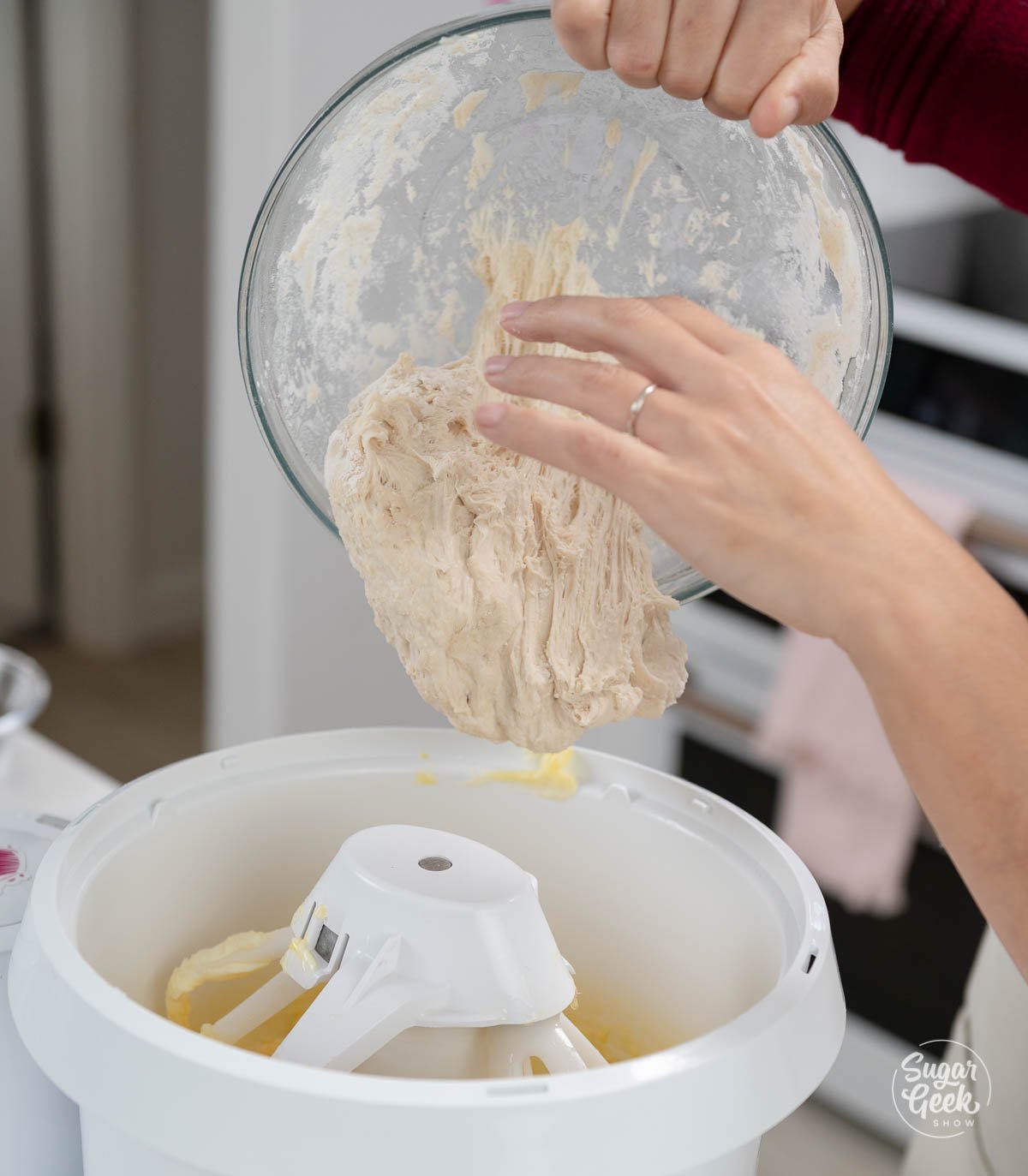
- Add the sponge and flour. Mix in the sponge on low until the dough looks more uniform, about 2 minutes.
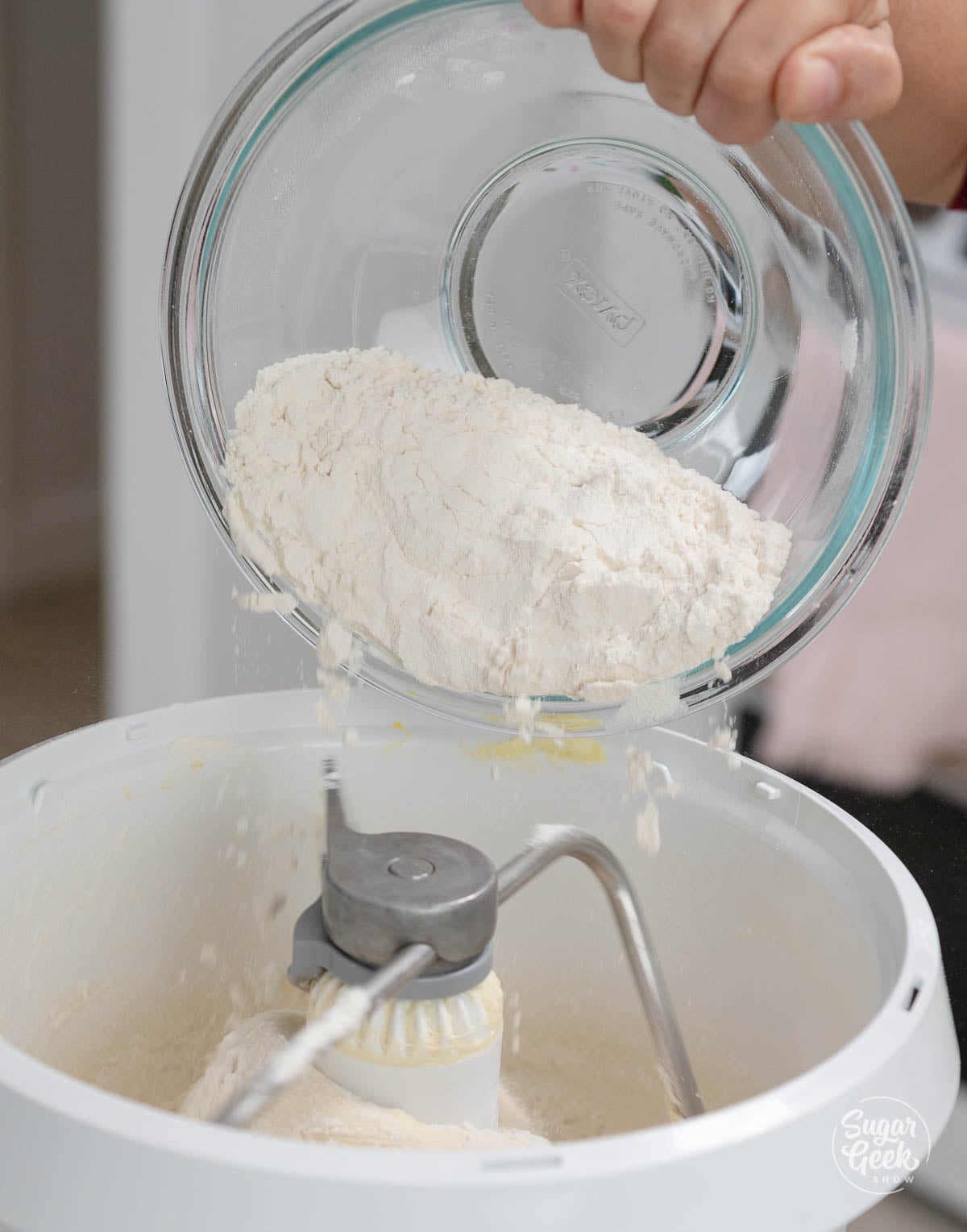
- Combine the dough's bread flour and salt, add it in, and mix on low until it just comes together.
PRO TIP: Switch to the dough hook as soon as the flour is incorporated. The dough hook develops the gluten structure much more effectively than the paddle at this stage.
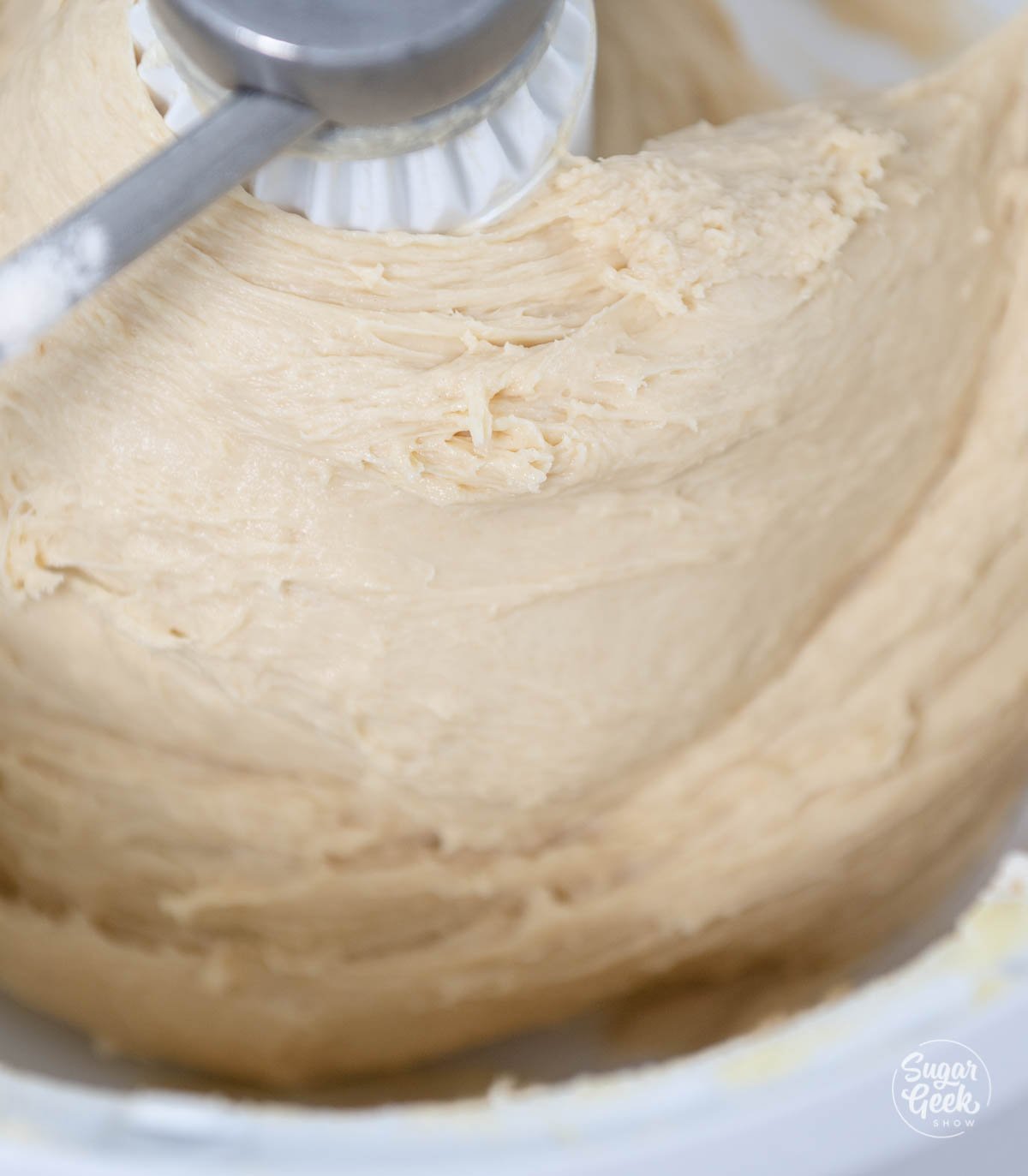
- Knead and windowpane test. With the dough hook, knead on medium-low for about 8 minutes until fairly smooth.
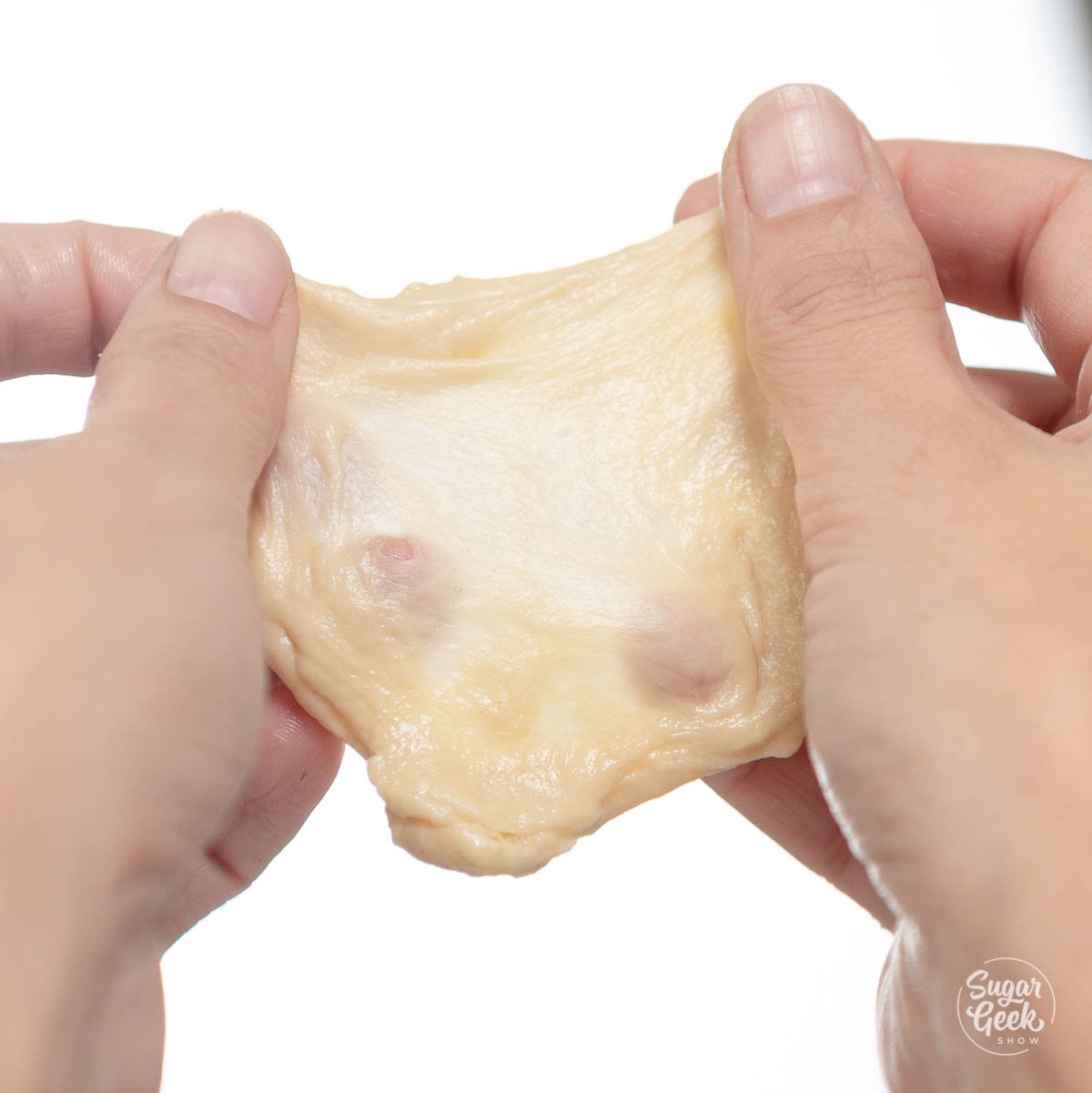
- Test it: pull off a small piece and stretch it thin enough to be almost translucent without tearing. If it tears, knead another 2 minutes and test again.
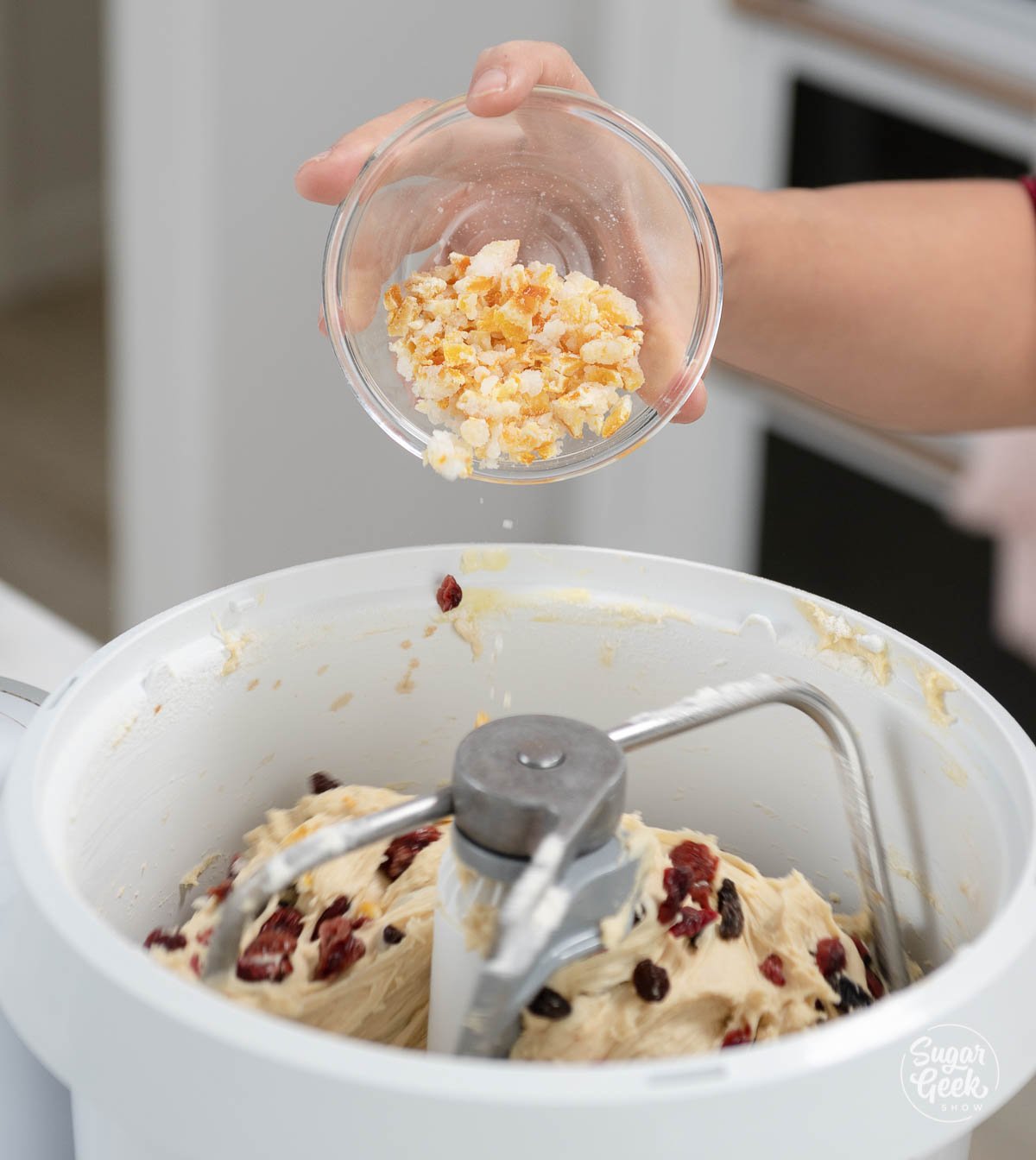
- Add the fruit and first rise. Mix in the raisins, candied orange peel, cranberries, currants, and lemon zest on low until evenly distributed.
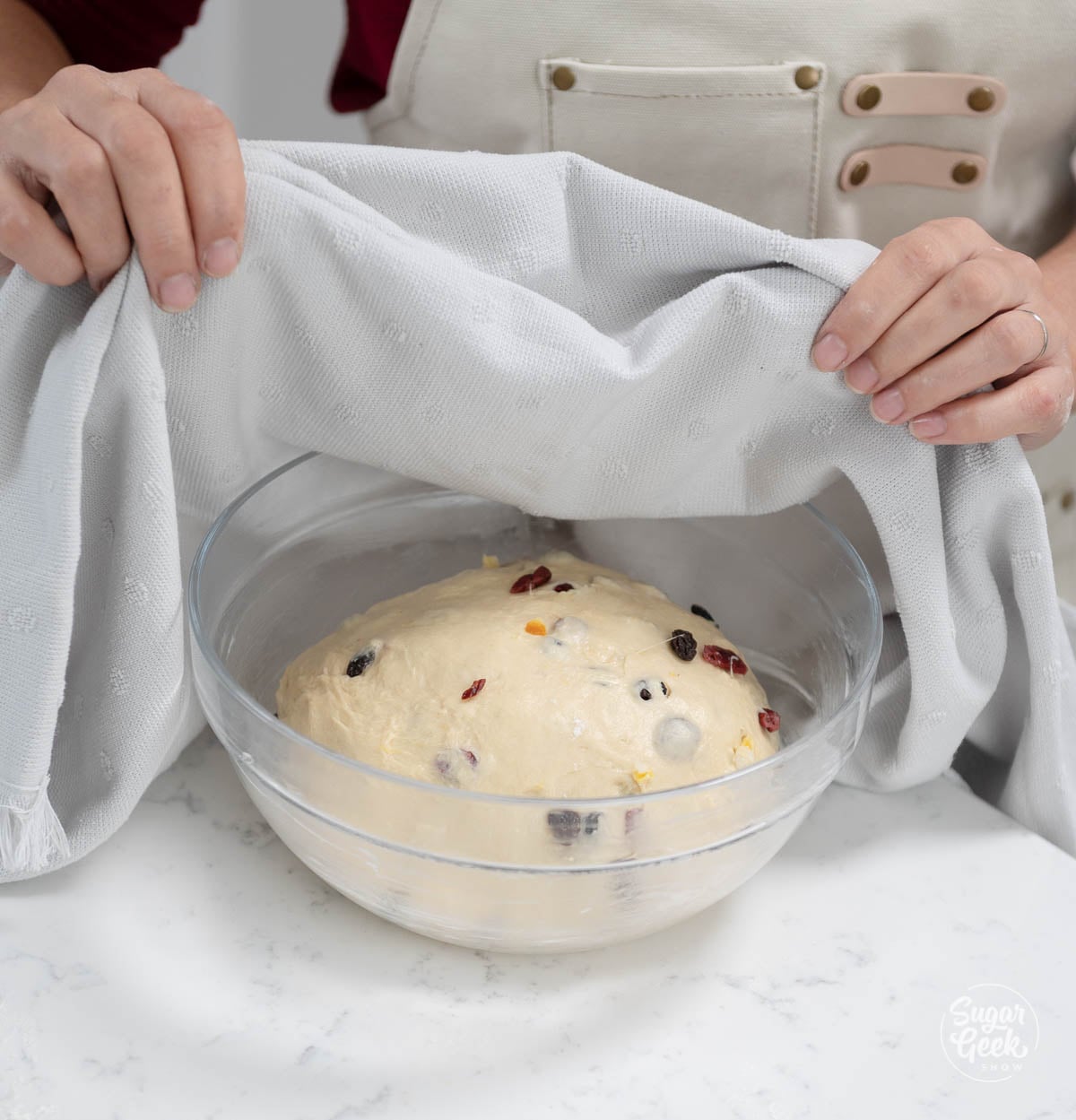
- First rise. Cover the bowl and let the dough rise at room temperature for 30 minutes.
Day 2 Midday - Portion and Proof
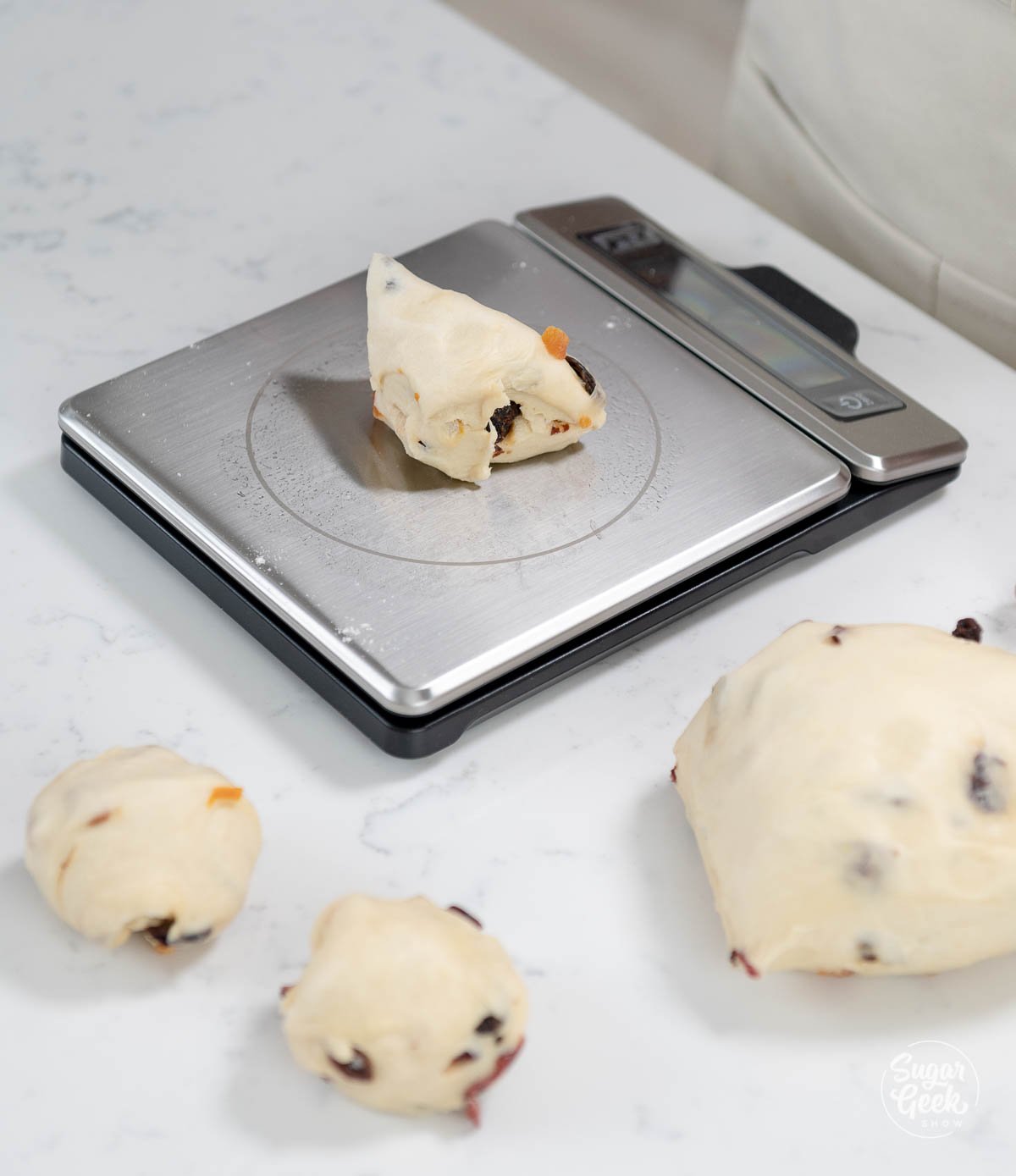
- Portion and shape gently. Using a kitchen scale, portion into approximately 3-ounce balls (you'll get about 18) and drop each one into a panettone paper. Gently squish each portion into a rough ball, that's it. Don't overwork it, roll it tight, or pinch the top like a dinner roll, because you want to keep all that air in so the crumb stays light and fluffy.
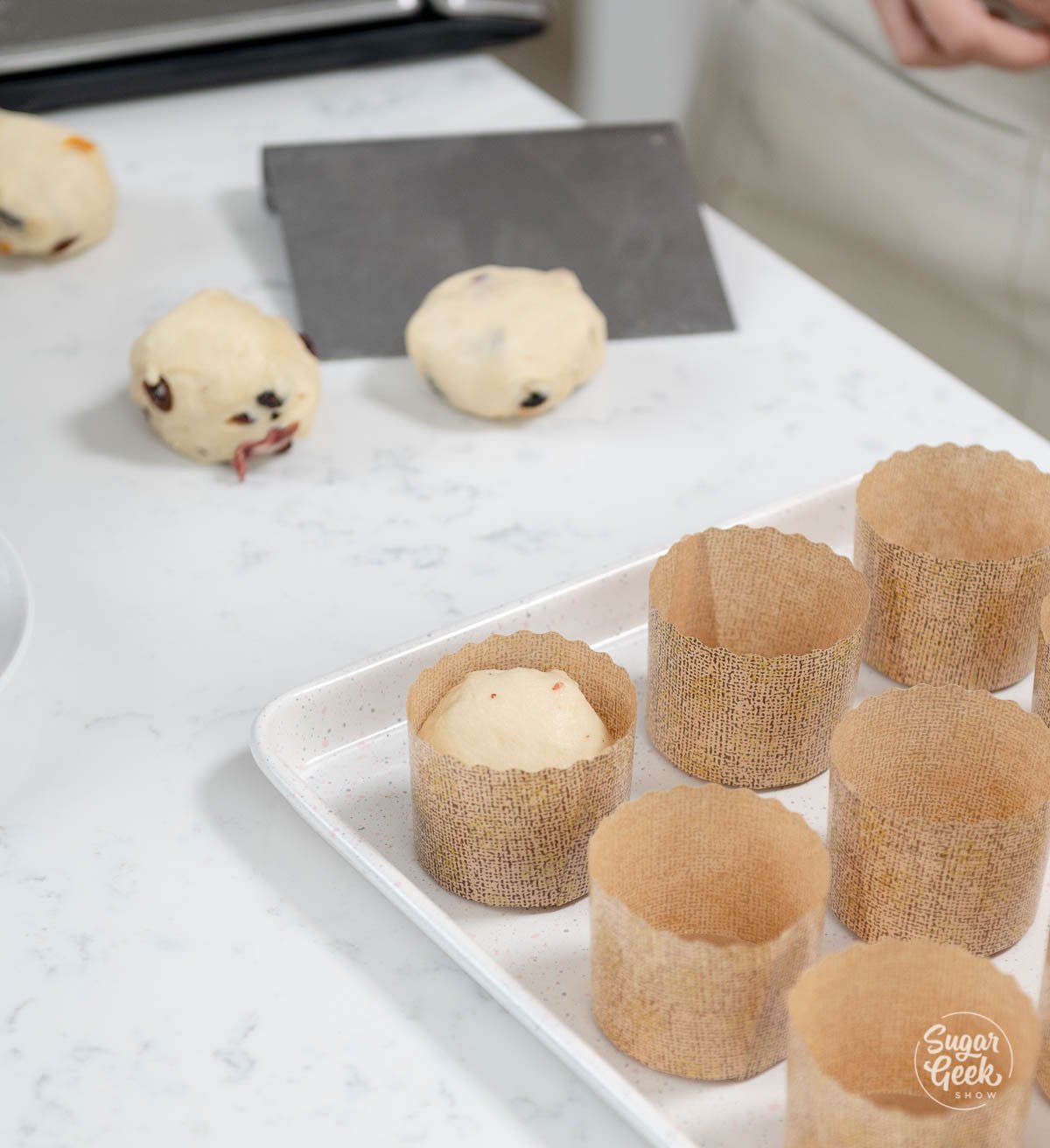
- Place in molds. Set each dough ball into a panettone paper, seam-side down, and place on a sheet pan. Cover lightly with plastic wrap.
PRO TIP: A smooth, taut ball with the seams on the bottom gives you a better dome after proofing. Take your time with the shaping, since a loose, poorly shaped ball will spread sideways instead of rising up.
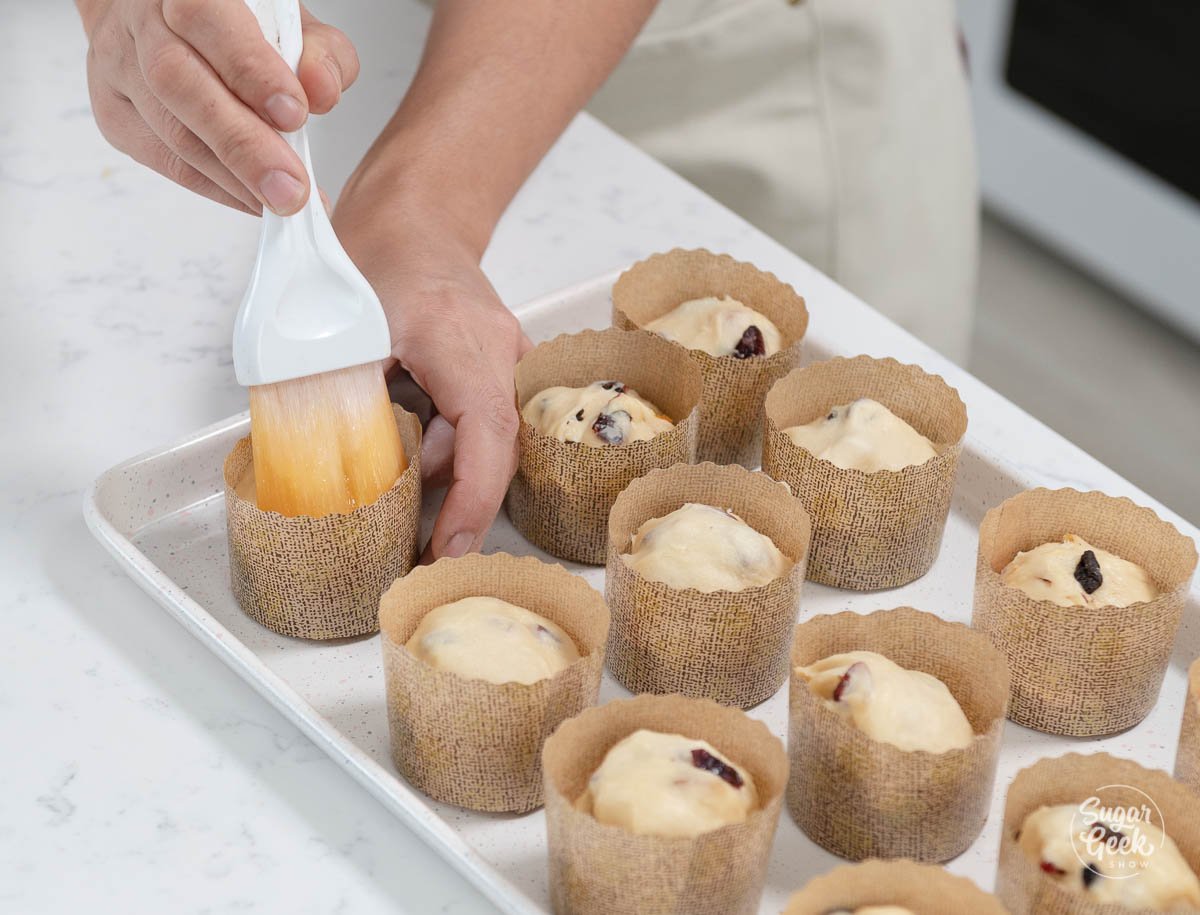
- Egg wash now, before proofing. Brush the tops with egg wash (1 egg mixed with a pinch of salt) while the dough is still firm. Do this now, not after proofing, because once the dough proofs the tops are so soft and delicate that the brush will deflate them.
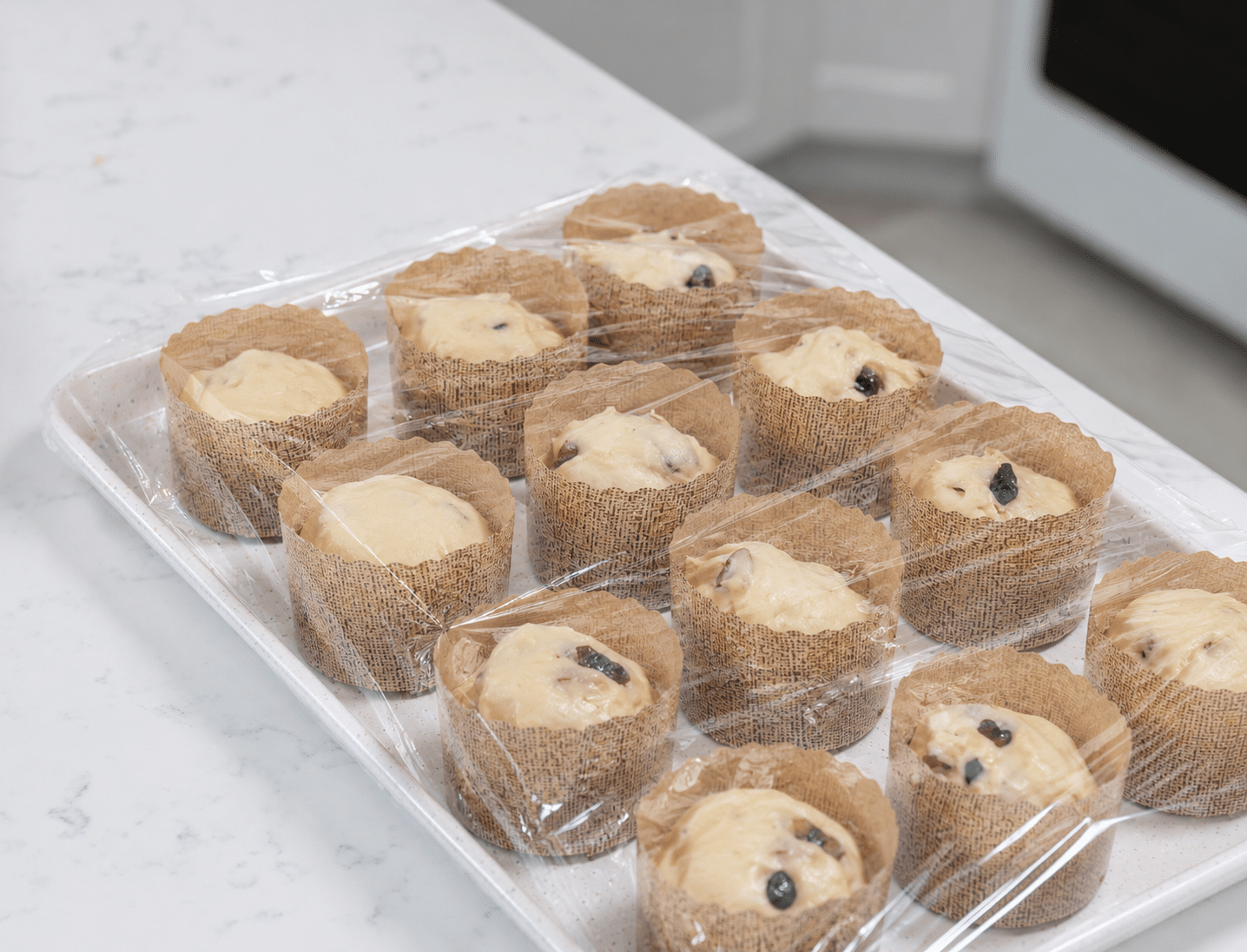
- Proof, or refrigerate overnight. Cover lightly and proof on the counter for about 30 to 90 minutes, until puffed (longer if your dough is cold). Or cover with plastic wrap and refrigerate overnight to bake fresh the next morning, the Day 3 option.
PRO TIP: This is backwards from most bread recipes, where you egg wash right before baking. Panettone is so light after proofing that a late egg wash squishes it, so brush the tops while they're still firm from shaping.
Bake and Cool
- Bake at 375º F (or 360º F if your oven runs hot, like mine) for about 20 to 25 minutes, until deeply golden brown on top. The internal temperature should read 190 to 200º F in the center, which is when the bread is done.
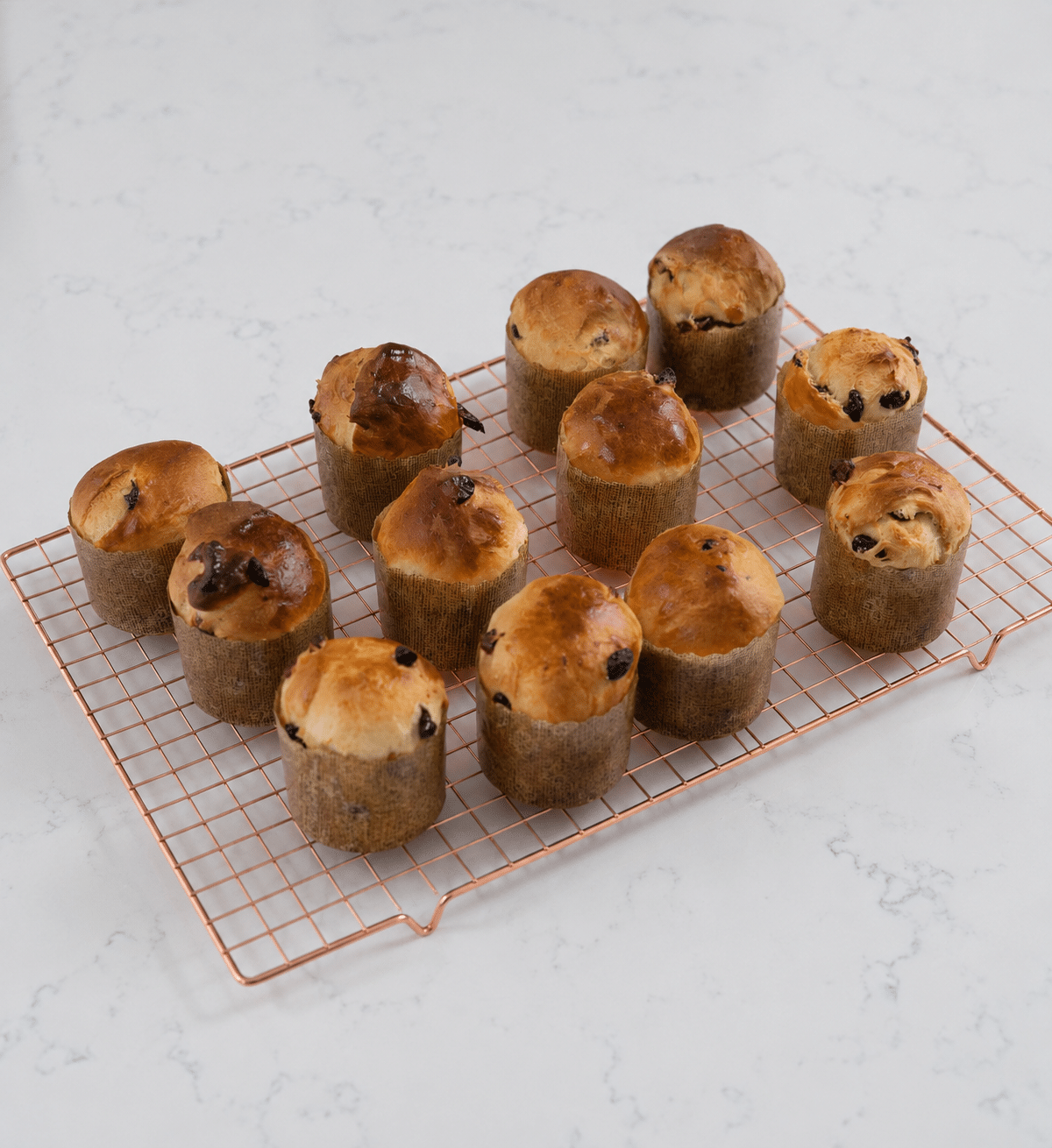
- Cool mini panettone on a wire rack, no flipping needed. Larger loaves must cool upside down or the dome will collapse, and there's a full how-to in the next section.
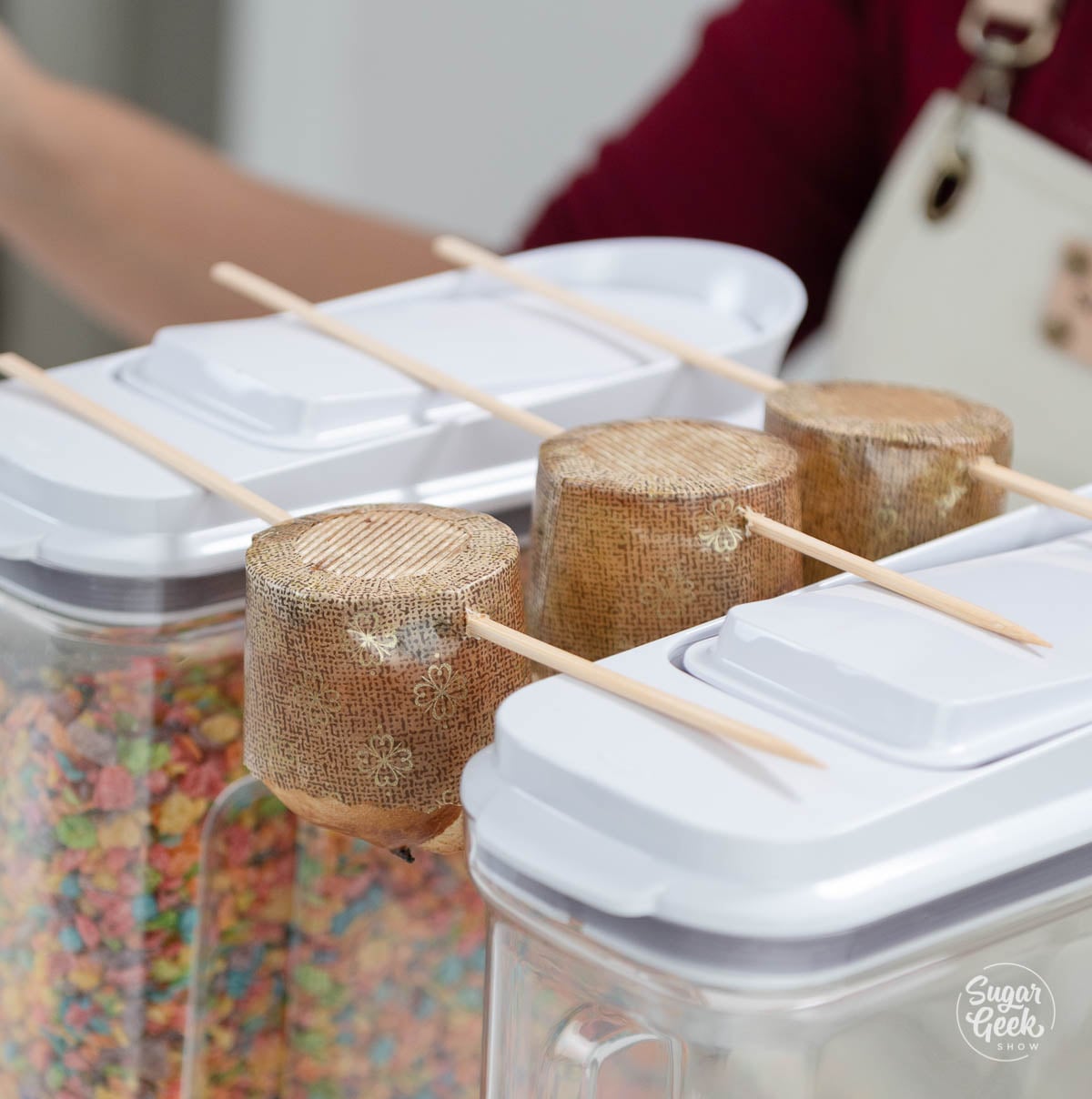
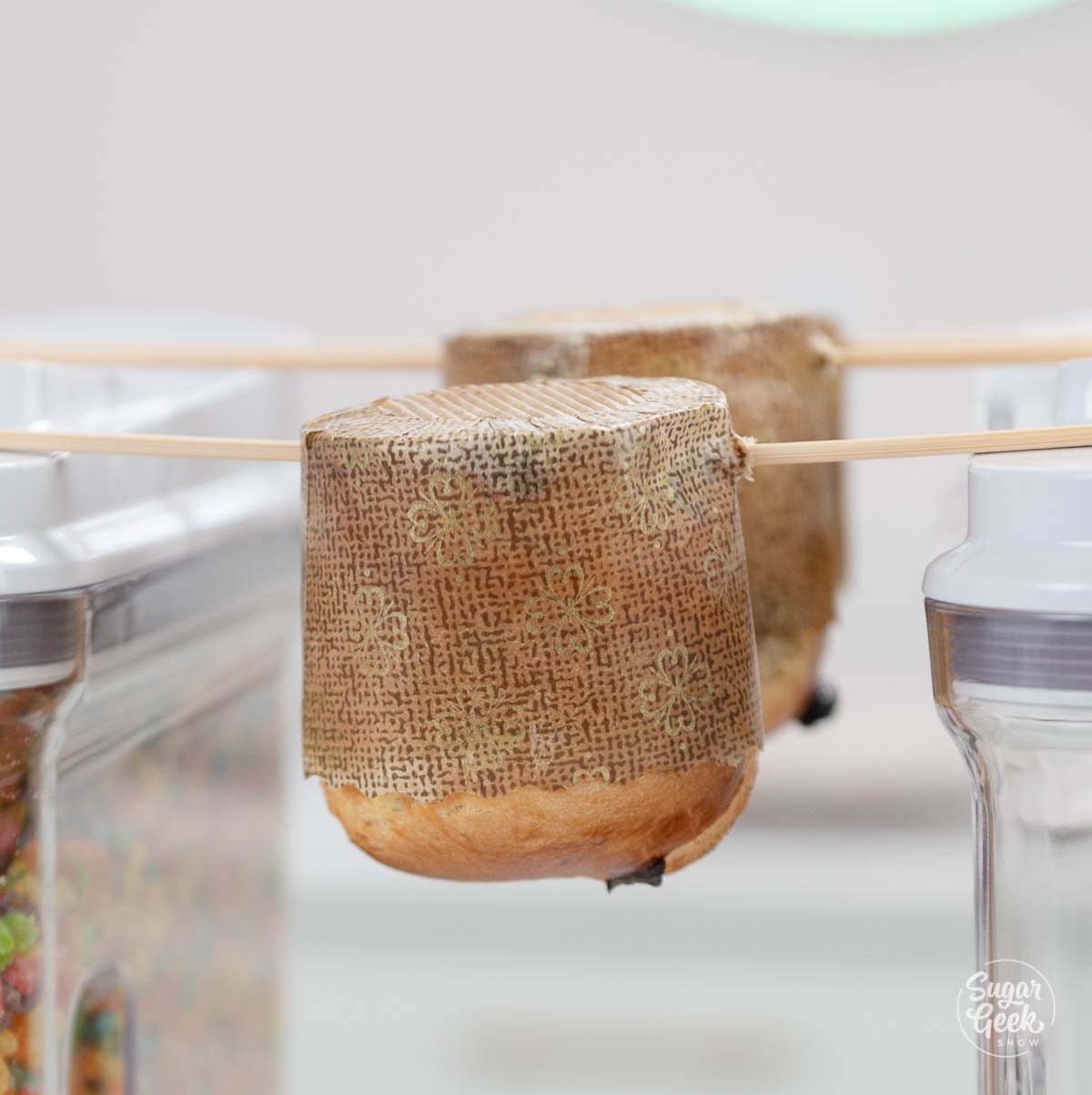
PRO TIP: For larger loaves, upside-down cooling is important. Immediately after removing from the oven, push two long wooden skewers horizontally through the base of the loaf about 1 inch from the bottom and 3 to 4 inches apart. Flip the loaf upside down and rest the skewer ends on the edges of two heavy pots or cans so the bread hangs freely without touching anything. Leave upside down for at least 2 hours until the loaf is barely warm.
Why Do You Cool Panettone Upside Down?
This is one of the most asked questions about panettone, and it's genuinely interesting. Panettone dough is so rich in butter and eggs that the crumb is still very fragile when it comes out of the oven.
Cool a large loaf right-side up and the weight of the dome collapses the soft interior before the gluten and starch can set. Cooling it upside down uses gravity to keep the dome extended while the crumb firms up. Think of it like the opposite of a chiffon cake, where you also cool upside down for the same structural reason.
Here's how to do it: immediately after removing a large loaf from the oven, push two long wooden skewers horizontally through the base about 1 inch from the bottom and 3 to 4 inches apart. Flip the loaf upside down and rest the skewer ends on the edges of two heavy pots or cans so the bread hangs freely without touching anything. Leave it upside down for at least 2 hours, until barely warm.
Mini panettone skip this entirely, their small size means the structure sets quickly and the dome holds on its own.
Understanding How Yeast Works In Panettone
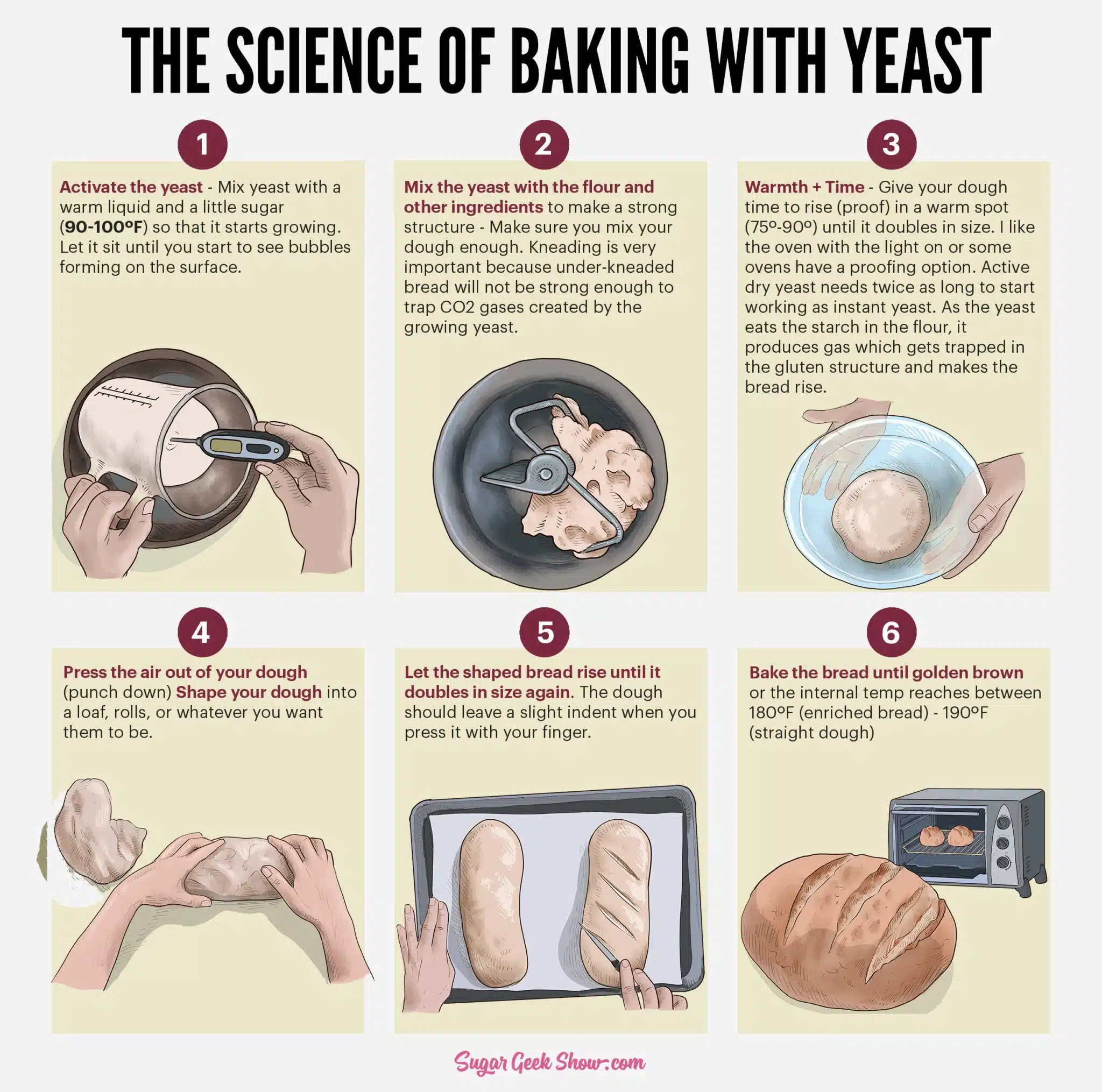
If you've never baked with yeast before, this section will demystify the process. Yeast is a living organism that eats the sugars in flour and produces CO2 gas as a byproduct. That CO2 gets trapped in the gluten structure you develop during kneading, which is what makes the dough rise.
The longer you give yeast time to work (within reason), the more flavor compounds it produces alongside the CO2, which is why slow cold-fermentation makes better-tasting bread than rushing the rise.
For panettone specifically: make the sponge the night before (yeast starts working slowly in the cold), make the dough the next day (the sponge is full of active, flavorful yeast), knead to develop gluten, let it rise once at room temperature, shape into molds, let it rise again, and bake. The heat of the oven kills the yeast and sets the gluten and starch, turning raw dough into the fluffy, domed panettone you pull out of the oven.
Creative Panettone Flavor Variations
The base dough is incredibly versatile. Swap out the fruit filling entirely or combine it with other inclusions:
Classic Traditional. If you want to go as traditional as possible, use sultanas, candied citron peel, and candied orange peel as the filling and leave out the cranberries and currants.
Pistachio Cranberry Panettone. Replace raisins and currants with dried cranberries and shelled pistachios. Keep the candied orange and lemon zest.
Chocolate Orange Panettone. Keep the candied orange peel and lemon zest. Replace raisins and cranberries with semisweet chocolate chips. Add 1 Tablespoon of cocoa powder to the sponge for a deeper chocolate note.
Black Forest Panettone. Replace raisins and currants with dried cherries. Keep the candied orange and add semisweet chocolate chips.
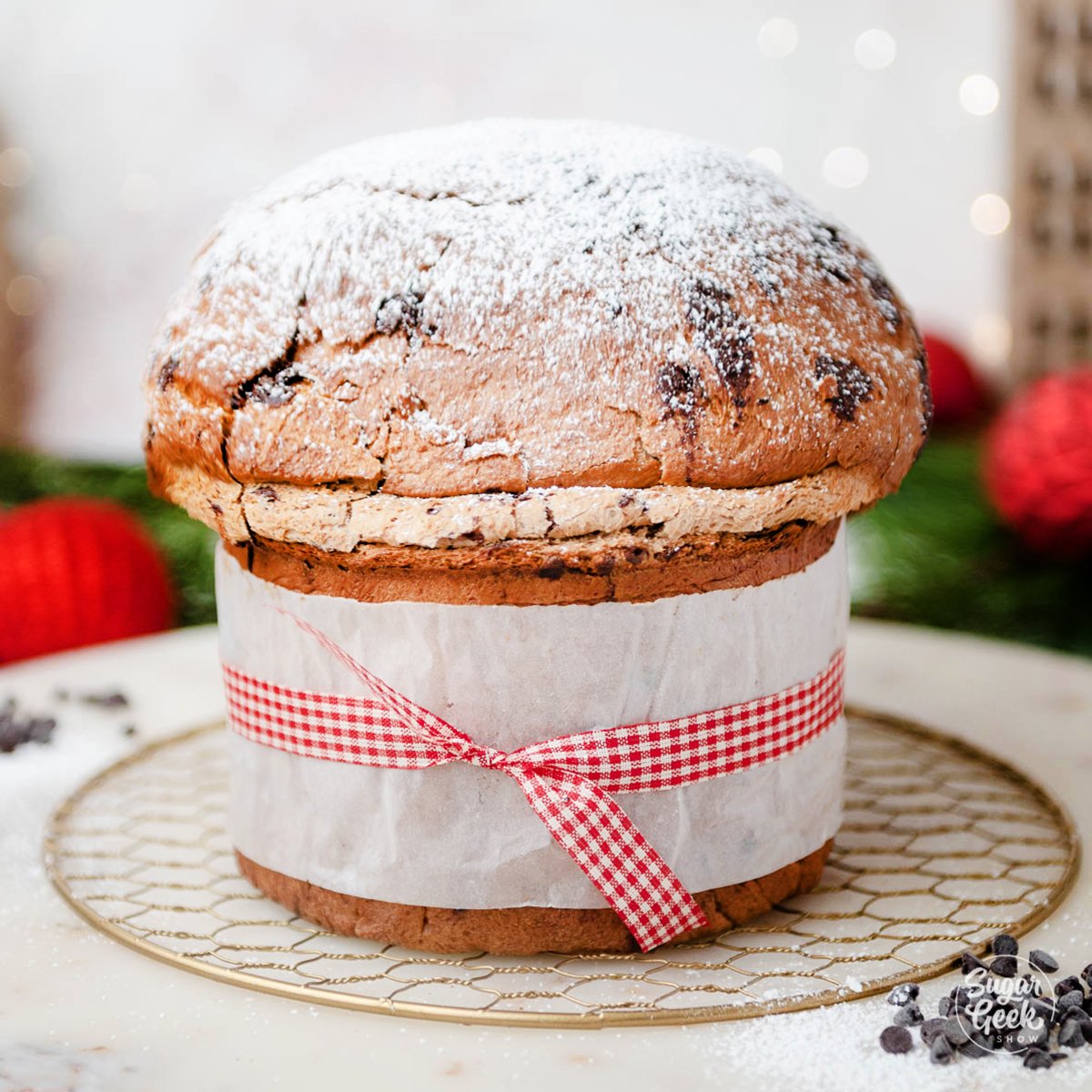
What To Do With Leftover Panettone
When you make a big batch of mini panettone, there is usually some left over. Here are the best ways to use it:
Panettone French Toast. This is the single best use for leftover panettone. Slice it into ¾-inch thick pieces, soak in a standard French toast batter (eggs, milk, a pinch of cinnamon and nutmeg), and cook in a buttered pan until golden. The enriched dough absorbs the egg mixture beautifully and cooks up with a custardy interior and crispy edges. Dust with powdered sugar and serve with maple syrup.
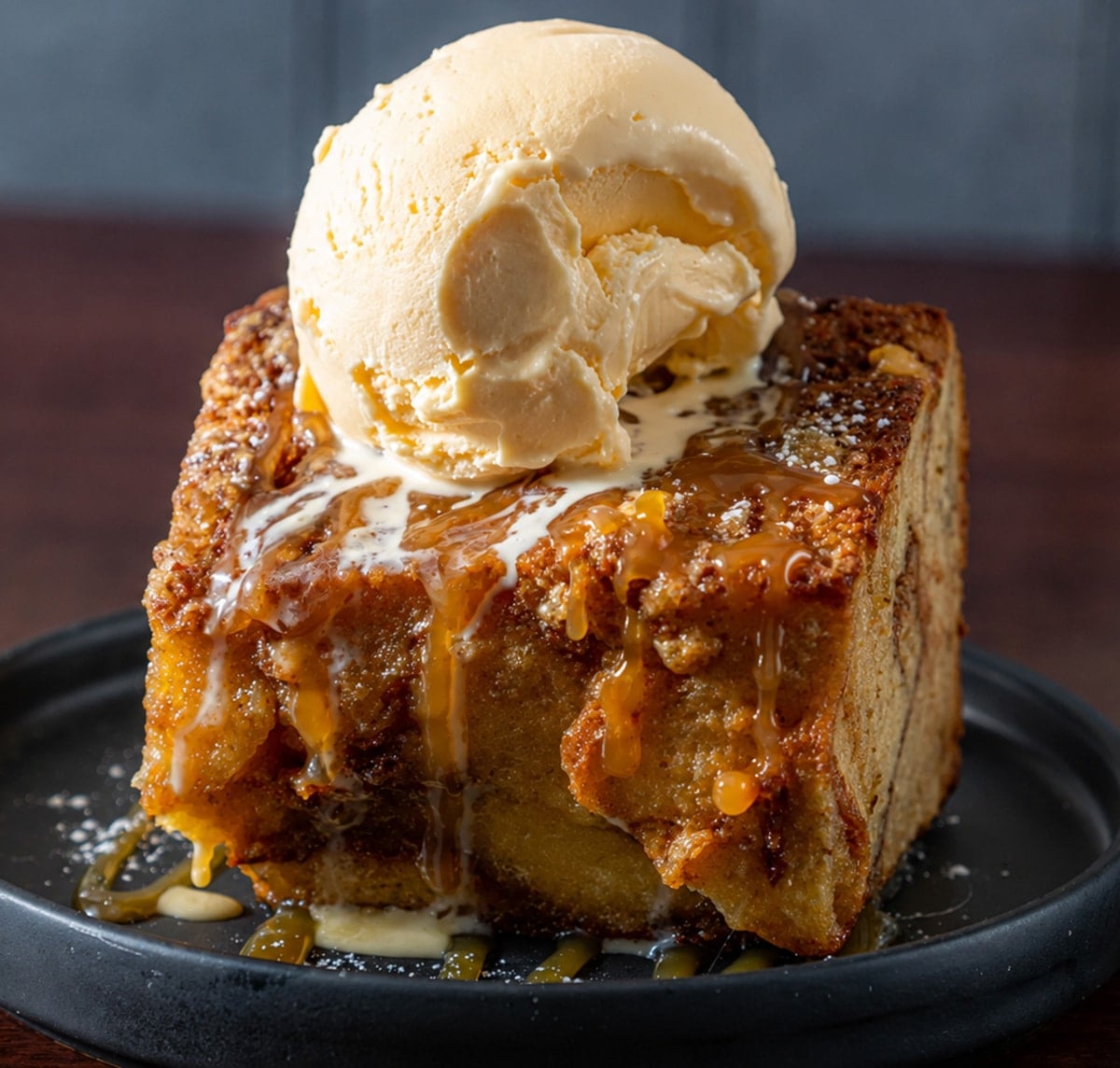
Panettone Bread Pudding. Cube day-old panettone into rough 1-inch pieces, toss in a vanilla custard (eggs, cream, sugar, vanilla, a pinch of salt), and bake in a buttered dish at 350º F for 35 to 40 minutes until set and golden. The fruit adds natural sweetness and the bread soaks up the custard in a way plain brioche or challah never quite matches. A drizzle of warm caramel or a scoop of vanilla ice cream turns this into an impressive dessert. Toasted with butter and jam. If the panettone is going slightly stale, slice it, toast it lightly, and slather with good butter and jam. This is traditionally how Italians eat leftover panettone for breakfast, and honestly it might be the best breakfast of the holiday season.
Panettone croutons. Cube stale panettone, toss with melted butter and a pinch of cinnamon, and bake at 300º F for 15 to 20 minutes until dry and golden. Use as croutons on a fruit salad, a warm custard, or floating in a mug of hot chocolate. To reheat panettone. Wrap individual slices or a whole small panettone in foil and bake at 350º F for 4 to 6 minutes until warm and soft. This revives even slightly stale panettone beautifully.
How To Gift Panettone
Mini panettone are one of the best homemade food gifts of the holiday season: they're impressive, they're individually portioned, they smell incredible, and they keep for a week at room temperature. Here's how to make them giftable:
Packaging. Wrap each cooled mini panettone in a square of cellophane (you can buy it in rolls at craft stores or from baking supply shops). Gather the cellophane at the top and tie with a ribbon in a coordinating color. The paper mold itself is part of the presentation, so you can see the beautiful golden top through the cellophane.
Gift pairings. Mini panettone pair beautifully with:
- A packet of good hot cocoa mix or a bag of specialty coffee
- A small jar of good jam (apricot or orange marmalade are classic)
- A bottle of vin santo (the traditional Italian pairing) or a bottle of dessert wine
- A small wedge of mascarpone with a note suggesting the French toast idea
Make-ahead timeline for gifting. Baked panettone stay fresh at room temperature, wrapped tightly in plastic wrap, for up to 7 days. Make them up to 5 days before you plan to gift them. Do not gift them before they've cooled fully, since warm bread will sweat inside the cellophane.
Boxes and bags. If you're giving several at once, a shallow bakery box with a ribbon and a handwritten card is beautiful and much easier to transport than individual wrapping for a big batch.
Common Panettone Problems To Avoid
- My panettone didn't rise. Most likely cause is old yeast (check the expiration date) or yeast killed by too-warm water (the sponge water should be 70º F, not hot). Also check that your kitchen isn't too cold during the proofing stage. A cold environment slows rise significantly.
- My panettone is dense and heavy. Either the gluten wasn't developed enough (the dough didn't pass the windowpane test), or the dough didn't rise long enough in the molds before baking.
- The fruit sank to the bottom. The fruit was too wet (soaked raisins that weren't dried properly) or was added before the gluten was fully developed. Make sure to dry any soaked fruit thoroughly and add it only after the dough passes the windowpane test.
- The top browned too quickly. Cover loosely with foil after 15 minutes of baking and reduce the oven to 350º F for the remaining time.
- The dough looks broken or curdled when I add the eggs. This is normal. Keep mixing and it will come back together. The sponge addition in the next step helps bind everything.
Final Thoughts
I'm not going to pretend panettone is a Tuesday-night bake. It's a two-day project and the first time you make it you will check the sponge three times overnight to make sure it's still alive (it is, stop checking). But once you have made it, you will understand exactly what boxed Italian panettone is trying and failing to be. The smell alone when this comes out of the oven is worth the effort. The fact that you can hand a friend a little golden mold of it tied with a ribbon is even better. Make a big batch, keep a few, give the rest away, and watch what happens.
Homemade Panettone Recipe FAQs
Yes, with a small adjustment. Reduce the water in the sponge by about 10 percent (from 8 ounces to about 7 ounces) to account for the lower protein content of all-purpose flour. The crumb will be slightly less open and a little less chewy, but the panettone will still be delicious.
Yes, but it changes the timeline significantly. Replace the instant yeast sponge with an active sourdough poolish: equal parts bread flour and water (by weight) plus a tablespoon of your active starter. Let it ferment at room temperature for 8 to 12 hours until bubbly and doubled, then use it in place of the yeast sponge. The resulting panettone will have a deeper, more complex flavor and a slightly more open crumb. Rise times will be longer than with instant yeast.
Baked panettone keeps at room temperature, wrapped tightly in plastic wrap, for up to a week. To keep it longer, freeze it: wrap each mini panettone (or slices of a large loaf) tightly in plastic and then foil, and freeze for up to 3 months. Thaw at room temperature still wrapped, then refresh in a 350º F oven for a few minutes to bring back that soft, just-baked texture. Do not refrigerate panettone, as the fridge dries enriched bread out much faster than the counter or the freezer.

Leave Me A Review
⭐️⭐️⭐️⭐️⭐️
If you tried this Homemade Panettone Recipe or any other recipe on my blog, please leave a 🌟 star rating and let me know how it goes in the comments. I love hearing from you!
Recipe
Equipment
- Stand mixer with paddle and dough hook attachments
- 2.75" Panettone Wrappers
- Digital Kitchen Scale
- pastry brush
Ingredients
Sponge
- 8 ounces water 70ºF
- 15 grams instant yeast
- 10 ounces bread flour
Dough
- 8 ounces butter (room temperature) softened
- 4 ounces honey
- 1 teaspoon salt
- 2 eggs (room temperature)
- 2 egg yolks (room temperature)
- 1 teaspoon vanilla
- 12 ounces bread flour
- 3 ounces raisins
- 2 ounce candied orange peel
- 3 ounces dried cranberries
- 2 ounces dried currants
- 1 Tablespoon lemon zest
Instructions
Before you Begin
- Make the sponge the evening before you plan to bake. Ensure your butter and eggs are at room temperature before starting Day 2 (this takes several hours, so plan ahead or warm the eggs in a bowl of warm water and microwave the butter in 5-second bursts). Remove the sponge from the fridge 30 minutes before you start the dough.
For the Sponge
- Stir the instant yeast into the bread flour until combined. Add the 70º F water and mix until all the flour is moistened. Cover tightly with plastic wrap and refrigerate overnight, 12 to 15 hours.
For the Dough
- Remove sponge from fridge 30 minutes before starting.
- In a stand mixer with the paddle attachment, cream softened butter and honey until smooth.
- With mixer on low, add eggs one at a time, then egg yolks and vanilla. The mixture may look curdled; this is normal.
- Add the sponge and mix on low until roughly combined, about 2 minutes.
- Combine bread flour and salt in a separate bowl. Add to the mixer and mix on low until the dough comes together, about 3 minutes. Switch to the dough hook.
- Knead on medium-low for 8 minutes until smooth. Perform the windowpane test: pull a small piece of dough and gently stretch it thin. If it stretches without tearing, the gluten is developed. If it tears, knead 2 more minutes and test again.
- Add raisins, candied orange peel, cranberries, currants, and lemon zest. Mix on low until evenly distributed.
- Cover and let rise at room temperature for 30 minutes.
- Portion dough into approximately 3-ounce balls. Shape each into a smooth ball by tucking edges underneath. Place in panettone paper molds on a sheet pan.
- Cover lightly with plastic wrap. Let proof for 30 to 90 minutes until visibly puffed and approaching the top of the molds. If dough is cold, this will take longer.
- Brush tops with egg wash.
- Bake at 375º F for approximately 25 minutes until deeply golden and internal temperature reaches 200º F.
- Cool on a wire rack. For large loaves, cool upside down on skewers for at least 2 hours.



Carmen says
I just made this and OMG, I can’t never eat the box stuff again!! This is so moist and fluffy and full of delicious flavors!! I also added a little apricot pieces!! Delicious and exquisite!!
Jessica says
Hello! If I don’t have the wrappers yet, can I make this in an angel food cake pan? Thank you!
Liz Marek says
Without the wrappers, a 10-inch cake pan or a loaf pan lined with parchment paper works great. If you have more questions, come ask me in the Sugar Geeks community: https://community.raptive.com/sugargeeks
Suzanne says
I used to buy panatoni. Not any more!! These are fabulous!!
Liz Marek says
I love that! Thank you so much.
Robin says
Great recipe. thanks for all of your detailed tips
in step 3 - incorporate is misspelled
in step 7 - Panettone is misspelled
Liz Marek says
Thank you, Robin! The recipe card has been updated and those typos are fixed.
Tina says
There was a typo in my original comment. It should have said that in the long narrative section, the directions don't add the zest and fruit before developing the dough with the dough hook, but in the regular recipe section it does.
Tina says
I really enjoyed this recipe. I opted for dried cherries chocolate chips and candy orange peels. The one discrepancy I'll note is that in the long narrative section of the post, The directions say to develop the dough with the zest And fruit in it But in the regular recipe section it says to add the fruits and zest before developing the dough with the dough hook. I recommend not adding the fruits and nuts before developing the douoh As I think, it impacted the development of the gluten.
Liz Marek says
Thanks for the great note, Tina! The recipe card now has you knead and do the windowpane test first, then mix in the fruit and zest at the end. Dried cherries and chocolate chips sound amazing.
Grace says
Hi. I made this yesterday in tin loaves and it was really good. Today I am making it in the panettone paper. Fingers crossed. Thank you for the recipe.
Liz Marek says
Fingers crossed! I hope the panettone papers work great.
Roberta says
A massa do panettone tem que crescer duas vezes?
Em que momento eu posso colocar na geladeira para crescer lentamente ?
Na primeira fermentação?
Ou na segunda fermentação antes de assar o panettone?
Liz Marek says
Nesta receita, a fermentação lenta na geladeira é feita com a esponja, na noite anterior (12 a 15 horas). No dia seguinte, a massa descansa 30 minutos em temperatura ambiente e depois cresce de novo nas formas por 30 a 90 minutos antes de assar. If you have more questions, come ask me in the Sugar Geeks community: https://community.raptive.com/sugargeeks
Jann says
Love how clear your instructions are. Hank you....Can't find the papers in rural southern Alberta so can I bake it in a bundt pan or an angel food cake pan? Then I can turn it upside down to cool. Thanks again
Liz Marek says
If you can't find the papers, use a 10-inch cake pan or a loaf pan lined with parchment paper. Cupcake liners also work for minis. If you have more questions, come ask me in the Sugar Geeks community: https://community.raptive.com/sugargeeks
Ron Poletti says
I am a novice cook. Can you add an option to make 1 traditional panettone loaf instead of 24 mini cupcakes?
Liz Marek says
You can bake the whole batch as one large loaf in a 7-inch wide by 4-inch tall paper panettone mold, or in a 10-inch cake pan lined with parchment. Just cool it upside down on skewers for at least 2 hours. If you have more questions, come ask me in the Sugar Geeks community: https://community.raptive.com/sugargeeks
Jenna says
This recipe looks great, but I would rather make a large loaf instead of several mini loaves. How many large panettone loaves does this recipe make?
Liz Marek says
This batch makes one or two larger loaves. For one large panettone, use a 7-inch wide by 4-inch tall paper panettone mold, or a 10-inch cake pan lined with parchment. Large loaves need to cool upside down on skewers for at least 2 hours. If you have more questions, come ask me in the Sugar Geeks community: https://community.raptive.com/sugargeeks
Terry Duani says
Can this recipe be halved?
Liz Marek says
Yes, you can halve it. Use the servings adjuster on the recipe card and the amounts will update for you. If you have more questions, come ask me in the Sugar Geeks community: https://community.raptive.com/sugargeeks
Suzanne says
Excellent recipe and surprisingly straightforward!!! Really impressed with how beautiful and light they were. Will definitely be making them again. Thank you for sharing such a detailed recipe.
Liz Marek says
So glad you loved them! Thank you for sharing.