
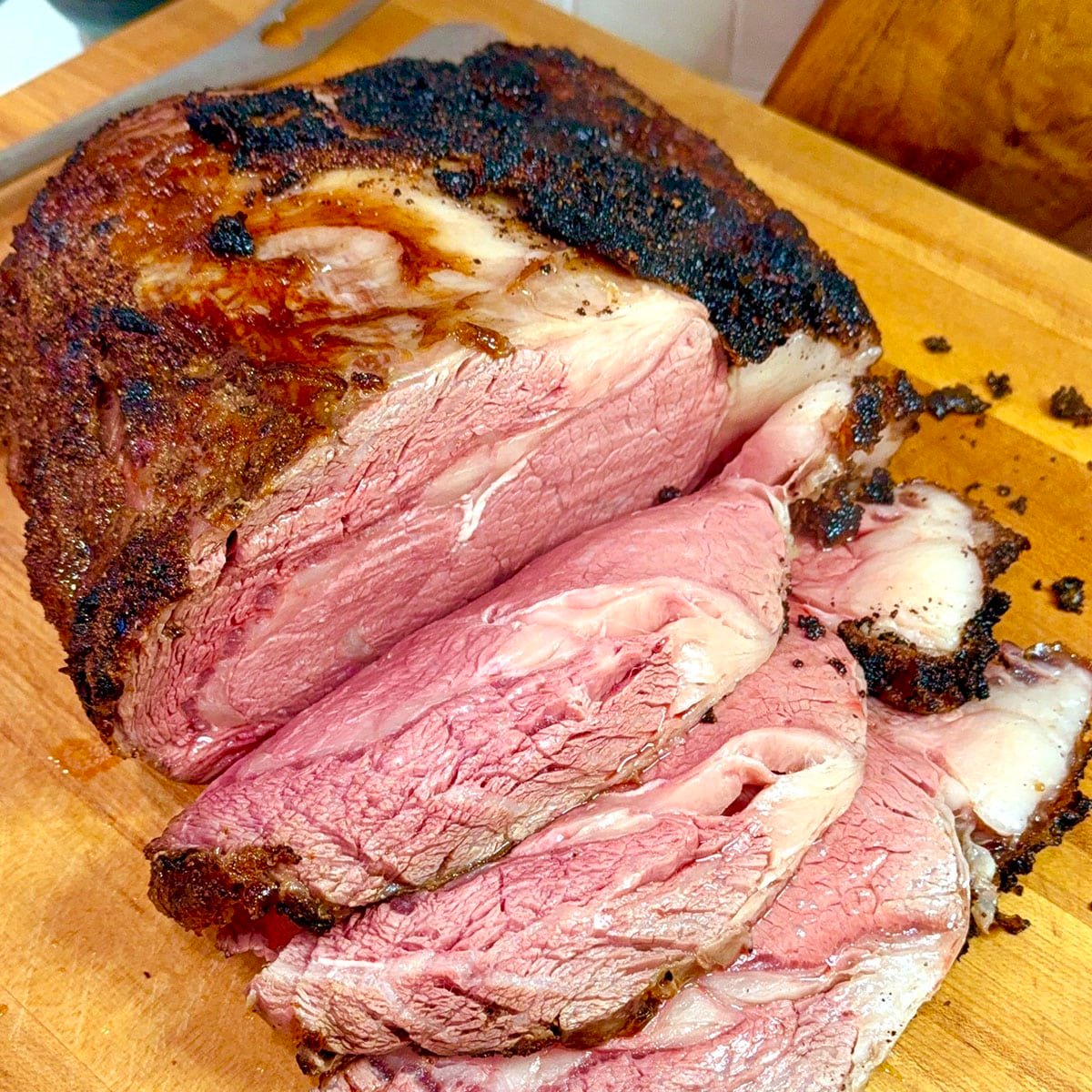
Reverse sear prime rib is honestly the only way I cook a standing rib roast anymore. Once you try the reverse-sear method, you never go back. You get perfectly cooked prime rib from edge to edge with an irresistible crust that tastes like it came from a high-end steakhouse. For such an expensive cut of meat, this method guarantees the best results every single time. Whether you’re making it for Christmas dinner, a special occasion, or you just want the star of the show for a Sunday feast, this prime rib recipe is all about low temp cooking, patience, and that final blast of very high heat that transforms a well-marbled prime rib into absolute magic.
The first time I reverse-seared a beef rib roast, I was terrified. It felt like every home cook online had a different opinion about oven temp, cook time, and whether to tie a boneless prime rib with kitchen twine. I got an actual reader comment once saying that slow roast meats were “too fussy,” which made me laugh, because the reverse sear method is literally the least fussy way to treat choice cuts or prime cuts of beef. You just place the roast in a roasting pan, cook at a lower temperature until the internal temperature hits that perfect zone, rest it, then blast it in a very hot oven. It felt like cheating, but the result was so perfectly cooked that now I save this cut of beef for when I really want to impress someone. It’s the perfect prime rib every single time.
What's In This Blog Post?
Ingredients Needed
This recipe keeps the ingredient list straightforward so the rich, buttery flavor of the prime rib can really shine. Here’s everything you’ll need to season the roast and create that perfect crust.
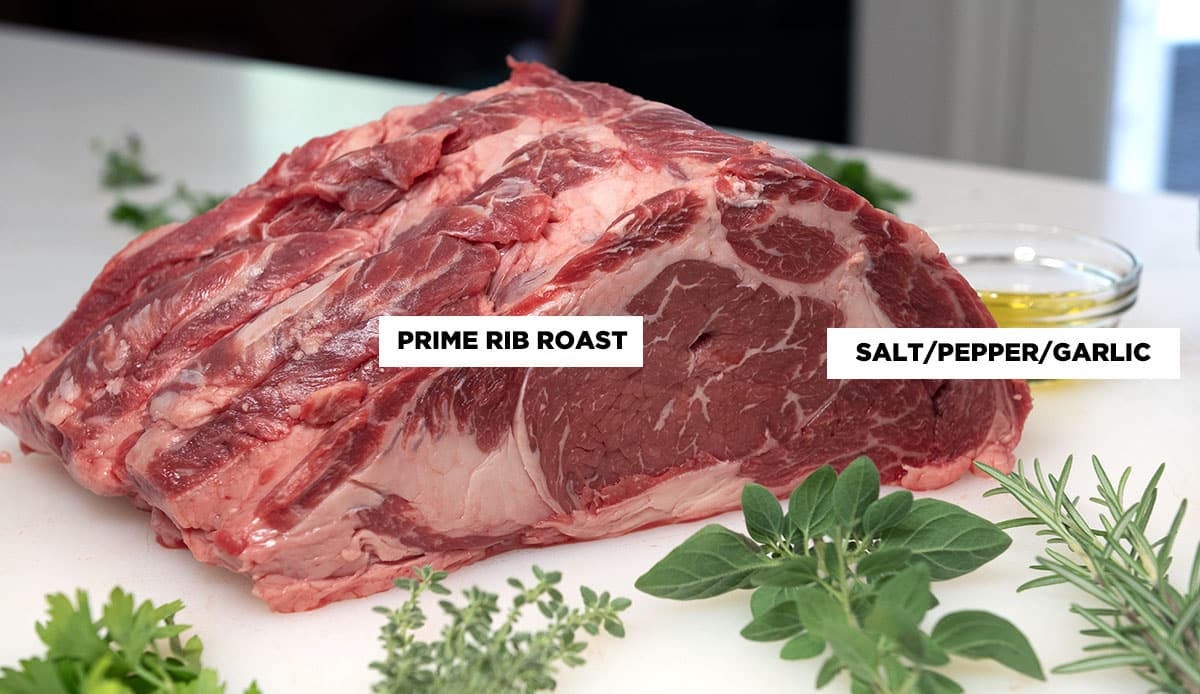
- Prime Rib Roast - This is the star of the show, and the marbling of the meat gives you the rich, buttery flavor prime rib is famous for. Can be replaced with: a boneless roast or any standing rib roast with or without rib bones.
- Garlic Herb Butter - Helps create a flavorful crust during the reverse searing process and melts into the meat for extra richness. Can be replaced with: plain butter, olive oil, or a dry rub if you prefer a crust without butter.
- Salt - Draws out moisture from the surface so you get a better crust and seasons the roast all the way through. Can be replaced with: kosher salt or sea salt, but avoid fine table salt because it tastes saltier.
- Black Pepper - Adds heat and aroma that pairs perfectly with beef. Can be replaced with: white pepper or a coarse steak seasoning.
- Beef Stock or Au Jus - Served on the side for dipping and adds depth to each slice without overpowering the meat. Can be replaced with: beef broth, pan drippings, or even vegetable stock in a pinch.
- Fresh Herbs (optional) - Rosemary, thyme, or parsley complement the natural flavors in the meat without being overwhelming. Can be replaced with: dried herbs, though use less since they’re stronger.
Equipment Needed
Roasting Pan with a V-Rack (or Wire Rack + Rimmed Baking Sheet) - A roasting pan fitted with a V-rack—or a simple wire rack set inside a rimmed baking sheet—lifts the prime rib so air can circulate evenly around the roast. This setup ensures the meat cooks gently and uniformly during the low-and-slow stage, helping you achieve that perfectly even doneness from edge to edge.
Instant-Read Thermometer or Probe Meat Thermometer - An instant-read thermometer or a probe-style meat thermometer is essential for nailing the exact internal temperature of your prime rib. Since the reverse sear method relies on precision rather than guessing by time, this tool guarantees you pull the roast at the perfect moment for rare, medium-rare, or medium results.
Aluminum Foil - Aluminum foil is used to tent the roast during its resting period, helping retain heat while allowing the crust to stay crisp. It also gives the meat time for carryover cooking and juice redistribution—two key steps for tender, unbelievably juicy slices.
How to Make a Reverse Sear Prime Rib
This method is much easier than it looks, and these step-by-step instructions will walk you through each stage from seasoning and slow roasting to resting and searing, ensuring your prime rib turns out flawless.
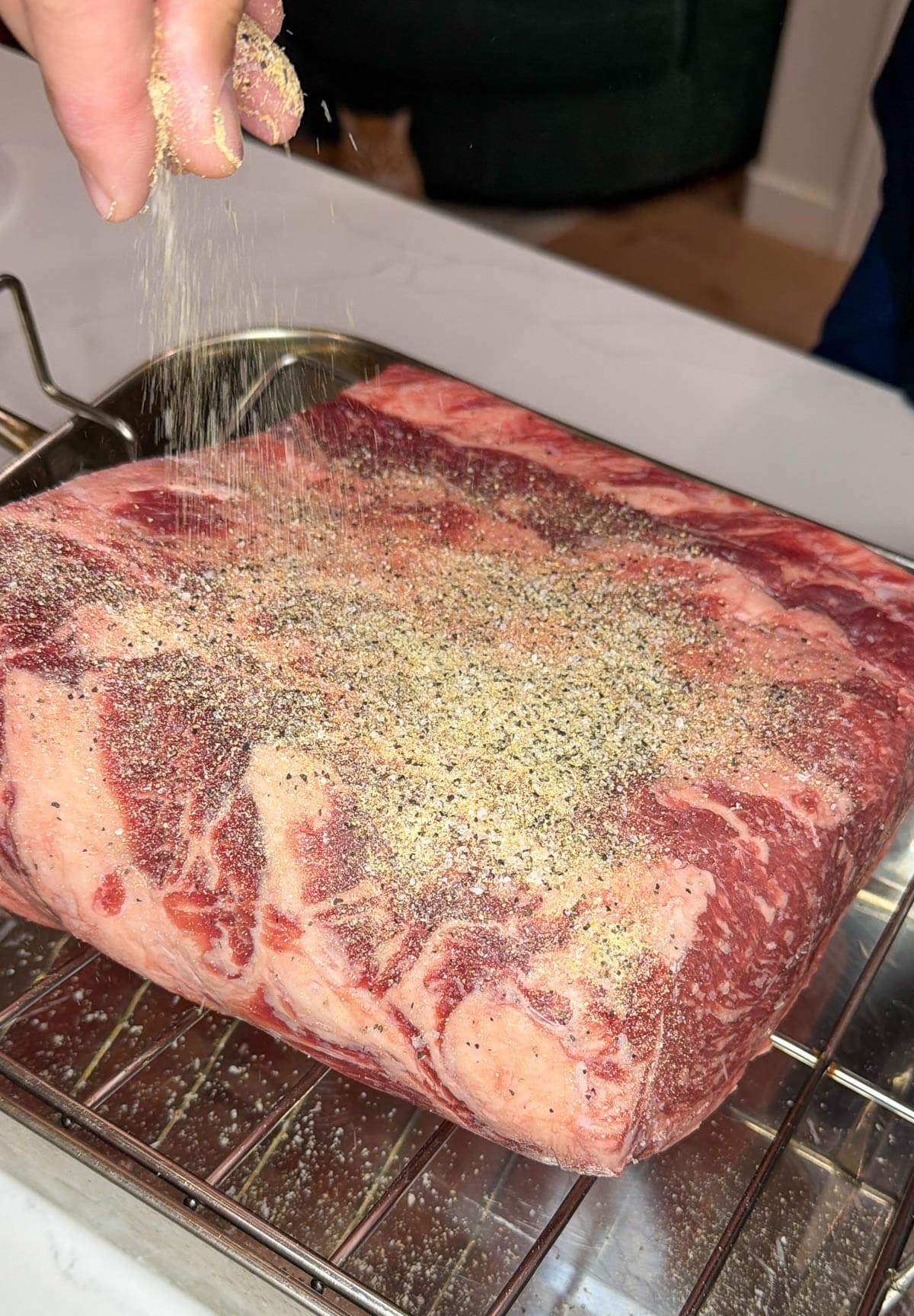
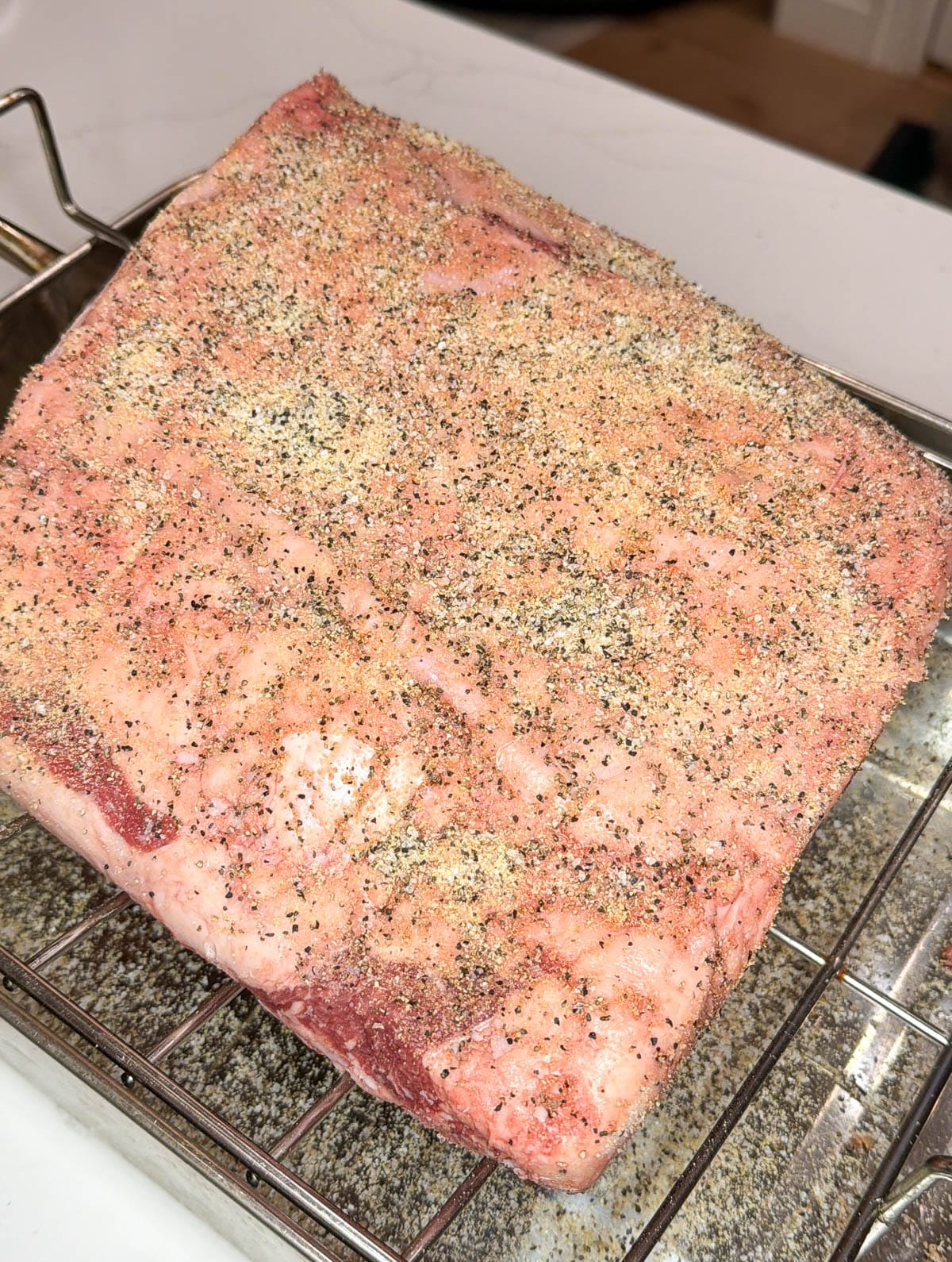
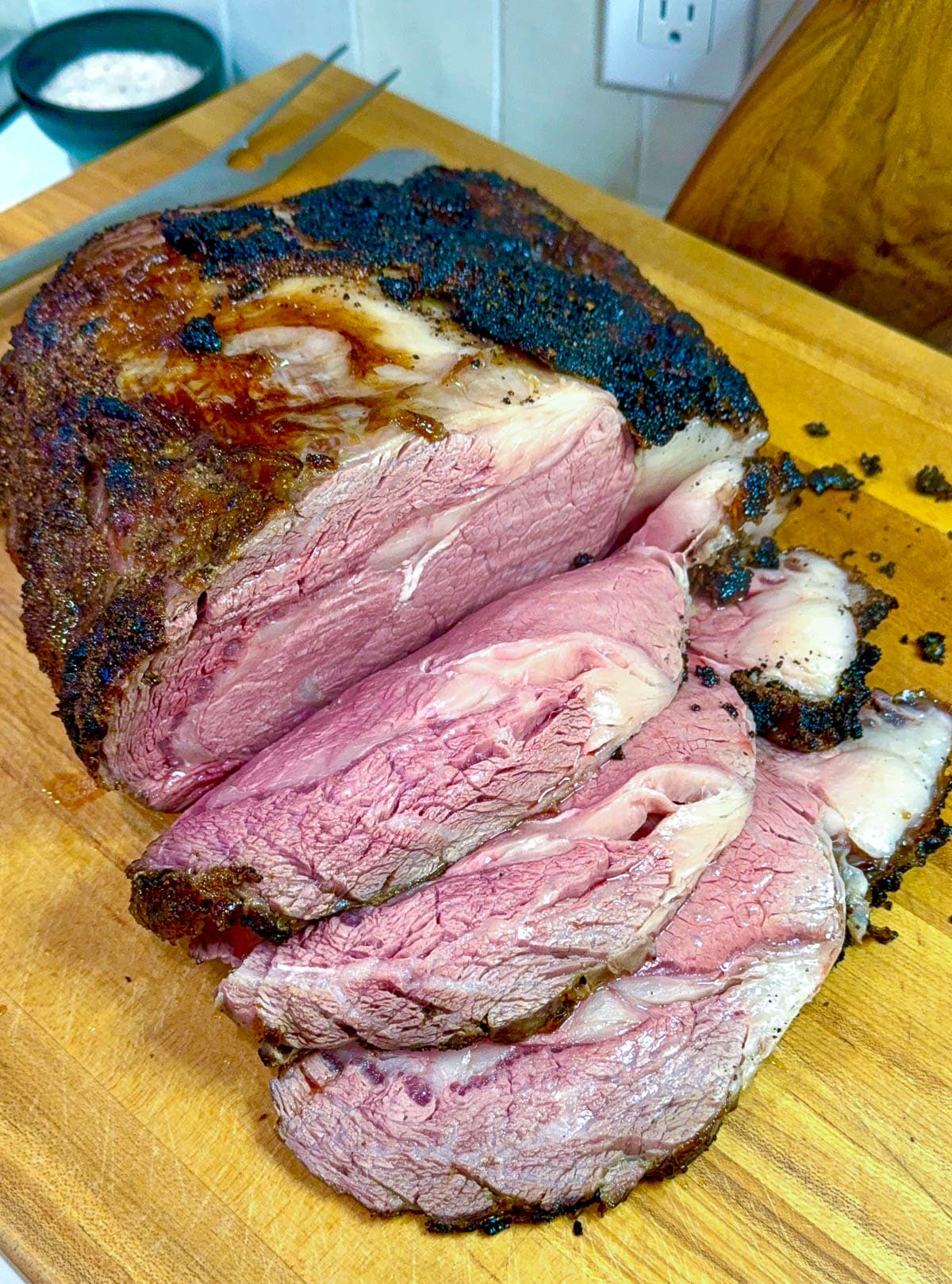
- Season the roast. Pat the roast dry with paper towels. Season the entire surface generously with kosher salt and black pepper, making sure to get into all the nooks around the rib section. If you have time, place the roast on a rack over a baking sheet and refrigerate it uncovered for at least 8 hours or up to 24 hours for a dry brine and better crust. If not, you can go straight into the oven.
- Low temp roasting. Preheat your oven to the lowest steady temperature it can manage, usually somewhere between 150°F and 250°F. Some ovens won’t go lower than 250°F, and that’s totally fine. Your cook time will just be shorter. Place the roast, fat cap up, on a V-rack set inside a roasting pan, or on a wire rack over a rimmed baking sheet. Slide it into the oven and roast until the internal temperature in the very center reaches: 120–125°F for rare, 130°F for medium-rare, and 135°F for medium. In a 150°F oven, a larger roast can take 5 ½ to 6 ½ hours. At 250°F, plan on around 3 ½ to 4 hours. Use those numbers as guidelines only; always go by the temperature of the meat, not just the clock.
- Rest and let carryover cooking happen. Once your roast hits your desired temp, remove it from the oven. Tent it loosely with foil and let it rest in a warm spot in your kitchen for at least 30 minutes and up to 1 ½ hours. During this time, carryover cooking will raise the internal temperature a few degrees and the juices will redistribute, so the meat stays juicy when you slice it. This is also a great window to finish your favorite sides, like mashed potatoes, roasted veggies, or whatever else is sharing the holiday table.
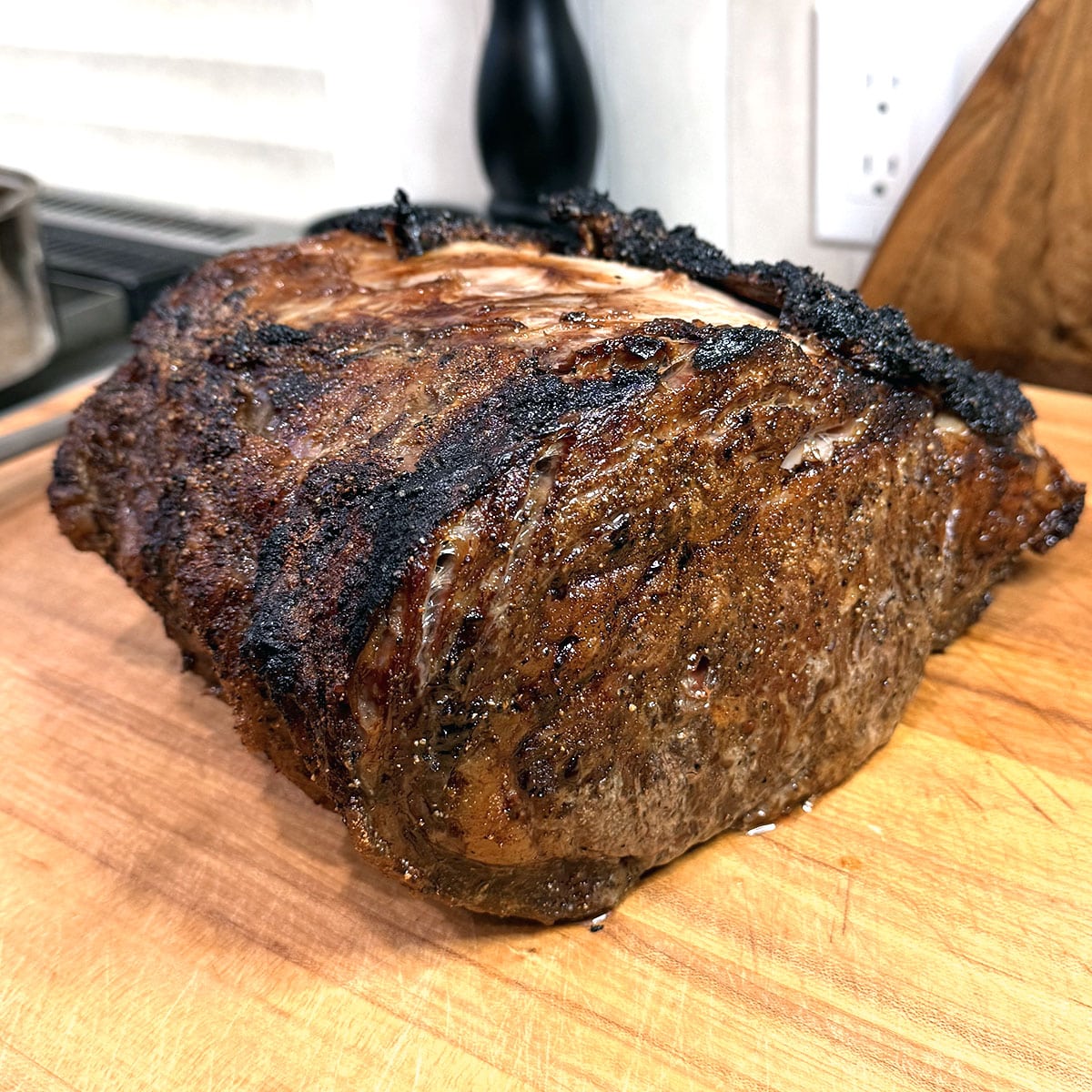
- Crank the oven for the reverse sear. While the roast is resting, increase your oven temp to its highest setting, usually 500–550°F. Give the oven time to get fully hot. About 10 minutes before you’re ready to serve, remove the foil from the roast and transfer it back into the hot oven. Roast for 6–10 minutes, just until the exterior is well-browned, the fat cap is crispy, and you’ve got that deep, irresistible crust. You can do a similar high heat finish on a charcoal grill or Big Green Egg instead of the oven: get the grill ripping hot and sear the roast on all sides, turning as needed.
- Slice and serve. Transfer your reverse-seared prime rib to a cutting board. If you like, slice the rib section off in one slab, then slice the meat into thick steaks and serve the bones on the side as a chef’s treat. Serve immediately with your favorite sides and a little sprinkle of flaky salt over the top. This is the moment where everyone forgets how to talk for a minute and just focuses on their plate.
Final Thoughts
Reverse-seared prime rib is one of those great recipes that looks intimidating but is actually incredibly simple. Slow roast, rest, blast with higher temperatures, rest again. That’s it. Whether you’re serving Christmas dinner or just treating yourself during the holiday season, this method guarantees the most tender, juicy, perfectly cooked prime rib every time.
Frequently Asked Questions
Plan on about 1 pound of bone-in standing rib roast per person. A 3–4 pound ribeye roast is perfect for a small gathering, and a big 10–12 pound beef rib roast can feed a crowd. Each rib adds about 1 ½ to 2 pounds, so a three-rib roast is usually plenty for 6–8 people.
It depends how you like your meat. For most people, 130°F in the center (before the final high heat sear) is that sweet spot for medium-rare. Because of carryover cooking, the final temperature of the meat will end up a few degrees higher. If you love it rare, pull it at 120–125°F. If you prefer more medium, go up to 135°F, but I wouldn’t go much higher or you’ll start losing that juicy, tender texture.
You can’t fully cook and chill a prime rib and expect it to be the same later, but you do have some flexibility. You can dry brine the roast a day ahead and keep it uncovered in the fridge. On the day of your special occasion, do the low temp roasting earlier in the day, let it rest, then if your timing gets off, you can slip the roast back into a 200°F oven for about 45 minutes to gently rewarm it before you do the final reverse sear at higher temperatures.
No. A simple wire rack set over a rimmed baking sheet works just as well. The important part is getting some air circulation under the roast so it cooks evenly. If you’re doing this on a charcoal grill or Big Green Egg, set it up for indirect heat and use a drip pan under the roast.
If your oven’s lowest setting is 250°F, just use that and start checking the internal temperature earlier than the times listed. The roast will cook faster at a higher oven temp, but the reverse searing concept still works the same way.
Yes. This reverse sear method is fantastic for large roasts like a rack of lamb, pork rib roast, or thick boneless ribeye roasts. You just need to adjust the cook time and keep a close eye on the internal temperature with your instant-read thermometer.
Anything that can hold its own next to the star of the show. Think creamy mashed potatoes, roasted veggies, Yorkshire pudding, a bright salad, or something with horseradish to cut through the richness. The beauty of this method is that most of the time, the roast is just quietly hanging out in the oven. This gives you plenty of room and headspace to prep all your favorite sides.
Recipe
Equipment
- 1 Roasting Pan with a V-Rack
- 1 Instant Read Thermometer
Ingredients
- 1 prime rib 3-12 pound standing rib roast
- kosher salt
- black pepper freshly ground
Instructions
- Preheat your oven to a low temp—usually 150°F to 200°F depending on your oven. A lower temperature gives you more control and prevents overcooking.
- Pat your prime rib roast completely dry with a paper towel, then rub it generously with garlic herb butter and plenty of salt and pepper.
- Place roast on a roasting pan fitted with a rack so air can circulate aroundthe meat.
- Insert the meat thermometer into the thickest part of the roast, avoiding the rib bones.
- Slow roast until the internal temperature reaches 120°F for rare, 125°F for medium-rare, or 130°F for medium.
- Once it hits your desired temperature of the meat, remove it from the ovenand let it rest on the kitchen counter for 20 to 30 minutes. This is wherecarryover cooking happens and it’s essential.
- While it rests, crank your oven temp to very high heat—usually 500°F or your oven’s highest setting.
- Place the roast back in and reverse sear for about 8 to 10 minutes until adeep, irresistible crust forms.
- Remove from the oven, rest again briefly, then slice into gorgeous inchslices and serve with warm au jus or beef stock and all your favorite sideslike brussels sprouts, mashed potatoes, or Yorkshire pudding.
Notes
- Make-Ahead Instructions: You can dry brine the roast a day ahead and keep it uncovered in the fridge. On the day of your special occasion, do the low temp roasting earlier in the day, let it rest, then if your timing gets off, you can slip the roast back into a 200°F oven for about 45 minutes to gently rewarm it before you do the final reverse sear at higher temperatures.
- Serving Suggestions: Anything that can hold its own next to the star of the show. Think creamy mashed potatoes, roasted veggies, Yorkshire pudding, a bright salad, or something with horseradish to cut through the richness. The beauty of this method is that most of the time, the roast is just quietly hanging out in the oven, leaving you plenty of room and headspace to prep all your favorite sides.