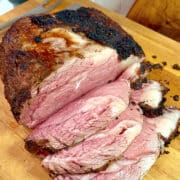
Reverse Sear Prime Rib
This Reverse Sear Prime Rib cooks low and slow with a final sear for a steakhouse-style crust. Perfect for the holidays and surprisingly easy!
Servings: 6 servings
Calories: 1kcal
Equipment
- 1 Roasting Pan with a V-Rack
- 1 Instant Read Thermometer
Ingredients
- 1 prime rib 3-12 pound standing rib roast
- kosher salt
- black pepper freshly ground
Instructions
- Preheat your oven to a low temp—usually 150°F to 200°F depending on your oven. A lower temperature gives you more control and prevents overcooking.
- Pat your prime rib roast completely dry with a paper towel, then rub it generously with garlic herb butter and plenty of salt and pepper.
- Place roast on a roasting pan fitted with a rack so air can circulate aroundthe meat.
- Insert the meat thermometer into the thickest part of the roast, avoiding the rib bones.
- Slow roast until the internal temperature reaches 120°F for rare, 125°F for medium-rare, or 130°F for medium.
- Once it hits your desired temperature of the meat, remove it from the ovenand let it rest on the kitchen counter for 20 to 30 minutes. This is wherecarryover cooking happens and it’s essential.
- While it rests, crank your oven temp to very high heat—usually 500°F or your oven’s highest setting.
- Place the roast back in and reverse sear for about 8 to 10 minutes until adeep, irresistible crust forms.
- Remove from the oven, rest again briefly, then slice into gorgeous inchslices and serve with warm au jus or beef stock and all your favorite sideslike brussels sprouts, mashed potatoes, or Yorkshire pudding.
Notes
- Make-Ahead Instructions: You can dry brine the roast a day ahead and keep it uncovered in the fridge. On the day of your special occasion, do the low temp roasting earlier in the day, let it rest, then if your timing gets off, you can slip the roast back into a 200°F oven for about 45 minutes to gently rewarm it before you do the final reverse sear at higher temperatures.
- Serving Suggestions: Anything that can hold its own next to the star of the show. Think creamy mashed potatoes, roasted veggies, Yorkshire pudding, a bright salad, or something with horseradish to cut through the richness. The beauty of this method is that most of the time, the roast is just quietly hanging out in the oven, leaving you plenty of room and headspace to prep all your favorite sides.
Nutrition
Serving: 1serving | Calories: 1kcal | Protein: 0.03g | Fat: 0.1g | Saturated Fat: 0.02g | Polyunsaturated Fat: 0.002g | Monounsaturated Fat: 0.02g | Cholesterol: 0.1mg | Sodium: 0.1mg | Potassium: 0.4mg | Calcium: 0.01mg | Iron: 0.003mg
