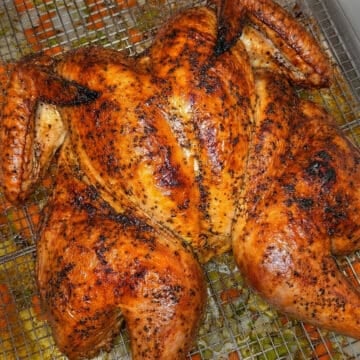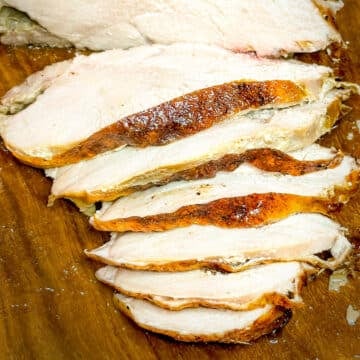




If you’ve never made homemade broth before, this How to Make Turkey Broth recipe is the perfect place to start. It’s incredibly simple, uses leftover turkey bones you’d normally toss after Thanksgiving dinner, and creates a homemade turkey broth with rich, savory flavor that adds so much depth to soups, sauces, and gravy.
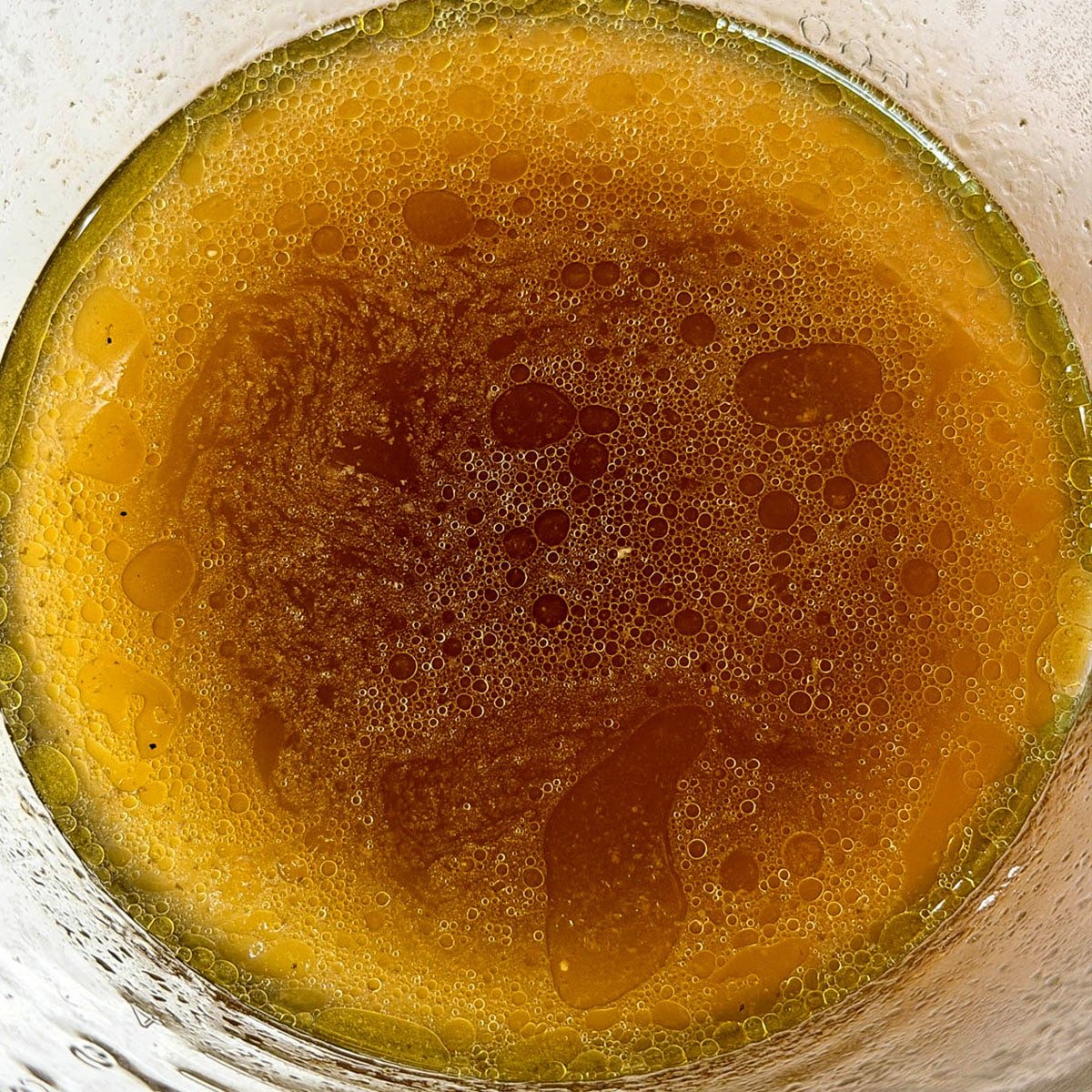
What I love most about this turkey broth is how flexible it is and how easily it fits into real life. It might sound like a long, drawn-out process, but it’s really not! You can make this homemade turkey broth right alongside your turkey on Thanksgiving day, use it immediately for turkey gravy or a cozy pot of turkey soup, and then freeze the rest for later use. Having turkey broth tucked away in freezer-safe containers is a great way to make weeknight cooking easier, reduce food waste, and get the most out of your thanksgiving leftovers.
What's In This Blog Post?
Ingredients Needed
The ingredients for this turkey broth are simple and practical, making it a great way to use up leftover turkey bones or even a leftover turkey carcass. A few fresh herbs, butter, and basic vegetables come together to create a flavorful turkey broth without overcomplicating things.
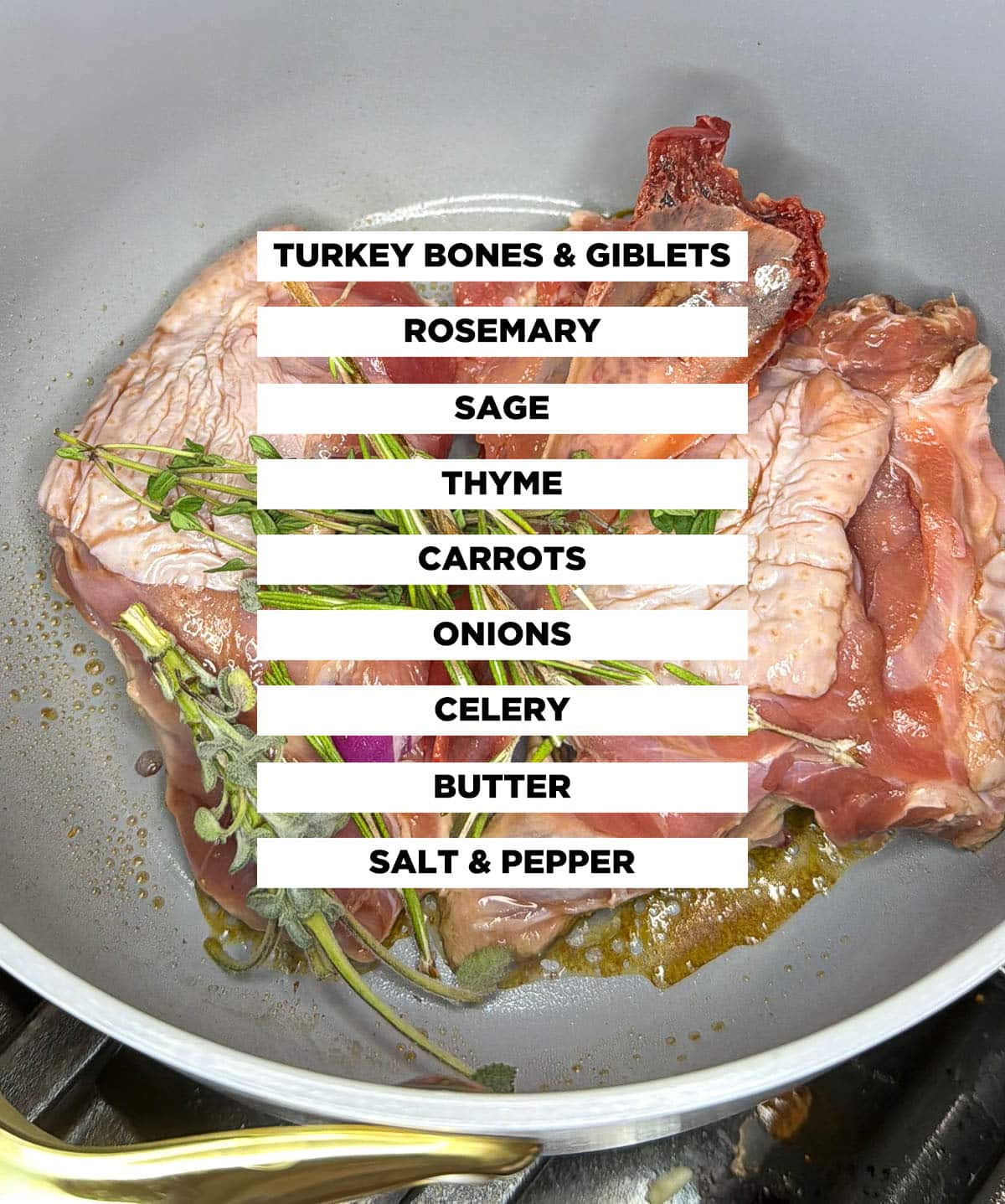
- Leftover Turkey Bones (ribs, breastbone, neck) - These bones add body and rich flavor to the broth. You can use any leftover turkey bones, including turkey wings, drumstick bones, or even a whole turkey carcass. If you don’t have turkey, chicken bones or a rotisserie chicken carcass work well as a substitute.
- Water - Water is used to extract flavor from the bones and aromatic vegetables. Use cold water and add enough water to fully cover the bones. You can replace part of the water with chicken broth or chicken stock for a slightly richer flavor.
- Butter - Butter helps brown the turkey pieces and adds a savory base to the broth. Olive oil or avocado oil can be substituted if preferred.
- Fresh Herbs (thyme, rosemary, sage) - Fresh herbs give this broth its classic aroma and best flavor. You can also add a bay leaf if desired. If fresh isn’t available, dried herbs work—just use less.
- Onion - Onion adds depth and a subtle touch of sweetness. Yellow onions work best, but white onion, shallots, or leeks are good substitutes.
- Carrots - Carrots add color and mild sweetness. They pair well with the herbs and bones for a balanced broth.
- Celery - Celery provides a savory backbone. Using whole stalks of celery (or even celery leaves) adds extra flavor.
Tips and Tricks for Success
- Brown the bones first for more flavor. Browning the turkey bones in butter builds a deeper, more savory base than simmering alone.
- Don’t overdo the herbs. A few sprigs of fresh herbs go a long way. Too many can overpower the broth.
- Simmer gently, not at a rolling boil. A gentle simmer extracts flavor without clouding the broth.
- Season lightly at the start. It’s easier to adjust salt at the end, especially if using the broth for gravy.
- Skim if needed. Skimming foam results in a cleaner-tasting broth.
- Strain for a smooth finish. Use a fine-mesh strainer and transfer the broth to a large bowl before storing.
- Cool quickly before storing. Let the broth cool to room temperature before transferring to jars or containers.
- Freeze in small portions. Freeze in mason jars, wide mouth glass jars, ice cube trays, or Souper Cubes for easy later use.
How to Make Turkey Broth
From browning the turkey bones to a slow, gentle simmer, these step-by-step instructions guide you through each stage of making flavorful turkey broth on the stovetop.
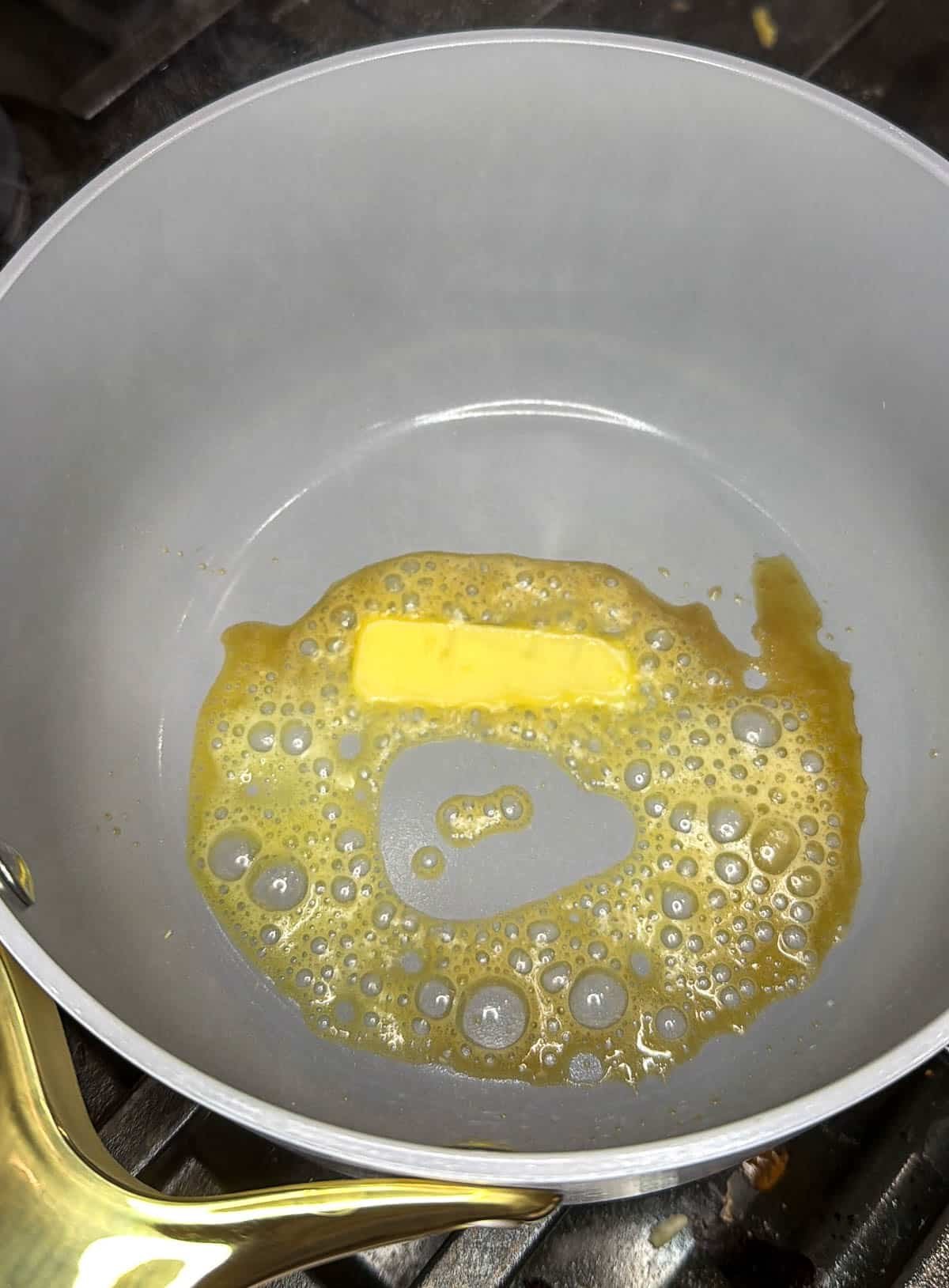
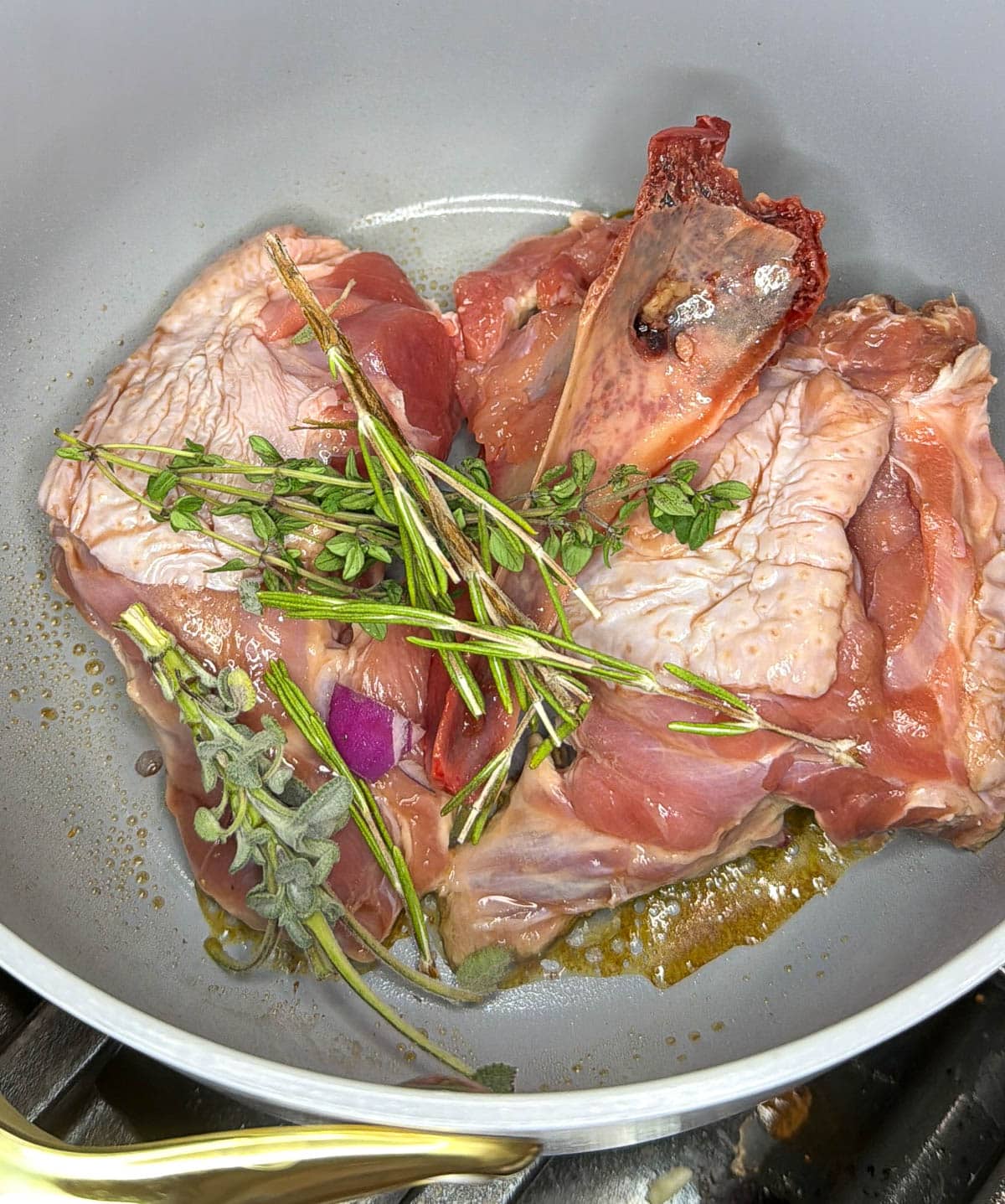
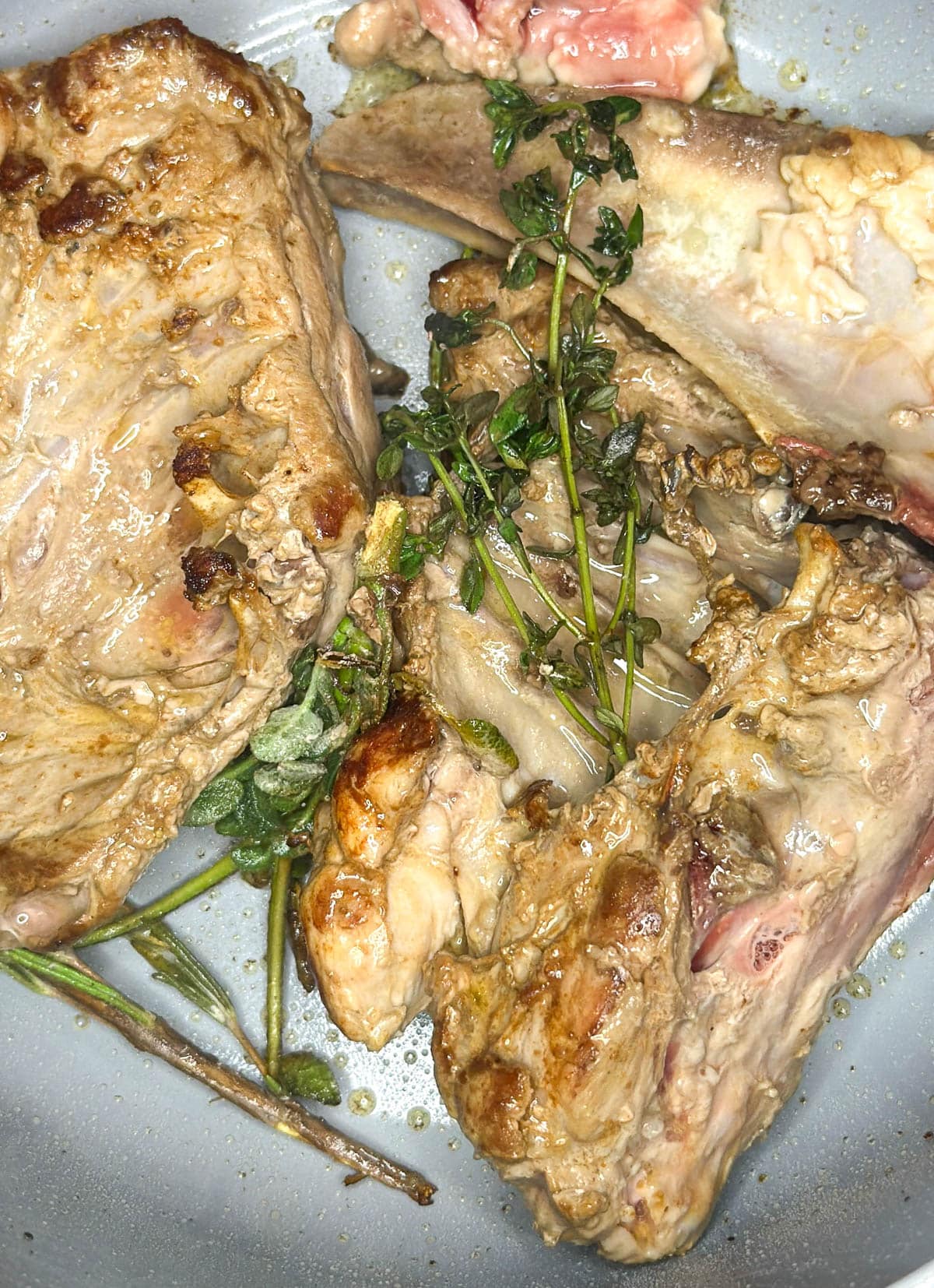
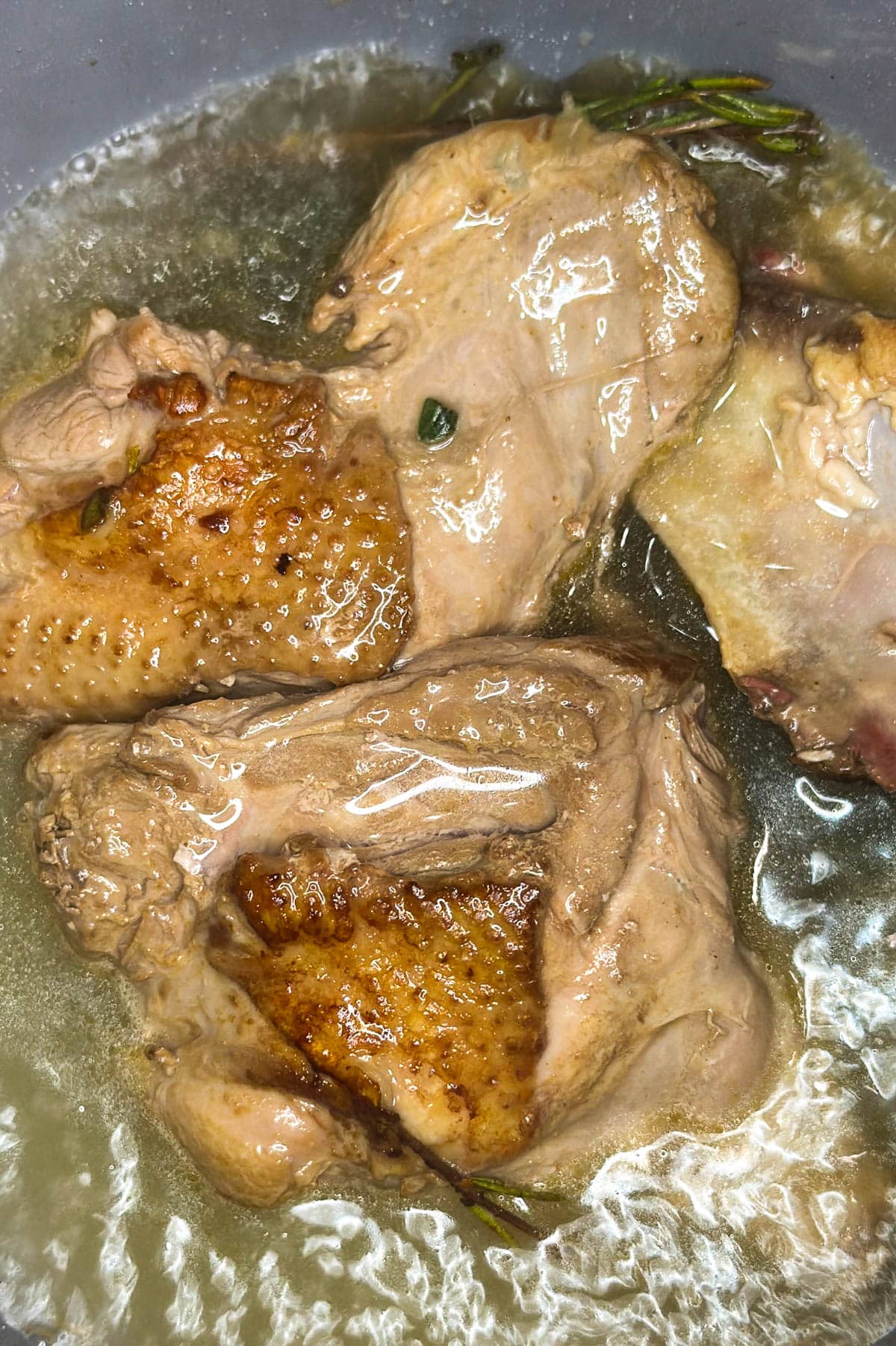
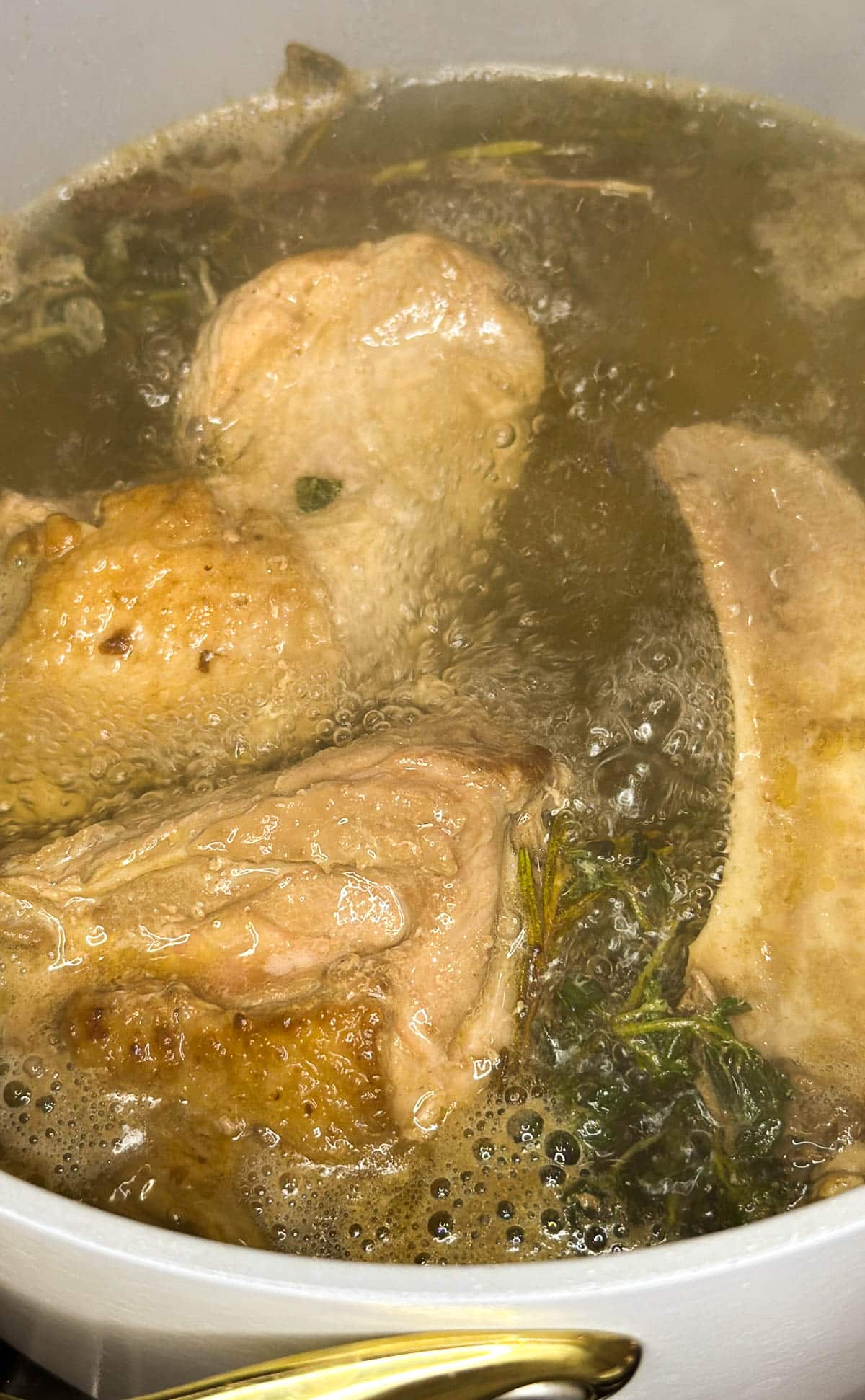
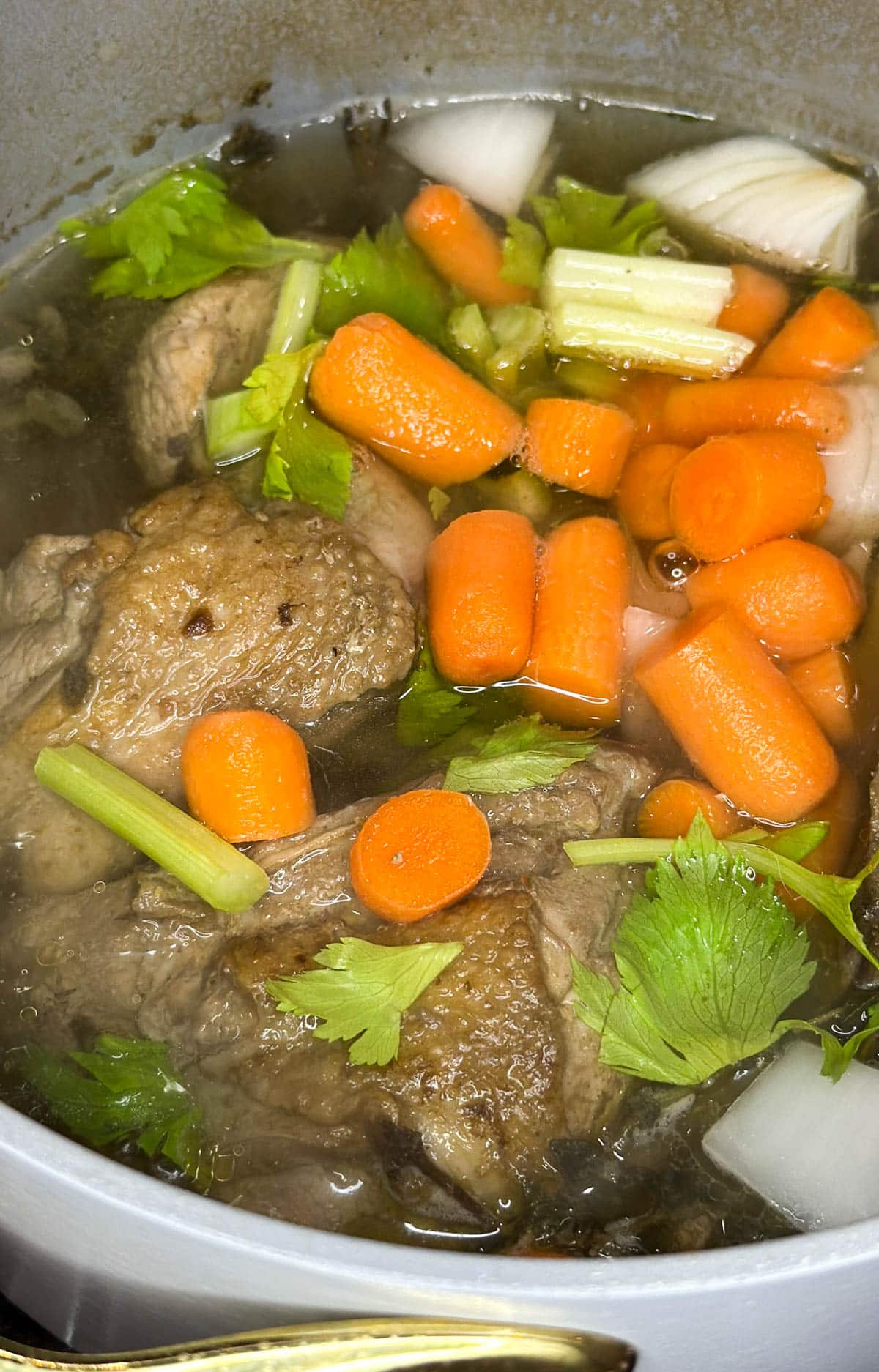
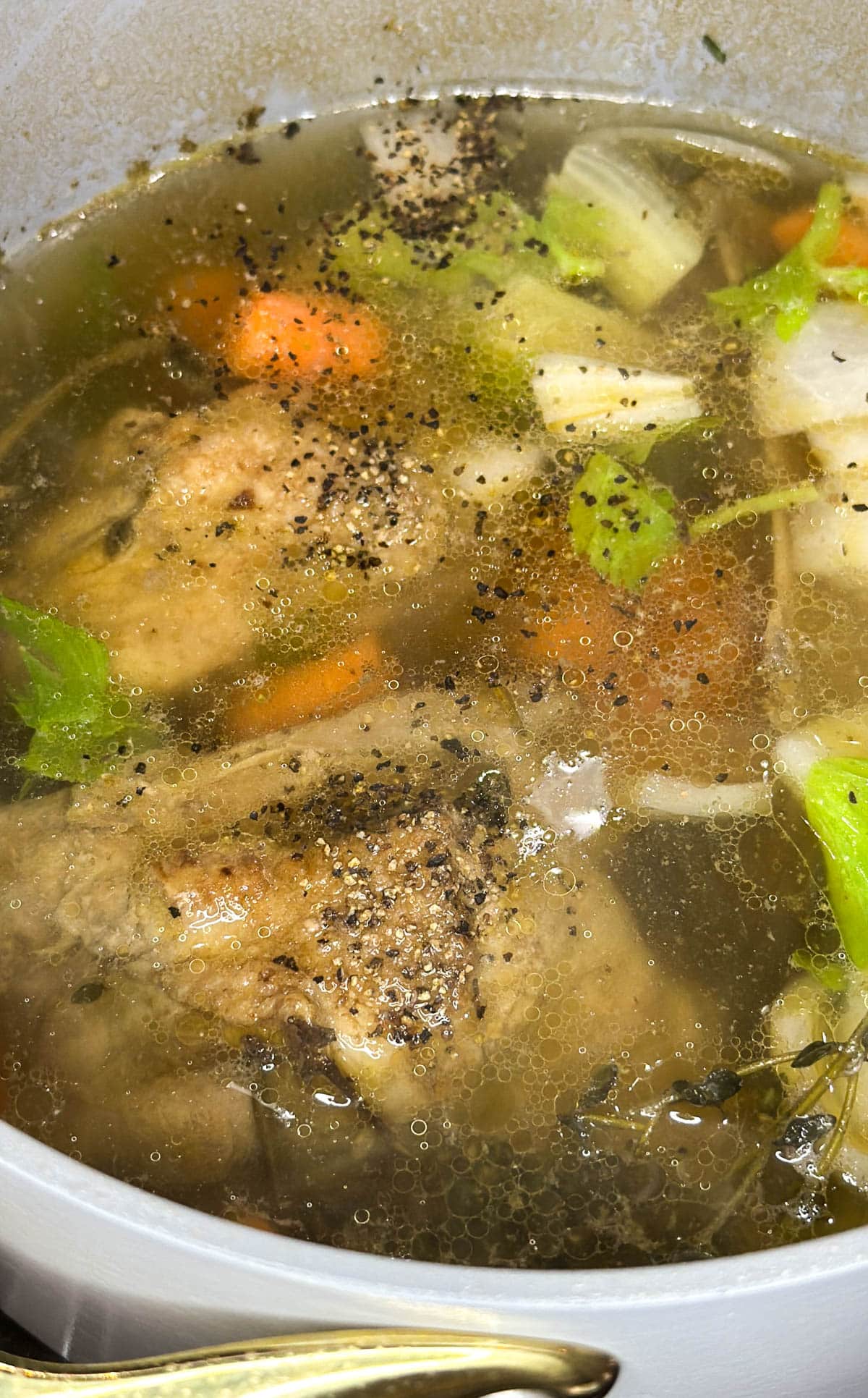
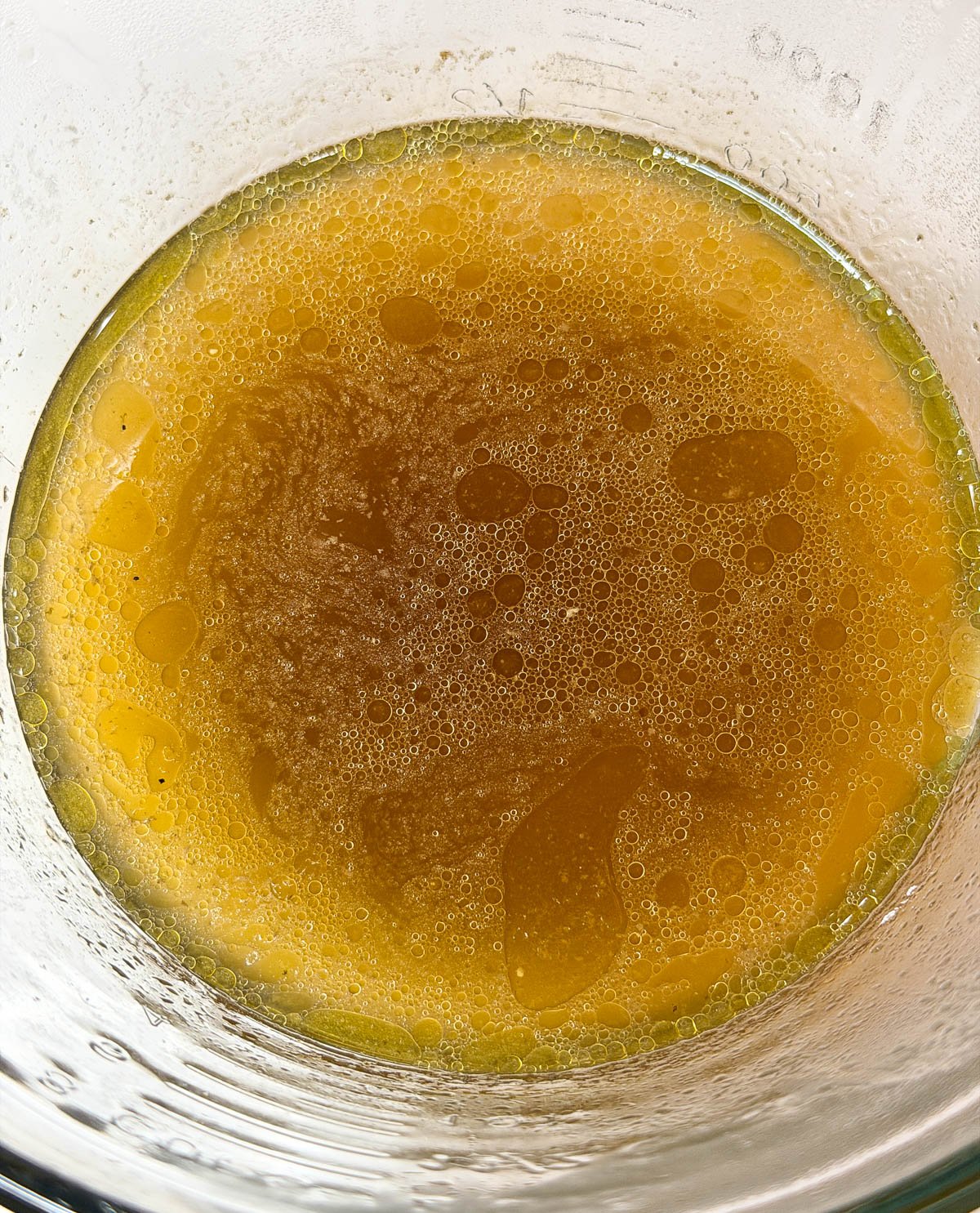
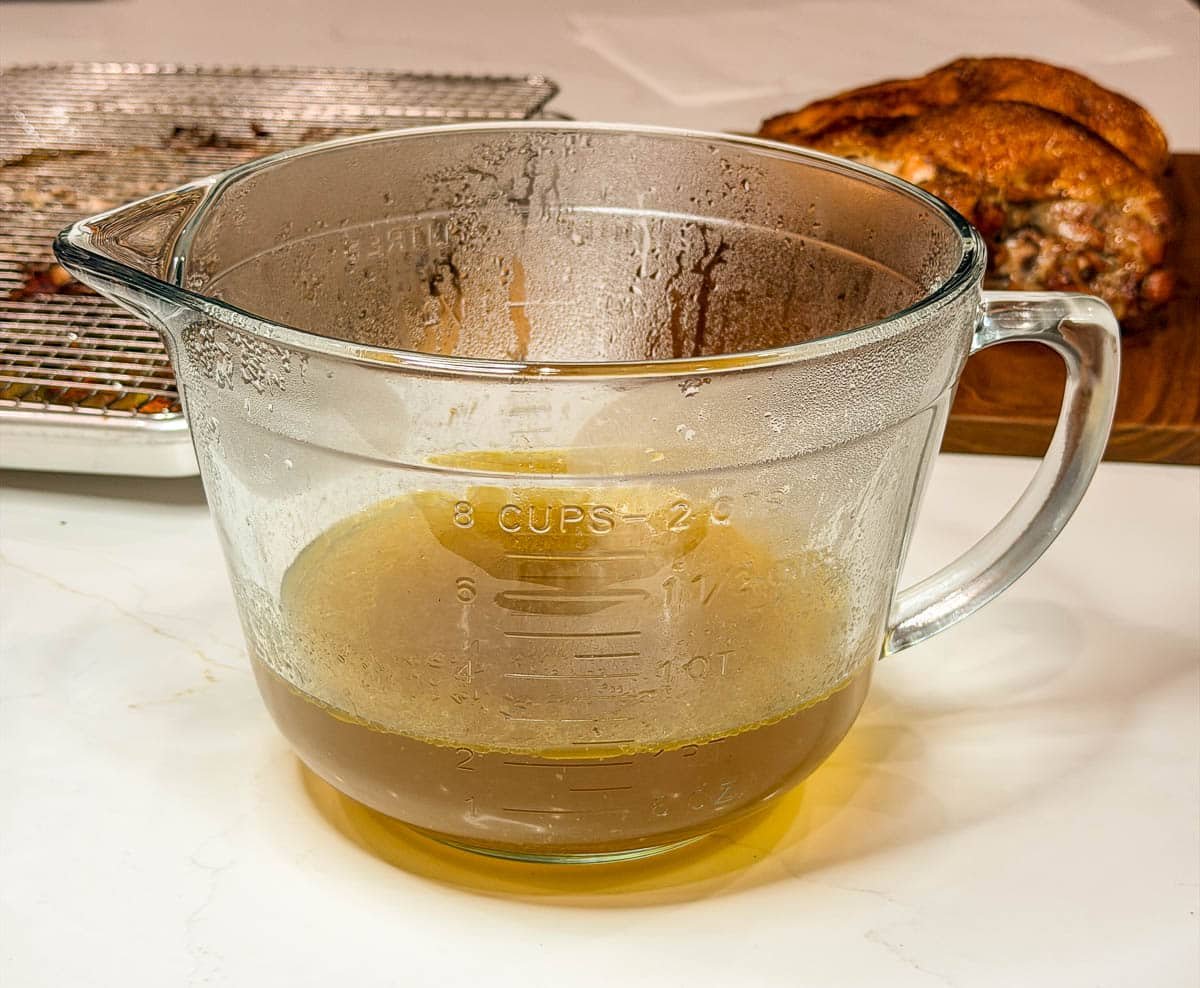
- Melt two tablespoons of butter in a medium saucepan over medium high heat.
- Place the ribs with meat and breast bone in the butter and brown on all sides.
- Add in a small sprigs of the rosemary, sage, and thyme.
- Cover with enough water to fully submerge the bones and simmer gently for 1 hour while the turkey cooks.
Frequently Asked Questions
Yes! Cooked turkey bones are perfect for making broth and often add even more flavor. Leftover bones from a roasted or smoked turkey work great in this recipe.
Turkey broth should simmer gently for about 1 hour for a light, flavorful broth. For a deeper flavor, you can simmer it longer (up to 2 hours) while adding more water if needed.
No, but browning the bones in butter before adding water adds extra depth and richness. This step isn’t required, but it makes a noticeable difference in flavor.
Turkey broth is lighter and cooks for a shorter time, while turkey stock uses more bones and cooks longer. This recipe sits right in between, making it a great base for turkey noodle soup, gravy, and homemade soups.
Yes. If fresh herbs aren’t available, use about 1 teaspoon total of dried herbs. Add them sparingly, as dried herbs are more concentrated than fresh.
Cloudy broth is usually caused by boiling instead of simmering. Keep the heat low and steady, and avoid stirring too much for a clearer broth.
Absolutely. Let the broth cool completely, then store it in freezer-safe containers or silicone molds. It will keep well in the freezer for up to 3 months.
Turkey broth can be stored in an airtight container in the refrigerator for up to 4 days.
Yes! Homemade turkey broth is excellent for gravy and adds much more flavor than store-bought broth. Use it in place of water or boxed stock for the best results.
Turkey broth and bone broth are similar, but bone broth is simmered much longer(often several hours) to extract collagen. This recipe is a quicker, lighter version that’s ideal for everyday cooking.
Recipe
Ingredients
- leftover turkey bones
- 4 cups water
- 2 tablespoons butter
- ¼ onion chopped
- 1 carrot chopped
- 1 celery rib chopped
- fresh thyme, rosemary, and sage
- salt and pepper to taste
Instructions
- Melt two tablespoons of butter in a medium saucepan over medium high heat.
- Place the ribs with meat and breast bone in the butter and brown on all sides.
- Add in a small sprigs of the rosemary, sage, and thyme.
- Cover with enough water to fully submerge the bones and simmer gently for 1 hour while the turkey cooks.
Notes
- Storage Instructions: Turkey broth can be stored in an airtight container in the refrigerator for up to 4 days.
- Freezer Instructions: Let the broth cool completely, then store it in freezer-safe containers or silicone molds. It will keep well in the freezer for up to 3 months.