

Italian meringue buttercream is the gold standard of professional frostings: silky smooth, barely sweet, and stable enough to hold up in warm climates where American buttercream falls apart. It is the frosting I reach for on every wedding cake and tiered cake because nothing else comes close to that light, creamy finish without the sugar overload.
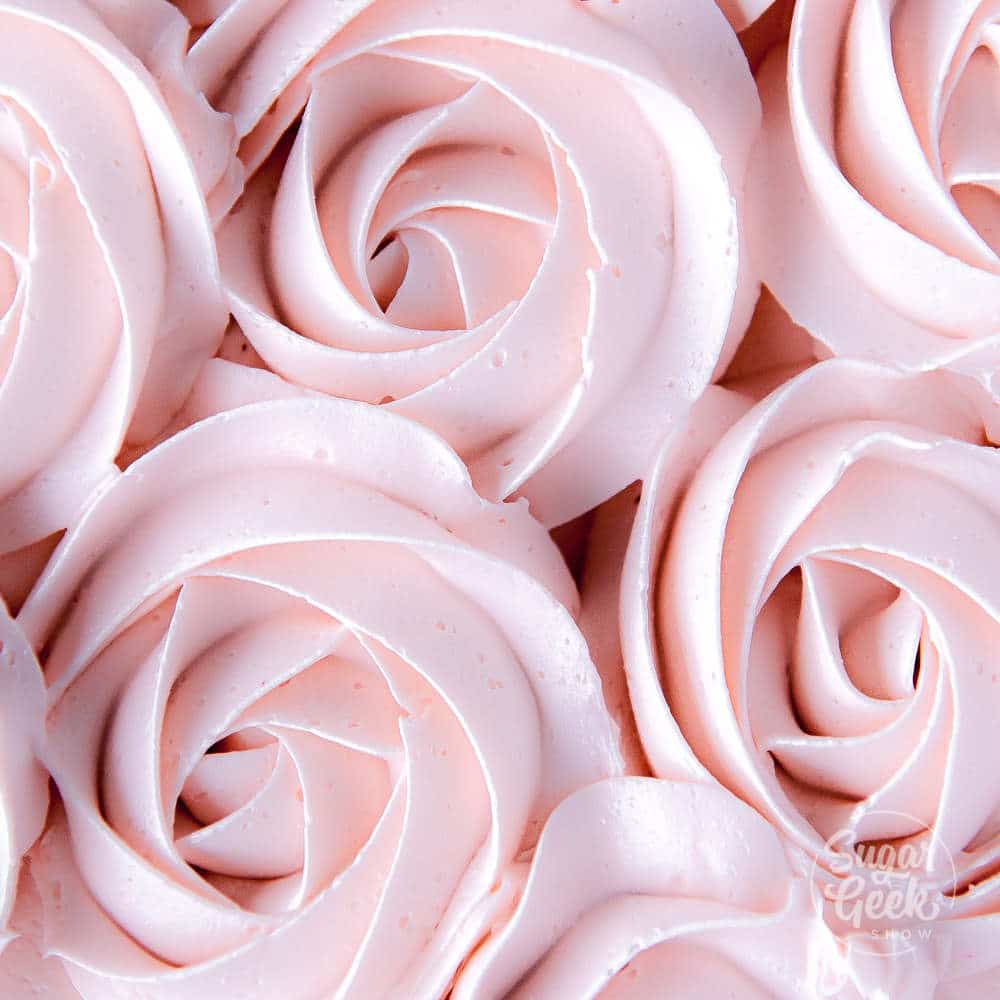
Quick Glance: Italian Meringue Buttercream
- Recipe Name: Italian Meringue Buttercream
- Why You'll Love It: The most stable and least sweet buttercream you can make - silky smooth, heat-resistant, and perfect for professional cakes and warm climates
- Time and Difficulty: 40 minutes / Intermediate
- Main Ingredients: Egg whites, granulated sugar, water, unsalted butter, vanilla
- Method: Hot sugar syrup streamed into whipped egg whites, finished with butter
- Texture and Flavor: Light, silky, and creamy with a delicate sweetness and rich buttery finish
- Quick Tip: The meringue must be completely cool before you add the butter. If it's too warm, the butter will melt, and the whole thing will look soupy
Jump to:
- Quick Glance: Italian Meringue Buttercream
- Why This Recipe Works
- Italian Meringue Buttercream Ingredients
- How To Make Italian Meringue Buttercream Step-by-Step
- Batter & Frosting Calculator
- Cake Batter and Frosting Calculator
- Cups of Batter Needed
- Cups of Frosting Needed
- Common Mistakes To Avoid
- Italian Meringue FAQs
- More Frosting Recipes To Try
- Watch: How To Decorate A Cake Step-by-Step
- Recipe
Why This Recipe Works
Italian meringue buttercream is more stable than other meringue-based buttercreams like Swiss-meringue buttercream because of what happens to the egg whites when the hot syrup hits them. Sugar cooked to 240°F has lost most of its moisture through evaporation, concentrating the sugar to a very high level. When that hot syrup streams into whipping egg whites, two things happen simultaneously: the heat partially pasteurizes the egg whites, and the concentrated sugar bonds into the protein foam, creating a structure that is far more rigid and heat-resistant than what you get from Swiss meringue buttercream, which only heats egg whites to around 160°F.
The reason Italian meringue buttercream is also the least sweet is that the sugar is dissolved into the egg white foam rather than sitting in a base of powdered sugar. There's no confectioners' sugar in this recipe at all, which means no starchy aftertaste and no grittiness.
When you whip butter into the cooled meringue, the fat droplets from the butter become physically trapped within the protein network of the meringue foam, creating a true emulsion. This is why the buttercream can be rewhipped after refrigerating or freezing. The protein structure rebuilds as it returns to temperature.
Italian Meringue Buttercream Ingredients
You only need six ingredients to make Italian meringue buttercream, but the quality and temperature of each one matters. Here's what you need and why it works.
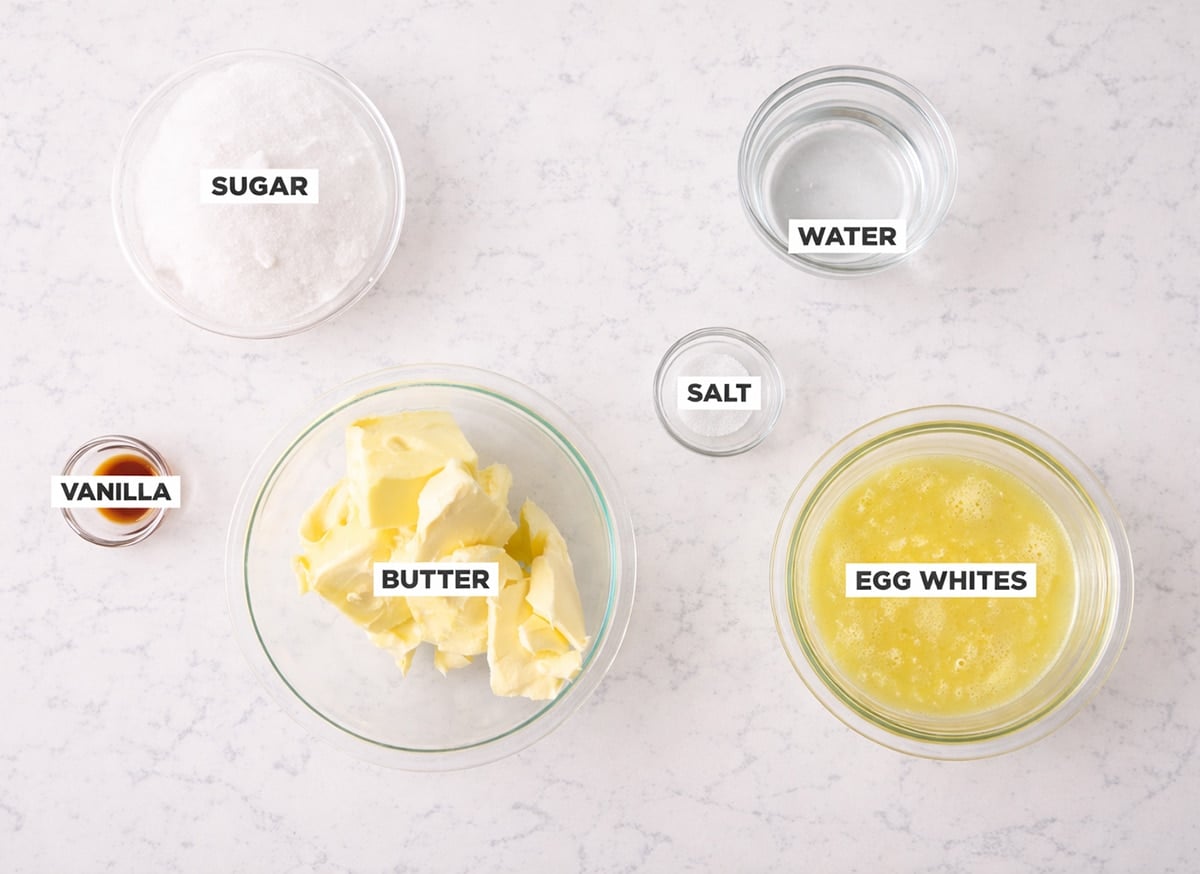
Fresh egg whites provide the foam structure that makes Italian meringue buttercream so stable. Fresh egg whites are strongly preferred over pasteurized carton egg whites because the heat treatment used to pasteurize them can partially damage the proteins, making them harder to whip to stiff peaks. If carton egg whites are all you have, make sure they are at room temperature and be prepared to whip them significantly longer than usual.
Granulated sugar is cooked with water to create the hot syrup that stabilizes the meringue. The sugar must reach exactly 240°F (soft ball stage) so that enough moisture has evaporated and the sugar concentration is high enough to set the foam properly. Under-cooking the syrup results in a soft, unstable buttercream that won't hold its shape. Do not substitute powdered sugar here since the recipe depends on the syrup-making process.
Water is combined with the sugar to help it dissolve and cook evenly into a syrup. It fully evaporates during the cooking process and is not present in the finished buttercream.
Unsalted butter is whipped into the cooled meringue to create the final buttercream. It must be softened to room temperature, not melted, and not cold. Softened butter has the right fat crystal structure to emulsify smoothly into the meringue. Unsalted butter is used so the salt level in the recipe can be controlled precisely. For a more stable buttercream in very high heat environments, you can substitute up to half the butter with solid vegetable shortening, which has a higher melting point than dairy butter.
Salt enhances and balances the flavor of the buttercream. Without it, the buttercream can taste flat and one-dimensional. Use a small amount since it should not be detectable as saltiness, only as depth of flavor.
Vanilla extract is the primary flavoring in this recipe. Use a high-quality pure vanilla extract or vanilla bean paste for the best flavor. You can substitute any flavoring you prefer, including almond extract, lemon emulsion, freeze-dried fruit powder, or espresso powder.
How To Make Italian Meringue Buttercream Step-by-Step
Before you start, make sure your butter is fully softened and your equipment is completely grease-free. Those two things alone will determine whether your buttercream comes together perfectly or gives you trouble.
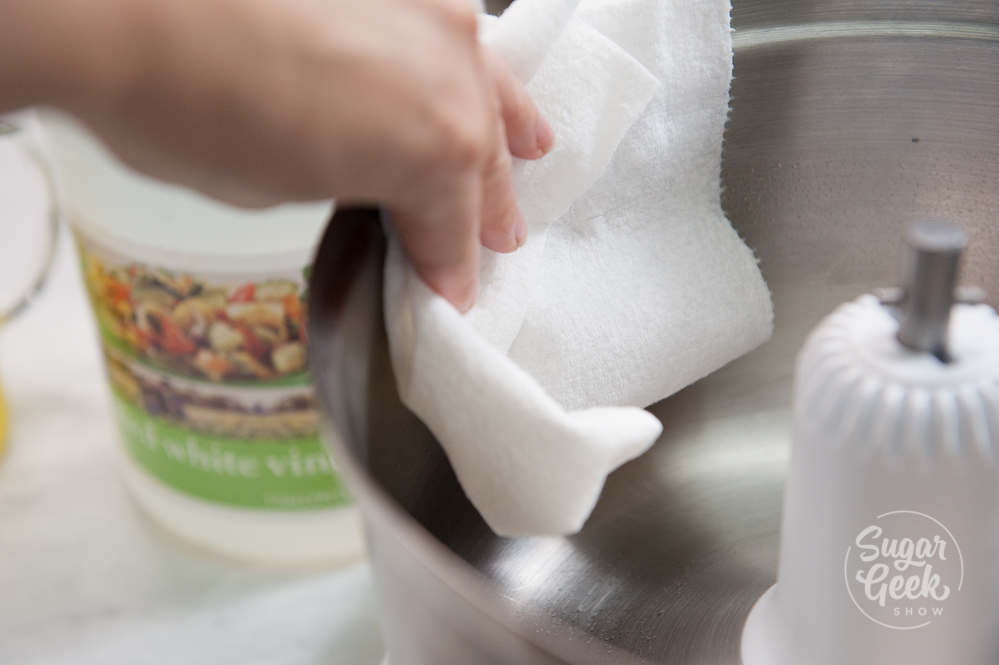
- Wipe down the bowl of your stand mixer and whisk attachment thoroughly with lemon juice or white vinegar and a clean paper towel. Any trace of grease or fat will prevent your egg whites from whipping up properly. The bowl should feel completely clean and slightly tacky.
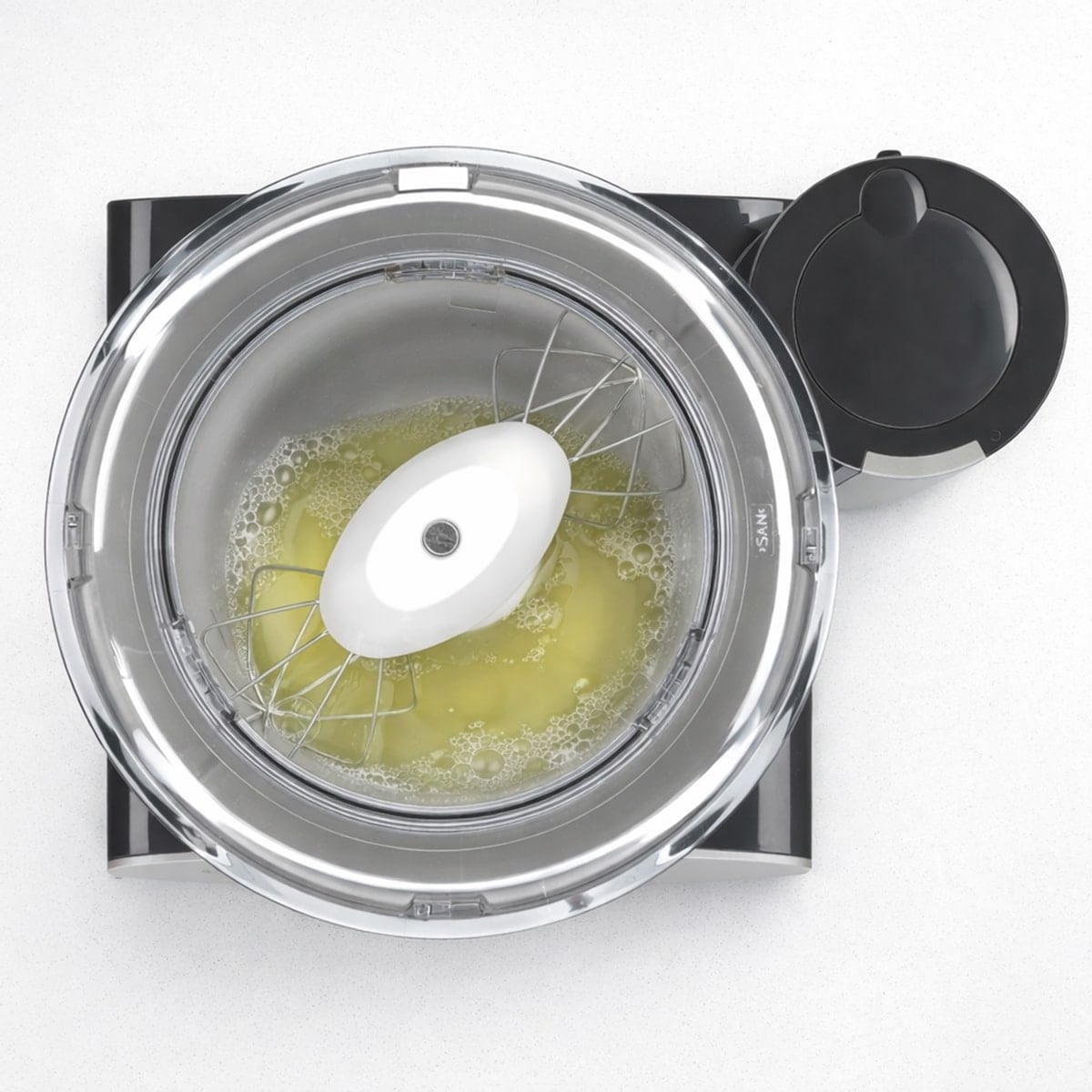
- Add your egg whites to the bowl of your stand mixer with the whisk attachment. Do not start whipping yet.
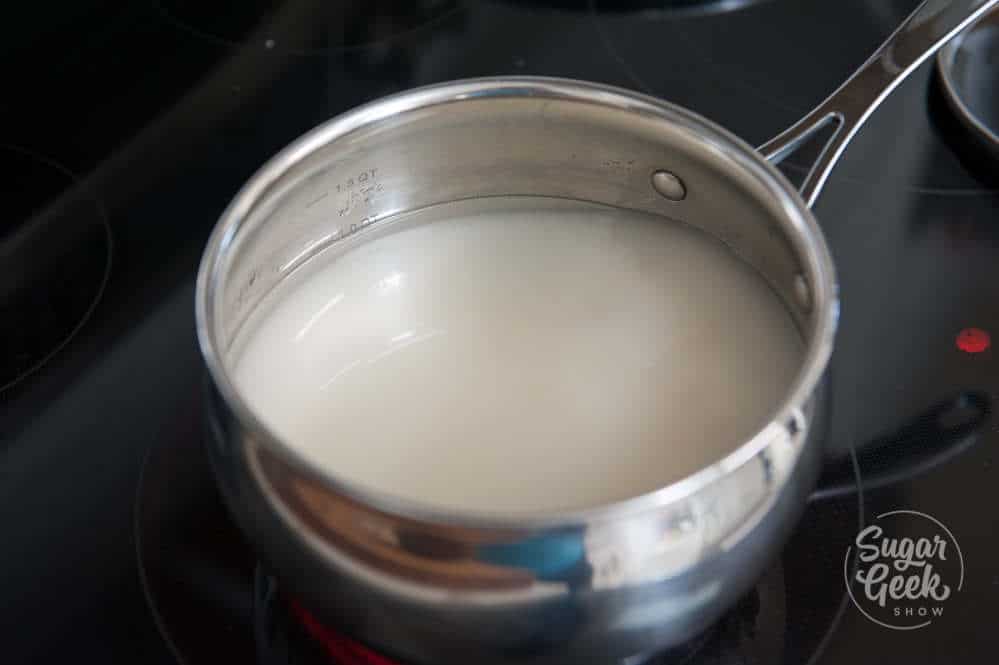
- Combine the sugar and water in a medium saucepan and stir just until the water has distributed evenly through the sugar. Place the lid on the pan and bring to a boil over medium-high heat.
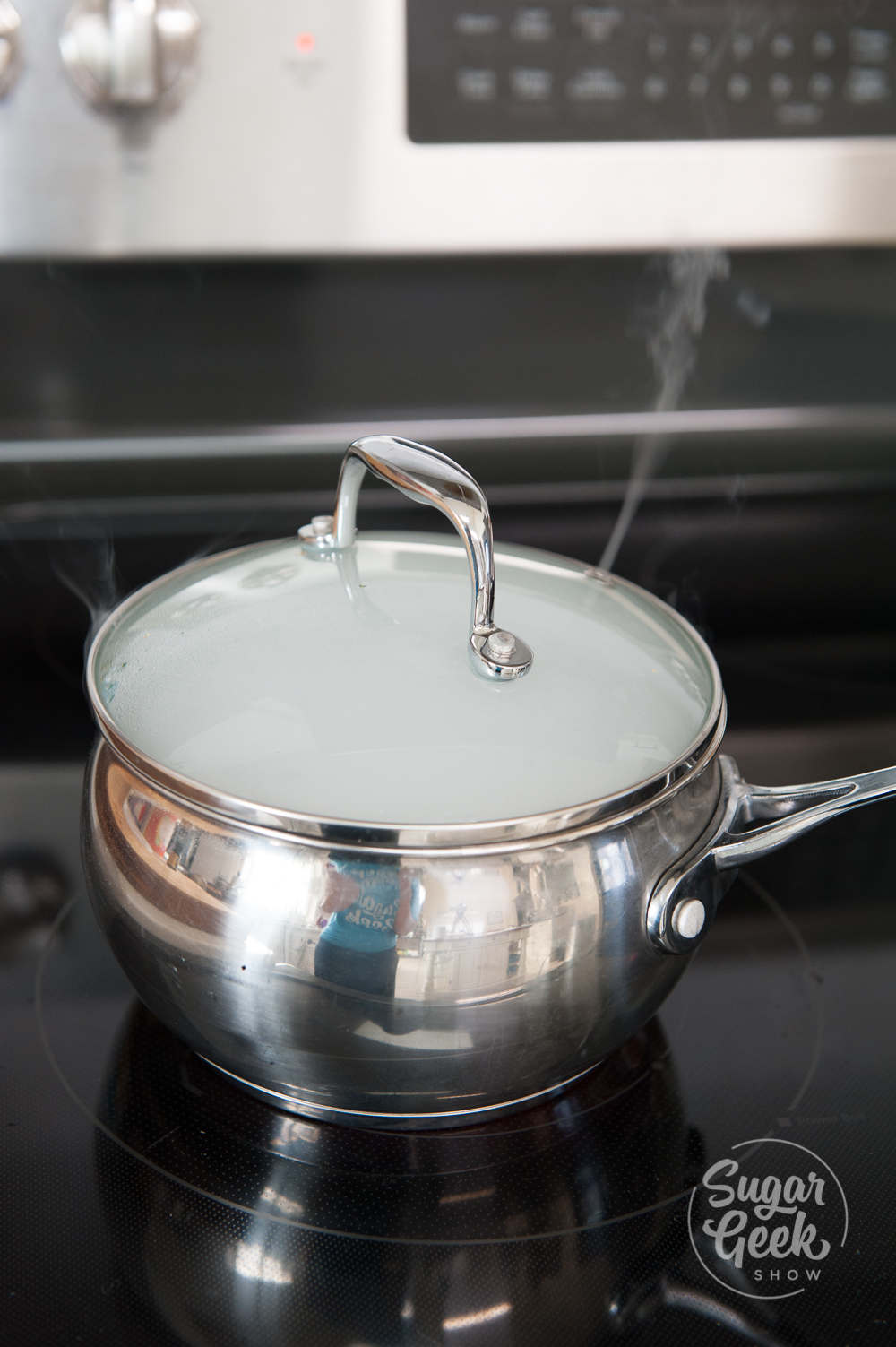
- Keep the lid on for 3 to 4 minutes after it reaches a boil. The steam trapped inside will wash any sugar crystals off the sides of the pan, which prevents the syrup from crystallizing and turning grainy later.
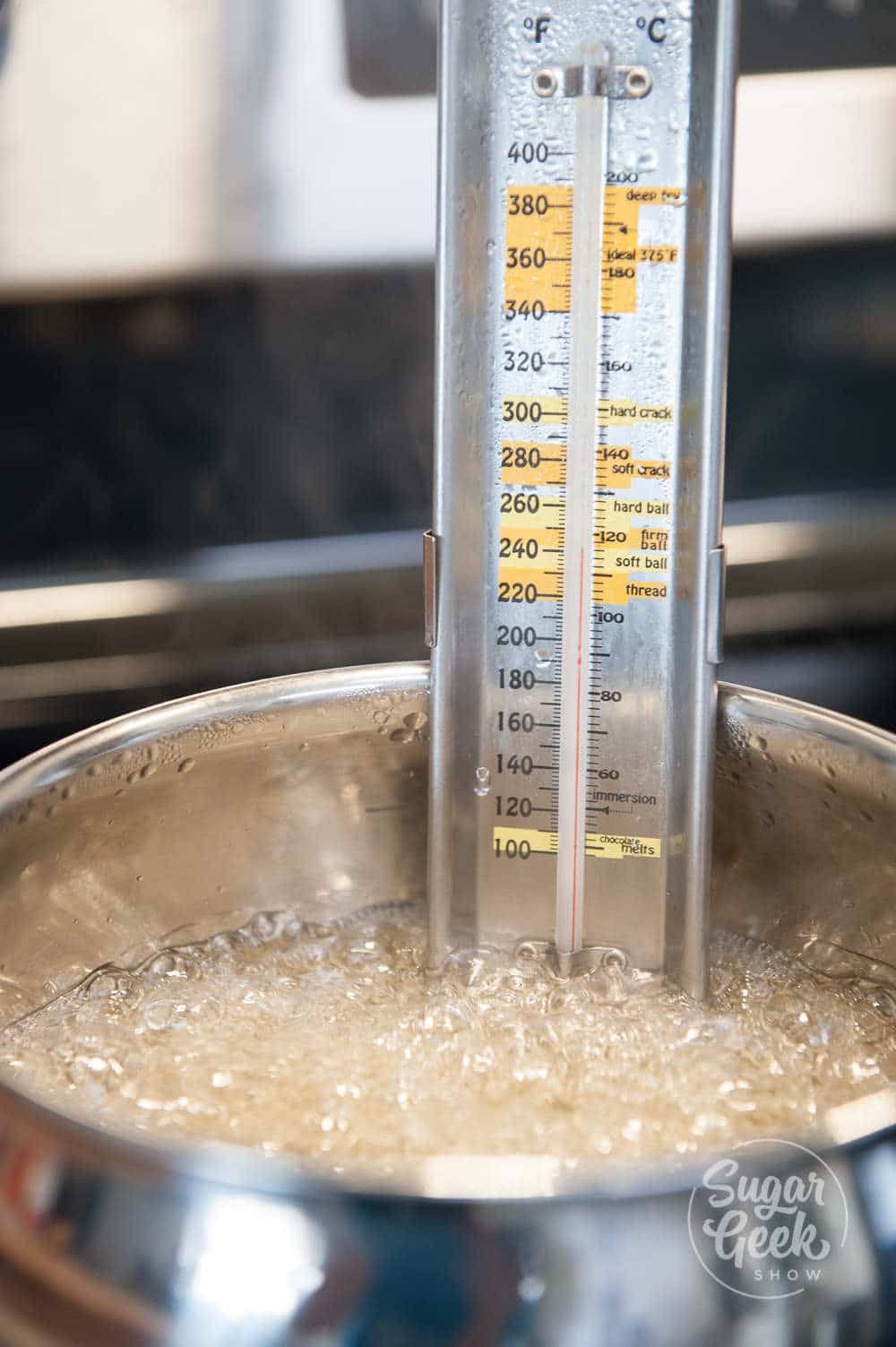
- Remove the lid and carefully insert your candy thermometer. Continue cooking over medium-high heat without stirring until the thermometer reads 235°F. The syrup will be clear and bubbling steadily.
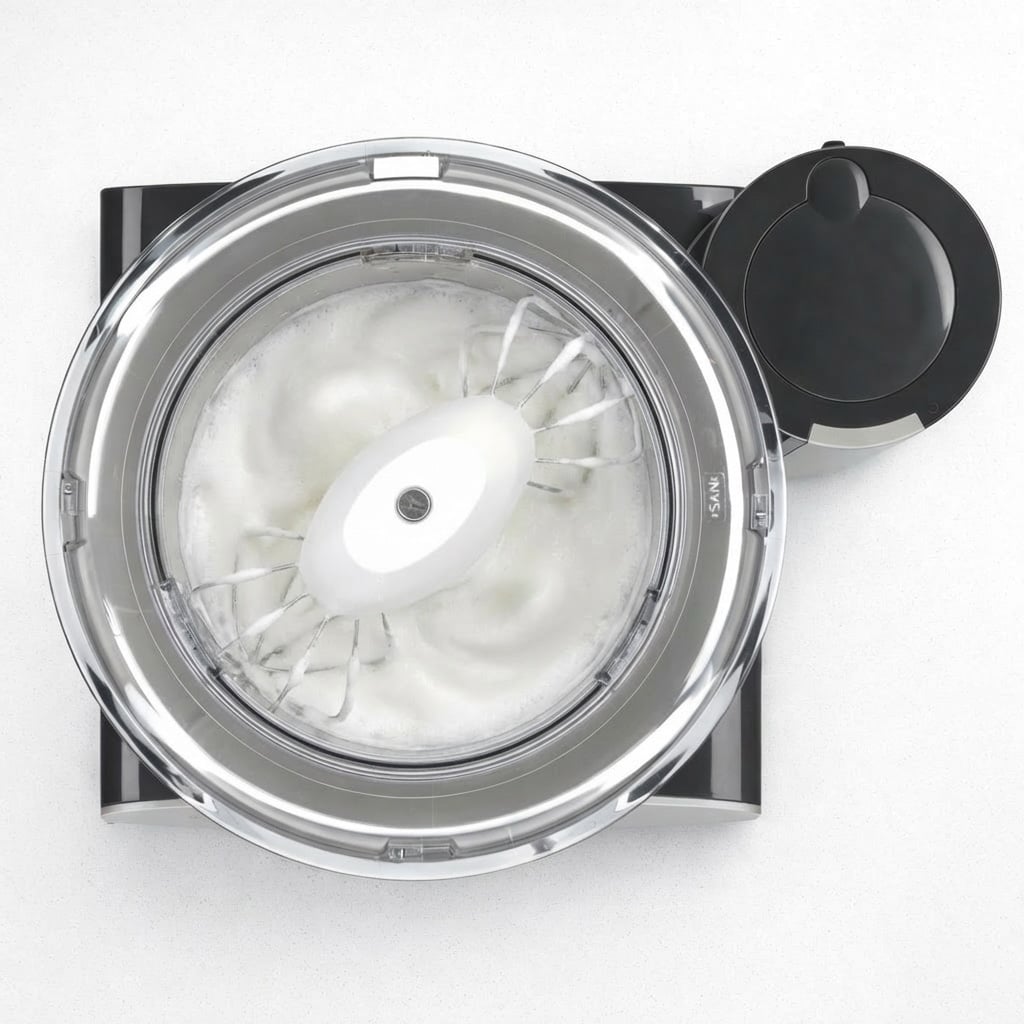
- When the syrup hits 235°F, turn your stand mixer on high and begin whipping your egg whites with the salt to soft peaks. You want them to reach soft peaks at the same time the syrup reaches 240°F, so the timing works out almost perfectly if you start at 235°F. Soft peaks means the whites are foamy and bright white but the tip curls over gently when you lift the whisk.
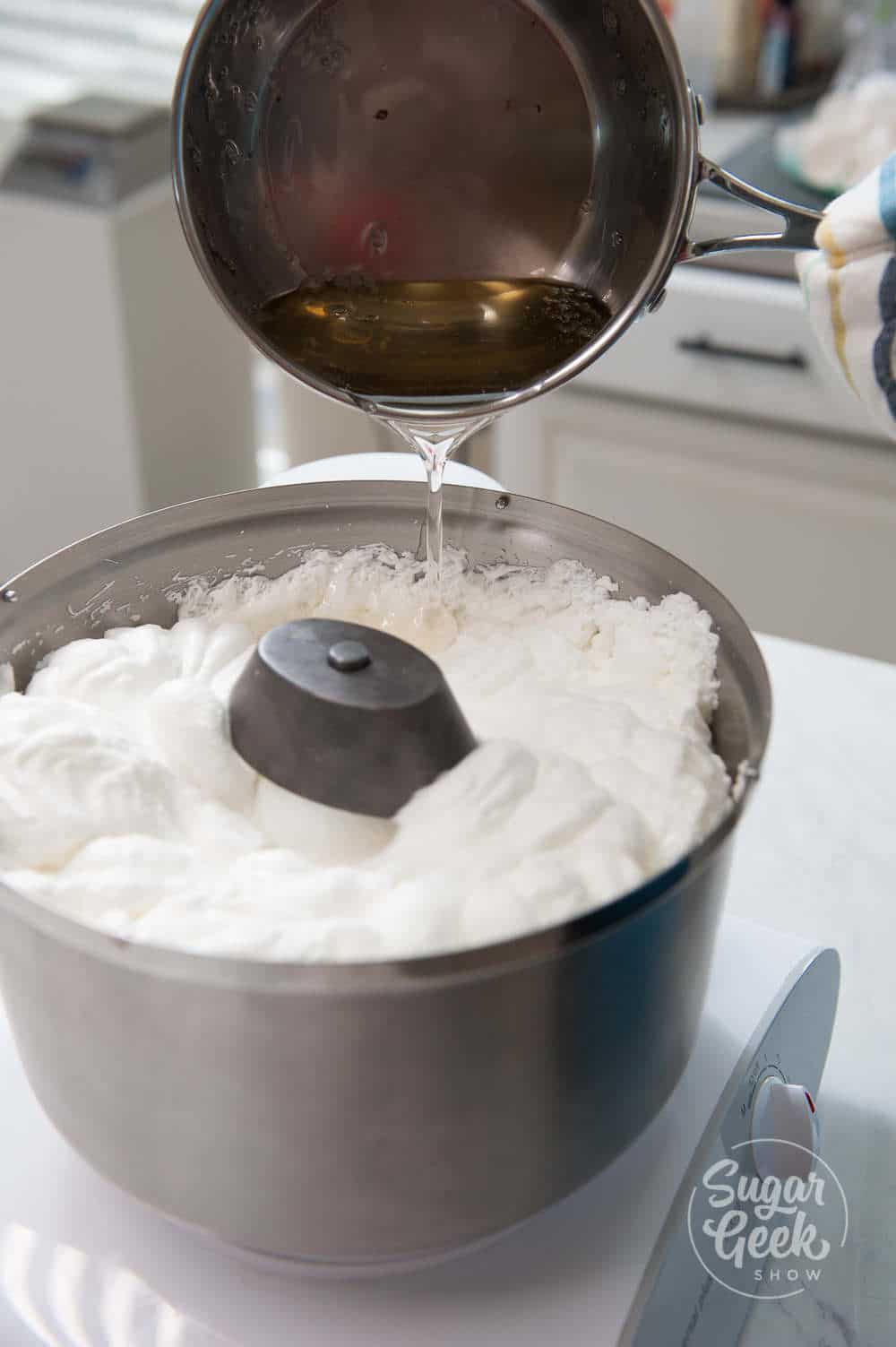
- When the syrup reaches 240°F, reduce the mixer to low speed. With the mixer running, slowly pour the hot syrup in a thin, steady stream down the side of the bowl between the whisk and the bowl wall. Pouring it directly onto the whisk will cause it to splatter and harden on the sides of the bowl. The mixture will immediately increase in volume and turn glossy white.
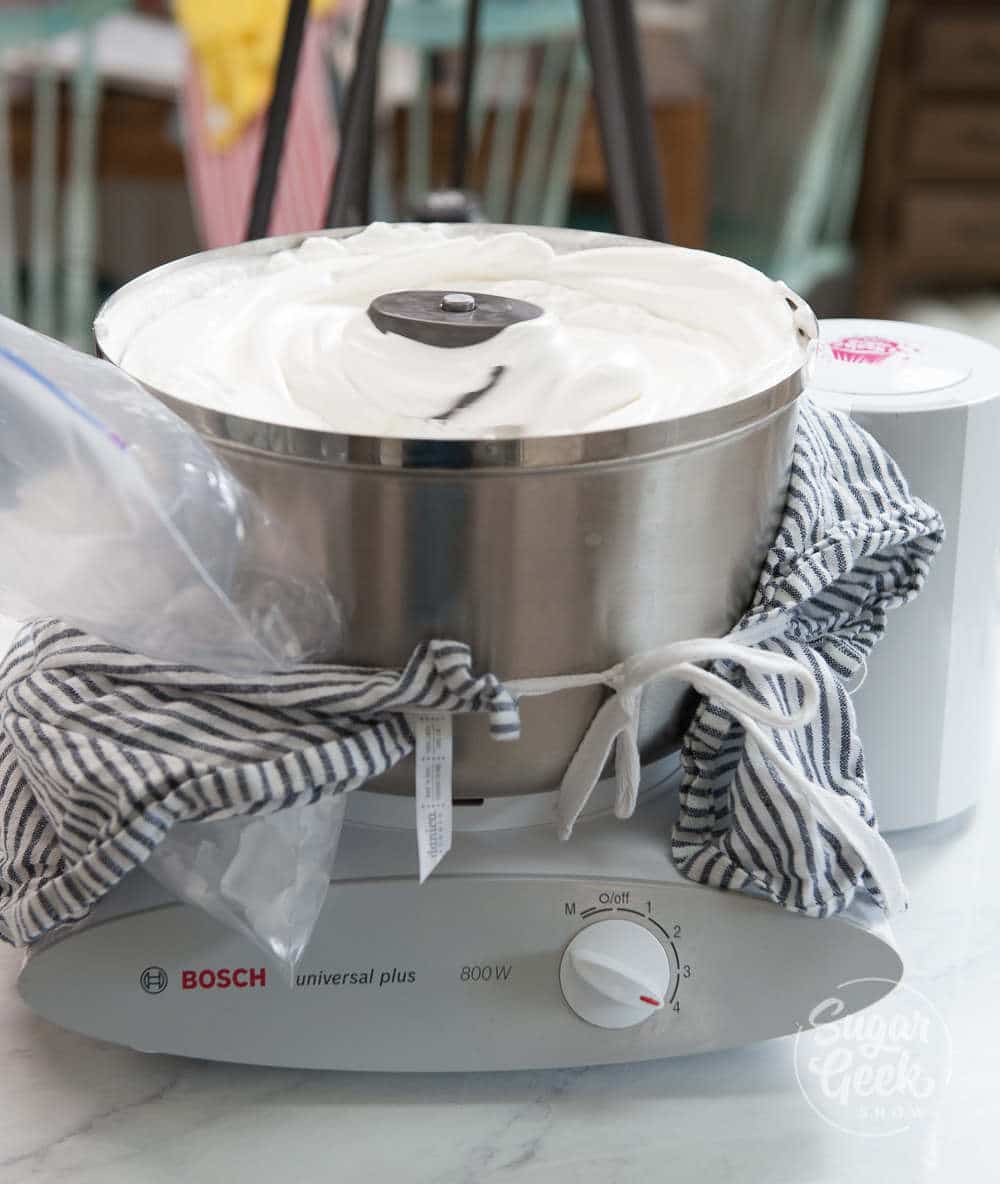
- Increase the mixer speed back to high and whip to very stiff, glossy peaks. To cool the meringue down faster, wrap an ice pack or bag of frozen vegetables against the outside of the bowl with a kitchen towel. The meringue needs to reach room temperature. You should be able to hold your hand against the side of the bowl comfortably with no warmth. This usually takes 10 to 15 minutes of whipping.
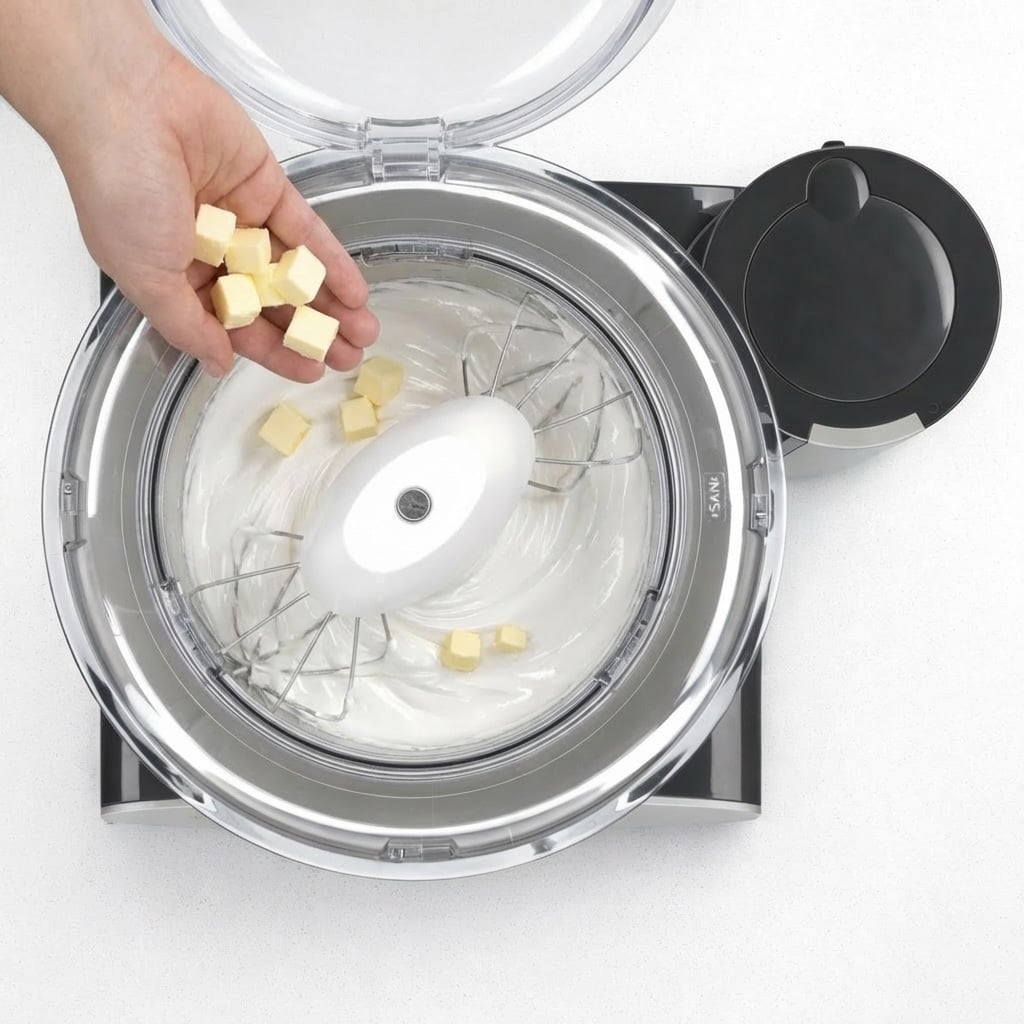
- Once the meringue is completely cool, reduce to medium speed and begin adding the softened butter two tablespoons at a time, waiting a few seconds between additions. The mixture may look curdled and soupy at this stage. This is completely normal. Keep whipping and it will come together.
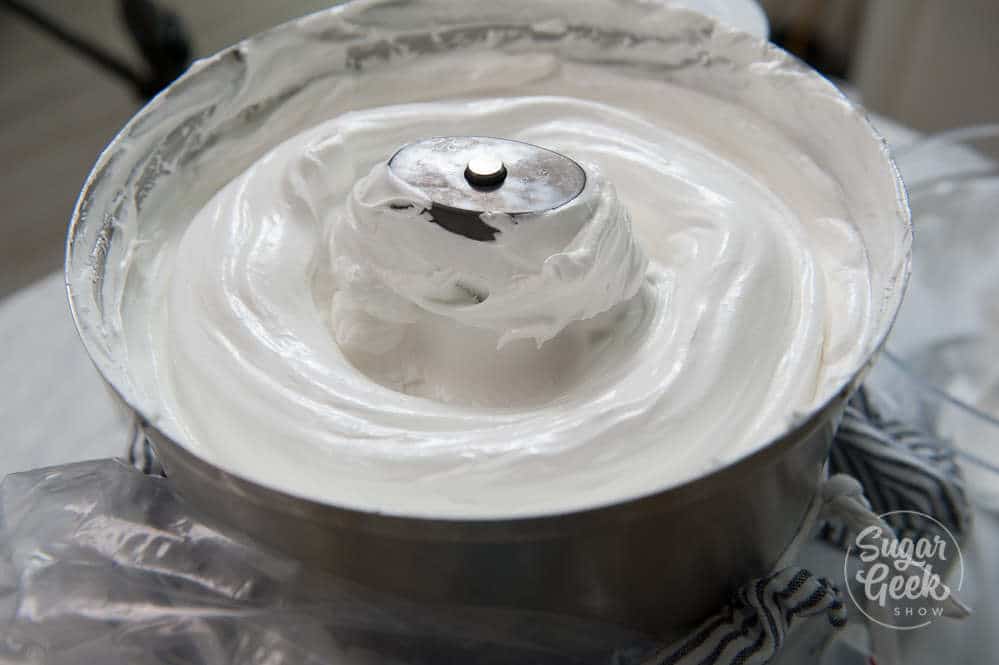
- Once all the butter is incorporated, add the vanilla and increase to high speed. Whip for 10-15 more minutes until the buttercream is light, fluffy, and completely smooth with no trace of a buttery taste. It should hold a stiff peak and have a silky sheen.
Add food coloring now if desired, mixing on low until fully incorporated.
Batter & Frosting Calculator
Cake Batter and Frosting Calculator
Select an option below to calculate how much batter or frosting you need. Adjust the servings slider on the recipe card to change the amounts the recipe makes.
Choose a pan type
Choose a cake pan size
(based on 2" tall cake pan)
Choose a cake pan size
(based on 2" tall cake pan)
Cupcake Tin Size
Choose number of pans
Cups of Batter Needed
8 cups
Cups of Frosting Needed
5 cups
Note: measurements are estimated based off the vanilla cake recipe using standard US cake pans and sizes. Measurements used are for 2" tall cake pans only. Your results may vary. Do not overfill cake pans above manufacturer's recommended guidelines.
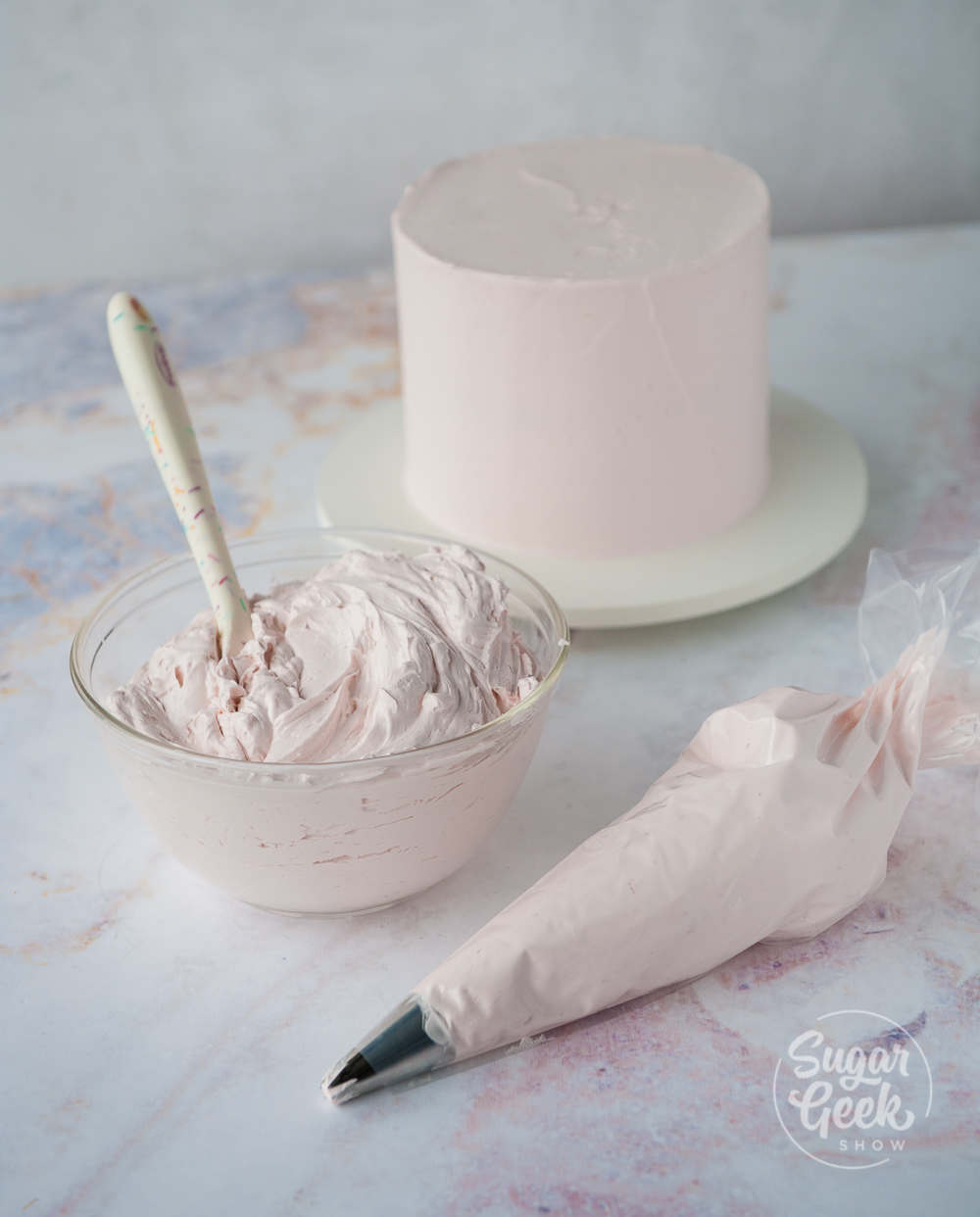
This recipe makes 8 cups of frosting, enough to frost and fill a two-layer 8-inch cake or frost about 24 cupcakes. Store leftovers in an airtight container in the fridge for up to 2 weeks or freeze for up to 6 months. Bring to room temperature and rewhip before using.
If you love a buttercream that pipes cleanly, holds its shape, and doesn't taste like a bag of powdered sugar, this is your recipe. Try it on my vanilla cake for a combination that's been a reader favorite for years.
Common Mistakes To Avoid
Starting with any grease in the bowl. Fat is meringue's worst enemy. Even a small amount of grease from butter, oil, or an unwashed bowl will prevent the egg whites from whipping at all. Always wipe down your bowl and whisk with lemon juice or vinegar before starting.
Adding the butter when the meringue is still warm. This is the most common reason Italian meringue buttercream fails. If the meringue is even slightly warm when the butter goes in, the butter melts rather than emulsifies and you end up with a soupy, broken mess. Be patient. The meringue must be fully at room temperature before you add a single piece of butter.
Under-cooking the sugar syrup. If your syrup doesn't reach 240°F, the sugar concentration won't be high enough to stabilize the foam. The resulting buttercream will be soft, unstable, and prone to weeping. Always use a reliable candy thermometer and confirm the temperature before pouring.
Panicking when it looks curdled. Almost everyone's Italian meringue buttercream goes through a broken, soupy, or curdled-looking stage when the butter first goes in. This is not a failure. Keep whipping on medium-high and the emulsion will come together within a few minutes and the texture will turn silky and smooth.
Using butter that is too cold or too warm. Cold butter breaks into chunks that don't incorporate smoothly. Melted butter causes the buttercream to collapse. Butter should be softened to the point where it holds its shape but gives easily when you press your finger into it, similar to the texture of soft clay.
Italian Meringue FAQs
Both are made with egg whites and butter, but the process is different. Swiss meringue buttercream heats the egg whites and sugar together over a double boiler to about 160°F before whipping, while Italian meringue buttercream uses a hot sugar syrup cooked to 240°F that streams directly into the egg whites as they whip. The higher temperature of Italian meringue buttercream creates a more stable foam structure and a more heat-resistant final buttercream. Italian meringue buttercream is generally considered the more advanced and more stable of the two.
The curdled appearance happens when the butter is slightly cooler or warmer than the meringue and the fat and water temporarily separate before fully emulsifying. Keep whipping at medium-high speed and it will come back together into a smooth, silky texture within a few minutes. If it looks soupy rather than curdled, the meringue was still too warm when the butter went in. Refrigerate the bowl for 10 to 15 minutes and rewhip.
Yes. Add gel food coloring in the final step after all the butter and flavoring are fully incorporated. Use gel or paste colors rather than liquid food coloring, as liquid can thin the buttercream slightly. Add a small amount at a time and mix on low until you reach your desired shade. Colors will deepen slightly as the buttercream sits.
Italian meringue buttercream keeps at room temperature for 2 to 3 days, in the refrigerator for up to 2 weeks, and in the freezer for up to 6 months. Before using refrigerated or frozen buttercream, bring it fully to room temperature and rewhip in your stand mixer until it returns to its original light, smooth consistency. It may look broken at first but keep whipping and it will come back together.
Fresh egg whites give the most reliable results. The heat treatment used to pasteurize carton egg whites can damage the proteins, making them harder to whip to stiff peaks. If fresh eggs are not available, carton egg whites can work. Make sure they are fully at room temperature and be prepared to whip them longer than you would fresh whites. Results can vary by brand.
Replace up to half the butter in the recipe with solid white vegetable shortening. Shortening has a significantly higher melting point than butter, which gives the buttercream more resistance to heat and humidity. The texture will be slightly less silky and the flavor less rich than all-butter, but the stability improvement in warm climates is significant.
Yes. Italian meringue buttercream takes on added flavors very well. Popular options include almond extract, lemon or orange emulsion, espresso powder dissolved in a teaspoon of hot water, melted and cooled chocolate, fresh fruit puree, or freeze-dried fruit ground into a powder. Add your flavoring in the final mixing step in place of or in addition to the vanilla.
More Frosting Recipes To Try


Watch: How To Decorate A Cake Step-by-Step
Before you start decorating, watch the video below where I show you every step of decorating a cake from start to finish. Seeing the process in action makes it much easier to follow along
- Liz Marek.
Recipe
Equipment
- Stand mixer with the whisk attachment
- Candy Thermometer
Ingredients
- 16 ounces granulated sugar
- 8 ounces water
- ¼ teaspoon salt
- 8 ounces egg whites (about 8 large egg whites separated from the yolk)
- 24 ounces unsalted butter softened
- 2 teaspoon vanilla extract
Instructions
- On the stovetop, mix together the water and sugar, cover with a lid and bring to a boil on medium-high heat.
- Keep the lid on the pot for 3-4 minutes while the mixture simmers to ensure all the sugar granules are dissolved, otherwise, your sugar can get gritty and crystalize. DO NOT MIX.
- Remove the lid, insert the candy thermometer carefully and continue cooking on medium-high until the syrup reaches 240° F.
- When the sugar solution is at about 235° F, begin whipping the egg whites on high speed. Add the salt to the egg whites.
- When the egg whites reach soft peaks, pour the sugar solution in a steady stream on to the whipping whites while mixing on low speed.
- Continue whipping the egg/sugar mixture until it reaches stiff peaks. I wrapped an apron around my bowl with an ice pack to help the meringue cool down faster. You can also cool the meringue by scooping it out of the bowl and placing it into the fridge for 15 minutes.
- Once the meringue is cooled, whip in soft butter and vanilla until the buttercream is light and fluffy and no longer has a butter taste. This can take from 10-15 minutes. If it looks curdled and watery just keep whipping. It will come together I promise.
Video
Notes
- Make sure your sugar syrup reaches exactly 240°F. Under-cooking it will result in a soft, unstable buttercream that won't hold its shape.
- Keep the lid on the pot for the first few minutes to prevent sugar crystals from forming on the sides of the pan.
- Begin whipping your egg whites when the syrup hits 235°F so they reach soft peaks right as the syrup is ready.
- The meringue must be completely cool to room temperature before adding butter or the buttercream will become soupy.
- Use softened but not melted butter. It should hold its shape but give easily when pressed.
- If the buttercream looks curdled or soupy, keep whipping. It will come together.
- To store, refrigerate for up to 2 weeks or freeze for up to 6 months. Bring to room temperature and rewhip before using.
- For extra stability in warm climates, replace up to half the butter with solid vegetable shortening.



Karen Taylor says
Can you add extract flavouring to this?
Sugar Geek Show says
yes, whatever flavors you like.
Amber says
So silky smooth, perfect recipe! Thank you!
Beata says
Amazing!!!!! I’ve been baking a lot for the past 5 years and I know how finicky meringue buttercream can be...I can’t stand American buttercream - it’s too sweet for my taste - so I’ve tried a variety of different Swiss and Italian meringue recipes along the way. Sometimes they work...sometimes they don’t 🙁 and it’s always heartbreaking especially since I end up wasting so many eggs...Well this recipe is a winner!!! I don’t think I’ll even bother trying another recipe like ever! I followed all the instructions to a T and used a scale to weigh everything out. The only slight modification I made was adding a little extra vanilla extract. I did try putting an ice pack around the mixer but it was cooling down fast enough. I ended up putting the entire bowl (not spooning it out onto a sheet tray like in the video bc honestly I was too lazy) into the fridge for about 20 mins until the sides of the bowl felt neutral in temperature. Every time a meringue buttercream has failed for me the issue is the temperature so having patience it the most important part! Also just wanted to mention that when I first looked at the ingredients I was concerned with the amount of butter that the recipe called for but the result was absolutely heavenly! I was amazed at how light and almost whipped cream like it was. So so good! Can’t wait to try this again with some added flavors.
Rose Beresford says
unfortunately recipe didn’t turn out - i whipped until i could whip no more! honest. Found hardened sugar syrup in bottom of bowl so i am guessing syrup temperature guessing is not going to work. i have bought a sugar thermometer and will try again. I want to use it to fill and top a red velvet cake and flavour it with white chocolate. Has anyone tried cream cheese ? will keep you posted how i get on.
Pam says
Can a wedding cake that is 3 tiers frosted in Italian Meringue Buttercream stay at room temperature in an air conditioned room for 6 hours? Doing a cake next week and worried about safety! Would appreciate any advice.
Thank you
Elizabeth Marek says
Yes it can. Buttercream is safe to at room temperature for 24 hours
Naomi Brooks says
Hi there Liz.
Thank you so much for sharing this recipe.
I have tried it for the first time and NO FAIL. 😊😊
I was SOOOO happy.
My go to recipe from now one for Italian Meringue Buttercream. 👍
Thank you once again.
Regards
Naomi.
Sara says
Hey Liz,
Can I use this buttercream to make buttercream roses?
Elizabeth Marek says
Yes you can
Debra says
I was a bit scared of this recipe but wanted to give it a try because I don't care for American Buttercream due to it's excessive sweetness and texture. So I gave it go and I'm so glad I did. It is a bit of a rollercoaster however. I followed the recipe to a tee. Including cleaning everything with lemon juice before starting and having everything weighted out. The first part of the process, up to incorporating the sugar syrup and whipping the meringue, went well. Beautiful high peaks. Cooled completely but when I started adding the butter, geez, what a mess. Fell completely and looked like cottage cheese and water. Read through the reviews and found that someone had had to mix for 10 minutes. I decided to give it a try before giving up. I went away , left it whipping and when I came back it was light fluffy beautiful icing! Pipes beautifully!
Can't stress enough! Whip, whip whip!
Delicious and worth the learning curve!
Elizabeth Marek says
Thanks for the feedback! I will add that info to the recipe 🙂
Pam says
How long can you freeze IMBC? I am doing a wedding cake and would like to make the buttercream in advance and freeze it. I am doing a four tiered cake so will need a lot of buttercream. Thank you for any advice.
Sugar Geek Show says
You can freeze it for up to 6 months, when you take it out, let it whip on your stand mixer until smooth. You can also take out about 1/3cup, melt it down in the microwave, and whip it back into the buttercream to make it extra smooth.
Mary ann says
Hi I’m new to Learn I’m from hot country so I’m looking to it I’m going to try it thank you hope I can make it.and I love your mixer too I’m going to look at it at amazon thank you
Maren says
I tried replying to the answer you left $haiRedx about 2 weeks ago regarding how much reduction to add to IMBC at the end. Specifically strawberry reduction (using your recipe), how much reduction per an 8cup batch of IMBC?
I love this recipe just as it is but I’m trying to get all fancy this week.
Elizabeth Marek says
I don't have a specific amount but if you look at the fresh strawberry buttercream then you can get an idea of where to start
Liz says
Can this recipe be used for Russian flower piping tips? Is the icing thick and stiff enough for them? And also when in the processes should you add flavorings besides vanilla? I’ve seen some people add a jam to flavor their icings.
Elizabeth Marek says
Yes you can, you add flavoring at the end
Laura Hill says
Can i use this recipe to frost sugar cookies? Curious if they will ‘harden’ enough to hold the frosting, like a royal icing but better taste!!
Sugar Geek Show says
IMBC won't crust at all, it'll stay nice and soft. But it would taste delicious! If you want it to crust, I would use American buttercream or royal icing.
Brittney says
Ive perfected the art of SMBC and made this recipe twice in a row and both times the butter separated, curdled and deflated the meringue. I waited until the meringue was 70 degrees before adding room temp butter slowly in small chunks so I have no idea what I keep doing wrong. Are these failed batches salvageable?
Elizabeth Marek says
Just keep whipping and it will come back together. It's natural for the meringue to deflate
$haiRedx says
Can I add strawberry coulis to this to flavor it? If so, how much do you think coulis do I have to add? Thank you!
Elizabeth Marek says
I would make a strawberry reduction instead of using coulis because it will water down the buttercream