

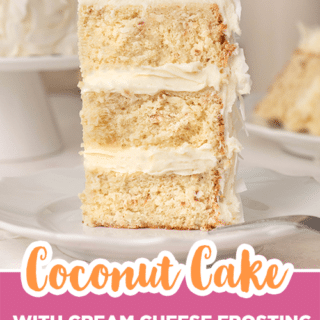
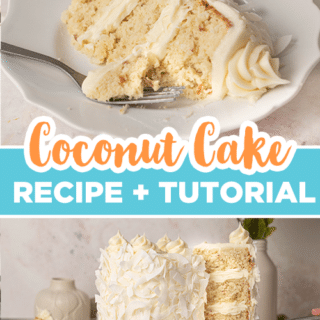
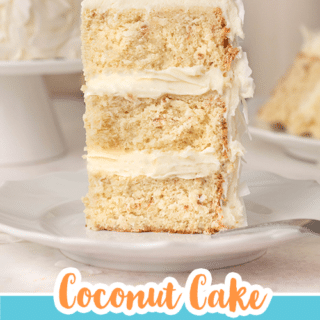
This toasted coconut cake recipe is full of delicious coconut flavor thanks to thetoasted coconut and a dash of extract. Use buttermilk for a tang that pairs perfectly with cream cheese frosting!
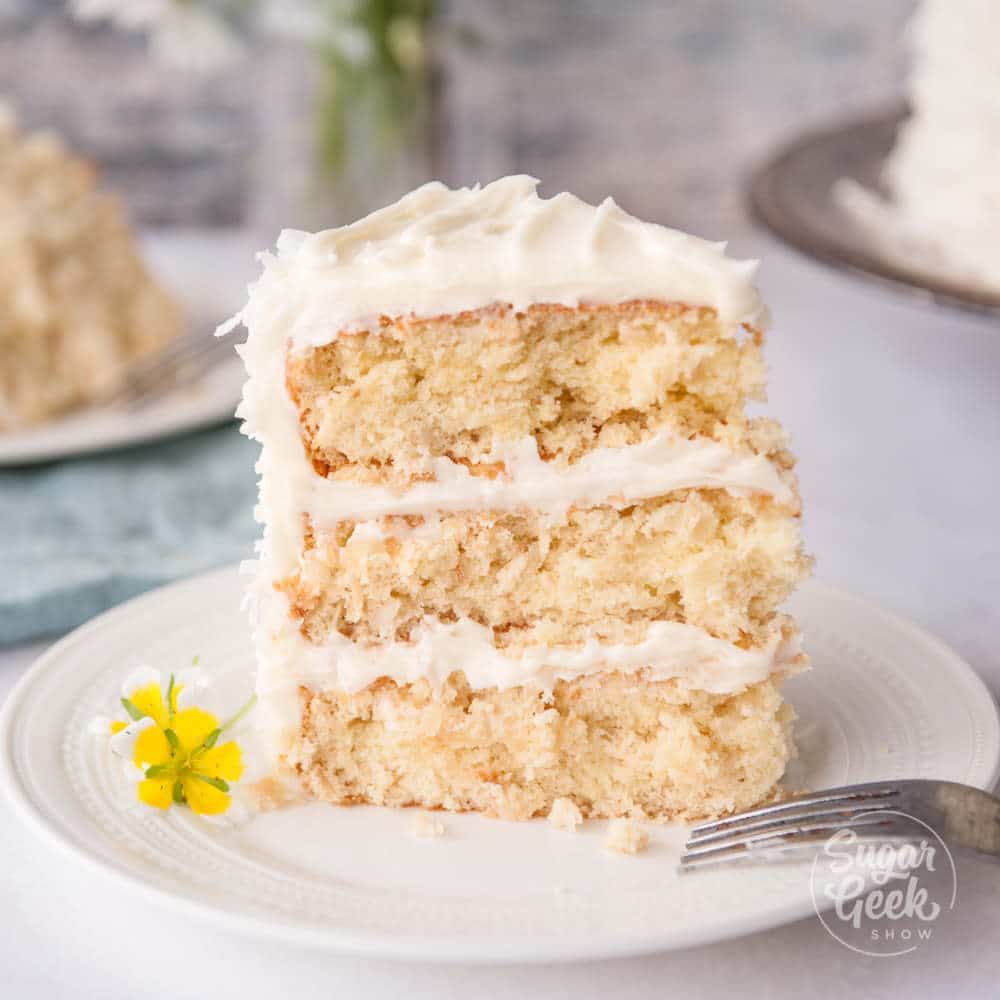
Butter and coconut oil combine to make a super moist cake, and whipped egg whites keep it light and fluffy. A more traditional mixing method results in a coconut cake recipe that will become a family favorite!
Table of contents
Coconut Cake Ingredients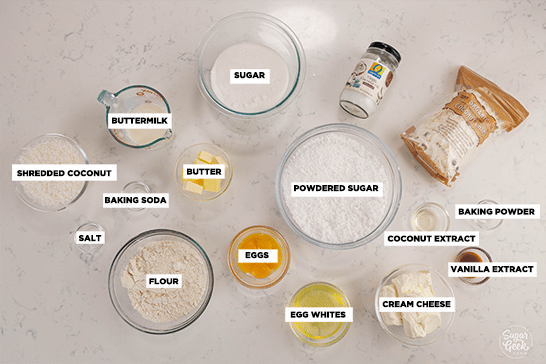
Toasted Coconut: Toasting the coconut intensifies the natural nutty coconut flavor. Sweetened coconut shreds are slightly more tender than unsweetened coconut, but either will work great.
Coconut oil: Coconut oil is great to bake with because it melts at body temperature, but is firm at room temperature. Similar to butter, it gives the cake some nice structure but literally melts in your mouth when you eat this cake. You can also use vegetable oil instead of coconut if you prefer.
Whipped egg whites: This cake has butter, oil, and chunks of coconut, so it could become very heavy. Whipping air into the egg whites adds air bubbles to the cake to keep it fluffy.
Coconut extract: A little goes a long way with coconut extract. Too much can overpower this cake, but just the right amount intensifies the natural coconut flavor provided by the coconut oil and toasted coconut shreds.
Cream cheese: Cream cheese frosting is the perfect pairing for this cake, but Swiss meringue buttercream, whipped cream, or ermine frosting would also be yummy.
How to Make a Coconut Cake
Before starting your cake, make sure that all of your wet ingredients (including the butter) are at room temperature or a little warm. Cold ingredients will prevent your cake batter from emulsifying, and your cake may not turn out right. Be sure to also weigh all of your ingredients with a food scale.
Making the Coconut Cake
Preheat your oven to 350ºF and prepare three 8" cake pans with cake goop or your preferred pan release.
- Place the egg whites into a large bowl, add the cream of tartar if using, and whip them to firm, moist peaks. They should look glossy and hold their shape without becoming dry or crumbly.
- In a mixer bowl, cream the butter until smooth. Gradually sprinkle in the sugar while mixing on low speed, then add the oil and continue mixing until the mixture becomes very white and fluffy.
- Add the egg yolks one at a time, mixing just until each yolk is incorporated before adding the next.
- In a separate bowl, whisk together the flour, salt, baking soda, and baking powder.
- In another container, combine the buttermilk, coconut extract, and vanilla extract.
- Add about one-third of the dry ingredients to the butter mixture and mix on low speed. Add some of the liquid mixture, then continue alternating the dry ingredients and liquids in two more additions until everything is combined. The finished batter should be thick.
- Add a couple of scoops of the whipped egg whites into the batter and gently fold them in to lighten the mixture.
Continue folding in the remaining egg whites a little at a time, being careful not to deflate the batter.
- With the last addition of egg whites, add the toasted coconut and fold just until combined.
- Divide the batter evenly between three 8-inch cake pans. Spread the batter evenly in the pans.
- Bake the cakes at 350 degrees Fahrenheit for 25 to 30 minutes.
- Let the cakes cool in the pans for 10 minutes, then turn them out and allow them to cool completely before assembling.
Making Cream Cheese Frosting
- Make sure the butter and cream cheese are both slightly warm and at the same temperature. If one is colder than the other, they will not mix together properly and create lumps.
- Place softened butter in the bowl of your stand mixer with a whisk attachment and cream on low until smooth. Pro: Tip: Use an electric hand mixer to get extra smooth cream cheese frosting.
- Place softened cream cheese in the bowl with the butter in small chunks and blend on low until smooth.
- Add in sifted powdered sugar one cup at a time until combined.
- Add your vanilla extract and salt, and mix until combined.
- Cover the frosting with plastic wrap and refrigerate until your cake is chilled and ready to frost. Refrigerate any remaining frosting, or keep in an airtight container and freeze for up to 3 months.
Assembling the Coconut Cake
- Trim the top of the cake layers so they are flat.
- Place the first cake layer down on a cake board, spread a layer of cream cheese frosting evenly across the top and repeat this process with the remaining 2 layers.
- Spread a thin layer of cream cheese frosting around the entire cake as a crumb coat and then refrigerate it for 15 minutes. Pro-Tip: Cream cheese frosting is stickier than buttercream, and can pull more crumbs off your cake. Working with a cold cake will be easier.
- Once the crumb coat has set, apply another thicker layer of the frosting to the entire cake for its final coat. Pro tip: I chose to cover the exterior of this cake with coconut, but cream cheese frosting makes really pretty rustic swirls if you want a different look.
- Place the cake on the board or plate you plan to serve on.
- Gently press shredded coconut or large shaved coconut flakes onto the sides of the cake all the way around the exterior, keeping the top free of shreds.
- Use a star piping tip and pastry bag filled with cream cheese frosting to pipe swirls around the top edge of the cake.
- To save this cake for later, apply plastic wrap around the cake and place it in the refrigerator. Cream cheese frosting can sit out at room temperature for about 4 hours maximum.
FAQ
This recipe works great for cupcakes and is very light! This recipe makes approximately 24 cupcakes. Bake at 350 degrees for 15-18 minutes until set in the middle. It can be easy to burn these cupcakes because of the sugar content so watch them closely. If they are over-baked they can taste dry.
Luckily coconut oil is becoming more common in your local grocery store, however, if you do not have any, vegetable oil will work just as well in this cake.
In this cake, you can substitute sour cream for buttermilk, or regular milk with a tablespoon of lemon juice. You could also use coconut milk with a tablespoon of lemon juice as well.
The best thing about coconut cake is that it pairs with so many different flavors. The traditional filling for coconut cake is something light and creamy like this coconut cream cheese frosting.If you're feeling adventurous you can fill your coconut cake with some coconut custard , lemon curd, or even raspberry filling.
My kids don't care for the texture of coconut shreds, but still love the flavor. I pulse the coconut in a food processor a few times to chop up the shreds smaller. Once they are added to the cake the texture is almost unnoticeable.
On the baking aisle there will be a few choices for coconut. I am using sweetened coconut shreds because they are the most common to find at the grocery store. You can use unsweetened as well, or even macaroon coconut, which is a much finer shred. I chose to use the large coconut strips for the exterior decor because I think they are pretty, but any will do.
Related Recipes
Carrot Cake with Pineapple and Coconut
Cake Batter and Frosting Calculator
Select an option below to calculate how much batter or frosting you need. Adjust the servings slider on the recipe card to change the amounts the recipe makes.
Choose a pan type
Choose a cake pan size
(based on 2" tall cake pan)
Choose a cake pan size
(based on 2" tall cake pan)
Cupcake Tin Size
Choose number of pans
Cups of Batter Needed
8 cups
Cups of Frosting Needed
5 cups
Note: measurements are estimated based off the vanilla cake recipe using standard US cake pans and sizes. Measurements used are for 2" tall cake pans only. Your results may vary. Do not overfill cake pans above manufacturer's recommended guidelines.
Recipe
Ingredients
Coconut Cake Ingredients
- 11 ounces All purpose flour (2 cups)
- 1 teaspoon baking powder
- ½ teaspoon baking soda
- ½ teaspoon salt
- 4 ounces unsalted butter (½ cup) room temperature
- 14 ounces granulated sugar (2 cups)
- 4 ounces canola oil (½ cup) or vegetable oil
- 5 large egg yolks room temperature
- 5 large egg whites room temperature
- ¼ teaspoon cream of tartar
- 1 teaspoon vanilla extract
- 2 teaspoons coconut extract
- 8 ounces buttermilk (1 cup) room temperature
- 6 ounces sweetened flaked coconut (2 cups) toasted until lightly browned
- 1 ounce sweetened flaked coconut (½ cup) for garnish
Cream Cheese Frosting
- 16 ounces cream cheese (2 cups) cut into cubes and softened
- 8 ounces unsalted butter (1 cup) softened
- 1 teaspoon coconut extract
- ½ teaspoon salt
- 36 ounces powdered sugar (8 cups) sifted
Instructions
Making the Coconut Cake
- Adjust an oven rack to the middle position and preheat to 350ºF/176ºC. Prepare three 8-inch round cake pans with cake goop, parchment paper, or another preferred pan release. Making sure to coat the bottom and sides of the pan.
- Spread your coconut flakes evenly onto a cookie sheet pan.
- Broil the coconut flakes on high for 2-3 minutes or until they just begin to turn brown around the edges. Stir the coconut and broil for 1-2 minutes more until lightly golden. Watch it closely because it can burn quickly. Remove it from the oven and let it cool.
- Whisk together the flour, baking powder, baking soda, and salt in a medium bowl. Set the dry ingredients aside.
- Heat the coconut oil in a small bowl in the microwave until it is very soft and beginning to melt, but not hot.
- Add the coconut extract and vanilla extract to the room-temperature buttermilk.
- Add the butter and coconut oil to a stand mixer with the paddle attachment and beat at medium-high speed until smooth and shiny, about 30 seconds.
- Gradually sprinkle in the sugar, and beat until the mixture is light and fluffy, about 3-5 minutes.
- Add the egg yolks one at a time to the mixture, combining after each.
- With the mixer on low speed, add about a third of the flour mixture to the batter, followed immediately by about a third of the milk, mix until the ingredients are almost incorporated into the batter.
- Repeat the process 2 more times. When the batter appears blended, stop the mixer and scrape the sides of the bowl.
- Carefully fold in the toasted coconut until it's all combined.
- Place the egg whites in a mixing bowl with the whip attachment. Whip on medium-high speed until it's foamy.
- Add in the cream of tartar and whip until semi stiff peaks form.
- Fold in the whipped egg whites carefully into the cake batter, and try not to beat out too much of the volume in the egg whites.
- Divide the cake batter evenly between 3 6-inch cake pans or 2 8-inch pans.
- Bake for 30-35 minutes until a skewer inserted comes out clean.
- Transfer the pans to a wire rack and let them cool in the pans for 10 minutes.
- Invert the cakes onto a cooling rack and cool completely before frosting. I like to flash freeze them for 30 minutes if I'm using them right away, or wrap them in plastic and freeze them overnight. Pro-Tip: Wrapping your cakes while warm and then freezing them will lock in the moisture.
Making Cream Cheese Frosting
- Make sure the butter and cream cheese are both slightly warm and at the same temperature. If one is colder than the other, they will not mix together properly and create lumps.
- Place softened butter in the bowl of your stand mixer with a whisk attachment and cream on low until smooth. Pro: Tip: Use an electric hand mixer to get extra smooth cream cheese frosting.
- Place softened cream cheese in the bowl with the butter in small chunks and blend on low until smooth.
- Add sifted powdered sugar one cup at a time until combined.
- Add your vanilla extract and salt, and mix until combined.
- Cover the frosting with plastic wrap and refrigerate until your cake is chilled and ready to frost. Refrigerate any remaining frosting, or keep in an airtight container and freeze for up to 3 months.
Assembling the Coconut Cake
- Trim the top of the cake layers so they are flat.
- Place the first cake layer down on a cake board, spread a layer of cream cheese frosting evenly across the top and repeat this process with the remaining 2 layers.
- Spread a thin layer of cream cheese frosting around the entire cake as a crumb coat and then refrigerate it for 15 minutes. Pro-Tip: Cream cheese frosting is stickier than buttercream, and can pull more crumbs off your cake. Working with a cold cake will be easier.
- Once the crumb coat has set, apply another thicker layer of the frosting to the entire cake for its final coat. Pro tip: I chose to cover the exterior of this cake with coconut, but cream cheese frosting makes really pretty rustic swirls if you want a different look.
- Place the cake on the board or plate you plan to serve on.
- Gently press shredded coconut or large shaved coconut flakes onto the sides of the cake all the way around the exterior, keeping the top free of shreds.
- Use a star piping tip and pastry bag filled with cream cheese frosting to pipe swirls around the top edge of the cake.
- To save this cake for later, apply plastic wrap around the cake and place it in the refrigerator. Cream cheese frosting can sit out at room temperature for about 4 hours maximum.


Melissa D vining says
My daughter loves coconut, would this recipe work well for cupcakes too?? Thank you!
The Sugar Geek Show says
All my cake recipes bake up flat. They will work for cupcakes but won't have a dome if that's something that is important to you 🙂
Joy says
This is DELICIOUS. I made the cake and frosting with no changes and then added the recommended coconut custard as a filling between the layers. It is packed with coconut flavor and yet not overwhelming at all. The only thing I will change next time is that I will double the frosting recipe. I was stretching it a bit, even though I only used it as a dam between the layers. This recipe is basically everything you want in a coconut cake. Delicious!
Renee says
Hi Liz,
I’ve been searching for a trustworthy recipe for a pineapple coconut cake and this looks like it could work great! Do you happen to know the magic number to make this cake into 3 6” layers? Love your recipes. They always are spot on. Thank you ?
Bettina says
This recipe sounds very good! Can I also bake the batter in one Springform instead of two tins and cut it in two layers after baking? Thank you!
The Sugar Geek Show says
Do you mean a springform pan with a removable bottom? I don't think you can bake cake batter in those kinds of pans, the filling would leak out. You can tort the layers or you can divide the batter into three pans instead of two which is what I typically do.
Sandra Dusejovska says
I made it yesterday. I've used 2/3 sugar and coconut milk, limon curd buttercream filling. It turned so moist and delicious. I will definitely make this again. Thank you very much. The best coconut cake I've ever had.
Marcia says
Hi, I love the texture of your vanilla cake (reverse method) made with cake flour, this recipe doesn't use that method will it be similar?
The Sugar Geek Show says
No, this cake is much lighter, almost like a sponge cake 🙂 If you want to make the vanilla cake into a coconut cake recipe you can replace milk with coconut milk and add 1/4 cup of finely ground toasted coconut to the cake. Replace vanilla extract with coconut extract 🙂
Kecia Miles says
Can you substitute buttermilk for coconut cream?
The Sugar Geek Show says
Buttermilk is acidic so may not act the same way as the coconut
Miss Dee says
Can I use regular coconut flakes instead of toasted?
The Sugar Geek Show says
Yes but it won't have as good of a flavor and the coconut will be a bit chewy
Kat says
Hello, can I opt out AP Flour for cake flour? ?
The Sugar Geek Show says
Haha I haven't tried that variation 🙂
Amaris says
I just tried this recipe. I made 2x 6" and 12 cupcakes. I love the texture but the outside of cupcakes got really dark at 350 so i may have to bake them at a lower temperature. Will the coconut flavour be more intense if i substitute 2 oz of the buttermilk for cocpnut milk?
The Sugar Geek Show says
Yes that would be super tasty 🙂
Jennifer says
Can I make the coconut cake into a 13x9 if so how long do I bake for?
Nisreen musa says
Can I stack this cake in a double barrel and covered with fondant would it hold weight also can I use almonds instead of coconut
The Sugar Geek Show says
Yes you can do a double barrel but no you cannot replace coconut with almonds, totally different things 🙂
Ani says
Can I replace the canola oil with vegatable oil?
The Sugar Geek Show says
Yes you can
Osaetin O says
Just tried this recipe, it's amazing!! Moist and full of flavor. I used a coconut flavored buttercream (SMBC). Definitely a go to recipe from now on.
Sarahjane S says
Can't wait to try this ,I'm going to do with lemon or lime curd and the coconut cream ,I'll let you know how I get on ,thanks for sharing recipe ,it would be nice to have a chocolate and vanilla cake/ cup cake that are gluten free as I get lots of requests and am yet to find a really good recipe !