

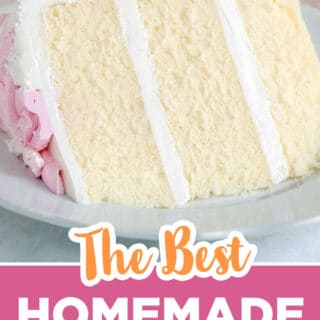
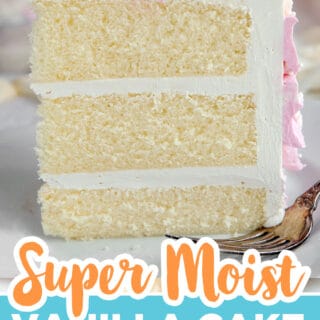
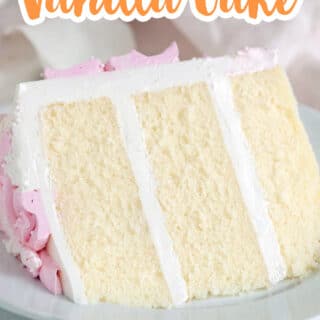
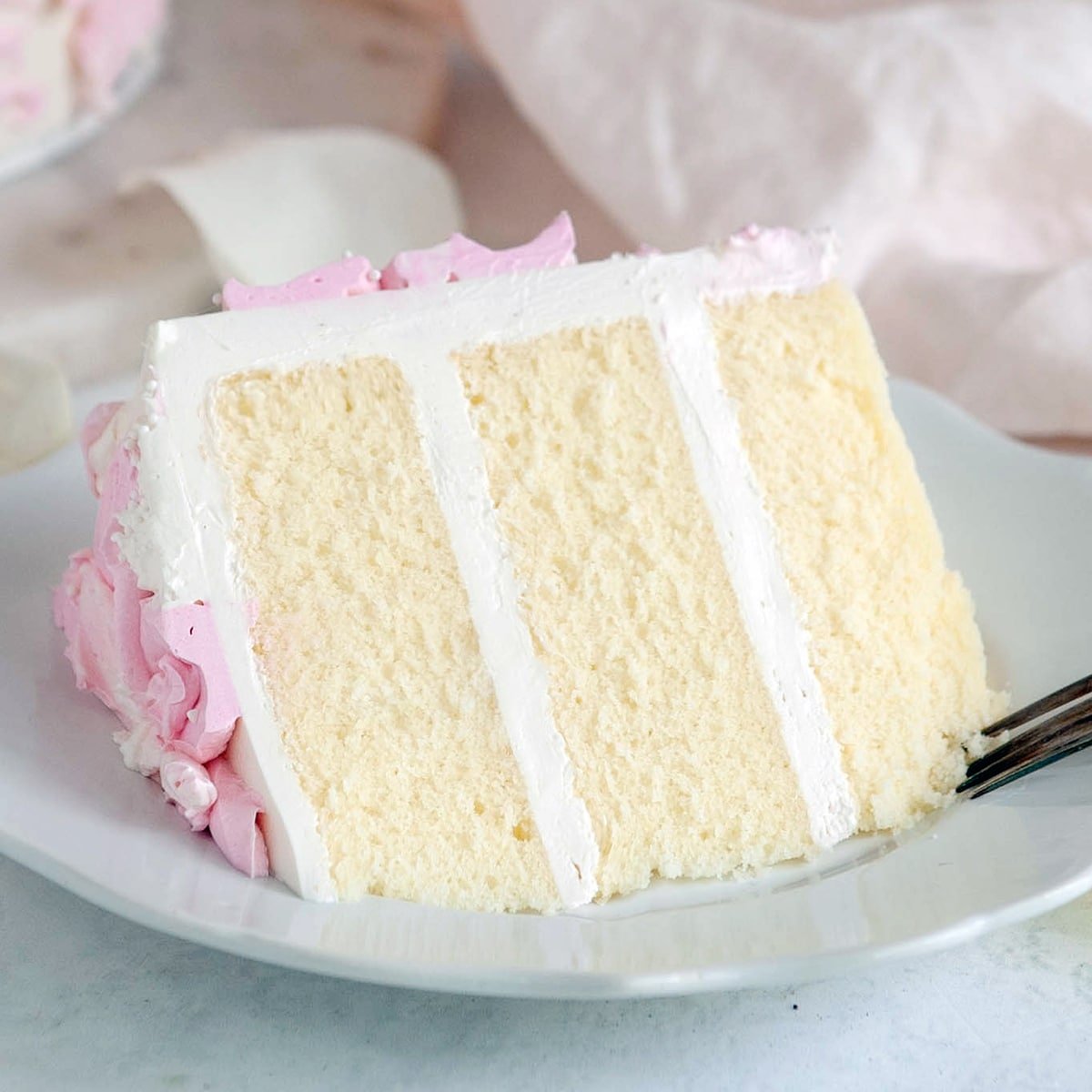
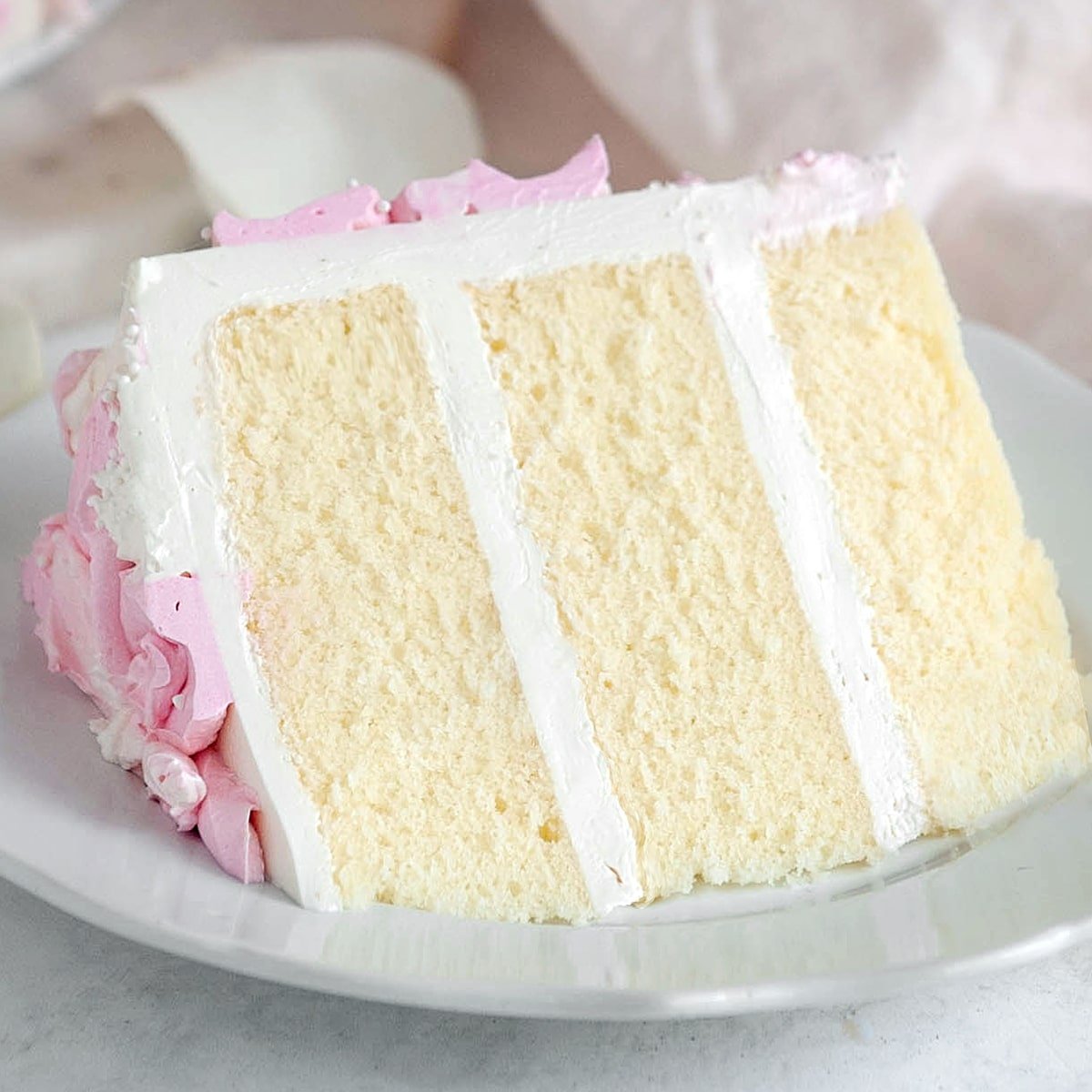
Vanilla cake is one of the most important recipes to have in your baking arsenal, and this version has been my go-to professional recipe for over ten years for weddings, birthdays, and special occasion cakes. The reverse creaming method gives it an incredibly moist, tender crumb that stays soft for days, and it bakes up naturally flat so there is almost no trimming or waste. If you are new to baking layer cakes, my how to decorate a cake guide walks through the entire process step-by-step.
Quick Glance: Vanilla Cake Recipe
- Recipe Name: Vanilla Cake Recipe
- Why You'll Love It: Soft, buttery vanilla cake with an ultra-moist crumb that stays tender for days.
- Time and Difficulty: Prep time: 15 minutes Bake time: 20-30 minutes Difficulty: Intermediate
- Main Ingredients: Cake flour, butter, sugar, eggs, milk, vanilla extract
- Method: Reverse creaming method: Dry ingredients are combined with the butter first, then the liquid ingredients are mixed in.
- Texture and Flavor: Light, fluffy crumb with rich vanilla flavor
- Quick Tip: Mix the batter for the full two minutes during the reverse creaming stage to properly develop the cake's structure.
Jump to:
- Quick Glance: Vanilla Cake Recipe
- What Makes This Vanilla Cake Work So Well
- Vanilla Cake Ingredients
- Tips For Success
- Vanilla Cake Recipe Step-By-Step
- Batter & Frosting Calculator
- Cake Batter and Frosting Calculator
- Cups of Batter Needed
- Cups of Frosting Needed
- Common Vanilla Cake Mistakes To Avoid
- Vanilla Cake FAQs
- More Vanilla Recipes You'll Love
- Watch: How To Decorate A Cake Step-by-Step
- Recipe
Next to my white velvet buttermilk cake, and lemon blueberry cake, this moist vanilla cake is one of our most popular recipes. I have been using this recipe for over ten years for my cake clients with nothing but rave reviews. This is the cake that turns those "I don't even like cake" consultations into OMG we need to book you right now clients! This is perfect for special occasions like weddings, showers, and it makes the perfect birthday cake!
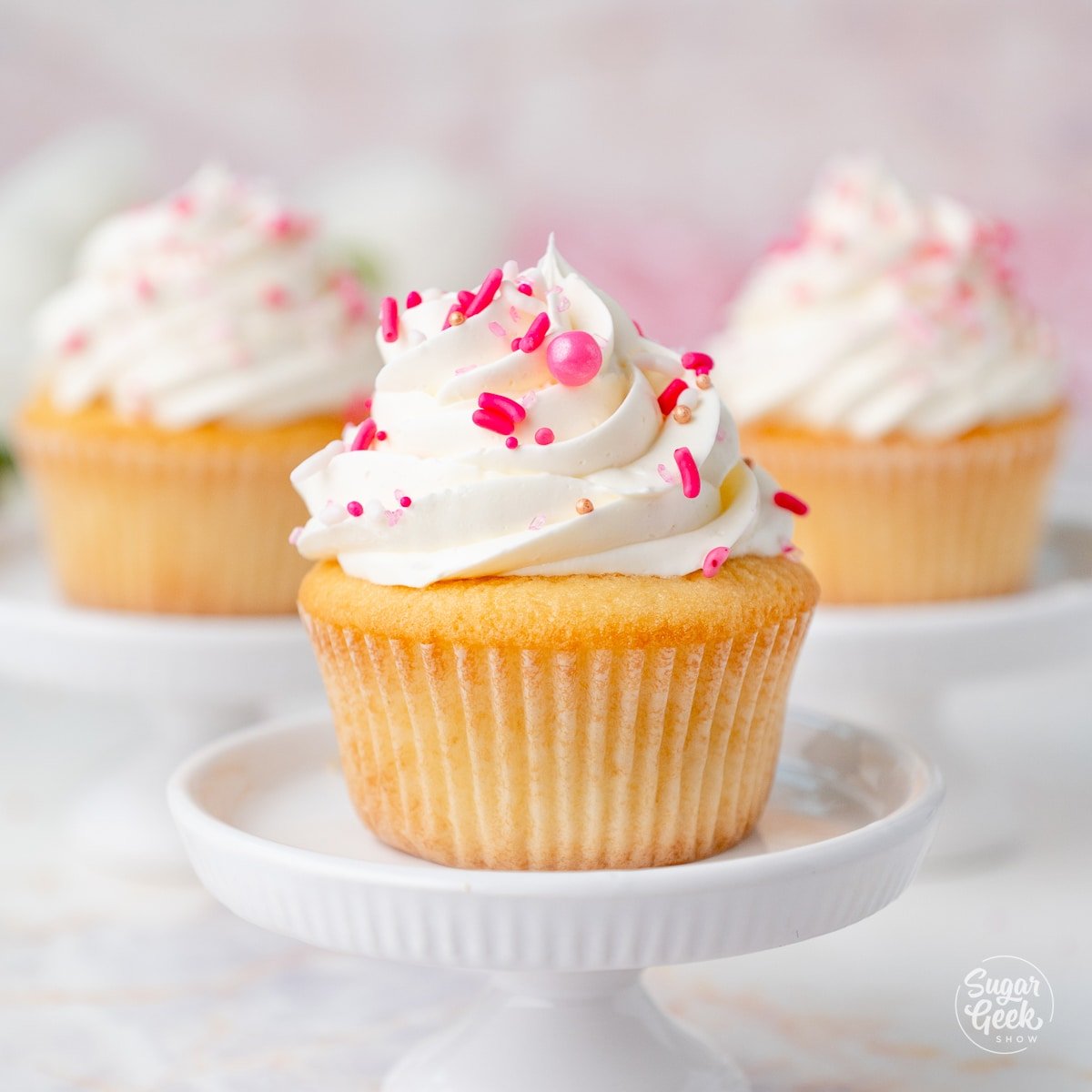
If you want to make these as cupcakes, my vanilla cupcake recipe uses the same reverse creaming method in a perfectly portioned size.
What Makes This Vanilla Cake Work So Well
One of the key techniques used in this recipe is the reverse creaming method. This mixing technique coats the flour in butter before adding liquids, which prevents excess gluten development and results in an incredibly tender crumb.
The texture of this vanilla cake is extremely soft and moist with a delicate crumb. Some bakers are surprised by how tender it is, but that softness is exactly what makes this cake so delicious.
Another reason this recipe works so well is the combination of butter and oil. Butter adds rich flavor while oil keeps the cake moist for several days.
This cake also bakes very flat, which means less trimming and less cake waste. That makes it perfect for layered cakes, wedding cakes, and decorated celebration cakes.
If you want a bright white crumb instead of this golden vanilla one, use only egg whites and make my white cake instead.
Vanilla Cake Ingredients
The secret to this ultra-moist and tender vanilla cake is using cake flour and the reverse creaming method.

Cake flour is used instead of all-purpose flour because it has a lower protein content, which results in a softer and more tender crumb. If you only have all-purpose flour, you can make a substitute by removing two tablespoons of flour per cup and replacing it with cornstarch, but the texture will not be exactly the same.
Sugar adds sweetness, moisture, and structure to the cake. Reducing the sugar may affect the texture and stability of the cake.
Baking Powder and Baking Soda These ingredients provide lift and help the cake rise properly. Baking soda reacts immediately while baking powder reacts during baking.
Vanilla is the primary flavor in this vanilla cake recipe. For the best flavor, use high-quality vanilla extract or vanilla bean paste.
Unsalted butter adds rich flavor and helps create a tender crumb. Unsalted butter is typically used so the salt level in the recipe can be controlled.
Milk adds moisture and helps activate the gluten structure in the cake.
Vegetable oil helps keep the cake moist for several days. Other neutral oils, such as canola or grapeseed oil, can also be used.
Tips For Success
- Measure your ingredients using a kitchen scale. Baking is a science and weight measurements provide the most accurate results.
- Bring your butter, milk, and eggs to room temperature before mixing. Room temperature ingredients help create a smooth batter and proper emulsion.
- Do not skip the mixing stage. The reverse creaming method requires mixing for about two minutes to properly develop the cake structure.
- If you live above 5,000 feet in elevation, you may need to slightly reduce the baking powder so the cake does not collapse.
Vanilla Cake Recipe Step-By-Step
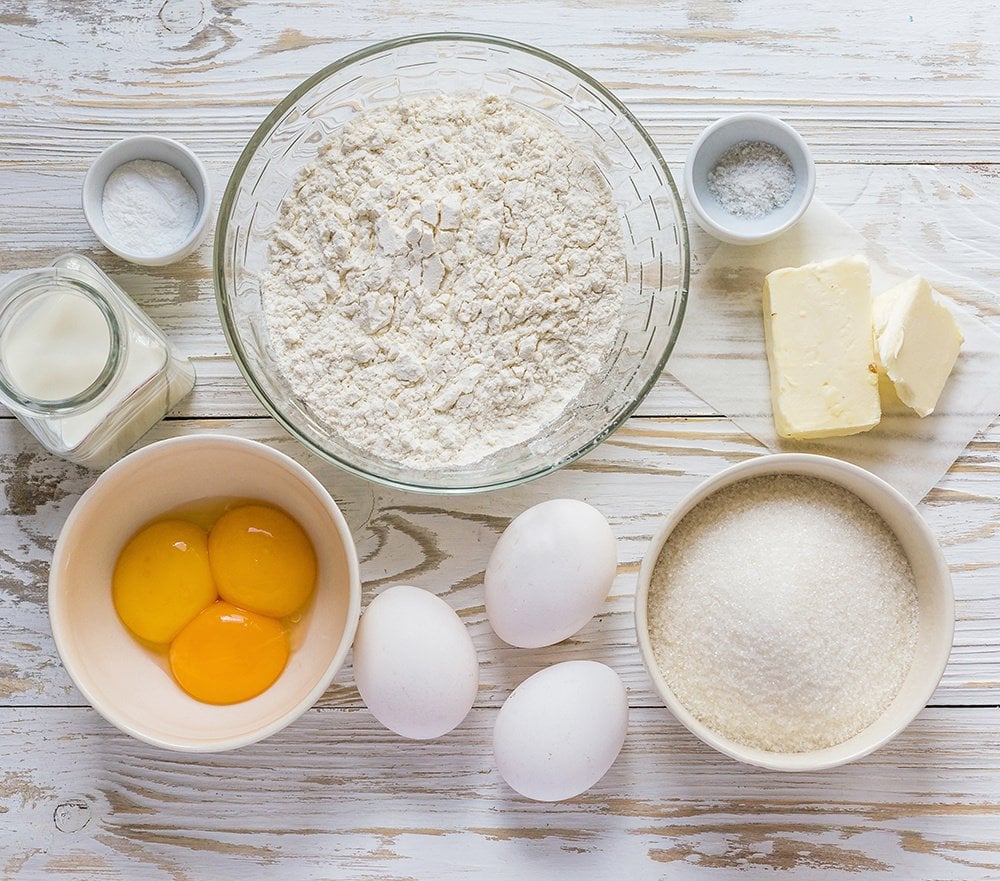
- Bring your butter, milk, and eggs to room temperature. This step is very important because if these ingredients are not all the same temperature, the batter could curdle and separate during baking, leading to bad texture and rise.
Preheat your oven to 335°F. and prepare your cake pans with cake goop or your preferred pan release.
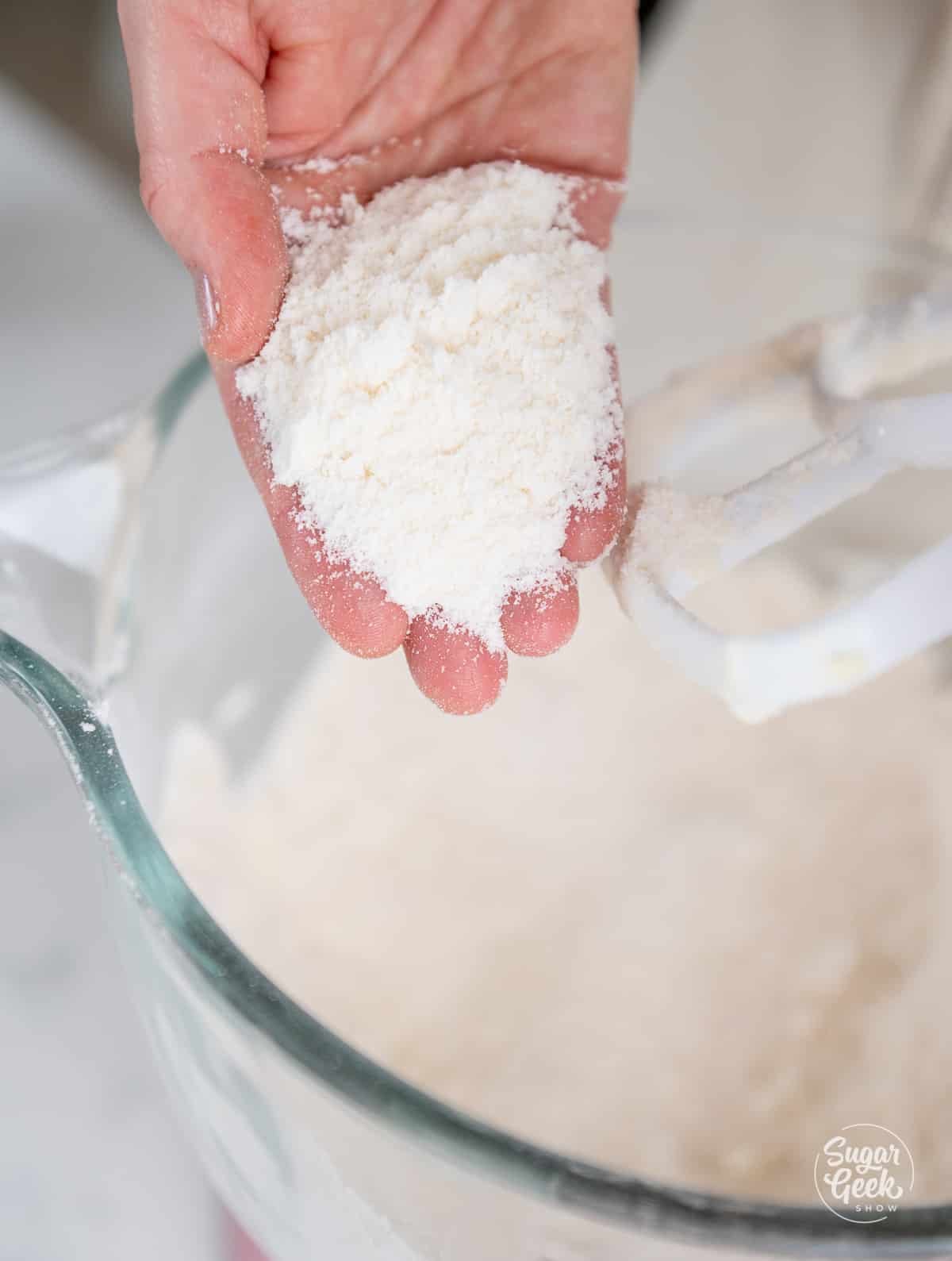
- Combine the cake flour, sugar, baking soda, baking powder, and salt in the bowl of a stand mixer.
While mixing on low, add softened butter in small chunks and mix until the mixture looks like coarse sand.
- Combine half the milk and the oil.
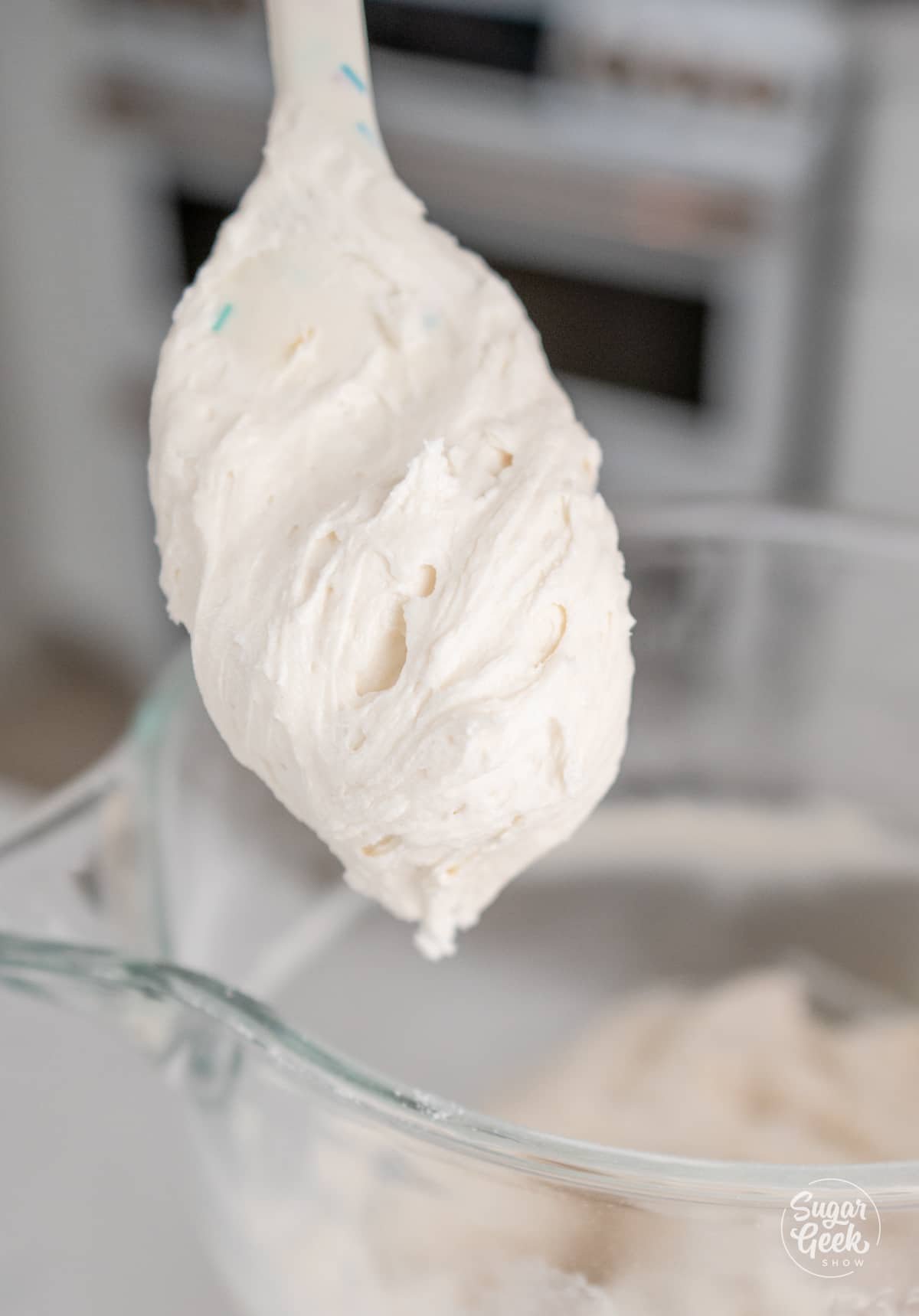
Add the milk and oil mixture all at once to the dry ingredients mixture and mix for two minutes on medium speed. The batter should look thick and not separated.
Scrape the bowl thoroughly after the two-minute mix. If you skip this, hard lumps of flour will stay in the batter and will not mix in fully later.
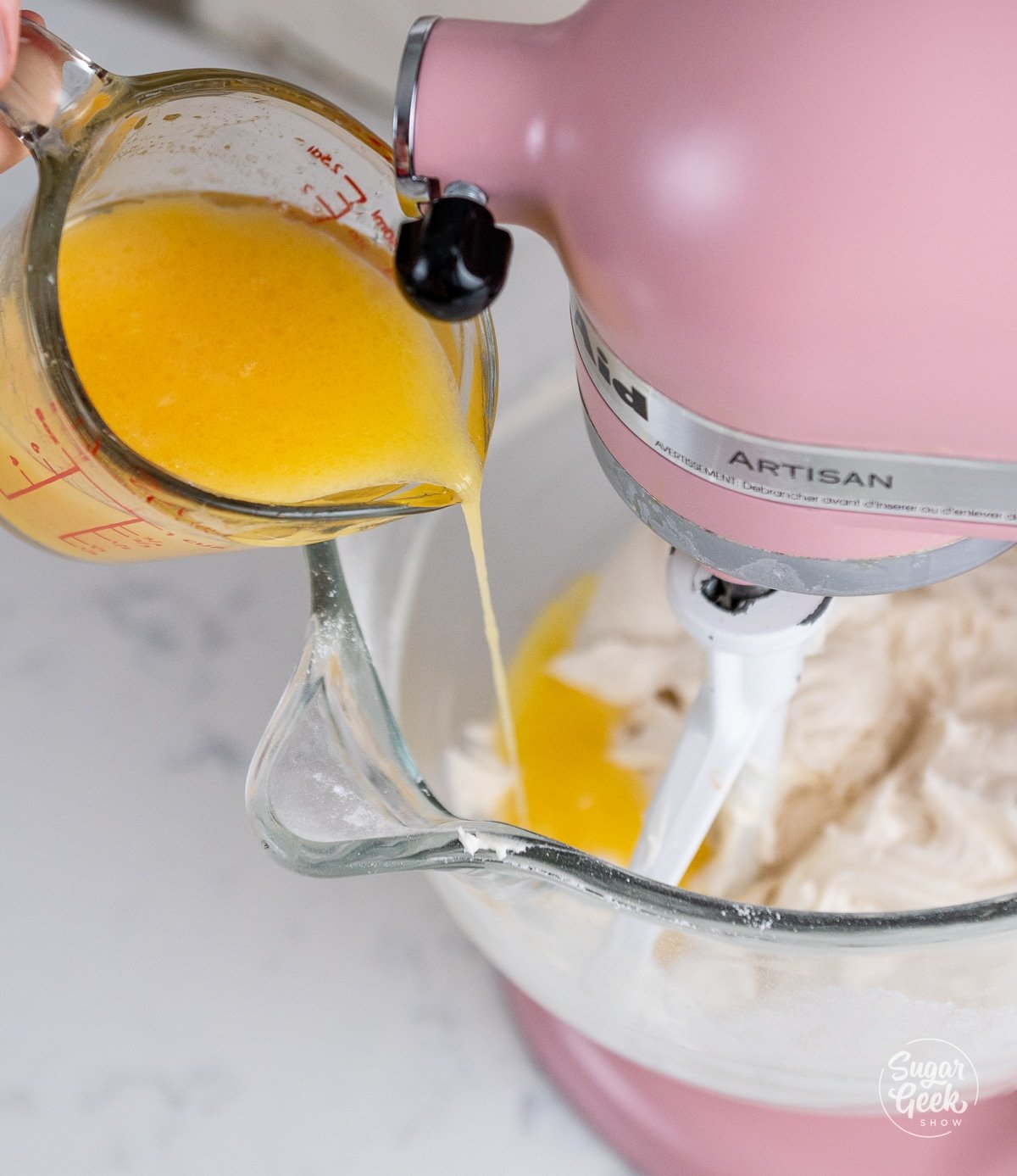
- Whisk the rest of the milk, vanilla extract, and the eggs together to combine.
Slowly add the egg and milk mixture while mixing on low speed just until combined.
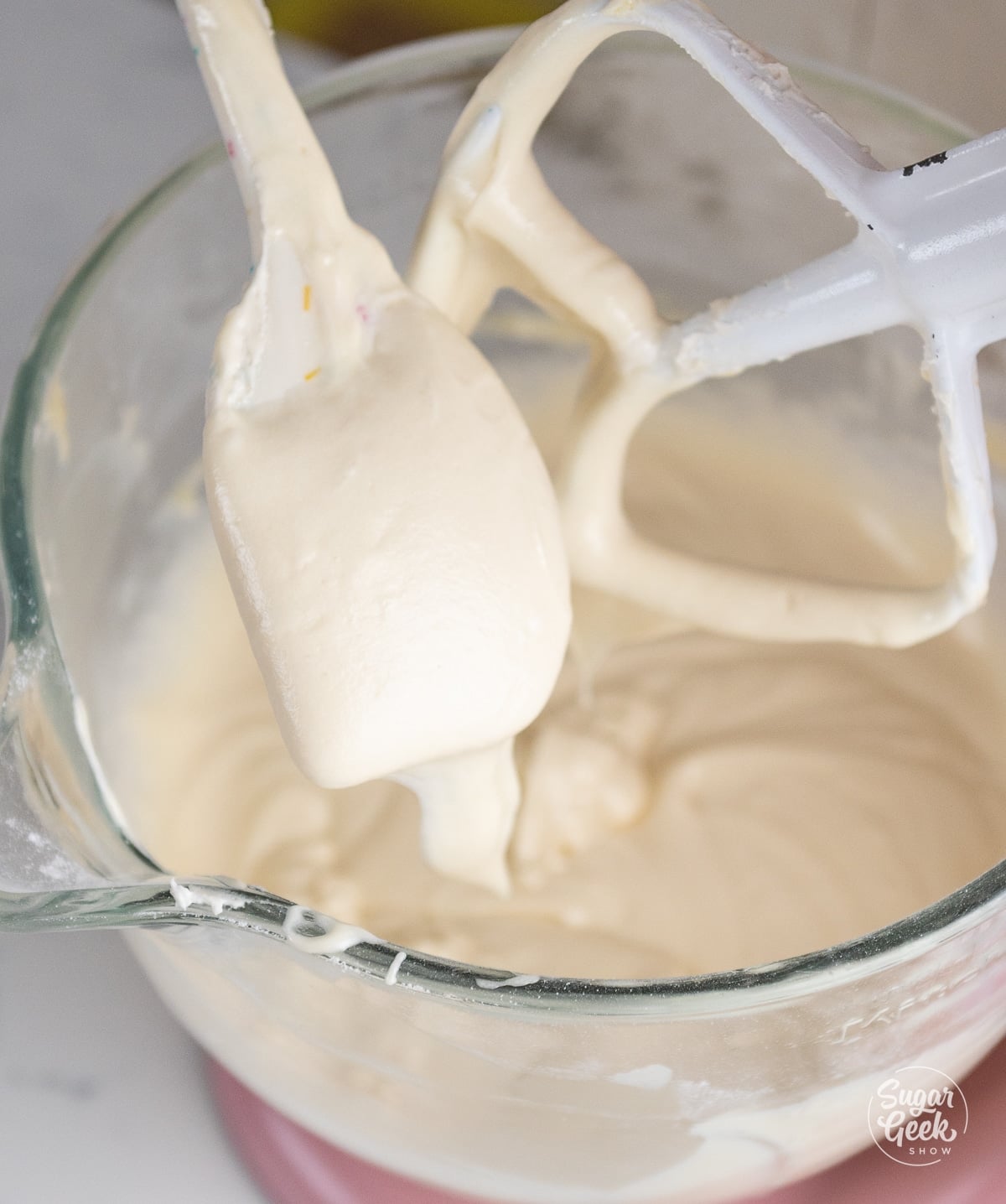
- The finished batter should be thick, smooth, and slightly glossy.
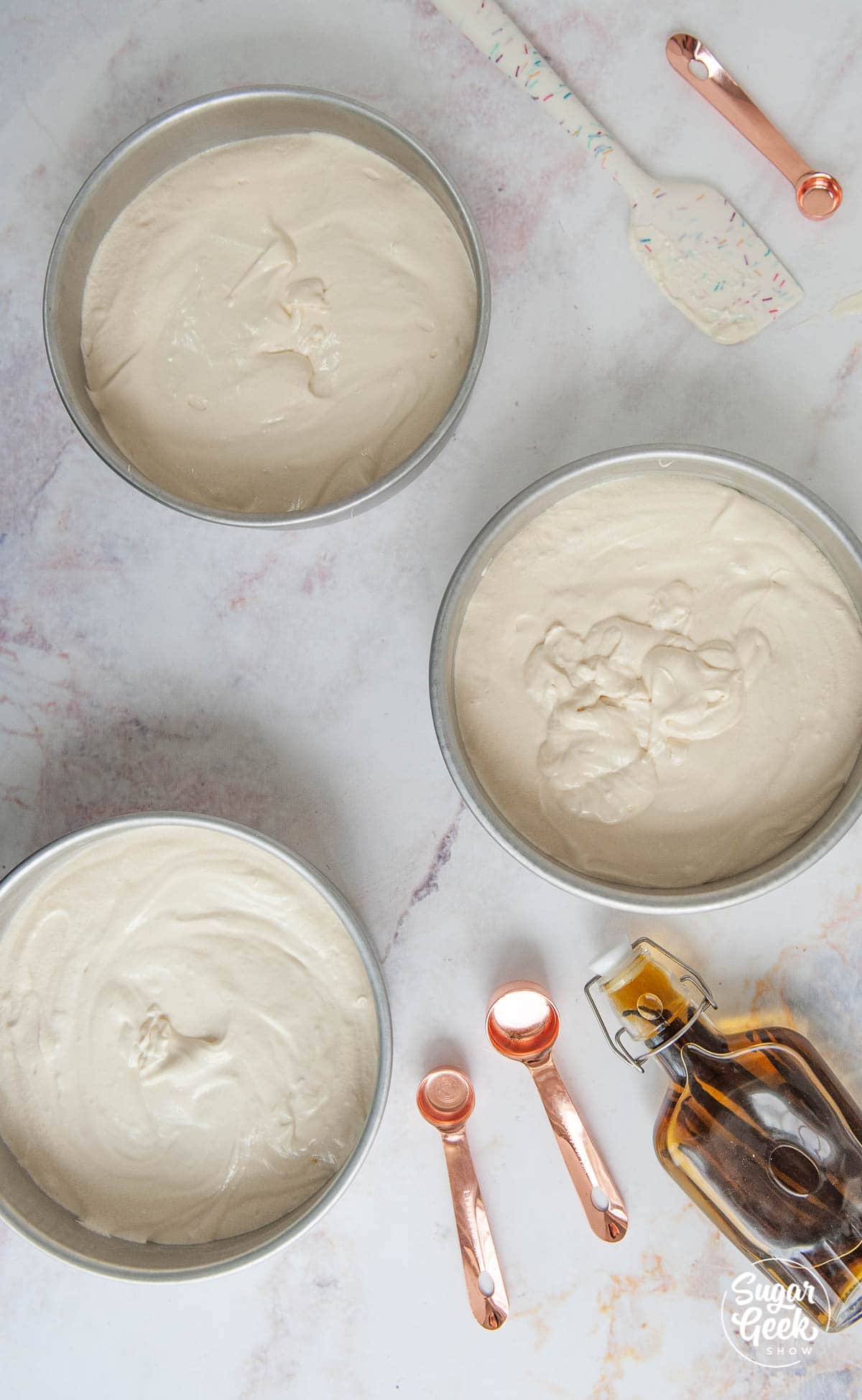
- Divide the batter into three prepared 8-inch cake pans.
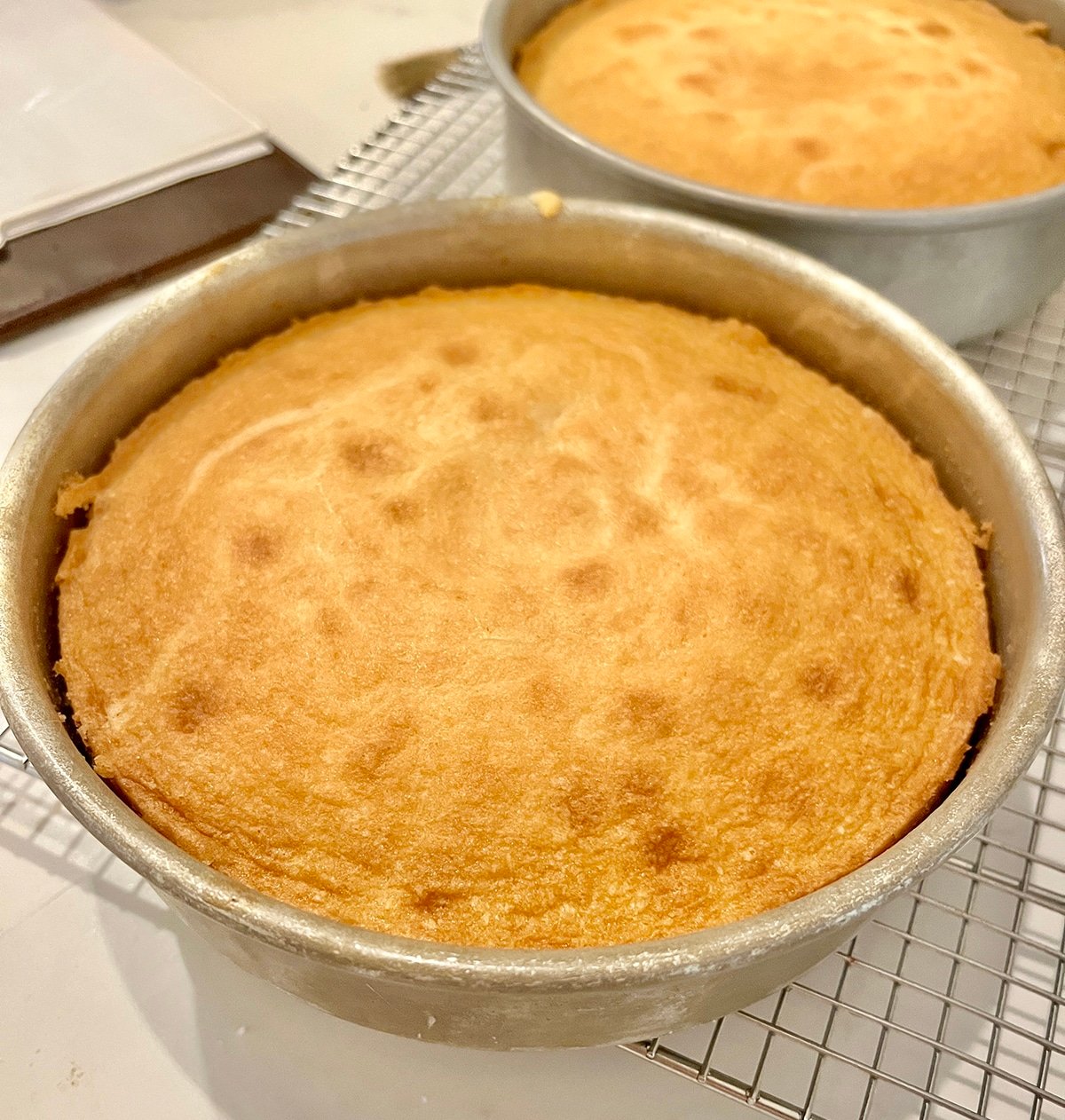
- Bake for 20-30 minutes or until a toothpick inserted into the center comes out clean. Immediately tap the pan on the counter once to release air and reduce shrinking.
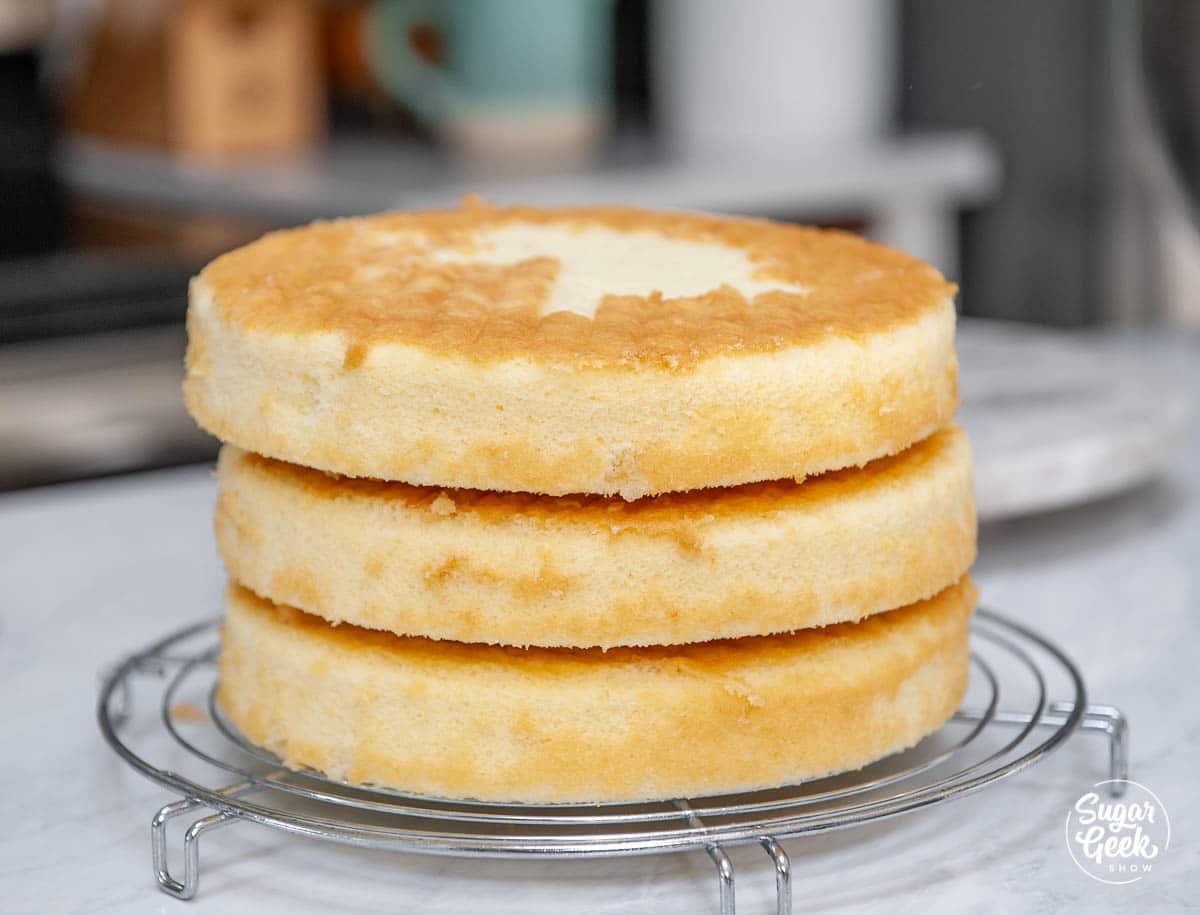
- Cool cakes in the pans until barely warm before removing them onto a cooling rack.
Batter & Frosting Calculator
Cake Batter and Frosting Calculator
Select an option below to calculate how much batter or frosting you need. Adjust the servings slider on the recipe card to change the amounts the recipe makes.
Choose a pan type
Choose a cake pan size
(based on 2" tall cake pan)
Choose a cake pan size
(based on 2" tall cake pan)
Cupcake Tin Size
Choose number of pans
Cups of Batter Needed
8 cups
Cups of Frosting Needed
5 cups
Note: measurements are estimated based off the vanilla cake recipe using standard US cake pans and sizes. Measurements used are for 2" tall cake pans only. Your results may vary. Do not overfill cake pans above manufacturer's recommended guidelines.
This recipe makes three 8-inch cake layers, two 9-inch cake layers, or about 24 cupcakes. The easy buttercream recipe included makes 8 cups of frosting, enough to frost and fill the layered cake. Store leftover frosting in the fridge for up to 1 week or freeze for up to 6 months.
Top it with a batch of my American buttercream recipe for a classic combination that never fails. If you want to skip the buttercream entirely, try frosting this cake with white chocolate ganache instead, which is incredibly stable and has a gorgeous vanilla flavor. Or you can top with a pretty pink drip cake finish
Common Vanilla Cake Mistakes To Avoid
Using cold ingredients. Cold butter, eggs, and milk will not emulsify properly during mixing and can cause the batter to look curdled and broken. Set everything out at least an hour before you start, or warm your eggs in a bowl of warm water for 5 minutes and microwave your milk for 20 seconds.
Overbaking the cake. This recipe bakes at a lower temperature for a reason, but it can still dry out if left in too long. Start checking at 30 minutes with a toothpick and touch the surface gently. If it springs back, it is done. A few moist crumbs on the toothpick are fine. A completely clean toothpick often means it went too far.
Skipping the two-minute mixing stage. The reverse creaming method requires the full two minutes of mixing after the milk and oil go in. This stage is what develops the structure of the cake. Cutting it short results in a weaker crumb that can sink or have an uneven texture.
Not scraping the bowl. Hard lumps of unmixed flour and butter hide at the bottom of the bowl during mixing. If you do not scrape down thoroughly after the two-minute mix, those lumps will stay in the batter and create dense spots in the finished cake.
Using low-quality vanilla extract. Vanilla is the only flavor in this cake, so it has nowhere to hide. Use a good pure vanilla extract or vanilla bean paste. Imitation vanilla will produce a noticeably weaker, more artificial flavor.
Vanilla Cake FAQs
Cake flour has a lower protein content than all-purpose flour, which produces a softer, more tender crumb. The reverse creaming method coats the flour in butter before any liquid is added, and cake flour's lower protein helps prevent excess gluten from forming during the two-minute mixing stage. If you only have all-purpose flour on hand, you can make a substitute by removing two tablespoons of flour per cup and replacing them with cornstarch, but the texture will not be exactly the same.
Yes, this recipe is flexible across several pan sizes. The full recipe makes three 8-inch cake layers, two 9-inch cake layers, or about 24 cupcakes. For a half sheet pan, you will need three full batches of batter to fill the pan properly. Smaller pans bake faster than larger ones, so check for doneness with a toothpick starting at 18 to 20 minutes for cupcakes and 25 to 30 minutes for 8-inch layers.
Yes, this vanilla cake recipe works beautifully as cupcakes. Fill cupcake liners about two-thirds full and bake at 350°F for 18 to 20 minutes, or until the centers spring back when lightly touched. The full recipe yields approximately 24 cupcakes.
Yes, this vanilla cake freezes very well. Wrap each cooled cake layer tightly in plastic wrap and store in the freezer for up to two months. Thaw the layers at room temperature for one to two hours before frosting and decorating. The buttercream frosting can also be frozen separately for up to six months in an airtight container.
Yes, you can use a non-dairy milk like almond, oat, or soy milk in place of regular whole milk in this recipe. Choose an unsweetened and unflavored variety so it does not change the cake's flavor. Some non-dairy milks have a thinner consistency than whole milk, which can slightly affect the cake's final texture, but the recipe will still work.
Yes, this vanilla cake is a great base for many flavor variations. Add lemon zest for a lemon vanilla cake, a teaspoon of almond extract for an almond cake, or sprinkles for a funfetti cake. You can also fold in mini chocolate chips, fresh berries, or a swirl of fruit jam between the layers to customize the flavor without changing the structure.
The slightly lower oven temperature gives the cake a more even rise without doming or cracking on top. At 350°F, the edges of the cake set faster than the center, which often causes the top to dome and the edges to dry out. Baking at 335°F allows the cake to rise slowly and evenly, producing a flat, tender layer that is easier to stack and decorate without trimming.
More Vanilla Recipes You'll Love
Watch: How To Decorate A Cake Step-by-Step
Before you start decorating, watch the video below where I show you every step of decorating a cake from start to finish. Seeing the process in action makes it much easier to follow along
- Liz Marek.
Recipe
Equipment
- Food Scale
- 8" x 2" Cake Pans (3)
Ingredients
Vanilla Cake Recipe
- 4 ounces milk to be mixed with the oil
- 3 ounces canola oil
- 6 ounces milk to be mixed with the eggs
- 1 tablespoon vanilla extract or 1 vanilla bean pod
- 3 large eggs room temperature
- 13 ounces cake flour
- 13 ounces granulated sugar
- 3 teaspoons baking powder
- ¼ teaspoon baking soda
- ½ teaspoon salt
- 8 ounces unsalted butter softened to room temperature but not melted
Easy Buttercream Frosting
- 16 ounces powdered sugar
- 4 ounces pasteurized egg whites
- 2 teaspoons vanilla extract
- 16 ounces unsalted butter softened to room temperature but not melted
- ¼ teaspoon salt
- 1 TINY drop purple food coloring to offset the yellow color (optional)
- 3 drops electric pink food coloring for the flowers
- 1 Tablespoon white sprinkles for decorating
Instructions
Vanilla Cake
- IMPORTANT: This is the BEST vanilla cake because I use a scale so it turns out perfectly 🙂 If you convert to cups I cannot guarantee good results. Make sure all your (cold ingredients) butter, eggs, milk are at room temperature or a little warm. See my post about how to use a scale if you don't know how to measure by weight.
- Heat oven to 335º F/168º C . Prepare three 8"x2" cake pans with cake goop or another preferred pan release.
- Place the 4 oz of milk in a separate measuring cup. Add the oil to the milk and set it aside.
- To the remaining 6 oz of milk, add the vanilla and room temperature eggs. Whisk gently to combine. Set aside.
- Place the flour, sugar, baking powder, baking soda, and salt into the bowl of your stand mixer with the paddle attachment.
- Turn the mixer onto the slowest speed. Slowly add chunks of your softened butter until it is all added then let everything mix until it looks like coarse sand.
- Add your milk/oil mixture all at once to the dry ingredients and mix on medium (speed 4 on kitchenaid, speed 2 on the Bosch) for 2 full minutes to develop the structure. Set a timer! Don't worry, this will not over-mix the cake.
- After 2 minutes, scrape the bowl. This is an important step. If you skip it, you will have hard lumps of flour and unmixed ingredients in your batter. If you do it later, they will not mix in fully.
- Slowly add in the milk/egg mixture while mixing on low, stopping to scrape the bowl one more time halfway through. Mix until just combined. Your batter should be thick and not too runny.
- Divide the batter into your greased cake pans and fill ¾ of the way full. I like to weigh my pans to make sure they're even.
- Bake for 20-30 minutes and check your cakes. Do the "done test". Insert a toothpick to see if it comes out clean. Sometimes wet batter doesn't show up so make sure it's clean and not just wet. Then gently touch the top of the cake, does it spring back? Oven temperatures vary so if it's not done yet, bake for a few more minutes (2-3) and check again until it passes the "done" test.
- Remove the cakes from the oven and give them a tap on the countertop to release air and prevent too much shrinking. Let them cool on a cooling rack until they are barely warm.
- After cooling for about 10 minutes, place the cooling rack on top of the cake, placing one hand on top of the cooling rack and one hand under the pan and flip the pan and the cooling rack over so the pan is now upside down on the cooling rack. Remove the pan carefully. Repeat with the other pan.
- After the cakes are fully cooled, carefully wrap them in plastic wrap and place them into the freezer or fridge for about 30 minutes to firm up the cakes and make them easier to handle for stacking.
Easy Buttercream Frosting
- Place egg whites and powdered sugar in a stand mixer bowl. Attach the whisk, combine ingredients on low and then whip on high for 5 minutes. Add the vanilla extract and salt.
- Add in your softened butter in chunks and whip with the whisk attachment to combine. It will look curdled at first. This is normal. It will also look pretty yellow. Keep whipping.
- Whip on high for 8-10 minutes until it's very white, light and shiny. If you don't whip it enough, it could end up tasting buttery.
- Optional: If you want whiter frosting, add in a tiny drop of purple to counteract the yellow in the butter (too much will make the frosting grey or light purple.)
- Optional: Switch to a paddle attachment and mix on low for 15-20 minutes to make the buttercream very smooth and remove air bubbles. This isn't required but if you want really creamy frosting, you don't want to skip it.
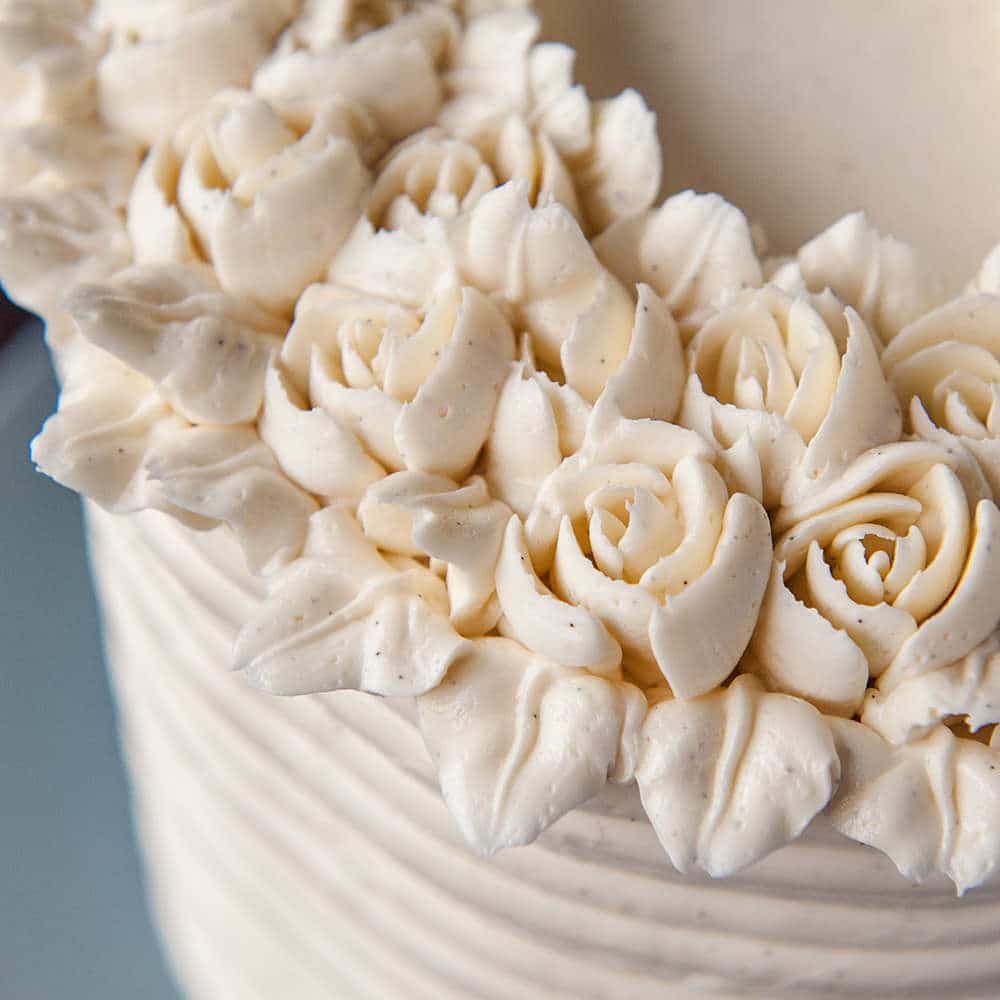
- After your cakes are chilled, fill them with your favorite frosting and frost the outside. If you're not familiar with decorating cakes, check out my how to make your first cake blog post! Watch the video to see how I made the palette knife buttercream flowers.
Video
Notes
Baking is a science, and measuring ingredients by weight ensures consistent results every time. Cup measurements can vary significantly depending on how the flour is scooped. Room temperature ingredients are essential
Butter, eggs, and milk should all be at room temperature before mixing. Cold ingredients can cause the batter to break and may result in a dense or uneven cake. Do not skip the two-minute mixing stage
Because this recipe uses the reverse creaming method, mixing the batter for the full two minutes is necessary to properly develop the cake’s structure. Pan size options
This vanilla cake recipe makes:
• three 8-inch cake layers
• two 9-inch cake layers
• about 24 cupcakes Cupcake baking instructions
Fill liners about two-thirds full and bake at 350°F for 18–20 minutes, or until the centers spring back when lightly touched. Storage
Frosted cakes can be stored at room temperature for up to 24 hours if covered. After that, refrigerate and bring to room temperature before serving. Freezing cake layers
Cake layers freeze very well. Wrap tightly in plastic wrap and freeze for up to 2 months. Thaw at room temperature before decorating. Flavor variations
You can easily customize this recipe by adding:
• lemon zest for lemon vanilla cake
• almond extract for almond cake
• sprinkles for funfetti cake

PJ says
Pax means people. I have been looking for a high ratio cake recipe for ages, as I have a massive bag of cake flour, and stumbled across yours. I am going to try this and see how it goes!!
Aliyah says
Hey Liz, I am super interested in making this recipe as I want a really light and fluffy vanilla cake. Would It be possible to leave the egg whites for last and whip them up before folding it into the cake batter? Do you think this would affect the texture of the cake?
Elizabeth Marek says
That would completely change the recipe. I suggest following the directions as they are written for this recipe 🙂
Patrick says
What adjustments should I make if I'm at 5280ft in altitude?
Elizabeth Marek says
Here you go! https://sugargeekshow.com/high-altitude-baking-hacks/
Fi says
pax is sometimes used in catering to mean “number of persons.” 🙂
Elizabeth Marek says
Ah! Good to know 🙂 Learn something new every day 😀
Fi says
I followed the directions exactly and the cake turned out perfectly! I’ve made this recipe 3 times now. It’s officially my go-to vanilla cake recipe!
Brenda J Ellis says
Our gran lovies 4 out of the 9 tried your yummy Chocolate cake recipe!! The step of boiling water then add the Dutch cocco was not well read! We had some scramby chocolate eggs! Lol So we did a quick redo and it was a very rich and mousse like therafter! We read better and carefully finished the cake. It was a bit hit with everyone! We did have a failed icing though. But I think it was my enthusiastic addition of a espresso liquid it separated but still tasty after being refrigerated. We will be using these resources for our families cakes !! Thankyou we are trying the cupcakes next🥰
Mutale Nkula says
Is it necessary to only use unsalted butter?
Elizabeth Marek says
In baking, unsalted butter is used to control the salt levels. Salted butter has a ton of salt in it so you will definitely taste that saltiness in your cake.
Aarti Anush says
Hi I want to bake for 20-25 pax. Can u guide me with the pan size , baking temperature n time
Elizabeth Marek says
Hi there, I don't understand the word "pax" can you please clarify.
Andien says
Hi Liz,
I have been excited to make this vanilla cake for months, it’s my daughter’s birthday in 2 days and i am planning to make the cake tomorrow. However due to quarantine, this cake is too big for just 5 person.
Is it possible to make half the recipe and bake it in an 8” inch pan? Then how long will it take to bake it?
Elizabeth Marek says
Yes you can half the recipe. Use the same time listed and just check it for doneness. The dome should spring back lightly when you touch it and a toothpick comes out clean.
Suzanne says
Can I cover this vanilla cake with fondant ? Will that be too soft ?
Elizabeth Marek says
Yes you sure can. I chill all my cakes before stacking and filling.
Vivian Gossett says
This was my first cake from scratch and boy was it a hit!!! The frosting was a big hit also. I didn't realize how much unsalted butter you actually need and how little of powdered sugar. Thanks.
SarahG says
Hi,
I am planning to make a 6in rainbow cake for my 5 year old’s birthday this Saturday but wanted to use this vanilla cake recipe vs your white velvet. I wanted to use whole eggs vs just egg whites for the flavor profile. That said, will the cake structure hold up well when I try to mix in the 6 different colors and bake it? I only have 4 pans and will need to put 2 of the colors in the fridge to wait it’s turn for the oven too. Pls advise. Thanks
Elizabeth Marek says
Hi Sarah, I recommend you use my rainbow cake recipe. It has all these questions already answered for you. https://sugargeekshow.com/rainbow-cake/
Terri says
I am curious if whole milk can be substituted with anything else? We always have almond milk, heavy cream and buttermilk on hand.
Elizabeth Marek says
You can use almond milk or any kind of milk 🙂
Faustine says
Can I use 6 inch pans for this recipe ?
Elizabeth Marek says
Yes you can use any kind of pan that you want 🙂
Judi says
Hello from Florida! I can't say THANK YOU enough!! Eythg turned out exactly as you described and the cake came out fluffy and BEAUTIFUL. I also tried your cake goop, and I won't lie...I really was a bit skeptical, especially when you stressed to not use a lot of it, as tempting as it might be!! Cake released in 1 flip, no burnt edges, no lost cake in the pan... DEFINITELY MY GO-TO VANILLA CAKE RECIPE after trying over a dozen other recipes 🤗. THANK YOU!!!