

Modeling chocolate is the sculpting medium that professional cake decorators reach for when fondant just will not cut it, and once you try it you will understand why. It holds fine details like a dream, tastes like real chocolate, and gives you the ability to sculpt everything from realistic faces to delicate flowers with something that actually looks and feels like edible clay. I have been using this exact formula for over a decade and it has never let me down.
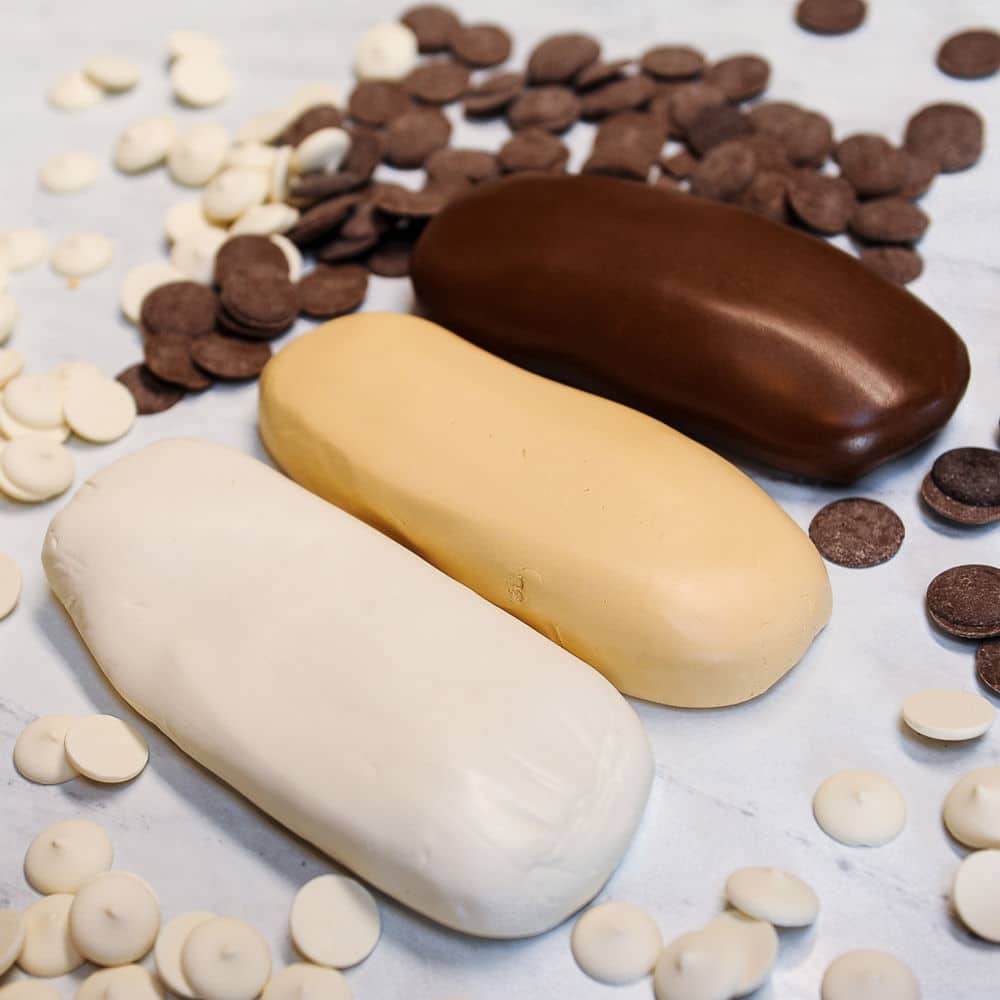
Quick Glance: Modeling Chocolate Recipe
- Recipe Name: Modeling Chocolate Recipe
- Why You'll Love It: A smooth, clay-like chocolate you can sculpt into figures, flowers, and realistic faces - and it actually tastes amazing, unlike fondant
- Time and Difficulty: 5 minutes active, 2-3 hours to set / Easy
- Main Ingredients: Chocolate or candy melts, corn syrup, optional gel food coloring
- Method: Melt, fold, set, knead
- Texture and Flavor: Pliable and clay-like when worked, firm when rested - rich chocolate flavor
- Quick Tip: Stop mixing the moment the mixture looks like soft-serve ice cream - over-stirring causes the cocoa butter to separate and turn oily
Why This Recipe Works
Modeling chocolate gets its clay-like texture from two things working together: corn syrup and fat. Corn syrup is an invert sugar - it contains glucose and fructose molecules that physically block sucrose crystals from forming, which is exactly why the mixture stays pliable instead of setting hard like regular chocolate.
The fat in your chocolate, whether cocoa butter in real chocolate or vegetable fat in candy melts, acts as a plasticizer. It coats the sugar and cocoa particles and gives the mixture its workable, smooth consistency. This is also why the chocolate-to-syrup ratio matters so much. Too little corn syrup and the mixture is dry and crumbly because the fats have nothing binding them together. Too much and it's sticky and won't hold its shape.
Candy melts are more forgiving than real chocolate because the vegetable fat has a higher melting point than cocoa butter, making it harder to over-soften with your hands. Real dark chocolate is more sensitive but produces a richer, firmer result that's ideal for detailed sculpting.
If you love working with white chocolate, my white chocolate ganache is another must-have recipe that is silky smooth and incredibly versatile for frosting, glazing, and drips.
Modeling Chocolate Ingredients
Modeling chocolate is super versatile and used for a lot of things in the cake decorating industry. I personally use it a lot for sculpting realistic faces because it works very much like clay. You can build it up, smooth out the seams, and it holds details really well.
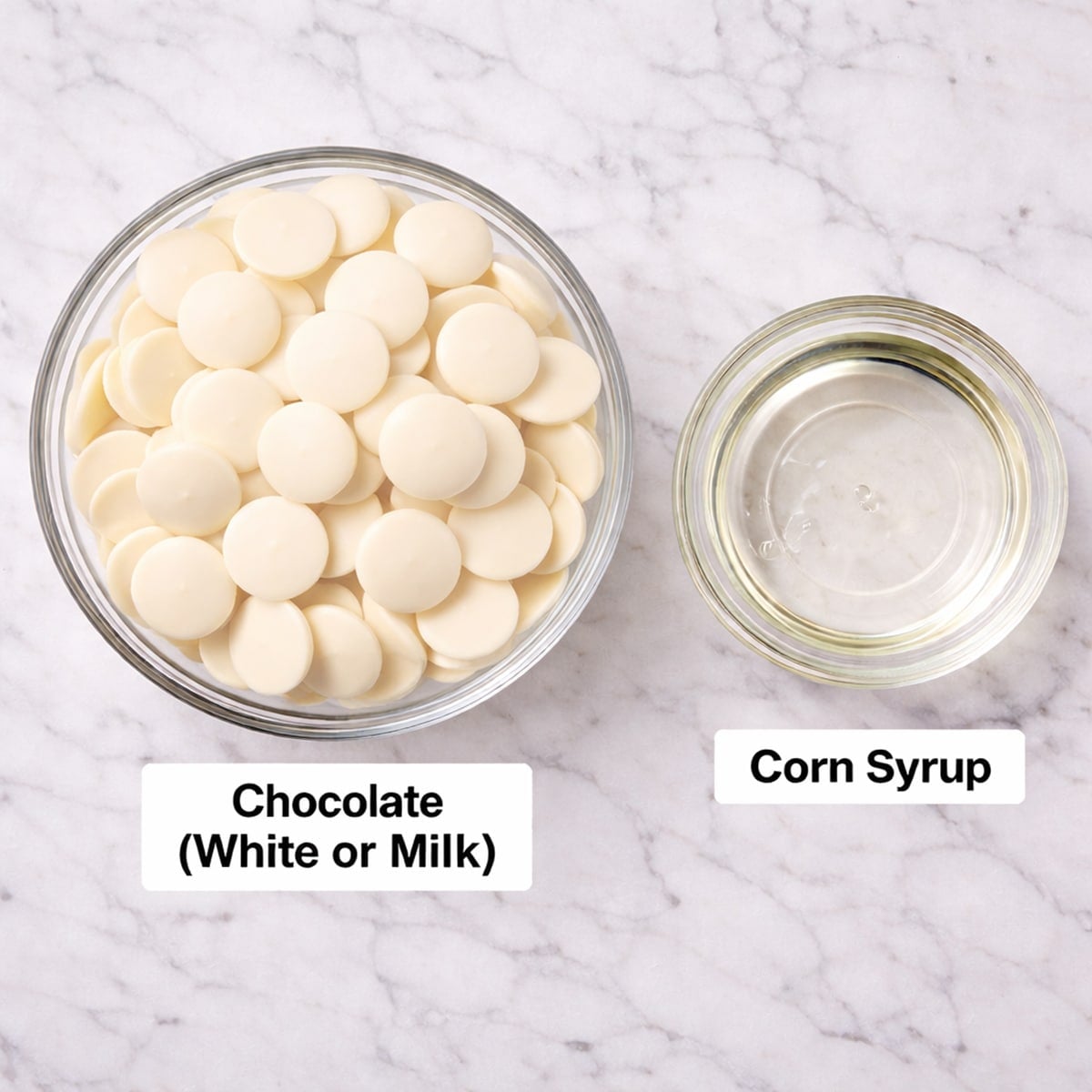
White candy melts are used instead of real white chocolate because they contain vegetable fat instead of cocoa butter, which makes them much more forgiving and resistant to heat. They don't require tempering and are very difficult to scorch. If you prefer real white chocolate, use the same amount but reduce your corn syrup slightly to 3.5 oz since real white chocolate has more natural fat.
Corn syrup is what makes modeling chocolate pliable and clay-like. It's an invert sugar, meaning it interrupts cocoa butter crystallization and keeps the mixture from setting hard and brittle. It must be warmed before adding to the chocolate - if it's too cold it will cause the chocolate to seize unevenly and create lumps. Glucose syrup can be substituted in the same amount, though it may produce a slightly stiffer result.
Gel food coloring is added to color white modeling chocolate. Gel coloring works well here because it's highly concentrated and won't add excess liquid that could throw off the ratio. It's best mixed into the warm corn syrup before combining with the chocolate for the most even distribution. You can also leave the coloring out and color the modeling chocolate later by kneading color in after it has set.
How To Make Modeling Chocolate Step-By-Step
Making modeling chocolate takes minutes! Just melt the chocolate and stir. Most of the time is spent waiting for it to set up again.
- Melt your candy melts or chocolate in a microwave-safe bowl in 30-second increments, stirring between each burst. The chocolate is ready when it's completely fluid and smooth with no lumps.
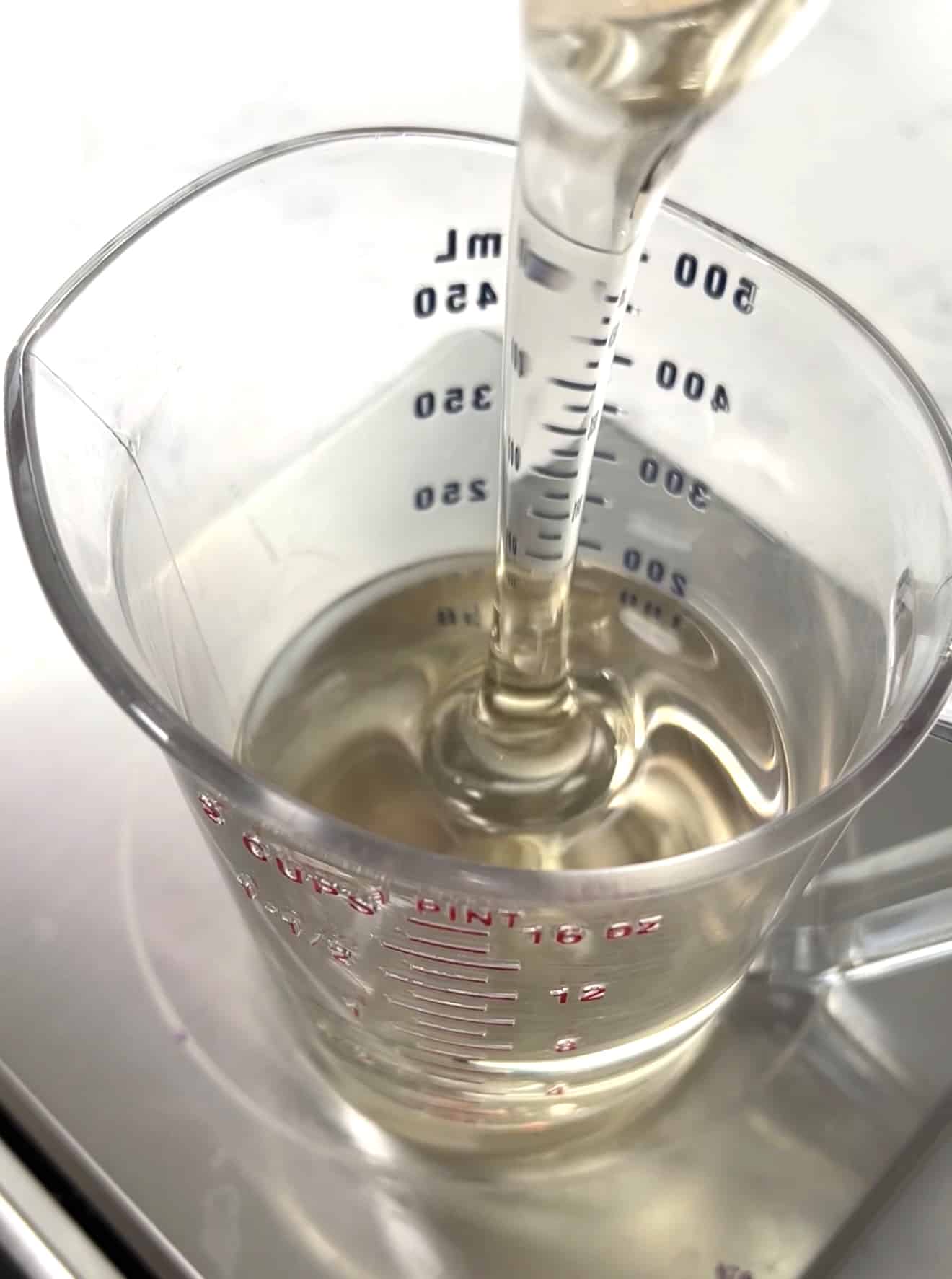
- In a separate small bowl, warm your corn syrup for 10 to 15 seconds until it's just above body temperature and pours easily off a spoon.
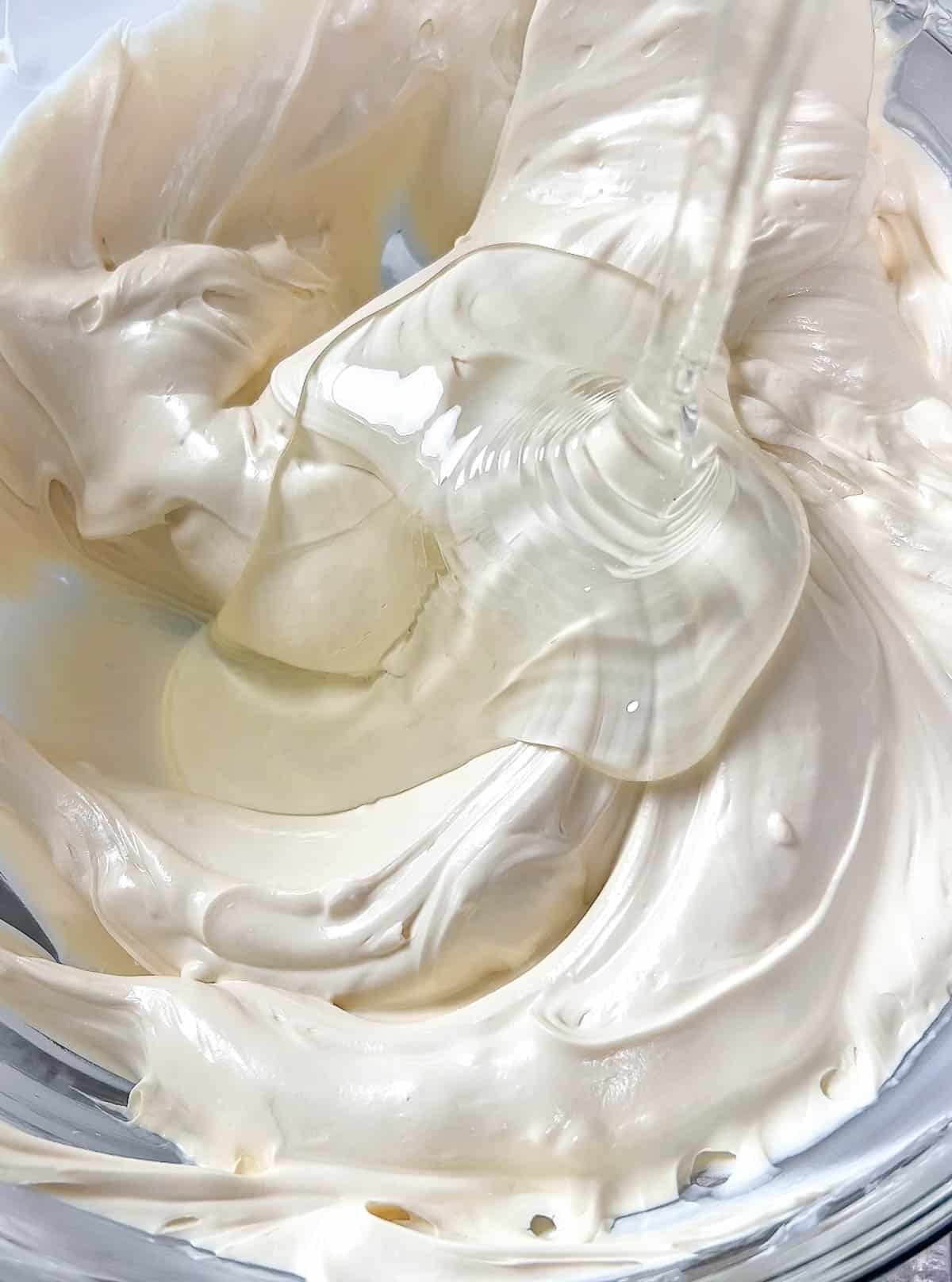
- Pour the warm corn syrup into the melted chocolate all at once. Do not add it gradually - adding it in stages causes uneven seizing.
If you're adding in food coloring, add it now.
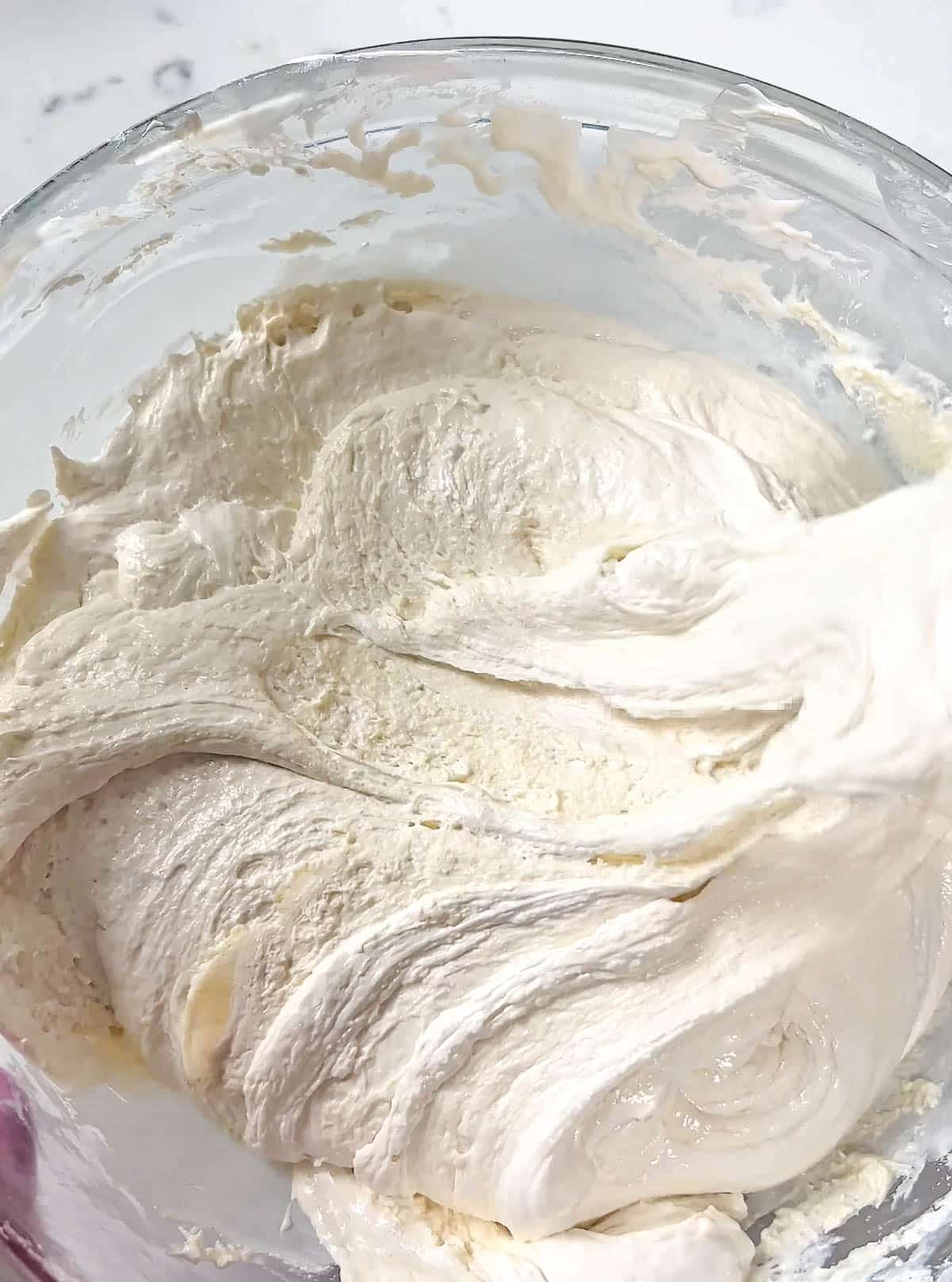
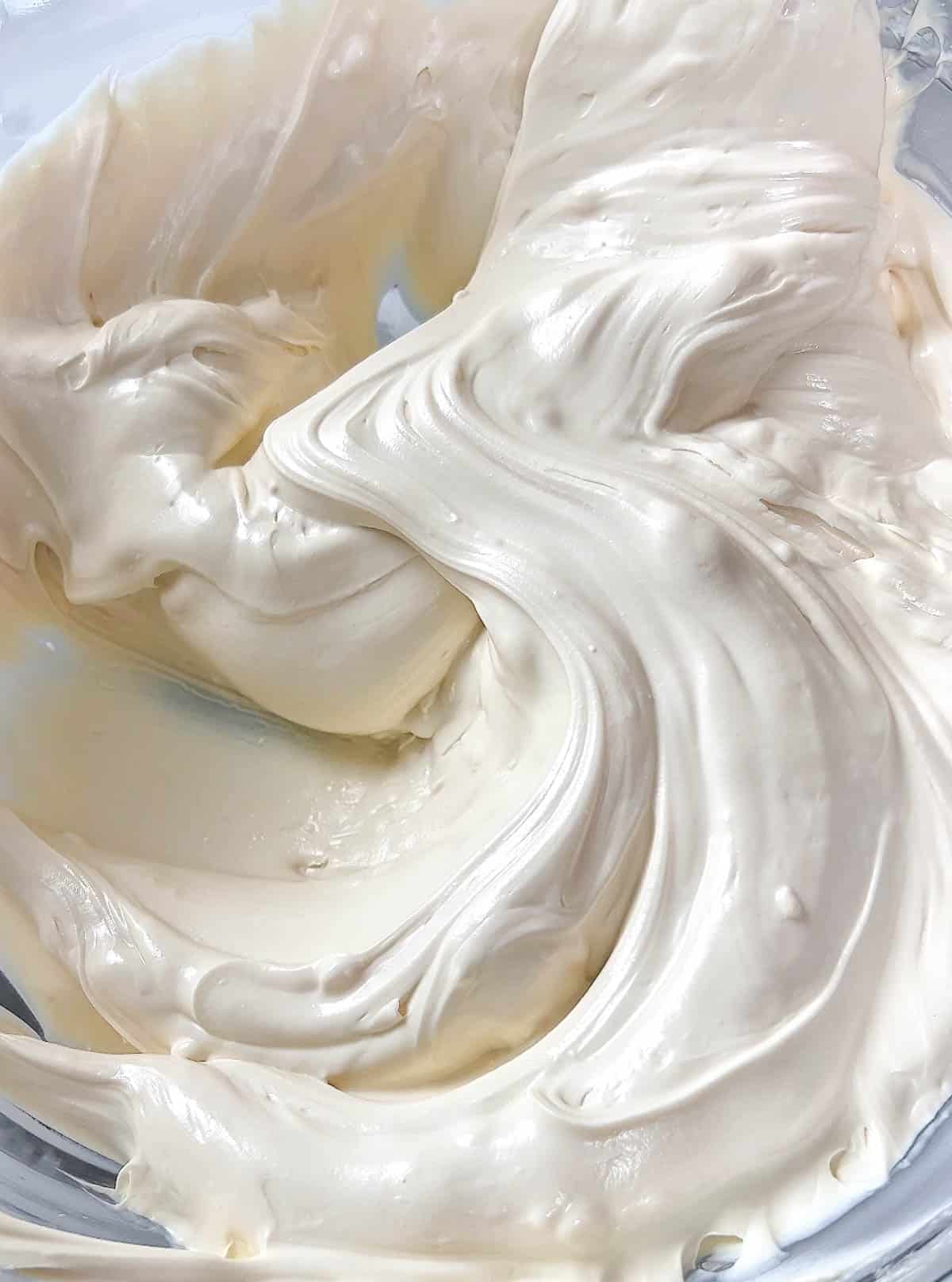
- Fold the mixture together with a silicone spatula using slow, deliberate strokes. Watch carefully as it transforms: the mixture will begin to pull away from the sides of the bowl, thicken, and lose its glossy sheen. Stop the moment it looks like soft-serve ice cream.
EXPERT TIP: Different types of chocolate will need different amounts of corn syrup. See the recipe card below for measurements.
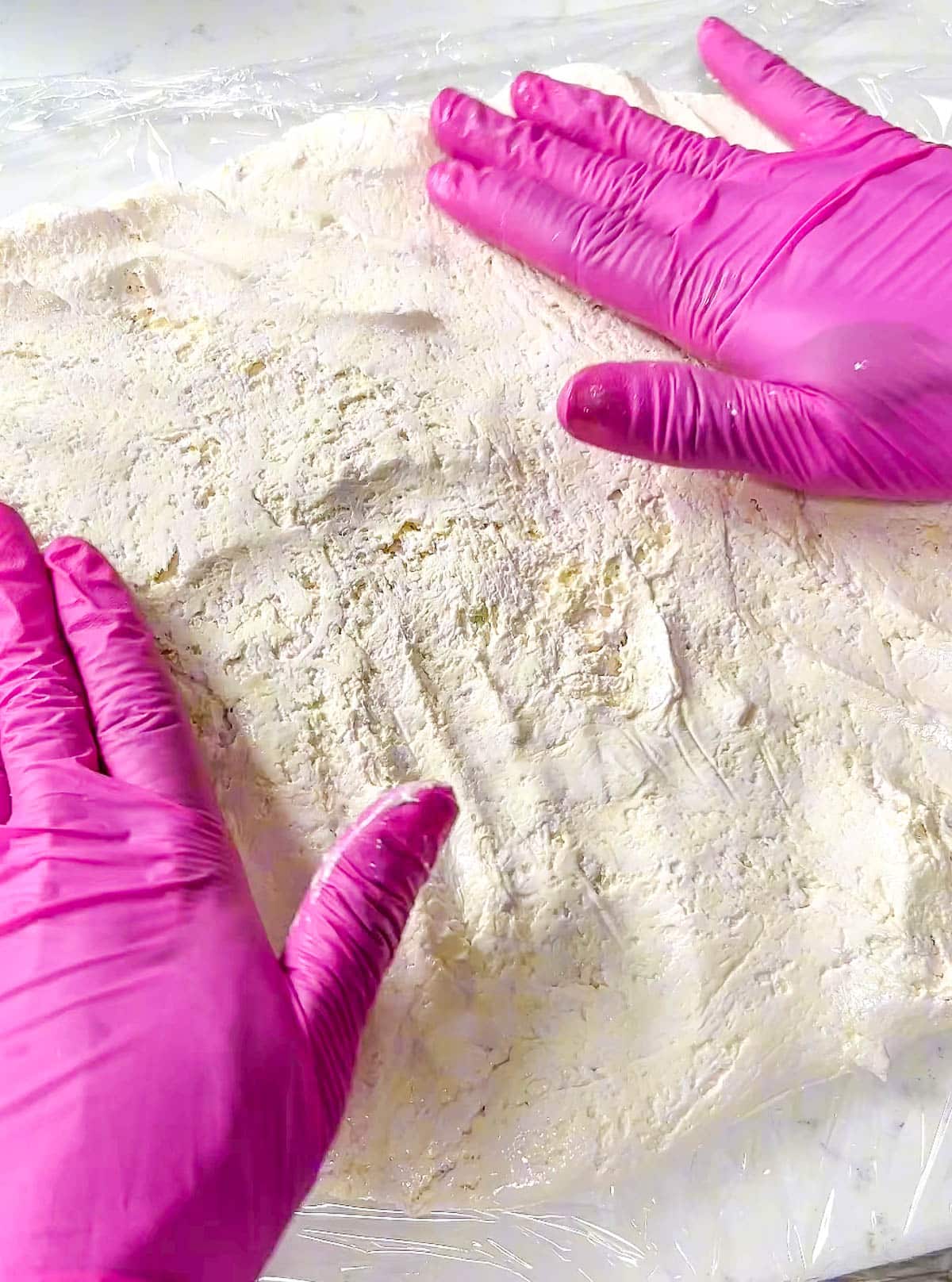
- Immediately scrape the mixture onto a large sheet of plastic wrap. It will feel thick and slightly grainy, but that's normal.
Press it into a flat disc about half an inch thick so it sets evenly, then wrap tightly.
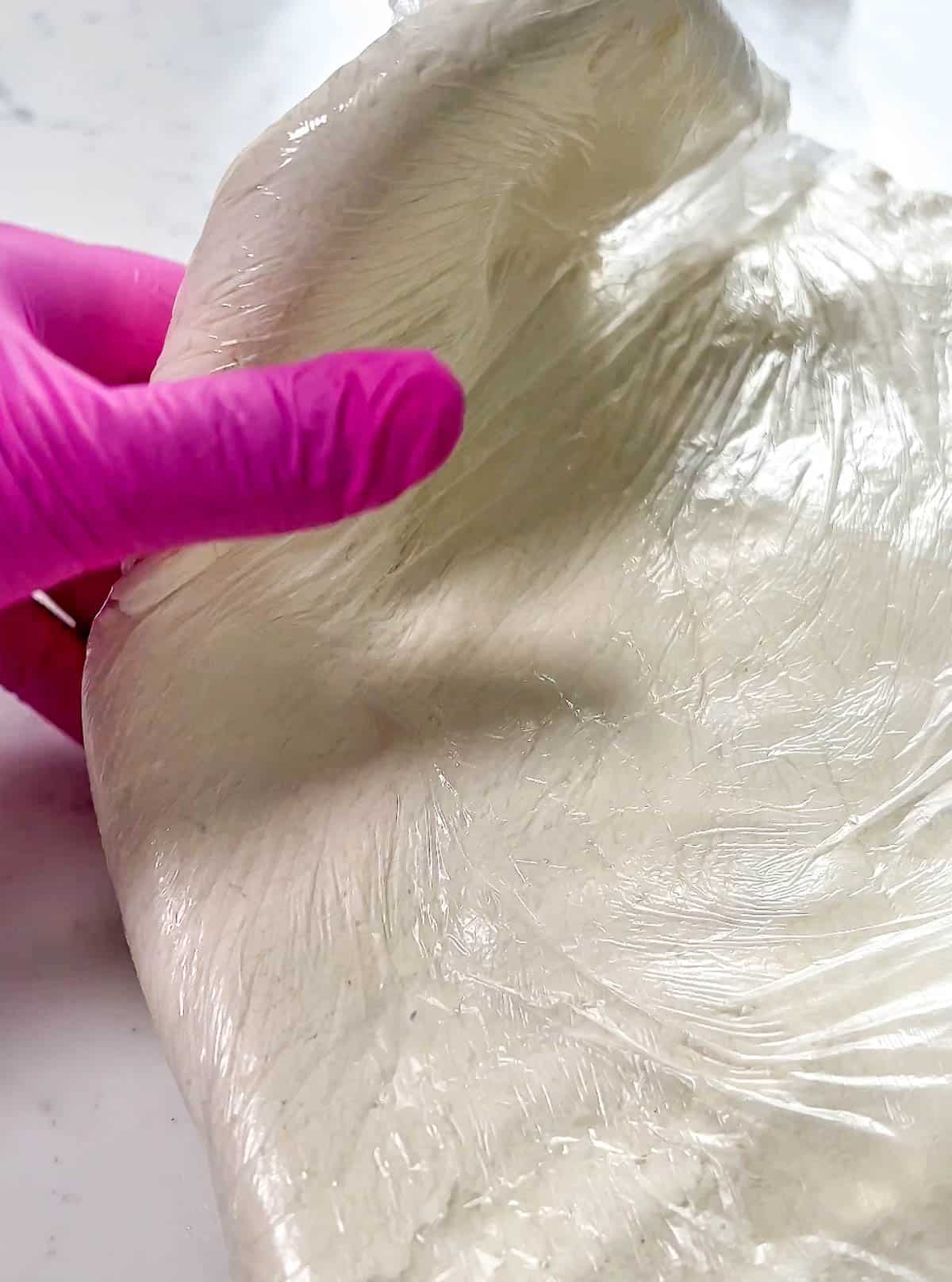
- Let it set at room temperature for 1 to 2 hours. It's ready to knead when it's firm but has a slight give when you lift it up to bend it.
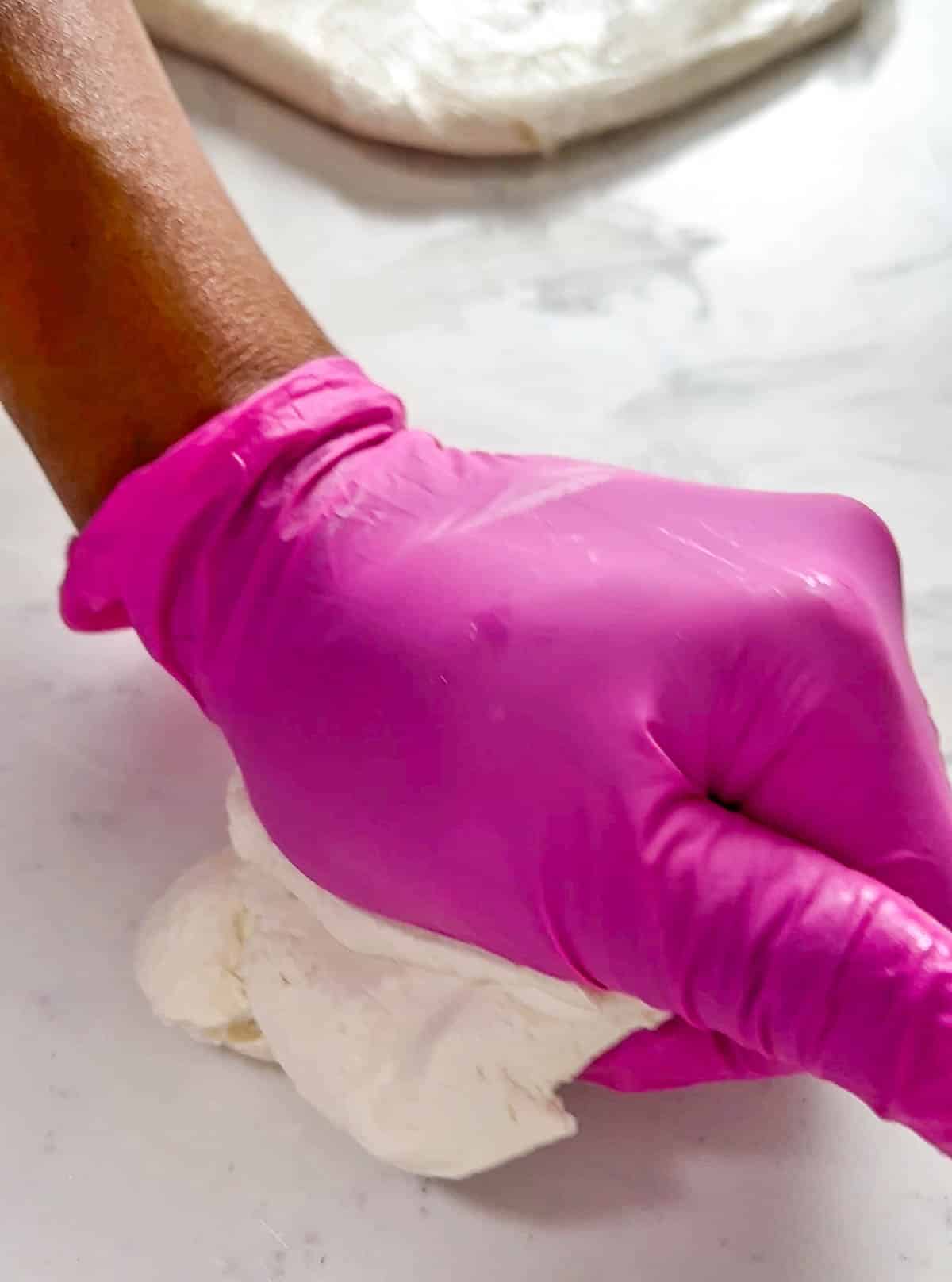
- Unwrap and knead a handful for 2 to 3 minutes, pressing any hard lumps firmly against the table with the palm of your hand and pushing forward. The warmth and pressure will smooth everything out until the texture is completely uniform. This technique is called fraisage.
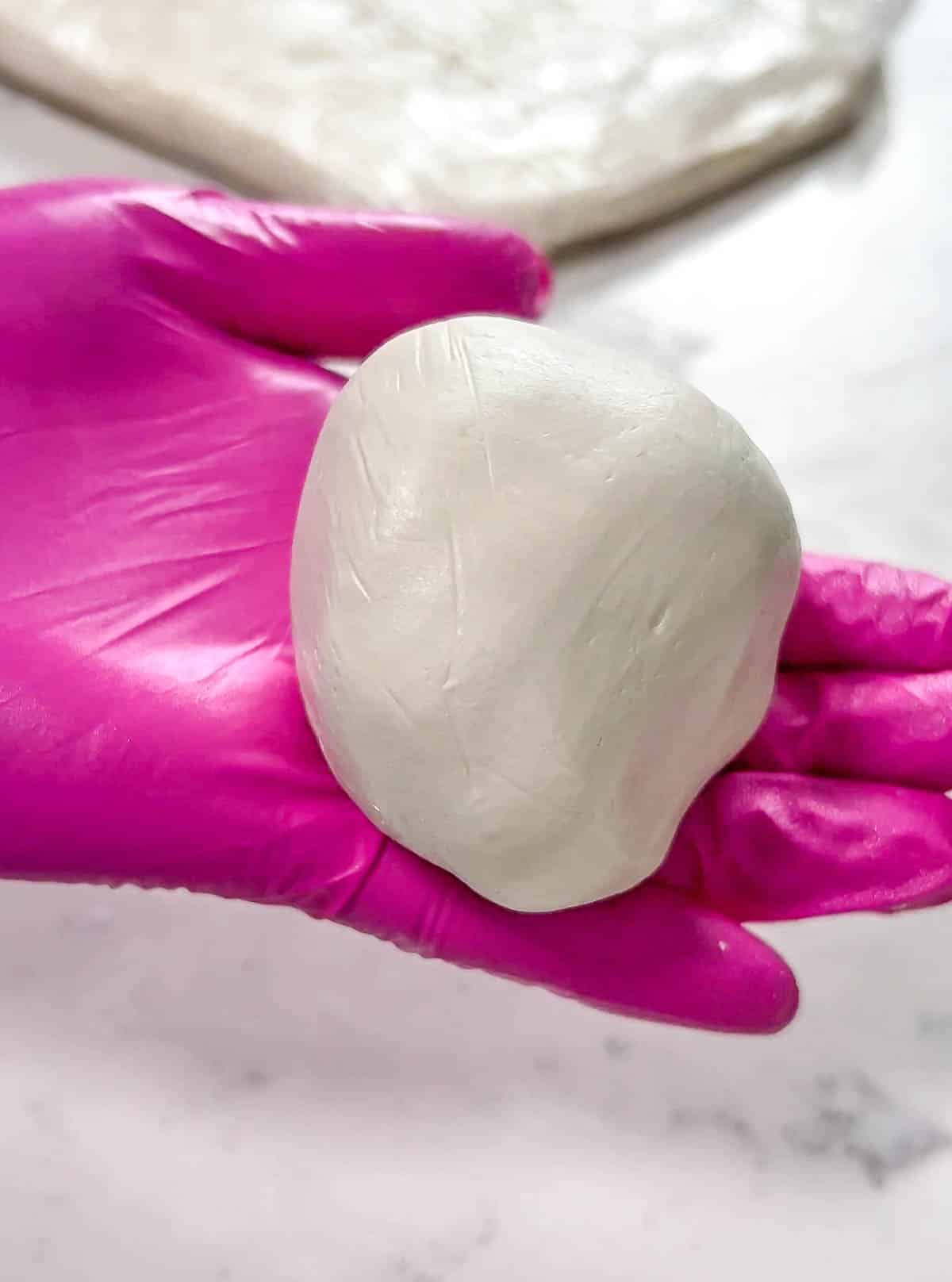
- Once the modeling chocolate is smooth, re-wrap and let it set at room temperature. If you leave it overnight it will set up completely rigid. This is normal. Just re-warm in the microwave for about 10 seconds and knead again until pliable before use.
Common Mistakes To Avoid
Over-mixing the chocolate. This is the number one mistake. If you keep stirring past the soft-serve stage, the cocoa butter separates out and pools on the surface of the mixture. If this happens, do not panic - stop immediately, let it cool completely, and then slowly work the oil back in by folding it back together with your hands. It takes patience but can be rescued.
Adding cold corn syrup. Cold corn syrup hitting warm, melted chocolate causes the chocolate to seize on contact before everything is evenly incorporated. Always warm your corn syrup before adding it.
Expecting it to be soft when fully set. Modeling chocolate is always very hard after it's been resting for several hours or overnight. This is not a sign that something went wrong. It softens back to a workable consistency after 5 to 10 seconds in the microwave and 2 minutes of kneading.
Holding the chocolate too long in your hands. Unlike fondant, modeling chocolate is extremely sensitive to heat. If you hold it while thinking through a detail, it will become soft and greasy before you use it. Work quickly, let the table support the piece, and use a smooth clay tool for refining details rather than your fingers.
Using the wrong ratio for your chocolate type. Candy melts, white chocolate, and dark chocolate all have different fat contents and require different amounts of corn syrup. Always follow the ratio chart for your specific chocolate type.
Modeling Chocolate FAQs
Modeling chocolate is used for sculpting cake toppers, figures, realistic faces, flowers, bows, and decorative accents. It behaves like clay - you can build it up in layers, blend seams until they disappear, and press fine texture details into the surface. It's especially popular for professional sculpted bust cakes because it holds anatomical details far better than fondant. Some decorators also use it to panel tiered cakes as an edible alternative to fondant panels.
Modeling chocolate and fondant are both edible sculpting mediums but they behave very differently. Fondant is stretchy and elastic, which makes it ideal for covering cakes smoothly. Modeling chocolate has no stretch - it's clay-like and holds edges and details precisely. Modeling chocolate is also significantly better tasting than fondant because it's made from real chocolate and corn syrup. For covering cakes in modeling chocolate, you must panel rather than drape it.
Mix gel food coloring directly into the warm corn syrup before combining it with the chocolate. This distributes color evenly throughout the mixture without requiring extra mixing after the chocolate is combined. For very deep colors like black or burgundy, start with dark chocolate as your base so you need less color to reach the target shade. Expect the color to deepen slightly as the modeling chocolate sets and cures.
Yes, you can substitute glucose syrup in the same quantity as corn syrup. However, glucose is thicker and less fluid than corn syrup, which can make the modeling chocolate slightly stiffer and more prone to crumbling. If the mixture sets too firm, add an additional half ounce of glucose and knead it in after re-melting. The correction process is forgiving - there's no need to throw out a batch that doesn't set correctly.
Oily modeling chocolate means the cocoa butter separated out because the mixture was over-stirred. Let it cool completely at room temperature, then slowly knead the oil back into the mixture by folding and pressing. Work slowly and patiently. It may take several minutes, but the oil will reabsorb back into the chocolate and the texture will smooth out again.
Crumbly modeling chocolate is most often caused by too little corn syrup or by the corn syrup being added too cold, which caused uneven incorporation. If the ratio is off, re-melt the batch, add an additional half ounce of warm corn syrup, and start the process again. If it's simply been resting overnight and hardened, microwave for 5 to 10 seconds and knead firmly for 2 to 3 minutes - most crumbliness resolves within a few minutes of working it.
Yes, modeling chocolate is made entirely from edible ingredients - chocolate and corn syrup. It's much more pleasant to eat than fondant and tastes like a soft, dense chocolate candy. Guests who normally remove fondant from their cake slices will typically eat modeling chocolate decorations.
More Chocolate Recipes To Try
Ready To Master Cake Decorating?
Join Sugar Geek University and learn professional techniques through detailed cake decorating courses, tutorials, and real kitchen demonstrations by
award-winning cake decorator, Liz Marek.
Recipe
Ingredients
White Modeling Chocolate (from melties)
- 16 oz white candy melts
- 4 oz corn syrup (or glucose) Warmed for a few seconds until about body temperature
- Few drops gel food coloring If you plan on coloring, if not, leave out
Modeling Chocolate (from real chocolate)
- 16 oz chocolate (any kind)
- 6 oz corn syrup
Instructions
- Melt the chocolate or candy melts in 30 second increments until smooth.
- Warm corn syrup for 10-15 seconds and add food coloring. Remember that your final product will be lighter than the color of your corn syrup. You can also add color later if you want.
- Fold mixture together with a spatula until mixture starts to seize and resembles soft serve ice cream.
- It is important to not over-mix or your modeling chocolate will get oily.
- Pour it onto some plastic wrap. Press into a flat disc about half an inch thick so it sets evenly. Wrap it up and let set until chocolate is firm but still pliable. Usually a couple of hours depending on how hot it is in your room.
- Unwrap chocolate and knead until smooth, smashing any hard lumps with your fingers.
- Re-wrap chocolate and place back in plastic wrap to set up until hard.
Video
Notes
Nutrition
{ "@context": "https://schema.org", "@type": "WebPage", "@id": "https://sugargeekshow.com/modeling-chocolate-recipe/", "name": "Modeling Chocolate Recipe", "about": [ {"@type": "Thing", "name": "Modeling chocolate", "sameAs": "https://en.wikipedia.org/wiki/Modeling_chocolate"}, {"@type": "Thing", "name": "Corn syrup", "sameAs": "https://en.wikipedia.org/wiki/Corn_syrup"}, {"@type": "Thing", "name": "Cocoa butter", "sameAs": "https://en.wikipedia.org/wiki/Cocoa_butter"}, {"@type": "Thing", "name": "Compound chocolate", "sameAs": "https://en.wikipedia.org/wiki/Compound_chocolate"}, {"@type": "Thing", "name": "Chocolate", "sameAs": "https://en.wikipedia.org/wiki/Chocolate"}, {"@type": "Thing", "name": "Food coloring", "sameAs": "https://en.wikipedia.org/wiki/Food_coloring"}, {"@type": "Thing", "name": "Cake decorating", "sameAs": "https://en.wikipedia.org/wiki/Cake_decorating"}, {"@type": "Thing", "name": "Confectionery", "sameAs": "https://en.wikipedia.org/wiki/Confectionery"}, {"@type": "Thing", "name": "Sugar sculpture", "sameAs": "https://en.wikipedia.org/wiki/Sugar_sculpture"}, {"@type": "Thing", "name": "Invert sugar", "sameAs": "https://en.wikipedia.org/wiki/Inverted_sugar_syrup"} ] }
Yu Kelsey says
After making white modeling chocolate, can I add food color and knead it well??
The Sugar Geek Show says
Yes you can once it's set but it will be very soft
Megistic says
Can I use white baking chips in place of the candy melts or chocolates? And will the recipe remain the same if it's yes?
The Sugar Geek Show says
I wouldn't use chocolate chips, they aren't made to melt
Elizabeth barnes says
Bi dont know what im doing wrong but iv done this recipe 2 times now and both times when i add the syrup it gose like over frozen icecream and is all crumbly. What am i doing wrong. Im trying to make it to do detailes for a b-day cake. Help
The Sugar Geek Show says
If you read the post, I explain that the chocolate is VERY hard when it sets. You have to soften it with your hands or in the microwave for 5 seconds before kneading to a smooth consistency 🙂
Liz says
I was just wondering if there was a way to make a modeling chocolate with peanut butter? I'am doing a cake for a b'day and he dose not like chocolate much.
The Sugar Geek Show says
Not that I know of, peanut butter and chocolate are very different things 🙂
Brittany says
So I was really excited to try this recipe but now I feel like I failed. The candy melts were melted first. The corn syrup was warmed but it felt a bit too hit so tried to chill it some. Got it to what I felt was body temperature and then added it to the melted candy. It never got to the 'soft serve ice cream state but more like a scoop of ice cream from a carton from the freezer at home. I tried to add more corn syrup and also tried to melt a little in the microwave but still the same texture. Going to let it set in plastic wrap overnight... But if texture doesn't change is there anyway to salvage this?
The Sugar Geek Show says
Yea just melt it all together and knead it together, it doesn't sound like it's ruined at all 🙂
Jill says
I used Belgian chocolate. But am finding that it is very crumbly while I’m kneading. Can I fix this?
The Sugar Geek Show says
Modeling chocolate is usually pretty crumbly when you first start kneading it, try microwaving for 10 seconds and see if it's better
Cindy Elliott says
It's funny that I've read about it being crumbly a bunch of times, but it has only just actually hit me..... that's why the remainder of my shop bought modelling chocolate went crumbly when I took it out the packet. I thought I just hadn't wrapped it properly (even thought it was in cling film and an airtight container!) and threw a bunch of it out. I'm an idiot 😛
I am somewhat scared to try making it myself but I have this recipe pinned for whenever I get the courage!
The Sugar Geek Show says
Oh noooo that stinks! I think MC should come with a warning label haha!
Patra says
Hi! Thanks for the recipe. You are very talented artist! Just wondering what brand/type of edible paint you use for details or a more realistic look as you did in the videos above. Thank you!
The Sugar Geek Show says
It just depends on what I'm doing. There are a wide variety of dusts, paints and chocolate that can be used to color on modeling chocolate.
Keyota says
Is there any problems with using the white chocolate chips, like used for cookies?
The Sugar Geek Show says
I have not had success with chocolate chips
Isaac says
I tried this with real milk chocolate (Whittakers), 200g:60g ratio of chocolate to glucose syrup, it turned into a crumbly oily mess. What did I do wrong? Poured mix into cling wrap as soon as it started to seize, let cool until it was like play-doh then tried to knead and it all went wrong from there.
The Sugar Geek Show says
What do you mean play-doh? Too soft? Too hard? It's hard to say based off your explanation 🙂
Anne says
My recipe said to knead my chocolate and Glucose together and squeeze out all the cocoa butter from it , i did this and it went very hard to knead after that. Do you knead all the cocoa butter from your mixture. Thank you.
The Sugar Geek Show says
So are you asking about your own recipe or mine? I suggest reading my recipe and following the directions.
sandy sebesta says
Hi Liz,
Do you have a favorite brand of candy melt you like to use for a great taste?
Thank you
The Sugar Geek Show says
I use Guittard apeels for all my chocolate projects because I can buy them in bulk locally
sallyee says
If it is really hard after sitting, will it be like cement on the cake once the cake is finished? For example if the cake is done the day before?
Thanks
The Sugar Geek Show says
Yes chocolate will be very hard at room temperature. That is the nature of chocolate 🙂 you wouldn't want it to be soft or it would just collapse on the cake.
Miriam says
So if I wanted to use it as an alternative to fondant when covering a cake, could the cake still be cut as normal since you're saying it dries really hard?
The Sugar Geek Show says
Yes the cake slices just fine, very similar to fondant on a cake but you will have to panel the cake with modeling chocolate since it doesnt have any stretch
Katherine T says
Perfect recipe!!! Very easy to make. Thank you!
Esther says
You say you can add the coloring in later, which is what I will probably do for my son's cake because there are quite a few smaller elements that are different colors. What is the best approach to separating and adding the color in later?
The Sugar Geek Show says
Simply separate and color as desired and let rest overnight before you use it because it will be very soft after coloring.
Victoria says
Hello. For the corn syrup with real chocolate, is it ok to use a light corn syrup? And if so does the ratios change? Thank you!
The Sugar Geek Show says
Yes you can use light and no it doesn't change