

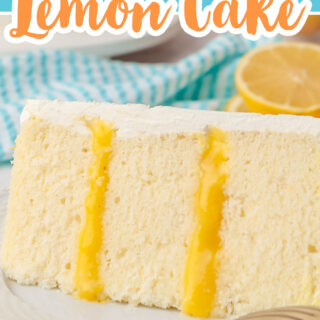
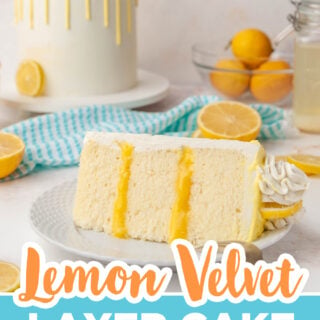
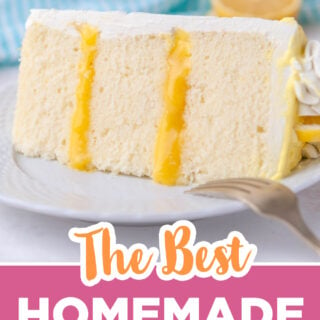
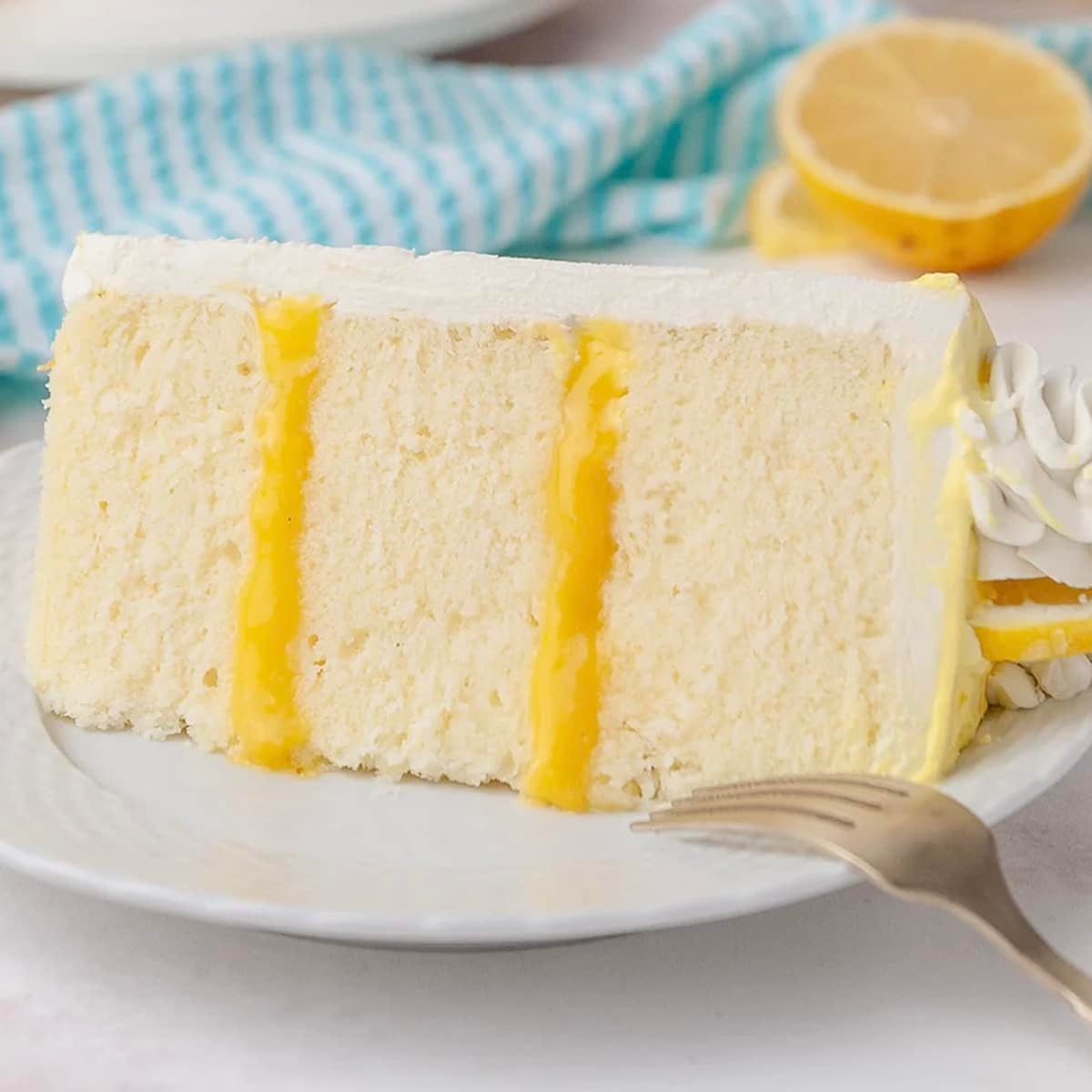
If there is one lemon velvet cake I get asked about more than any other at cake consultations, it is this one. The reverse creaming method gives it that ultra-soft, velvety crumb, and I use three layers of real lemon flavor: fresh juice, zest, and a pinch of citric acid, so it actually tastes like lemon rather than just smelling like it. Paired with silky homemade lemon curd and tangy cream cheese frosting, this is the cake that makes people ask for seconds before they finish their first slice.
Quick Glance: Lemon Cake Recipe
- Recipe Name: Lemon Cake Recipe
- Why You'll Love It: Ultra moist, fluffy, and bursting with real lemon flavor
- Time and Difficulty: 2-3 hours for baking, making the lemon curd and decorating | Intermediate
- Main Ingredients: Cake flour, buttermilk, lemon juice & zest, citric acid, butter, oil, cream cheese
- Method: Reverse creaming method
- Texture and Flavor: Soft, velvety crumb with bright citrus flavor
- Quick Tip: Make the lemon curd ahead of time for best results
Jump to:
- Quick Glance: Lemon Cake Recipe
- Lemon Cake Ingredients
- What Makes This Lemon Cake So Good
- Lemon Curd Step-By-Step
- Lemon Cake Step-By-Step
- Lemon Cream Cheese Frosting
- Lemon Cake Assembly
- Cake Batter and Frosting Calculator
- Cups of Batter Needed
- Cups of Frosting Needed
- Common Lemon Cake Problems To Avoid
- Lemon Cake FAQs
- More Lemon Recipes To Try
- Ready To Master Cake Decorating?
- Recipe
Lemon Cake Ingredients
This lemon cake recipe relies on a few key ingredients combined with the reverse creaming method to make a lemon cake with a moist, velvety cake crumb with silky smooth lemon curd and tart lemon cream cheese frosting on the outside to balance it all out.
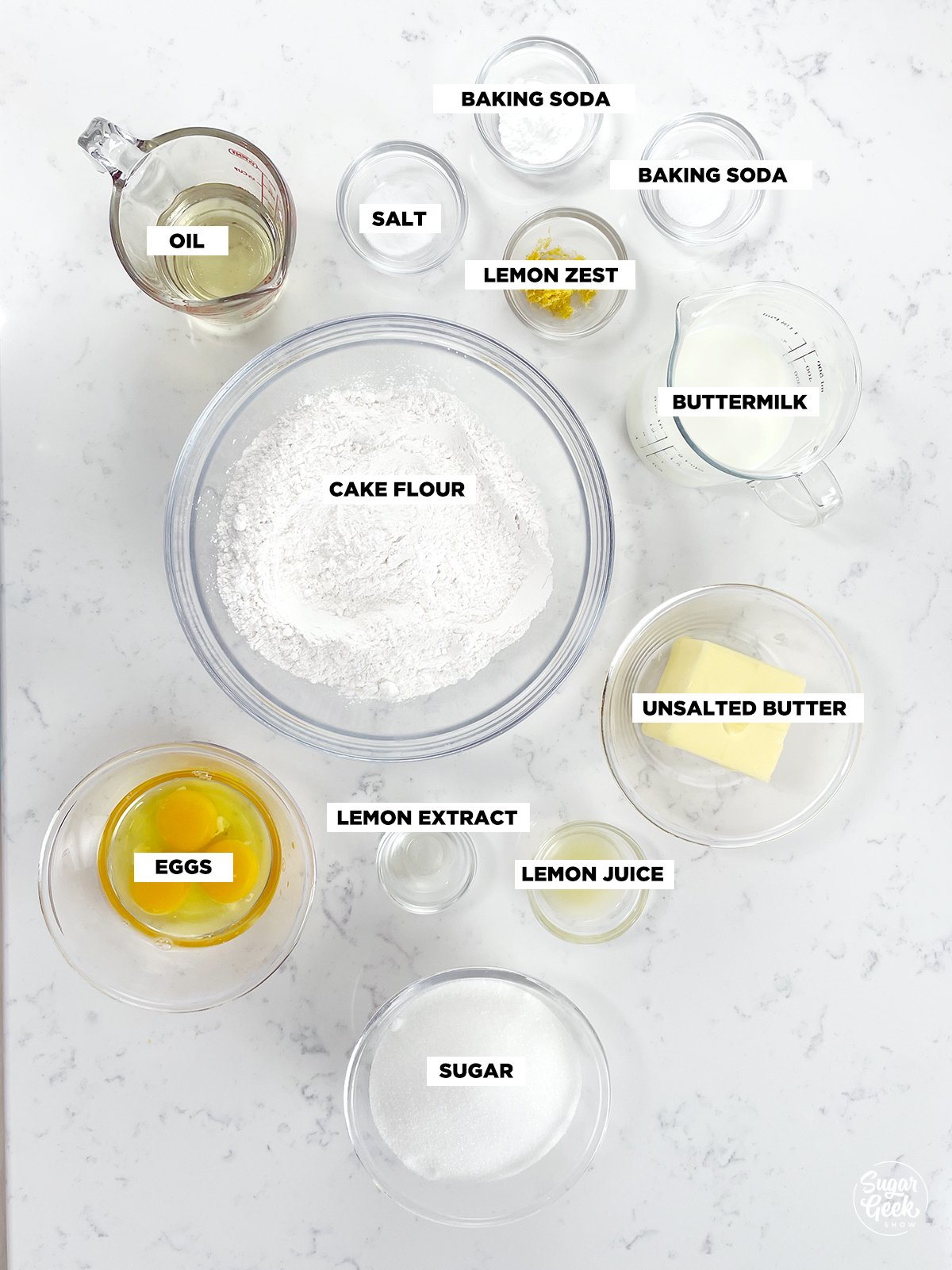
- Buttermilk - tenderizes the crumb and creates a fluffy texture. If you're out of buttermilk, you can make a buttermilk substitute.
- Cake flour - provides a soft, delicate crumb due to low protein.
- Lemon juice - adds acidity and light lemon flavor; substitute with fresh over bottled when possible
- Lemon zest - delivers a strong natural lemon flavor without extra liquid.
- Citric acid - enhances tartness and boosts lemon flavor; optional and can be omitted
- Butter - adds richness and flavor.
- Oil - keeps the cake moist even when chilled; substitute with any neutral oil
- Eggs - provide structure, stability, and richness; no substitute recommended
- Cream cheese - adds tangy flavor to the frosting; substitute with mascarpone for a milder taste
What Makes This Lemon Cake So Good
This lemon cake recipe, much like my vanilla cake and white velvet buttermilk cake recipes, has some key ingredients for maximum moistness and melt-in-your-mouth velvet texture.
- Buttermilk - breaks down the gluten in cake flour and reacts with acidic ingredients to create a very light and fluffy cake that is extremely tender! No buttermilk? No problem, you can make your own buttermilk substitute.
- Cake flour - cake flour has less gluten in it than AP flour, resulting in a very tender cake crumb.
- Reverse mixing method - The reverse creaming method is the process of coating your dry ingredients with butter before you add the liquids. This butter "shortens" the gluten strands and gives the cake its velvet crumb.
- Oil - Very important in butter cakes to keep your cakes from drying out. When a cake is cold, the butter in the cake get's hard and can make the cake taste dry. Cakes should always be consumed at room temperature for the best results.
This lemon cake recipe uses professional baking techniques to create a soft, bakery-quality crumb with bold lemon flavor. If you're new to layer cakes, this step-by-step guide will walk you through everything.
When I make this cake, I make my curd one day in advance so that it has time to cool down in the fridge. You can also bake your cakes in advance if you want, and then wrap them in plastic wrap and freeze them until you are ready to decorate.
Lemon Curd Step-By-Step
Once you make your own lemon curd, it's hard to ever go back to buying it. Nothing compares to that pure, bright, fresh lemon flavor. I prefer to make my lemon curd one day in advance and then have it ready to go the next day. I learned this recipe from the Culinary Institute of America and I have scaled it so it makes exactly the right amount of lemon curd filling for this cake recipe.
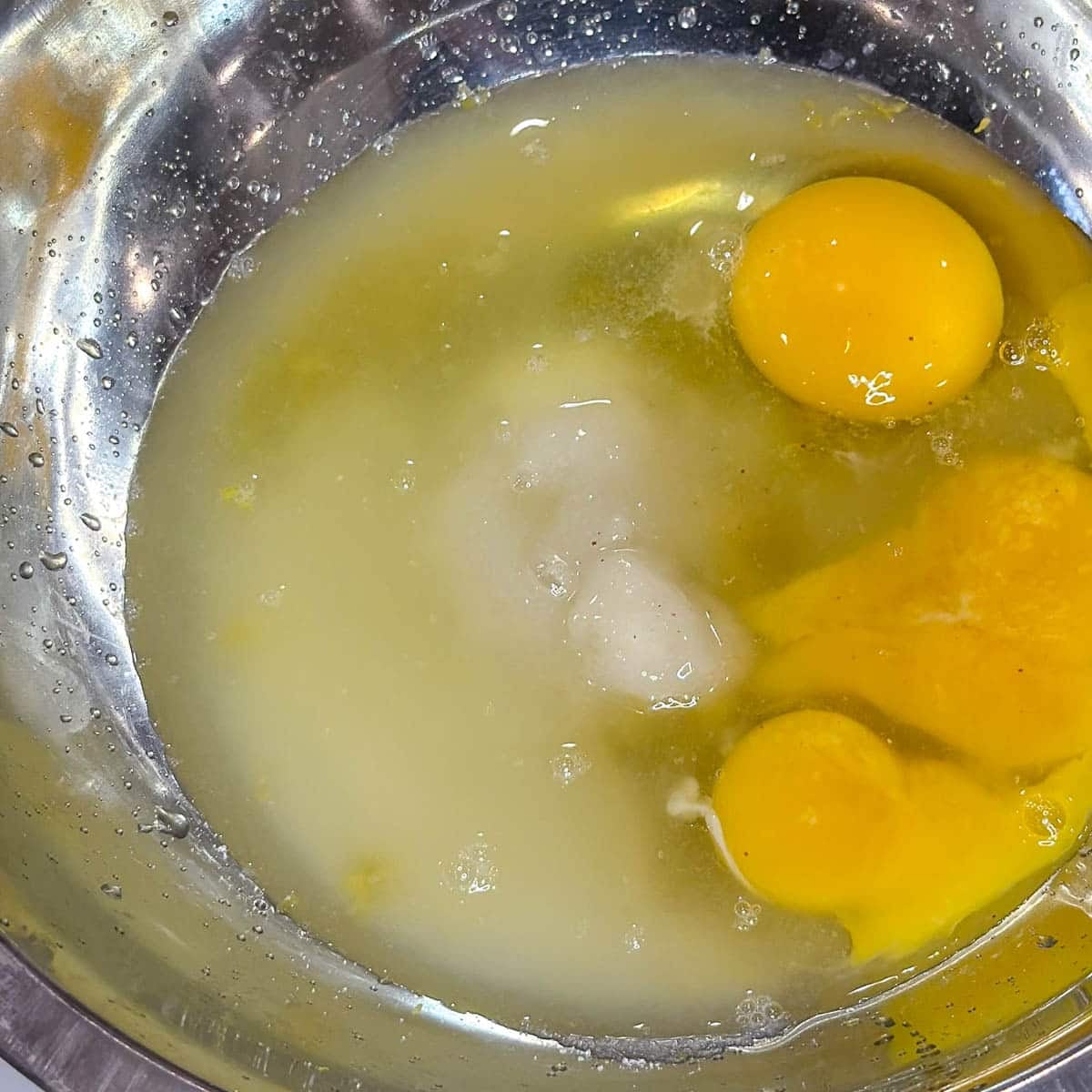
- First, combine the lemon juice, lemon zest, sugar, whole egg, and egg yolks in a heatproof bowl and whisk until smooth.
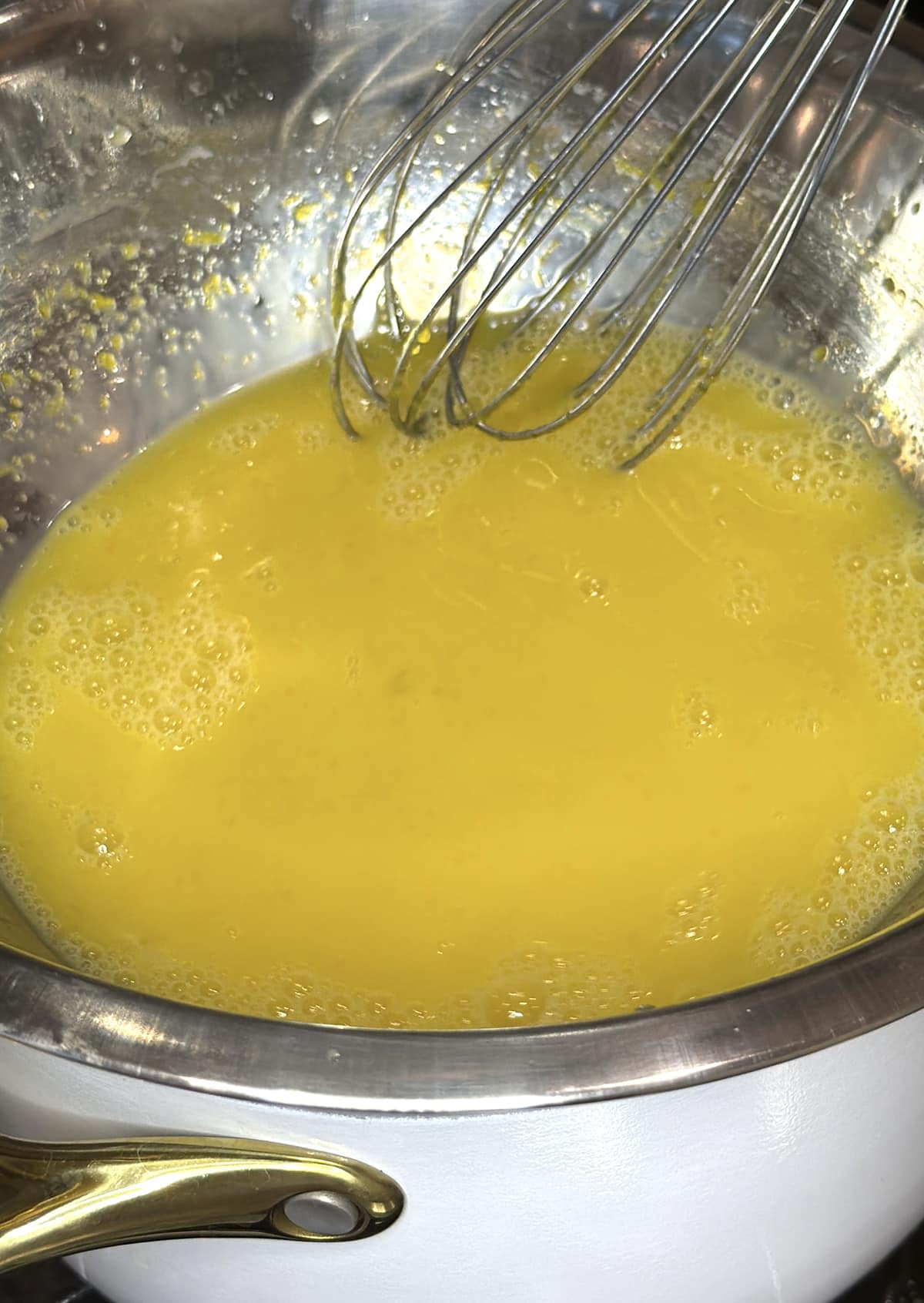
- Next, place the bowl over a pot of simmering water and cook the mixture while whisking constantly to prevent curdling.
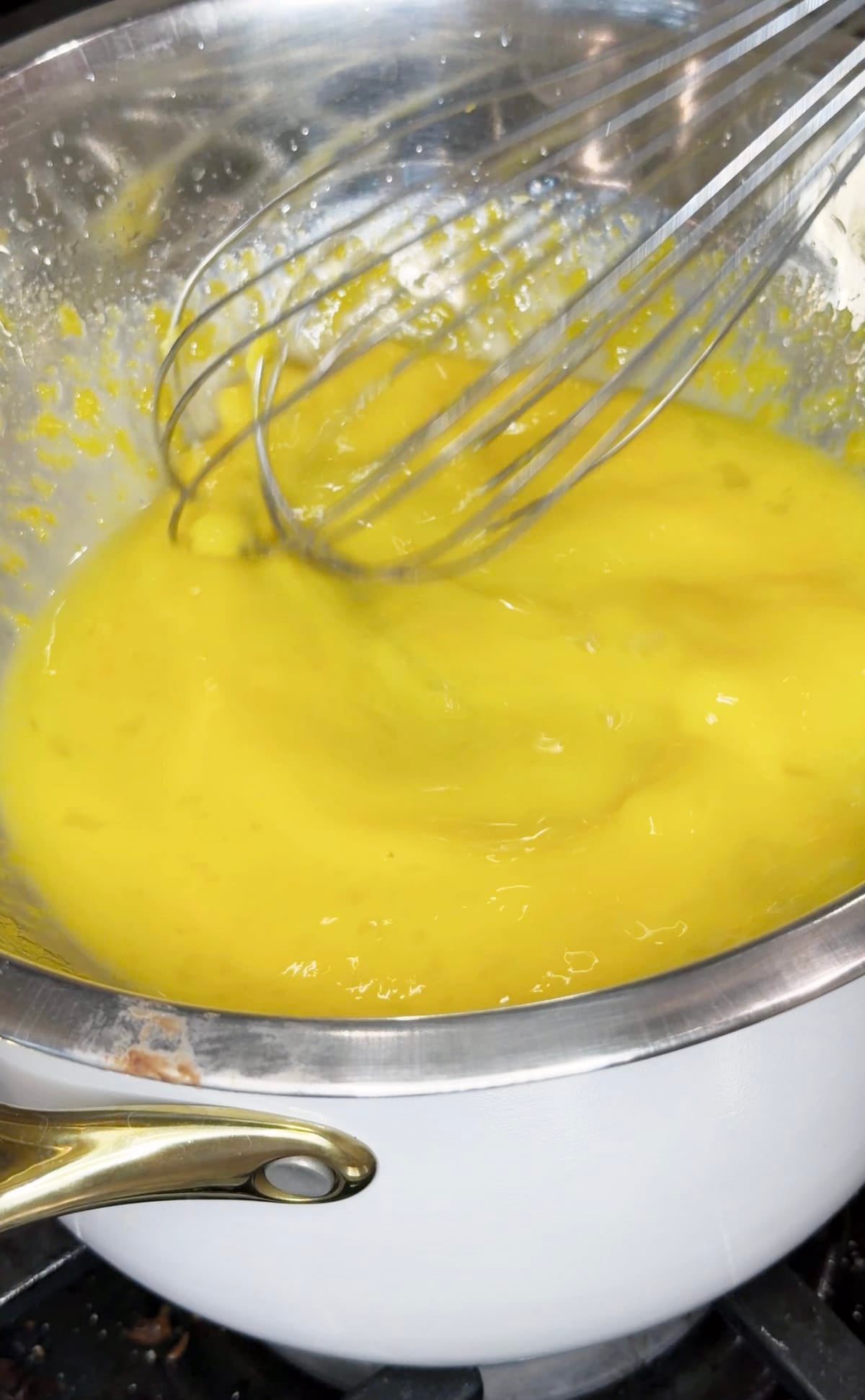
- Continue cooking until the mixture thickens and reaches 170-175°F.
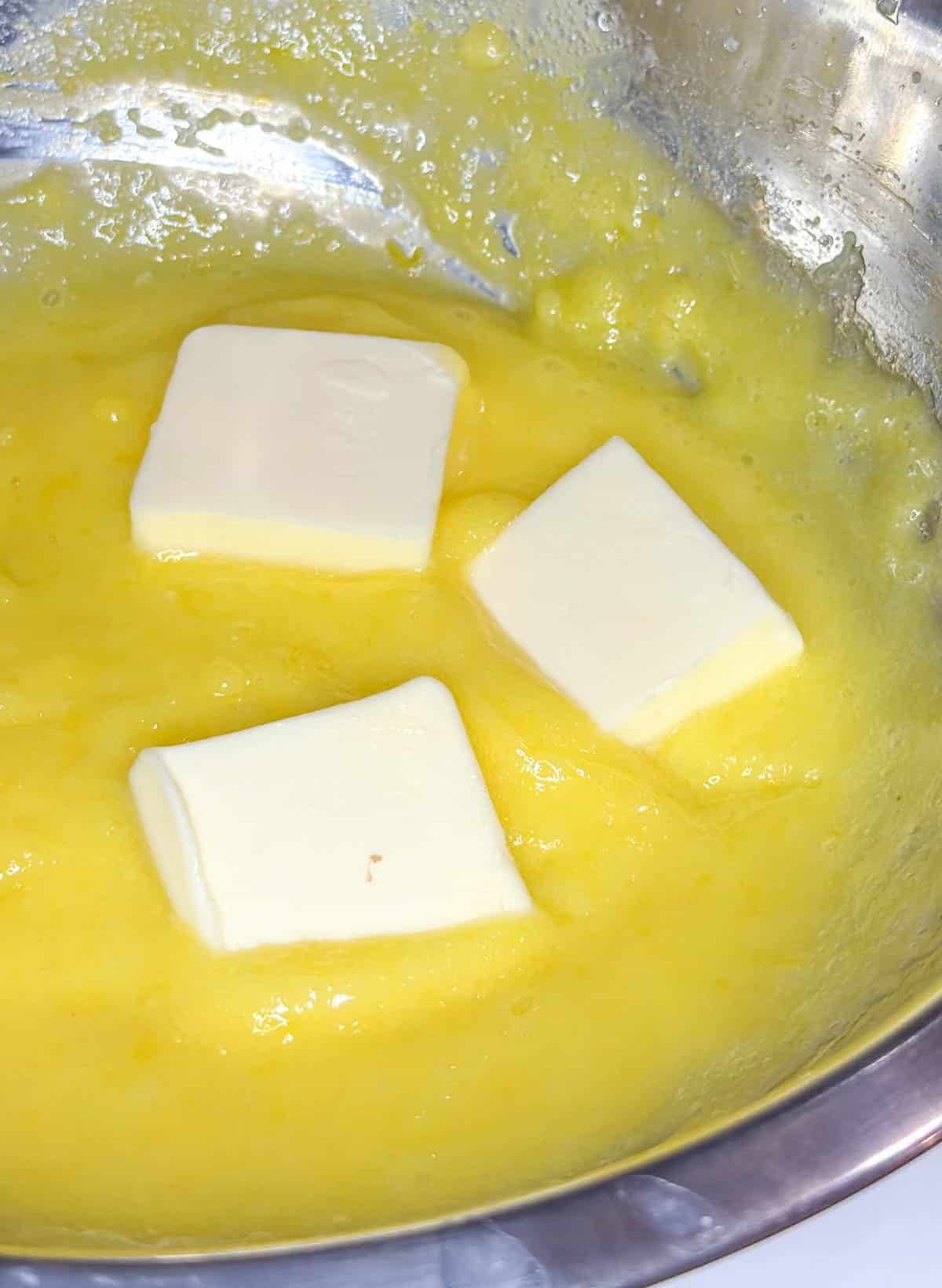
- Remove the curd from the heat and immediately whisk in the cold butter and salt until fully incorporated and smooth.
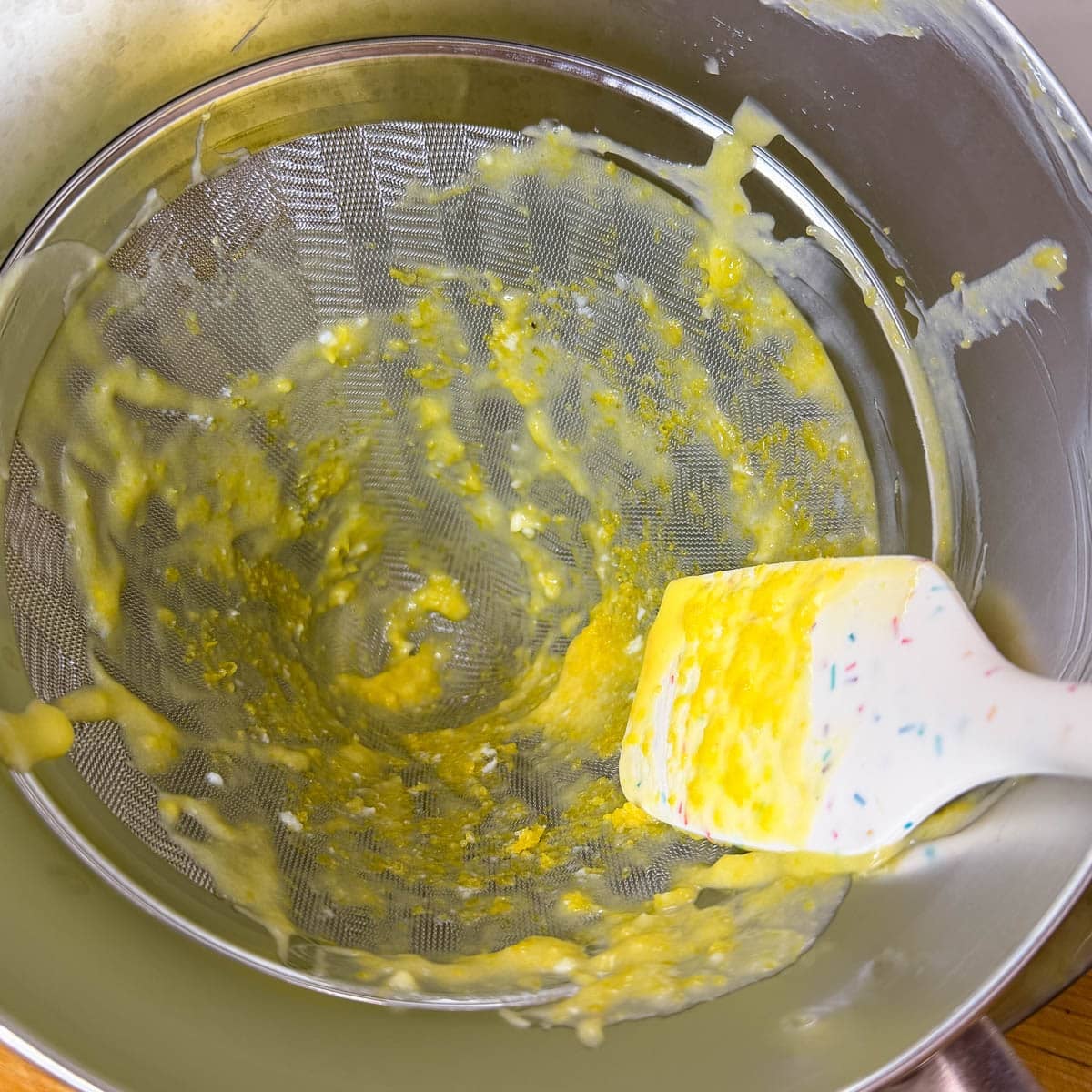
- If desired, strain the curd through a fine mesh sieve to remove zest and ensure a silky texture.
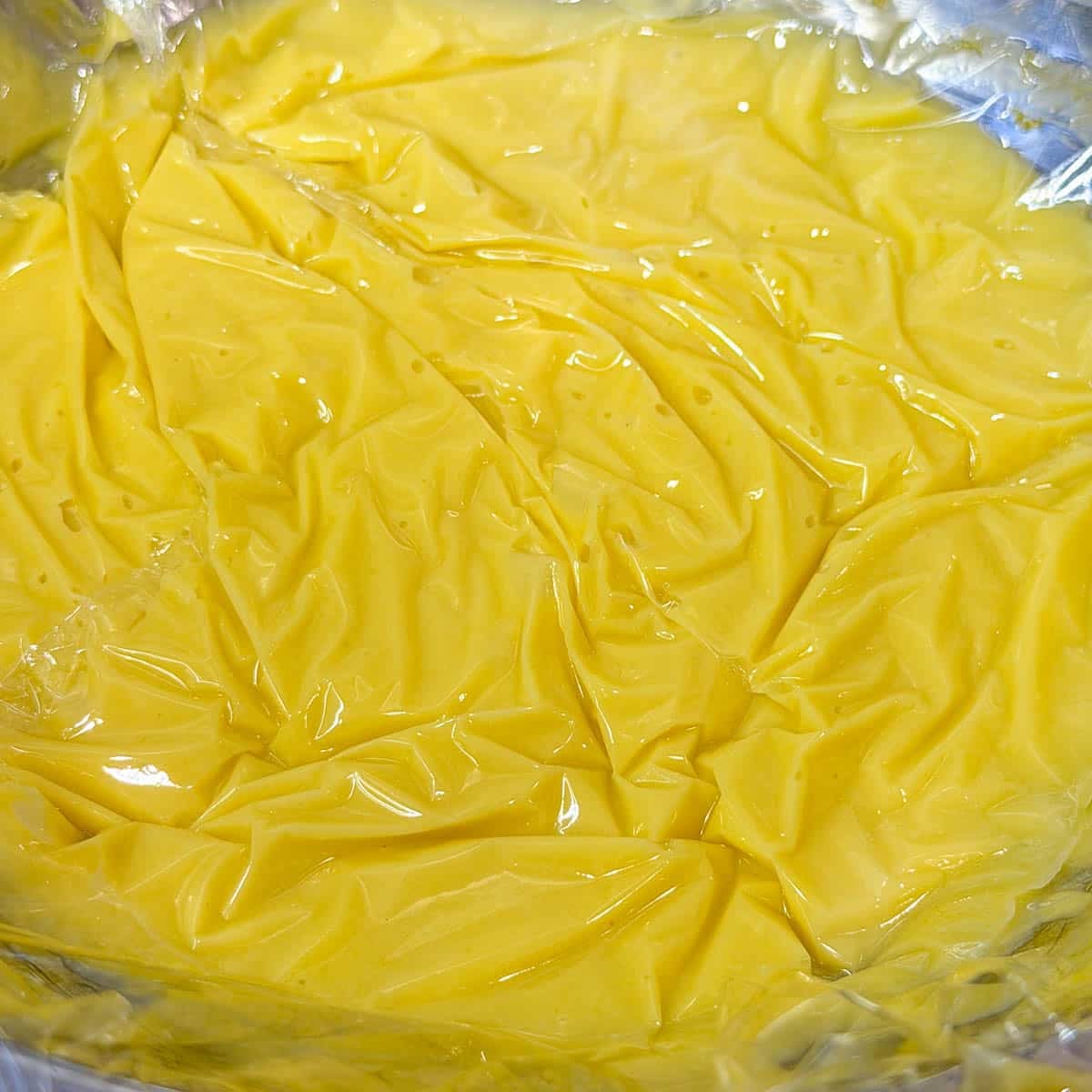
- Place some plastic wrap over the curd so that it's touching the surface, and then refrigerate it until you need it. It will thicken as it cools.
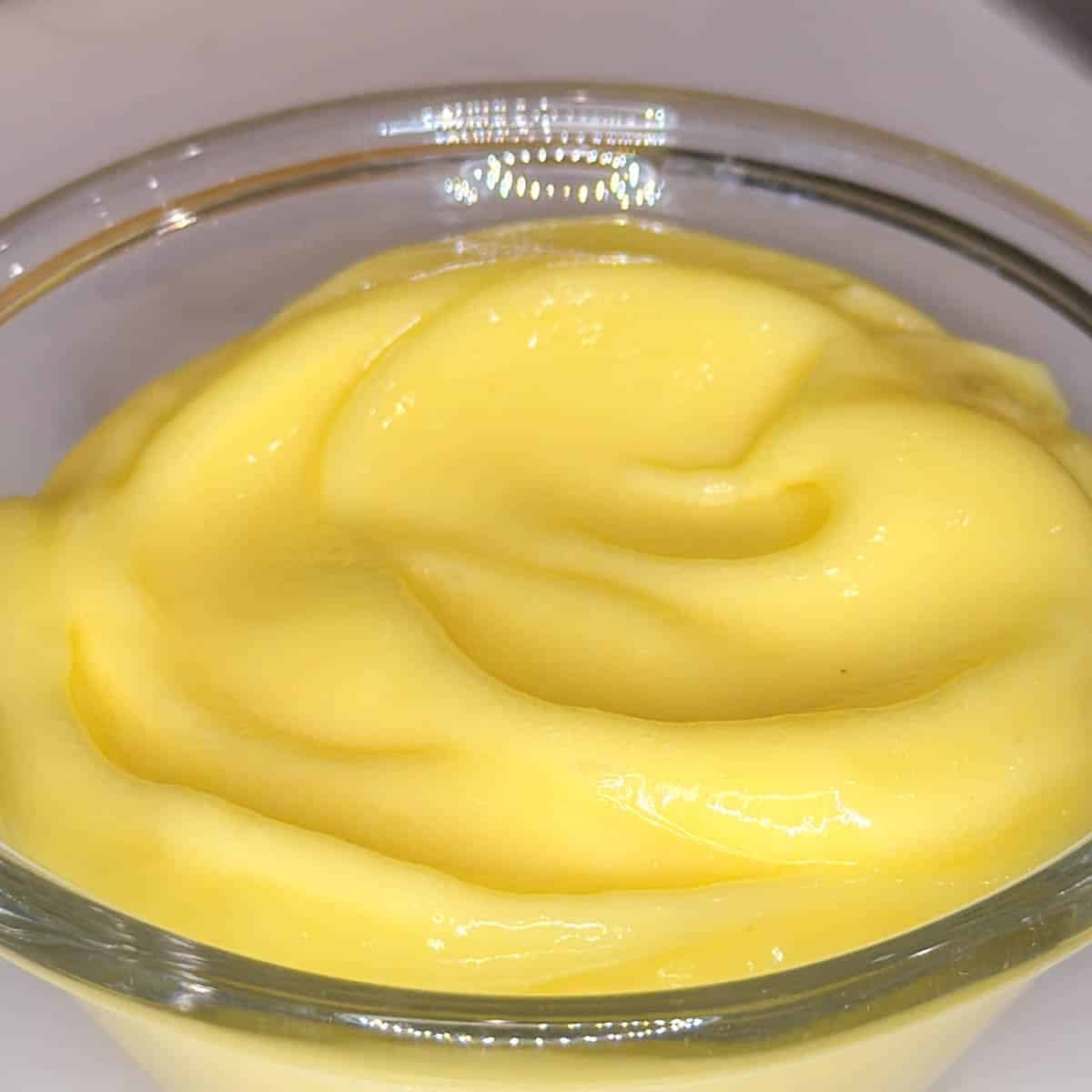
PRO TIP: Whisking constantly prevents the eggs from curdling and promotes even thickening.
Lemon Cake Step-By-Step
Before starting this lemon cake recipe, make sure all of your ingredients are at room temperature so your batter mixes smoothly and does not curdle. I also weigh all my ingredients out with a kitchen scale. Liquids are weighed as well as dry ingredients.
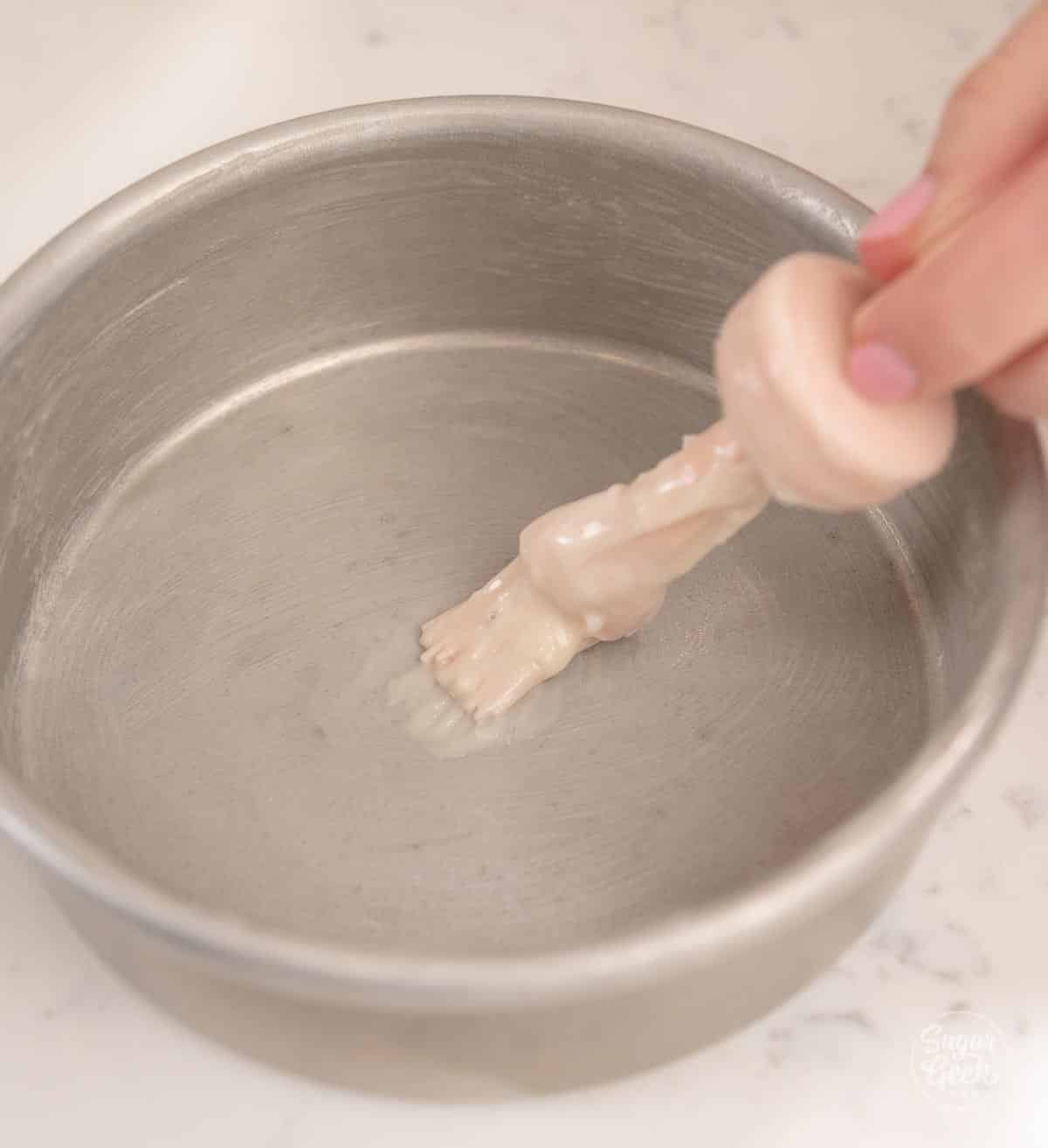
- Preheat your oven to 335°F (168°C) and prepare your cake pans with cake goop or parchment paper.
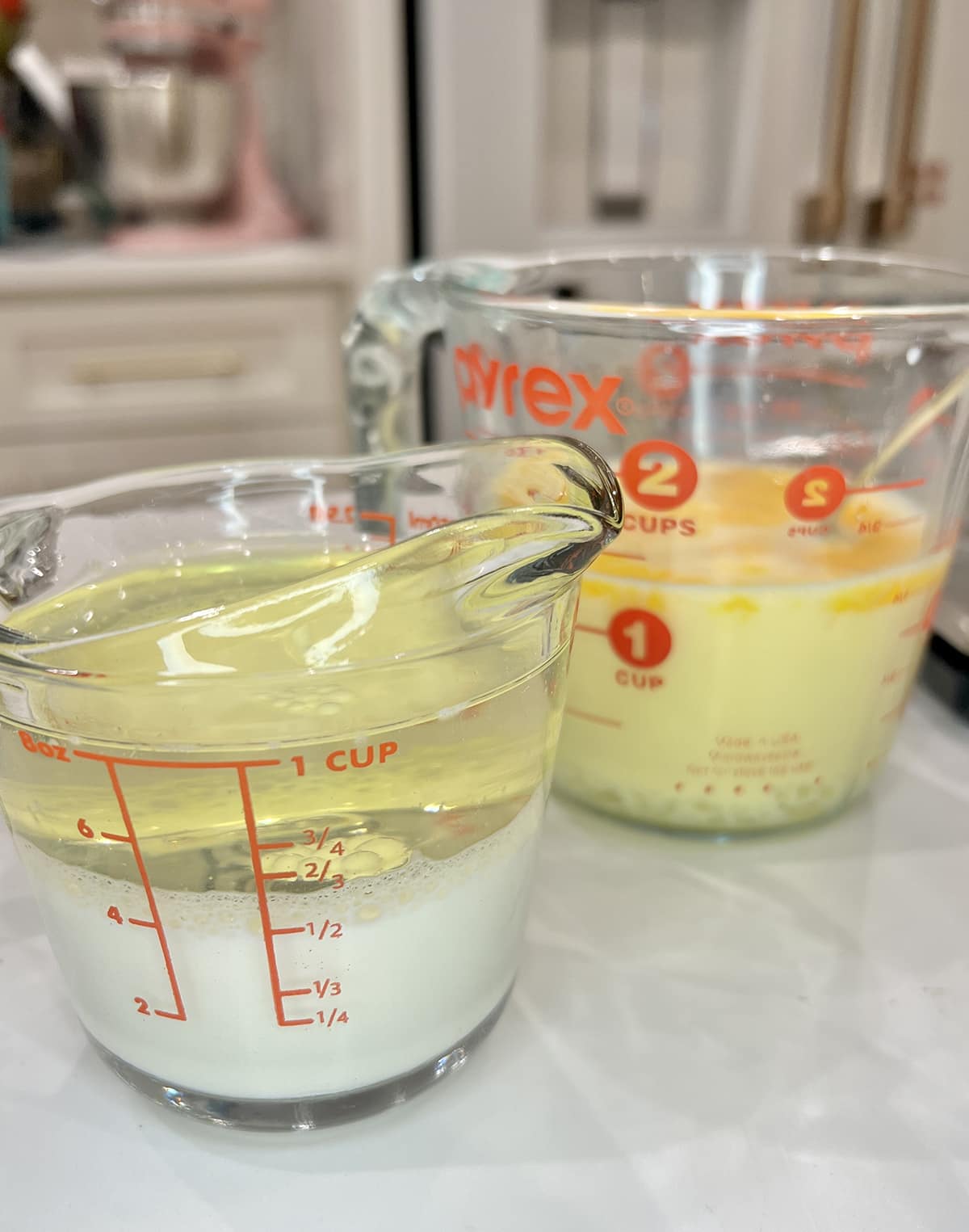
- In one bowl, combine half of the buttermilk with the oil and set it aside.
In another separate bowl, whisk together the remaining buttermilk, eggs, lemon juice, lemon zest, and lemon extract until combined. Set it aside.
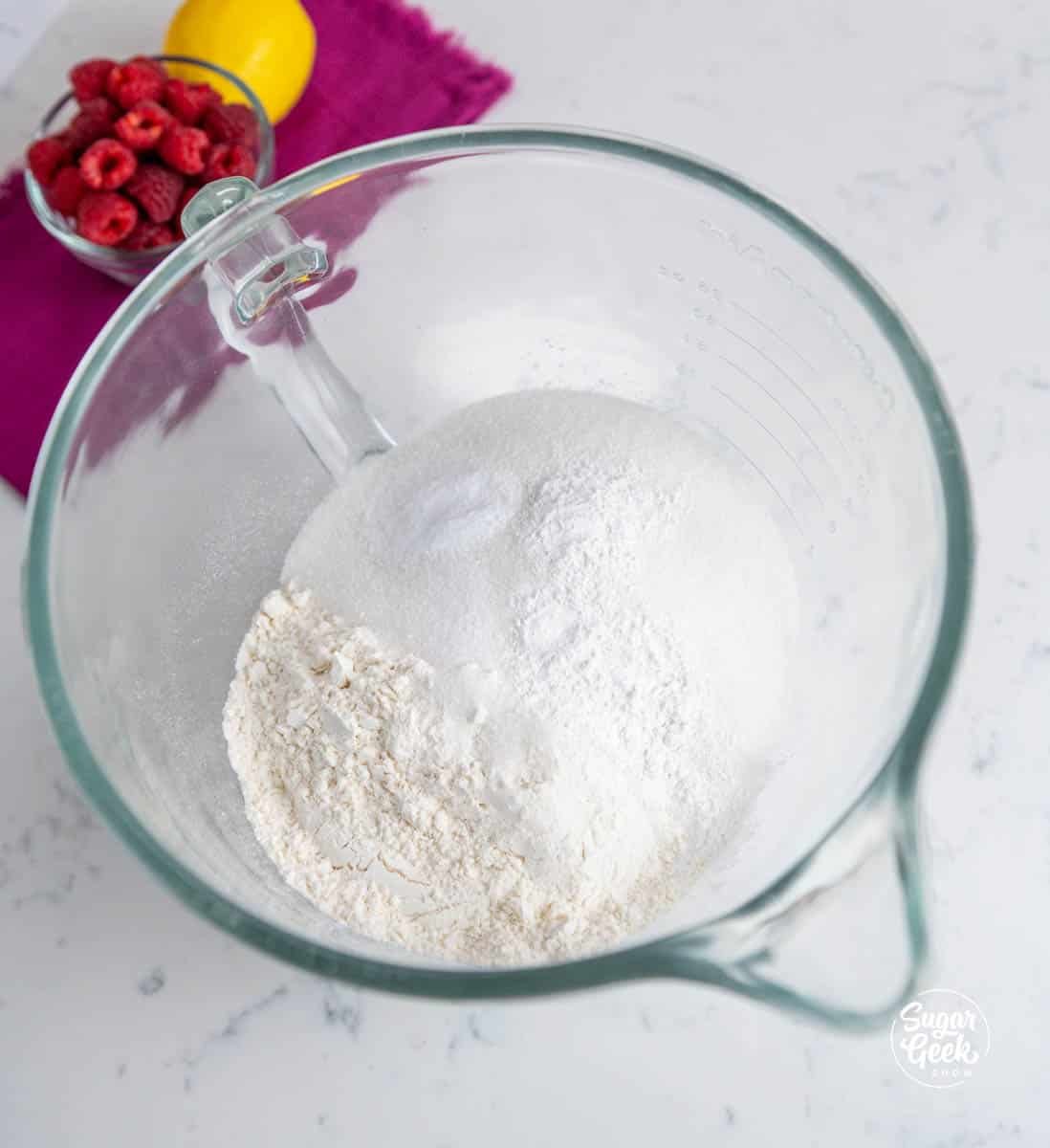
- Add the cake flour, sugar, salt, baking powder, and baking soda to the bowl of your stand mixer and mix briefly to combine.
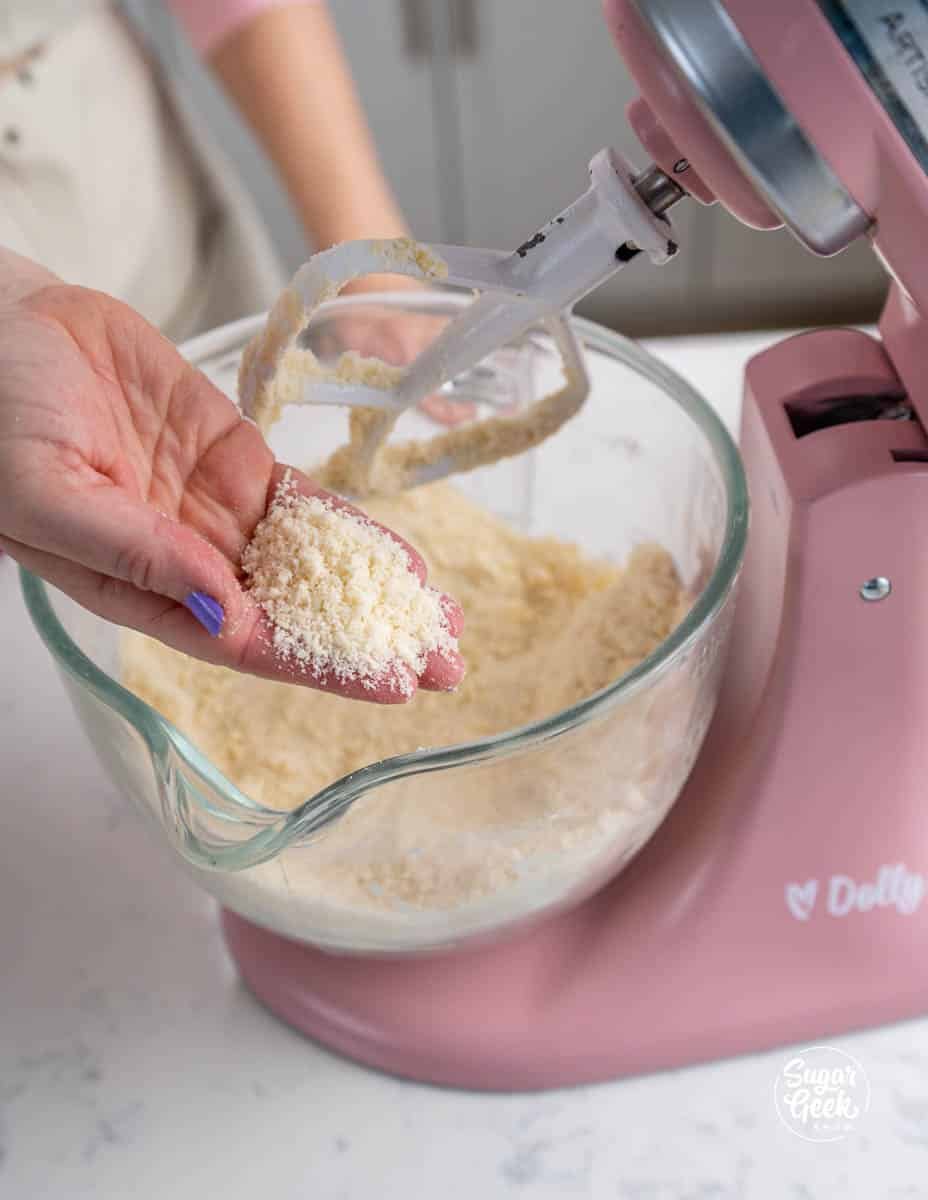
- Add the softened butter in small chunks to the dry ingredients while mixing on low speed until the mixture resembles coarse sand.
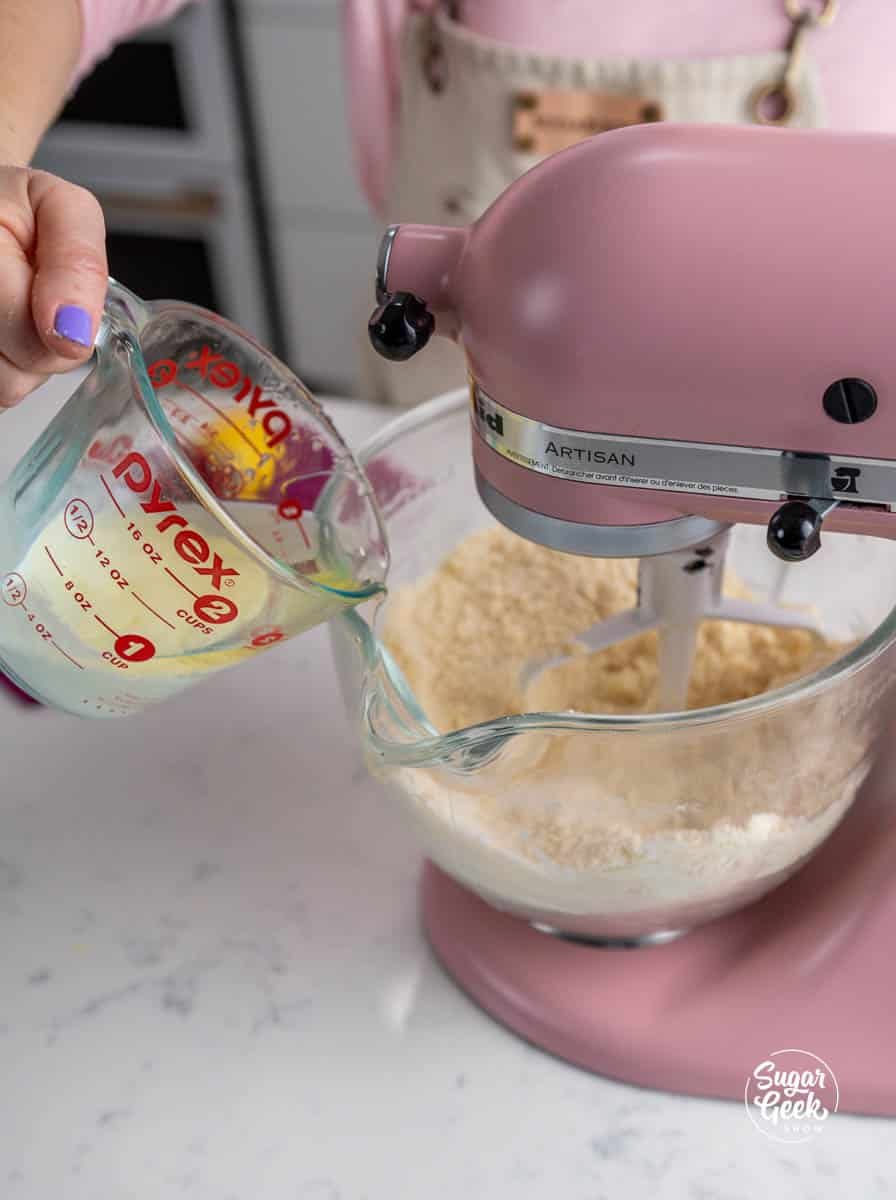
- Add the buttermilk and oil mixture to the dry ingredients and mix on medium speed for two minutes.
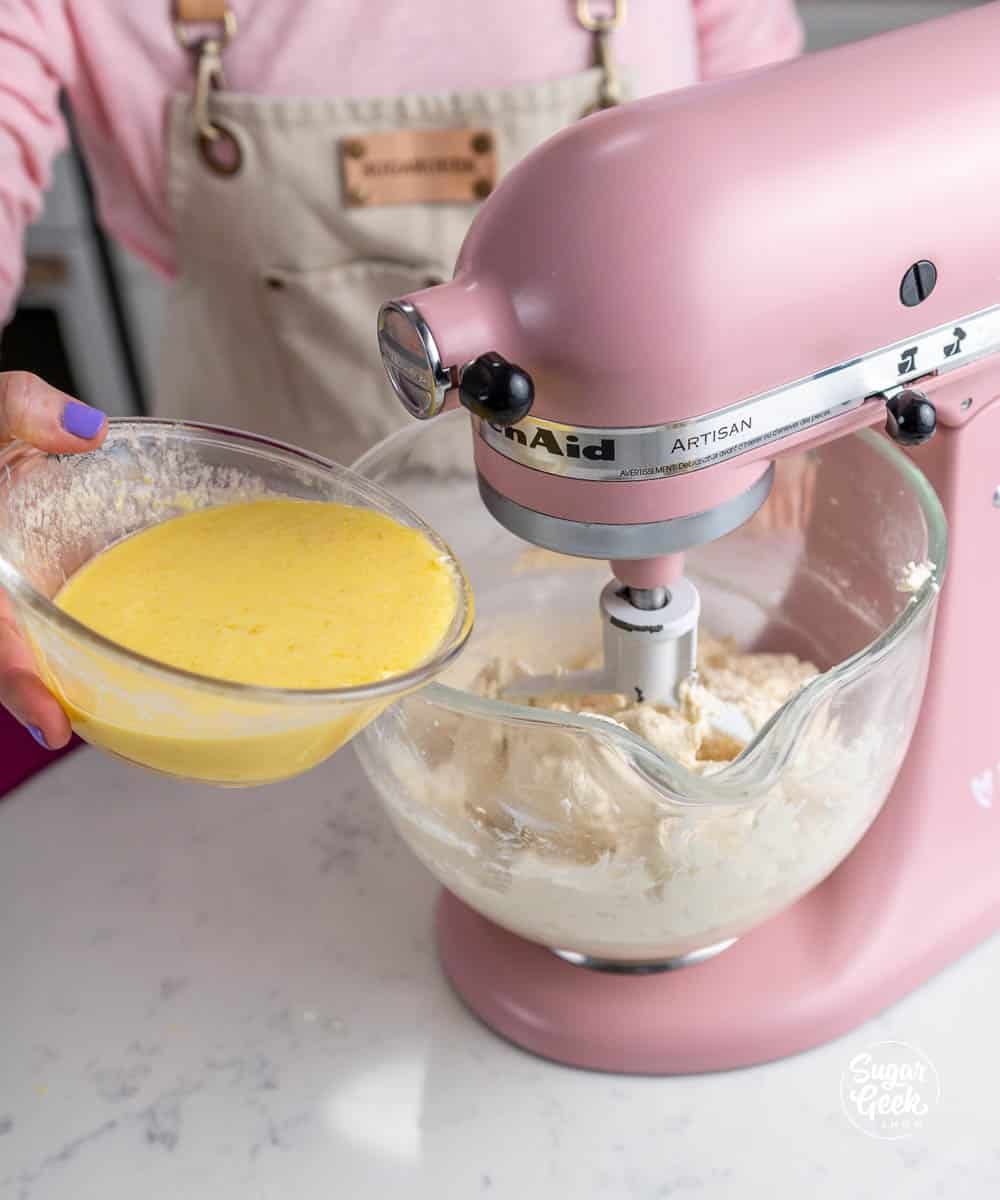
- Slowly add the egg mixture in three parts, mixing for about 10 seconds between each addition and scraping the bowl as needed.
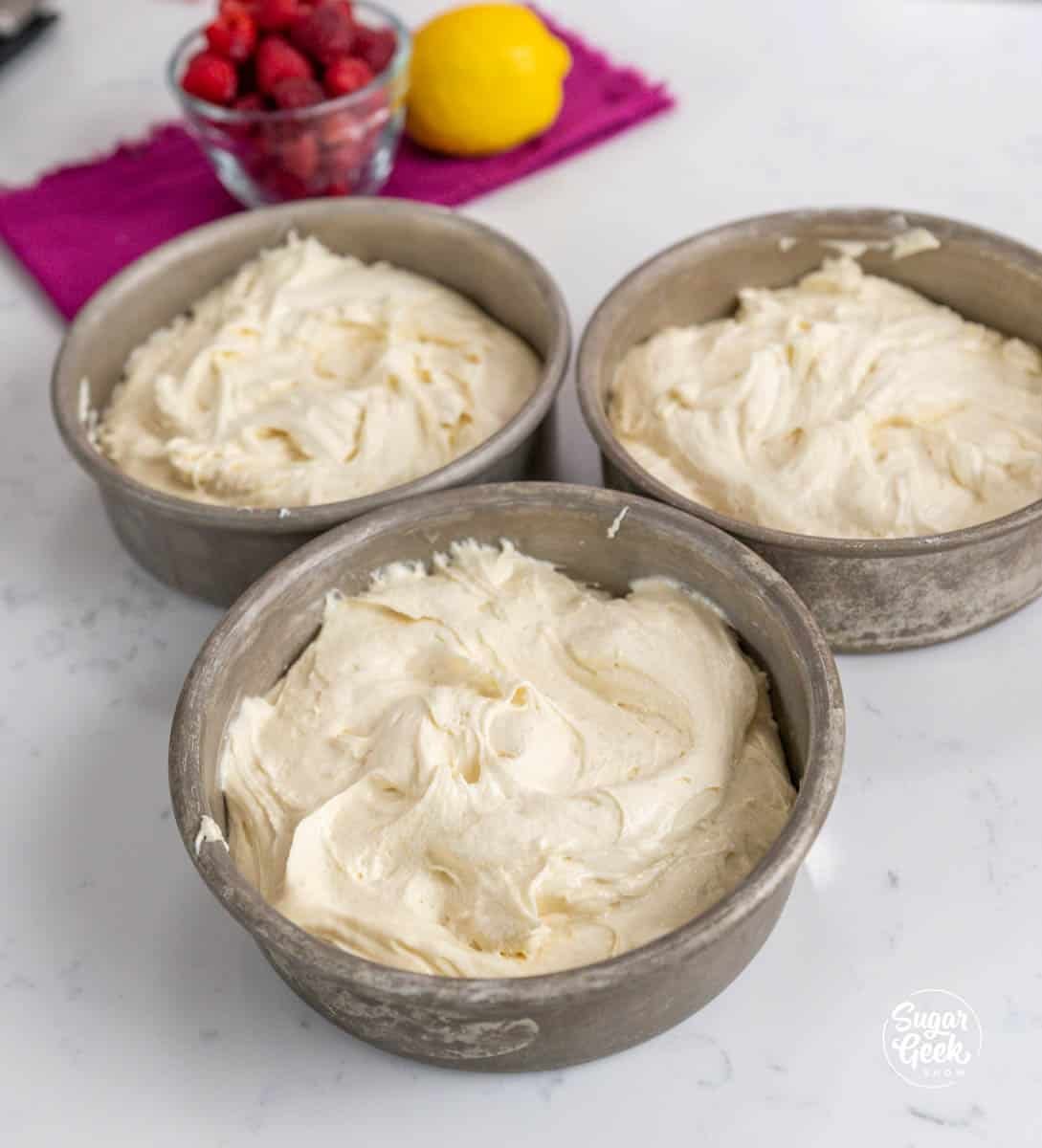
- Fill your cake pans about three-quarters full with batter and bake for 30-40 minutes, or until a toothpick inserted into the center comes out clean.
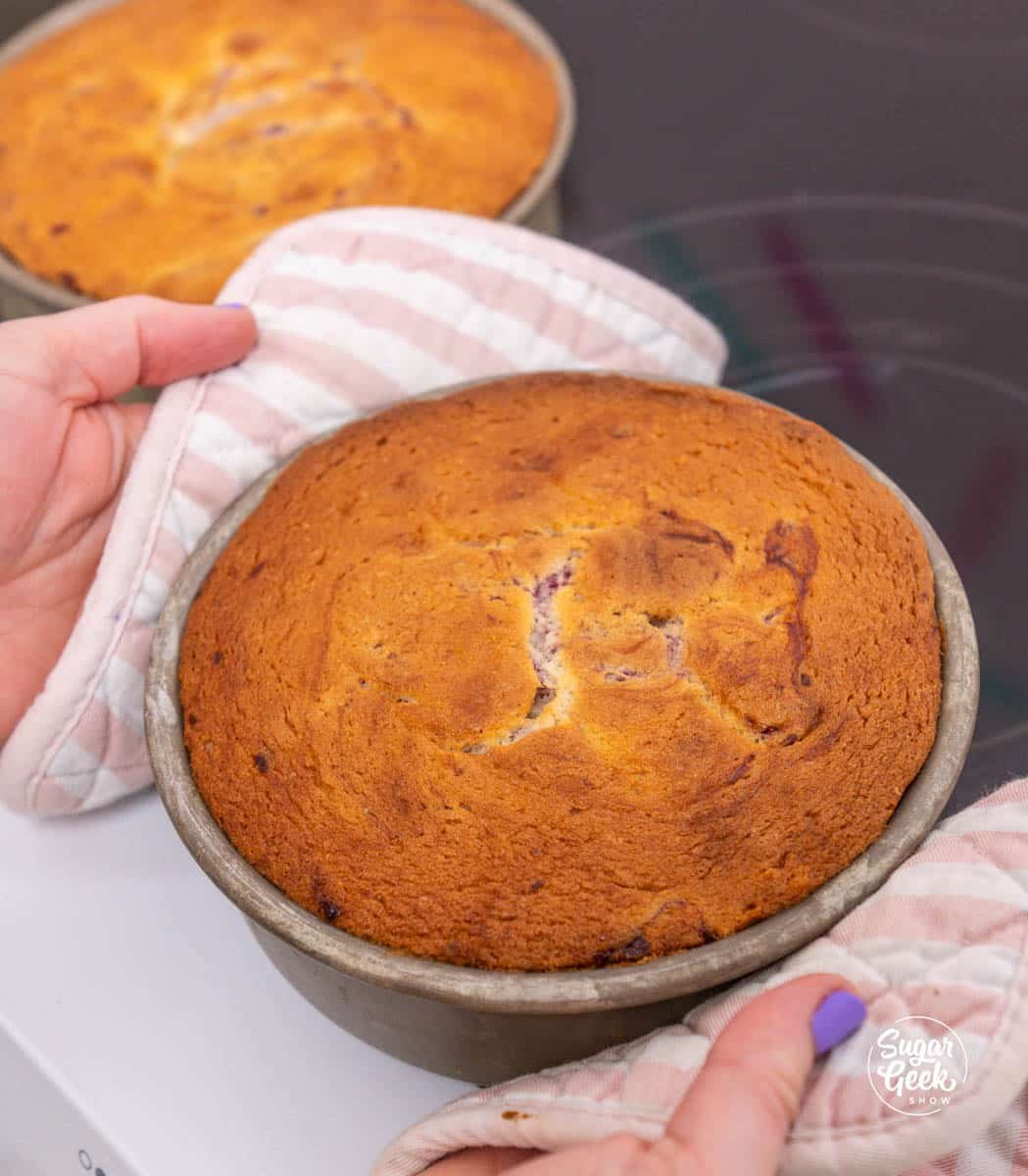
- Allow the cakes to cool in the pans for about 10 minutes before turning them out onto a cooling rack.
Once they are slightly warm, wrap them in plastic wrap and chill them in the refrigerator until firm and easy to handle.
Lemon Cream Cheese Frosting
This lemony cream cheese adds the perfect amount of tang and sweetness to accent the moist cake layers and tart lemon curd filling.
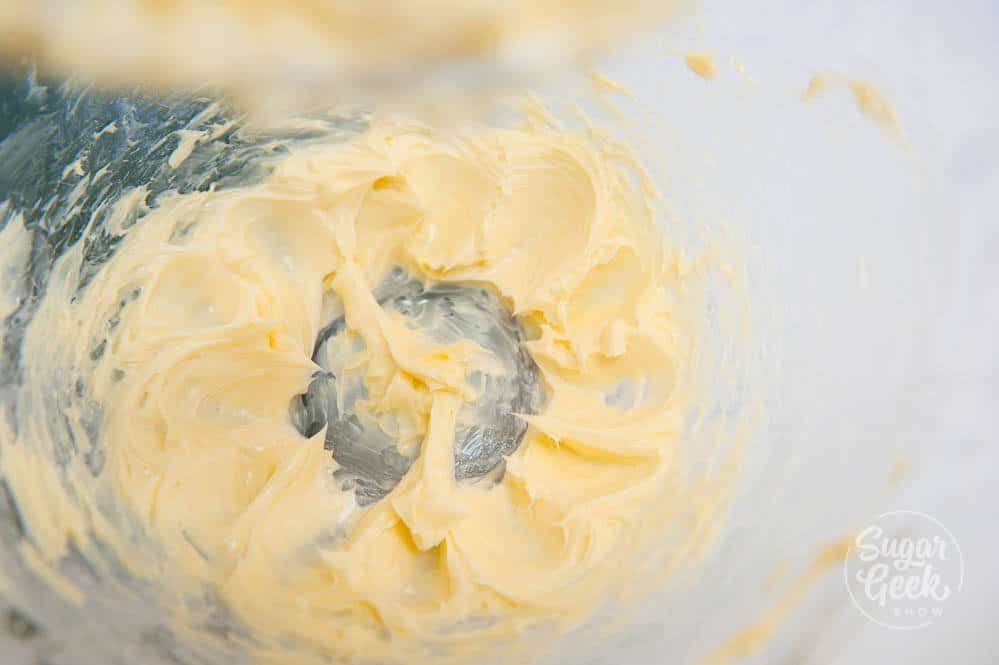
- First, place the softened butter into a mixing bowl with the paddle attachment and cream it until smooth and fluffy.
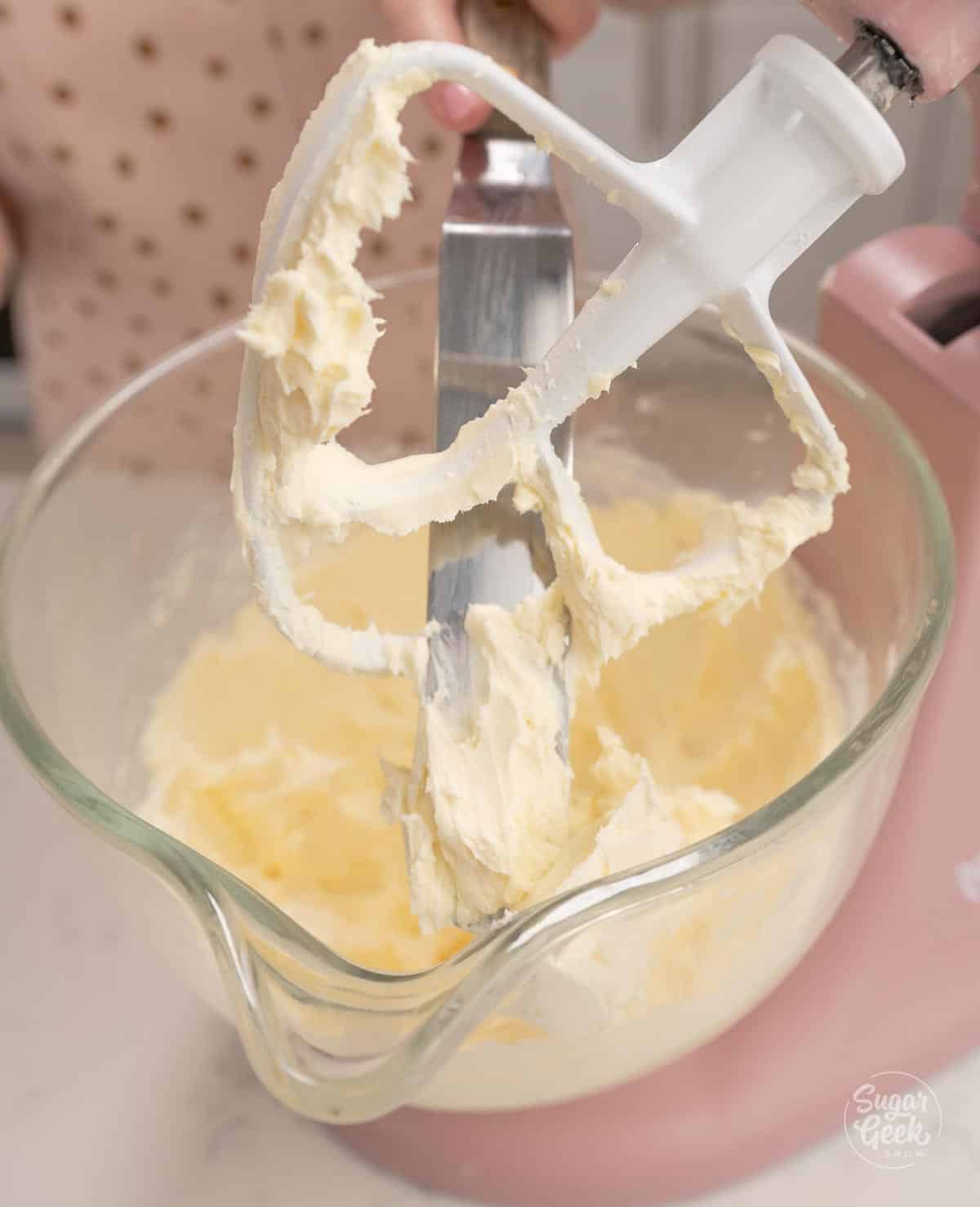
- Next, add the softened cream cheese and mix on low speed until fully combined and smooth.
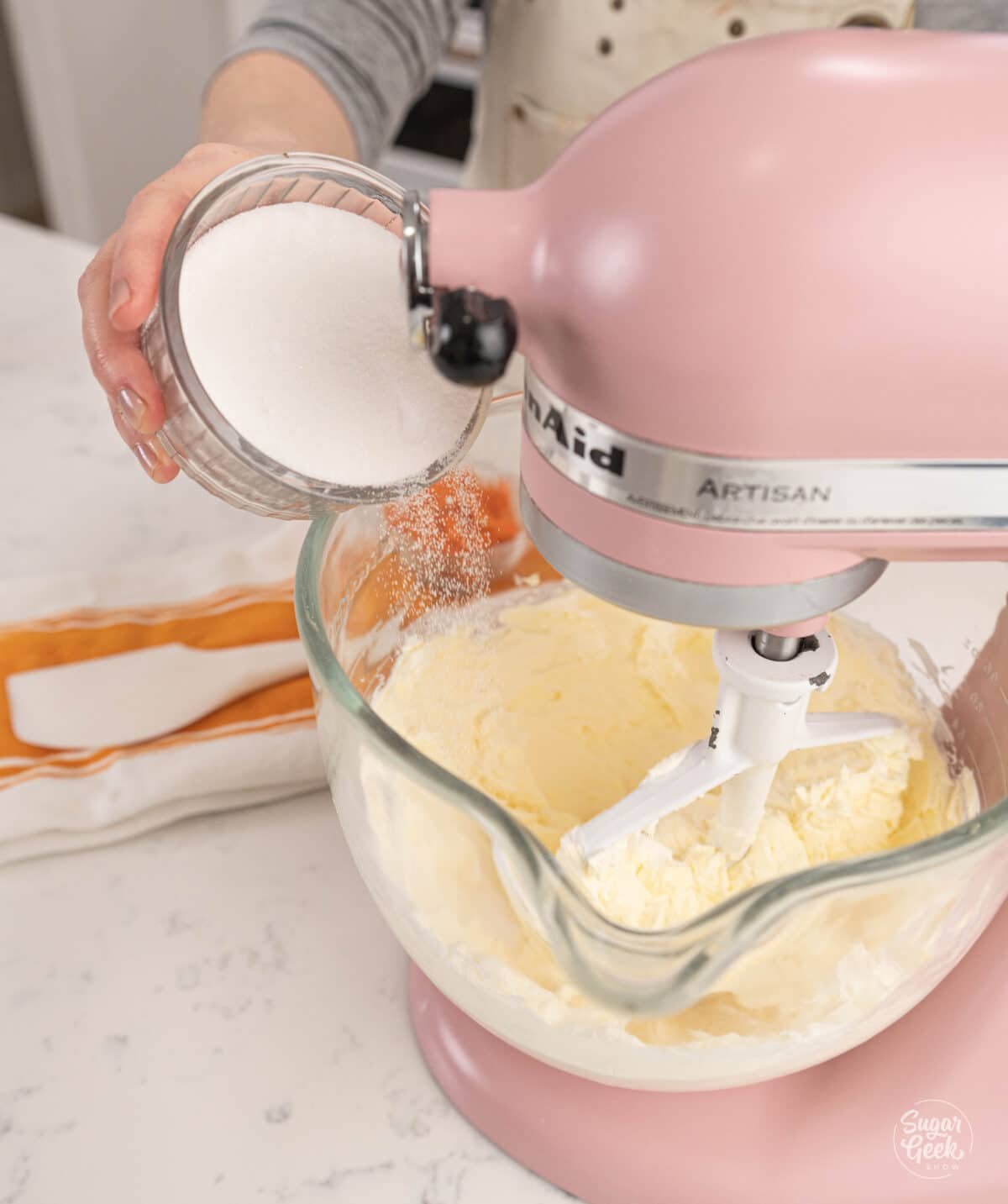
- Gradually add the powdered sugar, mixing on low speed until incorporated before adding more.
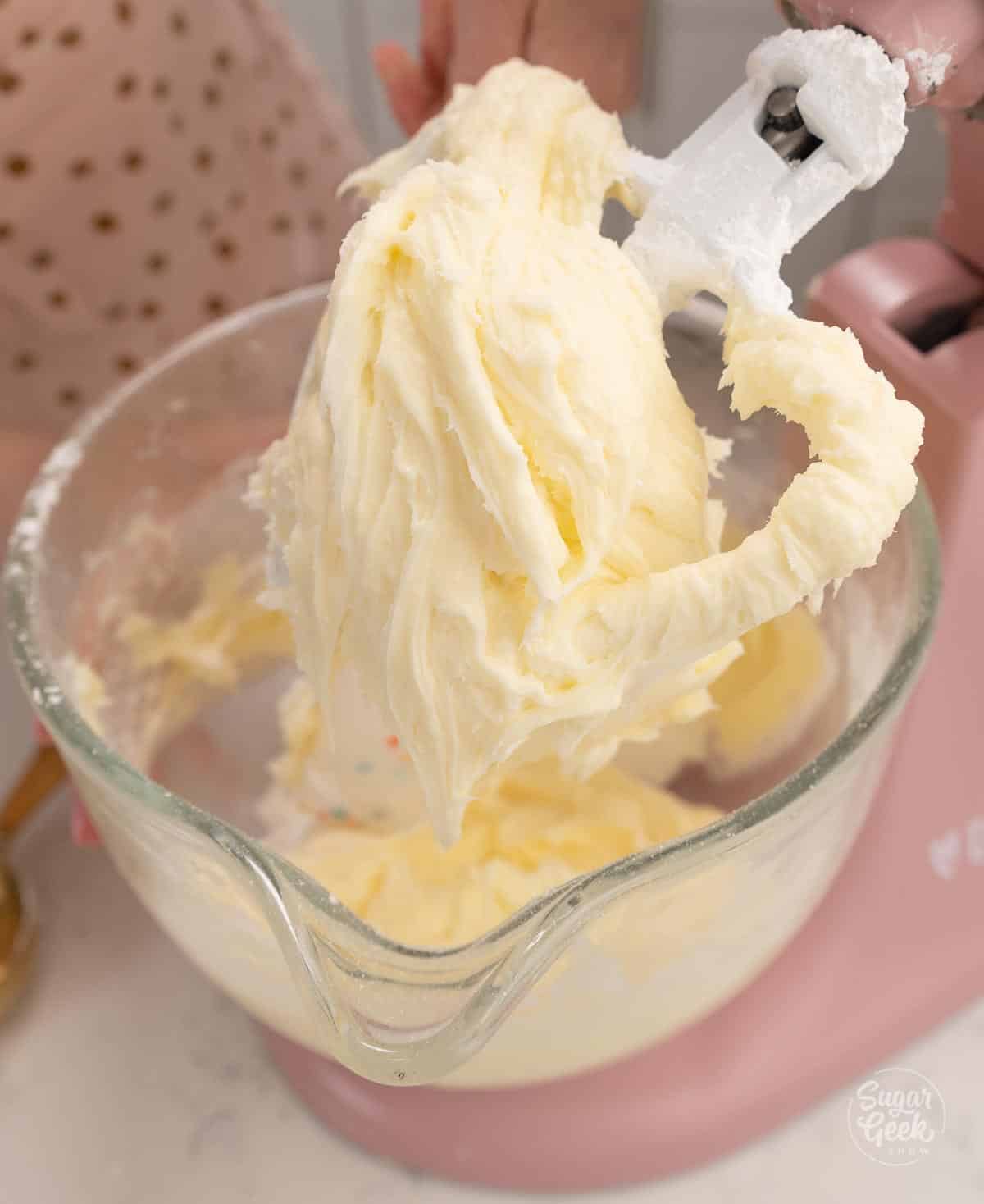
- Finally, add the extract and salt, and mix just until everything is smooth and combined.
Lemon Cake Assembly
This lemon cake is literally bursting at the seams with so much lemon flavor! I love this cake so much! The cake is so so soft and fluffy but combined with the lemon curd and the lemon cream cheese frosting, this cake is far and above the best lemon cake ever.
- First, trim the tops of your cake layers so they are level and even.
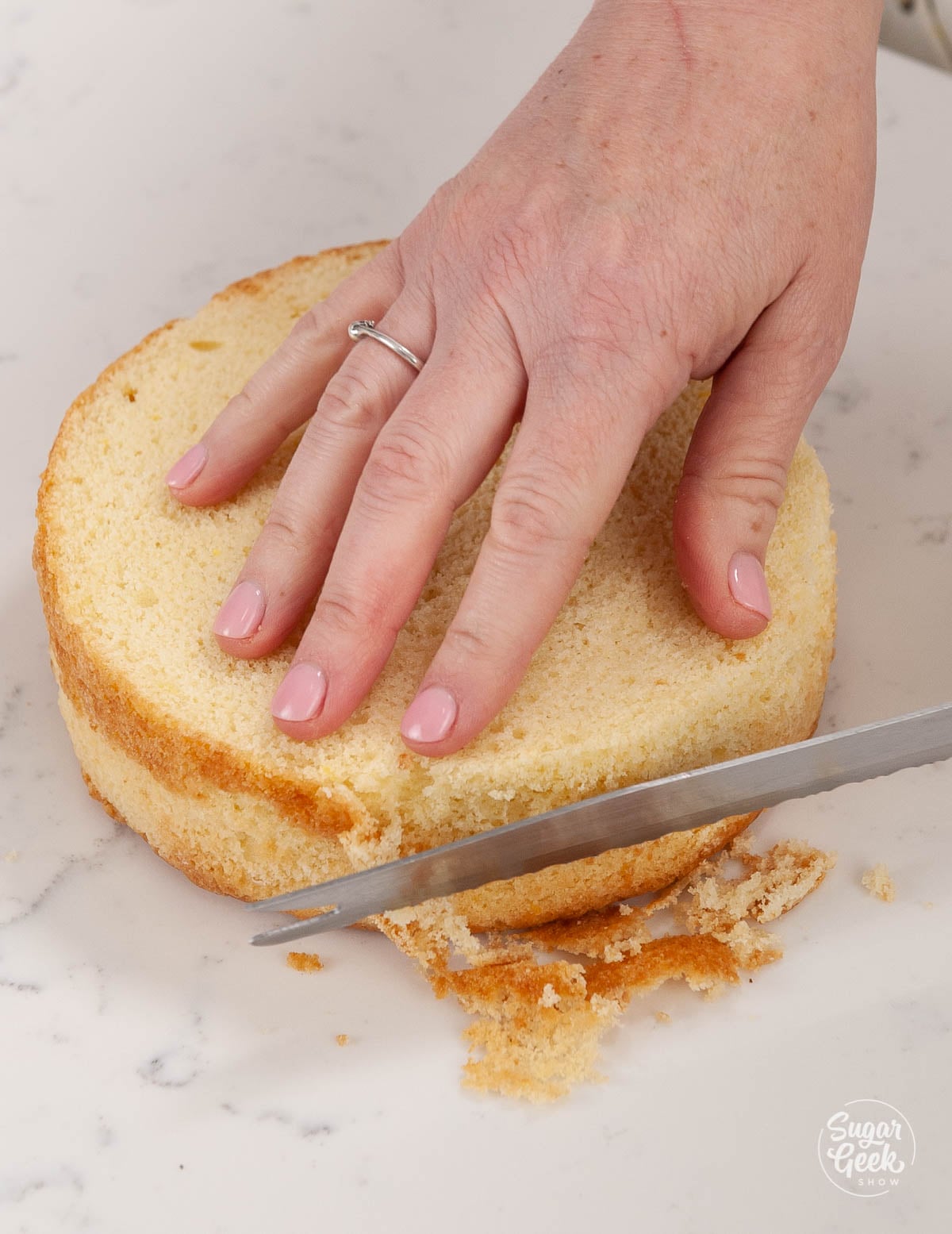
- Place the first cake layer onto a cake board or serving plate.
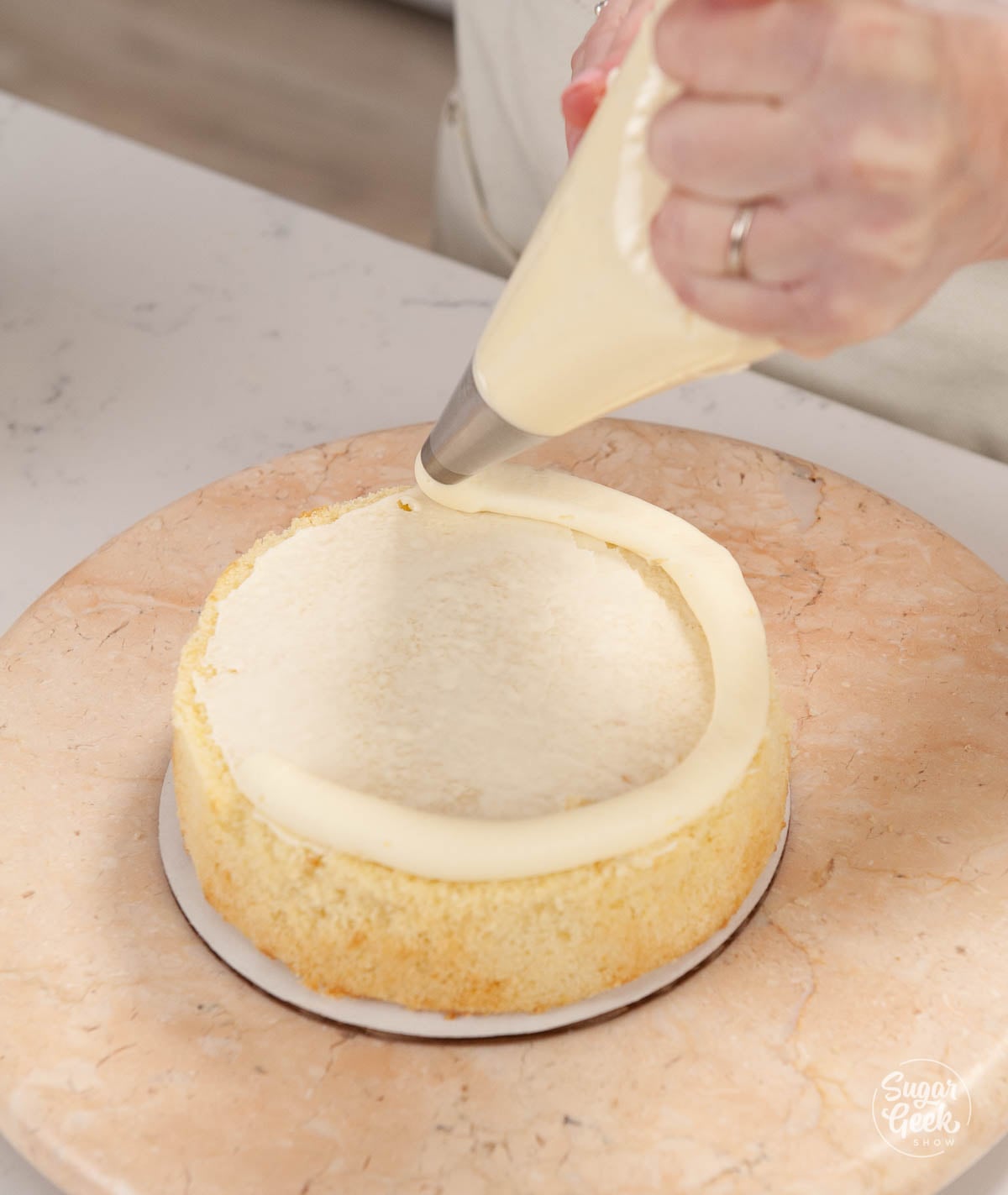
- Pipe a ring of buttercream around the edge of the cake to create a dam. This prevents the curd from oozing out of the sides of the cake.
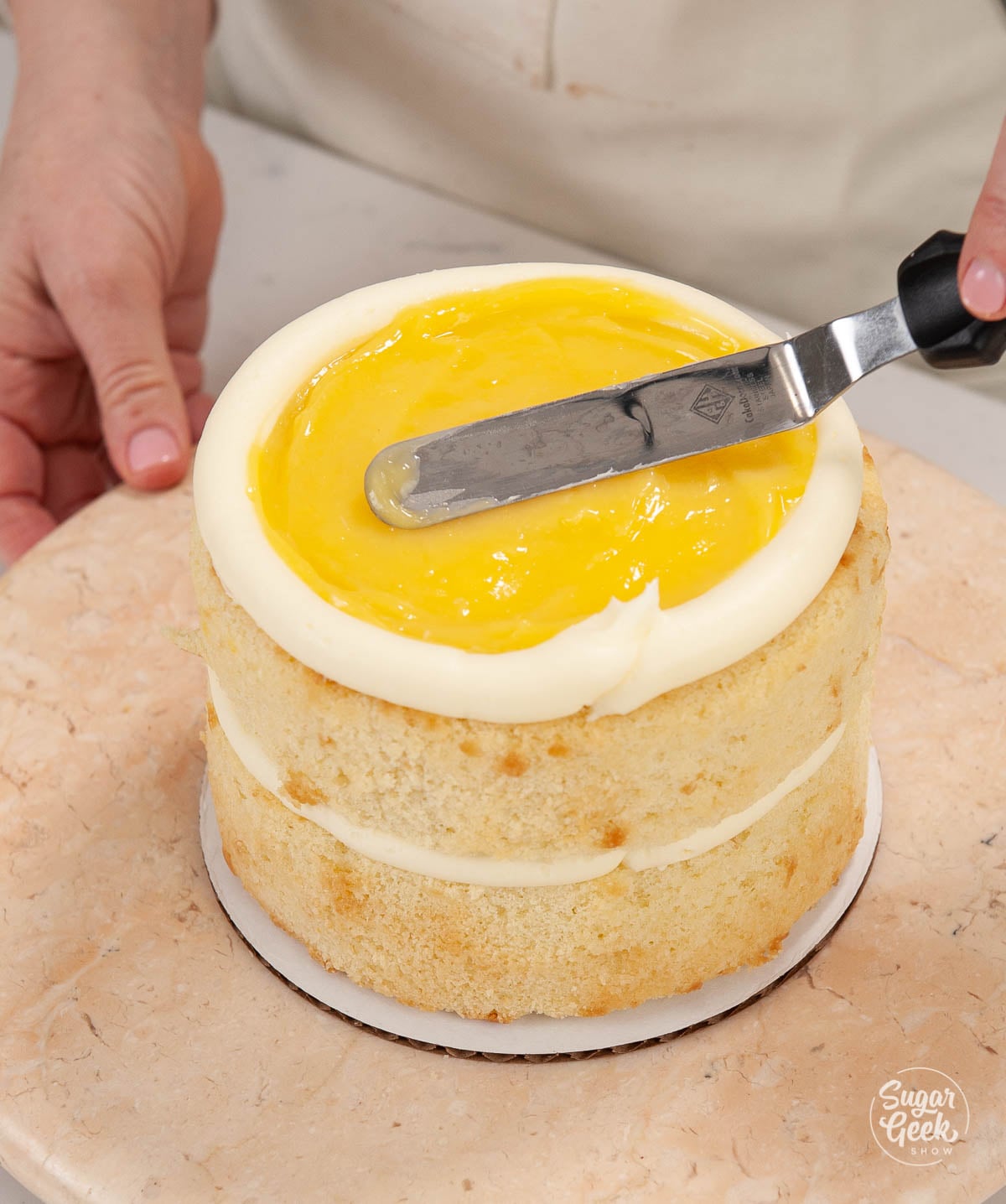
- Fill the center with a layer of lemon curd and spread it evenly.
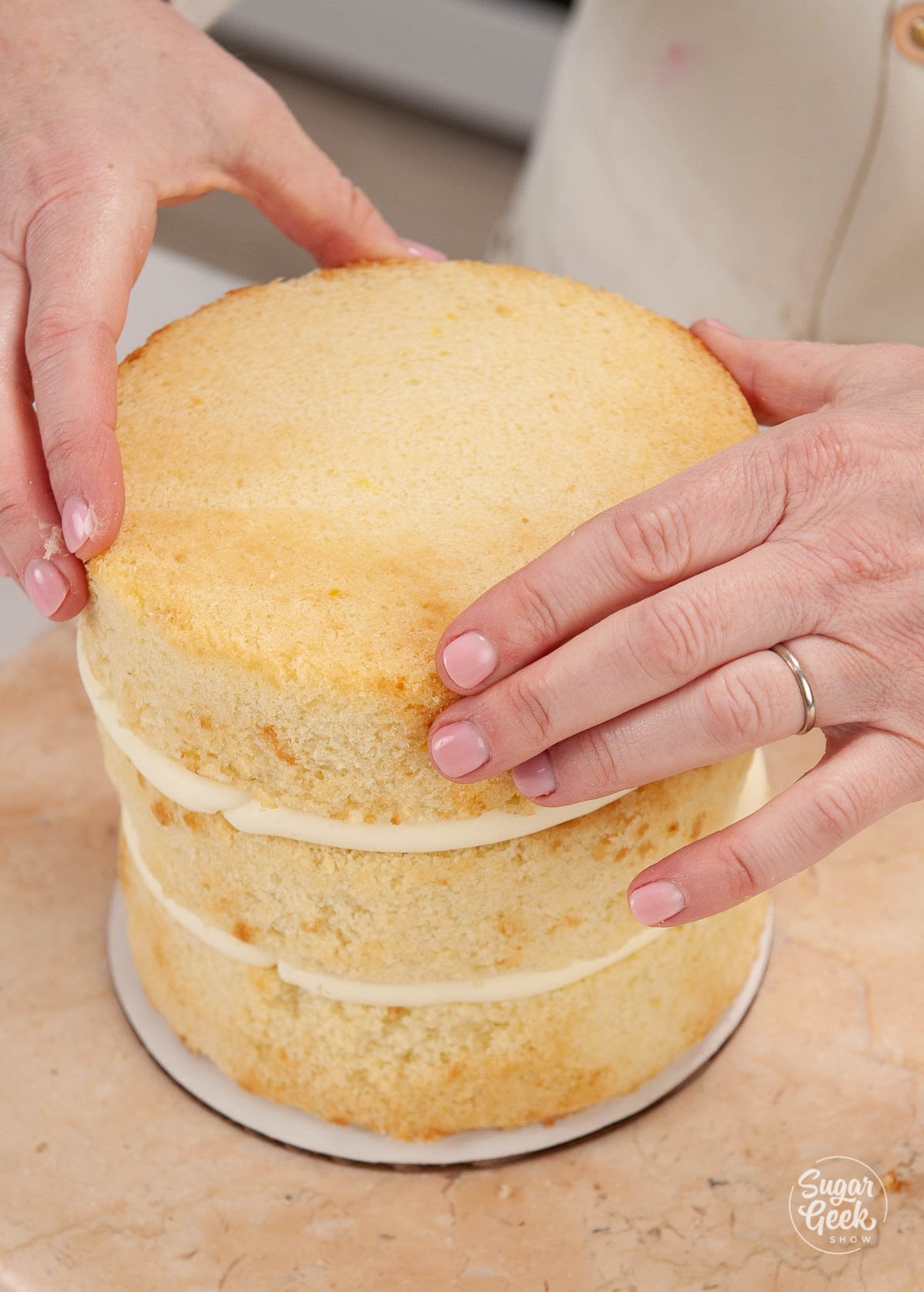
- Place the second cake layer on top and repeat the process.
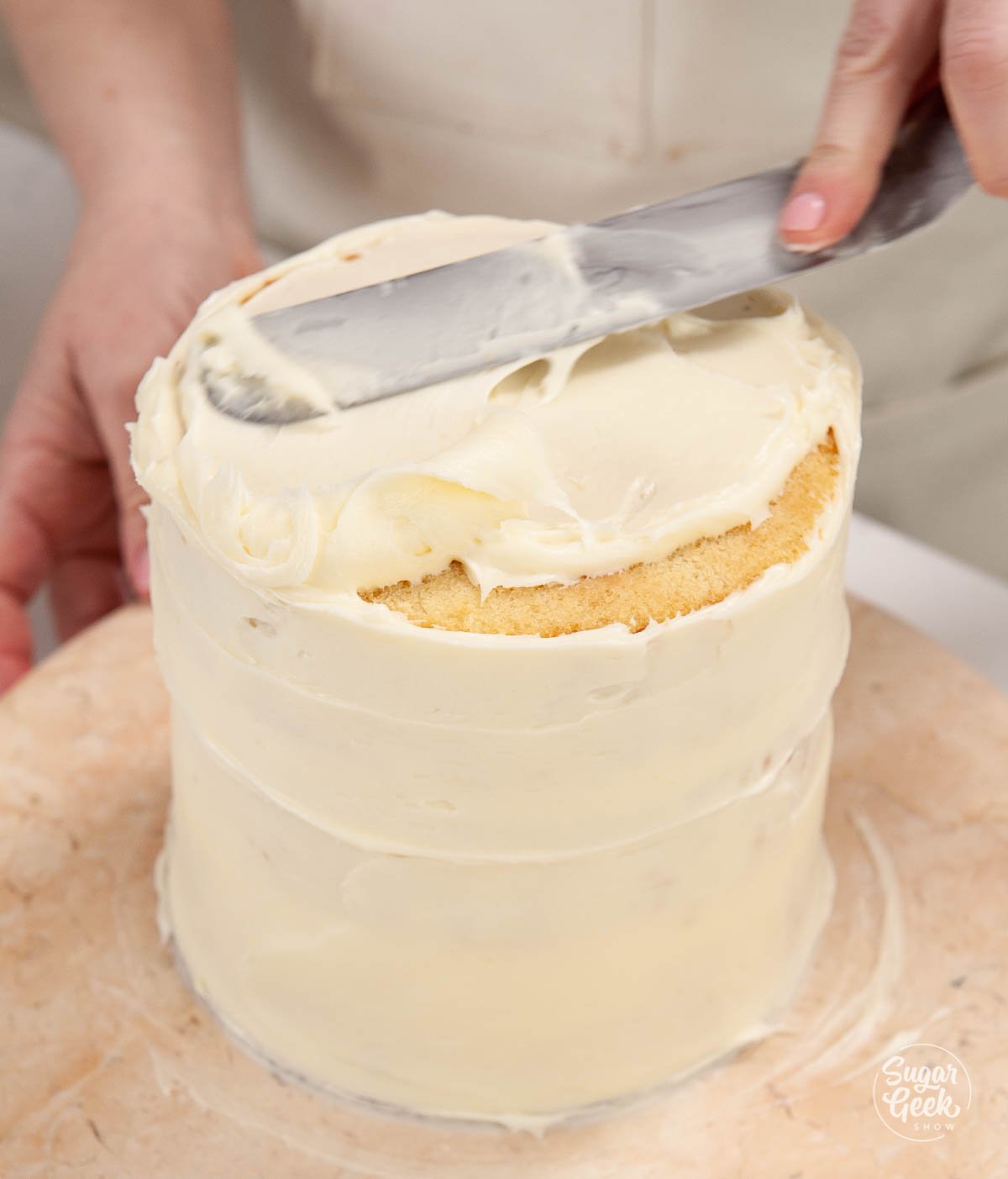
- Add the final cake layer and apply a thin crumb coat of frosting over the entire cake.
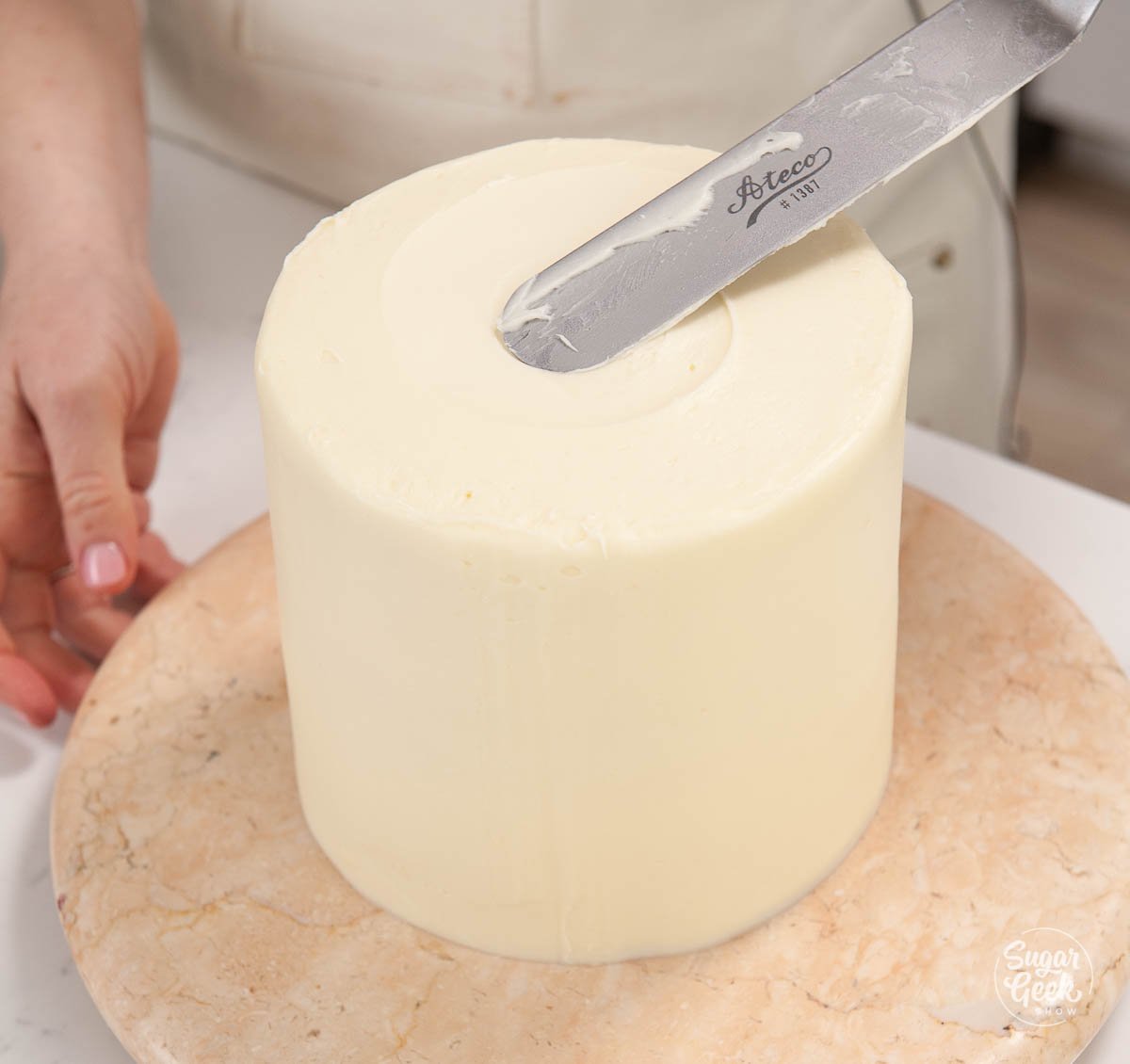
- Chill the cake in the refrigerator for 15 minutes to set the crumb coat.
- Apply the final layer of frosting and smooth the sides and top with a bench scraper or spatula.
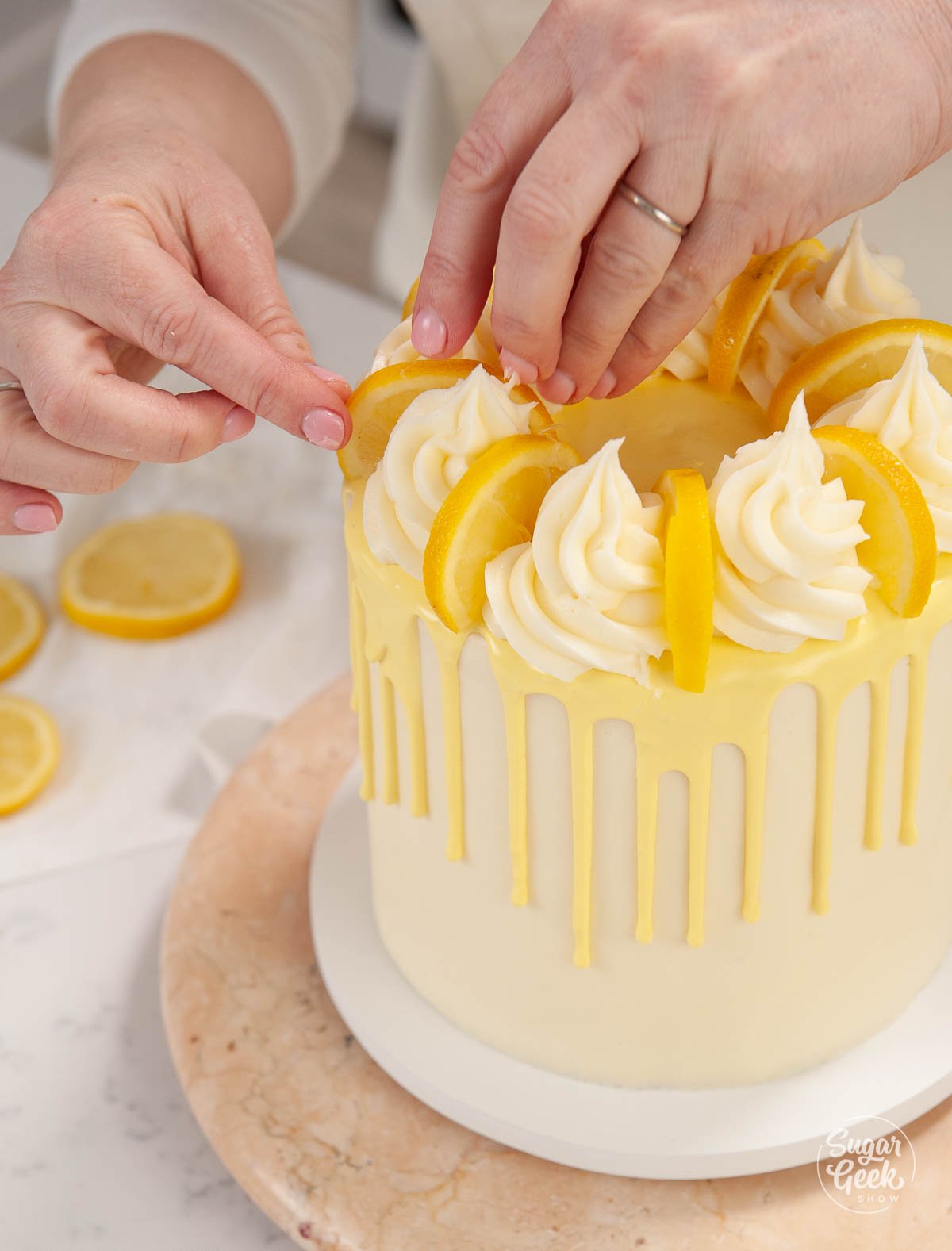
- Optional: Add a few swirls of frosting on top and drizzle leftover lemon curd or add some lemon slices for decoration.
Cake Batter and Frosting Calculator
Select an option below to calculate how much batter or frosting you need. Adjust the servings slider on the recipe card to change the amounts the recipe makes.
Choose a pan type
Choose a cake pan size
(based on 2" tall cake pan)
Choose a cake pan size
(based on 2" tall cake pan)
Cupcake Tin Size
Choose number of pans
Cups of Batter Needed
8 cups
Cups of Frosting Needed
5 cups
Note: measurements are estimated based off the vanilla cake recipe using standard US cake pans and sizes. Measurements used are for 2" tall cake pans only. Your results may vary. Do not overfill cake pans above manufacturer's recommended guidelines.
Common Lemon Cake Problems To Avoid
- Using cold ingredients - Cold butter will not blend properly into the dry ingredients during the reverse creaming step, and cold eggs can cause the batter to curdle and look broken. Make sure your butter, eggs, and buttermilk are all fully at room temperature before you start mixing.
- Skipping the frosting dam for the lemon curd filling - Lemon curd is much thinner than buttercream. Without a ring of frosting piped around the edge of each cake layer, the curd will squeeze out the sides when you stack the layers and make the cake unstable and difficult to frost.
- Skipping the crumb coat - A crumb coat seals in any loose crumbs before the final layer of frosting goes on. Without it you will end up with crumbs showing through the finished surface, which is especially noticeable with a pale cream cheese frosting.
- Overbaking the layers - This cake should come out of the oven the moment a toothpick comes out clean and the top springs back when touched. Even a few extra minutes can dry out the crumb and undo all the moisture work the buttermilk and oil are doing.
- Not chilling the layers before assembling - Warm cake layers are fragile and will slide around under the weight of the frosting and filling. Chilling them for at least 30 minutes makes them firm, easy to trim, and much easier to stack cleanly.
Lemon Cake FAQs
No. Lemon juice adds liquid but not enough flavor. Use extra zest instead or a little more citric acid.
Yes. Fill the liners ⅔ full, bake at 400°F for 5 minutes, then 350°F until done (18-25 minutes total).
Yes. Substitute the same amount of lime juice and zest in place of the lemon, and use lime extract instead of lemon extract if you can find it. The result is a bright, tangy lime velvet cake with the same soft, velvety crumb. The citric acid is optional either way but helps punch up the flavor.
Store the lemon cake in the fridge for up to 3 days. Bring it to room temperature before serving it for the best texture.
Yes, and making it ahead actually improves the results. Bake the cake layers up to 3 days in advance, wrap them tightly in plastic wrap, and refrigerate or freeze them. The lemon curd can be made up to a week ahead and stored in an airtight container in the fridge. For the best results, assemble and frost the cake the day before serving.
More Lemon Recipes To Try

Ready To Master Cake Decorating?
Join Sugar Geek University and learn professional techniques through detailed cake decorating courses, tutorials, and real kitchen demonstrations by
award-winning cake decorator, Liz Marek.
Recipe
Equipment
- Stand Mixer
Ingredients
Lemon Cake Ingredients
- 18 ounces Cake flour
- 18 ounces granulated sugar
- ¾ teaspoon salt
- 2 ¾ teaspoons baking powder
- ¾ teaspoon baking soda
- 11 ounces unsalted butter Softened but not melted
- 14 ounces buttermilk Or regular milk with 1 tablespoon white vinegar added
- 4 ounces vegetable oil Or canola oil
- 4 Large Eggs 1 large egg weighs about 1.67oz
- 2 Tablespoons Lemon Zest About two lemons
- 2 ¾ teaspoons Lemon Extract
- 2 Tablespoons Lemon Juice Fresh or bottled is ok
Lemon Curd
- 3 ounces Lemon Juice Fresh or bottled is ok
- 1 Tablespoon Lemon Zest About two lemons worth
- 3 ounces Sugar
- 1 large Egg
- 2 large Egg Yolks
- 1 pinch citric acid
- 2 ounces Unsalted Butter
- 1 pinch salt
Lemon Cream Cheese Frosting
- 16 ounces cream cheese softened
- 8 ounces Unsalted Butter Softened but not melted
- 36 ounces Powdered Sugar sifted
- ½ teaspoon lemon extract
- ½ teaspoon salt
Instructions
Lemon Cake Instructions
- Preheat your oven to 335º F/168º C Prepare three, 8"x2" cake pans with cake goop or another pan release. For square pans or cakes over 12", I also use parchment paper.
- Combine the 6oz of buttermilk with the oil and set aside.
- To the remaining 8oz of buttermilk, add your eggs, lemon zest, lemon extract, and lemon juice. Whisk lightly to break up the eggs and set aside.
- Place cake flour, sugar, salt, baking powder, and baking soda into the bowl of your stand mixer with the paddle attachment attached.
- Turn the mixer onto the lowest speed. Add in your softened butter in small chunks mix until the flour mixture resembles coarse sand.
- Add your oil/milk mixture all at once to the dry ingredients and mix on medium (speed 2 on a bosch, speed 4 on KitchenAid) for 2 full minutes to develop the cake's structure.
- Scrape the bowl. This is an important step. If you skip it, you will have hard lumps of flour and unmixed ingredients in your batter. If you do it later, they will not mix in fully.
- Slowly add in the milk/egg mixture in 3 parts, letting the batter mix for 10 seconds between additions. Stop to scrape the bowl once more halfway through. Your batter should be thick and not separated. If it is separated, some of your ingredients could have been too cold or you added your liquids too quickly.
- Fill your cake pans ¾ full with cake batter. Give the pan a little tap on each side to level out the batter and get rid of any air bubbles. You can also weigh your cake pans to ensure that each pan has the same amount of cake batter.
- Bake at 335º F/168º C for 35-40 minutes or until a toothpick comes out cleanly from the center of the cake and the top of the cake bounces back when you touch it.
- After cakes have cooled for 15 minutes or the pans are cool enough to touch, flip the cakes over onto a cooling rack and let cool until barely warm. Wrap your cakes in plastic wrap and chill in the refrigerator before frosting so they are easier to handle. You can also put them in the freezer if you are in a hurry for them to cool down.
- Once the cakes are chilled you can now trim, fill, and decorate your cake as you wish.
Lemon Curd Instructions
- First, combine the lemon juice, lemon zest, sugar, whole egg, and egg yolks, and citric acid in a heatproof bowl and whisk until smooth.
- Next, place the bowl over a pot of simmering water and cook the mixture while whisking constantly to prevent curdling.
- Continue cooking until the mixture thickens and reaches 170-175°F.
- Remove the curd from the heat and immediately whisk in the butter and salt until fully incorporated and smooth.
- If desired, strain the curd through a fine mesh sieve to remove zest and ensure a silky texture.
- Cover the lemon curd with plastic wrap so its touching the surface of the curd while it cools to prevent a skin from forming on the surface. The lemon curd will firm up as it cools.
Cream Cheese Frosting
- First, place the softened butter into a mixing bowl and cream it until smooth and fluffy.
- Next, add the softened cream cheese and mix on low speed until fully combined and smooth.
- Gradually add the powdered sugar, mixing on low speed until incorporated before adding more.
- Finally, add the extract and salt, and mix just until everything is smooth and combined.
Cake Assembly
- First, trim the tops of your cake layers so they are level and even.
- Place the first cake layer onto a cake board or serving plate.
- Pipe a ring of buttercream around the edge of the cake to create a dam.
- Fill the center with a layer of lemon curd and spread it evenly.
- Place the second cake layer on top and repeat the process.
- Add the final cake layer and apply a thin crumb coat of frosting over the entire cake.
- Chill the cake in the refrigerator for 15 minutes to set the crumb coat.
- Apply the final layer of frosting and smooth the sides and top with a bench scraper or spatula.
Video
Notes
- For best results, always bring your ingredients to room temperature before starting this lemon cake recipe so your batter mixes smoothly and does not curdle.
- Do not skip the reverse creaming method, because this technique is what gives this lemon cake its ultra-soft, velvety crumb.
- Use a kitchen scale to weigh your ingredients for accuracy, especially the flour and liquids, since this lemon cake recipe is very sensitive to ratios.
- Fresh lemon zest is essential for strong lemon flavor, so do not rely on lemon juice alone.
- Citric acid is optional, but it adds a bright, bakery-style tang that takes this lemon cake recipe to the next level.
- Make the lemon curd at least one day in advance so it has time to fully set and develop flavor.
- Chill your cake layers before assembling, because cold cakes are easier to trim, stack, and frost.
- Always use a buttercream dam when filling with lemon curd to prevent the filling from leaking out of the sides.
- Do not overbake your cakes, or they will lose moisture and become dry instead of soft and fluffy.
- For the best texture and flavor, serve this lemon cake at room temperature, because cold butter can make the crumb feel firm.


Angie says
Can i Leave out the lemon juice?
The Sugar Geek Show says
You can but the lemon cake wont have a strong lemon flavor
Jess says
Hello, what would the recipe be for 3 x 8” pans?
The Sugar Geek Show says
Do one batch plus a half batch for three 8"x2" round cakes
Anne Schow says
No doubt about it, three Sugar Geek site is the best site for recipes. I found a cute Lemon meringue cupcakes recipe on another site. The lemon curd was very easy and tastes good, and the meringue is fine too. But the lemon cake I found to be sorely lacking. Your cake is hands-down a five star recipe. No other cake recipes will do!
The Sugar Geek Show says
Thank you so much! That means a lot <3
Carol says
Hi Lisa
LOVING this recipe! The cake is super soft, fluffy, and flavorful! I baked them in a 10"x15"x1" pan at 335 degrees for 22 minutes and the rest I baked them in 12-cupcake pans following your instructions for cupcakes! They both came out awesome!
KUDOS to you! BTW, I also made your goop and applied it on the rectangular pan and with parchment, flipped over so nicely and clean...no crumbs.
Thank you!
Carol
PS I also made your strawberry cake last week and everyone in my family and friends loved it!
Shayna says
On the printed recipe, step 7 says to add milk mixture (I added the milk mixture from step 4 (w/lemon, etc). After I made the cakes, I realized there was a video so I now know it was supposed to the milk & oil “milk mixture.” Will the order mess it up? Other than that, I’ve followed it to a T. This is only my 2nd scratch cake, and I don’t know baking 101. Lol. My finished cake appears dense but I can’t test it until after tomorrow when it’s served.
The Sugar Geek Show says
I think your cake will be ok if that is the only thing that went wrong. Good for you for learning to bake from scratch! I will update the recipe instructions to be more clear. Let me know how it turns out 🙂
Erin H says
Hi. I made your moist vanilla cake and it was perfect, finally found a recipe that produces the perfect texture. Will the texture of this cake be the same? It seems every time I make a cake with lemon in it the texture is off (heavier, drier crumb) and have always wondered if it is because of the acidity in the lemon juice or if I’m over mixing or over baking.
The Sugar Geek Show says
This cake is very very moist. I think you'll be happy with the result 🙂
Erin says
I made this today and you were right, very moist and I am very happy with the result! Thanks for sharing your recipes and techniques!
Katherine T says
This cake is soooooo good!!!!
Christina says
Hi! If you get to this comment, thank you so much for your time! I have made your white velvet cake twice now and it was a huge success both times. SO GOOD!
I am planning to make this lemon velvet cake next week. However, I am making a quarter sheet cake. I know I will need to double the cake batter recipe for my pans, but I was wondering how many cups of frosting the lemon buttercream recipe makes? Will I really need to double the recipe and use 64 ounces of butter? It is fine if that is the case, I just didn't want to end up with so much extra frosting. I am not doing super involved piping on it, just a border, maybe a couple rosettes, and I need to write a happy birthday message. Hope that gives you enough information! Thank you for your insight!
The Sugar Geek Show says
I'm so glad you are enjoying the recipes! If you're going to frost the outside of the cake only I wouldn't double the frosting, if you are going to fill the cake with frosting then I would do a 1 1/2 batch
Christina says
Thank you so much for taking the time to respond! It came out wonderfully! Everyone was a big fan of your recipe. ?
Monique says
Hi Liz.
Thanks for a fantastic recipe. My family and friends all loved it. I did have some issues with the curd not thickening when I cooled it, so I had to reheat and add cornflour to thicken, which worked well. I noticed in you other recipe for lemon curd you add cornflour to that. Has the cornflour been left out of the recipe above by accident?
The Sugar Geek Show says
Yes the curd recipe is updated to include the cornstarch because of people wanting it thicker
Leslie says
This is an outstanding flavored cake, with a super delicate crumb. Everyone raved about it. Today I am making your white velvet cake recipe.
Thank you for posting!
The Sugar Geek Show says
Thank you so much for the review!
Angie says
Hey Liz can you tell me what brand butter you use in your recipes? Tried your vanilla cake it is amazing everyone loved it! I used kerrygold butter like in the video, i am a new baker and would apreciate your insight.
Thanks.
Angelica says
Hi liz im making this cake right now as we speak , Just curious what brand butter do you use for this lemon cake? Also for your white cake ?
Ramona says
I want to use the lemon cake for a wedding cake...6,9, and 12 inch layers. Do you have receipes for larger layers?
The Sugar Geek Show says
Just make more batter for bigger pans 🙂
Angela says
Hi Liz,
Thanks for sharing your recipe. I want to try the recipe with the addition of the lemon curd to the batter. Do I just add it in, substitute it for another ingredient or reduce one of the liquids?
The Sugar Geek Show says
Just add it in 🙂
Kathryn Walker says
Hi! I was wondering if so could replace the lemons with key lines for a key lime cake.
The Sugar Geek Show says
Yes you could 🙂
Kathryn says
Hi Liz. I’m really late, but I just wanted to tell you how it turned out. I replaced the lemon zest with lime zest, the lemon juice with Nellie and Joe’s Key Lime Juice, and the lemon extract with lime extract. I have always struggled with finding the perfect key lime cake recipe that doesn’t call for jello. This was it! It was perfect in flavor and texture! I got so many compliments. Thank you so much for an amazing recipe!
The Sugar Geek Show says
yay! That is awesome!! Now I want to try! I recently made a bunch of lime curd 😀