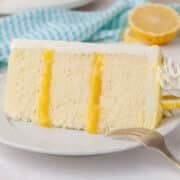
Lemon Velvet Cake
Moist and velvety lemon cake with homemade lemon curd and a tangy lemon cream cheese frosting
Servings: 12 cups
Calories: 1613kcal
Equipment
- Stand Mixer
Ingredients
Lemon Cake Ingredients
- 18 ounces Cake flour
- 18 ounces granulated sugar
- ¾ teaspoon salt
- 2 ¾ teaspoons baking powder
- ¾ teaspoon baking soda
- 11 ounces unsalted butter Softened but not melted
- 14 ounces buttermilk Or regular milk with 1 tablespoon white vinegar added
- 4 ounces vegetable oil Or canola oil
- 4 Large Eggs 1 large egg weighs about 1.67oz
- 2 Tablespoons Lemon Zest About two lemons
- 2 ¾ teaspoons Lemon Extract
- 2 Tablespoons Lemon Juice Fresh or bottled is ok
Lemon Curd
- 3 ounces Lemon Juice Fresh or bottled is ok
- 1 Tablespoon Lemon Zest About two lemons worth
- 3 ounces Sugar
- 1 large Egg
- 2 large Egg Yolks
- 1 pinch citric acid
- 2 ounces Unsalted Butter
- 1 pinch salt
Lemon Cream Cheese Frosting
- 16 ounces cream cheese softened
- 8 ounces Unsalted Butter Softened but not melted
- 36 ounces Powdered Sugar sifted
- ½ teaspoon lemon extract
- ½ teaspoon salt
Instructions
Lemon Cake Instructions
- Preheat your oven to 335º F/168º C Prepare three, 8"x2" cake pans with cake goop or another pan release. For square pans or cakes over 12", I also use parchment paper.
- Combine the 6oz of buttermilk with the oil and set aside.
- To the remaining 8oz of buttermilk, add your eggs, lemon zest, lemon extract, and lemon juice. Whisk lightly to break up the eggs and set aside.
- Place cake flour, sugar, salt, baking powder, and baking soda into the bowl of your stand mixer with the paddle attachment attached.
- Turn the mixer onto the lowest speed. Add in your softened butter in small chunks mix until the flour mixture resembles coarse sand.
- Add your oil/milk mixture all at once to the dry ingredients and mix on medium (speed 2 on a bosch, speed 4 on KitchenAid) for 2 full minutes to develop the cake's structure.
- Scrape the bowl. This is an important step. If you skip it, you will have hard lumps of flour and unmixed ingredients in your batter. If you do it later, they will not mix in fully.
- Slowly add in the milk/egg mixture in 3 parts, letting the batter mix for 10 seconds between additions. Stop to scrape the bowl once more halfway through. Your batter should be thick and not separated. If it is separated, some of your ingredients could have been too cold or you added your liquids too quickly.
- Fill your cake pans ¾ full with cake batter. Give the pan a little tap on each side to level out the batter and get rid of any air bubbles. You can also weigh your cake pans to ensure that each pan has the same amount of cake batter.
- Bake at 335º F/168º C for 35-40 minutes or until a toothpick comes out cleanly from the center of the cake and the top of the cake bounces back when you touch it.
- After cakes have cooled for 15 minutes or the pans are cool enough to touch, flip the cakes over onto a cooling rack and let cool until barely warm. Wrap your cakes in plastic wrap and chill in the refrigerator before frosting so they are easier to handle. You can also put them in the freezer if you are in a hurry for them to cool down.
- Once the cakes are chilled you can now trim, fill, and decorate your cake as you wish.
Lemon Curd Instructions
- First, combine the lemon juice, lemon zest, sugar, whole egg, and egg yolks, and citric acid in a heatproof bowl and whisk until smooth.
- Next, place the bowl over a pot of simmering water and cook the mixture while whisking constantly to prevent curdling.
- Continue cooking until the mixture thickens and reaches 170–175°F.
- Remove the curd from the heat and immediately whisk in the butter and salt until fully incorporated and smooth.
- If desired, strain the curd through a fine mesh sieve to remove zest and ensure a silky texture.
- Cover the lemon curd with plastic wrap so its touching the surface of the curd while it cools to prevent a skin from forming on the surface. The lemon curd will firm up as it cools.
Cream Cheese Frosting
- First, place the softened butter into a mixing bowl and cream it until smooth and fluffy.
- Next, add the softened cream cheese and mix on low speed until fully combined and smooth.
- Gradually add the powdered sugar, mixing on low speed until incorporated before adding more.
- Finally, add the extract and salt, and mix just until everything is smooth and combined.
Cake Assembly
- First, trim the tops of your cake layers so they are level and even.
- Place the first cake layer onto a cake board or serving plate.
- Pipe a ring of buttercream around the edge of the cake to create a dam.
- Fill the center with a layer of lemon curd and spread it evenly.
- Place the second cake layer on top and repeat the process.
- Add the final cake layer and apply a thin crumb coat of frosting over the entire cake.
- Chill the cake in the refrigerator for 15 minutes to set the crumb coat.
- Apply the final layer of frosting and smooth the sides and top with a bench scraper or spatula.
Video
Notes
Batter weight: 1 cup of this lemon cake batter weighs about 6 oz. Each 8"x2" pan needs about 4 cups (24 oz) of batter.
- For best results, always bring your ingredients to room temperature before starting this lemon cake recipe so your batter mixes smoothly and does not curdle.
- Do not skip the reverse creaming method, because this technique is what gives this lemon cake its ultra-soft, velvety crumb.
- Use a kitchen scale to weigh your ingredients for accuracy, especially the flour and liquids, since this lemon cake recipe is very sensitive to ratios.
- Fresh lemon zest is essential for strong lemon flavor, so do not rely on lemon juice alone.
- Citric acid is optional, but it adds a bright, bakery-style tang that takes this lemon cake recipe to the next level.
- Make the lemon curd at least one day in advance so it has time to fully set and develop flavor.
- Chill your cake layers before assembling, because cold cakes are easier to trim, stack, and frost.
- Always use a buttercream dam when filling with lemon curd to prevent the filling from leaking out of the sides.
- Do not overbake your cakes, or they will lose moisture and become dry instead of soft and fluffy.
- For the best texture and flavor, serve this lemon cake at room temperature, because cold butter can make the crumb feel firm.
Nutrition
Serving: 1serving | Calories: 1613kcal | Carbohydrates: 224g | Protein: 15g | Fat: 77g | Saturated Fat: 46g | Polyunsaturated Fat: 4g | Monounsaturated Fat: 20g | Trans Fat: 2g | Cholesterol: 337mg | Sodium: 629mg | Potassium: 345mg | Fiber: 1g | Sugar: 186g | Vitamin A: 2613IU | Vitamin C: 8mg | Calcium: 186mg | Iron: 1mg
