
White chocolate ganache is one of the most versatile things you can make for cake decorating. It works as a smooth frosting, a glossy glaze, a cake drip, and a base for coloring, and it is significantly more stable in heat and humidity than any American buttercream. I have been using it professionally for years, and it is the frosting I recommend to anyone decorating cakes in hot climates or under fondant.
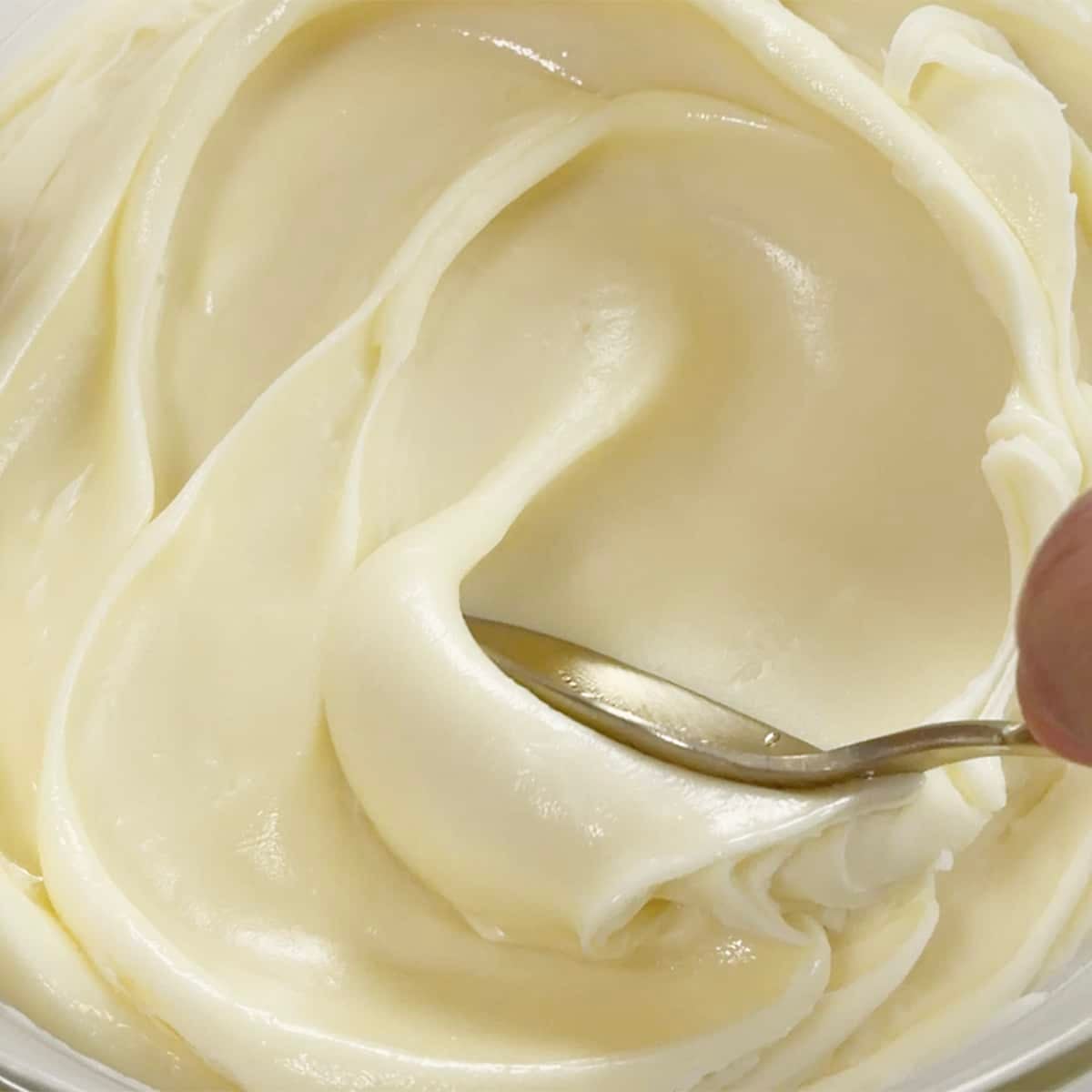
Unlike American buttercream, it doesn't sweat in warm weather because it's almost entirely fat and sugar with very little free moisture. I've been using it professionally for years, and it's the frosting I recommend to anyone decorating cakes in hot climates.
Quick Glance: White Chocolate Ganache Recipe
- Recipe Name: White Chocolate Ganache Recipe
- Why You'll Love It: Silky smooth, stable in heat and humidity, and works as a frosting, glaze, or drip.
- Time and Difficulty: 15 minutes active + 1 hour to set / Easy
- Main Ingredients: White chocolate, heavy whipping cream
- Method: Soften chocolate, pour hot cream over, whisk, let set
- Texture and Flavor: Smooth and creamy when worked, firm and sliceable when set, with a rich and sweet vanilla flavor
- Quick Tip: Pour freshly made ganache into a shallow dish instead of leaving it in the bowl - it sets in 20 to 30 minutes instead of several hours
Jump to:
- Quick Glance: White Chocolate Ganache Recipe
- What Makes This White Chocolate Ganache So Good
- White Chocolate Ganache Ingredients
- How to Make White Chocolate Ganache Step-By-Step
- Cake Batter and Frosting Calculator
- Cups of Batter Needed
- Cups of Frosting Needed
- Common White Chocolate Ganache Problems To Avoid
- White Chocolate Ganache FAQs
- More Ganache And Frosting Recipes To Try
- Ready To Master Cake Decorating?
- Recipe
What Makes This White Chocolate Ganache So Good
White chocolate is made from cocoa butter, milk solids, and sugar with no cocoa solids, which is why it's white rather than brown. When you pour hot cream over white chocolate, the fat molecules from both the cream and the cocoa butter combine to form an emulsion - fat droplets suspended evenly throughout the liquid. This is what gives ganache its signature smooth, glossy texture instead of a greasy or separated mess.
As the ganache cools, the cocoa butter begins to crystallize. This crystallization is what causes the ganache to firm up from a pourable liquid into a spreadable, then sliceable, consistency. The ratio of chocolate to cream controls how firm the final ganache sets: more chocolate means more cocoa butter and a firmer result. A 3:1 ratio (three parts chocolate to one part cream) produces a firm ganache suitable for frosting cakes. A 4:1 ratio produces an even firmer result that holds up better in high heat and humidity. You can also whip it into a light and fluffy frosting. My whipped ganache recipe walks you through how.
White chocolate ganache doesn't sweat or form condensation the way buttercream does because it contains very little free water. Buttercream holds water between the fat and sugar molecules, which draws moisture from the air in humid conditions and beads on the surface. Ganache is almost entirely fat and sugar with almost no water activity, which is why it stays dry and matte even in a humid bakery.
The temperature sensitivity of ganache comes from cocoa butter itself, which melts at around 93°F - very close to body temperature. This is why timing and temperature control are so important: too warm, and it's too fluid to use as frosting, too cold, and it's too firm to spread.
White Chocolate Ganache Ingredients
Here's everything you need and why each ingredient matters.
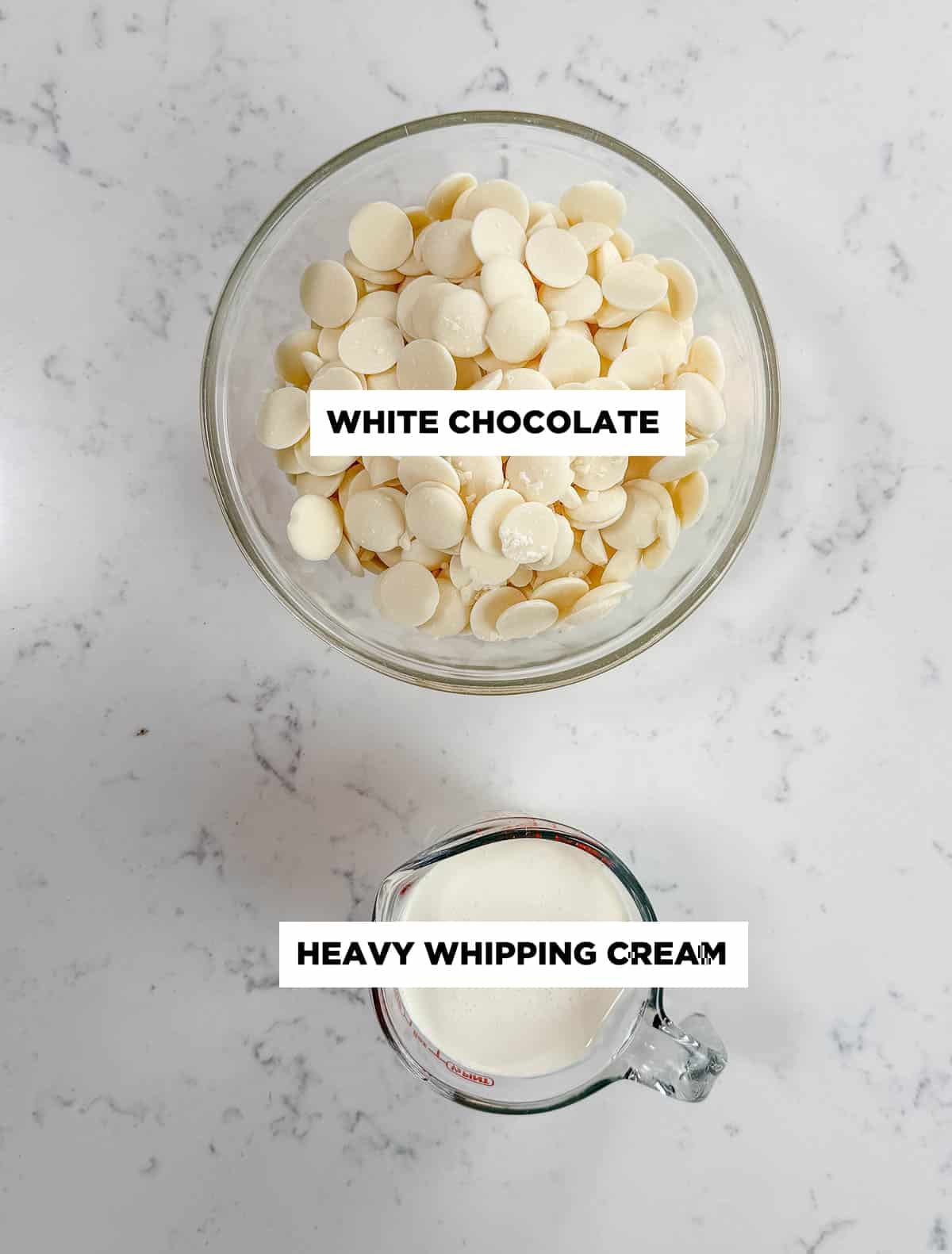
White chocolate is the base of this ganache and provides both the structure and the flavor. The cocoa butter in white chocolate is what crystallizes as the ganache cools and gives it its firm, spreadable set. Use a good quality white chocolate bar or couverture for the best flavor and the most reliable set. If using under fondant, the 3:1 ratio works best. Avoid white chocolate chips, which contain stabilizers that prevent them from melting smoothly and can result in a grainy ganache. Candy melts can be used as a substitute but they contain vegetable fat instead of cocoa butter, which means the ganache will set softer and may require a higher ratio of chocolate to cream to achieve the same firmness.
Heavy whipping cream provides the liquid needed to form the emulsion and contributes richness and body to the finished ganache. It must be heated to a simmer before adding to the chocolate so it's hot enough to melt the cocoa butter and create a smooth emulsion. Do not substitute with half-and-half or milk as the lower fat content will produce a thinner ganache that may not set properly.
How to Make White Chocolate Ganache Step-By-Step
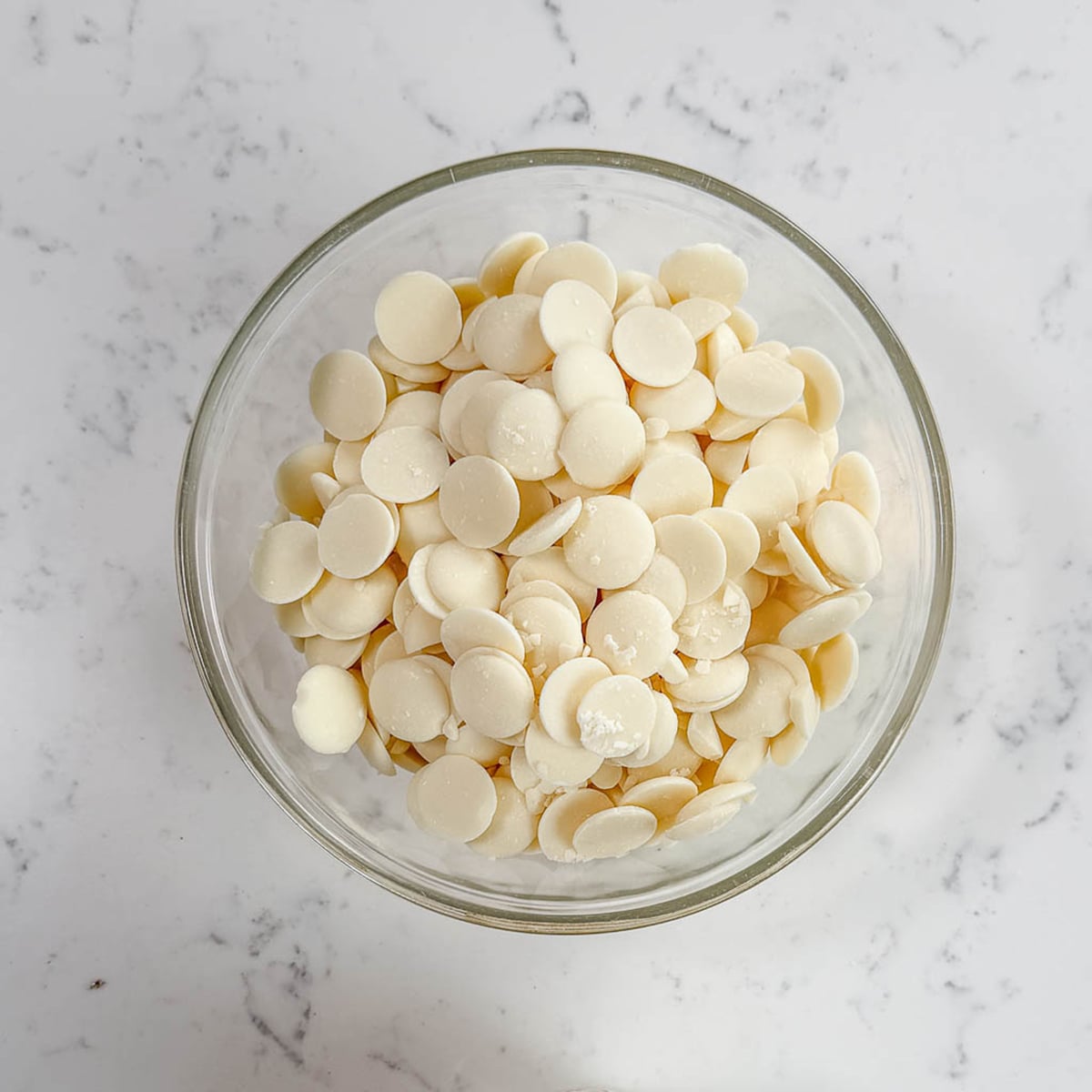
- Weigh your white chocolate and place it in a large heatproof bowl. Microwave for 1 minute to begin softening. It doesn't need to be fully melted at this stage. Just soft enough that the hot cream can do the rest of the work. If using a bar, chop it into small, even pieces first so it melts uniformly.
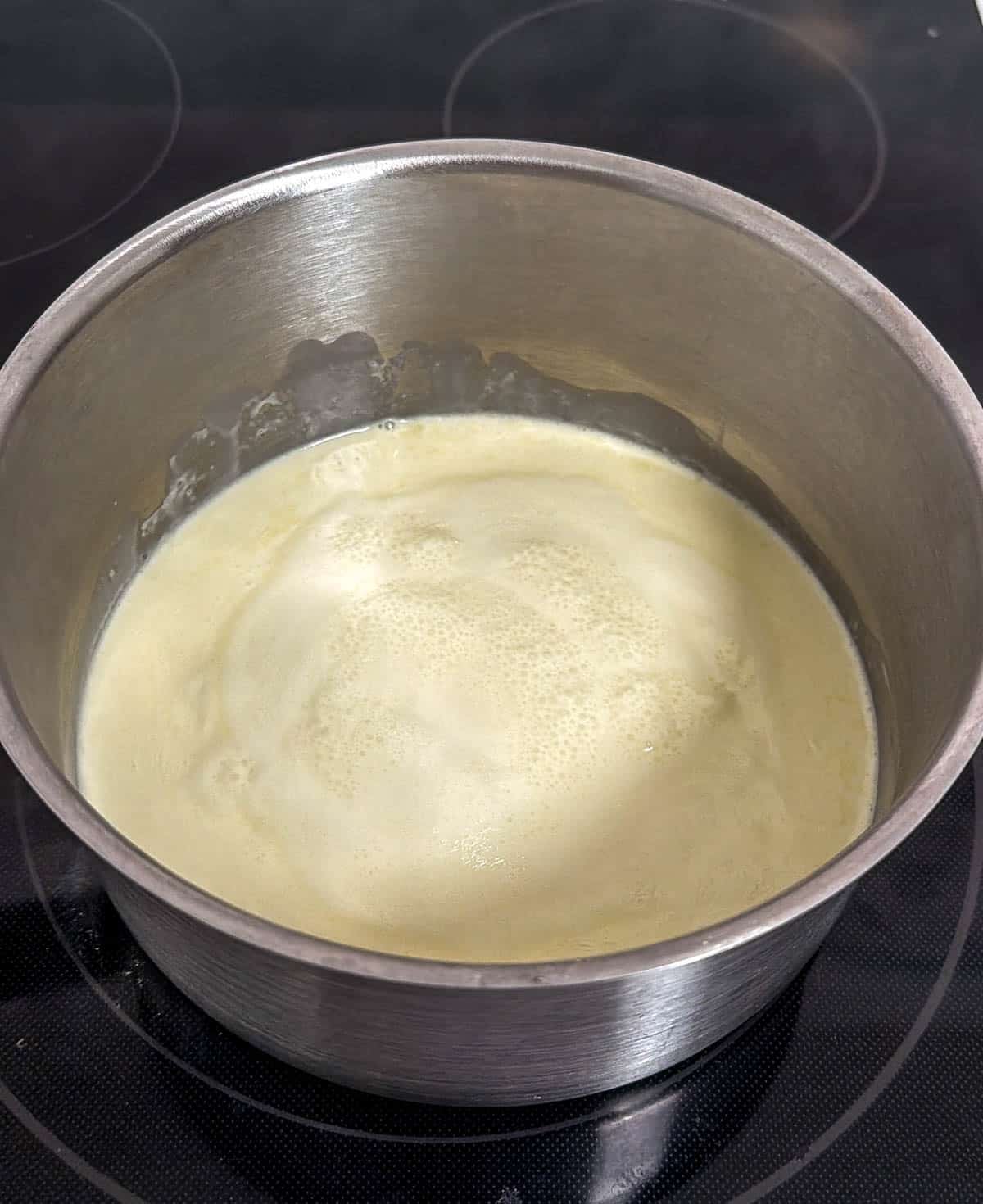
- Pour the heavy whipping cream into a small saucepan and heat over medium heat until it just reaches a simmer. You'll see small bubbles forming around the edges and wisps of steam rising from the surface. Do not let it reach a full boil. Boiling cream can cause the ganache to split.
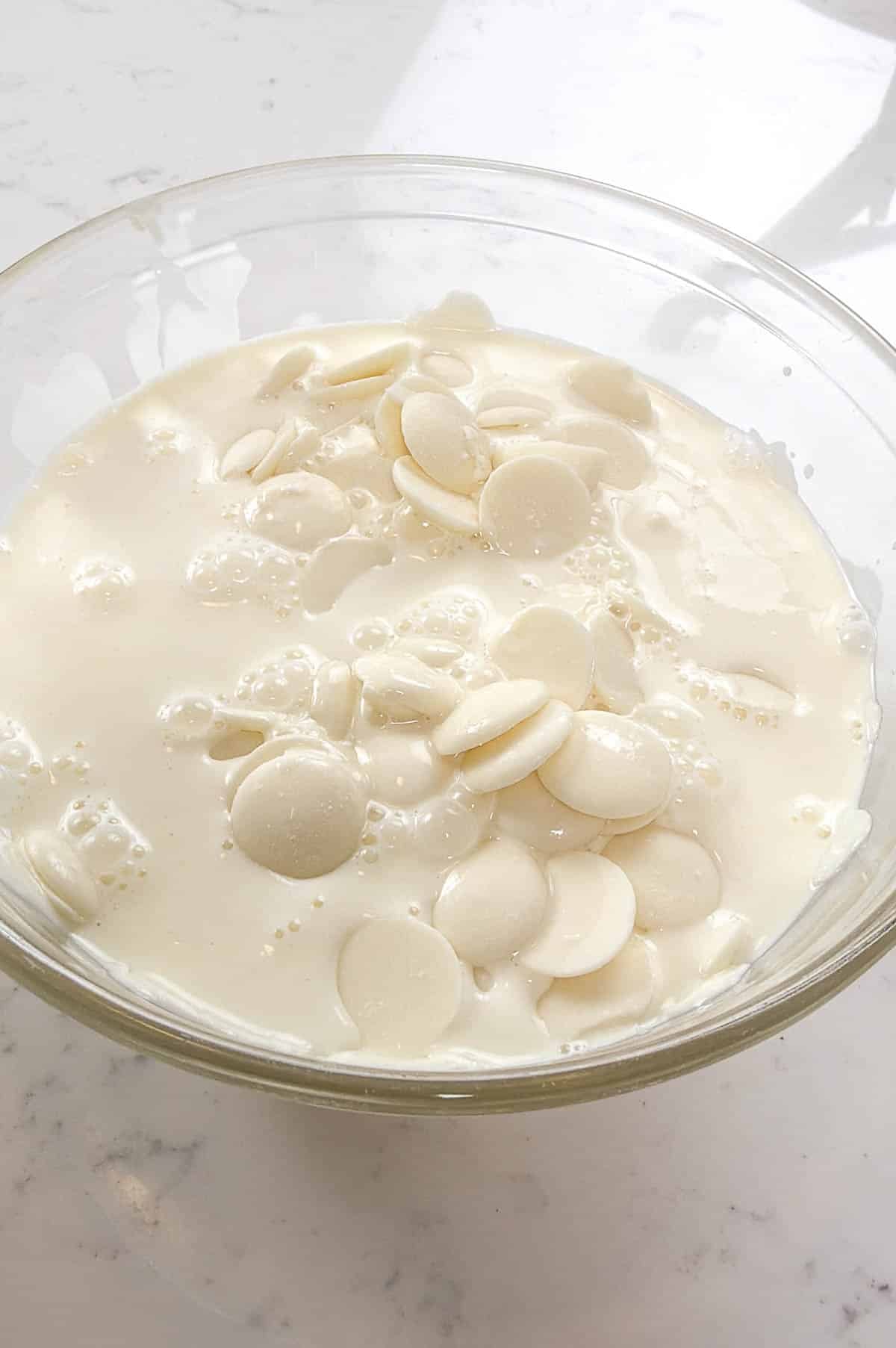
- Pour the hot cream over the softened chocolate. Make sure the chocolate is fully submerged in the cream. Do not stir yet. Let the mixture sit completely undisturbed for 5 to 10 minutes. The residual heat from the cream will gently and evenly melt the chocolate.
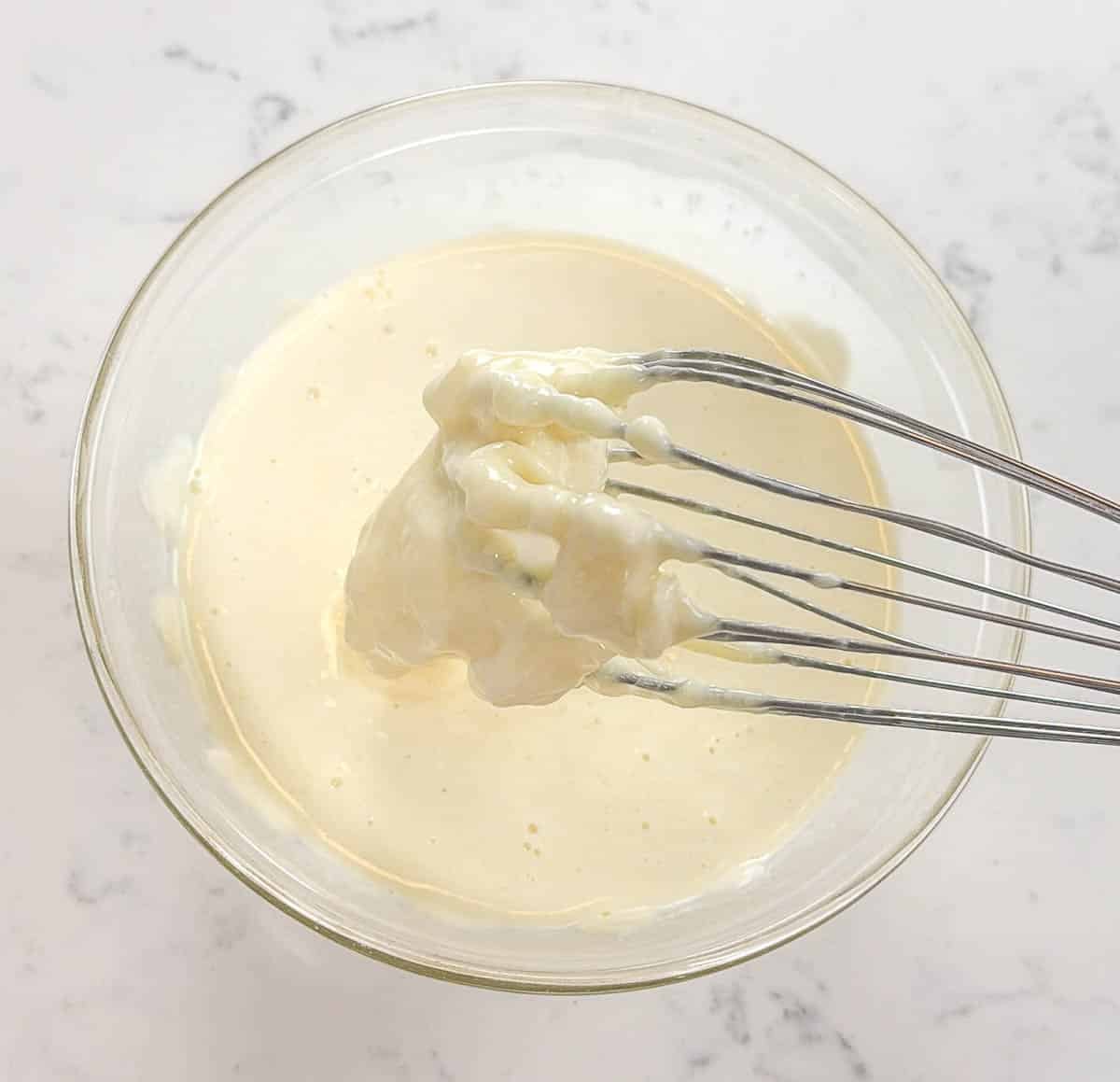
- Starting from the center of the bowl, whisk slowly outward in small, deliberate circles. The mixture will look cloudy and separated at first. This is normal. Keep whisking slowly, and it will gradually pull together into a smooth, glossy, uniform emulsion. Avoid whisking vigorously as incorporating air can make the ganache grainy.
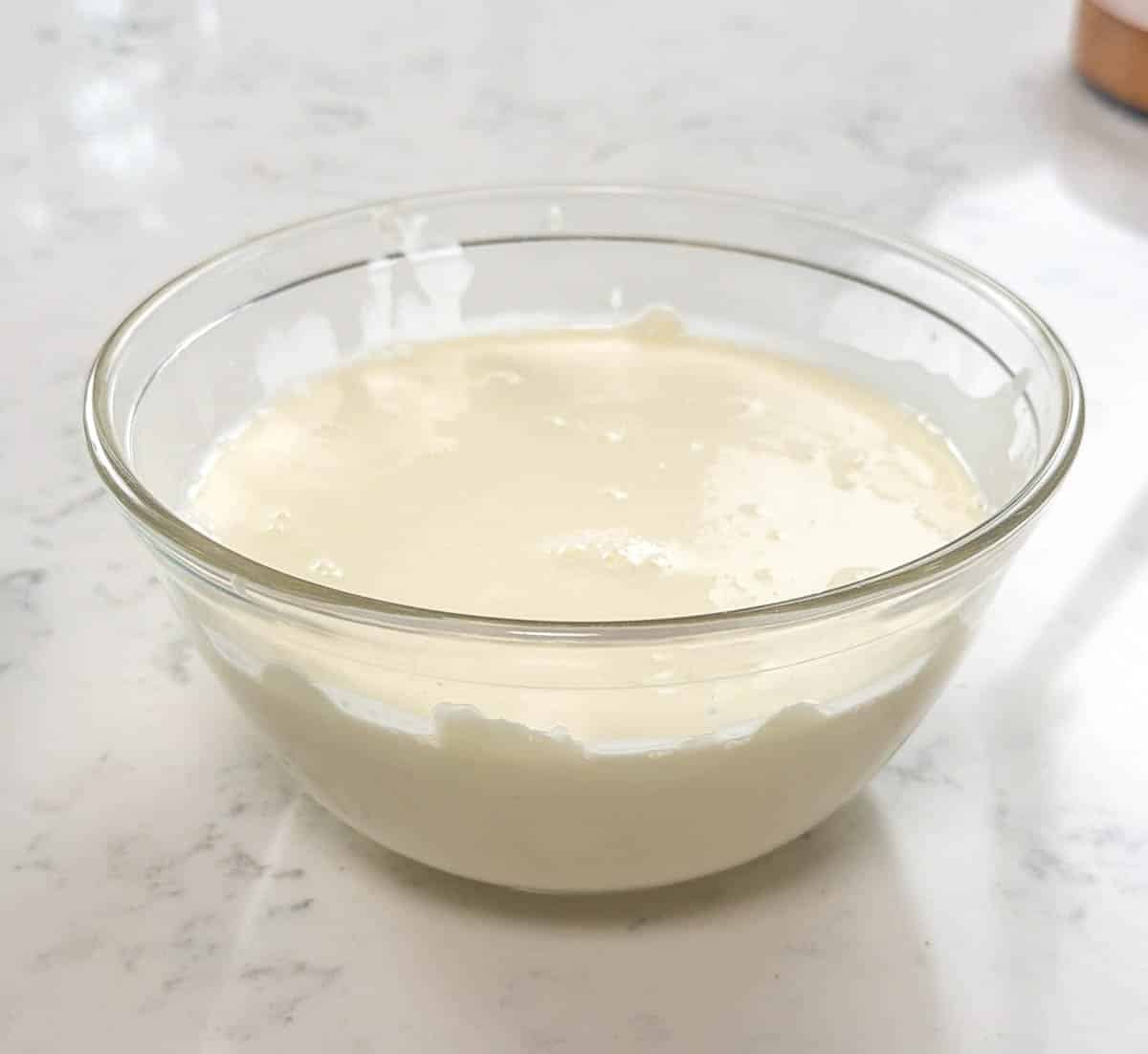
- Your ganache is now ready to use for drips or glazing. It should be fluid and pourable with a glossy sheen. For drips, make sure your cake is very cold before applying so the ganache sets on contact.
For a full tutorial on how to create a drip cake, check out my drip cake recipe.
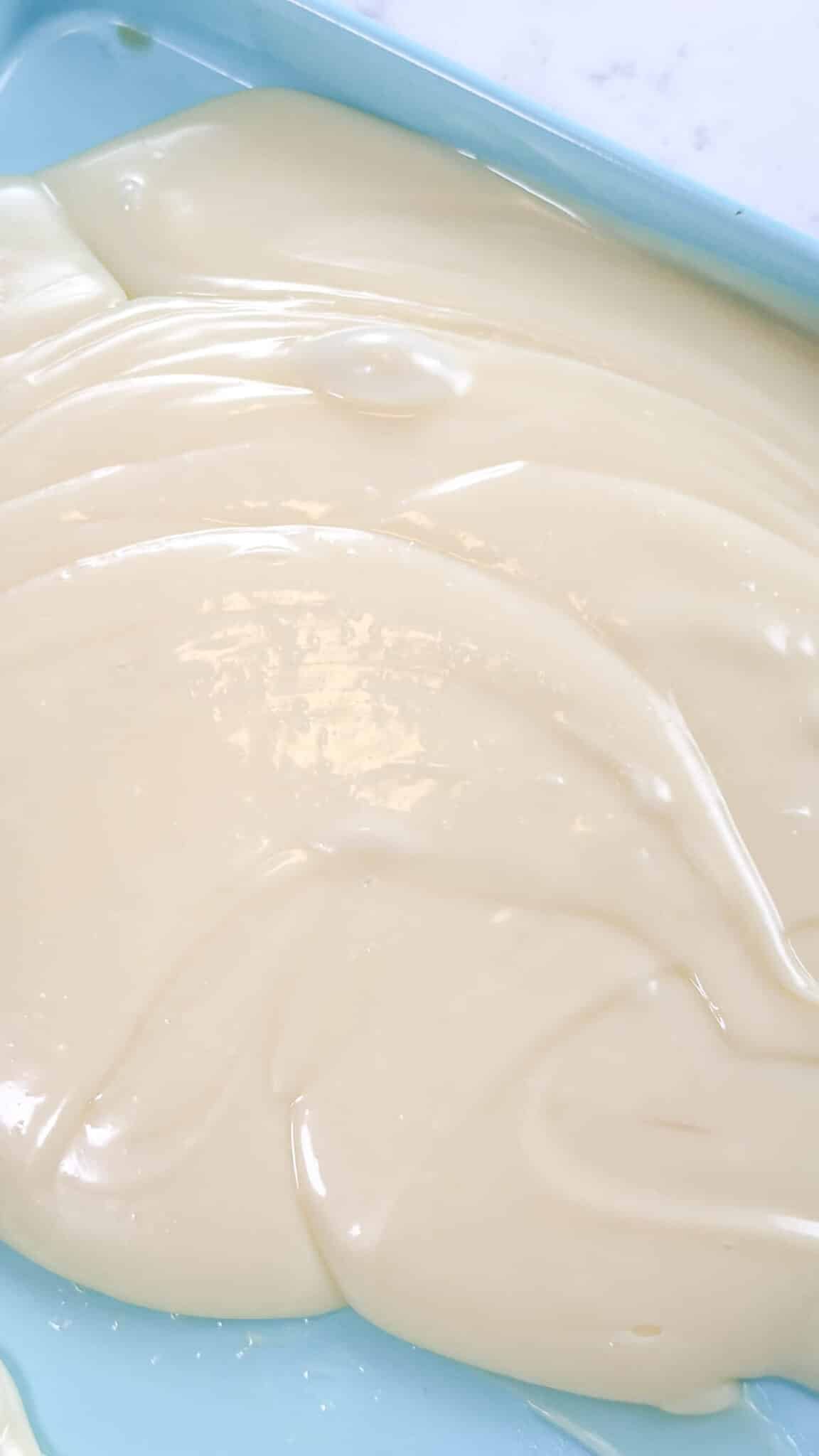
- To use as frosting, pour the ganache into a shallow dish or sheet pan and cover the surface with plastic wrap pressed directly against the ganache. The shallow layer cools much faster than a deep bowl, cutting the setting time from several hours down to about 20 to 30 minutes at room temperature.
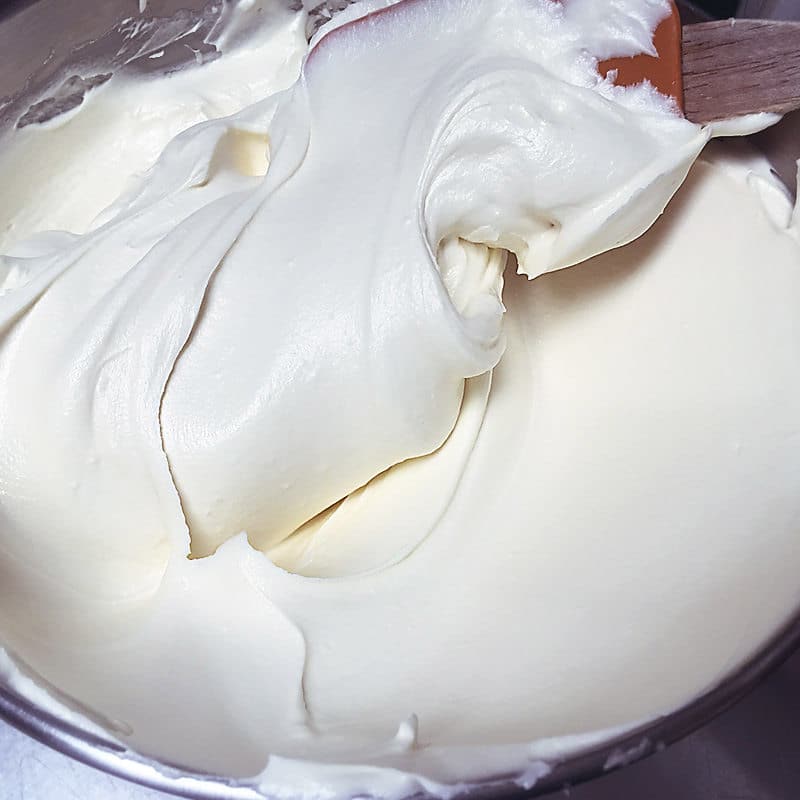
- The ganache is ready to frost with when it reaches a thick, peanut butter-like consistency and holds its shape when you drag a spatula through it. Stir until smooth and creamy before applying to your cake.
EXPERT TIP: For glazing or for drips, let the ganache cool to 90°F before pouring over a frosted, thoroughly chilled cake for a smooth, shiny finish.
Cake Batter and Frosting Calculator
Select an option below to calculate how much batter or frosting you need. Adjust the servings slider on the recipe card to change the amounts the recipe makes.
Choose a pan type
Choose a cake pan size
(based on 2" tall cake pan)
Choose a cake pan size
(based on 2" tall cake pan)
Cupcake Tin Size
Choose number of pans
Cups of Batter Needed
8 cups
Cups of Frosting Needed
5 cups
Note: measurements are estimated based off the vanilla cake recipe using standard US cake pans and sizes. Measurements used are for 2" tall cake pans only. Your results may vary. Do not overfill cake pans above manufacturer's recommended guidelines.
Common White Chocolate Ganache Problems To Avoid
Using white chocolate chips. White chocolate chips contain stabilizers and emulsifiers that prevent them from melting into a smooth ganache. They often produce a grainy or lumpy result. Always use a quality white chocolate bar or couverture.
Letting the cream boil. Cream that reaches a full rolling boil is too hot and can cause the cocoa butter in the chocolate to break out of the emulsion, resulting in a greasy, split ganache. Heat until you see the first small bubbles around the edges and then pour immediately.
Stirring too soon. Adding motion before the cream has had time to melt the chocolate causes uneven mixing and can prevent a smooth emulsion from forming. Wait the full 5 to 10 minutes before whisking.
Whisking too vigorously. Aggressive whisking incorporates air bubbles into the ganache, which can make it grainy and less glossy. Whisk slowly from the center outward with deliberate strokes.
Not covering with plastic wrap. Leaving ganache exposed to air causes a film to develop on the surface. When that film gets stirred back in it creates grainy lumps. Always press plastic wrap directly against the surface of the ganache while it sets.
Overheating when softening. If your ganache firms up too much and you microwave it to soften, go in short 10-second bursts only. Overheating causes the emulsion to break and the cocoa butter to separate out as a greasy pool. If this happens, let it cool completely and slowly whisk it back together.
White Chocolate Ganache FAQs
The ratio refers to the amount of chocolate to cream by weight. A 3:1 ratio (three parts white chocolate to one part cream) produces a firm ganache suitable for frosting cakes in normal conditions. A 4:1 ratio produces a firmer result better suited to high heat and humidity environments. The type of chocolate also affects firmness - real white chocolate with cocoa butter sets firmer than candy melts, which use vegetable fat. Once you find a ratio that works for your climate and chocolate brand, stick with it for consistent results.
White chocolate ganache can be kept at room temperature for up to two days because its high fat and sugar content means very little free water is available for bacteria to grow. For longer storage, refrigerate in an airtight container with plastic wrap pressed against the surface for up to two weeks. To use refrigerated ganache, bring it to room temperature and microwave in 10-second bursts, stirring between each, until it returns to a spreadable consistency.
Add gel food coloring directly to the finished ganache and stir to combine. Because ganache is already an emulsion with liquid incorporated, adding more liquid in the form of gel coloring won't cause it to seize the way it would with unmelted chocolate. For the most vivid and true-to-color results, use oil-based food coloring or chocolate-specific coloring like Artisan Accents Chameleon colors, which are formulated specifically for use in fat-based mediums.
Yes - freshly made ganache that is still warm and fluid is ideal for drips. Make sure your cake is very cold before applying so the ganache sets quickly on contact and doesn't run all the way down to the board. Let the ganache cool slightly so it's not steaming hot before applying, but use it while it's still pourable.
Yes. Ganache is actually one of the best bases for fondant because it sets firm enough to give the fondant a solid, smooth surface to adhere to and doesn't soften the fondant the way some buttercreams can. Let the ganache set
Split ganache looks greasy with liquid pooling separately from the solid fat. To fix it, let it cool to room temperature if it's still warm, then add a small splash of warm cream and whisk very slowly from the center outward. The gentle introduction of warm liquid usually brings the emulsion back together. If it has been overheated, the fix requires more patience - keep whisking slowly and it will usually come back.
Yes. At peanut butter consistency, it makes a rich, stable filling that holds up well inside a stacked cake. It pairs especially well with fruit fillings like raspberry or strawberry. Let it set to the right consistency before using as a filling so it doesn't squeeze out when you stack the layers.
Yes - white chocolate ganache makes an excellent macaron filling. For macarons, use a slightly firmer ratio (closer to 3.5:1 or 4:1) so the filling holds its shape between the shells. You can also infuse the cream with any flavoring by simmering herbs, spices, or zest in the cream before straining and pouring over the chocolate.
More Ganache And Frosting Recipes To Try
Ready To Master Cake Decorating?
Join Sugar Geek University and learn professional techniques through detailed cake decorating courses, tutorials, and real kitchen demonstrations by
award-winning cake decorator, Liz Marek.
Recipe
Instructions
- Microwave chocolate in microwave safe bowl for 1 minute to soften
- Bring heavy whipping cream just to a simmer then pour over chocolate
Make sure the chocolate is fully covered
Let set for 5 minutes - Whisk gently to combine cream and chocolate, do not incorporate air
- Use freshly made ganache for drips (make sure your cake is very cold so ganache sets quickly)
- Pour into a shallow pan or dish to let stiffen up. Then stir until creamy before icing your cake. If your ganache is too firm, microwave for 10 seconds to soften and then stir until ganache is the desired consistency.
Video
Notes
- Use a quality white chocolate bar or couverture, not white chocolate chips. Chips contain stabilizers that prevent them from melting smoothly and can result in a grainy ganache.
- Heat the cream until just simmering, not boiling. Overheated cream can cause the ganache to split.
- Always press plastic wrap directly against the surface of the ganache while it sets to prevent a film from forming.
- Pour into a shallow dish to speed up the setting time from several hours to about 20 to 30 minutes.
- The ganache is ready to frost with when it reaches a thick, peanut butter-like consistency.
- If the ganache gets too firm, microwave in 10-second increments and stir until it reaches the right consistency. Do not overheat.
- For drips, use the ganache while it's still warm and fluid. Make sure your cake is very cold so the ganache sets on contact.
- For glazing, let the ganache cool to 90°F before pouring over a chilled cake.
- Store at room temperature for up to 2 days or refrigerate for up to 2 weeks with plastic wrap pressed against the surface.

JOYCE A JOHNSTON says
I am so glad i found your site. I have just made your easy buttercream with the pasteurized egg whites for the first time. My first batch tasted like ice cream, but somehow my second one is more butter tasting. I don't know if i didn't measure my vanilla the same or if the better butter I used just has more taste. I think my friends will still like it. I'm thinking I may have tasted too much stuff to really know the flavor well. (as a side, is there a way to cleanse the palette so I can taste different batches as I go?) I love how smooth it is. I am going to do your microwave ganache for a drip (i came here looking for the water ganache video). I do have half and half though, but i liked your quick method for the drip. I plan to do gold.
Next time I bake I am going to try your white cake recipe. I do various doctored cakes as I focus on decorating for friends, but I want to work on some scratch cakes.
The only scratch cake I have made was a 1234 cake that tasted good, but was too soft to do precise decorating. My grandmother always made 1234 cakes for our bdays, so it brings back good memories.
I definitely would like to try the ganache glaze to maybe make my cakes smoother. This buttercream though seems to be smoothing really well. I still get bubbles in my cake sides that I try to smooth out with a warm spatula once it hardens. I also want to cut off the brown crust next time, but this time I did not want to risk messing up the roundness of my cake as i needed clean sides. I'll leave the extra trimming for when I can cover mistakes with ruffles! I think i actually managed to get them totally level this time too.
I have so many things to try, I get overwhelmed with figuring out what to practice next. There is only so much cake to pass along to coworkers and friends!
Your videos, articles, and instructions are great. I have sold some cakes, for friends requesting them for special events, but I don't really aim to have major professional level stuff. I just enjoy getting better and seeing what I can accomplish for someone to enjoy!
The Sugar Geek Show says
Hey Joyce, if your buttercream tastes like butter it needs to whip for longer. I use the whisk attachment on high until it tastes right then I switch to the paddle on low to get the bubbles out. I hope that helps!
Angie says
This might seem like a silly question, But How do you get a smooth finish with ganache (like buttercream) when frosting your cake? Ive never tried this before
The Sugar Geek Show says
the same techniques apply to ganache as buttercream when it comes to smoothing
Theresa says
I thought that in order to make the frosting - the thicker ganache that it had to be whipped by a beater
The Sugar Geek Show says
You definitely do not have to whip ganache
Marilyn says
I want to glaze a 9” 2-layer cake. How much chocolate would I need to make a pourable ganache?
The Sugar Geek Show says
I would do 32 ounces of white chocolate
Kenyatta says
Hello is this perfect for bust cakes? I want to make the head out of cake and I want to make sure this is sturdy
The Sugar Geek Show says
Yes you can definitely use this for bust cakes 🙂
Andrea says
can I pipe roses with white ganache? I see you can do it with chocolate ganache but I know they are different
The Sugar Geek Show says
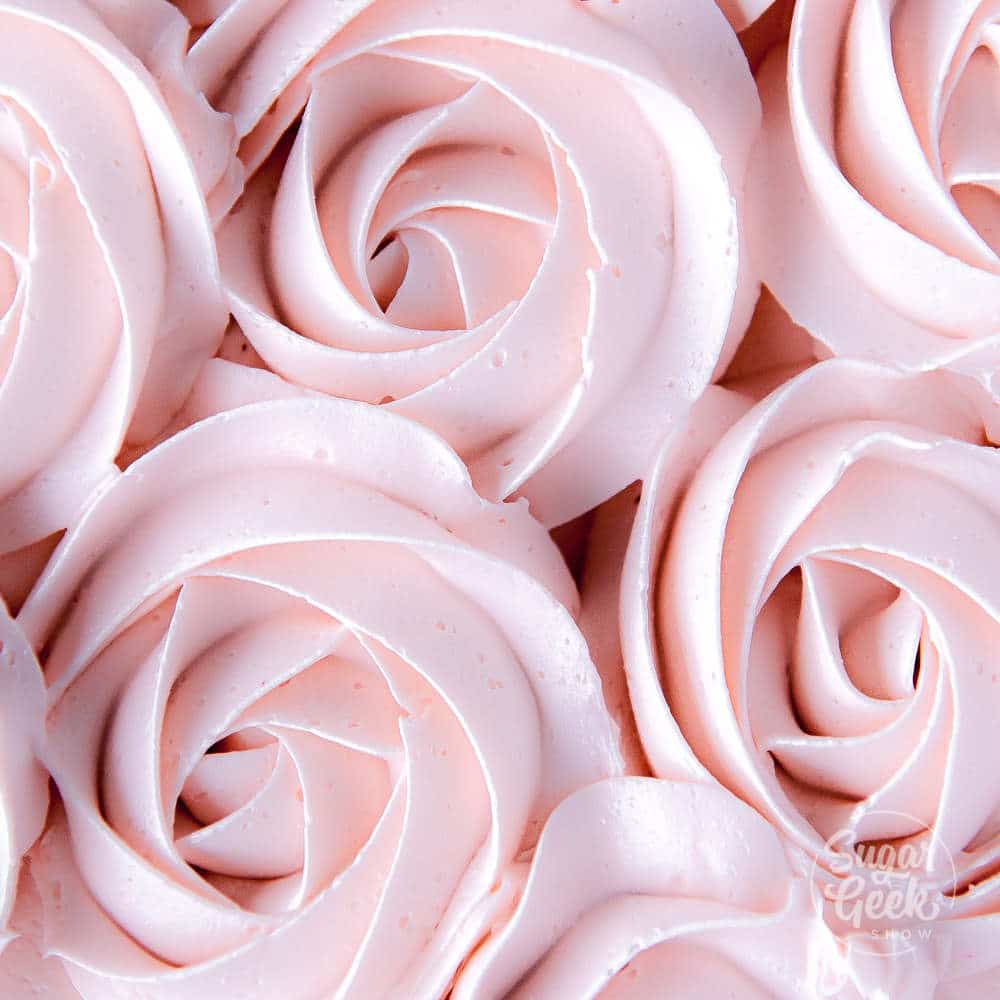
Absolutely. White ganache firms up to that peanut butter consistency that is great for piping just like regular ganache
Beginner Baker says
Hi,
I'm covering an 8 inch cake under fondant, is the recipe too much for just cake? How to adjust to for the one cake?
The Sugar Geek Show says
This is not too much for one 8" cake
Nazim Durrani says
Hi, I am going to attempt a 9" three layered cake one of these days and it is monsoon/humid/hot here in Bombay.
Should i opt for a 4:1 ratio or 3:1 shall suffice?
I like thick fillings and coating on my cakes.
What should be the possible contingency in grams?
Please respond.
The Sugar Geek Show says
The only way to know would be to do a test batch
Genette says
Your recipe is perfect. Please can you tell me if its safe to freeze left-over ganache. I was hopng to thaw in fridge & re-use? Many thanks
The Sugar Geek Show says
Yes you can freeze leftover ganache for up to 6 months
ROSEMARIE T says
chocolate wedding cake covered in white fondant. Should I use white ganache so the color would not show thru the fondant or can I use chocolate ganache.
Misha says
Hi! This looks amazing! The few times I’ve tried ganache I have failed and wasted so much:/ I do want to try to frost a cake with white chocolate ganache like this someday, so maybe I’ll try this recipe! Thank you?
Nancy B says
Could I add cream cheese to this frosting, or would it ruin it's strength? And if I can, how much cream cheese should I add?
I live in (hot/humid) Central Texas, and I wanted to make a red velvet cake with this.
The Sugar Geek Show says
Cream cheese is always going to make your frosting soft. If you want cream cheese flavor in high heat then I recommend getting a good cream cheese emulsion from amoretti or lorann oils
Karen says
Could you use a icing comb on this white ganache or should I stick with a buttercream?
The Sugar Geek Show says
You definitely can
Maria says
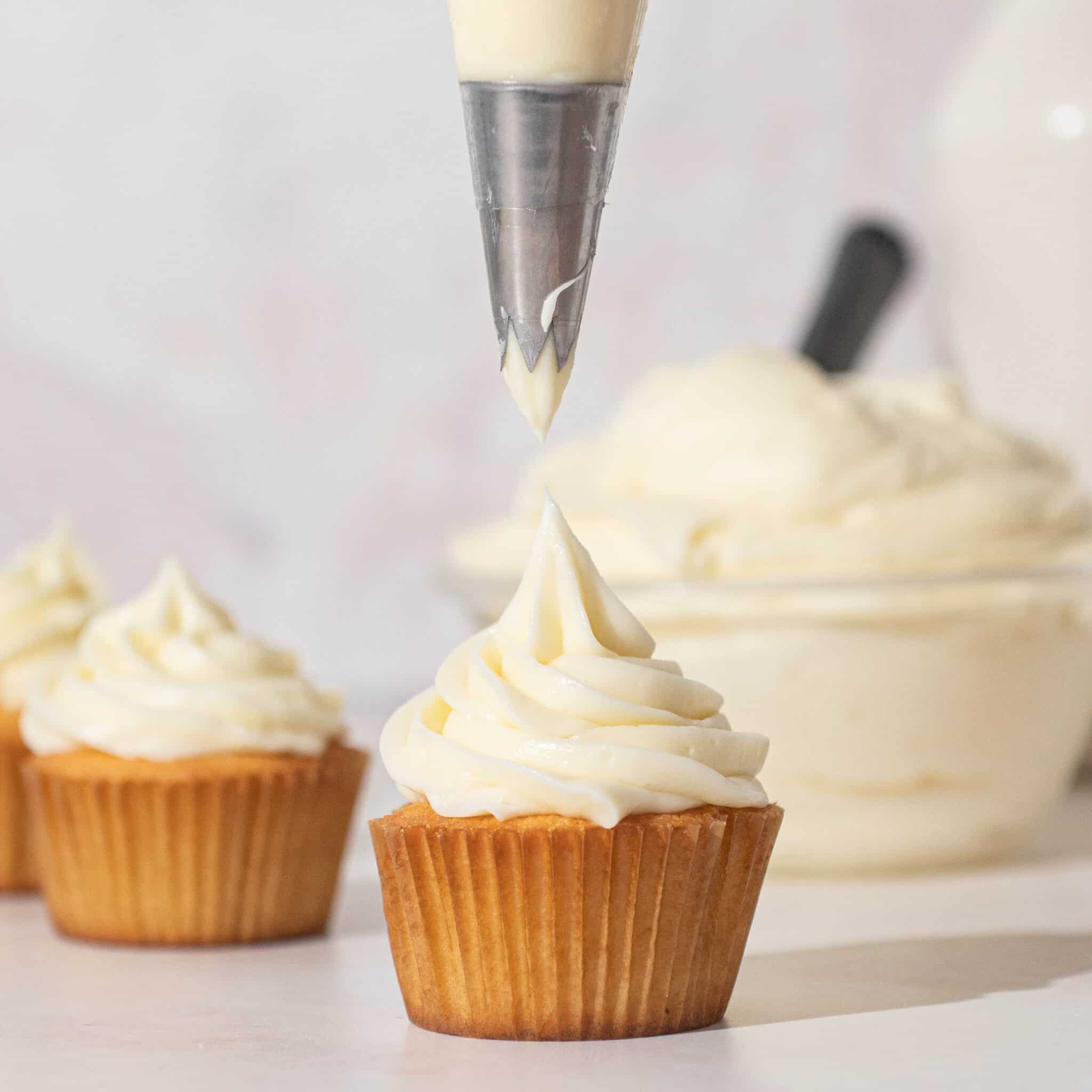
Hi! I want to use this ganache for cupcake frosting is it possible? And When I made it it is a little grainy what can I do?
thanks
The Sugar Geek Show says
Yes you can, use this recipe as a guide for making/fixing ganache https://sugargeekshow.com/ganache/
Ann says
If you whisk ganache to make it whiter will it be to soft to ice cake .