

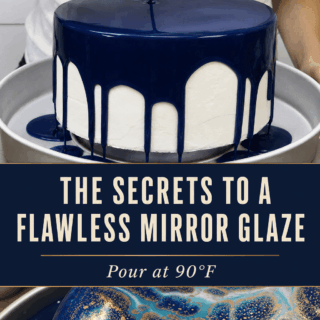

This mirror glaze recipe gives you a glossy, glass-smooth, fully reflective finish using white chocolate, gelatin, and sweetened condensed milk, poured at exactly the right temperature over a frozen cake. It looks like it belongs in a Parisian pastry case, comes together in about 50 minutes, and works over anything from a mousse cake to a smooth chocolate ganache coating. Get the temperature right, and the rest genuinely takes care of itself.
I started experimenting with mirror glaze long before it went viral on TikTok and Instagram, and the failure that taught me the most happened in a class. I was testing a mousse-covered cake, poured the glaze while it was too warm, and watched the whole thing slide right off the sides and pool into a sad, reflective puddle on my baking sheet. Once I understood what temperature does to the chemistry, everything clicked.
If you want to nail the smooth surface underneath first, my white chocolate ganache and easy buttercream frosting both make an excellent base, and understanding how to temper chocolate will make every part of working with chocolate click into place.
Quick Glance at the Recipe
- Recipe Name: Mirror Glaze Recipe
- Why You'll Love It: A genuinely professional-looking result that is far more forgiving than it looks, once you understand that temperature is the only variable that truly matters.
- Time and Difficulty: Intermediate. 10 minutes prep, 10 minutes cook, about 30 minutes cooling to 90º F.
- Main Ingredients: White chocolate, sweetened condensed milk, granulated sugar, water, powdered gelatin, vanilla, gel food coloring.
- Method: Bloom the gelatin; simmer the sugar, water, and condensed milk; add the gelatin; pour over white chocolate; blend smooth; color; strain; cool to exactly 90º F; then pour confidently over a frozen cake.
- Texture and Flavor: A thin, glossy, slightly sweet white chocolate shell that melts on the tongue and reflects light like a mirror.
- Quick Tip: The glaze must reach 90º F before pouring. Too warm (above 95º F) and it runs off in thin rivulets. Too cold (below 85º F) and it sets unevenly and clumps. Use a thermometer-every single time.
Jump to:
- Quick Glance at the Recipe
- What Makes This Mirror Glaze Recipe So Good
- What Cake Works Under Mirror Glaze?
- Why Mirror Glaze Loses its Shine (And How to Make it Last Longer)
- Mirror Glaze Cake Ingredients
- How Much Glaze Do I Need?
- How to Make Mirror Glaze Step-By-Step
- How to Store and Reuse Leftover Mirror Glaze
- Common Mirror Glaze Problems
- Final Thoughts
- Mirror Glaze Cake Recipe FAQs
- More Cake Decorating Techniques to Try
- Leave Me A Review⭐️⭐️⭐️⭐️⭐️
- Recipe
What Makes This Mirror Glaze Recipe So Good
The condensed milk is the secret to why this one works at home. It produces a slightly thicker, more opaque, more forgiving glaze than the traditional glucose-and-cream version, which means you have a wider temperature window to work in and far less chance of a runny disaster. The vibrant color options people were creating on social media absolutely pushed me to experiment further, testing gel food coloring combinations, cocoa butter variations, and layered shade pours, and this base takes color beautifully. It's approachable, it's dramatic, and once you pour your first successful one, you will completely understand why people lose their minds over the pour video.
What Cake Works Under Mirror Glaze?
This is the question nobody asks until they've already made the glaze, and it matters a lot. Mirror glaze is a thin, glass-smooth coating, so whatever surface is underneath will show through it, for better or worse.
- Naked or lightly frosted cake (not recommended). The glaze soaks into the exposed sponge, creating a patchy, uneven finish. You need a fully sealed surface of some kind.
- Mousse or entremet cake (ideal surface). A mousse-covered entremet frozen in a silicone mold gives the smoothest possible surface. The frozen exterior is perfectly flat, giving the glaze the cold surface it needs to set immediately and evenly. Professional mirror glaze cakes are almost always built this way. A chocolate mousse or mango mousse cake frozen solid is a perfect candidate.
- Ganache-covered cake (excellent surface). A layer cake covered in a thin, smooth layer of chocolate ganache and then frozen creates a beautifully even base. The ganache fills in any imperfections from the cake layers and gives the glaze a firm, non-porous surface to set against.
- Buttercream-covered cake (workable, needs care). Mirror glaze over buttercream works, but the buttercream has to be completely smooth (no texture, no swirl marks, no palette knife lines). And the cake must be frozen solid. Any texture in the buttercream will show through the glaze. My easy buttercream frosting gets you the smoothest possible result.
The golden rule: whatever the surface, it has to be frozen SOLID before glazing, not just chilled. Frozen. The frozen surface creates a temperature shock that makes the glaze set the moment it touches the cake, and that shock produces the perfect, even, reflective coating. Freeze for at least 2 to 3 hours before you pour.
Why Mirror Glaze Loses its Shine (And How to Make it Last Longer)
This recipe uses sweetened condensed milk, which gives you that forgiving, home-baker-friendly glaze. The trade-off is that condensed-milk glaze tends to lose its high shine after about 24 hours. The sugars in the condensed milk draw moisture from the air (the same reason caramel gets sticky), and that moisture gradually dulls the reflective surface.
PRO TIP: For the glossiest possible finish that holds several days, professional pastry chefs use a version without condensed milk, replacing it with heavy cream and glucose syrup. That one is thinner, slightly more transparent, harder to work with, and stays shiny longer.
For home baking and photos: glaze right before you plan to photograph or serve. The first hour after glazing is when it looks its absolute best.
For client work and events: pour the glaze on the same day as delivery, as close to service as possible. A cake glazed the night before and refrigerated still looks beautiful, but the mirror-like reflection will be a little diminished by morning.
Mirror Glaze Cake Ingredients
This is a short list of pantry-friendly ingredients, but the ratios matter, so I always recommend weighing everything with a digital kitchen scale for the most accurate results. This recipe makes about 4 cups, enough to generously coat an 8-inch cake with extra for catching drips and repouring.
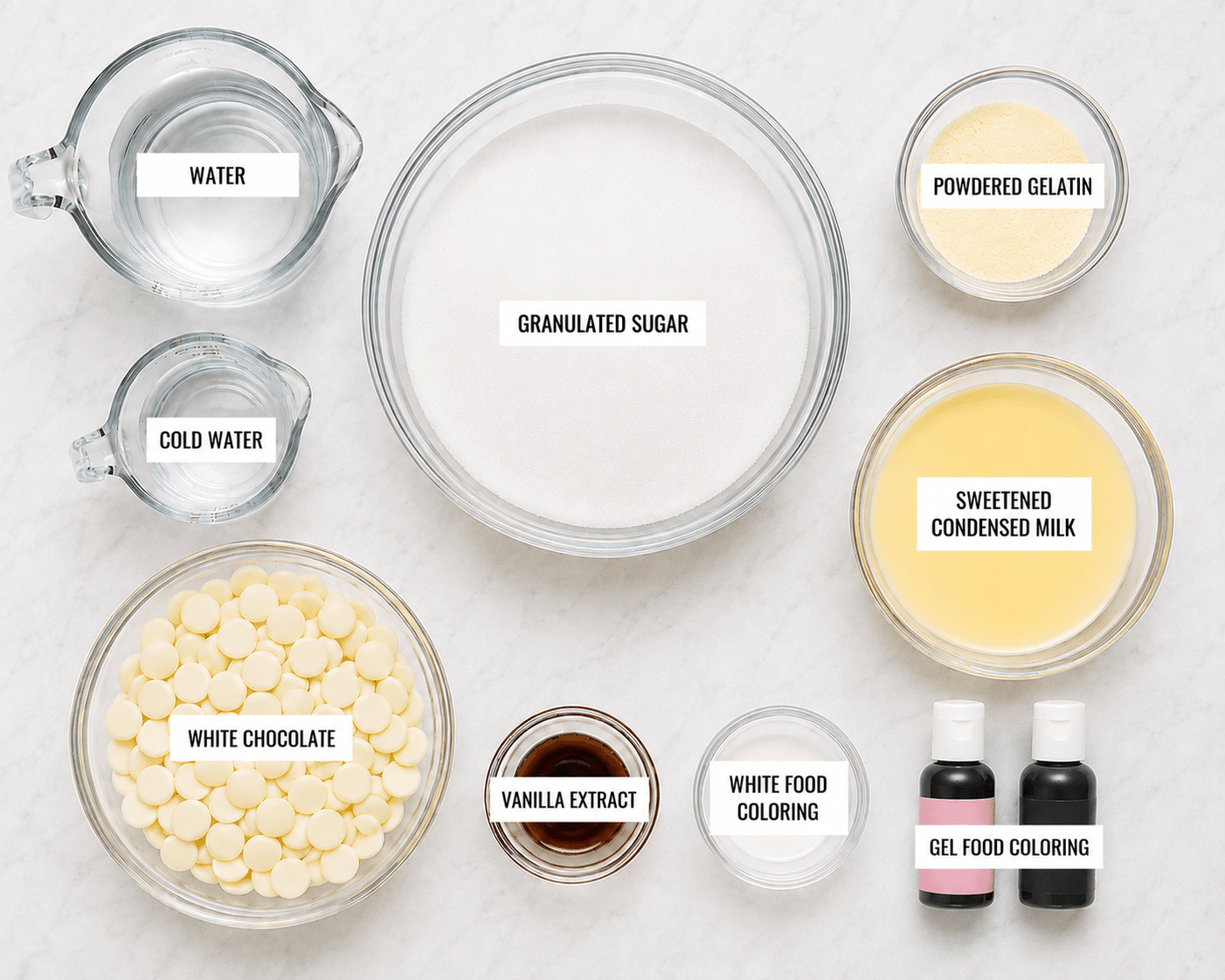
- Granulated sugar. Creates the base syrup and helps give the glaze its shiny, reflective finish. Swapping part of the sugar for glucose syrup produces a thicker, more stable glaze.
- Water. Dissolves the sugar and forms the base of the hot liquid that gets poured over the chocolate.
- Cold water, for the gelatin. It must be cold. Warm water keeps the gelatin from blooming properly.
- Powdered gelatin. The key ingredient that gives the glaze its firm, glossy set. You can substitute sheet gelatin at the same weight. Do not skip or reduce the gelatin, or the glaze won't hold to the cake.
- Sweetened condensed milk. Adds richness, smoothness, and body, making this version so forgiving. See the shine section above for the tradeoff it comes with.
- High-quality white chocolate. The flavor base and the ingredient most responsible for the glossy finish. Valrhona, Callebaut, or Ghirardelli all work beautifully. Do not use white chocolate chips or compound white chocolate, because the stabilizers in them change how the glaze sets and shines.
- Vanilla extract. Adds depth of flavor.
- White food coloring. Brightens the base so your gel colors read as vibrant rather than pastel or muddy.
- Gel food coloring. A little goes a long way. Skip liquid food coloring, which thins the glaze and dilutes the color. Americolor or Chefmaster give the most vibrant results.
How Much Glaze Do I Need?
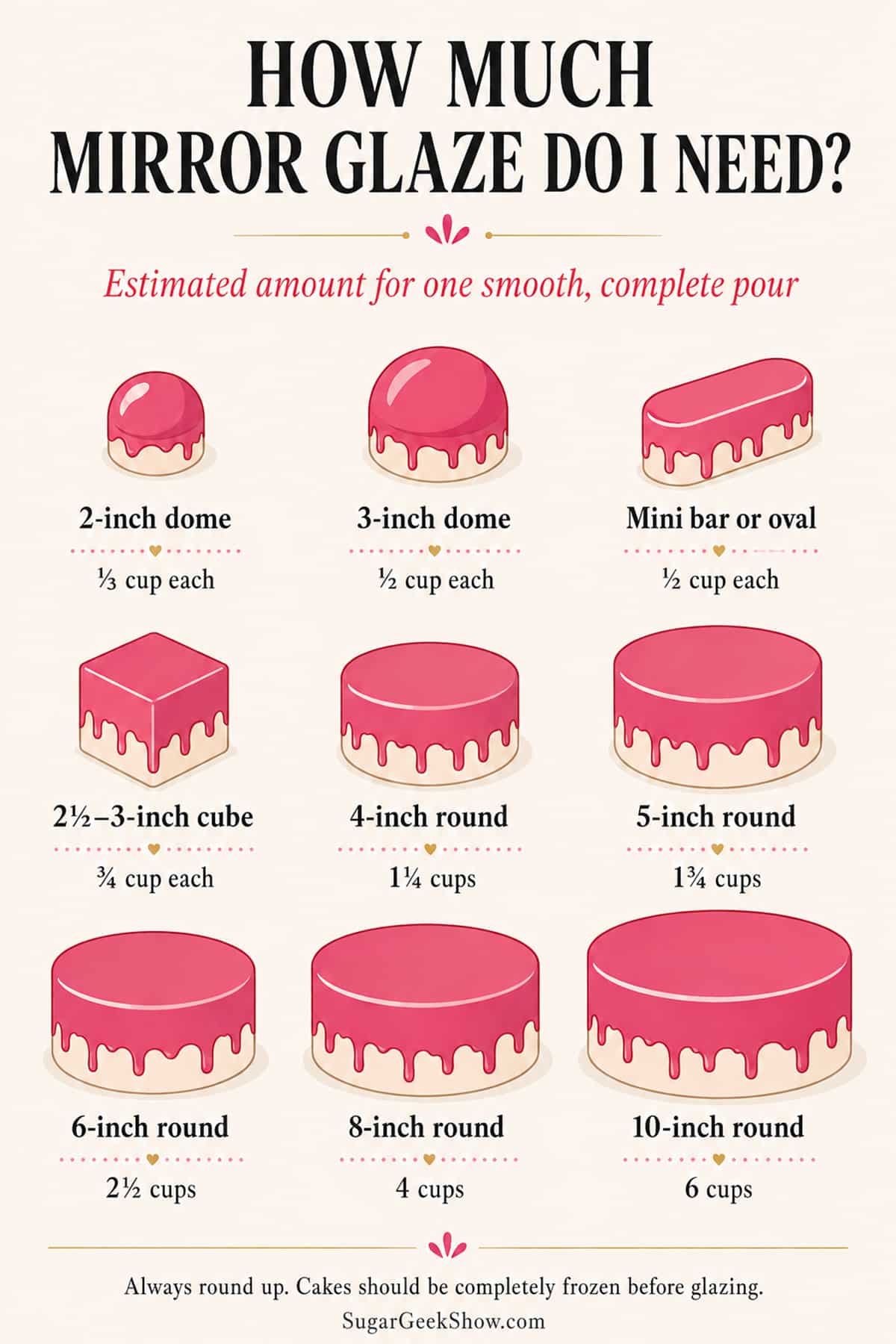
Scale the batch to your cake so you don't come up short mid-pour. As a rule of thumb: a 6-inch cake needs about 2.5 cups, an 8-inch cake needs about 4 cups (this recipe as written), and a 10-inch cake needs about 6 cups. It's always better to make a little too much than to run out halfway down the sides, and clean runoff can be saved (see storage below).
How to Make Mirror Glaze Step-By-Step
Mirror glaze is all about timing, so set yourself up before the glaze ever hits 90º F. Read through all the steps first and have your frozen cake, baking sheet setup, thermometer, fine sieve, and coloring ready to go, because once you're in the cooling window you need to move quickly.
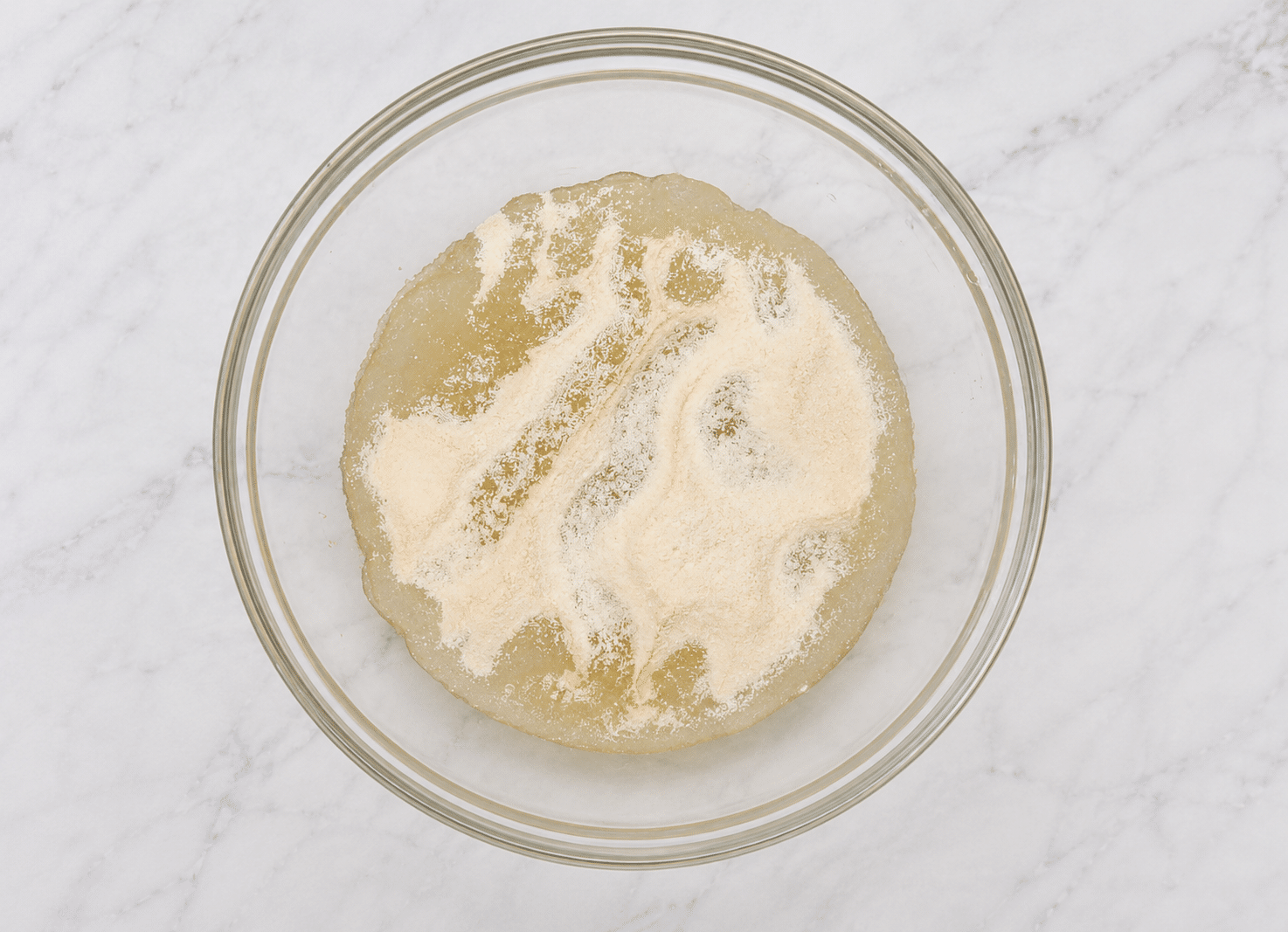
- Bloom the gelatin. Sprinkle the powdered gelatin over the cold water in a small bowl, stir briefly, and set it aside for 15 minutes. The gelatin will absorb the water and swell into a firm, rubbery mass. Don't rush this.
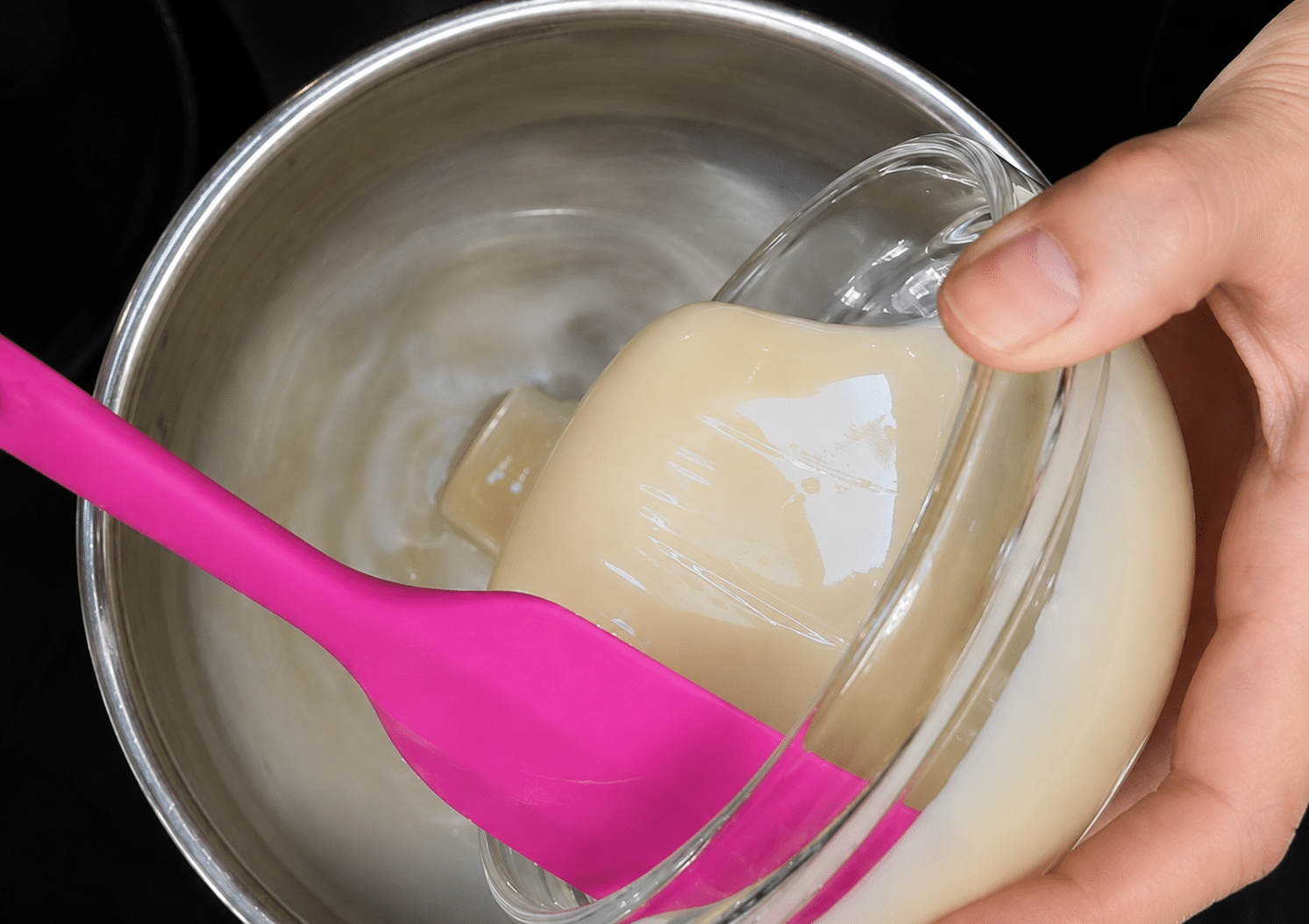
- Make the syrup. Combine the sugar, water, and sweetened condensed milk in a medium saucepan over medium heat. Stir to combine and bring it to a gentle simmer. Don't let it boil. The moment it simmers, pull it off the heat.
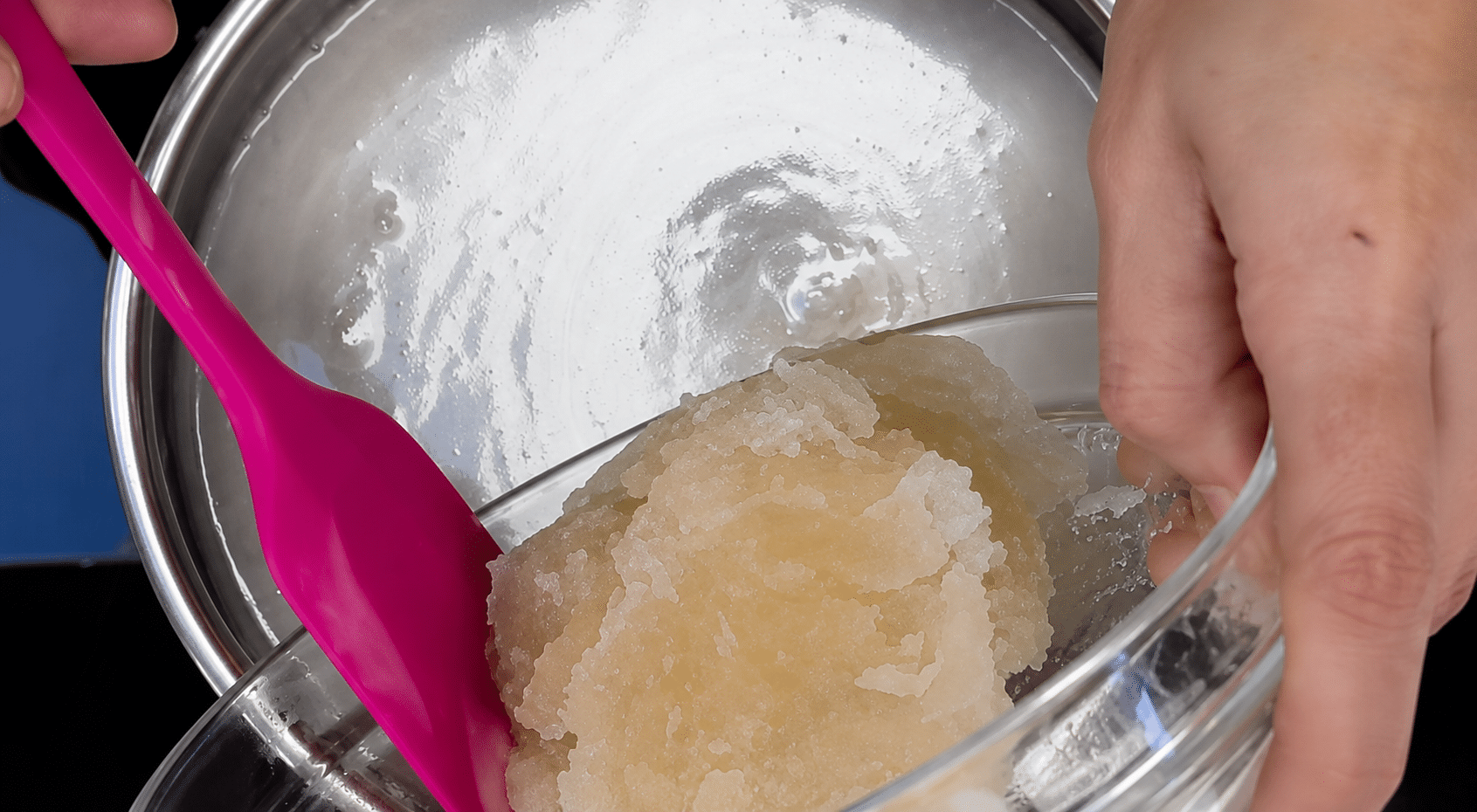
- Add the gelatin. Stir the bloomed gelatin into the hot syrup until it's completely dissolved. No visible pieces should remain.
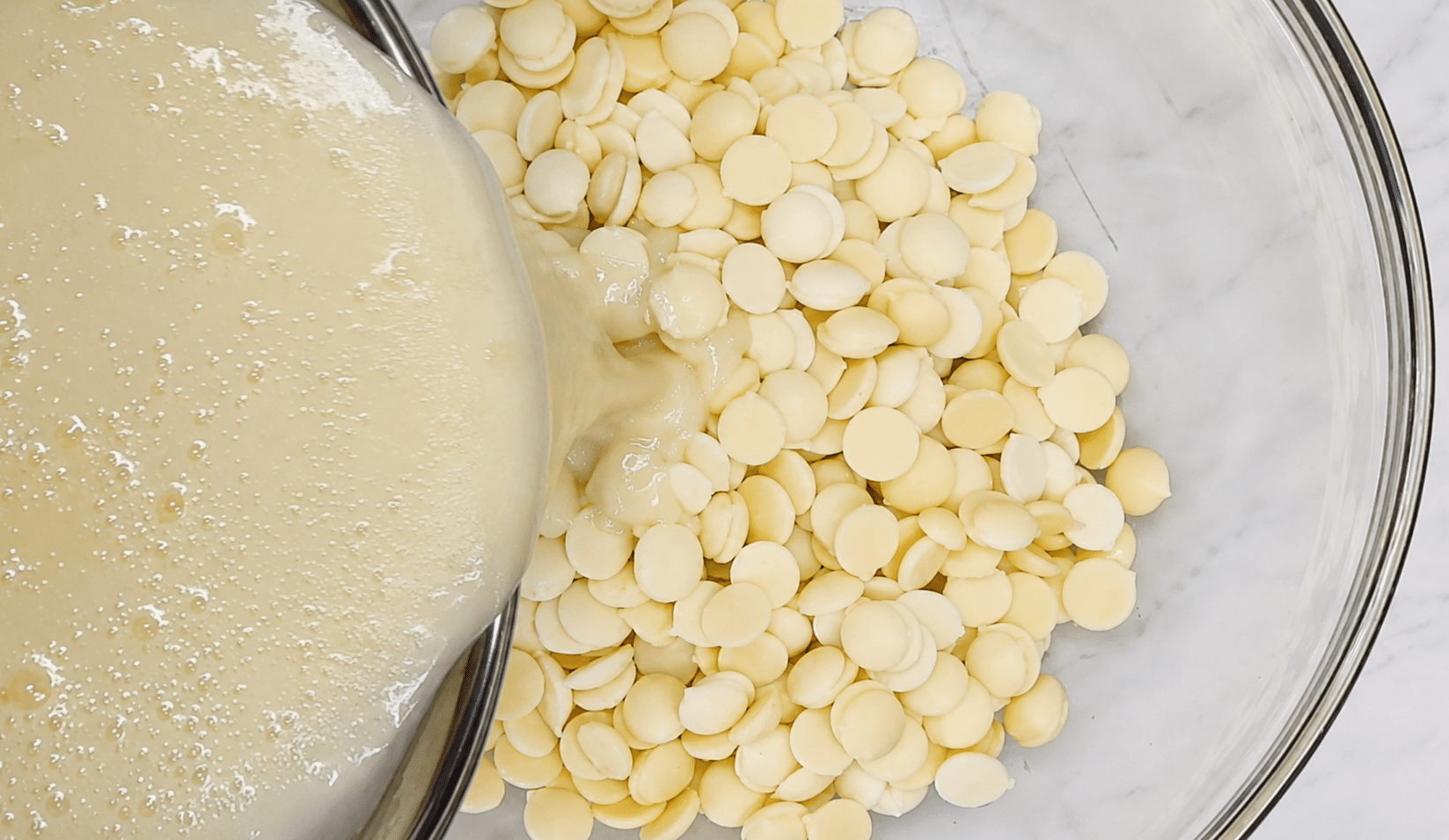
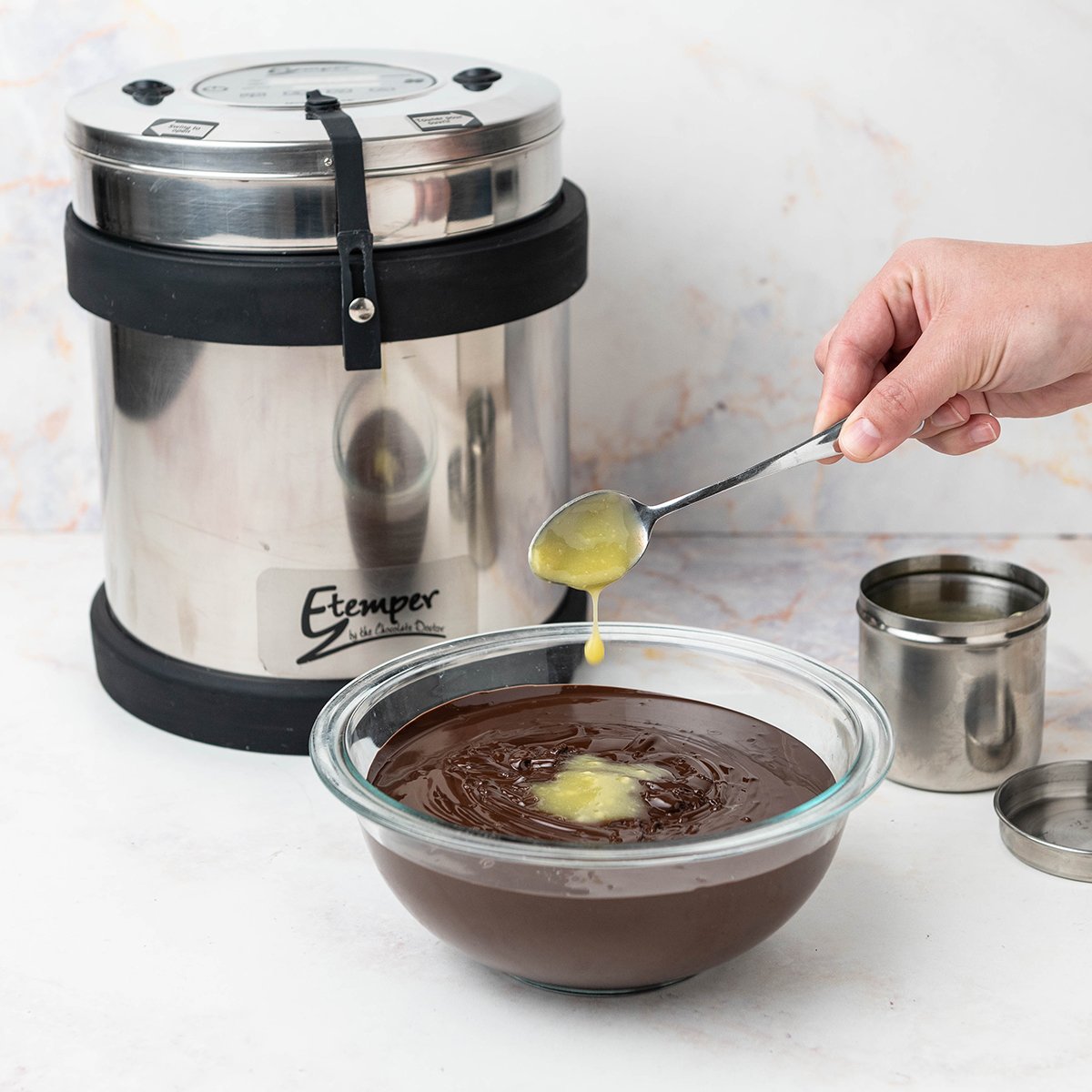
- Melt the chocolate. Put the white chocolate in a tall, narrow container that fits your immersion blender. Pour the hot syrup over the chocolate and let it sit undisturbed for 5 full minutes to melt.
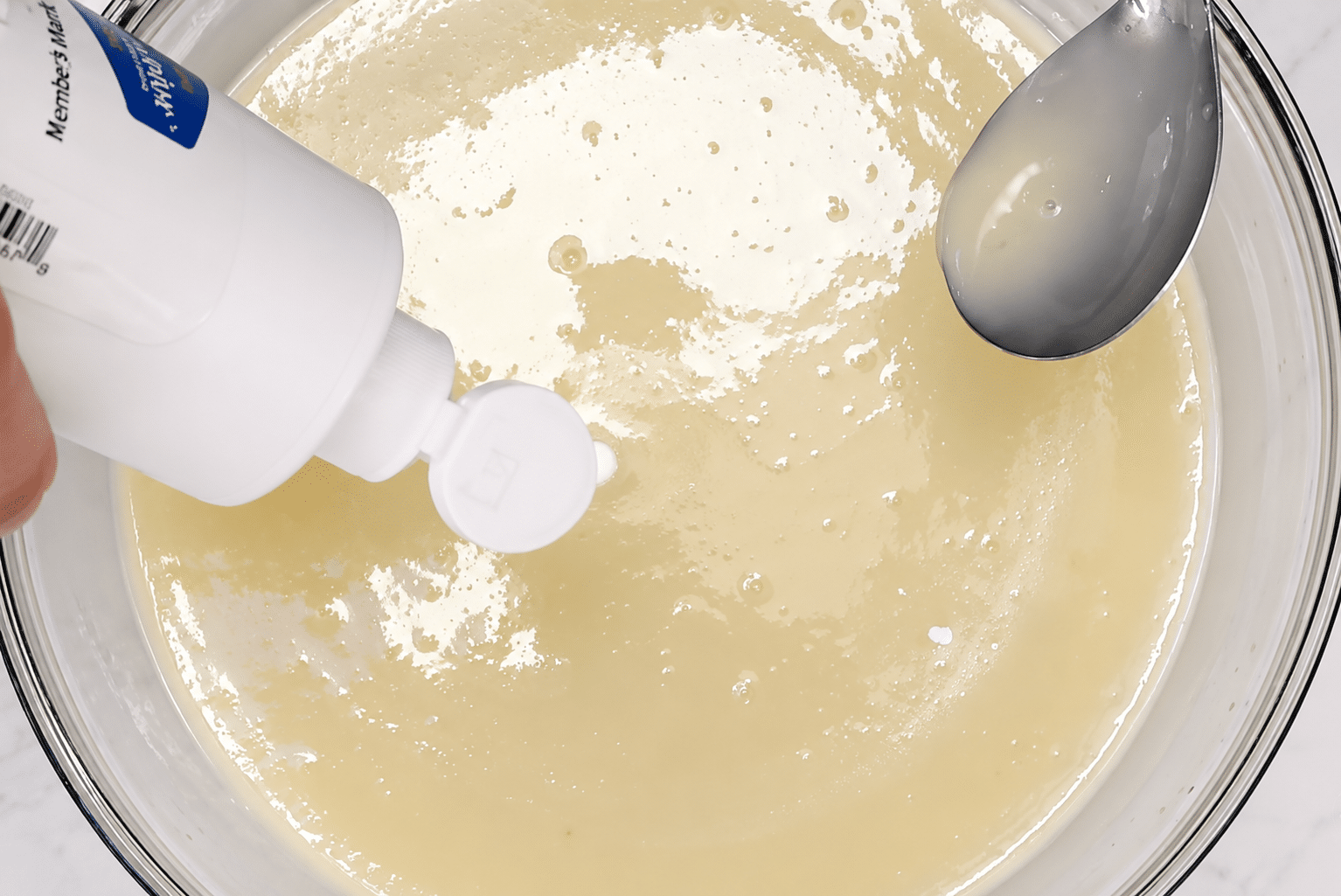
- Add your color. Add the white food coloring. For a single-color glaze, color the whole batch. The white is very important so that the mirror glaze is not transparent.
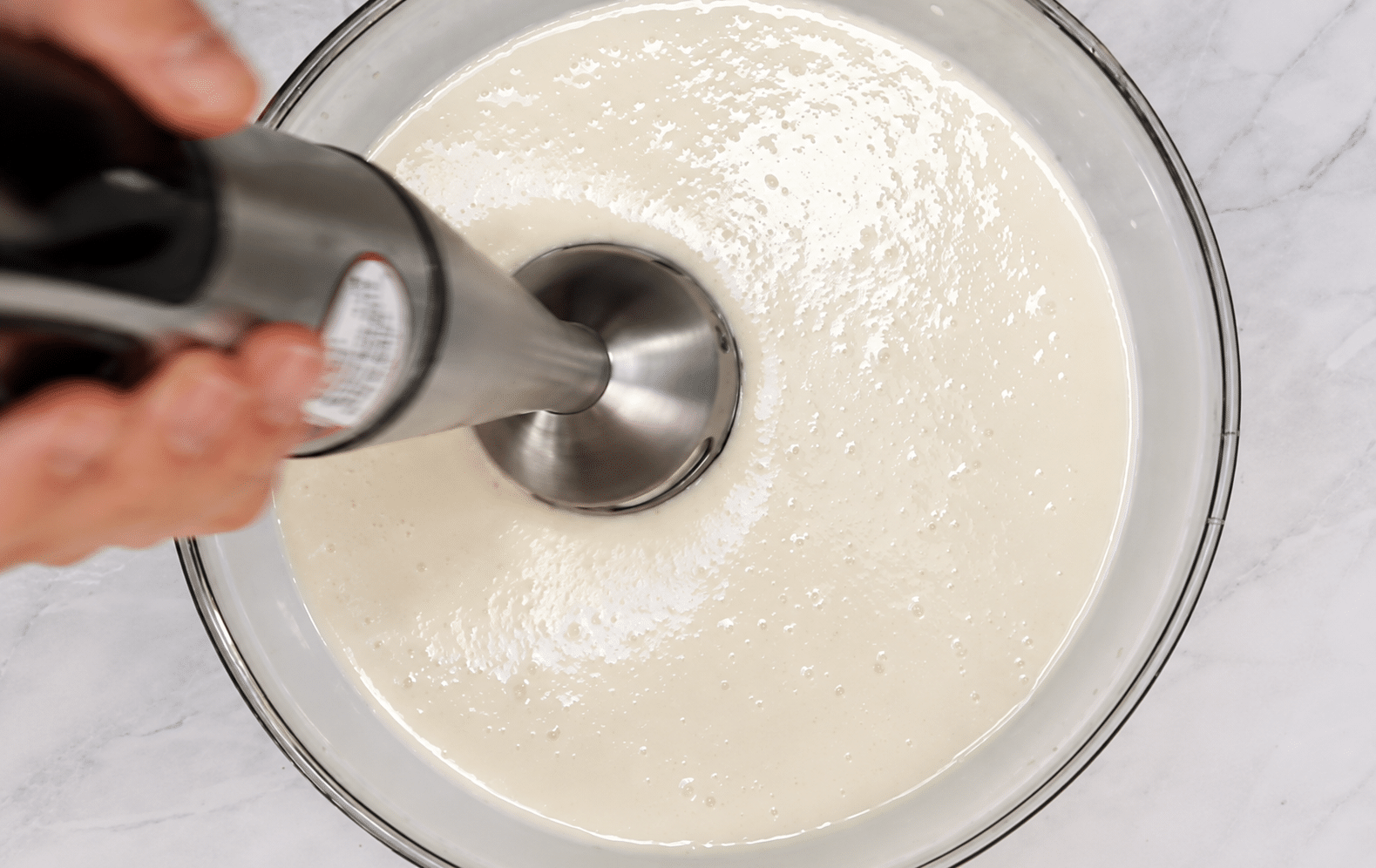
- Blend until smooth. Use an immersion blender to blend until completely smooth, holding the head at the bottom of the container and tilting it slightly to keep air out. Never lift the head above the surface while blending, or you'll whip in bubbles.
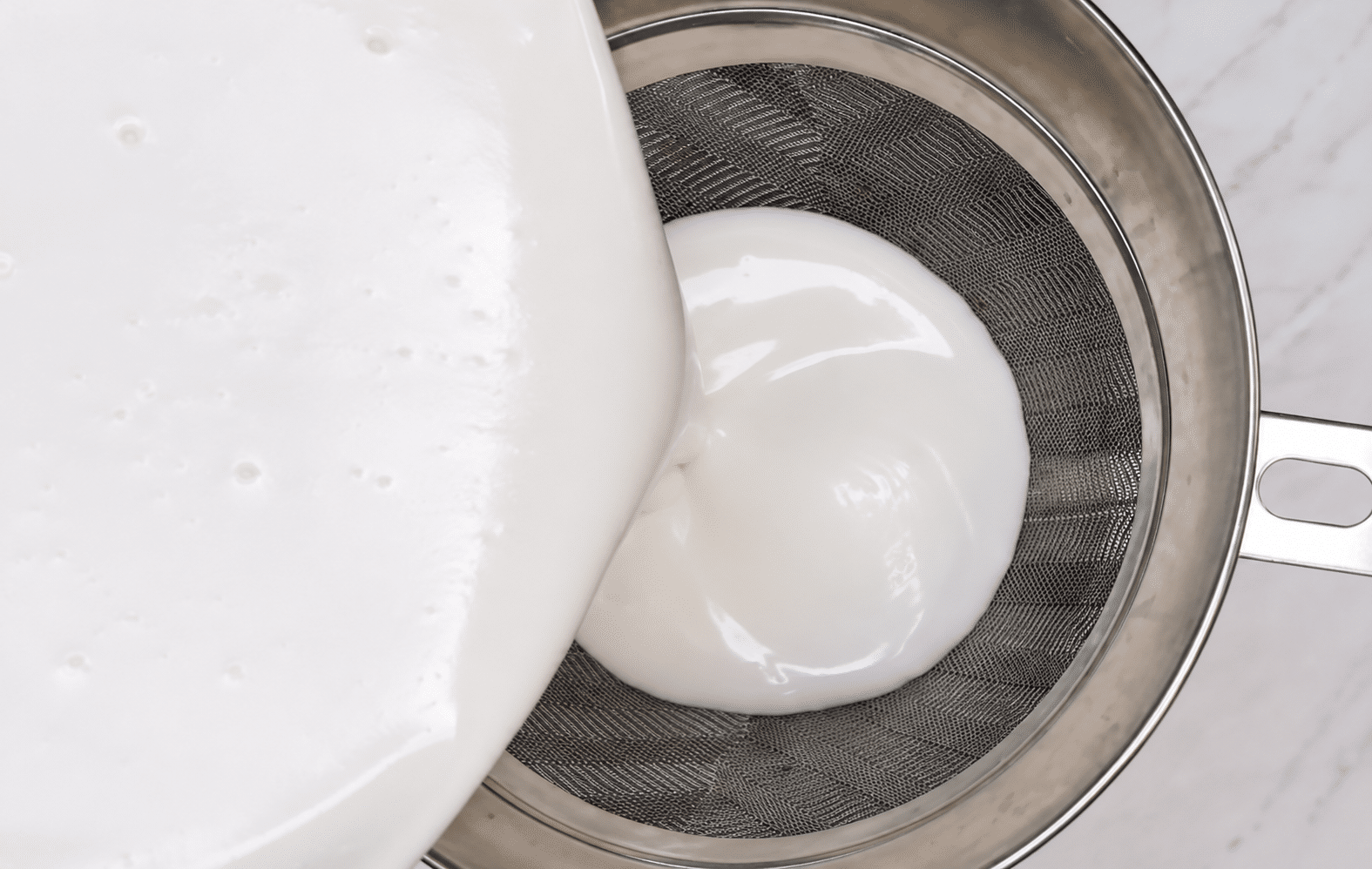
- Strain. Pass the colored glaze through the fine-mesh sieve to remove any air bubbles introduced during blending.
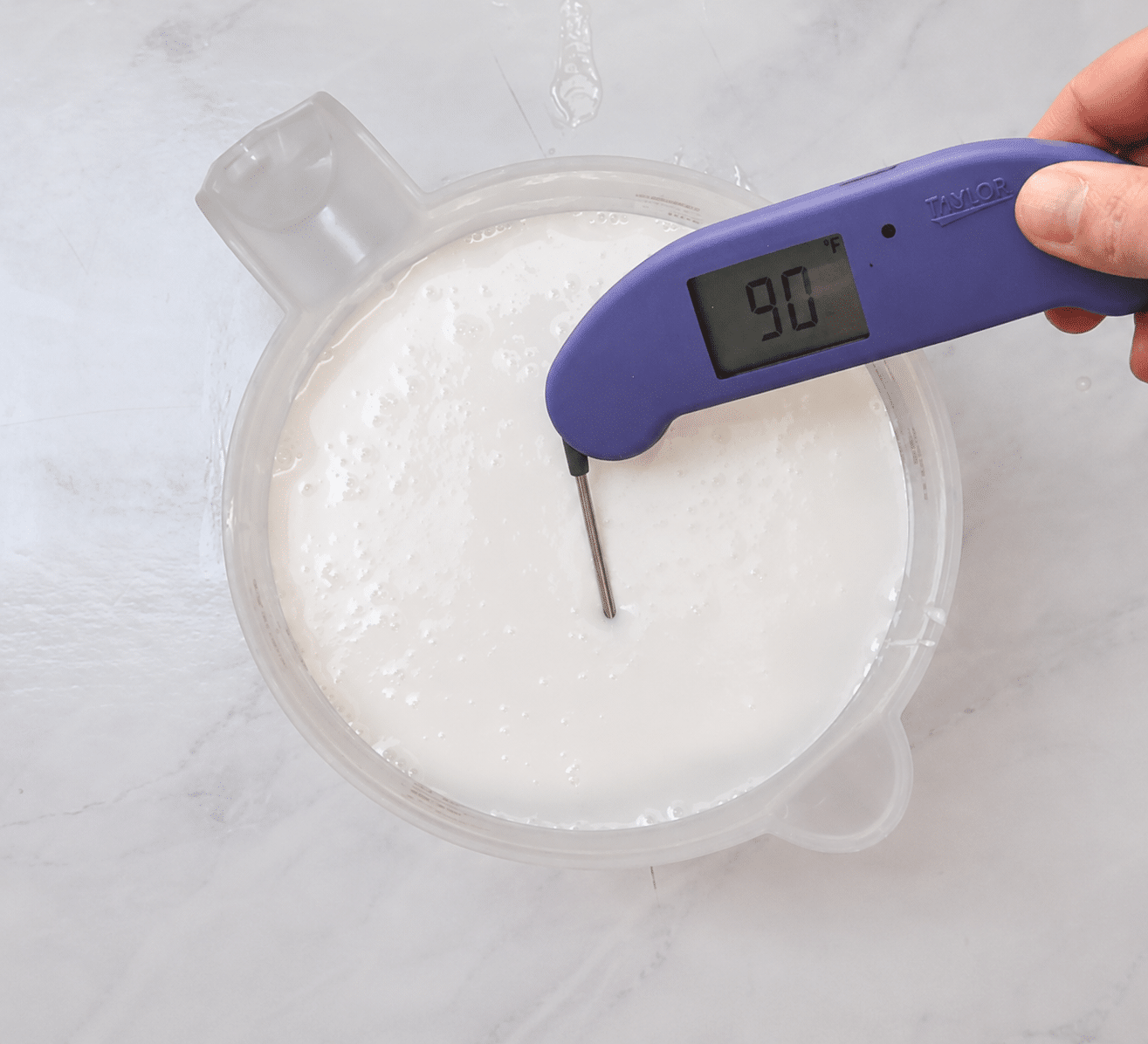
- Cool to exactly 90º F. Let the glaze cool, stirring gently now and then, until it reads exactly 90º F on your thermometer. This can take 20 to 40 minutes depending on the volume and how warm your kitchen is. Don't walk away. Your window is roughly 85 to 95º F. Below 85º F, it's too thick and sets unevenly; above 95º F, it's too thin and runs off without forming a reflective layer.
PRO TIP: If you miss the window and it cools too much, gently reheat by setting the bowl over a pot of warm (not simmering) water, stirring slowly and checking the temperature. If you microwave, do it in short bursts and stir between each one.
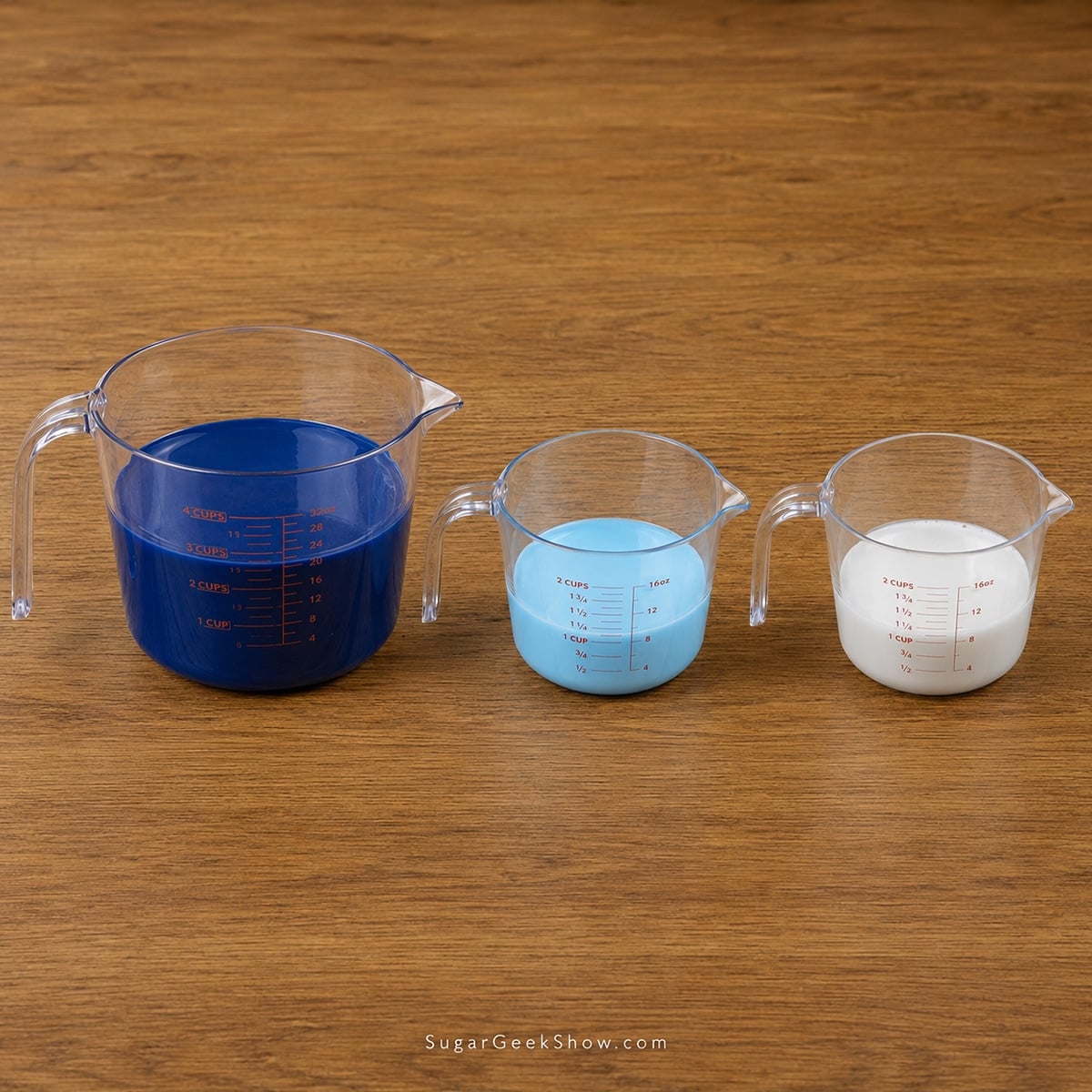
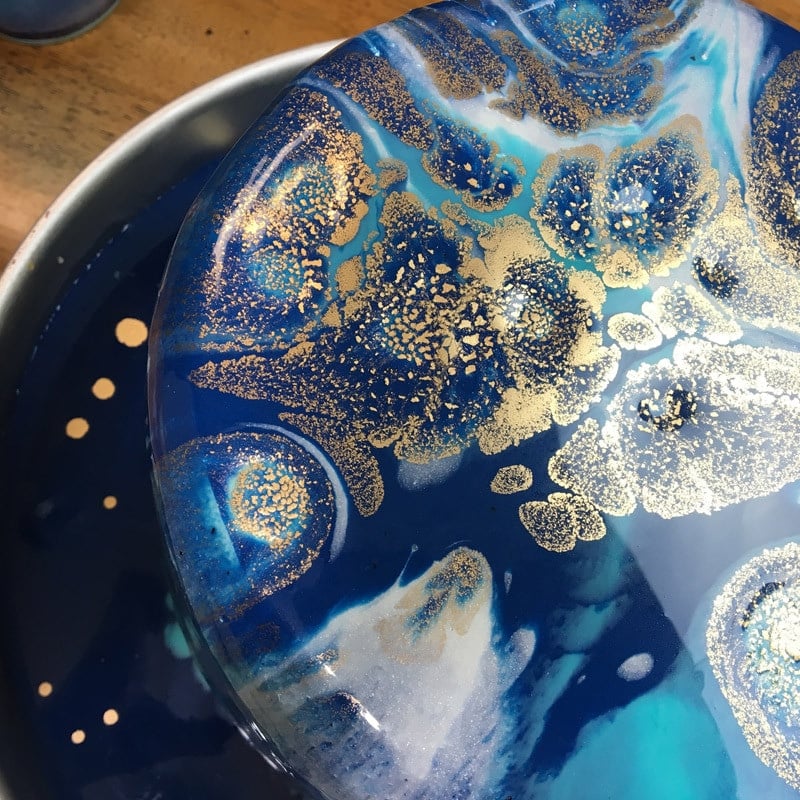
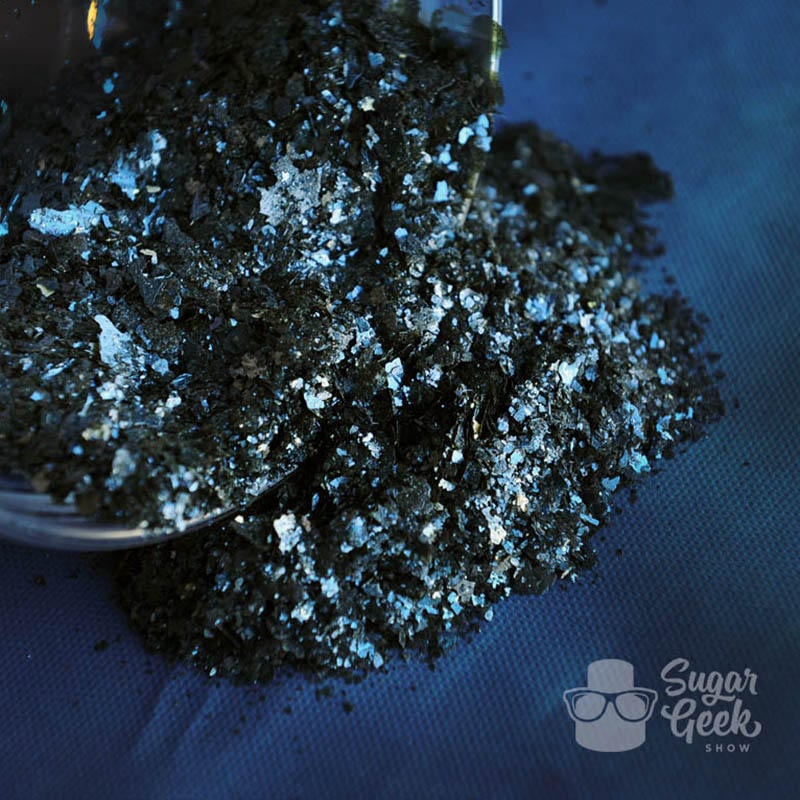
- Add color. At this point, if you want additional colors, you can pour your white glaze into separate small bowls or measuring cups and add food coloring. Make sure to stir until fully incorporated to incorporate the gel food coloring. I used dark blue as the main color, with a small amount of light blue and white as accents. I also mixed a small amount of gold powder with vodka for accents at the end.
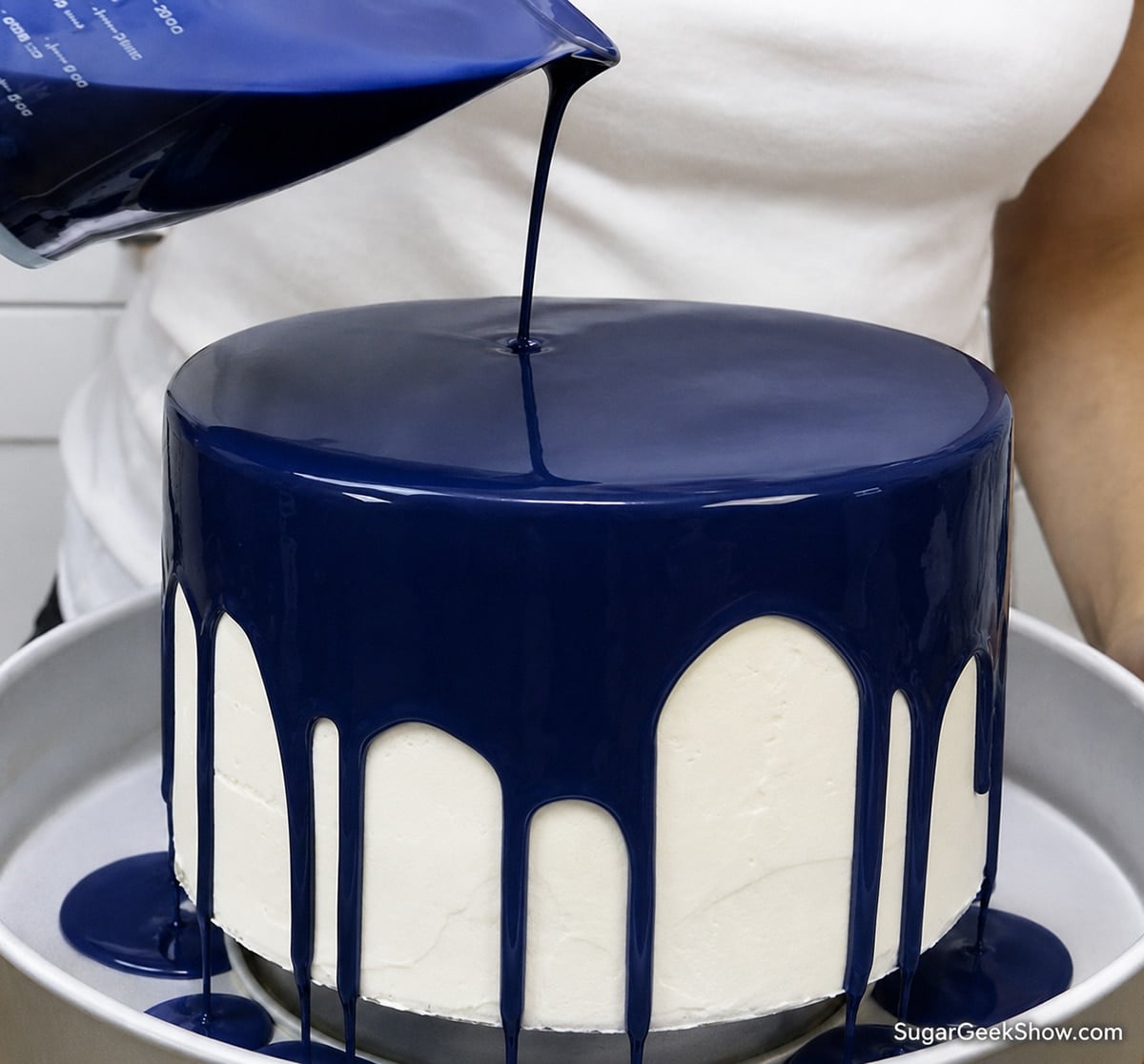
- Pour the glaze. Place the frozen cake on its elevated surface over the baking sheet. Pour the glaze steadily from the center of the cake, letting it spread outward and flow evenly down the sides.
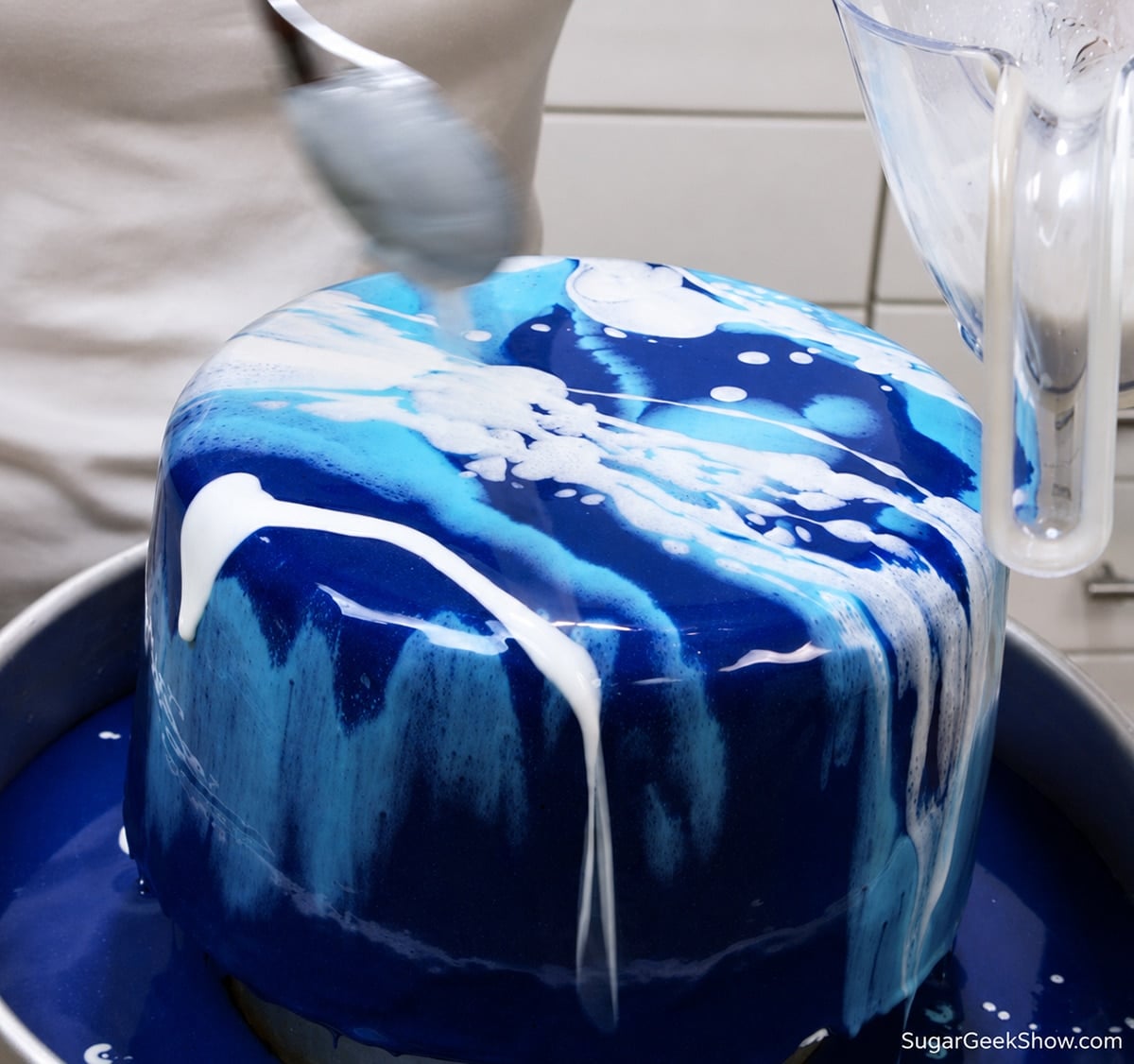
- For a multi-color effect, pour the other colors in succession without stopping. After the dark blue, I added some light blue, then some white. I used a spoon instead of the measuring cup. I also added a few drops of gold dust mixed with a little vodka at the very end. Work quickly!
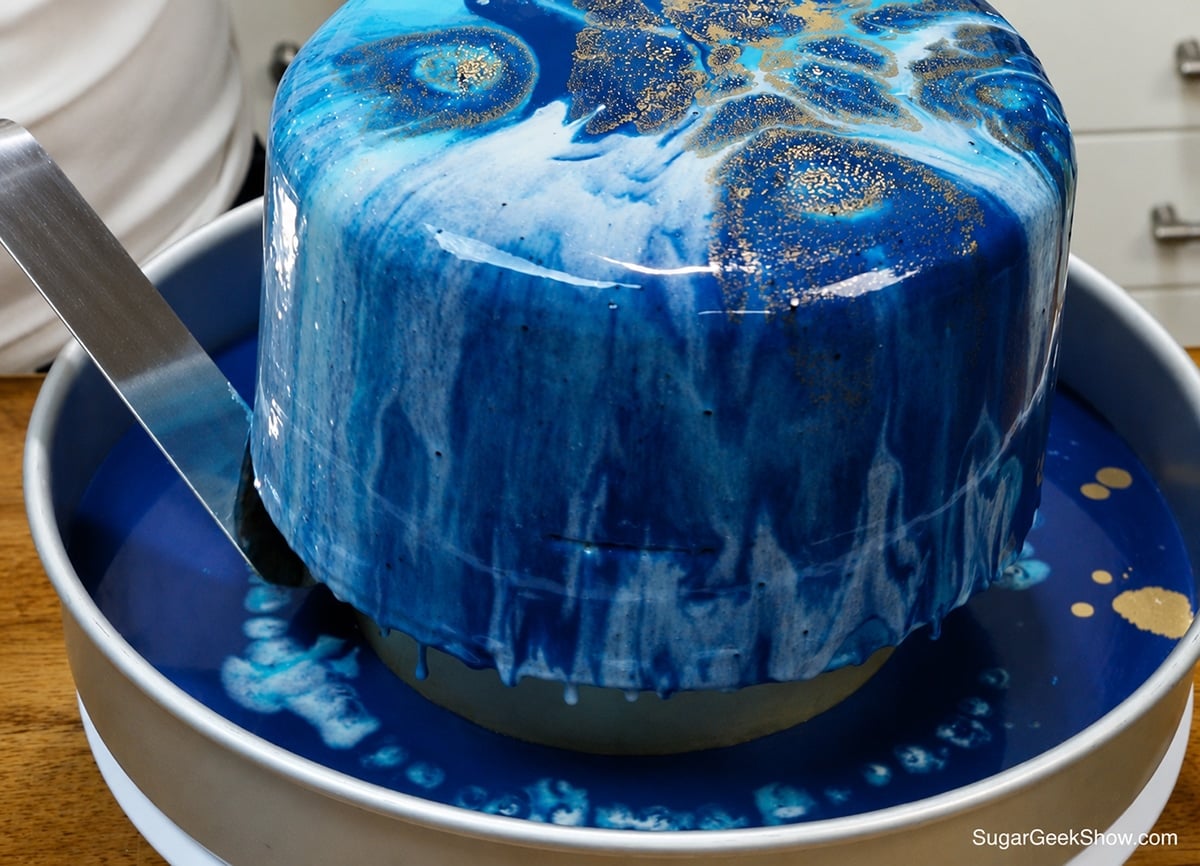
- Clean the edges, then chill. After about 5 minutes, run a hot offset spatula or knife along the base of the cake to remove the excess glaze pooled at the bottom. A clean base edge makes the whole thing look dramatically more professional. I heat mine by running it under very hot water for a minute or so.
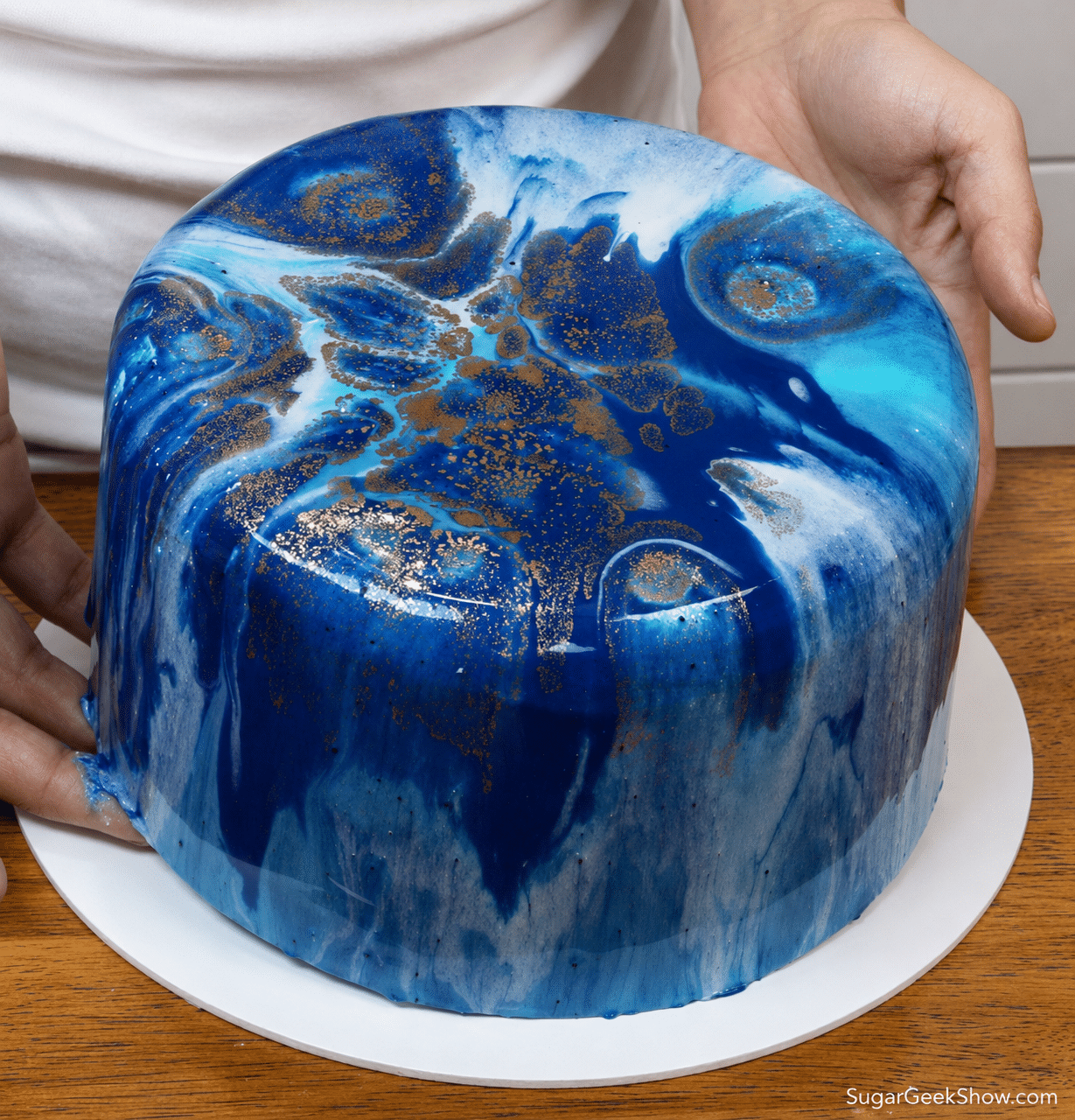
- Refrigerate and serve. Transfer the glazed cake to the refrigerator until ready to serve. The glaze seals the cake, so you do not need to cover an uncut cake. Allow the cake to come to room temperature for 20 to 30 minutes before serving for the best flavor and texture.
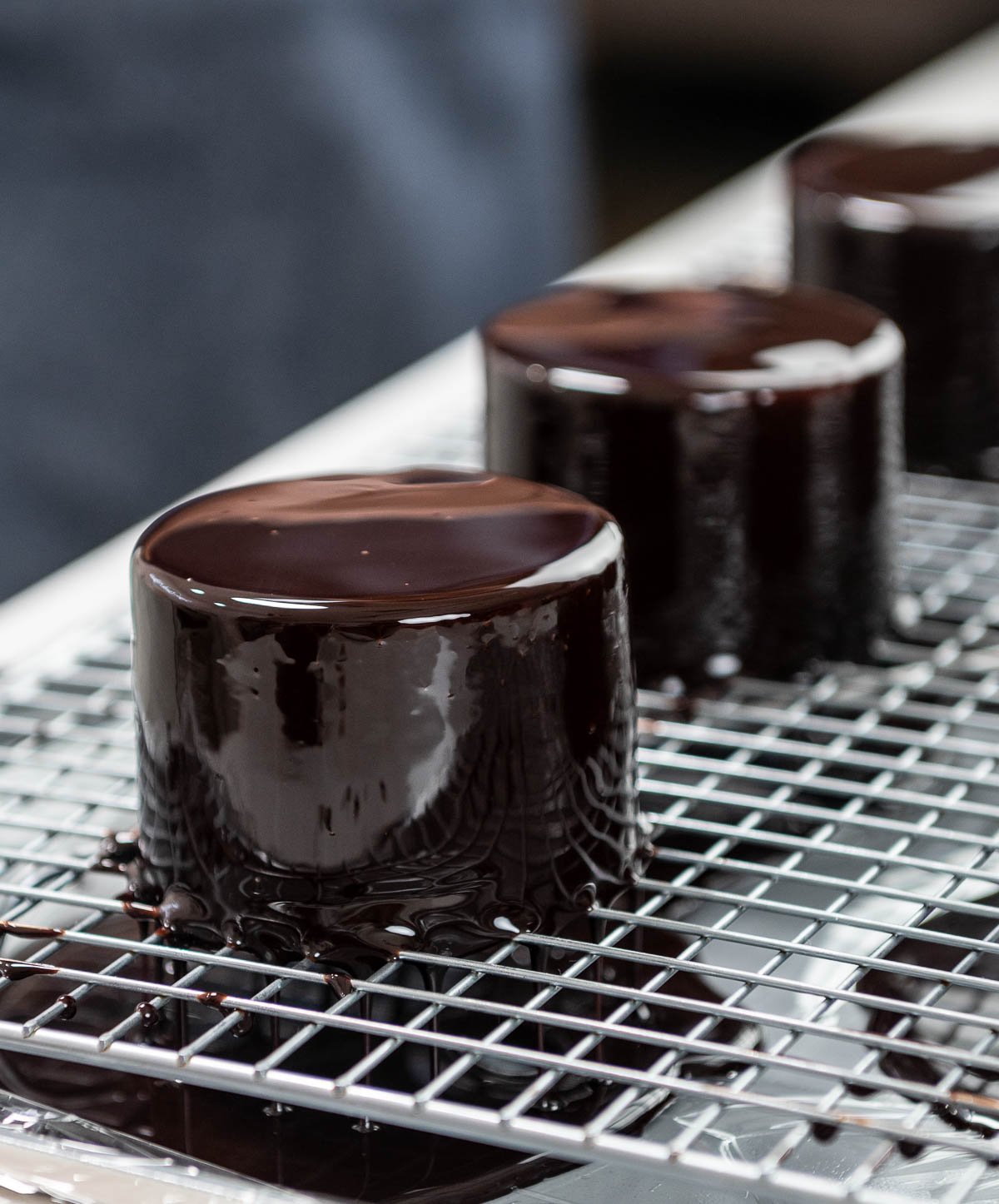
Single Color
The simplest and most dramatic. One color poured uniformly over the cake. Vibrant single-color glazes (deep red, electric blue, saturated purple) photograph spectacularly.
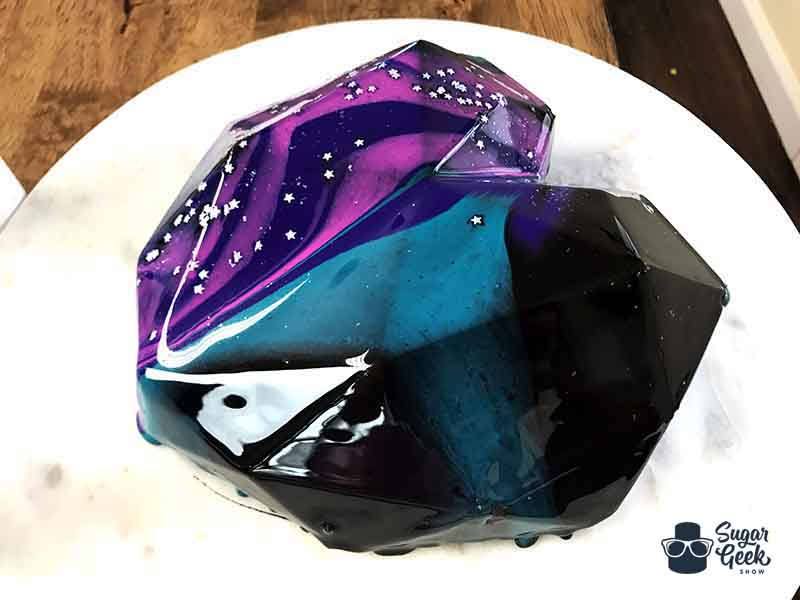
Galaxy Mirror Glaze
The most iconic mirror glaze look. Divide the glaze into 4 to 5 containers. Color one portion deep black or navy, one portion dark blue or purple, one dark teal, one or two bright accent colors (gold, silver, or iridescent), and leave a small amount white or uncolored. Pour the glaze colors in quick succession, starting with the darkest and alternating the others without fully mixing. The colors naturally blend as they pour together and flow down the sides of the frozen cake. Add a few drops of edible gold or silver luster dust to the finished glaze for stars and sparkle.
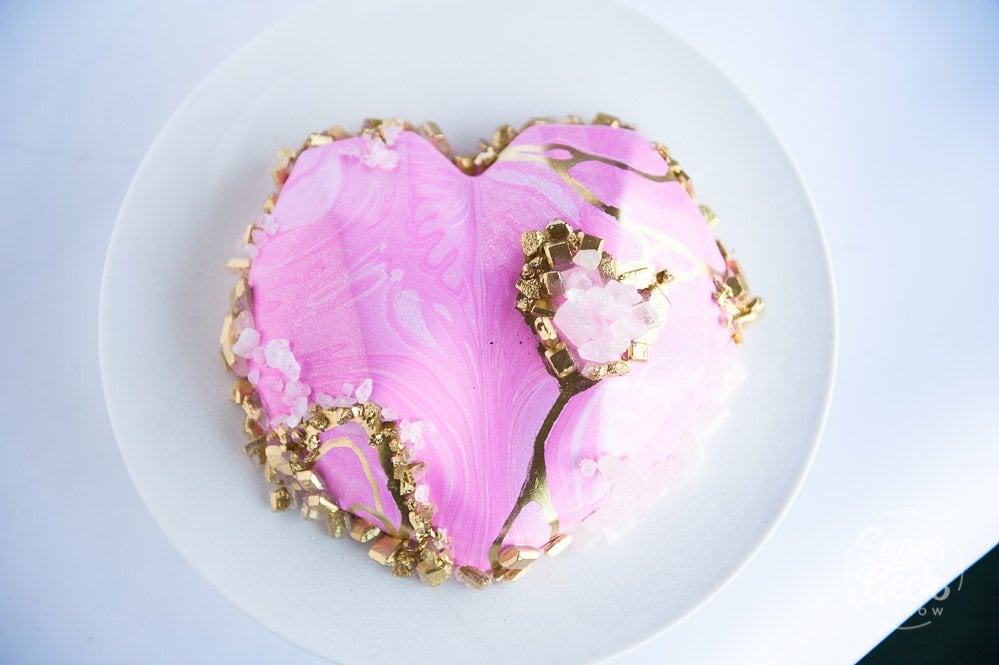
Marble Mirror Glaze
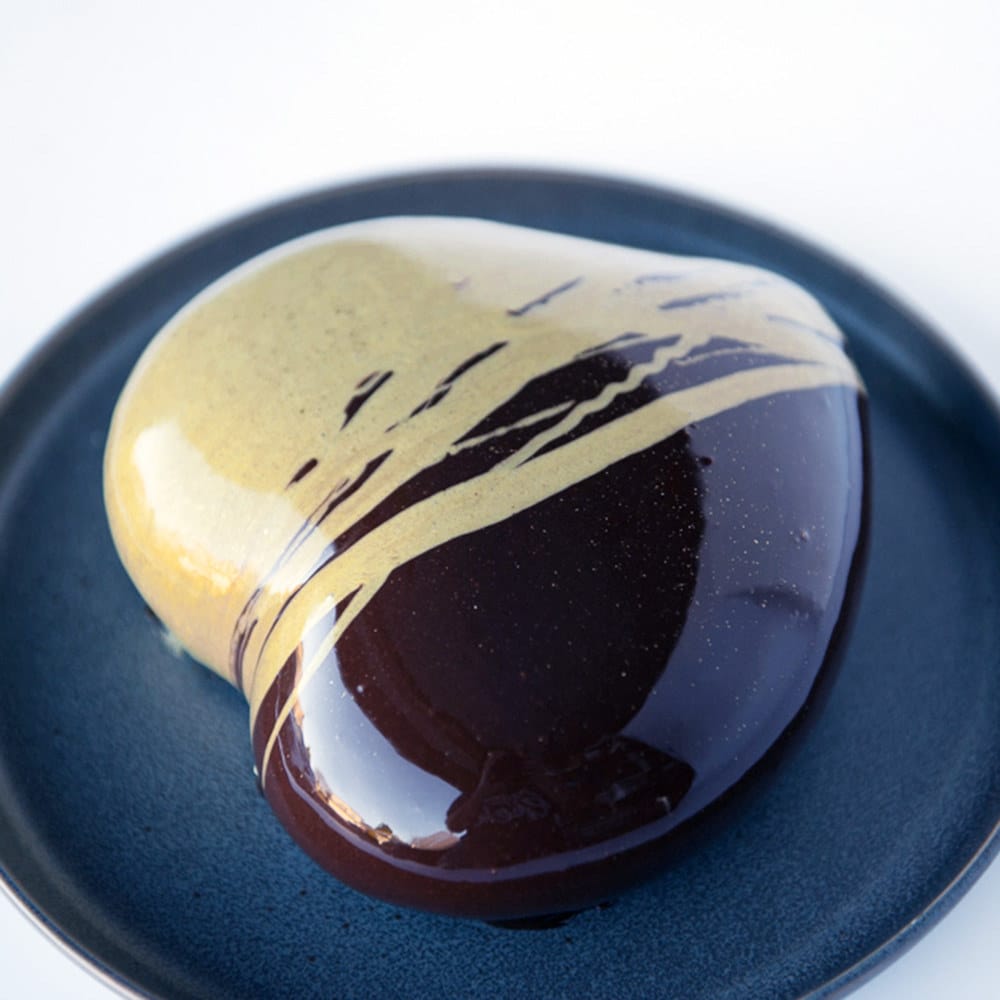
Divide into 2 to 3 colors. Pour the primary color first to cover the cake, then drizzle the secondary colors over the top. Use a skewer or toothpick to gently drag through the colors in long strokes before they set. Work quickly; the glaze sets fast on the frozen cake surface.
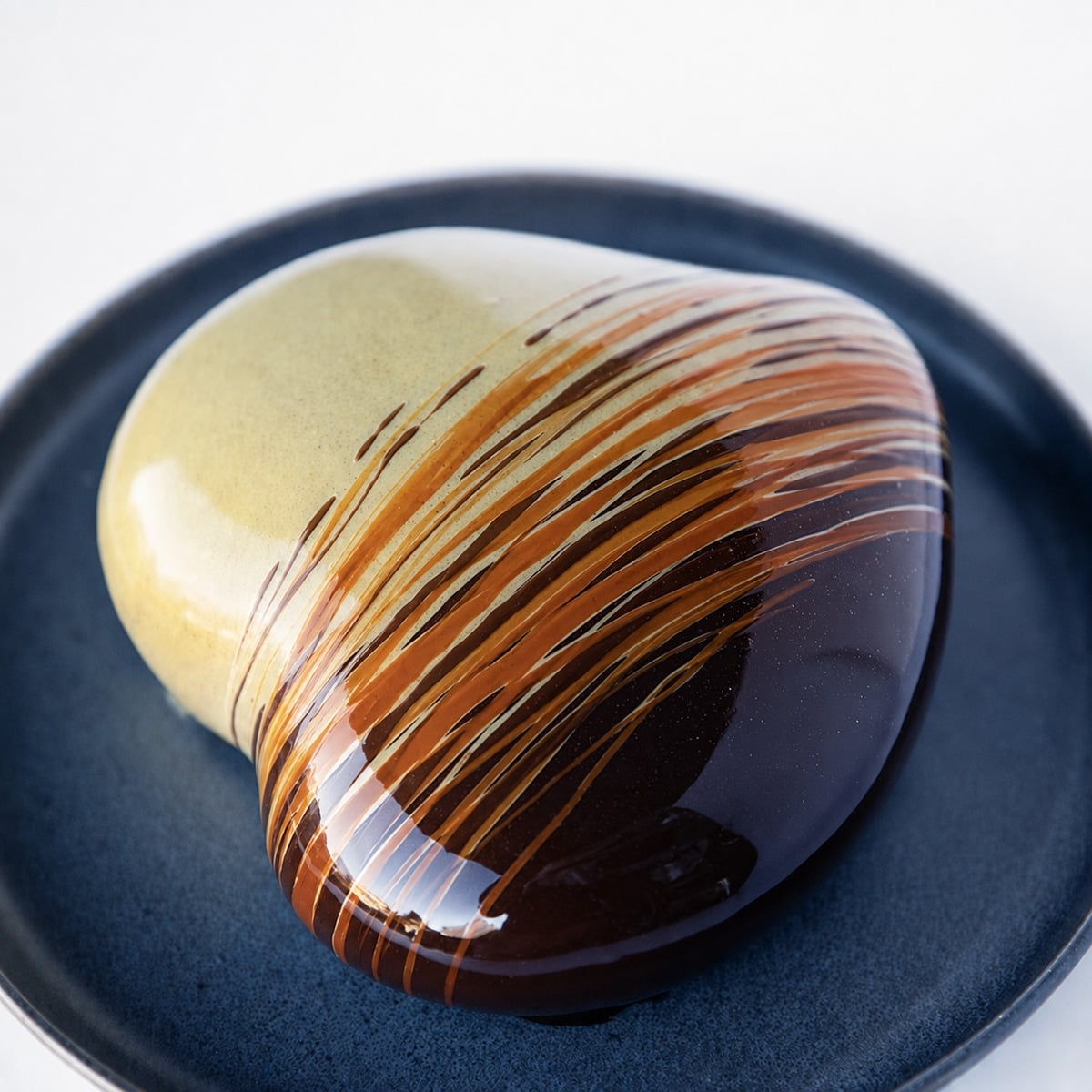
Ombré mirror glaze
Divide the glaze into 3 to 4 portions and color them in progressively lighter or darker shades of the same color family (for example, deep burgundy, medium rose, soft blush, and almost white). Pour the darkest shade over the entire cake first, then pour the progressively lighter shades in zones from bottom to top, allowing each to flow and merge naturally at the transitions.
How to Store and Reuse Leftover Mirror Glaze
The leftover glaze that runs off the cake and pools on the baking sheet can be saved and reused as long as it is clean (no cake crumbs, no bits of mousse or sponge).
- Refrigerator storage. Pour the excess glaze into an airtight container and press a sheet of plastic wrap directly onto the surface to prevent a skin from forming. Refrigerate for up to 2 weeks. To reuse, reheat gently in a double boiler or in 15-second microwave bursts at medium power, stirring carefully between each interval. Strain through a fine sieve and blend gently before using.
- Freezer storage. Mirror glaze freezes beautifully for up to 3 months. Store in an airtight container with plastic wrap pressed to the surface. To use, thaw overnight in the refrigerator, then reheat gently, strain, and blend gently before using.
- Important: Do not microwave mirror glaze on high power. High heat can introduce bubbles and scorch the chocolate. Gentle and slow is the key to smooth reheated glaze.
Common Mirror Glaze Problems
My glaze slid off the cake, leaving bare patches.
Either the glaze was too warm when you poured it (above 95º F), or the cake wasn't frozen solid. Both cause the glaze to run off faster than it sets. Let the glaze cool further and always freeze the cake for at least 2 to 3 hours before glazing.
My glaze has dull spots or visible bubbles.
Air bubbles are introduced during blending or during vigorous stirring while cooling. Always strain twice, blend with the head below the surface, and stir gently (not vigorously) while cooling. If you see surface bubbles before pouring, briefly wave a kitchen torch or blow dryer over the surface from 6 inches away to pop them.
My glaze isn't shiny or reflective.
Either the layer was too thin (the glaze was poured while too warm and ran off before forming a reflective layer), or the cake surface wasn't smooth enough to reflect properly. Ensure the glaze is at 90°F and the cake surface is perfectly smooth.
My glaze has lumps in it.
The gelatin wasn't fully dissolved, or the white chocolate had lumps. Strain through a fine sieve after the gelatin step and again after blending. Always let the hot syrup sit on the chocolate for the full 5 minutes before blending.
My glaze is too thick to pour evenly.
It cooled below 85º F. Gently reheat over a warm water bath, stir gently to a smooth consistency, and check the temperature before proceeding.
Final Thoughts
Mirror glaze looks like something only professional pastry chefs can make, and the first time you pour it successfully, you will completely understand why people lose their minds over the pour video. The moment where the glaze hits the frozen cake and spreads into a perfect, reflective surface is genuinely one of the most satisfying things that can happen in a home kitchen. Once you've done it, you will want to do it again. Keep your cake frozen, keep your glaze at 90º F, pour with confidence, and the rest takes care of itself.
Mirror Glaze Cake Recipe FAQs
Mirror glaze works best on a perfectly smooth, frozen surface. A mousse-covered entremet frozen in a silicone mold gives the most professional result. A ganache-covered layer cake frozen solid is an excellent second option. Buttercream works if the surface is completely smooth and the cake is frozen solid. Naked or lightly frosted cakes don't work because the glaze absorbs into the exposed sponge unevenly.
Recipes using sweetened condensed milk (including this one) produce a glaze that starts to lose its high shine after about 24 hours, as the sugar draws moisture from the air. For the shiniest result, glaze as close to serving time as possible. For client work, glaze on the same day as delivery.
Yes. Store in an airtight container with plastic wrap pressed to the surface for up to 3 months. Thaw overnight in the refrigerator, then reheat gently in a double boiler or in 15-second microwave bursts at medium power, strain through a fine sieve, and blend gently before using.
Strain twice (once after adding the gelatin, once after blending), hold the immersion blender head below the surface while blending, and stir gently (not vigorously) during cooling. If you see surface bubbles just before pouring, briefly wave a kitchen torch from 6 inches away to pop them.
Yes, corn syrup is the closest and most accessible substitute. It works great and produces a similar consistency and shine. Use the same amount by weight.
Leave Me A Review
⭐️⭐️⭐️⭐️⭐️
If you tried this Mirror Glaze Cake Recipe or any other recipe on my blog, please leave a 🌟 star rating and let me know how it goes in the comments. Pour videos especially welcome!
Recipe
Equipment
- 1 Fine Sieve
- 1 Immersion blender
- 1 Kitchen Scale
Ingredients
- 2 ounces Cold Water for the gelatin
- 20 grams Powdered Gelatin
- 12 ounces White Chocolate high quality for best results such as Valrhona
- 5 ounces Water
- 11 ounces Sugar
- 7 ounces Sweetened Condensed Milk
- 1 Tablespoon Vanilla
- 2 drops White Food Coloring
- 1 Frozen Cake
Instructions
- Sprinkle the gelatin into the water and mix to combine. Set it aside to bloom for 15 minutes.
- Combine the water, sugar, and condensed milk in a medium saucepan over medium heat until it begins to gently simmer.
- When the sugar and water mixture begins to simmer (do not boil), remove from the heat and add the bloomed gelatin. Stir until the gelatin has dissolved.
- Strain this mixture through a sieve to remove any lumps and return it to the saucepan.
- Pour the hot liquid on top of the chocolate and let it sit for 5 minutes.
- Use an immersion blender to stir the glaze until the chocolate has completely melted.
- Add the gel food coloring and stir until well-mixed. Pass the glaze through a fine sieve to remove any lumps. Leave the glaze to cool to 90ºF.
- Once the glaze has cooled to 90º F / 32º C, pour it over the frozen cake which is on top of a cup, sitting on a tray or plate with a edge to catch the drips.
- Leave the glaze to set for 5 minutes before using a hot knife to remove the drips.
- Enjoy your cake right away or refrigerate until serving. Keep in mind that glaze loses it's shine after 24 hours so if you're making this for a client make sure you pour the same day as delivery.



Tom B says
I recently made a couple of mirror glaze cakes but I needed to pour the glaze over the Cake twice because the first time it almost ran straight off the cake. The glaze was around 30-35degrees so presume that wasn’t the problem. Could it be that my buttercream icing wasn’t cool enough and smooth enough? How long would you recommend cooling or freezing the iced cake to make sure the glaze sticks first time?
Hopefully I’ll be able to enter it in a local cake competition 🙂
Thank you!!
The Sugar Geek Show says
The cake needs to be very cold on the outside, also try using a good quality chocolate if you arent already
Help says
Arghhhh! No reply to how much water to use in which step!? I've been reading the comments hoping for an answer but it seems to be the only comment without a reply...
The Sugar Geek Show says
Hi Angela, I can update the recipe for you but for future reference, a recipe is written in the order of ingredients you use. So step one indicates you combine the first three ingredients including water together. Step two is combining the second amount of water with gelatin.
Saba salman says
The 1/2 cup water goes with the sugar and condensed milk, and one tablespoon with gelatin.
Vanessa C says
The first amount of water is 1/2cup and the 1 Tbsp... it goes with the sugar and condensed milk. That’s the first 3 ingredients.
The second amount of water was listed after the gelatin- it’s another 1/2 cup of water that gets mixed with the gelatin, so the gelatin can bloom.
Jenn says
Great recipe - I love that the ratio conversion is there for smaller (or larger) amounts. I made some today for a galaxy drip beach cake (long story)... but I was concerned the drip would be too fluid and too thin (I didnt want it down the height of the cake, just over the edges) so I let the mixture set up a bit more than would be desired for a normal cake coating... but then - as expected - it was a bit lumpy. I learned 2 handy tips from this - a brulee torch is very handy! a) to smooth it out, and make it drip more if needed (as it raises the temp again, and melts the gelatin), and b) that it will pop ANY bubbles that are coming or just under the surface!
Thanks again for sharing your recipe!
The Sugar Geek Show says
Great tip! I wonder if a hair dryer would work too? 😀
Colleen says
Don’t use a hair dryer, even on low it creates ripples or waves.
Morrisonmama says
I'm guessing that any flame, such as a long stem lighter would work. We used flame to pop bubbles in epoxy coating at work.
The Sugar Geek Show says
Lighter fluid leave a taste on the cake so it's not recommended which is why we use a butane torch.
Kristin says
So funny! I came here to see your cake that I am making for my daughter, Avalan! (pronounced Avalon!) I haven't met another Avalan (Avalon) before 🙂
The Sugar Geek Show says
Yay! It's a pretty great name 🙂
Bernadette says
Can the glaze be used on chocolate buttercream that has been frozen the appropriate time? Do you think the chocolate color of the frosting would alter the color of the glaze? I am making one large sheet cake by putting two quarter sheet cakes, one vanilla with white frosting and the other chocolate with chocolate frosting, together, but the client would like the entire cake blue. Do you think it could work if the seam is smooth?
The Sugar Geek Show says
Yes you can do that 🙂
Mary says
If I used a frosting made with granulated sugar to coat the cake, would it still behave the same as a powdered sugar buttercream?
The Sugar Geek Show says
I'm not sure what you mean, I assume you mean like a Swiss meringue buttercream? In that case yes it would be just fine 🙂
Vicki Pittman says
Hi Liz, just wondering if there is a way to get the glaze just on top of the cake and not sides for an ocean effect, maybe parchment paper type around sides on fondant and let set up??
The Sugar Geek Show says
Sure, if you made a collar around the cake using parchment or acetate and then poured the glaze on top and let it set then peeled away the collar it would totally stay on the top
Dee says
Can a cake covered with mirror glaze be frozen
The Sugar Geek Show says
No, the glaze will lose it's shine after a while
Tanja Smith says
I am ready to try this recipe! Can you use flavored gelatin?
The Sugar Geek Show says
I wouldn't
Marry says
I love the reciep so bad but the only thing what i missed is mirror glaze is transparent. I follow the steps properly and 3 times my glaze doesn't have density!!!
Thanks
The Sugar Geek Show says
Are you adding color? once you add color it shouldn't be transparent or maybe you're pouring at too warm of a temperature?
NONFLUENCER says
Wouldn't the addition of the white chocolate affect the opacity? Regardless whether or not color is added.
nonfluencer says
Wouldn't the addition of the white chocolate affect the transparency, whether or not color was added? Might it have been accidentally omitted? What is the purpose of the white chocolate anyway?
The Sugar Geek Show says
Flavor, setting the mirror glaze, color etc.
Dianne says
Hi in the first instruction it says to add water with the sugar so on and the second instruction is to add water with the gelatine powder.. Im curious is it the half cup water with the sugar, condensed milk so on and the tbsp with the gelatine or the other way around. Thankyou
Gabe Patterson says
I was wondering the same thing!
The Sugar Geek Show says
Step one is the first three ingredients in the recipe including the water. Step two is the second amount of water with the gelatin. Recipes are usually written in the order of ingredients used.
kris says
can the glaze be put on a regular cake?
The Sugar Geek Show says
Yes but you have to have the buttercream very smooth and frozen for an hour so it sets the glaze. Do not freeze your cake solid
hevan2020 says
what if you can't find that chocolate
The Sugar Geek Show says
Just use whatever high quality chocolate you have access to 🙂
lisa says
liked to share a pic of my fantasy forest baby shower mirror cake, can I upload here?
The Sugar Geek Show says
Of course! Would love to see it
Shelley Bodoh says
I am going to use this for a gallexy baby shower cake I am doing. My question is how to attach fondant accents (in this case fondant stars of vavious sizes) to the side of the mirror glazed cake?
The Sugar Geek Show says
You can't put fondant on mirror glaze, it will make the fondant get sticky and wet
Miss Belle says
Thank you! This turned out perfectly.
Pinuccio Tisi says
Hi, I made the mirror glaze and it was pretty easy, but I have a couple of questions; although the finishing was very shiny at first, after 10 minutes or so it lost the sheen and also it developed some bubbles. Any idea why this could have happened? I am ready for a second try but any advice would be helpful. Thank you , Pinuccio
The Sugar Geek Show says
If there are bubbles that means you mixed it a little too vigorously and trapped air in the mixture. Next time use a spoon or spatula. What did you do with the cake after you poured the glaze?
Alfonso Villegas says
Some sites recommend sifting the glaze through a tight mesh first before pouring.
The Sugar Geek Show says
You definitely could do that to prevent some lumps