



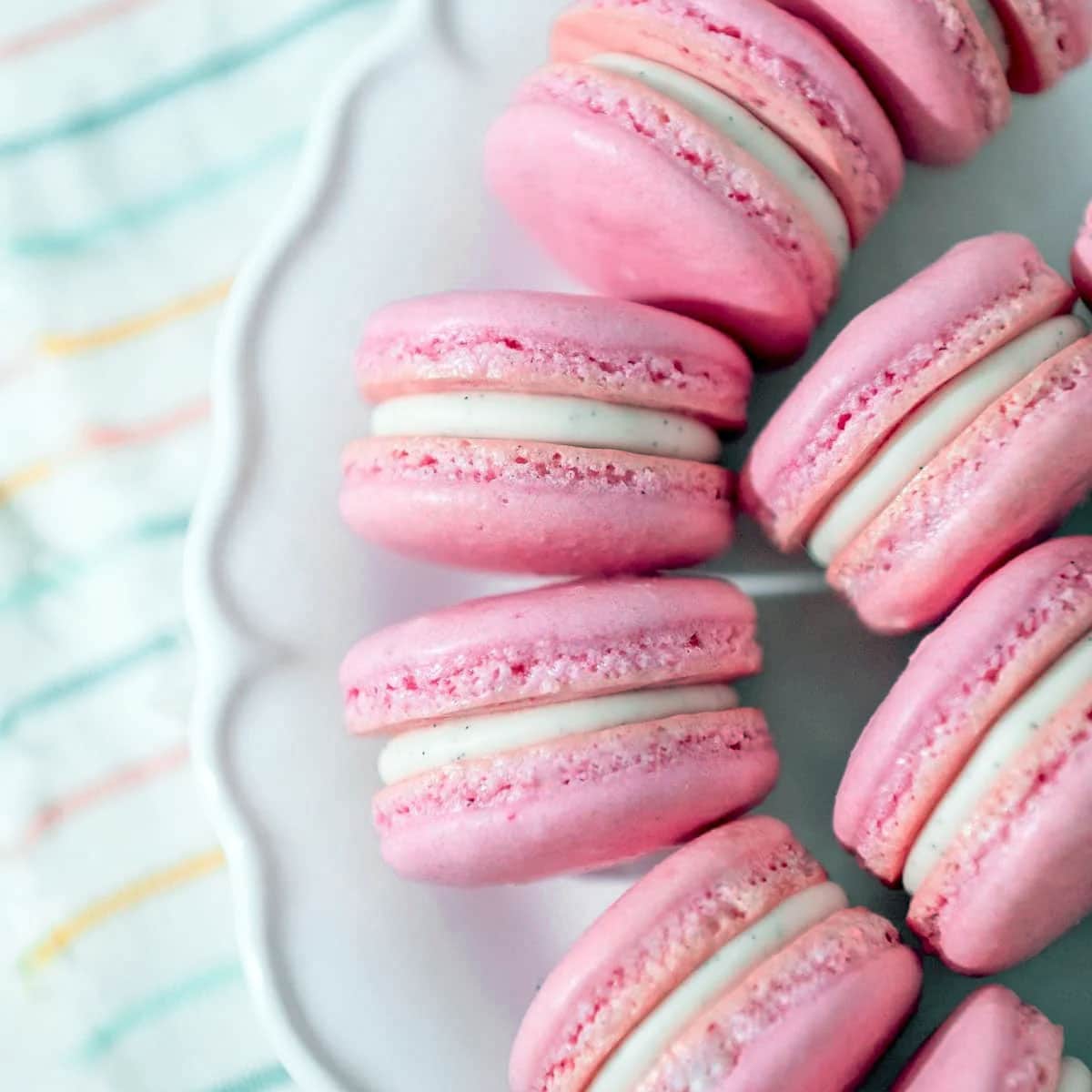
This French macaron recipe is written for beginners. If you have ever wanted to make perfect French macarons with crispy shells, puffy feet, and no hollows, this is the post for you. I have been making macarons since pastry school, and I have packed in every tip, troubleshooting note, and trick I have learned along the way. Read the whole post before you start. It is your best chance at perfect macarons on the first try. If you want a slightly more advanced version once you have the technique down, my Italian macaron recipe uses cooked sugar syrup for a more stable meringue.
Quick Glance: French Macaron Recipe
- Recipe Name: French Macaron Recipe
- Why You'll Love It: Crisp shells, soft chewy centers, puffy feet, no hollows. The classic Parisian cookie made foolproof for the home baker.
- Time and Difficulty: Intermediate. About 20 minutes prep, 15 minutes bake, 20 minutes resting.
- Main Ingredients: Almond flour, powdered sugar, egg whites, granulated sugar, and cream of tartar.
- Method: French meringue (raw egg whites whipped cold with sugar) folded into sifted almond flour and powdered sugar, piped, rested, and baked at 300°F.
- Texture and Flavor: Crispy on the outside, soft and slightly chewy in the middle, sweet, delicate, and nutty.
- Quick Tip: Wipe every tool and bowl with white vinegar before you start. The slightest trace of grease will keep your meringue from whipping properly.
Jump to:
- Quick Glance: French Macaron Recipe
- What Is A Macaron (Mack-UH-RONE)
- ⭐️⭐️⭐️⭐️⭐️ Reader Review
- Why This French Macaron Recipe Works
- French Macaron Ingredients
- Before You Begin
- How To Make Macaron Batter Step-By-Step
- Common French Macaron Problems To Avoid
- Final Thoughts
- French Macaron FAQs
- More Macaron Recipes To Try
- Leave Me A Review⭐️⭐️⭐️⭐️⭐️
- Recipe
What Is A Macaron (Mack-UH-RONE)
The very first time I tried a macaron (not a macaroon) was back in pastry school. I had never eaten a cookie like that in my life. Crispy on the outside, soft and chewy in the middle, and that little bite of creamy filling sandwiched between two delicate, round shells. French macarons instantly became one of my favorite cookies to make because they seem SO fancy, but once you nail the technique, they are easy to make.
There are two main kinds of macarons, French and Italian. The names refer to the type of meringue used, not the country the cookie is from. (I once posted a video explaining the difference, and it went crazy viral with people arguing macarons were invented in France or Italy. The cookie's origin is a different story from the meringue method.)
French meringue is made by whipping raw egg whites cold with sugar added gradually until you reach stiff peaks. It is the simplest of the three classic meringues. No heat, no cooked sugar syrup, just whipping. That is what we are doing in this recipe.
Italian meringue is made by streaming hot sugar syrup into whipping egg whites. It is more stable than French meringue and can produce more reliable macarons, but the hot sugar step intimidates a lot of beginners. If you want to graduate to that method later, my Italian macaron recipe walks through the whole thing.
(Note: Swiss meringue is the third classic meringue. It is made by warming egg whites and sugar over a bain marie until the sugar dissolves, then whipping cold. People sometimes confuse Swiss with French. They are not the same thing, and you do not need a bain marie for this recipe.)
The whipped meringue then gets folded into sifted powdered sugar and almond flour. The water from the egg whites turns into steam during the bake and lifts the piped batter to create those tiny feet. That folding process is called macaronage, and it is the most important step. The one that decides whether your shells come out smooth or cracked, full or hollow, perfect or close-but-not-quite.
After making thousands of these, I can tell you that even pastry chefs mess up macarons sometimes. They are sensitive. Oven temperature matters. Your bowl matters. Even the humidity in your kitchen matters. So take a deep breath. Making macarons is not about getting them perfect on the first try. It is about understanding what is happening in the bowl and learning from each batch.
⭐️⭐️⭐️⭐️⭐️ Reader Review
I used your recipe, and the shells came out fantastic. It ended up taking about 15/16 minutes to finish baking. I also didn't age the eggs in the fridge, but they were still fantastic. The first time, my shells grew perfectly. Thanks for spending the time building this.- Emily Dean
Why This French Macaron Recipe Works
Three things make this recipe beginner-friendly without sacrificing the result.
Aged egg whites build a stronger meringue. Egg whites that sit in the fridge for 2 to 4 days lose a small amount of water through the shell, which concentrates the proteins and lets them whip into a more stable, stronger foam. Stronger meringue means more forgiving macaronage. You can fold a few extra strokes without the batter collapsing on you.
Cream of tartar plus optional meringue powder protects the meringue. Cream of tartar is an acid that stabilizes egg-white foam, slowing the proteins from over-whipping into a dry, broken meringue. Meringue powder (the optional ingredient in this recipe) is dried egg whites with stabilizers built in. It is the safety net for beginners. Add it and you can practically over-whip the meringue without it falling apart.
Whipping on medium speed, not high. Most people crank the mixer too high to get to stiff peaks fast. Medium speed is better for macarons because it produces smaller, stronger air bubbles that hold their shape through the macaronage. High speed makes big, weak bubbles that pop during folding and contribute to hollow shells.
The technique that ties it all together is macaronage, the folding step. The goal is to deflate the meringue just enough that the batter flows in a slow, lazy ribbon when you lift the spatula, but still holds its shape on top of itself for a few seconds before melting back in. Too much fold, and your shells spread flat with no feet. Too little fold and your shells crack and develop hollows. There is a sweet spot, and finding it is the whole game.
French Macaron Ingredients
This recipe is one of the rare ones where you really cannot substitute anything except the flavor, filling, and color. Every ingredient does specific structural work. For a full list of the brands and tools I use, check out my macaron essentials storefront.
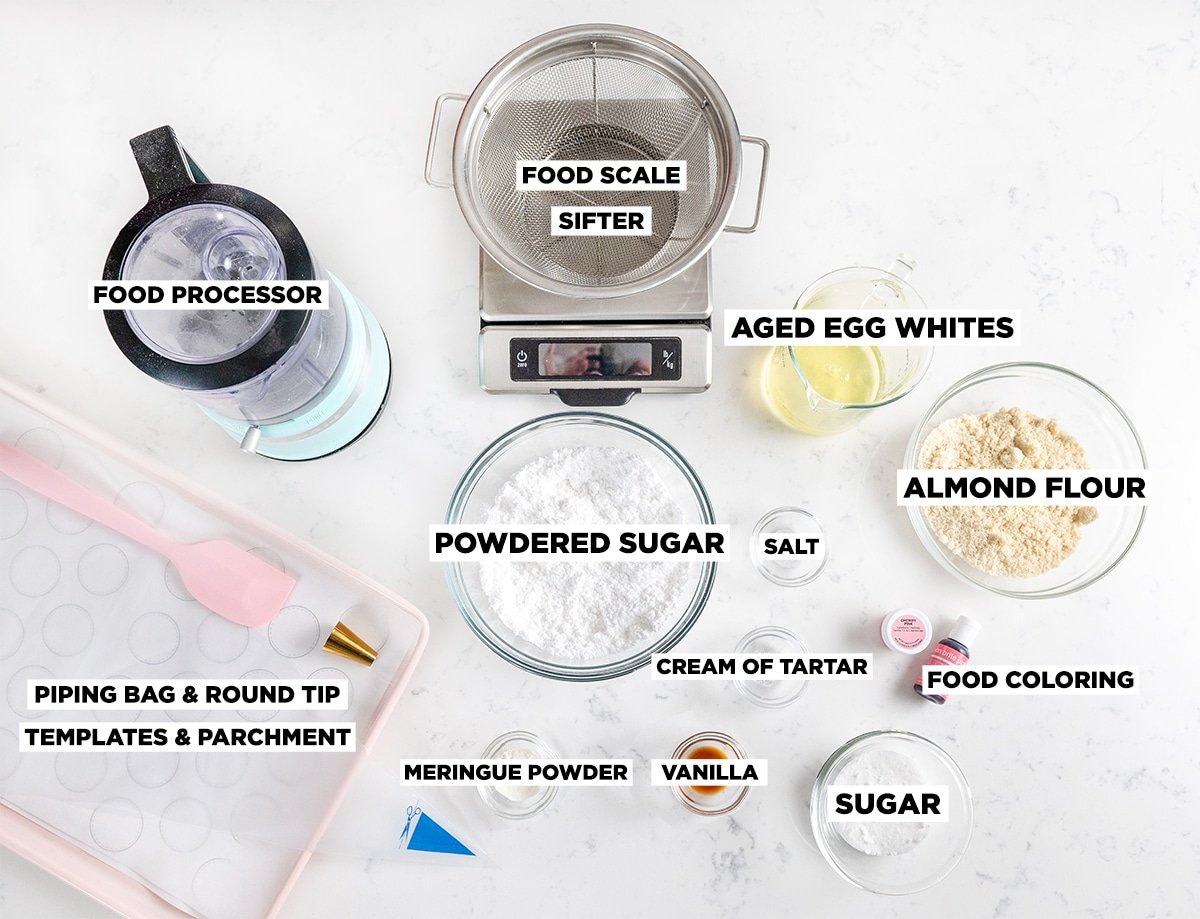
Almond flour. Not almond meal. Almond flour is finer, blanched (skin removed), and gives macaron shells their structure and signature smooth top. If large pieces remain after sifting, discard them and add back the same weight of fresh flour so your ratios stay accurate.
Powdered sugar. Sifted with the almond flour, it gives sweetness, smoothness, and a glossy finish to the shells. The cornstarch in store-bought powdered sugar also helps absorb extra moisture.
Granulated sugar. Whipped into the meringue to stabilize and sweeten. Some pastry chefs prefer superfine (caster) sugar because it dissolves faster, but regular granulated sugar works perfectly.
Egg whites. Aged in the fridge 2 to 4 days, then brought to room temperature before whipping. Fresh egg whites work but are less stable. Avoid carton egg whites from the grocery store; they rarely whip well. Room-temperature whites whip faster and to a greater volume than cold ones.
Cream of tartar. An acid that stabilizes the meringue and slows over-whipping. Not strictly required, but it gives beginners a wider margin for error.
Meringue powder (optional). Dried egg whites with stabilizers. A safety net that makes the meringue almost impossible to over-whip. Highly recommended for your first few attempts.
Salt. A pinch sharpens the flavor and balances the sweetness.
Vanilla extract. Or any other extract you want to flavor the shells with.
Gel or powdered food coloring. Liquid food coloring will throw off the batter consistency. Use gel or powder for vibrant color without adding water.
Before You Begin
A few setup steps that matter as much as the recipe itself.
- Age your egg whites. Crack and separate 2 to 4 days ahead, store the whites in a covered container in the fridge. Take them out 2 to 3 hours before mixing so they reach room temperature.
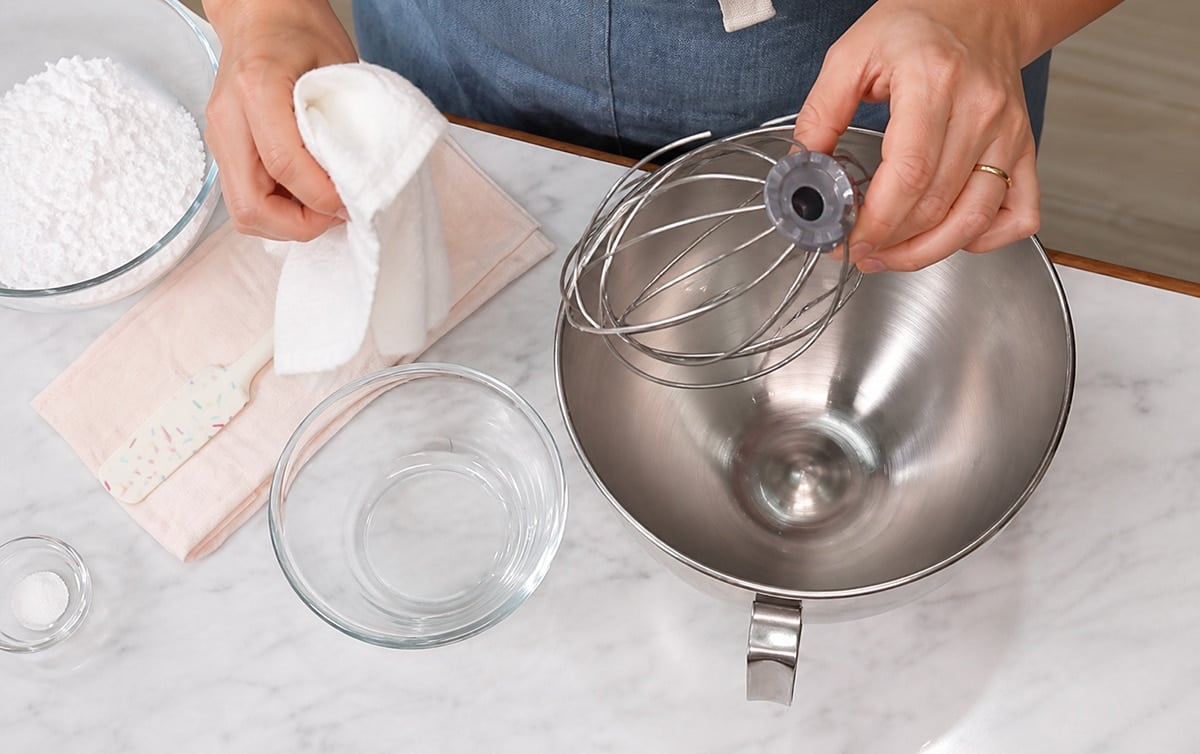
- Wipe every tool with white vinegar. Bowl, whisk, paddle, spatula, even the inside of the mixer bowl. Vinegar removes any trace of grease that would keep your meringue from whipping. This is the step beginners skip and then wonder why their meringue won't form peaks.
- Preheat your oven to 300°F (148°C).
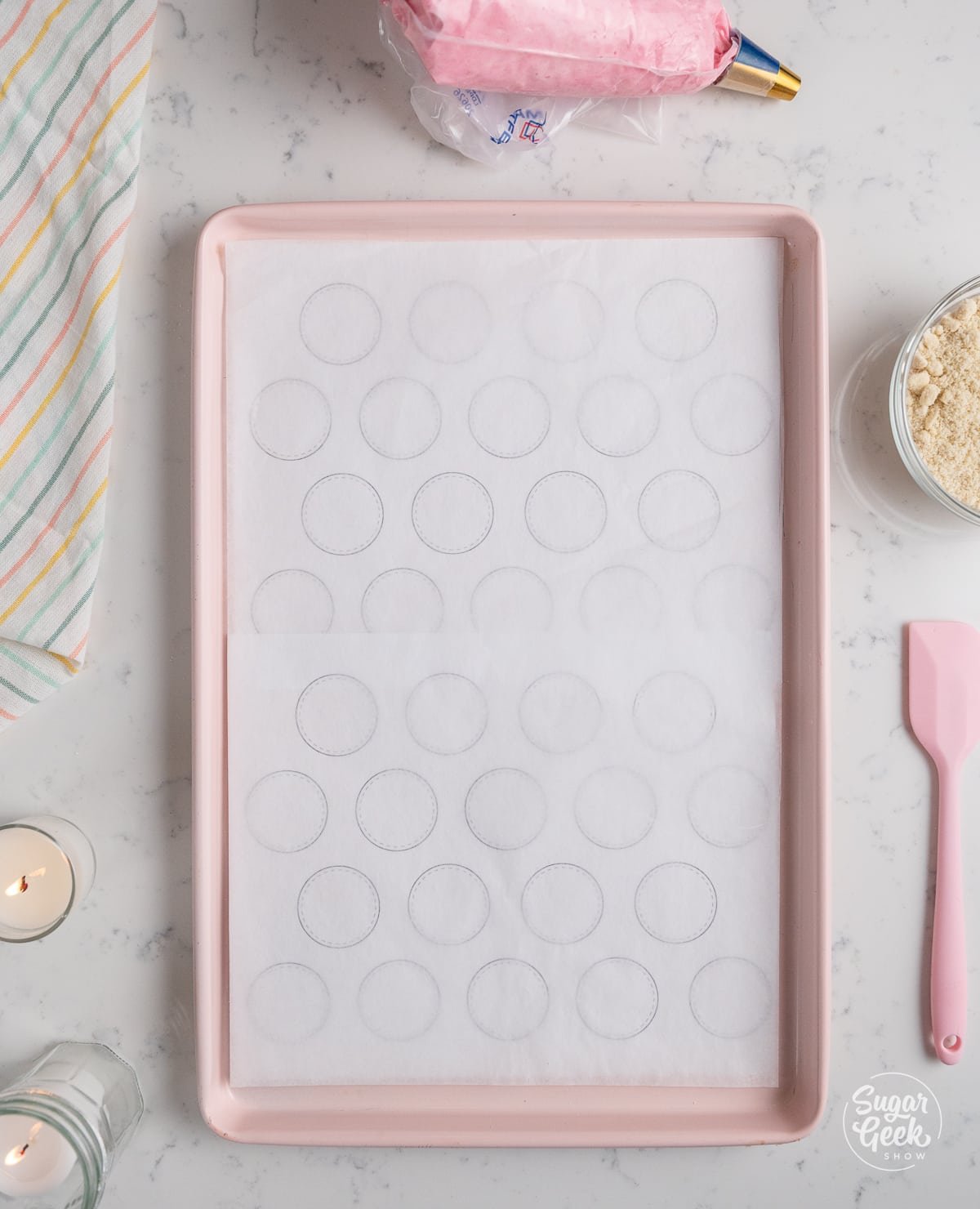
- Trim your parchment to fit the pan exactly. Or use silicone mats with pre-printed macaron templates. If you use my free macaron template, place it under the parchment, trace the circles, then flip the parchment so the marker side is down.
- Measure every ingredient with a kitchen scale. Macarons are not a recipe where cup measurements work. Weight is non-negotiable.
How To Make Macaron Batter Step-By-Step
Refer to the recipe card for exact weights and timing.
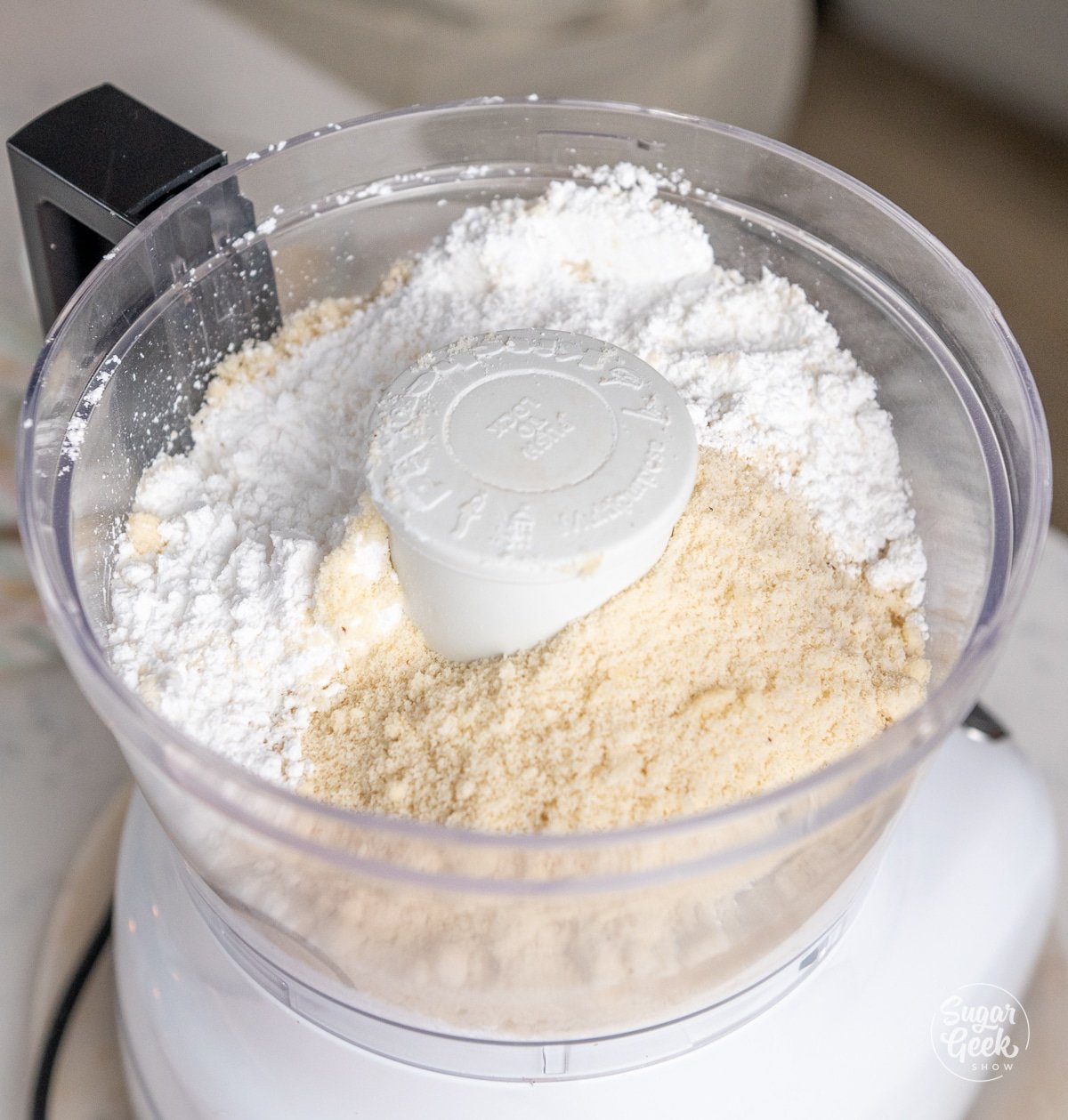
- Process the dry ingredients. Pulse the almond flour, powdered sugar, and a pinch of salt in a food processor in 5-second increments, three times. This breaks down any clumps and gives you a finer mixture for smoother shells.
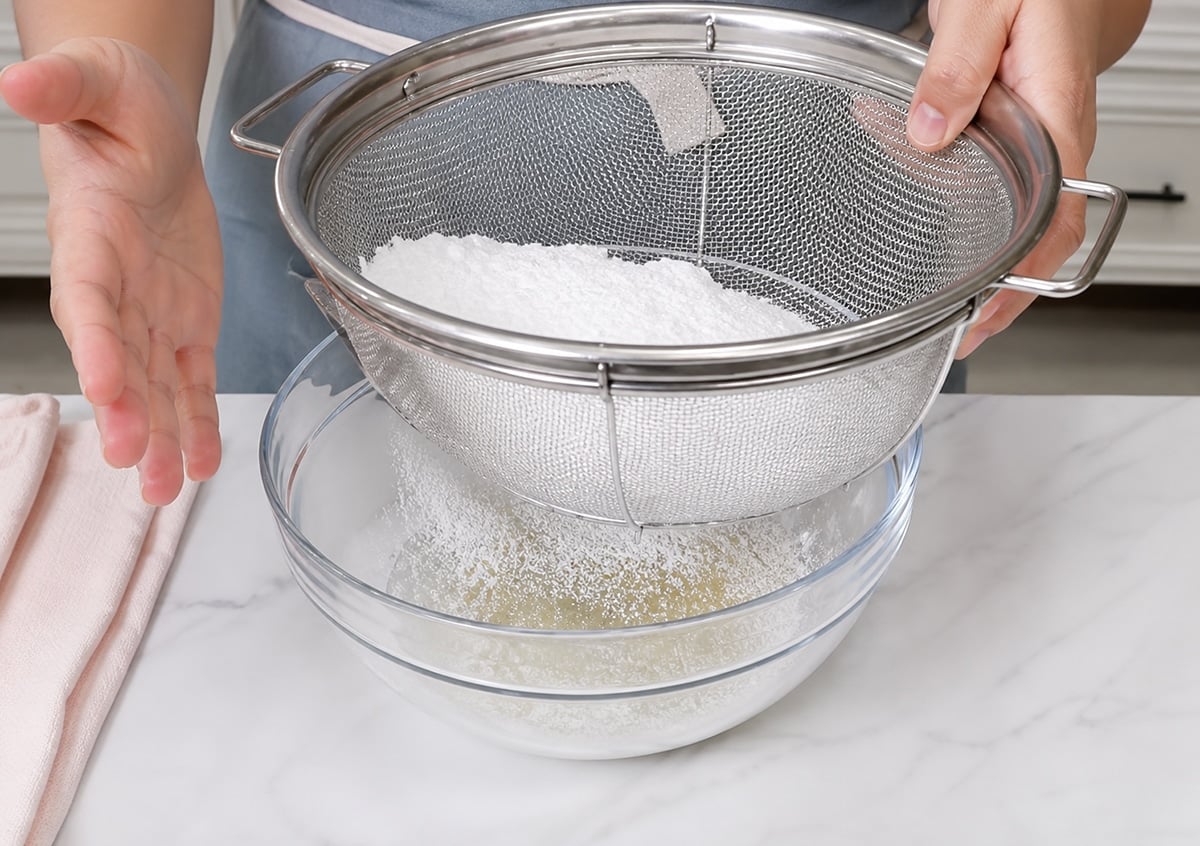
- Sift the dry mixture. Sift through a fine-mesh strainer into a large bowl to remove any large bits of almond. If you remove a lot, weigh what was removed and add back the same weight of fresh almond flour to keep your ratios right.
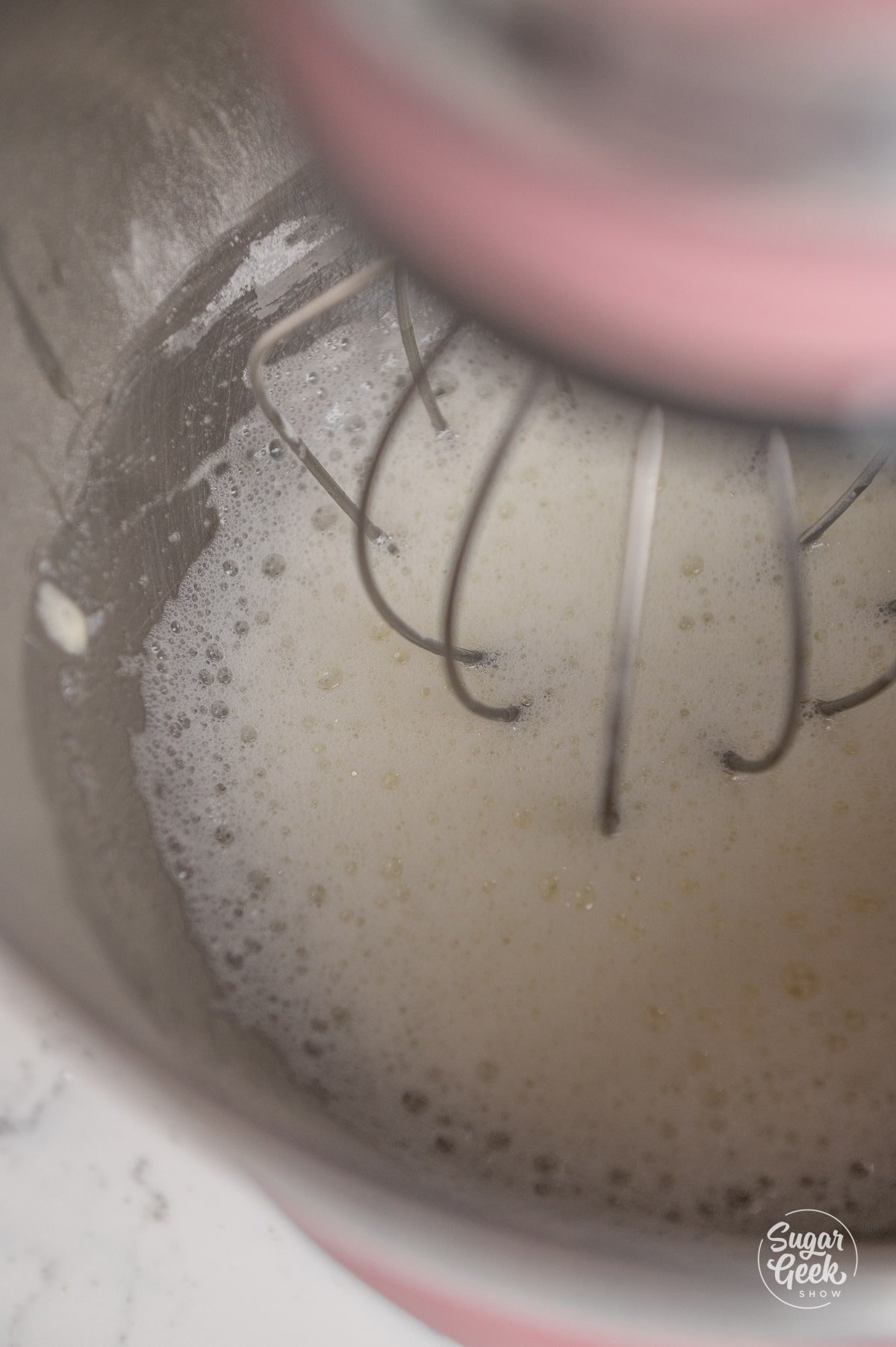
- Whip the meringue to soft peaks. Place egg whites, cream of tartar, and meringue powder (if using) into your stand mixer with the whisk attachment. Whisk on medium speed until foamy and you reach soft peaks. Medium speed gives you smaller, stronger air bubbles than high speed.
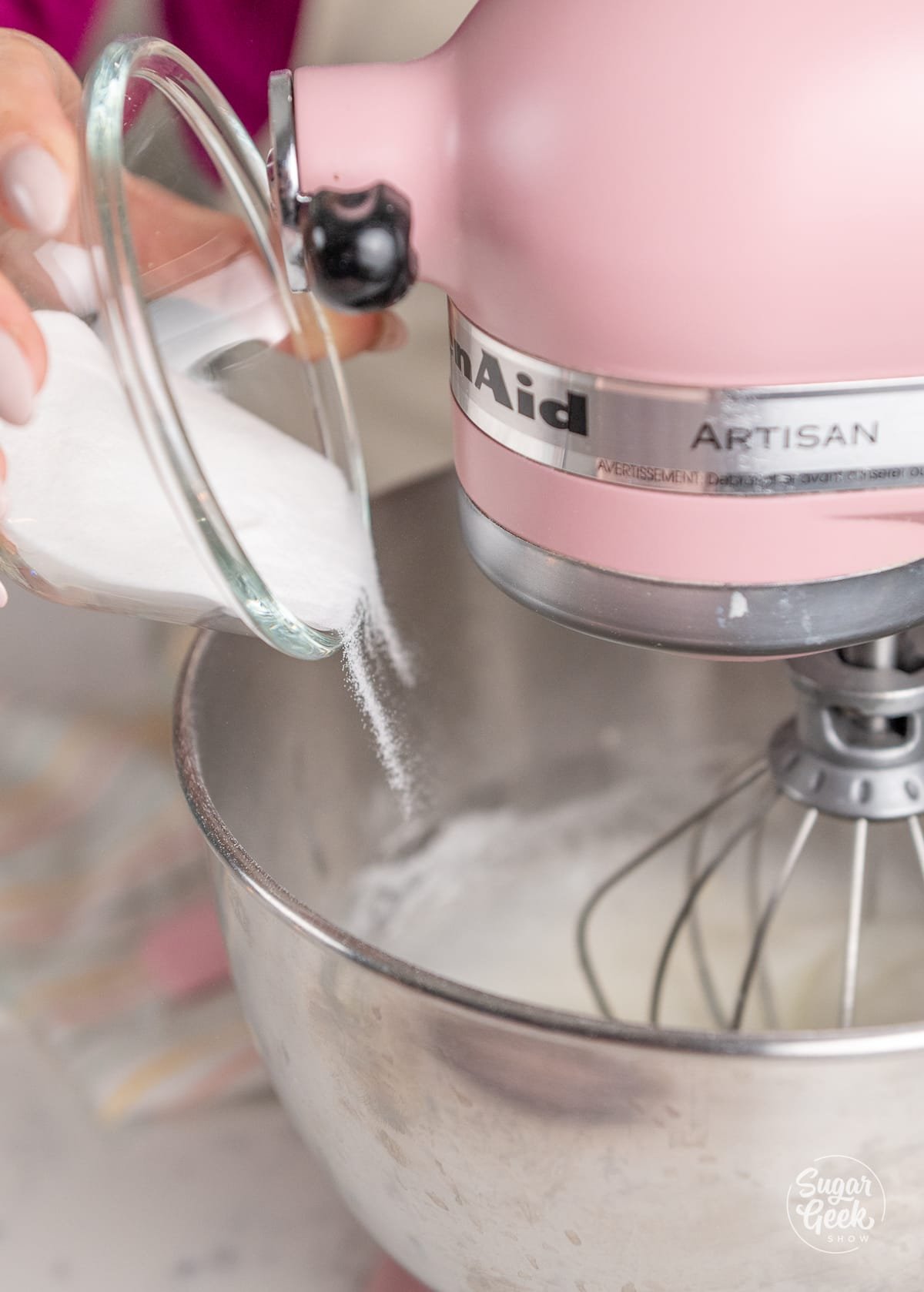
- Add the granulated sugar gradually. Sprinkle in the granulated sugar slowly while whisking on slow until all of it is added.
PRO TIP: Stay on medium the whole time. The temptation is to crank it up to speed things up, but high speed produces big, weak bubbles that pop during macaronage and lead to hollow shells.
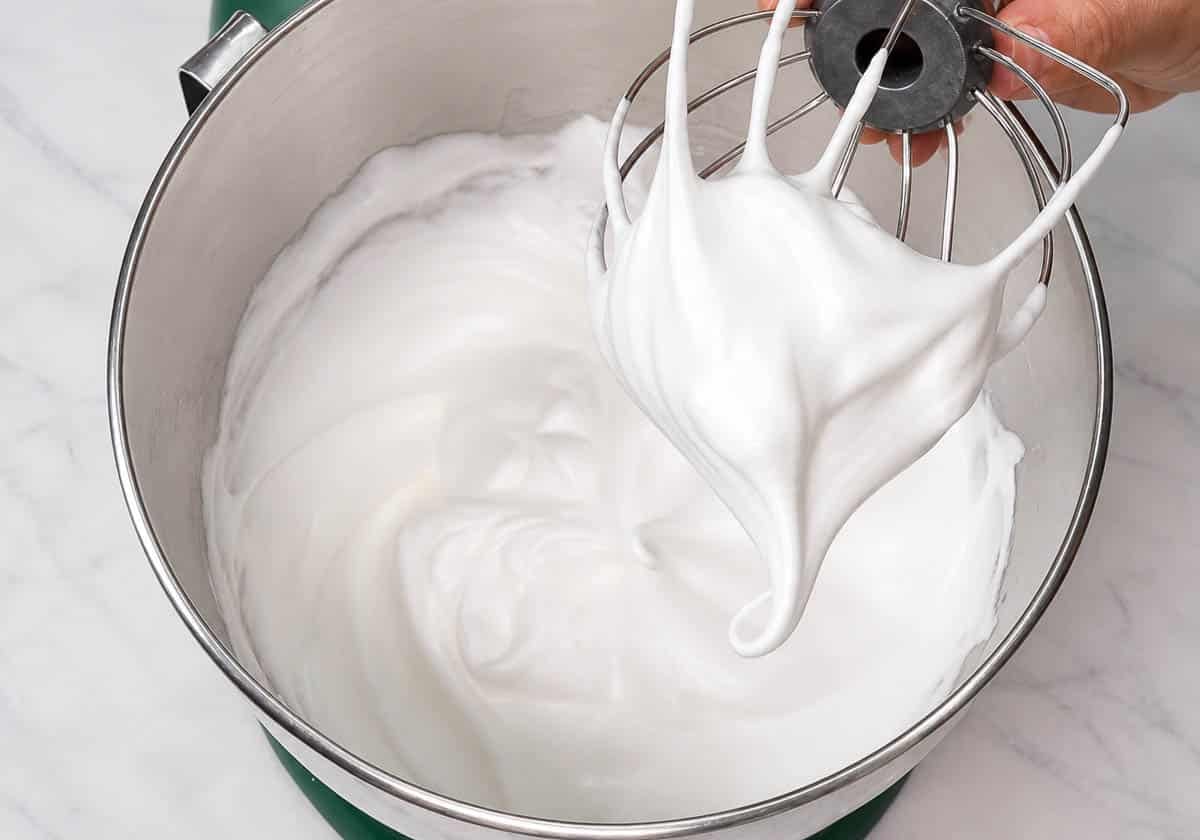
- Whip to stiff peaks: Continue whisking on medium until you reach stiff, glossy peaks. The meringue should hold a sharp tip when you lift the whisk and not flop over.
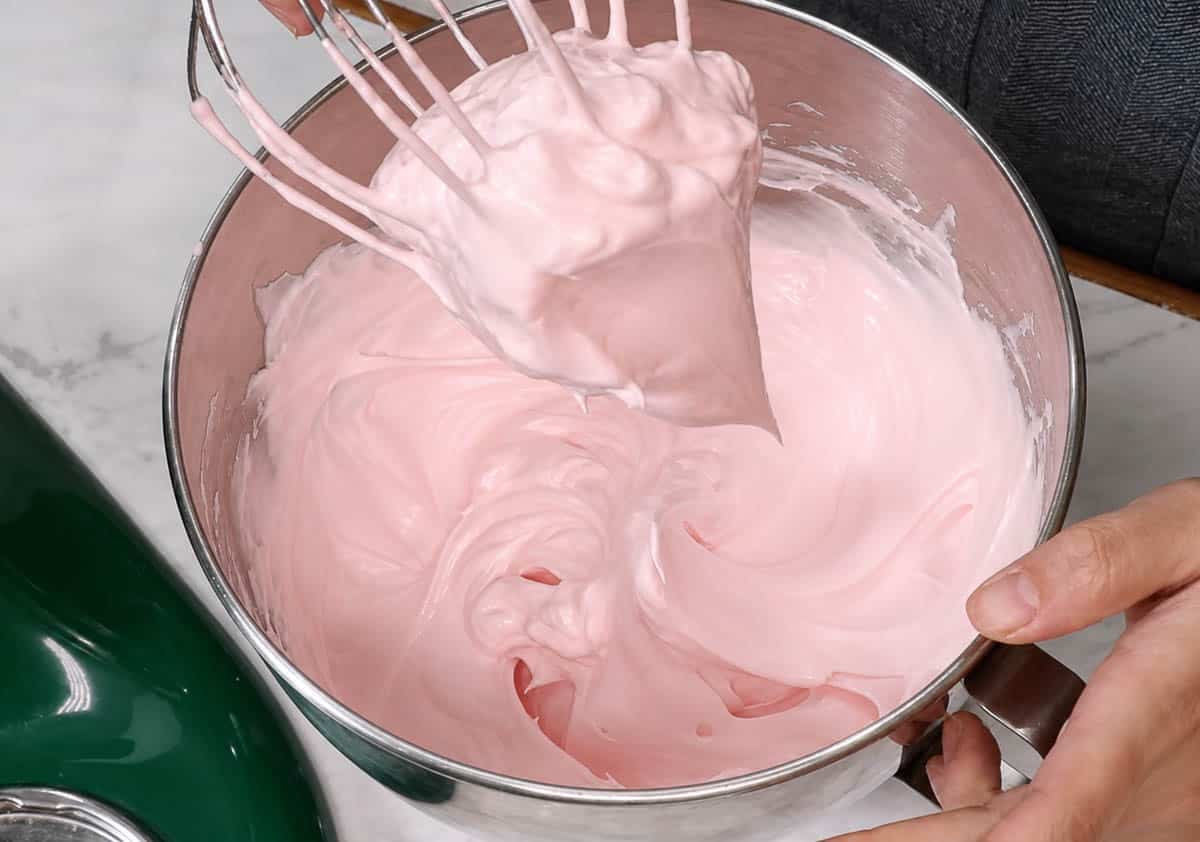
- Add flavor and color. Add the vanilla and your gel or powdered food coloring. Mix briefly just to combine.
PRO TIP: This is THE step. Macaronage deflates the meringue just enough that the batter flows. Too much and your shells spread flat. Too little and they crack and hollow out.
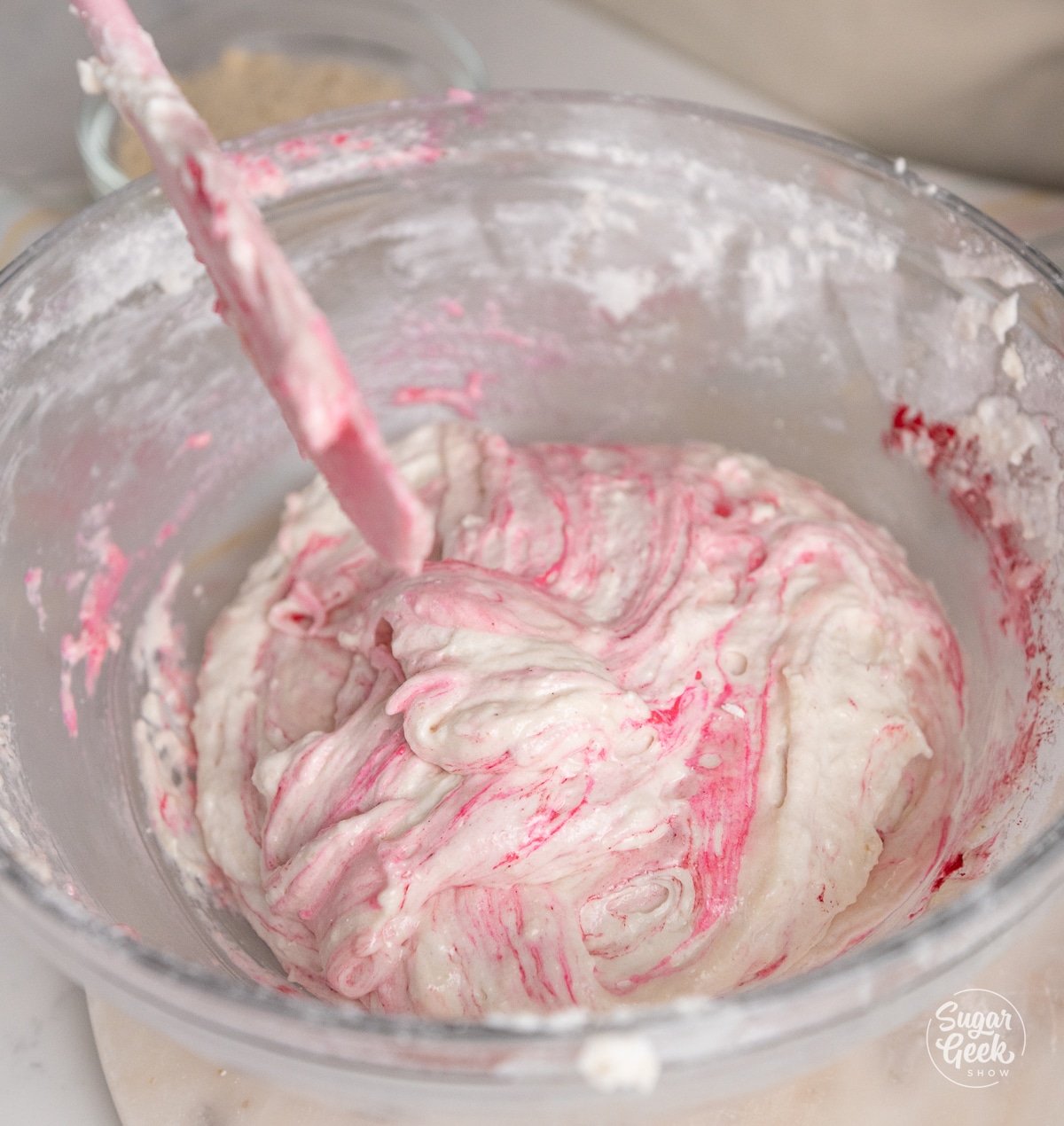
- Macaronage: fold in the dry ingredients. Add ⅓ of the almond flour mixture to the meringue. Fold by scooping the spatula down to the bottom, up the side, and over the top. Rotate the bowl a quarter turn and repeat. Add the next ⅓, fold. Add the final ⅓, fold.
Watch the video in the recipe card below for a full demonstration on macaronage.
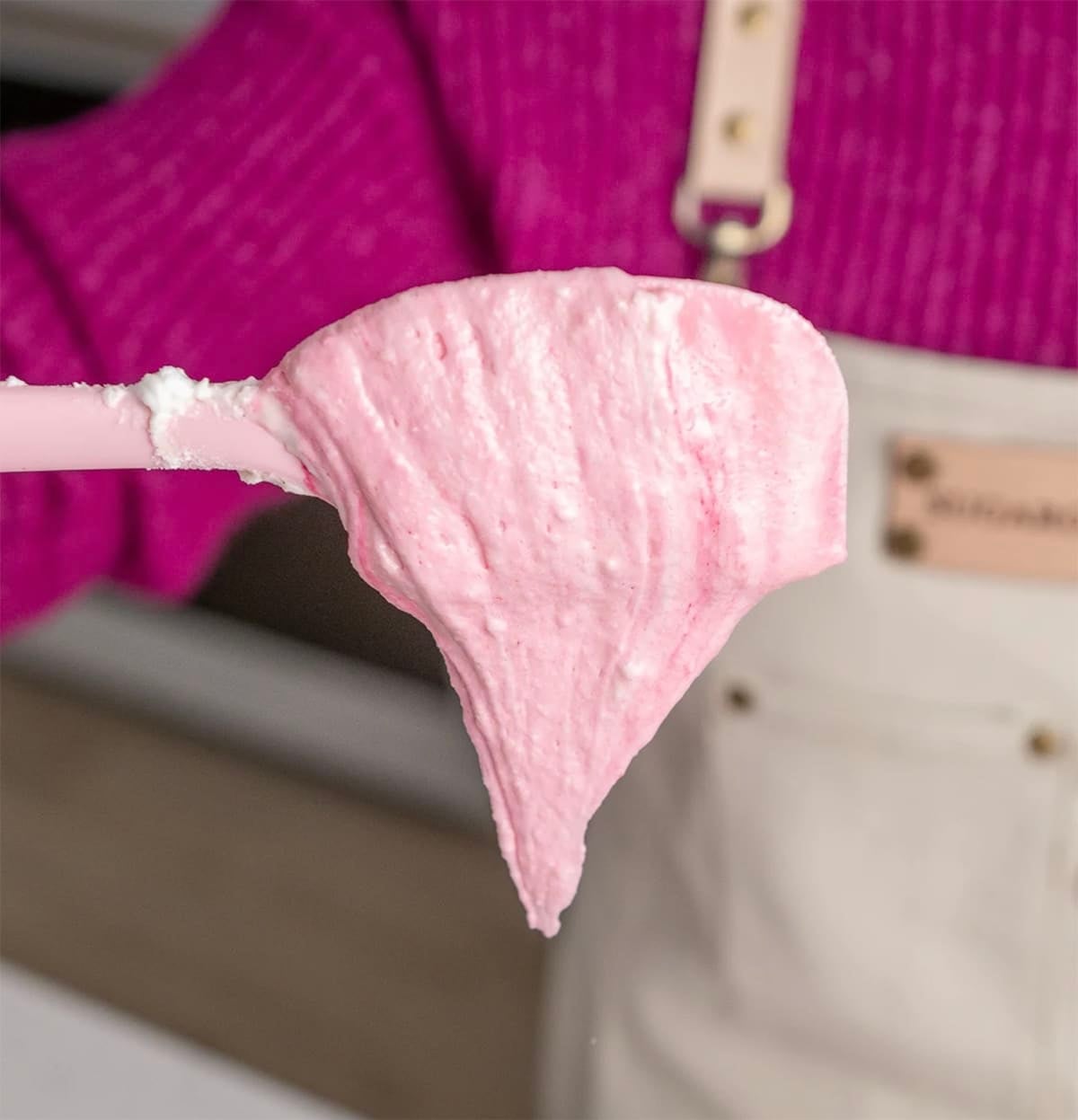
- Test the batter. When the batter flows off the spatula in a "V" shape, and the V settles back into itself within 10 to 20 seconds, you are done. Another good test: bang the bowl firmly onto the counter once. If the batter settles into itself, it is ready. If it stays mounded, keep folding. If it spreads instantly into a puddle, you have overmixed (next time will be better, that batch will still bake, but will be flat).
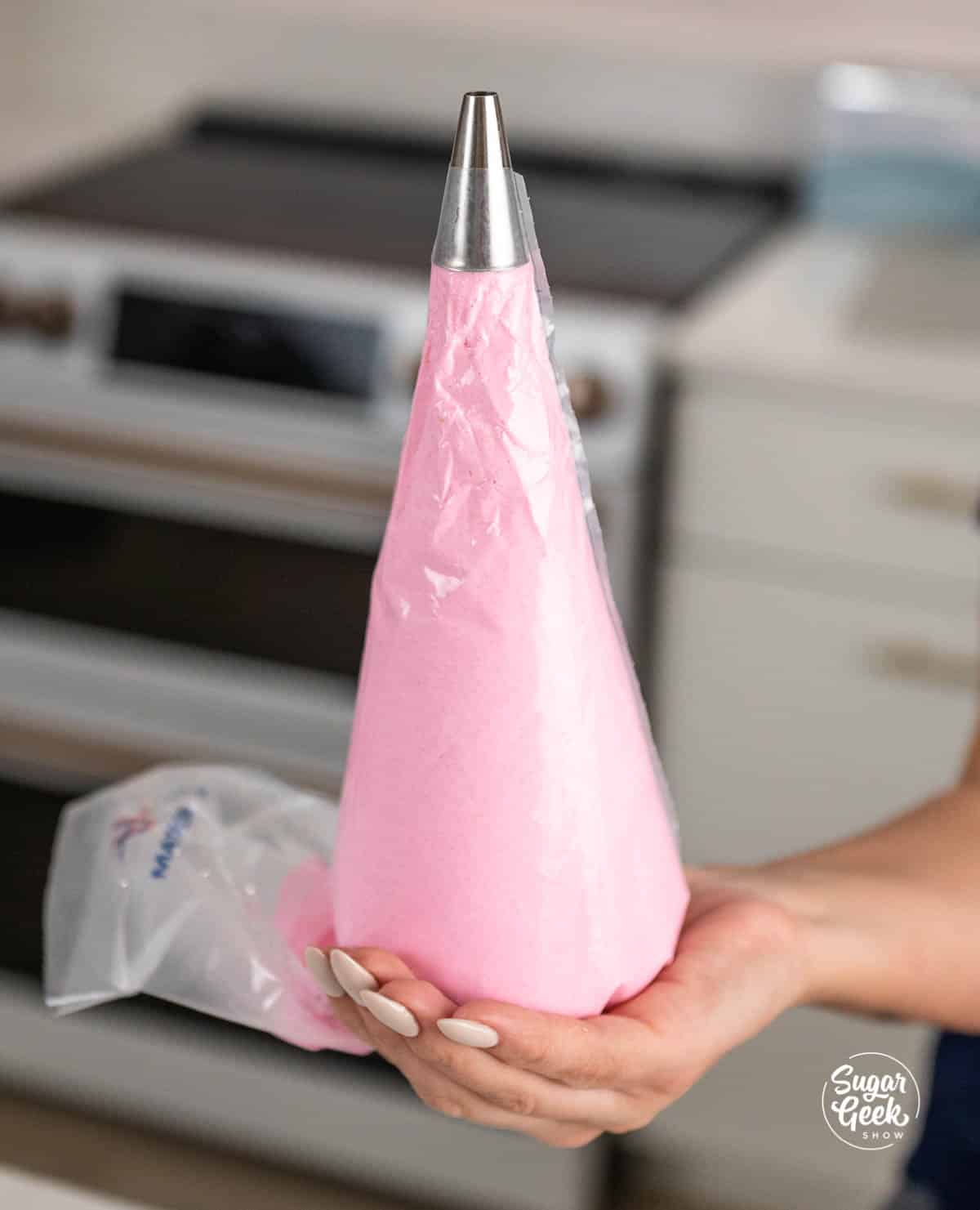
- Prepare your piping bag. Fit a pastry bag with a #12 round piping tip (or a similar Ateco 804-806). Cut the bag, insert the tip, twist the tip and bag together to seal the bottom and prevent leaks.
Fold the top of the bag down over your hand or set the bag in a tall glass for stability. Scoop the batter in with a rubber spatula. Lay the bag flat on the counter and push all the batter to the bottom to remove air, then twist the top.
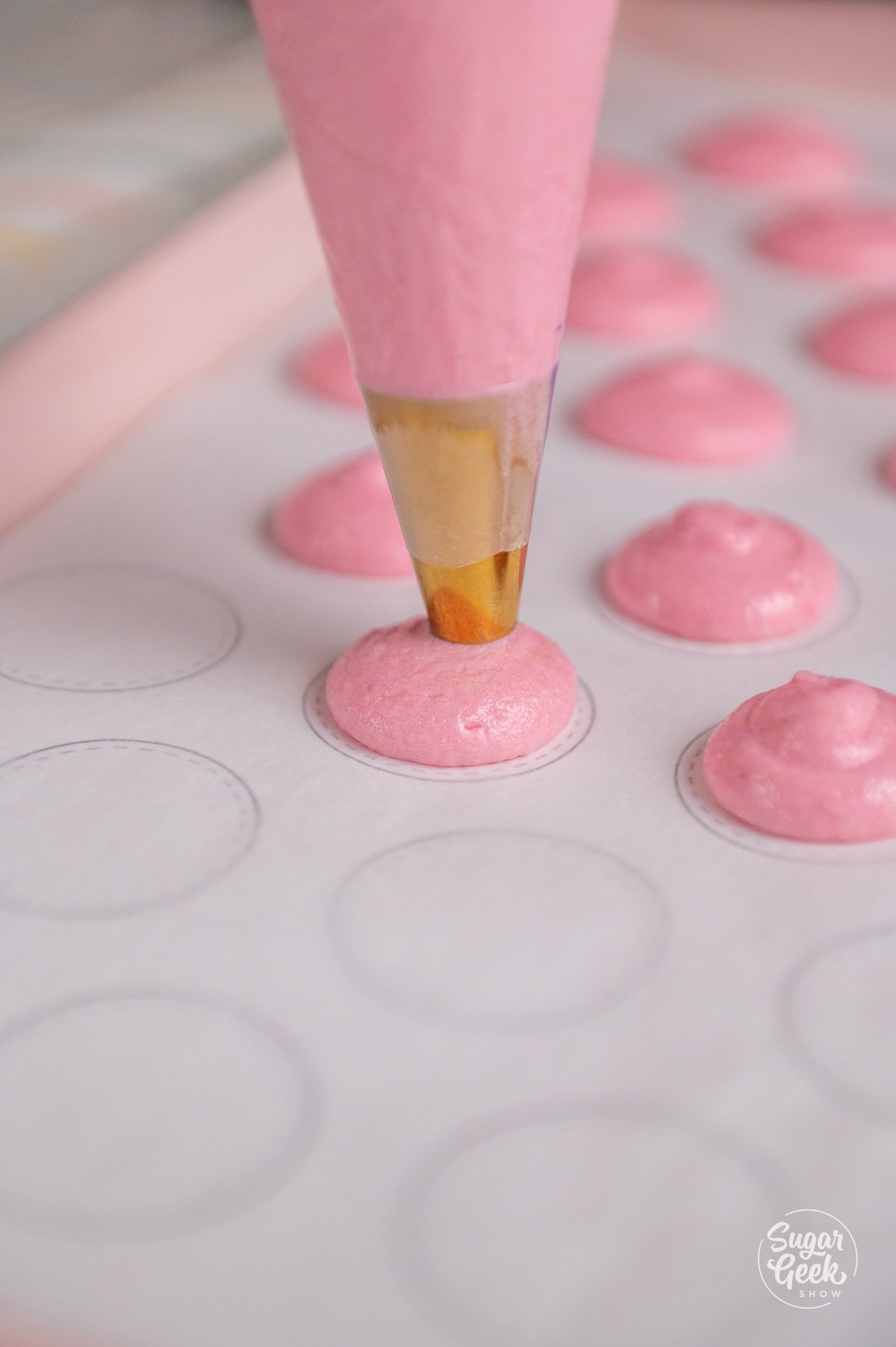
- Pipe the shells. Hold the bag straight up and down, about 1 inch above the parchment. Center the tip over a circle on your template. Squeeze without rotating until the batter reaches just inside the circle line, then stop squeezing. Make a small quick "C" motion with the tip to release without leaving a peak.
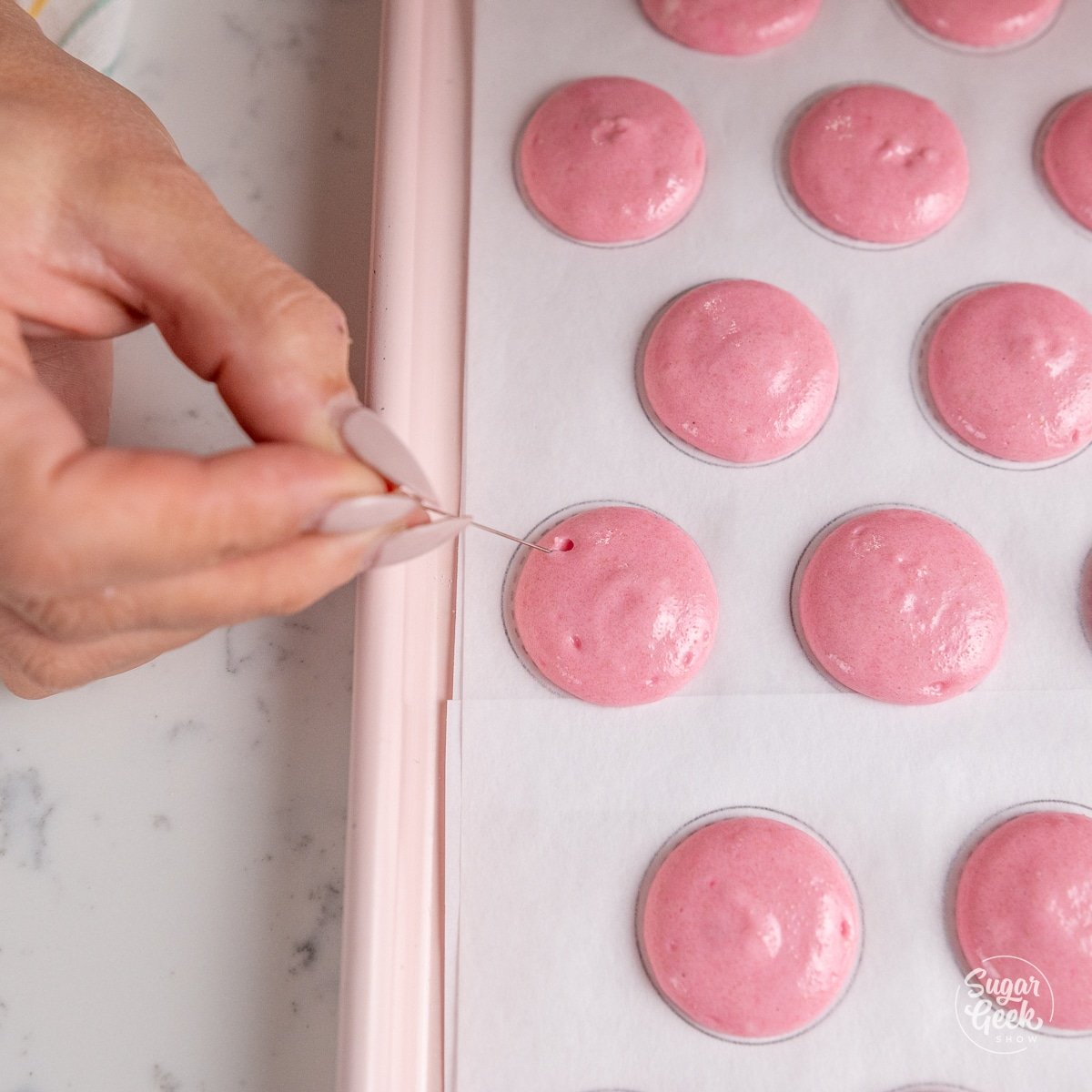
- Tap the trays. Once all shells are piped, lift the pan about 6 inches and drop it onto the counter a few times. This pops any air bubbles that would crack your shells in the oven. Use a toothpick to pop any visible bubbles that survived.
Carefully remove the template from under the shells.
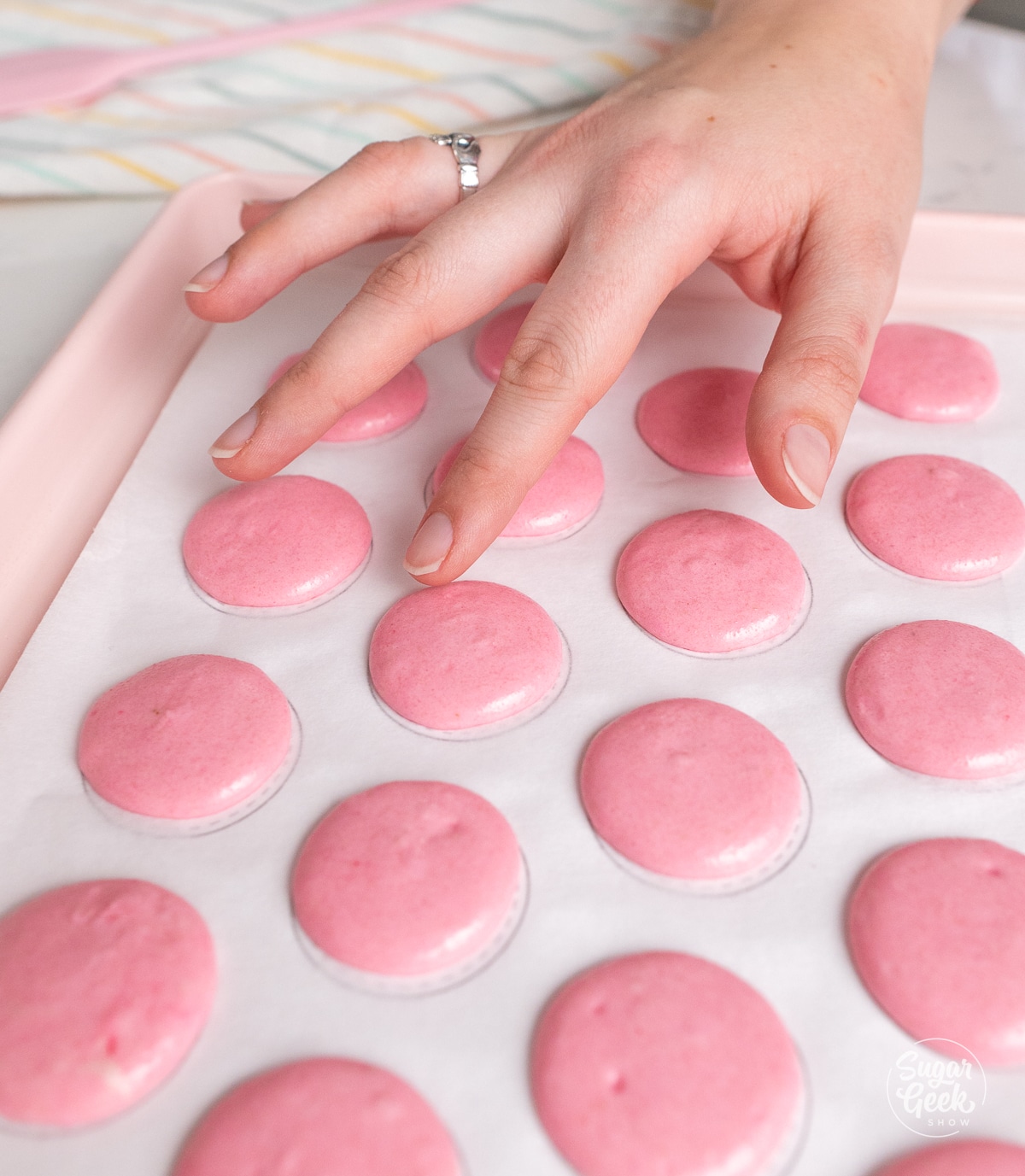
- Rest the shells. Let them sit at room temperature for 15 to 30 minutes until they form a skin. They should be dry to the touch and not stick to your finger when you press lightly. This drying step is what creates the puffy feet and prevents cracking. Do not rest longer than 30 minutes or the shell can get too thick to expand properly.
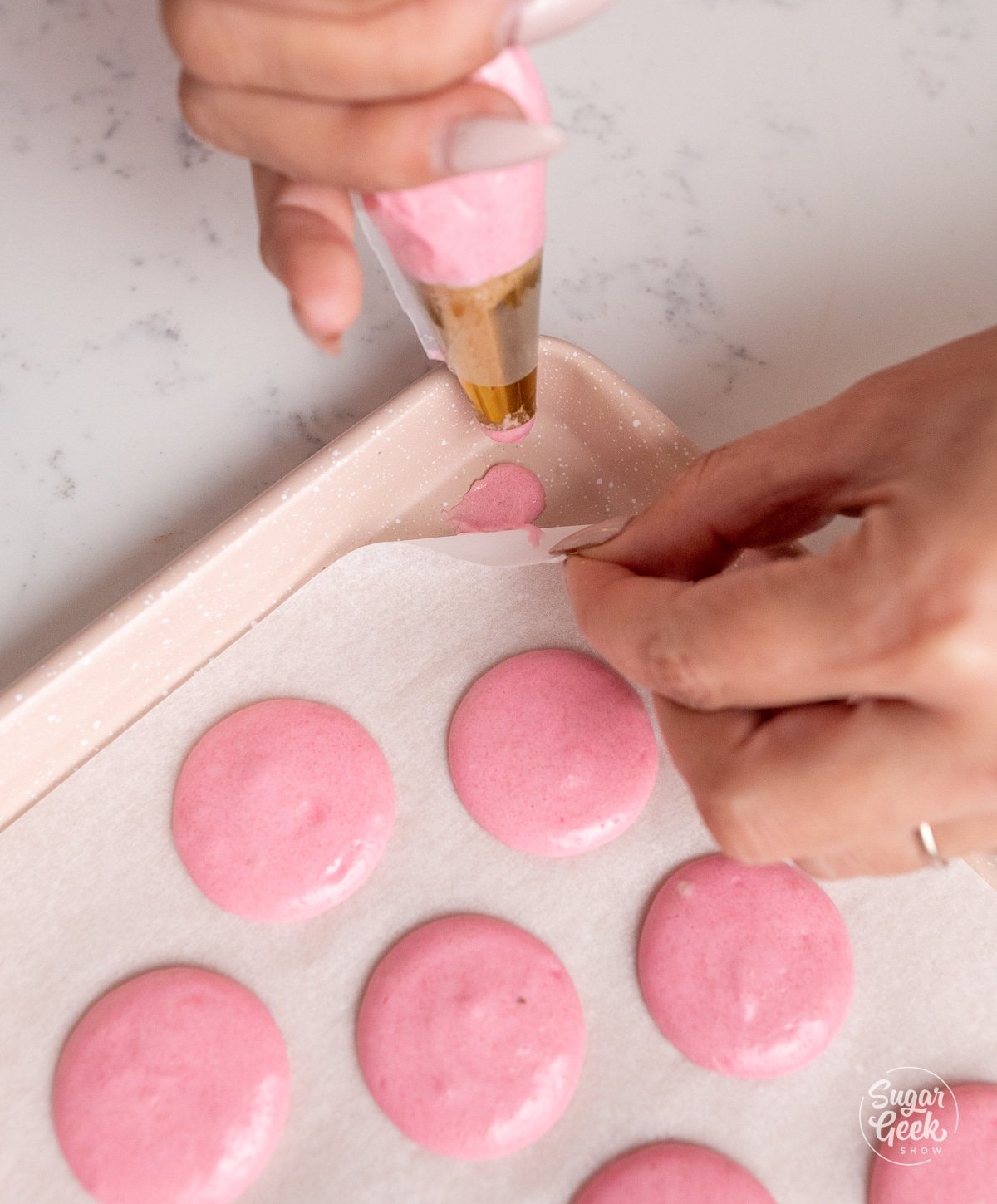
- Anchor the parchment. Place a small dab of macaron batter under each corner of the parchment so it does not blow around in the oven.
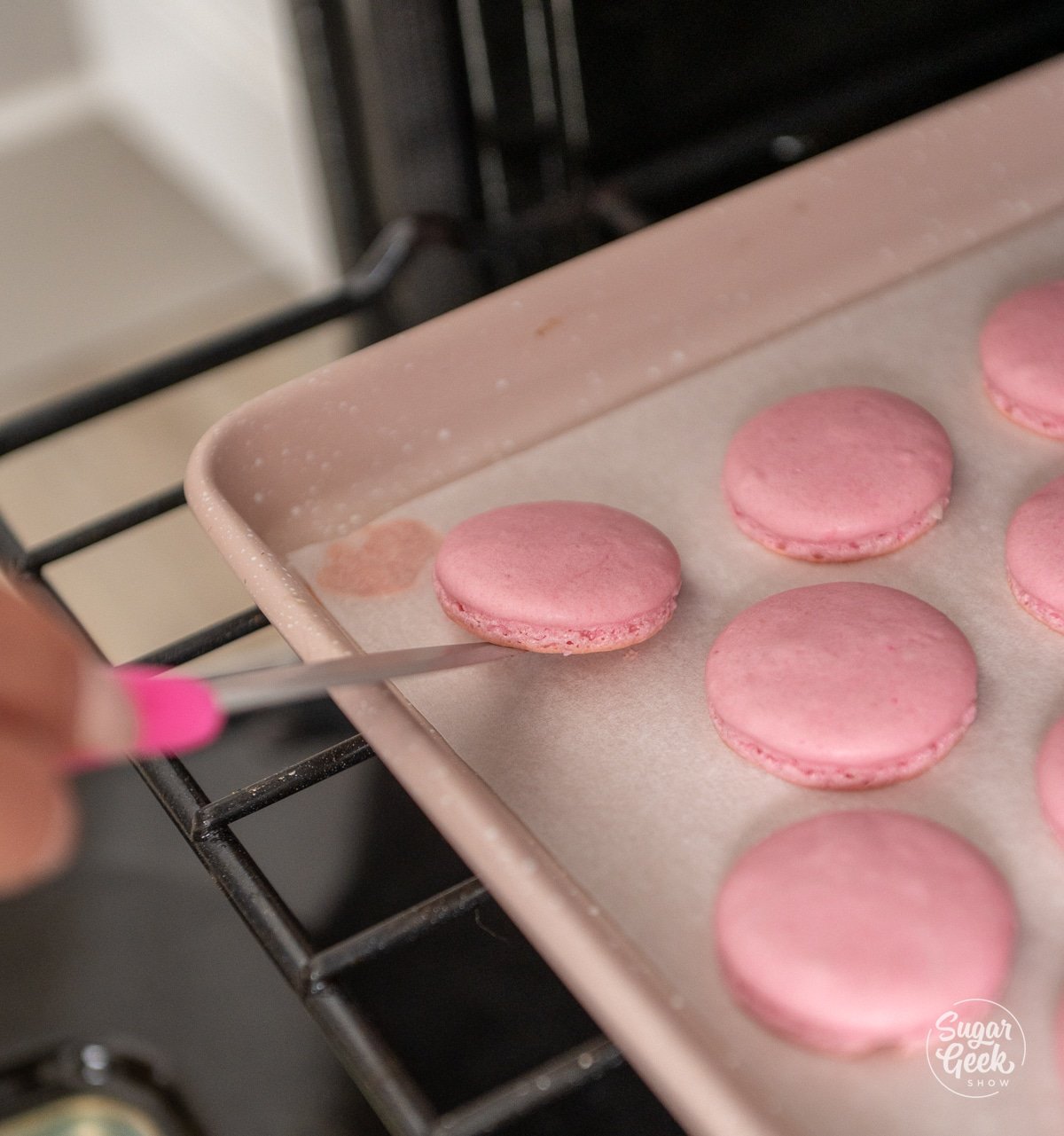
- Bake at 300°F (148°C). Bake for 10 minutes, then rotate the pan front to back. Continue baking another 2 to 5 minutes (most batches finish at 12 to 15 minutes total). Bake time depends on your oven and humidity. I usually test to see if a shell is done by gently lifting with a knife and if it releases easily they are done. If it sticks give it another minute and check again.
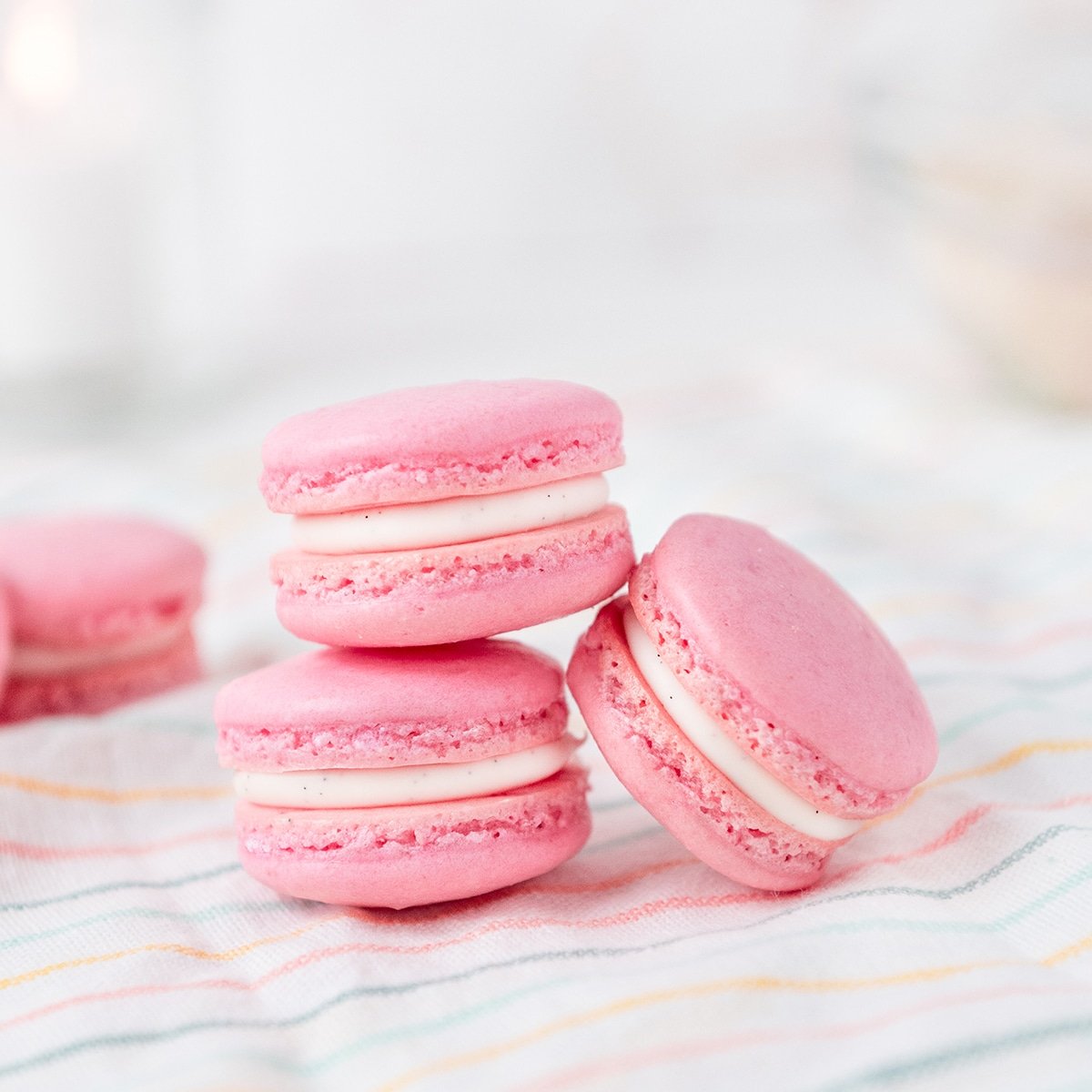
- Fill and sandwich. Fill the cooled shells with your filling of choice. Some great options: easy buttercream, white chocolate ganache (recipe in the card below), raspberry filling, lemon curd, chocolate ganache, or pretty much any cake filling.
Common French Macaron Problems To Avoid
Macarons are one of those bakes where the issue is right there on the cookie. Cracks, hollows, missing feet, lopsided shells, all of them tell you something specific about what went wrong. Here's how to read the signs and fix them on the next batch.
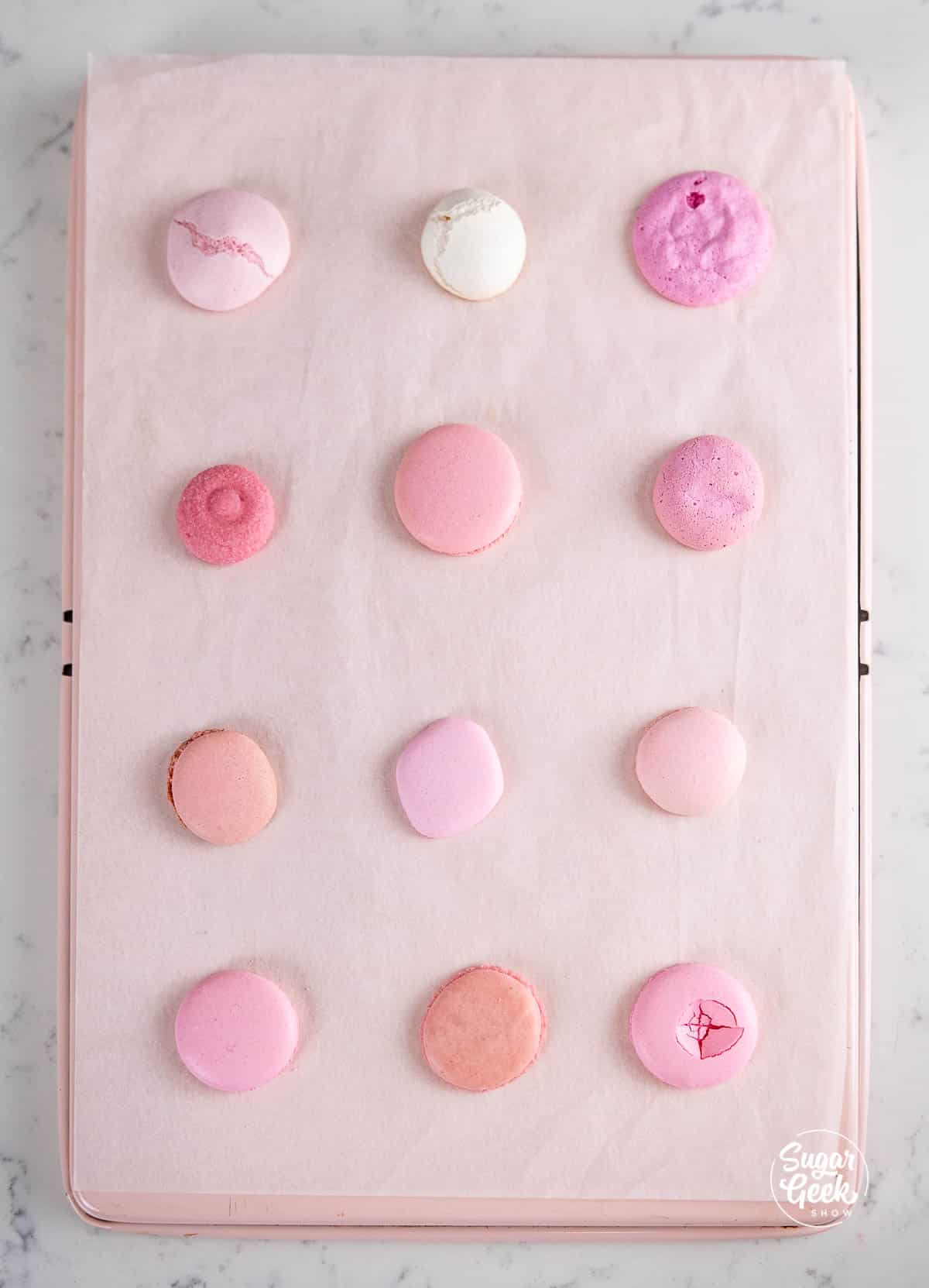
- Cracked shells. Too many trapped air bubbles, the oven was too hot, or you skipped the resting step before baking. Tap the pan harder before resting, drop the oven temp by 10°F, or rest longer until truly dry to the touch.
- Hollow shells. Most often caused by overmixed batter or an unstable meringue. Whip on medium (not high) for stronger bubbles. Stop folding the second the batter flows in a slow ribbon, not a fast one.
- No feet. The batter was too wet (overmixed) or the shells did not rest long enough to form a skin. Always rest until the surface is dry to the touch.
- Lopsided shells. Uneven piping, or your oven has hot spots and uneven airflow. Pipe straight down (not at an angle) and rotate the pan halfway through baking.
- Wrinkled or pitted tops. Usually undermixed batter. The meringue was too stiff and trapped uneven amounts of air. Continue folding until the batter is smooth and lava-like.
- Browned shells. Oven is too hot or they baked too long. Check at the 10-minute mark and pull as soon as a shell releases cleanly.
- Sticky shells stuck to parchment. Underbaked. Bake another 1 to 2 minutes. The release test is your best doneness signal.
- Meringue won't whip to stiff peaks. A trace of grease on the bowl, whisk, or yolk in the whites. Re-wipe everything with white vinegar and start over with a clean batch of whites.
Final Thoughts
Macarons are one of those recipes where the first batch teaches you more than the recipe ever can. They are sensitive, but they are not magic. Once you understand what macaronage is doing (deflating the meringue just enough to let it flow without breaking it), and you trust your kitchen scale, the technique becomes second nature.
The biggest piece of advice I can give beginners: do not try to combine a complicated flavor with your first attempt. Make plain shells with a vanilla buttercream filling first. Once you have nailed the shells, then play with flavors like chocolate, strawberry, or pistachio. Adding cocoa powder or pistachio paste changes the batter chemistry, and you do not want to be debugging both your technique and your flavor on the same batch.
Keep notes on each batch. Time of year, humidity, oven temp, batter consistency, what your feet looked like. Within three or four batches you will start to see your own patterns and adjust. That is the secret of every pastry chef who makes these look easy.
French Macaron FAQs
No. Macarons are one of the few recipes where weight measurements are non-negotiable. Even a small variation in the almond flour or sugar amount can throw off the batter and cause cracked, hollow, or footless shells. Use a digital kitchen scale.
Hollow shells are almost always caused by overmixing the batter or by an unstable meringue. Three fixes: whip your meringue on medium speed instead of high (smaller, stronger bubbles), stop folding the moment the batter flows in a slow ribbon, and use cream of tartar plus meringue powder for extra stability. Make sure your shells are fully baked, an underbaked shell can also collapse and look hollow.
Usually, it was because the batter was too wet (overmixed) or the shells did not rest long enough to form a skin before baking. The skin is what holds the surface in place while the steam below pushes up to create the feet. Rest at room temperature for 15 to 30 minutes until the surface is dry to the touch and does not stick to your finger.
Wrinkled or pitted tops usually mean the batter was undermixed. The meringue was too stiff and trapped uneven amounts of air, which causes the surface to sink unevenly as it cools. Continue folding until the batter is smooth and flows like slow-moving lava off the spatula.
Cracking comes from trapped air bubbles, an oven that is too hot, or skipping the resting step. Tap the pan firmly on the counter several times after piping to release big bubbles, use a toothpick on any visible ones, and always rest the shells until truly dry to the touch before baking. If the cracks persist, drop your oven temperature by 10 to 15°F and try again.
Filled macarons keep best refrigerated in an airtight container for 3 to 5 days. The flavor and texture actually improve after 24 hours of "maturing" in the fridge as the filling moistens the shell slightly. To freeze, place filled macarons on a tray to freeze solid first, then transfer to a zip-top bag for up to 3 months. Thaw in the refrigerator overnight before serving.
Almost always grease. Even the smallest trace of fat on the bowl, whisk, or in the egg whites will keep them from whipping properly. Wipe every tool with white vinegar before you start, and crack each egg into a separate small bowl before adding the whites to your mixer so a stray bit of yolk does not contaminate the whole batch.
It is not recommended. Aging egg whites at room temperature is a food safety risk because raw eggs can develop bacteria. The fridge slows that while still letting moisture evaporate through the shell, which is what makes the proteins stronger. Two to four days in the fridge is the sweet spot.
It helps a lot. Pulsing the almond flour and powdered sugar together breaks up clumps and creates a finer, more uniform mix that gives you smoother shells. If you do not have a food processor, sift the dry ingredients twice through a fine-mesh strainer and discard any large pieces.
Leave Me A Review
⭐️⭐️⭐️⭐️⭐️
If you tried this French Macaron Recipe or any other recipe on my blog, please leave a 🌟 star rating and let me know how it goes in the comments. I love hearing from you!
Recipe
Equipment
- Kitchen Scale
- Stand Mixer
- Parchment Paper
- Piping Bag
- 802 Round Piping Tip
- Food processor
Ingredients
- 4 ounces almond flour
- 8 ounces powdered sugar
- ¼ teaspoon salt
- 4 ounces egg whites aged overnight in the fridge and brought to room temperature
- ¼ teaspoon cream of tartar
- ½ teaspoon meringue powder optional
- 2 ounces granulated sugar super fine
- 1 teaspoon vanilla extract
- 1 drop gel food coloring optional
White Chocolate Ganache Filling
- 7 ounces white chocolate
- 4 ounces heavy cream
- 1.5 ounces unsalted butter
- 1 whole vanilla bean or 1 teaspoon extract
Instructions
Before you Begin
- Age your egg whites 2-4 days ahead of making your macarons. Crack and separate the eggs and store the whites in a container covered in plastic wrap.
- Take your egg whites out of the fridge 2-3 hours in advance. Room-temperature egg whites whip up better than cold egg whites.
- Begin by wiping your bowls, whisk, and tools down with some white vinegar. This will remove every trace of oil from the surface and help ensure the perfect macaron.
- Preheat your oven to 300ºF (148ºC).
- Trim the parchment paper to the size of your pan so that it fits perfectly inside or use silicone mats with pre-printed macaron templates on them.
- Place the macaron template under the parchment or make your own template by tracing circles that are roughly 1.5" wide and spaced about 1" apart. Turn the parchment over so that the marker does not transfer to your cookies.
- Measure out all your ingredients carefully using a food scale and set them aside. Having your ingredients ready to go will help ensure success.
Making the Macaron Batter
- Place your dry ingredients (almond flour, powdered sugar, and salt) into your food processor. Process for 5-second increments, three times. Shake the container as needed to ensure even mixing.
- Place your strainer over a large bowl.
- Sift the almond flour mixture to remove any large bits of almond. If you have to remove a lot, make sure to add the same amount of almond flour back in so that your batter ratio is not thrown off.
- Place your egg whites, cream of tartar, and meringue powder (optional) into the bowl of your stand mixer with the whisk attachment attached.
- Begin whisking your egg whites on medium speed until you reach soft foamy peaks. Medium speed will produce smaller, stronger air bubbles than whipping at high speed.
- Sprinkle in the granulated sugar slowly while whisking on slow until it's all added and continue whisking on medium until you reach stiff peaks.
- Add in your food coloring and vanilla. Mix until just combined.
- Add ⅓ of your almond mixture into your meringue and fold together by scooping up under your batter, running along the side and bringing the batter up and over the top. Rotate the bowl and repeat with the the second and third portion of the almond mixture. .
- Continue folding until the batter flows off the spatula in a "V" and sits on the top of the batter for a few seconds before it dissolves back into the batter.
- Another test you can do is to firmly bang your bowl onto the counter to see if the batter settles into itself. If it does, it's ready. If it doesn't move it still needs more mixing.
- Prepare your piping bag with a #12 round piping tip by cutting the end of the piping bag off and inserting the tip into the bag.
- Twist the piping tip and bag together to seal the bottom of the piping bag and then press the bag into the tip so that the filling does not leak out of the piping bag.
- Fold the top of the piping bag down over your hand and scoop the macaron batter into the piping bag with a rubber spatula. Or you can place the piping bag into a tall glass so both your hands are free.
- Lay the bag flat on the counter and push all the batter to the bottom of the piping bag so there are no air bubbles and then twist the top to prevent leaking. Tie the top into a knot if desired.
- When ready to pipe, pull the piping tip out and move the batter down into the piping tip by squeezing the batter gently. Pro-tip: When you are not piping, hold the piping bag straight up to prevent leaking. When ready to pipe turn the bag over and immediately begin piping.
Piping the Macarons
- Hold the piping bag straight up and down over a circle, about 1" away from the prepared baking sheets.
- Begin squeezing, do not rotate or move your bag.
- The piping tip opening should be touching the macaron at all times.
- Stop piping just inside the circle.
- Make a small quick "C" circular motion with the tip to remove it from the piped cookie. Try not to just lift up because this will leave little peaks on top of your cookies.
- After all your macarons are piped, lift your pan up about 6" and drop it onto your work surface a few times. This helps pop any large bubbles that may have got trapped in your batter pop so they don't crack your macarons.
- Use a needle or toothpick to fix any bubbles if you still have some.
- Don't forget to remove the templates under the parchment paper before baking.
- Allow the macarons to sit at room temperature for 15-30 minutes to develop a "skin" on them before baking. You should be able to lightly touch the top of the cookie and the batter will not stick to your finger. Do not leave your macarons out to dry for longer than 30 minutes or the shell can get too thick and your macaron shells won't develop feet.
- Remove the template and place a small dab of macaron batter under the corner of each piece of parchment paper to keep it from blowing all over the place in the oven.
- Bake the macarons in the oven at 300ºF for 10 minutes. Rotate the pan after 5 minutes to promote even baking as well as let some of the steam out of the oven which helps to prevent cracking.
- Test one macaron by gently lifting it from the parchment paper with a knife. If it releases, your macarons are done. If it's sticking, continue baking and check every minute until they release.
- Remove the baking tray from the oven and pull the parchment off the pan by sliding it gently onto a wire rack so that your macarons do not continue to bake.
Making White Chocolate Ganache
- Combine your chocolate and cream together in a microwave-safe bowl.
- Heat the mixture for one minute then whisk together.
- Continue heating the mixture in 30-second increments until the chocolate is melted and everything is mixed together smoothly.
- Add the butter and vanilla, then stir together until it's melted and combined.
- Place the ganache into a piping bag and flatten the mixture out until it is pretty thin.
- Place the ganache into the freezer for about 10 minutes to help it set up.
- Push the ganache to the end of the piping bag with a bowl scraper.
- Cut a small ⅛" hole in the bottom of the piping bag and begin filling your macaron shells with the ganache.
- Place a second shell on top and now your macarons are complete!
Video
Notes
- Age 2 to 4 days in the fridge for a stronger meringue.
- Bring to room temperature before whipping.
- Avoid carton egg whites, they rarely whip well.
- Glass or metal bowls only. Plastic holds onto trace grease that breaks meringue.
- Silicone mats with pre-printed templates are the easiest setup for beginners.
- A kitchen scale is required. Cup measurements do not work for this recipe.
- Cream of tartar is optional but stabilizing. Replace with 1 teaspoon of lemon juice if needed.
- Meringue powder is optional but highly recommended for first-timers.
- Sub vanilla for almond, lemon, peppermint, or any extract you like.
- Use gel or powdered food coloring only. Liquid colors throw off the batter.
- Filled macarons keep 3 to 5 days refrigerated in an airtight container.
- Freeze filled macarons up to 3 months. Thaw overnight in the fridge.
- Unfilled shells keep 1 week at room temperature in an airtight container.
- Don't substitute almond meal for almond flour. Almond meal is coarser and gives gritty shells.
- Don't whip the meringue on high speed. Medium produces stronger, smaller bubbles.
- Don't skip wiping every tool with vinegar. Trace grease will keep the meringue from whipping.
- Don't overmix the batter past the slow ribbon stage. Hollow, flat shells.
- Don't open the oven door during the first 10 minutes of baking. The shells will collapse.
- Don't use carton egg whites. Use fresh whites aged in the fridge.


Shannon Rowley says
They turn out wonderful every time thanks to your simple but specific directions. Thank you for sharing your knowledge and experience.
Sarita Taylor says
Liz, thanks so much got the recipe. It's step by step and easy to follow. Made one batch already. Came out so-so but am doing another this weekend for Thanksgiving. Going to make autumn leaves, pumpkins and cornucopias. THANKS SO MUCH!
Evette says
Hi Liz,
Thanks a million for your recipe. Have baked french macarons in the past - and you are right.... it's very tough to get it correct the first few times. I will be trying your recipe soon and let you know how it went. Much appreciated.😀
Peace says
Hi, Thanks so much for sharing. Please advise on what one could use as a replacement for cream of tartar.thank you
Sugar Geek Show says
You don't 100% need to use cream of tartar if you're using fresh egg whites, it just helps your meringue whip up stronger. If you use pasteurized egg whites you should use it, though.
Ana says
Hi 🙂 i love your recipes and never have an issue however with this recipe i noticed you used ounces instead of grams and i cant seem to find proper conversions into grams online. I would really like to try this can you please give me the amounts in grams it would be much appreciated ❤
Sugar Geek Show says
Hi! In the recipe card the grams are in parentheses next to the ounces. 1 Oz= 28 grams
Lilly says
Hi there, can I replace the almond flour with whole almond flour without changing the amounts in this recipe?
Thanks!
Elizabeth Marek says
Yes you can, you will just have speckles in your finished macarons from the skins
Robin says
This is a great recipe! I made macarons for the first time using this recipe and they turned out amazing! I was so expecting something to go wrong. Was glad I carefully read through the post and possible pitfalls to looks out for. Can't wait to try more flavor combinations. Thank you so much for this recipe.
Laurie says
Great Recipe. Definitely the best one I have seen, especially with all the troubleshooting advice. I forgot to age the egg whites and left out cream of tartar and they still turned out beautiful. I sandwiched the cookies with raspberry whippers cream and they were delicious. Thanks!
Wilma says
Can I use brown eggs? For this recipe
Elizabeth Marek says
Yes you can
Laura says
Hi Liz! I tried to make macarons once with a different recipe and they did not turn out, the dough was thin and was a mess! Today is my parents anniversary and I wanted to make something special. THIS RECIPE WAS A TOTAL SUCSESS! It was super easy fo make! Thx for the tutorial! 😉
Elizabeth Marek says
Im so happy to hear that! Happy anniversary to your parents 😀
Nat says
Hi, I followed your recipe and made macrons 5 times already. Each time I failed. The problem with my macrons are that they are hollow. Can you tell me what I did wrong?
Elizabeth Marek says
A hollow macaron is not a failure. Using the Italian method might help you reduce hollows but I do not teach that method because it requires boiling of syrup and I don't enjoy that extra step. There are many tutorials on the Italian method for french macarons on youtube.
Shannon P says
If you want to add freeze-dried strawberries to the batter, how much do you add?
Elizabeth Marek says
I would only add a teaspoon or two and remove the same amount (by weight) of powdered sugar
Jon says
Followed your recipe to the letter, but skipped the tartar and they came out perfect! Great recipe.Thanks!!
Kristy says
Can you only use extracts to flavor the actual cookie? Or can I add cocoa powder or freeze dried fruits to the batter (if so, how much)? Thank you!
Elizabeth Marek says
Check out my chocolate macaron recipe for adding cocoa powder. You could replace cocoa powder with freeze-dried powder
Laveena D'Souza says
Hi , can these be made out of Cashew flour
Elizabeth Marek says
I haven't tested that