



Jump to:
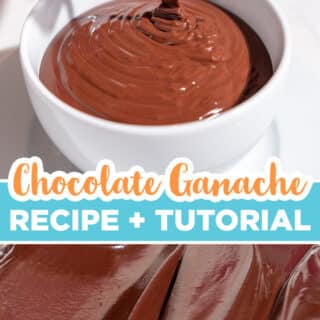
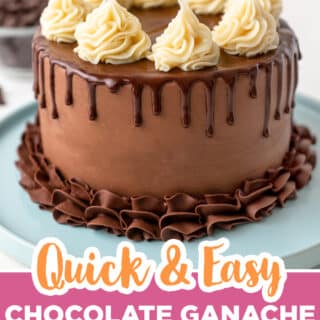
This is an easy chocolate ganache recipe for smooth, shiny, and delicious dark, milk, or white chocolate ganache. Make decadent drips on the side of your layer cake, let it set up to make a creamy frosting, or form it into rich truffles. Perfect this baking staple with a few easy tips and tricks explained in this blog post
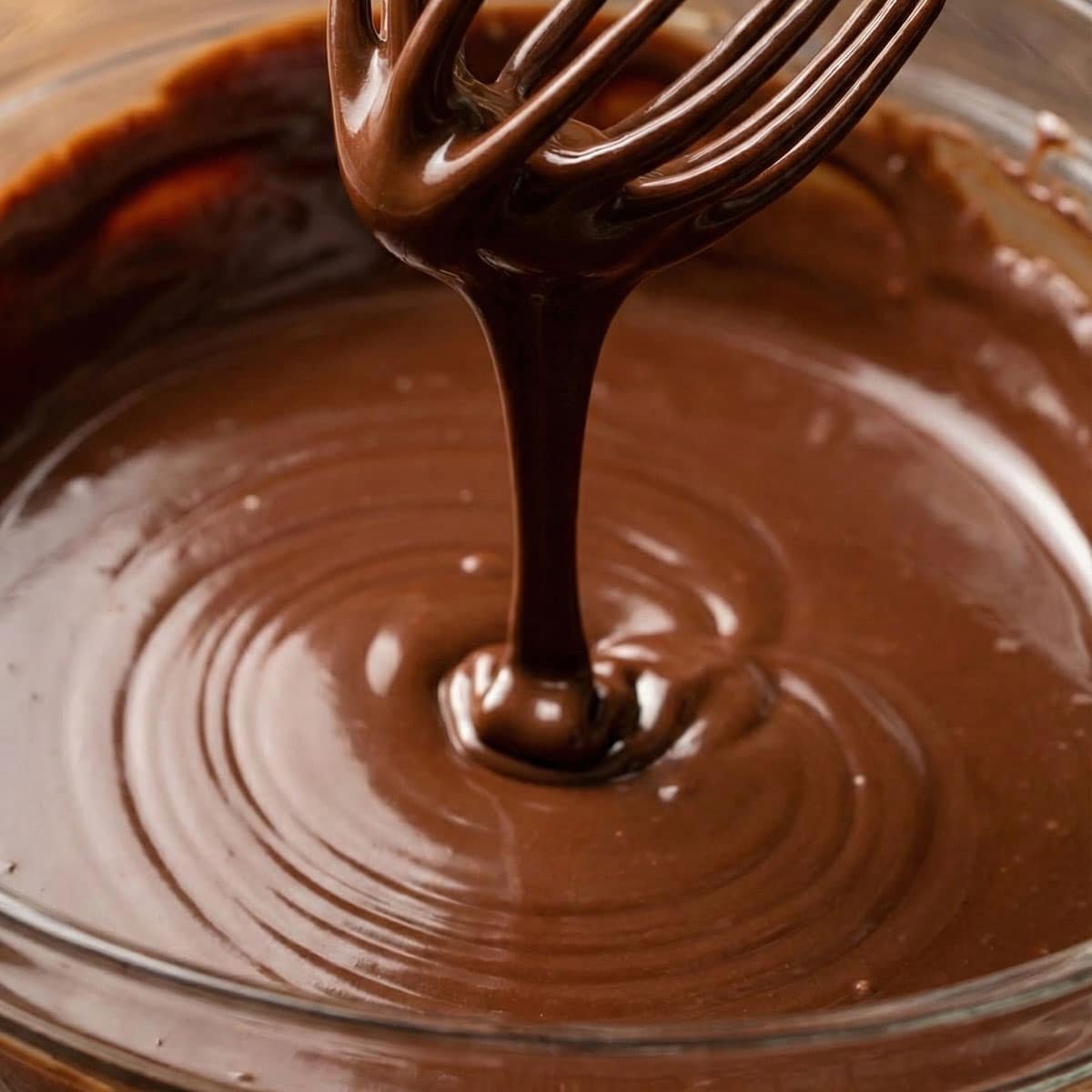
Most ganache recipes don't explain why things go wrong, and it can be really intimidating when you fail to mix just two ingredients together. The secret is, that not all chocolate is the same! Different brands of chocolate can change your ratio and sometimes lead to broken, oily, or hard ganache. Follow my tips for how to fix ganache when these problems occur, and understand the science behind it!
Table of contents
Chocolate Ganache Ingredients
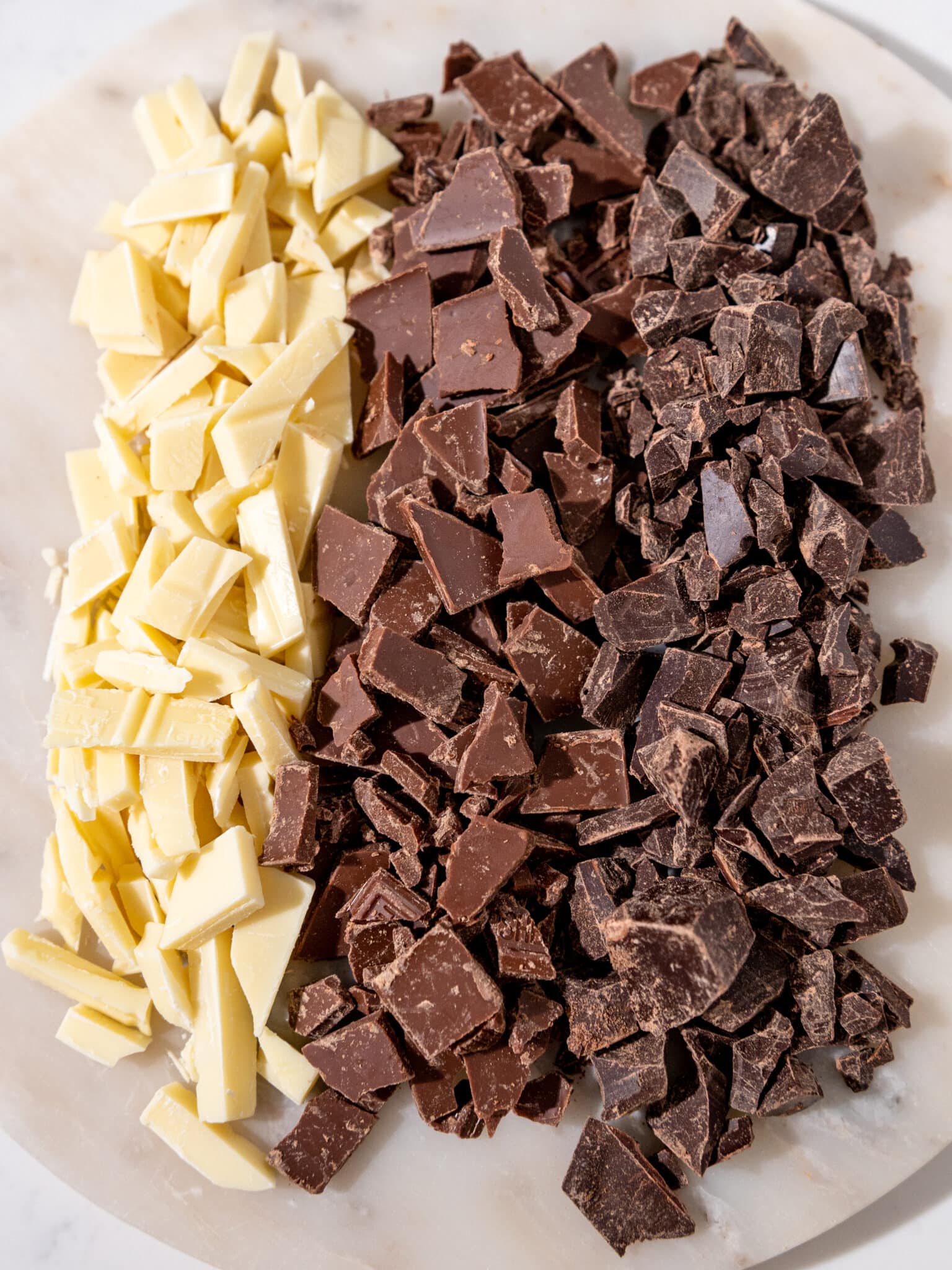
Chocolate: Whether you're using dark, milk, or white chocolate it's important to use good quality chocolate. The better the quality, the better tasting your ganache will be. You also want to make sure that cocoa butter is listed in the ingredients on the back, instead of hydrogenated palm kernel oil. Cocoa butter means that it is "real" chocolate instead of candy melts, and won't be as waxy. Some bags of semi-sweet chocolate chips at the grocery store do not contain cocoa butter, so make sure to check the back. Some brands I like are Ghirardelli, Lindt, Guittard, or Callebaut.
Heavy cream or heavy whipping cream gives ganache the right consistency that's perfectly creamy and thick.
Vanilla and Salt are optional for ganache, but it adds a little something extra that enhances the flavor of the chocolate.
Corn syrup and butter are sometimes added to the ganache to make it extra creamy and shiny.
How to Make Chocolate Ganache
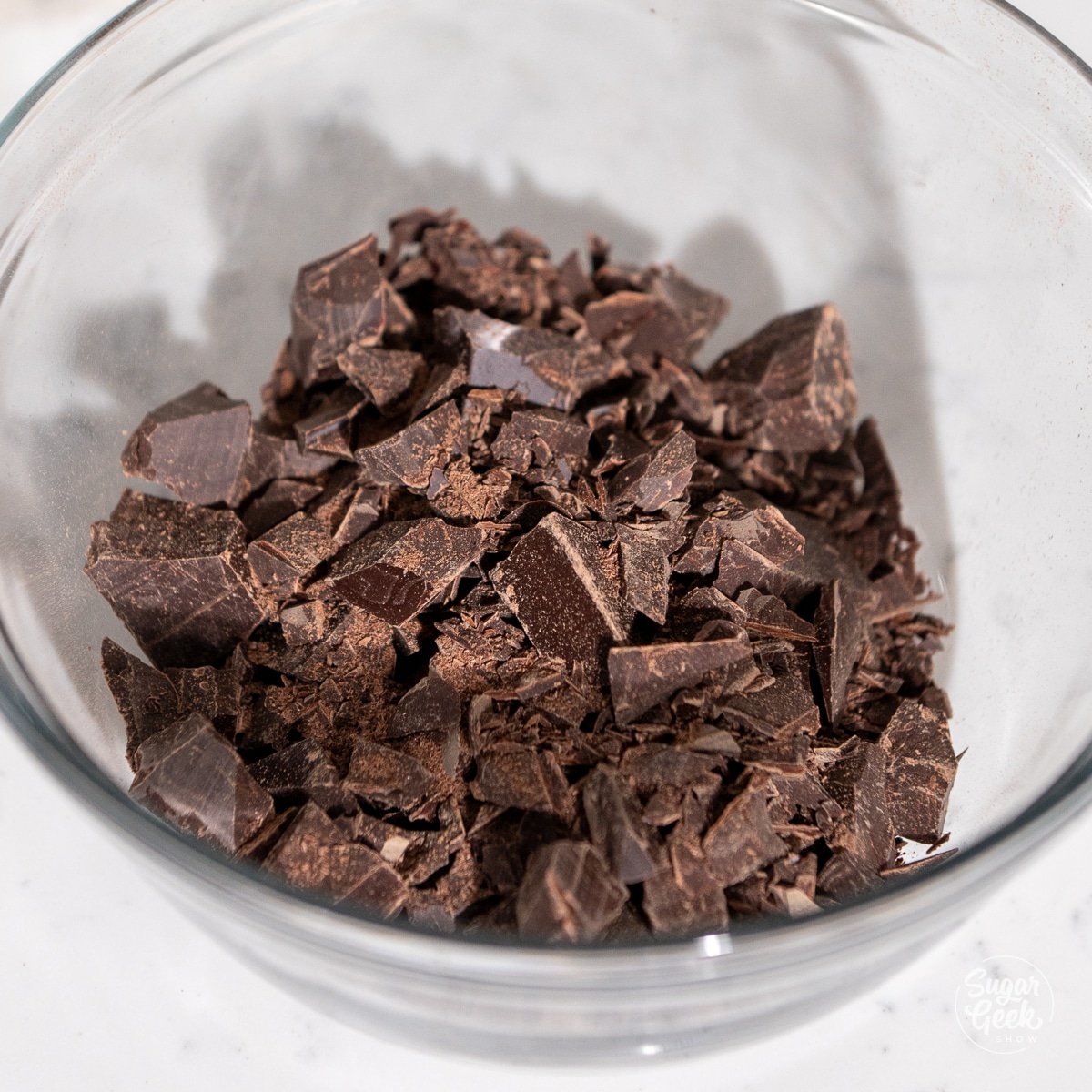
- Measure out the chocolate with a food scale and chop it into fine pieces so that it melts more easily. Place the chocolate in a medium heatproof bowl.
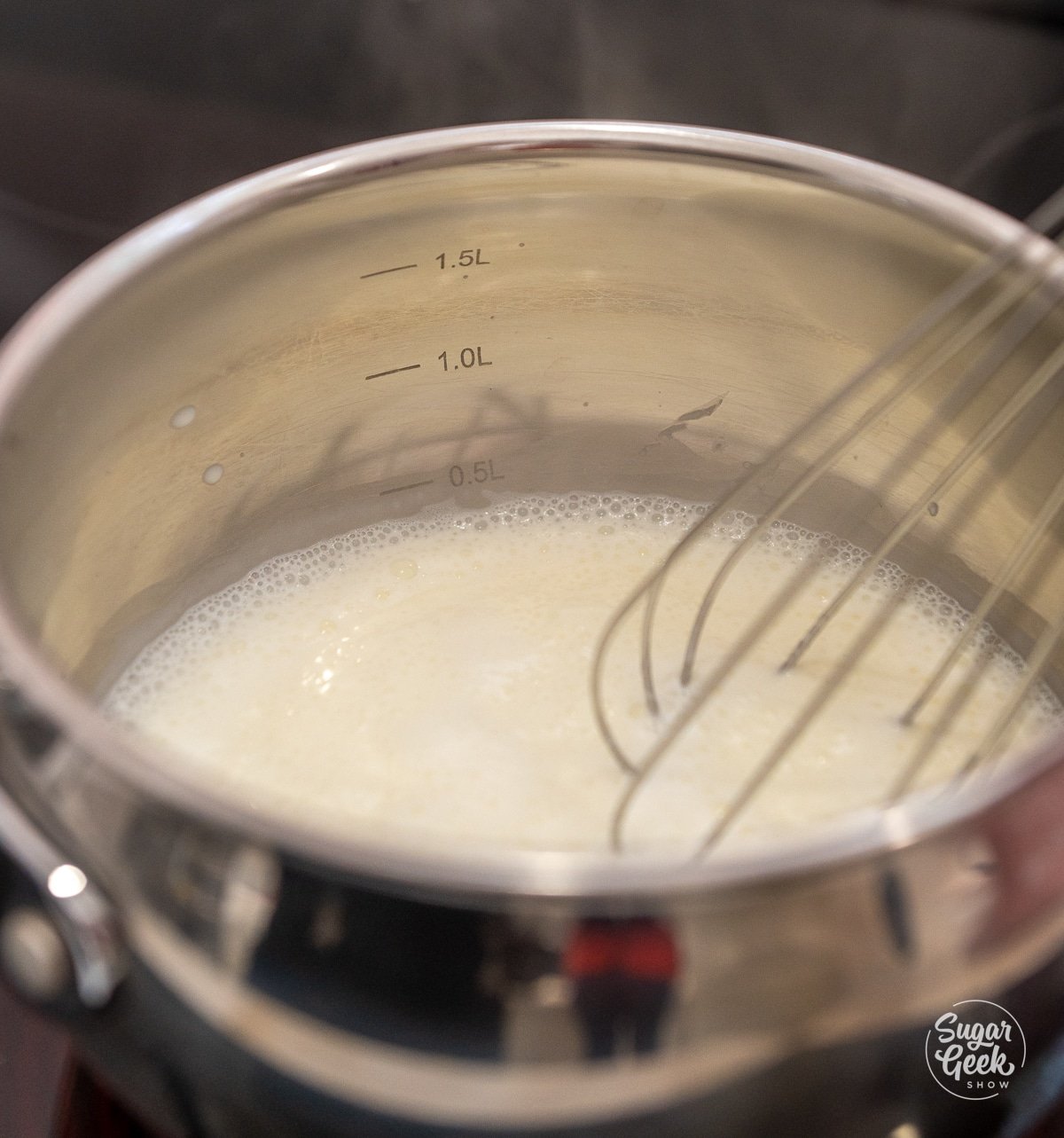
- Heat the cream on the stovetop in a small saucepan until steam just begins to rise from the surface. Whisk occasionally to prevent burning and don't walk away or your cream could boil over.
- Pour the hot cream over the chopped chocolate and push the chocolate down so it's all under the surface of the cream. Let the mixture of chocolate and cream sit for 5 minutes.
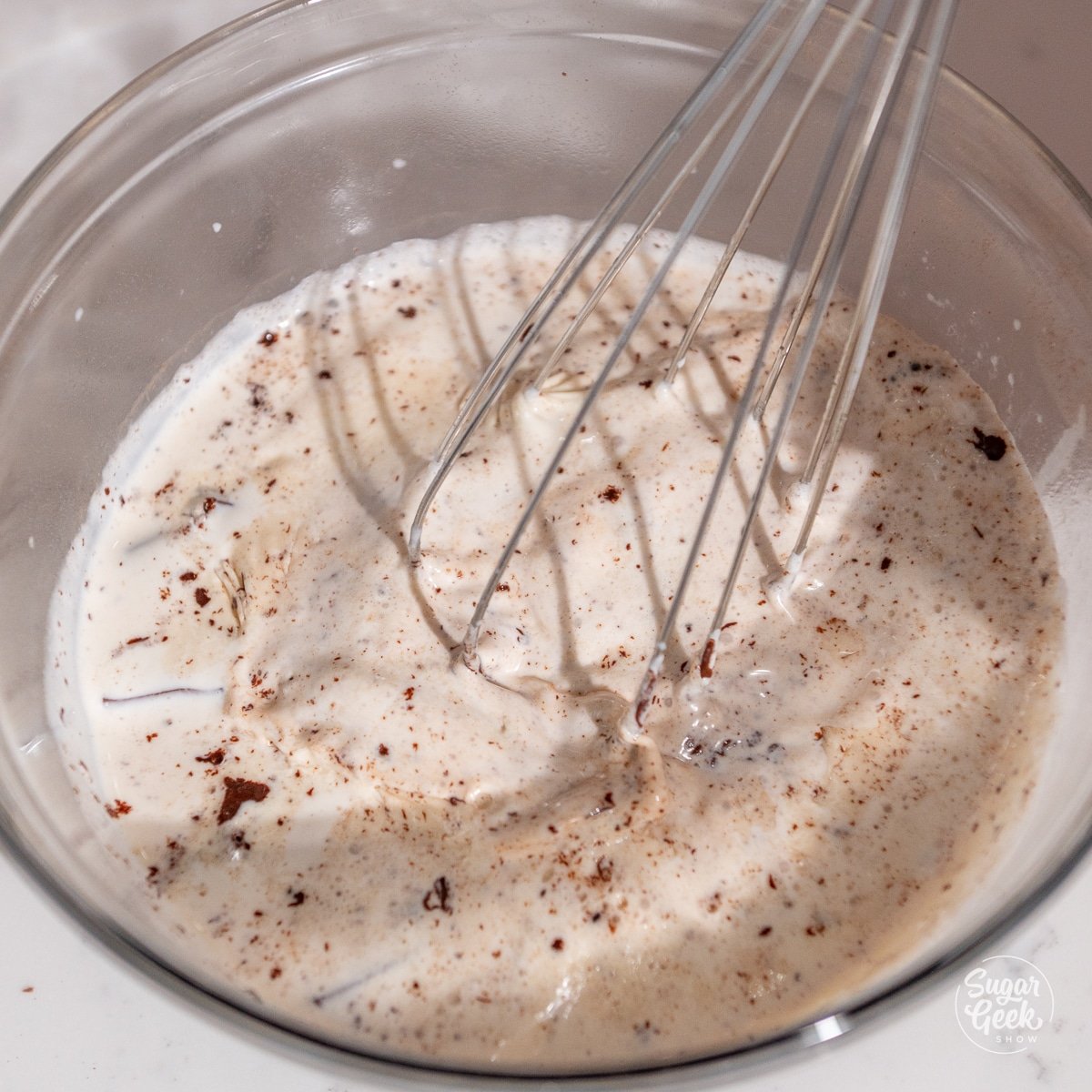
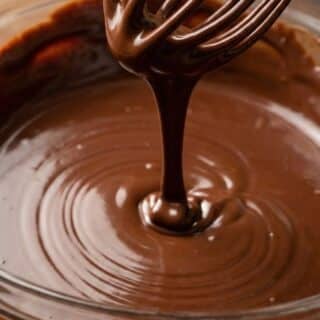
- Add the vanilla and salt, then whisk the cream and chocolate together until it's smooth. Start with small circles in the center until the chocolate and cream start creating an emulsion.
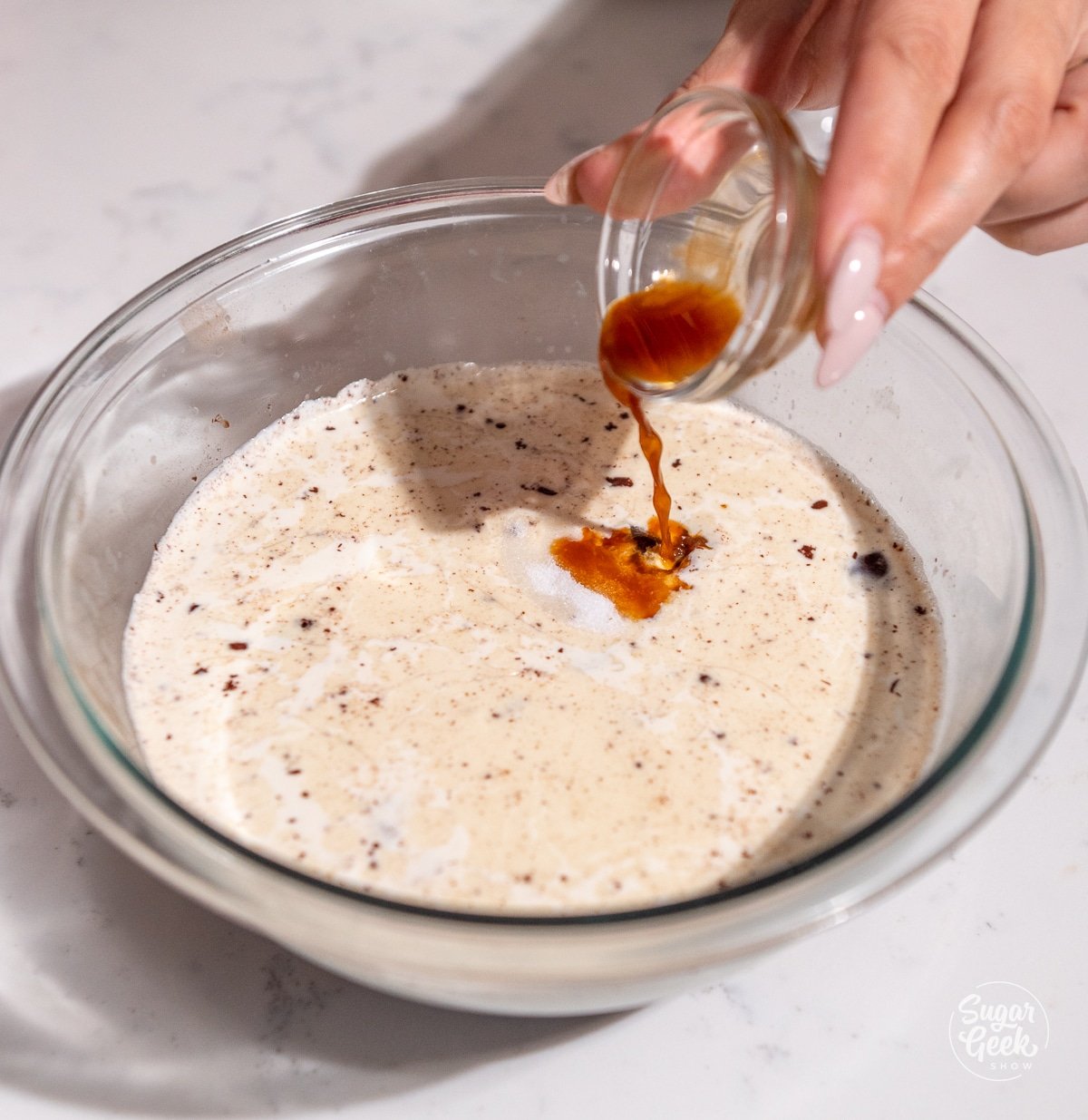
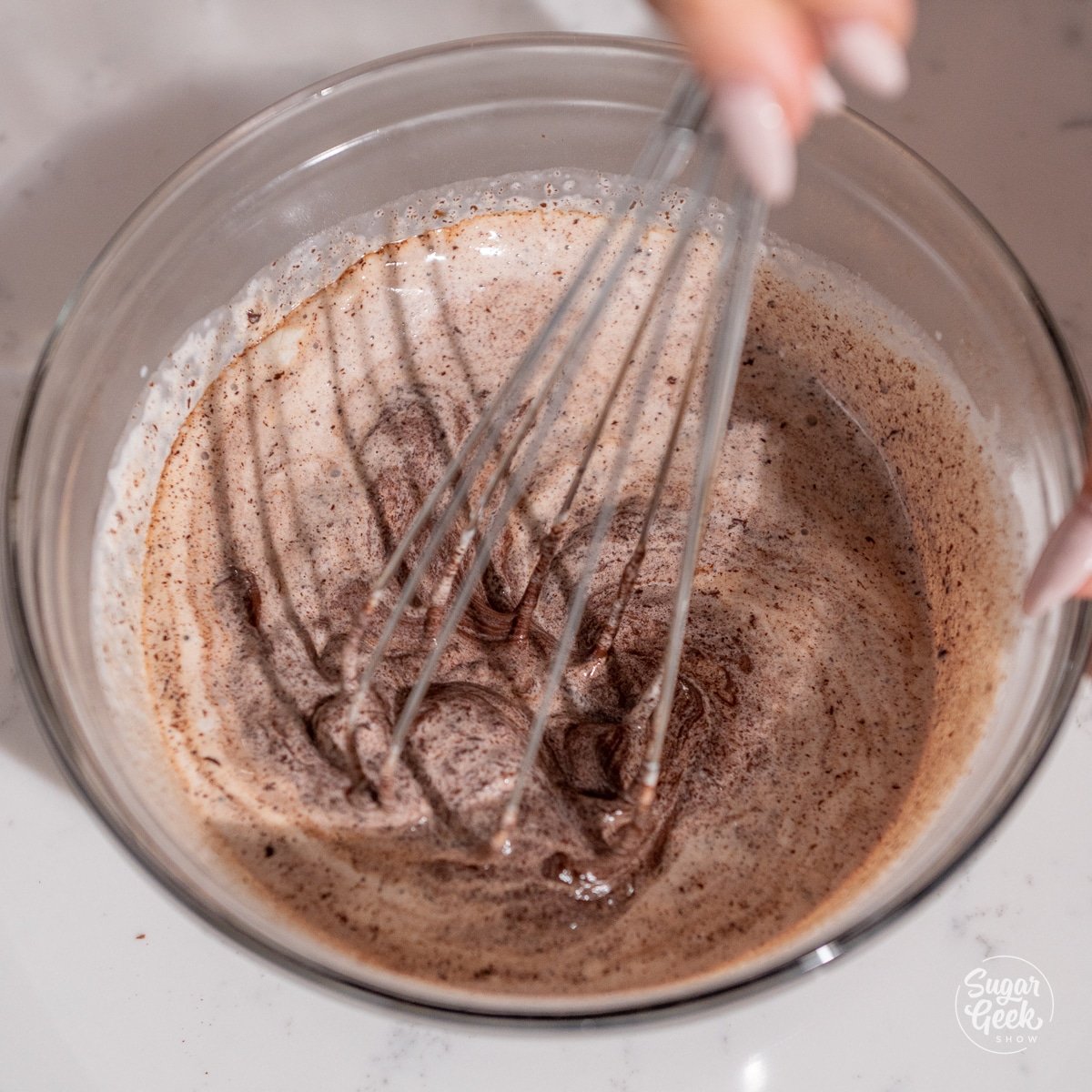
- If you have lumps or un-melted chocolate you can use an immersion blender to make your ganache super creamy and lump-free.
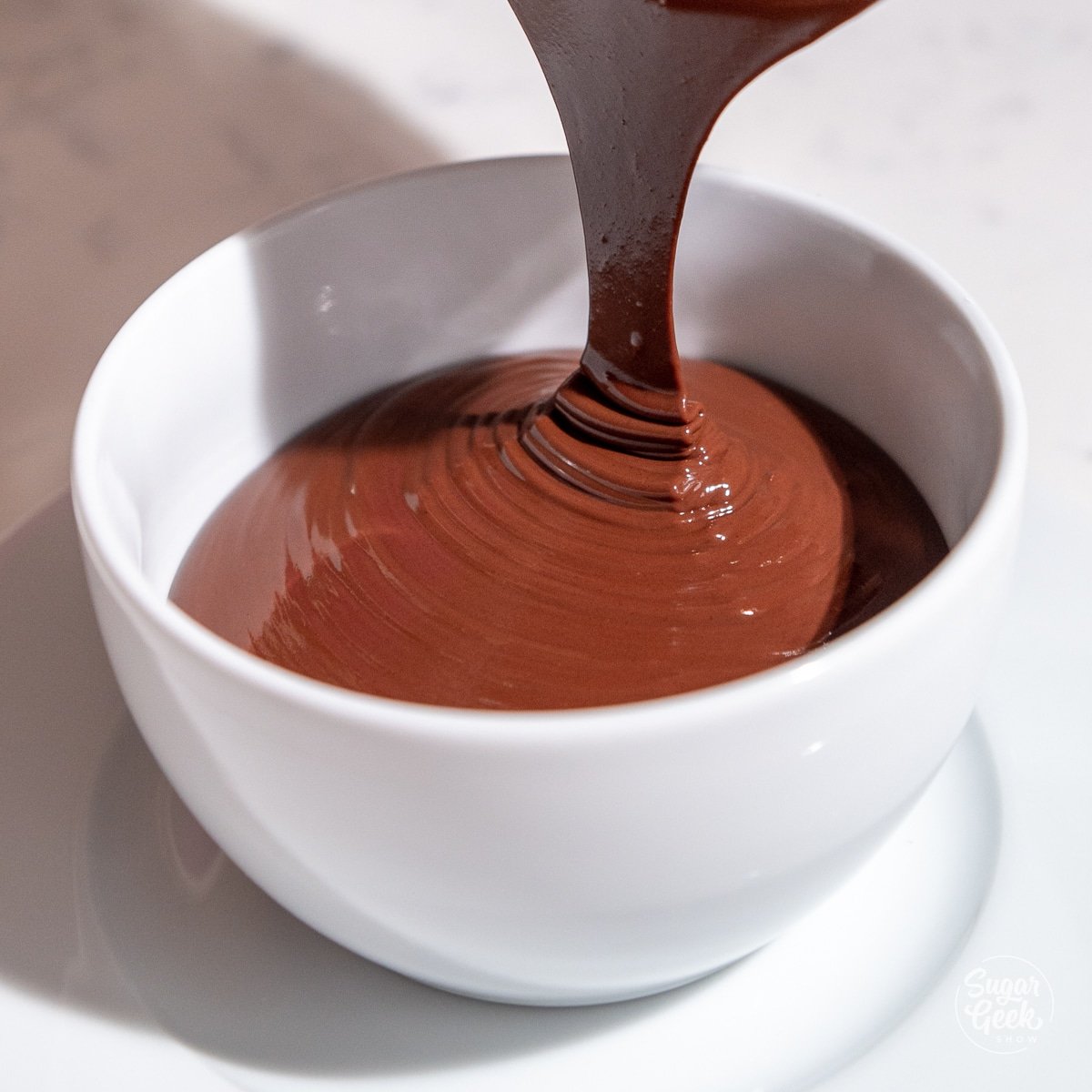
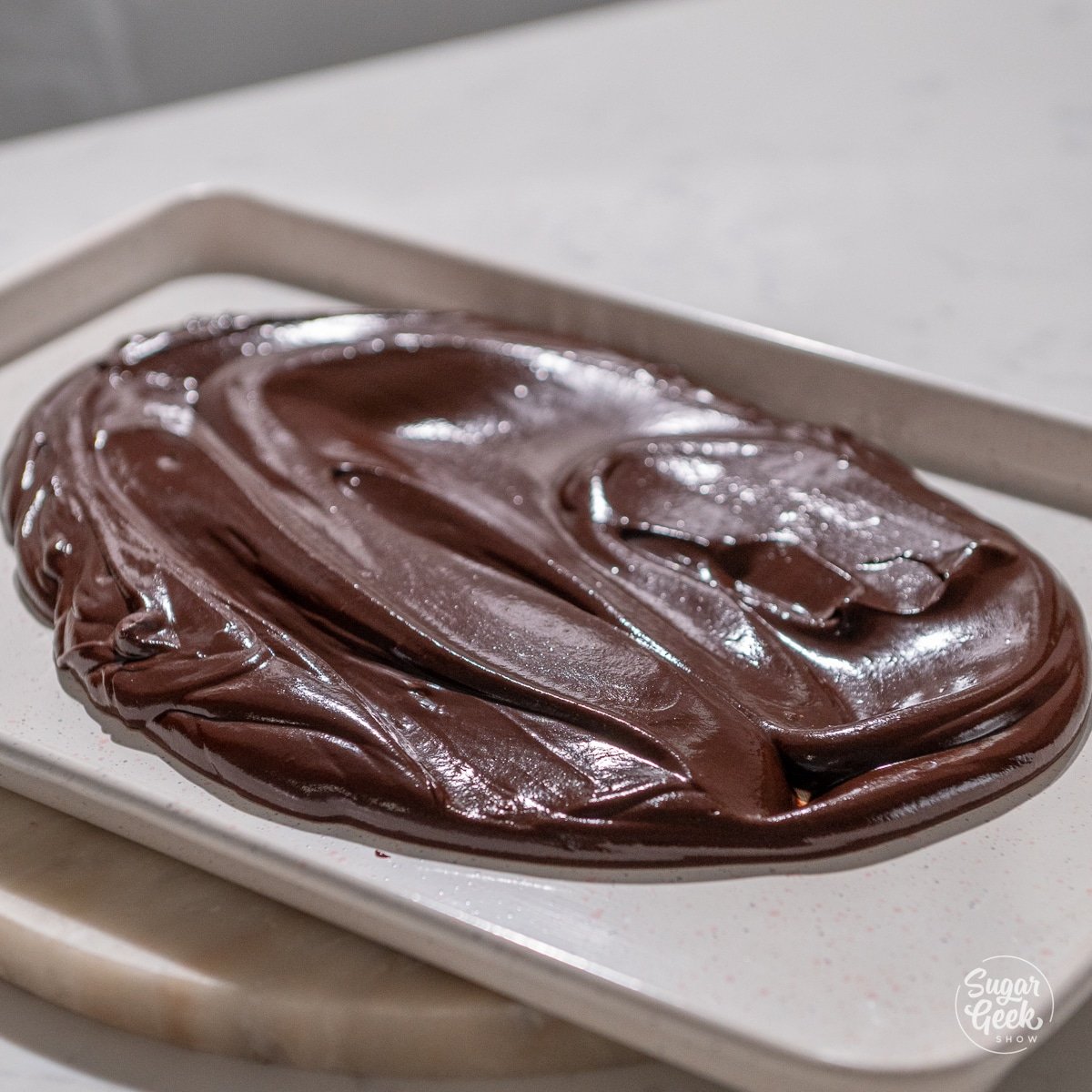
- Use the warm ganache for piping and drizzling, or pour it into a bowl. Pro-tip: Cool your ganache faster by pouring it into a baking sheet pan.
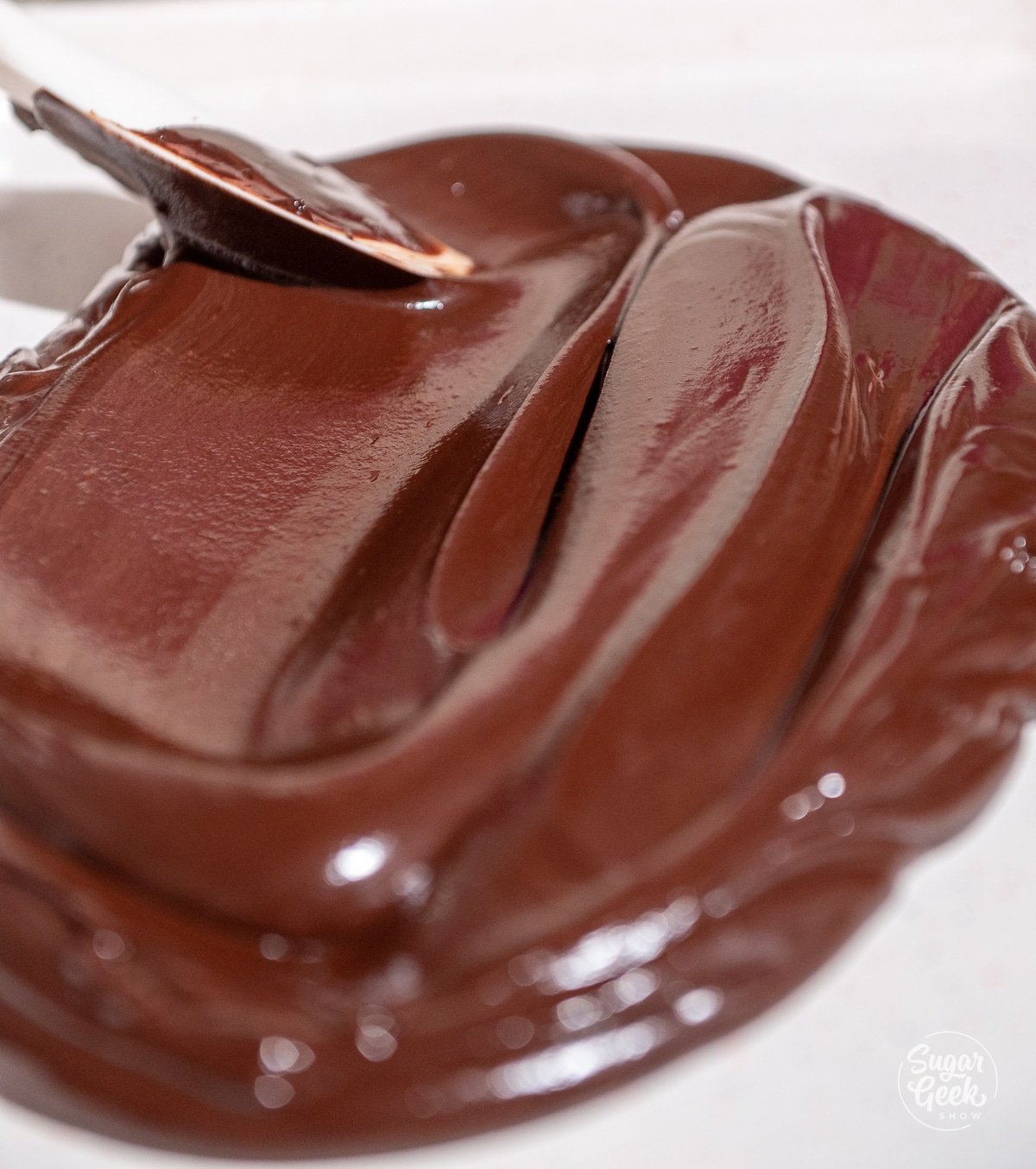
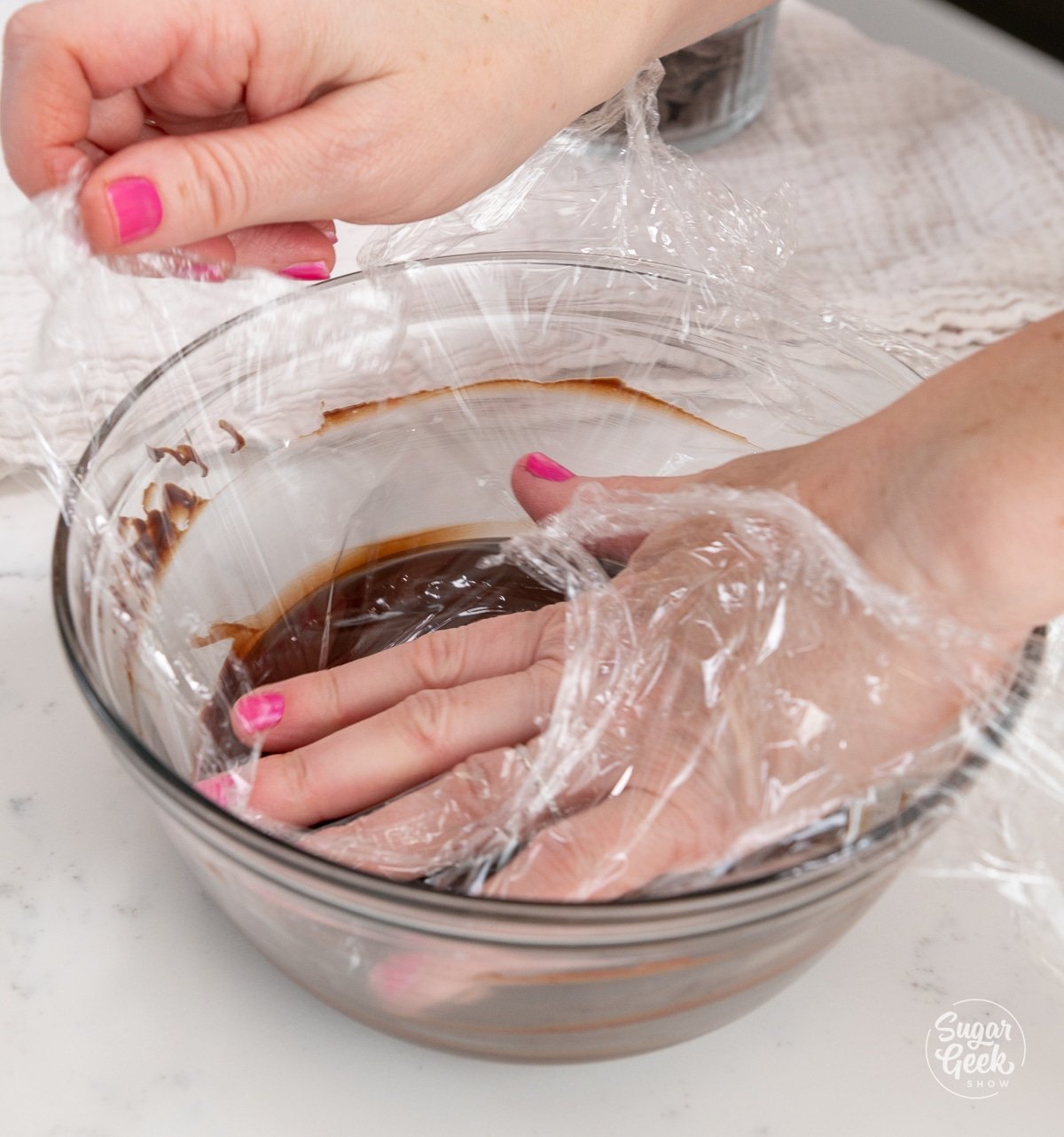
- Cover the ganache with plastic wrap touching the top and set it aside to rest at room temperature for about 4 hours or overnight.
- Store leftover ganache at room temperature for up to 48 hours, in the fridge for up to 1 week, or seal it in an airtight container and freeze for 6 months.
Using Chocolate Ganache In 6 Ways
- Fill the layers of a cake with the set ganache.
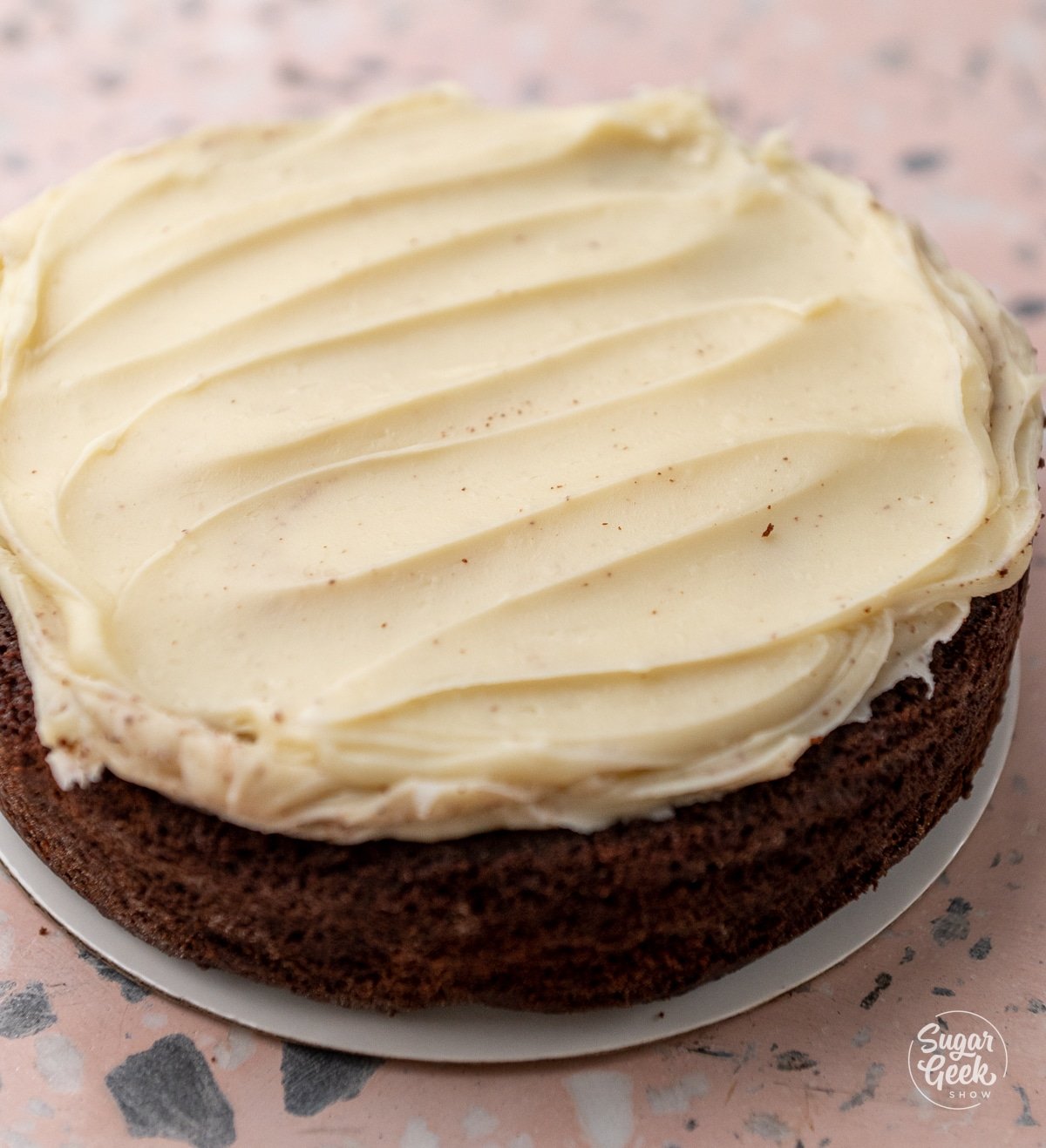
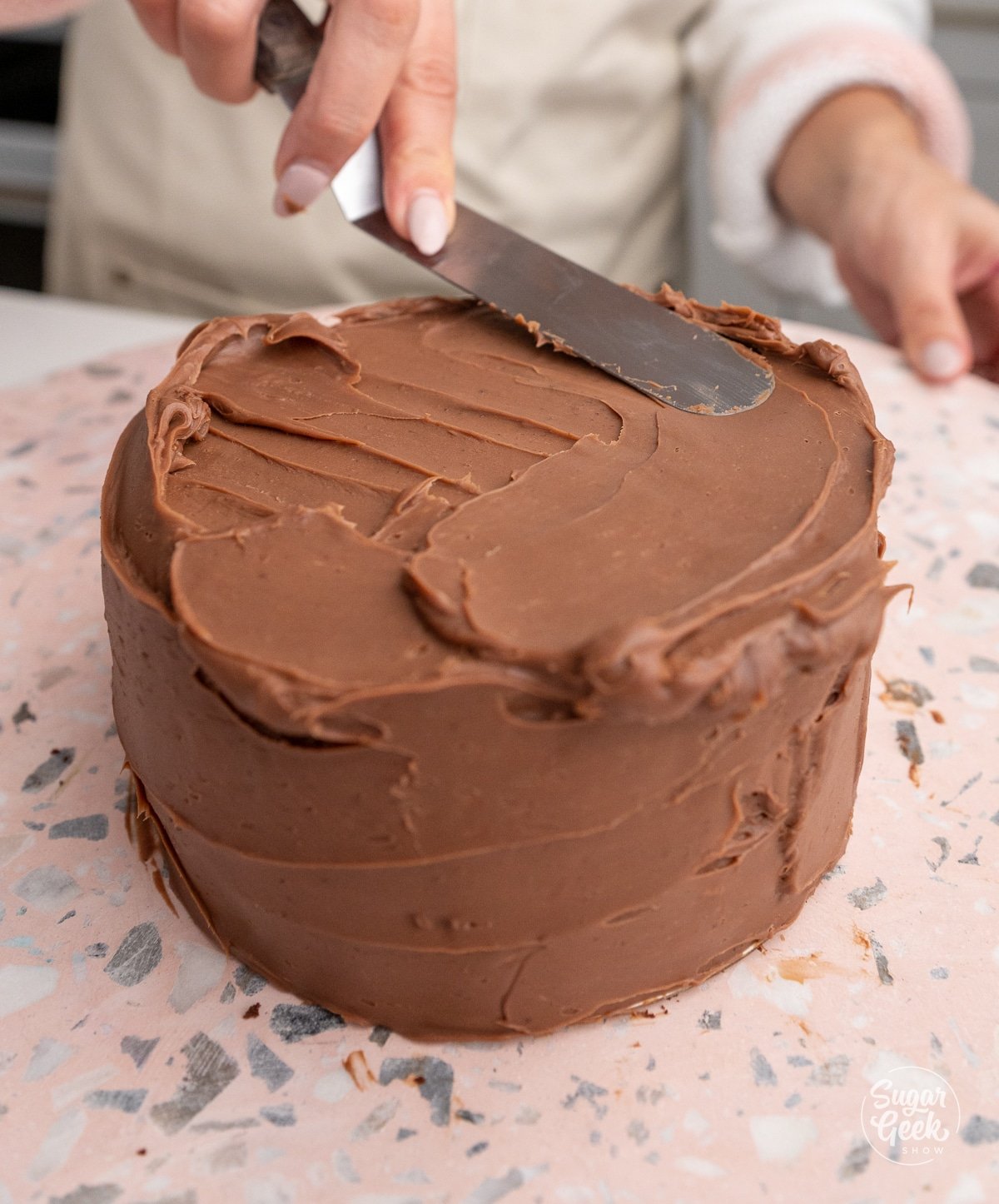
- Frost the outside of a cake with set ganache at peanut butter consistency.
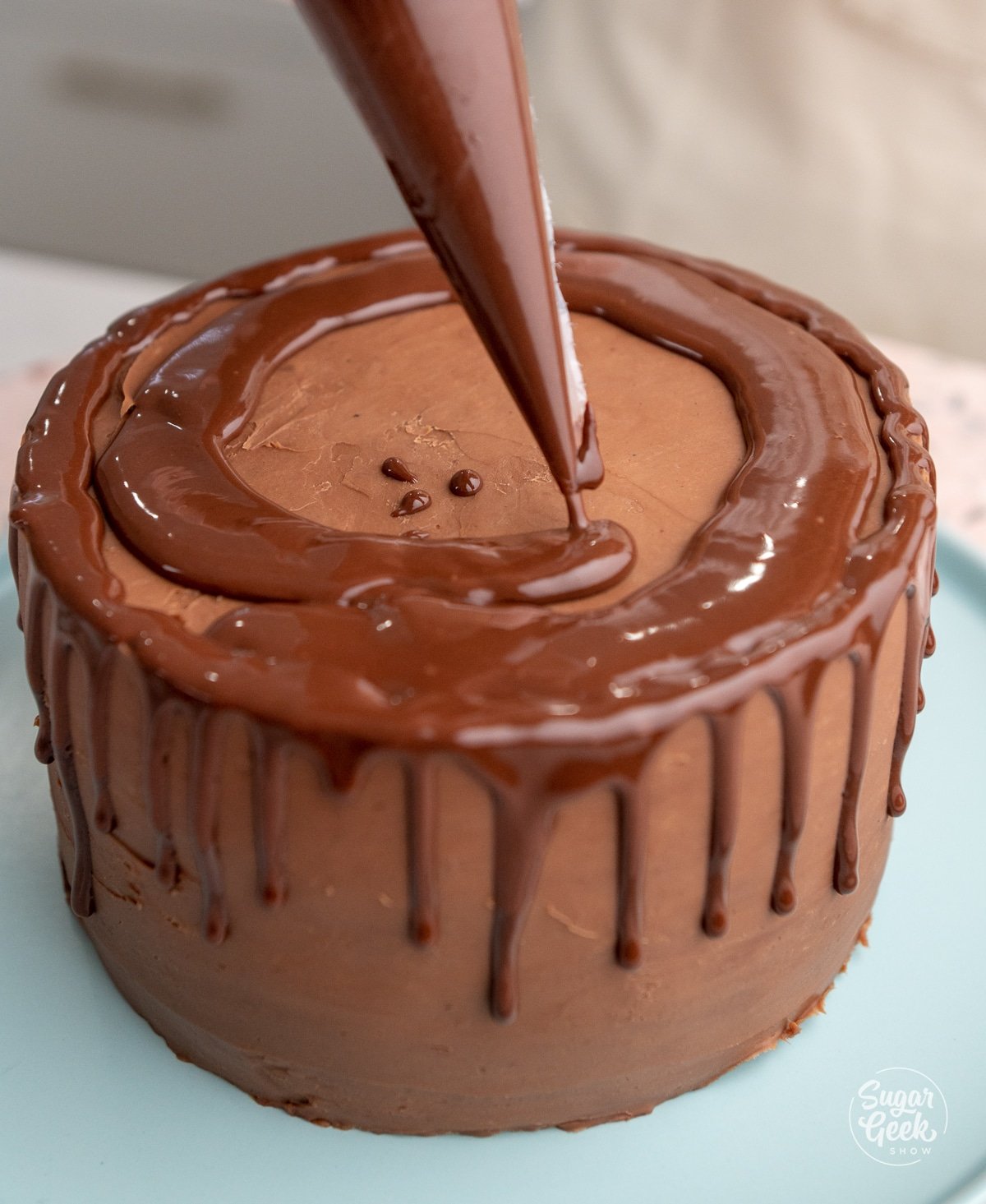
- Place the ganache into a piping bag and create a drip to decorate a cake with warm soft ganache.
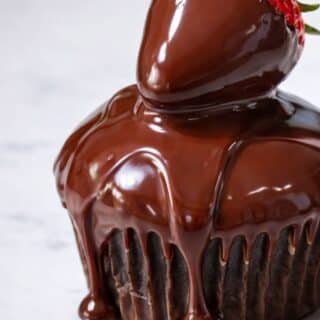
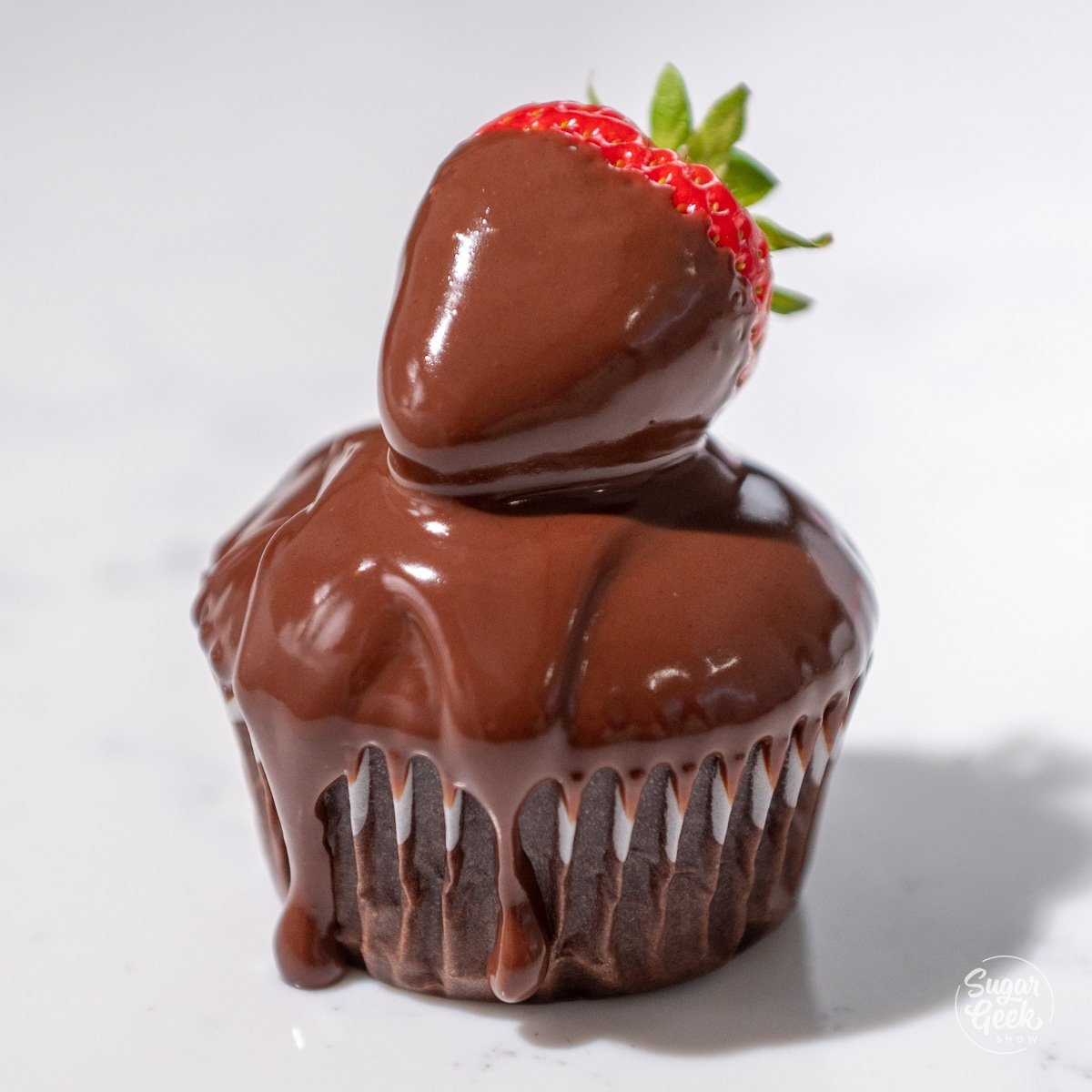
- Dip cupcakes or strawberries in a bowl of soft ganache.
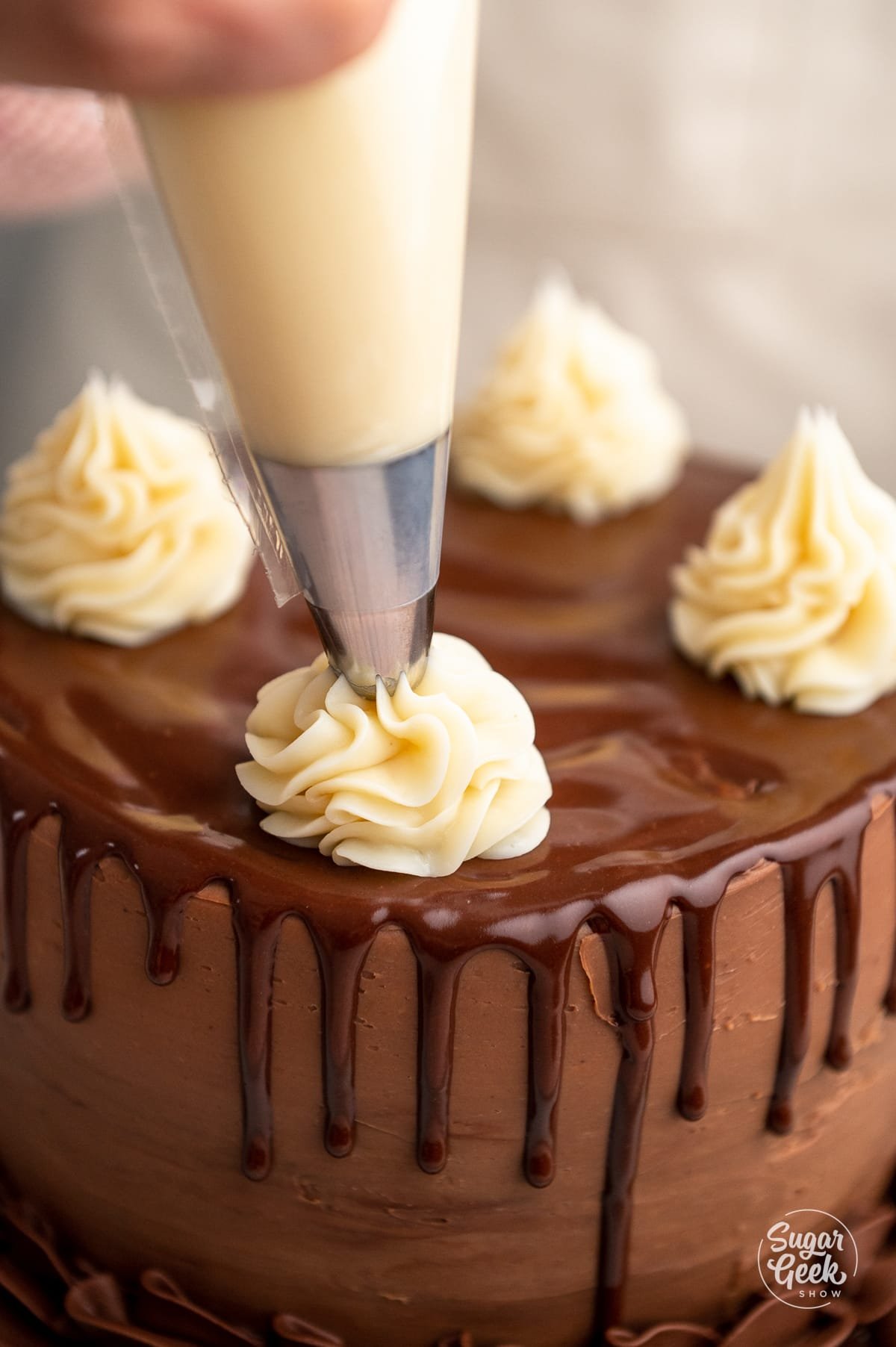
- Pipe dollops of ganache on top of a cake or cupcakes.
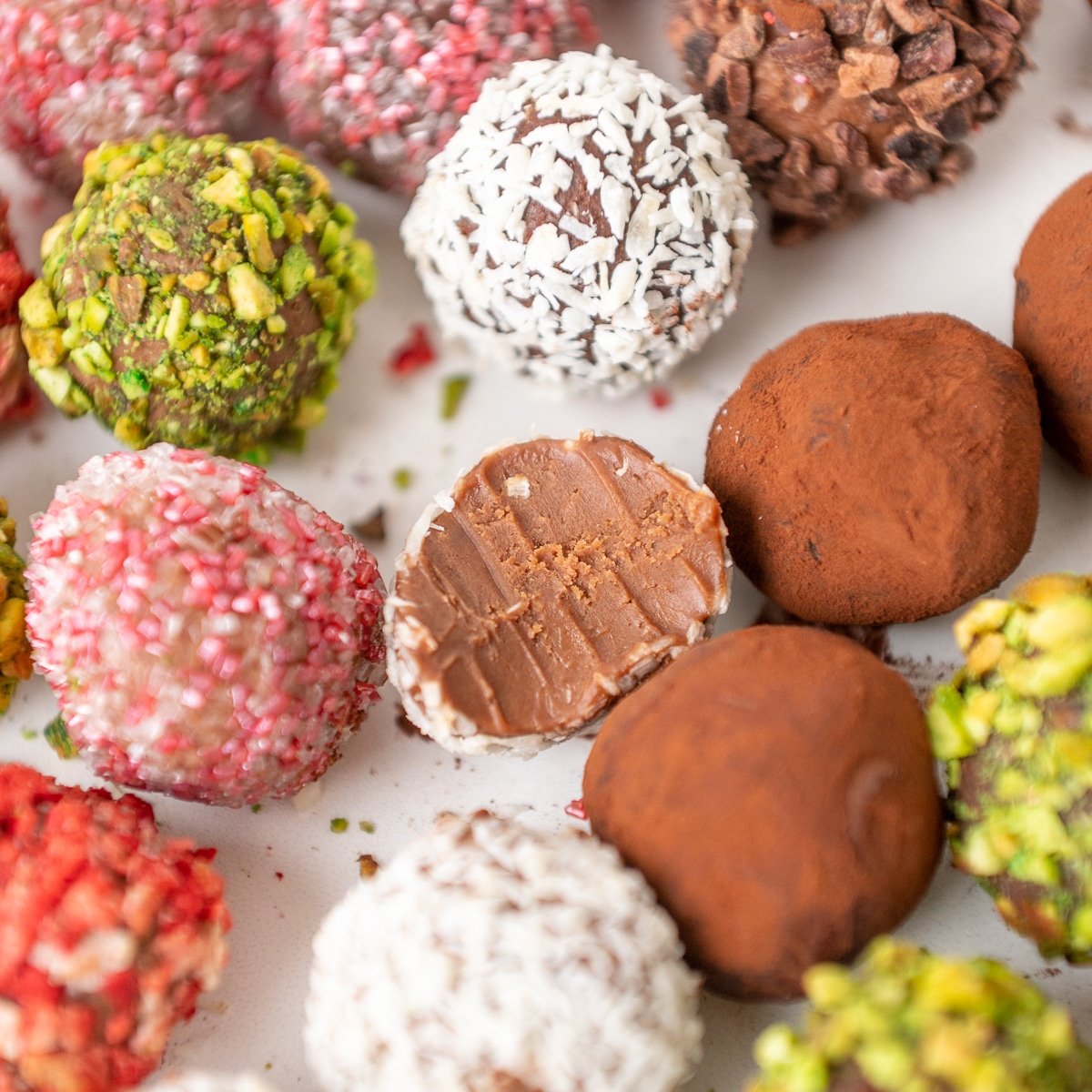
- Roll ganache into balls and decorate with various toppings for truffles.
Chocolate Ganache Ratios
Depending on which chocolate ganache recipe you are following, you might use more or less chocolate and cream. The "ratios" refer to the ratio of chocolate and cream that you use. The first number refers to the amount of chocolate, the second is the amount of cream. Different ratios will create a softer or firmer ganache.
IMPORTANT TIP: The brand of chocolate that you use matters, as each chocolate has a different amount of cocoa and cocoa butter inside. I'm using Guittard chocolate for these ratios, but it may vary if you're using a different brand. If you have another favorite chocolate, start with these ratios and add more cream or chocolate as needed until you get your perfect consistency.
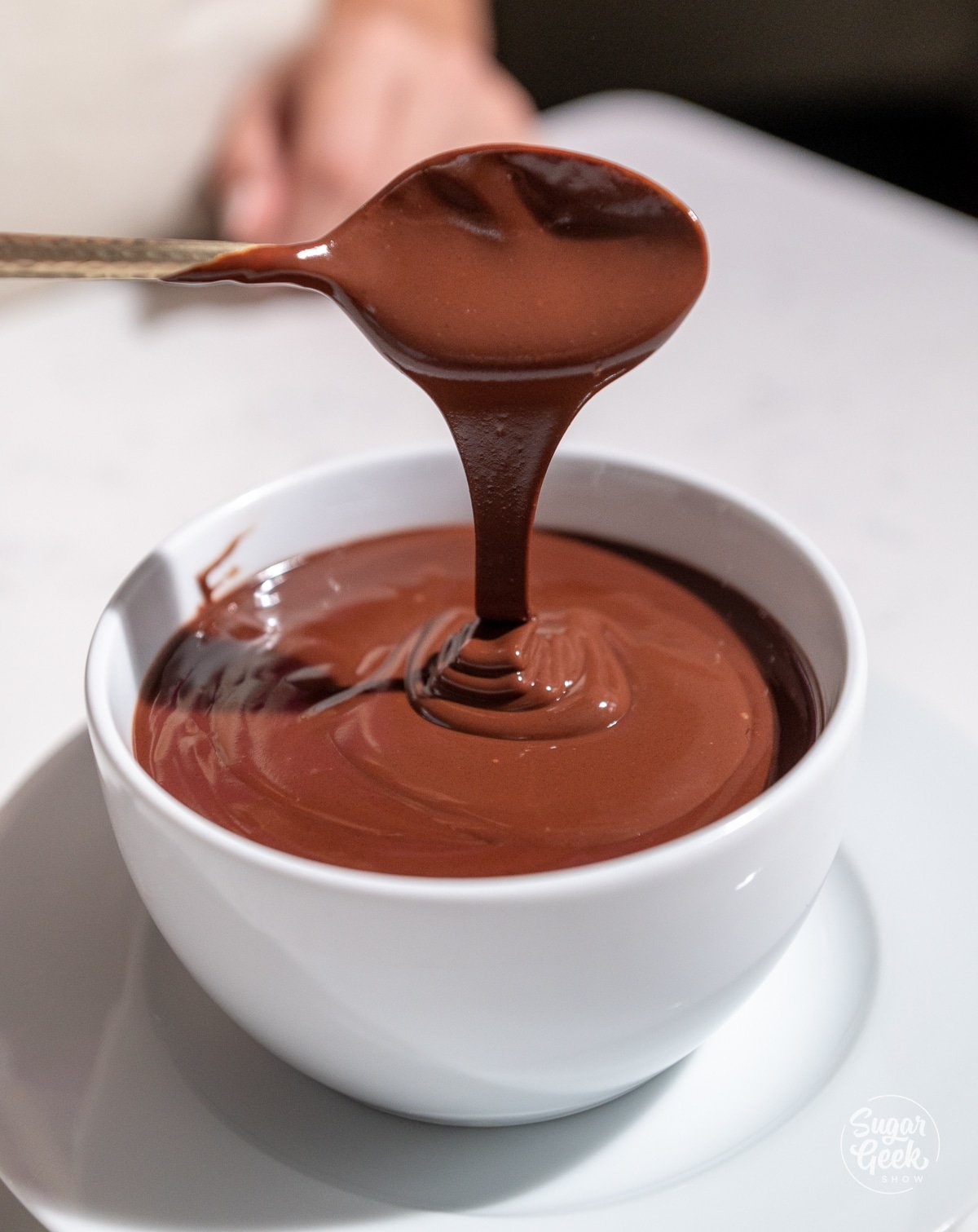
Dark Chocolate Ganache Drip Ratio - 1:1
- A 1:1 ratio is one part chocolate and one part cream (equal parts chocolate and cream) are typically used for very soft frostings, a chocolate drip, or for a glaze. For example, this would be 8 ounces of chocolate and 8 ounces of cream.
- This soft ganache can also be whipped to make a whipped ganache frosting.
Dark Chocolate Ganache Frosting Ratio - 2:1
- A 2:1 ratio is two parts dark or semisweet chocolate and 1 part cream, so twice as much chocolate as cream. When it firms up at room temperature for a few hours, it's typically used for making truffles or a stiff chocolate ganache frosting. This would be 16 ounces of chocolate and 8 ounces of cream, or 32 ounces of chocolate and 16 ounces of cream.
- Pro-tip: Flavor your ganache by steeping herbs or spices in the cream. Tea makes for some excellent flavors in ganache like my rose chocolate truffle recipe.
Milk Chocolate Ganache Frosting Ratio - 2.5:1
- Milk chocolate has a 2.5 to 1 ratio meaning you multiply the amount of cream by 2.5, so 20 ounces of milk chocolate and 8 ounces of cream.
- Milk chocolate is great for making ganache but because it contains more sugar and milk solids, it is not as stable as dark chocolate. You will need to use a bit more chocolate for this ganache to set firm.
White Chocolate Ganache Frosting Ratio - 3:1
- White chocolate doesn't contain any cocoa to help it set, only cocoa butter so you need to use a lot more chocolate to get it to set properly. I use a 3:1 ratio but I know some people go as high as 4:1.
- Did you know that white chocolate ganache doesn't sweat and is ideal to use in really hot environments like Florida, the Caribbean, and Texas?
Chocolate Ganache Temperatures
Warm Ganache: The temperature of your chocolate ganache also matters. When your chocolate ganache is first made and still warm, it is very liquid. This is the ideal format for glazing, making drip cakes, or using on top of ice cream.
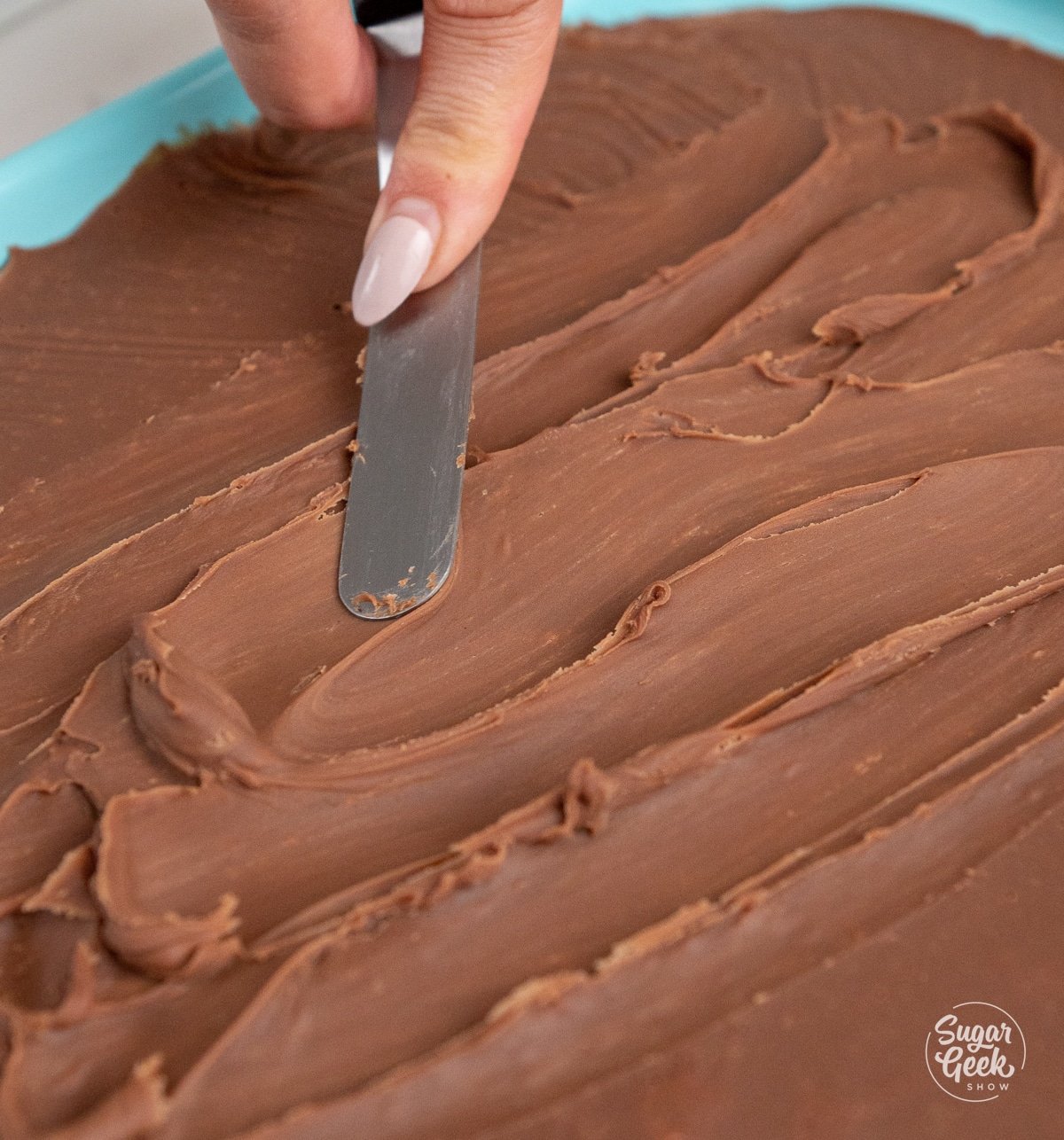
Cooled Ganache: Letting chocolate ganache sit at room temperature for a few hours allows the chocolate to cool down and become semi-solid once again. This sort of half-set stage is what I call the peanut butter consistency stage and is ideal for frosting, using it as a cake filling, or rolling into truffles. If your chocolate ganache is too cold, it can become too solid and difficult to spread. You can always microwave it for a few seconds to get it back to that peanut butter consistency.
FAQ and Problem-Solving
If you have any lumps you can re-heat the whole thing in the microwave for 30-second increments until it's smooth or you can use an immersion blender to make it super creamy.
If your ganache is breaking (oil separating from the chocolate) you can whisk in a tablespoon of warm water or cream. Keep adding a tablespoon at a time until it comes together.
Ganache can get grainy from whisking when the cream is too hot. Always let your chocolate/cream stand for 5 minutes before whisking. If your ganache is grainy, just re-melt the whole thing over a double boiler and let it re-set. If you don't re-melt it, the ganache will have a very bad mouthfeel.
If your ganache is too thin and isn't setting, add some more melted chocolate and whisk to combine. I would start with 2 ounces and see where you're at before adding more to avoid making the ganache too stiff. If your ganache becomes too stiff you can add 1 ounce of warm cream to loosen it up.
Ganache can be left at room temperature for 48 hours, refrigerated for 1 week, or frozen for 6 months. Warm the ganache up in the microwave in 15-second bursts or let it come to room temperature naturally.
Related Recipes
Recipe
Ingredients
Firm Setting Ganache 2:1
- 16 ounces dark or semi-sweet chocolate
- 8 ounces heavy whipping cream
- ¼ teaspoons salt
- 1 teaspoon vanilla extract or any other extract
Soft Ganache Frosting 1:1
- 8 ounces 60% high quality chocolate Such as callebaut - about $8/lb
- 8 ounces heavy whipping cream
- ¼ teaspoon salt
- ½ teaspoon vanilla extract
Soft White Chocolate Ganache 3:1
- 18 ounces white chocolate
- 6 ounces heavy whipping cream
- ¼ teaspoon salt
Soft Milk Chocolate Ganache 2.5:1
- 13 ounces milk chocolate
- 5 ounces heavy whipping cream
- ¼ teaspoon salt
Instructions
- IMPORTANT NOTES: Ganache ratios change depending on how you’re going to use them, and the type of chocolate you're using. I'm using Guittard chocolate for these ratios, if you’re using a different brand and it’s not as thick or thin as you want it, you may have to add more cream or chocolate. The darker the chocolate and the more cocoa %, the firmer it will set.Using a scale is recommended for accuracy and to ensure your ganache turns out.
- Measure out the chocolate with a food scale and chop it into fine pieces so that it melts more easily. Place the chocolate in a medium heatproof bowl.
Making Chocolate Ganache
- Heat the cream on the stovetop in a small saucepan until steam just begins to rise from the surface. Whisk occasionally to prevent burning and don't walk away or your cream could boil over.
- Pour the hot cream over the chopped chocolate and push the chocolate down so it's all under the surface of the cream. Let the mixture of chocolate and cream sit for 5 minutes.
- Whisk the cream and chocolate together until it's smooth. Start with small circles in the center until the chocolate and cream start creating an emulsion.
- If you have lumps or un-melted chocolate you can use an immersion blender to make your ganache super creamy and lump-free.
- Use the warm ganache for piping and drizzling, or pour it into a baking sheet pan. I cool mine to 90ºF before doing the drip for a cake so it doesn't run too much down the size of the cake. For best results always drip on a cold cake.
- Cover the ganache with plastic wrap touching the top and set it aside to rest at room temperature for about 4 hours or overnight. If you don't do this crusty film can form on the surface.
- When the ganache reaches "peanut butter consistency" it is ready to use for frosting cakes, piping, or forming into truffles.
- Store leftover ganache at room temperature for up to 48 hours, in the fridge for up to 1 week, or seal it in an airtight container and freeze for 6 months.

Cynthia Marso says
I am rating the recipe on your very helpful video. I am going to buy a scale, dark chocolate and cream to try it all out. Your video was excellent! Thanks
NS says
Hiya, new to ganache and really really hoping for some help. I am baking a kids birthday cake (for 60 ppls - eekkks!!). It’s chocolate with buttercream filling and want to use ganache coating under fondant.
1. I found callebaut, but what cocoa solid % should I be using? 54, 70??? For best tasting, texture and not too bitter for kids?
2. What ratio for that % mass please?
Pls pls help!! I’ve spent hours pouring online but can’t find the ans anywhere!
The Sugar Geek Show says
If you've read the blog post that should be all the info you need. Semi-sweet or dark chocolate frosting. Second paragraph in 🙂 54% is totally fine.
Bonnie says
How much white chocolate ganache would I need to drip and cover the top of an 8" cake?
The Sugar Geek Show says
It depends, I use between 4oz and 6oz
Lori Carlson says
What ratio do you use when making like frosting on cupcakes in photo. How long does it have to cool to set up. I think I was impatient and I cooled a bit over ice, frosting got really hard even at room temp. Has great flavor with high quality chocolate.
The Sugar Geek Show says
For a softer ganache you can do 1:1, it will take longer to set up but will stay softer. I leave mine out at room temp and pour into a shallow pan to help it cool faster
kelisha says
Hi, i have found your ganache recipe for this one and water. If i use the 3:1 ratio for white chocolate would it 3:0.5 as im using water instead of the cream, so, 300g white chocolate to 50g water?
The Sugar Geek Show says
Ganache is for frosting a cake, water ganache is for a drip 🙂
Kim says
Hello Liz! If I am making firm setting ganache to fill and cover the cake to be used under fondant, how many days in advance can I do this before customer pick up? Will the fondant protect the ganache? Would I have to refrigerate the cake and if so, for how long? I usually fill and crumbcoat my cakes 3 days in advance using buttercream, final b/c coat 2 days in advance, final decorations/stack tiers 1 day in advance then fridge overnight before transport the day its due. May I use the same timeline for ganache? Thanks!
Harriet says
Wahhhhhh! We moved from Seattle to Florida for work. I miss WINCO almost as much as my kids! I think I brought with me 5 lbs of their 64% coins with us. Can't find those anywhere here in St Pete/Tampa ? I also miss Cash & Carry (United Grocer's, Smart Foods...whatever they call themselves this year). That's where a homemaker has access to all sizes of baking cups, cake fillings, best rubber spatulas, other baking utensils. Nothing like them out here. :o(
Thank you for such a complete tutorial!
Pri says
Waiting for your reply ! It’s getting set but I don’t know will it result in frosting ganache.
Do I need to add more chocolate to bring it to 2 : 1 ratio for the kind of chocolate I use
Pri says
Okay ! Thanks for the informations.
Today I’m using Guittard semi sweet chocolate wafers (55% cacao) for my ganache. It’s setting and fingers crossed ?? I used your frosting ganache which is 8oz heavy whipping cream with 8oz high quality chocolate since it has 55%, I assumed it should suit this ratio
Am I right with this chocolate ? If not , what should I do ?
Pri says
Hi Liz ,
I’m a newbie to ganache and I’m damn confused about the difference between firm setting and frosting ganache. What’s their purpose ? Also
I’m about to buy chocolates for making ganache. Do you use Guittard semi sweet dark chocolate wafers (couverture 66%) or Guittard A’ peels dark or semi-sweet chocolate here in the recipe ?
The Sugar Geek Show says
Firm setting just means it's really firm at room temperature, like the consistency of a chocolate truffle. Frosting is really soft, even at room temperature, it never gets hard. I only would use frosting ganache on cupcakes or a cake that is one layer. All my ganache is firm setting. I use guittard a'peels dark or semi sweet
Christina says
When making the lumberjack cake, what ratio is the ganache you used for the outside of the cake to look like bark?!
I’m making that for our babyshower this weekend and I don’t want to screw up the ganache portion. I’m already nervous about the cake because I generally only ever do cupcakes lol it’s going to be a miracle as it is...
The Sugar Geek Show says
The ganache is the recipe on my site. I didn't change the proportions at all 🙂
Sophy H says
Hi there, so what's the ganache ratio for callebaut dark chocolate (54%)? Ganache would be used for under fondant. For like a 3D cake.
Sophy says
Hi there, so what's the ganache ratio for callebaut dark chocolate (54%)? Ganache would be used for under fondant. For like a 3D cake.
The Sugar Geek Show says
I would go 3:1
Sophy H says
Thank you!
Sophy H says
Thank you.
Sally Squire says
What a helpful video. Want to run out to winco right now and start making and playing with ganache. I have made the mistake of using a measuring cup with my chocolate so I'm glad I found you. I'm a real novice but love baking.
The Sugar Geek Show says
We've all been there! Ps, WINCO is aweeeeesome!!!
Elaine says
Just want to confirm that you are weighing your cream, not measuring in fluid ounces, when you direct to weigh the ingredients? Thank you!
The Sugar Geek Show says
Everything is by weight
Dana says
Could you please clairify this in the recipe and in your video tutorial? You show that you are weighing the chocolate on the scale, but 8oz of cream is just already in the pot. I am about the make the ganache and was measuring fluid ounces and by chance came across this question in the comments.
Very informative website!
Grace says
When I use the calculator for the amounts of chocolate and cream, for the frosting recipe, it calculates a
1:1 ration.
Your tutorial says a 2:1 ratio for frosting
Which one do I use?
The Sugar Geek Show says
It should be 2:1