

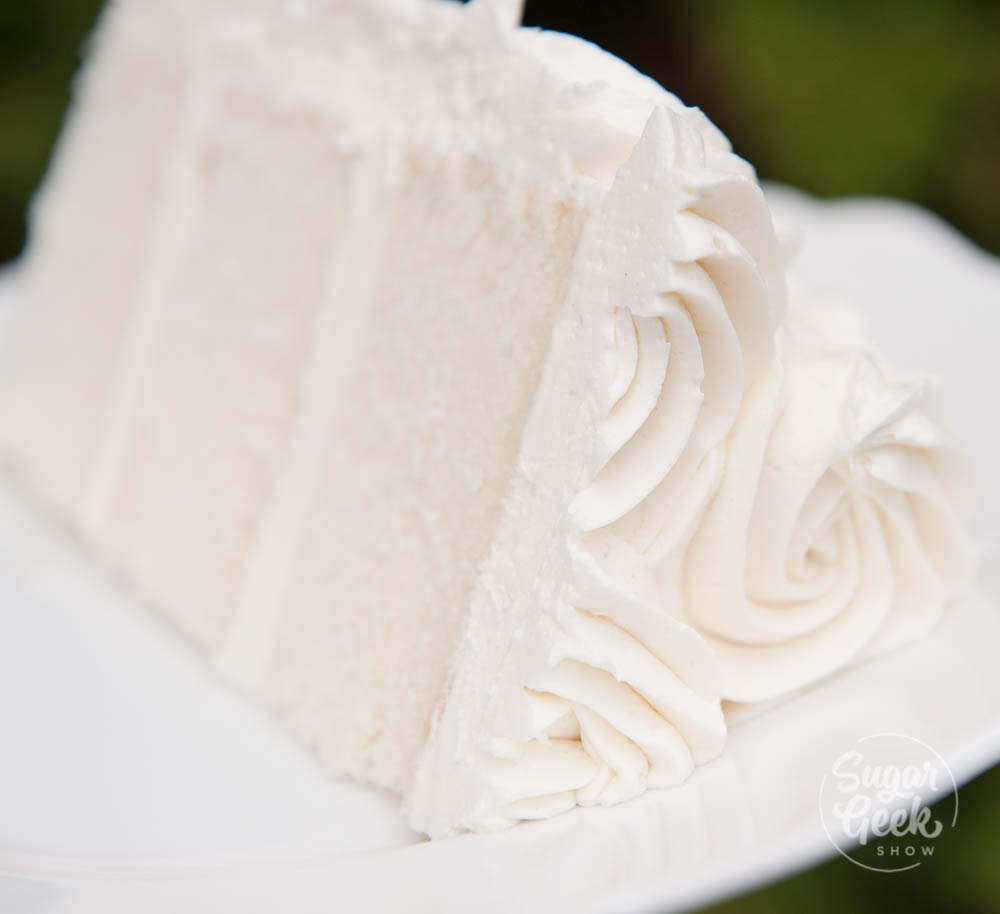
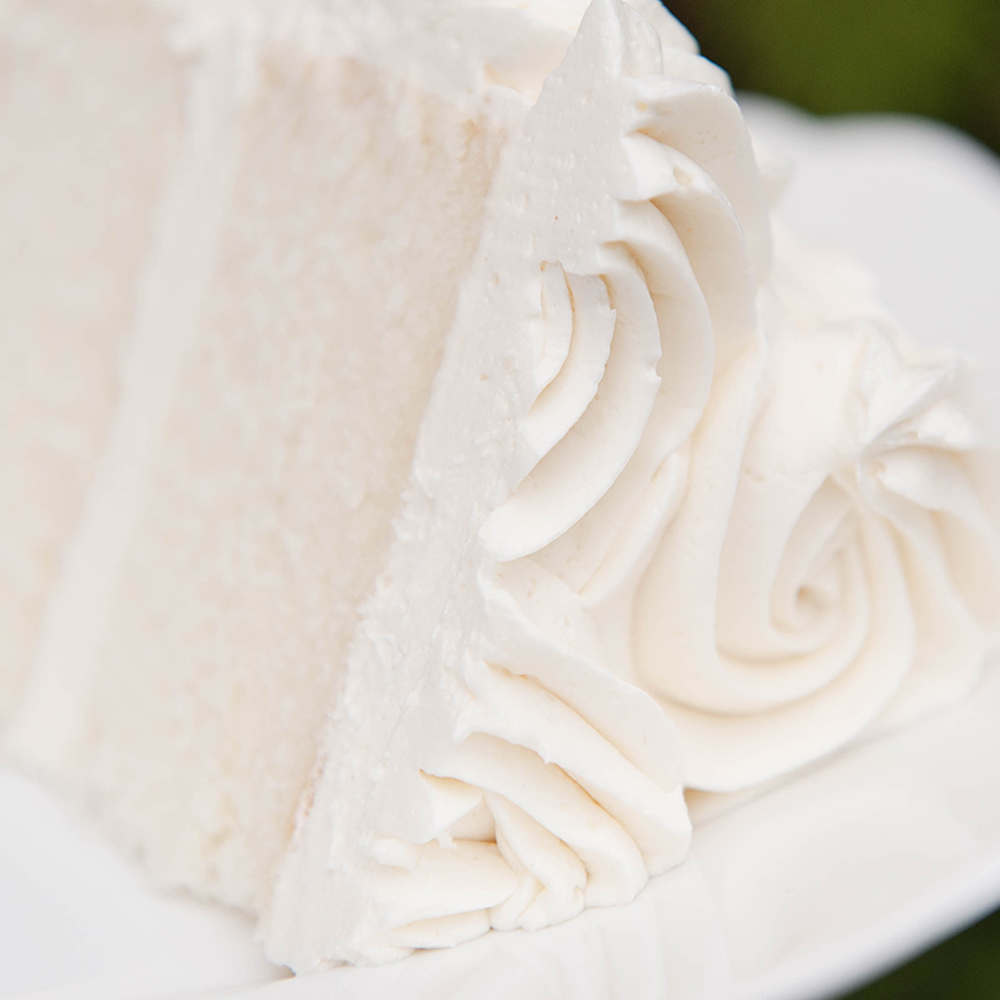
Ermine frosting (also called roux frosting or boiled milk frosting) is made by cooking flour and sugar with milk to make a sweet paste. This paste is then whipped into softened butter until light and fluffy. Vanilla and salt is added for flavoring. It's especially good on my easy chocolate cake recipe or red velvet cake.
Quick Glance: Ermine Frosting
- Recipe Name: Ermine Frosting
- Why You'll Love It: Lighter and less sweet than any buttercream you've ever had, with a silky whipped-cream texture that's completely egg-free
- Time and Difficulty: 40 minutes, including cooling time / Easy
- Main Ingredients: Flour, granulated sugar, whole milk, unsalted butter, vanilla
- Method: Cook flour and milk into a thick roux, cool completely, then whip into butter
- Texture and Flavor: Silky smooth and cloud-like with a delicate vanilla sweetness and absolutely no flour taste
- Quick Tip: The flour mixture must be completely cold before it goes into the butter. Even slightly warm will melt the butter and the whole frosting will collapse
This might sound like a bizarre process (it did to me at first) but it's actually a delicious frosting! Ermine frosting reminds me a lot of that frosting that you find in a ding dong or twinkie. Very light and almost like whipped cream.
This frosting does not have eggs in it so it's a fantastic alternative to Swiss Meringue Buttercream if you want a light frosting but can't have eggs.
What Makes This Ermine Frosting So Good
Ermine frosting is structurally different from every other buttercream, and understanding why helps you make it successfully every time.
Most frostings get their body from powdered sugar, cooked egg whites, or egg yolks. Ermine frosting uses a cooked starch gel instead. When flour and sugar are heated with milk, the starch granules in the flour absorb the liquid and swell through a process called gelatinization, forming a thick, stable paste. When that paste is whipped into softened butter, the starch gel acts as an emulsifier, binding the fat and liquid together into a smooth, cohesive frosting without any powdered sugar at all.
Toasting the flour dry in the pan for a couple of minutes before adding the milk does two things: it removes the raw flour taste that would otherwise come through in the finished frosting, and it partially breaks down the starch so the roux thickens evenly rather than clumping.
Because there are no eggs in this recipe, there is no risk of curdling, no food safety concerns around raw whites, and no need for a candy thermometer. The only thing that can go wrong is adding the roux to the butter before it's fully cooled, which melts the fat and breaks the frosting. Get that one step right, and the rest takes care of itself.
Ermine frosting actually tastes really good! I admit making the roux did not seem very appetizing but after I gave it a taste, I could see why ermine frosting is the traditional frosting used with red velvet cake. It's so good!
Ermine Frosting Ingredients
The frosting is super smooth and creamy. A nice light vanilla flavor and no hint of a flour taste. I promise.
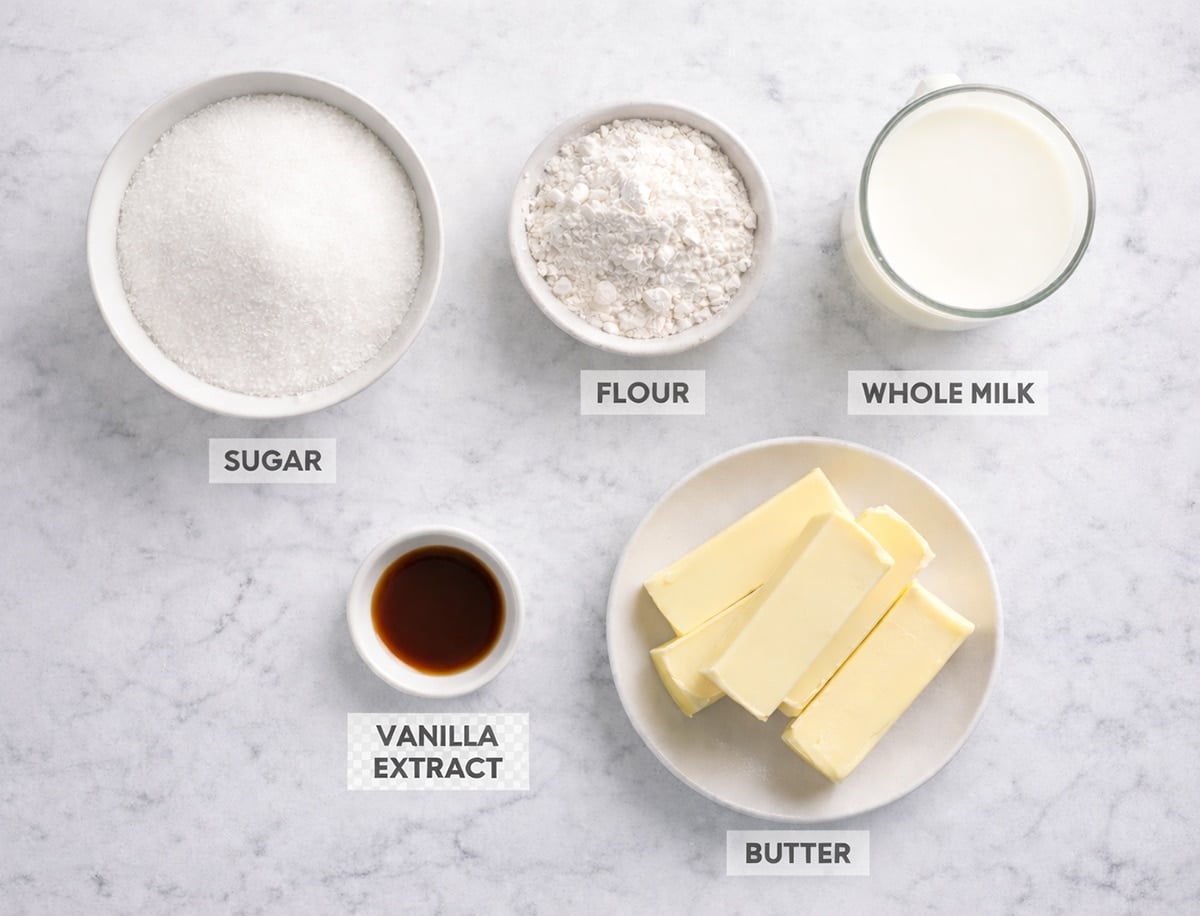
Granulated sugar provides sweetness and also helps thicken the roux when cooked with the flour and milk. Because the sugar is cooked into a paste rather than added as powdered sugar, the finished frosting is significantly less sweet than American buttercream. Do not substitute powdered sugar here.
All-purpose flour is the thickening agent that makes ermine frosting unique. The starch in the flour gelatinizes when cooked with the milk, creating the paste that gives this frosting its structure. Measure by weight for the most consistent results.
Whole milk hydrates the flour and sugar into a smooth roux. Whole milk is recommended because the higher fat content produces a richer, creamier finished frosting. You can substitute 2% milk but the texture will be slightly less silky. Do not use non-dairy milk alternatives as they behave differently when heated with starch.
Unsalted butter is whipped into the cooled roux to create the final frosting. It must be fully softened to room temperature so it whips up light and fluffy before the roux goes in. Unsalted butter is used so the salt level can be controlled. For a slightly richer flavor, European-style butter with a higher fat content works beautifully here.
Vanilla extract is the primary flavor in this frosting. Use a high-quality pure vanilla extract or vanilla bean paste for the best result. You can also substitute almond extract, lemon emulsion, or any other flavoring in the same amount.
Salt balances the sweetness and deepens the overall flavor. It should not be detectable as saltiness, only as a rounding out of the vanilla and butter.
How do you make ermine frosting?
Making ermine frosting is actually pretty simple.
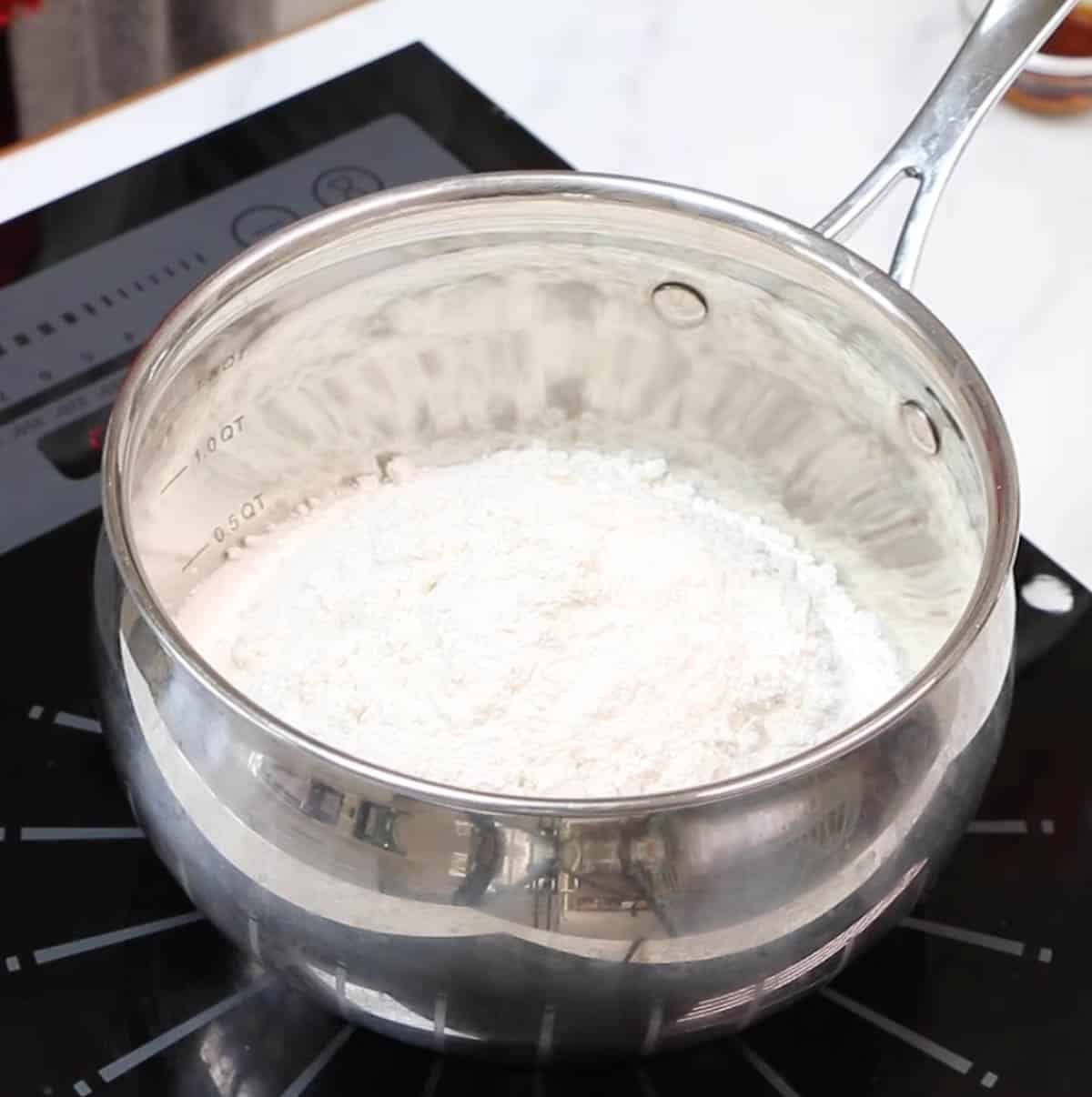
- Add the flour and sugar to a medium saucepan over medium heat. Whisk together and cook for 2 minutes, stirring constantly, until the mixture smells slightly nutty and looks dry and sandy. Watch carefully so it doesn't burn - you want lightly toasted, not browned.
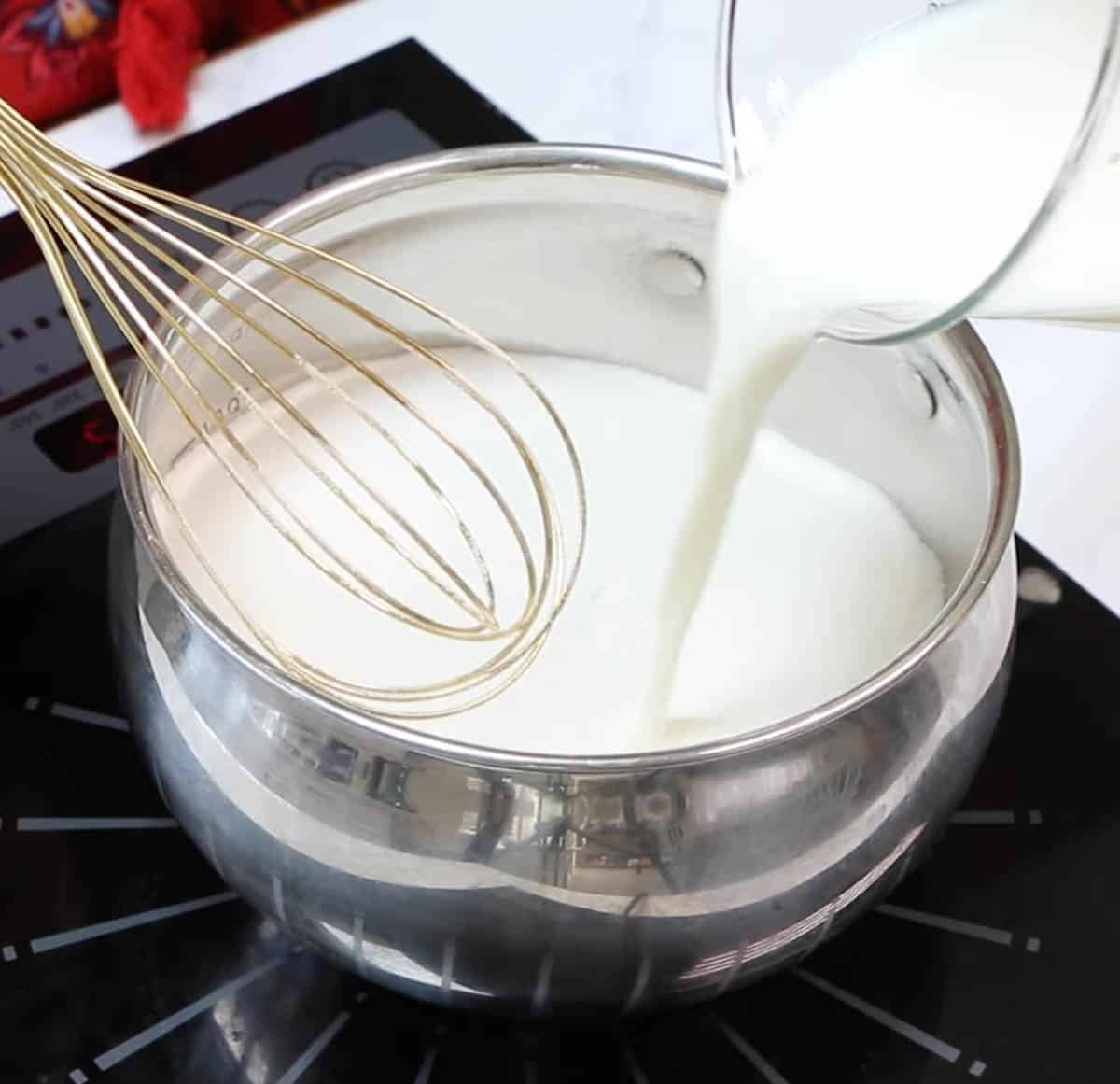
- Reduce the heat to medium and slowly pour in the milk in a thin, steady stream while whisking constantly. The mixture will look thin at first. Keep whisking and it will begin to thicken.
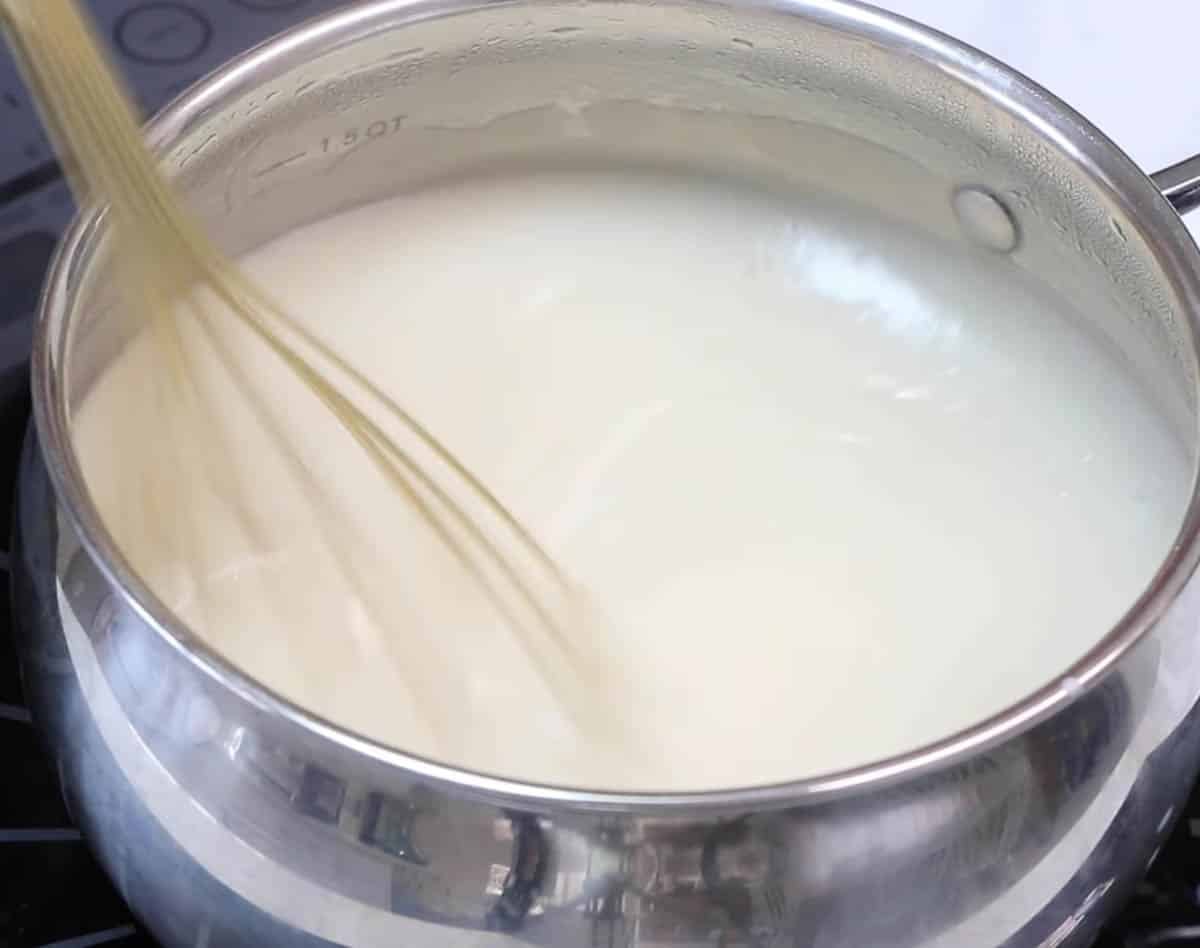
- Increase to medium-high heat and bring to a simmer, whisking continuously. Continue cooking for one more minute after it reaches a simmer. The finished roux should be very thick and pudding-like - it should hold a shape when you drag the whisk through it and fall off the whisk in slow, heavy ribbons.
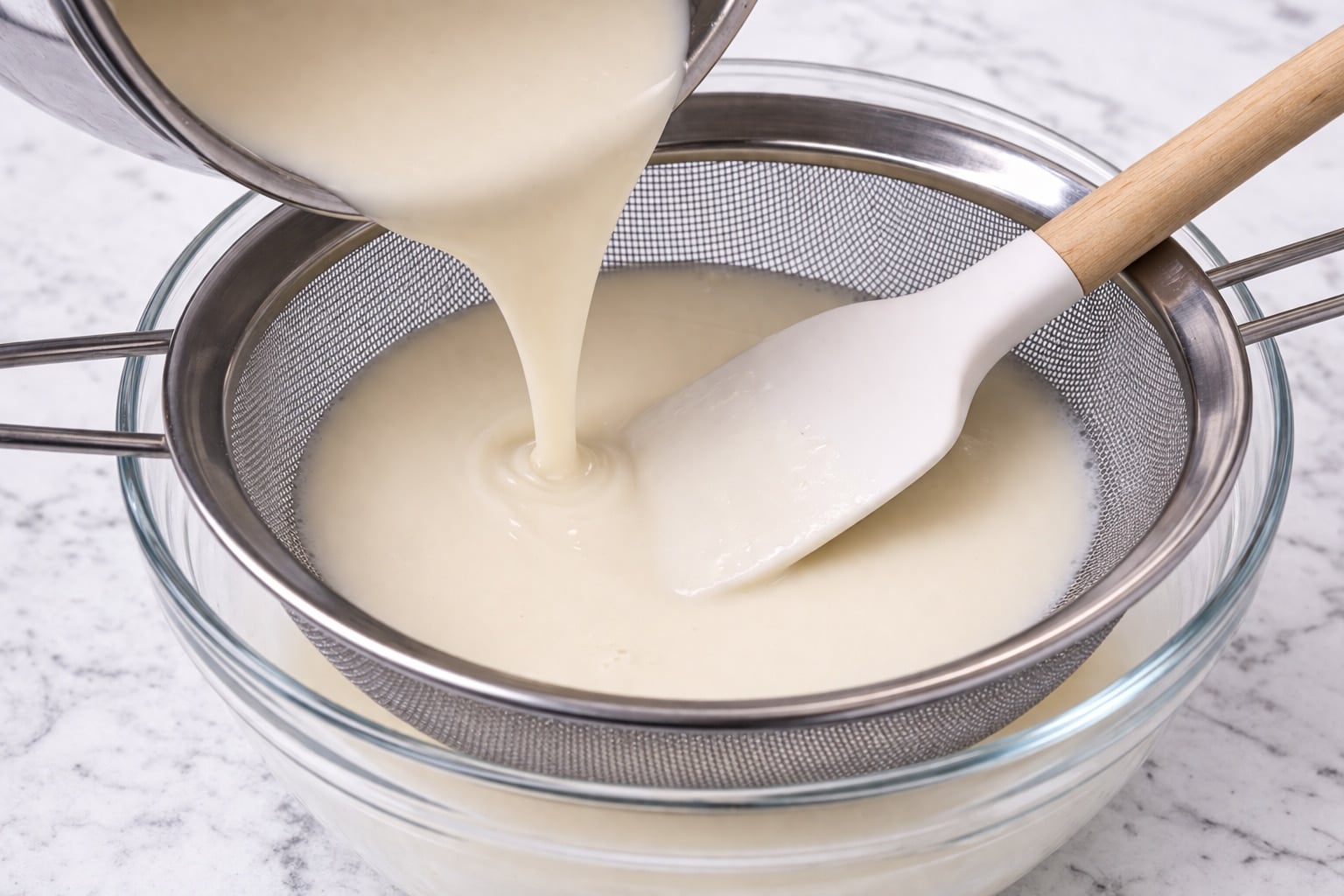
- If your roux has any lumps, strain it through a fine mesh sieve into a heatproof bowl now, pressing it through with a spatula.
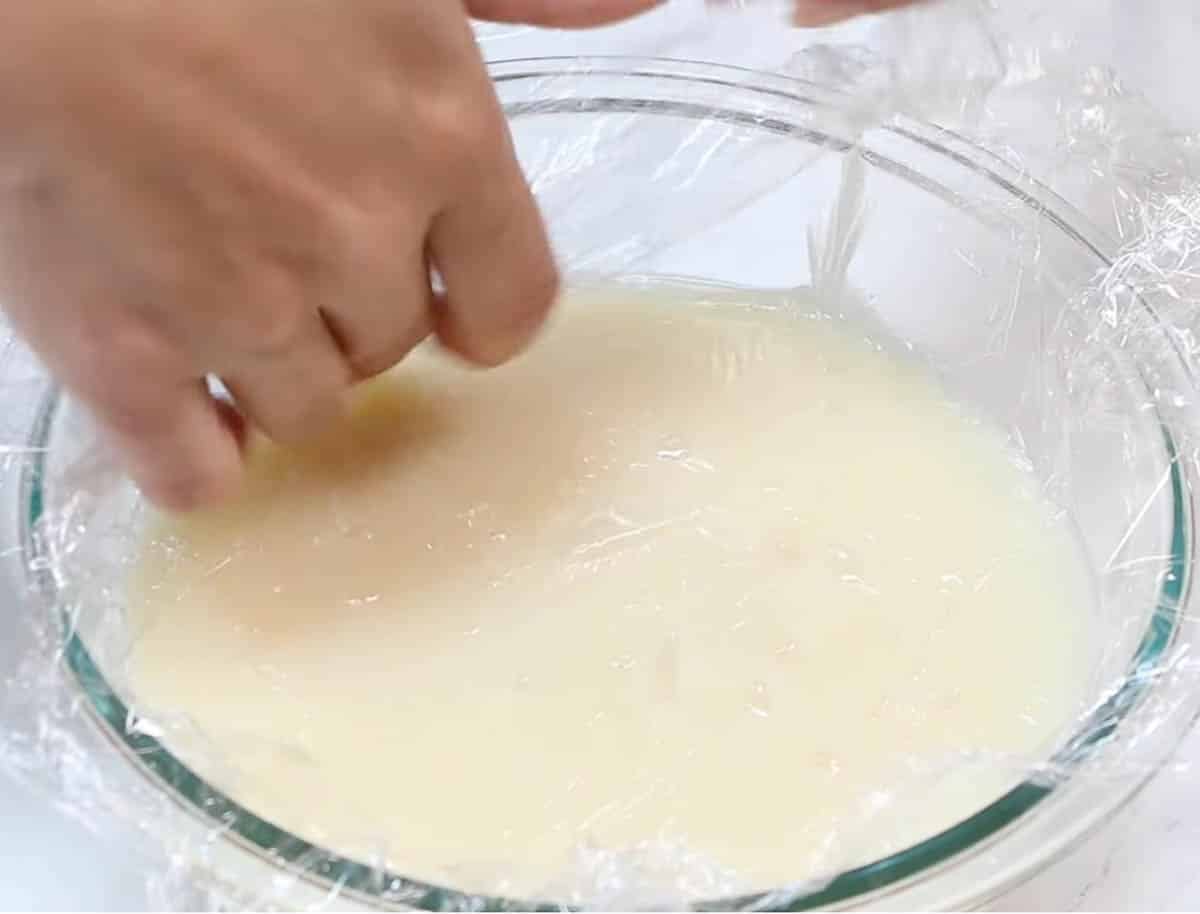
- Press a sheet of plastic wrap directly onto the surface of the roux so no air touches it. This prevents a skin from forming. Refrigerate until completely cold, at least 2 hours or overnight. You can also spread it onto a sheet pan, cover with plastic, and freeze for 30 minutes if you're short on time. The roux must be fully cold - not cool, not slightly warm, but cold all the way through.
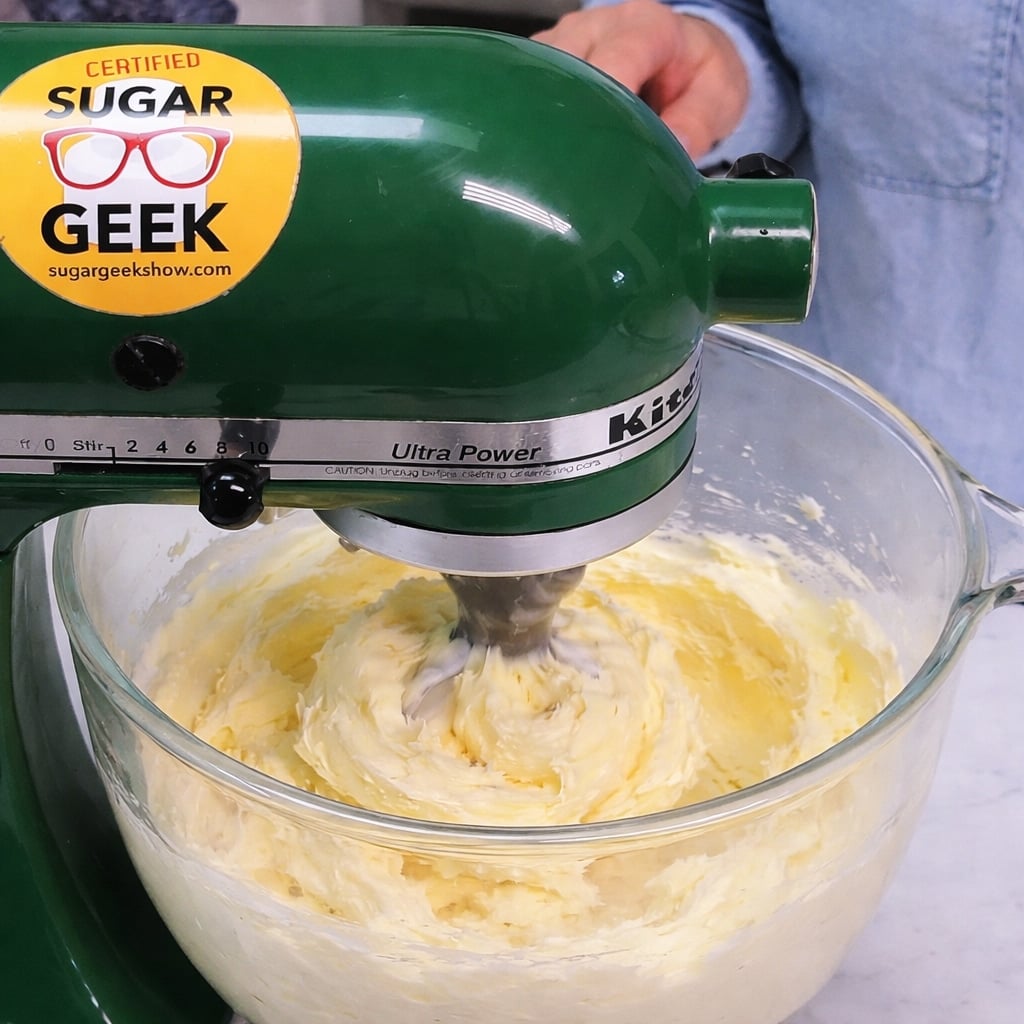
- Add the softened butter to the bowl of your stand mixer with the whisk attachment. Whip on high for 2 to 3 minutes until the butter is very pale, light, and fluffy. It should look almost white and increase noticeably in volume.
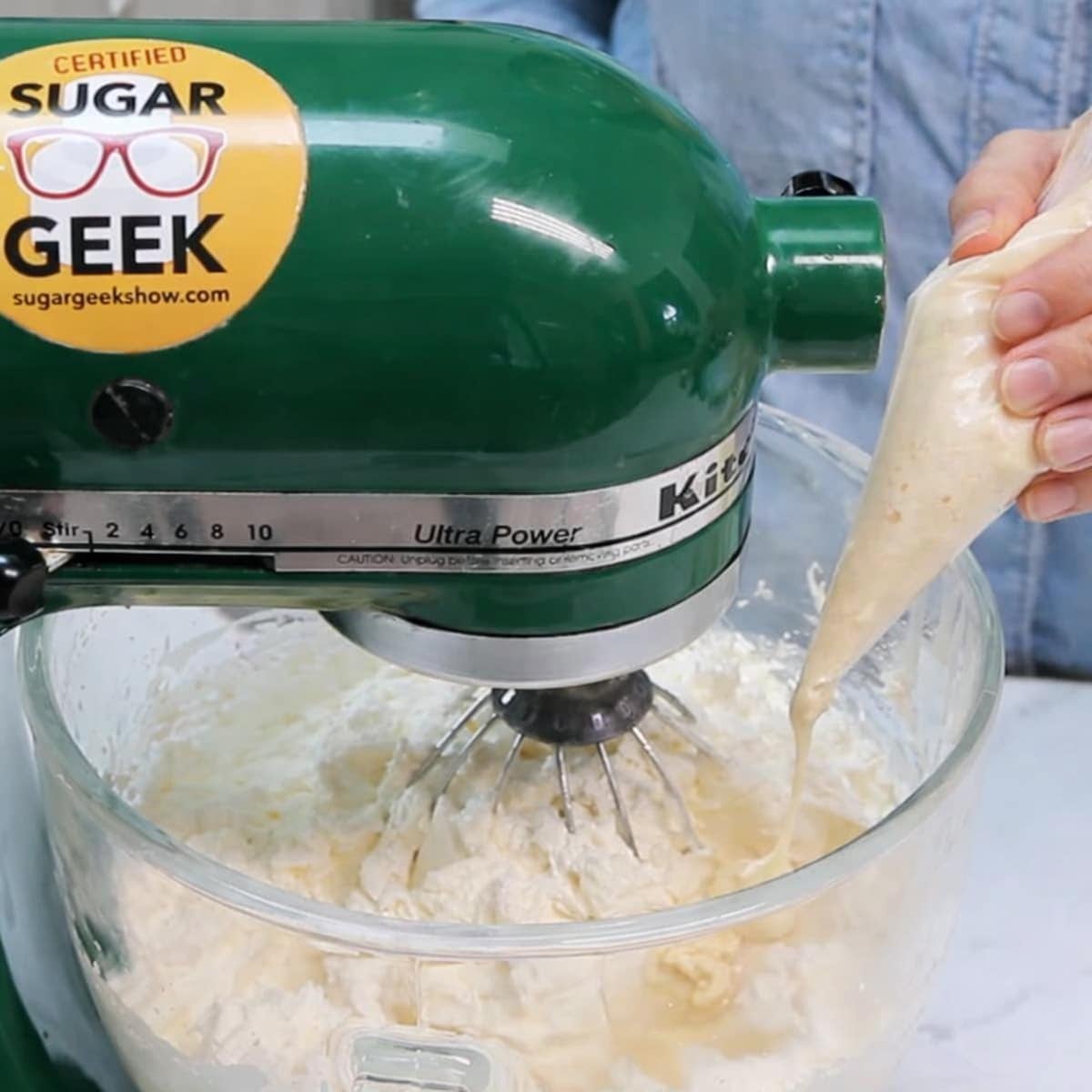
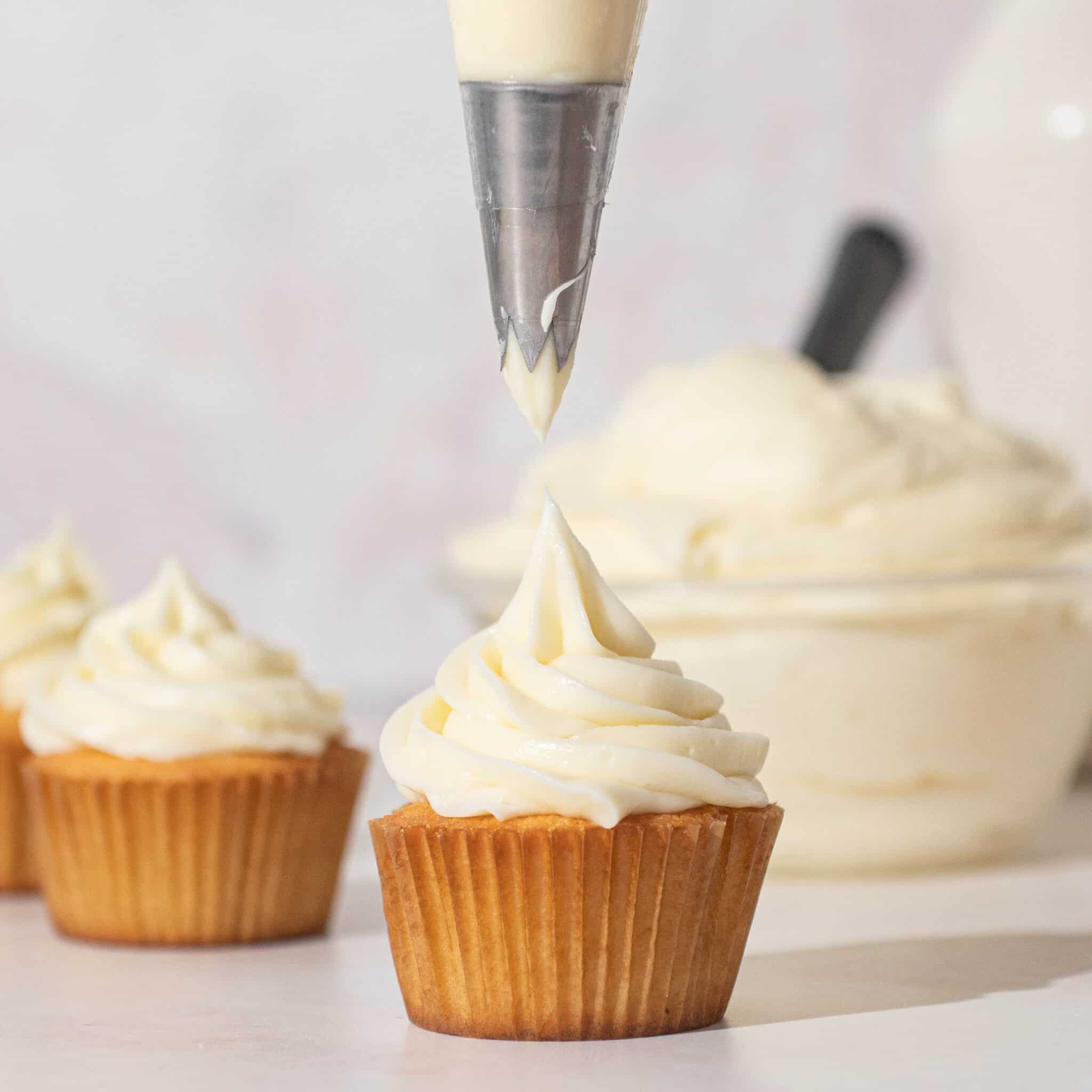
- Transfer the cold roux into a piping bag. With the mixer running on medium, slowly pipe the roux into the whipped butter a little at a time, waiting a few seconds between additions. Adding it slowly ensures the roux and butter emulsify smoothly rather than curdling.
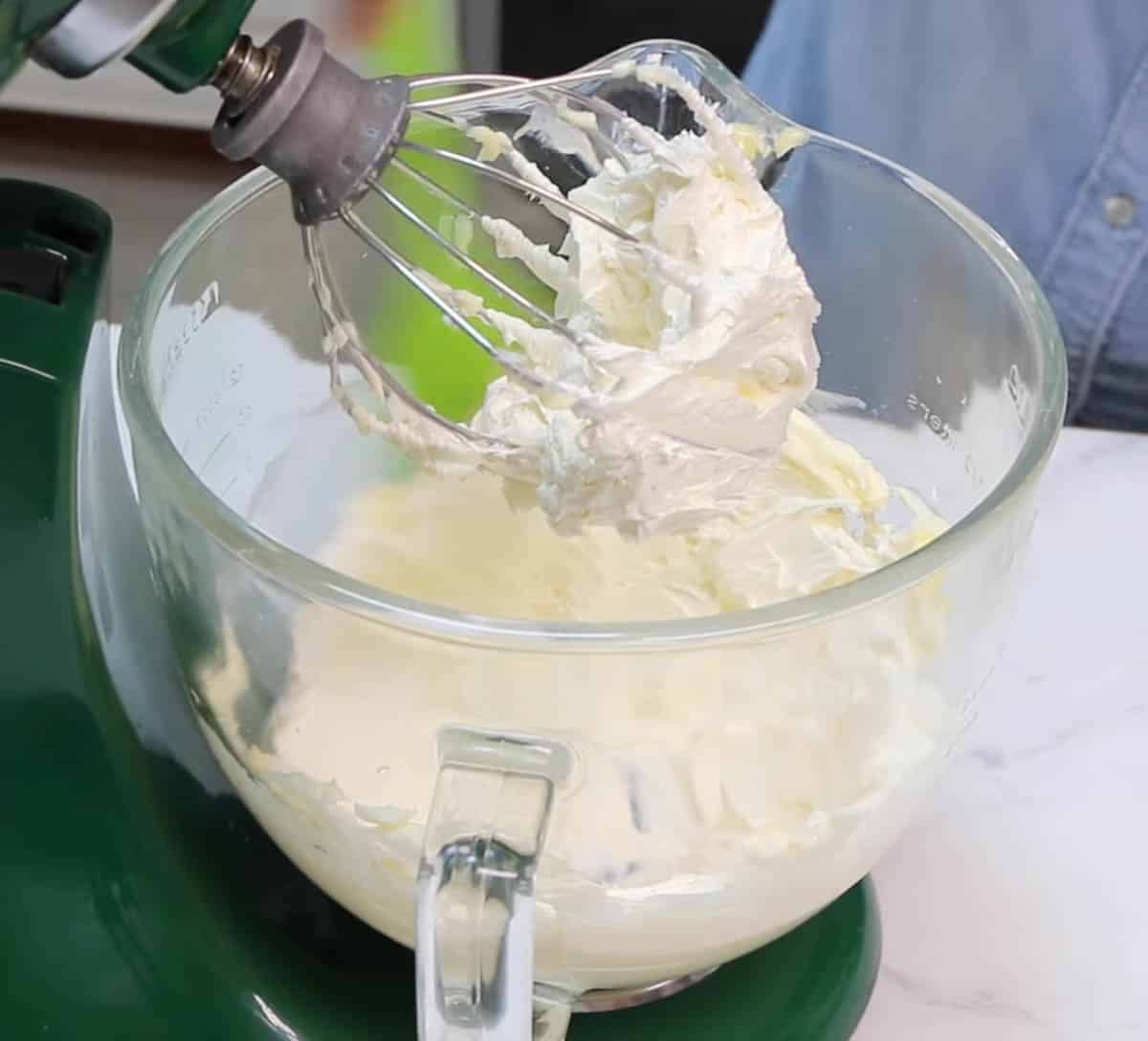
- Once all the roux is incorporated, add the vanilla and salt. Increase to high speed and whip for 1 to 2 more minutes until the frosting is very light, smooth, and fluffy. It should look like thick whipped cream and hold a soft peak.
EXPERT TIP: Ermine frosting is best used right after it's made. It sets as it sits and loses its light, creamy texture if left too long before using.
Common Ermine Frosting Problems To Avoid
Adding the roux before it's completely cold. This is the single most common reason ermine frosting fails. Even slightly warm roux will melt the butter and turn everything soupy. Be patient and let it chill fully in the refrigerator. If you're in a hurry, spread it thin on a sheet pan and freeze it.
Skipping the flour toasting step. Untoasted flour has a starchy, raw taste that will come through in the finished frosting. Two minutes of dry toasting in the pan completely eliminates this and is worth the extra step.
Adding the roux too fast. Dumping all the roux into the butter at once instead of adding it slowly almost always causes the frosting to break or look curdled. Pipe it in gradually with the mixer running for the smoothest result.
Trying to use ermine frosting under fondant. Ermine frosting is too soft to support the weight of fondant. It will compress and bulge under the fondant as it sits. Use it as a filling between cake layers or as a finish frosting, and choose a stiffer buttercream for any fondant-covered cakes.
Making it ahead and expecting it to keep. Ermine frosting does not hold well once made. The starch gel continues to firm up, and the texture becomes dense and less creamy within a few hours. Make the roux ahead of time and refrigerate it for up to a week, but whip the frosting fresh right before you need it.
Ermine Frosting FAQs
Ermine frosting tastes like a lighter, less sweet version of buttercream - closer to whipped cream than traditional frosting. There is no detectable flour taste when the roux is made correctly. The vanilla comes through cleanly and the overall flavor is delicate, creamy, and just barely sweet. It's the frosting that people who say they "don't like frosting" actually enjoy.
Both are lighter and less sweet than American buttercream, but they use completely different structures. Swiss meringue buttercream is built on cooked egg whites whipped into a stable foam, then finished with butter. Ermine frosting uses no eggs at all and gets its structure from a cooked flour and milk roux. Ermine frosting is simpler to make and has a slightly lighter, airier texture, while Swiss meringue buttercream is more stable and better suited for warm environments.
Yes. Because ermine frosting contains milk, it should not be left at room temperature for more than a couple of hours. Refrigerate any leftover frosting in an airtight container for up to one week, or freeze for up to three months. The roux base on its own can also be made ahead and refrigerated for up to a week - just whip it fresh into the butter when you're ready to use it. Bring a frosted cake out of the refrigerator one to two hours before serving so the frosting softens back to its best texture.
You can make the roux component up to a week ahead and store it refrigerated. However, the finished frosting is best used immediately after whipping. Once the roux and butter are combined, the frosting begins to firm up and lose its light, creamy consistency within a few hours. For the best results, make the roux in advance and whip the frosting fresh on the day you need it.
Graininess is usually caused by the sugar not fully dissolving during cooking. Make sure you whisk constantly while the roux cooks and allow it to reach a full simmer before removing from the heat. If graininess is still an issue, strain the roux through a fine mesh sieve before chilling. Graininess can also happen if the butter is too cold when the roux is added - always make sure the butter is fully softened to room temperature first.
Yes. Add gel food coloring in the final step after all the roux is incorporated. Use gel or paste colors rather than liquid since liquid can thin the frosting. Add a small amount at a time and mix on low until you reach the desired shade. Because the frosting is so light in color, it takes color easily and produces bright, clean shades.
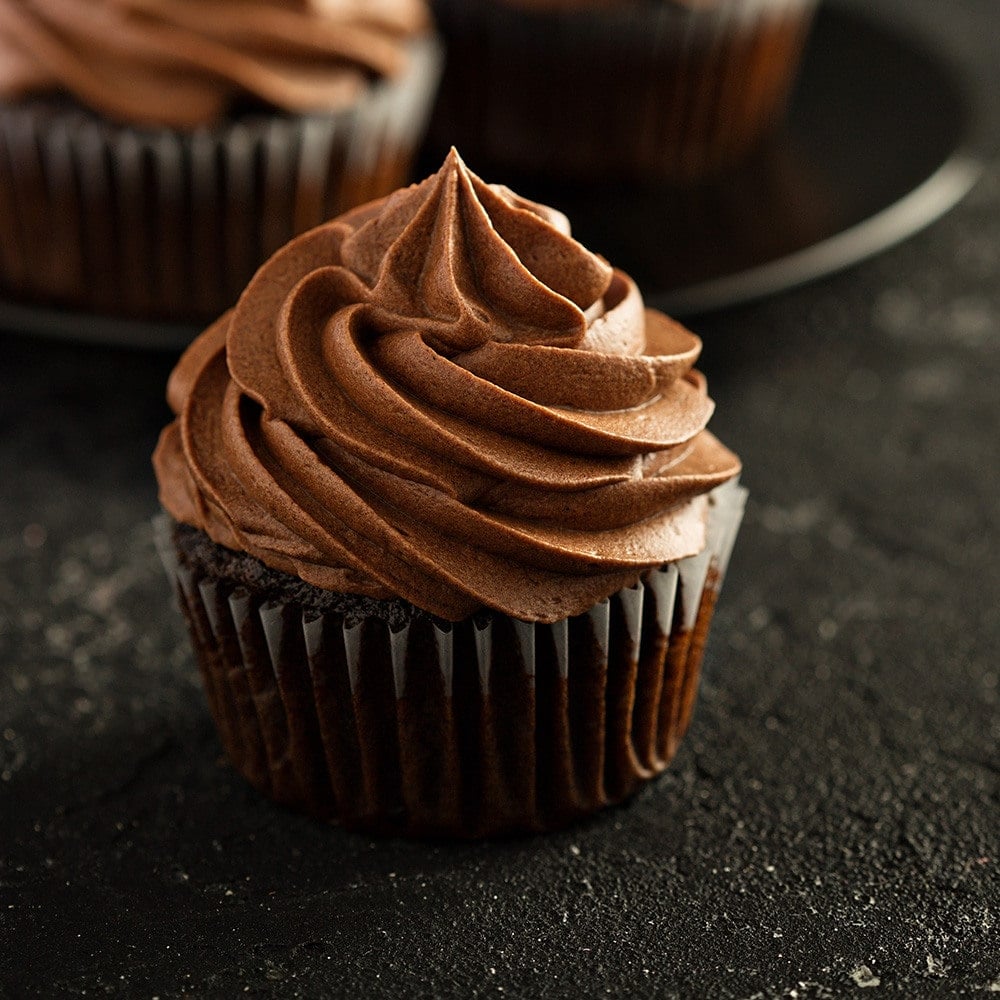
Yes. Once the frosting is fully whipped, add a quarter cup of sifted unsweetened cocoa powder and mix on low until fully incorporated. The cocoa will deepen the color and add a light chocolate flavor without significantly changing the texture.
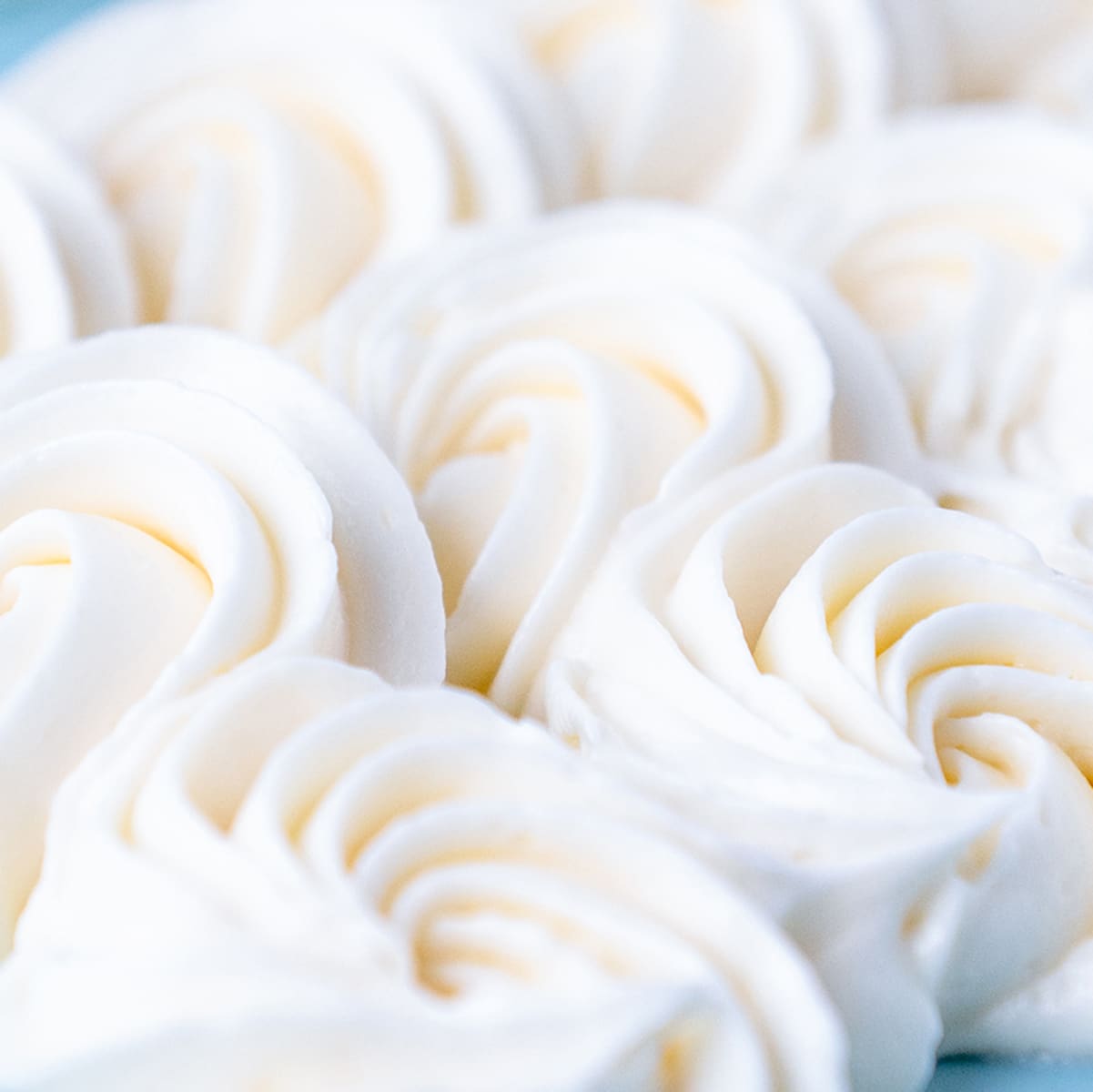
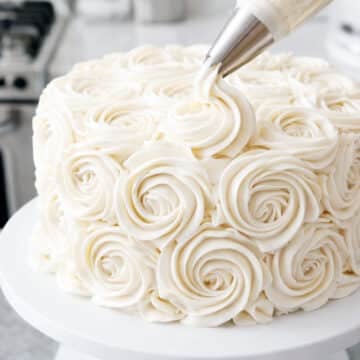
Yes, ermine frosting pipes well when used immediately after making. It holds swirls and rosettes cleanly with a piping bag and tip. Because it softens quickly at room temperature and doesn't hold up well over time, pipe decorations right before serving rather than hours in advance.
More Frosting Recipes To Try


Ready To Master Cake Decorating?
Join Sugar Geek University and learn professional techniques through detailed cake decorating courses, tutorials, and real kitchen demonstrations by
award-winning cake decorator, Liz Marek.

Recipe
Ingredients
Ermine Frosting Ingredients
- 14 ounces granulated sugar
- 3 ounces flour
- 16 ounces whole milk
- 16 ounces unsalted butter room temperature
- 2 teaspoons vanilla extract
- ¼ ounces salt
Instructions
Ermine Frosting Instructions
- Whisk together your flour and sugar in a medium saucepan over medium heat. Cook for about 2 minutes to toast the flour. Be careful not to burn it!
- Slowly add in your milk, whisk to combine, and bring your heat to medium-high. Bring the mixture to a simmer, whisk continuously until it is thick and pudding-like. Once it's simmering, cook for one minute more.
- (Optional) If your mixture has any lumps, place a colander on top of a heat-proof bowl and push your mixture through and into the bowl. Transfer the mixture into a heat-proof bowl. Cover the mixture with plastic wrap so that it is touching the surface without any air bubbles in between, this will prevent a skin from forming on the top of the mixture. Let cool in the refrigerator for a few hours or overnight. You can also transfer the mixture to a sheet pan, spread it out, cover it with plastic, and put it in the freezer for about 30 minutes to cool faster. Make sure the mixture is completely cool or it will melt your butter.
- Add your softened butter to the bowl of your stand mixer and whisk on high until very light and fluffy, about 2-3 minutes.
- Once the butter is fluffy, place the cooled flour mixture into a piping bag and slowly pipe it into your butter as your whip. Incorporating slowly ensures a smooth buttercream.
- Add in your vanilla and salt, then mix until everything is creamy. Use it to frost your cooled cake. This buttercream will set quickly, so it's best used immediately.
Video
Notes
- Toast the flour and sugar dry in the pan for 2 minutes before adding the milk. This removes the raw flour taste from the finished frosting.
- Whisk the milk in slowly and stir constantly to prevent lumps. If lumps form, strain the roux through a fine mesh sieve before chilling.
- Press plastic wrap directly onto the surface of the roux before refrigerating. This prevents a skin from forming on top.
- The roux must be completely cold before adding it to the butter. Even slightly warm will melt the butter and break the frosting.
- Make sure your butter is fully softened to room temperature before whipping. Cold butter will not whip up light and fluffy.
- Add the roux to the butter slowly using a piping bag with the mixer running. Adding it all at once can cause the frosting to curdle.
- Use ermine frosting immediately after making it. It sets as it sits and loses its light, creamy texture within a few hours.
- Do not use ermine frosting under fondant. It is too soft to support the weight and will compress and bulge.
- To make chocolate ermine frosting, whip in ¼ cup of sifted cocoa powder at the end.
- The roux can be made up to one week ahead and stored refrigerated. Whip fresh into butter the day you need it.



Ashley says
What did I do wrong? My frosting is kind of separated after I did the other steps?
Liz Marek says
Separated ermine usually means the roux was still a little warm or went in too fast. Make sure it's completely cold and pipe it in slowly while whipping. If you have more questions, come ask me in the Sugar Geeks community: https://community.raptive.com/sugargeeks
Autumn says
I recently tried this recipe for my red velvet cake, and the flavor was enjoyable! I want to share a quick tip to help others avoid my oversight. The recipe defaults to a 50oz batch, which includes four sticks of butter—way too much icing for a standard 9" two-layer cake. I realized this after starting and ended up softening only two sticks of butter and using half the sugar, flour, and milk mixture, which worked out to be the perfect amount for icing my cake. Hope this helps someone else make a great cake!
Liz Marek says
Thanks for the tip! Halving it is perfect for a smaller cake.
chris says
I don't know why I've never made/had this before perfectly sweet and easy to make. I did make the flour mix the day before and brought it to room temp. The only down side I can see is that it says use right away.
RobertB says
Is that 3 fluid ounces (6 Tbsp or a scant 1/3 cup) of flour, or 3 ounces by weight? By weight *really* seems like a lot (about twice as much) but if I click the button for metric that seems to be what the calculator is using. Thanks.
Liz Marek says
3 ounces by weight. Everything in the recipe is weighed. If you have more questions, come ask me in the Sugar Geeks community: https://community.raptive.com/sugargeeks
Viv Nunn says
Hi there
When you say it has to be used immediately do you mean that once it is piped it has to be eaten the same day and I cant refrigerate for a party the next or do you mean it isn't workable after the same day please?
Elizabeth Marek says
I mean that the frosting should be used right away but you can store the cake and eat it later.
Ngozi says
I love this deliciously light frosting, perfectly paired with the red velvet cupcakes I baked. Thank you!
Liz Marek says
Red velvet and ermine are the perfect pair! Thank you.
Angee Hughes says
This is what I always saw red velvet cake covered in as a child/young person. It wasn’t until I was in my late 20s that I saw red velvet covered in a cream cheese ABC-type frosting. In order to mesh the two together (ermine + cream cheese), I’m worried that the frosting will be too soft to set up or pipe. Any suggestions? How could I combine the two but have it not so ‘wet’? I thought about increasing the ‘roux’ part (maybe doubling the milk/flour part) and am wondering if you’ve tried and/had success?
Liz Marek says
I haven't tested cream cheese in this recipe, but if you try it, replace half the butter with room temperature cream cheese and cream them together before adding the flour mixture. It might curdle, so it's a bit of an experiment. If you have more questions, come ask me in the Sugar Geeks community: https://community.raptive.com/sugargeeks
Jenn says
Way better than my other ermine (cooked butter cream) frosting I thought I loved. Everyone loves it. Love adding melted chocolate to it to make a rich truffle like filling for my cupcakes firm at first then melts in your mouth without the greasy feel. Also much less sweet than traditional so more enjoyable in my opinion.
Liz Marek says
A truffle-like filling sounds amazing! Thanks for sharing.
Kristin D says
This is the most reliable and best method for making this type of frosting! Your directions and photos are spot-on and the icing turned out perfectly delicious and fluffy, not overly sweet. It was just right on my daughter's funfetti layer cake!
Liz Marek says
Thank you so much! Ermine on funfetti sounds perfect.
Sarah says
I was desperate for a less sweet frosting for my kids birthday cakes because I live in Germany and people here can’t stand American buttercream-It’s too sweet to them. I keep messing up the Swiss Meringue Buttercream so I needed a new recipe.
And Oh my gosh, I added the 1/4 cup sifted cocoa and it tastes like French silk pie! My 9 year old daughter says it’s the best frosting she ever tasted.
Sadly, too soft for my Russian piping tips but works well with regular piping tips.
P.S.My daughter also loved the recipe because we loved you on Is it Cake,
Liz Marek says
French silk pie frosting, yes! So glad it was a hit.
Rebecca says
For anyone reading this is the PERFECT recipe for carrot cake. It simply cannot be beat! I cannot believe I have gone this long in life making traditional overly sweet buttercreams and misses out on the gloriously simple recipes that have stood the test of time. I especially love that it is a recipe that involves staples I always have in my kitchen. Now I won't need to make special trips because I'm out of powdered sugar.
Liz Marek says
Ermine and carrot cake are the perfect pair! Thank you.
Bee says
Hello Liz, I absolutely love the taste of this buttercream but how do you go about coloring it? I've tried the grocery store dye but it doesn't seem to incorporate? It remains streaky.
Liz Marek says
Yes! Use gel food coloring and add it in the final step, after all the roux is mixed in. Liquid coloring can thin the frosting and won't mix in as well. Add a little at a time and mix on low. If you have more questions, come ask me in the Sugar Geeks community: https://community.raptive.com/sugargeeks
Billiejean Apfeld says
Hi Liz
I made this recipe and followed it word for word. I had my roux in the fridge for a day but when I added it to the fluffy butter it was runny and split. I tried whipping longer but it did not help. What did I do wrong ?
Other than that I loved the taste.
Thank you for any help.
Liz Marek says
The roux needs to be completely cold, the butter fully softened, and the roux added slowly (I pipe it in) while whipping. If the butter is too cold or the roux goes in too fast, it can split. If you have more questions, come ask me in the Sugar Geeks community: https://community.raptive.com/sugargeeks
Evonne says
Well the frosting still tastes good the next day? Is it just that it's hard to work with?
Liz Marek says
Yes, it still tastes great the next day. It just sets as it sits, so use it right after making it. You can store the frosted cake and eat it later. If you have more questions, come ask me in the Sugar Geeks community: https://community.raptive.com/sugargeeks
Meredith says
Would this frosting work on cinnamon rolls? If so, would the cinnamon rolls need to refrigerated or could they stay at room temperature?
Liz Marek says
Yes, it's delicious on cinnamon rolls! Since it has milk, refrigerate them if they'll be out for more than a couple of hours. If you have more questions, come ask me in the Sugar Geeks community: https://community.raptive.com/sugargeeks