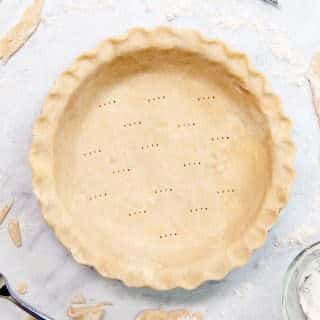
Mealy Pie Dough Recipe (Pate Brise)
The right pie crust for the job. Mealy pie dough is the perfect pie dough for pies with a liquid filling. This dense, buttery crust repels water and stays nice and crispy! Say no to soggy bottom pies!
Servings: 2 crusts
Calories: 1265kcal
Ingredients
Mealy Pie Dough
- 12 ounces all-purpose flour
- 6 ounces cold butter grated
- ¼ teaspoon salt
- 1 large egg cold
- 1 ounce ice water
Instructions
- Before you begin: Make sure your butter is cold and grated, and keep your ice water close by.
- Combine the flour and salt in the bowl of your stand mixer with the paddle attachment.
- Add the cold butter and mix on low until the mixture resembles coarse, mealy sand.
- Add the egg and water and mix on low until the dough sticks together.
- Flatten the dough into a disk and wrap it tightly in plastic wrap. Chill in the refrigerator for at least 20 minutes (2 hours is ideal) before rolling it out. Store in the refrigerator for 2 to 3 days, or in the freezer for up to 3 months.
Notes
Ingredient notes: Use a stand mixer or food processor to make this dough. It works the cold butter into the flour without needing your hands, keeping the butter cold and the crust tender. Mixing by hand risks melting the butter too fast, which makes the crust tough.
Pan options: This recipe makes the dough only, rolling and shaping happen once you're ready to use it. The same batch works for a standard pie plate, hand pies, or, doubled, mini pies. See "Make This Recipe Your Own" above for how to roll, shape, and bake it for each.
Make-ahead and storage: Wrap the dough tightly in plastic wrap and refrigerate for at least 20 minutes (2 hours is ideal) before using it. It keeps in the refrigerator for 2 to 3 days. To freeze the raw dough, place the wrapped disk in an airtight freezer bag and freeze for up to 3 months, then thaw it overnight in the refrigerator before rolling it out. You can also roll and shape it into a pie pan first and freeze the whole unbaked crust instead, wrapped tightly in plastic wrap and placed in a freezer bag to prevent freezer burn. A shaped, frozen crust gives the best texture within 1 to 2 months, though it holds up to 3 months.
Critical do-nots: Don't let the butter warm up while mixing. If it starts to soften, the crust turns out tough instead of tender, so work quickly and keep everything cold. Don't skip the chill time, at least 20 minutes is the minimum, the dough needs that rest to hold together without cracking once you roll it out. Wrap the dough tightly in plastic wrap before it goes in the fridge or freezer, an exposed edge dries out and cracks.
Nutrition
Serving: 1crust | Calories: 1265kcal | Carbohydrates: 130g | Protein: 21g | Fat: 73g | Saturated Fat: 45g | Polyunsaturated Fat: 4g | Monounsaturated Fat: 19g | Trans Fat: 3g | Cholesterol: 276mg | Sodium: 877mg | Potassium: 237mg | Fiber: 5g | Sugar: 1g | Vitamin A: 2260IU | Calcium: 61mg | Iron: 8mg
