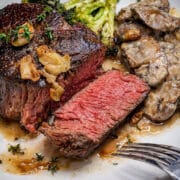
Sous Vide Filet Mignon
For edge to edge pink filet mignon perfection, a sous vide and a quick sear is the perfect way.
Servings: 2 servings
Calories: 106kcal
Equipment
- 1 sous vide
Ingredients
- 2 8 oz Filet Mignon
- 2 Tablespoons Butter
- 2 Sprigs Fresh Thyme
- 2 Small Garlic Cloves crushed
Instructions
- Season your filet mignon generously with salt and pepper on all sides (optional)
- Place the filets into a vacuum sealed bag or use the water displacement method by placing the steaks into a waterproof bag leaving it open at the top so air can escape. Slowly lower it into the sous vide water container. As you push the bag down, the force of the water will remove the excess air from the bag. Make sure no water gets into the bag.
- Set your temperature according to how "done" you want your filets. Refer to the chart in the blog post to read more about what happens at a scientific level at each temperature. Recommended Sous Vide Temperatures for Filet Mignon:Rare: 120°F – 128°F (49°C – 53°C)Medium-Rare: 129°F – 134°F (54°C – 57°C)Medium: 135°F – 144°F (57°C – 62°C)Time: 1.5 to 2 hours is ideal for a 1.5-inch thick filet. Do not sous vide for longer or the steak can get mushy.
- Before searing, pat the steaks until they are bone-dry. Why? The latent heat of vaporization is a beast. It takes a massive amount of energy to turn surface water into steam. If your steak is wet, all the pan's heat goes into boiling that water instead of browning the meat. Dry meat = instant Maillard reaction.
- In a smoking hot cast-iron, sear for only 45–60 seconds per side.
- Turn off the heat.
- In the last 30 seconds, add cold butter and herbs to "baste" (arroser). This adds a final layer of nutty, toasted milk solids to the crust.
Video
Notes
- Skip the Bag Butter: It sounds counterintuitive, but don't put butter in the sous vide bag. Fat is a solvent; it can actually leach the beefy flavor out of the meat and into the melted butter, which you then toss away. Save the butter for the final, flavorful baste in the pan.
- The "Cold Start" Sear: If you have prepped your steaks ahead of time and they are chilled, you can sear them while they are still slightly cold. This gives you more "buffer time" to develop a thick, dark crust without the heat migrating too far into the center and ruining that edge-to-edge pink color.
- Twine is Your Friend: Filet mignon is a very soft muscle. To keep that perfect "steakhouse circle" shape, tie a piece of butcher's twine around the circumference of each steak before bagging. This holds the muscle fibers together during the long cook.
- Double-Check the Seal: When sealing your steaks, ensure there are no juices or salt grains on the edge of the bag where it meets the heating element of your vacuum sealer. This is the #1 cause of bag failure in the water bath!
- Aromatics over Powders: Use fresh garlic cloves and fresh herb sprigs rather than garlic powder or dried herbs.
Nutrition
Serving: 1serving | Calories: 106kcal | Carbohydrates: 1g | Protein: 0.4g | Fat: 11g | Saturated Fat: 7g | Polyunsaturated Fat: 0.4g | Monounsaturated Fat: 3g | Trans Fat: 0.5g | Cholesterol: 30mg | Sodium: 91mg | Potassium: 21mg | Fiber: 0.2g | Sugar: 0.04g | Vitamin A: 398IU | Vitamin C: 3mg | Calcium: 13mg | Iron: 0.2mg
