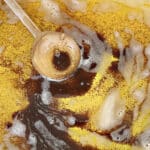
Brown Butter Recipe
How to make browned butter to add a nutty, caramelized flavor to all your recipes.
Servings: 9 oz
Calories: 271kcal
Equipment
- Light-colored saucepan
- Whisk
Ingredients
- 12 oz unsalted butter
Instructions
- Cut the unsalted butter into even squares and place them into a heavy bottom, wide saucepan and melt it on medium heat.
- Whisk the butter every 1 to 3 minutes. As it melts, the butter will foam up.
- After about 5 minutes, you will begin to see the butter turning a darker yellow and less foam will be present. Continue occasionally whisking.
- You will smell a nutty, caramel aroma coming from the butter when it's done.
- Once you see the butter solids starting to turn a golden brown color (not black), you can remove everything from the heat. Continue whisking a bit while it cools down so it doesn't burn from the residual heat.
- You can strain the butter to remove the brown flecks or leave them in. Your browned butter is now ready to use!
Video
Notes
Ingredient notes: Use unsalted butter so you control the salt in your final dish. A high-quality, European-style butter with a higher butterfat content, like Kerrygold or Plugra, gives the richest flavor, but any butter works.
Pan options: A light-colored or stainless steel pan makes it much easier to see the color change as the butter browns. A dark pan works too. You'll just have to rely more on smell than sight to know when it's done.
Make-ahead and storage: Once the brown butter has cooled, transfer it to an airtight container. Store in the refrigerator for up to 2 weeks, or freeze in a freezer-safe container for up to 3 months. Let it soften at room temperature before using it in a recipe that calls for softened butter.
Substitutions:No unsalted butter on hand? Salted butter works too. Just cut back on any added salt elsewhere in your recipe.
Critical do-nots: Don't use high heat. It can burn the milk solids before the rest of the butter has a chance to brown. Don't walk away while it's cooking. It can go from browned to burnt in just a few seconds. Don't judge doneness by color alone. The nutty aroma is just as important a signal as the golden color.
Nutrition
Serving: 1oz | Calories: 271kcal | Fat: 30g | Saturated Fat: 19g | Cholesterol: 81mg | Sodium: 4mg | Potassium: 9mg | Vitamin A: 945IU | Calcium: 9mg
